Biodiversity Heritage Library - Program news and collection highlights from BHL
  • Home
  • News
  • Featured Books
    • All Featured Books
    • Book of the Month Series
    • BHL at 20
  • User Stories
  • Campaigns
    • Fossil Stories
    • Garden Stories
    • Monsters Are Real
    • Page Frights
    • Her Natural History
    • Earth Optimism 2020
  • Tech Blog
  • Visit BHL
Home
News
Featured Books
    All Featured Books
    Book of the Month Series
    BHL at 20
User Stories
Campaigns
    Fossil Stories
    Garden Stories
    Monsters Are Real
    Page Frights
    Her Natural History
    Earth Optimism 2020
Tech Blog
Visit BHL
  • Home
  • News
  • Featured Books
    • All Featured Books
    • Book of the Month Series
    • BHL at 20
  • User Stories
  • Campaigns
    • Fossil Stories
    • Garden Stories
    • Monsters Are Real
    • Page Frights
    • Her Natural History
    • Earth Optimism 2020
  • Tech Blog
  • Visit BHL
Biodiversity Heritage Library - Program news and collection highlights from BHL
Blog Reel, Featured Books

BHL and The Field Museum rapid inventory team: joining forces for conservation action

In 1855, after an exhausting trip across the Amazon, botanist Richard Spruce reached the Escalera Mountains of northern Peru. “I am among magnificent scenery and an interesting vegetation,” he wrote.

In 2013, botanist Corine Vriesendorp went back to those same mountains—still remote, still magnificent, and essentially unexplored since Spruce. “Stunningly beautiful,” she wrote. “…breath-taking vistas of mountains, cliffs, waterfalls, and the Amazon lowlands.”

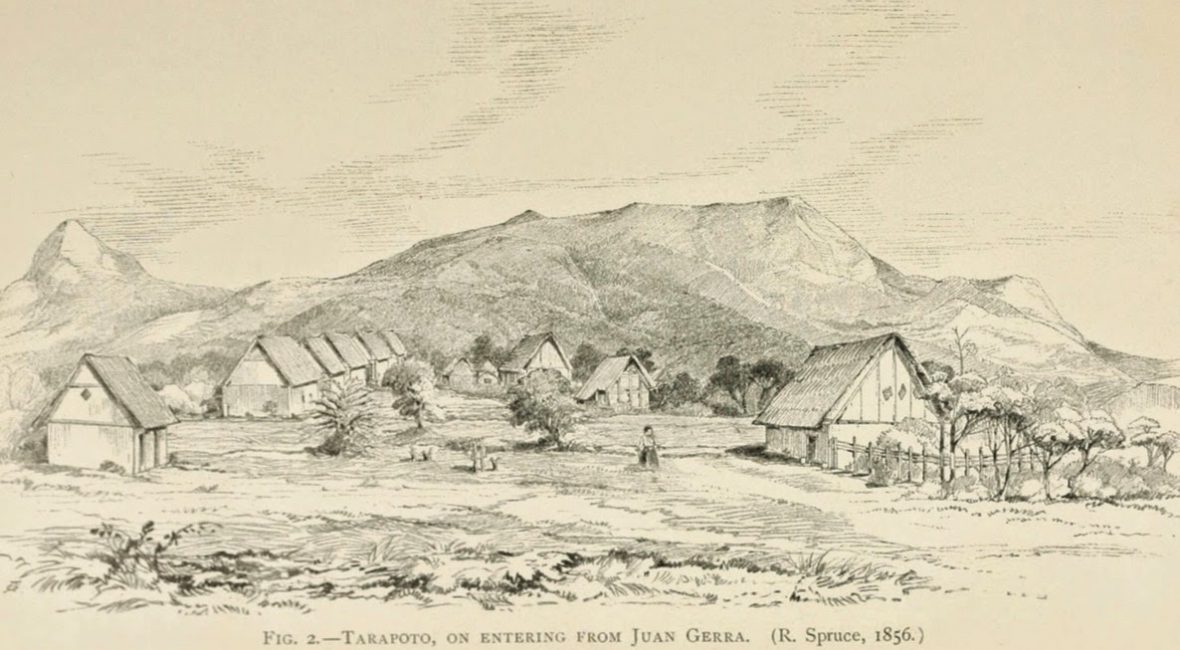
Spruce worked out of a place that looked like this:

View Full Size Image

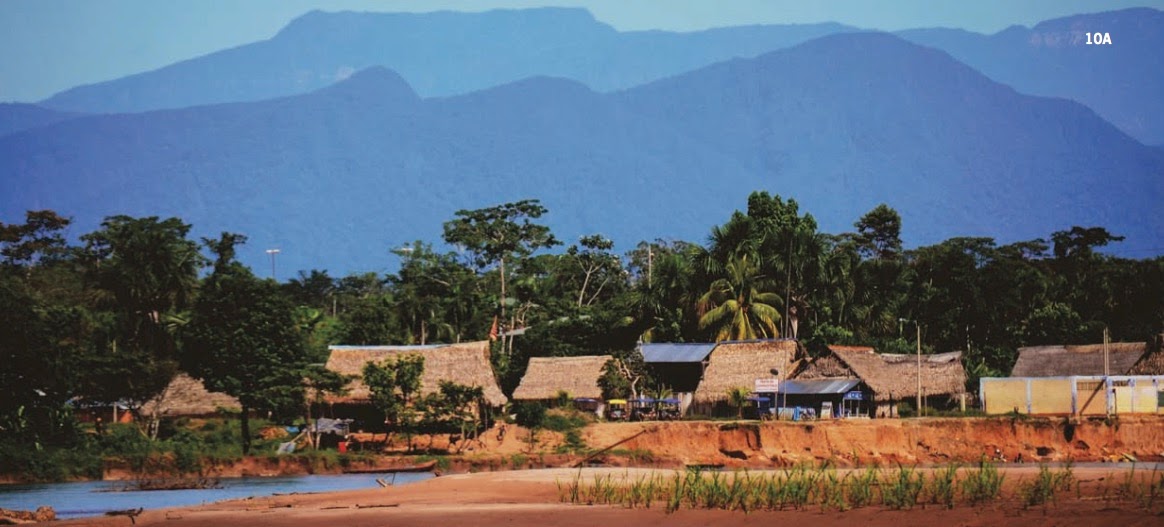
Vriesendorp and her colleagues worked out of a place that looked like this:

View Full Size Image

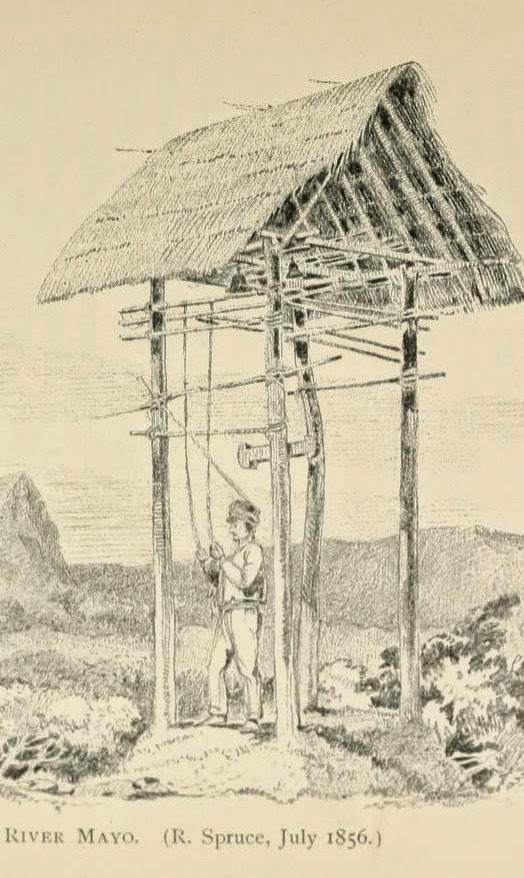
In the field Spruce spent the night in tambos like this:

View Full Size Image

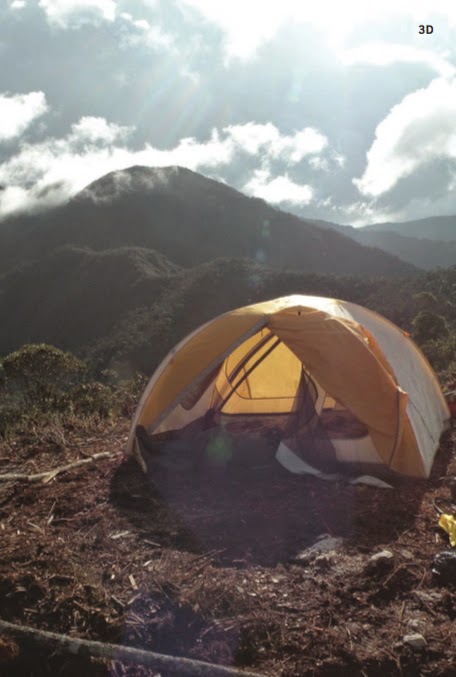
Vriesendorp sheltered in places like this:

View Full Size Image

Fascinated by the dwarf vegetation on the Escalera hilltops, Spruce wrote:

“On the top of the narrow ridge of crumbling sandstone covered with a dwarf herbaceous and shrubby vegetation, it is hardly possible to walk on account of its violence.”

Exploring those same hilltops, Vriesendorp observed:

“The landscape is hummocky and irregular, and covered in a thick swaying rootmat…. Walking through the landscape was difficult, with deep holes between some of the larger roots. An elfin forest… grows here, with very dense, moss-covered stems.”

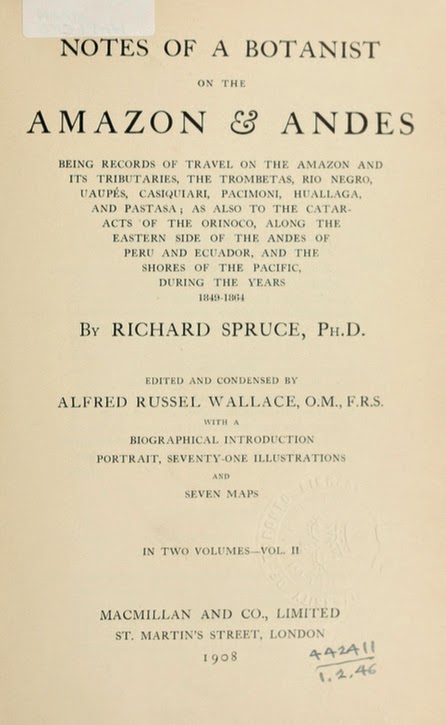
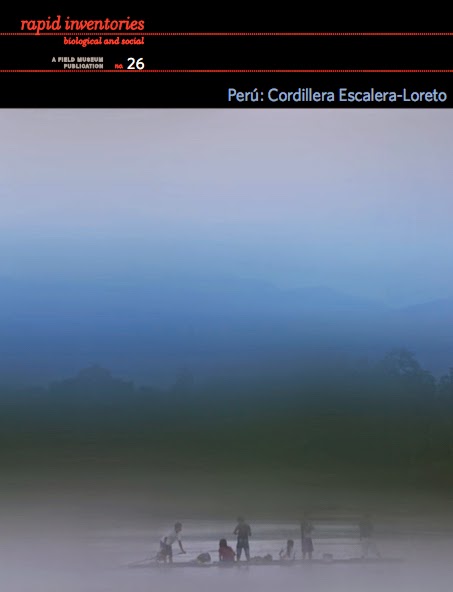
Why highlight these two expeditions, separated by 158 years? Because both surveys—all their text, figures, photographs, and species lists—are now available in the Biodiversity Heritage Library:

View Full Size Image
Spruce, Richard. Notes of a botanist on the Amazon and Andes. 1908. http://www.biodiversitylibrary.org/bibliography/17908#/summary.
View Full Size Image
Pitman, Nigel, et al. (eds.). Perú: Cordillera Escalera-Loreto. 2014. http://www.biodiversitylibrary.org/bibliography/100199#/summary.

Given BHL’s rich historical holdings, no one will be surprised to hear that Spruce’s book has long been a mainstay of the collection. What fewer people appreciate is that BHL is also a major supporter of modern-day efforts to explore, document, and protect biodiversity.

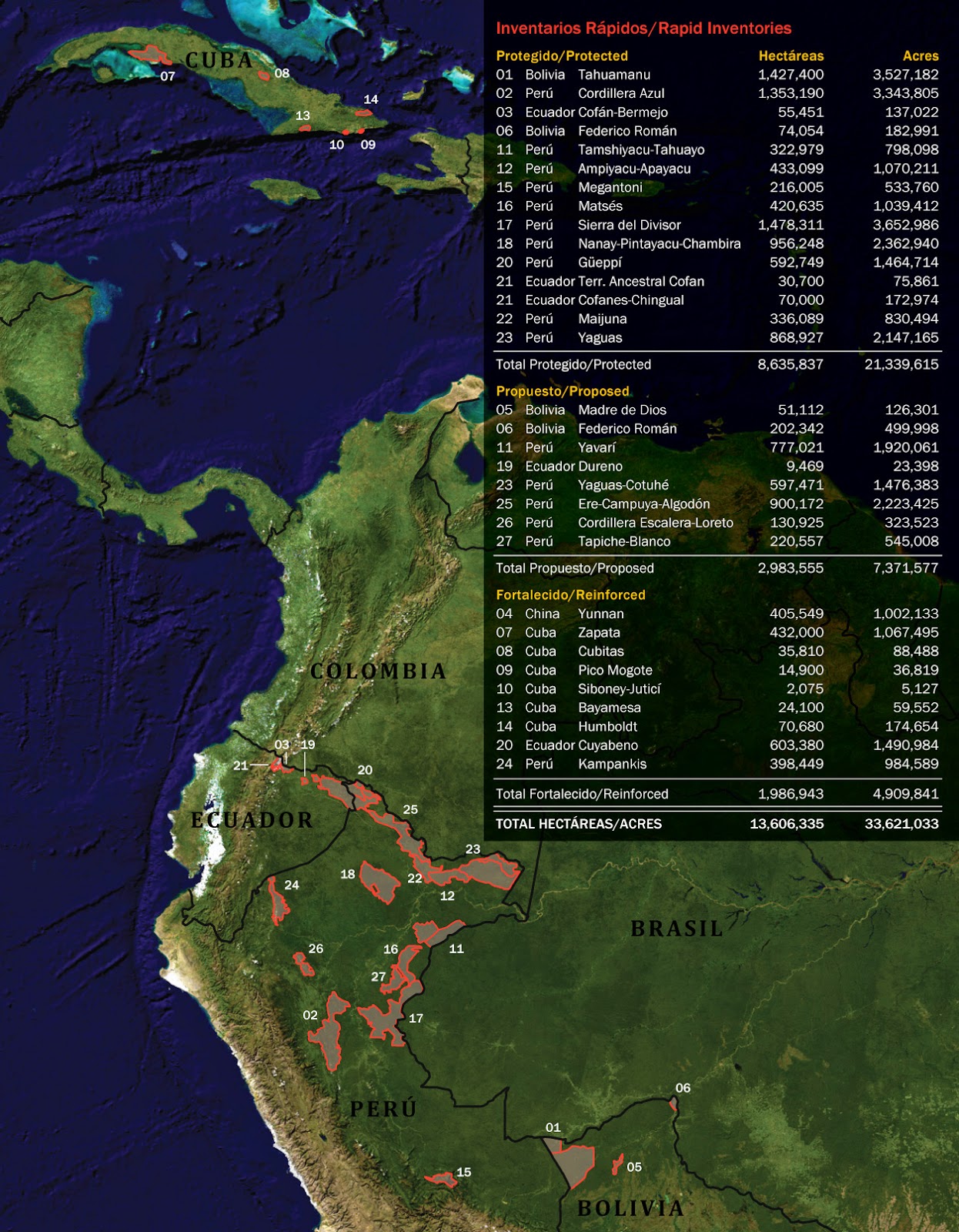
The 2013 expedition to the Escalera range is a great example. Since 1999, the rapid inventory program Vriesendorp runs out of the Field Museum has assembled teams of biologists and social scientists to survey 27 poorly known biological hotspots in Peru, Ecuador, Bolivia, Cuba, and China. These inventories drum up the biological data, social data, consensus, and momentum needed to protect threatened landscapes. Over the program’s 16 years, The Field Museum has helped governments protect more than 21 million acres of the world’s richest forests.

View Full Size Image
Locations of the 27 rapid inventories carried out by The Field Museum since 1999, with summary statistics showing the more than 21 million acres protected to date. Map by Jon Markel, The Field Museum.

All 26 of the rapid inventory reports—totaling more than 5,000 pages and 2,000 photographs—are now freely available for downloading and searching on BHL (Series 1: Rapid Biological Inventories; Series 2: Rapid Inventories: Biological and Social). The tens of thousands of species the team has recorded over the years have been indexed, too. That means that when someone searches for the tree Vochysia ferruginea on Encyclopedia of Life, they get a link to our 2013 Cordillera Escalera survey—as well as a link to Spruce’s 1855 survey.

Getting all of The Field Museum rapid inventory reports into the Biodiversity Heritage Library is a big step forward. We couldn’t help noticing, though, that a lot of our peers in conservation haven’t taken the same step yet. It’s time to change that. Conservation International, Smithsonian Conservation Biology Institute, Chicago Wilderness, Morton Arboretum, and all our other friends:

Let’s see your stuff on BHL!

View Full Size Image
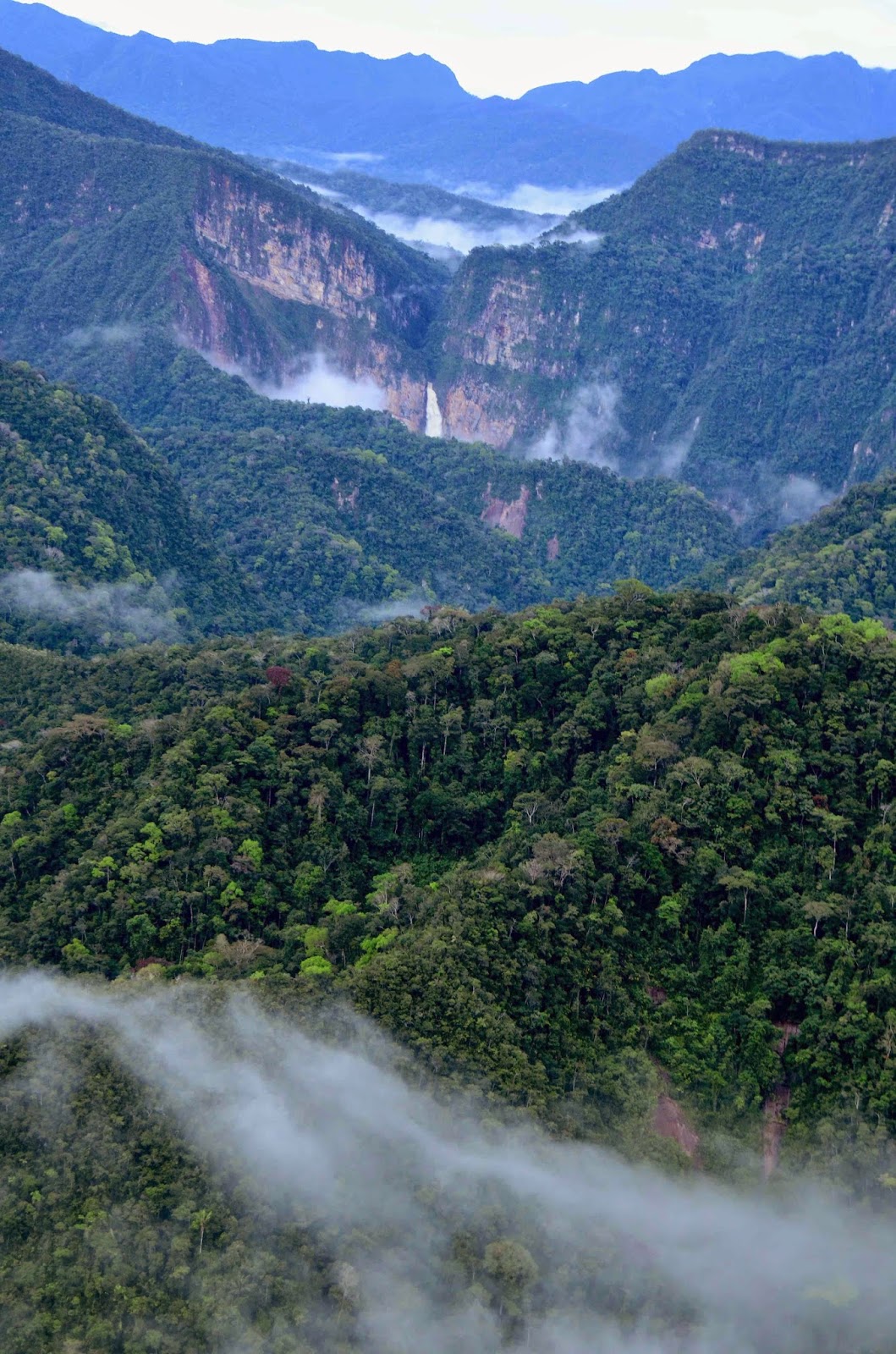
The Escalera Mountains of Loreto, Peru. Photo by Álvaro del Campo, The Field Museum.
  • View Rapid Biological Inventories and Rapid Inventories: Biological and Social from The Field Museum on BHL.
  • View all of the books contributed by The Field Museum on BHL, as well as images from select contributions in Flickr.
April 23, 2015by ulib-libraryjobs
Blog Reel, Campaigns, Featured Books, Garden Stories

Leading Ladies in the World of Seeds: Part Two

A Garden Stories celebration for Women’s History Month

Seed Catalogs to Inform Botanical Research

Carrie H. Lippincott (featured in our previous post) exploited the potential that seed catalogs offer in a business setting. Ethel Z. Bailey recognized the potential of seed catalogs in an entirely different application: cultivated plant research.

View Full Size Image
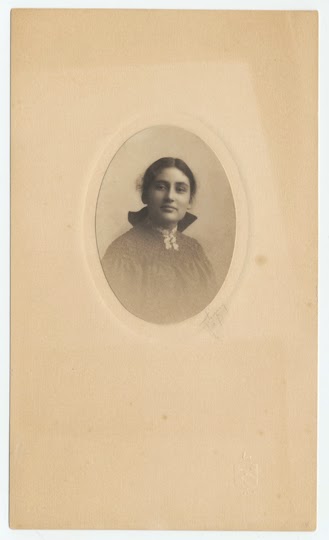
Ethel Zoe Bailey in 1905.

Ethel Z. Bailey, daughter of Liberty Hyde Bailey (botanist, a foremost leader in American horticulture, and the first dean of Cornell University’s College of Agriculture) and Annette Smith Bailey, was born in Ithaca, New York on November 17, 1889. Born in a faculty house on the Cornell University campus, in the middle of what is now Phillips Hall, Ethel was surrounded at an early age by the students, professors, deans, and presidents of Cornell University, witnessing over her lifetime the evolution of the university from a three-building campus at her birth to one of America’s premier institutions.

In 1911, Ms. Bailey graduated with an A.B. in Zoology from Smith College in Northampton, MA. While her early scientific interests were zoological in nature (influenced in part by natural history excursions during her youth with Cornell herpetologist Albert Hazen Wright), her focus soon turned to botany and horticulture shortly after her graduation, when she became her father’s co-worker, editor of his many books and articles, and field assistant on collecting expeditions around the world. She also served as her father’s chauffeur, as she was the first woman in Ithaca to obtain a driver’s license.

Ms. Bailey was a particularly well-traveled individual. As a girl, she traveled with her parents and sister to Europe, and in 1914 she accompanied her parents on a trip to New Zealand (her father wrote his book The Holy Earth during this latter venture). Once joining her father in his work, Ethel traveled with him to Japan and China in 1917, Brazil in 1922-23, the west coast of the U.S. in 1926, as well as locales in Puerto Rico, Panama, Barbados, Trinidad, other West Indian Islands, and Venezuela, collecting plant specimens. These specimens were processed and cataloged (largely by Miss Bailey), and housed at the family home at Sage Place, about 10 blocks from the Cornell campus (the palms were housed in the carriage house and the remaining general herbarium in a wing off of the carriage house, where the work areas were situated).

View Full Size Image
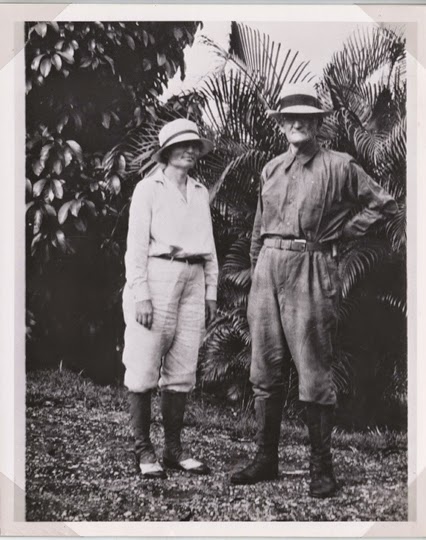
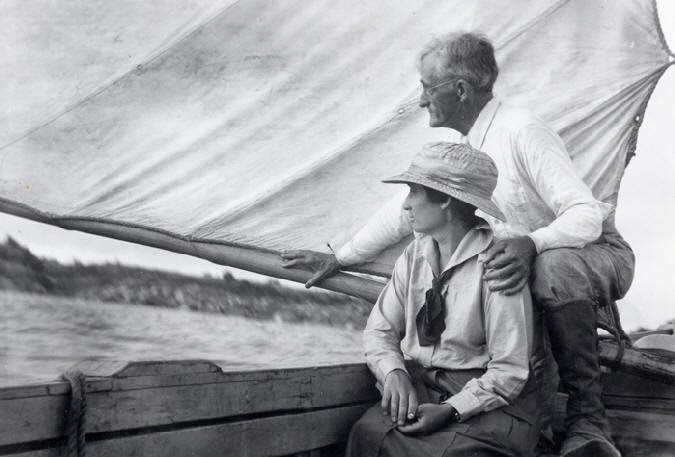
Ethel Zoe Bailey and her father on a collecting trip in Panama, 1931. http://exhibits.mannlib.cornell.edu/mailordergardens/intro.htm.

During one particularly memorable collecting excursion, Miss Bailey, her father, and a few other botanists ventured into the wild jungle island of Barro Colorado in the Panama Canal Zone in search of a rare palm, which L.H. Bailey believed would be found in the Mohinja Swamp. Wading through hip-deep water amidst warnings of disease and boa constrictors, the group found the palm as predicted and photographed it in the middle of a downpour using a tripod nearly submerged in water. But the specimens, and the photographs, were successfully obtained!

Miss Bailey assisted and edited many of her father’s works during his lifetime, including Standard Cyclopedia of Horticulture (1914-17) and the Manual of Cultivated Plants (1924; 1949). She also served as editor of Gentes Herbarum through its first eight volumes and co-authored Hortus (1930) and Hortus Second (1941) with her father.

View Full Size Image
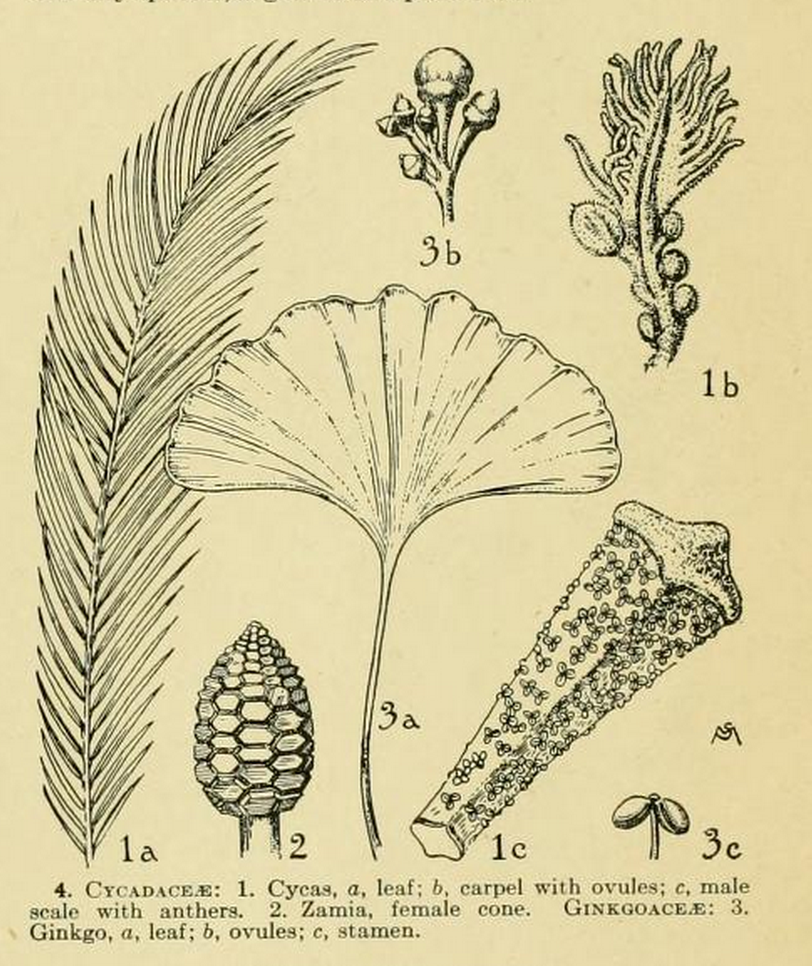
Cycadaceae in Standard Cyclopedia of Horticulture. Bailey, L.H. 2nd Ed. v. 1 (1916-17). http://biodiversitylibrary.org/page/20553842.

As part of her work, Miss Bailey also maintained a collection of seed and nursery catalogs from around the world, which she and her father used to gather and record information on cultivated plants (this collection greatly informed L.H. Bailey’s Manual of Cultivated Plants and L.H. and E.Z. Bailey’s Hortus Second). As each catalog was received, the plants listed were recorded on index cards, along with the name of the firm offering the plant, the year of offering, Latin names, and prices, resulting in an index providing a record of the species and variants available in the commercial trade. The file grew to become the most comprehensive index of available ornamental plants in the world.

View Full Size Image
Ethel Zoe Bailey and her father, L. H. Bailey. http://www.geraniumsonline.com/ethelzoe.htm.

In 1935, L.H. Bailey donated his Hortorium, which contained over 100,000 plant and seed catalogs, 125,000 plant specimens, and nearly 3,000 books, along with the family home buildings that housed the collections, to Cornell University, establishing the L.H. Bailey Hortorium. Interestingly, L.H. Bailey coined the term “hortorium” in 1935 as (in his words) “a repository for things of the garden. It is to be a place for the scientific study of the plants of the garden–their documentation, their classification, and their naming.”

Miss Bailey became the first Hortorium curator, managing the herbarium specimens (which since 1953 have been located in Cornell University’s Mann Library building), seed and nursery catalogs and book collections, and card file index system. She diligently processed herbarium specimens, grew the catalog collection, and built her cultivated plant index system until her “retirement” in 1957. She continued to volunteer her time at the Hortorium after her retirement, however, working five days a week, 9am-4pm, on her index and curating the catalog collection. She also glued pressed plants on sheets for the herbarium on Saturday afternoons at her home at Sage Place, while listening to the opera on local radio – Ethel had played the violin in the Ithaca High School orchestra.

View Full Size Image
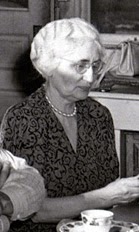
Ethel Z. Bailey

After her death on July 15, 1983 at the age of 93, the seed and nursery catalog collection at the L.H. Bailey Hortorium (which today holds over 134,000 pieces) was named after Miss Bailey. It is now known as the Ethel Z. Bailey Horticultural Catalogue Collection in recognition of the 70+ years that Miss Bailey curated and cultivated the collection. Explore the catalogs in the Cornell University Library Mail Order Gardens exhibit and materials from the L.H.Bailey Hortorium in BHL.

Miss Bailey’s tireless efforts and research involving cultivated plants boldly illustrates the importance of seed and nursery catalogs in historical research. The catalogs and index are today used to trace the introduction of plant cultivars and species, support price-index studies and related economic investigations, and verify the existence of certain plant varieties. Miss Bailey’s contributions to horticultural science were well-recognized both during and after her lifetime. She was awarded the George Robert White Medal of the Massachusetts Horticultural Society in 1967 and the Smith College Medal in 1970.

Explore other remarkable Leading Ladies of the Seed Industry represented in BHL 

  • Carrie H. Lippincott. Her catalogs in BHL.
  • Emma V. White. Her catalogs in BHL.
  • Theodosia Shepherd. Her catalogs in BHL.
  • Miss Martha Hiser. Her catalogs in BHL.
  • Miss Mary E. Martin. Her catalogs in BHL.
  • Mrs. Francis King. Her books in BHL.

More Garden Stories Fun

  • Follow our blog and #BHLinbloom on Twitter and Facebook (or go directly to BHL’s Twitter and Facebook) this week as we explore the fascinating world of gardening, from its history to plant factoids and practical gardening tips.
  • Browse over 14,000 seed and nursery catalogs in our collection.
  • Browse over 2,500 seed and nursery catalog images in our Flickr collection.
  • Explore select seed catalog art, and stunning bookmarks and postcards developed by Cornell Library, on Pinterest.
  • See historic gardening come to life on the Smithsonian Libraries’ Tumblr.
  • Purchase your very own Garden Stories T-Shirt through T-Fund. All proceeds will go to help us digitize more pages for BHL. Our goal is to sell enough shirts to digitized 5,000 pages. Can you help us get there?
  • Help us improve access to seed and nursery catalogs by transcribing some today as part of our the Institute of Museum and Library Services (IMLS)-funded Purposeful Gaming project!
  • Find great online gardening resources, tips, and help on the BHL Gardening Resources Page.
With Significant Contributions From:
Robert Dirig
Curator, Cornell Plant Pathology Herbarium, Cornell University Department of Plant Pathology
Marty Schlabach
Food and Agricultural Librarian, Cornell University Library
March 25, 2015by michelle.underhill
Blog Reel, Campaigns, Featured Books, Garden Stories

Leading Ladies in the World of Seeds: Part One

A Garden Stories celebration for Women’s History Month

A Feminine Touch in the Gardening Industry

Recent reports indicate that the number of women-owned businesses have increased by 54% in the last fifteen years. But while we may be seeing a rise in the number and cultural acceptance of women-owned businesses today, this was not always the case. In fact, up through the nineteenth century, women-owned businesses were largely limited to taverns and alehouses, millinery and retail shops, and hotels and brothels, and were operated amidst the prevailing opinion that business was an unsuitable venture for the “gentle sex.”

By the late 1800s, however, women were beginning to make a decided mark on a growing American industry: gardening.

View Full Size Image
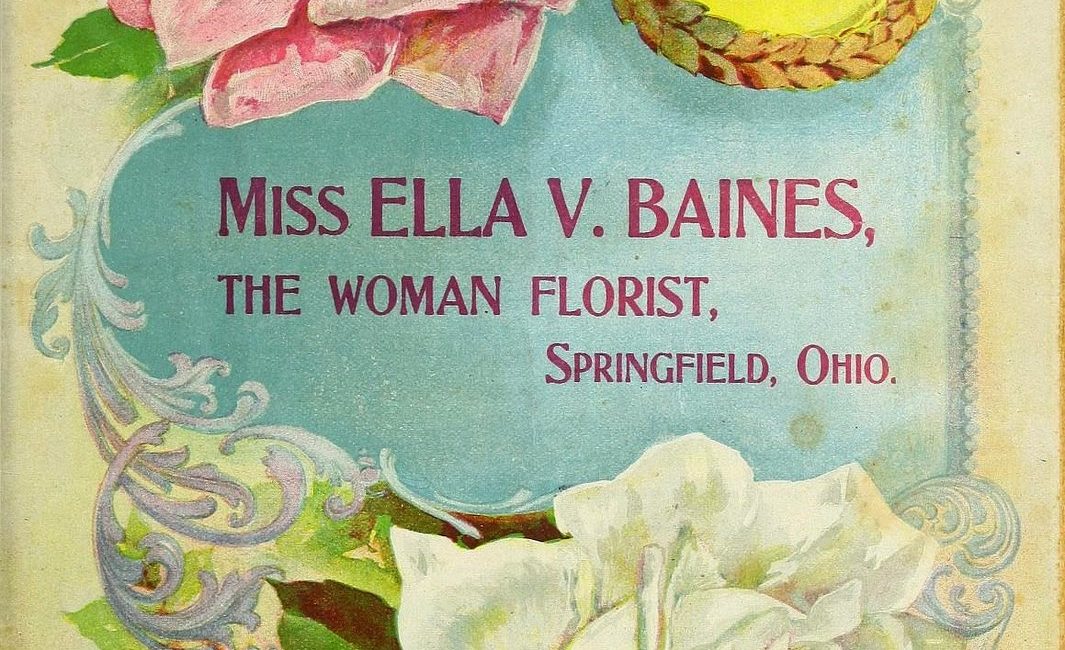
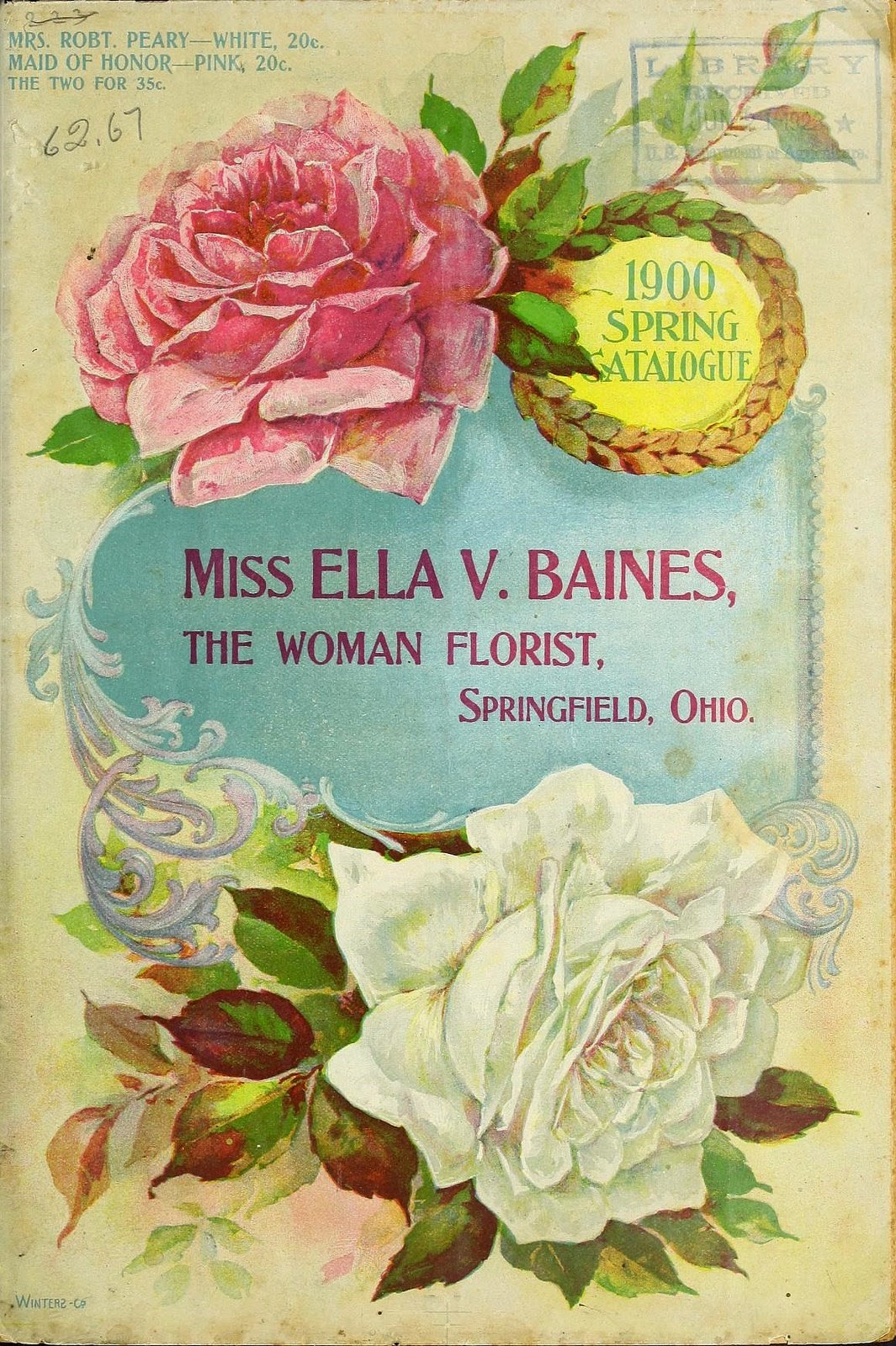
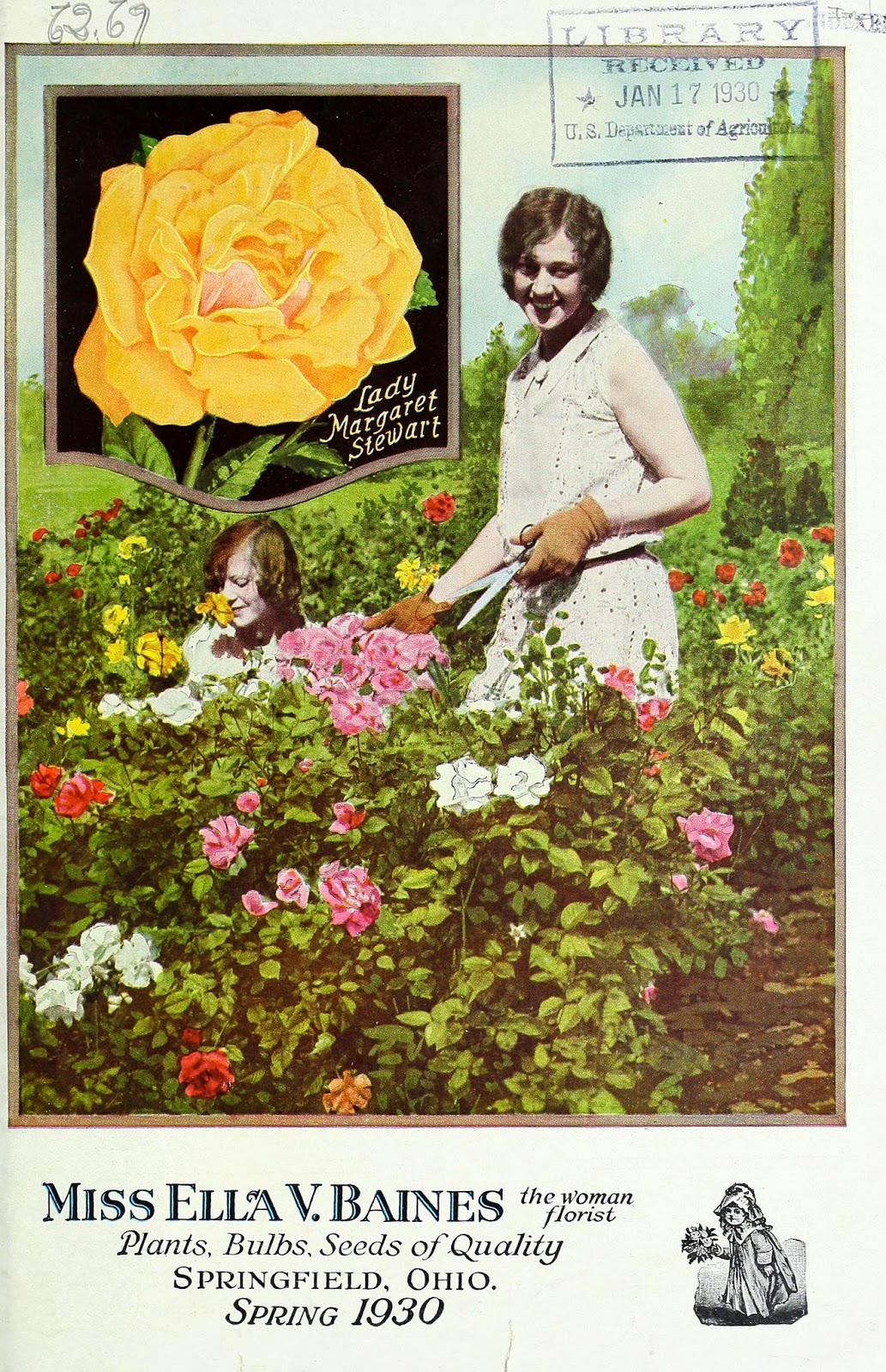
Miss Ella V. Baines. The Woman Florist. 1900. http://biodiversitylibrary.org/page/41878815.

Unlike other businesses such as banking or manufacturing, the flower and seed industry, with a strong connection to the home, was considered a more suitable occupation for women in the nineteenth century. Miss Ella V. Baines, who started her floral business in Springfield, OH, in 1896 and offered roses, plants, bulbs, and seeds for sale via her catalogs, asserted:

“When I started in the floral business two years ago, I confess it was with fear and trembling. It was a new field in the commercial world for woman to enter. Every one said ” don’t; ” but I did, and I am happy to say that my business success has been assured from the very start. I reasoned in this way: that this business is one eminently suited to a woman in every respect, and of all occupations it is the most pleasant and refining. Wherever there is a home in which happiness reigns, flowers are grown…For this reason floriculture appeals to the hearts of women the world over.”

Furthermore, as Miss Baines’ remarks suggest, women were a predominant customer base for the amateur gardening industry, meaning that a feminine touch and advertising tailored by women, for women, offered a distinct business advantage.

View Full Size Image
Miss Ella V. Baines. The Woman Florist. 1930. http://biodiversitylibrary.org/page/41932328.

Perhaps the best example of the woman-owned business advantage in the flower seed industry at the turn of the twentieth century was the self-proclaimed “Pioneer Seedswoman of America,” Carrie H. Lippincott, and the “Three Minneapolis Seedswomen.”

Three Minneapolis Seedswomen

Carrie H. Lippincott was born in Burlington, NJ, in September 1863. After the death of her father, Carrie, her sister and her sister’s husband, Henry B. Kent, and their widowed mother, moved to Minneapolis. In 1886, at the suggestion of her brother-in-law, Sam Y. Haines, and with a need to increase the family income, Carrie started a business offering a variety of flower seeds for sale. Initially run from the family home, success soon compelled Miss Lippincott to move the business into the two-story brick store next to their house. It was the first seed company in the U.S. to be founded and managed by a woman.

View Full Size Image
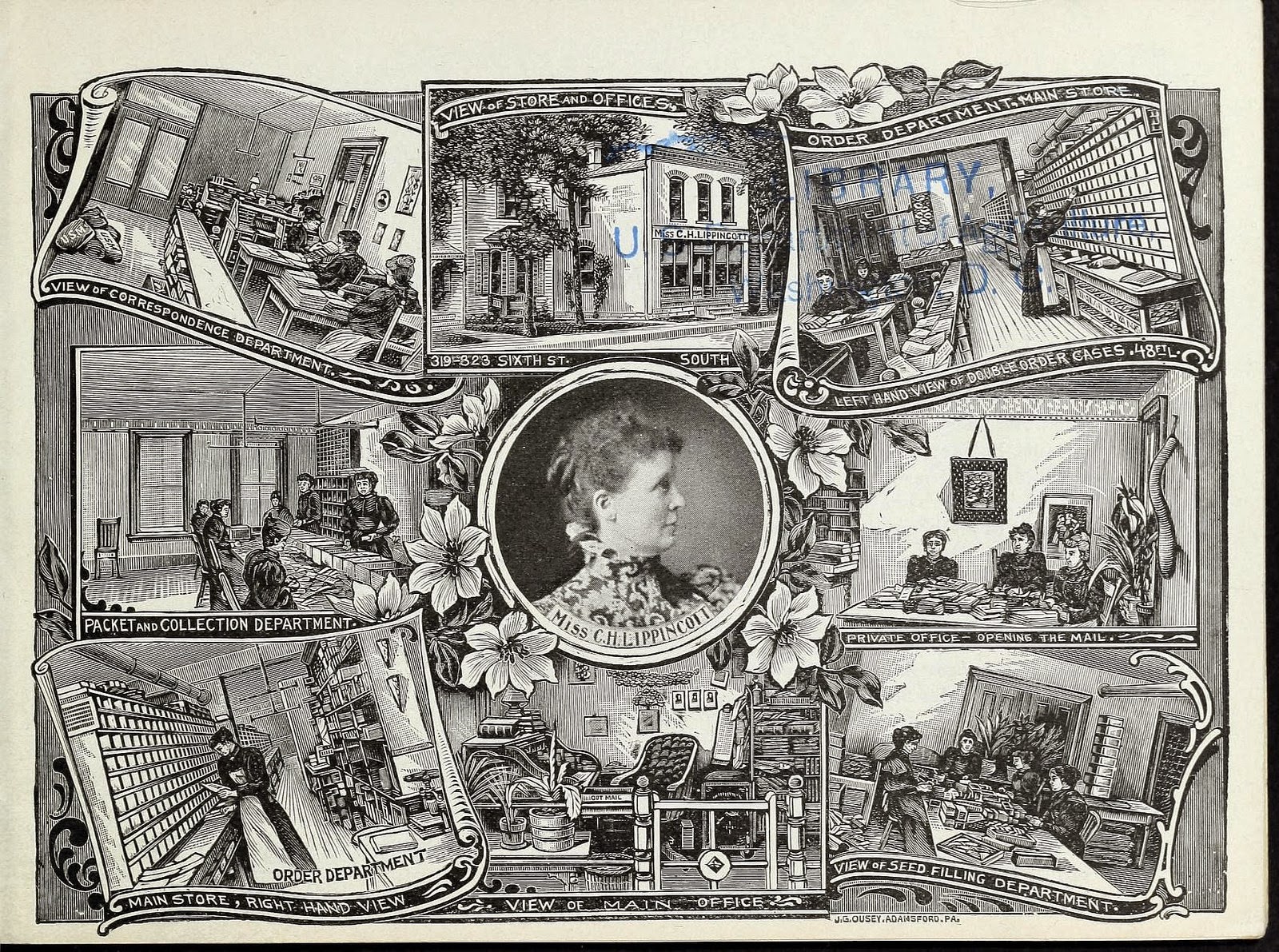
Portrait of Miss Lippincott and the two-story brick storefront next to the family home. Flower Seeds. 1900. http://biodiversitylibrary.org/page/43807529.

The business blossomed, and in 1891, the Lippincott Flower Seed House entered the mail order gardening world by producing its first catalog – an impressive 5×7 inch lithographed delight offering seeds for sale via post. By 1896, the business claimed to have received more than 150,000 orders, and the catalog for the year reportedly enjoyed a 200,000 print run and was offered, free of charge, to anyone interested. The 1896 catalog also made the bold claim that the Lippincott company was the largest exclusively flower seed house in the world. In 1898, a quarter of a million copies of the year’s catalog were shipped, translating to 1 in 60 households in the U.S. receiving a copy.

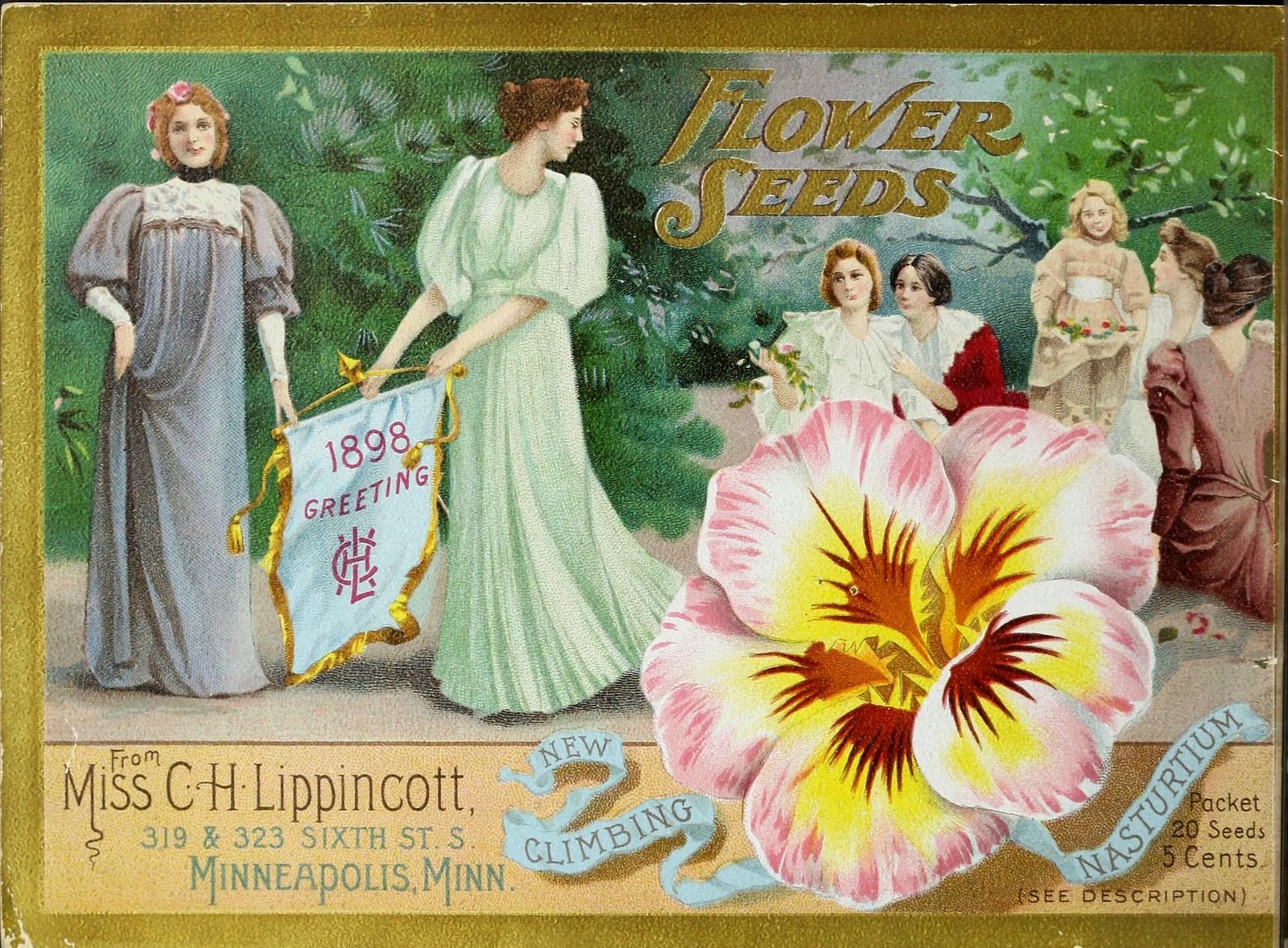
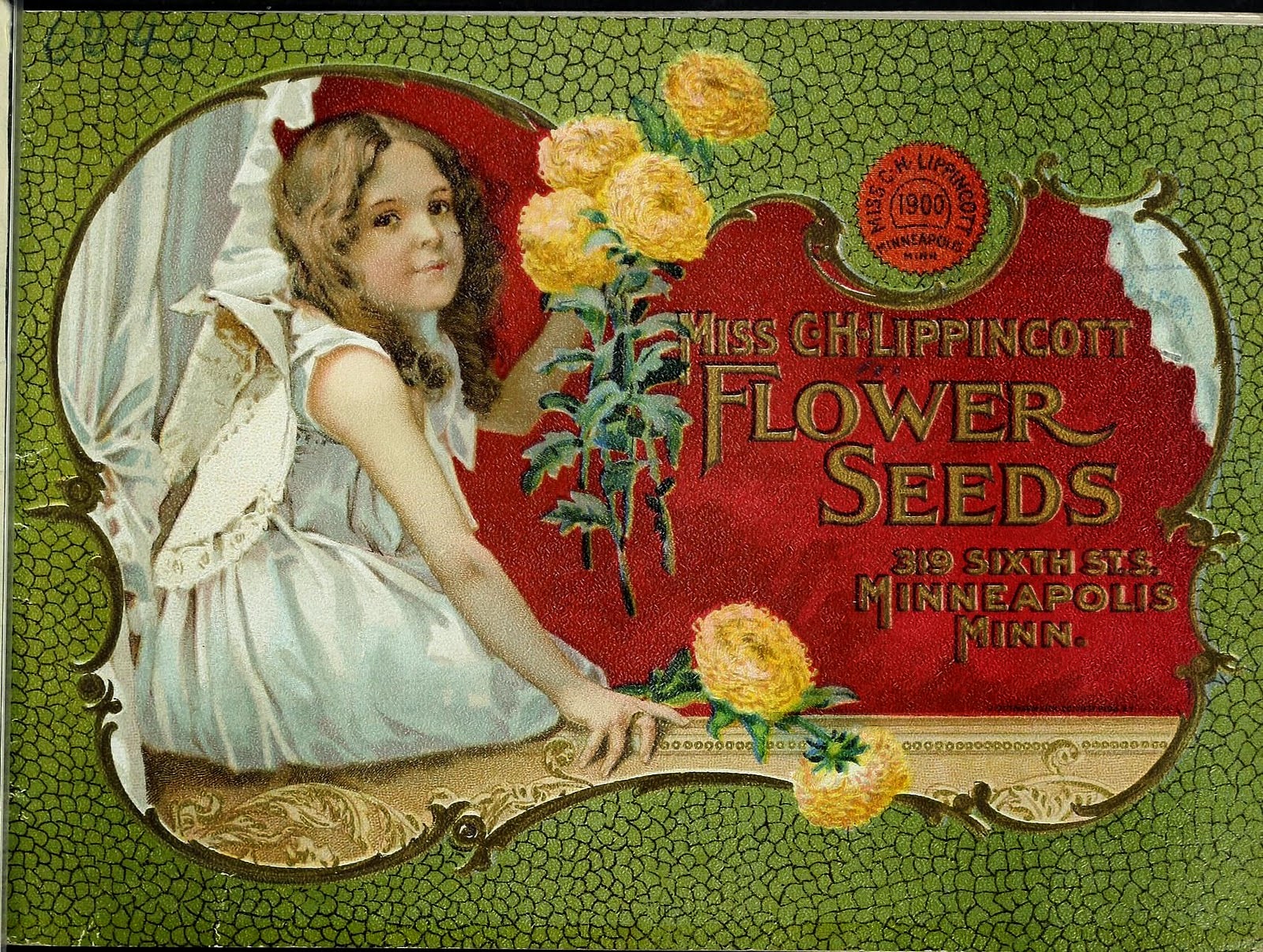
The Lippincott catalogs are a study in marketing genius. Revolutionary for their time, they reflected a “feminine touch” that appealed to women and directly contributed to Carrie’s success. Her catalog art featured colorful, idealized women and children amidst exotic or elaborate floral displays, resembling chromolithographed greeting cards of the day rather than the typical manilla paper, black-ink printed catalogs of many competitors. The catalog introductions were also personal and conversational, providing updates on the life events of the Lippincott family. Following this theme, Carrie branded her early catalogs as annual “Greetings.” Carrie knew her audience. As the reputed first seed seller to target women buyers, the Lippincott catalogs were artistically tailored to feminine tastes.

View Full Size Image
Miss C.H. Lippincott Flower Seeds. 1898. http://biodiversitylibrary.org/page/43809093.

The Lippincott business was pioneering in other ways. It employed a staff of twenty-five female clerks and engaged housewives to grow seed stock on their farms and backyard gardens. In 1894, Carrie’s became the first business to list the number of seeds contained in each packet, allowing buyers to better plan their garden layouts each year. Her contemporaries took notice of her originality, with an 1896 article in Printer’s Ink asserting, “She is the original pioneer seedswoman – a real woman, arranging all the details of a large business herself.”

View Full Size Image
Miss C.H. Lippincott Flower Seeds. 1900. http://biodiversitylibrary.org/page/43807531.

Miss Lippincott’s fans were not the only ones to take notice of her success; her Minneapolis competitors also took note of the advantages of marketing a seed company as a woman-owned business catering to other women, and followed suit.

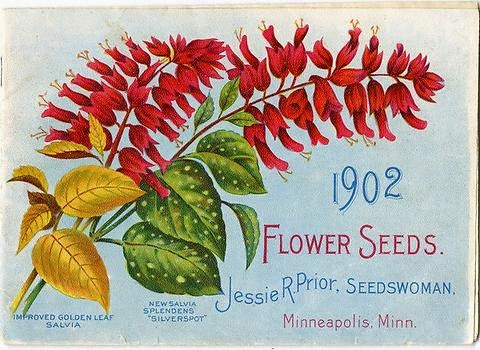
In 1895, the catalog “Flower Seeds” appeared under the name of Jessie R. Prior, Seedswoman. Jessie’s husband was listed as the owner of the seed business for five years before a seed catalog featuring Jessie’s name appeared.

View Full Size Image
Jessie R. Prior. Seedswoman. Flower Seeds. 1902. http://umedia.lib.umn.edu/node/466200.

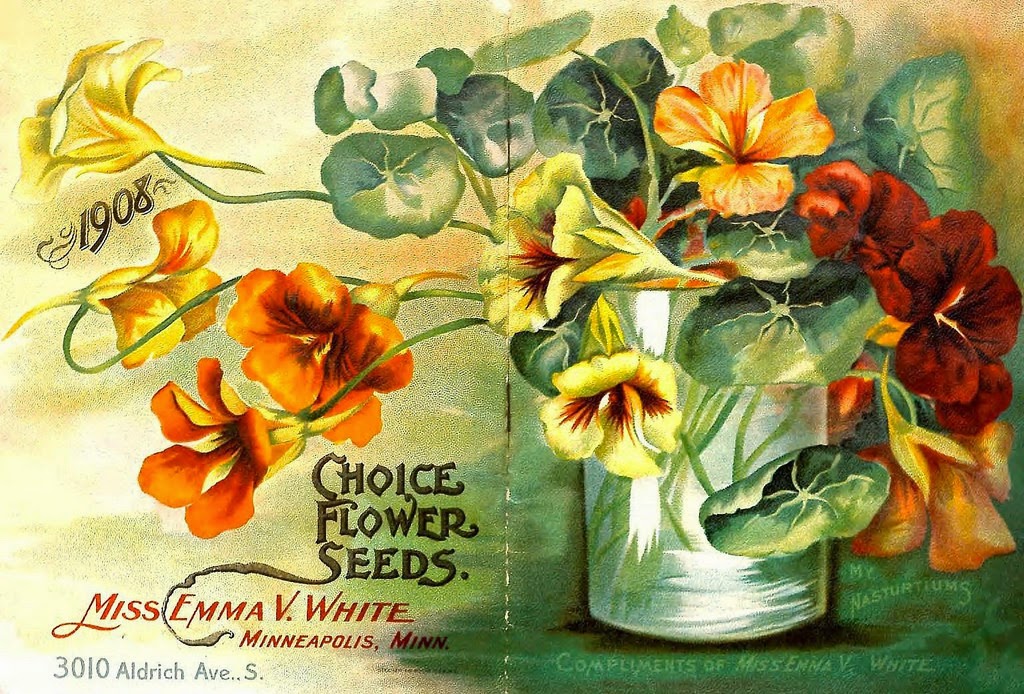
The next year, in 1896, the E. Nagel and Co. flower seed business in Minneapolis announced that it had transferred ownership to Miss Emma V. White, who became known as the “Northstar Seedswoman.” The company subsequently produced catalogs strikingly similar in format to that of the Lippincott phenomena. Miss White was a boarder at the home of Alanson W. Latham, Secretary of the Minnesota State Horticultural Society, whom she married in 1922.

View Full Size Image
Choice Flower Seeds. Miss Emma V. White. 1908. http://biodiversitylibrary.org/page/46685973.

The association of these women with prominent men in the seed industry led many to question whether the new women-owned companies were in fact only fronted by women but run by men. Carrie Lippincott believed this to be true, writing:

“…a number of seedsmen (shall I call them men ?) have assumed women’s names in order to sell seeds. It is a peculiar thing in this day and age, that a man should want to masquerade in woman’s clothing.”

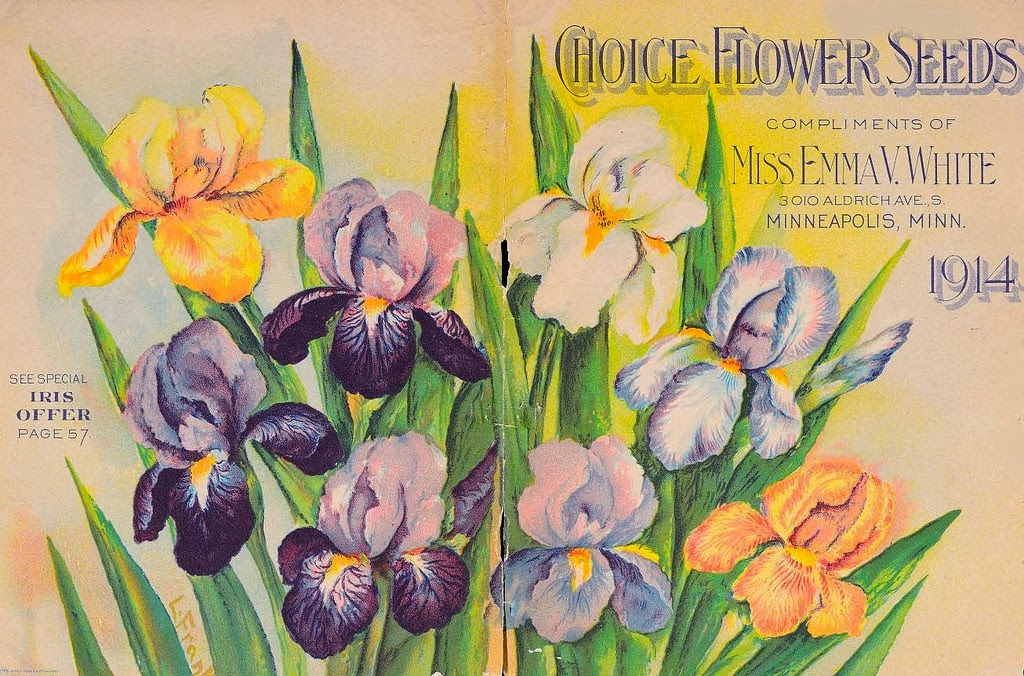
Miss White responded to the accusation, proclaiming, “I am a real live woman and I give personal attention to my business.” In an 1896 catalog, Emma even asserted (as a jab at Miss Lippincott?):

“While it is true that the buyers of flower seeds are almost always women, yet I ask your patronage NOT BECAUSE I AM A WOMAN, but solely because by my methods I merit it.”

View Full Size Image
Choice Flower Seeds. Miss Emma V. White. 1914. http://biodiversitylibrary.org/page/46685859.

Miss Prior’s company remained silent on the gender accusations.

Were the White and Prior companies truly owned and operated by women, or were they, as Miss Lippincott believed, the brainchildren of men hoping to mimic Carrie’s success? Research suggests that the latter was more likely true with Miss Prior’s business than with Miss White’s, but whatever the truth, the fact that being a woman in the flower seed industry was recognized as an asset represents a remarkable shift in prevailing 19th century attitudes about women in business.

Explore other remarkable Leading Ladies of the Seed Industry represented in BHL 
  • Theodosia Shepherd. Her catalogs in BHL.
  • Miss Martha Hiser. Her catalogs in BHL.
  • Miss Mary E. Martin. Her catalogs in BHL.
  • Mrs. Francis King. Her books in BHL.


Leading Ladies in the World of Seeds Resources

  • Flickr Images from C.H. Lippincott Catalogs
  • Flickr Images from Miss Emma V. White Catalogs
  • See cover-to-cover, searchable scans of the Three Minneapolis Seedswomen catalogs from the University of Minnesota.
  • Minneapolis Seedswomen Exhibit, University of Minnesota
  • Lippincott Company Catalogs from The New York Botanical Garden
  • Cornell University Library Ethel Z. Bailey Catalog Collection
  • Cornell University Library Ethel Z. Bailey Biography

More Garden Stories Fun

  • Follow our blog and #BHLinbloom on Twitter and Facebook (or go directly to BHL’s Twitter and Facebook) this week as we explore the fascinating world of gardening, from its history to plant factoids and practical gardening tips.
  • Browse over 14,000 seed and nursery catalogs in our collection.
  • Browse over 2,500 seed and nursery catalog images in our Flickr collection.
  • Explore select seed catalog art, and stunning bookmarks and postcards developed by Cornell Library, on Pinterest.
  • See historic gardening come to life on the Smithsonian Libraries’ Tumblr.
  • Purchase your very own Garden Stories T-Shirt through T-Fund. All proceeds will go to help us digitize more pages for BHL. Our goal is to sell enough shirts to digitized 5,000 pages. Can you help us get there?
  • Help us improve access to seed and nursery catalogs by transcribing some today as part of our the Institute of Museum and Library Services (IMLS)-funded Purposeful Gaming project!
  • Find great online gardening resources, tips, and help on the BHL Gardening Resources Page.
March 25, 2015by michelle.underhill
BHL News, Blog Reel, Campaigns, Featured Books, Garden Stories

Garden Stories: A Celebration of Gardening

Friday, March 20, 2015, we celebrated the March equinox (and, incidentally, a total solar eclipse!), when the sun appears to cross the celestial equator heading northward. In the northern hemisphere, this is also known as the vernal equinox. For those in the southern hemisphere, it means that autumn is upon them, and cold days are ahead. But for those of us in the northern hemisphere, it means that Spring is officially here!

The coming of spring is therapeutic for many – a time for new life, a break from the grayness of winter, and a signal to get the trowels, shovels, and gardening gloves out. Many hopeful gardeners have poured over their fall and winter seed catalogs for months, fantasizing about the colorful Edens they will nurture come springtime.

But did you ever wonder about the history of the home garden, or even agriculture for that matter, and just when and how those beloved seed catalogs came about? What did gardens 100 years ago look like? What tools, fertilizer, and seed and plant varieties were available in the nineteenth, eighteenth, or even seventeenth centuries? When did recreational gardening come into its own, and who were the men and women who helped make it happen?

A Walk Down the Gardening Memory Lane

Though speculative due to lack of written records, many researchers believe that Neolithic agriculture began several thousand years ago with attempts by hunter-gatherers to manage nature for their benefit, eventually resulting in the “Domestication Revolution” with the emergence of propagation, whereby ancient civilizations began distributing, dividing, and planting seeds and tubers [1].

For many millennia, most agriculture was undertaken strictly as a means to produce food to feed families and local populations or grow herbs for medicinal purposes. The flames of change began to ignite in Europe in the seventeenth century, however, with the Enlightenment and the Scientific Revolution, which resulted in an increased desire to understand the natural world and apply scientific methods to study it. Scientific advances in turn nurtured an agricultural revolution in the eighteenth and nineteenth centuries, whereby farmers applied new techniques to produce more crops across increased land areas, resulting in more food security and leisure time[1].
View Full Size Image
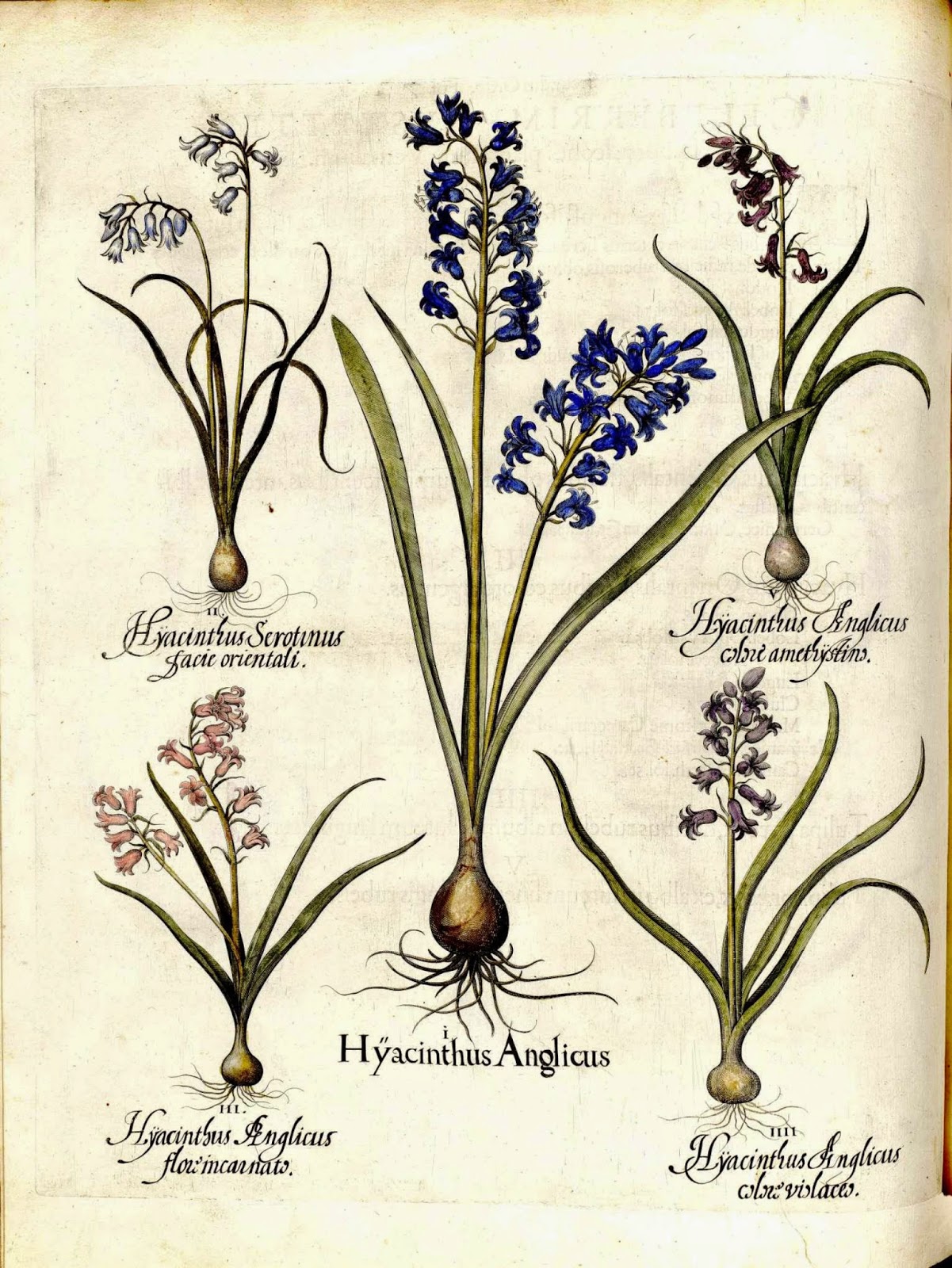
Flowers in the Willibaldsburg fortress castle garden in Eichstatt, Germany. The book Hortus Eystettensis, commissioned by Prince-Bishop Johann Conrad von Gemmingen, illustrates the plants gathered together in the castle gardens. The garden and this book represent the first time in Western history that plants were being collected and celebrated not for their use but for their beauty and inherent interest. Hortus Eystettensis (1613). Volume One and Volume Two digitized by Biblioteca Digital del Real Jardin Botanico de Madrid.

The rise of capitalism and growing populations fueled the development of commercial agriculture, and farmers (especially gentry farmers) started sharing and publishing their knowledge and botanical gardens began cataloging their seeds and producing seed lists (which included many plant species new to science), articulating the seeds housed at the garden available for international exchange with other institutions. As a result, agriculture not only became more prominent, but citizens (particularly those in urban environments) began nurturing home gardens as leisure activities.

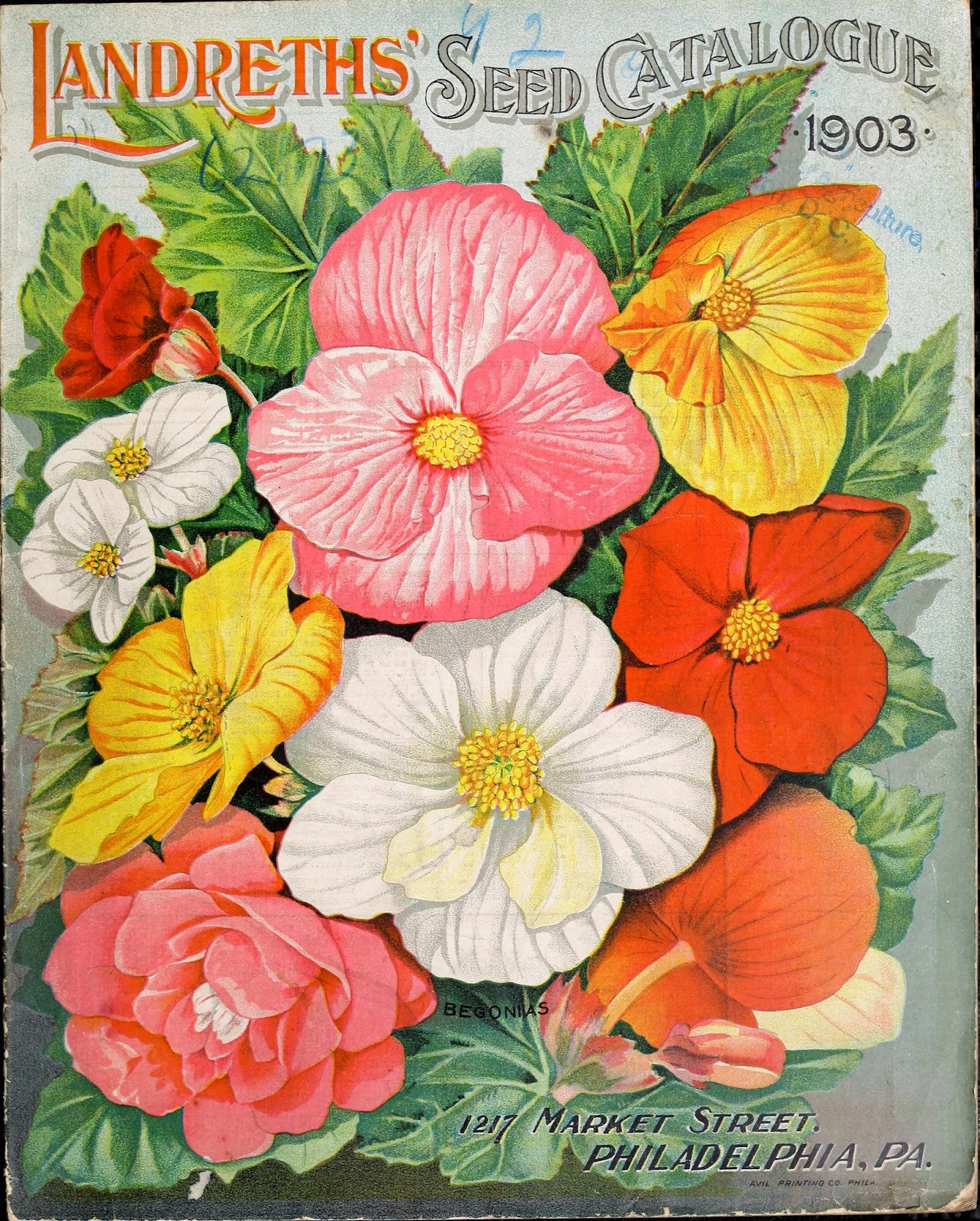
As commercialism increased and imperial expansion enabled the introduction of new plant species from expanded locales, a bustling seed trade developed, first in Europe and Western Asia in the seventeenth and eighteenth centuries but quickly strengthening in America following the Revolution. American nurseries emerged as early as the seventeenth century, and David Landreth founded the first seed house in America in 1784 in Philadelphia.

View Full Size Image
David Landreth founded the oldest seed house in the U.S. in 1784 in Philadelphia. Landreth’s Seed Catalog: 1903. http://biodiversitylibrary.org/page/46368234. Digitized by the USDA National Agricultural Library.

Rise of the Seed and Nursery Catalog

One of the most important innovations in the seed industry was the seed catalog, which offered a list of seeds and bulbs, and later garden tools and supplies like fertilizer and insecticides, for sale from the issuing company.

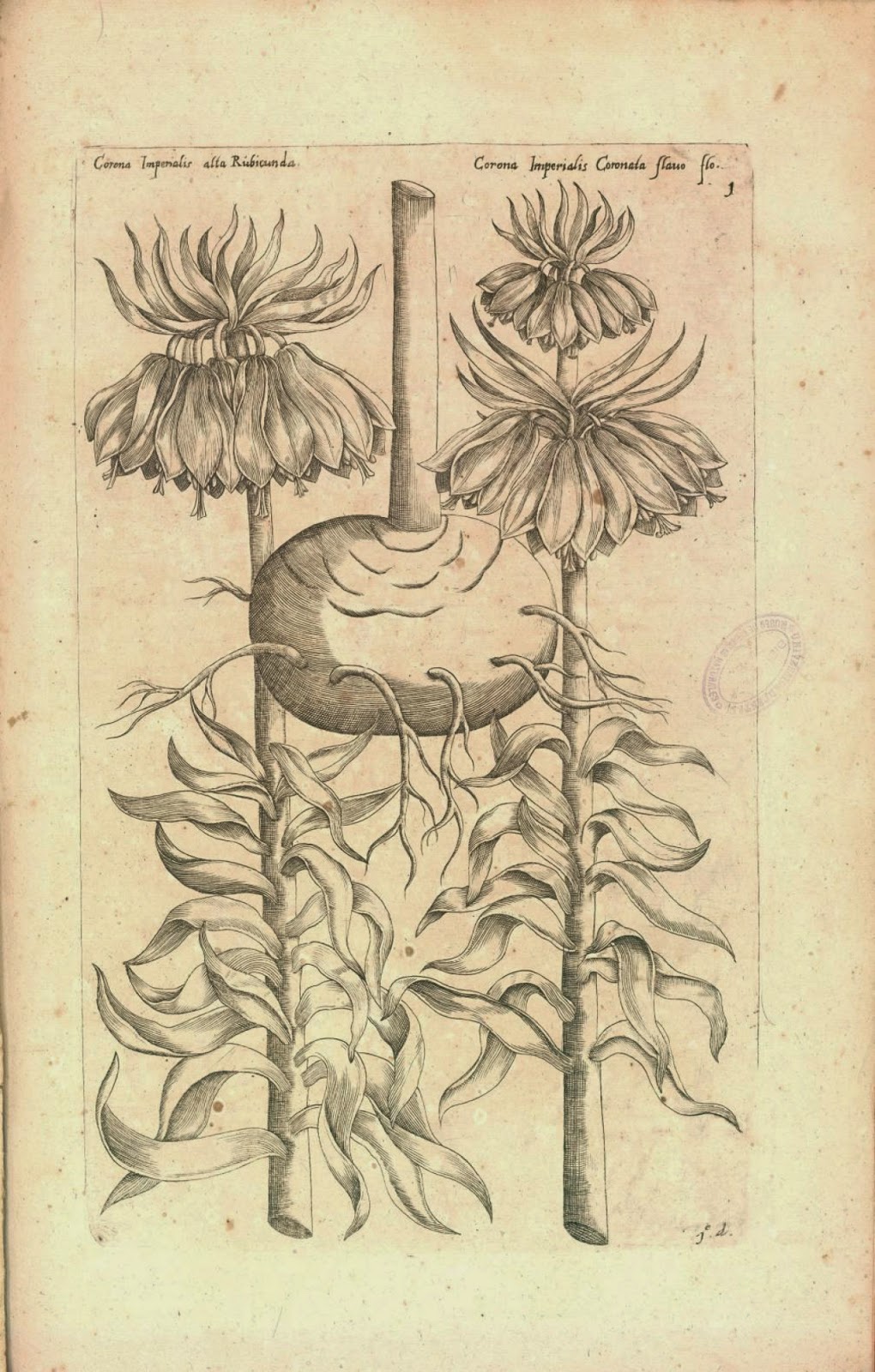
In the late 1500s, kings and wealthy aristocrats began having their exotic plant collections cataloged within elaborately-illustrated books called florilegia. Emanuel Sweerts‘ 1612 Florilegium, rather than being simply a catalog of his collection, presented a list of plants he could offer for sale, making it the oldest-surviving European plant catalog [2].

View Full Size Image
Fritillaria imperialis in Sweerts’ 1647 Florilegium amplissimum et selectissimum. http://biodiversitylibrary.org/bibliography/75687. Digitized by Biblioteca Digital del Real Jardin Botanico de Madrid.

In 1688, the first nursery catalog was published in Europe [3]. Early catalogs were simply listings of seeds or plants for sale, often articulated by Latin names and frequently in broadside form, lacking ornamentation, illustrations, or even prices. One of America’s first nursery catalogs was a broadside published in 1783 by John Bartram Jr [4]. Early nineteenth century seed advertising also consisted of short notices of seeds and tools for sale in gardening publications, very much in the newspaper “classifieds” style [5].
View Full Size Image
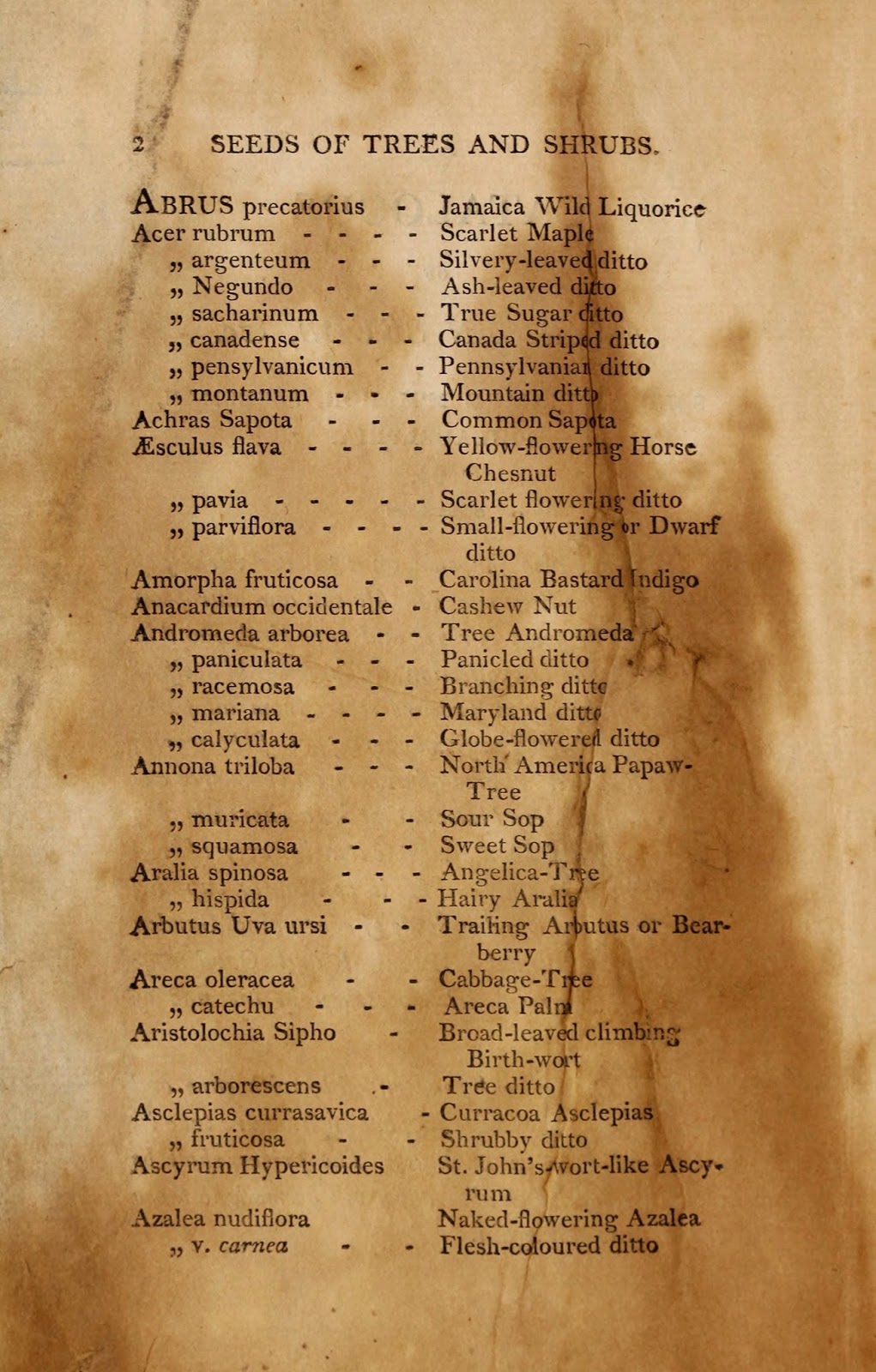
Tree and shrubs seeds offered for sale in the first American seed catalog in booklet form. M’Mahon, Bernard. A Catalog of American Seeds. 1804. http://biodiversitylibrary.org/page/44425432. Digitized by the USDA National Agricultural Library.

In 1804, the first American seed catalog in booklet form was published by Bernard M’Mahon, and by the 1820s in America, simple illustrations appeared in select catalogs [6]. Throughout the nineteenth century, horticultural manuals became increasingly popular, with growing instructions expanding to inclusion in catalogs as the industry bloomed, with the Shakers being early adopters of such practices  (incidentally, the Shakers were also the first to popularize the use of seed packets) [7]. The seed catalog became an increasingly important component of the seed business in the middle of the nineteenth century. Nurseries began publishing regular annual catalogs in the 1840s, which were mailed, often at great expense, to various segments of a merchant’s customer base. Expanding transportation networks, the growth of the US Postal Service, and a new Post Office classification system in 1863 assigning low rates to instructive periodicals and seeds, allowed the seed industry to flourish at an unprecedented scale through the mail order phenomenon. The mail order gardening business first centered on fruits and vegetables but grew to include flowers and especially ornamentals towards the last quarter of the nineteenth century [8].

View Full Size Image
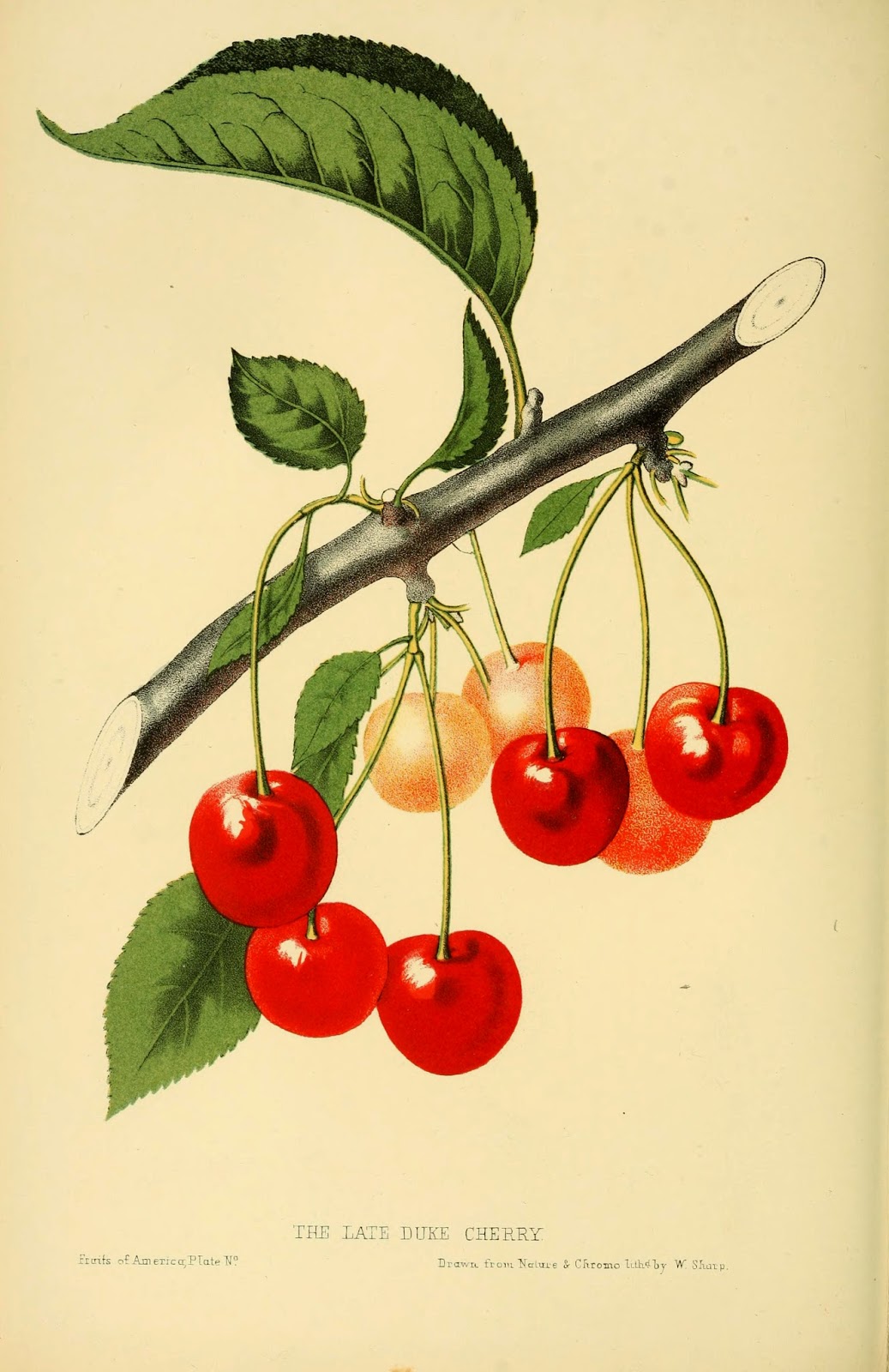
The Fruits of America (1848-56) by Charles Hovey is the first major American book with exclusively chromolithographed plates. http://biodiversitylibrary.org/page/20359525.

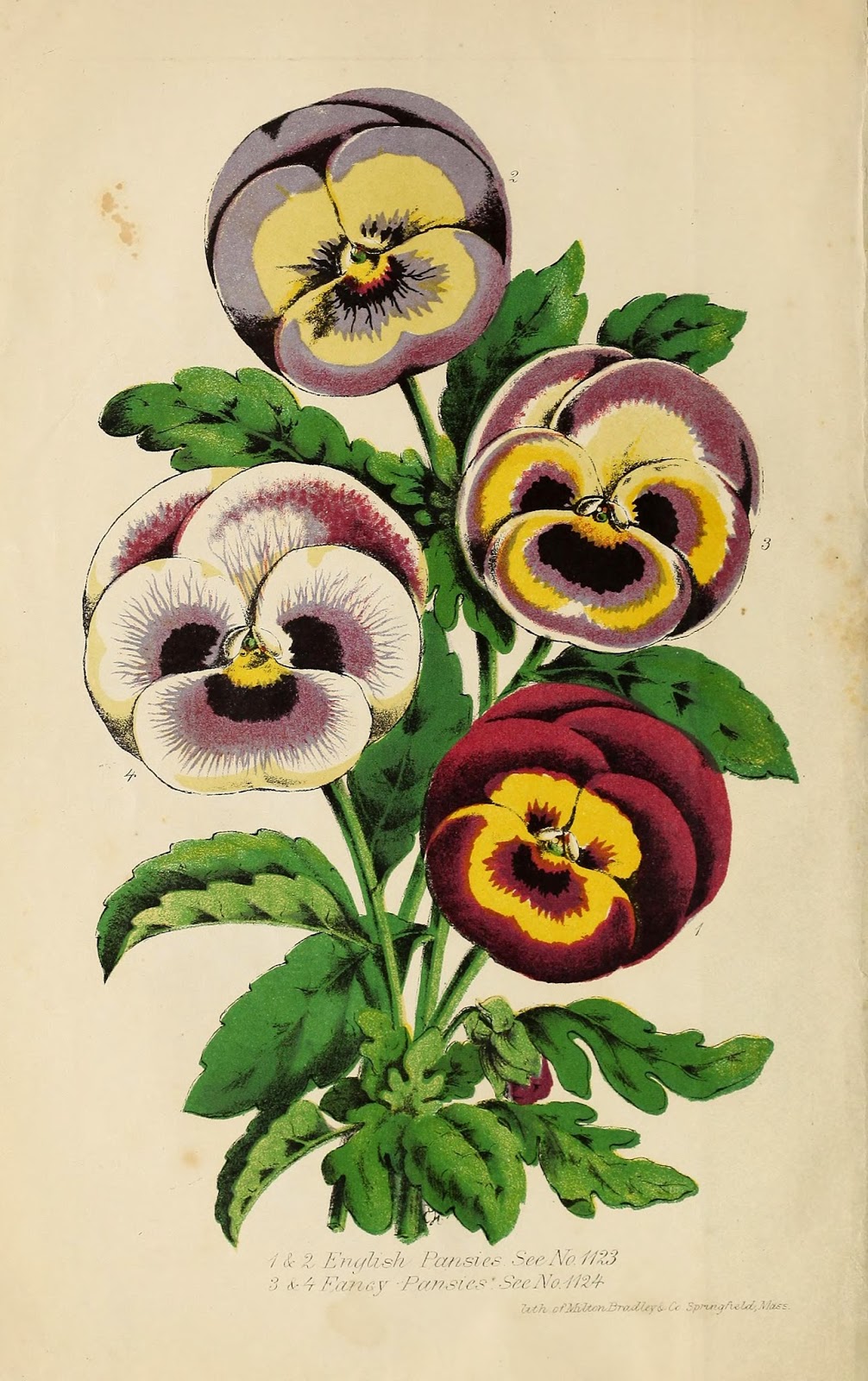
Printing innovations in the mid-nineteenth century transformed seed catalogs into beautiful marketing tools that stimulated customer appetites with visual representations of an advertised-seed’s potential. The multi-colored printing process of chromolithography was patented by Franco-German lithographer Gottfried Engelmann in 1837 [9] and introduced to the U.S. by William Sharp in 1841. By 1851, the first major American book with exclusively chromolithographed plates, The Fruits of America by nurseryman Charles Hovey, was published [10]. By the 1860s, chromolithography appeared in seed catalogs, thanks in large part to innovative nurseryman James Vick. Benjamin K. Bliss, however, is credited by horticultural historian Ulysses P. Hedrick as the first to introduce color to the catalog in the US in 1853. According to Elizabeth S. Eustis in “The Horticultural Enterprise: Markets, Mail, and Media in Nineteenth Century America,” Bliss’ 1867 “autumn catalog featured the earliest example so far discovered of chromolithography as the color process in a horticultural catalog” [11]. By 1890, commercial use of photographs in magazines and newspapers began, with, according to Ernest Morrison in J. Horace McFarland: A Thorn for Beauty, J. Horace McFarland being the first to use halftone images in horticultural publications [12].
View Full Size Image
B.K.Bliss is credited as the first to introduce color to the seed catalog in 1853. B.K. Bliss and Son’s illustrated spring catalogue and amateur’s guide to the flower and kitchen garden. 1870. http://biodiversitylibrary.org/page/44492905. Digitized by the USDA National Agricultural Library.

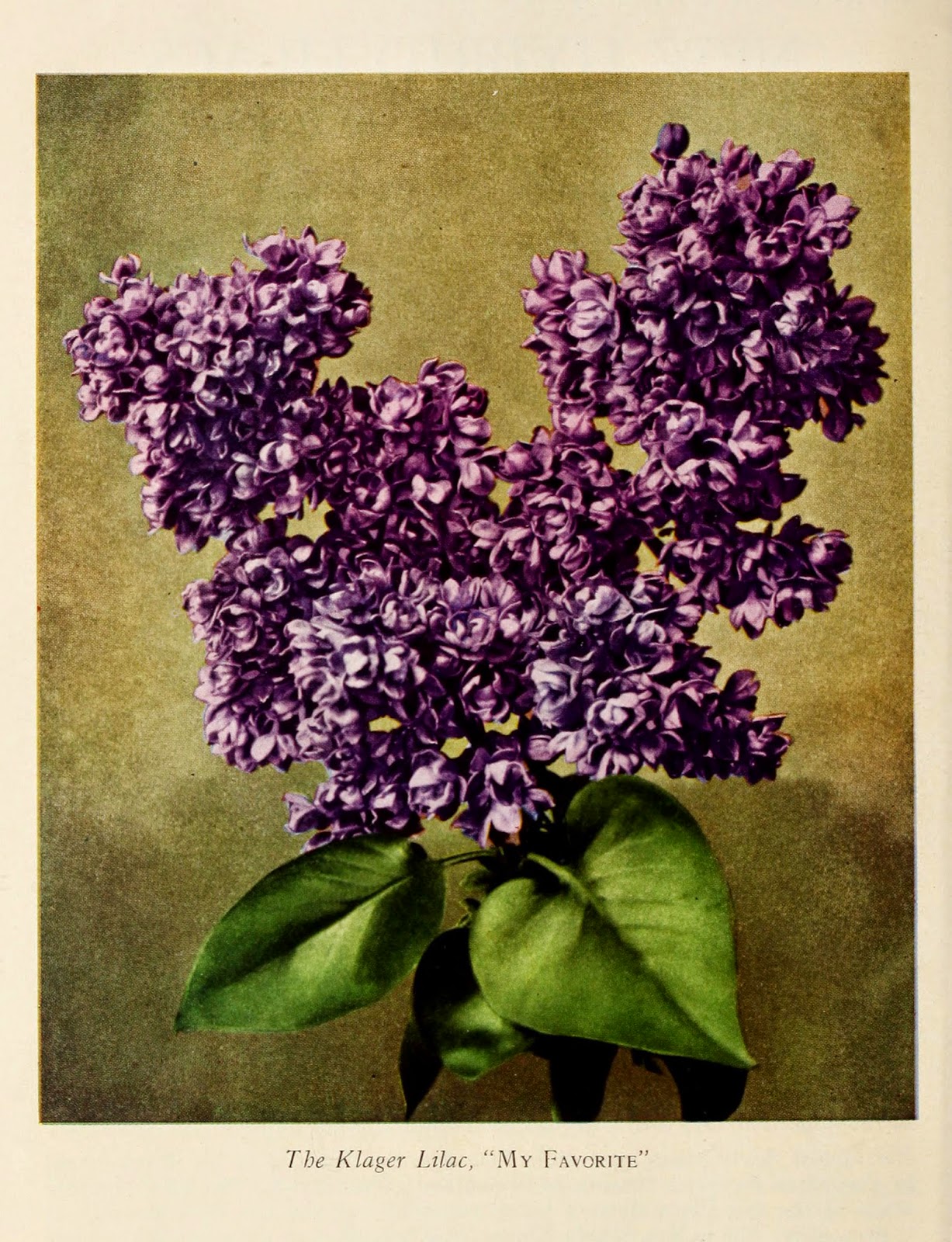
Increased competition and growing costumer demands for novelties led to the popularity of hybrids (offspring produced by breeding two genetically distinct plants) in the nineteenth century, with certain varieties offered only through certain companies and beautifully portrayed in seed catalogs [13]. By the end of the nineteenth century, women had also entered the seed and flower business, including Carrie H. Lippincott, who established the first seed company in the U.S. to be founded and managed by a woman [14].

View Full Size Image
Hybrid Lilac, The Klager Lilac. Cooley’s Gardens. 1931 fall catalogue of new hybrid lilacs and Japanese irises. http://biodiversitylibrary.org/page/44394461. Digitized by the USDA National Agricultural Library.

Seed Catalogs: More than Horticultural Novelties

While they stimulate our gardening imagination, help us trace the development of the seed industry, and offer insight into the plant varieties offered to consumers throughout the centuries, seed catalogs are also important reflections of social and cultural values over time, changing agricultural and printing technologies, evolution of garden fashion and landscape design, and the development of botanical science. For instance:

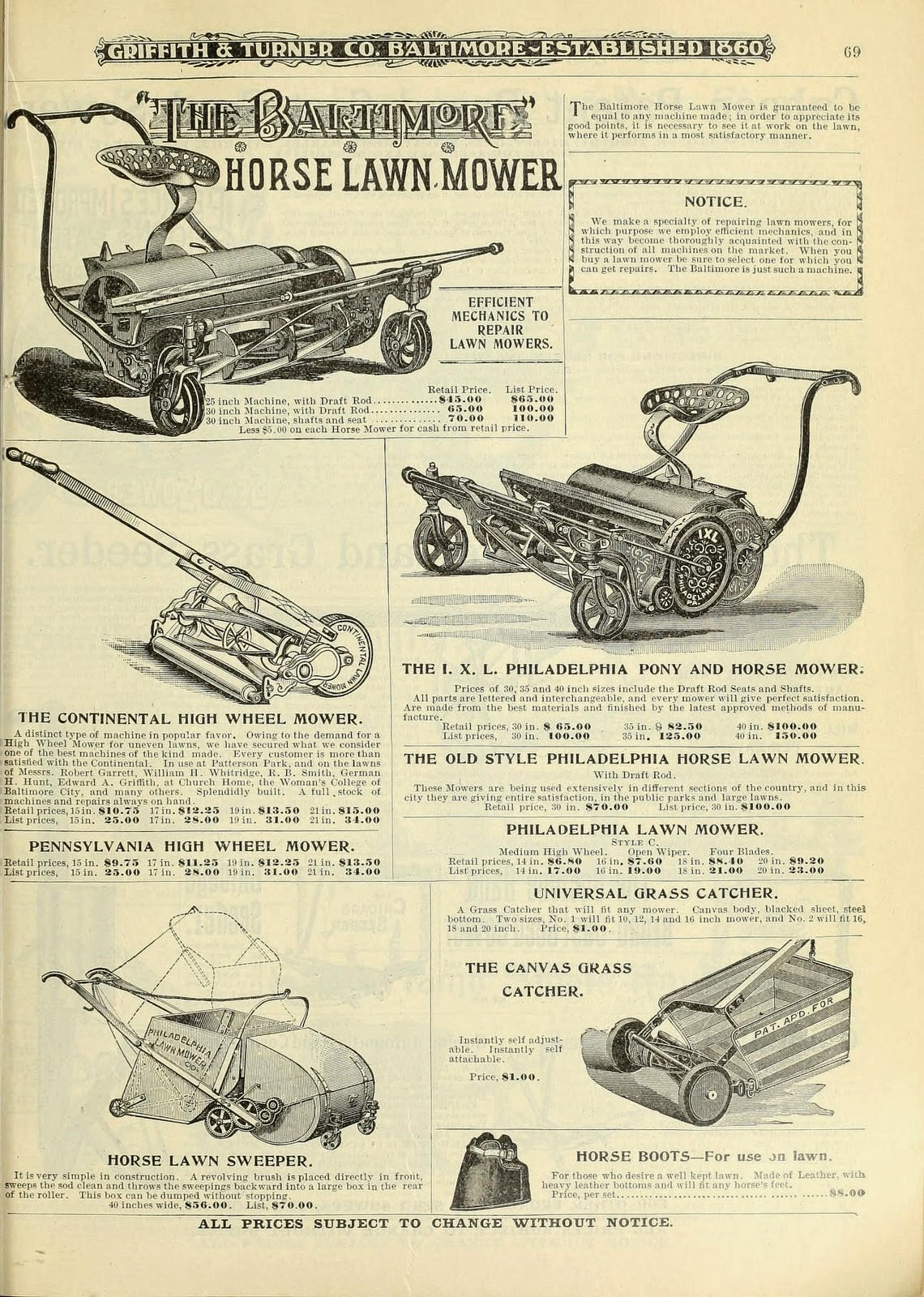
  • Seed catalogs show changes in gardening technology and tools over time. This 1906 catalog lists 29 tools for sale. By the 1860s, catalogs listed dozens of specialty tools for specific tasks, like grass shears, wooding shears, ladies shears, and hedge shears. This 1900 catalog proudly displays “Iron Age” garden and farm implements. The lawnmower, first invented by Edwin Budding in England in 1830, began being popularly manufactured starting in the 1860s, and in 1902 Ransomes produced the first gasoline-powered lawnmower. By 1900 various models were selling for between $6-$100 retail.
View Full Size Image
Various lawnmower models for sale in 1900. Farm and garden supplies : Griffith and Turner Co. http://biodiversitylibrary.org/page/43837949. Digitized by the USDA National Agricultural Library.
  • Pest control is a major business today. Seed catalogs help us trace the development and introduction of pesticides and fungicides. Compare the offerings from 1881, 1893, 1907, and 1934, for example.
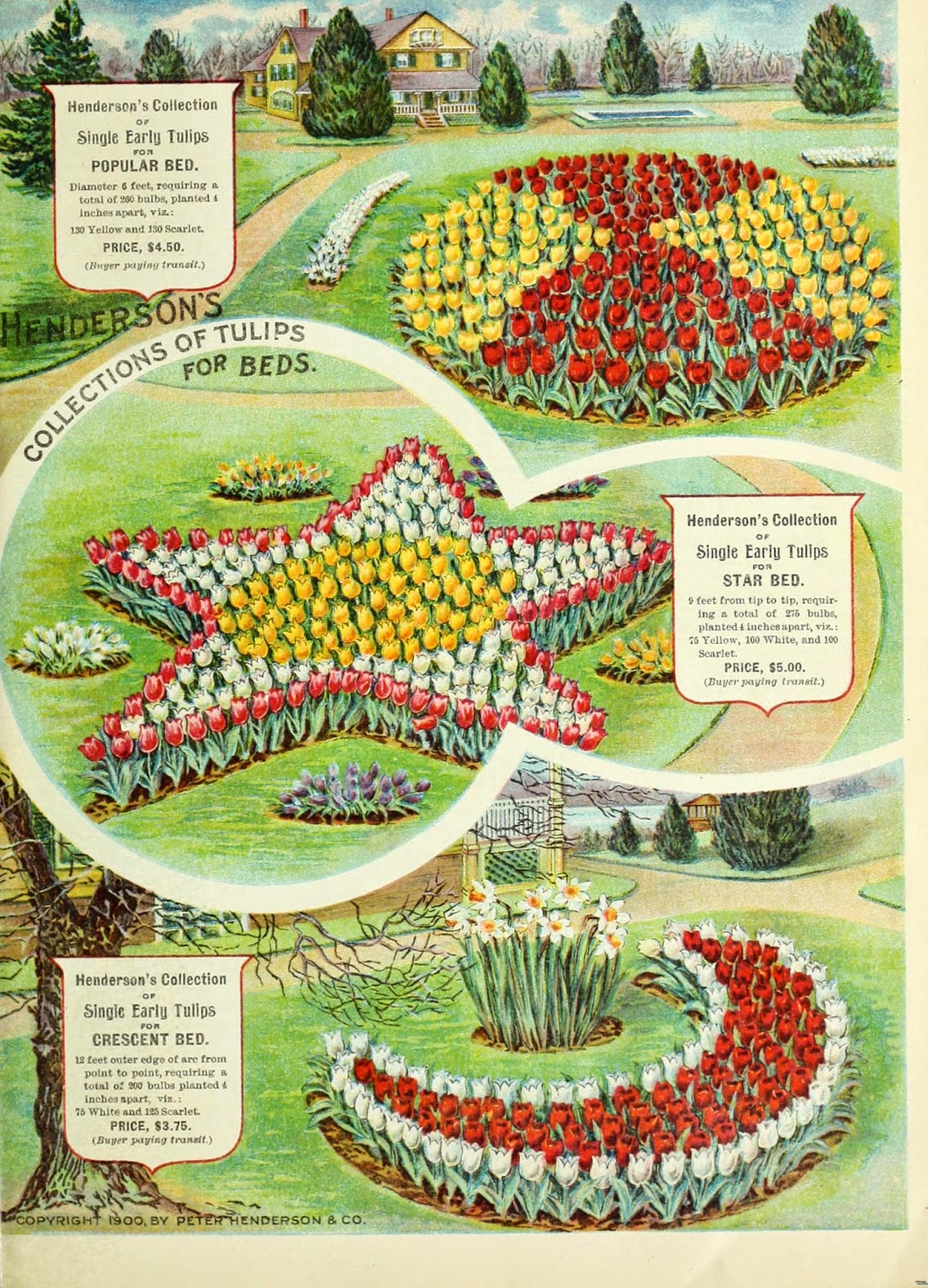
  • Seed catalogs help us trace changes in garden plant popularity and landscape design over time. For instance, from 1865-1900, “bedding out,” which involved laying out patterns on the ground and filling them in with colorful plants, was all the rage. After the turn of the 20th century, bedding out was replaced by cottage gardening, which uses informal design and traditional materials. Check out the awesome tulip bed patterns in this 1900 catalog.
View Full Size Image
“Bedding Out” Garden Style. Peter Henderson and Co. Autumn bulbs catalogue : 1900. http://biodiversitylibrary.org/page/43899723. Digitized by the USDA National Agricultural Library.

Garden Stories: A Week Long Event for Garden Lovers

All this week, we’ll be exploring the fascinating world of gardening, including garden history topics such as the development of hybrids, heirloom gardening, women in the seed industry, revolutions in garden marketing through art, and the vital role the Shakers played in the American seed industry. Follow our blog for more great stories! We’ll also be sharing great gardening tips and plant factoids with help from our BHL members and affiliates. And we’ll be using the over 14,000 seed and nursery catalogs in BHL to help tell these stories. Join in all the gardening fun by:

  • Following our blog and #BHLinbloom on Twitter and Facebook (or go directly to BHL’s Twitter and Facebook) this week.
  • Browsing over 2,500 seed and nursery catalog images in our Flickr collection.
  • Exploring select seed catalog art, and stunning bookmarks and postcards developed by Cornell Library, on Pinterest.
  • Seeing garden history come to life on the Smithsonian Libraries’ Tumblr.
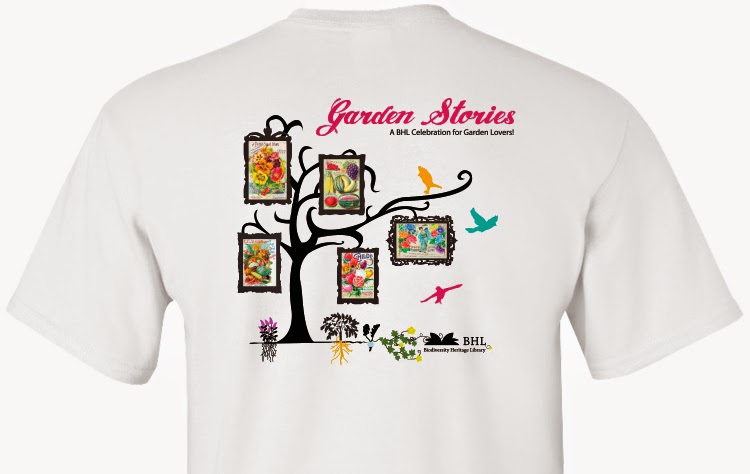
  • Purchasing your very own Garden Stories T-Shirt through T-Fund. All proceeds will go to help us digitize more pages for BHL. Our goal is to sell enough shirts to digitized 5,000 pages. Can you help us get there?
View Full Size Image
Garden Stories T-Shirt available through TFund.

More Great Gardening Resources from our Partners

Can’t get enough gardening fun? Explore these great resources from our partners:

  • Cornell University Library Mail Order Gardens Exhibit
  • Cornell University Gardening Guide
  • Missouri Botanical Garden Help for the Home Gardener
  • Natural History Museum, Los Angeles County Nature Garden
  • The New York Botanical Garden Seed Catalog LibGuides 
  • The New York Botanical Garden Plant Information and Gardening Guide
  • Royal Botanic Gardens, Kew, Nursery Catalogs and Seed Lists
  • Smithsonian Libraries Seed and Nursery Catalogs Exhibit
  • Spring Gardening Checklist via Smithsonian Gardens
  • USDA National Agricultural Library Seed and Nursery Catalog Collection
  • USDA The People’s Garden Video and Webinar Gardening Resources
  • Find more online gardening resources, tips, and help on the BHL Gardening Resources Page.


References

  1. Kingsbury, Noel. Hybrid. Chicago: University of Chicago Press, 2009, 1-36. Print.
  2. The Seed and Nursery Catalog in Europe and the U.S. “Earliest European Seed and Nurseru Catalogs.” Oregon State University Libraries. Web. February 2015. http://scarc.library.oregonstate.edu/omeka/exhibits/show/seed/earliest/earliest-european/.
  3. Kingsbury, Noel. Hybrid. Chicago: University of Chicago Press, 2009, 75. Print.
  4. Christopher, Thomas. “Heirloom Seed Catalogs.” Horticulture. Dec.(1985): 25. Print.
  5. Kraft, Ken and Pat Kraft. “Seeds for Sale.” Country Living Gardener. 1.1(1993): 30. Print.
  6. Fraser, Susan M. and Vanessa Bezemer Sellers. Flora Illustrata. New York: New York Botanical Garden, 2014, 235. Print.
  7. Ibid., 236
  8. Ibid., 249
  9. Ferry, Kathryn. “Printing the Alhambra: Owen Jones and Chromolithography.” Architectural History. 46(2003): 175–188.
  10. Fraser, Susan M. and Vanessa Bezemer Sellers. Flora Illustrata. New York: New York Botanical Garden, 2014, 239. Print.
  11. Ibid., 251
  12. Morrison, Ernest. J. Horace McFarland: A Thorn for Beauty. Harrisburg, PA: Pennsylvania Historical and Museum Commission, 1995. Print.
  13. Kingsbury, Noel. Hybrid. Chicago: University of Chicago Press, 2009, 139. Print.
  14. American Garden History. “Who was the mysterious feminist seed dealer and marketing genius Miss Carrie H. Lippincott?” Barbara Wells Sarudy, 2010-13. Web. February 2015. http://americangardenhistory.blogspot.com/2014/07/who-was-mysterious-feminist-seed-dealer.html.

March 23, 2015by michelle.underhill
Blog Reel, Campaigns, Featured Books, Garden Stories

Shaping Early American Gardening: Bernard M’Mahon

Our Garden Stories campaign is just under a week away! We’re excited to share fantastic gardening information, history, art, and tips with you March 23-27, 2015. And don’t forget our TwitterChat this Friday, March 20, from 1-2pm EST! If you have gardening questions, send them our way with the hashtag #BHLinbloom. Don’t miss out!

View Full Size Image

We thought we’d give you a taste of the fascinating history and stories you can expect next week by featuring a post on one of the individuals that helped shape the gardening industry in America: Bernard M’Mahon. It is written by Robin Everly, Botany and Horticultural Librarian at the Smithsonian Libraries and one of the experts that will be on hand to answer your gardening questions during our TwitterChat this Friday!

Bernard M’Mahon (spelled M’Mahon or McMahon) shaped American gardening during its formative years in early 19th century. Although M’Mahon left his mark by creating a successful seed and nursery business and writing an early popular horticultural book specific to American plants, accurate biographical information on him is sketchy. Born in Ireland, he came to America between 1796-1798 for political reasons. Like many immigrant stories, Ireland’s loss was the United States’ gain. Botanist William Darlington recalled meeting him in Dilworthtown, Chester County, “In autumn, I think, of 1799”, where many Philadelphians went to escape an outbreak of yellow fever. Although it is speculated he had extensive training in gardening while in Ireland, M’Mahon first worked in the printing business for William Duane and the newspaper, the Aurora, beginning in 1800. However, a few years later, he began working in the seed and nursery business, collecting and exporting seeds of America’s wild plants to Europe. At the time, native plants from America were all the rage for European gardeners.

View Full Size Image
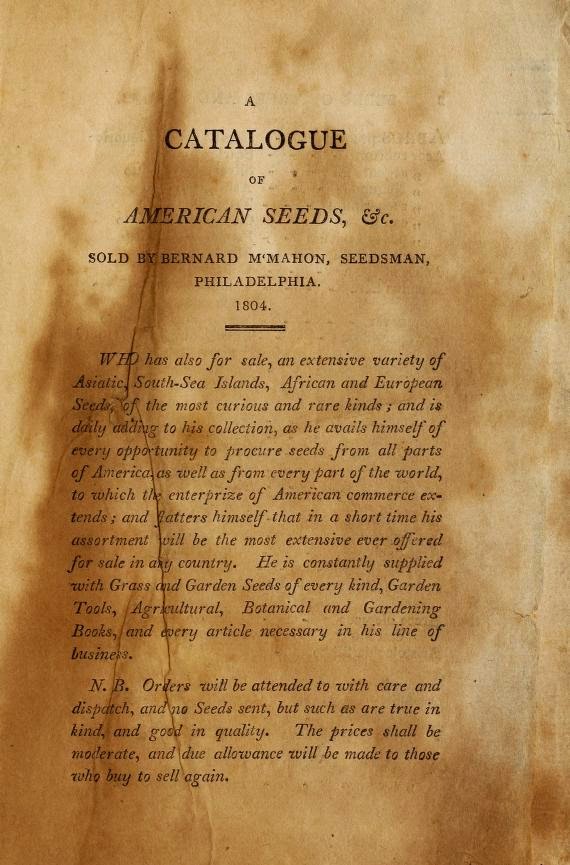
M’Mahon, Bernard. A Catalogue of American Seeds. 1804. http://biodiversitylibrary.org/page/44425433.

He is credited with publishing the first American seed catalog in booklet form in 1804. It is actually more a seed list than what we think of as a seed catalog today. It simply lists plants in alphabetical order under major categories such as “trees and shrubs” and “herbaceous plants.” For each plant the scientific and common name is given. No illustrations were included. Printing and publishing in the United States was still very new at this time. Many publishers still sent their works to England to be published and shipped back to the states. Philadelphia, with sixty paper mills located nearby, was a popular area for papermaking and printing during this period of time.

View Full Size Image
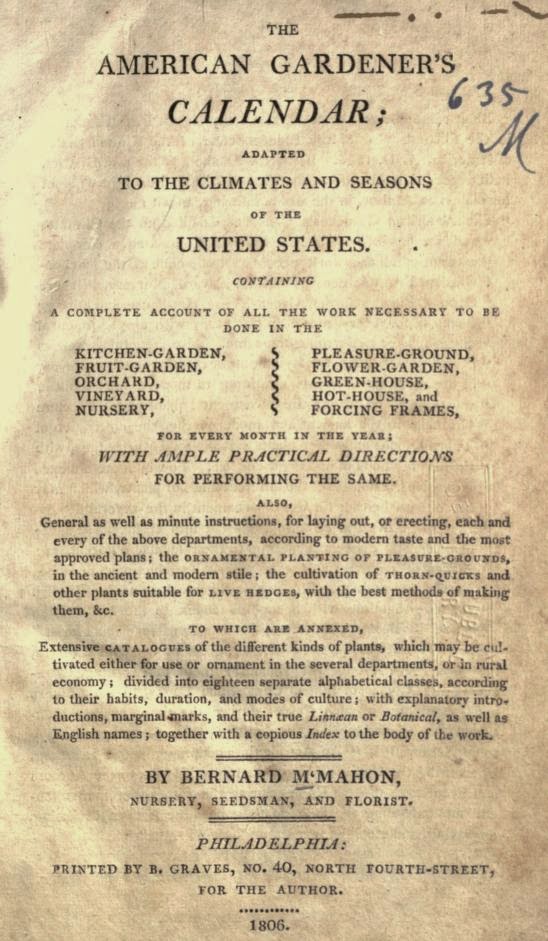
M’Mahon, Bernard. The American Gardener’s Calendar. 1806.  http://biodiversitylibrary.org/page/20142803.


In 1806, while operating his business, he published The American gardener’s calendar; adapted to the climates and seasons of the United States. Liberty Hyde Bailey, in his Cyclopedia of American Horticulture referenced it with: “He gave America its first great horticultural book.” In a sense, it became what we would call a bestseller. The book was popular for 50 years and went through 11 editions, the last published in 1857, long after M’Mahon’s death in 1818.

View Full Size Image
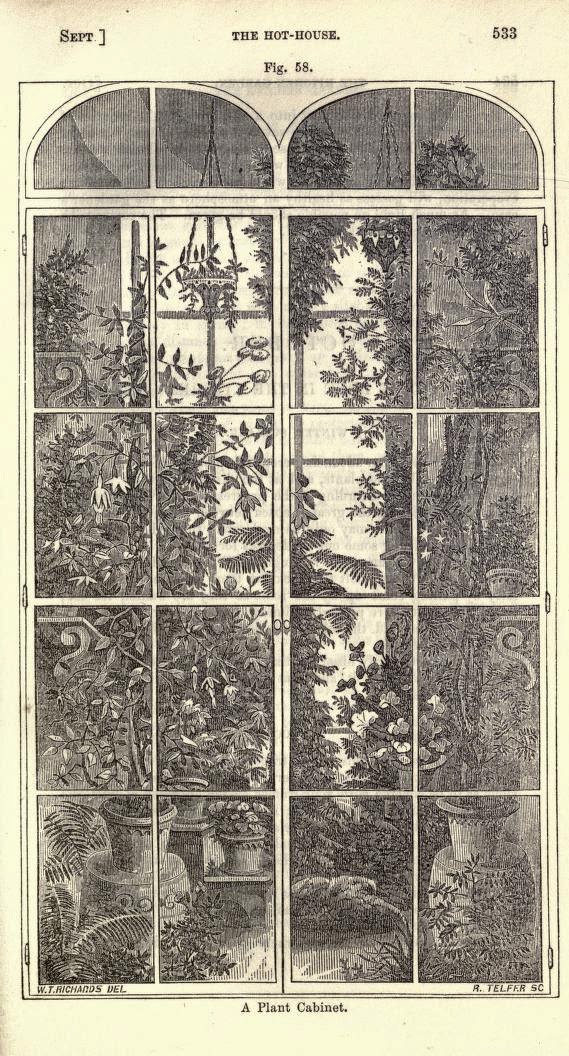
A Plant Cabinet, or Hot-House. M’Mahon, Bernard. The American Gardener’s Calendar. 11th Ed. 1857. http://biodiversitylibrary.org/page/20141911.

It was through The American gardener’s calendar that President Thomas Jefferson became acquainted and befriended M’Mahon. Jefferson found the book useful for his gardening and growing food at Monticello. M’Mahon and Jefferson began an exchange of books and seeds that went on for several years. Jefferson asked M’Mahon, along with fellow Philadelphia gardener, William Hamilton, to receive and propagate seeds and roots from plants collected on the Lewis and Clark Expedition, also known as the Corps of Discovery, in 1804 to 1806.

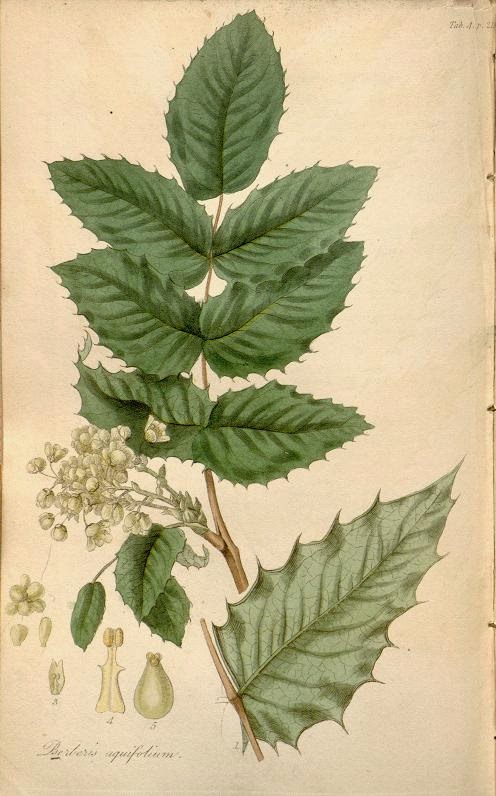
M’Mahon was a friend to many botanists; for example, Thomas Nuttall named a genus of evergreen shrubs discovered in the western U.S. during the Lewis and Clark expedition to honor him. While the name Mahonia is still used frequently in horticulture to identify these shrubs; scientifically, the Oregon grape holly or mountain holly (Berberis aquifolium) is now in the genus Berberis.

View Full Size Image
Berberis aquifolium. Pursh, Frederick. Flora Americae Septentrionalis. v. 1 (1814). http://biodiversitylibrary.org/page/396637.

In the 11th edition of The American gardener’s calendar, Jay J. Smith, who handled the revision, wrote a very personal memoir dedicated to M’Mahon which includes a tribute letter by Darlington. It is one of the few personal recollections I came across for such an important person in American gardening. M’Mahon’s publications can be found online through the BHL website.

Be sure to check out our Garden Stories event next week, March 23-27, and our TwitterChat this Friday, March 20, at 1-2pm EST. Happy gardening!

March 17, 2015by Grace Costantino
Blog Reel, Featured Books

Documenting the Flora of the Nation’s First Urban Park System

Did you know that the city of Boston is blessed with one of the largest and the oldest urban forest reservations in America?

View Full Size Image
Photo: Charles Eliot, 1897

At the turn of the 20th century, Boston saw a rapid increase in human settlement and industrialization which quickly transformed the once pristine Commonwealth into a highly developed, unsightly, and unhealthy metropolis. The movement to preserve what was left of Greater Boston’s natural wonders was inspired by the writings by transcendental thinkers like Ralph Waldo Emerson and Henry David Thoreau, who were advocates of the idea to “keep the New World new.” Local activists for the cause included Wilson Flagg, Elizur Wright, Sylvester Baxter, and Charles Eliot. They envisioned a place where the citizens of Boston could escape the “noisy ugliness” of the overcrowded city and revitalize their spirits in the requiem of nature’s untamed beauty.

A Dream Comes to Pass 

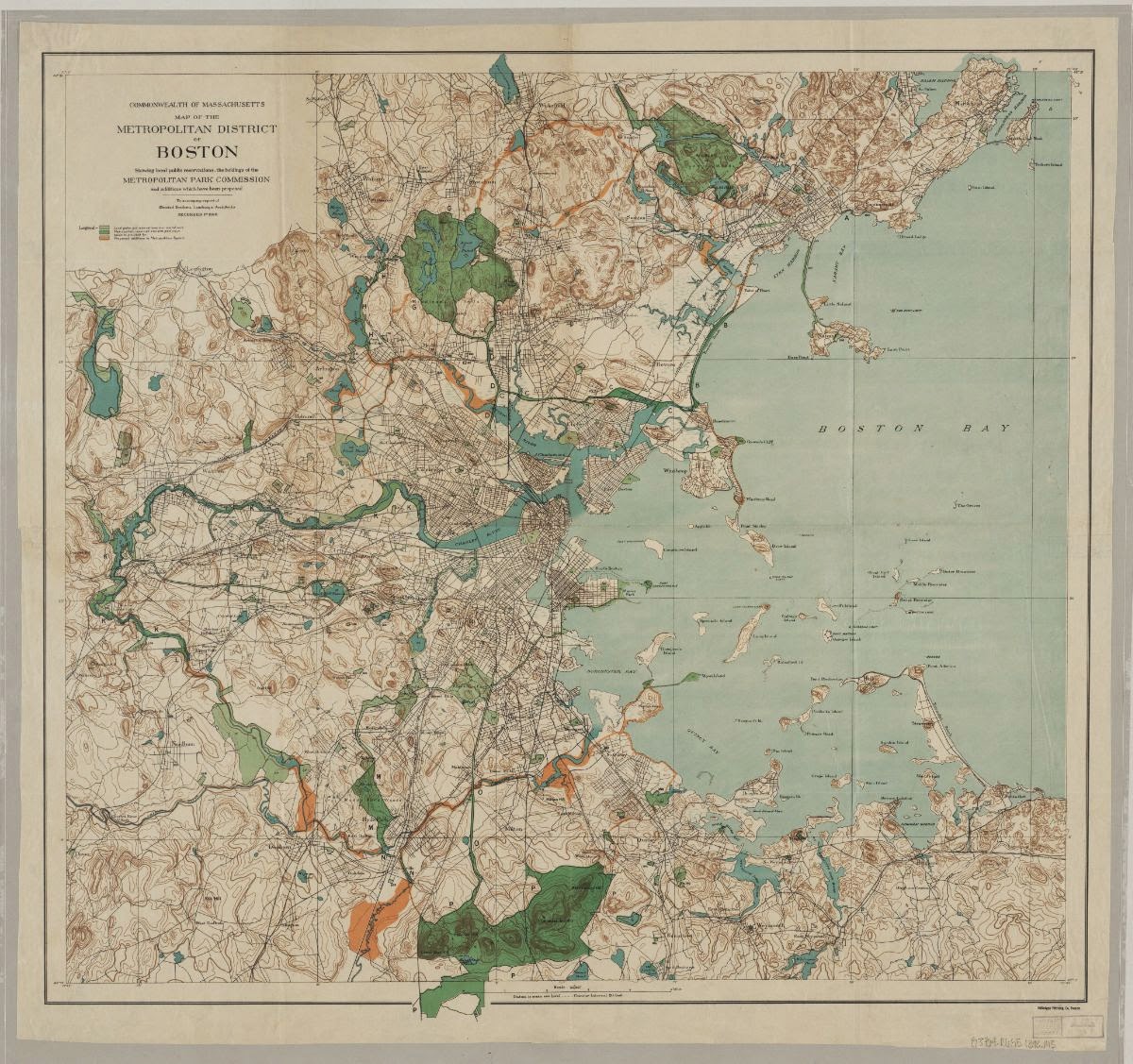
Boston’s budding conservation movement had the foresight to identify large tracts of Massachusetts wilderness for preservation in perpetuity. A four decade campaign ensued and resulted in the passage of the Acts of 1893, Chapter 407 which established the Metropolitan Park Commission. This legal entity was charged with restoring, preserving, and increasing the beauty of the undeveloped woodlands surrounding Boston and this landmark legislation would serve as a model for other American cities. The Metropolitan Park Commission’s first order of business was to hire the noted landscape architecture firm, Olmsted, Olmsted and Eliot, to survey the vegetation in the recently acquired woodland reservations, the Middlesex Fells, Beaver Brook, Stony Brook, and the Blue Hills.

View Full Size Image
Map of the original Metropolitan Park Reservations
Click here for an interactive version.

The firm appointed landscape designer Warren H. Manning who led a team of twenty volunteers to complete the fieldwork. Local botanist Walter Deane was hired to compile and edit the survey’s findings and in 1896, he published the results in this month’s book of the month, Flora of the Blue Hills, Middlesex Fells, Stony Brook and Beaver Brook Reservations, of the Metropolitan Park Commission, Massachusetts. While Deane is credited with the organization of the specimens and botanical observations for publication, the project would not have been possible without collaboration among many amateur and professional botanists. This collaboration was so successful that it led to the formation of the New England Botanical Club (NEBC), which still meets regularly and has amassed a collection of 250,000 specimens housed in the Harvard University Herbaria (HUH).

Announcing a New BHL Collection

This example of an early successful citizen-science project is highlighted in the launch of a new collection in the BHL: The Archives from the Boston Metropolitan Park. This collection is composed of approximately 8,000 pages of manuscript material documenting the progress of the survey. Readers can peruse Walter Deane’s field notes, diaries, datebooks, and correspondence. His diaries reveal fascinating insights into his work on compiling the Flora and the details of its publication, as well as how the formation of the NEBC resulted from the Metropolitan Flora survey. His diaries also give rich pictures of the botanists of his time and are highly useful to anyone writing about the history of the NEBC and its members. The collection is now freely available and opens up this fascinating slice of history to the public for the first time. As part of the Connecting Content project, the digitization of the archives and original specimens from the Metropolitan Park Reservation was made possible by an Institute of Museum and Library Services (IMLS) National Leadership Grant.

Collection Highlights

One of the most compelling aspects of the correspondence related to the Metropolitan Flora survey is learning about people and information not evident from Deane’s Flora or from the botanical specimens. One example is a letter from the tree expert Loren Dame to Manning in which he encloses a list of trees compiled by a “non-botanist”, George Perry. Perry states that “I have made it a point to crawl through the densest tangle of greenbrier and thicket… to become familiar with every rod of the section.” As a result of his efforts, his list of trees is very thorough. He also found some very rare plants not seen by other surveyors, including maidenhair fern. Unfortunately, because he wasn’t considered a reliable source, his data wasn’t included. In another letter to Manning, Dame reported three rare tree species found only in an area adjacent to the Fells, which was added to the reservation after Flora was published. All of these omissions are significant, and the knowledge revealed in these letters is highly valuable for understanding the full extent of the past flora of the area.

Surveying the Flora of Middlesex Fells: Yesterday and Today

Between 2003 and 2011 a new survey  very much like the original survey of the Fells flora was undertaken by a team of NEBC and HUH botanists. Using Deane’s Flora as a basis for comparison, the team found that most of the native species from the original survey persist, despite substantial increases in the number and frequency of non-native plants. These native species face several threats, including habitat disturbance, and loss due to construction and recreational use of the Fells, herbivory from increases in deer and insect populations, as well as environmental changes effected by climate change and afforestation. Sustaining populations of native species, some of which are rare and endangered, will require a more active management of the Fells.[1]

Urban forests purify the air that we breathe, provide a habitat for local flora and fauna, help reduce energy demands, provide recreational opportunities, reduce stress and crime rates—the list goes on. Since eighty percent of us live in urban areas most of us owe quite a bit of thanks to the astute conservationists who fought to keep the untamed wilderness close by. Now it’s our turn to preserve their legacy.

View Full Size Image

Spot Pond named by Governor John Winthrop in 1631.

Photo by Mike Ryan, Friends of the Fells

“Something like five miles northerly from Boston lies a great tract of country, all stony hills and table-lands, almost uninhabited, and of wonderful picturesqueness, and wild rugged beauty… and at its heart is that most beautiful of Boston’s suburban lakes, Spot Pond, which lies high up among the hills.” Sylvester Baxter, 1886.

Notes

[1] 2012. Hamlin, Bryan T., W. T. Kittredge, D. P. Lubin & E. B. Wright. Changes in the vascular flora of the Middlesex Fells Reservation, Middlesex County, Massachesetts, from 1895 to 2011. Rhodora 114(959): 229-308.

Learn More!

IMLS Grant Project Page
Walter Deane (1848-1930) Papers
NPS: Metropolitan Parks Commision
Friends of the Fells
Found in the Fells
The Middlesex Fells, a Flourishing Urban Forest by W. Kittredge
BHL Collection: Archives and Specimens from the Boston Metropolitan Park Flora 

February 26, 2015by [email protected]
Blog Reel, Featured Books

Wildflowers of Ecuador: Watercolors and eBooks

View Full Size Image
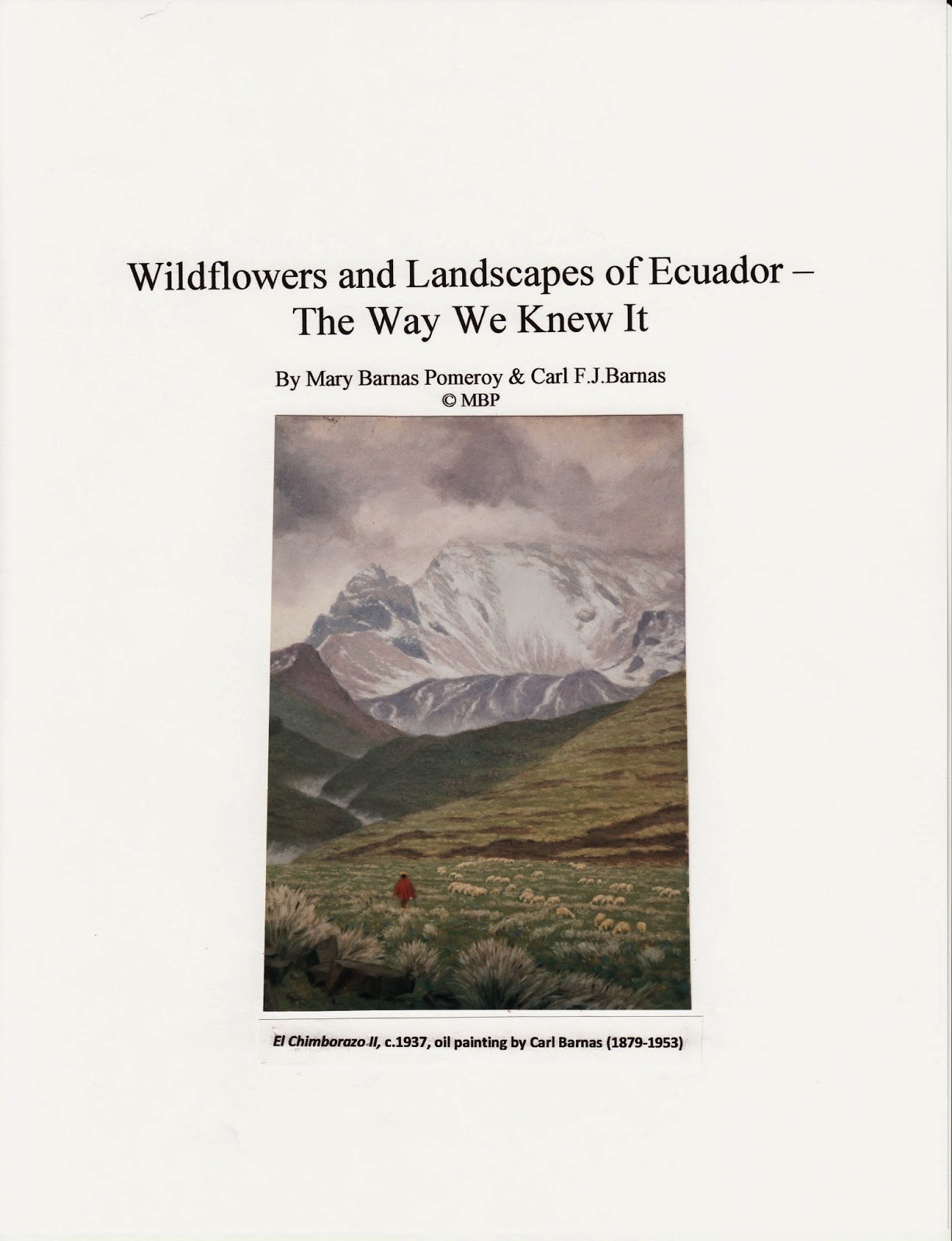
Missouri Botanical Garden, Peter H. Raven Library’s first eBook: Wildflowers and Landscapes of Ecuador: The Way We Knew It.

Every now and then an unusual and exciting opportunity arises to digitize a very unique item. Such an opportunity arrived in the email box of Doug Holland, the director of the Peter H. Raven Library at the Missouri Botanical Garden, one afternoon in January 2014. Anne Hess, daughter of artist Mary Barnas Pomeroy and grand-daughter of artist/teacher Carl Barnas, had decided to donate a collection of artwork and her mother’s unfinished manuscript to the library. It was with great honor that the Raven Library accepted this collection. Not only are the paintings themselves beautiful, but the backdrop to history that this collection provides is also fascinating.

View Full Size Image
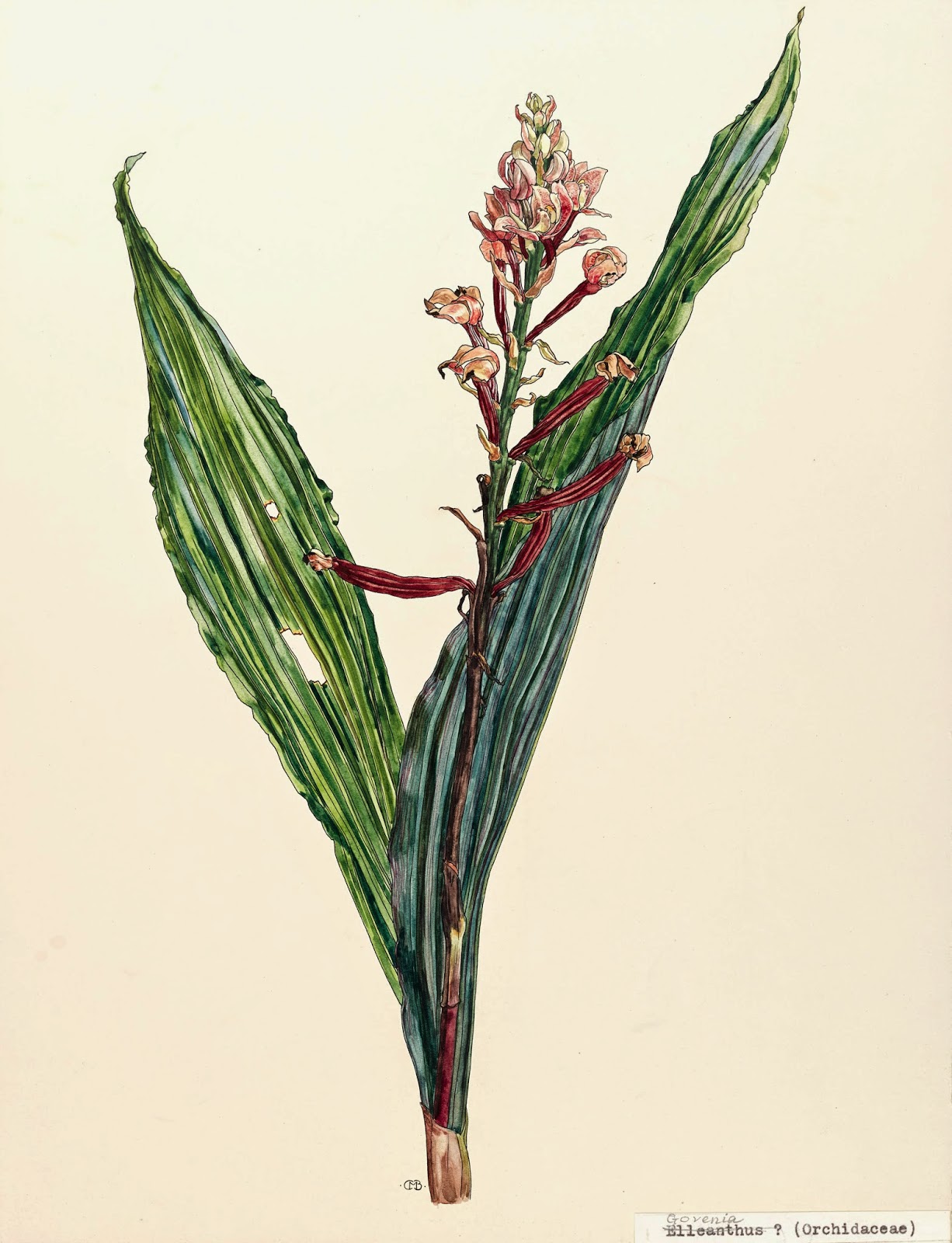
Orchidaceae. Pomeroy, Mary Barnas. Wildflowers and Landscapes of Ecuador: The Way We Knew It (2015). http://biodiversitylibrary.org/page/46381682.

Escaping the rise of Nazism in 1930s Laubach, Germany, the Barnas family travelled to Quito, Ecuador, after a one-year stay in Czechoslovakia. It is in Ecuador that most of the artwork was created. Ms. Pomeroy created detailed watercolors of many botanical specimens, but she also labeled their location and sought to identify each specimen.

Ms. Pomeroy’s interest in botanical illustrations piqued at the suggestion of her father. In 1938, she began the first of what would become more than 200 illustrations, when she decided to start compiling all the information six years later for a book that would contain her numerous illustrations. She decided to focus on illustrating smaller plants and fungi with the thought that the larger specimens might have already been described as “the more attractive ones might have been easier noticed and better known to science.” The 41 different botanical families were examined under a magnifying glass to be able to replicate all visible details.

View Full Size Image
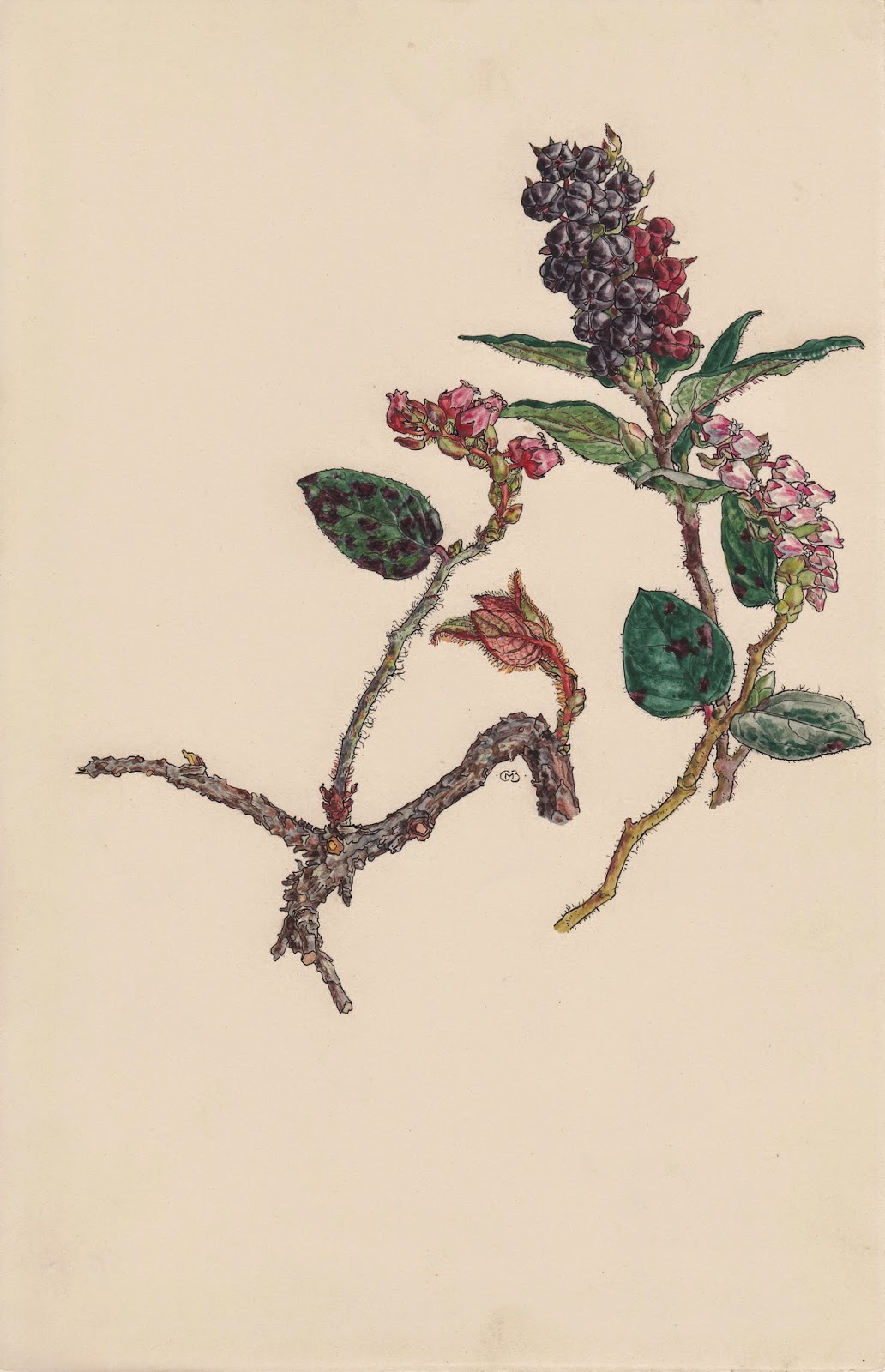
Ericaceae. Pomeroy, Mary Barnas. Wildflowers and Landscapes of Ecuador: The Way We Knew It (2015). http://biodiversitylibrary.org/page/46381572.

As her portfolio kept increasing, she thought it prudent to try to identify and label each of the specimens she had already painted. Although never formally trained as a botanist herself, she enlisted the assistance of many other botanists, such as Dr. Alfredo Paredes of the Universidad Central del Ecuador and Dr. Francis Pennel of the Academy of Natural Sciences of Philadelphia, to help identify or confirm the identity of various specimens to label each one as accurately as possible. Ms. Pomeroy was also employed at various times as a botanical illustrator; for instance, she worked for the University of California – Berkeley’s Herbert L. Mason who was laboring on A Flora of the Marshes of California.

After a more than 50-year hiatus, Ms. Pomeroy returned to her book of botanical illustrations of plants and fungi from Ecuador. Unfortunately, she passed away before being able to complete her book.

During her life, Ms. Pomeroy enthralled Dr. Peter H. Raven, former president of the Missouri Botanical Garden, with her early Ecuadorian illustrations. This led to a showing of the artwork both at the Missouri Botanical Garden in St. Louis and in various other cities.

View Full Size Image
Caritas rojas / Alonsoa meridionalis. Pomeroy, Mary Barnas. Wildflowers and Landscapes of Ecuador: The Way We Knew It (2015). http://biodiversitylibrary.org/page/46381921.

This is where Ms. Pomeroy’s daughter, Anne Hess, stepped into the foreground and offered her mother’s collection to the Raven Library. Upon learning that most of the artwork was meant to tie-in with an unpublished manuscript, suggestions arose that the unpublished manuscript should evolve into the library’s first e-book publication entitled Wildflowers and Landscapes of Ecuador: The Way We Knew It.

Ms. Pomeroy had already sorted all the images into major categories, which facilitated easy pairing of the images with their respective chapters and descriptions.

View Full Size Image
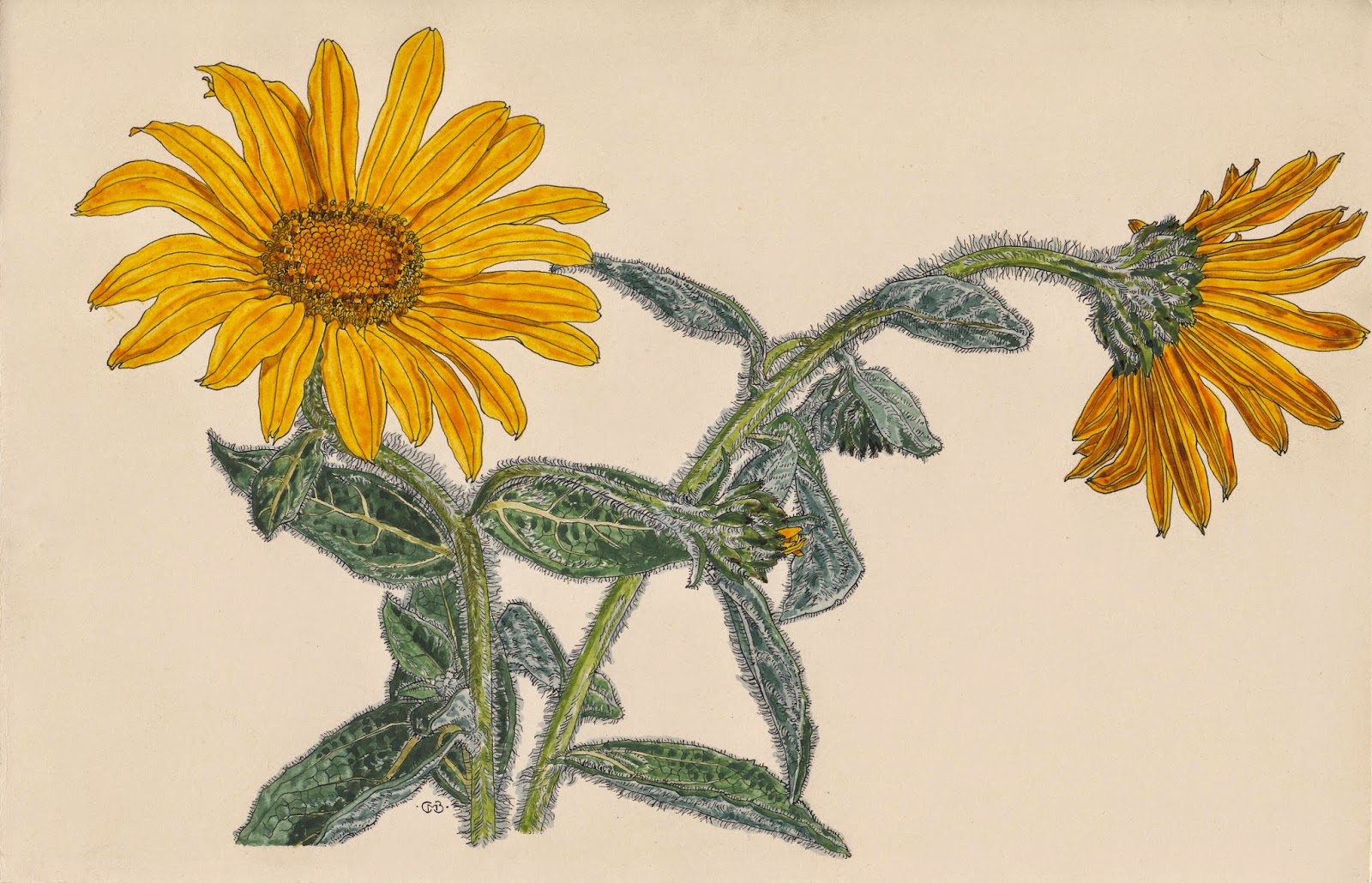
Viguiera sodiroi. Pomeroy, Mary Barnas. Wildflowers and Landscapes of Ecuador: The Way We Knew It (2015). http://biodiversitylibrary.org/page/46381524.

In addition, Ms. Pomeroy had written a short fictional story titled “An Indian boy meets Mount Pichincha’s flowers,” which is included toward the end of the book. The reader is taken on an expedition through the eyes of a young boy, Hilario, as he collects botanical specimens with a botanist named Professor Flores.

View Mr. Barnas’ landscapes and Ms. Pomeroy’s enchanting botanical illustrations, as well as relive her experiences when you peruse this wonderful work on the Biodiversity Heritage Library’s website.

View Full Size Image
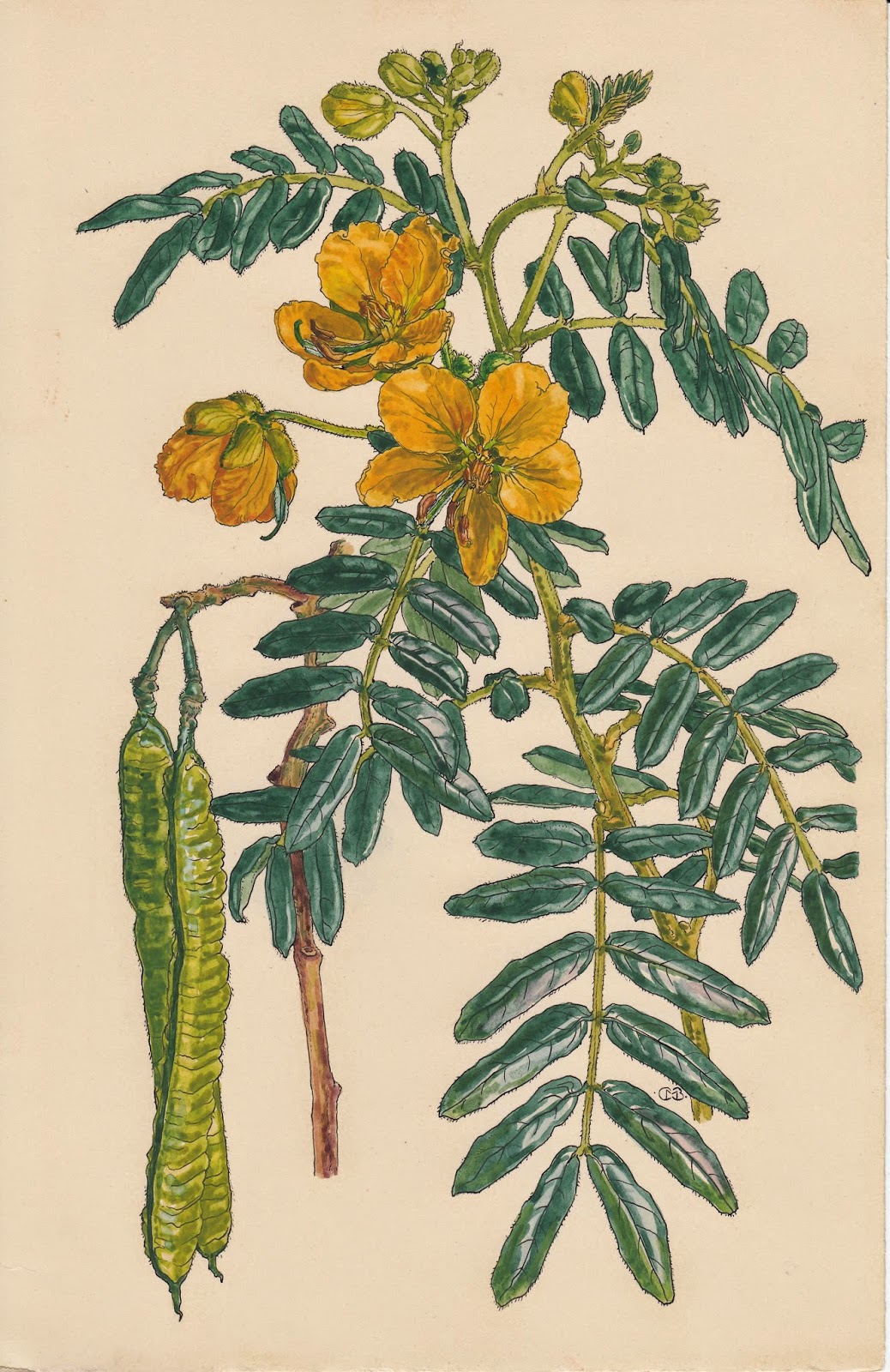
Senna hirsuta. Pomeroy, Mary Barnas. Wildflowers and Landscapes of Ecuador: The Way We Knew It (2015). http://biodiversitylibrary.org/page/46381304.


View Full Size Image
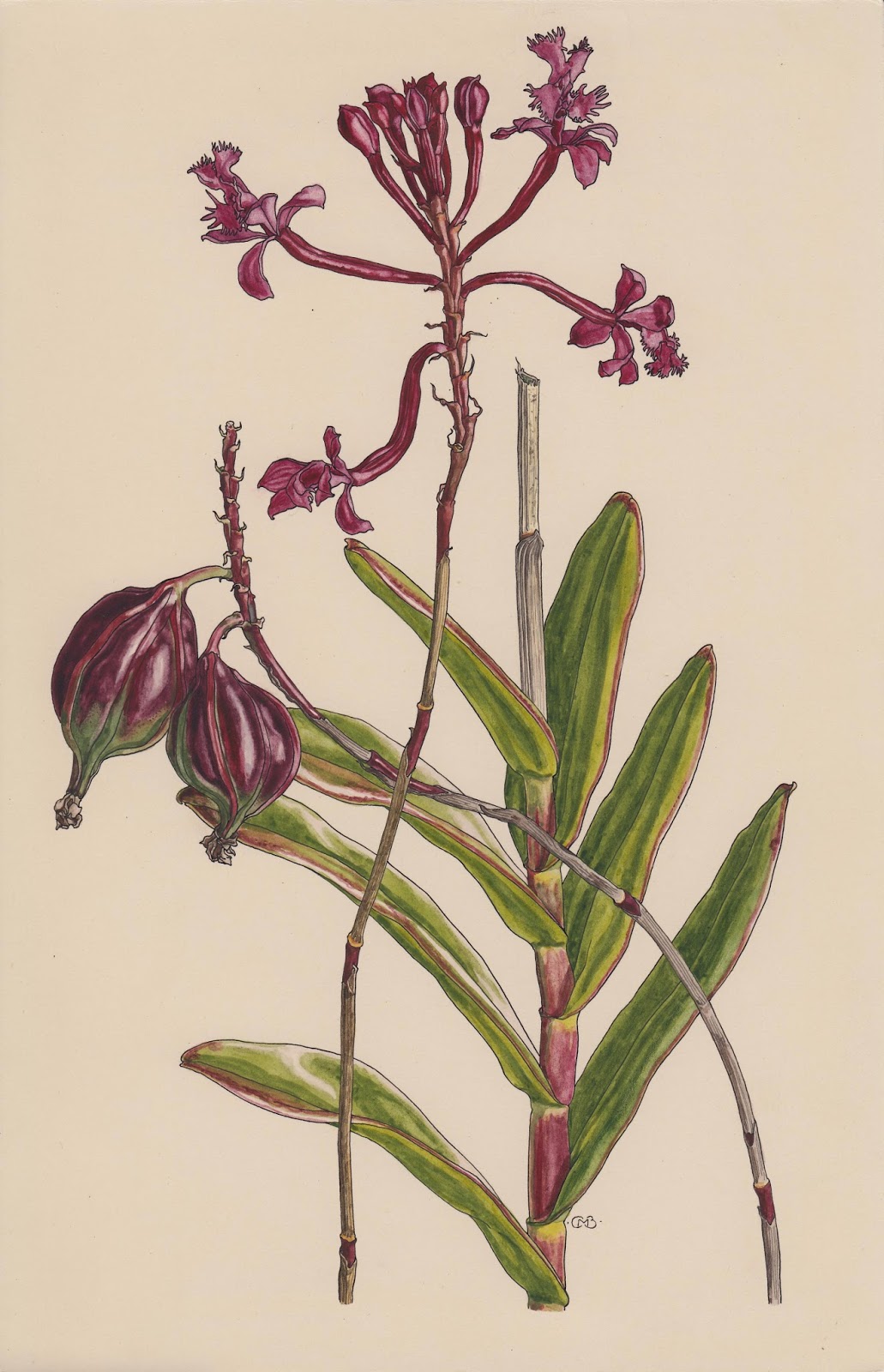
Epidendrum secundum. Pomeroy, Mary Barnas. Wildflowers and Landscapes of Ecuador: The Way We Knew It (2015). http://biodiversitylibrary.org/page/46381402.


View Full Size Image
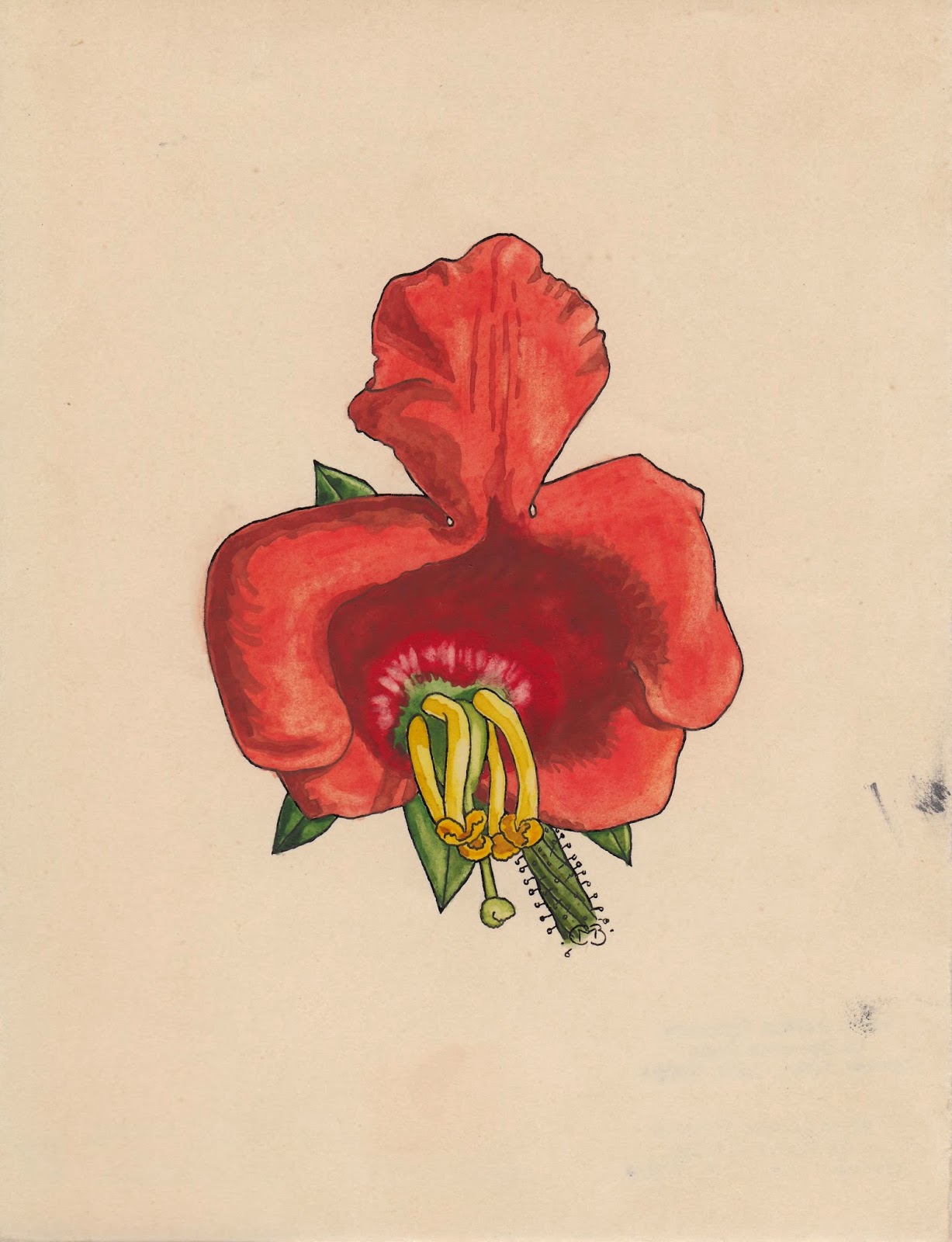
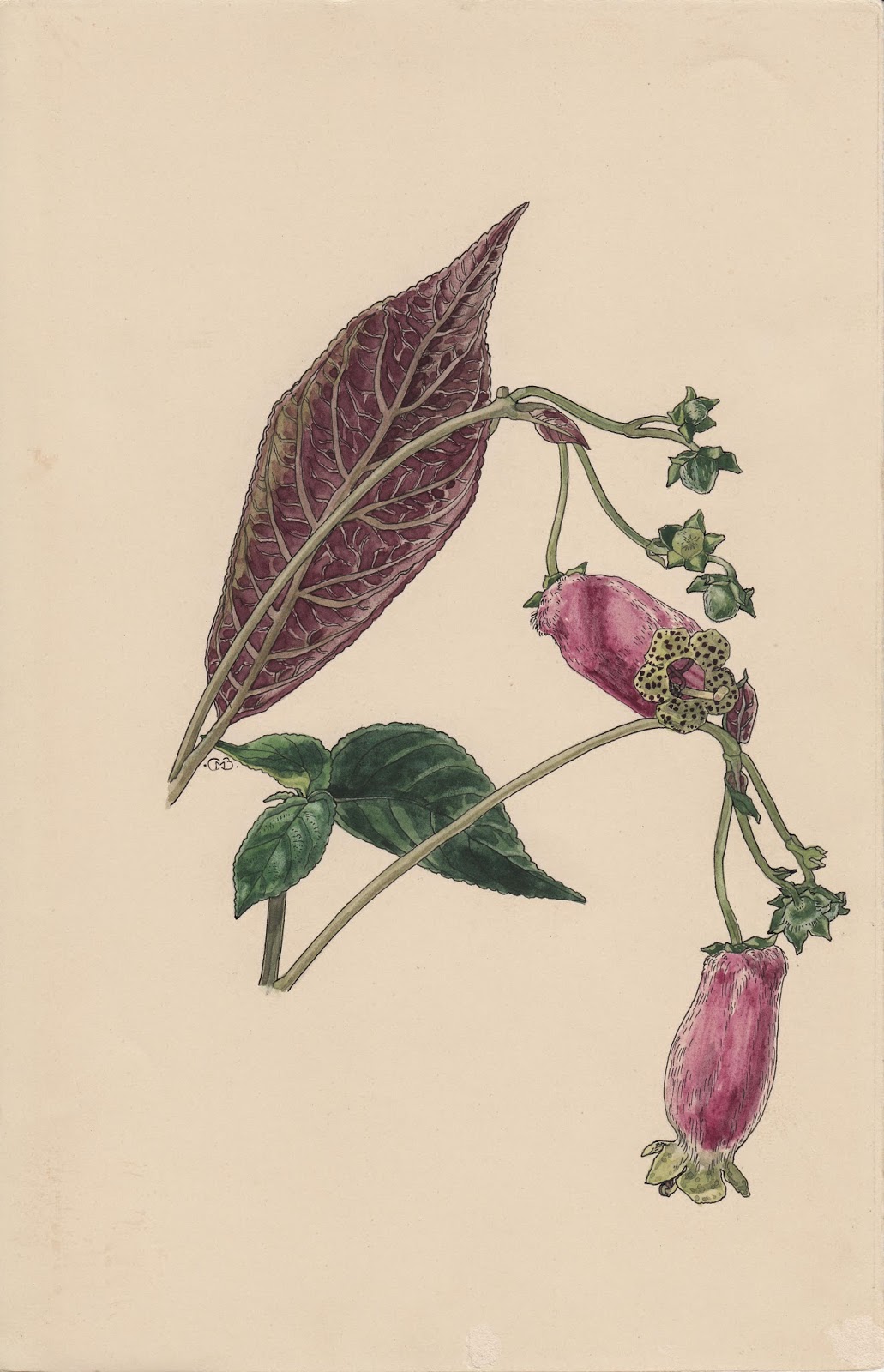
Campanea sp. Pomeroy, Mary Barnas. Wildflowers and Landscapes of Ecuador: The Way We Knew It (2015). http://biodiversitylibrary.org/page/46381463.


View Full Size Image
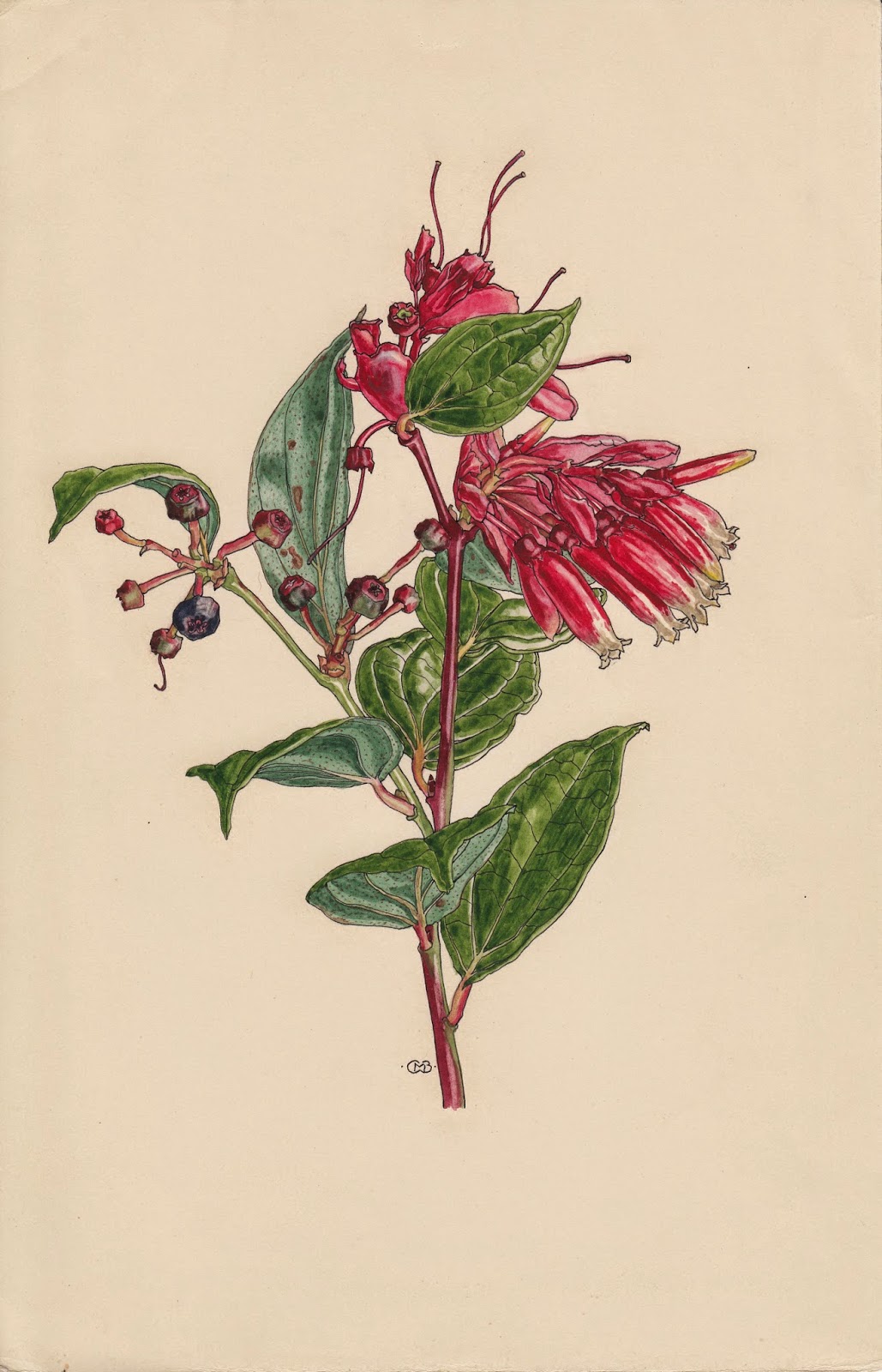
Cavendishia gilgiana. Pomeroy, Mary Barnas. Wildflowers and Landscapes of Ecuador: The Way We Knew It (2015). http://biodiversitylibrary.org/page/46381804.


View Full Size Image
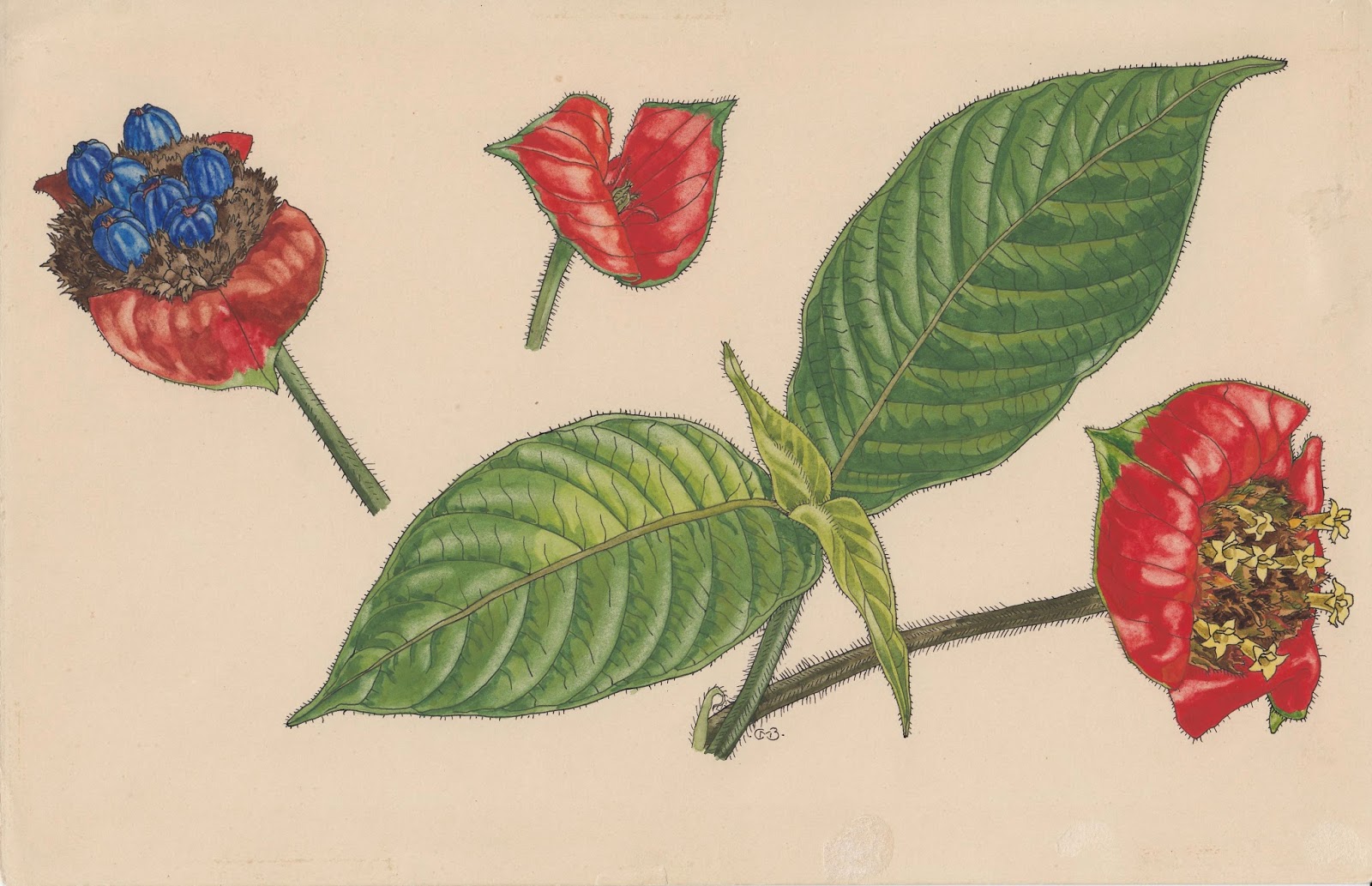
Cephalis tomentosa. Pomeroy, Mary Barnas. Wildflowers and Landscapes of Ecuador: The Way We Knew It (2015). http://biodiversitylibrary.org/page/46381241.


January 22, 2015by ulib-libraryjobs
Page 12 of 15« First...10«11121314»...Last »

Help Support BHL

BHL's existence depends on the financial support of its patrons. Help us keep this free resource alive!

search

About BHL

The Biodiversity Heritage Library (BHL) is the world’s largest open access digital library for biodiversity literature and archives. BHL operates as a worldwide consortium of natural history, botanical, research, and national libraries working together to digitize the natural history literature held in their collections and make it freely available for open access as part of a global “biodiversity community.”

Join Our Mailing List

Sign up to receive the latest news, content highlights, and promotions.

Subscribe Now

Subscribe to Blog via Email

Enter your email address to subscribe to this blog and receive notifications of new posts by email.
Join 319 other subscribers

Subscribe to Blog Via RSS

Subscribe to the blog RSS feed to stay up-to-date on all the latest BHL posts.
Access RSS Feed

Inspiring Discovery through Free Access to Biodiversity Knowledge.

The Biodiversity Heritage Library makes it easier than ever for you to access the information you need to study and explore life on Earth…for free, anytime, anywhere.


64+ Million Pages of
Biodiversity Literature Online.

EXPLORE

Tools and Services
to Transform Research.

EXPLORE

300,000+
Illustrations on Flickr.

EXPLORE

ABOUT | HARMFUL CONTENT | PRIVACY | SITE MAP | TERMS OF USE