Biodiversity Heritage Library - Program news and collection highlights from BHL
  • Home
  • News
  • Featured Books
    • All Featured Books
    • Book of the Month Series
    • BHL at 20
  • User Stories
  • Campaigns
    • Fossil Stories
    • Garden Stories
    • Monsters Are Real
    • Page Frights
    • Her Natural History
    • Earth Optimism 2020
  • Tech Blog
  • Visit BHL
Home
News
Featured Books
    All Featured Books
    Book of the Month Series
    BHL at 20
User Stories
Campaigns
    Fossil Stories
    Garden Stories
    Monsters Are Real
    Page Frights
    Her Natural History
    Earth Optimism 2020
Tech Blog
Visit BHL
  • Home
  • News
  • Featured Books
    • All Featured Books
    • Book of the Month Series
    • BHL at 20
  • User Stories
  • Campaigns
    • Fossil Stories
    • Garden Stories
    • Monsters Are Real
    • Page Frights
    • Her Natural History
    • Earth Optimism 2020
  • Tech Blog
  • Visit BHL
Biodiversity Heritage Library - Program news and collection highlights from BHL
Blog Reel, User Stories

Botanical Research in the Asian Tropics


View Full Size Image
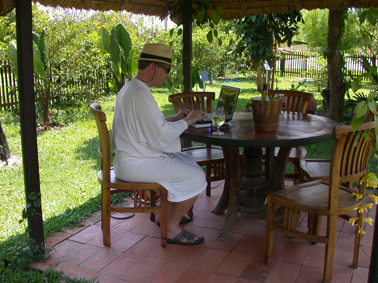
“If you intend to work at 40°C you need a bathrobe, a glass of cold, crispy dry, white wine and WiFi to access BHL.” Dr. Eric Danell, Director, Dokmai Garden, Chiang Mai, Thailand.

Nestled within the Hang Dong district, Chiang Mai, Thailand, is a 10 acre botanical garden called Dokmai Garden. Run by the Thai family Seehamongkol, it boasts over 1,000 plant species, including orchids, laurels, banana plants, birds-of-paradise plants, and gingers. The Seehamongkol family, and the garden’s biologist and Director, Dr. Eric Danell, have the lucky fortune of not only working in this garden, but also of calling it home.

While living amidst such a paradise is undeniably enchanting, for Dr. Danell, being a botanist in the Asian tropics also has its challenges. Access to taxonomic literature is scarce, and the closest library may still be many days away. Even if a researcher is able to gain access to local library collections, the breadth of these collections are often limited, lacking titles critical to enabling further research. For researchers in these situations, digital, open access projects like the Biodiversity Heritage Library are indispensable.

Dr. Danell began his botanical adventure in Sweden at an early age. “Born a botanist,” Eric spent the weekends of his youth at the Museum of Natural History in Stockholm, pursuing a lifelong love of plants that resulted in a PhD in Plant Physiology from Uppsala University in 1994. Following the degree, Danell taught at the Swedish University of Agricultural Sciences as an Associate Professor in Forest Microbiology.

Eric’s passion, however, is gardens. “Essentially, I am a gardener,” said Dr. Danell when asked about his chief area of interest. It comes as no surprise, then, that he left his teaching position for the opportunity to garden in the Asian Tropics at Dokmai Garden. Caring for over a thousand plant species (not to mention countless other varieties of birds, insects, reptiles and fungi that also call the ecosystem home), and conducting further botanical research, requires access to natural history literature collections, including many rare titles. As discussed, this access is often glaringly absent in developing countries.

Fortunately for Dr. Danell, a few years ago, he stumbled upon BHL via the Kew Gardens/Missouri Botanical Garden joint project,  The Plant List. It was love at first click. “[BHL] is a crucial tool since I am located in the Asian tropics. Although I have a private rare books collection in Sweden, I do not dare bring it here due to termites and moulds. Rare books can hardly be found at local university libraries,” articulated Danell.

Since discovering BHL, Eric uses it several times a week, typically verifying plant species descriptions online but occasionally also downloading PDFs. “We have frequent electricity cuts which would otherwise disconnect me from ongoing work,” explained Danell. “A laptop with battery keeps you focused in spite of tropical rainstorms!”

The true magic of BHL for Danell, however, is the truly global access it provides. “The fact that I can sit in a remote corner of the world and access rare books is awesome! BHL is my favorite.”

Being located in a developing country also provides opportunities for Dr. Danell to suggest improvements specific to users with varying Internet connectivity strengths. He suggests that the development of an interface specifically designed for old computers with poor Internet access would be particularly beneficial. This was a major discussion point at the recent BHL-Africa meetings, as much of Africa also has limited Internet connectivity. The development of a “BHL in a Box” application, which would allow some version of BHL to be installed on a local computer to limit the need for continuous internet availability, or the development of a text-based interface, were some options proposed. BHL and its African colleagues hope to pursue funding in the future to make this ambition a reality.

For many of our users, there is one special title in BHL that makes their knees weak and their hearts beat a little faster. For Dr. Danell, that book is Linnaeus Species Plantarum (1753, volumes 1-2). “This is the origin of plant research and so many important plants, also in the tropics, are described here. [Linnaeus’] spelling, his comments and his references are crucial to botanical research,” emphasized Danell.

Thanks to BHL, Eric can access his favorite eighteenth century botanical masterpiece while sitting in a fairy tale garden in the Asian tropics, dressed comfortably in his favorite bathrobe, sipping a glass of crisp white wine. All scientific research should be this perfect!

June 25, 2013by michelle.underhill
Blog Reel, Featured Books

Wait, is that the original?

Recently, the librarians at the Smithsonian Libraries’ Botany-Horticulture Library uncovered a “mini-mystery” involving one of our titles. It started when the botanical illustrator in the Smithsonian’s Department of Botany got a call from a colleague asking why a work in BHL was appearing with black and white illustrations rather than the beautiful color originals.

View Full Size Image
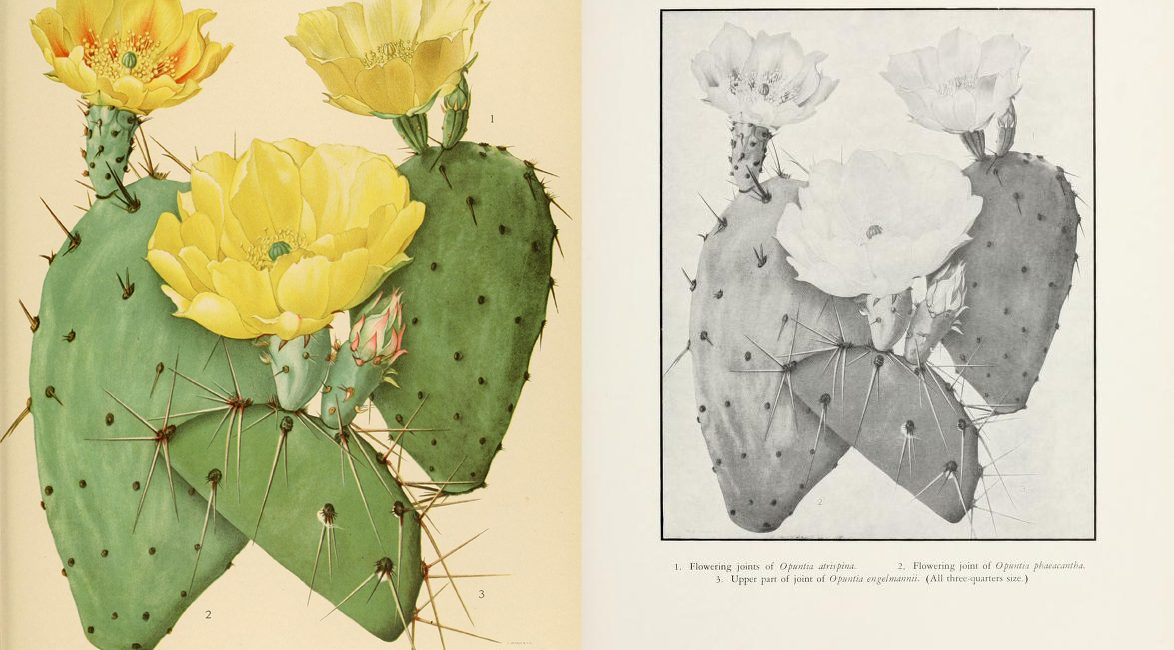
Opuntia atrispina, Opuntia phaeacantha, and Opuntia engelmannii, from

Vol. 1. Color image from BHL. Black and White image in IA.

The work in question is Britton and Rose’s The Cactaceae, Descriptions and Illustrations of Plants of the Cactus Family (The Cactaceae). The four volume set is an early definitive taxonomic work on the family Cactaceae. When the first volume was published in 1919 it sold for $18, the equivalent of $242.19 today. Noted by a contemporary reviewer as “the most sumptuous botanical publication since Dykes’ ‘The genus Iris,’” The Cactaceae was an ambitious project funded by the Carnegie Foundation. The final work was a result of the combined effort of botanists across North and South America, and the Caribbean islands. One of the reasons the work is so important is that it reexamined type specimens and original descriptions. As noted in the introduction to volume one, it was a necessary task due to many species having been incorrectly identified, descriptions incorrectly interpreted, and common names attributed to the incorrect species.

By doing further investigating on the BHL website, it was discovered that the New York Botanical Garden’s LuEsther T. Mertz Library had provided its copy for scanning, now available in all its technicolor glory.

View Full Size Image
Hylocereus trigonus and Selenicereus boeckmannii, from Vol. 2.

Color image in BHL. Black and White image in Internet Archive.

However, why did BHL have a copy with black and white illustrations in its database? As it turns out, that black and white copy of The Cactaceae had been ingested into BHL from the Internet Archive (IA) through a scan done at North Carolina State University Libraries (see Volume 1 here). For BHL to capture as much of the digitized biodiversity material as possible, it accepts scans of books and journals already present within the Internet Archive corpus that meets a set of subject heading and call number criteria in line with its collection development policy. This was the case with the NCSU Libraries’ copy of The Cactaceae, which is a reprinted version of the original 1919 publication. The publisher reissued it with black and white illustrations. For more information about our ingest of non-BHL member materials from the Internet Archive see this post.

View Full Size Image
Echinocereus engelmannii, Lobivia corbula, Lobivia lateritia, and Lobivia pentlandii, from Vol. 3. Color image in BHL. Black and White image in Internet Archive.

Using BHL’s Feedback link, the librarians requested that the black and white version’s URL be redirected to the color version of The Cactaceae, so this misunderstanding will not happen with a future user.

Mystery solved—

Find all images in Flickr:

Volume 1 | Volume 2 | Volume 3 | Volume 4

June 11, 2013by mkahn
BHL News, Blog Reel

The Biodiversity Heritage Library Receives the CBHL Long Award of Extraordinary Merit

View Full Size Image

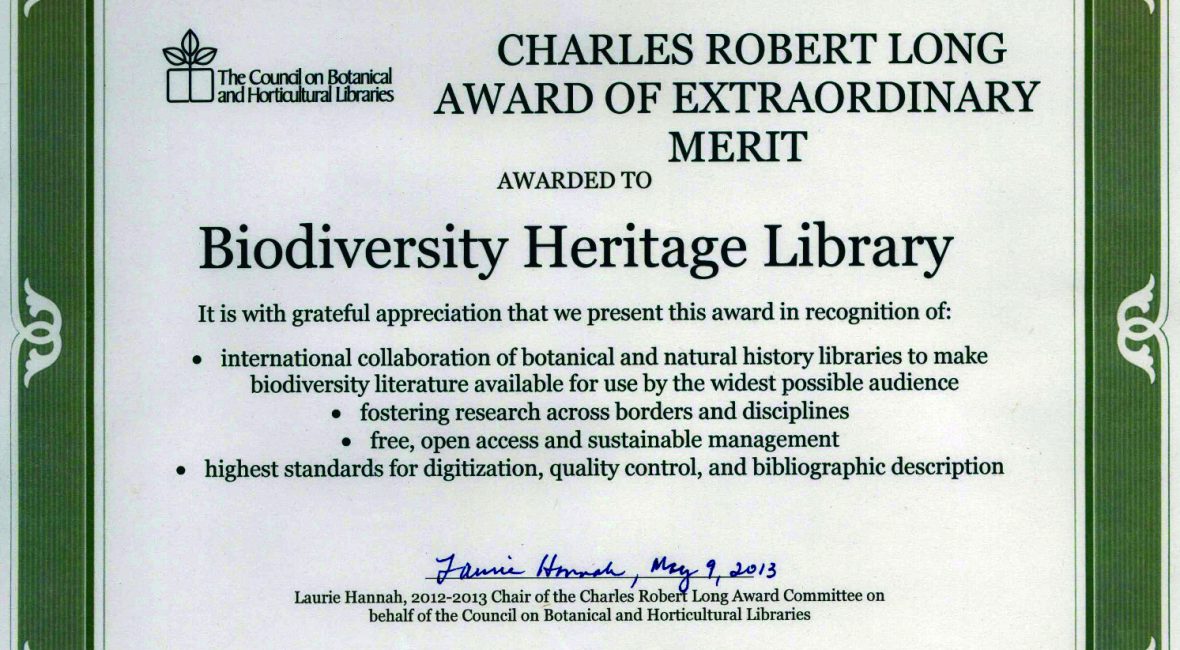
The Biodiversity Heritage Library is pleased to announce that it is the recipient of the Charles Robert Long Award of Extraordinary Merit from the Council on Botanical and Horticultural Libraries (CBHL).

The highest honor bestowed by CBHL, the Charles Robert Long Award for Extraordinary Merit was founded to honor outstanding contribution and meritorious service to CBHL or to the field of botanical and horticultural libraries or literature. Since 1988, only 14 people have received this award.

Receiving two separate nominations highlighting BHL’s global collaboration among libraries, innovative outreach, and exceptional bibliographic and technology standards, this year marks the first time an organization has won the award.

As the award letter articulates, “BHL envisions collaboration among botanical libraries on a scale not attempted previously. It fosters research across borders and disciplines and has made itself indispensible in many areas of the globe where botanical and biological libraries are unavailable to scholars. In an era that is increasingly focused on biodiversity, it has become an indispensible resource for many scholars, scientists and students.”

The award was announced during the CBHL Annual Business Meeting in East Lansing, MI, on May 9. Representatives from the Smithsonian Libraries, Harvard Herbarium Botany Libraries, and the New York Botanical Garden accepted the award on behalf of BHL. As part of the honor, BHL received a certificate and lifelong institutional membership to CBHL.

“We hope this [award] will encourage awareness of and further cross-collaboration between natural history libraries and CBHL,” said Laurie Hannah, Chair of the CBHL Long Award Committee.

About the Council on Botanical and Horticultural Libraries 

The Council on Botanical and Horticultural Libraries, Inc. (CBHL) is an international organization of individuals, organizations and institutions concerned with the development, maintenance and use of libraries of botanical and horticultural literature. The purpose of CBHL is to initiate and improve communication and coordinate activities and programs of mutual interest and benefit to its membership.

See the CBHL Press Release about the award.

May 17, 2013by ulib-libraryjobs
Blog Reel, Featured Books

Celebrating Women’s History Month: Jeanne Baret, the Man who was a Woman

View Full Size Image
Notable Women in Natural History in iTunes U. Illustration by Maria Sibylla Merian from Metamorphosis insectorum surinamensium

March is Women’s History Month, and BHL is celebrating by highlighting women that have made valuable contributions to biodiversity science.

All this week, we’re publishing tweets and Facebook posts honoring notable women in natural history. We’ve also created a special collection in BHL featuring books written or illustrated by, or relating the contributions of, incredible female botanists, zoologist, explorers, and illustrators. We’ve made a selection of these titles available for free download in iTunes via our thirteenth iTunes U Collection: Notable Women in Natural History. Finally, we’ve gathered some of our favorite images illustrated by these illustrious women, or from publications written by them, and made them freely available for download and reuse in Flickr.

Today, we want to highlight an exceptional woman from natural history’s chronicles: Jeanne Baret, or, as she was known during the time she spent as a man, Jean Baret. We’ve asked Baret expert, and former Life and Literature speaker, Dr. Sandra Knapp, to share this woman’s fantastic experiences and contributions to scientific exploration and discovery.

Jeanne Baret: Around the World 250 Years Ago, Dressed as a Boy!

By Dr. Sandra Knapp

Voyage autour du monde, par la frégate du roi La Boudeuse, et la flûte L’Étoile; en 1766, 1767, 1768 and 1769

‘Yesterday I checked on board the Étoile a rather peculiar event. For some time, a rumour had been circulating on the two ships that Mr de Commerçon’s [sic] servant, named Baré, was a woman. His structure, his caution in never changing his clothes or carrying out any natural function in the presence of anyone, the sound of his voice, his beardless chin, and several other indications had given rise to this suspicion and reinforced it.’ (De Bougainville’s Journal, 28–29 May 1768).

View Full Size Image
Image of Jeanne Baret. ‘MAD LLA BARÉ’, Engraving, artist unknown. From Navigazioni de Cook pel grande oceano e itorno al globo, Volume 2, 1816, Sonzogono e Comp, Milano.

Cross-dressing seems to have been a botanical fad in the 18th century – the great Swedish botanist Carl Linnaeus (responsible for the system by which we name animals and plants today) famously posed in an authentic Sami costume from Lapland, not realising it was a woman’s outfit. Jeanne Baret (or Baré or Barrett – spelling was not as fixed and consistent in the 18th century as it is now) dressed as a boy to accompany the voyage of Louis-Antoine de Bougainville in circumnavigating the globe; the voyage itself was an exercise in saving face after the disastrous French defeat to the British during the Seven Years War (when Britain gained control of Quebec). The intrepid Baret certainly saw more of the world than the notoriously stay-at-home Linnaeus, even though her name today is not well-known.

The world of exploration in the 18th century was an overwhelmingly male one, so the story of the young woman who dressed as a man to explore the world has immense appeal. De Bougainville set off on the voyage in 1766 – this was the first French circumnavigation and the first of any nation to have on board professional naturalists to observe and record the plants and animals of new lands. The “professional” naturalist accompanying the voyage was Philibert Commerson (often spelled Commerçon); a friend of Voltaire’s and a correspondent of the great Linnaeus himself. Jeanne Baret, of peasant stock from the countryside in Burgundy, was Commerson’s housekeeper and lover–what we today would call his common-law wife. Jeanne was an “herb-woman” with knowledge of plants and their properties useful to Commerson –his teacher rather than only his assistant. She was obviously adventurous and had considerable determination and sticking power – it had to be difficult to overcome not only gender but class barriers in order to stow away on the ship and even trickier to survive once her secret was out. The collaborative partnership between Baret and Commerson in the discovery of the botanical and zoological wonders is unique in the history of science.

View Full Size Image
The route of the Bougainville voyage around the world. From Voyage autour du monde, par la frégate du roi La Boudeuse, et la flûte L’Étoile; en 1766, 1767, 1768 and; 1769,

Women’s disguising themselves as men was not unknown – Hannah Snell dressed as a man and enlisted in the British Marines in 1745, serving for 5 years including tours of India; her book The Female Soldier, published in 1750, was immensely popular. Just how Jeanne Baret came to dress as a young man and accompany Commerson as his assistant Jean Baret on the voyage is not known – De Bougainville’s official accounts of the voyage rather coyly place her “unmasking” in Tahiti. It does slightly beggar belief that a woman, however skilled at disguise, could conceal her gender on a ship for many months, where everyone lives cheek by jowl – but look at Hannah Snell! The journal kept by the ship’s surgeon François Vivès is the source for Glynis Ridley’s (1) contention that Baret was alone, unprotected by Commerson and sexually violated by the sailors from the Bondeuse and Étoile. That his diary is dripping with sexual innuendo is without doubt; he sounds a thoroughly unpleasant sort. Rather than on Tahiti, which the ships passed in April and May of 1767, Vivès puts the site of Baret’s unmasking and violation in June on the shores of New Guinea. De Bougainville’s story may have had more to do with his linking the discovery of Jeanne’s gender to the open society of the island; he was one of the first to romanticise Tahitian ways of life and love.

View Full Size Image
Bougainvillea species, from Climbing Plants

Collecting plants is great fun, both Commerson and Baret must have been amazed at the wealth of diversity they encountered. Commerson wrote of Madagascar “I can announce to naturalists that this is the true Promised Land. Here nature created a special sanctuary where she seems to have withdrawn to experiment with designs different from those used anywhere else. At every step one finds more remarkable and marvellous forms of life.” In notes on specimens Commerson honoured high-ranking members of the expedition – the leader is commemorated in the lovely tropical vine Bougainvillea, Nassau-Siegen in Nassauvia, but Commerson himself did not publish any of these; he never made it back to France to write up the fruits of the teams’ labours. Bougainvillea was not formally described until 1789, and then only by Antoine Laurent de Jussieu, a French botanist who used Commerson’s specimens and his notes (2). It is interesting to see that early on in the voyage, in Brazil, many plants are “named” for members of the expedition, but later collections have more cursory notes, although he did propose Baretia for a Malagasy tree. Commerson’s Baretia was never published, not because someone wanted to do Jeanne Baret down, but that by the time the specimen made it back to Paris and into the hands of botanists, it was found that the genus already had a name; the principle of proirity had become the modus operandi for naming. After Commerson’s death, Jeanne married on Mauritius and returned to France in 1774. She was awarded a state pension from 1785 in recognition of her bravery and contributions, not really completely forgotten and lost in total obscurity, although she never did botany again.

View Full Size Image
Tepe E, Ridley G, Bohs L (2012) A new species of Solanum named for Jeanne Baret, an overlooked contributor to the history of botany. PhytoKeys 8: 37–47

She was more recently, however, commemorated in the specific name of a new species of Solanum from Ecuador – far from where she travelled and collected plants (3). Solanum baretiae Tepe et al. is a relative of the potato and tomato from the cloud forests of the Andes – its link to Baret is its highly variable leaves. Many species of Solanum have simple leaves, just an elliptical shape with no lobing, while others, like the potato, have divided leaves with several pairs of leaflets. Solanum baretiae has all kinds of leaves – simple and divided with varying numbers of leaflets – the authors decided to commemorate this by naming the species after Jeanne Baret – herself a master of disguise!

That we remember single men (and it is usually men) as the “heroes” of expeditions or of discoveries is not necessarily to denigrate the contributions of others; who, after all, refers to Captain Cook’s voyage of the Endeavour as “Banks’ voyage” or knows the names of the crew – the single-person reference is a sort of shorthand. Science was as collaborative then as it is now, without the efforts of the many little would be achieved. Jeanne Baret and other overlooked contributors to science like her deserve recognition and celebration, but she does not need to be a victim (as she was portrayed in Ridley’s book) to be seen as a success (4).

Jeanne Baret deserves our admiration not only for being the first woman known to have circumnavigated the world (although it took her quite a long time!), but for her significant botanical contributions in partnership with Commerson, even if they are not written down in quite the way we would record them now. You also have to respect the guts and determination of a woman who wanted to discover the world and just went ahead and did so – at a time when the hearthside was considered a woman’s place.

Explore the chronicles of Jeanne’s adventures in Voyage autour du monde, par la frégate du roi La Boudeuse, et la flûte L’Étoile; en 1766, 1767, 1768 and; 1769, the publication relating the Bougainville voyage!

References and further reading

(1)    Ridley, G. (2010) The discovery of Jeanne Baret: a story of science, the high seas, and the first woman to circumnavigate the globe. Crown Publishers, New York, 1–288.

(2)    Lack, H.W. (2012) The discovery, naming and typification of Bougainvillea spectabilis (Nyctaginaceae). Willdenowia 42: 117-126.

(3)    Tepe, E.J., G. Ridley & L. Bohs (2012) A new species of Solanum named for Jeanne Baret, an overlooked contributor to botany. PhytoKeys 8: 37-47 doi: 10.3897/phytokeys.8.2101

(4)    Knapp, S. (2011) The planstswoman who dressed as a boy (review of Ridley’s “The discovery of Jeanne Baret”). Nature 470: 36-37.

March 7, 2013by Grace Costantino
Blog Reel

My Life as a BHL Staffer: Michelle Abeln

View Full Size Image

Hello from St. Louis. My name is Michelle Abeln, and I’m a metadata librarian at the Missouri Botanical Garden Library. I’ve been working as our BHL “liaison” for almost five years. My main focus is to make sure that our in-house scanning efforts correlate with the bigger BHL mission.

BOTANICUS
The Missouri Botanical Garden has been a leader in the digitization of scientific literature since 1995, initially focusing on illustrated volumes from the Library’s rare book collection. Working with the Garden’s Bioinformatics department, and its leader Chris Freeland, the Botanicus website was developed early on as a freely accessible web-based encyclopedia for botanical literature. While Botanicus was initially developed to house only the Garden’s holdings, the technologies and ideals behind it eventually led to the development of the BHL portal. Even though BHL is the ultimate repository for our digitized holdings, Botanicus is still very much a part of our workflow. Everything we scan goes through Botanicus first before it turns up in BHL or the Internet Archive.

View Full Size Image
Botanicus Display
View Full Size Image
BHL Display – See the Similarities?

We’re lucky here in Missouri to have our own staff of scanners in-house, which means our workflow is quite different from other BHL institutions. We don’t need to send carts of books off site; instead we’re able to take them just down the hall. While this means that our scanning volume might be lower than other institutions, having our scanning staff on site does mean we’re able to deal with quality control issues, such as missing pages and display problems, faster. We also have things a bit easier in terms of pagination. Both Gilbert and JJ discussed the trials and tribulations (and importance!) of paginating in their blogs. At MoBot, our scanners paginate each item before it goes online. We also have the ability to scan extremely rare folios and oversized books on our “Leaf” scanner, an instant capture camera used for archival material and larger fold-outs (such as maps and plates).

Most of what we scan is monographs and journals assigned by BHL coordinators, and are received from BHL users via the online feedback form. Most are “gap-fills,” to complete serial runs, and post-copyright journal titles. We try to balance fulfilling BHL requests while still making sure that the needs of the Garden’s own research staff are met. The library shares scanning staff with the Garden’s Herbarium, so I work closely with our imaging lab coordinator, Mike Blomberg, to organize the scanners.

METADATA
One of the main focuses of my day to day work is metadata! I am forever editing, correcting, adding or subtracting data from both Garden library records and BHL records. I like to be sure that our contributions to BHL are both correct and consistent. This means that all library records are checked for corrections and edited before being parsed through (via XML conversion software) to the Botanicus database. After titles are scanned, the records are checked again once they’re online, just to make sure everything displays properly. If we’re completing a serial run started by another institution, records need to be merged so that all volumes display under one title. I also check to make sure all volumes are labeled the same (I’m a bit on the overly fastidious side when it comes to display-it’s something I know I spend way too much time on. But I do enjoy when everything lines up just so).
After scanning is complete, I return to the library catalogue and create links out to both Botanicus and BHL.

I also check the BHL RSS feed weekly for titles held by MoBot, but scanned by other institutions, so I can create links for these titles in our catalogue as well. I’ve found that these links help both research and library staff.

TROPICOS
Tropicos is a botanical database created and maintained by the Bioinformatics Department here at MoBot, which organizes over 4,000,000 plant specimens and images. Tropicos contains all of the specimen data that has been accumulated in the Gardens’ electronic databases over the past 25 years, and is now available to the public. In Tropicos, you’re able to search by both specimen name and publication name (depending on what information you have available in your citation).
Tropicos and BHL are intimately linked: the OCR that helps identify species names in BHL “reports back” to Tropicos through an automatic data resolver, so ideally, when you look up specimens or citations in Tropicos, there should be a link out to BHL, directly to the page where the specimen is named.

View Full Size Image
Tropicos Citation Page
View Full Size Image
Citation Page in BHL, linked out from Tropicos

Unfortunately, BHL has gotten so big in recent years the automatic resolver doesn’t always work, and the links don’t always get made. I’m able to go in and add links to both Botanicus and BHL from both specific citations and publication pages. I don’t use Tropicos very often, so I rely on the Garden’s research staff to let me know when links are missing (and they do!).

I’ve been working with BHL almost since its inception, and it’s been a wonderful experience, and a lot of fun, seeing how it’s evolved and grown, not to mention meeting all the wonderful people who’ve worked on the project. I’m proud to work on such a project, knowing that we’re able to provide rare and necessary material to people who might otherwise not have a chance to study it.

June 4, 2012by michelle.underhill
Blog Reel, Featured Books

Celebrating Women’s History Month: Alice Eastwood

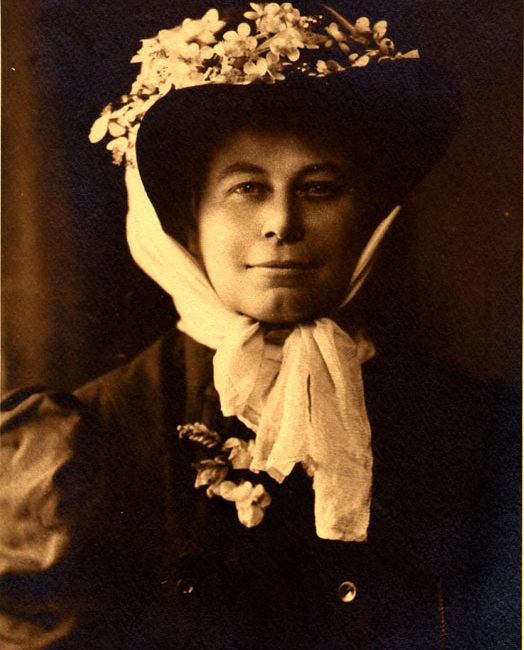
View Full Size ImageAs BHL is celebrating Women’s History Month by featuring women of science, I could not resist shining a light on Alice Eastwood, one of the California Academy of Sciences’ early female curators. Born in Toronto in 1859, Alice Eastwood spent her teenage years in Denver, Colorado. She proved to be a bright and capable student, embarking on a career as a schoolteacher, but she spent her leisure hours exploring the flora around her. She was a self-taught botanist, using the few books available to her, including Asa Gray’s Manual of the Botany of the Northern United States and John M. Coulter’s Manual of the Botany…of the Rocky Mountain Region. A visit to the California Academy of Sciences in 1891 led to a job offer, and the following year Eastwood left her teaching job in Colorado to assume a curatorship in the Academy’s Department of Botany.

The California Academy of Sciences was not yet 50 years old when Alice Eastwood began her work there, and she oversaw tremendous growth of the Herbarium. Much expansion came from her own collecting activities throughout California, Utah, and Colorado. She is remembered as an exceptional woman of her time, exploring regions of the West that made for difficult traveling, negotiating unfavorable terrain in long skirts, and even fashioning a skirt that could be buttoned in the center to make pants. One unconventional act as Curator was to segregate the botanical type specimens rather than keeping them with the rest of the collection. This proved to be a prudent decision. On April 18, 1906, a massive earthquake struck the region, followed quickly by fires that burned for three days and ravaged the city. Over 500 city blocks were consumed and over 28,000 area buildings were destroyed, including the California Academy of Sciences. Following the quake, Eastwood and a small group of Academy staff and curators convened to save whatever they could from the coming fire. Since the type specimens were housed together, separate from the rest of the Herbarium, Eastwood was able to save 1497 irreplaceable botanical types while the rest of the collections were lost. She worked tirelessly over the subsequent days, moving the specimens around the city to keep them safe, protecting them while her own home and possessions were lost in the blaze.

View Full Size ImageWhile Alice Eastwood is perhaps best known for her heroism during the earthquake and fire of 1906, that event occurred near the beginning of her long scientific career. While the Academy rebuilt in San Francisco, she visited herbaria all over the United States and abroad, and commenced collecting as soon as possible, traveling throughout the West, even collecting in Alaska. By the time of her retirement in 1949 at the age of 90, the Herbarium contained over 350,000 specimens and Eastwood had over 300 publications to her name. She also served as an editor of the journals Zoe and Erythea, and co-founded the publication Leaflets of Western Botany.

Alice Eastwood died in San Francisco in 1953 at the age of 94, and she is remembered as an inspiring scholar and tireless advocate of Western botany. California hikers may encounter Eastwood’s memory in the yellow aster (Eastwoodia elegans) as well as in many members of the phlox family (genus Aliciella), which are among the plants named in her honor. Anyone interested in learning more about Alice Eastwood is encouraged to visit her publications in BHL and the finding aid to the Alice Eastwood Papers at the California Academy of Sciences.

*All Images Courtesy California Academy of Sciences Archives

March 29, 2012by ulib-libraryjobs
Blog Reel, Featured Books

Book of the Week: Sarah Ann Drake & Women’s History Month

View Full Size Image

If you’ve been following us on Twitter or checking in on our Facebook page, you know that this month is Women’s History Month. BHL is celebrating by highlighting women throughout history who have played in important role in the progression of biodiversity research and knowledge. Each day, we’ve been tweeting about one or two of these remarkable heroines and each week we’ve been posting Facebook trivia challenging your knowledge about these famous women. Today, we’re featuring a woman who made an incredible contribution to botanical illustration: Sarah Ann Drake.

Sarah Ann Drake was born on July 24, 1803, in Skeyton, Norfolk. During her lifetime, she created more than 1500 botanical illustrations, yet we know next to nothing about her life with the exception of a few small details about her relationship with John Lindley.

View Full Size Image

John Lindley was an English botanist who wrote a number of the important botanical works of the nineteenth century, many of which described new species and contained colored illustrations painted by his own hand. In 1830, Sarah Drake moved into the Lindley house in London and performed a variety of duties within the household, including governess to Lindley’s children. Eventually, however, her interests turned to botany and she illustrated many of the images in Lindley’s publications. Notable titles include Ladies’ Botany and Sertum Orchidaceum. Lindley even named a species in honor of Ms. Drake – The Western Australian Orchid genus Drakaea.

Sarah Drake illustrated a variety of titles for authors other than John Lindley as well, including plates from Sydenham Edwards’ The Botanical Register and our Book of the Week, Bateman’s The Orchidaceae of Mexico and Guatemala.

View Full Size Image

The Orchidaceae of Mexico and Guatemala contains forty folio plates dedicated to orchid species found in Central America. It is hailed as one of the rarest, most renowned, and most sought after orchid books ever published, with only 125 copies produced. In 2002, a copy of the work sold at Christie’s Auction House for 196,500 USD. According to W. Blunt in The Art of Botanical Illustration, this title is “probably the finest, and certainly the largest, botanical book ever produced with lithographic plates…In size and in splendour, Bateman’s giant folio eclipses the works of all who went before or came after him.” Bateman himself is also remembered as not only a pioneer in orchid culture, but also one of the first proponents of “cool” orchid cultivation.

Sarah Drake died in 1857, reportedly from diabetes, though some historians have suggested that she may have suffered from cumulative poisoning caused by her painting materials. As we honor the notable women of biodiversity history this month, we remember and applaud Sarah Ann Drake for the gorgeous artistic and scientific illustrations she contributed to botanical research.

View Full Size Image

Illustrations pictured in this post are by Sarah Ann Drake. Other illustrators for The Orchidaceae of Mexico and Guatemala include Augusta Withers, Jane Edwards and Samuel Holden.

March 8, 2012by michelle.underhill
Page 14 of 15« First...10«12131415»

Help Support BHL

BHL's existence depends on the financial support of its patrons. Help us keep this free resource alive!

search

About BHL

The Biodiversity Heritage Library (BHL) is the world’s largest open access digital library for biodiversity literature and archives. BHL operates as a worldwide consortium of natural history, botanical, research, and national libraries working together to digitize the natural history literature held in their collections and make it freely available for open access as part of a global “biodiversity community.”

Join Our Mailing List

Sign up to receive the latest news, content highlights, and promotions.

Subscribe Now

Subscribe to Blog via Email

Enter your email address to subscribe to this blog and receive notifications of new posts by email.

Join 319 other subscribers

Subscribe to Blog Via RSS

Subscribe to the blog RSS feed to stay up-to-date on all the latest BHL posts.

Access RSS Feed

Inspiring Discovery through Free Access to Biodiversity Knowledge.

The Biodiversity Heritage Library makes it easier than ever for you to access the information you need to study and explore life on Earth…for free, anytime, anywhere.


64+ Million Pages of
Biodiversity Literature Online.

EXPLORE

Tools and Services
to Transform Research.

EXPLORE

300,000+
Illustrations on Flickr.

EXPLORE

ABOUT | HARMFUL CONTENT | PRIVACY | SITE MAP | TERMS OF USE