Biodiversity Heritage Library - Program news and collection highlights from BHL
  • Home
  • News
  • Featured Books
    • All Featured Books
    • Book of the Month Series
    • BHL at 20
  • User Stories
  • Campaigns
    • Fossil Stories
    • Garden Stories
    • Monsters Are Real
    • Page Frights
    • Her Natural History
    • Earth Optimism 2020
  • Tech Blog
  • Visit BHL
Home
News
Featured Books
    All Featured Books
    Book of the Month Series
    BHL at 20
User Stories
Campaigns
    Fossil Stories
    Garden Stories
    Monsters Are Real
    Page Frights
    Her Natural History
    Earth Optimism 2020
Tech Blog
Visit BHL
  • Home
  • News
  • Featured Books
    • All Featured Books
    • Book of the Month Series
    • BHL at 20
  • User Stories
  • Campaigns
    • Fossil Stories
    • Garden Stories
    • Monsters Are Real
    • Page Frights
    • Her Natural History
    • Earth Optimism 2020
  • Tech Blog
  • Visit BHL
Biodiversity Heritage Library - Program news and collection highlights from BHL
BHL News, Blog Reel

BHL Statement on the Fire at the National Museum of Brazil

On behalf of the Biodiversity Heritage Library community, the BHL Executive Committee, chaired by Constance Rinaldo (Ernst Mayr Library, Museum of Comparative Zoology, Harvard University) and the BHL Secretariat, led by Martin Kalfatovic (Smithsonian Libraries),  offer our condolences for the irreparable losses sustained by the National Museum of Brazil (Museu Nacional) in the tragic fire of 2 September 2018.

BHL staff are currently in communication with our colleagues at BHL SciELO in São Paulo to expedite processing of additional volumes of Archivos do Museu Nacional do Rio de Janeiro for the BHL. We are also exploring additional ways that the BHL’s extensive collection of biodiversity literature can support the work of researchers and scholars of the National Museum.

Em solidariedade ao Museu Nacional do Brasil.

The Biodiversity Heritage Library

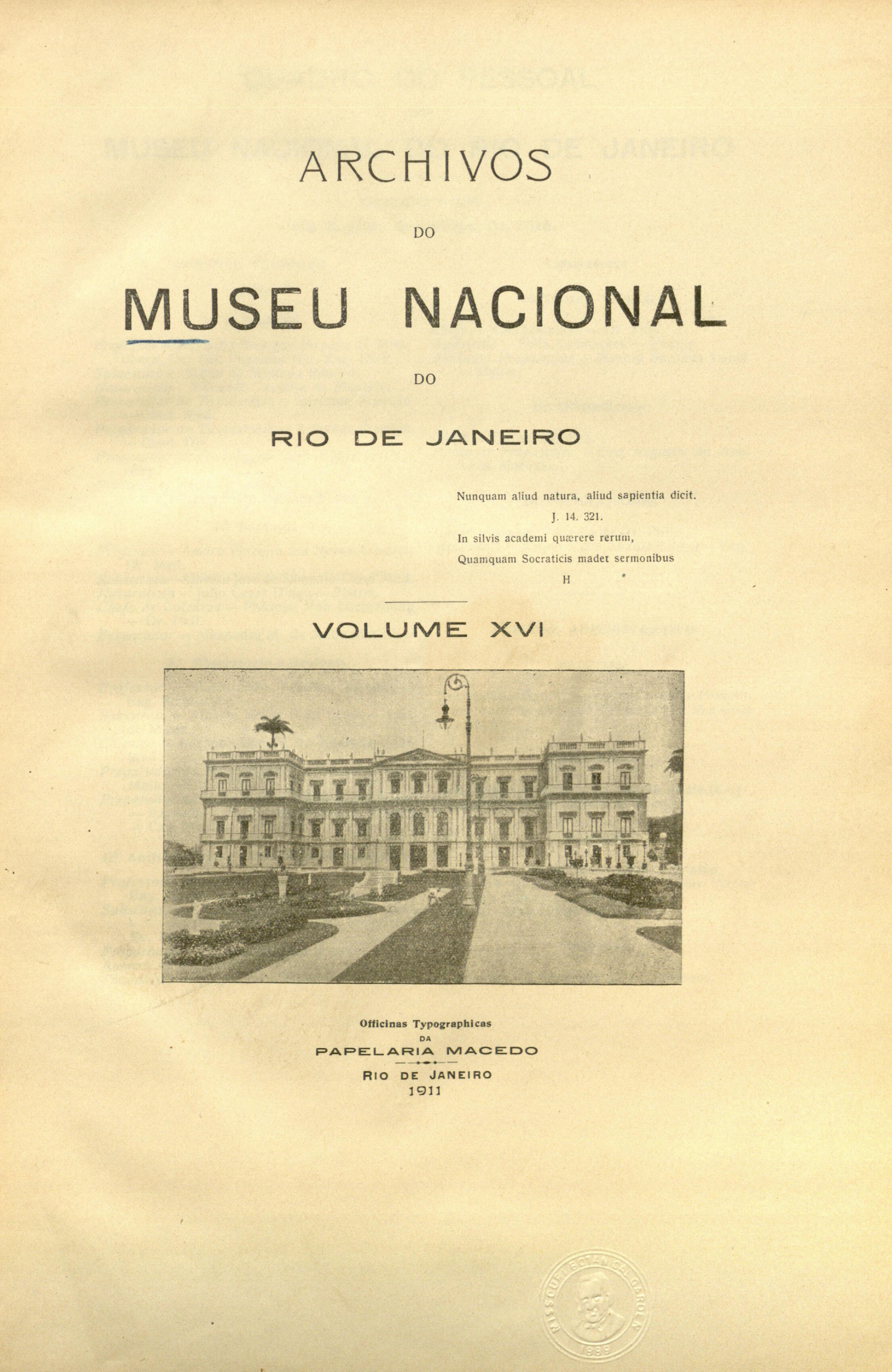
Archivos do Museu Nacional do Rio de Janeiro

Title page. Archivos do Museu Nacional do Rio de Janeiro. v. 16 (1911). Contributed in BHL from the Peter H. Raven Library, Missouri Botanical Garden.

September 10, 2018by
BHL News, Blog Reel

BHL Welcomes Three New Affiliates

BHL is pleased to welcome three long-time Partners as the consortium’s newest Affiliates: BHL Egypt, BHL China, and BHL SciELO.

The BHL consortium now consists of 18 Members and 18 Affiliates. Members and Affiliates contribute content, provide technical services, and participate in BHL committees, task forces, and working groups. Additionally, Members, who contribute 10,000 USD in annual dues, have governance privileges and vote on strategic directives.

BHL Egypt 

View Full Size Image


BHL Egypt, led by the Bibliotheca Alexandrina (BA), joined the Biodiversity Heritage Library in 2009. A major library and cultural center located in Alexandria, Egypt, Bibliotecha Alexandrina has long brought considerable technical expertise to the BHL consortium. The BA provides access to a subset of the BHL collection through its own Digital Assets Repository, which features an Arabic-aware (right to left) book reader. As an Affiliate, BHL Egypt will continue to provide technical support and services to facilitate BHL’s ongoing development.

BHL China 

View Full Size Image


BHL China, founded by the Institute of Botany at the Chinese Academy of Sciences, is the Biodiversity Heritage Library’s first Affiliate in China. Established in 1928, the Institute of Botany is one of the oldest comprehensive research institutions in China. Host to the largest herbarium in Asia, two botanical gardens, and several laboratories, the Institute is a national leader in the development of the country’s plant science research. Since first joining BHL as a partner in 2010, the Institute of Botany has contributed over 325,000 pages to BHL through the BHL China program.

BHL SciELO 

View Full Size Image


The BHL SciELO Network is the Biodiversity Heritage Library’s first Affiliate in South America. BHL SciELO is implemented by the Scientific Electronic Library (SciELO) Program, which encompass a network of national collections of open access journals in 15 countries. SciELO Brazil coordinates the BHL SciELO Network involving the main biodiversity libraries of Brazil with political and financial support from the São Paulo Research Foundation (FAPESP) and the Secretary of Biodiversity of the Ministry of Environment. SciELO joined BHL as a partner in 2010, and since then it has contributed over 107,000 pages to BHL’s collection.

July 3, 2017by Grace Costantino
BHL News, Blog Reel

BHL Program Director attends the Global Biodiversity Information Facility, 23rd Governing Board Meeting

View Full Size Image
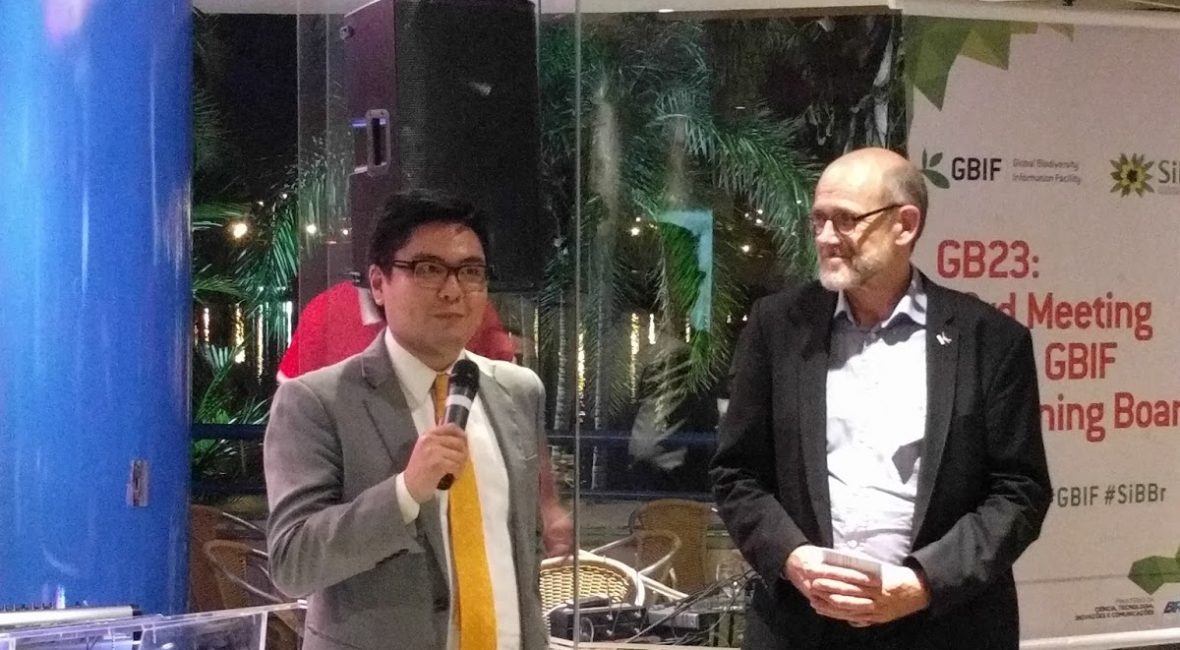
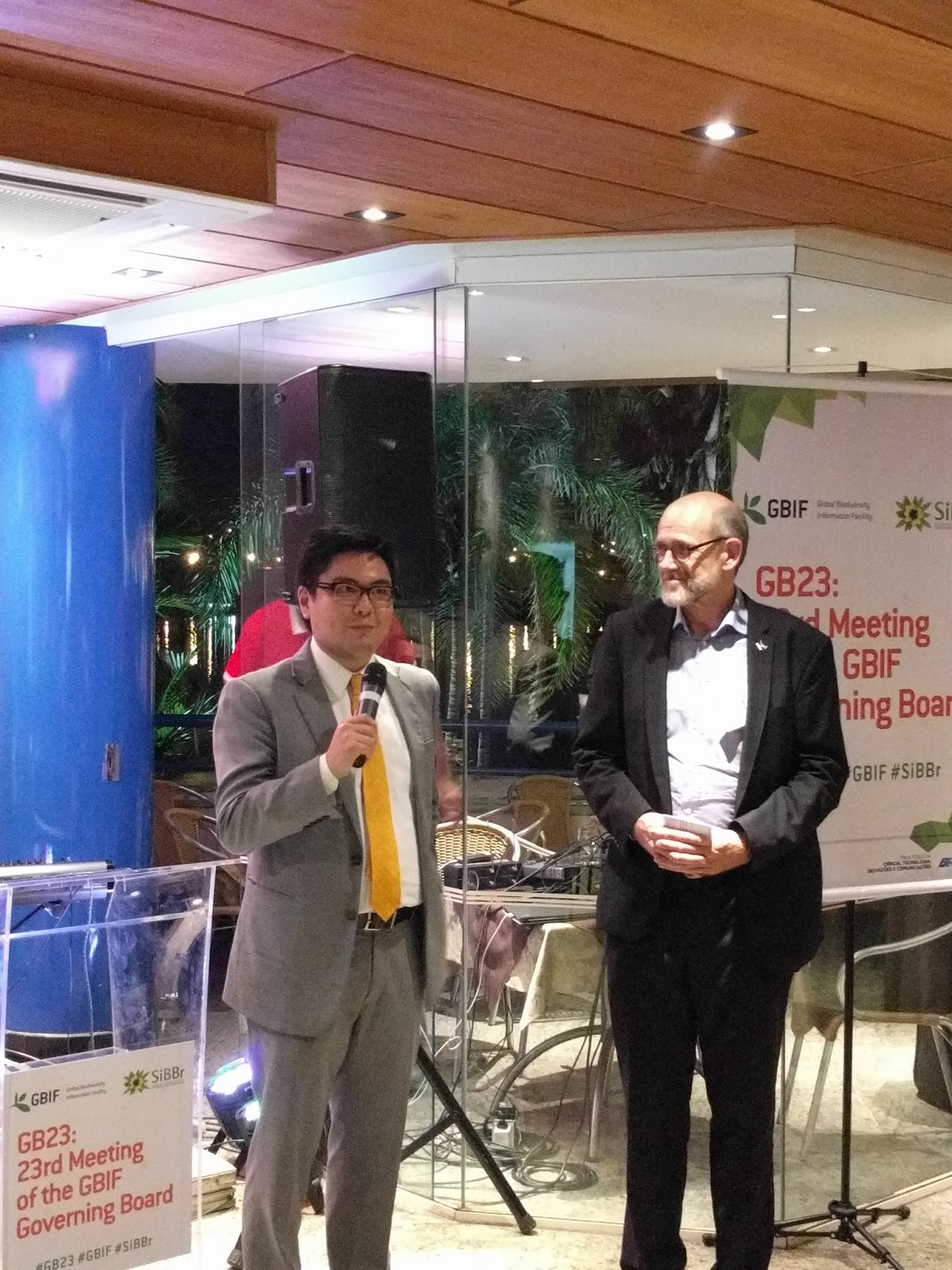
Celso Pansera (left) and Peter Schalk (right)

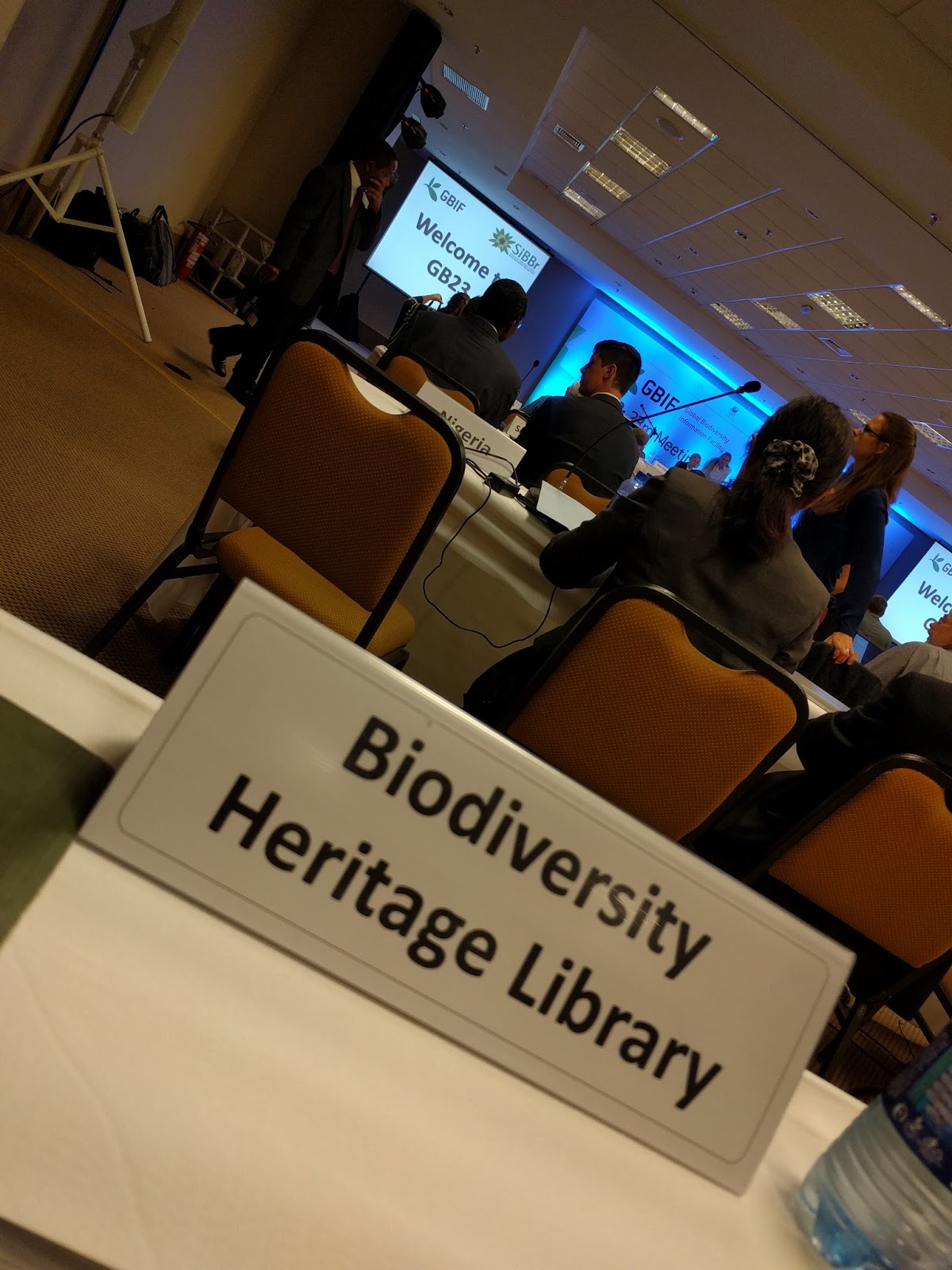
The Biodiversity Heritage Library participated in the Global Biodiversity Information Facility’s 23rd Governing Board meeting, 25-26 October 2016 in Brasilia, Brazil. I attended the meetings as the Head of Delegation for the BHL, substituting for Constance Rinaldo (Museum of Comparative Zoology/Harvard University). The two days of meetings brought together both the voting members (at the national level) and associate members (including the BHL).

The meeting proved a fertile ground to meet with BHL users to discover new ways that the BHL can partner in the global biodiversity community. The BHL is fortunate to work with GBIF Chair Peter Schalk and Executive Secretary Donald Hobern on collaborative projects.

Governing Board Chair Peter Schalk (Netherlands) officially opened the meeting and gave the official report for the year. Schalk specifically noted:

GBIF continues to grow both in numbers (data, users, publication) as in importance (relevance, connections). The field of biodiversity informatics has come of age. The many different national, regional and globally funded initiatives are slowly becoming part of a powerful ‘research machine’, organizing into a coherent network of collaborative efforts on a global scale.

View Full Size Image
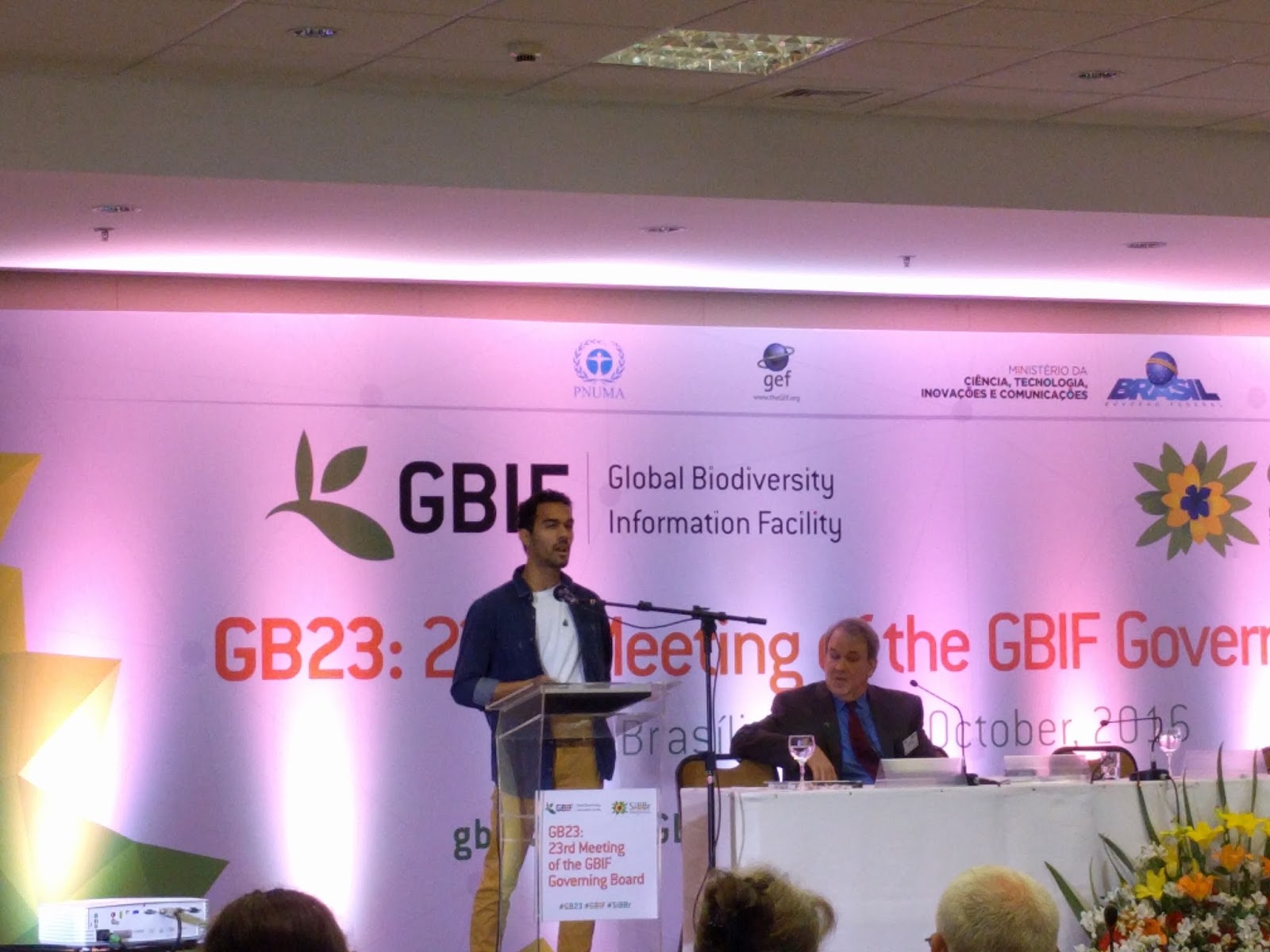
Bruno Umbelino

Schalk also reported on the various interim meetings held by the Secretariat (in person and virtually). He also noted that GBIF continues to grow through partnerships with other international biodiversity organizations and noted work done by the Secretariat to becoming:

aligned with the Catalogue of Life (COL), Encyclopedia of Life (EOL), Biodiversity Heritage Library (BHL), and the Barcode of Life (BOL), resulting in a better and more complete service to the users. I applaud the proactive role of the Executive Secretary in this.

Schalk completed his report by noting:

It is my strong believe that GBIF is on the right way in terms of developing its own role and place in science and society, as well as in taking a lead to strengthen the field of biodiversity informatics by forging collaborations and bringing synergy in the agendas of the numerous initiatives that have come into existence in the past decade.

Report from the Science Committee (Rod Page)
Page reported on the past year’s activities from the Science Committee. Main activities include:

  • Ebbe Nielsen Challenge, theme this year was “Mind the Gaps”; winners will be announced at the Science Symposium on 26 October
  • Young Researcher Awards (Juan Manuel Escamilla Molgora, Mexico, based in the UK; and Bruno Umbelino, Brazil)
  • Working with the Programme Officers and Informatics team
View Full Size Image

Looking forward, the Committee would like to continue the Nielsen Challenge, perhaps with some refactoring. It’s very important to continue to engage with young researchers. How best to engage with these researchers needs to be looked at in new ways. The Committee is also looking at new communications tools and methods.

Page also outlined the overall recommendations of the Committee:

  • Review the effectiveness of the Ebbe Nielsen Challenge.
  • Review the effectiveness of Young Researchers Awards in engaging young researchers.
  • Develop plans to increase the taxonomic coverage of names in GBIF.
  • Develop plans to de-bureaucratize the publication process and enable individual researchers to more easily add data to GBIF
  • Develop plans to add missing data, with emphasis on data or data-types that fills gaps or is timely (e.g., related to a disease outbreak or other events).

Executive Secretary Report
Donald Hobern, GBIF Executive Secretary, provided a report on main activities. There was also a review of the Work Programme 2014-2016 which included three streams and 16 areas; the streams were:

  • Stream 1: Advance the Informatics – Persistence and validation
  • Stream 2: Advance the Engagement – Communication and implementation
  • Stream 3: Advance the Content – Relevance and fitness-for-use

Hobern also provided an overview of the development of GBIF plans for 2017-2021. These include the GBIF Strategic Plan 2017-2021, GBIF Implementation Plan 2017-2021, and the GBIF Annual Work Programme 2017.  Also discussed was the Biodiversity Information for Development (BID) project. BID is a five year, €3.9M programme, funded by the European Union. Hobern noted:

In its first year of operation, 23 projects from 20 African countries, selected from 143 concept notes originally submitted, began implementation under the initial BID project call. Involvement of GBIF Participants both within Africa and beyond, especially through contribution of trainers and mentors to support the selected projects, has been invaluable in enabling effective data mobilization and capacity outcomes from the BID investment.

In preparation for a discussion of the future of GBIF, Hobern outlined the various key assumptions that went into the planning for the 2017 budget. Using the financial background, Hobern touched on the key priorities of the Implementation Plan 2017-2021. These include:

  • Priority 1: Empower the Global Network
  • Priority 2: Enhance Biodiversity Informatics Infrastructure
  • Priority 3: Fill Data Gaps
  • Priority 4: Improve Data Quality
  • Priority 5: Deliver relevant data
View Full Size Image

Excursion
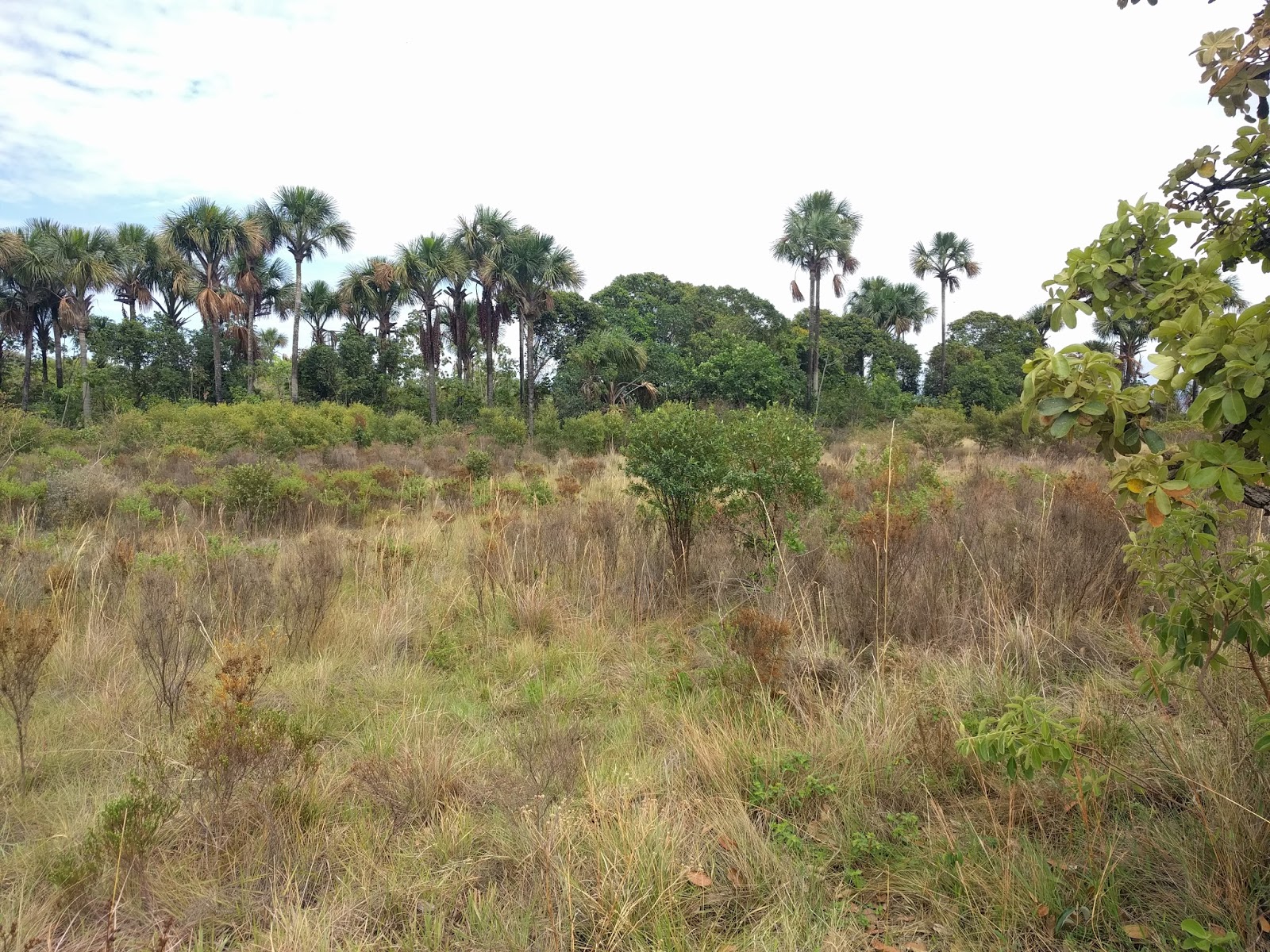
An all day excursion was offered on 28 October 2016 to Chapada Imperial in the Cerrado biome area. During the 4 km/3.5 hour hike, it was possible to see seven vegetation zones of the cerrado (phytophysiognomy): vereda, gallery forest, campo úmido, campo sujo, campo limpo, cerrado senso stricto, and campo rupestre. The trail included 30 waterfalls and 11 arborism trails and a vertical elevation change of 150 meters.

* * * * *

GBIF Public Symposium 

A public symposium held in conjunction with the GBIF23 Governing Board Meeting
Brasilia, Brazil | 26 October 2016

The first half of the symposium reported on progress GBIF has made on a variety of topics, including licensing, supplementary funding programmes, and engagement with other intergovernmental bodies. The second half introduced future directions either underway or under discussion. These include the new strategic plan and 2017 implementation plan (including participant pledges), the next version of GBIF.org, the “socialification” of GBIF.org, data rescue and data liberation.

During the report from the Nodes Committee Chair (Anne-Sophie Archambeau on behalf of Hanna Koivula), Archambeau reported on the different programs and plans from the Committee. She also thanked Hanna Koivula for her work and noted there will be an election of a new chair.

* * * * *
View Full Size Image
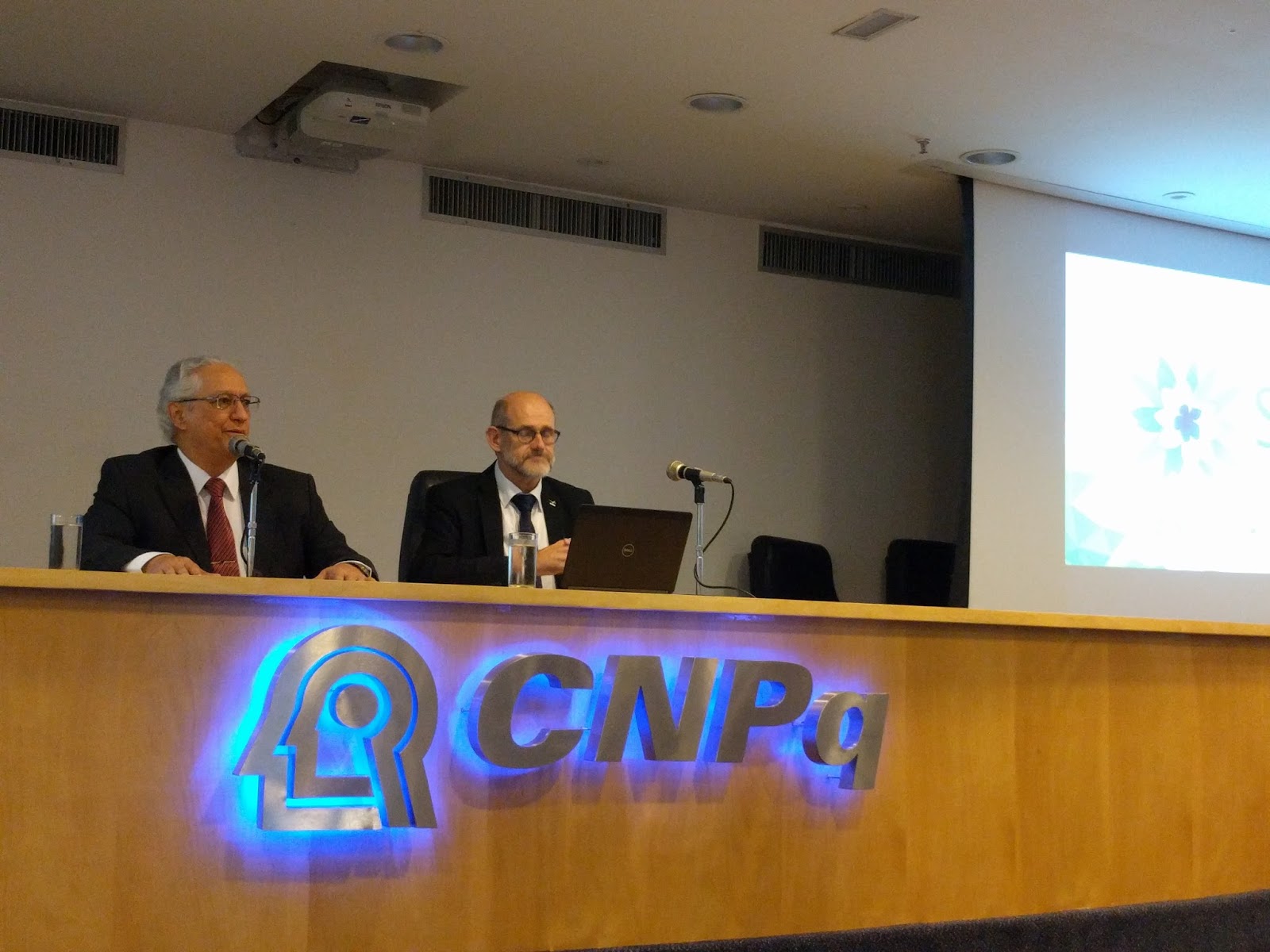
Glaucius Oliva (left); Peter Schalk (right)

Engaging GBIF in BrasilSiBBr – Sistema de Informação sobre a Biodiversidade Brasileira Symposium
27 October 2016 | Conselho Nacional de Desenvolvimento Científico e Tecnológico

GBIF participants were invited to attend the SiBBR Symposium at CNPq (Conselho Nacional de Desenvolvimento Científico e Tecnológico | National Council for Scientific and Technological Development). The president of CNPq (Glaucius Oliva) welcomed the group as did a representative of the Ministry of Science, Technology and Innovation. Peter Schalk (GBIF Chair) gave a brief introduction and thanks to SiBBR and the Ministry for their support of the GBIF 23 meeting.

Donald Hobern gave the keynote talk (“GBIF – Empowering a Global Network”) with an overview of GBIF activities and services. This was followed by a session by Andrea Portela (Director General of SiBBR) and Rafael Fonseca (SiBBR Participation Coordinator) speaking on “SiBBR: Engaging Stakeholders Communities” and a third panel that discussed the activities of the “SiBBR: Brazil Node of GBIF.”

View Full Size Image
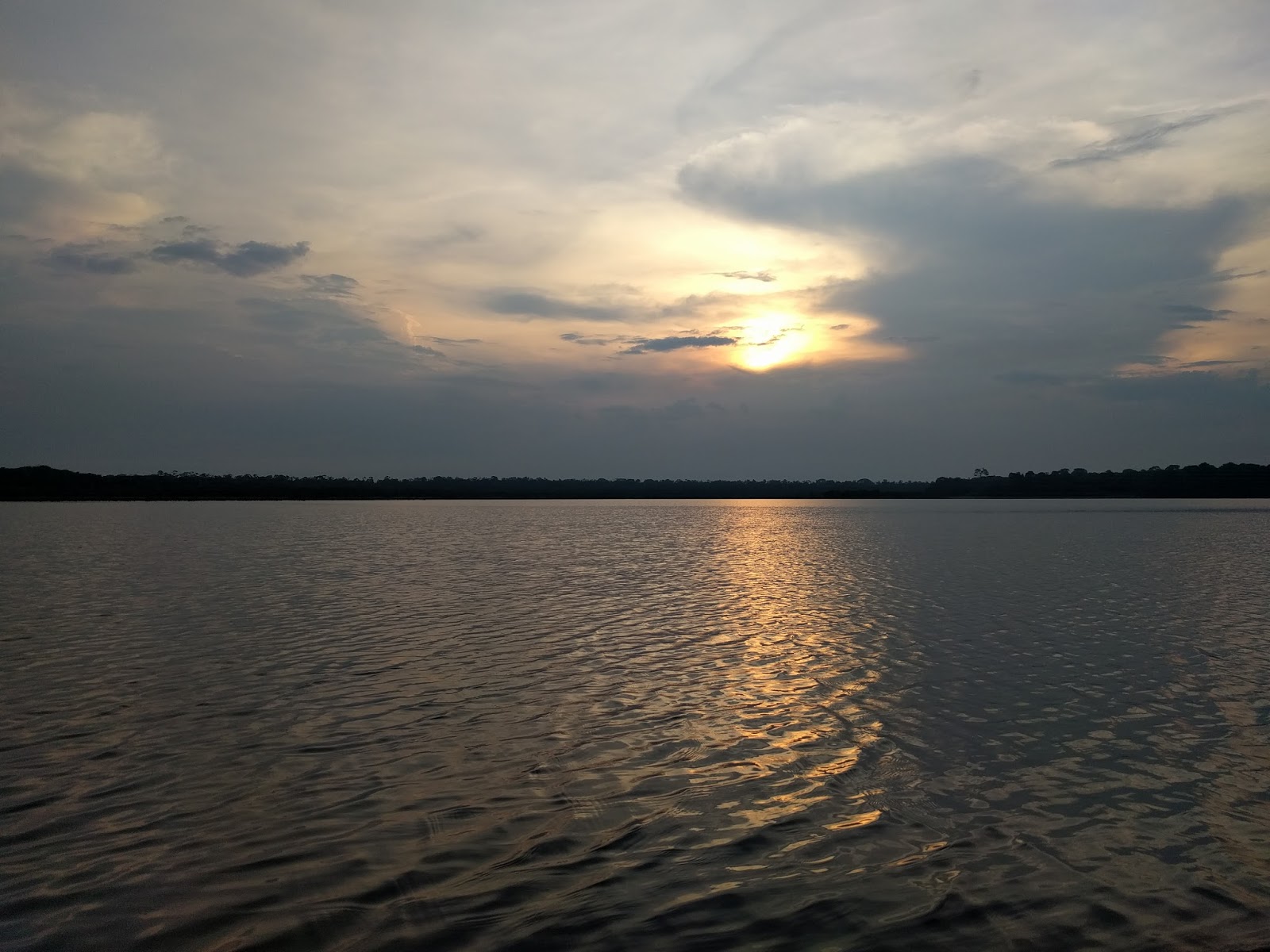
Amazonas, Brazil

November 8, 2016by
Blog Reel, Featured Books

Brilliant and Remarkable Birds of Brazil

One of the joyous things about being a Librarian caring for special and rare collections is that you frequently find something remarkable and new to you in those collections. Add on the role of BHL staffer and this multiplies through digitization requests posted by users of BHL.

Approximately five years ago a request was posted for a book unknown to me by an artist I had not come across. The catalogue record flagged that it was a folio of coloured plates which consigned the volume to a long queue for bespoke in-house scanning. Time passed and circumstances changed, and earlier this year I was informed that it had been scanned and was ready for loading to BHL. We have access to a new cloud-based system for loading our scans into BHL, and this volume was to be our test subject. A little bit of research indicated that this volume was indeed remarkable.

View Full Size Image
Descourtilz, J. T. (Jean Théodore). Oiseaux brillans du Brésil. (1834). http://biodiversitylibrary.org/page/47697413.

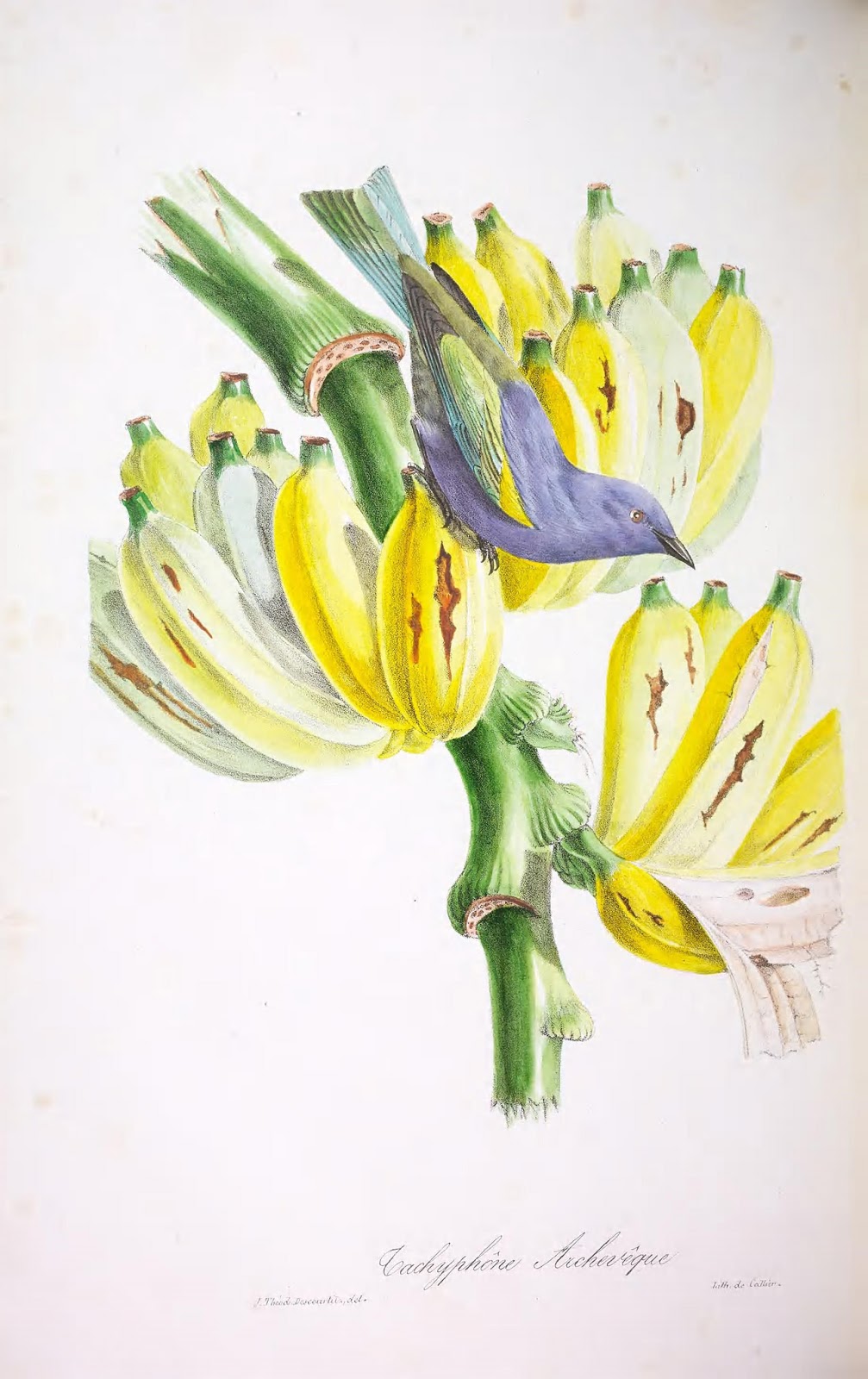
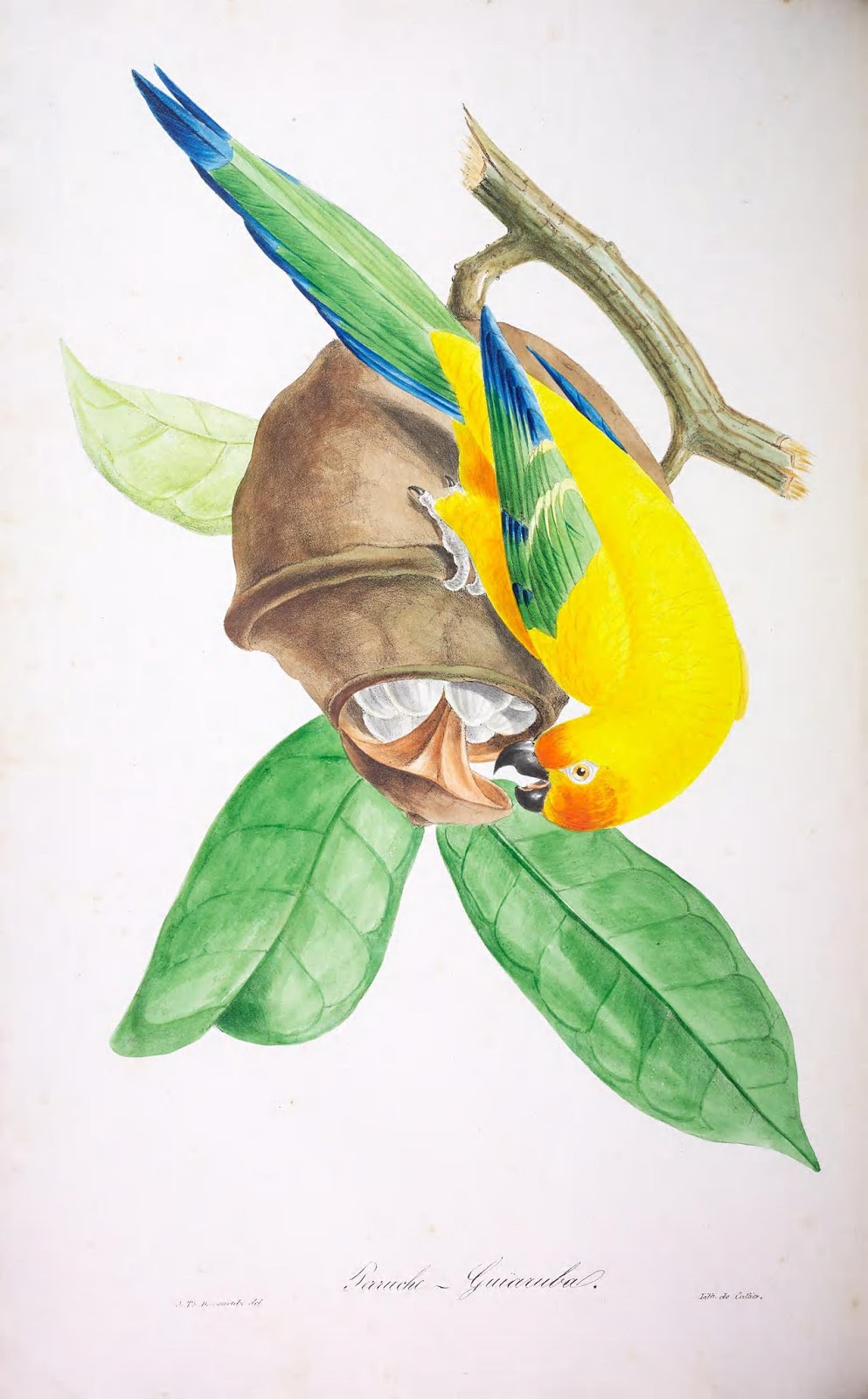
Jean-Theodore Descourtilz was born in 1796 in France, one of eight brothers. His father was Michel Etienne Descourtilz (1775-1836), a physician and botanist who wrote Flore pittoresque et médicale des Antilles (1821-1829). Jean-Theodore produced the 600 plates which illustrate this tome. He seems to have been well travelled with evidence of being in Haiti aged 3 and in the Antilles by 1821 in order to make the illustrations for his father’s book. Jean-Theodore seems to have arrived in Brazil around 1826 and in 1831 had presented a manuscript on hummingbirds to the National Museum in Rio de Janeiro. Histoire des Oiseaux-mouches Habitant des Districts de Rio de Janeiro, Bananal, San-Paulo, Macahé, Canta-Gallo et Ilha-Grande contained full colour illustrations and meticulous notes about the hummingbirds and their habitats. Two of the species were very rare and had been seen only twice by Descourtilz since he arrived in the country. The original paintings were sold by Christies in 1992 for over £85,000 and a facsimile edition was produced in 1960 as limited run entitled Beija-flores do Brasil- Oiseaux-mouches – orthorynques du Brésil.

View Full Size Image
Descourtilz, J. T. (Jean Théodore). Oiseaux brillans du Brésil. (1834). http://biodiversitylibrary.org/page/47697212.

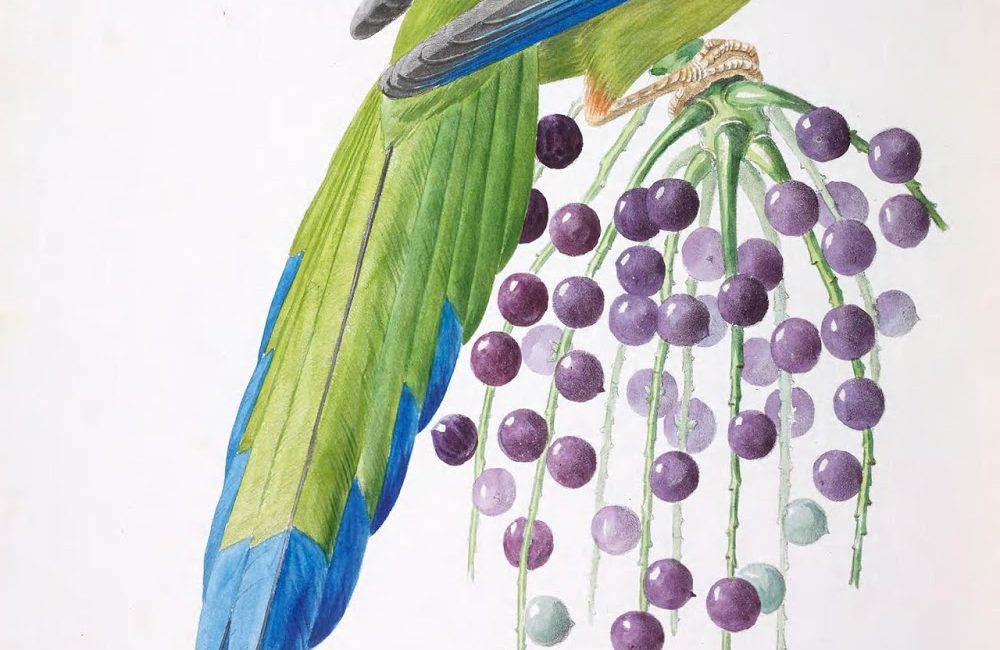
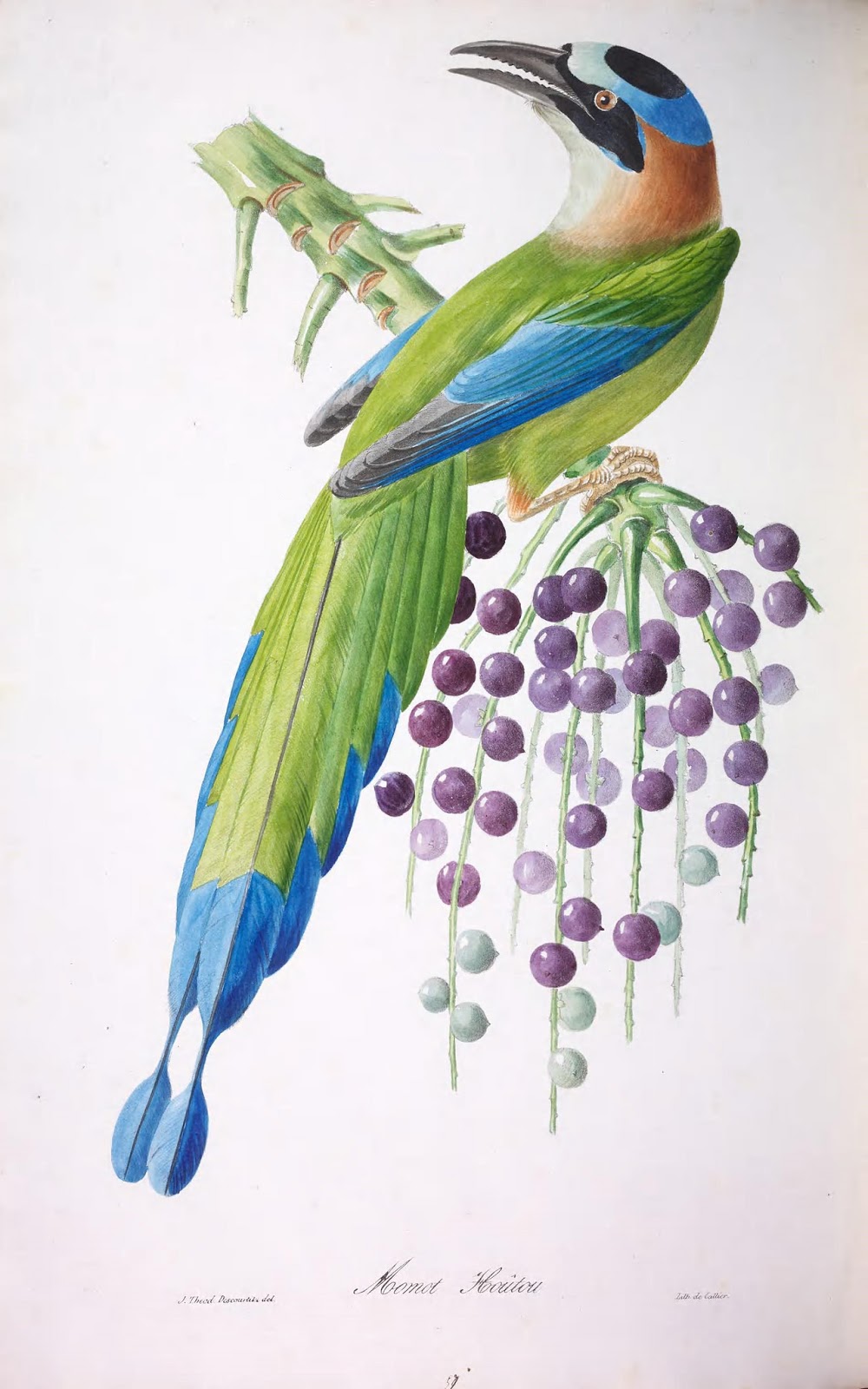
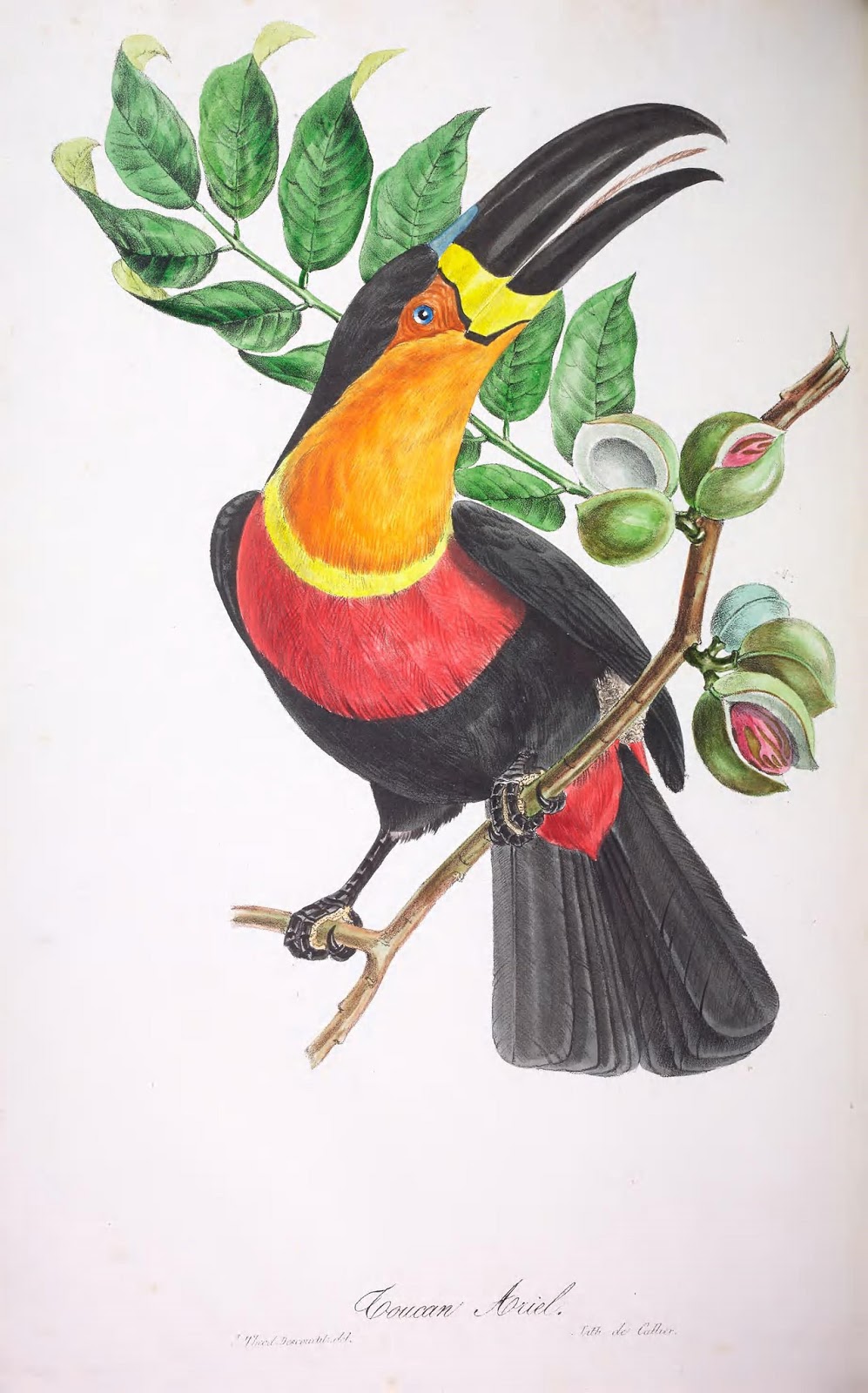
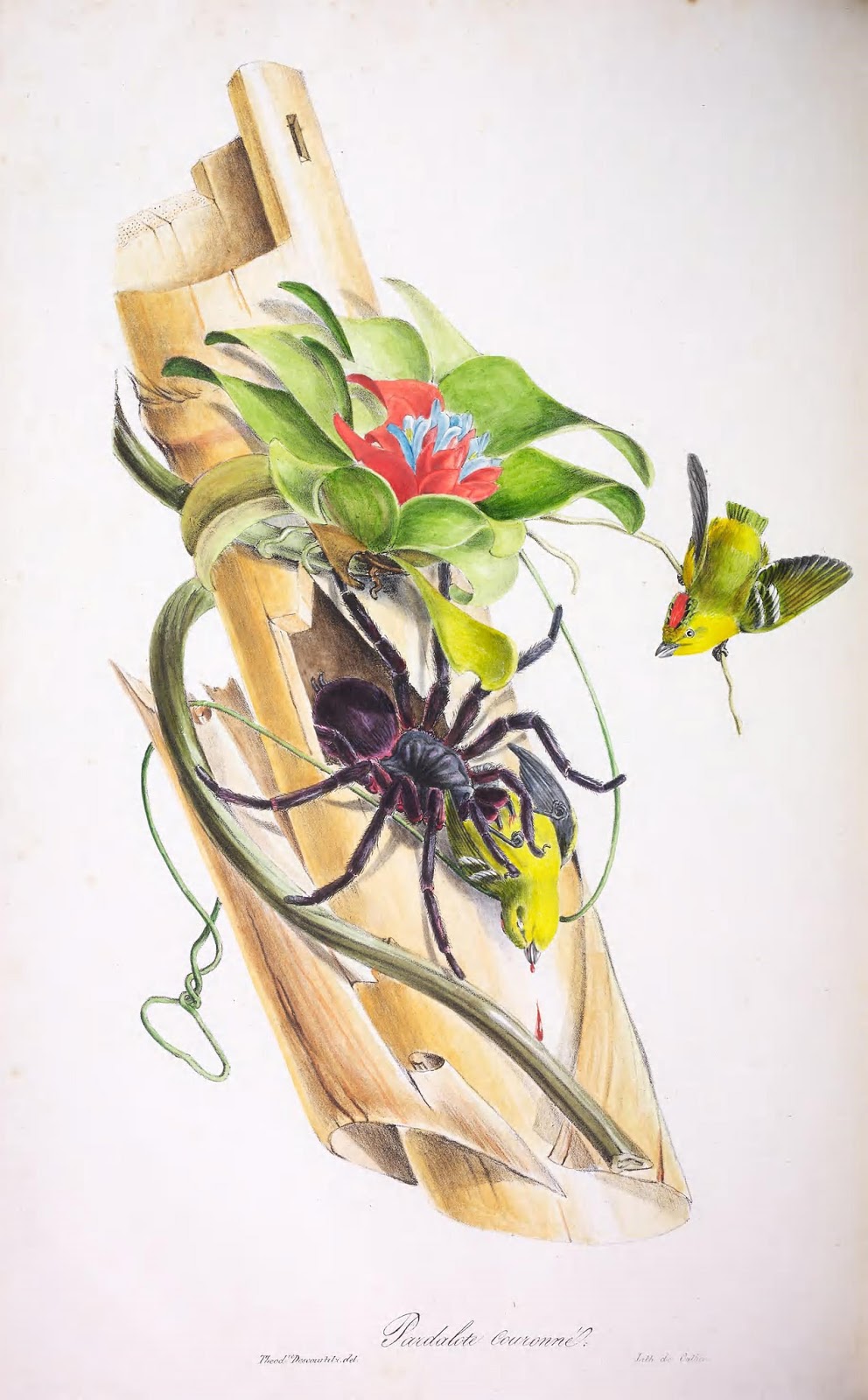
In 1834, Descourtilz published his first book, Oiseaux brillans et remarquables du Brésil, containing 60 beautifully coloured plates lithographed by Callier. There appears to have been no title page or text in the published edition, however the copy held by the Natural History Museum has handwritten title page and a page of text for each illustrated species. It is notable that Descourtilz illustrated the birds on appropriate food plants and captured detailed information on habits, customs, behaviour and habitat as well as the usual dates and location. This book is one of the rarest tomes of birds of the Americas. The Sotheby’s sale catalogue for the H. Bradley Martin Ornithological Library sale in 1989 states there are only four known copies; the copy for sale from H. Bradley Martin, a copy in the Teyler Foundation in Haarlem (Netherlands), a copy in the British Library, and a copy in the Library of Congress. At this time I can state there is a copy in the Natural History Museum (from the Rothschild Collection) and the Teyler Foundation copy was used to produce a facsimile edition Pageantry of Tropical Birds. However I have been unable to confirm that copies are held by the British Library or the Library of Congress, and have no knowledge of the whereabouts of the H. Bradley Martin copy.

View Full Size Image
Descourtilz, J. T. (Jean Théodore). Oiseaux brillans du Brésil. (1834). http://biodiversitylibrary.org/page/47697188.

Between 1852 and 1856, Descourtilz’s book Ornithologie Brésilienne, ou Histoire des Oiseaux de Brésil, remarquables par leur plumage, leur chant ou leurs habitudes was published in four parts. Forty-eight of the plates were developed from Oiseaux brillans du Brésil, and it contains fifteen species and one genus previously undiscovered.

View Full Size Image
Descourtilz, J. T. (Jean Théodore). Oiseaux brillans du Brésil. (1834). http://biodiversitylibrary.org/page/47697281.

The National Museum of Brazil recruited Descourtilz in 1854, but unfortunately he died the next year from arsenic poising while preparing specimens for the Museum. Very little else is known about his life, and he is buried near Aracruz, near the coast of Brazil a few hundred kilometers north of Rio de Janeiro.

View Full Size Image
Descourtilz, J. T. (Jean Théodore). Oiseaux brillans du Brésil. (1834). http://biodiversitylibrary.org/page/47697220.

So five years on Oiseaux brillans du Brésil is available on the Biodiversity Heritage Library! Please enjoy it. You can browse the illustrations from this stunning work in Flickr.

August 27, 2015by ulib-libraryjobs
Blog Reel, Featured Books

Happy Birthday, Louis Agassiz!

Naturalist, educator, and founder of the Museum of Comparative Zoology, Jean Louis Rodolphe Agassiz was born on May 28, 1807, in Môtier, Switzerland, the oldest son of prominent pastor Rodolphe Agassiz and Rose Mayor Agassiz. Growing up near Lake Morat, Louis was fascinated by fish, catching them barehanded along with his brother Auguste. Louis was determined to study science, although his family encouraged him to pursue medicine. He studied at the Universities of Munich, Heidelberg, and Erlangen, earning a Ph.D. in 1829 and an M.D. in 1830. His 1829 publication on the fishes of Brazil (Selecta genera et species piscium) attracted the attention of Baron Georges Cuvier (1769-1832), and Agassiz spent the next two years in Paris with Cuvier.

View Full Size Image
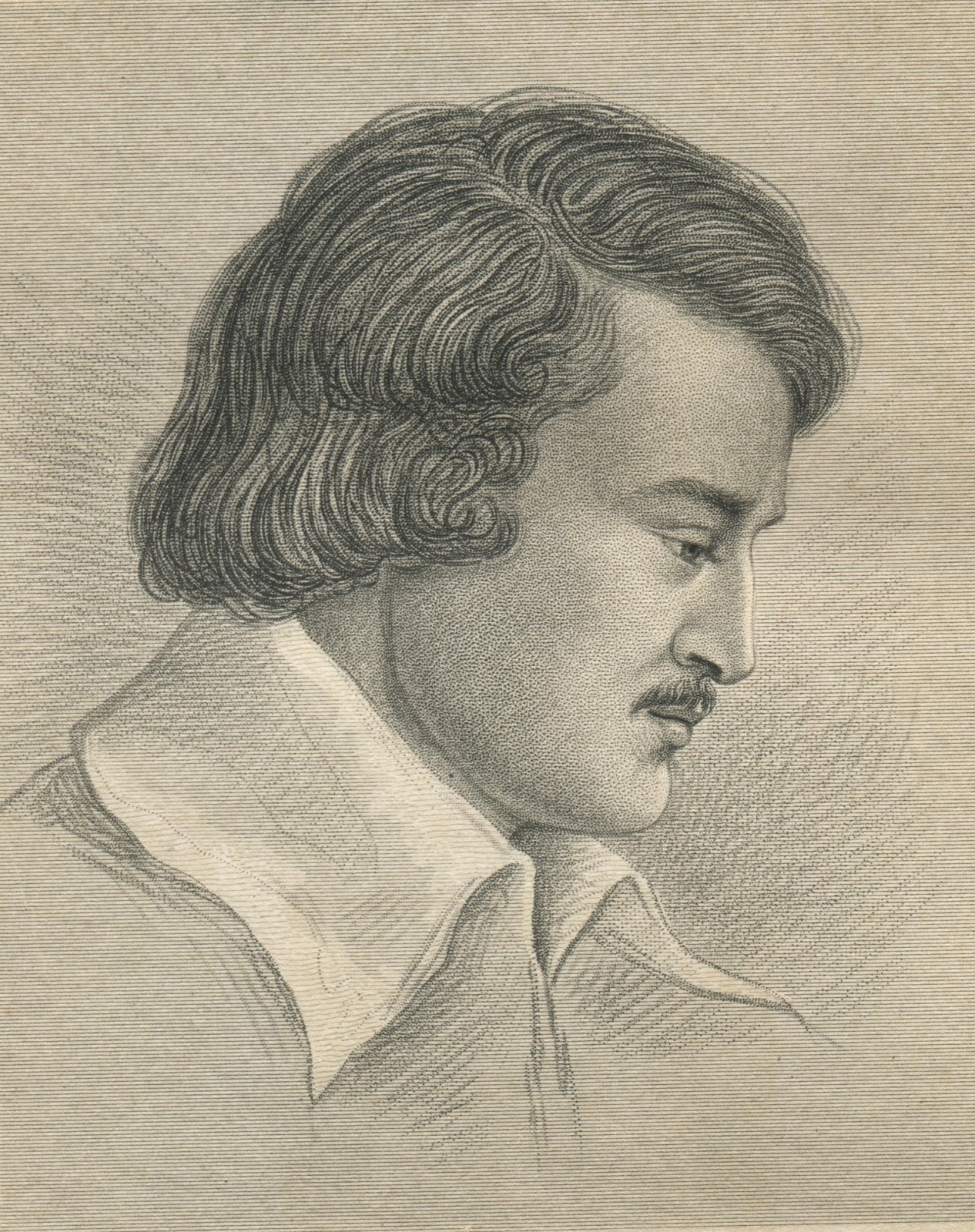
Louis Agassiz at 19, from a pastel drawing by Cecile Braun in Louis Agassiz: his Life and Correspondence. http://biodiversitylibrary.org/page/1367283.

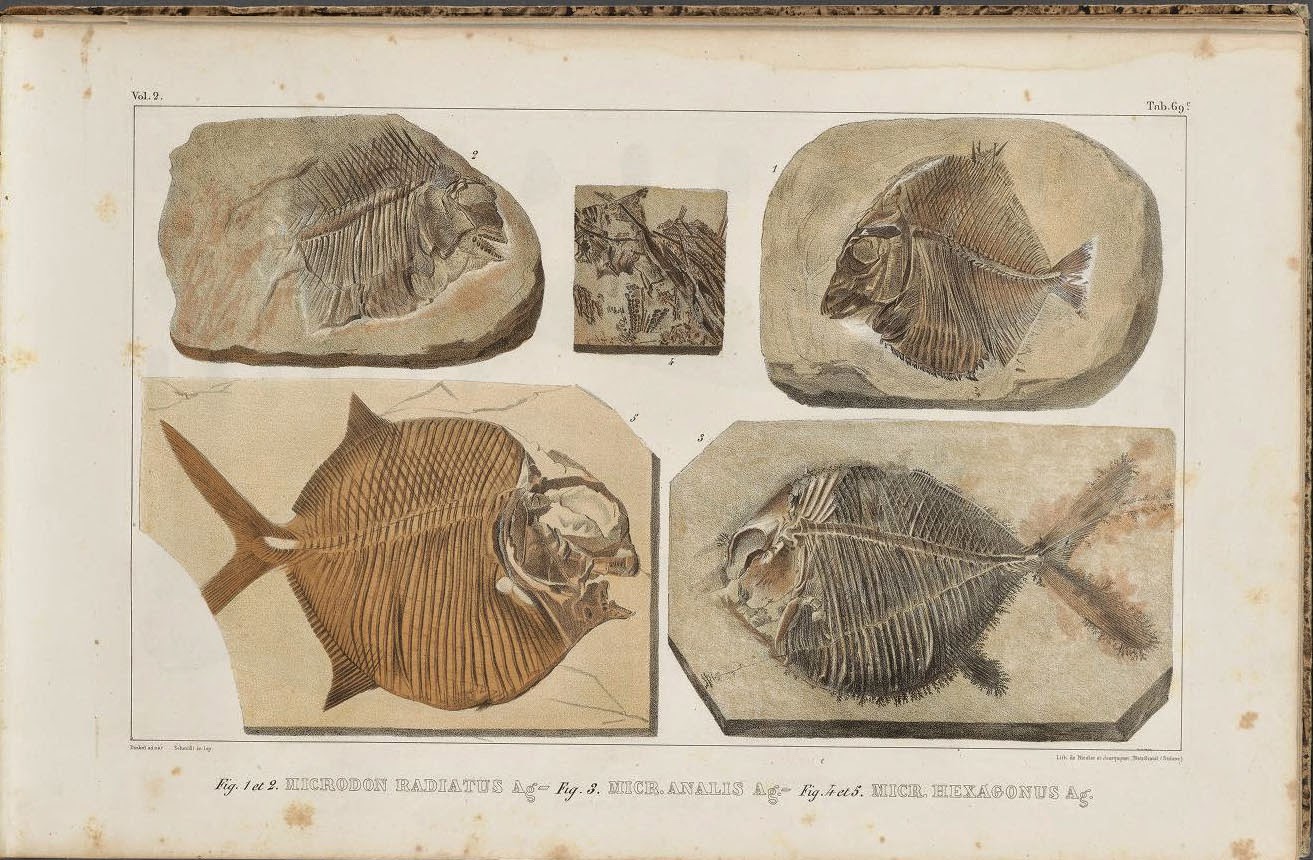
In 1832, Agassiz became a professor of natural history at the College of Neuchâtel and married Cecile Braun, an artist and the sister of botanist Alexander Braun (1805-1877). At Neuchâtel,  Louis published on diverse subjects, including a five volume work on fossil fish, Recherches sur les Poissons Fossiles. Louis and Cecile had three children while at Neuchâtel: Alexander (1835-1910), Ida (1837-1935) and Pauline (1841-1917).

View Full Size Image
Agassiz, Louis. Recherches sur les Poissons Fossiles (1833-43). Vol. 2, plate 69c. http://biodiversitylibrary.org/page/32033418.

Between 1835-1845, while continuing to study and write about zoological topics, Agassiz also began studying geology, especially the European glaciers. His Etudes sur les Glaciers (1840) and Systeme Glaciaire (1847) were leading works in glacial theory and establishing the existence of an Ice Age.

In 1845, King Frederick William IV of Prussia awarded Agassiz a grant to travel to the United States to study “the natural history of the New World.” Agassiz sailed for Boston in September 1846. He intended to travel for two years, not knowing that he would eventually make Massachusetts his home. At the invitation of prominent businessman John Amory Lowell (1798-1881), Agassiz spoke at the Lowell Institute in Boston in the winter of 1846-47, followed by lectures in New York, Philadelphia and elsewhere on the east coast of the United States. American scientists and ordinary citizens turned out in great numbers to hear him. The published edition of his later (1849) Lowell Lecture series on embryology is available through the BHL. Beyond the lecture hall, Agassiz explored the United States from Lake Superior to the coral reefs of Florida.

Agassiz was enthusiastically welcomed into the academic and cultural life of the Boston area, and was appointed to a three-year post as Professor of Zoology and Geology at Harvard’s Lawrence Scientific School in 1847. Agassiz’ young family had stayed in Europe, where Cecile died of tuberculosis in 1848. After her death, Agassiz decided to relocate in the United States permanently, and his children joined him in Massachusetts. In 1850 Louis married Elizabeth Cabot Cary (1822-1907), who would be a partner in all aspects of his life and a founder of Radcliffe College.

A life-long collector, Agassiz immediately started assembling a zoological teaching collection at Harvard. He put out a call to the public around the U.S. in his Directions for Collecting Fishes and other Objects of Natural History. Agassiz’ texts Principles of Zoology…for the Use of Schools and Colleges and Outlines of Comparative Physiology…for the use of Schools and Colleges were reprinted in multiple editions.

By the late 1850s, Harvard’s facilities (and Agassiz’ home) were bursting with his collections. The need for space and Agassiz’ ambition to create a premier natural history museum in his adopted country led to the founding of the Museum of Comparative Zoology in Cambridge, Massachusetts, in 1859. While Louis was teaching and administering the Museum of Comparative Zoology at Harvard University, Elizabeth operated a school for young women at the Agassiz’ home from 1855-1863. More details of their life, together with the three Agassiz children, can be found in the BHL in Louis Agassiz; his life and correspondence by Elizabeth Cary Agassiz, and Elizabeth Cary Agassiz : a Biography by Lucy Allen Paton.

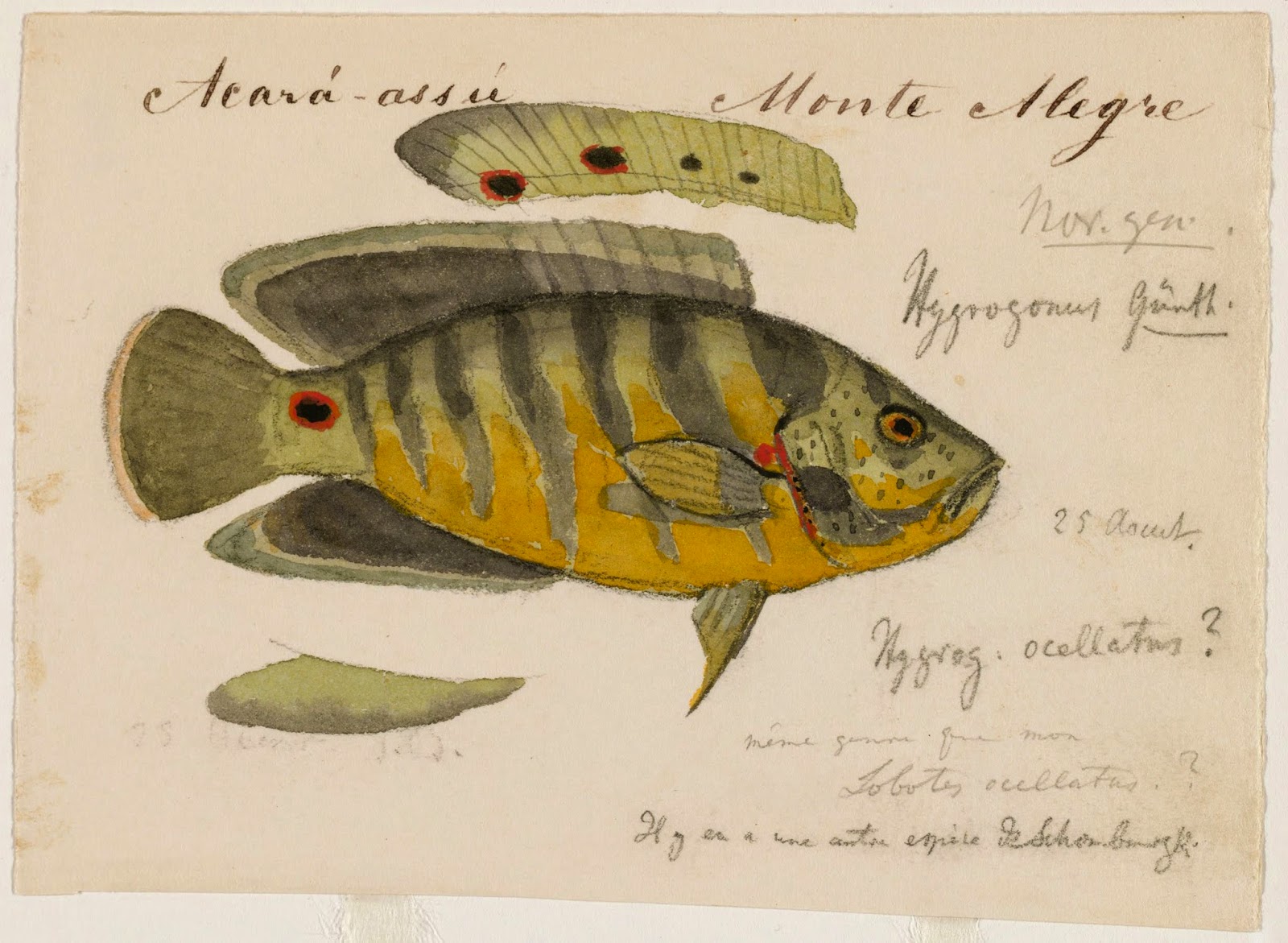
The Thayer Expedition to Brazil in 1865-1866 was an enormous success for Louis and Elizabeth Agassiz, collecting over 34,000 specimens for the MCZ. Louis, who started his career writing about fishes of Brazil collected by J.B. von Spix and C.F.P. von Martius, finally encountered them in their native habitat.

View Full Size Image
Astronotus ocellatus (Monte Alegre, Brazil) painted by J. Burkhardt during the Thayer Expedition. Special Collections of the Ernst Mayr Library of the MCZ. http://ids.lib.harvard.edu/ids/view/1662402.

Other notables on the expedition were a young William James (1842-1910) and Jacques Burkhardt (ca.1808-1867), Agassiz’ assistant and illustrator. Burkhardt had been Agassiz’ illustrator in Switzerland and joined him in the U.S. An exhibit of Burkhardt’s work from the Thayer expedition is online. In addition to the scientific results published, Louis and Elizabeth Agassiz wrote the popular account A Journey in Brazil.

Although revered as a teacher, scientist and adventurer in his own time, Agassiz has become known for his disagreement with Charles Darwin and evolutionary theory. A product of his religious early 19th century upbringing, Agassiz viewed the world as Creation, and taught that plant and animal species were fixed, not evolving. He was characteristically self-confident and could not be swayed, preferring to joust with Darwin and others while evolution was discussed and accepted in the scientific community.

Louis Agassiz passed away on December 14, 1873, following a stroke, a year after returning from another expedition to South America on the U.S. Coast Survey Hassler. The Museum of Comparative Zoology today holds approximately 21 million specimens, and is an international center for graduate study and field research, including evolutionary biology as well as zoology, taxonomy and paleontology.

May 28, 2015by ulib-libraryjobs
Blog Reel, Featured Books

A Crusade to Save the Golden Lion Tamarin

Post by Grace Costantino with significant contributions from Field Book Project blog post, “Field Notes from a Battle Against Extinction,” by Sonoe Nakasone.
View Full Size Image
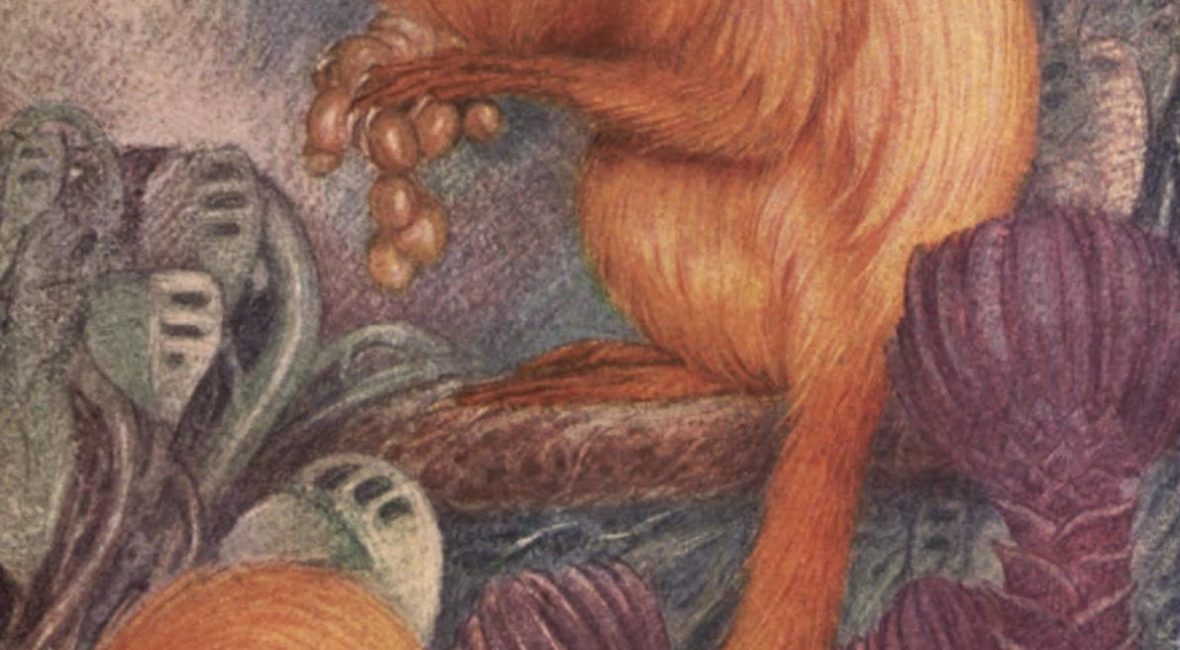
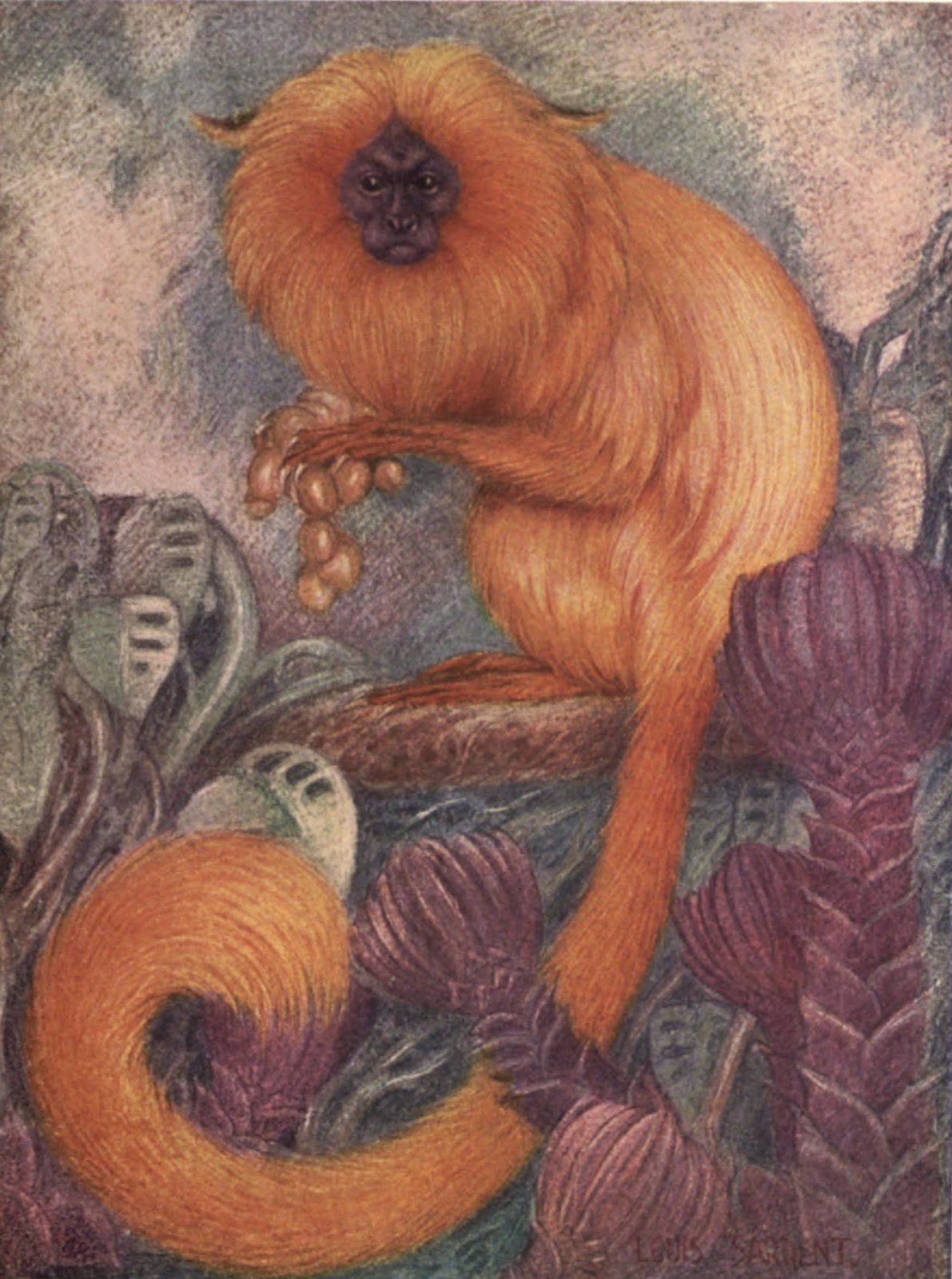
The Golden Lion Tamarin. Illustrated by Louis Sargent. From: Finn, Frank.
The Wild Beasts of the World. (v. 1, 1909). http://biodiversitylibrary.org/page/19058592 

A small, endangered primate, the Golden Lion Tamarin (GLT) (also known as the Golden or Lion Marmoset) gets its name from the trademark, vivid orange “mane” surrounding its face. Don’t let the “lion” part fool you, however. The tamarin averages only 10.3 inches in length and 1.37 lbs.

In the marvelous book The Wild Beasts of the World (v.1, 1909), Frank Finn, an English ornithologist, writes that the GLT is not much larger than the English squirrel, with “paws” quite unlike “ordinary” monkeys. The accompanying illustration, by Louis Sargent, is a breathtaking representation of this adorable New World Monkey.

Interestingly, Finn records that “the present species is one of the most widely-ranging of the Marmosets, being found from the Isthmus of Panama to South-eastern Brazil and New Granada.” Much has changed since the early 1900s. Today, GLTs have extremely limited distribution, confined solely to Brazil, and occupying only 2-5% of their original habitat. In the 1970s, as few as 200 GLTs remained on Earth. Thanks to conservation efforts, led largely by Dr. Devra Kleiman, who passed away in 2010, their wild population is now closer to 3,200.

The Field Book Project* has cataloged a number of Kleiman’s fieldbooks, many focusing on her research with the GLT. Sonoe Nakasone, who cataloged the books and published a blog post about them, noted that Kleiman’s notes were quite different from those of many other researchers she had cataloged in the past, as:

Kleiman didn’t really “collect specimens”. Rather, her notes document animal behavior, activities, diet, as well as external factors affecting the livelihood of tamarins. Kleiman and her team did collect blood, skin, and fur samples, and they did capture tamarins to breed in captivity before reintroducing them into the wild, yet the fundamental purpose and method of research was distinct from traditional natural history field work.

View Full Size Image
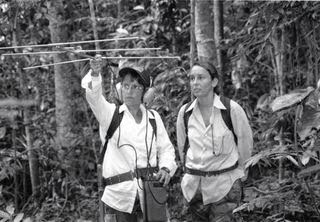
Devra Kleiman and colleague conducting playback study. From the Field Book Project.

Kleiman’s fieldbooks also document a number of her research techniques. She employed three common protocols:

Scans, focals, and playbacks. Scans and focals are systematic observations. Scans focus on all member of a group of animals; focals focus on an individual animal. Both adhere to specific lengths of time and seek specific information about behavior and activities. Playbacks involved projecting recordings of various animal vocalizations in the field. During these experiments, animal responses, if any, were documented and differences between male and female responses noted.

Nakasone also highlights some of the challenges Kleiman faced during her conservation initiatives:

On October 25, 1991, Kleiman remembers a particularly difficult visit to a corporation: “the veep [VP] we meet is very obnoxious—suggesting that people are burned out [with] ecology (mentions a t-shirt entitled “I don’t give a s— about the GLT)”. On March 16, 1990, Kleiman notes the effects of economic instability in Brazil on the project: “they are freezing all interest-bearing overnight accounts […]. Cecilia [Kleiman’s colleague] had $6000 WWF grant in an overnight account. It increased by $1000 interest, but now she can’t touch it.”

Yet despite these and other obstacles like deforestation, poaching, and political instability, Kleiman coordinated the Golden Lion Tamarin Conservation Program for almost 30 years and “was successful at shedding light on the issue of golden lion tamarins and helping to increase the GLT population by 800%.” As Nakaone notes:

Kleiman’s field books are a refreshing and exhilarating alternative to many of her predecessor’s field books because she was a pioneer in the burgeoning field of conservation biology. Her notes reflect not only the advancement of human knowledge, but also the application of that knowledge to ensure the livelihood of species struggling for survival.

View Full Size Image
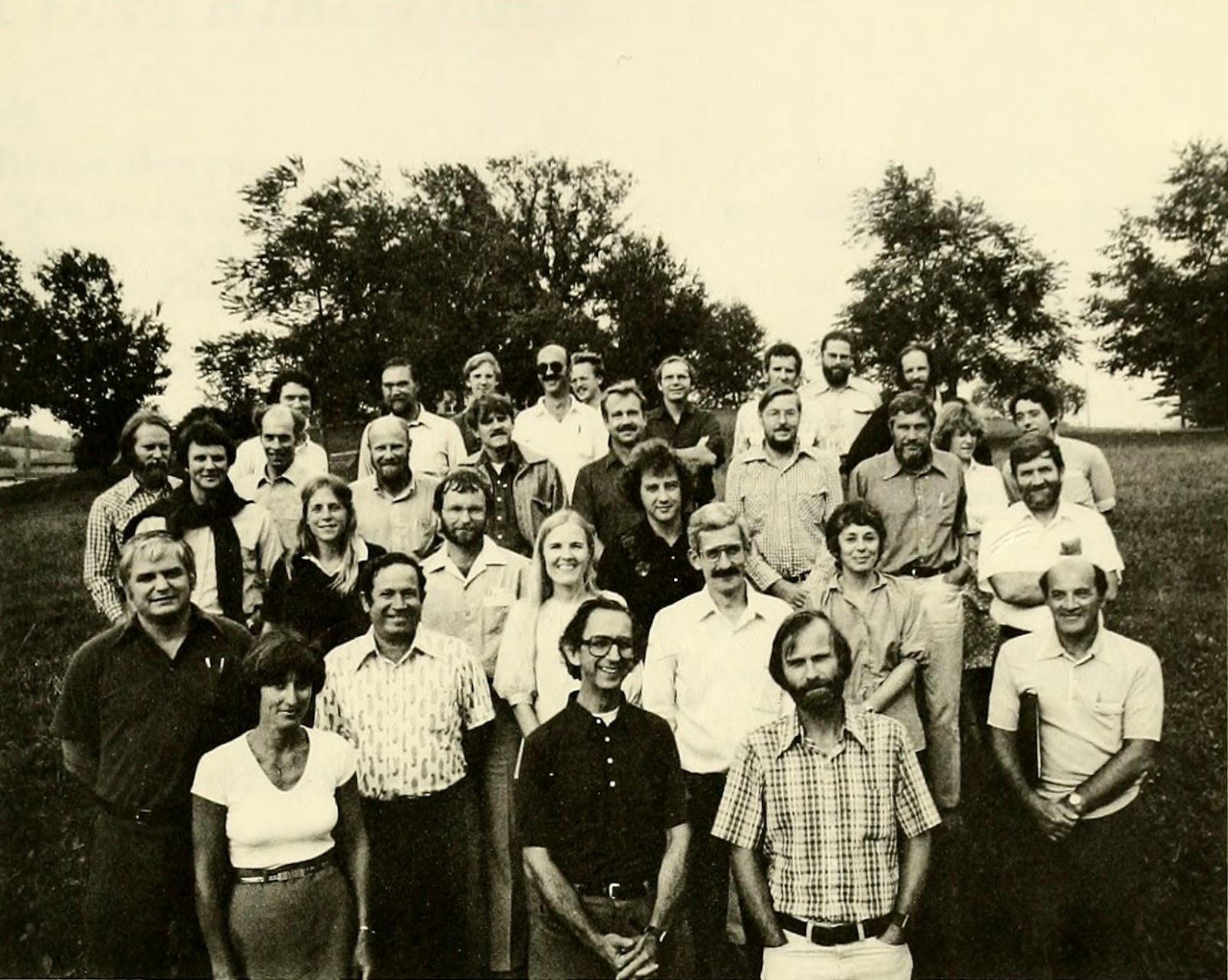
“Participants in the Front Royal Conference on Mammalian Behavior, 16-19 August 1980.”
Kleiman 2nd row, 2nd from right.

Learn more about Kleiman’s contributions to conservation and biodiversity sciences from the Smithsonian Archives. Explore the GLT in The Wild Beasts of the World, and learn more about the species in EOL. Read Sonoe Nakasone’s full blog post and explore Kleiman’s fieldbooks, cataloged by the Field Book Project.

* The Field Book Project is an initiative to increase accessibility to field book content that documents natural history. Through ongoing partnerships within and beyond the Smithsonian, the project is making field books easier to find and available in a digital format for current research, as well as inspiring new ways of utilizing these rich information sources. 

September 18, 2014by michelle.underhill
Blog Reel, Featured Books

Wallace, Darwin, and Evolution: The Real Story

Book of the Week: The Malay Archipelago, by Alfred Russel Wallace

View Full Size Image
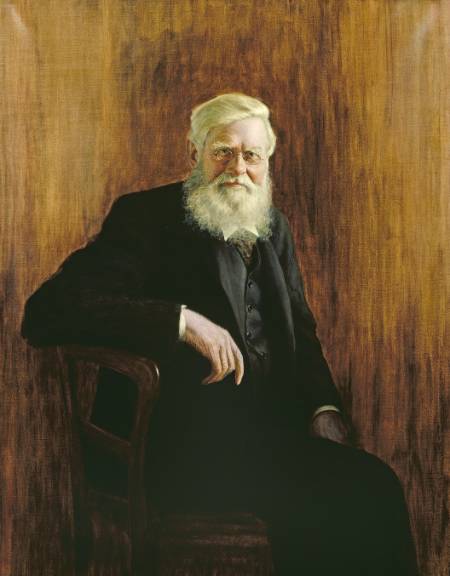
Portrait of Wallace at NHM. Restored to celebrate Wallace100.

In 1858, Journal and Proceedings of the Linnean Society: Zoology published a paper proposing what would later be recognized as a revolutionary scientific concept: the theory of Evolution by means of Natural Selection. If we were to ask you who penned this publication, chances are your response would be Charles Darwin.

You would, however, only be half right.

While it is true that this 1858 publication represented 20 years of Darwin’s contemplation and conclusions on the process of natural selection (which culminated in the monumental work On the Origin of Species published just one year later in 1859), the Linnean Society piece was actually co-authored by Alfred Russel Wallace, who independently conceived of the theory of natural selection.

While Wallace, an avid explorer, collector, and natural historian, had long been seeking the cause of speciation during his 14 years of exploration in South America, Malaysia and Indonesia, it was in the midst of a fever in 1858, during his expedition to the Malay Archipelago, that inspiration struck: in the form of the theory of natural selection. Wallace expanded on this idea in a detailed article which he subsequently sent to Charles Darwin for review, unaware that Darwin himself had come to the same conclusion, though had yet to publish his theory.

At the suggestion of Darwin’s friends Charles Lyell and Joseph Hooker, Wallace’s article, together with unpublished writing by Darwin on the subject of natural selection and evolution, were presented to the Linnean Society in 1858 and subsequently published in the Society’s journal as “On the Tendency of Species to Form Varieties; and On the Perpetuation of Varieties and Species by Natural Means of Selection.”

2013 marks the 100th anniversary of Wallace’s death (in November, 1913). The Natural History Museum, London, has organized Wallace100, with a year’s worth of events and writings on the life and legacy of this great man.  This week, we explore the significant contribution Wallace made to natural history, with particular attention to Wallace’s account of his Malay expedition – the adventure that triggered a fever that fanned the flames of genius.

Great Things from Small Beginnings

View Full Size Image
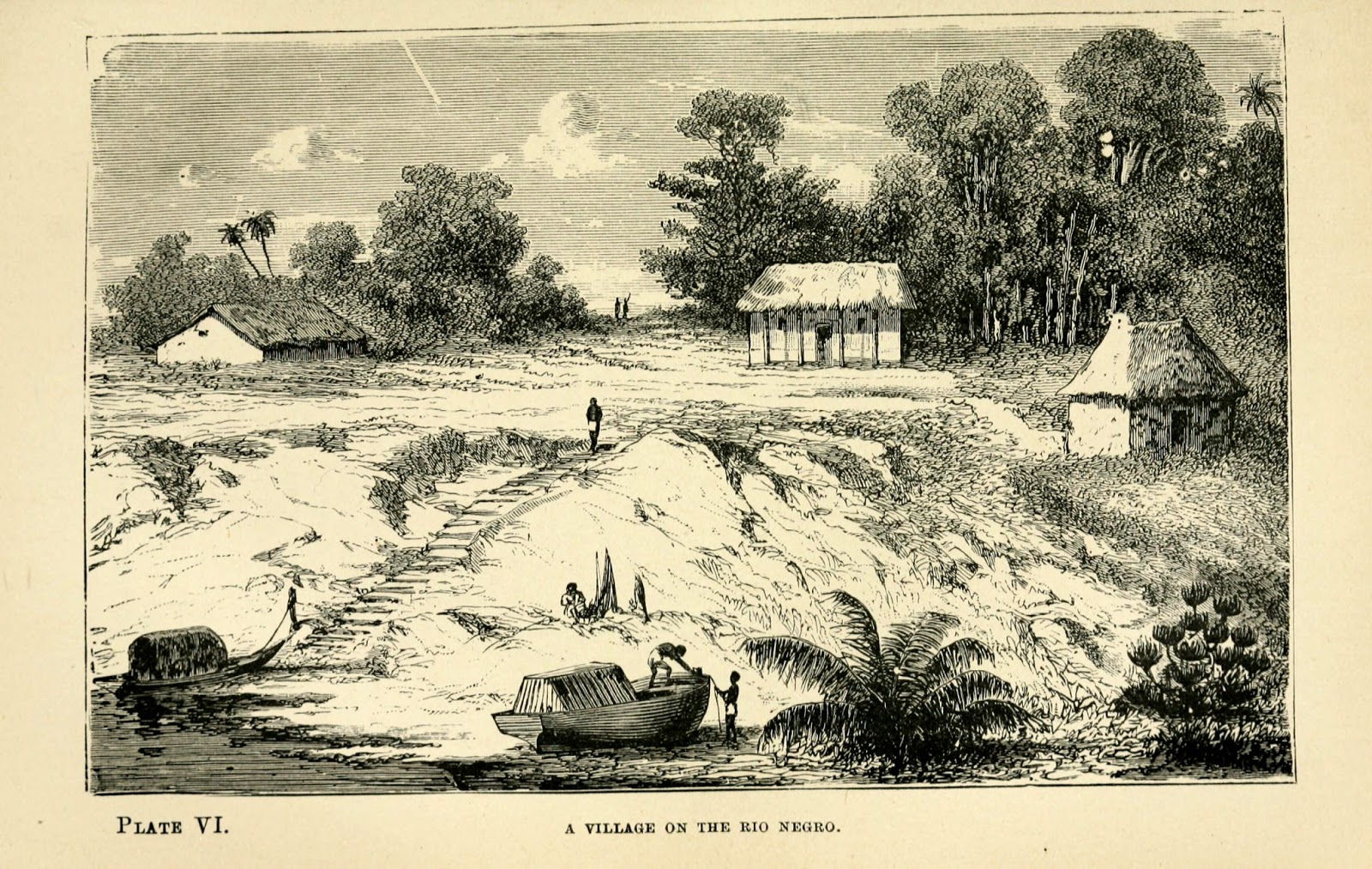
Illustration from A narrative of travels on the Amazon and Rio Negro, Wallace’s account of his expedition to South America.

Alfred Russel Wallace was born in 1823 in Usk, England, the seventh of nine children. While in his twenties, Wallace took a job as a schoolteacher in Leicester, during which time he met and befriended Henry Bates, a promising young entomologist. The two were invigorated by Darwin’s account of his voyage on the Beagle, and in 1848 set out on an expedition of their own to South America. The duo hoped to determine the mechanism driving the transmutation of species, the precursor to the theory of Natural Selection.

Over the four years of this exploration, Wallace gathered thousands of specimens, largely insects. The untimely death of his younger brother, however, who had traveled to South America to join the expedition, prompted Wallace, together with his entire collection of specimens and notebooks, to return to England. It was a fateful voyage. The ship caught fire and sank, along with most of Wallace’s collections and notebooks.

Undaunted, Wallace used the insurance money he collected from his specimens to organize a new expedition to the Malay Archipelago (today Malaysia and Indonesia). Wallace departed from England in 1854 to embark on his eight year journey through the exotic East Indies.

The Malay Archipelago and the Fever that Changed Science

View Full Size Image
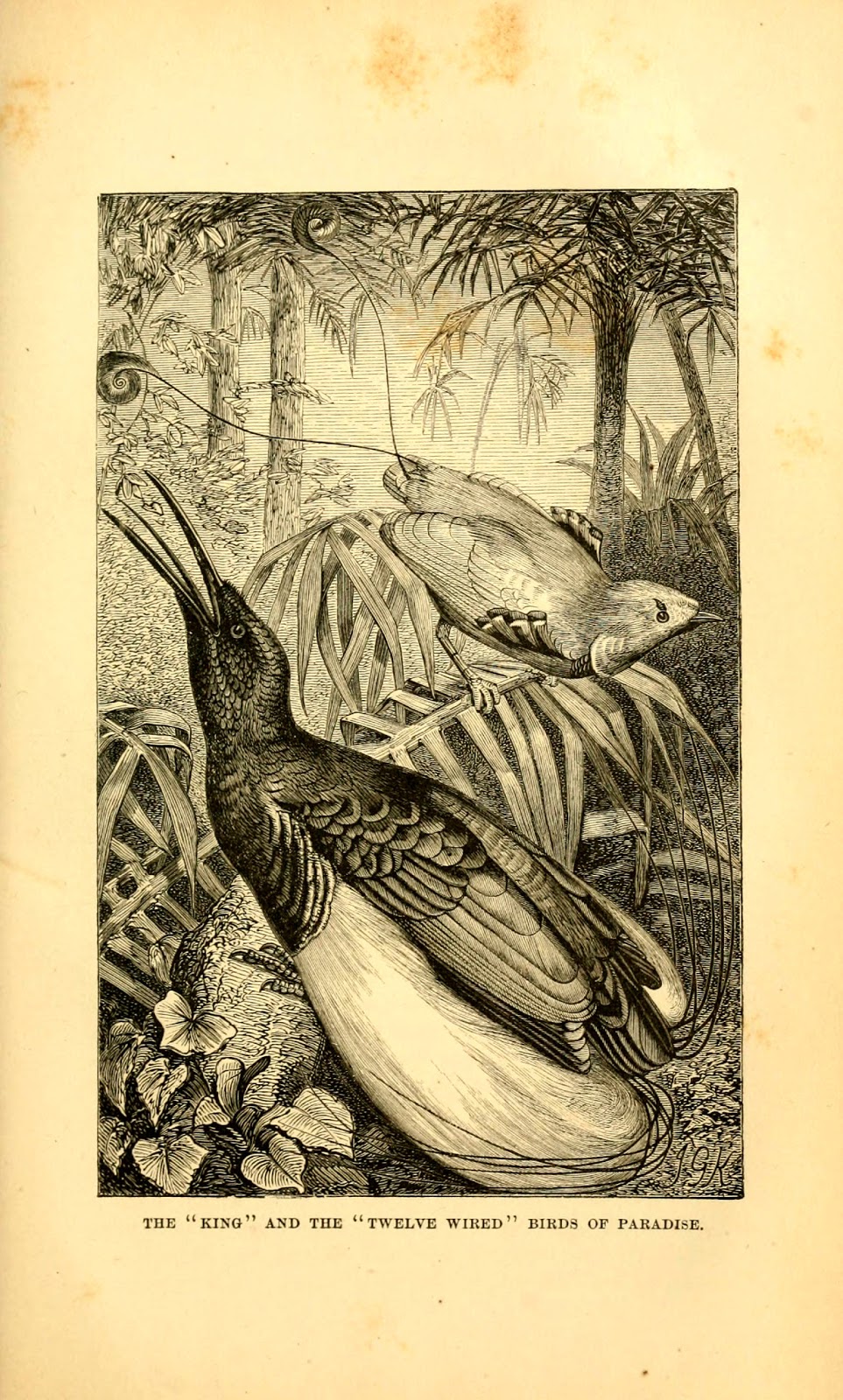
Birds of Paradise from Malay Archipelago

Over the course of the Malay Expedition, Wallace gathered 125,660 specimens, more than a thousand of which were new to science. Six years after returning from the expedition, Wallace began writing an account of his adventure, which was published in 1869 in the two-volume masterpiece, The Malay Archipelago. The work, which provided readers (scientists and laymen alike) a rare window into the exotic depths of the “wild East,” became one of the most popular books on scientific exploration in the 1800s. Wallace dedicated the work, which has never been out of print, to Charles Darwin, “not only as a token of personal esteem and friendship but also to express…deep admiration for his genius and his works.”

The work was particularly note-worthy for its descriptions of birds of paradise, orang-utans, and native peoples. During the course of the expedition, Wallace obtained the distinction of being the first European to study apes in the wild. He shot and skinned several for the British Museum, and even raised an orphan orang-utan in his field camp. Apparently, his interaction with the orang-utans was particularly troubling to the natives, who viewed them as the “men of the woods.” Alarmed by Wallace’s collection of the apes, they feared that they, too, would be shot and skinned.

Despite this tension, Wallace made a point of understanding local customs and respecting the native people’s beliefs. Before the expedition, Wallace learned Malay and other tribal languages, expressing an interest in the “manners, customs, and modes of thought of people so far removed from European races and European civilization.” His work constituted pioneering efforts in ethnology and linguistics.

View Full Size Image
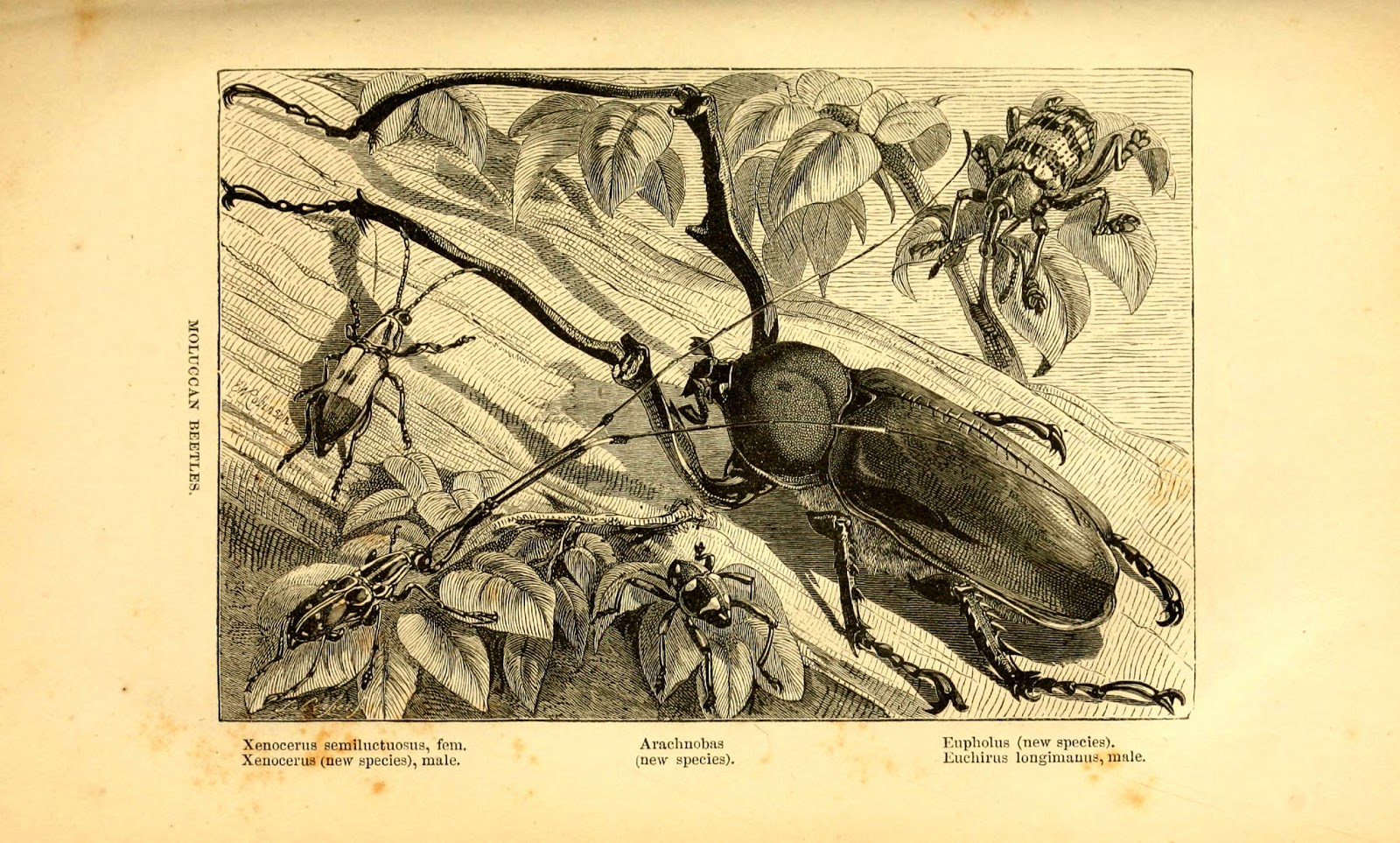
Long-armed Chafer Beetle from The Malay Archipelago. View the images from The Malay Archipelago in the BHL Flickr.

The expedition was a critical period for Wallace’s conceptualization of natural selection. Taking his first step towards the realization of this theory, Wallace published “On the Law which has Regulated the Introduction of New Species” in 1855, in which he hypothesized about when and where species originate. In what would later become known as the Sarawak Law, he observed that “every species has come into existence coincident both in space and time with a pre-existing, closely-allied species,” which “clearly pointed to some kind of evolution.” The “how” was still a mystery.

In the midst of a fever in 1858, the mystery was solved. While contemplating Malthus’ “Essay on Population,” which described how factors such as disease, accidents, and war keep human population in check, Wallace conceived of the idea of survival of the fittest, leading him to the conclusion that “in every generation the inferior would inevitably be killed off and the superior would remain.” Bingo. Natural Selection. It was this epiphany that Wallace communicated to Darwin via letter. This letter, together with some of Darwin’s unpublished works on the subject, was presented to the Linnean Society in 1858.

The Truth Behind Evolution

View Full Size Image
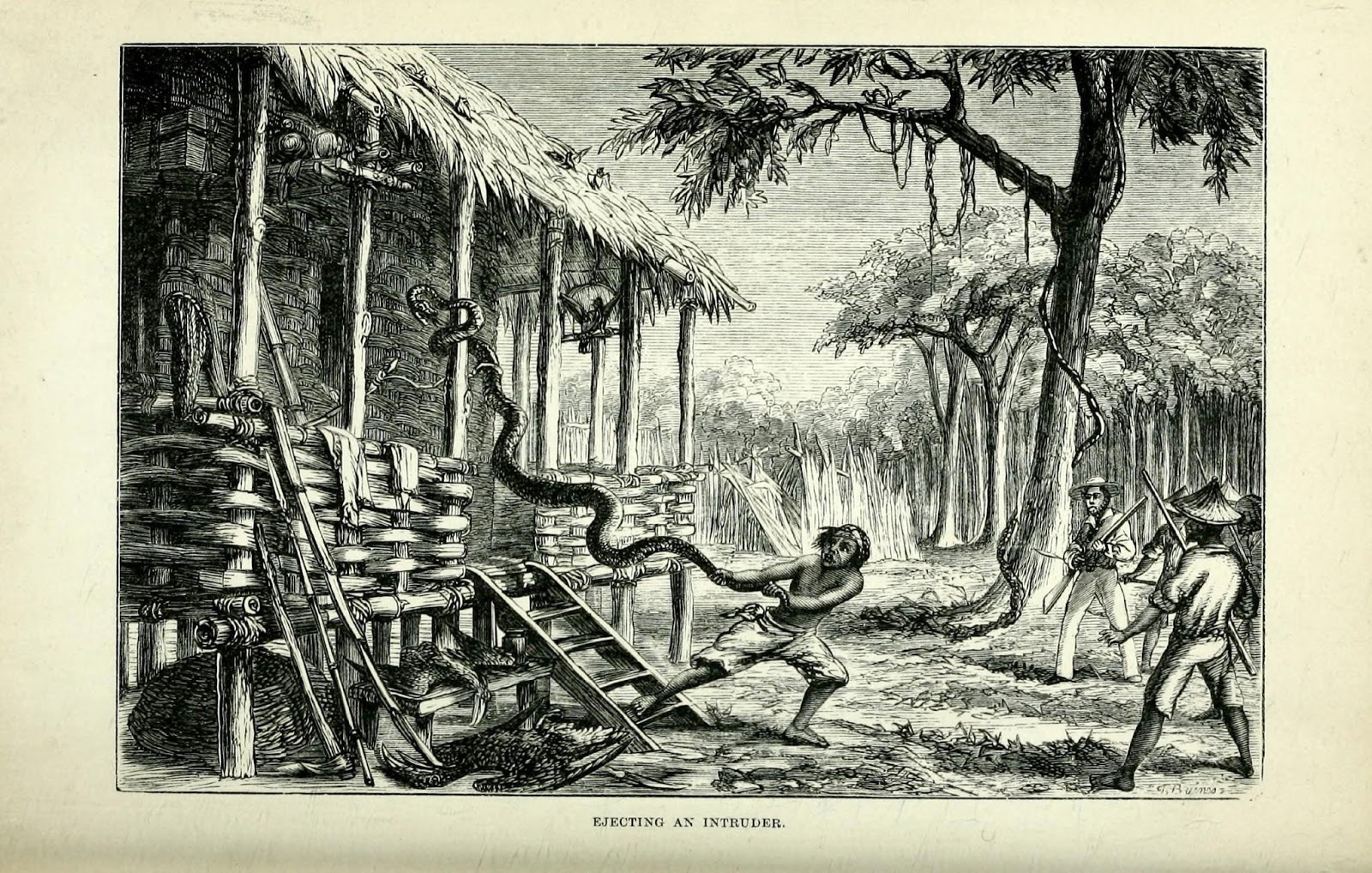
“Ejecting an Intruder” from The Malay Archipelago

Darwin and Wallace’s co-attributed theory of evolution by means of Natural Selection published in 1858, and a year later, prompted by Wallace’s letter, Darwin published On the Origin of Species. Throughout his lifetime, Wallace expressed only extreme gratitude at being given recognition for the theory along with Darwin. When Wallace sent his letter to Darwin in 1858, he did so without expectation of publication, and indeed, Darwin approved of the publication without consent from Wallace, as the delay in sending and receiving postage from the Malay Archipelago was considerable. When informed of the publication, Wallace wrote that he “happily and graciously approved.” According to Wallace biographer Richard Milner, Wallace “maintained that even if his only contribution was getting Darwin to write his book, he would be content.”

During the time of Darwin, Wallace was widely-acknowledged as the co-discoverer of the evolutionary theory. Today, most do not even know Wallace’s name, let alone associate him with Evolution. Why is this? According to George Beccaloni, public favor in the early twentieth century holds the key. In the late 1800s and early 1900s, natural selection as a theory became unpopular as other theories like neo-Lamarckism, orthogenesis, and the mutation theory took root. The generation of scientists that understood natural selection and recognized Wallace and Darwin died out. In the 1930s and 40s, natural selection again gained favor as a new generation of scientists rediscovered On the Origin of Species. Embracing natural selection through that avenue, the name of Wallace faded from scientific recognition.

Remembering Wallace
View Full Size Image
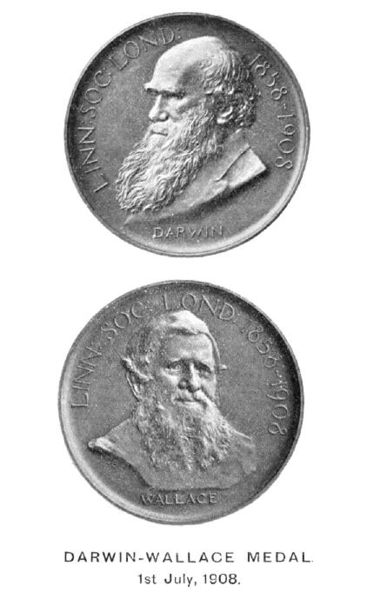
Darwin-Wallace Medal

Today, we recognize the contribution Wallace made to science, evolution, and natural selection. Wallace was awarded a multitude of medals, including the Darwin-Wallace and Linnean Gold Medals of the Linnean Society of London, the Copley, Darwin and Royal Medals of the Royal Society, and the Order of Merit. As we remember the 100th anniversary of Wallace’s death this year, let us remember that the great advances in science are often the work of many more men and women that are given general acclaim for the accomplishment.

Here’s to you, Alfred Russel Wallace. We have not forgotten you.

Links of Interest

  • See Darwin’s annotated copy of our Book of the Week, The Malay Archipelago, contributed by the Natural History Museum, London.
  • See Alfred Russel Wallace’s publications in BHL.
  • Wallace100: Explore 100 years of Alfred Russel Wallace on the Natural History Museum website.
  • View the images from this week’s book of the week, The Malay Archipelago, in Flickr.
  • Learn more about Alfred Russel Wallace in Richard Milner’s biography.
  • Debunk Wallace Myths and Misconceptions.

We hope you enjoyed this post. Interested in guest-blogging for BHL? We’d love that! Natural history, biodiversity and conservation topics are especially welcomed. Email us your ideas at [email protected].

January 24, 2013by michelle.underhill
Page 1 of 212»

Help Support BHL

BHL's existence depends on the financial support of its patrons. Help us keep this free resource alive!

search

About BHL

The Biodiversity Heritage Library (BHL) is the world’s largest open access digital library for biodiversity literature and archives. BHL operates as a worldwide consortium of natural history, botanical, research, and national libraries working together to digitize the natural history literature held in their collections and make it freely available for open access as part of a global “biodiversity community.”

Join Our Mailing List

Sign up to receive the latest news, content highlights, and promotions.

Subscribe Now

Subscribe to Blog via Email

Enter your email address to subscribe to this blog and receive notifications of new posts by email.

Join 319 other subscribers

Subscribe to Blog Via RSS

Subscribe to the blog RSS feed to stay up-to-date on all the latest BHL posts.

Access RSS Feed

Inspiring Discovery through Free Access to Biodiversity Knowledge.

The Biodiversity Heritage Library makes it easier than ever for you to access the information you need to study and explore life on Earth…for free, anytime, anywhere.


64+ Million Pages of
Biodiversity Literature Online.

EXPLORE

Tools and Services
to Transform Research.

EXPLORE

300,000+
Illustrations on Flickr.

EXPLORE

ABOUT | HARMFUL CONTENT | PRIVACY | SITE MAP | TERMS OF USE