Biodiversity Heritage Library - Program news and collection highlights from BHL
  • Home
  • News
  • Featured Books
    • All Featured Books
    • Book of the Month Series
    • BHL at 20
  • User Stories
  • Campaigns
    • Fossil Stories
    • Garden Stories
    • Monsters Are Real
    • Page Frights
    • Her Natural History
    • Earth Optimism 2020
  • Tech Blog
  • Visit BHL
Home
News
Featured Books
    All Featured Books
    Book of the Month Series
    BHL at 20
User Stories
Campaigns
    Fossil Stories
    Garden Stories
    Monsters Are Real
    Page Frights
    Her Natural History
    Earth Optimism 2020
Tech Blog
Visit BHL
  • Home
  • News
  • Featured Books
    • All Featured Books
    • Book of the Month Series
    • BHL at 20
  • User Stories
  • Campaigns
    • Fossil Stories
    • Garden Stories
    • Monsters Are Real
    • Page Frights
    • Her Natural History
    • Earth Optimism 2020
  • Tech Blog
  • Visit BHL
Biodiversity Heritage Library - Program news and collection highlights from BHL
Blog Reel, Campaigns, Featured Books

Cats & Women: Why the Connection?

This blog post incorporates research conducted for an upcoming digital exhibition called “Wild Mouser to Household Pet: A History of Cats in Science and Society, 1858 to 1922.” Click here to check out the exhibition and book collection! 

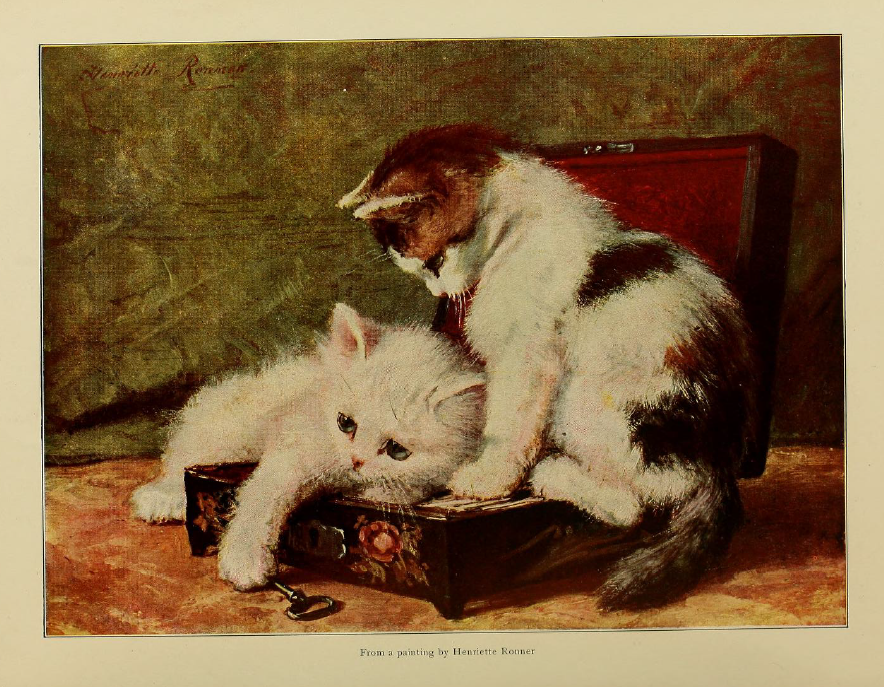
Cats and women have long been connected in the public imagination. From ancient Egypt, to the Middle Ages, to the turn of the twentieth century, to the present – there has been an association between felines and femininity.
View Full Size Image
Gos., De Voogt. Our Domestic Animals: Their Habits, Intelligence, and Usefulness (1907). Painting by Henriette Ronner-Knip. Digitized by the Library of Congress.

Pronouns

One of the most glaring examples of this connection is the choice of pronouns used to describe cats. These examples from nineteenth and early twentieth century books illustrate the tendency to use feminine pronouns for cats:

“If a cat is seen to wash her face with vigor, it is going to be stormy, and if she sits with her back to the fire, it predicts cold weather.” [1]

“The cat has been called the ‘perfect pet,’ and not without justice. Pussy has always had her friends and her foes; her ardent admirers and her extreme detestors. Faults she has, no doubt, but the lack of an affectionate regard for the person who befriends her is not, as has been alleged, one of them. Though less demonstrative than the dog, the quiet rubbing of her fur against one’s person is no less indicative of supreme regard.” [2]

Conversely, dogs were usually referred to with masculine pronouns.

“Crazy Cat Lady” Trope

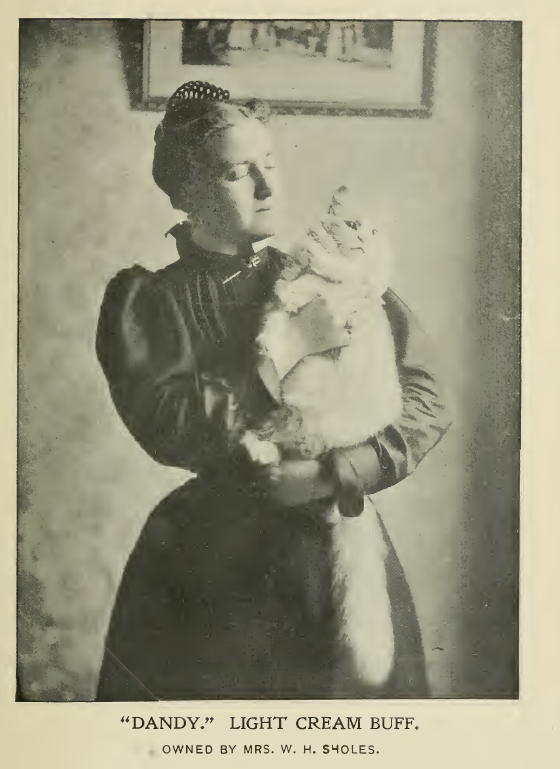
Another example of the link between cats and women is in the ‘crazy cat lady’ trope. In Our Domestic Animals, Their Habits, Intelligence, and Usefulness (1907), the phenomenon is described:

“Yet in certain cities of every country we find persons who push their passion for cats to excess; generally, it must be said, they are elderly dames [women], who establish asylums where neglected, lost, or sick cats may find a refuge. Sometimes these asylums are organized in a practical and sufficient manner, in which case the motive that provided them is laudable; but often they are mere nests of disease and objects of scandal to the neighborhood.” [3]

This ‘crazy cat lady’ troupe is linked to earlier beliefs in the connection between femininity, witchcraft, and cats. The tradition has also continued on into the twenty-first century: it is common for people to joke about single women who live with cats as crazy or scandalous.
View Full Size Image
James, Robert Kent. The Angora Cat; How to Breed, Train and Keep It. (1898). Digitized by the Library of Congress.

Cat Shows

View Full Size Image
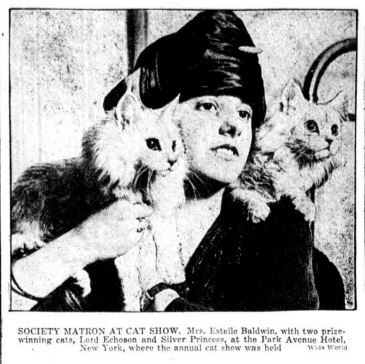
Evening public ledger. (Philadelphia [Pa.]), 12 Dec. 1921. Chronicling America: Historic American Newspapers. Lib. of Congress.

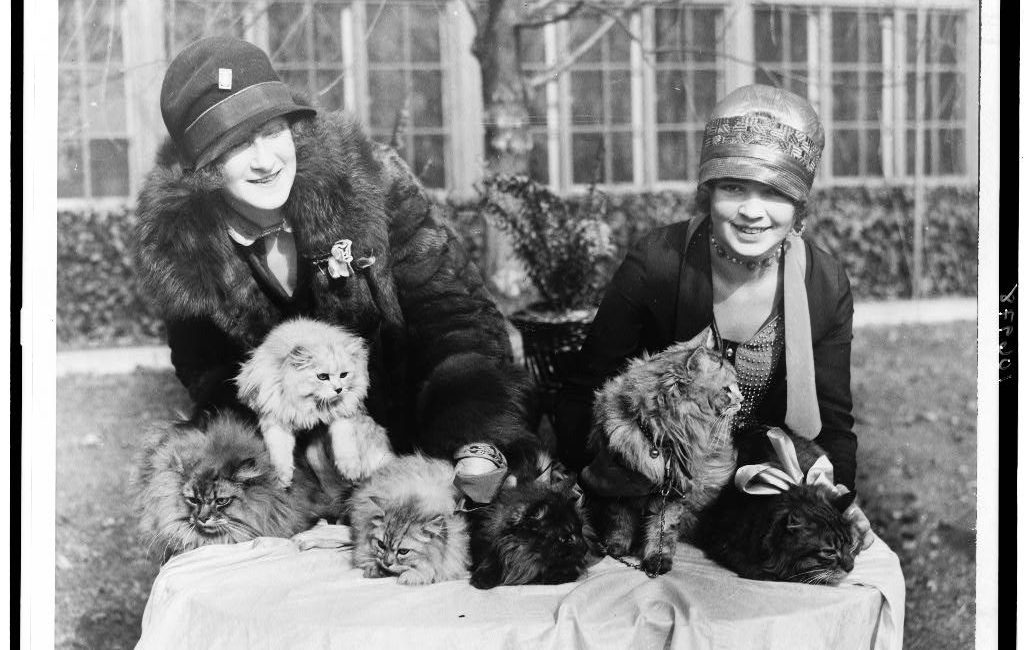
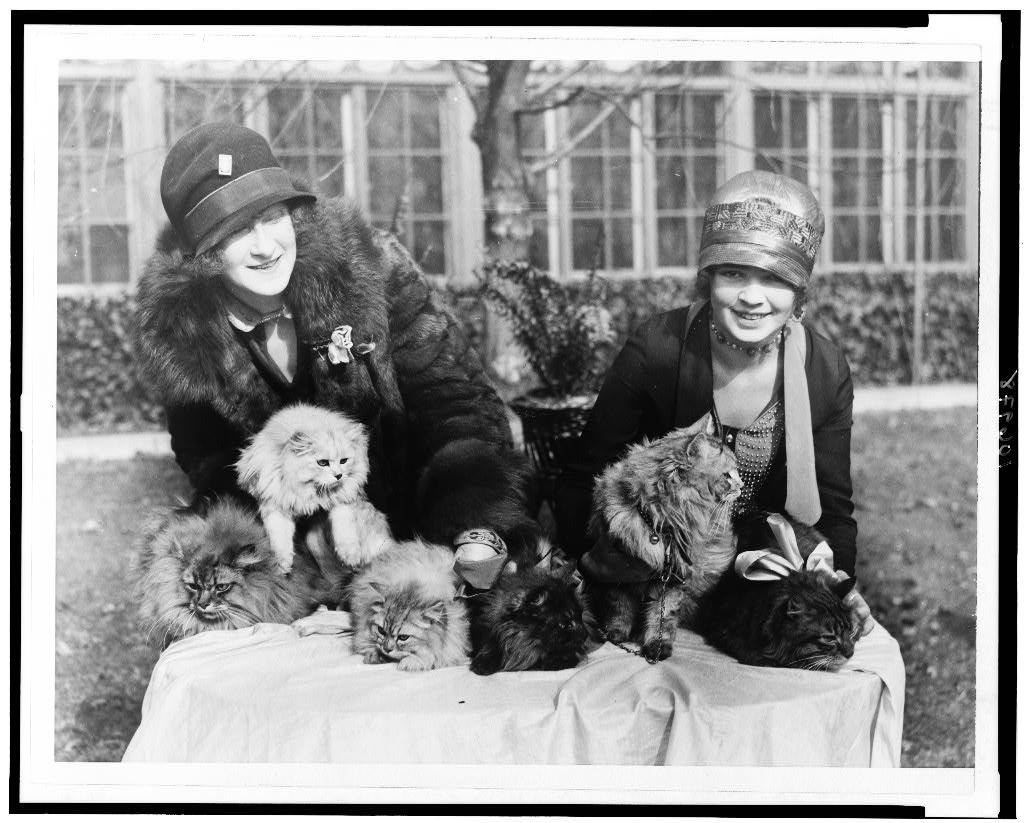
On the other side of the spectrum, women have also been associated with cat shows. The first United States National Cat Show took place in 1871. Women’s societies organized cat shows to raise money for charities, often animal welfare organizations. Newspaper articles from the time announce the upcoming shows and list the names of the exhibitors and organizers, who were mainly women. These shows also incorporated new scientific theories about heredity and breeding, as cat enthusiasts sought to selectively breed cats to develop particular traits, especially coat length and color.
View Full Size Image
Edna B. Doughty and Louise Grogan with Persian cats. 1920s. Library of Congress Prints and Photographs Division. https://lccn.loc.gov/93502603.
View Full Size Image
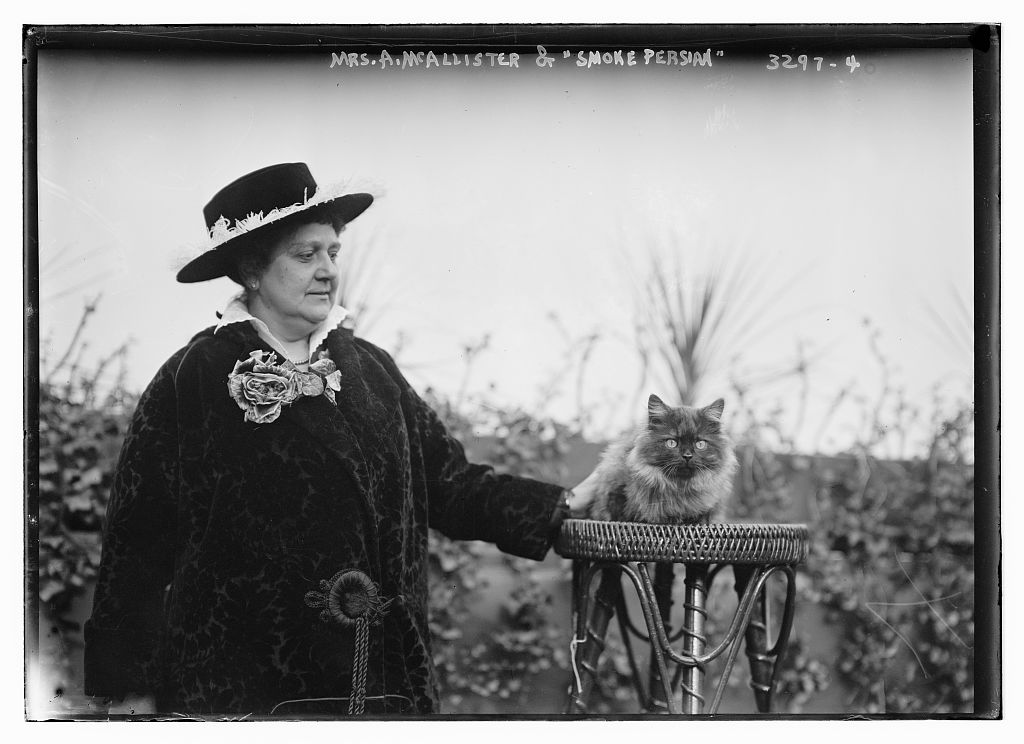
Mrs. A.McAllister and “Smoke Persian” cat. Ca. 1910-1915. Library of Congress Prints and Photographs Division. http://www.loc.gov/pictures/item/ggb2005018109/.

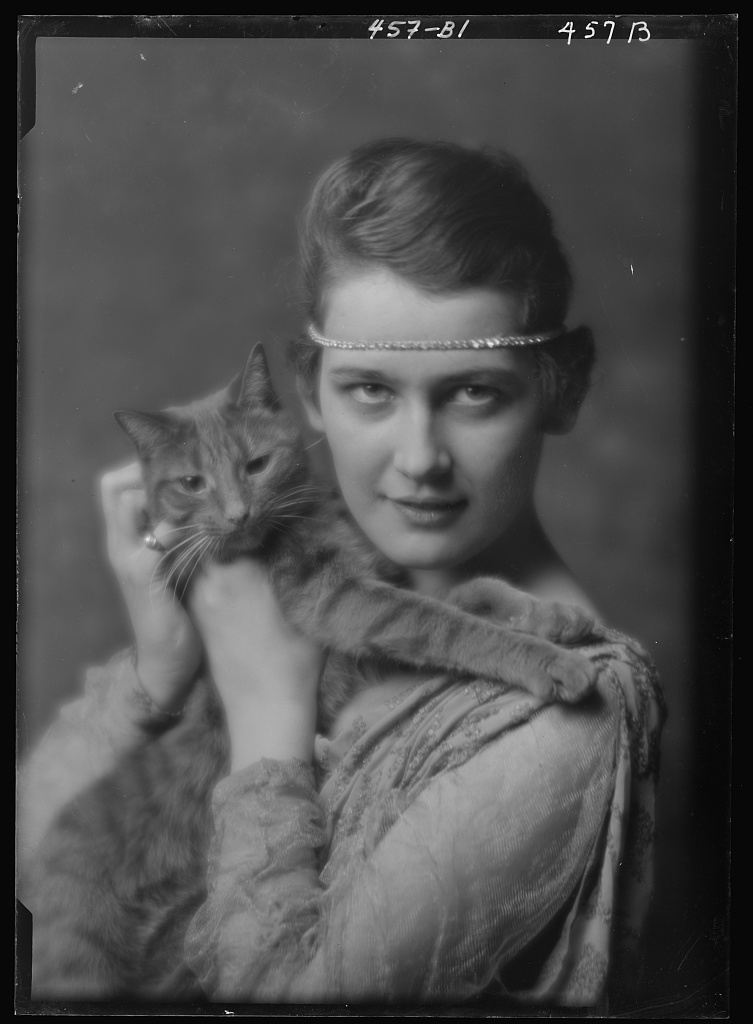
Another interesting visual representation of the connection between women and cats comes in the photography of Arnold Genthe (1869-1942). In the early twentieth-century, Genthe photographed many celebrities in his studio, posing them with his cat Buzzer. Click here to check out more photographs of Buzzer.
View Full Size Image
Miss Anna Holch with Buzzer the cat, portrait photograph. Ca 1913. Library of Congress Prints and Photographs Division. http://www.loc.gov/pictures/item/agc1996003492/PP/.

But why was there a connection between women and cats?

In his book, The Cat: An Introduction to the Study of Backboned Animals, Especially Mammals (1881), St. George Jackson Mivart shares one theory:

“The cat also is favoured by that half of the human race which is the more concerned with domestic cares; for it is a home-loving animal and one exceptionally clean and orderly in its habits, and thus naturally commends itself to the good will of the thrifty housewife.” [4]

He highlights aspects of cat’s behavior that are seen as feminine in his day: domestic tendencies and cleanliness.

Another possible interpretation involves the intelligence and disposition of cats. In her text, Everybody’s Cat Book (1909), Dorothy Bevill Champion hints at a relationship between women and cats. She writes:

“Cats are very sensitive in disposition, and can easily be frightened by harsh treatment…” [5]

This description would have been in line with stereotypical descriptions of women. On that same page she writes:

“After the many cases I have seen of cat intelligence, I can only say, if a cat is stupid it is want of education.” [6]

Reading these two quotes together, we see that Champion is making a claim about both cats and women. A central debate of the women’s movement during this time was whether women were as intelligent as men. Many argued that women’s shortcomings were due to less access to education, and not because they were less intelligent. Champion’s claim can therefore be read as a defense of both women and cats.
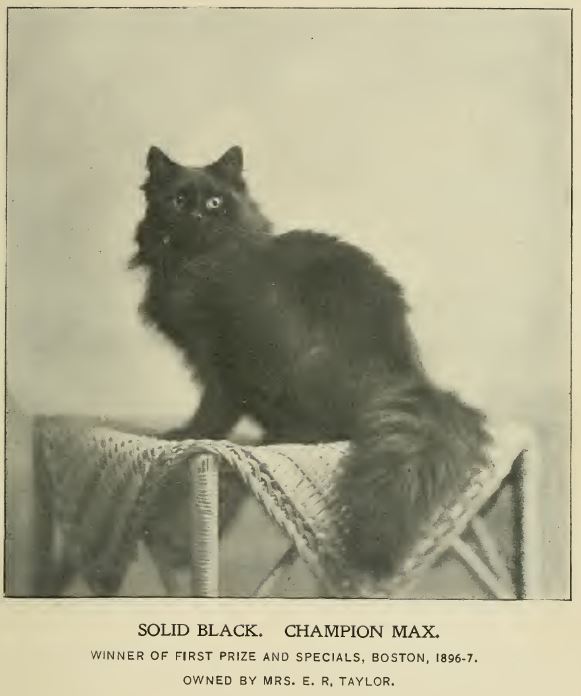
View Full Size Image
James, Robert Kent. The Angora Cat; How to Breed, Train and Keep It. (1898). Digitized by the Library of Congress.

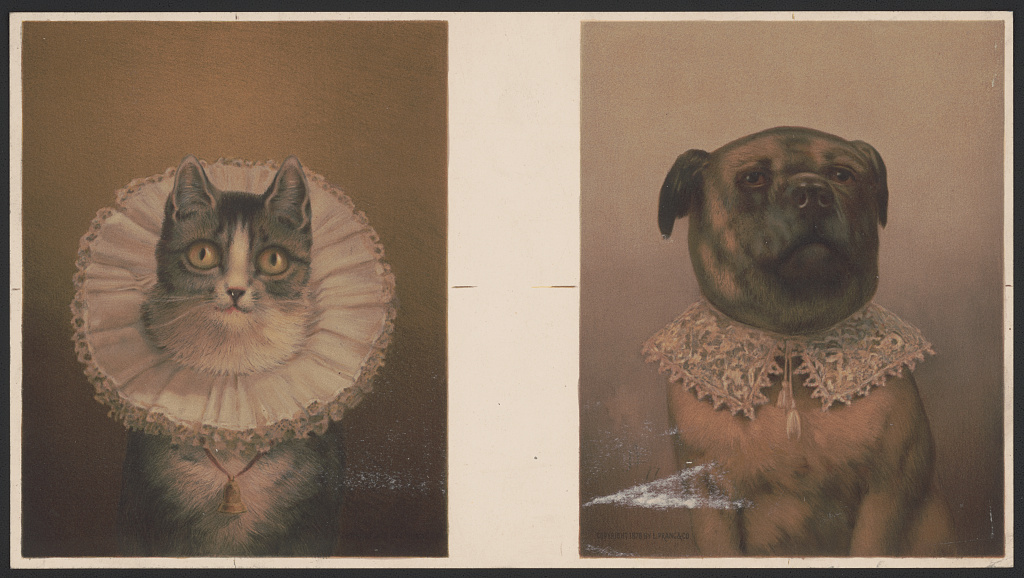
Also, cats and women tended to be linked and compared with dogs and men.

“I class the Cat and the Dog to be as distinct in their individuality and with as much difference as you see existing between man and woman.” [7]

For more information about comparisons between cats and dogs, see this blog post.

In the end, these examples show that by the start of the twentieth century, the connection between women and cats was prevalent.

Here are some books about cats written by women in the nineteenth and early twentieth centuries. They are digitized on the Biodiversity Heritage Library.

  • Lucy Ellen Guernsey. Meat-Eater: With Some Account of Their Haunts and Habits. 1858.
  • Harriet Mann Miller. Funny Friends; or, Queens Pets at Marcy’s. 1892.
  • Helen M. Winslow. Concerning Cats; My Own and Some Others. 1907.
  • Dorothy Bevill Champion. Everybody’s Cat Book; Containing Chapters on “colour breeding”, “showing”, “conditioning”, “judging”, “diseases and their treatment”, “how to raise and treat the show and pet cat”, and Many Valuable Prescriptions. 1909.
  • Jeanie Oliver Davidson Smith. The Story of Zephyr; A Christmas Story. 1917.
  • Ellen Celty and Anna Ray. Feeding and Care of the Domestic and Long-haired Cat. 1922.

*For more information about domestic cats in the nineteenth and early twentieth centuries, see the digital exhibition “Wild Mouser to Household Pet: A History of Cats in Science and Society, 1858 to 1922.” 

[1] Jacob Biggle. Biggle Pet Book: A Collection of Information for Old and Young Whose Natural Instincts Teach Them to be Kind to All Living Creatures. 1900. Page 56.
[2] Thomas Earl. Pets of the Household; Their Care in Health and Disease. 1895. Page 155.
[3] Gos. De. Voogt. Our Domestic Animals, Their Habits, Intelligence and Usefulness. 1907. Page 83.
[4] St. George Jackson Mivart. The cat: an introduction to the study of backboned animals, especially mammals. 1881. Page 1.
[5] Dorothy Bevill Champion. Everybody’s Cat Book. 1909. Page 15.
[6] Dorothy Bevill Champion. Everybody’s Cat Book. 1909. Page 15.
[7] Marvin Clark. Pussy and her language. 1895. Page 51.

July 26, 2017by ulib-libraryjobs
Blog Reel, Campaigns, Featured Books

Cats & Dogs: Nineteenth and Early Twentieth Century Perspectives

This blog post incorporates research conducted for the digital exhibition, “Wild Mouser to Household Pet: A History of Cats in Science and Society, 1858 to 1922.” Click here to check out the exhibition and book collection!

View Full Size Image
Dielman, Frederick. “Uncle Tobey and the widow.” Library of Congress Prints & Photographs. http://www.loc.gov/pictures/item/2016652317/.

In the nineteenth and early twentieth centuries in the United States and Europe, cats were just beginning to be seen as household pets. Previously, they were viewed as biological specimens for medical study, muses for literature, and mousers that roamed around killing rodents. The way that people saw cats often involved a comparison with dogs. But how different are these two species? How did people perceive of those differences and similarities in the nineteenth and early twentieth centuries?

Usefulness

View Full Size Image
Gos., De Voogt. Our Domestic Animals: Their Habits, Intelligence, and Usefulness (1907). Digitized by the Library of Congress.

Authors compared cats and dogs in order to claim their favorite as superior. For example, in Domesticated Animals, Their Relation to Man and His Advancement in Civilization (1895), Nathaniel Southgate Shaler wrote:

Cats deserve some mention for the reason, that, while they are the least essential, and on the whole the least interesting, of domesticated animals, they have had a certain place in civilization. They afford, moreover, a capital foil by which to set off the virtues of the dog [1].

Clearly, Shaler is fond of dogs. He highlights one of the starkest differences between cats and dogs: their usefulness. While dogs were domesticated by humans to perform a variety of tasks such as hunting, cats never had much of a purpose beyond “mousing” (catching rodents, especially on farms with grain storages). This limited purpose led to less variation in cat breeding. However, cat enthusiasts still did breed and exhibit purebred cats.

View Full Size Image
Huidekoper, Rush Shippen. The Cat: A Guide to the Classification and Varieties of Cats and a Short Treatise Upon Their Care, Diseases, and Treatment (1895). Digitized by the Library of Congress.
View Full Size Image
Mrs. A. McAllister and Smoke Persian Cat, Bain news Service Publisher, ca.1910-1915. http://www.loc.gov/pictures/item/ggb2005018109/.

Intelligence

Another point of dissention between cat and dog fans was which was more intelligent. Most believed that dogs were smarter. Author Dorothy Champion sums up the common beliefs and her take:

How often one hears the remark, ‘How stupid cats are!’ or, ‘Cats cannot compare with dogs for cleverness.’ This is a point on which many people make a great mistake… I have come to the conclusion that an uneducated cat has far more brains than an uneducated dog. Doubtless the dog is easier to teach, as he can be made to do things, whereas the cat is of an independent disposition [2].

Those trying to counter the belief that dogs were smarter had to fiercely defend the intellect of the cat and provide examples to bolster their claim. A common way to do so was to cite their ability to remember how to get from one location to another, even across long distances. However this ability was also turned into a fault, with some authors claiming that cats are more attached to locations than they are to people.

View Full Size Image
Biggle, Jacob. Biggle Pet Book: A Collection of Information for Old and Young Whose Natural Instincts Teach Them to be Kind to All Living Creatures (1900). Digitized by the Library of Congress.

Domestication

Another element of comparison between cats and dogs was the extent of their domestication. There are a few ways to approach this topic. One way is to go back and study their original shift from wild to domesticate. New scientific studies using ancient DNA are uncovering clues about the origins of this shift [3]. While the exact details are debated, everyone agrees that cats were domesticated more recently than dogs. In fact, twentieth century authors questioned whether or not cats really have been domesticated at all:

He never was but half-domesticated at best, and while he is a universal favorite with children because of his furry coat and look of seeming intelligence, he is yet essentially a wild animal, almost incapable of true domestication. He has lost little of his innate savagery, and as a relentless foe of birds he has really become an enemy to our civilization[4].

While this account is definitely one of the more severe critiques of cats, the sentiment that cats remained wild and were posing a threat to wildlife was gaining popularity in the beginning of the 1900s.

Another way to approach the topic of domestication has to do with nineteenth century conceptions of domesticity. Cats were believed to have a particular affinity for the home, and became associated with the household, and by extension, women. Conversely, dogs were known to travel outside with their owners, tagging along for masculine activities like hunting.

For more information on the link between cats and women in this time period, see this blog post.

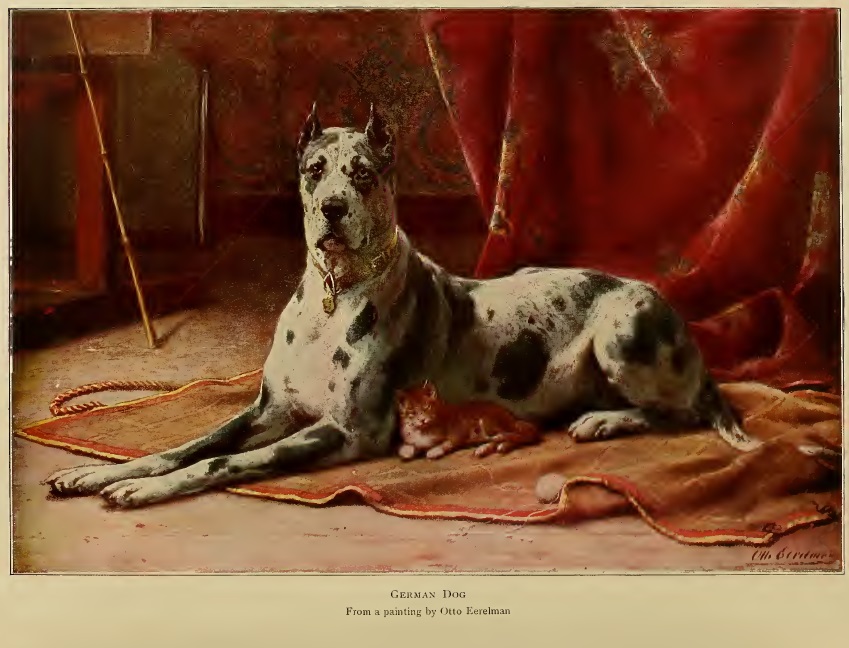
View Full Size Image
Gos., De Voogt. Our Domestic Animals: Their Habits, Intelligence, and Usefulness (1907). Digitized by the Library of Congress. (Look carefully to see the small kitten curled up beside the large dog).

By comparing their usefulness, intelligence, and domestication, nineteenth and early twentieth century authors debated the merits of cats and dogs in very similar ways that we do today.

Click the links below to access fully digitized volumes of the books mentioned in this post:

  • Biggle, Jacob. Biggle Pet Book: A Collection of Information for Old and Young Whose Natural Instincts Teach Them to be Kind to All Living Creatures (1900).
  • Champion, Dorothy Bevill. Everybody’s Cat Book (1909).
  • Davenport, Eugene. Domesticated Animals and Plants: A Brief Treatise (1910).
  • Forbush, Edward Howe. The domestic cat; bird killer, mouser and destroyer of wild life (1916).
  • Shaler, Nathaniel Southgate. Domesticated Animals, Their Relation to Man and His Advancement in Civilization (1895).
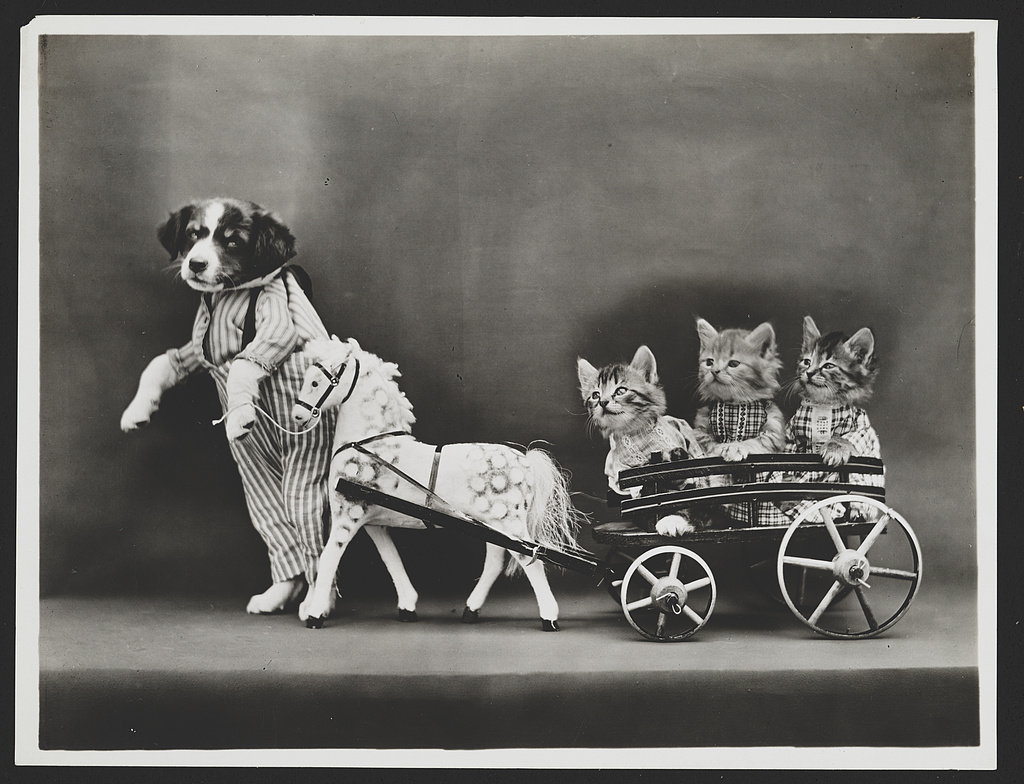
View Full Size Image
Frees, Harry Whittier. “A joy-ride” (1914). Library of Congress Prints & Photographs Division. http://www.loc.gov/pictures/item/2013648296/.


*For more information about domestic cats in the nineteenth and early twentieth centuries, see the digital exhibition “Wild Mouser to Household Pet: A History of Cats in Science and Society, 1858 to 1922.”

[1] Nathaniel Southgate Shaler. Domesticated Animals, Their Relation to Man and His Advancement in Civilization (1895). Page 50. Emphasis added.
[2] Champion, Dorothy Bevill. Everybody’s Cat Book (1909). Page 13. Emphasis added.
[3] See for example, Ottoni, C. et al. The palaeogenetics of cat dispersal in the ancient world. Nat. Ecol. Evol. 1, 0139 (2017).
[4] Davenport, Eugene. Domesticated Animals and Plants: A Brief Treatise (1910). Page 235. Emphasis added.

July 24, 2017by ulib-libraryjobs
Blog Reel, Featured Books

For the Love of Cats: Harrison Weir’s Extraordinary Dedication to the Cat

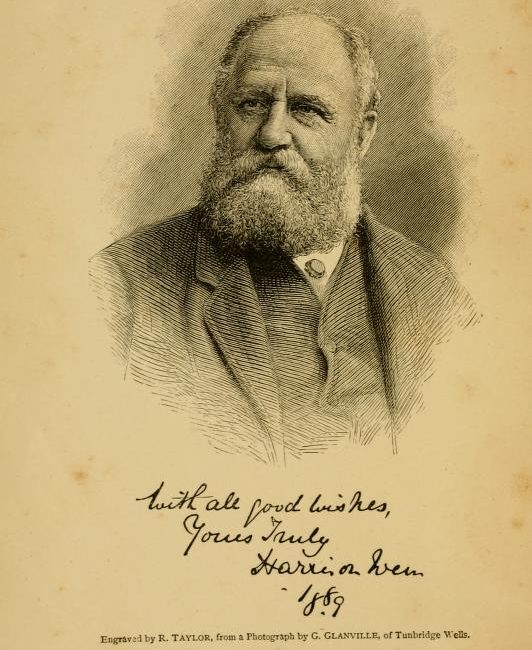
View Full Size Image
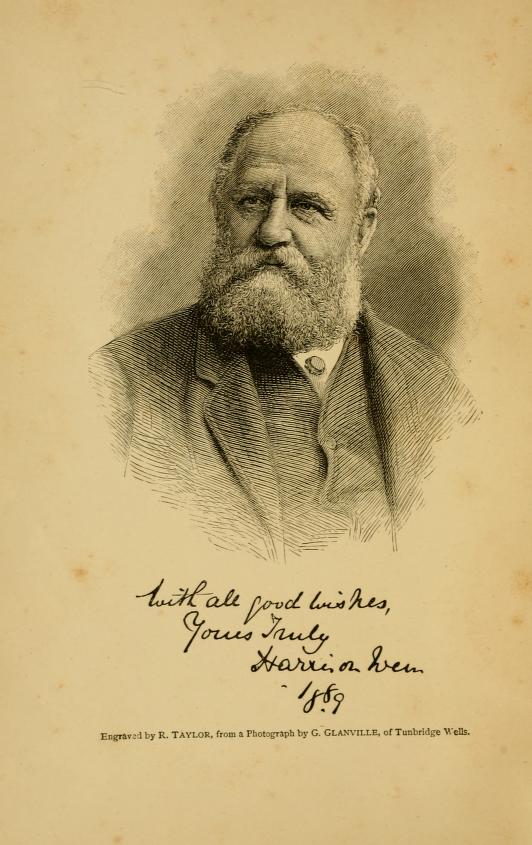
Harrison Weir, President of the National Cat Club, Judge at the first cat show in London, and all-around cat lover and enthusiast.

This book of the week, an 1889 work entitled, Our Cats and All About Them: Their Varieties, Habits, and Management; and for Show, The Standard of Excellence and Beauty; Described and Pictured by Harrison Weir, F.R.H.S., was written by Harrison Weir, President of the National Cat Club which he formed in 1887. What is equally delightful to Weir’s loving descriptions of cats, their looks and their behavior, are his beautiful illustrations of cats throughout the book. One striking aspect of this book is the fact that Weir’s descriptions of nineteenth-century feelings and issues concerning the cat are so very similar to our own. For instance, the author mentions that people often would ask him how to stop cats from scratching the furniture, or talk about what a wonderful personality their cat had (1), or how ingenioius their cats were for being able to open doors by themselves:

Take for instance, how very many cats will open a latched door by springing up and holding on with one fore-leg while with the other they press down the latch catch, and so open the door; and yet even more observant are they than that…as I have shown by a case…in which a cat opened a door by pulling it towards him, when he found pushing it of no avail.  The cat is more critical in noticing than the dog.  I never knew but one dog that would open a door by moving the fastening without being shown or taught how to do it.  Cats that have done so are numberless. (6-7)

In addition, he points out what many today can observe in their own multi-cat homes, that cats attach themselves to certain members of the family exclusively: “I found that no two [cats] were the ‘followers’ of the same member of my family…Why was this?…I am sorry to say I rapidly came to the conclusion that it was jealousy!” (6).  Weir describes a picturesque scene of cat jealousy in action:

Zeno [the cat] would be very cossetty, loving, lovable, and gentle, but when Lulu [the cat] came in and was nursed he retired to a corner and seized the first opportunity of vanishing through the door.  As soon as Zillah [the cat] jumped on my knee and put her paws about my neck, Lulu looked at me, then at her, then at me, walked to the fire, sat down, looked round, got up, went to the door, cried to go out, the door was opened, and–she fled. (7)

This is a scene very familiar to mulitple cat-owners today.

View Full Size Image
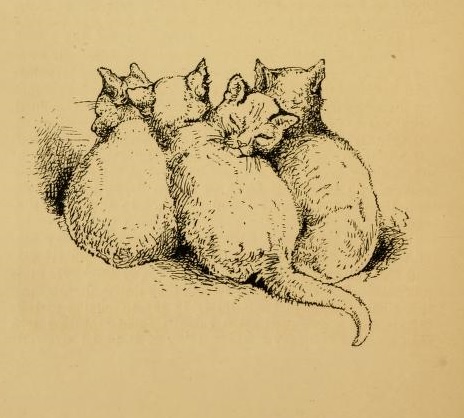
Cats sleeping together (90).

Weir was an early advocate for the humane treatment of animals, specifically cats, as he passionately said:

Among animals possibly the most perfect, and certainly the most domestic, is the Cat…Long ages of neglect, ill-treatment, and absolute cruelty, with little or no gentleness, kindness, or training, have made the Cat self-reliant; and from this emanates the marvellous powers of observation, the concentration of which has produced a state analogous to reasoning, not unmixed with timidity, caution, wildness, and a retaliative nature…

But should a new order of things arise, and it is nurtured, petted, cosseted, talked to, noticed, and trained, with mellowed firmness and tender gentleness, then in but a few generations much evil that bygone cruelty has stamped into its often wretched existence will disappear… (Preface v-vi)

View Full Size Image
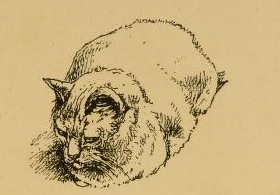
A peaceful cat, in what is sometimes referred to nowadays as “meatloaf position,” meaning the forepaws and backpaws are completely tucked under the cat’s body, the cat being rested and comfortable since it is not in a defensive stance that would allow a quick escape (5).

Weir realized that there were many cat lovers, especially in London, and so decided to hold the first cat show there at the Crystal Palace in 1871 (1-2). Weir, his brother John Jenner Weir, and the Rev. J. Macdona, were judges, and Weir said “the result [of the cat show] was a success far beyond our most sanguine expectations–so much so that I having made it a labour of love of the feline race, and acting without fee, gratuity or reward…It is to be hoped that by these shows the too often despised cat will meet with the attention and kind treatment that every dumb animal should have and ought to receive at the hands of humanity.” (2-5)

View Full Size Image
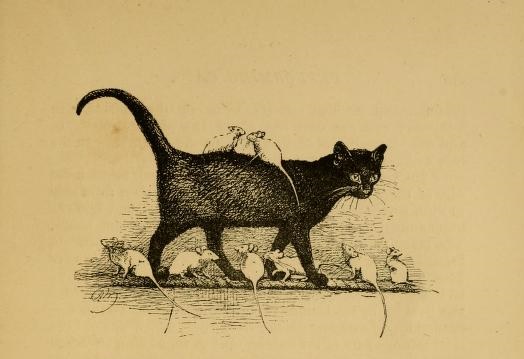
Cat performing with mice (215).
View Full Size Image
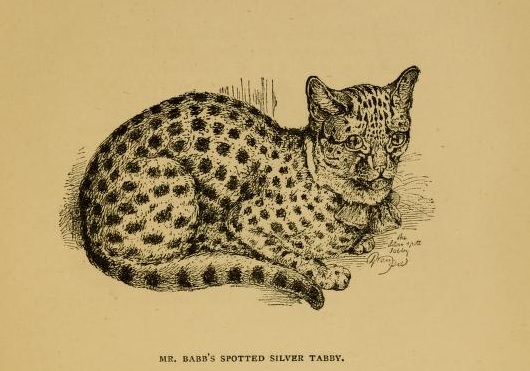
Mr. Babb’s Spotted Silver Tabby (133).
View Full Size Image
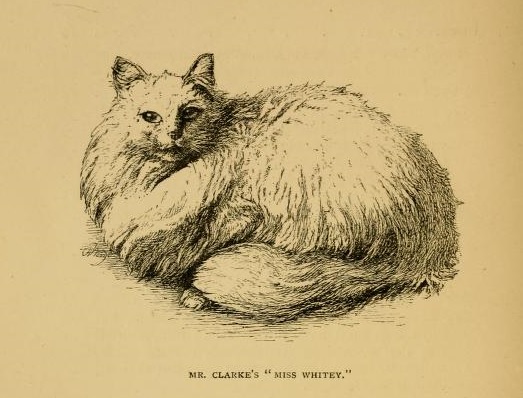
Mr. Clarke’s “Miss Whitey” (140).

While this book is known today as the first cat pedigree book, outlining what an exemplary specimen of each breed of cat should look like and how they should behave, it is a wonderful read simply because it is filled with loving anecdotes about cats, which “are the outcome of over fifty years’ careful, thoughtful, heedful observation, much research, and not unprofitable attention to the facts and fancies of others.  From a tiny child to the present, the love of Nature has been my chief delight” (Preface v).  Take for instance, his inclusion of a story about a mother cat’s love for her kittens:

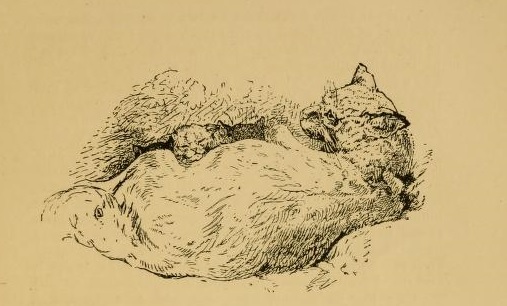
No animal is more fond and attentive than the cat; she is the most tender and gentle of nurses, watching closely every movement of her young…What can be more sensitively touching than the following anecdote, sent to The Animal World by C. E. N., in 1876?  It is a little poem of every-day life, full of deep feeling and feline love.

“I have a small tabby cat, very comely and graceful. Being very fond of her kitten, she is always uneasy if she loses sight of it if only for a short time.  For the last six weeks, the mother, failing to recall the truant back by her voice, even returns to the kitchen for the lower portion of a rabbit’s fore-leg, which has served as a plaything for some time.  With this in her mouth, she proceeds to search for her lost one, crying all the time, and, putting it down at her feet, repeats her entreaties, to which the kitten, allured by the sight of its plaything, generally responds.  Owing to its gambols in the open air during the inclement weather, the kitten was seized with an affliction of the throat; the mother, puzzled with the prostration of its offspring, brought down the rabbit’s foot to attract attention.  In vain; the kitten died.  Even now the loving mother searches for the rabbit’s foot, and brings it down.” (110-111)

View Full Size Image
Mother cat with kittens (109).

Weir includes many more heartwarming stories about the love and dedication of cats for their kittens and their human masters which are very enjoyable to read–in addition to a lengthy section of amusing “Cat Proverbs” (185-195), “Superstition and Witchcraft” as they relate to cats (195-199), “Weather Notions” as determined by cat behavior (200-201), and famous “Lovers of Cats” (223-227).  Among the “lovers of cats” Weir lists are the “Turks”–“Mahomet was very partial to Cats.  It is related, that being called up on some urgent Business, he preferred cutting off the Sleeve of his Robe, to waking the Cat, that lay upon it asleep” (223), Samuel Pepys (224), Petrach, Cardinal Wolsey, Sir I. Newton (227), Cowper, Gray, Cardinal Richelieu, and Montaigne (227).  You can read more about cat superstitions and folklore at our previous cat post.

With his many beautiful illustrations of different breeds of cats and kittens and his wonderful stories, this is truly Weir’s own “little poem of every-day life, full of deep feeling and feline love,” dedicated to the creatures which gave him such pleasure.

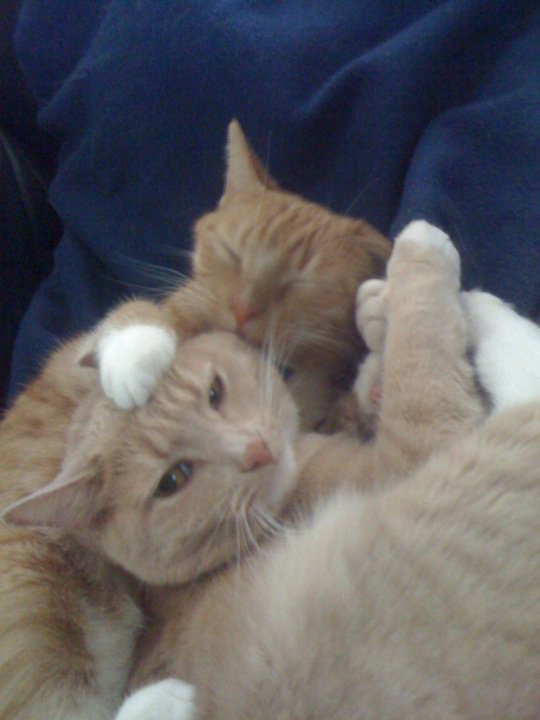
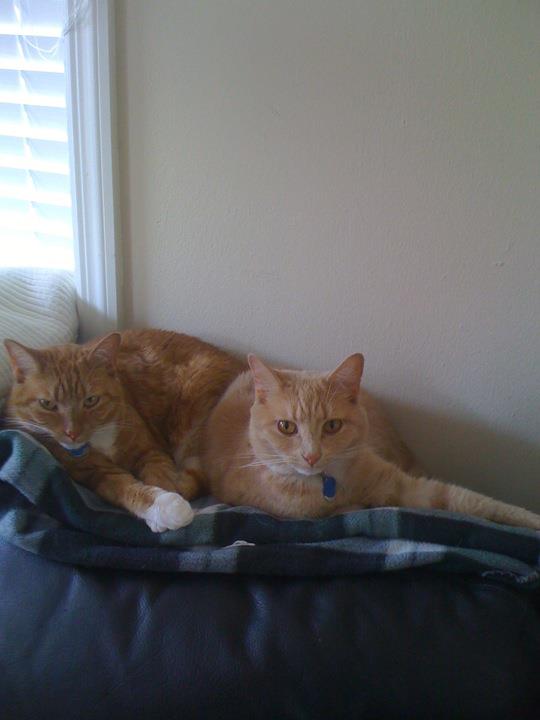
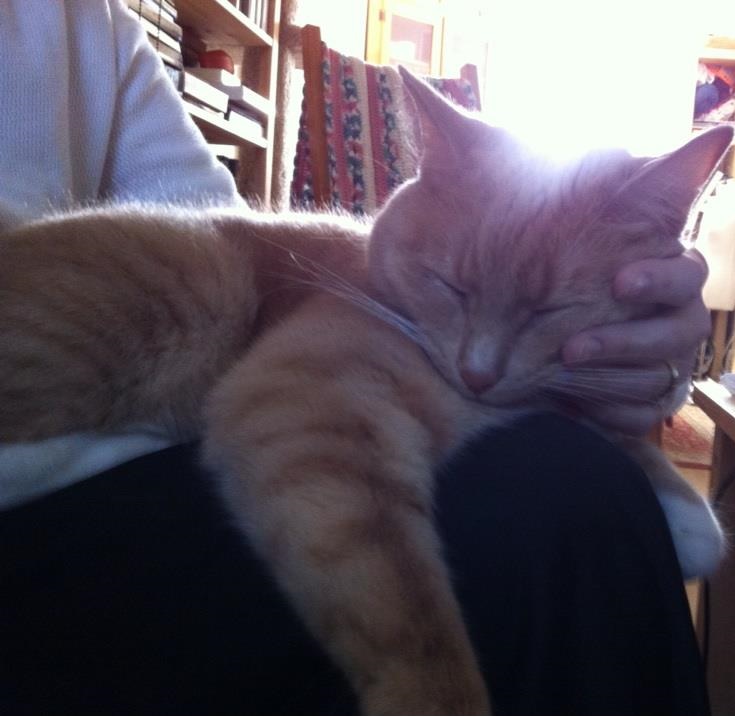
And now for some gratuitous photos of my own two cats, Peanut Butter and Jelly, and their fabulous and unexpected sleeping habits.  Enjoy!

View Full Size Image
Kitten kisses!  Jelly (the orange tabby on the left) and Peanut (the buff cat on the right).
View Full Size Image
Two of a Kind.


View Full Size Image
Sleepy all the time.


July 18, 2013by jjones
Blog Reel, Featured Books

Fact or Fiction? Cat Myths Debunked

“A clever writer has stated that  ‘the human race may be divided into people who love cats and people who hate them; the neutrals being few in numbers.’ ” -Frances Simpson

 Book of the Week: The Book of Cat by Frances Simpson

View Full Size Image
Frances Simpson & Cat
If you are part of the majority of people who are “dog people” this post may not be for you. Please redirect to our dog book of the week post here. Neutral folks, you can stick around. Now that we have weeded out all of those pesky dog lovers, let’s get on to a book that is the cat’s meow! Frances Simpson, author of several books on cats at the turn of the century was a serious feline aficionado. Author of The Book of the Cat (1902), Simpson put together one of the most comprehensive resources on cats around. Who knew you could write 32 chapters on cats? Besides the 362 pictures mostly of cats, our favorite parts of the book were the chapters on:
Chapter 1, Cats of the Past. Very interesting to see how cats have interacted with humans over the past 10,000 years. It has been a tumultuous relationship indeed, vacillating between extreme love and extreme hate.
Chapter 29, Cat Photography for Amateurs. Have you seen all of the pictures of cats on the internet? This chapter is really relevant to the contemporary needs of internet users.
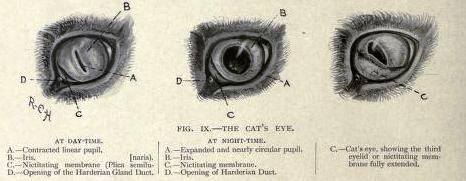
Chapter 32, The Cat’s Place in Nature. The grand prize goes to this chapter. A must read for taxonomists and natural history buffs who are interested in cat classification and physiology. Have a look at the anatomy of the cat’s eye:
View Full Size Image
The third eye-lid is called the plica semilunaris or nictitating mebrane. This is found in mostly nocturnal creatures and regulates the admission of light whilst protecting from injury.
Book of the Week’s Pictures of Cats!

Because we all need a daily cat pic fix: See more cat pics on Flickr and also don’t forget to re-pin from our Book of the Week Pinterest Board!

Time to Play Fact or Fiction
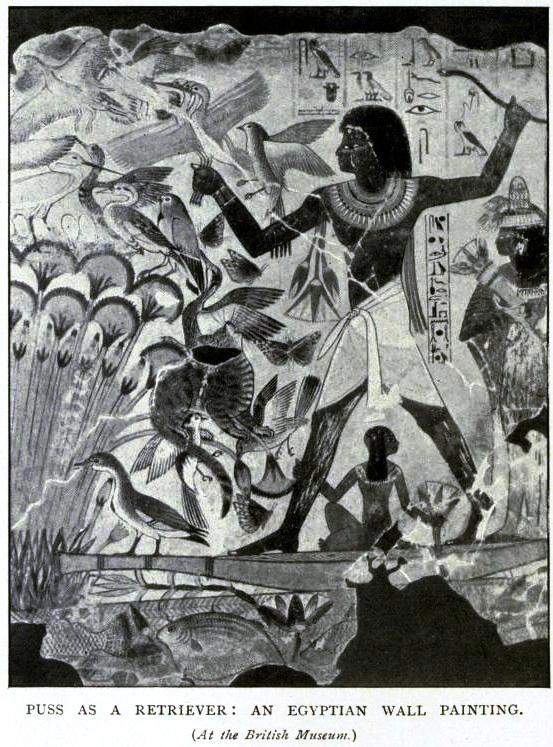
  • The ancient Egyptians worshiped cats and used them as hunting “retrievers” 

Fact: According to Horopollo, the cat was worshiped in the temple of Heliopolis, because the size of the pupil of the animal’s eye is regulated by the rising and waning of the sun. Additionally, long before dogs ever retrieved the kill on human hunts, cats did:

View Full Size Image
  • Cats have nine lives

Fiction: Ms. Simpson explains that “Cats probably owe this reputation to their extraordinary powers of endurance, and certain it is that they have a greater tenacity to life than any other animal. At the Battersea Home a dog and a cat have been placed in the lethal chamber, and it was observed that the dog died in five minutes, whereas the cat breathed for forty minutes longer.” Do the math, 45min/5min = 9X the will to live. Cats are survivors.

  • The black cat is a bad omen 
View Full Size Image
“I’m not a demon!”

Fiction: If you haven’t heard this superstition before, it finds its origins in the Middle Ages, a time when demons inhabited bodies and witches were burned at the stake, it was also believed that the devil borrowed the coat of a black cat when he wished to torment his victims. A strange departure from worshipping cats, as the Egyptians had done.

  • Women are generally cat lovers while, men tend to like dogs: 

Fiction: Not necessarily true. Winston Churchill’s cat Jock was one of his favorite pets. Bill Clinton brought his adopted stray cat Socks with him when he moved to the White House. Victor Hugo had a favorite cat name “Chanome,” whom he slept with. Among the most powerful men the world has ever seen, Cardinal Richelieu and Napoleon counted themselves as cat lovers.

  • Domestic cats are almost identical to their wild counterparts, with few biological or genetic variations
Fact: Yes, a very strange fact indeed. Cats have been domesticated by humans for over 10,000 years yet, the human interference in breeding unlike with cows, has not resulted in significant genetic changes for the species. Top cat expert, Carlos Driscoll, explains that “cats can survive with or without us” and that they don’t rely on humans the way that other domesticated animals do — rather they coexist with humans.
  • Social media aka Web 2.0 was invented so that we could share pictures of cats. 

Arguable: Well, according to Ethan Zuckerman, Internet Activist and Harvard Berkman Fellow: “Web 1.0 was invented to allow physicists to share research papers. Web 2.0 was created to allow people to share pictures of cute cats.” (Cute Cat Theory) Yes, we know the Internet is used for so much MORE these days but, sharing picture of cats on internet forums truly is a weekly phenomenon. Every Saturday dubbed “Caturday” is a day in which global cat lovers post pictures of cats, en masse.  LOLcat has its own Wikipedia entry. If you didn’t know it was a thing, it’s definitely a thing. The internet chose cats, what can we say?

Who are we as Librarians and traditional lovers of feline companionship, to argue with popular demand? People want their pictures of cats and they want them every Saturday. We are service oriented here at the BHL and providing you with a fresh supply of cat pictures could be a considered a loose interpretation of our mission. Enjoy!

And no matter the day, let’s love cats and dogs, and all members of the animal kingdom in equal measure. Every living organism is part of the amazing tree of life.

We hope you enjoyed this post. Interested in guest-blogging for the BHL? We’d love that! Natural history, biodiversity and conservation topics are especially welcomed. Email us your ideas at [email protected]

Kitty Links, meow!

  • Why does the web love cats?
  • The Cute Cat Theory of Digital Activism
  • Why we love cats and dogs
  • Tumblr: Caturday
  • How are dog people and cat people different?
September 13, 2012by [email protected]
Blog Reel, Featured Books

Book of the Week: Big Cats Week!

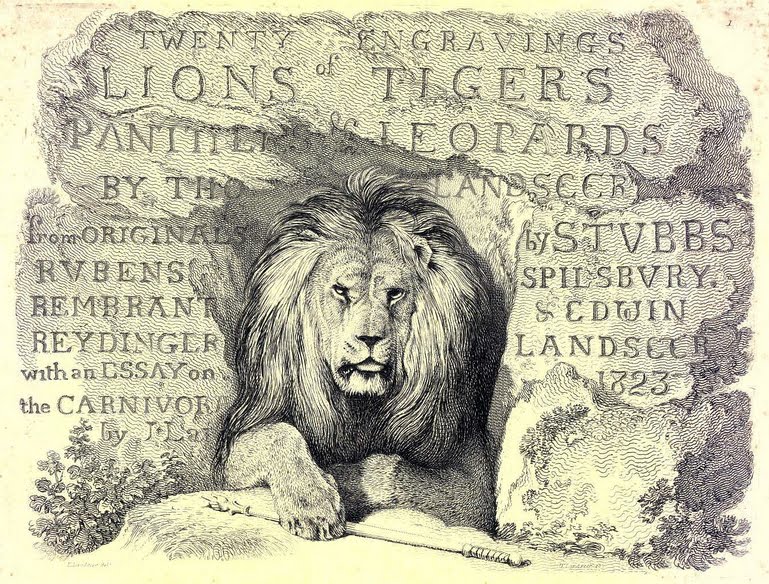
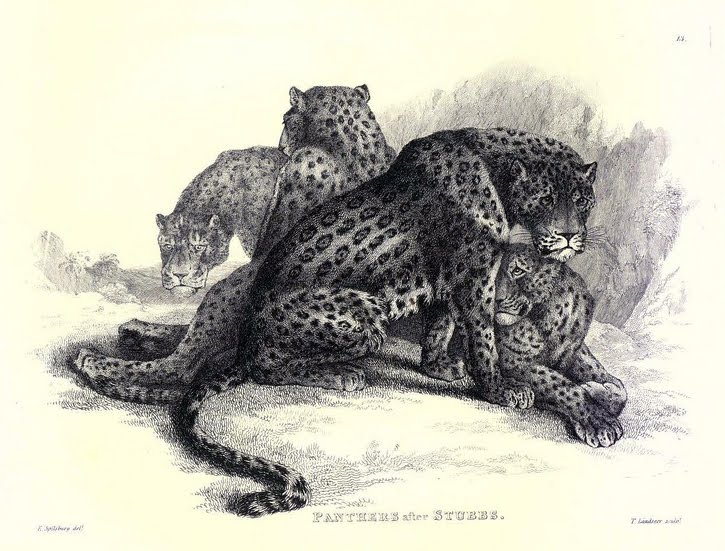
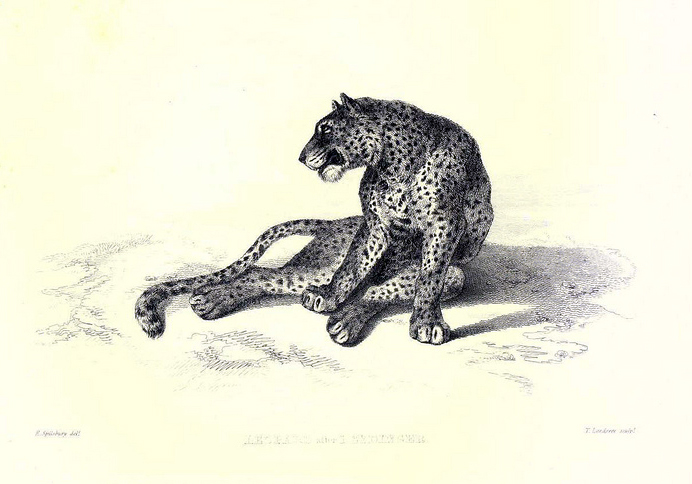
View Full Size ImageThis week is Big Cats Week, and to celebrate we’re featuring a book in our collection that has some of the loveliest engravings of these majestic felines that we’ve ever seen. The book, Engravings of Lions, Tigers, Panthers, Leopards, Dogs, etc. (1853), by Thomas Landseer, contains 39 plates. The first twenty – of lions, tigers, panthers, and leopards – are engravings by Thomas Landseer after original works by Stubbs, Rubens, Spilsbury, Rembrant, Reydinger, and Edwin Landseer.

We hope you enjoy these marvelous works, and for each of the species depicted, we’ve included some interesting facts and links to the animals in EOL, where you can learn even more about them. Be sure to check out Big Cats Week on the National Geographic website, and you can follow the discussion on twitter (BHL account – @BioDivLibrary) with the hashtag #bigcatsweek. And remember, you can see all of the illustrations from this work on our Flickr account.

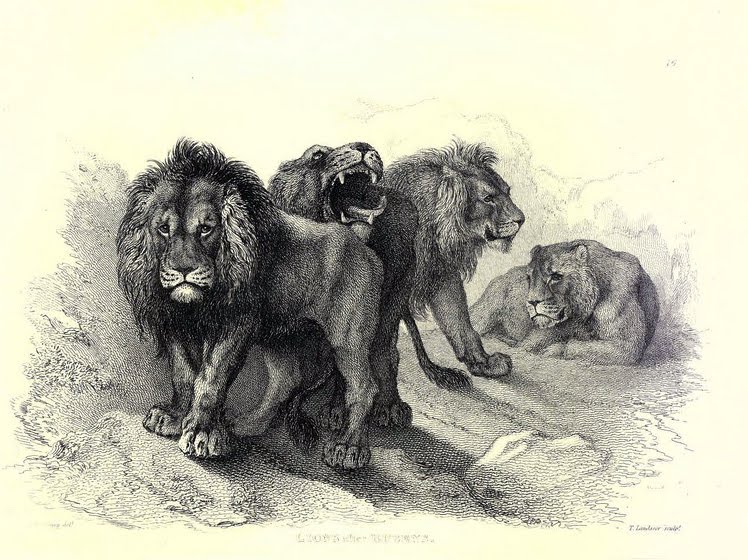
View Full Size ImageLion

  • Second largest living cat
  • The tallest of all living cats
  • Until about 10,000 years ago, the lion was the most widespread mammal after humans, with ranges including Africa, Europe, Asia and even the Americas
  • Usually, eight subspecies of lions are recognized
  • Lions can be bred with tigers, leopards, and panthers, producing, respectively, ligers, leopons, and jaglions
  • The only member of the cat family to display obvious sexual dimorphism (with the manes on males)

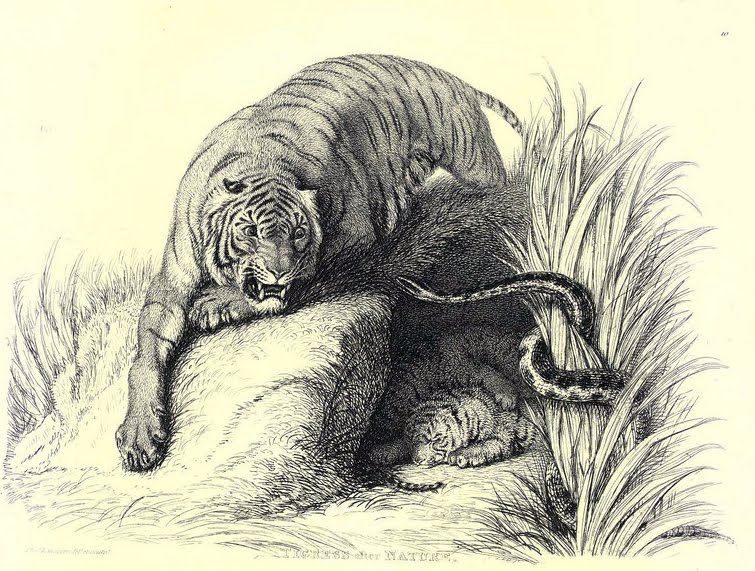
View Full Size ImageTiger

  • The largest of all cat species
  • The longest canine teeth among living felids
  • Six living recognized subspecies
  • The subspecies of tigers are the most varied in size of any cat species. The Siberian, Bengal and Caspian are the largest living felids and some of the largest to ever live. While males of these varieties can weigh between 600-670 pounds, the smallest tiger subspecies, the Sumatran, weighs only 170-310 pounds.
  • The South China Tiger subspecies is listed as one of the 10 most critically endangered animals in the world, and indeed may already be extinct in the wild.

View Full Size ImagePanther (Jaguar or Cougar)

  • The panther may refer to the leopard in Africa and Asia, the cougar in North America, or the jaguar in Central and South America.
  • The jaguar resembles the leopard physically but is larger
  • The jaguar has an exceptionally powerful bite, crushing the skulls of prey to deliver a “death-bite” to the brain
  • The mountain lion, cougar, or puma, native to the Americas, has the largest range of any large wild terrestrial mammal in the Western Hemisphere
  • The cougar is closer genetically to the domestic cat than true lions

View Full Size ImageLeopard

  • The smallest of the four big cats (lion, tiger, jaguar and leopard)
  • It is chiefly found in sub-Saharan Africa, though small populations can be found in Asia
  • Both leopards and jaguars that are completely black are known as black panthers
  • There are nine recognized subspecies of leopards
  • The Amur Leopard, one of the nine subspecies, is considered one of the rarest felids in the world, with only approximately 30-35 individuals in the wild
  • The Arabian Leopard is the smallest leopard subspecies
  • The Persian Leopard is the largest leopard subspecies
December 15, 2011by ulib-libraryjobs
Blog Reel, Featured Books

Book of the Week: Voyages to South America

Portrait version of the Biodiversity Heritage Library logo.

This week for our book of the week, we feature a title that Charles Darwin himself called “one of the great monuments of science in the 19th century.” The book? Voyage dans l’Amérique Méridionale(1835-47), by Alcide Dessalines d’Orbigny. The work chronicles d’Orbigny’s travels to South America for the Paris Museum from 1826-1833. As a result of this voyage, d’Orbigny returned to Paris with more than 10,000 natural history specimens.

Alcide d’Orbigny was a French naturalist born in 1802 that studied a variety of fields including zoology, paleontology, geology, archaeology, and anthropology. He was born to a ship’s physician and naturalist, which made his choice of occupation a natural one. When his family moved to La Rochelle in 1820, d’Orbigny’s interest in natural history was nourished as he began to study the marine fauna in that area. Shortly thereafter he moved to Paris, where he closely studied the work of Georges Cuvier.

d’Orbigny’s mission to South America included visits to Brazil, Argentina, Paraguay, Chile, Bolivia, and Peru. d’Orbigny described some of the 10,000 specimens he collected in our book of the week, Voyage dans l’Amérique Méridionale, which was published in 90 fascicles. As mentioned, Darwin highly praised the work, and d’Orbigny even named select species after him. For instance, the common name of Rhea pennata is Darwin’s Rhea.

After 1840, d’Orbigny focused his attention on fossils, publishing two important titles on the subject between 1840 and 1850. In 1853, he became a professor of paleontology at the Muséum National d’Histoire Naturelle in Paris. The position of Chair of Paleontology was created especially for him, and his geological timescales and strata are still used today as chronostratigraphic reference.

For our post, we’re featuring some of the species that d’Orbigny described as a result of his voyage to South America, particularly those contained in v.9 of the title. You can see all of the images from this volume on our Flickr site, and be sure to check out a few of the other volumes from the title that we have in BHL.

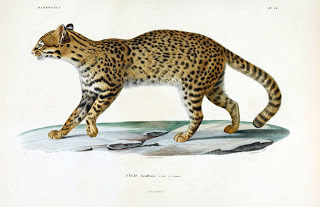
View Full Size ImageGeoffroy’s Cat Leopardus geoffroyi: A wild cat found in Southern and Central South America that is about the size of a domestic house cat. While fairly abundant, issues over land-use changes in its habitat, as well as intense international fur trade in the 1960s-80s, results in this species being listed as “Near Threatened” by the IUCN.
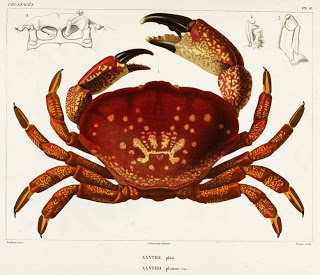
View Full Size ImageXantho planus: A crab species of the family Xanthidae, the largest crab family in terms of species richness, with 572 species and 133 genera. Species of Xanthidae are commonly called mud crabs, pebble crabs or rubble crabs. They are poisonous, containing a toxin, similar to that produced by puffer fish, for which there is no antidote and which is not destroyed by cooking.
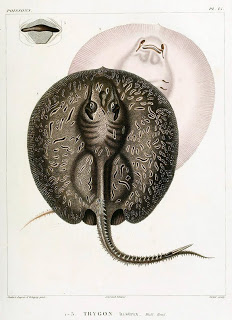
View Full Size ImagePorcupine River Stingray Potamotrygon hystrix: This species is found within marshy, freshwater zones of the Paraná-Paraguay River basin. When it remains perfectly immobile, partially covered by sand, and exercising homochromy (a process of protective coloration that allows the animal to blend into its environment), this species is practically undetectable to the eye. Its tail contains 1 or more spines, which are covered in a toxic mucus that inflicts painful wounds.
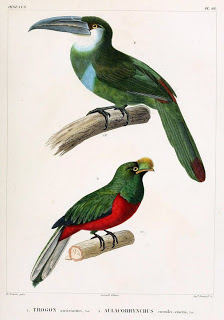
 

View Full Size ImageBlue-banded Toucanet Aulacorhynchus coeruleicinctis – Top Figure: This species of Toucanet lives in Bolivia and Peru. Members of the Toucan family, Toucanets are near-passerine or high land-birds, meaning that they are arboreal birds believed to be related to true passerines. Passerines, which are of the order Passeriformes, include more than half of all bird species, with over 5,000 identified species. This is approximately twice as many species as that contained in the largest mammal order, Rodentia, and, with over 110 families, it has the second most families of any order of vertebrates, after Perciformes (bony fish).

November 3, 2011by michelle.underhill

Help Support BHL

BHL's existence depends on the financial support of its patrons. Help us keep this free resource alive!

search

About BHL

The Biodiversity Heritage Library (BHL) is the world’s largest open access digital library for biodiversity literature and archives. BHL operates as a worldwide consortium of natural history, botanical, research, and national libraries working together to digitize the natural history literature held in their collections and make it freely available for open access as part of a global “biodiversity community.”

Join Our Mailing List

Sign up to receive the latest news, content highlights, and promotions.

Subscribe Now

Subscribe to Blog via Email

Enter your email address to subscribe to this blog and receive notifications of new posts by email.

Join 319 other subscribers

Subscribe to Blog Via RSS

Subscribe to the blog RSS feed to stay up-to-date on all the latest BHL posts.

Access RSS Feed

Inspiring Discovery through Free Access to Biodiversity Knowledge.

The Biodiversity Heritage Library makes it easier than ever for you to access the information you need to study and explore life on Earth…for free, anytime, anywhere.


64+ Million Pages of
Biodiversity Literature Online.

EXPLORE

Tools and Services
to Transform Research.

EXPLORE

300,000+
Illustrations on Flickr.

EXPLORE

ABOUT | HARMFUL CONTENT | PRIVACY | SITE MAP | TERMS OF USE