Biodiversity Heritage Library - Program news and collection highlights from BHL
  • Home
  • News
  • Featured Books
    • All Featured Books
    • Book of the Month Series
    • BHL at 20
  • User Stories
  • Campaigns
    • Fossil Stories
    • Garden Stories
    • Monsters Are Real
    • Page Frights
    • Her Natural History
    • Earth Optimism 2020
  • Tech Blog
  • Visit BHL
Home
News
Featured Books
    All Featured Books
    Book of the Month Series
    BHL at 20
User Stories
Campaigns
    Fossil Stories
    Garden Stories
    Monsters Are Real
    Page Frights
    Her Natural History
    Earth Optimism 2020
Tech Blog
Visit BHL
  • Home
  • News
  • Featured Books
    • All Featured Books
    • Book of the Month Series
    • BHL at 20
  • User Stories
  • Campaigns
    • Fossil Stories
    • Garden Stories
    • Monsters Are Real
    • Page Frights
    • Her Natural History
    • Earth Optimism 2020
  • Tech Blog
  • Visit BHL
Biodiversity Heritage Library - Program news and collection highlights from BHL
BHL News, Blog Reel

BHL Adds Dumbarton Oaks and Meise Botanic Garden as New Affiliates

Dumbarton Oaks logo

The Biodiversity Heritage Library is pleased to welcome two new Affiliates in 2023: Dumbarton Oaks in Washington, DC, and Meise Botanic Garden in Meise, Belgium. The BHL Consortium now includes 19 Members and 23 Affiliates.

Dumbarton Oaks logo

Founded in 1940 as a gift from Robert and Mildred Bliss, Dumbarton Oaks is a Harvard University research institute, library, museum, and garden located in Washington, DC. The Dumbarton Oaks Library and Archives include collections on botanical illustrations, plant collecting, reports from scientific expeditions, rare books, and much more.

“We have been working closely with the Biodiversity Heritage Library since 2018,” said Dumbarton Oaks executive director Yota Batsaki. “The Plant Humanities Lab, an open access digital platform we have created, utilizes the extraordinary resources of the BHL and other repositories to study and communicate how plants have shaped human cultures and our planet. The Lab demonstrates how historical collections in the BHL—such as herbarium specimens, botanical illustrations, and field notes—can be integrated into environmental and cultural narratives of urgent significance. We are delighted to strengthen this collaboration by contributing our own digitized content to this invaluable repository.”

Large white flower with broad green leaves

Plate [1]. Bardi, Pietri. Catalogo dei fiori dei giardini di Firenze e di Montui. 1787. Contributed in BHL by Dumbarton Oaks.

Staff at Dumbarton Oaks are already working to add unique items to the BHL collection, with plans to digitize more from their library and archives.

Meise Botanic Garden logo

Meise Botanic Garden, founded in 1870, holds collections that date back to its predecessor, the Royal Dutch Horticultural and Arboricultural Society, which was established in Brussels in 1826 under Dutch rule.

The library at Meise Botanic Garden holds some 250,000 volumes and 10,000 periodical titles on various subjects including botany, mycology, ethnobotany, floristics, botanical history and horticulture. It also houses significant special collections of archives, manuscripts, photo archives and original natural history illustrations.

Bouchout Castle surrounded by trees and meadow at Meise Botanic Garden

Bouchout Castle (Meise Botanic Garden)

The library aims to expand this unique collection, preserve this important scientific and cultural heritage, and make it available to researchers worldwide.

“This is why I am so pleased that the Meise Botanic Garden has the opportunity to widely share a part of this collected literature through BHL,” stated Nicole Hanquart, Head of Library, Art and Archives at Meise Botanic Garden. “Increasing access to the collections is a high institutional priority. Doing it through BHL, which is an essential tool for our researchers, is a major asset.”

Meise Botanic Garden has actively participated as a content provider in BHL Europe since 2009. As part of its new affiliation, it plans to contribute with its own publications as well as with additional titles identified from its collection that are not yet in BHL. The focus will be on botanical literature on Belgium and Central Africa.

Orchid with green bulb, elongated leaves, and white and purple flowers

Plate CC. Linden, J.J, e.a. Lindenia : Iconographie des orchidées. vol. 5(1889). Contributed in BHL by Meise Botanic Garden.

October 30, 2023by [email protected]
BHL News, Blog Reel

BHL Welcomes the Auckland War Memorial Museum Tāmaki Paenga Hira

Auckland Museum Logo

The Biodiversity Heritage Library is pleased to welcome the Auckland War Memorial Museum Tāmaki Paenga Hira as a new Affiliate. Auckland Museum is BHL’s first partner in Aotearoa New Zealand.

Tracing its roots back to 1852, Auckland Museum was one of New Zealand’s first museums and is regarded as one of the finest in the Southern Hemisphere. Renowned for its collection of Māori and Pacific treasures along with significant natural history resources, the Museum tells the story of New Zealand, its place in the Pacific and its people. It is also a war memorial for the province of Auckland.

The Museum is home to one of New Zealand’s finest heritage research libraries. Serving the Museum since 1867, the Library’s key focus is caring for and providing access to the Museum’s Documentary Heritage collections, including manuscripts, photographs and artwork, ephemera, oral histories, rare books, and serials. The Library’s collections have an overarching focus on the Auckland province and te ao Māori (the Māori world), and its natural history collection strengths include botany, and academic and general-interest works related to the natural sciences.

“Auckland Museum’s long natural history specialism has resulted in a world-class collection of New Zealand specimens of flora and fauna. Coupled with published research and a wealth of untapped curatorial correspondence, our holdings will be a valuable addition to the BHL community,” affirmed Adam Moriarty, Head of Information, Library and Enquiry Services at the Auckland Museum. “As the first New Zealand-based institution to join the BHL, we can dramatically increase what the world knows about Aotearoa’s unique natural environment.”

BHL representatives Constance Rinaldo (Ernst Mayr Library, Harvard and Chair of the BHL Members’ Council) and Dr. Elycia Wallis and Nicole Kearney (BHL Australia) traveled to the Museum in early September to welcome the Library and provide an orientation to the BHL program. In late October, Kearney, manager of the BHL Australia program, and Cerise Howard, digitization coordinator for BHL Australia, returned to provide an intensive three-day training workshop to Library staff covering a broad range of topics from metadata requirements to digitization workflow processes.

people standing in front of a bookshelf

Nicole Kearney (front) and Cerise Howard (back), BHL Australia, with colleagues from Auckland Museum during the three-day workshop at the Library in Auckland.

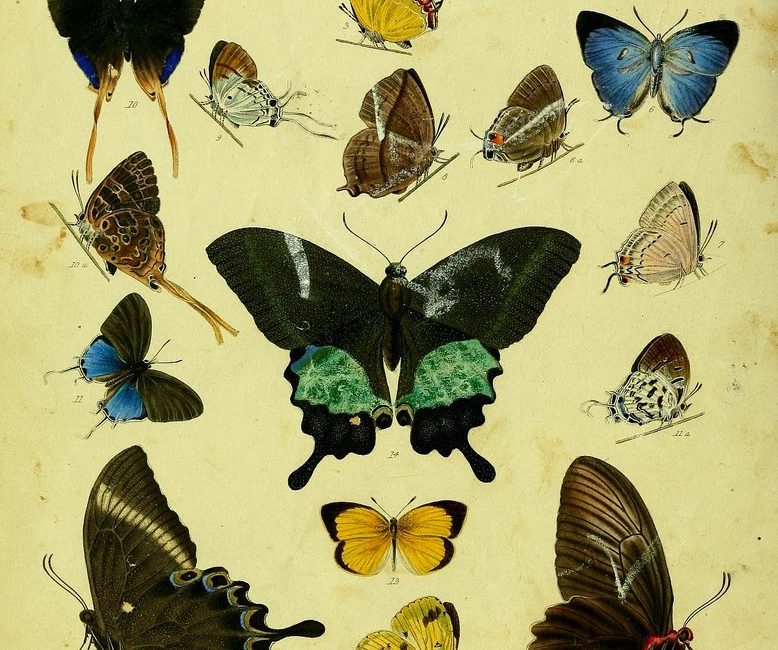
Following the workshop, staff digitized the Library’s first contribution to BHL: An epitome of the natural history of the insects of New Holland, New Zealand, New Guinea, Otaheite, and other islands in the Indian, Southern, and Pacific oceans (1805) by Edward Donovan. This rare work includes hand-colored drawings and descriptions of over 100 species from Australia, New Zealand, and neighboring islands. The title is the first of many currently being digitized for BHL from the Library’s collection.

Illustration of butterflies

Plate 13. Donovan, Edward. An epitome of the natural history of the insects of New Holland, New Zealand, New Guinea, Otaheite, and other islands in the Indian, Southern, and Pacific oceans. 1805. Illustration by Donovan. Contributed in BHL from Auckland War Memorial Museum Tāmaki Paenga Hira.

We are delighted to see our partnerships in Australasia expand to New Zealand through the Auckland Museum and look forward to seeing many more fascinating contributions to the BHL collection in the future. We also extend our thanks to our BHL Australia colleagues for providing training and support to our newest Affiliate.

Illustration of insects

Plate 10. Donovan, Edward. An epitome of the natural history of the insects of New Holland, New Zealand, New Guinea, Otaheite, and other islands in the Indian, Southern, and Pacific oceans. 1805. Illustration by Donovan. Contributed in BHL from Auckland War Memorial Museum Tāmaki Paenga Hira.

“We are thrilled to welcome the Auckland Museum as our first partner in New Zealand,” affirmed Martin R. Kalfatovic, Program Director for the Biodiversity Heritage Library. “We have long desired to establish a partnership in the country, and we look forward to working with our colleagues in Auckland to share their collections with global audiences and foster new relationships with other institutions across the New Zealand.”

The BHL Consortium now includes 20 Members, 22 Affiliates, and over 80 partners globally. Learn more.

November 26, 2018by michelle.underhill
BHL News, Blog Reel

BHL Welcomes Two New Affiliates

The Internet Archive, a non-profit institution based in San Francisco and long-time BHL partner in digitization efforts, and the Naturalis Biodiversity Center, one of the world’s premier natural history museums, based in Leiden, The Netherlands, have joined the Biodiversity Heritage Library as Affiliates. These new partnerships will allow BHL to expand the breadth and depth of its online collection and strengthen the consortium’s technical expertise. The BHL consortium now consists of ten Affiliates and fifteen Members.

The Internet Archive

View Full Size Image

The Internet Archive (IA) was founded in 1996 with the mission to provide “Universal access to all Knowledge.” The organization seeks to preserve our shared cultural heritage and to provide open access to our cultural artifacts in the digital era, supporting the work of historians, scholars, journalists, students, the blind and reading disabled, as well as the general public. The Internet Archive’s digital collections include more than 460 billion Web captures, moving images (2.2 M videos and films), audio (2.5 M recordings, 140k concerts), texts (8M texts and digital books), software (100,000 items) and television (3M hours). It has created new models for digital conservation by forging alliances with more than 400 libraries, universities and national archives around the world. IA employs approximately 150 staff worldwide, including those scanning books in 30 centers in 4 continents, with expertise in a wide variety of areas including digitization, technical development, large scale storage, web archiving, collection management, fundraising, and public outreach, particularly in the policy realm.

The Internet Archive has been partnering with BHL on digitization and technical activities for over a decade. IA’s scanning technology was the basis for BHL scanning starting in 2006. IA also built and manages the underlying technical infrastructure that delivers and stores the BHL content. BHL was also the proud recipient of the Internet Archive’s Internet Heroes award in 2015.

View Full Size Image
Brewster Kahle at the Internet Archive headquarters in San Francisco, CA.

“This move to Affiliate status formalizes a relationship that stretches back over ten years,” emphasized Brewster Kahle, Internet Archive Founder and Digital Librarian. “The Internet Archive was built through the collaboration of people and institutions from all around the world. One of the earliest library consortia to partner with IA was the Biodiversity Heritage Library. Through its collaboration with the BHL, IA maintains a strong interest in biodiversity, but the key benefits to both organizations in the Archive’s joining BHL as an Affiliate will be in the areas of technology, collaborative grants, building new partnerships, and advocacy for open content.”

The Naturalis Biodiversity Center

View Full Size Image

The Library of the Naturalis Biodiversity Center is of national importance, holding approximately 350,000 books, journals, rare books, drawings and a variety of archival material. The library collection of the Dutch Entomological Society is also incorporated. For almost 200 years, collection concentrations have been linked to Naturalis’ research themes. Through its affiliation, Naturalis will enhance the Biodiversity Heritage Library’s current corpus of over 48 million pages through the contribution of titles not yet found within BHL’s collection.

“I am very pleased that we now can share our digitized library collection in BHL,” stated Caroline Pepermans, Head of Library Collections at Naturalis. “In our domain BHL is ‘the’ global repository of legacy biodiversity literature. Our affiliation fits very well with our strategic goals of sharing knowledge, resources and data. We are excited to participate in such an innovative consortium as BHL.”


March 4, 2016by ulib-libraryjobs
BHL News, Blog Reel

Anniversary of the first organizational meeting for the BHL

View Full Size Image
Graham Higley (left, Natural History Museum;
and Tom Garnett (right, future
BHL Program Director, Smithsonian Libraries)

On June 12, 2006, representatives from the first ten partners of the just forming Biodiversity Heritage Library met in Washington at the Smithsonian Institution to plan for the formation of the BHL.

Representatives from the Smithsonian Libraries; the Missouri Botanical Garden; the Natural History Museum (London); the Marine Biological Laboratory / Woods Hole Oceanographic Institution Library; the American Museum of Natural History; the Royal Botanic Gardens, Kew; the Ernst Mayr Library of the Museum of Comparative Zoology; and the Field Museum attended the meeting. Representatives from the two remaining founding institutions, Harvard Botany Libraries and the New York Botanical Garden, were unable to attend.

Also attending the meeting were Brewster Kahle of the Internet Archive, the longtime BHL partner in digitization activities; staff from OCLC; and representatives from a number of technology firms interested in the nascent work of the BHL.

Since 2006, BHL has grown from a group of ten founding institutions to a worldwide consortium of 23  Members and Affiliates in the US and the UK and global nodes in Europe, China, Brazil, Africa, Egypt, Mexico, Singapore, and Australia. We look forward to the next nine years, and hope to add many millions more pages to our library. Can we reach 100 million pages by 2024?

* * * * *
View Full Size Image
Rear left, Chris Freeland, Founding BHL Techinical Director

* * * * *

View Full Size Image
(left to right) Neal Thompson and Bernard Scaife (NH London),
Martin R. Kalfatovic (Smithsonian Libraries) and Brewster Kahle (Internet Archive)
* * * * *
View Full Size Image
Attendees at the first organizational meeting for BHL.
June 12, 2015by
BHL News, Blog Reel

The Biodiversity Heritage Library Adds The Field Museum as a New Member

The Biodiversity Heritage Library (BHL) welcomes The Field Museum as a new member. One of the original founding institutions of BHL in 2007, The Field Museum has participated in the Biodiversity Heritage Library as an Affiliate since 2012 and now represents the consortium’s 16th Member.

View Full Size Image
Descriptive catalogue of the lepidopterous insects contained in the Museum of the Honourable East-India Company. 1828-29. http://biodiversitylibrary.org/page/37023686. Digitized for BHL by The Field Museum Library.

Founded in 1893 as the Columbian Museum of Chicago, The Field Museum has been inspiring curiosity about life on earth for more than 120 years. The Field Museum Library, founded in 1894, is committed to supporting the Museum’s mission as an educational and research institution concerned with diversity and relationships in nature and among cultures. With a collection of over 275,000 volumes of books and journals and other significant special collections of archives, manuscripts, photo archives and original natural history illustrations, the Library serves the scientific, professional, and creative needs of the Museum’s staff and research associates, volunteers, and interns, as well as visiting researchers, specialists, and scholars from around the world.

View Full Size Image
Great and small game of Africa. 1899. http://biodiversitylibrary.org/page/37141656. Digitized for BHL by The Field Museum Library.

The Field Museum started contributing to the BHL collection in 2007 through a collaboration with the University of Illinois Urbana-Champaign. The Museum’s first contributions included over a centuries’ worth of Field Museum scientific publications and reports as well as select publications related to Hymenoptera. Since then, the Library has been digitizing missing volumes from publication runs in BHL, priority requests from users, and select collections with support from The Field Museum’s Africa Council and the CARLI Book Digitization Initiative (Consortium of Academic and Research Libraries in Illinois). Through participation in BHL at the full Member level, the Museum hopes to digitize many unique and significant titles, including rare volumes from the Library’s ornithology collection.

“Increasing access to Field Museum collections is a high institutional priority and critical to fulfilling our mission,” emphasized Christine Giannoni, Museum Librarian and Head of Library Collections at the Museum Library. “The collaborative nature of the BHL partnership allows us to effectively digitize and share our collections while fulfilling our mission.”

View Full Size Image
Onze vogels in huis en tuin. 1869-76. http://biodiversitylibrary.org/page/41754973. Digitized for BHL by The Field Museum Library.

Since 2012, BHL’s consortium has operated within a tiered structure comprised of Members and Affiliates. While Affiliates can contribute content, provide technical services, and participate in select committees, participation at the full Member level allows for greater institutional impact, including the right to vote on strategic directives, help govern the BHL program, and use central digitization funds. Those participating at the Member level also commit to an annual fee that helps support BHL’s financial stability.

“We are thrilled to welcome The Field Museum – an institution that has been part of the BHL family since the very beginning – as a BHL Member,” affirmed Martin R. Kalfatovic, BHL Program Director. “As we continue to refine our strategic and operational priorities to ensure long-term sustainability, the support of our Members is central to the health of our organization and helps us achieve our mission to provide free, open, and global access to the world’s biodiversity knowledge.”

View books contributed by The Field Museum in BHL.
View images from books contributed by The Field Museum in the BHL Flickr.

April 14, 2015by ulib-libraryjobs
Blog Reel

A Consortium that Scans Together, Bands Together

Portrait version of the Biodiversity Heritage Library logo.

Over the years, the BHL consortium has grown from its initial core of 10 members to now 15 member institutions across the United States and the United Kingdom.

While each institution contributes its own unique set of materials to the BHL collection, many of our collections share similar materials. Thank goodness we do because we rely on each other to help fill in gaps in the BHL corpus. But this is easier said than done. Have you ever tried to amass a complete set of 90+ year old objects into one place?!

The quick and dirty explanation of our digitization process is as follows — BHL consortium libraries:

  1. Work together to select books for scanning
  2. Do our best to make sure we don’t send the same materials for scanning, i.e. “de-duplication”
  3. Send the books from our shelves for scanning to various Internet Archive locations or to our own institutional scanning centers
  4. Send the bibliographic data from our library catalogs
  5. Render derivative files, such as the OCR (optical character recognition) text files
  6. Aggregate the data files and images for every page of every book scanned into our back-end database managed by the Missouri Botanical Garden
  7. Serve it all up via our website: http://biodiversitylibrary.org

And for those of us who prefer visuals:

BHL: Disseminating Content Beyond the Silo from Bianca Crowley and Grace Costantino

Steps 1 and 2 can get complicated. Fast. Which is why we need the tools to help us coordinate who’s scanning what, when. To manage our communications we use an issue tracking system, in our case Countersoft’s Gemini system. Whenever you submit feedback via our website, a new issue, or ticket, is created in our system which we route to the appropriate BHL Staff for follow up. Send us feedback telling us something’s missing from our collection and we’ll try to find the BHL library who can send it for scanning. Sounds easy enough, right?

Wrong. Enter an old journal series which over the course of decades, centuries even, can modify its scope, alter its publication title and alter it again (and again…). Combine this with the changing practices of the printing, bookbinding, and library industries over the course of history and you have quite the task to gather the various pieces of the puzzle and arrange them into the complete picture of a publication.

View Full Size Image
Bibliography of Asiatic Society publications,

The Journal of the Asiatic Society is one of my favorite examples of how the BHL member libraries work together to accomplish this task.  The Journal changed its title various times since the late 18th Century and we have 4 of them in the BHL starting with Asiatick Researches (1788-1849) to the Journal and the Proceedings of the Asiatic Society (1905-1934). Since we started digitizing books for the BHL in 2007, this series has called on 7 different libraries to send various volumes for scanning in an effort to complete the digital set. The work still continues today. With so many libraries involved, it is not uncommon for there to be 3 different ways the titles were cataloged and 5 different ways the volumes were bound, for example, making the work of selection and de-duplication rather tricky.

Without systems that allow us to communicate in detail about who’s scanning precisely what, when, we’d have no way to aggregate 15 different physical library collections into a single BHL collection online. Our issue tracking system is just one of many tools that we use to communicate across various aspects of our digitization workflow. However, the tools would not mean anything if it were not for the hard work and collaborative spirit of the librarians throughout our consortium.

March 15, 2013by [email protected]
BHL News, Blog Reel

The United States Geological Survey Joins BHL!

Portrait version of the Biodiversity Heritage Library logo.

In November, 2011, at the Life and Literature Conference in Chicago, IL, BHL announced the addition of its fourteenth consortium member, the United States Geological Survey Library (see a list of member libraries on our wiki). Since the announcement, BHL staff have been diligently working with USGS to fully integrate our new library member into BHL workflows and procedures, and it won’t be long before you can access new USGS material in the BHL portal. We at BHL, along with our new colleagues at USGS, are thrilled about this important development in the BHL project.

When asked what contributions USGS could make to the BHL corpus, Richard Huffine, Library Director, replied, “The USGS mission has always spanned both the physical and life sciences. From our historical work in paleontology to our current research in ecosystems, we have collections that will definitely compliment the current holdings of the BHL.” The USGS is focusing their early contributions on filling gaps in BHL and adding a collection of rare research in paleobotany. As Huffine further added, “We’re excited to be part of this historic effort and are looking forward to seeing the BHL reflect the full breadth and depth of what biodiversity means.”

Created in 1879, the U.S. Geological Survey maintains one of the world’s largest libraries dedicated to the earth and natural sciences. Scientific research is a key part of the Survey’s mission, and this work is supported by a wide array of monitoring activities and scientific collections, more than 1,000 research scientists and a library with more than 2,000,000 volumes, 1,500,000 maps and 800 current serial titles. For more information about the U.S. Geological Survey, visit http://library.usgs.gov/.

We are thrilled to add the United States Geological Survey Library to the BHL ranks. We are confident they will contribute a unique array of important biodiversity texts to the over 102,ooo volumes and 38 million pages currently available. Welcome to the team, USGS!

March 12, 2012by michelle.underhill

Help Support BHL

BHL's existence depends on the financial support of its patrons. Help us keep this free resource alive!

search

About BHL

The Biodiversity Heritage Library (BHL) is the world’s largest open access digital library for biodiversity literature and archives. BHL operates as a worldwide consortium of natural history, botanical, research, and national libraries working together to digitize the natural history literature held in their collections and make it freely available for open access as part of a global “biodiversity community.”

Join Our Mailing List

Sign up to receive the latest news, content highlights, and promotions.

Subscribe Now

Subscribe to Blog via Email

Enter your email address to subscribe to this blog and receive notifications of new posts by email.

Join 319 other subscribers

Subscribe to Blog Via RSS

Subscribe to the blog RSS feed to stay up-to-date on all the latest BHL posts.

Access RSS Feed

Inspiring Discovery through Free Access to Biodiversity Knowledge.

The Biodiversity Heritage Library makes it easier than ever for you to access the information you need to study and explore life on Earth…for free, anytime, anywhere.


64+ Million Pages of
Biodiversity Literature Online.

EXPLORE

Tools and Services
to Transform Research.

EXPLORE

300,000+
Illustrations on Flickr.

EXPLORE

ABOUT | HARMFUL CONTENT | PRIVACY | SITE MAP | TERMS OF USE