Biodiversity Heritage Library - Program news and collection highlights from BHL
  • Home
  • News
  • Featured Books
    • All Featured Books
    • Book of the Month Series
    • BHL at 20
  • User Stories
  • Campaigns
    • Fossil Stories
    • Garden Stories
    • Monsters Are Real
    • Page Frights
    • Her Natural History
    • Earth Optimism 2020
  • Tech Blog
  • Visit BHL
Home
News
Featured Books
    All Featured Books
    Book of the Month Series
    BHL at 20
User Stories
Campaigns
    Fossil Stories
    Garden Stories
    Monsters Are Real
    Page Frights
    Her Natural History
    Earth Optimism 2020
Tech Blog
Visit BHL
  • Home
  • News
  • Featured Books
    • All Featured Books
    • Book of the Month Series
    • BHL at 20
  • User Stories
  • Campaigns
    • Fossil Stories
    • Garden Stories
    • Monsters Are Real
    • Page Frights
    • Her Natural History
    • Earth Optimism 2020
  • Tech Blog
  • Visit BHL
Biodiversity Heritage Library - Program news and collection highlights from BHL
Blog Reel, User Stories

Museum Studies…At Home: BHL Empowers Distance Learning for Students at NYU

papers bound in blue ribbon

The Campus is Closed: Shifting to Distance Learning

On 9 March 2020, New York University announced that it was taking classes remote, and less than two weeks later the entire campus, including our beloved Bobst Library, shut down. While I was relieved that the university was taking the pandemic seriously and acting quickly to flatten the curve, the shut-down posed serious challenges not just to teaching but to research for both me and my students.

My grad-level class, “Science, Art & Invisible Objects in Natural History Museums,” examined how natural history and anatomical collections, from the private Wunderkammern of the early modern period to the AMNH’s award-winning Hall of Biodiversity, have consistently struggled with the politics and poetics of representing objects without names, immaterial materials, and objects that, in fact, never really existed at all. Using things like gravid wombs, cosmic nebulae, rotting flora, spirits, and dinosaurs as our starting points, graduate students from NYU’s Program in Museum Studies and other departments traced the ways in which practitioners have worked to communicate, preserve, make visible, and display elusive objects of wonder and meaning across the arts and sciences.

For the class’s final assignments, students could choose to explore the history of one object—from any time period or field—through a “traditional” research paper or through a “creative” project (you can follow #unessay on Twitter for examples of projects from other schools, departments, and classes). Both options required the use of primary sources, and without access to our library, let alone museum or archival collections, I worried about whether we would need to rethink the scope of the class entirely.

Over the course of my research on 18th and 19th century natural history, I have relied on traveling to archives, often taking as many photos of sources as possible to make the most of limited time and funding. To really sit with a source, to read it line-by-line and return back to it over the course of days or weeks, requires an enormous amount of scholarly privilege—privilege that was taken away from almost everyone, suddenly and unexpectedly, when the pandemic hit.

The Biodiversity Heritage Library (BHL) has not only given me the luxury of sitting with sources, but it has opened up new research possibilities: quickly consulting books housed in collections hundreds of miles away, running full-text searches that have brought new sources into my purview, even downloading PDFs and images to work with offline or in building lectures (a real boon to anyone working remotely with unstable WiFi connections). All of these possibilities, I decided, could be leveraged to help students access primary sources at home and, indeed, to encourage new and creative ways of working with those sources outside of the boundaries of archives.

In remote one-on-one meetings with students, I laid out options of how to access sources through BHL, speaking practically about how some research plans might change using digital methodologies. All of the students, including those working on physical sciences like astronomy, also used digital sources available through our university library to round out their research.

One student leaned into these new limitations, reframing her project to ask about questions of failure is scientific representations—what might a set of images look like, she asked, if we saw all of the discarded attempts made in the process of creating the beautiful objects historians study today? Many students looked to BHL’s collections to help them explore specific themes—from the history of botany to insights from Charles Darwin’s writings and strategies for educating museum visitors about extinction.

Student Projects: Theme — History of Botany

Using BHL sources, two students worked on the history of botany, sharing sources with one another and even mailing plants to each other through the USPS.

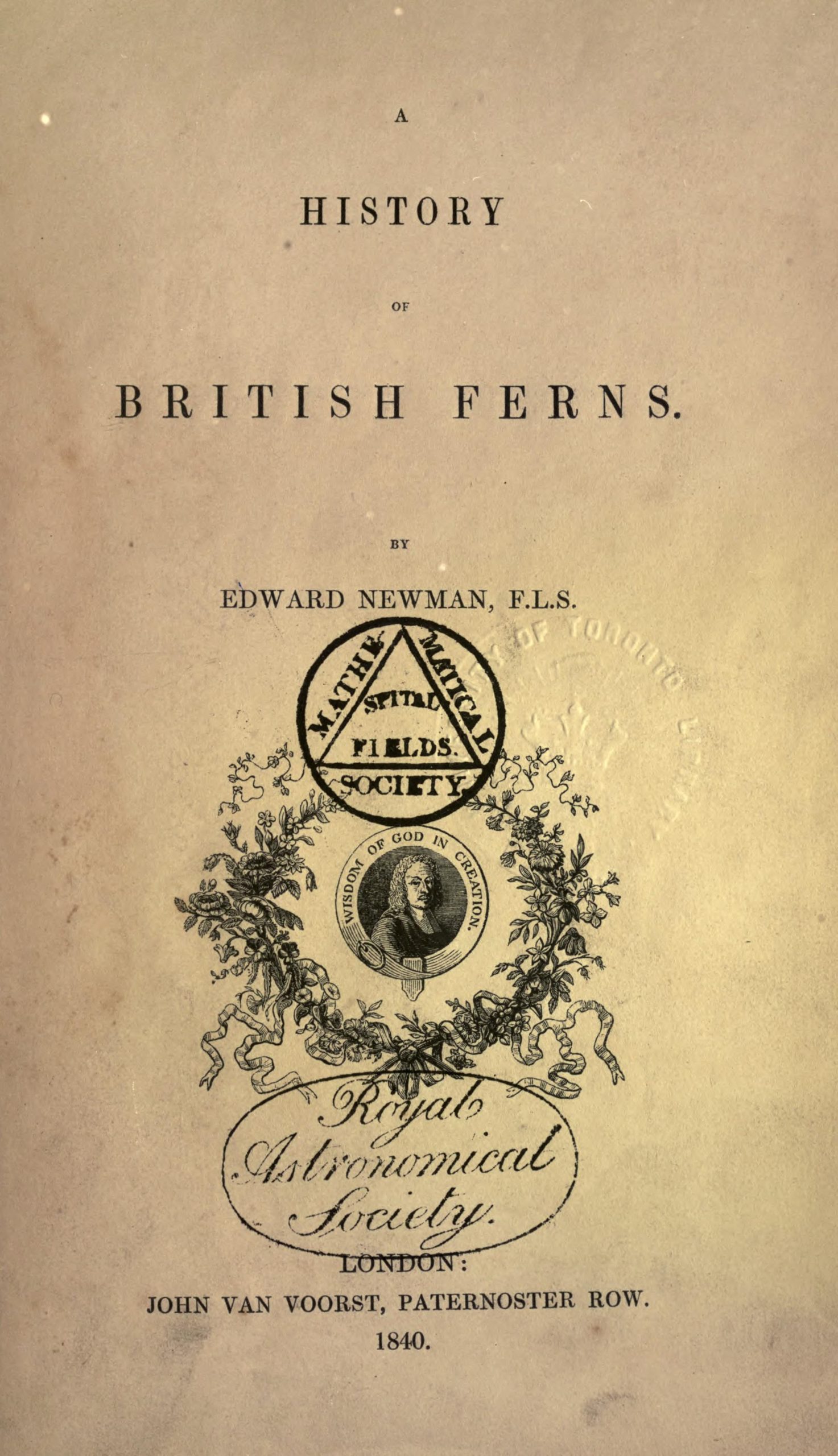
Jelane Da Silva wrote about Pteridomania, the fern-collecting craze that swept through Britain and the U.S. in the mid-19th century. “When I advance-searched the word “fern” between the years 1837 and 1901,” Jelane notes, “the BHL cumulated countless results.” Of those, Jelane focused on Nona Bellairs’ 1865 Hardy Ferns, which “called for ‘Fern Laws’ to be set in place, imminent of the trails of damage that Pteridomania was going to leave behind”, and Edward Newman’s 1840 British Ferns, one of many books that “encouraged the overcollection of ferns and enriched the desire for what was ‘in’—the fad, the fern—but not necessarily the desire to be a naturalist.”
title page of british ferns

Title Page, A History of British Ferns (1840), by Edward Newman. Reference for: Jelane Da Silva, “Just Ferns,” Research Paper, 2020. Da Silva writes: “To make describing and identifying Nature’s objects easier for all, plants and animals were classifiable by a “sexual system” that separated natural bodies based on their apparent physical features… On the basis of sight, humans were given the opportunities to classify Nature’s objects and introduce them to their historicity. This cultural history tempts nonconformity of sympathies and antipathies. The ways in which Nature’s objects have been systemized, historicized, and theorized by humans has obscured and spoiled the potential power for humankind to access the deeply rooted values and hear the intrinsic voices of Nature and Nature’s objects… Historically, in the case of Pteridomania, this was a burden upon the fern’s livelihood, inner ontological beings and further removed humanity from the natural world.”

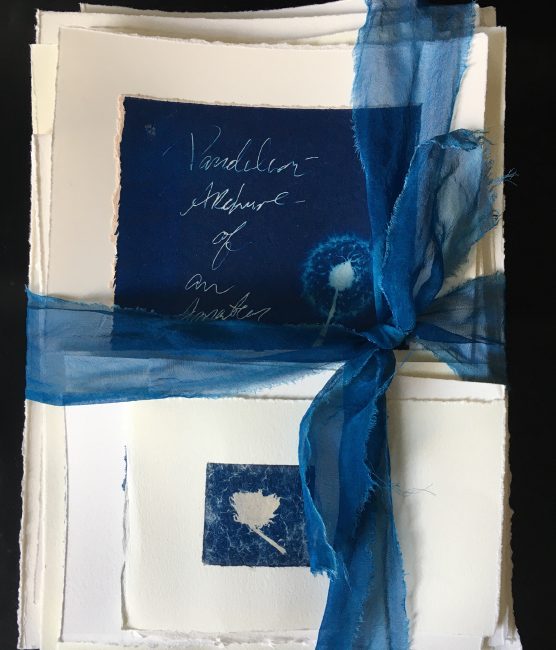
Adriana Ciocci produced a series of cyanotypes, à la Anna Atkins, in “recording and archiving a common plant, the dandelion, to emphasize the uniqueness of each specimen at different stages of preservation and decay.” Adriana relied on Joseph Dalton Hooker’s Botany of the Antarctic Voyage, among other BHL sources, to “study how plants were illustrated two-dimensionally during the 19th century” while looking for “depictions of dandelions at various stages of development.” Embracing the art of imperfection, her frustrations with limited access to the materials she had planned to work with became part of the project itself.
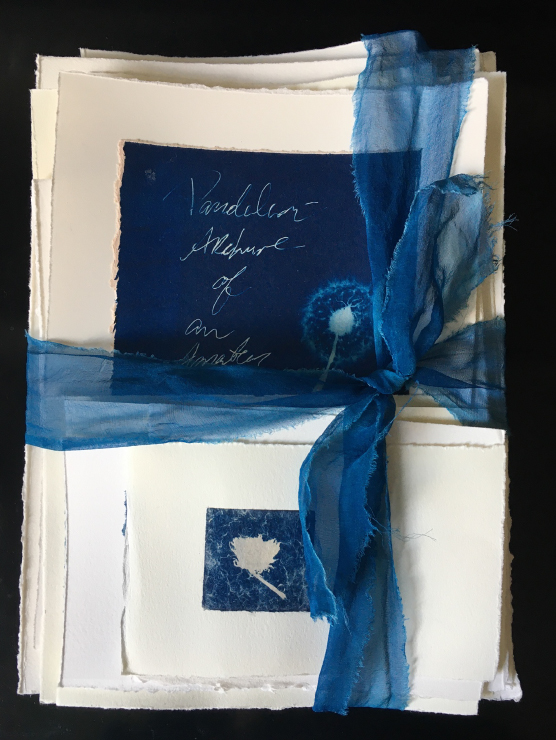
papers bound in blue ribbon

Adriana Ciocci (Experimental Humanities), “Dandelion: Archive of an Amateur,” cyanotypes, 2020. Ciocci writes: “In my creative project, through a series of unforeseen hurdles of acquiring dandelion specimens, learning the process of cyanotyping, and lack of access to resources I became focused on recording failures that would otherwise become archival silences. By preserving imperfect specimens using a process which distorts perception through shifting shadows, I created unpredictable yet archivally stable prints. My aim is to prove trials and failures are worthy of recording since they are an inevitable part of scientific and artistic practices.”

Student Projects: Theme — Insights from Darwin’s Writings

Charles Darwin’s works appeared in several projects. Yukie Zheng mined his 1871 Descent of Man and 1872 Investigation of the Emotions in Man and Animals to investigate the role that photography played in evolutionary constructions of race, pulling out physiognomic threads in his writing.
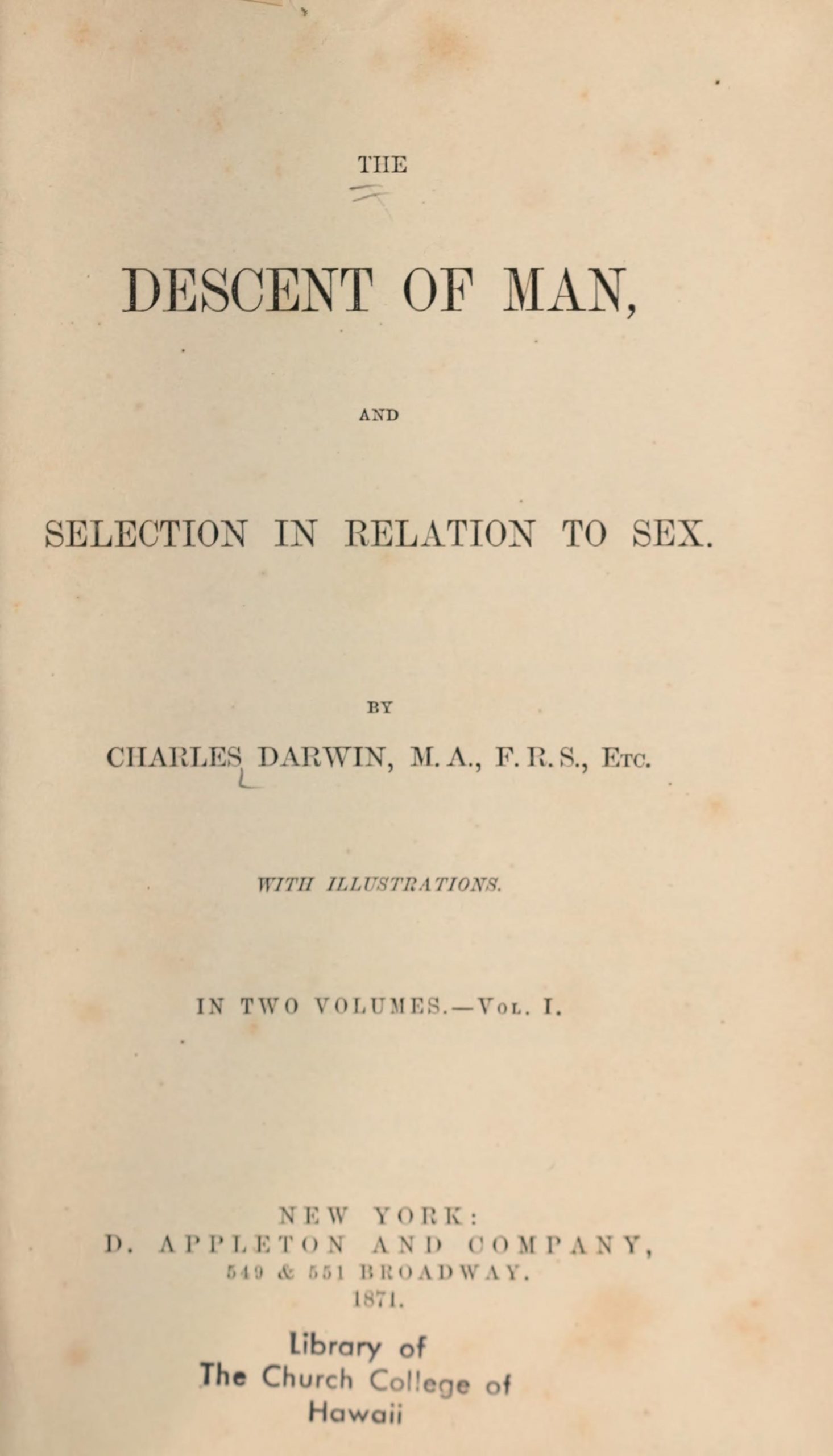
title page of the descent of man

Title Page, The Descent of Man (1871), by Charles Darwin. Reference for: Yukie Zheng (Visual Arts Administration), “Changes in Immutability,” Research Paper, 2020. Zheng writes: “In the late nineteenth century, Darwin published the Origins of the Species (1859) and the Descent of Man (1871)… Even though Darwin wrote this book in a rational and scientific way to build his theory, the public may use Darwin’s theory to construct the racial differences to justify their certain behaviors… This article will focus on the general group of people of color when talking about the Darwinism and social Darwinism, but with major emphasis on the black people. It undoubtedly helps the public to build the conception of race. The social oppression that we often see in the history of nineteenth century originates from both the cultural differences and scientific beliefs.”

Tomas Uriburu turned to Darwin’s expedition aboard the H.M.S. Beagle to explore the long and poetic history of bioluminescence alongside theoretical issues of darkness and precarity and ways forward amidst uncertainty. Encountering bioluminescent marine life off the coast of South America, Darwin wrote that “as far as the eye reached, the crest of every wave was bright, and the sky above the horizon, from the reflected glare of this livid flames, was not so utterly obscure as over the vault of heavens” (167). Weaving Darwin’s words together with those of earlier naturalists—Erasmus Darwin, Alexander von Humboldt, and John Bowring, as well as the 20th century specialist Edmund Newton Harvey, Tomas created an illustrated history of the magical phenomenon for which “darkness is a necessary condition.”
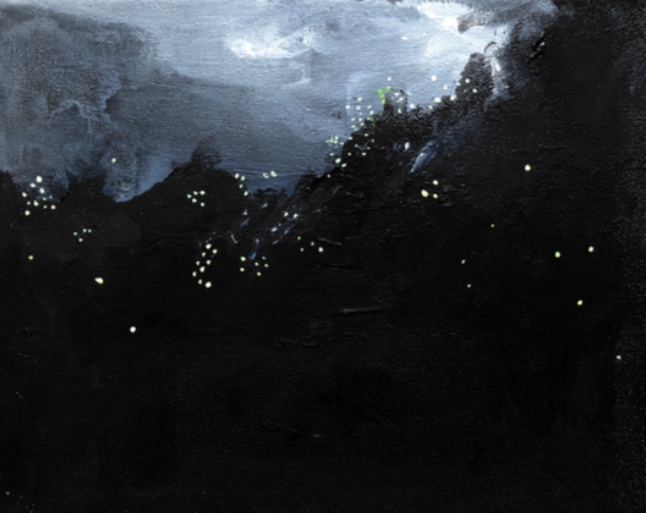
night sky painting

Tomas Uriburu, “The Future is Dark,” creative research paper with painted illustrations, 2020. Uriburu writes: “In this paper, I won’t focus on the lights that make things appear as whole but on the vulnerable, enigmatic, mysterious, undetermined, dim, and fragile lights that activate certain types of curiosities. I am not interested in tracing the lights that make life predictable or understandable. Instead, I am interested in looking for lights that make life uncertain and incomplete.”

Student Projects: Theme —Extinction and Museum Education

In modeling the extinct butterfly species Glaucopsyche xerces (the Xerces blue) and the deerwood flora native to coastal dunes of San Francisco, Rachel Leckman was inspired by the BHL blogpost “Breathing Life into a Museum Exhibit about Extinction.” Using materials like goldbeater skin, compressed pastels, compressed iridescent watercolor, synthetic hair, and lace, Rachel presented a case for lifelike models as a way of educating museum visitors about the species that we have lost to climate change and habitat destruction, relying on recent sources like UNEP’s “Environment on the Edge” but also historic sources about searching for lost animals like the Explorations and Field-Work of the Smithsonian Institution in 1937-1938.
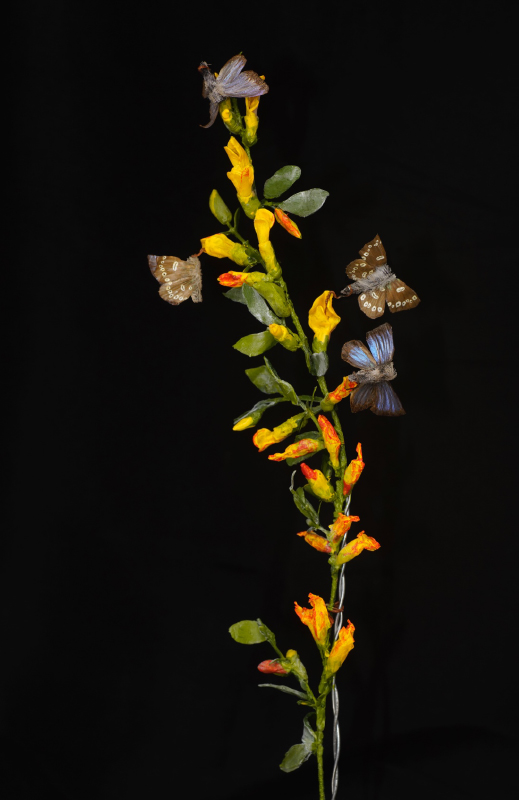
model of butterflies on a plant

Rachel Leckman, “Xerces Blue Model,” goldbeater skin, compressed pastels, compressed iridescent watercolor, sculpey, lace and synthetic hair, 2020. Leckman writes: “For my final project I created models of Xerces Blue butterflies (Glaucopsyche xerces) accompanied by a model of a Deerwood (Lotus scoparius) branch. This species of butterfly was native to the coastal dunes of San Francisco and went extinct around 1941-1943. For my model I recreated this small iridescent butterfly using goldbeater skin, compressed pastels, compressed iridescent watercolor, sculpey, lace, and synthetic hair. The branch the butterflies are feeding and laying eggs on is made out of sculpey and acrylic paint. This type of model, with a more complete and narrative imitation of the natural habitat, could be used in museums as an educational facsimile of the past to make examples of human caused extinction better known.”

Planning for a Future of Distance Learning

Much has changed since March, and it seems that new information about when—and whether—institutions will reopen changes week by week. It’s unclear, at this point, whether NYU will go back to in-person classes in September and whether graduate students starting on their theses will have access to primary sources back on campus or at New York’s museums and cultural heritage sites. Much research will be done using digital sources in the meantime.

On my end, I’m using the success of working with digital sources as a model for how I’ll enter next semester—for how I’ll frame assignments, advise early-stage thesis research, and continue to conduct my own work, having canceled research trips for the foreseeable future. Our subject specialist librarian has been instrumental in helping us navigate new ways of working with digital sources, and it’s clear that some of these methodologies are, thankfully, here to stay.

Reinterrogating who has access to primary sources all the time—not just during periods of crisis—seems key, and I hope that resources like the Biodiversity Heritage Library will be there to connect scholars at any stage with the rich sources and new research methodologies that promise a stronger and more inclusive historical field writ large.
July 28, 2020by michelle.underhill
Blog Reel, User Stories

Teaching with Historic Biodiversity Publications

Can science increase agricultural productivity and support food security?

The founders of the Royal Agricultural Society of England believed so. In 1838, a group of individuals with varied agricultural interests united to establish the Society with the purpose to promote the scientific advancement of English agriculture. Just two years later, in 1840, Queen Victoria granted the Society its Royal Charter, and the Society has played a significant role in agricultural progress in England ever since.

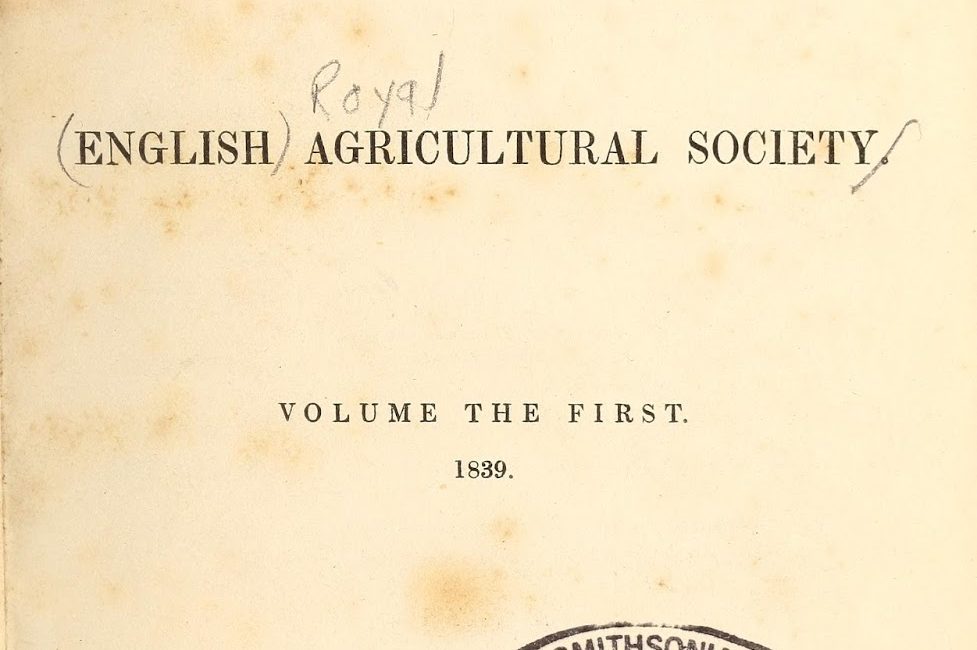
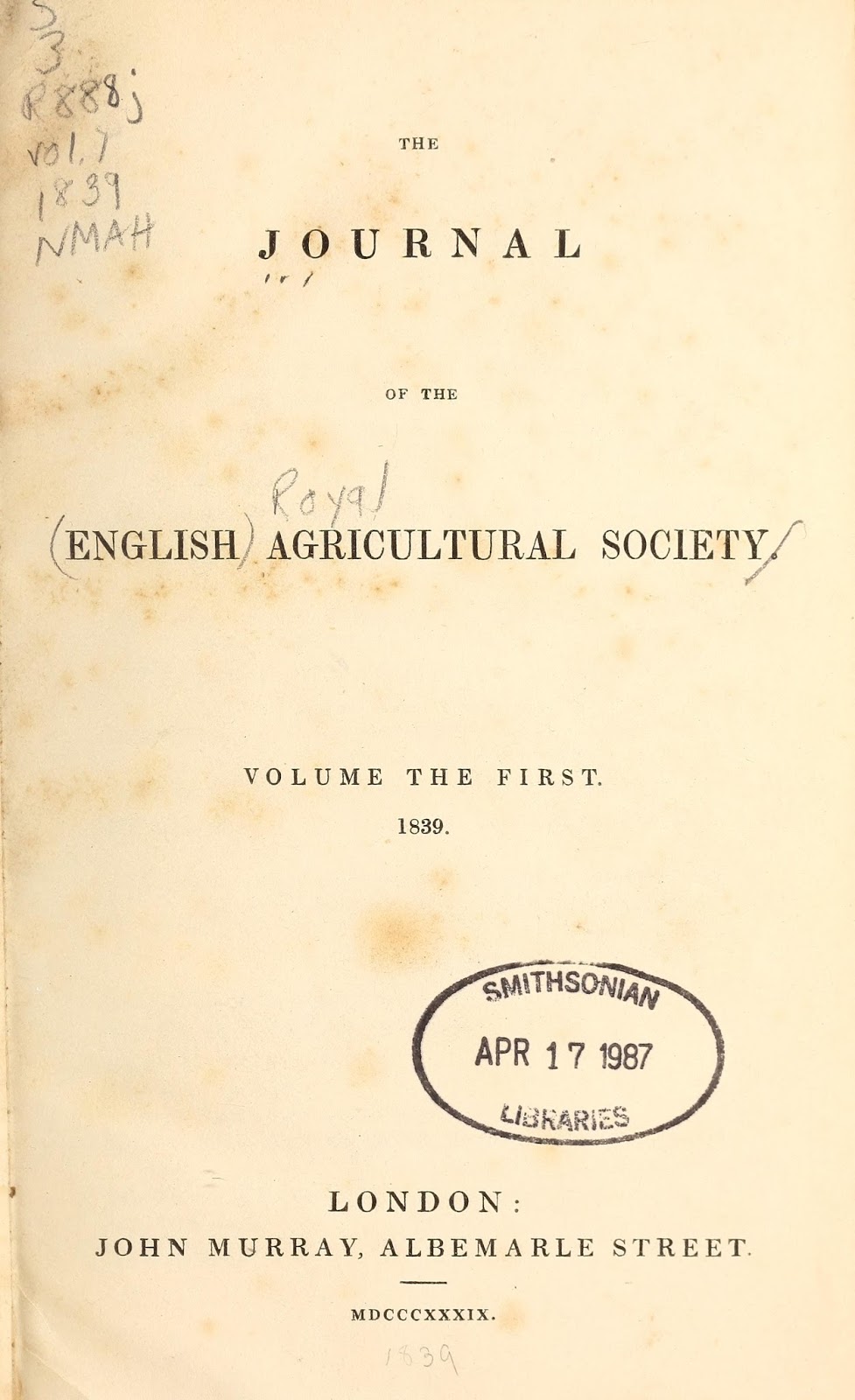
Title page for Volume One of the Journal of the Royal Agricultural Society of England. 1839. Digitized by Smithsonian Libraries. http://s.si.edu/2nqmWdu.

The Journal of the Royal Agricultural Society of England was used to communicate the Society’s activities and disseminate information useful to those in agricultural fields. Since the publication of the first volume in 1839, the Journal has shared practical advice on soil cultivation; advances in agricultural implements, structures, and pest control; discoveries of new crop varieties; land management guidance; improvements in veterinary care related to livestock; and the results of agricultural experiments.

The Journal is useful not only for research in agricultural science, but also other fields like environmental history. For Dr. Karen Sayer, Professor of Social and Cultural History at Leeds Trinity University, it is an invaluable resource.

“The Journal of the Royal Agricultural Society of England is a crucial source in my field, and I have easy access to it thanks to the Biodiversity Heritage Library.”

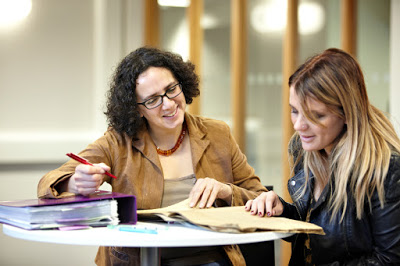
Dr. Karen Sayer (left) with a student. Image Rights: Leeds Trinity University.

Sayer’s research focuses on conceptualizations of rural communities, landscapes, and environments; human and animal relations in agriculture; and agricultural labor, landscapes, and structures in a social and cultural context. Thanks to BHL, which she discovered whilst searching for primary sources nearly ten years ago, Sayer has easy access to the references she needs to support her research.

“BHL is an incredible resource,” affirms Sayer. “It provides access to material that is otherwise hard to get and enables me to undertake detailed searches of these sources. I use it frequently, often weekly, especially when I’m teaching as it is also a great resource for my students.”

Sayer’s favorite feature within the library is the ability to generate custom PDFs of specific pages, which allows her to download just those articles relevant to her research. This feature is also useful within the classroom, allowing her to share articles with her students for reading and commenting.

Having digital access to publications such as the Journal of the Royal Agricultural Society of England also allows Sayer and her students to easily explore elements of agricultural and rural society and the dissemination of information at different cultural levels.

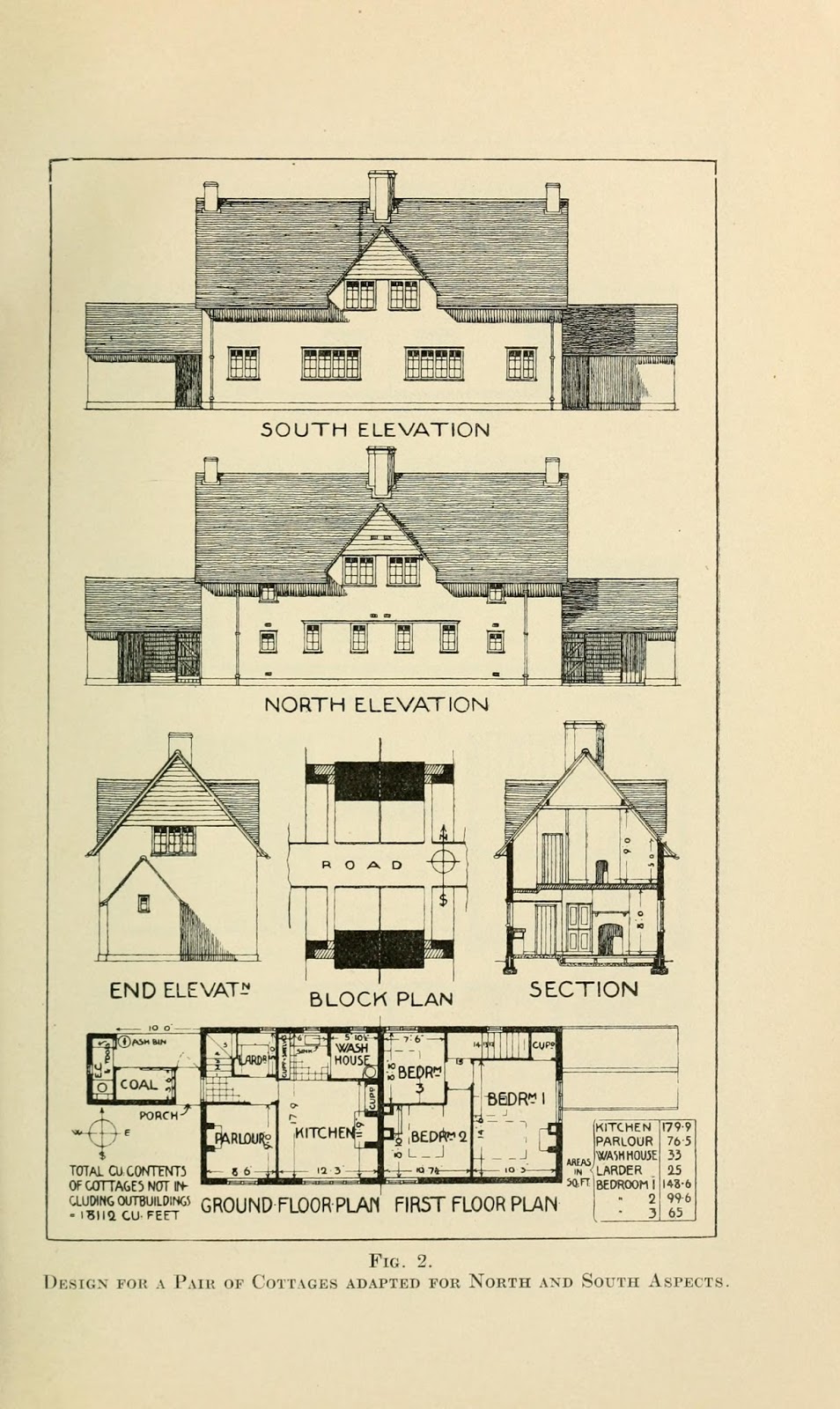
Plans for cottages within the article “The Housing of the Agricultural Labourer.” Journal of the Royal Agricultural Society of England. v. 75 (1914). Digitized by The New York Botanical Garden. http://s.si.edu/2BF3VsT.

“I like being able to pull up a whole text online for teaching, as I can project it on a Smart Board in the classroom and as a group we can scroll through it to explore ideas, juxtapositions, etc.” explains Sayer. “My students can see that articles about French or German agriculture were being published alongside detailed explorations of wheat yields at agricultural research stations and reports on machinery exhibits at a county level. They can see how knowledge circulated at the time and the ways in which issues and ideas were debated.”

To further facilitate her research, Sayer would love to be able to search the full text of the collection and specific holdings to more easily identify articles related to specific topics and get a sense of the development of an idea or debate over time.

We are thrilled to confirm that full text search is currently under development. Through increased research efficiency, full text search will enhance BHL’s ability to inspire discovery through free access to biodiversity knowledge. Stay tuned for more information on this new service.

As Dr. Sayer’s experience demonstrates, historic natural history publications provide a wealth of information beyond scientific data. These works also document important cultural information, providing insight into the emergence of ideas and the spread of knowledge through society and time. We are thrilled to know that BHL’s collections support research across a wide array of disciplines.

Source

Royal Agricultural Society of England. 2018. “History.” Accessed January 30, 2018. http://www.rase.org.uk/history/.

February 1, 2018by michelle.underhill
Blog Reel, User Stories

Undergraduates and the BHL

“Is the bald eagle really bald?”

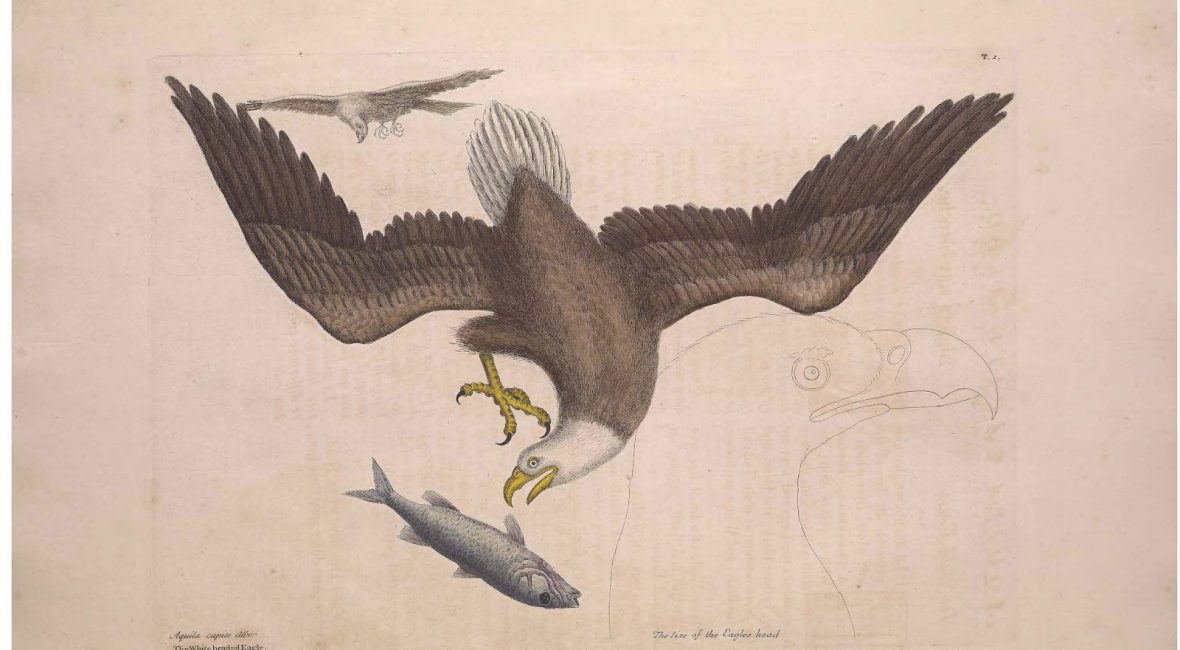
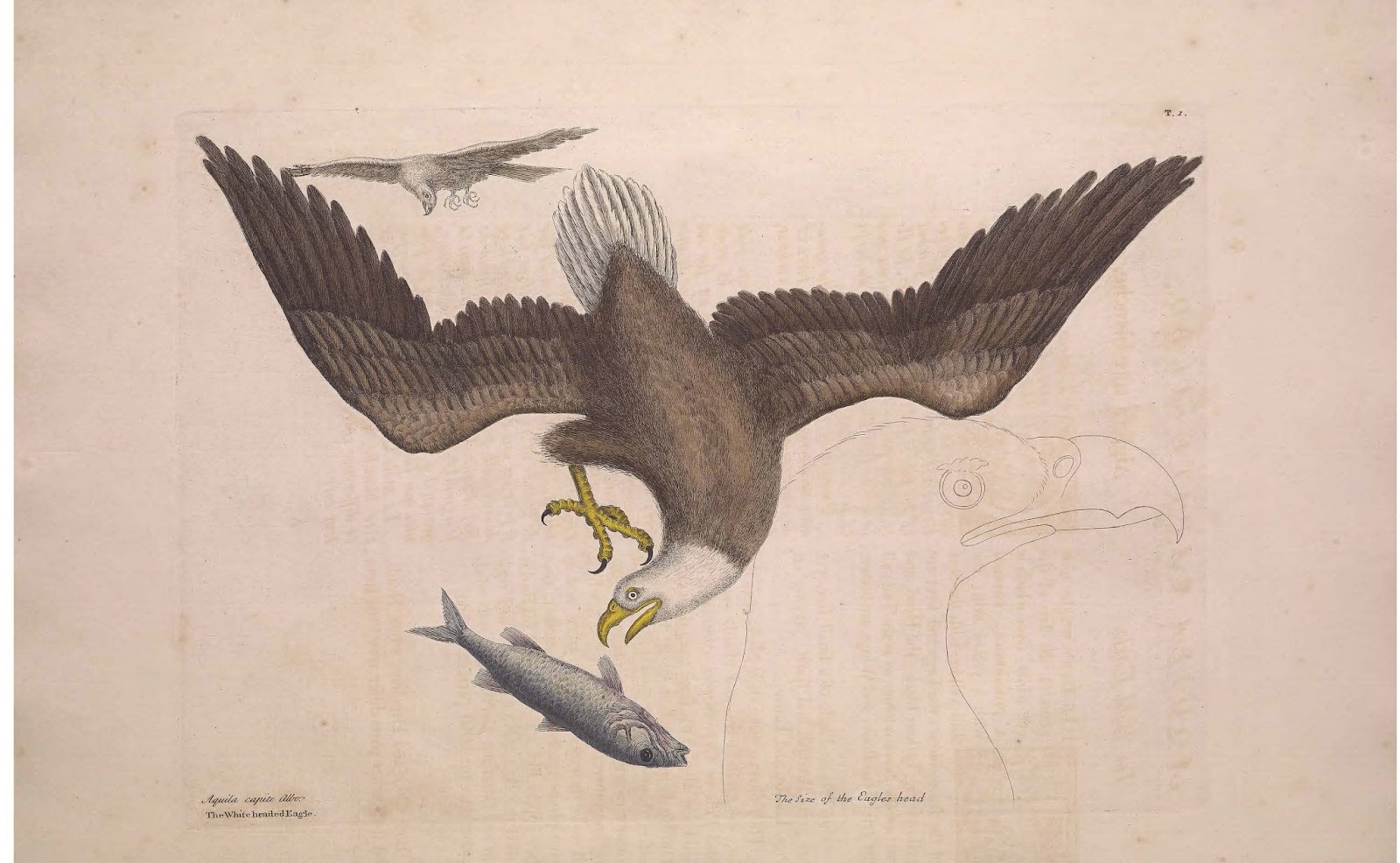
This was the question that a recent history of science undergraduate class at Harvard University had to answer with the help of BHL. Specifically, students were required to locate Mark Catesby’s 1731 plate of the bald eagle in BHL and use the accompanying text to determine the accuracy of the bird’s moniker.

View Full Size Image
The White-Headed Eagle. Catesby, Mark. The Natural History of Carolina, Florida and the Bahama Islands. vol. 1, 1731. pl. 1. http://biodiversitylibrary.org/page/40753120. Digitized by Smithsonian Libraries.

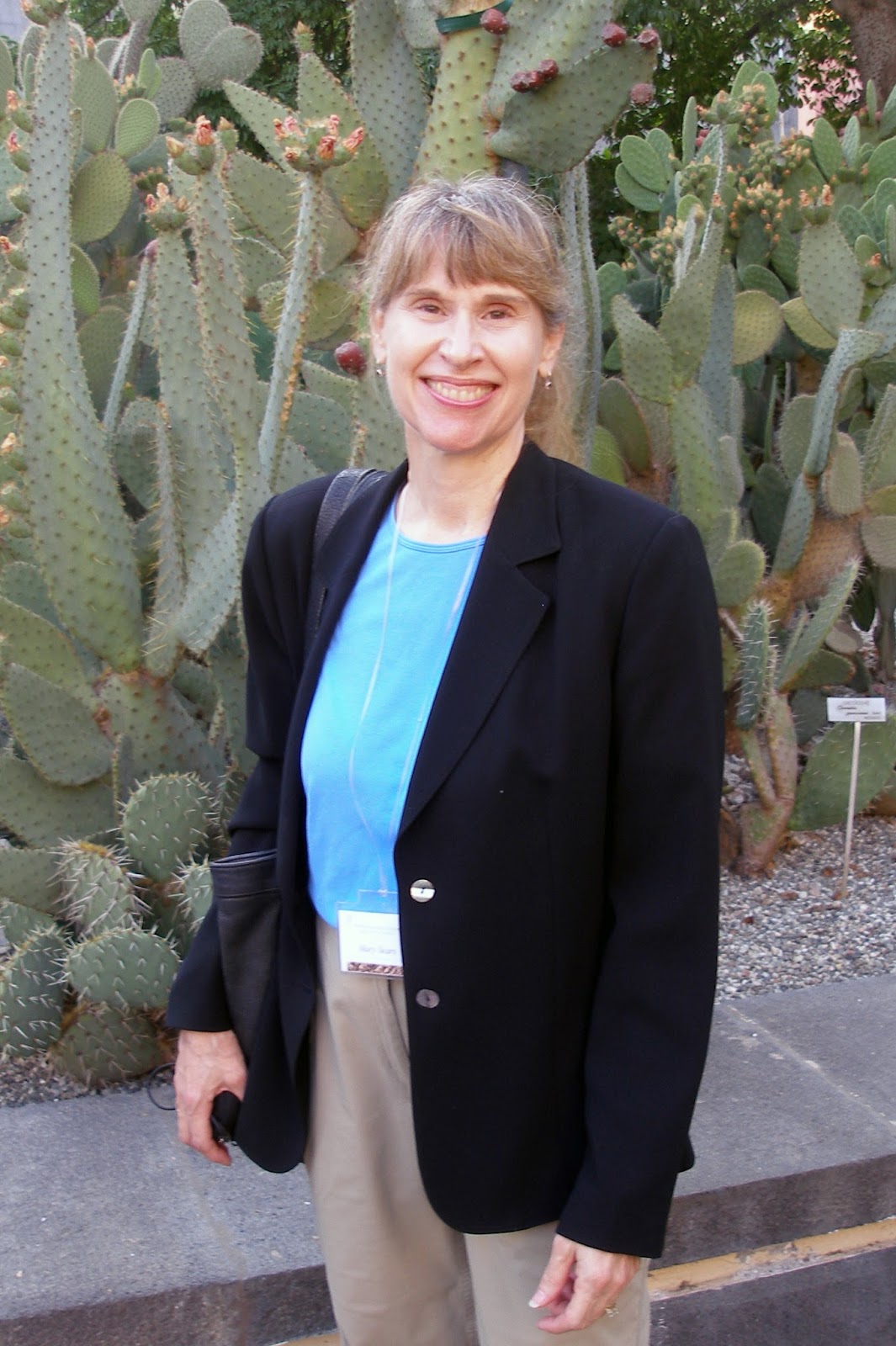
Mary Sears, Head of Public Services at the Ernst Mayr Library of the Museum of Comparative Zoology at Harvard University, instructed the class on how to use BHL to satisfy the assignment. Instructing students on the use of BHL is something Mary has done for some time now.

View Full Size Image
Mary Sears.

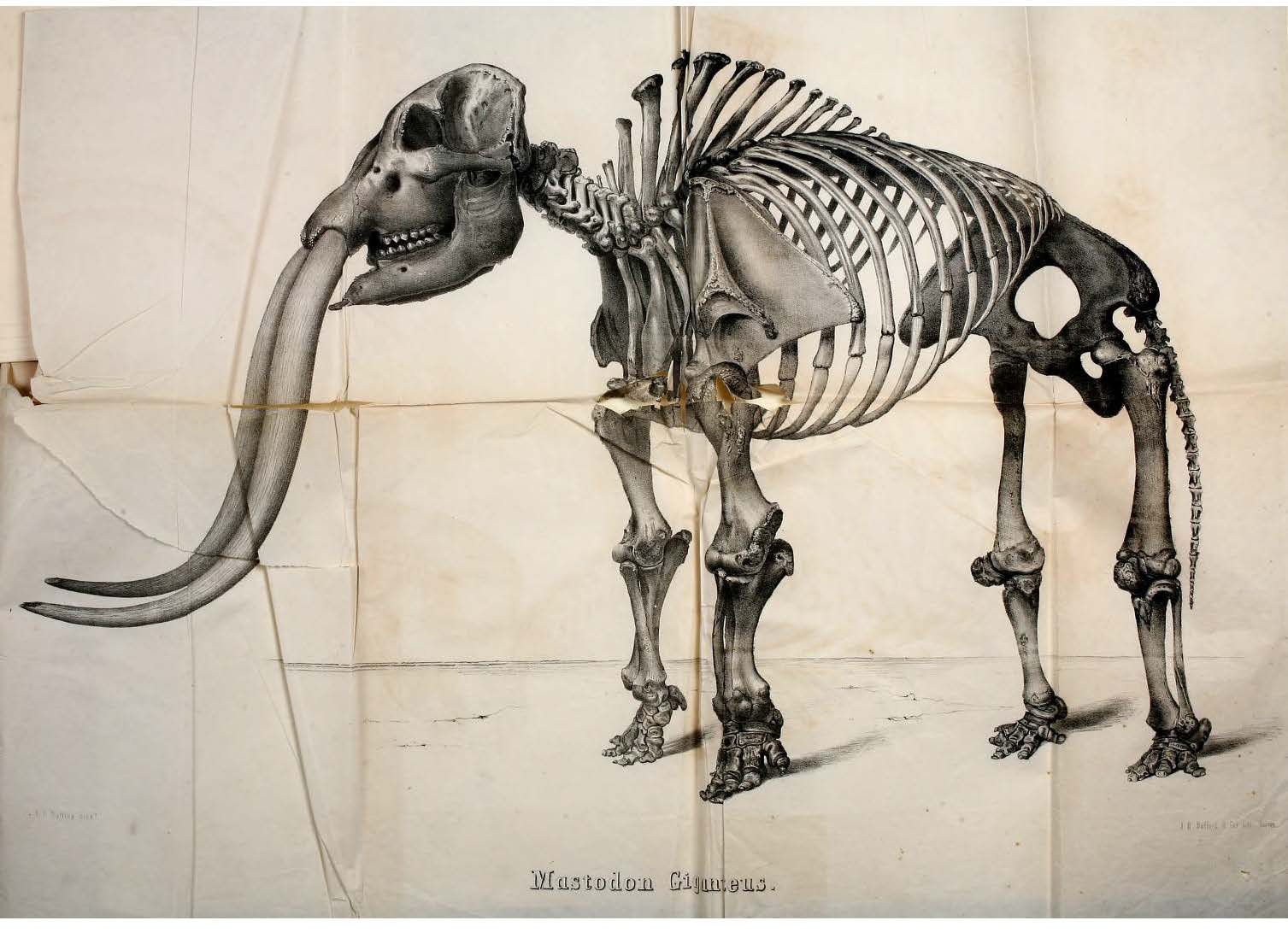
“We present the BHL to groups of students, when their class visits the library, and also use BHL as a reference tool when students are working on individual projects,” explains Mary. “Typically, a class visit involves an exhibit of historical volumes in Special Collections, and a tour and orientation on electronic resources. Faculty and students receive a bibliography of their Special Collections exhibit, with links to those works that are in BHL. The quality, immediacy and scope of the BHL make it an important tool when working with individual students, who are usually working on short-term projects. I regularly direct students to BHL who need taxonomic and anatomical works (and walk them through how to use it). Especially for students who are not science majors, the BHL is a dependable central source of scholarly articles and books in zoology and natural history. Our print journals and older monographs do not circulate, so the BHL’s high quality scans fill the students’ needs for accessible sources. Warren’s monograph on Mastodon giganteus (image below) is a great example. I have the volume downloaded at the reference desk and send it to a student at least once a year. They can see the original in Special Collections during library hours but use the BHL version from anywhere, 24/7.”

View Full Size Image
Skeleton of Mastodon giganteus. Warren, John C. The Mastodon Giganteus of North America. 1852. pl. XXVII. http://biodiversitylibrary.org/page/40681510. Digitized by Smithsonian Libraries.

Mary has been at the MCZ Ernst Mayr Library for twenty-five years. Her specialty is reference and research, but she also collaborates on circulation and other areas where the library intersects with the public. She is most active in the subject areas of marine biology, bryozoology, and scientific biography.

As the Ernst Mayr Library is a founding Member of the Biodiversity Heritage Library, Mary has been aware of BHL’s existence since its launch in 2006. It has had an increasingly significant impact on her work over the past ten years.

“I have a very high opinion of BHL,” affirms Mary. “It has impacted my work by making natural history journals and books easier to find and use. I am very fortunate to be in a library that contributes to the BHL: we have a solid collection of 19th century journals and many pre-1850 titles. As the repository has grown, I have experienced the shift from wondering whether a classic text will be in BHL to assuming that it will be. Now that so many important titles are there, I almost always use BHL scans instead of consulting a print volume in our Special Collections. Before BHL, I regularly went to Special Collections to confirm citations, make copies, etc. Being able to do those ordinary tasks remotely saves a lot of wear and tear on the collection. For works we do not own, I can have immediate access through the BHL to volumes that would have taken weeks and delicate negotiations (or microfilm!) [to obtain access to] twenty years ago.”

Mary’s favorite feature of BHL is the quality of the scans. As she describes, BHL’s scan quality, “especially the plates, more especially the foldout plates, is vastly better than other online repositories.” She also appreciates that downloading content from BHL “keeps getting better and easier.” Thinking about future improvements, Mary hopes to see the runs of journal titles in BHL be extended to include more recent volumes. “It is difficult to negotiate copyrights, but it is a big win to have a whole run of a journal in the BHL,” explains Mary.

Mary’s favorite title in BHL demonstrates the value of having full journal runs in BHL.

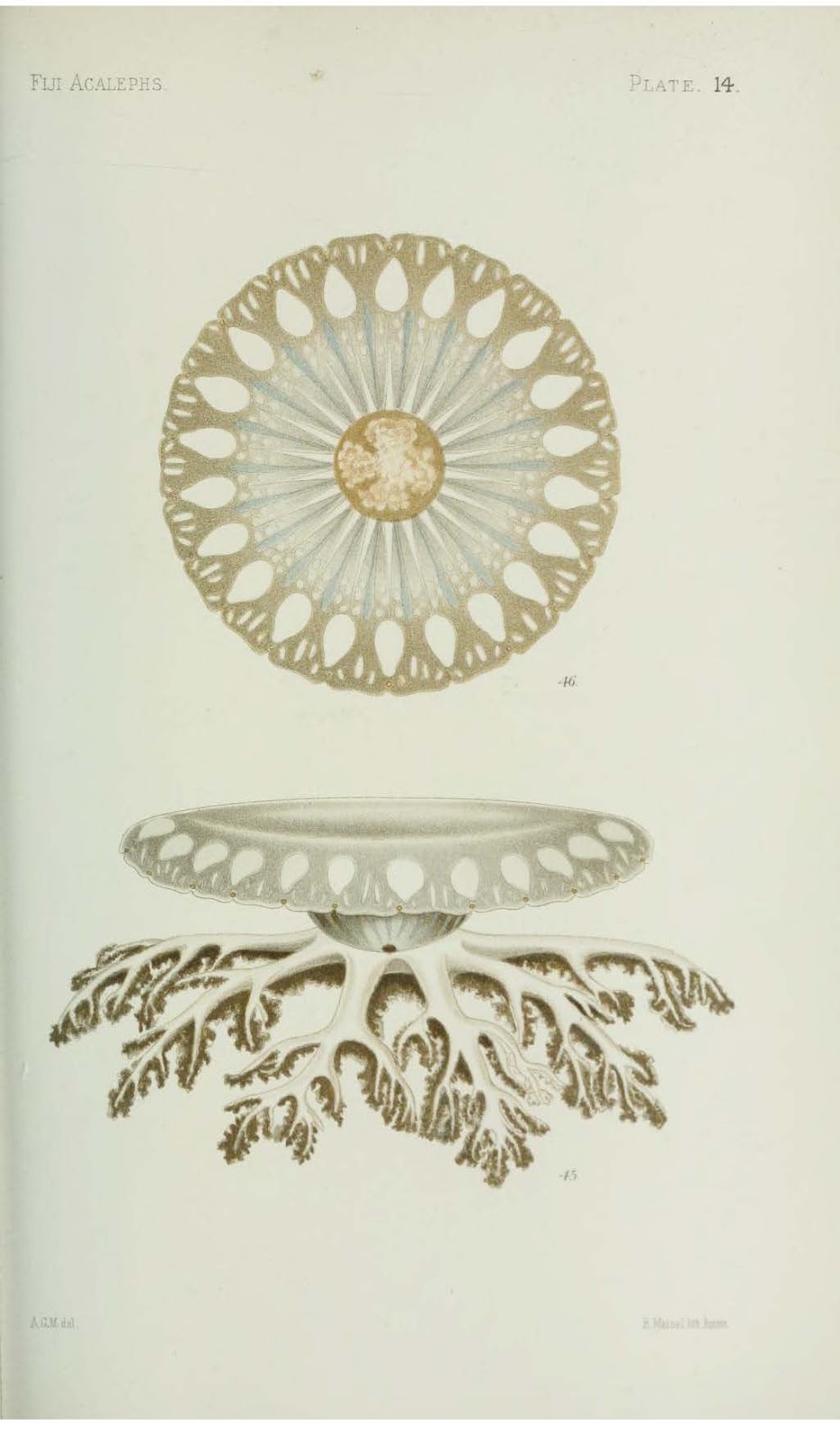
“The Bulletin of the Museum of Comparative Zoology (1863-current) is the primary publication of my institution and covers a vast array of zoological topics over a 150 year time span,” says Mary. “I get a lot of questions about the works published by the MCZ and authors/historical figures associated with the Museum. Having the Bulletin available through BHL makes works easier to find, download and send, as well as taking pressure off of our print volumes.”

View Full Size Image
New species Cassiopeia ndrosia. Agassiz, A. and A.G. Mayer. Acalephs from the Fiji Islands. Bulletin of the Museum of Comparative Zoology, vol. 32 (9), 1899. pl. 14. http://biodiversitylibrary.org/page/30426482. Digitized by the Gerstein – University of Toronto.

BHL has an active permissions program, which is working to secure licenses for more and more in-copyright titles. Recent work by the Institute of Museum and Library Services-funded Expanding Access to Biodiversity Literature project has resulted in a significant boost to the number of permissions agreements that BHL has secured over the past few months. See our recent blog post to explore the most recent in-copyright titles for which we’ve secured permission and to learn more about EABL.

So, is the bald eagle really bald? Nope, as you should be able to tell from Catesby’s illustration. According to the National Park Service, “The term ‘bald’ comes from the word ‘piebald,’ meaning markings that are two colors, usually black and white.” As Catesby writes, “This bird is called the Bald Eagle, both in Virginia and Carolina, though his head is as much feather’d as the other parts of his body.”

BHL to the rescue for students, librarians, scientists, and readers everywhere!

_____________________

This post may contain the personal opinions of BHL users or affiliated staff and does not necessarily represent the official Biodiversity Heritage Library (BHL) position on these matters.

May 12, 2016by michelle.underhill
Blog Reel, User Stories

Supporting Biodiversity Research in the High School Classroom

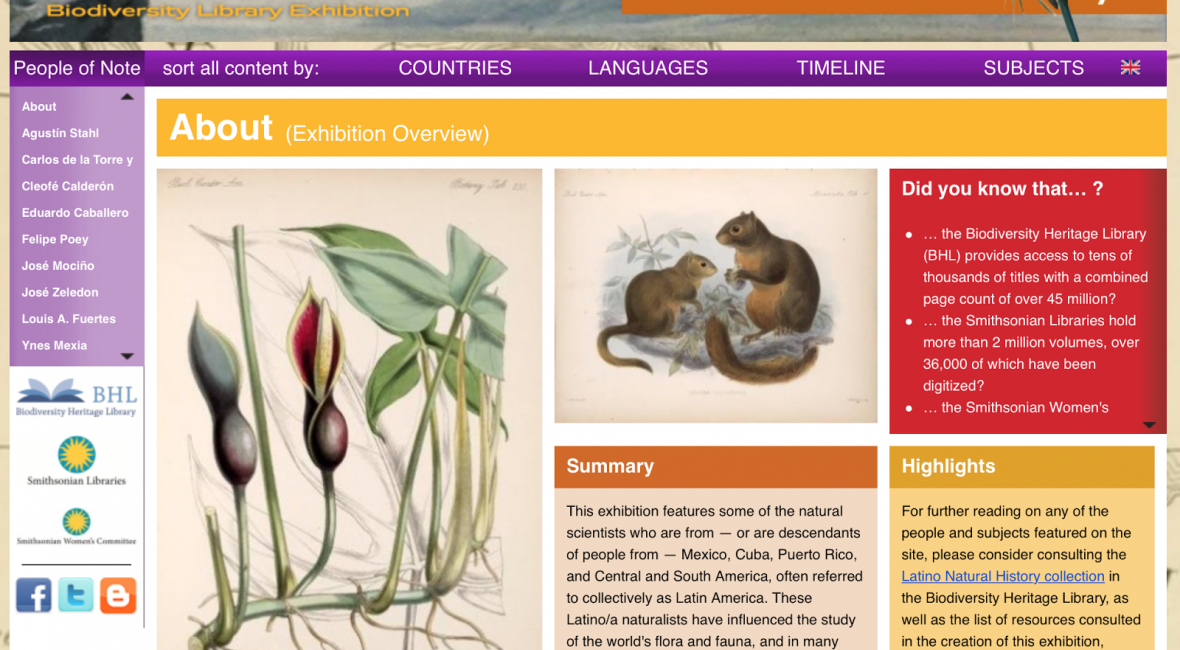
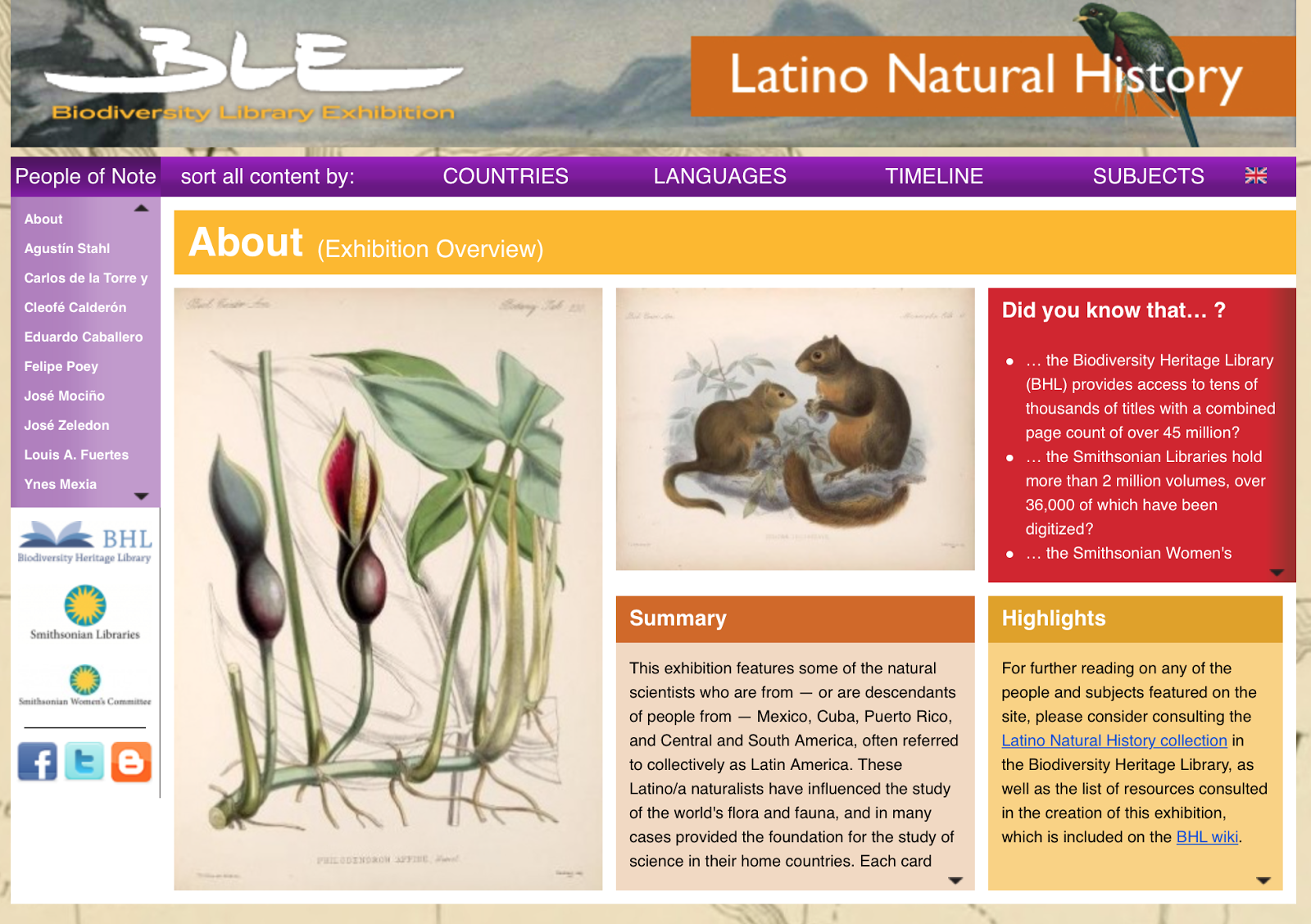
When we talk about BHL’s impact on global science, we often focus on how our collections support the work of scientists, researchers, and post-docs. Our collections are also an invaluable tool for students as well, and not just college students either. Middle and high school students can use our primary source material to conduct research for classroom assignments. Additionally, students of all ages can benefit from the wealth of plant and animal illustrations that we make available in Flickr as well as our online exhibitions highlighting topics like Latino Natural History and Early Women in Science.

View Full Size Image
Online exhibit for Latino Natural History.

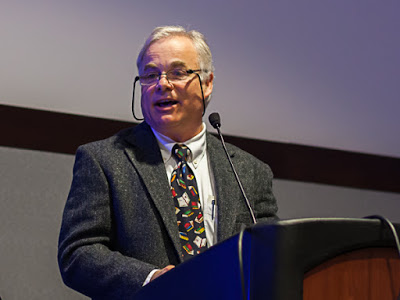
Michael R. Blake, Associate Director and Head of Instructional Services at Phillips Academy Andover, provides support to high school students researching the natural world. He graciously provided us with the following testimonial on his experience with BHL, including its use as a resource for class assignments and research.

View Full Size Image
Michael Blake telling stories to the Ticknor Society.


“I have been a science/medical librarian for more than 30 years. I retired from Harvard University two years ago and am now working with high school students focusing on the natural sciences. My avocation is exploring the out-of-doors and fishing the rivers, lakes, ponds, and streams within a reasonable driving distance. To fuel the librarian in me, I am also an avid collector of first edition fly fishing books printed in North America.

I first discover BHL during its early days of existence. I had worked with two of the parent organizations, Harvard University and the Smithsonian, and knew some of the people involved in bringing this amazing resource to the public.

I frequently use the BHL to learn about regions of the world I am unfamiliar. In helping students with writing assignments and their own research, the BHL’s resources provide answers not easily found using other databases. Recently, after reading “John Muir and the Ice that Started a Fire,” I searched the BHL for any correspondence that John Muir might have written. I discovered a few items that then lead me to explore George Engelmann and Paulus Roetter.

I usually am looking for specific items in the BHL when I use it. As an Instructional Librarian, I try to teach students how to find their needed information and enjoy some new aspect of natural history. I also go to the “Recent Additions” link to find the latest and greatest additions to the BHL; even though the latest addition might be a breviary from the 15th century. My favorite features and services provided by the BHL are the beautifully digitized images that add so much to any work. Seeing how a plant was illustrated in the 1800’s and then gathering all of the research on the item keeps me coming back.

If I could change one thing about BHL, it would be the financial support of the organization. I would love to see an endowment that ensured the existence of the organization for the future.”

Thanks so much for sharing your testimonial with us, Michael! Ensuring BHL’s financial future is, not surprisingly, a top priority for us as well. You can help ensure that BHL continues to support research about the natural world at all levels, from scientist to elementary school student, with a tax-deductible donation.

Do you have experience with or examples of using BHL in classroom settings? Tell us about it by leaving a comment on this blog or emailing us at [email protected].

April 5, 2016by ulib-libraryjobs
Blog Reel, User Stories

Exploring the Rich History of Plant Science

View Full Size Image
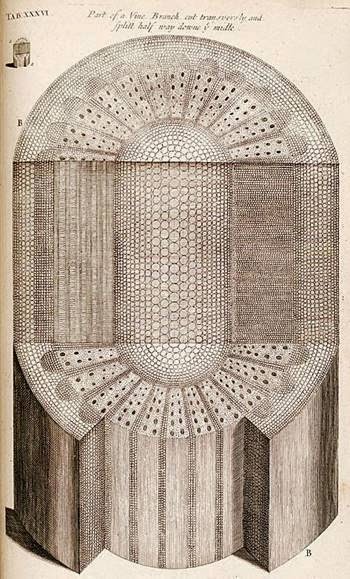
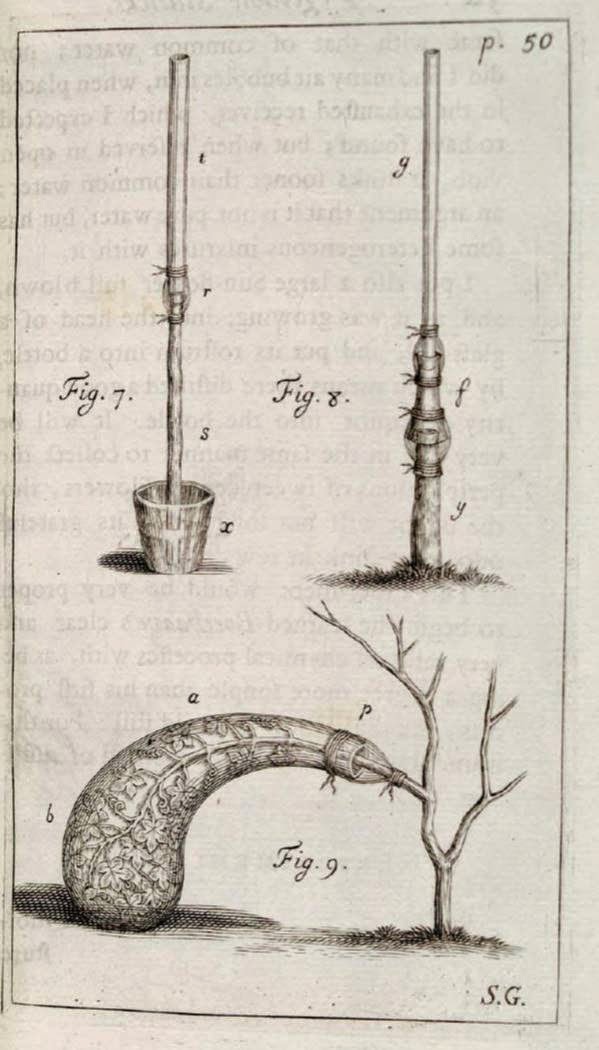
Drawings of a grapevine stem showing the transport vessels, from Nehemiah Grew’s The Anatomy of Plants (1682).

In 1682, the first known microscopic depiction of pollen appeared in Nehemiah Grew’s Anatomy of Plants. Grew, now known as the “Father of Plant Anatomy,” revolutionized botanical science with his studies of plant structure. Exploiting the power of the microscope, he outlined key morphological differences in plant stems and roots and proposed the hypothesis that stamens are a plant’s male reproductive organs.

Science has progressed significantly since the 17th century. Microscopes are no longer novel but commonplace, and scientists occupy their minds with theories about dark matter and quarks. Yet despite the centuries that have elapsed, today’s advances are founded squarely on the discoveries of these bygone eras. Likewise, modern theories often cause us to re-examine assumptions from the past.

Dr. Mary Williams is particularly drawn to this interplay between historic and modern scientific study, specifically in the field of botany. Dr. Williams has been studying and educating people about plants since she began her PhD in Plant Molecular Biology 30 years ago. Serving as a professor at Harvey Mudd College from 1995-2009, Dr. Williams is now a Features Editor for the American Society of Plant Biologists, writing a series of educational articles about plant biology called “Teaching Tools in Plant Biology.” The series connects advanced undergraduate students to current research in plant sciences through textbook-style review articles, diagrams and images.

View Full Size Image
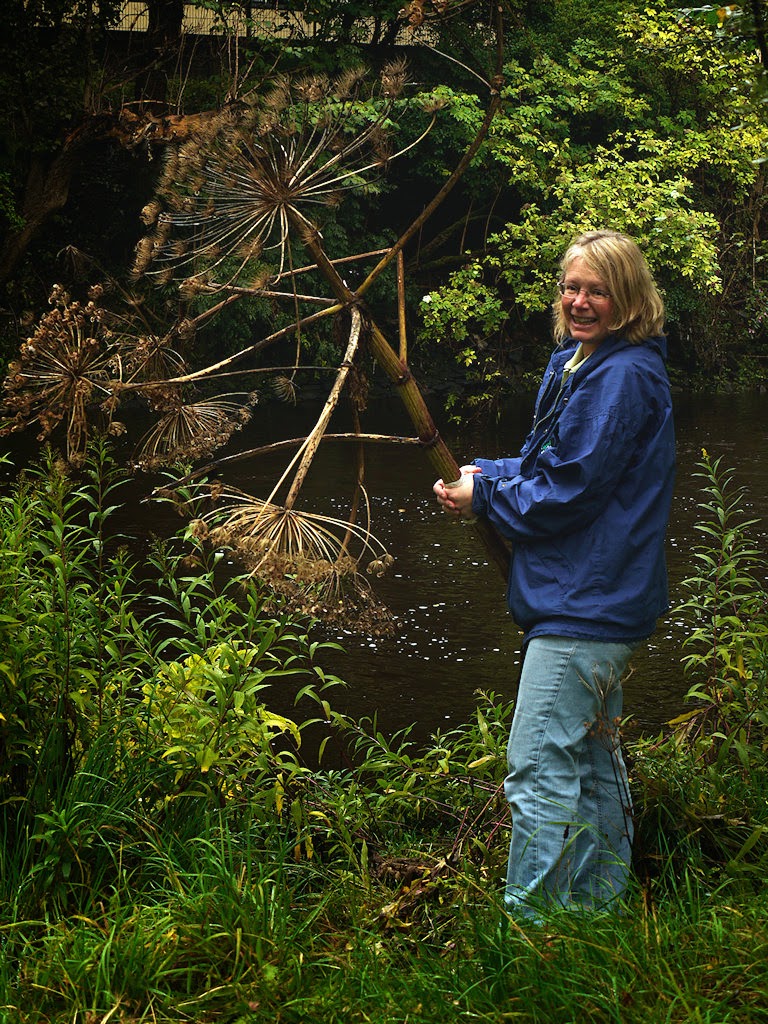
Mary Williams demonstrating the size of giant hogweed (Heracleum mantegazzianum).

A comprehensive biological education is not just about current research, however. “Educating students about science involves more than teaching them our current models,” explains Dr. Williams. “We also have to help them learn to synthesize information and develop their own models. One way to do this is by asking them to examine how our ideas and understanding have changed with time. As an example, students can read Vegetable Staticks published in 1727 by Stephen Hales, who is considered one of the pioneers of plant physiology. This book is an account of his studies of water transport in plants. In spite of having only simple tools he made key discoveries and developed models that are still useful.”

View Full Size Image
Investigations into the forces and nature of xylem sap, from “Vegetable Staticks,” published in 1727 by Stephen Hales.

BHL has become an important resource for satisfying Dr. Williams’ need for historic botanical literature. Some serendipitous Google searching in 2012 brought her to several digitized classics in the BHL collection, which has since transformed into monthly searches for materials. BHL’s Twitter account, @BioDivLibrary, has also proven helpful for uncovering hidden gems in the collection. Dr. Williams includes links to relevant material and images in her teaching articles.

“BHL makes great scientific works available for students to explore,” lauds Williams. “It can be both fascinating and challenging to see how early scientists conducted experiments and described their results. I particularly like to direct students to “The Power of Movement in Plants”, written by Charles Darwin and his son Francis. Reading it reveals how these exceptional scientists first observe a phenomenon and then set out to understand it. Their investigations of phototropic movement of Phalaris canariensis are brilliant studies that set the stage for the discovery of the plant hormone auxin.”

Providing access to historic literature isn’t the only thing that makes BHL an important resource for Dr. Williams. The diversity and openness of the collection are equally important. “I wrote an article about medicinal plants and was able to draw on BHL for access to dozens of books from across the world and across the ages. Also, the fact that many of the resources are in the public domain makes them easier to share.”

The ability to see the primary sources as they were originally published is another of Williams’ favorite BHL qualities. “Although it would be possible to learn from a transcribed document, somehow seeing the original publications with the old type and especially the old drawings has so much more impact and makes me feel connected to the writers across the centuries.”

View Full Size Image
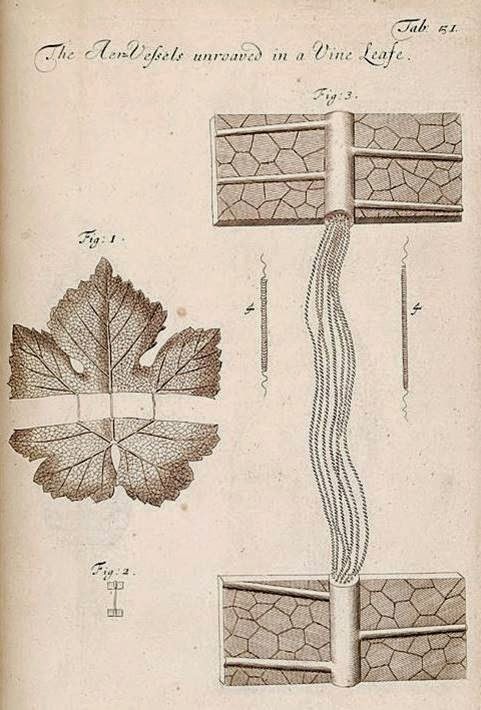
Drawings of a grapevine stem and leaf showing the transport vessels, from Nehemiah Grew’s The Anatomy of Plants (1682).

Her one complaint? “It would be nice if it were easier to search within a book (although I do enjoy scrolling and browsing).” Improved search is a component of the Mining Biodiversity, Digging Into Data project that BHL is currently engaged in. Deliverables will include enhanced search functionality incorporating text mining, semantic metadata, and result visualizations.

So, which books would a botanical educator choose as her favorite within a collection of more than 150,000 volumes? “It would have to be the two important plant anatomy books from the 17th century, Marcello Malpighi’s Anatome Plantarum (1675) and Nehemiah Grew’s The Anatomy of Plants (1682),” asserts Williams. “The detail and observational quality of the drawings is fantastic. Because of their simplicity in some ways these centuries-old line drawings are clearer and easier to comprehend than an image taken today using a powerful microscope. When I look at these books I am struck by the power of the giants whose shoulders we stand on.”

We couldn’t have said it better ourselves.

Thank you, Dr. Williams, for taking the time to tell us how BHL has impacted your work. Do you use BHL regularly? Tell us about it by writing to [email protected]. 

October 10, 2014by michelle.underhill
BHL News, Blog Reel

Post Life & Literature: Themes and Outcomes

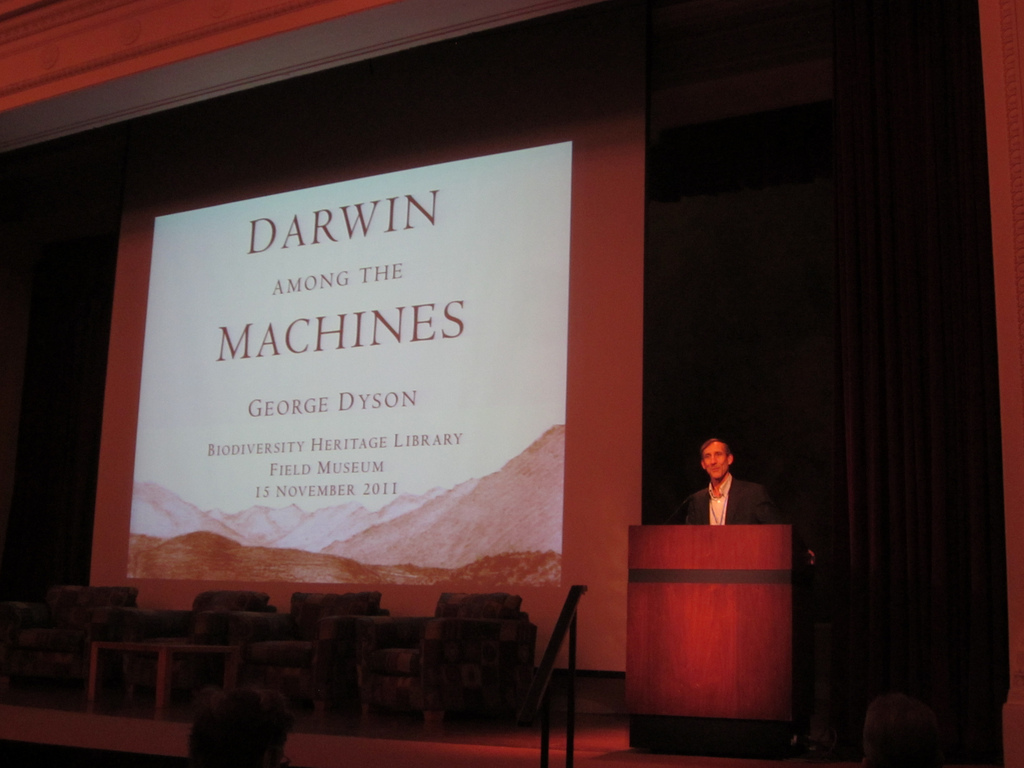
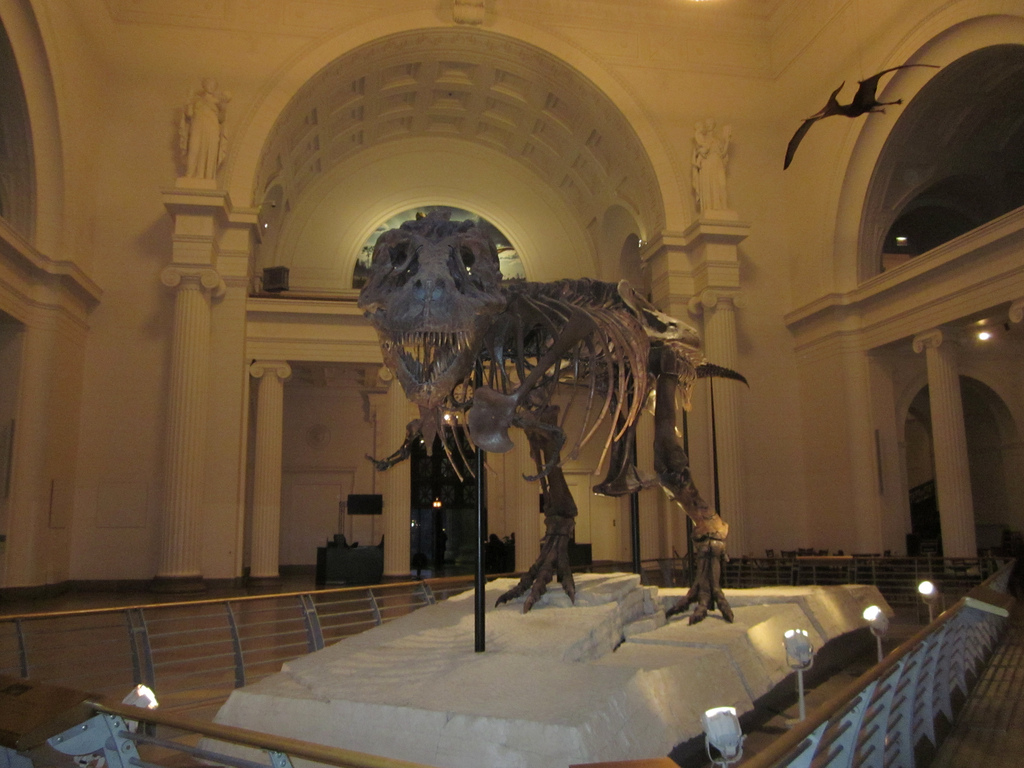
View Full Size ImageIf you happened to be living under a rock for the past two weeks and missed our blog posts, tweets, and posts on Facebook, you might have missed the fact that last week was the Life and Literature Conference, an event hosted by BHL with the express purpose of generating conversations about the priorities for biodiversity literature digitization, particularly as it pertains to BHL, for the next 4-5 years. The conference, which took place November 14-15, 2011, in Chicago, IL, brought together interested parties in a variety of disciplines, including science, education, informatics, and the humanities. Lively discussions and insightful presentations ensued both days, with dozens of live tweets (hashtag #lifelit) constantly streaming for those who could not participate in person.

The conference was divided into four panel discussions, followed on the second day by break-out sessions that allowed attendees to delve deeply into the various topics discussed during panel sessions, ultimately leading to an outline of the various areas deemed most important for BHL to focus on in the next 4-5 years. The four panel sessions included “Research, Informatics, and the Published Record;” “Publishers, Aggregators, and Authors – New Models and Access;” “Learning and Education;” and “Building Collaborative Networks for Science and the Humanities through Scientific Literature.” A synopsis of the four panels can be found on the Life and Literature site, as well as a list of each of the presenters and their biographies. Session presentations are being loaded to the BHL wiki and can be accessed on the Presentations page. Notes from the sessions can be found on the Life and Literature website. You can also view interviews of conference attendees on the website.

View Full Size ImageIn order to facilitate a discussion with the audience during panel and breakout sessions, BHL staff used an application called Titan Pad, which provides a collaborative environment that allows anyone to access a document to view, edit, or make comments in real time. There were Titan Pad pages for each of the panels and breakouts, and live notes, as well as live discussion, occurred via those avenues. These pages remain live, and we encourage anyone interested to continue the discussion in the weeks to come!

While many ideas and themes resulted from the discussion generated at the conference, perhaps the most recurring topic involved the connection between science and the humanities. Presentations by speakers at the Humanities panel highlighted some of the possible intersections between art and science, and each breakout session touched upon the various ways that BHL could partner with the humanities and make the biodiversity illustrations already in BHL more accessible. The BHL Flickr site, which currently houses more than 20,000 images, was a huge success, and attendees discussed additional ideas about how BHL could further promote its illustrations and engage the arts and humanities communities. Such ideas as specific image searching interfaces, image-specific collections, and collaborations with artist communities were discussed, and BHL staff outlined some art-related grant projects currently in the works.

The winner of the Life and Literature Code Challenge was also presented at the conference. The Code Challenge asked users to create applications that would use, disseminate, or display BHL data in new and meaningful ways. The winner? Ryan Schenk, with his application Synynyms. Synynyms works as a taxonomic name aggregator, finding all of the different names given to a species over the years and displaying the frequency of each name variety throughout history. The names are provided by the Encyclopedia of Life, and the publications come from, you guessed it, BHL! Congratulations to Ryan, and thanks for sharing such an awesome tool with us!

View Full Size ImageLast, but certainly not least, two new members of the BHL family were announced, Cornell University Library and the United States Geological Survey (USGS) Libraries. With these new members joining the fold the BHL consortium is now 14 members strong! Stay tuned for more information about BHL’s newest members to come in future posts.

The Life and Literature conference was also surrounded by a variety of other important BHL meetings, including a BHL Global Meeting (see previous post on the event), a BHL Staff meeting, and a meeting devoted to a discussion on the digitization of biodiversity literature in Africa. Watch for posts on the latter two meetings in the days to come.

As we think about the outcomes of the conference, we are excited to explore the possibilities for the future and inform our development through user feedback. For BHL to serve its purpose, it must meet the needs of its user community, and events like Life and Literature allow us to gather and assess those needs. However, if you couldn’t make it to Life and Literature, or if you did but still have more thoughts on BHL’s future, you can still share them! Contribute your ideas through our Titan Pad discussions, by submitting feedback to our website, or posting your ideas via twitter (@biodivlibrary) and Facebook! We’re waiting to hear from you, and thanks to everyone who made Life and Literature such an exciting and successful venture!

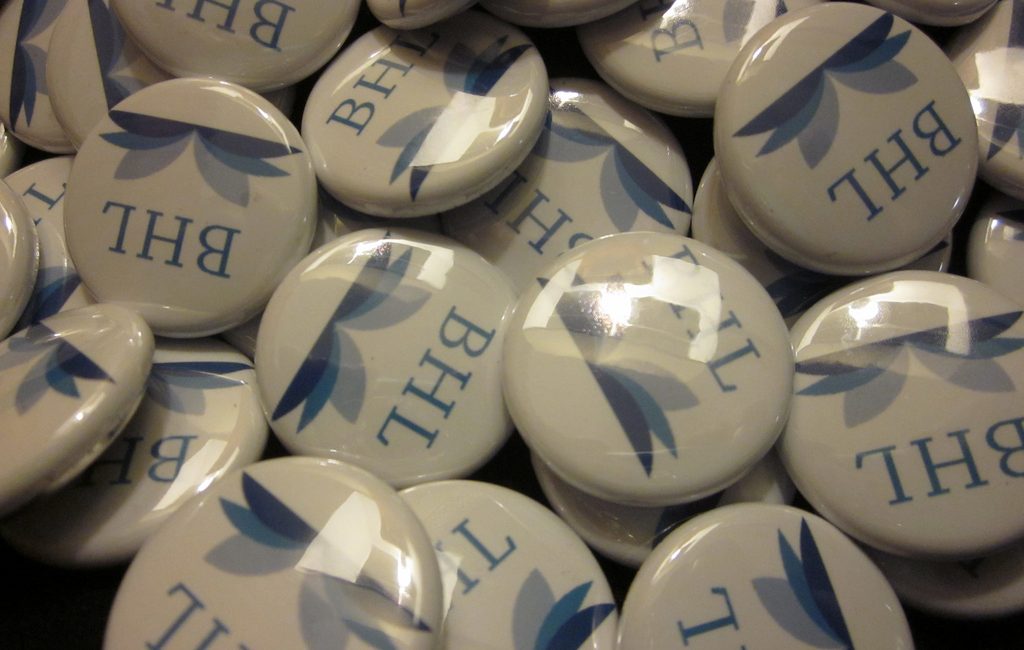
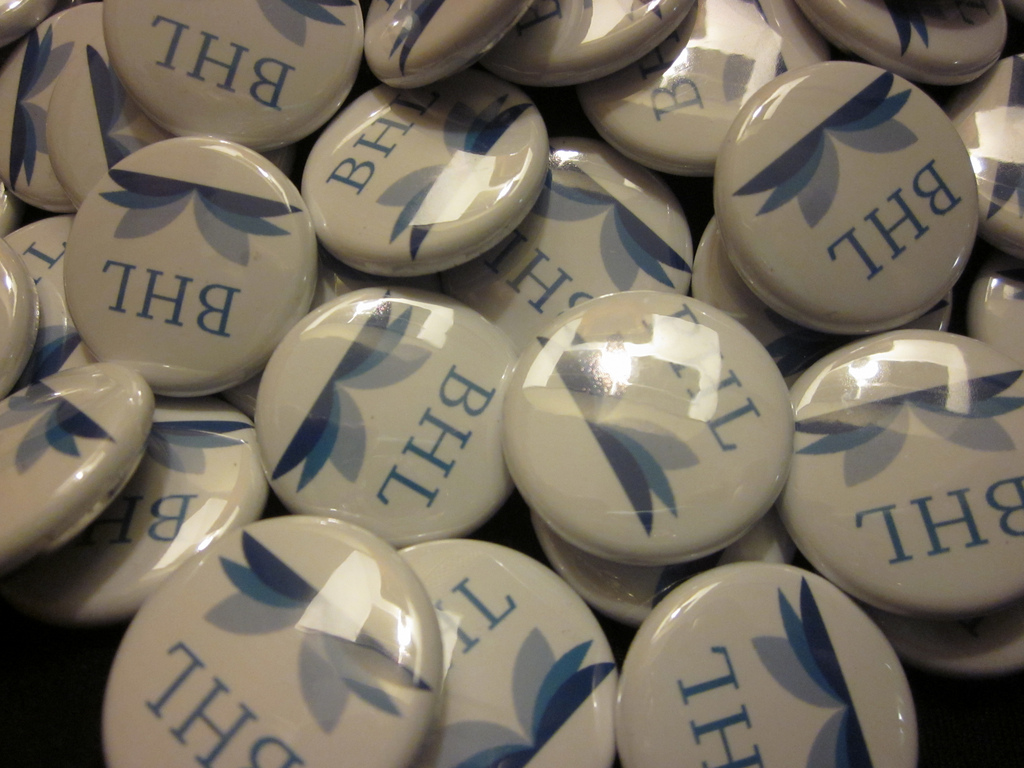
(Images: All images courtesy Martin Kalfatovic. Top: BHL Buttons presented at the Life and Literature Conference; Middle: George Dyson delivering the second plenary speech at Life and Literature; Bottom: SUE – the largest, most complete T-Rex skeleton ever discovered, on display at the Field Museum, the Life and Literature Conference venue)

November 22, 2011by Grace Costantino

Help Support BHL

BHL's existence depends on the financial support of its patrons. Help us keep this free resource alive!

search

About BHL

The Biodiversity Heritage Library (BHL) is the world’s largest open access digital library for biodiversity literature and archives. BHL operates as a worldwide consortium of natural history, botanical, research, and national libraries working together to digitize the natural history literature held in their collections and make it freely available for open access as part of a global “biodiversity community.”

Join Our Mailing List

Sign up to receive the latest news, content highlights, and promotions.

Subscribe Now

Subscribe to Blog via Email

Enter your email address to subscribe to this blog and receive notifications of new posts by email.

Join 319 other subscribers

Subscribe to Blog Via RSS

Subscribe to the blog RSS feed to stay up-to-date on all the latest BHL posts.

Access RSS Feed

Inspiring Discovery through Free Access to Biodiversity Knowledge.

The Biodiversity Heritage Library makes it easier than ever for you to access the information you need to study and explore life on Earth…for free, anytime, anywhere.


64+ Million Pages of
Biodiversity Literature Online.

EXPLORE

Tools and Services
to Transform Research.

EXPLORE

300,000+
Illustrations on Flickr.

EXPLORE

ABOUT | HARMFUL CONTENT | PRIVACY | SITE MAP | TERMS OF USE