Biodiversity Heritage Library - Program news and collection highlights from BHL
  • Home
  • News
  • Featured Books
    • All Featured Books
    • Book of the Month Series
    • BHL at 20
  • User Stories
  • Campaigns
    • Fossil Stories
    • Garden Stories
    • Monsters Are Real
    • Page Frights
    • Her Natural History
    • Earth Optimism 2020
  • Tech Blog
  • Visit BHL
Home
News
Featured Books
    All Featured Books
    Book of the Month Series
    BHL at 20
User Stories
Campaigns
    Fossil Stories
    Garden Stories
    Monsters Are Real
    Page Frights
    Her Natural History
    Earth Optimism 2020
Tech Blog
Visit BHL
  • Home
  • News
  • Featured Books
    • All Featured Books
    • Book of the Month Series
    • BHL at 20
  • User Stories
  • Campaigns
    • Fossil Stories
    • Garden Stories
    • Monsters Are Real
    • Page Frights
    • Her Natural History
    • Earth Optimism 2020
  • Tech Blog
  • Visit BHL
Biodiversity Heritage Library - Program news and collection highlights from BHL
Blog Reel, Featured Books

A “Botanist’s Botanist” : The Field Books of Timothy Plowman

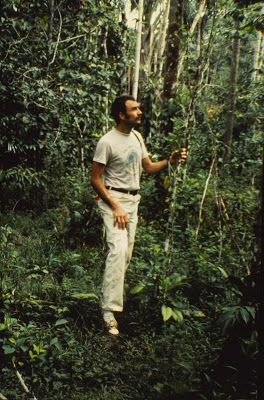
The Field Museum Library has recently digitized and added to the Biodiversity Heritage Library Timothy Plowman’s entire field book collection, which spans his career from 1969, when he worked for the botanical museum at Harvard, through his years as a curator of botany at the Field Museum from 1976-1987. Timothy Plowman was an ethnobotanist and the world authority on the taxon Erythroxylum (coca). This genus of tropical trees and shrubs is best known for the species Erythroxylum coca L., a sacred leaf of the Andes, and also the source from which commercial cocaine is derived.

In his short lifetime—Plowman died at the age of 45—he collected materials in some of the most remote regions of the Andes and the rain forests of the Amazon, spending more than five years of his life in these harsh landscapes. As a result of Plowman’s work, the Field Museum is the most important repository in the world of research collections and literature pertaining to the classification of Erythroxylum. Plowman collected over 700 specimens of the genus from South America, and the Field Museum collection contains over 5,000 specimens collected worldwide as well as massive data resources. Plowman’s position as world authority on this genus also provided him a platform in which to speak on behalf of the indigenous peoples of the region and their traditional use of coca.

View Full Size Image
© The Field Museum, GN83861c.
Dr. Timothy Plowman, Botany, collecting coca plant specimens near Leticia, Peru.

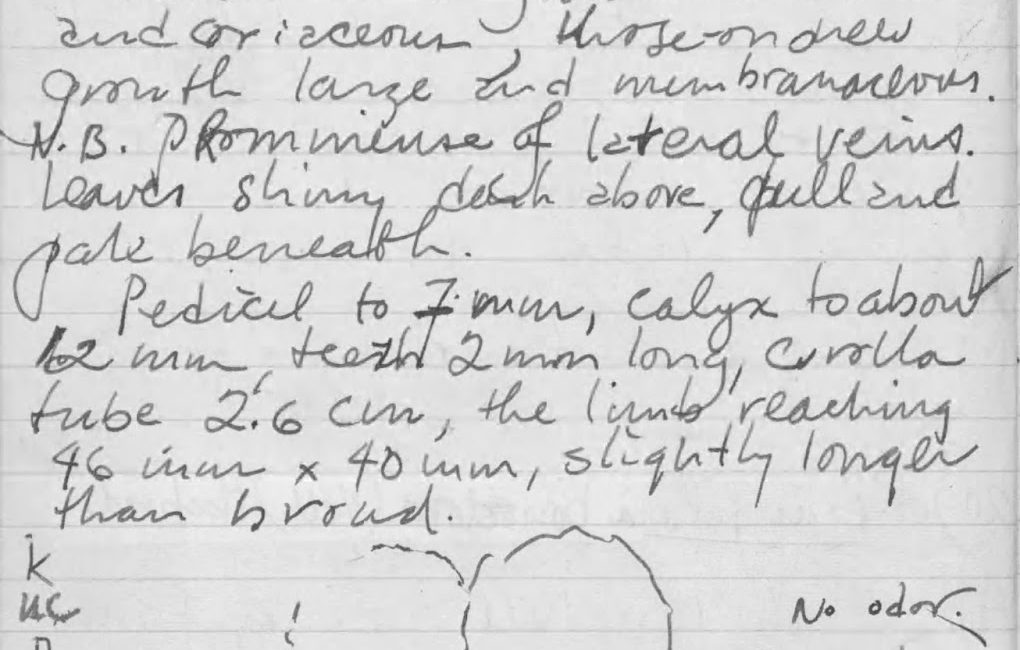
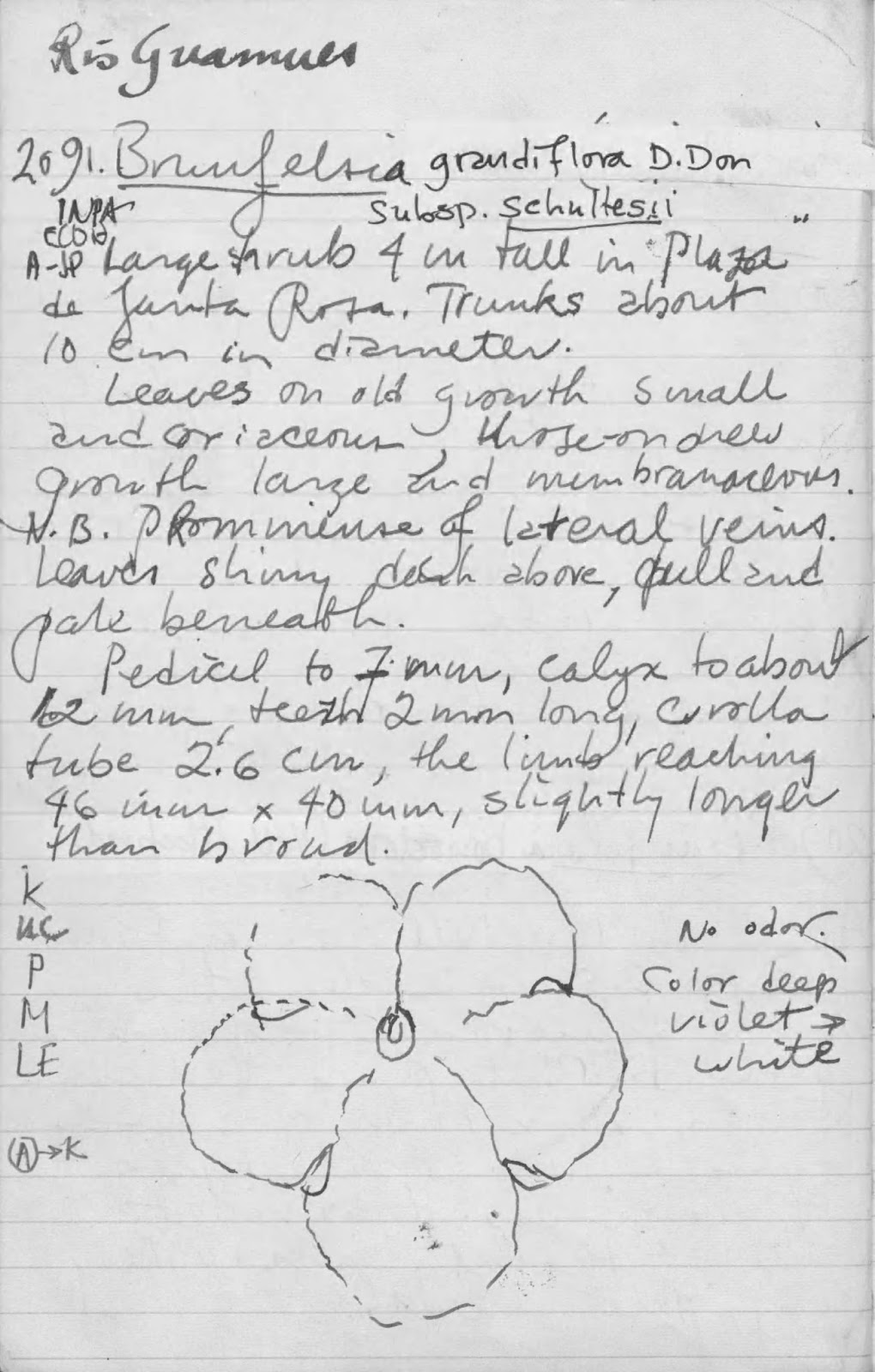
While Plowman’s Ph.D. research at Harvard University mainly concentrated on Erythroxylum, he also had a special interest in Brunfelsia (nightshade family), and a fascinating chapter in Plowman’s research of Brunfelsia is highlighted in his collecting notebook from 1968-1969 in Venezuela and Colombia. After reaching Santa Rosa on the Río Guamués in Colombia, Plowman was introduced to an old shaman who produced the species Brunfelsia grandiflora, which had been discovered and described by Plowman’s mentor, Richard Evan Schultes. The plant was well known for its hallucinogenic properties, and is further described below.

View Full Size Image
Plowman, Timothy. Timothy Plowman Botanical Collecting Notebook: 1900-2286: 1968-1969.  Text and illustration by Timothy Plowman. Digitized by the Field Museum library.  http://s.si.edu/2eNl3aw

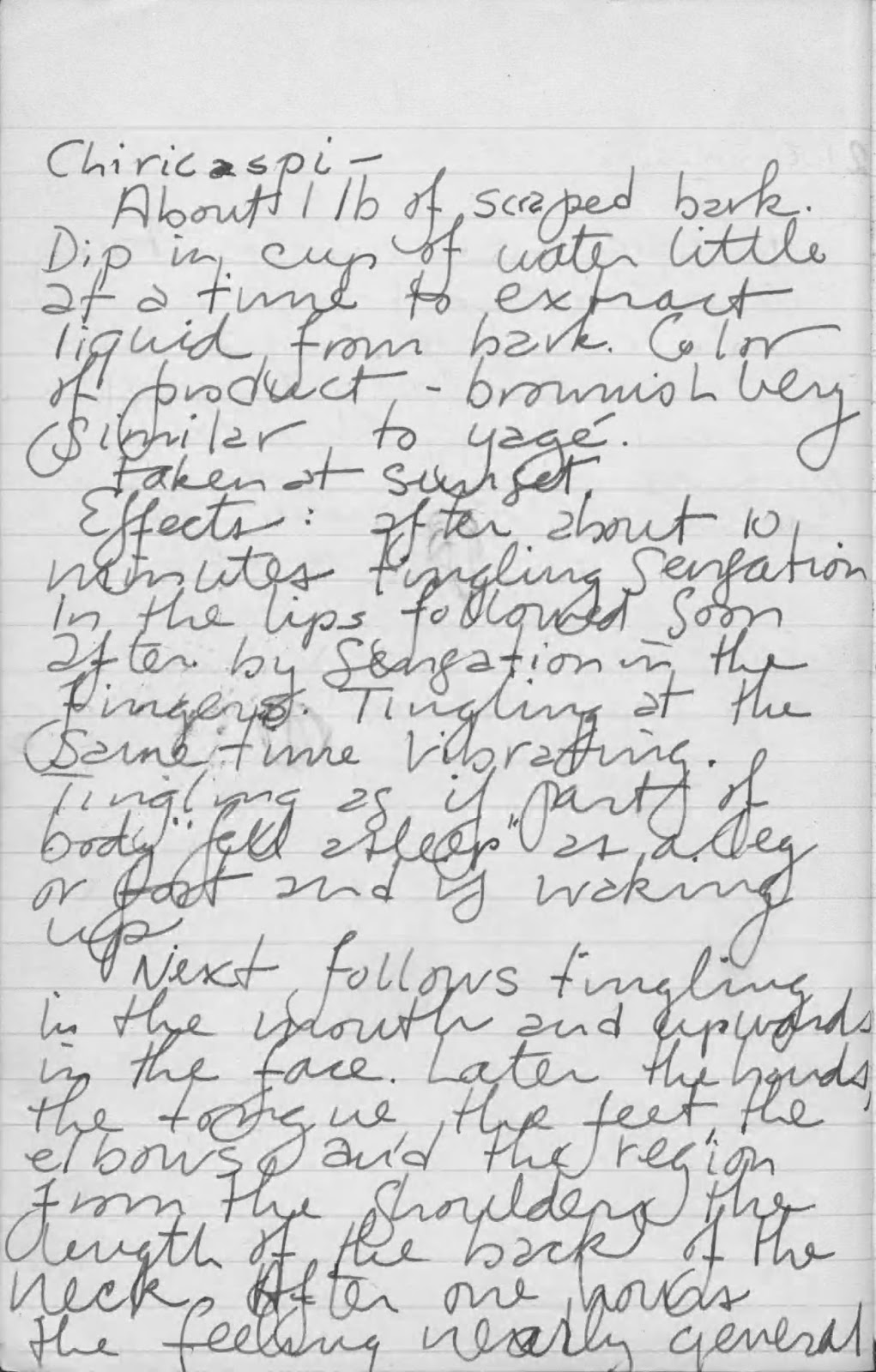
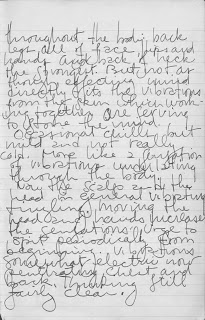
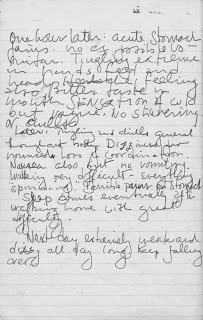
The shaman also brought from the forest a related plant that Plowman immediately identified as a new-to-science species, which he later named Brunfelsia chiricaspi, described on the following page. Wishing to confirm that this new plant also had similar properties as a drug, he asked the shaman to prepare it. At first the shaman refused his request, describing the plant as a “dangerous messenger of the forest,” but eventually relented. Plowman describes his experience from the drug, the effects of which he began to feel within ten minutes, within these pages of his field book.

View Full Size Image
Plowman, Timothy. Timothy Plowman Botanical Collecting Notebook:1900-2286: 1968-1969. Text by Timothy Plowman. Digitized by the Field Museum library. http://s.si.edu/2gJkF9P.

View Full Size Image View Full Size Image

In the foreword to A revision of the South American species of Brunfelsia (Solanaceae), which was published posthumously as part of the Fieldiana Botany series, Plowman was described by colleagues as a man who “approached botanical research with the intensity and rigor of a scientist, the courage of his mentor, and the flair of a poet.” Making Plowman’s field books freely available online for the first time through the Biodiversity Heritage Library furthers the availability of the valuable scientific documentation about specimens, study sites, collecting details, and ecology, that were carried out by Timothy Plowman with such energy, enthusiasm, and grace.

Sources:
http://emuweb.fieldmuseum.org/botany/plowman_bio.html

Plowman, Timothy, Sandra Knapp, and J. R. Press. 1998. A revision of the South American species of Brunfelsia (Solanaceae). [Chicago, Ill.]: Field Museum of Natural History.

The BHL Field Notes Project is funded by the Council on Library and Information Resources (CLIR).

September 7, 2017by lmyrick
Blog Reel, Featured Books

Artist Kumataro Ito Aboard the USS Albatross

This post was originally published on The Field Book Project blog on 30 June 2017.

View Full Size Image
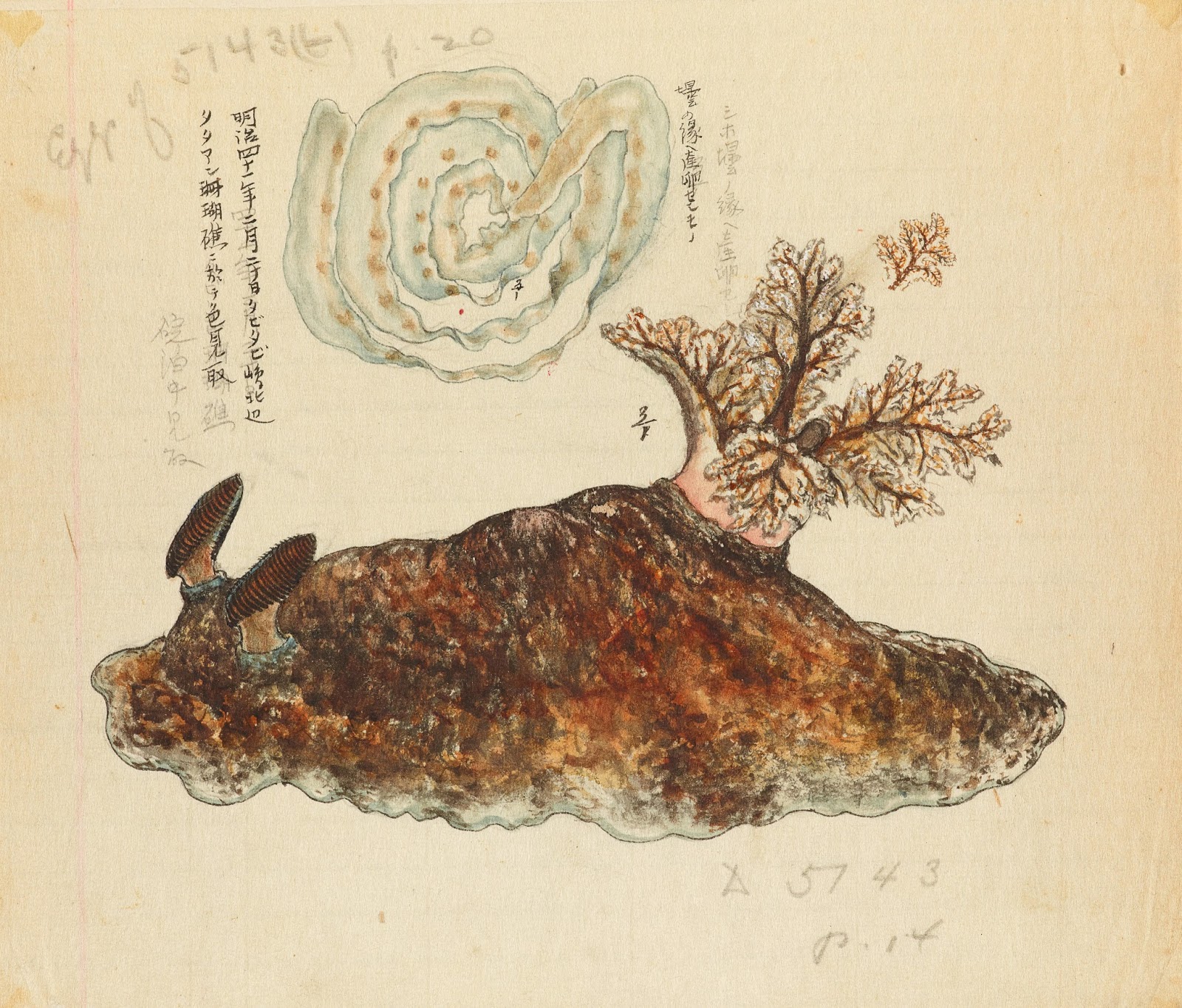
Bartsch, Paul. Notes and description of specimens collected on the Philippine Expedition of the Steamer Albatross, circa 1908. Illustration by Kumataro Ito. Digitized by Smithsonian Institution Archives. http://s.si.edu/2wm30MY.

In 1907, the U.S. Bureau of Fisheries—now known as NOAA Fisheries or the National Marine Fisheries Service—embarked on a 2 ½ year research trip to the Philippine and neighboring islands. Of the many research trips conducted on their steamer the USS Albatross, the Philippine expedition resulted in a staggering estimate of 490,000 specimens turned over to the U.S. National Museum, what is now the National Museum of Natural History. When specimens are stored in ethanol, as these were, they do not retain their original coloring. To capture this information, these trips would also include efforts to document the specimens in other ways, such as photos or illustrations.

At the time of this expedition, a portable, reliable way to create quality color photographs was still several decades away, so it wasn’t an option for researchers in the field. Having an artist on board was the only option to capture the brilliant colors of the collected marine species. For this particular outing of the Albatross, Tokyo-based artist Kumataro Ito was hired to illustrate specimens collected by researchers.

Ito studied under Gyozan Nakajima, noted illustrator of the 19th century, and had already established himself as a natural history painter at Department of Zoology of Tokyo University and working on publications such as the Fishes of Japan, an account principally on economic species.

View Full Size Image
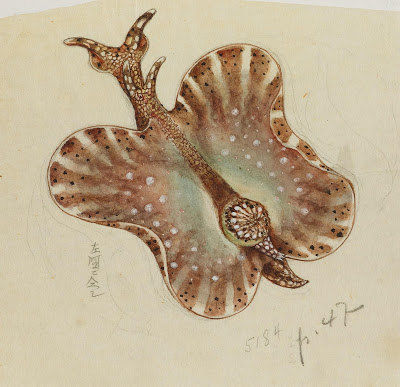
Bartsch, Paul. Notes and description of specimens collected on the Philippine Expedition of the Steamer Albatross, circa 1908. Illustration by Kumataro Ito. Digitized by Smithsonian Institution Archives. http://s.si.edu/2iFc64e.

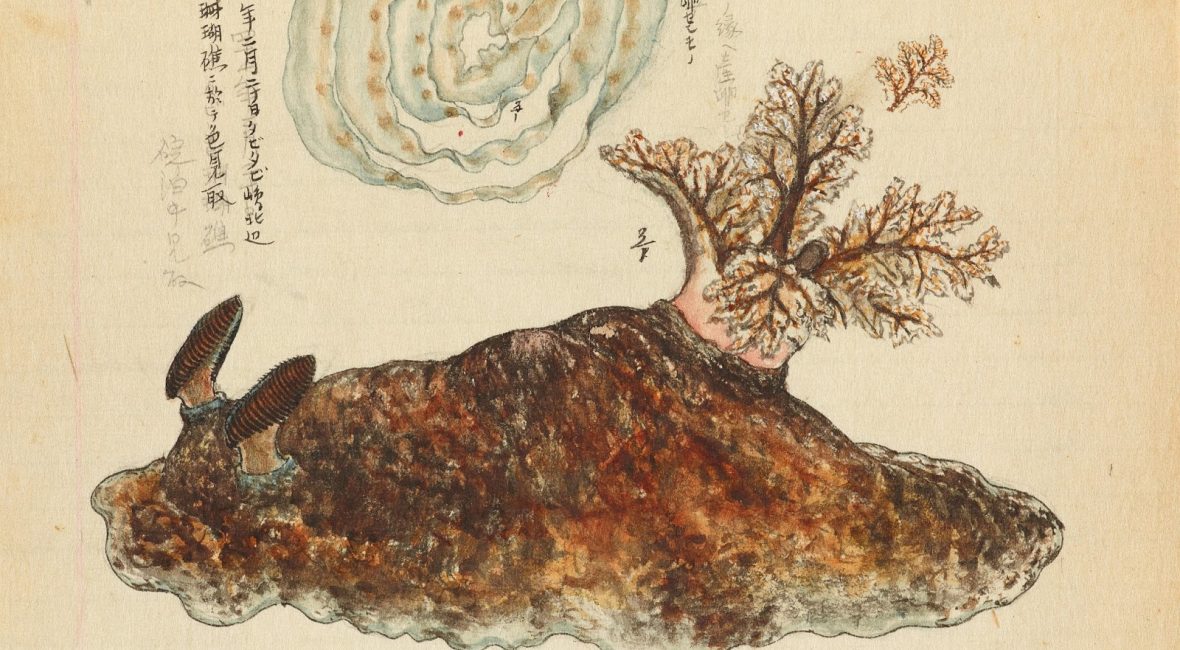
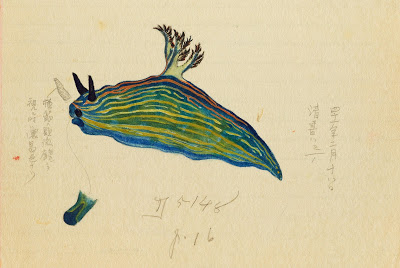
Over the course of the expedition, Ito created over 200 paintings of specimens collected by the small research crew, including mollusks collected by Smithsonian’s Paul Bartsch. Last month, our team digitized one of Bartsch’s notebooks from the expedition. The notebook caught our eye from the first time we saw it because of the beautiful full-color paintings of nudibranchs, all by Ito. Each painting includes notations in Japanese which supplement Bartsch’s notes. Based on how well the paintings have aged, it’s likely they were created on quality Japanese paper similar to what is used today for book repairs.

View Full Size Image
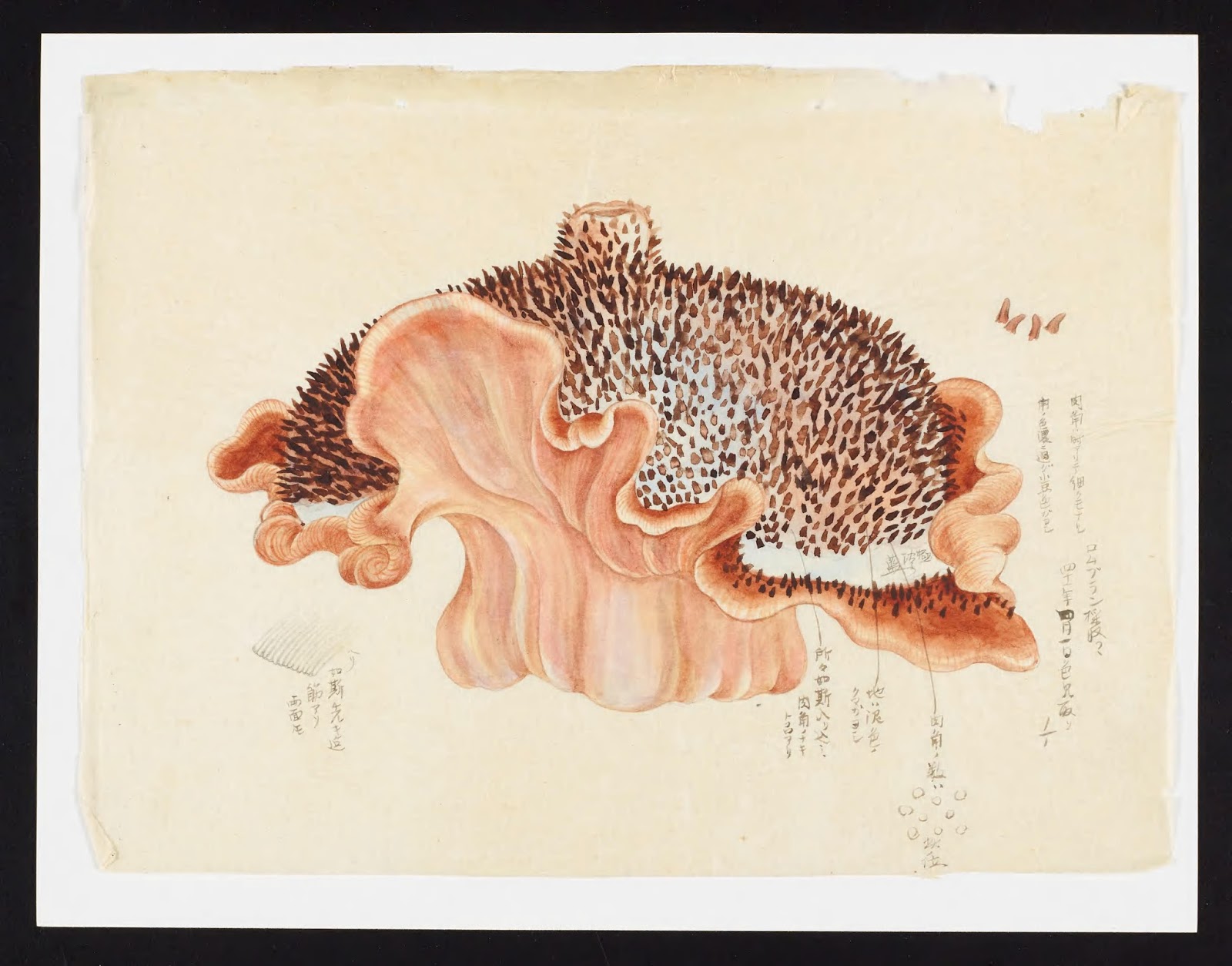
Bartsch, Paul. Notes and description of specimens collected on the Philippine Expedition of the Steamer Albatross, circa 1908. Illustration by Kumataro Ito. Digitized by Smithsonian Institution Archives. http://s.si.edu/2wgmjsR.

Unfortunately, Ito’s paintings often went unattributed or incorrectly credited to the researcher when later reproduced in publications. It’s a shame considering the clear talent Ito had in capturing the diversity of marine life. The nudibranch paintings in the Bartsch notebook are an incredible sight and we are pleased they are now available to view online, with proper credit to Kumataro Ito.

View Full Size Image
Bartsch, Paul. Notes and description of specimens collected on the Philippine Expedition of the Steamer Albatross, circa 1908. Illustration by Kumataro Ito. Digitized by Smithsonian Institution Archives. http://s.si.edu/2vClXJY.


Digitization of this field book was sponsored by a grant from Arcadia – a charitable fund of Peter Baldwin and Lisbet Rausing. 

Further Reading:

  • Bennett, William. “An Undersea Invertebrates Update: Treatment Progress on Bartsch’s Nudibranchs Field Book.” Smithsonian Institution Archives blog. May 18, 2017.
  • Bennett, William. “Coming Soon to the Transcription Center: Department of Invertebrate Zoology.” Smithsonian Institution Archives blog. November 15, 2016.
  • Springer, Victor G. “Kumataro Ito, Japanese Artist on Board the U.S. Bureau of Fisheries Steamer Albatross During the Philippine Expedition, 1907-1910.” Marine Fisheries Review 61, no.4 (1999): 42-57.
  • Bartsch, Paul. “Dr. Hugh M. Smith, Director of the Philippine Cruise of the “Albatross”” Copeia 1941, no. 4 (1941): 209-15.
August 31, 2017by mkahn
BHL News, Blog Reel

Introducing the BHL Field Notes Project

In 2015, the Council on Library and Information Resources awarded the Biodiversity Heritage Library a grant to fund the BHL Field Notes Project. Part of CLIR’s Digitizing Hidden Special Collections and Archives initiative, this project is a collaborative undertaking which will provide open access to field notes from several different institutions. By project end, BHL users will have access to over 450,000 pages of natural history field research material. This rich source of field notes includes diaries, journals, correspondence, and photographs.

View Full Size Image
p.p1 {margin: 0.0px 0.0px 0.0px 0.0px; text-align: center; font: 9.0px ‘Times New Roman’; color: #55677d} span.s1 {text-decoration: underline ; color: #0079cd}

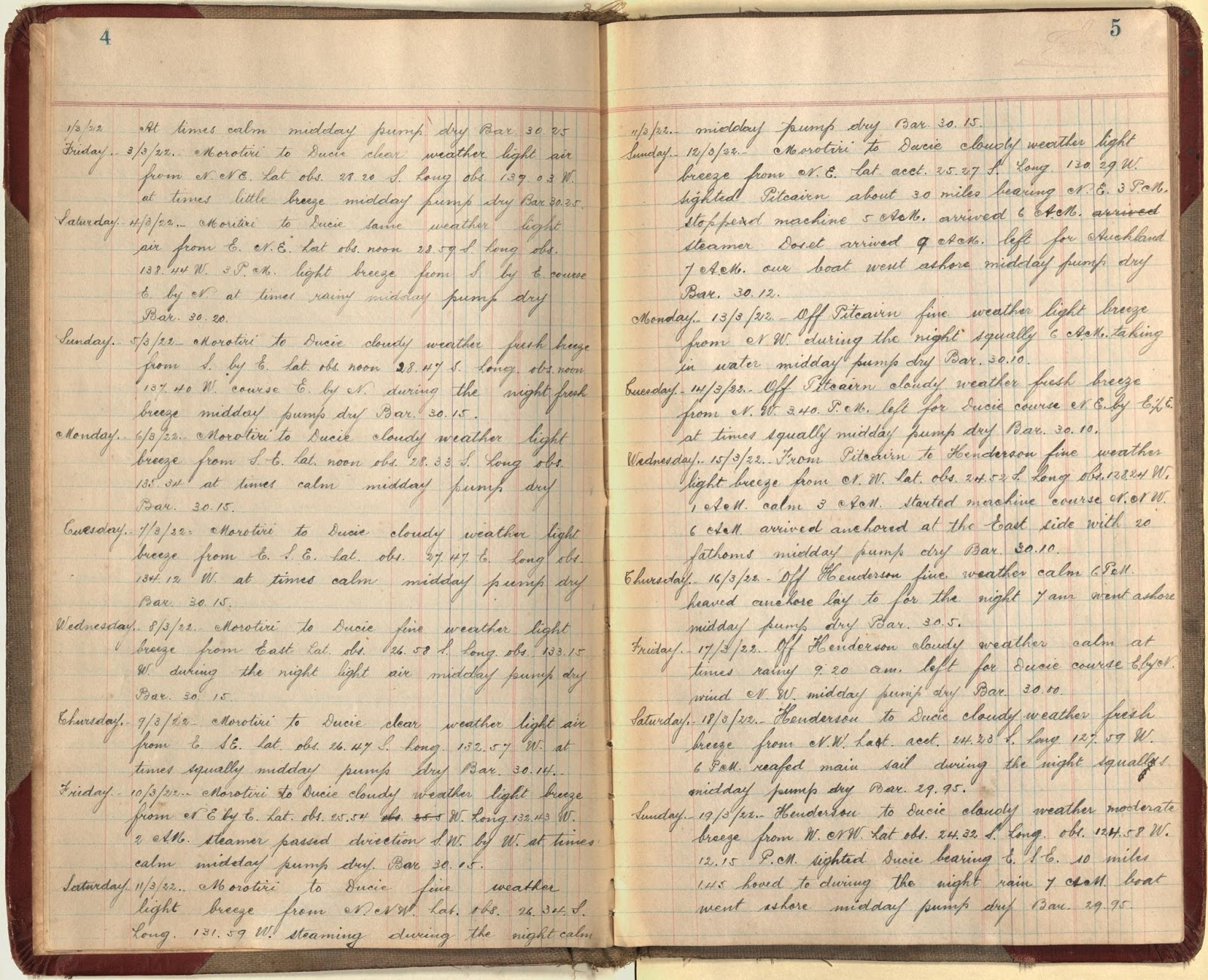
[Logbook of the yacht “France”]. v. 1 (1922-1926). Digitized by the American Museum of Natural History. http://www.biodiversitylibrary.org/page/51514493

The importance of field notes is well known to researchers. To natural scientists, field notes offer records of the flora and fauna of a location at a certain point in time. These records serve as reference points when observing how a certain habitat has changed over time. They can also offer information on expeditions, or the source of museum collection items. Field notes also present narratives that give insight into the scientists as people and their relationship with the locations and cultures they studied, making them an important resource for science historians.

View Full Size Image
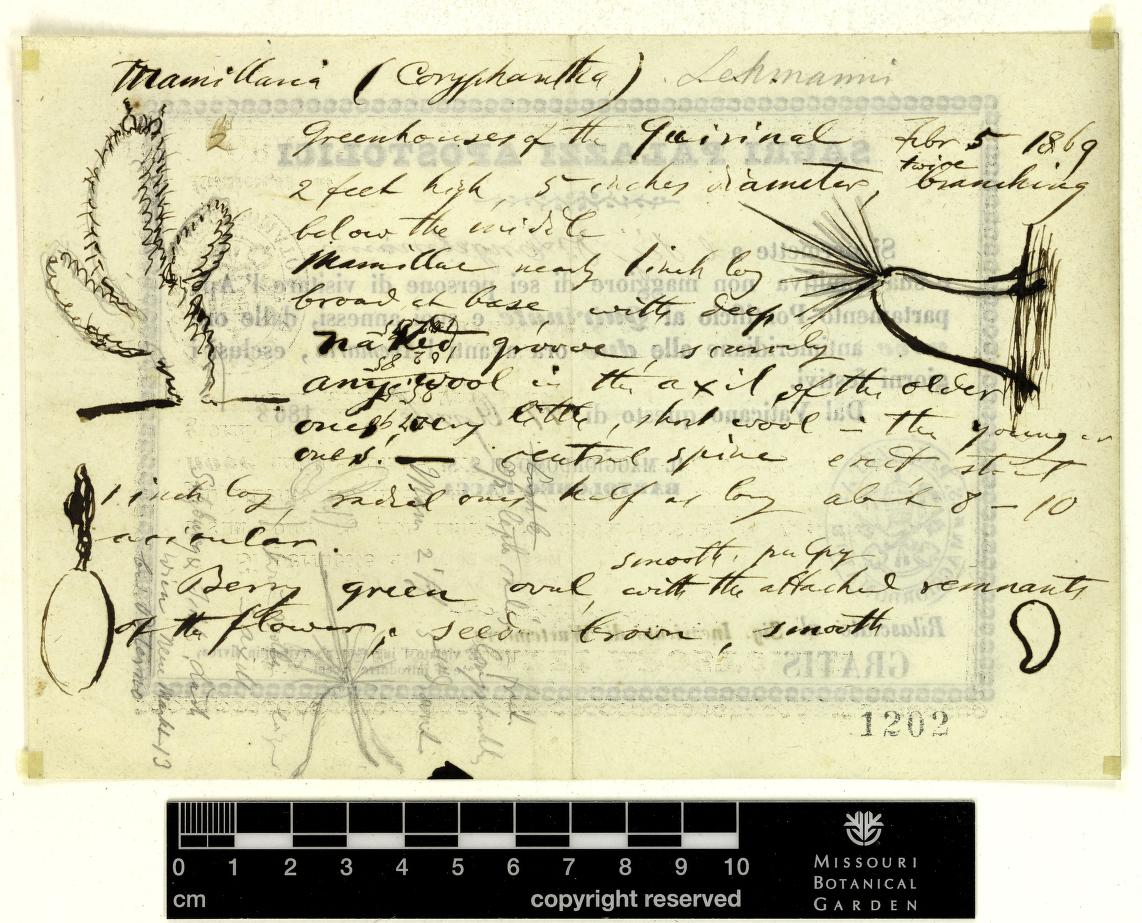
George Engelmann : botanical notebook 5 : Mammilaria, Leuchtenbergia, Discocactus, and Melocactus. Box 3: Folder 13: Cactaceae: Mammillaria: 1857-1883 (1856). http://biodiversitylibrary.org/page/52030722

The BHL has already started adding field notes to its collection, and the Field Notes Project hopes to add great value to the field notes already available. This project brings together the efforts of eleven institutions:

  • American Museum of Natural History
  • Field Museum of Natural History Library
  • Harvard University Botany Libraries
  • Harvard University, Museum of Comparative Zoology, Ernst Mayr Library
  • Internet Archive
  • LuEsther T. Mertz Library, The New York Botanical Garden
  • Missouri Botanical Garden, Peter H. Raven Library & Center for Biodiversity Informatics
  • Museum of Vertebrate Zoology, University of California, Berkeley
  • Smithsonian Institution Archives
  • Smithsonian Libraries
  • Yale Peabody Museum Archives

We are excited to be part of the effort to add more archival material to the BHL. Stay tuned for upcoming features which will highlight contributions from—and go behind-the-scenes at—some of our partners. In the meantime, explore some of the great field notes already digitized in the BHL Field Notes Project collection.

January 5, 2017by mkahn
Blog Reel, Featured Books

Notes accompanying collection of useful plants made by W. J. Fisher at [Kodiak] in 1899

In honor of Native American Heritage Month, we would like to highlight a field book that documents Native American knowledge of natural resources. The field book was created by William J. Fisher, who lived in southern Alaska from 1879 until his death in 1903.

Fisher’s notebook documents his final years collecting and looks at the relationship between the Alutiiq (Aleut) and their plants by recording medicinal and food uses for 48 specimens. Only a handful of the specimen entries include the taxonomic names of plants; instead, entries focus on recording the Russian and Sugpiat/Alutiiq names of plants, how the plants were used, and plant distribution. Detail varies, as seen below in entries three and forty-seven.

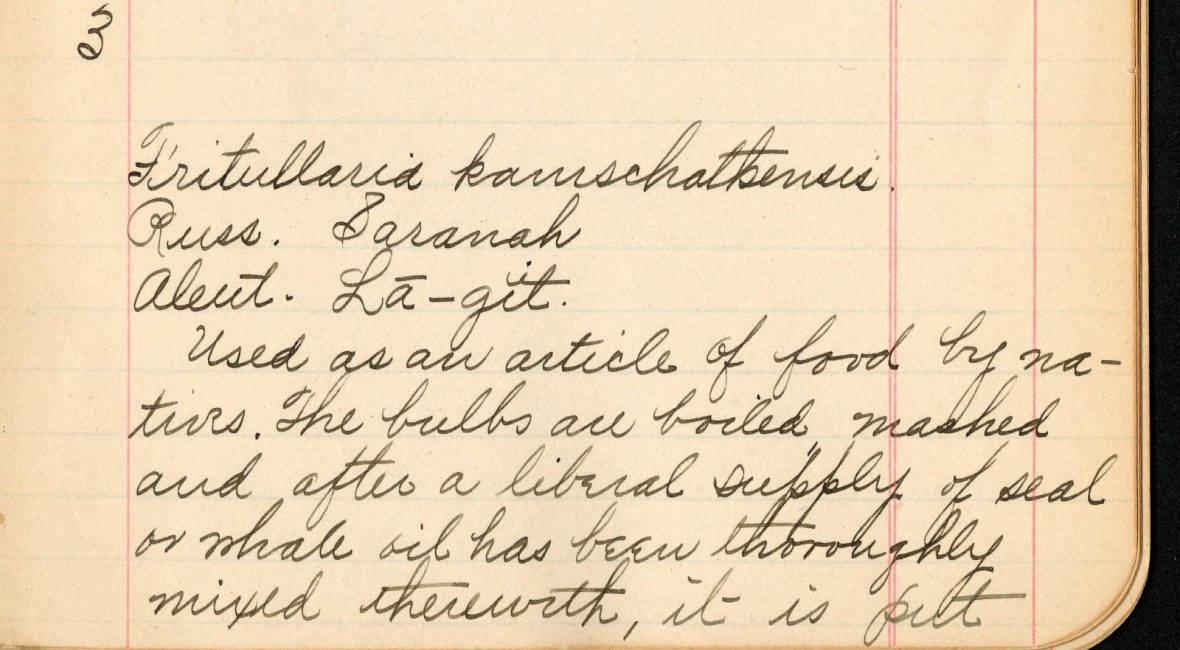
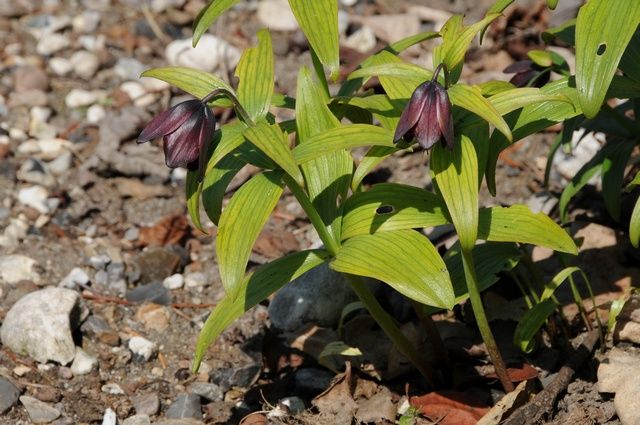
Entry three describes Fritullaria kamschathensis [Fritillaria camschatcensis], also known as the Kamchatka Fritillary, and lists general use and preparation: “Used as an article of food by natives. The bulbs are boiled mashed and after a liberal supply of seal or whale oil has been thoroughly mixed therewith, it is put away for winter’s use.”

View Full Size Image
Specimen entry three from “Notes accompanying collection of useful plants made by W. J. Fisher at [Kodiak] in 1899,” Smithsonian Institution Archives, SIA Acc. 12-038. http://www.biodiversitylibrary.org/page/46428854. Digitized by Smithsonian Institution Archives.
View Full Size Image
Image of Fritillaria camschatcensis from Encyclopedia of Life, provided by Biopix. http://eol.org/data_objects/19162439.

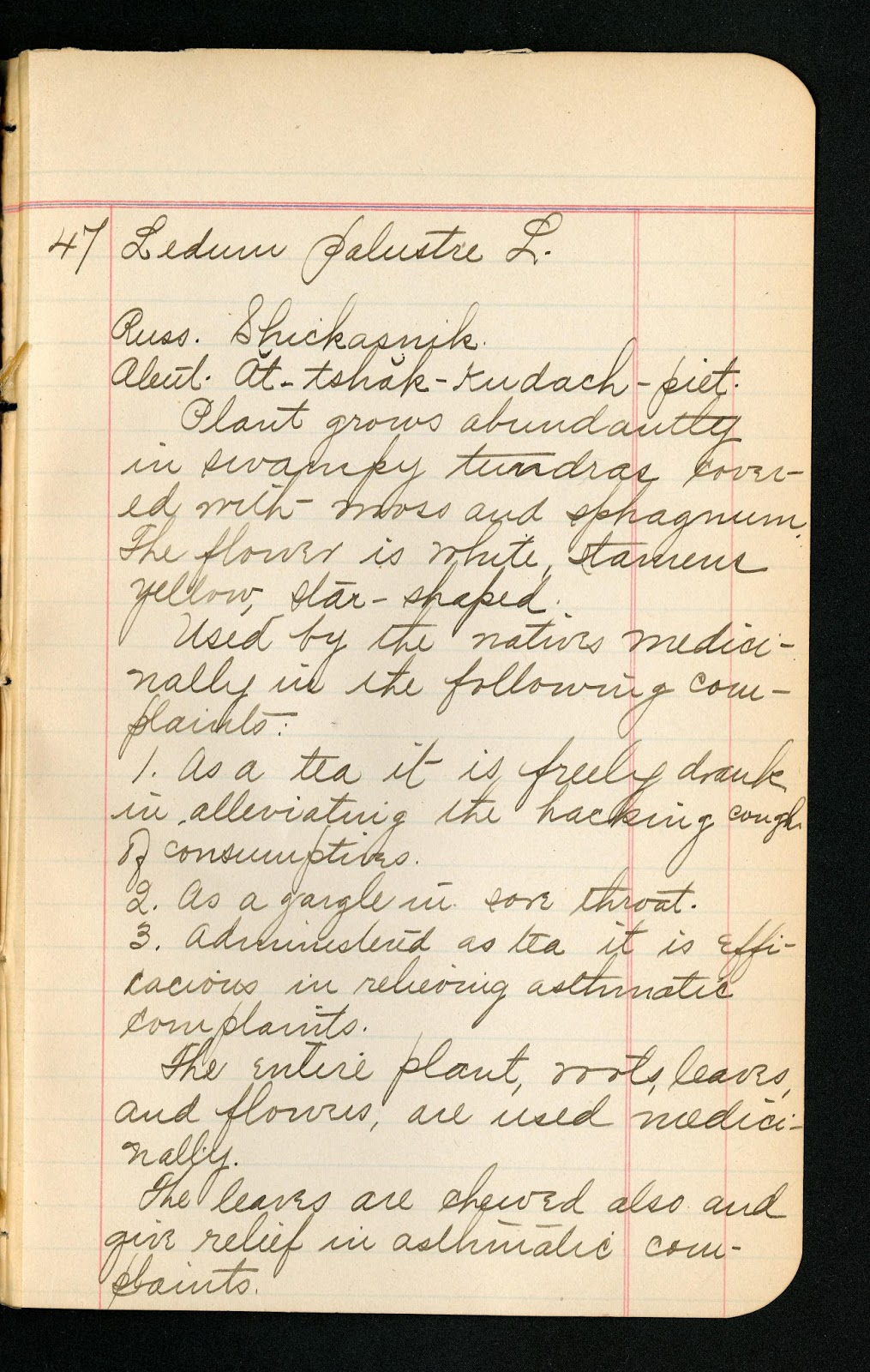
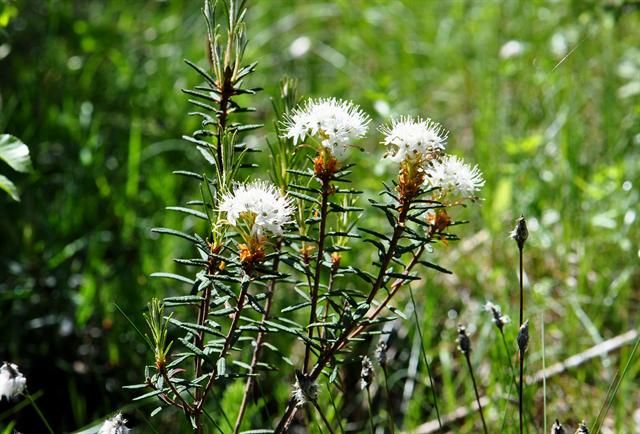
Entry forty-seven for Ledum palustre [Rhododendron tomentosum], also known as Northern Labrador Tea (also pictured below), takes up an entire page describing the plant’s habitat, the appearance of its flowers, and multiple local medicinal applications: “(1) As a tea it is freely drunk in alleviating the hacking cough of consumptives. (2) As a gargle in sore throat. (3) Administered as tea it is efficacious in relieving asthmatic complaints.”

View Full Size Image
Specimen entry forty-seven, from “Notes accompanying collection of useful plants made by W. J. Fisher at [Kodiak] in 1899,” Smithsonian Institution Archives, SIA Acc. 12-038. http://www.biodiversitylibrary.org/page/46428831. Digitized by Smithsonian Institution Archives.
View Full Size Image
Image of Rhododendron tomentosum (Northern Labrador Tea), from Encyclopedia of Life. Image by Biopix. http://eol.org/data_objects/19183248.

Fisher’s ethnographic focus while collecting plants is clear. The field book provides detailed information regarding local names and knowledge, but leaves out basic information often found in botany field books like date and detailed locality information. This lack of information may relate to a note Fisher wrote on the title page: “dried plants with Mr. Kearney, alcoholics in seed collection.” “Mr. Kearney” was Thomas Henry Kearney (1874-1956), a botanist with the Bureau of Plant Industry at the US Department of Agriculture (USDA). Kearney was in Alaska to work with Frederick Coville from April 1898 – August 1899, and along the Northwest Coast from Puget Sound to the Bering Strait in 1899. He then served as a member of the Harriman Alaska Expedition of 1899.

It is unclear how the two men became acquainted. Fisher had a relationship with the Smithsonian Institution; Coville as a USDA employee worked with Smithsonian, and perhaps he introduced the two. Whatever the reason, Kearney’s field notes for his work in Alaska are also available on BHL through the Smithsonian Field Book Project, and they provide a tantalizing overlap in content and geographical coverage.

A field book at the end of a collecting career

Fisher’s field book is also interesting because it document’s his collecting focus and interests as they evolved over a lifetime. Fisher’s initial scientific interest was in marine biology. During the 1870’s he was a curator of conchology at the California Academy of Sciences and served as a marine biologist for the U.S. Fish Commission on several cruises in the Pacific headed by William Healey Dall.

In 1879, Fisher accepted a position as tidal recorder in St. Paul, now known as the city of Kodiak, Alaska. After accepting the position, he wrote to Dall, who was affiliated with the Smithsonian Institution, and offered to collect natural history specimens. The offer was accepted, and Fisher was instructed that the museum was also interested in ethnographic artifacts from the region.

The town of St. Paul where Fisher settled was originally established by the Russians as a center for fur trading. By the time Fisher arrived, it was a town of approximately 500 residents, primarily of Russian and Native Alaskan heritage. According to an article in Arctic Anthropology (no. 1, 1992) the community was still significantly mixed regarding the adoption of European culture in terms of religion, language, and beliefs.

Fisher initially focused on collecting natural history specimens, but as he began to correspond with Smithsonian’s Secretary Spencer Baird, his interest and collecting shifted to ethnography. He even began to commission works by Native Alaskans. Fisher’s main source of income was his position as tidal recorder; Smithsonian was frequently unable to finance his work. This lack of funding apparently did not dim Fisher’s enthusiasm, but it did lead to financial hardship. During an extended collecting trip to Bristol Bay in the summer of 1885, his assistant successfully petitioned for Fisher’s job. Fisher’s collecting came to an end by the 1890’s; the ethnobotany field notes document the end of his work with the Smithsonian Institution.

Interested in learning more? We encourage you to learn about the William J. Fisher collection at the National Museum of Natural History, which was highlighted as part of a book Looking Both Ways: Heritage and Identity of the Alutiiq People, in the online exhibit featuring artifacts created by the Alutiiq people and collected by Fisher during his years in Alaska.

Other resources include:

Aron L. Crowell, 1992, Postcontact Koniag Ceremonialism on Kodiak Island and the Alaska Peninsula: Evidence from the Fisher Collection. Arctic Anthropology 29(1):18-37. Retrieved on November 16, 2016 from https://www.jstor.org/stable/40316240?seq=3#page_scan_tab_contents

Highlights of the William J. Fisher collection at the National Museum of Natural History: http://naturalhistory.si.edu/arctic/features/fisher/collect.html

The field books of William Healey Dall, available on Biodiversity Heritage Library: http://www.biodiversitylibrary.org/search?searchTerm=Dall+%22field+notes%22#/titles

Field Book Project blog post by Sonoe Nakasone: http://nmnh.typepad.com/fieldbooks/2012/02/sharing-culture-through-plants.html

November 22, 2016by ulib-libraryjobs
Blog Reel, Featured Books

Digging into the personal writings of a 19th century ornithologist

Tuesday, June 12, 1866 
A.M. pleasant P.M. cloudy. Studied part of P.M. Went to circus in evening & saw a hippopotamus for the first time. Got four warbling vireos before breakfast. The algebra is now rather hard. 
(Diaries of William Brewster). 

View Full Size Image
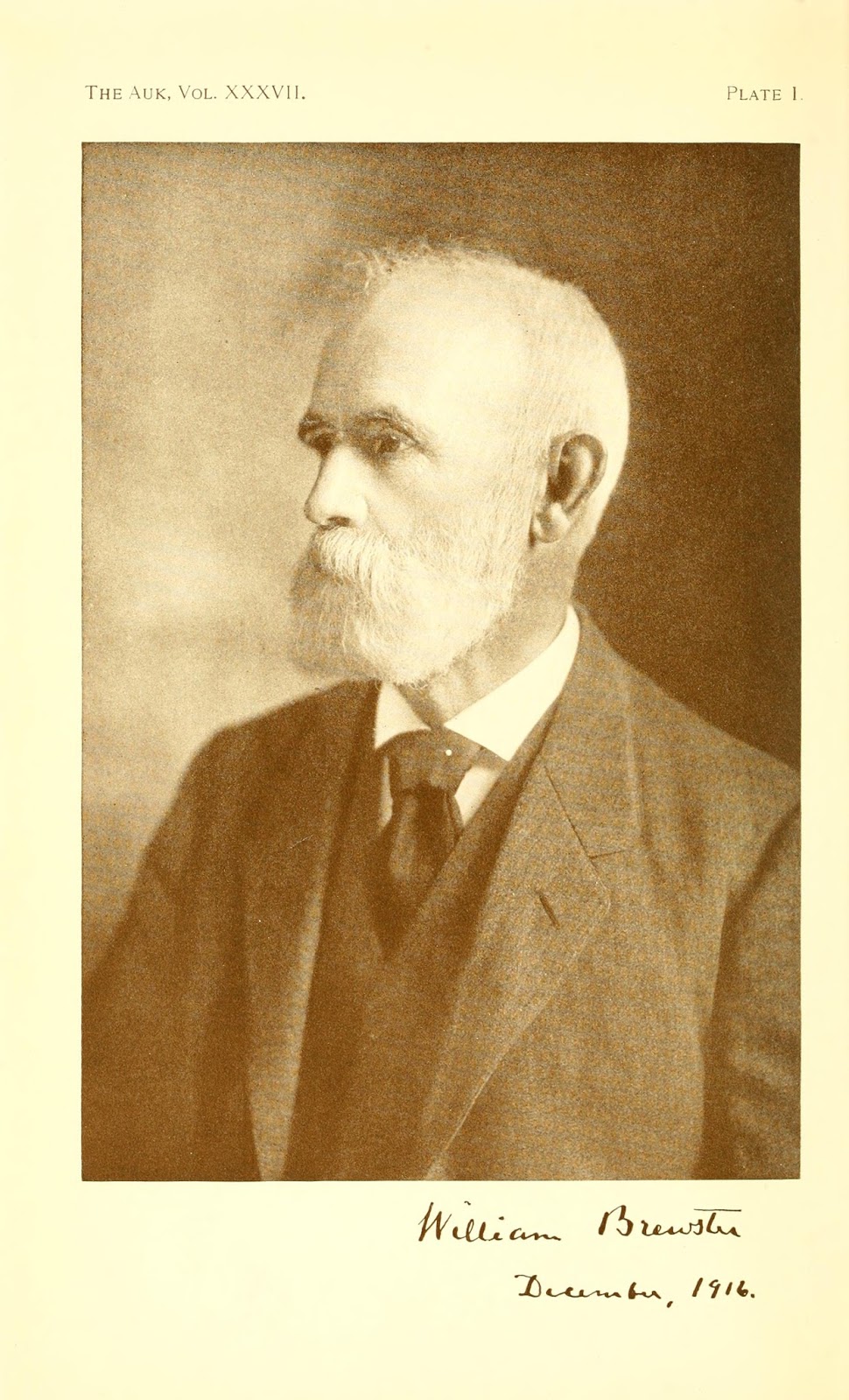
William Brewster. The Auk. v. 37 (1920). Digitized by Smithsonian Libraries. http://biodiversitylibrary.org/page/15938473

As a teen in Cambridge, Massachusetts during the 1860s, William Brewster (1851-1919) woke up early to collect birds before school, practiced taxidermy with friends, and carefully noted the dates when local plants flowered and produce ripened in the family garden.

His early fascination for birds and his observant note-taking laid the groundwork for his career as a prominent amateur ornithologist. He would become the first president of the Massachusetts Audubon Society and a co-founder and president of the American Ornithologists’ Union.

An ongoing project at the Ernst Mayr Library of Harvard University’s Museum of Comparative Zoology has been the digitization and transcription of Brewster’s diaries, field journals, and correspondences. Some of these journals and diaries are available to read on the Biodiversity Heritage Library, and we are working toward making all his notes and correspondences digitally accessible for study.

Over the course of his life, Brewster saw Massachusetts landscape and ecology change dramatically. Cambridge developed from farmland to urban city, and House Sparrows introduced from Europe decimated the farmers’ beloved Eastern Bluebirds. These kinds of observations about land use and animal presence, as well as his notes on plants and weather, make the Brewster collection a valuable resource for scientists studying ecological change.

Brewster published articles prolifically in scientific publications such as the ornithological journal, the Auk. In his field notes and journals, we can find the stories that lie behind those scientific papers: they document the development of a scientist, professionally and personally. They reveal his relationships with other scientists, document in detail what a typical day’s work looked like, and are sprinkled with amusing observations, beautiful scenes, and personal insights that would not necessarily be documented in a scientific publication.

These three bird stories illustrate the value of records where the scientific and the personal overlap.

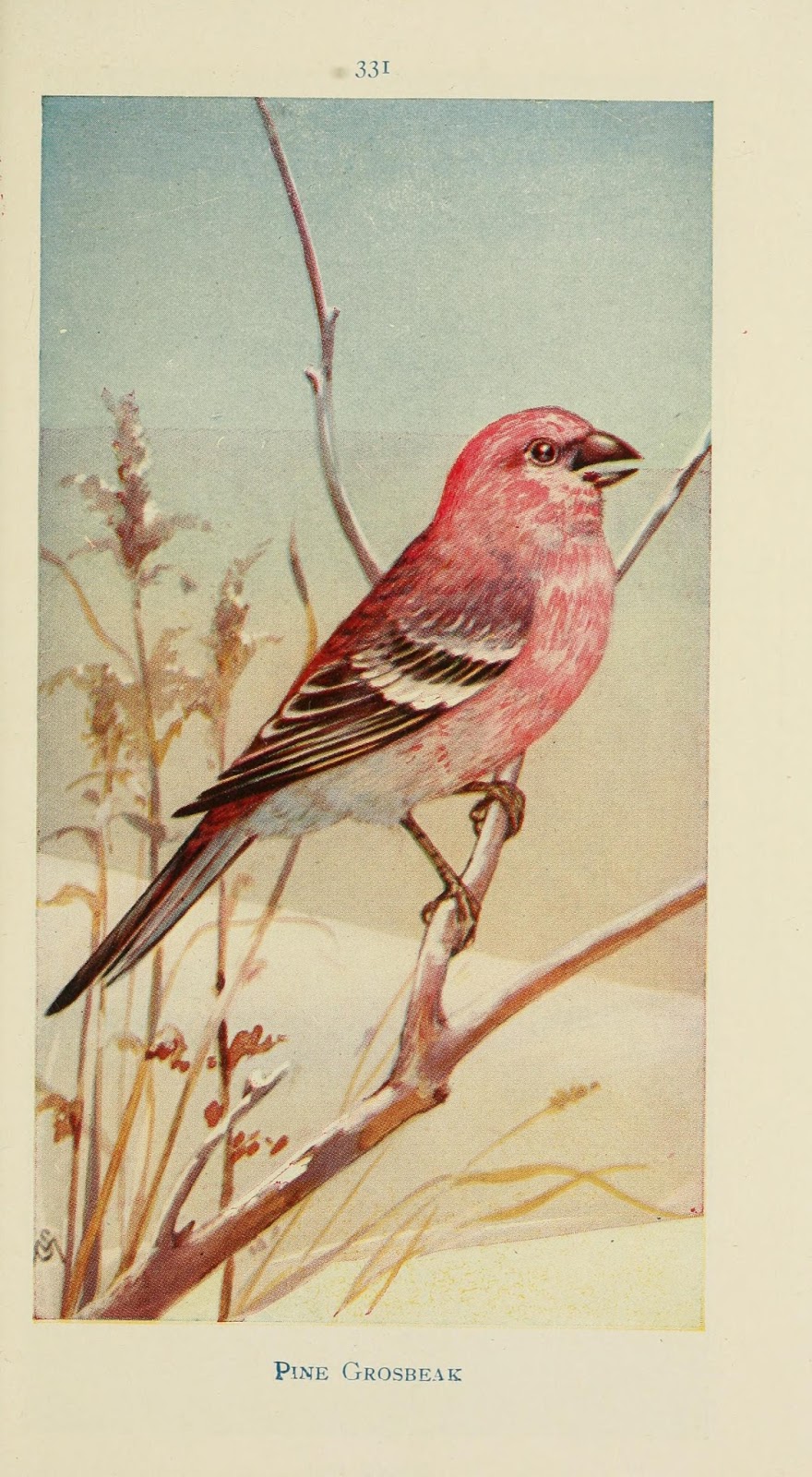
Pine Grosbeak: Nature Writing and Scientific Work

View Full Size Image
Pine Grosbeak illustration from Field book of wild birds and their music. London, G.P. Putnam’s Sons [c1921]. Digitized by Smithsonian Libraries. biodiversitylibrary.org/page/13653735

For a few days in January of 1893, Cambridge and Boston were abuzz with an unfamiliar sight: hundreds of red and gold birds that drew lots of attention from residents.

Brewster recognized them as Pine Grosbeaks. In the winter, large foraging flocks of Pine Grosbeaks often strip entire trees of their fruits, crushing through pulp and seeds and moving on when the food source has been exhausted.

Brewster observes:

“There were a good many Pine Grosbeaks scattered along the line of ashtrees on the ridge to my left and as I approached Mt. Auburn Street their numbers increased until upon reaching Mr. Hayes’s place I found the trees literally alive with them. 

Soon after I stopped to look at them they began flying from every direction into a large white ash which stands near the foot of the avenue. This tree was loaded with fruit and with snow clinging to the fruit clusters and to every twig. In a few minutes it supported also more than a hundred Grosbeaks which distributed themselves quite evenly over every part from drooping lower to the upright upper branches and began shelling out and swallowing the seeds.

The rejected wings floated down in showers and soon began to give the surface of the snow beneath a light brownish tinge.The snow clinging to the twigs and branches was also quickly dislodged by the movements, of the active, heavy birds and for the first few minutes it was continually flashing out in puffs like steam from a dozen different points at once. The finer particles, sifting slowly down, filled the still air and enveloped the entire tree in a gauzy veil or mist tinted, where the sun-beams pierced it, with rose, salmon and orange, elsewhere of a soft, dead white and of incredible delicacy and beauty, truly a fitting drapery for this winter picture- the hardy Grosbeaks at their morning meal. 

They worked in silence when undisturbed and so very busily that at the end of an hour they had actually eaten or shaken off nearly half the entire crop of seeds. Some men employed in a marble cutter’s shop near the tree were neglecting their tasks to watch and discuss them. One of these men told me that a few Grosbeaks were seen in the tree late yesterday afternoon.” (Cambridge, January 10, 1893.) [Edited with paragraph breaks and punctuation for readability.] 

A sudden, unexpected appearance of a large flock non-resident birds is known in the ornithological world as an irruption. (In recent years in Massachusetts, we’ve often heard the word irruption used to describe an unexpected influx of snowy owls that aren’t our usual residents.) Details on a historical irruption of Pine Grosbeaks may be of value to modern day scientists looking back in time for trends.

But while Brewster often recorded bird sightings as lists or in simple, factual paragraphs, some of the scientific observations are rendered with an artistry that carries them into the genre of nature writing. The image of the tree alive with birds, the rosy quality of light in the snowy air, and the excitement of the marble cutters makes these bird notes especially memorable.

The journal entries for these days form the basis of an article he had published in the Auk two years later, ‘A remarkable flight of Pine Grosbeaks (Pinicola enucleator)’. While Brewster’s article reads as somewhat more fact-driven, it’s written as a personal narrative that draws heavily on his notes, and it contains a condensed version of the visual description shared above.

It seems to be fairly normal at that time for published scientific work to include personal narrative and assertions which we would edit out today. But letters between Brewster and ornithologist friends reveal that they critiqued each other’s work not only on the reliability of their data but also on the style of their prose. Brewster’s scientific journals suggest that personal note-taking was a crucial opportunity to practise the art of writing, and digging into these journal entries allows us a glimpse into a scientist’s thinking and writing process.

American Robin: Personal Musings and Anthropomorphization
View Full Size Image
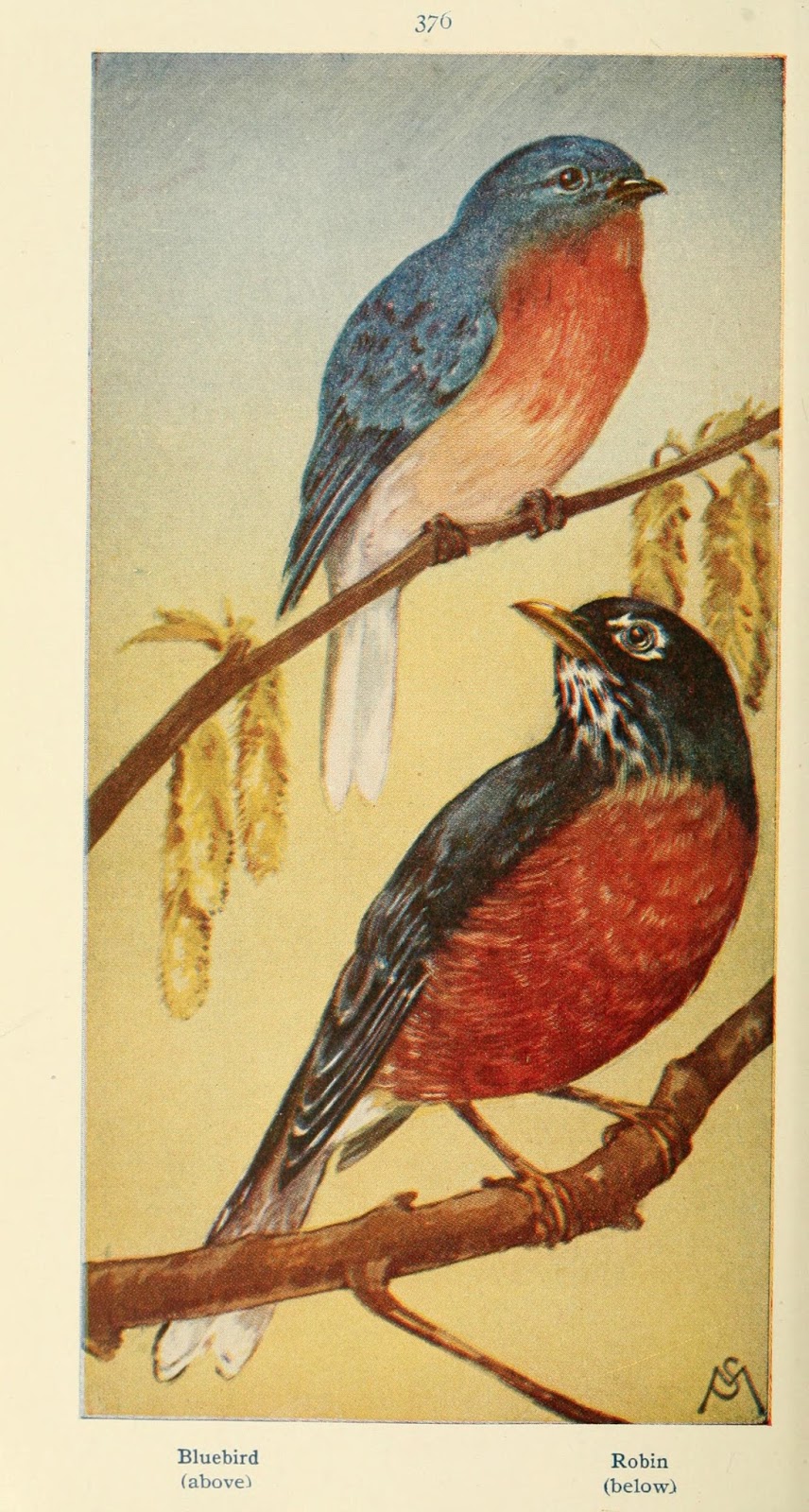
Bluebird and American Robin illustration from Field book of wild birds and their music. London, G.P. Putnam’s Sons [c1921]. Digitized by Smithsonian Libraries. biodiversitylibrary.org/page/13653780

Brewster carefully documented wild encounters with blow-by-blow details about animals’ behavior. Beyond behavioral data, his personal writings also include his interpretations of animal ‘personalities’ that reveal both his scientific perspective on animal cognition, and his personal feelings about interactions with animals.

Take for example this short but resonant excerpt from a letter penned to a friend:

“It is sunset and as I sit in my study in the Museum a Robin is singing in an elm in the garden. What a hopeful, earnest strain! It always cheers and encourages me. Our Robin must have a brave heart and a pure conscience.” (William Brewster, March 26, 1893. Cambridge, Mass. in correspondence to his friend, ornithologist Frank Michler Chapman.) 

His comment on the “brave heart and a pure conscience” certainly isn’t a piece of scientific data (it’s anthropomorphization, an interpretation of animal behaviors using the logic of human emotions) –but it unearths a very human part of the story to consider how a natural scientist reacted emotionally to his subjects in daily life.

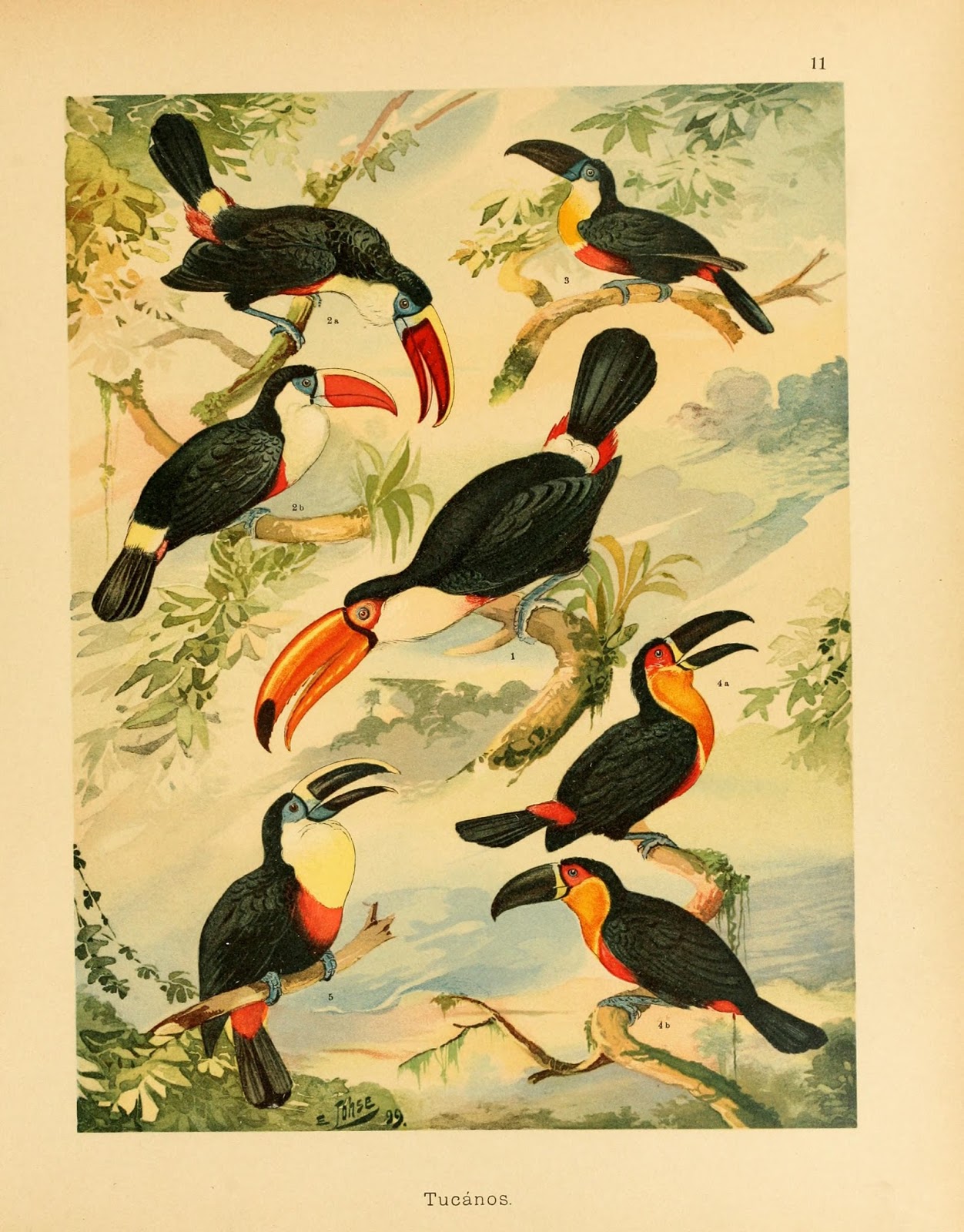
Toucan: Perspectives on Scientific Collecting

View Full Size Image
Toucan illustration from Album de aves amazonicas. Zürich: Impressão do Instituto Polygraphico a.g., 1900-06. Digitized by Smithsonian Libraries. biodiversitylibrary.org/page/13804665

If you’ve ever browsed the galleries at Harvard’s Museum of Natural History, then you’ve passed by Brewster’s life’s work. After working as an animal specimen curator for the museum for many years, he also bequeathed his personal collection of birds and other animals to the museum.

Taxidermy collections like Brewsters’ are the foundation of zoology and are invaluable for scientific researchers today. For example, scientists can analyse DNA samples from historic specimens to track evolutionary changes, and look for traces of environmental chemicals such as pesticides to learn more about their ecological impact. (These are just two of many ways that collections can be used for beneficial research–to learn more, read ‘Natural history collections – why are they relevant?’ on The Guardian, or visit the page ‘Why Collections Matter?’ on the Society for the Preservation of Natural History Collections’ website.)

While Brewster strongly advocated for the importance of scientific collecting, his journals also illustrate changes in his collecting practices over time, including the adoption of complementary methods like photography.

In March 1886, just a month after the Massachusetts Audubon Society for the Protection of Birds had organized, Brewster wrote three letters to an ornithologist friend, describing an early attempt to pass bird protection legislation in Massachusetts. Brewster advocated in court for a bill that would ban the hunting of birds for decorative use on women’s hats, but allow scientific collection by permit-holders.

In one of these letters, he scoffs at the idea of only studying birds observationally:

“One of these [Fish & Game Commissioners]… announced at the beginning that he considered Science a humbug and that the best was to study bird was with an opera glass!” (Cambridge, March 7, 1886. Letter to George Sennet.) 

However, his journals reveal that around the 1890s he seems to have developed some mindfulness of how damaging over-hunting could be for animal populations. Around this time he began to collect birds more sparingly and took up the challenge of wildlife photography in the field.

An interesting example of this shift in his attitude occurred during an 1894 collecting trip to the tropics:

“I started out early this morning with the express intention of shooting a toucan. Rather curiously I had at once an opportunity which I did not improve and shortly afterwards a experience which is probably rare for Mr. Chapman [Frank Chapman] has seen nothing of the kind, nor has Mr. Carr either for that matter. 

It all happened in this [way]. I went first to the ajoupa to get my collecting basket and while there heard a toucan calling apparently at a considerable distance. I started in the direction of the sound but I had gone scarce twenty yards when I became conscious that it came from nearly over head. 

Looking up I at once saw the beautiful great bird sitting in the top of a bois immortel its breast turned towards the rising sun which brought out the brilliant colouring of the plumage, the shining black of the large bill and the blue of the bare skin about the eyes with the greatest distinctness. 

Here was my chance for the bird was not thirty yards off but I simply stood and stared at him with speechless wonder and admiration until he finally flew, when the dense cacao foliage prevented my getting a shot. 

Clearly a case of Toucan “fever” but I did not regret the episode.” (Trinidad, March 20, 1894.) [Edited with paragraph breaks and punctuation for readability.] 

* * *

The Brewster collection, and other field journals and notes, contain a wealth of information beyond useful scientific data. They reveal scientific paradigms, study methods and reasoning; information about working relationships between scientists; and historical and biographical information, including personal thoughts and feelings. Some sections can be fairly dry, but some make for pretty good reading.

If you’ve enjoyed these excerpts, an ongoing blog post series on Mayr Library blog highlights interesting tidbits from Brewster’s writing as we continue to digitize and transcribe the collection.

July 1, 2016by ulib-libraryjobs
BHL News, Blog Reel

BHL Receives 2015 Digitizing Hidden Special Collections and Archives award for Field Notes Project

The Council on Library and Information Resources (CLIR) has selected the “Biodiversity Heritage Library Field Notes Project” for a 2015 Digitizing Hidden Special Collections and Archives award. The award of $491,713 will help support increased accessibility to original scientific documentation found in archival field notes in participating institution collections.

Field notes provide valuable, primary research data about species and ecosystems that is often unpublished or unavailable through other sources. They can also be extremely valuable for museum research, providing key specimen data related to study sites, collecting details, and ecology.

View Full Size Image
Hereward Chune Dollman’s scientific notes, held in the Natural History Museum, London, Library and Archives. Image © The Trustees of the Natural History Museum, London. Image credit: Natural History Museum, London, Library and Archives.

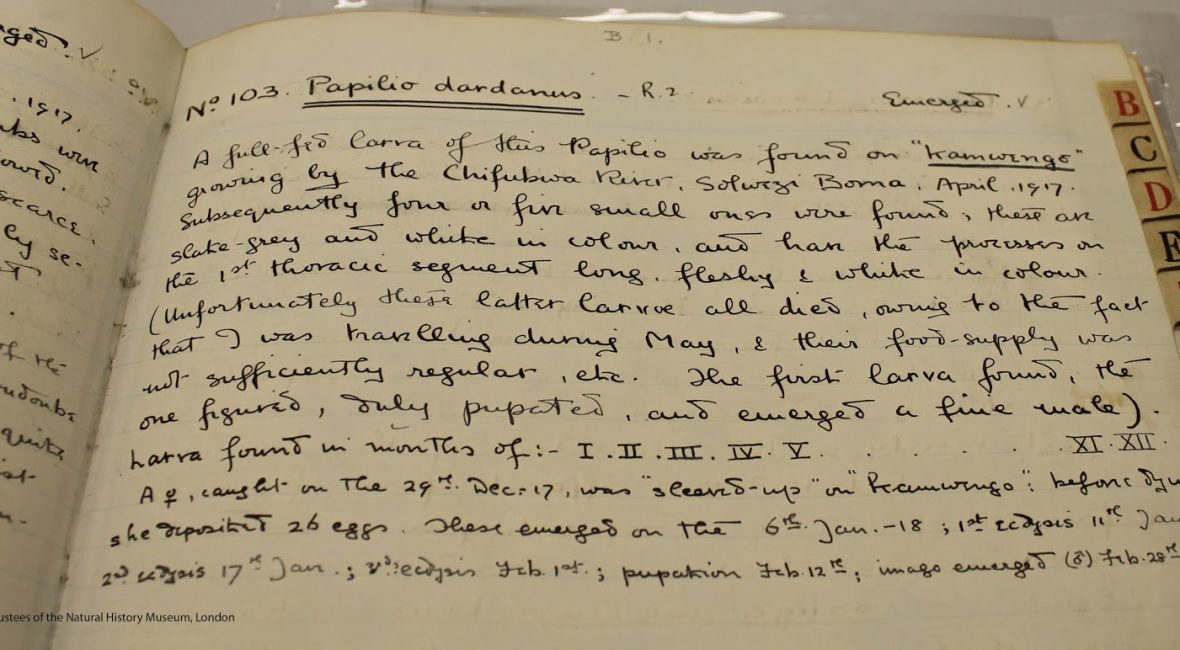
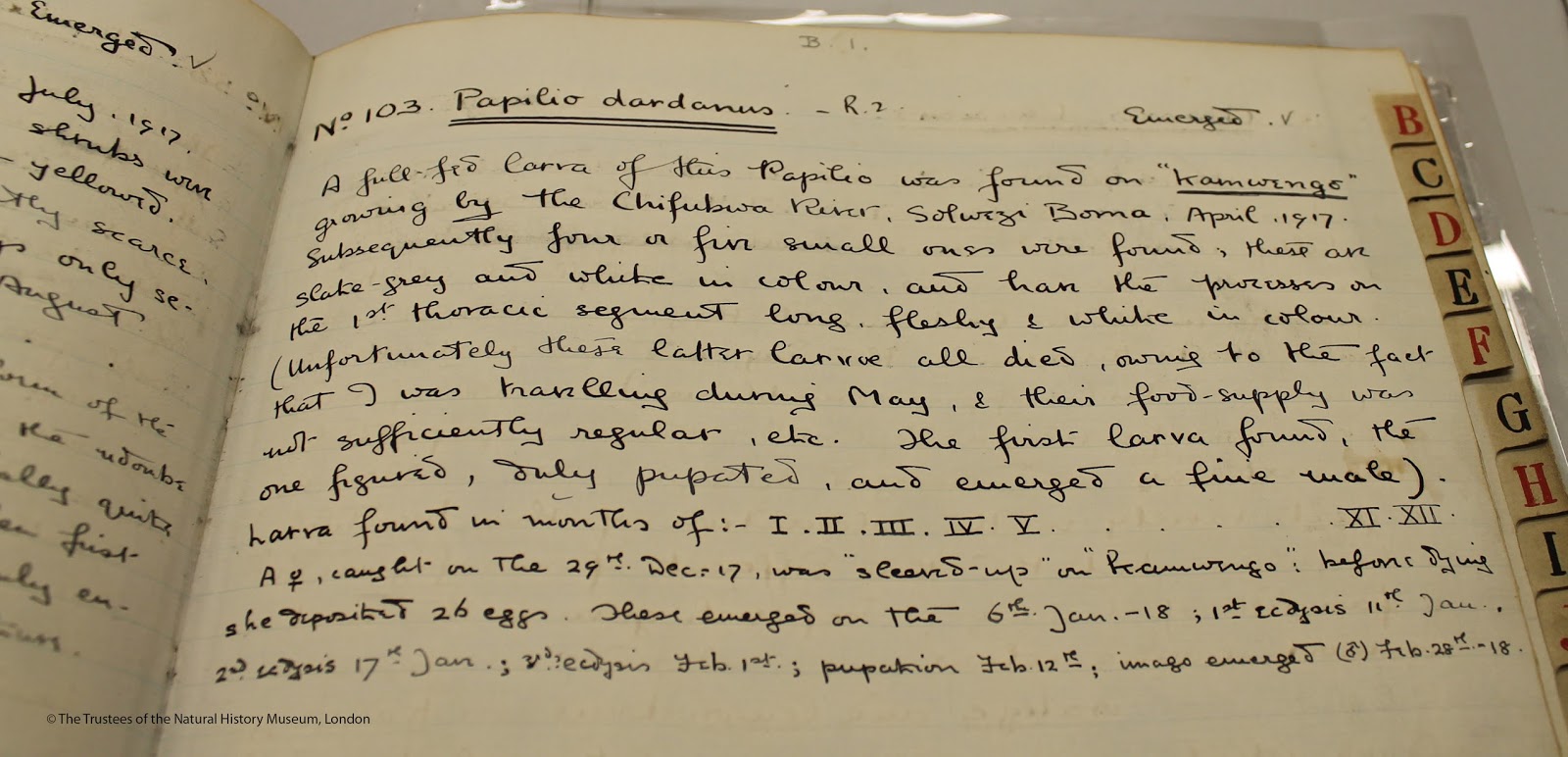
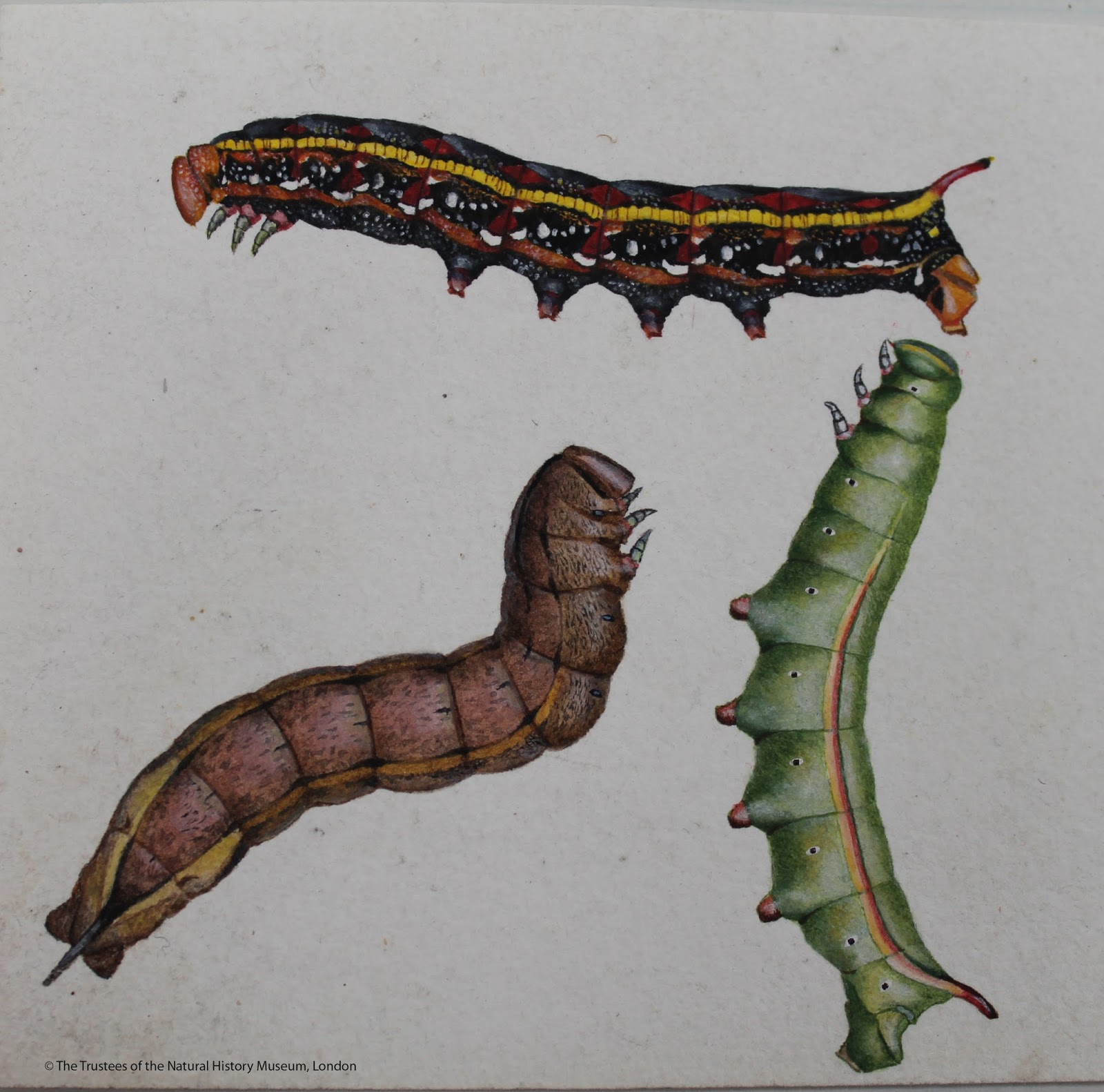
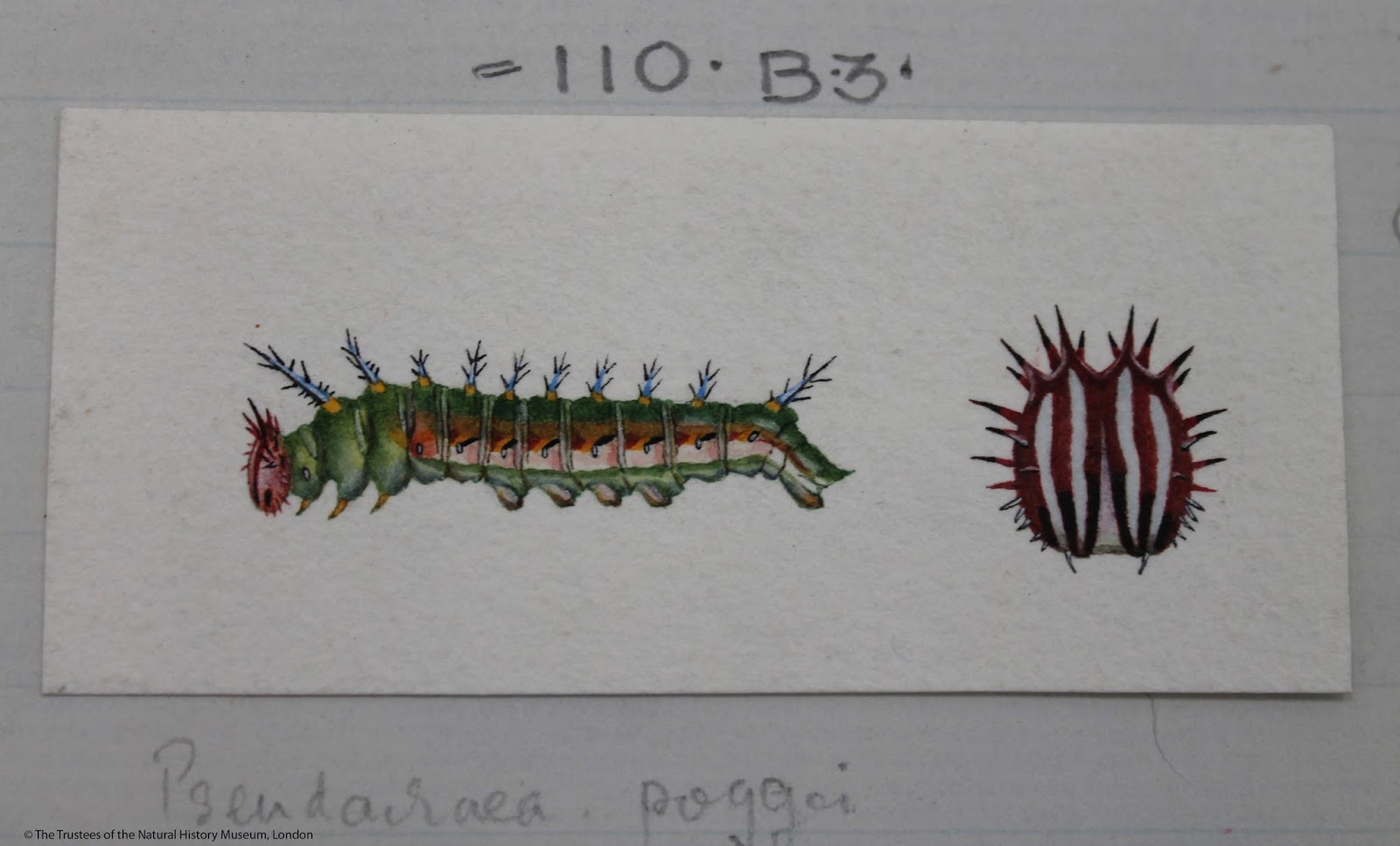
A recent article in The Linnean (VOL 31(2) OCT 2015) by Hellen Pethers (Reader Services Librarian, Library and Archives, Natural History Museum, London, UK) and Dr. Blanca Huertas (Senior Curator of Lepidoptera, Life Sciences Department, Natural History Museum, London, UK) illustrated the importance of field notes to museum research. The paper focuses on the collections of Hereward Chune Dollman, an entomologist who worked extensively on the natural history and identification of insects in Zambia. Dollman’s natural history collections, which were donated to the British Museum of Natural History (now the Natural History Museum, London) upon his death, include 3,500 butterfly specimens comprising 300 species, 157 watercolor drawings of caterpillars, and a notebook containing data related to his breeding and collecting. Dollman’s caterpillar illustrations link directly to his scientific notes through unique identification codes, thus allowing researchers to explore details of the caterpillars’ lives, their transformation to adult forms, and the study sites from which Dollman collected. The watercolors are the only record of the immature counterparts of the adult specimens that Dollman studied.

View Full Size Image
Watercolor from Hereward Chune Dollman’s collection at the Natural History Museum, London, Library and Archives. Image © The Trustees of the Natural History Museum, London. Image credit: Natural History Museum, London, Library and Archives.

Dollman’s collections were never consolidated with the main museum’s collection, and thus have been little studied even though they contain important specimens from remote locations in Africa that are not widely represented in other collections. Recent initiatives at the Natural History Museum are working to amalgamate and arrange collections by taxonomy, providing greater accessibility to researchers. Dollman’s notebook, held in the museum’s Library and Archives, provides researchers will invaluable information necessary to effectively and efficiently study these collections and articulates the importance of field notes to scientific research and the necessity of collaboration between library and specimen collections.

View Full Size Image
Watercolor from Hereward Chune Dollman’s collection at the Natural History Museum, London, Library and Archives. Image © The Trustees of the Natural History Museum, London. Image credit: Natural History Museum, London, Library and Archives.

While this case study at NHM provides an example of one attempt to bring together disparate specimen and related field note collections, the disassociation of these two types of collections is common within institutions. What’s more, field notes from related persons and expeditions are often scattered across institutions, inaccessible to any but the determined researcher. The “Biodiversity Heritage Library Field Notes Project” aims to enhance research methodology by improving access to these field notes, thus allowing researchers to more easily connect them to related specimens and other scientific work.

Over a two year period, the BHL Field Notes Project will coordinate work to digitize field notes, assign metadata, and publish the field notes online through the Biodiversity Heritage Library and Internet Archive, with an emphasis on quality, quantity, and closely related content. The Smithsonian Libraries and Smithsonian Institution Archives will serve as the lead institutions on the project. Additional project participants include Missouri Botanical Garden, Peter H. Raven Library; American Museum of Natural History; Yale Peabody Museum; Harvard University Herbaria, Botany Libraries; Harvard University, Museum of Comparative Zoology, Ernst Mayr Library; University of California, Berkeley Museum of Vertebrate Zoology; The New York Botanical Garden, The LuEsther T. Mertz Library; The Field Museum; and Internet Archive.

The Digitizing Hidden Special Collections and Archives awards program, funded by The Andrew W. Mellon Foundation, funds projects in which locally executed protocols contribute to a national good, using methods that are cost efficient and subject to wider adoption. It supports the creation of digital representations of unique content of high scholarly significance that will be discoverable and usable as elements of a coherent national collection. Eighteen projects were selected from among one hundred sixty-seven proposals submitted in 2015. This is the first group of projects supported by the Digitizing Hidden Special Collections and Archives awards program.
January 7, 2016by michelle.underhill
Blog Reel, Campaigns, Featured Books, Fossil Stories

Challenge Focus: Harry S. Ladd

We’re so excited that our #FossilStories Citizen Science Challenge was successfully completed on October 12, with 252 pages from 9 field books fully transcribed and reviewed in just 3.5 days! Be sure to tune into the behind-the-scenes tour of Smithsonian fossil collections with Dr. Nicholas Pyenson, Curator of Fossil Marine Mammals at the Smithsonian’s National Museum of Natural History, via the BHL Periscope on October 26 as a reward for the successful completion of the challenge. More details to come on Twitter and Facebook.

View Full Size Image
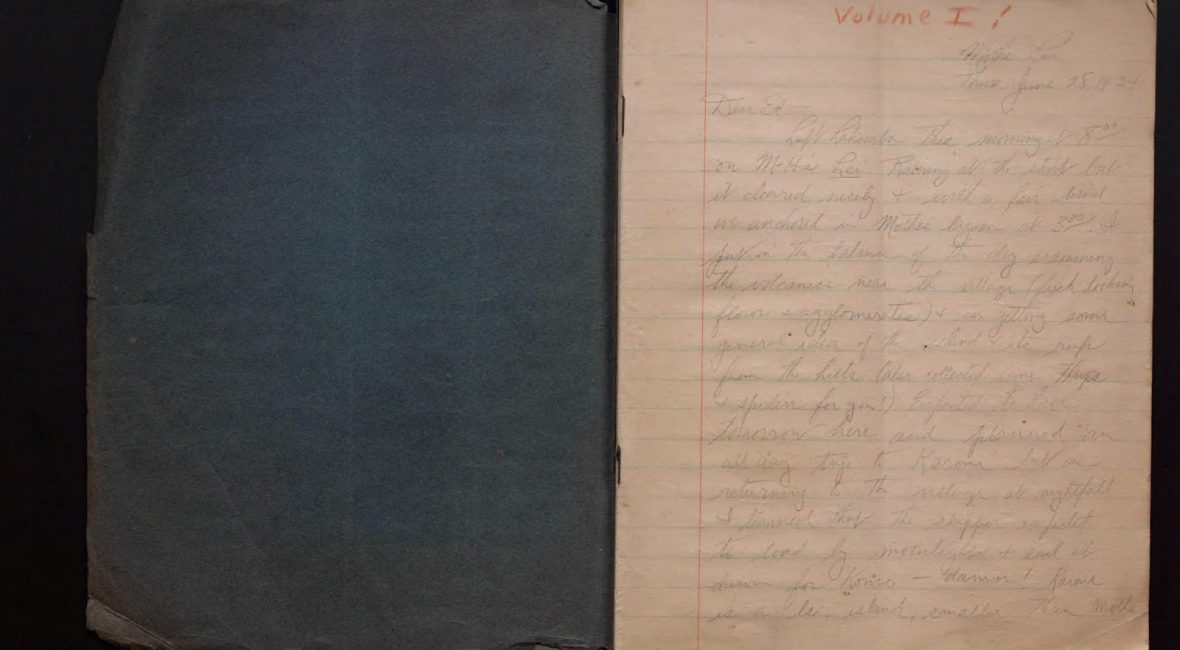
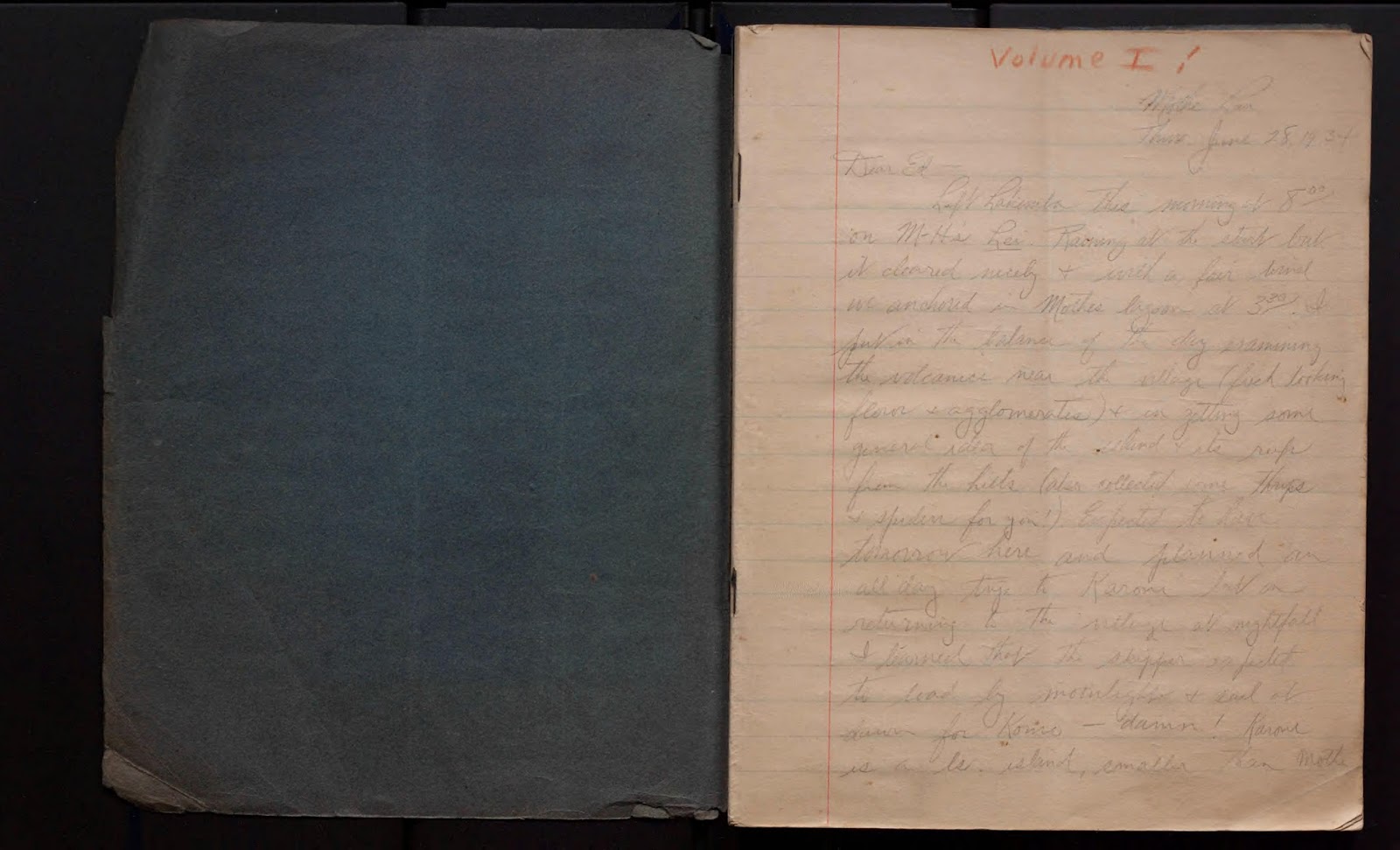
First page of Harry S. Ladd’s first field diary, 1915-72. http://biodiversitylibrary.org/page/48485440. Smithsonian Institution Archives.

One of the journals in the challenge is from Harry Stephen Ladd (1899-1982), a geologist and paleontologist who worked much of his career with the US Geological Survey. Many of his fossil specimens can be found in the Stratigraphic collections and Mollusca Cenozoic Marine Type collection at the Department of Paleobiology, National Museum of Natural History. He began working in the field in the 1920’s and eventually became a leading authority in the geology of the islands in the Pacific Ocean. His two volume diary documents some of his earliest work in the Pacific region. In 1934, he went into the field for the second time with J. Edward Hoffmeister of the University of Rochester to study the coral formations in Fiji (in the 1960s he even used aerial observations made from a helicopter the document the shape and character of Fiji reefs). This work would go on to stimulate the debate about “the coral problem” of how did islands and atolls form. There were two competing theories in the early twentieth century — Darwin’s and Reginald Daly’s.

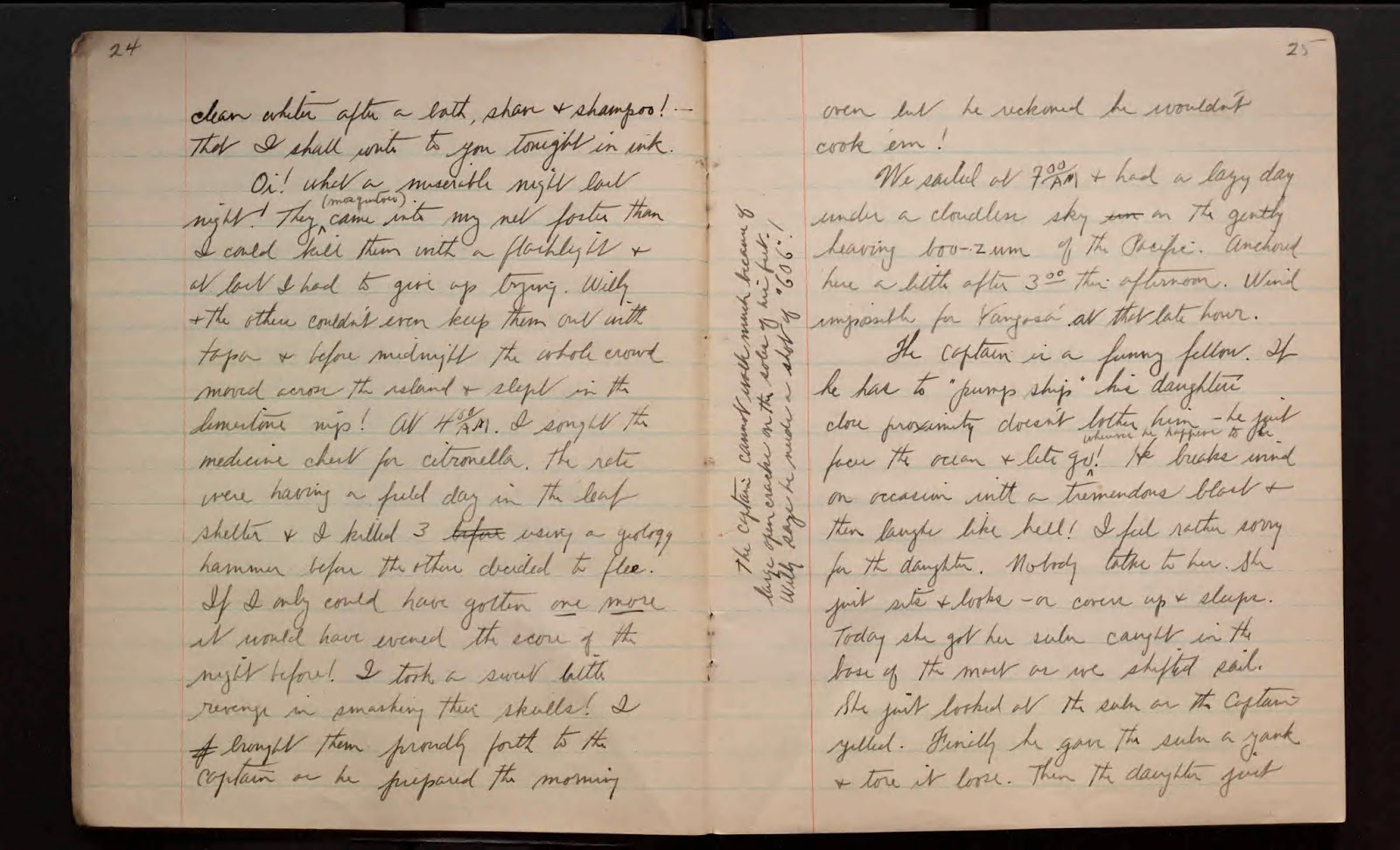
In the midst of this work, Ladd writes about his experiences in the field, with local communities, and getting married. All of this is shared as a series of letters to his colleague “Edward.”

View Full Size Image
Page from Harry S. Ladd’s second field diary, 1915-72. http://biodiversitylibrary.org/page/48485425. Smithsonian Institution Archives.

Volunteers working on the #FossilFossick challenge uncovered some awesome quotes from Ladd within his field book. For instance:

@SiobhanLeachman @TranscribeSI “The things I’ve done for palaeontology!” HA! That’s gotta be Ladd’s motto!

— Witchy Meg (@meg_shuler) October 10, 2015


oh, Harry, you dog! @TranscribeSI #fossilfossick https://t.co/bsdZ7bC1hW pic.twitter.com/yfOMhg7i7F

— Witchy Meg (@meg_shuler) October 11, 2015

Thanks to our awesome volunteers for the incredible information that they pulled out of Ladd’s field books. Stay tuned to our blog on Friday for more highlights from the challenge!

If you would like to know more about Harry Ladd and E. J. Hoffmeister, we encourage you to check out Ladd’s field books and specimen records on Smithsonian’s Collections Search Center, his publications and field books in BHL, and Hoffmeister’s personal papers at UC San Diego.

Be sure to follow #FossilStories on Twitter and Facebook all week for more great fossil fun and more highlights from our #FossilFossick Challenge!

October 14, 2015by ulib-libraryjobs
Page 1 of 41234»

Help Support BHL

BHL's existence depends on the financial support of its patrons. Help us keep this free resource alive!

search

About BHL

The Biodiversity Heritage Library (BHL) is the world’s largest open access digital library for biodiversity literature and archives. BHL operates as a worldwide consortium of natural history, botanical, research, and national libraries working together to digitize the natural history literature held in their collections and make it freely available for open access as part of a global “biodiversity community.”

Join Our Mailing List

Sign up to receive the latest news, content highlights, and promotions.

Subscribe Now

Subscribe to Blog via Email

Enter your email address to subscribe to this blog and receive notifications of new posts by email.

Join 319 other subscribers

Subscribe to Blog Via RSS

Subscribe to the blog RSS feed to stay up-to-date on all the latest BHL posts.

Access RSS Feed

Inspiring Discovery through Free Access to Biodiversity Knowledge.

The Biodiversity Heritage Library makes it easier than ever for you to access the information you need to study and explore life on Earth…for free, anytime, anywhere.


64+ Million Pages of
Biodiversity Literature Online.

EXPLORE

Tools and Services
to Transform Research.

EXPLORE

300,000+
Illustrations on Flickr.

EXPLORE

ABOUT | HARMFUL CONTENT | PRIVACY | SITE MAP | TERMS OF USE