Biodiversity Heritage Library - Program news and collection highlights from BHL
  • Home
  • News
  • Featured Books
    • All Featured Books
    • Book of the Month Series
    • BHL at 20
  • User Stories
  • Campaigns
    • Fossil Stories
    • Garden Stories
    • Monsters Are Real
    • Page Frights
    • Her Natural History
    • Earth Optimism 2020
  • Tech Blog
  • Visit BHL
Home
News
Featured Books
    All Featured Books
    Book of the Month Series
    BHL at 20
User Stories
Campaigns
    Fossil Stories
    Garden Stories
    Monsters Are Real
    Page Frights
    Her Natural History
    Earth Optimism 2020
Tech Blog
Visit BHL
  • Home
  • News
  • Featured Books
    • All Featured Books
    • Book of the Month Series
    • BHL at 20
  • User Stories
  • Campaigns
    • Fossil Stories
    • Garden Stories
    • Monsters Are Real
    • Page Frights
    • Her Natural History
    • Earth Optimism 2020
  • Tech Blog
  • Visit BHL
Biodiversity Heritage Library - Program news and collection highlights from BHL
Blog Reel, Campaigns, Earth Optimism 2020

Sustainable Forestry Science: Wilhelm Philip Daniel Schlich

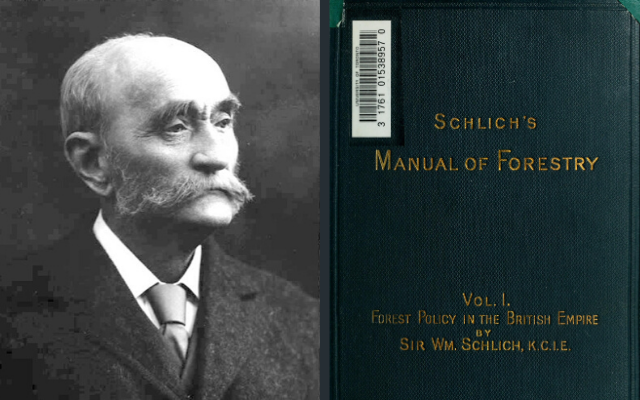
black and white photo of a man in a suit and tie next to cover of a book that reads manual of forestry

April 2020 marks the 50th anniversary of Earth Day. Organizations around the world have commemorated the occasion by participating in the global Earth Optimism movement — an initiative spearheaded by the Smithsonian to “turn the conservation conversation from doom and gloom to optimism and opportunity”.

Throughout 2020, the Biodiversity Heritage Library (BHL) and our partners are joining the movement by sharing conservation success stories from and made possible by the BHL collection. Follow our blog for conservation stories — past and present — and visit our website for more information and to explore our Earth Optimism book collection.

———————
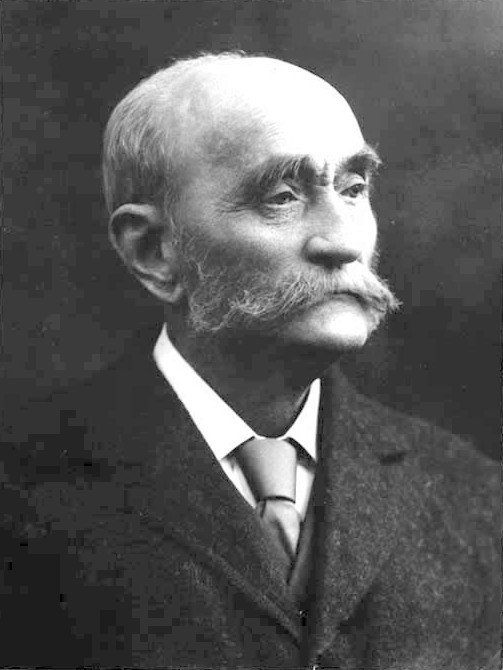
black and white photo of a man in a suit and tie

Wilhelm Schlich. Photo:Public domain Public Domain. Wikimedia Commons.

Wilhelm Philip Daniel Schlich (also known as William Schlich) was born on 28 February 1840 to a German pastor’s family. In 1859, he decided to study forestry, having previously studied mechanical engineering and mathematics. The change may have been inspired by Gustav Heyer, who taught forestry at the University of Giessen and under whom Schlich studied. After graduating in 1862, Schlich joined the Hesse forestry service, but unfortunately in 1866, he lost his employment due to territorial shifts after Prussia’s brief war against Austria.

At the same time, Dr. Dietrich Brandis, Inspector General of Forestry in the central government of British Raj, was looking for foresters to establish a technically competent forest administration service in India. Brandis is today considered the founder of tropical forestry.

India and Sustainable Forestry

Schlich followed Brandis to India, where he was employed at the focal points of the subcontinent’s forestry development: In 1867, he came to Burma as Special Assistant Conservator of Forests (ACF), where he was promoted to Deputy Conservator (DCF) after only six months. Schlich drew up personnel and economic plans and designed the further development possibilities for greater economic efficiency and higher profits. In 1870, he was transferred to the contrasting semi-desert climate of Sindh (Pakistan), where his success depended on the blessings of a regulated forestry industry for the population and the government revenue that the province would continue to receive.

His success led to his promotion in 1872 to the Conservator of Forests of Bengal. There he aroused the interest of the provincial governor Sir Richard Temple, who from then on strongly supported forestry. In 1873, the preparations for the founding of a forestry training centre in India were drafted, which led to the establishment of the Forest Ranger School in Dehradun in 1878—where Schlich himself headed the forestry department.

Schlich was also involved in the revision of the Forest Act of 1878, which divided the Indian forests into three groups: I. reserved forest (completely government controlled and protected), II. protected forest (partly government controlled) and III. village forests (controlled by abutting community). The majority of Indian forests were assigned to the first category and controlled first by the colonial government and then by the Government of India following Indian independence.
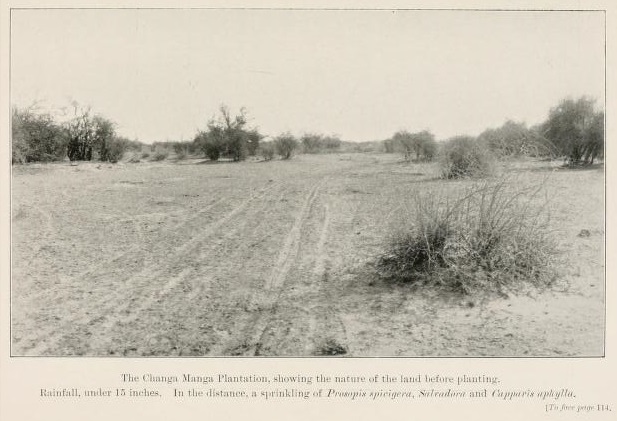
schlichsmanualof00schl_0141.jpg

The Changa Manga Plantation. Before aforrestation. Source: Schlich, Wilhelm. Schlich’s Manual of Forestry v. 1 (1906), ed. 3. Contributed in BHL from NCSU Libraries via Internet Archive.
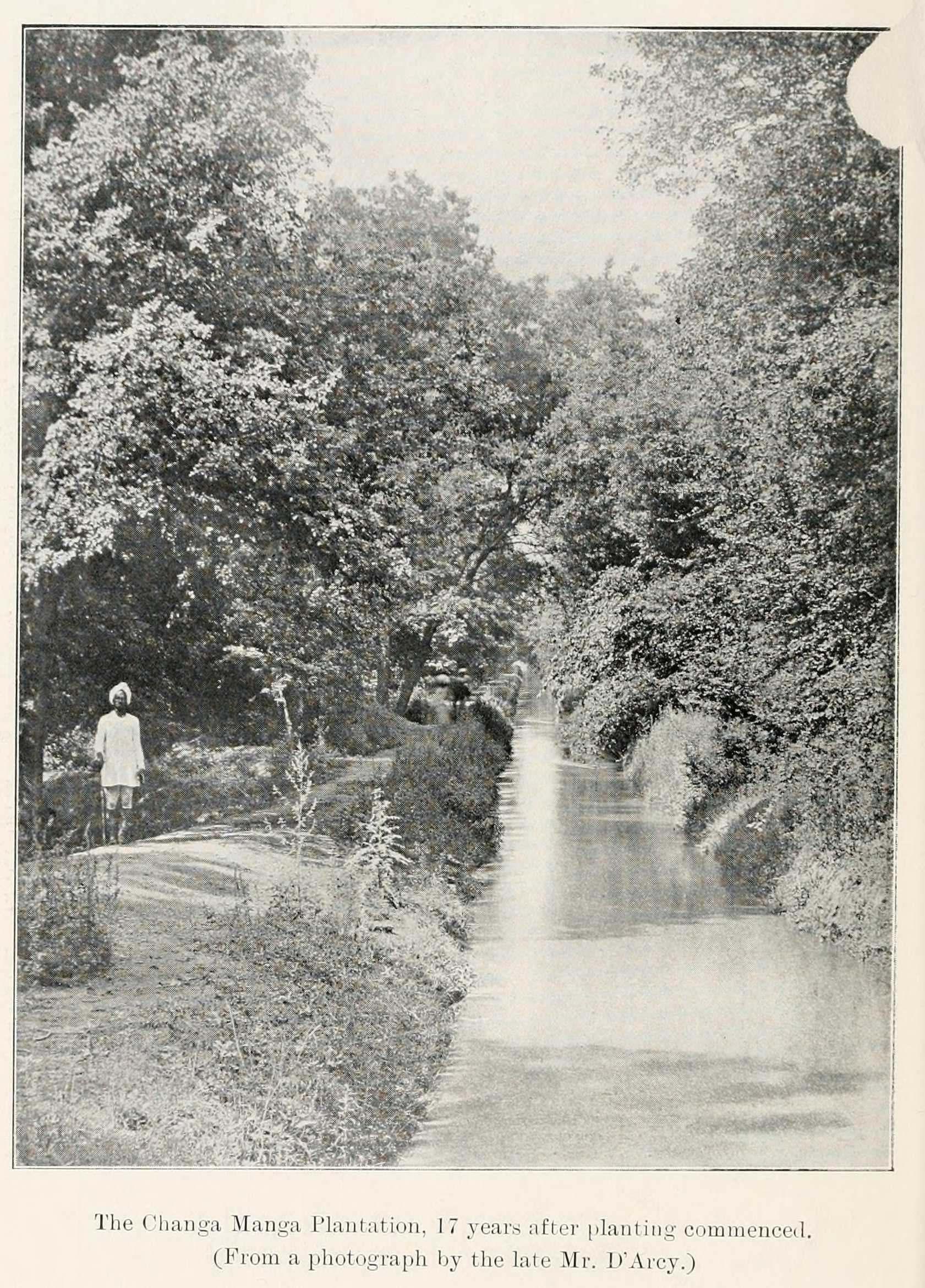
black and white photo of a forest and stream

The Changa Manga Plantation. Seventeen years after planting. Source: Schlich, Wilhelm. Schlich’s Manual of Forestry v. 1 (1906), ed. 3. Contributed in BHL from NCSU Libraries via Internet Archive.

During this time, Schlich held landmark lectures at the Indian Forest Conference in Allahabad. He not only referred to the economic aspects of forestry, but also emphasized that forests “… increase the artistic beauty of a country, may, under certain conditions, increase its healthiness, and at any rate have a beneficial effect upon the human mind” (Schlich’s Manual of Forestry, 22).

Another result of this conference was the founding of the first forestry journal in the English-speaking world—the Indian Forester—with Schlich as its editor (until 1879).

In 1880, Schlich was assigned Conservator of Forests of Punjab, and by the end of 1881, he was appointed to the central government as Officiating Inspector General of Forests.

“It is not too much to say that the development of economic forestry in the British Empire generally has come through India. It is that country which has set the example. There can be no doubt that the development of systematic economic forest management in British India is something to be proud of” (Schlich’s Manual of Forestry, 118).

Great Britain & the Acknowledgement of Forestry as a Science

In 1885, Schlich left India for an appointment as Professor of Forestry at the Royal Indian Engineering College at Cooper’s Hill and was thus under the direct influence of the junior staff of the higher forestry service in India. Now he began to pursue his second major goal: The recognition of forestry studies as a scientific discipline at an English university.

In his lessons, Schlich always emphasized the importance of preserving the productive power of the soil as a silvicultural objective and thus created an understanding of sustainable forestry among his approximately 200 students, who passed this on to their later positions in science and administration.
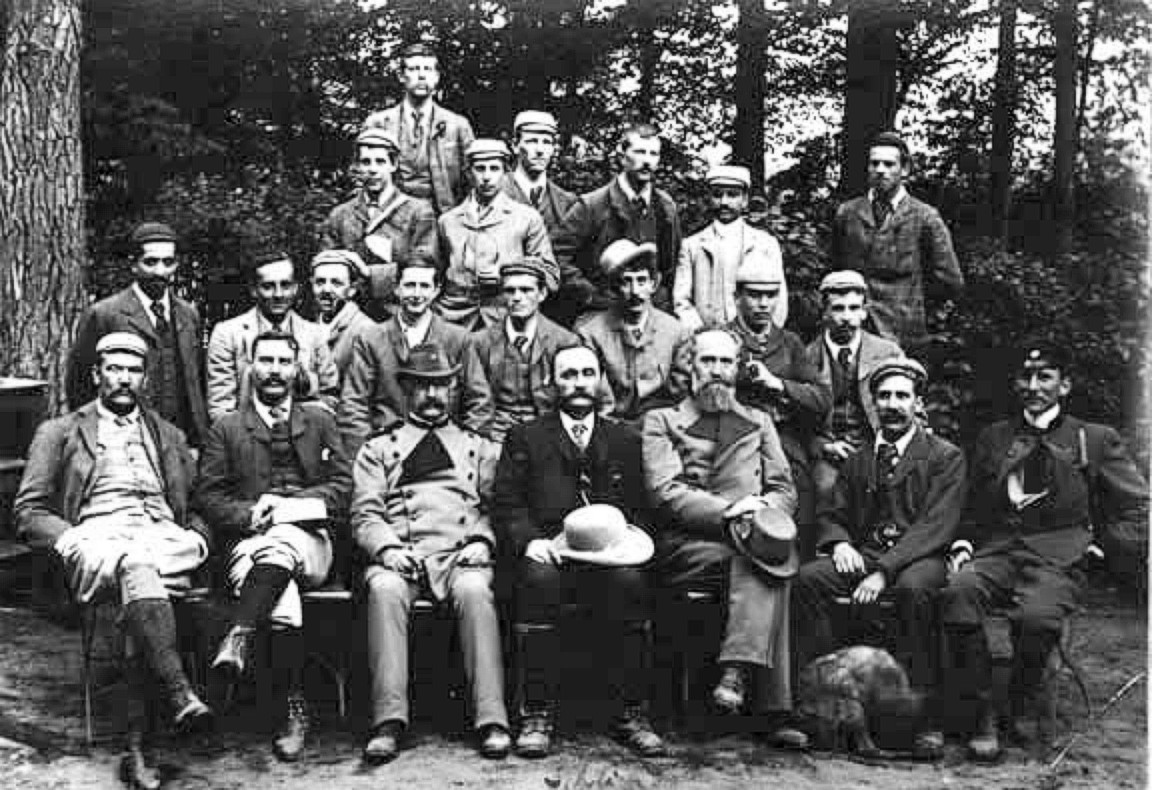
Sir_William_Schlich07.jpg

Wilhelm Schlich (center, first row with pale hat on his lap) with Oxford students during a tour to saxony in 1892. Photo: Public domain Public Domain, Wikimedia Commons.

The Manual of Forestry
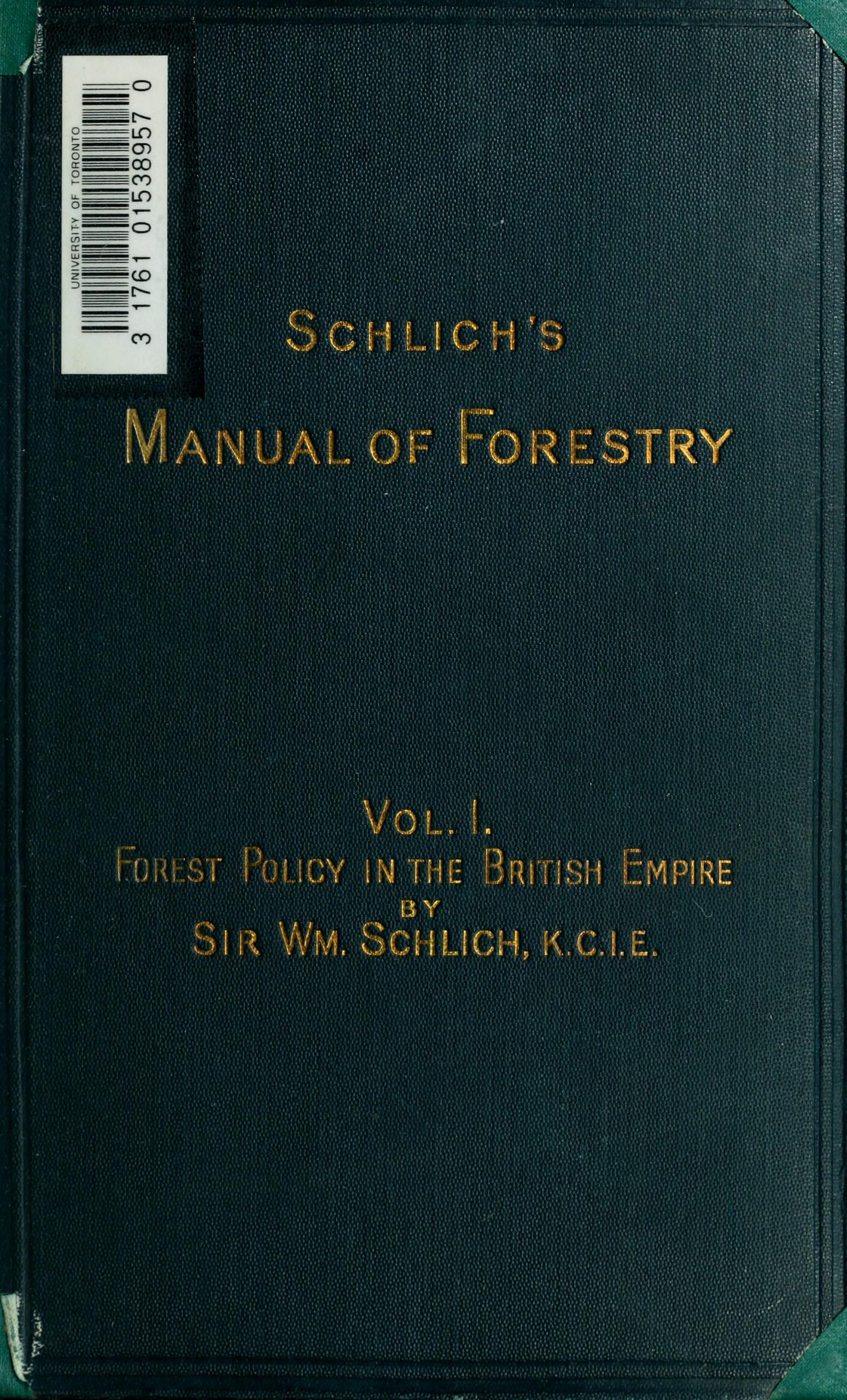
book cover in green with manual of forestry written on it

Cover. Schlich, Wilhelm. Schlich’s Manual of Forestry v. 1 (1922), ed. 4. Contributed in BHL from University of Toronto – Robarts Library.

During his teaching activities, Schlich produced the 5-volume Manual of Forestry (first published between 1889–96) in which he concentrated his knowledge and designed it as a textbook for his students.

  1. Forest Policy in the British Empire
  2. Formation and Tending of Woods or Practical Sylviculture
  3. Forest Management
  4. Forest Protection (by W. R. Fisher, BA.) , English Adaption of „Der Forstschutz“ von Richard Heß
  5. Forest Utilization (by W. R. Fisher, BA.) , English Adaption of „Die Forstbenutzung“ von Karl Gayer

In this work, Schlich takes a holistic view of forestry work and addresses the climatological, pedological and plant-physiological factors that have an impact. Schlich’s principles pay attention to the balance of forest treatment without neglecting economic efficiency. The manual introduces the teaching of sustainable forest use in forestry studies and has become a standard textbook in the USA, among other countries.

In 1911, the University of Oxford offered Schlich a lectureship as professor of forestry. However, the lectureship was neither secured by a permanent chair nor by financial means, and forestry studies was by no means considered equal to the other scientific studies at that time. However, Schlich stuck to his goal, and when the lecture halls reopened in 1919 after WWI, students flocked to his lectures. The professorship was established by Oxford University as a permanent chair and financially secured. At the end of the year, Schlich ended his university teaching and ceded the chair to R. S. Troup.

Although retired, Schlich dedicated himself to the conservation of the forests in England and became involved in the Royal English Arboricultural to further develop the newly awakened interest in forestry. He remarked, however, that the societies and commissions talked too much and took too little actions.

Schlich died on 28 September 1925 in Oxford.

In recognition of his life’s work, Schlich became, in some cases posthumously, an honorary member of various forestry interest groups. In his honour, the Society of American Foresters awards the Sir William Schlich Memorial Medal, which was presented among others to Franklin D. Roosevelt, then President of the USA, for his services to forest conservation in the USA by founding and promoting the Civilian Conservation Corps.

Sources and Literature

Titles by Sir Wilhelm Schlich in the Biodiversity Heritage Library: https://www.biodiversitylibrary.org/creator/13760

Knopf, H. E. (1992). Forstliche Leitbilder: Leben und Werk von Philipp Engel von Klipstein, Richard Alexander Hess, Sir William Schlich. Göttingen: Vereinigung d. Freunde d. Fachbereichs Forstwirtschaft. http://www.worldcat.org/oclc/46119866.
July 30, 2020by Joel Richard
Blog Reel, Featured Books

Galen Clark: The Guardian of Yosemite

When Galen Clark’s The Big Trees of California, their History and Characteristics, was published, in 1907, he was 93 years old. It had been 50 years since he first came to live in the Mariposa Grove in Yosemite Valley. He had spent most of those years in the midst of the giant sequoias, serving as a guide and educator, and fighting for the protection of these natural wonders.

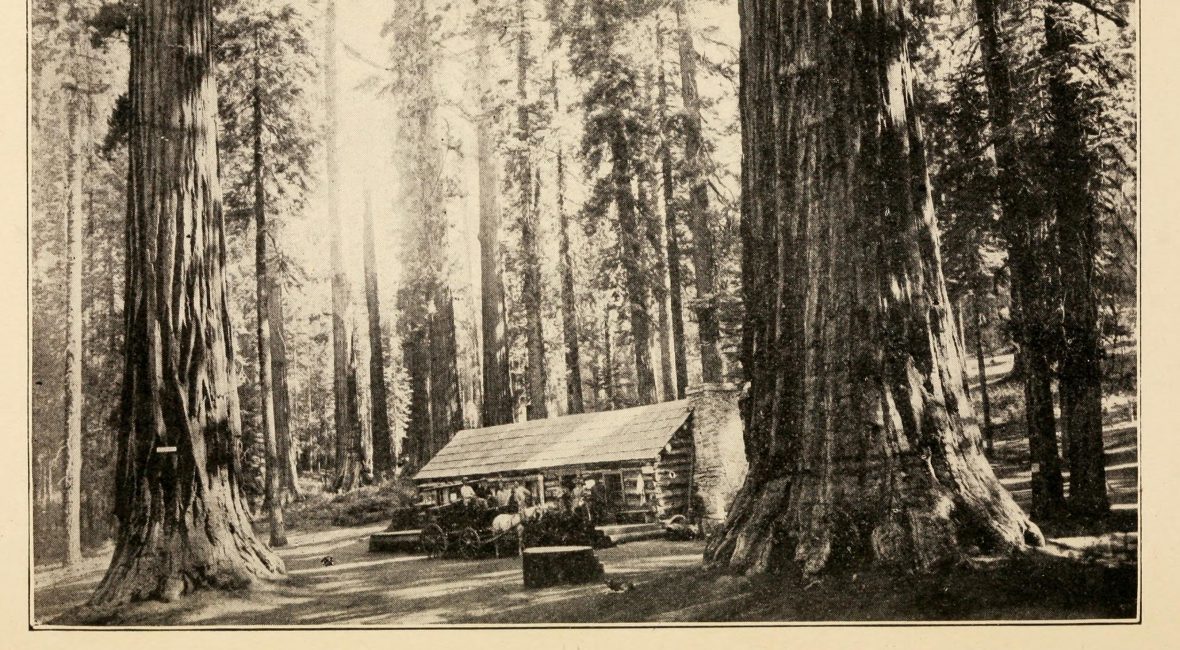
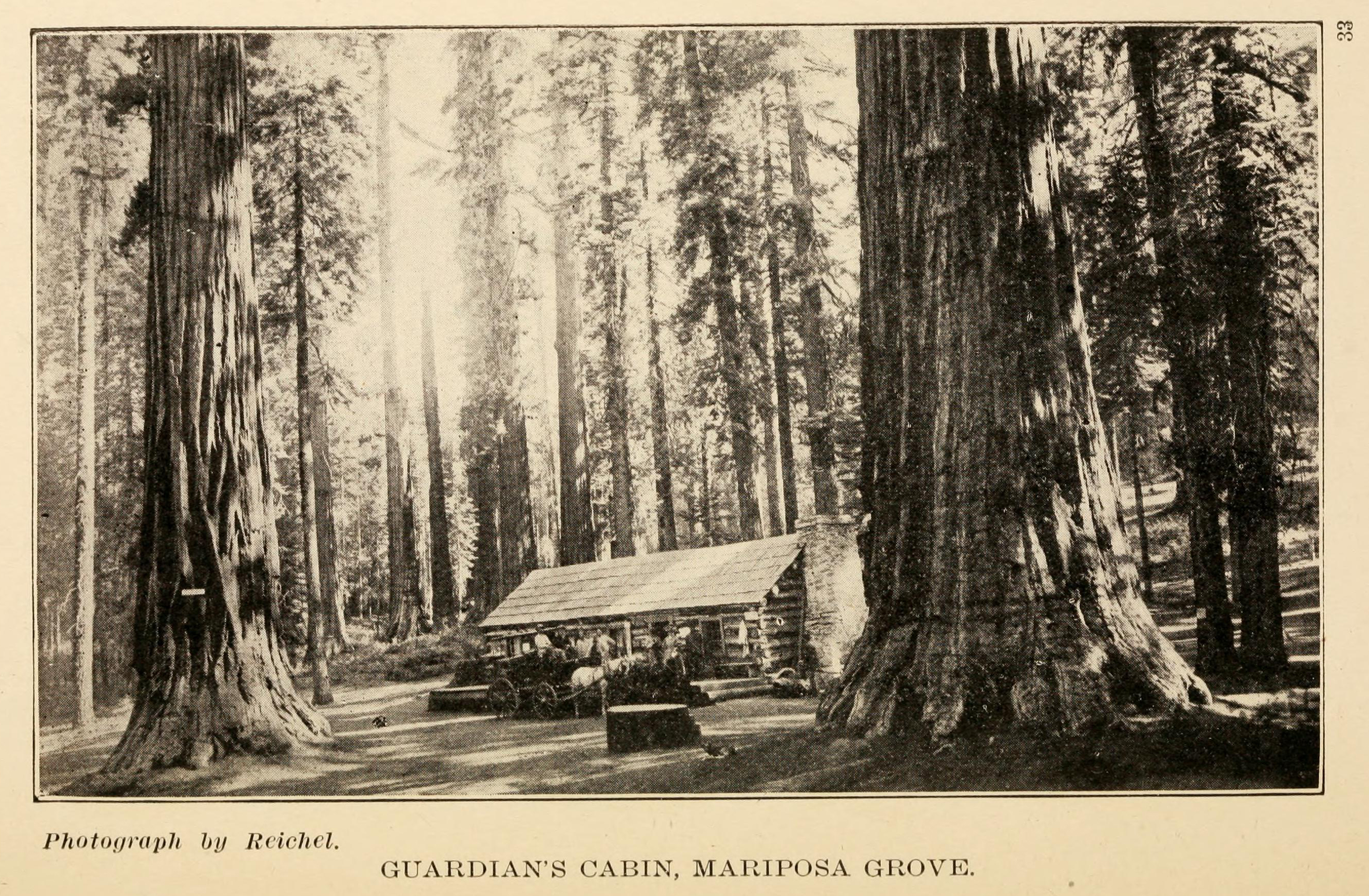
“Guardian’s Cabin. Mariposa Grove.” Clark, Galen. The big trees of California, their history and characteristics. 1907. Contributed in BHL from Library of Congress.

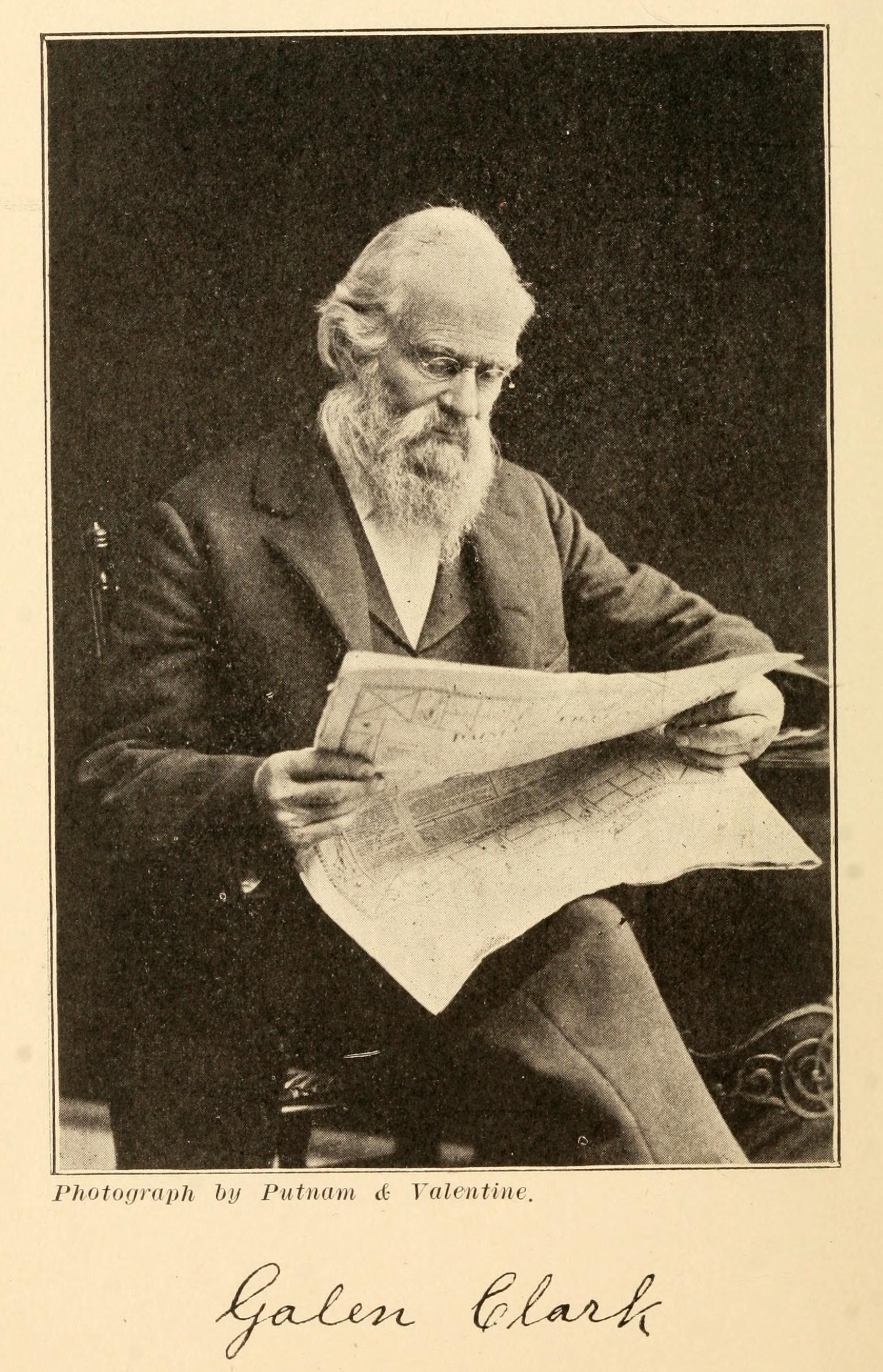
The noted naturalist and conservationist John Muir met Galen Clark on his first visit to Yosemite, and later, in his writing on The Yosemite, called him “the best mountaineer I ever met, and one of the kindest and most amiable of all my mountain friends.” Along with Muir, Clark was instrumental in Yosemite’s preservation and development as a national park.

Born in Canada 1814, Galen Clark migrated westward at an early age. In 1857, suffering from severe lung illness, he moved to Wawona, California for the mountain air. Although he engaged in several modest business enterprises, including running a hotel and serving as a professional guide, Clark was never successful as an entrepreneur. During much of his life he was consistently short of funds, but his accomplishments as an explorer and mountaineer, as well as his influence as a champion of forest and wilderness conservation, were widely recognized.

Galen Clark was an influential contributor to the original movement for the protection of Yosemite as a park. When President Abraham Lincoln signed the Yosemite Grant in 1864, setting aside the Mariposa Grove and Yosemite Valley as protected areas “for public use, resort, and recreation,” Clark was named the first Guardian of Yosemite. He served as Guardian for the next 24 years and lived to see Yosemite National Park established—as the third national park—in 1890. His influence and contributions were acknowledged when an iconic mountain peak was re-named Mt. Galen Clark in his honor.

Photo of Galen Clark. Clark, Galen. The big trees of California, their history and characteristics. 1907. Contributed in BHL from Library of Congress.

The Big Trees of California has a generous number of full-page photographs, including some taken by the Yosemite photographer George Fiske. Many of the bigger named trees are included, and there are also images of the Guardian’s Cabin nestled in the Mariposa Grove, and of the Wawona hotel (now Big Trees Lodge).

Within the free-flowing border of green foliage and cones that decorates each page of text, Clark touches on most aspects of the history, biology, and geography of these fantastic trees. He discusses cones and seeds, and gives tips for testing seed viability.  He also provides an overview of the distribution of big trees in California’s other major sequoia groves—although his main focus is on the Mariposa Grove.

In discussing the sequoia’s origins, Clark shares his awe for this “ancient order of forest trees … contemporaneous with such huge animals as the dinotherium, megatherium mammoth, and monster reptiles long since extinct.” Clark talks about the difficulties of determining the age of any particular sequoia—as even fallen trees, where the rings are easily examined, exhibit many irregularities and variations in ring growth. However,  he does speculate that some of the older trees may have been at least several thousands of years old.

Galen Clark’s love of the giant trees consistently shines through in this book. Despite the inclusion of a number of strictly factual portions—such as a detailed chemical analysis of the gum from a sequoia cone, along with a report supplied by supplied by Professor H. W. Wiley, Chief of the Bureau of Chemistry at the United States Department of Agriculture—this book comes across as an ode to the sequoias. In the section on “Habits and Characteristics,” for example, Clark sets out to provide some strictly factual botanical descriptions of branching and leaf types, but soon segues into a lyrical description:

The bright cinnamon color of their immense fluted trunks, in strong contrast to the green foliage, and dark hues of the surrounding forest makes them all the more conspicuous and impressive. In their sublime presence, a person is apt to be filled with a sense of awe and veneration as if treading on hallowed ground.

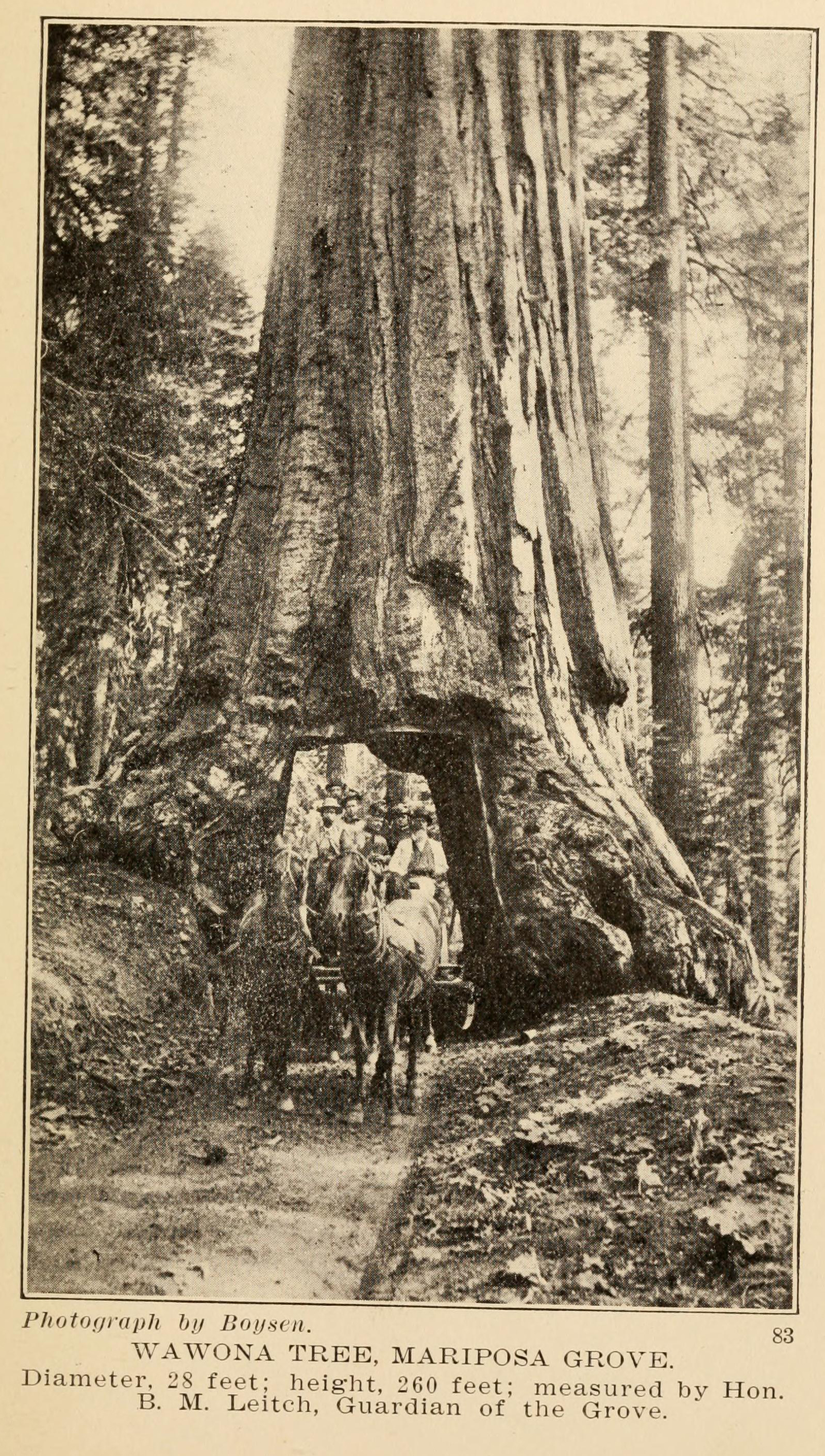
“Wawona Tree, Mariposa Grove.” Clark, Galen. The big trees of California, their history and characteristics. 1907. Contributed in BHL from Library of Congress.

A highlight of the book is the listing and description of some of the biggest of the big trees in California–and it is good to know that, more than 100 years later, many of his “celebrated specimens” are still standing.

The General Sherman Tree: This giant is still standing and has earned the title of World’s Largest Tree (by volume).  It stands 275 feet (83m) tall and is over 36 feet (11m) in diameter at its base. It is now estimated that this tree is somewhere around 2,000 years old.

The Grizzly Giant: Clark names this old sequoia “the Patriarch of the Mariposa Grove.” He speculates that, despite the extensive damage it has sustained, the Grizzly Giant may be “not just the oldest living tree, but also the oldest living thing on earth.”

The General Grant Tree: Named after Ulysses S. Grant, this tree is slightly smaller than the General Sherman.  In 1926, President Coolidge designated the General Grant as the Nation’s Christmas Tree, and annual ceremonies continue to be held at its base.  This tree is also notable for being designated as a National Shrine by President Eisenhower, in 1956.

The Boole Tree: This tree was left standing alone in the Sanger Lumber Company’s logging camp after surrounding trees were cut for lumber, in about 1895.  Clark predicted a swift death for this isolated and unprotected giant tree, but it still survives on what is now U.S. Forest Service land in Sequoia National Forest.

Sadly, another giant, the Mother of the Forest, in Calaveras Grove, was killed in the 1850s, when its bark was stripped and reassembled for display at various exhibitions in the United States and Europe. It was already dead, though not yet entirely destroyed by fire when The Big Trees of California was written.

Tunnel Trees: Clark writes that riding through the tunnel trees “in a six-horse stage, or any conveyance, is a great novelty and should not be missed.”  The famous Wawona Tunnel Tree of Mariposa Grove was a favorite until it fell under a heavy load of snow in February 1969. Another tunnel tree, Pioneer Cabin, which Clark mentions briefly, came down during a winter storm in 2017.

Further Reading

The Boole Tree, from the USDA Forest Service
https://www.fs.usda.gov/recarea/sequoia/recarea/?recid=79961

Forest atlas of the national forests of the United States. Sequoia folio. By United States. Forest Service. Pinchot, Gifford, Smith, George Otis. Washington, D.C.: U.S. Department of Agriculture, Forest Service, 1909. DOI: https://doi.org/10.5962/bhl.title.119298.

Mariposa grove of big trees: a short history of the Mariposa big trees & the Yosemite Valley.  By: Leitch, B. M. Wawona Calif: B.M. Leitch ?, 1910. DOI: https://doi.org/10.5962/bhl.title.30311.

Muir, John. South of Yosemite. Edited and with a foreword by Frederic R. Gunsky. Garden City, NY, Published for the American Museum of Natural History, by the Natural History Press, 1968.

Sequoia Research, Yosemite, from the National Park Service:
https://www.nps.gov/yose/learn/nature/sequoia-research.htm

Vischer’s views of California: the mammoth tree grove, Calaveras County, California, and its avenues. By: Vischer, Edward. San Francisco: Edward Vischer, 1862. DOI: https://doi.org/10.5962/bhl.title.50746.

Yosemite nature notes. United States. National Park Service. Yosemite Natural History Association, Yosemite Naturalist Department. Yosemite National Park Calif, Yosemite Natural History Association, 1922. Volume: 35 no.6. BHL:  item/70374.

February 21, 2019by Joel Richard
Blog Reel, Featured Books

Documenting the Flora of the Nation’s First Urban Park System

Did you know that the city of Boston is blessed with one of the largest and the oldest urban forest reservations in America?

View Full Size Image
Photo: Charles Eliot, 1897

At the turn of the 20th century, Boston saw a rapid increase in human settlement and industrialization which quickly transformed the once pristine Commonwealth into a highly developed, unsightly, and unhealthy metropolis. The movement to preserve what was left of Greater Boston’s natural wonders was inspired by the writings by transcendental thinkers like Ralph Waldo Emerson and Henry David Thoreau, who were advocates of the idea to “keep the New World new.” Local activists for the cause included Wilson Flagg, Elizur Wright, Sylvester Baxter, and Charles Eliot. They envisioned a place where the citizens of Boston could escape the “noisy ugliness” of the overcrowded city and revitalize their spirits in the requiem of nature’s untamed beauty.

A Dream Comes to Pass 

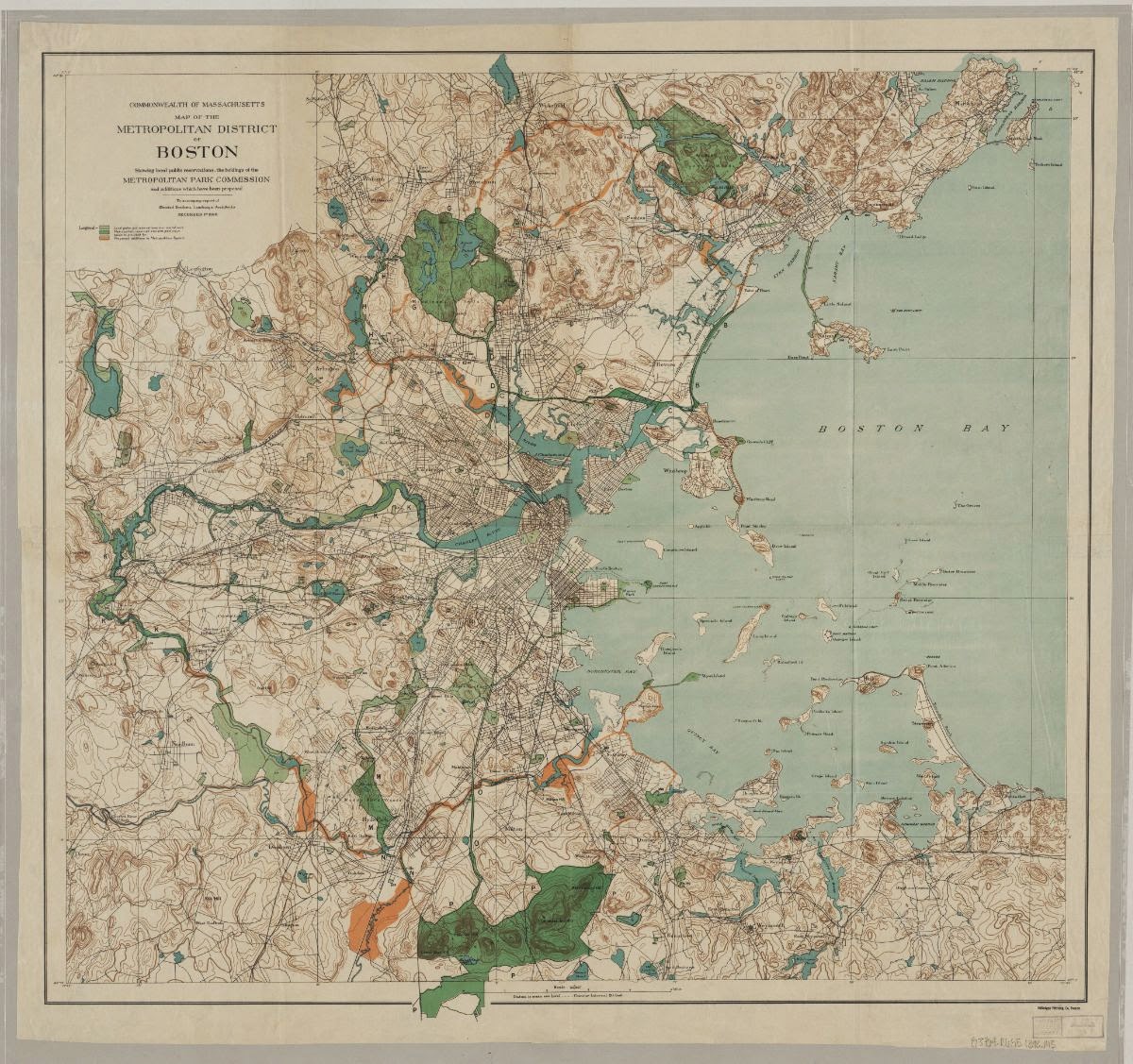
Boston’s budding conservation movement had the foresight to identify large tracts of Massachusetts wilderness for preservation in perpetuity. A four decade campaign ensued and resulted in the passage of the Acts of 1893, Chapter 407 which established the Metropolitan Park Commission. This legal entity was charged with restoring, preserving, and increasing the beauty of the undeveloped woodlands surrounding Boston and this landmark legislation would serve as a model for other American cities. The Metropolitan Park Commission’s first order of business was to hire the noted landscape architecture firm, Olmsted, Olmsted and Eliot, to survey the vegetation in the recently acquired woodland reservations, the Middlesex Fells, Beaver Brook, Stony Brook, and the Blue Hills.

View Full Size Image
Map of the original Metropolitan Park Reservations
Click here for an interactive version.

The firm appointed landscape designer Warren H. Manning who led a team of twenty volunteers to complete the fieldwork. Local botanist Walter Deane was hired to compile and edit the survey’s findings and in 1896, he published the results in this month’s book of the month, Flora of the Blue Hills, Middlesex Fells, Stony Brook and Beaver Brook Reservations, of the Metropolitan Park Commission, Massachusetts. While Deane is credited with the organization of the specimens and botanical observations for publication, the project would not have been possible without collaboration among many amateur and professional botanists. This collaboration was so successful that it led to the formation of the New England Botanical Club (NEBC), which still meets regularly and has amassed a collection of 250,000 specimens housed in the Harvard University Herbaria (HUH).

Announcing a New BHL Collection

This example of an early successful citizen-science project is highlighted in the launch of a new collection in the BHL: The Archives from the Boston Metropolitan Park. This collection is composed of approximately 8,000 pages of manuscript material documenting the progress of the survey. Readers can peruse Walter Deane’s field notes, diaries, datebooks, and correspondence. His diaries reveal fascinating insights into his work on compiling the Flora and the details of its publication, as well as how the formation of the NEBC resulted from the Metropolitan Flora survey. His diaries also give rich pictures of the botanists of his time and are highly useful to anyone writing about the history of the NEBC and its members. The collection is now freely available and opens up this fascinating slice of history to the public for the first time. As part of the Connecting Content project, the digitization of the archives and original specimens from the Metropolitan Park Reservation was made possible by an Institute of Museum and Library Services (IMLS) National Leadership Grant.

Collection Highlights

One of the most compelling aspects of the correspondence related to the Metropolitan Flora survey is learning about people and information not evident from Deane’s Flora or from the botanical specimens. One example is a letter from the tree expert Loren Dame to Manning in which he encloses a list of trees compiled by a “non-botanist”, George Perry. Perry states that “I have made it a point to crawl through the densest tangle of greenbrier and thicket… to become familiar with every rod of the section.” As a result of his efforts, his list of trees is very thorough. He also found some very rare plants not seen by other surveyors, including maidenhair fern. Unfortunately, because he wasn’t considered a reliable source, his data wasn’t included. In another letter to Manning, Dame reported three rare tree species found only in an area adjacent to the Fells, which was added to the reservation after Flora was published. All of these omissions are significant, and the knowledge revealed in these letters is highly valuable for understanding the full extent of the past flora of the area.

Surveying the Flora of Middlesex Fells: Yesterday and Today

Between 2003 and 2011 a new survey  very much like the original survey of the Fells flora was undertaken by a team of NEBC and HUH botanists. Using Deane’s Flora as a basis for comparison, the team found that most of the native species from the original survey persist, despite substantial increases in the number and frequency of non-native plants. These native species face several threats, including habitat disturbance, and loss due to construction and recreational use of the Fells, herbivory from increases in deer and insect populations, as well as environmental changes effected by climate change and afforestation. Sustaining populations of native species, some of which are rare and endangered, will require a more active management of the Fells.[1]

Urban forests purify the air that we breathe, provide a habitat for local flora and fauna, help reduce energy demands, provide recreational opportunities, reduce stress and crime rates—the list goes on. Since eighty percent of us live in urban areas most of us owe quite a bit of thanks to the astute conservationists who fought to keep the untamed wilderness close by. Now it’s our turn to preserve their legacy.

View Full Size Image

Spot Pond named by Governor John Winthrop in 1631.

Photo by Mike Ryan, Friends of the Fells

“Something like five miles northerly from Boston lies a great tract of country, all stony hills and table-lands, almost uninhabited, and of wonderful picturesqueness, and wild rugged beauty… and at its heart is that most beautiful of Boston’s suburban lakes, Spot Pond, which lies high up among the hills.” Sylvester Baxter, 1886.

Notes

[1] 2012. Hamlin, Bryan T., W. T. Kittredge, D. P. Lubin & E. B. Wright. Changes in the vascular flora of the Middlesex Fells Reservation, Middlesex County, Massachesetts, from 1895 to 2011. Rhodora 114(959): 229-308.

Learn More!

IMLS Grant Project Page
Walter Deane (1848-1930) Papers
NPS: Metropolitan Parks Commision
Friends of the Fells
Found in the Fells
The Middlesex Fells, a Flourishing Urban Forest by W. Kittredge
BHL Collection: Archives and Specimens from the Boston Metropolitan Park Flora 

February 26, 2015by [email protected]
Blog Reel, User Stories

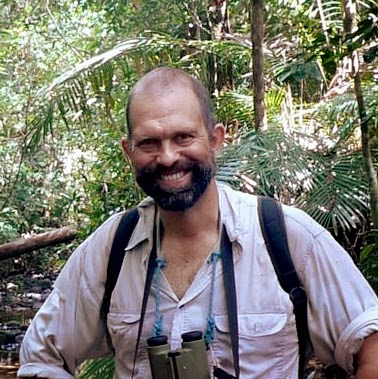
The Life of a Field Biologist and Practical Biodiversity Informatician: Cam Webb

View Full Size Image

As part of our regular BHL & Our Users series, Connie Rinaldo (MCZ Librarian and BHL Executive Committee Member) recently caught up with Cam Webb, a Senior Research Scientist at the Arnold Arboretum of Harvard University.  We were very pleased to hear about how he has been exploring BHL and what he discovered. Enjoy!

1.  What is your area of interest?

I study the trees and forests of SE Asia, from ecological, floristic and biogeographic angles. I also enjoy ‘practical informatics’: mashing up biodiversity data from a variety of sources.

2.  How long have you been in your field of study?
Broadly defined… about 25 years.

3.  When did you first discover BHL?

I think pretty much when you first opened.

View Full Size Image4.  What is your opinion of BHL and how has it impacted your research?

BHL is a vital tool for me.  I live in West Kalimantan, Indonesia and so have no local physical access to botanical libraries. The nearest one is on Java, at the Indonesian National Herbarium (Herb. Bogoriense); it has a surprisingly good range of older publications, but I don’t get there as often as I’d like.  But with BHL, in a few seconds (or longer… depending on bandwidth here!), I have access to many of the original (and sometimes only) descriptions for the plant taxa out here.

5.  How often do you use BHL?

I use BHL a couple of times a month on average, sometimes more frequently.

6.  How do you usually use BHL?  

Almost always I’m looking for species descriptions, ecological details, and particularly images.

7. What are your favorite features and services on BHL?

So, I have to admit, as I was answering these questions, I started digging into the API options (Application Programming Interface) you offer, that I hadn’t really looked at before, and was blown away as to how many ways you offer to query your database and view the publication pages. One of the main challenges I have for using BHL, given the limited  bandwidth available here in Kalimantan, is the multiple webpage loadings required to get from submitting a taxonomic name to being able to check if a page will be worth reading, partially because the default page viewer loads a fairly high-resolution page image in the popup. So I hacked together a simple script (http://xmalesia.info/doc/bhl_pages.html) that takes a taxonomic name, calls your API, and returns a single page with embedded thumbnails of matching pages in BHL. This way, I can quickly identify which pages might be worth looking more carefully at.  So now I have to say that my favorite service on BHL is the API!  Thanks!

8.  What would you like BHL to focus on developing next?

For myself, I’d have to say that continuing to expand the coverage of the core document set would still be the highest priority.  There are a number of key references for Indonesia (many of them in Dutch)
that I have not found yet in BHL.

9. If you had to choose one title or item that has impacted your research or something that you love in BHL, what would it be?

It is having Flora Malesiana scanned and available online!

Thank you, Cam, for sharing your work and how you use the Biodiversity Heritage Library!

June 3, 2014by brooksm

Help Support BHL

BHL's existence depends on the financial support of its patrons. Help us keep this free resource alive!

search

About BHL

The Biodiversity Heritage Library (BHL) is the world’s largest open access digital library for biodiversity literature and archives. BHL operates as a worldwide consortium of natural history, botanical, research, and national libraries working together to digitize the natural history literature held in their collections and make it freely available for open access as part of a global “biodiversity community.”

Join Our Mailing List

Sign up to receive the latest news, content highlights, and promotions.

Subscribe Now

Subscribe to Blog via Email

Enter your email address to subscribe to this blog and receive notifications of new posts by email.

Join 319 other subscribers

Subscribe to Blog Via RSS

Subscribe to the blog RSS feed to stay up-to-date on all the latest BHL posts.

Access RSS Feed

Inspiring Discovery through Free Access to Biodiversity Knowledge.

The Biodiversity Heritage Library makes it easier than ever for you to access the information you need to study and explore life on Earth…for free, anytime, anywhere.


64+ Million Pages of
Biodiversity Literature Online.

EXPLORE

Tools and Services
to Transform Research.

EXPLORE

300,000+
Illustrations on Flickr.

EXPLORE

ABOUT | HARMFUL CONTENT | PRIVACY | SITE MAP | TERMS OF USE