Biodiversity Heritage Library - Program news and collection highlights from BHL
  • Home
  • News
  • Featured Books
    • All Featured Books
    • Book of the Month Series
    • BHL at 20
  • User Stories
  • Campaigns
    • Fossil Stories
    • Garden Stories
    • Monsters Are Real
    • Page Frights
    • Her Natural History
    • Earth Optimism 2020
  • Tech Blog
  • Visit BHL
Home
News
Featured Books
    All Featured Books
    Book of the Month Series
    BHL at 20
User Stories
Campaigns
    Fossil Stories
    Garden Stories
    Monsters Are Real
    Page Frights
    Her Natural History
    Earth Optimism 2020
Tech Blog
Visit BHL
  • Home
  • News
  • Featured Books
    • All Featured Books
    • Book of the Month Series
    • BHL at 20
  • User Stories
  • Campaigns
    • Fossil Stories
    • Garden Stories
    • Monsters Are Real
    • Page Frights
    • Her Natural History
    • Earth Optimism 2020
  • Tech Blog
  • Visit BHL
Biodiversity Heritage Library - Program news and collection highlights from BHL
Blog Reel, User Stories

Vanity and BHL: Examining Extinction and Rediscovery through Art

The “Anthropocene Defaunation” and the Lost Florida Zestos Skipper

We are experiencing a “biological annihilation.”

That’s how scientists are describing the biodiversity loss in what is being recognized as Earth’s sixth mass extinction event [1]. Not only are extinctions occurring at a rate 100 times higher than would occur naturally, but overall populations are also shrinking at alarming rates [1,2].

A 2014 Science report termed it the “Anthropocene defaunation”, reflecting humanity’s role in this biodiversity loss [3]. Among the casualties in this “Age of Humans” is one of “the few butterflies known to have become extinct in the United States” [4] — The Florida Zestos Skipper Butterfly Epargyreus zestos oberon (Worthington, 1881) [5]. This butterfly’s story draws forth science, taxonomy, history, and art from the Biodiversity Heritage Library (BHL) for a cutting edge representation of biodiversity in challenging times.
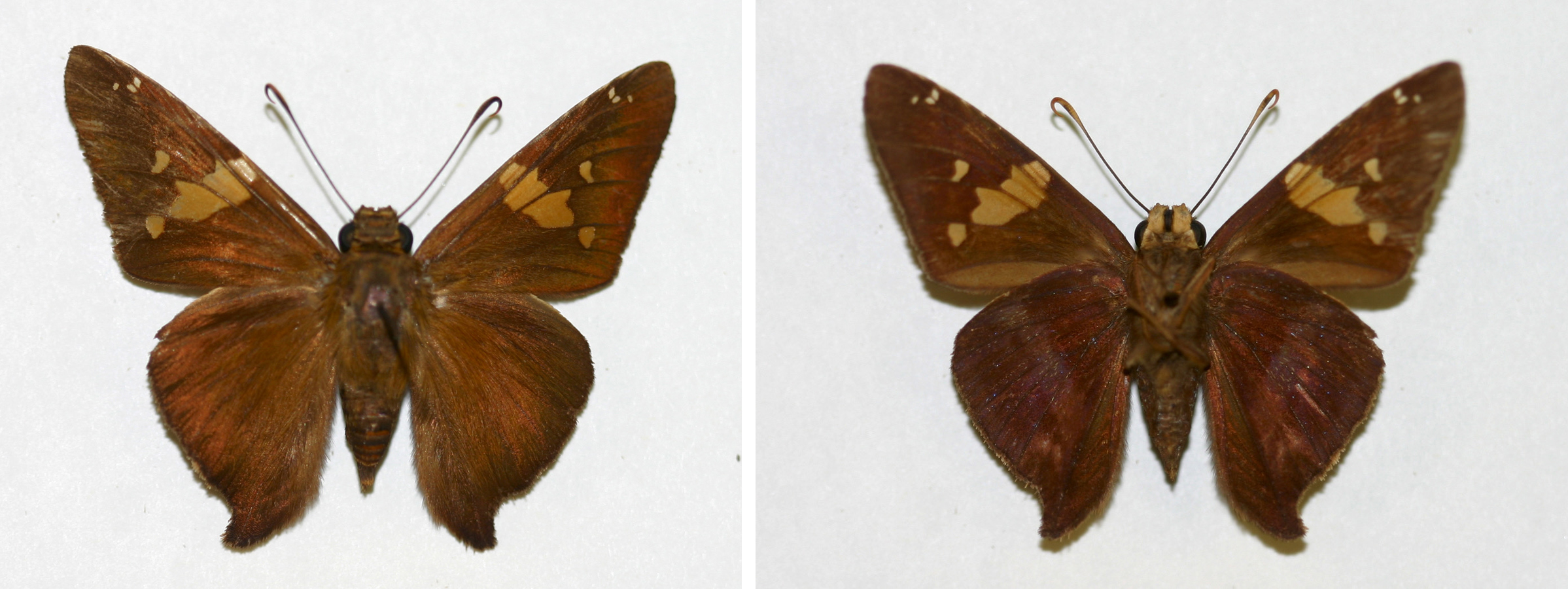
Florida Zestos Skipper Butterflies Epargyreus zestos oberon† (Worthington, 1881) – Male (Left: Upperside; Right: Underside). Collected in Monroe County; Everglades National Park, Bear Lake Trail, Florida in May 1973. The photos were taken in the Florida Department of Agriculture and Consumer Services, Florida State Collection of Arthropods. The specimens are now incorporated into the Florida Museum of Natural History/McGuire Center for Lepidoptera and Biodiversity. Photos copyright and courtesy of Marc C. Minno, PhD.

The recorded scientific history of the Zestos Skipper Butterfly extends back to the early nineteenth century. In the 1819 publication Verzeichniss bekannter Schmettlinge [sic], Jacob Hübner first listed the butterfly as Proteides zestos. Hübner later illustrated the P. zestos holotype (type locality “Surinam”, probably in error) via two figures of a female specimen in his Zuträge zur Sammlung exotischer Schmetterlinge (1826). However, as Hübner provided no description to accompany the name and illustration, it was not until 1832, after his death, that his assistant Carl Geyer officially described Proteides zestos as a new species.
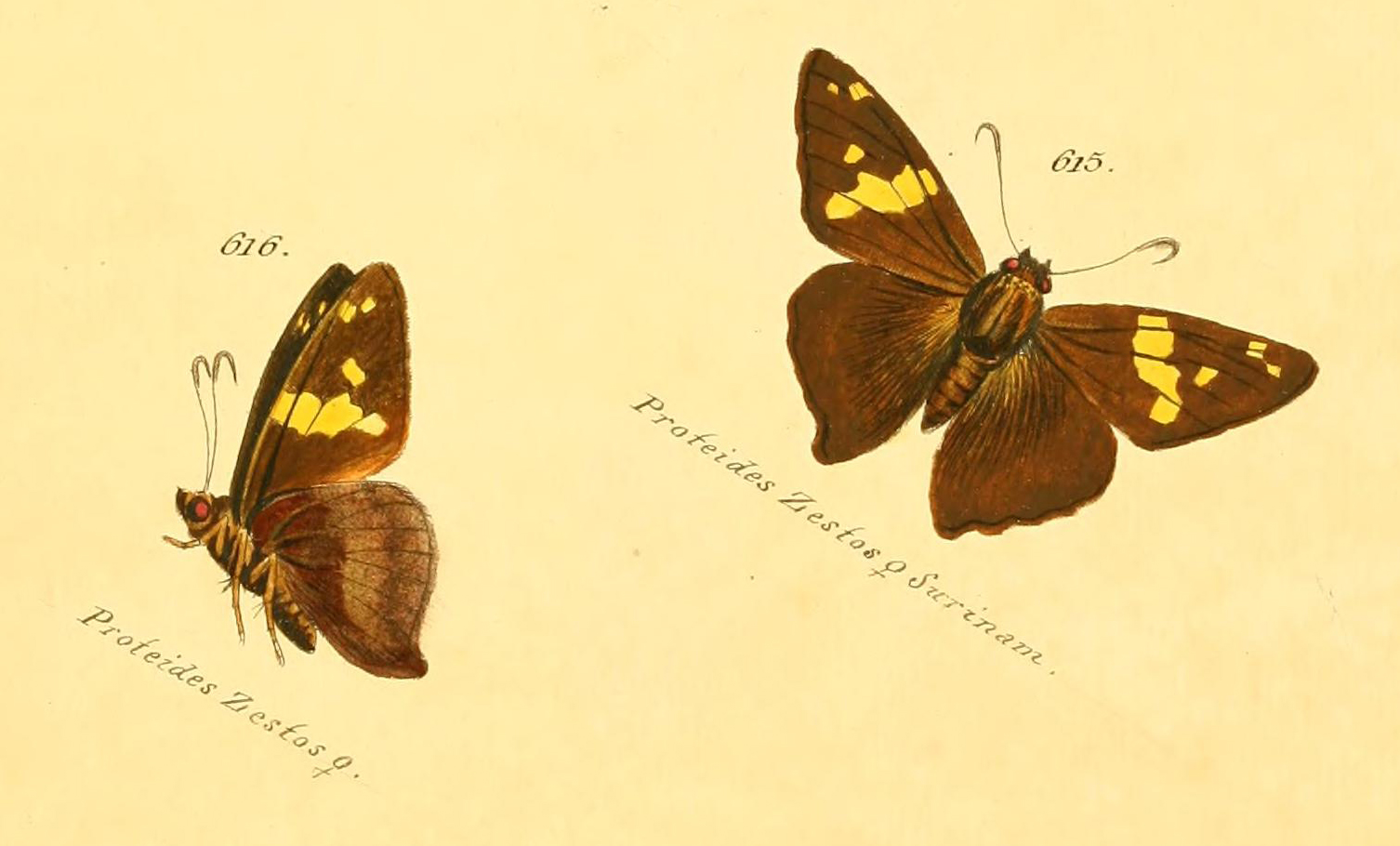
Proteides zestos illustrated by Jacob Hübner in Zuträge zur Sammlung exotischer Schmetterlinge (1826). Contributed in BHL by Smithsonian Libraries.

Over the next 50 years, this rather unassuming reddish-brown Skipper, with a range from the Florida Keys to the Caribbean, was reclassified and redescribed by various authors. In Dublin, William F. Kirby (1871) assigned it to a new genus (Telegonus zestos) and in Chicago, Charles E. Worthington (1881), examining 31 specimens from Marco Island, Florida, described it as a new species (Endamus [sic] oberon), based on its resemblance to Eudamus tityrus. In 1884, Eugene M. Aaron, after evaluating over 160 specimens of tityrus and zestos, concluded that Proteides zestos, Telegonus zestos, and Eudamus oberon were in fact the same species.

Dr. Marc C. Minno (Insect Ecologist with Eco-Cognizant in Gainesville, FL) began searching for the Florida Zestos Skipper Butterfly in 2006. At his request, Skipper butterfly expert Dr. George T. Austin evaluated Zestos Skipper butterfly specimens in the Florida Museum of Natural History collection with type localities from Florida and the Caribbean. Before his death, Austin concluded that the Florida Zestos Skipper Butterfly actually represents a unique subspecies or sibling species [6]. Based on his own observations and Austin’s comments, Minno believes “oberon” to be the valid name of the Florida Zestos Skipper Butterfly population and has, until he can complete Austin’s study, designated it as Epargyreus zestos oberon (Worthington, 1881) [5].

Over the past 50 years, the Florida Zestos Skipper Butterfly population has been in decline. According to Minno, this butterfly, “once locally common in coastal areas of southern Florida”, had “disappeared from the mainland” by the mid-1980s. The last known sightings of Florida Zestos Skippers occurred in January 2004, at the Key West Tropical Forest and Botanical Garden in Stock Island, Florida [6].

In 2012, Minno et al., concluded a six-year survey looking for declining butterfly species in southern Florida [4]. Because the study failed to produce a single sighting of the Florida Zestos Skipper, in any stage of life, it was recommended that it be presumed extinct. Together with the Rockland Meske’s Skipper, these represent the “first [known] butterfly extinctions in Florida” [4].

The Florida Zestos Skipper exists now only in museums and the pages of historic literature, its memory preserved in natural history collections, libraries, and repositories like the Biodiversity Heritage Library.

Vanity: An Artist’s Story of Extinction and Rediscovery in the “Age of Humans”
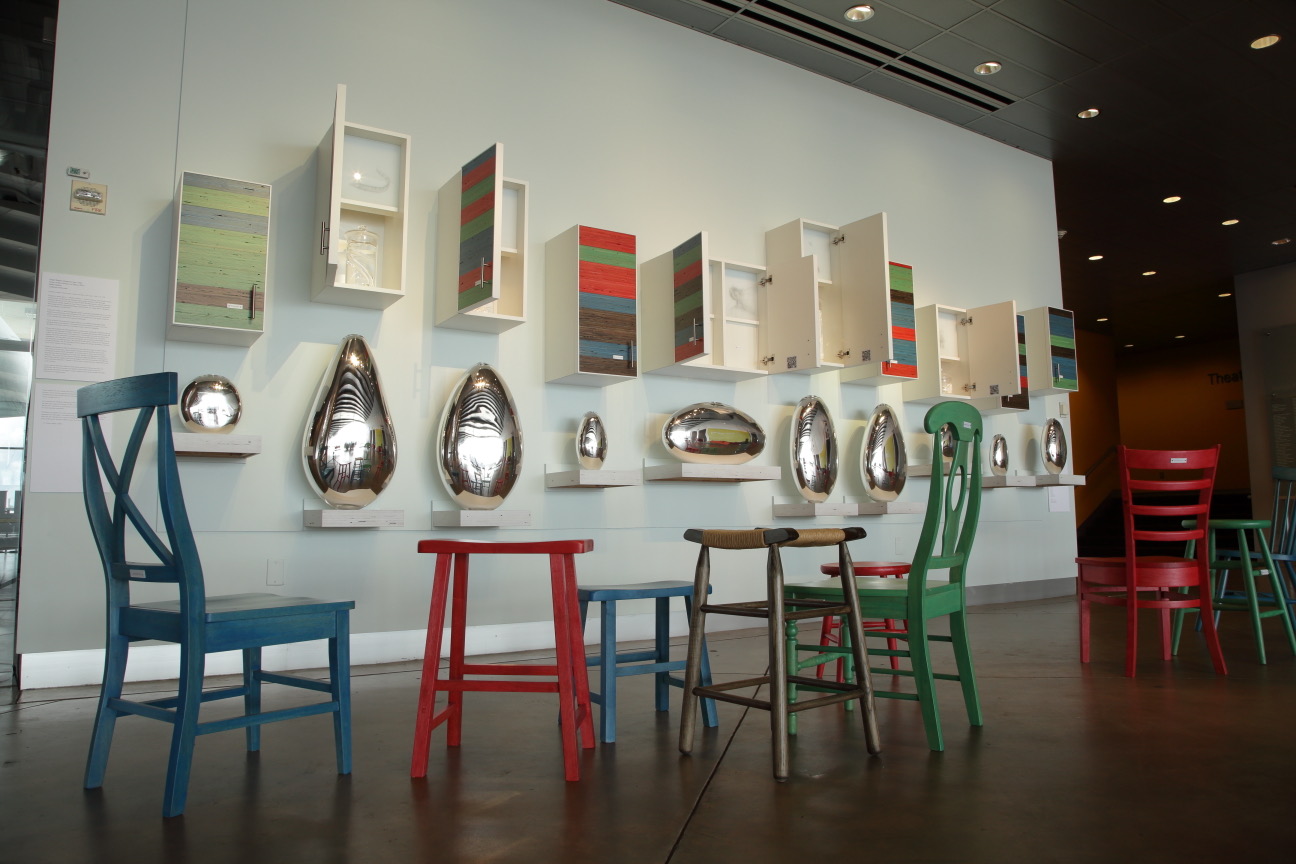
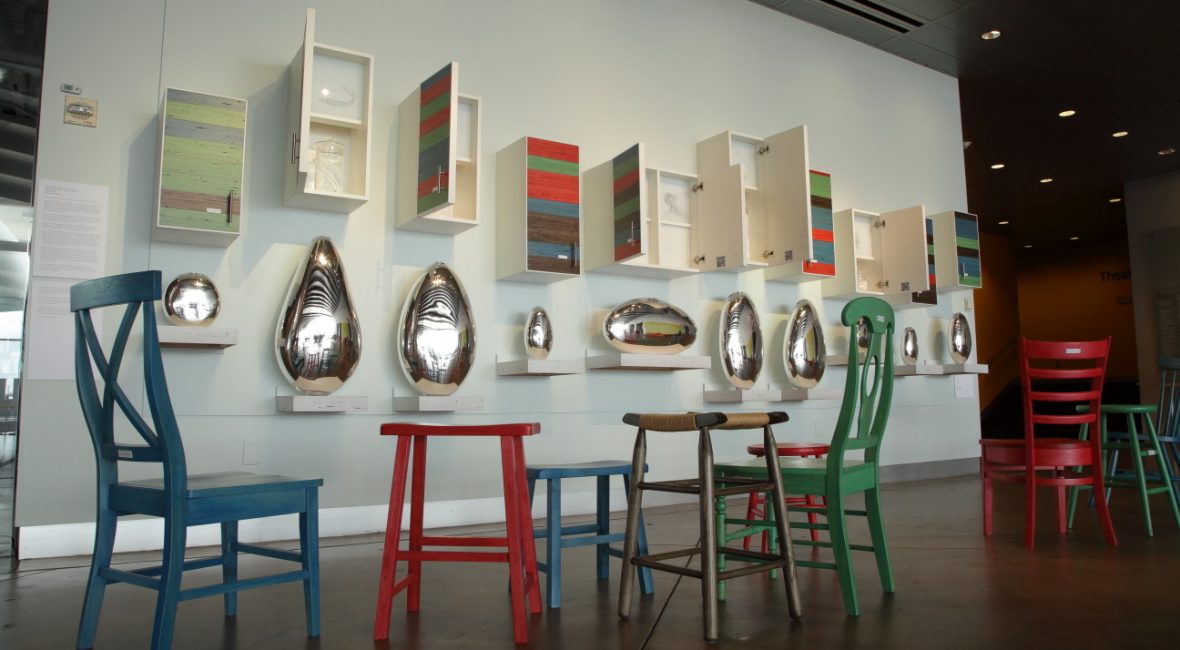
Joseph Gregory Rossano, Vanity (As installed at Museum of Glass, Tacoma, Washington, 2015); photo by C.B. Bell III, copyright and courtesy of Museum of Glass.

The Florida Zestos Skipper Butterfly is just one of the “biological specimens” featured in Vanity, an art installation by Joseph Gregory Rossano. Created for and with the support of the Museum of Glass (MOG) in Tacoma, Washington, Vanity was on display at MOG from March 3 – August 30, 2015. The exhibition tells the story of eleven species and subspecies, presumed extinct, presented through the lens of humanity’s role in their demise.

The installation includes eleven “vanity” cabinets. The cabinet doors, Rossano’s “portrait” of man, are composed of imperfect wood laminate adorned with visual representations of Homo sapiens’ DNA barcode. On the bottom corner of each door, a scientific label hints to the species’ or subspecies’ identity inside the cabinet, beneath these human “fingerprints”. Rossano depicts the species through “faded” pencil portraits and as transparent glass sculptures suspended in clear liquid, inside period specimen jars. The overall effect is of a species vanishing behind the portrait of humanity…just as it has in reality.

Beneath each cabinet are mirrored, almond-shaped glass sculptures and in front of each, a chair with a specimen label: Homo sapiens. These objects accentuate humanity’s role in the loss of each species, for, as Rossano articulates in the exhibition catalogue, “When viewing Vanity from a seated position, we see ourselves reflected in these forms that echo the divine. In our vanity we reflect generations of humans who saw themselves as divine, while the truly divine—our 11 innocent and bygone species, subspecies, and their stories—reflect the truth about us” [7].

Rossano’s use of glass as a medium is equally deliberate: “like our environment, glass is transparent, fragile, and reflective — transparent in that it hides nothing, fragile in that once damaged it may never be repaired, and reflective of how we have impacted it” [8].
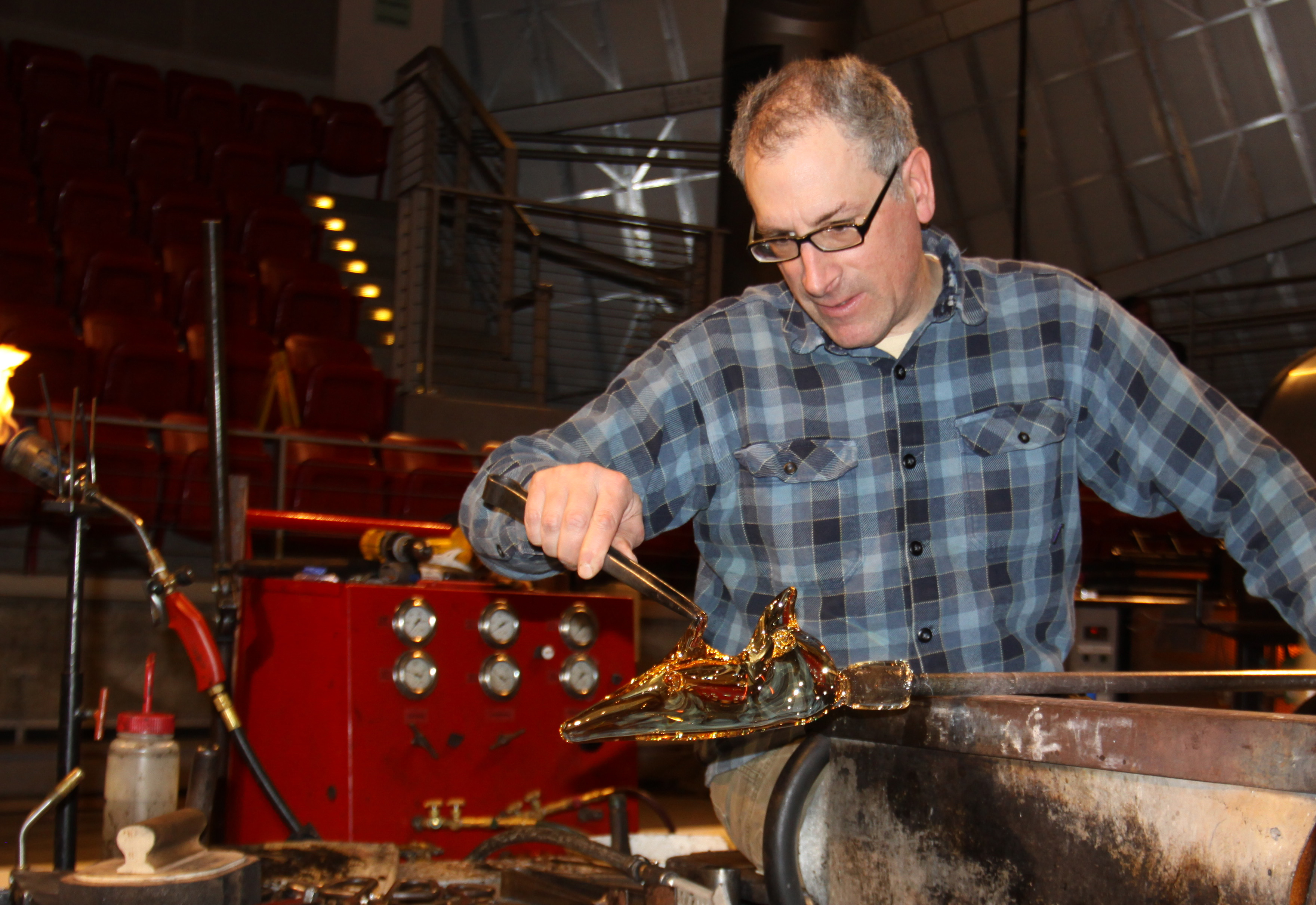
Joseph Gregory Rossano working on Vanity in the Museum of Glass Hot Shop, January 2014. Photo copyright and courtesy of Museum of Glass.

Each cabinet also offers a QR code leading to historical accounts of the enclosed species. These accounts summarize the species’ “discovery” (collection date, type locality, collector, scientific illustrations, etc.), humanity’s role in its extinction, and the year it was declared “Extinct”. To produce these species tales, Rossano collaborated with Sandra I. Berríos-Torres, MD. Berríos-Torres served as author of the 11 historical accounts and as Editorial Director of the exhibition catalogue, on behalf of Joseph Gregory Rossano.

The Biodiversity Heritage Library was a crucial resource for Berríos-Torres. Consulting dozens of publications in BHL while conducting research for Vanity, she ultimately cited 16 of them in the historical accounts that were incorporated into the exhibition and catalogue. The Florida Zestos Skipper Butterfly had the highest number of BHL citations in Vanity. Berríos-Torres used BHL to follow the butterfly’s taxonomic journey from its first listing by Hübner in 1819 to Aaron’s evaluation of the species in 1884.

“BHL resources were invaluable in my research for Vanity, in particular for accessing publications with the first collection, scientific description, and illustrations,” affirms Berríos-Torres. “The publications dated from 1819 to 2002, were published in English, German, Dutch, and French, and were contributed to BHL by 10 institutions, including university libraries, museums, government libraries, scientific research institutions, and botanical garden libraries across the USA, Canada, and England.”

From BOLD to Vanity

Berríos-Torres is an orthopaedic surgeon and a Centers for Disease Control and Prevention trained epidemiologist who has conducted laboratory and field research on infectious diseases and had a lead role in public health responses to national and international infectious disease outbreaks. Berríos-Torres was initially introduced to Rossano in the fall of 2009 at the opening of his BOLD exhibit, which examined species identity through art and incorporated Barcode of Life Data Systems‘ (BOLD) DNA barcodes into the installation’s sculptures.

BOLD was inspired by Rossano’s 2008 visit to the Área de Conservación Guanacaste (ACG) in northwestern Costa Rica at the invitation of Bradley Zlotnick, MD. At ACG, Rossano learned about DNA barcoding and met Zlotnick’s mentors, tropical ecologists Dr. Daniel H. Janzen and Dr. Winnie Hallwachs. Their 2004 landmark study on cryptic butterfly species, in collaboration with researchers at Smithsonian’s National Museum of Natural History (John M. Burns) and the University of Guelph, Canada (Paul D. N. Hebert, Erin H. Penton), “…illustrate(d) the value of DNA barcoding, especially when coupled with traditional taxonomic tools, in disclosing hidden diversity” [9]. Barcodes offered a “rediscovery” of biodiversity. Concurrently with BOLD, Rossano’s Whitewashed exhibition “…aimed at revealing our own species’ whitewashing of Man’s relationship with nature throughout time” [7].

In 2013, the art critic for the Seattle Stranger drew a parallel between Whitewashed and a blog post about eight animal species and three subspecies reported as “Extinct”, including the Eskimo Curlew, Numenius borealis (Forster, 1772), one of the species highlighted in Whitewashed and also featured in the blog. The post inspired Rossano to imagine a new installation on extinction, and Vanity was born.

Vanity and the Biodiversity Heritage Library

Berríos-Torres first discovered BHL in December 2014 while performing literature searches for the species’ historical accounts in Vanity. It quickly became a daily part of her research process.

“Between December 2014 and March 2015, in the three short months allotted to research and compose the historical accounts of the 11 animals depicted in the exhibition, I used BHL on a daily basis,” shares Berríos-Torres. “In the following months, as Editorial Director of the Vanity exhibition catalogue, I used BHL several times a week, in search of illustrations.”
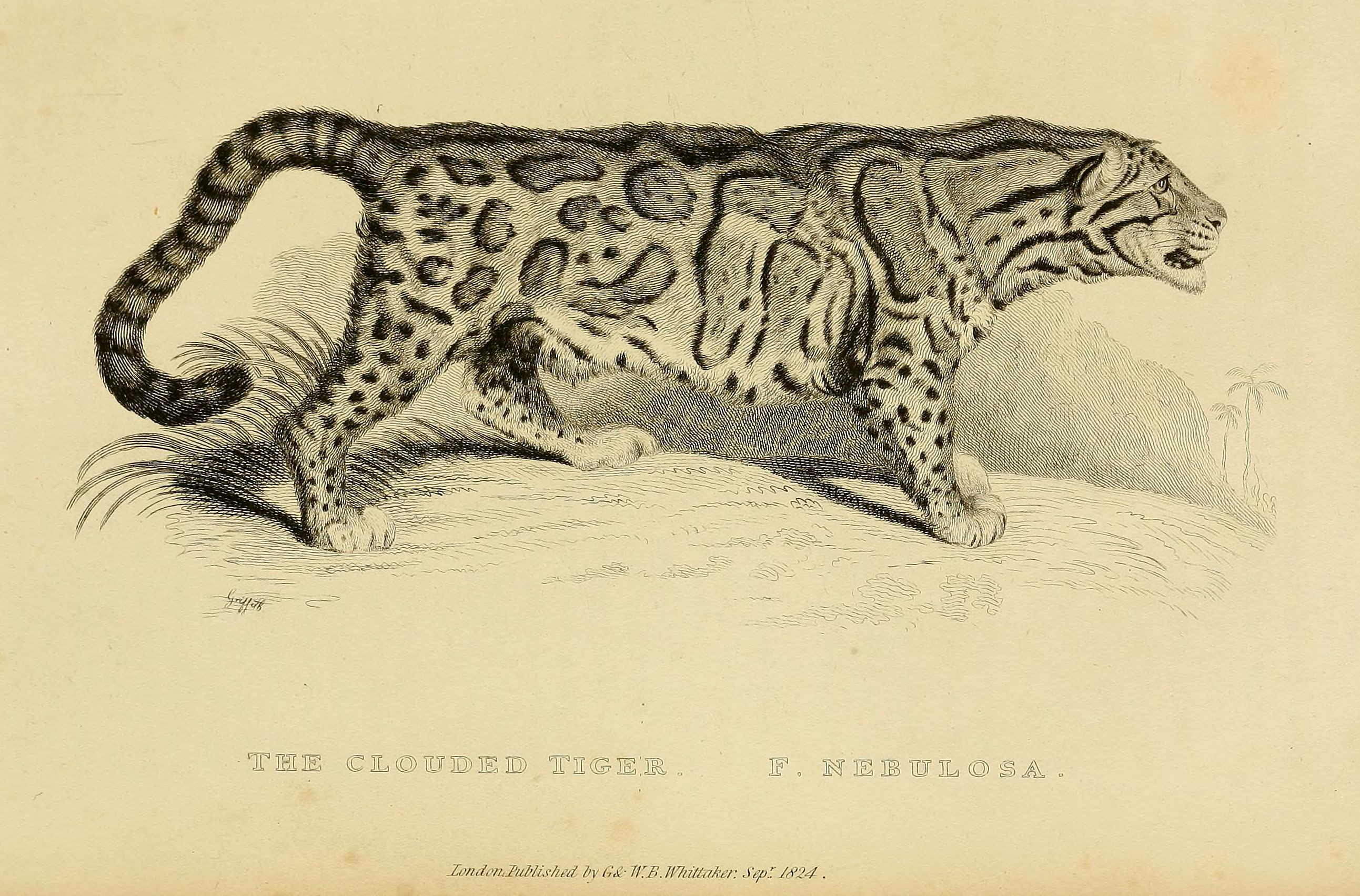
Illustration of the Clouded Leopard Neofelis nebulosa (Griffith, 1821) from Griffith’s The Animal Kingdom, v. 2 [Mammalia] (1827), contributed in BHL from Smithsonian Libraries. Retrieved from BHL and featured in the Vanity exhibition catalogue. In 2006, genetic testing revealed that the Clouded Leopard of Formosa (Taiwan) N. nebulosa brachyura, thought to be one of four subspecies of the mainland Clouded Leopard N. nebulosa (Griffith,1821), is actually genetically identical to the mainland N. nebulosa [10]. BHL houses Griffith’s first description from 1821, of what he called the Chinese or Tortoiseshell Tiger, Felis nebulosa, based solely on an illustration. In 2008, the International Union for Conservation (IUCN) listed N. nebulosa as “Regionally Extinct” in Taiwan [11].

Tracking down relevant publications required quite a bit of sleuthing. For this, BHL’s various advanced search options proved invaluable.

“In general, the most important aspect of the BHL resources lay in the ability to access first descriptions and early illustrations,” explains Berríos-Torres. “At the onset, the only information I had was the species’ or subspecies’ common and scientific names. A Google search on the scientific names yielded two additional pieces of information: the last name of the person who first described it in the scientific literature and the date of that description. Rarely could I readily find the full name of the person who described it or the original citation. The opportunity to employ varied advanced search strategies in BHL proved indispensable, particularly when starting with such limited information on the subject.”
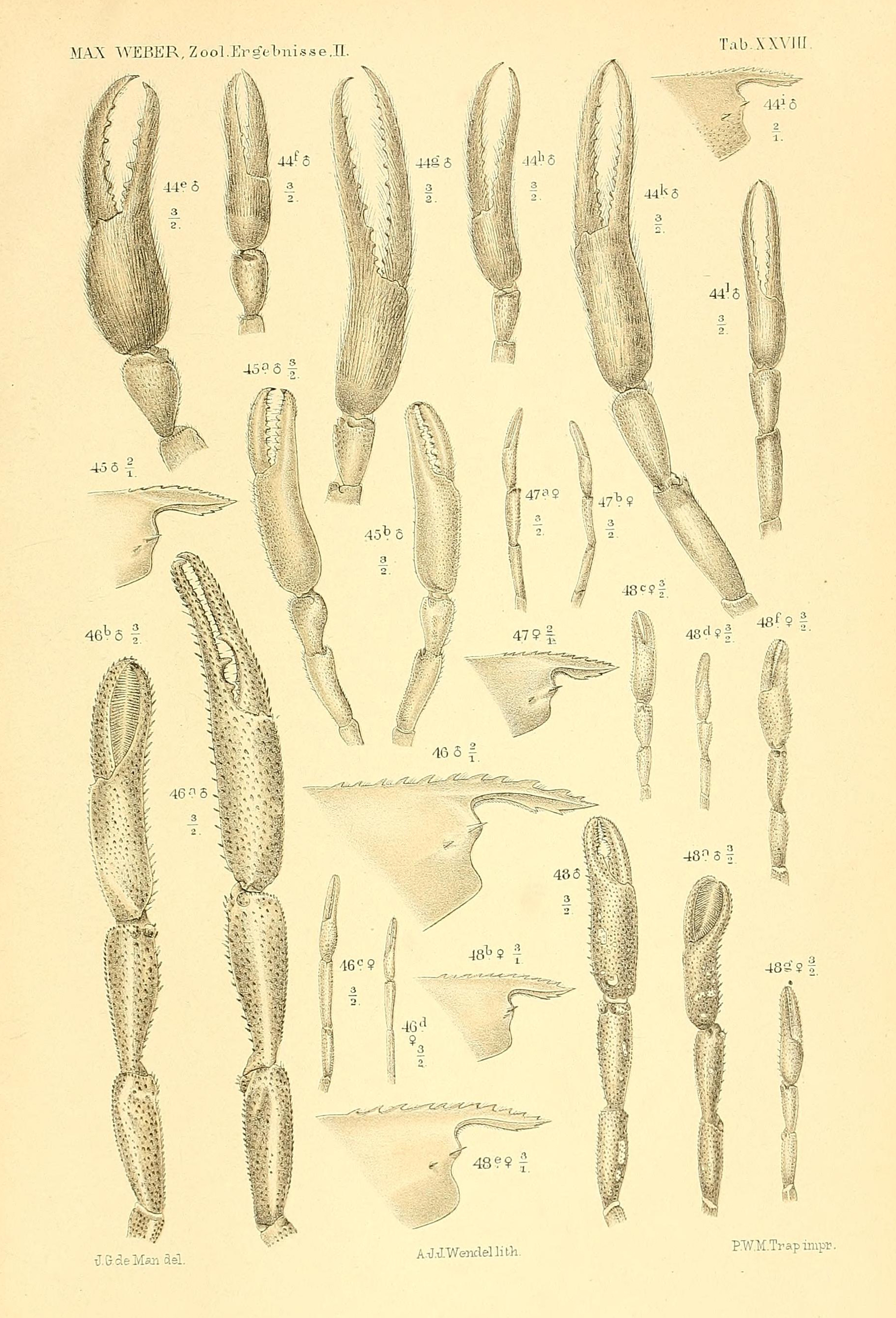
In 2015, de Grave et al., using IUCN Red List Criteria, concluded that the Freshwater Shrimp from Java Macrobrachium leptodactylus (de Man, 1879a) is one of two “Extinct” freshwater shrimp species [12]. This illustration depicts specimens collected in 1888 by Dutch-German zoologist Max Wilhelm Carl Weber — the only M. leptodactylus specimens ever collected [13]. It was published by Johannes Govertus de Man along with his description of Weber’s specimens as a new subspecies, Palaemon pilimanus, var: leptodactylus (1892). BHL also has de Man’s first description of the species as Palaemon pilimanus (1879). The illustration, retrieved from BHL, was contributed by Smithsonian Libraries and published in the Vanity catalogue.
In addition to the Zestos Skipper Butterfly, BHL provided valuable references for several other species featured in Vanity, including a freshwater shrimp from Java Macrobrachium leptodactylus (de Man, 1879a), the Clouded Leopard of Formosa (Taiwan) Neofelis nebulosa (Griffith, 1821), and the Scioto Madtom Catfish Noturus trautmani (Taylor, 1969).

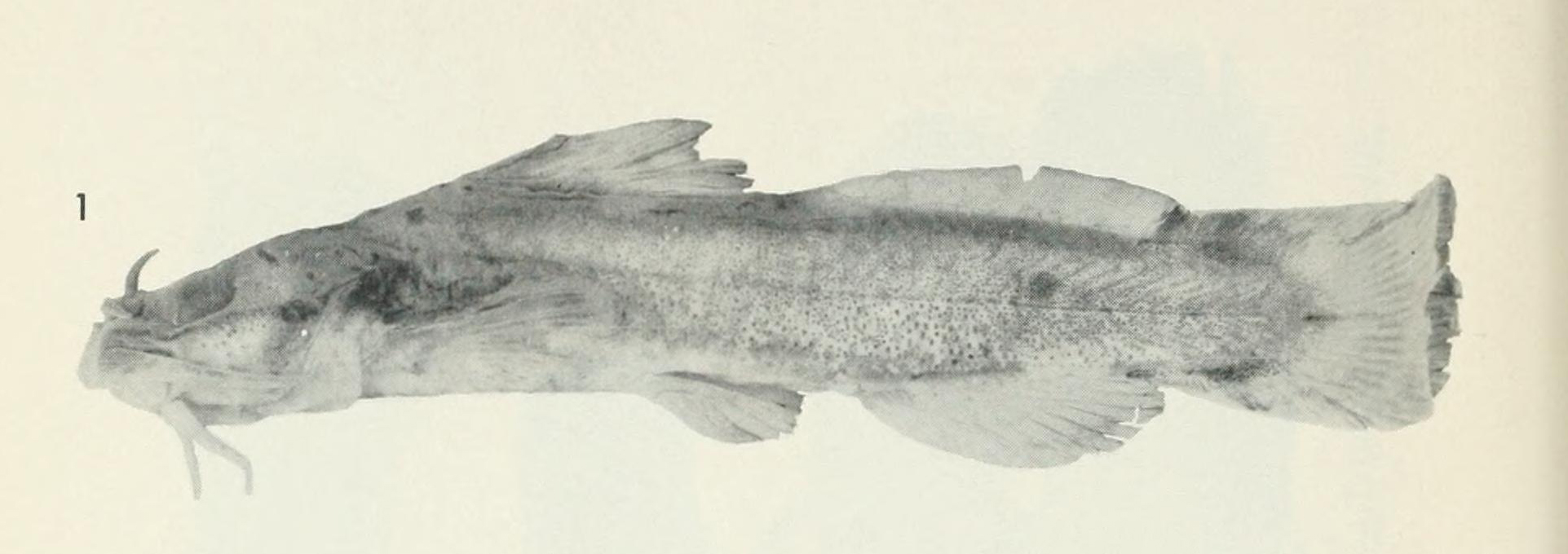
Photograph of the holotype (male) of the Scioto Madtom Catfish Noturus trautmani (Taylor, 1969), in the collections of the Smithsonian National Museum of Natural History. Bulletin – United States National Museum. No. 282 (1969). Contributed in BHL from Smithsonian Libraries.

The Scioto Madtom Catfish was first described by Smithsonian scientist Dr. William R. Taylor, former curator of fishes at the National Museum of Natural History, based on a “funny looking catfish” collected by Dr. Milton B. Trautman in 1943, from Big Darby Creek in Pickaway County, Ohio [14]. Using BHL, Berríos-Torres was able to retrieve Taylor’s original description and a photograph of the holotype, a male specimen housed in the Smithsonian collections. Scioto madtom has not been observed since Trautman’s last collected specimen in 1957 [15]. Habitat loss and competition from the Northern Madtom Noturus stigmosus (Taylor, 1969) may have contributed to Scioto Madtom’s extinction [15,16]. In 2013, the IUCN Red List declared Noturus trautmani “Extinct” [17].
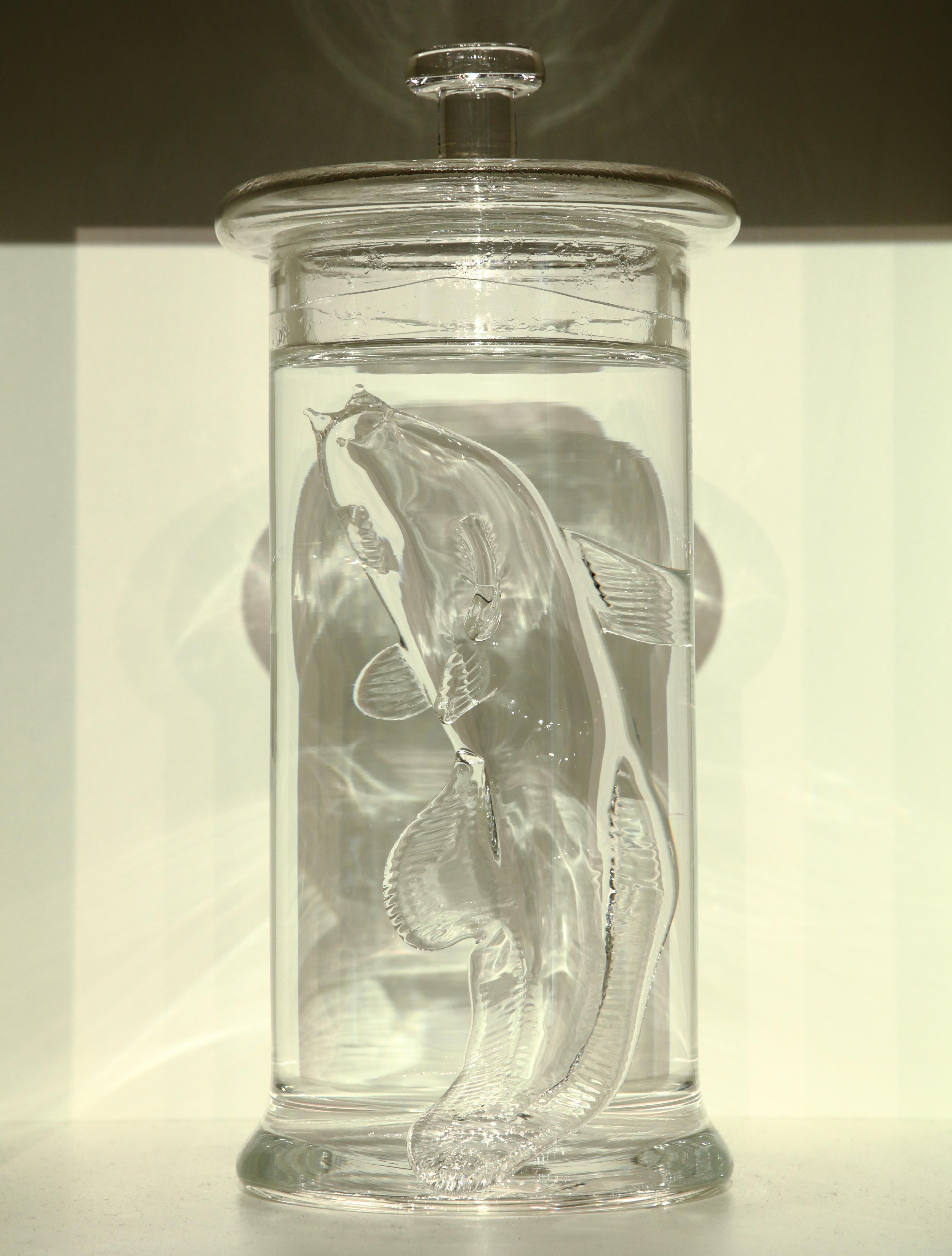
Joseph Gregory Rossano, Vanity (Scioto Madtom Catfish, Noturus trautmani (Taylor, 1969) as installed at Museum of Glass, Tacoma, Washington, 2015); photo by C.B. Bell III, copyright and courtesy of Museum of Glass.

Beyond Vanity

The themes in BOLD and Vanity continue to evolve and converge. In 2017, Dr. Jacob J.D. Egge, scientific collaborator on the Vanity exhibition catalogue, championed bringing Vanity to The University Gallery at Pacific Lutheran University (PLU, Tacoma, Washington). There, Rossano expanded the installation to include select biological specimens from Washington state and housed in PLU’s Burton Ostenson Natural History Museum collection. The specimens were displayed atop multiple antique mirrored vanities across from the original installation and included a taxidermied woodpecker alongside Rossano’s clear glass sculpture of the same. Berríos-Torres compiled a supplement to the Vanity exhibition catalogue composed of natural history summaries of the PLU specimens, written by students in Egge’s Natural History of Vertebrates course. The students’ writings were incorporated into the expanded installation through QR codes on the wall, alongside the corresponding museum specimen. In 2018, Egge and Rossano presented on their Vanity collaboration at the University of Puget Sound’s Art|Sci: Art+Science salon.

The La Jolla Historical Society, inspired by Vanity, invited Rossano to create a work that reflected a part of San Diego’s biodiversity for the 2018 La Jolla Canyons: Place, Diversity, Connections exhibition (Wisteria Cottage, La Jolla, California). The Solitary Vireo cryptic species complex [18,19], revealed by DNA sequencing to be three distinct songbird species, includes Cassin’s vireo Vireo cassinii (Xántus, 1858), the only one of the three that migrates through San Diego County. Rossano displayed three morphologically indistinguishable clear glass vireo sculptures, blown in the likeness of museum collection specimens and identified solely through scientific tags or DNA barcodes (as in BOLD), atop an antique mirrored vanity (as in Vanity at PLU).

BHL: Discovery and Rediscovery for Bioliteracy

Vanity asks the viewer to face their own culpability in the loss of our biodiversity heritage. The question is, will we listen? Will we heed the warnings that the tales of species like the Zestos Skipper convey? Or will our own vanity get in the way? As this heritage continues to disappear, do we face a future where the historic literature and museum collections become the only places where we can explore and appreciate these “lost” species? As Dr. Minno wrote in his personal reflection on the Zestos Skipper Butterfly for the Vanity exhibition catalogue:

“[Vanity] gives us a chance to think about our role in this beautiful and vibrant world. The butterflies are telling us that something is wrong with the environment. We must learn to live modestly and to protect our planet if butterflies, as well as humans, are to survive” [20].

From historic literature and museum specimens, to traditional morphological taxonomy and modern DNA barcoding techniques, Vanity and BOLD convey and reflect more than just humanity’s role in this epoch’s loss of biodiversity. Rossano’s installations highlight the “renaissance of taxonomy” [21], the need for continued scientific exploration, and the opportunities that abound in gaining a better understanding Earth’s biodiversity. Mora et al., have predicted that, “In spite of 250 years of taxonomic classification and over 1.2 million species already catalogued in a central database…some 86% of existing species on Earth and 91% of species in the ocean still await description” [22].

As Berríos-Torres’ reflection on her research for Vanity demonstrates, access to historic literature, images, and other library materials are vital to cataloguing, understanding, and communicating Earth’s biological heritage.

“BHL is unparalleled and vital in providing worldwide access to a free, publicly available, digital biodiversity repository and reference library,” affirms Berríos-Torres. “For scientists and the public alike, BHL complements the DNA barcode taxonomy reference sequences to discover and rediscover biodiversity. Together they are rich wells of collaboration democratizing global bioliteracy.”
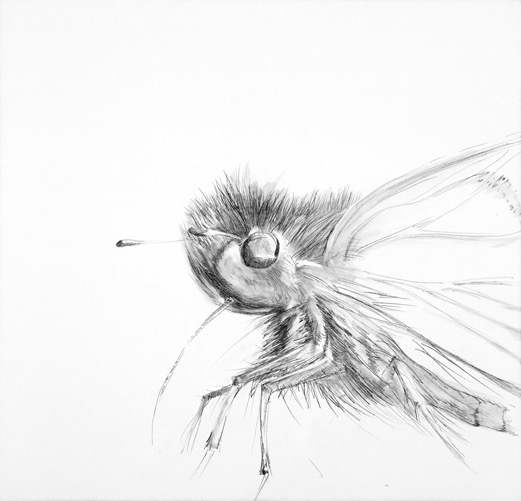
Joseph Gregory Rossano, Zestos Skipper Butterfly, 2014. Pencil on melamine, 18 X 18 inches (actual size before photographic reduction); photo by C.B. Bell III, copyright and courtesy of Joseph Gregory Rossano.


Acknowledgements

Berríos-Torres wishes to acknowledge Joseph Gregory Rossano, Museum of Glass, Bradley Zlotnick, MD, C.B. Bell III, and all Collaborating Scientists:

  • Franco Andreone, PhD, Museo Regionale di Scienze Naturali, Italy (Cape Verde Giant Skink)
  • Neil Burkhead, MS, (Retired) United States Geological Survey (USGS), Southeast Ecological Science Center, USA (Santa Cruz [Monkey Spring] Pupfish)
  • Po-Jen Chiang, PhD Formosan Wild Sound Conservation Science Center Co. Taiwan (Clouded Leopard of Formosa)
  • Neil Cumberlidge, PhD, Chair, IUCN Freshwater Crustacean Specialist Group, USA (Freshwater Shrimp from Java)
  • Jacob J. D. Egge, PhD, Pacific Lutheran University, USA (Scioto Madtom Catfish)
  • Robert E. Gill, Jr. MS, USGS, Alaska Science Center, USA (Eskimo Curlew)
  • Lonnie I. Grassman, PhD Texas A&M University, USA (Clouded Leopard of Formosa)
  • Marc C. Minno, PhD, Eco-Cognizant, Inc. USA (Rockland Meske’s Skipper & Florida Zestos Skipper Butterflies)
  • Rohan Pethiyagoda B.Sc., M.Phil, (Retired) Australian Museum, Australia (Sri Lanka Spiny Eel)
  • Edwin P. (Phil) Pister, MA – Desert Fishes Council, USA
  • Hubert Planton, DVM, Veterinarian and African Wildlife Consultant, France (Western Black Rhino)
  • Claudio Soto-Azat, MV, MSc, PhD, Universidad Andrés Bello, Chile (Northern Darwin Frog)
  • Raquel Vasconcelos, PhD, University of Porto, Portugal (Cape Verde Giant Skink)
References

[1] Ceballos G., Ehrlich P.R., Dirzo R. (2017). Biological Annihilation via the Ongoing Sixth Mass Extinction Signaled by Vertebrate Population Losses and Declines. Proceedings of the National Academy of Sciences Jul, 114 (30) E6089-E6096; DOI: 10.1073/pnas.1704949114.
[2] Ceballos G., Ehrlich P.R., Barnosky A.D., García A., Pringle R.M., and Palmer T.M. (2015). Accelerated Modern Human–Induced Species Losses: Entering the Sixth Mass Extinction. Science Advances 1(5). e1400253DOI: 10.1126/sciadv.1400253.

[3] Dirzo R., Young H.S., Galetti M., Ceballos G., Isaac N.J.B., Collen B. (2014). Defaunation in the Anthropocene. Science 345(6195): pp. 401-406. DOI: 10.1126/science.1251817.

[4] Minno M. C., Daniels J., Jue D. K. (2012). Statement on the Extinction, Decline, and Loss of Butterflies in South Florida. Available at http://www.bio.miami.edu/horvitz/Plant-animal%20interactions%202013/conservation/required%20readings/Statement%20on%20Species%20Loss%20June%202012%20MC%20Minno.pdf. Accessed on 6 December 2018.

[5] Schweitzer D. F., Minno M. C., and Wagner D. L. (2011). Rare, Declining, and P​oorly Known Butterflies and Moths (Lepidoptera) of Forests and Woodlands in the Eastern United States. U.S. Forest Service, Forest Health Technology Enterprise Team, FHTET-2011-01. USDA Forest Service, Morgantown, West Virginia. 517 pp.

[6] Minno M.C. (2010). Butterfly Extinctions in South Florida. American Butterflies 8(3):17. Available at: http://www.naba.org/pubs/ab183/ab183_extinctions.pdf. Accessed on 6 December 2018.

[7] Rossano, J.G. (2015). Preface. In S.I. Berríos-Torres (Ed.), Joseph Gregory Rossano: Vanity (pp.13-16). Tacoma, WA: Museum of Glass.

[8] Lawrimore S. (2015). Swan Song. In S.I. Berríos-Torres (Ed.), Joseph Gregory Rossano: Vanity (pp.21-26). Tacoma, WA: Museum of Glass.

[9] Hebert P.D.N., Penton E.H., Burns J.M., Janzen D.H., and Hallwachs W. (2004). Ten Species in One: DNA Barcoding Reveals Cryptic Species in the Neotropical Skipper Butterfly Astraptes Fulgerator. PNAS 101(41): 14812-14817. www.pnas.org/cgi/doi/10.1073/pnas.0406166101. Accessed on 6 December 2018.

[10] Buckley-Beason V.A. et al. (2006). Molecular Evidence for Species-Level Distinctions in Clouded Leopards. Current Biology 16(23):2371-2376. Available at: http://www.cloudedleopard.org/Documents/Val_CB_2006.pdf. Accessed on 6 December 2018.

[11] Grassman L., Lynam A., Mohamad S., Duckworth J.W., Bora J., Wilcox D., Ghimirey Y., Reza A. & Rahman H. (2016). Neofelis nebulosa. The IUCN Red List of Threatened Species 2016: e.T14519A97215090. http://dx.doi.org/10.2305/IUCN.UK.2016-1.RLTS.T14519A97215090.en. Accessed on 6 December 2018.

[12] De Grave S., Smith K.G., Adeler N.A., Allen D.J., Alvarez F., Anker A., et al. (2015). Dead Shrimp Blues: A Global Assessment of Extinction Risk in Freshwater Shrimps (Crustacea: Decapoda: Caridea). PLoS ONE 10(3): e0120198. doi:10.1371/ journal.pone.0120198. Accessed on 6 December 2018.

[13] Berríos-Torres S.I. (2015). Freshwater Shrimp from Java. Macrobrachium leptodactylus (de Man, 1879a). In S.I. Berríos-Torres (Ed.), Joseph Gregory Rossano: Vanity (pp.52-56). Tacoma, WA: Museum of Glass.

[14] U.S. Fish and Wildlife Service (USFWS). (1976). National Digital Library. Milton B. Trautman Oral History Transcript. Interview with Milton B. Trautman. Interviewer Michael Smith. “Audio Cassette Dub from Reel-to Reel”. July 1976. Available at: http://digitalmedia.fws.gov/cdm/ref/collection/document/id/1031. Accessed on 6 December 2018.

[15] Scioto madtom (Noturus trautmani) 5-Year Review: Summary and Evaluation. U.S. Fish and Wildlife Service, Midwest Region, Ohio Ecological Services Field Office, Columbus, Ohio. Available at: http://www.fws.gov/midwest/endangered/recovery/5yr_rev/pdf/scma5yr2009.pdf. Accessed on 6 December 2018.

[16] King C.C. (1981). Prairies of the Darbie Plains in West-Central Ohio. Stuckie & Reese. Ohio Biological Survey Biology Notes 15:108-127. Available at: http://images.library.wisc.edu/EcoNatRes/EFacs/NAPC/NAPC06/reference/econatres.napc06.cking.pdf. Accessed on 6 December 2018.

[17] NatureServe. Noturus trautmani. The IUCN Red List of Threatened Species 2013: e.T14908A19032932. http://dx.doi.org/10.2305/IUCN.UK.2013-1.RLTS.T14908A19032932.en. Accessed on 6 December 2018.

[18] Murray B. W., McGillivray W. B., Barlow J. C., Beech R. N., and Strobeck C. (1994). The Use of Cytochrome B Sequence Variation in Estimation of Phylogeny in the Vireonidae. The Condor 96:1037-1054. https://sora.unm.edu/sites/default/files/journals/condor/v096n04/p1037-p1054.pdf. Accessed on 17 December 2018.

[19] Johnson N.K. (1995). Speciation in Vireos. I. Macrogeographic Patterns of Allozymic Variation in the Vireo Solitarius Complex in the Contiguous United States. The Condor 97:903-919. https://sora.unm.edu/sites/default/files/journals/condor/v097n04/p0903-p0919.pdf. Accessed on 17 December 2018.

[20] Minno, M.C. (2015). Reflections on the Rockland Meske’s Skipper Butterfly and the Zestos Skipper Butterfly. In S.I. Berríos-Torres (Ed.), Joseph Gregory Rossano: Vanity (pp.52-56). Tacoma, WA: Museum of Glass.

[21] Miller S.E. (2007). DNA Barcoding and the Renaissance of Taxonomy. Proc Natl Acad Sci USA 104(12): pp. 4775-6. Epub 2007 Mar 15. https://www.pnas.org/content/104/12/4775. Accessed on 17 December 2018.

[22] Mora C, Tittensor DP, Adl S, Simpson AGB, Worm B. (2011). How Many Species Are There on Earth and in the Ocean? PLoS Biol 9(8): e1001127. doi:10.1371/journal.pbio.1001127. Accessed on 17 December 2018.

February 7, 2019by Grace Costantino
Blog Reel, User Stories

Re-Examining the Jurassic Mammal Fossils of the UK

View Full Size Image
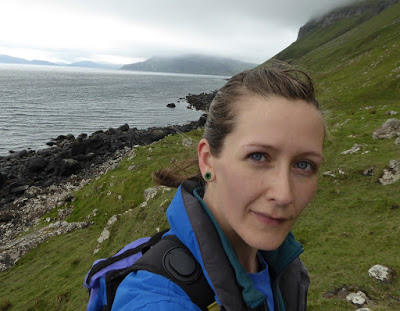
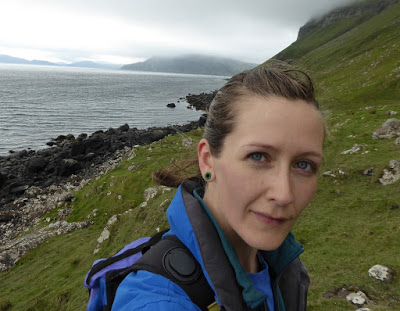
Elsa Panciroli, Palaeontology PhD candidate, at work on the Isle of Skye. Photo credit: Elsa Panciroli.

Mesozoic mammal palaeontology is in the middle of a revolution. Since the first mammals and their closest mammal-like relatives were discovered in the early 1800s, most of the fossil record for these earliest ancestors of ours were fragments of jaw and isolated teeth, the size of rice grains. In the last fifteen years however, an increasing number of more complete skeletons have been found in China, radically changing our understanding of the first mammals. It turns out they were more diverse and ecologically specialised than anyone previously suspected.

Now we have new skeletons, it is more important than ever to pull together and sort through the historical fossil finds and descriptions. This means tracking down old and often obscure scientific papers. That’s how I discovered BHL.

My name is Elsa, and I’m in the third year of my PhD on the origin and evolution of mammals, at the University of Edinburgh and National Museums Scotland. My work centres on the spectacular fossils found on the Isle of Skye; a beautiful island in Scotland’s Inner Hebrides. The Middle Jurassic limestones of Skye are yielding the best Mesozoic aged mammal fossils found in the UK, and arguably among the best in the world.

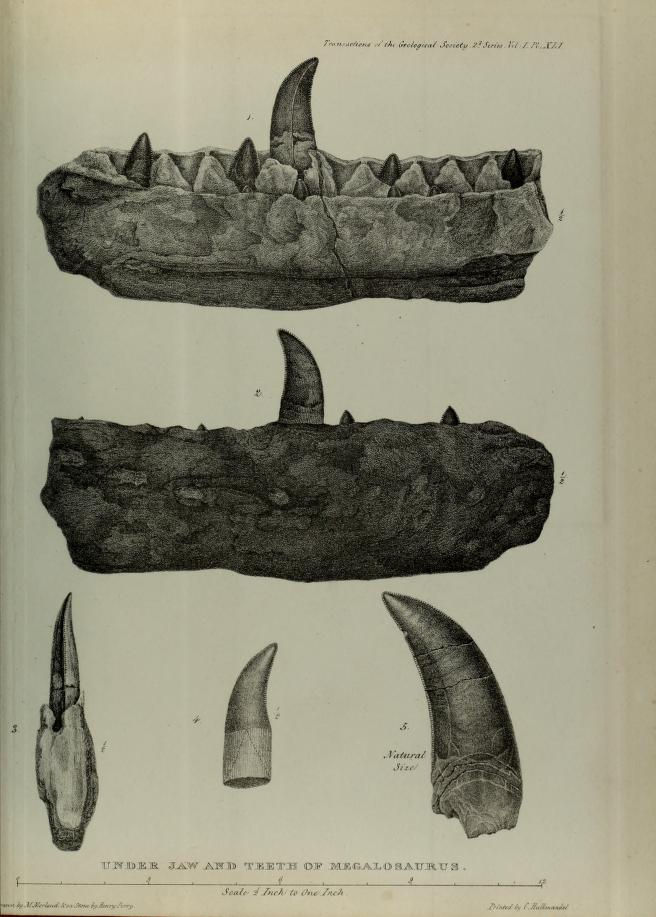
The mammal fossils of Skye come from similar aged rocks to the very first Mesozoic mammal fossils ever described. In 1824, The Reverend William Buckland not only introduced the Victorian world to the meat-eating dinosaur Megalosaurus, but also a sturdy little mammal jaw, complete with little pointed teeth. This came to be called Phascolotherium. These fossils were recovered from the Stonesfield Slate of Oxfordshire. The rocks are Bathonian in age, a Jurassic time period spanning 168-166 million years ago.

View Full Size Image
Upper jaw and teeth of Megalosaurus. Buckland, William. Notice on the Megalosaurus or great Fossil Lizard of Stonesfield. Transactions of the Geological Society ser. 2, v. 1: 390-396. Digitized by California Academy of Sciences. http://s.si.edu/2y9Eb7M.

Since Buckland’s initial description, the Bathonian rocks of the UK have been the most productive Mesozoic mammal strata. Many new species and genera have been identified from sites such as Kirtlington in Oxfordshire, and Watton Cliff in Dorset. In order to understand the relationships between the mammals we are now finding on Skye, and previous fossil finds, I’ve had to scour old journal articles and papers.

Thanks to the BHL, I’ve been able to read the original descriptions by William Buckland and Richard Owen, and those by the many great palaeontologists who followed them. To begin with, I had relied on sending hopeful emails to established colleagues to try and beg obscure old scientific papers from them. I came across BHL a few months into the first year of my PhD, via desperate searching for old articles online. To my delight, many of the old journals I needed were on their website. Once I found what I wanted, it was easy to select the relevant pages and generate a PDF, which BHL emailed to me within minutes. This service has to be one of the best things BHL offers.

From Richard Owen’s On the Jaws of Thylacotherium prevostii (Valenciennes) from Stonesfield (1838), to Clemens and Mills Review of Peramus tenuirostrus Owen (Eupantotheria, Mammalia) (1971), I’ve been able to track down papers unavailable elsewhere. These may be old, but without them I wouldn’t be able to appreciate the full scientific history of the specimens we are working on today, nor check on the references of previous authors who cited them.

View Full Size Image
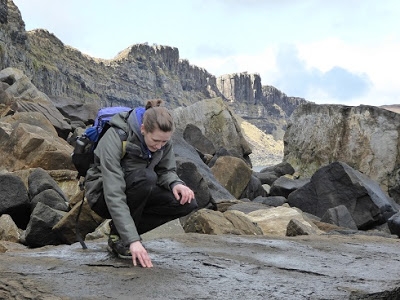
Panciroli prospecting for Jurassic fossils in Northern Skye. Photo credit: Elsa Panciroli/Davide Foffa.

Some of the papers BHL have been able to provide have had even more direct bearing on my own publications. They’ve also proven a test of BHL’s staff helpfulness – a test they passed with flying colours.

Many of the animals I study were not yet true-mammals; lacking the distinguishing skeletal characteristics that define this group, such as a dentary-squamosal jaw joint. They are instead, the closest relatives, referred to as mammaliaforms and mammaliamorphs. One such group are the Tritylodontidae. These animals would have looked a lot like mammals at first glance, but they are only a close-sister group. They split off from the mammals and charted their own course through evolutionary history, developing grinding teeth for eating vegetation, and growing much larger than their contemporaneous mammal cousins.

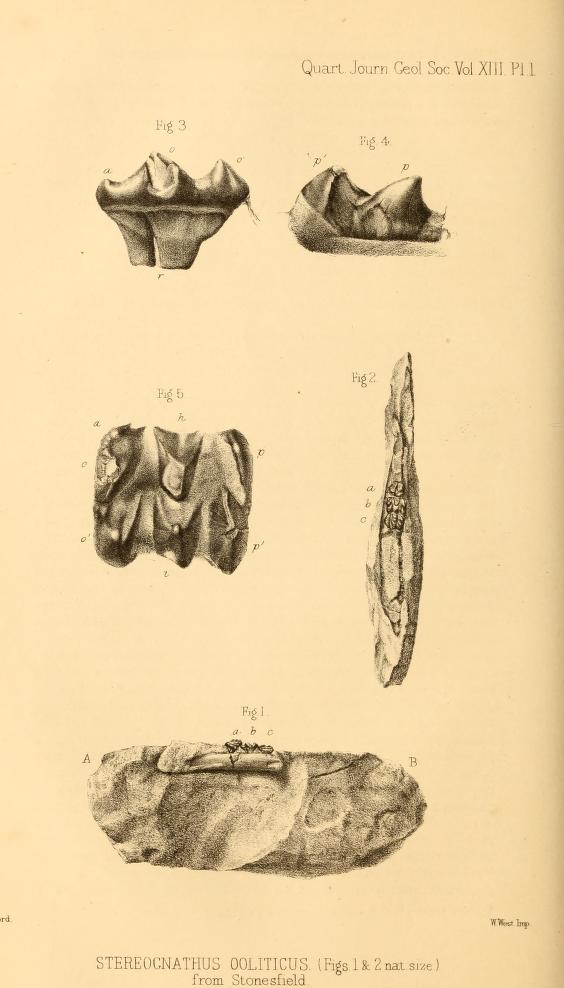
The first tritylodontid described was from the Jurassic of England, a creature called Stereognathus ooliticus. In 1857, Sir Richard Owen figured it in one of his papers, from the type specimen which comprises three molar teeth in a piece of upper jaw. My colleagues and I were looking at the related Stereognathus species, S.hebridicus from Skye. Our goal was to determine if the Scottish species was truly different, or whether all of these fossils were actually from the same original English species. To make this comparison we not only had to look at the original fossil, but track down a high quality copy of Richard Owen’s figure from 1857. Online we found plenty of copies of it, but none in the high resolution necessary.

View Full Size Image
Stereognathus ooliticus. Owen, Richard. 1857. On the affinity of Stereognathus ooliticus (Charlesworth) a mammal from the Oolitic slate of Stonesfield. Quarterly Journal of the Geological Society of London 13:1–11. Digitized by Smithsonian Libraries. http://s.si.edu/2yeJQel.

I contacted the BHL by email. They had the journal containing Owen’s description. I visited one of their Member libraries at the Natural History Museum in London, where a helpful staff member found the journal and showed me how to use the scanner. When this proved not to yield a high-enough resolution image for my purposes, she took me behind the scenes and we scanned the figures on another, more powerful scanner in the back-office. I was so grateful!

Thanks to the images I got that day, my co-authors and I were able to finish our publication: A reassessment of the postcanine dentition and systematics of the tritylodontid Stereognathus (Cynodontia, Tritylodontidae, Mammaliamorpha), from the Middle Jurassic of the United Kingdom (See Figure 3). We saw how the fossil drawn by Owen had been worn and damaged over the years by comparing this image to the existing specimen. The damage has an impact on how we carry out taxonomic comparisons between new material found, and the old type specimens. This knowledge wouldn’t have been available without BHL’s resources and assistance.

I now use BHL at least every month or two. Instead of a last resort, I consider it one of my first stops in any search for historical publications. In an age when researchers increasingly expect to be able to access resources online, it provides an amazing resource. The fact that this resource is open access is just amazing. It is only right that everyone should be able to appreciate our shared biodiversity heritage: BHL is helping make that a reality.

______________________________________ 

This post may contain the personal opinions of BHL users or affiliated staff and does not necessarily represent the official Biodiversity Heritage Library (BHL) position on these matters.

October 12, 2017by ulib-libraryjobs
Blog Reel, User Stories

Old Literature, New Discoveries: BHL Supports Cutting Edge Whale Research

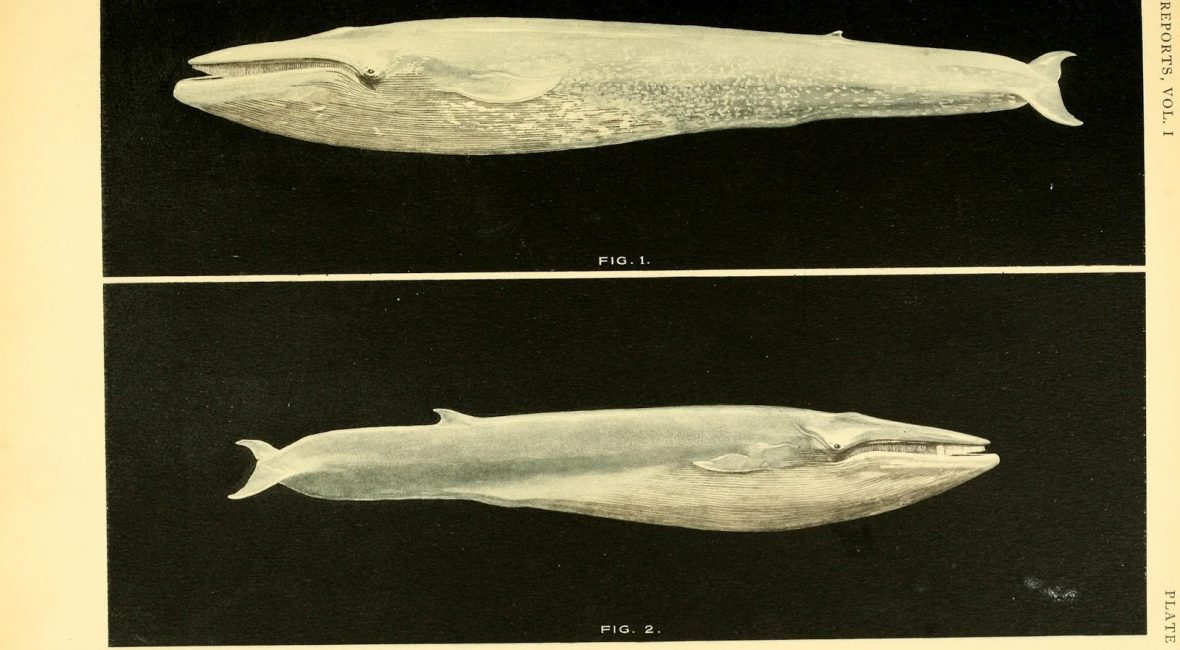
In the early 20th century, the British Colonial Office and the Discovery Committee of the British Government undertook a series of major investigations into the biology of whales in the Southern Hemisphere. Using ship- and shore-based equipment (including whaling stations on South Georgia Island operated by the UK and other nations), these Discovery Investigations, as they were called, significantly advanced human knowledge of whale morphology and ecology.

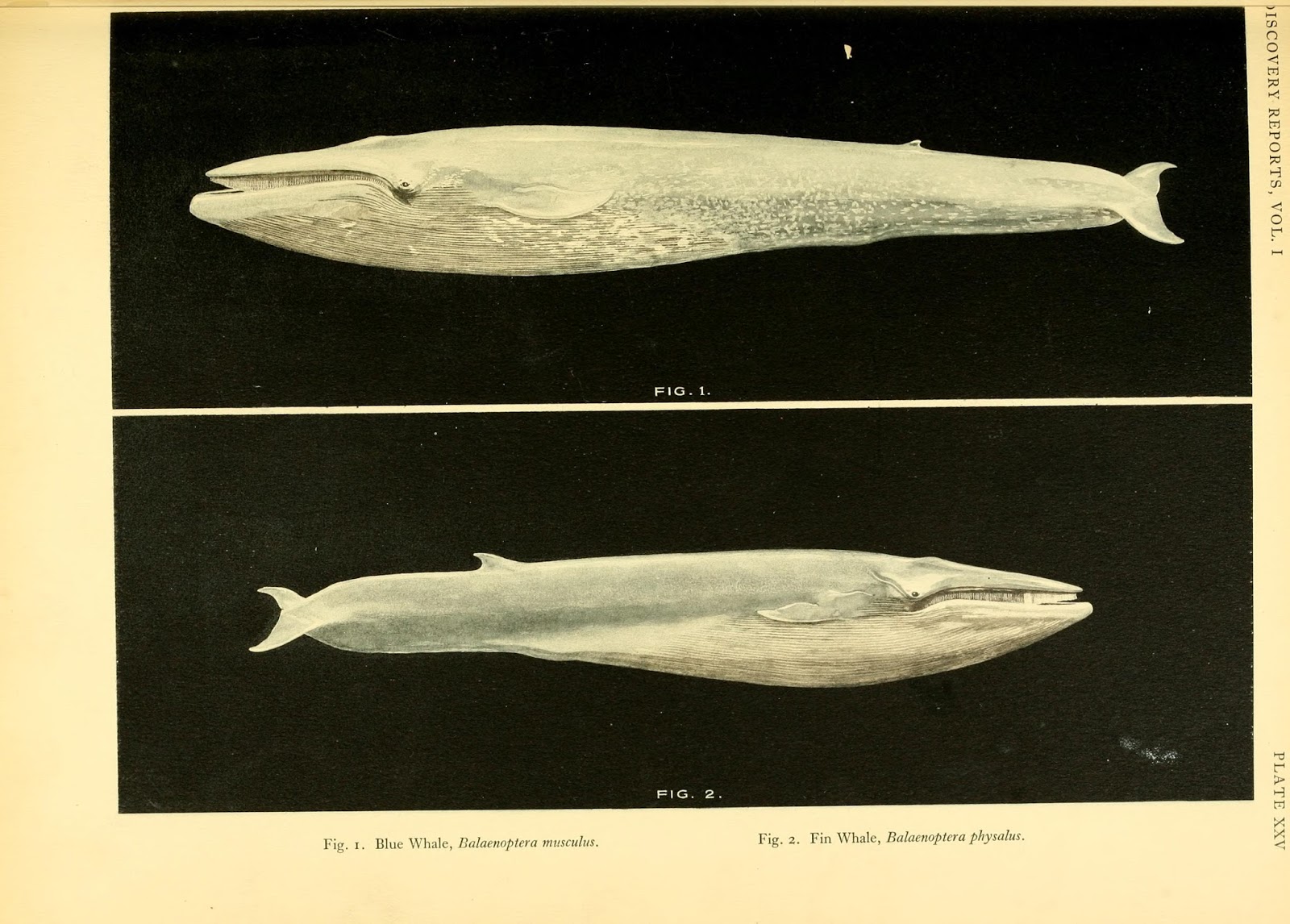
The results of the Investigations were presented within the 37 volume series entitled the Discovery Reports. Groundbreaking for their time, these Reports are still important for cetacean research today.

“The data collected and published in the Reports were unique because they represented, in every case, a one-time, time-stamped opportunity to record the precise dimensions, weights, gut contents and many other details gathered as part of whaling activities,” explains Dr. Nicholas Pyenson, Curator of Fossil Marine Mammals at the Smithsonian’s National Museum of Natural History (NMNH).

View Full Size Image
Mackintosh NA, Wheeler JFG (1929) Southern blue and fin whales. Discovery Reports 1:257—510. http://www.biodiversitylibrary.org/page/15917732. Digitized by Smithsonian Libraries.

Pyenson has used the data in the Reports to inform several recent studies. For example, he and colleague Simon Sponberg used data on total length and adult body mass for Southern blue and fin whales, published in 1929 as part of the Discovery Reports, to help develop and test regression methods for reconstructing the body size of extinct whales. Their findings, published in 2011 in the Journal of Mammalian Evolution, provided major insight into studying the evolution of cetacean body size.

View Full Size Image
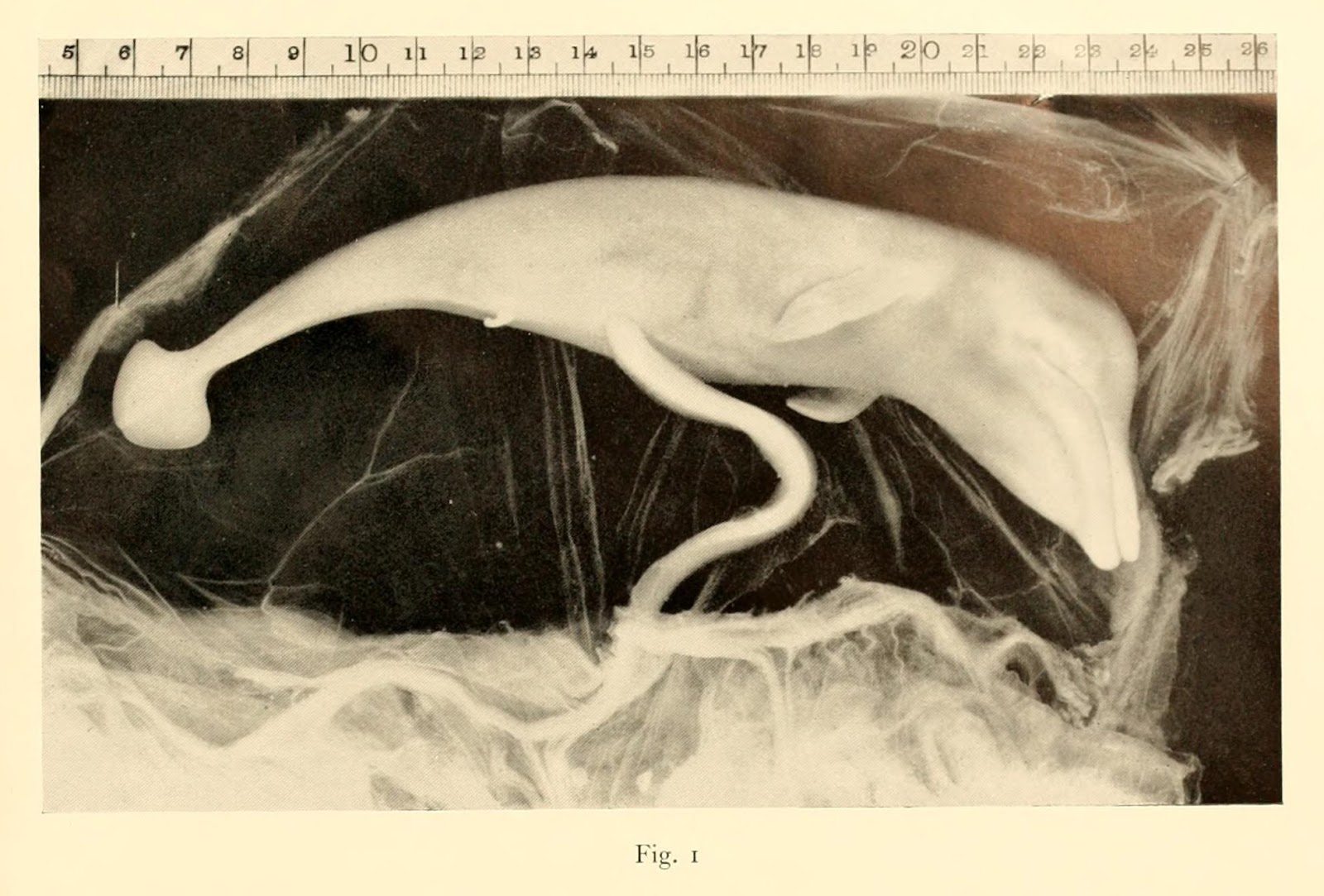
Fin whale fetus. Laws RM (1959) The foetal growth rates of whales with special reference to the fin whale Balaenoptera physalus Linn. Discovery Reports 29: 281–308. http://www.biodiversitylibrary.org/page/5569026. Digitized by MBLWHOI Library.

More recently, while researching the evolution of whale hearing, Maya Yamato and Pyenson used data on the fetal growth rates of whales, published in 1959 as part of the Discovery Reports, to gain insight into the maturation of the ear in baleen and toothed whales. Their research, published in 2015 in PLOS ONE, traces the development of an evolutionarily novel feature in cetaceans – the use of an acoustic funnel, rather than an ear canal, for hearing.

“The historic information in the Reports is so valuable for a variety of questions about the evolution, anatomy, and ecology of large whales,” asserts Pyenson.

View Full Size Image
Dr. Nicholas Pyenson. Selfie from a seakayak in Sitka Sound, Alaska.

Pyenson has been studying marine mammals and other marine vertebrates for over 15 years. He’s published pioneering research on the evolution and diversification of marine mammalian lineages and has used revolutionary techniques like 3D modeling to uncover new insights into the anatomy and transformation of this group. He’s even shared some of his research during past BHL-related events, including live webcasts for the #FWTrueLove and #FossilStories campaigns.

Pyenson’s scientific achievements, including the use of emerging digital tools to expand public access to fossils, earned him the coveted Presidential Early Career Award for Scientists and Engineers (PECASE). He is the first NMNH scientist to receive this award, which is the “highest honor bestowed by the United States Government on science and engineering professionals in the early stages of their independent research careers.”

While Pyenson has embraced many novel research techniques, the historic data found in publications like the Discovery Reports underpins much of his work. Thanks to the digital open access provided by the Biodiversity Heritage Library (BHL), it’s easier than ever to integrate these resources into modern research processes.

“As a free, mobile archive for natural history literature, BHL is ideal for 21st century research, which can happen on the field, in a museum, or at a coffee shop, as long as there’s internet connectivity,” lauds Pyenson.

Pyenson began using BHL nearly ten years ago, and over the past decade, it has had a major impact on his – and his colleagues’ – research.

“BHL supercharges the speed and efficiency of scholarly research, especially in the natural sciences where old literature sometimes contains the only information on a topic, taxon, geographic locality or collector,” says Pyenson. “And because BHL is open-access, I know firsthand that many of my international colleagues have dramatically better access to the literature covered in its database than more recent journals locked behind pay-walls.”

Pyenson uses BHL at least once a week, obtaining descriptions, measurements, and detailed views of morphology on fossil or modern specimens. The usability of the website, and the fidelity and quality of the scans, allow him to access and download information that is critical to his work.

“I think BHL’s interface is really wonderful. The links are crisp and easy to find and share. I especially enjoy the selectivity of being able to download just a few pages or only a specific article from an issue.”

View Full Size Image
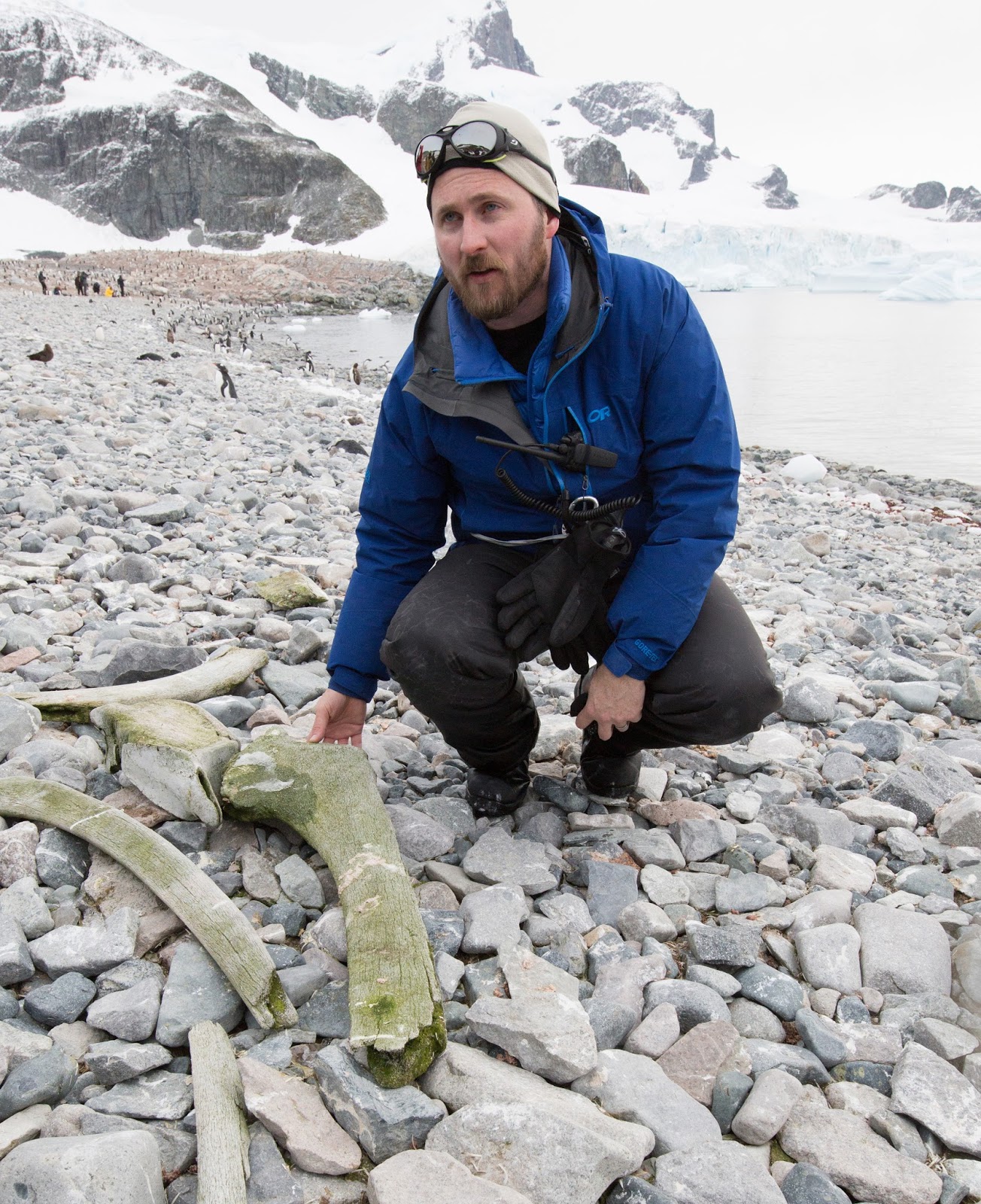
Dr. Nicholas Pyenson at Cuverville Island, Antarctica. Photo credit: Martha Stewart.

Given the significant impact that BHL has had on Pyenson’s work, he is anxious that more people be made aware of the vast abundance – and importance – of this free and open access collection.

“We need to get the word out. Old literature matters,” asserts Pyenson.

And matter it does. As Dr. Pyenson’s experience demonstrates, by providing a wealth of data on species morphology, phylogeny, and ecology, historic literature forms the foundation for the investigation of modern and ancient biodiversity. By making this content globally accessible to anyone with an Internet connection, BHL is helping to advance scientific research and inspire discovery of the natural world.

You can help support global research through a tax-deductible donation to BHL. With your help, we can continue to democratize access to information about biodiversity and empower scientific research on a global scale.

______________________________________

This post may contain the personal opinions of BHL users or affiliated staff and does not necessarily represent the official Biodiversity Heritage Library (BHL) position on these matters.

May 11, 2017by ulib-libraryjobs
Blog Reel, Featured Books

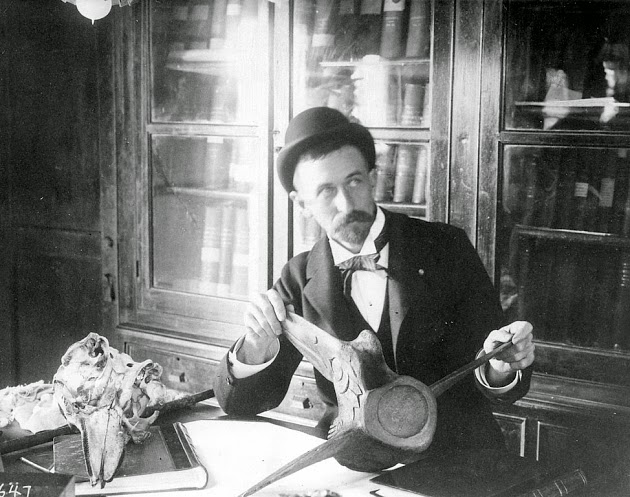
True Detective: Frederick W. True’s lifelong dedication to uncovering the natural history of marine mammals

This post is a guest post by John Ososky and Nick Pyenson, originally published on the Pyenson Lab blog.

The Smithsonian Field Book Project is showcasing Frederick William True in February! This post is follows in a series of blogs and social media content from the Biodiversity Heritage Library, Pyenson Lab, Smithsonian Transcription Center, Smithsonian Archives, and Smithsonian Libraries celebrating #FWTrueLove. Click on these links to the first and second posts; the third one, below, is based on a seminar recently presented by John Ososky (OsteoPrep Lab, Department of Vertebrate Zoology, NMNH) and co-written with N. D. Pyenson.

View Full Size Image
Frederick William True. c. 1880s. Smithsonian Institution Archive. Negative Number 2002-32245.
http://siarchives.si.edu/collections/siris_sic_10688.

In 1858, the inland port of Middletown, Connecticut, was the largest manufacturer of marine hardware in the United States, at a time when the shipping industry shifted from sails to steam. Frederick W. True was born that year, and unsurprisingly developed a lifelong interest in ships and fisheries, especially as he witnessed the decline of the Yankee whaling industry. After earning a Bachelor of Science degree in 1878, he took a job as clerk with the U.S. Fish Commission, which at the time was headed by the Smithsonian’s second Secretary, Spencer Fullerton Baird.

View Full Size Image
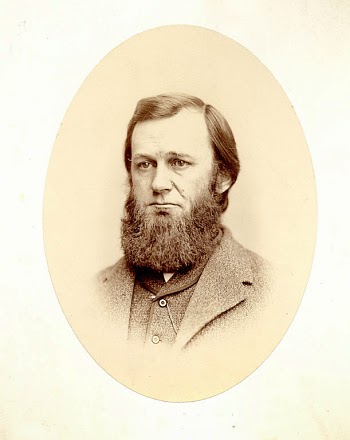
Spencer Fullerton Baird. Smithsonian Archives – History Div, 46853/oval or 2004-60740.
http://siarchives.si.edu/history/spencer-fullerton-baird.

While Secretary of the Smithsonian, Baird also decided to serve as the first Commissioner of the U.S. Fish Commission (a precursor to NOAA’s National Marine Fisheries Service). Under Baird’s guidance, the Commission became a robust scientific enterprise, undertaking extensive surveys of fisheries along all U.S. coastlines, censuses of fishery laborers, and also collecting data on target species and fisheries infrastructure. Baird was strategic about his influence, and he used the expansion of the Commission as an opportunity to hire promising young naturalists — such as True — and get their foot in the door at the Smithsonian.

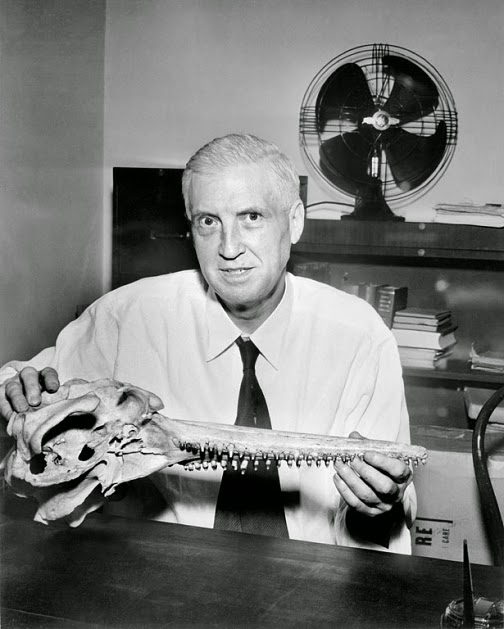
Recruited by Baird, True was initially a special agent for the U.S. Fish Commission, but eventually Baird put him in charge of the joint Smithsonian-U.S. Fish Commission display at the Berlin Fisheries Exhibition of 1880, where many of the specimens collected by special agents for the Commission were put on display. At the time, the Smithsonian lacked an official library (for various historical reasons), and Baird rectified this situation in 1881 by donating his own personal library to form the core of a new research library at the Smithsonian. Baird recognized True’s diligence and acumen as a reseacher, and hired him to lead it. True seized on the opportunity, and improved on the idea immediately, forming divisional libraries to meet the specialized needs of individual curators, which still continue to this day (such as the Kellogg Library of marine mammalogy, named in honor of Remington Kellogg, who never met True but succeeded him as a Smithsonian marine mammalogist).

View Full Size Image
Remington Kellogg. Smithsonian Institution Archives. Image Number 78-3701.
http://siarchives.si.edu/collections/siris_sic_11289.

True sometimes diverged from his role as a librarian to fill a void as acting curator of mammals; Baird, who noted True’s ambition and drive, soon appointed him curator of mammals in 1883. While microscopic descriptions were the rage in natural history at the time, True’s poor eyesight made this type of work difficult. True instead recognized the wealth of marine mammals specimens at the Smithsonian that had been generated in part by Baird’s collections from the Commission, as well as collections made by Captain Charles M. Scammon in the North Pacific Ocean in the 1870s and the prolific Edward Drinker Cope, who had been hired by Baird to write a monograph on cetaceans, which only came to partial fruition. Thus, True had the opportunity and motivation to expand his interest in marine fisheries and take on the study of cetaceans.

At the same time, True recognized the need to expand and grow the collections for the U.S. National Museum (USNM, the forerunner of what today is called the National Museum of Natural History, or NMNH). In a shrewd and practical move, True encouraged keepers of lighthouses and life-saving stations along the U.S. coasts to collect stranded specimens and data on marine mammals. True’s 1884 guide on the topic effectively presaged the logic of the modern marine mammal stranding network, which only formally took effect with the U.S. Marine Mammal Act of 1972.

View Full Size Image
Suggestions to the keepers of the U.S. life-saving stations, light-houses, and light-ships; and to other observers, relative to the best means of collecting and preserving specimens of whales and porpoises. True, F.W.  (1884).
http://biodiversitylibrary.org/page/16177227.

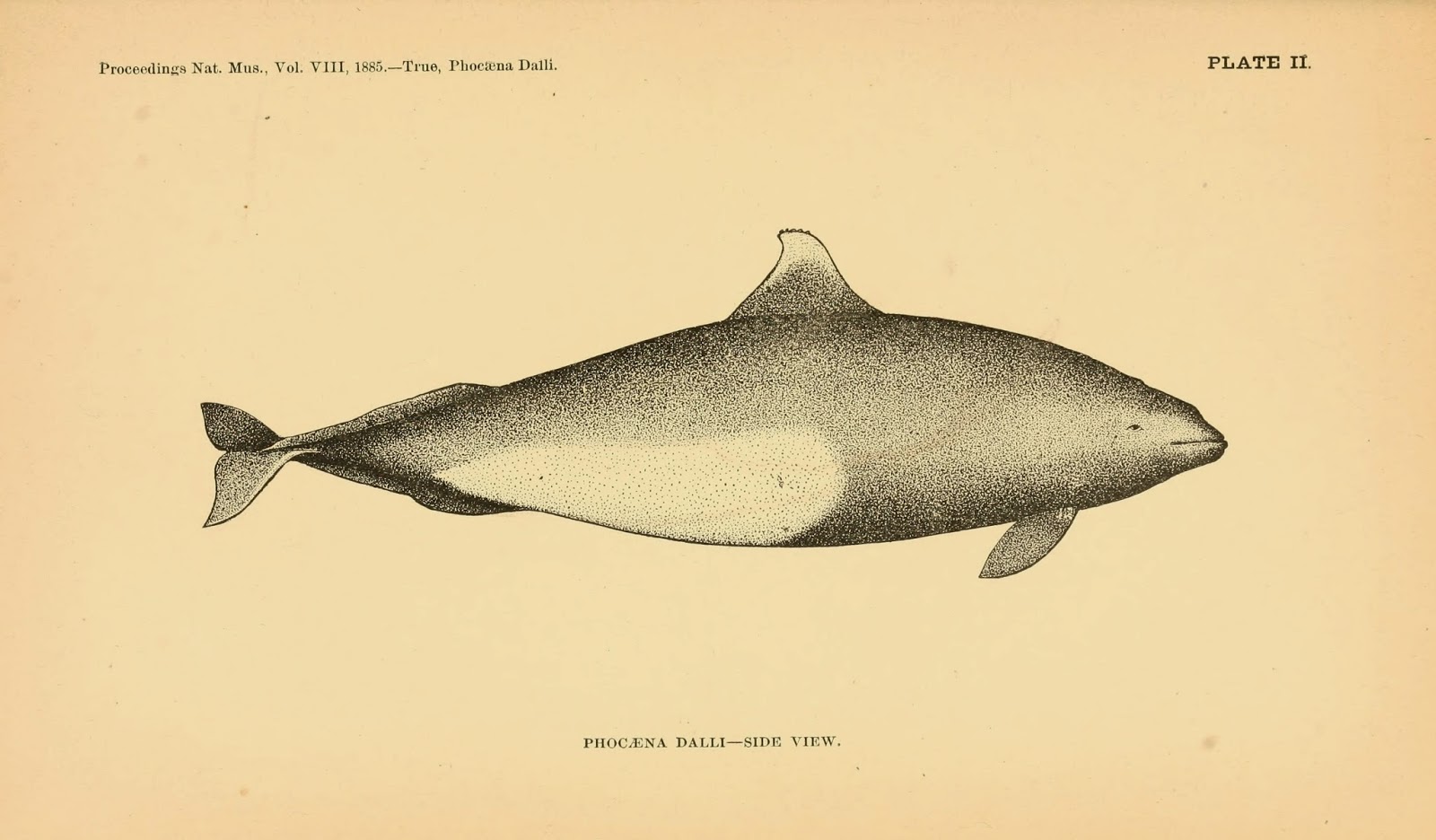
True capitalized on Baird’s support by expanding collecting efforts, both opportunistically as part of industries and fisheries, and with more dedicated expeditions with specific curators at USNM. For example, the Smithsonian’s involvement with the Western Union Telegraph Expedition to Alaska in 1865 brought William H. Dall, a paleontologist who later would work for both the U.S. Geological Survey and the Smithsonian, into the collaborative fold. As a tribute to Dall’s impact, True named Dall’s porpoise, Phocaena dalli (now Phocoenoides dalli) in 1885 based on a description, drawings and specimen collected by Dall in Alaska. Unfortunately, this specimen was initially shipped to the Army Medical Museum by mistake, where rats chewed up the postcranial elements. (The skull is now all that is now left of the holotype specimen).

View Full Size Image
Dall’s porpoise (Phocoenoides dalli). Proceedings of the United States National Museum. v. 8 (1885). http://biodiversitylibrary.org/page/15383677.

In 1895, the U.S. Fish Commission called True back into service for a study on the Northern fur seal industry in the Pribilof Islands, off Alaska. The Commission, lacking confidence in the local Russian naturalist’s conclusion about sustainable yield of fur seal skins from the islands’ rookeries, launched their own investigations. True, as he would in other field expeditions, brought along his father-in-law, D. W. Prentiss, as well as one of his chief preparators, William H. Palmer, who collected specimens while there. (Palmer would also later collect Miocene fossil marine mammals for True in Calvert County, Maryland). En route to the Pribilofs, the team dropped off another Smithsonian curator, Leonhard Stejneger, at the Commander Islands, near the Kamchatka Peninsula of modern-day Russia. Stejneger, who slightly preceded True, collected many marine mammals as well, including a beaked whale specimen that True named for him, Mesoplodon stejnegeri. True’s report on their work at the Pribilofs offered novel conservation strategies for the population, although he viewed a ban on pelagic sealing as the only effective strategy.

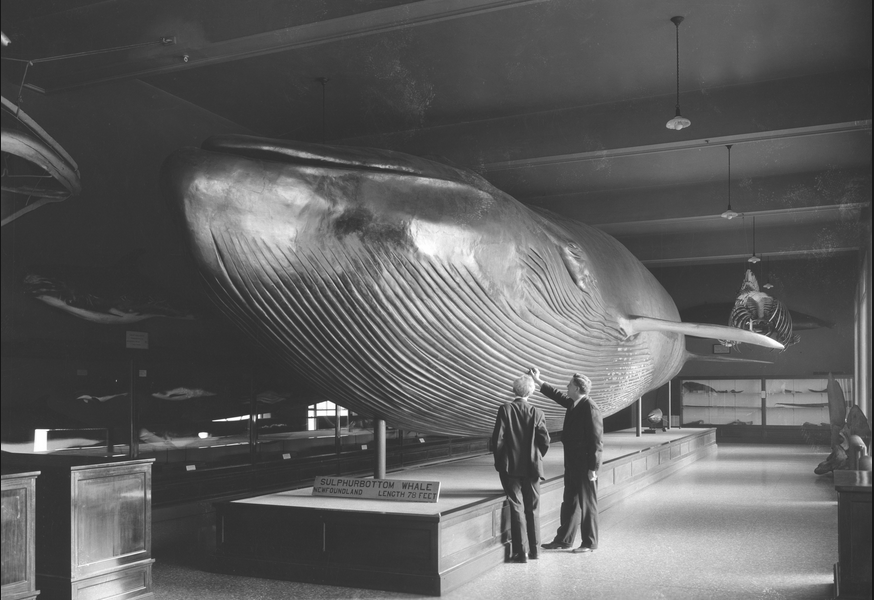
In 1899, True travelled to Newfoundland where a shore based whaling operation had been started by the Cabot Whaling Company at Snooks Arm in Notre Dame Bay. True joined the crew on the steam powered ships as they harpooned and returned to the station fin whales, as well as a smaller number of humpbacks. True observed and photographed the whaling operation, but also participated in crew activities, even including manning the harpoon on a successful fin whale hunt. As whales were flensed and processed, True availed himself of an opportunity to study the whale’s anatomy, especially at a second station that was opened at Balaena Station in Hermitage Bay, Newfoundland, in 1901. There, the primary target species were blue whales, which were too fast and too large for earlier fisheries to tackle. This operation offered an exciting new opportunity to study them, and generated important collections for the USNM, including a full plaster cast of one individual for the St. Louis Exposition of 1903.

View Full Size Image
Remington Kellogg and Leonhard Stejneger with the 1903 blue, or sulphur-bottom, whale, on exhibit in the Natural History Museum, c. 1930s. Image from Smithsonian Institution Archives.

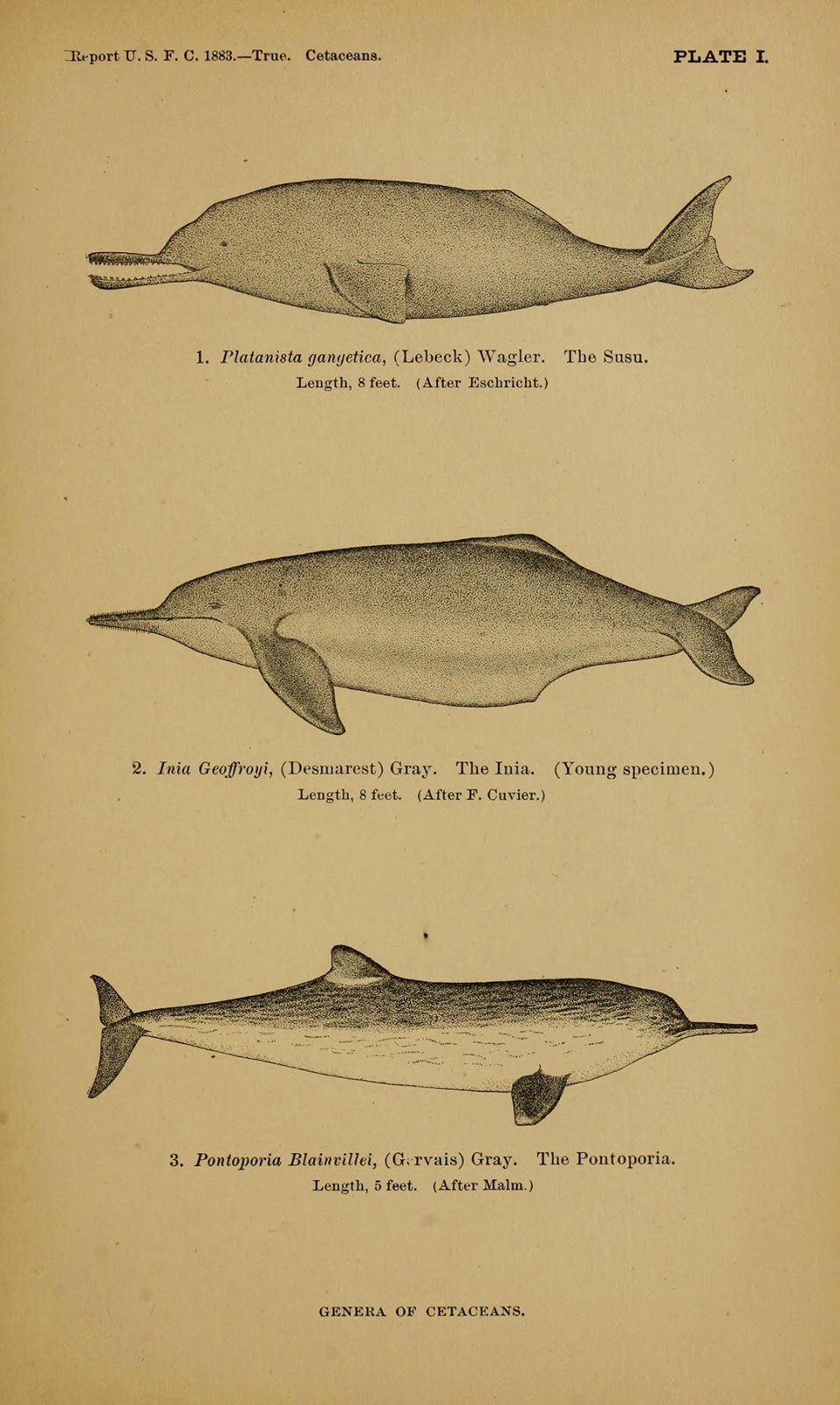
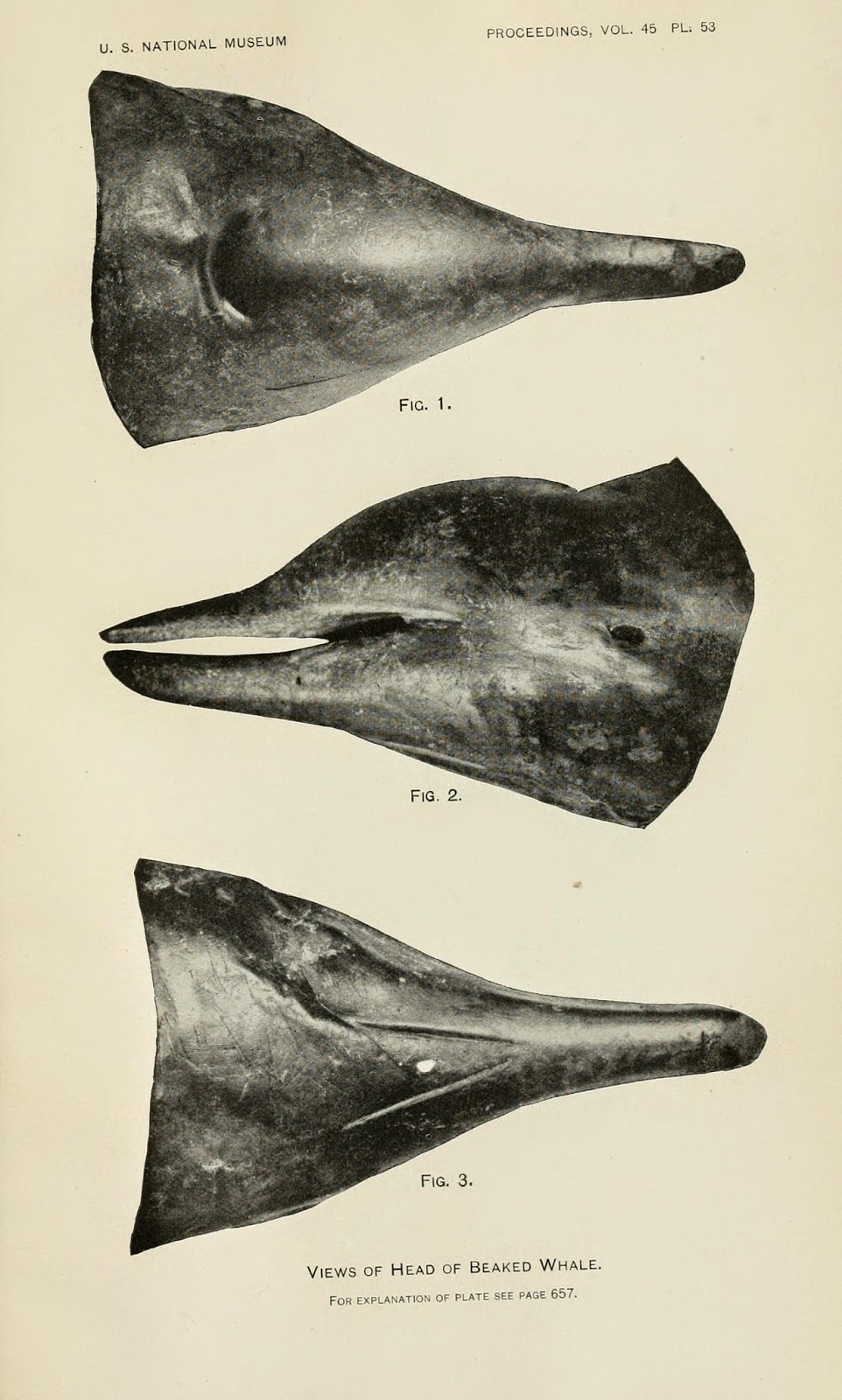
True’s ultimate contributions to marine mammal science were three profound monographs on Cetaceans. Grace Costantino provided a nice summary of his 1899 monograph on oceanic dolphins (A Review of the Family Delphinidae) at BHL’s blog last week. True’s lengthy Whalebone Whales of the Western North Atlantic in 1904 marked the first affirmative answer to whether baleen whales on opposite sides of the Atlantic constituted the same species and populations. To arrive at that conclusion, True provided the first extensive review of the validity of earlier descriptions of American whales by Scammon and Cope, an effort which relied on his own travels to other museum collections, and the rapidly growing one at his home institution (USNM). His 1910 work on beaked whales (An Account of the Beaked Whales of the Family Ziphiidae) similarly cleared up a mess of older taxonomic names for this enigmatic group of toothed whales, which have been a special strength of the Smithsonian since the time of Baird. In the past 100 years, many beaked whale species have been named after Smithsonian curators and other research associates, including: Baird’s beaked whale (Berardius bairdii), Stejneger’s beaked whale (Mesoplodon stejnegeri), True’s beaked whale (Mesoplodon mirus) and Perrin’s beaked whale (Mesoplodon perrini by emeritus curator of marine mammals James G. Mead). For his own contributions, True’s name is bestowed on the common names of two rodent species that he described and published on from Asia.

View Full Size Image
Head of True’s Beaked Whale (Mesoplodon mirus). Proceedings of the United States National Museum. v. 45 (1913). http://biodiversitylibrary.org/page/7307255.

In True’s entry for the Dictionary of American Biography, Alexander Wetmore (an ornithologist, Smithsonian curator, and the sixth Secretary of the Smithsonian) reflected that True was “profound as a student, and exact and punctilious as an administrative officer,” traits that no doubt served him well in his major capacities at USNM. By 1897, True was appointed head curator of the Department of Biology, with broad administrative direction over all biological work at USNM, and served as acting secretary of the entire institution for a short period of time that year. When the natural history collections of USNM moved across the National Mall to the newly built natural history building in 1910 (today, the main museum for NMNH), True became assistant secretary of the Smithsonian in charge of the library and of the international exchange service, a position that he occupied until his death in 1914.

February 13, 2015by ulib-libraryjobs
Blog Reel, Featured Books

Happy Birthday, Beatrix Potter! (A Book of the Week about Rabbits)

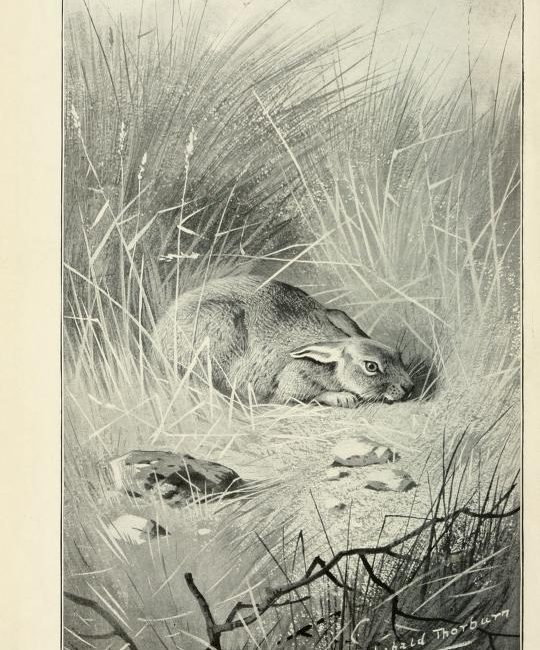
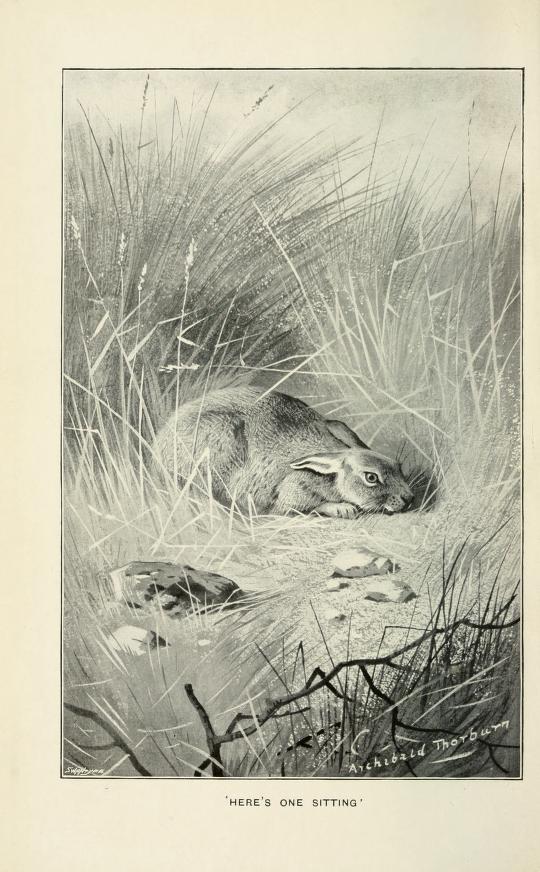
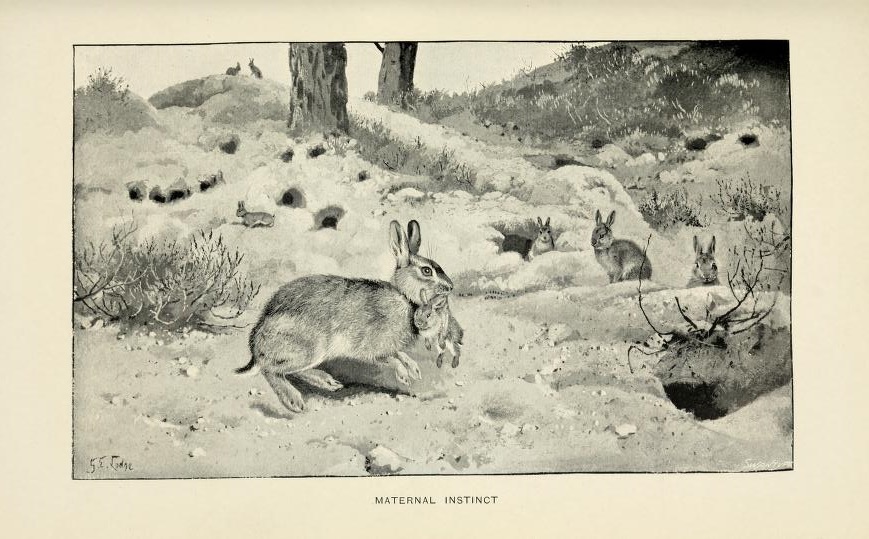
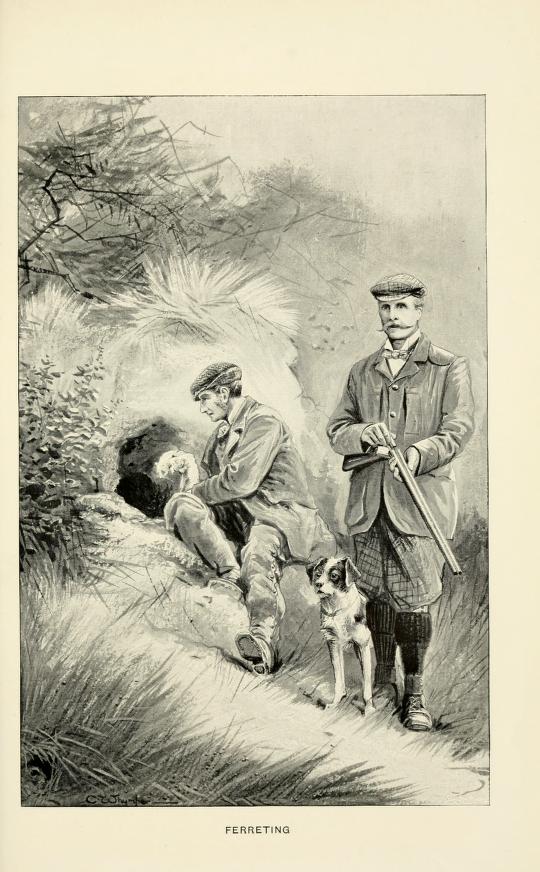
In celebration of Beatrix Potter’s birthday on July 28th, 1866, today’s book of the week explores rabbits: The Rabbit, by James Edmund Harting, with a Chapter on Cookery, by Alexander Innes Shand.  This book was published in 1898 as part of the Fur, Feather and Fin Series, edited by A. E. T. Watson, that explored all kinds of wildlife and how to hunt and cook it (Frontmatter).  The book contains beautiful illustrations of European rabbits engaged in various activities, and describes rabbit behavior and physiology.  The following are examples of illustrations from Harting’s book:

View Full Size Image
“Here’s One Sitting” (Frontmatter)
View Full Size Image
 A mother rabbit returning her baby to the burrow (21)
View Full Size Image
Hunters using a ferret to scare rabbits out of the burrow in order to shoot them (95)

Beatrix Potter was another illustrator who created lovely pictures of rabbits.  It is not surprising that Potter created such realistic illustrations of rabbits and rabbit behavior because she studied rabbit physiology and behavior in depth from the time she was a young child.  Potter was born into a nouveau riche family which had inherited large sums of money from relatives, and she grew up being cared for by governesses in a large home in Kensington, London.  Her parents did not bother themselves with paying much attention to her, and she “took her meals separately and seldom saw her parents except for a short visit in the evening” (MacDonald 231).  As a result, Potter had several small animals as pets to keep her company “that were sometimes hardly tame,” including frogs, mice and rats (MacDonald 231).  Potter began keeping a journal in 1881 in order to avoid boredom, and she continued to write and sketch in it for over a decade, writing “in code and in a hand so small as to be virtually impenetrable” (MacDonald 231).  She visited local museums to study animal physiology, and when her family spent four months out of the year in the Lake District in England during Easter and summer vacations, Potter got even more in-depth physiology lessons about local wildlife:

Apparently allowed to roam unsupervised, Potter and her brother skinned and boiled dead animals until only the skeletons remained to be examined. . .In the museums Potter found special pleasure in studying and sketching animal skeletons.  Her later understanding of the way animal bodies functioned made her illustrated animals particularly vital–no false movement, no oddly shaped limbs–so that they always remain true to their various species.  Because the Kensington museums also preserved such decorative, domestic artifacts as furnishings and clothing, Potter accumulated various subjects in her sketchbooks, using them to study perspective to much advantage in her later books, where the low-to-the-ground vantage points of her animals show familiar objects from new angles.  (MacDonald 231-2)

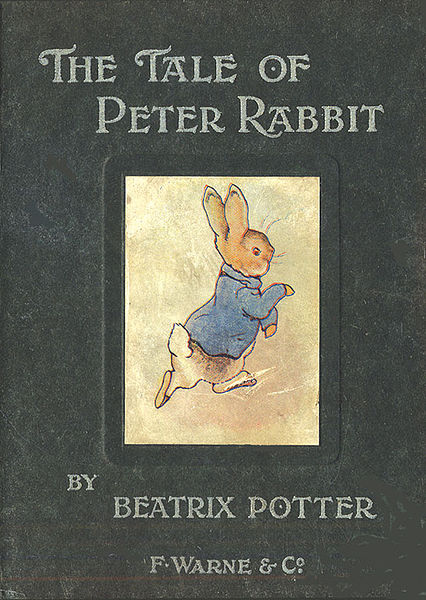
Potter’s initial entry into the publishing world came when illustrating greeting cards and the works of other authors, and when she published a scientific paper in 1897 on the reproductive cycles of certain mushrooms–mycology being an early passion of hers.  Her paper, “On the Germination of the Spores of the Agaricineae,” had to be presented by a male friend of the family to the Linnaean Society of London since women were not allowed involvement with scientific groups yet; all of her findings in this paper have since been proven accurate.  When a family friend suggested she publish a children’s book, she published an early version of The Tale of Peter Rabbit in 1901 with money that she had made illustrating greeting cards.  The Warne publishing house heard of Potter’s book and agreed to reprint it, beginning a longstanding relationship between Potter and the publishing company (MacDonald 233).

View Full Size Image
An image of a first-edition 1902-version of The Tale of Peter Rabbit
View Full Size Image
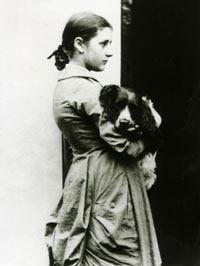
Beatrix Potter at 15 years of age, holding her pet springer spaniel, Spot.

The plot of Peter Rabbit’s tale closely reflects the rabbit behavior described in Harting’s book, The Rabbit–namely the part of the plot where Peter escapes into a farmer’s garden and eats a lot of the farmer’s vegetables, barely escaping capture by the farmer, and later returning to the safety of his mother’s burrow.  Harting has described rabbits as voracious eaters compared with other animals, even as the cause of famine in the Spanish Balearic islands during the rule of Emperor Augustus (Harting 3), and includes a farmer’s description of the rabbits’ particular eating style:

A Suffolk farmer, who is a good sportsman as well as shrewd observer of facts connected with natural history, asserts that you may generally tell whether your turnips are nibbled by hares or rabbits by the difference in the mode of attacking the roots.  A hare will bite off the peel and leave it on the ground; a rabbit will eat peel and all.  (Harting 6)

Harting goes on to describe how rabbits also eat turnips more voraciously than rats do since “a rat when eating a turnip. . .will bit off the rind, as a hare does, and will leave it in chips on the ground; a rabbit. . .will eat peel and all” (Harting 6-7).  Another trait, aside from a large appetite for vegetables, which Harting’s descriptions have in common with Potter’s character, Peter Rabbit, is that of quick escape.  The purpose of the white underbelly of a rabbit, according to Harting, is to alert fellow rabbits when danger is near so that all can escape:

The advantage of having a white under-surface to the tail is also apparent on reflection; for when, on the approach of an intruder while rabbits are out feeding, those nearest to him begin to scuttle away, the little white flag in motion at once attracts the attention of others, and all speedily make for their burrows.  (Harting 7-8)

Harting also recounts some interesting rumors about the origin of rabbits and the term, “rabbit,” in western Europe, as well as some fascinating facts about their resilience.  Harting proposes that the rabbit was introduced to England by the Romans, who also brought the ferret to hunt the rabbit when it became too populous (Harting 1).  The Romans apparently learned from rabbits how to dig tunnels into enemy territory in order to conquer the land: “The Latin word cuniculus denotes both a rabbit and an underground passage.  Varro suggests that the rabbit derived its name from the burrow it forms, and Martial avers that rabbits first taught men to undermine enemies’ towns” (Harting 3-4).  The origin of the term, “rabbit,” begins with the Latin cuniculus, then the Italian coniglio, the Spanish conejo, Belgic konin, Danish and Swedish kaning, German kaninchen, Old French connin, Welsh cwningen, and Old English conyng and coney.  The Middle English term, “rabbet,” had only been used to describe young rabbits.  Another Middle English term for the rabbit was “riote,” which is the origin of the phrase “to run riot” (Harting 4).  Harting notes that rabbits are resilient, such that:

If by any accident the lower jaw of the animal is displaced, as occasionally happens from the impact of a shot, the incisors in the fractured jaw are distorted, and do not meet those above them, and as they are not then worn away by use, they continue to grow, sometimes to extraordinary length.  The manner in which animals thus deformed adapt themselves to new conditions is marvelous.  They not only contrive to feed, but to live a long time after the injury, as shown by the ossified condition of the fracture when at length it comes to be examined.  (Harting 5-6)

Rabbits are not only resilient, but also able to adapt to become family friends and pets:

When taken young and domesticated, wild rabbits not only become soon accustomed to the altered conditions of life, but will live for many years in captivity.  One, which was captured in Buckinghamshire when about ten days old and brought to London, had the run of the house and area, was tame, amusing, and cleanly in its habits.  It would follow the cook about like a dog, and was a constant playmate in the nursery.  In these circumstances it lived for six years.  (Harting 12)

It is no surprise, then, that Beatrix Potter became fascinated by these little creatures, as Harting describes them as smart and adaptable, and as his illustrations show them to be adorable.  Potter’s children’s stories and illustrations are a testament to her love and close observation of the rabbit.  Happy birthday, Beatrix Potter!  Here’s to your, and our, interest in these remarkable animals!

Check out all of the illustrations to Harting’s book, The Rabbit, at our Flickr stream: http://www.flickr.com/photos/biodivlibrary/sets/72157627295131062

For more information about Harting’s book and some more info about rabbits, check out an older post BHL wrote on it here: https://blog.biodiversitylibrary.org/2011/02/year-of-rabbit.html

Resources:

    • Harting, James Edmund.  The Rabbit.  London: Longmans, Green, and Co., 1898.
    • MacDonald, Ruth K.  “Beatrix Potter.”  British Children’s Writers, 1880-1914.  Ed. Laura M. Zaidman.  Dictionary of Literary Biography Vol. 141.  Detroit: Gale Research, 1994.  pp. 230-248.
July 25, 2013by jjones
Blog Reel, Featured Books

For the Love of Cats: Harrison Weir’s Extraordinary Dedication to the Cat

View Full Size Image
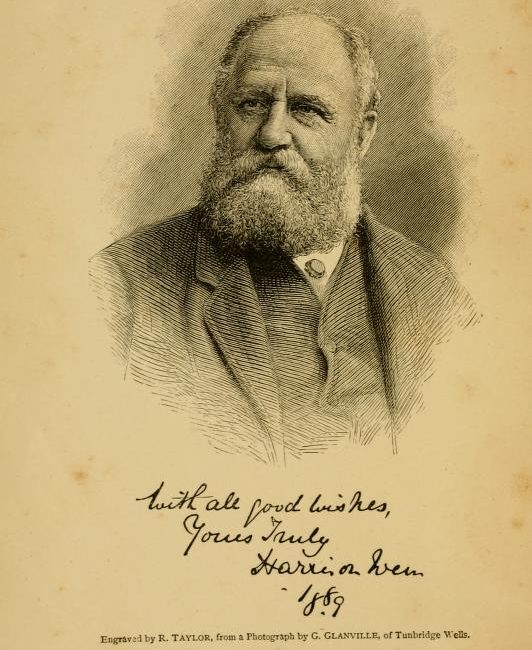
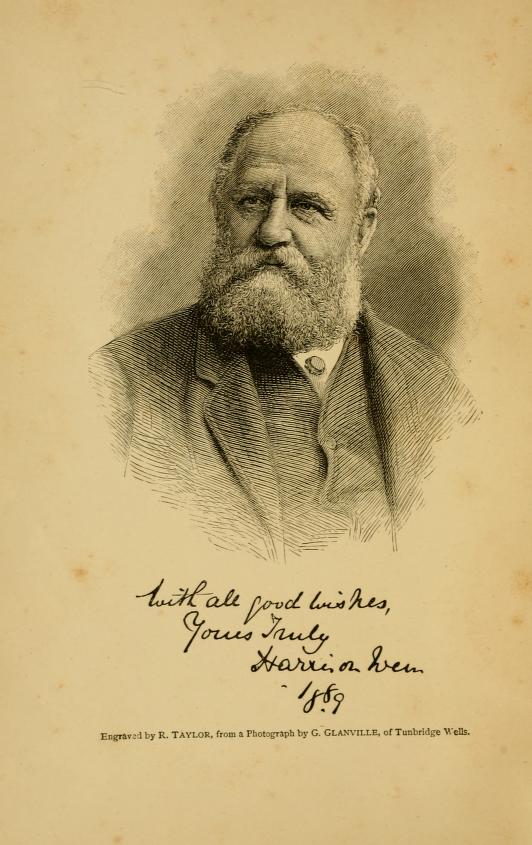
Harrison Weir, President of the National Cat Club, Judge at the first cat show in London, and all-around cat lover and enthusiast.

This book of the week, an 1889 work entitled, Our Cats and All About Them: Their Varieties, Habits, and Management; and for Show, The Standard of Excellence and Beauty; Described and Pictured by Harrison Weir, F.R.H.S., was written by Harrison Weir, President of the National Cat Club which he formed in 1887. What is equally delightful to Weir’s loving descriptions of cats, their looks and their behavior, are his beautiful illustrations of cats throughout the book. One striking aspect of this book is the fact that Weir’s descriptions of nineteenth-century feelings and issues concerning the cat are so very similar to our own. For instance, the author mentions that people often would ask him how to stop cats from scratching the furniture, or talk about what a wonderful personality their cat had (1), or how ingenioius their cats were for being able to open doors by themselves:

Take for instance, how very many cats will open a latched door by springing up and holding on with one fore-leg while with the other they press down the latch catch, and so open the door; and yet even more observant are they than that…as I have shown by a case…in which a cat opened a door by pulling it towards him, when he found pushing it of no avail.  The cat is more critical in noticing than the dog.  I never knew but one dog that would open a door by moving the fastening without being shown or taught how to do it.  Cats that have done so are numberless. (6-7)

In addition, he points out what many today can observe in their own multi-cat homes, that cats attach themselves to certain members of the family exclusively: “I found that no two [cats] were the ‘followers’ of the same member of my family…Why was this?…I am sorry to say I rapidly came to the conclusion that it was jealousy!” (6).  Weir describes a picturesque scene of cat jealousy in action:

Zeno [the cat] would be very cossetty, loving, lovable, and gentle, but when Lulu [the cat] came in and was nursed he retired to a corner and seized the first opportunity of vanishing through the door.  As soon as Zillah [the cat] jumped on my knee and put her paws about my neck, Lulu looked at me, then at her, then at me, walked to the fire, sat down, looked round, got up, went to the door, cried to go out, the door was opened, and–she fled. (7)

This is a scene very familiar to mulitple cat-owners today.

View Full Size Image
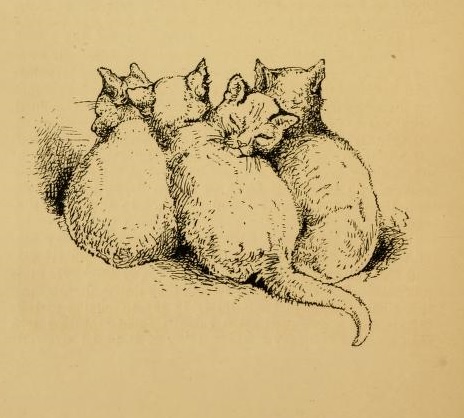
Cats sleeping together (90).

Weir was an early advocate for the humane treatment of animals, specifically cats, as he passionately said:

Among animals possibly the most perfect, and certainly the most domestic, is the Cat…Long ages of neglect, ill-treatment, and absolute cruelty, with little or no gentleness, kindness, or training, have made the Cat self-reliant; and from this emanates the marvellous powers of observation, the concentration of which has produced a state analogous to reasoning, not unmixed with timidity, caution, wildness, and a retaliative nature…

But should a new order of things arise, and it is nurtured, petted, cosseted, talked to, noticed, and trained, with mellowed firmness and tender gentleness, then in but a few generations much evil that bygone cruelty has stamped into its often wretched existence will disappear… (Preface v-vi)

View Full Size Image
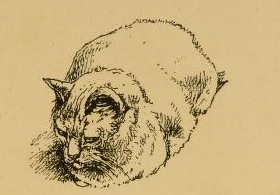
A peaceful cat, in what is sometimes referred to nowadays as “meatloaf position,” meaning the forepaws and backpaws are completely tucked under the cat’s body, the cat being rested and comfortable since it is not in a defensive stance that would allow a quick escape (5).

Weir realized that there were many cat lovers, especially in London, and so decided to hold the first cat show there at the Crystal Palace in 1871 (1-2). Weir, his brother John Jenner Weir, and the Rev. J. Macdona, were judges, and Weir said “the result [of the cat show] was a success far beyond our most sanguine expectations–so much so that I having made it a labour of love of the feline race, and acting without fee, gratuity or reward…It is to be hoped that by these shows the too often despised cat will meet with the attention and kind treatment that every dumb animal should have and ought to receive at the hands of humanity.” (2-5)

View Full Size Image
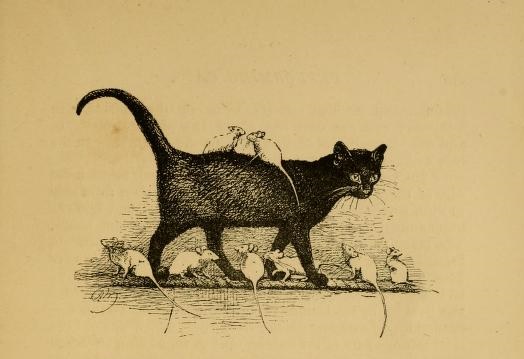
Cat performing with mice (215).
View Full Size Image
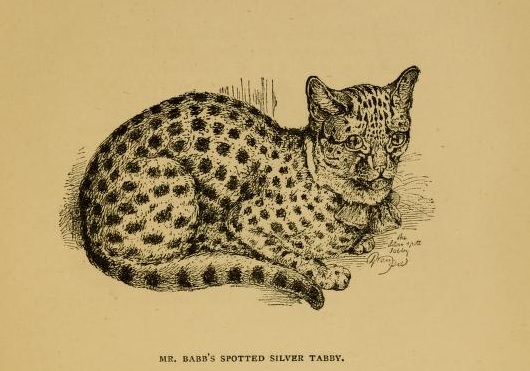
Mr. Babb’s Spotted Silver Tabby (133).
View Full Size Image
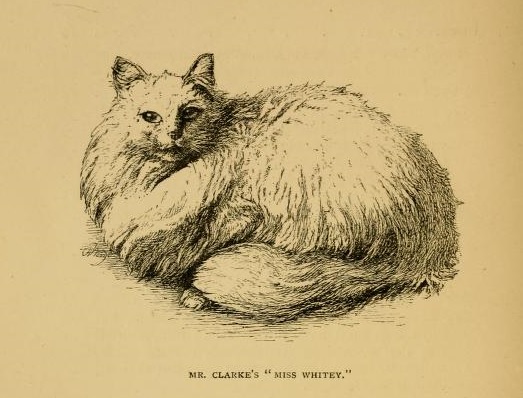
Mr. Clarke’s “Miss Whitey” (140).

While this book is known today as the first cat pedigree book, outlining what an exemplary specimen of each breed of cat should look like and how they should behave, it is a wonderful read simply because it is filled with loving anecdotes about cats, which “are the outcome of over fifty years’ careful, thoughtful, heedful observation, much research, and not unprofitable attention to the facts and fancies of others.  From a tiny child to the present, the love of Nature has been my chief delight” (Preface v).  Take for instance, his inclusion of a story about a mother cat’s love for her kittens:

No animal is more fond and attentive than the cat; she is the most tender and gentle of nurses, watching closely every movement of her young…What can be more sensitively touching than the following anecdote, sent to The Animal World by C. E. N., in 1876?  It is a little poem of every-day life, full of deep feeling and feline love.

“I have a small tabby cat, very comely and graceful. Being very fond of her kitten, she is always uneasy if she loses sight of it if only for a short time.  For the last six weeks, the mother, failing to recall the truant back by her voice, even returns to the kitchen for the lower portion of a rabbit’s fore-leg, which has served as a plaything for some time.  With this in her mouth, she proceeds to search for her lost one, crying all the time, and, putting it down at her feet, repeats her entreaties, to which the kitten, allured by the sight of its plaything, generally responds.  Owing to its gambols in the open air during the inclement weather, the kitten was seized with an affliction of the throat; the mother, puzzled with the prostration of its offspring, brought down the rabbit’s foot to attract attention.  In vain; the kitten died.  Even now the loving mother searches for the rabbit’s foot, and brings it down.” (110-111)

View Full Size Image
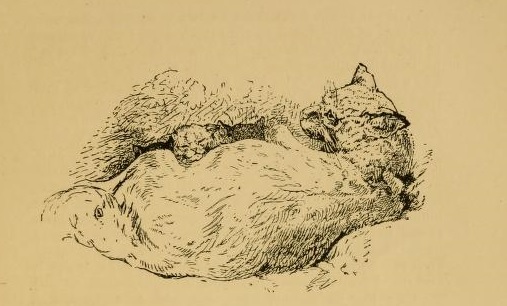
Mother cat with kittens (109).

Weir includes many more heartwarming stories about the love and dedication of cats for their kittens and their human masters which are very enjoyable to read–in addition to a lengthy section of amusing “Cat Proverbs” (185-195), “Superstition and Witchcraft” as they relate to cats (195-199), “Weather Notions” as determined by cat behavior (200-201), and famous “Lovers of Cats” (223-227).  Among the “lovers of cats” Weir lists are the “Turks”–“Mahomet was very partial to Cats.  It is related, that being called up on some urgent Business, he preferred cutting off the Sleeve of his Robe, to waking the Cat, that lay upon it asleep” (223), Samuel Pepys (224), Petrach, Cardinal Wolsey, Sir I. Newton (227), Cowper, Gray, Cardinal Richelieu, and Montaigne (227).  You can read more about cat superstitions and folklore at our previous cat post.

With his many beautiful illustrations of different breeds of cats and kittens and his wonderful stories, this is truly Weir’s own “little poem of every-day life, full of deep feeling and feline love,” dedicated to the creatures which gave him such pleasure.

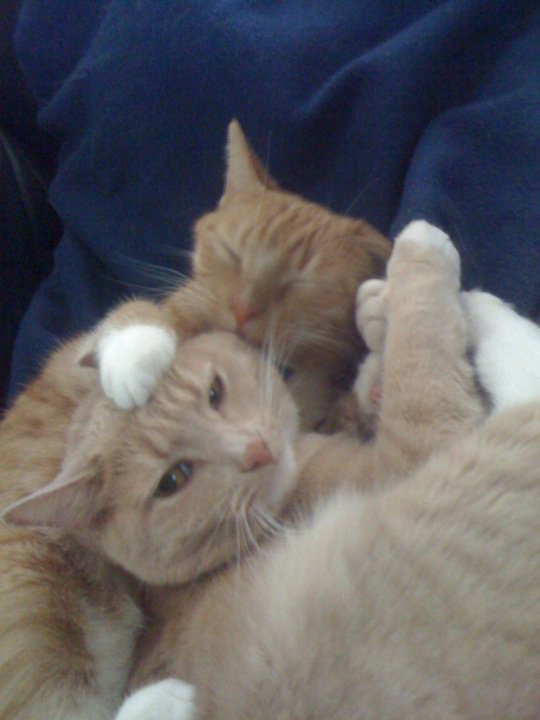
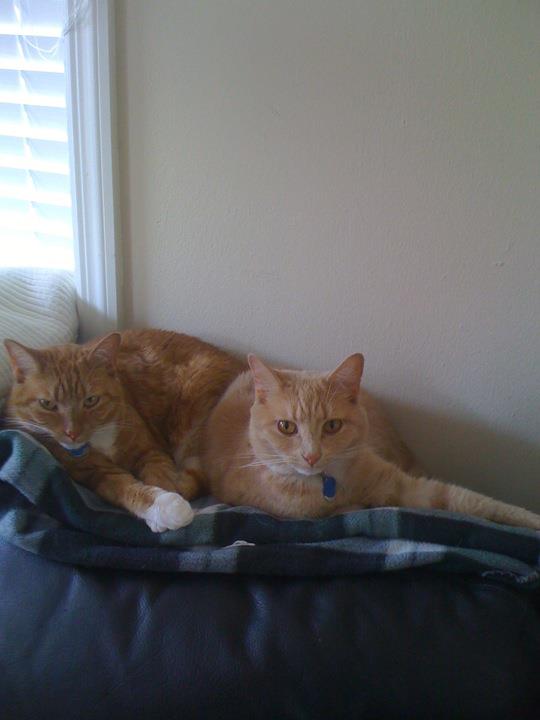
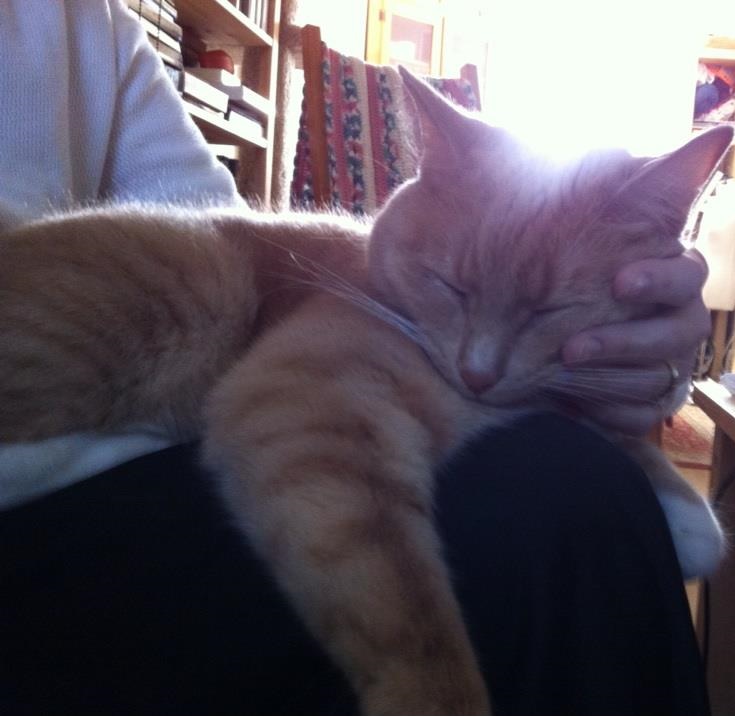
And now for some gratuitous photos of my own two cats, Peanut Butter and Jelly, and their fabulous and unexpected sleeping habits.  Enjoy!

View Full Size Image
Kitten kisses!  Jelly (the orange tabby on the left) and Peanut (the buff cat on the right).
View Full Size Image
Two of a Kind.


View Full Size Image
Sleepy all the time.


July 18, 2013by jjones
Blog Reel, Featured Books

Say What?!

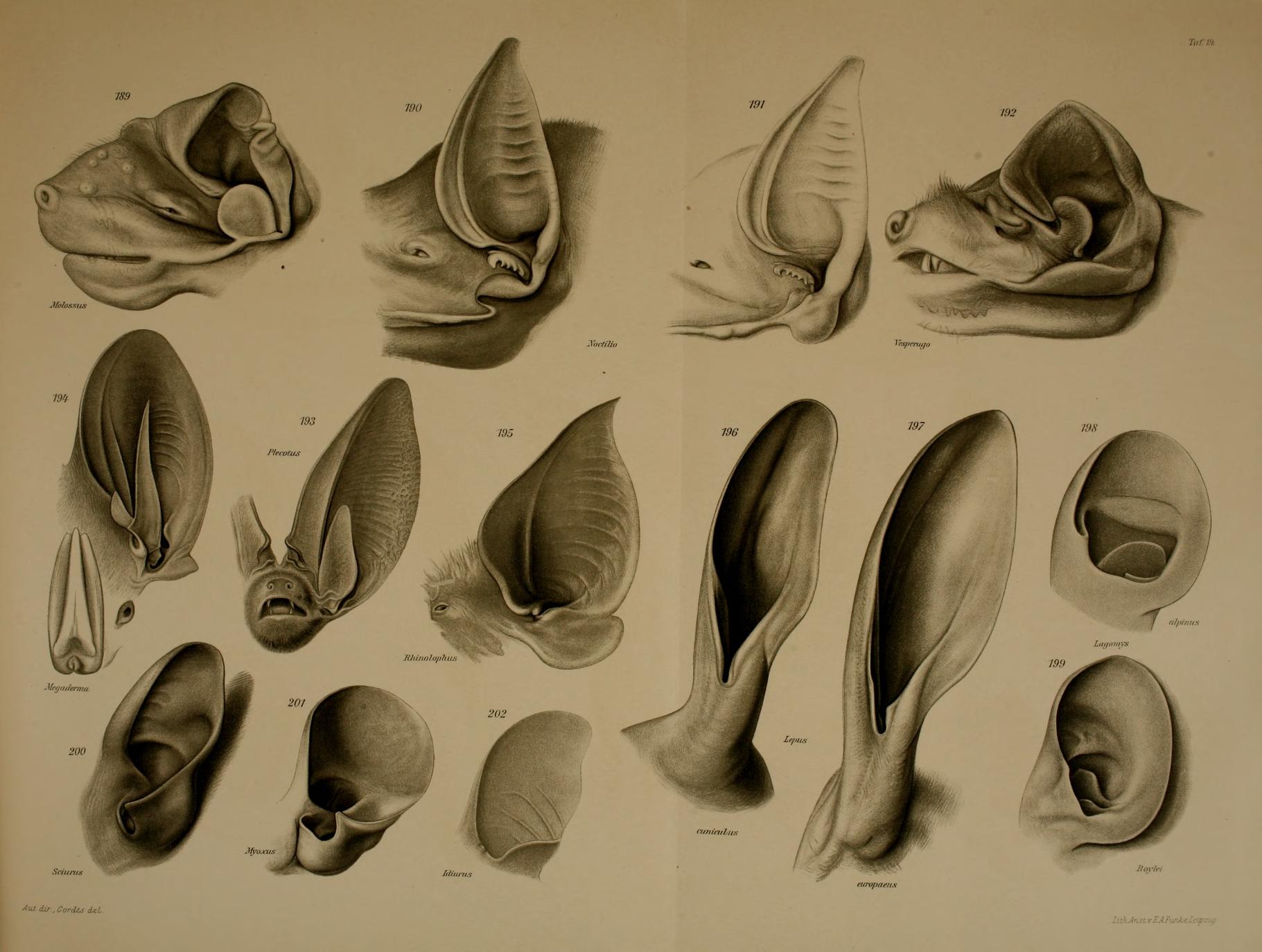
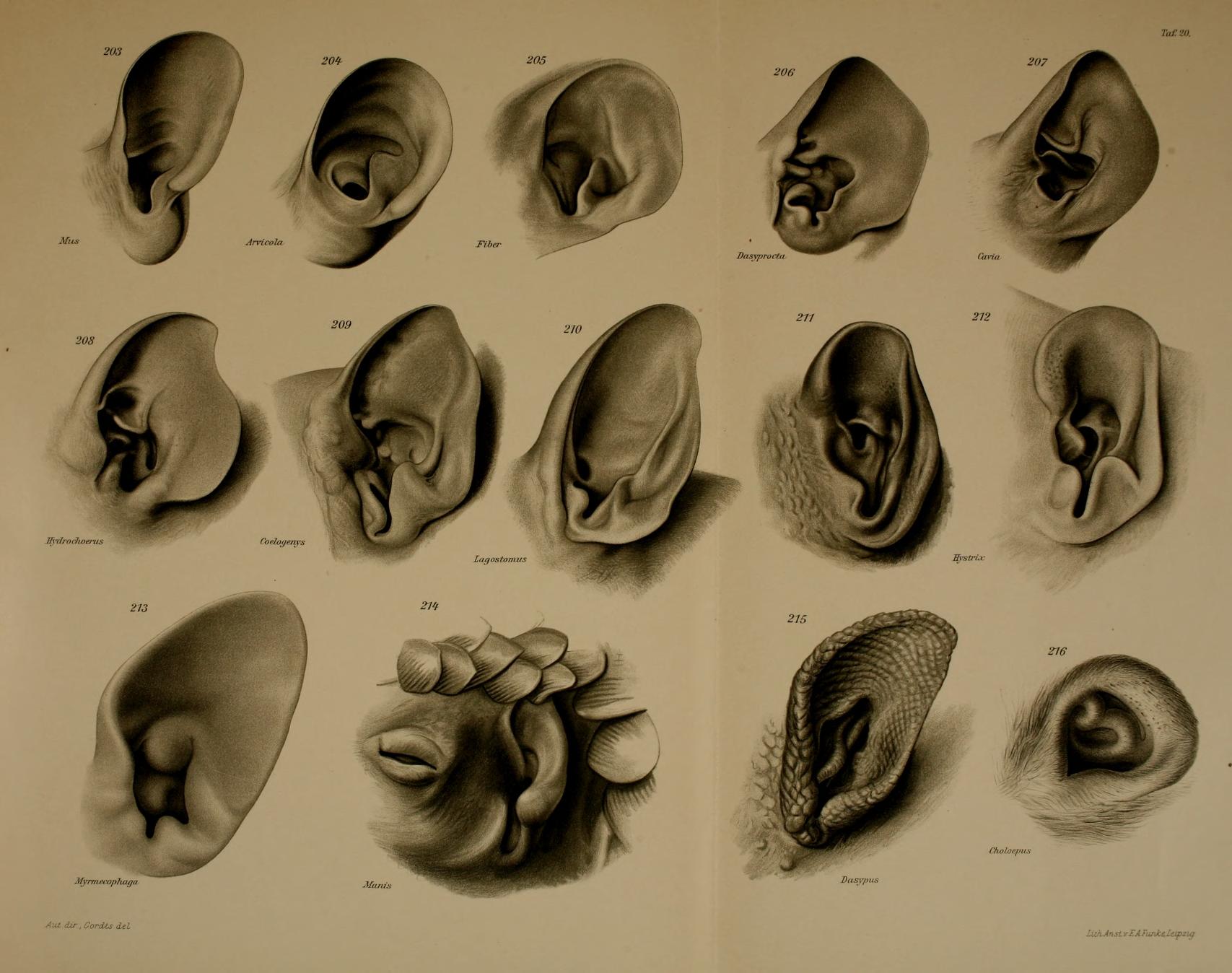
a variety of mammal ears

Sometimes I come across items in the BHL collection that elicit an immediate response. In this case it was, “Look at all those ears!”

Ears indeed. In 1912 Johan Erik Vesti Boas published his Ohrknorpel und äusseres ohr der Säugetiere; eine vergleichend-anatomische Untersuchung (Ear cartilage and outer ear of mammals, a comparative anatomical study). Beautifully illustrated, Boas’ book takes us through a host of mammal ears from rodents, to whales, kangaroos, pigs, bats, primates, and yes, even humans. There are some very nice cartilage spreads as well which we have included in our in our Flickr photostream but for now I will show some of my favorite pinnae (outer ear) pin-ups!

View Full Size Image
Find the ear of the tiny tenrec here!
View Full Size Image
Ooh, there’s a pika ear in here!
View Full Size Image
Can you spot the capybara ear?

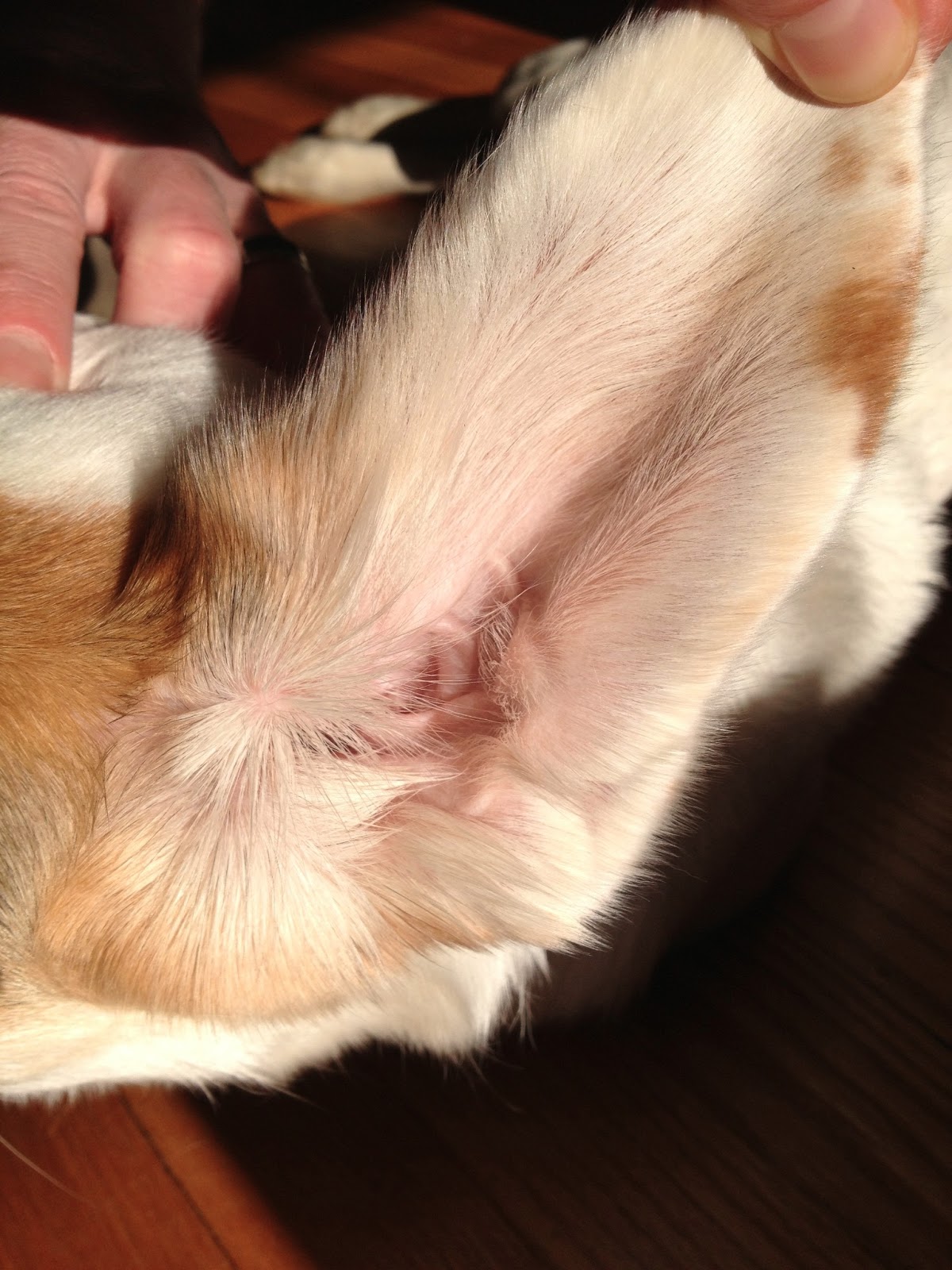
I cannot help but throw in a picture of a full color mammal pinna from my very own Canis lupus familiaris. If you look closely you can see the aperture, or the entrance of the ear canal, under all that hair.

View Full Size Image
The study of the mammalian ear is important to evolutionary biology in that is an exemplar of the concept of exaptation which describes how traits from one organismal group are co-opted to function differently in another group. In this case, the jawbones of reptiles were co-opted to form the ear bones of mammals commonly known as the hammer, anvil and stirrup. [1]
Next time you are enjoying the company of fellow mammals, human or otherwise, take a closer look at their ears and think of yourself as Dr. Boas (with a cabinet full of ear specimens!) carefully examining and comparing one of the more functional pairs of our anatomies: the ears.
References
[1] Jaws to ears in the ancestors of mammals
February 21, 2013by [email protected]
Page 1 of 212»

Help Support BHL

BHL's existence depends on the financial support of its patrons. Help us keep this free resource alive!

search

About BHL

The Biodiversity Heritage Library (BHL) is the world’s largest open access digital library for biodiversity literature and archives. BHL operates as a worldwide consortium of natural history, botanical, research, and national libraries working together to digitize the natural history literature held in their collections and make it freely available for open access as part of a global “biodiversity community.”

Join Our Mailing List

Sign up to receive the latest news, content highlights, and promotions.

Subscribe Now

Subscribe to Blog via Email

Enter your email address to subscribe to this blog and receive notifications of new posts by email.

Join 319 other subscribers

Subscribe to Blog Via RSS

Subscribe to the blog RSS feed to stay up-to-date on all the latest BHL posts.

Access RSS Feed

Inspiring Discovery through Free Access to Biodiversity Knowledge.

The Biodiversity Heritage Library makes it easier than ever for you to access the information you need to study and explore life on Earth…for free, anytime, anywhere.


64+ Million Pages of
Biodiversity Literature Online.

EXPLORE

Tools and Services
to Transform Research.

EXPLORE

300,000+
Illustrations on Flickr.

EXPLORE

ABOUT | HARMFUL CONTENT | PRIVACY | SITE MAP | TERMS OF USE