Biodiversity Heritage Library - Program news and collection highlights from BHL
  • Home
  • News
  • Featured Books
    • All Featured Books
    • Book of the Month Series
    • BHL at 20
  • User Stories
  • Campaigns
    • Fossil Stories
    • Garden Stories
    • Monsters Are Real
    • Page Frights
    • Her Natural History
    • Earth Optimism 2020
  • Tech Blog
  • Visit BHL
Home
News
Featured Books
    All Featured Books
    Book of the Month Series
    BHL at 20
User Stories
Campaigns
    Fossil Stories
    Garden Stories
    Monsters Are Real
    Page Frights
    Her Natural History
    Earth Optimism 2020
Tech Blog
Visit BHL
  • Home
  • News
  • Featured Books
    • All Featured Books
    • Book of the Month Series
    • BHL at 20
  • User Stories
  • Campaigns
    • Fossil Stories
    • Garden Stories
    • Monsters Are Real
    • Page Frights
    • Her Natural History
    • Earth Optimism 2020
  • Tech Blog
  • Visit BHL
Biodiversity Heritage Library - Program news and collection highlights from BHL
BHL News, Blog Reel

In Memoriam: William Ulate Rodríguez

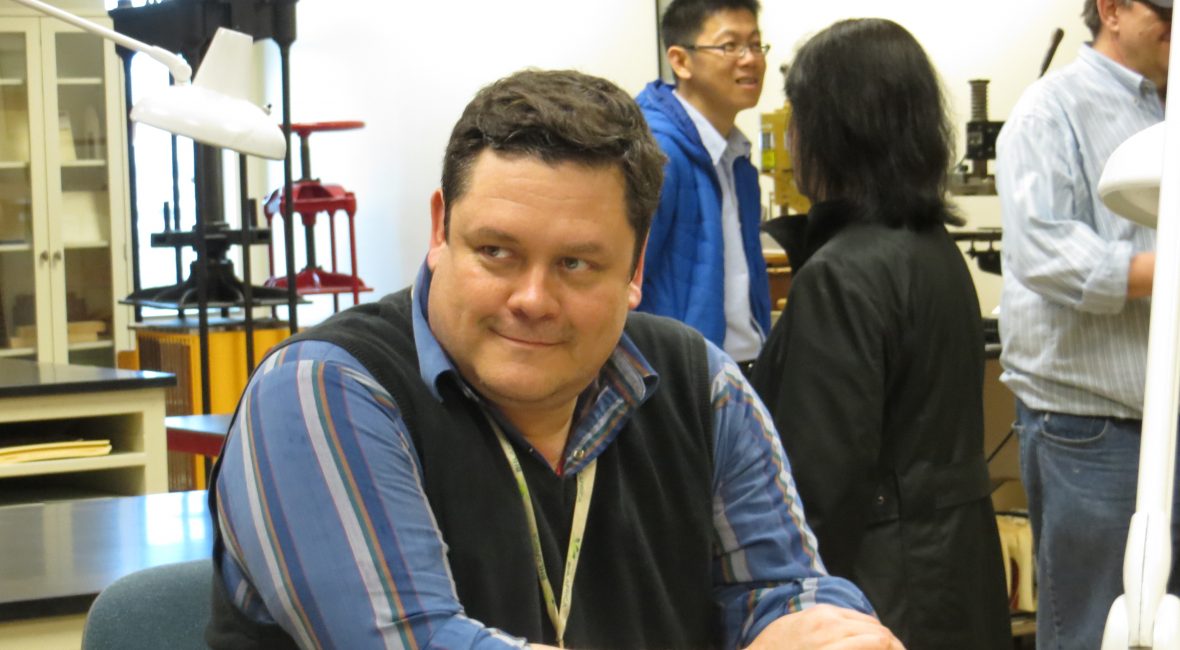
William Ulate Rodriguez sits at a table, smiling.

William Ulate Rodríguez, past Biodiversity Heritage Library (BHL) Technical Director, died in St. Louis on September 20, 2023. William was a father, a friend, a colleague, and a passionate advocate of using the tools of bioinformatics to better understand life on our planet.
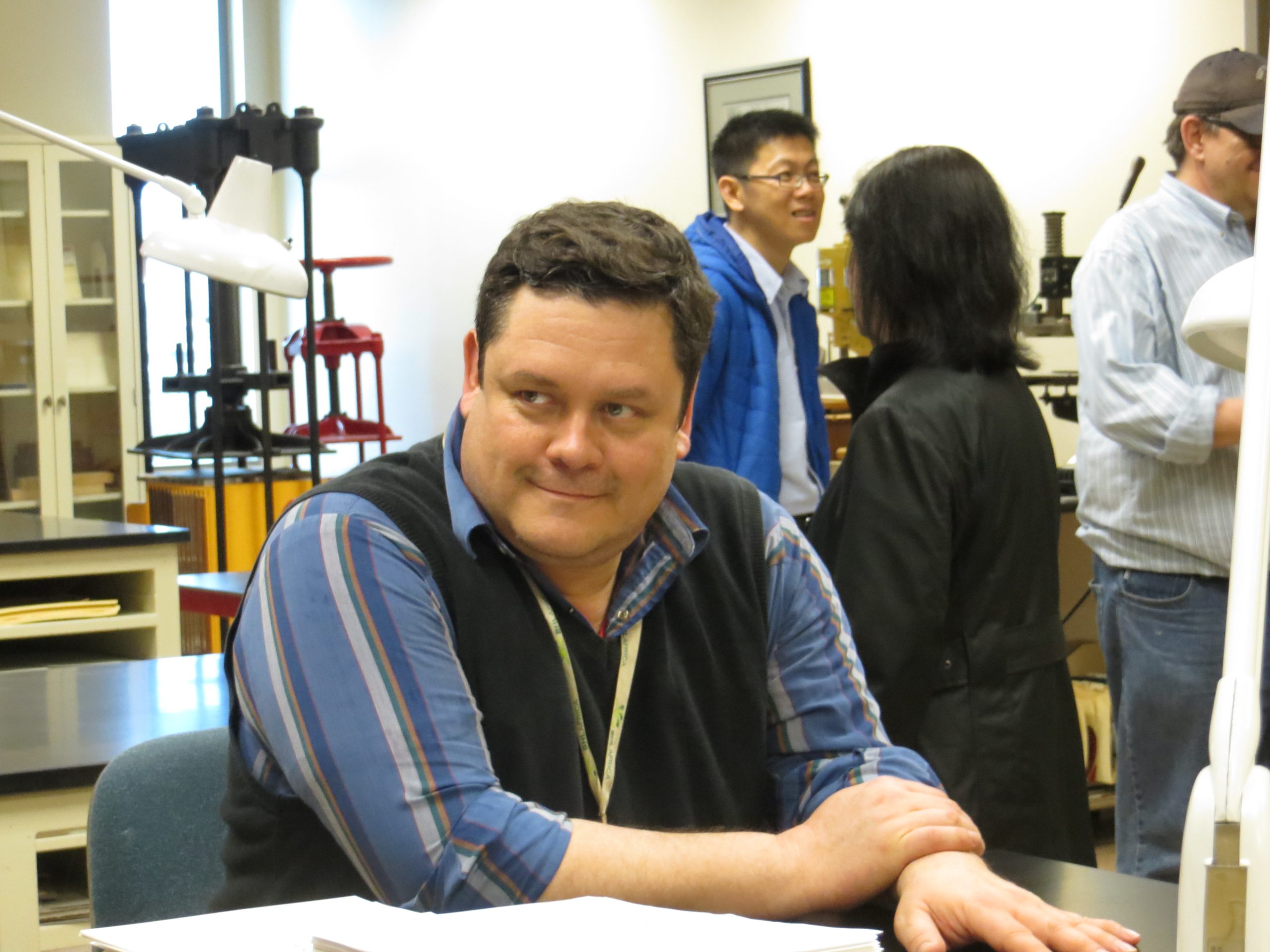
William Ulate Rodriguez sits at a table, smiling.

William Ulate, BHL Technical Director. Peter H. Raven Library, Missouri Botanical Garden.

William was always good company, whether it was sharing stories of his daughter, lamenting Costa Rica’s performance in the World Cup, or talking about biodiversity. On the last topic, one story he told me sticks in my mind. He told me that he visited his brother and was asked, “Tell me more about this biodiversity? What is it? Where is it?”. William said he took his brother into the backyard and said, “Look around. It’s all around us. We just need to open our eyes and see it.”

William’s professional life was all about helping us see the biodiversity around us. He advanced the idea that we need not just our eyes, but the tools of bioinformatics to see and understand the complexities of life.
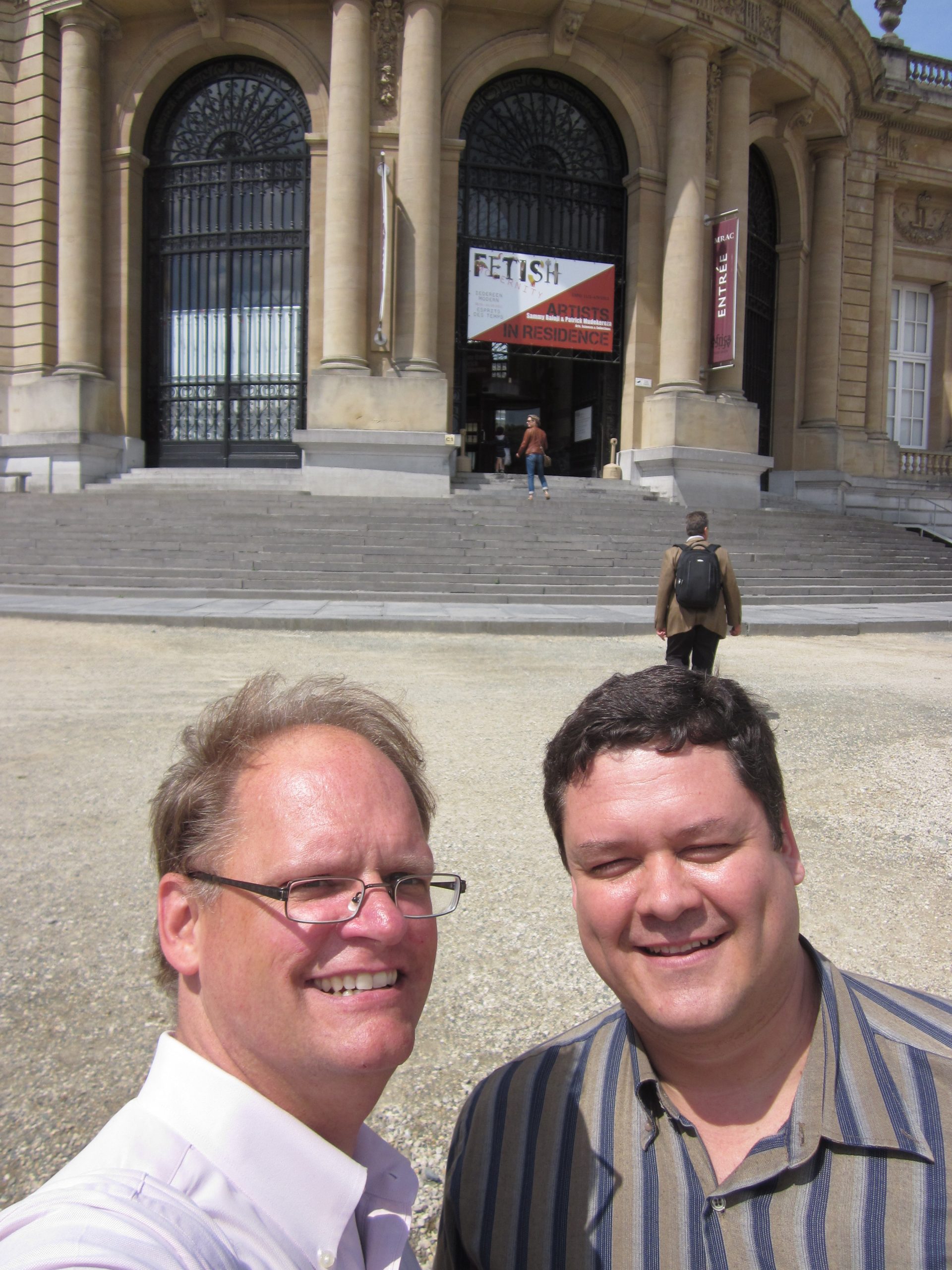
Martin Kalfatovic and William Ulate Rodriguez pose for a selfie in front of a museum building

BHL Europe Meeting, Belgium, 2011. With Martin Kalfatovic.

I had the privilege of working with William all around the globe, whether it was in his native Costa Rica, Nairobi, Mexico, Panama, Germany, Belgium, Italy, China, in his office at the Missouri Botanical Garden in St. Louis, or windowless conference rooms at the Smithsonian. And most frequently, in those pre-Zoom days, on a Skype video call. William may have been born in Costa Rica, but seeing him around the world, he was truly a global citizen. He moved with grace and ease in all cultures and his smile opened the world to his friendship. The world will miss him.

William’s friends and colleagues share their fond memories of his life and work.
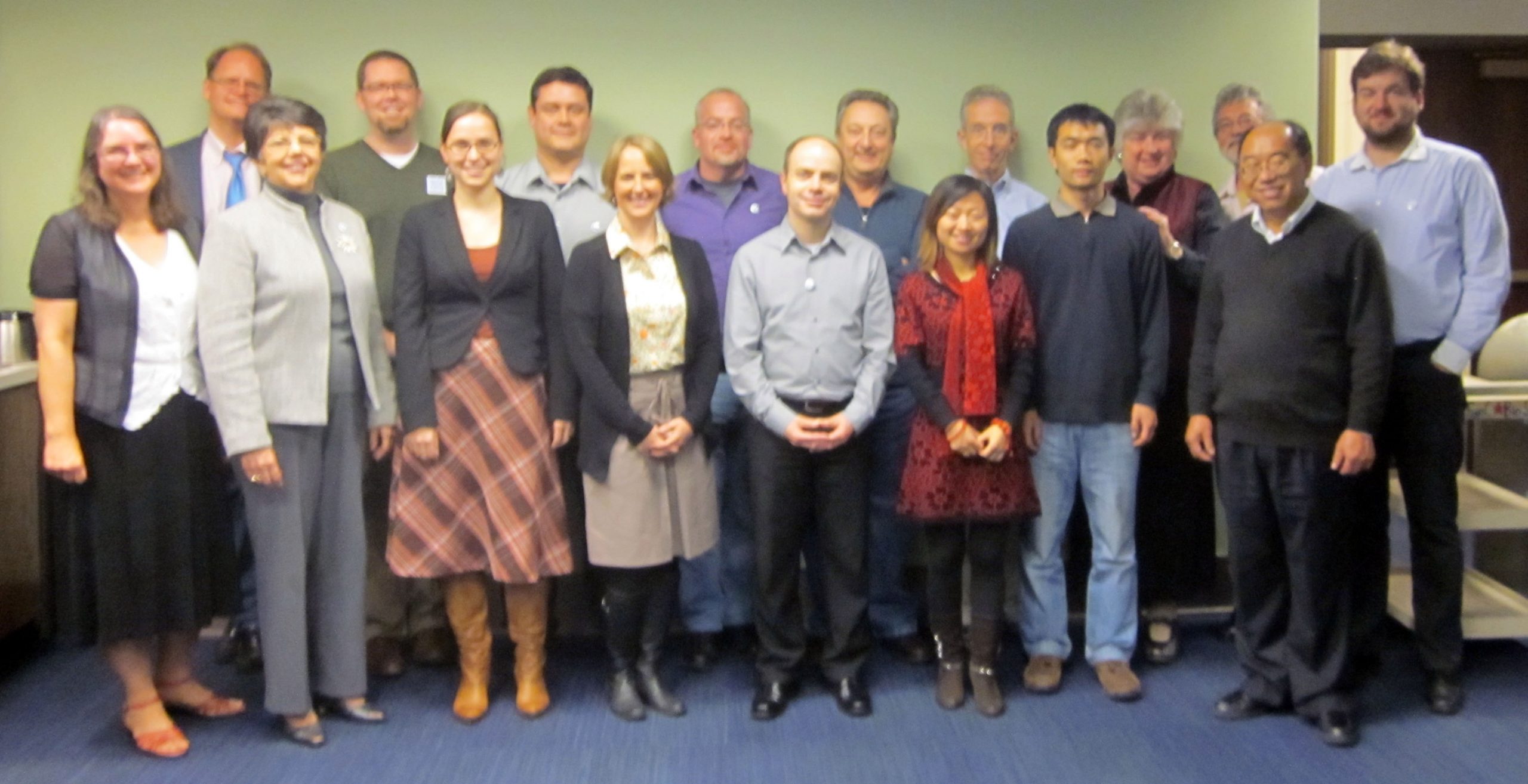
Global BHL meeting attendees stand in two rows for a group photo in a conference room

First Global BHL Meeting. Front: Connie Rinaldo, Nancy Gwinn, Jana Hoffman, Ely Wallis, Henning Scholtz, Fenghong Liu, Zheping Xu, Jinzhong Cui. Back: Martin Kalfatovic, Chris Freeland, William Ulate, Simon Sherrin, Graham Higley, Tom Garnett, Cathy Norton, Abel Packer, Boris Jacob

BHL Global Coordinator by Chris Freeland

A grant from the Gordon and Betty Moore Foundation facilitated key global growth for BHL. BHL Technical Director Chris Freeland, principal investigator for the grant, brought William to BHL (and the United States) as its Global Coordinator. William jumped right in and shortly after starting, attended his first Global BHL Meeting in Woods Hole, Massachusetts, in September 2010. As BHL’s Global Coordinator, William’s warm personality and multilingual skills helped expand the reach of BHL in meaningful ways, especially throughout Latin America and the Global South. William was always eager to meet researchers from every part of the globe and help them and their libraries come into the community. William’s efforts as Global Coordinator helped lay the groundwork for BHL’s durable social infrastructure, and his cheerful and kind demeanor made him a delight to all who had the privilege of working alongside him.

BHL Technical Director by Martin Kalfatovic

William served as the BHL Technical Director from 2012 through 2015, taking over for Chris Freeland. In addition to the significant task of maintaining the BHL technical infrastructure, he initiated the planning for the full-text search component of BHL. William was also a key leader of three important BHL grant projects: Mining Biodiversity: Enriching Biodiversity Heritage with Text Mining and Social Media (2012-2014); The Art of Life: Data Mining and Crowdsourcing the Identification and Description of Natural History Illustrations from the Biodiversity Heritage Library (2012-2015); and Purposeful Gaming and BHL: Engaging the Public in Improving and Enhancing Access to Digital Texts (2013-2015).

He remained a frequent collaborator and trusted resource for the BHL community after leaving his Technical Director position.

Biodiversity Work in Costa Rica by Erick Mata

William Ulate Rodríguez. My student, my colleague, my world travel companion, my friend.

I met William in the early 90’s as one of my brightest graduate students in the Automata Theory and Formal Languages class at the Costa Rica Institute of Technology (ITCR). Designing Turing machines and context-free grammars served as a rather theoretical prelude to a long-term friendship and the intertwined professional careers of two computer scientists who later became heavily involved with Biodiversity Informatics (BI). BI is a rather pragmatic field that aims at applying computer and information science techniques and tools to biodiversity conservation actions. The pioneering work of Instituto Nacional de Biodiversidad (INBio) in BI and the efforts that Costa Rica was conducting to better conserve its rich biodiversity were definitely the catalysts that turned both William and myself into biodiversity informaticians. Although William had a very strong background in mathematics and theoretical computer science, his thirst for learning from other fields like biology and information sciences, alongside his desire to make an impact, quickly turned him into an expert in BI.

William, my colleague, evolved from being a BI software developer at INBio to holding senior positions at INBio itself, The Nature Conservancy, MBG, BHL, TDWG, and various other national, regional, and global BI initiatives. His extensive experience, knowledge, boundless patience, ability to work under pressure, and adeptness at networking turned William into an invaluable contact, offering valuable advice during my tenure at the Encyclopedia of Life and later while conducting research and teaching in BI back at ITCR. It was William, along with our mutual friend María Mora —another brilliant former student, colleague, and friend from INBio— who encouraged me to propose that Costa Rica and ITCR host the 2016 TDWG Annual Conference. When they offered their help, I agreed to take on the responsibility, and together, we successfully accomplished it. This marked our final collaborative project. Thank you for your invaluable insights, William.

Our collaborative international projects at INBio naturally led us to frequently travel together. Destinations like Panama, Washington DC, Copenhagen, and several others provided ample opportunities for us to share numerous professional and personal experiences. Engaging in never-ending ‘final touches’ to PowerPoint presentations late at night or just before a talk became routine, almost as habitual as ensuring we had our passports when heading to the airport. As we pursued our careers at different institutions, our shared interests in BI continued to solidify our roles as global travel companions. Yet, our focus gradually shifted towards catching up on each other’s activities and exchanging perspectives on new developments and trends. Despite differing time zones (which seemed non-existent for William), we made efforts to stay connected via Skype, Zoom, or any available form of telecommunication. Nonetheless, the value of meeting William in person, whether in Dunedin or Nairobi, was truly priceless.

I don’t have enough space to fully share my experiences and anecdotes with William as a friend. However, truthfully, these experiences are inseparable from the moments shared with the student who became a friend long before the semester’s end, the colleague who was not just a cooperative coworker but also a friendly companion, and the fellow traveler with whom I engaged in endless conversations in every corner of the world, as only good friends can.

Descansa en paz William, mi querido amigo.

Work with the World Flora Online (WFO) by Chuck Miller

William worked at INBio as Data Manager from about 2000 to 2010. I met William at a TDWG meeting and he was close with Chris Freeland, then BHL Technical Director. After INBio scaled back, I convinced William to come and work for me in St. Louis. I initially hired him as a consultant in 2010, and he worked remotely from Costa Rica until we got him an H1B visa. He ultimately got a Green Card after about 5 years. He joined Missouri Botanical Garden (MBG) in 2011. He worked with Chris Freeland on the publication imaging projects at MBG including Botanicus which developed into the Biodiversity Heritage Library. Most of the BHL system development was done at MBG with William the lead on that team.

William had started working on the World Flora Online (WFO) in 2015 and then became full time Project Coordinator for the WFO after the WFO Council voted to adopt the eMonocot software from Kew. William led the entire effort to implement eMonocot on the Google Cloud as the WFO Portal, reverse engineered the eMonocot system to figure out how it worked since there was no documentation, revised the UI, and setup the processes for ingesting taxonomic data and content/description data from providers. Thousands of test records were created to be run through the eMonocot harvesting process to figure out how it worked. The data received from data providers was so messy and error prone that he had to develop dozens of scripts to analyze and fix the errors.

The population of WFO data took years, painstakingly. He dealt with millions of records and the thousands and thousands of data issues, taxonomic issues, functional application issues, and more. He had worked with the Botanic Garden of Geneva software team for several years and then with the Royal Botanic Garden Edinburgh team for the last couple of years to improve the taxonomic backbone management. The latest development has been the Rhakhis system developed by Roger Hyam working with William’s requirements. William had just completed the migration of 16 servers from the Google Cloud to MBG’s virtual server infrastructure just before his passing. We are quite adrift now on the WFO project without him. But, his legacy will go on and we plan to memorialize him on the WFO Portal.

March 8, 2024by
Blog Reel, Featured Books

Bateman’s Orchidaceae: Exploring One of the Rarest – and Largest – Orchid Books

“The Librarian’s Nightmare.” Vignette by George Cruikshank for James Bateman’s The Orchidaceae of Mexico and Guatemala ([1837]-1843). Contributed in BHL by the Peter H. Raven Library of the Missouri Botanical Garden.

A version of this article first appeared in the Council on Botanical and Horticultural Libraries (CBHL) May 2018 Newsletter.

“The Librarian’s Nightmare.” Vignette by George Cruikshank for James Bateman’s The Orchidaceae of Mexico and Guatemala ([1837]-1843). Contributed in BHL by the Peter H. Raven Library of the Missouri Botanical Garden.

“The Librarian’s Nightmare.” Vignette by George Cruikshank for James Bateman’s The Orchidaceae of Mexico and Guatemala ([1837]-1843). Contributed in BHL by the Peter H. Raven Library of the Missouri Botanical Garden.

“The Librarian’s Nightmare.”

Such is the name given to a delightful and quirky vignette found within a very rare, and very special, orchid book: James Bateman’s The Orchidaceae of Mexico and Guatemala ([1837]-1843).

This vignette, the work of caricaturist George Cruikshank, depicts a group of men struggling to lift an enormous book using a pulley system while a harried taskmaster with a megaphone attempts to direct their work and demons dance about with impish glee on the sidelines.

The vignette’s caption, translated from the Greek, reads “a big book is a big evil” (Bleichmar 2017, 179).

The scene is a humorous commentary on the massive size of Bateman’s orchid book. At about 30” x 22” (Cobbledick 2018a) and weighing in at over 38 lbs (Hamilton 1990, 1244), it is the “largest botanical book ever produced with lithographic plates” (Blunt and Stearn 1994, 249).

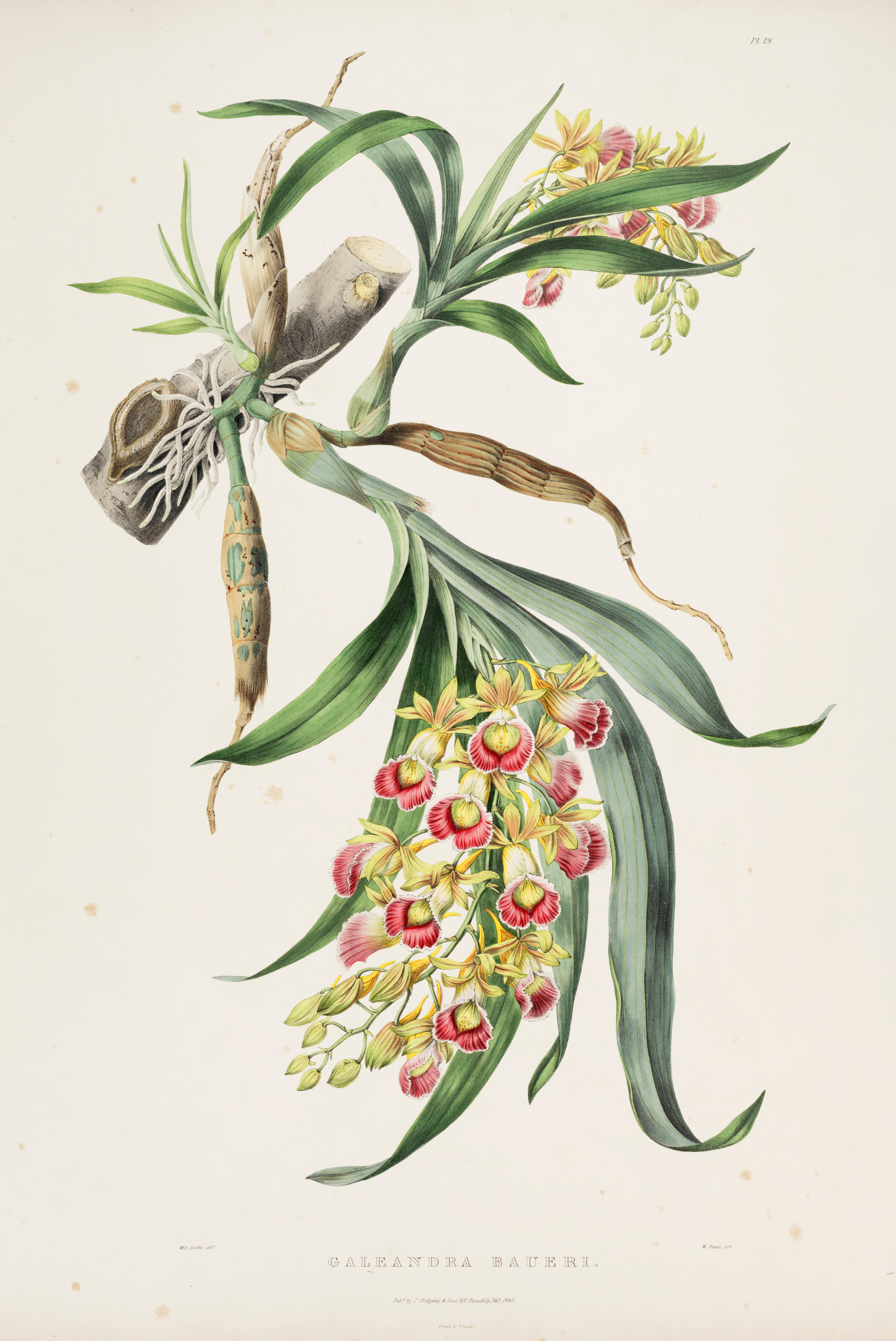
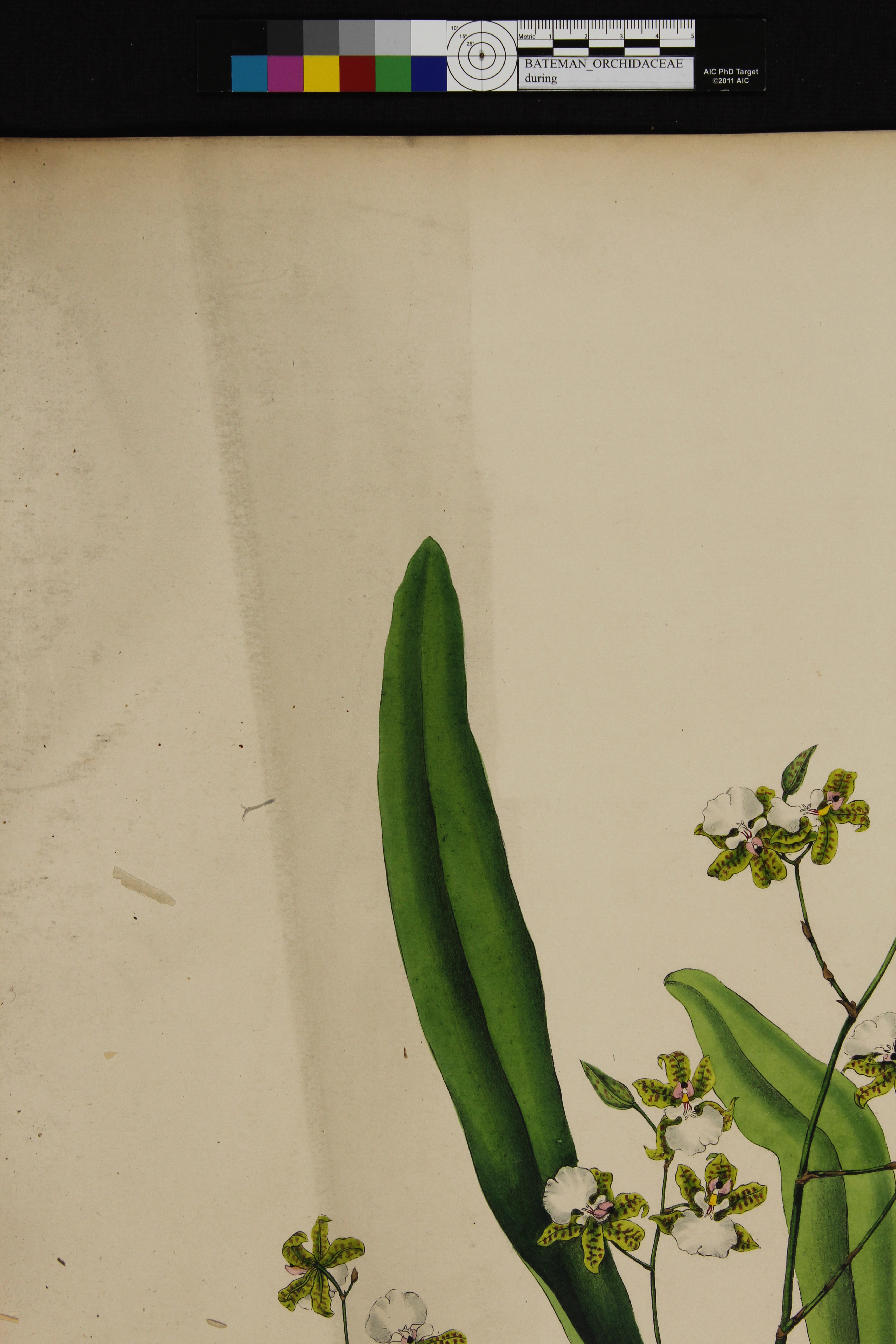
Plate 19. Bateman, James. The Orchidaceae of Mexico and Guatemala. Illustration drawn by Sarah Anne Drake and lithographed by Maxim Gauci. Contributed in BHL by the Peter H. Raven Library of the Missouri Botanical Garden.

Plate 19. Bateman, James. The Orchidaceae of Mexico and Guatemala. Illustration drawn by Sarah Anne Drake and lithographed by Maxim Gauci. Contributed in BHL by the Peter H. Raven Library of the Missouri Botanical Garden.

The Orchidaceae of Mexico and Guatemala was produced in the midst of the Victorian era’s “orchid mania” or “Orchidelirium”, characterized by European obsession with collecting and cultivating exotic orchid species. Wealthy orchid enthusiasts commissioned collectors to travel the world in search of new and rare specimens.

James Bateman was such an enthusiast. A wealthy British landowner and passionate horticulturalist, Bateman employed collectors to obtain new specimens for him, particularly from South and Central America (Sitwell and Blunt 1990, 45). It was his relationship with a merchant operating in Guatemala that enabled Bateman to secure many of the orchids featured in his magnificent folio.

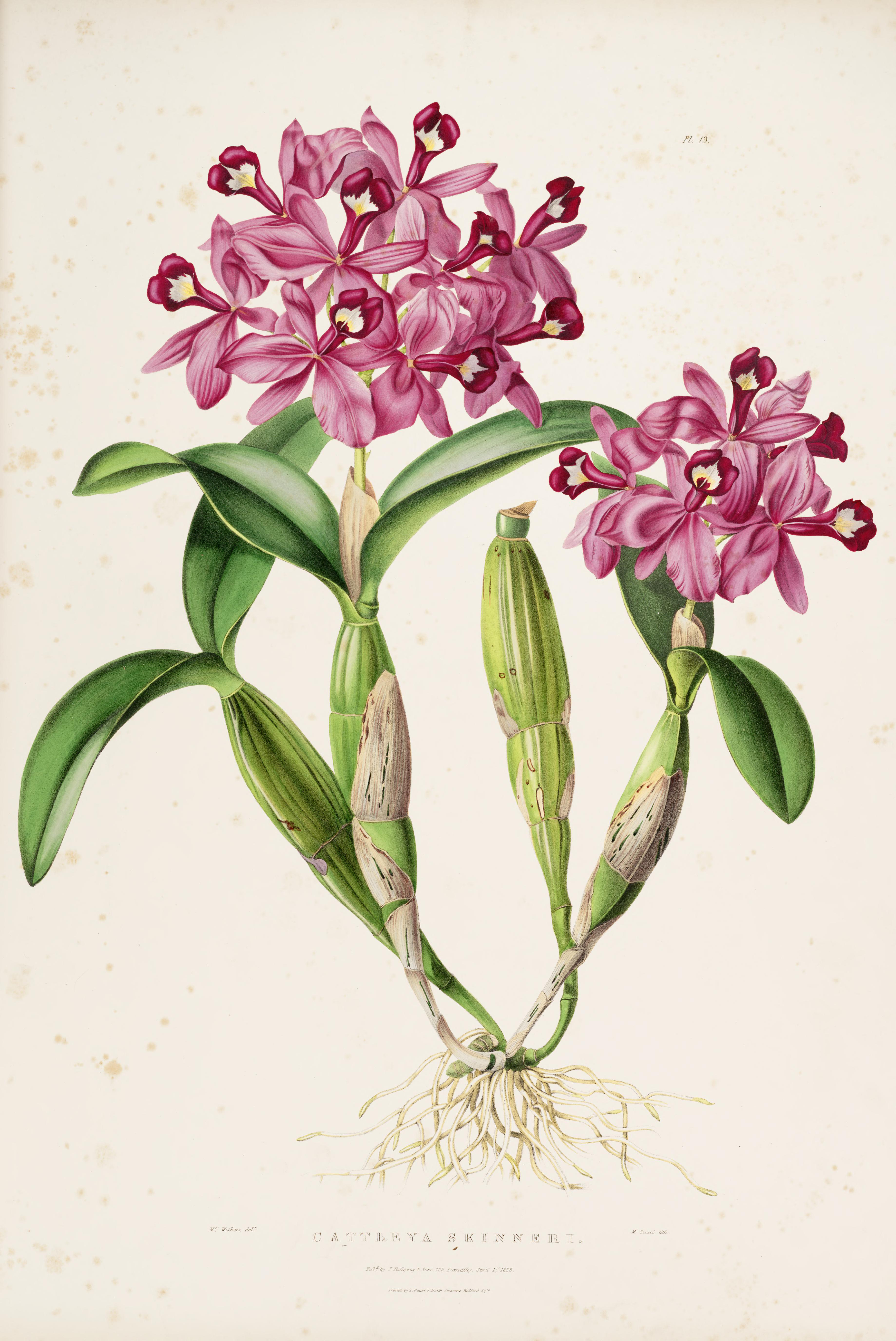
Plate 13. Bateman, James. The Orchidaceae of Mexico and Guatemala. Illustration drawn by Augusta Withers and lithographed by Maxim Gauci. Contributed in BHL by the Peter H. Raven Library of the Missouri Botanical Garden.

Plate 13. Bateman, James. The Orchidaceae of Mexico and Guatemala. Illustration drawn by Augusta Withers and lithographed by Maxim Gauci. Contributed in BHL by the Peter H. Raven Library of the Missouri Botanical Garden.

George Ure Skinner, born into a scholarly English family, established an export business in Guatemala in the 1830s, and in his free time, collected local birds and insects for the Museum of Natural History in Manchester, England. After receiving a letter from Bateman requesting orchids from the region, Skinner began collecting and shipping back new and stunning specimens hitherto unknown to the European public. These specimens formed the foundation of Bateman’s orchid masterpiece (Schmidt-Ostrander 2018).

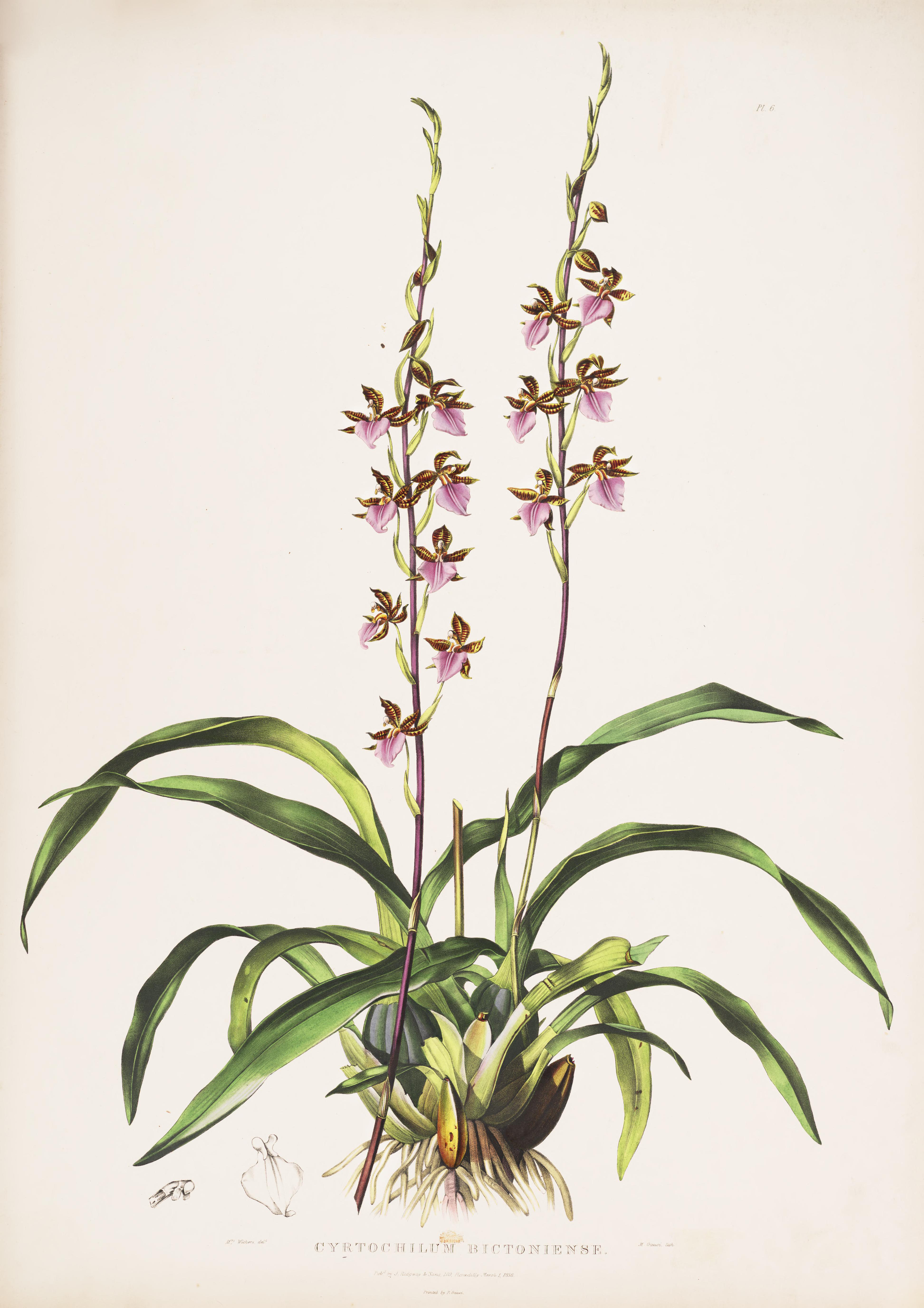
Plate 6. Bateman, James. The Orchidaceae of Mexico and Guatemala. Illustration drawn by Augusta Withers and lithographed by Maxim Gauci. Contributed in BHL by the Peter H. Raven Library of the Missouri Botanical Garden.

Plate 6. Bateman, James. The Orchidaceae of Mexico and Guatemala. Illustration drawn by Augusta Withers and lithographed by Maxim Gauci. Contributed in BHL by the Peter H. Raven Library of the Missouri Botanical Garden.

Within The Orchidaceae of Mexico and Guatemala, Bateman provided scientific descriptions in English and Latin as well as practical cultivation information for the species presented in the book. Also, according to Amy Pool, Curatorial Assistant at the Missouri Botanical Garden, 11 new-to-science species of orchids were validly published in this work. She estimates that it presented the first published illustrations for 90% of the 40 species included.

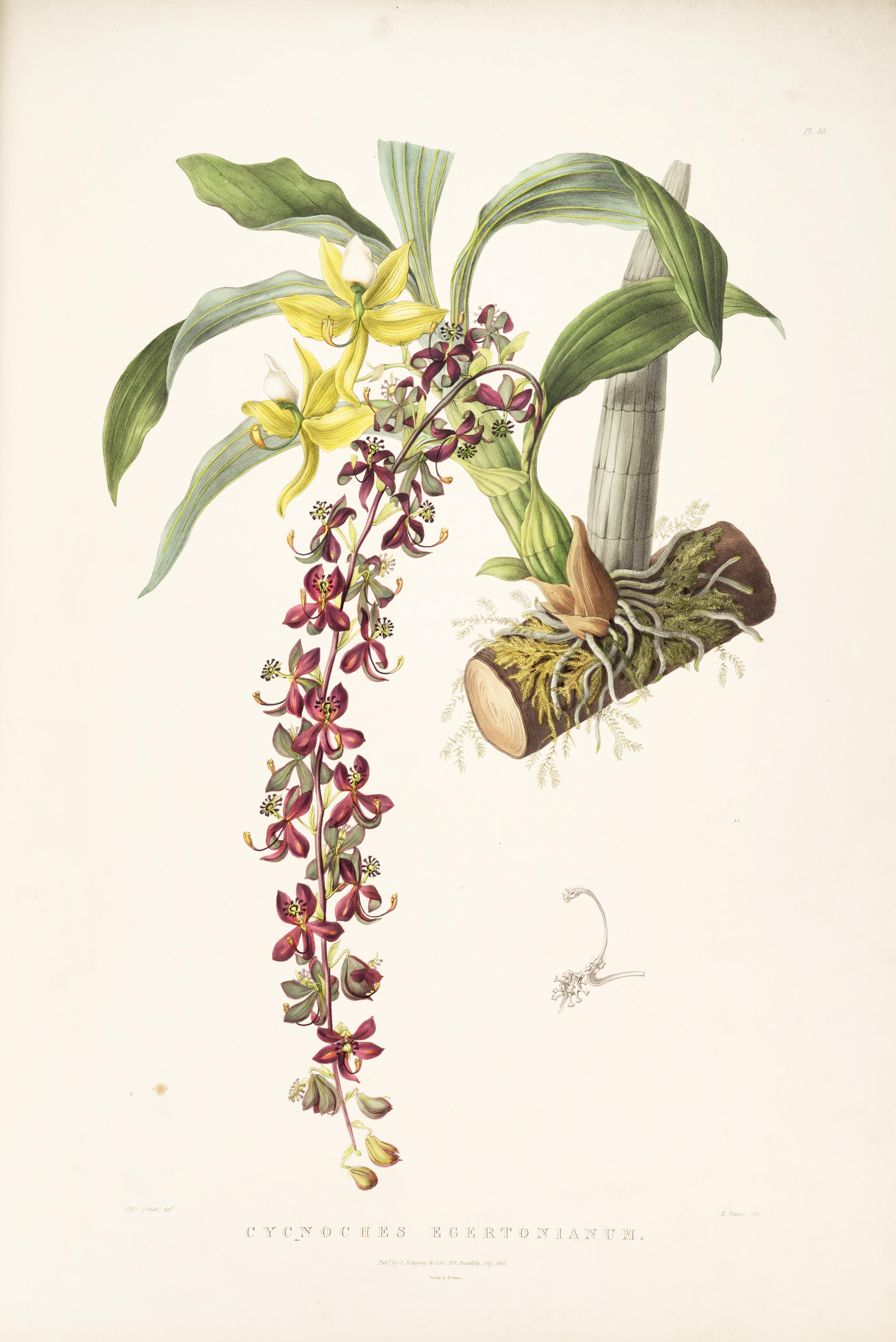
Plate 40. Bateman, James. The Orchidaceae of Mexico and Guatemala. Illustration drawn by Sarah Anne Drake and lithographed by Maxim Gauci. Contributed in BHL by the Peter H. Raven Library of the Missouri Botanical Garden.

Plate 40. Bateman, James. The Orchidaceae of Mexico and Guatemala. Illustration drawn by Sarah Anne Drake and lithographed by Maxim Gauci. Contributed in BHL by the Peter H. Raven Library of the Missouri Botanical Garden.

The work is particularly noteworthy for its colorful (and sizeable) lithographic plates. Numbering 40 in total, these lithographs were executed by Maxim Gauci based on drawings largely by Sarah Anne Drake and Augusta Withers, with two drawings by Jane Edwards and one by Samuel Holden. These illustrations were based on the live specimens in Bateman’s and his friends’ greenhouses. The hand-colored elements of the lithographs add dimension and richness to the orchid forms, particularly through the application of varnish which provides deeper tones (Cobbledick 2018b).

The Orchidaceae of Mexico and Guatemala was issued in parts between 1837-43 and printed in a limited edition of 125 copies sold to subscribers (Bleichmar 2017, 179). Today, fewer than 55 copies are known to exist.

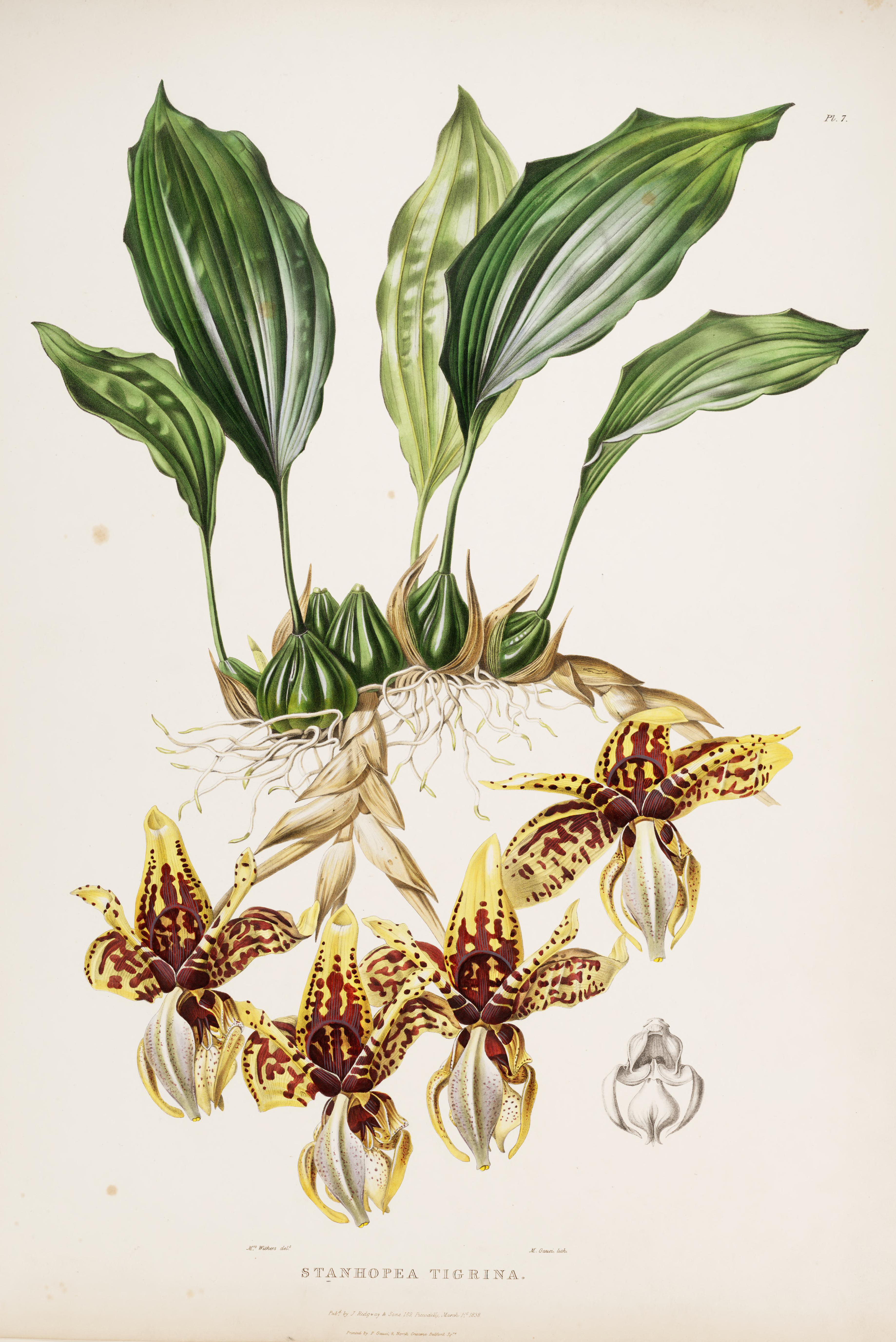
Plate 7. Bateman, James. The Orchidaceae of Mexico and Guatemala. Illustration drawn by Augusta Withers and lithographed by Maxim Gauci. Contributed in BHL by the Peter H. Raven Library of the Missouri Botanical Garden.

Plate 7. Bateman, James. The Orchidaceae of Mexico and Guatemala. Illustration drawn by Augusta Withers and lithographed by Maxim Gauci. Contributed in BHL by the Peter H. Raven Library of the Missouri Botanical Garden.

One of those copies can be found in the world-renowned Rare Book Collection of the Peter H. Raven Library of the Missouri Botanical Garden. Happily, this copy has been digitized in the Biodiversity Heritage Library and is now freely available to the world.

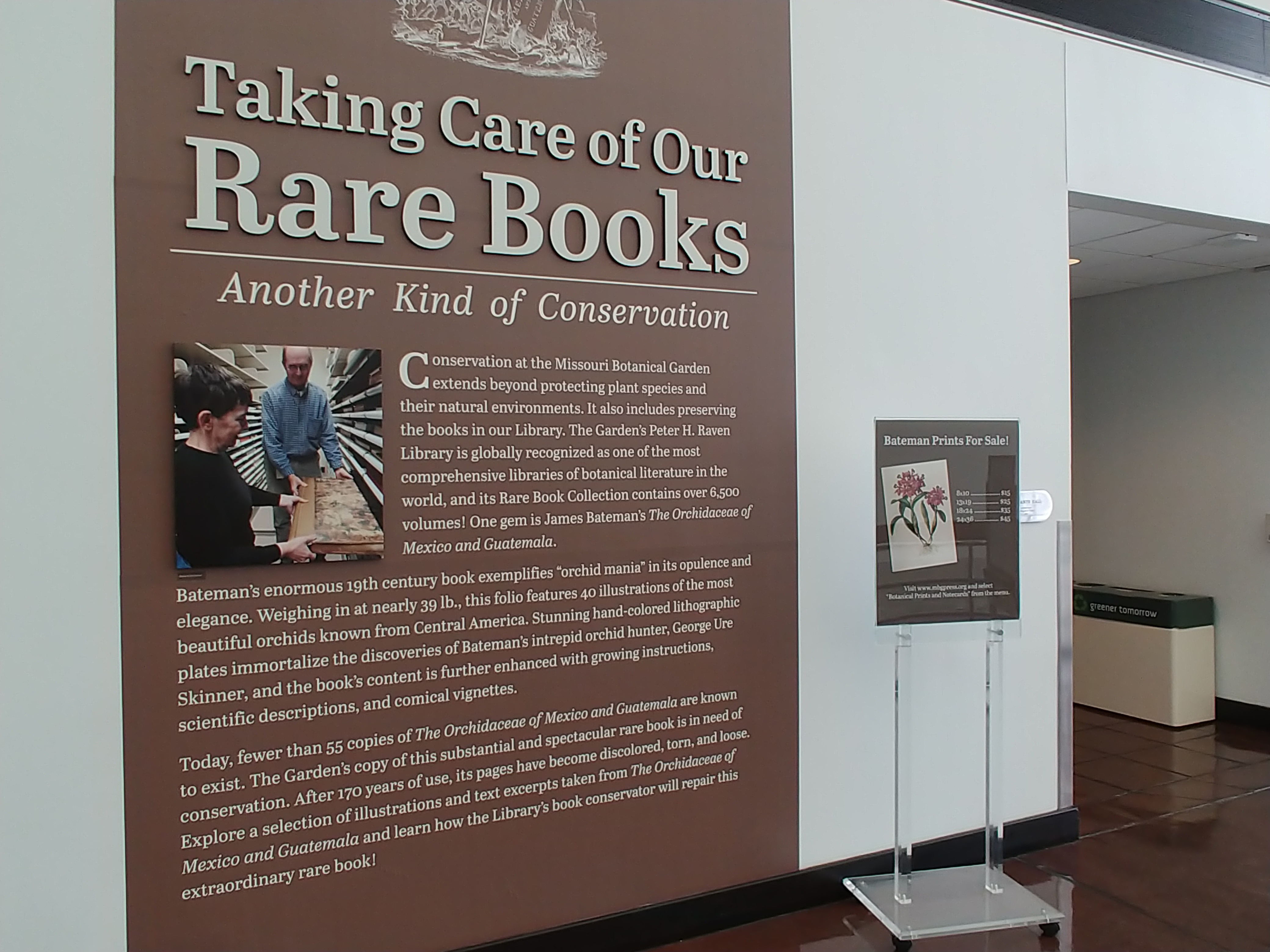
The Missouri Botanical Garden recently featured an exhibit about The Orchidaceae of Mexico and Guatemala. Image credit: Lauren Peters

The Missouri Botanical Garden recently featured an exhibit about The Orchidaceae of Mexico and Guatemala. Image credit: Lauren Peters.

Earlier this year, the Missouri Botanical Garden produced an exhibit on book conservation, entitled: Taking Care of Our Rare Books: Another Kind of Conservation. This ran concurrent with the Garden’s annual orchid show, the 2018 theme being “Orchid mania.” Both featured The Orchidaceae of Mexico and Guatemala. The floral show included numerous images from the book and described its role in “orchid mania”, and the exhibit featured a selection of images and text excerpts from the publication while highlighting book conservation techniques and principles.

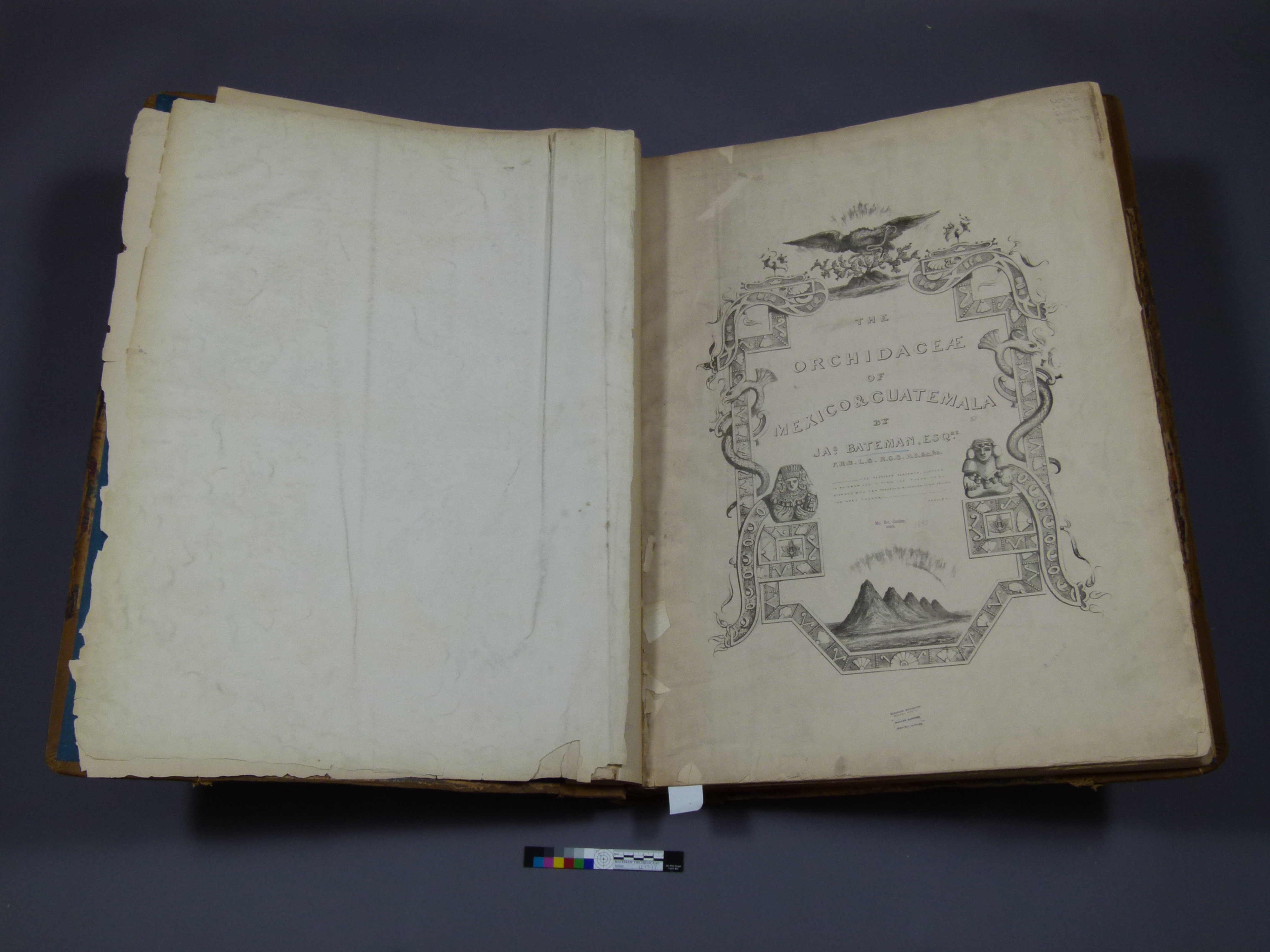
=At nearly 200 years old, and having been acquired by the Library in 1895 during a period of heavy pollution in Saint Louis, it is not surprising that the Missouri Botanical Garden’s copy of Bateman’s work is in poor condition, with ripped and soiled paper, loose pages, and broken binding.

The Missouri Botanical Garden’s copy of The Orchidaceae of Mexico and Guatemala is undergoing an extensive restoration project. Image credit: Susie Cobbledick

The Missouri Botanical Garden’s copy of The Orchidaceae of Mexico and Guatemala is undergoing an extensive restoration project. Image credit: Susie Cobbledick

The Library’s book conservator, Susie Cobbledick, has begun a substantial restoration project for this work. This process was not only highlighted as part of the Garden’s exhibit, but it is also being recorded through a series of posts on the Garden’s Discover + Share website. This process includes repairing the volume’s binding and cleaning and mending the paper.

As Cobbledick articulates, the Library’s copy had been rebound at least once, and past attempts to repair the binding have failed under the strain imposed by such a massive volume. Additionally, the original covers were replaced with Masonite board at some point in the 20th century. As part of the Library’s conservation process, a more robust binding structure will be created for this volume, and more appropriate covers may be used to replace the inadequate Masonite (Cobbledick 2018a).

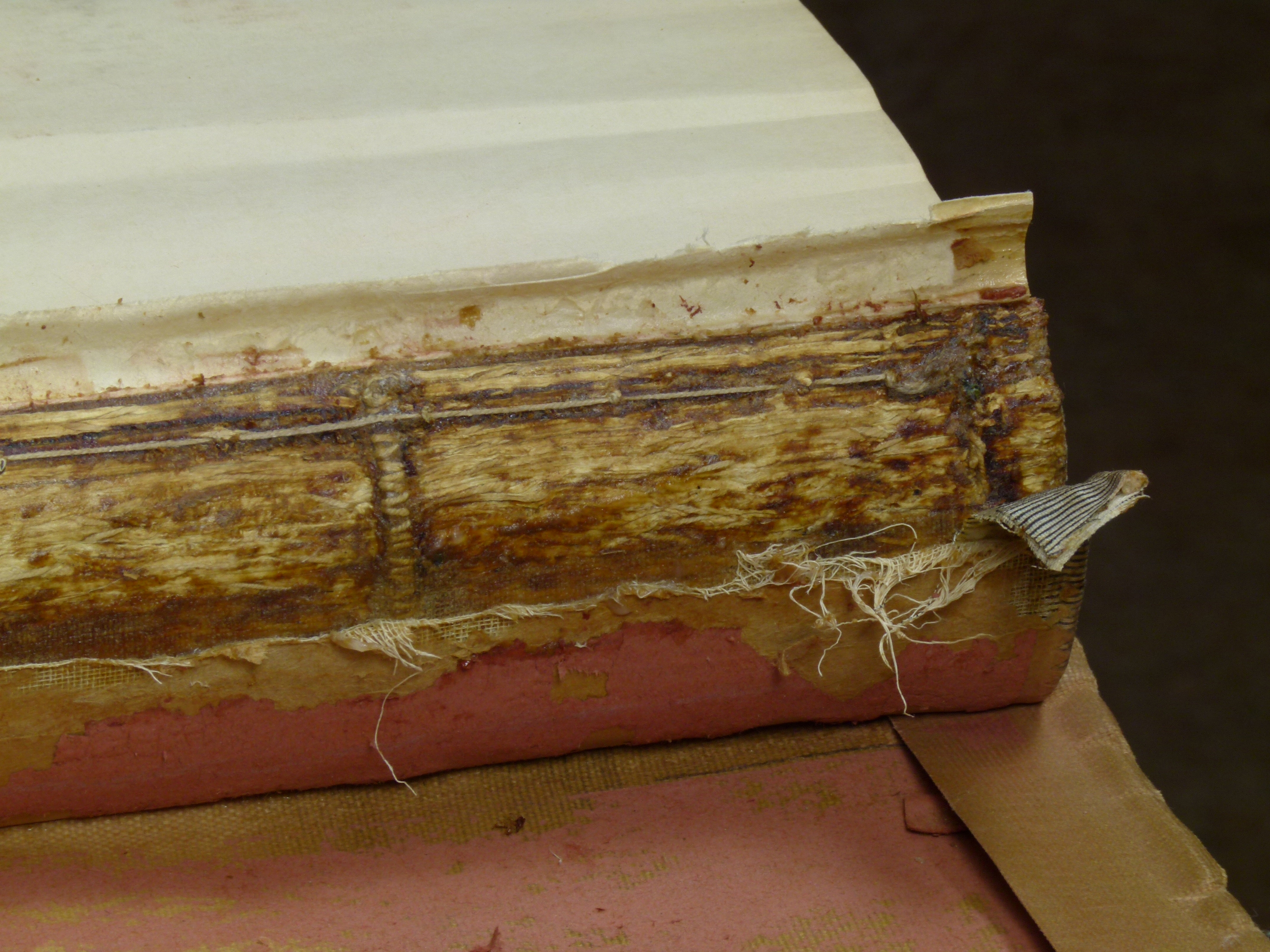
The Garden’s copy of The Orchidaceae of Mexico and Guatemala was originally sewn on linen cords, which would have extended beyond the back of the book to the boards. The fact that these cords have been cut is evidence that the book had been rebound some time in the past. Image Credit: Susie Cobbledick

The Garden’s copy of The Orchidaceae of Mexico and Guatemala was originally sewn on linen cords, which would have extended beyond the back of the book to the boards. The fact that these cords have been cut is evidence that the book had been rebound some time in the past. Image Credit: Susie Cobbledick

The soiled pages also require special attention. In order to remove the dirt and other residue that has accumulated over the past 170+ years without altering or damaging the lithographs’ fragile surfaces, Cobbledick is employing dry cleaning methods using cosmetic sponges and white vinyl erasers to carefully clean each page. This time-consuming process will take several months to complete (Cobbledick 2018b).

Cosmetic sponges and white vinyl erasers are used to clean the lithographs within the Garden’s copy of The Orchidaceae of Mexico and Guatemala. In this photo, you can see a cleaned (right-hand side) and uncleaned (left-hand side) portion of a plate from the book. Image Credit: Susie Cobbledick

Cosmetic sponges and white vinyl erasers are used to clean the lithographs within the Garden’s copy of The Orchidaceae of Mexico and Guatemala. In this photo, you can see a cleaned (right-hand side) and uncleaned (left-hand side) portion of a plate from the book. Image Credit: Susie Cobbledick.

Conservators have also begun mending the volume’s ripped and damaged paper. As part of this process, they are conducting tests to determine whether the type of sizing (substance added to paper to make it less absorbent) used has contributed to the poor condition of the book’s paper today. The answer may be related to whether or not the paper was machine-made. Explore the testing process and initial outcomes in the most recent “Rebuilding the Bateman Book” post.

To learn more about the restoration process for The Orchidaceae of Mexico and Guatemala and follow the conservation work, explore the entire “Rebuilding the Bateman Book” series on the Garden’s Discover + Share website.

The Orchidaceae of Mexico and Guatemala is truly a scientific, bibliographic, and artistic marvel. Through its unique blend of scientific information, awe-inspiring illustrations, and unexpected humor, Bateman’s orchid masterpiece stands out as a truly remarkable entry in the annals of natural history.

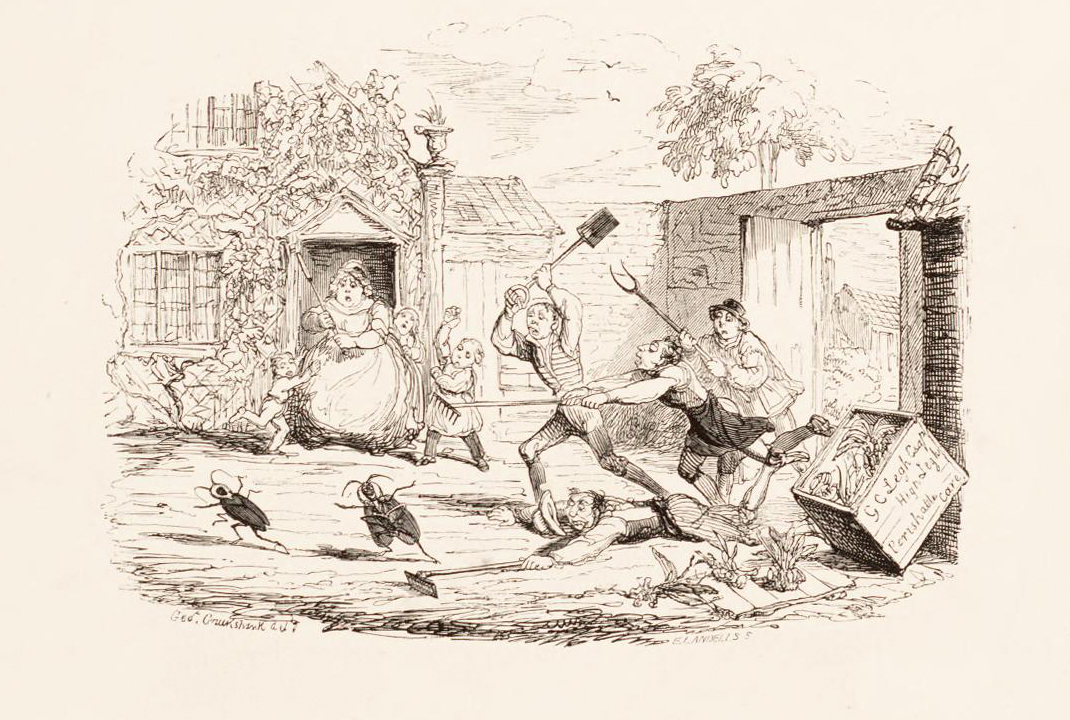
As another example of humor within The Orchidaceae of Mexico and Guatemala, this vignette by George Cruikshank depicts a pair of gigantic cockroaches escaping from a box meant to contain orchid specimens whilst the gardener’s family and assistants chase the unwelcome intruders.

As another example of humor within The Orchidaceae of Mexico and Guatemala, this vignette by George Cruikshank depicts a pair of gigantic cockroaches escaping from a box meant to contain orchid specimens whilst the gardener’s family and assistants chase the unwelcome intruders.

What some might call “The Librarian’s Nightmare”, we call “The Book Lover’s Dream”. We are grateful to the Peter H. Raven Library of the Missouri Botanical Garden for making this title freely available in BHL and are thrilled that the Library’s current conservation efforts will ensure that future generations can enjoy this treasure.

Taking Care of Our Rare Books: Another Kind of Conservation was curated by Missouri Botanical Garden staff Lauren Peters (Science Communication Specialist), Amy Pool (Curatorial Assistant, Herbarium), and Susie Cobbledick (Book Conservator, Library) and designed by Ellen Flesch (Supervisor, Creative Services) based on an exhibit proposal by Doug Holland (Director, Peter H. Raven Library). Learn more about the exhibit.

Post by Grace Costantino (Outreach and Communication Manager, Biodiversity Heritage Library) with significant contributions from Susie Cobbledick (Book Conservator, Peter H. Raven Library of the Missouri Botanical Garden) and Amy Pool (Curatorial Assistant, Herbarium, Missouri Botanical Garden).

References

Bleichmar, Daniela. 2017. Visual Voyages: Images of Latin American Nature from Columbus to Darwin. New Haven, CT: Yale University Press.

Blunt, Wilfrid and William T. Stearn. 1994. The Art of Botanical Illustration. New Edition. Suffolk: Antique Collectors’ Club, Ltd.

Cobbledick, Susie. 2018a. “From the Library: Rebuilding the Bateman Book (Part 1).” Discover + Share. February 17. Accessed March 29, 2018. https://discoverandshare.org/2018/02/17/from-the-library-rebuilding-the-bateman-book-part-1/.

Cobbledick, Susie. 2018b. “From the Library: Rebuilding the Bateman Book (Part 2).” Discover + Share. March 22. Accessed March 29, 2018. https://discoverandshare.org/2018/03/22/from-the-library-rebuilding-the-bateman-book-part-2/.

Hamilton, Robert M. 1990. “Skinner and Bateman – 1: Introduction.” American Orchid Society Bulletin 59, no. 12 (December): 1235-1247.

Schmidt-Ostrander, Ingrid. 2018. “George Ure Skinner (1804 – 1867).” Victorian Orchid Society. Accessed March 29, 2018. http://victoriaorchidsociety.com/Ingrid/Skinner.html.

Sitwell, Sacheverell and Wilfrid Blunt. 1990. Great Flower Books: 1700-1900. New York: The Atlantic Monthly Press.

July 19, 2018by michelle.underhill
Blog Reel, Featured Books

Field Note-Worthy: Thousands of Field Notes Now Available in BHL Thanks to the Field Notes Project!

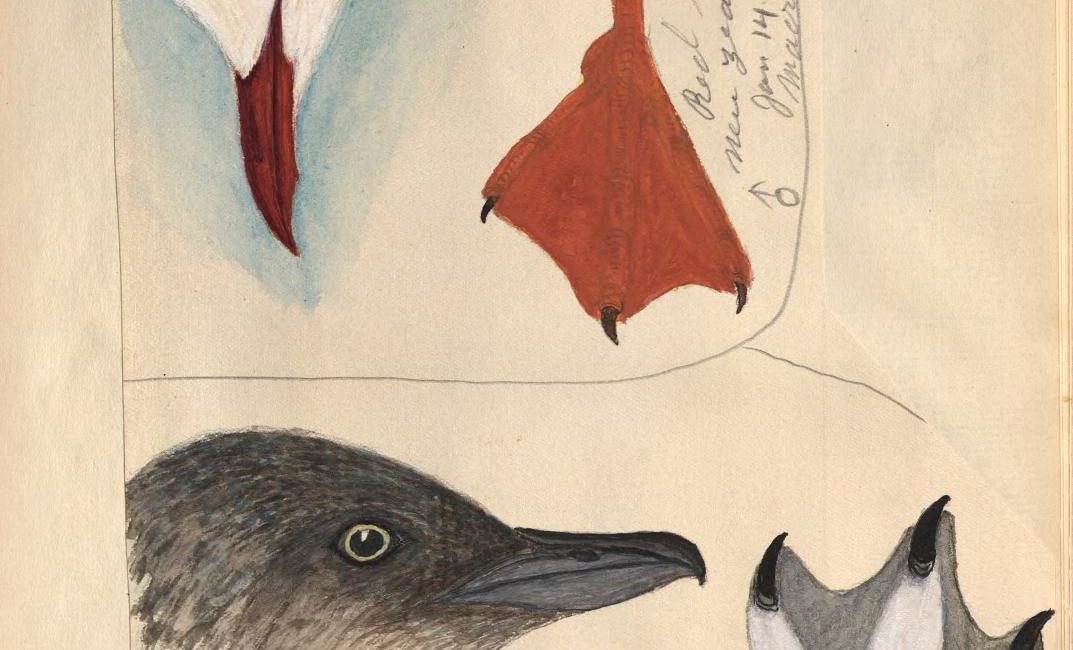
In February 2016, the Biodiversity Heritage Library set out to digitize over 450,000 pages of field notes. While the BHL had already added some archival material to its collection before this project, the Field Notes Project is BHL’s largest undertaking of digitizing field notes to date.

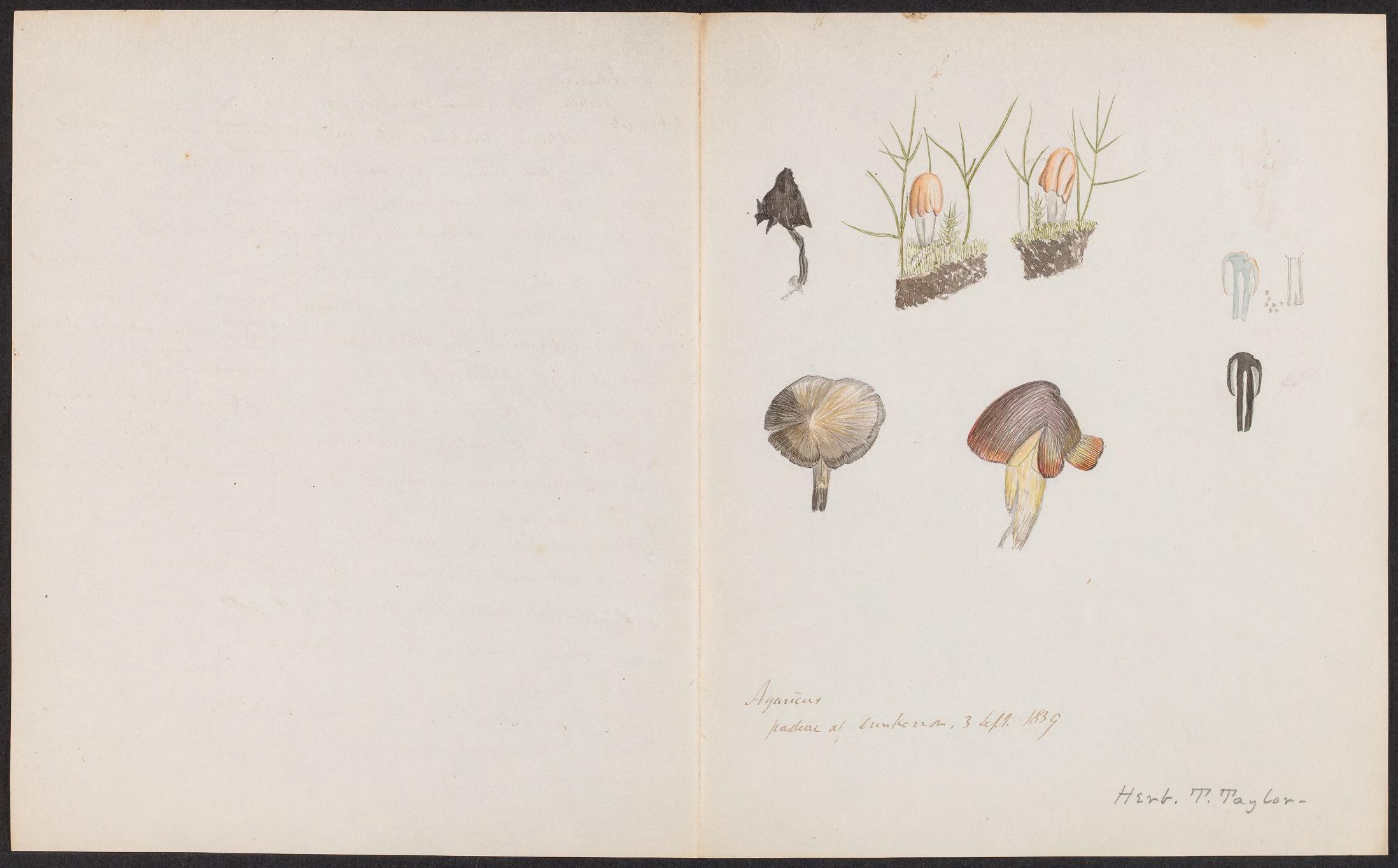
drawingsfungi00tayl_0013.jpg

Taylor, Thomas. Drawings of Fungi. Contributed by Harvard University Botany Libraries.

Funded by the Council on Library and Information Resources (CLIR) Digitizing Hidden Special Collections initiative, this was a collaborative project with eleven partners:

  • American Museum of Natural History
  • The Field Museum of Natural History Library
  • Harvard University Botany Libraries
  • Harvard University, Museum of Comparative Zoology, Ernst Mayr Library
  • Internet Archive
  • The New York Botanical Garden, LuEsther T. Mertz Library
  • Missouri Botanical Garden, Peter H. Raven Library
  • Smithsonian Institution Archives
  • Smithsonian Libraries
  • University of California, Berkeley, Museum of Vertebrate Zoology
  • Yale Peabody Museum of Natural History
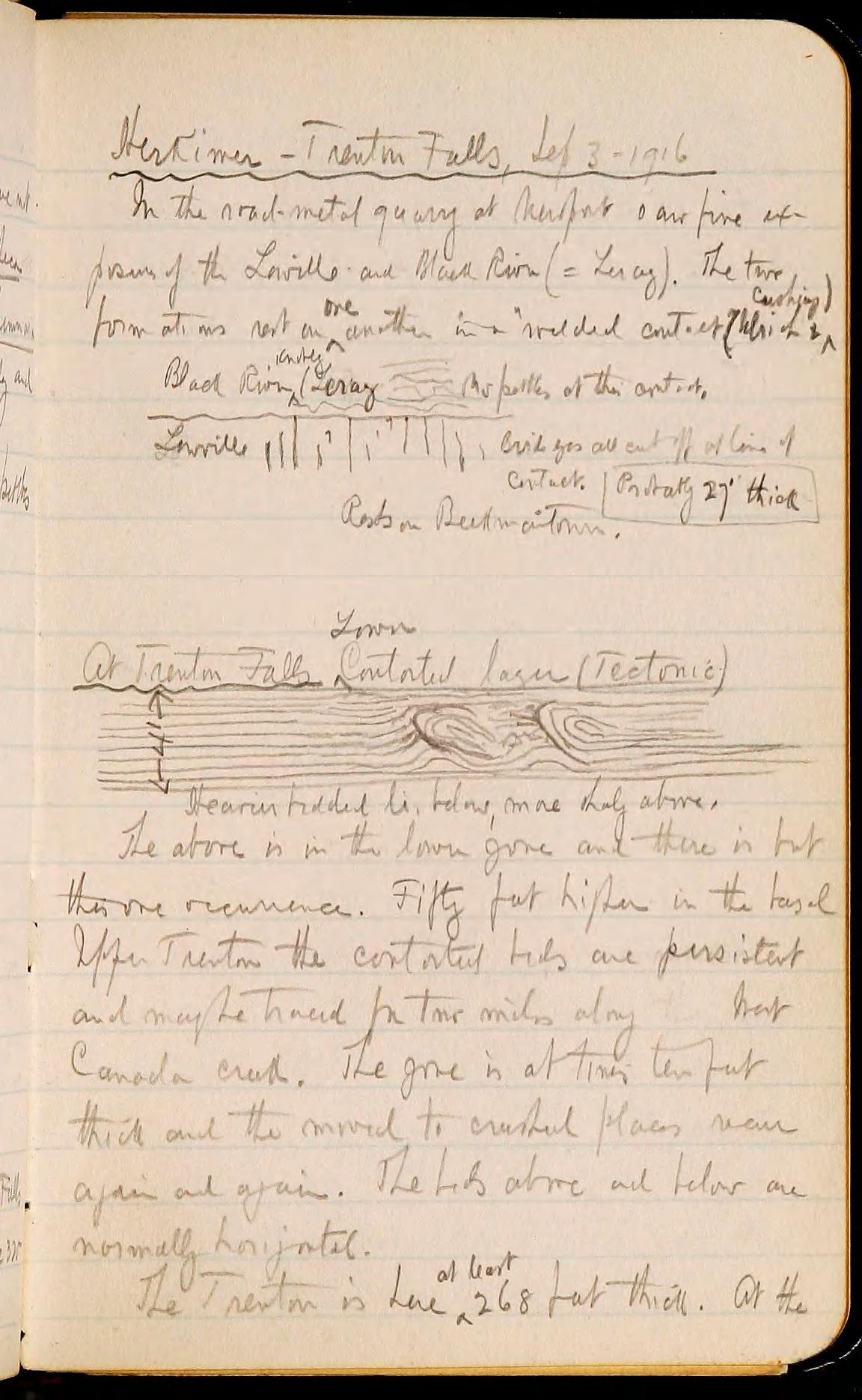
fieldnotebookma00schu_0031.jpg

Schuchert, Charles. Field Notebook: Maine, Massachusetts, New Hampshire, New York, Ohio, Rhode Island, Ontario 1916, 1917, 1920. Contributed by Yale Peabody Museum of Natural History Archives.

The importance of field notes is well known to curators, researchers and historians. Diaries, correspondence, journals and photographs serve as records of the flora and fauna of a particular time and place, providing reference points when observing how a habitat has changed. They also offer insight on expeditions, the origins of a museum collections, and contextualize the work through the eyes of the scientists and narratives about how they interacted with the people, land and cultures they studied.

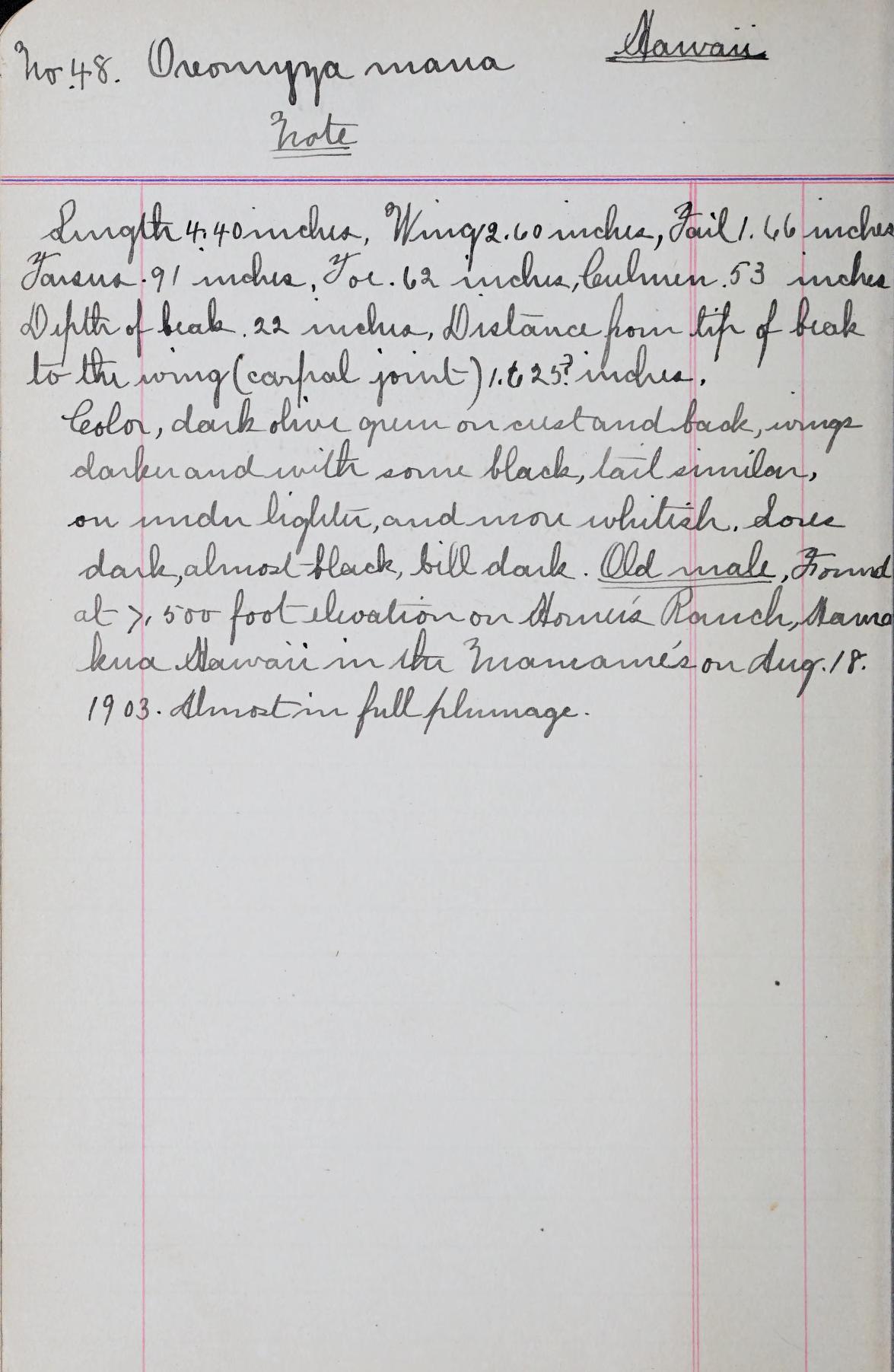
beekeepingarchiv00ches_0064.jpg

Blacow, Chester E. Bee keeping activities and field catalog of birds collected in Hawaii, v4273. Contributed by University of California, Museum of Vertebrate Zoology.

If you have ever used historic field notes for your own research, you may understand why this wouldn’t be a cut-and-dry project. Field notes can pose a number of challenges, and our partners certainly had to manage many of them. Conservation concerns are always at the top of the list, ensuring that field notes are in the proper condition for digitization. Through digitization, we can also reduce the need to refer to the physical object and further protect these unique items. Other concerns stemmed from how researchers took notes, including writing right into the gutter of a notebook or frugal researchers who would start a new notebook by simply flipping a used one and writing in the other direction. Together, the project team was able to overcome these challenges to provide open access to their field notes collections.

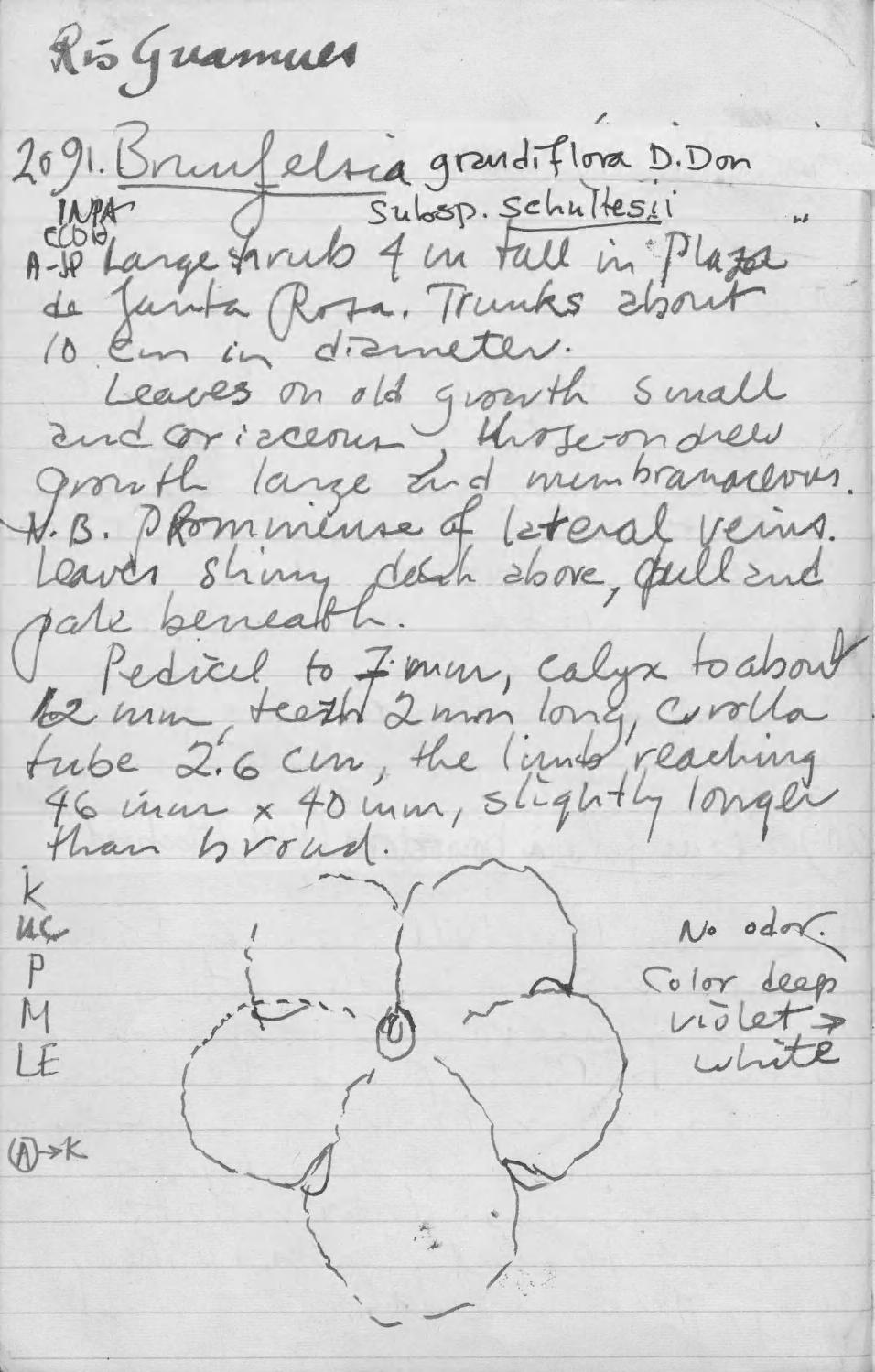
timothyplowmanb00plow_0086.jpg

Plowman, Timothy. Timothy Plowman botanical collecting notebook : 1900-2286 : 1968-1969. Contributed by The Field Museum of Natural History Library.

We finished work on the project May 31, 2018 and are pleased to report that the project team digitized over 517,000 pages of field notes! 

Those who follow the blog closely will have read posts from the BHL Field Notes Project series where project partners highlighted their collections and digitization process. With several expeditions, disciplines and institutions represented, we are excited to see what our users discover, and see how they use field notes in their own work. Take a look and delve into field notes digitized for this project in BHL and Internet Archive.

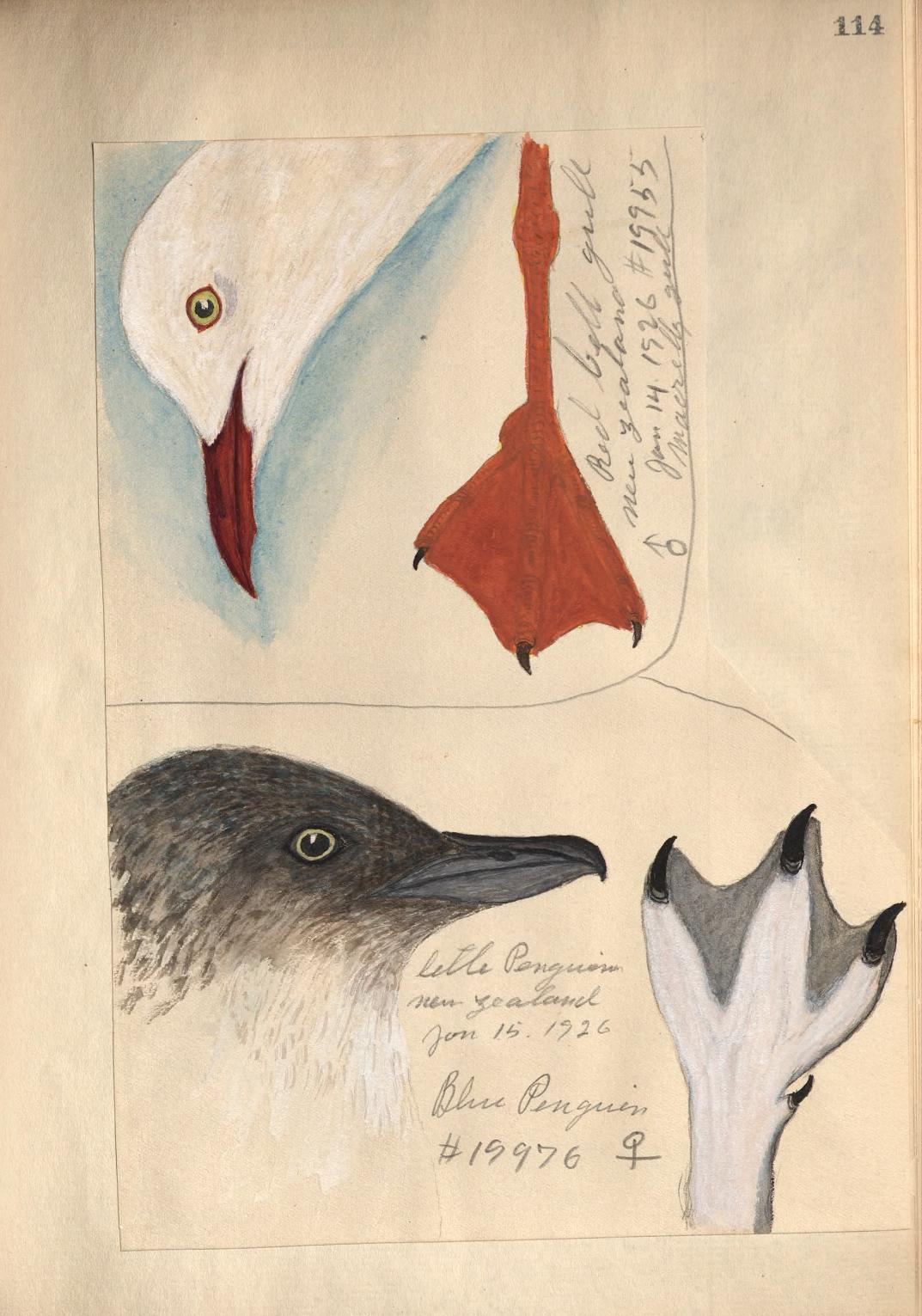
whitneysouthsea2corr_0241.jpg

Correia, José G. Whitney South Sea Expedition of the American Museum of Natural History. Letters and journal of José G. Correia. Volume 2. Contributed by American Museum of Natural History.

The project team and BHL would like to thank the Council on Library and Information Resources for generously funding the BHL Field Notes Project.

June 28, 2018by mkahn
Blog Reel, Featured Books

The Botanical Art of Redouté

View Full Size Image
Redouté, Pierre Joseph. Les liliacees. (1802-1815). v. 2. http://www.biodiversitylibrary.org/page/299211. Digitized by Missouri Botanical Garden.

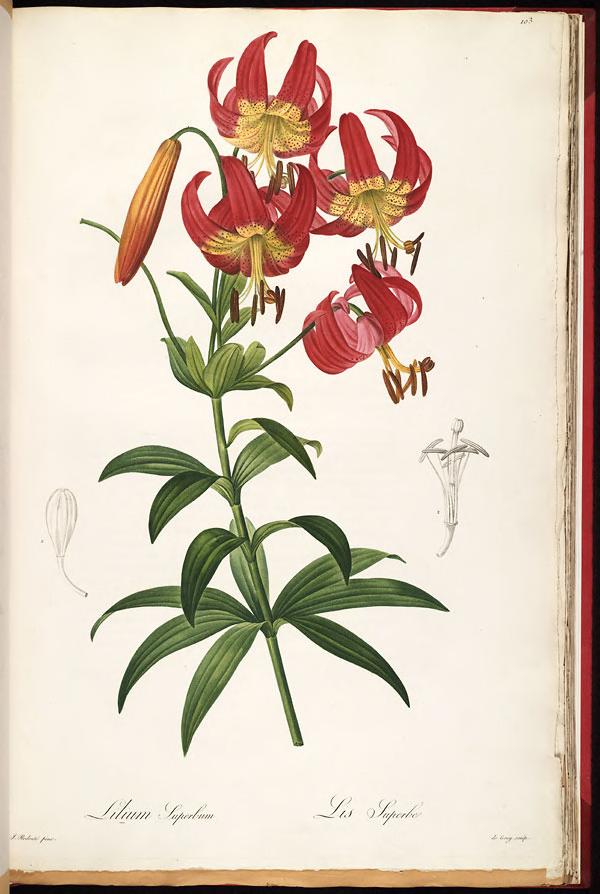
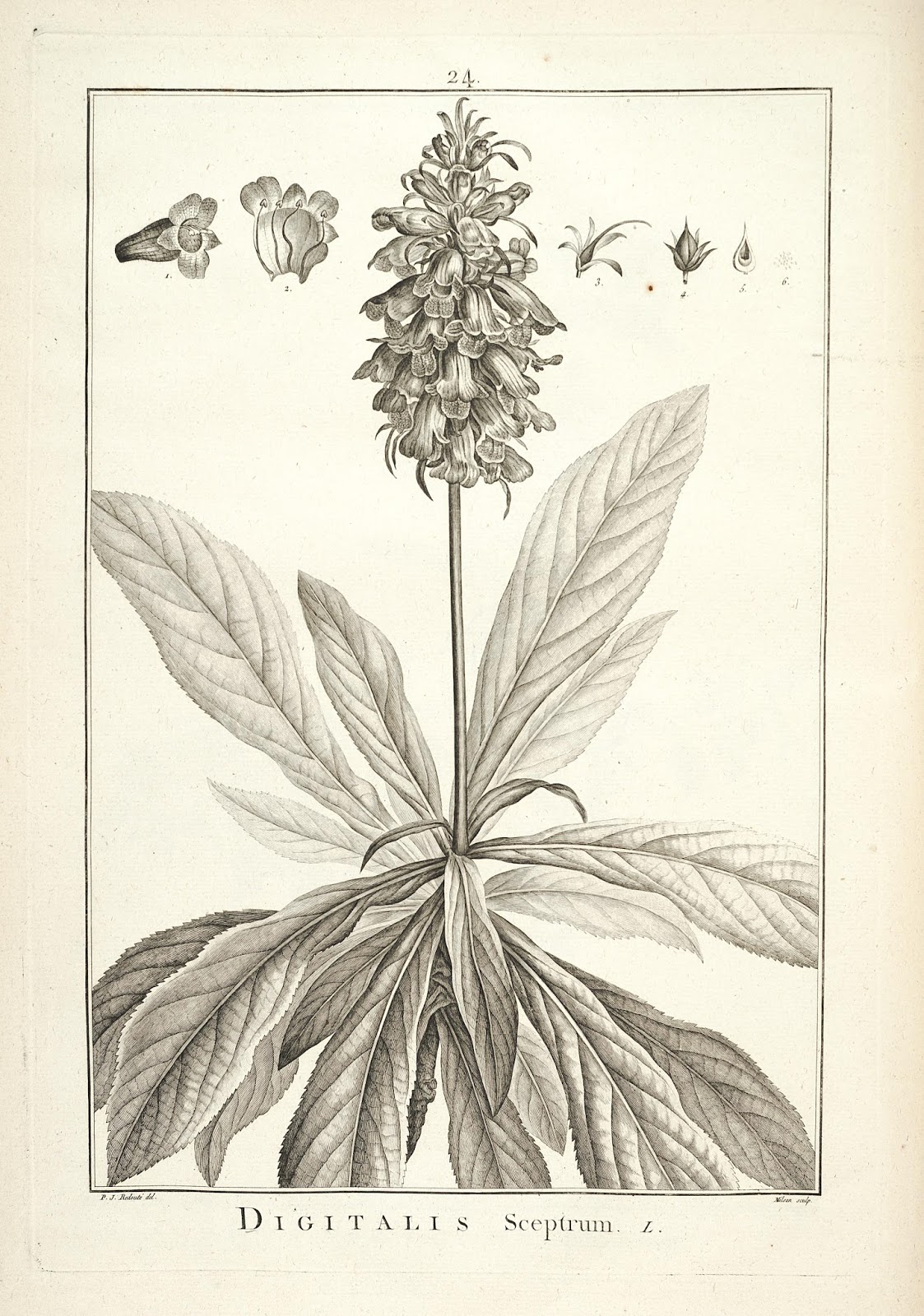
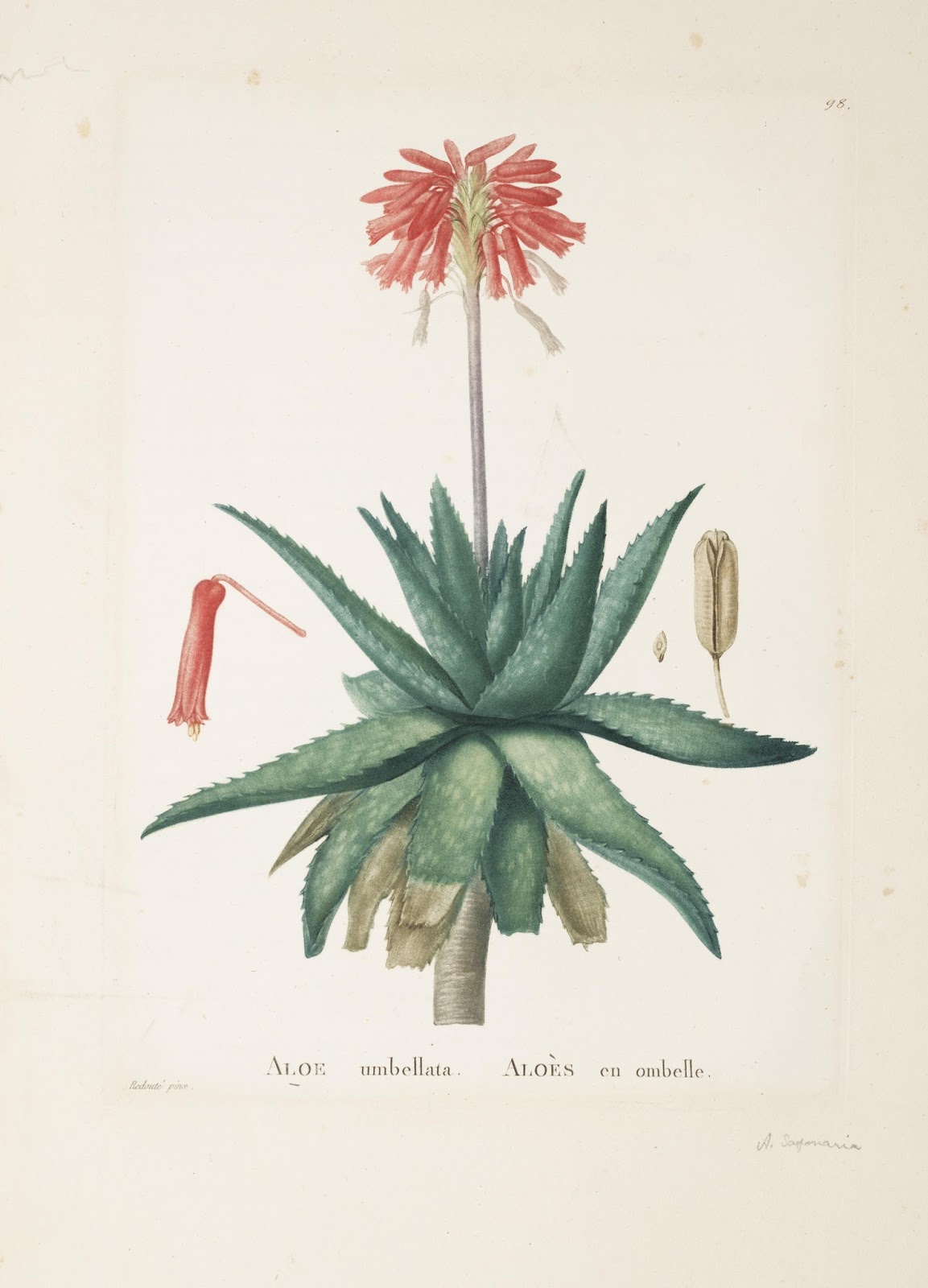
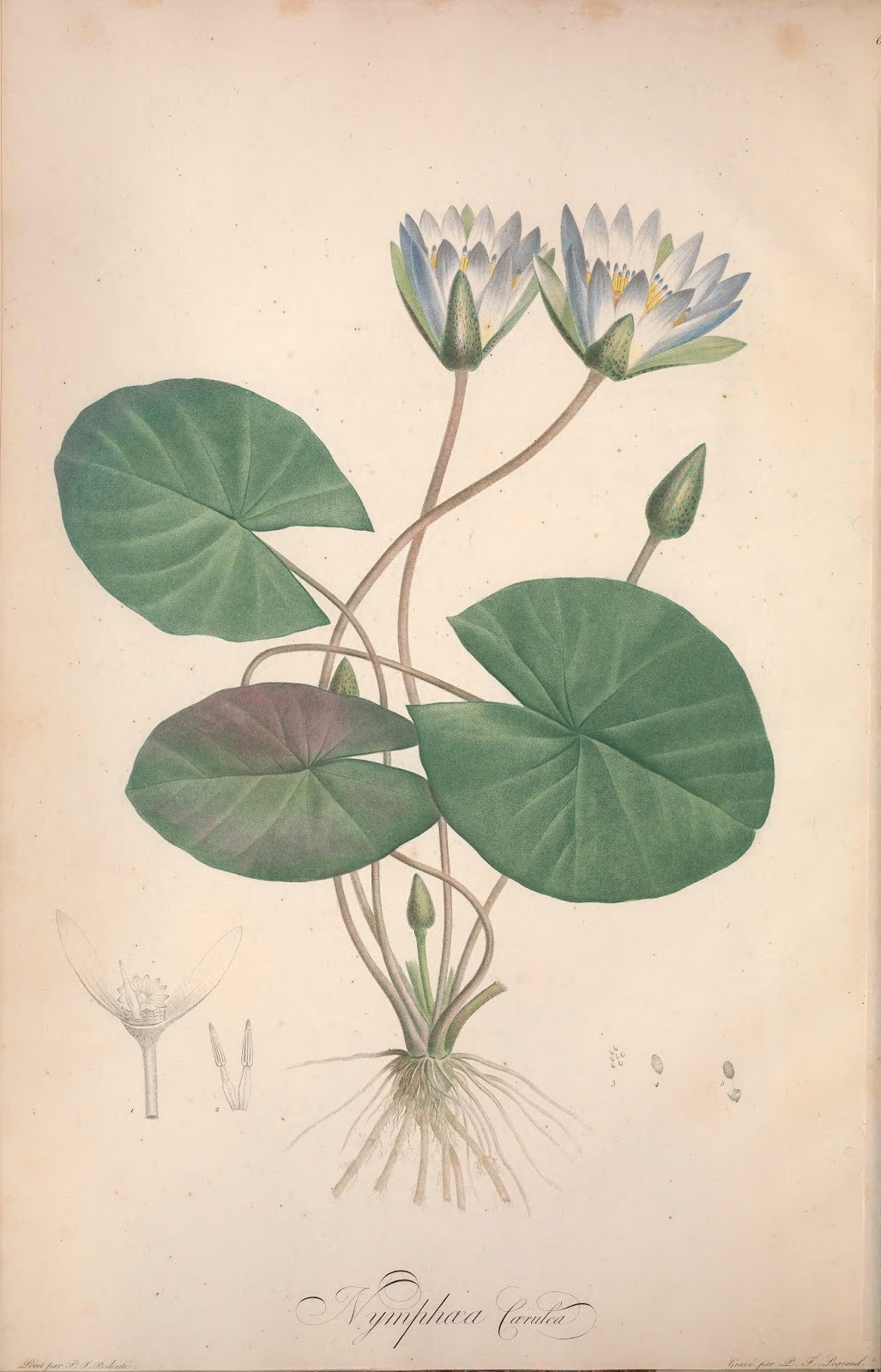
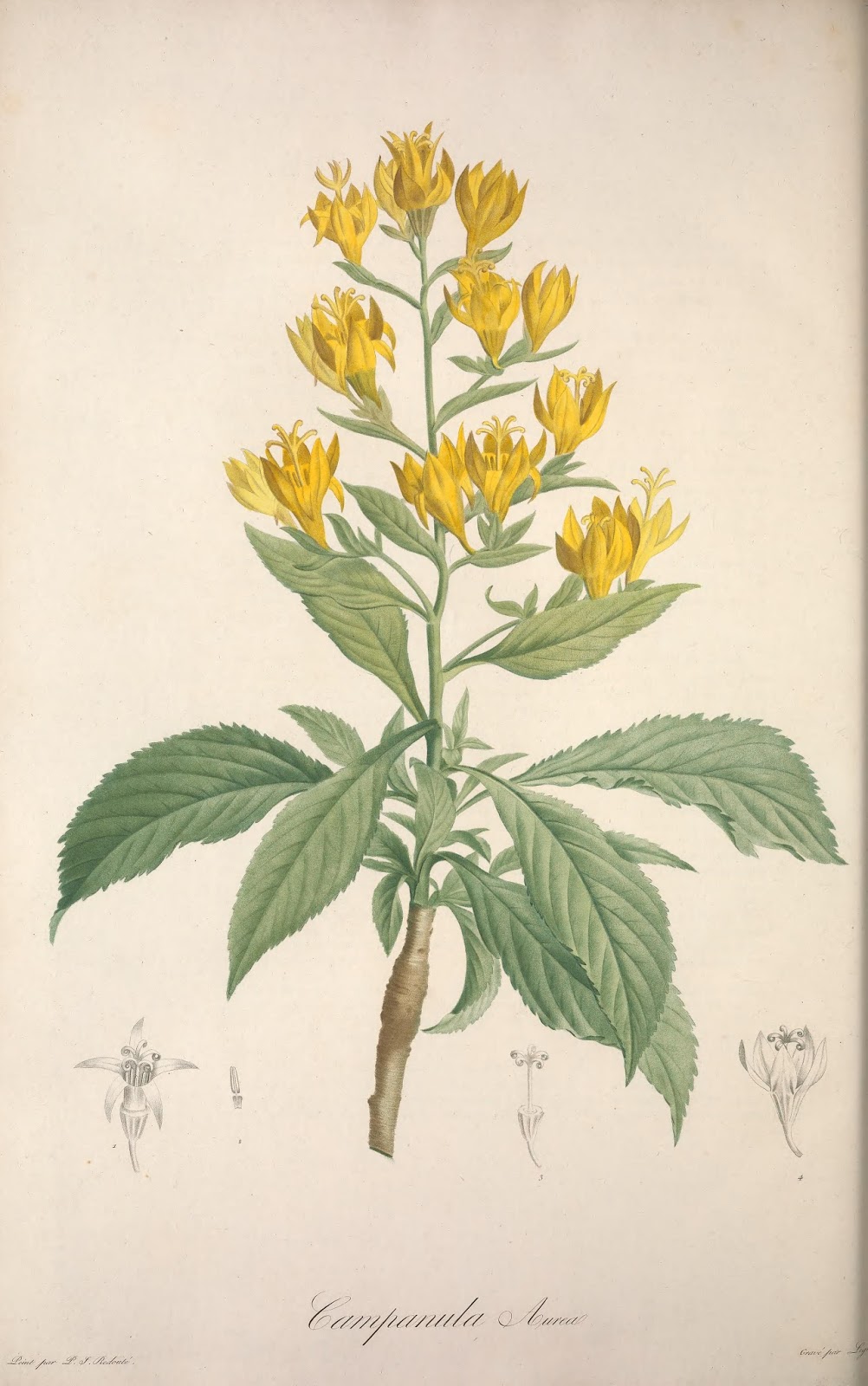
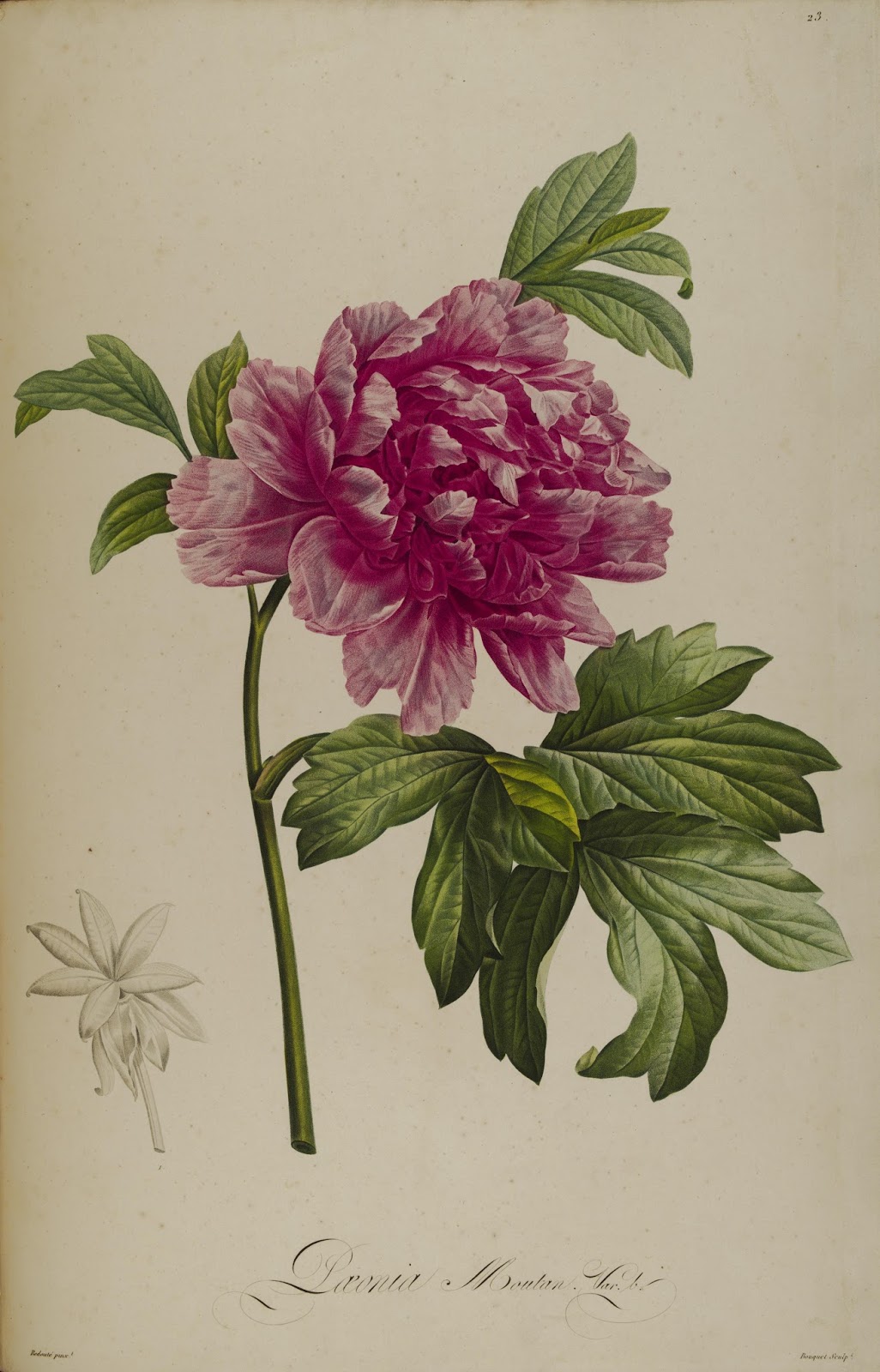
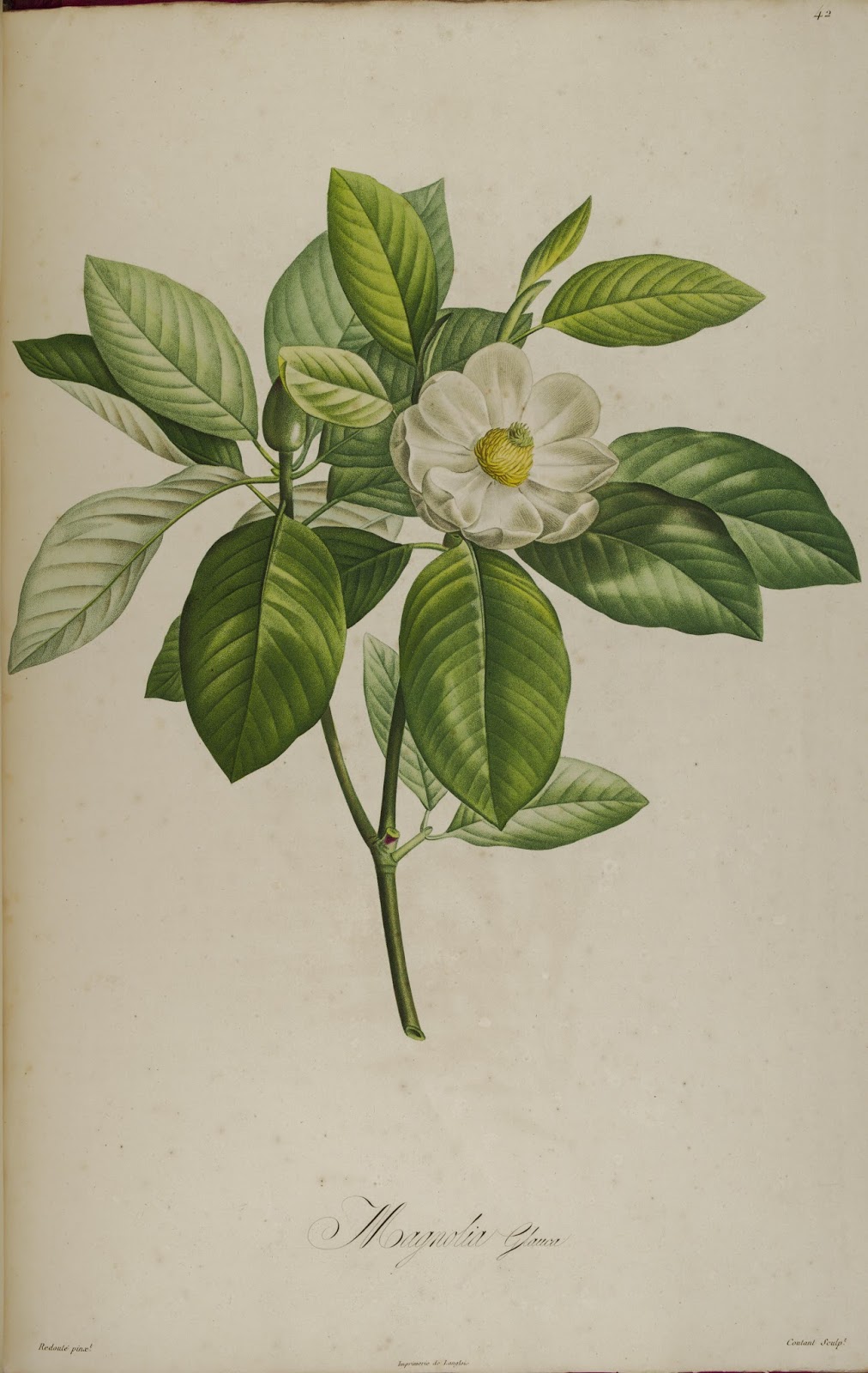
The most celebrated flower painter of quite possibly the entire history of botanical art is Pierre-Joseph Redouté. Nicknamed “the Raphael of flowers,” Redouté published over 2,100 plates depicting over 1,800 species – many of which had never before been illustrated for publication – throughout his career (University Libraries 2013). Many of Redouté’s publications are available in the Biodiversity Heritage Library, and a selection of these works is examined in this article.

Born in 1759 at St. Hubert in the present-day Belgian province of Luxembourg, Redouté and his two brothers – who also became artists – were descended from a family of Belgian painters. After receiving training in his father’s studio, Redouté set out at just thirteen years of age to earn a living as an artist. Eventually, in 1782 at the age of twenty-three, Pierre-Joseph joined his elder brother, Antoine-Ferdinand, designing stage scenery for the Théâtre-Italien in the rue de Louvois (Blunt 1967).

View Full Size Image
Redouté, Pierre Joseph. Les liliacees. (1802-1815). v.  6. http://www.biodiversitylibrary.org/page/300521. Digitized by Missouri Botanical Garden.

During this period, Pierre-Joseph’s leisure time was spent painting flowers, and it was this passion that eventually led him to the Jardin du Roi, which today is known as Jardin des Plantes and is part of the Muséum national d’histoire naturelle. It was here that Redouté met and befriended Dutch painter Gerard van Spaendonck, Professeur de peinture de fleurs at the Jardin. van Spaendonck had a profound influence on Redouté, instructing him on engraving and water coloring techniques. In fact, Wilfrid Blunt, author of The Art of Botanical Illustration, asserts that Redouté owes much of his success to the technical discoveries that he learned from van Spaendonck (Blunt 1967).

Redouté’s technique, modeled upon that of van Spaendonck, involved “pure water colour, gradated with infinite subtlety and very occasionally touched with body-colour to suggest sheen” (Blunt 1967, 179). Redouté eventually perfected the reproduction of his paintings for publication using stipple engraving, which used dots, rather than lines, to engrave plates, with varying dot density being used to convey tone and shading (Blunt 1967).

View Full Size Image
L’Héritier de Brutelle, Charles Louis. Stirpes novae :aut minus cognitae, quas descriptionibus et iconibus. (1784-85). Art by Pierre-Joseph Redouté. http://www.biodiversitylibrary.org/page/12516529. Digitized by Missouri Botanical Garden.

During his time creating botanical drawings for the Jardin du Roi, Redouté came to the attention of wealthy botanist Charles Louis L’Héritier de Brutelle, who instructed him on plant anatomy and the characteristics necessary for detailed botanical study. As a result of this relationship, L’Héritier enlisted Redouté to illustrate more than fifty plates for his Stirpes novae (1784–1785), which has been digitized in BHL by the Missouri Botanical Garden (Blunt 1967). With this work, L’Héritier intended to describe, illustrate, and classify according to the Linnaean system plants new or largely unknown to science at the time. This included specimens collected during the Dombey-Ruiz-Pavón expedition to Chile and Peru and plants found at Kew Gardens, Jardin du Roi, and other European gardens (Dumbarton Oaks 2016). Several years later, Redouté also produced plates for L’Héritier’s Sertum Anglicum (1788), also digitized by the Missouri Botanical Garden, which included studies of rare plants growing at Kew Gardens (Blunt 1967). James Sowerby, another renowned English illustrator, also produced illustrations for this work (Mathew 1981).

View Full Size Image
L’Héritier de Brutelle, Charles Louis. Sertum Anglicum, seu, Plantae rariores quae in hortis juxta Londinum. (1788). Art by Pierre-Joseph Redouté. http://www.biodiversitylibrary.org/page/11832434. Digitized by Missouri Botanical Garden.

In the late 1780s, likely at the recommendation of L’Héritier, Redouté was appointed Draughtsman to the Cabinet of Marie-Antoinette. During this time, L’Héritier proposed the production of Plantarum historia succulentarum (Histoire des plantes grasses), a work on cacti and succulent plants that would be illustrated by Redouté. While the French Revolution undermined L’Héritier’s ability to sponsor the project, an enterprising publisher, Garnéry, was enlisted to undertake the publication (Mathew 1981) and Swiss botanist Augustin Pyramus de Candolle was selected as the contributor of the descriptive text. The first section of Plantarum historia succulentarum was published in 1799, and publication continued intermittently until 1837 (Missouri Botanical Garden 2003). This was the first botanical publication for which Redouté was the sole artist and the first to utilize his color-printing method of stipple-engraved plates (Mathew 1981). It has been digitized by Missouri Botanical Garden.

View Full Size Image
Candolle, Augustin Pyramus de. Plantarum historia succulentarum =Histoire des plantes grasses. (1799-1837). v. 2. Art by Pierre-Joseph Redouté. http://www.biodiversitylibrary.org/page/281073. Digitized by Missouri Botanical Garden.

Following the French Revolution, Redouté continued painting for the Jardin du Roi, and the rise of Napoleon Bonaparte resulted in increased fame for Redouté as Joséphine Bonaparte’s court artist (Dumbarton Oaks 2016). Bonaparte married Joséphine de Beauharnais in 1796, and a few years later, Joséphine purchased Chateau de Malmaison near the western bank of the Seine. Joséphine set out to create magnificent gardens filled with rare and exotic plants from the Old and New Worlds, and in this venture she committed massive sums towards the procurement and cultivation of “choice flowers” and the production of extravagant publications about her gardens, for which Redouté contributed some of the most celebrated art in the history of botanical illustration (Blunt 1967).

View Full Size Image
Ventenat, É. P. Jardin de la Malmaison. (1803-1804). Art by Pierre-Joseph Redouté. v. 1. http://www.biodiversitylibrary.org/page/43441869. Digitized by Smithsonian Libraries.

The first of these publications was Jardin de la Malmaison, for which Redouté produced several hundred plant portraits exemplifying scientific precision and artistic mastery. These portraits, painted on parchment, were reproduced for publication using copperplate stipple engraving. Joséphine hired botanist Étienne Pierre Ventenat to identify and describe the plants at Malmaison. The resulting work was published in twenty installments of about 150 copies between 1803-1804 (Lack 2001). It has been digitized in BHL by Smithsonian Libraries.

View Full Size Image
Ventenat, É. P. Jardin de la Malmaison. (1803-1804). Art by Pierre-Joseph Redouté. v. 2. http://www.biodiversitylibrary.org/page/43518674. Digitized by Smithsonian Libraries.

A description of the plants at Malmaison was continued in Description des plantes rares cultivees a Malmaison et a Navarre. Following his divorce from Joséphine, Napoleon presented her with the country estate of Navarre near Évreux in Normandy. Here, Joséphine again set out to create a magnificent garden of rare plants. With Étienne Pierre Ventenat deceased, she engaged botanist Aime Bonpland to continue the description of her plants. Redouté and Pancrace Bessa, also a student of van Spaendonck’s, produced watercolor paintings to illustrate Description des plantes rares cultivees a Malmaison et a Navarre, which was published in a print run of 325 copies between 1812-1817 (Lack 2001). It has been digitized by Missouri Botanical Garden.

View Full Size Image
Bonpland, Aimé. Description des plantes rares cultivees a Malmaison et a Navarre. (1812-1817). Art by Pierre-Joseph Redouté. http://www.biodiversitylibrary.org/page/275897. Digitized by Missouri Botanical Garden.

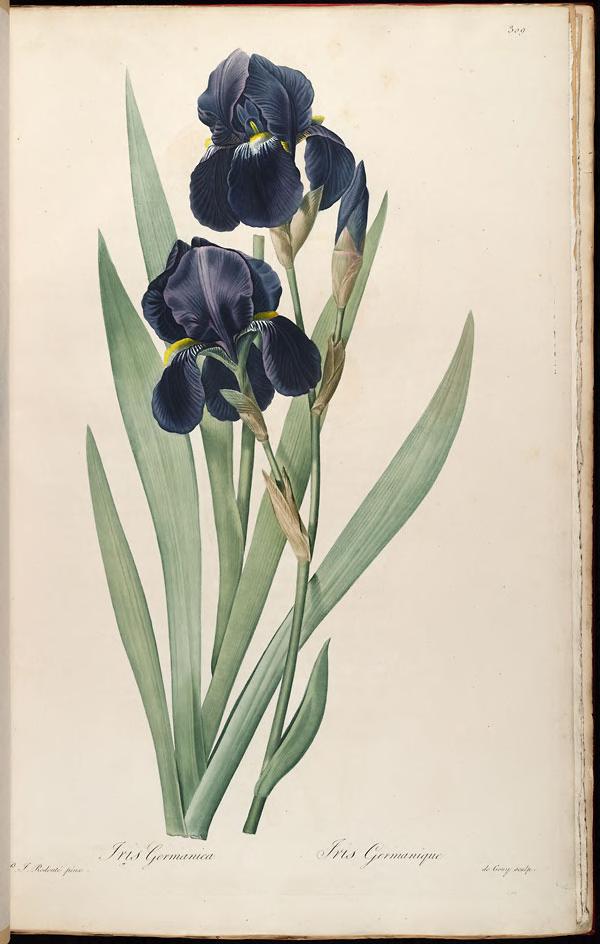
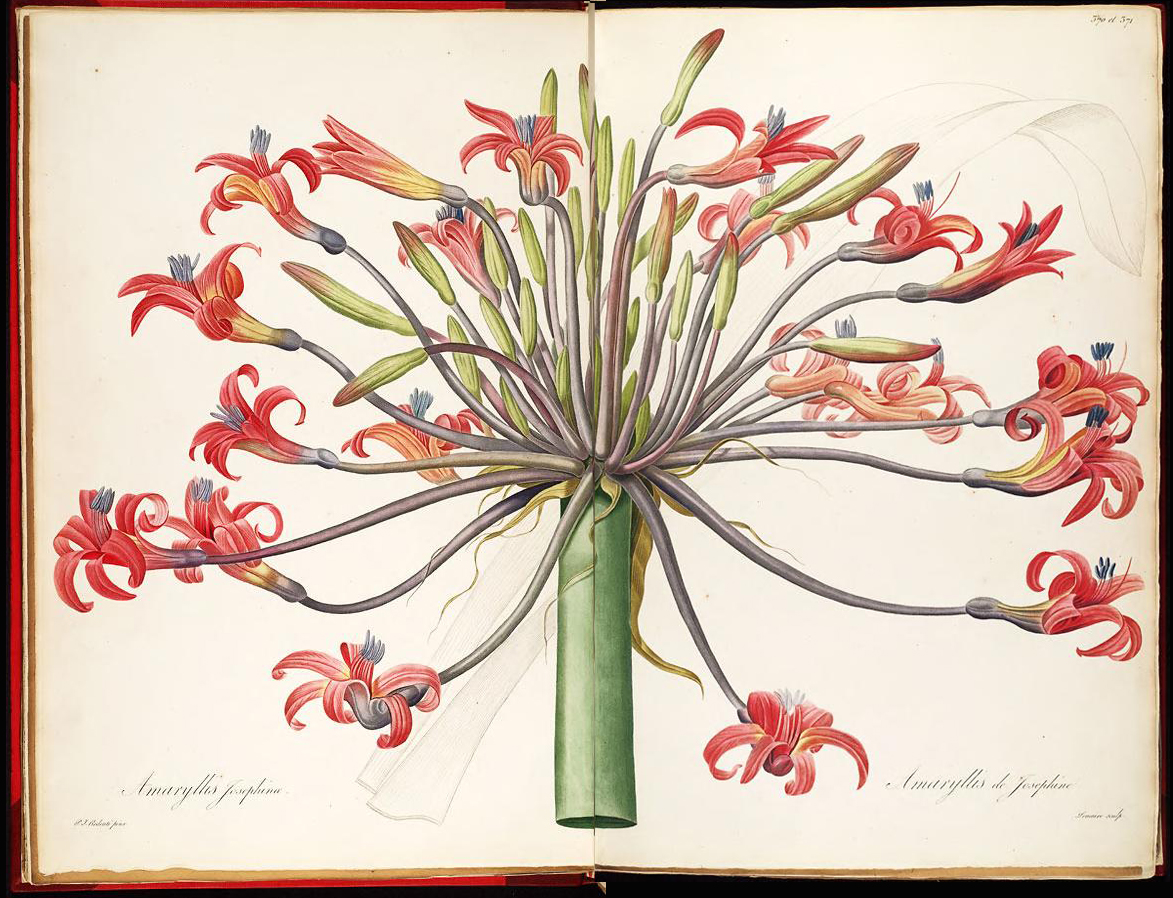
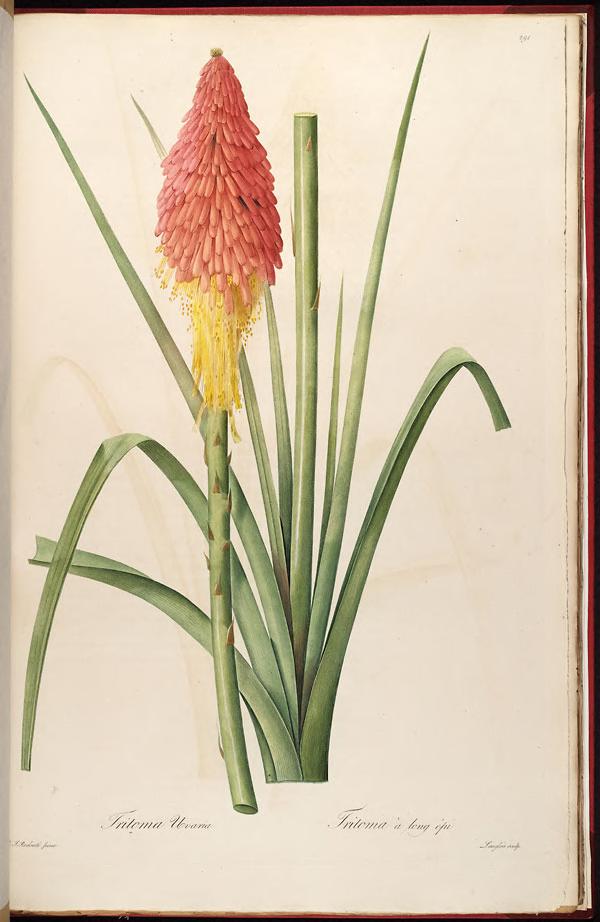
During this period, the renowned Les liliacees was also published. This eight-volume work (digitized by Missouri Botanical Garden), published between 1802-1815, presents a collection of over 450 watercolors by Redouté. Botanical descriptions for the work were provided by Augustin Pyramus de Candolle (volumes 1-4), François de Laroche (volumes 5-7), and Alire Raffeneau-Delile (volume 8). The watercolors were reproduced using stipple plate engraving finished by hand. While the title may be Les liliacees, the work actually covers many other petaloid monocotyledons found in French gardens at this time, including Iridaceae, Commelinaceae, and Amaryllidaceae (Mathew 1981). Redouté pays homage to Joséphine, a major patron of the work, by renaming an amaryllis Amaryllis Josephinae, which is depicted in the only folding plate in the publication (Christie’s 1997).

View Full Size Image
Amaryllis Josephinae. Redouté, Pierre Joseph. Les liliacees. (1802-1815). v. 7. http://www.biodiversitylibrary.org/page/300907. Digitized by Missouri Botanical Garden.

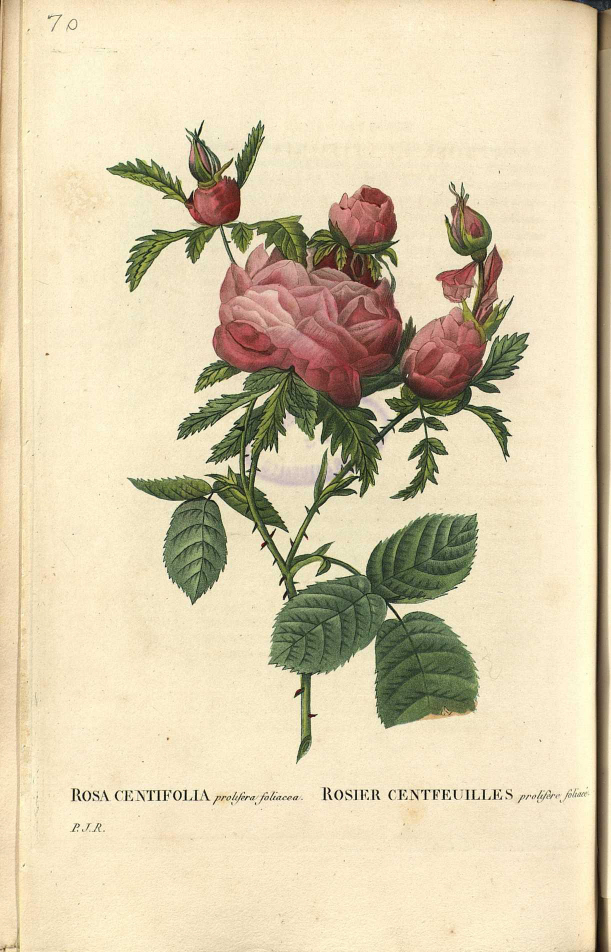
Publication of Redouté’s arguably most-popular work, Les roses, began in 1817. This work, published in three volumes between 1817-1824, describes and depicts roses found in the Malmaison gardens, the collections of botanist Claude Antoine Thory (who provided the text for this work), and other gardens around Paris. It not only describes many flowers that are the forerunners of today’s roses, but it also includes species and cultivars that are no longer in existence (Christie’s 2008). This work was reprinted twice over the course of a few short years, and the third edition, published between 1828-1835, has been digitized by Biblioteca Digital del Real Jardin Botanico de Madrid and can be accessed through BHL.

View Full Size Image
Redouté, Pierre Joseph. Les Roses. 3rd Ed. v. 2 (1835). http://www.biodiversitylibrary.org/bibliography/75996. Digitized by Biblioteca Digital del Real Jardin Botanico de Madrid.

While Redouté continued to enjoy fame throughout his career, producing not only sought-after paintings but also tutoring many distinguished pupils, his extravagant spending habits led him to financial embarrassment, requiring him to sell furniture, silver, and paintings in an attempt to satisfy his debts. At eighty years of age, he began planning the production of a magnificent flower picture that would command an astonishing sum. Sadly, he was never able to realize this ambition. On June 19, 1840, he suffered a stroke and died the following day (Blunt 1967).

View Full Size Image
Redouté, Pierre Joseph. Les liliacees. (1802-1815). v. 5. http://www.biodiversitylibrary.org/page/300394. Digitized by Missouri Botanical Garden.

Today, Redouté is remembered as one of the greatest botanical illustrators in history. His original watercolors and related publications can fetch incredible prices at auction. For example, 468 of his original watercolors for Les liliacees sold at auction in 1985 for 5.5 million USD (Reif 1985). Thanks to the contributions of our incredible partners, you can access many of Redouté’s works for free in BHL and even download and print your own copies of his masterpieces. What was once available only to the rich is now freely available to the world.

View Full Size Image
Bonpland, Aimé. Description des plantes rares cultivees a Malmaison et a Navarre. (1812-1817). Art by Pierre-Joseph Redouté. http://www.biodiversitylibrary.org/page/275935. Digitized by Missouri Botanical Garden.


References

  • Blunt, Wilfrid. 1967. The Art of Botanical Illustration. London: Collins.
  • Christie’s. 1997. “Les Liliacées.” Books, April 30. Accessed December 7, 2016. http://www.christies.com/lotfinder/lot/redoute-pierre-joseph-les-liliacees-text-by-186557-details.aspx.
  • Christie’s. 2008. “Les Roses.” Foljambe Collection, April 30. Accessed December 7, 2016. http://www.christies.com/lotfinder/Lot/redoute-pierre-joseph-1759-1840-and-claude-antoine-thory-5062664-details.aspx.
  • Dumbarton Oaks. 2016. “Les Roses.” The Botany of Empire in the Long Eighteenth Century. Accessed December 6, 2016. http://doaks.org/resources/online-exhibits/botany-of-empire/illustration-and-representation/les-roses.
  • Lack, H. Walter. 2001. Garden Eden: Masterpieces of Botanical Illustration. Koln: Taschen.
  • Mathew, Brian. 1981. P.J. Redoute: Lilies and Related Flowers. New York: The Overlook Press.
  • Missouri Botanical Garden. 2003. “Plantarum historia succulentarum = Histoire des plantes grasses.” Rare Books from the MBG Library. Accessed December 7, 2016. http://www.illustratedgarden.org/mobot/rarebooks/title.asp?relation=SB438C361799V1.
  • Reif, Rita. 1985. “Redoute Watercolors Auctioned to Syndicate.” The New York Times, November 21. Accessed December 7, 2016. http://www.nytimes.com/1985/11/21/arts/redoute-watercolors-auctioned-to-syndicate.html.
  • University Libraries, University of South Carolina. 2013. “The W. Graham Arader, III Collection at the University of South Carolina: Journal.” Accessed December 7, 2016. http://library.sc.edu/p/Collections/Arader.
June 29, 2017by ulib-libraryjobs
Blog Reel, Featured Books

Eye-catching photos, drawings and clippings: a few highlights from the BHL Field Notes Project

The Field Notes Project collection is now over 400 items strong! We are excited by our progress and to share these field books to the global natural history community. For our feature this month, I would like to highlight some of the unexpected or eye-catching pages our digitization teams have come across so far.

View Full Size Image
Schuchert, Charles. Field Notebook: Bermuda, New Brunswick, Quebec, Vermont 1929. (1929)
http://biodiversitylibrary.org/page/53322443. Digitized by Yale Peabody Museum of Natural History.

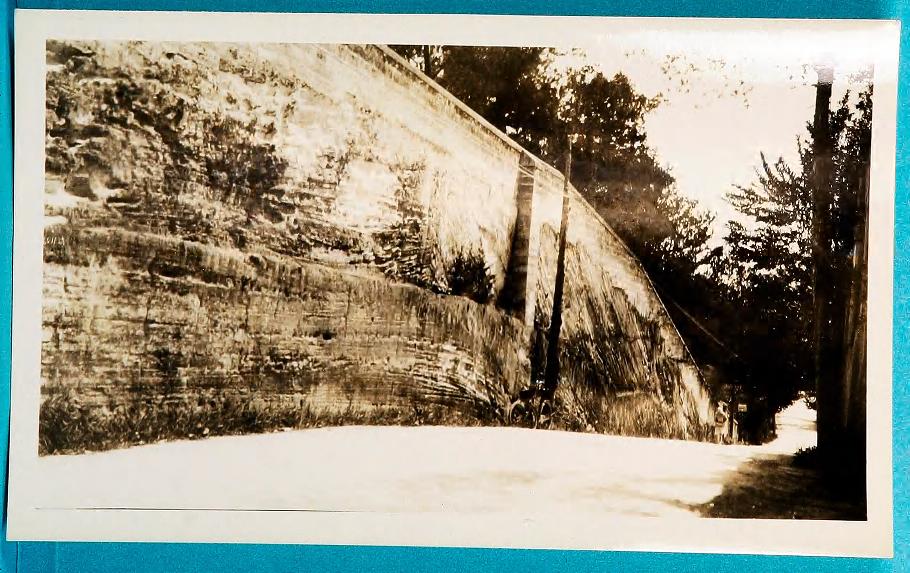
This photo of a dune structure initially caught my eye because it’s a great looking photo, but then I noticed the bike for scale and it was even more impressive than it already was! The accompanying caption notes the structure is just north of Pembroke Marsh in Bermuda.

View Full Size Image
Schuchert, Charles. Field Notebook: Florida. 1911, 1912. (1911-1912)
http://biodiversitylibrary.org/page/53475959. Digitized by Yale Peabody Museum of Natural History.

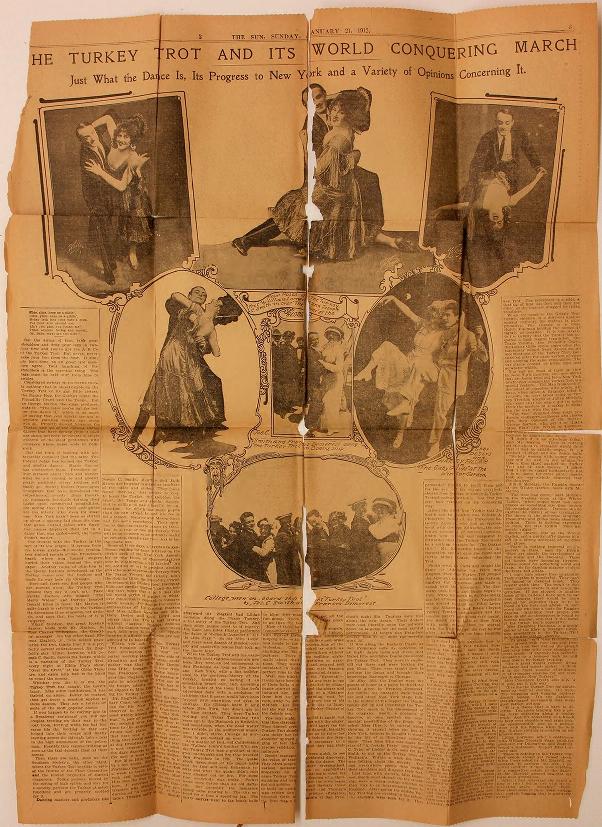
This newspaper clipping was also inserted in one of Charles Schuchert’s field books. The other side of the page has an article about the completion of the Florida East Coast Railway to Key West, but the true star is this piece on the latest New York dance craze, The Turkey Trot.

View Full Size Image
Bryan, Edwin Horace. Chronological summary and guide to Whitney Expedition journals.
http://biodiversitylibrary.org/page/53430449. Digitized by the American Museum of Natural History.

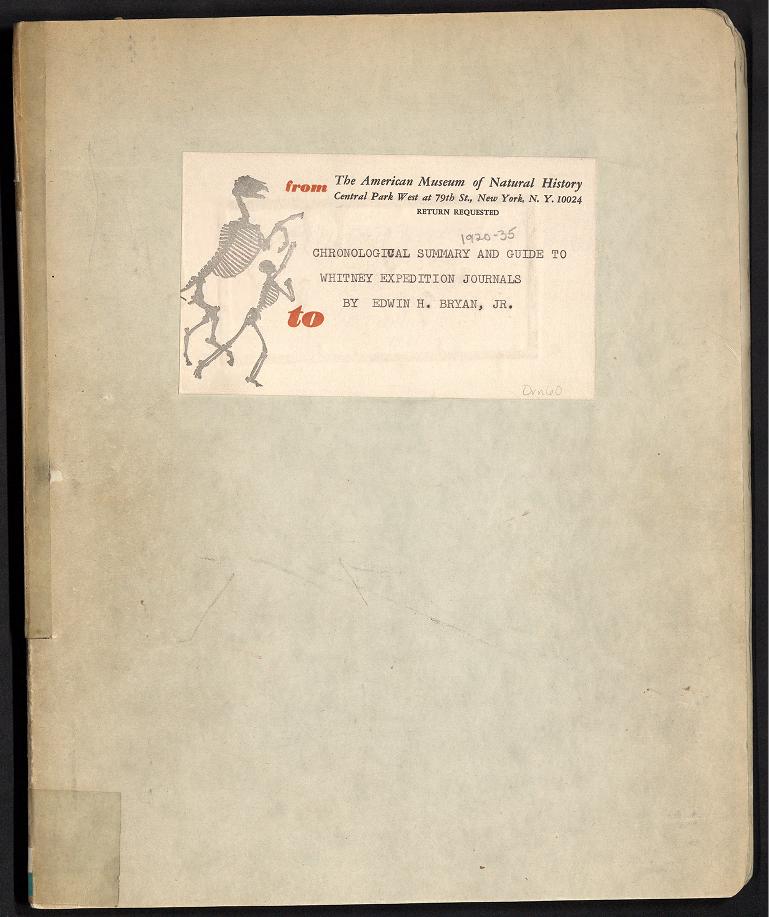
The cover of this summary takes advantage of the American Museum of Natural History’s pre-printed address labels. The illustrated horse and human look like the skeletal version of a 18th-century battle painting. That’s bit war heavy, so I’d like to think they are just really excited to collect in the field!

View Full Size Image
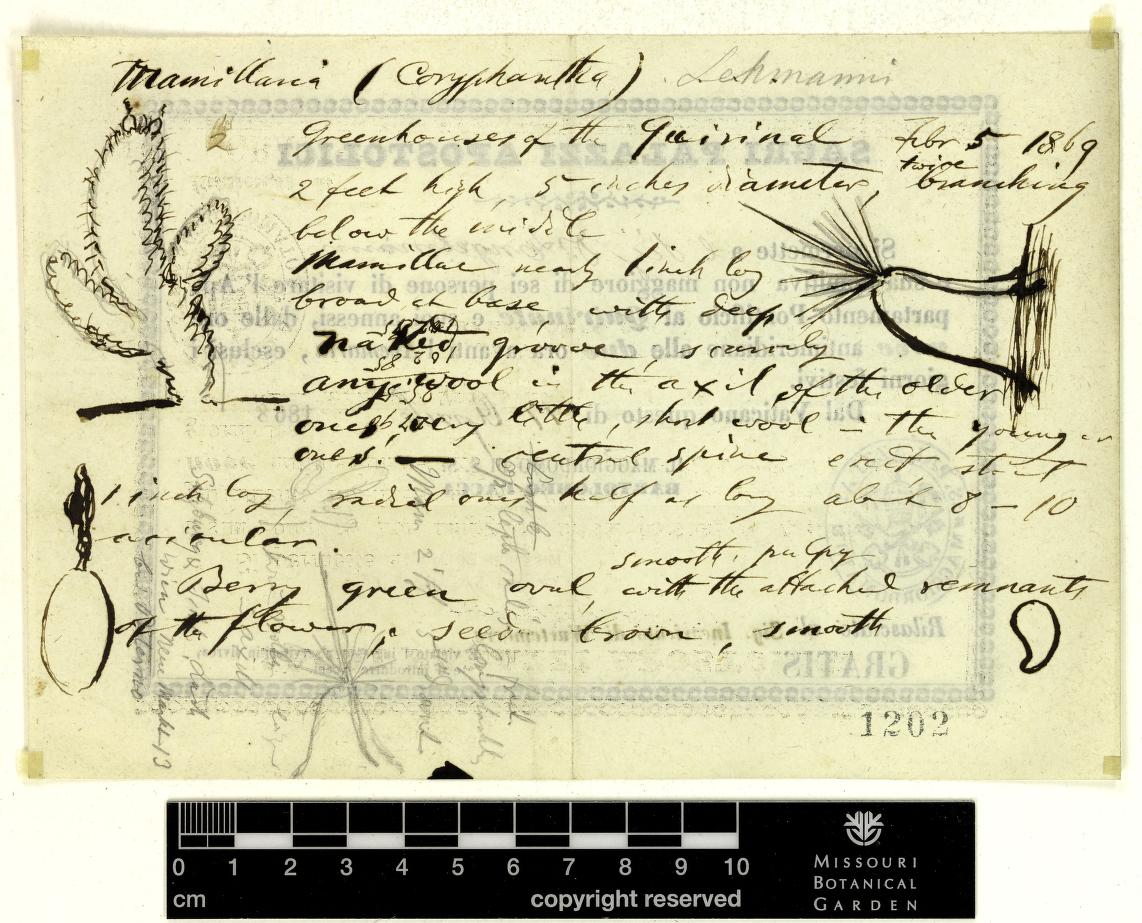
George Engelmann : botanical notebook 5 : Mammilaria, Leuchtenbergia, Discocactus, and Melocactus. Box 3: Folder 13: Cactaceae: Mammillaria: 1857-1883. (1856) http://biodiversitylibrary.org/page/52030722 Digitized by the Missouri Botanical Garden Peter H. Raven Library.

George Engelmann’s field books have a number of illustrations, but I find myself coming back to this small cactus for no other reason than it’s a cute little drawing.

View Full Size Image
Grinnell, Joseph. Notebook #1: Los Angeles County, California, 1894-1895. (1894-1895)
Contributed by Museum of Vertebrate Zoology, University of California, Berkeley.

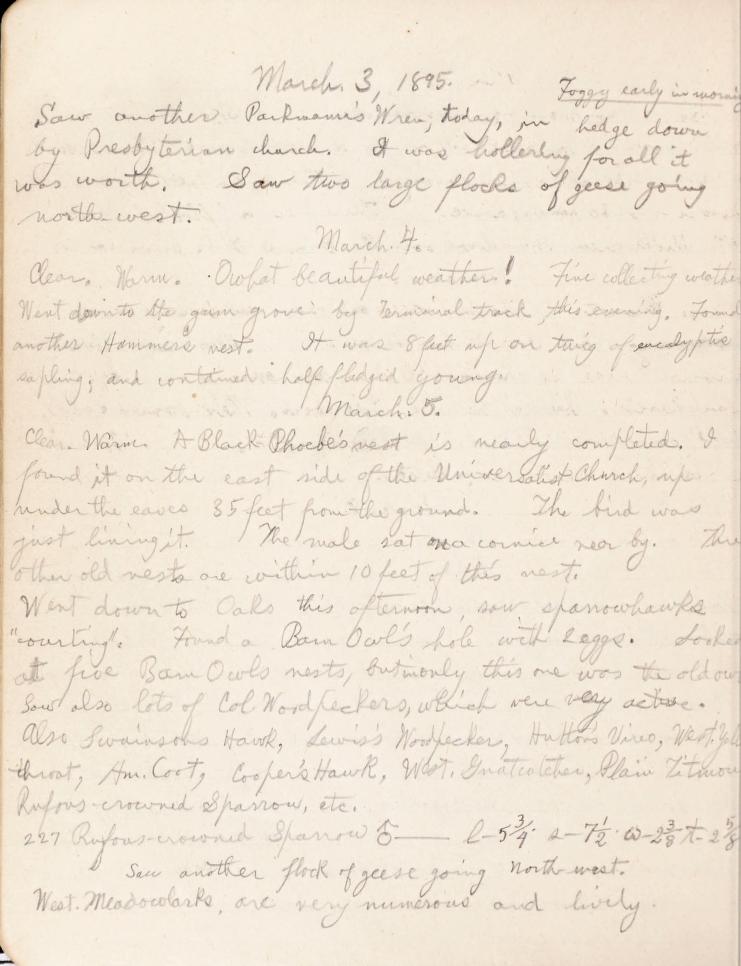
This notebook from Joseph Grinnell’s college years may not be initially eye catching, but considering his famed note-taking style, I knew it would be intriguing upon reading. I found he could be very expressive in style in his diary entries. In this page he notes seeing a Parkman’s wren and how it was “hollering for all it’s worth.” I wonder if the wren ever found the mate he was surely trying to attract. In the next entry he shows great pleasure in the clear, warm weather. Considering it was March in Los Angeles County, I can imagine it was “fine collecting weather” indeed.

There’s plenty more to discover in the BHL Field Notes Collection. Let us know what piques your interest!

The BHL Field Notes Project is funded by the Council on Library and Information Resources (CLIR).

June 1, 2017by lmyrick
Blog Reel, Featured Books

George Engelmann’s Botanical Notes Can Now Be Seen!

The Missouri Botanical Garden (MBG), a partner in the Biodiversity Heritage Library Field Notes Project, has spent the last year digitizing the notebooks of George Engelmann.

George Engelmann assisted Henry Shaw, MBG’s founder, in establishing the Garden’s research arm and corresponding library. He arrived in Belleville, Illinois, sometime in the 1830s but soon moved to St. Louis where he set up practice as a physician. In the 1840s, Engelmann began corresponding with—and became a close friend and colleague of—Asa Gray at Harvard University, one of the best known botanists in the United States. This relationship, combined with his passion for plants of the newly opened American west, would lead to Engelmann becoming the principle coordinator for botanical collecting west of the Mississippi River.

View Full Size Image
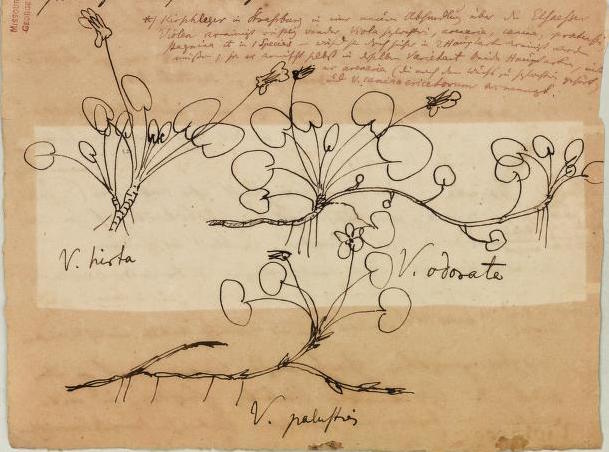
Figure 1 from notebook 1, folder 1. George Engelmann : botanical notebook 1. Cistaceae, Violaceae. [Undated].

Setting up a trifecta of American botanical exploration with Gray at Harvard and John Torrey at the Smithsonian, Engelmann became an avid and knowledgeable botanist as he corresponded with Gray and Torrey to direct various westward explorers. He collected over 98,000 botanical specimens which were donated to MBG upon his death. Combined with 62,000 botanical specimens purchased in 1857 for Shaw from the Bernhardi Herbarium, originally in Germany, these two collections formed the foundation of the MBG herbarium. Engelmann also helped establish the St. Louis Academy of Sciences.

The BHL Field Notes Project is the third time George Engelmann’s collection has been accessed for scanning. In 2010, MBG received a grant to complete a project called Digitizing Engelmann’s Legacy, and another in 2013 to digitize Engelmann’s correspondence. With this latest project, MBG is able to provide access to much of Engelmann’s botanical notebooks.

View Full Size Image
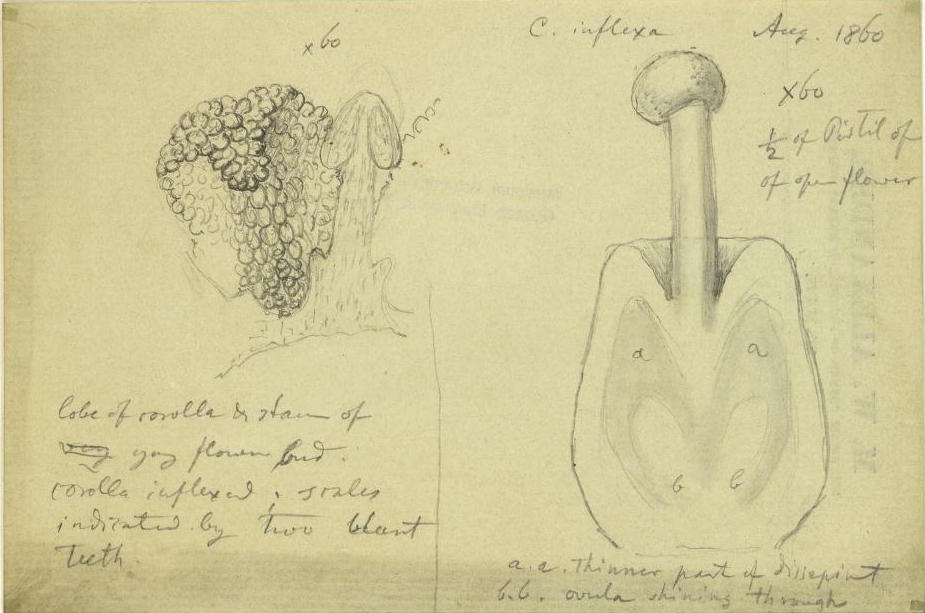
Figure 2 from notebook 25, folder 9. George Engelmann : botanical notebook 25 : Cuscuta. Box 11: Folder 9: Cuscuta. (1860-1875).

The notebooks were dismantled sometime in the past and housed within folders placed in boxes. His 58 notebooks are spread out over 27 boxes and comprise over 14,000 individual items. Not wanting to waste paper, Engelmann often wrote his notes on the back of correspondences, prescription slips, official documents, etc. Among his copious note taking are many botanical drawings likely depicting the specimens as he saw them.

Please feel free to browse Engelmann’s notebooks as they continue to be digitized and uploaded to the Biodiversity Heritage Library and Botanicus.

The BHL Field Notes Project is funded by the Council on Library and Information Resources (CLIR).

May 4, 2017by lmyrick
BHL News, Blog Reel

National Digital Stewardship Residency (NDSR) Job Postings

Portrait version of the Biodiversity Heritage Library logo.

We’re hiring!

The vacancies for the five National Digital Stewardship Residency (NDSR) cohort positions have been posted through Harvard University. These five residents will work on projects related to the Biodiversity Heritage Library at BHL partner institutions in Cambridge, MA, Washington, DC, Chicago, IL, St. Louis , MO or Los Angeles, CA from January 2017 to December 2017. Learn more about the NDSR program, funded by the Institute of Museum and Library Services (IMLS) as part of the Laura Bush 21st Century Librarian Program.

For more information, visit the vacancies posting page here. To apply, click here.

Qualification requirements and information about each of the five projects (as provided on the Harvard University posting page above) are listed below. Residents will each be assigned one of the five available projects and corresponding host institution(s). Applicants should specify their top three choices of institutions and projects from the list below in the cover letter included in their application. Application review will begin immediately and will continue until the positions are filled.

Applications received by October 5, 2016 will be given first consideration.

WHO MAY APPLY: 

Applicants must be U. S. citizens who have graduated from an accredited degree-granting Master’s or Doctoral program between Summer 2014 and January 2017. Applicants must be US citizens or permanent residents.

QUALIFICATIONS REQUIRED: 

  • Possess a master or doctoral degree with graduation between spring 2014 and January 2017 in one of the following fields (or other discipline engaged in the stewardship of digital materials):
    • Library Science
    • Information Science
    • Archival Science
    • Records Management
    • Computer Sciences
    • Museum Studies
    • Art History
    • Engineering
    • Digital Media
    • Master of Fine Arts in New Media
  • Must be available to work on-site for the entire one-year period (relocation expenses are not offered).
  • Must be a US citizen or permanent resident.


AVAILABLE PROJECTS:

Content Analysis. 
This project will be an analysis of the quantity of literature underpinning the field of biodiversity, the amount of that literature in the public domain, the representation of each discipline (delineated by taxon group) within BHL, an exploration of methodologies to scope the collections, and areas where BHL may target development to better serve the research population. Host: BHL Chicago partners (The Field Museum of Natural History and the Chicago Botanic Garden) with mentors Library Directors Christine Giannoni and Leora Siegel.

Import of Crowdsourced Data Corrections and Enhancements. 
Building on the IMLS grant received by the Missouri Botanical Garden, Purposeful Gaming and BHL, in which BHL worked with Mary Flannagan and Tiltfactor , the mentors for this project will work with the resident to develop methodologies and propose tools for integration of crowdsourced data corrections and enhancements back into the BHL portal. Best practices will be documented for verification, trust, and multi-tier review. Host: Harvard University: MCZ, mentors Library Managers Constance Rinaldo and Joseph deVeer.

Enabling image discovery within the Biodiversity Heritage Library. 
Building on the successful NEH Art of Life grant, crowdsourced metadata around BHL images hosted on Flickr and Zooniverse would be integrated back into the BHL through user interface modifications to the BHL portal to enable image searching, browsing and display. The resident will work with the BHL technical team to propose best practices for integration of this data into BHL as well as sustainable methodologies for augmenting image tagging for BHL content. Host: Missouri Botanical Garden (MOBOT), mentors Library Director Douglas Holland and Data Projects Coordinator, Trish Rose-Sandler.

Digital Library Best Practices Analysis. 
The mentor will work with the resident to consult with BHL partners such as DPLA and Europeana to determine how BHL data works in these large scale national and pan-national digital libraries. The resident will propose analyses of other large-scale digital libraries (HathiTrust, the Internet Archive, National Digital Library of New Zealand, Trove, for example) to categorize high value tools and services that can be built into the next version of BHL or developed with existing APIs from partners. Host: Los Angeles County Natural History Museum, mentor Chief Librarian and Curator Richard Hulser. NHM Research Library.

User Needs and Usability Analysis. 
The mentor will work with the resident to identify members of the larger taxonomic and biodiversity informatics community to determine user needs and services for providing increased value to BHL content. Building on a ten year relationship with this community, BHL staff will introduce the resident to relevant initiatives hosted at the Smithsonian, such as Consortium for the Barcode of Life (CBoL) and Encyclopedia of Life (EOL) and to partners such as Global Biodiversity Information Facility (GBIF). The resident will analyze input gathered to define recommendations and requirements for expanding the BHL digital library functionality. Host: BHL Secretariat/Smithsonian Libraries, mentor Carolyn Sheffield, BHL Program Manager.

August 3, 2016by ulib-libraryjobs
Page 1 of 3123»

Help Support BHL

BHL's existence depends on the financial support of its patrons. Help us keep this free resource alive!

search

About BHL

The Biodiversity Heritage Library (BHL) is the world’s largest open access digital library for biodiversity literature and archives. BHL operates as a worldwide consortium of natural history, botanical, research, and national libraries working together to digitize the natural history literature held in their collections and make it freely available for open access as part of a global “biodiversity community.”

Join Our Mailing List

Sign up to receive the latest news, content highlights, and promotions.

Subscribe Now

Subscribe to Blog via Email

Enter your email address to subscribe to this blog and receive notifications of new posts by email.

Join 319 other subscribers

Subscribe to Blog Via RSS

Subscribe to the blog RSS feed to stay up-to-date on all the latest BHL posts.

Access RSS Feed

Inspiring Discovery through Free Access to Biodiversity Knowledge.

The Biodiversity Heritage Library makes it easier than ever for you to access the information you need to study and explore life on Earth…for free, anytime, anywhere.


64+ Million Pages of
Biodiversity Literature Online.

EXPLORE

Tools and Services
to Transform Research.

EXPLORE

300,000+
Illustrations on Flickr.

EXPLORE

ABOUT | HARMFUL CONTENT | PRIVACY | SITE MAP | TERMS OF USE