Biodiversity Heritage Library - Program news and collection highlights from BHL
  • Home
  • News
  • Featured Books
    • All Featured Books
    • Book of the Month Series
    • BHL at 20
  • User Stories
  • Campaigns
    • Fossil Stories
    • Garden Stories
    • Monsters Are Real
    • Page Frights
    • Her Natural History
    • Earth Optimism 2020
  • Tech Blog
  • Visit BHL
Home
News
Featured Books
    All Featured Books
    Book of the Month Series
    BHL at 20
User Stories
Campaigns
    Fossil Stories
    Garden Stories
    Monsters Are Real
    Page Frights
    Her Natural History
    Earth Optimism 2020
Tech Blog
Visit BHL
  • Home
  • News
  • Featured Books
    • All Featured Books
    • Book of the Month Series
    • BHL at 20
  • User Stories
  • Campaigns
    • Fossil Stories
    • Garden Stories
    • Monsters Are Real
    • Page Frights
    • Her Natural History
    • Earth Optimism 2020
  • Tech Blog
  • Visit BHL
Biodiversity Heritage Library - Program news and collection highlights from BHL
Blog Reel, Featured Books

Using Art to Document Species: Cramer and the Lepidoptera

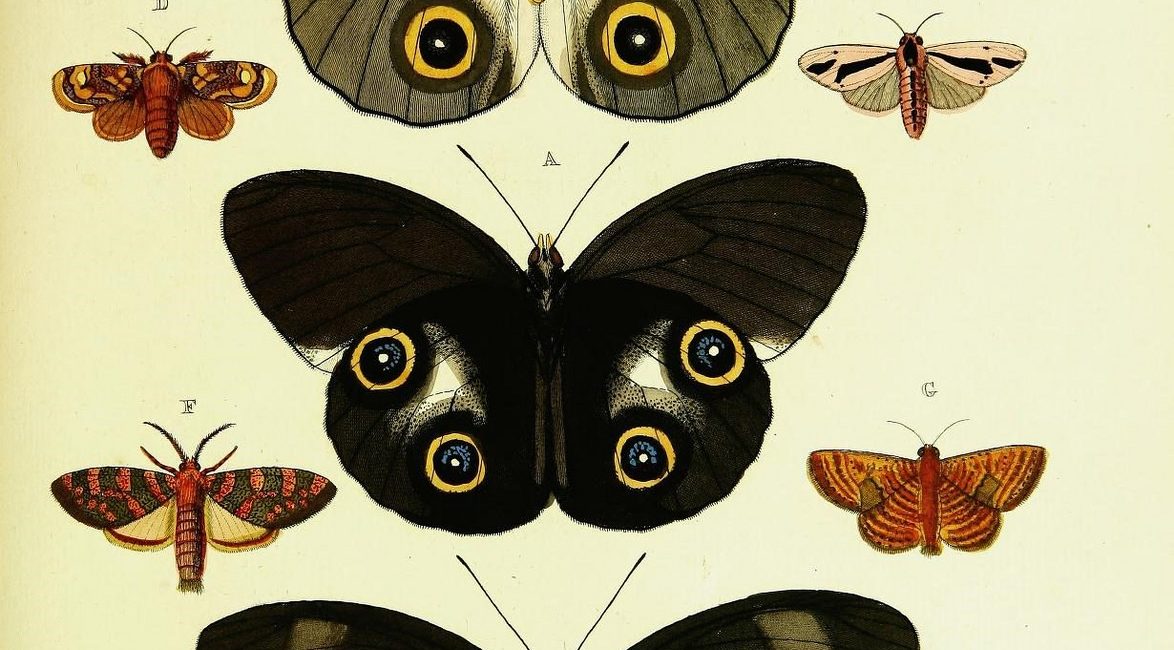
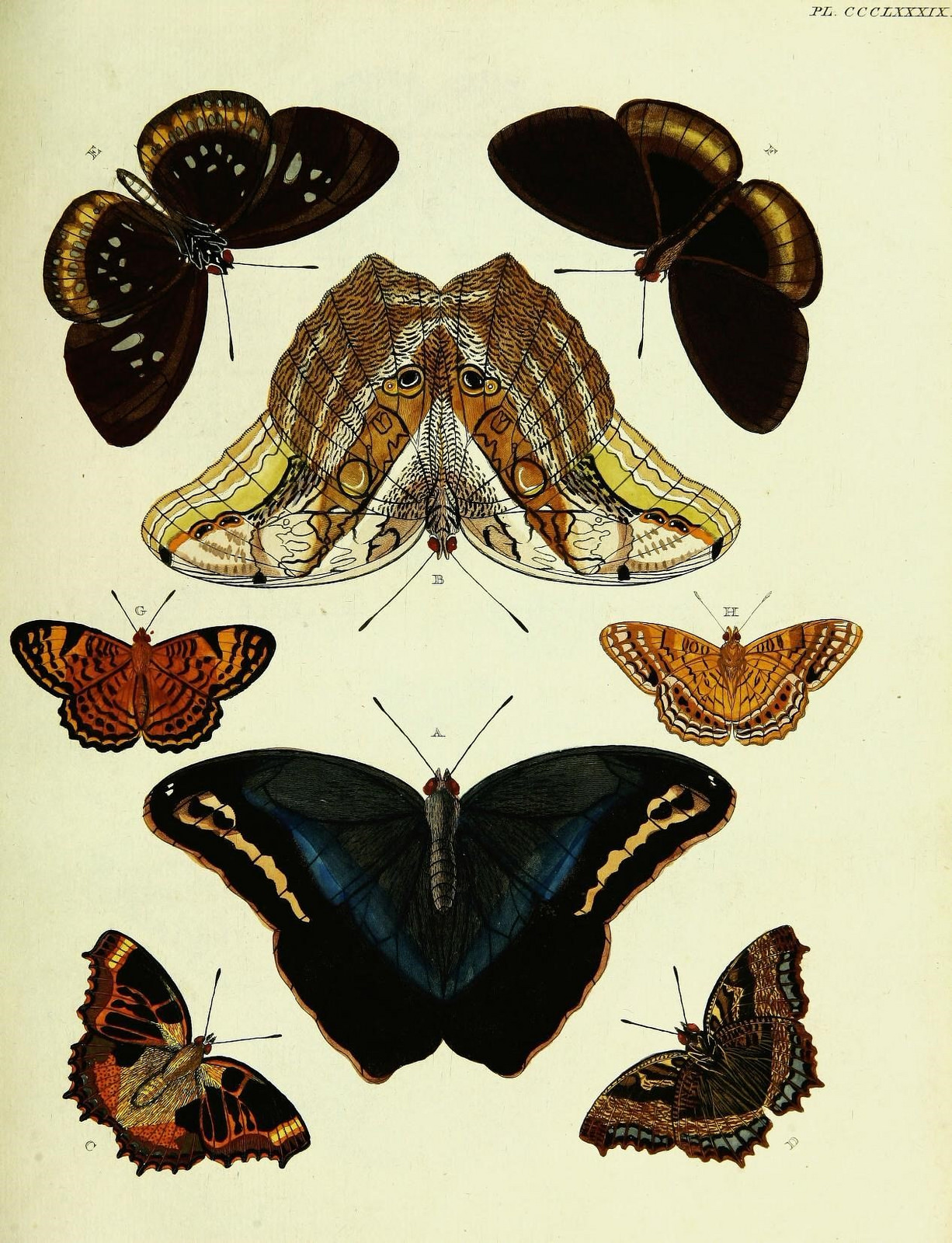
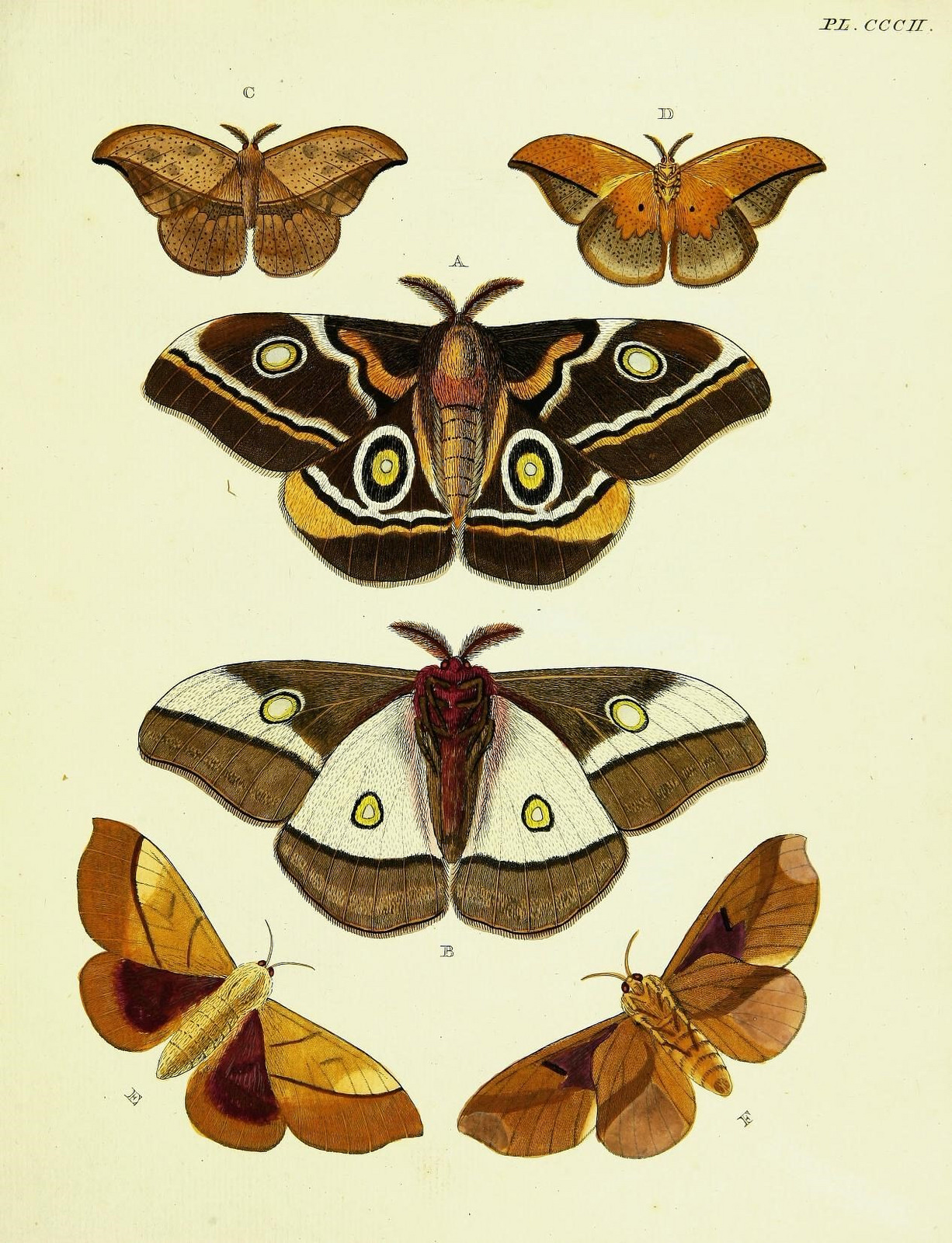
How could you make a visual record of a collection before the advent of photography? Through illustrations, of course. It was a desire to produce just such a record that prompted the creation of the magnificent plates accompanying De uitlandsche kapellen voorkomende in de drie waereld-deelen, Asia, Africa en America ([1775]-1782), by Pieter Cramer, which has been digitized for BHL by Mann Library, Cornell University.
View Full Size Image
De uitlandsche kapellen voorkomende in de drie waereld-deelen, Asia, Africa en America. [1775]-1782. Digitized by Mann Library, Cornell University. http://biodiversitylibrary.org/page/42111657.

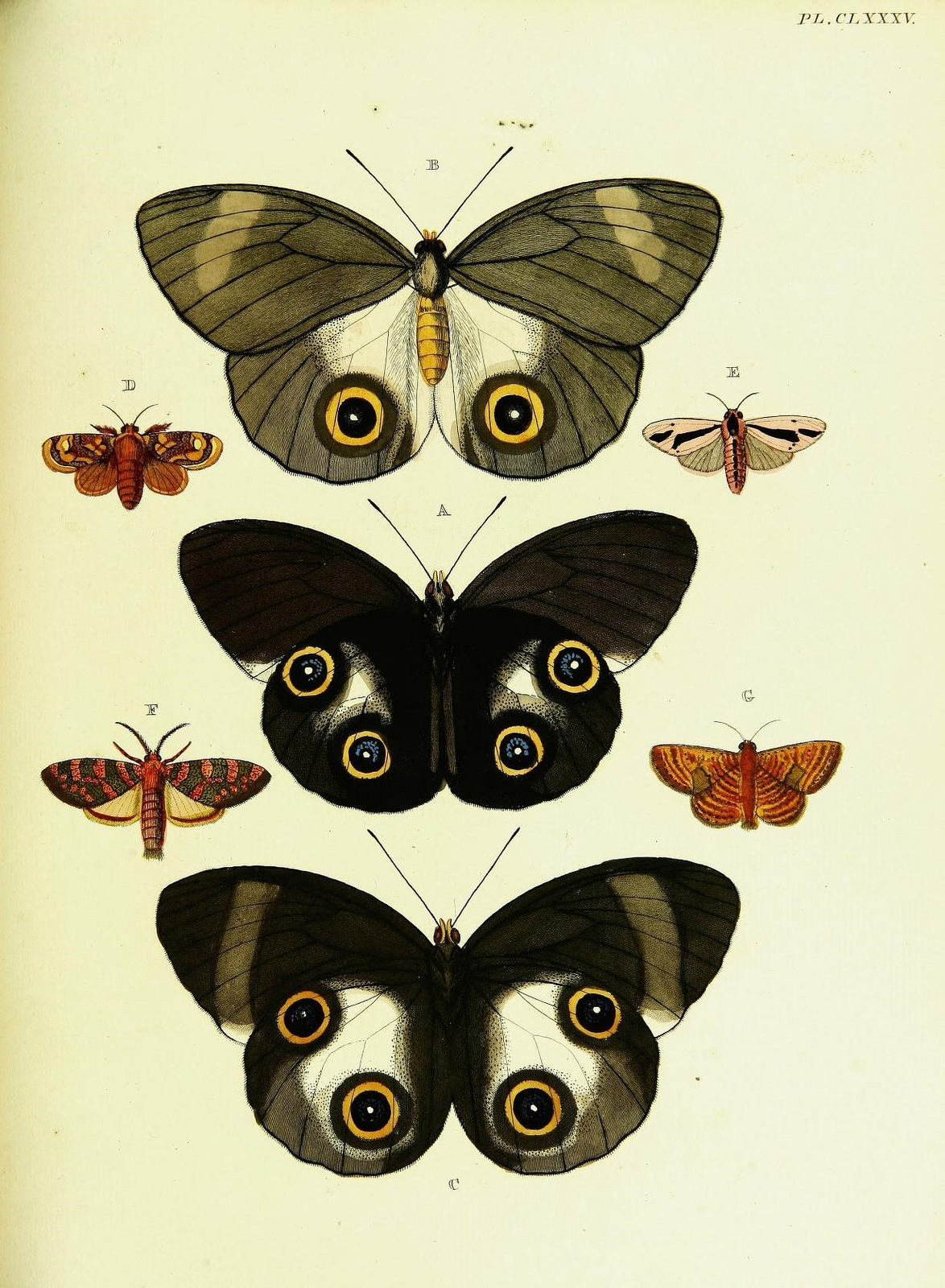
Pieter Cramer was a wealthy linen and wool merchant from Amsterdam. Born in 1721, he had a keen interest in natural history – particularly Lepidoptera (butterflies and moths). Through purchase and trade, Cramer amassed a large collection of Lepidoptera specimens from Suriname, Sri Lanka (then Ceylon), Indonesia, North America, Africa, and Asia. Cramer hired Amsterdam artist Gerrit Wartenaar to illustrate his collection in order to make a permanent record of it. The resulting hand-colored plates were so magnificent that Cramer was encouraged to publish them. He did so via De uitlandsche kapellen, which includes 400 plates featuring 1,658 moth and butterfly species, each accompanied by a brief description of the antennal shape and wing pattern. The plates and text were published in thirty-four parts between 1775-82, with one issue being sent out to a list of subscribers every three months. The final work consists of four volumes.
View Full Size Image
De uitlandsche kapellen voorkomende in de drie waereld-deelen, Asia, Africa en America. [1775]-1782. Digitized by Mann Library, Cornell University. http://biodiversitylibrary.org/page/42111331.

Sadly, Cramer died of a fever in 1776, before the first volume was complete. His nephew and business partner, Anthony Wellemzoon van Rensselaar, enlisted the help of Caspar Stoll (who had been involved in the production of the first volume) to complete the final volumes. Stoll wrote most of the text for volume four, and, between 1787-90, published a supplement to the work that included forty-two plates of 250 additional species.
View Full Size Image
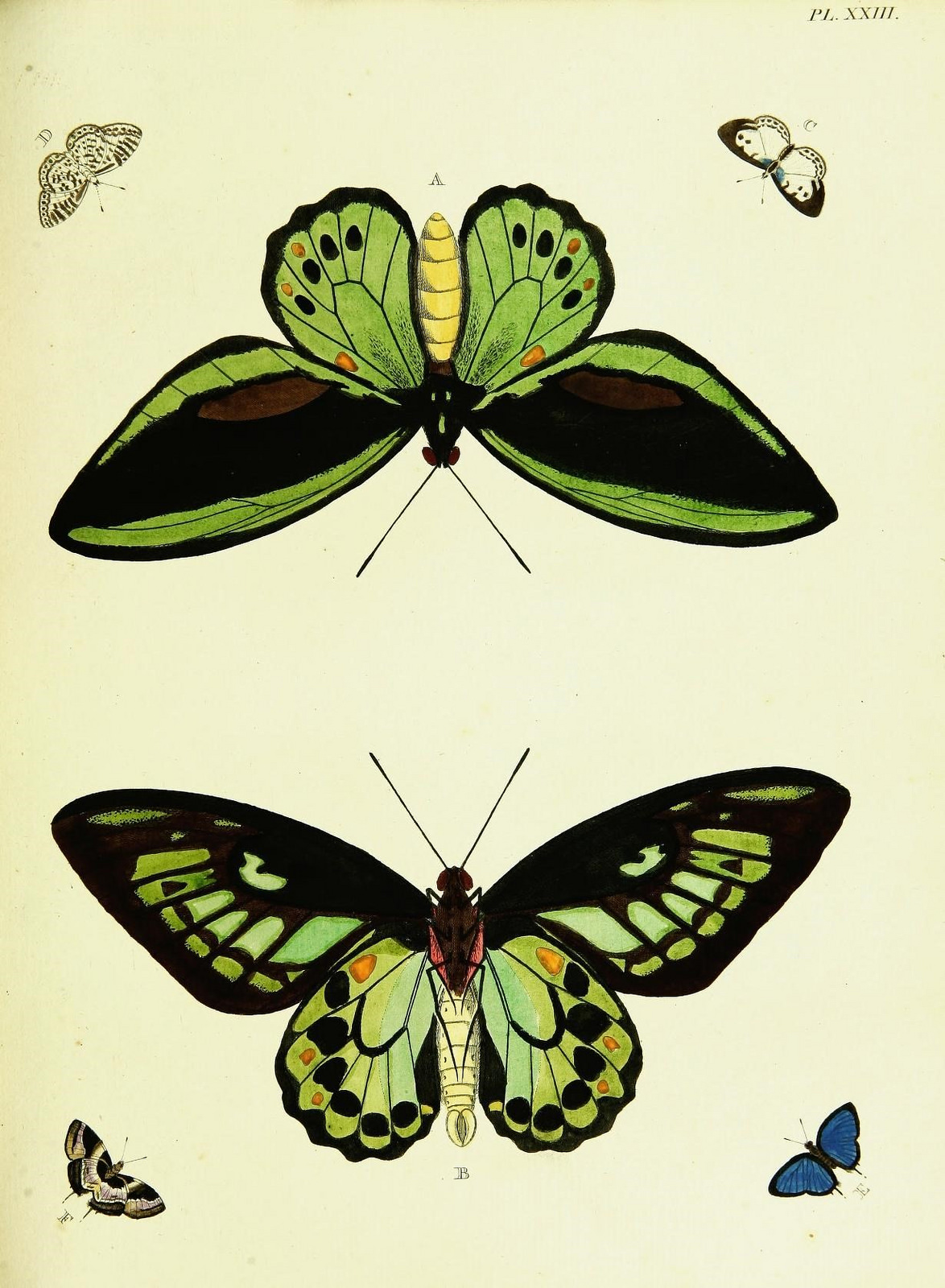
De uitlandsche kapellen voorkomende in de drie waereld-deelen, Asia, Africa en America. [1775]-1782. Digitized by Mann Library, Cornell University. http://biodiversitylibrary.org/page/42111247.

De uitlandsche kapellen is important for a number of reasons. It depicts each species at life-size and illustrates both the upper and lower wings for each. It was also the first treatise on Lepidoptera to use the newly-introduced classification system from Carl Linnaeus. Cramer and Stoll assigned each butterfly and moth to one of the three then-existing Lepidopteran genera (designated by Linnaeus) – today there are thousands of genera for butterflies and moths. In providing scientific names to the species, they not only used any existing binomials for the specimens included in the work, but, as many of the species had not yet been named, they also assigned a name and provided the first formal scientific description for many species depicted in the volumes. As a result, De uitlandsche kapellen contains hundreds of “original descriptions” and as such is still integral to the work of scientists today.
View Full Size Image
De uitlandsche kapellen voorkomende in de drie waereld-deelen, Asia, Africa en America. [1775]-1782. Digitized by Mann Library, Cornell University. http://biodiversitylibrary.org/page/42111073.

You can explore De uitlandsche kapellen voorkomende in de drie waereld-deelen, Asia, Africa en America (1779-1782), by Pieter Cramer, for free in BHL, digitized by Mann Library, Cornell University Library. You can view the illustrations in this work on Flickr: Pts. 1-2 | Pts. 3-4.

Source: James, Miller. “The Volumes of Cramer and Stoll: A Timeless Contribution to the Science of Butterflies and Moths.” Natural Histories. New York: American Museum of Natural History, 2012. 57-58. Print.

November 5, 2015by ulib-libraryjobs
Blog Reel

Finding Artistic Inspiration in Biodiversity Literature

It’s no surprise that the natural history books and archives available in the BHL collection are of vital importance to scientists and modern scientific research. They not only provide species and habitat information, sometimes representing the only available knowledge for rare, endangered, and extinct species, but also help scientists identify new species, inform holistic conservation efforts, and provide the foundations upon which current scientific models are based.

Science is not the only discipline that makes use of BHL’s collections. Historians and psychologists, for example, find invaluable information within the pages of historic biodiversity literature. Artists, too, uncover bountiful creative inspiration within BHL’s 45+ million pages.

Within natural history publications are millions of stunning images, ranging from simple woodcuts to elaborately hand-colored engravings, chromolithographed plates, and photographs. We’ve made nearly one hundred thousand of these images available in our Flickr collection, and through a partnership with Internet Archive, we will soon have over a million available in Flickr Commons. We’ve asked you to help us improve access to these images through Flickr tagging and crowdsourcing in the new Zooniverse Science Gossip project.

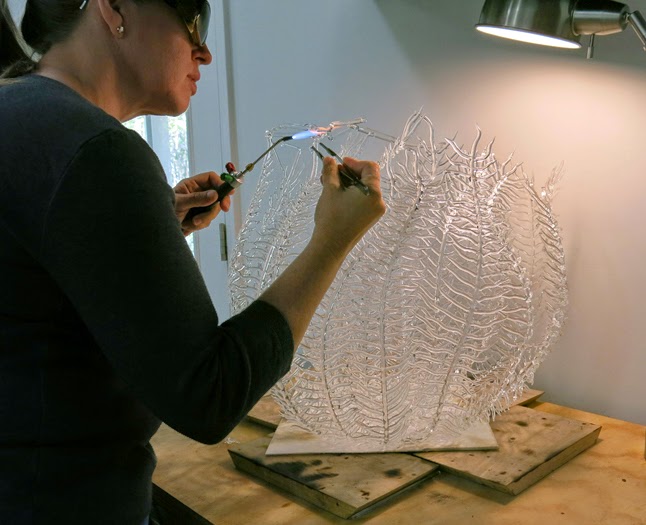
While these efforts will broaden the reach and impact of BHL’s visual treasures, many users have already discovered these gems for themselves, including sculptor and glass artist Emily Williams.

View Full Size Image
Emily Williams creating Glass Seaweed sculpture in her Columbus, Georgia studio.

Working professionally as a sculptor for 30 years, Emily is an Adjunct Art Professor at Troy University and a full-time Glass Artist. Through Twitter, Emily is able to connect to many world-class organizations promoting environmental conservation. It is also the medium through which she discovered BHL; it was love at first sight.

“The Biodiversity Heritage Library is an amazing resource for visual artists,” lauds Emily. “Any artist interested in learning about natural history and science would consider these rare resources invaluable. When I first began working on a series of ocean life forms I ran into some problems. Finding detailed illustrations of certain ocean life forms can be very difficult and time-consuming. Through the BHL website I can input various search terms to access an abundance of research materials. I am most drawn to the digitized books from the 19th century containing beautiful, detailed illustrations. Often these are great works of art! I have found hundreds of detailed illustrations of coral, seaweed, algae, and jellyfish. Most recently, I have uncovered some astounding scientific illustrations of Crinoids! These 19th century illustrations are a wellspring of inspiration for my current ocean life series in glass.”

View Full Size Image
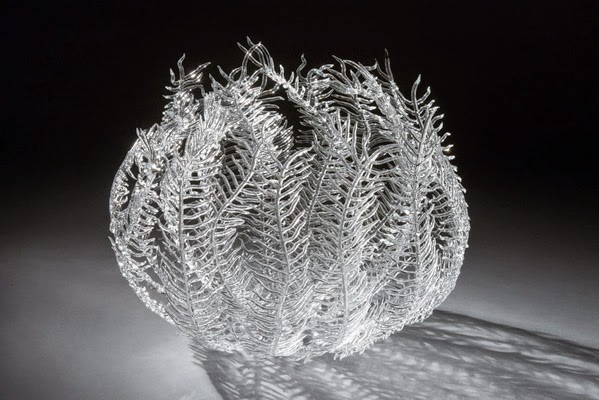
Glass Seaweed sculpture by Emily Williams, 2014. Created using borosilicate glass and a glass hand-torch.

A self-described “binge user” of BHL, Emily collects images and information about specific marine species that she wishes to create in glass, downloading the illustrations (sometimes as JPEG2000s) and PDF text files and storing them in subject-specific folders on her computer. She uses them to inspire masterpieces such as her recent borosilicate glass seaweed sculpture.

View Full Size Image
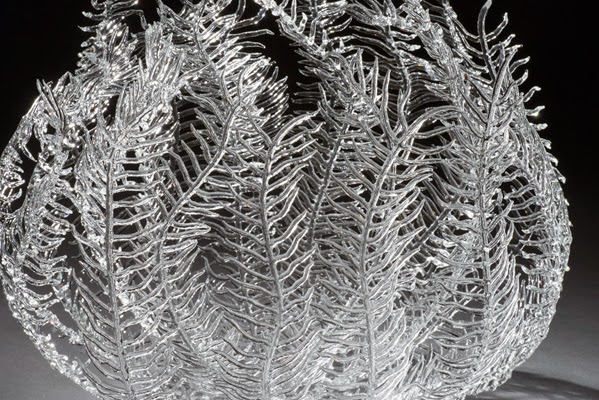
Detail of Glass Seaweed sculpture by Emily Williams, 2014. Created using borosilicate glass and a glass hand-torch.

The ability to search by subject within BHL is invaluable for Emily.

“The search feature will pull up all sorts of items including many old, rare books with illustrations,” extols Emily. “When I locate an item to investigate further I like to use the multiple page view (thumbnails) that allows me to quickly scan every page in the book. With the thumbnail feature I can see right away if there are any illustrations of interest to my research. Being a visual artist I find the high-resolution images invaluable. This allows me to enlarge and examine intricate illustrations as if using a microscope!”

This method allows Emily to discover new favorite books in BHL constantly, the most recent of which is Manuel d’actinologie ou de Zoophytologie, published in 1850.

View Full Size Image
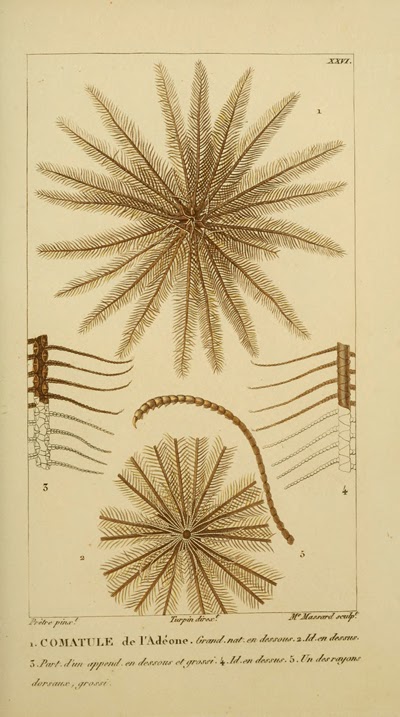
Plate 26, Comatule de l’Adeone (Crinoid) Illustration from Manuel D’actinologie ou de Zoophytologie, 1850. http://biodiversitylibrary.org/page/9321291.

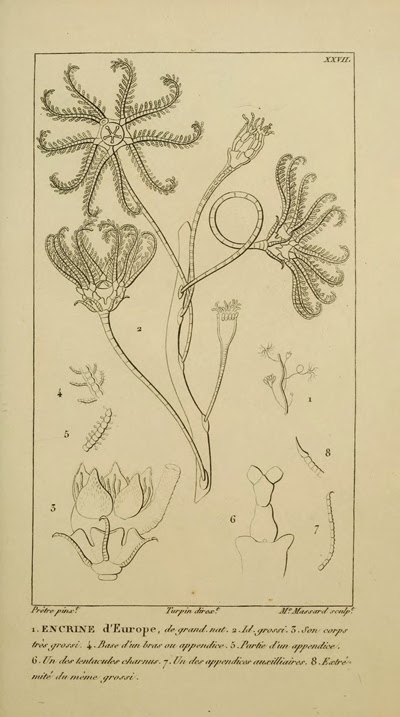
“This book features some very detailed illustrations on Crinoids,” explains Emily. “The book is filled with marvelous illustrations containing fine details and color. The ability to visually understand how a Crinoid is structured becomes part of my unique creative process. Discovering an exciting branching pattern or joint segmentation may inspire an entire sculpture. Within this same book I found some detailed illustrations of the Porpite and numerous lovely jellyfish.”

View Full Size Image
Plate 27, Encrine (Sea Lily) Illustration from Manuel D’actinologie ou de Zoophytologie, 1850. http://biodiversitylibrary.org/page/9321293.

Emily’s exploration of marine species in her recent artwork inspired a wonderful recommendation for BHL.

“An Endangered Ocean Species page would be fantastic,” suggests Emily. “For example, I read about the Australian Bennett’s red algae and how it is now extinct. The structure and patterning of the Bennett’s red algae was spectacular. It would be marvelous to access a page featuring endangered, recent extinctions of sea life such as corals, seaweed, algae, crinoids, starfish, etc.”

View Full Size Image
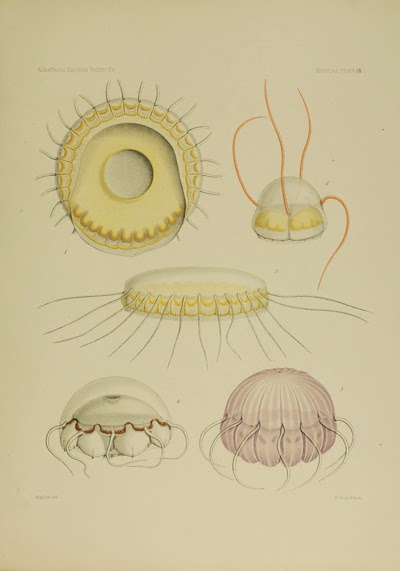
Plate 14, Sketches of living specimens made on board the “Albatross.” Illustration from Memoirs of the Museum of Comparative Zoology at Harvard College, Volume 37, 1909, The Medusae/by Henry B. Bigelow. http://biodiversitylibrary.org/page/6361166.

An excellent idea, and perhaps one that may one day be explored via our Biodiversity Library Exhibition platform. In the meantime, while they’re not exclusively endangered, browse stunning ocean wildlife illustrations in our Marine Biodiversity Flickr Collection.

Thank you, Emily, for taking the time to explain how BHL is useful not just to scientists, but to a range of disciplines including art! Do you use BHL to support your work? Want to tell us about it? Send us a message at [email protected].

March 12, 2015by ulib-libraryjobs
Blog Reel, Featured Books

A Crusade to Save the Golden Lion Tamarin

Post by Grace Costantino with significant contributions from Field Book Project blog post, “Field Notes from a Battle Against Extinction,” by Sonoe Nakasone.
View Full Size Image
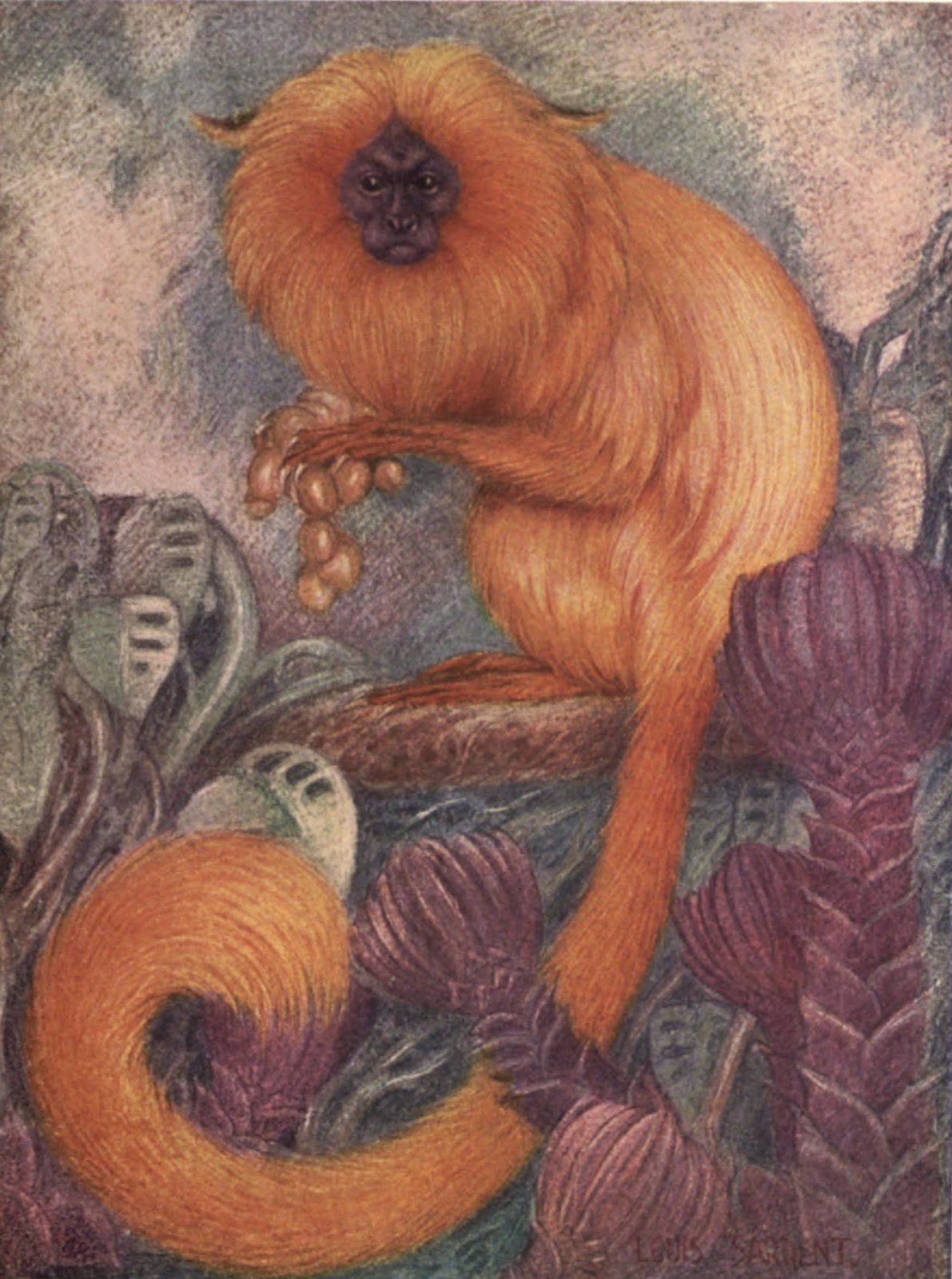
The Golden Lion Tamarin. Illustrated by Louis Sargent. From: Finn, Frank.
The Wild Beasts of the World. (v. 1, 1909). http://biodiversitylibrary.org/page/19058592 

A small, endangered primate, the Golden Lion Tamarin (GLT) (also known as the Golden or Lion Marmoset) gets its name from the trademark, vivid orange “mane” surrounding its face. Don’t let the “lion” part fool you, however. The tamarin averages only 10.3 inches in length and 1.37 lbs.

In the marvelous book The Wild Beasts of the World (v.1, 1909), Frank Finn, an English ornithologist, writes that the GLT is not much larger than the English squirrel, with “paws” quite unlike “ordinary” monkeys. The accompanying illustration, by Louis Sargent, is a breathtaking representation of this adorable New World Monkey.

Interestingly, Finn records that “the present species is one of the most widely-ranging of the Marmosets, being found from the Isthmus of Panama to South-eastern Brazil and New Granada.” Much has changed since the early 1900s. Today, GLTs have extremely limited distribution, confined solely to Brazil, and occupying only 2-5% of their original habitat. In the 1970s, as few as 200 GLTs remained on Earth. Thanks to conservation efforts, led largely by Dr. Devra Kleiman, who passed away in 2010, their wild population is now closer to 3,200.

The Field Book Project* has cataloged a number of Kleiman’s fieldbooks, many focusing on her research with the GLT. Sonoe Nakasone, who cataloged the books and published a blog post about them, noted that Kleiman’s notes were quite different from those of many other researchers she had cataloged in the past, as:

Kleiman didn’t really “collect specimens”. Rather, her notes document animal behavior, activities, diet, as well as external factors affecting the livelihood of tamarins. Kleiman and her team did collect blood, skin, and fur samples, and they did capture tamarins to breed in captivity before reintroducing them into the wild, yet the fundamental purpose and method of research was distinct from traditional natural history field work.

View Full Size Image
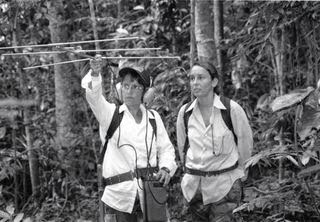
Devra Kleiman and colleague conducting playback study. From the Field Book Project.

Kleiman’s fieldbooks also document a number of her research techniques. She employed three common protocols:

Scans, focals, and playbacks. Scans and focals are systematic observations. Scans focus on all member of a group of animals; focals focus on an individual animal. Both adhere to specific lengths of time and seek specific information about behavior and activities. Playbacks involved projecting recordings of various animal vocalizations in the field. During these experiments, animal responses, if any, were documented and differences between male and female responses noted.

Nakasone also highlights some of the challenges Kleiman faced during her conservation initiatives:

On October 25, 1991, Kleiman remembers a particularly difficult visit to a corporation: “the veep [VP] we meet is very obnoxious—suggesting that people are burned out [with] ecology (mentions a t-shirt entitled “I don’t give a s— about the GLT)”. On March 16, 1990, Kleiman notes the effects of economic instability in Brazil on the project: “they are freezing all interest-bearing overnight accounts […]. Cecilia [Kleiman’s colleague] had $6000 WWF grant in an overnight account. It increased by $1000 interest, but now she can’t touch it.”

Yet despite these and other obstacles like deforestation, poaching, and political instability, Kleiman coordinated the Golden Lion Tamarin Conservation Program for almost 30 years and “was successful at shedding light on the issue of golden lion tamarins and helping to increase the GLT population by 800%.” As Nakaone notes:

Kleiman’s field books are a refreshing and exhilarating alternative to many of her predecessor’s field books because she was a pioneer in the burgeoning field of conservation biology. Her notes reflect not only the advancement of human knowledge, but also the application of that knowledge to ensure the livelihood of species struggling for survival.

View Full Size Image
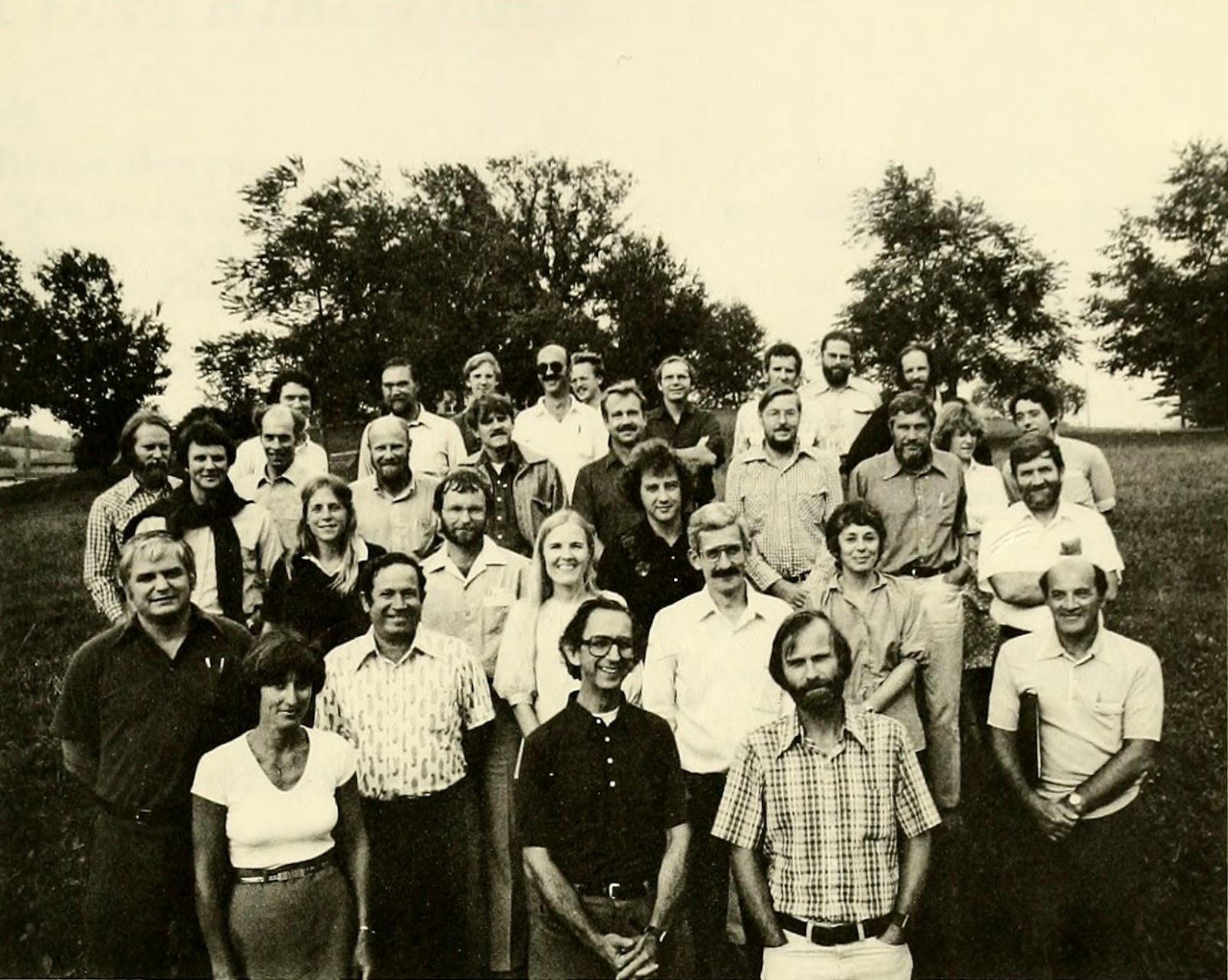
“Participants in the Front Royal Conference on Mammalian Behavior, 16-19 August 1980.”
Kleiman 2nd row, 2nd from right.

Learn more about Kleiman’s contributions to conservation and biodiversity sciences from the Smithsonian Archives. Explore the GLT in The Wild Beasts of the World, and learn more about the species in EOL. Read Sonoe Nakasone’s full blog post and explore Kleiman’s fieldbooks, cataloged by the Field Book Project.

* The Field Book Project is an initiative to increase accessibility to field book content that documents natural history. Through ongoing partnerships within and beyond the Smithsonian, the project is making field books easier to find and available in a digital format for current research, as well as inspiring new ways of utilizing these rich information sources. 

September 18, 2014by michelle.underhill
Blog Reel, Featured Books

The Walrus as you Never Knew Him

View Full Size Image
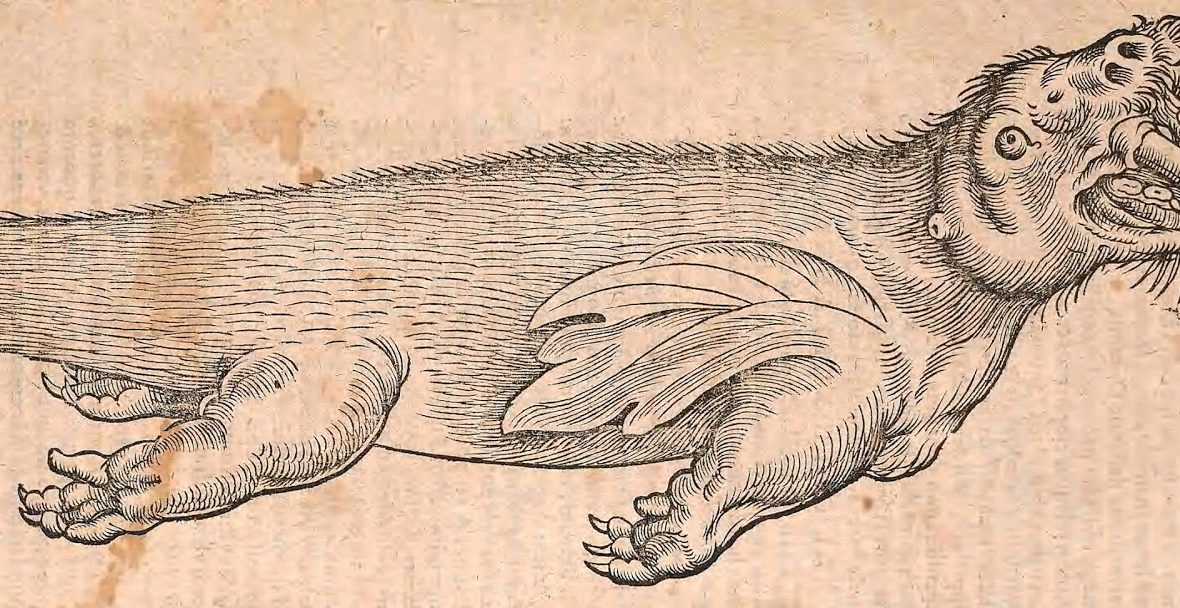
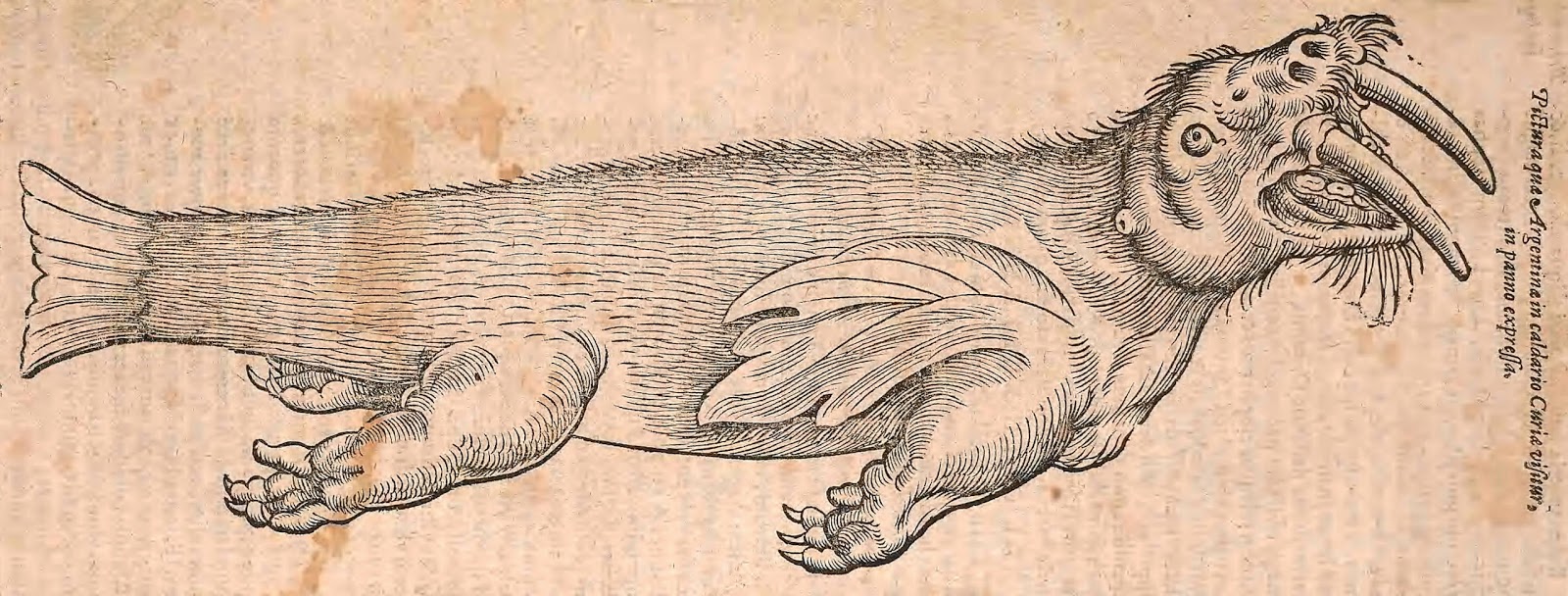
Conrad Gessner’s Walrus. 1558. Historia Animalium. http://biodiversitylibrary.org/page/42165842

Conrad Gessner desired to reconcile ancient knowledge about the animal kingdom with the modern discoveries of the Renaissance. This endeavor spurred him to produce his magnificent Historia Animalium, a work synonymous with the beginning of modern zoology. This five-volume masterpiece covered the subjects of “live-bearing four footed animals” (mammals), “egg-laying quadrupeds” (crocodiles and lizards), birds, fish and sea creatures, and a fifth posthumous volume on snakes and scorpions.

Compiling knowledge from Old Testament, Greek, Hebrew and Latin sources, Animalium boasts a rich collection of woodcut illustrations – something uncommon in other contemporary natural history publications. Gessner repurposed images from many famous researchers of his time, including Olaus Magnus, Guillaume Rondelet, Pierre Belon, Ulisse Aldrovandi, and Albrecht Durer. Their existing images were carved into woodblocks by craftsmen, which were used to “stamp” the reproductions onto designated pages within the text blocks.

Though Gessner intended to produce an authoritative encyclopedia of scientific knowledge about the natural world, his five volumes do include mythical beasts and fancifully-rendered factual creatures. Many of the more exotic of the species he depicted were based on textual or second-hand accounts, explaining the sometimes substantial divergence from reality.

Case in point: The Walrus.

View Full Size Image
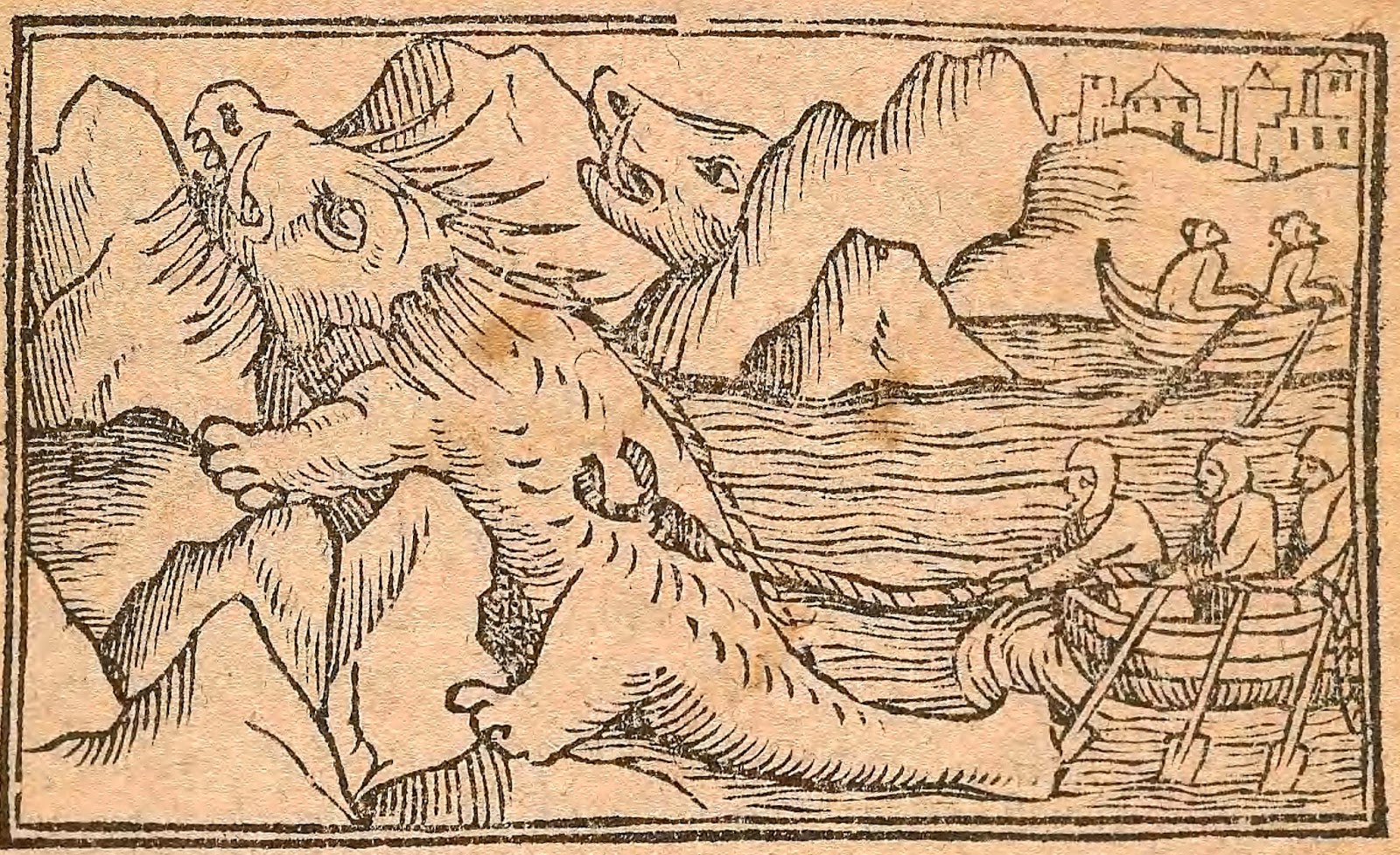
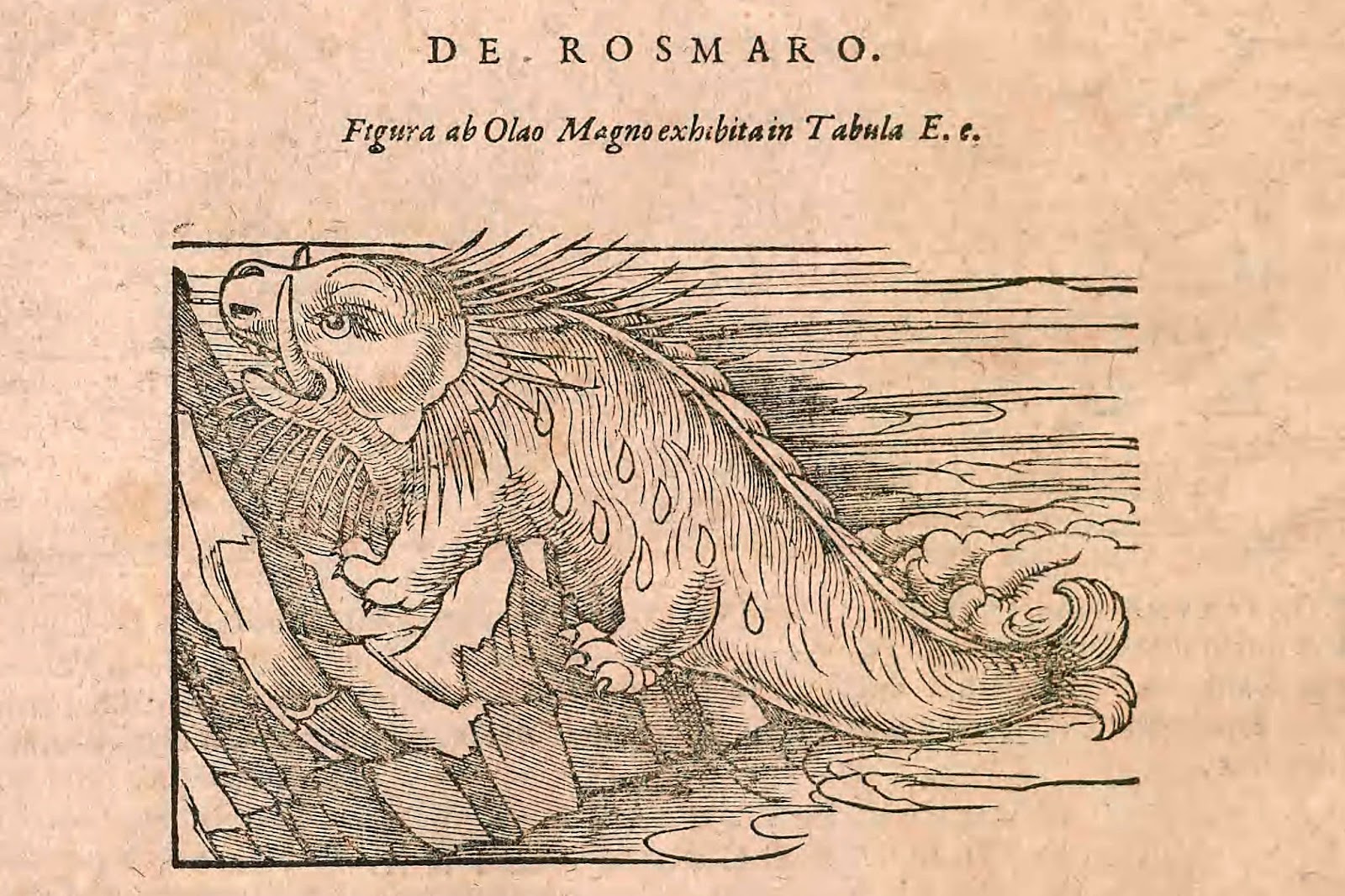
Olaus Magnus’ Walrus. 1555.  
Historia de Gentibus Septentrionalibus.
http://biodiversitylibrary.org/page/41862934

Gessner’s Walrus comes from descriptions by Olaus Magnus in his work on the northern European ocean: Historia de Gentibus Septentrionalibus (1555). Basing his description on Albertus Magnus’ thirteenth century accounts of walrus hunting and reports from two more recent travelers to Russia (Maciej z Miechowa, 1517, and Paolo Giovio, 1525), Olaus recounted the walrus as “a mighty fish, as big as an elephant, called morse or rosmari” that was capable of climbing mountains. The rendering he provided for the creature depicted a beast with legs and tusks in its lower jaw.

Gessner voiced some hesitations about Magnus’ representation of the Walrus. Writing that he believed Olaus based many of his creatures on sailors’ accounts rather than life studies, Gessner reasoned that “fish don’t have feet.” Since common wisdom of the day, and even Olaus himself, grouped Walrus with fish, it was an understandable concern. Nevertheless, Olaus was a well-respected authority, with a good family lineage and a travel resume that had brought him further north than any of his intellectual European contemporaries. Thus, Gessner included two illustrations in his work, one closely resembling Olaus’ beast and another more recognizable as the pinniped we know today.

View Full Size Image
Gessner Walrus, resembling Magnus’ image. 1558. Historia Animalium. http://biodiversitylibrary.org/page/42165841

The inaccurate renderings of Magnus and Gessner’s Walrus, and many other Walrus depictions of the time, may have originated in part from confused reports on ivory sources. The ivory trade in China consisted of a combination of elephant, walrus, and narwhal tusks. Practically no documentation was kept regarding the source of the ivory, and while the European ivory trade was more segmented among source types, the Scandinavians, Russians, and Nenets that supplied the western trade did not share information readily. Thus, natural historians like Olaus Magnus likely tailored their depictions to reconcile the vague second-hand accounts they received with the appearance of other animals they knew produced ivory tusks – elephants. Indeed, many other Walrus portraits of the day (such as those by Waldseemüller and Fries) portray the animal in a much more elephant-like manner, complete with long legs, floppy ears, and, in the case of Fries, even a trunk.

Thus, all things considered, though we today may look at Gessner’s Walrus and giggle, his was actually a much more accurate representation of the animal than many alternative sources in his time. Despite the factual deviations it may contain, “for an understanding of the history of zoology and a peek at some truly fascinating and five-hundred-year-old illustrations, there is no better historical guide than Conrad Gessner’s Historia Animalium.” (Ellis, pg. 2).

And, come on, Gessner’s Walrus is pretty adorable!

Sources:

  • Ellis, Richard. “The First Animal Book.” Natural Histories. Ed. Thomas Baione. New York: Sterling Publishing, 2012. pg. 1-2.
  • McKay, John. “The White Elephant of Rucheni.” Scientific American Blog. Scientific American, 25 July, 2014. http://blogs.scientificamerican.com/guest-blog/2011/11/22/the-white-elephant-of-rucheni/
  • Scott, Michon. “Sea Monsters.” Strange Science. 25 July, 2014. http://www.strangescience.net/stsea2.htm


July 31, 2014by ulib-libraryjobs

Help Support BHL

BHL's existence depends on the financial support of its patrons. Help us keep this free resource alive!

search

About BHL

The Biodiversity Heritage Library (BHL) is the world’s largest open access digital library for biodiversity literature and archives. BHL operates as a worldwide consortium of natural history, botanical, research, and national libraries working together to digitize the natural history literature held in their collections and make it freely available for open access as part of a global “biodiversity community.”

Join Our Mailing List

Sign up to receive the latest news, content highlights, and promotions.

Subscribe Now

Subscribe to Blog via Email

Enter your email address to subscribe to this blog and receive notifications of new posts by email.

Join 319 other subscribers

Subscribe to Blog Via RSS

Subscribe to the blog RSS feed to stay up-to-date on all the latest BHL posts.

Access RSS Feed

Inspiring Discovery through Free Access to Biodiversity Knowledge.

The Biodiversity Heritage Library makes it easier than ever for you to access the information you need to study and explore life on Earth…for free, anytime, anywhere.


64+ Million Pages of
Biodiversity Literature Online.

EXPLORE

Tools and Services
to Transform Research.

EXPLORE

300,000+
Illustrations on Flickr.

EXPLORE

ABOUT | HARMFUL CONTENT | PRIVACY | SITE MAP | TERMS OF USE