Biodiversity Heritage Library - Program news and collection highlights from BHL
  • Home
  • News
  • Featured Books
    • All Featured Books
    • Book of the Month Series
    • BHL at 20
  • User Stories
  • Campaigns
    • Fossil Stories
    • Garden Stories
    • Monsters Are Real
    • Page Frights
    • Her Natural History
    • Earth Optimism 2020
  • Tech Blog
  • Visit BHL
Home
News
Featured Books
    All Featured Books
    Book of the Month Series
    BHL at 20
User Stories
Campaigns
    Fossil Stories
    Garden Stories
    Monsters Are Real
    Page Frights
    Her Natural History
    Earth Optimism 2020
Tech Blog
Visit BHL
  • Home
  • News
  • Featured Books
    • All Featured Books
    • Book of the Month Series
    • BHL at 20
  • User Stories
  • Campaigns
    • Fossil Stories
    • Garden Stories
    • Monsters Are Real
    • Page Frights
    • Her Natural History
    • Earth Optimism 2020
  • Tech Blog
  • Visit BHL
Biodiversity Heritage Library - Program news and collection highlights from BHL
BHL News, Blog Reel, Tech Updates

Announcing Full Text Search on BHL!

New enhancement for BHL’s full text search implementation added August 2018: You can now choose to search the catalog only (i.e. bibliographic metadata like title, author, etc.) or catalog + full text. Information below has been updated to reflect this enhancement.

—————————————–
We’re thrilled to announce that full text search is now available on the Biodiversity Heritage Library!

To start using this functionality, simply visit BHL, type a term into the search box with the “full text” button selected, and use our new interface enhancements to review your results. Search results will display hits for your term in both the bibliographic metadata (i.e. title, author, subject, publisher, related titles and series, etc.) as well as the full text of books in BHL.

If you wish to limit your search to just the bibliographic metadata, select the “catalog” button before performing your search.

For each result, expand “Details” to see where your term occurs within each item, be it in the title, keywords, or full text.
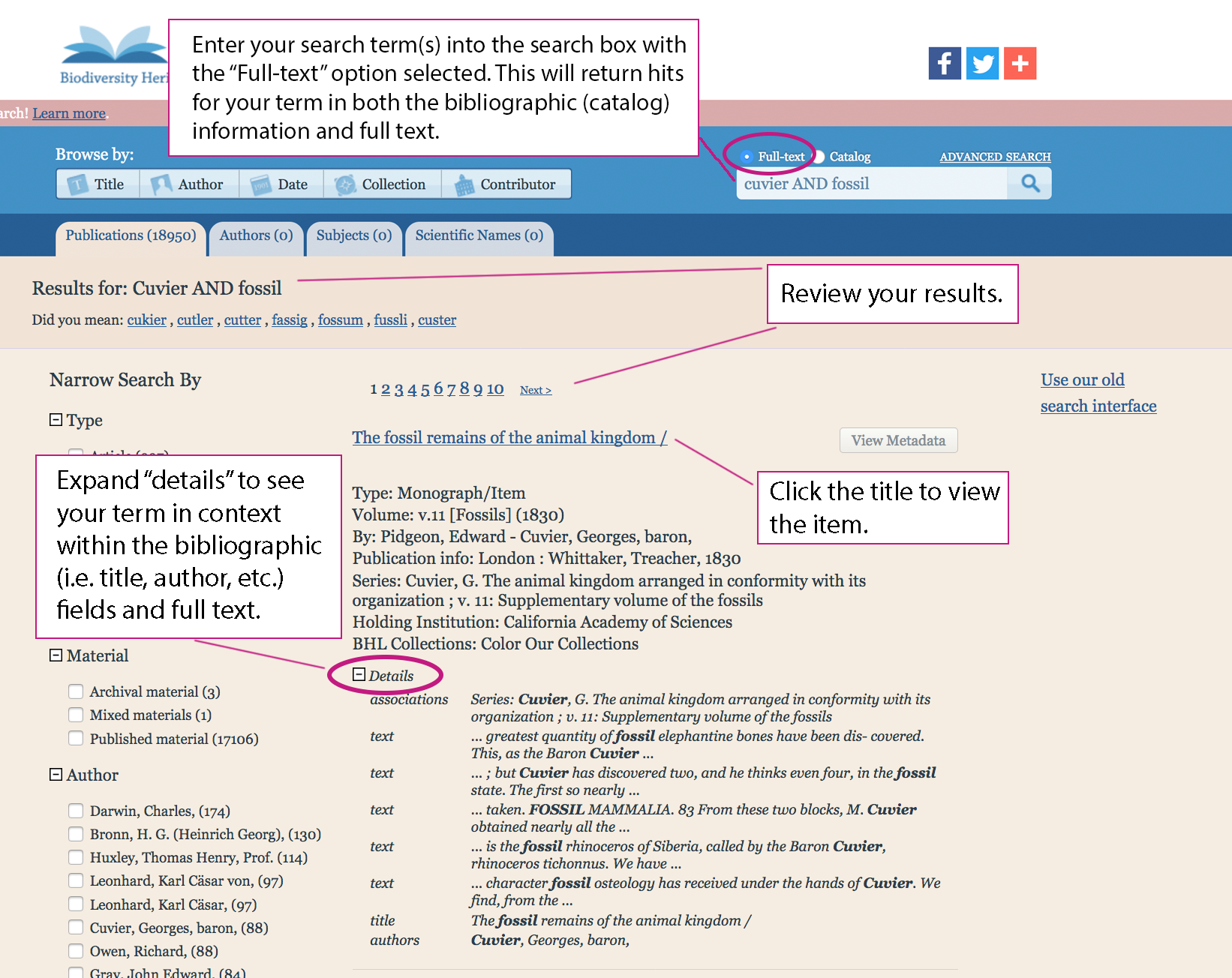
full text search overview in BHL website

Overview of the new full text search functionality on BHL.

Click on a title to view an item from your results list. You can then use the “search inside a book” functionality (discussed below) to navigate to specific pages mentioning your term.

Full text search makes it easier to discover a wider range of relevant content. For example, say you’re looking for information related to invasive zebra mussel (Dreissena polymorpha) populations in the Ohio River. A search for “zebra mussel” AND “Ohio River” yields several intriguing results that may not have been easily discoverable without full text search.
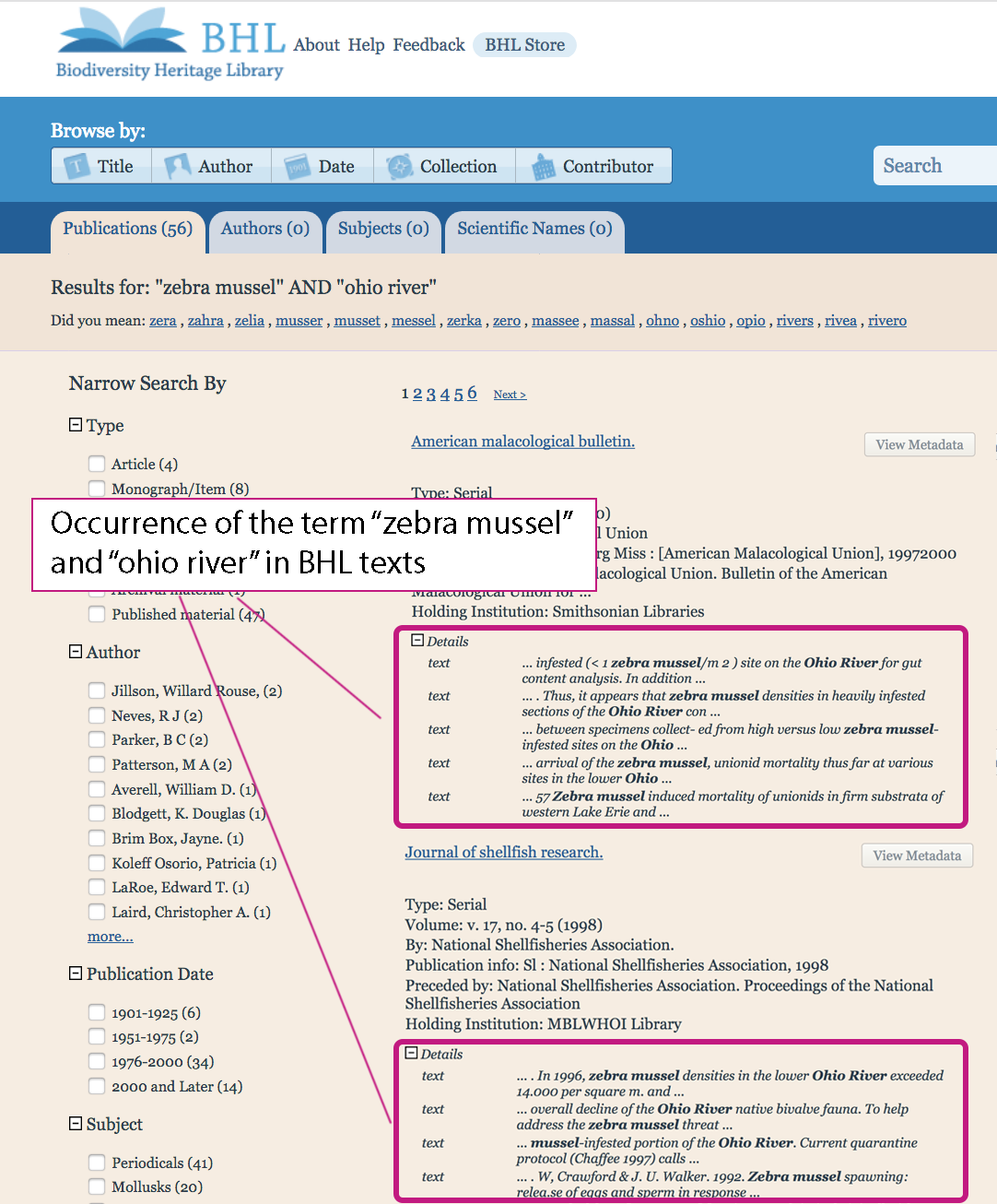
digital library website results for a search for "zebra mussel" and "ohio river"

Results of a search for “zebra mussel” AND “ohio river” yields several intriguing results in the full text. Note: Image edited to highlight specific results of interest.

Faceted Browsing

We’ve also enhanced the BHL interface with faceted browsing, making it easier for you to explore your search results by applying filters for content type, publication date, subject, language, and author. To narrow your results by one of the filters, simply check the box next to the desired facet value(s).
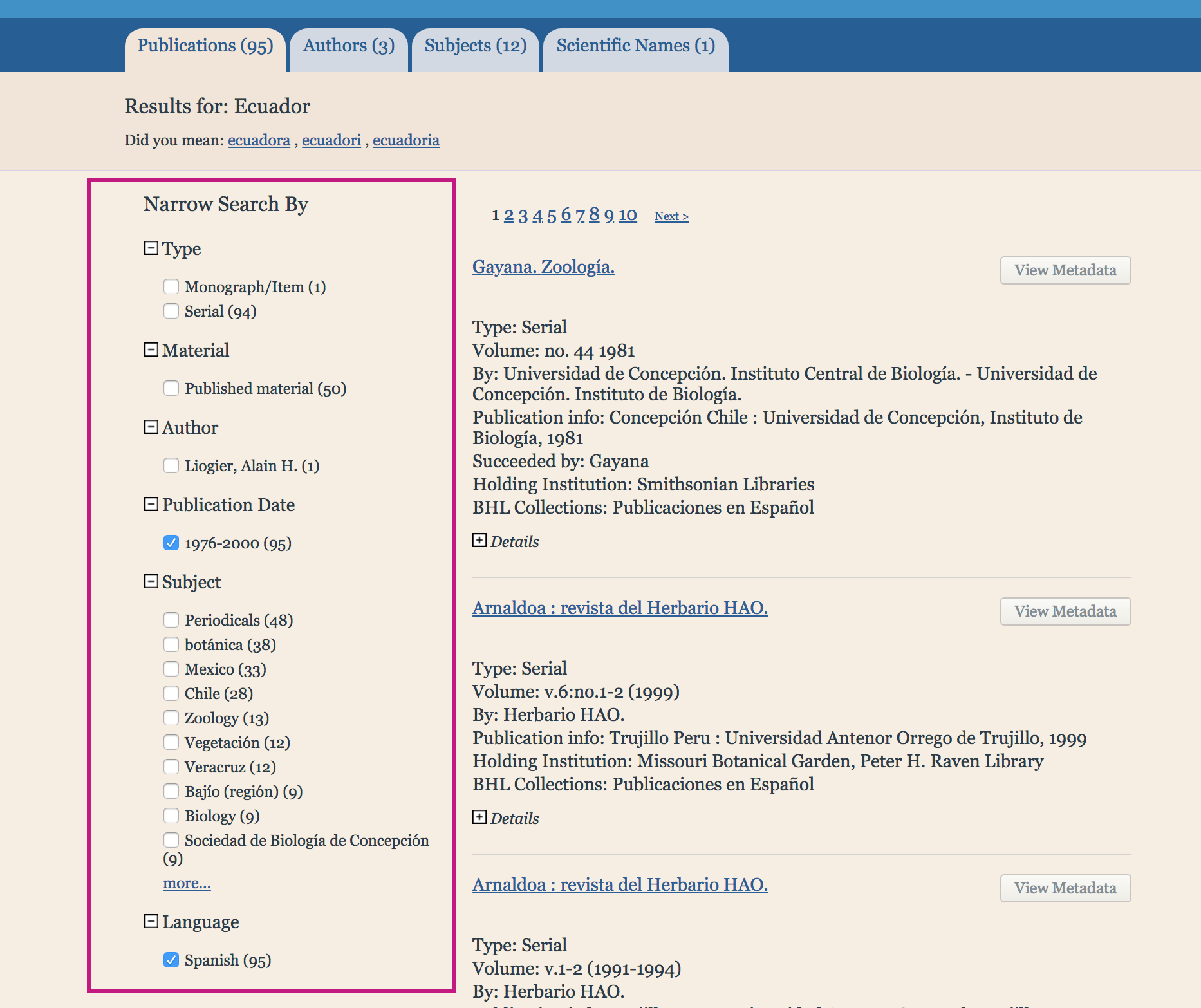
digital library interface showing faceted searching options

Use facets to narrow your search results.

Search results will automatically update when you select a value, but for best results, select one value at a time, allowing the results set to update, before selecting an additional facet value if you wish to further limit your results.

Search Inside a Book

We have also added “search inside a book” functionality, allowing you to search for terms within a book you’re viewing.

To use this feature, navigate to the top right corner of the book viewer, select the “Search Inside” tab and enter your search terms. In that same panel, results will display the pages where your search terms are found, along with snippets of the surrounding text. Navigate to any of those pages by clicking on the hyperlinked page number.
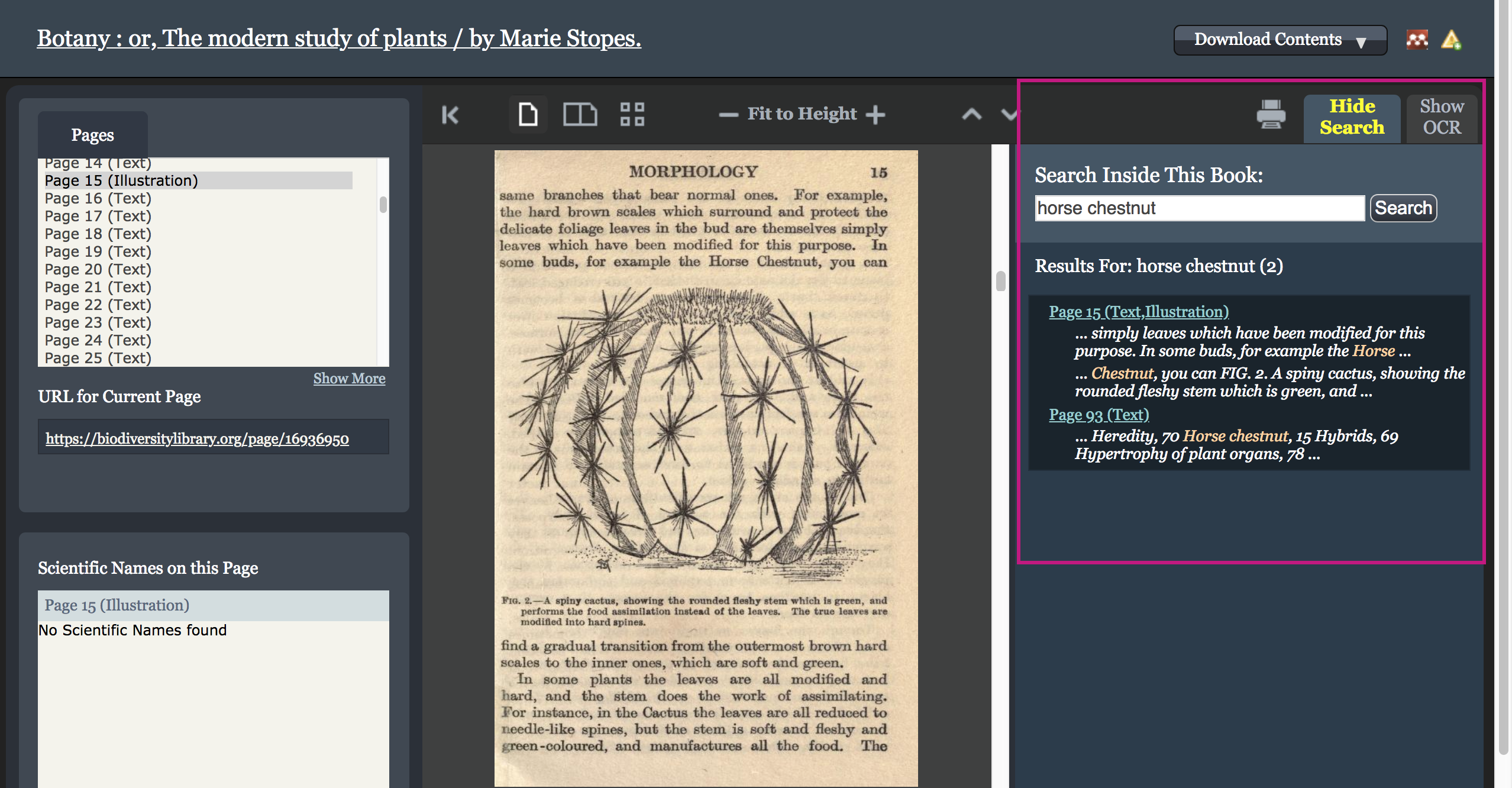
digital library interface showing "search inside" functionality

“Search inside a book” on BHL.

“Search inside a book” is a powerful way to uncover content of interest within a specific book. For example, say you want to find the passages where Darwin discusses his time at the Galápagos Islands within his Journal of Researches from the H.M.S Beagle voyage. By searching for “Galapagos”, you can easily find and navigate to the relevant pages.
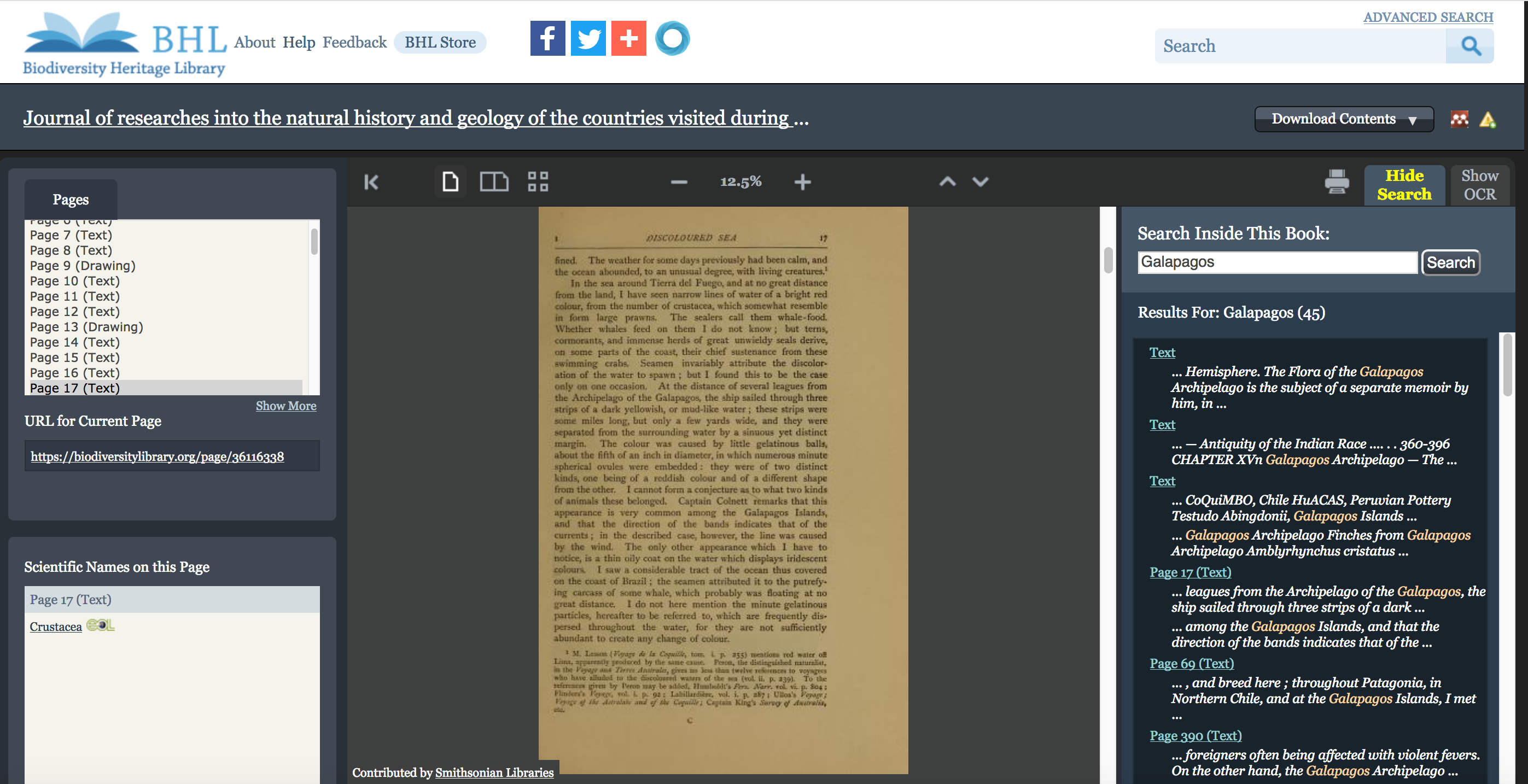
digital library display of a book

A search for “Galapagos” within Darwin’s Journal of Researches using the “search inside a book” functionality.

Learn More

We’re excited to introduce this much-anticipated new functionality to BHL, and we look forward to seeing what further discoveries it enables.

Have questions about full text search or want to learn more about our features and functionality? See our General Search and Full Text Search FAQs. If you have further questions or suggestions for future enhancements, you can contact us via our webform or [email protected].
May 7, 2018by michelle.underhill
Blog Reel, User Stories

Finding Agriculture among Biodiversity: Metadata in Practice

The Biodiversity Heritage Library is committed to providing free and open access to over 500 years of natural history literature from across the globe. Towards that goal, the Library currently contains over 45 million pages of biodiversity content, representing over 155,000 volumes and 90,000 titles.

However, hosting the content online is just part of our vision to “inspire discovery through free access to biodiversity knowledge.” Users must be able to identify content relevant to their work and interest from amongst this vast corpus. For this, metadata is all-important.

Metadata is “data that describes other data.” BHL’s metadata describes the digital resources in our collection, providing not only author, title, volume, publication year and place, and article information, but also keywords describing the topics discussed within each book. Eventually, full-text searching will also allow users to search across the actual text within a book to discover items relevant to their search parameters.

View Full Size Image
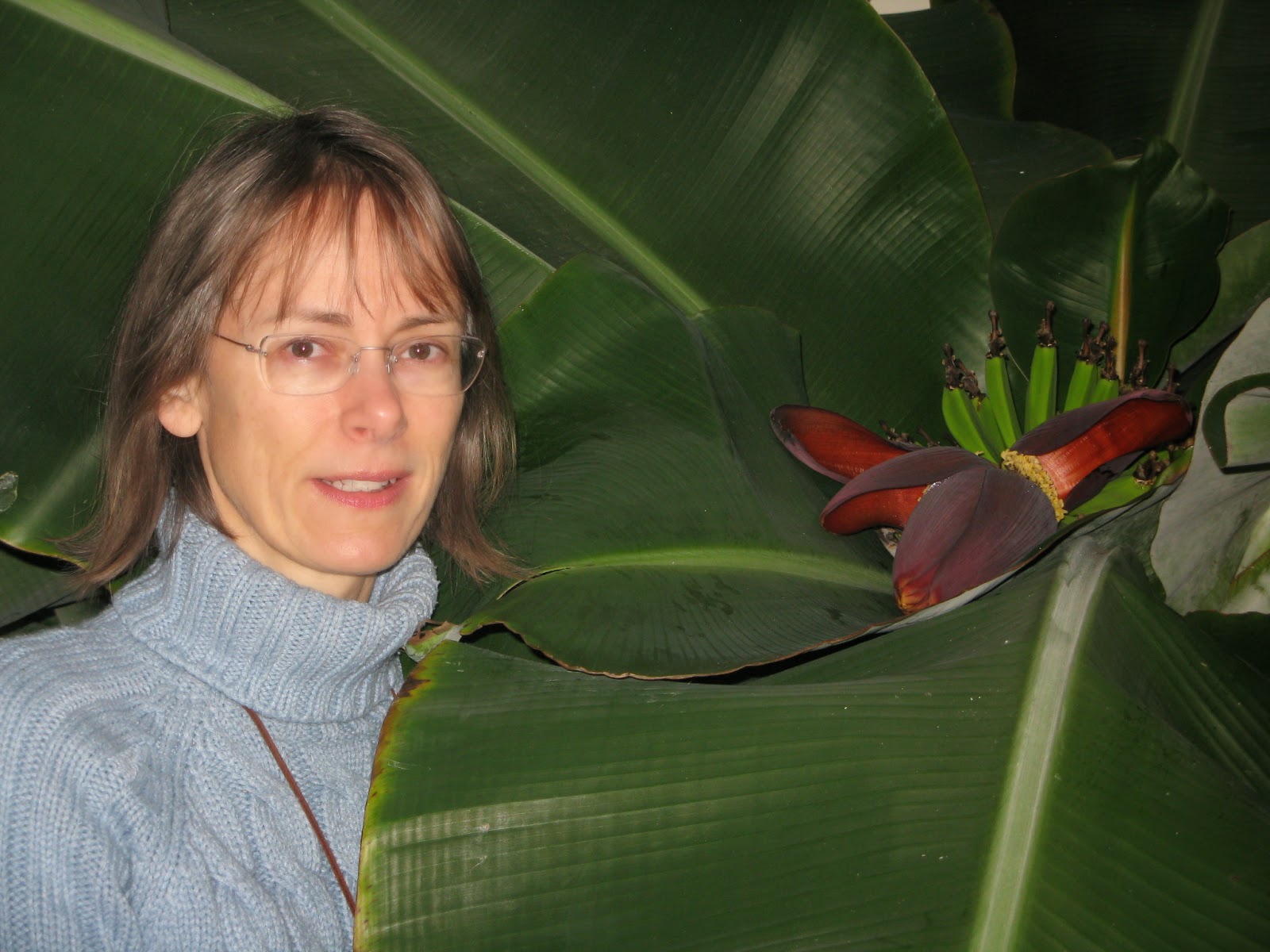
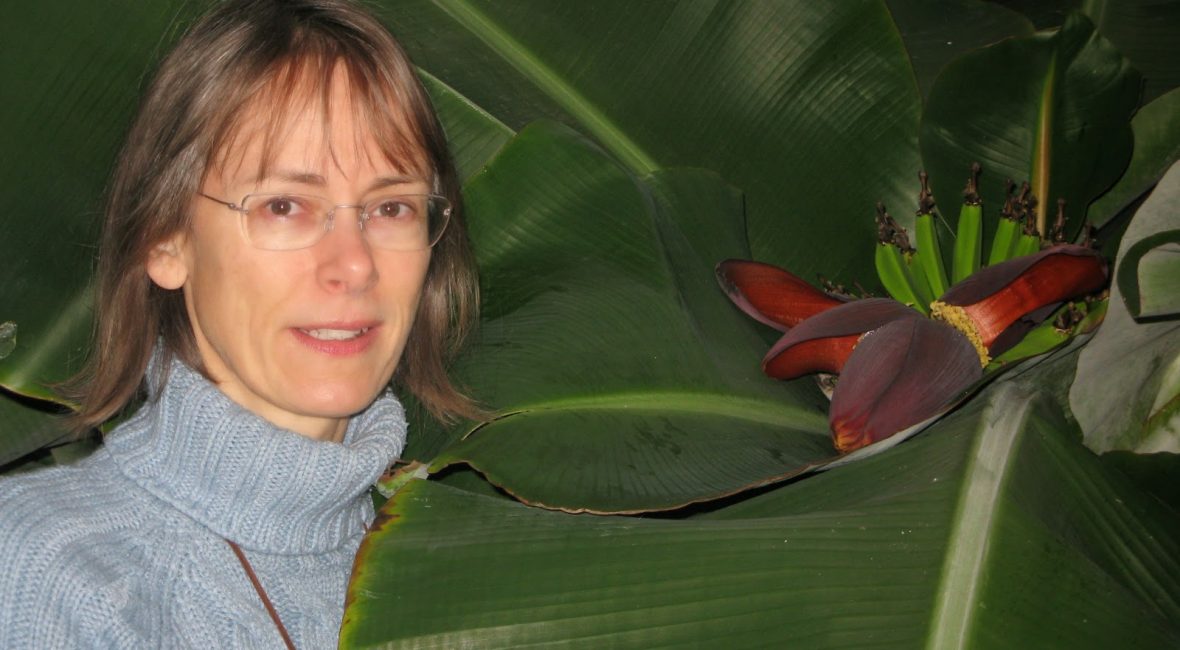
Dr. Jane Bromley, with her home-grown banana plant.

Dr. Jane Bromley knows the importance of metadata all too well. It is a critical component of her daily work.

Bromley is a research fellow at The Open University, where she has worked since 2012 as part of a subgroup of the Natural Language Processing group. Under the EU FP7 funded agINFRA project, which aims to promote data sharing in agricultural sciences, Bromley’s subgroup studies information extraction from legacy biodiversity literature. Specifically, they are seeking to enhance an existing specialist agricultural resource, AGRIS.

AGRIS is a collaborative network of more than 150 institutions providing free access to agricultural information in the form of more than 7 million bibliographic references on agricultural research and technology. This multilingual bibliographic database also contains links to related data resources on the Web.

BHL contains a vast amount of agricultural information. Searching the subject “agriculture” alone produces over 2,100 books and journals in BHL. Recognizing the potential of these resources, Bromley and her colleagues, including Dr. David King and Dr. David Morse, developed a process to enhance AGRIS with BHL content. They relied on BHL’s metadata to do this.

“BHL is a unique resource for agricultural researchers,” explains Bromley. “Its long-term view can prove invaluable in locating wild relatives of crops and understanding their relationship to local habitats and ecosystems. It is the only way to access this breadth of biodiversity literature electronically.”

To filter BHL for relevant agricultural content, Bromley and her team downloaded the “Title Table” file from BHL, which is a list of all titles available in BHL with the associated URL and Call Number. After also downloading the bibliographic information for each item in MODS format, Bromley used the Call Number field to discriminate agricultural material using the Library of Congress Classification LCC scheme. While Call Numbers are alphanumeric codes that identify the shelf location of an item in a library, the specific combination of letters and numbers used allows the library to arrange items according to subject, and thus also serves as an indication of the subject of the book itself.

“I selected items with code starting “S, SB, SD, SF, SH, SK” meaning class Agriculture or one of its subclasses,” articulates Bromley. “I then selected only those items whose bibliographic data said they were of genre: book, thesis, article or bibliography, as AGRIS only accepts: books, book chapters, thesis, journal articles, conference papers, and bibliography. BHL contains complete journals rather than journal articles, so these were not included. That meant that items such as Canadian Journal of Agricultural Science or Journal of Agricultural Research were omitted. For items that passed both of these matches I also scraped the item’s URL to recover the location of the PDF image of the item and the OCR text.”

Finally, Bromley wrote a new MODS file for each item matching her filtering criteria, resulting in 12,645 MODS files with the URLs to the associated PDF and OCR files appended. Each item’s MODS data was converted and included in AGRIS by the AGRIS team, and are available here.

View Full Size Image

Bromley’s experiments with filtering BHL are written up as a conference paper that she presented at the 8th Metadata and Semantics Research Conference in Karlsruhe as part of a special track Metadata and Semantics for Open Repositories, Research Information Systems and Data Infrastructures, jointly chaired by Imma Subirats (FAO) and by Nikos Houssos (Greek National Documentation Centre). You can download a copy of the paper here: http://oro.open.ac.uk/41117/

Bromley’s filtering strategy resulted in high precision but lower recall. Nearly all of the selected material was about agriculture, but many items that also contain agricultural information but are classified under different call numbers were omitted. To address this omission, Bromley would eventually like to download the OCR text for every item and mine it for agriculturally related terms.

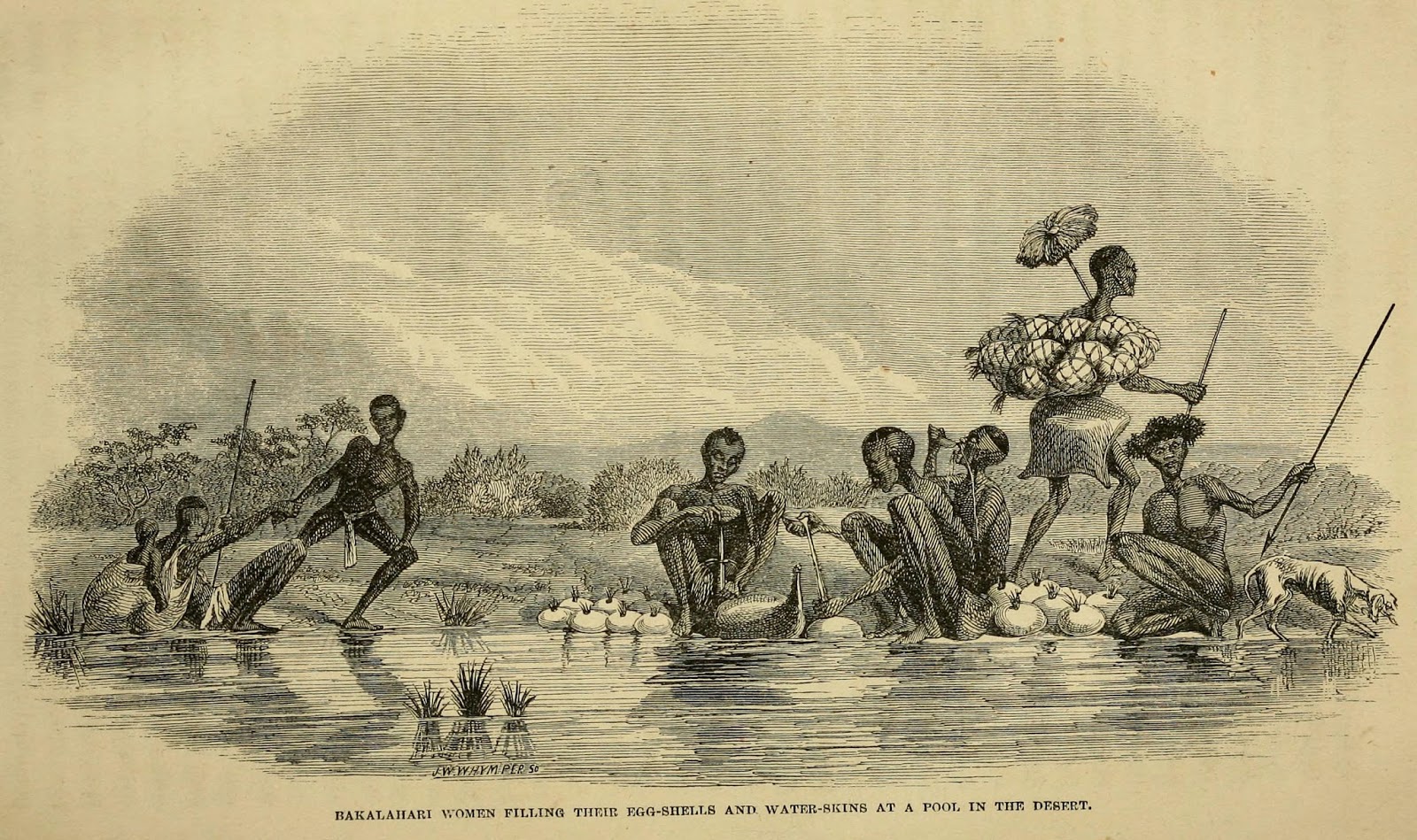
David Livingstone’s Missionary Travels and Researches in South Africa is a fantastic example of materials that are missed when strictly Call Number strategies are employed.

“This was the document that proved to me that in order to find all the relevant agricultural material in BHL we need to mine the whole texts,” emphasizes Bromley. “It’s a seminal book in the British consciousness, which I never thought I’d get to read as part of my research. And, interestingly, it turns out to be a key document in my research. Despite containing information about: domestic animals, The Boers as Farmers, Discovery of grape-bearing vines, The sugar-cane, Coffee Estate, and Coffee Plantations amongst others (all listed in the table of contents), which are all relevant to agricultural research, there is no way to tell from the title or the Subjects that it contains these nuggets.”

View Full Size Image
“Bakalahari women filling their egg-shells and water-skins at a pool in the desert.” Livingstone, David. Missionary Travels and Researches in South Africa (1858). http://biodiversitylibrary.org/page/39590153.

BHL staff are constantly working to improve our Library’s metadata. Ongoing work to enhance pagination information, merge duplicate title and author entries, associate related titles through bibliographic hyperlinks, and generally correct any errors that exist is tackled by a team of librarians throughout our consortium. Furthermore, current projects such as Mining Biodiversity and Purposeful Gaming are supporting OCR correction that will eventually enable full-text searching. The NEH Art of Life project has not only allowed us to systematically identify and manually classify illustrations throughout the BHL corpus, but in the next few weeks we will be calling for volunteers to help us tag a set of images in Flickr with keywords that describe the illustrations’ content. These tags will eventually be ingested into BHL to further enhance our metadata.

You can help us improve our metadata! If you notice a problem or area for improvement, send us feedback! Real BHL librarians will not only answer your feedback but use it to help direct our metadata improvement efforts.

We are honored to present Dr. Bromley’s work using BHL and its metadata to enhance biodiversity databases, expanding the reach of our content to new audiences and supporting a wide range of research initiatives. Do you have an example of how you’ve used BHL to support your research? Tell us about it by sending an email to [email protected].

January 20, 2015by ulib-libraryjobs
Blog Reel, User Stories

BHL and Our Users: Dr. Chris Mah

View Full Size Image

Meet Dr. Chris Mah, Research Collaborator at the Smithsonian’s National Museum of Natural History. His specialty is starfish, and he’s been using BHL in combination with Google Translate to efficiently conduct research involving foreign monographs.

What is your title, institutional affiliation, and area of interest?

Greetings! I am a Research Collaborator in the Invertebrate Zoology Dept. at the Smithsonian’s National Museum of Natural History. I am one of the world’s only experts in the evolution and classification of starfish (aka sea stars). As a consequence I study a hybrid of taxonomy, paleontology, deep-sea biology and macroevolution as they pertain to asteroids.

How long have you been in your field of study?

Although I received my PhD in 2005, I have been working on starfishes since the late 90s. My first publications were in 1996 and 1998 but most of my pubs came in the early 2000s.

When did you first discover BHL?

I first discovered the BHL when I began my first post-doc at the Smithsonian’s NMNH. Honestly, I think I may have met some of the BHL staff before I actually began using the data from the website.

What is your opinion of BHL and how has it impacted your research?

BHL is an awesomely useful resource! As a person who works from a lot of classical taxonomic literature from before the 20th Century, the accessibility of these resources as online PDFs just amazes me. While rooting through old libraries trying to find 200 year old books can be fun, it’s often just easier and more time efficient to be able to pull up the document or monograph, download it to my desktop and get to it.

It can also be very helpful to have the BHL when I’m traveling away from “home base.” No need to carry around a rare 120 year old book if you can just open a scanned file of it on your computer. Lots of different situations where this has been a life-saver. Sometimes it happens overseas and sometimes simply at a university or school without a very large library.

How often do you use BHL?

Using BHL is often dictated by need, so sometimes I’m using it every day and other times there are weeks without using it – but if I were to average it out? Maybe once every week or two?

How do you usually use BHL (read the titles online/download whole PDFs/Selecting Pages to Download for a custom PDF/Downloading High Resolution Images/Generating Taxonomic Bibliographies/etc.)

While I haven’t completely explored all of BHL’s tools, I am pretty happy with downloading PDFs of monographs and papers that are either hard to find or just convenient to look up online. Again, as a tool for “taxonomy on the go,” it’s nice to be able to access the plates and figures without having to carry along a friable old book on a long trip.

What are your favorite features/services on BHL?

One of my favorite features works best with foreign monographs! You can use the BHL to download content as text, which you can then throw into translation software, such as Google Translate! While this does not always “cleanly” translate it does save a substantial amount of work from having to transcribe the whole thing word by word!

If you could change one thing about BHL, what would it be, or what developmental aspect would you like the BHL team to focus on next?

I guess the most important aspect about BHL other than more coverage of older, useful content is a more powerful or at least, smarter search engine. I usually have to take at least two approaches to locating papers among the many journals archived on the BHL. If its not listed under “asteroidea” or some subject word, I usually have to then find the exact citation and track it down.

I realize cross-indexing to that degree is rather difficult and will be imperfect, but sometimes I think that it can be better emphasized when individual monographs are entered into the BHL.

Might also be useful to emphasize how individual citations or pages can be linked with other major biodiversity websites such as the World Asteroidea Database, part of www.marinespecies.org, and so on..

If you had to choose one title/item in BHL that has most impacted your research, or one item that you prefer above any other in BHL, what would it be and why?

Scans of the older content in the BHL are probably the most meaningful to my research. These often represent rarely circulated monographs and books that I often don’t find outside of the main “hub” libraries. It is my hope that more of these rarities can be scanned and made available to everyone…and that they can be better advertised so that researchers around the world can tap into them.

_____________________________________________________

Thank you so much, Dr. Mah, for taking the time to share your experiences with BHL with us! We’re pleased to announce that recently BHL implemented new search functionality, allowing for more Google-like, fuzzy search matching. Rather than having to enter exact citations, users can now submit keyword combinations (and even title abbreviations!) to retrieve results from BHL. Hopefully, this will make your research much more efficient, and we look forward to continually improving these features in the months to come.


May 15, 2012by ulib-libraryjobs
BHL News, Blog Reel

A New & Improved BHL Search & Interface

In October, 2011, BHL Staff conducted a usability test of the BHL US/UK portal, assessing its functionality and comparing it with that of the BHL-Australia portal. While several recommendations arose from that exercise, two of the most emphatic were a need to improve the BHL search functionality and a desire to make the BHL US/UK portal more aesthetically pleasing.

You spoke, and we listened. Today, we’re excited to announce the release of a new and improved BHL interface and search capability! 

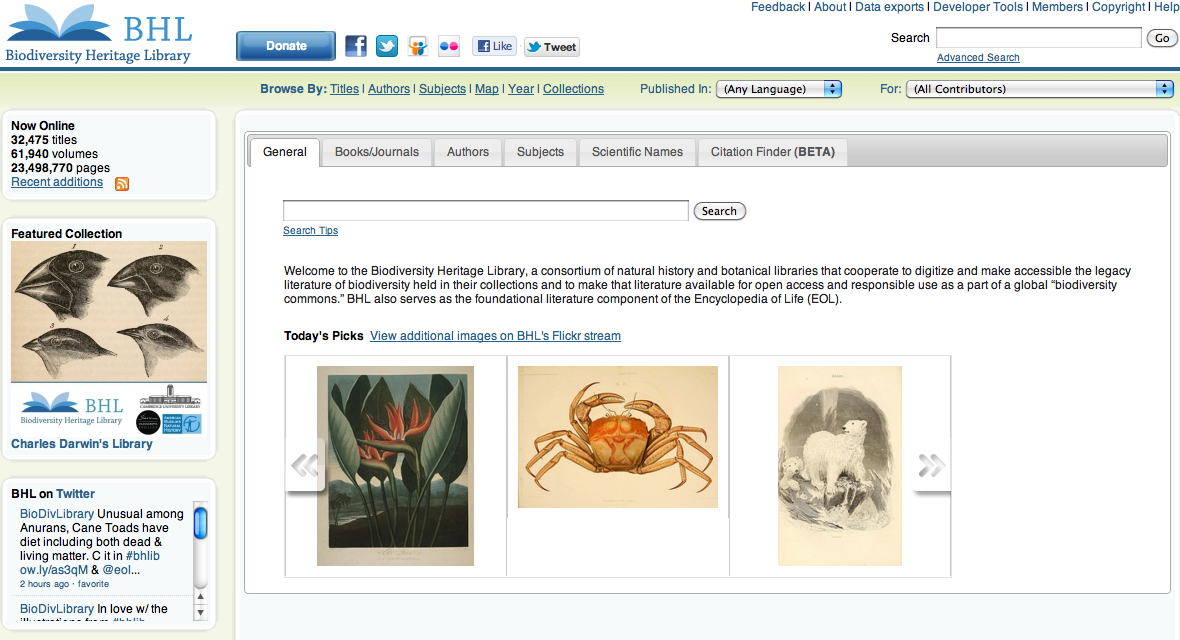
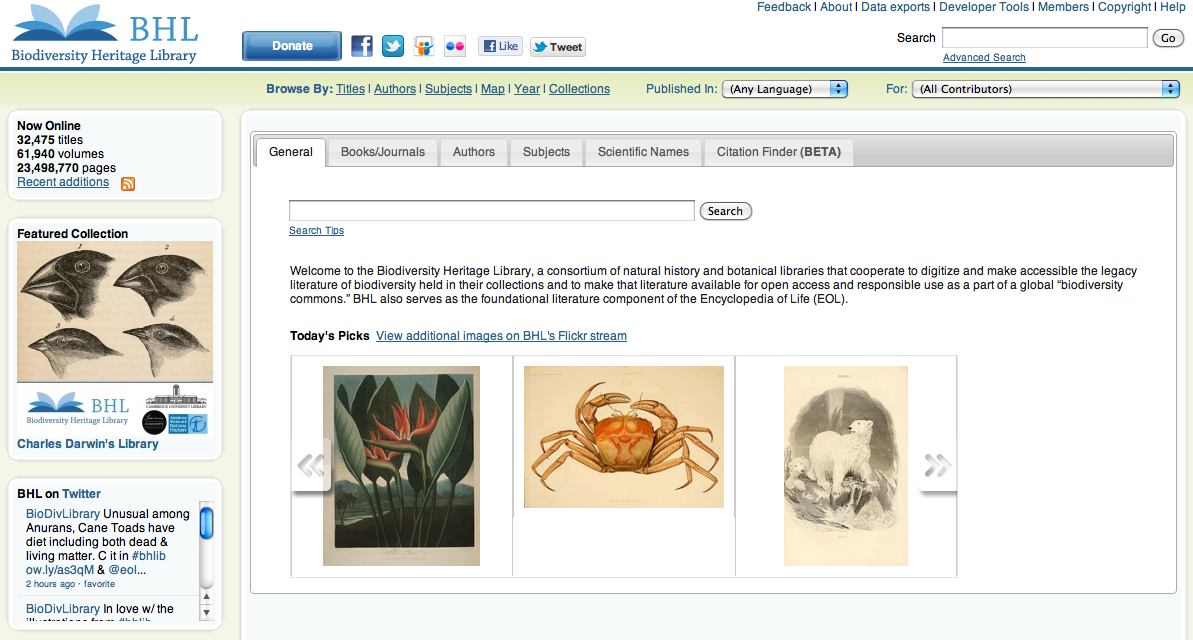
View Full Size Image

As far as improving the aesthetics of our site go, we couldn’t think of a better approach than incorporating some of the amazing Flickr images our users have grown to love. On the new BHL homepage, you’ll now see a selection of the over 29,000 illustrations in the BHL Flickr, with the option to view more of the collection in Flickr (by clicking on the “View Additional Images” link) or the specific image within BHL (by clicking on the actual image).

We’ve also updated the social aspect of the site by including our @BioDivLibrary Twitter stream and relocating our social media buttons for Twitter, Facebook, Slideshare, and Flickr to the homepage header for better accessibility. You’ll also find a new and improved Featured Collections box, which will highlight special collections of BHL materials, particularly those included in the BHL iTunes U.

Search Improvements

While we know aesthetics are important, we also know that the meat and potatoes of the recommendations from our usability test center around a need to improve the BHL search.

The new enhanced search addresses metadata only, not OCR text within a book or scientific names.  Think of this as a better search across library metadata.  The search function is a Google-like search that provides fuzzier searching across titles, authors, subjects and dates, while still allowing the exact searches that many of our users have come to love, as indicated in user surveys. Search results are returned according to a relevance ranking, and can be sorted by that ranking, by year, by author, or by date published.

Some example searches now enabled include:

  • Keyword searches:
    • annals missouri
  • Exact search:
    • “annals of the missouri botanical garden” (include quotes)
  • Complex searches:
    • annals or missouri (note the use of “or”)
    • “Charles Darwin” letters (combination of exact phrase and keywords)
    • darwin descent 1871 (author, title keywords, year published)
  • Abbreviations:
    • proc boston soc nat hist
    • sys nat 1758 (abbreviation and year published)

You can also do more complicated searches by clicking on the “Books/Journals” search tab to include volume information and editions into your search criteria.

These search improvements have also been made to BHL’s APIs, including its OpenURL resolver, enabling developers easier access to BHL’s data for inclusion in third party applications.

Spend some time with our new site and feel free to give us your feedback by commenting on this post, sending us website feedback, or sending messages to us on Twitter or Facebook! We know you’ll be as excited about these improvements as we are.

April 23, 2012by michelle.underhill

Help Support BHL

BHL's existence depends on the financial support of its patrons. Help us keep this free resource alive!

search

About BHL

The Biodiversity Heritage Library (BHL) is the world’s largest open access digital library for biodiversity literature and archives. BHL operates as a worldwide consortium of natural history, botanical, research, and national libraries working together to digitize the natural history literature held in their collections and make it freely available for open access as part of a global “biodiversity community.”

Join Our Mailing List

Sign up to receive the latest news, content highlights, and promotions.

Subscribe Now

Subscribe to Blog via Email

Enter your email address to subscribe to this blog and receive notifications of new posts by email.

Join 319 other subscribers

Subscribe to Blog Via RSS

Subscribe to the blog RSS feed to stay up-to-date on all the latest BHL posts.

Access RSS Feed

Inspiring Discovery through Free Access to Biodiversity Knowledge.

The Biodiversity Heritage Library makes it easier than ever for you to access the information you need to study and explore life on Earth…for free, anytime, anywhere.


64+ Million Pages of
Biodiversity Literature Online.

EXPLORE

Tools and Services
to Transform Research.

EXPLORE

300,000+
Illustrations on Flickr.

EXPLORE

ABOUT | HARMFUL CONTENT | PRIVACY | SITE MAP | TERMS OF USE