Biodiversity Heritage Library - Program news and collection highlights from BHL
  • Home
  • News
  • Featured Books
    • All Featured Books
    • Book of the Month Series
    • BHL at 20
  • User Stories
  • Campaigns
    • Fossil Stories
    • Garden Stories
    • Monsters Are Real
    • Page Frights
    • Her Natural History
    • Earth Optimism 2020
  • Tech Blog
  • Visit BHL
Home
News
Featured Books
    All Featured Books
    Book of the Month Series
    BHL at 20
User Stories
Campaigns
    Fossil Stories
    Garden Stories
    Monsters Are Real
    Page Frights
    Her Natural History
    Earth Optimism 2020
Tech Blog
Visit BHL
  • Home
  • News
  • Featured Books
    • All Featured Books
    • Book of the Month Series
    • BHL at 20
  • User Stories
  • Campaigns
    • Fossil Stories
    • Garden Stories
    • Monsters Are Real
    • Page Frights
    • Her Natural History
    • Earth Optimism 2020
  • Tech Blog
  • Visit BHL
Biodiversity Heritage Library - Program news and collection highlights from BHL
Blog Reel, User Stories

Sharks and More: Discovering Animals in the Sixteenth Century and Today

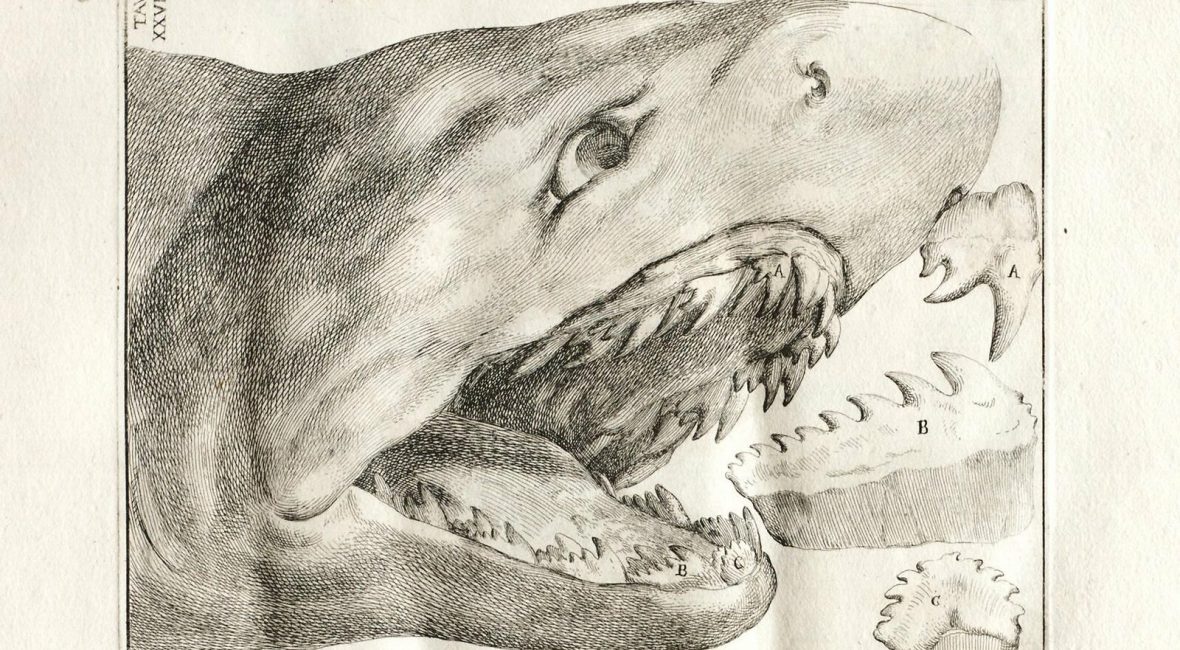
Illustration of a shark

Each year, audiences around the world are gripped with “shark mania”. Since its premier in 1988, the annual Shark Week celebrations have resulted in countless hours of programming devoted to all things sharks.

During Shark Week 2017, Vox posted a story with a video explaining why you don’t see Great White Sharks in aquariums. At the end (beginning 5:17), video co-creator Joss Fong highlighted the Biodiversity Heritage Library (BHL) as a “great resource” for historic literature on biodiversity — and gave a shout-out to BHL’s Flickr collection: “Sharks, Skates & Rays!”. The collection includes illustrations dating back to the sixteenth and seventeenth centuries.

Illustration of a shark

Illustration from the Sharks, Skates & Rays! Flickr collection. Scilla, Agostino. De corporibus marinis lapidescentibus quæ defossa reperiuntur. 1752. Contributed in BHL from the United States Geological Survey Libraries Program.

Danielle Alesi, a PhD candidate at the University of Nebraska-Lincoln (UNL), stumbled upon the video one night last summer while taking a break from studying for her comprehensive exams. She was introduced to BHL for the first time.
That serendipitous discovery had a profound impact on her research, which focuses on early modern European and Atlantic world history with an interest in animal studies.

“I was overcome by excitement, realizing that much of the research I required for my dissertation was digitized on the site,” recalls Alesi. “The moment still stands out as one of my ‘breakthrough’ moments early in the dissertation writing process.”

Photograph of a woman standing in front of a glass door.

Danielle Alesi, PhD candidate at the University of Nebraska-Lincoln (UNL).

Alesi is currently entering the fourth year of her PhD program at UNL. Her dissertation explores the interactions of sixteenth- and seventeenth-century European travelers with the people and animals of the Americas. BHL has been a valuable source of information on these encounters.

“BHL is an amazing resource that scholars from many fields are lucky to have available to us,” praises Alesi. “It allows me to access many of the travel narratives and early accounts of animals native to the Americas that I am using in my research. Since I am located in Nebraska and generally have a full teaching schedule, this is an excellent resource that allows me to see many of my sources without having to travel to a library that holds them.”

Alesi generally uses BHL weekly, downloading PDFs of these early narratives to print and translate as needed. The availability of multiple editions of titles in BHL is particularly useful, allowing Alesi to compare changes to the texts over time.

“I love that I can search for authors or texts, see multiple editions, and download a full scan of a book that includes paratexts and marginalia, which is better than other digital library services,” lauds Alesi. “BHL allows me to do much of my research at home without having to travel to various libraries throughout the country or the world.”

Currently, Alesi’s favorite book in BHL is Gonzalo Fernandez de Oviedo’s La Historia General Y Natural De Las Indias (1535, complete work published posthumously 1851–55). Within it, Spanish captain Oviedo provides a wealth of valuable descriptions of the animals and natural environments that he encountered on his travels.

“Oviedo spends much of his narrative describing the new animals and trying to compare them to, or reconcile them with, animals Europeans would already recognize,” explains Alesi. “This text also influenced many of the writers in Europe that wanted to publish on the ‘New World’ but had not gone there themselves.”

Illustrated title page of "Historia general de las Indias"

Title page of 1535 edition. Fernández de Oviedo y Valdés, Gonzalo. Historia general de las Indias. Contributed in BHL from Missouri Botanical Garden, Peter H. Raven Library.

Whether it be sixteenth century travel narratives by Spanish explorers or early depictions of “sea dogs” (i.e. sharks), BHL is a treasure trove of historic (and modern!) biodiversity literature for a wide array of researchers, from scientists to historians, educators, archivists, and beyond.

Of course, the real moral of this story is, don’t be afraid to take a break for sharks. You never know where it might lead you.

Illustration of a hammerhead shark.

Hammerhead shark. Belon, Pierre. L’histoire naturelle des estranges poissons marins. 1551. Contributed in BHL from University of Toronto – Thomas Fisher Rare Book Library.

July 11, 2019by michelle.underhill
BHL News, Blog Reel

BHL’s Venture into New Territory

We really love trying new things and using new tools to help provide more access to the literature contained in BHL. From Flickr to iTunes U, we are constantly working at meeting our vision of “Inspiring discovery through free access to biodiversity knowledge.” We have now dipped our toe into a new venture…e-books!

View Full Size Image 
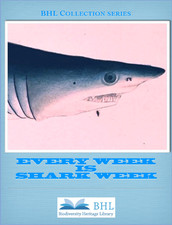
 Our first e-book, available at the iTunes iBookstore and readable on your iPad, is entitled “Every Week is Shark Week” and is a compilation of articles, tweets, images, quizzes, and facts about sharks compiled from the BHL social media campaigns during previous Shark Weeks. We thought this would be a fun way of packaging content about a specific topic from our suite of social media outlets into one place with a different look.
View Full Size Image
Example of photo gallery on new e-book.


View Full Size Image
Example of Shark Week quiz on new e-book.
 We hope you enjoy our first foray into the world of e-books and we do plan on producing more in the future so stayed tuned!
We hope you enjoyed this post. Interested in guest-blogging for BHL? We’d love that! Natural history, biodiversity and conservation topics are especially welcomed. Email us your ideas at [email protected].


August 22, 2013by rebeccal
Blog Reel, Featured Books

Why Predators Protect Biodiversity

In the 1920s, a once-familiar face in the northwestern United States all but disappeared. The majestic gray wolf, a top predator in the Rocky Mountain ecosystem, gave way to the pressures of habitat loss and human hunting. By the 1930s, a previously healthy breeding population of wolves was extinct in Montana. While the decimation of any species is tragic, the loss of top predators can have an even more profound effect on an ecosystem.

The Impact of Top Predators

Top predators are imperative for healthy ecosystem functioning.
View Full Size Image
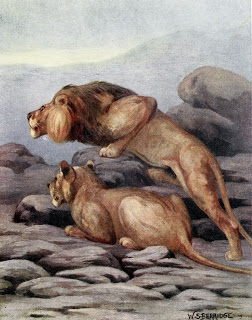
Lion populations have fallen by over 350,000 since the 1940s

This statement might sound like a paradox, as predators eat other animals, thereby seeming to cause death, not life. However, by keeping other populations in check, predators ensure that a multitude of species occupying a variety of environmental niches can survive and thrive. Sadly, we’re now learning first-hand just how critical these creatures are in nature.

Science Illustrated recently published a blog post about the impact of predator disappearance. Calling on such examples as the decline of wolves, sharks, and raptors, the article states, “In some places, top predators have become so scarce that they have affected whole ecosystems and are threatening to alter food chains, changing the ecological order on land, at sea and in the air.”

But just how do predators help maintain a healthy balance in nature? Without predators to regulate prey populations, these species will reproduce beyond the carrying capacity of their environments, decimating the populations of smaller animals, plants, and coral reefs. As these species decline, additional organisms that rely on their presence will also decline, resulting in a domino effect that can ultimately push populations and habitats beyond the point of recovery.

An Example: Shark Decline

View Full Size Image
90-99% of large shark species have disappeared off the U.S. coast

In the wake of Shark Week, awareness about the current status of shark conservation is high. The shark fin business alone is responsible for up to 73 million shark deaths each year. “The populations of all shark species in the Mediterranean have declined by 97% in the past 200 years,” and “populations of large sharks have fallen by more than 90%.”

The disappearance of large sharks has resulted in the increase of 12 out of 14 small shark and ray species, which are usually preyed upon by larger sharks. These smaller organisms in turn are wreaking havoc on mollusk populations, as, without predators to regulate them, their populations are growing at a faster rate than the mollusk community can support. The Cownose Ray is a perfect example of this, with a population increase of 9% annually. At these numbers, the rays can consume upwards of 840,000 tonnes of Atlantic Bay Scallops in the Chesapeake Bay region in their first 100 days each year in the region. The decline of large sharks in more southern, tropical waters has led to an increase of species that consume reef-building corals, thus threatening the health of coral reefs.

MIA: Nature’s Natural Clean-up Crew

Ecosystem disruption is, of course, not limited to the disappearance of top predators. The loss of any species has an impact on healthy habitat function, including the oft-despised scavengers. Last year, we wrote about the fate of the vulture in South Asia. Like sharks and raptors, vulture populations have plummeted as a result of poisoning which primarily contributed to the loss of over 14 million birds. The absence of this species, resulting in road kill abundance and resulting disease occurrence, threatens India’s ecosystem and may have severe human health consequences.

A Use Case from BHL: The Wolf Story

View Full Size Image
The American Wolf is a great example of a successful conservation effort

As outlined earlier, the status of wolf populations in the United States was jeopardized in the early twentieth century. As wolves disappeared, elk populations, along with other grazers, increased unchecked. Aspen, cottonwood, and willow tree stability fell, affecting the smaller mammals and birds that relied on them. The carcasses left behind by wolves were also of critical importance to scavenger species, like coyotes, ravens, and eagles, particularly during the winter. With no wolves around, these species suffered as well.

Happily, wolves are an example of how humans can also positively affect the fate of a species. In 1980, the Northern Rocky Mountain Wolf Recovery team devised a plan to help reintroduce wolf populations to the northern United States. In 2004, the U.S. Fish and Wildlife Service approved the Montana Gray Wolf Conservation and Management Plan, the scope and results of which are articulated in the department’s annual report, and, consequently, our book of the week.

Under the plan, with support from federal funding, the Montana Fish, Wildlife, and Parks manages wolves in northwestern Montana. As a result of natural reproduction, dispersal, and the reintroduction of wolves from Canada, wolf populations increased at rates of 10-34% annually, with a minimum estimate in 2005 of 256 wolves in Montana. As of 2011, approximately 650 wolves are estimated to live in the state.

View Full Size Image
Wolf Population Estimates

A crucial step in setting up a successful conservation program is constructing a robust method to monitor how many specimens are in a given area. The Montana Gray Wolf Conservation and Management Plan was no exception. Monitoring involved a variety of methods, including radio telemetry, howling and track surveys, and reports from natural resource agency professionals.

Perhaps most exciting, however, was the program’s use of the public to help monitor wolf populations. Encouraging people to share any sightings or evidence of wolf activity, program officials essentially crowd-sourced the monitoring project. Officials set up a website to allow members of the public to report their sightings easily and efficiently. Volunteers were also utilized to “systematically search areas of current wolf reports, areas of past wolf activity, or noted ‘gaps’ in wolf activity despite adequate prey base.”

Using these methods, officials determined that, by the end of 2005, there were a total of 46 packs, defined as consisting of two or more wolves, with a minimum of 256 wolves in Montana. The average number of wolves per pack also increased from 4.5 in 2004 to 5.5. in 2005. The Montana program is an excellent example of not only how successful conservation programs can be, but also how members of the public can play a critical role in that success. Learn more about the recovery program and the results in BHL.

View Full Size Image
Verified Wolf Pack Distribution in Montana as of Dec. 31, 2005

Conclusion

Predators are critical for healthy ecosystems, ensuring that a greater variety of species survive and thrive by keeping prey populations in check. While many predator species are threatened today, our wolf use case shows us that there is hope. If we are proactive, conservation programs are capable of ensuring a positive future for these and other species. Increasing awareness about the effect of species decline is a critical step in saving biodiversity.

By providing free access to literature about these species, BHL is helping conservations, ecologists, and researchers gain the critical knowledge they need to protect and bolster these populations. You can help support our endeavors with a donation to BHL. Be sure to take advantage of the free resources we provide, particularly the thousands of illustrations in our collection, some of which, to celebrate the threatened species we’ve highlighted today, are presented below.

Remember, each person can make a difference, and unless we act now, the future for many of these creatures, and our own planet, may be quite bleak.

August 23, 2012by ulib-libraryjobs
Blog Reel, Featured Books

Book of the Week: Shark Week Celebrates its 25th year!

This week, throngs of people who are amping up for Discovery Channel’s 25th annual Shark Week. This week long commemoration of all things sharks is aired in 72 countries watched by ~ 30 million viewers and is the longest running program event on cable. Every year schools of shark fans around the world countdown the days in anticipation for this late summer shark line-up and when it arrives they organize home-screening parties, play games, trivia, award prizes, shave their hair, get manicures and generally remain glued to their televisions marveling in the jawsome mystery and power of sharks.

What we here at the BHL love about this week of shark finaticism, is the remarkable thing that the Discovery Channel has done for shark conservation efforts. Over the course of 25 years, Discovery has significantly raised public awareness about declining shark populations by partnering with conservation organizations such as Oceana, Ocean Conservancy and The Pew Charitable Trust whose public service announcements are aired during prime-time commercial breaks, informing viewers about plummeting shark populations. Shark inspired mohawks and manicures aside, what the Discovery Network has really done is move public sentiment about sharks from a place of fear to a place of compassion. Moreover, they have successfully built a conservation army of shark lovers and enthusiasts. If every animal and organism on the planet had the same following that sharks have it would be a wonderful thing. We would all be a lot more knowledgeable about the earth’s biodiversity and the steep challenges that we face. Most importantly, we would know that there is still much work to be done.

Book of the Week: BHL’s selected homage to cartilaginous fishes aka Sharks

One hundred and fifty years ago, before twitter, television, and home-screening parties attended by folks in full shark regalia, there was a famous comparative anatomist cum ichythyologist named Johannes Müller who was also really into sharks. He may have expressed his fascination with sharks in a more traditional way by today’s standards, opting instead to publish one of the first comprehensive anatomical studies of sharks but, we think he would be tweeting it up if he was around today.

In his tome, Systematische Beschreibung der Plagiostomenor Systematic Description of Cartilaginous Fishes, Müller and his co-author Jakob Henle, provide anatomical descriptions of 214 Chondrichthyes (sharks, rays and skates). Their medical background in comparative anatomy helped to settle some taxonomic disputes about how certain species should be classified. For taxonomists, Müller asks that special attention be paid to the supplements and the detailed index of his book which guides you through his classificatory scheme. And naturally, one of the best parts of this week’s book of the week are the lovely plates provided in the text of some seriously jawsome sharks!

View Full Size Image

Want more sweet shark images? Check out the Biodivlibrary’s Flickr Stream and Pinterest Board!

We are unsure what the public perception of sharks was like in Müller’s day. Were people afraid of sharks? Did these creatures evoke blood-curdling fright and haunt them in their worst nightmares? Probably not. It was more likely that the average person never even saw a shark nor gave them much of a thought at all.Unfortunately for us, we have been subliminally programmed to be veryafraid of sharks. Movies like Jawsand over-sensationalized news stories about shark attacks have had the effect of damaging shark conservation efforts.The proof? According to a survey conducted in 2003 by the National Aquarium in Baltimore, Maryland “seventy percent of Americans surveyed […] believe that sharks are dangerous. 72 percent also believe that shark populations are just adequate or too high.”

Basically, more than half of the population seems to think that we don’t need to do anything to save sharks.This is a very dangerous sentiment indeed because the populations of these apex predators are on an alarming decline. Without sharks who will regulate the health of the ocean, chiefly coral reefs?  Sharks eat sick and diseased organisms, opening-up ocean habitats for healthy fish – in particular algae-grazing fish which act like coral vacuum cleaners.This video simulation created by the Nereus Program explains in detail how vital sharks are to reef eco-systems.

Seven Swell Facts about Sharks!

You are 15 times more likely to be struck by lightning than to be bit by a shark, and 89 times more likely to die of being struck by lightning than dying from a shark bite.  2/3 of a shark’s brain is dedicated to its sense of smell.In the 10 years between 1999 and 2009, there were 51 fatal shark attacks throughout the world. Annually, humans kill 79 million sharks. Now multiply that number by 10 years. And who’s afraid of whom again?

Sharks have seven senses compared to mammals that have five. What are the two extra that we don’t have: An electrical senseand pressure sensitive cells beneath the skin.

Of the millions of sharks killed annually, most of these deaths are a result of the high price for their fins to make shark fin soup. Fins go for $300 dollars a pound. The good news? States like California are banning the soup.

Some species of shark must keep swimming forward in order to breathe and therefore, are never stationary; they even swim while sleeping.
Some mother sharks can have parthenogenic births meaning that they can produce asexually. They are the Virgin Maries of the ocean.

Become a Shark Advocate

Convinced that sharks need your help? Here are some tangible things you can do to help shark conservation efforts:

  • Sign the “Save Sharks to Protect the Ocean” petition sponsored by the Pew Group
  • Stop eating Shark Fin soup with Yao Ming.
  • Adopt a shark
  • Eat sustainable seafood. Save sharks? Yeah, there’s an app for that. Download the Sustainable Seafood Guide on itunes.
  • Write in Scholarly Journals about declining shark populations. Get out there and collect that data!

Lastly, please educate yourself. Check out the iTunesU Shark collection that we put together that honors the power and mystery of these amazing creatures.

August 13, 2012by [email protected]
Blog Reel, Featured Books

Book of the Week: Fish Aren’t all About Sharks

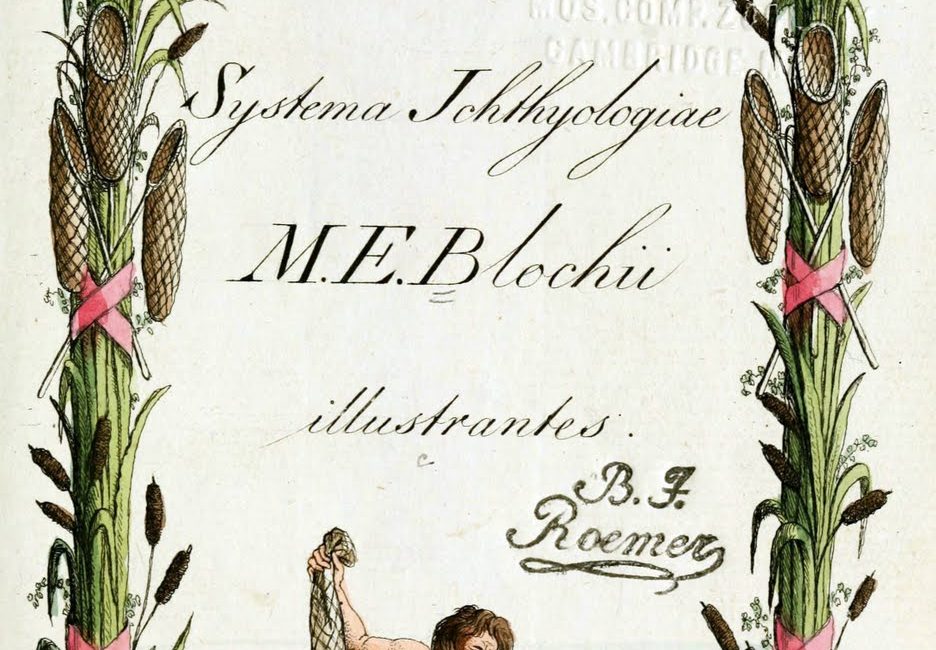
View Full Size ImageLast week we were all about sharks, seeing as it was Shark Week and all. That meant that we were combing through our collections looking for anything that was marked with Shark or even just fish tags. We found a wonderful variety of books and images about sharks (you can peruse them, and lots of other kinds of species, yourself on our Flickr account), but what we also found were a lot of great books about the many other species of fish besides sharks. One of our favorites was Systema Ichthyologiae Iconibus CX Illustratum, volumes 1-2 (1801), by M.E. Bloch & Schneider. While it did contain a few illustrations of sharks, the plethora of other fish species depicted in beautifully vivid colors made us stop and stare. And anything that makes us stop and stare in BHL is worthy of being highlighted somewhere. And today, that somewhere is our blog.

Marcus Elieser Bloch was a German medical doctor and naturalist. He was born into an extremely poor family in Ansbach in 1723 and received very little education growing up. By the time he reached adulthood, he could not even read German, his native language. However, thanks to some knowledge of Hebrew and rabbinical literature, he was able to secure a teaching position with a Jewish surgeon in Hamburg. After learning German and some Latin thoroughly, he began to study anatomy, which in turn sparked his enthusiasm for the natural sciences. He went to Berlin and began to study all branches of science and medicine. Today, he is considered one of the most important ichthyologists of the 18th century, and his encyclopedic work on fishes, captured in a 12-volume series entitled Allgemeine Naturgeschichte der Fische, is still today considered extremely important. Though Bloch didn’t live to see our book of the week published, as he died in 1799, it serves as a beautiful legacy of the incredible career of this dedicated naturalist.

For the post, we thought we’d showcase some of our favorite illustrations from the book. However, we’d be remiss in our duty if we didn’t admit that it was very difficult to choose just a few, and you should spend some time looking through all of the illustrations. They really are worth a few minutes, or even hours, or your time! But, for now, here are our favorites!

View Full Size Image

1) Callionymus orientalis, today known as Synchiropus orientalis

View Full Size Image

2) Chaetodon nicobariensi, today known as Pomacanthus imperator

View Full Size Image

3) Synanceia verrucosa

View Full Size Image

4) Rhina ancylostoma

View Full Size Image

5) Muraena myrus, today known as Echelus myrus

View Full Size Image

6) Syngnathus biaculeatus and Pegasus draconis, today known as Eurypegasus draconis

See all of the illustrations from this book in our Flickr account! This week’s book of the week, Systema Ichthyologiae Iconibus CX Illustratum, volumes 1-2 (1801), by M.E. Bloch, was contributed by Harvard University, MCZ, Ernst Mayr Library.

August 11, 2011by michelle.underhill
Blog Reel, Featured Books

Book of the Week: Shark Week, Part 2. The Mythology of the Shark

View Full Size Image

Welcome to Part Two of our Shark Week Book of the Week feature! If you recall from our last post, this week we’re featuring the book Shadows in the Sea (1963) by Harold W. McCormick. Last time, we highlighted shark attacks. This time, we’re recounting the various roles sharks have played in legend and mythology throughout the ages. Sharks have been revered as gods and powerful spiritual beings for thousands of years, long before Zeus, or even Cronus, debuted on the scene. As McCormick writes,

“As the Greeks wrote their myths in the constellations, Orion, the mighty hunter, wheeled across the winter sky in eternal, futile pursuit of Taurus, the great bull, and Leo, the couchant lion. But long before the Greeks looked skyward and evolved their myths, primitive men discerned in the flickering pattern of the stars cosmic enactments of their fearsome struggles with their own devil-god – the shark.”

Like the Greek gods, sharks also have within their repertoire a constellation myth, as told by the Warrau Indians of South America. For this tribe, Orion’s Belt has a far more sinister backstory – it is a severed human leg. According to the legend, the leg once belonged to Nohi-Abassi, who schemed to kill his mother-in-law by enticing a hungry shark to eat her. Unluckily for him, however, his sister-in-law, “playing the role of a shark,” cut off his leg. Nohi-Abassi died, and while his leg now rests in the sky as Orion’s Belt, the rest of him wound up in an altogether less celestial place.

View Full Size Image

Also like the Greeks, whose gods were constantly cavorting with human women and begetting demi-gods, many Hawaiian myths tell of similar erotic behavior among their shark gods. Legend tells that Kamo-hoa-lii, king of the sharks, fell in love with Kalei, a human, and transformed himself into a man to marry her and bear a child with her. “The child, Nanaue, looked like any other child – except that on his back he bore the mark of his shark-father, the mouth of a shark.” The story does not end well for the child, who devoured many islanders after the taboo of never being fed animal flesh was broken, presumably birthing an insatiable desire for human flesh. He was eventually caught – in his shark form – and taken to a hill in Kain-alu that still bears his name.

A staple of ancient Roman culture also bears a grisly similarity to the history of cultural practices involving sharks. While the Roman gladiator practice of pitting man against land beasts like lions or tigers is fairly well-known to most people (thanks in large part to Hollywood), gladiator games involving sharks are perhaps somewhat less well-known. But, like Sparatcus, Hawaiian warriors were also matched against fearsome killers for imperial entertainment. Shark pens constructed of large lava stones encircling a 4-acre area at the edge of a bay served as the den for the sharks. Fish and human bait were used to lure sharks into the pens, and Hawaiian warriors battled for their lives using a shark-tooth dagger, which was simply a single shark-tooth affixed to the end of a long stick. The warriors had a single opportunity to prevail: they must allow the sharks to charge them, attempting to dive beneath the shark at the last moment and use the shark-tooth dagger to slit the underside of the shark open.

View Full Size Image

Sharks also find themselves on the list of species with mistaken identities. Just as manatees and similar creatures have been mistaken for mermaids throughout history, so, too, has the shark been given this misnomer. In the town of Bregenz, Austria, a severely contorted, mummified shark has hung from an archway as a reputed “mermaid” guarding the town since, allegedly, the thirteenth century. Legend tells that a fisherman brought the “mermaid” in with his catch early one morning, but before he could return it, the “Spirit of the Lake” told him to hang her from the Arch of the Martinster as she was “beget of a land woman and…of no use [in the water].” Dr. Denys W. Tucker of the British Museum “tentatively identified the mermaid, from a photograph, as a mummified Porbeagle shark.”

The chapter has many more stories to tell. One myth explains how various species of sharks were created as a result of an especially cruel young woman beating, squishing and lashing various sharks. Another relates how two particularly lazy sharks laid still for so long that they became islands. Some cultures tell a Jonah and the Whale type story which would be more aptly named “Jonah and the Shark.”

Moving past myth to historical fact, our book of the week describes “shark charmers” and holy men who kiss sharks in order to overpower and subdue them. Throughout history, holy wars have been fought among tribes, resulting from one tribe inadvertently or otherwise catching and/or defiling the sacred shark species of another tribe. Sharks have even played a central role in the resolution of documented crimes throughout history!

It truly is worth the time to read through this chapter of our book of the week, as it recounts the rich history of the shark as it has evolved through cultural experience. Maybe it will inspire you to see something other than a belt in the night sky 🙂

And, you can see all of the imagesfrom our book of the week, Shadows in the Sea (1963) by Harold W. McCormick, on our Flickr site.

August 4, 2011by michelle.underhill
Blog Reel, Featured Books

Book of the Week: Shark Week, Part 1. Shark Attack!

View Full Size ImageYou may have noticed, given all the frenzy about sharks this week on practically every nature-related news stream (and, for that matter, our own social media outlets if you follow us on Facebook or Twitter), it’s SHARK WEEK! So, you know what that means – we’re featuring sharks in our book of the week this week! Combing through the generous collection of books on sharks in BHL, our Collections Coordinator, Bianca Crowley, came across this tantalizing title: Shadows in the Sea (1963), by Harold W. McCormick. Turns out the “shadows” the title refers to are sharks, and we had our book of the week!

This book is full of fascinating, and sometimes gruesome, topics, such as shark attacks on people, sharks in mythology, the origin of sharks, and, of course, a guide to the shark species. It also contains some somewhat less conservation-friendly topics, such as shark fishing, sharks as food, and “shark treasures,” or “the products, other than food, obtained from sharks.” Reading through the book, we were particularly engrossed by content in two select topics – the riveting account of early shark attacks and the role sharks have played in myth and legend. Comprising too much material for a single post, we decided to do our book of the week post this week in two parts (Harry Potter style, you know). Part One, this post, focuses on the gripping shark attack accounts presented in the early chapters of the book. Part two will present the shark as an integral component of various myths and legends throughout the world. So, sit back and enjoy part one of our feature presentation!

“The Shadows Attack: Documented Attacks by Sharks on Men”

Our book begins as though the reader had just opened the first page of an early twentieth century novel, describing a serene oceanside resort in Beach Haven, New Jersey, and the enthusiastic anticipation of one young vacationer as he enjoys his first few blissful moments in the invigorating waters. Unfortunately, all is not well for our protagonist – 23-year old Charles Van Sant. As he strokes powerfully through the waves, an unseen antagonist stalks him.

“Directly behind him, knifing toward him straight and sure, was a gray shadow beneath a black fin that crested the water. They saw it from the beach. Bathers screamed, but the man did not hear their cries…He was still swimming excruciatingly slowly, unaware that he was hunted in a deadly chase.”

Former U.S. Olympic Team swimmer, Alexander Ott, who dove in to save the imperiled young man, was able to retrieve the shark’s victim from the waters after the shark had already attacked. Unfortunately, it was too late. As our story tells us,

“Ott managed to get Van Sant to shore, and there, on the warm sand, Van Sant’s life ebbed away. His legs had been horribly ravaged. He died that night from shock and loss of blood.”

The public was awed and alarmed by the story. “No one could remember a shark ever having killed a swimmer before…Experts said that there never had been an absolutely authenticated case of a shark attacking a swimmer anywhere in the world.” The chapter goes on to tell us of more early shark attacks, and the power with which they gripped the public. For instance, a separate attack, in which a Charles Bruder was killed, received more coverage in the New York papers than the 24 people that died of Polio that same day. As our book of the week asserts, “Such is the glamour and the terror of the shark!”

View Full Size Image

The frenzy that accompanied the birth of the “Shark Attack Era” was as might be expected. Soon, stories of lifeguards “battl[ing] 12-foot shark[s]” with oars and policemen emptying their clips at portentous shadows in the water filled the media. Fortunately, the mounting hysteria was calmed by the “sobering voice of academic authority,” which assured the public that sharks did not possess the unbridled power to rend a man limb from limb as rumors were claiming, and, given the number of swimmers in the water, attacks were extremely rare. Blind panic subsided considerably, swimmers re-entered the waters, and sharks, which had been an economic disaster for oceanside resorts, to some degree slowly became a captivating attraction. Of course, attacks still continued, and with each new attack, a fresh wave of panic erupted, requiring yet another scientific voice of reason to appease it and evoking more and more research regarding shark attacks.

The shark species with more documented attacks on humans than any other is the Great White. Made infamous by director Steven Spielberg in the cult classic Jaws, no other marine species has as much power to grip the heart in terror as this predator does. In the first half of the twentieth century, however, it was believed that this species posed a “negligible hazard”to humans as it was thought to be a tropical shark, uncommon in North American waters and rarely traveling inshore. In 1955, this perception changed. Decade after decade, another “Year of the Shark” emerged as various Great White attacks made headlines, particularly in California. The legend of the Great White as one of the greatest living killers was born.

View Full Size Image

While we are much more educated about sharks – and the circumstances around which attacks might happen – today, our bittersweet love affair with the topic lives on, as evidenced by the popularity of movies such as Jaws, Deep Blue Sea, and concepts like “Shark Week.” We know now that sharks are not the senseless, merciless killers that their reputations claim, but they nevertheless are powerful, majestic creatures quite capable of ending human life (just read the first two chapters of this book if you don’t believe us!). There will likely always be a side of us that sees the monster Jaws in the face of each shark we come across. Perhaps we are destined to forever watch the ocean’s surface in gruesome anticipation of seeing that ominous dark triangle break the peaceful surface. For, “The hazardous creatures of the sea are many, but there is one that man fears above all others – The Shark.”

This week’s book of the week, Shadows in the Sea (1963), by Harold W. McCormick, was contributed by the MBL WHOI library. See more images from our book of the week in Flickr! There’s a particularly nice picture of six humans standing inside the jaws of the largest shark to ever live – the Megalodon (pictured above)!

August 2, 2011by michelle.underhill
Page 1 of 212»

Help Support BHL

BHL's existence depends on the financial support of its patrons. Help us keep this free resource alive!

search

About BHL

The Biodiversity Heritage Library (BHL) is the world’s largest open access digital library for biodiversity literature and archives. BHL operates as a worldwide consortium of natural history, botanical, research, and national libraries working together to digitize the natural history literature held in their collections and make it freely available for open access as part of a global “biodiversity community.”

Join Our Mailing List

Sign up to receive the latest news, content highlights, and promotions.

Subscribe Now

Subscribe to Blog via Email

Enter your email address to subscribe to this blog and receive notifications of new posts by email.

Join 319 other subscribers

Subscribe to Blog Via RSS

Subscribe to the blog RSS feed to stay up-to-date on all the latest BHL posts.

Access RSS Feed


64+ Million Pages of
Biodiversity Literature Online.

EXPLORE

Tools and Services
to Transform Research.

EXPLORE

300,000+
Illustrations on Flickr.

EXPLORE

ABOUT | HARMFUL CONTENT | PRIVACY | SITE MAP | TERMS OF USE