Biodiversity Heritage Library - Program news and collection highlights from BHL
  • Home
  • News
  • Featured Books
    • All Featured Books
    • Book of the Month Series
    • BHL at 20
  • User Stories
  • Campaigns
    • Fossil Stories
    • Garden Stories
    • Monsters Are Real
    • Page Frights
    • Her Natural History
    • Earth Optimism 2020
  • Tech Blog
  • Visit BHL
Home
News
Featured Books
    All Featured Books
    Book of the Month Series
    BHL at 20
User Stories
Campaigns
    Fossil Stories
    Garden Stories
    Monsters Are Real
    Page Frights
    Her Natural History
    Earth Optimism 2020
Tech Blog
Visit BHL
  • Home
  • News
  • Featured Books
    • All Featured Books
    • Book of the Month Series
    • BHL at 20
  • User Stories
  • Campaigns
    • Fossil Stories
    • Garden Stories
    • Monsters Are Real
    • Page Frights
    • Her Natural History
    • Earth Optimism 2020
  • Tech Blog
  • Visit BHL
Biodiversity Heritage Library - Program news and collection highlights from BHL
Blog Reel, User Stories

Life is Short but Snakes are Long

Portrait version of the Biodiversity Heritage Library logo.

“Life is short but snakes are long.”

While some may recognize this as a quote from author David Quammen, it’s also the name of a place you can go to get some very cool information about snake natural history and herpetology research.
View Full Size Image
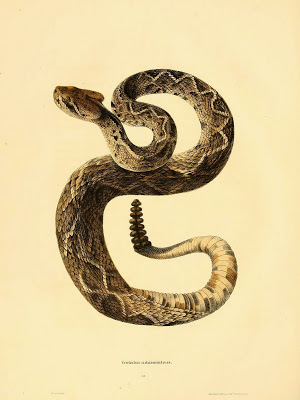
Eastern Diamondback Rattlesnake (Crotalus adamanteus). Holbrook, John Edwards. North American Herpetology. v. 2. 1838. http://biodiversitylibrary.org/page/3688392.

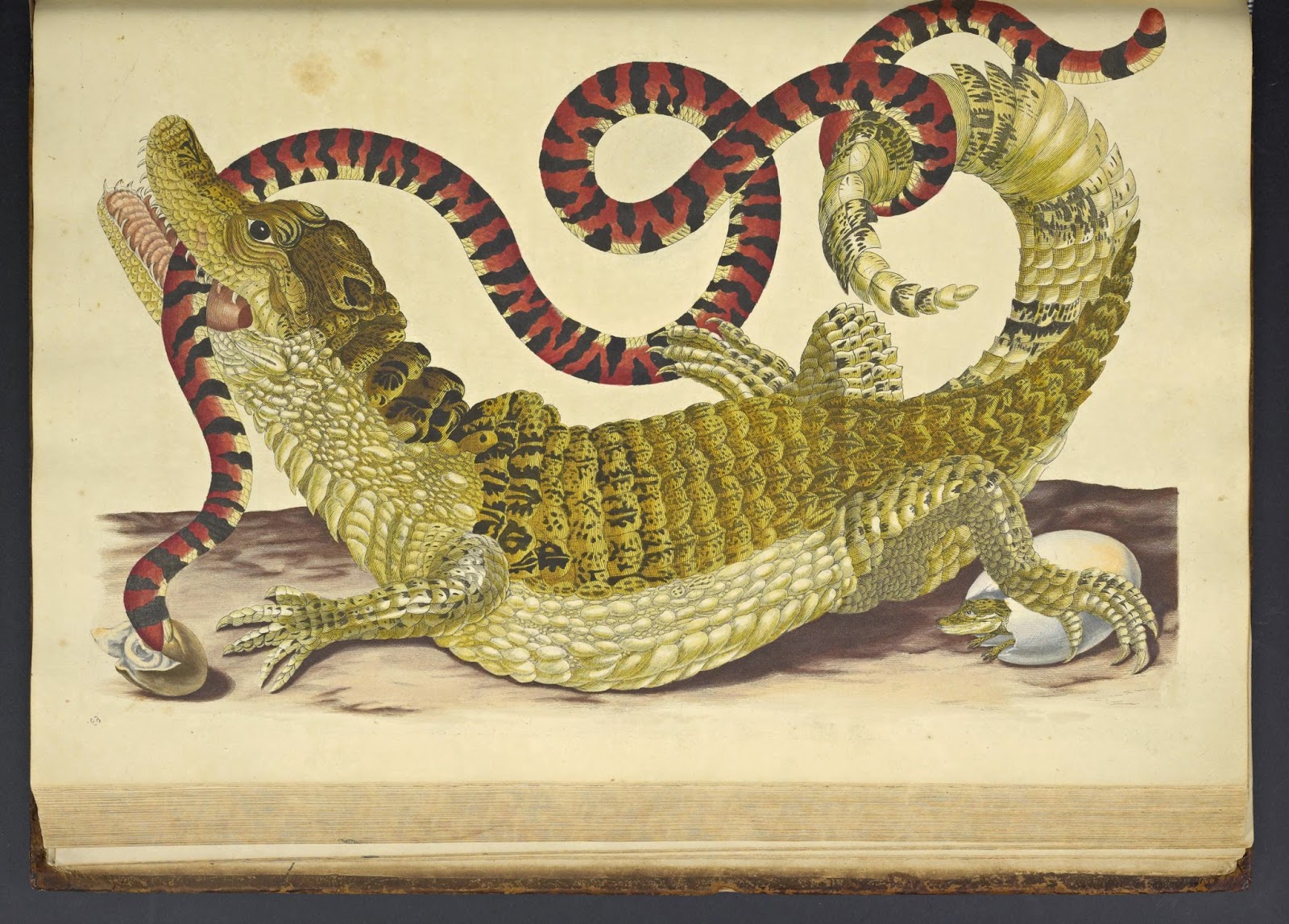
For instance, did you know that at least 15 species of spitting cobras in the genus Naja are capable of spitting their venom through the air as a defensive measure, and that some of them can aim “at targets the size of a human face with >90% accuracy up to 8 feet away”? Or that all 41 species of rattlesnakes are native to the Americas and are subject to “round-ups,” often rodeo-style, in many states? Or that the Aniliidae family contains just a single species – Anilius scytale or the American pipesnake – and that it was illustrated by Maria Sibylla Merian, a remarkable woman best known for documenting the metamorphosis of insects? Or how about this one: Snakes have two penises. Yeah, go read more about that!
View Full Size Image
Anilius scytale struggling with a caiman. Merian, Maria Sibylla. Over de voortteeling en wonderbaerlyke veranderingen der Surinaemsche insecten. 1719. http://biodiversitylibrary.org/page/43328638.

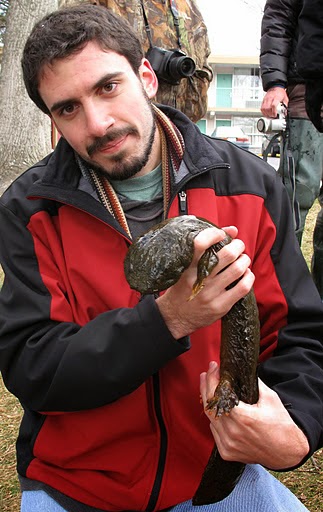
All of this information, and much, much more, is available on the blog Life is Short, but Snakes are Long. The mastermind behind that blog is Andrew M. Durso, a PhD student in the Biology department at Utah State University.
View Full Size Image
Andrew M. Durso, holding a Hellbender, Cryptobranchus alleganiensis.

Studying snake and lizard ecology, physiology, and behavior, Andrew has been active in professional herpetology since high school. A fascination with the natural history of snakes, and a recognition of the need to education the public about snake and larger ecosystem conservation issues, compelled Andrew to start his blog as an outlet to share his research – research that is made significantly easier thanks to the Biodiversity Heritage Library.

Andrew uses BHL weekly, reading pertinent titles online or downloading whole books or sections of books as part of his personal EndNote library. He’s even printed illustrations from BHL as decorative artworks for his home. These illustrations also often pop-up in his blog posts.

“I think BHL is one of the most important and useful resources online right now,” lauds Andrew. “Judging by how often I use it, I’d say it has an impact on my research commensurate with that of Google Scholar or Web of Science. It’s allowed me to discover and access literature that I would never have been aware of or have had access to otherwise.”

With such enthusiasm about accessing this literature on BHL, it’s no surprise that Andrew’s response to our question on what he would like to see improved on BHL was for us to add “more literature!” He also expressed a desire to see our scientific name finding tool and synonym harmonization continue to improve. As we implement multiple methods for improving our OCR (through projects such as Purposeful Gaming and Mining Biodiversity) and identifying the species in our illustrations (through Art of Life and Zooniverse), we expect to see the number of names recognized throughout BHL continually increasing.

Effective biodiversity research requires access to a multitude of natural history books and articles, but what if you had to single-out one title that had most impacted your research? Could you do it?

Andrew Durso can. Without question, his single-favorite item in BHL is Duméril, Bibron, and Duméril’s 1834-54 nine-volume masterpiece, Erpetologie Générale on Histoire Naturelle Compléte des Reptiles (which we profiled on our blog just a few weeks ago!).
View Full Size Image
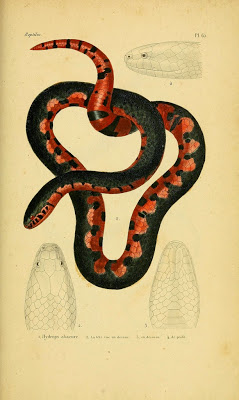
Mud snake (Farancia abacura). Duméril, André Marie Constant. Erpétologie générale ou Histoire naturelle complète des reptiles (1834-53). http://biodiversitylibrary.org/page/31895886.

“I have three prints on my living room wall from BHL’s copy of this book, and it includes some of the most gorgeous artwork I’ve ever seen,” affirms Andrew. “It is also the only book that contains more original descriptions of reptiles than Linnaeus’s Systema Naturae. This monumental work gives a comprehensive scientific account of all then-known amphibians and reptiles, including their anatomy, physiology, systematics, distribution, and associated literature. As such, it is one of the classical monuments of descriptive zoology.”

Be sure to check out Andrew’s blog for other awesome information about snakes and herpetology research! Do you use BHL to support your own research? Want to tell us about it? Send an email to [email protected]!
June 18, 2015by ulib-libraryjobs
Blog Reel, Featured Books

Book of the Week: Biologia Centrali-Americana : Reptilia and Batrachia

View Full Size Image
The total number of known amphibian
 species is approximately 7,000, 
of which nearly 90% are frogs. 
Image: Venture Galleries

My first encounter with an amphibian was the all but loveable Kermit the frog from Sesame Street. While reptiles and amphibians are not warm and cuddly like Kermit, these ectothermic vertebrates (cold-blooded) are incredibly interesting. Some of them breathe through their damp skin. They are incredible predators.  Most species have super sensitive hearing that can detect airborne or ground vibrations, and their tongues are super muscular.

Pop culture has embraced reptiles and amphibians portraying them in humorous roles and as villains including the vocal frogs from the commercial for Budweiser beer, Nagini from Harry Potter, Kaa from the Jungle Book, Jafar from Aladdin, Tic Tock from Peter Pan, and the Teenage Mutant Ninja Turtles.
View Full Size Image
The first reptiles are believed to have evolved 
around 320 million years ago.
Amphibians and reptiles are incredibly important to global biodiversity. Dramatic declines have been measured across the globe since the late 1980s and indicate critical threats. There are groups trying to do something about this including the Amphibian Specialist Group of the World Conservation Union, Amphibian Ark, Partners in Amphibian and Reptile Conservation PARC, and the Panama Amphibian Rescue and Conservation Project among others.

Pioneers in the documentation of these creatures were Frederick Godman and Osbert Salvin  the authors of Biologia Centrali-Americana : Reptilia and Batrachia, one volume in a 63 volume set called Biologia Centrali-Americana. Godman and Osbert set out to create the most comprehensive account of the flora and fauna of Mexico and Central America by hiring many local experts to collect specimens for study. They published the set over the course of 36 years.

View Full Size Image
Certain frogs can jump up to 20 times 
 their own body length in a single leap.

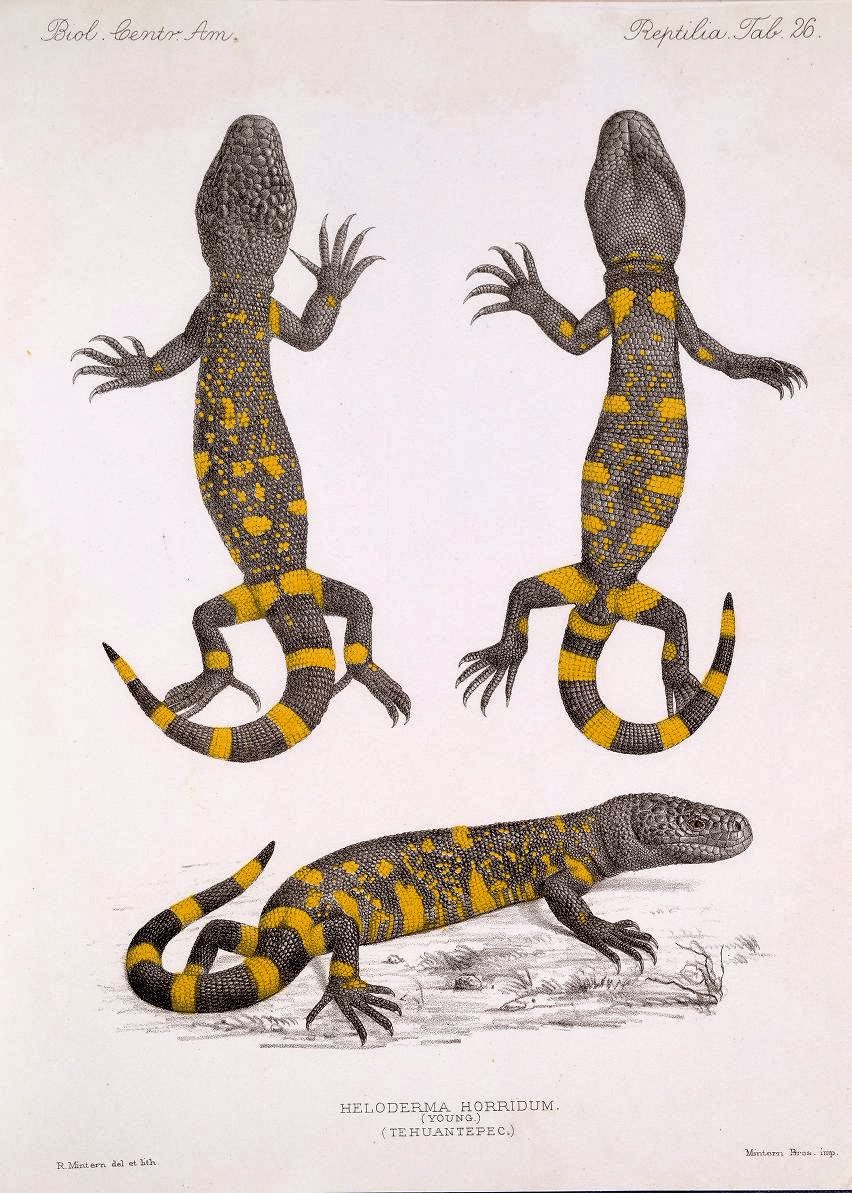
The entire set includes over 900 illustrations. Published between 1879-1915, Biologia Centrali-Americana : Reptilia and Batrachia, focuses on retiles and amphibians and is key to early discoveries in print of a variety of  species.

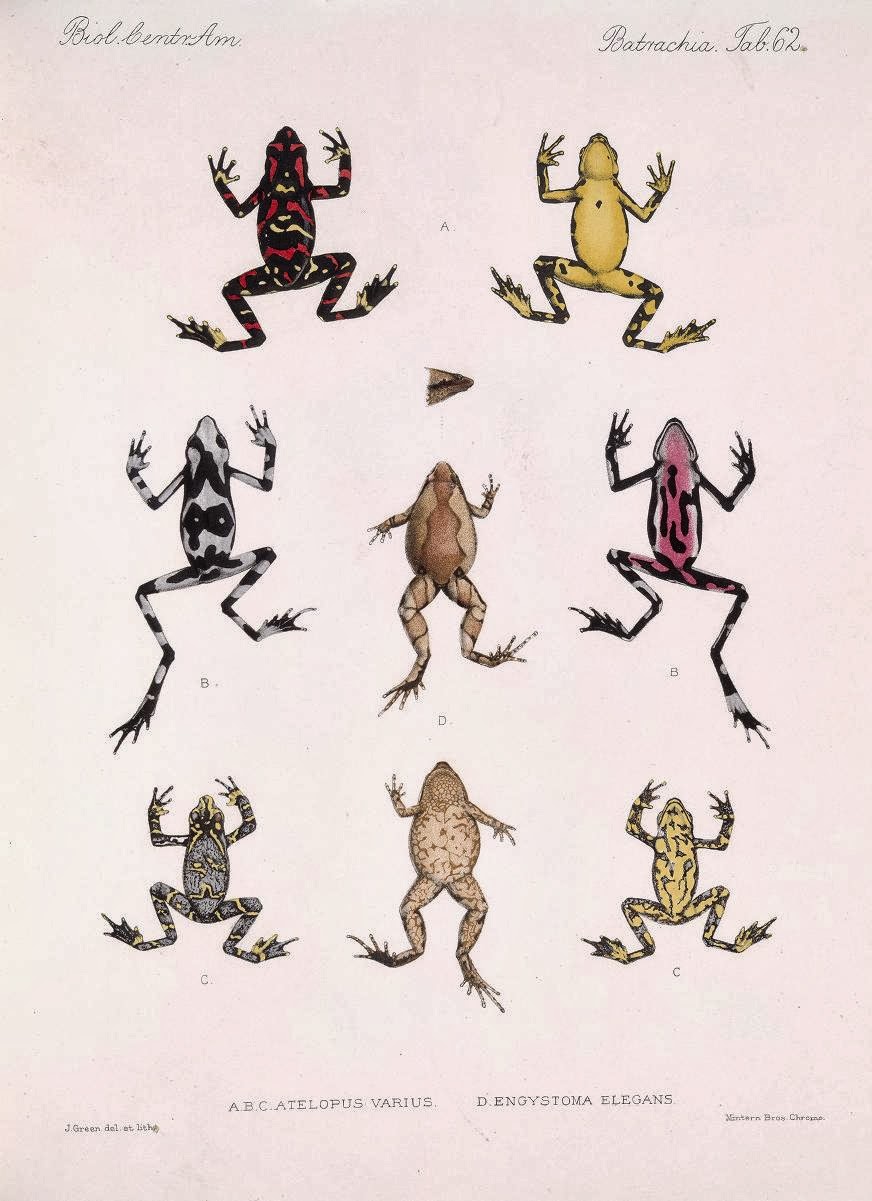
One critically endangered species, Godman and Osbert wrote about is the Costa Rican Variable Harlequin Toad (Atelopus varius), also known as the clown frog, is a neo-tropical true toad. They feed on small arthropods and their colorful appearance serves as a warning to potential predators of their toxicity of their skin, which contains a neurotoxin.

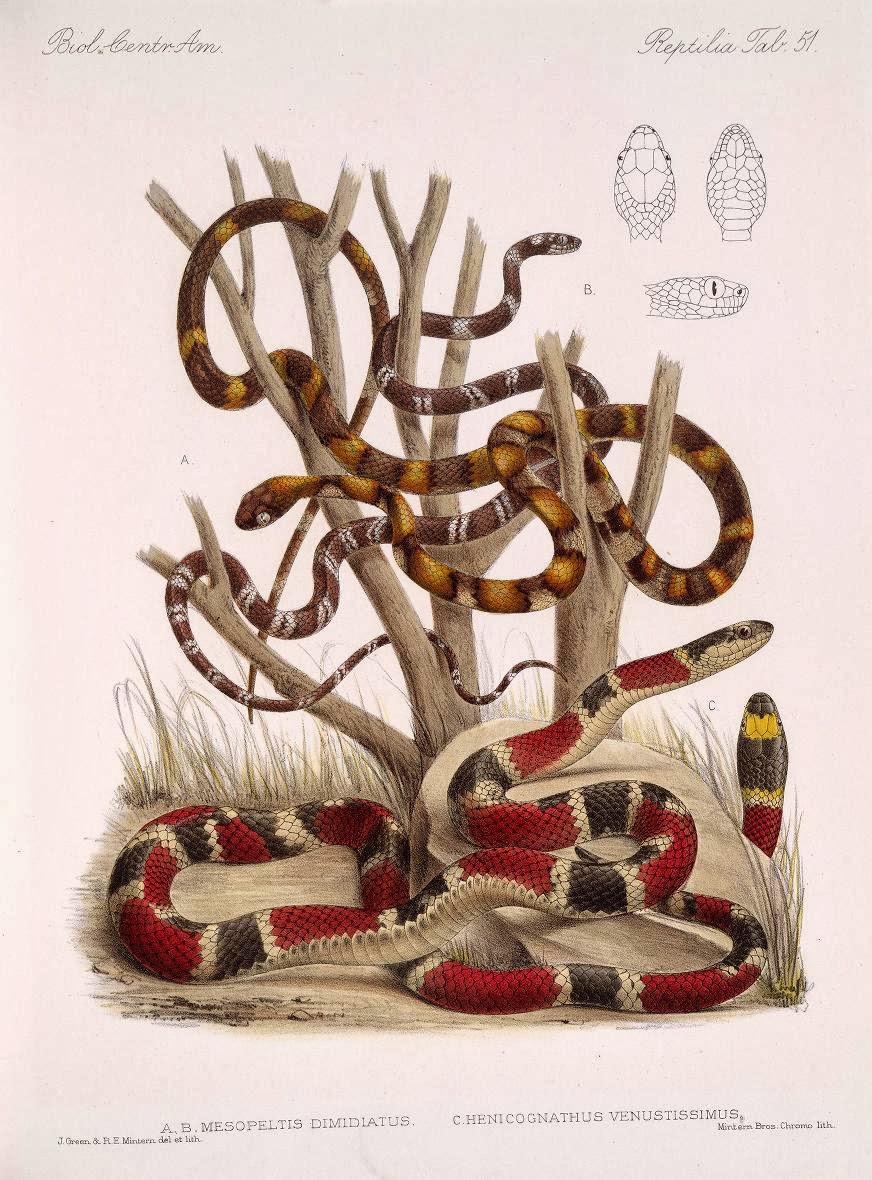
Micrurus nigrocinctus is also known as the Central American coral snake. This venomous snake lives between southern Mexico to northwestern Colombia. They can be recognized by their color pattern, which varies from two-colored to three-colored with black, yellow and red banding. They are non-aggressive Caecilians that feed on other snakes, small lizards, amphibians, and invertebrates. Their venom contains a strong neurotoxin, causing neuromuscular dysfunction.
View Full Size Image
Nearly all reptiles lay shelled eggs.


Browse through more of the illustrations from the book of the week in the BHL Flickr here.

Learn more about other reptiles and amphibians by reading the book. This set has been covered before in the BHL blog. Read more about it here.

References:
Amphibians of Panama. (n.d.). Atelopus varius. Encyclopedia of Life. Retrieved from  http://eol.org/pages/330754/overview
Amphibians of Panama. (n.d.). Atelopus varius Lichtenstein and von Martens 1856. Smithsonian Tropical Research Institute. Retrieved from http://biogeodb.stri.si.edu/amphibians/en/species/12/
Andrew, Elise. (14 September 2013). Untitled. I [Freaking] Love Science. Retrieved from https://www.facebook.com/IFeakingLoveScience

Unknown. (n.d.). Micrurus nigrocinctus black-banded Coral Snake. Encyclopedia of Life. Retrieved from http://eol.org/pages/1055826/details

Unknown. (n.d.). Fun Reptile Facts for Kids. Science Kids. Retrieved from http://www.sciencekids.co.nz/sciencefacts/animals/reptile.html 

October 24, 2013by gworthey
Blog Reel, Featured Books

Book of the Week: Don’t Tread On Me

Ophidiophobia is the irrational fear of snakes–those slithering, scaly reptiles that have been cast as the archetypal villain throughout history. Their unnatural movements and eerily flexible jaw joints do nothing to lessen their evil reputation. And even though the likelihood of encountering a snake is low, ophidiophobia is one of the most pervasive phobias in the world, making the famous question posited by Indiana Jones a fitting query, “Why did it have to be snakes?” In this week’s Book of the Week, we explore the notoriety and reality behind this cringe-worthy and feared animal in Doris Cochran’s “Poisonous reptiles of the world.”

View Full Size Image
Ancistrodon rhodostoma, a venomous pitviper species.

Despite the improbability of encountering a snake in the wild, there is still good reason to be afraid. Of the almost 3,000 varieties of snake species, about a third are deadly–killing prey with a venomous bite, squeezing victims to death, or, truly poisonous snakes known by the genus Rhabdophis, that carry a toxin to be absorbed indirectly.

But Cochran did not see a significant need for concern, especially in the United States where only one-sixth of the native snake population is dangerous, noting that “In the Untied States alone automobiles kill more than 30,000 people annually, snakes probably 160; for every person killed by a snake, 200 die in automobile accidents.” Granted, that was almost 80 years ago, but the statistics haven’t changed much over the years.

There is at least one species of venomous snake indigenous to each of the 48 contiguous United States–belonging to two major groups, Elapidae or Viperidae.

View Full Size Image
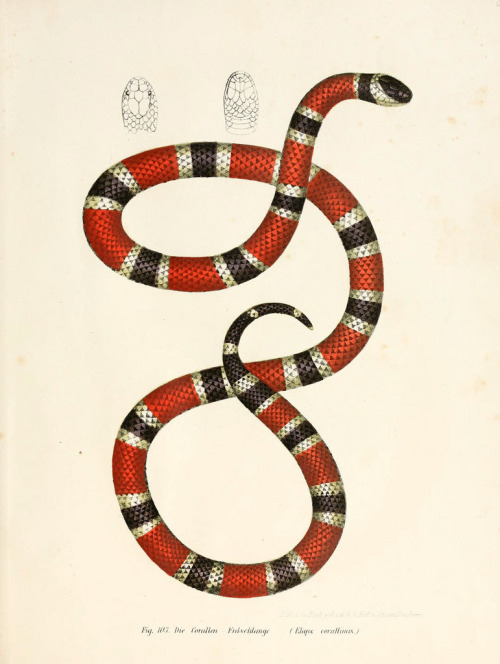
Coral snakes represent
the Elapidae group.
View Full Size Image
An example of the
Viperidae group,
most commonly recognized
as a rattlesnake.

The Elapidae group, most commonly represented by coral snakes, is similar in appearance to many harmless snakes. The North American variety rarely exceeds three feet in length and is commonly found in Southern states from North Carolina to the Gulf. To deliver its deadly bite, the short, vertical fangs must fully impale the victim’s flesh. While characterized as “sluggish” and “gentle” when handling, coral snakes tend to strike suddenly, leaving behind an almost imperceptible mark. The small impressions left by the attack can lead to neglect in dealing with the venom, often with deadly consequences.

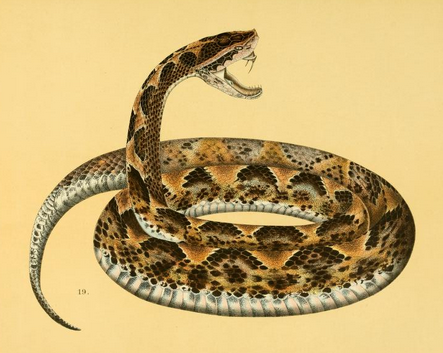
Pit vipers have a more threatening name, a more notorious reputation, and outnumber the Elapidae in the United States with more than 35 species and subspecies recognized. The Viperidae group includes rattlesnakes, massasaugas, copperheads, and cottonmouths and have greater variety in physical attributes than found in the coral snakes.

The way pit vipers go after prey is most accurately described as a strike. North American snakes never jump completely off the ground during an attack, with the snake wrapped in an S position, leaving the posterior grounded for greater leverage. This allows for the body weight to drive the hollow fangs deep into the victim’s tissue, sometimes even breaking off and remaining in the wound, only to be regrown by the snake in several days. If a handler wished to remove all the fangs, rendering the snake harmless, the upper jaw would be so damaged that the snake would likely die. The venom is distributed by a tube connecting a specialized salivary gland in the jaw to the hollow tooth on the movable maxilla, and ultimately to the blood stream of the prey.

View Full Size Image
Figure of the venom apparatus in a standard
rattlesnake, with the jaw closed and fangs folded,
the jaws open and the fangs at the ready.

If a person is extremely unlucky, and circumstances align in such a way that a snake is encountered in the wild, and during that brush with danger the unlikely scenario occurs in which the snake attacks and venom is delivered, what happens next can vary widely, but consistently does not tend to be pleasant.

All venoms contain several toxins, the most important of which are the hemorrhagins and the neurotoxins. The hemorrhagins constitute the chief toxic elements of the venom of rattlesnakes and most of the other pit vipers while the neurotoxins characterize the venom of the coral snake and its relative the cobra. These venoms can coagulate blood within seconds, paralyze the respiratory system, or attack the nervous system, but common symptoms include blurred vision, convulsions, dizziness, fever, nausea, numbness, swelling, and weakness.

The effects of even a chance encounter with a snake are not encouraging. Despite medical advancements since this book’s publication, the standard recourse for a snake bite remains the same: get thee to a hospital! And if you weren’t sympathetic to Indiana Jones’ ophidiophobic plight in his adventures prior to reading this post, perhaps you are now.

For more information on the snakes described in Cochran’s “Poisonous reptiles of the world” and other creepy crawlies that pose a threat, check out this great virtual exhibit from our BHL-Europe colleagues on all things poisonous in nature.

September 12, 2013by LANL_RL
Blog Reel, Featured Books

It’s The End of the World as We Know It. Do You Feel Fine?

View Full Size Image
The Great Day of His Wrath (1853), Artist: John Martin

If you are reading this post then the world hasn’t ended…but, you probably already knew it wasn’t going to end.

Don’t look so disappointed. Yes, the human race regrettably has always had a collective death wish, eagerly awaiting the promise of the end of times since the beginning of times. Or have we? Ironically, it was the Maya, the ancient civilization that gave us such a precise date by which to count down to our own demise: December 21, 2012, that Mayan archeologist William Saturno explains looked for evidence that life goes on:

“We keep looking for endings. The Maya were looking for a guarantee that nothing would change. It’s an entirely different mindset.”

Mayan cosmology is more concerned about looking for assurances of continued life on earth, not death. So be comforted on this day – a day like any other – and use it to reflect on the greater value that life seems to take on in the face of our imminent death.

Besides a hopeful view of the future, the Maya had many beliefs worth adopting. Another foreign notion to our fast-paced-commerce-driven society is the worship of nature and animals as divine gods. The Mayans had a great reverence for nature which might explain why their entire religious pantheon is made up of deities that are either animals or humans with anthropomorphic features. They believed in worshiping life in its diverse manifestations.

Book of the Week

To honor this ancient civilization’s deep reverence for biodiversity we have chosen a singularly unique study undertaken by Alfred M. Tozzer and Glover M. Allen, for this week’s book of the week:

Animal Figures in the Maya Codices (1910)

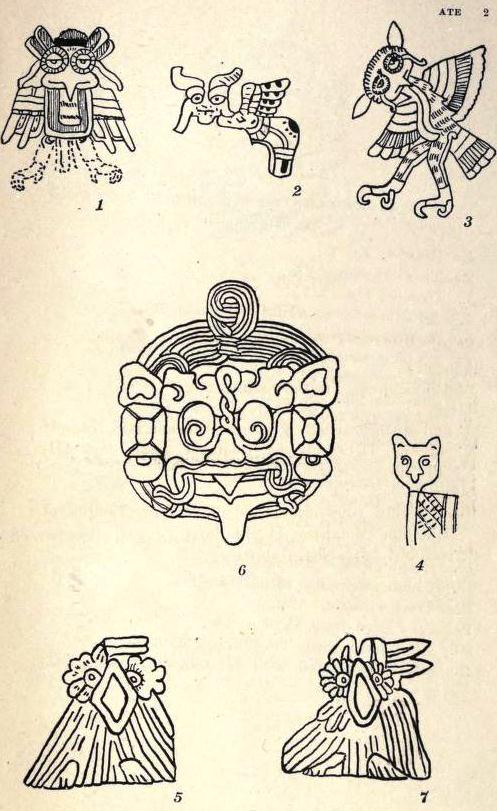
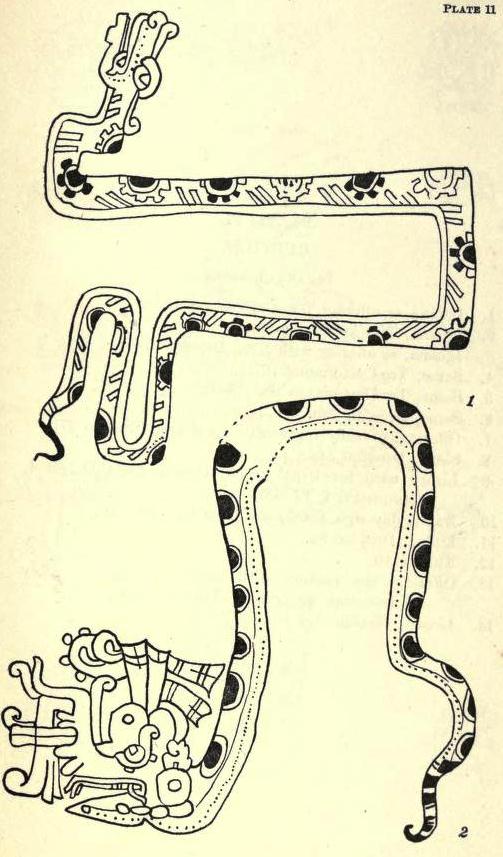
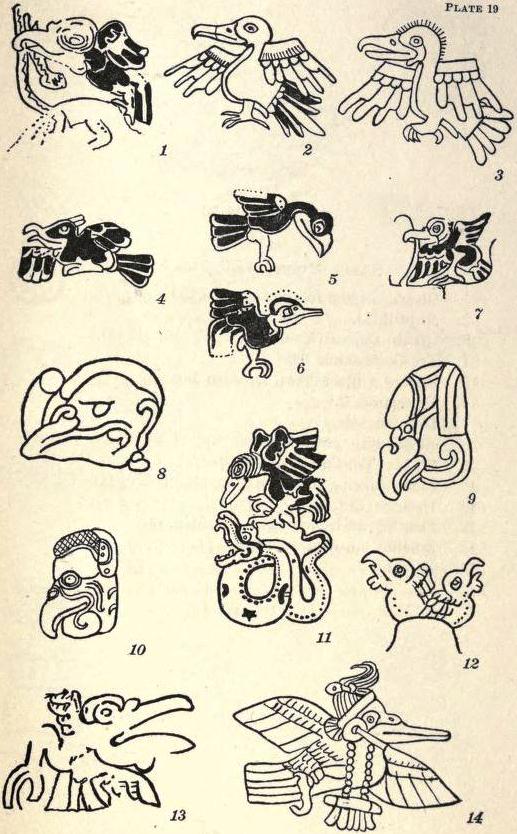
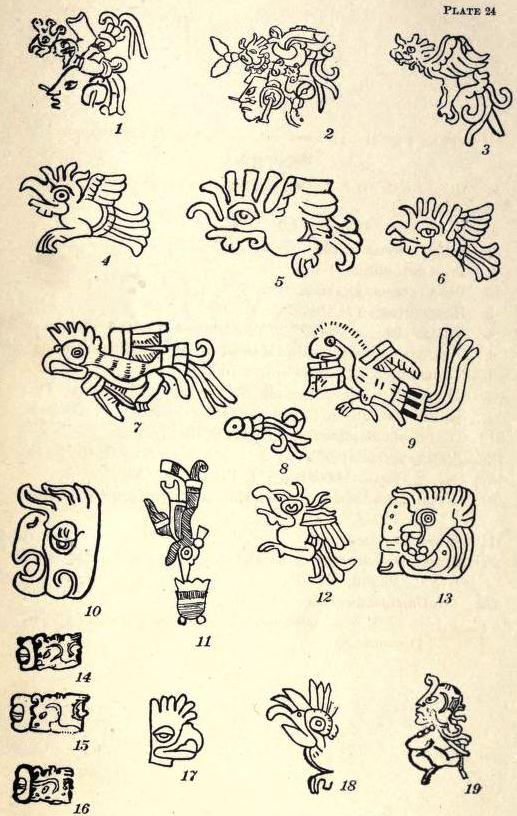
Mr. Tozzer is one of the most famous American Mayanists to date and Mr. Glover was a zoologist specializing in Mesoamerican species at the turn of the last century. Together, the duo was determined to match Mayan hieroglyphic characters, glyphs and artwork depicting Mayan gods to modern species analogues. They were fairly successful in identifying the specific species that the Maya would come in contact with and thus idealize as religious deities.

Mayan Art Inspired by Meso-American Species

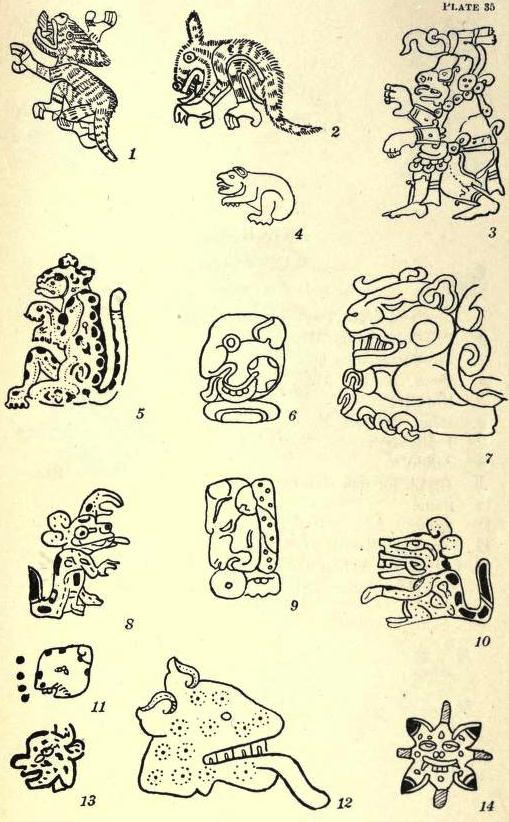
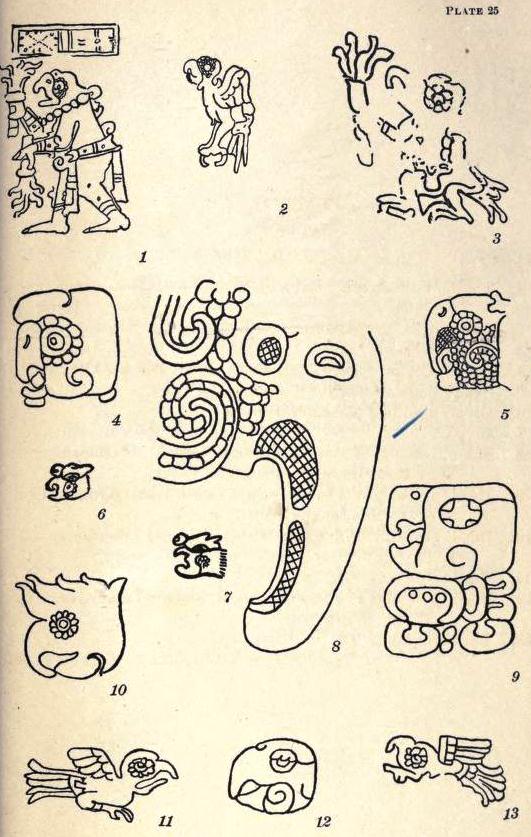
Gilbert Borrego, our Flickr Guru, has scoured the BHL in search of Meso-american species and put together a 58 plate Flickr Collection dedicated to Mayan plant and animal life. We have matched these illustrations with the respective Mayan hieroglyphs present in Tozzer and Allen’s work. Your job is to examine the glyphs and see if you see any resemblance between the Mayan art and their species counterparts.

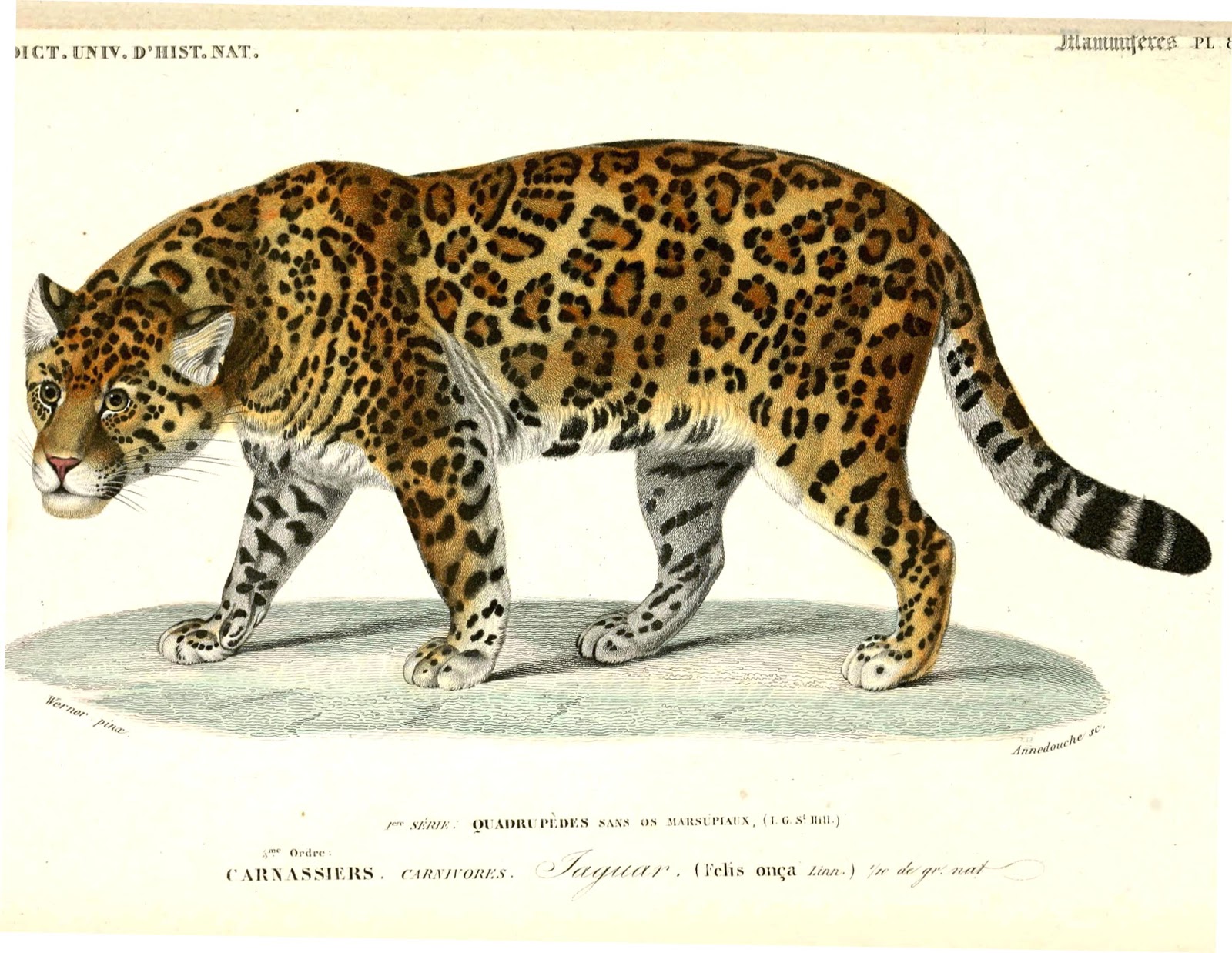
Jaguar (Panthera onca)

View Full Size ImageView Full Size Image

The jaguar a predatory animal symbolized strength, courage, associated with great Mayan warriors. Some scholars have also purported that the beautiful animal is the ruler of the Underworld.

Blue Macaw (Ara militaris)

View Full Size ImageView Full Size Image 

According to Tozzer and Glover, the  Macaw was one of the lightning beasts associated with the worship of fire and the sun. Their brilliant blue feathers were often used in ceremonial headdresses.

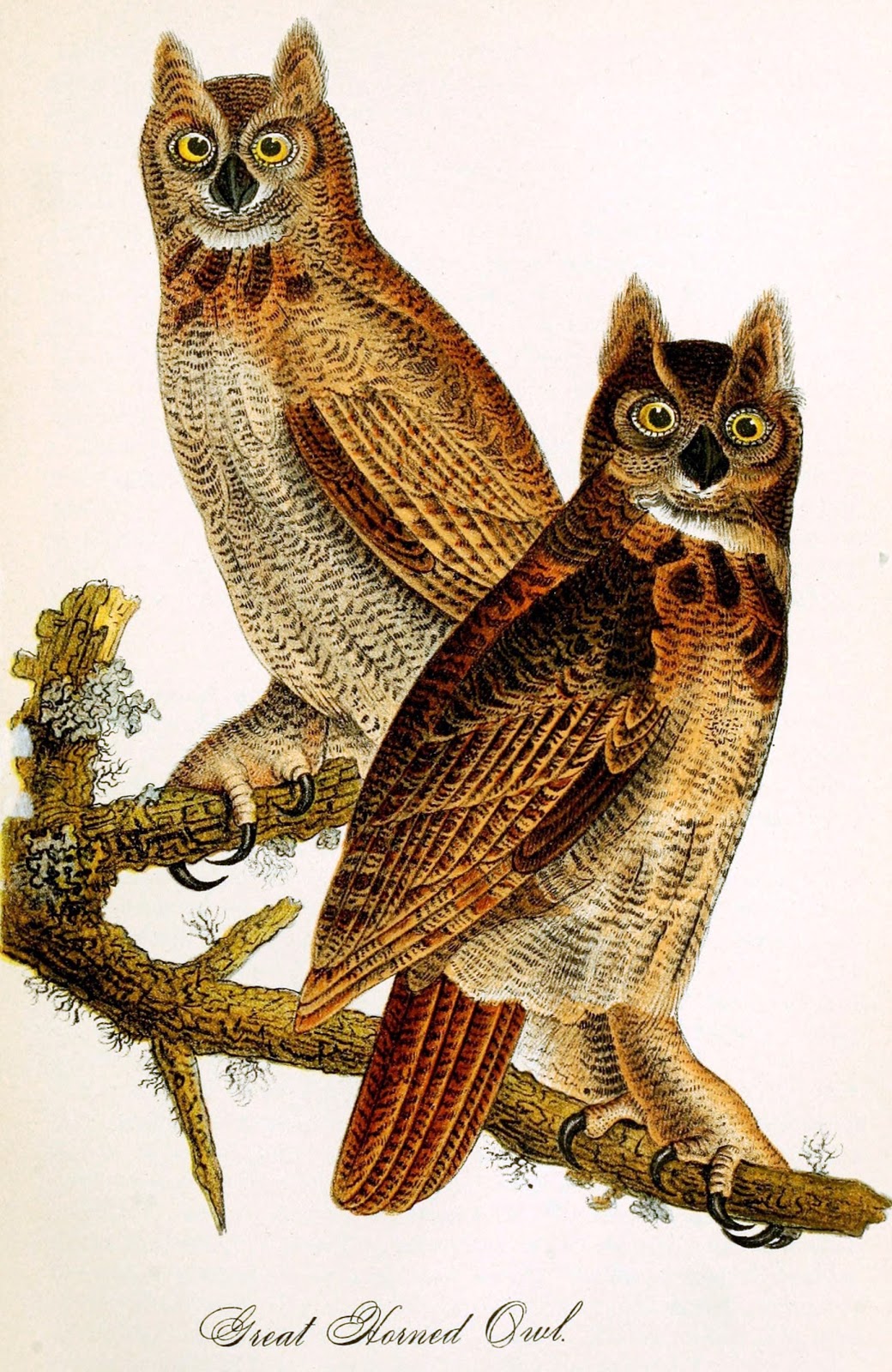
Yucatan Screech Owl or Moan-Bird (Otus choliba thompsoni)

View Full Size ImageView Full Size Image 

The owl is a symbol of death and destruction and is regarded as the Moon or Night God. The Owl resides in the  mythological “House of Drought,” unlike the serpent which occupies the “House of Rain”  therefore symbolizing life.<

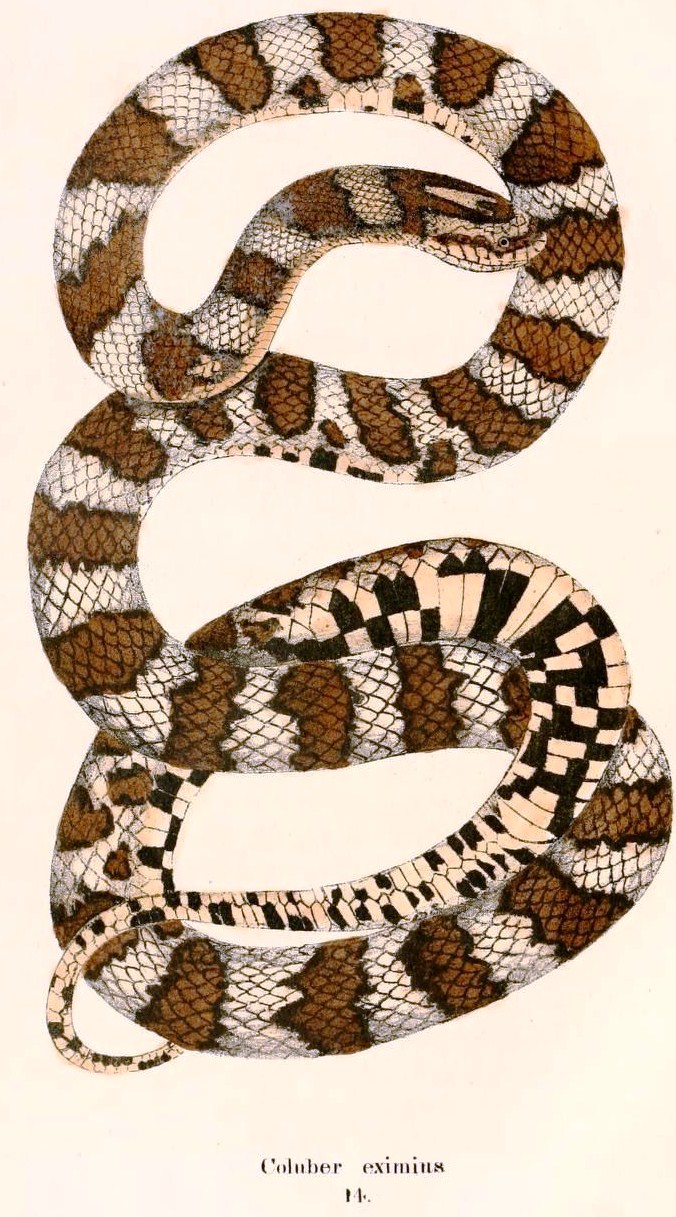
Serpent (Boidae)

View Full Size ImageView Full Size Image

The serpent was extremely important for it symbolized the live-giving force rain, and thus regulated the annual yield of  crops. It is most likely that this association was made because snakes show themselves in large numbers before and after rainfall.

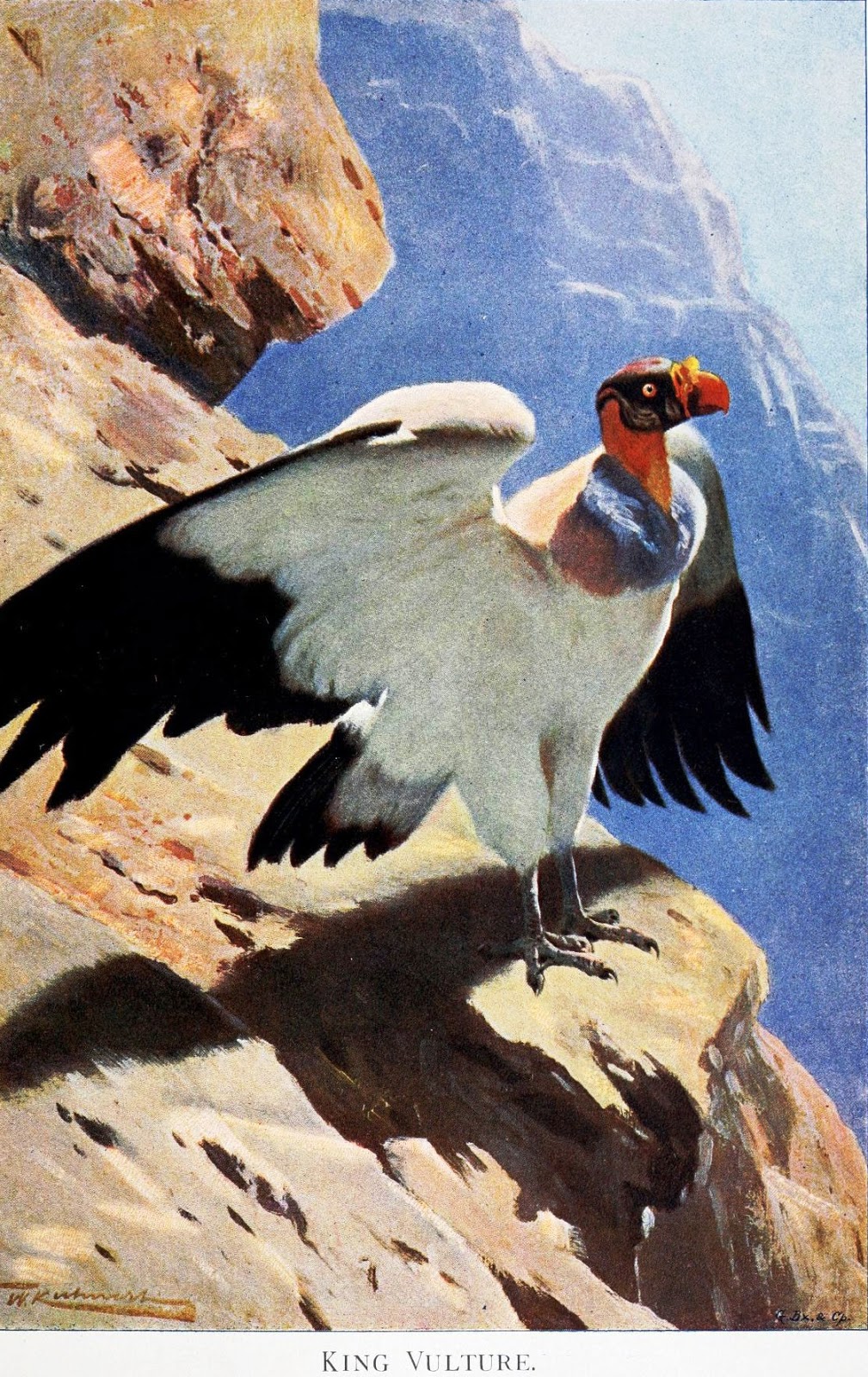
King Vulture (Sarcoramphus papa)

View Full Size ImageView Full Size Image

Scholars have speculated that the King Vulture symbolizes power as well as sacrifice. According to Mayan mythology ‘lesser’ Vultures would not eat until the King came down and plucked out the eyeballs and entrails of the dead.

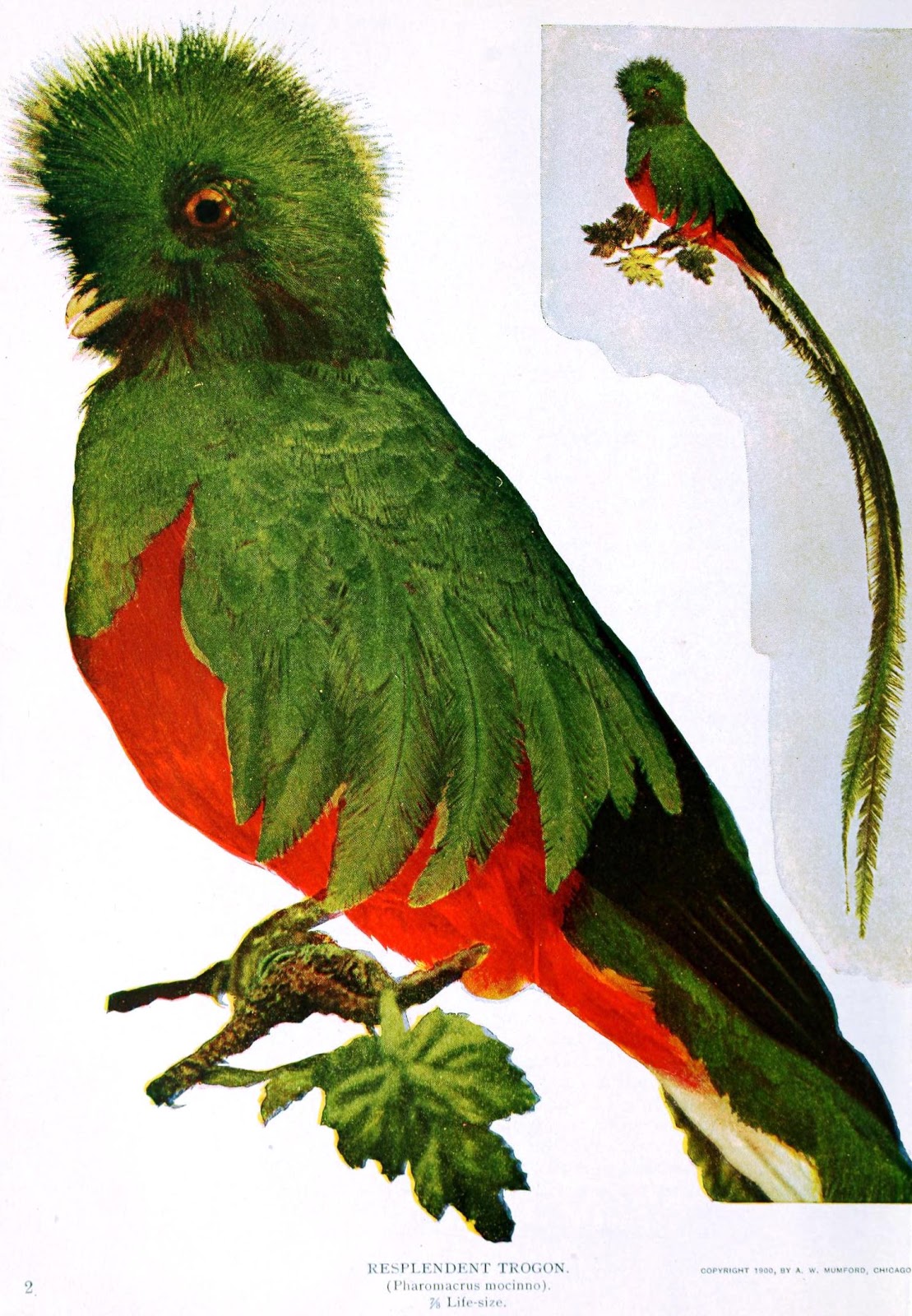
Coppery-tailed Trogon aka The Quetzal (Pharomacrus mocinno)

View Full Size ImageView Full Size Image

The Quetzal, meaning ‘large brilliant tail feather’, is a rare bird found in certain parts of Southern Mexico. Its brilliant green color and particularly long tail feathers made it a sacred bird to the Mayans that was reserved for use in headdresses of rulers. The bird is associated with the mythical hero Quetzalcoatl, the feathered serpent god, whom the Mayans mistook conquistador Hernán Cortés for. According to an account by Alexander von Humboldt, the Mayans were impatiently awaiting the return of this god because he would bring a time of great peace with him. Read more about that here.

Clearly, Mayans were more concerned with the cycle of life rather than the end of the world as we know it. In the spirit of their great culture, take the time to celebrate your continued life today. And if for some reason you were in a panic about the world ending, then calm yourself and visit NASA’s 2012 de-bunked website.You’ll surely feel better.

We hope you enjoyed this post. Interested in guest-blogging for BHL? We’d love that! Natural history, biodiversity and conservation topics are especially welcomed. Email us your ideas at [email protected]

December 21, 2012by [email protected]
Blog Reel, Featured Books

Book of the Week: User’s Choice – Snakes!

This week we decided to put the power of choosing the book of the week in the hands of our users. So, using the “Questions” app on our Facebook Page, we asked you which book out of the four options given you would like to see featured on our blog. The options were The Snakes of Australia, British Dragonflies, La Galerie des Oiseaux, and A Book of Whales. The winner?

The Snakes of Australia (1869), by Gerard Krefft!

The aim of this work was to provide a full account, with original descriptions retained wherever possible, of “nearly all the Australian Snakes discovered and recorded up to the year 1868.” The author points out that, by 1854, only “about twenty Australian Snakes were known.” In the succeeding five years, thirty were described, and, by the time of the writing of our book of the week, “seventy species were on record.”

For our post, we decided to highlight a few of the species presented in this book. So, sit back, relax, and read about Australian Snakes in the comfort of your own home (unless, of course, you’re not at home, in which case, the sitting back and relaxing part is completely up to you).

View Full Size Image
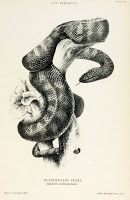
Black-Headed Python (Aspidiotes melanocephalus)

This non-venomous snake can grow up to 7’10”. It is typically “light brown, with a series of darker rings which become indistinct near the sides.” On the underbelly, the Black-Headed Python is “yellowish-white…with a few dark blotches,” while the head and neck are “jet-black above and below.” By the time that this publication was written, very little was known about the snake. “The first specimen which the Museum received was captured by Mr. Rainbird, the well-known collector at Port Denison.”

View Full Size Image
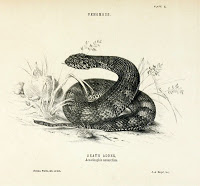
Common Death Adder (Acanthophis antarcticus)

The Common Death Adder is one of the most venomous land snakes in Australia and the world, with fangs longer than most of Australia’s venomous snakes. While a majority of Death Adders are gray with dark rings about the neck and tip of the tail, some members of the species may be red with dark spots. The species can be found in sandy locations, feeding on frogs, lizards, and small mammals. The author notes that, when threatened, the snake “flattens out its whole body, and darts right and left.” However, as previously thought, it “does not jump, and certainly never jumps backwards.”

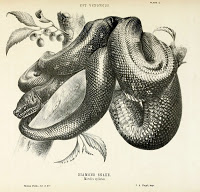
Diamond Snake (Morelia spilotes)
View Full Size Image

This non-venomous snakes has nearly every scale marked with a central single yellow dot. “The largest specimen captured near Sydney, correctly measured, without being stretched, was 10 feet 3 inches long,” though, the author is certain, that specimens measuring over 11 feet no doubt occur, though much more rarely. In nature, this species eats only living mammals, though in captivity it has been observed swallowing already-dead animals. At the time of publication, the author commented that “the species under review are generally infested by various kinds of intestinal worms, including tape-worms, clusters of which have frequently been taken from their stomachs.”

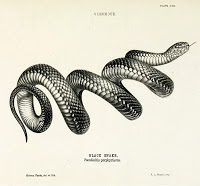
View Full Size ImageRedbellied Black Snake (Pseudechis porphyriacus)

This species is the most common of all of Australia’s venomous snakes. It is “found in low marshy places, is fond of water, dives and swims well, and subsists principally upon frogs, lizards, insects, and other smaller mammalia.” Its highly venous bite can kill “good sized dogs or goats within an hour.” This species rarely grows beyond six feet in length.

This week’s book of the week, The Snakes of Australia (1869), by Gerard Krefft, was contributed by Harvard University, MCZ, Ernst Mayr Library.

To see more Facebook Questions, visit our Questions Page. And be sure to visit us on Facebook or follow us on Twitter (@BioDivLibrary).

April 21, 2011by michelle.underhill
Blog Reel, Featured Books

Book of the Week: Amphibians and Reptiles Galore!

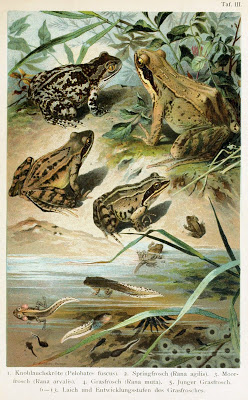
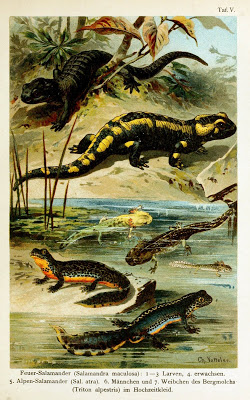
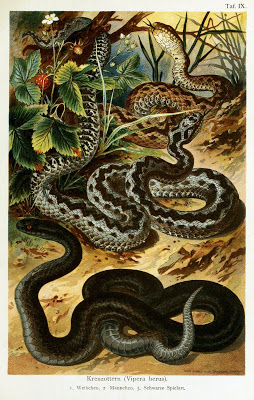
So often with scientific illustration, one finds that the depiction of species or specimens are limited to the isolated rendering of the subject in question, devoid of any habitat or environmental context that gives the reader a clear picture of what life is truly like for the animal in the wild. So, when we came across the illustrations in Deutschlands Amphibien und Reptilien. Eine Beschreibung und Schilderung sämmtlicher in Deutschland und den angrenzenden Gebietan vrokommenden Lurche und Kreichthiere (1897) by Bruno Dürigen, we knew we had to highlight them. Plus, the plethora of reptile and amphibian species displayed seemed equally worthy of attention. So, enjoy these selected illustrations from our book of the week, learn more about the species depicted in each in EOL, and imagine what life might be like in the wild for our cold-blooded friends. Plus, don’t forget to take a look at the book in BHL to see all of the other illustrations that are not highlighted in this post!

View Full Size Image

1) Common Spadefoot (Pelobates fuscus/i>)
*More references in BHL

2) Agile Frog (Rana dalmatina, previously Rana agilis)
*More references in BHL.

3) Moor FrogRana arvalis
*More references in BHL.

4) European Frog (Rana temporaria, previously Rana muta)
More references in BHL.

5) Young European Frog

6) Spawn and Stages of Development of the European Frog

View Full Size Image

1) Fire Salamander (Salamandra maculosa)

1-3) Larval Stage

4) Adult
*More references in BHL.

5) Alpine Salamander (Salamandra atra)
*More references in BHL.

6) Male and 7) Female Alpine Newt (Mesotriton alpestris), previously Triton alpestris)
*More references in BHL.

View Full Size Image

Adder (Vipera sachalinensis, previously Vipera berus)

2) Male
3) Black Species Type
*More references in BHL.

This week’s book of the week, Deutschlands Amphibien und Reptilien. Eine Beschreibung und Schilderung sämmtlicher in Deutschland und den angrenzenden Gebietan vrokommenden Lurche und Kreichthiere (1897) by Bruno Dürigen, was contributed by the Smithsonian Institution.

March 24, 2011by michelle.underhill

Help Support BHL

BHL's existence depends on the financial support of its patrons. Help us keep this free resource alive!

search

About BHL

The Biodiversity Heritage Library (BHL) is the world’s largest open access digital library for biodiversity literature and archives. BHL operates as a worldwide consortium of natural history, botanical, research, and national libraries working together to digitize the natural history literature held in their collections and make it freely available for open access as part of a global “biodiversity community.”

Join Our Mailing List

Sign up to receive the latest news, content highlights, and promotions.

Subscribe Now

Subscribe to Blog via Email

Enter your email address to subscribe to this blog and receive notifications of new posts by email.

Join 319 other subscribers

Subscribe to Blog Via RSS

Subscribe to the blog RSS feed to stay up-to-date on all the latest BHL posts.

Access RSS Feed

Inspiring Discovery through Free Access to Biodiversity Knowledge.

The Biodiversity Heritage Library makes it easier than ever for you to access the information you need to study and explore life on Earth…for free, anytime, anywhere.


64+ Million Pages of
Biodiversity Literature Online.

EXPLORE

Tools and Services
to Transform Research.

EXPLORE

300,000+
Illustrations on Flickr.

EXPLORE

ABOUT | HARMFUL CONTENT | PRIVACY | SITE MAP | TERMS OF USE