Biodiversity Heritage Library - Program news and collection highlights from BHL
  • Home
  • News
  • Featured Books
    • All Featured Books
    • Book of the Month Series
    • BHL at 20
  • User Stories
  • Campaigns
    • Fossil Stories
    • Garden Stories
    • Monsters Are Real
    • Page Frights
    • Her Natural History
    • Earth Optimism 2020
  • Tech Blog
  • Visit BHL
Home
News
Featured Books
    All Featured Books
    Book of the Month Series
    BHL at 20
User Stories
Campaigns
    Fossil Stories
    Garden Stories
    Monsters Are Real
    Page Frights
    Her Natural History
    Earth Optimism 2020
Tech Blog
Visit BHL
  • Home
  • News
  • Featured Books
    • All Featured Books
    • Book of the Month Series
    • BHL at 20
  • User Stories
  • Campaigns
    • Fossil Stories
    • Garden Stories
    • Monsters Are Real
    • Page Frights
    • Her Natural History
    • Earth Optimism 2020
  • Tech Blog
  • Visit BHL
Biodiversity Heritage Library - Program news and collection highlights from BHL
BHL News, Blog Reel

Apply to be a Paid BHL Intern!

Portrait version of the Biodiversity Heritage Library logo.

We are pleased to announce that the Smithsonian Libraries will be hosting a BHL intern this summer as part of its 2015 Professional Development Internship Program.

These paid summer internships are six week-long opportunities for students in MLS or related graduate programs to gain valuable knowledge while working in the worlds’ largest museum library system! Solid research, analytical, computer and writing skills are desired.

We are currently seeking applications for a BHL Outreach Impact Strategy Internship. 

All applications must be submitted through the Smithsonian’s Online Academic Appointment system. Applications are due March 1st, 2015.

A second internship, not specific to BHL but focused on copyright research for digitization and open access projects, is also open for applications. View more information on this page.

See details about the BHL internship below. Please note the geographic location requirement. Please see this webpage for additional information.

BHL Outreach Impact Strategy Internship 

Dates preferred: Any six weeks, June-July 2015

Location of internship: 50% on-site at National Museum of Natural History (Washington, DC) with opportunities for 50% virtual work (contingent upon access to videoconferencing software such as Skype™).

This project is ideal for a candidate with the following characteristics: Students pursuing a Masters in Library & Information Science with strong research and writing skills. Preference will be granted to candidates with marketing experience and/or experience using social media platforms such as blogs, Facebook, and Twitter. Students with a demonstrated interest in the natural sciences and/or library marketing are strongly encouraged to apply.

Brief description of project: The Biodiversity Heritage Library is the world’s largest open access digital library of natural history literature (http://biodiversitylibrary.org/). Its mission is to work collaboratively to make biodiversity literature openly available to the world as part of a global biodiversity community.

As a free digital library, the BHL relies on its ability to measure impact and demonstrate its value through a variety of quantitative and qualitative methods. BHL has a robust and proactive outreach and communication program that interacts with the public on a regular basis and consistently seeks new ways to engage with existing communities and reach new audiences. An Outreach Impact Strategy Intern is needed to analyze the BHL’s existing outreach strategies using social media platforms in order to increase traffic to the BHL website.

Interns will have the opportunity to learn about BHL’s Strategies for interacting with its user communities and understand in practice how marketing plays a critical role in demonstrating the impact and vision of a virtual library where there are no physical collections or infrastructure that users can visit or see for themselves.

January 9, 2015by michelle.underhill
BHL News, Blog Reel

Using Data to Improve BHL Social Media

How can data analysis help us improve our social media activities?

This was the fundamental question BHL’s Outreach and Communication Manager, Grace Costantino, sought to address during her two-day meeting with Ryerson University’s Social Media Lab, Sept. 29-30, 2014. As co-participants in the Mining Biodiversity Digging Into Data project, BHL has been collaborating virtually with Dr. Anatoliy Gruzd, the Lab’s Director, since early 2014. The Social Media and Society 2014 conference, organized by the Lab, offered an ideal opportunity for Ms. Costantino and Dr. Gruzd to meet in person and explore BHL’s social network using tools developed by the Lab.

Analyzing BHL’s Twitter Network via Netlytic

The Social Media Lab studies how social media and web 2.0 technologies affect society, communication, and information dissemination. The research team has developed several tools to analyze and visualize social networks. One such tool, Netlytic, is a free cloud-based app that uses public APIs to analyze social media conversations to help community managers discover trending topics, growth, conversation reach, and influential participants. Current supported datasources include Twitter, Facebook, groups and pages, Instagram posts and YouTube comments.

During the meeting, Ms. Costantino and Dr. Gruzd used Netlytic to analyze BHL’s Twitter network, capturing conversations originated by or occurring about BHL. Since analysis was just initiated, Twitter API limitations restricted data capture to conversation occurring on or after 9/22/2014.

Netlytic reports uncover popular words within conversations, which can be grouped to display popular topics. They also present the entire network as a visualized cluster that displays the connections and conversations among participants.

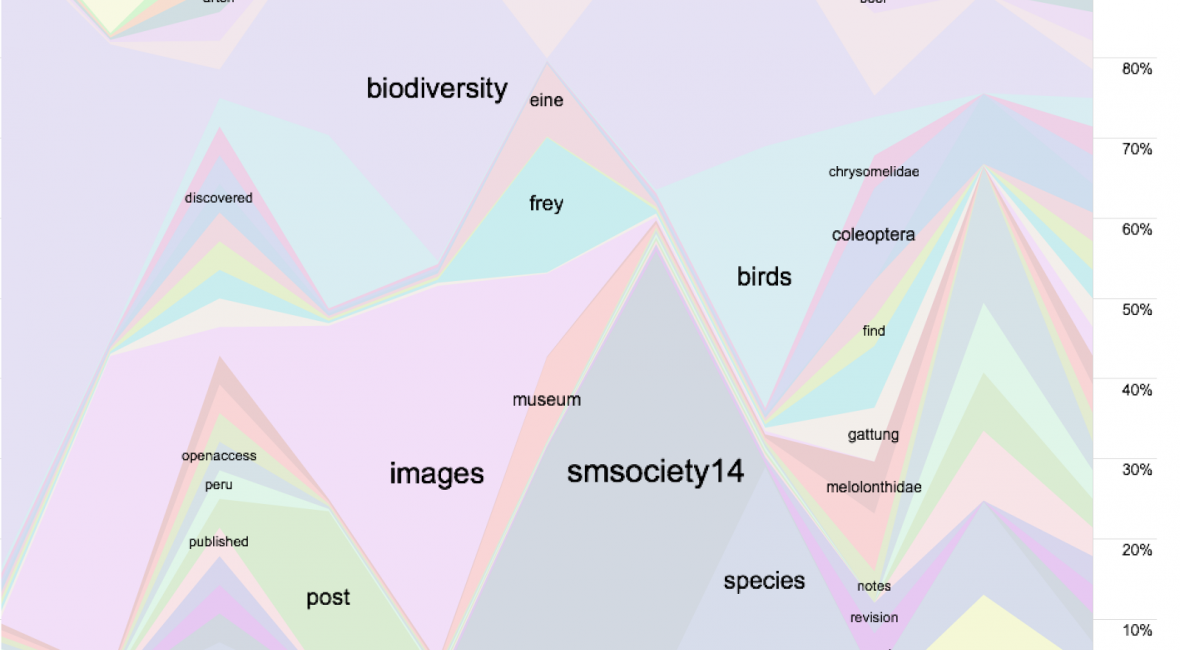
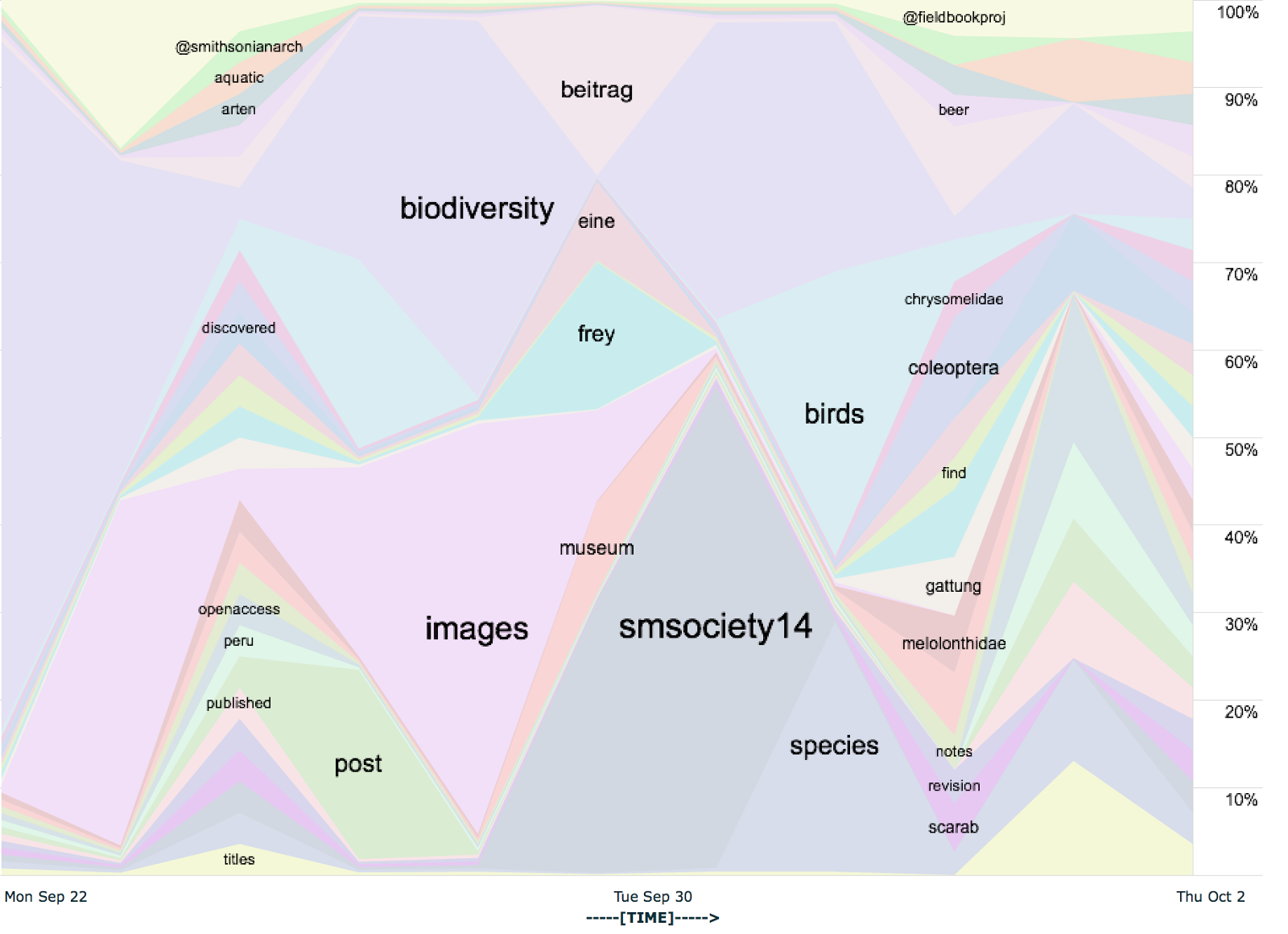
Keyword analysis revealed that, not surprisingly, “biodiversity” and “species” were two of the most popular words occurring in recent BHL-related conversations. Also not surprising were the terms “open access” and “smsociety14” (the hashtag for the Social Media and Society conference). Other popular words, however, include “beer,” “birds,” and “images.” Netlytic allows you to delve deeper into each word occurrence, listing the related tweets. An investigation of “beer” revealed that Oktoberfest is a popular topic among people following or discussing BHL content. “Images” confirmed what our observational analysis already told us – people love our illustrations (evidenced by the overwhelming success of Flickr).

View Full Size Image
Popular words in tweets from the BHL Twitter network.

The appearance of “birds” might suggest that we have more bird-lovers among our followers. However, review of the related tweets showed that we published a good deal of material about birds over the past week and a half, including our Birds of Paradise blog post, some tweets about Florence Bailey’s bird books, and a retweet of PenAndFeather’s post on BHL’s Album de Aves Amazonicas.

View Full Size Image
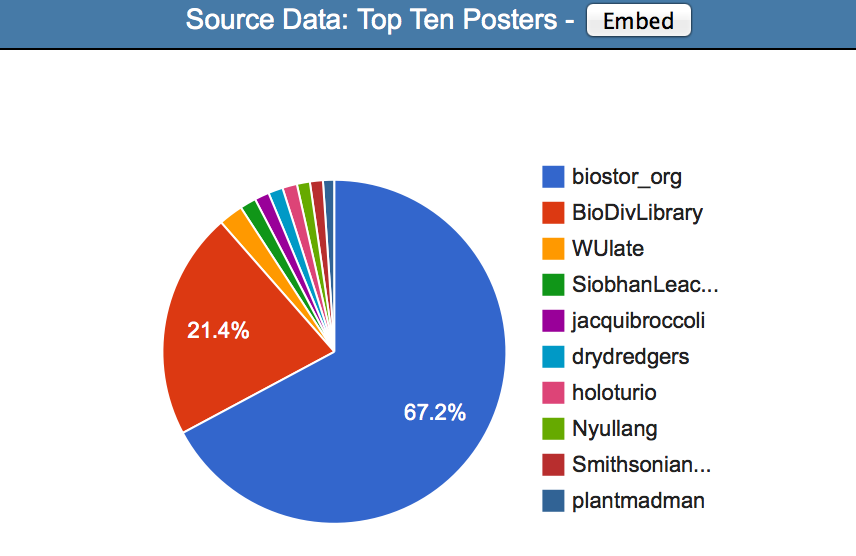
Twitter networks posting the most tweets within our BHL network of tweets from or about BHL.

An analysis of the participants in our network revealed that 373 Twitter accounts (represented as nodes in the visualization) have posted content about us since 9/22/2014, with 858 “ties” (or links between participants, meaning that they engaged in some sort of interaction with each other about BHL, through either @mentions, @replies, or retweets).

View Full Size Image
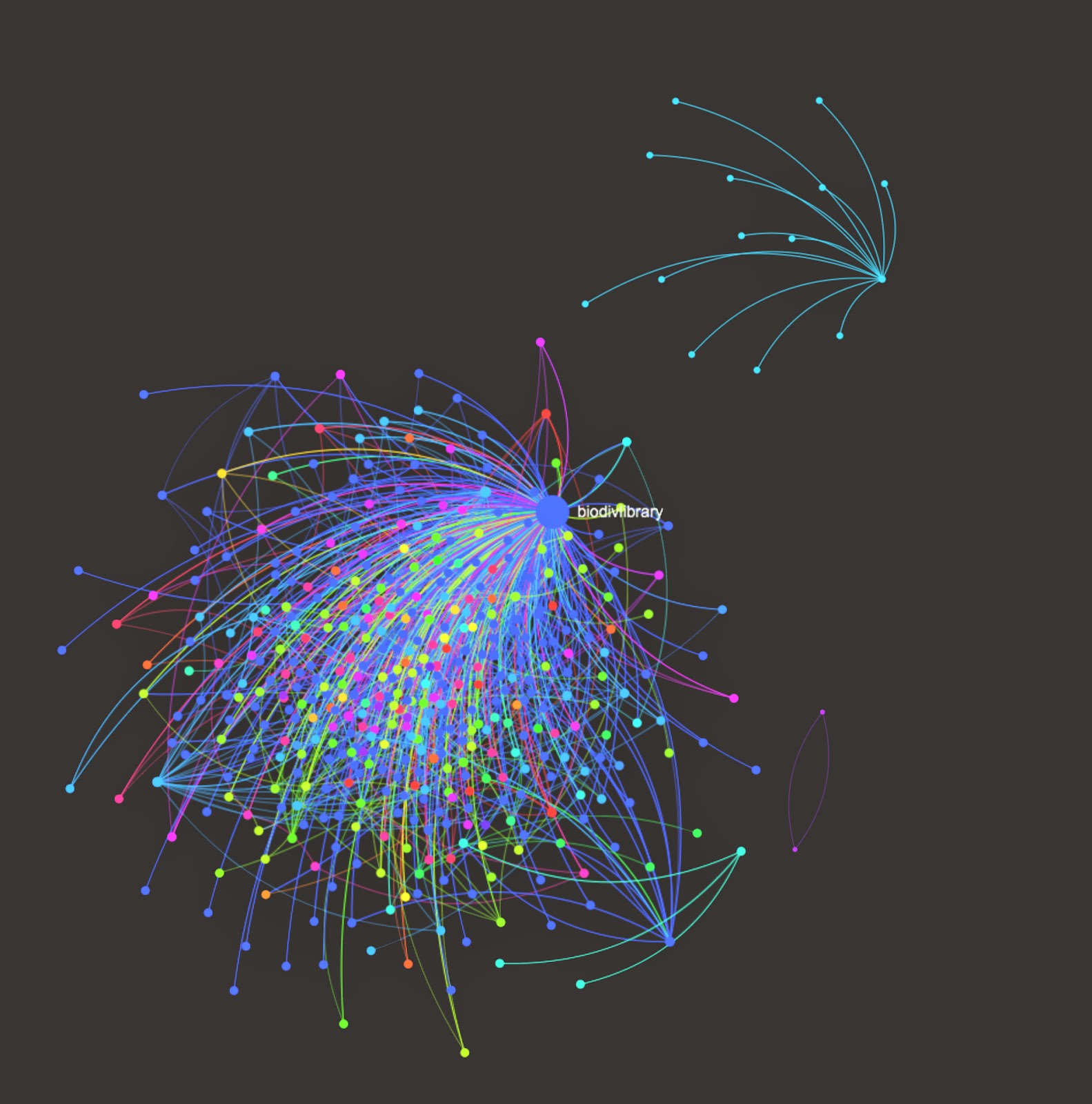
Visualization of the BHL twitter network.

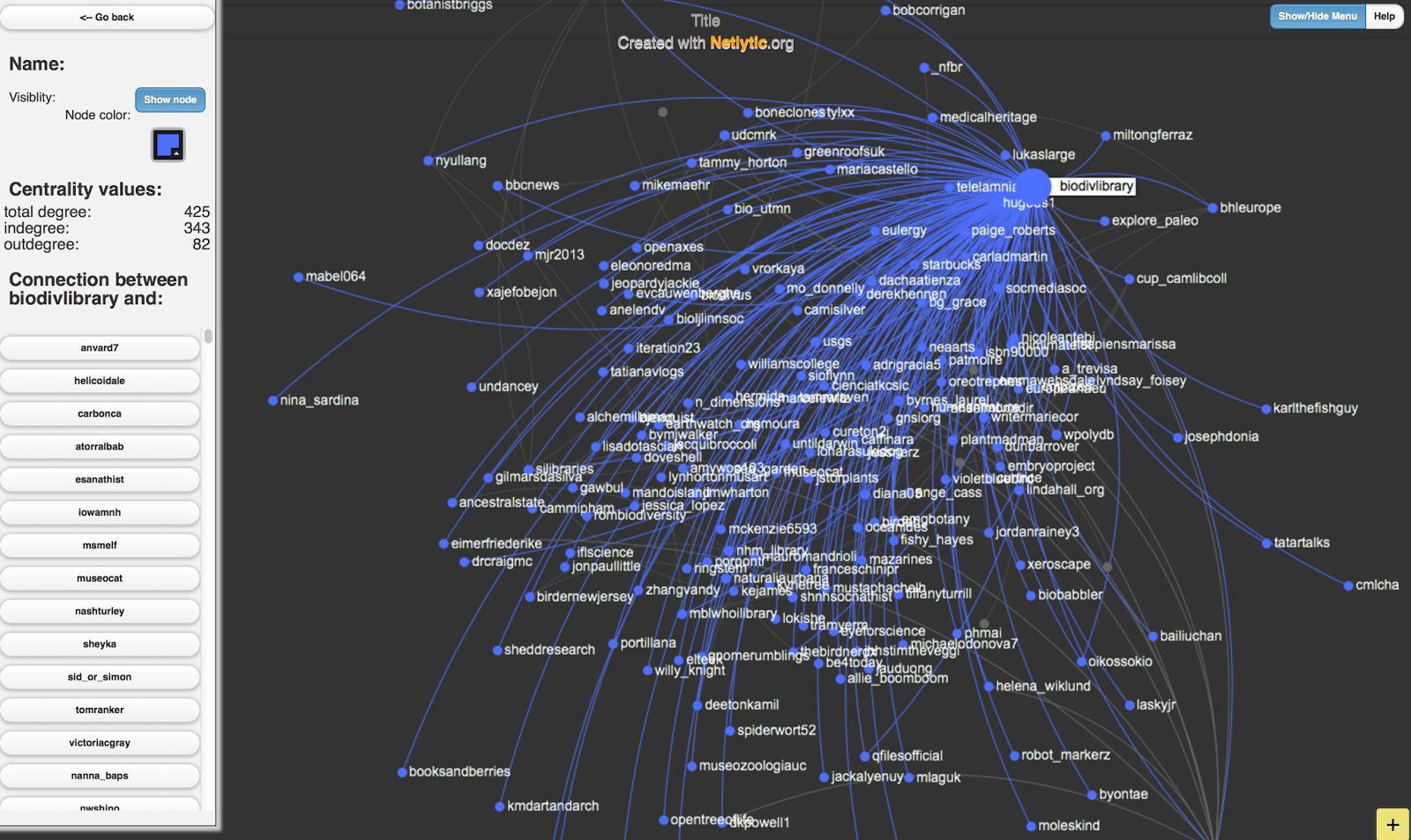
A deeper analysis of the network uncovers who is talking to whom and what they’re talking about. The network visualization is based on clusters, and nodes within the cluster are linked to other nodes via lines that indicate interactions. A single line from one node to another represents a one-sided conversation, i.e. one account tweeted a message that includes a mention of the connected account. When nodes are looped together (a line connects one node, and in turn that node is connected back to the first with another line), this indicates dialogue between the nodes. One account mentions another, and that account in turn mentions the first. These lines can either have an indegree or outdegree centrality value. If an outdegree value, it means that the selected node (i.e. Twitter account) mentioned the connected node. Indegree indicates that the selected node was mentioned by the connected account.

For instance, BHL’s node has a strong indegree centrality, meaning that we are mentioned in other people’s tweets more often than we mention other people in a tweet. During this period, we were mentioned by 343 Twitter users. This is largely accounted for by retweets. Our node operates largely on a broadcasting model, where we publish information that is disseminated by others via retweets. This is obvious visually as the “BioDivLibrary” dot is larger than the surrounding dots in the image below, and in general all nodes tie back to ours. However, we mentioned 82 different Twitter accounts as well during this time period, indicating that we are engaging in dialogue with our users regularly.

View Full Size Image
Network of Tweets published by us or including our handle.

The closer a node is to the more concentrated part of the cluster, the more connections it has within the network, or the more people within the network that the user is interacting with. Nodes stretching far outside the hub of the network often only have a single tie within the cluster, meaning they are not highly engaged in our community.

View Full Size Image
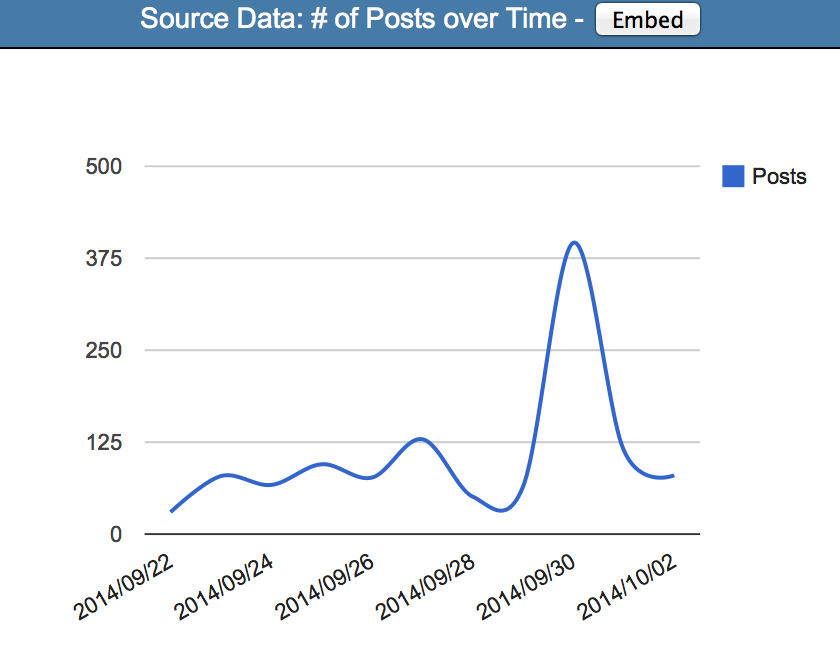
Spike accounted for by popular “International Coffee Day” and “Fashionista” tweets.

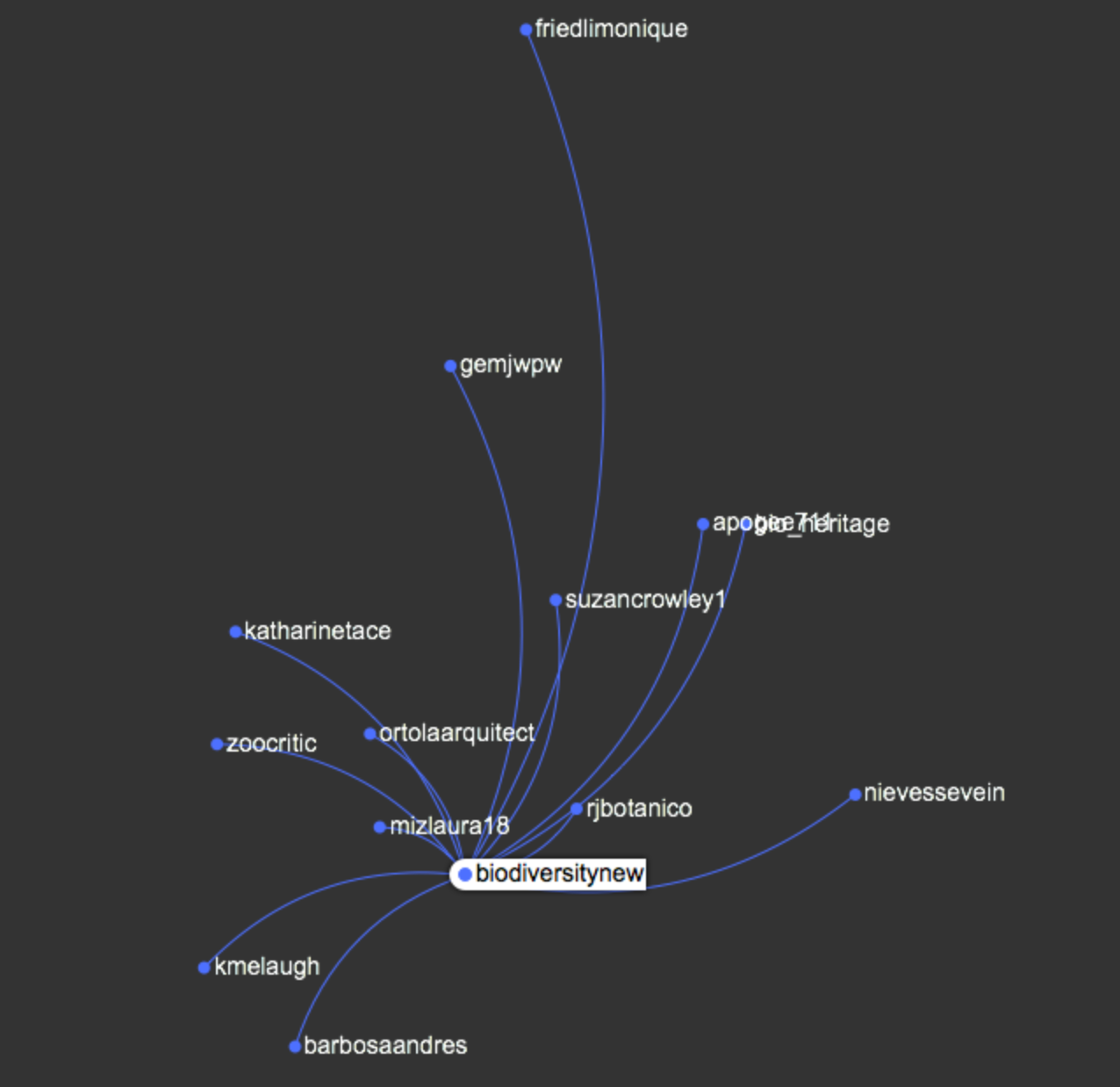
Netlytic is also useful for discovering conversations occurring about BHL that we might be unaware of. All of the nodes within the main group of clusters include either @BioDivLibrary, “Biodiversity Heritage Library,” or #BHLib in the tweet. These are conservations that we can easily track and follow via Twitter. However, the @BiodiversityNew network includes interactions among users that don’t include #BHLib, @BioDivLibrary, or “Biodiversity Heritage Library” in their tweets. Instead, they include links that resolve back to our blog posts. There is no easy way to discover this conversation in Twitter, but thanks to Netlytic, we can not only find it but engage with the participants in that node and encourage them to follow us.

View Full Size Image
@BiodiversityNew network involving posts resolving back to the BHL blog


So What?

A community manager can spend hours (days!) analyzing a network, discovering users and related conversations. But how can this help us improve our social media efforts?


  1. Trending vs. Long-Term Analysis: Since we’ve only recently started tracking BHL’s Twitter via Netlytic, we have a limited range of data available for analysis. However, the longer we track our network, the more data we will have to work with. This will allow us to get a more accurate picture of our network and answer questions that require longitudinal study and long-range data.
    1. Who are all the players interacting with us? Some users who might regularly engage with us may not have been active during the period analyzed, and thus are not captured as part of our network.
    2. What topics are consistently popular among our users? Terms like “beer” were popular now because of Oktoberfest, but likely will not remain so.
    3. What is the true size of our network, and is it showing growth? Furthermore, when we see rapid growth, we can investigate the content we published and the most active users in our network during that period to discover what and who is influential in regards to our growth.
    4. However, it is still useful to capture trends so that we can publish event-specific, time-relevant content. Netlytic allows you to limit your analysis to a particular time period, allowing us to see what topics we should be publishing about now (based on trends) vs. regularly (based on longitudinal study).
  2. Audience-Informed Content: In general, an analysis of popular keywords allows us to see what resonates most with our users. This will allow us to better craft our posts to satisfy the appetite of our network.
  3. Is our Community Stable and Loyal? Analyzing the users that engage with us over time can help us see not only whether we see new users participating (showing network growth), but whether existing users continue to interact with us. We want to grow a stable, dedicated community that consistently helps to promote our content. If we do not see strong follower loyalty, we will need to compare our content and tone to those popular among our users and tweak our strategies accordingly.
  4. Discover New Conversations and Communities: As explained earlier, Netlytic can help us discover conversations occurring about us that we are otherwise unaware of. We can also identify new communities with an interest in our material but as yet unengaged with our brand. Engaging in these conversations and networks will help us grow our audience.
  5. Discover Influencers and Collaborators: Network analysis can also help us see which users are most connected with other users, particularly with a strong inbound centrality. These users are reaching many other users and successfully inspiring engagement. These are important relationships for us to cultivate as these individuals may represent our most influential advocates. BHL also actively collaborates with other nodes. Network analysis will help us see whether these collaborations are reaching new and expanding audiences. We should increase collaborations with those demonstrating the greatest growth and connections. For those lacking such indicators, it may be appropriate to shift effort elsewhere.
  6. Convert Outliers to Champions: As mentioned, nodes furthest removed from a network’s concentrated center are least-engaged in the community but have demonstrated interest in our content. These users may also represent people with access to communities we do not yet engage with. We should strategically engage with select users in these categories to encourage further investment in our community, which may lead to advocates in new communities.
  7. Less Broadcasting, more Conversation: The Social Media and Society Conference revealed that science-related Twitter accounts often operate on a broadcasting model. They are disseminators of information, but not strong facilitators of dialogue. Within the BHL network, we see a bias towards broadcasting, but many looped ties were present, indicating that we are actively engaging with our users. One of our outreach goals is to foster and promote a dialogue among ourselves, researchers, librarians, citizen scientists, and bioinfomaticians. This requires us to engage with more users, using the strategies outlined above. Continual analysis of our network will reveal if we are being successful and indicate when new strategies are necessary.

It’s a brave new world of social media analysis. Emerging tools allow us to discover our networks, engage with our users, and refine our strategies like never before. As BHL continues to collaborate with The Social Media Lab and analyze our social networks (Twitter is just the beginning), we will improve our ability to tell people why biodiversity is unbelievably awesome!

View Full Size Image

The BHL Outreach and Communication Manager position, and this meeting attendance, are made possible in part through funding from the Institute of Museum and Library Services (Grant number LG-00-14-0032-14).

October 4, 2014by ulib-libraryjobs
BHL News, Blog Reel

Some Reflections on Social Media and Society

What are the impact and implications of social media on society?

View Full Size Image

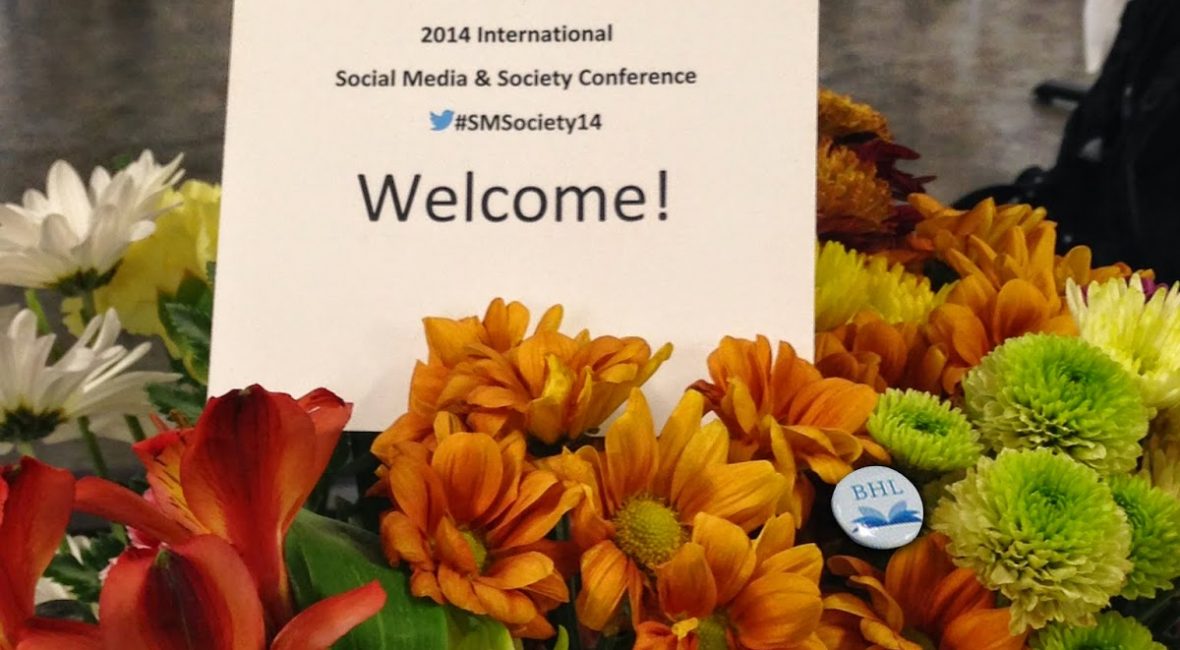
This question was the fundamental discussion point of the Social Media and Society 2014 conference in Toronto, Canada, Sept. 27-28, 2014. Now in its fifth year, the conference, organized by the Social Media Lab at Ryerson University (a partner in the Mining Biodiversity project funded by the IMLS Digging Into Data Challenge, of which BHL is also a participant), brings together researchers and practitioners across a broad range of social media related fields to discuss current research and best practices in social media, as well as its application to society at large.

BHL Outreach and Communication Manager, Grace Costantino, was invited to attend the conference. As the manager of BHL’s social media networks (Twitter, Facebook, blog, Flickr, Pinterest), she was eager to connect with other professionals, discover current trends, and investigate best practices and new directions for BHL social media.

The conference discussed a variety of topics, including social media’s effect on relationships and voice; differences among genders in social media participation; privacy; deciphering influence within social media; social media as a marketing platform; use of social media within science communication; how scholars use social networks; and altmetrics.

Several interesting findings and further questions emerged within these topics.

View Full Size Image
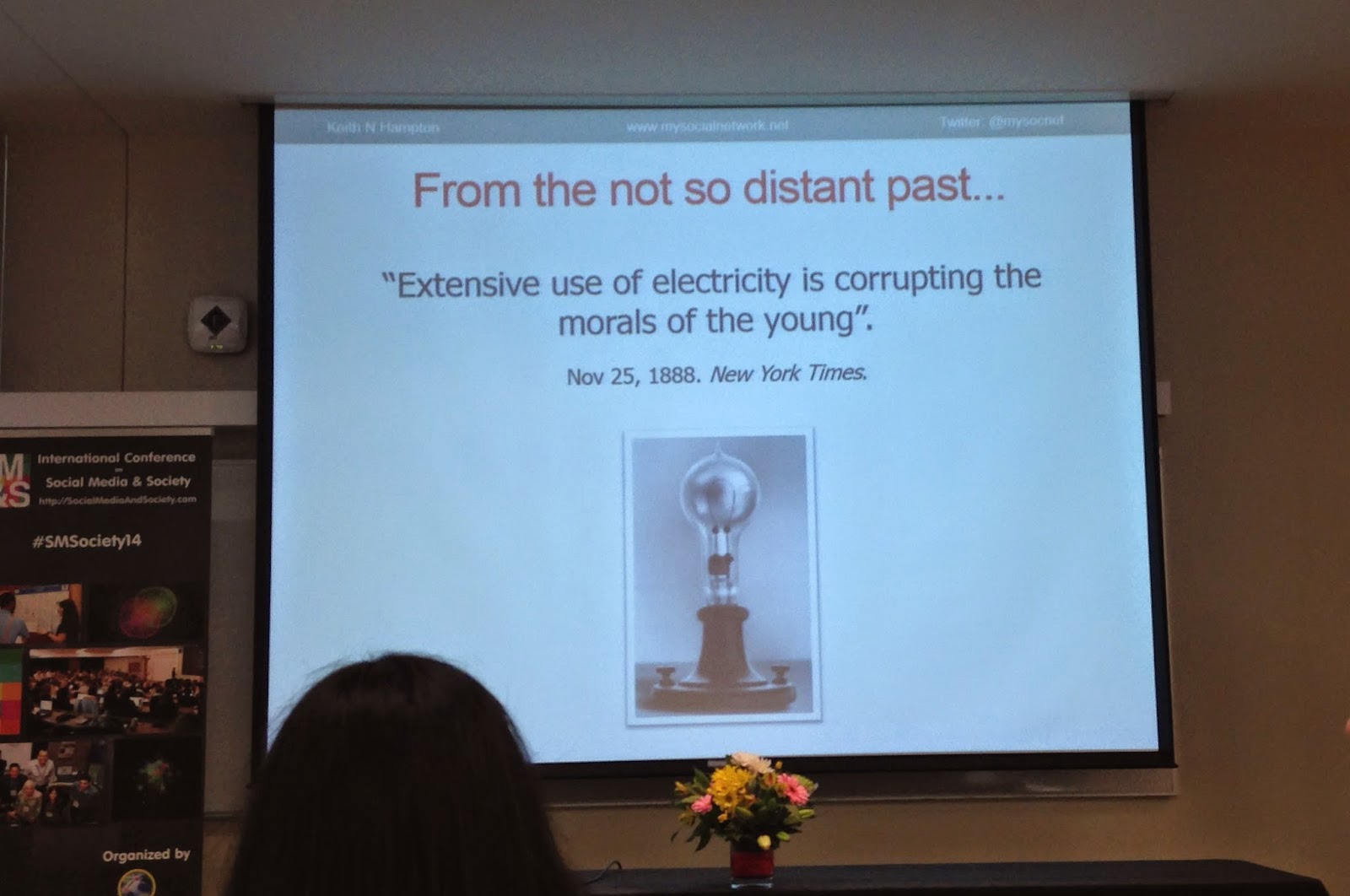
From Keith Hampton’s talk. Social Media and cloud computing are as revolutionary (and for some scary) as electricity was in the past.

Keith Hampton, keynote speaker for day one, related his research regarding social media’s effect on relationships, voice, and gender. Common lore asserts that extensive adoption of social media results in increased alienation and more fleeting relationships within society. Conversely, Hampton’s research found that social media results in more persistent relationships and an increased awareness of the activities of one’s social ties through digital technology.

Along another avenue of research involving social media and politics, Hampton found that social media does not make people more inclined to engage in political conversations online. While 86% of surveyed participants expressed a willingness to discuss a political topic offline, only 42% were willing to share their opinions online, and only .3% said they were willing to discuss them online but not offline. The reason for this may be the persistent nature of social media; once an opinion is voiced, it is very difficult to erase it. People were also more willing to share when they believed that their network of followers were sympathetic to their viewpoints.

Finally, in regards to stress and social media, Hampton found that women who use social media felt less psychological stress but more social stress, while men generally did not display any correlation between social media use and stress (though they may feel some social stress when hearing about a friend’s demotion or interaction with a crime).

One panel within the conference presented research investigating the facets of influence within social media, and how to identify influential users. The general definition of influence in this context was those individuals most likely to disperse information within a network. Elizabeth Dubois of the Oxford Internet Institute proposed four facets of influence (popularity, interaction, knowledge, and social embeddedness), and depending on the facet used, different influencers emerged. Weiai Xu of the University of Buffalo found that opinion leaders on Twitter are generally those most connected and involved. K. Hazel Kwon of Arizona State University also found that people were more likely to share or engage with a topic or event that many of their friends also followed, suggesting that anonymity (once touted as a benefit of online interactions) is detrimental to increasing awareness via social media.

View Full Size Image

The discussion on privacy and social media raised many good questions for researchers and practitioners. How much privacy should users expect on social media, particularly in regards to their public tweets being retweeted or shared via media outlets? This discussion was largely centered around the @SteenFox “What Were you Wearing” debate. Twitter is a public platform, but the speakers noted that a full awareness of the “public” nature of public tweets was sometimes lacking among users. The thought-provoking question of “are hashtags the antithesis to an expectation of privacy,” given that by their use you join a very public, sometimes global conversation outside of your own network, was raised by Siobhan O’Flynn from the University of Toronto. The main take-away from the panel was that more education is needed regarding what privacy means in social media.

Interesting particularly for BHL were the discussions regarding the role of Twitter in science topics and scholars’ use of social media. Moritz David Buchi of the University of Zurich presented on “How does the representation of science topics differ between news and tweets?” He found that, in general, news outlets were more objective while tweets were more dramatic. Science tweets are also largely not intended to be self-contained, but instead linked to larger news articles. These tweets also operated mostly on a broadcasting model, involving little dialogue. Retweets were most prominent, producing a diffusion of knowledge effect.

Two separate panels discussed scholars’ use of social media. Anabel Quan-Haase, Kim Martin, and Lori Mccay-Peet cited Gruzd and Goertzen’s paper “Wired Academia: Why Social Science Scholars are Using Social Media,” which outlines three main motives for social media use among scholars: information gathering; collaboration; and socializing and information dissemination. Bonnie Stewart found that scholars participated in social media to voice an opinion and contribute to a discussion, though traditional “power factors” like institutional affiliation affected how well these voices were heard. George Veletsianos of Royal Roads University found that while scholars use social media for knowledge creation (like crowdsourcing) and dissemination, they still struggle with issues of copyright restrictions; negotiating personal and professional boundaries; and a lack of frameworks in academia to evaluate the legitimacy of networked activities, which results in pressure to engage in traditional outreach and dissemination activities. Related to this was a presentation by Heidi Julien from the University of Buffalo, which discussed the use of almetrics (alternatives to the traditional journal impact factor and personal citation indices) to inform tenure decisions. Her experience shows that institutions are still a long way from incorporating altmetrics into these decisions.

View Full Size Image
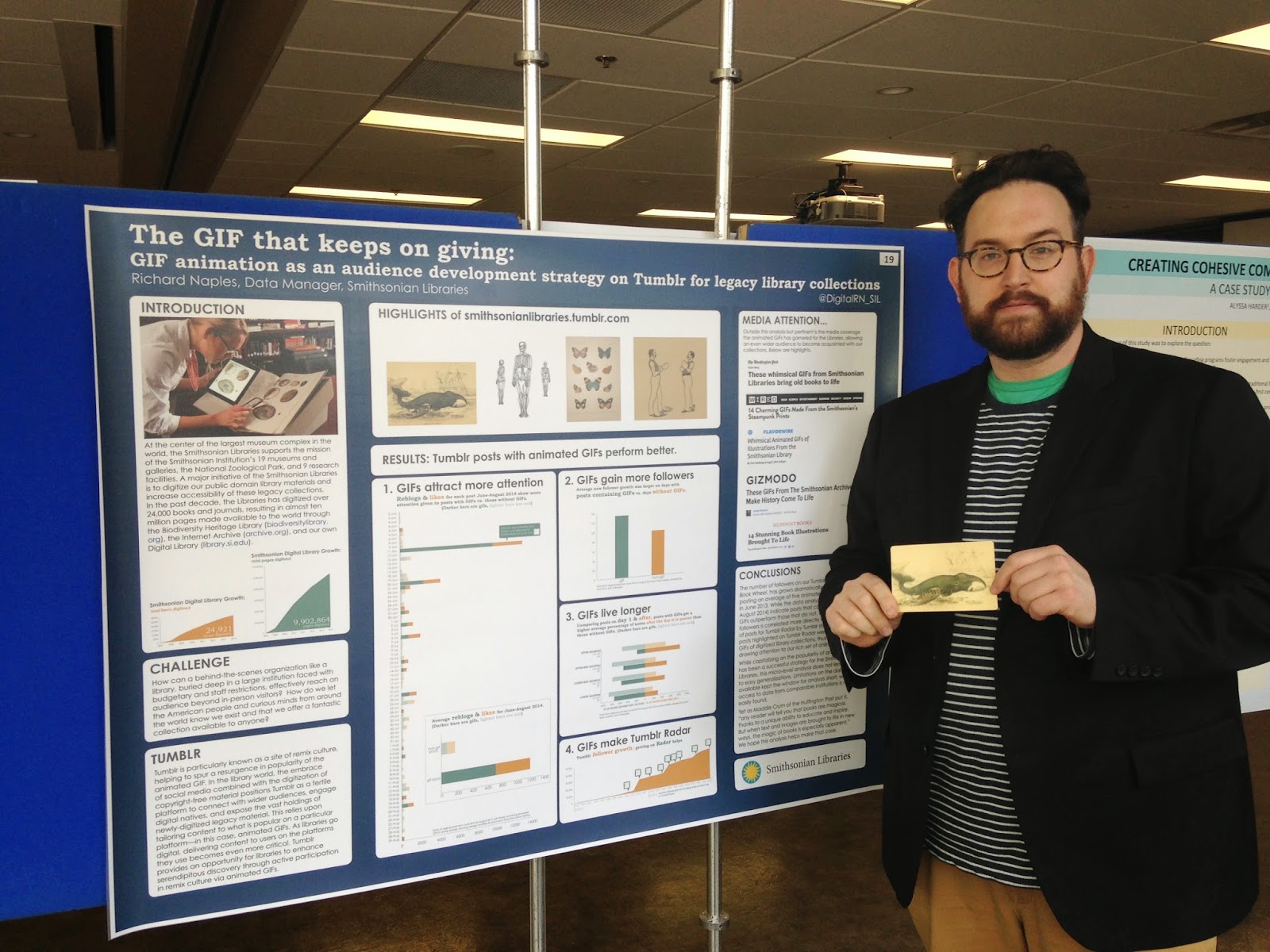
Richard Naples of Smithsonian Libraries, with his poster.

BHL partner Smithsonian Libraries also presented a poster at the conference entitled “The GIF That Keeps on Giving,” by Richard Naples. The poster presents the library’s use of animated GIFs in Tumblr, and the increased exposure and reach that this “culture remix” enables. Many of the GIFs are from books digitized for BHL.

Overall, the conference was an excellent learning and engagement opportunity, with many applications for BHL. Ms. Costantino developed a better understanding of the types of posts users are more likely to engage with; how better to craft social media campaigns around storytelling to excite curiosity; why scholars (one of BHL’s core audiences) are using social media and what they hope to find via these outlets; how to better understand, track, and engage with BHL’s online community; and how to help contribute to the case for altmetrics.

View Full Size Image

The BHL Outreach and Communication Manager position, and this conference attendance, are made possible in part through funding from the Institute of Museum and Library Services (Grant number LG-00-14-0032-14).

September 30, 2014by ulib-libraryjobs
Blog Reel, User Stories

Exploring Arachnids with Harry Potter and Logan Pierce

If you’re a Harry Potter fan, then you know what the three unforgivable curses are. And if you’ve seen the movies, you’ll remember the scene where Mad-eye Moody demonstrates those curses in Harry Potter and the Goblet of Fire. If you’re recalling the scene now, you’re probably thinking, “Yeah, he tortured and killed a spider.”

View Full Size Image
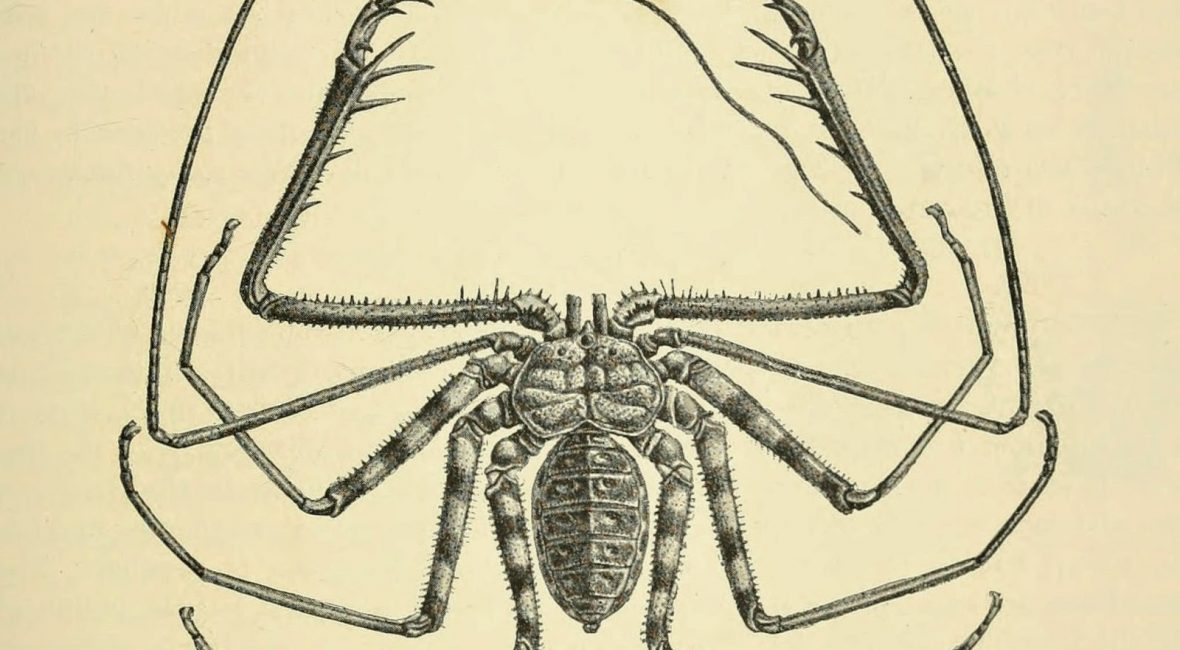
Amblypygid. The Royal Natural History. v. 6, sec. 11 (1896). http://biodiversitylibrary.org/page/29153712

If that’s what you’re thinking, you’re wrong (if you managed to avoid the Harry Potter craze and have no idea what we’re talking about, just smile and nod with superiority at not being taken in by our leading comment and read on). The subject of Mad-eye’s persecution was, in fact, an Amblypygid.

Sometimes called “whip spiders,” Amblypygids are an invertebrate group belonging to Arachnida but separate from spiders. They have six walking legs, eight eyes, and claw-like, extra long pedipalps modified for grabbing prey and, if you’re a male, fertile females.
View Full Size Image
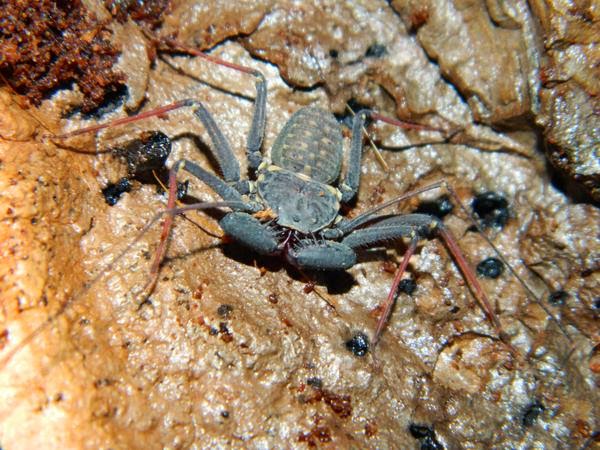
Phrynus marginemaculatus from Logan Pierce’s collection. Image copyright Logan Pierce. If you would like to reuse the image, contact Logan at @xMiPHISTox or via That Arachnid Keeper for permission.

Spider or not, if you’re like Ron, an Amblypygid sighting would probably provoke shrieks of terror or mad dashes to higher ground (such as atop a trusty chair that a multi-legged critter couldn’t possibly climb…). At the very least, you’re probably not feeling very inspired to seek one out as a pet.

View Full Size Image
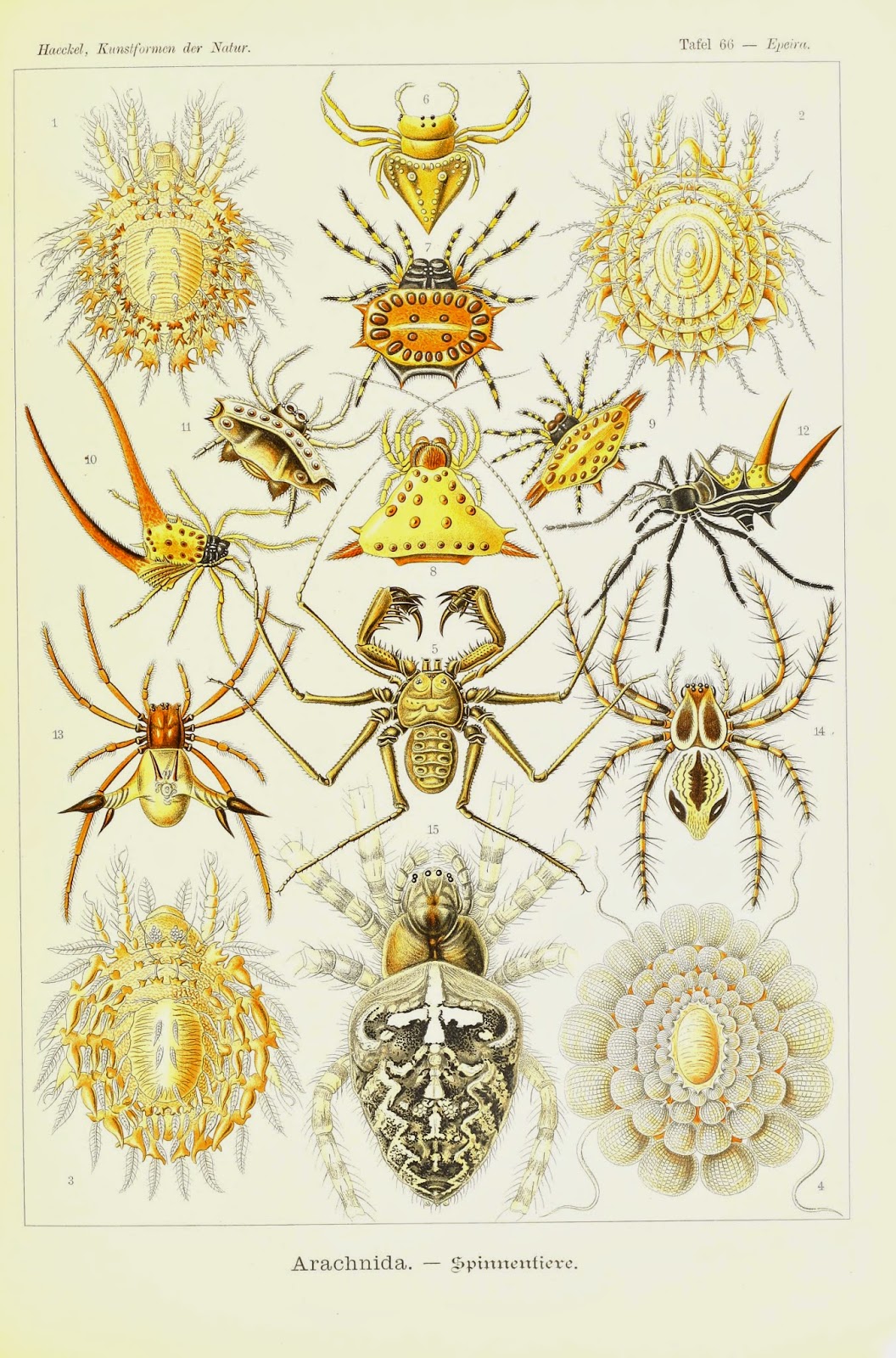
Arachnids (including Amblypygid species Phrynus reniformis). Haeckel, Ernst. Kunstformen der Natur (1904). http://biodiversitylibrary.org/page/33543560

But if you’re Logan Pierce, that’s exactly what you’re doing.

An arachnid enthusiast, Pierce’s love affair with these eight-legged invertebrates began at age nine, when he “picked up a book on scorpions and read it religiously.” At age fourteen, his aunt bought him his first two species (an Emperor scorpion, Pandinus imperator, and a Tarantula labeled as a Rose-Hair, Grammostola species), and he’s been collecting, rearing, and breeding hundreds of arachnids and invertebrates ever since. Today, his collection consists of over 100 specimens, representing 32 species.

When asked why he’s so captivated by arachnids, Pierce responded, “I actually have a slight fascination with their ‘strategies’ concerning prey acquisition. Another interest of mine is the way that scorpions eat their prey, with two smaller ‘claw-like’ structures called chelicerae.”

Through his profile @xMiPHISTox, Pierce recently discovered BHL on twitter thanks to a post we did on an 1841 illustration of the Amblypygid species Phrynus Ceylonicus from Sri Lanka. After engaging in a conversation with him, we learned that not only is he rearing a subadult of another Amblypygid species, Phrynus marginemaculatus, but that he maintains a Tumblr (That Arachnid Keeper) for the purposes of sharing information, care, and breeding logs for the many Arachnid species in his possession.

View Full Size Image
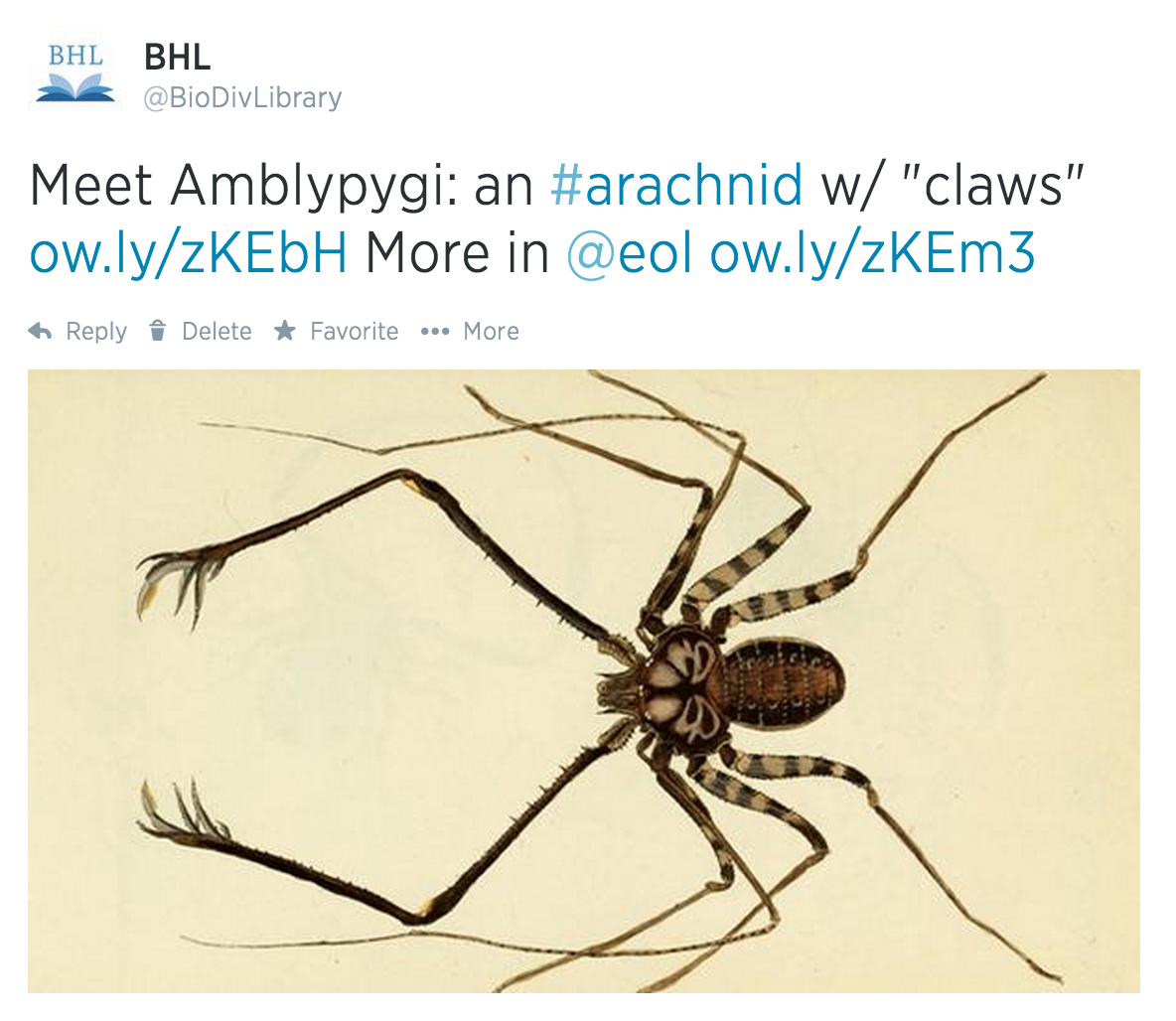
Amblypygi Tweet. Koch, C.L. Die Arachniden. BD. 8-10 (1841). http://biodiversitylibrary.org/page/37027845

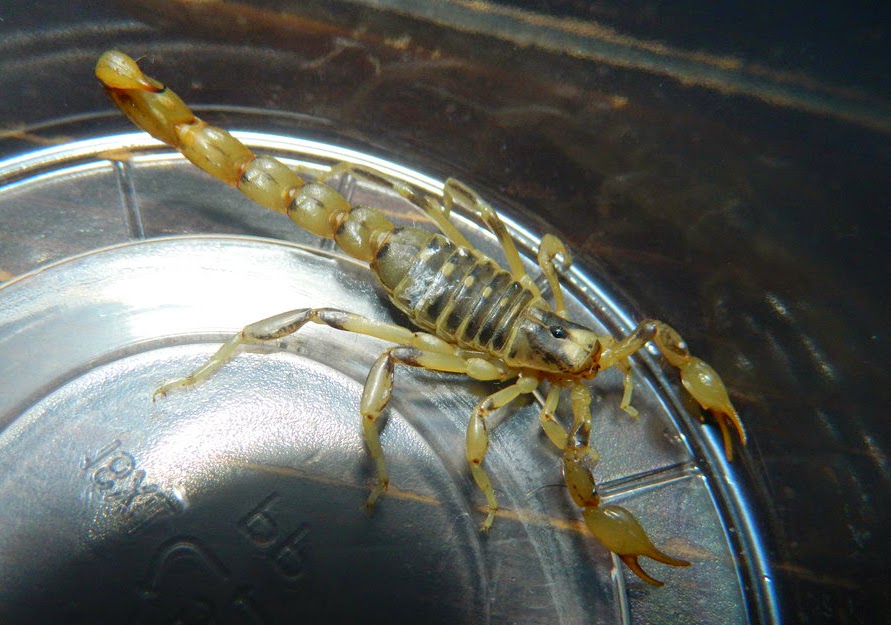
One of his posts reports Logan’s experience caring for, feeding, and attempting to breed the scorpion species Brachistosternus negrei. Native to Chile, this species is rarely bred successfully in the U.S. On April 18, 2013, Pierce received a shipment of 7 specimens, which he described as “very feisty…When unpacking them and taking them out of their small holding containers I exhaled through my nose, which made one go into a stinging frenzy,” he wrote.
View Full Size Image
B. negrei from Logan Pierce’s collection. Image copyright Logan Pierce. If you would like to reuse the image, contact Logan at @xMiPHISTox or via That Arachnid Keeper for permission.

After sexing his brood by searching for a “Spur” within the inner side of their fixed Pedipalp finger (Spur only present in males), Logan identified 4 females and 3 males – a good ratio for breeding. He relates his two attempts to breed his specimens as follows: “They’re aggressive breeders, and do things akin to Androctonus, such as the male approaching the female, doing what I can only describe as ‘juddering’ until he gets close to the female, in which event he will subdue the female by stinging her once and lock his pedipalps to whatever he’s able to clasp. He will then move his pedipalps from appendage up to the females…lock with them…[and] slowly drag her around, looking for a suitable spot to drop a spermatophore. Females of this species seem to be very finicky, as they’ve ended all mating attempts made by my male, even though they are adults and confirmed females.”

While breeding challenges may be expected, considering it’s an advanced activity that most arachnid-owners probably won’t attempt, even basic nurturing is not without its difficulties. “If someone were to own species such as scorpions with little known information, or almost none, the most challenging part would be procuring information to set up a habitat for them,” said Pierce.

View Full Size Image
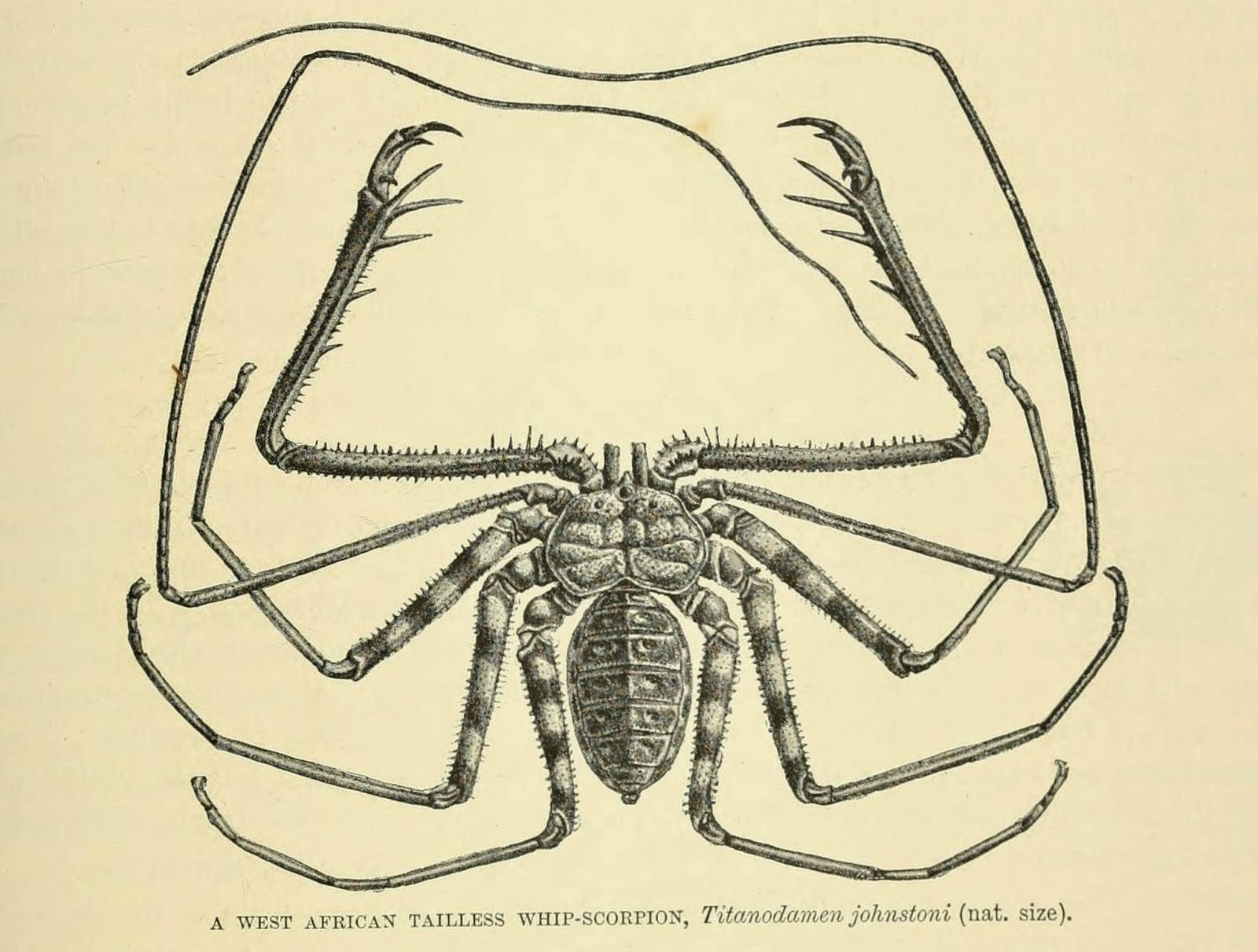
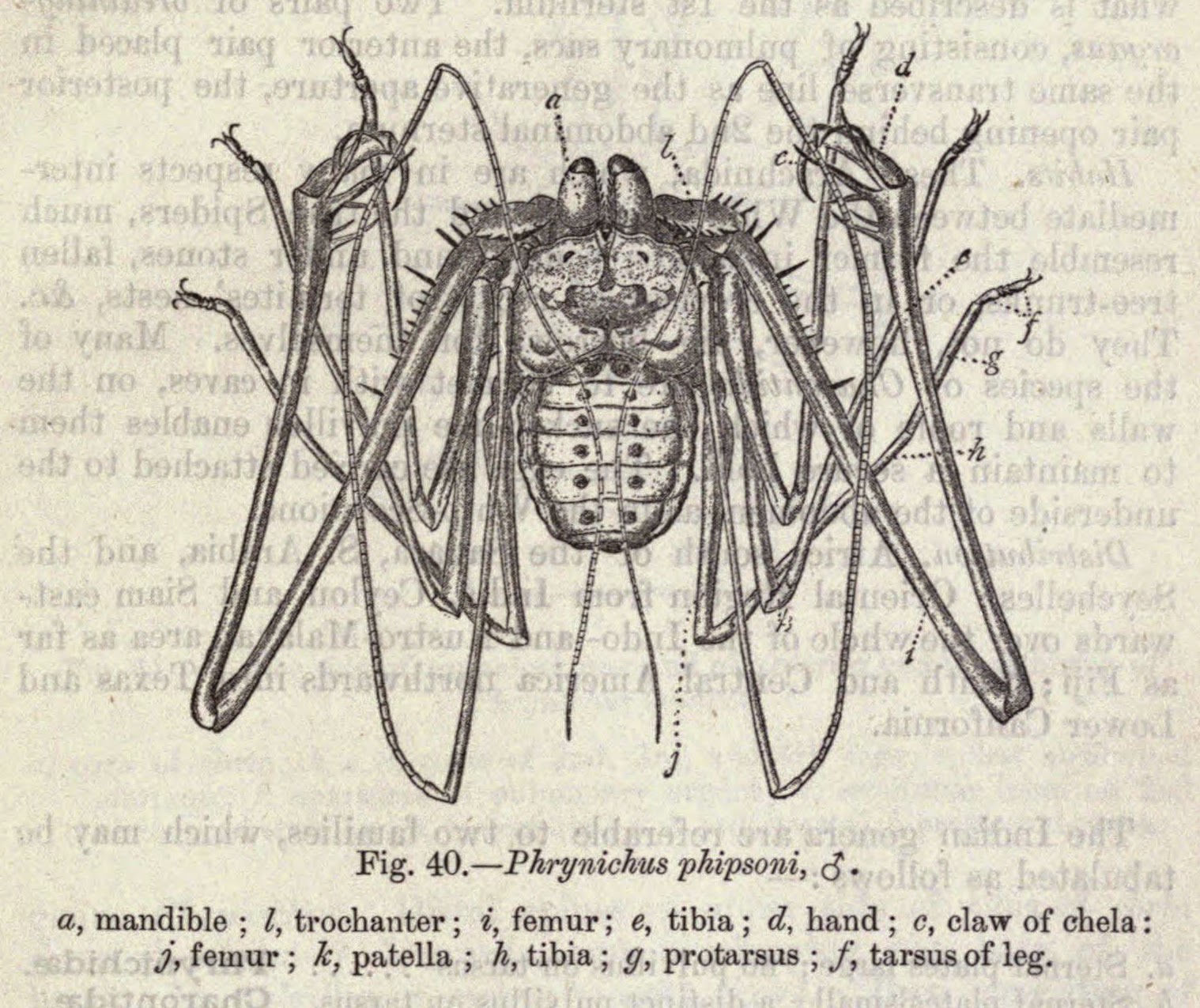
Anatomy of Amblypygi. Pocock, R.I. Arachnida (1900). http://biodiversitylibrary.org/page/16788845

Logan is also currently grappling with sexing his subadult Amblypygid, which involves knocking the specimen out with CO2, pulling back the genital plate, and searching for a specific formation. A delicate procedure, to say the least. And you thought owning an arachnid would be as simple as feeding it a few crickets now and then…

Have we inspired you to choose an arachnid of your own to care for? If so, “Do your research before acquiring any invertebrate,” cautions Pierce. “I see so many people online throwing caution to the wind whilst purchasing species such as Leiurus quinquestriatus (Deathstalker scorpion), Androctonus australis, and many other highly dangerous species. I would also say that arachnids are generally shelf-pets, and should not be purchased with handling in mind, or with the intent of showing off to friends. Invertebrates can be stressed from excess handling (But this has been debated many times by people), or from bothering them too much. Any invertebrate purchased should be purchased with the intent of observation and possibly preservation.” Get more great insight and information from Logan on That Arachnid Keeper.

View Full Size Image
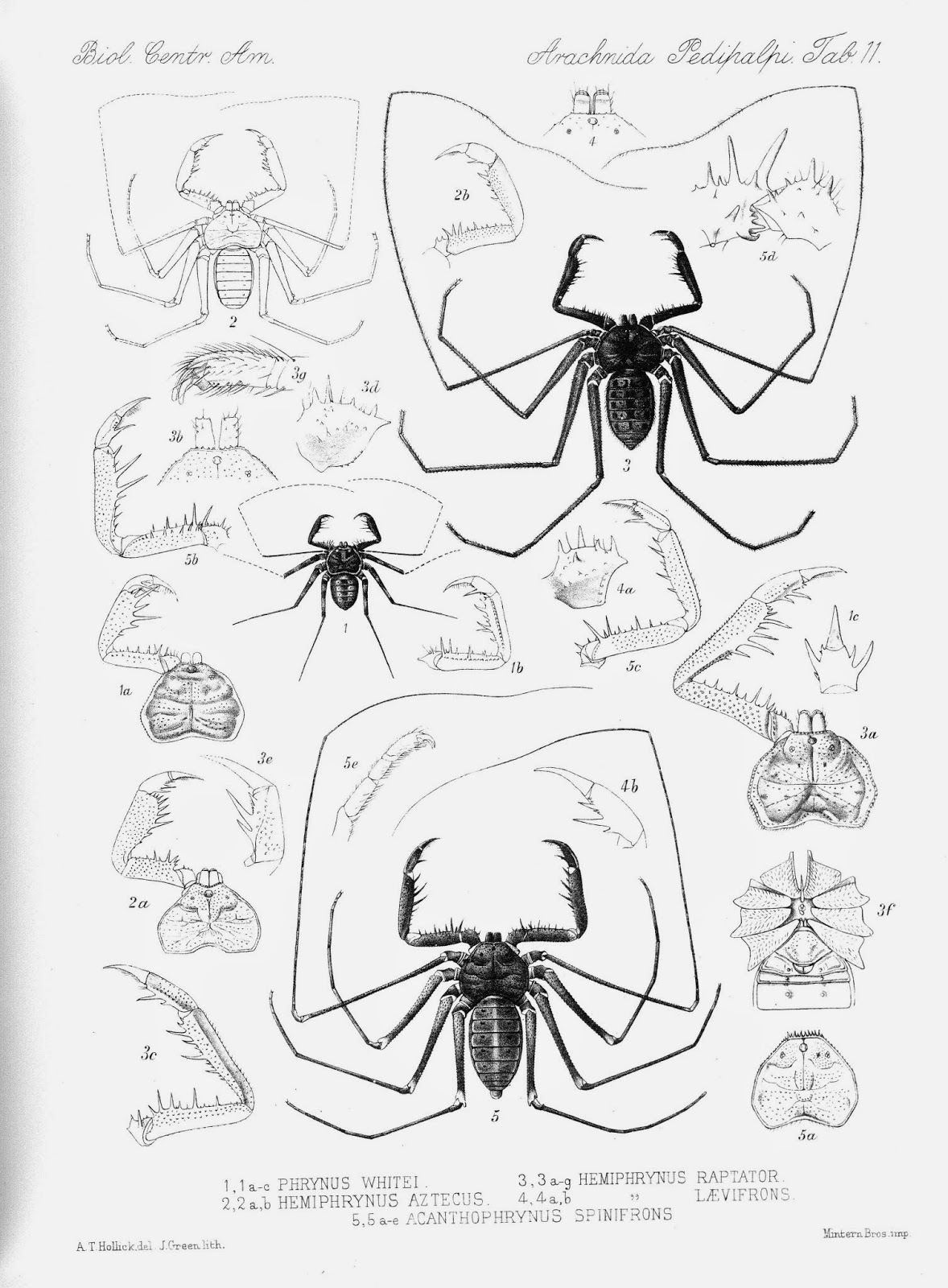
Amblypygids. Biologia-Centrali Americana (1879-1915).
http://biodiversitylibrary.org/page/576412

If you’re not quite ready to make the leap to Arachnid caretaker, you could start by browsing some of the lovely arachnid illustrations in BHL. If you’re feeling too squeamish for that, we hope that at least this post has helped you understand the differences between spiders and Amblypygids. Just because it’s got lots of legs and eyes doesn’t mean it builds a web (…although we’re not sure how much comfort Ron will find in that).

We love the way social media allows us to connect with so many fascinating biodiversity enthusiasts, learn more about earth’s incredibly diverse flora and fauna, and share our own resources in exciting new ways. Connect with us on Twitter, Facebook, or through a blog comment to tell us about your own biodiversity and research experiences!

* Special thanks to Logan Pierce for sharing his expertise, information, and images with us!

September 4, 2014by ulib-libraryjobs
BHL News, Blog Reel

A Global Discussion about Martha, Extinction and Conservation

Thanks to everyone who tuned in for our #Martha100 TwitterChat with @NMNH (National Museum of Natural History) and @SILibraries (Smithsonian Libraries) yesterday! The chat was a commemoration of the death of the last passenger pigeon, Martha (died Sept. 1, 1914), and a discussion on extinction, conservation, and the importance of historic literature to these fields.

We had some fantastic questions and discussions, as well as great contributions from @fieldmuseum, @SmithsonianArch (Smithsonian Archives), @birdernewjersey (aka Rick Wright, a regular guest blogger for BHL), and @SiobhanLeachman (volunteer with the SI Transcription Center).

View Full Size Image

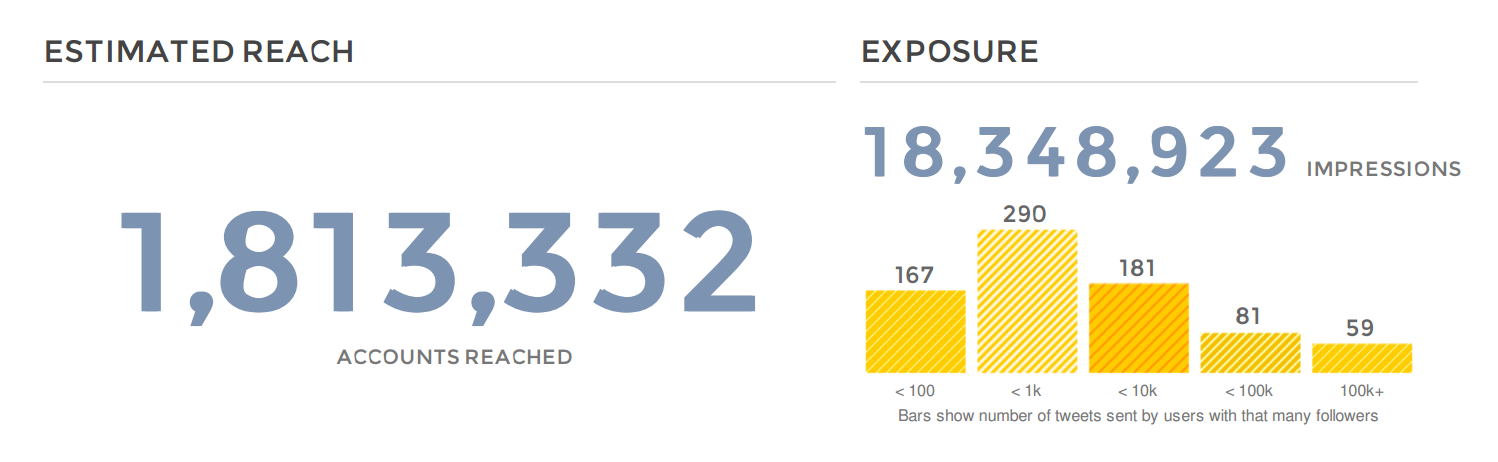
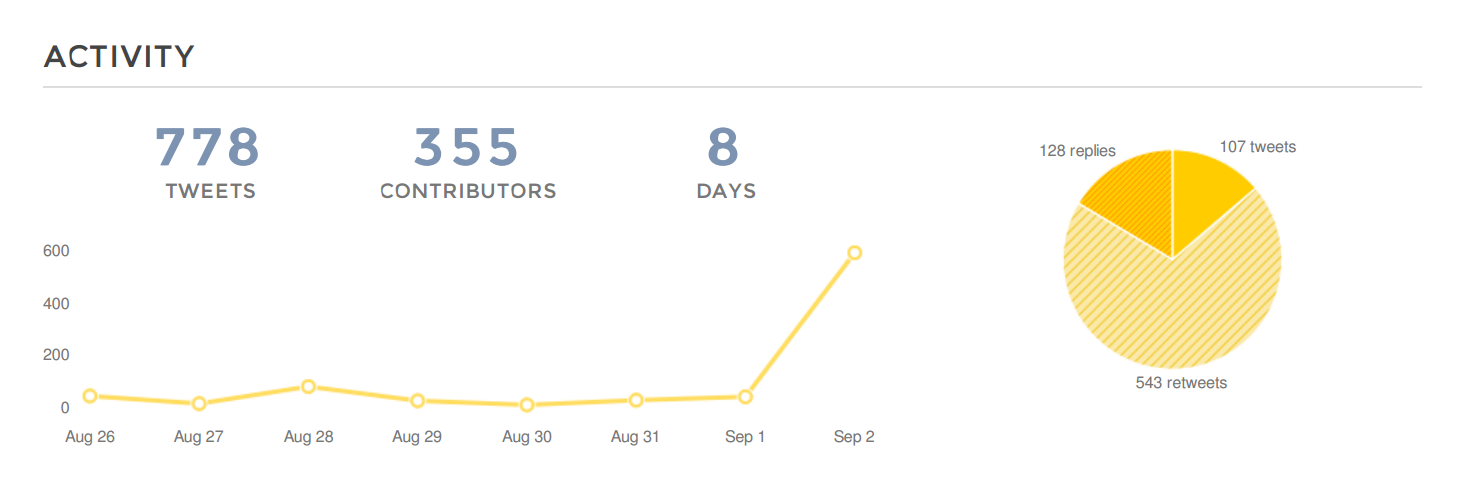
Over 350 people participated in the conversation, which produced over 770 tweets seen by over 1.8 million people! BHL saw a 66% increase in the reach of our tweets and a 240% increase in engagement with users on Twitter during the event as compared with our average daily reach and engagements. This translates to a 92% increase in clicks on links, a 117% increase in retweets, a 103% increase in favorites, and a 650% increase in replies. We also saw an increase in our audience, with a 422% increase in Twitter followers compared to our average daily increase.

View Full Size Image

For a quick snapshot of the conversation, take a look at some of our favorite questions and answers from the TwitterChat:

Q1: @SILibraries: Who was Martha and what is a passenger pigeon?
Answers:
@NMNH: The Passenger Pigeon is an extinct North American pigeon + Martha, the last individual alive, died 9/1/1914
@SILibraries: Passenger Pigeons lived only in North America. @eol has range maps http://ow.ly/B23u5
@BioDivLibrary: Learn more about how the passenger pigeon went extinct http://ow.ly/B25az
@SmithsonianArch: Martha was named after George Washington’s wife!
@SILibraries: Some flocks were thought to contain over 2 billion birds, taking days to pass by.
@SILibraries: How did passenger pigeon get its name? From French passenger, which means to pass by.
@Fezook: Was depletion of numbers below that necessary for migration a main cause of passenger pigeon extinction?
@NMNH: essentially yes; numbers declined because of hunting + habitat loss. They were highly social, probably couldn’t survive in low numbers.
@BioDivLibrary: Passenger Pigeon may have survived commercial slaughter if nesting grounds not destroyed too http://ow.ly/B24Pa

View Full Size Image
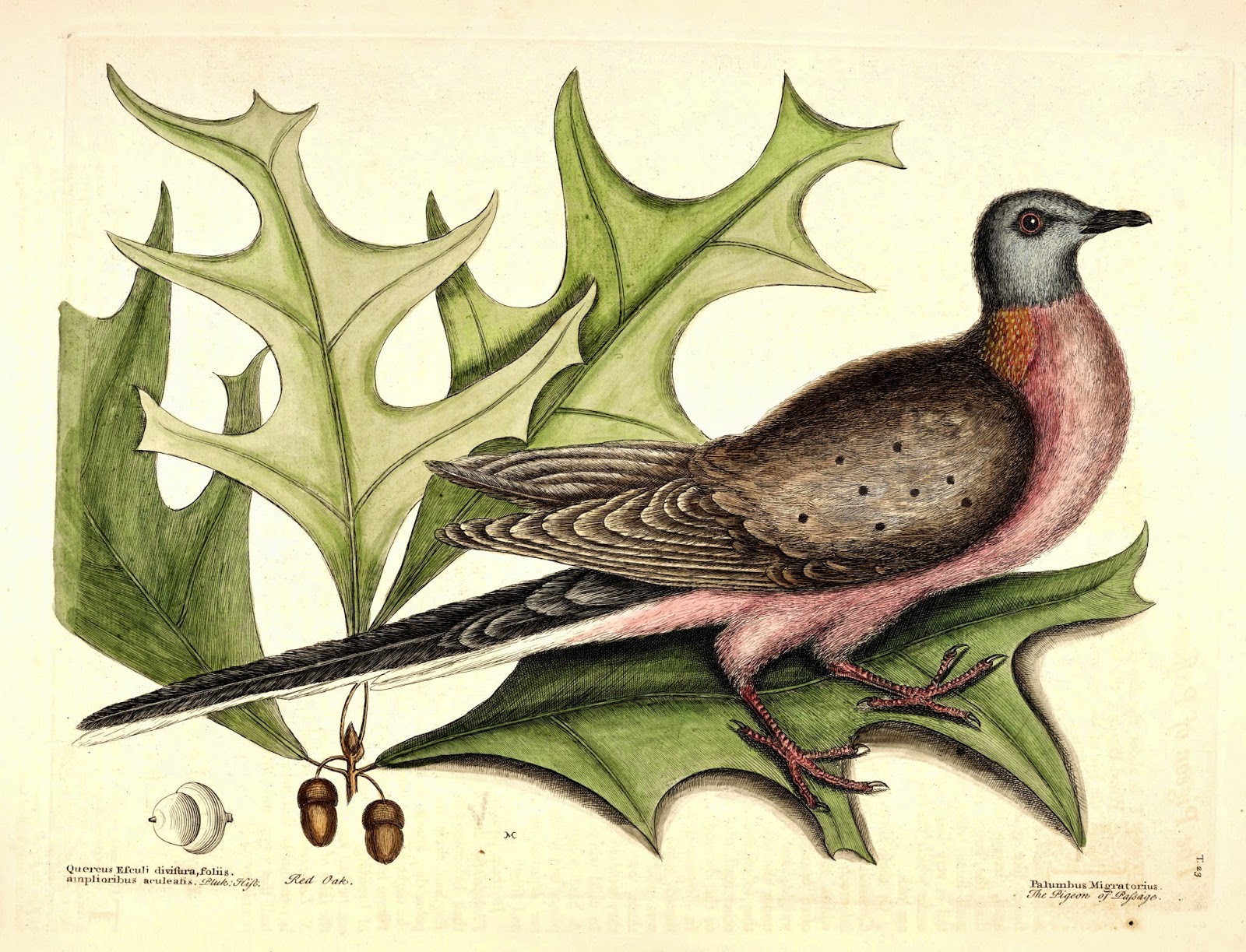
Mark Catesby’s 1754 illustration of the Passenger Pigeon is thought to be the first published depiction of the species. The Natural History of Carolina, Florida, and the Bahama Islands. v. 1. 1754. http://biodiversitylibrary.org/page/10900155

Q2: @SILibraries: How fast are we losing species?
Answers:
@BioDivLibrary: Recent estimates say by as much as 1000x the natural rate http://ow.ly/B21uY
@SILibraries: This article from @SmithsonianMag says 75% of species extinct in next century http://ow.ly/B21Im
@BioDivLibrary: Among terrestrial vertebrates: 322 species extinct since 1500. 25% average decline http://ow.ly/B21ZA
@ROMbiodiversity: and they’ve just announced it might be worse http://ow.ly/B227Z

Q3: @SiobhanLeachman: Was wondering if it was the advent of railroads that helped allow extinction?
Answers:
@BioDivLibrary: Absolutely! Railroads allowed millions to be shipped each year http://ow.ly/B20pt
@BioDivLibrary: Cheap meat, large supply & easy distribution via railroads fueled PP annihilation
@SiobhanLeachman: Assumed it took hunters to PP as well
@birdernewjersey: Yes hotels sprang up at railroad terminus when pigeons were around to be shot
@BioDivLibrary: Telegraph was another tech allowing hunters to know quickly where PP were roosting

View Full Size Image
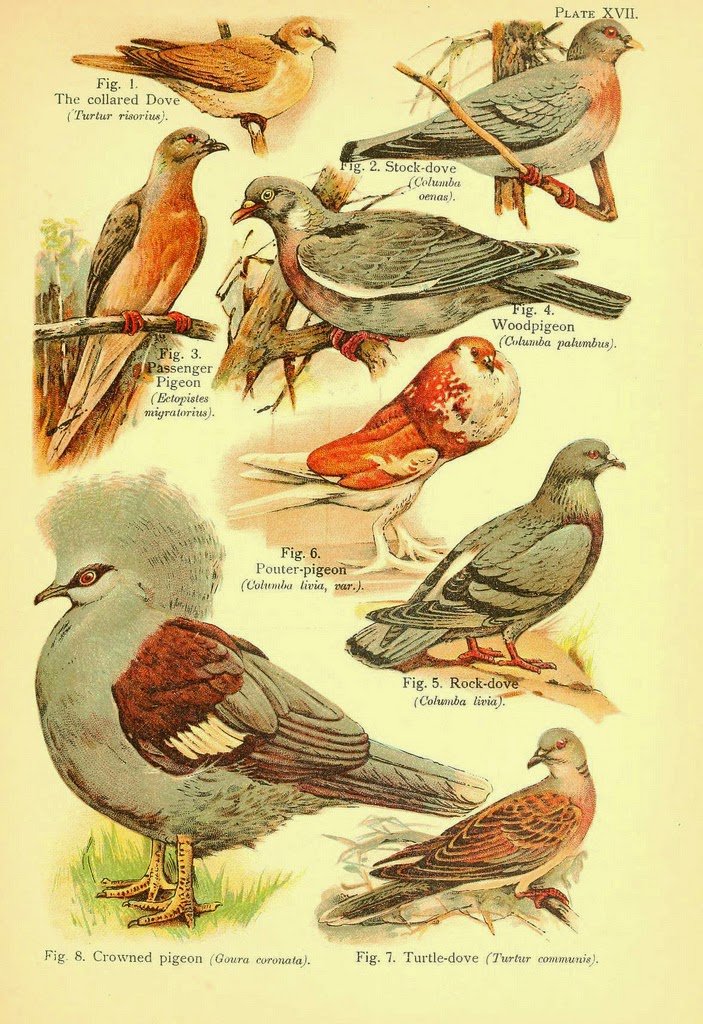
Passenger Pigeon among its relatives. Pycraft, W.P. A Book of Birds. 1908. http://biodiversitylibrary.org/page/13504819

Q4: @SILibraries: What is so important about Taxonomic Literature?
Answers:
@BioDivLibrary: Lit provides record of species and helps scientists identify new species
@BioDivLibrary: Helps track changes in ecosystems & distributions to identify species & habitats to protect
@HsapiensMarissa: Taxonomic lit bridges gaps in understanding of biodiversity concepts so issues can be targeted holistically
@BioDivLibrary: United Nations requires countries to identify/monitor species w/in borders-BHL provides inventories/info
@BioDivLibrary: It also documents extinct species and their life, morphology, and phylogeny
@SILibraries: How does BHL helps scientists in remote countries?
@BioDivLibrary: BHL provides #openaccess to info on species anywhere/everywhere, even if no access to libraries http://ow.ly/B22xt 
@birdernewjersey: Not just in remote countries: I’d hate to go to the library every time I needed to look something up #badolddays

If you missed the chat, or want to see some of the discussions again, you can see the conversations via Storify. Thanks to everyone who participated! It was a great educational and collaborative event!

Learn more about the passenger pigeon and North American bird extinction, and see Martha, the last passenger pigeon, in the joint SIL/BHL exhibit Once There Were Billions at NMNH. Check out images of the Passenger Pigeon and other extinct birds and view Martha’s autopsy in BHL.

Be sure to follow BHL on Twitter for more great biodiversity and literature content and information!

September 3, 2014by ulib-libraryjobs
Blog Reel

Welcoming Grace Costantino, BHL Outreach and Communication Manager

View Full Size Image
Grace Costantino, BHL Program Manager. Image Credit: MYH Photography.

We are pleased to announce that Grace Costantino has joined BHL as our new Outreach and Communication Manager!

Grace is no stranger to BHL. She started with the project back in 2008 as a BHL Librarian at the Smithsonian Libraries, after which she served as the BHL Program Manager from 2012-2013. Over her years on BHL, she has helped shape the program’s digitization workflow, assisted in the implementation and administration of the user feedback system, facilitated strategic planning efforts, organized evaluation and reporting policies, spearheaded marketing and promotional activities, performed financial administration, and developed and managed BHL’s outreach and communication strategy.

In her new capacity, Grace will further refine BHL’s outreach strategy, expand social media initiatives, supervise marketing and promotional activities, and engage with the public to excite audiences about the wealth of biodiversity heritage and knowledge available in BHL while also educating them about its critical importance to modern scientific, conservation, and informatics efforts.

View Full Size Image
Grace with her husband, Justin, and their dog, Jack.
Image Credit: MYH Photography.

Grace received her BA in Studio Art, Graphic Design, and Art History, as well as her Master’s degree in Information Systems and Management, from the University of Maryland, College Park. She currently resides in Crofton, Maryland, with her husband, Justin (a middle school art teacher), and their dog, Jack. Her hobbies include drawing, painting, reading, writing fiction, watching fantasy and sci-fi movies, and traveling. She hopes to one day travel to every US state and continent. She has 21 states and 4 continents to go…Come on BHL-Antarctica!

View Full Size Image The BHL Outreach and Communication Manager position is part of the BHL Secretariat, housed at the Smithsonian Libraries. The position is made possible in part through funding from the Institute of Museum and Library Services (Grant number LG-00-14-0032-14).
June 26, 2014by ulib-libraryjobs
BHL News, Blog Reel

BHL’s Latest News!

View Full Size Image
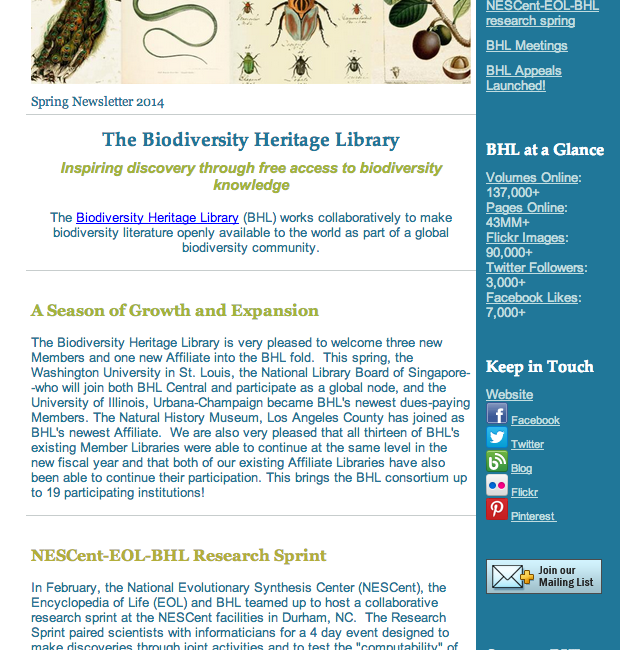
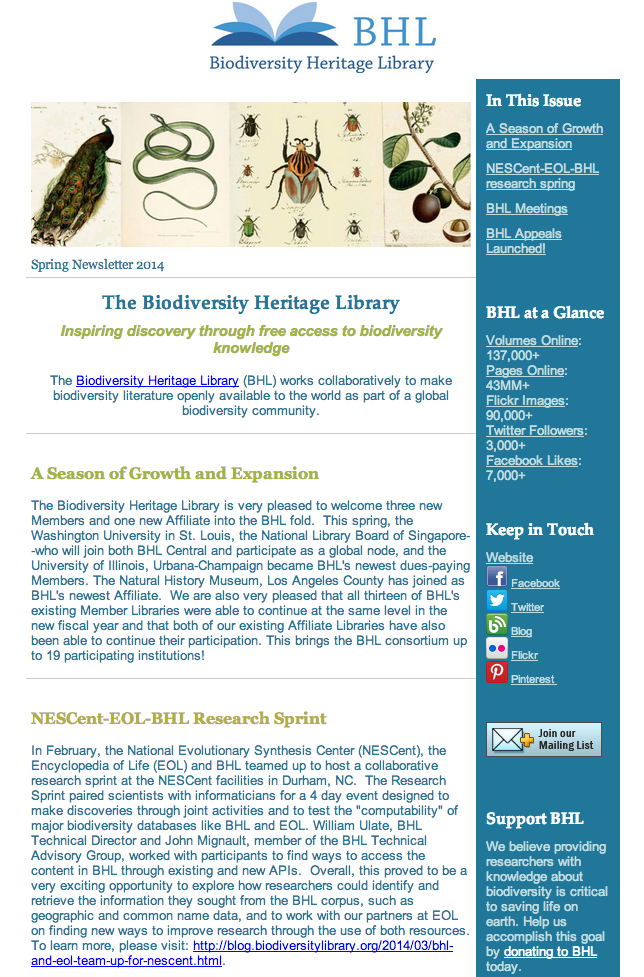
BHL Spring 2014 Newsletter

The last several months have been an intense and exciting period of growth and expansion for BHL. Not only has the steady growth of collections continued but BHL as an organization has been growing as well. In the first two quarters of fiscal year 2014, three new Members and one new Affiliate joined BHL-Central. BHL’s global presence is expanding as well with one of those new Members also participating as a global node.

To learn more about each of the new BHL Members and Affiliate and what BHL has been up to across the globe, check out BHL’s latest newsletter and quarterly report. Covering both Quarter 1 and Quarter 2 of Fiscal Year 2014, the latest report also includes updates on BHL meetings and collaborations as well as collections, usage, and financial updates.

Enjoy!


View Full Size Image
BHL Quarterly Report, Q1 and Q2, FY2014
May 15, 2014by sayeedmd
Page 3 of 5« First...«2345»

Help Support BHL

BHL's existence depends on the financial support of its patrons. Help us keep this free resource alive!

search

About BHL

The Biodiversity Heritage Library (BHL) is the world’s largest open access digital library for biodiversity literature and archives. BHL operates as a worldwide consortium of natural history, botanical, research, and national libraries working together to digitize the natural history literature held in their collections and make it freely available for open access as part of a global “biodiversity community.”

Join Our Mailing List

Sign up to receive the latest news, content highlights, and promotions.

Subscribe Now

Subscribe to Blog via Email

Enter your email address to subscribe to this blog and receive notifications of new posts by email.

Join 319 other subscribers

Subscribe to Blog Via RSS

Subscribe to the blog RSS feed to stay up-to-date on all the latest BHL posts.

Access RSS Feed

Inspiring Discovery through Free Access to Biodiversity Knowledge.

The Biodiversity Heritage Library makes it easier than ever for you to access the information you need to study and explore life on Earth…for free, anytime, anywhere.


ABOUT | HARMFUL CONTENT | PRIVACY | SITE MAP | TERMS OF USE