

Biodiversity Heritage Library - Program news and collection highlights from BHL
  • Home
  • News
  • Featured Books
    • All Featured Books
    • Book of the Month Series
    • BHL at 20
  • User Stories
  • Campaigns
    • Fossil Stories
    • Garden Stories
    • Monsters Are Real
    • Page Frights
    • Her Natural History
    • Earth Optimism 2020
  • Tech Blog
  • Visit BHL
Home
News
Featured Books
    All Featured Books
    Book of the Month Series
    BHL at 20
User Stories
Campaigns
    Fossil Stories
    Garden Stories
    Monsters Are Real
    Page Frights
    Her Natural History
    Earth Optimism 2020
Tech Blog
Visit BHL
  • Home
  • News
  • Featured Books
    • All Featured Books
    • Book of the Month Series
    • BHL at 20
  • User Stories
  • Campaigns
    • Fossil Stories
    • Garden Stories
    • Monsters Are Real
    • Page Frights
    • Her Natural History
    • Earth Optimism 2020
  • Tech Blog
  • Visit BHL
Biodiversity Heritage Library - Program news and collection highlights from BHL
BHL News, Blog Reel

A Compelling Decade: Reviewing our Progress at the BHL Staff Meeting

Portrait version of the Biodiversity Heritage Library logo.

Eight years ago I attended my first Biodiversity Heritage Library staff meeting at the Missouri Botanical Garden, and it was there I was asked to report at the meeting on what I thought the philosophy behind a project to build a global freely accessible online biodiversity library was. My thoughts at that time hovered somewhere around deeply idealistic and altruistic ideas having to do with like-minded libraries collaborating to make the foundation of legacy scientific literature, then accessible only to few, accessible to all. These ideas also related to the growing open access movement. When funding for BHL became available, this type of idealism helped fuel the development of the long-term dynamic form and function of the BHL.
View Full Size Image
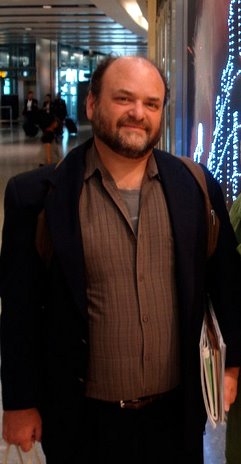
Matthew Person, MBLWHOI Library. Author of this blog post.

I recently thought back to that 2007 BHL meeting in St. Louis as I prepared to attend the BHL Staff Meeting held at the Smithsonian Institution in Washington DC, on November 12-13 2015. After years of working as a BHL staff member (we originally called ourselves worker bees!), at this staff meeting I needed to find compelling reasons for us to continue the unfinished work of developing and increasing the sustainability of our freely accessible library of legacy biodiversity content. It was a privilege to be at the Smithsonian to once again meet up with colleagues from sister institutions like Chicago’s Field Museum, Harvard University’s Museum of Comparative Zoology and Botany Department, the Royal Botanic Gardens at Kew, the Bibliotheca Alexandrina, and the distinguished Natural History Museums in New York City, Washington DC, and London…just to name some of the natural history institutions represented at this meeting.
View Full Size Image
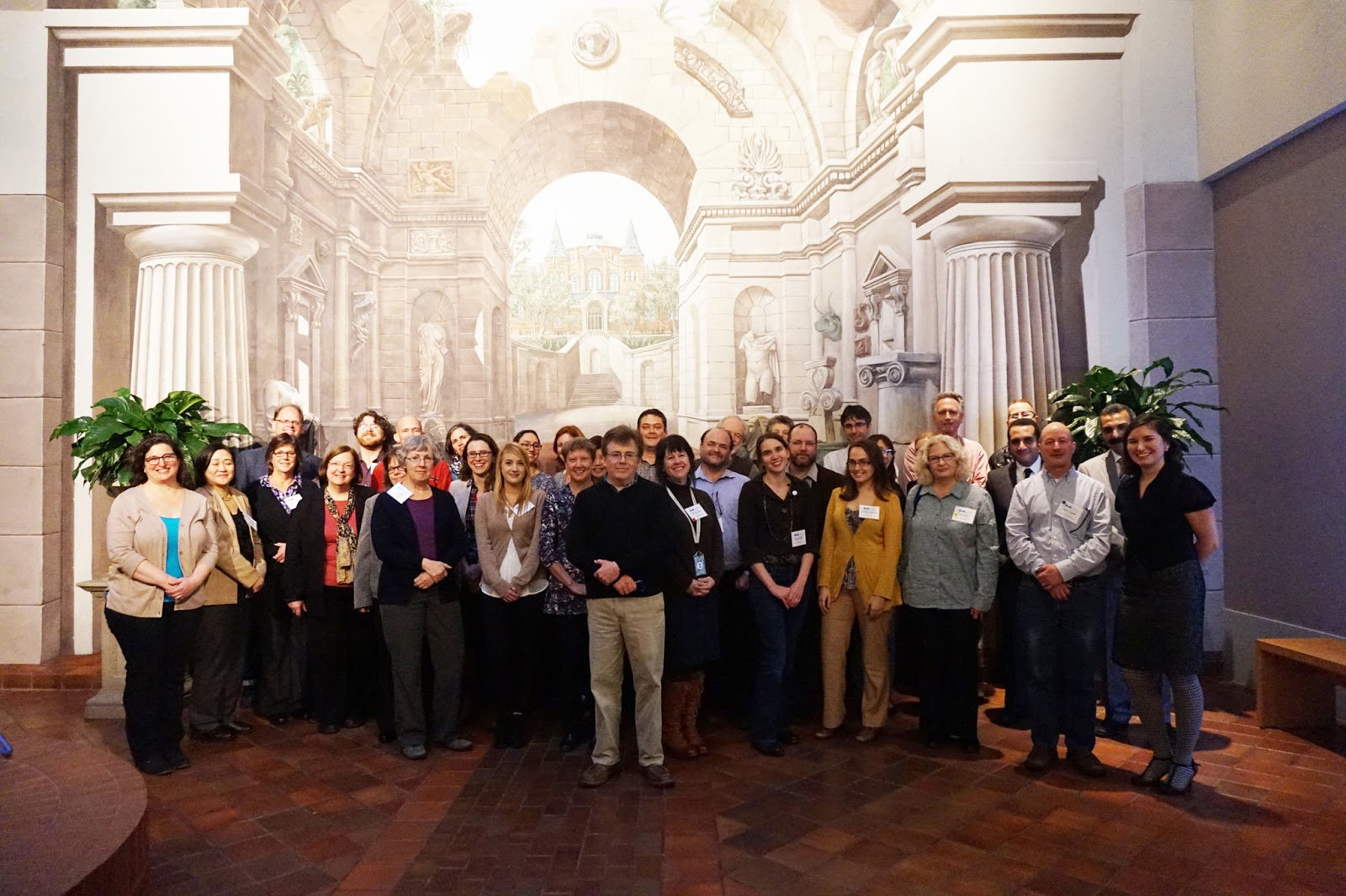
BHL Staff at the 2015 BHL Staff Meeting at the Smithsonian Institution in Washington, D.C. Photo: Martin Kalfatovic.

The hands-on portion for the staff of this project began in 2007 when we first physically explored and analyzed the volumes filling the library stacks of our institutions, selecting materials, preparing those materials for scanning, having them scanned, and transferring the files first to our scanning partner the Internet Archive and then on to the newly developed BHL web portal. This entire process has been improved through successive generations of technological developments, transparent project administration, commitments across the board from the administrations of the BHL Partners and Affiliates, as well as the generous support of many funding agencies and foundations.
View Full Size Image
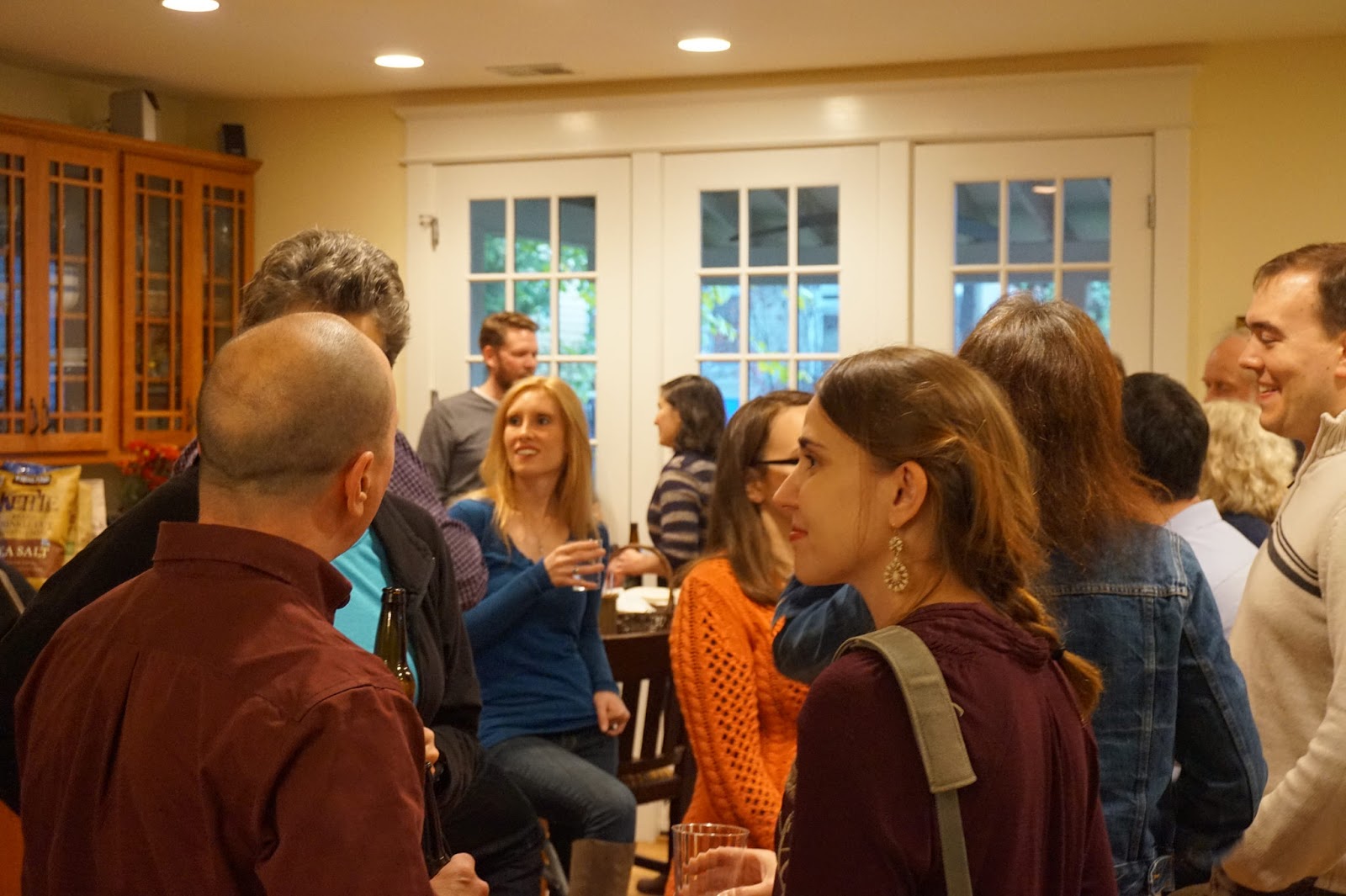
Gathered for a pre-meeting dinner at Smithsonian Libraries’ Metadata Librarian Suzanne Pilsk’s house. Photo: Martin Kalfatovic.

As our staff meeting at the Smithsonian progressed, I looked for and found many compelling reasons for our project to move ahead. Foremost of these reasons and the cornerstone of any organization of course, is its staff. Our BHL Library Staff is a cooperative, intelligent, and forward thinking group of librarians and technical development experts. Seeing my BHL colleagues is like meeting up with old friends and dear coworkers who have the highest respect for each other, because we have worked so successfully as a team for nearly an entire decade.

The BHL Staff is no longer at the foot of a mountain at the beginning of an epic hike to the peak, as we were in 2007. It could be said we have scaled the mountain and have discovered that our plan has been sound. The BHL vision statement, “Inspiring discovery through free access to biodiversity knowledge,” has created a global horizon for us. Our online library holds over 170,000 scanned volumes – linked to digital tools which give legacy biodiversity literature as much power as newly published electronic content. The scientific literature content of our library is being given even more power by our technical team, who makes sure our metadata “knows” how to speak with databases and tools outside of the BHL, whereby more scholars and other library users will encounter more links to the literature in our library in more places.
View Full Size Image
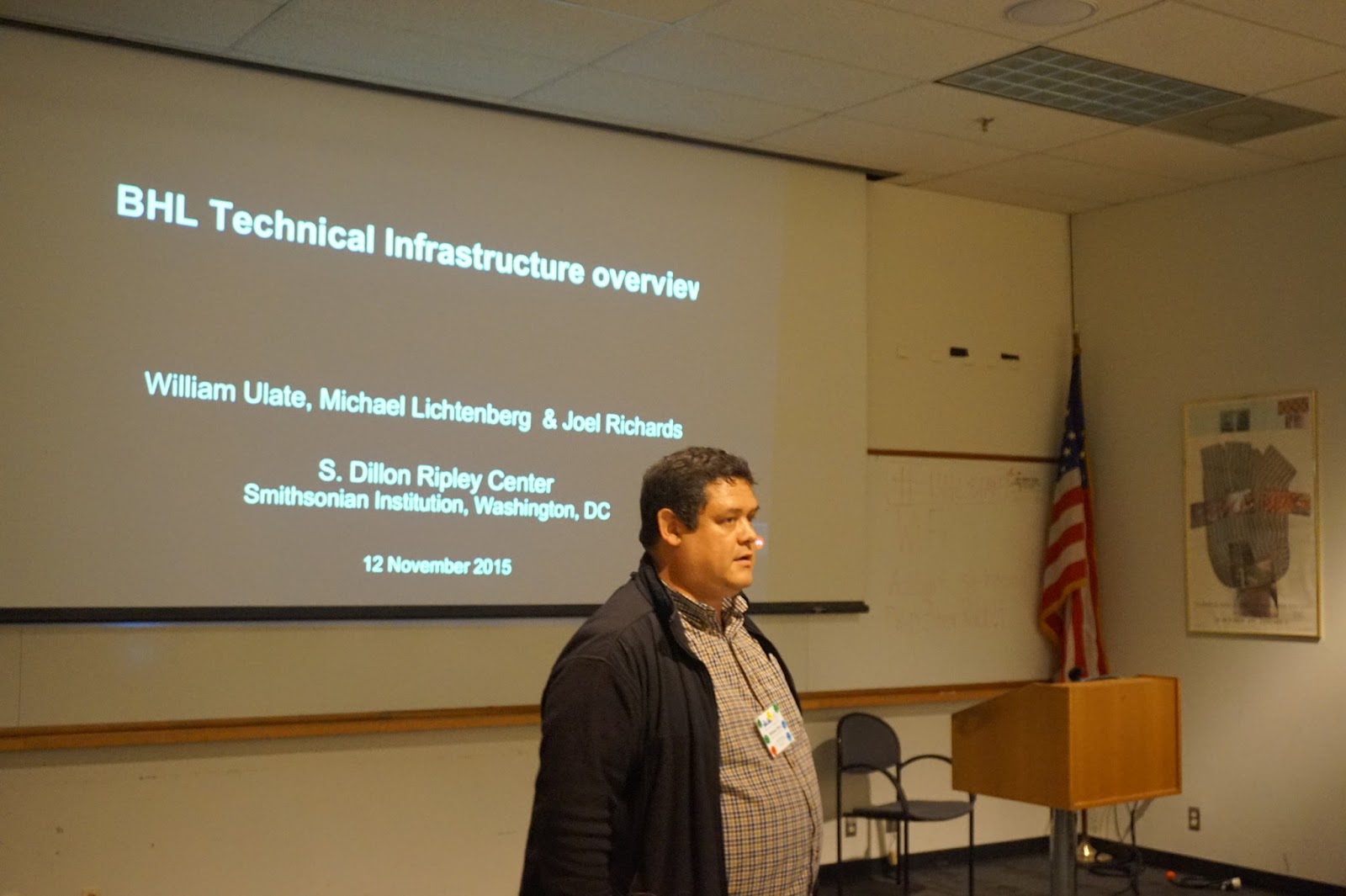
William Ulate, BHL Technical Director. Photo: Martin Kalfatovic.

During the meeting we listened to a review of the last 10 years of the BHL by Program Director Martin Kalfatovic and a technical overview of the architecture of BHL by Technical Director William Ulate. We completed an enumeration and analysis of all the tasks performed by BHL staff members, directed by Martin Kalfatovic, Smithsonian Librarian Keri Thompson, and BHL Secretariat Staff members Grace Costantino, Carolyn Sheffield, and Bianca Crowley, during which we gave ourselves a report card on how well we have done and brainstormed on how to better meet the needs of our Biodiversity Heritage Library users now and in the future. We also shared a number of delicious meals and many conversations over the course of a couple of days.
View Full Size Image
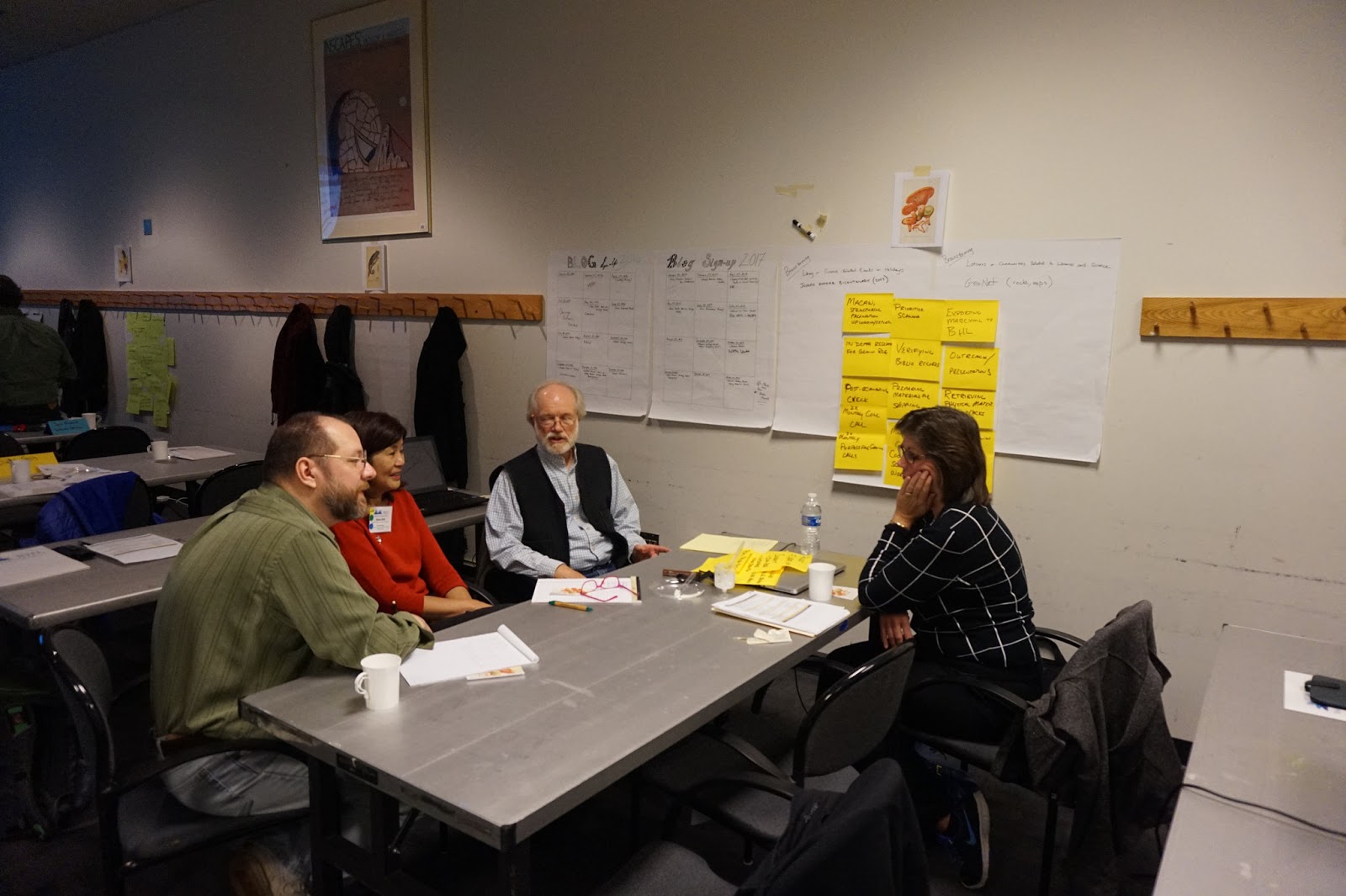
Small group brainstorming for analysis of tasks performed for BHL. Left to Right: Randy Smith (Missouri Botanical Garden, Peter H. Raven Library), Diana Shih (American Museum of Natural History Library); Marty Schlabach (Cornell University Library); Cathy Buckwalter (Academy of Natural Sciences of Drexel University, Library and Archives). Photo: Martin Kalfatovic.

Much like the first BHL meeting I attended, when the group adjourned we left with agreed upon follow-up tasks, comfortably knowing within a short period of time we’d be back in touch again via our regularly-held conference call meetings. The philosophy behind the concept of the BHL remains the same for me as it was almost a decade ago: we’re a global collaboration, working to ensure that the world’s legacy and select current biodiversity literature is accessible, usable, and sustainable. You can’t get any more compelling than that!

November 24, 2015by ulib-libraryjobs
BHL News, Blog Reel

Two Cities Named Cambridge and One Library Named the Biodiversity Heritage Library

Portrait version of the Biodiversity Heritage Library logo.

Last week the BHL Librarian and Technical Staff met at Harvard University in Cambridge, Massachusetts, for one of our invaluable staff meetings (our last face to face meeting was about one year ago right after the BHL Chicago Life and Literature Conference.)  These meetings are always lively and packed full of agenda items that we generate during our monthly teleconference calls…and usually a memorable meal or some cultural event are also included! After each of these meetings we return to our home libraries laden down with an armful of tasks to complete within a specific timeframe (which we try to stick to!). Check back soon for a post about the Meeting.

View Full Size Image
Matthew Person

A month ago one of our librarians, Matthew Person of the MBLWHOI Library in Woods Hole, Massachusetts, was given the unique opportunity to speak about the BHL to Science Historians and digital media specialists who were meeting in the other Cambridge: that’s Cambridge University in England! Matt was attending the 9th Digital History and Philosophy of Science Workshop at Cambridge University as a member of the Arizona State University/Marine Biological Laboratory History and Philosophy of Science Program of MBL’s Center for Library and Informatics.

The opening day afternoon of the Cambridge UK conference was themed “If you build it will they come? Mobilizing online Communities for Research.” Matt was asked by Dr. Alison Pearn, who is Associate Director of the Darwin Correspondence Project, if he would give a presentation about BHL’s social media work, our use of crowd sourcing, and games development, all which assist our BHL development. The presentation Matt gave was titled “Building a large digital library and interacting with the World”, and this was just one of a number of interesting presentations made that day by staff of: The Genizah Project (Dr. Ben Outhwaite of Cambridge University), the oldWeather Project (Dr. Philip Brohan of the MetOffice UK), and the Chymistry of Issac Newton Project (Dr. Wally Hooper of Indiana University), to name just a few of about 20 projects and presenters who spoke during the 3 day workshop.

Matt consulted with BHL colleagues Gilbert Borrego, Grace Costantino, Suzanne Pilsk, and Martin Kalfatovic of the Smithsonian Institution Libraries, Diane Rielinger and Cathy Norton of the MBLWHOI Library, Trish Rose-Sandler and Chris Freeland of the Missouri Botanical Garden, and Connie Rinaldo of the Harvard Museum of Comparative Zoology, in preparation for his BHL talk, the first part of which was a concise account of the purpose, history, and function of the BHL. The second part of the talk detailed our working with the tools of social media websites such as facebook, twitter, and flickr, and our daily use of an issue resolution tool informed by our BHL library users called Gemini. Matt also spoke of our thoughts on the development of a mobile device type of game App, which could assist us with scanned text correction, for example.*

The Biodiversity Heritage Library goes beyond being a virtual biodiversity library serving scholars and citizen scientists. Our work on Flickr isolates some of the remarkable corpus of illustrations in the scanned BHL literature, and works with our partner the Encyclopedia of Life to hold flickr tagging events to have the “crowd sourced” community establish appropriate descriptive metadata for the illustrations so that they can be uploaded to EOL species pages. Our work in social media is dynamic, ongoing and developing, and the talk Matt gave at the Digital History and Philosophy of Science Workshop in Cambridge, UK, was well received by scholars and technicians who both use the BHL and have wondered a bit about what’s behind those 39 million+ scanned pages!

The image of a science historian or any scholar working solely in print materials these days is being replaced by dynamic projects that combine digital versions of scanned historic text with the most advanced computational and visualization tools of the day. Many of these tools have been developed by the BHL partner libraries, and many are also being developed by the History and Philosophy of Science community. This work expands dramatically the scope and depth of the study of the history of science.

We asked Matt, who lives near Cambridge, Massachusetts, to comment on these two cities which figured in BHL life this September…named Cambridge…the one in Massachusetts and the other in England. He told us, “Both cities named Cambridge are relatively small in size, but huge in scholarly content; both cities have bucolic riverside settings, and also are on the forefront of knowledge creation, and have been so for centuries.” So it’s quite appropriate that in September 2012 both historic cities named Cambridge figured in the life of the historic and ground breaking Biodiversity Heritage Library!

* BHL is not, at this time, performing any development with gaming Apps, though we are exploring the possibility of doing so one day.

October 3, 2012by ulib-libraryjobs

Help Support BHL

BHL's existence depends on the financial support of its patrons. Help us keep this free resource alive!

search

About BHL

The Biodiversity Heritage Library (BHL) is the world’s largest open access digital library for biodiversity literature and archives. BHL operates as a worldwide consortium of natural history, botanical, research, and national libraries working together to digitize the natural history literature held in their collections and make it freely available for open access as part of a global “biodiversity community.”

Join Our Mailing List

Sign up to receive the latest news, content highlights, and promotions.

Subscribe Now

Subscribe to Blog via Email

Enter your email address to subscribe to this blog and receive notifications of new posts by email.

Join 319 other subscribers

Subscribe to Blog Via RSS

Subscribe to the blog RSS feed to stay up-to-date on all the latest BHL posts.

Access RSS Feed

Inspiring Discovery through Free Access to Biodiversity Knowledge.

The Biodiversity Heritage Library makes it easier than ever for you to access the information you need to study and explore life on Earth…for free, anytime, anywhere.


ABOUT | HARMFUL CONTENT | PRIVACY | SITE MAP | TERMS OF USE