Biodiversity Heritage Library - Program news and collection highlights from BHL
  • Home
  • News
  • Featured Books
    • All Featured Books
    • Book of the Month Series
    • BHL at 20
  • User Stories
  • Campaigns
    • Fossil Stories
    • Garden Stories
    • Monsters Are Real
    • Page Frights
    • Her Natural History
    • Earth Optimism 2020
  • Tech Blog
  • Visit BHL
Home
News
Featured Books
    All Featured Books
    Book of the Month Series
    BHL at 20
User Stories
Campaigns
    Fossil Stories
    Garden Stories
    Monsters Are Real
    Page Frights
    Her Natural History
    Earth Optimism 2020
Tech Blog
Visit BHL
  • Home
  • News
  • Featured Books
    • All Featured Books
    • Book of the Month Series
    • BHL at 20
  • User Stories
  • Campaigns
    • Fossil Stories
    • Garden Stories
    • Monsters Are Real
    • Page Frights
    • Her Natural History
    • Earth Optimism 2020
  • Tech Blog
  • Visit BHL
Biodiversity Heritage Library - Program news and collection highlights from BHL
Blog Reel, User Stories

How the BHL Makes Little Brown Beetle Species Discovery Easier

There are more described species of beetles (order Coleoptera) than any other group of organisms on the planet. With over 350,000 described extant and extinct species and subspecies, beetles represent about 40% of all described arthropods and about 25% of all described species [1,2].
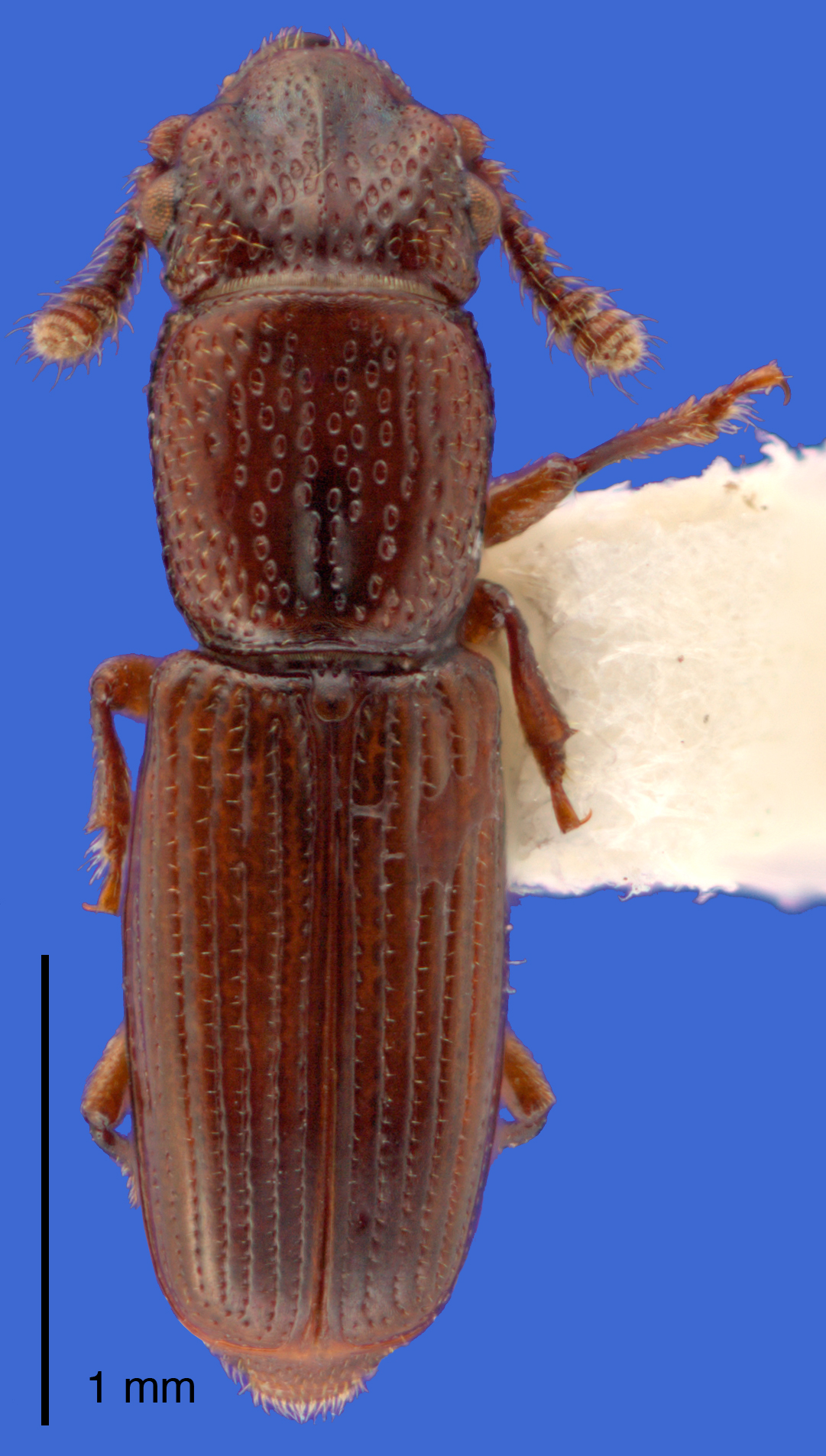
Europs frontalis (Grouvelle, 1896), a monotomid beetle from Chile described by Antoine Henri Grouvelle in the Annales de la Société entomologique de France. Photo by TC McElrath.

One of the myriad families of beetles is Monotomidae, with over 250 described species [3]. Commonly called minute clubbed beetles, the family includes such species as Europs frontalis (found only in south temperate forests of Argentina and Chile) and Pycnotomina cavicolle (found exclusively in forested regions of eastern North America).

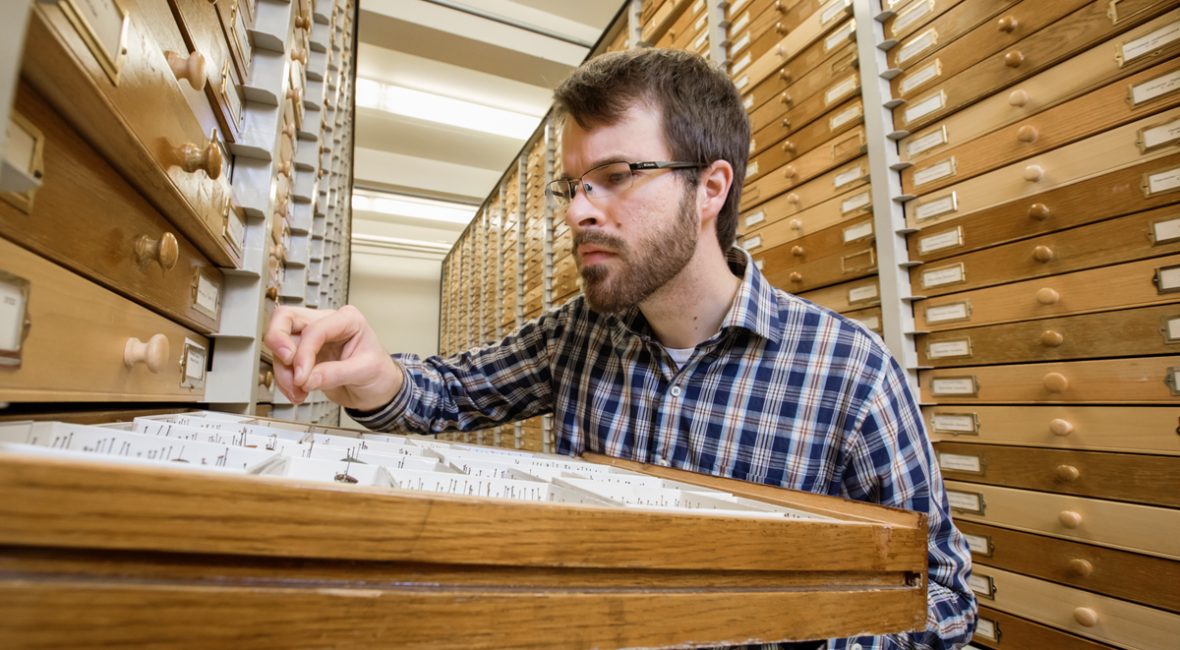
Dr. Thomas McElrath, Insect Collections Manager at the Illinois Natural History Survey, has been studying the systematics of Coleoptera for nine years. He is currently working on compiling a worldwide checklist of the Monotomidae. The Biodiversity Heritage Library is a crucial resource for his research on this project.

“The BHL is an integral research tool for beetle systematists like me. I absolutely love it. It has saved me time, money, and resources,” lauds McElrath. “Most of the older, obscure literature I need to reference to study the taxonomy of beetles is now available from the BHL. Soon, I hope to have a worldwide checklist available for the Monotomidae, thanks, in part, to the resources available on the BHL.”
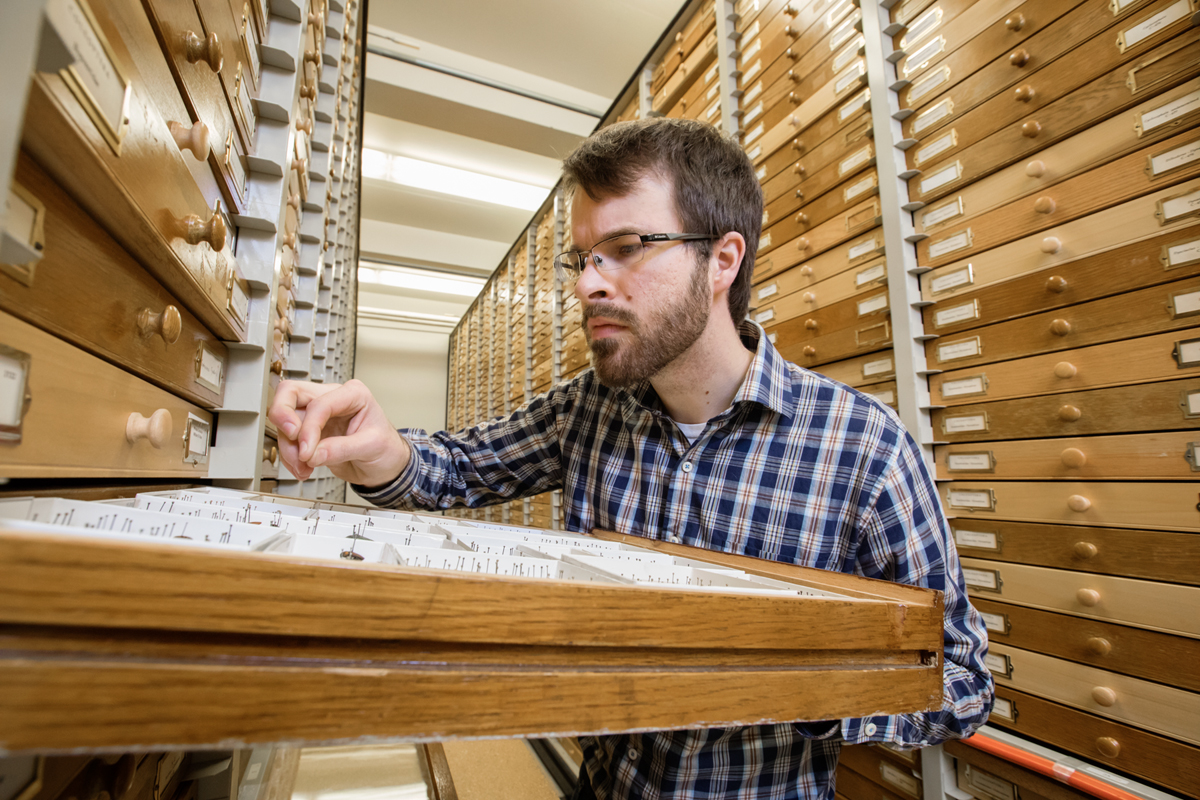
Dr. Thomas McElrath in the Illinois Natural History Survey Coleoptera Collection. Photo by L. Brian Stauffer.

McElrath first discovered BHL around 2011, and it soon became an essential research tool, particularly during his PhD, when it was not uncommon for him to use the Library multiple times a day in search of older publications and species descriptions.

“Without BHL, my PhD would have taken much longer, and I wouldn’t have been able to do as much as I did within the time period available to me,” explains McElrath. “It saved me hundreds of hours of library research, interlibrary loan requests, and scanning.”

Today, McElrath still uses BHL daily to weekly, typically downloading whole or custom PDFs to support his research on the Monotomidae. The Library allows him to access relevant materials in a variety of languages quickly and easily.

“Without BHL, finding all the the species descriptions in American, German, French, and Italian taxonomic journals would have been much harder,” affirms McElrath. “My advisor always told me I had it ‘too easy’ with BHL, and that in his day they would have to beg for reprints from colleagues all around the world, which sometimes took months to arrive. Now, I just log onto BHL and download a high quality scan for free. It’s really amazing.”

McElrath also views BHL as a great way for institutions to share collections-related information. To that end, the Illinois Natural History Survey (INHS), in collaboration with BHL Member the University of Illinois at Urbana-Champaign (UIUC), has started uploading accession logs related to collections in the INHS to BHL.
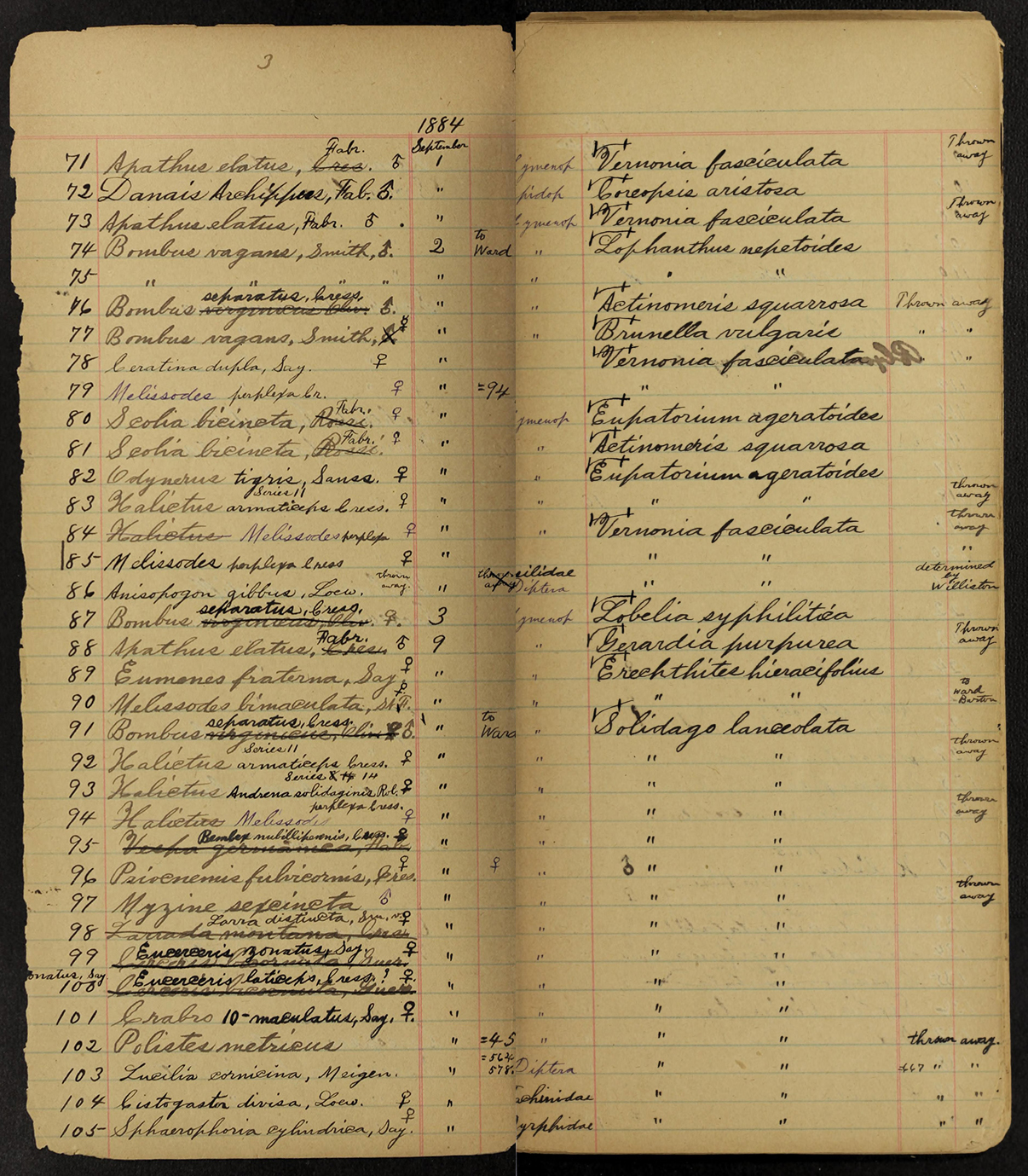
Page from Specimen Collection Logs of Charles Robertson. Contributed in BHL from University Library, University of Illinois Urbana Champaign.

For example, the Specimen Collection Logs of Charles Robertson document insect specimens collected by Robertson, providing information such as specimen number, scientific names, sex of specimen, date of collection, locality, insect order, host plant scientific name, and notes. The logs, now available on BHL, are held in the Archives of UIUC, while the corresponding specimens are held by INHS.

“My museum and institutional library have used BHL to host scans of our accession logs so that researchers can access them from around the world, alongside our already digitized specimens,” explains McElrath. “I would love to see more institutions and individuals put their field notes and accession logs on the BHL for others to access.”

Thanks to recent initiatives such as the BHL Field Notes Project and the Smithsonian Field Book Project, over 6,000 field notes, correspondence, and related archival materials have been made available in BHL, with more being added regularly. These materials serve as unique primary source documents and provide valuable context for and data around specimens, collecting events, and the activities, observations, and personal notes of individual researchers. Thanks to their availability on BHL, researchers across the globe can easily access this valuable information.
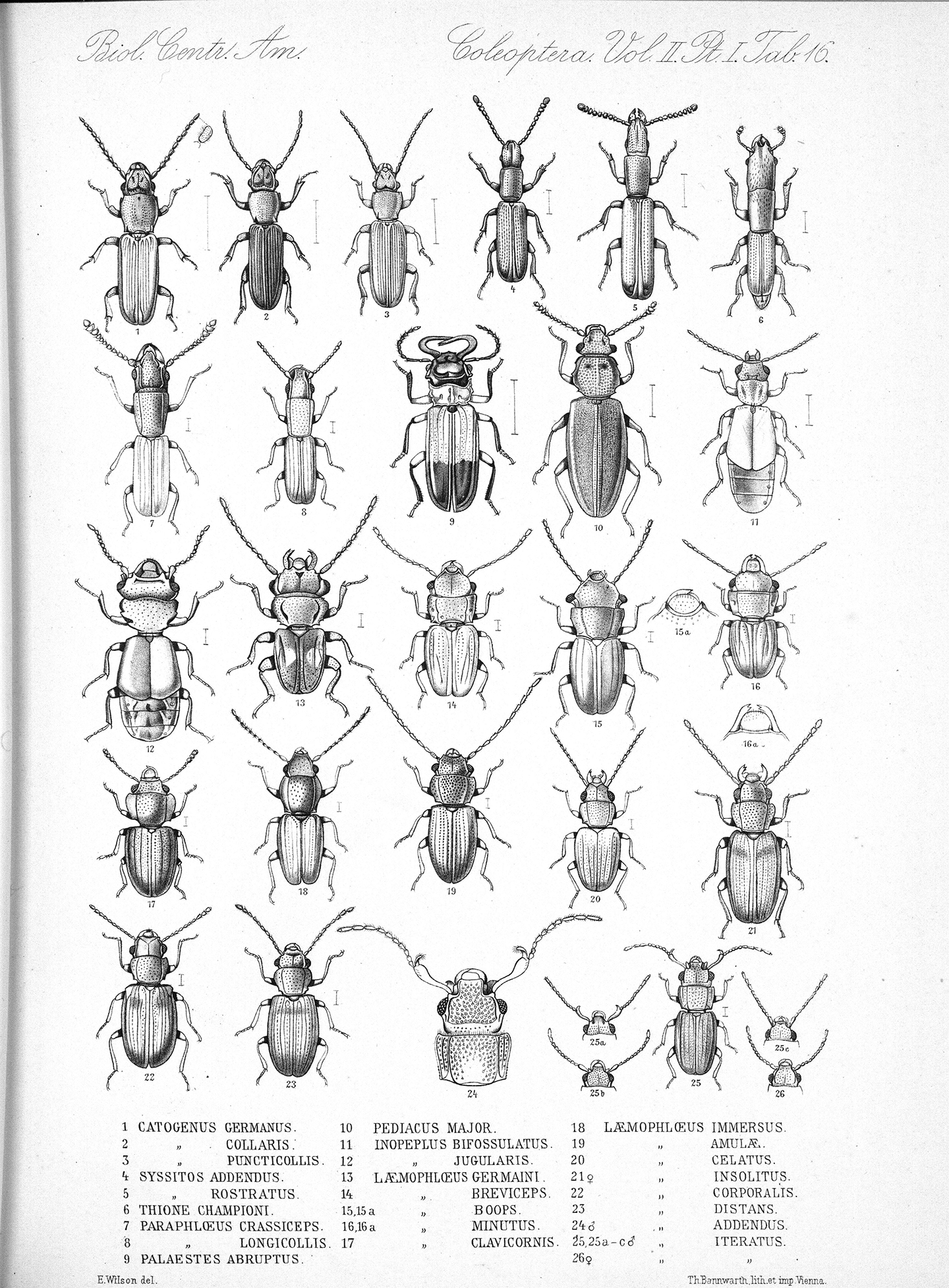
The Biologia Centrali-Americana was published around the turn of the century and describes several unique monotomids, including Thione championi, figured at top right of this page. Contributed in BHL from Smithsonian Libraries.

Beyond supporting research activities, McElrath also appreciates the wealth of illustrations available from BHL. Since 2011, BHL has been uploading the scientific illustrations found within the collection to Flickr, making it easier for anyone to explore and download these images, which are valuable both as scientific documents and works of art.

“My wife and I also download high resolution plates of cool biodiversity (insects, plants, etc.) from the BHL Flickr page and use them to make prints for decorating our house,” shares McElrath.
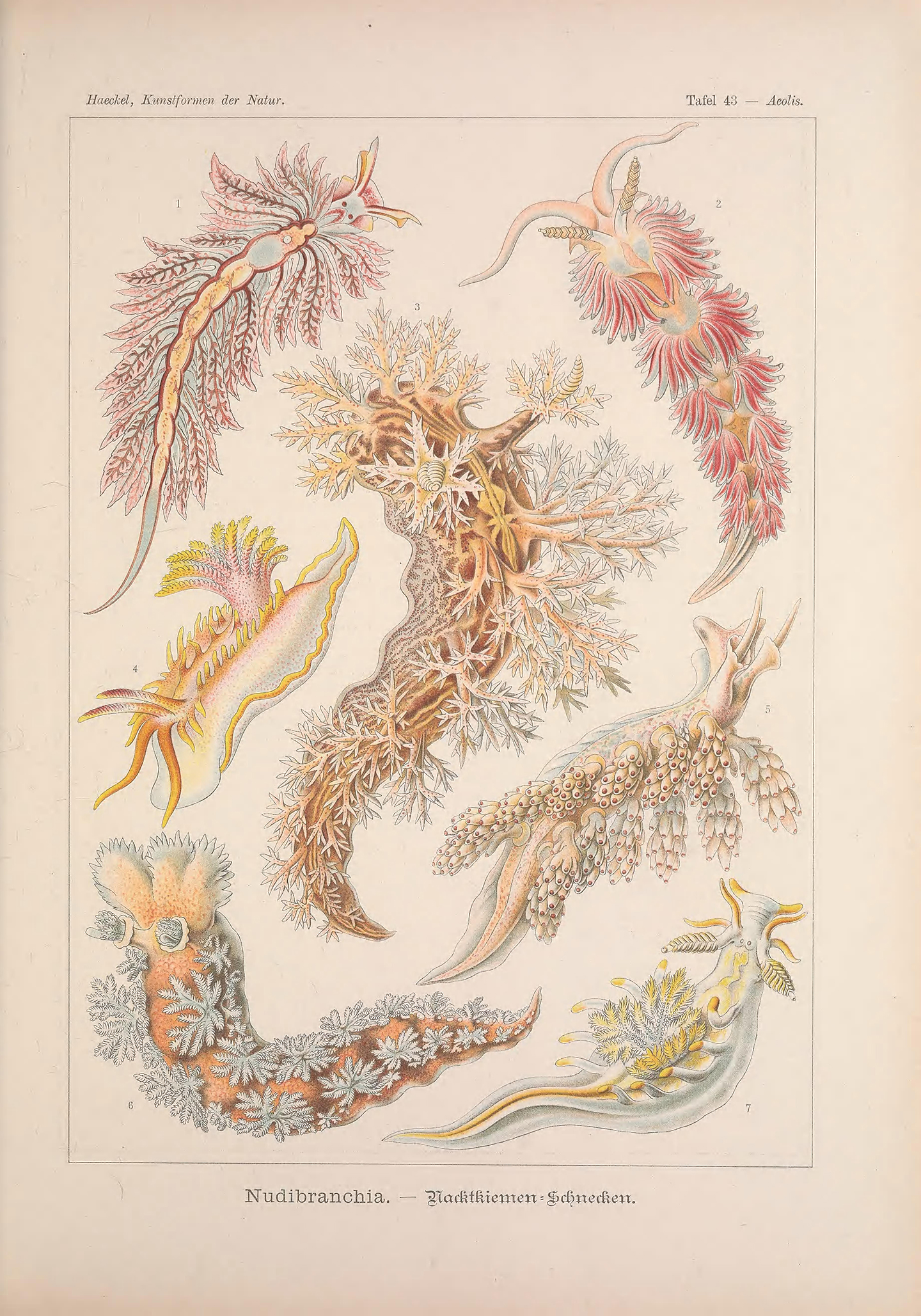
Nudibranchs by Ernst Haeckel, one of the images McElrath and his wife have printed for their “natural history wall” at home. Kunstformen der Natur. 1905. Contributed in BHL from Smithsonian Libraries.

Whether it be supporting research on clubbed beetles or as a source of beautiful home decor, the Biodiversity Heritage Library is making it easier for everyone to explore, study, and appreciate the natural world.

For McElrath, BHL has been a game-changer. In short: “Its existence is extraordinary.”
References

[1] Catalogue of Life. 2019. “Coleoptera.” Accessed 26 March 2019. http://www.catalogueoflife.org/col/browse/classification/kingdom/Animalia/phylum/Arthropoda/class/Insecta/order/Coleoptera/fossil/1/match/1.

[2] Stork, Nigel E, James McBroom, Claire Gely, and Andrew J. Hamilton. 2015. “New Approaches Narrow Global Species Estimates for Beetles, Insects, and Terrestrial Arthropods.” PNAS 112 (24) 7519-7523. Accessed 26 March 2019. https://www.pnas.org/content/112/24/7519.

[3] McElrath, Thomas, Olivia Boyd and Joseph V. McHugh. 2016. “Overview.” MonotomidGen. Accessed 26 March 2019. http://www.monotomidae.com/index.html.

April 11, 2019by michelle.underhill
Blog Reel, User Stories

Just a Click Away: BHL Promotes Biodiversity Research and Taxonomy

The Biodiversity Heritage Library is dedicated to providing open access to the biodiversity resources in its collection. Open access not only ensures that users the world over can freely locate the information they need online, but it also enables other biodiversity initiatives to make use of the wealth of knowledge represented in our 45 million+ pages to support research and taxonomy. We’ve highlighted several projects over the past few months that have incorporated BHL content into their own databases, including ITIS, AGRIS, Avibase, and JournalMap through BioStor.

View Full Size Image
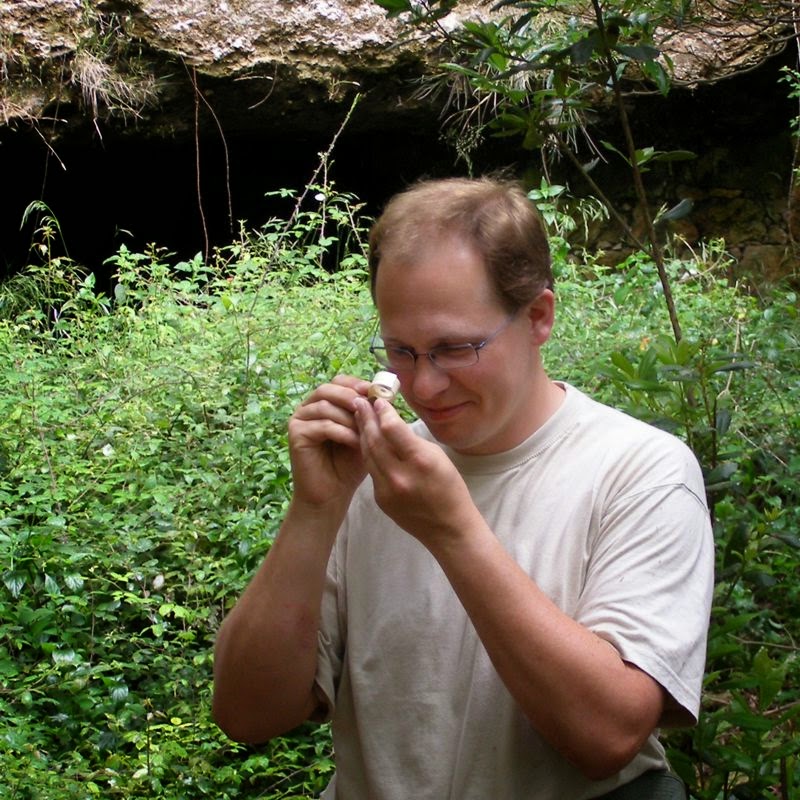
Dr. Andreas Kroh (NHM Vienna) on field work in the Azores.

Dr. Andreas Kroh, Researcher and Publisher in the Department of Geology and Paleontology at the Natural History Museum Vienna, recently shared two more examples of BHL data reuse: WoRMS, the World Register of Marine Species, and FreshGEN, a FWF-funded research project to elucidate the evolution of European Lake systems by studying their gastropod faunas.

Dr. Kroh has been studying evolution, systematics, taxonomy (particularly of fossil and extant Echinoids (Sea urchins)), and biogeography (focusing on European Neogene faunas) for sixteen years. Several years ago, he discovered BHL.

“I was searching for a specific volume of an old journal that was missing in our library, and I was excited when I found that the BHL site did provide full access to the content of that volume, saving me the time to travel more than 200 km to the next library that held the series,” recalls Dr. Kroh.

Since then, Dr. Kroh has used BHL extensively to inform his research and support his contributions to several biodiversity projects.

“BHL is an excellent research tool that has considerably sped up my work and those of many other scientists that rely on or need to refer to previously published data,” lauds Dr. Kroh. “Many of the projects I am involved in, namely my contribution to WoRMS and FreshGEN, would need much more time and effort without BHL, where many research papers are just a click of a finger away. This view is shared by many fellow editors of the WoRMS database, most of which make heavy use of BHL for rapid access to species descriptions and historical biodiversity data.”

View Full Size Image
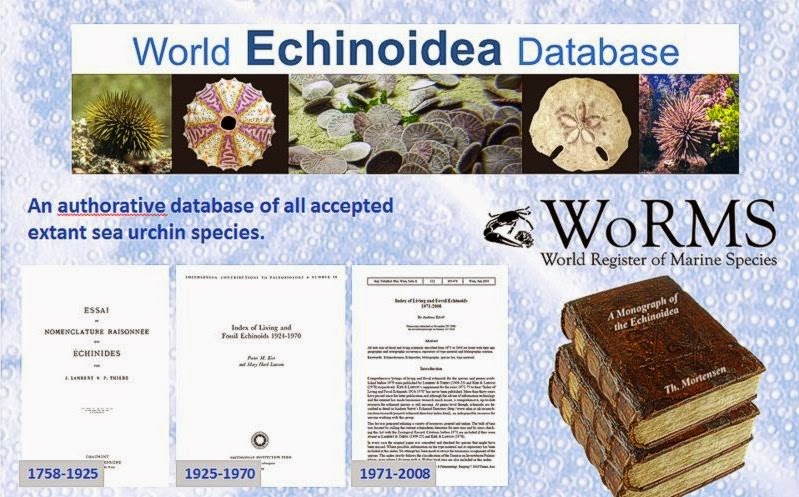
Creation of Global Species Databases (see http://www.marinespecies.org/about.php for an overview) involves tremendous amounts of library work – BHL has considerably sped up the process.

The World Register of Marine Species (WoRMS) aims to “provide an authoritative and comprehensive list of names of marine organisms, including information on synonymy.” Marinespecies.org serves as the web interface for the Flanders Marine Institute-developed “Aphia” database, which consolidates marine species registers from several projects. Information available through WoRMS, which is curated and maintained by taxonomic experts, includes valid species names, synonyms and vernacular names, higher classifications presenting scientific names within parent taxon contexts, biogeographical data, references to related external databases, and links to literature in BHL.

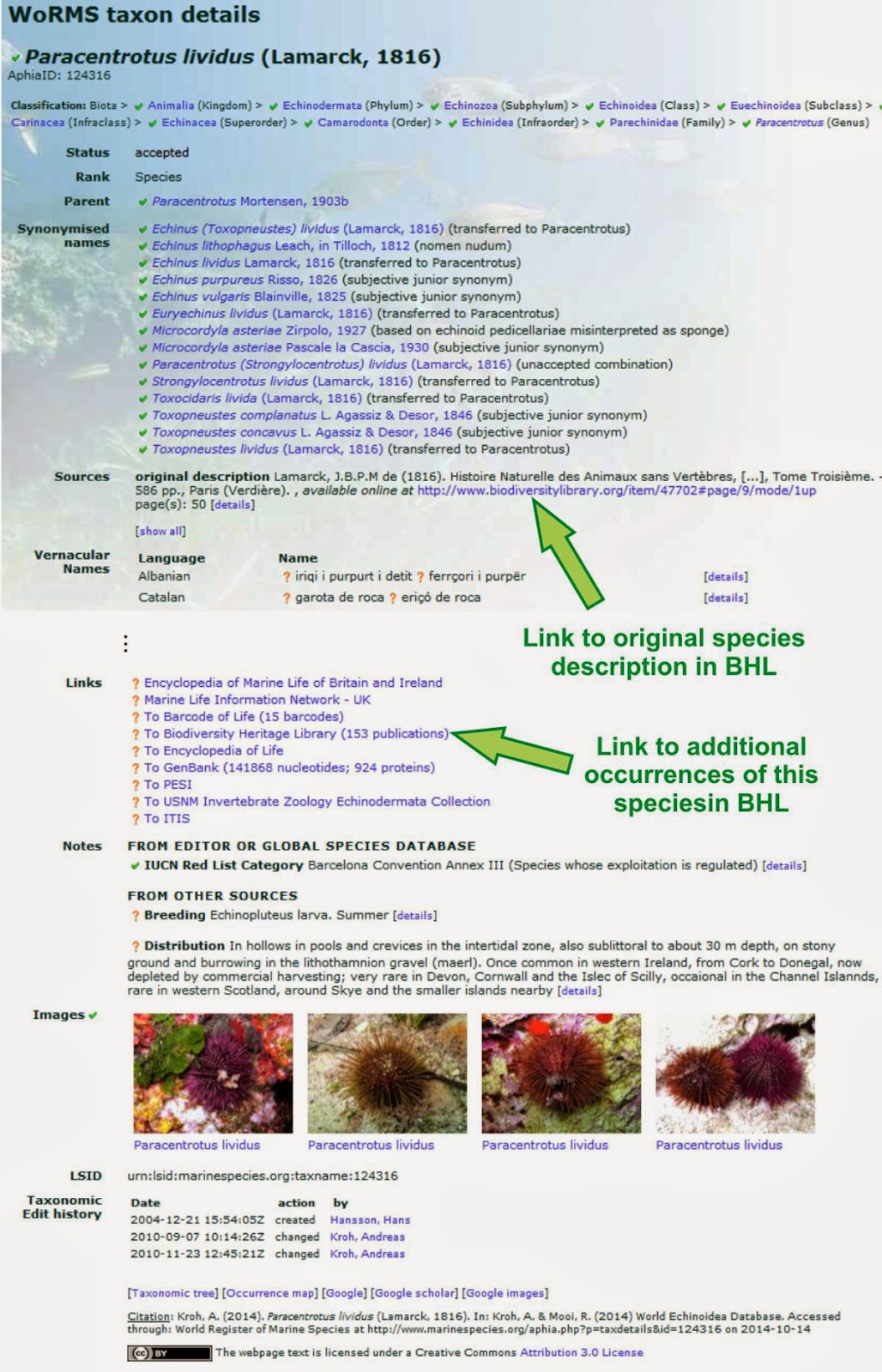
“In the World Register of Marine Species we are linking references on species pages directly to their respective title page in BHL, thereby making it easier for non-taxonomists to go back to the original sources of data, be it original descriptions, distribution data or other relevant information,” explains Dr. Kroh.

View Full Size Image
Species pages in the World Register of Marine Species (http://www.marinespecies.org) crosslink to BHL to ease access to the (often hidden) original species descriptions and additional published information.

Dr. Kroh’s other current research focus, the FreshGEN project, will “provide the first detailed assessment of the composition of European freshwater gastropods during the Neogene and Quaternary at species, genus and family levels, with emphasis on lake faunas.” By compiling and evaluating data, particularly relevant historic literature references like those at BHL, the project’s international expert team of paleontologists and limnologists will create the FreshGEN-database (Freshwater Gastropods of the European Neogene), which will allow researchers to compare diversity and inter-lake data, identify geographic gradients in species richness, define biodiversity hotspots in present and past lake systems, shed light on the origin of modern lake faunas, and “estimate the (future) anthropogenic impact on Holocene lake faunas.”

Dr. Kroh (and, he emphasizes, his colleagues) use BHL on almost a daily basis when working on these and similar taxonomic projects. For Dr. Kroh, that use is multi-faceted.

“When locating a title in BHL I mostly read the respective portion of paper that I am interested in online. Usually, however, I do also save the link to the respective title page in my literature database and download the whole volume as PDF for future reference – this has proven very useful for field work or research in museum collections which often are in the basements where web-access is not available.”

As with all of our users, Dr. Kroh has favourite services in BHL and functionality he would like to see improved.

“One of the most useful features of BHL is that it has a drop-down interface to jump to other volumes within a journal – other portals that offer scanned books often lack such a connection between volumes of a series and it can be difficult to find a particular volume, specifically if it is a journal that has many different series and changing titles.”

On the improvement side, Dr. Kroh identified missing volumes within journals runs, multiple listings of the same titles with disconnected volumes, and the compression used for whole-volume PDF downloads as areas for BHL to focus on.

BHL is actively working to identify and fill gaps in its collections (this is, in fact, a priority within our digitization efforts), and users are encouraged to notify us of missing volumes in serial runs. And while our systems try to automatically de-duplicate multiple records of the same title, varying cataloguing practices at our member institutions, who each submit their version of a title record for the volumes they scan, impedes perfect title merging. These merges are currently a manual process, and we again encourage our users to notify us of titles in need of this extra love. File size and storage limitations unfortunately necessitate PDF compression, but high resolution images can be downloaded through Internet Archive (linked from BHL) as an alternative.

View Full Size Image
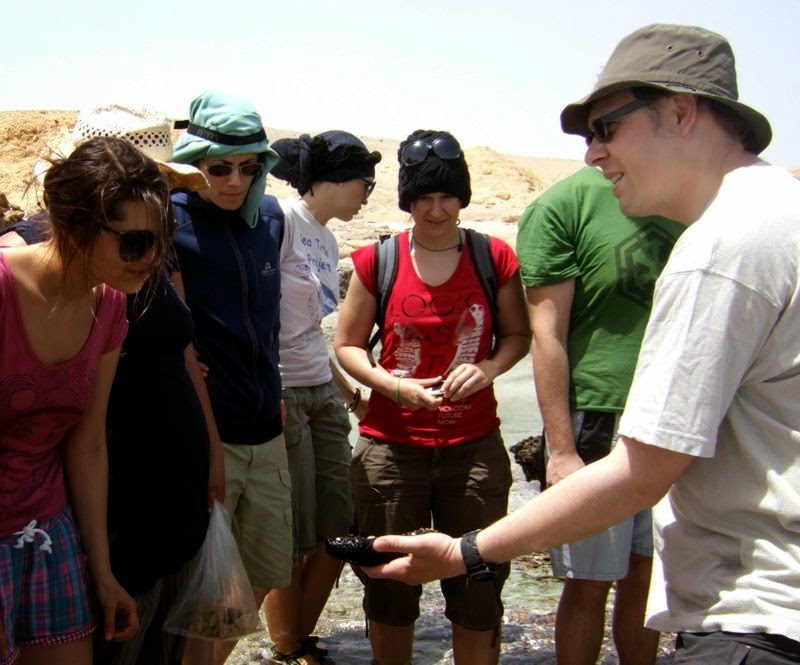
Dr. Andreas Kroh (NHM Vienna) on a field course on reef organisms, showing a sea cucumber to students.

While improvements are always possible and necessary, access to the historic biodiversity knowledge provided through BHL is critical to modern scientific work.

“It’s really the sum of observations, present ones as well as past ones, that form our knowledge of nature,” emphasizes Dr. Kroh. “In alpha-level taxonomy errors have been perpetuated in the past since few researchers had the possibility or time to go back to the original species descriptions. With BHL everybody has that possibility, regardless of her or his profession or place of living. BHL opens up scientific literature for the widest audience possible and repatriates scientific knowledge.”

We extend a special thanks to Dr. Andreas Kroh for sharing his experiences with BHL for our blog. Do you use BHL to support your work? Want to tell us about it? Send us a message at [email protected].

February 19, 2015by michelle.underhill

Help Support BHL

BHL's existence depends on the financial support of its patrons. Help us keep this free resource alive!

search

About BHL

The Biodiversity Heritage Library (BHL) is the world’s largest open access digital library for biodiversity literature and archives. BHL operates as a worldwide consortium of natural history, botanical, research, and national libraries working together to digitize the natural history literature held in their collections and make it freely available for open access as part of a global “biodiversity community.”

Join Our Mailing List

Sign up to receive the latest news, content highlights, and promotions.

Subscribe Now

Subscribe to Blog via Email

Enter your email address to subscribe to this blog and receive notifications of new posts by email.

Join 319 other subscribers

Subscribe to Blog Via RSS

Subscribe to the blog RSS feed to stay up-to-date on all the latest BHL posts.

Access RSS Feed

Inspiring Discovery through Free Access to Biodiversity Knowledge.

The Biodiversity Heritage Library makes it easier than ever for you to access the information you need to study and explore life on Earth…for free, anytime, anywhere.


64+ Million Pages of
Biodiversity Literature Online.

EXPLORE

Tools and Services
to Transform Research.

EXPLORE

300,000+
Illustrations on Flickr.

EXPLORE

ABOUT | HARMFUL CONTENT | PRIVACY | SITE MAP | TERMS OF USE