
Biodiversity Heritage Library - Program news and collection highlights from BHL
  • Home
  • News
  • Featured Books
    • All Featured Books
    • Book of the Month Series
    • BHL at 20
  • User Stories
  • Campaigns
    • Fossil Stories
    • Garden Stories
    • Monsters Are Real
    • Page Frights
    • Her Natural History
    • Earth Optimism 2020
  • Tech Blog
  • Visit BHL
Home
News
Featured Books
    All Featured Books
    Book of the Month Series
    BHL at 20
User Stories
Campaigns
    Fossil Stories
    Garden Stories
    Monsters Are Real
    Page Frights
    Her Natural History
    Earth Optimism 2020
Tech Blog
Visit BHL
  • Home
  • News
  • Featured Books
    • All Featured Books
    • Book of the Month Series
    • BHL at 20
  • User Stories
  • Campaigns
    • Fossil Stories
    • Garden Stories
    • Monsters Are Real
    • Page Frights
    • Her Natural History
    • Earth Optimism 2020
  • Tech Blog
  • Visit BHL
Biodiversity Heritage Library - Program news and collection highlights from BHL
Blog Reel, Featured Books

Book of the Week: Frogs in Trousers?

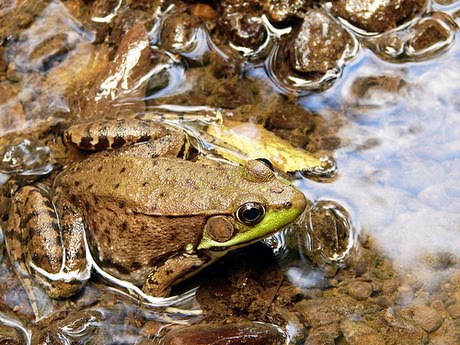
View Full Size ImagePer our user feature earlier this week on Dr. Charlotte Sleigh of the University of Kent, we feature a book that has been particularly important for Dr. Sleigh’s recent work: Dissertations relative to the natural history of animals and vegetables , volume 2 (1789), by Lazzaro Spallanzani. Dr. Sleigh’s current activities involve writing a book on the cultural history of frogs for Reaktion Books’ Animal series. In Dr. Sleigh’s own words regarding the importance of this title for her current endeavors:

“I had come across a reference to this book in relation to a strange experiment in which Spallanzani dressed his frogs in waxed taffeta trousers, to understand how fertilization took place. As hoped, I found the account of this curious experiment, alongside many more scientifically and culturally rich accounts of his work on frogs: a jumping-off point (if you’ll pardon the pun) for further research.”

Indeed, Lazzaro Spallanzani (1729-1799), an Italian Catholic priest, biologist and physiologist, made important contributions to the world of science with his work on animal reproduction, proving that it required both semen and an ovum in order to prosper. This discovery is in part due to his experiments with frogs and trousers. With such a curious experiment leading to such an important discovery, there was no doubt that this book should be featured, in all its glory, as our book of the week, and that the passage regarding frogs and trousers should be particularly highlighted.

Spallanzani had been experimenting on animal reproduction for some time before the incident with the trousers. His experiments were confined to a particular species of frog, which he identified as the “Green Aquatic Frog.” During his course of study, involving experimenting with various environmental and conditional effects on frogs for the success of fertilization, he received a letter from abbe Nollet regarding his work. In it, Nollet wrote,

“About thirty years ago, Mr. Reaumur and myself made many researches relative to this subject…I remember putting breeches of waxed taffeta on the male [frog], and watching a long time, without perceiving any appearance that denoted an act of secundation.”

Spallanzani was intrigued by the account given him by Nollet, and decided to reproduce the experiment. By his account,

“The idea of the breeches, however whimsical and ridiculous it may appear, did not displease me, and I resolved to put it in practice. The males, notwithstanding this incumbrance, seek the females with equal eagerness, and perform, as well as they can, the act of generation; but the event is such as may be expected: the eggs are never prolific, for want of having been bedewed with semen, which sometimes may be seen in the breeches in the form of drops. That these drops are real seed, appeared clearly from the artificial secundation that was obtained by means of them.”

By such means were the facts of reproduction secured, and we have the delightful image of frogs in trousers to thank for it.

Take some time to explore Spallanzani’s work on reproduction in this volume, and consider reading up on his important work on digestion, which is recounted in the first volume of this title. And let us praise the ingenuity of our forefathers, without which we might never have the opportunity to feature such delightful accounts of experiments in our books of the week!


February 28, 2011by michelle.underhill
Blog Reel, User Stories

BHL and Our Users: Dr. Charlotte Sleigh

View Full Size ImageContinuing with our new series on our users and their interaction with BHL, this week we feature Dr. Charlotte Sleigh, Senior Lecturer in History of Science, University of Kent (UK), which we present in a typical question and answer interview style. So without further ado, meet Dr. Sleigh, and read what she has to say about how BHL has impacted her work, and what she would like to see from BHL in the future.

Q: What is your particular area of interest/study?

A: Historian of science with a special interest in natural history.

Q: How long have you been in your field of study?

A: 12 years

Q: When did you first discover BHL?

A: About a year ago.

Q: What is your opinion of BHL and how has it impacted your research?

A: BHL makes many old, rare or hard-to-access science and natural history texts available at the click of a mouse. In the past, if I was not sure whether or not a book was relevant to my research, I would have to make a trip to London or other major archive, and seek it out, perhaps spending a whole day only to find it was not relevant. Now I can check quickly and easily online, flicking through texts. Nine times out of ten I can get what I want from relevant texts by reading online; sometimes I supplement this by looking at another copy or edition in the flesh. Even in this latter case, however, reading online first (and re-checking afterwards) is an integral part of the research. My research has been enhanced in that I am quickly able to cross-reference the work of many scientists and naturalists against one another.

Q: How often do you use BHL?

A: It depends on whether I am in a research-intensive phase; if so, maybe average 2-4 texts per week.

Q: How do you usually use BHL (downloading whole PDFs/reading online/selecting pages to download/etc.)?

A: Read online. I also go to the text-only version at archive.org to search the text for key words, then go back to read the relevant pages at BHL online.

Q: What are your favorite features/services on BHL?

A: As above, the ability to search for key words, though this is a bit of a clunky, multi-stage process.

Q: If you could change one thing about BHL, what would it be, or what developmental aspect would you like the BHL team to focus on next?

A:

  • Easier access to text-only version.
  • My browser (Explorer) sometimes struggles with magnification and gets stuck on a super-enlarged corner of the page.
  • Search facility can be a bit hit and miss.
  • Otherwise – I would just like to see more titles continuing to be added!

Thank you, Dr. Sleigh, for taking the time to tell us about your experience with BHL. At BHL, we particularly appreciate honest feedback about how we can best focus our resources for further development. The best way to determine this is, of course, to ask those who use our services. So, if you have suggestions on how to improve BHL, or if you would like to be featured in our BHL User series on this blog, let us know via our feedback form, send a tweet to @BioDivLibrary, or post on our Facebook wall. We look forward to hearing from our user community, and also to future opportunities to feature our users.

February 28, 2011by ulib-libraryjobs
Blog Reel, Featured Books

Book of the Week: A BHL Superstar

View Full Size Image

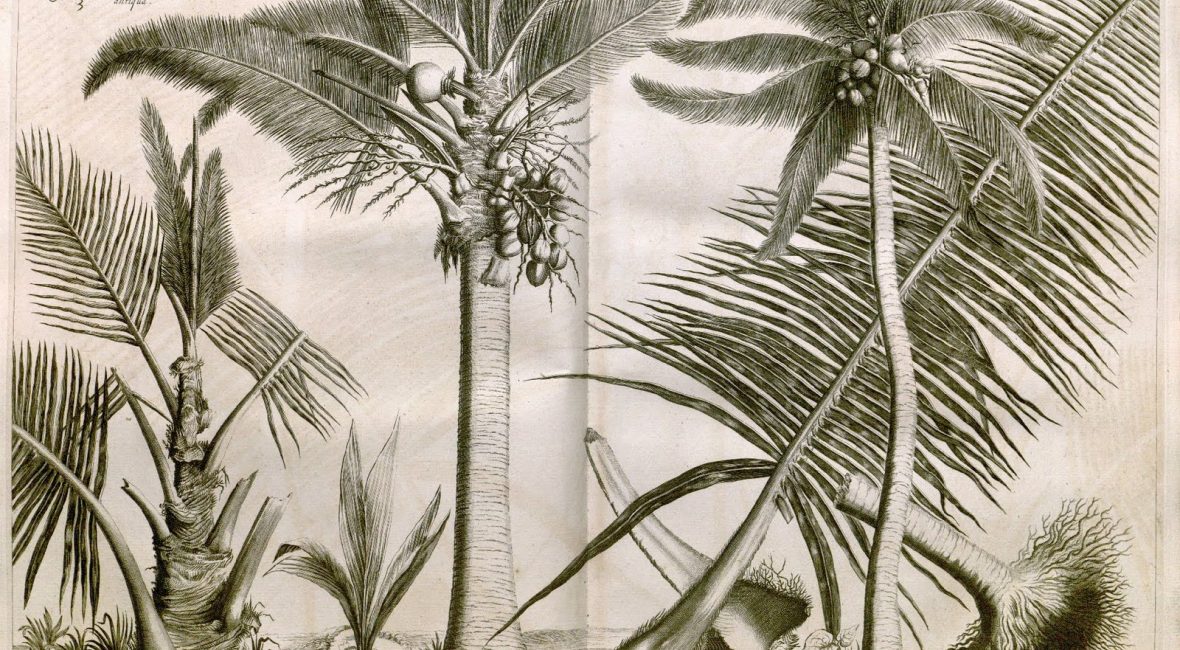
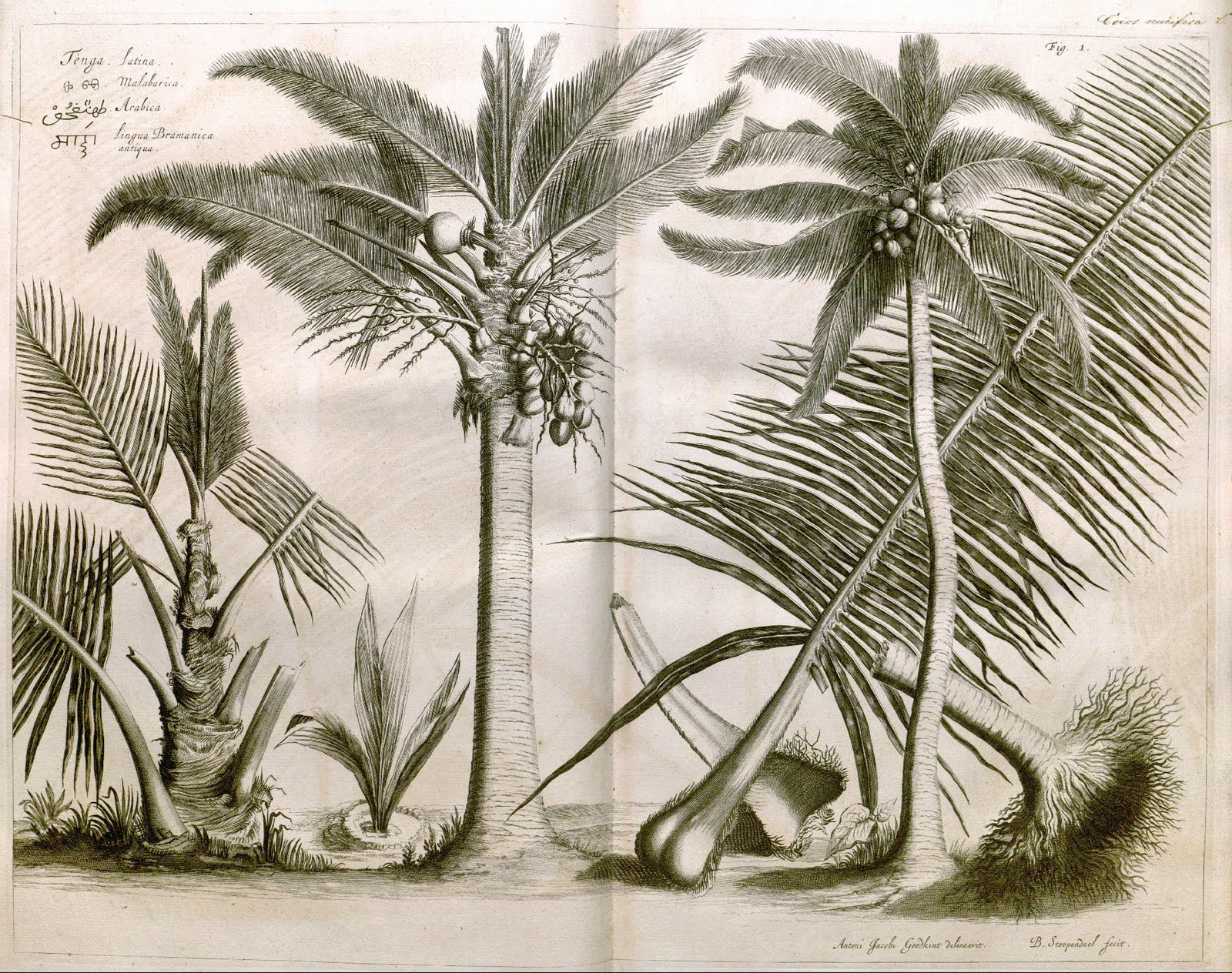
It’s one of the most frequently downloaded books from BHL. It was compiled over thirty years, in twelve volumes, and contains 794 copper plate engravings. It depicts and describes the flora of Asia and the tropics, focusing on the medicinal properties of the flora in the Indian state of Kerala. Species names are recorded in such languages as Konkani, Arabic, Malayalam, and Latin. It contains the type illustrations of many species, and was first published in Amsterdam in 1678-1693. Edited by nearly a hundred physicians, professors of medicine and botany, amateur botanists, technicians, illustrators, engravers, officials and clergymen, the work was conceived of by the then-governor of the Dutch administration in Kochi, Hendrik van Rheede.

Enough talk! What is it, you ask?

Answer: Hortus Indicus Malabaricus, one of the most important early works on the medicinal properties of various flora.

Hortus Indicus Malabaricus has also been the recent focus of a special publication of Samagra, a journal published by the Centre for Research in Indigenous Knowledge, Science and Culture. This special issue discusses the recent discovery of the previously unidentified creator of the first volume’s Frontispiece (now identified as the Dutch Golden Age artist Gerard de Lairesse), a discussion of the contributions of the Hungarian Theologians involved with the work, as well as an analysis on the medicinal plants described within the work.

Spend some time exploring one of the most popular works in BHL, and read what modern-day researchers are still discovering about the work in the special issue of Samagra, entitled, appropriately, “Hortus Malabaricus: Special Issue.” The exotic East and its flora await you!

February 24, 2011by michelle.underhill
BHL News, Blog Reel

Sparking Conversations with Our Users: You Talk and We Listen

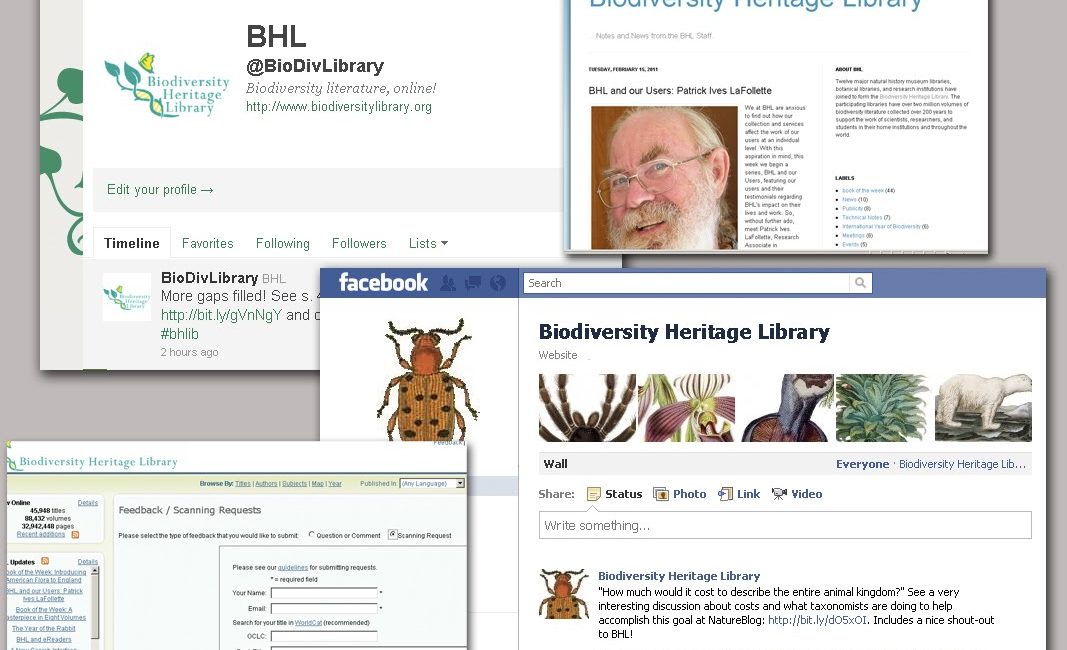
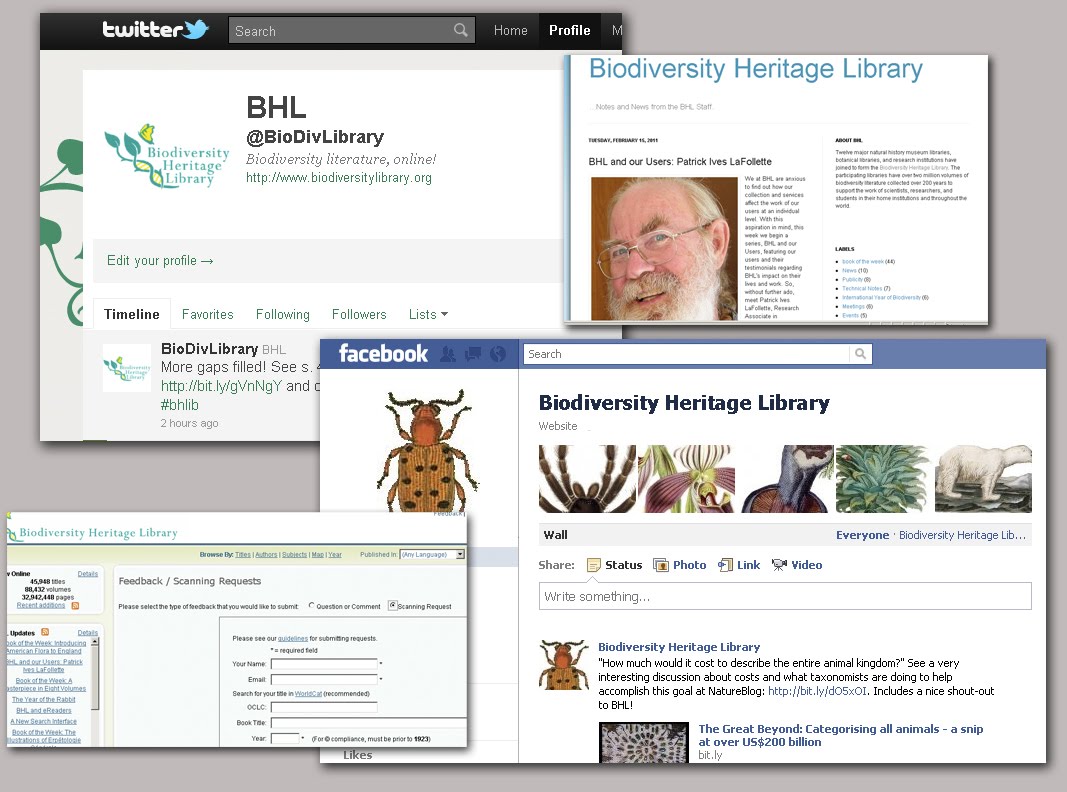
View Full Size ImageHere at BHL, we want to do a better job of connecting with our users. We want to interact with you, know what you think, what you would like to see, and have you contribute to the biodiversity conversation that shapes the development and progress of the Biodiversity Heritage Library. The recent debut of our new series on this blog, focusing on our users and how they use BHL for their work, is an example of our passion to get to know you, our users, more, and interact in new ways with you. However, the blog is not the only way we hope to accomplish this.

One method by which we converse and interact with our users is through our feedback form on BHL. This feedback form allows you, our user, to not only communicate with us about problems you’ve encountered or questions you might have, but, with the implementation of a specific request a title for scanning form last summer, 2010, it also allows our user community to actively participate in our collection development, ensuring that our resources are spent scanning the content our users truly need. Indeed, this feature has been a runaway success. Since the introduction of the request a title feature, BHL has received almost 900 requests for scanning. While our queue is long, and it will take a while to complete all of these requests, we are thrilled that our users are interacting with us in this way and helping us make sure that we focus our efforts and resources in the places that most need them.

We’ve increased our activity on Twitter and Facebook as well, striving to spark interesting dialogues about biodiversity, literature, and the brave new world (well, not quite so new anymore) of mass digitization. While we hope that this increased effort is useful and engaging for our users, from our perspective, it’s already paid off. Last week, we reached our goal of attaining 500 followers on Twitter (thanks, Ms. Brenner, for being our 500th follower!). For our next goal, we’re reaching high: 1000 followers. Pass this along to anyone you know who might be interested in conversing about the biodiversity literature field and assisting in our mission to serve up as much biodiversity literature as possible in an open access environment for the benefit of the world at large.

And if you have something to say about BHL, biodiversity, mass digitization, or any related topic, let us know. Comment on this blog, sent us a tweet to @BioDivLibrary, or post on our Facebook page. We’re listening, and we’re waiting!

February 22, 2011by michelle.underhill
Blog Reel, Featured Books

Book of the Week: Introducing American Flora to England

View Full Size Image

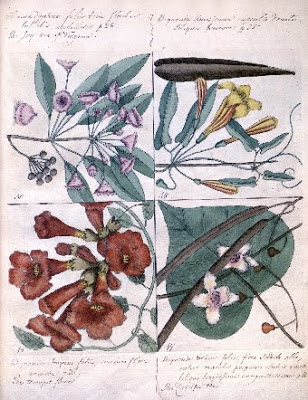
When settlers first came to the Americas from England and other parts of Europe, they were chiefly concerned with survival, as might be expected, and, though they may have taken note of the new and beautiful varieties of flora and fauna to be found in the wild new expanses of the New World, there was little concentration on how these species might be utilized, or even carried back to the homelands of the settlers for the benefit of those across the seas. The author, Mark Catesby, of this week’s book of the week, Hortus Europae Americanus, or A Collection of 85 Curious Trees and Shurbs (1767), expresses disappointment at this fact, and stresses that, particularly due to the similarities of the climates of England and northern America, the flora of the New World should be taken back to the empire and utilized in that country. In his own words,


“It will easily be imagined that a forest of a thousand miles in length, extending twenty degrees in latitude from north to south…must afford a plentiful variety of trees and shrubs, that may be usefully employed to enrich and adorn our woods by their valuable timber and delightful shade; or to embellish and perfume our gardens with the elegance of their appearance and the fragrancy of their odours…But however obvious this may now be, very little regard was had thereto at our first settling of those countries; nor indeed was any considerable step taken towards introducing these strangers into England till about the year 1720.”


In hopes that more people might take advantage of the trees and shrubs to be found in America, and cultivate them in their own gardens in England, the author, in this work, is “particular in giving an account where the several kinds of plants are to be found that are uncommon, and in directing how they should be collected, packed up, and secured, so as to preserve them in good condition during their passage.” Thus, in this work, the author describes eighty-five trees and shrubs of the Americas, “sixty-three of which are graved, and their figures here exhibited; the remaining twenty-two are described, but not graved, which is thought altogether unnecessary, because their description alone gives a clear idea of them without any other assistance.” The author also gives detailed instructions on how to care for and manage these species.


For example, to begin the book, the author describes the Laurel-tree of Carolina, which, “Of all the trees able to endure our climate, that have yet been introduced to England, there is none that can equal this magnificent ever-green.” Instructions for packing and shipping this tree off to England proceed as follows,


“The cones or seed-vessels should be plucked from the tree in the month of September, when the seeds manifest their beginning to ripen by bursting forth from the little cells wherein they are contained. After the cones have lain by for a little while, the seeds may be taken out and sent to England as soon as opportunity offers,” after which instructions are given on how to pack the seeds for the voyage, and what steps should be taken to cultivate the seeds once they arrive in England.


The rest of the work is filled with further instructions on how to grow these beautiful specimens outside of their natural habitat. Furthermore, the book contains lovely illustrations depicting many of the species for which growing instructions are given. Take a moment to find out how early settlers worked to spread the beauty of the New World across the seas, for all to experience. And enjoy the meticulous illustrations that depict just how beautiful these specimens really are.


This week’s book of the week, Hortus Europae Americanus, or, A Collection of 85 Curious Trees and Shrubs (1767), by Mark Catesby, was contributed by the Missouri Botanical Garden.


February 15, 2011by ulib-libraryjobs
Blog Reel, User Stories

BHL and our Users: Patrick Ives LaFollette

View Full Size Image We at BHL are anxious to find out how our collection and services affect the work of our users at an individual level. With this aspiration in mind, this week we begin a series, BHL and our Users, featuring our users and their testimonials regarding BHL’s impact on their lives and work. So, without further ado, meet Patrick Ives LaFollette, Research Associate in Malacology at the Natural History Museum of Los Angeles, and read what he has to say about how BHL has changed the way he works.

“I’ve had a life-long interest in marine Mollusca, bibliography, and computer technology. Though software development provided a living, my interest in natural history and affiliation with the Los Angeles Natural History Museum has continued uninterrupted to present. In 1995, when I resumed work on the Pyramidellidae, a large and neglected family of microscopic snails, it was evident to me that digital imaging and indexing would be the best method for managing the extensive and scattered literature. There has never been a published catalog or bibliography of the family, so work has to start “from scratch,” with Sherborn, Ruhoff, and Zoological Record. I scanned everything myself until the last few years, when some of the literature started to become available via the World Wide Web.

It’s difficult to say exactly when I first used the Biodiversity Heritage Library – early 2008, I think. The transition to BHL from other Internet sources was gradual until it reached “critical mass” – became the best first place look for titles – during 2009. BHL has since completely superseded other sources. Of the 3500 digital documents I’ve assembled so far, more than 2000 are from BHL. Perhaps two thousand papers are still needed, but most of these fall outside BHL’s scope.

I use BHL several hours a day, almost every day, have done for approaching two years. It is an invaluable resource. It has saved me thousands of travel miles to distant libraries, and thousands of hours locating, evaluating, and scanning the references. I can do this work from home, utilizing any free hour, day or night. This allows me to spend “museum days” working with specimens rather than chasing literature. Of greater importance are the many titles that have been imaged by BHL member libraries that are not in any California library.

For me, the most useful “value added” feature of BHL is the taxonomic index, more specifically the monthly text dump of the index. It meets a need peculiar to projects such as mine where the taxonomic groups are unrevised and poorly documented. Apart from the European species, pyramidellids are poorly known, so are not “verified” by the uBio name search. “Unverified” names are, however, included in the index dump. I have written programs that extract the pyramidellid names and related data from the index, oragnize it, and format a report. This report, which includes URLs for each item and page, allows me to efficiently sift through BHL holdings for potentially relevant papers. When a paper is identified, I download the volume’s page images and extract the article to my database. If not already there, I add the citation to my bibliography. Sherborn, Ruhoff, and Zoological Record index only new species descriptions. The secondary literature is not indexed. BHL indexing finds everything, including the numerous papers those sources ignore. Often, the “papers” found are literature reviews or notices, which may contribute to the bibliography, if not the database.

Thinking about what I would like to see BHL do in the future, number one (and two and three and…) are just to keep on doing what BHL has been doing so well: adding more journals and monographs to the archive, and filling in gaps in existing sets. I would not want BHL to do anything else if it required pulling resources away from the core mission, building the archive until its holdings approach completeness.

That said, I would like to see BHL add the staff and technical capacity necessary to include digitized works from sources beyond the Internet Archive workflow, to take advantage of the numerous institutional, library, society, organizational and individual digitizing projects and free access digital journals that are “out there.” I would also like to see BHL modify its mission statement to not just passively accept, but actively pursue permission to include post-1922 journals.

There is no one title in BHL that I can single out as having a significant impact on my research, nor any specific title to add that I have not already nominated for imaging. It is BHL itself, the totality of its content and execution, that has profoundly changed, and continues to impact my work.”

We sincerely thank Pat for his faithful use of our services and for taking the time to express how important BHL is to him. If you’re interested in highlighting the ways in which BHL is important to your work, don’t hesitate to contact us, either by commenting on this post, leaving us a message on our Facebook page, sending a tweet to @BioDivLibrary, or sending us feedback via our feedback form.
February 15, 2011by Grace Costantino
Blog Reel, Featured Books

Book of the Week: A Masterpiece in Eight Volumes

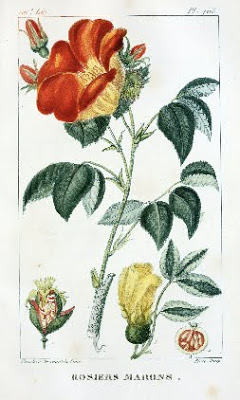
View Full Size ImageFor this week’s book of the week, we highlight an eight volume title, Flore pittoresque et médicale des Antilles, ou, Histoire naturelle des plantes usuelles des colonies françaises, anglaises, espagnoles et portugaise (1821-1829), by Michel Étienne Descourtilz. The stunning illustrations in this work were completed by Descourtilz’s son, Jean Théodore Descourtilz. This work is the first that Jean Théodore Descourtilz was known to have illustrated.

Michel Étienne Descourtilz was born November 25, 1775. A French physician, botanist, and historiographer, Descourtilz spent the years from 1799-1803 in Haiti, where he remained during the Haitian revolution. The plant collections that comprised his studies for this work were collected mostly between Port-au-Prince and Cap Haitien. Unfortunately, his natural history collections, as well as many of his drawings, were destroyed during the revolution. After returning to Paris in 1803, Descourtilz served as a physician at a hospital in Beaumont, and went on to serve as the president of the Paris Linnean society.

For this work, Descourtilz originally focused on the medicinal properties of the plants collected and presented. Descourtilz, in fact, arranged the plants in this work according to the medicinal properties as he ascertained them. However, Descourtilz eventually decided to include plants displaying commercial potential. The resulting work, with the “variety of tropical flora,” and its 600 plates, “has become, overwhelmingly, a celebration of the beauty of the flora of the area.” In 2002, a second edition set of this work sold at Christie’s auction house for $17,925 (and you can look at it, and even print it, if you want, for free!).

This week’s book of the week,Flore pittoresque et médicale des Antilles, ou, Histoire naturelle des plantes usuelles des colonies françaises, anglaises, espagnoles et portugaise (1821-1829), by Michel Étienne Descourtilz, was contributed by the New York Botanical Garden.

February 10, 2011by michelle.underhill
Page 1 of 212»

Help Support BHL

BHL's existence depends on the financial support of its patrons. Help us keep this free resource alive!

search

About BHL

The Biodiversity Heritage Library (BHL) is the world’s largest open access digital library for biodiversity literature and archives. BHL operates as a worldwide consortium of natural history, botanical, research, and national libraries working together to digitize the natural history literature held in their collections and make it freely available for open access as part of a global “biodiversity community.”

Join Our Mailing List

Sign up to receive the latest news, content highlights, and promotions.

Subscribe Now

Subscribe to Blog via Email

Enter your email address to subscribe to this blog and receive notifications of new posts by email.

Join 319 other subscribers

Subscribe to Blog Via RSS

Subscribe to the blog RSS feed to stay up-to-date on all the latest BHL posts.

Access RSS Feed

Inspiring Discovery through Free Access to Biodiversity Knowledge.

The Biodiversity Heritage Library makes it easier than ever for you to access the information you need to study and explore life on Earth…for free, anytime, anywhere.


64+ Million Pages of
Biodiversity Literature Online.

EXPLORE

Tools and Services
to Transform Research.

EXPLORE

300,000+
Illustrations on Flickr.

EXPLORE

ABOUT | HARMFUL CONTENT | PRIVACY | SITE MAP | TERMS OF USE