Biodiversity Heritage Library - Program news and collection highlights from BHL
  • Home
  • News
  • Featured Books
    • All Featured Books
    • Book of the Month Series
    • BHL at 20
  • User Stories
  • Campaigns
    • Fossil Stories
    • Garden Stories
    • Monsters Are Real
    • Page Frights
    • Her Natural History
    • Earth Optimism 2020
  • Tech Blog
  • Visit BHL
Home
News
Featured Books
    All Featured Books
    Book of the Month Series
    BHL at 20
User Stories
Campaigns
    Fossil Stories
    Garden Stories
    Monsters Are Real
    Page Frights
    Her Natural History
    Earth Optimism 2020
Tech Blog
Visit BHL
  • Home
  • News
  • Featured Books
    • All Featured Books
    • Book of the Month Series
    • BHL at 20
  • User Stories
  • Campaigns
    • Fossil Stories
    • Garden Stories
    • Monsters Are Real
    • Page Frights
    • Her Natural History
    • Earth Optimism 2020
  • Tech Blog
  • Visit BHL
Biodiversity Heritage Library - Program news and collection highlights from BHL
BHL News, Blog Reel, Tech Updates

Notice: Changes Coming to BHL API Methods on February 27, 2017

Effective February 27, 2017, the API methods GetPartEndNote and GetTitleEndNote will be removed. In addition, the BHL data exports that used the related format have already been removed.

The removed BHL API methods and data exports will soon be replaced by methods and exports that use the RIS format, which is supported by a wider range of bibliographic reference managers.

Thank you for your patience as we work to implement the RIS-based exports and API methods. If you have any questions, please submit them via our feedback form.

You can learn more about our developer tools and APIs here.

February 24, 2017by ulib-libraryjobs
Blog Reel, Featured Books

The First Singapore Bird Book

Despite its relatively small size and urbanized environment, Singapore has a rich avifauna which has attracted interest since the 19th century. However, it was only in 1927 that the first book on the birds of Singapore was printed – The Birds of Singapore Island, co-authored by John Alexander Strachey Bucknill and Frederick Nutter Chasen, and published by the Raffles Museum.

View Full Size Image
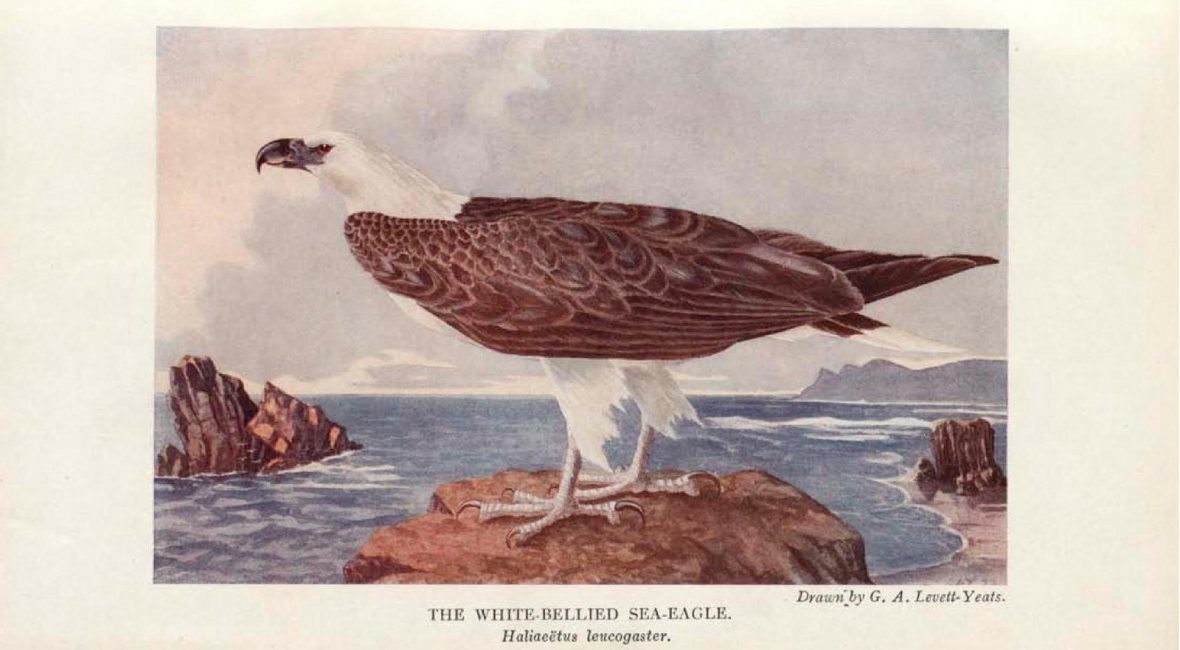
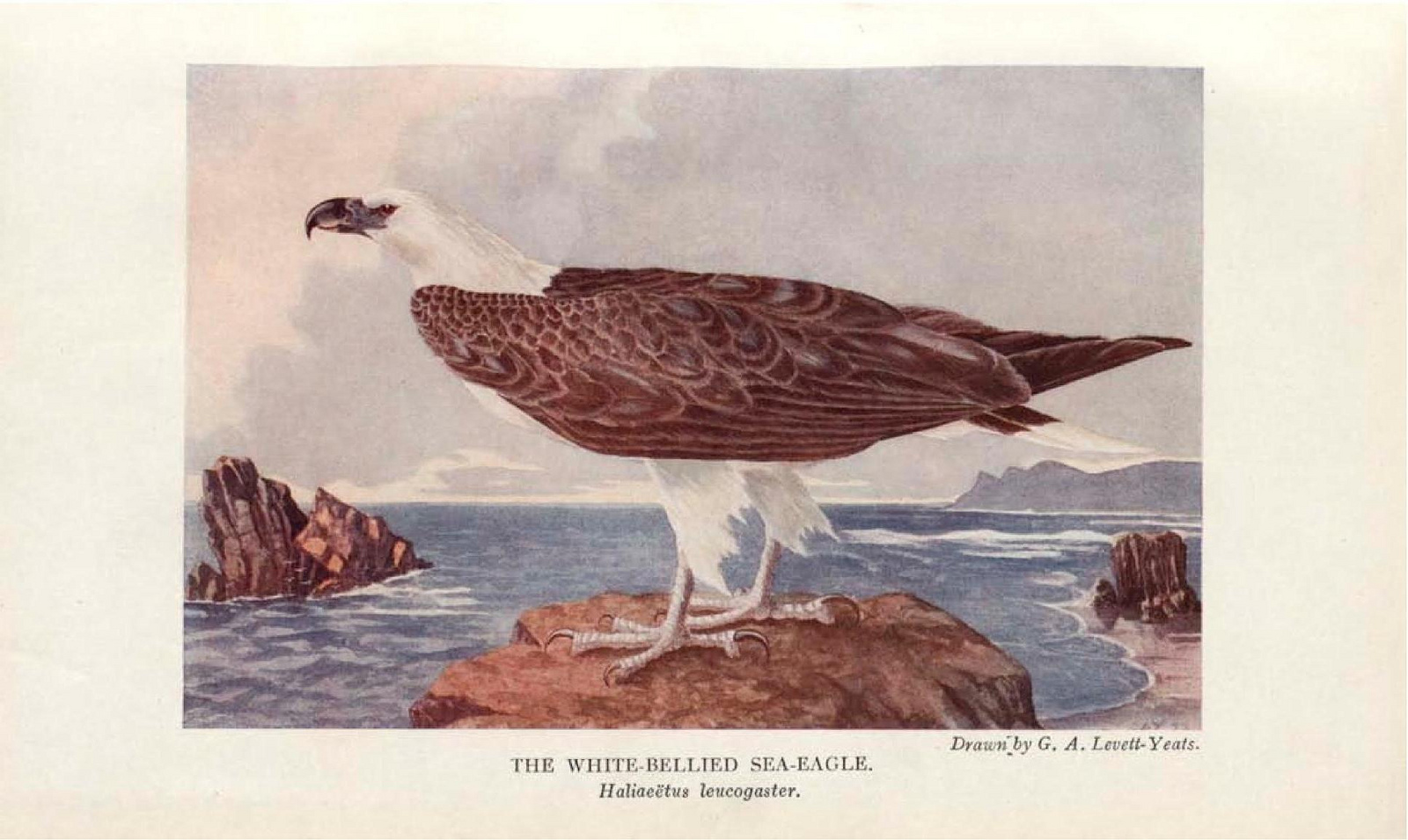
Plate VIII from The Birds of Singapore Island. http://biodiversitylibrary.org/page/47191313. Digitized by National Library Board, Singapore. The White-bellied Sea-eagle (Haliaeetus leucogaster) is a common resident bird of prey. When Singapore issued its “Bird” series of currency notes in 1976-1984, the White-bellied Sea-eagle was featured on the front of the highest denomination note – the $10,000 note.

Bucknill’s original collaborator for the book was Major John C. Moulton, a zoologist who was Director of the Raffles Museum and Library in Singapore from 1919 to 1923. In 1921, Moulton secured the assistance of Sir John Bucknill to produce a handbook on the common birds of Singapore which would be illustrated with attractive color plates. Bucknill was a former Chief Justice of the Straits Settlements and the Chairman of the Raffles Museum and Library Committee at that time. He was well-known for his interest in birds and had written and published several papers and books on the subject. To provide the illustrations for the book, an artist in India, Gerald Aylmer Levett-Yeats, was commissioned to paint the birds.

However, the publication of the book was delayed when Moulton was transferred to Sarawak as the chief secretary to the government in 1923. Owing to the pressure of other work, Moulton had to withdraw from the project, leaving Bucknill’s manuscript, the completed illustrations and his own notes in the hands of Cecil Boden Kloss, the new director of Raffles Museum and Library.

View Full Size Image
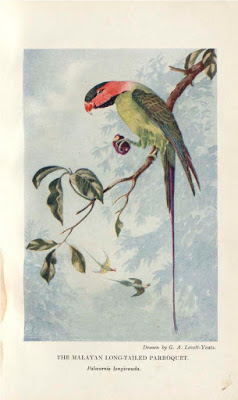
Plate XI from The Birds of Singapore Island. http://biodiversitylibrary.org/page/47191337. Digitized by National Library Board, Singapore. The Malayan Long-tailed Parakeet (Psittacula longicauda longicauda) is Singapore’s only native parakeet species.

A zoologist who specialized in small mammals, Boden Kloss felt that he lacked the “ability and the inclination” to write the book himself. The task of completing the book was taken up by Frederick N. Chasen, the curator of Raffles Museum (later its director). The scope of the book was extended to include not only the common birds of Singapore but also the less common birds. To keep the book within certain limits of size, Boden Kloss abridged the manuscript by reducing Bucknill’s notes on the species featured in the book.

View Full Size Image
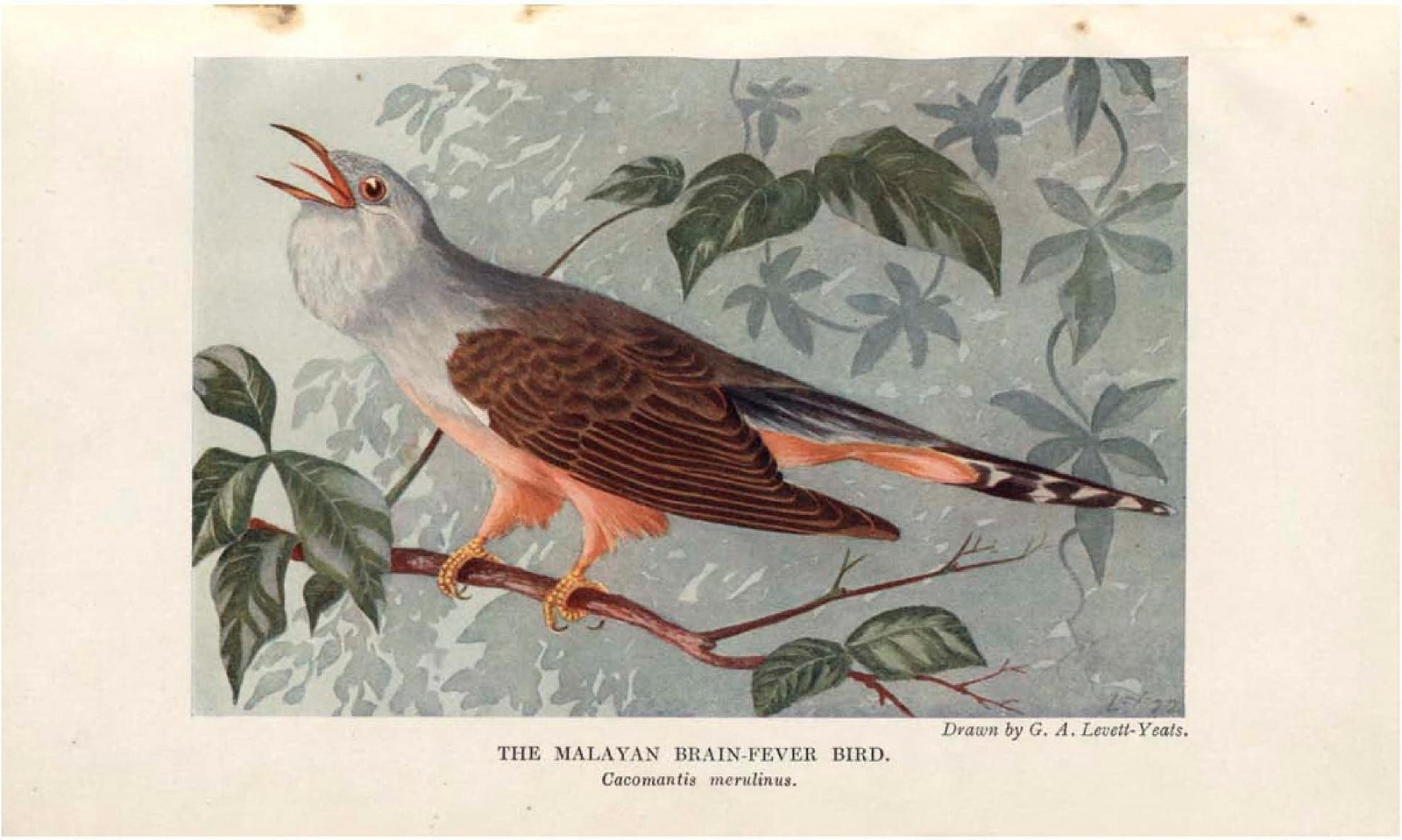
Plate XVII from The Birds of Singapore Island. http://biodiversitylibrary.org/page/47191383. Digitized by National Library Board, Singapore. The Malayan Brain Fever Bird (or the Plaintive Cuckoo) (Cacomantis merulinus) is an uncommon resident cuckoo species. Bucknill and Chasen noted that this bird has a Malay name which means “the deserted child” because its mournful voice “reminds one of the constant laments of someone bemoaning his fate”.

The book was finally published at the end of 1927. Sadly, both Bucknill and Moulton had passed away a year earlier in 1926.

The book covers all the common birds of Singapore and features 31 attractive color plates. Every bird is described in detail, including information on the status of each bird in Singapore. Written in a popular style, one of its notable features is the absence of technical terms. As stated in its preface, the book is “intended for the use of the uninitiated, both residents and visitors, who wish to know something of the birds they may see about them.” Despite being written for the lay person, the book provides a valuable source of historical information for the study of birds in Singapore.

View Full Size Image
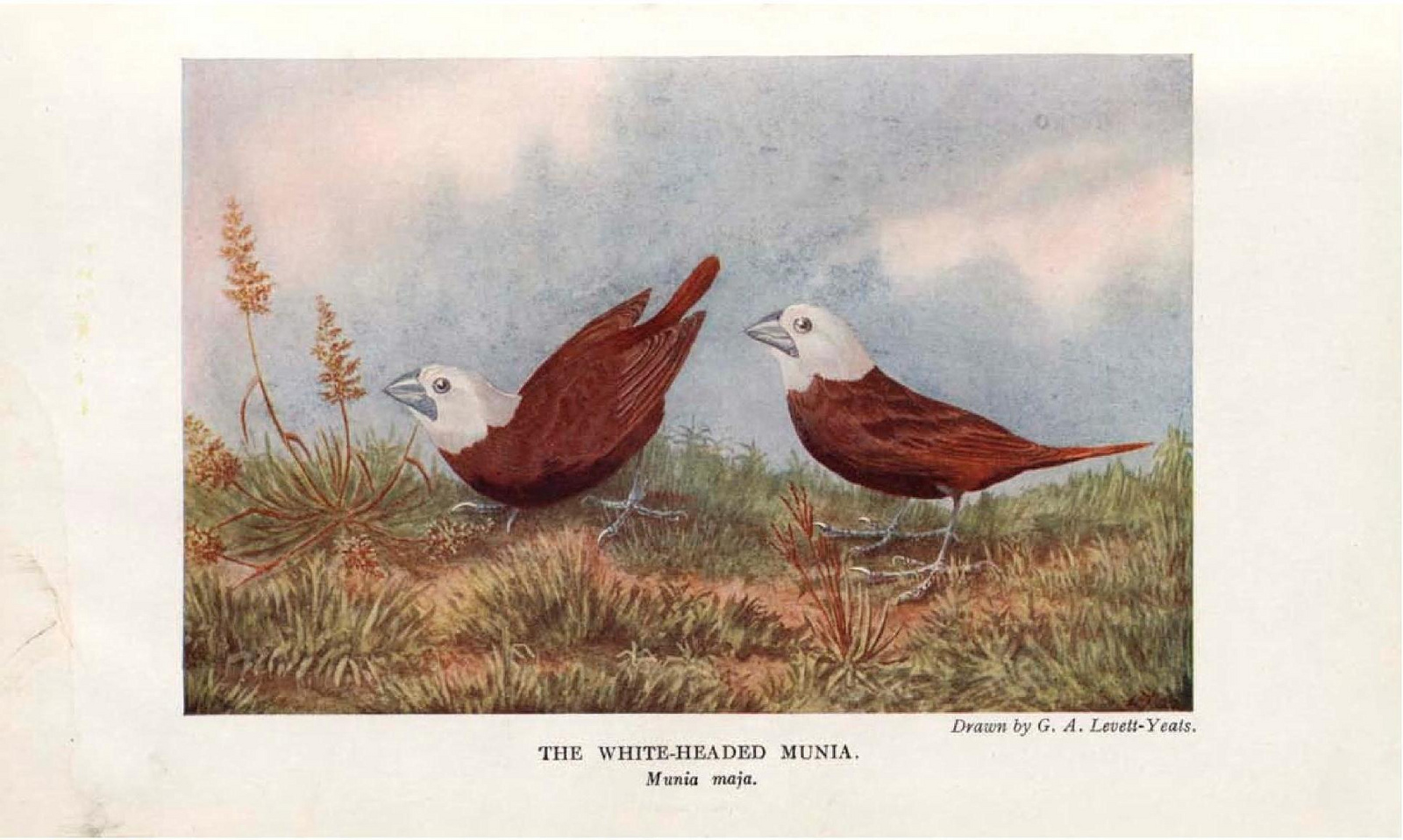
Plate XXVIII from The Birds of Singapore Island. http://biodiversitylibrary.org/page/47191469. Digitized by National Library Board, Singapore. A common resident, the White-headed Munia (Lonchura maja) was popularly known to Europeans in Singapore in the past as the “Cigar-bird” because its white head resembles a “partly smoked cigar.”

The Birds of Singapore Island (1927) has been digitized for BHL by National Library Board, Singapore.

You can view all of the illustrations from this book in Flickr, all of which have been taxon tagged with the name of the species they represent. You can learn more about BHL’s citizen science Flickr tagging initiative here.

References 


  • Bucknill, J. A. S. & Chasen, F. N. (1927). The birds of Singapore Island. Singapore : Printed at the Govt. Print. Office by W. T. Cherry, Govt. Printer. (Call no.: RRARE 598.295957 BUC)
  • Lim, K. S. (1997). Birds : an illustrated field guide to the birds of Singapore. Singapore : Sun Tree Pub. (Call no.: RSING 598.095957 LIM)
  • Lim, K. S. (2009). The avifauna of Singapore. Singapore : Nature Society (Singapore), Bird Group Records Committee. (Call no.: RSING 598.095957 LIM)
  • Liu, G. (1987). One hundred years of the National Museum : Singapore 1887-1987. Singapore : The Museum. (Call no.: RSING 708.95957 LIU)
  • Raffles Museum and Library. (1876-1955). Annual report. Singapore : The Museum. (Call no.: RRARE 027.55957 RAF)
  • Sim, C. H. (1994). Singapore money book. Singapore : Moneyworld Asia. (Call no.: RSING 769.5595957 SIN)
  • Yong, D. L. & Lim, K. C. (2016). A naturalist’s guide to the birds of Singapore. Oxford, England : John Beaufoy Publishing. (Call no.: RSING 598.095957 YON)
February 23, 2017by ulib-libraryjobs
BHL News, Blog Reel

Introducing the NDSR at BHL Cohort and Blog!

This year, five NDSR residents will help us plan the next generation of BHL. You can stay up-to-date with their progress and findings on the new NDSR at BHL blog!

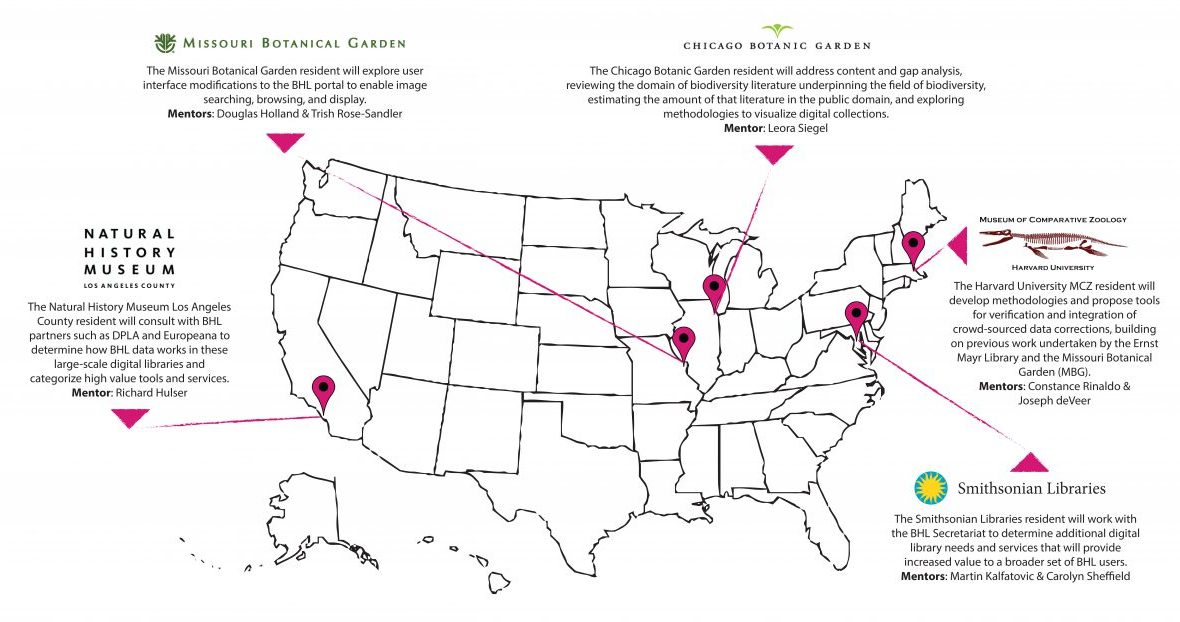
As part of “Foundations to Actions: Extending Innovations in Digital Libraries in Partnership with NDSR Learners,” the BHL NDSR residents, stationed at geographically-dispersed BHL partner institutions, will work on interrelated projects to improve the discoverability and functionality of the Biodiversity Heritage Library. This project is a National Digital Stewardship Residency (NDSR) program led by the Ernst Mayr Library of the Museum of Comparative Zoology, Harvard University and funded by the Institute of Museum and Library Services (IMLS).
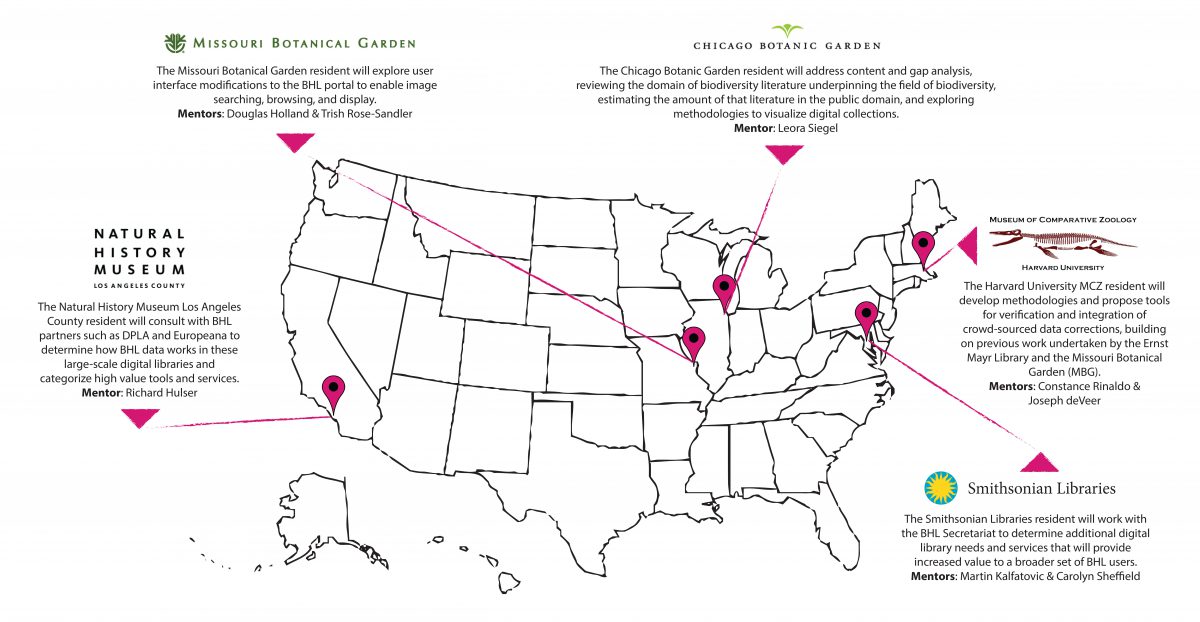
View Full Size Image
Map is from a poster presented at Digital Preservation 2016 by Joseph deVeer , Christine Giannoni , Douglas Holland , Richard Hulser , Martin Kalfatovic, Constance Rinaldo, Trish Rose-Sandler, Carolyn Sheffield, and Leora Siegel. Graphic by Grace Costantino.

The NDSR at BHL blog will features posts from the residents about project developments, successes, and challenges as well as discussions about biodiversity librarianship and content and data management in digital libraries. The residents also hope that the blog will help facilitate communication between librarians, archivists, and others interested in BHL and digital librarianship.

Click here to explore the NDSR at BHL blog. You can follow the blog to receive email notifications about new posts.

The residents and their respective host institutions and mentors are: Alicia Esquivel (Chicago Botanic Garden, mentor Leora Siegel); Marissa Kings (Los Angeles County Natural History Museum, mentor Richard Hulser); Pamela McClanahan (Smithsonian Libraries, mentors Carolyn Sheffield and Martin R. Kalfatovic); Katie Mika (Harvard University: MCZ, mentors Constance Rinaldo and Joseph deVeer); and Ariadne Rehbein (Missouri Botanical Garden, mentors Doug Holland and Trish Rose-Sandler). You can learn more about each of the residents in the bios below.

Meet the BHL NDSR Residents!

Alicia Esquivel

Alicia Esquivel is the NDSR resident at Chicago Botanic Garden working on a content analysis of BHL. She graduated from the University of Texas’ School of Information in 2016 with a MS in Information Science. While at UT she worked as a graduate research assistant at the Fine Arts Library and at the Harry Ransom Center as a digitization specialist working with audio materials. She discovered the world of bioinformatics while working on her capstone project with the UT entomology department. Alicia is enthusiastic about transforming data into useful information to facilitate research.

Marissa Kings 

View Full Size Image

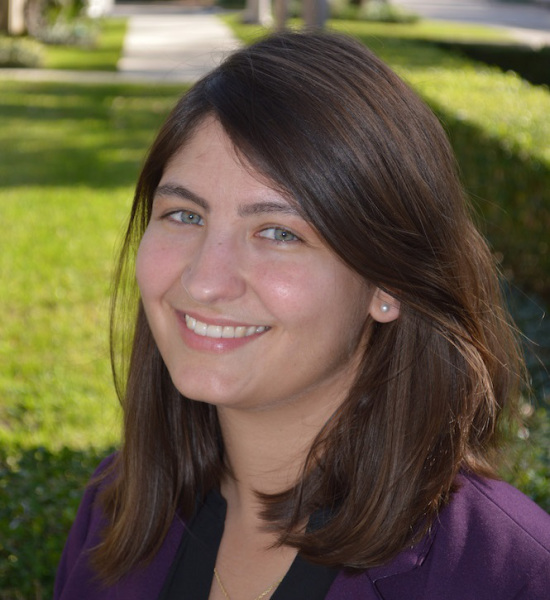
Marissa Kings is the NDSR Resident at the Natural History Museum of Los Angeles County. Her project, “Digital Library Best Practices Analysis”, focuses on identifying high value tools and services used by large-scale digital libraries which might be applied to the next generation of the Biodiversity Heritage Library.

Marissa graduated with her MLIS degree from the University of Wisconsin-Milwaukee in 2015, where she concentrated in Archival Studies. She has previously worked and interned with organizations including the Martin County Library System, Florida Institute of Technology, the Seminole Tribe of Florida’s Ah-Tah-Thi-Ki Museum, University of Oxford Institute of Archaeology, and the Bodleian Libraries. Marissa’s professional interests include digital preservation, community archives, and crowdsourcing. She also holds an MA in Maritime Archaeology from the University of Southampton, United Kingdom and a BA in Social Sciences (concentrating in Anthropology) from Flagler College, St. Augustine, Florida. In her spare time, she enjoys exploring Los Angeles, watching tennis, and thinking about going for a run.

Tweet @marissakings with cool digital humanities projects, crowdsourcing stuff, and things to do in L.A.!

Pamela McClanahan 

View Full Size Image

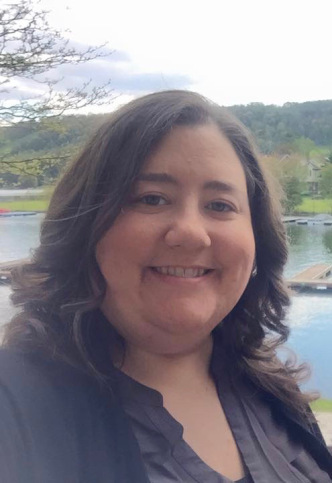
Pam McClanahan holds a MLS specializing in Archives, Records and Information Management from the University of Maryland ischool and has completed library and archival assessments and usability studies for local cultural heritage institutions. Her background is in the nonprofit fundraising field and environmental conservation, but is making a switch to the information profession.

For the National Digital Stewardship Residency program, Pam’s host site is Smithsonian Libraries where she will be working on a user needs and usability analysis to define recommendations and requirements for expanding the Biodiversity Heritage Library digital library functionality. Pam enjoys spending time with family and friends, being on the Chesapeake Bay, and working on craft projects. You can connect with Pam on Twitter here: @Pam_McClanahan!

Katie Mika 

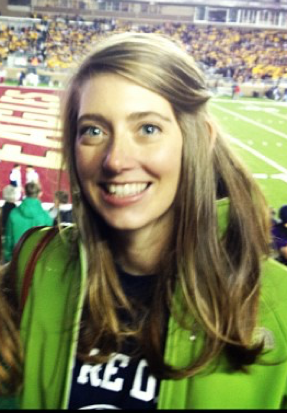
View Full Size Image

Katie Mika graduated from Simmons College in 2015 with Masters’ degrees in History (MA) and Library and Information Science (MS). Katie previously held positions as a Digital Archivist and an Archives Processing Assistant. Her professional interests are focused on providing open and reliable access to information and issues related to intellectual freedom. Katie is carrying out her Residency at the Ernst Mayr Library at Harvard University’s Museum of Comparative Zoology where she will develop tools and methodologies for importing crowdsourced data and corrections to enhance discovery in the Biodiversity Heritage Library. Before moving to the Boston area for Graduate School, Katie worked as a Ski Instructor, and she enjoys cooking, skiing, and trail running.

Ariadne Rehbein 

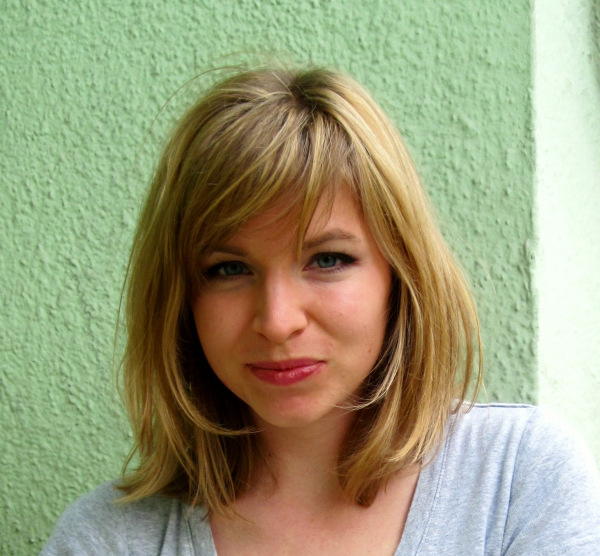
View Full Size Image

Ariadne (Ari) Rehbein earned her Master of Library Science and Master of Information Science from Indiana University Bloomington and a B.A. with High Honors in English Literature from UC San Diego.

Ariadne brings her skills in digital collections interface design and development, outreach, and metadata to the “Treasures Unlocked” project, developed through her work for Indiana University’s Lilly Library and Library Technologies division, the University of Virginia Library, and the Society of American Archivists Students and New Archives Professionals Section. She is currently serving as a DPLA Community Rep.

As an NDSR Resident at the Missouri Botanical Garden, her work focuses on natural history illustrations sourced from digitized biodiversity literature. The direct results of her project will be user interface requirements and a report on image discovery best practices. She is excited to study the use of digital natural history illustrations across disciplines, by scholars and the public, to build upon the successful work of the “Art of Life” team members and citizen scientists, to gain from the expertise of digital library and botanical library professionals at the Garden, and to become more engaged in the realm of openly accessible biodiversity and cultural heritage collections.

Talk to Ariadne about #BHLib, #biodiversity, #digitalcollections, and #ndsr on Twitter @ari_rehbein!

February 22, 2017by michelle.underhill
BHL News, Blog Reel

BHL Workshop for NDSR Team

Portrait version of the Biodiversity Heritage Library logo.

On February 1 – 3, the 2017 National Digital Stewardship Residency (NDSR) BHL cohort convened in Washington, DC for an intensive two-day BHL Workshop followed by tours of local library and museum collections. As part of the Institute for Museum and Library Serves (IMLS)-funded Foundations to Actions grant, five residents will each be working with BHL mentors over the next 12 months to identify ways to improve our workflows and website and to enhance the user experience. This highly competitive program provides opportunities for recent graduates to contribute in meaningful ways to the research, planning and development of new approaches for digital preservation and access.

The BHL Workshop provided an opportunity for the five NDSR BHL residents to establish a common, foundational working knowledge of the Biodiversity Heritage Library’s operations. Dr. Nancy E. Gwinn, the Director of the Smithsonian Libraries, kicked off the workshop with a warm welcome and introduction to guest speaker, George Coulbourne. Mr. Coulbourne is the Chief of Internship and Fellowship Programs at the Library of Congress and counts the National Digital Stewardship Residency (NDSR) amongst his chief responsibilities. He provided a history of the program and an overview of future directions. Over the course of the two days, workshop sessions covered collection management practices, workflows and collaborative tools. Discussion topics focused on BHL’s larger vision for a next generation digital library.

View Full Size Image
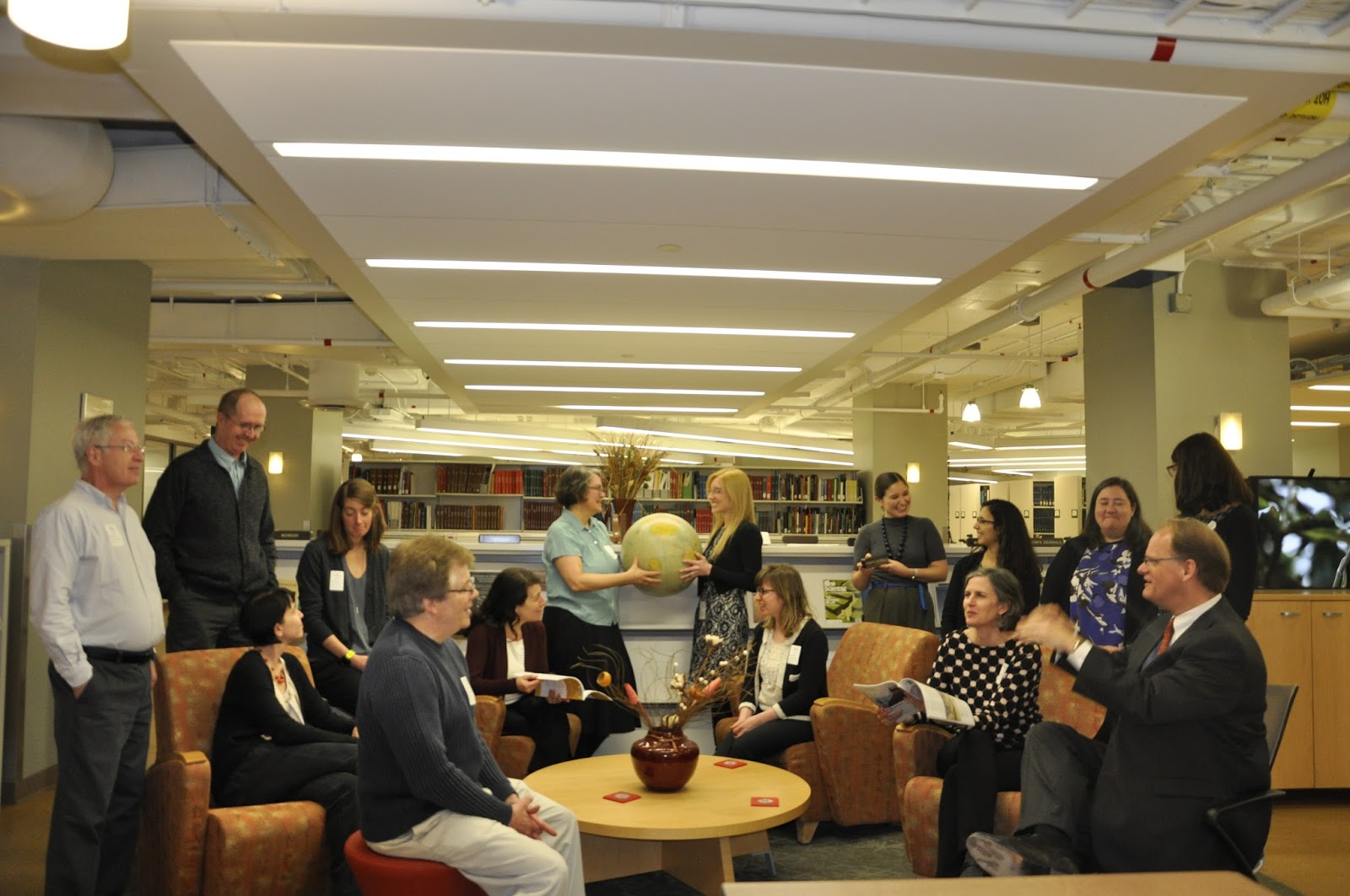
NDSR Mentors, Residents and BHL Secretariat

We were also pleased to offer a networking event the evening of February 1 that brought together current and past NDSR residents and mentors working on other projects in the region, as well as key stakeholders including representatives from IMLS, Library of Congress, and University of Maryland, among others. All told, approximately 35 librarians, archivists and information professionals gathered at the Smithsonian to participate in the evening.

A variety of tours were also organized for the residents and were reflective of the collaborative nature of both BHL and the NDSR program. On February 1, Leslie Overstreet (Curator of Natural-History Rare Books) provided a tour of the Smithsonian Libraries’ Joseph F. Cullman 3rd Library of Natural History. The group was also treated to a tour of one of the Smithsonian Libraries’ digitization facilities at the National Museum of Natural History, where Jacqueline E. Chapman (Digital Collections Librarian) and Daniel Euphrat (Digital Imaging Technician) discussed digital workflows, policies, and procedures with the residents and showed them how books are prepared and digitized for inclusion in digital library portals like BHL.

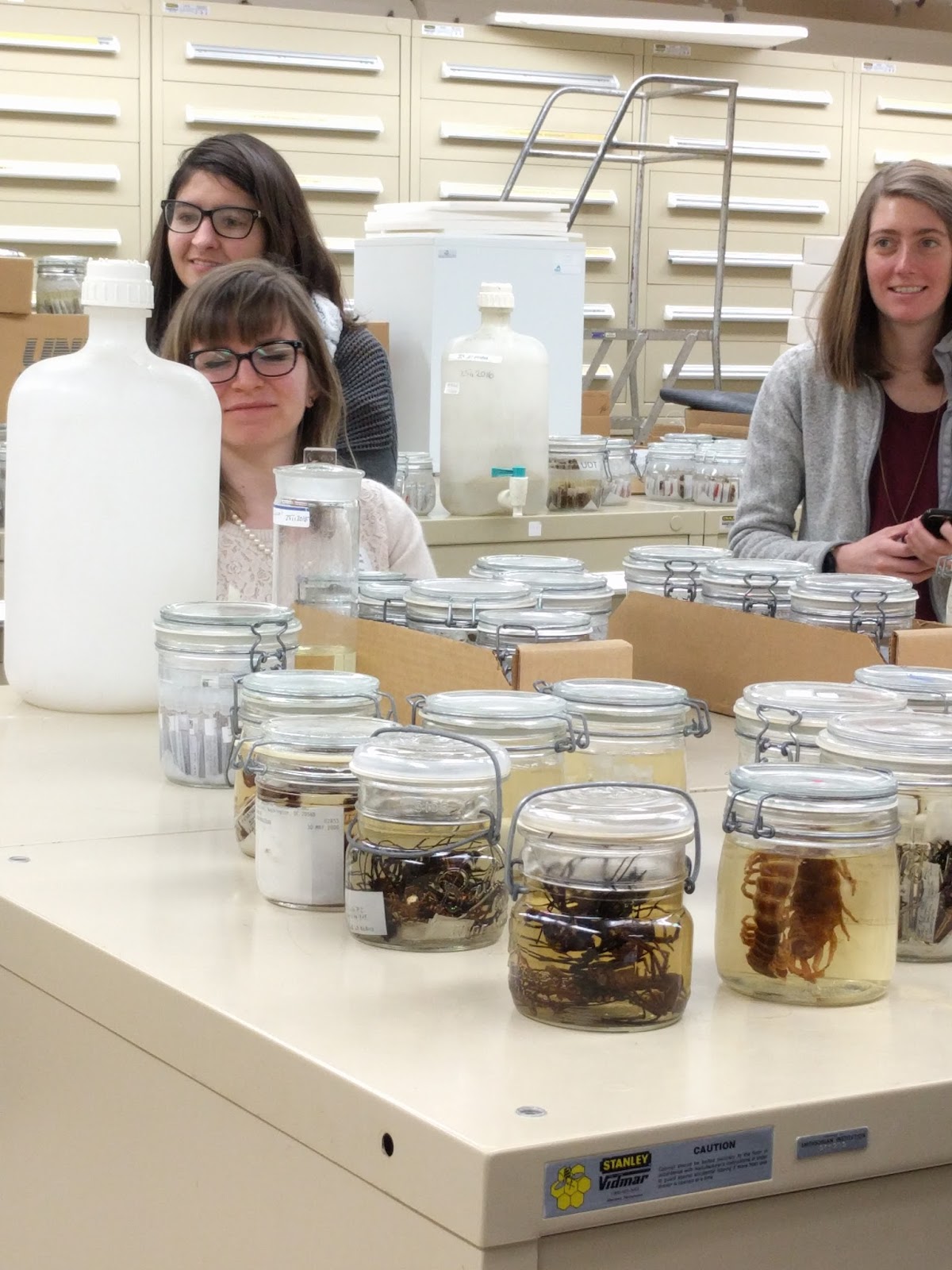
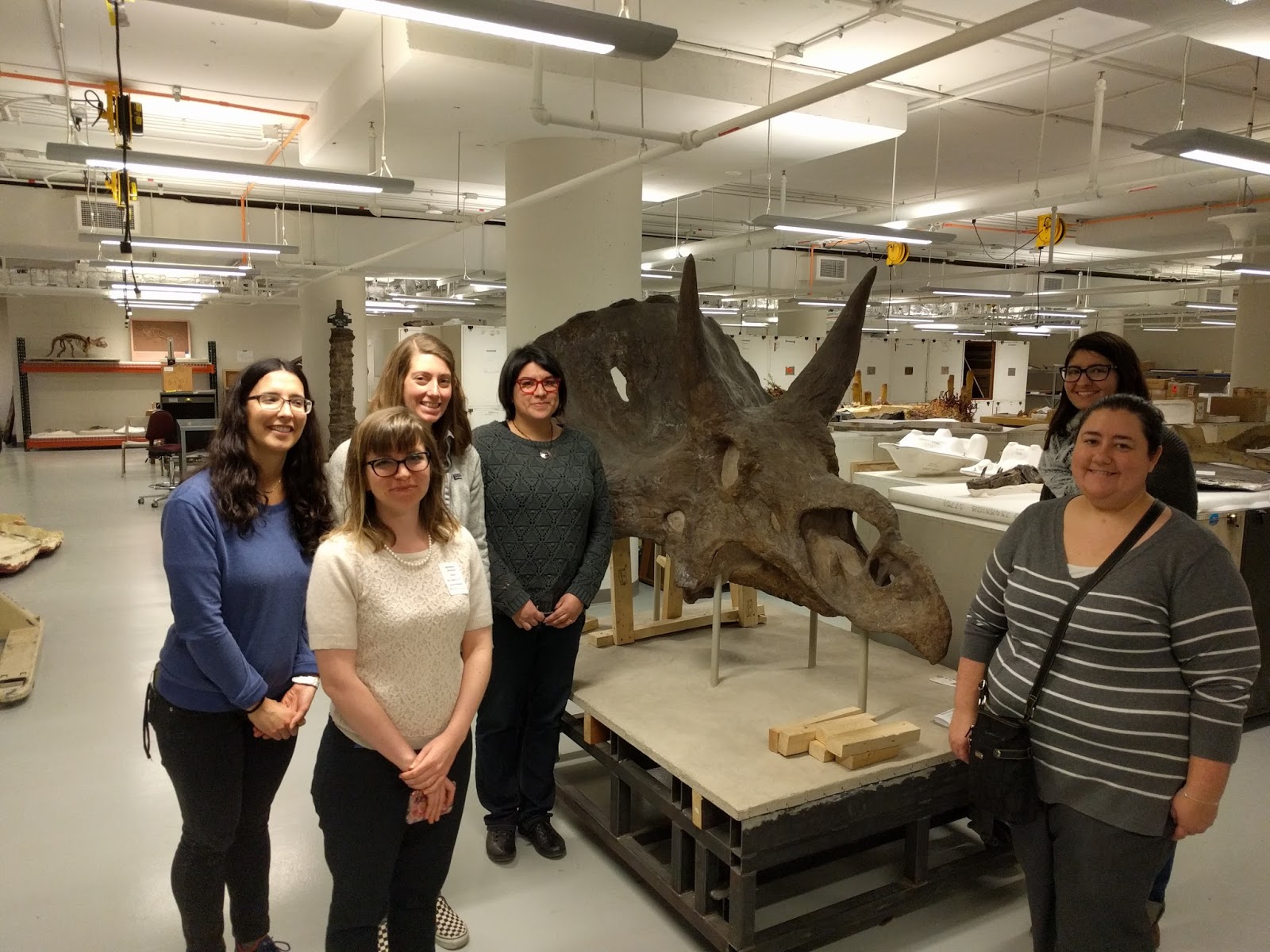
On February 3, a tour of the Library of Congress, led by John Y. Cole (Historian of the Library of Congress), was followed by two behind-the-scenes tours at the Smithsonian National Museum of Natural History (NMNH).  Floyd Shockley (Acting Collections Manager, Department of Entomology, NMNH) shared collections highlights from the Department of Entomology and Kathy Hollis (Collections Manager, Department of Paleobiology, NMNH) showcased collections from the Department of Paleobiology.

View Full Size Image
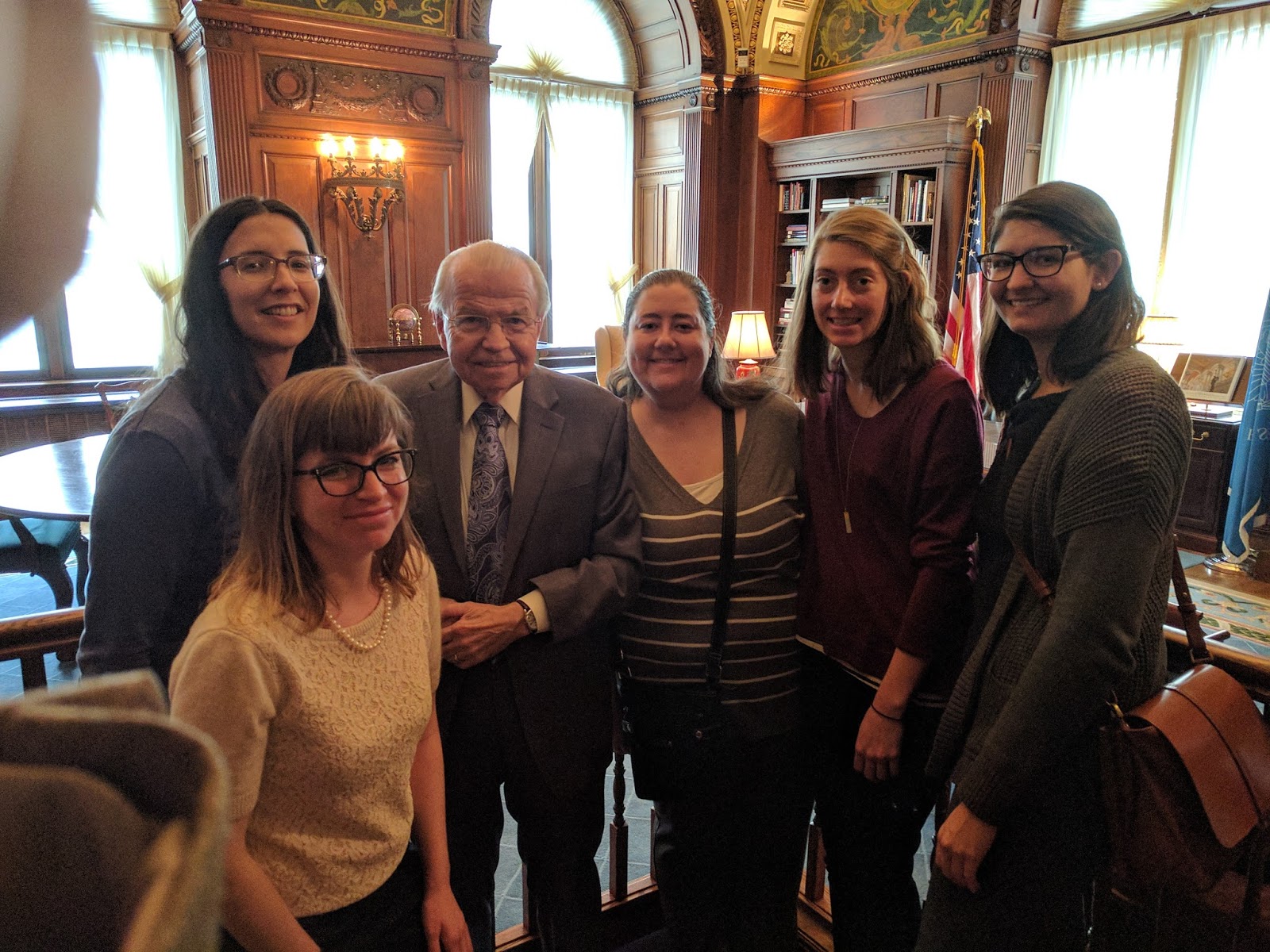
Residents at Library of Congress Tour (in the Librarian’s Ceremonial Office)
From left to right
Ariadne Rehbein (Missouri Botanical Garden resident), Alicia Esquivel (Chicago Botanic Garden resident), John Y. Cole (Historian of the Library of Congress), Pam McClanahan (Smithsonian resident), Katie Mika (Harvard resident), Marissa Kings (Natural History Museum, LA County)
View Full Size Image
Residents attending tour of the Department of Entomology,
Smithsonian National Museum of Natural History
View Full Size Image
Residents attending tour of the Department of Paleobiology,
Smithsonian National Museum of Natural History (with Hatcher, the Triceratops)

We’re thrilled to host the NDSR BHL cohort and look forward to the new perspectives and contributions they’ll make over the course of the year. You can learn more about each of the residents and the project page.

February 21, 2017by sayeedmd
BHL News, Blog Reel

Expanding Access at ALA Midwinter

Portrait version of the Biodiversity Heritage Library logo.

View Full Size Image

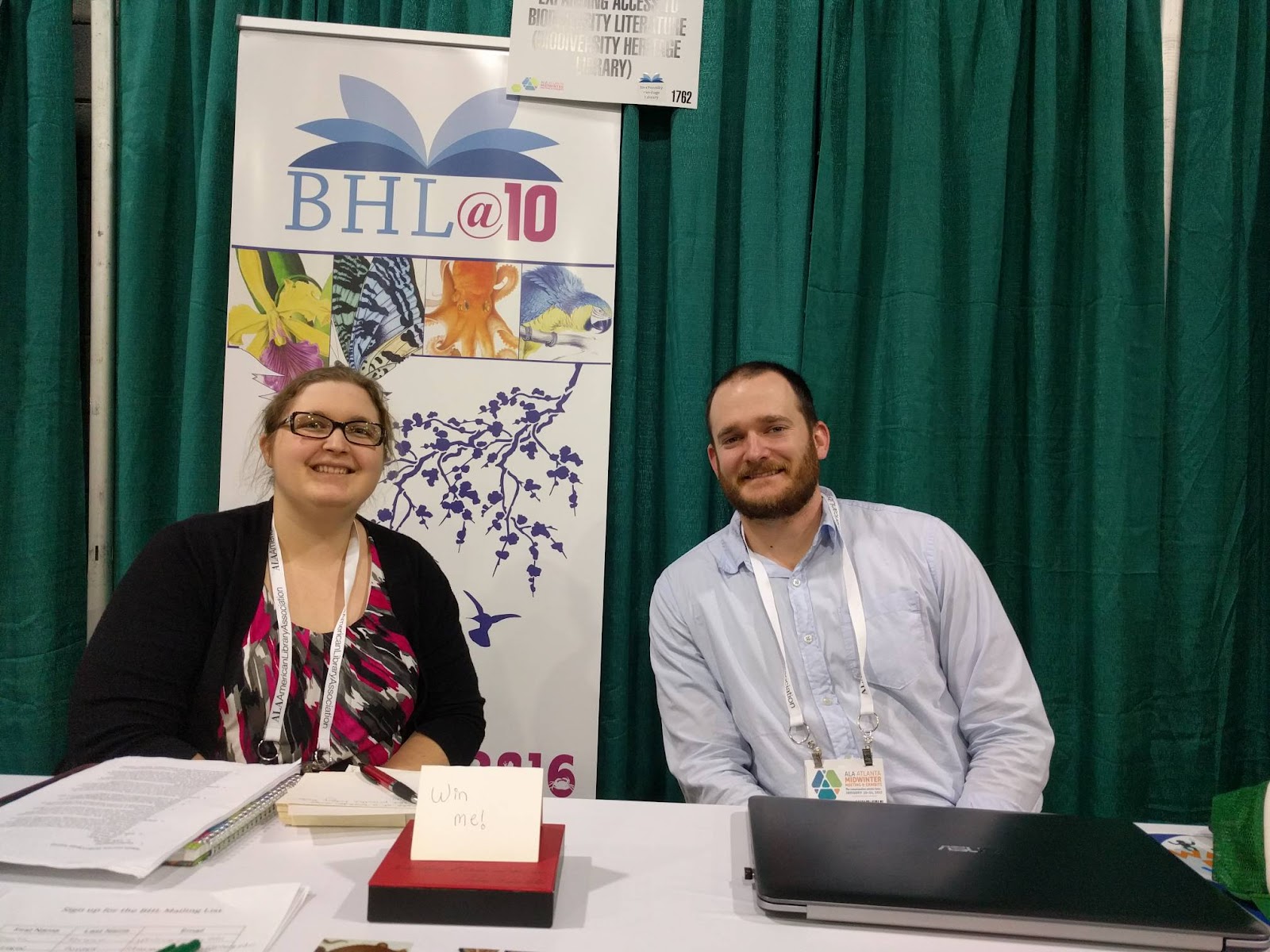
Last month, two Expanding Access to Biodiversity Literature (EABL) team members attended ALA Midwinter as exhibitors. The conference was held in downtown Atlanta, Georgia from January 20th until the 23rd, minutes away from where the Atlanta Falcons won entry into Super Bowl LI. Patrick Randall and Mariah Lewis were among other first-time exhibitors and spread the word about the IMLS National Leadership Grant Project. The weekend was full of fantastic conversations with librarians from a number of different institutions. Not only were new possible EABL contributors reached, it was also a great chance for those who were unfamiliar with BHL to check it out.

View Full Size Image

During the weekend, Mariah attended a discussion group for Digital Special Collections. The session focused on a number of projects being done by multiple different institutions, including projects on early American cookbooks, using Omeka for student exhibits at the University of Florida, interactive touch tables in archives, finding ways to get professors to interact more closely with collections of primary source material, and a project that didn’t intend on being digital.  The presentation led to a discussion of the tools used in digital projects and how to be knowledgeable about their operation while keeping up with the constant updates and changes.

On Tuesday, January 24th, Expanding Access hosted a training session at the Cherokee Garden Library, one of the institutions participating in Expanding Access.

View Full Size Image

The Cherokee Garden Library is located at the Atlanta History Center in Atlanta, Georgia. Founded in 1975 by Anne Coppedge Carr, the library was born out of the the Cherokee Garden Club. The collection now holds 32,000 objects—from books and manuscripts to landscape drawings and photographs. Covering topics from garden history to horticulture and plant ecology, the collection emphasizes the southeastern United States and provides a window into the journey of botany and horticulture throughout history.  In 2005, the Cherokee Garden merged with the Kenan Research Center, also at the Atlanta History Center.  The Expanding Access team is honored to help continue Carr’s philosophy of allowing use and access of the treasures within the collection.

BHL Program Director Martin Kalfatovic was gracious enough to give a thorough introduction to BHL that drew local wildlife also interested in BHL to the conference room window — though the inclusion of our avian friend on the project is still under review.  Under the supervision of the curious cardinal, the training session focused on content selection and curation and allowed staff at the library to get hands-on experience with BHL’s curation tool.

View Full Size Image
Left to right: Staci Catron, Library Director; Mariah Lewis; Jennie Oldfield, Cataloger & Archivist

While the Atlanta History Center may seem like an unlikely place for biodiversity content to be held, EABL is very excited to include the wide variety of biodiversity-related materials held within this inspirational institution.  Stay tuned for more information on the wonderful contributions from the Cherokee Garden Library, Kenan Research Center at the Atlanta History Center!

Reference

“About the Cherokee Garden Library.” Atlanta History Center. Accessed February 10, 2017. http://www.atlantahistorycenter.com/assets/documents/about_the_cherokee_garden_library_founding_leadership-2.pdf.

February 16, 2017by aneeser
BHL News, Blog Reel

‘What’s in a Name?’ Launched at Harvard Museum of Natural History

Why are names important in science? What is the difference between scientific names (also known as Latin names or taxonomic names) and common names? Why do some species have multiple names? The grant project team for What’s in a Name, supported by the Institute of Museum and Library Services (IMLS), set out to find answers and develop exhibits and other ways for anyone to explore this phenomenon. With millions of different species to identify and understand, the process of naming organisms helps scientists organize and understand the tree of life. The physical and virtual results of this exploration creatively demonstrate how scientists identify and name species, how names relate to scientific research and the progression of knowledge, and how museum specimen collections play a crucial role in the process of naming.

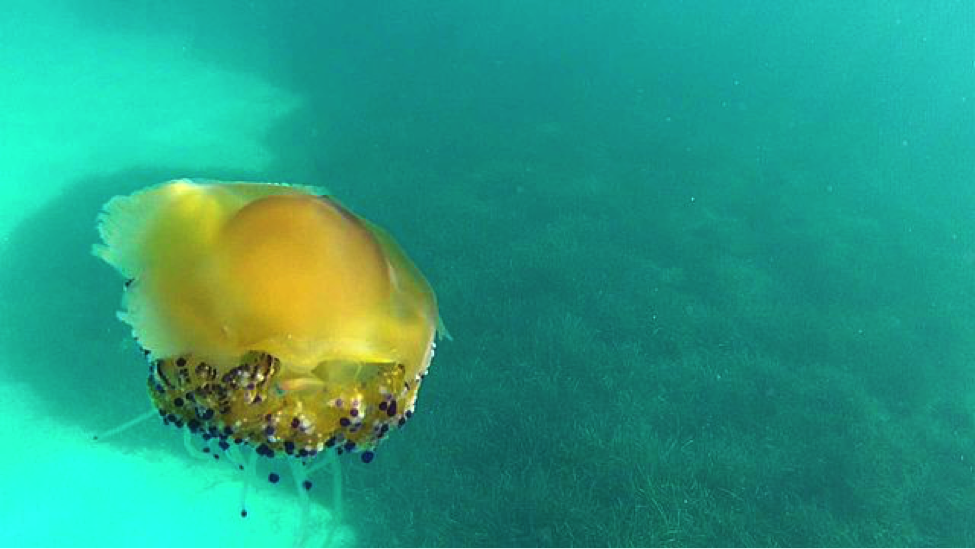
Why would something be called “Fried Egg jelly fish”, and also be known as Phacellophora camtschatica?

View Full Size Image
Image of the Fried Egg Jelly courtesy of gpapadop79 – Own work, CC BY-SA4.0, https://commons.wikimedia.org/w/index.php?curid=45347541.

Scientific names take the form of “Genus species”. Scientific names serve to distinctively identify an organism and also to show evolutionary relationships. The genus links the organism to its evolutionary relatives while the species name demonstrates its uniqueness (not unlike the family and first name convention of many people in North America). Organisms also have common names. Common names can be confusing—for instance a “Robin” in the United States is a completely different bird than a “Robin” in Europe, but if the scientific name is used, confusion can be reduced via the name unique to the organism.

The system of binomial nomenclature is used to assign species with their two-part Latin names. Carl von Linné (1707 – 1778) established a system of tiered taxonomic classification, which assigned species formal names, in the 18th century. His classification is outlined in his book, Systema Naturae. His purpose was to reduce confusion from the proliferation of common names by supplying a unique name to each organism that also displayed potential relationships with other organisms. The names were formulated from Latin words. Linné even Latinized his own name and is now best known by that name: Carolus Linnaeus.

View Full Size Image
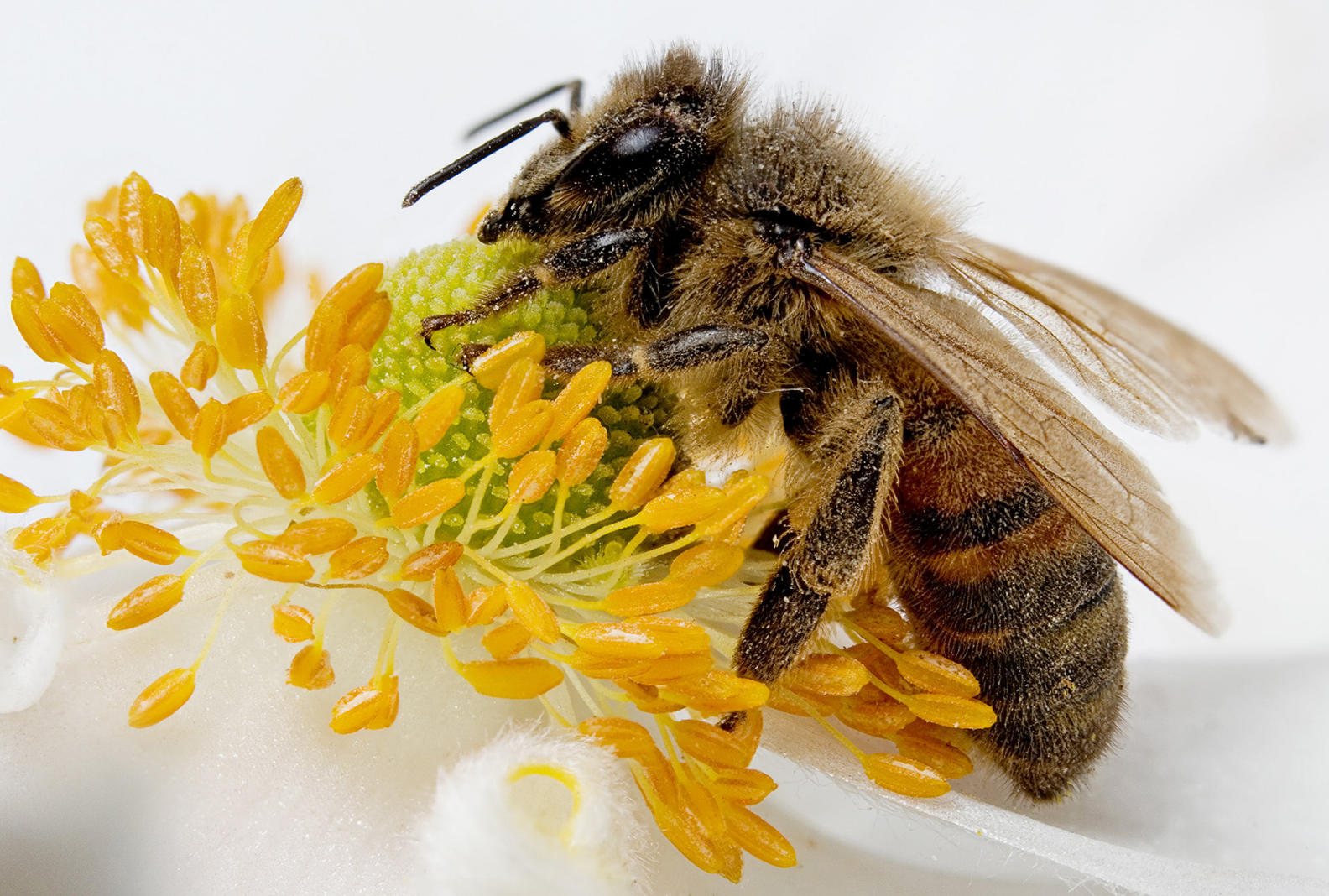
From the What’s In a Name PDF, page 32: “Carl Linnaeus gave the European Honeybee its name, Apis mellifera, which is Latin for “honey-bearing bee.” By some accounts, Linnaeus later became dissatisfied with the name he bestowed and argued to change it from Apis mellifera, to Apis mellifica, or “honey-making bee.” His mistake, he argued, was that bees make honey within the hive; they do not bear it from the flower. His argument was presumably unsuccessful as the bee still bears the erroneous name.” Image: A European Honeybee, Apis mellifera, visiting a flower that is dusting it with pollen. (JJ Harrison, CC BY-SA 3.0).

Species may be discovered by scientists poring over specimens in a museum or someone exploring an area rich in biodiversity. It is not necessary to be a scientist to name a new species but scientific names must conform to rules laid out by the International Code of Zoological Nomenclature and the International Code for Nomenclature for algae, fungi and plants. Names can reflect a characteristic of a species (Peromyscus leucopus-white-footed mouse) or can be named after a person or location (Mandelia microcornata-a nudibranch named for Nelson Mandela). Sometimes, scientists display a sense of humor when naming: Agra phobia and Agra vation are the scientific names of South American beetles. A hungry entomologist (Neal Evenhuis) named a series of flies (genus) Pieza and most notably, a species Pieza pi.

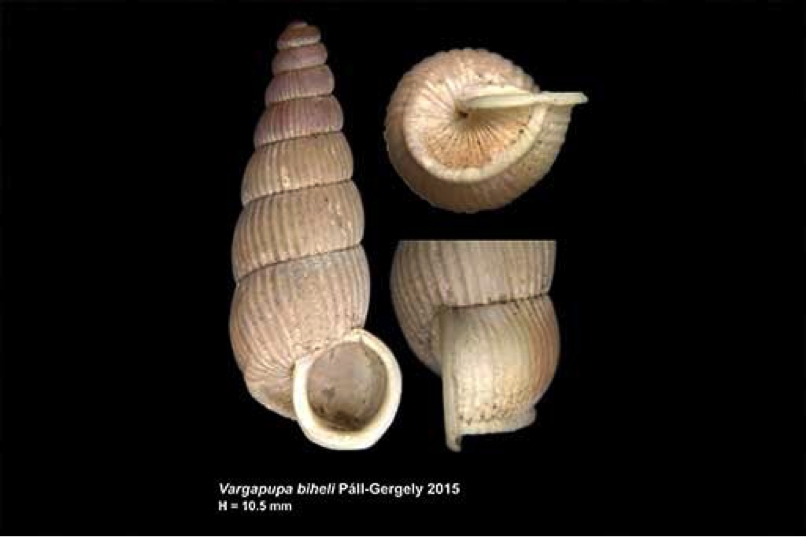
The results from the work of What’s in a Name? include four interactive exhibit stations at the Harvard Museum of Natural History on Honeybees, the extinct Dimetrodon, Jellies and Poison Ivy. There are also free online resources, including a website and a 60-page free e-book. The online resources include eight more species stories that feature images and references from the Biodiversity Heritage Library (BHL) and include familiar organisms like the dodo and sugar maple, as well as our favorite, the snail Vargapupa biheli named after BHL!

View Full Size Image
Vargapupa biheli. Image courtesy Dr. Barna Páll-Gergely.

Featured in the exhibit display on Dimetrodon, Stephanie Pierce, Assistant Professor of Vertebrate Paleontology, Harvard University, describes research being done right now on specimens of the fossil species Dimetrodon milleri, in the Museum of Comparative Zoology collection:

The What’s in a Name? project is a partnership between Harvard Museums of Science and Culture (HMSC), the Encyclopedia of Life (EOL), and the BHL, as represented by the Ernst Mayr Library of the Museum of Comparative Zoology at Harvard University. This project was made possible by IMLS.

For more information about scientific names and naming, check out the following sources

  • Bright, M. 2012. The Frog with Self-cleaning Feet: And Other Extraordinary Tales From the Animal World. Biteback Publishing. 304 pages.
  • Evenhuis, N. L.2002. Pieza, a new genus of microbombyliids from the New World (Diptera: Mythicomyiidae). Zootaxa 36(1). DOI: http://dx.doi.org/10.11646/zootaxa.36.1.1
  • Freeland, C. 2008. On Name Finding in the BHL. BHL Blog, March. https://goo.gl/wJIOWC
  • Greenstein, B. 2016. How’s your fern and bird coverage, BHL? BHL Blog, August.
  • Harvard Museums of Science and Culture. 2017, “What’s in a Name?.” http://whatsinaname.hmnh.harvard.edu/files/imls/files/_whatsinaname_.pdf
  • Judd, W. 2014.Weirdest species names. Australian Geographic. March 2014. https://goo.gl/UQ3xMA
  •  Zielinski, S. 2009. The World’s Strangest Scientific Names. Smithsonian Magazine. https://goo.gl/D3aMbb
February 14, 2017by ulib-libraryjobs
Blog Reel

UPDATE 13 Feb 2017: BHL Website Back Online

UPDATE: The BHL website is back online as of 16:25 GMT. Thank you for your patience!

—————————-

The BHL website is currently unavailable due to technical difficulties. We’re working to resolve the problem as soon as possible. We apologize for the inconvenience.

While the BHL website is down, you can access our collection via Internet Archive: https://archive.org/details/biodiversity

February 13, 2017by ulib-libraryjobs
Page 1 of 212»

Help Support BHL

BHL's existence depends on the financial support of its patrons. Help us keep this free resource alive!

search

About BHL

The Biodiversity Heritage Library (BHL) is the world’s largest open access digital library for biodiversity literature and archives. BHL operates as a worldwide consortium of natural history, botanical, research, and national libraries working together to digitize the natural history literature held in their collections and make it freely available for open access as part of a global “biodiversity community.”

Join Our Mailing List

Sign up to receive the latest news, content highlights, and promotions.

Subscribe Now

Subscribe to Blog via Email

Enter your email address to subscribe to this blog and receive notifications of new posts by email.

Join 319 other subscribers

Subscribe to Blog Via RSS

Subscribe to the blog RSS feed to stay up-to-date on all the latest BHL posts.

Access RSS Feed

Inspiring Discovery through Free Access to Biodiversity Knowledge.

The Biodiversity Heritage Library makes it easier than ever for you to access the information you need to study and explore life on Earth…for free, anytime, anywhere.


64+ Million Pages of
Biodiversity Literature Online.

EXPLORE

Tools and Services
to Transform Research.

EXPLORE

300,000+
Illustrations on Flickr.

EXPLORE

ABOUT | HARMFUL CONTENT | PRIVACY | SITE MAP | TERMS OF USE