Biodiversity Heritage Library - Program news and collection highlights from BHL
  • Home
  • News
  • Featured Books
    • All Featured Books
    • Book of the Month Series
    • BHL at 20
  • User Stories
  • Campaigns
    • Fossil Stories
    • Garden Stories
    • Monsters Are Real
    • Page Frights
    • Her Natural History
    • Earth Optimism 2020
  • Tech Blog
  • Visit BHL
Home
News
Featured Books
    All Featured Books
    Book of the Month Series
    BHL at 20
User Stories
Campaigns
    Fossil Stories
    Garden Stories
    Monsters Are Real
    Page Frights
    Her Natural History
    Earth Optimism 2020
Tech Blog
Visit BHL
  • Home
  • News
  • Featured Books
    • All Featured Books
    • Book of the Month Series
    • BHL at 20
  • User Stories
  • Campaigns
    • Fossil Stories
    • Garden Stories
    • Monsters Are Real
    • Page Frights
    • Her Natural History
    • Earth Optimism 2020
  • Tech Blog
  • Visit BHL
Biodiversity Heritage Library - Program news and collection highlights from BHL
BHL News, Blog Reel

Capstone event for BHL NDSR program

On January 4, 2018, in the midst of a memorable storm in the Northeastern US, approximately 30 intrepid travelers met to celebrate the successful completion of the BHL National Digital Stewardship Residencies developed for the IMLS, Laura Bush 21st Century Librarian grant submission: Foundations to Actions: Extending Innovations in Digital Libraries in Partnership with NDSR Learners.  The program plan included hiring five geographically-distributed residents, all graduates of LIS or related master’s programs, to work on collaborative projects to improve tools, curation, and content stewardship for BHL. This work supported BHL development plans for the next generation portal for the world’s largest open access digital library for biodiversity literature.

The Capstone event was beautifully hosted by the Smithsonian Libraries at the Natural History Museum in the room where the first DC planning meeting for BHL occurred. Martin Kalfatovic (BHL Program Director and Associate Director, Digital Program and Initiatives for the Smithsonian Libraries) and Dr. Nancy Gwinn (Director of the Smithsonian Libraries) welcomed the group.  Robin Dale (Deputy Director for Library Services at IMLS) described the NDSR program within the context of the IMLS goals for a national digital platform, mentoring digital library leaders and developing communities of practice.  Dr. Scott Miller (Deputy Undersecretary for Collections and Interdisciplinary Support at the Smithsonian Institution) congratulated BHL on its accomplishments in making biodiversity literature accessible but also suggested further work on linking content, mobile access and establishing standards.

Constance Rinaldo (Librarian of the Ernst Mayr Library of the Museum of Comparative Zoology, Harvard University and Chair of the BHL Members’ Council) gave an overview of the grant and process emphasizing the importance of ensuring the development of a strong cohort with leadership capacity among the geographically dispersed residents. Leora Siegel (Senior Director, Lenhardt Library of the Chicago Botanic Garden and a BHL NDSR Mentor) reflected on the past year and how rewarding it was to be a mentor to a recent graduate, wrestle with how to push the project forward, and connect with colleagues mentoring related projects with residents across the United States.  Mentors wished for more time, more opportunities to meet face to face with all participants and more professional meeting opportunities.

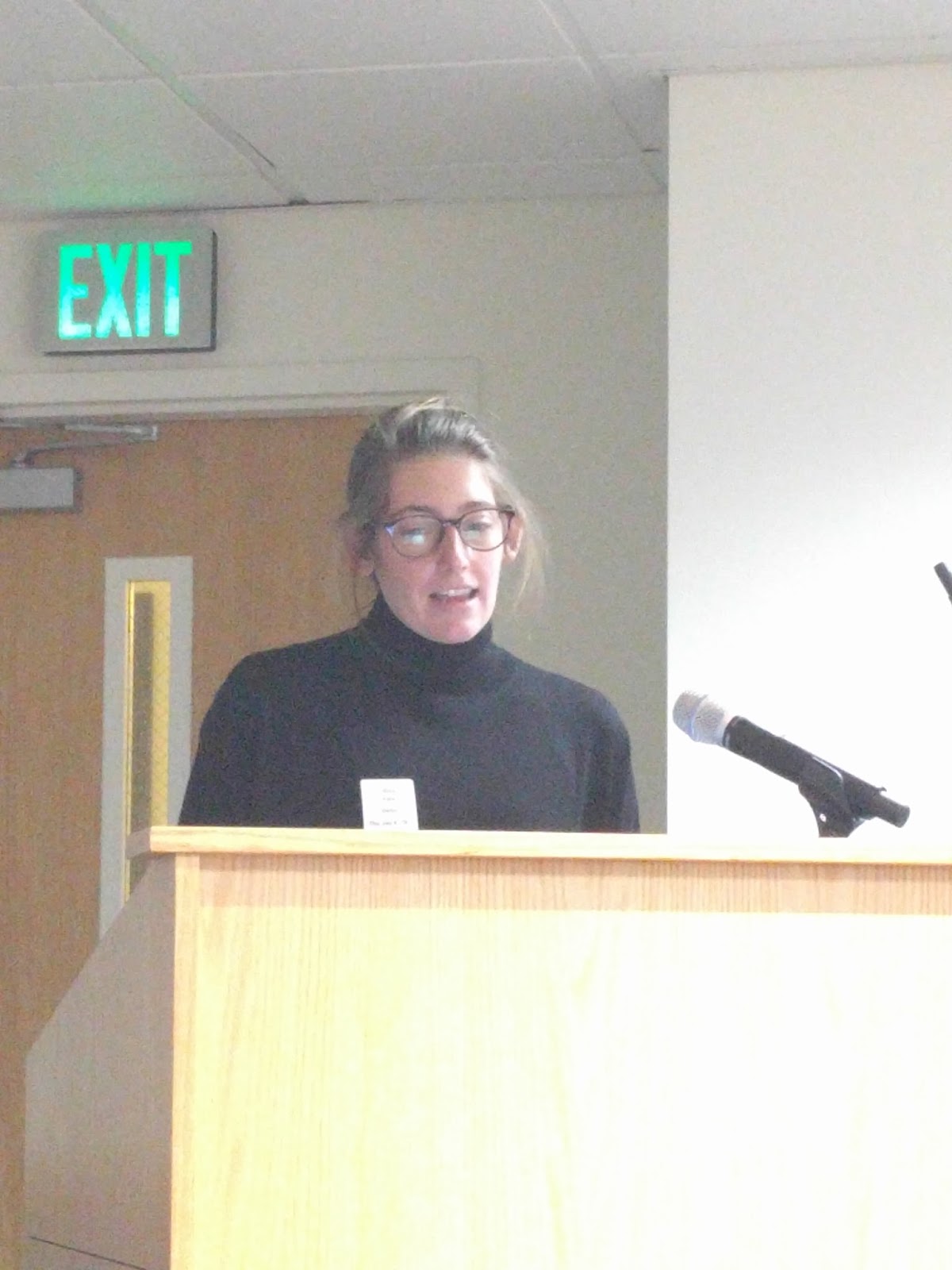
Katie Mika (BHL NDSR Resident at the Ernst Mayr Library) reflected on being a resident, struggling with the contrary thrusts of independence yet adherence to a partially defined project in a tight time frame.  Residents wished for more time, more structure and an in-depth technical introduction to BHL, yet all were successful in their work and learned more than they expected.

Trevor Owens (Head of Digital Content Management in Library Services at the Library of Congress) wrapped up the event with a keynote that focused on the push towards a National Digital Platform for digital data and his thoughts on digital preservation.

Although the final grant report looms large for the mentors, the Capstone event was an engaging send-off for the residents and we all look forward to following their future accomplishments.

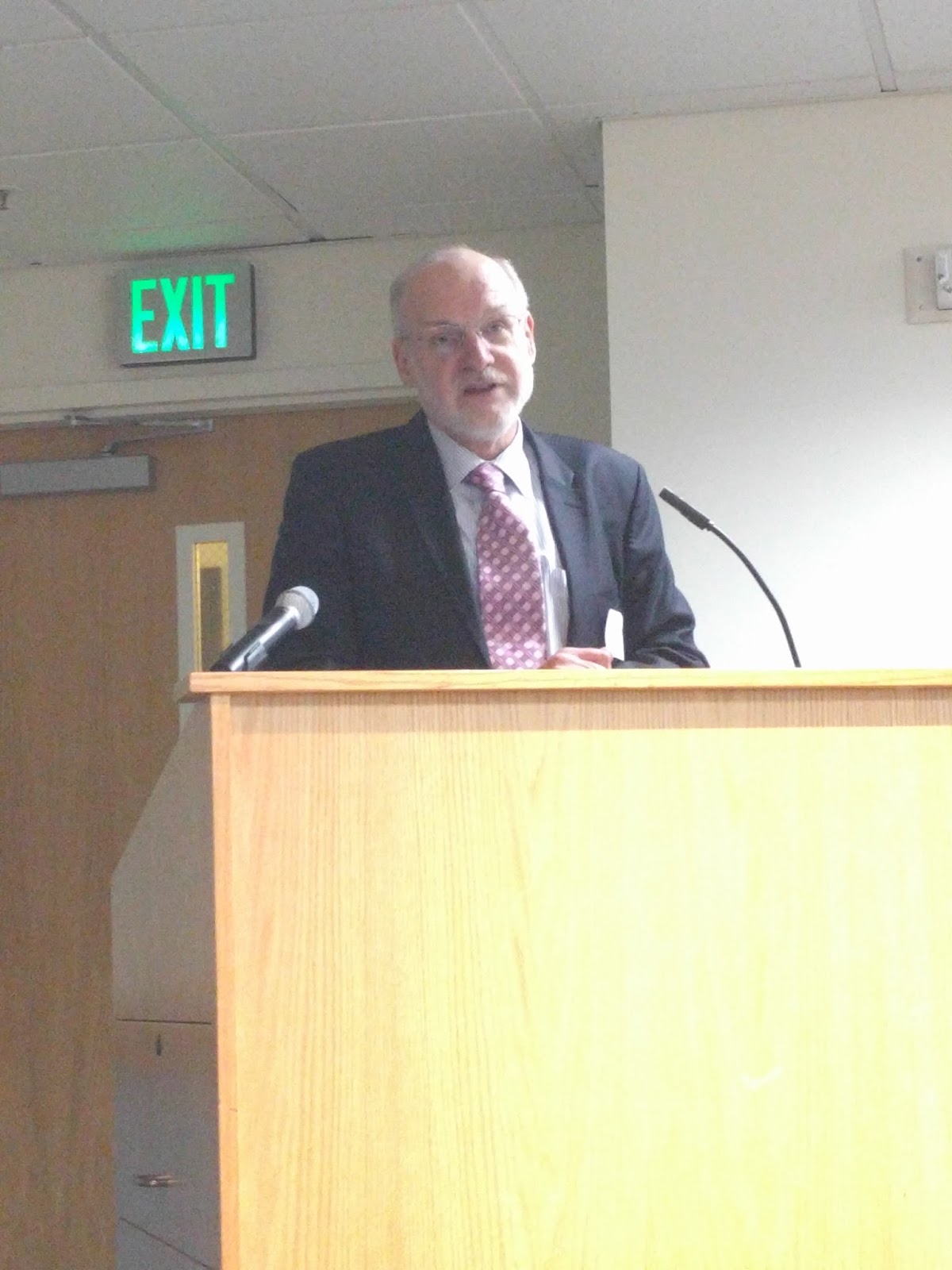
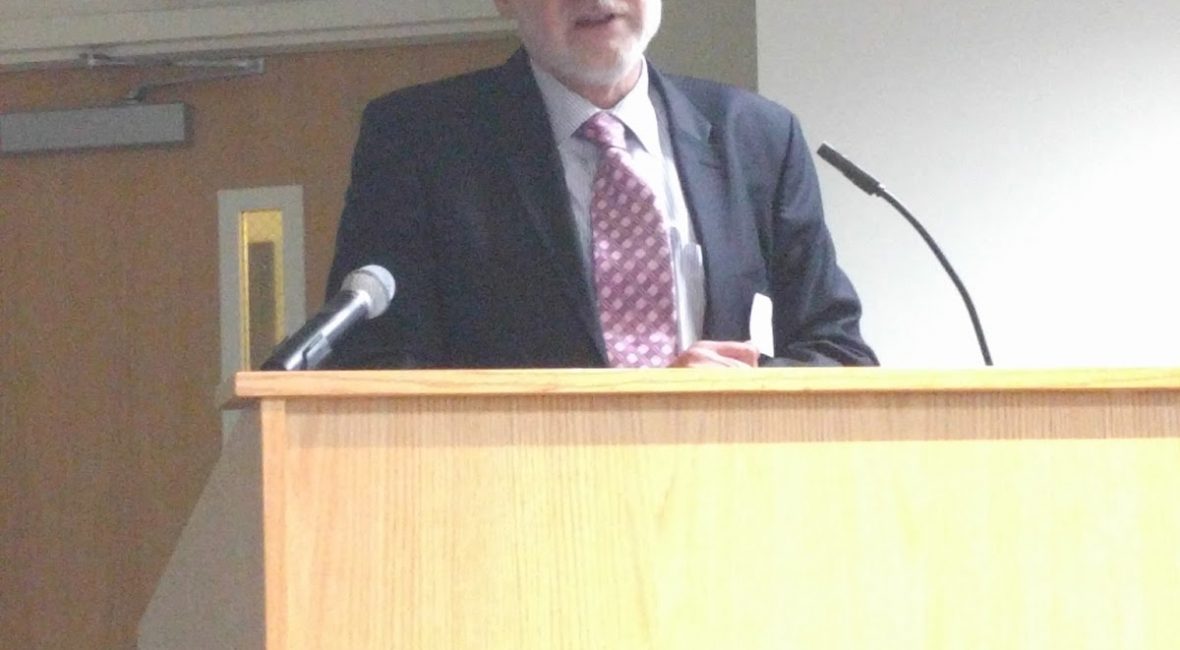
Scott Miller presenting the
opening keynote
Katie Mika presenting the
BHL NDSR Resident Reflection
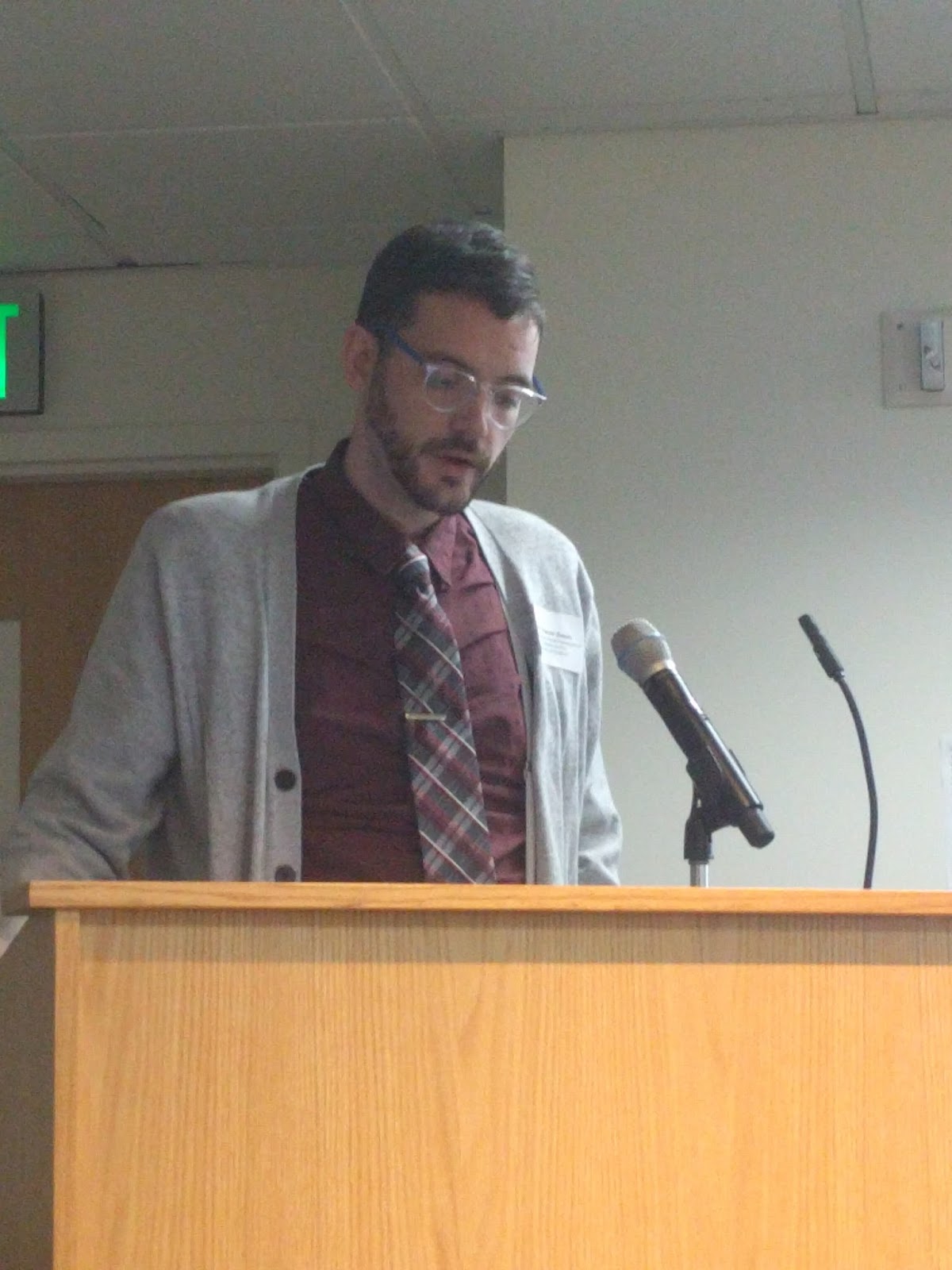
Trevor Owens presenting the
closing keynote

For specific information about the work of the residents, see their blog
and related BHL blog posts.
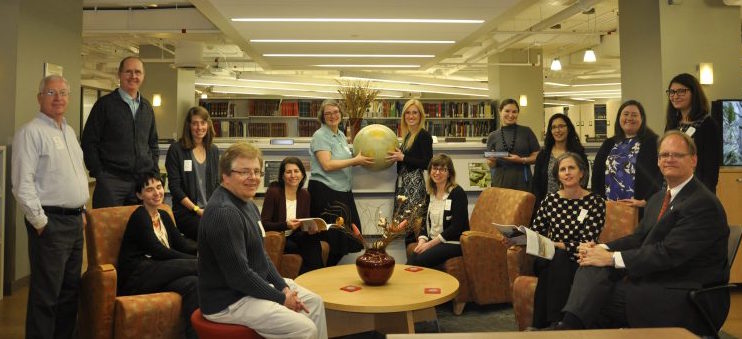
BHL NDSR Residents and Mentors

Alicia Esquivel, Resident at Chicago Botanic Garden, focused on Content Analysis.
Leora Siegel, Senior Director, Lenhardt Library

Marissa Kings, Resident at Natural History Museum, Los Angeles County, focused on Digital Library Best Practices.
Richard Hulser, Chief Librarian

Pamela McClanahan, Resident at Smithsonian Libraries, focused on User Needs and Usability.
Carolyn Sheffield, BHL Program Manager

Katie Mika, Resident at Ernst Mayr Library, Harvard University Museum of Comparative Zoology, focused on Crowdsourced Data Corrections and Enhancements.

Constance Rinaldo, Librarian, Ernst Mayr Library
and Program Director, BHL-NDSR Program
Joseph DeVeer, Project Manager and Museum Liaison, Ernst Mayr Library

Ariadne Rehbein, Resident at Missouri Botanical Garden, focused on Enhancing Image Discovery.
Doug Holland, Library Director, Peter H. Raven Library
Trish Rose-Sandler, Project Manager, Center for Biodiversity Informatics

Thank you to the speakers, external and internal to the grant project, for providing us with encouragement, support and reflections that we can take forward in our day to day work.  I want to especially thank Carolyn Sheffield (BHL Program Manager and Mentor to the Smithsonian Libraries resident) for managing the logistics of the Capstone event and ensuring its excellence.
January 17, 2018by Kathryn Stine
BHL News, Blog Reel

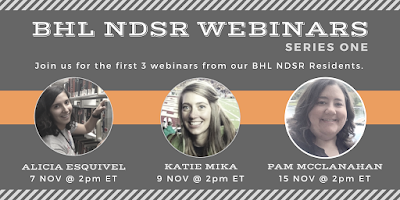
Announcing Five Webinars from BHL’s NDSR Residents!

We are pleased to announce five webinars from BHL’s NDSR residents! Each resident has spent the past 10 months or so working hard on individual—yet inter-related—research projects to explore how we might best improve the features and functionality of BHL to incorporate new technologies and evolving best practices for digital libraries and the larger biodiversity community.

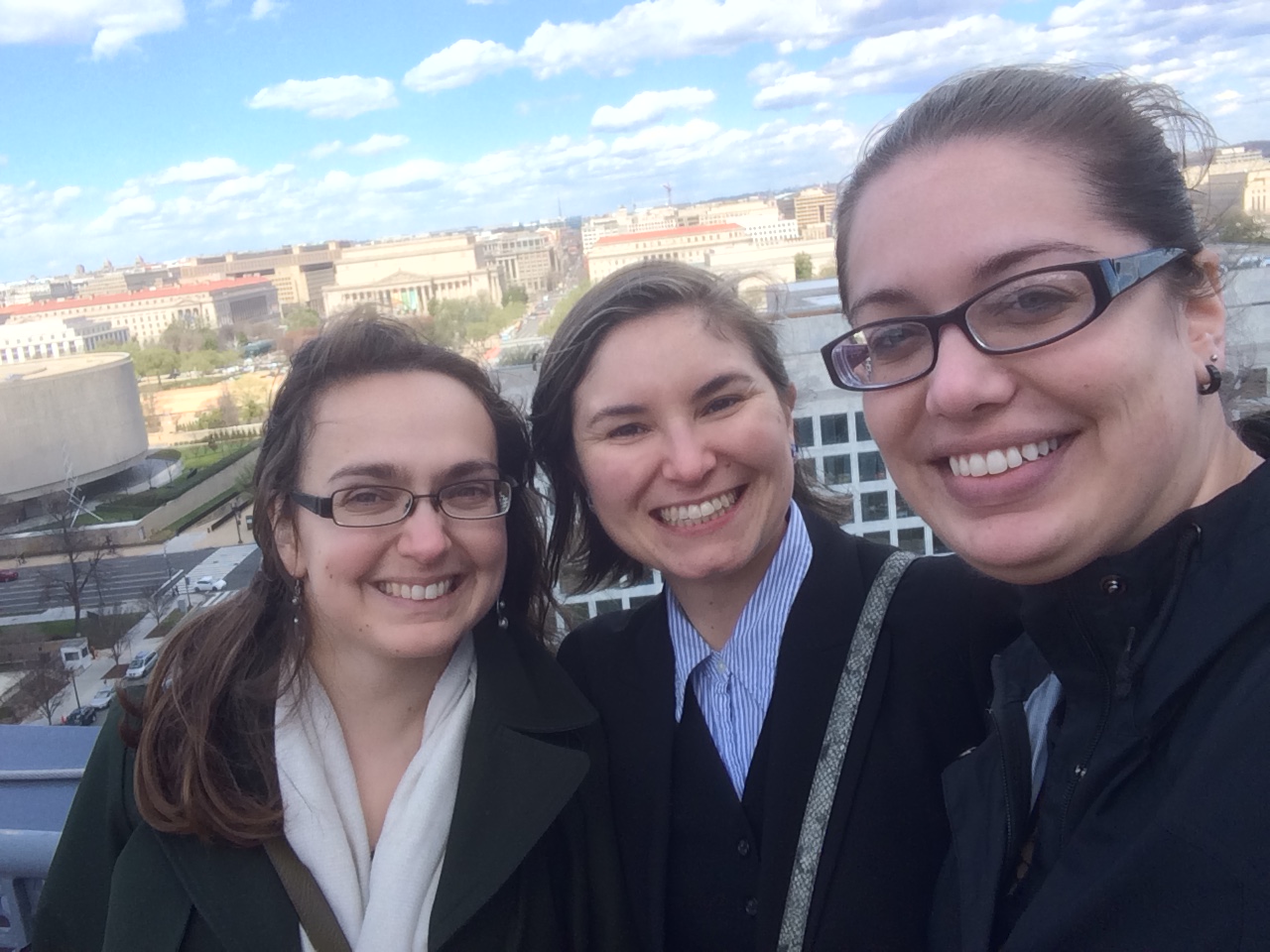
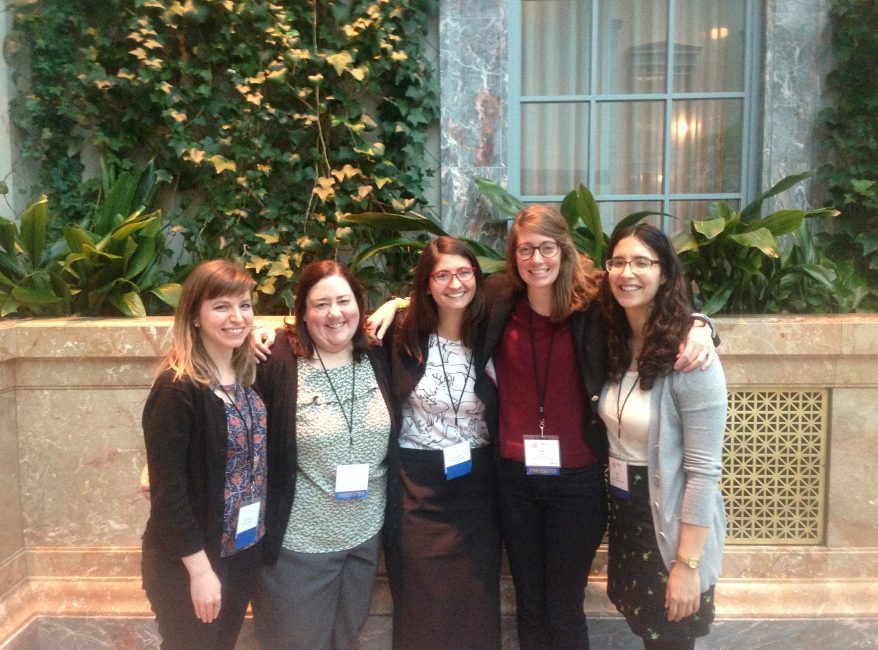
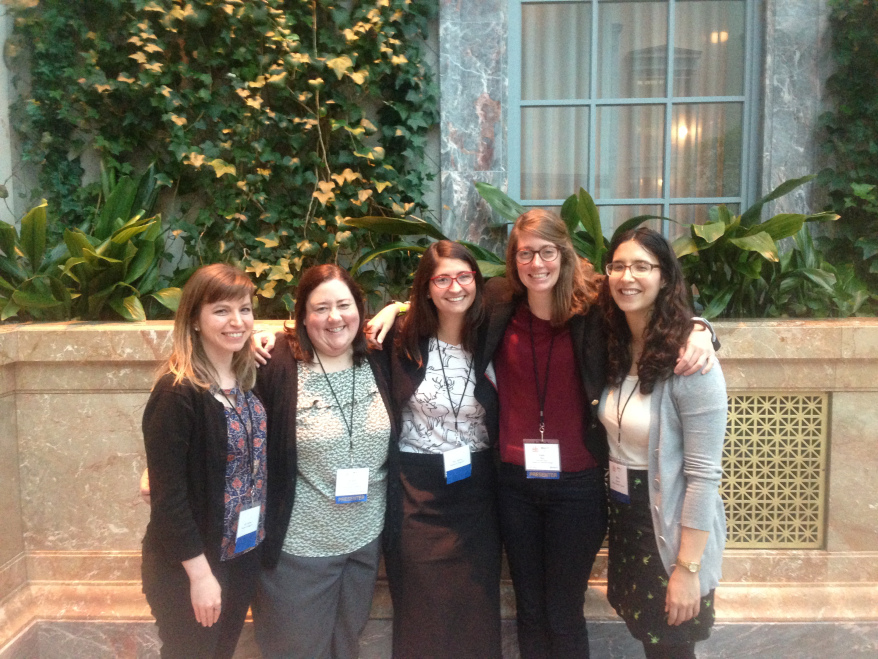
The BHL NDSR Cohort, from left to right: Ariadne Rehbein, Pam McClanahan, Marissa Kings, Katie Mika, and Alicia Esquivel.

Each resident will be delivering a webinar, reporting on the results of their research to date along with their recommendations for BHL. You can find details and links to recordings of all of the webinars below.

Special thanks goes to iDigBio for generously granting the BHL NDSR residents use of their AdobeConnect system! 

BHL NDSR Webinar Schedule: Series One

November 7, 2017 at 2:00pm ET
Alicia Esquivel, Chicago Botanic Garden
Biodiversity Heritage Library: NDSR Collections Analysis
Seminar Room: iDigBio Conference Room ( 500 )
Recording: http://idigbio.adobeconnect.com/pcb8q6y4yy16/

November 9, 2017 at 2:00pm ET
Katie Mika, Ernst Mayr Library, Museum of Comparative Zoology, Harvard University
Biodiversity Heritage Library: Transcriptions, Crowdsourcing and Metadata
Seminar Room: iDigBio Conference Room ( 500 )
Recording: http://idigbio.adobeconnect.com/pk7ctpfe00a4/

November 15 at 2:00pm ET
Pam McClanahan, Smithsonian Libraries
Biodiversity Heritage Library: User Studies
Seminar Room: iDigBio Conference Room ( 500 )
Recording: http://idigbio.adobeconnect.com/pd0piuxxvs2z/

BHL NDSR Webinar Schedule: Series Two


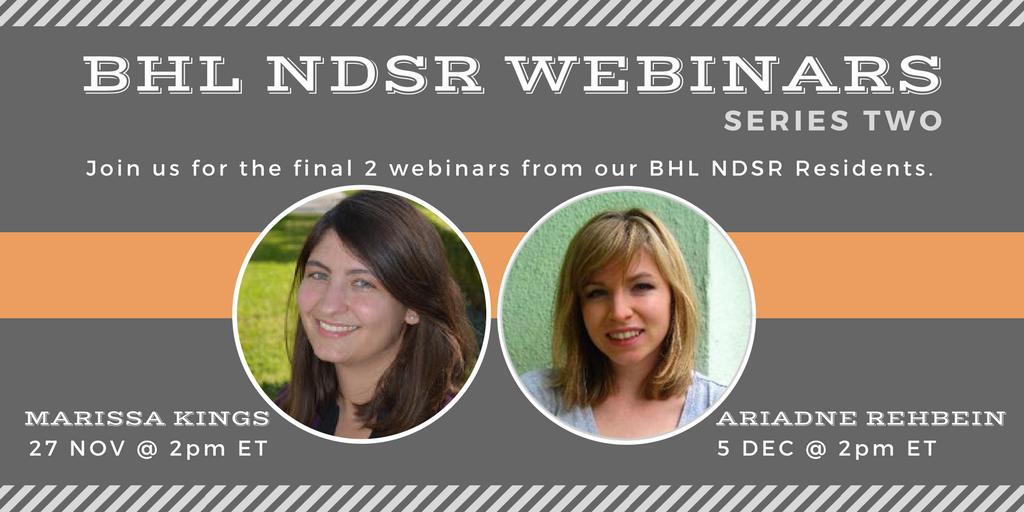
November 27, 2017 at 2:00pm ET 

Marissa Kings, Natural History Museum of Los Angeles County
Biodiversity Heritage Library: Best Practices for Digital Libraries
Seminar Room: iDigBio Conference Room ( 500 )
Recording: http://idigbio.adobeconnect.com/pri8c4khg5sz/

December 5, 2017 at 2:00pm ET
Ariadne Rehbein, Missouri Botanical Garden
Biodiversity Heritage Library: Enabling Image Discovery
Seminar Room: iDigBio Conference Room ( 500 )
Recording: http://idigbio.adobeconnect.com/pf9sm774sjd8/ 

New to Adobe Connect? We recommend following the link to the webinar about 15-20 minutes before the start time to install any add-ins as needed and to run the Audio Wizard. Please note that sometimes after running the Audio Wizard, you may still need to click on the picture of the microphone to connect the microphone. Should you have any questions, we’ll also be monitoring the chat throughout. Hope you can join us!

November 1, 2017by Kathryn Stine
BHL News, Blog Reel

Kam Wies helps BHL “Moving Walls” Move On

Portrait version of the Biodiversity Heritage Library logo.

When I learned of the amazing opportunity to intern at the Smithsonian Libraries, I instantly knew I wanted to be a part of it. I was lucky enough to be chosen to be the Biodiversity Heritage Library In-Copyright Collection Management Intern. I knew the BHL was a digital library but, having no previous experience with a purely digital collection, I couldn’t begin to start making a guess. What I ended up doing was so much cooler than anything I could have anticipated. I got to spend the whole week pushing my attention to detail and love of consistency to the limits. Now that may sound boring to some but this is the kind of thing I do at home for fun.

View Full Size Image
From left: Jacqueline Chapman, Bianca Crowley, Kam Wies

Because BHL is a digital library, copyright plays a huge role in their work. Some of the materials being digitized are still under copyright, which means that the BHL has to get permission, in writing, for the materials to be added to their collection.

Getting permission is just step one. Some copyright holders ask that there be what’s called a “moving wall” (or embargo). In academic publishing, access is sometimes only allowed to paid subscribers so publishers may not want their most current materials to be made accessible for free (see Wikipedia for more information). This can be a one year moving wall or even a fourteen year moving wall. It all depends on the wishes of the publisher.

BHL wants to make sure they can provide as much access as possible and having the option for a moving wall available to a publisher allows for that. The issue with having a bunch of publications that all have different moving walls is you then have to keep track of and keep up with them every year.

BHL manages this process by using an issue tracking system (again, see Wikipedia for more information). They create ‘issues’ for each publication title that has a moving wall in order to make sure it is being updated every year as appropriate. My first task was to make sure all of the permissions titles that had moving walls (about 60 of them), had open and up to date issues in the tracking system. I also had to make sure that there was an issue for each title because some publications had multiple titles and each title needed an issue created for it. I really loved this. Making sure information is accurate across multiple platforms (issue tracker, BHL website, permissions titles spreadsheet) and consistently formatted means that work can run easier, no matter who in the world is using the system.

Once I completed that introductory task, I moved on to the process of ‘reconciling moving walls’. I had to review each moving wall issue in the tracking system to make sure they were up to date. For example, if a title had a 3 year moving wall, 2013 should now be in BHL. I checked BHL to make sure the title was in the collection. Then reviewed the title for any gaps in the journal run or if we were missing the new year allowed due to the moving wall. If there were any missing materials, I had to find out which of the Contributor libraries had the missing materials and ask them to digitize it. There were so many little steps and details to pay attention to and I had fun delving into each issue.

This was a project that may have been created to help the BHL keep on point with their digitization of new materials but it was built with me in mind: someone who can easily work across multiple platforms and screens, has an acute attention to detail and strong desire to achieve consistency. This week was so interesting and informative. I had so much fun not only doing the project for the BHL but meeting all the different people who make the Smithsonian Libraries run smoothly. We did tours of multiple libraries and learned so much about the collections and how the librarians help the researchers. I can only hope that when I graduate I find a job that is as much as fun as this internship has been.

May 3, 2016by Kathryn Stine
BHL News, Blog Reel

Zooniverse releases Science Gossip

Zooniverse unveils its latest project called Science Gossip which is an investigation into the making and communication of science in both the Victorian period and today. This project is born from a collaboration between an Arts and Humanities Research Council project in the UK, called ‘Constructing Scientific Communities: Citizen Science in the 19th and 21st Centuries’ (ConSciCom) and the Missouri Botanical Garden who provided content from the Biodiversity Heritage Library (BHL).

The publication of books and periodicals are key locations for knowledge about the natural world. The BHL has digitized millions of pages of historic literature on biodiversity from the 1400s to today. Hidden within these pages is a treasure trove of illustrations that you can help identify, classify and correlate. The data you create by tagging illustrations and adding artist and engraver information will have a direct impact on the research of historians who are trying to understand why, how often and who made images depicting a whole range of natural science topics during the Victorian period.

Victorian Periodicals: A Thing of Beauty

Dr. Geoffrey Belknap, historian of Victorian Science, explains the role of natural history publications in the life of a non-professional, or what today we would call “citizen scientists”, and their value for researchers studying them in the 21st century.

Victorian Periodicals as a source base for research are endless fun. They are loaded with odd stories written by characters that you tend not to hear about that often in histories of science. When I was starting my research for the ConSciCom project – which focuses on the use of illustrations within 19th century natural history periodicals – I came across a periodical full of interesting people, images, and even an object!

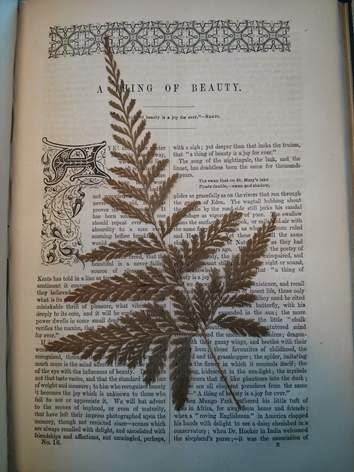
While perusing the pages of one particularly intriguing periodical, I encountered something I wasn’t expecting. Pressed between the pages of two issues, was a fern – placed there by a yet unknown (and likely never to be known) collector.

View Full Size Image

For a historian of periodicals, this is treasure indeed! Periodicals are notoriously bad at retaining traces of their readers – or, in this case, users. Unlike books, periodicals were more often than not discarded – unless they were originally purchased by a library. The placement of the fern on a page – incidentally entitled “A Thing of Beauty” – acts as a reminder for me in my research. When I’m reading the articles or looking at the illustrations – which constitute the central focus of my research – I need to keep in mind that these texts are three-dimensional. That they held knowledge, and that readers could add to this by using the pages of periodicals to their own ends.

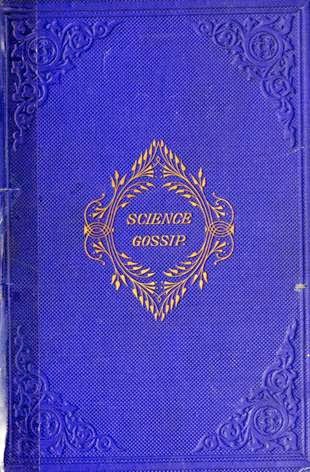
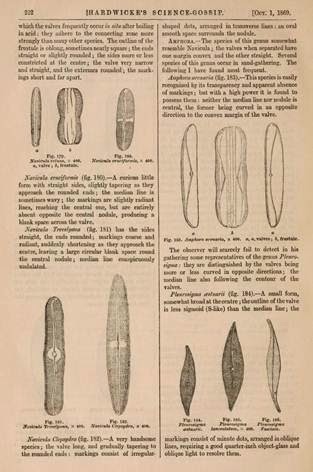
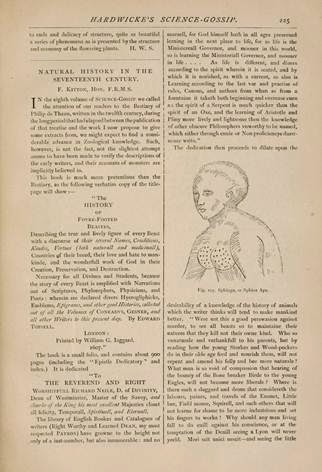
The periodical containing the fern is called Hardwicke’s Science Gossip: an illustrated medium of interchange and gossip for students and lovers of nature. This may sound familiar, as it is the inspiration for the latest zooniverse project. Science Gossip is a title that is compelling for both 19th and 21st century audiences – and in many ways the content of this Victorian natural history periodical encapsulates exactly what we are attempting to do here. That is, to bring together a whole range of interested non-specialists to engage with science and history through compelling stories and solid facts! Science Gossip (the periodical) was originally written for a broad Victorian audience interested in all things natural history.

View Full Size Image

When I first came across Science Gossip, sitting on a shelf in the University of Leicester library, it really drew my eye. Boasting an enticing blue cover with a golden embossed name plate, this is a luxurious object. Of course, this would not have been the way that a Victorian would have first encountered this periodical – they were only bound after a year’s run was complete. And often – unless the subscriber was a library – they would never have been saved week by week, let alone bound in garish fashion.

So what first attracted my attention, has little to do with why a Victorian would have spent the two shillings (about £8 today) for their monthly issue of natural history knowledge.

The most enticing aspect of the Science Gossip, for both Victorian and modern readers, is the illustrations dotted across almost every page of the journal. What a reader could see on any given page ranged from Diatoms to imagined 17th-century apes, and everything in between.

View Full Size Image

The illustrations constituted an essential part of Science Gossip’s appeal, which in turn encouraged a wide range of contributors. Over a 15-year period – beginning in 1865 when the periodical was founded – Science Gossip gave space to over 550 individual authors. Finding out more about the range, social, economic and scientific position of these authors will be a central part of my research over the next three years. But a cursory investigation shows that the authors for Science Gossip are largely unknown. For a project looking at the relationship between the production of images and the production of science by the non-professional, Science Gossip offers a great starting point!

View Full Size Image


Help Us Uncover Victorian Treasures

Help us unlock these illustrative treasures by adding your own observations to these images. Let us know who created them, their subject matter and any particular species they portray. Having a better understanding of the range of individuals who made science through their images will help us ascertain what constituted a nineteenth century citizen scientist. This is the first Zooniverse project where citizen scientists are both the researchers and subject of the research. Citizen scientists of today can have a direct impact on how we understand historical and modern notions of what it means to do science.

With Contributions From:

Geoffrey Belknap
Post Doc Research Assistant for Constructing Scientific Communities and historian of Victorian Science, Visual Culture and Periodical History 
Victorian Van Hyning
Zooniverse

March 4, 2015by Kathryn Stine
BHL News, Blog Reel

BHL-Australia is back!

View Full Size Image
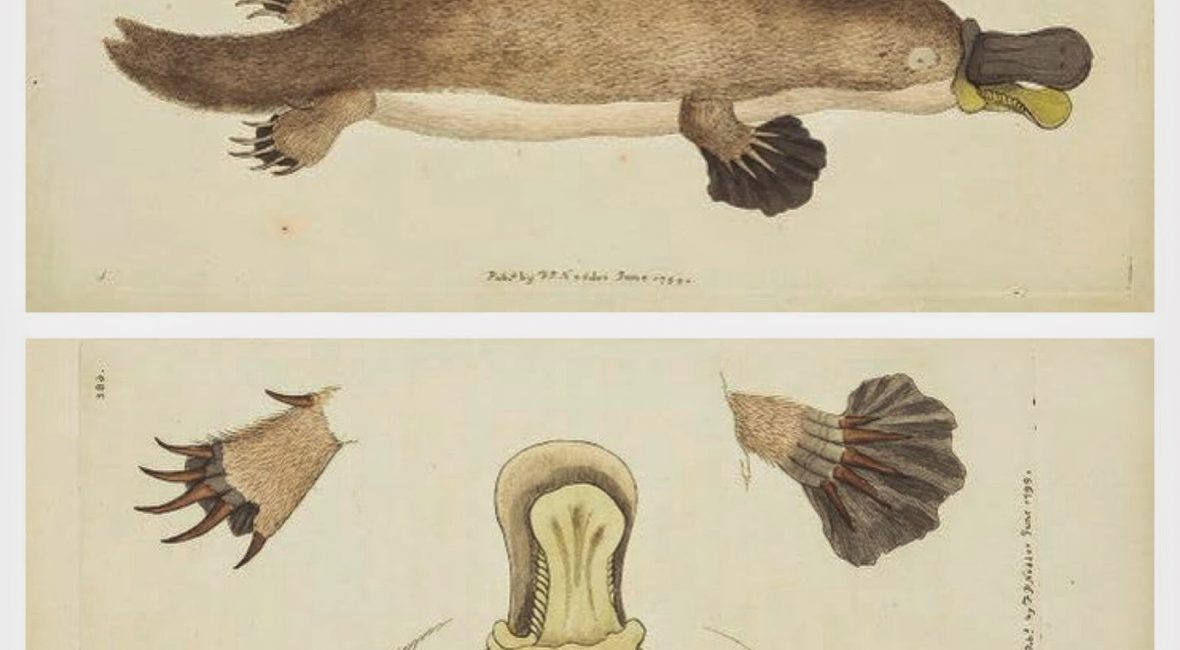
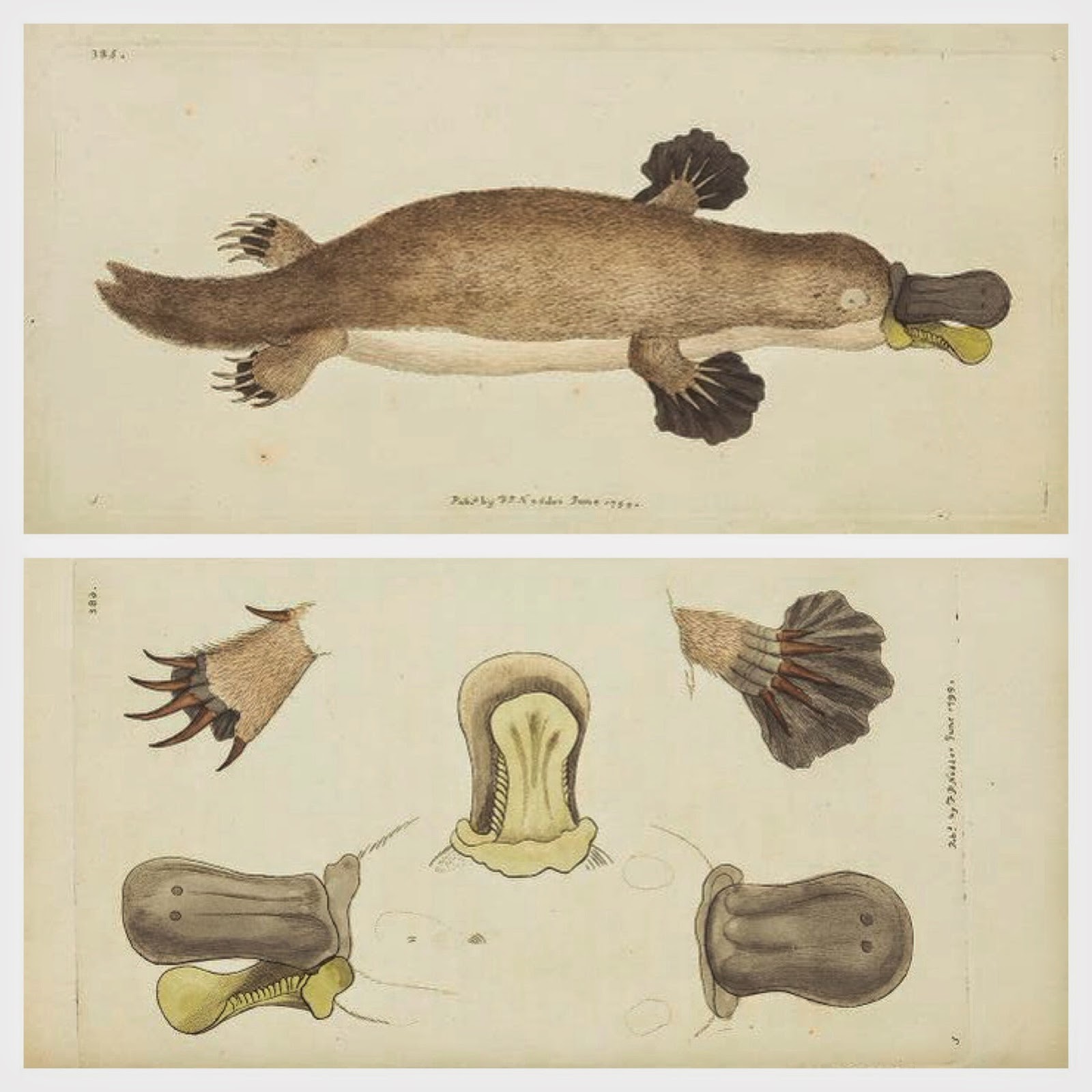
The first published illustration of the Duck-billed Platypus, from The Naturalist’s Miscellany, or Coloured figures of natural objects, Vol. 10, George Shaw, 1799. DOI: https://doi.org/10.5962/p.304567.

For the past year, BHL-Australia has been very quiet. So quiet, in fact, you would be forgiven for forgetting we exist (unless of course you read about our contribution to the new BHL website).

Why the silence? Because, in 2013, we ran out of funding.

Our digitisation work didn’t stop, however. Deep in the Museum Victoria library, six dedicated volunteers (supervised by equally dedicated library staff) continued to scan and process volumes from our collections and upload them into BHL.

We are now thrilled to announce that BHL-Au is back in full force. Still led by Museum Victoria, we have renewed funding from the Atlas of Living Australia and a new enthusiastic team. And we have grand plans for BHL-Au.

These include:

  • The digitisation of non-published works in our historical collection: Gold Registers, Exhibition Catalogues, Field Diaries and the unbound sections of the Prodromus of the Zoology of Victoria.
  • The continued digitisation of rare books, starting with those featured in our Art of Science exhibition.
  • The establishment and ongoing support of new BHL partners within museums and herbaria around Australia and in New Zealand.
  • The strengthening of our existing relationships within the global BHL community.

The books contributed by Museum Victoria can be viewed on our new Collection page on the BHL website.

View Full Size Image
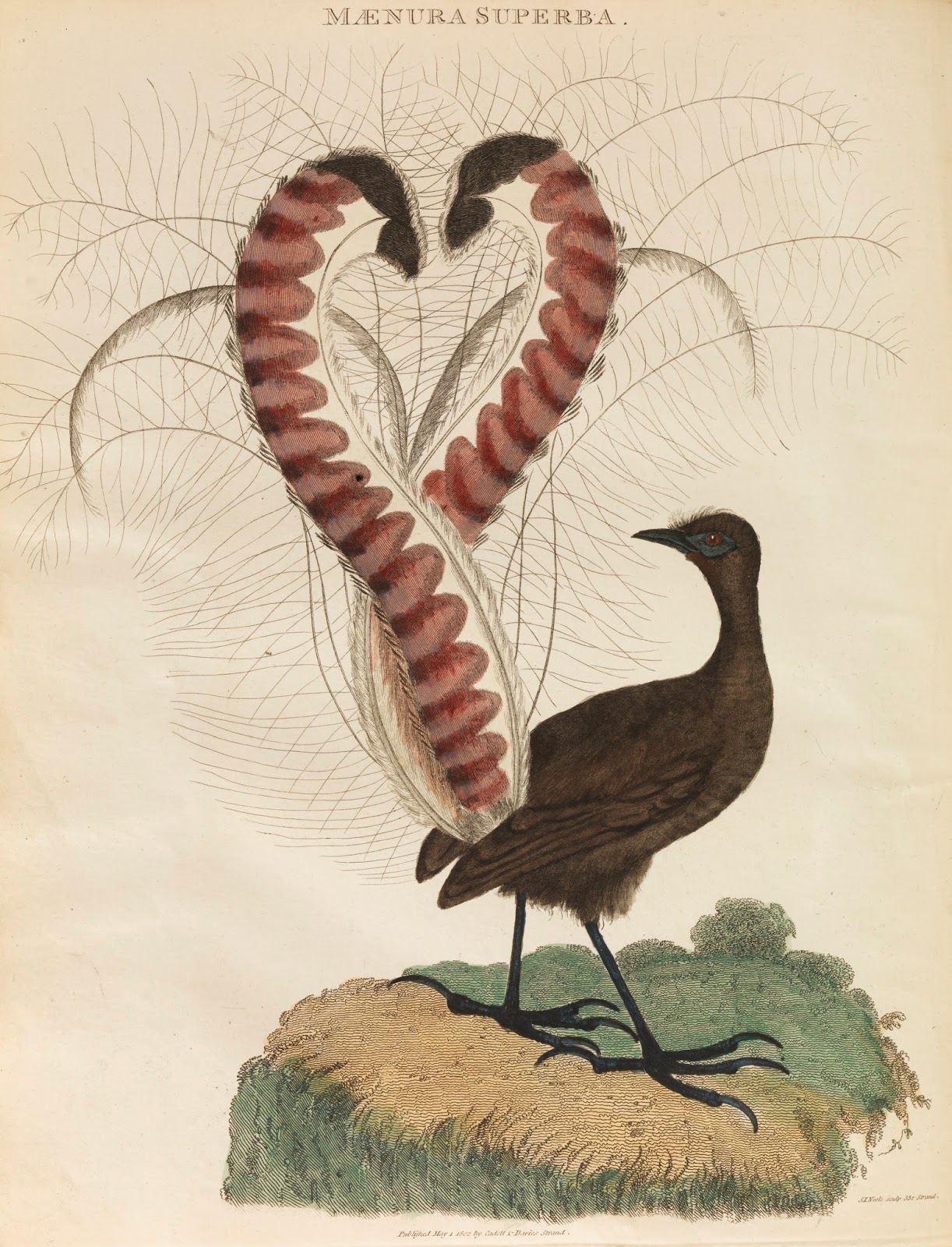
Coming soon to BHL via BHL-Au: Superb Lyrebird, from An account of the English colony in New South Wales, from its first settlement in January 1788 to August 1801, David Collins, 1804.

Who are BHL-Australia?

View Full Size Image
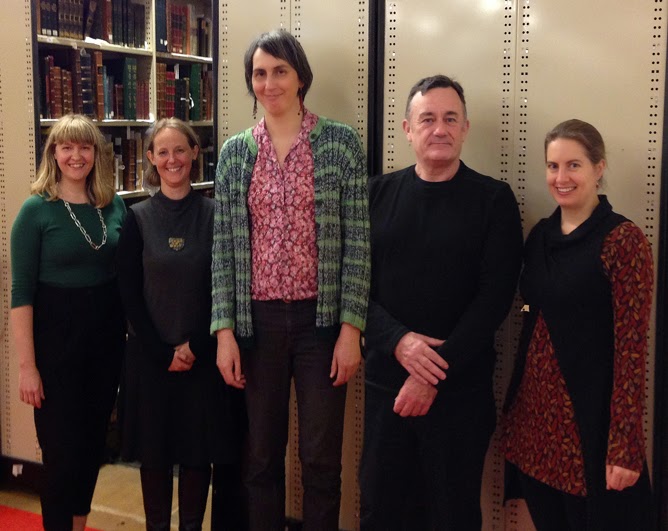
The BHL-Au Team: (from left) Hayley Webster, Ely Wallis, Cerise Howard, Jim Healey, Nicole Kearney. Credit: Simon Sherrin, Museum Victoria.

Ely Wallis is the Manager of Online Collections at Museum Victoria, the Chair of BHL-Global and the Project Lead for BHL-Australia. Ely is a zoologist by training but now spends her time publishing the museum’s encyclopedic collections onto websites, gallery interactives and to apps.

Nicole Kearney is the Project Coordinator of BHL-Au. She is a zoologist, science communicator and professional writer/editor. She has worked at Museum Victoria since 2003, most recently on a series of field guide apps. Her position with BHL combines her professional interests with her life-long love of books.

Cerise Howard is the Digitisation Coordinator for BHL-Au. Occupying various roles at Museum Victoria connected to online publishing over the last ten years, she is also the Artistic Director of the Czech and Slovak Film Festival of Australia (CaSFFA), a writer and broadcaster on film, and a musician with a theatrical bent.

Hayley Webster is the Manager of the Museum Victoria Library. She has been involved in BHL-Au since 2011, contributing books for digitisation, providing access to the library collection, arranging for books to be treated by our Conservation department, and working with our dedicated team of volunteers.

Jim Healey has worked for the past two years as a BHL Volunteer and now joins us as the project’s Technical Support Officer. He brings to BHL over 25 years of experience working in IT, as well as a passion for photography and electronics.

The team also includes five passionate and dedicated BHL Volunteers: Bob Griffith, Heidi Griffith, Sue Halliwell, Alan Nankervis and Tiziana Tizian. All five have been with BHL-Au since February 2012.

September 16, 2014by Kathryn Stine
Blog Reel, Featured Books

Hummingbirds and Harlequins

Beauty can be too much for words. So it is with the charm of what many consider the loveliest of the world’s birds, the hummingbirds: Overcome by the dazzling colors of those first tiny skins, early European naturalists reached to the limits of their vocabularies to describe them. The result, nearly five centuries after the first specimens were brought back from a then truly New World, is a large set of remarkably evocative names, hillstars and woodstars, helmetcrests and plumeleteers, jacobins and incas, metaltails and thornbills, emeralds and sapphires and topazes and rubies.

View Full Size Image

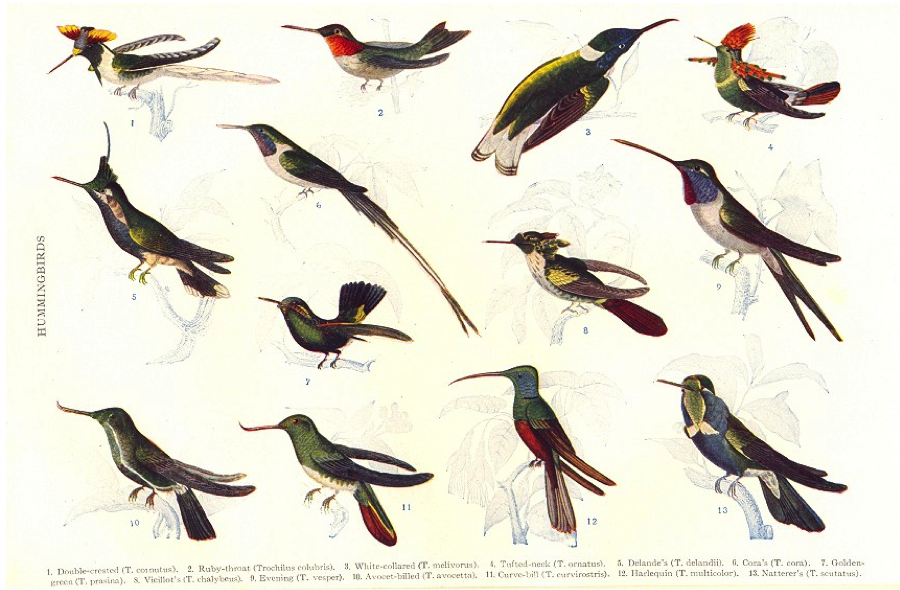
The birds, of course, are every bit as fantastic as their monikers. The 1907 edition of The Americana, the authoritative North American encyclopedia of its day, gave its readers a glimpse into the vast variety of color and adornment so typical of this large family, from the Horned Sungem to the Hyacinth Visorbearer. One of the thirteen birds shown on this appealing plate, however, is conspicuously absent from any modern list of hummingbirds: the extraordinarily colored Harlequin Hummingbird.

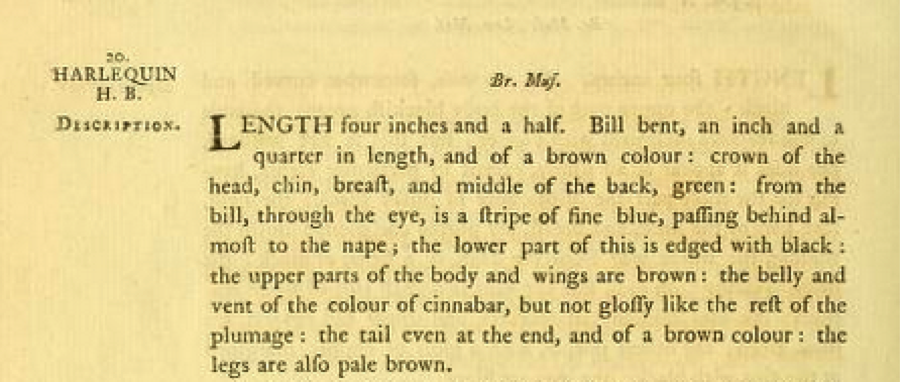
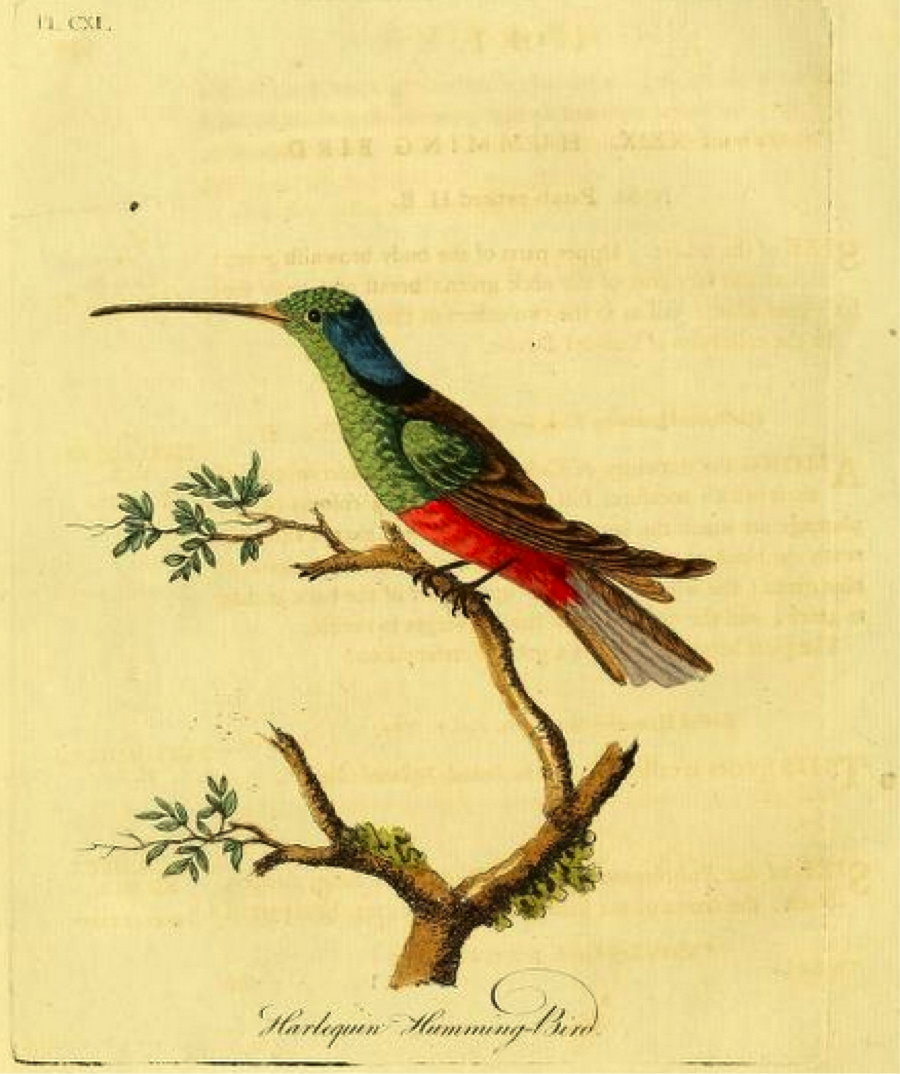
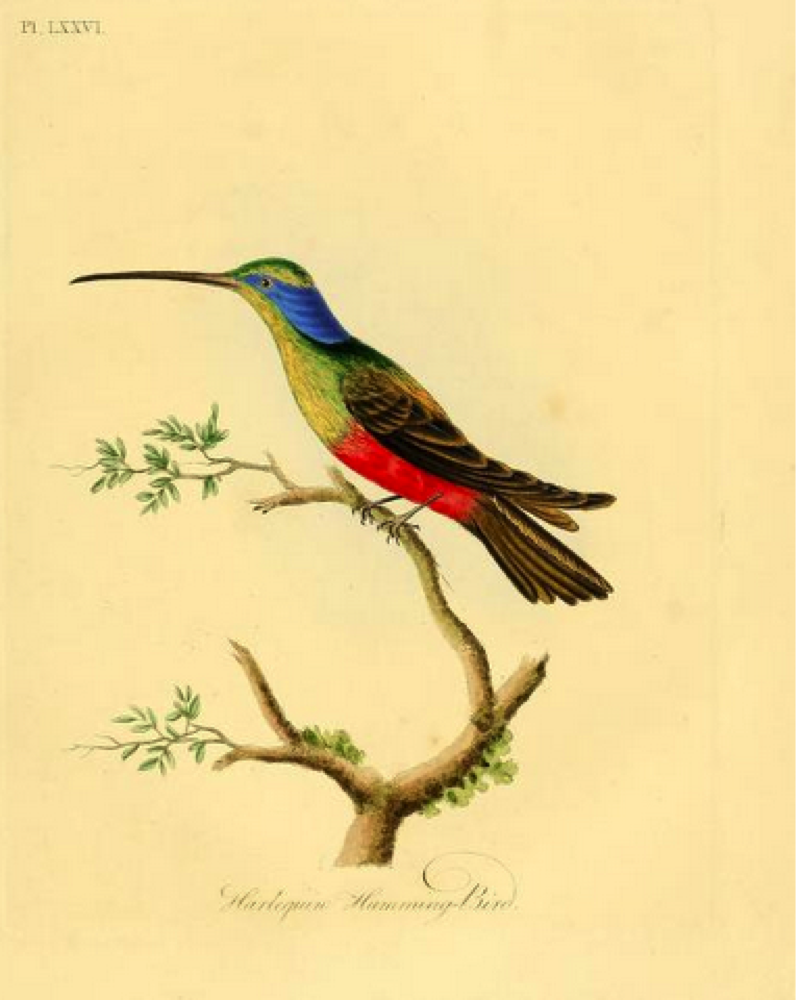
That bird was first made known to science a century and a quarter before it was depicted in The Americana. In 1782, John Latham described his new species from a specimen in the collections of the British Museum.

View Full Size Image

Unfortunately, Latham notes, that unique skin had “no history annexed to it,” and so he was unable to offer any information about the range or the habits of the species he named the Harlequin Humming-Bird.

Five years later, Latham came across another source of information, a drawing by the famous watercolorist Thomas Davies, who had been in the West Indies in 1786. Davies’s rendering of the bird differs from the British Museum specimen, Latham tells us, in its greater length—five inches rather than four and a half—and in the presence of a narrow band of blue green on the back of the head, a character well shown by Latham’s plate in the Supplement to his General Synopsis of Birds.

View Full Size Image

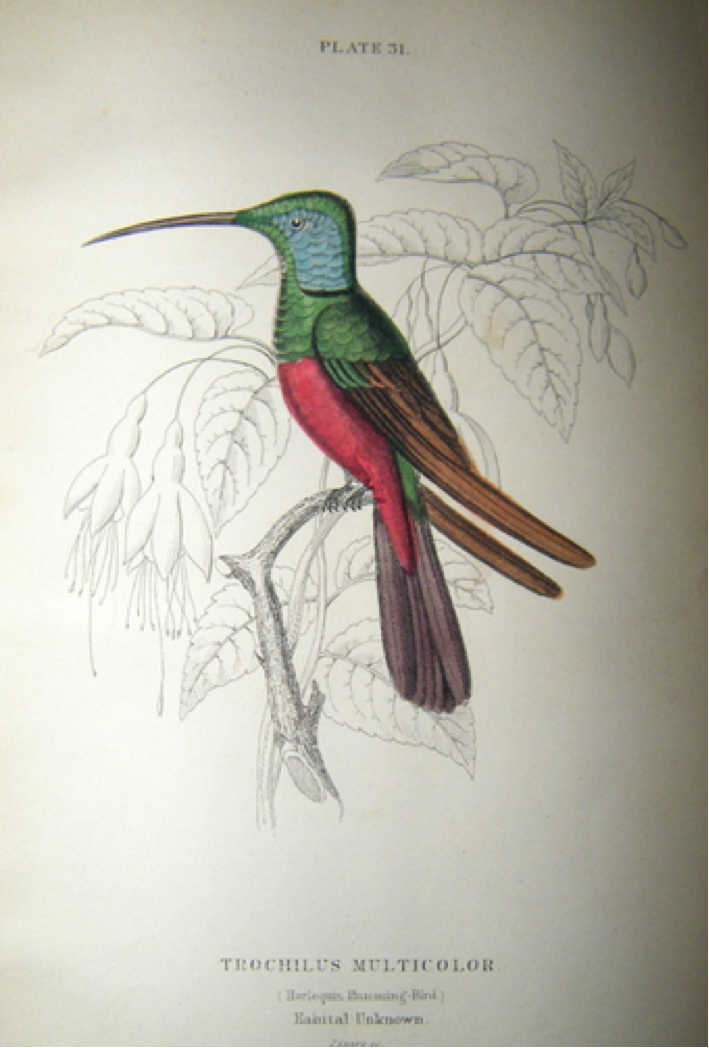
That image and the accompanying description provided the “type” for Johann Friedrich Gmelin, who gave the species its rather bland Linnaean label in 1788, Trochilus multicolor. Latham in turn adopted that name for his 1790 Index ornithologicus, where his brief description of the bird could be read to imply that he had seen further specimens, “in some of which there is a blue-green patch below the nape.”

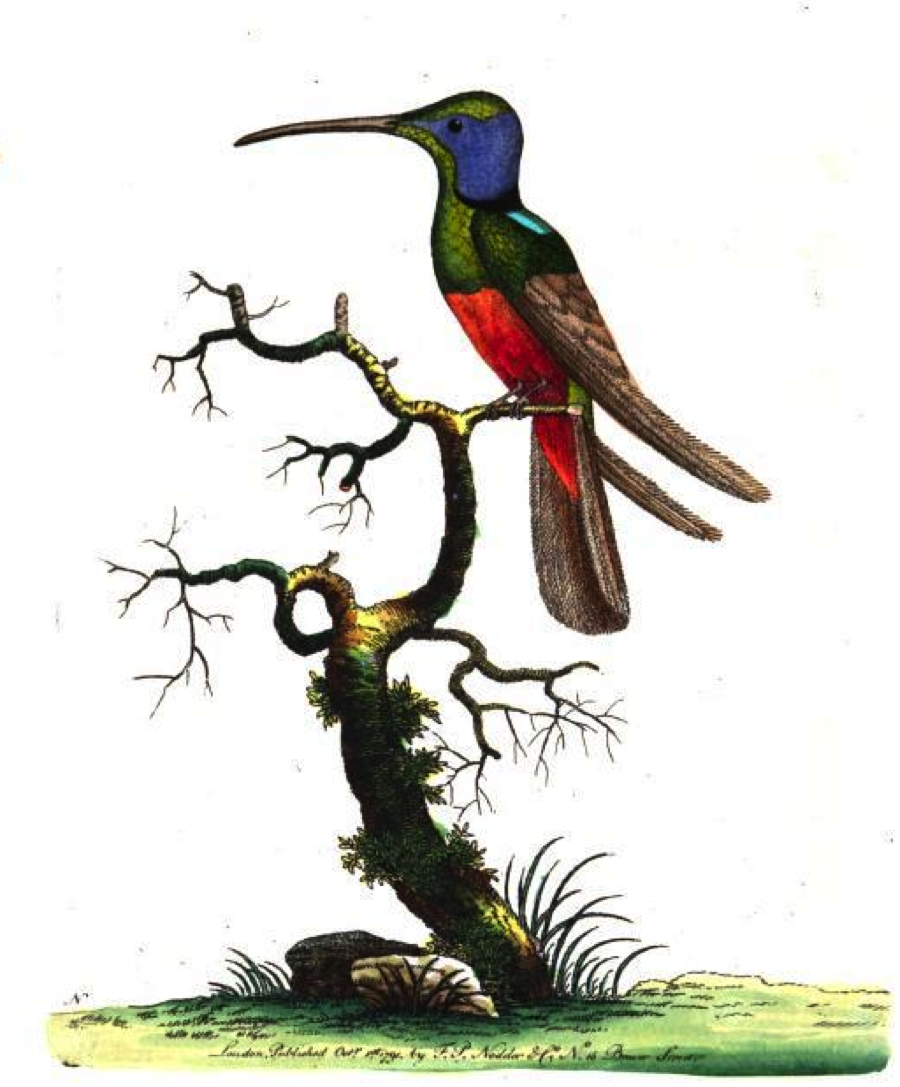
George Shaw, in his Naturalist’s Miscellany the following year, was able to narrow the range of the Harlequin, “among the rarest species of its genus,” to South America, hardly a bold conjecture in the case of a large, colorful hummingbird. Shaw’s account was accompanied by an awkwardly executed plate by Frederick Nodder, painted, Shaw claims, from the British Museum specimen; the telltale turquoise panel on the upper back, however, reveals that Nodder based his work on Davies’s—or, more likely, on Latham’s description of Davies’s sketch.

View Full Size Image

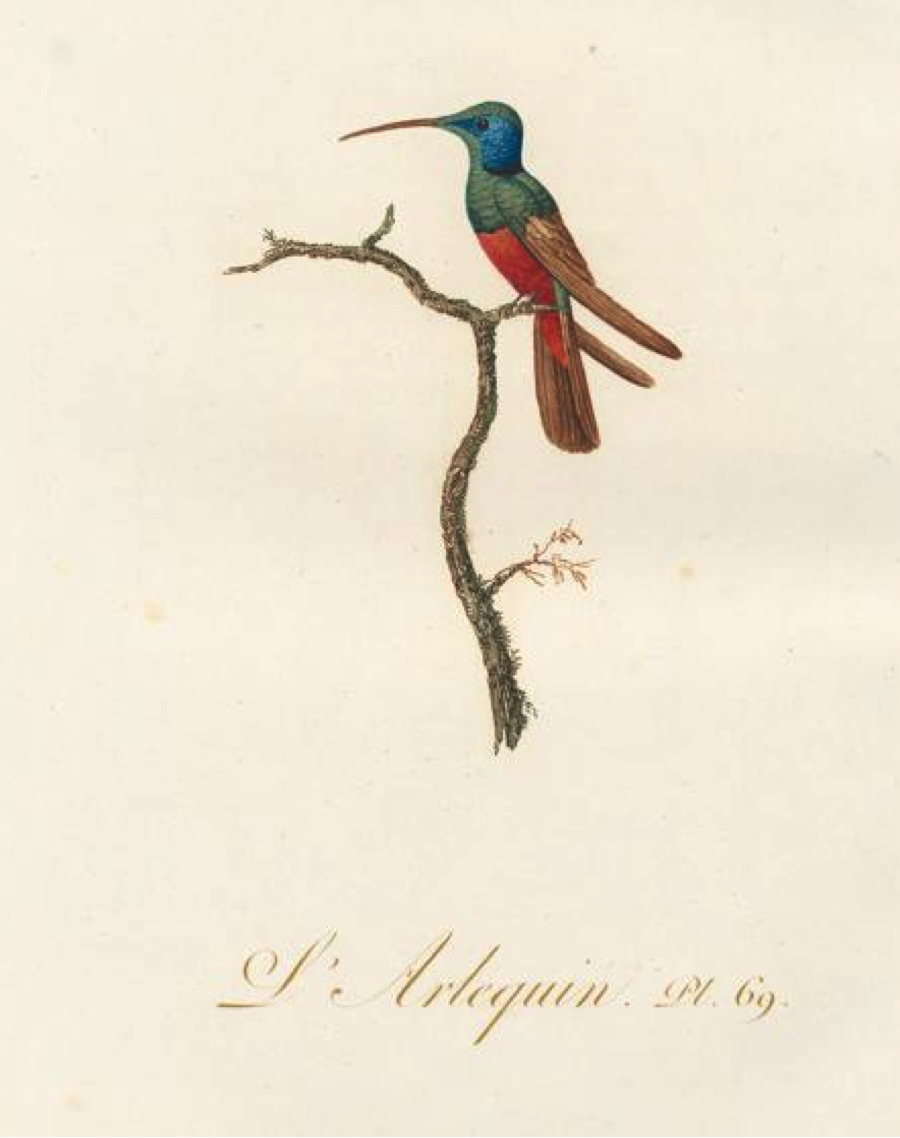
The Harlequin Hummingbird was painted again, by Sydenham Edwards, for Louis Pierre Vieillot’s 1802 continuation of the Oiseaux dorés, a lavish work begun by Vieillot and his collaborator Jean-Baptiste Audebert, who had died in December 1800. Vieillot claims that Edwards had worked directly from the skin in the British Museum; whether that was true or not, a close look suggests that Edwards was quite familiar with Nodder’s plate, too, from which it differs in omitting the nape patch Latham had noticed in the Davies drawing, a mark Vieillot says is indicative of a “variety” of the true Harlequin.

View Full Size Image

Nearly fifty years after its discovery in a museum drawer, this hummingbird was as mysterious as ever. In 1829, René Primevère Lesson wrote of the oiseau-mouche arlequin that

this bird is known only from the description and figure published by the English ornithologist Latham. That figure, drawn by Sir Edwards, was reproduced by Mr. Vieillot on Plate 69 of his Oiseaux dorés, and we have been obliged to include it in order that we omit none of the species listed on the basis of specimens preserved in collections or known from accurate portraits.
View Full Size Image

But Lesson had his doubts:

At the same time, this drawing seems to pertain rather to one of the curve-billed hummingbirds, and seems to us to be imprecise; it is only with very great reservations that the species must be admitted to the table of extant straight-billed hummingbirds. It could be, too, that it depicts nothing more than a sunbird, which we suspect even more from the fact that no hummingbird normally displays a similar distribution of solid colors in its plumage.

In 1831, Lesson had his answer. In his Trochilidées, he reported that the colibri arlequin of the British Museum had been examined by a Mr. Stokes,

who writes to us that the bird that served as the type for Latham’s description and for the figure copied by Vieillot was the product of a falsification, which one discovered on dismantling the specimen preserved in the British Museum.

It is a measure of the uncertainty that still obtained in neotropical ornithology—and, perhaps, of the antagonisms that still lingered between French and British naturalists—that William Jardine, two years after the publication of the Trochilidées, could write that

It has been hinted that the specimen in the British Museum was a specimen made up from the feathers of different birds.

Lesson’s debunking (which Jardine cites) was far more than a hint. Jardine notes, however, that Latham, who would live into the year 1837, had been aware of the rumor. In a footnote to the 1822 edition of the General History, Latham writes that

It has been suggested to me, that this is no other than a bird made up by the ingenuity of some whimsical person, who has fabricated it from the feathers of others; but which, by every attention paid to it, I cannot detect.

Jardine included the bird in his own work

with the view of attracting the attention of British naturalists…. If there is a specimen in the British Museum, and a drawing in the possession of General Davis, corresponding and evidently done from an individual of the same species, there will be no doubt of its existence.


View Full Size Image

“If.”

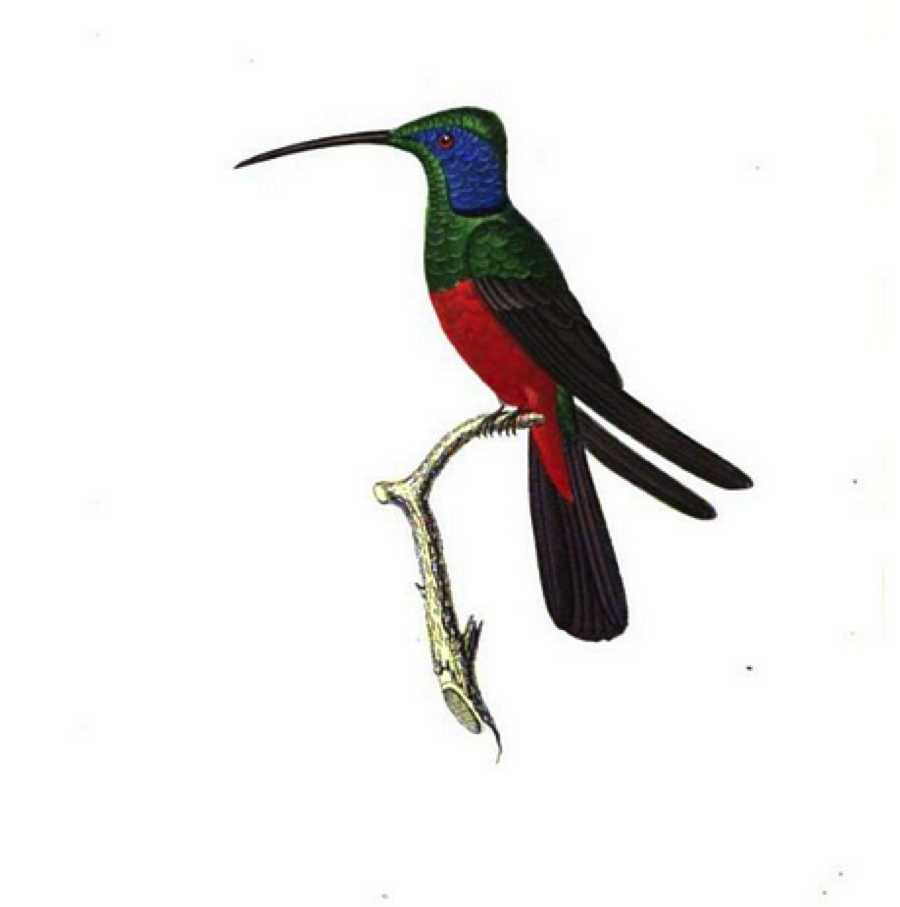
In preparing his great Monograph of the Trochilidae, John Gould was “at all times favoured … with both information and the loan of specimens” from the collections of the British Museum. Nowhere could he find a skin attesting to the existence of the Harlequin Hummingbird—Lesson’s Mr. Stokes most likely had felt no obligation to reassemble the composite hoax once it was revealed. In relying on Latham, Gould writes, Gmelin had described a new species based on

characters … taken from a plate which must have been drawn from imagination and not from any real specimen.

Indeed, of the 95 hummingbirds Latham included in the revision of his General History, Gould considered only about two-thirds “real species,” the other 30 or more, among them the Harlequin, all “so indefinitely described” as to be unassignable to any known bird.

It seems very unlikely that we will ever know who the ingenious and whimsical creator of Latham’s specimen was, or what bird was depicted in Thomas Davies’s equally mysterious drawing. What is entirely certain, though, is that this is not the only case in the history of “trochidology” where a bird turned out to be something else entirely than what its original discoverers thought or hoped.

View Full Size Image


January 6, 2014by Kathryn Stine
BHL News, Blog Reel

Things a Librarian Can Learn at TDWG

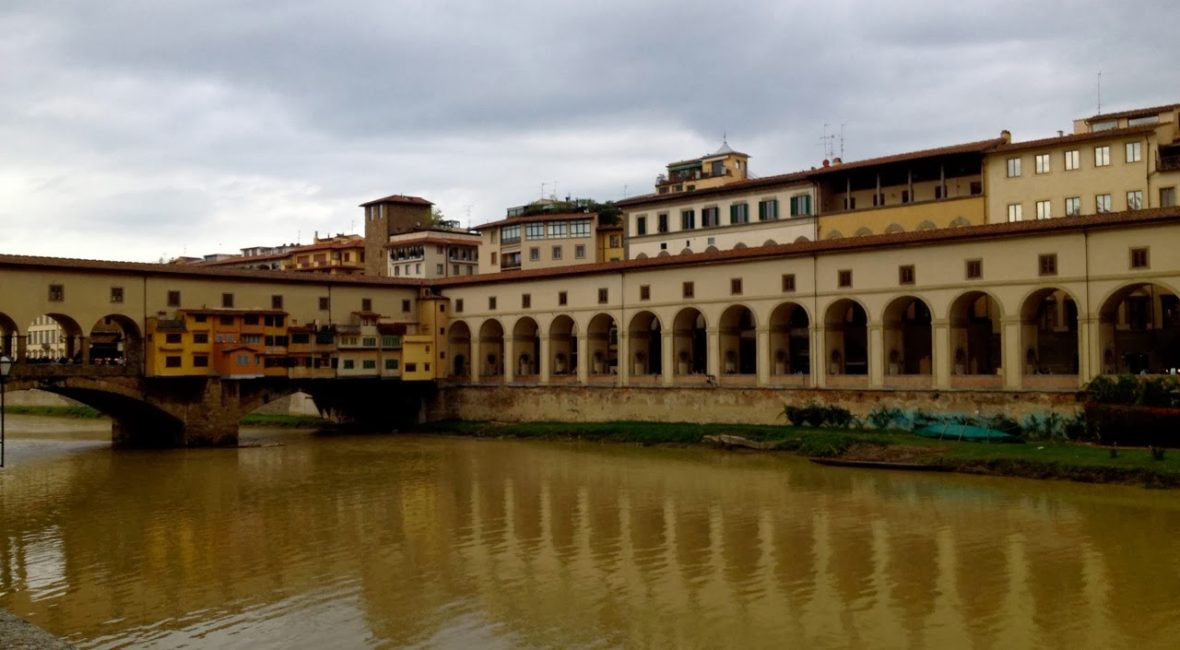
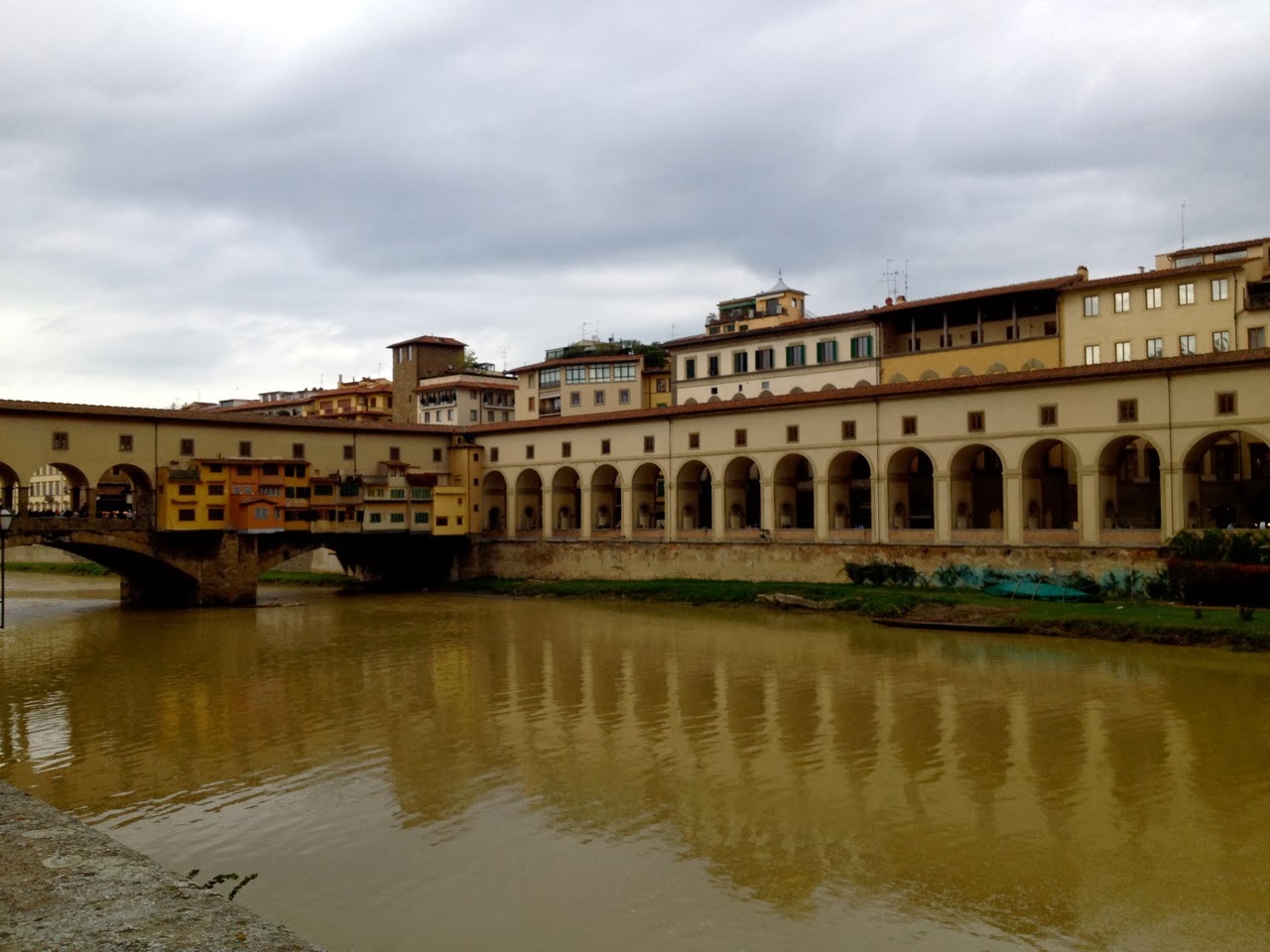
View Full Size ImageI was privileged to attend and present at the Biodiversity Information Standards (TDWG) meeting (see posts on Nov 11: https://blog.biodiversitylibrary.org/2013/11/global-bhl-partners-present-symposium.html, Nov 26: https://blog.biodiversitylibrary.org/2013/11/the-tdwg-2013-annual-conference-my.html and Nov. 29: https://blog.biodiversitylibrary.org/2013/11/quello-che-era-nuovo-in-tdwg-2013.html).   The theme for 2013 was “Virtual Communities for Biodiversity Science”, an apt theme for the global virtual Biodiversity Heritage Library.  The venue was beautiful Florence, Italy and the weather was warm.  TDWG is a long and information-packed meeting that incorporates many topics of interest to the Biodiversity Heritage Library and librarians.  Metadata, vocabularies for taxonomy, interoperability and linked open data are common themes at TDWG  to which librarians, particularly those engaged in biological information,  can relate.  I particularly enjoyed the poster sessions.  There were 31 posters and I will highlight a few in this post.

View Full Size ImageBHL partners such as ViBRANT (http://vbrant.eu/), OpenUp (http://open-up.eu/), BioStor http://biostor.org/), and Zookeys (http://www.pensoft.net/
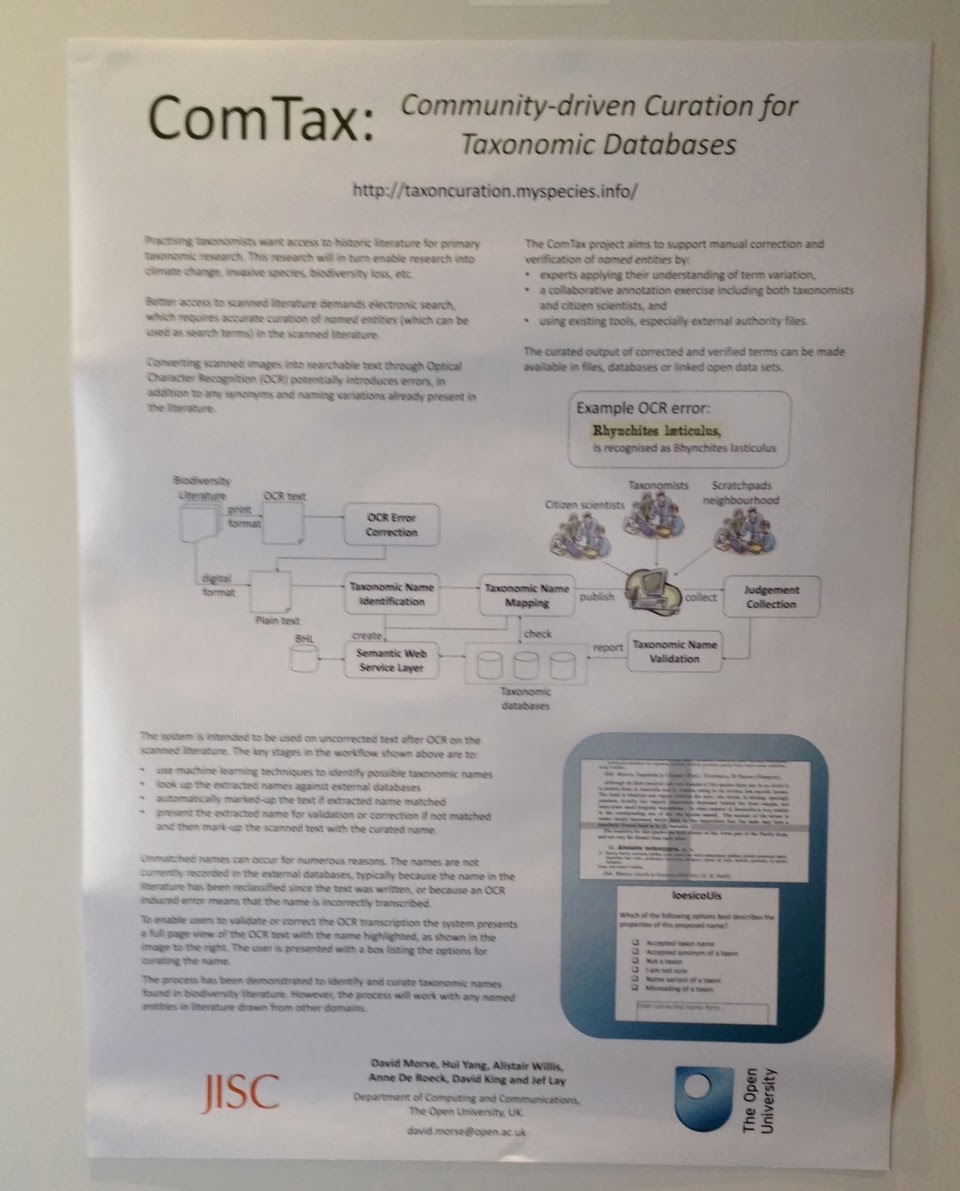
journals/zookeys/) and others were represented at TDWG ensuring lively discussions.  The poster “Bibliography of Life: Comprehensive services for biodiversity bibliographic references” addressed de-duplicating and parsing the components of references from a variety of sources to improve and expand literature searching.  Other posters highlighted object digitization and the TDWG Audubon Core metadata standard.  The Naturalis Biodiversity Center reviewed their work digitizing collection objects, including videos, using the Audubon Core standard for metadata.  Another poster from Belgian institutions, Agora 3D Evaluating the Digitisation of Scientific Collections, reviewed scanning technology and techniques for biological specimens to develop a set of standards and protocols for museums.  Other posters highlighted taxonomic information such as “From Dendroeca blackburniae to Dendrceca blackburniae:  what’s in a name” citing the need for clean, correct scientific names to support names-based architecture and “ComTax: Community-driven Curation for Taxonomic Databases”, a project designed to support manual  correction and verification of name data. The TDWG meeting has much to offer archivists and librarians looking for the biological perspective on metadata and curation.

December 6, 2013by Kathryn Stine
Page 1 of 3123»

Help Support BHL

BHL's existence depends on the financial support of its patrons. Help us keep this free resource alive!

search

About BHL

The Biodiversity Heritage Library (BHL) is the world’s largest open access digital library for biodiversity literature and archives. BHL operates as a worldwide consortium of natural history, botanical, research, and national libraries working together to digitize the natural history literature held in their collections and make it freely available for open access as part of a global “biodiversity community.”

Join Our Mailing List

Sign up to receive the latest news, content highlights, and promotions.

Subscribe Now

Subscribe to Blog via Email

Enter your email address to subscribe to this blog and receive notifications of new posts by email.

Join 319 other subscribers

Subscribe to Blog Via RSS

Subscribe to the blog RSS feed to stay up-to-date on all the latest BHL posts.

Access RSS Feed

Inspiring Discovery through Free Access to Biodiversity Knowledge.

The Biodiversity Heritage Library makes it easier than ever for you to access the information you need to study and explore life on Earth…for free, anytime, anywhere.


64+ Million Pages of
Biodiversity Literature Online.

EXPLORE

Tools and Services
to Transform Research.

EXPLORE

300,000+
Illustrations on Flickr.

EXPLORE

ABOUT | HARMFUL CONTENT | PRIVACY | SITE MAP | TERMS OF USE