
Biodiversity Heritage Library - Program news and collection highlights from BHL
  • Home
  • News
  • Featured Books
    • All Featured Books
    • Book of the Month Series
    • BHL at 20
  • User Stories
  • Campaigns
    • Fossil Stories
    • Garden Stories
    • Monsters Are Real
    • Page Frights
    • Her Natural History
    • Earth Optimism 2020
  • Tech Blog
  • Visit BHL
Home
News
Featured Books
    All Featured Books
    Book of the Month Series
    BHL at 20
User Stories
Campaigns
    Fossil Stories
    Garden Stories
    Monsters Are Real
    Page Frights
    Her Natural History
    Earth Optimism 2020
Tech Blog
Visit BHL
  • Home
  • News
  • Featured Books
    • All Featured Books
    • Book of the Month Series
    • BHL at 20
  • User Stories
  • Campaigns
    • Fossil Stories
    • Garden Stories
    • Monsters Are Real
    • Page Frights
    • Her Natural History
    • Earth Optimism 2020
  • Tech Blog
  • Visit BHL
Biodiversity Heritage Library - Program news and collection highlights from BHL
BHL News, Blog Reel

Biodiversity Heritage Library Adds University of Illinois at Urbana-Champaign as New Member

View Full Size Image
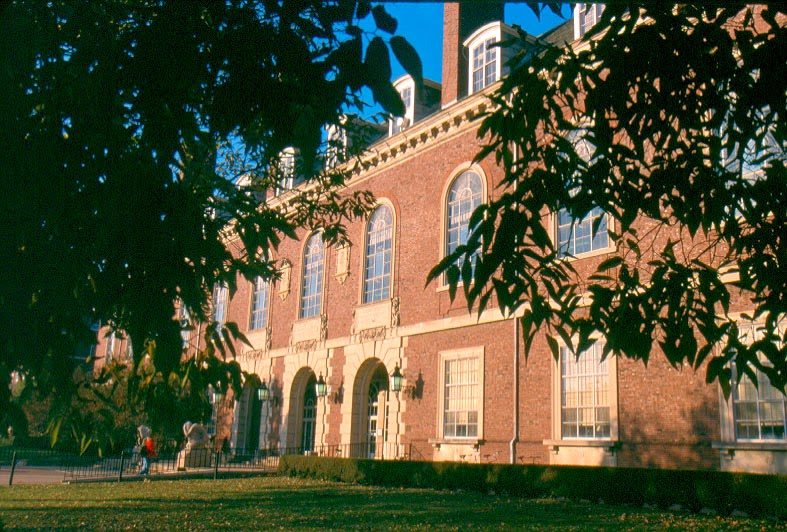
University of Illinois at Urbana-Champaign, Main Library

The Biodiversity Heritage Library, headquartered at the Smithsonian Libraries, welcomes the University of Illinois at Urbana-Champaign as a new member. The 16th member of the BHL consortium, the University of Illinois at Urbana-Champaign will help identify and digitize historical science literature from its collections and add these to the BHL’s online holdings, where all materials may be accessed free by the public.

“The Biodiversity Heritage Library is the preeminent global repository for historic science literature,” said Martin Kalfatovic, BHL program director and associate director for digital services at the Smithsonian Libraries. “The University of Illinois at Urbana-Champaign has partnered from the start with the BHL and BHL members for many years and we are excited that we can formalize our partnership by welcoming them as our 16th member.”

The University of Illinois at Urbana-Champaign Library is a campus-wide network of libraries serving programs of learning and research in many disciplines and is the largest public university research library in the country with more than 13 million volumes. The Biology Library collection alone contains over 137,000 volumes and there are many more in related departmental libraries on campus, such as the agriculture, natural history, and rare book and manuscript collections. For more information about the University Library, please visit library.illinois.edu.

The current members of the BHL include: the American Museum of Natural History (New York, N.Y.), the California Academy of Sciences (San Francisco, Calif.), Cornell University (Ithaca, N.Y.), the Botany Libraries (Harvard University), the Ernst Mayr Library at the Museum of Comparative Zoology (Cambridge, Mass.), the Library of Congress (Washington, D.C.), the Marine Biological Laboratory of Woods Hole Oceanographic Institution (Woods Hole, Mass.), the Missouri Botanical Garden (St. Louis, Mo.), the National Library Board (Singapore), the Natural History Museum (London), the Kew York Botanical Garden (Bronx, N.Y.), the Royal Botanic Gardens (Kew, United Kingdom), the Smithsonian Institution (Washington, D.C.) and the United States Geological Survey. Additionally, three institutions participate at the affiliate level: the Field Museum of Natural History (Chicago, Ill.), the American of Natural Sciences of Drexel University (Philadelphia, Pa.) and the Natural History Museum, Los Angeles County (Los Angeles, Calif.).

Beyond the English-language efforts, BHL-Europe includes 28 institutions that are working to digitize European literature. In addition, China, Australia, Egypt, Brazil and Africa have created national or regional nodes that may be accessed through the BHL portal.
June 10, 2014by sayeedmd
Blog Reel, Featured Books

Transcribing the Field Notes of William Brewster

View Full Size Image
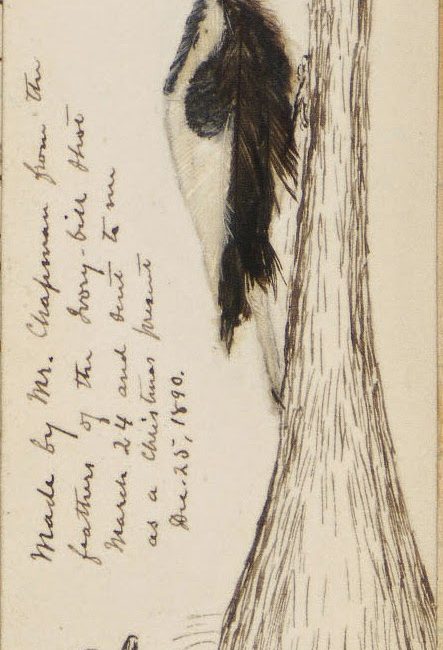
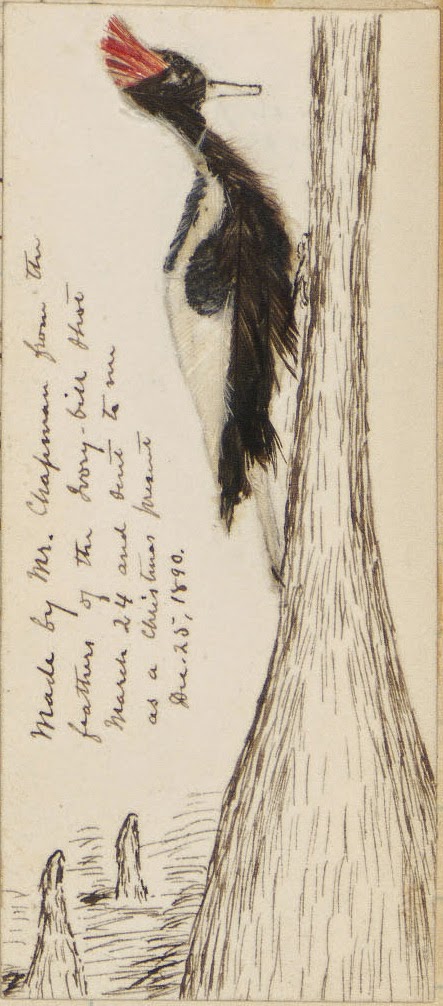
Ivory-billed woodpecker from
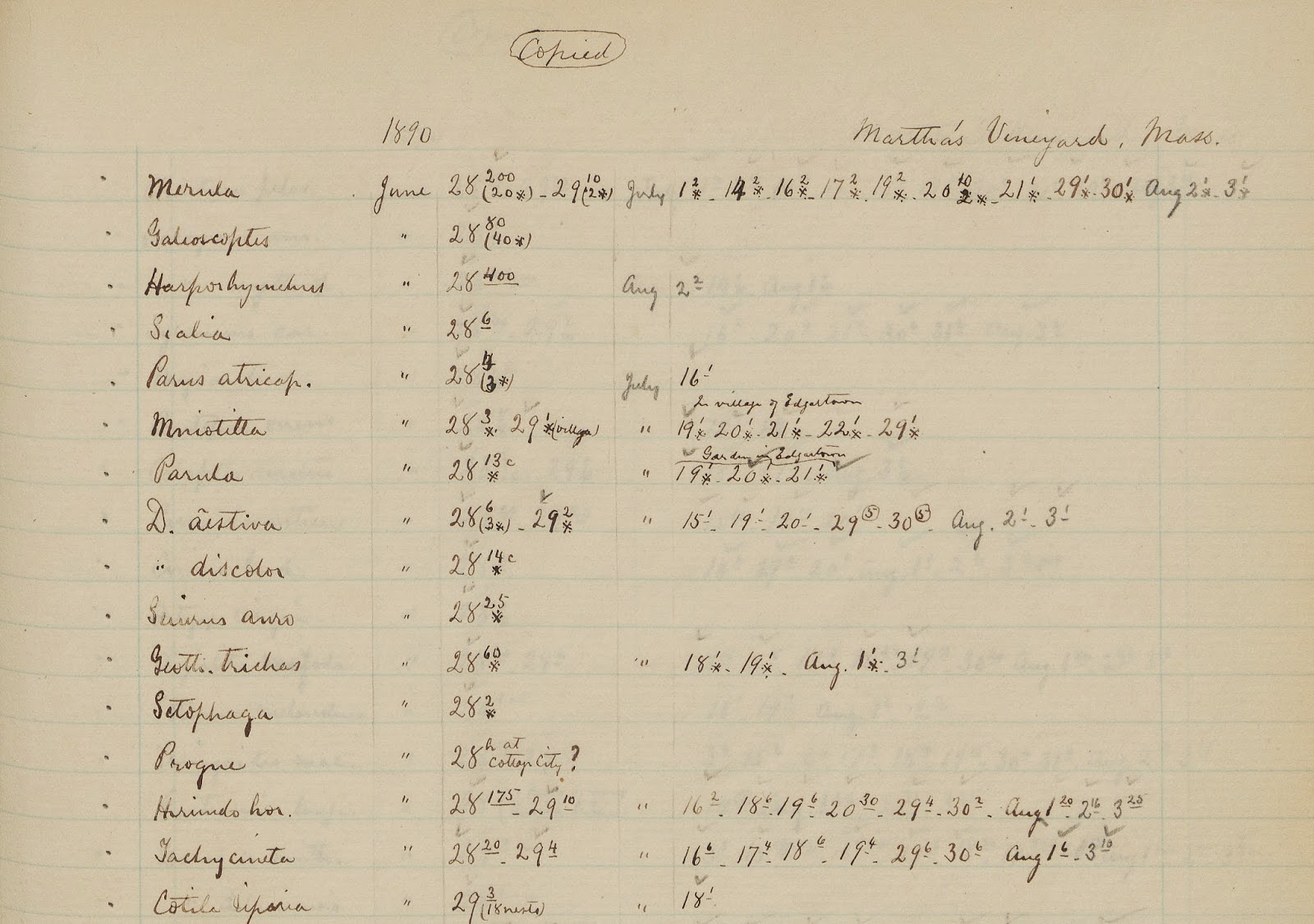
Brewster’s journal of 1890

William Brewster (1851-1919) was a renowned American amateur ornithologist, first president of the Massachusetts Audubon Society, and a president of the American Ornithologists’ Union. He was an avid collector of birds and their nests and eggs, and collected over forty thousand specimens from 1861 until his death in 1919. His collection, bequeathed to the Museum of Comparative Zoology at Harvard University, is considered one of the finest private collections of North American birds ever assembled. Though Brewster collected throughout North America, his collection is especially comprehensive in its coverage of the birds of New England. Brewster thoroughly documented his collecting trips. His journals and diaries are a gold mine of scientific observations and a delightful account of years spent exploring the woods, fields, lakes, and rivers of New England.

The Ernst Mary Library of the Museum of Comparative Zoology is in the process of digitizing its collection of Brewster’s field notes and observations, and making these available worldwide via the Biodiversity Heritage Library (BHL). As part of the Purposeful Gaming project led by the Missouri Botanical Garden, and funded by the Institute of Museum and Library Services, we have begun efforts to transcribe Brewster’s voluminous field notes, with the ultimate goal of making the full text of his observations searchable and available for any number of uses.

As an initial trial project, we have placed ten digitized volumes of field notes on two crowdsourcing websites, and we invite anyone interested to help us accomplish our goal of transcribing at least 2000 pages of Brewster’s journals. The crowdsourcing websites chosen for this project are the Biodiversity Volunteer Portal (BVP), a collaboration between the Australian Museum and the Atlas of Living Australia; and a BHL installation of FromThePage, a transcription tool developed by Ben Brumfield.

View Full Size Image
Birds observed by Brewster on Martha’s Vineyard in 1890

Please feel free to visit one or both of these sites, create an account, and enjoy Brewster’s idyllic writing style while helping to unlock his valuable observations for the benefit of all. We also invite you to browse Brewster’s diaries and journals on the BHL portal.

June 5, 2014by eomeara
Blog Reel, User Stories

The Life of a Field Biologist and Practical Biodiversity Informatician: Cam Webb

View Full Size Image

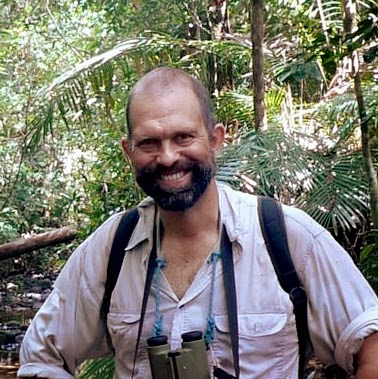
As part of our regular BHL & Our Users series, Connie Rinaldo (MCZ Librarian and BHL Executive Committee Member) recently caught up with Cam Webb, a Senior Research Scientist at the Arnold Arboretum of Harvard University.  We were very pleased to hear about how he has been exploring BHL and what he discovered. Enjoy!

1.  What is your area of interest?

I study the trees and forests of SE Asia, from ecological, floristic and biogeographic angles. I also enjoy ‘practical informatics’: mashing up biodiversity data from a variety of sources.

2.  How long have you been in your field of study?
Broadly defined… about 25 years.

3.  When did you first discover BHL?

I think pretty much when you first opened.

View Full Size Image4.  What is your opinion of BHL and how has it impacted your research?

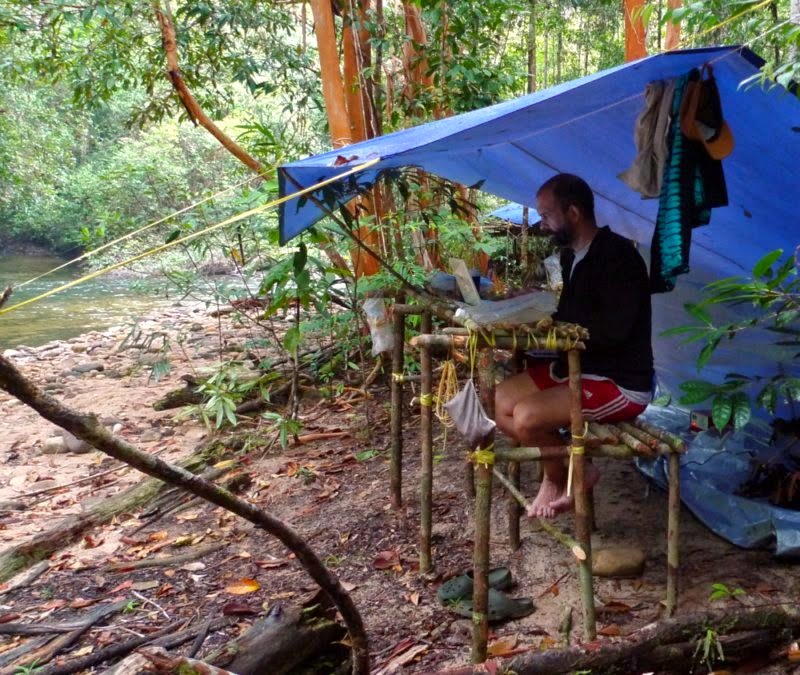
BHL is a vital tool for me.  I live in West Kalimantan, Indonesia and so have no local physical access to botanical libraries. The nearest one is on Java, at the Indonesian National Herbarium (Herb. Bogoriense); it has a surprisingly good range of older publications, but I don’t get there as often as I’d like.  But with BHL, in a few seconds (or longer… depending on bandwidth here!), I have access to many of the original (and sometimes only) descriptions for the plant taxa out here.

5.  How often do you use BHL?

I use BHL a couple of times a month on average, sometimes more frequently.

6.  How do you usually use BHL?  

Almost always I’m looking for species descriptions, ecological details, and particularly images.

7. What are your favorite features and services on BHL?

So, I have to admit, as I was answering these questions, I started digging into the API options (Application Programming Interface) you offer, that I hadn’t really looked at before, and was blown away as to how many ways you offer to query your database and view the publication pages. One of the main challenges I have for using BHL, given the limited  bandwidth available here in Kalimantan, is the multiple webpage loadings required to get from submitting a taxonomic name to being able to check if a page will be worth reading, partially because the default page viewer loads a fairly high-resolution page image in the popup. So I hacked together a simple script (http://xmalesia.info/doc/bhl_pages.html) that takes a taxonomic name, calls your API, and returns a single page with embedded thumbnails of matching pages in BHL. This way, I can quickly identify which pages might be worth looking more carefully at.  So now I have to say that my favorite service on BHL is the API!  Thanks!

8.  What would you like BHL to focus on developing next?

For myself, I’d have to say that continuing to expand the coverage of the core document set would still be the highest priority.  There are a number of key references for Indonesia (many of them in Dutch)
that I have not found yet in BHL.

9. If you had to choose one title or item that has impacted your research or something that you love in BHL, what would it be?

It is having Flora Malesiana scanned and available online!

Thank you, Cam, for sharing your work and how you use the Biodiversity Heritage Library!

June 3, 2014by brooksm
BHL News, Blog Reel

BHL presentation to the Council on Botanical and Horticultural Libraries

Portrait version of the Biodiversity Heritage Library logo.

On April 30, 2014 I attended the Council on Botanical and Horticultural Libraries (CBHL) annual conference at the Lewis Ginter Botanical Garden in Richmond, VA. CBHL describes itself as, “an international organization of individuals, organizations and institutions concerned with the development, maintenance and use of libraries of botanical and horticultural literature.” With the extent of the BHL’s digitized botanical literature available for free access, CBHL members are regular users and big fans of BHL.

I was delighted to be invited to present an update on BHL happenings over the past year or so, including such highlights as the adoption of a new mission, vision, and goals; our new website user interface (launched in March 2013) and its new article access features, as well as link outs to biodiversity materials on external websites; and our new membership structure and newest members/affiliates.

It was my first time attending a CBHL meeting but hopefully not my last as this easy going group immediately made me feel welcomed. Granted it may be because they are such strong supporters of the BHL, after all they awarded us the Charles Robert Long Award (2013) for our successful collaborative efforts with botanical libraries worldwide. I was impressed with the group’s strong sense of camaraderie and community, and level of organization. As so many BHL participating institutions (Missouri Botanical Garden, New York Botanical Garden, Smithsonian Libraries, Harvard University Botany Libraries, and Cornell University’s Mann Library) are CBHL members themselves I look forward to our networks cross-pollinating in the future!

If you’d like to see more about how the BHL has grown over the past year+, please take a look at my presentation on slideshare:

Cbhl apr2014 from Bianca Crowley
May 22, 2014by SheilaC7108
Blog Reel, Featured Books

Frame-worthy Fauna, Flora, . . . and Fossils?

Over the past few months, I’ve been working as the Biodiversity Heritage Library Flickr Content Volunteer. As someone who really values the cross-section between art and science, it’s a fascinating task. The Flickr page is full of beautiful images of flowers, birds, and butterflies. However, have you ever considered the beauty in rocks and bones?

Most of the items I’ve been adding to the BHL Flickr page were published in The Quarterly Journal of the Geological Society of London, a 19th century journal with articles on geology, paleontology, and paleobotany. I’m sure any geologist would say I’m late to the party, but I was pleasantly surprised by the various diagrams and illustrations in this Victorian journal. Below I highlight a few of the most interesting, surprising, and just plain beautiful images I’ve come across so far.

View Full Size Image
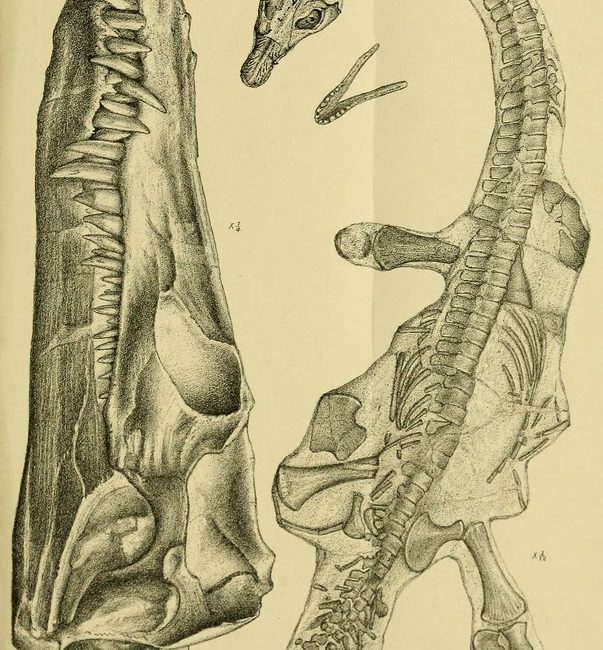
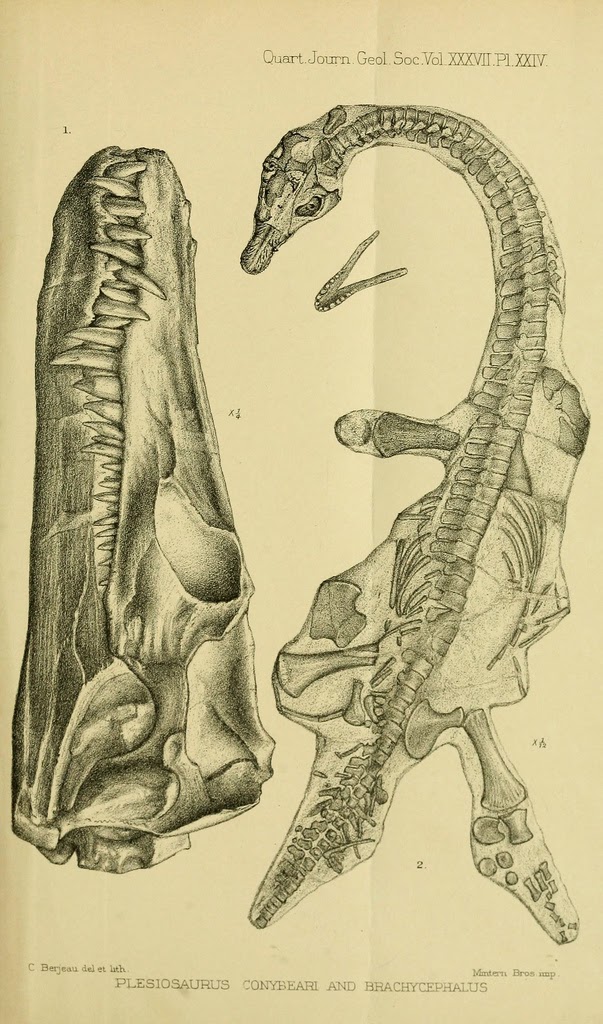
Plesiosaurus conybeari and brachycephalus.
Volume 37 (1881).

From what I’ve observed, there are two camps when it comes to skulls and bones: those who find them fascinating, and those you find them morbid. I absolutely fall in the first camp, finding it interesting to see how different bodies are structured and fit together. If the remains are that of a species we’ll never have the chance to see, even more so, making these plesiosaur fossils of particular interest. It’s mind-boggling to imagine these reptiles of the early Jurassic era swimming about. Among Nessie believers there’s a theory that the Loch Ness monster is a member of the Plesiosauria order which managed to avoid extinction. With that long neck and those paddle-like limbs, I can definitely see why.

View Full Size Image
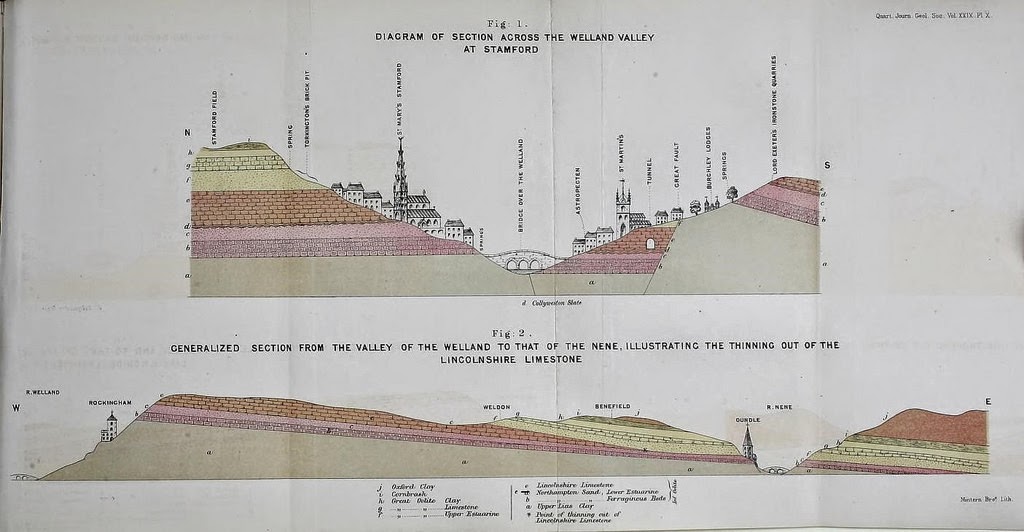
Cross section of the Welland Valley.  Volume 29 (1873).

This image is an interesting representation of the different layers of clay, sand, and limestone in the Welland Valley of eastern England. The two views offer a look into where researchers observed hundreds of different sand fossils, such as Teleosaurus teeth and cephalopods in the Lincolnshire Limestone. However, that’s not the only reason it caught my attention. It’s on this list because—with a bit more hatching—this could easily be mistaken for the beginning of an Edward Gorey – Dr. Seuss collaboration. I didn’t expect whimsy from a Victorian geology journal, but I sure found it.

View Full Size Image
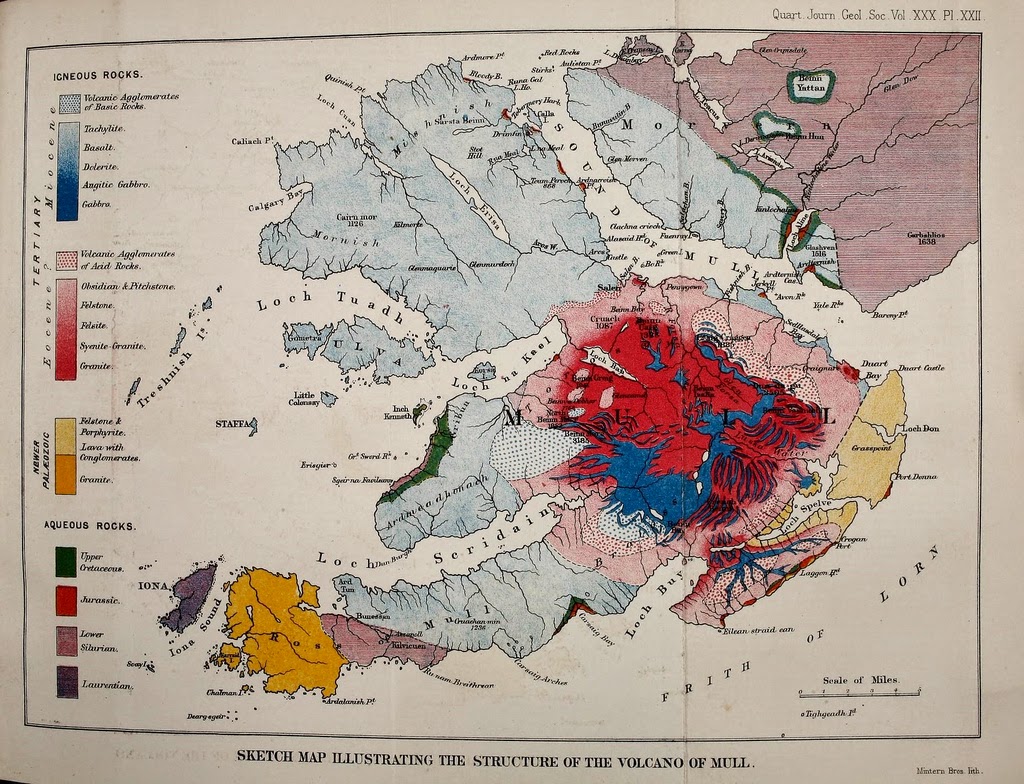
Map illustrating the structure of the volcano of Mull. Volume 30 (1874).

The colors in this map of the Isle of Mull, Scotland are so incredibly vibrant even 140 years later. Not only beautiful, it’s very informative, highlighting the locations of various igneous and aqueous rocks in the area. It even helped me realized that “loch” not only means “lake” but also “inlet.” Lessons in geology and Gaelic all in one place!

View Full Size Image
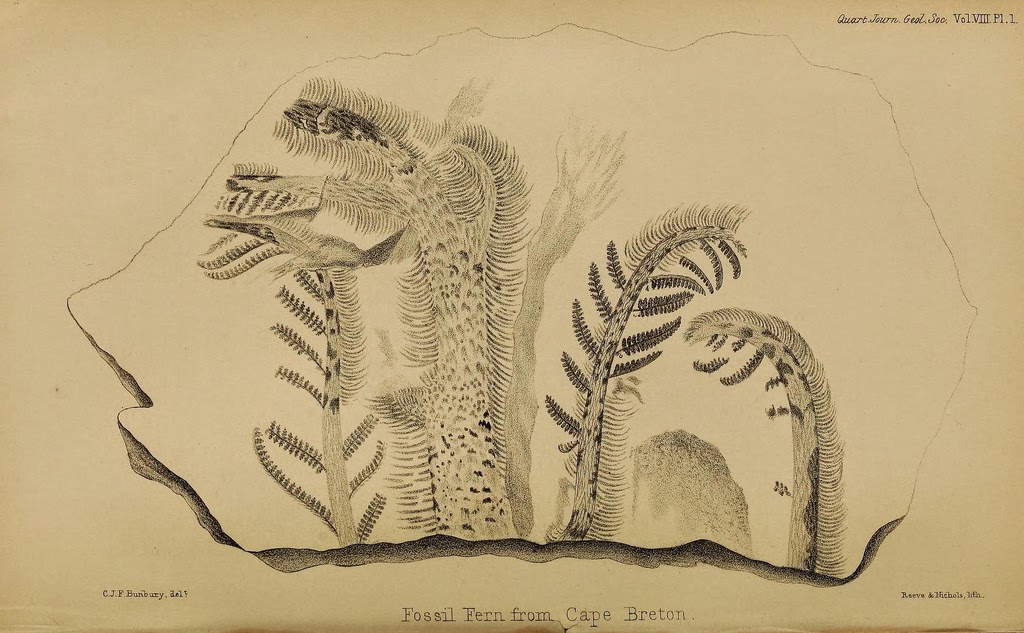
Fossil Fern from Cape Breton. From Volume 18 (1852).

Sometimes it feels like ferns don’t get the same praise and attention as flowering plants. That’s hard to believe after seeing this beautiful depiction of fossil ferns found near the coal mines of Sydney, Nova Scotia. The most remarkable aspect of the image may just be the article it accompanies. It’s a fascinating read offering a glimpse into the thought process behind identifying the “uncommonly interesting species” seen here.

View Full Size Image
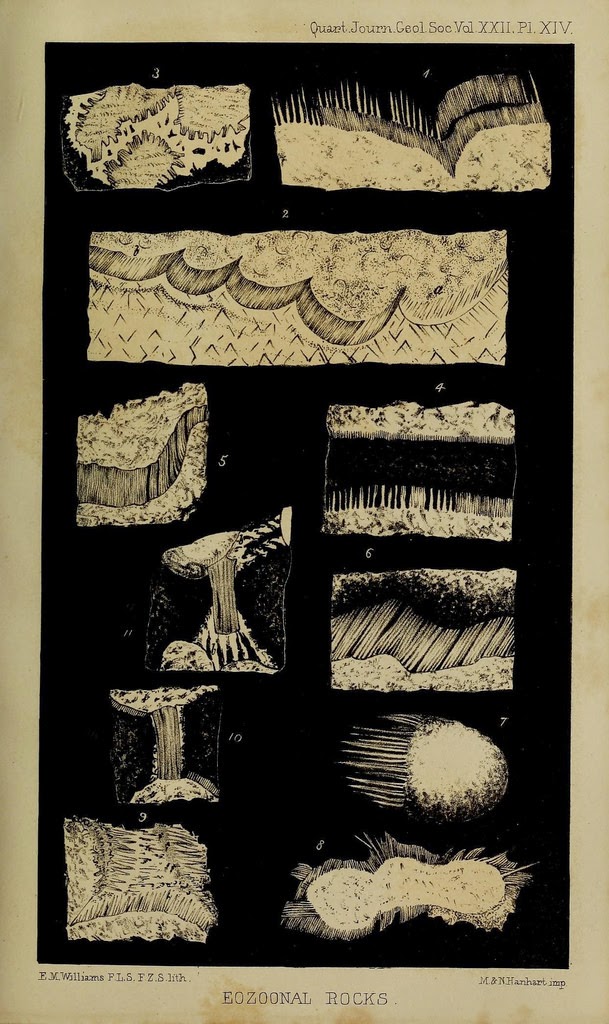
Eozoonal rocks. Volume 22 (1866). 

This plate illustrating the inorganic nature of eozoonal rocks just might be my favorite of the bunch. It looks like a page from a comic book set in space or a post-apocalyptic Earth. In fact, Figure 2 looks like it came straight from the background of Pat Aulisio’s Bowman comics. I can definitely imagine this one hanging next to the artwork I already own. In fact, I just may do that! Many of the images in BHL’s Flickr stream are in the public domain and have been made available using a Creative Commons Attribution CC-BY License. Images which may still be in copyright (generally those published after 1922) have been assigned a Creative Commons non-commerical license meaning users are free to repurpose for non-commercial use.

The Quarterly Journal of the Geological Society of London has been quite the surprise. There are several more volumes to go through, so I can only imagine the surprises will keep coming. In the mean time, it looks like I need to buy a frame that can do justice to eozoonal rocks.

Check out an older post to read about my previous internship with the BHL and how I’ve used BHL images in the past.

May 20, 2014by lmyrick
BHL News, Blog Reel

BHL’s Latest News!

View Full Size Image
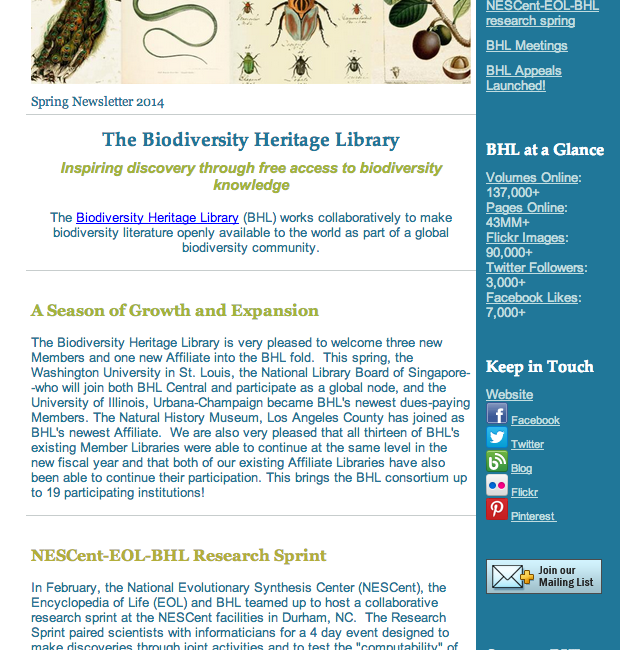
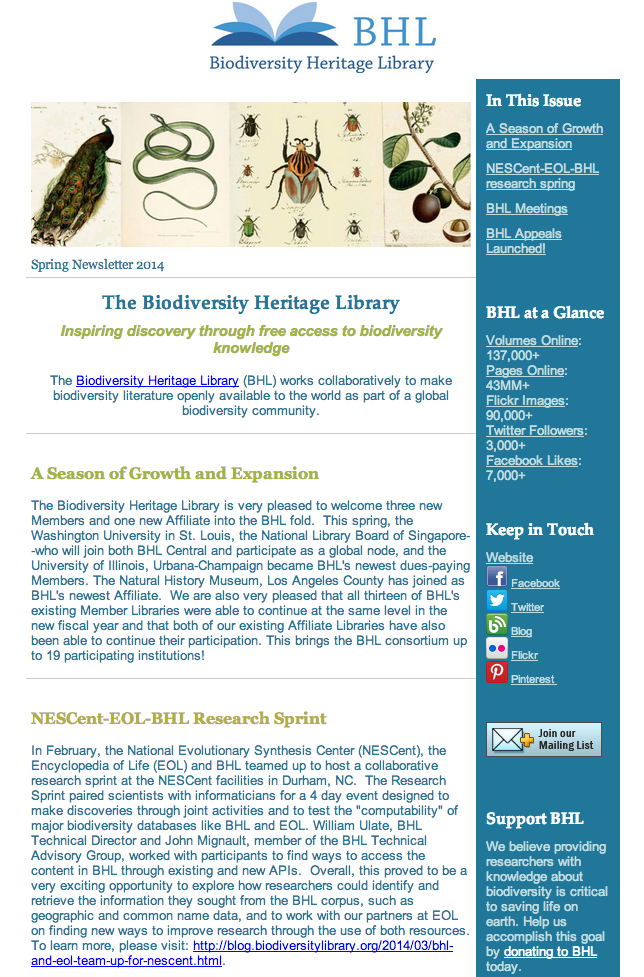
BHL Spring 2014 Newsletter

The last several months have been an intense and exciting period of growth and expansion for BHL. Not only has the steady growth of collections continued but BHL as an organization has been growing as well. In the first two quarters of fiscal year 2014, three new Members and one new Affiliate joined BHL-Central. BHL’s global presence is expanding as well with one of those new Members also participating as a global node.

To learn more about each of the new BHL Members and Affiliate and what BHL has been up to across the globe, check out BHL’s latest newsletter and quarterly report. Covering both Quarter 1 and Quarter 2 of Fiscal Year 2014, the latest report also includes updates on BHL meetings and collaborations as well as collections, usage, and financial updates.

Enjoy!


View Full Size Image
BHL Quarterly Report, Q1 and Q2, FY2014
May 15, 2014by sayeedmd
BHL News, Blog Reel

BHL Nominated for a Zedler Award for Free and Open Knowledge

BHL is honored to learn that we’ve been nominated for a Zedler Award by Wikimedia Deutschland.  This award acknowledges contributions of individuals, groups or projects who have made contributions to free and open knowledge.  Wikimedia Deutschland is a non-profit organization working to promote free knowledge through the collection, development and distribution of free content.

BHL has been nominated in the External Projects category along with other impressive nominees, including Humanitarian Open Street Map Team (http://www.europeana1914-1918.eu/de), the Free Music Sampler of the German Musikpiraten (http://musik.klarmachen-zum-aendern.de/artikel/viva_la_freevolucci%C3%B3n_-_der_free_music_sampler_2013_lieferbar-2527),
Europeana 1914-1918 (http://www.europeana1914-1918.eu/de) and Microsoft/the British Library for their project “One million images on Flickr Commons” (http://britishlibrary.typepad.co.uk/digital-scholarship/2013/12/a-million-first-steps.html).

Awards will be announced May 24 at 19.00h at the Westhafen-Pier in Frankfurt am Main.

Learn more about the Zedler Award: https://de.wikipedia.org/wiki/Wikipedia:Zedler-Preis
Learn more about Wikimedia Deutschland: http://wikimedia.de/wiki/Hauptseite

View Full Size Image
May 6, 2014by brooksm
Page 105 of 173« First...102030«104105106107»110120130...Last »

Help Support BHL

BHL's existence depends on the financial support of its patrons. Help us keep this free resource alive!

search

About BHL

The Biodiversity Heritage Library (BHL) is the world’s largest open access digital library for biodiversity literature and archives. BHL operates as a worldwide consortium of natural history, botanical, research, and national libraries working together to digitize the natural history literature held in their collections and make it freely available for open access as part of a global “biodiversity community.”

Follow BHL

  • Bluesky logo
  • Instagram logo
  • Facebook logo
  • Flickr logo
  • Twitter logo

Join Our Mailing List

Sign up to receive the latest news, content highlights, and promotions.

Subscribe Now

Subscribe to Blog via Email

Enter your email address to subscribe to this blog and receive notifications of new posts by email.

Join 319 other subscribers

Subscribe to Blog Via RSS

Subscribe to the blog RSS feed to stay up-to-date on all the latest BHL posts.

Access RSS Feed


64+ Million Pages of
Biodiversity Literature Online.

EXPLORE

Tools and Services
to Transform Research.

EXPLORE

300,000+
Illustrations on Flickr.

EXPLORE

ABOUT | HARMFUL CONTENT | PRIVACY | SITE MAP | TERMS OF USE