Biodiversity Heritage Library - Program news and collection highlights from BHL
  • Home
  • News
  • Featured Books
    • All Featured Books
    • Book of the Month Series
    • BHL at 20
  • User Stories
  • Campaigns
    • Fossil Stories
    • Garden Stories
    • Monsters Are Real
    • Page Frights
    • Her Natural History
    • Earth Optimism 2020
  • Tech Blog
  • Visit BHL
Home
News
Featured Books
    All Featured Books
    Book of the Month Series
    BHL at 20
User Stories
Campaigns
    Fossil Stories
    Garden Stories
    Monsters Are Real
    Page Frights
    Her Natural History
    Earth Optimism 2020
Tech Blog
Visit BHL
  • Home
  • News
  • Featured Books
    • All Featured Books
    • Book of the Month Series
    • BHL at 20
  • User Stories
  • Campaigns
    • Fossil Stories
    • Garden Stories
    • Monsters Are Real
    • Page Frights
    • Her Natural History
    • Earth Optimism 2020
  • Tech Blog
  • Visit BHL
Biodiversity Heritage Library - Program news and collection highlights from BHL
Blog Reel, Featured Books

Book of the Week: Wild Animals of North America

Here in the Washington, D.C. area, where the BHL Secretariat is housed, North American wildlife is a hot topic with the grand opening of the new National Zoo American Trail exhibit. The exhibit features some of the most iconic American species, including the Bald Eagle, Gray Wolf, North American Beaver, and the Otter. We’ve been celebrating the exhibit all week on Twitter and Facebook, and we thought it only natural to further commemorate American fauna with our book of the week. To do so, we’ve selected Wild Animals of North America (1918), contributed by the American Museum of Natural History.

Wild Animals of North America

Edward W. Nelson, American naturalist and ethnologist, penned Wild Animals of North America for the National Geographic Society over the course of two magazine issues: The November 1916 issue, which focused on Larger Mammals of North America, and the May 1918 issue, devoted to North America’s smaller mammals. These issues were enhanced by famed painter Louis Agassiz Fuertes, who also illustrated the spectacular Album of Abyssinian Birds and Mammals from Paintings (which we featured as a book of the week in 2011). Agassiz, who had done previous work for the Society on The Book of Birds, crafted over five dozen stunning portraits of the animals described within the text for this title.
View Full Size Image
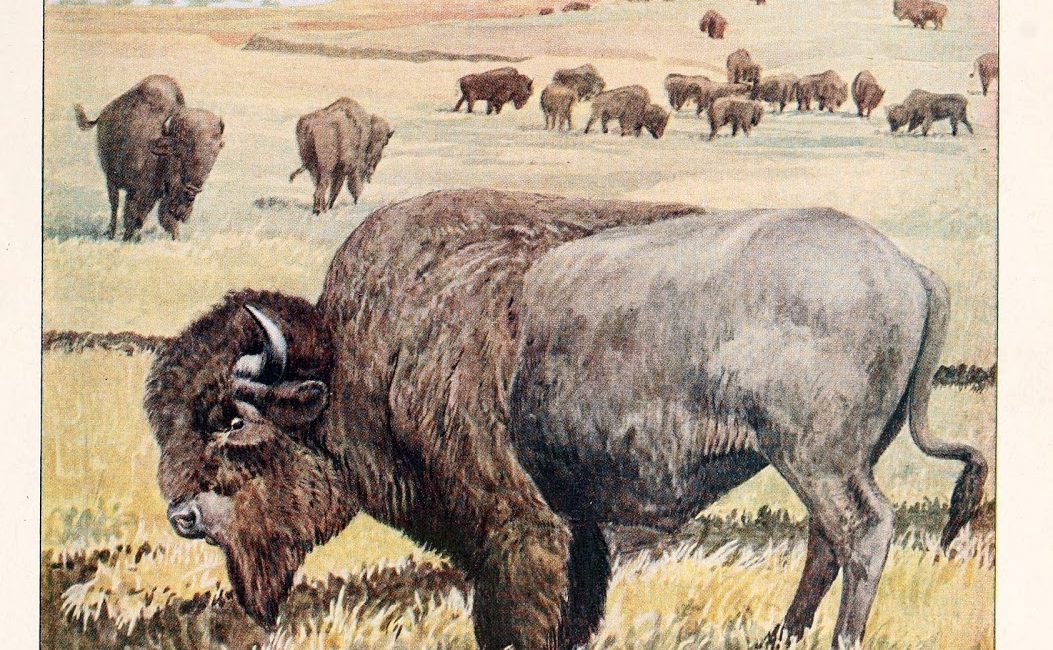
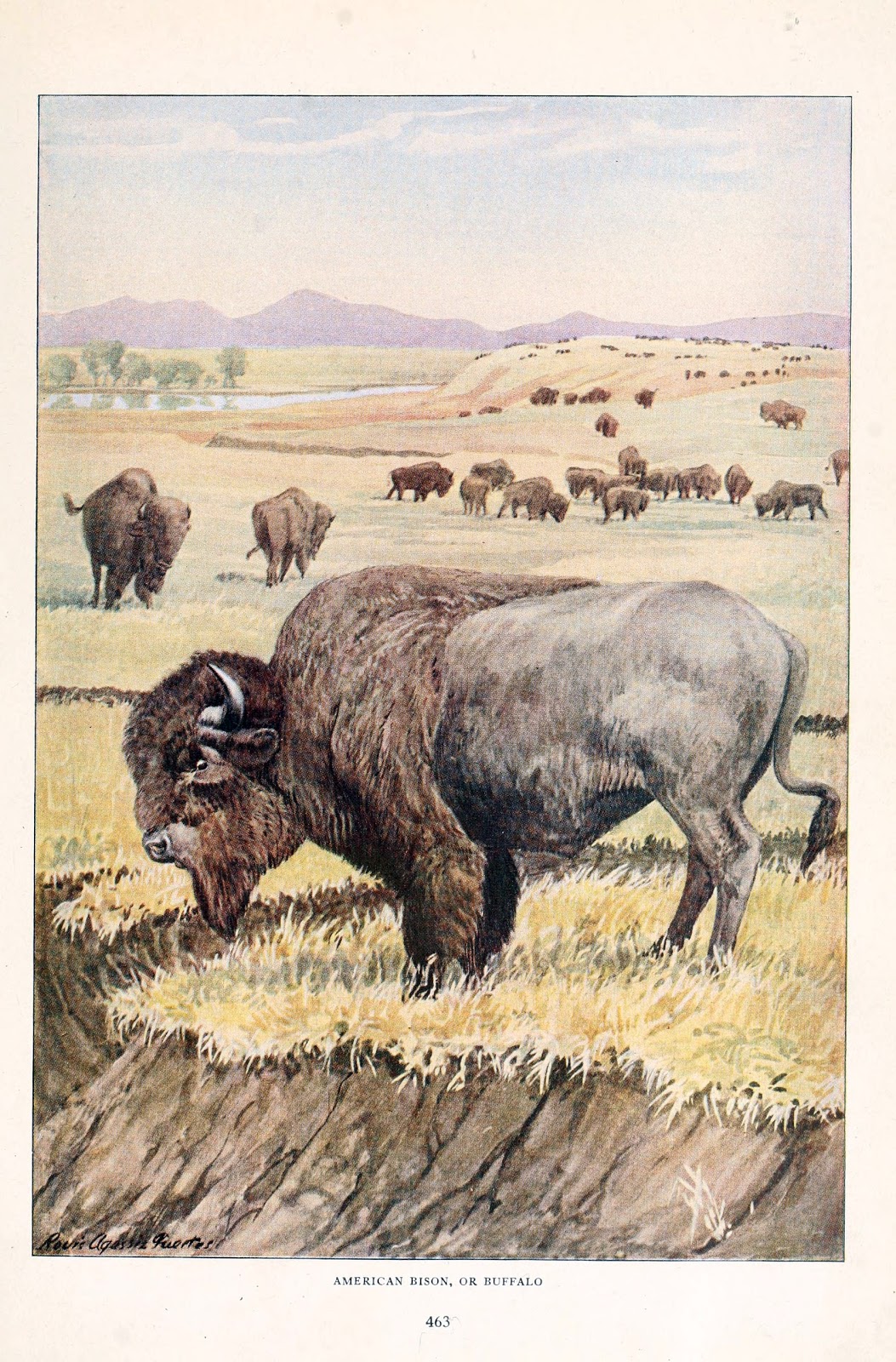
North American Buffalo

National Geographic clearly understood the importance of this work, expending $100,000 for the production of the two original magazine articles which sired this book. The success of the issues prompted the Society to combine them into the comprehensive Wild Animals of North America.

Wild Animals presents 119 “animal biographies,” which present not just pictures and scientific facts about the species, but also entertaining anecdotes about Americans’ interaction with these creatures.

Take, for instance, the account of the American Buffalo. Nelson writes that,

A number of men now living were privileged to see some of the great herds of the West before they were finally destroyed. Dr. George Bird Grinnell writes:

‘In 1870, I happened to be on a train that was stopped for three hours to let a herd of buffalo pass. We supposed they would soon pass by, but they kept coming. On a number of occasions in earlier days, the engineers thought that they could run through the herds, and that, seeing the locomotive, the buffalo would stop or turn aside : but after a few locomotives had been ditched by the animals the engineers got in the way of respecting the buffaloes’ idiosyncrasies.’

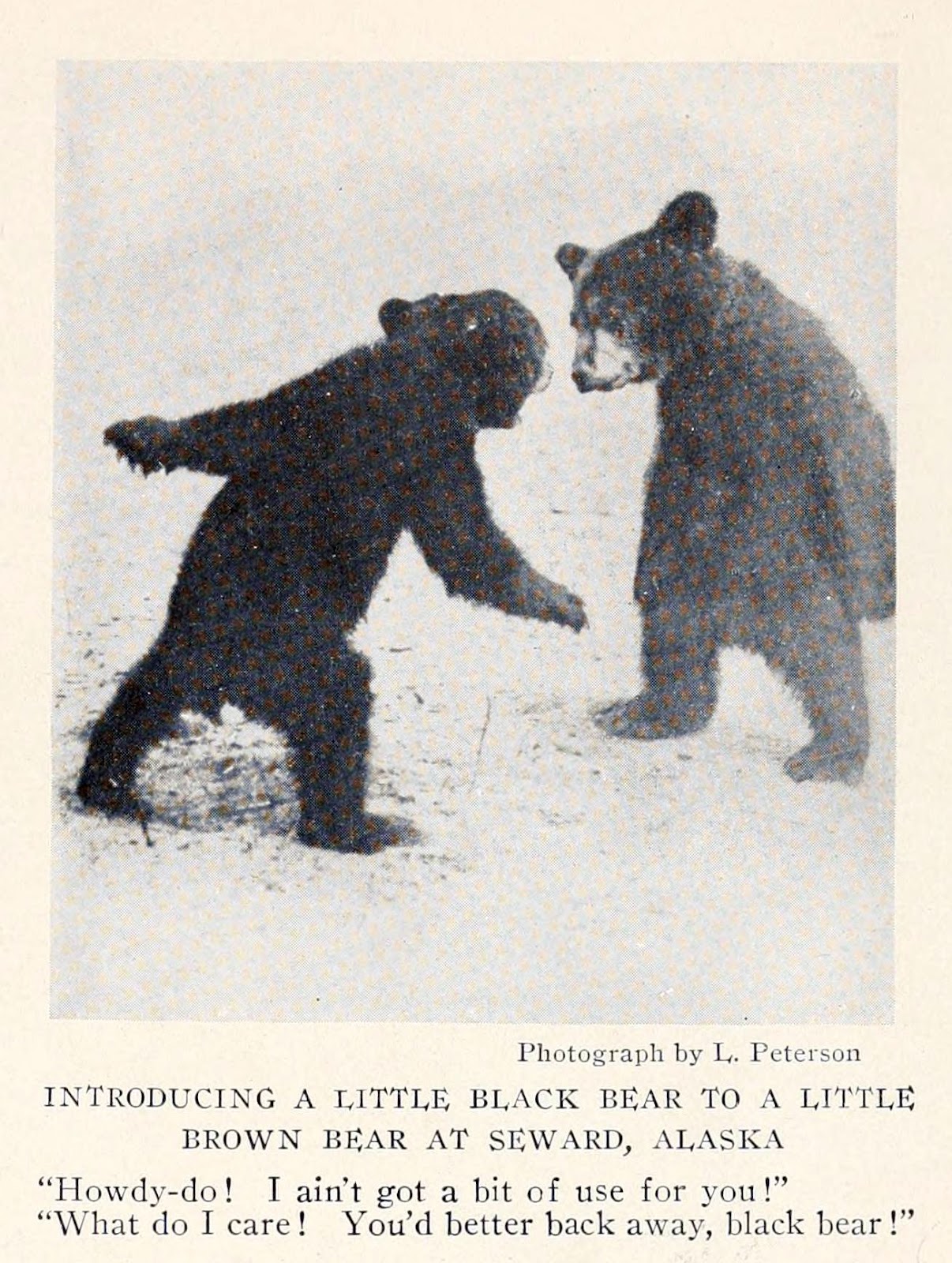
And one of our favorite excerpts from the book is a photograph and caption depicting the introduction of black and brown bear cubs:
View Full Size Image
Black and Brown Bear Cubs Being Introduced

Species Highlights

For this post, we’ve selected a few of the our favorite of the 119 species Nelson describes, accompanied by Fuertes’ enticing paintings. We’ve provided additional links and images for those species below which are also found in the new American Trail exhibit. See a full list of species you’ll encounter in the exhibit by visiting the zoo’s website.

See all of the images from our book of the week on Flickr, and check out select illustrations on Pinterest.

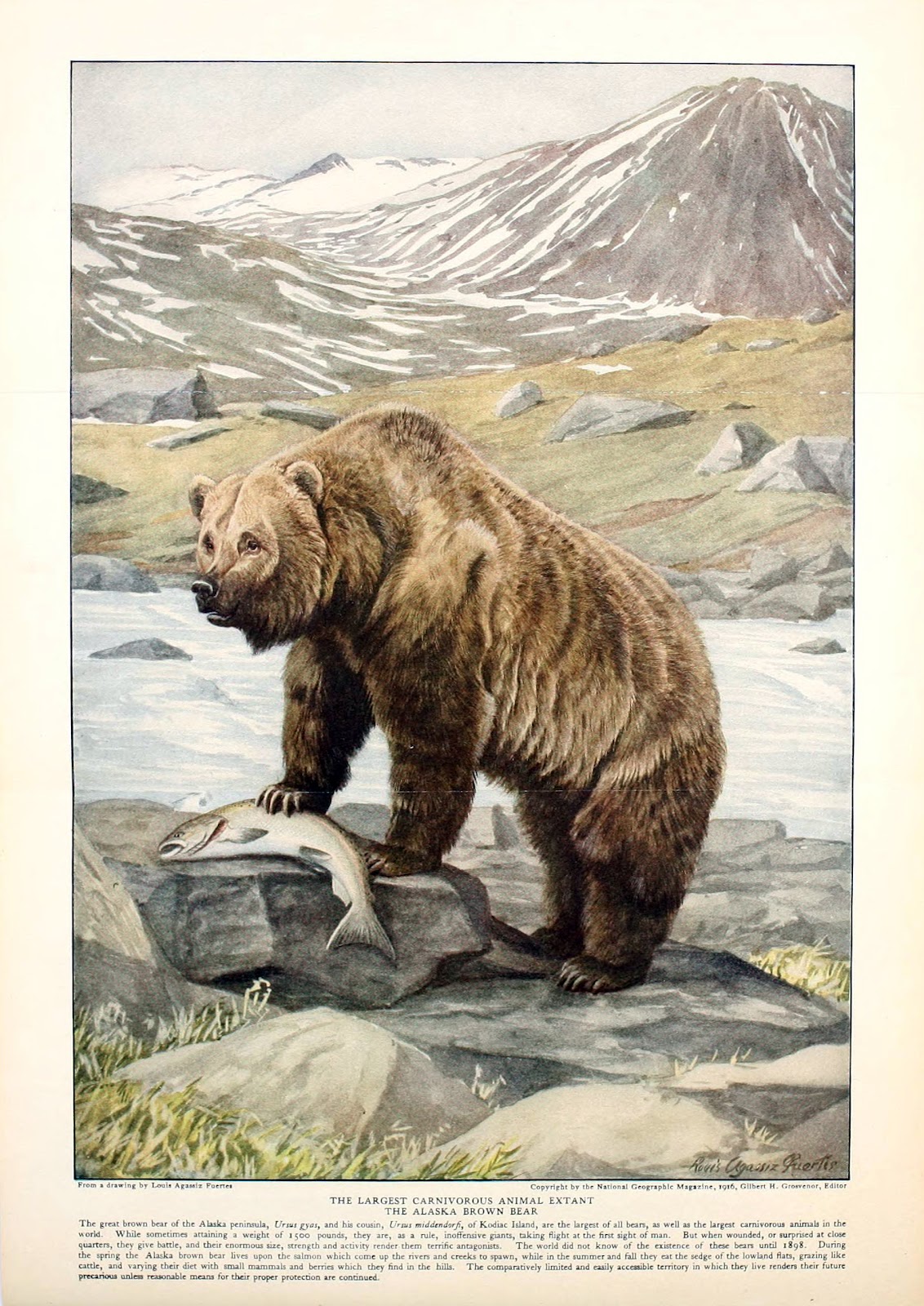
Alaskan Brown Bear

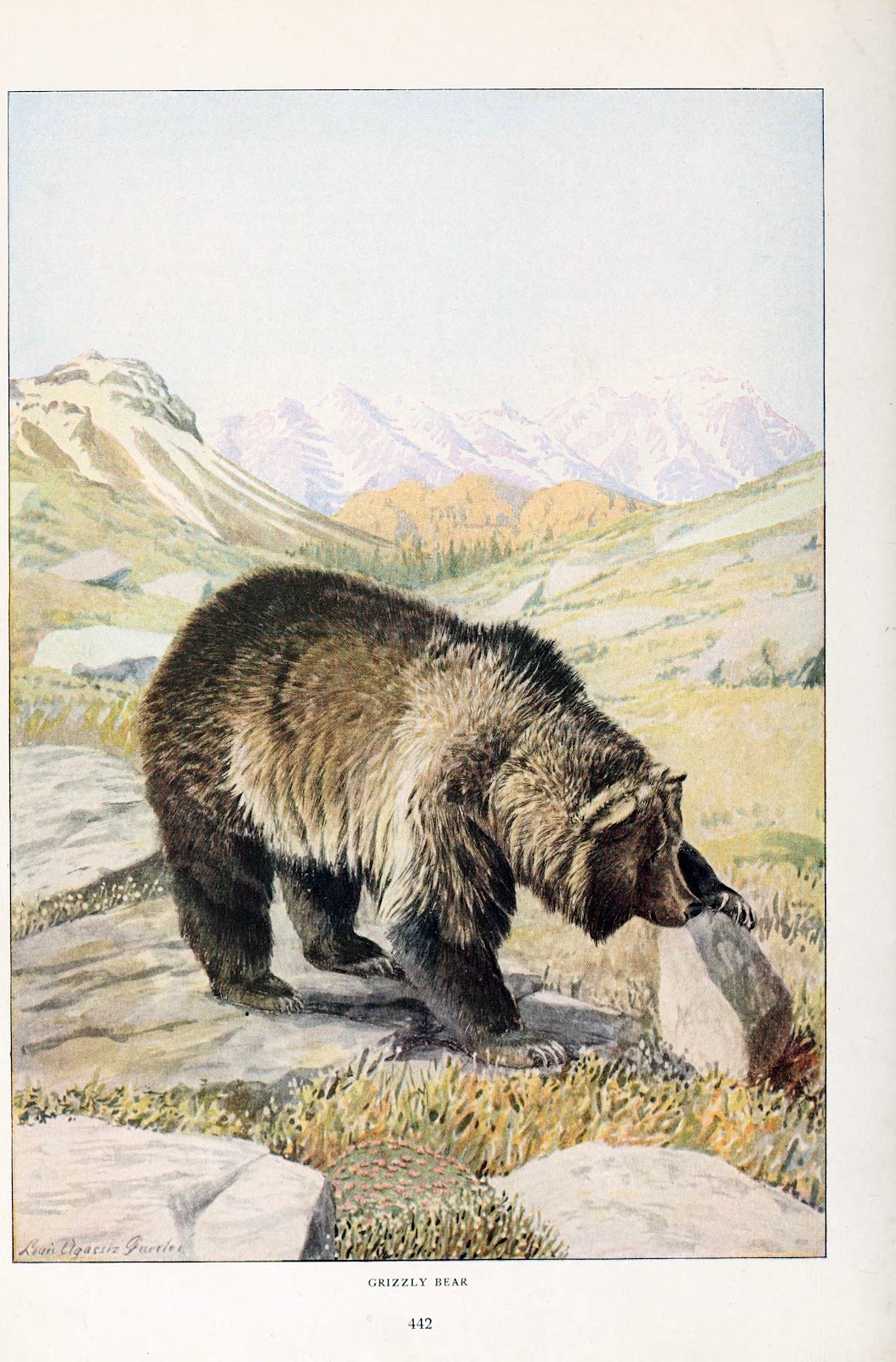
“The great brown bear of the Alaskan peninsula, Ursus [arctos], and his cousin, Ursus middendorffi, of Kodiac Island, are the largest of all bears, as well as the largest carnivorous animals in the world. [The Polar Bear, of roughly the same size, is documented as the largest bear alongside the Kodiak]. While sometimes attaining a weight of 1500 pounds, they are, as a rule, inoffensive giants, taking flight at the first sight of man. But when wounded, or surprised at close quarters, they give battle, and their enormous size, strength and activity render them terrific antagonists.

“The world did not know of the existence of these bears until 1898.

“During the spring the Alaska brown bear lives upon the salmon which come up the rivers and creeks to spawn, while in the summer and fall they eat the sedge of the lowland flats, grazing like cattle, and varying their diet with small mammals and berries which they find in the hills.”
View Full Size Image
The Alaskan Brown Bear


View Full Size Image
The Grizzly Bear


 North American Beaver

“Beavers belong to the rodent family – a group of animals notable for their weak mental powers. The beaver is the striking exception to the rule, and its extraordinary intelligence, industry, and skill have long excited admiration….

“[Beavers] are very proficient in building narrow dams of sticks, mud, and small stones across small streams for the purpose of backing up water and making ‘beaver ponds.’ In the border of these ponds a conical lodge is usually constructed of sticks and mud…The mud used by beavers in building dams and houses is scooped up and carried against the breast, the front feet being used like hands.”
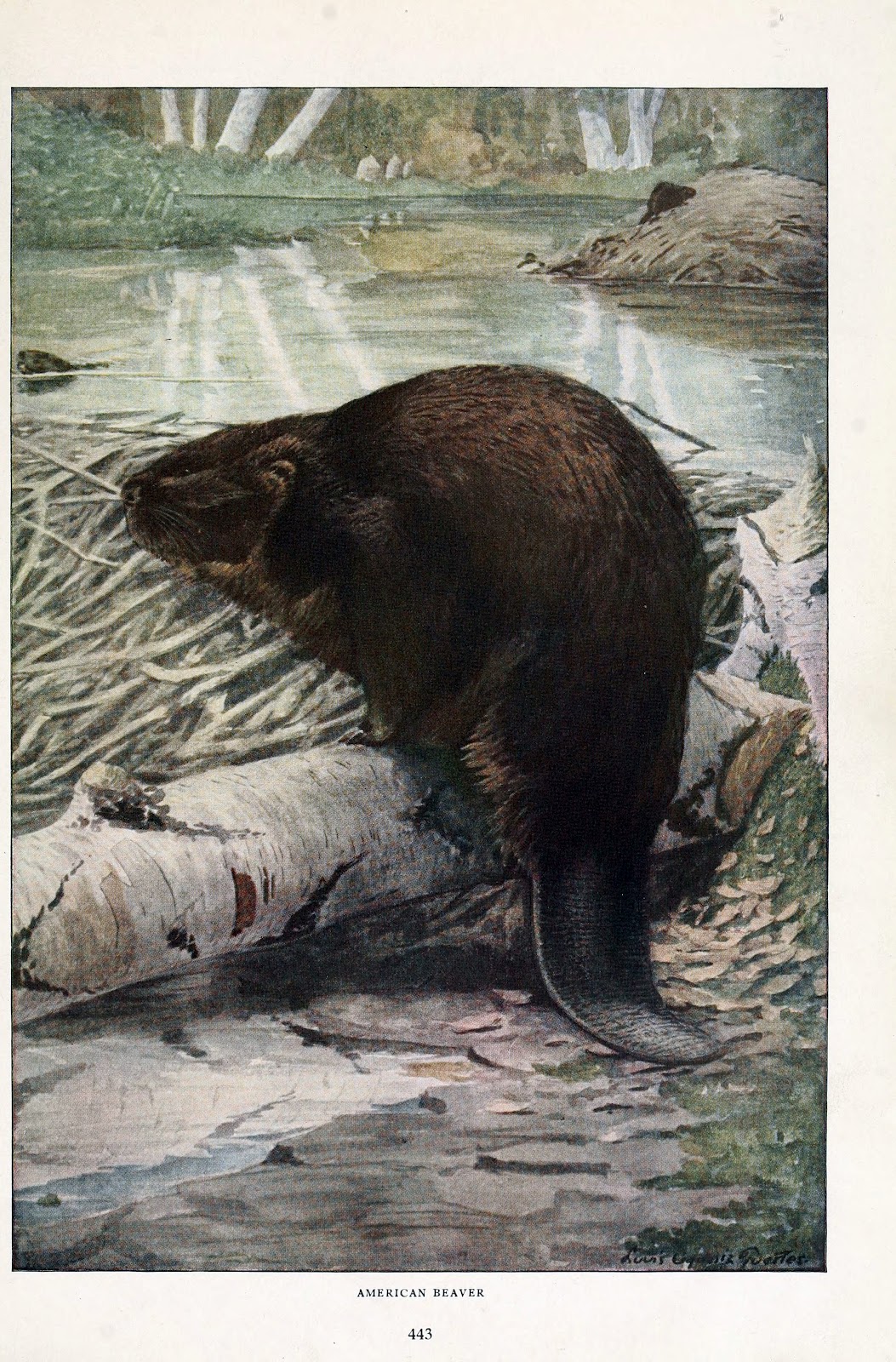
View Full Size Image
North American Beaver

Three North American beavers are featured as part of the new American Trail exhibit. One, by the name of Willow, “is easily identifiable by a notch in her tail.”
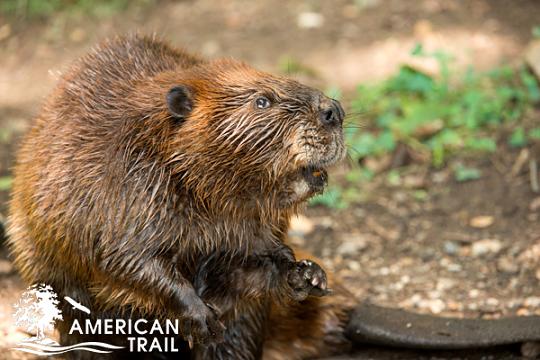
View Full Size Image
North American Beaver from the American Trails exhibit


Moose

“The moose is a large, grotesquely formed animal, with the most impressive individuality of any of our large game. Its great head, with oddly formed nose, huge palmated antlers, pendulous bell under the neck, short body, and disproportionately long legs unite to lend the impression that it may be a strange survivor from some remote geologic period.

“Although taller than an ordinary horse, weighing more than half a ton, and adorned with wide-spreading antlers, the bull moose stalks with ghostly silence through thickset forests.”
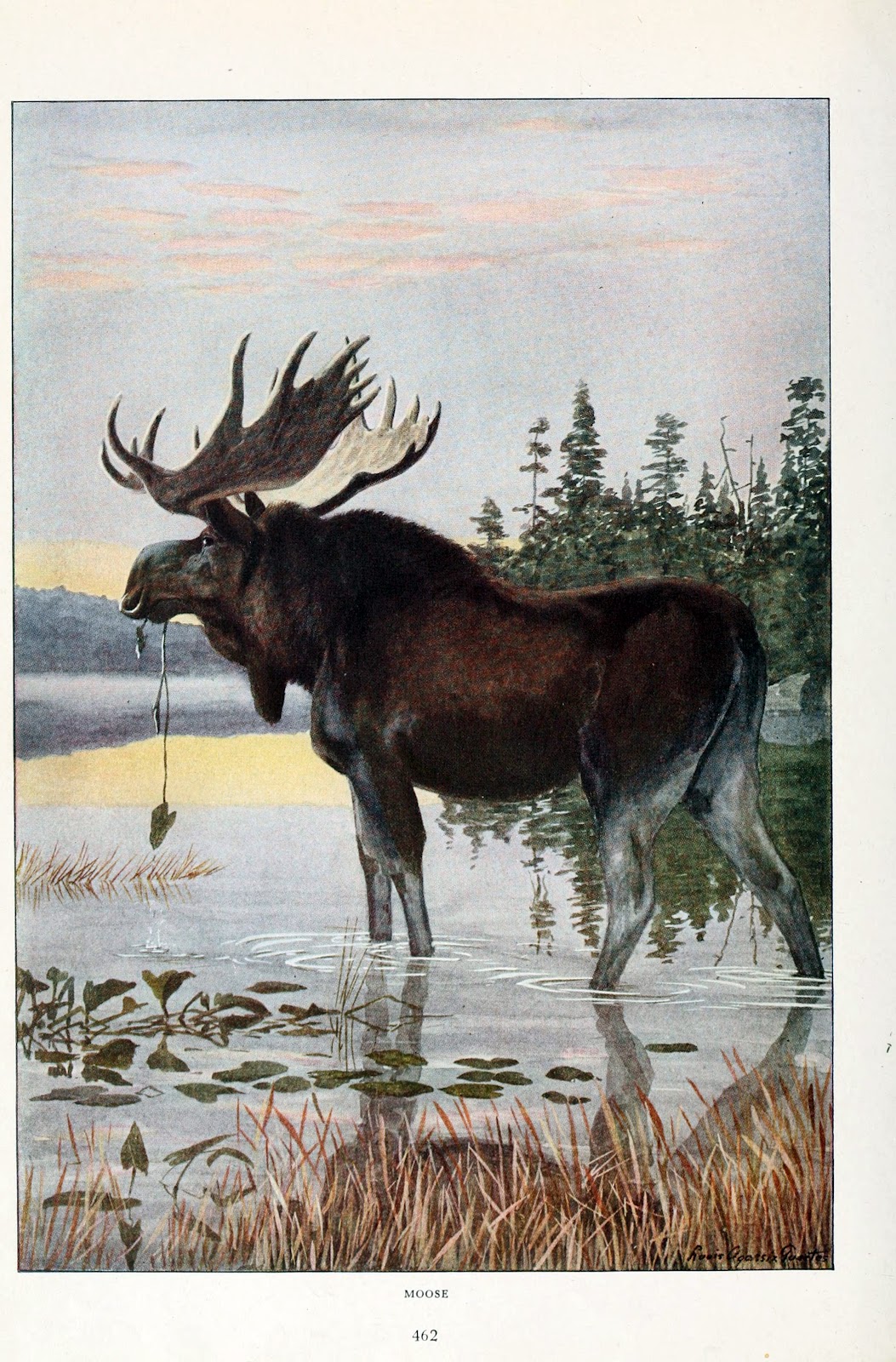
View Full Size Image
Moose

“In summer it loves low-lying, swampy forests interspersed with shallow lakes and sluggish streams. In such places it often wades up to its neck in a lake to feed on succulent water plants, and when reaching to the bottom becomes entirely submerged.”
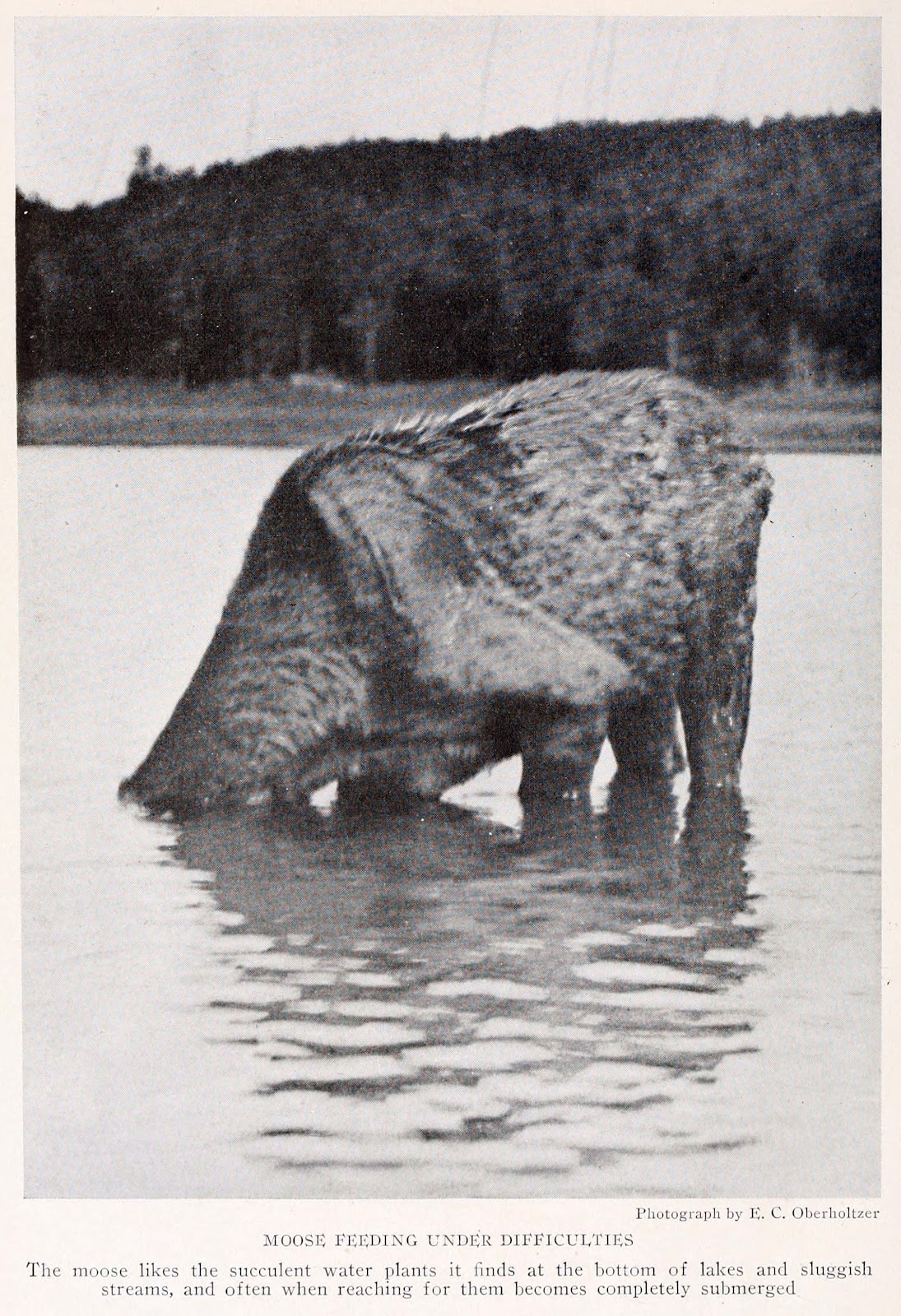
View Full Size Image
Moose submerged in water, foraging for food.


Steller Sea Lion

“Sea-lions are near relatives of the fur seals and have a nearly similar distribution, both in far southern and northern seas…The Steller Sea Lion is the largest member of the group, the old bulls weighing from 1,200-1,500 pounds.

“They are preeminently animals of the most rugged of shorelines and the stormiest of seas, being superbly powerful beasts with extraordinary vitality. The ease with which they pass through a smother of pounding seas to mount their rugged resting places is an admirable exhibition of skill and strength. The males have a bellowing roar, on the rocks in savage unison with the booming of the sea against the base of their refuge…

“It is reported that an umbrella opened and closed suddenly in the faces of the old sea-lions appears to terrify them more than any other weapon and is used successfully in drives.

“At sea they have only a single known enemy to fear – the fierce killer whale.”
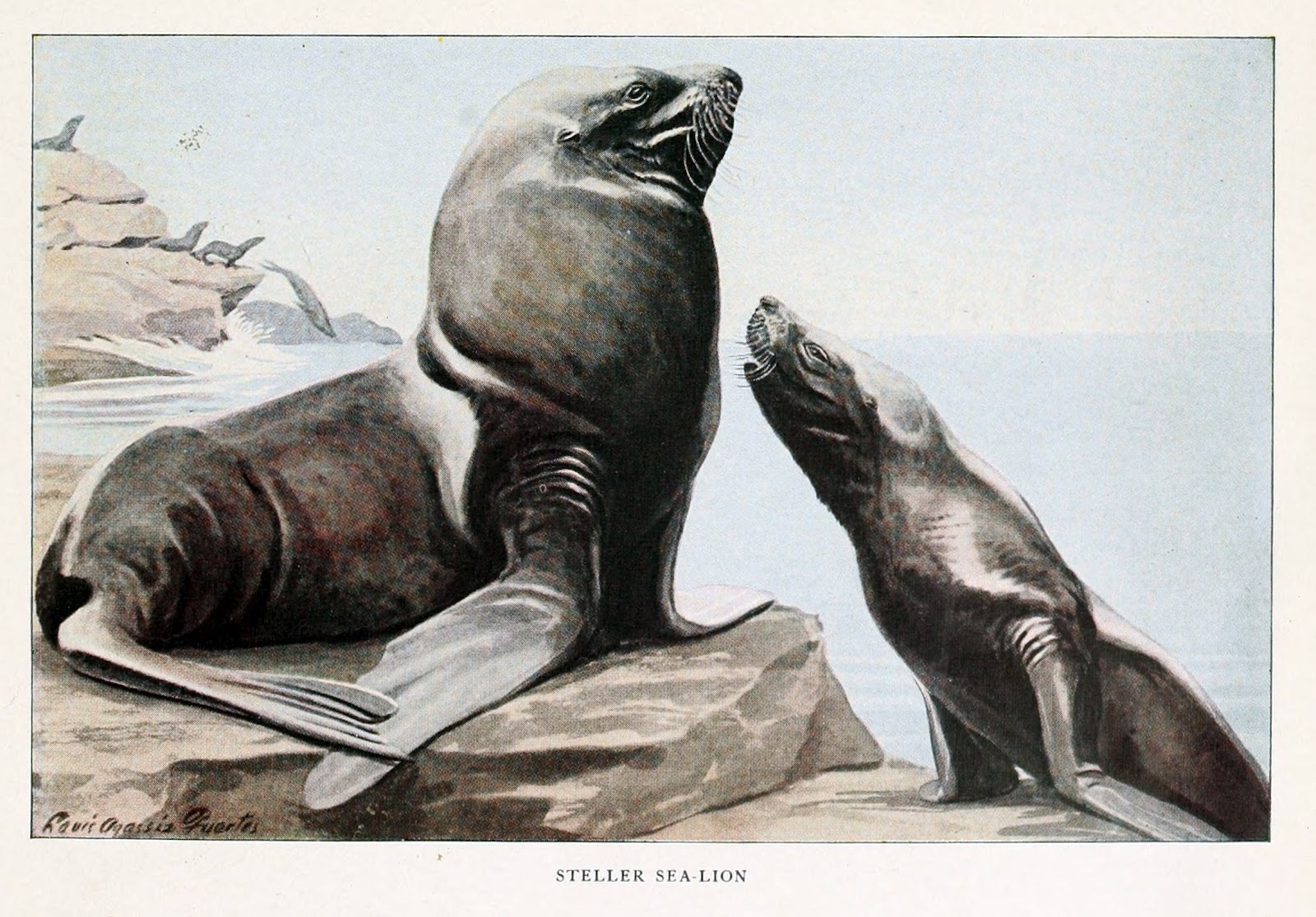
View Full Size Image
Steller Sea Lion

The American Trail exhibit features four of the Steller Sea Lion’s smaller cousin – the California Sea Lion. Two of them, Calli and Sophie, were rescued from the wild after being orphaned. A third, named Sophie, is Calli’s first pup.
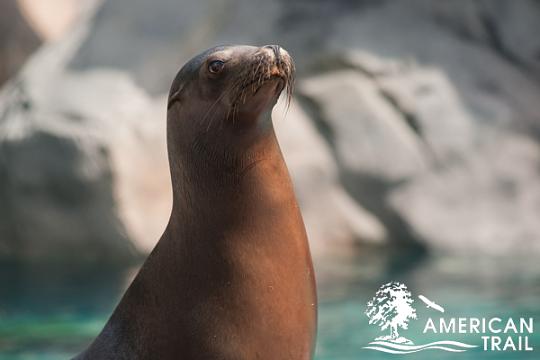
View Full Size Image
Sea Lion from the American Trail exhibit


Threatened Species Day

Today is threatened species day – a day set aside to raise awareness about the predicament facing thousands of species throughout the world today. It was originally established to commemorate the death of the last Tasmanian Tiger at the Hobart zoo in 1936.

While many North American species can be found on the Threatened and Endangered Species List, some of our most iconic, including the Gray Wolf and Bald Eagle – which were once doomed to possible extinction – have miraculously recovered and are no longer among those listed as threatened. Human conservation efforts had much to do with these status reversals, proving that when we come together to conserve, we can make a major impact. Let’s hope similar efforts can help restore the future for the species that still remain threatened.

Explore images of IUCN Endangered and Critically Endangered species on our Flickr page.

Learn how you can help conservation efforts with some ideas from the World Wildlife Foundation’s “Campaign for Change.”


September 7, 2012by michelle.underhill
Blog Reel, User Stories

BHL and Our Users: Joe Shaw

View Full Size Image
BHL User Joe Shaw

Raise your hand if you know what Opuntia is.

Even though you might not know it, most people would recognize Opuntia, though perhaps under another name. Named after the Greek city Opus, Opuntia is a genus in the Cacti family, containing the prickly pears, which currently constitute about 200 species. Like all true Cacti, Opuntia species are native only to the Western Hemisphere, and, with their range extending into British Columbia, are the most cold-tolerant of all lowland cacti.

Studying botany, and Opuntia in particular, has been one of Joe Shaw’s long-time passions (representing over 25 years of work). A botanist by training, Joe now concentrates his efforts on scientific writing, one aspect of which involves his website Opuntiads Web, which describes over 100 Opuntia species in the US, and his blog Oblog, which aims to “describe and illustrate cacti and succulents, their surroundings and neighbor plants, and even animals that interact with cacti.”

Opuntiads Web provides descriptions and images of each of the species cataloged on the site. Furthermore, one of the invaluable qualities of Shaw’s website for researchers is that the pages link to original descriptions of the corresponding species (gleaned from BHL, we might add!).

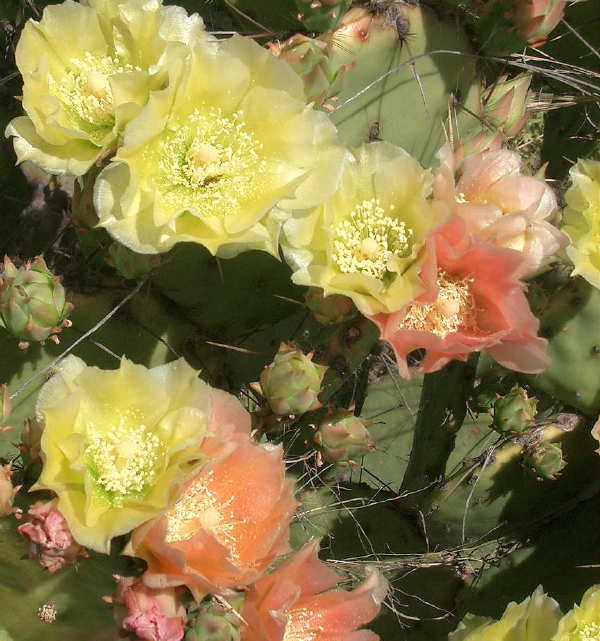
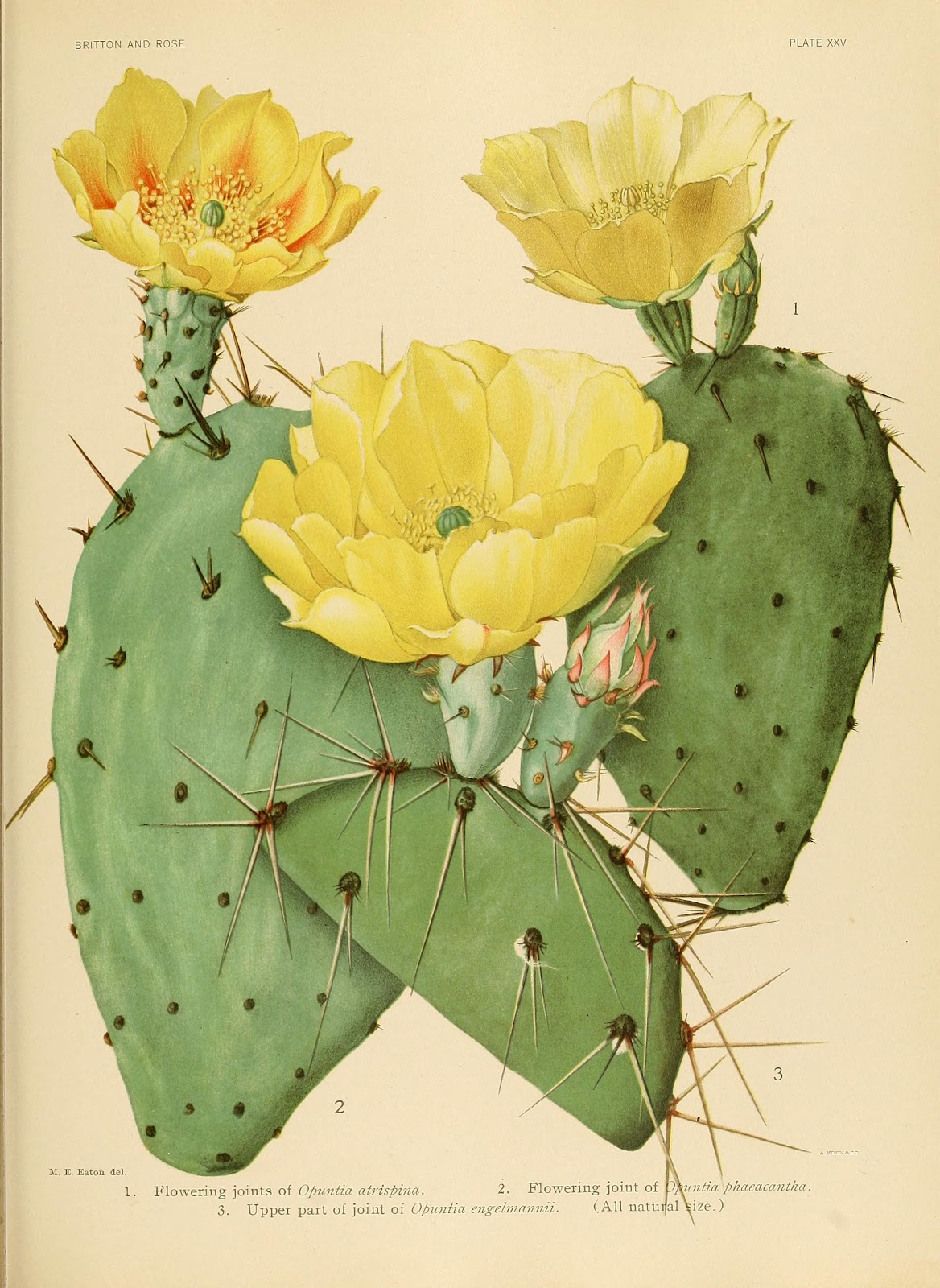
One of our favorites on the site is Opuntia atrispina, a cacti with a gorgeous yellow bloom native only to the United States. The interesting thing about the flowers of this cactus? They open yellow, but change to salmon, pink, or even tan on the second day (see image below to view transformation). Take a look at a picture of the cactus from Shaw’s website, as well as one of our favorite illustrations of it in BHL.

View Full Size Image
Opuntia atrispina flowers. From http://opuntiads.com


View Full Size Image
Illustration of Opuntia atrispina from BHL (upper right)

Shaw’s blog Oblog offers great supplementary material on these species, featuring informative posts, exceptional photographs, and fun anecdotes. We’ve reposted some of our favorite material from the blog below:

View Full Size Image
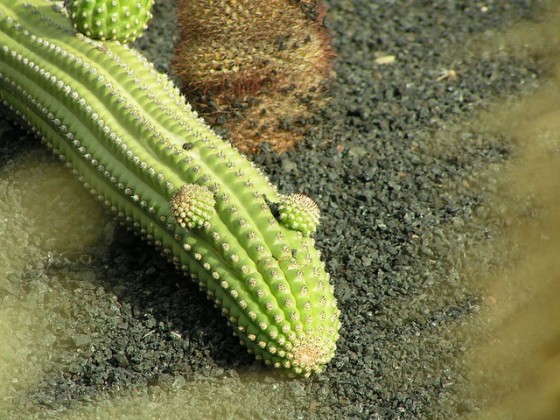
A cactus that looks like a snake!


Joe Shaw on BHL

Since 2009, BHL has served as an important component of Shaw’s work. As the introductory text on Opuntiads Web articulates,

Of the many opuntiads in the USA, some look superficially alike and some have even been forgotten; even botanists confuse them with each other and don’t know there are so many species.  But they have different bloom times, consistently identifiable fruits, normally don’t interpollinate, and are restricted to specific habitats. Early botanists identified them and understood their differences, and we use those old records to identify them, their differences, and their similarities.

The historic literature found on BHL allows Shaw to investigate the sometimes ambiguous Opuntia species, capitalizing on the work done by past botanists in order to articulate the details and differences of each species on his website. Incorporating the original species descriptions into his website, as described above, allows users to not only see the species as captured in photographs, but also understand the species as it was first documented for science. As Shaw asserts, BHL “is immensely helpful. I have been able to sort taxonomic tangles going back 200 years.”

Using BHL an average of 2-20 times per week, Joe exploits BHL’s PDF and single page download functions, expressing particular satisfaction with the speed at which BHL allows him to accomplish these tasks and the fact that this materials is available to him 24/7, at whatever hour or day he needs it. For Shaw, access to early and original species descriptions is a particularly valuable asset provided by BHL, as these are linked to on his site.

At BHL, it is not only the praise, but also the constructive criticisms that we valuable. When asked about requested site improvements, Shaw articulated a desire for even more robust species search capabilities, increased collaborations with JSTOR, the ability to sign in to a single session of use (thus improving the efficiency of page downloads), and the ability to download BHL pages via a “Drag and Drop”methodology. Continuous search improvements are always a development priority for us, and sign-in capability has been suggested to us from several sources. Though we have begun initial collaborations with JSTOR, incorporating their Early Journal Content into our article repository Citebank, we hope to expand these interactions in the future.

We’re always thrilled to hear from our users, and we know that it’s also valuable for our user community to see the many ways their fellow researchers, scientists, writers, artists, students, or nature lovers are utilizing everything BHL has to offer. We extend a special thanks to Joe Shaw for taking some time to share his experiences with us, and we hope you’ll take a few minutes to explore all the wonderful information, images, and anecdotes on Joe’s website and blog.


September 5, 2012by ulib-libraryjobs
BHL News, Blog Reel

Announcing BHL’s New Technical Director: William Ulate

View Full Size Image
William Ulate, BHL’s new Technical Director

On August 23, 2012, the BHL Steering Committee unanimously voted to appoint William Ulate as the new BHL Technical Director, replacing Chris Freeland, BHL’s founding technical director, who has accepted a new position as Senior Director of University Academic Computing at Washington University in St. Louis, MO. Ulate currently serves as BHL’s Global Coordinator, a capacity he will maintain alongside his new duties as Technical Director.

Chris Freeland announced his official departure as BHL’s technical director in late July, 2012. Freeland was a key BHL founder. In a Chicago hotel lobby, after hours at the  WebWise 2004: Sharing Digital Content meeting, Freeland,  Martin Kalfatovic (BHL Program Director), Doug Holland (Missouri Botanical Garden), and Suzanne Pilsk (Smithsonian Libraries), outlined some of the key goals and technical objectives of BHL on the proverbial napkin and cemented the key role of the Missouri Botanical Garden in the technical development of the future BHL.

This meeting was sandwiched between a 2003 meeting in Telluride, Colorado, that outlined the ideas for the Encyclopedia of Life, attended by future BHL Program Director Tom Garnett and Internet Archive founder Brewster Kahle, and the 2005 London meeting, “Library and Laboratory: The Marriage of Research, Data, and Taxonomic Literature” where many of the future BHL leaders — including Garnett, Holland, Kalfatovic, Graham Higley (Natural History Museum London), Cathy Norton (Marine Biological Laboratory/Woods Hole Oceanographic Institute), Constance Rinaldo (Museum of Comparative Zoology, Harvard University), and Tom Moritz (American Museum of Natural History) first met as a group.

Though no longer serving as BHL’s technical director, Freeland will remain involved with BHL in a consulting capacity, attending meetings and providing valuable input gleaned from his seven years of experience with the project. Though sorry to say goodbye to Chris as our technical director, we are confident that he will find success in his new endeavors and are thrilled that his departure is not a final farewell.

William brings his experience from the worlds of biodiversity and technology into his new role as Technical Director.  Costa Rican born and raised, Ulate graduated with a degree in Computer Science and Informatics in 1991. Working in software development for seven years, his love for nature and the protected areas in his natal Costa Rica ultimately compelled him to make a vital career change, following a path that combined his passions for both nature and computer science: Biodiversity Informatics.

From 1997-2011, William consulted and worked for research and conservation NGOs and private companies, performing activities related to specimens, species, genes and ecosystems. He developed, managed, trained and built capacity in biodiversity information systems, databases and geospatial data development in Costa Rica, Central America, Mesoamerica, the Caribbean Region and Latin America with national and international interdisciplinary colleagues.

In 2011, William joined BHL as the program’s Global Coordinator, a position which required him to coordinate activities among colleagues in six continents. Though stationed at the Center for Biodiversity Informatics at the Missouri Botanical Garden in St. Louis, Ulate’s position requires frequent travel, a fact which has allowed him to develop relationships with colleagues around the globe. His international effectiveness is strengthened by his mastery of both English and Spanish – a quality which has proven extremely useful when reaching out to BHL’s Spanish-speaking community.

In his new role, Ulate will be supported by the newly created BHL Technical Advisory Group. The Group, comprised of developers and systems librarians at BHL member institutions, will advise on technical and development issues. Martin Kalfatovic (BHL Program Director) will serve as an ex officio member of this group, with the BHL Steering Committee nominating additional members.

Please join us in welcoming William Ulate as BHL’s new Technical Director!

September 4, 2012by Grace Costantino
Blog Reel, Featured Books

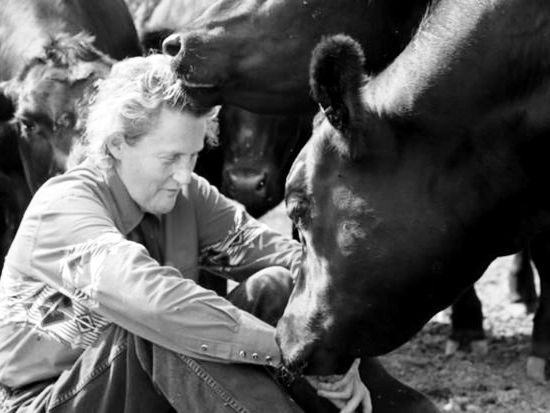
What You Need to Know about Temple Grandin and Cows

“Nature is cruel, but we don’t have to be.” ~T. Grandin

View Full Size Image
Temple with friends

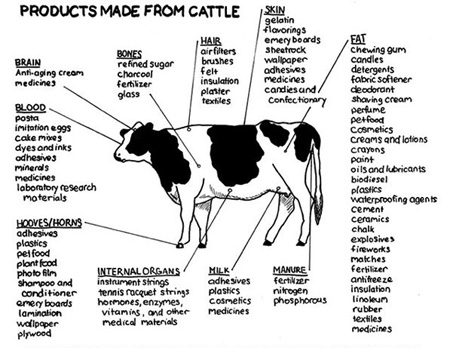
The relationship between man and cow is ancient. Evidence for domestication of cattle dates back to Mesolithic times (10,000 to 5000 BCE). For thousands of years, humans have made use of cows for labor, leather, milk, butter, cheese, meat and manure – among other things. (see diagram below) It is humbling to know that  our modern society, an urbane environment seemingly so far removed from the life of a shepherd, is built on the foundation of pastoralism and animal husbandry. We are indebted to cows, who in-part have helped transform human subsistence into secure existence.  In return for their contributions to mankind, cows only require that we feed, shelter, and defend them against wild animal attacks and disease. Regrettably, the commercialization of the beef industry has changed our ancient relationship with the cow dramatically for the worse.

Over the past century, humans have been reneging on their end of the bargain to provide for the general welfare of these docile creatures. Common today are news stories like ‘Farmers Feed Cows Candy to Reduce Costs’; ‘The Case of the Cannibal Cows’; which led to ‘Mad Cow Disease Kills Mother and Son’. And there is always your standard run-of-the-mill cow cruelty story — all highly disturbing reads, in varying degrees.

This stream of horror lays bear man’s broken contract with the cow. Isn’t it high time we make good on our end of the bargain? Appearing on the scene in the early 1970’s, one young woman named Temple Grandin seemed to think so.

View Full Size Image
 
Temple Grandin & compassion for cows

View Full Size ImageFor those of you who have yet to see the Emmy award-winning biopic on Ms. Grandin, the story begins with a brilliant young autistic girl whose affinity with cows commits her to an up-hill journey to reform the beef industry and the inhumane treatment of livestock. The rise of the modern meat-packing industry and the commodification of “cow products” have effectively altered the delicate, and in some cultures highly revered relationship, with our kindly bovine friends.

As a rule, mass-production focuses exclusively on economic bottom-lines rather than respect and fair treatment of Life.  Mentioned earlier, a few of these news stories describe humans being cruel for the sake of being cruel but, in most cases these ghastly stories are motivated by systemic greed. Profit, not barbarism, is the root cause of the perversion of our relationship with cows.

In light of this modern dilemma between profitability and animal welfare, Grandin brought us good news: unlike global warming, the damage that we have done is not irrevocable, we can treat cows humanely and it can make good business sense.

View Full Size Image
Designed to reduce stress.

Instead of asking everyone to become a vegan tomorrow, Grandin takes the more pragmatic approach maintaining that humans have always been omnivores, herself included. By working within the realm of possibility, focusing on what people can do rather, than what people should do the famed animal behaviorist revolutionized the beef industry by designing better facilities for cows. Her point-of-view is unique (Temple sees in pictures) and it has helped her understand the needs of cows in a way that you or I cannot.  She has worked tirelessly on policy to train and reform meat-packers, handlers, farm workers, agricultural companies, and big beef purchasers.

The secret to her success is that she rarely uses emotional arguments to win her battles but rather, helps to implement change by working with regulatory bodies that economically punish meat-packing plants that do not pass regular audits. She has also persuaded big beef purchasers like McDonalds and Wendy’s to sever ties with meat-packers that fail these audits. She has proven that economic consequences typically get fast results.

In addition to helping to transform the meat-packing industry, she also worked to change society’s negative perception of autism by showing that her condition is an asset that informs her work. Most laud all of Ms. Grandin’s accomplishments yet, there is some heated rhetoric aimed at Temple for not advocating veganism altogether. In response, Temple cites the laws of nature:

“Unfortunately, most people never observe the natural cycle of birth and death. They do not realize that for one living thing to survive, another living thing must die.”

Added as a corollary to this statement is:

“any animal that has the capacity to suffer when raised for human food deserves to live in an environment that prevents suffering and provides it with a life where it has opportunities to experience positive emotions. Nature cannot be moral or evil because it has no intent.”

Whether you agree with Grandin or not, one thing is for certain, she has worked tirelessly to ease the suffering and preserve the dignity of cows.

Book of the week: The Biggle Cow Book

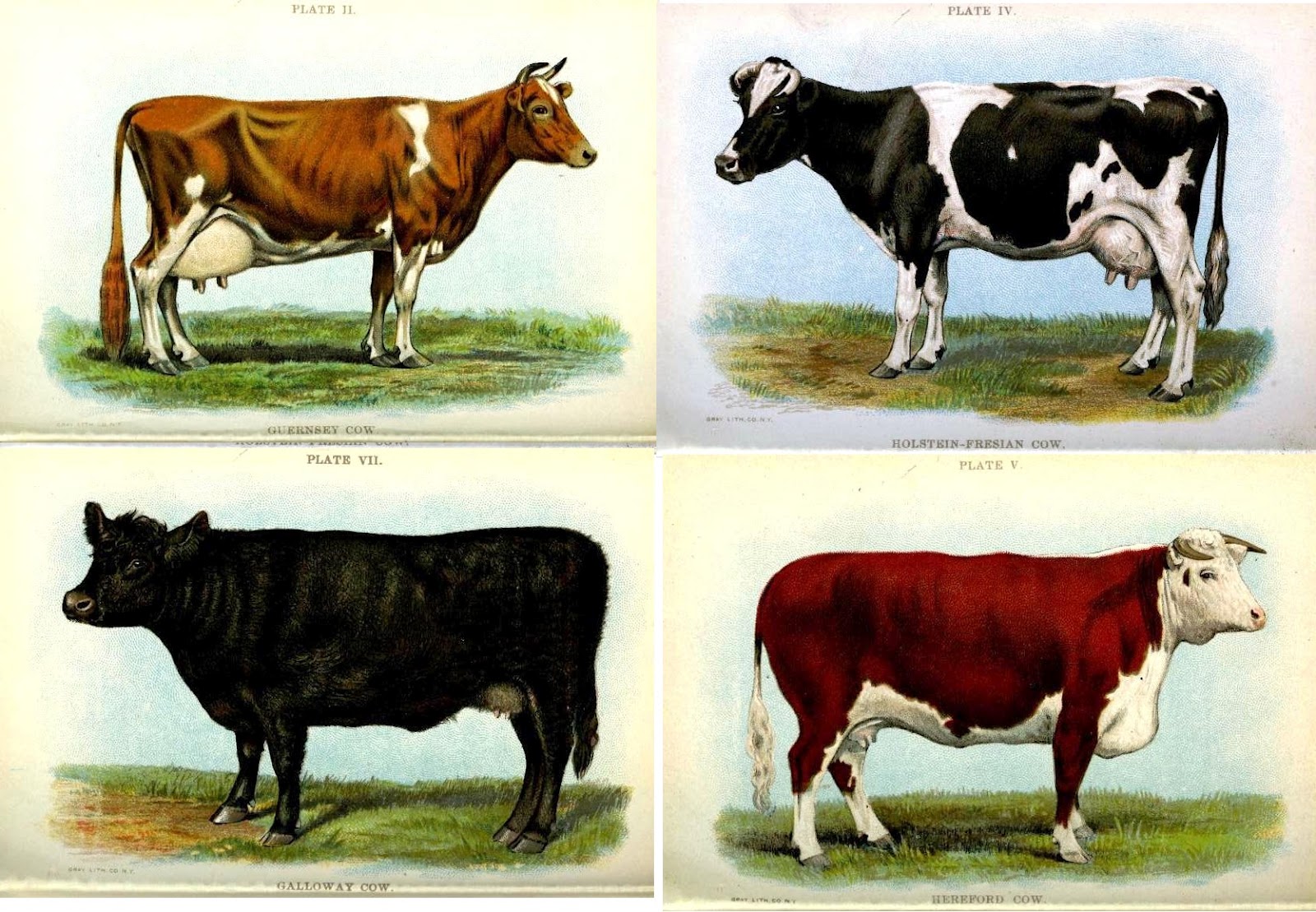
Since it was Temple’s birthday this past Wednesday, we wanted to gift her with a lovely selection from the BHL. The Biggle Cow Book(1898), has jewels of advice about how to care for our lowing friends:

View Full Size Image
See all the Biggle Cows on Flickr.
  • A low voice makes a quiet cow
  • Old advice but excellent: Speak to a cow as you would to a lady
  • If the stable is cold at calving time blanket the cow after the birth of the calf, and the calf too
  • To scratch a nervous heifer between her forelegs has a wonderfully soothing effect
  • Don’t forget that continued good health requires proper feeding, good air, sunlight and exercise

Agrobiodiversity needs our attention too.

Alongside sound cow care advice, the Biggle Cow Book touches on an important area of biodiversity that gets very little attention: Agrobiodiversity. Conservation of a genetically diverse livestock population is a component of global biodiversity efforts that struggles to get proper exposure. Most conservation efforts are aimed at preserving wildlife biodiversity, a far sexier cause. However, this does not change the fact that the diversity of livestock animals is under threat. Surprised? Did you know that there are over 800 breeds of cattle that have been accounted for, and most of these breeds are at great risk of being wiped out?

The very definition of “domestication” negates the process of natural selection. Instead cattle are bred via artificial human selection of certain high-performing breeds and thus determines which taxa will dominate the livestock landscape. The unfortunate consequence is reduced genetic variation.

The future danger of emphasizing certain genotypes over others is best summarized by author of Livestock Biodiversity, Genetic Resources For the Farming of the Future, Stephen J.G. Hall: “the thousands of breeds that exist were mostly developed in very different circumstances from those of today, but they are not anachronisms, they represent the genetic diversity that will enable the livestock farming of the future to respond to new challenges.”

This is especially true in light of global climate change; who can predict which breed of cow will be better adapted to the environment of tomorrow? Current breeding practice is predictably only concerned with short-term gains like high-milk production or large meat yielding breeds—these are called high-input, high-output breeds (HIHO). Breeding that is driven by profits ignores the long-term viability of cattle and a vulnerable cow population flies in the face of the growing demand for meat: by 2020 global meat demand will increase from 209 tons to 327 tons, milk demand will rise from 422 million to 648 tons. Sound like another sustainability crisis?

Where do we go from here?

As our collective ethical consciousness edges ever closer to a moral crisis, the subjects of livestock conditions, treatment, and breeding practices is often a depressing discourse that most of us would much prefer to avoid. Yet, if you look for the silver-lining you will find it: as with the recent case of the cruelty violations by the Central Valley Meat, California-based fast-food chain supplier to In-N-Out Burger and McDonalds. Both fast-food companies immediately suspended their supplier relationship with Central Valley Meat after a video of brutal treatment by handlers went viral. Grandin’s strategy that stresses the importance of economic consequences as punishment for poor meat-packing practices was at work here.

Additionally, there has recently been more focus on the preservation of cattle breeds. In regards to agrobiodiversity conservation, we can look to the UN’s Food and Agricultural Organization, one of the few organizations whose mission includes promoting research and increasing awareness about livestock biodiversity. They maintain one of the most important resources for researchers, the Domestic Animal Diversity Information System or DADIS database which is a data source for the worlds’ livestock breeds. Additionally, regional efforts in countries like the UK have been leading the way with the established Rare Breeds Survival Trust. The organization has spurred other smaller organizations to form and work to gain funding for agrobiodiversity studies and policy.

One last piece of good news is that the average person can make a difference just by knowing where their meat comes from, voting with their dollar, and exploring diets that reduce their red-meat intake. During the process, if you decide to become a vegetarian, great! Either way, eating less red-meat helps to decrease the global demand for an unsustainable food resource. Adhere to this Chinese proverb: Eating what stands on one leg is better than eating what stands on two legs which is better than eating what stands on four legs.

When and if you eat red-meat, realize that you are eating a once living breathing creature that gave its life so that you may continue to live yours. This sacrifice should be honored and respected. Let’s wish Temple a very happy birthday this week and thank her for helping us to uphold our end of this ancient contract betwixt cow and human.

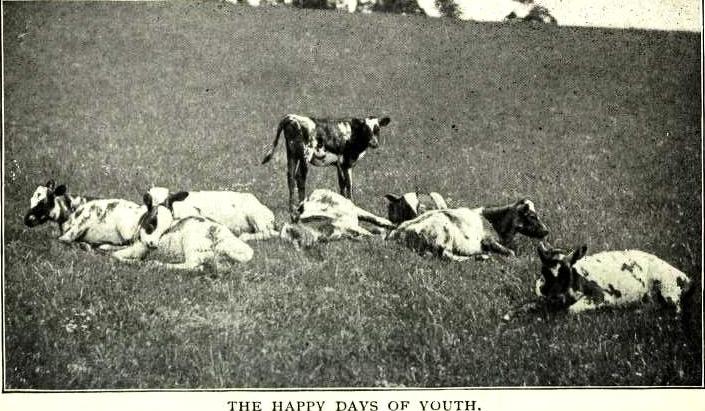
View Full Size Image
Cows a’ roamin!

Agrobio Resources:

  • BHL: Animal Husbandry Bibliography 
  • Breeds of Livestock
  • Sustainable Food Guide
  • Worldwatch: Is Meat Sustainable?
  • Good Meat: The Complete Guide to Sourcing and Cooking Sustainable Meat
  • Interactive: The Meatrix
  • PBS Program: Holy Cow
  • Breeds of Cattle (2nd ed.)
  • FAO Publication: Livestock Biodiversity
August 31, 2012by [email protected]
BHL News, Blog Reel

Interested in improving access to millions of digital images?

The Biodiversity Heritage Library (BHL) has made significant contributions to the research community over the past five years.  One of the largest has been to successfully digitize a significant mass of biodiversity literature (nearly 40 million pages) and make that literature available for open access and responsible use as a part of a global “biodiversity commons.”

Yet despite this success, BHL continues to have several challenges with access to and distribution of its digitized content.  One of which is the ability for users to easily find the millions of natural history illustrations hidden within the pages of the BHL corpus.  Only a small percentage of pages have been tagged as having illustrations because this is currently a labor-intensive manual task (a small selection of the diversity of BHL images can be viewed in its Flickr stream at http://www.flickr.com/photos/biodivlibrary/sets/).   Once tagged, users still cannot search on the illustration’s content using criteria such as species names, dates, and creators because images have not been described at that level of detail.

The NEH-funded Art of Life project has set out to solve this problem both by developing an algorithm to automatically identify which pages contain illustrations and by creating a schema to further classify and guide the description of the illustrations so as to increase their accessibility to users.   Once the algorithm tags pages containing illustrations, they will be pushed out to image-sharing platforms such as Flickr and Wikimedia Commons for crowdsourcing of the descriptions.  The schema will provide guidance on the recording of fields and their values.  (see an example of a BHL illustration marked up with the Art of Life schema below)

View Full Size Image
Example of BHL illustration marked up with proposed Art of Life schema


Here’s how you can help

A draft  of the schema has been developed; we are looking for feedback on how well it will serve the needs of five primary audiences that we believe would benefit from access to these illustrations:   1) Artists, 2) Biologists, 3) Humanities Scholars, 4) Librarians, and 5) Educators. We particularly want to know if the schema incorporates the access points by which these user groups want to find images, or whether they might want to search for images based on fields not incorporated in the schema.

Whether you anticipate being a user of the illustrations from the BHL or you are a subject specialist or cataloger interested in helping us describe their content, we are interested in hearing from you as to how this schema may be improved to support the description of and access to these images.

Feedback can also be posted to this blog or added directly on the schema draft (with Google Docs comments).

August 30, 2012by ulib-libraryjobs
Blog Reel, Featured Books

Why Predators Protect Biodiversity

In the 1920s, a once-familiar face in the northwestern United States all but disappeared. The majestic gray wolf, a top predator in the Rocky Mountain ecosystem, gave way to the pressures of habitat loss and human hunting. By the 1930s, a previously healthy breeding population of wolves was extinct in Montana. While the decimation of any species is tragic, the loss of top predators can have an even more profound effect on an ecosystem.

The Impact of Top Predators

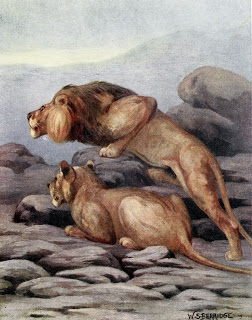
Top predators are imperative for healthy ecosystem functioning.
View Full Size Image
Lion populations have fallen by over 350,000 since the 1940s

This statement might sound like a paradox, as predators eat other animals, thereby seeming to cause death, not life. However, by keeping other populations in check, predators ensure that a multitude of species occupying a variety of environmental niches can survive and thrive. Sadly, we’re now learning first-hand just how critical these creatures are in nature.

Science Illustrated recently published a blog post about the impact of predator disappearance. Calling on such examples as the decline of wolves, sharks, and raptors, the article states, “In some places, top predators have become so scarce that they have affected whole ecosystems and are threatening to alter food chains, changing the ecological order on land, at sea and in the air.”

But just how do predators help maintain a healthy balance in nature? Without predators to regulate prey populations, these species will reproduce beyond the carrying capacity of their environments, decimating the populations of smaller animals, plants, and coral reefs. As these species decline, additional organisms that rely on their presence will also decline, resulting in a domino effect that can ultimately push populations and habitats beyond the point of recovery.

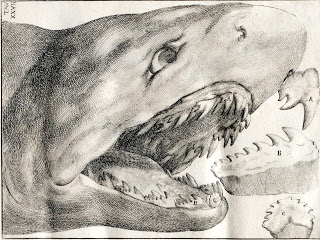
An Example: Shark Decline

View Full Size Image
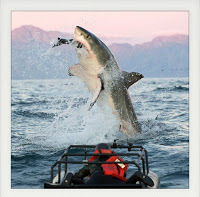
90-99% of large shark species have disappeared off the U.S. coast

In the wake of Shark Week, awareness about the current status of shark conservation is high. The shark fin business alone is responsible for up to 73 million shark deaths each year. “The populations of all shark species in the Mediterranean have declined by 97% in the past 200 years,” and “populations of large sharks have fallen by more than 90%.”

The disappearance of large sharks has resulted in the increase of 12 out of 14 small shark and ray species, which are usually preyed upon by larger sharks. These smaller organisms in turn are wreaking havoc on mollusk populations, as, without predators to regulate them, their populations are growing at a faster rate than the mollusk community can support. The Cownose Ray is a perfect example of this, with a population increase of 9% annually. At these numbers, the rays can consume upwards of 840,000 tonnes of Atlantic Bay Scallops in the Chesapeake Bay region in their first 100 days each year in the region. The decline of large sharks in more southern, tropical waters has led to an increase of species that consume reef-building corals, thus threatening the health of coral reefs.

MIA: Nature’s Natural Clean-up Crew

Ecosystem disruption is, of course, not limited to the disappearance of top predators. The loss of any species has an impact on healthy habitat function, including the oft-despised scavengers. Last year, we wrote about the fate of the vulture in South Asia. Like sharks and raptors, vulture populations have plummeted as a result of poisoning which primarily contributed to the loss of over 14 million birds. The absence of this species, resulting in road kill abundance and resulting disease occurrence, threatens India’s ecosystem and may have severe human health consequences.

A Use Case from BHL: The Wolf Story

View Full Size Image
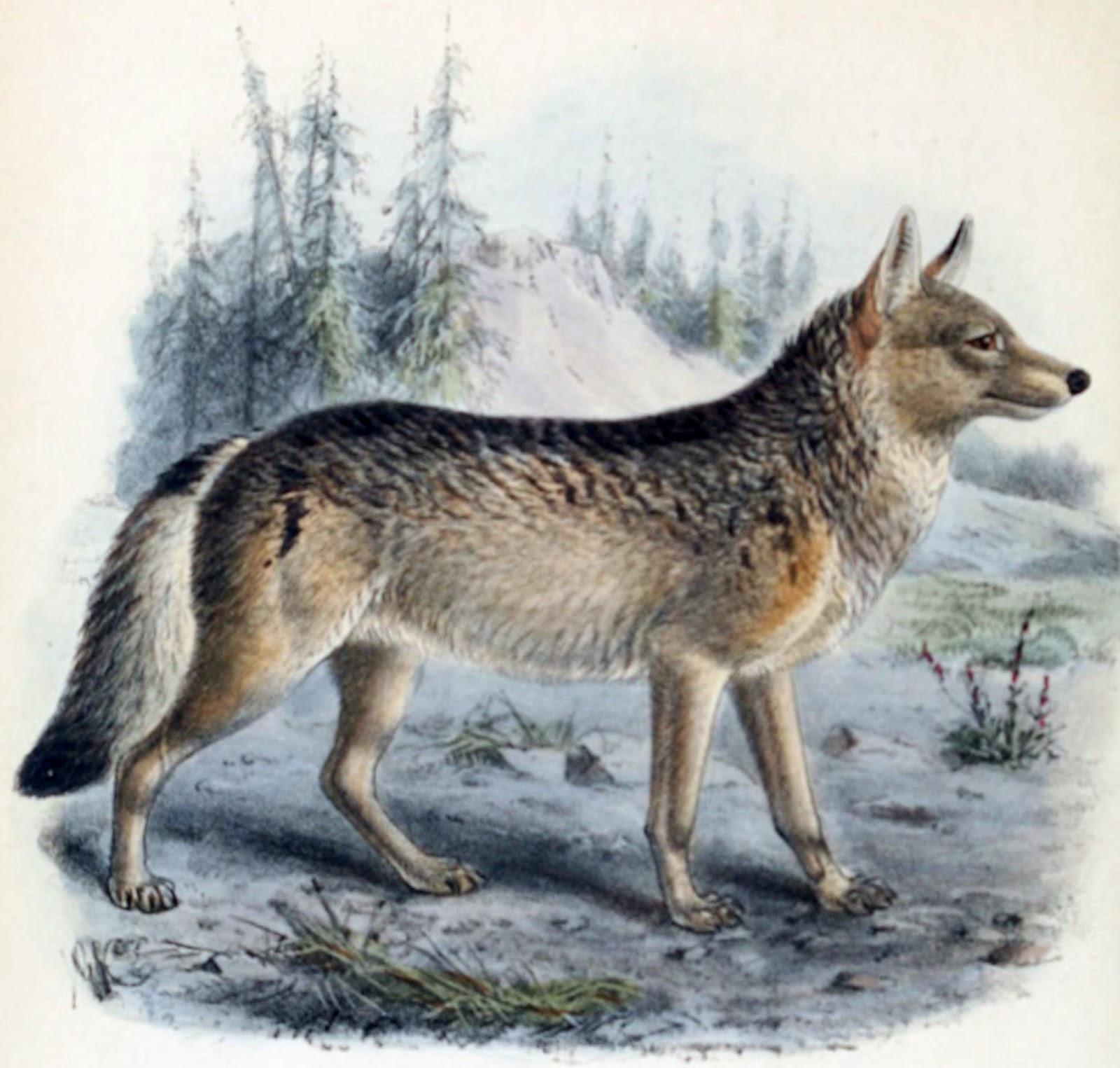
The American Wolf is a great example of a successful conservation effort

As outlined earlier, the status of wolf populations in the United States was jeopardized in the early twentieth century. As wolves disappeared, elk populations, along with other grazers, increased unchecked. Aspen, cottonwood, and willow tree stability fell, affecting the smaller mammals and birds that relied on them. The carcasses left behind by wolves were also of critical importance to scavenger species, like coyotes, ravens, and eagles, particularly during the winter. With no wolves around, these species suffered as well.

Happily, wolves are an example of how humans can also positively affect the fate of a species. In 1980, the Northern Rocky Mountain Wolf Recovery team devised a plan to help reintroduce wolf populations to the northern United States. In 2004, the U.S. Fish and Wildlife Service approved the Montana Gray Wolf Conservation and Management Plan, the scope and results of which are articulated in the department’s annual report, and, consequently, our book of the week.

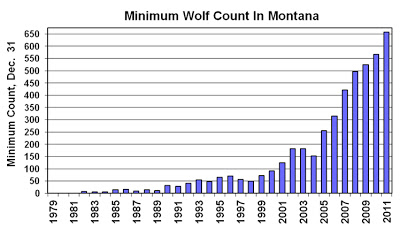
Under the plan, with support from federal funding, the Montana Fish, Wildlife, and Parks manages wolves in northwestern Montana. As a result of natural reproduction, dispersal, and the reintroduction of wolves from Canada, wolf populations increased at rates of 10-34% annually, with a minimum estimate in 2005 of 256 wolves in Montana. As of 2011, approximately 650 wolves are estimated to live in the state.

View Full Size Image
Wolf Population Estimates

A crucial step in setting up a successful conservation program is constructing a robust method to monitor how many specimens are in a given area. The Montana Gray Wolf Conservation and Management Plan was no exception. Monitoring involved a variety of methods, including radio telemetry, howling and track surveys, and reports from natural resource agency professionals.

Perhaps most exciting, however, was the program’s use of the public to help monitor wolf populations. Encouraging people to share any sightings or evidence of wolf activity, program officials essentially crowd-sourced the monitoring project. Officials set up a website to allow members of the public to report their sightings easily and efficiently. Volunteers were also utilized to “systematically search areas of current wolf reports, areas of past wolf activity, or noted ‘gaps’ in wolf activity despite adequate prey base.”

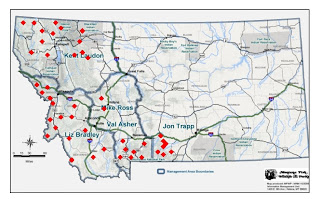
Using these methods, officials determined that, by the end of 2005, there were a total of 46 packs, defined as consisting of two or more wolves, with a minimum of 256 wolves in Montana. The average number of wolves per pack also increased from 4.5 in 2004 to 5.5. in 2005. The Montana program is an excellent example of not only how successful conservation programs can be, but also how members of the public can play a critical role in that success. Learn more about the recovery program and the results in BHL.

View Full Size Image
Verified Wolf Pack Distribution in Montana as of Dec. 31, 2005

Conclusion

Predators are critical for healthy ecosystems, ensuring that a greater variety of species survive and thrive by keeping prey populations in check. While many predator species are threatened today, our wolf use case shows us that there is hope. If we are proactive, conservation programs are capable of ensuring a positive future for these and other species. Increasing awareness about the effect of species decline is a critical step in saving biodiversity.

By providing free access to literature about these species, BHL is helping conservations, ecologists, and researchers gain the critical knowledge they need to protect and bolster these populations. You can help support our endeavors with a donation to BHL. Be sure to take advantage of the free resources we provide, particularly the thousands of illustrations in our collection, some of which, to celebrate the threatened species we’ve highlighted today, are presented below.

Remember, each person can make a difference, and unless we act now, the future for many of these creatures, and our own planet, may be quite bleak.

August 23, 2012by ulib-libraryjobs
Blog Reel, Featured Books

Book of the Week: Shark Week Celebrates its 25th year!

This week, throngs of people who are amping up for Discovery Channel’s 25th annual Shark Week. This week long commemoration of all things sharks is aired in 72 countries watched by ~ 30 million viewers and is the longest running program event on cable. Every year schools of shark fans around the world countdown the days in anticipation for this late summer shark line-up and when it arrives they organize home-screening parties, play games, trivia, award prizes, shave their hair, get manicures and generally remain glued to their televisions marveling in the jawsome mystery and power of sharks.

What we here at the BHL love about this week of shark finaticism, is the remarkable thing that the Discovery Channel has done for shark conservation efforts. Over the course of 25 years, Discovery has significantly raised public awareness about declining shark populations by partnering with conservation organizations such as Oceana, Ocean Conservancy and The Pew Charitable Trust whose public service announcements are aired during prime-time commercial breaks, informing viewers about plummeting shark populations. Shark inspired mohawks and manicures aside, what the Discovery Network has really done is move public sentiment about sharks from a place of fear to a place of compassion. Moreover, they have successfully built a conservation army of shark lovers and enthusiasts. If every animal and organism on the planet had the same following that sharks have it would be a wonderful thing. We would all be a lot more knowledgeable about the earth’s biodiversity and the steep challenges that we face. Most importantly, we would know that there is still much work to be done.

Book of the Week: BHL’s selected homage to cartilaginous fishes aka Sharks

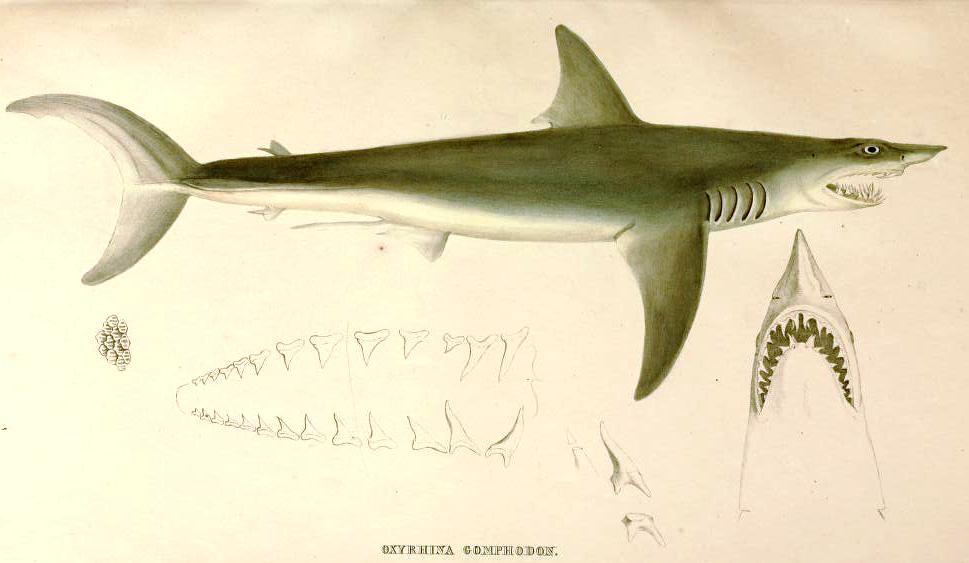
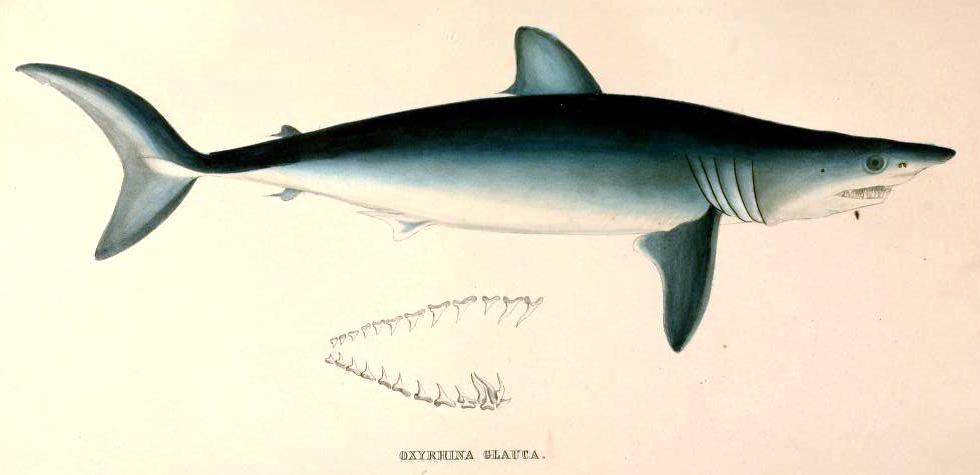
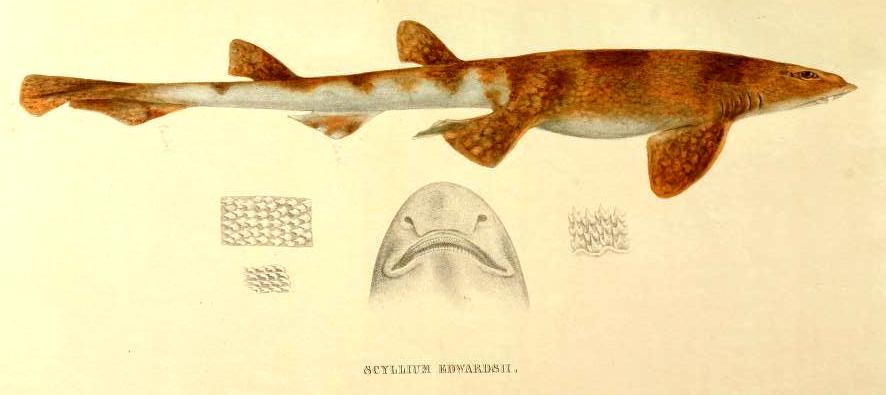
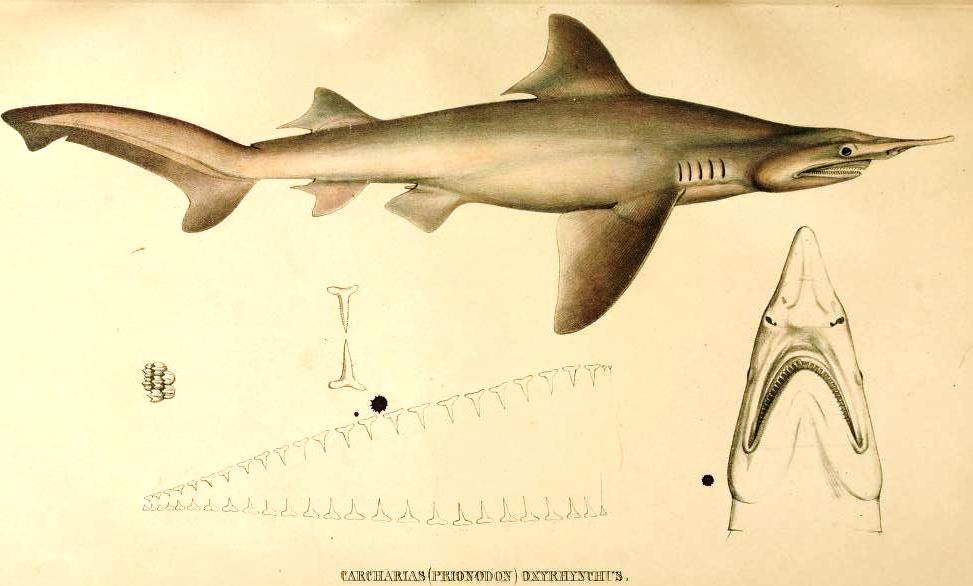
One hundred and fifty years ago, before twitter, television, and home-screening parties attended by folks in full shark regalia, there was a famous comparative anatomist cum ichythyologist named Johannes Müller who was also really into sharks. He may have expressed his fascination with sharks in a more traditional way by today’s standards, opting instead to publish one of the first comprehensive anatomical studies of sharks but, we think he would be tweeting it up if he was around today.

In his tome, Systematische Beschreibung der Plagiostomenor Systematic Description of Cartilaginous Fishes, Müller and his co-author Jakob Henle, provide anatomical descriptions of 214 Chondrichthyes (sharks, rays and skates). Their medical background in comparative anatomy helped to settle some taxonomic disputes about how certain species should be classified. For taxonomists, Müller asks that special attention be paid to the supplements and the detailed index of his book which guides you through his classificatory scheme. And naturally, one of the best parts of this week’s book of the week are the lovely plates provided in the text of some seriously jawsome sharks!

View Full Size Image

Want more sweet shark images? Check out the Biodivlibrary’s Flickr Stream and Pinterest Board!

We are unsure what the public perception of sharks was like in Müller’s day. Were people afraid of sharks? Did these creatures evoke blood-curdling fright and haunt them in their worst nightmares? Probably not. It was more likely that the average person never even saw a shark nor gave them much of a thought at all.Unfortunately for us, we have been subliminally programmed to be veryafraid of sharks. Movies like Jawsand over-sensationalized news stories about shark attacks have had the effect of damaging shark conservation efforts.The proof? According to a survey conducted in 2003 by the National Aquarium in Baltimore, Maryland “seventy percent of Americans surveyed […] believe that sharks are dangerous. 72 percent also believe that shark populations are just adequate or too high.”

Basically, more than half of the population seems to think that we don’t need to do anything to save sharks.This is a very dangerous sentiment indeed because the populations of these apex predators are on an alarming decline. Without sharks who will regulate the health of the ocean, chiefly coral reefs?  Sharks eat sick and diseased organisms, opening-up ocean habitats for healthy fish – in particular algae-grazing fish which act like coral vacuum cleaners.This video simulation created by the Nereus Program explains in detail how vital sharks are to reef eco-systems.

Seven Swell Facts about Sharks!

You are 15 times more likely to be struck by lightning than to be bit by a shark, and 89 times more likely to die of being struck by lightning than dying from a shark bite.  2/3 of a shark’s brain is dedicated to its sense of smell.In the 10 years between 1999 and 2009, there were 51 fatal shark attacks throughout the world. Annually, humans kill 79 million sharks. Now multiply that number by 10 years. And who’s afraid of whom again?

Sharks have seven senses compared to mammals that have five. What are the two extra that we don’t have: An electrical senseand pressure sensitive cells beneath the skin.

Of the millions of sharks killed annually, most of these deaths are a result of the high price for their fins to make shark fin soup. Fins go for $300 dollars a pound. The good news? States like California are banning the soup.

Some species of shark must keep swimming forward in order to breathe and therefore, are never stationary; they even swim while sleeping.
Some mother sharks can have parthenogenic births meaning that they can produce asexually. They are the Virgin Maries of the ocean.

Become a Shark Advocate

Convinced that sharks need your help? Here are some tangible things you can do to help shark conservation efforts:

  • Sign the “Save Sharks to Protect the Ocean” petition sponsored by the Pew Group
  • Stop eating Shark Fin soup with Yao Ming.
  • Adopt a shark
  • Eat sustainable seafood. Save sharks? Yeah, there’s an app for that. Download the Sustainable Seafood Guide on itunes.
  • Write in Scholarly Journals about declining shark populations. Get out there and collect that data!

Lastly, please educate yourself. Check out the iTunesU Shark collection that we put together that honors the power and mystery of these amazing creatures.

August 13, 2012by [email protected]
Page 130 of 173« First...102030«129130131132»140150160...Last »

Help Support BHL

BHL's existence depends on the financial support of its patrons. Help us keep this free resource alive!

search

About BHL

The Biodiversity Heritage Library (BHL) is the world’s largest open access digital library for biodiversity literature and archives. BHL operates as a worldwide consortium of natural history, botanical, research, and national libraries working together to digitize the natural history literature held in their collections and make it freely available for open access as part of a global “biodiversity community.”

Join Our Mailing List

Sign up to receive the latest news, content highlights, and promotions.

Subscribe Now

Subscribe to Blog via Email

Enter your email address to subscribe to this blog and receive notifications of new posts by email.

Join 319 other subscribers

Subscribe to Blog Via RSS

Subscribe to the blog RSS feed to stay up-to-date on all the latest BHL posts.

Access RSS Feed

Inspiring Discovery through Free Access to Biodiversity Knowledge.

The Biodiversity Heritage Library makes it easier than ever for you to access the information you need to study and explore life on Earth…for free, anytime, anywhere.


64+ Million Pages of
Biodiversity Literature Online.

EXPLORE

Tools and Services
to Transform Research.

EXPLORE

300,000+
Illustrations on Flickr.

EXPLORE

ABOUT | HARMFUL CONTENT | PRIVACY | SITE MAP | TERMS OF USE