Biodiversity Heritage Library - Program news and collection highlights from BHL
  • Home
  • News
  • Featured Books
    • All Featured Books
    • Book of the Month Series
    • BHL at 20
  • User Stories
  • Campaigns
    • Fossil Stories
    • Garden Stories
    • Monsters Are Real
    • Page Frights
    • Her Natural History
    • Earth Optimism 2020
  • Tech Blog
  • Visit BHL
Home
News
Featured Books
    All Featured Books
    Book of the Month Series
    BHL at 20
User Stories
Campaigns
    Fossil Stories
    Garden Stories
    Monsters Are Real
    Page Frights
    Her Natural History
    Earth Optimism 2020
Tech Blog
Visit BHL
  • Home
  • News
  • Featured Books
    • All Featured Books
    • Book of the Month Series
    • BHL at 20
  • User Stories
  • Campaigns
    • Fossil Stories
    • Garden Stories
    • Monsters Are Real
    • Page Frights
    • Her Natural History
    • Earth Optimism 2020
  • Tech Blog
  • Visit BHL
Biodiversity Heritage Library - Program news and collection highlights from BHL

All posts in Featured Books

Blog Reel, Featured Books

Book of the Week: The Bittern and Bird Identification for the Ornithological Novice

Read the full blog post

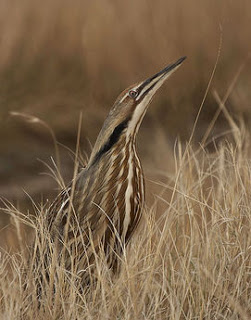
If you find yourself in the mid-United States to northern Canada this time of year, you may be witness to the final days of occupation in this area for Botaurus lentiginosus, the American Bittern. From early May through the summer, the American Bittern spends its breeding months in the Mid-US to northern Canada, occupying nest sites chosen and constructed by the female Bittern of the mating pair. For the duration of the egg-laying period, the female Bittern will lay one egg each morning, with the incubation period lasting 24 to 28 days. Once the mating season ends, the American Bitterns find their way to the south Atlantic coast across the Gulf coast and west to southern California for the duration of the wintering months, although some populations living in regions with milder temperatures appear to actually be non-migratory.

Continue reading
August 24, 2010byGrace Costantino
Blog Reel, Featured Books

Book of the Week: Deadly Fungi

Read the full blog post

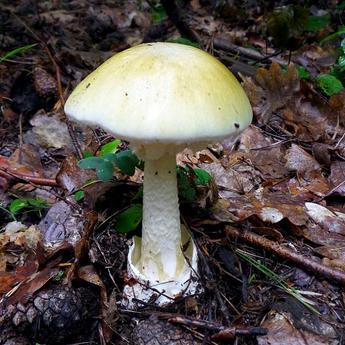
It is one of the most poisonous of all known toadstools, and it is responsible for a majority of human deaths involving its type – mushrooms. It is the Amanita phalloides, more commonly known as the Death Cap. This innocent-looking fungi has been blamed for the deaths of Roman Emperor Claudius and Holy Roman Emperor Charles VI. It causes, often fatal, damage to the kidneys and liver, and there is no known antidote.

Continue reading
August 9, 2010byGrace Costantino
Blog Reel, Featured Books

Book of the Week: Another Peek at Conservation

Read the full blog post

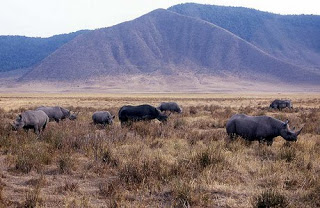
One of the most endangered species on the planet is Diceros bicornis, commonly known as the Black Rhinoceros. Distributed throughout Africa, south of the Sahara, the “current range of black rhinoceroses is bounded by Cameroon, Kenya, and South Africa but their distribution within those limits is fragmented.” The threat to the Rhino population is largely due to a demand for the species’ horns, “both for use in Chinese traditional medicine and for traditional dagger handles in Yemen.” The demand for these horns increased significantly in the 1970s as the “oil-rich Gulf States” experienced increased income. “It is estimated that between 1970 and 1992, around 96 percent of the black rhinoceros population was lost.”

Continue reading
July 28, 2010byGrace Costantino
Blog Reel, Featured Books

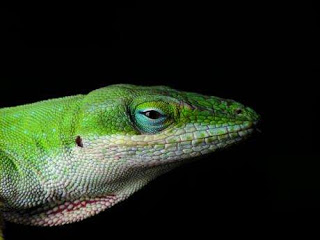
Book of the Week: The Green Anole and Cuvier

Read the full blog post

If you ever owned a lizard as a pet growing up, chances are good that you owned one of EOL’s featured species, an Anolis carolinensis, or Green Anole, also sometimes called the American Chameleon, although it is not a type of chameleon. This misnomer comes from this species’ ability to turn from green to brown. This species is the only Anole species native to North America, and is found primarily in the southeastern United States.

Continue reading
June 29, 2010byMichelle Strizever
Blog Reel, Featured Books

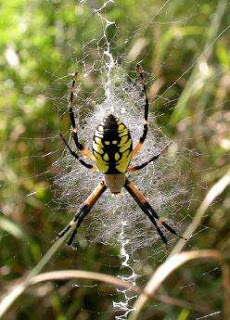
Book of the Week: Spiders, Spiders and More Spiders

Read the full blog post

If you’ve been outside gardening lately, or even simply taking a closer look at the greenery around you, you probably noticed that you were not quite alone. Indeed, the coming of the warm weather also sparks the coming of a plethora of new life, among them insects and spiders. And if you live in the lower 48 states, Mexico or Central America, you may have seen one of the featured species on EOL – Argiope aurantia – the Black and Yellow Argiope.

Continue reading
June 15, 2010byMichelle Strizever
Blog Reel, Featured Books

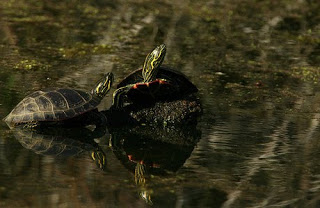
Book of the Week: Species Highlight – The Eastern Painted Turtle

Read the full blog post

Imagine that you are strolling through the forest on a fine summer morning. The birds are chirping merrily above your head, and an occasional squirrel scurries across the path in front of you. Suddenly, you reach a clearing, in the midst of which is a large pond. As you take a moment to look around, you suddenly notice a log floating carelessly through the water. Except, this is no ordinary log! Indeed, it appears to be moving! On closer inspection, you realize that this is not just a log, but a log covered with as many as 50 painted turtles, all basking in the warm summer sun. While you may never have experienced this yourself, this is indeed a sight which you might see should you find yourself around freshwater anywhere in North America from Southern Canada to northern Mexico. It is the sight of Chrysemys picta, also known as the Eastern Painted Turtle – the most common turtle in North America and one of the featured species this week on EOL.

Continue reading

June 3, 2010byGrace Costantino
Blog Reel, Featured Books

Book of the Week: The Power of Illustration

Read the full blog post

Illustrations play an integral role in the work of taxonomists, and they lend a depth, beauty, and sometimes pure romanticism to the volumes containing them. Case in point: this week’s book of the week, Our Country’s Fishes and How to Know Them: A Guide to all the Fishes of Great Britain (1902) by W.J. Gordon. This charming book contains over 30 plates illustrating the myriad of ichthyoids found in Great Britain. Furthermore, the lists of these fish are itemized according to their local and popular names. As the author points out, the purpose of this volume is the “ready identification of our native species, whether sea-water, fresh-water, or estuarine…[and] as the number of species found in British waters is not large, space has been found for a series of short notes…” So, take a few moments to look through the colorful plates depicting the many and varied species of fish found in Great Britain, and feel free to keep a copy of these illustrations for yourself by downloading high resolution images of these pages by clicking on the “Download Images” options found in the drop down menu entitled “Download/About This Book” when on the page viewer screen. Enjoy!

Continue reading
May 3, 2010byMichelle Strizever
Page 58 of 62« First...102030«57585960»...Last »

Featured Books

Learn more about some of the treasures in the Biodiversity Heritage Library in our Featured Books series.
Subscribe to Featured Books

Help Support BHL

BHL's existence depends on the financial support of its patrons. Help us keep this free resource alive!

search

About BHL

The Biodiversity Heritage Library (BHL) is the world’s largest open access digital library for biodiversity literature and archives. BHL operates as a worldwide consortium of natural history, botanical, research, and national libraries working together to digitize the natural history literature held in their collections and make it freely available for open access as part of a global “biodiversity community.”

Follow BHL

  • Bluesky logo
  • Instagram logo
  • Facebook logo
  • Flickr logo
  • Twitter logo

Join Our Mailing List

Sign up to receive the latest news, content highlights, and promotions.

Subscribe Now

Subscribe to Blog via Email

Enter your email address to subscribe to this blog and receive notifications of new posts by email.

Join 319 other subscribers

Subscribe to Blog Via RSS

Subscribe to the blog RSS feed to stay up-to-date on all the latest BHL posts.

Access RSS Feed

Inspiring Discovery through Free Access to Biodiversity Knowledge.

The Biodiversity Heritage Library makes it easier than ever for you to access the information you need to study and explore life on Earth…for free, anytime, anywhere.

64+ Million Pages of
Biodiversity Literature Online.

EXPLORE

Tools and Services
to Transform Research.

EXPLORE

300,000+
Illustrations on Flickr.

EXPLORE


ABOUT | BLOG AUTHORS | HARMFUL CONTENT | PRIVACY | SITE MAP | TERMS OF USE