Biodiversity Heritage Library - Program news and collection highlights from BHL
  • Home
  • News
  • Featured Books
    • All Featured Books
    • Book of the Month Series
    • BHL at 20
  • User Stories
  • Campaigns
    • Fossil Stories
    • Garden Stories
    • Monsters Are Real
    • Page Frights
    • Her Natural History
    • Earth Optimism 2020
  • Tech Blog
  • Visit BHL
Home
News
Featured Books
    All Featured Books
    Book of the Month Series
    BHL at 20
User Stories
Campaigns
    Fossil Stories
    Garden Stories
    Monsters Are Real
    Page Frights
    Her Natural History
    Earth Optimism 2020
Tech Blog
Visit BHL
  • Home
  • News
  • Featured Books
    • All Featured Books
    • Book of the Month Series
    • BHL at 20
  • User Stories
  • Campaigns
    • Fossil Stories
    • Garden Stories
    • Monsters Are Real
    • Page Frights
    • Her Natural History
    • Earth Optimism 2020
  • Tech Blog
  • Visit BHL
Biodiversity Heritage Library - Program news and collection highlights from BHL

Search results for "label"

Blog Reel, Campaigns, Featured Books, Her Natural History

Lydia Moore (Hart) Green, Illustrator for The Fishes of Illinois

Read the full blog post

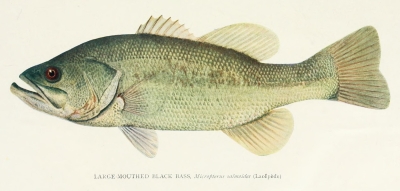
The first edition of The Fishes of Illinois was published in 1908 by the Illinois State Laboratory of Natural History, representing several decades’ work to document species, distributions, and ecology. The work features detailed, color paintings of fishes attributed to Lydia M. (Hart) Green and Charlotte M. Pinkerton. In the first edition were 55 images representing 53 species, with 20 images representing 18 additional species added for the 1920 second edition. Images were not credited to specific artists in either edition.

Most of the originals were kept by State Laboratory (now Illinois Natural History Survey), and are being reviewed in preparation for accession into the University Library, University of Illinois at Urbana-Champaign. Artists have been identified for most color plates in the 2 editions: 33 by Green, 24 by Pinkerton. Three paintings bearing the name of Max Bihn (one published) were also found among the paintings long assumed to be the work of Green and Pinkerton alone. Green routinely applied a distinctive signature in ink to the front of her work.
Continue reading
July 25, 2019bySusan Braxton
BHL News, Blog Reel, Tech Updates

BHL Participates in the Global Names Workshop

Read the full blog post

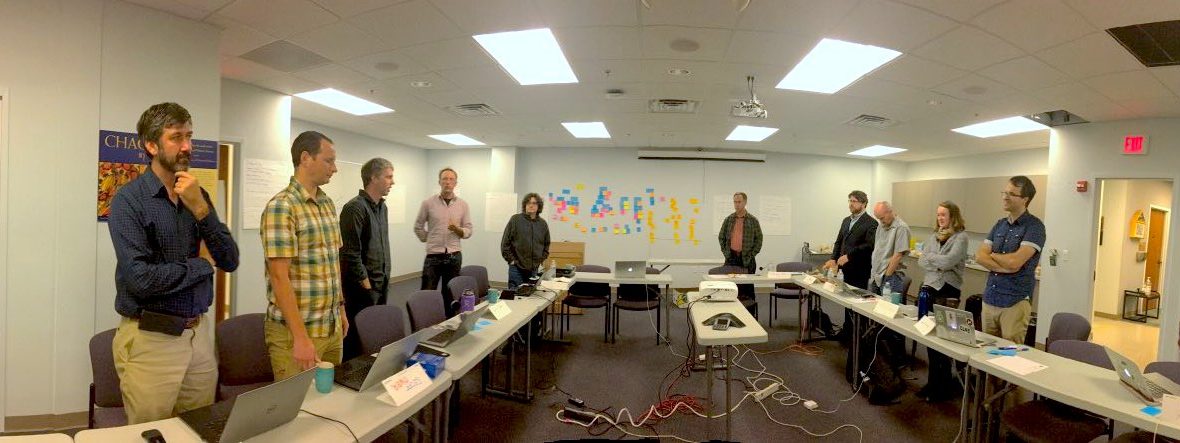
The Global Names Project held a workshop on 17-19 June 2019 on the Campus of the University of Illinois at Urbana-Champaign. The workshop was titled Scientific names indexing and data mobilization of Biodiversity Heritage Library using tools from Global Names project and was hosted by the Species File Group at the  Illinois Natural History Survey. Eighteen people attended representing a variety of organizations interested in BHL content: Global Names Architecture, iDigBio, TaxonWorks, UIUC Species File Group, the Illinois Library, Encyclopedia of Life, the DINA Project, the Catalogue of Life, GBIF, Species File Group Argentina, the HathiTrust Research Center, and Global Biotic Interactions.

Continue reading
July 15, 2019byJoel Richard, Matt Yoder, Deborah Paul, Jorrit Poelen and Mike Lichtenberg
Blog Reel, Campaigns, Her Natural History

Hildegarde Howard: The Greatest Avian Paleontologist You’ve Probably Never Heard Of

Read the full blog post

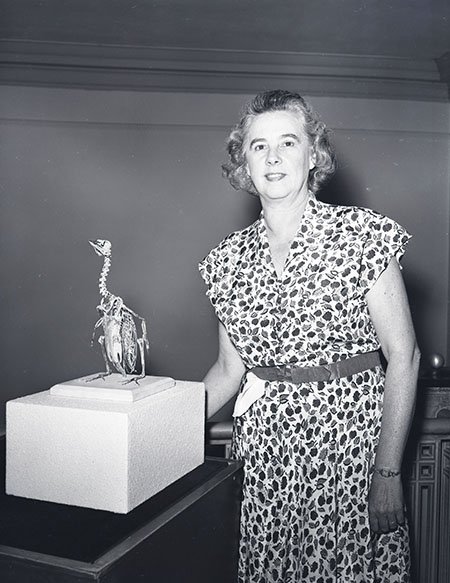
Nearly 100 years ago, a fresh faced journalism student at the Southern Branch of the University of California (now UCLA) walked into Ms. Pirie Davidson’s biology classroom (Campbell, 2000, 775). This young woman was not particularly interested in biology and, really, why would she have been? At the time, women were barred from attending any off-site field trips and science was thought to primarily be the work of men. However, it was not long before Hildegarde was captivated by the subject — so much so that she became Ms. Davidson’s lab assistant. Young Hildegarde was soon offered a position as a part-time day laborer sorting Smilodon (Saber toothed cat) fossils for renowned mammalian paleontologist Chester Stock at the Museum of Science, History, and Art of Los Angeles County (now known as the Natural History Museum of Los Angeles County) at Rancho La Brea.

Continue reading
March 28, 2019byYolanda Bustos
Blog Reel, Campaigns, Her Natural History

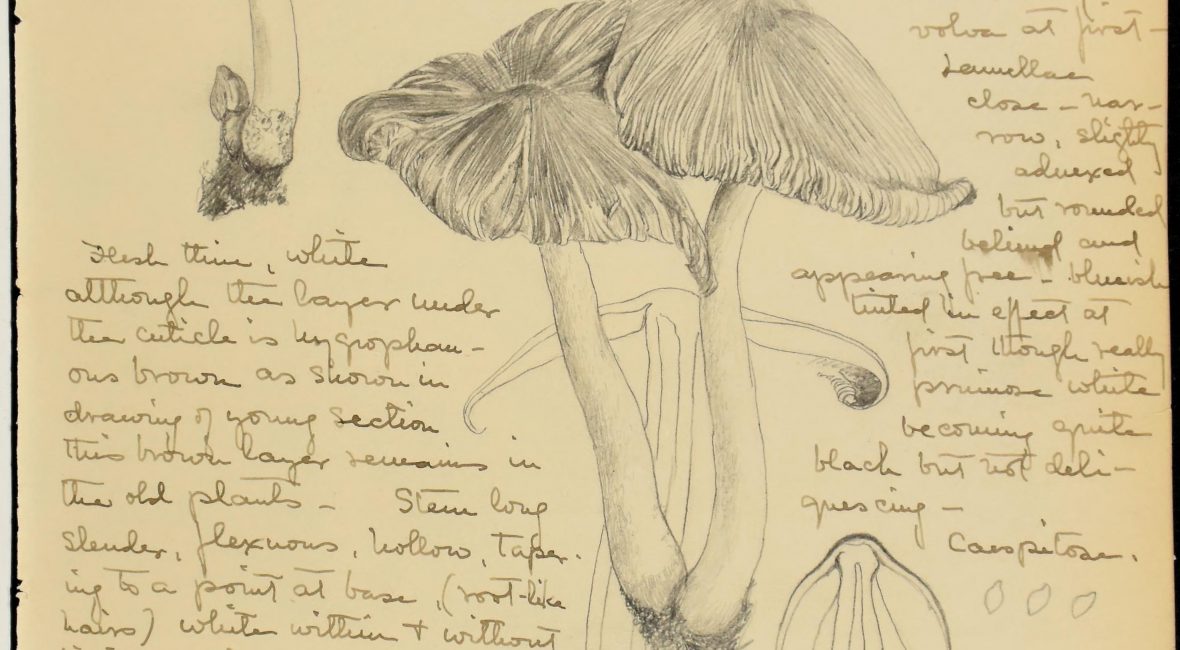
Henrietta Page sketchbook of fungi drawings

Read the full blog post

The Harvard Botany Libraries recently acquired and digitized Henrietta Page’s [Sketchbook of drawings of fungi], volume II. The sketchbook was a gift from the Boston Mycological Club (BMC) where Page was a member and served on the executive committee for a time. She was also a member of the Boston Society of Natural History. The sketchbook mostly describes fungi collected during July and August when Page attended three-week long natural history classes held in Alstead, New Hampshire under the Alstead School of Natural History from 1899-1903.

Continue reading
March 27, 2019byDanielle Castronovo and Jason Karakehian
Blog Reel, Campaigns, Her Natural History

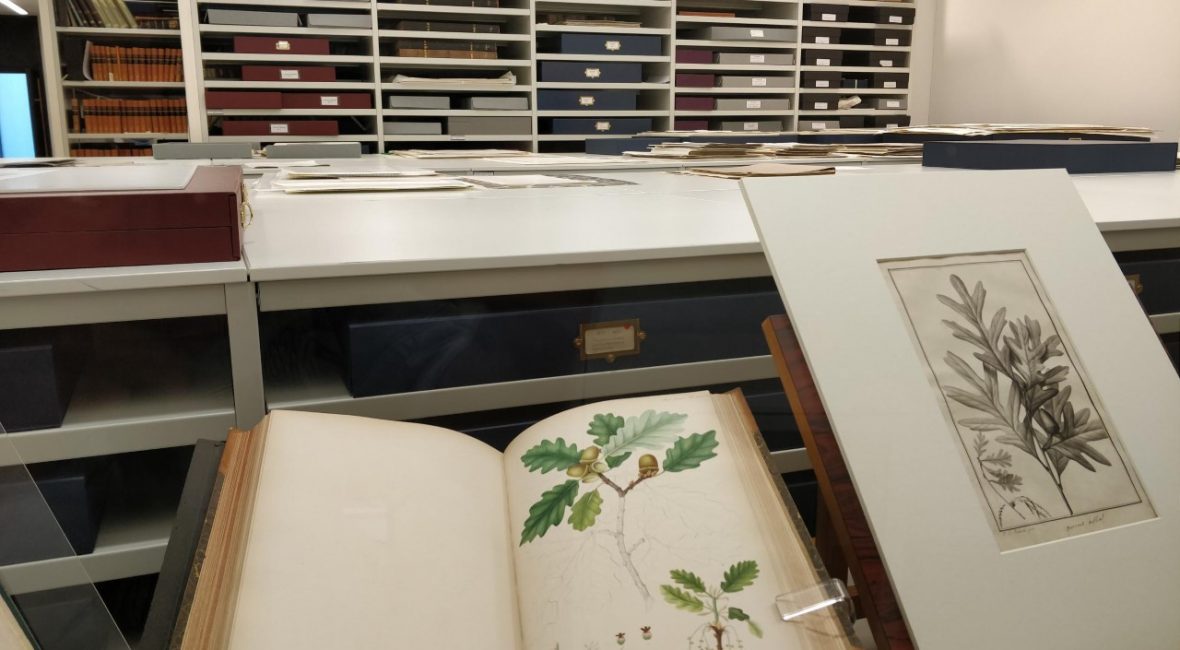
Passionate pioneers – increasing access to botanical artwork by women artists

Read the full blog post

Historically, female botanists and botanical artists were rarely given as much credit as their male counterparts. Botanical art was often viewed as a pleasant pastime for women who had time on their hands whilst their husbands were at work, and the contribution that these women made to the advancement of scientific illustration was often undermined.

To highlight the importance of these historically, scientifically and socially significant collections, Kew’s Library, Art and Archives department, in collaboration with the Oak Spring Garden Foundation, is in the process of digitising its out of copyright work by women artists, spanning several centuries.

Kew holds over 200,000 prints and drawings, and this working resource is available to staff and visitors to the department, often providing a reference tool against preserved herbarium specimens. The ultimate aim of this collaborative effort is to ensure that high quality images of illustrations and their associated data is safely stored in digital format for future generations.

Continue reading
March 13, 2019byJoanna Durant
Blog Reel, User Stories

Vanity and BHL: Examining Extinction and Rediscovery through Art

Read the full blog post

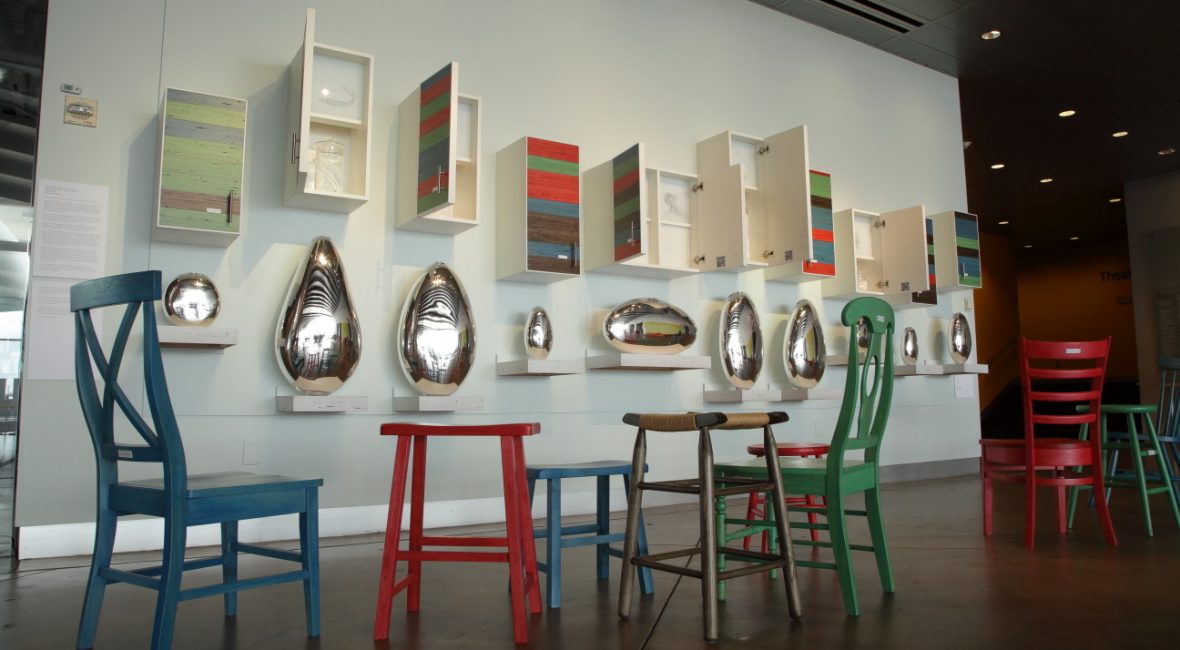
Vanity, an art installation by Joseph Gregory Rossano created for and with the support of the Museum of Glass (MOG) in Tacoma, Washington, tells the story of eleven species and subspecies, presumed extinct, presented through the lens of humanity’s role in their demise. The exhibition features historical accounts detailing each species’ “discovery” (collection date, type locality, collector, scientific illustrations, etc.), humanity’s role in its extinction, and the year it was declared “Extinct”. To produce these species tales, Rossano collaborated with Sandra I. Berríos-Torres, MD. Berríos-Torres served as author of the 11 historical accounts and as Editorial Director of the exhibition catalogue, on behalf of Joseph Gregory Rossano.

The Biodiversity Heritage Library was a crucial resource for Berríos-Torres. Consulting dozens of publications in BHL while conducting research for Vanity, she ultimately cited 16 of them in the historical accounts that were incorporated into the exhibition and catalogue.

Continue reading
February 7, 2019bySandra I. Berríos Torres, MD and Grace Costantino
Blog Reel, User Stories

A Book’s Eight Year Journey to the Biodiversity Heritage Library: Fulfilling a Researcher’s Digitization Request and Advancing Science

Read the full blog post

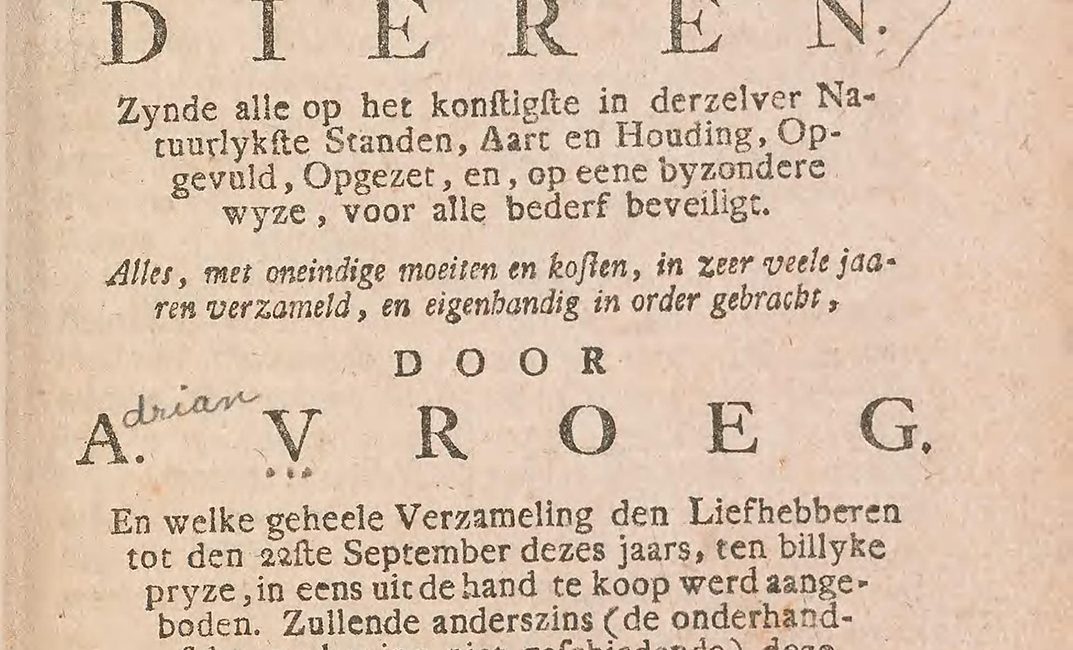
As an early work in the history of Linnaean taxonomy, Beredeneerde catalogus van eene, by uitstek fraaye en weergaalooze verzameling, zoo van inlandsche als uitheemsche vogelen, viervoetige en gekorvene dieren (i.e. Vroeg’s Catalogue, 1764) by Adrian Vroeg is the source of dozens of new species of birds. Published just six years after the 10th edition of Linnaeus’ Systema Naturae — considered the starting point of zoological nomenclature — the work is extremely rare, with only a handful of copies known to exist worldwide.

Because of the work’s age and rarity, first-hand access to the title has been difficult, and many researchers have had to rely on secondary sources for Vroeg’s names, which may have introduced errors or even overlooked the priority of a name established by Vroeg.

“It is absolutely rare that the scientific community gets access to such an early work in which new names were established after 1758,” explains Dr. Francisco Welter-Schultes of the Zoological Institute of Göttingen University in Germany. “Imagine being able to finally view an original spelling of a name that might not have been verified for more than 100 years. Generations of scientists never reliably saw the correct spellings of these names.”

Continue reading
December 13, 2018byGrace Costantino
Page 3 of 13« First...«2345»10...Last »

Help Support BHL

BHL's existence depends on the financial support of its patrons. Help us keep this free resource alive!

search

About BHL

The Biodiversity Heritage Library (BHL) is the world’s largest open access digital library for biodiversity literature and archives. BHL operates as a worldwide consortium of natural history, botanical, research, and national libraries working together to digitize the natural history literature held in their collections and make it freely available for open access as part of a global “biodiversity community.”

Follow BHL

  • Bluesky logo
  • Instagram logo
  • Facebook logo
  • Flickr logo
  • Twitter logo

Join Our Mailing List

Sign up to receive the latest news, content highlights, and promotions.

Subscribe Now

Subscribe to Blog via Email

Enter your email address to subscribe to this blog and receive notifications of new posts by email.

Join 318 other subscribers

Subscribe to Blog Via RSS

Subscribe to the blog RSS feed to stay up-to-date on all the latest BHL posts.

Access RSS Feed

Inspiring Discovery through Free Access to Biodiversity Knowledge.

The Biodiversity Heritage Library makes it easier than ever for you to access the information you need to study and explore life on Earth…for free, anytime, anywhere.

64+ Million Pages of
Biodiversity Literature Online.

EXPLORE

Tools and Services
to Transform Research.

EXPLORE

300,000+
Illustrations on Flickr.

EXPLORE


ABOUT | BLOG AUTHORS | HARMFUL CONTENT | PRIVACY | SITE MAP | TERMS OF USE