Biodiversity Heritage Library - Program news and collection highlights from BHL
  • Home
  • News
  • Featured Books
    • All Featured Books
    • Book of the Month Series
    • BHL at 20
  • User Stories
  • Campaigns
    • Fossil Stories
    • Garden Stories
    • Monsters Are Real
    • Page Frights
    • Her Natural History
    • Earth Optimism 2020
  • Tech Blog
  • Visit BHL
Home
News
Featured Books
    All Featured Books
    Book of the Month Series
    BHL at 20
User Stories
Campaigns
    Fossil Stories
    Garden Stories
    Monsters Are Real
    Page Frights
    Her Natural History
    Earth Optimism 2020
Tech Blog
Visit BHL
  • Home
  • News
  • Featured Books
    • All Featured Books
    • Book of the Month Series
    • BHL at 20
  • User Stories
  • Campaigns
    • Fossil Stories
    • Garden Stories
    • Monsters Are Real
    • Page Frights
    • Her Natural History
    • Earth Optimism 2020
  • Tech Blog
  • Visit BHL
Biodiversity Heritage Library - Program news and collection highlights from BHL
Blog Reel, Featured Books

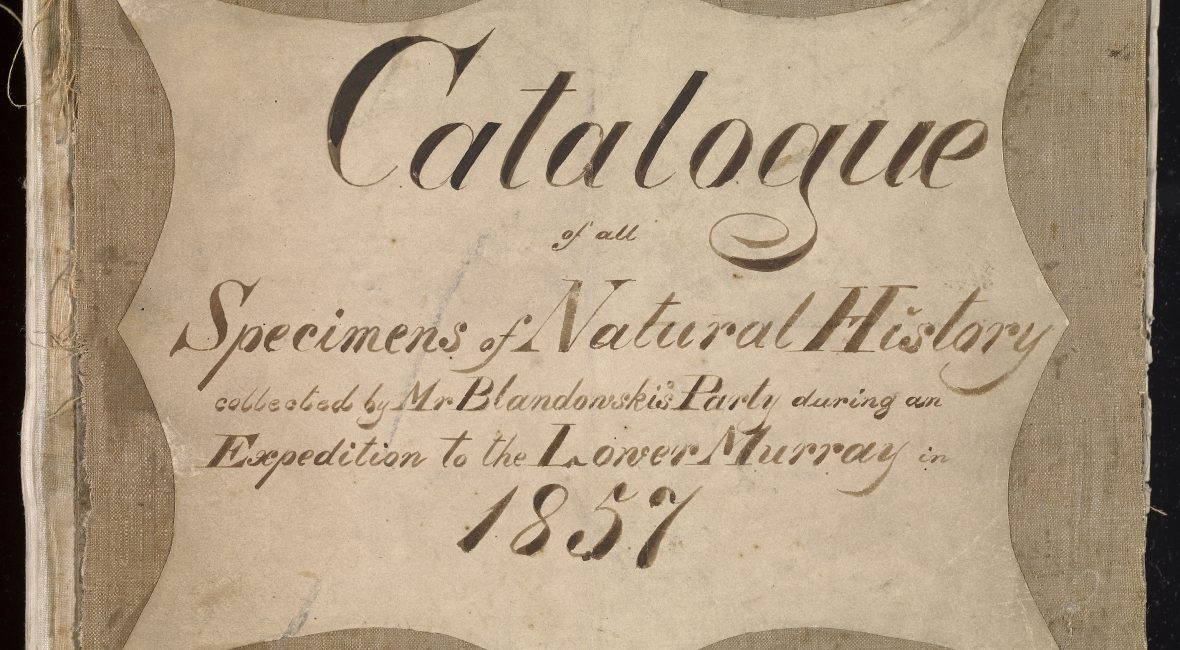
Catalogue of All Specimens of Natural History Collected by Mr Blandowski’s Party During an Expedition to the Lower Murray in 1857

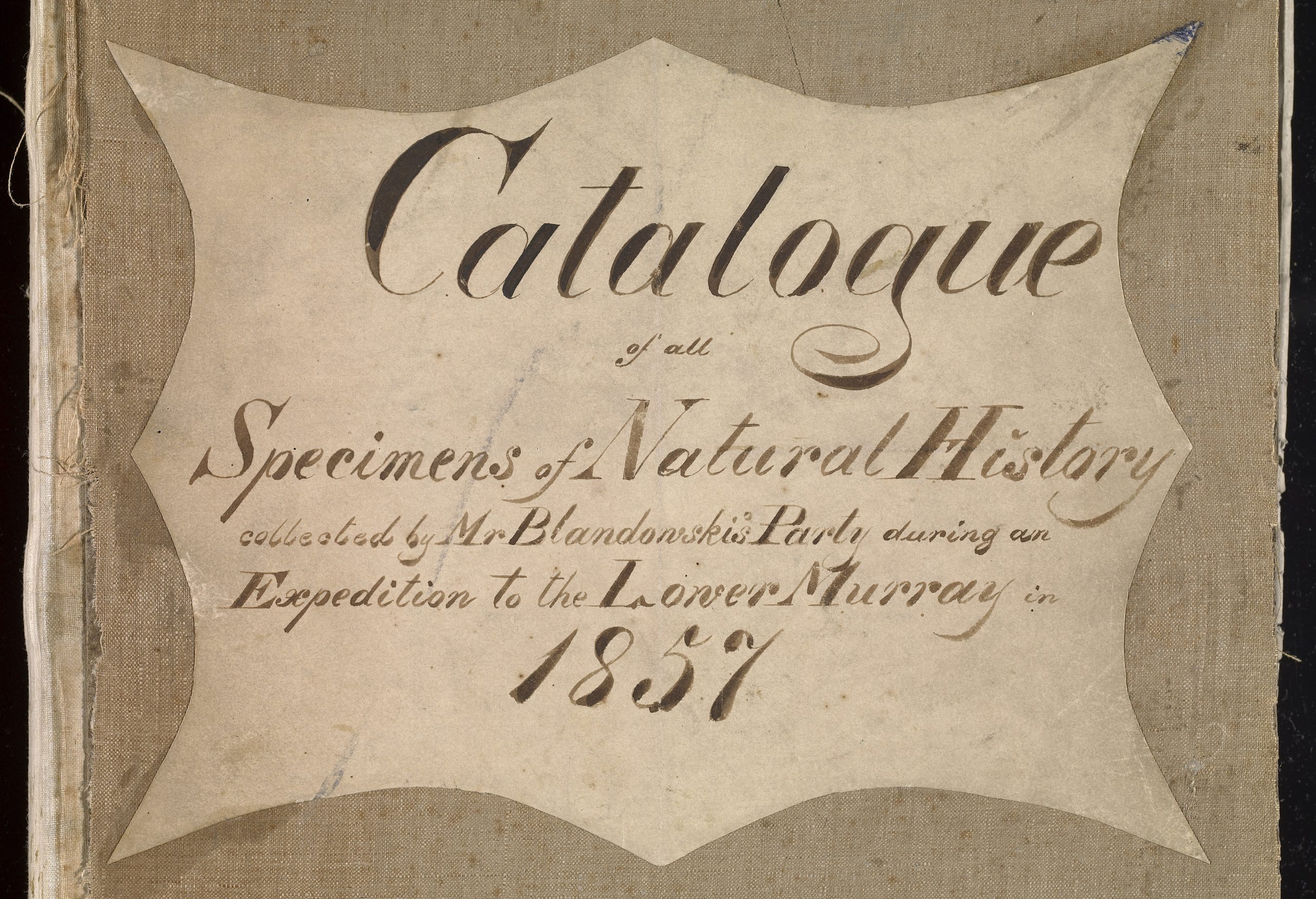
Front cover of 'Catalogue of all Specimens on Natural History collected by Mr Blandowski's Party during an Expedition to the Lower Murray in 1857' by Gerard Krefft

Cropped image of Gerard Krefft’s handwritten cover of Catalogue of all Specimens of Natural History collected by Mr Blandowski’s Party during an Expedition to the Lower Murray in 1857 [referred to as Blandowski’s Catalogue]. Source: Museums Victoria Archives, ARCHIVE-784. Photographer: David Paul.

Blandowski’s Catalogue is one of the most precious items held by the Museums Victoria Archives. It documents natural history specimens collected by William Blandowski (1822-1878) and Gerard Krefft (1830-1881) and colleagues working with First Peoples communities for the National Museum of Victoria (predecessor of Museums Victoria) during an expedition along the Lower Murray and Darling River from December 1856 to December 1857. Murray fishes listed in the Catalogue were later controversially used to describe prominent members of the Philosophical Institute in Blandowski’s 1858 paper Recent Discoveries in Natural History on the Lower Murray. Blandowski refused to hand-over to Professor Frederick McCoy, the National Museum of Victoria’s first Director, many of the specimens collected on the expedition, and associated research notes and illustrations, causing further controversy. Blandowski’s Catalogue has recently been digitised by BHL Australia and is now available to view online.

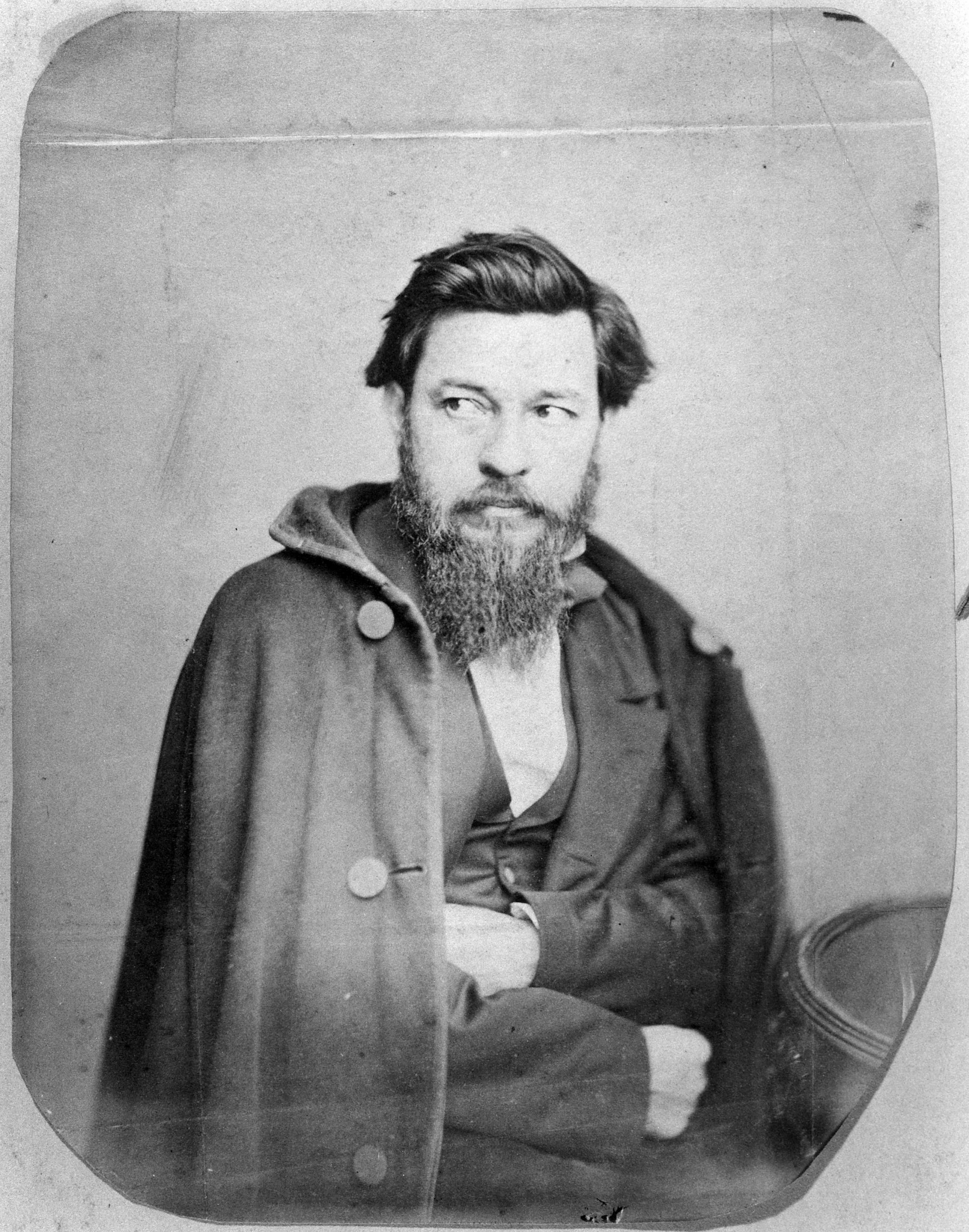
Black and white photograph of bearded man in overcoat, seated

Self portrait of William Blandowski, 1860. Source: National Gallery of Victoria. Photographer: William Blandowski.

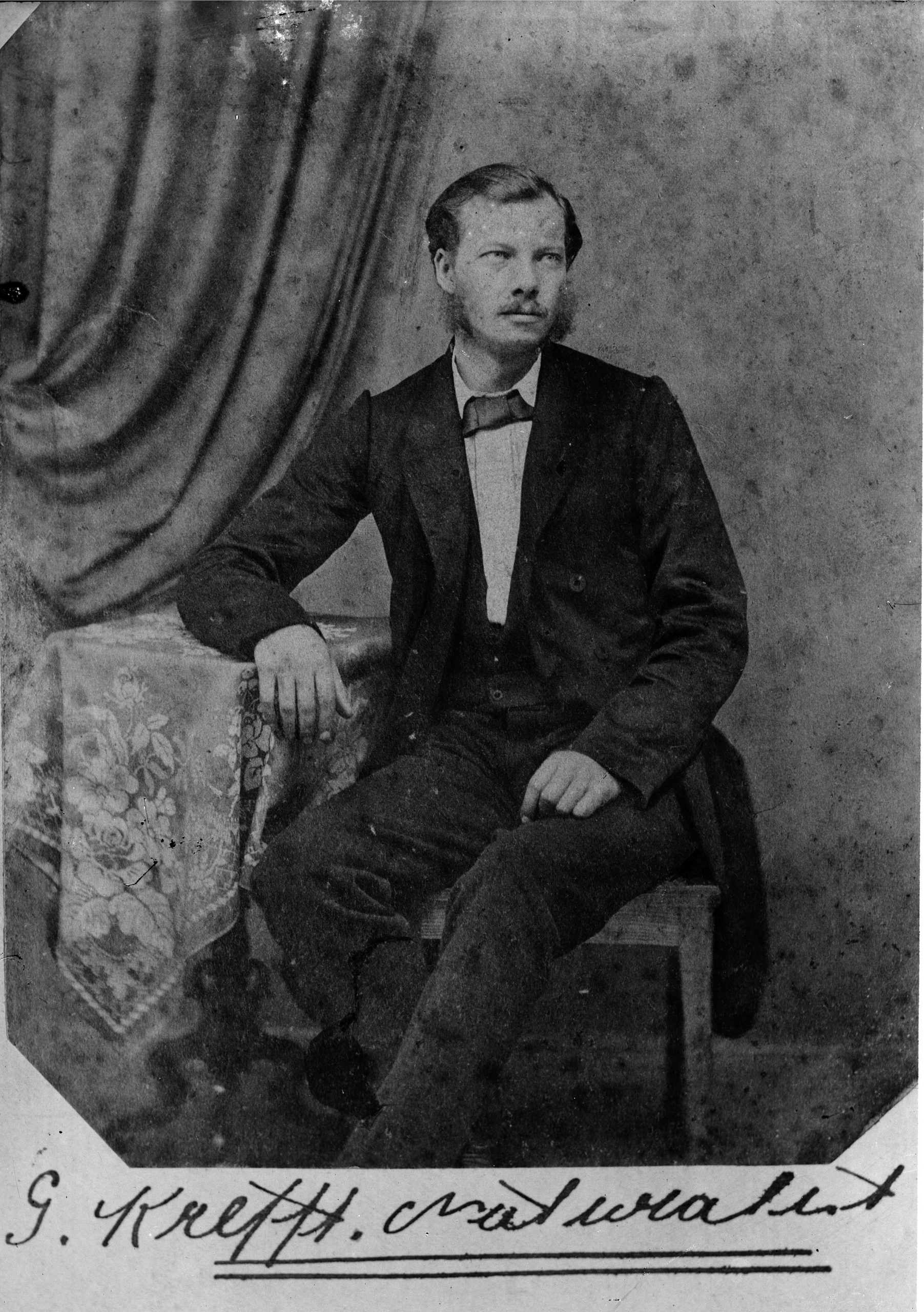
Portrait of a man seated in a suit

Portrait of Gerard Krefft, 1855. Source: Australian Museum. Photographer: unknown.

Blandowski was appointed Government Zoologist in 1854 when the Museum of Natural and Economic Geology (precursor to the National Museum of Victoria, and Museums Victoria) was founded. He had migrated from the Kingdom of Prussia (now Poland) to Adelaide in 1849, then on to the goldfields of Victoria in 1851. Krefft, originally from Duchy of Brunswick (now Germany), immigrated to New York City circa 1850, then to Australia and the Victorian goldfields in 1852. Blandowski was entrusted with an expedition to the Lower Murray; a previous expedition in 1849 had failed under the leadership of Surveyor Edward White. Blandowski had several assistants to accompany him on the expedition, including Gerard Krefft and later James Manson, who joined the expedition in February 1857. Krefft was hired as an artist on the Lower Murray Expedition but also worked on labelling specimens and adding information to Blandowski’s Catalogue, and subsequently employed by McCoy in February 1858 to select specimens to be kept by the National Museum of Victoria.

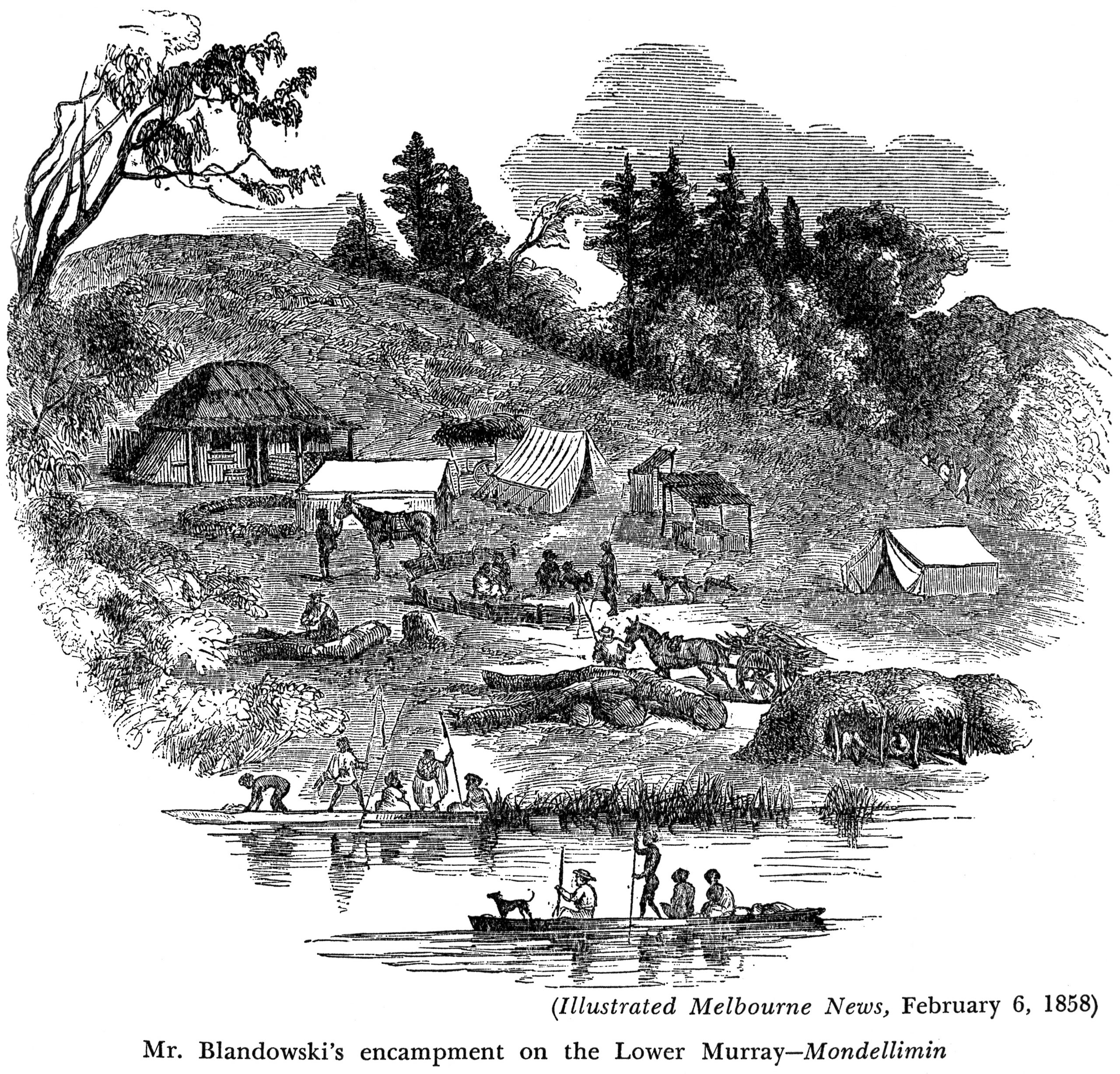
Encampment on a river with tents and other structures

Illustration of Blandowski’s expedition camp on the Murray River, Mondellimin, also known as Chaffey Landing at Merbein, Victoria, Australia, on the New South Wales border, 6 February 1858. Source: Museums Victoria reproduced from Illustrated Melbourne News.

Mondellimin, name derived from Mondellunddellun used by the local Yarree community, about 480 kilometres from Melbourne, also known as Chaffey Landing at Merbein, near Mildura, was the permanent campsite for the expedition from April to December 1857. “On the 6th of August he [Blandowski] left the camp in charge of Krefft and Manson and proceeded towards Melbourne with his valuable collections of specimens of natural history, which had been accumulating in his tent during his long sojourn at Mondellimin, to the extent of 28 boxes and parcels, containing in all about 16,000 specimens” (South Australian Register, 15 October 1857, p.3). Part of the collection had already shipped from Echuca, and specimens collected after Blandowski returned to Melbourne, came back with Krefft in December 1857. Blandowski attributed the specimens acquired largely due to the collecting skills of the local Indigenous peoples and acknowledged the taxidermy work of Krefft and Manson.

Blandowski’s Catalogue lists 17,434 specimens were collected, under 3389 catalogue numbers. Krefft catalogued specimens 1 to 3389, leaving some lines blank, recording specimen number, name of specimen, description of the specimen (although this was mostly left blank), number of specimens, locality whence obtained, donor’s name (also left blank), and remarks. Each specimen has general locality information allowing scientists to estimate where the specimen occurred at a point in time.

Blandowski’s infamous Murray fishes are described in the Transactions of the Philosophical Institute of Victoria. Figure 19 (N) Brosmius Bleasdalii named after a very prominent member of the Philosophical Institute Council, the Reverend Bleasdale: “A slimy, slippery fish. Lives in the mud. Is of a violent bluish colour on the belly. The whole upper surface is of a dirty olivish-green colour, with numerous irregular dark patches.” Figure 4 (B) Cernua Eadesii named after another very prominent member of the Council, Dr Eades: “A fish easily recognised by its low forehead, big belly and sharp spine.”

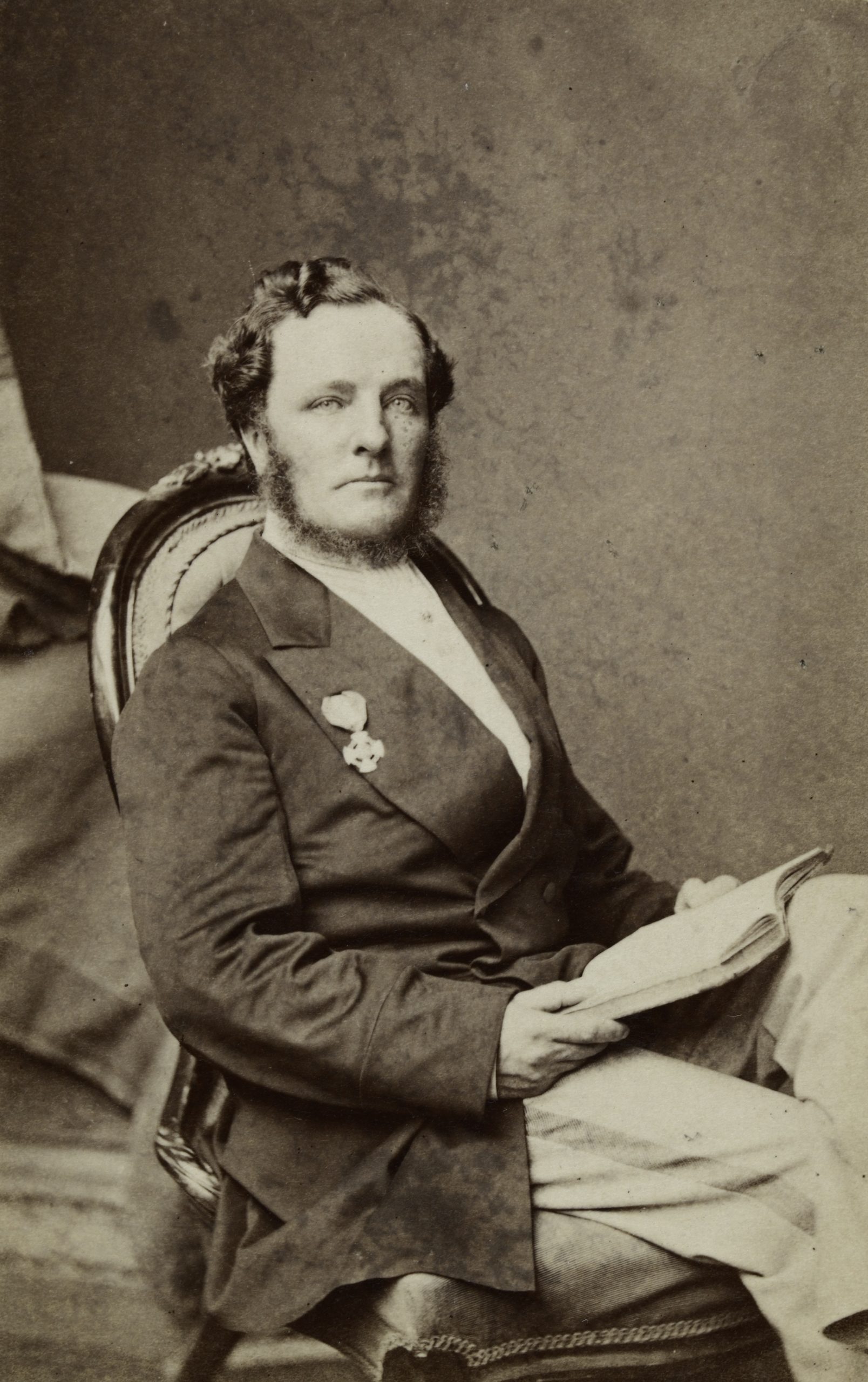
Portrait of a bearded man, seated with a book open in his lap

Portrait of Sir Frederick McCoy, c.1870. Source: Museums Victoria, H29553. Photographer: Johnstone, O’Shannessy & Co. Studio.

Blandowski returned to Melbourne from the expedition in August 1857, four months before the rest of the party. To McCoy’s outrage, Blandowski did not return to the National Museum of Victoria (then located at the University of Melbourne, Parkville campus), and held on to field notes, many of the specimens collected on the expedition, and illustrations from the expedition. The matter was brought before the Board of Science, McCoy wrote to the Chief Secretary on 28 April 1858 (MV Archives OS~04400): “…Mr Blandowski should be compelled to give up at once all specimens, books, journals and field observations, and the portfolio of several hundred drawings made by the party under his orders, and all illustrative lists and memoranda connected with the Public Collections, the property of the Victorian Government.”

Eventually all the specimens collected were returned to the Museum, however McCoy exchanged or donated many of the specimens with other museums and many were destroyed by insects over time, leaving about 15% of the total specimens collected on the expedition in Museums Victoria State Collection to this day. To view some of the specimens online, visit Museums Victoria Collections website.


Editor’s Note

This post has been edited to add further details of the expedition, including the roles of participants and more specific dates of their participation in the expedition.

February 24, 2022by [email protected]
Blog Reel, Campaigns, Featured Books, Her Natural History

Margaret S. Collins: A Legend in Termite Field Biology

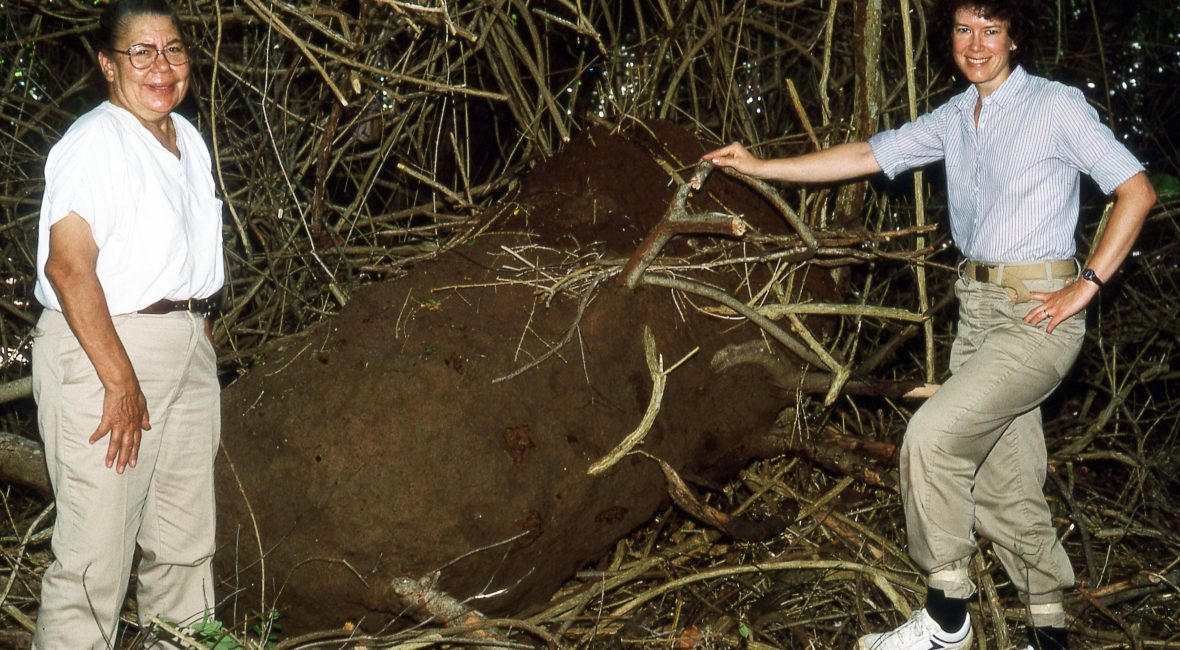
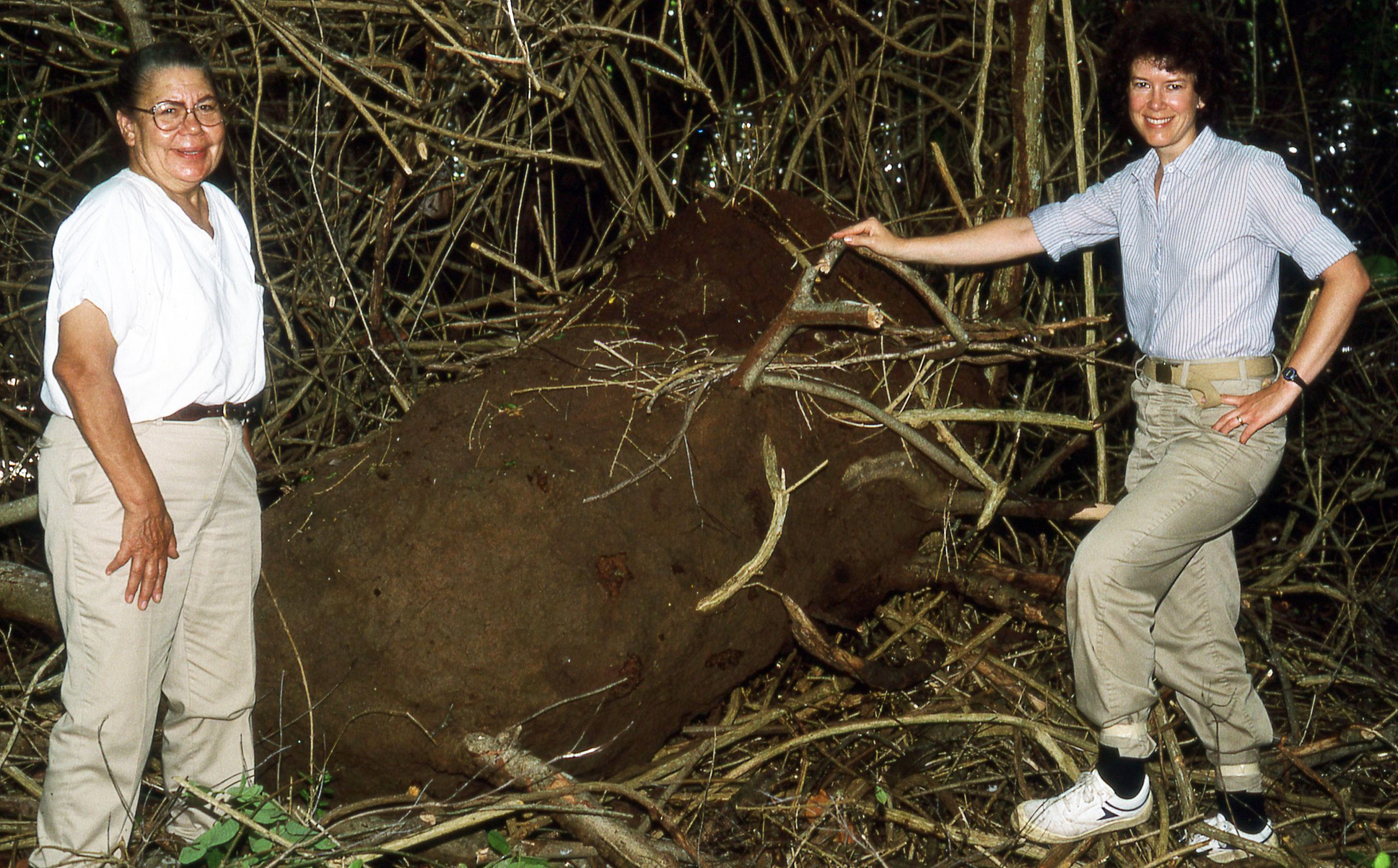
Two scientists researching termites in the British Virgin Islands stand together with a huge termite nest in between them. Photo taken in 1986.

This post was originally published on 2 March 2021 on the Smithsonian Institution Archives blog.

Two scientists researching termites in the British Virgin Islands stand together with a huge termite nest in between them. Photo taken in 1986.

Dr. Margaret S. Collins and Dr. Barbara L. Thorne standing next to a termite (Nasutitermes acajutlae) nest on Guana Island in the British Virgin Islands while studying a variety of termites in 1986. © Dr. Barbara L. Thorne.

Dr. Margaret S. Collins (1922-1996), a renowned expert on termite ecology and distribution, taught as a professor and administrator at Howard University, Florida A&M University, and Federal City College (now University of The District of Columbia) for over 35 years. Upon her retirement from teaching, Collins continued her work on termites at the Smithsonian National Museum of Natural History as a research associate from 1983 to 1996.

Over the course of her career, Collins published more than forty articles spanning the biogeography, physiology, chemical defenses, and taxonomy of termites. Collins also collected specimens in the United States, Mexico, Costa Rica, Colombia, Barbados, Belize, Suriname, the Cayman Islands, Guyana, Guatemala, and Panama. When she contracted dengue fever on an expedition in Guyana in 1983-1984 and was forced into a long hiatus from field work, she turned her focus to updating and preserving the termite specimens at the Smithsonian National Museum of Natural History. Eventually Collins returned to field research in 1994 when she once again traveled to Guyana to collect termites. In April 1996, Collins died while conducting field work in the Cayman Islands.

Collins’ biographers, such as Wini Warren and Vernard R. Lewis, have documented how she faced racism and sexism in her work and life. As one of the first African American women to earn a Ph.D. in entomology, she had to fight to find advisers as an undergraduate at West Virginia State College and to fund her field research during her early career. Additionally, Collins worked in the face of bomb threats and racist remarks as she pursued her career and advocated for equal rights during the civil rights movement.

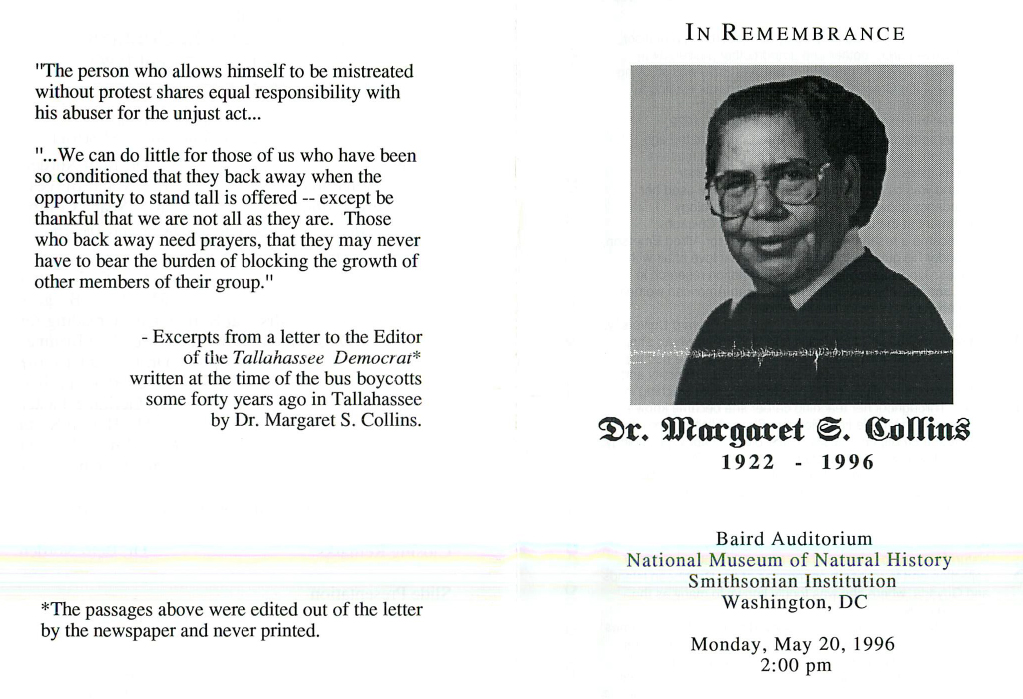
In fact, Collins’ memorial service pamphlet begins with excerpts from a letter she wrote to the editor of the Tallahassee Democrat during the 1956 Tallahassee bus boycott. During the boycott, sometimes chased by police, Collins drove protestors to and from work. The excerpts included:

The Person who allows himself to be mistreated without protest shares equal responsibility with his abuser for the unjust act…

…We can do little for those of us who have been so conditioned that they back away when the opportunity to stand tall is offered—except be thankful that we are not all as they are. Those who back away need prayers, that they may never have to bear the burden of blocking the growth of other members of their group.

These passages were edited out of Collins’ letter by the newspaper and never printed, but their inclusion in her memorial service offers a sense of the importance Collins placed on standing tall against the challenges she faced in her own life.

The first page of Margaret S. Collins’ memorial service pamphlet.

The first page of Margaret S. Collins’ memorial service pamphlet. Courtesy of Dr. Barbara L. Thorne.

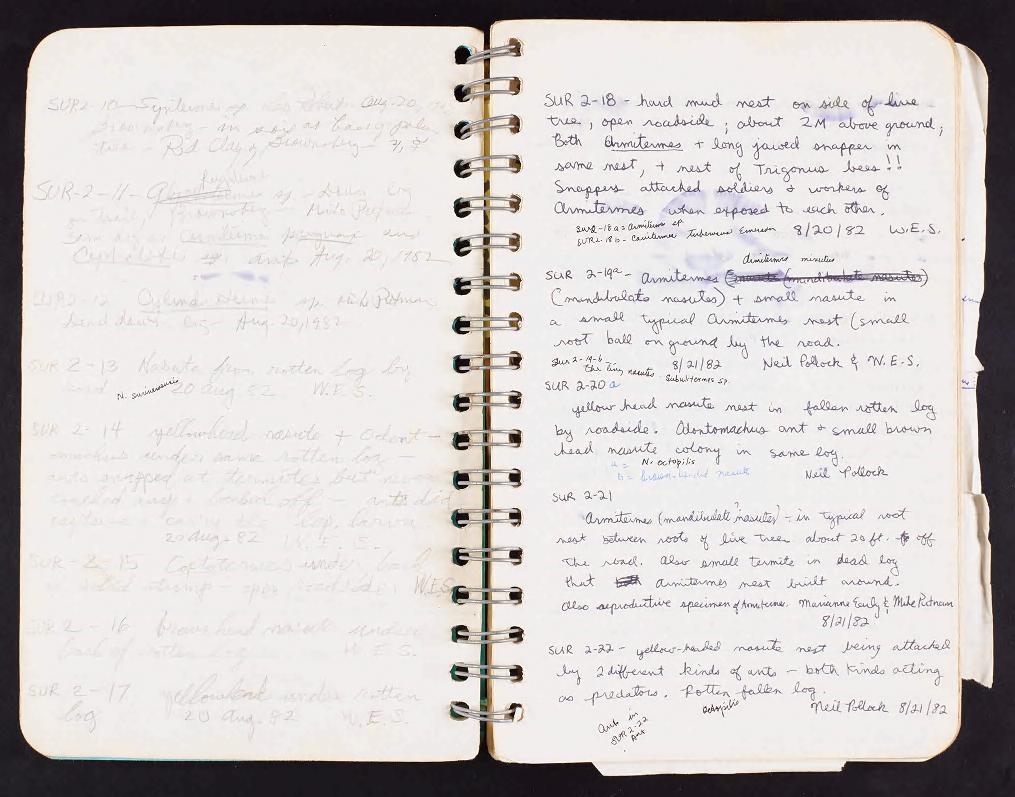
In the face of those challenges, Collins developed a love for field research. To learn more about Margaret Collins’ research, see a selection of her field notebooks, archived at the Smithsonian and digitized in the Biodiversity Heritage Library (BHL), the world’s largest open access digital library for biodiversity literature and archives. Headquartered at the Smithsonian, BHL works with libraries and archives around the world to revolutionize global research by providing free, worldwide access to knowledge about life on Earth.

An open spiral notebook with handwritten notes only on the right page.

Pages 6 and 7 from Margaret S. Collins’ Field Notes: “Combat Data,” Suriname, 1982: SIA Acc. 01-038. Contributed in BHL from Smithsonian Institution Archives.

Collins’ field notebooks were digitized and transcribed with the Smithsonian Transcription Center as part of the Smithsonian Field Book Project. Field notes can provide rich data for researchers to understand how biodiversity has changed over space and time. For example, field notebooks may describe habitats, meteorological events, and personal observations that allow us to reconstruct historical ecologies. The Archives has contributed over 300,000 pages of field notes to the Biodiversity Heritage Library as part of the Smithsonian Field Book Project. Some of Collins’ field books are part of that collection.

There are so many inspiring stories, like Dr. Collins’, about women in science at the Smithsonian in its 175-year history that can educate and embolden future generations, but only if their legacies are discoverable. On Thursday, 25 March 2021 from 1-3pm ET, join us for Wikipedia & Women in Science: Smithsonian Groundbreakers Edit-a-thon, an online Wikipedia editing workshop hosted in conjunction with the Smithsonian American Women’s History Initiative and the Smithsonian Institution Archives, part of Smithsonian Libraries and Archives.

During this training, attendees of all experience levels will learn the basics of how to edit Wikipedia by updating articles related to the history of women in science at the Smithsonian Institution in connection with the Funk List. Presenters will share how editors might research the work of these women in the absence of personal papers and institutional records. Learn more and register.

March 22, 2021by michelle.underhill
Blog Reel, Featured Books

Making the Best of Difficult Times: Accelerating the Transcription of William Brewster’s Writings During the COVID-19 Pandemic

Screenshot of the BHL book viewer with crowdsourced transcriptions available for a handwritten journal.

This post is part of a series from the Ernst Mayr Library exploring the digitization and transcription of ornithologist William Brewster’s archival materials and the insights and scholarship made possible thanks to this work.

Many of us have searched for silver linings during the COVID-19 pandemic of 2020-2021. For many in the library and museum profession, one positive outcome of the mandatory transition to remote work has been the resurrection of some long-postponed projects. These are activities put on hold during normal times in deference to ever-proliferating, higher-priority onsite tasks. One such project in the Ernst Mayr Library and Archives (EMLA) of the Museum of Comparative Zoology (MCZ) at Harvard University is transcription of the digitized journals and diaries of William Brewster.

As discussed in Part One of this series, EMLA began digitization of its Brewster collection in 2012. In 2014, Library staff began transcription of Brewster’s digitized journals and diaries to produce a corpus of text files for the Purposeful Gaming and BHL project. As part of this project, EMLA was charged with leading an effort to select an appropriate open source transcription tool. At this time (early 2014), manuscript materials such as field notes and correspondence were beginning to appear in the Biodiversity Heritage Library (BHL) thanks to other grant-funded efforts among BHL members. Tools under consideration for Purposeful Gaming were thus also viewed as potential long-term transcription solutions for libraries contributing such materials to BHL.

After four months of research and testing, the grant partners selected DigiVol, a crowdsourcing transcription platform developed by the Australian Museum in collaboration with the Atlas of Living Australia, and EMLA staff set up a project space for the Library. One significant advantage of DigiVol is that it was developed specifically for the transcription of natural history materials such as specimen labels and field notes. Thus, there was the advantage of a pre-existing community of volunteers both interested in and adept at transcribing such items.

At the end of the Purposeful Gaming project (November 2015), volunteers and library staff had transcribed 12 volumes of Brewster’s journals and diaries, totaling 3,470 pages. That left 37,000 pages of Brewster’s writings in our collection awaiting transcription. Over the next four years, progress in the transcription work at EMLA was relatively slow at an average of 1,262 pages transcribed per year. During this time, EMLA had only a single, albeit enthusiastic, part-time library assistant who was able to dedicate one-third of her time or less to the project due to other higher-priority tasks.

On March 16, 2020, Harvard University staff began working remotely. Expecting a large influx of volunteers due to the quarantine in Australia, and anticipating an increase in staff availability at participating institutions, DigiVol administrators sent out a call for more materials to be uploaded for transcription. Working remotely, the author had the time available to regularly upload new volumes of Brewster’s diaries for transcription, respond to questions posted by volunteer transcribers, and validate completed transcriptions. Another EMLA staff member was able to offer several hours per week of her time as well. This was fortuitous as the volunteers were, indeed, ramping up their transcription activity, completing each diary volume in about two weeks time.

As the pandemic wore on, greater numbers of staff across the Harvard University library system were in need of work that could be done remotely. In response to this need, Harvard Library established a work share program whereby libraries in need of help could offer temporary assignments or projects to those in need of some additional work. By this time (September 2020), the volunteer transcribers were making so much progress that we were falling behind in the work of validating transcriptions. EMLA thus posted its project via the work share program, and we were fortunate to obtain the assistance of two library colleagues able to devote several hours each week to the work of transcription and validation.

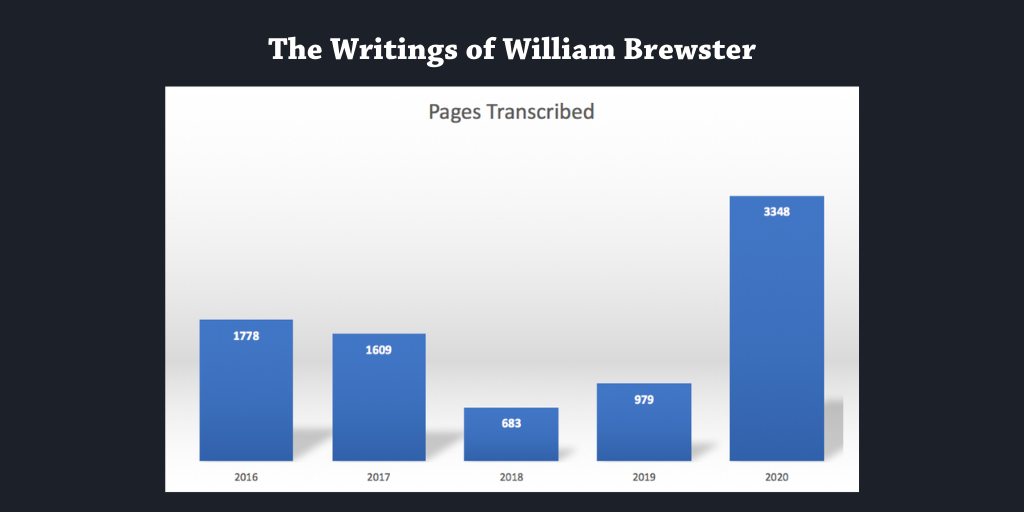
With a total of 4 staff members and an average of 11 DigiVol volunteers (up from a previous average of 7) working on the project, more pages of Brewster’s writings were transcribed in 2020 than in any of the previous four years, as shown in the graphic below. There was a 242% increase in the number of pages transcribed over 2019, and a 165% increase over the average yearly number of pages transcribed from 2016 through 2019.

Bar graph showing number of pages transcribed per year, 2016-2020.

Number of pages transcribed per year, 2016-2020.

Transcriptions in the Biodiversity Heritage Library

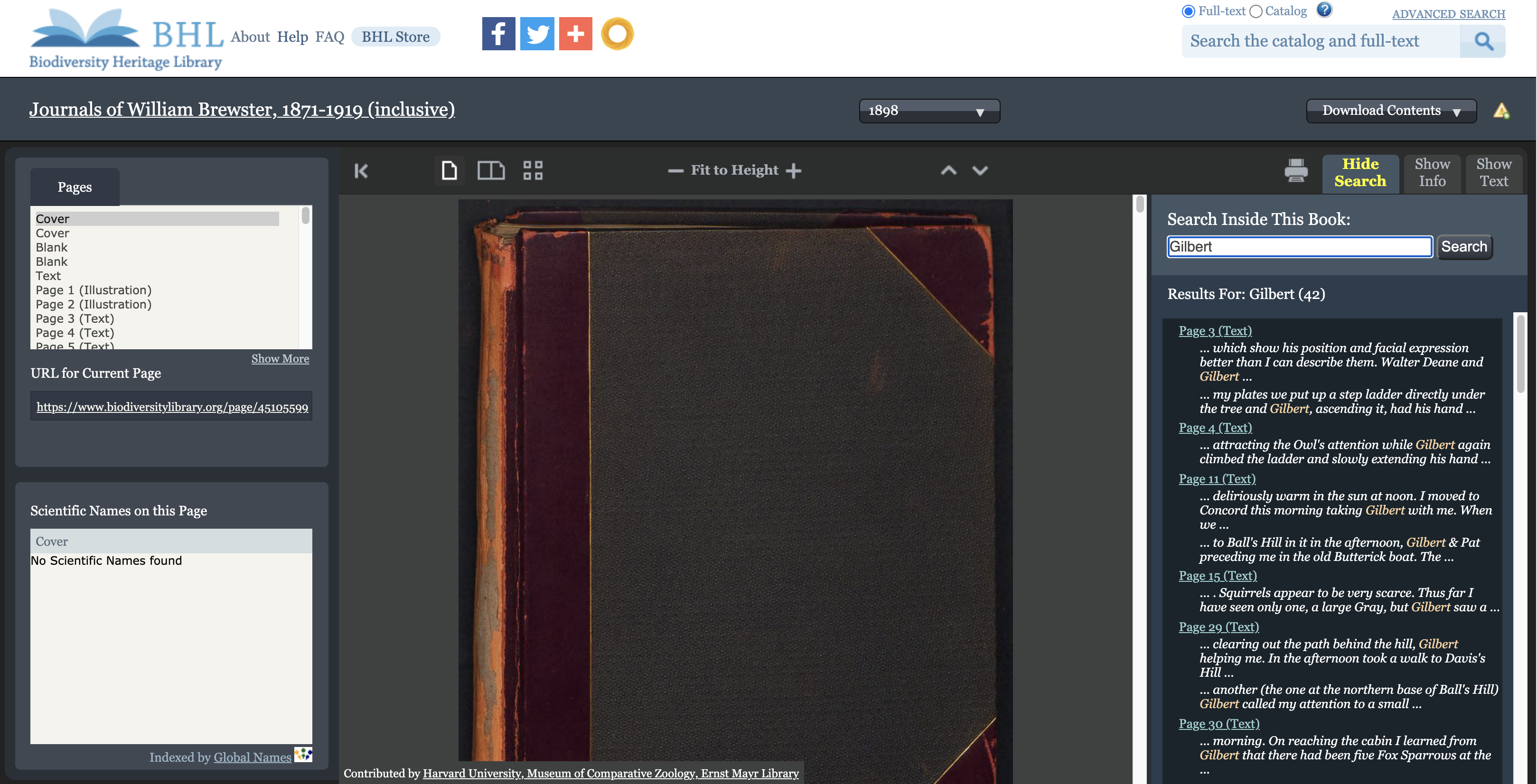
The fruit of our transcribers’ labors began to materialize in 2018 when BHL developers introduced transcription import functionality to BHL. When member libraries began uploading transcribed pages of field notebooks and correspondence, the potential for access and discovery became readily apparent. Full-text indexing and searching of transcribed manuscript materials was now possible. For example, in researching the previous blog post about Robert Gilbert, the author was able to search for the name Gilbert in several transcribed volumes of Brewster’s journals. The result of such a search in Brewster’s 1898 journal is shown below.

Screenshot of the BHL book viewer with full text search results for "Gilbert" displayed.

Searching for the name Gilbert in the 1898 volume of Brewster’s Journals retrieves 42 references to Robert Gilbert in this volume. The search results are shown in the right-hand panel of the BHL book viewer.

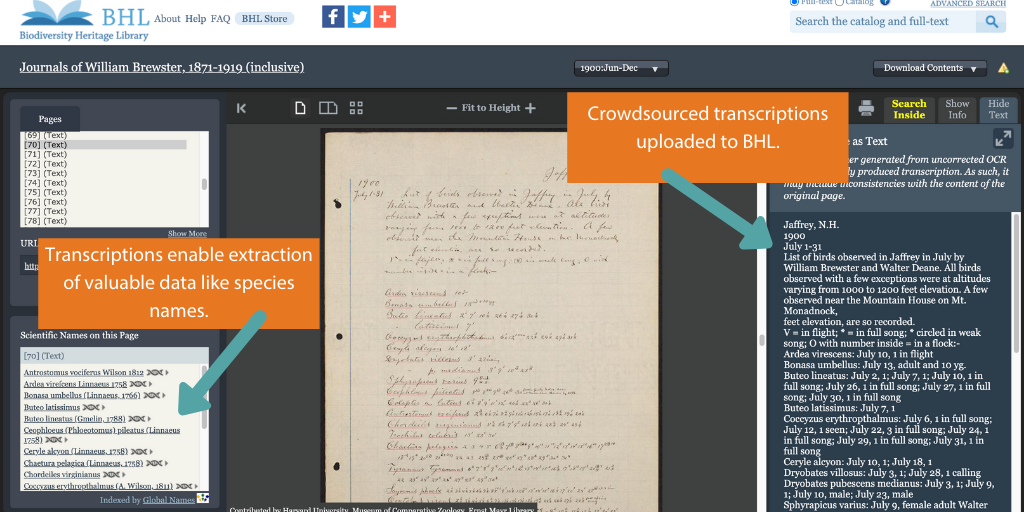
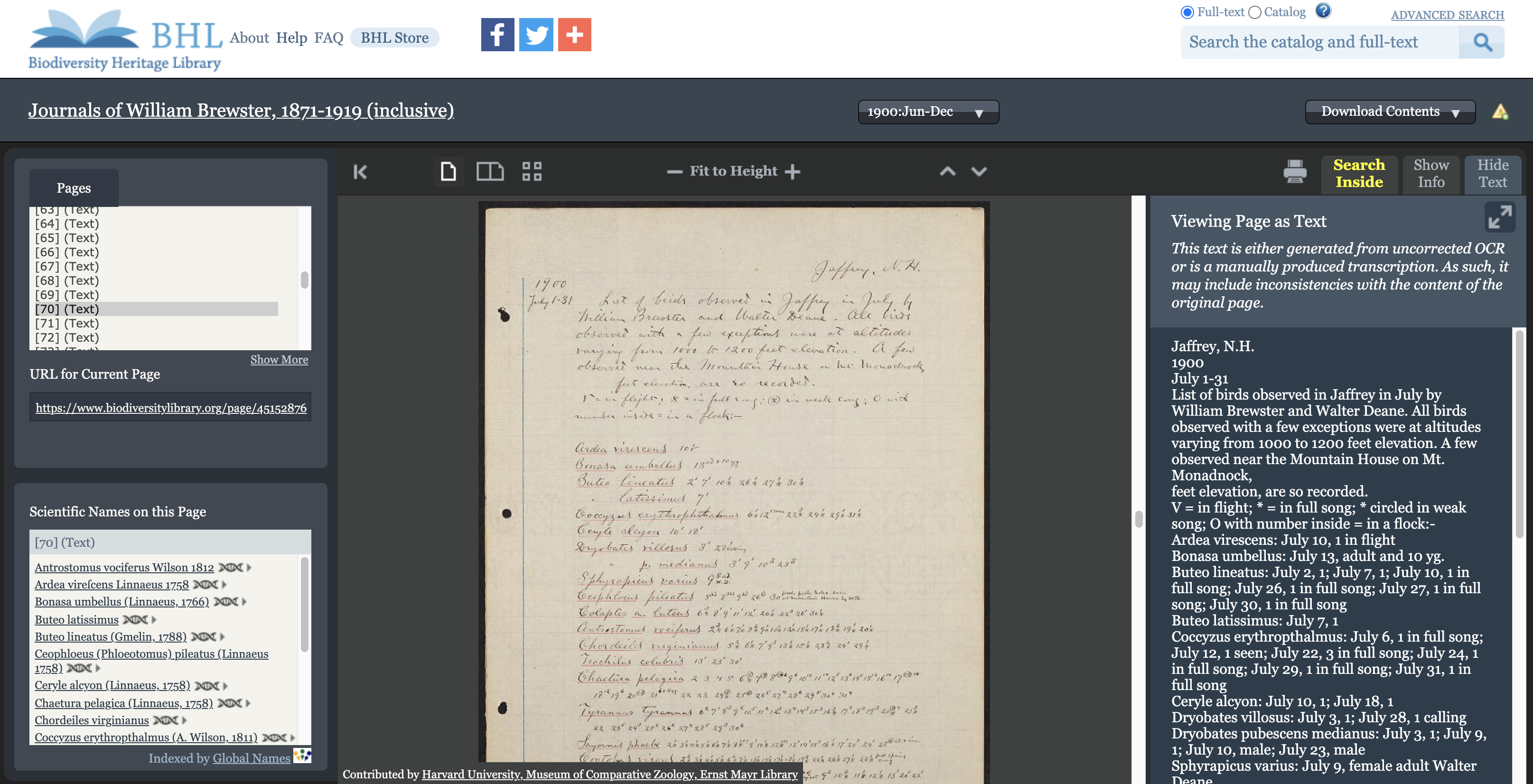
Like most field notebooks, Brewster’s diaries and journals are replete with scientific names. In order for these to be recognized by BHL’s name-finding utility, Global Names Architecture (GNA), they must be carefully transcribed. Transcription tutorials for the Brewster project in DigiVol ask that scientific names be given extra care, expanding abbreviations and correcting misspellings where possible. Our team of volunteers and staff have done an exquisite job of accurately transcribing scientific names, sometimes even doing research when unsure of the correct spelling of a name. Some of the transcribers so enjoy delving into Brewster’s world that they frequently research people, localities, or unfamiliar terms used in his writings as well.

Screenshot of the BHL book viewer with scientific names found on the page.

A species observation list from Brewster’s 1900 Journal with transcription of species names and observations in the text panel on the right. Note the scientific names on the lower left, extracted from the transcription text by Global Names Architecture (GNA). Prior to addition of the transcription text, no names were found by GNA.

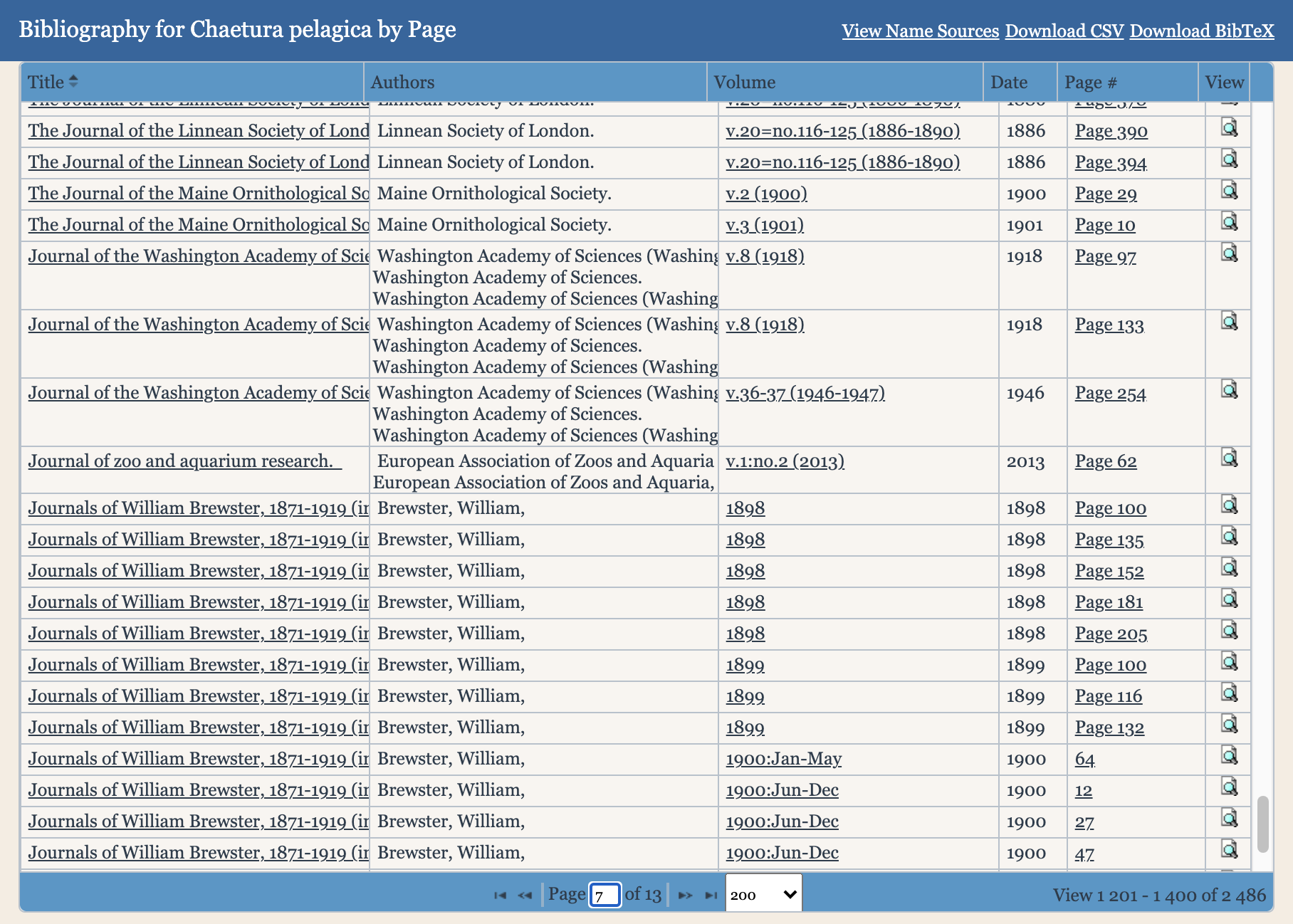
The end result is that the myriad of ornithological taxa mentioned in Brewster’s writings are being indexed in BHL. Thus a search across the full BHL repository for a specific taxon retrieves results from field notes and correspondence as well as the published literature. The resulting species bibliography will thus lead researchers to field observations, specimen collecting accounts, habitat and weather descriptions, and other content that may not be included in secondary sources.

Screenshot of a species bibliography in BHL for Chaetura pelagica.

A search for Chaetura pelagica (Chimney Swift) across the full BHL repository retrieves instances of this taxon in Brewster’s transcribed Journals as well as the published literature.

Because of the hard work of our volunteer transcribers, full transcriptions of thousands of pages of Brewster’s diaries, journals, and correspondence are now being added to BHL, making this content available for text analysis, data mining, digital scholarship, and the creation of new information. Connections with similar collections in other institutions will likely be discovered as more primary source material is digitized and transcribed. Brewster’s meticulous record of species occurrences, habitat, landscape ecology, and weather can help in addressing the current climate and biodiversity crises. His record of historical events and his account of the work of Robert Gilbert might be used in social justice or other humanitarian research efforts. The staff of the EMLA are deeply indebted to the team of volunteers and our two Harvard Library colleagues who have given so much of their time and energy to help unlock the riches of the Brewster collection for the benefit of all.

If you would like to help transcribe Brewster’s writings, there is still plenty of work to do. We will soon complete his diaries and journals after which we will begin transcribing his extensive collection of correspondence. If you are interested, please visit our project page.

February 24, 2021by michelle.underhill
Blog Reel, Featured Books

The Untold Story of Virginia and José Correia: Scientific Explorers in Search of Rare Birds

collages illustrations of various bird heads and feet

Digitization projects often shed light on stories hidden in plain sight. This is the story of a husband-and-wife team that served as field collectors for the American Museum of Natural History from 1912–1945¹. They were American immigrants who came from humble beginnings, dreamt of a new life, and found one.

•     •     •
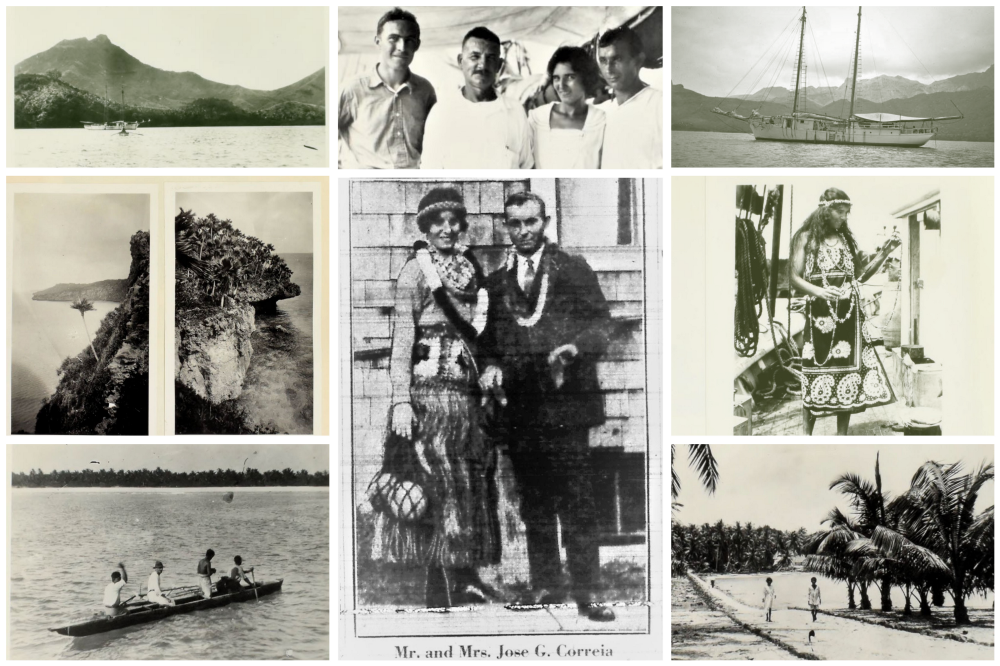
Photo collage of the Correia’s and their travels.

Photo collage of the Correia’s and their travels. Bryan, E. H. (1924) (photographer). Journal of Edwin H. Bryan, Jr. while with the Whitney Expedition of the American Museum of Natural History on the schooner France. Contributed in BHL by the American Museum of Natural History Library. Digitization sponsored by the Council on Library and Information Resources as part of the BHL Field Notes Project.

José and Virginia Correia are one of history’s most prolific bird collecting teams. For over three decades, they participated in many scientific exploring expeditions for the American Museum of Natural History, including the Whitney South Sea Expedition from 1922 to 1926.²

Although the published literature is scant regarding their scientific contributions, their story is certainly worth telling. Described by The Standard-Times (New Bedford) as a “life reading like fiction”,³  their work has emerged from obscurity with the digitization of José’s field notes from the Whitney South Sea Expedition (1920–1941) as part of the BHL Field Notes Project funded by the Council on Library and Information Resources (CLIR). Now audiences far and wide can enjoy this quintessential American story of two immigrants propelled by fate, hard work, and a sincere desire to improve one’s lot in life.
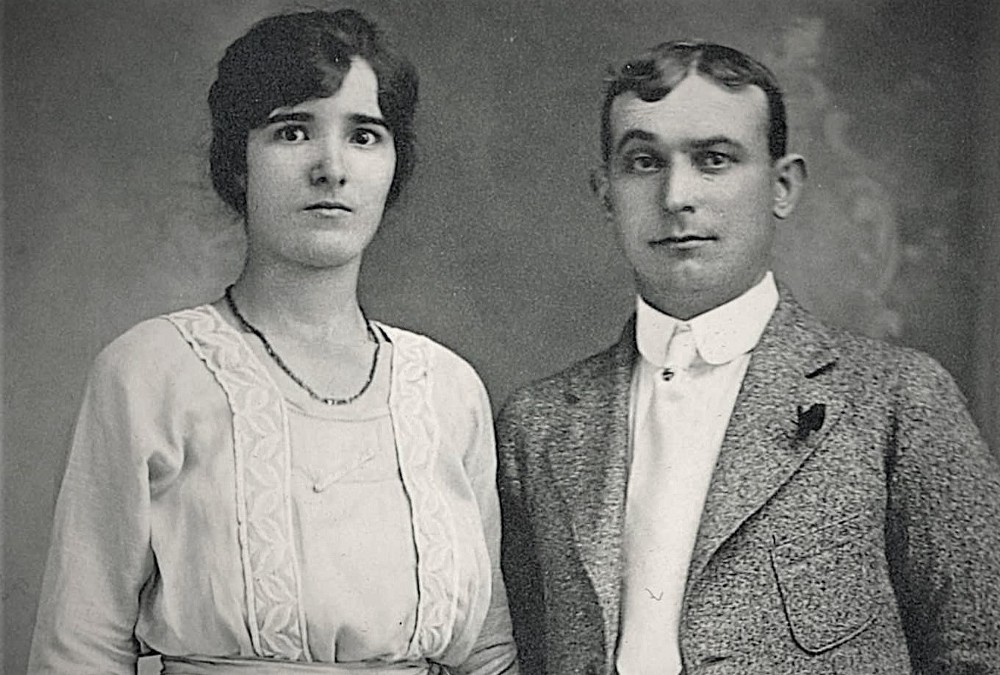
Black and white photo of a man and a women with light skin, dark hair, dressed in early 19th century clothes.

“Virginia and José Gonsalves Correia,” Unknown (photographer). Department of Ornithology Archives, AMNH, accessed September 3, 2020.

From José’s journal entries, we learn what daily life for a field collector was really like. Traveling to exotic locales, encountering Indigenous cultures, and sampling undiscovered flora and fauna might sound alluring, but José’s private notes reveal the harsh realities of turn-of-the-century collecting expeditions.

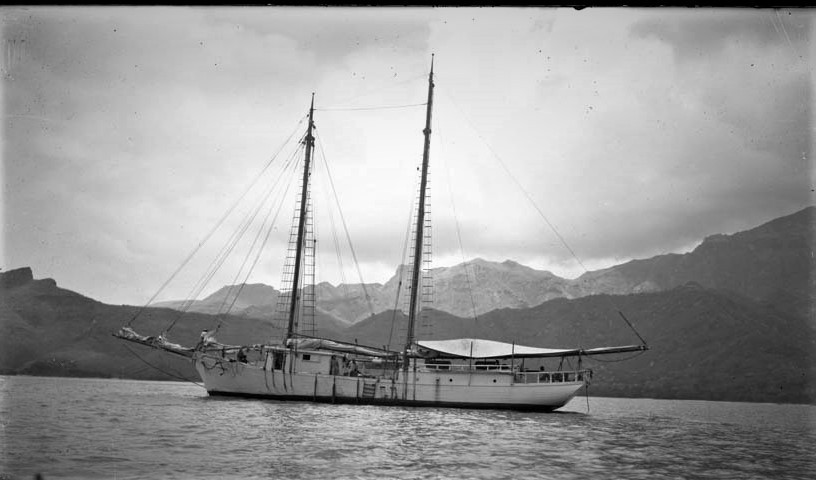
black and white photo of a schooner at sea.

Whitney South Sea Expedition schooner, the France, in the waters of Tuamotu, 1922. Beck, Rollo Howard, 1870–1950 (photographer). AMNH Research Library | Digital Special Collections, accessed November 1, 2020.

The work was hard and the days were long aboard the schooner France. Work typically commenced at dawn in the field and ended at dusk preparing specimens.⁴ Only exceptionally rugged individuals who were able to endure constant and extended deprivations — mind and body — could make such journeys.

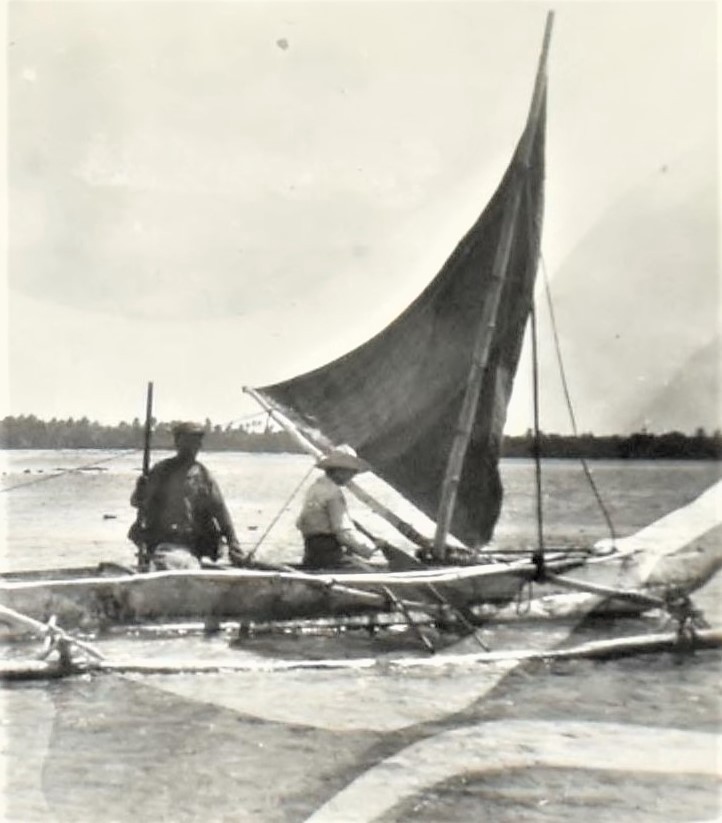
Two people in a canoe.

Mr. and Mrs. Correia are in a canoe ready to start back to Pukapuka from Motu Koe, facing S.W., toward the S.E. bay of the lagoon. Bryan, E. H. (1924) (photographer). Journal of Edwin H. Bryan, Jr. while with the Whitney Expedition of the American Museum of Natural History on the schooner France. Contributed in BHL by the American Museum of Natural History Library. Digitization sponsored by the Council on Library and Information Resources as part of the BHL Field Notes Project.

As if these daily irritations weren’t enough, extreme weather in the form of cyclones, gale force winds, and rogue waves provided plenty of near-death experiences.

“…we ran into the center of a strong cyclone on June 2nd. Everybody in the ship thought that they were never going to see land again, but God did not forget us in the middle of the furious ocean.” June 19, 1926, J. Correia.⁴

Four years and 12,000 miles later, the Correia’s had the misfortune of contracting malaria, effectively ending their service aboard the France in 1926.⁶ But the Whitney South Sea Expedition wasn’t their first field collecting trip, nor would it be their last. They would go on to explore some of the most remote places on Earth.
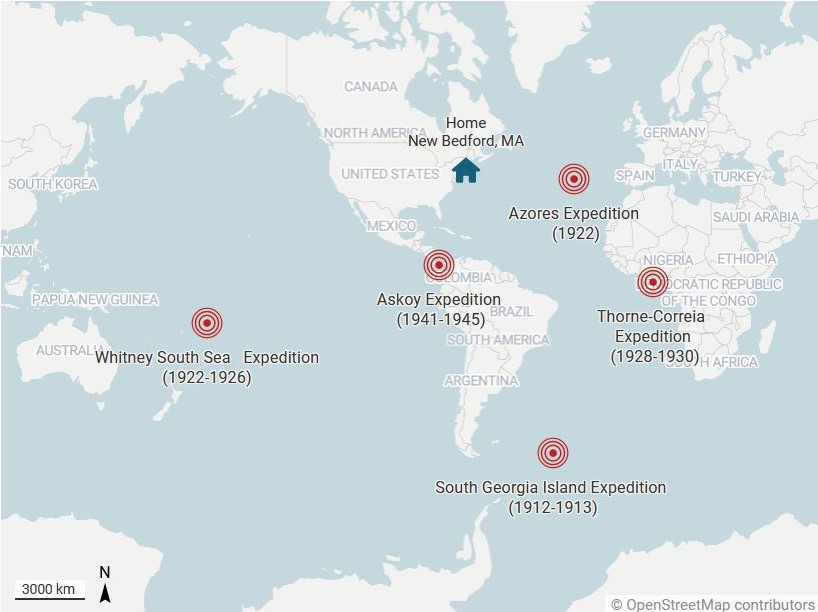
Illustration of a map with several aquatic locations highlighted.

The American Museum of Natural History collecting expeditions took the Correias all over the globe.⁷ Ford, Jacqueline. (2020) Datawrapper: Create Charts and Maps [Software]. Available from https://www.datawrapper.de/.

It’s clear why the Correias continued to endure the hardships of collecting life. Not only did they believe birds held important keys to understanding the natural world, they had become a part of the scientific community who knew that time was running out. Their efforts were likely to be humanity’s only shot at cataloging, describing, and studying unknown bird species.

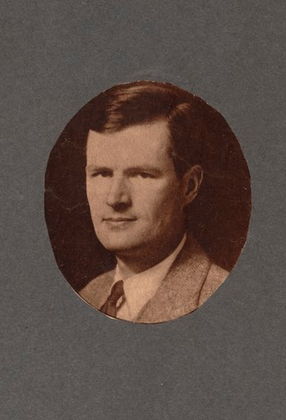
Black and white portrait of a man in a suit and tie.

Dr. Robert Cushman Murphy [Photograph]. (1860). Retrieved from https://ark.digitalcommonwealth.org/ark:/50959/g158bt570.

José’s fateful friend, Robert Cushman Murphy, Curator of the American Museum of Natural History’s Ornithology Department, describes the moral imperative driving the Whitney South Sea Expedition:

“That it is high time for such an expedition to obtain examples of the Polynesian life is evidenced by the decrease in the population of birds and other animals at nearly all of the inhabited isles. For many years extinction has been approaching, and it is well known that certain kinds of birds secured by 18th century naturalists, have long since been wiped out of existence.”⁸

In one of Murphy’s more personal memoirs, A Logbook for Grace, he tells of his first collecting expedition in 1911, working as a field collector on a brig named the Daisy. It’s here that we get a first glimpse of a young José who enlisted as the Antarctic voyage’s cooper — the liquid-tight barrels made under his charge were crucial to the operation, transporting whale spermaceti back to America.
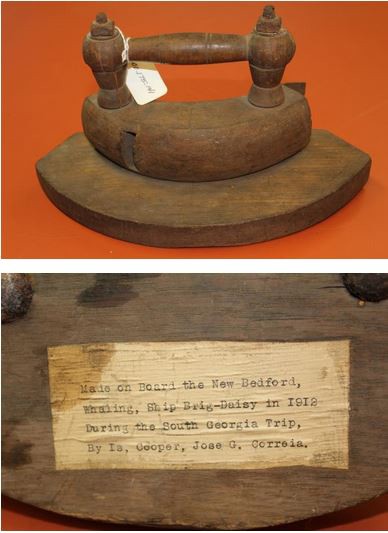
A small Cooper’s Howell plane with a Stanley #3 plane blade.

A small Cooper’s Howell plane with a Stanley #3 plane blade. Note on bottom: “Made on board the New Bedford Whaling Ship, brig DAISY in 1912 during the South Georgia Trip by IS (sk), Cooper José G. Correia.” Correia, J. G. (1912). Cooper’s Howell plane [Photograph]. New Bedford Whaling Museum | Grimshaw-Gudewicz Reading Room and Archives.

Aboard the Daisy, the two men would become fast friends discussing everything from Arabian Nights to the Papacy. Murphy describes José as “profound” and a “voracious reader”⁹ and came to rely on the cooper’s help after realizing his natural drawing aptitude and skill for specimen preparation:

“One day when Dr. Murphy was preparing bird specimens Mr. Correia offered to help. His first attempt was so good that Dr. Murphy placed it in his collection and sought help again and again from the ship’s cooper.”¹⁰

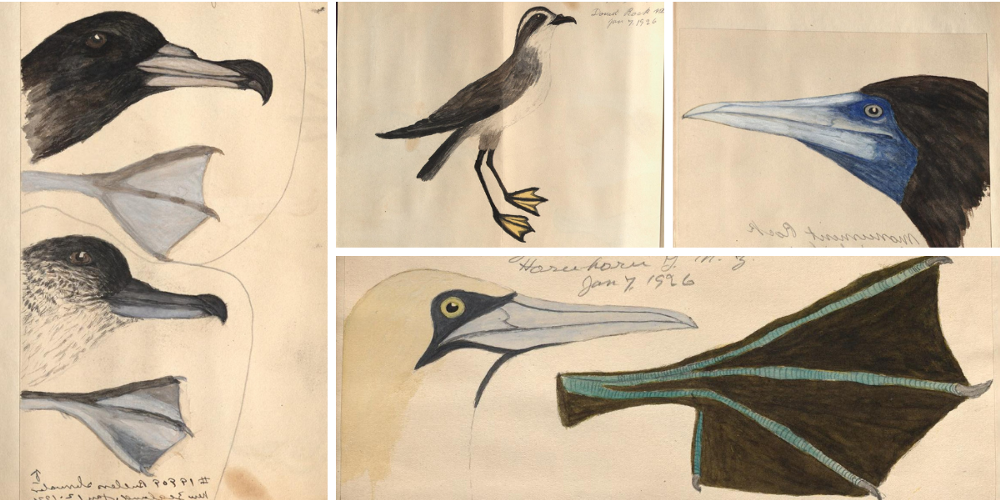
collages illustrations of various bird heads and feet

Correia’s field note illustrations, now available on the Biodiversity Heritage Library. Correia, J. [Illustration](1930–1941). Whitney South Sea Expedition of the American Museum of Natural History, v. 2. Contributed in BHL by the American Museum of Natural History Library. Digitization sponsored by the Council on Library and Information Resources as part of the BHL Field Notes Project.

In 1913, Correia was sought out by the American Museum of Natural History to work as a collector and preparateur on their next expedition after his friend, Mr. Murphy, showed officials at the American Museum Correia’s fine work.³

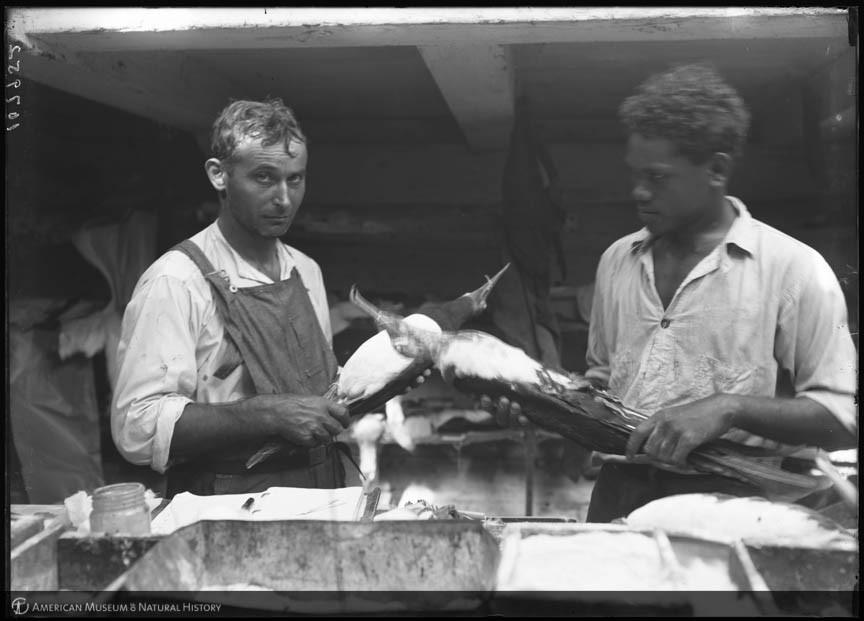
Black and white photo of two men working in a bird specimen preparatory setup.

“A workshop discussion: José G. Correia (left) with bird specimens aboard the France, Tuamotu [1920–1940],” Beck, Rollo Howard, 1870–1950 (photographer). AMNH Research Library | Digital Special Collections, accessed November 1, 2020. https://images.library.amnh.org/digital/index.php/items/show/60749.

From Humble Beginnings

Before embarking on scientific expeditions, José worked as a whaling cooper (where he met Murphy) and a textile worker. In fact, between stints with the American Museum of Natural History, he would unassumingly return to work as an operative at Kerr Mills of the American Thread Company in Fall River, Massachusetts. When asked by fellow workers where he had gone, he would smile and simply reply “just away.”¹⁰
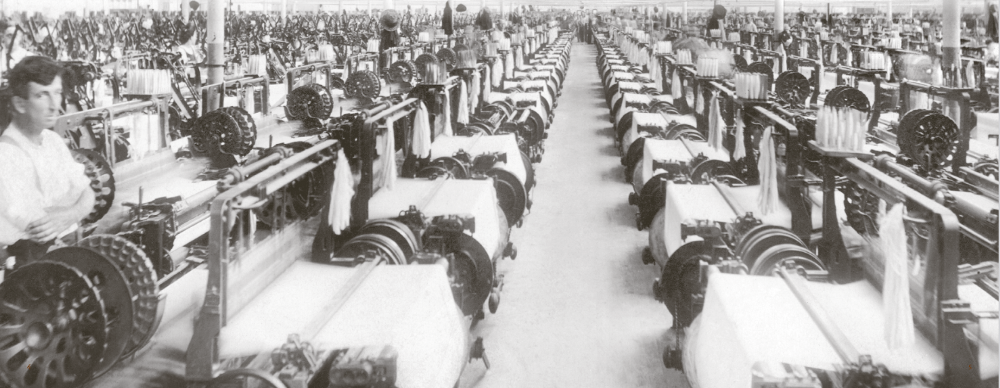
black and white photo of a textile mill weave room.

“Textile mill weave room. New Bedford, 1920”. Thomas, J., Sualniers, A., White, N., McCabe, N., & Avila, J. (Eds.). (2016). A Picture History of New Bedford (Vol. 2). Spinner Publications, Inc.

Correia’s humility came from memories of a very impoverished childhood. In his writings, he remarks that shoes were a luxury, reserved to be worn only “on feast days.” He was born in 1881, in Flamengos, a rural agrarian town on Faial, one of the nine islands in the Azorean archipelago. Like many Azorean youth, he had heard stories of America’s greatness from the Baleeiros (Azorean whalers), and he dreamed of the fabled land of opportunity.¹¹

At the age of 19, he left Faial and found warm welcome in New Bedford, Massachusetts, a burgeoning port city with a booming textile industry. The only thing José brought with him to America was a new suit, a sack of clothing, and his knowledge.¹¹ From his father, he had learnt the precise art of barrel-making and was taught the value of respect, dignity, and hard-work. These characteristics would serve him well throughout his life and helped him deal with both opportunity and tragedy. When he married Virginia in 1920, he was already a widower, having lost his first wife Rosa Silva in 1906 with whom he had one daughter, Mary.¹
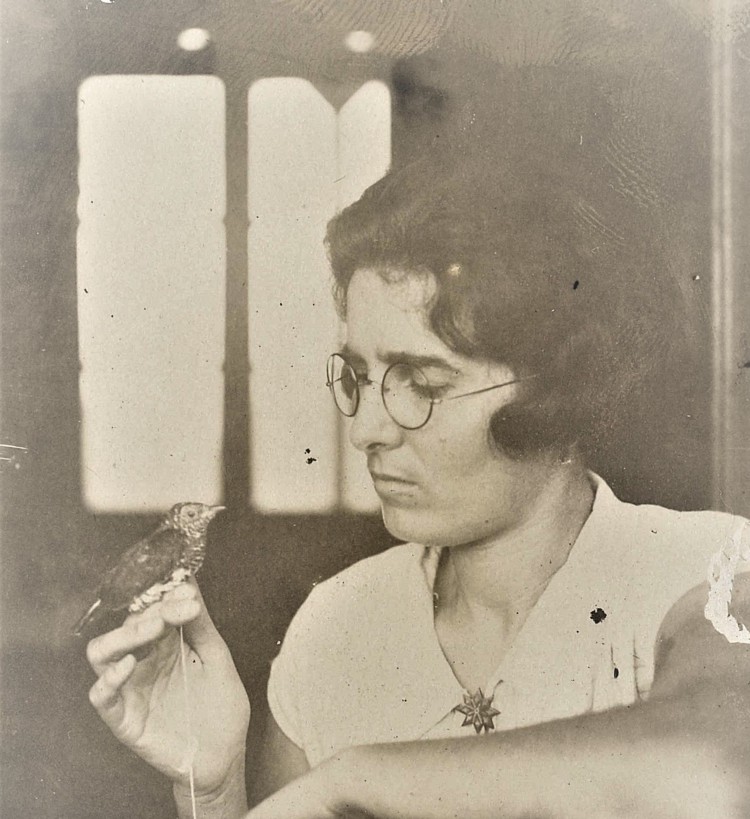
Black and white photo of a woman with short dark hair, wearing glasses, holding a bird.

“Virginia Correia”, Unknown (photographer). Department of Ornithology Archives, AMNH, accessed September 3, 2020.

Of Virginia Correia (née Aguiar), considerably less is known. Born in 1900 in Lajes, Terceira, Azores, she also immigrated to New Bedford at a young age.¹² Certainly she was a dedicated wife, joining her husband on difficult field expeditions and suffering all the aforementioned discomforts these journeys entailed.

Acting as her husband’s field assistant, she trained and became quite adept at the delicate art of preserving specimens. Character details can be gleaned from José’s journals, where he cites her as source of consistent strength and support. For example, during the Whitney South Sea Expedition, José and expedition lead, Rollo Beck, had seething enmity towards one another. José felt greatly disrespected by Beck and thought that the entire crew had turned against him under his influence. With a touch of sadness, he privately wrote, “The only person whom I can count on to help me is my wife. As for the others, I cannot rely on them.”

Nine years after his last expedition to South America20, a 73-year old Correia attended a party in New Bedford’s South End that would be his last. He was stricken by a heart attack and died on 26 April 1954.¹¹ Virginia would live out the rest of her life in their shared New Bedford home at 23 Harrison Street, passing in 1987.¹²

One million North Americans make up the Azorean diaspora — four times the current population of the islands.¹³ José and Virginia are representative of a distinctly intrepid sea-faring culture. In spite of ever-present danger, their adventurous spirit would take them to the farthest reaches of the globe. In that vein, the Correias would go on to build a dichotomous double-life: immigrant factory workers with intermittent scientific travels around the world in search of undocumented bird life.
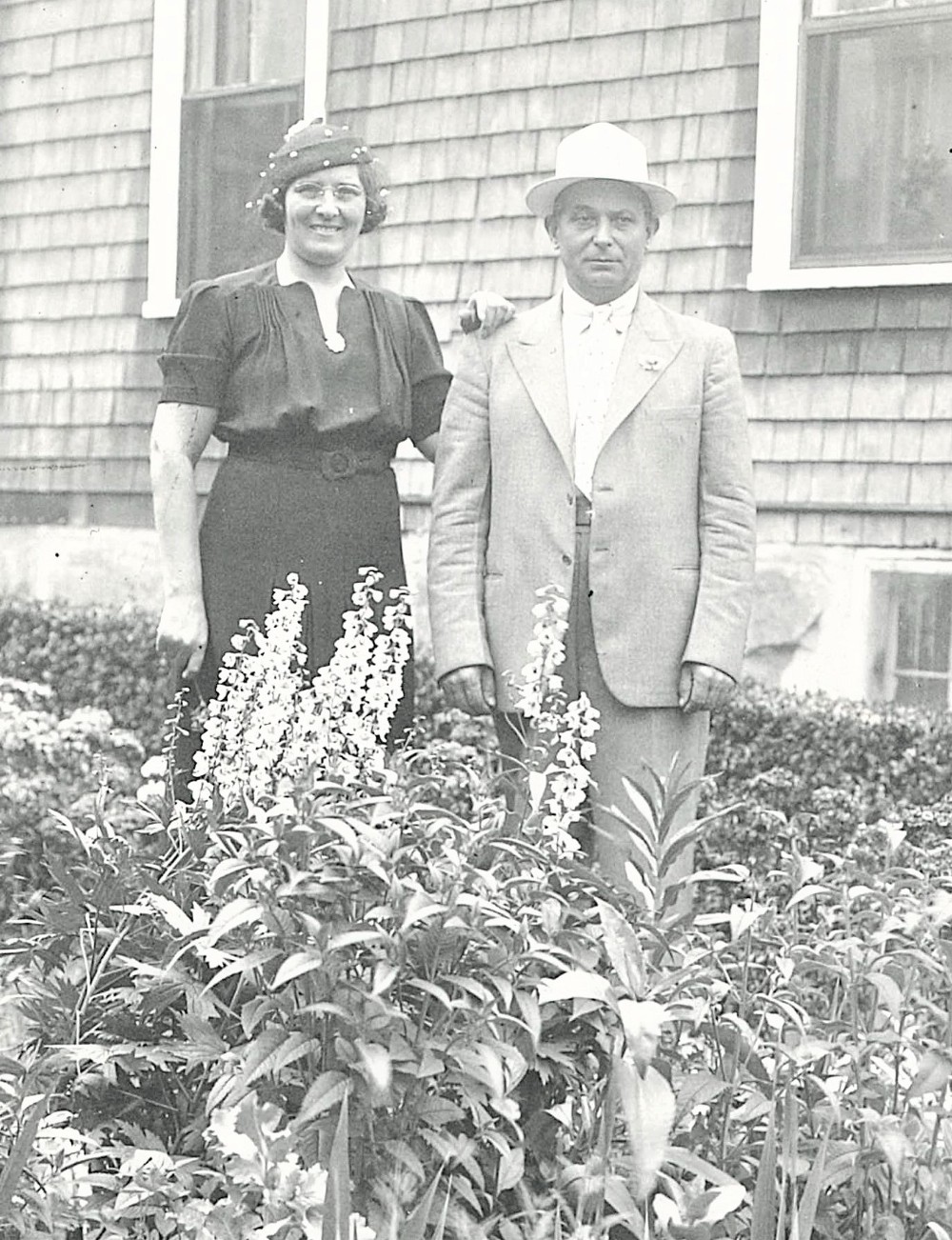
black and white photo of a woman and a man standing in a garden outside of a house.

“Virginia and José posing outside their home at 23 Harrison street, New Bedford, Massachusetts”. Unknown (photographer). Department of Ornithology Archives, AMNH, accessed September 3, 2020.

Despite strong ties to their homeland, they always came back to America — the place that had given them a life that “read like a fiction.”

Preserving the Correia Legacy

Over the course of their career, the Correias collected more than 10,000 bird specimens.¹⁴ Their efforts, alongside other historic field collectors, would help the American Museum of Natural History build one of the largest ornithology collections in the world.¹⁵ While the collection of wildlife specimens is controversial today, no longer done at this scale, these historic collecting efforts have provided the scientific foundation and necessary physical records for effective description and study of a species’ biology.¹⁶

The Whitney South Sea Expedition was the most extensive bird collecting expedition ever conceived at its time.⁷,¹⁷ The expedition spanned two decades, covered roughly one-third of the planet, and brought back over 40,000 specimens to the American Museum of Natural History.¹⁸ The scientific bounty has greatly enriched our understanding of the natural biota from the Pacific region.

Notably, Ernst Mayr’s seminal argument for geography’s role in the origin of new species draws on the study of bird specimens gathered by the expedition.⁷ More than six decades later, Jared Diamond and Ernst Mayr’s book Birds of Melanesia would use the specimens gathered by the expedition to provide the most comprehensive study to-date on how speciation occurs (the process by which new and distinct species evolve).

Paul Sweet, American Museum of Natural History’s Ornithology Collection Manager, believes the number of specimens contributed by the couple could be far greater than is currently recorded due to poor labeling. Curation efforts are ongoing to improve data accuracy. One such effort is mentoring high school students to transcribe location data from crew field notes. Through these efforts, the France’s journey through the Pacific is being precisely charted, providing an interactive journey of species sightings. Explore the project here.

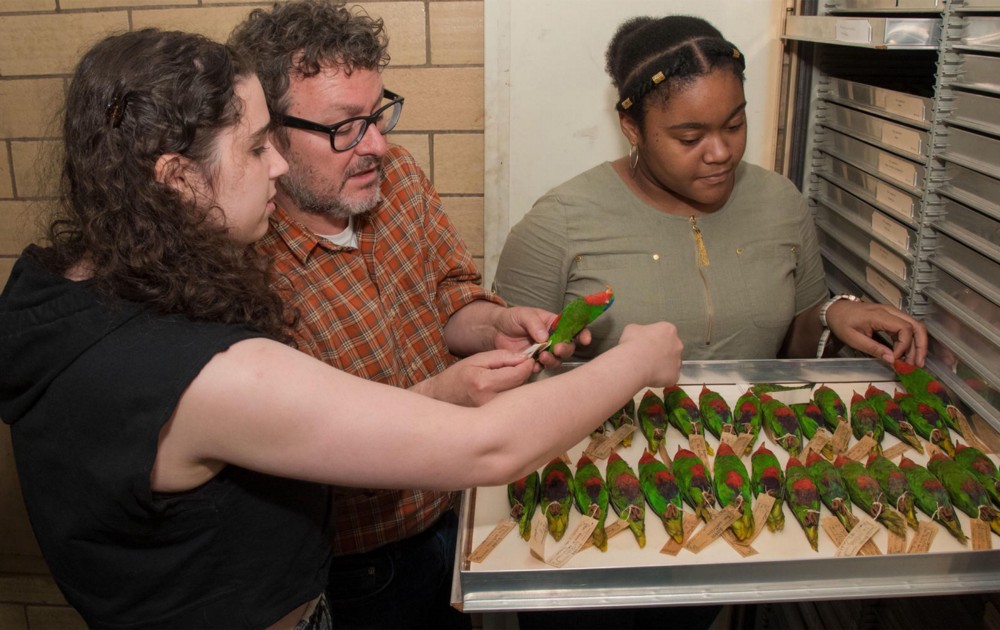
three people looking at an open drawer of green and red bird specimens

Regina Hashim (left) and Angelic Henry (right) inspect Blue-crowned Lorikeet specimens collected during the Whitney South Sea Expedition with AMNH ornithology collections manager Paul Sweet (center). Langas, A. (2019, June 6). A Treasure Trove of 40,000 Bird Specimens Brought to Light. Audubon. https://www.audubon.org/news/a-treasure-trove-40000-bird-specimens-brought-light.

Museum specimen collections are, in essence, great libraries of Life — still rich in discoveries waiting to be made and perhaps even holding the keys to understanding our current public health crisis.

“Museum collections contribute unique and invaluable insights to the study of pathogens, vectors of disease, and environmental contaminants. Moreover, these collections have played a crucial role in fields at the forefront of the biological sciences, including the study of biodiversity and its loss, biological invasions, and global climate change. We argue that the storage and maintenance of museum collections is inexpensive compared with the potential costs of their absence.”¹⁹

To honor the great personal sacrifices made by historic field collectors like José and Virginia Correia, the call is being made to support the ongoing maintenance and digitization of museum collections. Their enduring utility should not be forgotten in these uncertain times. Museums across the country are facing difficult decisions and budget shortfalls due to the COVID-19 pandemic, and the ongoing preservation and maintenance of these hard-won collections hangs in the balance.

•     •     •
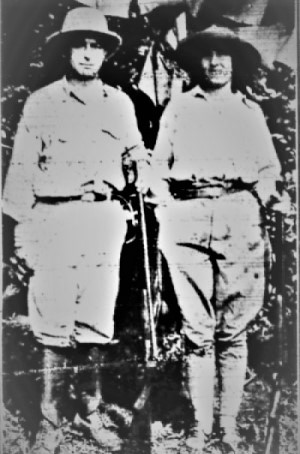
black and white photo of a man and woman in expedition clothing standing in a jungle.

The Correias about to enter the heart of the African jungle. “New Bedford Man, Off On 4-year Expedition for Museum, Has Life Reading Like Fiction.” (1936, September 16). Standard-Times (New Bedford), p. 3.

If you would like to honor Virginia and José Correia’s life’s work, consider making a gift to BHL to ensure that the historic data contained in field notes and scientific publications are freely available to support ongoing research around the world. You can also support the ongoing maintenance of museum collections by donating to natural history institutions like the American Museum of Natural History.

Acknowledgements

This story was made possible by a CLIR Digitizing Hidden Special Collections and Archives Grant, which provided funding to the American Museum of Natural History (AMNH) and the Biodiversity Heritage Library to digitize the Whitney South Sea Expedition (1920–1941) field notes. A personal thanks to Grace Costantino, BHL’s Outreach and Communication Manager, and Erin Willigan for the opportunity to showcase this untold story. Thanks also to Paul Sweet, Thomas Trombone, and Mai Reitmeyer at AMNH for providing primary source materials, data, and most importantly, their time. To the librarians at the Peabody Essex Museum, the New Bedford Whaling Museum, and the New Bedford Free Public Library, who helped tracked down difficult to find newspaper articles and books, thank you.

References

[1] Shatzman, C. (2016, November 7). Correia, José G., 1881–1954. Retrieved October 10, 2020, from https://data.library.amnh.org/archives-authorities/id/amnhp_1000443.
[2] Correia, J. (1930–1941). Whitney South Sea Expedition of the American Museum of Natural History. The Biodiversity Heritage Library. https://www.biodiversitylibrary.org/bibliography/121444.
[3] New Bedford Man, Off On 4-year Expedition for Museum, Has Life Reading Like Fiction. (1936, September 16). Standard-Times (New Bedford), p. 3.
[4] Correia, J. (1930–1941). Whitney South Sea Expedition of the American Museum of Natural History. v. 2. The Biodiversity Heritage Library. https://www.biodiversitylibrary.org/item/214343.
[5] Mayr, E. (n.d.). Joining the Whitney expedition. Web of Stories. Retrieved October 30, 2020, from https://www.webofstories.com/play/ernst.mayr/13.
[6] Murphy, R. (1936). Oceanic birds of South America : a study of species of the related coasts and seas, including the American quadrant of Antarctica, based upon the Brewster-Sanford collection in the American Museum of Natural History. The Biodiversity Heritage Library. p. 6. https://www.biodiversitylibrary.org/page/12471284.
[7] American Museum of Natural History. (2019). American Museum of Natural History | Research Library | Authorities | Expeditions [Dataset]. https://data.library.amnh.org/archives-authorities/results/?q=recordId:*amnhc_2*.
[8] Beck, R. H. (1930–1941). Whitney South Sea Expedition of the American Museum of Natural History. The Biodiversity Heritage Library. https://www.biodiversitylibrary.org/page/52734313.
[9] Murphy, R. C. (1965). Logbook for Grace. Time, Inc.
[10] Local Mill Operative Also Is Bird Expert for Scientific Expeditions. (1941 July 6). Standard-Times (New Bedford),p. 7.
[11] Agostinho, J. (1952). Um Emigrante Acoriano Jose Goncalves Correia. Boletim Do Instituto Historico, no.10, 204–238. http://ihit.pt/codeigniter/assets/upload/pdf/e3a418659d67d6609e2e58e7210779cb.pdf.
[12] Shatzman, C. (2016, November 7). Correia, José G., Mrs, 1900–1987. Retrieved October 10, 2020, from https://data.library.amnh.org/archives-authorities/id/amnhp_1002477.
[13] Minder, R. (2015, June 4). Azorean Diaspora Can’t Resist the Powerful Pull of Home. The New York Times. https://www.nytimes.com/2015/06/05/world/europe/azores-diaspora-holy-christ-of-miracles.html.
[14] Search: Collector “Correia”. (2006). Retrieved October 10, 2020, from https://sci-web-001.amnh.org/db/emuwebamnh.
[15] Research: Ornithology | AMNH. (2020). American Museum of Natural History. https://www.amnh.org/research/vertebrate-zoology/ornithology.
[16] Newton, B. E. (2017, January 9). Is specimen collecting justified? Lateral Magazine. http://www.lateralmag.com/articles/issue-18/is-specimen-collecting-justified.
[17] American Museum of Natural History. (1923). Annual report of the American Museum of Natural History for the year. Biodiversity Heritage Library. https://www.biodiversitylibrary.org/item/137096.
[18] Giraldo, S. (2016, October 20). Mapping the historical biodiversity of the Solomon Islands with the American Museum of Natural History. CARTO Blog. https://carto.com/blog/mapping-solomon-islands/.
[19] Suarez and Tstutsi. (2004). The Value of Museum Collections for Research and Society. BioScience, 54(1), 66. https://doi.org/10.1641/0006-3568(2004)054[0066:TVOMCF]2.0.CO;2.
[20] Newell, G. (2020, January 8). Askoy Expedition (1941-1945). Retrieved 24 November, 2020, from https://data.library.amnh.org/archives-authorities/id/amnhc_2000430.

December 3, 2020by [email protected]
Blog Reel, Featured Books

Two Hand-Painted Volumes of Coleoptera Illustrated by Francis du Boulay

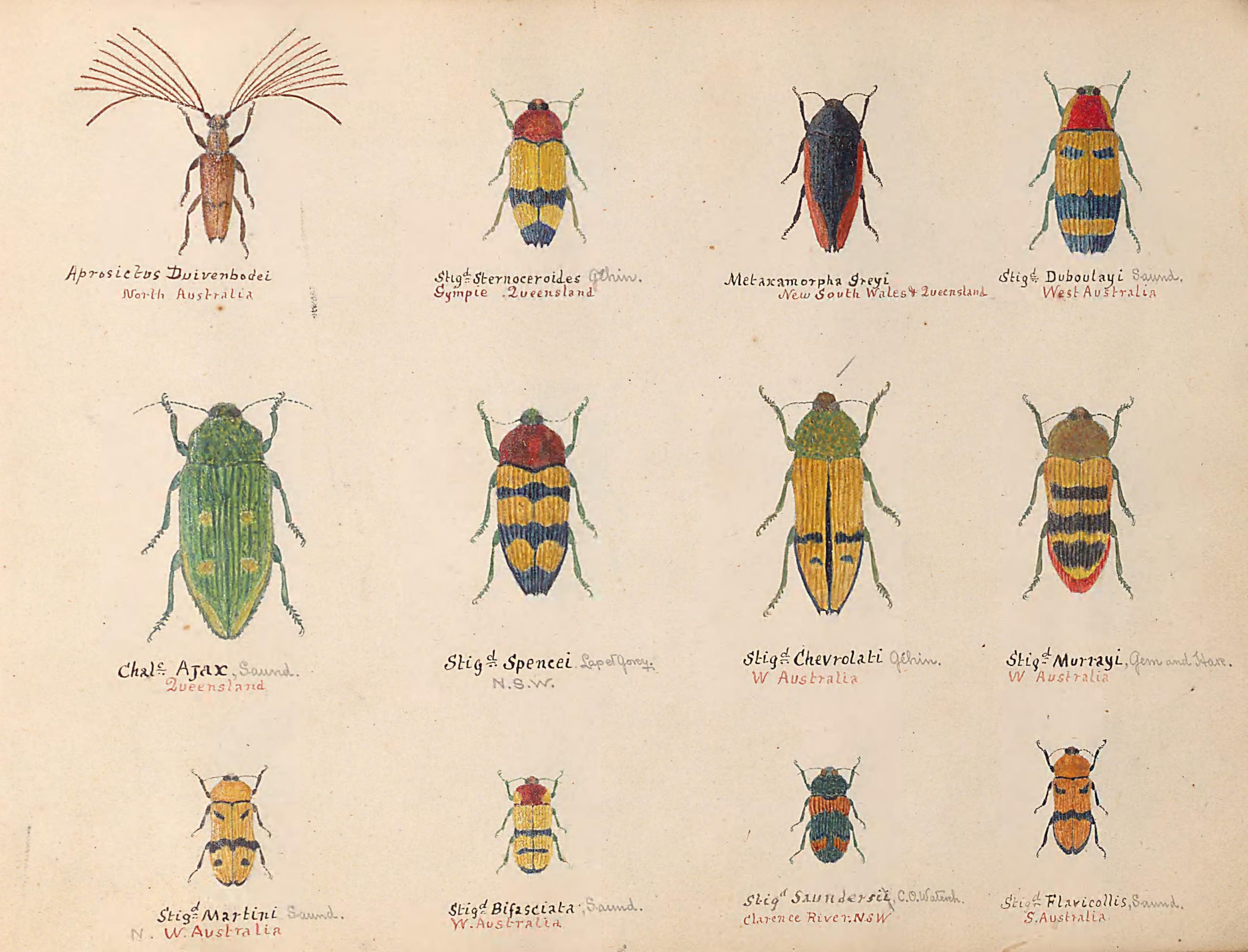
twelve colorful hand-drawn beetles

Seventh page of illustrations in volume one of a hand-painted volume of Coleoptera illustrated by Francis du Boulay, c.1880 – 1890 / Collection: OLDERSYSTEM~03048, Museums Victoria Archives / Source: Biodiversity Heritage Library.

Earlier this year Dr. Simon Leslie, Francis Houssemayne du Boulay’s great-grandson, contacted Melbourne Museum about accessing du Boulay’s hand-painted Coleoptera volumes, held in the Museums Victoria Archives. Dr. Leslie and family accessed the physical volumes in February 2020. While I carefully supervised flipping through the pages of these volumes, I was intrigued by their aesthetic, and scientific and historic, value. Since then, the volumes have been digitised by Biodiversity Heritage Library (BHL) Australia.
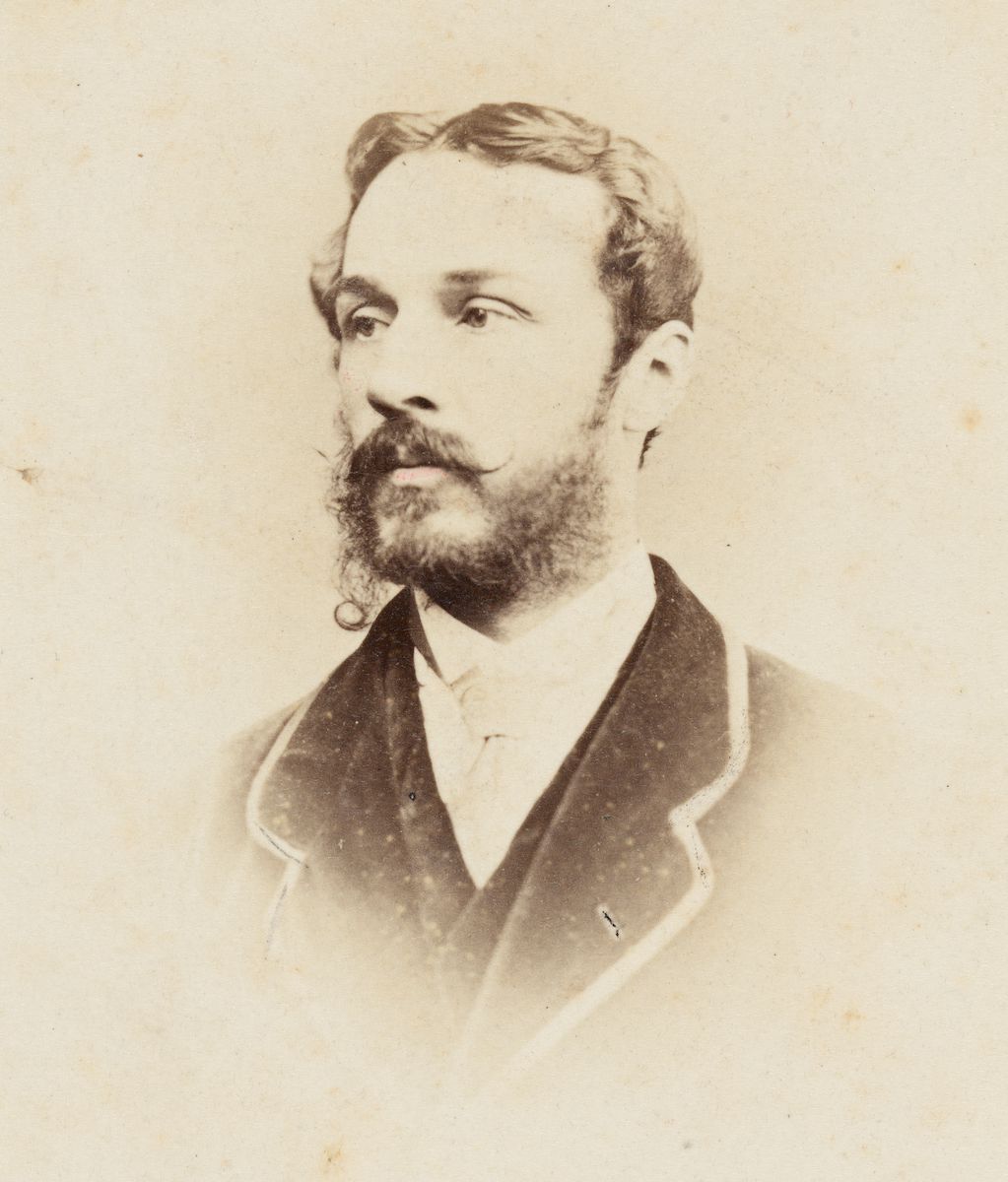
black and white portrait of a person with a short beard.

Portrait of Francis Houssemayne du Boulay, n.d. / Photographer: J. Fisher / Source: Accession number 2009.75, National Portrait Gallery, Australia.

Francis Houssemayne du Boulay was born in Sandgate, Kent, on 24 January 1837. As a young man in his early 20s, he migrated to Perth (c.1858). A scientist, entomologist, natural history artist, and Coleoptera (beetle) collector, du Boulay began to collect specimens in locations around Western Australia, Queensland, New South Wales, Victoria, and other parts of Australia. He settled in Beechworth, Victoria, where he lived out the rest of his life; du Boulay passed away on 12 January 1914.

In volume one of du Boulay’s hand-painted Coleoptera volumes, inside the front cover, is a handwritten inscription in ink, “F. H. Du Boulay 1880”. Du Boulay commenced work on the volume in 1880; however, it is likely that the work continued for several years. The cover also features a note handwritten in pencil, “Names in lead pencil inserted by H. M. Giles W. Australia (Du Boulay)”. Annotations inscribed in pencil are corrections by Henry Murray Giles, who assisted du Boulay in identifying scientific names of specimens. Giles worked as a Resident Keeper (1898) and later Head Keeper (1909 – 1910) at the Zoological Gardens, South Perth, Western Australia. Giles wrote an article in the Western Australian Year-Book for 1900-01 entitled “A Glimpse of Western Australian Entomology” (see pp. 285-297).

A total of 179 Coleoptera specimens are illustrated in volume one. Locations are noted where the specimens occur; however, the locations often only indicate the state where they were collected, for example New South Wales, Victoria, Queensland, Western Australia, South Australia; or a town or city, for example Cape York, Cardwell, Rockhampton, Brisbane. Some specimens identify the sex. It would be interesting to note if the colours used are scientifically accurate. Are the specimens drawn to scale? This would require the physical volume and specimens for comparison.

On the back of the volume is a sketch, in pencil, of a childlike illustration of a man, which is accompanied by an inscription, “W. Du Boulay”. This is an illustration of Francis du Boulay’s brother William, who was a fellow naturalist and collector. The yellow cover of the volume inscribed “DRAWING BOOK E. R. COLE BOOKSELLER AND STATIONER, SYDNEY” is well used, worn and has many inkblots. It has evidence of accompanying du Boulay in the field on his collecting trips around Australia.

Volume two is also well worn with inkblots on the cover. It has a leather-bound spine and leather corners protect the cover; otherwise the volume has no distinguishing features or title page. As in volume one, the specimen illustrations are printed, then hand coloured. Not all of the specimens are identified with their scientific names. The illustrations appear to be to scale. Specimens are illustrated from a dorsal perspective. Locations of where the specimens were collected are sometimes documented. Again as in volume one, the location is only noted from which state, for example, Queensland, Western Australia, Northern Territory, South Australia, New South Wales; or towns, cities, waterways or mountain ranges, for example Blue Mountains, Richmond River, Ropes Creek, Thompson River, Cairns, Coopers Creek, Cape York, Cooktown, Princess Charlotte Bay, Cleveland Bay, Port Mackay. The sex of the specimen is also sometimes identified.

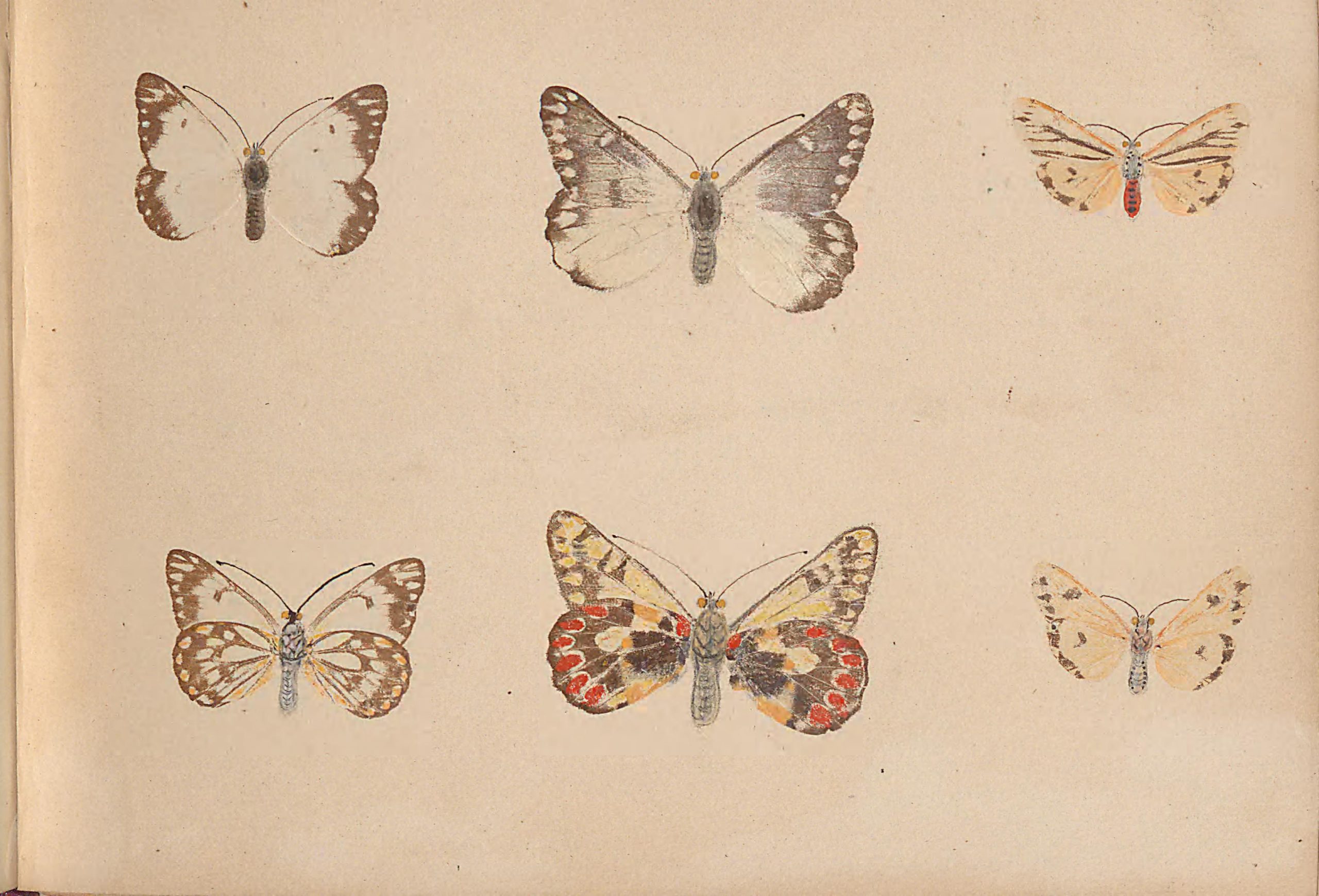
six hand-drawn butterfly illustrations

Twelfth page of illustrations in volume two of a hand-painted volume of Coleoptera illustrated by Francis du Boulay, c.1880 – 1890 / Collection: OLDERSYSTEM~03048, Museums Victoria Archives / Source: Biodiversity Heritage Library.

While carefully presenting these volumes to Dr. Leslie, we were both surprised to come across several pages in the second volume containing beautiful Lepidoptera illustrations. Twenty-one Lepidoptera specimens are beautifully illustrated, but unfortunately do not include their scientific names or the locations where they were collected. Simon Hinkley, Collection Manager in Entomology at Museums Victoria, noted that the “Lepidoptera illustrated are detailed enough for identification purposes, for instance, the bottom left corner [see above] is a Caper White and the bottom middle specimen is a Spotted Jezebel.”

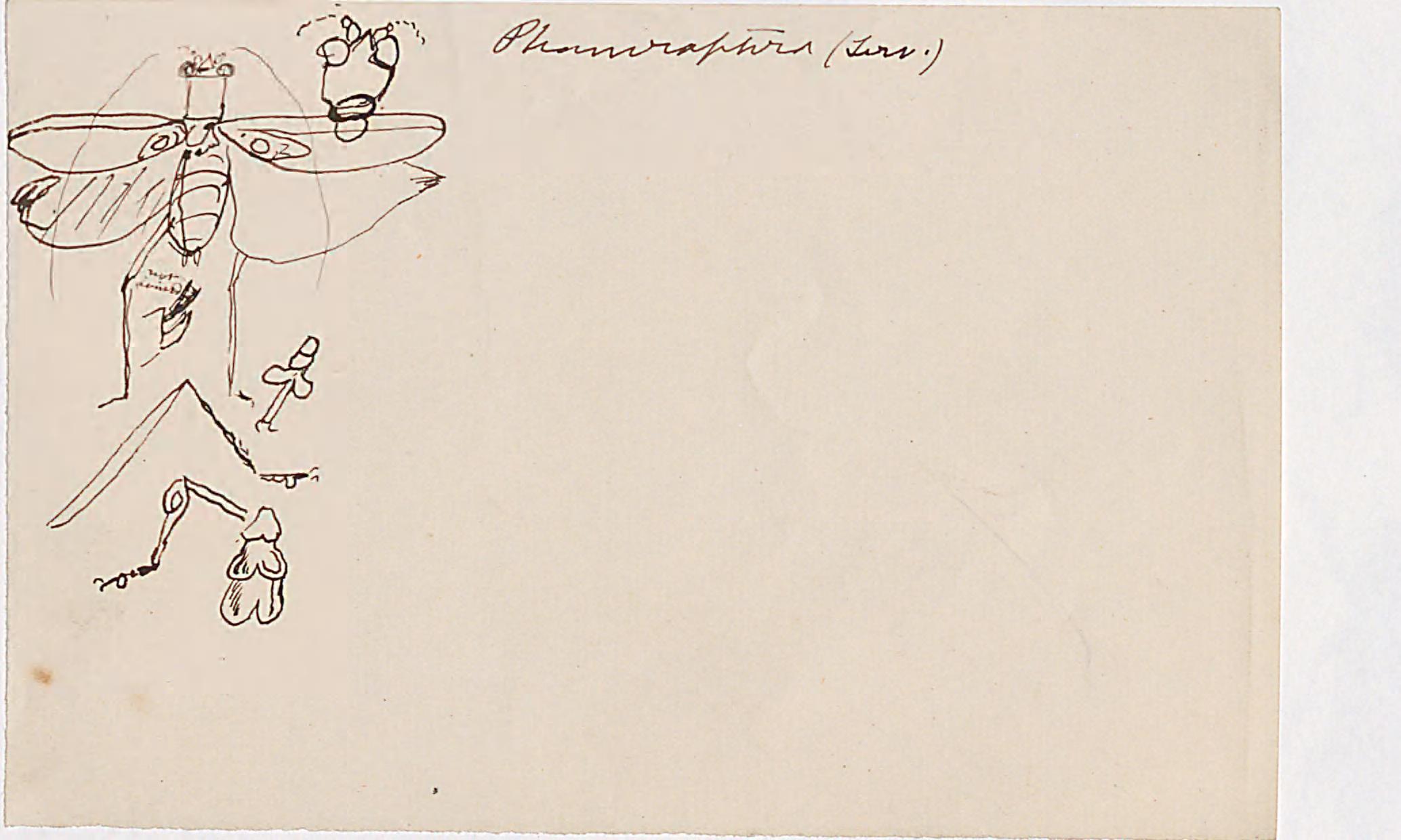
rough black ink line drawing of beetles

Fifteenth page, loose rough sketch and inscription by Professor Frederick McCoy, first director of the National Museum of Victoria, interleafed in volume two of a hand-painted volume of Coleoptera illustrated by Francis du Boulay, c.1880 – 1890 / Collection: OLDERSYSTEM~03048, Museums Victoria Archives / Source: Biodiversity Heritage Library.

Dr. Thomas Darragh, Curator Emeritus at Museums Victoria, identified the loose sheet of paper interleafed in volume two, see above, as Professor Frederick McCoy’s handwriting. McCoy was the first director of the National Museum of Victoria, predecessor of Museums Victoria (1854 – 1899). While not an entomologist, he was a paleontologist, geologist, zoologist, academic and keen collector for the National Museum of Victoria, and he was clearly interested in this volume, enough to incorporate a rough sketch of a “Phaneroptera (Serv)”. Simon Hinkley noted the Phaneroptera is an old genus name of katydids in the subfamily Phaneropterinae and was described by Jean Guillaume Audinet-Serville in 1831.

Volume two includes a loose letter with illustrations of beetles from “Mr. Span, Rooke’s Farm, West Drayton, Middlesex”. The letter includes illustrations of two specimens from North Queensland—one from New South Wales and one from the “Interior of Continent.” An inscription below the address on the letter, written in pencil, “Compared with British Mus. Specimens by Mr Span for Mr Du Boulay”, notes that specimens held by the British Museum have been compared with specimens collected by du Boulay. A few pages following the loose letter is a specimen that has been hand-drawn from the dorsal and cross section with inscription “Schizorhina Mnizechii Larry” (an unpublished name), and beside this is an inscription, “Drawings by Mr Span from originals in Brit. Museum”.

Some of the specimen illustrations in volume two include cross-sections of the heads and magnified studies of the legs. Volume two has a total of 220 Coleoptera and 21 Lepidoptera illustrations, compared to a total of 179 Coleoptera specimens illustrated in volume one.

The National Museum of Victoria purchased several Coleoptera specimens from Francis du Boulay and his brother William (1880-1912), such as the beautiful Castiarina erasma (Carter, 1935), Dilochrosis atripennis (Macleay, 1863), and Castiarina balteata (Saunders, 1869).

Du Boulay’s Coleoptera volumes are significant documents of historical collecting with important scientific information for contemporary scientists. Now that the volumes are available on the BHL website, scientists can benefit from the historical and scientific data on Coleoptera collected by Francis du Boulay from locations across Australia in the late nineteenth century.

September 24, 2020by Joel Richard
Blog Reel, Featured Books

An Annotated Copy of Butterflies of Australia by Waterhouse and Lyell (1914)

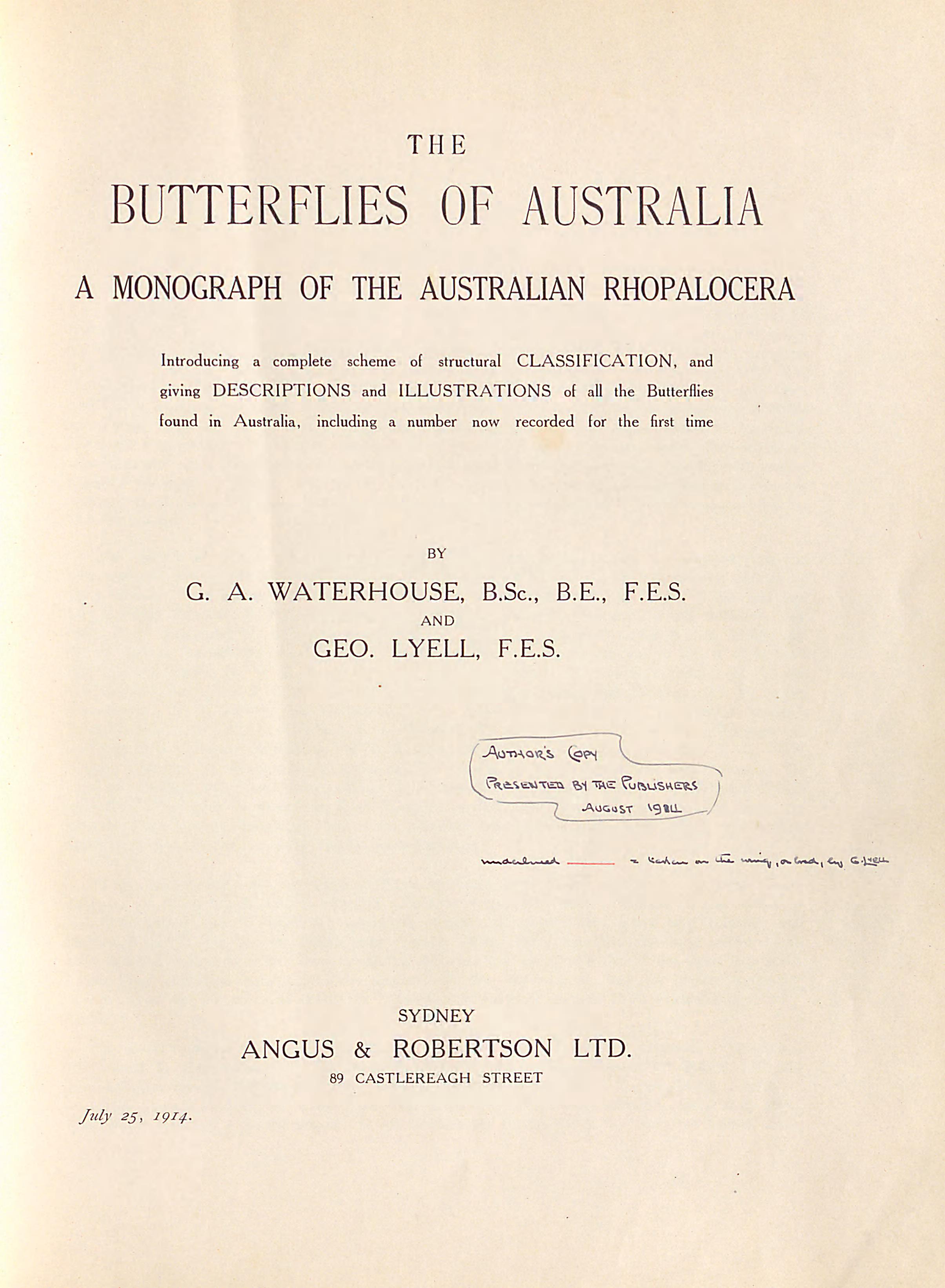
Published in 1914, Butterflies of Australia by Gustavus Athol Waterhouse and George Lyell was the first comprehensive work on Australian butterflies to appear in Western scientific literature. It is a thick and rather chunky volume, with descriptions of 332 butterfly species, and was the product of many years of research. The copy held in Museums Victoria’s Rare Book Collection is even thicker than a standard issue, as it is bound with lined pages interleaved throughout. It is an author’s copy, owned and annotated by George Lyell.

1. Inscription Lyell.jpg

Title page of annotated author’s copy of Butterflies of Australia (1914.) Contributed in BHL by Museums Victoria.

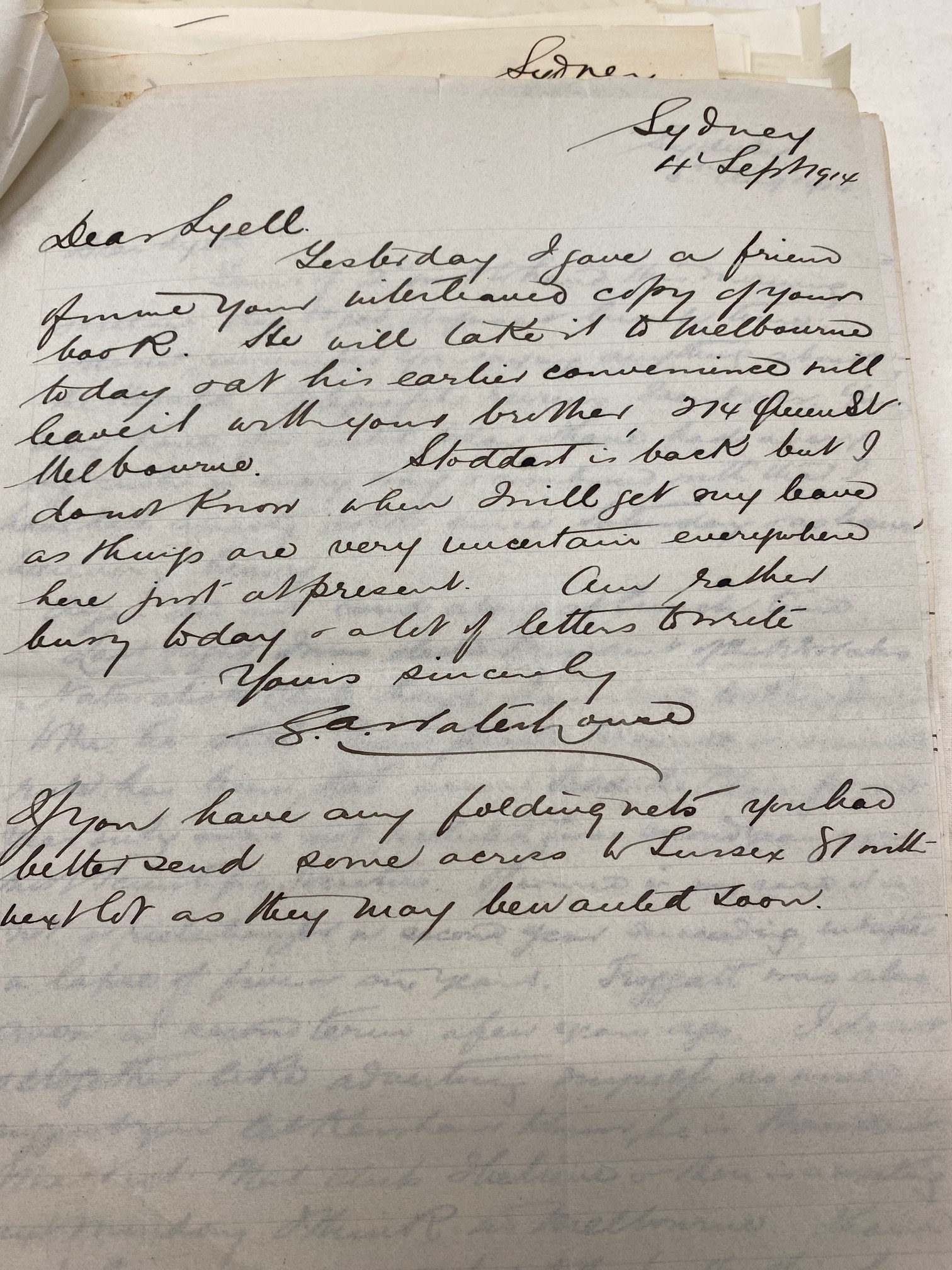
Lyell and Waterhouse worked on the book separated by some distance; Lyell’s location in Gisborne, Victoria was 862km (536 miles) away from Waterhouse’s residence in Sydney. They corresponded regularly via mail, and the Museums Victoria Archives now houses some 400 of Lyell’s letters from Waterhouse, which came to the museum with Lyell’s extensive donation of butterflies and moths in 1932. In 2019 a McCoy Seed Fund project enabled further exploration of the archival material to see what it could reveal about the scientists’ collaboration and Lyell’s collection. It also shed some light on the annotated copy in our collection.

The archival material reveals that their publisher, Angus & Robertson, prepared the handsome interleaved copy for Lyell and gave it to Waterhouse to pass on. In a letter dated 28 August 1914 Waterhouse writes “I have the interleaved copy for you, but it is much too bulky & too nicely done to trust to the post” (OLDERSYSTEM~03030, Museums Victoria Archives). Instead Waterhouse entrusted the volume to friend E. H. Proctor to give to Lyell’s brother in Melbourne.

Letter to Lyell.jpg

Letter to George Lyell from his co-author and friend G. A. Waterhouse. Photo Credit: Hayley Webster / Source: Museums Victoria.

Their correspondence also demonstrates how carefully they considered every aspect of the publication. For instance, a letter to Lyell on 20 March 1914 states “I like very much the black headings as they seem to show the divisions at a glance & generally speaking I like the size of the type” (OLDERSYSTEM~03030, Museums Victoria Archives), showing that the typography was carefully considered for readability. Waterhouse was pleased with the plates, writing on 4 Feb 1914 “Dear Lyell, Coloured plate no. 1 is glorious, magnificent drawings, just showed it to [Allan Riverstone] McCulloch who was delighted with it” (OLDERSYSTEM~03030, Museums Victoria Archives).

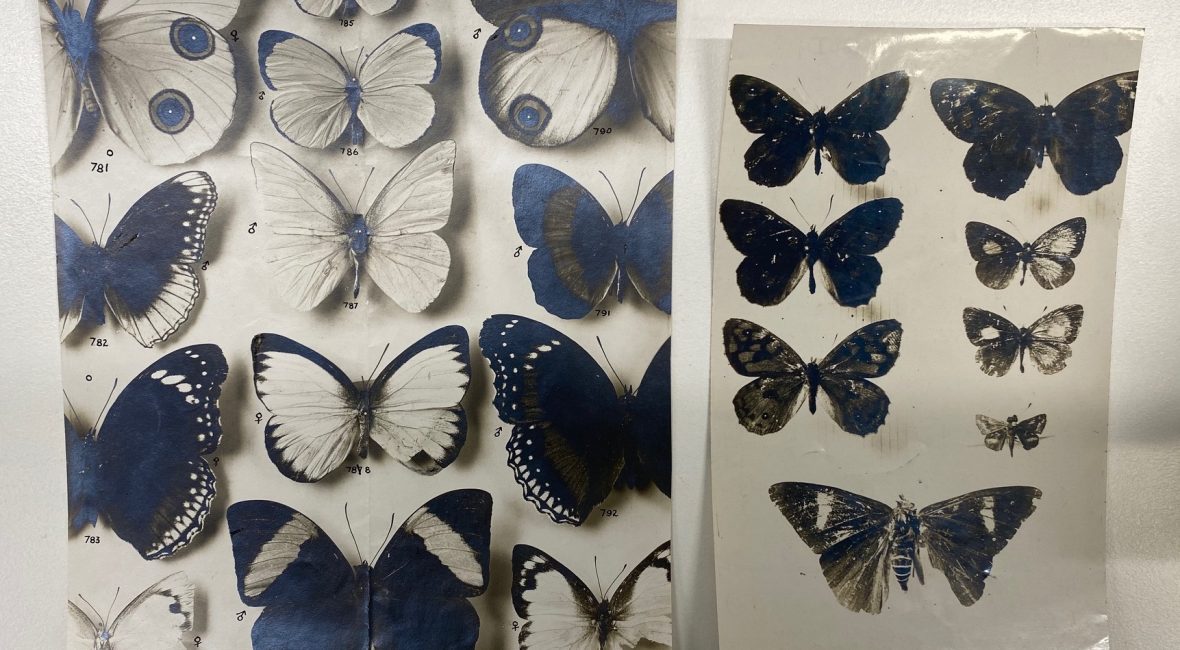
The illustrations are a combination of original drawings and photographic reproductions: original coloured plates by H. W. Simmonds, drawings of larvae and pupae by Miss J. Kong Sing, and the remaining are from photographs by Henry King. Butterflies of Australia includes 43 plates, and a total of 888 illustrations; its considerable scope and detail was considered very helpful by scientists and collectors when the book was published.

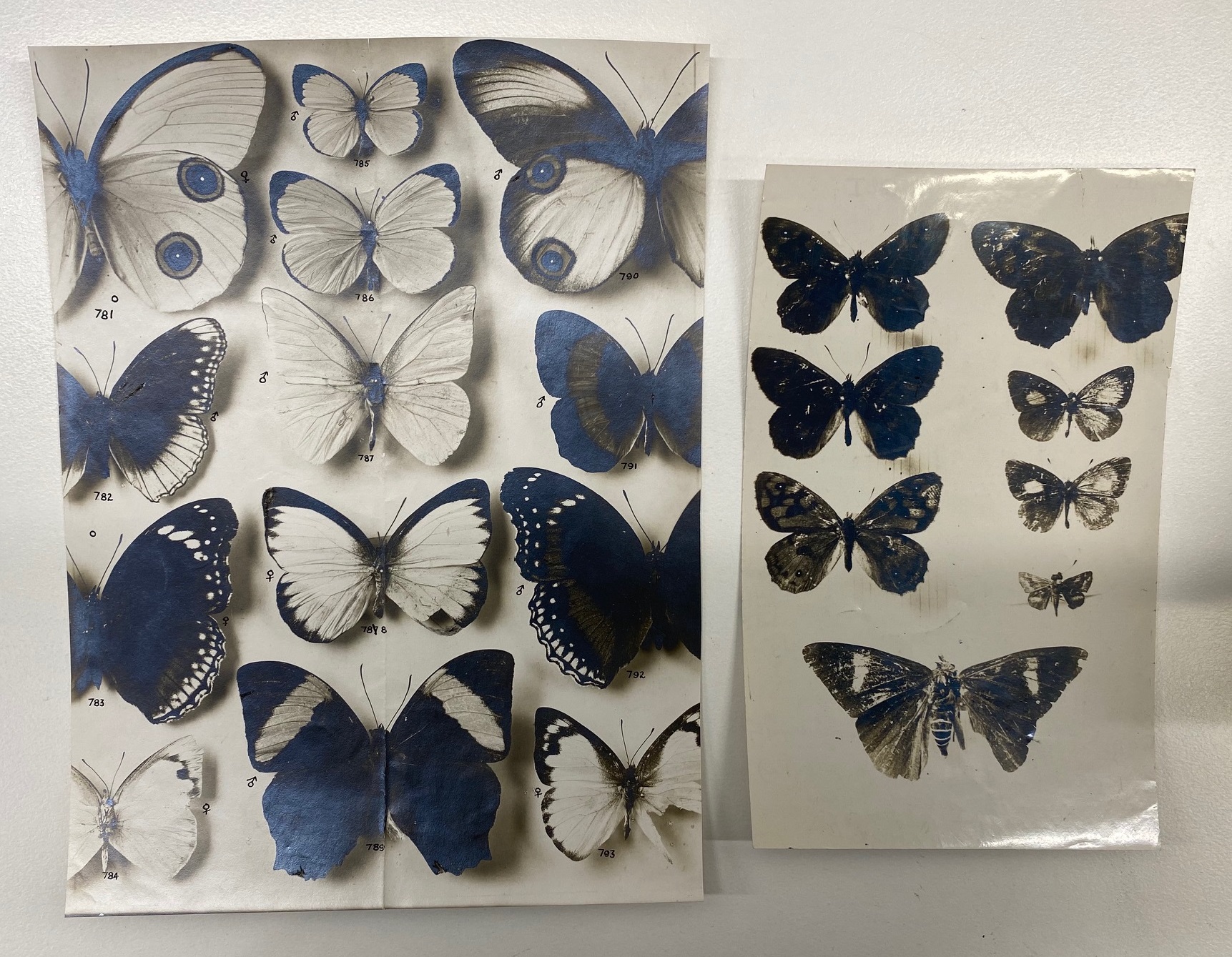
As Museums Victoria Archivist Nik McGrath recounts, Waterhouse destroyed his letters after entering the relevant scientific data onto index cards. While this might seem like a curiously destructive working method, it is not unheard of; researchers working with Charles Darwin’s correspondence have noted that he crossed out personal matters in his letters so he would not be distracted if he needed to return to them for scientific purposes [1]. In this case, in spite of the loss of Lyell’s letters, we retain a lot of the archival material relating to the book including a manuscript, index cards from Waterhouse, notebooks, proofs, black and white photographs of specimens used by illustrators for the book, specimen lists, and newspaper clippings of book reviews.

Butterfly photos.jpg

Along with many others, these photographs of butterflies were used to develop the illustrations for Butterflies of Australia. Photo Credit: Hayley Webster / Source: Museums Victoria.

In addition to looking at the archival material, an examination of the book itself is also revealing. Annotations are dated throughout the 1910s and 1920s and most appear to record sightings. In the introduction to the work, Waterhouse and Lyell note of the geographical focus of their study: “We are hoping this work will serve to indicate the need and point to that direction, and so induce collectors to aid us: we are carefully tabulating every verified record reaching us, and will much appreciate dated specimens for examination and return, especially those from points distant from localities given in our list.”

Lyell is systematic in his approach to annotations, including roughly the same information and formatting for each entry. The marginalia primarily consists of locations added to specimen descriptions, often dated, and sometimes includes a number, gender, and occasionally an elevation.

elevation crop.jpg

The initials GAW frequently appear throughout, and refer to Lyell’s co-author Gustavus Athol Waterhouse. Here Lyell notes that the species is “very plentiful at 5000ft diminishing to 4500 none lower, only few at 6000ft”. Annotated copy of Butterflies of Australia. Contributed in BHL by Museums Victoria.

There are also often initials entered next to the information, which relate to the person collecting the data, as you can see in the example above.

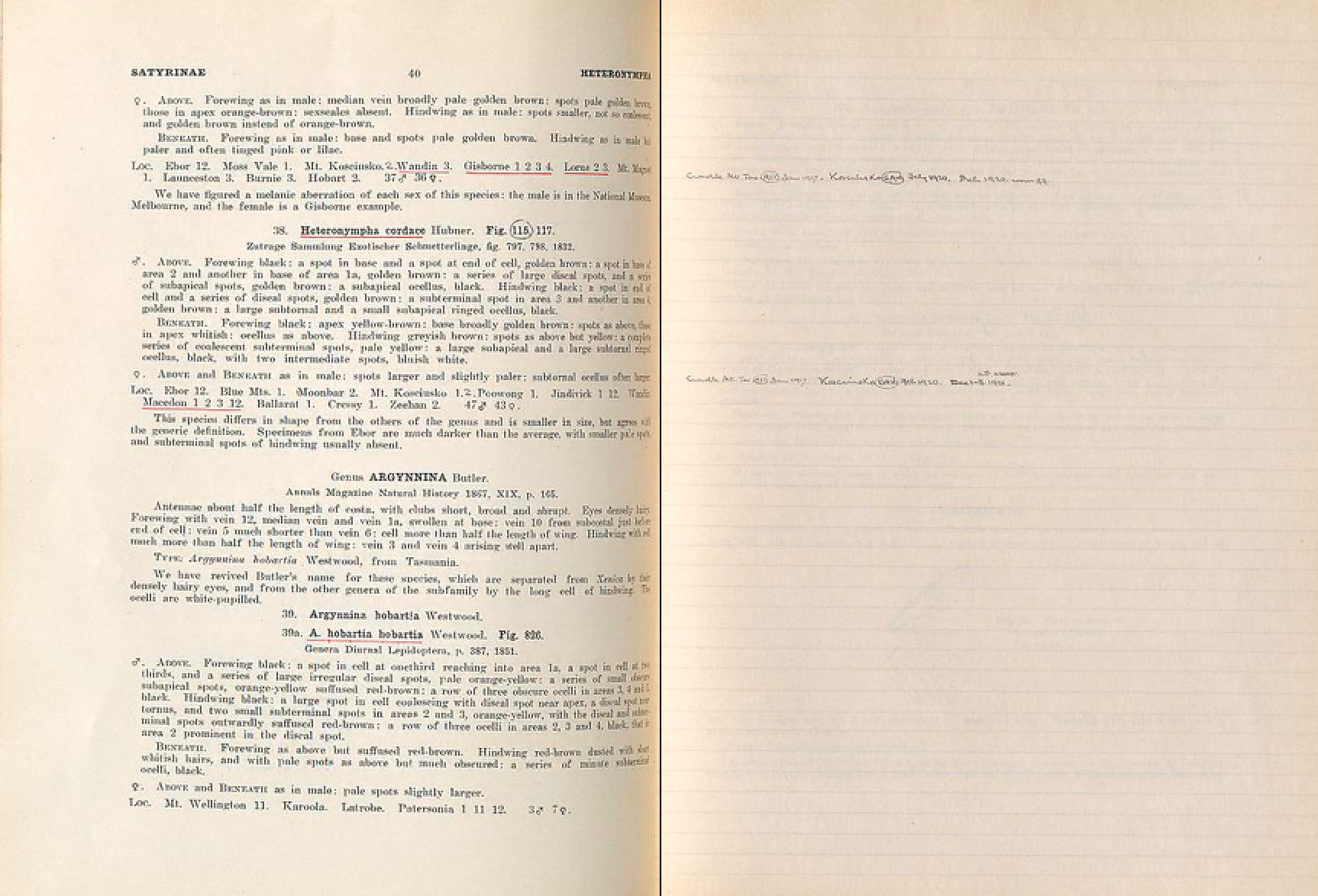
The annotations use a similar approach from the beginning to end of the text; Lyell underlines the printed text in pen, circling the relevant figure numbers, and then notes the date, locations and other data on the interleaved pages.

This is a typical example of how Lyell annotated his copy of Butterflies of Australia, underlining the relevant information and then adding details to the opposite interleaved page. Contributed in BHL by Museums Victoria.

Though the method of data entry is reasonably consistent, there are noticeable changes in ink, indicating that Lyell completed the annotations across a period of time. It would appear that Lyell was copying across data from other sources such as his own field notes and correspondence from other scientists as he received it.

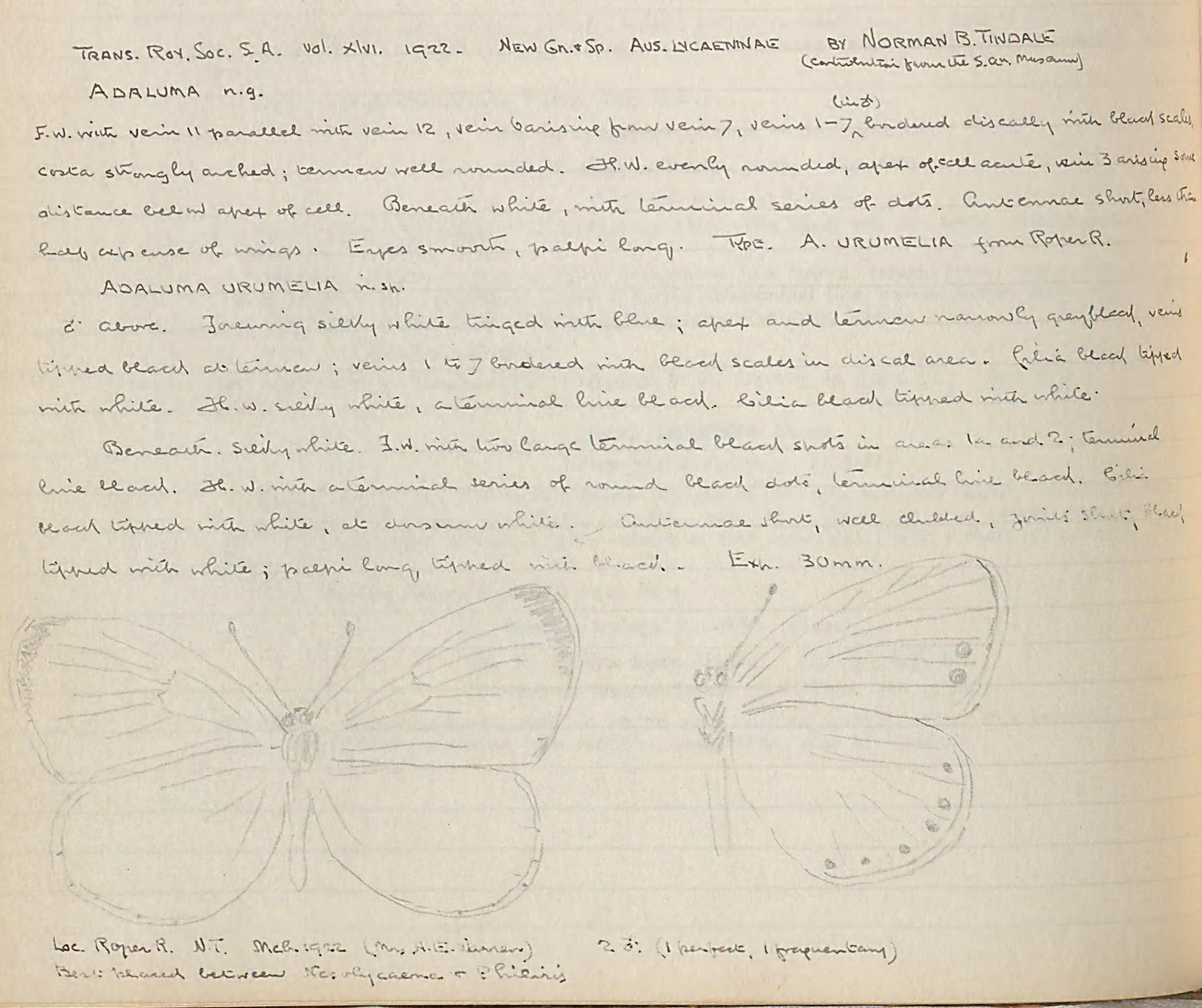
Lyell’s marginalia mainly seems to record observational data, but occasionally includes a reference to secondary reference material. One reference appears to have been copied in its entirety—this is Norman Tyndale’s description of Lycaeninae adaluma from the Transactions of the Royal Society of South Australia in 1922. Tyndale’s description references Waterhouse and Lyell’s work, and suggests a placement of the new species within their system. The placement suggested corresponds to where Lyell has copied in the description.

Revised description crop.jpg

The annotation replicates Tyndale’s description of Lycaeninae adaluma and includes a sketch of the species. Annotated copy of Butterflies of Australia. Contributed in BHL by Museums Victoria.

What exactly was Lyell doing with his annotations? It appears he was using the book to record ongoing research by himself and a group of naturalists across the east coast of Australia. H. J. Jackson notes in Romantic Readers that the practice of interleaving in books by scientists originated in earlier educational practices [2]. I have certainly come across other similar examples in the Museums Victoria Library. It is notable that Lyell’s annotations drop off after the early 1930s. He suffered an illness in 1931 that led to his decision to deposit his collection with the National Museum of Victoria. The rest of his life was dedicated to preparing his collection for transfer to the museum, and this seems to correlate to a decline in annotating.

References

  1. Gregorio, Mario A. & Gill, N. (1990) Charles Darwin’s Marginalia Vol. 1, New York, Garland, p. xiv.
  2. Jackson, H. J, (2005) Romantic Readers: the Evidence of Marginalia, New Haven & London, Yale University Press, p. 84.

Bibliography

Administration – George A. Lyell – Internal Correspondence 1891-1947- Waterhouse, G. A – Museums Victoria Archives, National Museum of Victoria OLDERSYSTEM~03030

Gregorio, Mario A. & Gill, N. (1990) Charles Darwin’s Marginalia Vol. 1, New York, Garland.

Jackson, H. J. (2005) Romantic Readers: the Evidence of Marginalia, New Haven & London, Yale University Press.

McGrath, Nik (2019) Kindred Spirits, Museums Victoria Blog, Retrieved from https://museumsvictoria.com.au/article/kindred-spirits/

McGrath, Nik (2019), Butterflies of the night, University of Melbourne Blog, Retrieved from https://blogs.unimelb.edu.au/insect-museum-collection/2019/01/30/butterflies-of-the-night/

February 27, 2020by Joel Richard
Blog Reel, Campaigns, Her Natural History

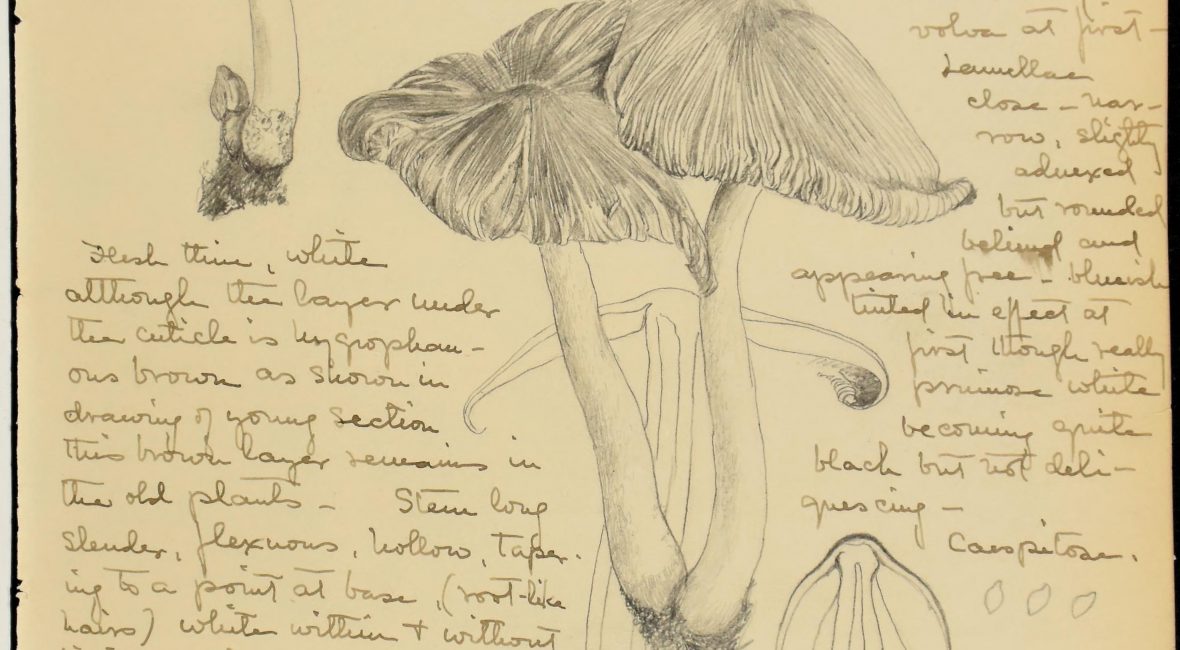
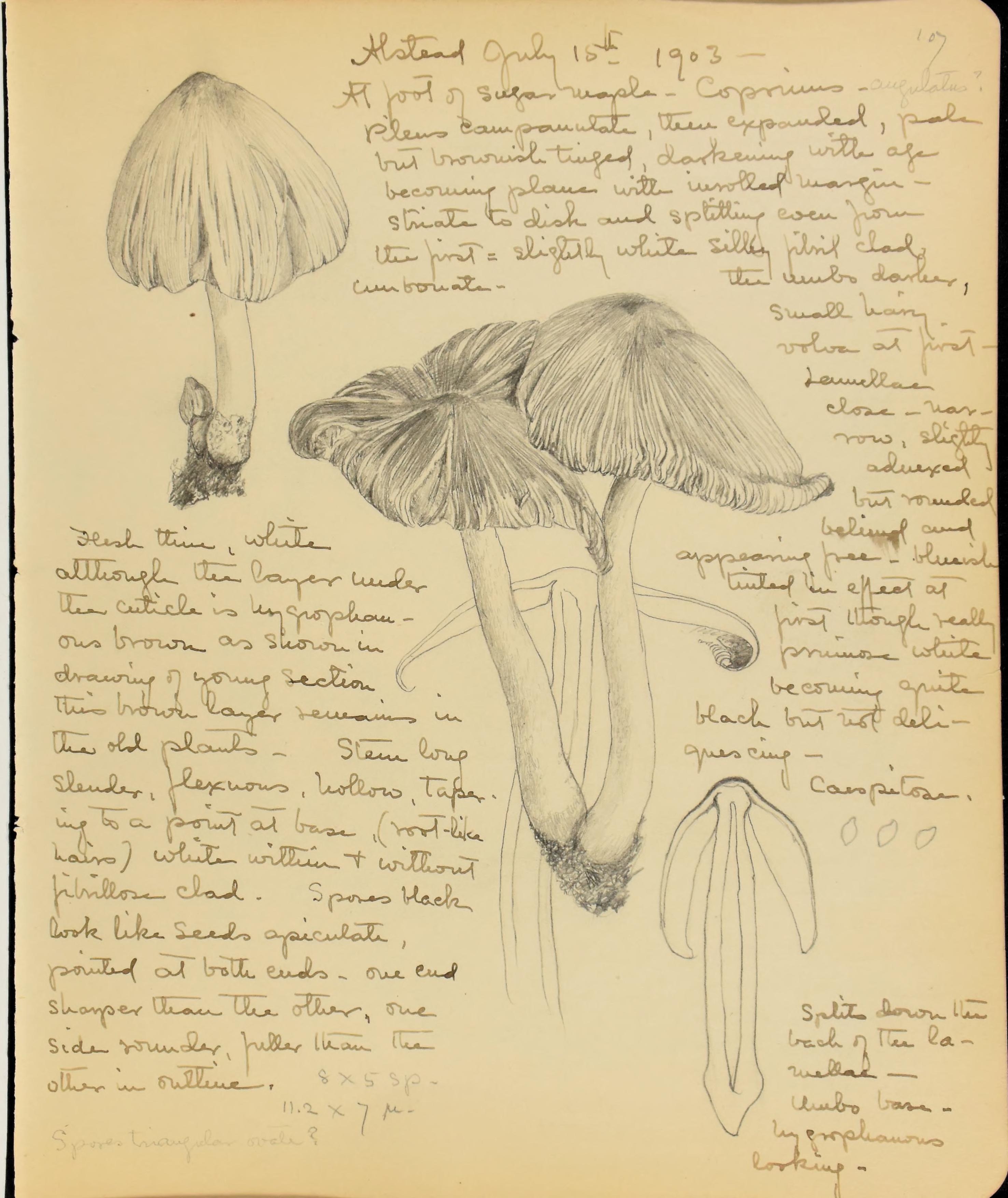
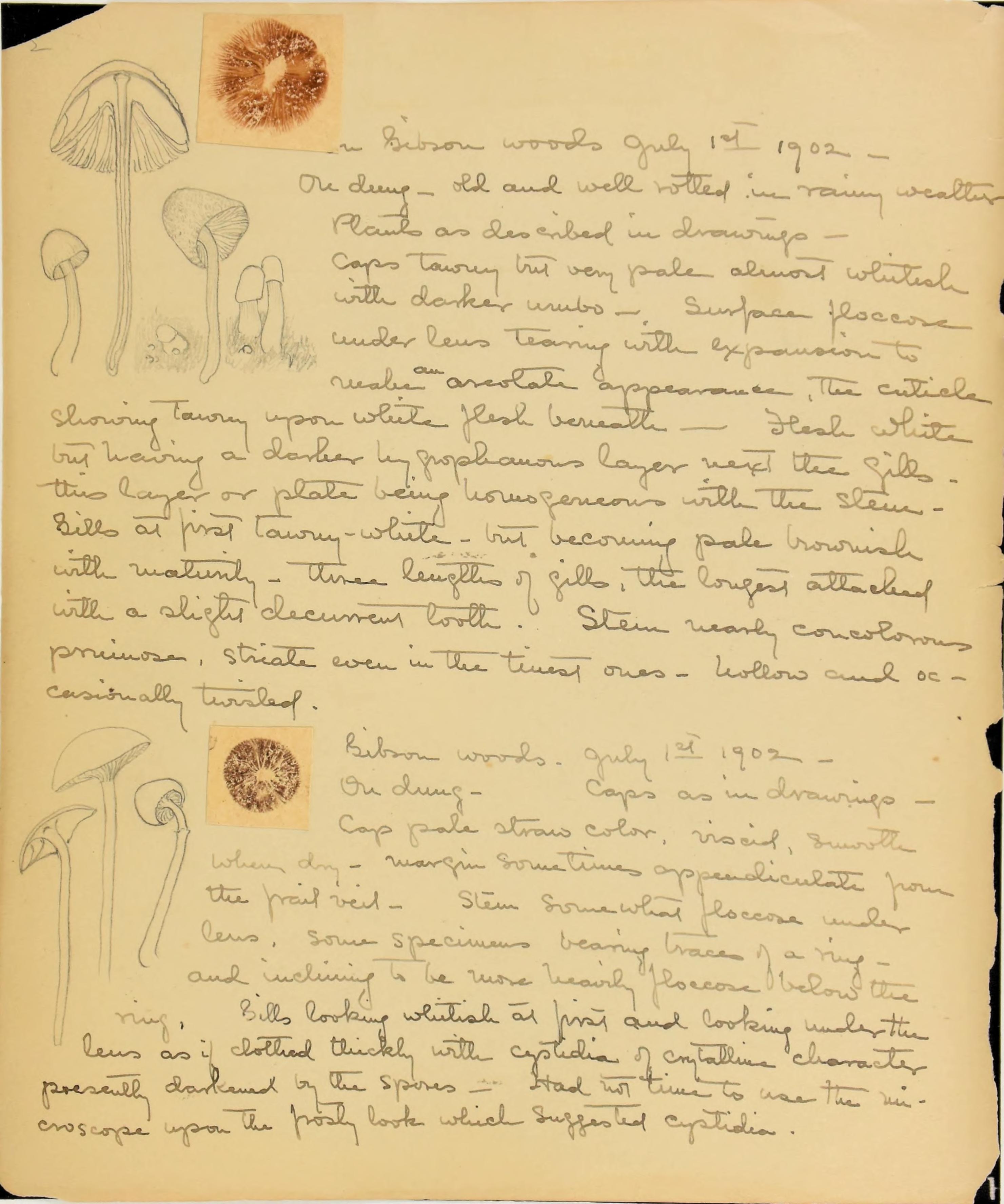
Henrietta Page sketchbook of fungi drawings

Page, Henrietta. [Sketchbook of drawings of fungi], volume II. Contributed in BHL Harvard University Herbarium, Botany Libraries.

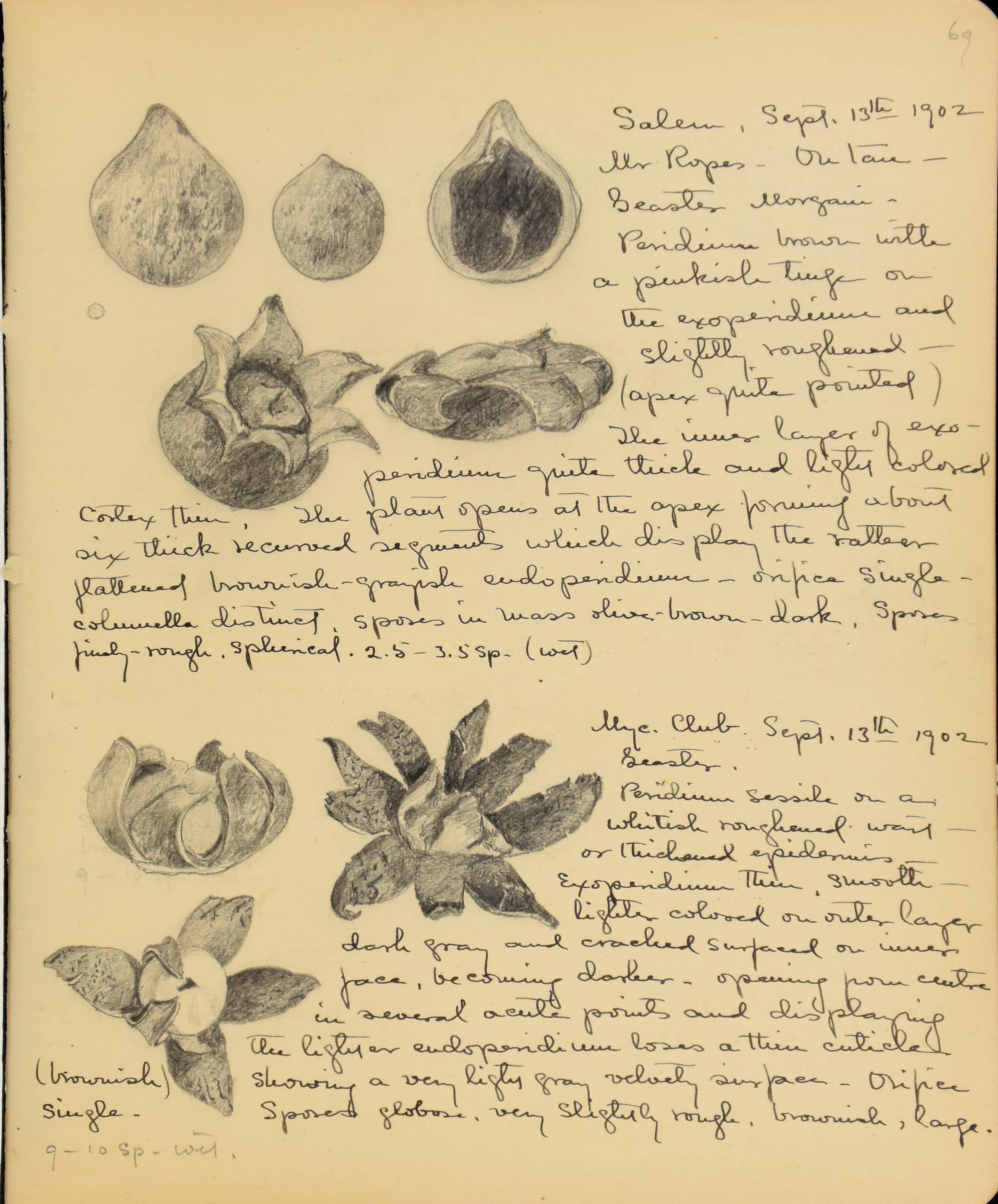
The Harvard Botany Libraries recently acquired and digitized Henrietta Page’s [Sketchbook of drawings of fungi], volume II. The sketchbook was a gift from the Boston Mycological Club (BMC) where Page was a member and served on the executive committee for a time. She was also a member of the Boston Society of Natural History. The sketchbook mostly describes fungi collected during July and August when Page attended three-week long natural history classes held in Alstead, New Hampshire under the Alstead School of Natural History from 1899-1903. The mycology section was taught by Hollis Webster, secretary and co-founder of the BMC and Harvard graduate (class of 1884); phanerogamic botany by Merritt Lyndon Fernald; ornithology by Ralph Hoffmann; and physiography and biology by William Lusk Webster Field. The school ran from 1899-1904.

The sketchbook was originally unattributed, but Jason Karakehian (BMC archivist) discovered that the sketchbook connects to specimens that are now housed in the fungarium at New York Botanical Garden (NYBG). The specimens were originally part of the Alstead School of Natural history fungarium, which was integrated into the BMC fungarium after the Alstead School’s closing. Jason was able to attribute the sketchbook to Ms. Page by searching the NYBG’s online database of specimens for fungal collections made in Alstead in the years 1900-1903, which yielded a few collections whose labels referred to Henrietta Page by name and referenced specific pages in her sketchbook “Vol. II.”

Page, Henrietta. [Sketchbook of drawings of fungi], volume II. Contributed in BHL Harvard University Herbarium, Botany Libraries.

There are a number of glass plate negatives, prints, and lantern slides of fungi in the BMC archive which were made by Hollis Webster in the 1902 and 1903 sessions of the School. These have been cleaned, organized, placed in archival negative envelopes, and listed in a spreadsheet. The specimens photographed do not appear to match those drawn by Ms. Page, but there is some overlap in taxa.

The sketchbook is a popular new acquisition and has already been used for several classes interested in field notes, women in science, and scientific illustrations.

Page, Henrietta. [Sketchbook of drawings of fungi], volume II. Contributed in BHL Harvard University Herbarium, Botany Libraries.

March 27, 2019by Joel Richard
Page 1 of 3123»

Help Support BHL

BHL's existence depends on the financial support of its patrons. Help us keep this free resource alive!

search

About BHL

The Biodiversity Heritage Library (BHL) is the world’s largest open access digital library for biodiversity literature and archives. BHL operates as a worldwide consortium of natural history, botanical, research, and national libraries working together to digitize the natural history literature held in their collections and make it freely available for open access as part of a global “biodiversity community.”

Join Our Mailing List

Sign up to receive the latest news, content highlights, and promotions.

Subscribe Now

Subscribe to Blog via Email

Enter your email address to subscribe to this blog and receive notifications of new posts by email.

Join 319 other subscribers

Subscribe to Blog Via RSS

Subscribe to the blog RSS feed to stay up-to-date on all the latest BHL posts.

Access RSS Feed

Inspiring Discovery through Free Access to Biodiversity Knowledge.

The Biodiversity Heritage Library makes it easier than ever for you to access the information you need to study and explore life on Earth…for free, anytime, anywhere.


64+ Million Pages of
Biodiversity Literature Online.

EXPLORE

Tools and Services
to Transform Research.

EXPLORE

300,000+
Illustrations on Flickr.

EXPLORE

ABOUT | HARMFUL CONTENT | PRIVACY | SITE MAP | TERMS OF USE