Biodiversity Heritage Library - Program news and collection highlights from BHL
  • Home
  • News
  • Featured Books
    • All Featured Books
    • Book of the Month Series
    • BHL at 20
  • User Stories
  • Campaigns
    • Fossil Stories
    • Garden Stories
    • Monsters Are Real
    • Page Frights
    • Her Natural History
    • Earth Optimism 2020
  • Tech Blog
  • Visit BHL
Home
News
Featured Books
    All Featured Books
    Book of the Month Series
    BHL at 20
User Stories
Campaigns
    Fossil Stories
    Garden Stories
    Monsters Are Real
    Page Frights
    Her Natural History
    Earth Optimism 2020
Tech Blog
Visit BHL
  • Home
  • News
  • Featured Books
    • All Featured Books
    • Book of the Month Series
    • BHL at 20
  • User Stories
  • Campaigns
    • Fossil Stories
    • Garden Stories
    • Monsters Are Real
    • Page Frights
    • Her Natural History
    • Earth Optimism 2020
  • Tech Blog
  • Visit BHL
Biodiversity Heritage Library - Program news and collection highlights from BHL
Blog Reel, Featured Books

American Daffodil Society Expands Access through BHL and ‘DaffLibrary’

1_daff.jpg

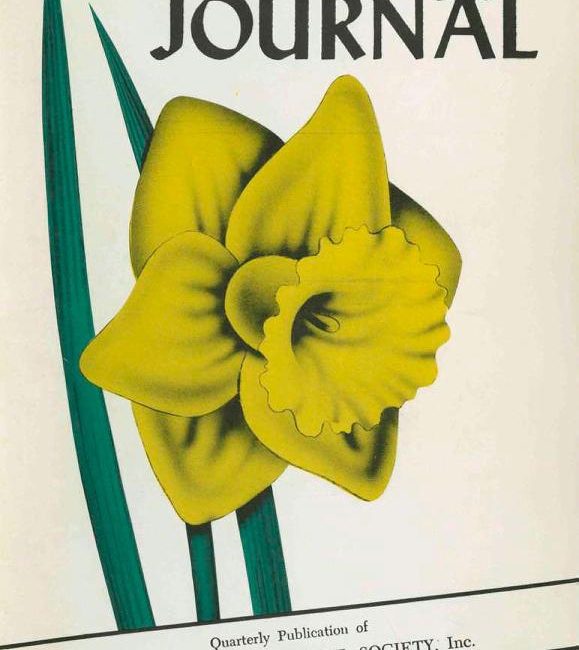
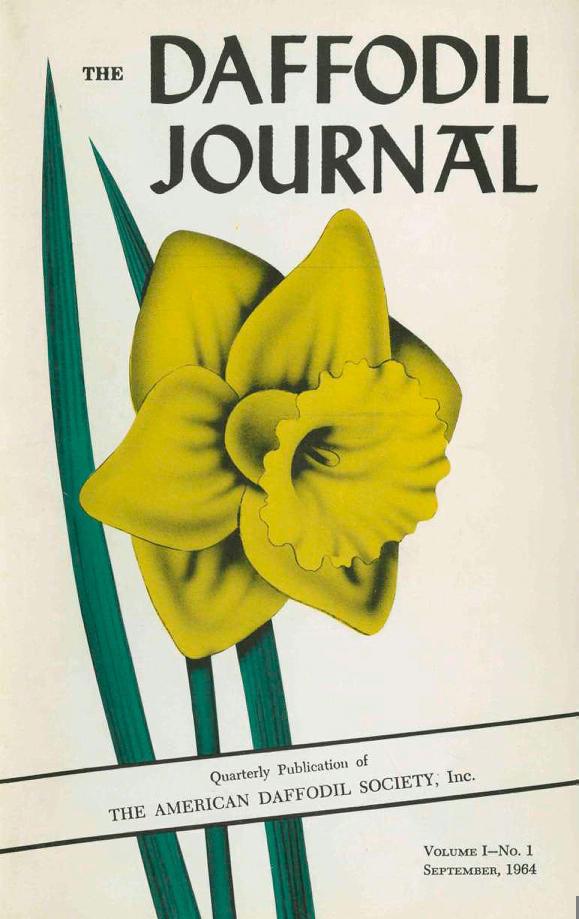
Illustration of a large, yellow flower with green stem and leaves. American Daffodil Society. The Daffodil Journal. Volume 1. 1961. Digitized in BHL by American Daffodil Society.

For Mary Lou Gripshover, daffodils started as an easy entry into horticulture, but led her to the unexpected, too.

“Half a century ago, when I was a young housewife, I belonged to a garden club which in turn participated in an area-wide flower show,” she explains. “Everyone had to enter. At that point I wasn’t much good at flower arrangements, and entering daffodils in the Horticulture Section was easy. Just cut a bloom and put it in the vase provided. And the stems didn’t bend, like tulips did. So then of course I had to get more daffodils so I could enter all the classes for the various divisions… and it just grew from there. Who knew 50 years ago that I’d make friends the world over, just because of a little yellow flower?”
2_daff.jpg

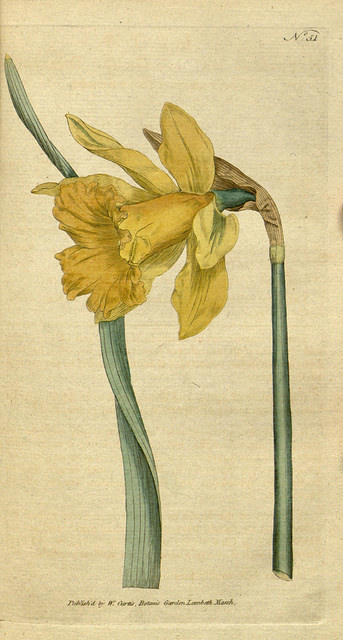
A delicate painting of a single daffodil flower with a green stem and leaf. Curtis, William. The Botanical magazine, or, Flower-garden displayed. 1790. Digitized in BHL by Missouri Botanical Garden, Peter H. Raven Library.

Gripshover serves as a librarian / digitizer for the American Daffodil Society (ADS), a group with international membership that has connected daffodil enthusiasts since its founding in 1954. In the spirit of National Gardening Month, we’re highlighting the ADS’ publication, The Daffodil Journal, which comes to BHL as part of the Expanding Access to Biodiversity Literature project. Early volumes of this quarterly journal from 1964-1968 are currently available on BHL, with more volumes on the way.
4_daff.jpg

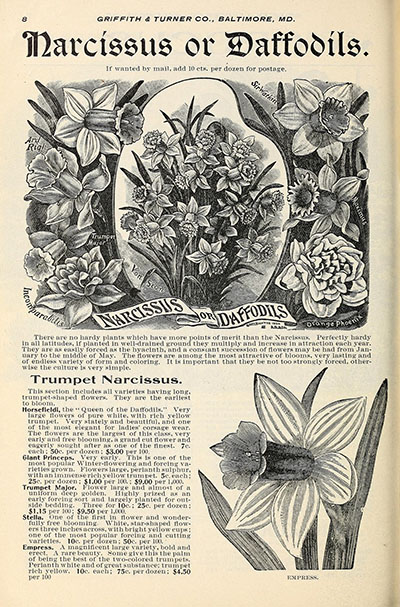
A page from a seed catalog with descriptions of varieties of Daffodil for sale, and two black and white illustrations; one a close-up of a flower variety called Empress, the other a mix of many flowers. Griffith and Turner Co. Bulbs and seeds.  1900. Digitized in BHL by U.S. Department of Agriculture, National Agricultural Library.

According to the ADS website, ‘daffodil’ is the common name for all members of the genus Narcissus. There are somewhere between 40 and 200 different species/subspecies/varieties (depending on who you ask), and more than 25,000 registered cultivars (named hybrids).

The first mission of the ADS was to create a publication, starting with a small bulletin and yearbook. After its first decade, the society released its quarterly publication, The Daffodil Journal, to share information on “all aspects of daffodil culture, breeding, and exhibition.” Now the ADS has its own digitization project, DaffLibrary, where more than 3,000 resources on daffodils are available as downloadable PDFs or as links to other websites. The Daffodil Journal through the year 2012 is available on DaffLibrary, so you can view more recent issues of the publication there until more are added to BHL.
5_daff.jpg

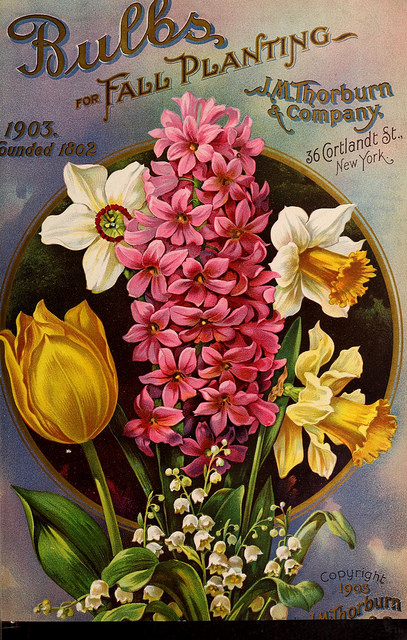
Colorful painting from the cover of a bulb magazine, including white and yellow daffodils and other yellow, white and pink flowers. Thorburn, J.M. & Co. Annual descriptive catalogue of flower seeds. 1903. Digitized in BHL by New York Botanical Garden, LuEsther T. Mertz Library.

“The ADS has had a ‘paper library’ almost from the beginning,” Gripshover says. But because the society has no permanent headquarters, the physical collection had to move several times, and didn’t get much use. “Occasionally a list of available titles would be published in the Journal, and maybe there’d be a little action then, but interest didn’t last. Eventually, it was decided that we should at least get back issues of the Journal scanned, so in 2004 we had 40 years’ worth of the Journal professionally scanned. Several years later, someone suggested that we should think about scanning some of the other materials we had. I foolishly said that I could do some scanning… and it’s turned into a permanent job! But it’s one I enjoy.”
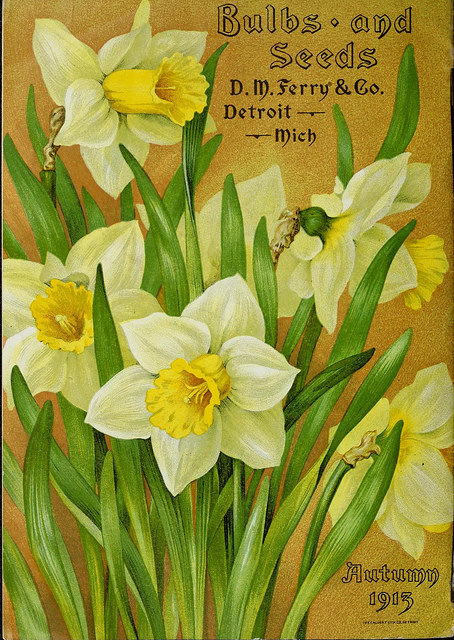
6_daff.jpg

A painting of yellow flowers with a darker yellow background. Ferry, D.M. & Co. Bulbs and seeds. 1913. Digitized in BHL by U.S. Department of Agriculture, National Agricultural Library.

DaffLibrary is now the most-viewed of the ADS’ websites, and gets much more use than the physical collection did: in just the first 3 months of 2018, it connected close to 15,700 visitors to nearly 55,000 pages. Popular resources included book, historic, and scientific references; plant show handouts/material; casual-reading books and articles; biography information; and information about growing daffodils using different methods.

Many thanks to the American Daffodil Society for contributing The Daffodil Journal to BHL, and to Mary Lou Gripshover for sharing her story with us and dedicating years of work to support open access information!
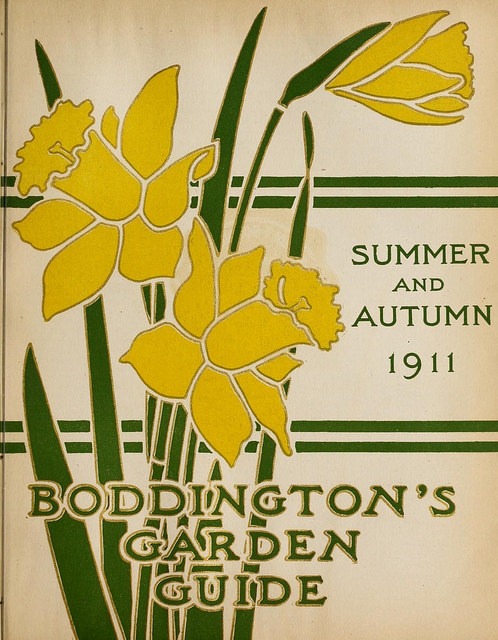
7_daff.jpg

A bold stencil-style image of yellow daffodils with green leaves and stems. Boddington, Arthur T.  Boddington’s quality bulbs, seeds and plants. 1911. Digitized on BHL by New York Botanical Garden, LuEsther T. Mertz Library.

References
American Daffodil Society

‘About’ DaffLibrary

April 19, 2018by Joel Richard
Blog Reel, Featured Books

Exploring the First American Silva

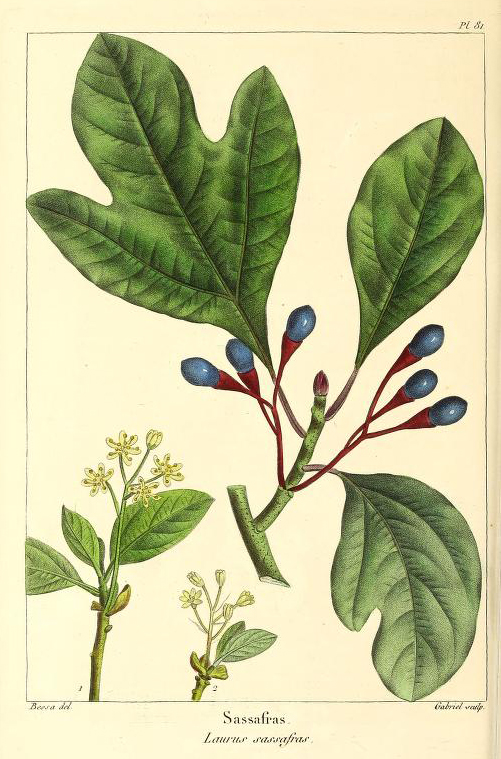
Michaux, François-André. The North American Sylva. v. 1 (1853). Digitized by Smithsonian Libraries. http://s.si.edu/2BeA2nl.

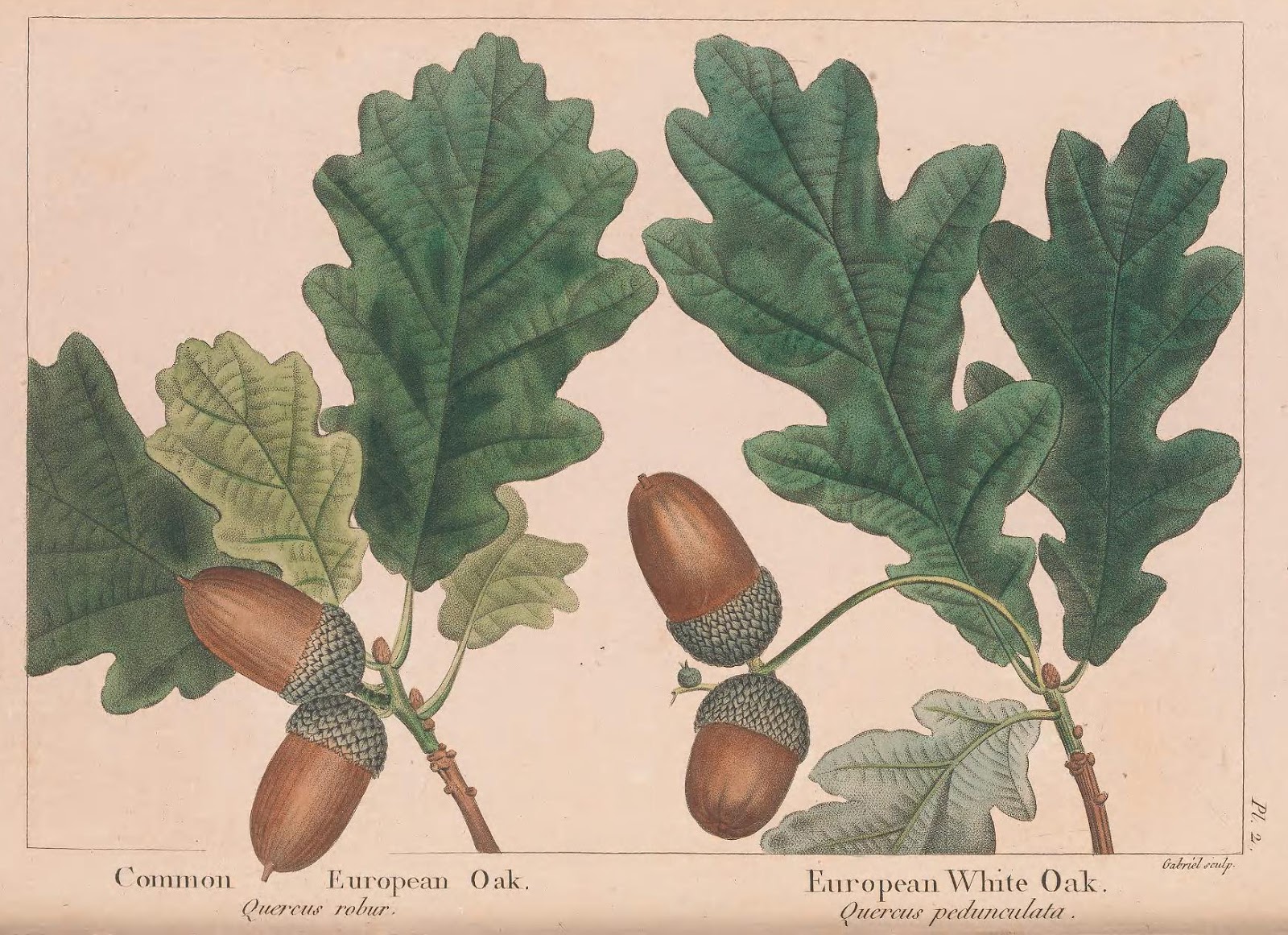
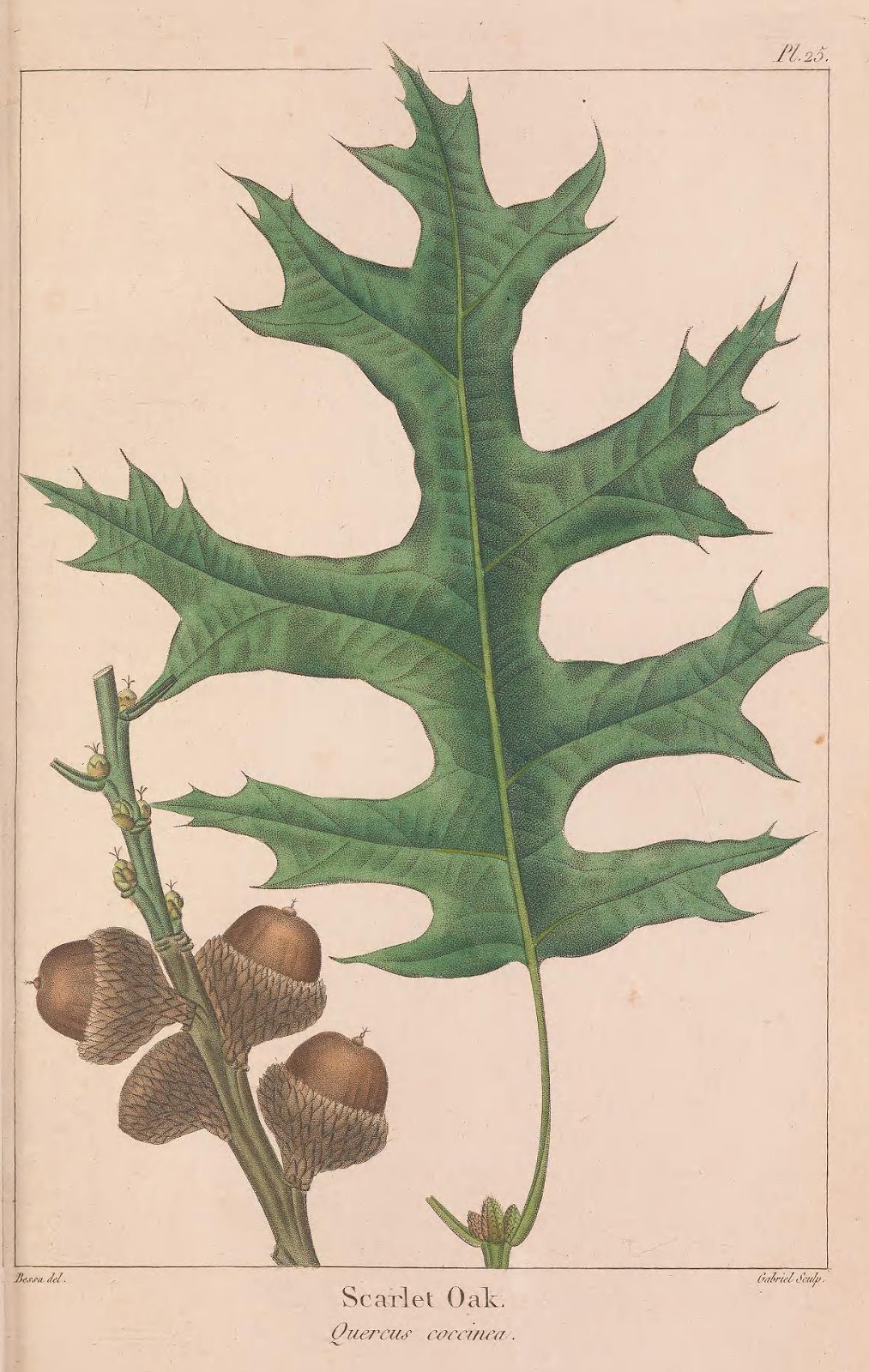
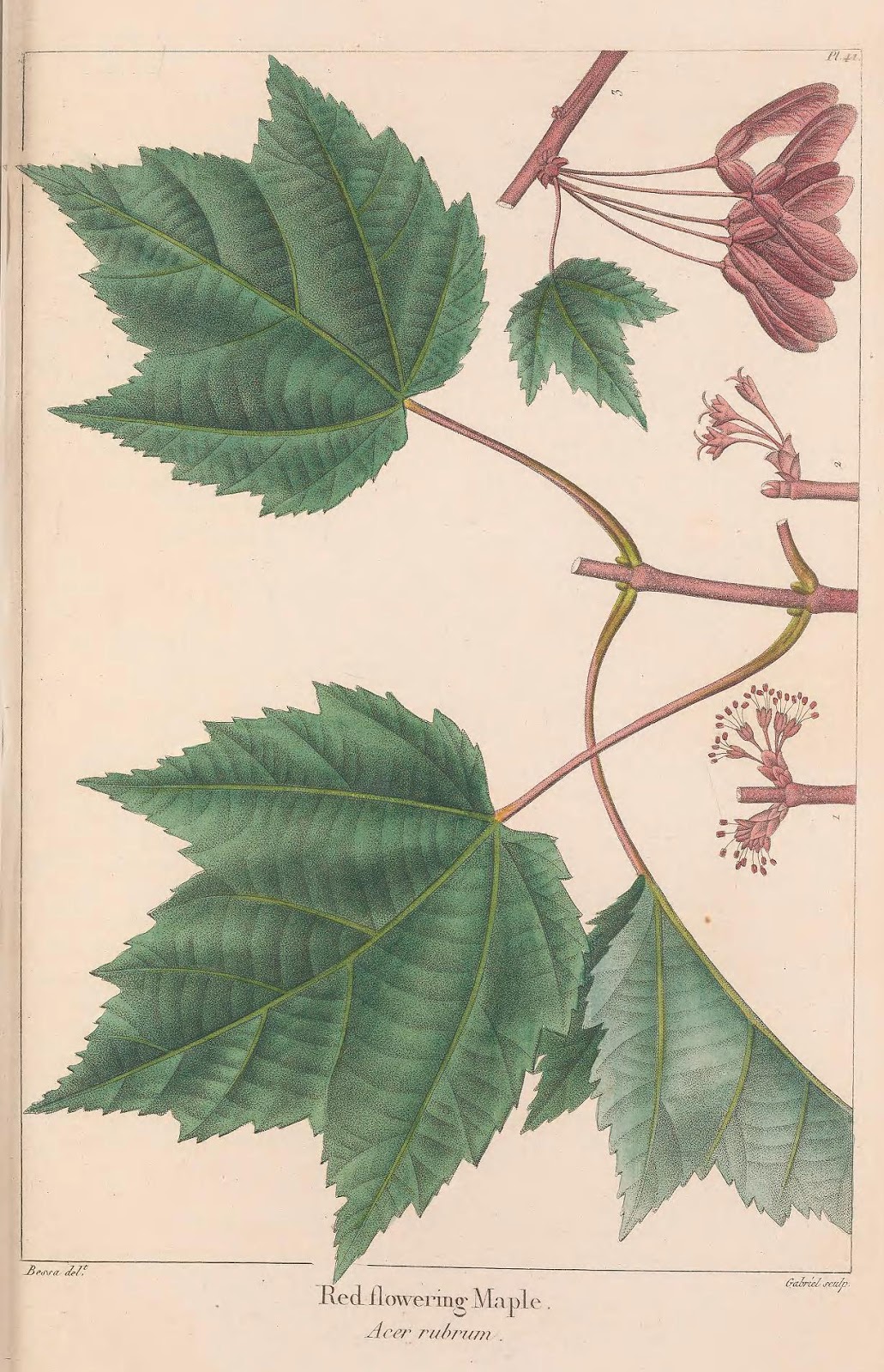
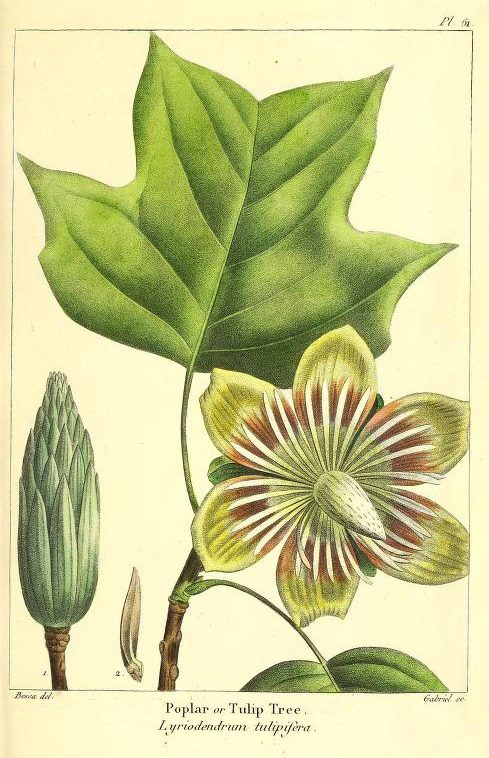
The North American Sylva is a beautiful scientifically and historically-significant work. Authored by François-André Michaux, it is the first American silva – a descriptive flora of forest trees. Published originally in French in 1810, the first English version appeared in 1817, and it was further enhanced with supplementary volumes by Thomas Nuttall in the 1840s.

As an important work in the history of North American botany, The North American Sylva is featured in the National Museum of American History’s Cultivating America’s Gardens exhibit, co-curated by Smithsonian Libraries, Smithsonian Gardens, and the Archives of American Gardens. On display in the exhibit is an 1853 edition of the work, published by Robert P. Smith of Philadelphia. The Smithsonian Libraries has digitized this copy and made it freely available in the Biodiversity Heritage Library.

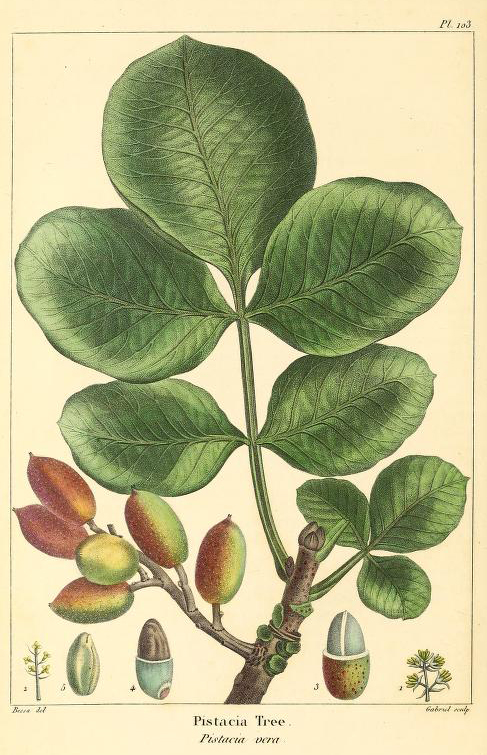
Michaux, François-André. The North American Sylva. v. 1 (1853). Digitized by Smithsonian Libraries. http://s.si.edu/2AmCYOY.

The Smithsonian Libraries’ copy is just one of many editions and printings of this title, which has a rather long and complicated history.

François-André Michaux was the son of André Michaux, also a famed botanist and explorer. In 1785, as the Royal Botanist to Louis XVI, André received a royal commission to travel to America to collect unique plants and identify useful tree species. François-André, then fifteen years old, accompanied his father, and together, the father-son team explored eastern North America, establishing two nursery gardens in New Jersey and South Carolina, and collected specimens, shipping plants and seeds back to France.

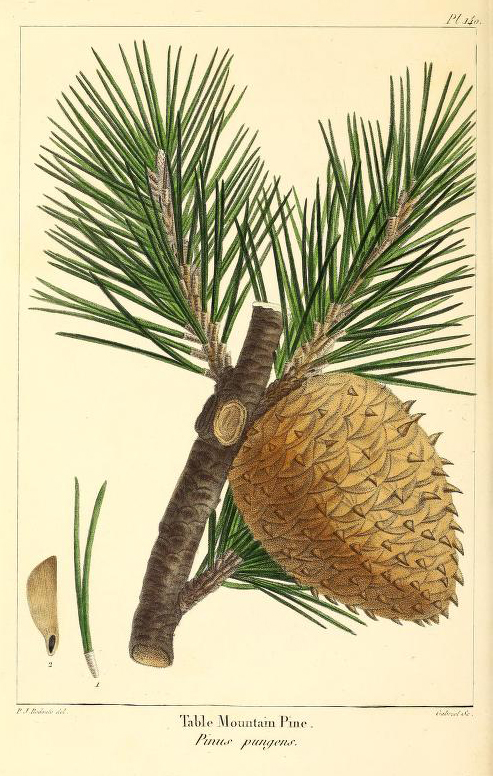
Michaux, François-André. The North American Sylva. v. 1 (1853). Digitized by Smithsonian Libraries. http://s.si.edu/2BcTfpH.

In 1789/90, François-André returned to France, and six years later, his father did the same. The duo then prepared André’s Histoire des chênes de l’Amérique (1801) on North American oaks. This work would later serve as the basis for The North American Sylva. François-André would return twice again to North America, in 1801-03 and again in 1806-08, where he continued to develop his passion for trees and forestry.

Eventually, François-André would channel this passion into the production of a magnificent work on the trees of eastern North America: Histoire des Arbres Forestiers de l’Amerique Septentrionale. While his father André would not live to see this publication, having died in 1802 during a scientific voyage bound for Australia, his influence on his son’s botanical career was profound.

Michaux, François-André. The North American Sylva. v. 2 (1853). Digitized by Smithsonian Libraries. http://s.si.edu/2j4RbbW.

Originally published in Paris in 1810 and consisting of 3 French volumes, Histoire des Arbres Forestiers de l’Amerique Septentrionale was later translated into English by Michaux. Colleagues at the American Philosophical Society helped arrange the publication of the first translated edition, which was printed by C. d’Hautel in Paris in 1817 under the title The North American Sylva and sold by Thomas Dobson of Philadelphia. The translation was expected to be published in six half-volumes, but later printings included a seventh half volume, six additional plates, and a revised English text by Augustus L. Hillhouse.

The work was beautifully illustrated with 156 copper plate engravings executed from drawings by Pierre-Joseph Redouté (one of the most-celebrated flower painters in the whole history of botanical art), Pancrace Bessa, Adèle Riché, and Henri-Joseph and Antoine-Ferdinand Redouté. Each treated species is accompanied by an illustration printed in color and finished by hand depicting the tree’s branch, leaves, flowers, and fruit.

Michaux, François-André. The North American Sylva. v. 2 (1853). Digitized by Smithsonian Libraries. http://s.si.edu/2BdK4Fk.

In 1841, the first truly American edition of The North American Sylva was printed in New Harmony, Indiana by expert printer William Amphlett using the original engraved copper plates, which had been secured by philanthropist William Maclure during a trip to Paris with the intention of producing an American edition of Michaux’s work. The 1841 New Harmony edition was a reprint of an 1819 Paris edition which was the first to include Hillhouse’s revised English translation.

The New Harmony edition was also the first whose title page mentioned three supplemental volumes by Thomas Nuttall describing trees from the “Trans-Mississippi” region, the Rocky Mountains, and the western United States. Nuttall was an English naturalist who arrived in North America in 1808 and participated in a series of collecting trips throughout the United States under the auspices of some of America’s most pre-eminent botanists. This, together with the publication of his Genera of North American Plants in 1818, secured his reputation as America’s leading botanist.

Michaux, François-André. The North American Sylva. v. 3 (1853). Digitized by Smithsonian Libraries. http://s.si.edu/2k7s1FW.

Nuttall began work on a revised version of The North American Sylva in 1839. Over a seven-year period, he produced his three-volume supplement printed in Philadelphia, with volume one, parts one and two published by Judah Dobson in 1842 and 1843, volume two published by T. Ward in 1846, and volume three published by Smith and Wistar in 1849.

The volumes included 120 additional plates prepared and executed under Nuttall’s supervision by E.D. Long, G. Worley, G. West, J.T. French, and J.B. Butler based on drawings by several artists, including William Gambel. The original drawings are in the Archives of the Arnold Arboretum (Cambridge) at the Botany Libraries of Harvard University.

Michaux, François-André. The North American Sylva. v. 3 (1853). Digitized by Smithsonian Libraries. http://s.si.edu/2zXQFzt.

Following Maclure’s death, the original copper plates for The North American Sylva were acquired by Samuel George Morton of Philadelphia, after which another American edition was produced, augmented with notes by horticulturalist John Jay Smith, who served as editor of The Horticulturist from 1855 to 1860 and The American Gardener’s Calendar in 1857. The Smithsonian’s 1853 copy in BHL includes Smith’s notes.

More editions and printings followed, amounting to a total of more than a dozen known editions in multiple printings and formats. The long-running publication of the work is a testament to its impact and importance. Indeed, The North American Sylva served as a standard reference for North American woody plants throughout 19th century.

Thanks to the Smithsonian Libraries and many other BHL partners and contributors, you can freely explore several different editions and printings of The North American Sylva in the Biodiversity Heritage Library:

  • First French edition (1810) (Digitized by The New York Botanical Garden)
  • 1819 Paris edition with English translation by Hillhouse (Digitized by University of Pittsburgh Library System)
  • Nuttall’s supplements, 1842-49 (Digitized by The New York Botanical Garden)
  • 1853 edition (Digitized by Smithsonian Libraries)

If you’re in the Washington, D.C. area and would like to see a copy of The North American Sylva in person, be sure to visit the Cultivating America’s Gardens exhibit, on display at the National Museum of American History through August 2018.

Sources

Fraser, Susan M., Sally A Leone, Gregory Long, Marta McDowell, and David Sibley. 2017. The Trees of North America. New York: Abbeville Press.

Reviewed Work: The North American Sylva. 1858. The North American Review, vol. 86, No. 179, pp. 359-368).

March 29, 2018by michelle.underhill
Blog Reel, Featured Books

BHL Gains Works on the Diverse Plant Genus ‘Hoya’

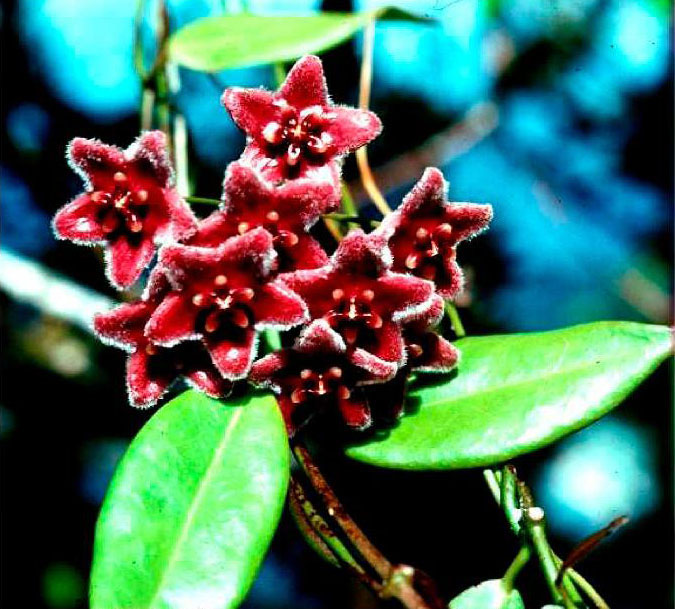
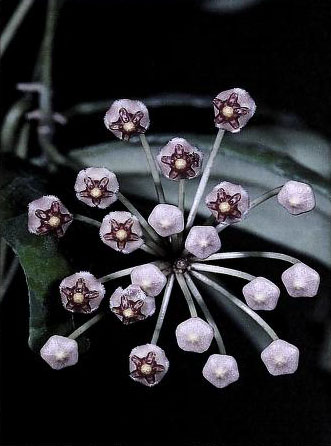
Hoya fetuana on cover of Hoya New, v.6: issue 4, 2017. Photo by Robert Dale Kloppenburg. http://s.si.edu/2BuX7ll.

Robert Dale Kloppenburg is definitely a dedicated botanist. As of January 2018 – when he celebrated his 97th birthday – he has named 234 plant species, mainly in the flowering genus Hoya, which has been his focus for close to forty years since his retirement.

Kloppenburg and the International Hoya Association, of which he is president, have made some generous contributions to the Biodiversity Heritage Library, with funding of the Expanding Access to Biodiversity Literature project. Currently available on BHL are:

  • Fraterna : Official Bulletin for International Hoya Association (1991-2006): Contributed by International Hoya Association and digitized by Harvard University Botany Libraries and The New York Botanical Garden, LuEsther T. Mertz Library.
  • Hoya New (2013-2017): Published and contributed by Robert Dale Kloppenburg.

Fraterna provides a wealth of information on Hoya species and hybrids, for botanists and horticulturalists, as well as the association’s news updates.

Hoya New presents new species descriptions with photos and identification keys.

Also currently available on BHL are Kloppenburg’s titles:

  • Ganges Hoya (2008)
  • Malaysian Hoya Species : A Monograph (2004)
  • Samoan Hoya Species : Preliminary Presentation (2014)
Hoya andalensis on cover of Fraterna v.18: no. 1, 2005. Photo by Kim F. Yap. Contributed by International Hoya Association and digitized by The New York Botanical Garden. http://s.si.edu/2EoGlH0.

The International Hoya Association originated in 1988 as a USA west coast interest group which published a newsletter, first bi-monthly and then quarterly. By the end of their second year, international interest had allowed the group to expand to a non-profit with global membership. An affiliated group, ‘Svenska Hoya Sõllskapet’ based in Borlõnge, Sweden, also publishes a quarterly magazine about hoyas.

What are these plants? The association’s website describes the diverse genus:

“The genus Hoya is found in South East Asia through Australia. They are adaptable plants found everywhere from true rain forests through the slopes of the Himalayas, from semi-arid niches in Australia to damp forests. They range from vines, the most common form, to shrub-like growth. Most are epiphytic [growing on other plants]. Hoyas are in the family commonly known as milkweeds.”

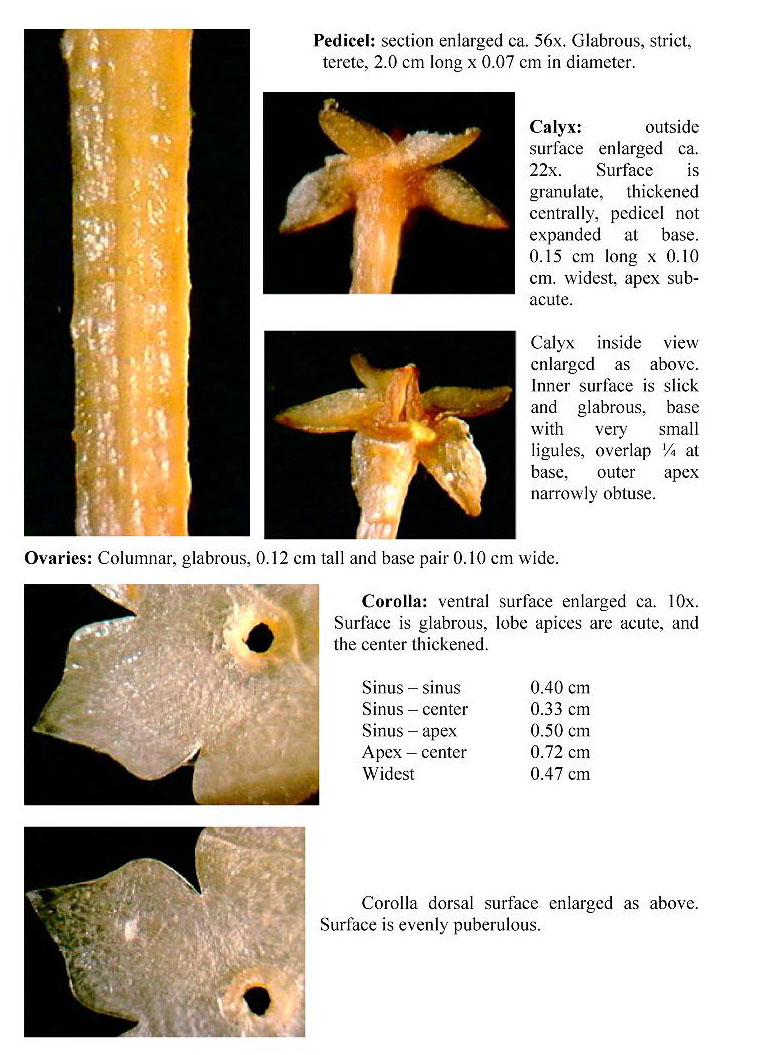
Parts of Hoya bebsguevarre described in Hoya New, v.1: no.4, 2013. http://s.si.edu/2EotCQx.

“What interests me most about hoyas is the vast diversity, the genetic differences and their possible evolutionary significance,” Kloppenburg shared in an interview in Fraterna. “I am of the opinion that we have collected and identified less than 1% of the wild hoya species.”

As an opening message for Hoya New, Kloppenburg explains how the work of horticultural professionals and hobbyists can contribute to the conservation of biodiversity:

“When a species is collected from the wild, I feel it is wise to identify it, propagate it, and name it. In this way it will eventually get into the commercial channels, be distributed to all those interested in the genus and thus be preserved. If in the future the species is lost through natural causes or forest destruction it will still be here on earth in your collection.”

Kloppenburg began studying the genus Hoya in the Philippines in 1981. He had graduated from the University of California, Berkeley, shortly after WWII and worked as a plant breeder research agronomist. Since his retirement in 1986, he has continued to study hoyas, traveling extensively in the South Pacific. His data has been donated to UC Berkeley. In 2016, he reached out to Smithsonian Libraries to offer publications, and agreed to contribute the material to Biodiversity Heritage Library. His assistant, Karen Case, assisted with the permissions process.

“It has been a most exciting journey to be hosted with such a prestigious organization as the Biodiversity Heritage Library, for which I will be eternally grateful,” Kloppenburg says. “I hope my work will help others to become interested in hoyas, and that they will carry on the discovery of new species in the future.”

Meanwhile, he’s still studying plants in the genera Hoya, Dischidia and Eriostemma. “I no longer travel, so I depend on others, mainly in the Philippines, to send me material,” he says.

Many thanks to the International Hoya Association and to Robert ‘Dale’ Kloppenburg for their commitment to sharing biodiversity research, and to Karen Case for helping to facilitate the process.

Sources:

  • International Hoya Association website: http://www.international-hoya.org/aboutus.asp
  • Robert Dale Kloppenburg’s website: http://hoyardk.wixsite.com/kloppenburg
February 15, 2018by ulib-libraryjobs
Blog Reel, Featured Books

New Medical Botany Titles in BHL Thanks to The New York Academy of Medicine

The New York Academy of Medicine Library has contributed nine digitized titles (11 volumes) on medical botany to the Biodiversity Heritage Library (BHL) as part of the Expanding Access to Biodiversity Literature project. It is very exciting to share some of the Academy Library’s botanical resources with the wider public.

The Academy is home to one of the most significant historical libraries in medicine and public health in the world, safeguarding the heritage of medicine to inform the future of health. The Library’s collections contain many of the formative texts of medicine and allied fields from the 16th, 17th, and 18th centuries, as well as more recent titles. It is equally renowned for its extensive journal collection comprising medical serials from around the world, and for significant holdings in manuscripts, archives and ephemera, all of which are of great historical interest.

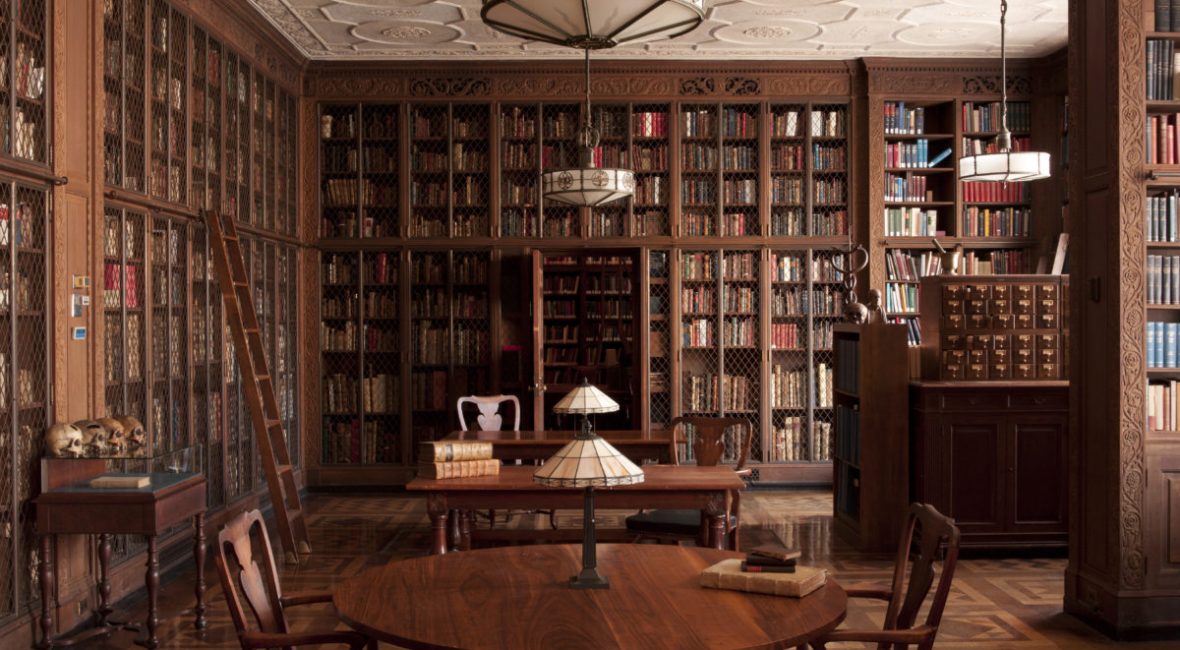
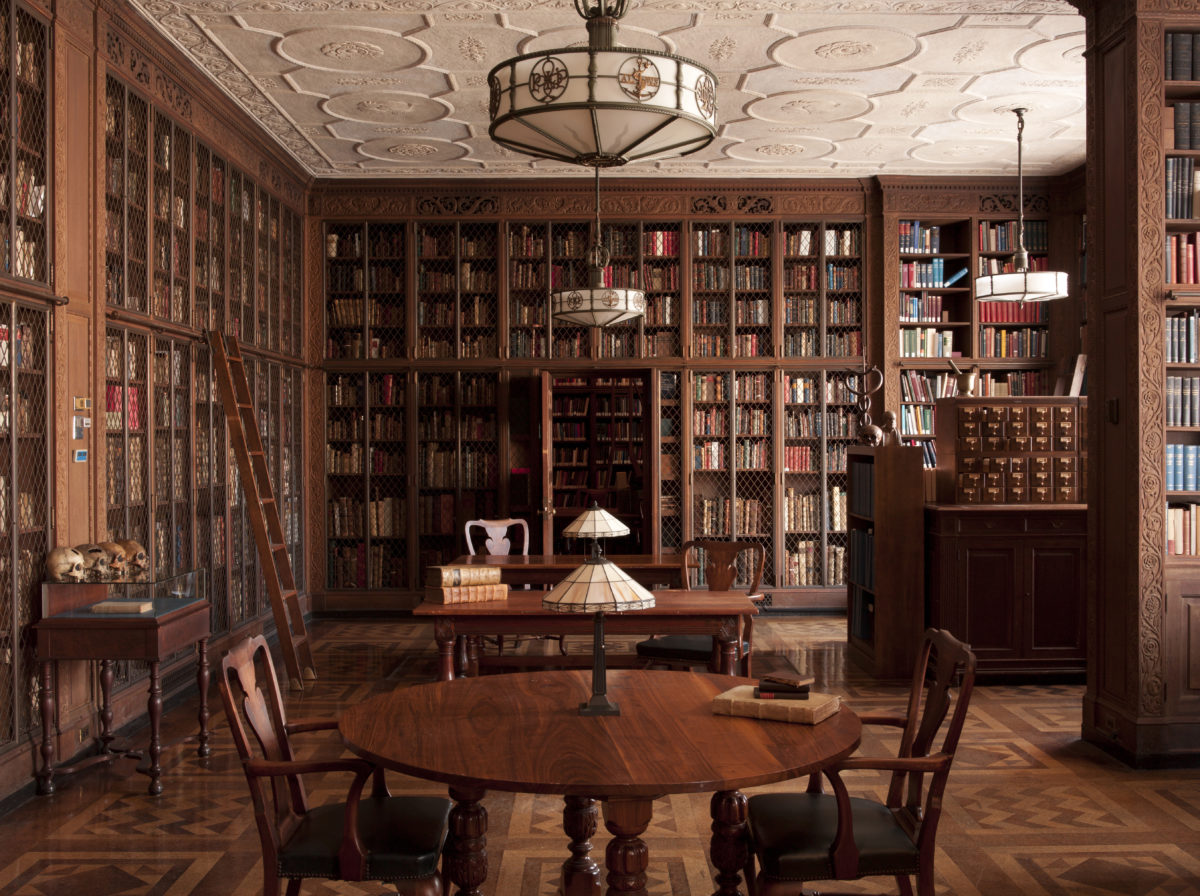
The New York Academy of Medicine Library’s Drs. Barry and Bobbi Coller Rare Book Reading Room.

While the Library’s collections include a large number of printed botanical books dating back to the beginning of the sixteenth century, for this project we were interested in identifying resources that could be sent to the Internet Archive for external digitization, which meant that we concentrated on our holdings from the second half of the 19th century forward through 1922.

After generating lists from our online catalog, we checked to see if any of these resources had already been digitized by the BHL, Internet Archive, or HathiTrust. For this process, we developed a set of simple guidelines:

  • Resources not available via BHL, Internet Archive or HathiTrust remained on the list.
  • Resources already available via the BHL were eliminated from the list.
  • Resources already available via the Internet Archive were eliminated from the list because BHL harvests content from the Internet Archive, so there would be no need for us to digitize that content.
  • Resources already available via HathiTrust could still potentially be digitized for access via the BHL based on whether our copy provides additional information for the public once digitized. For example, the Indian Medicinal Plants (Kīrtikara & Basu, 1918) has been partially digitized by HathiTrust, but the volume with the images was missing. As such, it became important for us to digitize so that it would be fully available.

We went through multiple lists and rounds of de-duplication to narrow down our potential submission. Once we finalized the list, Scott Devine, Head of Preservation, conducted a conservation assessment to determine which resources could be sent out for digitization and which were so fragile that they could only be digitized in house. We separated these into two lists. The first list was sent to the Internet Archive for digitization and is our contribution to BHL. The second list will be a project for our new digital lab, and we hope to make them available at a future date.

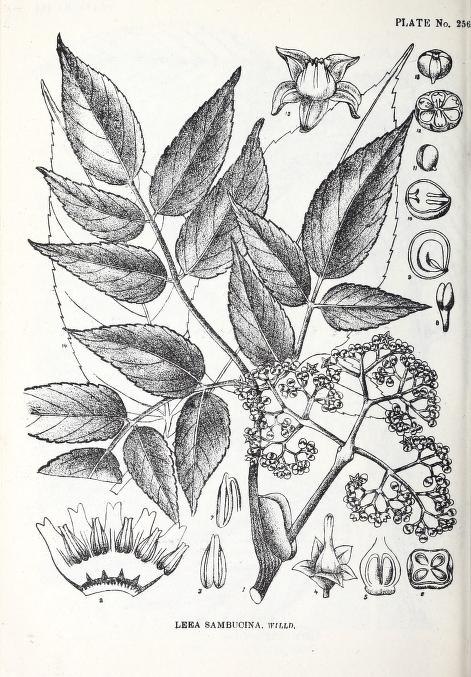
Indian medicinal plants (Kīrtikara & Basu, 1918) stood out as a resource to digitize and share widely. It documents the medicinal plants found in India. The authors describe a need to provide a text that reproduces illustrations of Indian medicinal plants from other works since there were few prior to this publication. Dr. W. Roxburgh’s text, reprinted in 1874, was used as a reference throughout.

Kīrtikara, Kānhobā Raṇachoḍadāsa and Baman Das Basu. Indian medicinal plants. 2nd Ed. (1918). Plate #256, showing Leea sambucina. Digitized by The New York Academy of Medicine. http://s.si.edu/2DnszmA.

Although Indian medicinal plants did not focus on the use of plants in the development of drugs, this theme can be seen throughout the resources submitted to the BHL. Each author grapples with the role of plants in the creation and production of drugs.

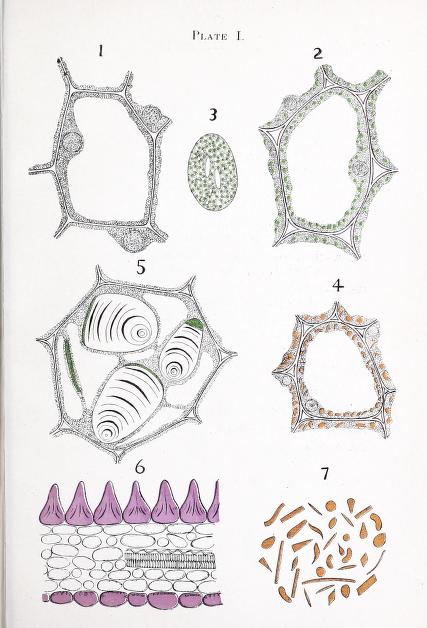
In A course in botany and pharmacognosy (1902), Henry Kraemer, Professor of Botany and Pharmacognosy, defines pharmacognosy as the “study of drugs of vegetable origins.” Kraemer devotes the first part of his text to plant morphology and the second part to pharmacognosy. In addition, he provides illustrations to aid in the study of both parts so that students can connect the descriptions throughout the text to the visual representations.

Kraemer, Henry. A course in botany and pharmacognosy. 1902. Plate #1, showing organized cell-contents. Digitized by The New York Academy of Medicine. http://s.si.edu/2FJqAaI.

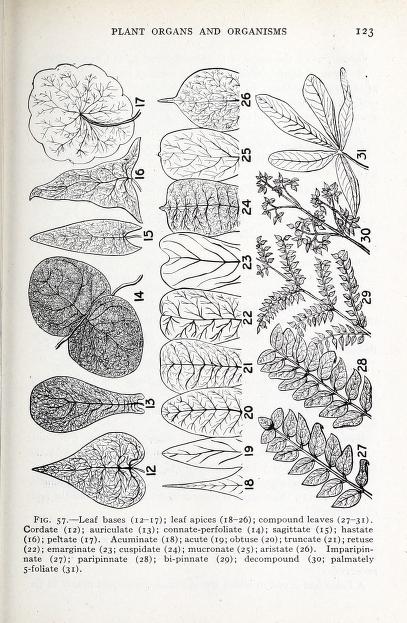
Youngken’s Pharmaceutical botany, 2nd edition (1918) was expanded to take advantage of the growing area of botany, including a section on drug-yielding plants. The text focuses on the morphology and taxonomy of plants used in drug development.

Youngken, Heber W. (Heber Wilkinson). Pharmaceutical botany. 1918. Fig 57, showing leaf bases, species and compound leaves. Digitized by The New York Academy of Medicine. http://s.si.edu/2mMr7Ri.

In Pharmacal plants and their culture (1912), Schneider argues that the majority of imported plants used in medicine could already be available in the United States. He focuses on California and outlines what can be cultivated and grown in the state. Schneider provides a list of uses and common names.

Gattinger’s and Allison’s report (1894) is an observational inventory of Tennessee’s plants and their descriptions based on a similar project conducted by North Carolina. Published by the Tennessee Department of Agriculture, the report emphasizes the importance of documenting and understanding the native plants of Tennessee and how they can help increase usage and revenue.

Overall, readers of this collection can begin to understand the role of plants in the creation, development and economic viability of drugs. Many of the resources provide some form of inventory, index or list that documents the plants and associated drugs.

All titles submitted by the Academy Library to BHL:

  • Baillon’s Programme du cours d’histoire naturelle médicale professé à la Faculté de médecine de Paris. 3ème partie, Etude spéciale des plantes employées en médecine (1878)
  • Gattinger & Allison’s The medicinal plants of Tennessee : exhibiting their commercial value : with an analytical key, descriptions in aid of their recognition, and notes relating to their distribution, time and mode of collection, and preparation for the drug market (1894)
  • Kīrtikara & Basu’s Indian medicinal plants / (Vol. 2nd ed. (1918) (1918)
  • Kraemer’s A course in botany and pharmacognosy (1902)
  • Meyer’s Arzneipflanzenkultur und Kräuterhandel : rationelle Züchtung, Behandlung und Verwertung der in Deutschland zu ziehenden Arznei- und Gewürzpflanzen ; eine Anleitung für Apotheker, Landwirte und Gärtner (1911)
  • Moquin-Tandon’s Éléments de botanique médicale : contenant la description des végétaux utiles à la médecine et des espèces nuisibles à l’homme, vénéneuses ou parasites, précédée de considérations sur l’organisation et la classification des végétaux / (2. éd.) (1866)
  • Schneider & California. State Board of Forestry’s Pharmacal plants and their culture (1912)
  • Velásquez & Maldonado’s Contribución al estudio de la materia médica peruana (1920)
  • Youngken’s Pharmaceutical botany / (2d ed., and enl., enl.with 195 illustrations) (1918)
The BHL Expanding Access project is funded by the Institute of Museum and Library Services (IMLS).
January 18, 2018by ulib-libraryjobs
Blog Reel, Featured Books

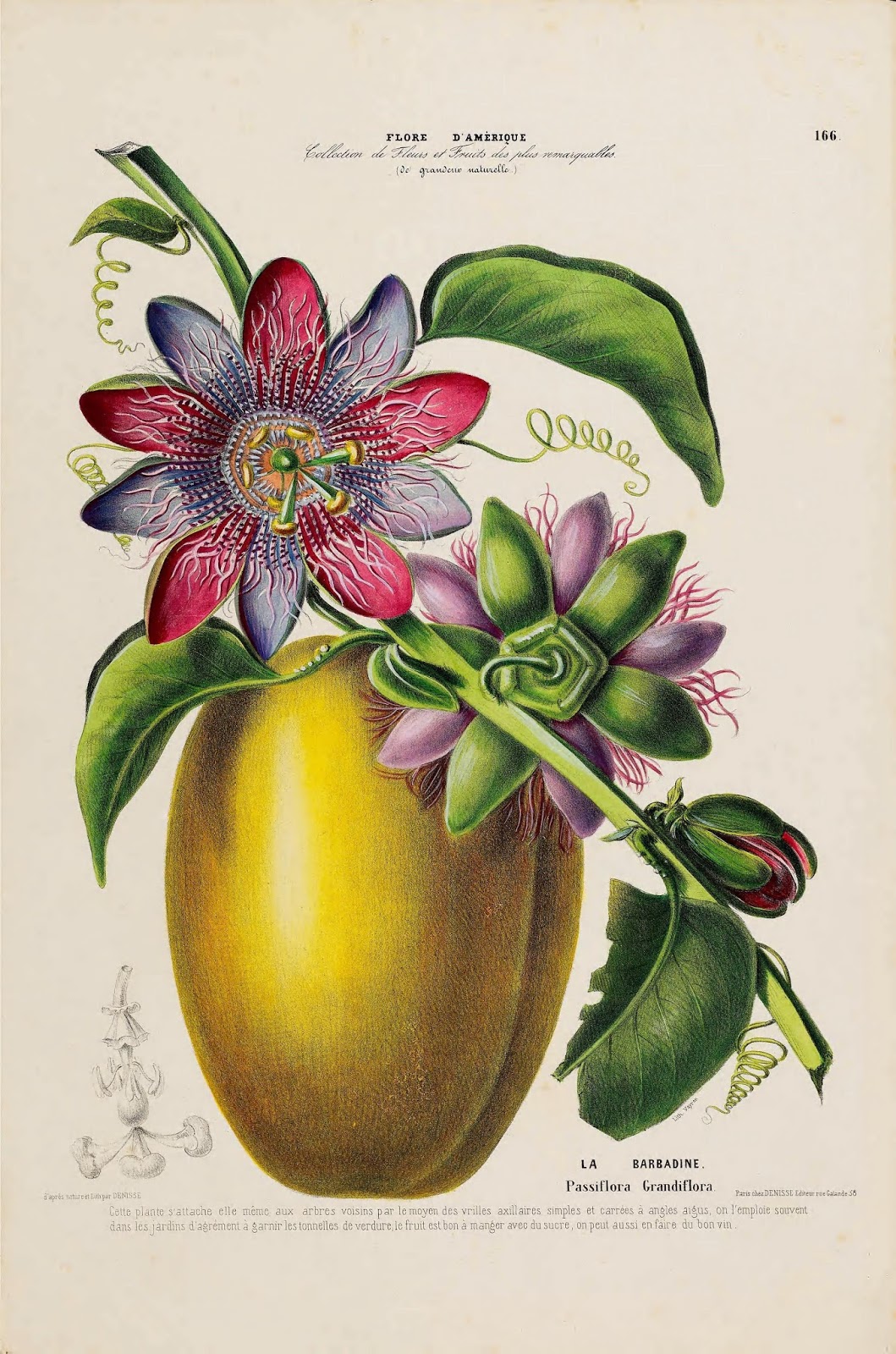
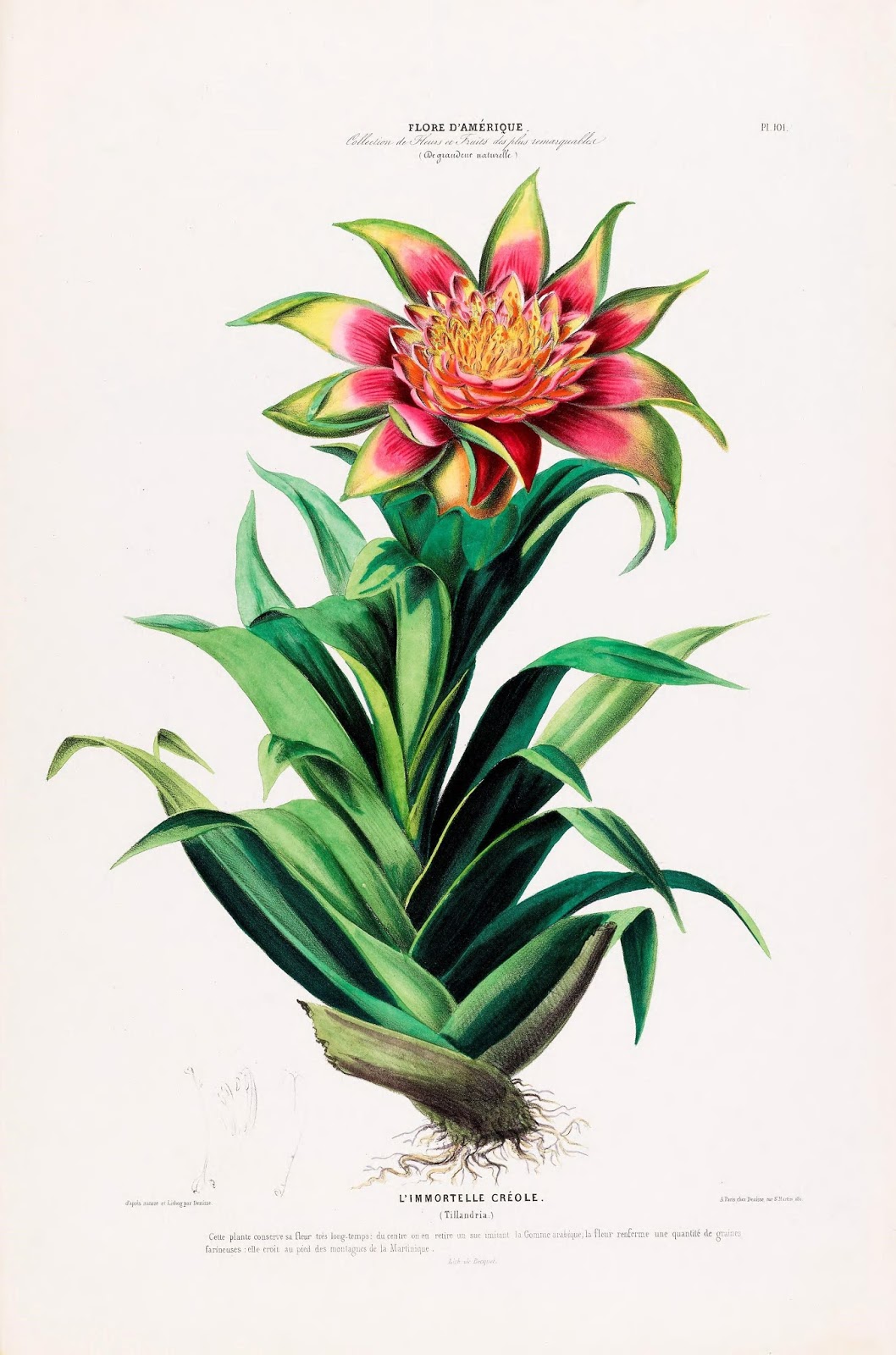
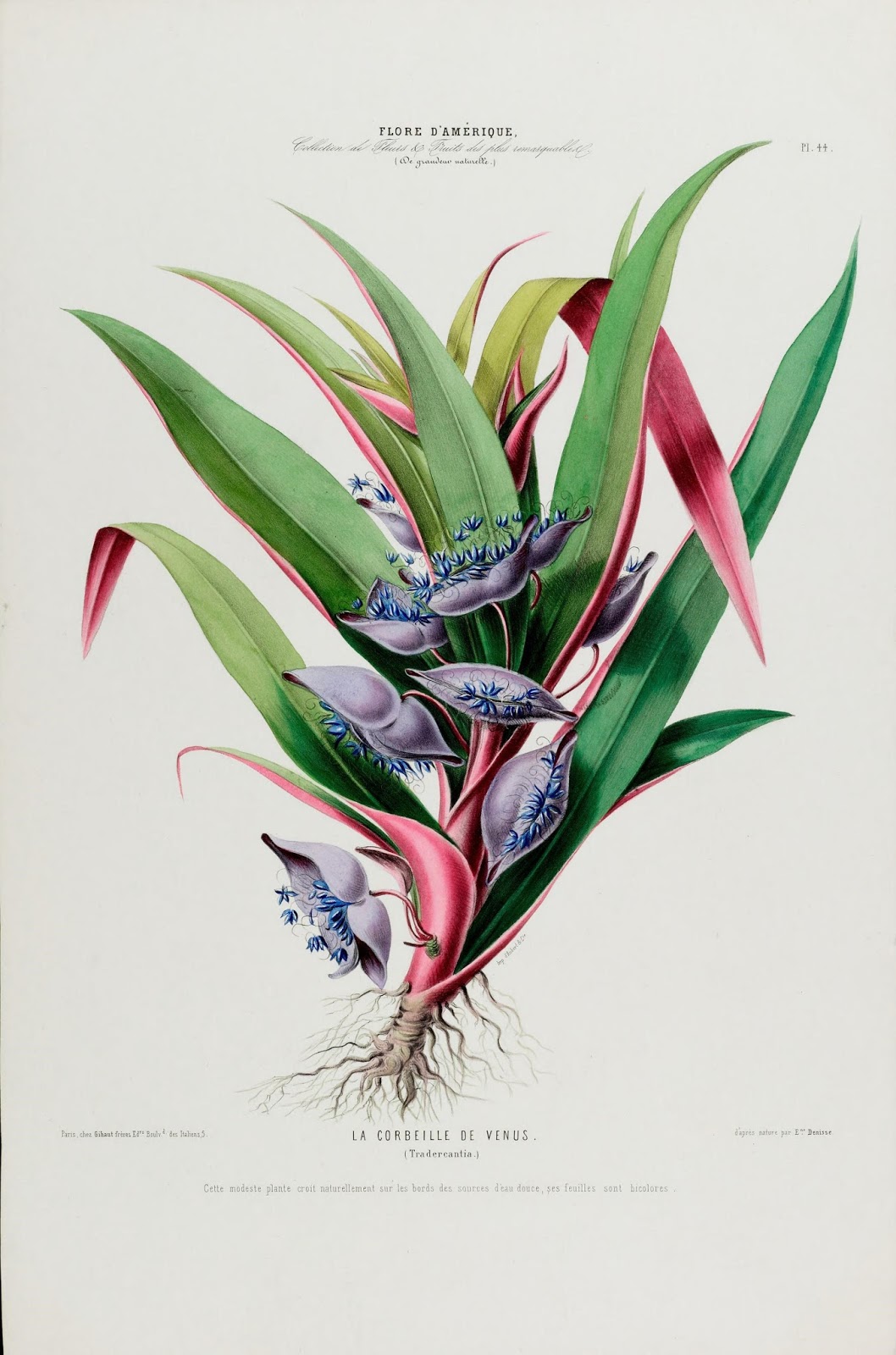
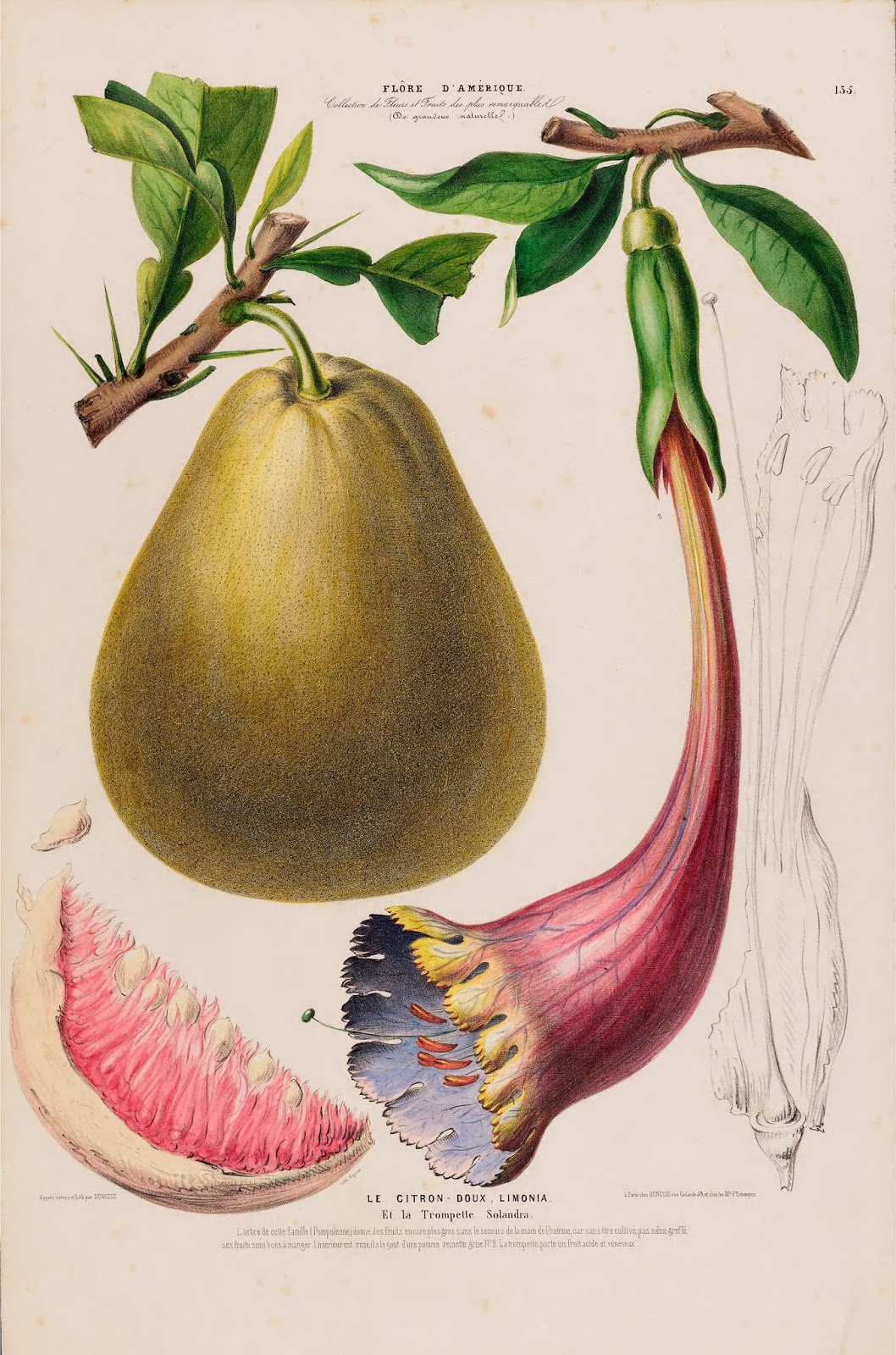
Flore d’Amérique: Illustrating America’s Tropical Flora

Denisse, Etienne. Flore d’Amérique. 1843-46. Digitized by the LuEsther T. Mertz Library at The New York Botanical Garden. http://s.si.edu/2Ac5T4m.

In the 1840s, Europe was enraptured by the beauty of America’s tropical flora. With the production of the lavishly-illustrated Flore d’Amérique (1843-46), Etienne Denisse brought the exotic flowers, fruits, trees, vines, and nuts growing in the Caribbean Islands to captivated readers across the Atlantic.

As a lithographer for the French royal court, Etienne Denisse spent his early career at the botanical garden of the Muséum National d’Histoire Naturelle in Paris, but employment by the government took Denisse’s work to the New World. He spent many years in the French West Indies, illustrating and collecting plants from the region and sending specimens back to France [4] [2].

Denisse, Etienne. Denisse, Etienne. Flore d’Amérique. 1843-46. Digitized by the LuEsther T. Mertz Library at The New York Botanical Garden. http://s.si.edu/2iXrY2J.

Denisse’s work in America culminated in the production of the magnificent Flore d’Amérique, comprised of a total of 201 plates. This title is very rare, and copies are often incomplete. However, thanks to the LuEsther T. Mertz Library at The New York Botanical Garden, anyone in the world can freely access Denisse’s masterpiece through the Biodiversity Heritage Library.

Flore d’Amérique’s stunning hand-colored lithographic plates were based on drawings “from nature” by Denisse. The work was issued in fascicles of six plates between 1843-1846 [2]. Imprints on the individual plates credit both the Parisian firm Gihaut Frères (plates 1-49,64-72) and Denisse (plates 50-63, 73-200) as publishers.

Denisse, Etienne. Denisse, Etienne. Flore d’Amérique. 1843-46. Digitized by the LuEsther T. Mertz Library at The New York Botanical Garden. http://s.si.edu/2hxKkUk.

Originally founded by Antoine François Gihaut as a firm of printsellers, Gihaut Frères expanded into publishing after Gihaut’s sons, Jean François and Michel Ange, took charge of the operation in 1822. In 1829, the firm received a brevet to serve as lithographic printers, but after 1839, this work was contracted out to other lithographic printing houses [1]. A variety of lithographic printers are credited via imprints throughout the plates within Flore d’Amérique, including d’Aubert & C.ie, Laujol, Kaeppelin & C.ie, Vayron, and Becquet.

In 2007, The New York Botanical Garden, LuEsther T. Mertz Library opened an exhibition celebrating the Caribbean’s history, culture, and biodiversity. Entitled Paradise in Print, the exhibition showcased the rich flora of the region through the display of printed folio editions, rare books, and original watercolors from the Library’s collection [3].

Denisse, Etienne. Denisse, Etienne. Flore d’Amérique. 1843-46. Digitized by the LuEsther T. Mertz Library at The New York Botanical Garden. http://s.si.edu/2ipbuMS.

Fittingly, Denisse’s Flore d’Amérique was among the treasures displayed as part of the exhibition. Through the printed page, Denisse and his fellow European explorers introduced the wonders of the New World to a broader audience across the Atlantic. Today, these illustrated publications are both works of art and valuable historical records that help provide insight into the ways in which European contact with America impacted the region’s biodiversity and culture.

View all of the illustrations from Flore d’Amérique in the BHL Flickr.

References
[1] British Museum. 2017. “Gihaut Frères (Biographical details).” Research. Accessed September 14, 2017. http://www.britishmuseum.org/research/search_the_collection_database/term_details.aspx?bioId=123627.
[2] Christie’s Auction House. 2014. “Denisse, Etienne.” Sale 3400, December 4. Accessed September 14, 2017. http://www.christies.com/lotfinder/Lot/denisse-etienne-fl-1814-1857-flore-damerique-dessinee-5855859-details.aspx/.
[3] Dorfman, Jane, Marie Long and Stephen Sinon. 2007. Paradise in Print: Exhibition Catalog. Bronx: The New York Botanical Garden.
[4] Mullarkey, Maureen. 2007. “Botanical Eden.” The New York Sun, August 2.

November 21, 2017by michelle.underhill
Blog Reel, Featured Books

John Forbes Royle: Materia Medica and Economic Botany

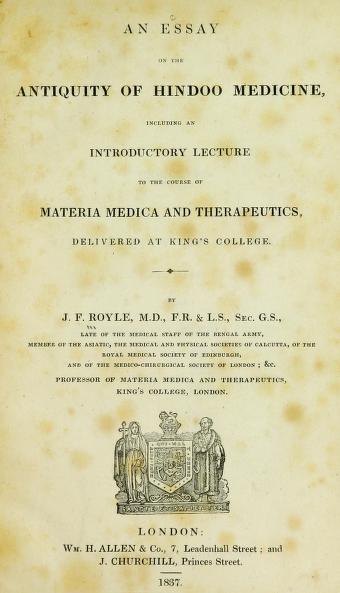
As part of the Expanding Access to Biodiversity Literature project, an interesting title was added to BHL from Yale University’s Harvey Cushing/John Hay Whitney Medical Library and the online Medical Heritage Library: An essay on the antiquity of Hindoo medicine, including an introductory lecture to the course of materia medica and therapeutics, delivered at King’s College, by physician-botanist John Forbes Royle.

Title page of An essay on the antiquity of Hindoo medicine, including an introductory lecture to the course of materia medica and therapeutics, delivered at King’s College, by Royle, J. Forbes (John Forbes), 1799-1858. London, Allen, 1837. Digitized by Yale University via the Medical Heritage Library. http://s.si.edu/2mtstTx.

This work from 1837 documents the materia medica (pharmacology) of India, and explores the historical exchange of medicinal knowledge between cultural groups of India, Arabia, Persia, Greece and China. Including details in botany, ecology, minerology and astronomy, it’s an intriguing interdisciplinary resource that can also be read for insights on its Western author and this period in time.

John Forbes Royle (1798-1858) traded his plan to join the British army for an unexpected interest in natural history. He was born at Kanpur, India, and would return to India after attending Edinburgh High School and the East India Company’s military academy at Addiscombe. Inspired by the mentorship of physician Anthony Todd Thomson, Royle chose to pursue medicine as a means to further his study of botany. He became an assistant surgeon with the East India Company, and in the following years worked at several locations across northern India, where he studied medicines from bazaars, employed collectors to amass a collection of economic plants, and became superintendent of the garden at Saharanpur. He earned the titles of MD in 1833 and Professor of Materia Medica at King’s College, London, in 1836.

An excerpt from Essay on the antiquity of Hindoo medicine demonstrates Royle’s interconnected thinking on medicine:

“There are, however, two branches of this extensive science [botany], respecting which I am desirous of making a few observations; one is the connexion between the Structure and Natural affinities of plants, and their Physical and Medical properties; and the other is the Geographical distribution, especially as connected with Climate. Both are important subjects, whether we consider them in a scientific or a practical point of view. The one teaches us the laws which influence the distribution of plants; points out the countries and climates which different families affect; and gives us principles for their cultivation, either as medicines, or as objects of agriculture: the other is no less valuable in affording us innumerable indications in every part of the world, for discovering the properties of new and unknown plants, whether as fitting them for food, for medicine, or for any of the arts of life[.]” [Royle, p. 3]

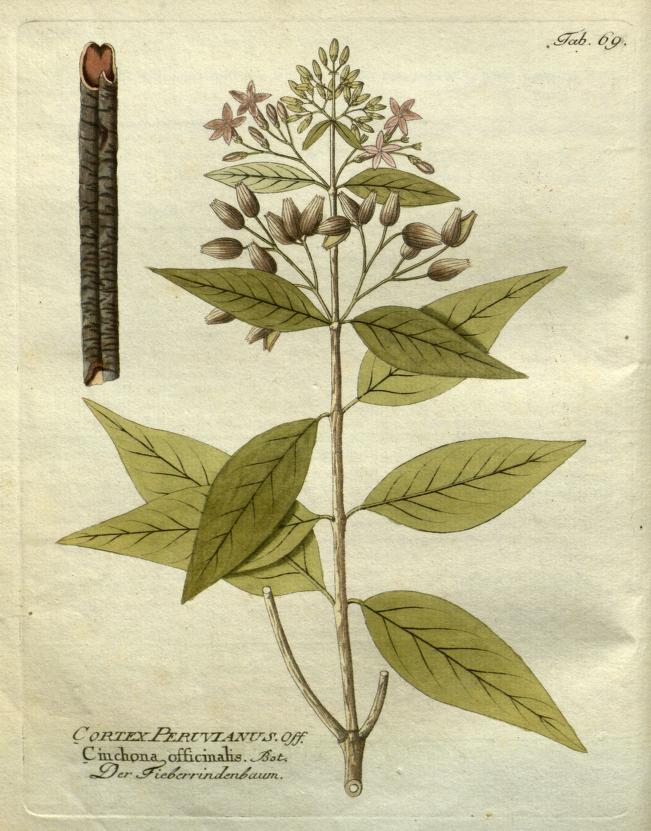
Cinchona, a South American genus. Its bark contains medicinal compounds including quinine, used to treat malaria. Royle recommended that Cinchona be grown in India. Image from BHL book: Icones plantarum medico-oeconomico-technologicarum cum earum fructus ususque descriptione. Wien:herausgegeben von Ignatz Albrecht und verlegt bey Phil. Jos. Schalbaecher, [1800]-1822. Digitized by Missouri Botanical Garden. http://s.si.edu/2iiHgMh.


Cushing/Whitney Medical Library of Yale University

The copy of Royle’s text in BHL belonged to Edward Salisbury, a Yale graduate and professor who encouraged scholarship on West and South Asia. Salisbury donated his “Oriental Library,” a collection of hundreds of rare and early printed books and manuscripts, to the college in 1870. Salisbury’s Oriental Library is foundational to what is now the third-largest collection of Islamic manuscripts in the United States. Last year, Yale celebrated Salisbury’s 175th anniversary as the first professor of Arabic and Sanskrit languages and literature in the Americas.

Essay on the antiquity of Hindoo medicine is now held at the Medical Historical Library of the Cushing/Whitney Medical Library. The library was named for Yale graduates Harvey Cushing, known as the father of neurosurgery, and John Hay Whitney, Herald Tribune editor and patron of the arts. In 1935, Cushing and two other physicians, John F. Fulton and Arnold C. Klebs, donated their personal collections of medical texts to the medical library, beginning its Medical Historical Library. Its collections include materials ranging from the 16th to 20th century, with works from Robert Boyle, Galen, William Harvey, Hippocrates, and Andreas Vesalius. Additionally, the Historical Library also holds prints, a collection of weights and measures, and presents rotating exhibits.

The Cushing/Whitney Library is also home to the Cushing Center, a room in the stacks transformed to display the medical specimens of Cushing’s Brain Tumor Registry. Cushing meticulously documented over 2,200 case studies as he pioneered the field of neurosurgery, and his registry includes specimens preserved from human surgeries and autopsies as well as notes, journal excerpts, photos and negatives.

Harvey Cushing/John Hay Whitney Medical Library Historical Library. Frank Poole, 2004.


Medical Heritage Library

The Medical Heritage Library (MHL) is an online collection of materials that are free and openly accessible through the Internet Archive. Royle’s Essay on antiquity of Hindoo medicine came to BHL via the MHL.

Much like BHL, the MHL is a collaborative effort by medical libraries to promote access to resources (such as rare books, pamphlets, journals and films) that are useful across a spectrum of disciplines. The collection includes over 200,000 titles with fascinating variety – skimming the landing page, one can find herbals, medical dictionaries and papers, as well as video clips of 1960s tobacco commercials and Helen Keller’s autobiography.

The Medical Heritage Library was launched in 2010 by founders The Augustus C. Long Health Sciences Library at Columbia University and Columbia University Libraries/Information Services; The College of Physicians of Philadelphia; The Cushing/Whitney Medical Library at Yale University; The Francis A. Countway Library of Medicine at Harvard University; U.S. National Library of Medicine; and Wellcome Library in London, UK. (For more information about its content contributors, funding and support, please see MHL’s ‘About’ page.)

An essay on the antiquity of Hindoo Medicine is a welcome addition to BHL’s collection of works by John Forbes Royle, which include:

  • Illustrations of the botany and other branches of the natural history of the Himalayan Mountains: and of the flora of Cashmere. London: Wm. H. Allen, 1839. (Digitized by Missouri Botanical Garden)
  • On the culture and commerce of cotton in India and elsewhere; with an account of the experiments made by the Hon. East India Company up to the present time. London: Smith, Elder, 1851. (Digitized by the University of British Columbia Library)
  • The fibrous plants of India, fitted for cordage, clothing, and paper. With an account of the cultivation and preparation of flax, hemp, and their substitutes. London, Smith, Elder, and Co.; 1855. (Digitized by Cornell University Library)
  • A manual of materia medica and therapeutics including the preparations of the pharmacopoeias of London, Edinburgh, and Dublin, with other approved medicines. London: John Churchill, MDCCCLVI [1856]. (Digitized by King’s College London, Foyle Special Collections Library)

Thanks to Melissa Grafe, Ph.D, Head of the Medical Historical Library and John R. Bumstead Librarian for Medical History, who shared how this volume came to the Medical Historical Library.

Sources

  • About (n.d.) Retrieved from http://archive.org/details/medicalheritagelibrary&tab;=about.
  • About (n.d.) Retrieved from http://www.medicalheritage.org/about/.
  • About (n.d) Retrieved from https://salisbury175.yale.edu/about.
  • Harvey Cushing and the Cushing Center (n.d.) Retrieved from http://library.medicine.yale.edu/cushingcenter/history.
  • History of the Library (n.d.) Retrieved from http://library.medicine.yale.edu/about/history.
  • Royle, John Forbes (1837). London, Allen. Retrieved from https://www.biodiversitylibrary.org/item/199214.
  • Woodward, B. B. “Royle, John Forbes (1798–1858).” Rev. Mark Harrison. Oxford Dictionary of National Biography. Ed. H. C. G. Matthew and Brian Harrison. Oxford: OUP, 2004. Online ed. Ed. David Cannadine. May 2010. Retrieved from http://www.oxforddnb.com/view/article/24239.
November 16, 2017by ulib-libraryjobs
BHL News, Blog Reel

Join us for Seeds in the Stacks!

Find a recording of Seeds in the Stacks on YouTube.
————————————-

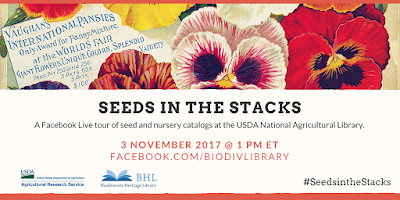
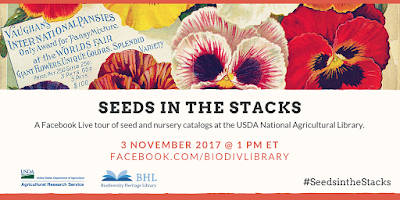
Join us for Seeds in the Stacks, a Facebook Live tour at the USDA National Agricultural Library! We’ll go behind-the-scenes to explore selections from the Library’s collection of over 200,000 seed and nursery catalogs.

WHERE?
www.facebook.com/BioDivLibrary
WHEN?
3 November 2017 @ 1pm ET

The USDA National Agricultural Library is the newest BHL Member. Since joining the consortium as an Affiliate in 2014, NAL has contributed over 2 million pages to the BHL collection, including a significant portion of its Henry G. Gilbert Nursery and Seed Trade Catalog Collection. To date, NAL has contributed over 33,000 catalogs from this collection to BHL. The catalogs can be viewed in BHL as part of the Seed & Nursery Catalogs collection.

October 30, 2017by michelle.underhill
Page 6 of 15« First...«5678»10...Last »

Help Support BHL

BHL's existence depends on the financial support of its patrons. Help us keep this free resource alive!

search

About BHL

The Biodiversity Heritage Library (BHL) is the world’s largest open access digital library for biodiversity literature and archives. BHL operates as a worldwide consortium of natural history, botanical, research, and national libraries working together to digitize the natural history literature held in their collections and make it freely available for open access as part of a global “biodiversity community.”

Join Our Mailing List

Sign up to receive the latest news, content highlights, and promotions.

Subscribe Now

Subscribe to Blog via Email

Enter your email address to subscribe to this blog and receive notifications of new posts by email.

Join 319 other subscribers

Subscribe to Blog Via RSS

Subscribe to the blog RSS feed to stay up-to-date on all the latest BHL posts.

Access RSS Feed

Inspiring Discovery through Free Access to Biodiversity Knowledge.

The Biodiversity Heritage Library makes it easier than ever for you to access the information you need to study and explore life on Earth…for free, anytime, anywhere.


64+ Million Pages of
Biodiversity Literature Online.

EXPLORE

Tools and Services
to Transform Research.

EXPLORE

300,000+
Illustrations on Flickr.

EXPLORE

ABOUT | HARMFUL CONTENT | PRIVACY | SITE MAP | TERMS OF USE