Biodiversity Heritage Library - Program news and collection highlights from BHL
  • Home
  • News
  • Featured Books
    • All Featured Books
    • Book of the Month Series
    • BHL at 20
  • User Stories
  • Campaigns
    • Fossil Stories
    • Garden Stories
    • Monsters Are Real
    • Page Frights
    • Her Natural History
    • Earth Optimism 2020
  • Tech Blog
  • Visit BHL
Home
News
Featured Books
    All Featured Books
    Book of the Month Series
    BHL at 20
User Stories
Campaigns
    Fossil Stories
    Garden Stories
    Monsters Are Real
    Page Frights
    Her Natural History
    Earth Optimism 2020
Tech Blog
Visit BHL
  • Home
  • News
  • Featured Books
    • All Featured Books
    • Book of the Month Series
    • BHL at 20
  • User Stories
  • Campaigns
    • Fossil Stories
    • Garden Stories
    • Monsters Are Real
    • Page Frights
    • Her Natural History
    • Earth Optimism 2020
  • Tech Blog
  • Visit BHL
Biodiversity Heritage Library - Program news and collection highlights from BHL
Blog Reel, Featured Books

More than just a legacy: Let’s look at the post-1922 literature in BHL

It’s no secret that the Biodiversity Heritage Library (BHL) is a top-notch resource for legacy biodiversity publications.  The current U.S. copyright law states that if a title was published over 90 years ago, that title has entered the public domain and is out of copyright.  This allows the BHL to digitize and provide access to an astounding number of volumes published before 1923.  However, that 1923 cut-off isn’t the end-all, be-all for BHL.  An often overlooked aspect of the portal is that it provides access to several post-1922 titles.

There are four main reasons a post-1922 title would be available on BHL: it’s a U.S. federal government publication, its copyright has expired (relevant to the murky 1923-1963 time period of copyright renewal), it’s been made available via the Internet Archive, or the BHL has obtained permission from a third-party publisher to digitize the title.  Additionally, many BHL partners have digitized titles published by their institutions.  In the case of permissions contracts, they may include a cut-off date, e.g., only pre-2004 volumes may be digitized, a practice often used with subscription-based databases.  For more information about third-party permissions and copyright, check out the BHL Permissions and Licensing & Copyright pages.

In this post, we’ll highlight a few of our favorite contemporary titles, but keep in mind they are just a small portion of what is available.
View Full Size Image
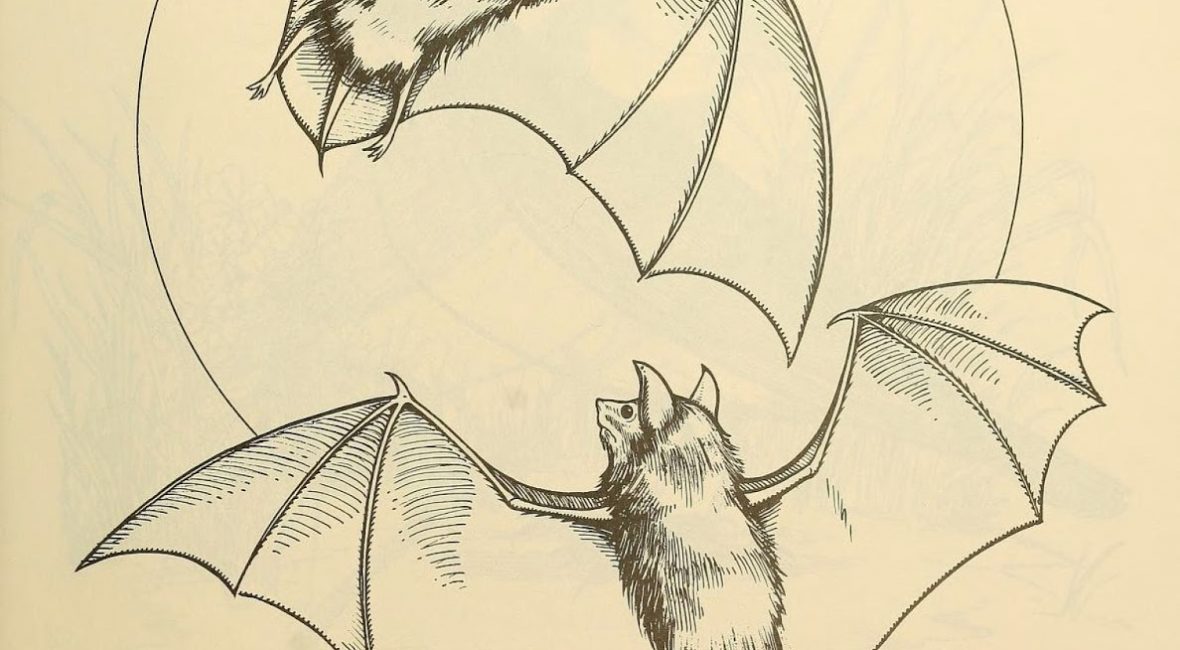
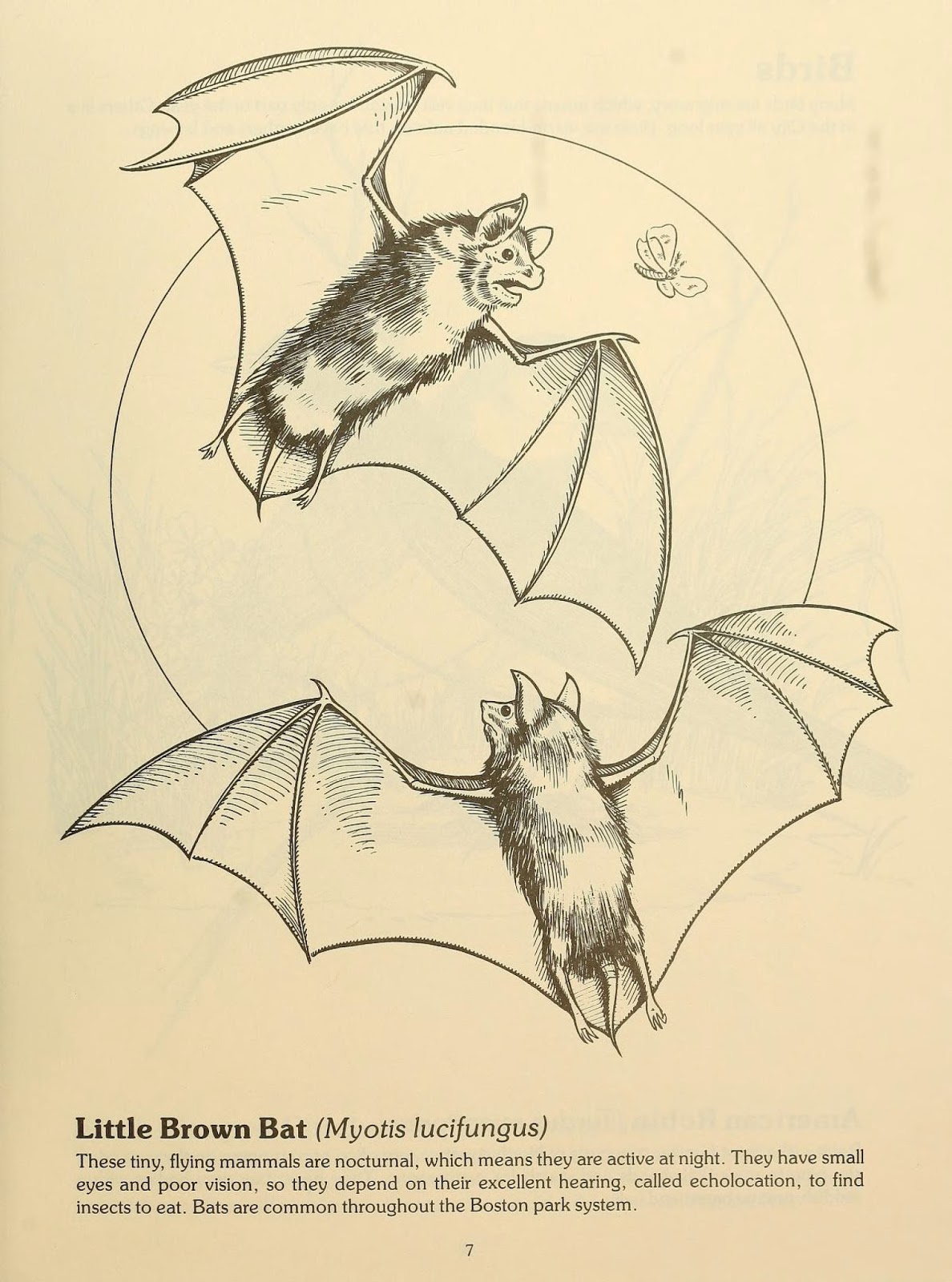
A page from The Boston Park Rangers Nature Book
highlighting Myotis lucifungus, or little brown bat.
http://biodiversitylibrary.org/page/38658209

Boston Park Rangers Nature Book
The Boston Parks and Recreation Department

Digitized by the Boston Public Library, this short pamphlet offers a look into the different animals and plants found in Boston’s network of parks, often referred to as the Emerald Necklace.  Yes, it is a coloring book, but what better way to interest children in urban ecology and their local neighborhood wildlife?  The Boston Park Rangers Nature Book is ready to be printed and shared.  Fair warning though: the maze where you help a red-tailed hawk catch a mouse has already been completed.
View Full Size Image
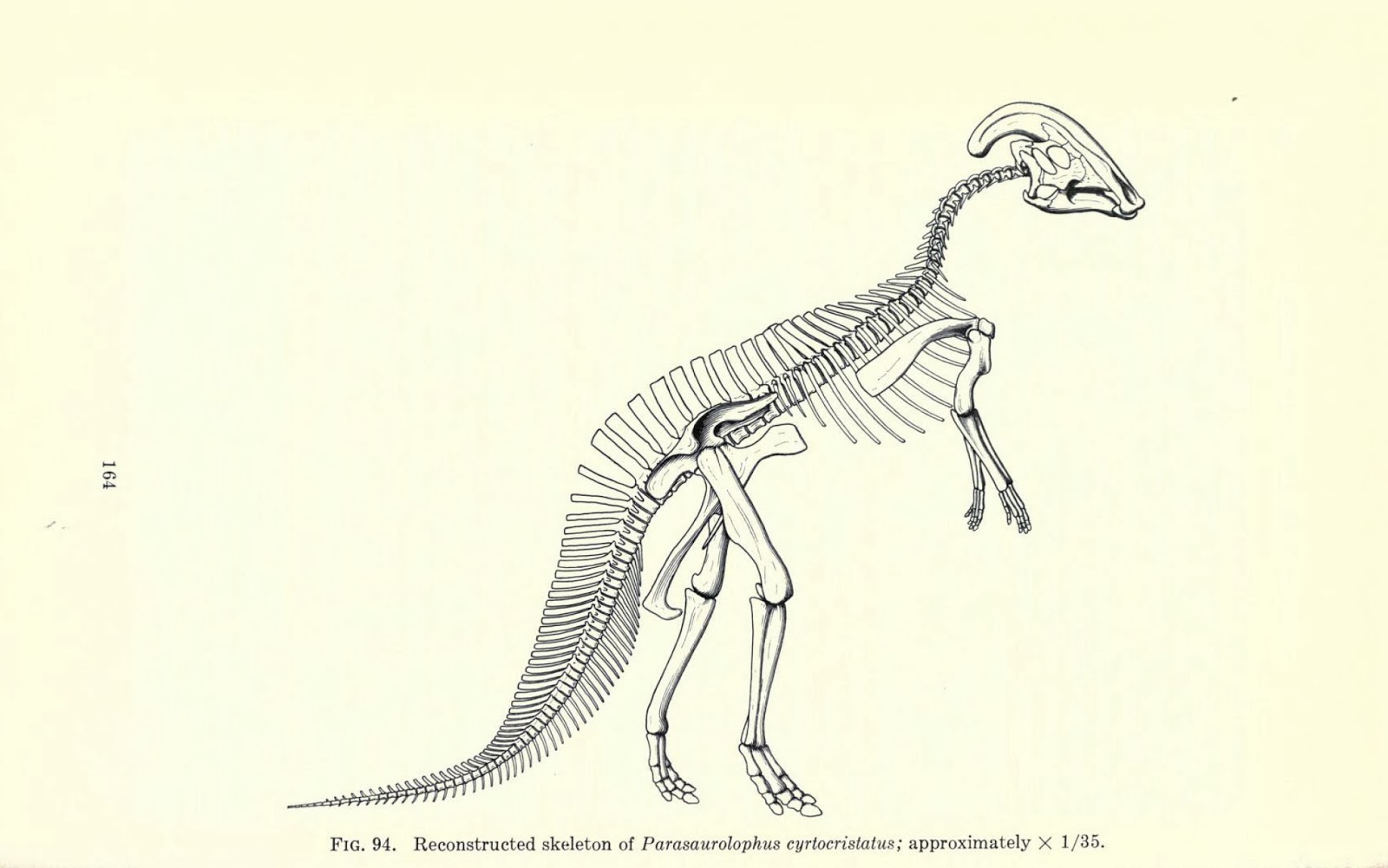
A page from Fieldiana: Geology series showing
a reconstruction of Parasuarolophus cyrocristatus.
http://biodiversitylibrary.org/page/4264754

Fieldiana: Zoology, Geology, and Botany series
The Field Museum of Natural History

Fieldiana is a perfect example of a BHL partner providing access to one of its best known publications.    This Field Museum title has been through a few title changes (currently it is published under two series: Anthropology, and Earth & Life Sciences), and most can be accessed through BHL.  The Botany and Geology series are available up to their respective 2005 volumes.  The Zoological series, on the other hand, is available up to volume 114 of the new series, published in 2008.  That means there’s over 100 years of material available to users!  This includes access to the Flora of Peru (1936) and Tropical American Plants (1961-1975).

The Bulletin of Zoological Nomenclature
International Commission on Zoological Nomenclature (ICZN)

ICZN is responsible for the uniform system used for zoological nomenclature around the world.  It goes without saying that keeping up with their rulings is imperative.  Whether in search of a proposal to reject new names from a particular publication or a recommended change in procedure for the electronic age, users can refer to the quarterly Bulletin all the way through 2007.  The ICZN has also given permission for other titles, such as the Official Lists and Indexes of Names and Works in Zoology.  Access to this material can be attributed to the ICZN’s home base: the Natural History Museum, London.

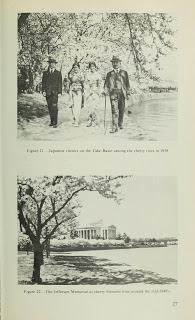
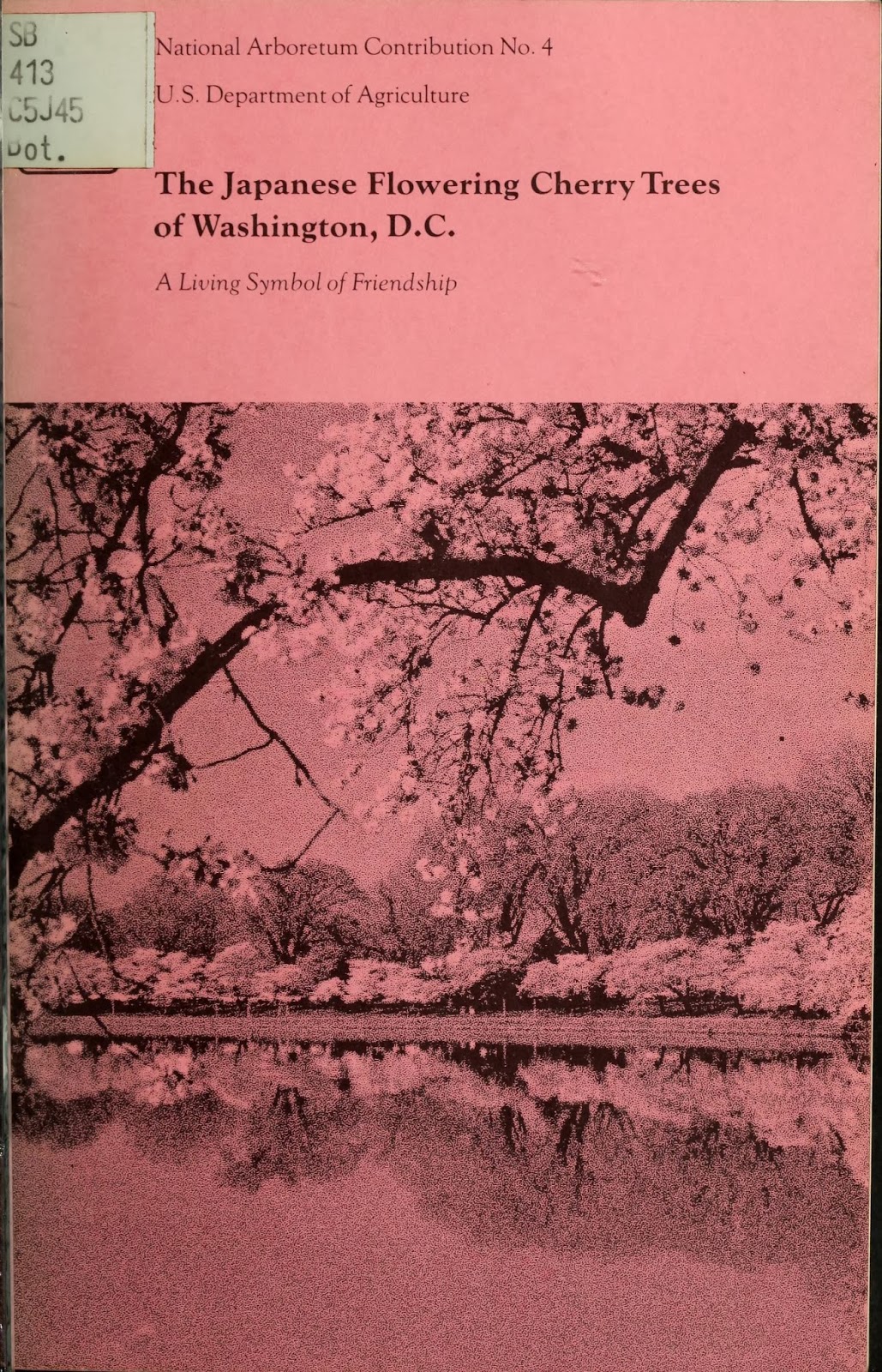
The Japanese Flowering Cherry Trees of Washington, D.C.
U.S. National Arboretum Contribution Series

The U.S. National Arboretum Contributions series is comprised of eight specialty publications beginning in 1953 and ending in 1995.  All are horticultural in nature and many are about research on the grounds of the Arboretum.  All are available on BHL.  One that might appeal to a wider readership is about how the cherry trees came to Washington.  It tells the story of how the now famous and much anticipated cherry trees came to be planted around the tidal basin in West Potomac Park in 1912.  It’s a fascinating tale of international diplomacy with details on how the first shipment of trees had to be destroyed after their arrival.  Part history lesson and part insight as to why the U.S. needed to develop an effective monitoring system for foreign plant introduction, which it eventually did.
View Full Size Image
Cover of The Japanese Flowering
Cherry Trees of Washington, D.C.
http://biodiversitylibrary.org/page/39103940
View Full Size Image
Two photos of cherry trees along the
tidal basin in 1938 and mid-1940’s.
http://biodiversitylibrary.org/page/39103904
Compositae Newsletter

The Swedish Museum of Natural History

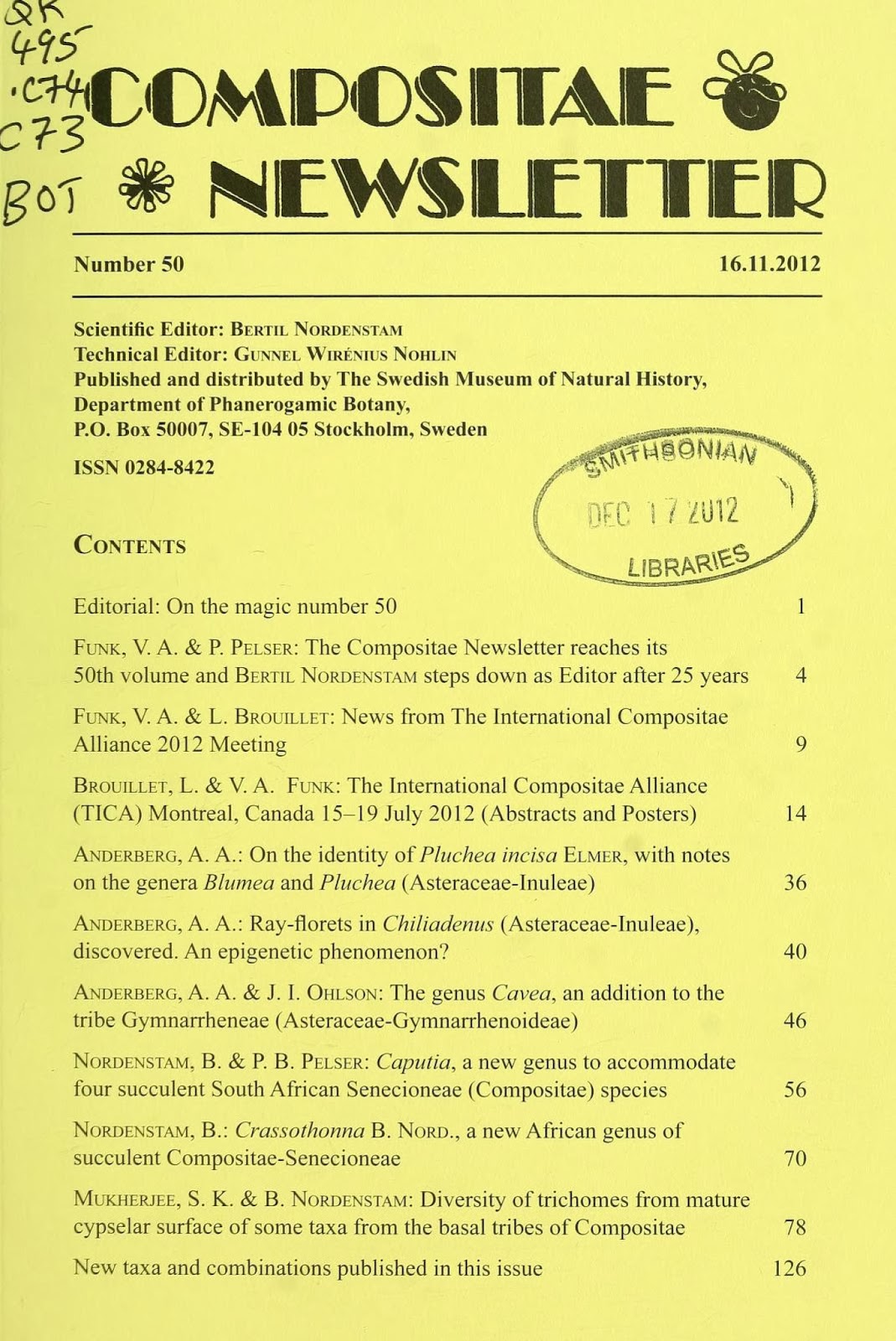
The publication began in 1975 and is useful to anyone with a taxonomic interest in the family Asteraceae, commonly known as the daisy or sunflower family.  Asteraceae is a large plant family with 23,000 accepted species spread across 1,620 genera.  Bertil Nordenstam, who recently retired as editor, is responsible for publishing the journal in its improved form, with announcements and lists of types, research articles and comprehensive works.  A nice history of the publication can be found in Volume 50 of the publication.  Currently, the print publication is held by 34 libraries worldwide, with a print distribution of approximately 600 copies.  Providing it electronically through BHL allows for more researchers and libraries to learn about the publication and have access.
View Full Size Image
Cover of the Compositae Newsletter Number 50 (2012)
http://biodiversitylibrary.org/page/41205936

We hope these few examples have inspired you to explore BHL for more recently published works.  Providing both pre- and post-1923 titles to a worldwide audience is all part of making BHL a truly global comprehensive resource in biodiversity literature.  So make sure to explore BHL yourself for modern titles.  You never know what you’ll find!

January 1, 2014by mkahn
BHL News, Blog Reel

Making the BHL-Africa a Reality: The BHL-Africa Launch and Workshop

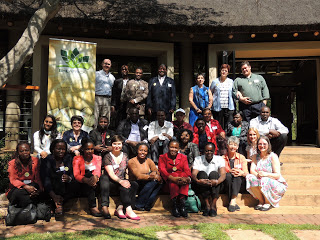
Group photo on the stairs at the South African National Biodiversity Institute.
View Full Size Image
BHL-Africa logo at Pretoria National Botanical Garden

On April 15, 2013, BHL-Africa officially launched. BHL-Africa’s mission is to provide open access to the valuable biodiversity literature found within African libraries and institutions. The African consortium is hard at work identifying partners throughout the continent to sign an MOU and commit to working towards this noble objective.

The three-day BHL-Africa launch and workshop was hosted by the South African National Biodiversity Institute (SANBI) at the Pretoria National Botanical Garden in Pretoria, South Africa, from April 15-17, 2013. The meetings occurred simultaneously with the GBIF meetings also held at the botanical garden last week. Over two dozen representatives from institutions that have either signed or intend to sign the BHL-Africa MOU were present. Additionally, six colleagues from the BHL-US/UK program node were invited to attend: Nancy Gwinn (Director, Smithsonian Libraries, BHL Executive Committee Chair); Constance Rinaldo (Director, MCZ-Harvard Library, BHL Executive Committee Vice-Chair); Doug Holland (Director, Missouri Botanical Garden Library); William Ulate (Missouri Botanical Garden, BHL Technical Director); Bianca Crowley (Smithsonian Libraries, BHL Collections Coordinator); and Grace Costantino (Smithsonian Libraries, BHL Program Manager).

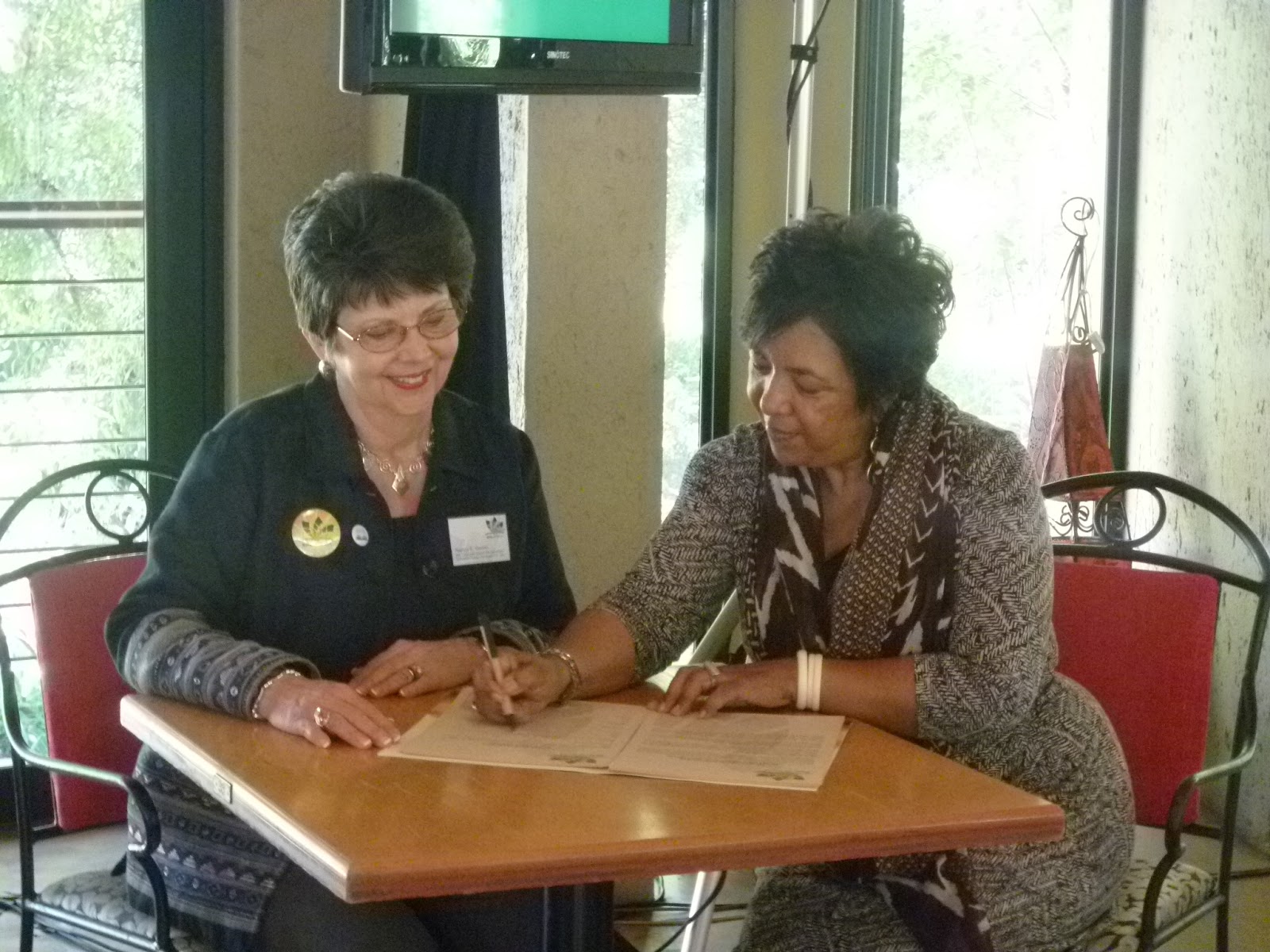
Monday, April 15, began with a launch ceremony, detailed in our blog post last week, during which the BHL MOU with SANBI was signed by Dr. Nancy Gwinn and Dr. Tanya Abrahamse (SANBI CEO). The real work began after the launch, with the start of the BHL-Africa workshop.

View Full Size Image
Dr. Nancy Gwinn and Dr. Tanya Abrahamse sign the BHL-Africa MOU

Day one of the workshop (Monday, April 15, afternoon) was devoted to addressing final MOU questions and outlining participants’ expectations for the meeting. Key expectations and areas in need of discussion included: Clarifying BHL’s open access policy and its implications for African participants; a concise description of the value of BHL for participating institutions in order to secure managerial buy-in; organization of clear fundraising strategies; the need for extensive training; identification of available resources and digitization capacity building; and the best way to collaborate and share resources amongst participating members. Overall meeting expectations were to elect a BHL-Africa Steering Committee and establish an outline for a two-year work plan.

View Full Size Image
The BHL-Africa Group Photo!

Much of day two (Tuesday, April 16) was spent investigating workflow and organizational questions, including collections development, copyright, communication, and infrastructure. The primary reason for the presence of the BHL-US/UK team was to offer our African colleagues the expertise we have gained in these areas over the past six years, as well as to help define global expectations for our new members.

Towards this end, Nancy Gwinn began by identifying four main expectations for BHL-Africa: Content Creation; Audience Building; Content Identification; and Partnership Building. In short, these expectations translate to not only growing the BHL corpus by digitizing African collections, but also helping BHL identify content to scan, both within and outside of Africa. Furthermore, BHL Africa must work to both build the BHL audience by promoting the project throughout the continent, but also expand the BHL consortium by identifying institutions that can contribute to the initiative.

Constance Rinaldo then gave a presentation on copyright, defining public domain, open access, and the Creative Commons licenses employed by BHL-US/UK. She was quick to stress, however, that each BHL node and institution must follow the copyright laws of their own countries, and, as BHL is not a legal entity, it is ultimately each scanning institution that is legally responsible for the content they contribute to the collection.

View Full Size Image
Bianca Crowley on BHL Collections Development

Bianca Crowley then gave our African colleagues some insight into the BHL-US/UK collection development process, outlining our selection and de-duplication process, digitization principles, metadata requirements, and content integration. Communication and collaboration methods were a key point of discussion, as they are critical for successful collections development.

Grace Costantino followed with a presentation on BHL-US/UK’s use of social media, which allows us to communicate project developments, provide context to the books in our collection, reach new audiences on new platforms, and uncover hidden gems in our collection. Following the presentation, an open discussion about each institution’s current use of social media, social media in the context of Africa, and how BHL-Africa might use social media occurred.

Finally, William Ulate detailed the BHL infrastructure, demoing the Macaw tool developed by Joel Richard at the Smithsonian Libraries, which is used to ingest books through Internet Archive into BHL. A remote installation of Macaw is running at the University of Pretoria and can be accessed via the web by any BHL-Africa participant to load digitized content into BHL.

BHL-African participants were also given a chance, on day two, to break out into two working groups, dedicated to Collections Development/Copyright and Outreach/Communication. These sessions allowed participants to apply the information given during the presentations to the realities of the BHL-Africa project.

The final day of the meeting (Wednesday, April 17) was spent identifying preliminary tasks for a two-year BHL-Africa workplan and electing a BHL-Africa Steering Committee. Workplan components include establishing a list of titles that each institution wishes to contribute to BHL; drafting documentation, based largely on existing files from gBHL, for workflow and collaboration guidance; and drafting a preliminary communication and outreach plan, which addresses not only external, but also internal, communication needs.

View Full Size Image
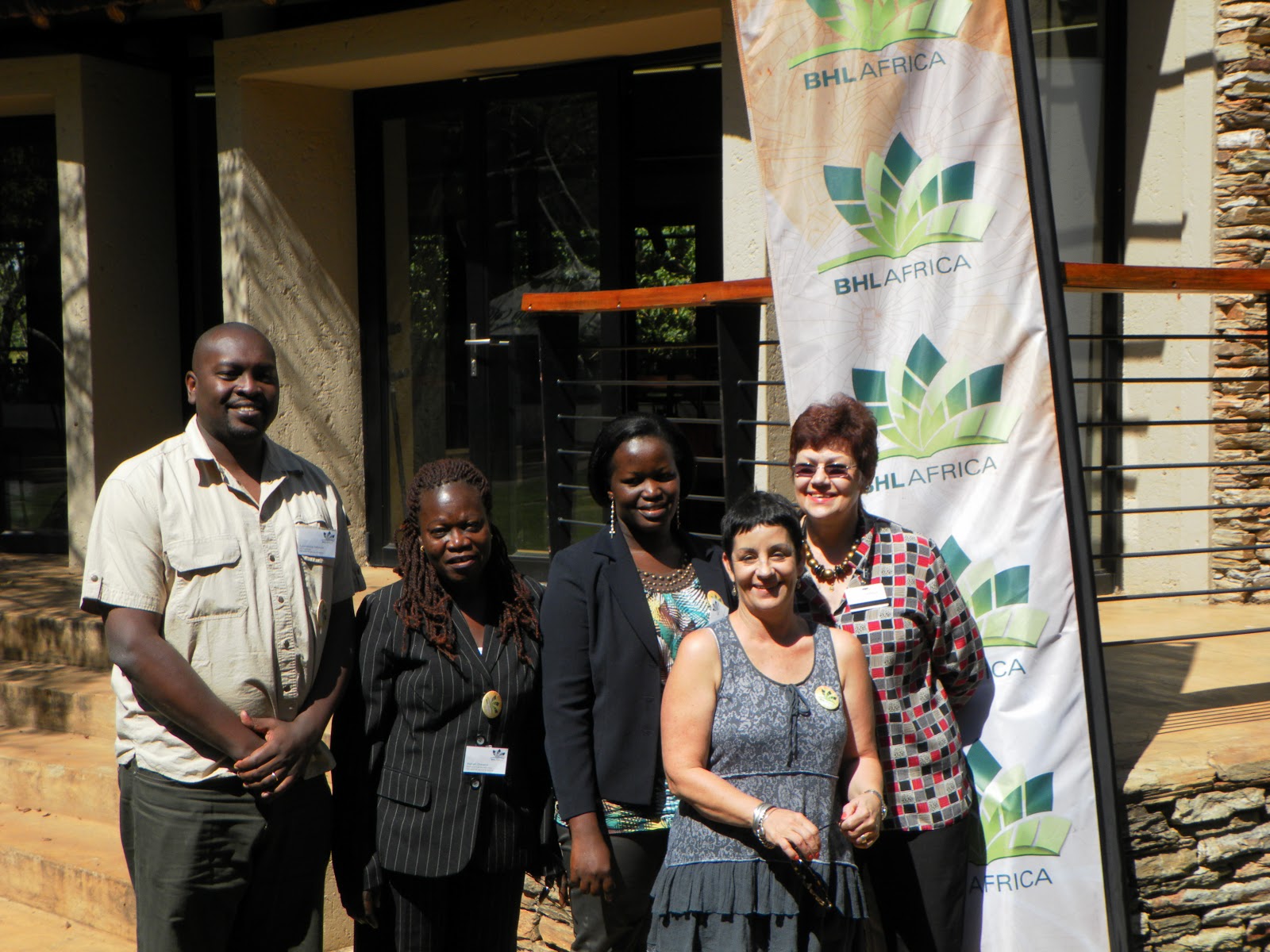
BHL-Africa Steering Committee (Left to Right): Lawrence Monda (Technical Advisor), Ashah Owano, Loi Namugenyi, Anne-Lise Fourie, Ria Groenewald

The BHL-Africa Steering Committee was also elected at the meeting. BHL-Africa has been divided into three regional nodes: North/Central; Eastern; Southern. Each regional node elects two representatives for the Steering Committee. Currently, there is no representation in North/Central Africa within the project, so only four members (two from Southern, two from Eastern) were elected at the meeting. Elected members include: Anne-Lise Fourie (SANBI, Southern); Ria Groenewald (University of Pretoria, Southern); Ashah Owano (National Museums of Kenya, Eastern); and Loi Namugenyi (Uganda National Council for Science and Technology, Eastern). Lawrence Monda (National Museums of Kenya) was elected as the BHL-Africa Technical Representative. Two additional members will be elected as North/Central institutions are added to the BHL fold. The Steering Committee will be responsible for providing strategic guidance, developing fundraising plans and approving budgets, and organizing pan-continental efforts.

The three-day BHL-Africa launch and workshop was an extremely successful event which resulted in the creation of an actionable plan for project development and the identification of notably capable leadership. Meeting attendees left feeling energized, with a clear sense of purpose. Just one and a half years ago, at the Life and Literature conference, the concept of BHL-Africa was born. Today, it is a reality. We congratulate our colleagues on the astounding progress they have made and look forward to seeing great things from BHL-Africa!

April 24, 2013by michelle.underhill
Page 3 of 3«123

Help Support BHL

BHL's existence depends on the financial support of its patrons. Help us keep this free resource alive!

search

About BHL

The Biodiversity Heritage Library (BHL) is the world’s largest open access digital library for biodiversity literature and archives. BHL operates as a worldwide consortium of natural history, botanical, research, and national libraries working together to digitize the natural history literature held in their collections and make it freely available for open access as part of a global “biodiversity community.”

Join Our Mailing List

Sign up to receive the latest news, content highlights, and promotions.

Subscribe Now

Subscribe to Blog via Email

Enter your email address to subscribe to this blog and receive notifications of new posts by email.

Join 319 other subscribers

Subscribe to Blog Via RSS

Subscribe to the blog RSS feed to stay up-to-date on all the latest BHL posts.

Access RSS Feed

Inspiring Discovery through Free Access to Biodiversity Knowledge.

The Biodiversity Heritage Library makes it easier than ever for you to access the information you need to study and explore life on Earth…for free, anytime, anywhere.


64+ Million Pages of
Biodiversity Literature Online.

EXPLORE

Tools and Services
to Transform Research.

EXPLORE

300,000+
Illustrations on Flickr.

EXPLORE

ABOUT | HARMFUL CONTENT | PRIVACY | SITE MAP | TERMS OF USE