Biodiversity Heritage Library - Program news and collection highlights from BHL
  • Home
  • News
  • Featured Books
    • All Featured Books
    • Book of the Month Series
    • BHL at 20
  • User Stories
  • Campaigns
    • Fossil Stories
    • Garden Stories
    • Monsters Are Real
    • Page Frights
    • Her Natural History
    • Earth Optimism 2020
  • Tech Blog
  • Visit BHL
Home
News
Featured Books
    All Featured Books
    Book of the Month Series
    BHL at 20
User Stories
Campaigns
    Fossil Stories
    Garden Stories
    Monsters Are Real
    Page Frights
    Her Natural History
    Earth Optimism 2020
Tech Blog
Visit BHL
  • Home
  • News
  • Featured Books
    • All Featured Books
    • Book of the Month Series
    • BHL at 20
  • User Stories
  • Campaigns
    • Fossil Stories
    • Garden Stories
    • Monsters Are Real
    • Page Frights
    • Her Natural History
    • Earth Optimism 2020
  • Tech Blog
  • Visit BHL
Biodiversity Heritage Library - Program news and collection highlights from BHL
BHL News, Blog Reel

Your Next Purchase Could Help Save Biodiversity and Support Research Worldwide

We live in the midst of a major extinction crisis and widespread climate change. Documenting Earth’s species and understanding the complexities of swiftly-changing ecosystems is more important than ever before. To do this, scientists need something that no single library can provide – access to the world’s collective knowledge about biodiversity.

View Full Size Image

Fortunately, the Biodiversity Heritage Library is revolutionizing scientific research by providing free and open access to the collections of natural history and botanical libraries around the world. Since it was founded in 2006, BHL has become the largest open access digital library for biodiversity literature, allowing everyone, everywhere to freely access collections from across global and providing scientists with the information they need to study and save biodiversity. Learn more about how BHL helps save biodiversity and read testimonials from real users about BHL’s impact on global science.

View Full Size Image

The existence of BHL depends on support from our users. As part of our 10th anniversary celebration, we’ve launched a CafePress store with products featuring our #BHLat10 theme and images from our collection. We’re launching the store with a small selection of images from BHL, but we’ll be expanding this selection in the future as we continue to develop our store. 100% of the proceeds that BHL receives from the sale of these products will be used to digitize more books for BHL. Start shopping today and help give scientists around the world the resources they need to study and save biodiversity.

And if merchandise isn’t your thing, but you want to help support BHL’s future, consider making a tax-deductible gift to help us continue to support science and research around the world.

Follow #BHLat10 all this week (11-15 April 2016) to join our 10th anniversary celebrations.  The campaign celebrates BHL’s impact on the global science community, our history and growth, and our collections. Content is being published on our blog, Twitter, Facebook, Flickr, Pinterest, and BHL. Learn more: http://www.biodiversitylibrary.org/collection/BHLat10

We also have programming all week tying into our #BHLat10 themes. Learn more.

Finally, don’t forget to sign our birthday card and tell us what BHL means to you!

April 12, 2016by ulib-libraryjobs
BHL News, Blog Reel

We Need Books to…Identify New Species

This month, we’re publishing a series of blog posts outlining the importance of biodiversity literature, made available for free and open access through the Biodiversity Heritage Library, to today’s scientific research and conservation initiatives. With your help, we can help save biodiversity. 

The Science of Identifying Life on Earth

There are an estimated 8.75 million species on earth, of which almost 2 million have been described. Scientists classify about 18,000 new species per year, meaning that it may take hundreds of years to create a complete species catalog.
View Full Size Image
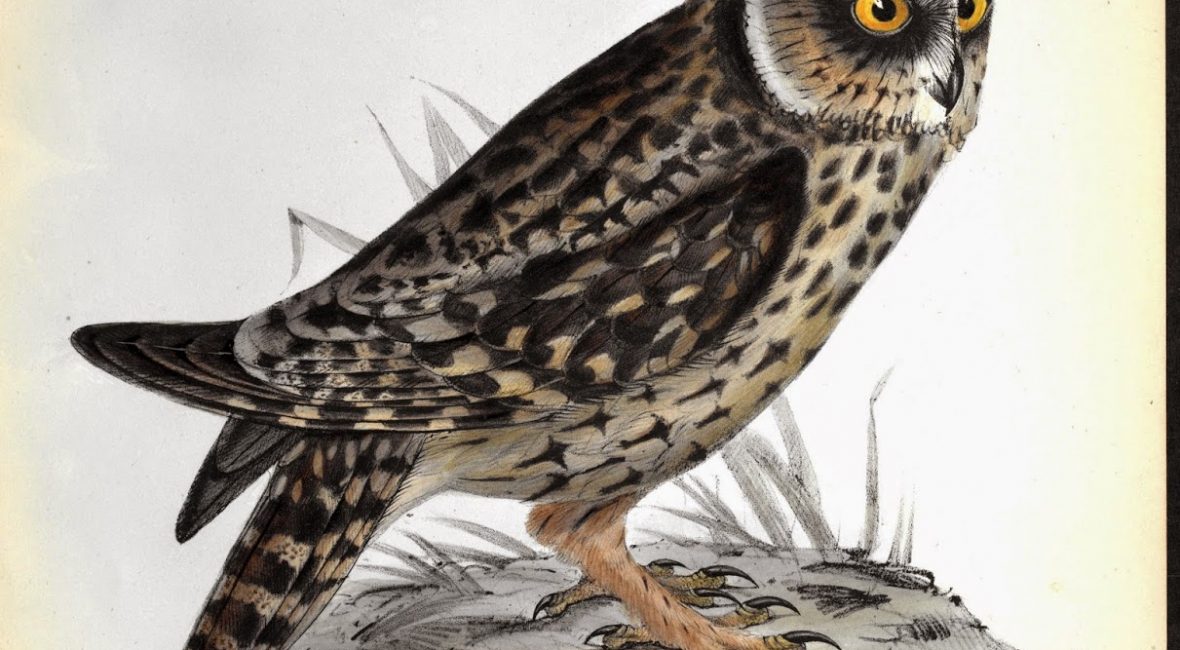
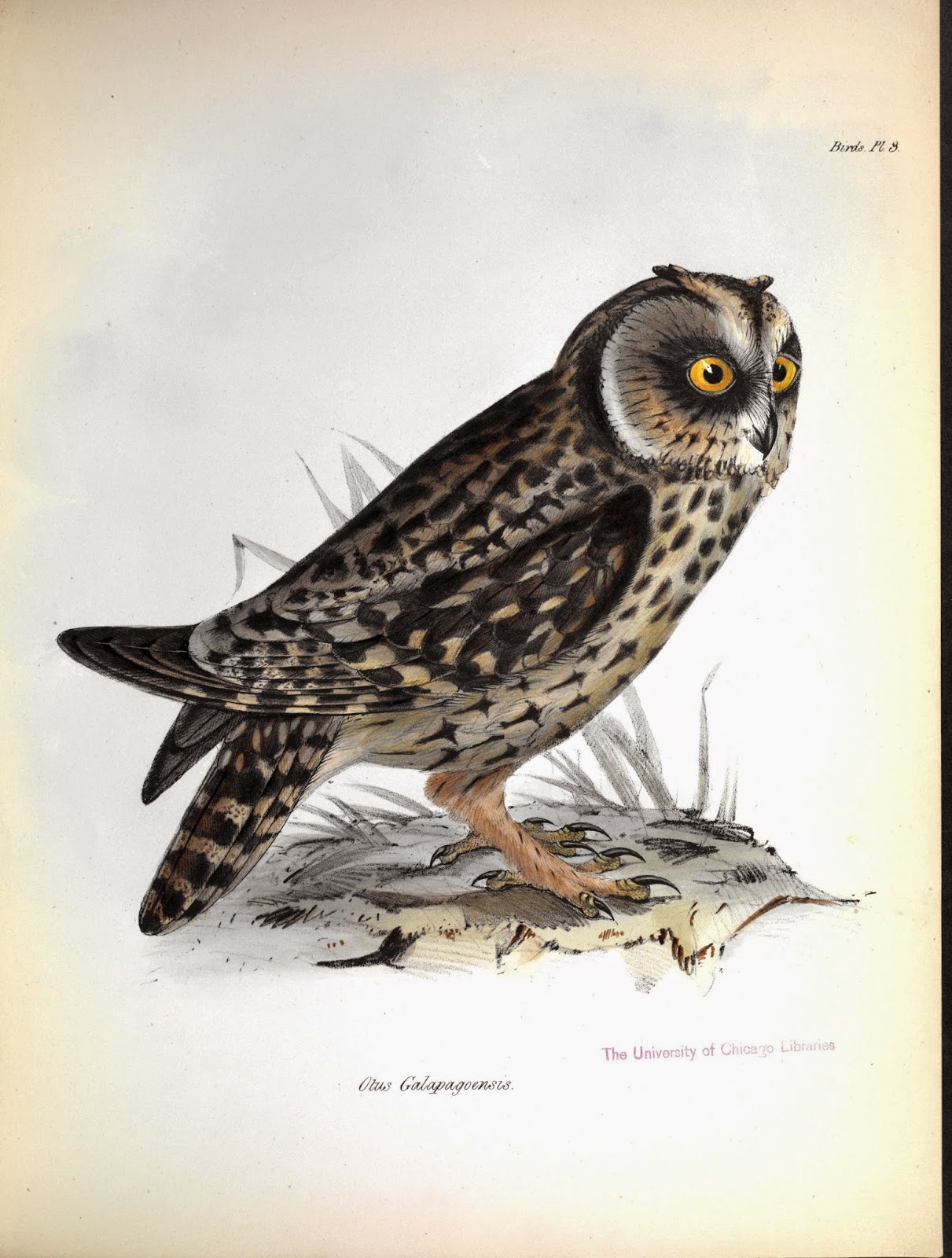
Short-eared Owl. Illustrated as part of Darwin’s Zoology of the Voyage of the H.M.S. Beagle (1839-43), which presented identification and descriptions for the zoology observed and collected during one of natural history’s most famous expeditions. http://biodiversitylibrary.org/page/40300038.

Early explorers documented their observations and data about the world’s biodiversity in historic fields notes and published literature. These discoveries provide a foundation for modern scientific research and fueled the drive to systematically catalog life. The science of taxonomy classifies biological organisms using binomial nomenclature (which identifies organisms by genus and species) and hierarchies based on inferred evolutionary relatedness.

Taxonomists are charged with naming and classifying species, with a goal of one day identifying all life on earth. In order to name a new species, a taxonomist must first verify that the specimen has not yet been described by consulting museum collections, performing DNA sequencing, and reviewing the historic literature record. They may also need to ensure that related species or subspecies have not erroneously been classified as a single species by examining published treatments (species descriptions) and related type specimens.
View Full Size Image
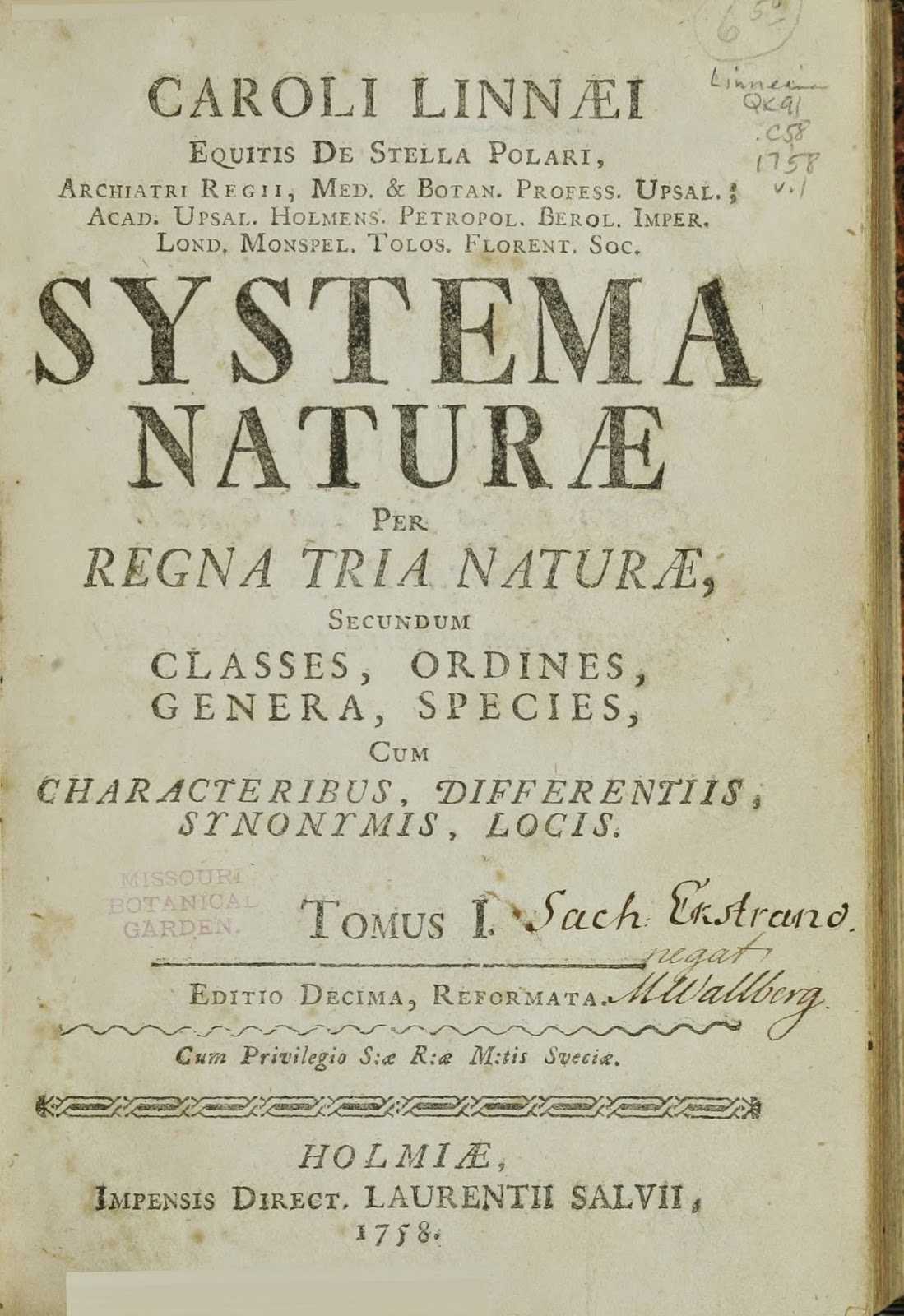
Linnaeus, Carl. Systema Naturae, 10th Ed. (1758-59). Considered the beginning of zoological nomenclature, in which Linnaeus introduced binomial nomenclature for animals. http://biodiversitylibrary.org/page/726886.

“Taxonomy is a science that keeps pace with the present but also draws upon the wealth of knowledge accumulated throughout its history,” stresses Dr. Sandra Knapp, botanist at the Natural History Museum, London, within a History of Taxonomy exhibition at NHM. “The old literature is often just as important as the new,” elaborates Dr. John Sullivan, an evolutionary biologist with the Academy of Natural Sciences, Philadelphia and Cornell University. “If we were to describe new species without knowing what [previously-documented species really are], we risk re-describing [them] under a different name and creating a synonym.”

Morphology and behavior is also very important in determining taxonomic relationships for new and existing species. Historic natural history literature is saturated with such data, which, alongside original species descriptions, provides a critical foundation for ongoing classification work.

Thanks to the Biodiversity Heritage Library, this crucial historic literature is now online, allowing taxonomists to access it wherever and whenever they need to. “I tend to think of BHL as my personal ichthyology library,” confided Dr. Sullivan. Before embarking on a trip to Africa to confirm the identity of a possible new fish, he downloaded the relevant taxonomic description from BHL. “I had it on my Kindle as I stood at the site,” he recalls. “Even if I lived in a library that had these volumes on the shelf, it would take me longer to locate what I was looking for!”
View Full Size Image
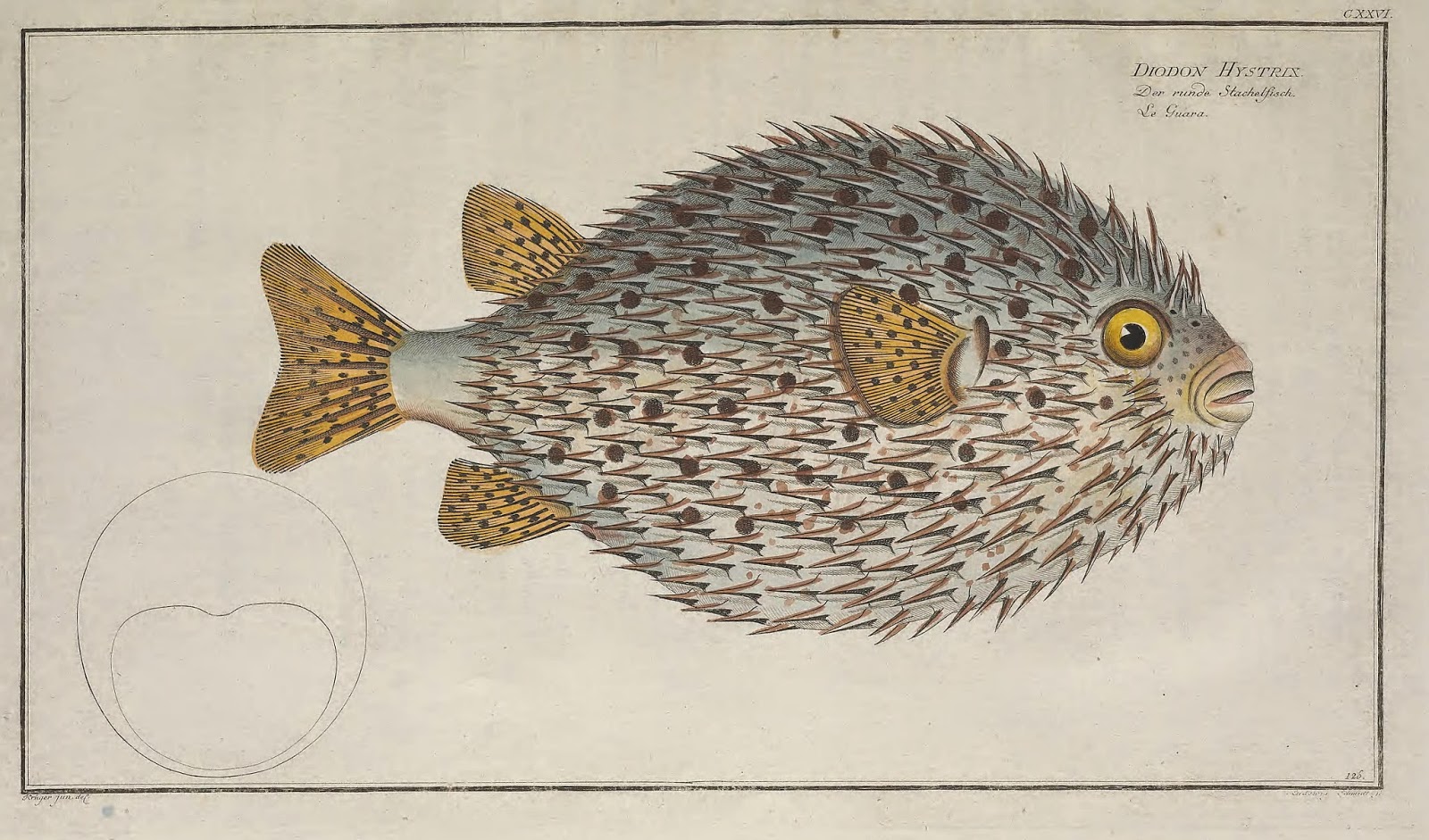
Spot-fin Porcupine Fish, from Ichtyologie, ou, Histoire naturelle, générale et particulière des poissons (1785-97), the French version of Marcus Bloch’s Allgemeine Naturgeschichte des Fische, a compendium of all fish known at the time. This work alone described 267 species new to science. http://biodiversitylibrary.org/page/46076975.

Who Cares if we Identify all the Species?

But why is it important to document all life on earth? “Biodiversity is about the totality of things,” explains Dr. Knapp in the NHM History of Taxonomy exhibition. By identifying species and the relationships between them, taxonomy aims to understand “how nature’s wild, wonderful diversity is generated.”

View Full Size Image
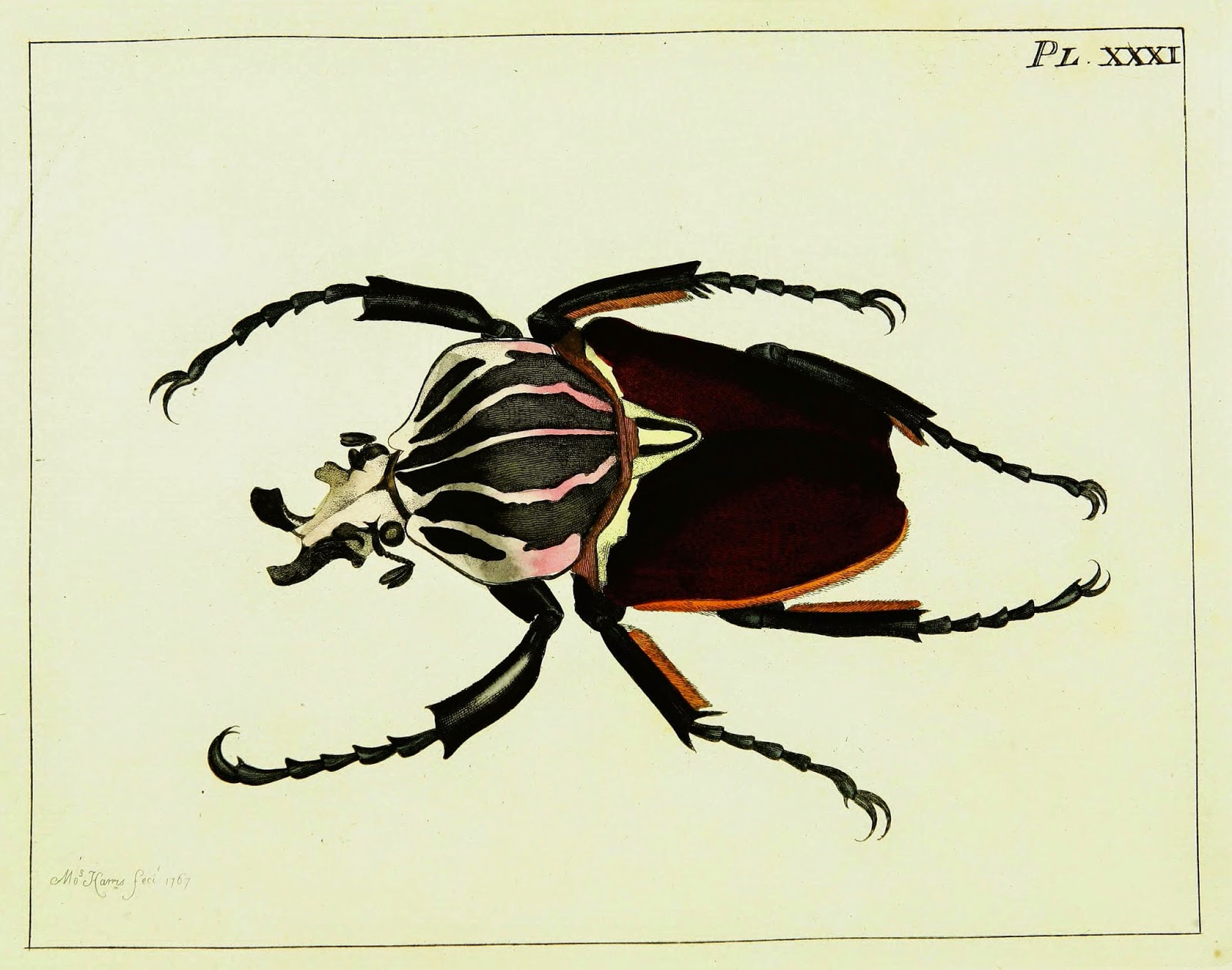
First published illustration of an African Goliath Beetle. From Illustrations of Natural History (1770-82), by Dru Drury. http://biodiversitylibrary.org/page/42122956.

Today, that diversity is sorely threatened. More than 40% of the evaluated amphibian species, 30% of the evaluated invertebrate species, 21% of evaluated fish and reptile species, 26% of known mammal species, and 68% of the evaluated plant species are threatened with extinction. “It is key to identify species at risk so we can take action accordingly,” emphasized Dr. Rafe Brown, curator in charge of Herpetology at the University of Kansas, in a 2014 National Geographic article.

The inherent problem, however, is that we can’t know what species to protect until we know what species there are. We cannot predict how biodiversity loss will affect an ecosystem until we identify all the players in that ecosystem, their roles, and relationships. We must start by illuminating the unknown.
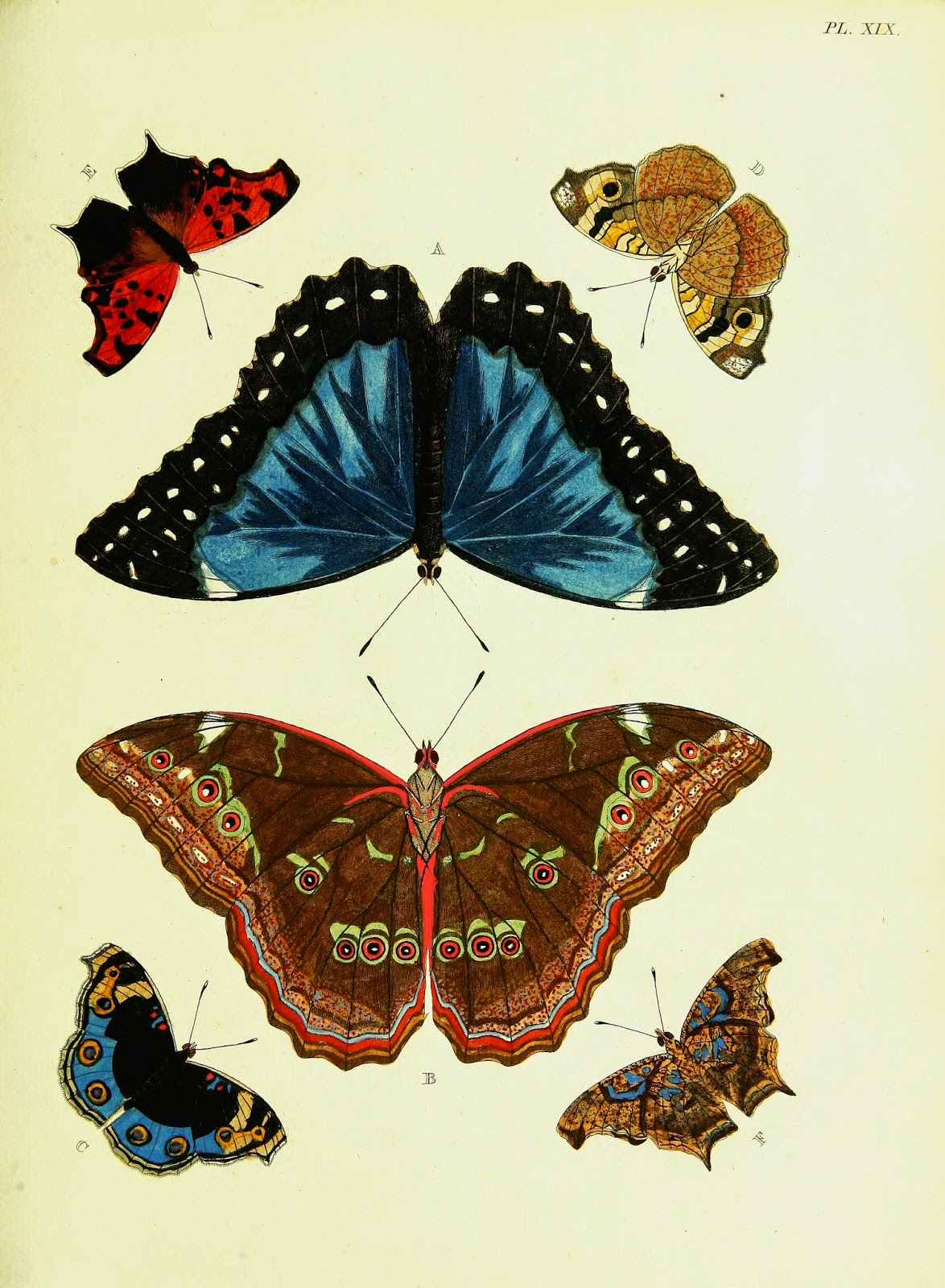
View Full Size Image
Butterflies from De uitlandsche kapellen voorkomende in de drie waereld-deelen, Asia, Africa en America (1779-82), by Cramer, Pieter. This is the first treatise on Lepidoptera to use the then-newly developed binomial classification system by Linnaeus. This work contains hundreds of “original descriptions” and many new-to-science Lepidoptera species. http://biodiversitylibrary.org/page/42111323.

A complete catalog of species can help scientists determine if conservation initiatives are focusing on and prioritizing the right environments and species or if efforts should be directed elsewhere. “We know we’re losing biodiversity at a rate that is 1,000 times faster than we should be, and if we’re going to stop that hemorrhaging of species, we have to know what the species are and most important, where they are. This is a vital first step in making decisions about where to act,” explains Dr. Stuart Pimm, a conservation biologist at Duke University, in a 2012 Seeker article.

You can help!

Effective conservation and appropriate responses to environmental changes relies on a complete biodiversity picture. Obtaining a comprehensive species catalog hinges on the work of taxonomists, who in turn are dependent on the knowledge held within the pages of historic taxonomic literature.

We rely on donations from users like you to help grow our library and keep it free and open. As you think about your holiday giving, we hope you’ll consider making a tax-deductible donation to help save biodiversity.

Learn more about the critical roles BHL and historic literature play in understanding past extinctions, supporting conservation, and saving Earth’s biodiversity

December 17, 2014by michelle.underhill
BHL News, Blog Reel

The Perfect Holiday Gift

Preserving Biodiversity Knowledge and Strengthening Conservation Efforts

View Full Size Image
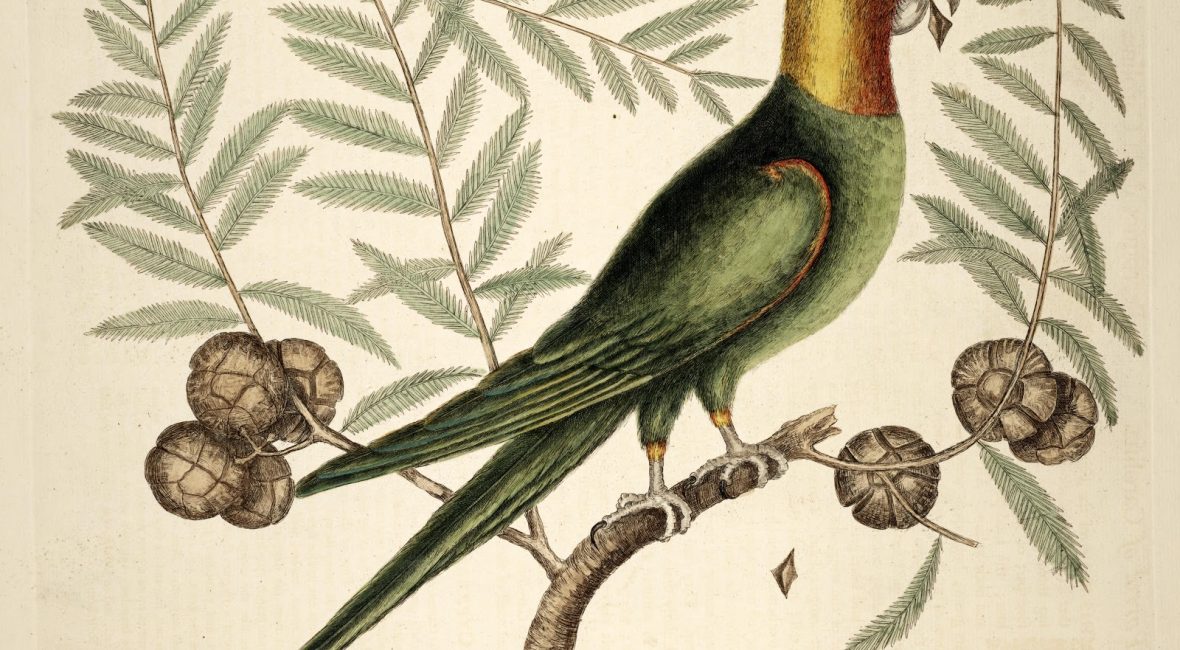
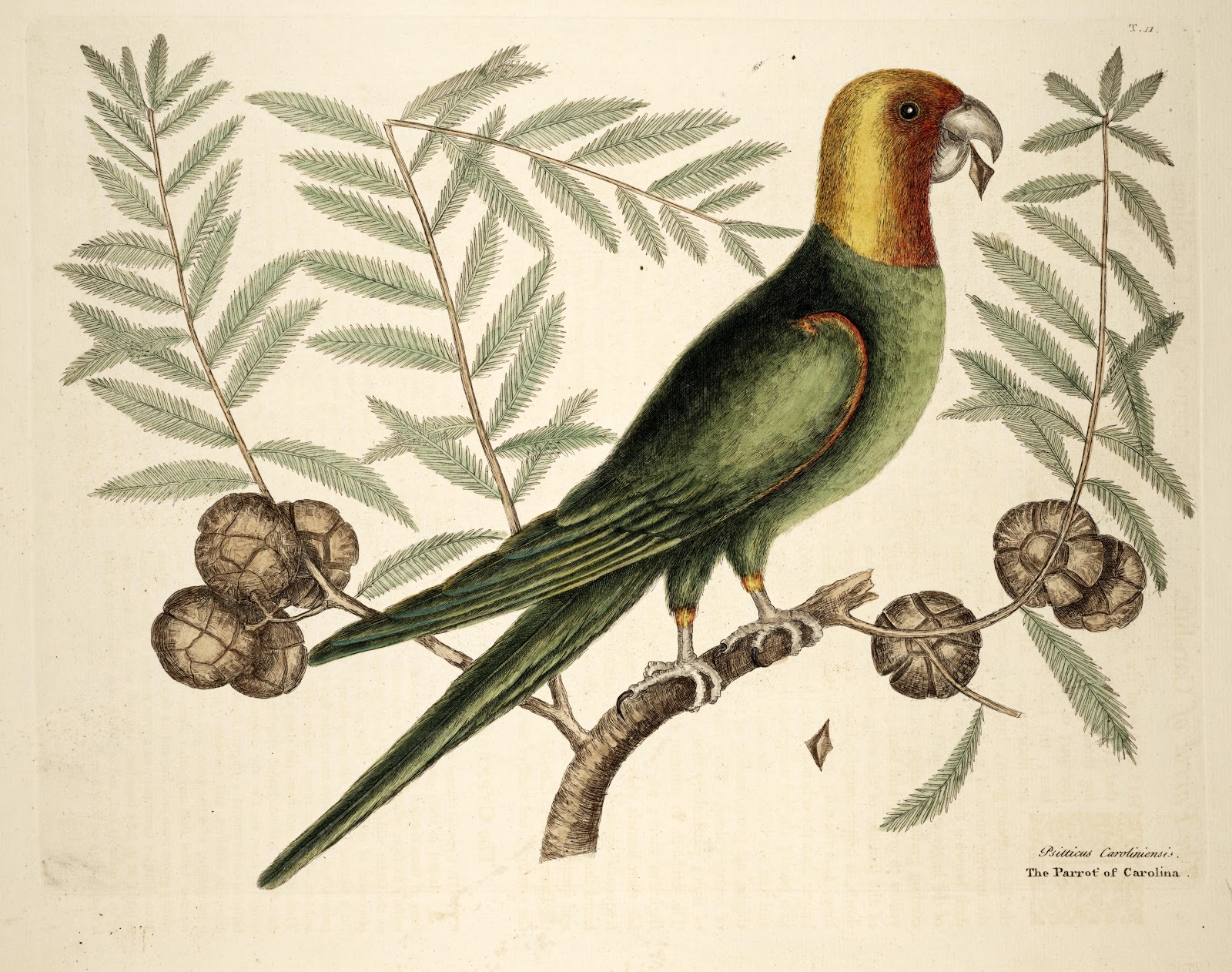
The Extinct Carolina Parakeet. Captured by Mark Catesby.

In 1918, the last known surviving Carolina Parakeet, the only parrot species native to the eastern United States, died. While museum specimens may help us retain some information about this species, for many others, everything we know is contained in a single description found within a hard to find book or article. While there is nothing we can do to bring these extinct species back, we can preserve our knowledge of them to help avoid future extinctions.

The Biodiversity Heritage Library (BHL), in its global efforts to digitize biodiversity literature and make it freely available to the world, ensures that the knowledge needed to identify species, facilitate further scientific research, and support conservation efforts is available to everyone, everywhere. Thanks in part to donations from users like you, BHL currently provides access to nearly 40 million pages and over 50,000 images.

View Full Size Image
Celebrating the BHL-Africa via Travel Posters!

In 2012, BHL significantly advanced the breadth and depth of its collections and the opportunities to engage with its digitized resources. BHL added over 12,000 items and over 3.7 million pages to its collections this year, supported in part by the addition of two new members to the BHL consortium: the United States Geological Survey and Cornell University. Furthermore, BHL continued to serve new and widespread audiences by establishing a greater presence across social media channels, resulting in over 30,000 new images in Flickr this year; biodiversity facts, history, and trivia communicated via Tweets, Blog and Facebook posts; and downloads through iTunes U, all free to the public. BHL continues to expand globally, as evidenced by the June, 2012, BHL meeting in Cape Town, South Africa, designed to support the development of a BHL-Africa.

The most rewarding measure of BHL’s successes comes from the frequent testimonials received from users:

“The BHL website is an extremely valuable resource and is crucial to my research.”

“Being in a small town in Africa made accessing literature especially difficult, but I no longer feel so disadvantaged with the advent of BHL.”

“BHL makes my research so much easier! I absolutely love it. A million times thank you!”

 
The BHL’s substantial growth and activity has been supported by our dedicated patrons whose gifts we depend on to fund the digitization of additional texts, technical development for the program, and improvement of data curation. This holiday season, as you continue to seek the perfect gift for your loved ones, consider giving a gift to the planet by supporting scientific research and conservation efforts across the globe through a tax-deductible donation to the Biodiversity Heritage Library.

As a gift from our BHL family to yours, enjoy these BHL Holiday Greeting Cards and Travel Posters! Download them for free from the BHL Pinterest. Happy Holidays!

December 11, 2012by Grace Costantino

Help Support BHL

BHL's existence depends on the financial support of its patrons. Help us keep this free resource alive!

search

About BHL

The Biodiversity Heritage Library (BHL) is the world’s largest open access digital library for biodiversity literature and archives. BHL operates as a worldwide consortium of natural history, botanical, research, and national libraries working together to digitize the natural history literature held in their collections and make it freely available for open access as part of a global “biodiversity community.”

Join Our Mailing List

Sign up to receive the latest news, content highlights, and promotions.

Subscribe Now

Subscribe to Blog via Email

Enter your email address to subscribe to this blog and receive notifications of new posts by email.

Join 319 other subscribers

Subscribe to Blog Via RSS

Subscribe to the blog RSS feed to stay up-to-date on all the latest BHL posts.

Access RSS Feed

Inspiring Discovery through Free Access to Biodiversity Knowledge.

The Biodiversity Heritage Library makes it easier than ever for you to access the information you need to study and explore life on Earth…for free, anytime, anywhere.


64+ Million Pages of
Biodiversity Literature Online.

EXPLORE

Tools and Services
to Transform Research.

EXPLORE

300,000+
Illustrations on Flickr.

EXPLORE

ABOUT | HARMFUL CONTENT | PRIVACY | SITE MAP | TERMS OF USE