Biodiversity Heritage Library - Program news and collection highlights from BHL
  • Home
  • News
  • Featured Books
    • All Featured Books
    • Book of the Month Series
    • BHL at 20
  • User Stories
  • Campaigns
    • Fossil Stories
    • Garden Stories
    • Monsters Are Real
    • Page Frights
    • Her Natural History
    • Earth Optimism 2020
  • Tech Blog
  • Visit BHL
Home
News
Featured Books
    All Featured Books
    Book of the Month Series
    BHL at 20
User Stories
Campaigns
    Fossil Stories
    Garden Stories
    Monsters Are Real
    Page Frights
    Her Natural History
    Earth Optimism 2020
Tech Blog
Visit BHL
  • Home
  • News
  • Featured Books
    • All Featured Books
    • Book of the Month Series
    • BHL at 20
  • User Stories
  • Campaigns
    • Fossil Stories
    • Garden Stories
    • Monsters Are Real
    • Page Frights
    • Her Natural History
    • Earth Optimism 2020
  • Tech Blog
  • Visit BHL
Biodiversity Heritage Library - Program news and collection highlights from BHL
Blog Reel, Featured Books

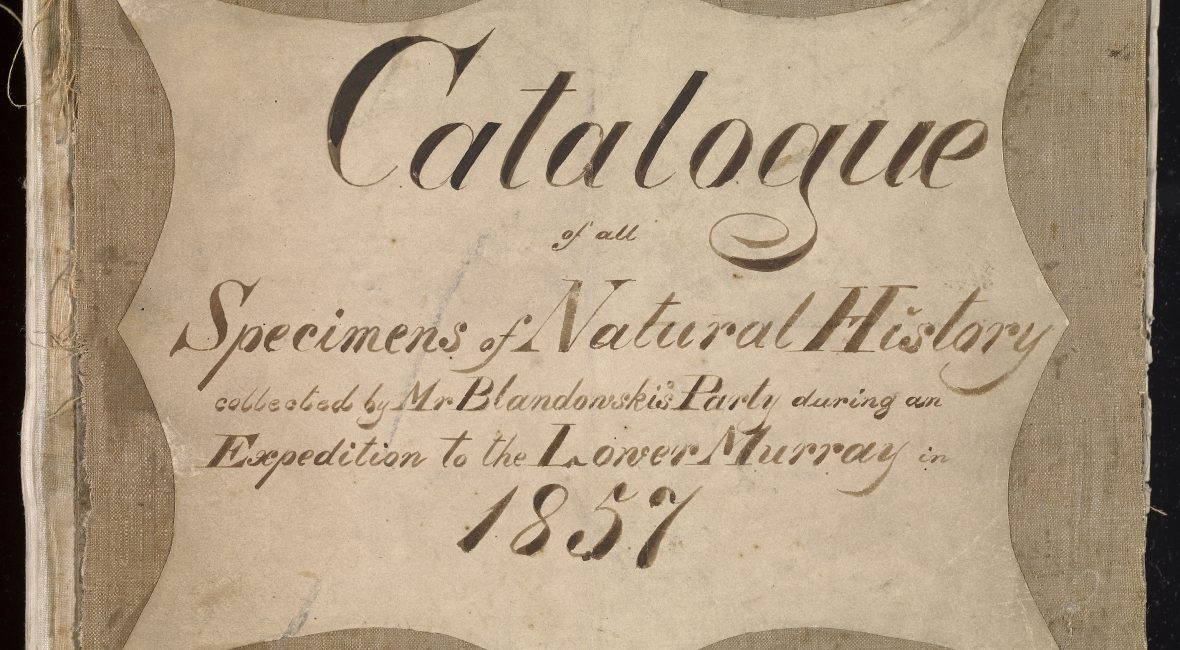
Catalogue of All Specimens of Natural History Collected by Mr Blandowski’s Party During an Expedition to the Lower Murray in 1857

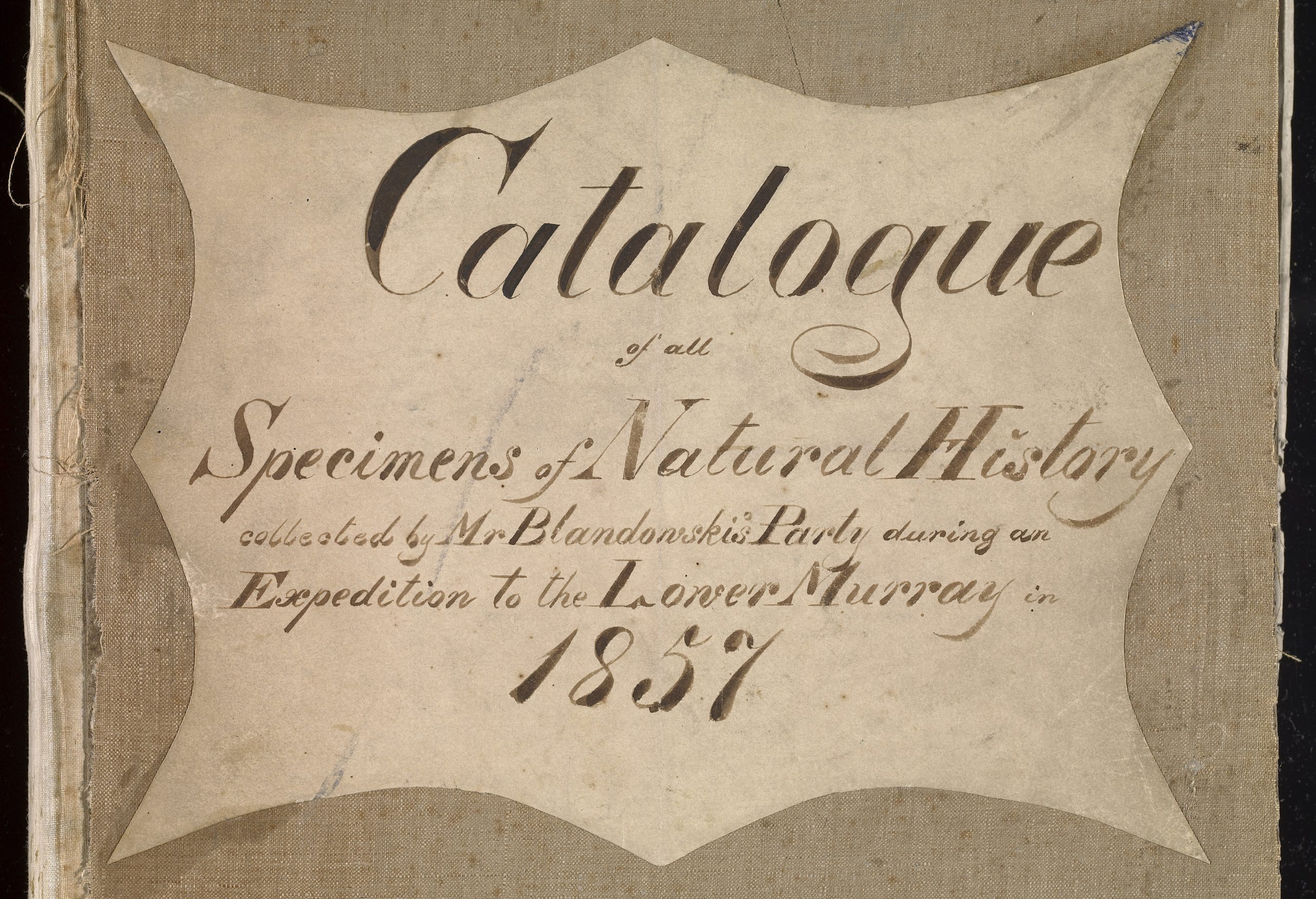
Front cover of 'Catalogue of all Specimens on Natural History collected by Mr Blandowski's Party during an Expedition to the Lower Murray in 1857' by Gerard Krefft

Cropped image of Gerard Krefft’s handwritten cover of Catalogue of all Specimens of Natural History collected by Mr Blandowski’s Party during an Expedition to the Lower Murray in 1857 [referred to as Blandowski’s Catalogue]. Source: Museums Victoria Archives, ARCHIVE-784. Photographer: David Paul.

Blandowski’s Catalogue is one of the most precious items held by the Museums Victoria Archives. It documents natural history specimens collected by William Blandowski (1822-1878) and Gerard Krefft (1830-1881) and colleagues working with First Peoples communities for the National Museum of Victoria (predecessor of Museums Victoria) during an expedition along the Lower Murray and Darling River from December 1856 to December 1857. Murray fishes listed in the Catalogue were later controversially used to describe prominent members of the Philosophical Institute in Blandowski’s 1858 paper Recent Discoveries in Natural History on the Lower Murray. Blandowski refused to hand-over to Professor Frederick McCoy, the National Museum of Victoria’s first Director, many of the specimens collected on the expedition, and associated research notes and illustrations, causing further controversy. Blandowski’s Catalogue has recently been digitised by BHL Australia and is now available to view online.

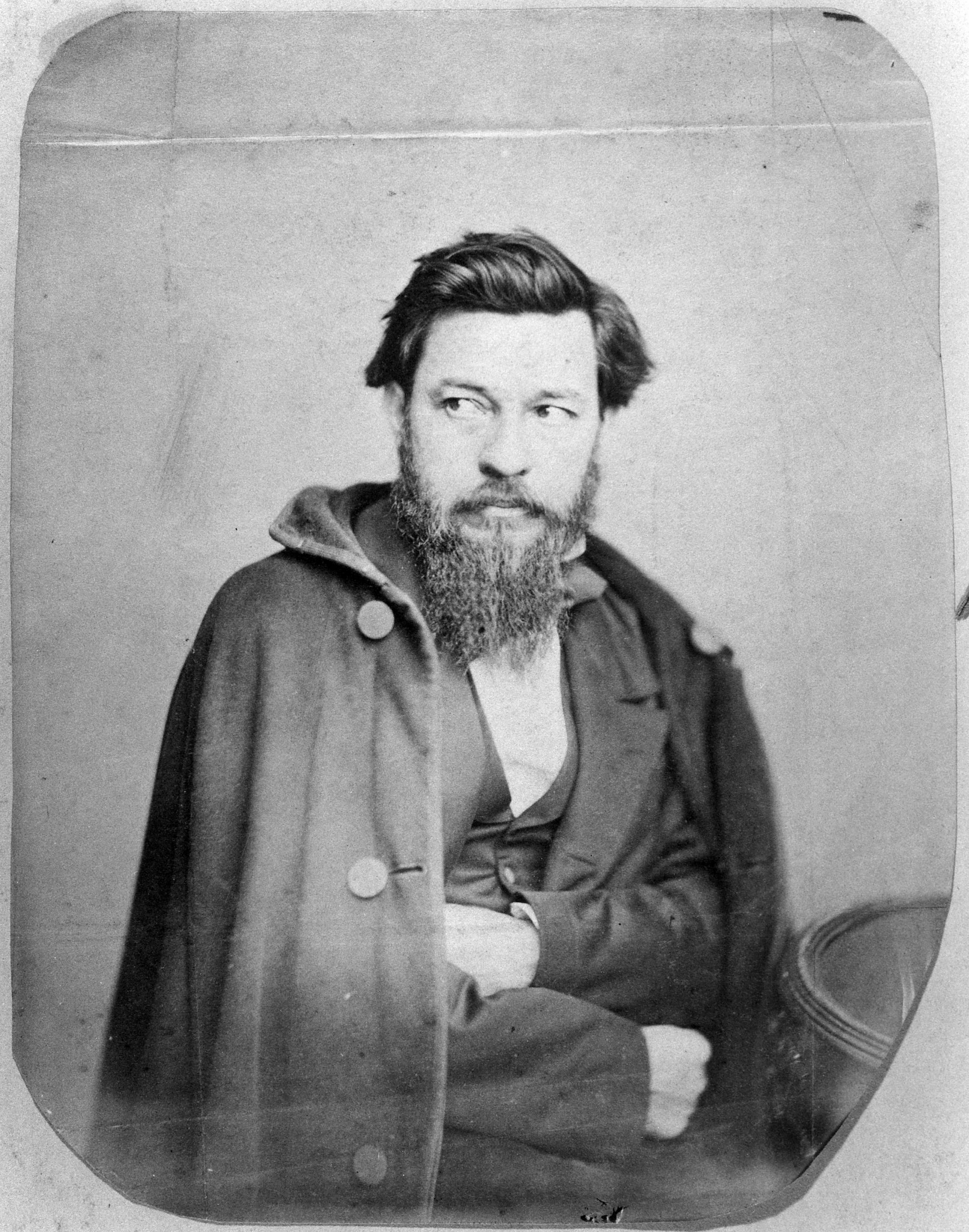
Black and white photograph of bearded man in overcoat, seated

Self portrait of William Blandowski, 1860. Source: National Gallery of Victoria. Photographer: William Blandowski.

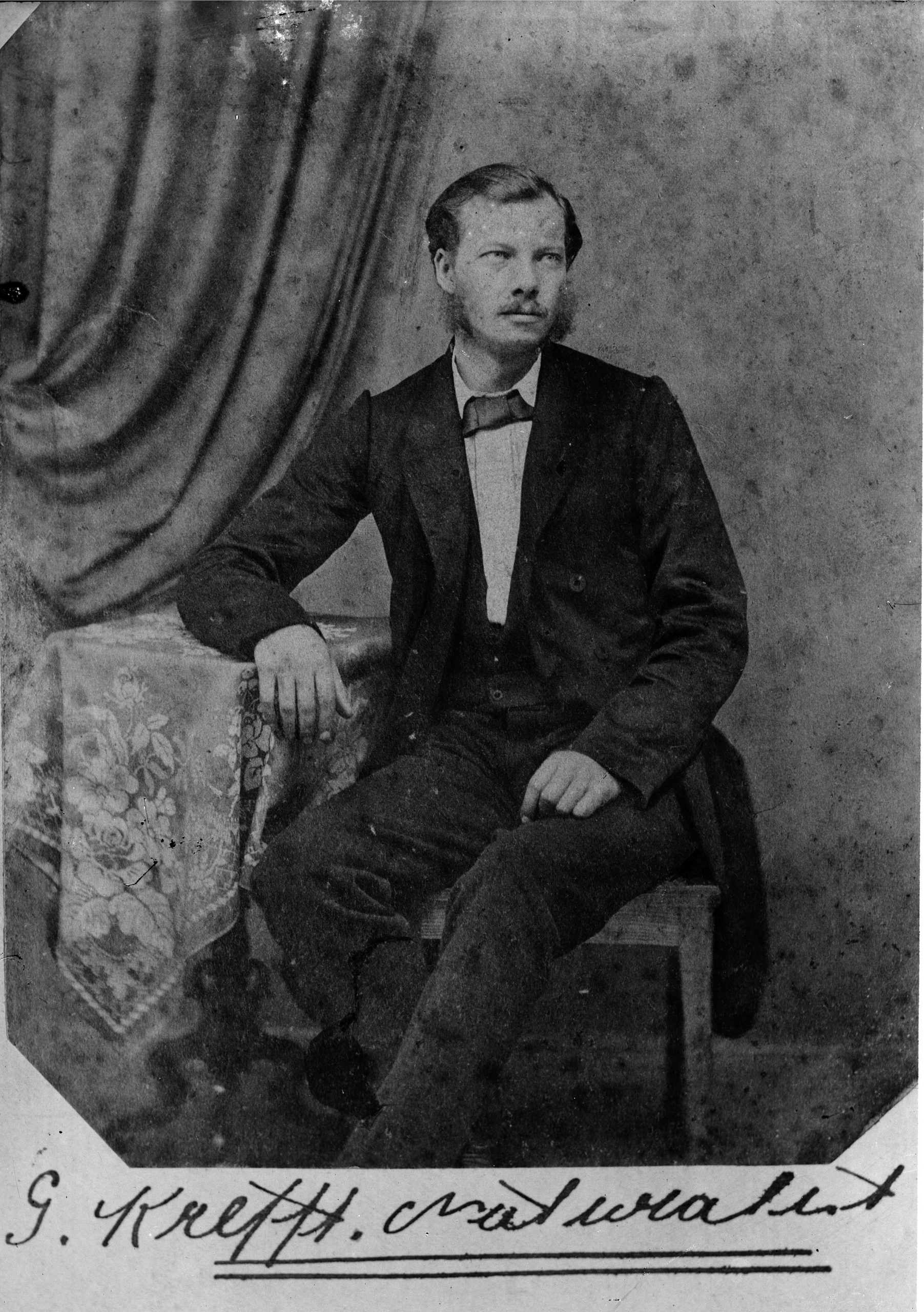
Portrait of a man seated in a suit

Portrait of Gerard Krefft, 1855. Source: Australian Museum. Photographer: unknown.

Blandowski was appointed Government Zoologist in 1854 when the Museum of Natural and Economic Geology (precursor to the National Museum of Victoria, and Museums Victoria) was founded. He had migrated from the Kingdom of Prussia (now Poland) to Adelaide in 1849, then on to the goldfields of Victoria in 1851. Krefft, originally from Duchy of Brunswick (now Germany), immigrated to New York City circa 1850, then to Australia and the Victorian goldfields in 1852. Blandowski was entrusted with an expedition to the Lower Murray; a previous expedition in 1849 had failed under the leadership of Surveyor Edward White. Blandowski had several assistants to accompany him on the expedition, including Gerard Krefft and later James Manson, who joined the expedition in February 1857. Krefft was hired as an artist on the Lower Murray Expedition but also worked on labelling specimens and adding information to Blandowski’s Catalogue, and subsequently employed by McCoy in February 1858 to select specimens to be kept by the National Museum of Victoria.

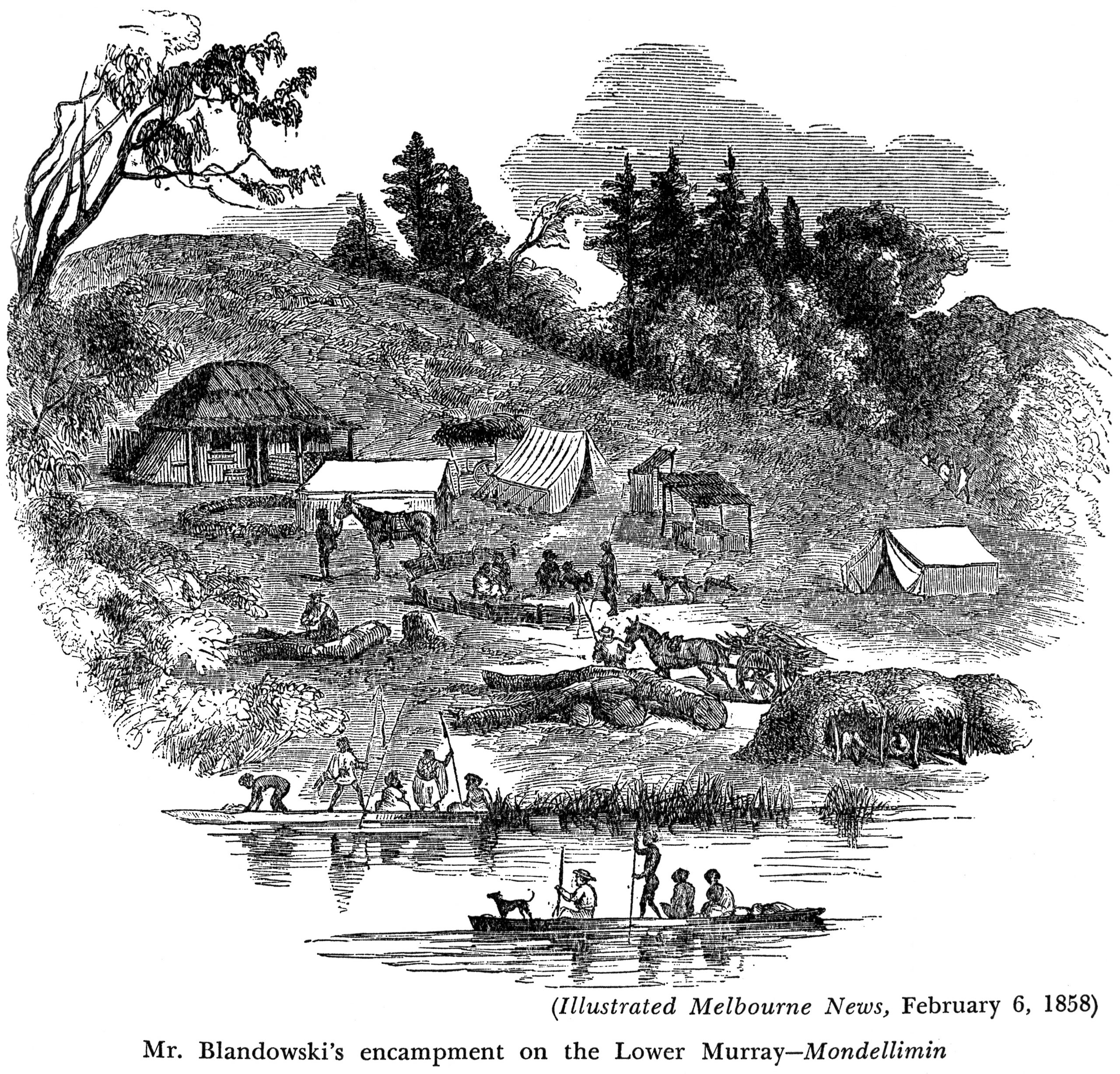
Encampment on a river with tents and other structures

Illustration of Blandowski’s expedition camp on the Murray River, Mondellimin, also known as Chaffey Landing at Merbein, Victoria, Australia, on the New South Wales border, 6 February 1858. Source: Museums Victoria reproduced from Illustrated Melbourne News.

Mondellimin, name derived from Mondellunddellun used by the local Yarree community, about 480 kilometres from Melbourne, also known as Chaffey Landing at Merbein, near Mildura, was the permanent campsite for the expedition from April to December 1857. “On the 6th of August he [Blandowski] left the camp in charge of Krefft and Manson and proceeded towards Melbourne with his valuable collections of specimens of natural history, which had been accumulating in his tent during his long sojourn at Mondellimin, to the extent of 28 boxes and parcels, containing in all about 16,000 specimens” (South Australian Register, 15 October 1857, p.3). Part of the collection had already shipped from Echuca, and specimens collected after Blandowski returned to Melbourne, came back with Krefft in December 1857. Blandowski attributed the specimens acquired largely due to the collecting skills of the local Indigenous peoples and acknowledged the taxidermy work of Krefft and Manson.

Blandowski’s Catalogue lists 17,434 specimens were collected, under 3389 catalogue numbers. Krefft catalogued specimens 1 to 3389, leaving some lines blank, recording specimen number, name of specimen, description of the specimen (although this was mostly left blank), number of specimens, locality whence obtained, donor’s name (also left blank), and remarks. Each specimen has general locality information allowing scientists to estimate where the specimen occurred at a point in time.

Blandowski’s infamous Murray fishes are described in the Transactions of the Philosophical Institute of Victoria. Figure 19 (N) Brosmius Bleasdalii named after a very prominent member of the Philosophical Institute Council, the Reverend Bleasdale: “A slimy, slippery fish. Lives in the mud. Is of a violent bluish colour on the belly. The whole upper surface is of a dirty olivish-green colour, with numerous irregular dark patches.” Figure 4 (B) Cernua Eadesii named after another very prominent member of the Council, Dr Eades: “A fish easily recognised by its low forehead, big belly and sharp spine.”

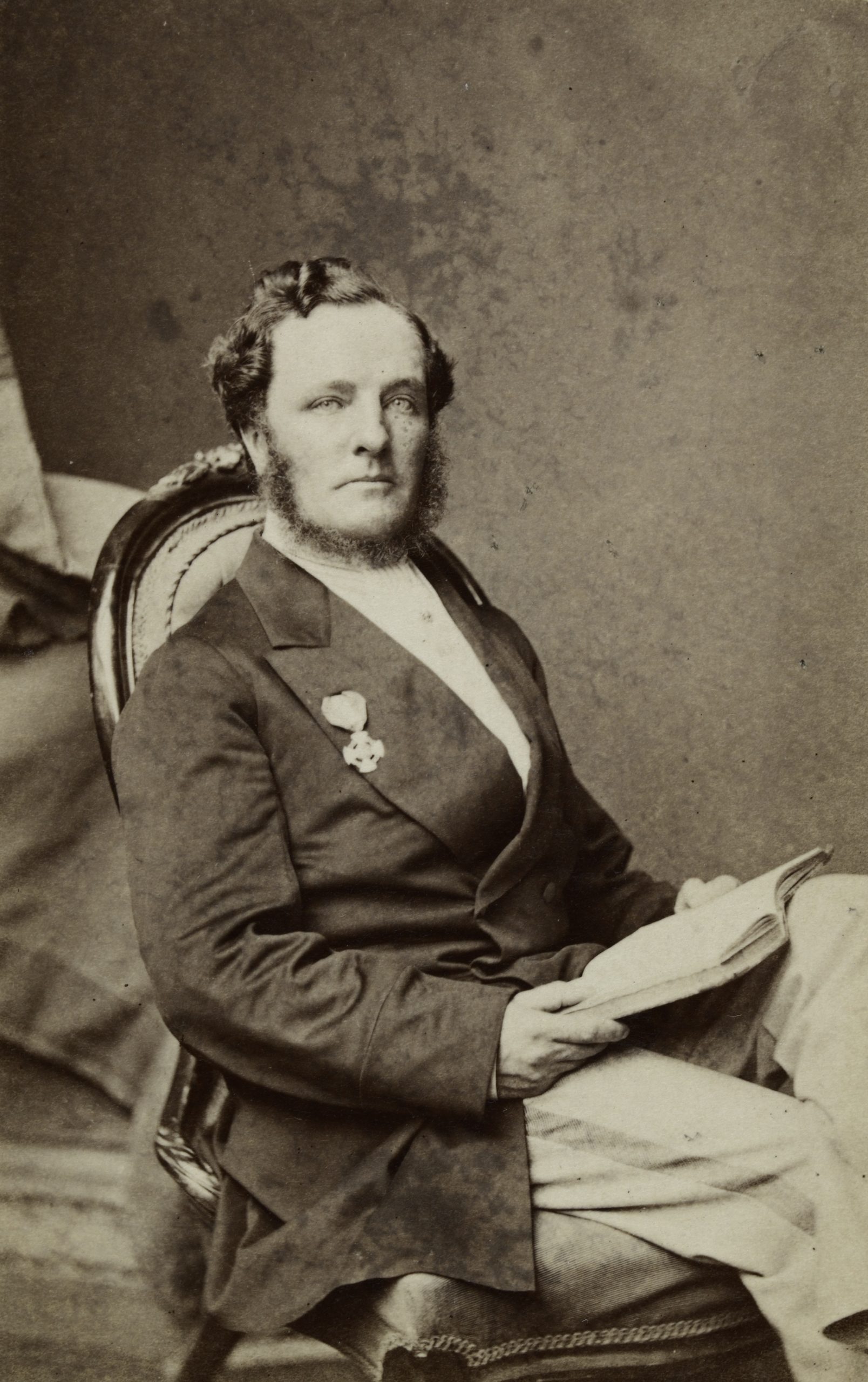
Portrait of a bearded man, seated with a book open in his lap

Portrait of Sir Frederick McCoy, c.1870. Source: Museums Victoria, H29553. Photographer: Johnstone, O’Shannessy & Co. Studio.

Blandowski returned to Melbourne from the expedition in August 1857, four months before the rest of the party. To McCoy’s outrage, Blandowski did not return to the National Museum of Victoria (then located at the University of Melbourne, Parkville campus), and held on to field notes, many of the specimens collected on the expedition, and illustrations from the expedition. The matter was brought before the Board of Science, McCoy wrote to the Chief Secretary on 28 April 1858 (MV Archives OS~04400): “…Mr Blandowski should be compelled to give up at once all specimens, books, journals and field observations, and the portfolio of several hundred drawings made by the party under his orders, and all illustrative lists and memoranda connected with the Public Collections, the property of the Victorian Government.”

Eventually all the specimens collected were returned to the Museum, however McCoy exchanged or donated many of the specimens with other museums and many were destroyed by insects over time, leaving about 15% of the total specimens collected on the expedition in Museums Victoria State Collection to this day. To view some of the specimens online, visit Museums Victoria Collections website.


Editor’s Note

This post has been edited to add further details of the expedition, including the roles of participants and more specific dates of their participation in the expedition.

February 24, 2022by [email protected]
Blog Reel, Featured Books

The Untold Story of Virginia and José Correia: Scientific Explorers in Search of Rare Birds

collages illustrations of various bird heads and feet

Digitization projects often shed light on stories hidden in plain sight. This is the story of a husband-and-wife team that served as field collectors for the American Museum of Natural History from 1912–1945¹. They were American immigrants who came from humble beginnings, dreamt of a new life, and found one.

•     •     •
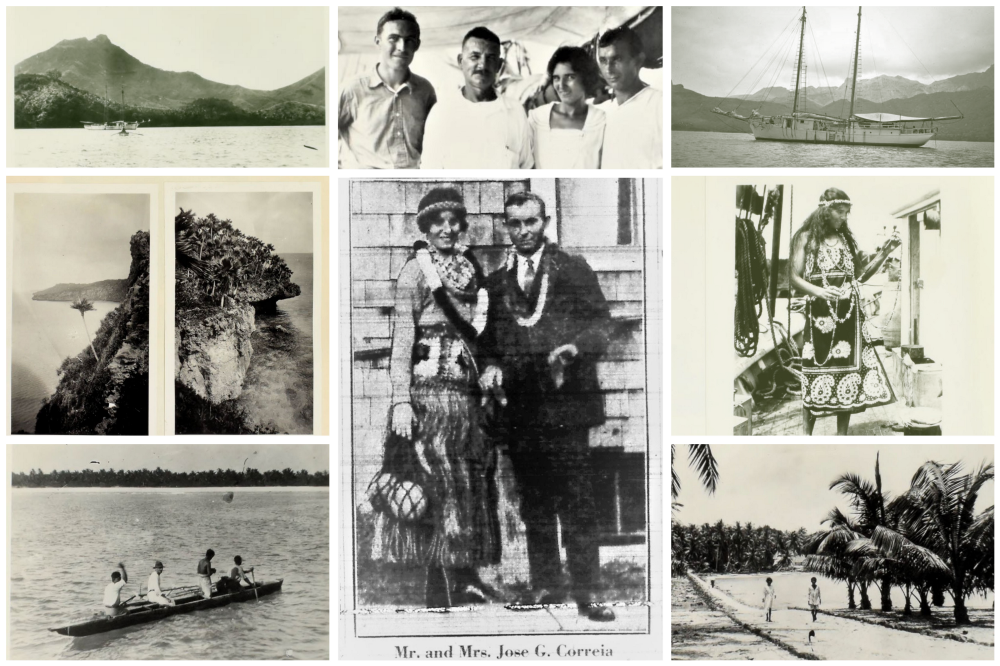
Photo collage of the Correia’s and their travels.

Photo collage of the Correia’s and their travels. Bryan, E. H. (1924) (photographer). Journal of Edwin H. Bryan, Jr. while with the Whitney Expedition of the American Museum of Natural History on the schooner France. Contributed in BHL by the American Museum of Natural History Library. Digitization sponsored by the Council on Library and Information Resources as part of the BHL Field Notes Project.

José and Virginia Correia are one of history’s most prolific bird collecting teams. For over three decades, they participated in many scientific exploring expeditions for the American Museum of Natural History, including the Whitney South Sea Expedition from 1922 to 1926.²

Although the published literature is scant regarding their scientific contributions, their story is certainly worth telling. Described by The Standard-Times (New Bedford) as a “life reading like fiction”,³  their work has emerged from obscurity with the digitization of José’s field notes from the Whitney South Sea Expedition (1920–1941) as part of the BHL Field Notes Project funded by the Council on Library and Information Resources (CLIR). Now audiences far and wide can enjoy this quintessential American story of two immigrants propelled by fate, hard work, and a sincere desire to improve one’s lot in life.
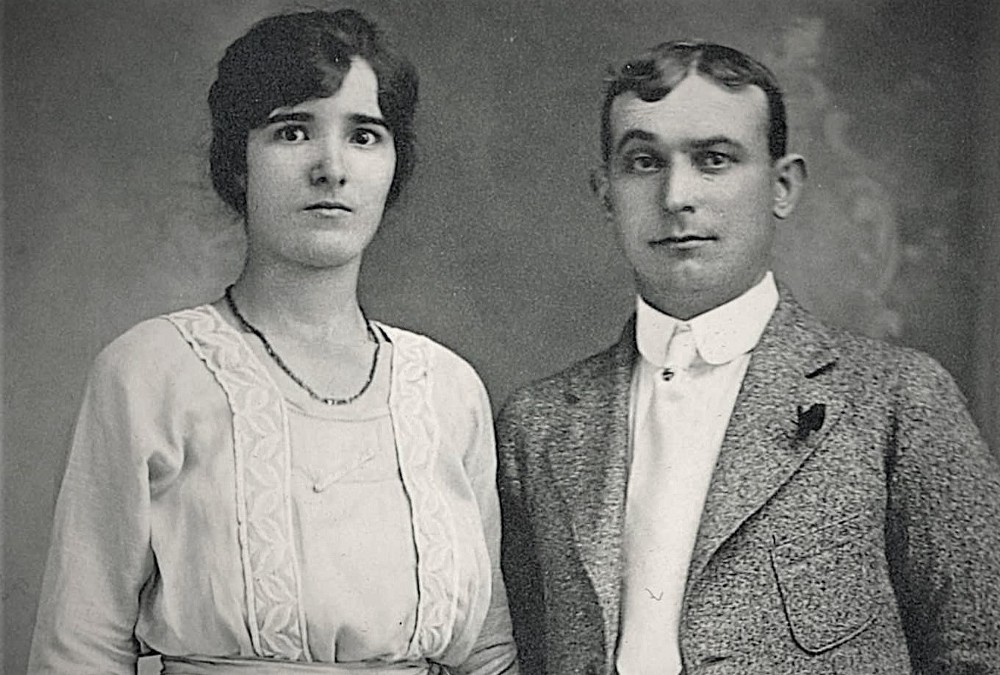
Black and white photo of a man and a women with light skin, dark hair, dressed in early 19th century clothes.

“Virginia and José Gonsalves Correia,” Unknown (photographer). Department of Ornithology Archives, AMNH, accessed September 3, 2020.

From José’s journal entries, we learn what daily life for a field collector was really like. Traveling to exotic locales, encountering Indigenous cultures, and sampling undiscovered flora and fauna might sound alluring, but José’s private notes reveal the harsh realities of turn-of-the-century collecting expeditions.

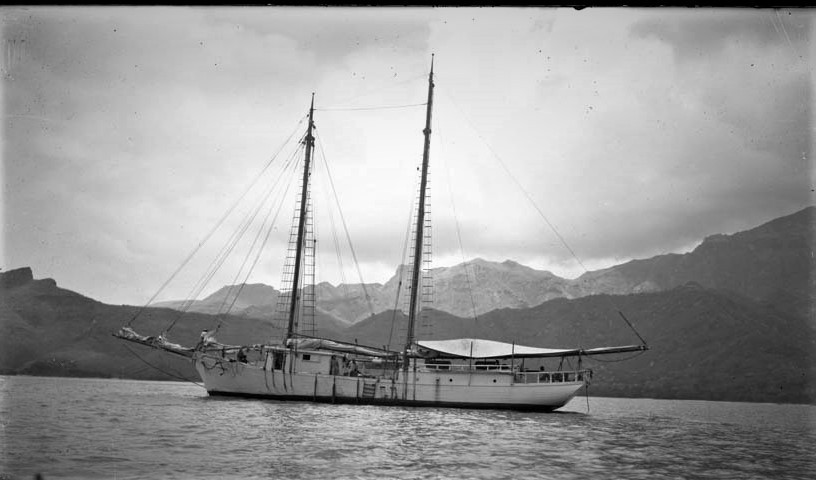
black and white photo of a schooner at sea.

Whitney South Sea Expedition schooner, the France, in the waters of Tuamotu, 1922. Beck, Rollo Howard, 1870–1950 (photographer). AMNH Research Library | Digital Special Collections, accessed November 1, 2020.

The work was hard and the days were long aboard the schooner France. Work typically commenced at dawn in the field and ended at dusk preparing specimens.⁴ Only exceptionally rugged individuals who were able to endure constant and extended deprivations — mind and body — could make such journeys.

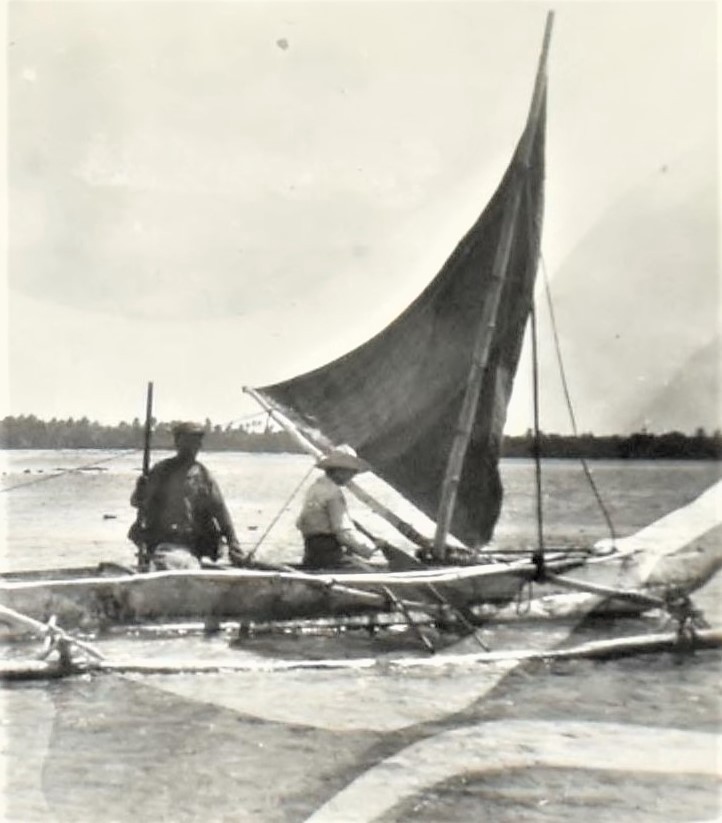
Two people in a canoe.

Mr. and Mrs. Correia are in a canoe ready to start back to Pukapuka from Motu Koe, facing S.W., toward the S.E. bay of the lagoon. Bryan, E. H. (1924) (photographer). Journal of Edwin H. Bryan, Jr. while with the Whitney Expedition of the American Museum of Natural History on the schooner France. Contributed in BHL by the American Museum of Natural History Library. Digitization sponsored by the Council on Library and Information Resources as part of the BHL Field Notes Project.

As if these daily irritations weren’t enough, extreme weather in the form of cyclones, gale force winds, and rogue waves provided plenty of near-death experiences.

“…we ran into the center of a strong cyclone on June 2nd. Everybody in the ship thought that they were never going to see land again, but God did not forget us in the middle of the furious ocean.” June 19, 1926, J. Correia.⁴

Four years and 12,000 miles later, the Correia’s had the misfortune of contracting malaria, effectively ending their service aboard the France in 1926.⁶ But the Whitney South Sea Expedition wasn’t their first field collecting trip, nor would it be their last. They would go on to explore some of the most remote places on Earth.
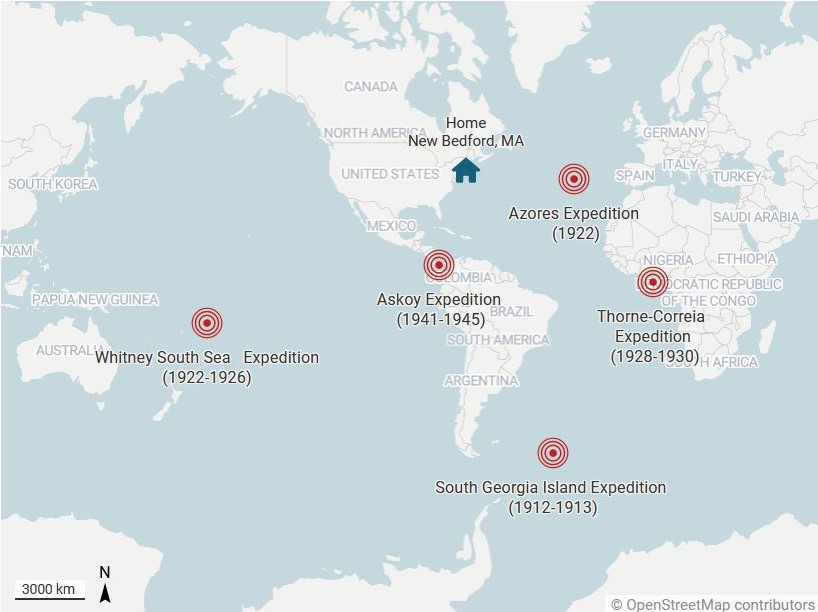
Illustration of a map with several aquatic locations highlighted.

The American Museum of Natural History collecting expeditions took the Correias all over the globe.⁷ Ford, Jacqueline. (2020) Datawrapper: Create Charts and Maps [Software]. Available from https://www.datawrapper.de/.

It’s clear why the Correias continued to endure the hardships of collecting life. Not only did they believe birds held important keys to understanding the natural world, they had become a part of the scientific community who knew that time was running out. Their efforts were likely to be humanity’s only shot at cataloging, describing, and studying unknown bird species.

Black and white portrait of a man in a suit and tie.

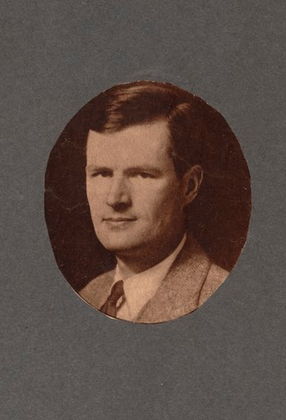
Dr. Robert Cushman Murphy [Photograph]. (1860). Retrieved from https://ark.digitalcommonwealth.org/ark:/50959/g158bt570.

José’s fateful friend, Robert Cushman Murphy, Curator of the American Museum of Natural History’s Ornithology Department, describes the moral imperative driving the Whitney South Sea Expedition:

“That it is high time for such an expedition to obtain examples of the Polynesian life is evidenced by the decrease in the population of birds and other animals at nearly all of the inhabited isles. For many years extinction has been approaching, and it is well known that certain kinds of birds secured by 18th century naturalists, have long since been wiped out of existence.”⁸

In one of Murphy’s more personal memoirs, A Logbook for Grace, he tells of his first collecting expedition in 1911, working as a field collector on a brig named the Daisy. It’s here that we get a first glimpse of a young José who enlisted as the Antarctic voyage’s cooper — the liquid-tight barrels made under his charge were crucial to the operation, transporting whale spermaceti back to America.
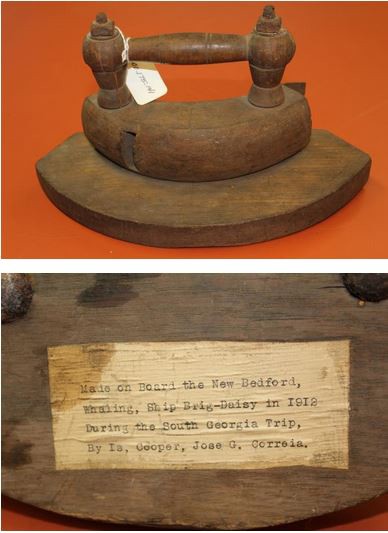
A small Cooper’s Howell plane with a Stanley #3 plane blade.

A small Cooper’s Howell plane with a Stanley #3 plane blade. Note on bottom: “Made on board the New Bedford Whaling Ship, brig DAISY in 1912 during the South Georgia Trip by IS (sk), Cooper José G. Correia.” Correia, J. G. (1912). Cooper’s Howell plane [Photograph]. New Bedford Whaling Museum | Grimshaw-Gudewicz Reading Room and Archives.

Aboard the Daisy, the two men would become fast friends discussing everything from Arabian Nights to the Papacy. Murphy describes José as “profound” and a “voracious reader”⁹ and came to rely on the cooper’s help after realizing his natural drawing aptitude and skill for specimen preparation:

“One day when Dr. Murphy was preparing bird specimens Mr. Correia offered to help. His first attempt was so good that Dr. Murphy placed it in his collection and sought help again and again from the ship’s cooper.”¹⁰

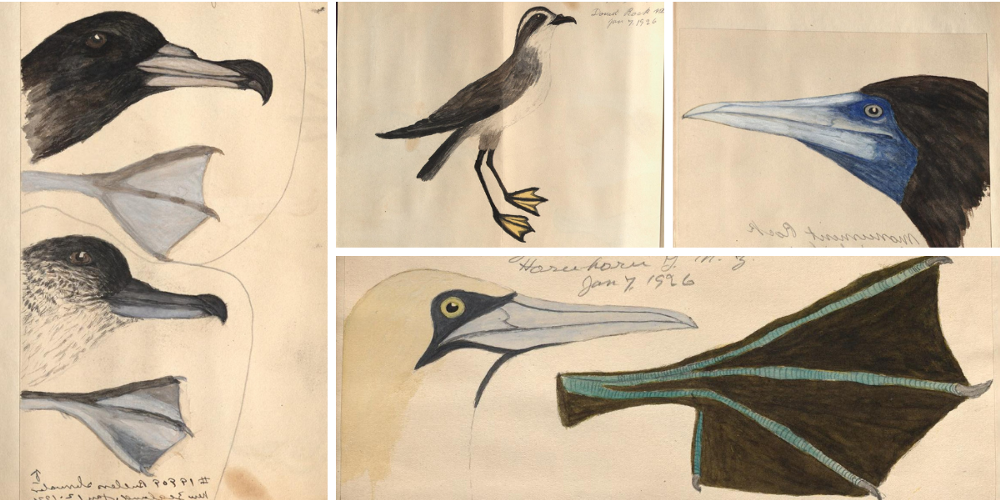
collages illustrations of various bird heads and feet

Correia’s field note illustrations, now available on the Biodiversity Heritage Library. Correia, J. [Illustration](1930–1941). Whitney South Sea Expedition of the American Museum of Natural History, v. 2. Contributed in BHL by the American Museum of Natural History Library. Digitization sponsored by the Council on Library and Information Resources as part of the BHL Field Notes Project.

In 1913, Correia was sought out by the American Museum of Natural History to work as a collector and preparateur on their next expedition after his friend, Mr. Murphy, showed officials at the American Museum Correia’s fine work.³

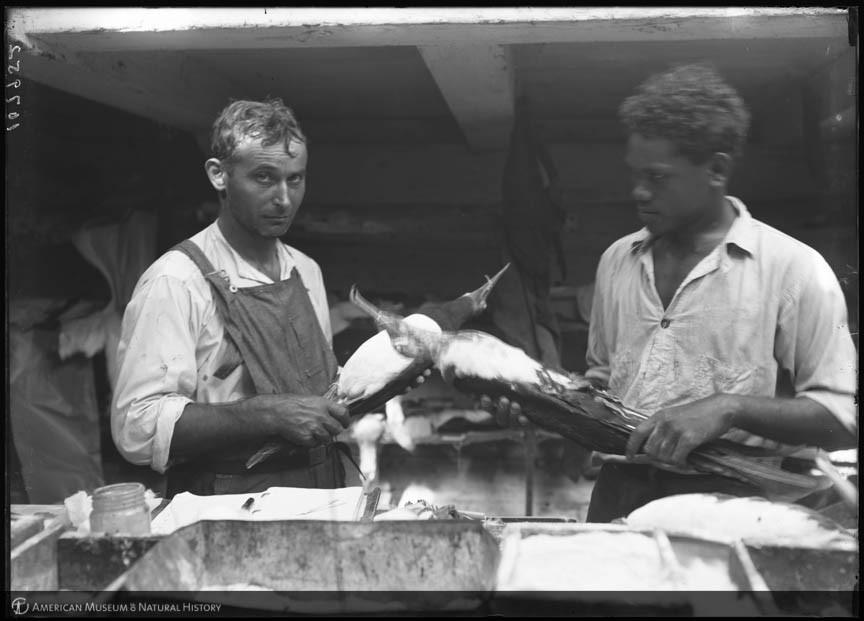
Black and white photo of two men working in a bird specimen preparatory setup.

“A workshop discussion: José G. Correia (left) with bird specimens aboard the France, Tuamotu [1920–1940],” Beck, Rollo Howard, 1870–1950 (photographer). AMNH Research Library | Digital Special Collections, accessed November 1, 2020. https://images.library.amnh.org/digital/index.php/items/show/60749.

From Humble Beginnings

Before embarking on scientific expeditions, José worked as a whaling cooper (where he met Murphy) and a textile worker. In fact, between stints with the American Museum of Natural History, he would unassumingly return to work as an operative at Kerr Mills of the American Thread Company in Fall River, Massachusetts. When asked by fellow workers where he had gone, he would smile and simply reply “just away.”¹⁰
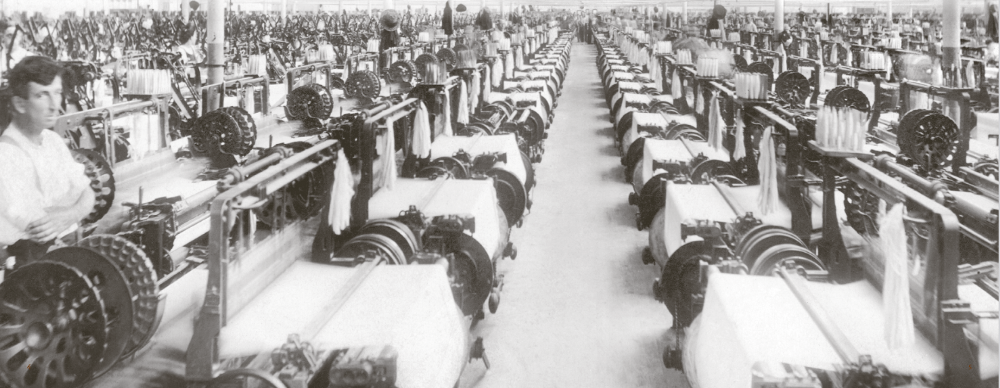
black and white photo of a textile mill weave room.

“Textile mill weave room. New Bedford, 1920”. Thomas, J., Sualniers, A., White, N., McCabe, N., & Avila, J. (Eds.). (2016). A Picture History of New Bedford (Vol. 2). Spinner Publications, Inc.

Correia’s humility came from memories of a very impoverished childhood. In his writings, he remarks that shoes were a luxury, reserved to be worn only “on feast days.” He was born in 1881, in Flamengos, a rural agrarian town on Faial, one of the nine islands in the Azorean archipelago. Like many Azorean youth, he had heard stories of America’s greatness from the Baleeiros (Azorean whalers), and he dreamed of the fabled land of opportunity.¹¹

At the age of 19, he left Faial and found warm welcome in New Bedford, Massachusetts, a burgeoning port city with a booming textile industry. The only thing José brought with him to America was a new suit, a sack of clothing, and his knowledge.¹¹ From his father, he had learnt the precise art of barrel-making and was taught the value of respect, dignity, and hard-work. These characteristics would serve him well throughout his life and helped him deal with both opportunity and tragedy. When he married Virginia in 1920, he was already a widower, having lost his first wife Rosa Silva in 1906 with whom he had one daughter, Mary.¹
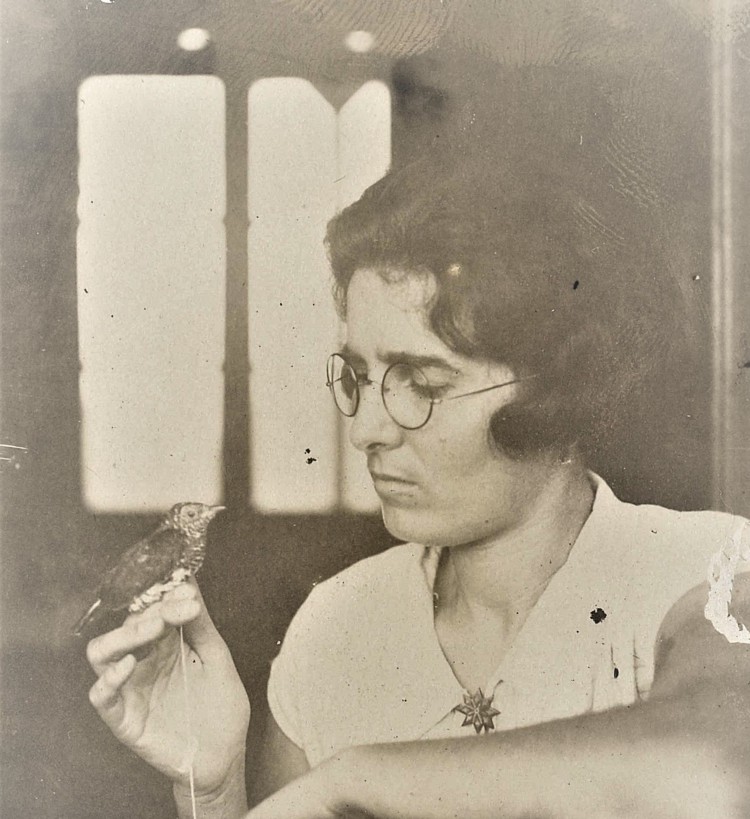
Black and white photo of a woman with short dark hair, wearing glasses, holding a bird.

“Virginia Correia”, Unknown (photographer). Department of Ornithology Archives, AMNH, accessed September 3, 2020.

Of Virginia Correia (née Aguiar), considerably less is known. Born in 1900 in Lajes, Terceira, Azores, she also immigrated to New Bedford at a young age.¹² Certainly she was a dedicated wife, joining her husband on difficult field expeditions and suffering all the aforementioned discomforts these journeys entailed.

Acting as her husband’s field assistant, she trained and became quite adept at the delicate art of preserving specimens. Character details can be gleaned from José’s journals, where he cites her as source of consistent strength and support. For example, during the Whitney South Sea Expedition, José and expedition lead, Rollo Beck, had seething enmity towards one another. José felt greatly disrespected by Beck and thought that the entire crew had turned against him under his influence. With a touch of sadness, he privately wrote, “The only person whom I can count on to help me is my wife. As for the others, I cannot rely on them.”

Nine years after his last expedition to South America20, a 73-year old Correia attended a party in New Bedford’s South End that would be his last. He was stricken by a heart attack and died on 26 April 1954.¹¹ Virginia would live out the rest of her life in their shared New Bedford home at 23 Harrison Street, passing in 1987.¹²

One million North Americans make up the Azorean diaspora — four times the current population of the islands.¹³ José and Virginia are representative of a distinctly intrepid sea-faring culture. In spite of ever-present danger, their adventurous spirit would take them to the farthest reaches of the globe. In that vein, the Correias would go on to build a dichotomous double-life: immigrant factory workers with intermittent scientific travels around the world in search of undocumented bird life.
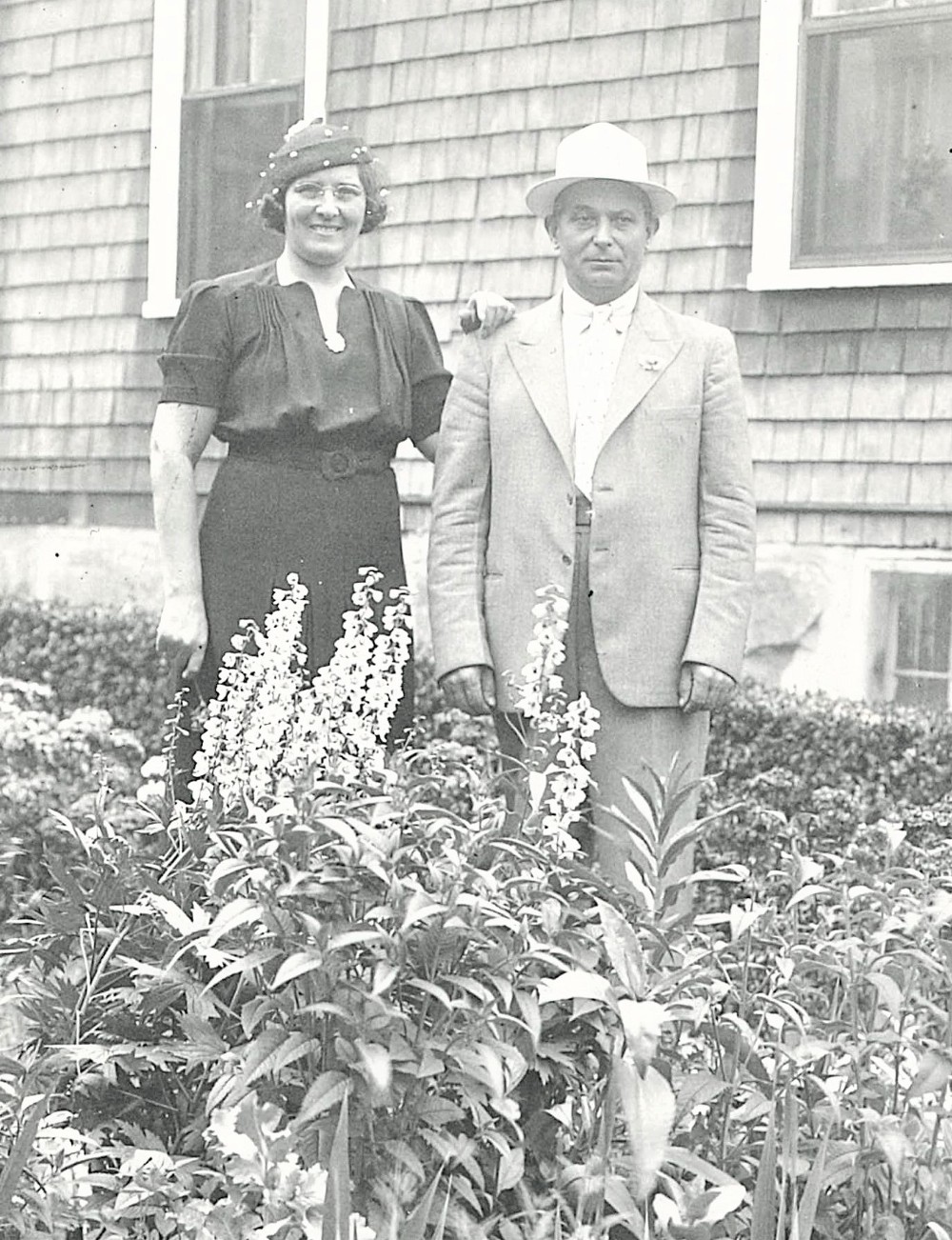
black and white photo of a woman and a man standing in a garden outside of a house.

“Virginia and José posing outside their home at 23 Harrison street, New Bedford, Massachusetts”. Unknown (photographer). Department of Ornithology Archives, AMNH, accessed September 3, 2020.

Despite strong ties to their homeland, they always came back to America — the place that had given them a life that “read like a fiction.”

Preserving the Correia Legacy

Over the course of their career, the Correias collected more than 10,000 bird specimens.¹⁴ Their efforts, alongside other historic field collectors, would help the American Museum of Natural History build one of the largest ornithology collections in the world.¹⁵ While the collection of wildlife specimens is controversial today, no longer done at this scale, these historic collecting efforts have provided the scientific foundation and necessary physical records for effective description and study of a species’ biology.¹⁶

The Whitney South Sea Expedition was the most extensive bird collecting expedition ever conceived at its time.⁷,¹⁷ The expedition spanned two decades, covered roughly one-third of the planet, and brought back over 40,000 specimens to the American Museum of Natural History.¹⁸ The scientific bounty has greatly enriched our understanding of the natural biota from the Pacific region.

Notably, Ernst Mayr’s seminal argument for geography’s role in the origin of new species draws on the study of bird specimens gathered by the expedition.⁷ More than six decades later, Jared Diamond and Ernst Mayr’s book Birds of Melanesia would use the specimens gathered by the expedition to provide the most comprehensive study to-date on how speciation occurs (the process by which new and distinct species evolve).

Paul Sweet, American Museum of Natural History’s Ornithology Collection Manager, believes the number of specimens contributed by the couple could be far greater than is currently recorded due to poor labeling. Curation efforts are ongoing to improve data accuracy. One such effort is mentoring high school students to transcribe location data from crew field notes. Through these efforts, the France’s journey through the Pacific is being precisely charted, providing an interactive journey of species sightings. Explore the project here.

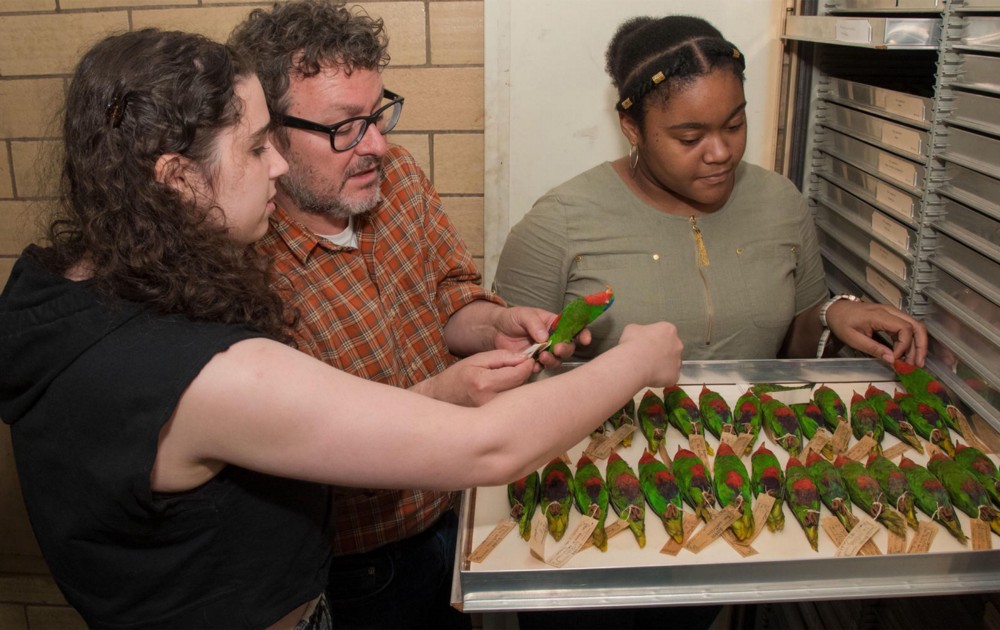
three people looking at an open drawer of green and red bird specimens

Regina Hashim (left) and Angelic Henry (right) inspect Blue-crowned Lorikeet specimens collected during the Whitney South Sea Expedition with AMNH ornithology collections manager Paul Sweet (center). Langas, A. (2019, June 6). A Treasure Trove of 40,000 Bird Specimens Brought to Light. Audubon. https://www.audubon.org/news/a-treasure-trove-40000-bird-specimens-brought-light.

Museum specimen collections are, in essence, great libraries of Life — still rich in discoveries waiting to be made and perhaps even holding the keys to understanding our current public health crisis.

“Museum collections contribute unique and invaluable insights to the study of pathogens, vectors of disease, and environmental contaminants. Moreover, these collections have played a crucial role in fields at the forefront of the biological sciences, including the study of biodiversity and its loss, biological invasions, and global climate change. We argue that the storage and maintenance of museum collections is inexpensive compared with the potential costs of their absence.”¹⁹

To honor the great personal sacrifices made by historic field collectors like José and Virginia Correia, the call is being made to support the ongoing maintenance and digitization of museum collections. Their enduring utility should not be forgotten in these uncertain times. Museums across the country are facing difficult decisions and budget shortfalls due to the COVID-19 pandemic, and the ongoing preservation and maintenance of these hard-won collections hangs in the balance.

•     •     •
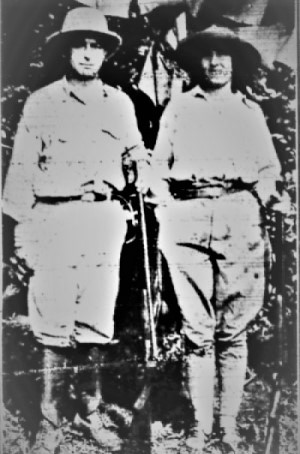
black and white photo of a man and woman in expedition clothing standing in a jungle.

The Correias about to enter the heart of the African jungle. “New Bedford Man, Off On 4-year Expedition for Museum, Has Life Reading Like Fiction.” (1936, September 16). Standard-Times (New Bedford), p. 3.

If you would like to honor Virginia and José Correia’s life’s work, consider making a gift to BHL to ensure that the historic data contained in field notes and scientific publications are freely available to support ongoing research around the world. You can also support the ongoing maintenance of museum collections by donating to natural history institutions like the American Museum of Natural History.

Acknowledgements

This story was made possible by a CLIR Digitizing Hidden Special Collections and Archives Grant, which provided funding to the American Museum of Natural History (AMNH) and the Biodiversity Heritage Library to digitize the Whitney South Sea Expedition (1920–1941) field notes. A personal thanks to Grace Costantino, BHL’s Outreach and Communication Manager, and Erin Willigan for the opportunity to showcase this untold story. Thanks also to Paul Sweet, Thomas Trombone, and Mai Reitmeyer at AMNH for providing primary source materials, data, and most importantly, their time. To the librarians at the Peabody Essex Museum, the New Bedford Whaling Museum, and the New Bedford Free Public Library, who helped tracked down difficult to find newspaper articles and books, thank you.

References

[1] Shatzman, C. (2016, November 7). Correia, José G., 1881–1954. Retrieved October 10, 2020, from https://data.library.amnh.org/archives-authorities/id/amnhp_1000443.
[2] Correia, J. (1930–1941). Whitney South Sea Expedition of the American Museum of Natural History. The Biodiversity Heritage Library. https://www.biodiversitylibrary.org/bibliography/121444.
[3] New Bedford Man, Off On 4-year Expedition for Museum, Has Life Reading Like Fiction. (1936, September 16). Standard-Times (New Bedford), p. 3.
[4] Correia, J. (1930–1941). Whitney South Sea Expedition of the American Museum of Natural History. v. 2. The Biodiversity Heritage Library. https://www.biodiversitylibrary.org/item/214343.
[5] Mayr, E. (n.d.). Joining the Whitney expedition. Web of Stories. Retrieved October 30, 2020, from https://www.webofstories.com/play/ernst.mayr/13.
[6] Murphy, R. (1936). Oceanic birds of South America : a study of species of the related coasts and seas, including the American quadrant of Antarctica, based upon the Brewster-Sanford collection in the American Museum of Natural History. The Biodiversity Heritage Library. p. 6. https://www.biodiversitylibrary.org/page/12471284.
[7] American Museum of Natural History. (2019). American Museum of Natural History | Research Library | Authorities | Expeditions [Dataset]. https://data.library.amnh.org/archives-authorities/results/?q=recordId:*amnhc_2*.
[8] Beck, R. H. (1930–1941). Whitney South Sea Expedition of the American Museum of Natural History. The Biodiversity Heritage Library. https://www.biodiversitylibrary.org/page/52734313.
[9] Murphy, R. C. (1965). Logbook for Grace. Time, Inc.
[10] Local Mill Operative Also Is Bird Expert for Scientific Expeditions. (1941 July 6). Standard-Times (New Bedford),p. 7.
[11] Agostinho, J. (1952). Um Emigrante Acoriano Jose Goncalves Correia. Boletim Do Instituto Historico, no.10, 204–238. http://ihit.pt/codeigniter/assets/upload/pdf/e3a418659d67d6609e2e58e7210779cb.pdf.
[12] Shatzman, C. (2016, November 7). Correia, José G., Mrs, 1900–1987. Retrieved October 10, 2020, from https://data.library.amnh.org/archives-authorities/id/amnhp_1002477.
[13] Minder, R. (2015, June 4). Azorean Diaspora Can’t Resist the Powerful Pull of Home. The New York Times. https://www.nytimes.com/2015/06/05/world/europe/azores-diaspora-holy-christ-of-miracles.html.
[14] Search: Collector “Correia”. (2006). Retrieved October 10, 2020, from https://sci-web-001.amnh.org/db/emuwebamnh.
[15] Research: Ornithology | AMNH. (2020). American Museum of Natural History. https://www.amnh.org/research/vertebrate-zoology/ornithology.
[16] Newton, B. E. (2017, January 9). Is specimen collecting justified? Lateral Magazine. http://www.lateralmag.com/articles/issue-18/is-specimen-collecting-justified.
[17] American Museum of Natural History. (1923). Annual report of the American Museum of Natural History for the year. Biodiversity Heritage Library. https://www.biodiversitylibrary.org/item/137096.
[18] Giraldo, S. (2016, October 20). Mapping the historical biodiversity of the Solomon Islands with the American Museum of Natural History. CARTO Blog. https://carto.com/blog/mapping-solomon-islands/.
[19] Suarez and Tstutsi. (2004). The Value of Museum Collections for Research and Society. BioScience, 54(1), 66. https://doi.org/10.1641/0006-3568(2004)054[0066:TVOMCF]2.0.CO;2.
[20] Newell, G. (2020, January 8). Askoy Expedition (1941-1945). Retrieved 24 November, 2020, from https://data.library.amnh.org/archives-authorities/id/amnhc_2000430.

December 3, 2020by [email protected]
Blog Reel, Campaigns, Featured Books

Sir Joseph Dalton Hooker’s Antarctic Journal

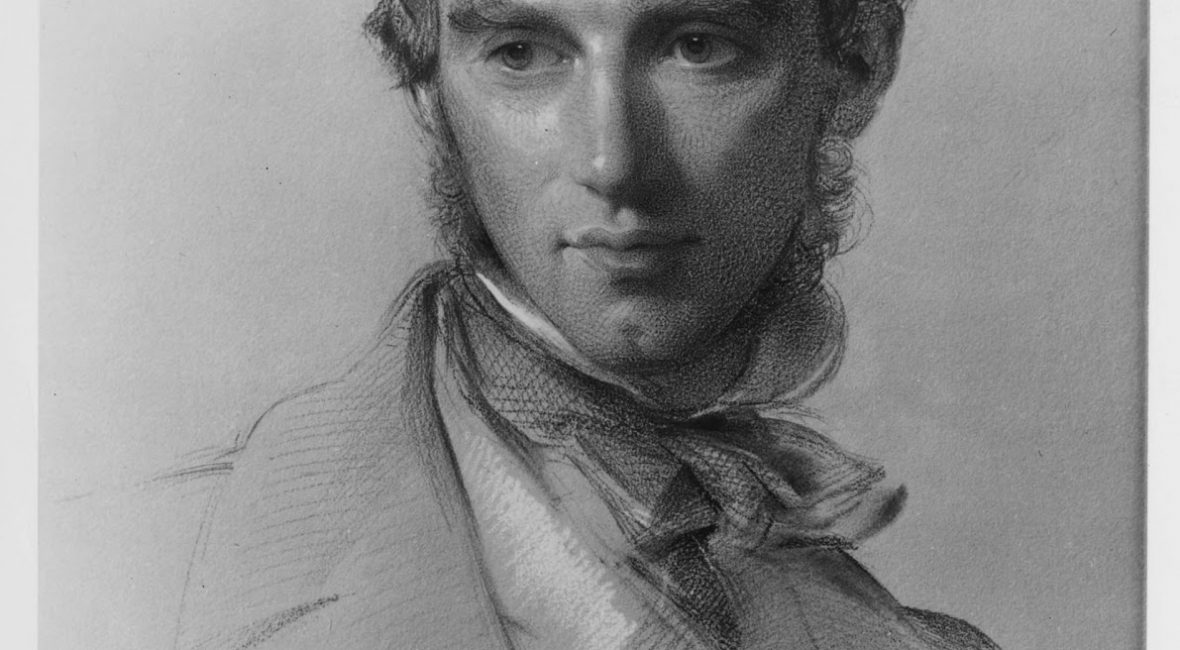
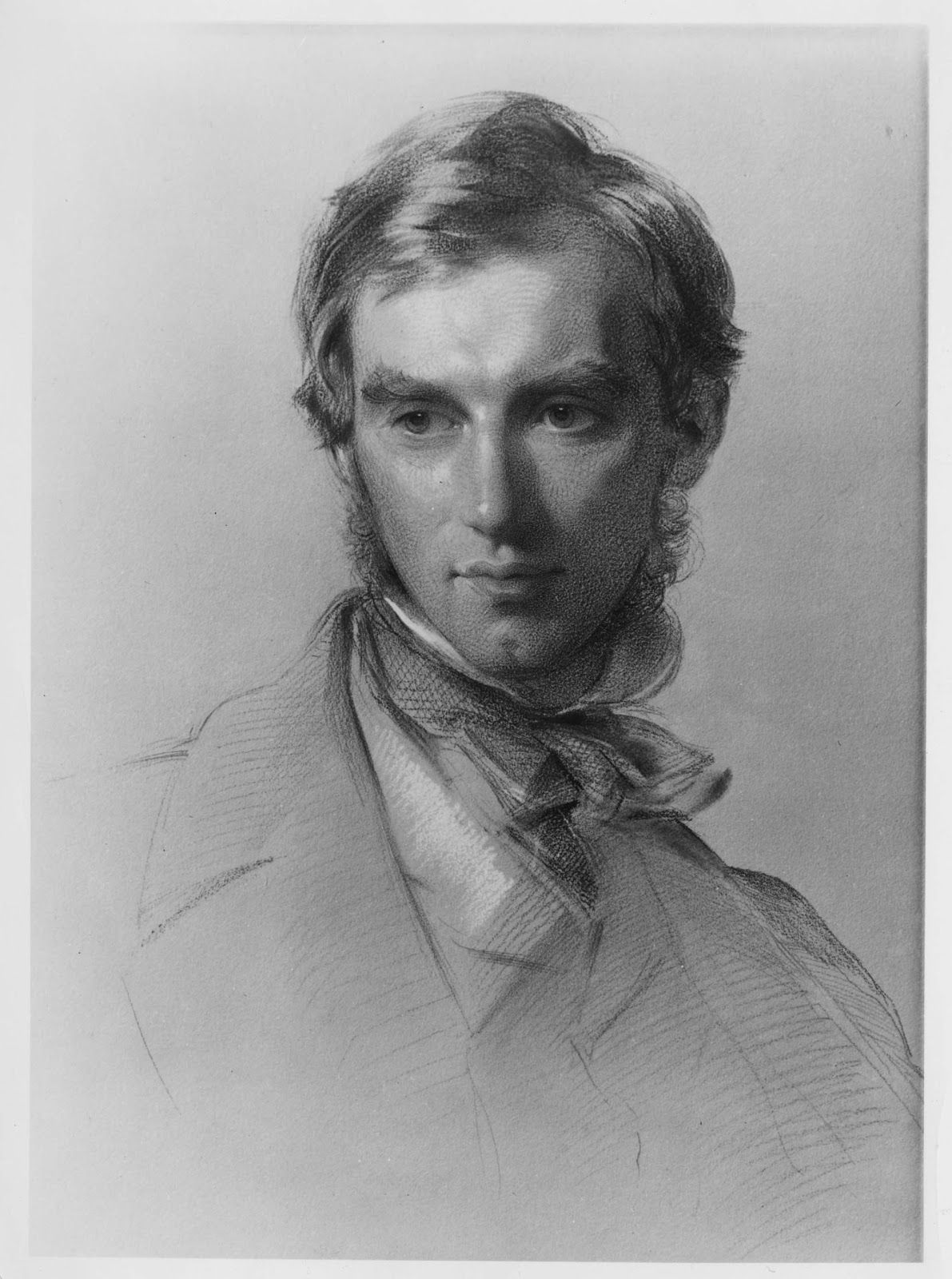
2017 marks the bicentenary of Sir Joseph Dalton Hooker’s birth in the town of Halesworth in Suffolk, UK. During the course of his life (1817-1911), Hooker would become one of the most distinguished and lauded scientists of his day and would hold the position of Director of the Royal Botanic Gardens, Kew for 20 years (1865-1885).

View Full Size Image
Sir Joseph Dalton Hooker as a young man. Chalk portrait by George Richmond, 1855.

As part of Kew’s celebration of this important event, the Joseph Hooker Correspondence Project is pleased to announce that Hooker’s Antarctic Journal, the unpublished manuscript documenting his first major expedition, is now available online through our partner Biodiversity Heritage Library.

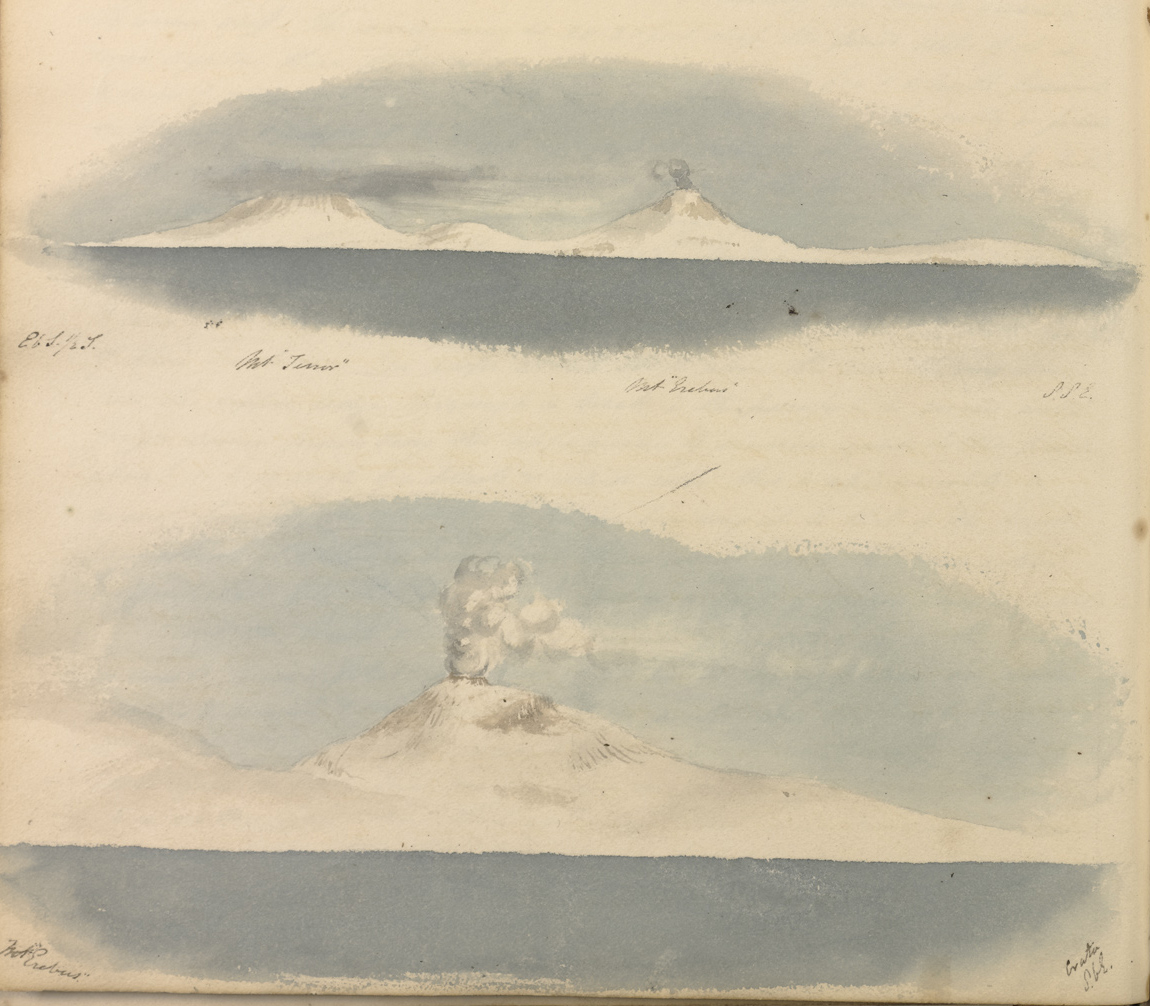
Hand written, the Journal is over 200 pages long and provides a detailed account of Hooker’s time as Assistant Surgeon on the HMS Erebus as part of Ross’s expedition to the Antarctic (1839-1843). The Journal also contains numerous pencil and watercolor sketches of the sights Joseph Hooker encountered during his 4 year adventure and provides important evidence for Hooker’s earlier interest in botanical science.

The voyage to the Antarctic was Hooker’s first botanical expedition and he was aged just 22 on departure. The expedition lasted for four years, spending the winter months in New Zealand and Tasmania and then voyaging around the Antarctic continent during the summer months. The observations Hooker recorded in this journal and numerous other notebooks formed the basis of a flora of Antarctica and also of the wider regions visited.

View Full Size Image
Watercolour sketches of Mount Erebus and Mount Terror, names for the two ships that were part of the Ross expedition. The volcanos were first sighted on the 28th January 1841.

The Journal records much of the detail of Hooker’s time during the voyage and provides valuable insight into his scientific practices on board but also the day to day routine of the journey from the mundane to the hazardous. It also records Joseph’s feeling about the unique land and seascape of the region and the botanical discoveries he was making, which often left him awestruck. On a more whimsical note he also records the necessity for acquiring a taste for penguin soup, as the animals were the only source of fresh meat and were kept live on ship.

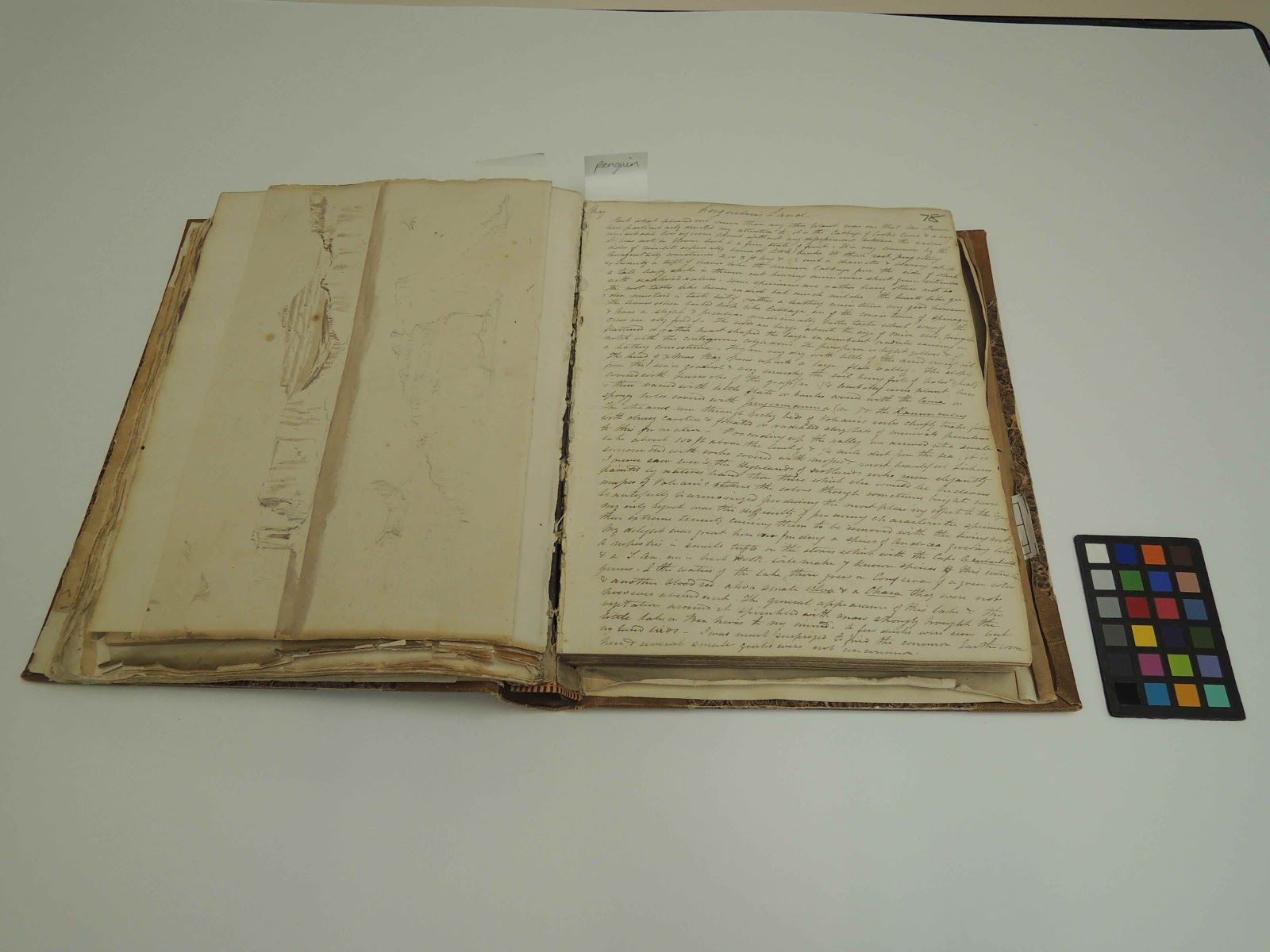
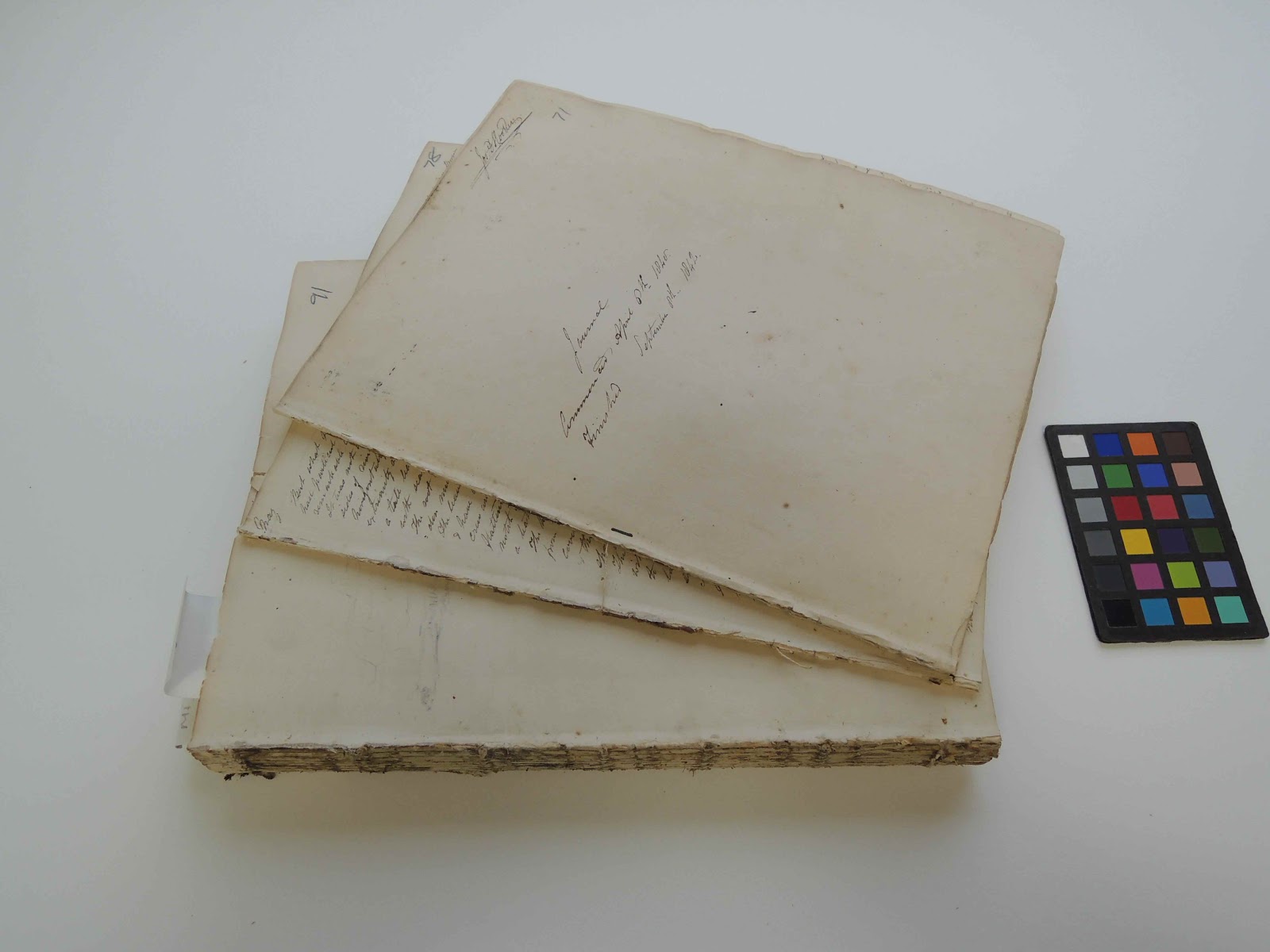
As part of the project to digitize the Journal, we have also assessed its conservation needs and undertaken necessary repairs and rehousing to ensure the long-time safety of this invaluable item. Prior to digitization, it was agreed that the early 20th century binding that housed the journal was not suitable and should be removed.

View Full Size Image
The Antarctic Journal during its assessment of what conservation it would need.

Once the binding was removed, it was discovered that the Journal was actually made up of a number of ‘volumes’ and certain pages had become loose.

View Full Size Image
The Journal unbound showing the different ‘volumes’ or ‘parts’ contained within the 20th century binding.

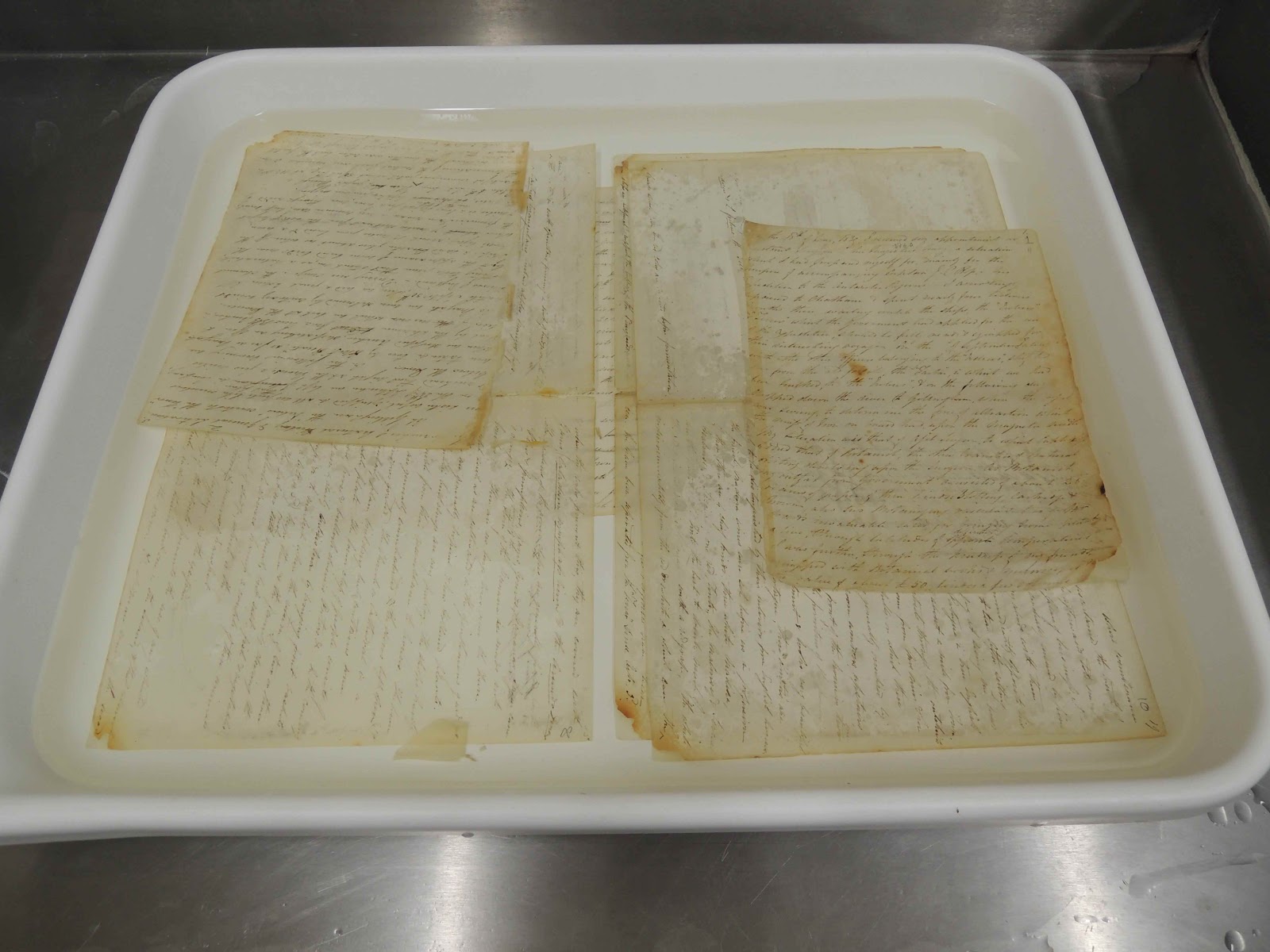
A number of the pages were also treated to stabilize the ink in a ‘bath’ to allow for more extensive repair work to be undertaken.

View Full Size Image
Pages from the Journal being treated to stabilize the ink.

Following this initial stage of the conservation, the Journal was digitized in preparation for its inclusion in the BHL online catalogue. It is hoped that by making the Journal freely available, a wider audience will be able to appreciate the important and valuable information contained in this unique item. This also speaks directly to the aims of the Joseph Hooker Correspondence Project, which is working to make Joseph Hooker’s correspondence freely available through the Project’s online portal.

We are now organizing for the Journal to be rebound sympathetically to its needs and in light of it being one of our most referenced Archival items here at the Royal Botanic Gardens, Kew.

We would like to thank Frederik Paulsen for supporting the conservation and digitization of Joseph Hooker’s Antarctic Journal and for helping to make it publicly available through the Biodiversity Heritage Library.

Related Links 

Joseph Hooker’s Antarctic Journal
View Joseph Hooker’s correspondence online
Kew Library, Art and Archives department
Joseph Hooker Correspondence Project

June 28, 2017by ulib-libraryjobs
Blog Reel, Featured Books

Travels in Southern Africa: William John Burchell

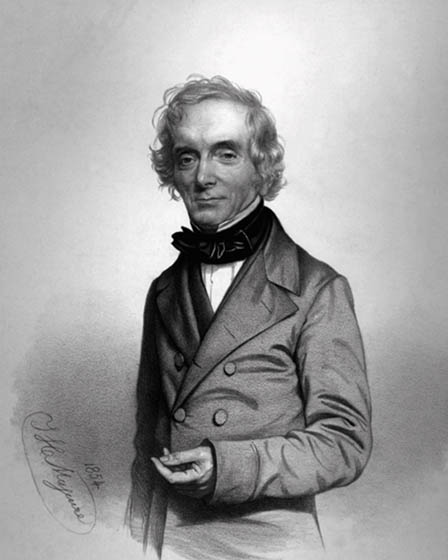
William John Burchell is credited “with having been the most prolific collector of botanical and zoological specimens.” [1] During a four-year scientific exploration of South Africa, he amassed a collection of over 63,000 specimens. And yet, Burchell’s contributions to science have been largely overlooked. As William Swainson bemoaned, “science must ever regret that one whose powers of mind were so varied…was so signally neglected in his own country.” [2]

View Full Size Image
Portrait of William John Burchell by Thomas Herbert Maguire (1854). http://www.capeorchids.co.za/history.htm.

2015 marks the 200th anniversary of Burchell’s return to Cape Town following his four-year expedition in South Africa. The University of Pretoria recently digitized Burchell’s account of this journey, a two-volume work entitled Travels in the Interior of Southern Africa (1822-24) for BHL. This offers an excellent opportunity to not only highlight this recent addition from our colleagues in BHL Africa, but recognize the incredible accomplishments of a remarkable man.

William Burchell was born in Fulham, England, in 1781. His family owned the prosperous nine-and-a-half acre Fulham Nursery and Botanical Garden, which afforded him many opportunities to study botany and interact with some of the most influential natural historians of the day. Sir William Hooker, the first director of the Royal Gardens in Kew, was Burchell’s friend and mentor. The prosperity of his family’s business provided Burchell with the means to travel and nurture his interest in natural history and particularly botany.

View Full Size Image
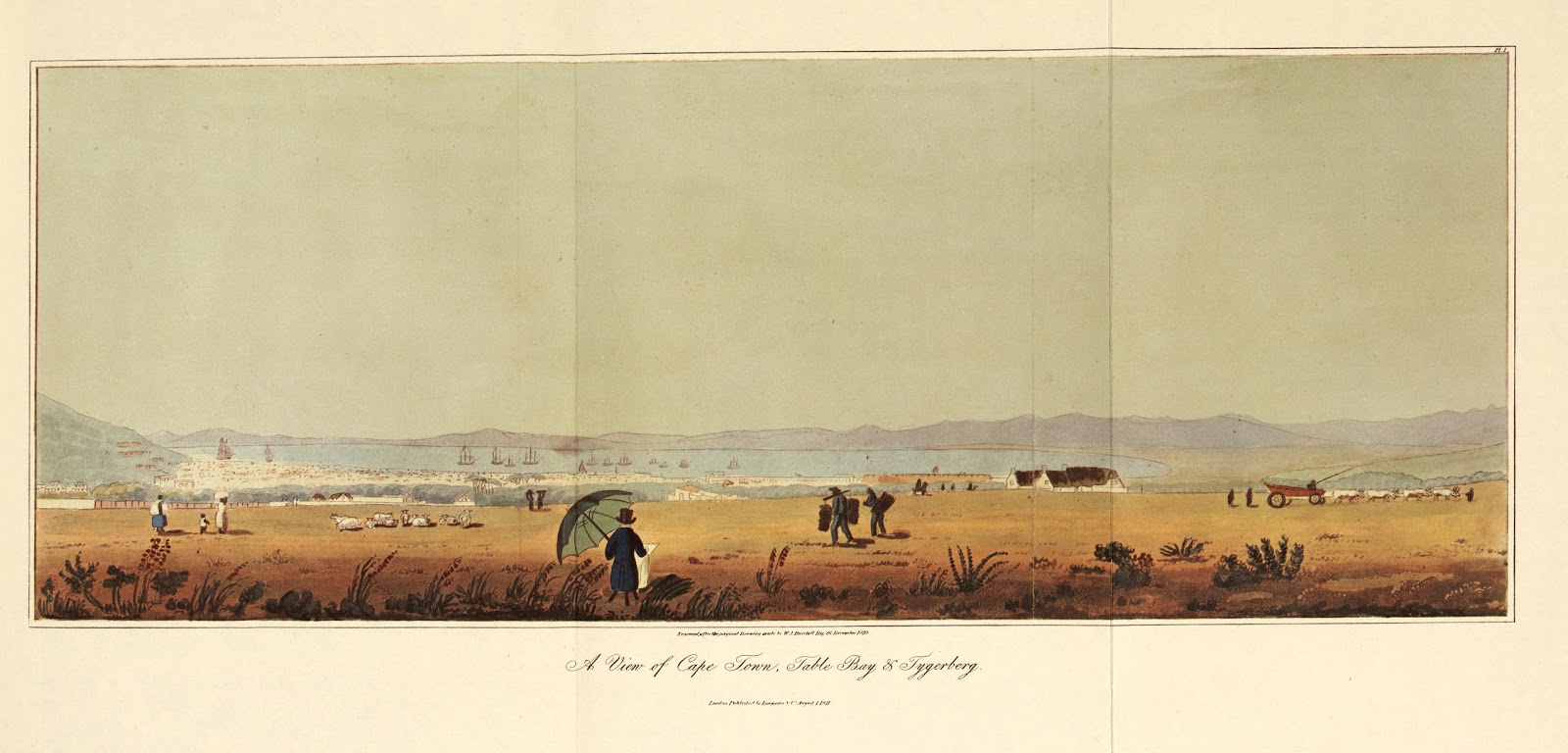
View of Cape Town, Table Bay and Tygerberg, 26 December, 1810. Engraved from a drawing by William John Burchell. Travels in the Interior of Southern Africa. v. 1 (1822). http://biodiversitylibrary.org/page/48904900. Digitized by: University of Pretoria.
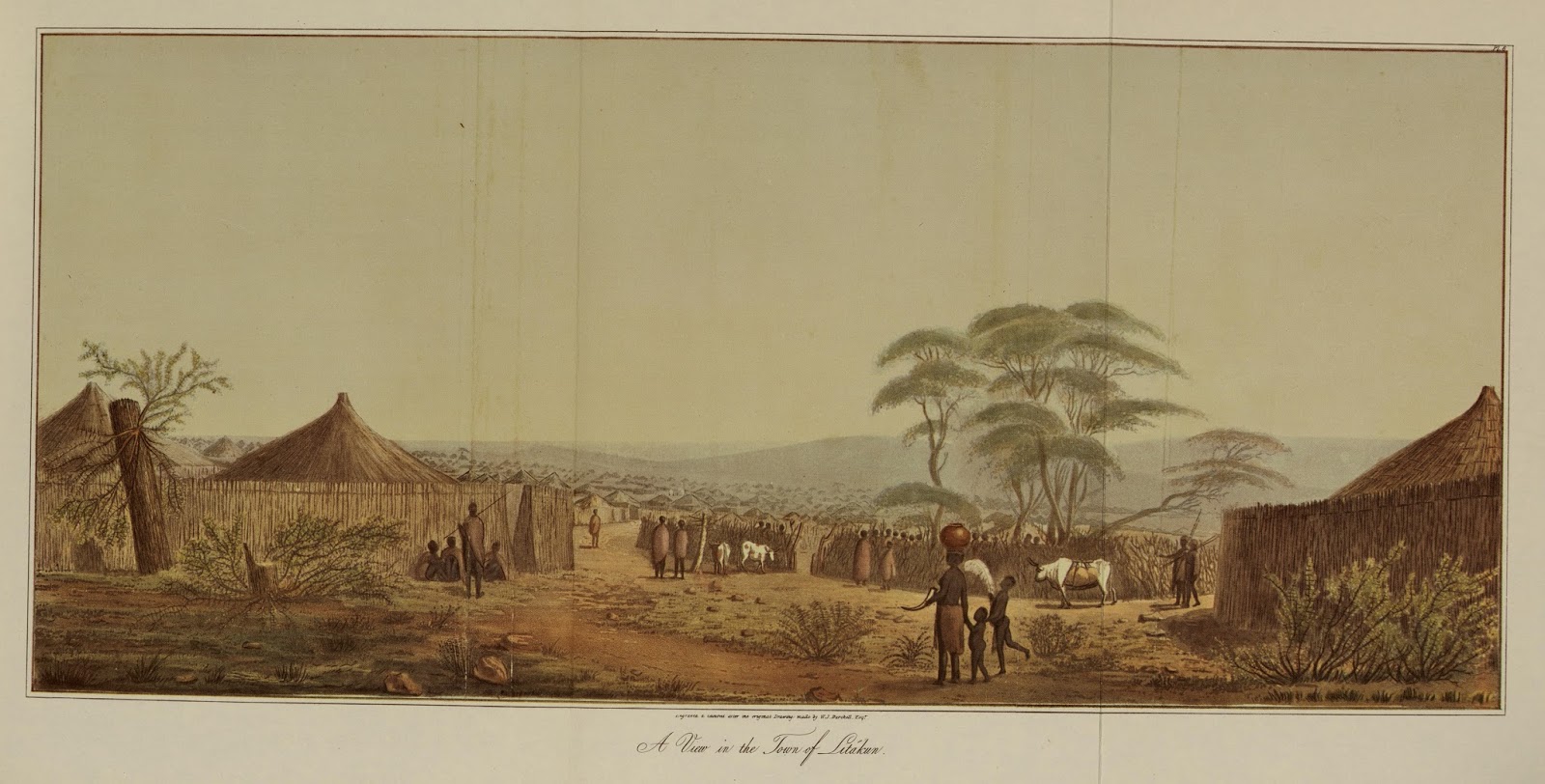
In 1810, Burchell arrived in Cape Town, South Africa, and on 19 June 1811, he set out from that city on a four-year expedition throughout the interior of southern Africa “solely for the purpose of acquiring knowledge.” [2] During the journey, he covered 7,000 km, mostly in an ox-wagon that he designed to serve as his home, laboratory, and library. He traveled as far north-east as the asbestos mountains just north of Chue Spring and became the first recorded European explorer to successfully travel through Bushmanland. The account of his expedition, Travels in the Interior of Southern Africa, covers only the period from his arrival in Cape Town through his departure from Litakun in August 1812.

View Full Size Image
“A view in the town of Litakun.” Engraved from a drawing by William John Burchell. Travels in the Interior of Southern Africa. v. 2 (1824). http://biodiversitylibrary.org/page/48905971. Digitized by: University of Pretoria.

Burchell’s accomplishments on the journey were extensive, particularly in the field of natural history. He collected 50,000 species of plants, seeds and bulbs, 10,000 specimens of insects, animal skins, skeletons, and fish, numerous anthropological artifacts, and created 500 drawings during the expedition. The Royal Botanical Gardens in Kew now holds a vast majority of Burchell’s extensive botanical collections. His journals document the precise location, morphological features, and habitat of the specimens he collected.

View Full Size Image
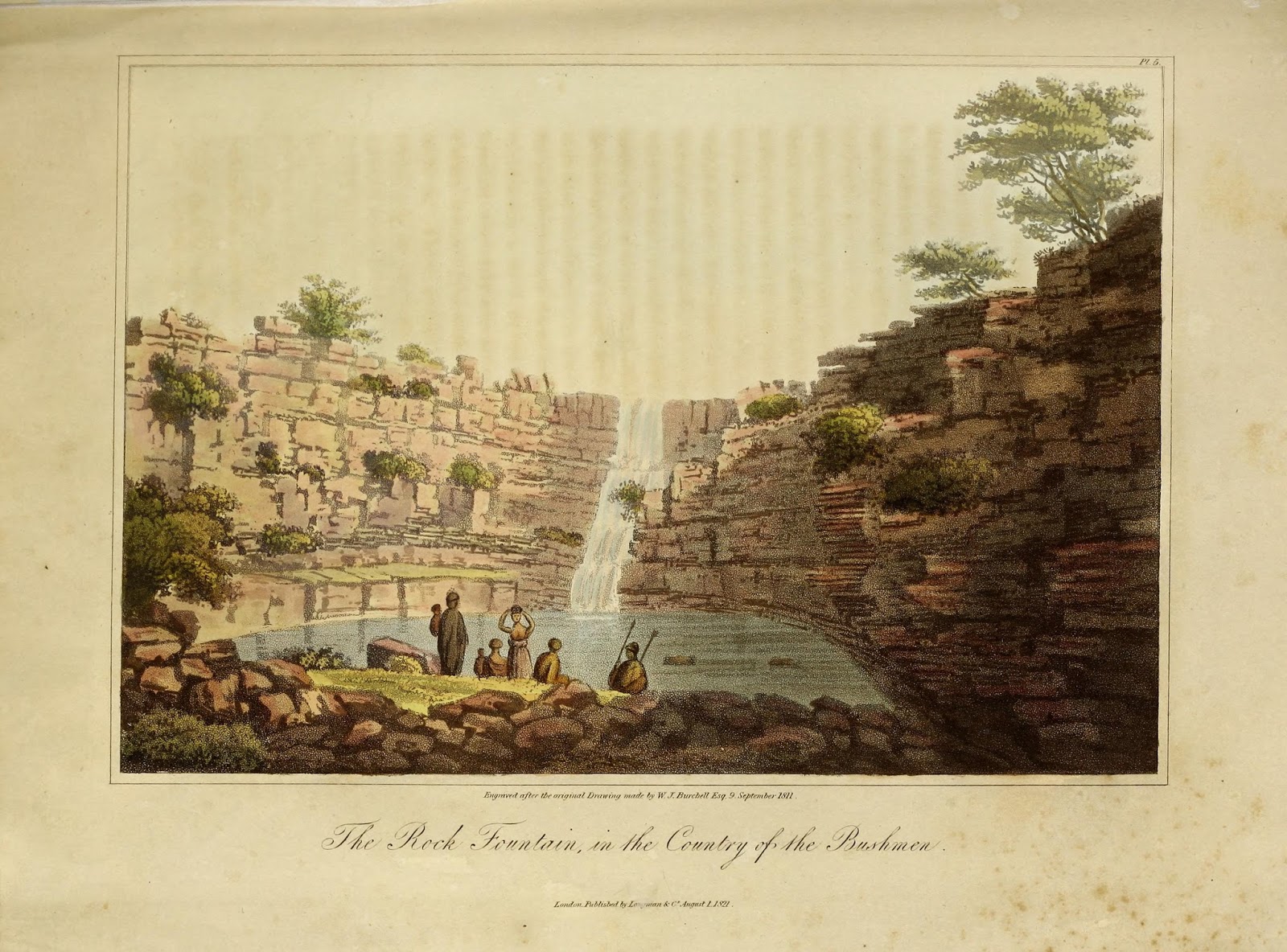
“Rock Fountain in the Country of the Bushmen.” 9 September, 1811. Engraved from a drawing by William John Burchell. Travels in the Interior of Southern Africa. v. 1 (1822). http://biodiversitylibrary.org/page/48905175. Digitized by: University of Pretoria.

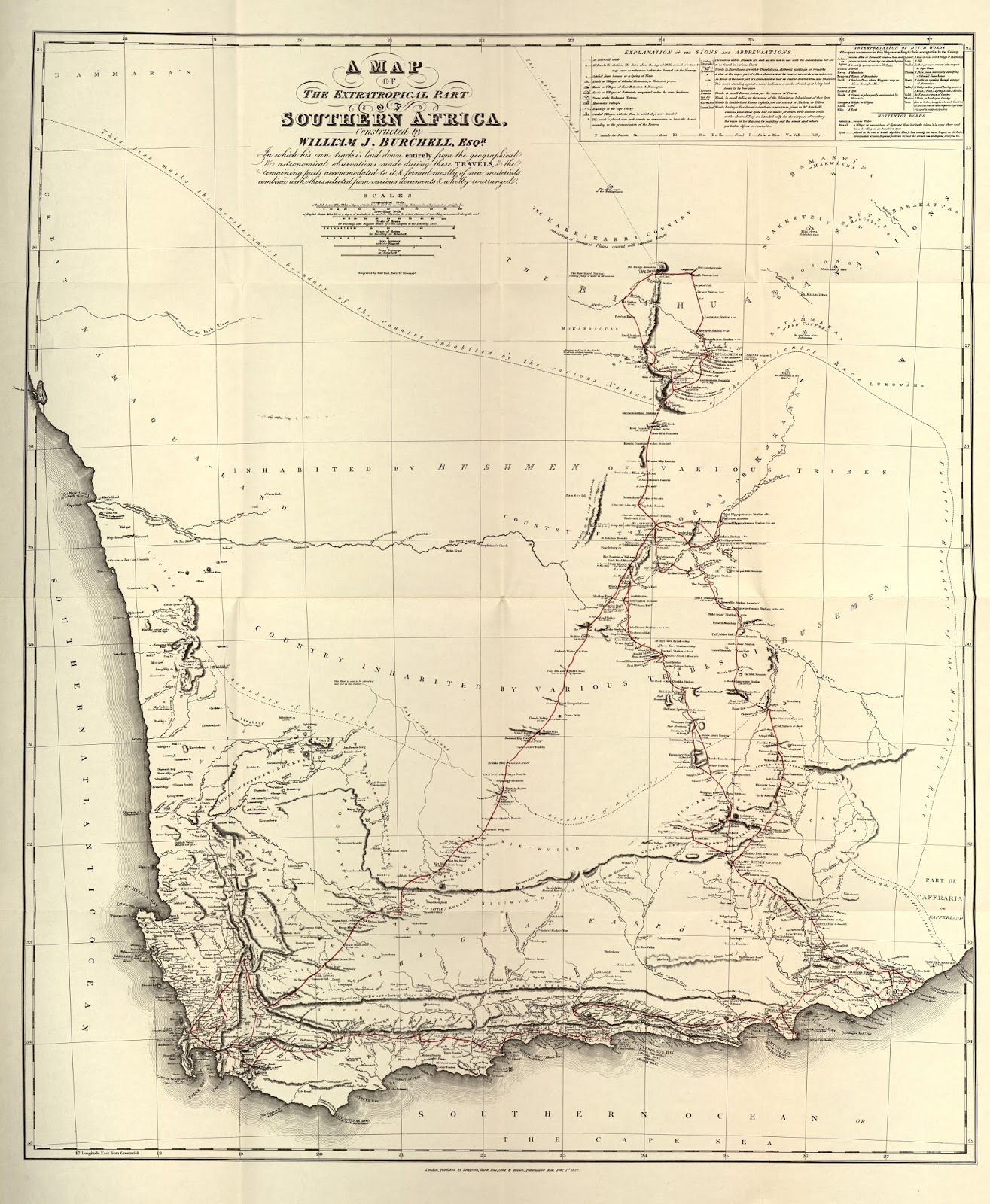
In addition to natural history, Burchell made important observations in the earth sciences during the expedition, being the first recorded person to identify asbestos in the Northern Cape and the “first to describe glacial pavements in the country.” [2] He also charted his entire route, creating a “Map of the Extratropical Parts of Southern Africa” (published in v.1 of his book), which was a “milestone in the cartography of the country.” [1] In the field of astronomy, he observed the variability of Eta Carinae’s brightness, and, by using a combination of Friar’s Balsam (Compound Tincture Benzoin), laudanum, Buchu vinegar, and Wild Wormwood to treat a serious gunshot wound afflicting one of the expedition’s members, became the first recorded person to successfully integrate indigenous herbal medicine with medicines used in Europe “into the management of such a serious condition.” [2]

View Full Size Image
Map of the Extratropical parts of Southern Africa. Travels in the Interior of Southern Africa. v. 1 (1822). http://biodiversitylibrary.org/page/48905480. Digitized by: University of Pretoria.

After Burchell’s return to Cape Town in April 1815, he went on to travel in Brazil, collecting over 23,000 additional specimens. However, after his return to England, Burchell became increasingly reclusive and protective of his collections, focusing on cataloging his vast botanical specimens but also refusing to allow others to access his collections. Some historians hypothesize that he may have suffered from a bipolar-type disorder. [2] In 1863, at the age of 82, after one unsuccessful suicide attempt by gunshot, he hung himself in a small outhouse in his garden. He is buried near his home in Fulham, in the family tomb at All Saints Church, Hammersmith.

View Full Size Image
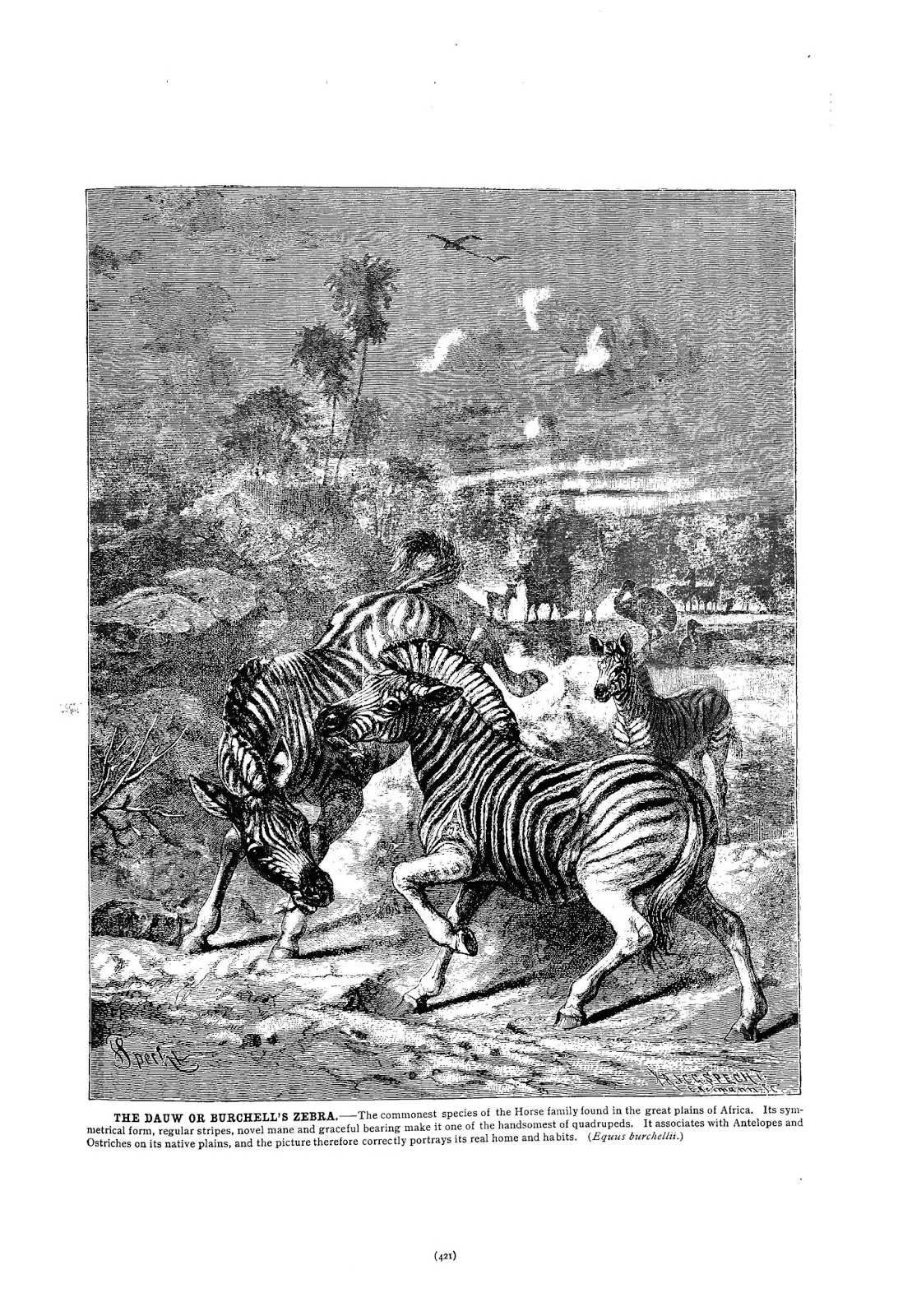
Burchell’s Zebra (Equus quagga burchellii), named after William John Burchell by John Edward Gray. Brehm, Alfred Edmund. The Animals of the World (1895). http://biodiversitylibrary.org/page/37569339. Digitized by: Cornell University Library.

Though his life had a tragic ending, Burchell’s accomplishments are remarkable. In addition to the many specimens he collected, a species of South African wild pomegranate (Burchellia bubalina) is named after him, and the common names of many animals bear his moniker, including Burchell’s zebra, Burchell’s coucal, three birds (Burchell’s starling, coarser, and grouse), a lizard (Burchell’s sand lizard), and the white rhinoceros (for which Burchell was the first to give a scientific name and is also known, although less-commonly, as Burchell’s rhinoceros). He also recommended the establishment of a public garden in Cape Town. He described the Kirstenbosch area as “the most picturesque I had seen in the vicinity.” [2] The Kirstenbosch National Botanical Garden was founded in 1913.

We are honored to have a copy of Burchell’s Travels in the Interior of Southern Africa in BHL, thanks to the University of Pretoria, as, to quote historian George Theal, it is “one of the most trustworthy and valuable books ever issued upon South Africa.” [1]

William John Burchell was an extraordinary man. We have not forgotten him.

[1] Stewart, Roger. “William John Burchell’s Medical Challenges: A 19th Century Natural Philosopher in the Field.” South African Medical Journal: 2012;102(4). pgs. 252-255.
[2] Stewart, Roger and Brian Warner. “William John Burchell: The Multi-skilled Polymath.” South African Journal of Science. 2012;108(11/12), Art. #1207, 9 pages. http://dx.doi.org/10.4102/sajs.v108i11/12.1207

November 19, 2015by ulib-libraryjobs
Blog Reel, Featured Books

Happy Birthday Waldo Schmitt!

Do you know what carcinology is?

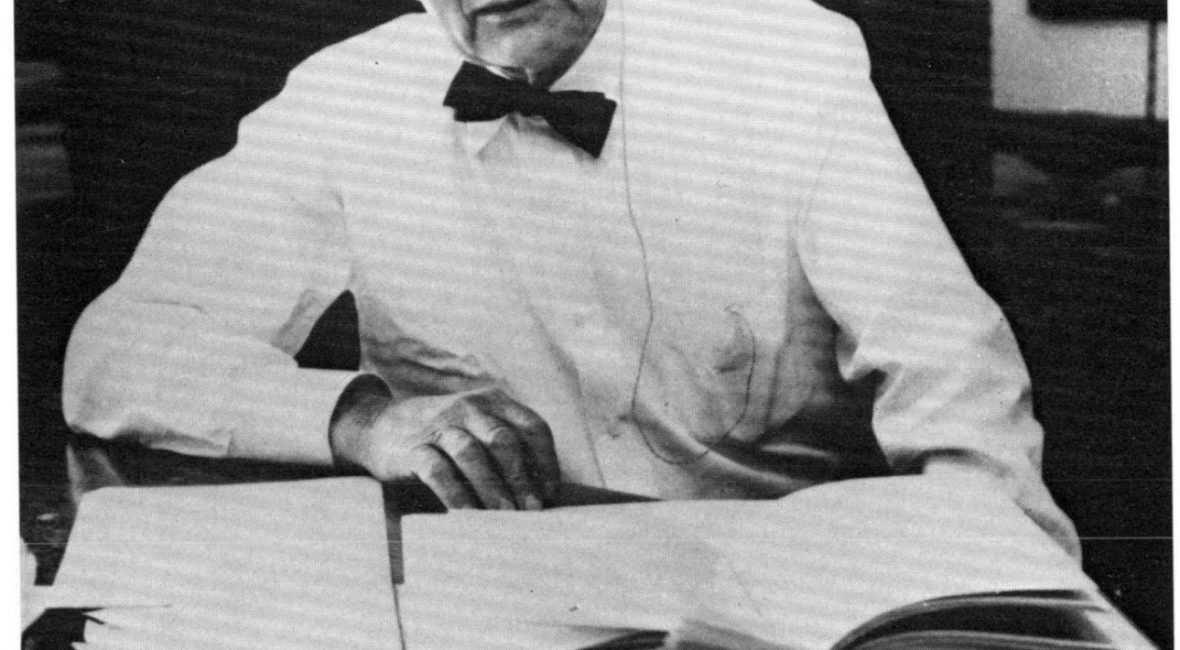
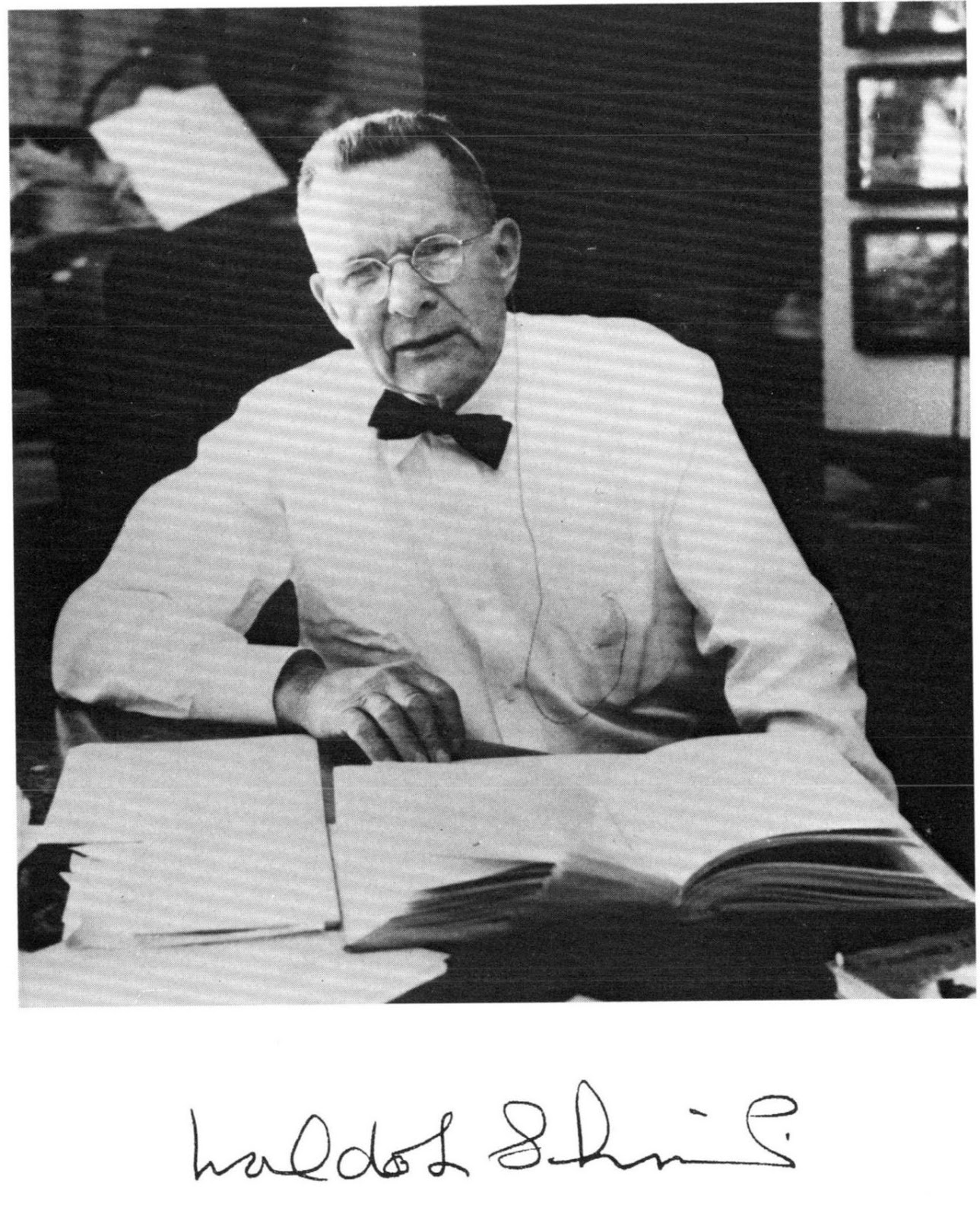
It is the study of crustaceans, a group of arthropods that includes lobsters, crayfish, shrimp, krill, barnacles and crabs. One of the pre-eminent carcinologists (a scientist who studies crustaceans) of the first half of the twentieth century was Waldo LaSalle Schmitt. Born on this day (June 25) in 1887 in Washington, D.C., Schmitt held various positions within the United States Department of Agriculture, the Smithsonian, and the United States Bureau of Fisheries throughout his career. He authored more than 70 titles over his lifetime and was a member of numerous professional organizations, including president of the Society of Systematic Zoology and the Washington Academy of Sciences and a trustee of the Bear’s Bluff Laboratories, the International Oceanographic Foundation, and the Serological Museum of Rutgers University.

View Full Size Image
Waldo Schmitt. Obituary. Crustaceana (34) 1, 1978. http://decapoda.nhm.org/pdfs/14597/14597.pdf.

While his primary field of investigation was carcinology, Schmitt actually began his career in 1907 as an Aid in Economic Botany for the United States Department of Agriculture, and his early work with natural history involved the study of both the flora and fauna of D.C. and Maryland. It was in 1910 that his true love affair with marine invertebrates began when he was appointed Aid in the Division of Marine Invertebrates at the Smithsonian’s National Museum of Natural History (NMNH). During the appointment, he met Mary Jane Rathbun, a fellow Smithsonian zoologist who specialized in crustaceans and described more than a thousand new species and subspecies and many higher taxa over her career. Her influence helped set Schmitt on his carcinology track, and an opportunity with the United States Bureau of Fisheries from 1911-14 helped solidify that decision.

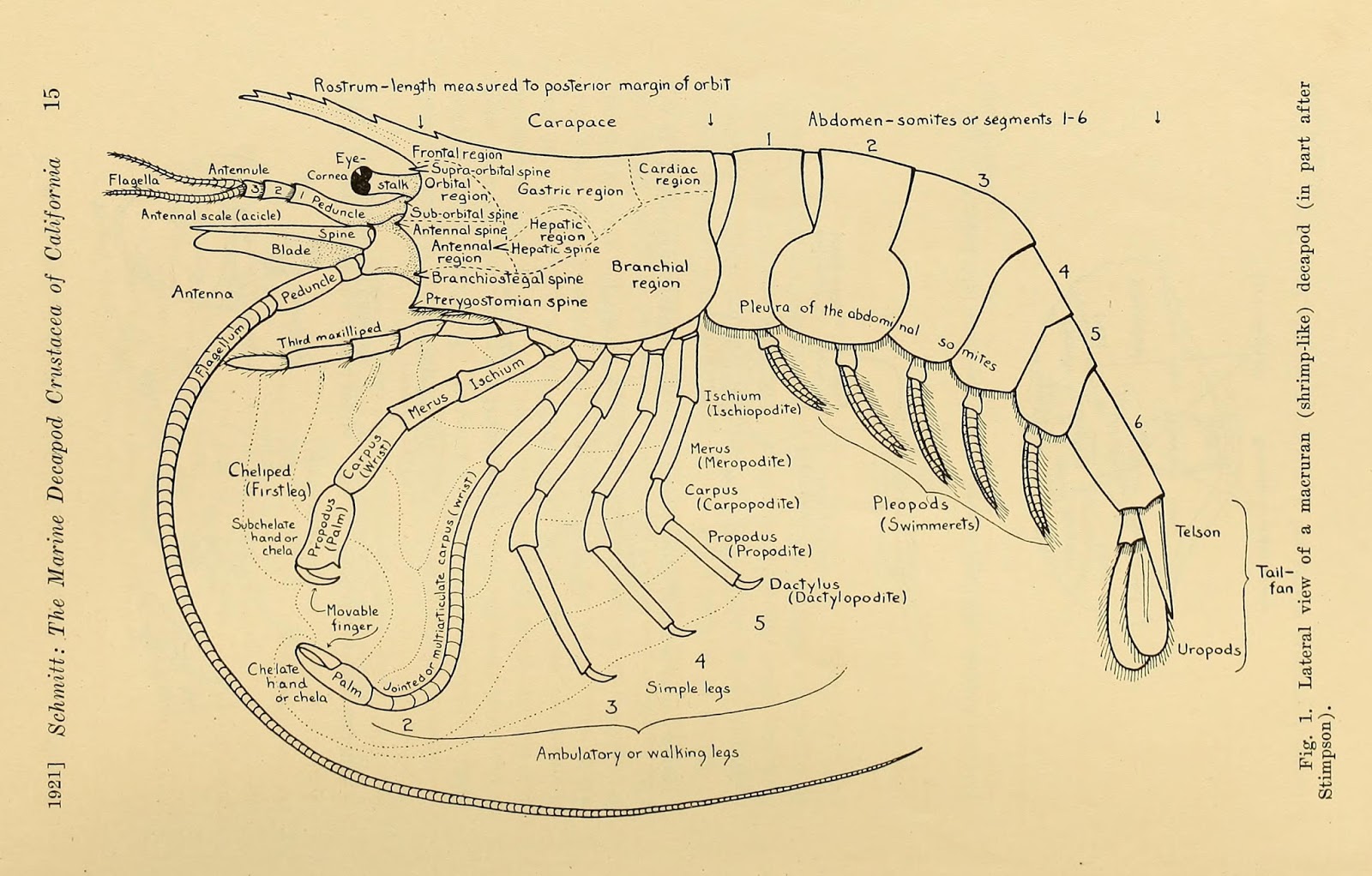
From 1911-14, the USS Albatross, an iron-hulled, twin-screw steamer in the United States Navy that was reputedly the first research vessel ever built especially for marine research, conducted a scientific investigation of the west coast of America and Alaska. The expedition examined existing and searched for new fishing grounds around Alaska, surveyed existing fishing grounds off Washington and Oregon, and performed a biological survey of the San Francisco Bay. Schmitt served as Scientific Assistant and Naturalist aboard the Albatross during this expedition, and used the crustaceans gathered during the survey as the material for his M.A. thesis for the University of California, entitled The Marine Decapod Crustacea of California.

View Full Size Image
Diagram of a macruran decapod. Schmitt, Waldo. The Marine Decapod Crustacea of California. 1921. http://biodiversitylibrary.org/page/37061600.

Following the survey, Schmitt returned to NMNH, where he held various positions in the Division of Marine Invertebrates (serving as Assistant Curator from 1915-20 and Curator from 1920-43), the Department of Biology (serving as Head Curator from 1943-47), and the Department of Zoology (Head Curator from 1947-57). After his retirement in 1957, Schmitt continued to serve as an Honorary Research Associate with the Smithsonian until his death in 1977.

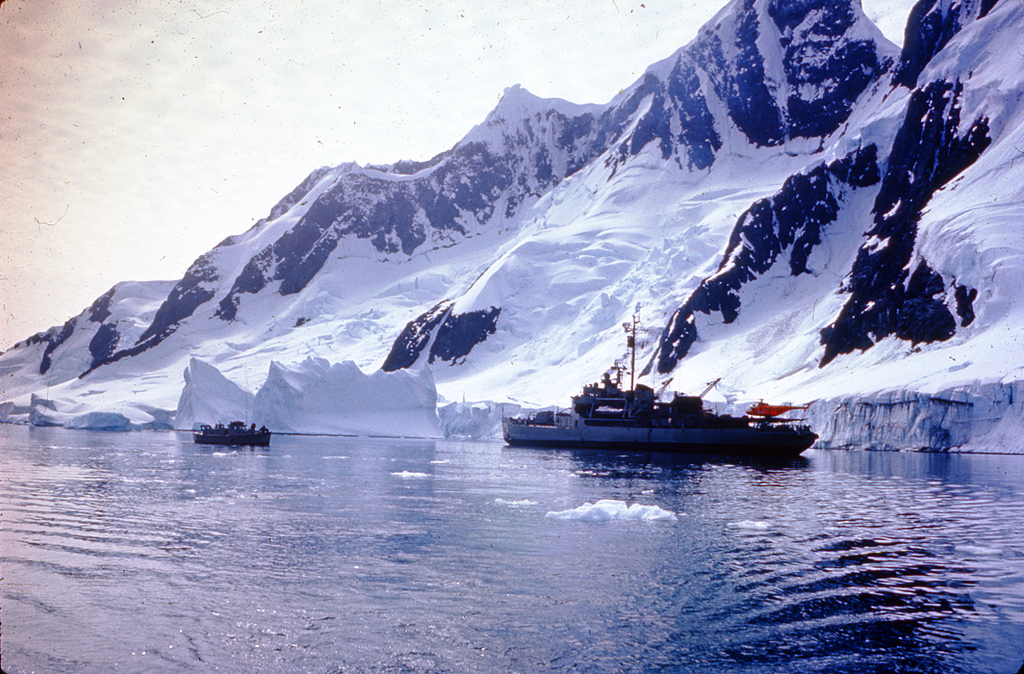
Over his career, Schmitt took part in many more biological expeditions and field trips, studying crustaceans and other biodiversity in California, Florida, South America, the Galapagos Islands, and the West Indies. His last expedition took him to Antarctica.

View Full Size Image
View of vessel during specimen collecting near Peterman Island, Antarctica, 1962-63.  SIA RU007231, Box 140, Folder. Taken during Waldo Schmitt’s collecting during the Palmer Peninsula Survey 1962-63. Smithsonian Institution Archives. https://www.flickr.com/photos/smithsonian/6350334901/in/album-72157628142203202/.

The Palmer Peninsula Survey of the United States Antarctic Research Program studied marine invertebrates and vertebrates, geography, botany, and entomology in and around multiple Antarctic sites from 1962-63. Schmitt collected over 29,000 specimens for the NMNH during the survey, and in recognition of his work, a thirty-mile ice-covered series of outcrops at the base of the Antarctic Peninsula was named after him – Schmitt Mesa.

Schmitt kept a series of field books detailing his work on the Palmer Peninsula Survey, and two of them, covering the period from November 24, 1962-March 10, 1963, have been digitized by The Field Book Project and made available within the Biodiversity Heritage Library. They have also both been fully transcribed within the Smithsonian Transcription Center, making it even easier for you to browse Schmitt’s incredible notes (Diary 1 and Diary 2).

View Full Size Image
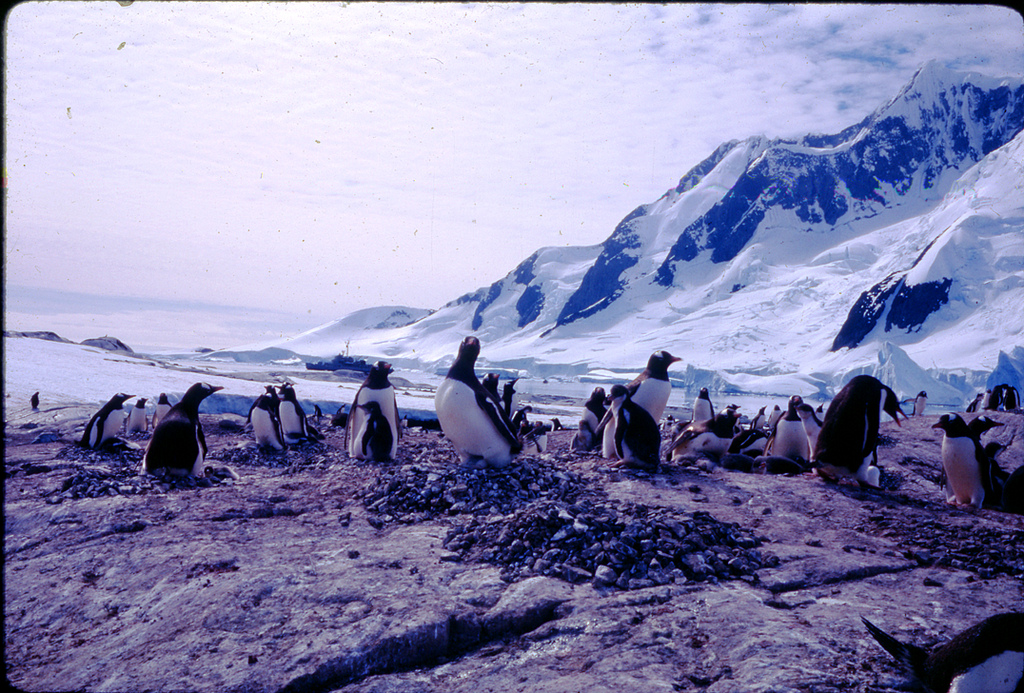
Penguins on the Palmer Peninsula, 10-11am, January 28, 1963. SIA RU007231, Box 140, Folder. Taken during Waldo Schmitt’s collecting during the Palmer Peninsula Survey 1962-63. Smithsonian Institution Archives. https://www.flickr.com/photos/smithsonian/6351079304/in/album-72157628142203202/.

An interesting excerpt from one of Schmitt’s digitized field books reveals his frustrations with the “college textbook oceanographers” serving on the Palmer Peninsula Survey. As Schmitt writes,

“College ‘students’ Ph.D.’s afloat. Two men are supposed to be on duty each operation or separate phase of work. Often (or at least at times) only one is around; and that one goes down to wake his relief; then without waiting to see that the awakened man gets up and onto the job goes off to bed. [It’s inconceivable].

Expensive gear is being towed behind, needs competent watch and attention, yet when ship stops or changes course, gear (or magnetometer) is endangered & then lost, and guy in charge of it blames the bridge for not notifying him of change – “they did not tell me.” Seems as though an alert man would realize change of course, absence of engine vibrations would sense at least some change requiring instrument care or retrieval. Much the same happens when wind direction dial in lab fails to register; student is aghast, I don’t know what’s wrong, I can’t get wind direction or force – a practical or experienced man could look outside or even through port & form an estimate as any old sea dog knows. Now I know why Coast guards & others are trained in sailing ships – to get practical experience – and to be able to form personal creditable and accurate determinations of wind, weather & sea conditions.

It would seem that any college textbook-oceanographer should serve an internship at Coast guard Acad (however limited) before being entrusted with valuable expensive and hard to replace gear & instruments. Nobody would let doctors fresh out of college operate on you, unless had interns experience, yet these Ph.D’s are turned loose without any first hand real practical [knowledge] of sea, & when balled out by one who knows the sea they resent it because man has had no college training… [they think] they know better because of textbook knowledge & the degree they have, a Ph.D. never made a man out of what wasn’t.”

Be sure to check out Schmitt’s field books to get more fascinating insight into the day-to-day life of a scientist at work in Antarctica.

Schmitt’s career was truly a remarkable one, contributing extensively to our knowledge of biodiversity and particularly crustaceans. In addition to the Schmitt Mesa named in his honor, the clam genus Waldo also bears his namesake. Check out other works by Waldo Schmitt in BHL and browse photos taken by him during his many expeditions, including the Palmer Peninsula Survey, from The Field Book Project in Flickr.

June 25, 2015by ulib-libraryjobs
Blog Reel, Campaigns, Featured Books

World Oceans Day through Books: Corals, Oceanography, and the Deep Sea

This post is the third in our series leading up to the celebration of World Oceans Day on June 8. This series explores publications that represent important milestones in the progress of marine bioscience research and ocean exploration.

Darwin and the Theory of Coral Reef Formation: Structure and Distribution of Coral Reefs

Charles Darwin will forever be remembered for his theory of evolution by means of natural selection and the publication of On the Origin of Species in 1859. But Darwin’s scientific contributions extend even beyond this monumental achievement. As an example, Darwin also presented a theory of how coral reefs and atolls are formed.

Coral reefs are underwater ecosystems built by colonies of tiny animals – mostly stony corals – and held together by calcium carbonate structures that these animals secrete. These reefs are home to at least 25% of all marine species. An atoll is a ring-shaped coral reef that encircles a lagoon.

View Full Size Image
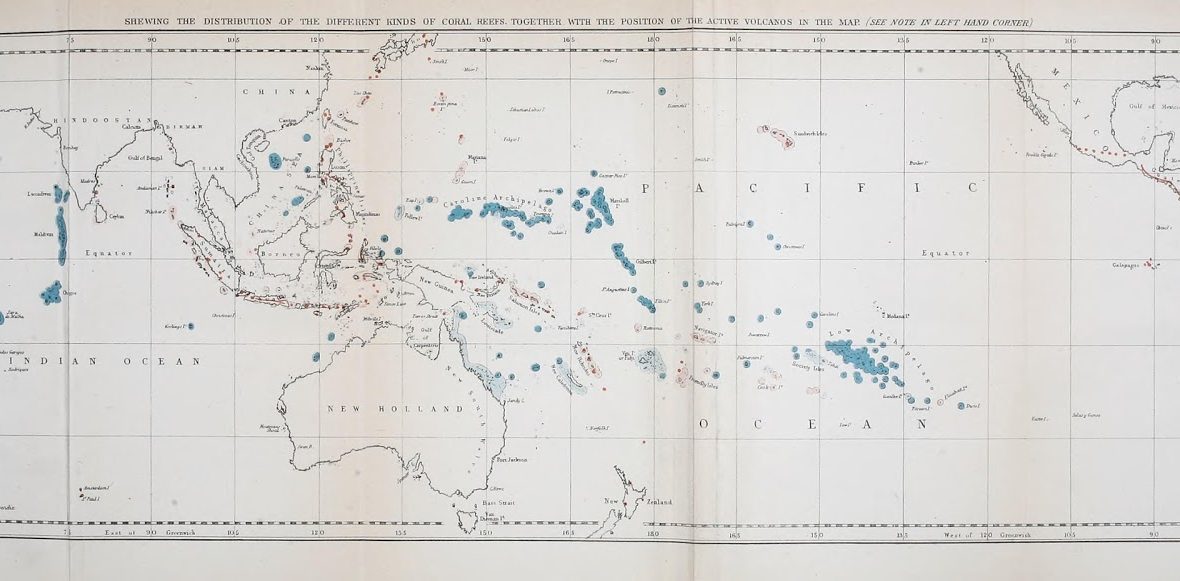
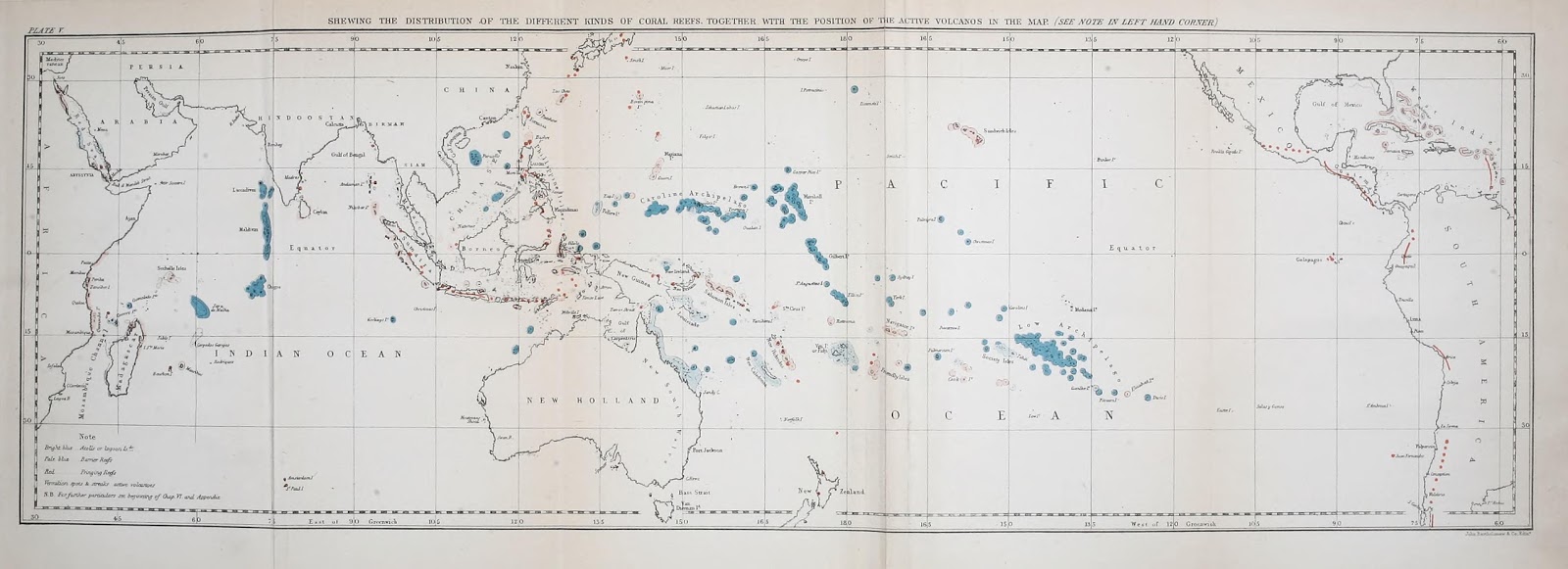
Distribution of known coral reefs of the world during Darwin’s time, including the types. Darwin, Charles. The Structure and Distribution of Coral Reefs. 1842. http://biodiversitylibrary.org/page/40453231.

Darwin developed his theory about the formation of coral reefs and atolls during his famous Beagle voyage (1831-36). He published the theory as his first monograph in 1842 as The Structure and Distribution of Coral Reefs, Being the first part of the geology of the voyage of the Beagle, under the command of Capt. Fitzroy, R.N. during the years 1832 to 1836.

The process by which corals and atolls are formed was a popularly-debated scientific question in the early 19th century. Darwin’s coral theory stated that atolls formed from a gradual process from fringing reefs to barrier reefs and finally atolls. As Gordon Chancellor explains in Darwin Online,

“In clean, agitated, tropical seas corals will form fringing reefs just below low tide level. If the coastline is being elevated (as for example may happen if the island is an active volcano) this type of reef should persist but as soon as the living coral is raised above the surf it will die and become a strip of white limestone. If the coastline is stable, the coral will gradually grow out from the shore to become a barrier reef. If the coast is sinking, as Darwin thought was happening to hundreds of islands in the south Pacific, the coral might keep pace by growing upwards but as the land sinks beneath the waves all that would remain would be a more or less circular atoll. Eventually the rate of subsidence might prove too fast, or (perhaps as in our own times of global warming) sea level will rise too fast and the atoll will die.”

Although Darwin’s theory was widely but not universally accepted during his lifetime, modern investigations support his ideas. Coral Reefs also helped establish Darwin’s reputation as a leading scientific mind and helped provde him with the credibility he needed to have his theory of evolution taken seriously. Indeed, Coral Reefs was not only Darwin’s first monograph, but it also demonstrated a common theme throughout all of Darwin’s theories – that gradual change over time, often the result of an aggregation of the individual actions of small organisms, can account for the entire history of our planet and the species, ecosystems, and geological formations we see today.

View Full Size Image
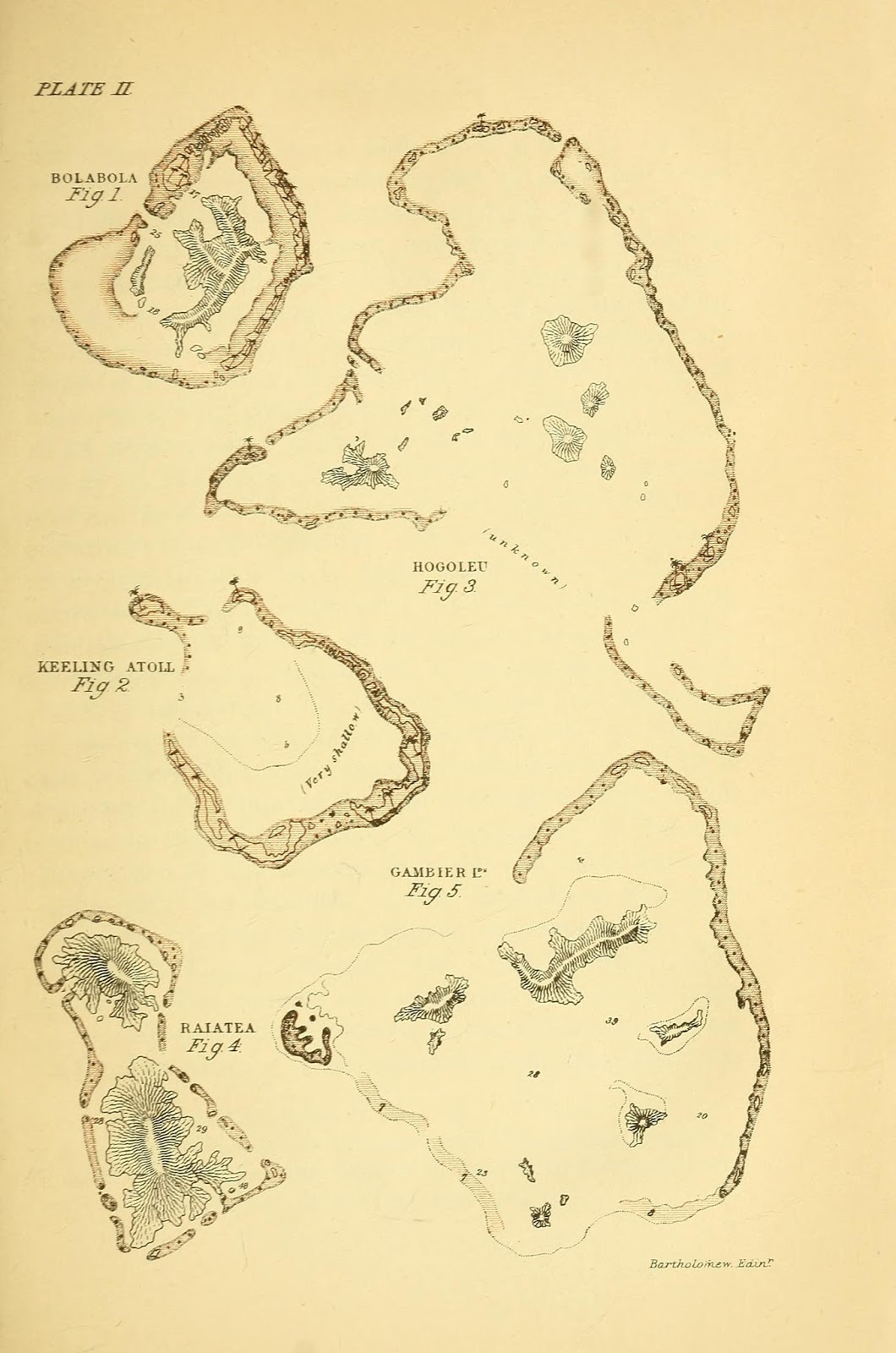
Various atolls illustrated by Darwin. Darwin, Charles. The Structure and Distribution of Coral Reefs. 1842. http://biodiversitylibrary.org/page/40453240.

The First Textbook on Oceanography: The Physical Geography of the Sea

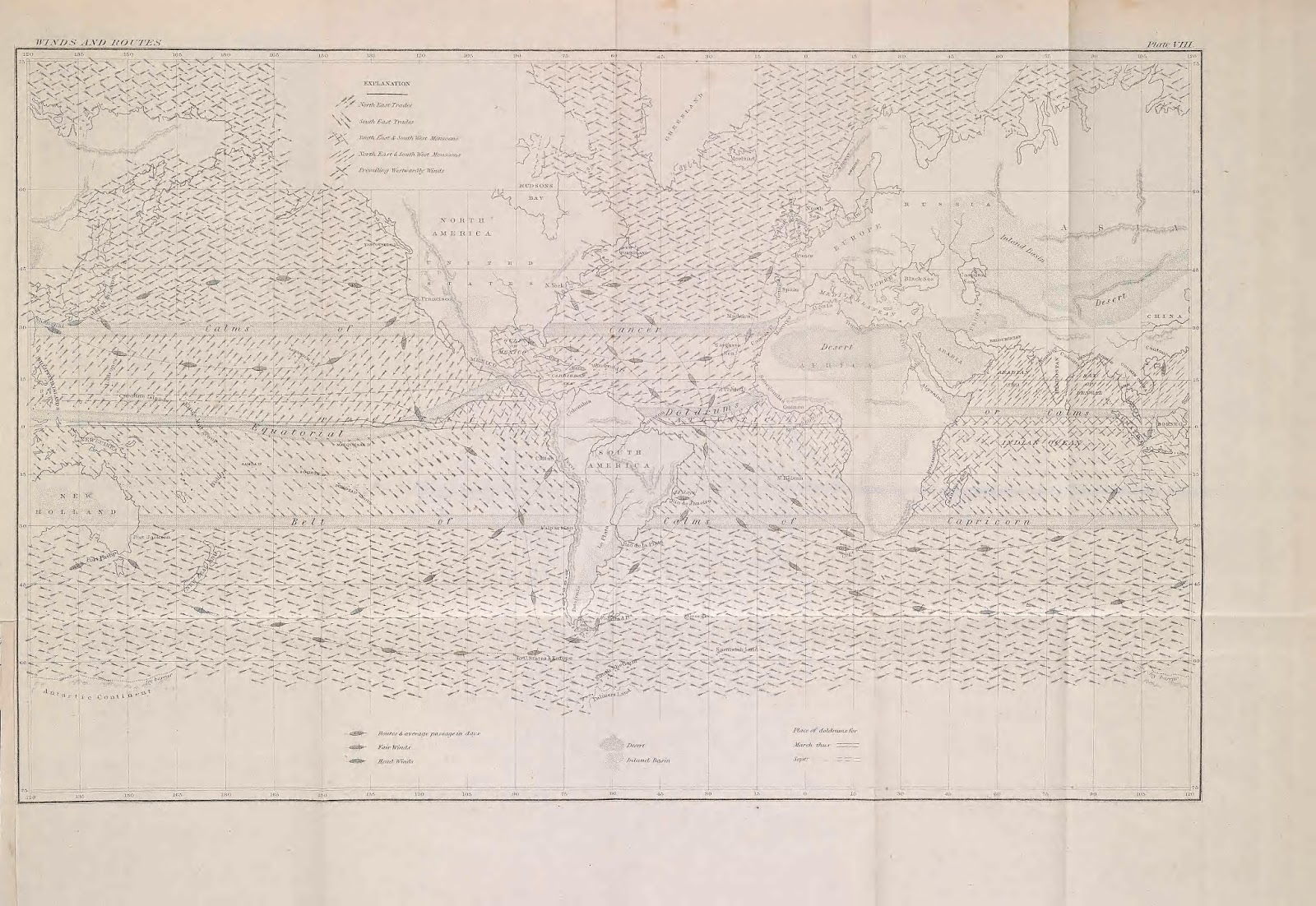
Oceanography is defined as the study of the ocean, and it can include many topics such as marine life, ocean currents, waves, plate tectonics, meteorology, and many others. Matthew Fontaine Maury, who served in the United States Navy from 1825-61, is sometimes called the “Father of Modern Oceanography and Naval Meteorology.” By studying old ship logs, Maury was able to make important deductions about ocean currents and winds, which resulted in the 1847 publication of Wind and Current Chart of the North Atlantic, which amassed this information to produce a guide to help sailors reduce the length of ocean voyages. Maury also used these ship logs to chart whale migrations, and this research in turn led him to advocate for the existence of a Northwest Passage, through which whales could gain access to both the Atlantic and Pacific Oceans.

View Full Size Image
Illustrating various winds, ship passages, and lengths. Maury, Matthew Fontaine. The Physical Geography of the Sea. 1855. http://biodiversitylibrary.org/page/47369923.

In 1855, Maury published The Physical Geography of the Sea, which is considered the first extensive and comprehensive book on oceanography. As Maury states, the work is “a philosophical account of the winds and currents of the sea; of the circulation of the atmosphere and ocean; [and] of the temperature and depth of the sea” and includes discussions about ocean salinity and many perplexing ocean phenomena, including the Gulf Stream. Although today we know that much of Maury’s science is incorrect, this book helped popularize oceans and the science of the seas and laid the foundation for much of the oceanographic research that followed.

The Foundations of Modern Oceanography: The Challenger Expedition

While the field of ichthyology continued to expand throughout the 16th – 19th centuries, and publications on oceanography including ocean currents and their effects on meteorology appeared in the mid-1800s, even by the 19th century, scientific knowledge about Earth’s watery depths was still very limited. In fact, until the middle of the nineteenth century, many still subscribed to the Abyssal Theory, which stated that life could not exist below about 600 meters (2,000 feet).

View Full Size Image
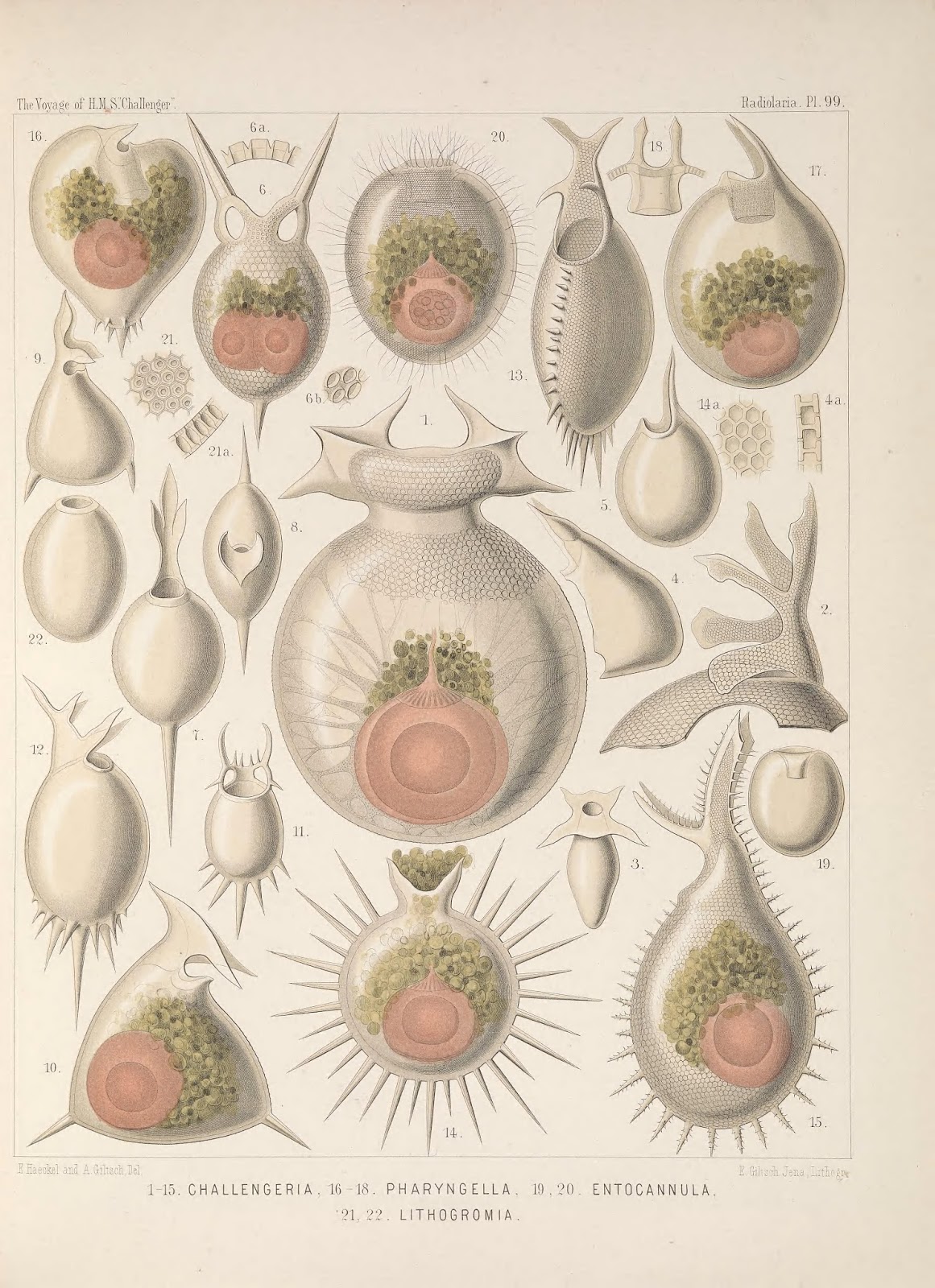
Radiolaria by Ernst Haeckel, collected during the Challenger Expedition. Report on the scientific results of the voyage of H.M.S. Challenger during the years 1873-76. v. 18 plates. 1887. http://biodiversitylibrary.org/page/39632734.

In 1872, the Royal Society of London launched the first non-commercial exploration of the deep sea – the Challenger Expedition. The purposes of the expedition were to investigate the physical conditions of the deep sea, ascertain the chemical composition of seawater at various depths, determine the physical and chemical character and sources of deep-sea deposits, and investigate the distribution of organic life at different depths. The expedition circumnavigated the globe, traveling nearly 70,000 nautical miles from 1872-76, and resulted in the discovery of nearly 4,700 new-to-science species of marine life, 492 deep sea soundings, 133 bottom dredges, 151 open water trawls, and 263 serial water temperature observations. In 1875, the crew also recorded a sounding of 4,475 fathoms, (8,184 meters), which would later prove to be the southern end of the Mariana trench and one of the deepest known places on the ocean floor. The expedition was monumental in broadening knowledge of the ocean’s depths and species, and revolutionized the field of oceanography.

View Full Size Image
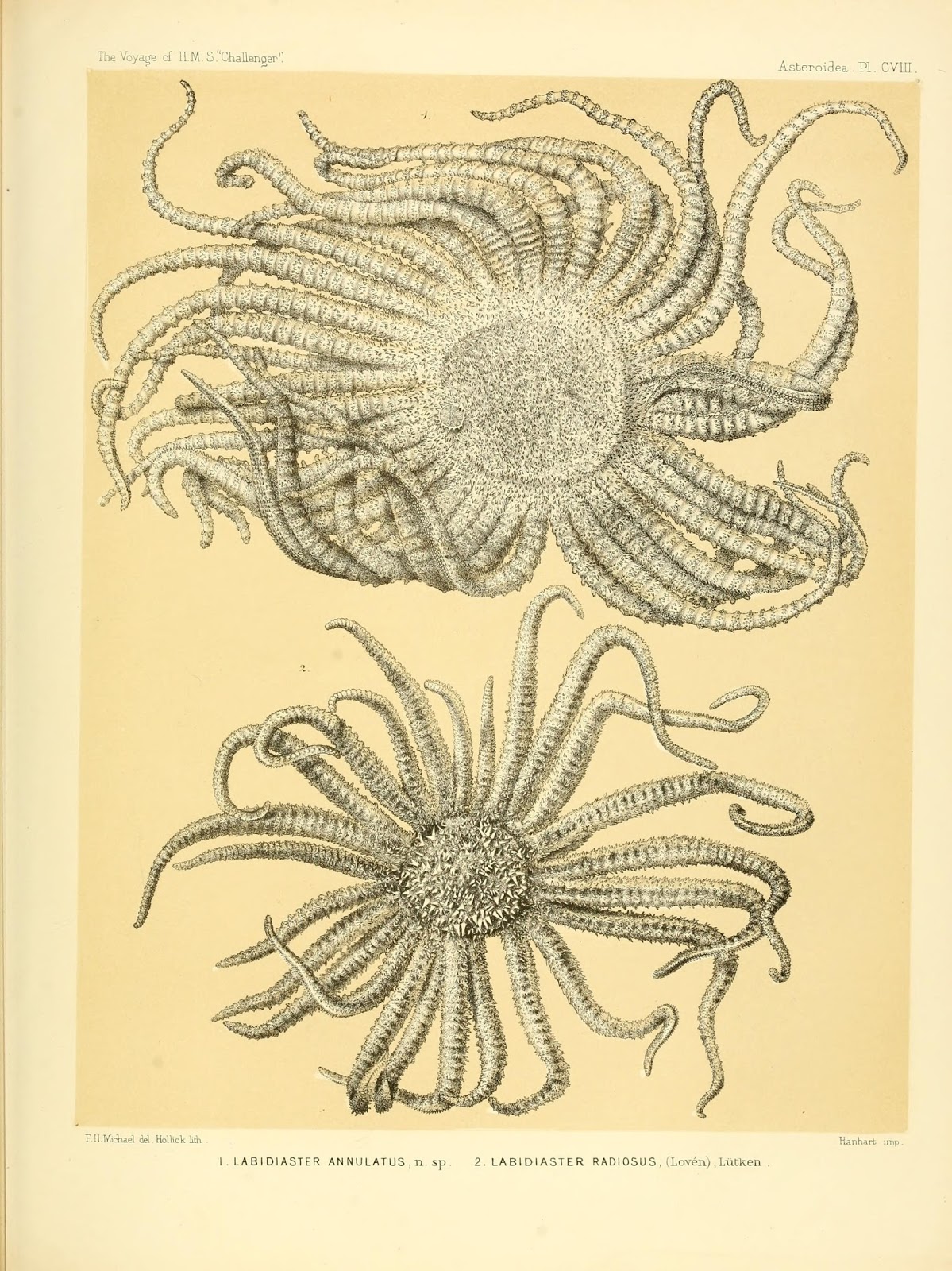
Starfish from Percy Sladen collected during the Challenger Expedition. Report on the scientific results of the voyage of H.M.S. Challenger during the years 1873-76. v. 30 plates. 1887. http://biodiversitylibrary.org/page/25170168.

The findings from the expedition were published in 50 volumes from 1880-95 as the series Report Of The Scientific Results of the Exploring Voyage of H.M.S. Challenger during the years 1873-76. Sir John Murray, pioneering Scottish oceanographer, described the report as, “the greatest advance in the knowledge of our planet since the celebrated discoveries of the fifteenth and sixteenth centuries.”

Uncovering the Deep Ocean: The Valdivia Expedition

The success of the Challenger Expedition ignited a fever to explore the deep sea and the creatures that called it home. In the late nineteenth century, German marine biologist Carl Chun proposed the first German deep-sea expedition, which was approved by Germany’s last Kaiser, Wilhelm II. In 1898, with national funding, the Valdivia Expedition set sail from Hamburg for the subantarctic seas with a mission to sample, record, and study as many deep-sea organisms and habitats as possible. Covering over 32,000 nautical miles and visiting 268 stations around the West Coast of South Africa, the Gulf of Guinea, the Antarctic Sea, and a large portion of the Indian Ocean, the expedition used the dredging techniques popularized on the Challenger Expedition to collect deep-sea specimens. The expedition was a resounding success, resulting in the discovery of many new deep-sea species, including the vampire squid, which Chun named Vampyroteuthis infernalis, meaning “vampire squid from hell.” The results of the expedition were published over a four-decade period in a 24-volume series entitled Wissenschaftliche Ergebnisse der Deutschen Tiefsee-Expedition auf dem Dampfer “Valdivia” 1898-1899.

View Full Size Image
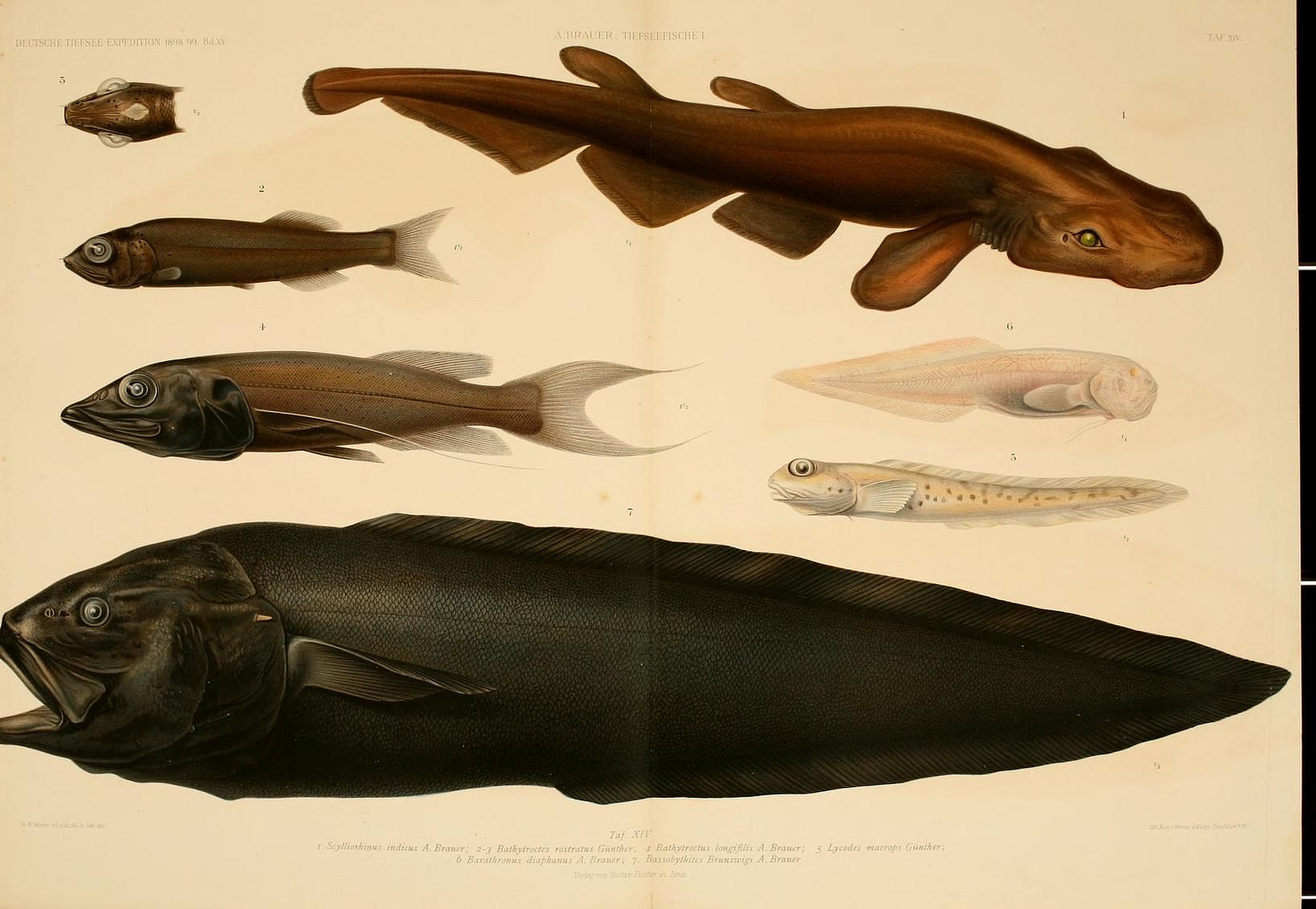
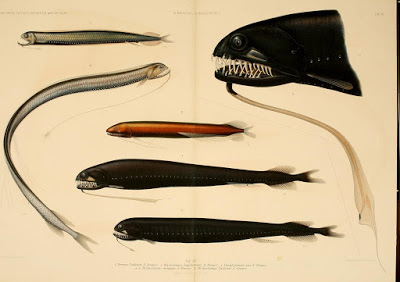
Deep sea fish collected during the Valdivia Expedition. Wissenschaftliche Ergebnisse der Deutschen Tiefsee-Expedition auf dem Dampfer “Valdivia” 1898-1899. Bd. 15, T. 1. 1908. http://biodiversitylibrary.org/page/6002199.

One of the most important volumes in this series was August Brauer’s report on the deep-sea fishes discovered on the expedition. Published as the series’ fifteenth volume in 1908, Die Tiefsee-Fische is considered the starting point of deep-sea ichthyology. The volume also firmly established the widespread global existence of fish in the bathypelagic zone (depth of 3,300-13,000 feet) and documented the sensory adaptations and bioluminescent capabilities of many deep-sea species. A highlight of the publication are the 44 plates created by the shipboard artist and scientific draftsman Fritz Winter, with whom Brauer collaborated closely to ensure the lifelike, accurate representation of the described specimens.

View Full Size Image
Deep sea fish collected during the Valdivia Expedition. Wissenschaftliche Ergebnisse der Deutschen Tiefsee-Expedition auf dem Dampfer “Valdivia” 1898-1899. Bd. 15, T. 1. 1908. http://biodiversitylibrary.org/page/6002204.

More World Oceans Day Resources

  • Follow us on Twitter, Facebook, and this blog all this week as we explore marine biodiversity and awesome related publications in BHL.
  • Check out some monumental publications in historic and present-day marine bioscience research in our BHL collection.
  • Browse a selection of marine biodiversity illustrations in Flickr and Pinterst
June 3, 2015by ulib-libraryjobs
Blog Reel, Campaigns, Featured Books

World Oceans Day through Books: The Truth about Terra Australis

This post is the second in our series leading up to the celebration of World Oceans Day on June 8. This series explores publications that represent important milestones in the progress of marine bioscience research and ocean exploration.

The Quest for Terra Australis: The Expeditions of James Cook

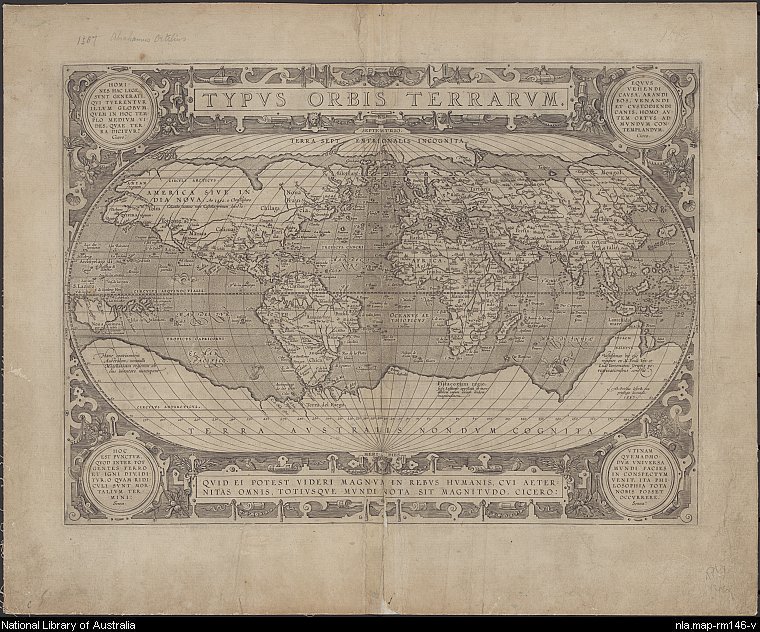
As far back as antiquity, Western scholars theorized the existence of a great southern continent that they called Terra Australis. While the continent found its way onto many early European maps, this presentation was not based on actual surveys but instead the hypothesis that landmasses in the Northern Hemisphere must be balanced by respective landmasses in the Southern. Depictions generally included a single landmass encompassing the South Pole and spreading far north to include Australia, New Zealand and, at its most extreme, even Tierra del Fuego.

View Full Size Image
Map showing imagined Terra Australis. Ortelius, Abraham, 1527-1598. Typus orbis terrarum. Quid ei potest videri magna in rebus cui alter nitas omnis, totiusque mundi nota sit mangitudo. Cicero [cartographic material] 1587. MAP RM 146. http://nla.gov.au/nla.map-rm146. National Library of Australia.

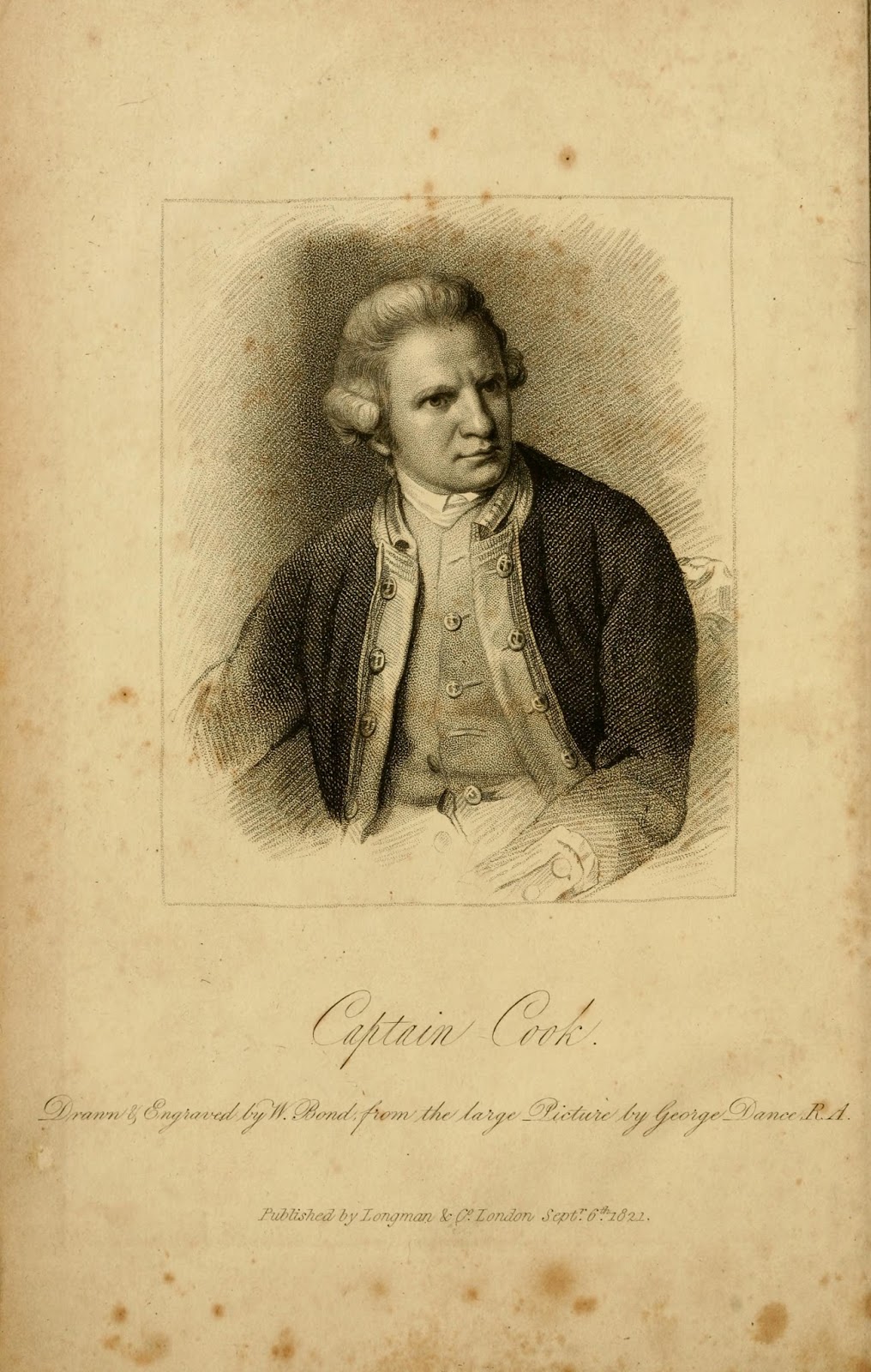
By the mid-18th century, some Europeans claimed to have seen this great southern continent, but details were scarce and verification virtually non-existent. The intrigue prompted the British Admiralty and Royal Society to direct Lieutenant James Cook, as part of a larger mission from 1768-71 to observe the transit of the planet Venus from Tahiti, to search for Terra Australis.

View Full Size Image
Portrait of James Cook. The three voyages of Captain James Cook round the world. v. 1. 1921. http://biodiversitylibrary.org/page/6227900.

In September 1769, Cook’s ship, the Endeavour, reached New Zealand, after which Cook spent six months circumnavigating the island to ultimately establish that it was not, as was commonly believed, part of the “southern continent.” From New Zealand, Cook and his crew sailed towards Australia, becoming the first recorded Europeans to reach the Australian east coast in April 1770. Sailing north, Cook charted over 5,000 miles of coastline and further demonstrated that Australia and New Guinea were not connected.

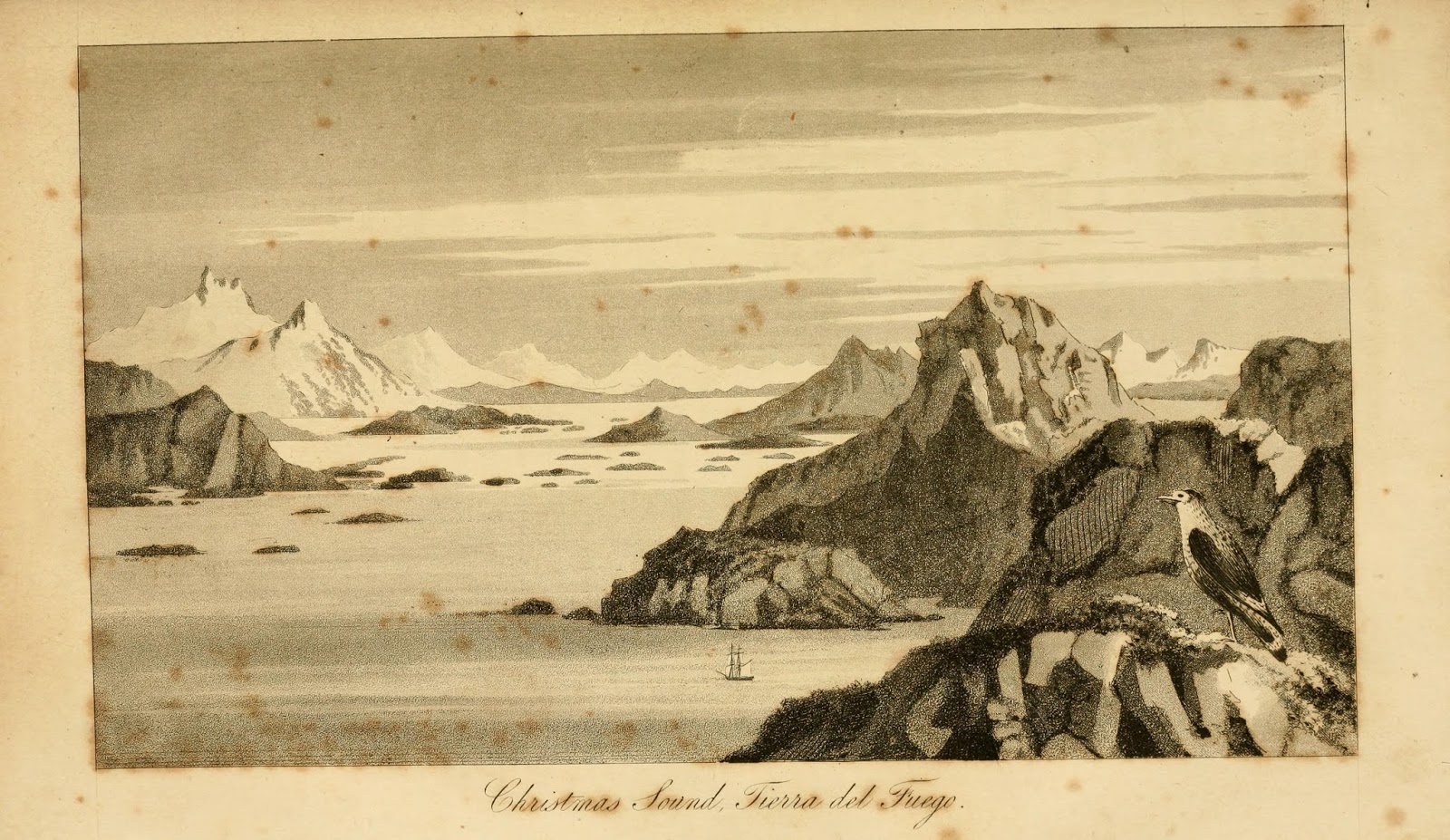
Cook went on to command two additional expeditions, the second of which (1772-75) brought Cook closer to the South Pole than any recorded previous navigator, finally disproved the existence of a large southern continent as expansive as the envisioned Terra Australis, demonstrated that chronometers were a practical means of determining longitude at sea, and laid the foundations for a modern map of the South Pacific, thus paving the way for future explorations in the area.

View Full Size Image
Cook, James. Christmas Sound, Tierra del Fuego. From Cook’s second voyage (1772-75). The three voyages of Captain James Cook round the world. v. 4. 1921. http://biodiversitylibrary.org/page/6258591.

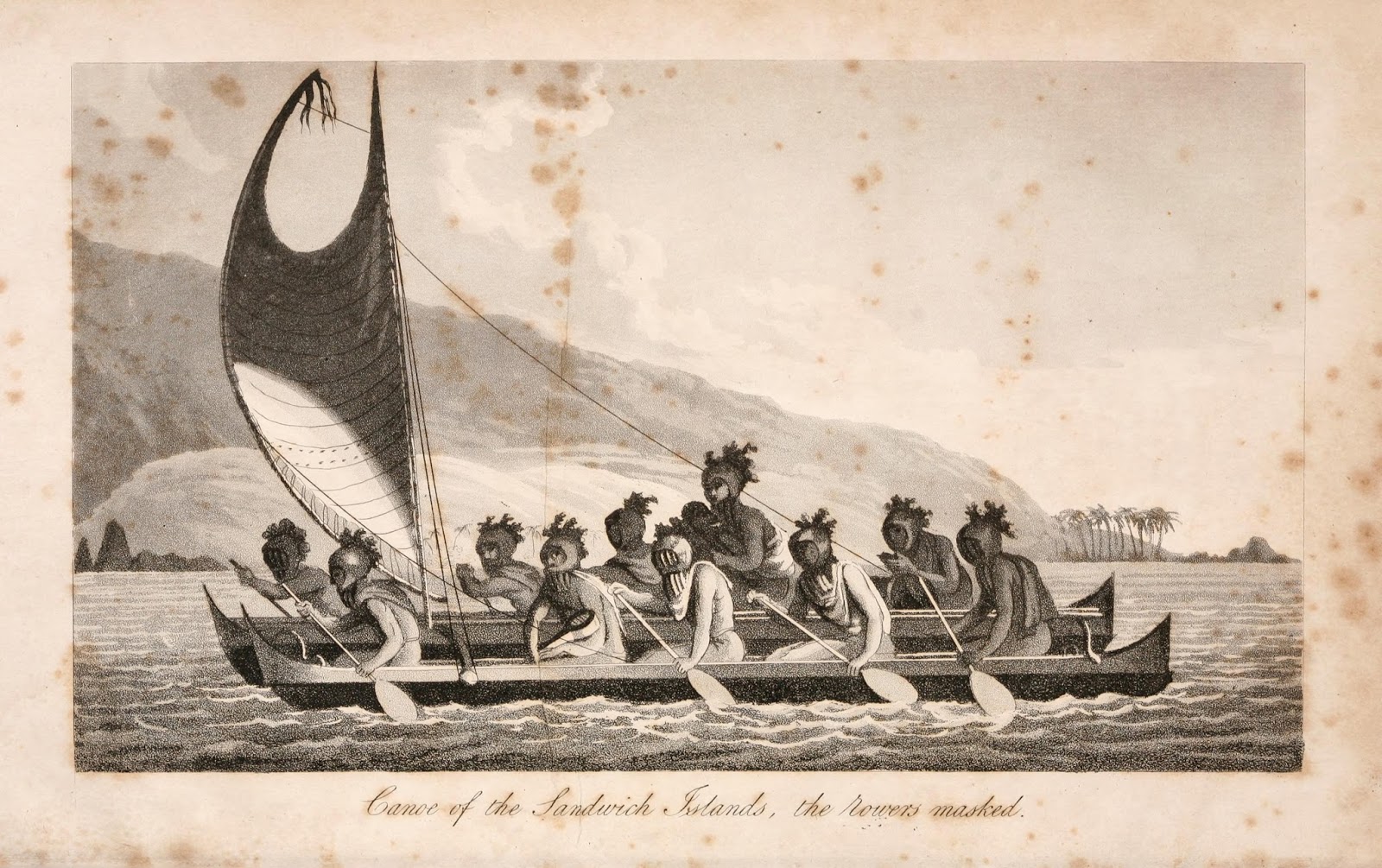
Cook’s third and final voyage (1776-80) attempted to discover the elusive northwest passage. Although he was unsuccessful, he did become the first recorded European to visit the Hawaiian Islands and charted the coast of northwest America. Tragically, Cook was killed on the return voyage during a confrontation on the Hawaiian Islands on 14 February 1779.

View Full Size Image
Canoe of the Sandwich (i.e. Hawaiian Islands). From Cook’s third voyage (1776-80). The three voyages of Captain James Cook round the world. v. 6. 1921. http://biodiversitylibrary.org/page/1803270.

Cook’s achievements did much to pave the way for future oceanic exploration, especially around Australia. He helped lift the veil of uncertainty surrounding “Terra Australis,” and helped to establish a viable method by which to more easily navigate the oceans (via a chronometer). Furthermore, by methodically enforcing cleanliness and ventilation on his ships and a balanced diet for his crew, he dramatically improved the living conditions and health of his crew and set new standards for future expeditions.

An account of Cook’s three voyages, taken in part from his journals, are available in the seven volumes of The Three Voyages of Captain James Cook around the World (1821).

Exploring Oceania: Voyage of the Astrolabe

Following Cook’s expedition, France and England vied intensely for southern possessions, resulting in many expeditions that expanded our knowledge of the oceans and marine life around Australia and New Zealand.

Early French expeditions to the region included the 1800-1804 cartographic survey of Australia’s coastline, under Nicolas Thomas Baudin, which resulted in the first published detailed chart of Australia, and the voyage of the Coquille from 1822-25, under the command of Louis Isidore Duperrey. Navigator Jules-Sébastien-César Dumont d’Urville served as second-in-command on the Coquille expedition, and just two months after its return, d’Urville requested a second voyage to the South Seas, this time with him in command.

View Full Size Image
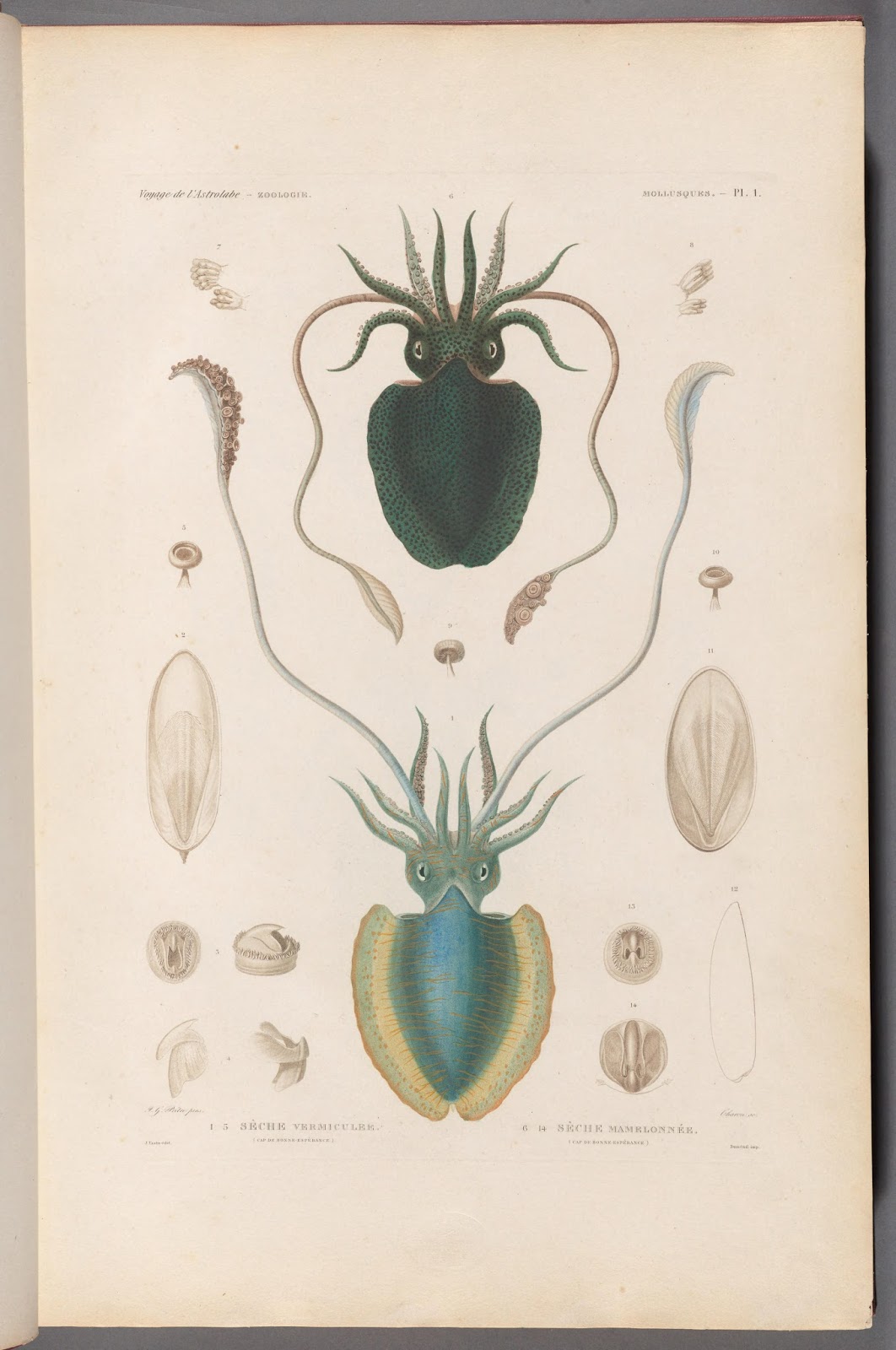
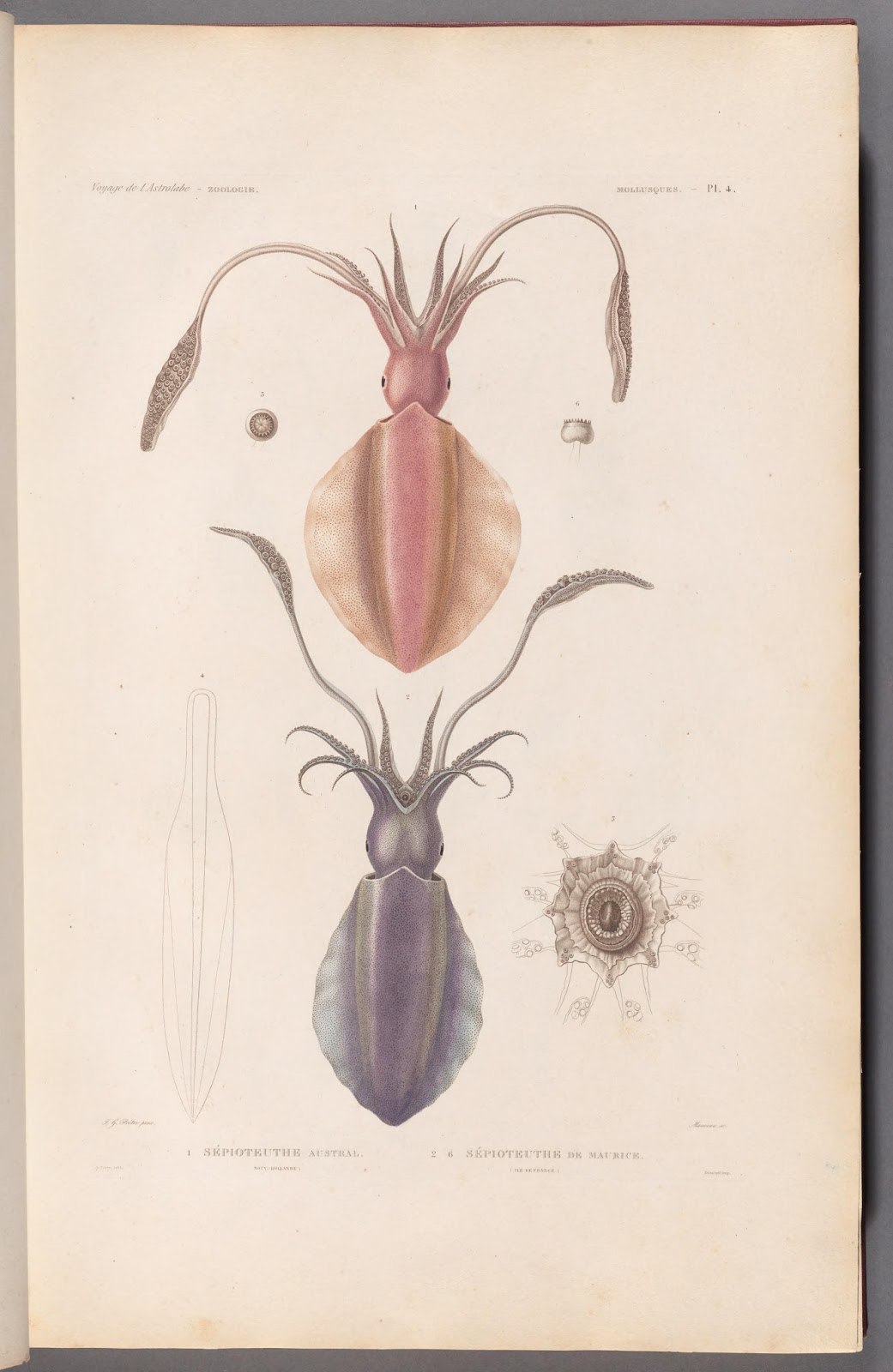
Cuttlefish. Dumont d’Urville, Jules-Sébastien-César. Voyage de la corvette l’Astrolabe : exécuté par ordre du roi, pendant les années 1826-1827-1828-1829. 1830-34. http://biodiversitylibrary.org/page/46298902.

In 1826, the Coquille, renamed the Astrolabe, set sail with a mission to chart the unknown regions of Oceania. This time, the expedition also included many worthy naturalists, including Pierre Adolphe Lesson, Jean René Constant Quoy, and Joseph Paul Gaimard. The expedition resulted in the discovery of many new-to-science species in Oceania, important ethnographic studies, and “the first tentative speculations as to how coral reefs and atolls could have formed in the middle of the deep tropical oceans” (Stiassny, 51). The expedition’s findings were published in a fourteen-volume series from 1830-34, entitled Voyage de la corvette l’Astrolabe.

View Full Size Image
Reef Squids. Dumont d’Urville, Jules-Sébastien-César. Voyage de la corvette l’Astrolabe : exécuté par ordre du roi, pendant les années 1826-1827-1828-1829. 1830-34. http://biodiversitylibrary.org/page/46298896.

More World Oceans Day Resources

  • Follow us on Twitter, Facebook, and this blog all this week as we explore marine biodiversity and awesome related publications in BHL.
  • Check out some monumental publications in historic and present-day marine bioscience research in our BHL collection.
  • Browse a selection of marine biodiversity illustrations in Flickr and Pinterst
June 2, 2015by michelle.underhill
Page 1 of 212»

Help Support BHL

BHL's existence depends on the financial support of its patrons. Help us keep this free resource alive!

search

About BHL

The Biodiversity Heritage Library (BHL) is the world’s largest open access digital library for biodiversity literature and archives. BHL operates as a worldwide consortium of natural history, botanical, research, and national libraries working together to digitize the natural history literature held in their collections and make it freely available for open access as part of a global “biodiversity community.”

Join Our Mailing List

Sign up to receive the latest news, content highlights, and promotions.

Subscribe Now

Subscribe to Blog via Email

Enter your email address to subscribe to this blog and receive notifications of new posts by email.

Join 319 other subscribers

Subscribe to Blog Via RSS

Subscribe to the blog RSS feed to stay up-to-date on all the latest BHL posts.

Access RSS Feed

Inspiring Discovery through Free Access to Biodiversity Knowledge.

The Biodiversity Heritage Library makes it easier than ever for you to access the information you need to study and explore life on Earth…for free, anytime, anywhere.


64+ Million Pages of
Biodiversity Literature Online.

EXPLORE

Tools and Services
to Transform Research.

EXPLORE

300,000+
Illustrations on Flickr.

EXPLORE

ABOUT | HARMFUL CONTENT | PRIVACY | SITE MAP | TERMS OF USE