Biodiversity Heritage Library - Program news and collection highlights from BHL
  • Home
  • News
  • Featured Books
    • All Featured Books
    • Book of the Month Series
    • BHL at 20
  • User Stories
  • Campaigns
    • Fossil Stories
    • Garden Stories
    • Monsters Are Real
    • Page Frights
    • Her Natural History
    • Earth Optimism 2020
  • Tech Blog
  • Visit BHL
Home
News
Featured Books
    All Featured Books
    Book of the Month Series
    BHL at 20
User Stories
Campaigns
    Fossil Stories
    Garden Stories
    Monsters Are Real
    Page Frights
    Her Natural History
    Earth Optimism 2020
Tech Blog
Visit BHL
  • Home
  • News
  • Featured Books
    • All Featured Books
    • Book of the Month Series
    • BHL at 20
  • User Stories
  • Campaigns
    • Fossil Stories
    • Garden Stories
    • Monsters Are Real
    • Page Frights
    • Her Natural History
    • Earth Optimism 2020
  • Tech Blog
  • Visit BHL
Biodiversity Heritage Library - Program news and collection highlights from BHL
Blog Reel, Featured Books

The Last Heath Hen, and Other News From the Collecting Net In Woods Hole

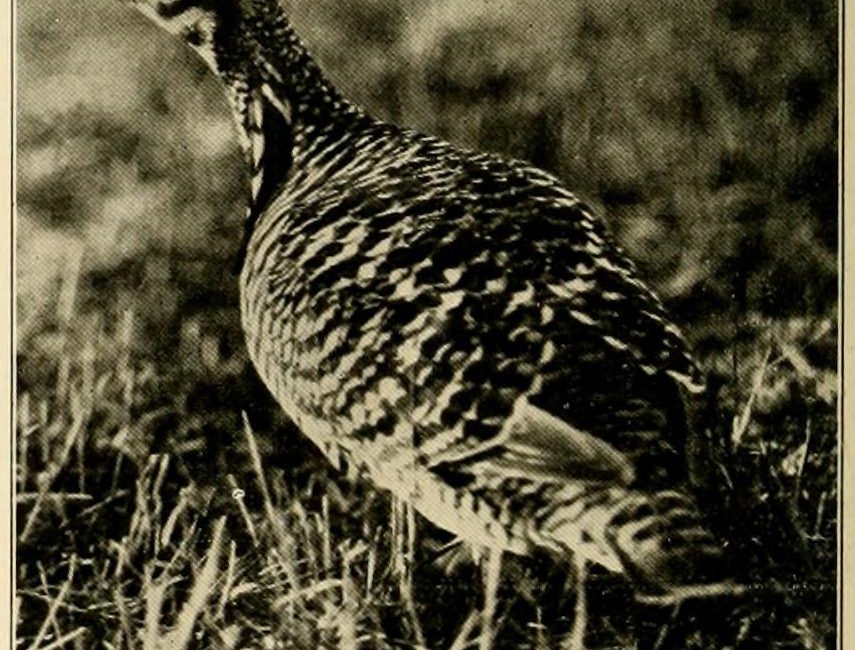
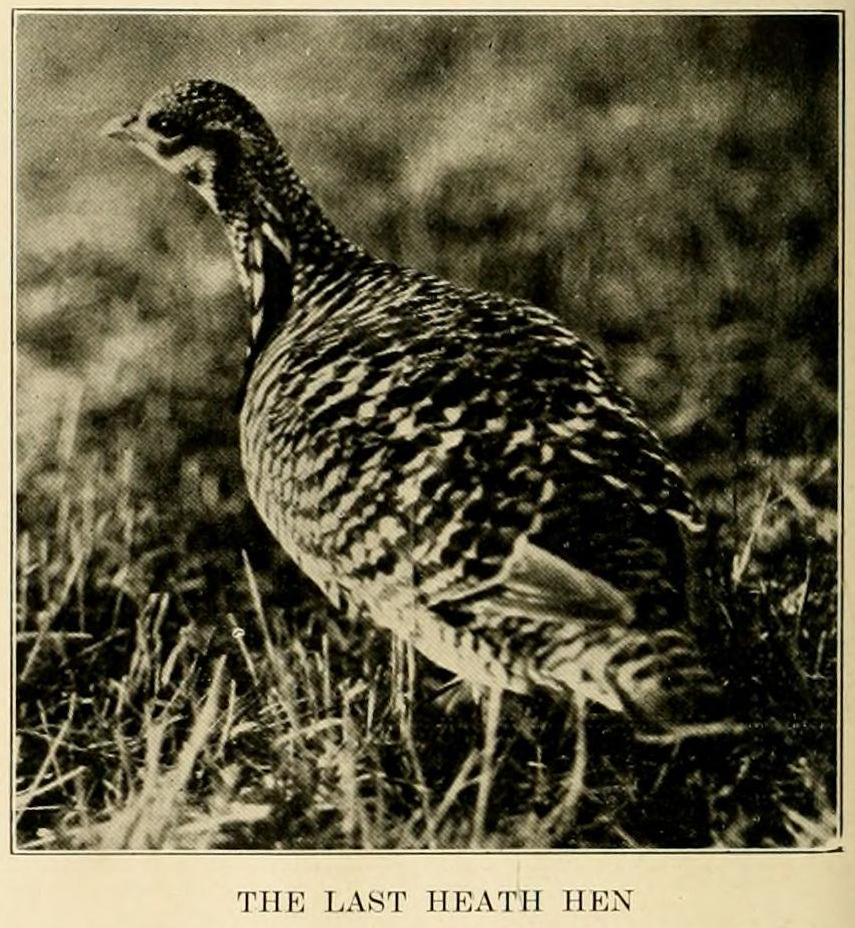
black and white photo of a bird, the heath hen

“On Martha’s Vineyard Island just across the Sound from the Marine Biological Laboratory is the home of the lone survivor of the Heath Hen. The death of this individual will also mean the death of its race, and then another bird will have taken its place among the endless array of extinct forms. The numbers of Heath Hen have been closely followed by ornithologists and since 1908 a detailed census has been taken of the birds each year. For the first time in the history of ornithology a species has been studied and photographed in its normal environment down to the very last individual.”

-Professor Alfred O. Gross, Bowdoin College, as written in The Collecting Net: Volume 5, Number 3, 12 July 1930.

black and white photo of a bird, the heath hen

“The Last Heath Hen.” Gross, Alfred O. The Collecting Net. v.5, no.33 (1930). Contributed in BHL from MBLWHOI Library. In copyright. Digitized with the permission of the rights holder. CC BY-NC-SA.

We came across a unique article, “The Last Heath Hen,” in the Biodiversity Heritage Library recently. The article from The Collecting Net newspaper is a beautifully-crafted account from 1930 of the then-last stand and near extinction of the last animal of the ground-feeding Heath Hen species (Tympanuchus cupido cupido), a member of the grouse family and subspecies of the Prairie Chicken. This species once ranged from Maine to the Carolinas in American colonial times and before but was all but extinct on the US mainland by 1870, except for it holding its own in the scrub brush, open fields, and low pine forests of Martha’s Vineyard, Massachusetts.

Historical Spotlight: Martha’s Vineyard

Martha’s Vineyard is an island about twice as long and a bit wider than the island of Manhattan, four miles across the Vineyard Sound body of water from the village of Woods Hole in the town of Falmouth on the Cape Cod peninsula.. The Aquinnah Wampanoag Tribe had lived on the Island of Martha’s Vineyard for close to 10,000 years when the island was “discovered” by English explorer Bartholomew Gosnold and named after his deceased daughter Martha in 1602.  Woods Hole (also a land of the Wampanoag Nation), “discovered” by Gosnold in 1602, is a village which in the 19th Century was a whaling port and maritime industrial center, and in the 20th Century became home to six world renowned scientific research institutions, the second oldest of which in 1888 was founded as the Marine Biological Laboratory (MBL), which published The Collecting Net.

The Collecting Net article, “The Last Heath Hen,” was written by the ornithologist Dr. Alfred Otto Gross, an MBL summer research scientist and Professor of Zoology at Bowdoin College in Maine. This story is a simple account of the prelude to the end of this species, as extinction officially occurred two years later in 1932. The Commonwealth of Massachusetts and a coalition of conservation organizations made real efforts to save the heath hen—efforts which ultimately failed, as sadly in the end disease, predators, and a forest fire in its breeding ground sealed the fate of this species. Dr. Gross writes that it was decided by conservation organizations, with respect to the last individual of this species, to allow it to live its last years in peace without interference from the government or hunters. Thus, this sensitive account by Dr. Gross, based upon his own research.

According to this undated appreciation of Dr. Gross in the Bowdoin College Daily Sun:

“Although he enjoyed teaching, Gross was a devoted researcher who contributed prolifically to the study of ornithology; he was the author of 265 scientific articles and books and was recognized as a Fellow of the American Ornithologists’ Union in 1930.”

The science history of the oldest private biological laboratory in the United States, the Marine Biological Laboratory (MBL), is well documented through thousands of publications, as well as in The Collecting Net. The venerable in-house journal of the Marine Biological Laboratory, the Biological Bulletin, has been continuously published, first by MBL and now by the University of Chicago Press, since 1890. The Archives of the MBL holds the papers of scientists, photographs, films, and the administrative records of 133 years of transformative biological science, not to mention over 15,000 rare books going back to the 1500’s, many of which are freely accessible through the BHL. While the science is well documented, getting to know the social history of this year-round (once only during the summer) seaside science mecca is assisted by examining The Collecting Net weekly newspaper, a scrappy summertime tabloid which was published by the social MBL Club from 1926-1953.

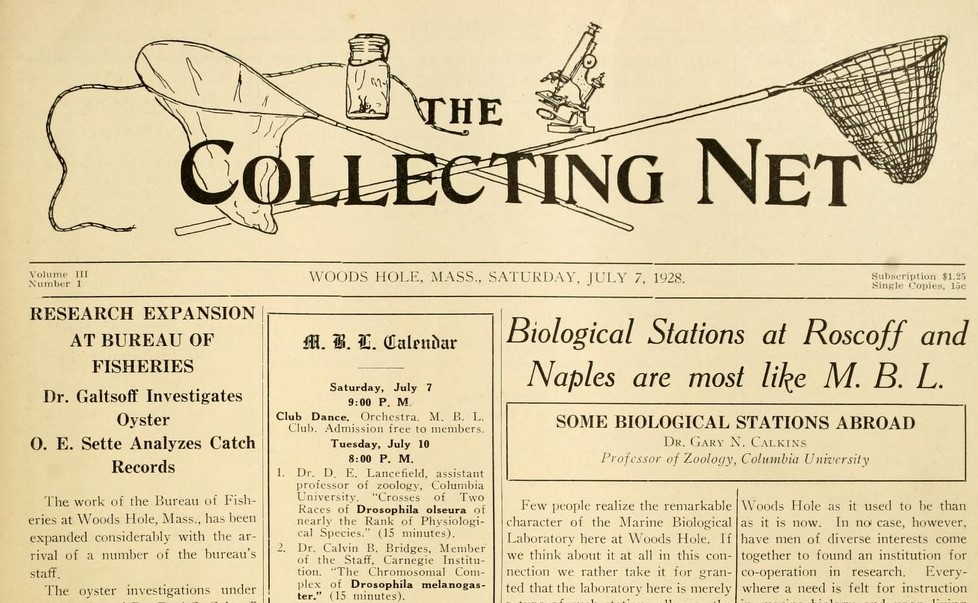
Front page of "The Collecting Net"

Front page, The Collecting Net, v.3, no.1 (1928). Contributed in BHL from MBLWHOI Library. In copyright. Digitized with the permission of the rights holder. CC BY-NC-SA.

The Collecting Net joined the science and the social going on during busy MBL summers, used advertising revenues for a scholarship fund for MBL students, and was edited by a team initially led by Ware Cattell, who later became editor of the journal Science. When the newspaper hit its weekly publishing deadline, it was loaded on a boat and motored across Buzzards Bay to New Bedford where it was typeset, printed, and returned to Woods Hole. While the more recent issues (1950’s) present official-looking administrative accounts of lectures and research, the first years of The Collecting Net offered an exciting and often humorous glimpse into the arts and sciences and lives of the people who spent their summers working at the Marine Biological Laboratory—from ferry and train schedules to Boston, New York, Martha’s Vineyard and Nantucket; to a comprehensive directory of all the employees and scientists at MBL every summer; to summer choral and drama auditions and performances; and many, many advertisements (see below an assortment of these).

"bug hunters!"

Scientists in Woods Hole are still known as “bug hunters”! Advertisement from Morrison’s Market in The Collecting Net, v.1 (1926). Contributed in BHL from MBLWHOI Library. In copyright. Digitized with the permission of the rights holder. CC BY-NC-SA.

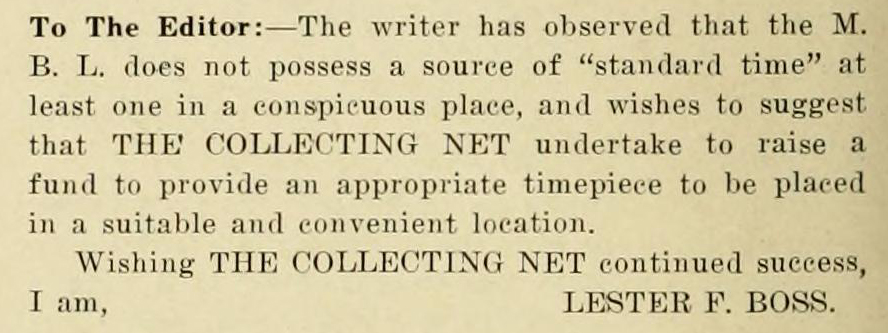
screenshot of text from a book with the "note to the editor"

A vital “Letter to the Editor”. The Collecting Net, v.5, no.33 (1930). Contributed in BHL from MBLWHOI Library. In copyright. Digitized with the permission of the rights holder. CC BY-NC-SA.

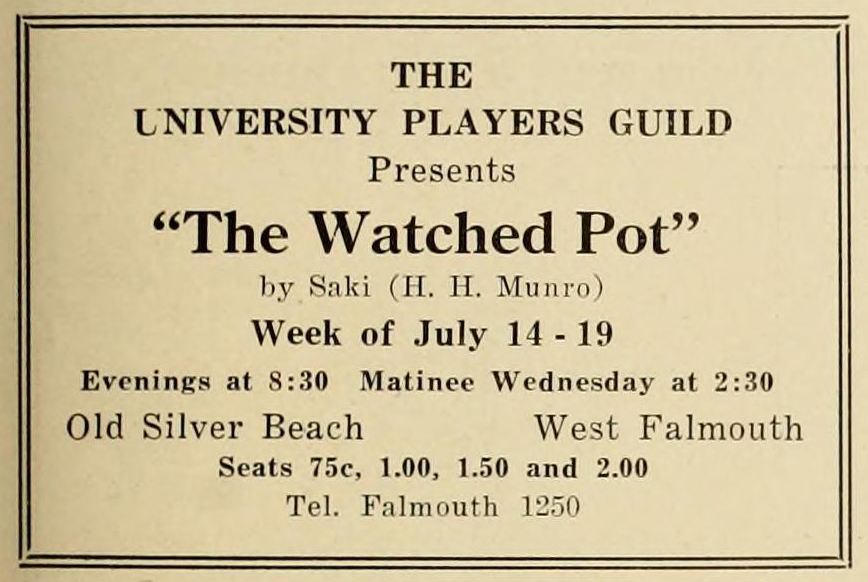
Screenshot of text, advertisement for "The University Players"

The most well known University Players were Henry Fonda and James Stewart. The University Platers Guild advertisement. The Collecting Net, v.5, no.33 (1930). Contributed in BHL from MBLWHOI Library. In copyright. Digitized with the permission of the rights holder. CC BY-NC-SA.

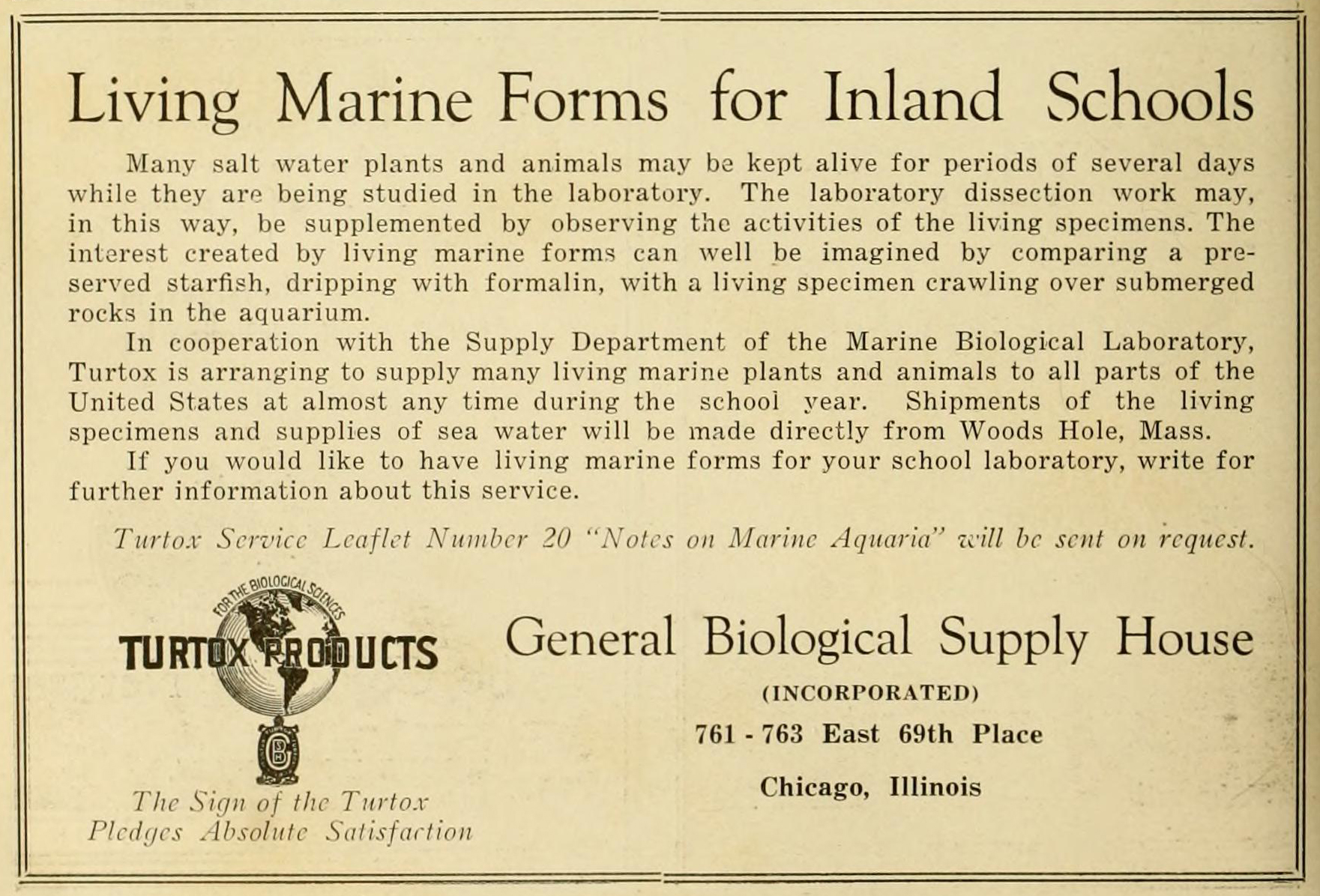
Screenshot of text, "Living Marine Forms" advertisement

Live marine specimens were locally collected and packed for the Woods Hole departing train for all points, USA. General Biological Supply House advertisement. The Collecting Net, v.5, no.33 (1930). Contributed in BHL from MBLWHOI Library. In copyright. Digitized with the permission of the rights holder. CC BY-NC-SA.

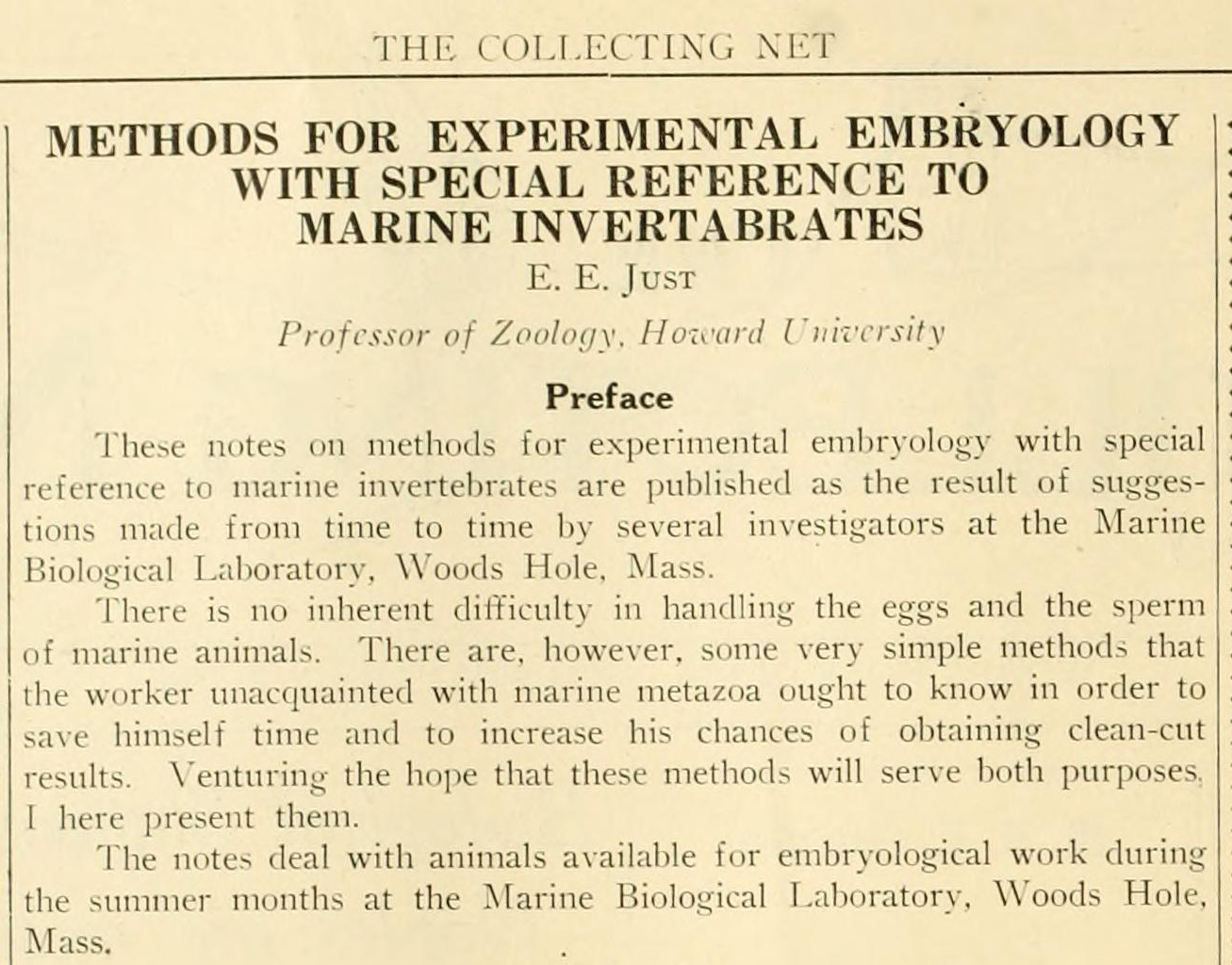
The Collecting Net masthead was “an independent publication devoted to the activities of biologists at the laboratories in Woods Hole.” One thing which The Collecting Net offered relative to the science taking place in Woods Hole during the summers was something which has always been quite important in science literature, and that is the opportunity to rapidly publish findings and new ideas. This, The Collecting Net provided, as in Dr. Ernest E. Just’s “Methods for experimental embryology…,” below, which was published so it could be used by students at MBL the next day! Dr. Alfred O. Gross’ account of the final days of the heath hen was published so the readers of the work could respond to it immediately.

One thing missing though, relative to all the current science of those times, was that The Collecting Net, when published, was not indexed for later discovery. For this reason, almost a century after the first issue was published in 1926, through the Biodiversity Heritage Library it is possible to search the full text content of the articles published within, thereby giving that science new exposure, freely accessible in Woods Hole or anywhere in the world.

Screenshot of text, an article by E.E. Just.

Ernest E. Just, an MBL scientist, was known for his experimentation technique. He was the first African American scientist in the United States to receive a PhD in Zoology, from the University of Chicago. “Methods for Experimental Embryology with Special Reference to Marine Invertebrates.” The Collecting Net, v.3 (1928). Contributed in BHL from MBLWHOI Library. In copyright. Digitized with the permission of the rights holder. CC BY-NC-SA.

April 29, 2021by Joel Richard
Blog Reel, User Stories

Diving into Marine Biodiversity & Coastal Ecosystem Research

On the eastern coast of Florida, about 120 miles north of Miami, there’s a very special research center. It serves as a field station specializing in marine biodiversity and Florida ecosystems, especially that of the Indian River Lagoon – one of the most biologically-diverse estuaries in North America. The center serves as a destination for scientists around the world who are interested in studying the extraordinary biodiversity in the area as well as ocean and coastal processes at large.

View Full Size Image
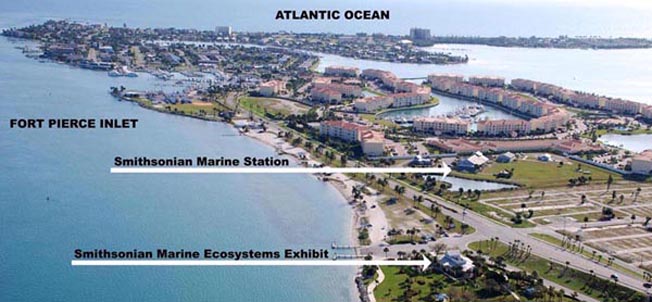
Aerial view of the Smithsonian Marine Ecosystems Exhibit and the Smithsonian marine Station. http://www.sms.si.edu/.

This center is the Smithsonian Marine Station at Fort Pierce, and its mission is to “support and conduct…scholarly research in the marine sciences, including collection, documentation and preservation of south Florida’s marine biodiversity and ecosystems, as well as education, training, and public service.”

The Smithsonian has had a presence in Fort Pierce since 1969. While the station and facilities have grown and evolved tremendously over the past four decades, a $10 million donation from Suzanne and Michael Tennenbaum in 2012 launched a project that further expands the Station’s contributions to worldwide coastal marine biodiversity and ecosystem research.

Entitled the Tennenbaum Marine Observation Network (TMON), the project establishes “the first worldwide network of coastal ecological field sites” and “will provide an unprecedented understanding of how marine biodiversity is affected by local human activities and global change, such as ocean warming, acidification and rising sea levels.” The Smithsonian Marine Station at Fort Pierce was named one of five field sites in the project, which aims to incorporate an additional ten new sites within the next decade.

View Full Size Image
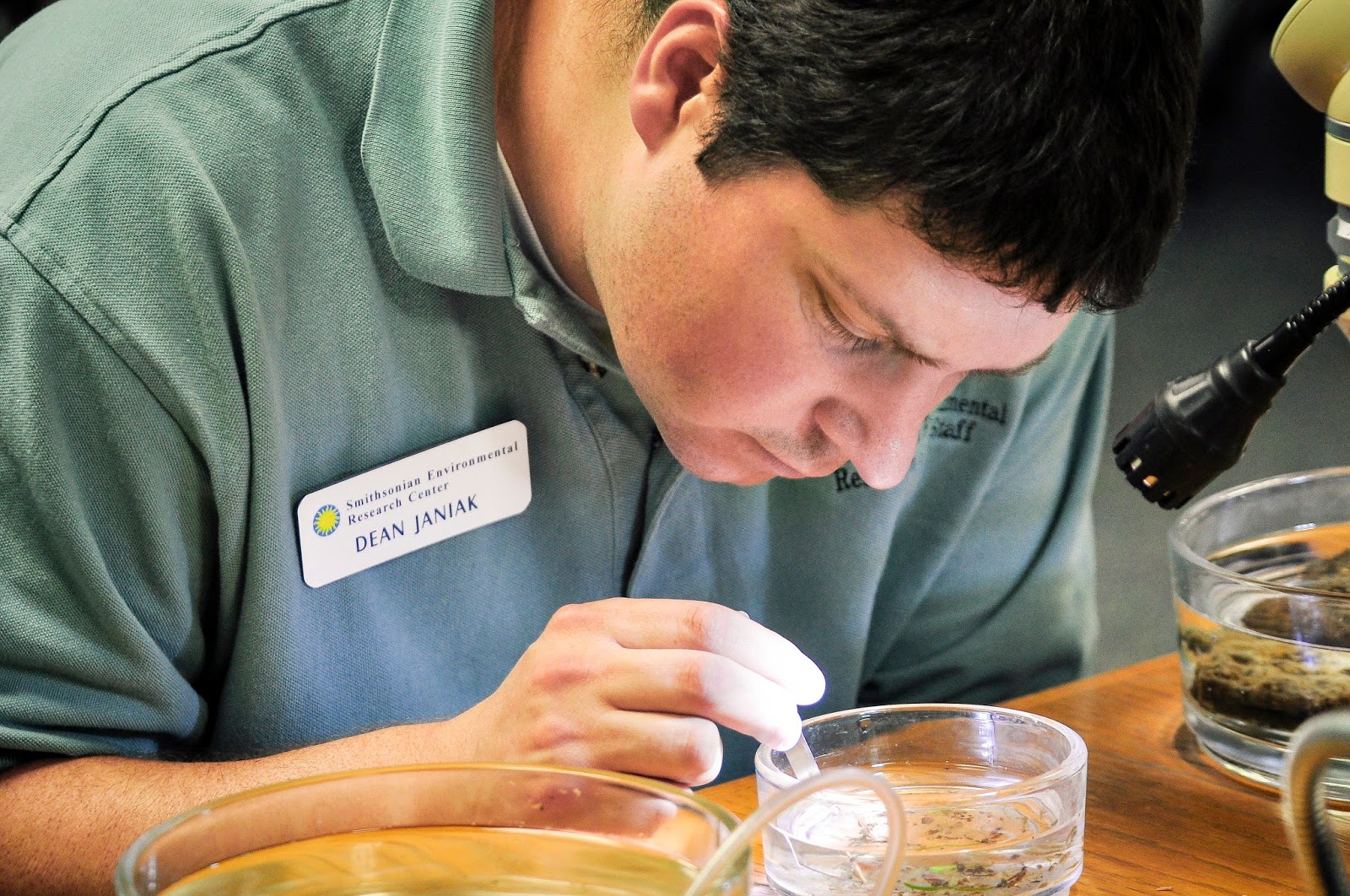
Dean Janiak, Biologist, TMON/MarineGEO, Smithsonian Marine Station at Ft Pierce.

Dean Janiak has served as a biologist on TMON and the related Marine Global Earth Observatory (MarineGEO) program at the Fort Pierce Marine Station for the past year and a half. Before joining the station in Florida, he served as the Head Technician in the Benthic Ecology lab at the Smithsonian Environmental Research Center (SERC) in Maryland. With a B.Sc. in Biology from Humboldt State University and an M.Sc. in Marine Sciences from the University of Connecticut, Janiak has a passion for marine ecology, invasion biology, and life histories – a passion which attracted him to the position in Fort Pierce.

“I would consider myself a general marine ecologist with a particular interest in how marine invertebrate communities are both formed and maintained in space and time,” explains Janiak. “When we travel out into the field and see communities of animals living in close proximity to each other, we could assume that they just randomly arrived there and have made a living. However, most species actually have gone through a harrowing adventure to get to where they are. Besides how they got there, the animals themselves are unbelievably diverse. I would argue that within ½ meter 2, in many parts of the ocean you could find more diversity than any zoo or aquarium could ever show you. Because of this, much of my interests are in not only why communities look the way they do but also what species or groups of species make up these communities. In particular, I do a lot of research in an unusual type of habitat – artificial habitats (e.g. docks, marinas, seawalls, etc.) – which are actually pretty common. While they tend to have a positive effect for those installing them (storm protection, recreational boating), we have little knowledge on how they function in terms of the animals on them and how they contribute to the overall system. For example, a large percentage of non-native species are found in these types of habitats, and one of the topics I am interested in is the consequences of these species spreading into more pristine, native habitat like seagrasses or reefs.”

Such research is dependent upon information contained within published literature.

“In my opinion, there is no way to do science of any kind without having a solid background on what has been done in the past,” affirms Janiak. “Unlike past history where we must learn from our mistakes in order to be successful, the sciences allow us to learn from our accomplishments. Each species is unique in its evolutionary journey and should be treated as such. Identifying a species and learning about how that species makes its living requires an extensive use of the library system.”

Traditionally, access to historic literature can be difficult to obtain, even for researchers working at institutions with extensive library collections such as those that Janiak has access to through the Smithsonian Libraries. While Janiak is quick to point out that he benefits enormously from the e-journal subscriptions and robust ILL services offered by the Smithsonian, being stationed in Florida, away from the library base of his home institution, means that his opportunity to access the Library’s physical collections are limited. Even the speediest ILL services inevitably introduce delays into the research process. The Biodiversity Heritage Library (of which Smithsonian Libraries is a founding Member), however, is revolutionizing scientific research, providing researchers across the globe with free and immediate access to the information and publications they require to study life on Earth.

“BHL is a great resource for trying to find things that have typically been forgotten by most,” applauds Janiak. “[It provides access to] literature that would be otherwise impossible to find or know that it even existed.  From a research perspective, I use BHL as a starting to point to find taxonomic information on a particular species or group that I am working on. As we move closer and closer to new age molecular approaches to identifying species, we are losing people who can simply look at an animal and tell you what it is, why it is that, and the interesting way that it makes a living. I think that much of this knowledge would be lost if BHL was not trying to keep this information available.”


View Full Size Image
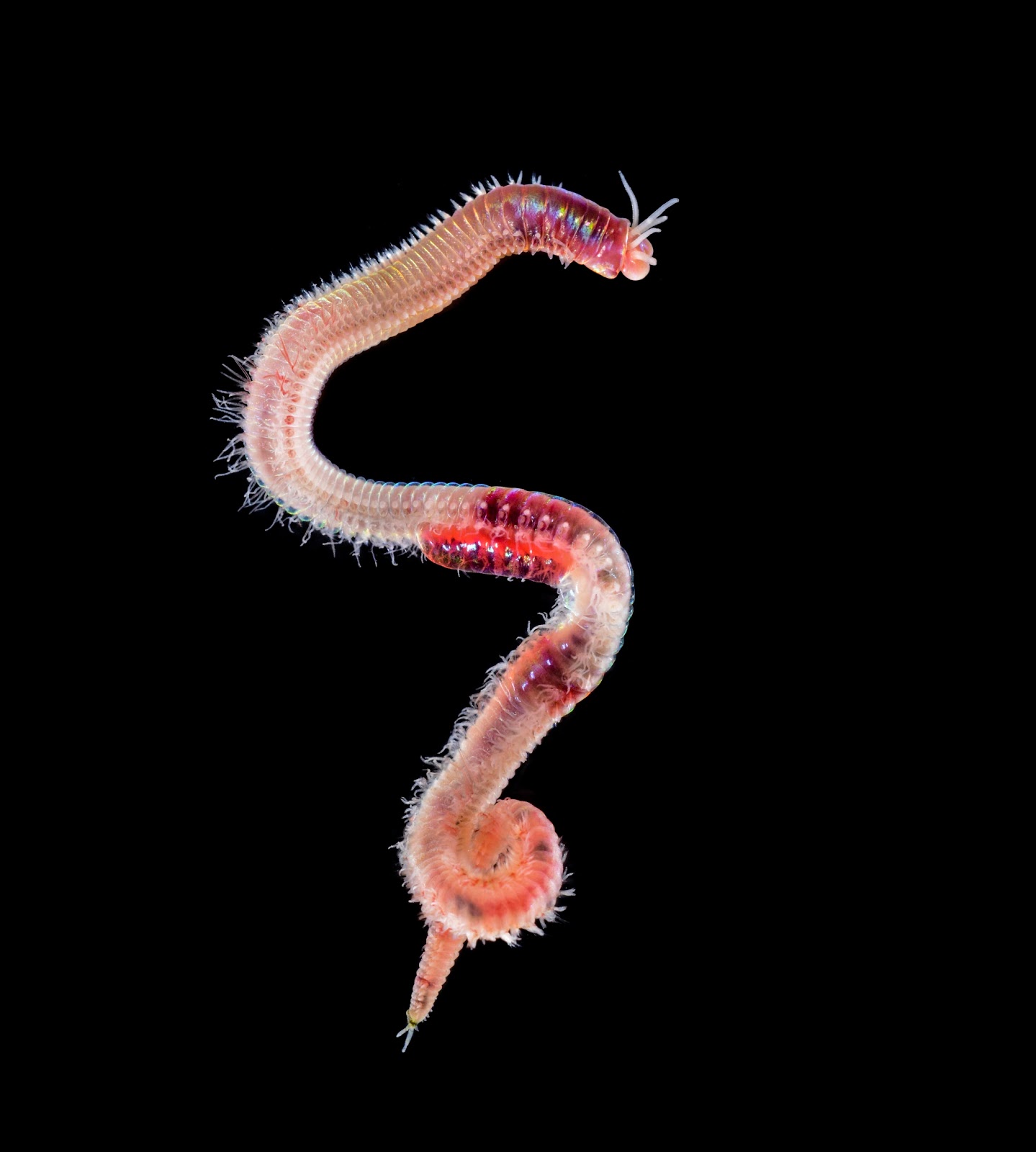
Rockworm (Marphysa sanguinea). An example of one of the species found in the Indian River Lagoon. Image Credit: Dean Janiak.

In particular, BHL has proven to be a useful resource for the TMON project, providing information that supports research on global change.

“TMON has at its core to understand biodiversity and how it changes through time,” explains Janiak. “I think that we are all aware that the climate is changing, and it is natural for change to occur. There are built-in positive and negative feedback loops that allow the climate to do so. I think the problem is that this change is happening at a rapid rate and we, in a single generation, can see this happening. It is therefore important to have access to a biodiversity library that has done so well to document the past, as this is vital to our understanding of the future.”

Thanks to the free online access to biodiversity literature provided by BHL, combined with the extensive resources offered by the Smithsonian Libraries, Janiak has the information he needs to follow his research passions.

“I have always been career-minded and have also always wanted to be a part of something special with the caveat that it must come with a constant challenge. I think that the Smithsonian has not only offered me that but has also given me the opportunity to build a career with all the resources that I would need plus that relentless challenge that keeps me engaged and excited each day. It’s essentially like the popular kid at school asking you to play in their sandbox; you never want to leave.”

______________________

This post may contain the personal opinions of BHL users or affiliated staff and does not necessarily represent the official Biodiversity Heritage Library (BHL) position on these matters.

June 9, 2016by ulib-libraryjobs
Blog Reel, Featured Books

Darwin’s Early Love

Charles Darwin, the famous naturalist known around the world for his publication On the Origin of Species and contributions to evolutionary theory, was born on February 12, 1809. As such, February 12 is known as International Darwin Day – a celebration with a vision to:

“Inspire people throughout the globe to reflect and act on the principles of intellectual bravery, perpetual curiosity, scientific thinking, and hunger for truth as embodied in Charles Darwin. It will be a day of celebration, activism, and international cooperation for the advancement of science, education, and human well-being.”

February 12 also happens to be just days before Valentine’s Day, a holiday now associated with love and the presentation of valentines as expressions of affection. How might these two, seemingly disparate holidays, be brought together? Why not by thinking about who Darwin himself might give a valentine to in the natural world?

Many people, when thinking of Darwin, might associate him with finches, mockingbirds, rheas, or Galápagos tortoises. But when Darwin began to investigate natural history while studying medicine in Edinburgh in the 1820s, it was marine invertebrates that first sparked his interest. While still a teenager, Darwin became a member of the Plinian Society, which was dedicated to the study of natural history amongst Edinburgh students. The zoologist Robert Edmond Grant nurtured Darwin’s interest in natural history, especially marine invertebrates, and taught him how to collect and rear specimens. Darwin’s first scientific paper, which was presented to the Plinian Society in March of 1827, was about bryozoan larvae and the black spots sometimes seen on oyster shells, which he demonstrated were the eggs of marine leeches. Sadly, Darwin’s mentor Grant had presented these same findings just days before Darwin at another venue, leading Darwin to feel betrayed and prompting his exodus from Edinburgh (Stiassny, 83).

View Full Size Image
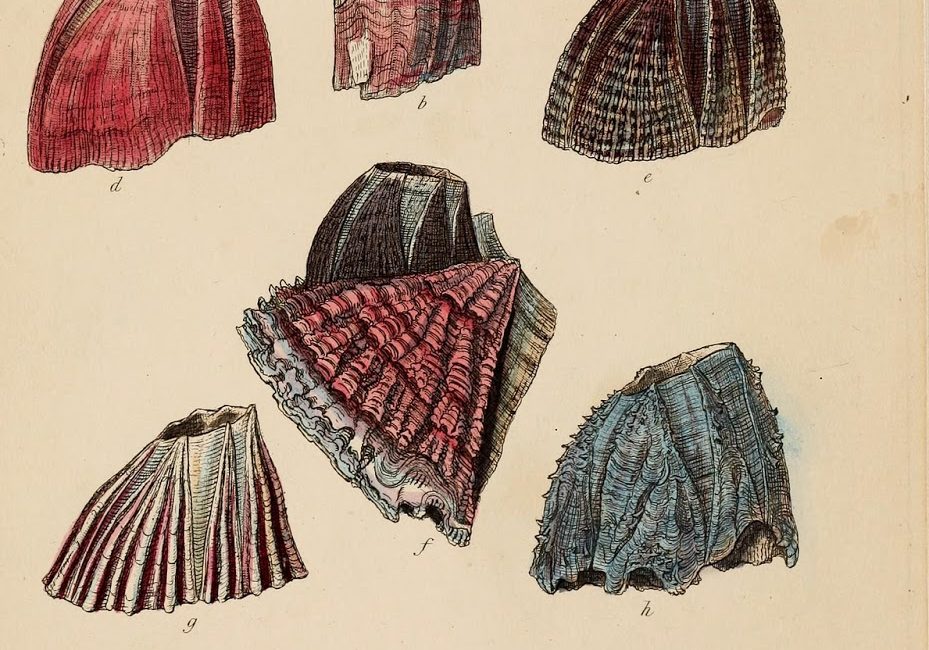
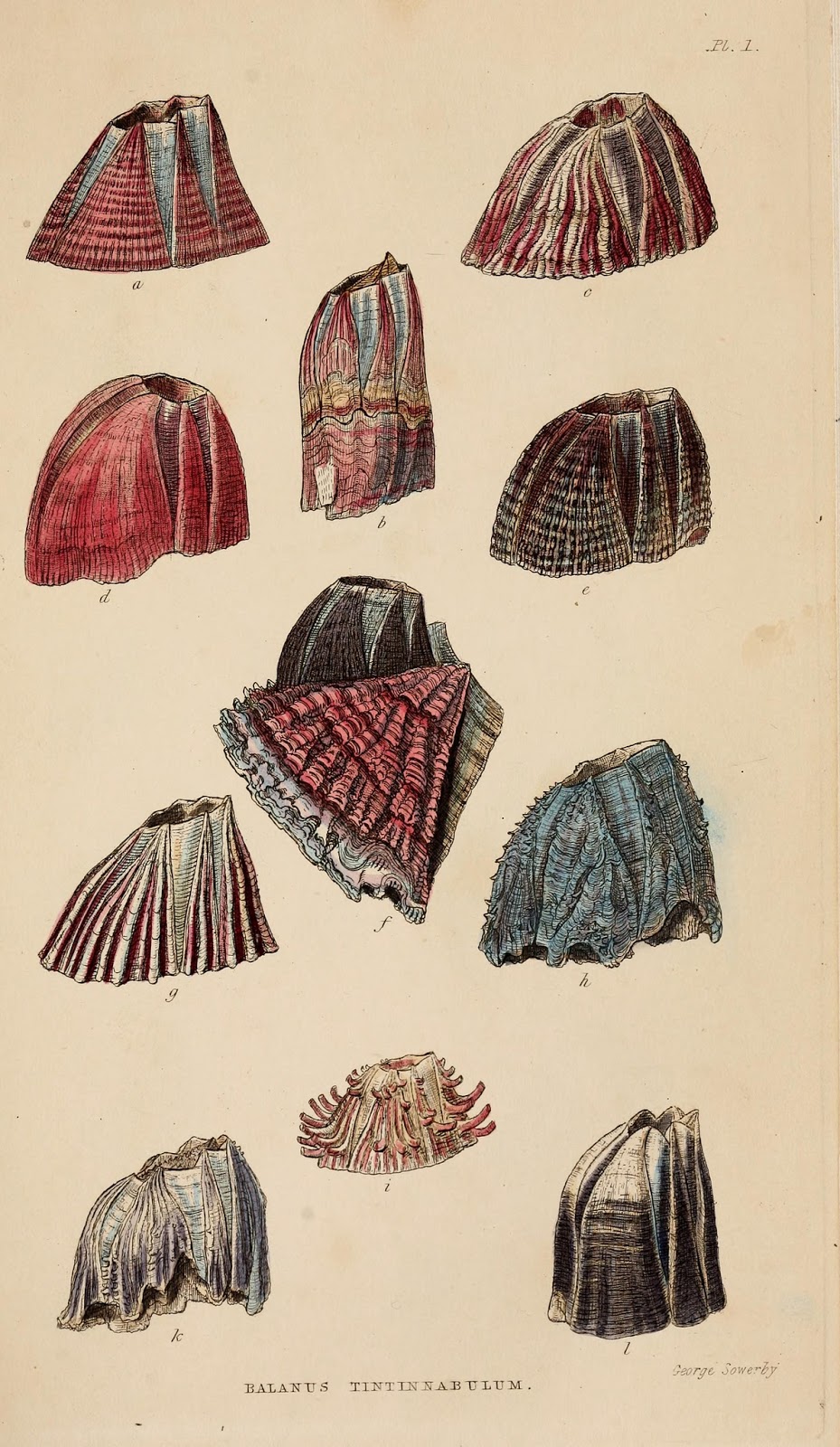
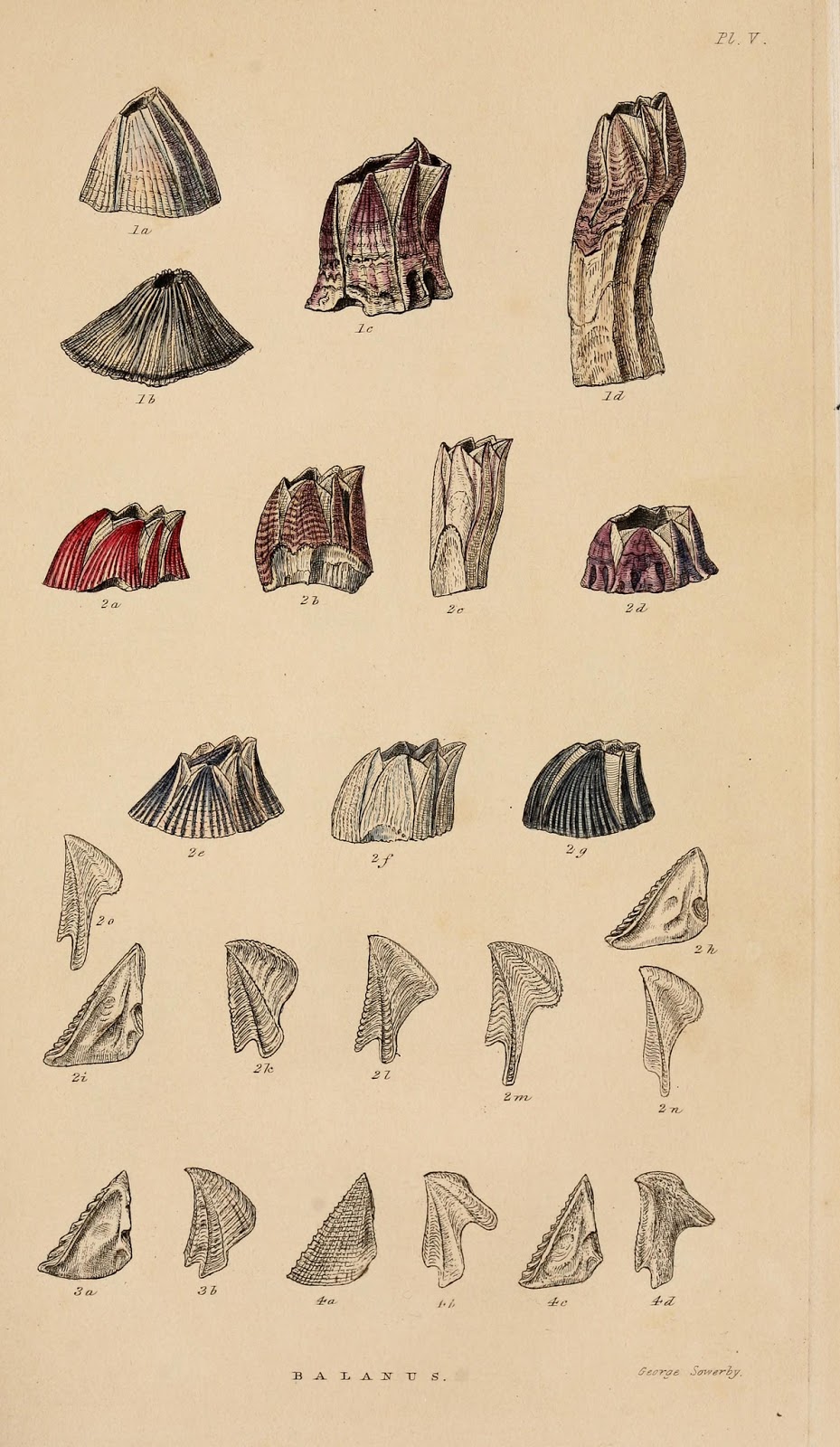
Darwin, Charles. A monograph on the sub-class Cirripedia, with figures of all the species. (1851-54). http://biodiversitylibrary.org/page/2007053. Digitized for BHL by the MBLWHOI Library.

Time passed, Darwin spent some time at Cambridge, and eventually he joined the voyage of the HMS Beagle thanks to a recommendation from his new mentor, botanist and geologist John Stevens Henslow. Darwin’s observations and research during the voyage would fuel his later revolutionary theories. But, as Dr. Melanie L.J. Stiassny, a curator at the American Museum of Natural History, points out in her article on Darwin within the book Natural Histories: Opulent Oceans, Darwin felt somewhat hesitant about his ideas during the early stages of their development. After all, they represented an entirely new way of looking at the natural world and thinking about its origins. So, while he fleshed out his theories on natural selection, Darwin also turned his attention back to, as Stiassny calls it, “his early love” – marine invertebrates. It was his work on barnacles that arguably helped pave the way for the acceptance of his later theories. As Stiassny states on page 84 of Opulent Oceans:

“It was the study of one group, the barnacles (Cirripedia), that would solidify his credentials as a taxonomic expert and provide him with empirical evidence for many of his evolutionary ideas…such as the loss of unnecessary structures (barnacles have no trace of the abdominal segments and swimming appendages of other crustaceans), and evidence that features inherited from a common ancestor can transform in anatomy and function (the typical walking limbs of crustaceans are modified into specialized feeding cirri in barnacles).”


View Full Size Image
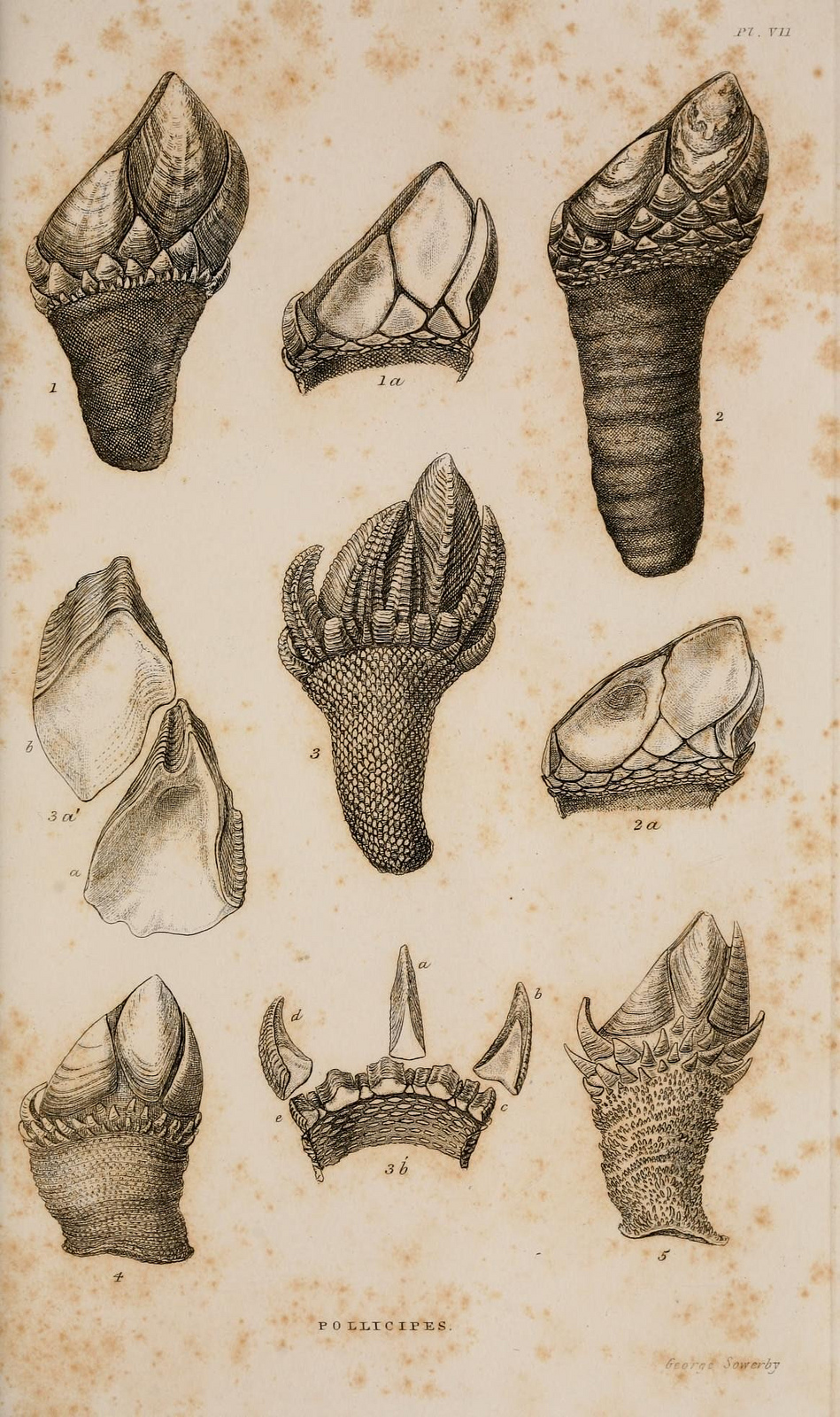
Darwin, Charles. A monograph on the sub-class Cirripedia, with figures of all the species. (1851-54). http://biodiversitylibrary.org/page/2007061. Digitized for BHL by the MBLWHOI Library.

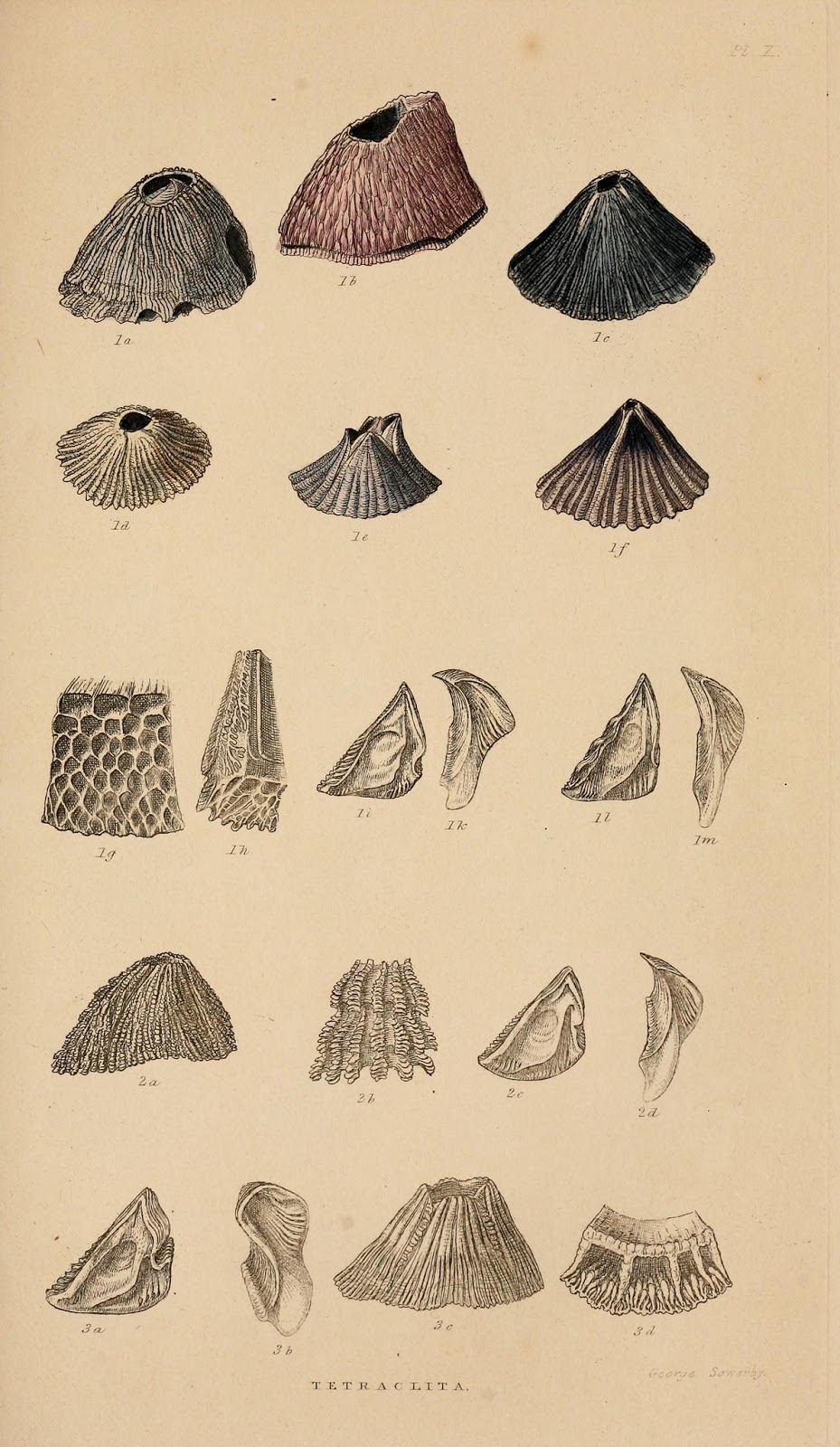
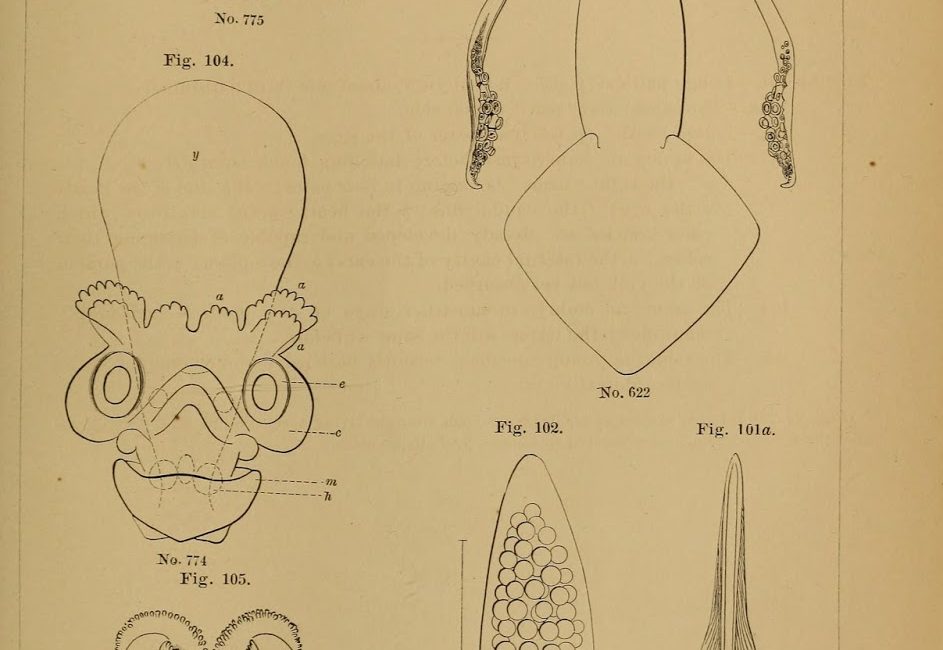
Darwin spent eight years working on his barnacle studies, and from 1851-54 finally published his work in a four-part series: A monograph on the sub-class Cirripedia, with figures of all the species. Within the work, Darwin provides a classification for the crustacean Subclass Cirripedia, making it “the first based on the evolutionary principle of common descent” (Stiassny, 85). His On the Origin of Species, published in 1859, five years after his Cirripedia work, references cirripedes twenty-six times, demonstrating the impact this research had on Darwin’s evolutionary ideas.

View Full Size Image
Darwin, Charles. A monograph on the sub-class Cirripedia, with figures of all the species. (1851-54). http://biodiversitylibrary.org/page/2011425. Digitized for BHL by the MBLWHOI Library.

Darwin’s name is arguably the most well-known from the world of natural history. Knowing Darwin’s history with the Cirripedia, one might wonder if he would have realized the heights of his scientific achievements without his barnacles.

So, we think, if Darwin were to give a Valentine to someone in the non-human animal kingdom, there’s a good chance it would go to a barnacle.

View Full Size Image
Darwin, Charles. A monograph on the sub-class Cirripedia, with figures of all the species. (1851-54). http://biodiversitylibrary.org/page/2007081. Digitized for BHL by the MBLWHOI Library.


  • See books and articles written by Charles Darwin in BHL.
  • Explore digitized versions of the books in his personal library in Charles Darwin’s Library in BHL.
  • Explore images from books in Charles Darwin’s Library in Flickr.

Reference:
Stiassny, Melanie L.J. (2014). Darwin’s “Beloved Barnacles.” Natural Histories Opulent Oceans: Extraordinary Rare Book Selections from the American Museum of Natural History Library (pp. 82-85). New York: Sterling Publishing.

February 12, 2016by ulib-libraryjobs
Blog Reel, Campaigns, Featured Books

A Small Town’s Large Research on the Health of the Seas

This post is the sixth in our series celebrating World Oceans Day on June 8. This series explores publications that represent important milestones in the progress of marine bioscience research and ocean exploration.

View Full Size Image
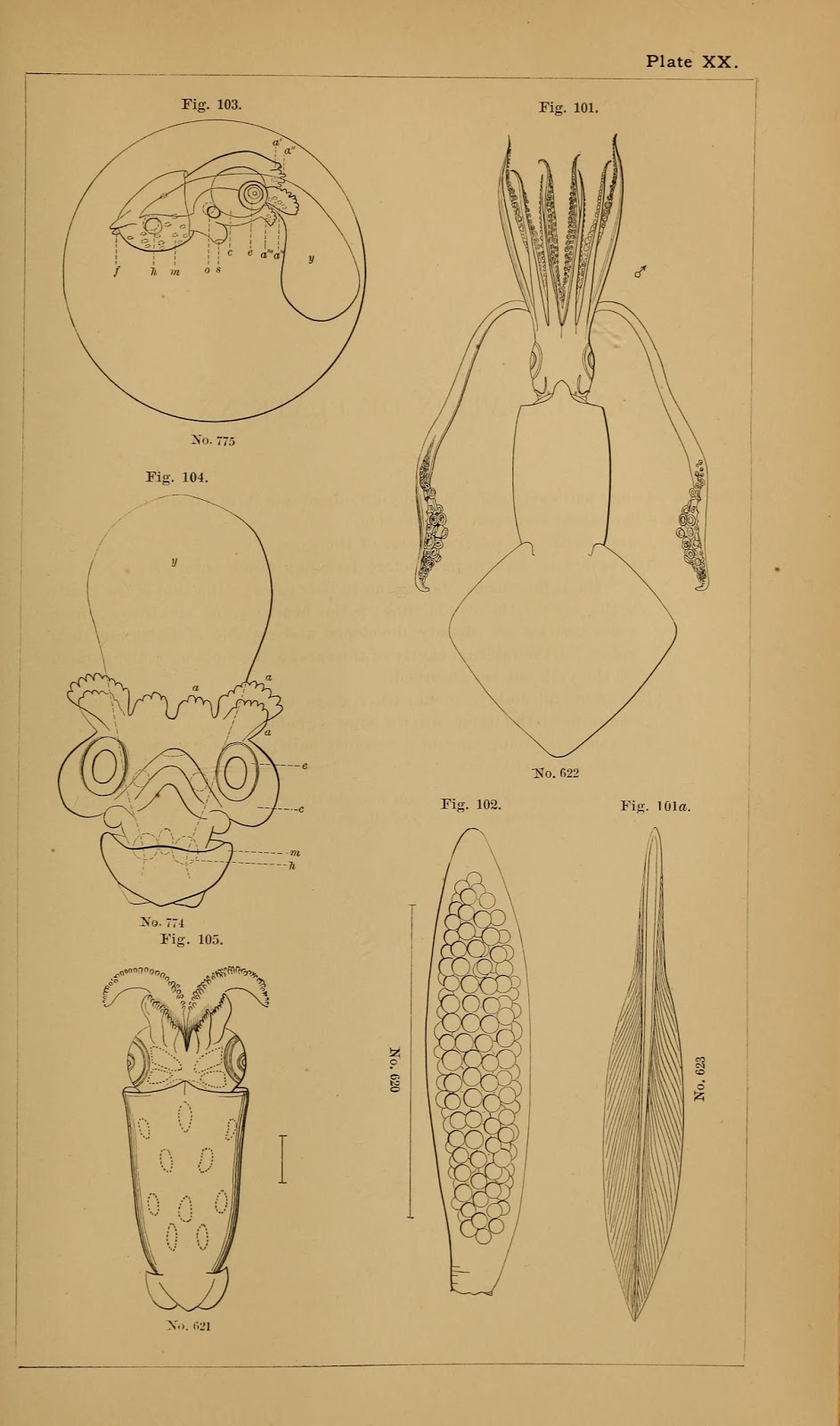
Squid have been a major marine organism model in Woods Hole for almost 150 years. Report on the conditions of the sea fisheries of the south coast of New England. 1873. http://biodiversitylibrary.org/page/36088064.

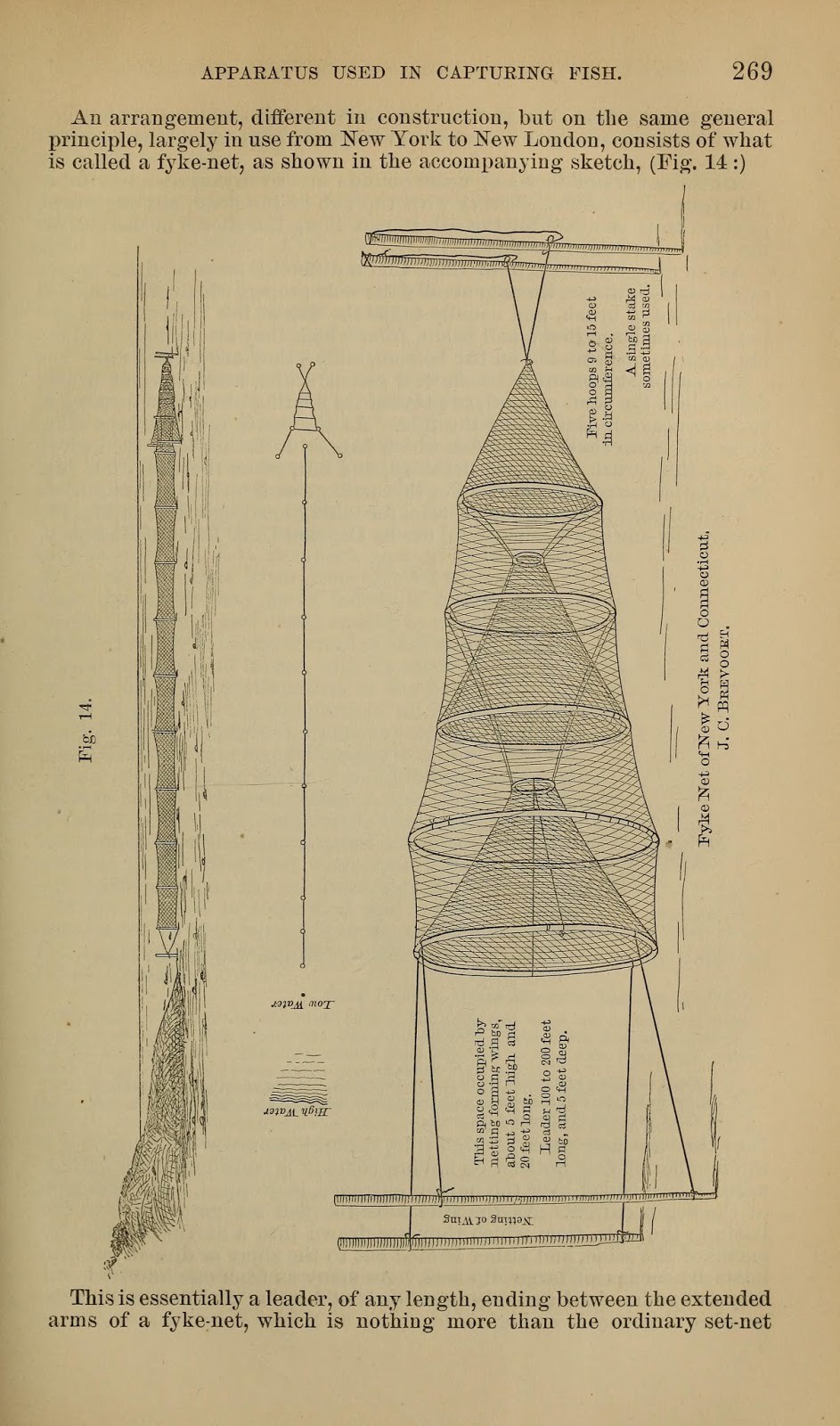
When whaling and fertilizer manufacturing ended in the latter half of the 19th century in the quaint village of Woods Hole, Massachusetts, the town turned to research, growing quickly into a world renowned center for marine science. In 1871, the U.S. Commission of Fish and Fisheries (the antecedent of the National Marine Fisheries Service), founded by the Secretary of the Smithsonian Institution Spencer Fullerton Baird, published Report on the conditions of the sea fisheries of the south coast of New England. This report notes the recently passed “Joint resolution for the protection and preservation of the food-fishes of the coast of the United States”, which recognized that the nation’s fishing resources were not endless. Commissioner Baird realized the need to develop fisheries management plans to balance once abundant fisheries populations with the competing needs of the human population. The volume also created a baseline inventory of marine species and fishing techniques in and around Cape Cod and the east coast of the United States.

View Full Size Image
Commercial fishing net used in the 1870s. Report on the conditions of the sea fisheries of the south coast of New England. 1873. http://biodiversitylibrary.org/page/36087402.

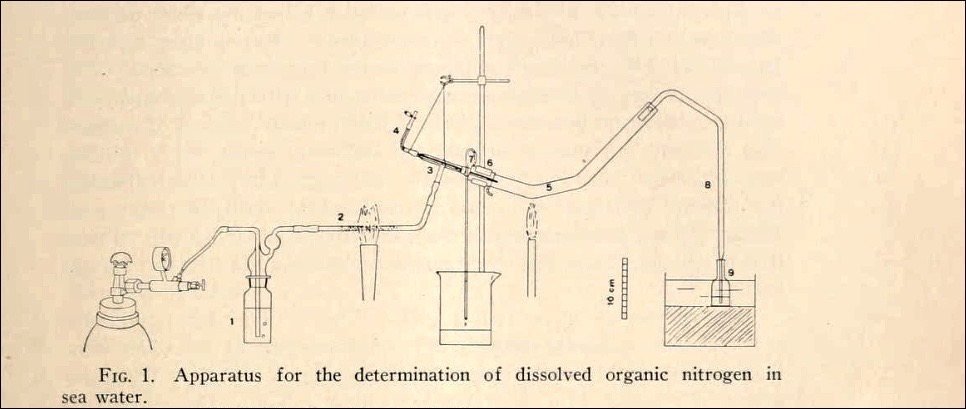
By the late 1880’s, what is now the oldest continuously operating private marine laboratory in the United States, the Marine Biological Laboratory (MBL), had been founded, with its scientists publishing the journal Biological Bulletin. The Biological Bulletin v.67 (1934) contains an article written by biologists August Krogh and Ancel Keys entitled Methods for the determination of dissolved organic carbon and nitrogen in sea water.  The development of accurate ways to measure nitrogen concentrations in non-fresh water was critical to understanding eutrophication, a condition where excess nutrients result in algal blooms and fish kills.  Eutrophication is at the forefront of many studies related to the health of our oceans, including the “dead zone” in the Gulf of Mexico and many coastal waters.

View Full Size Image
August Krogh’s and Ancel Keys’ apparatus for the determination of dissolved organic nitrogen in sea water. The Biological Bulletin. v. 67 (1934). http://biodiversitylibrary.org/page/1441636.

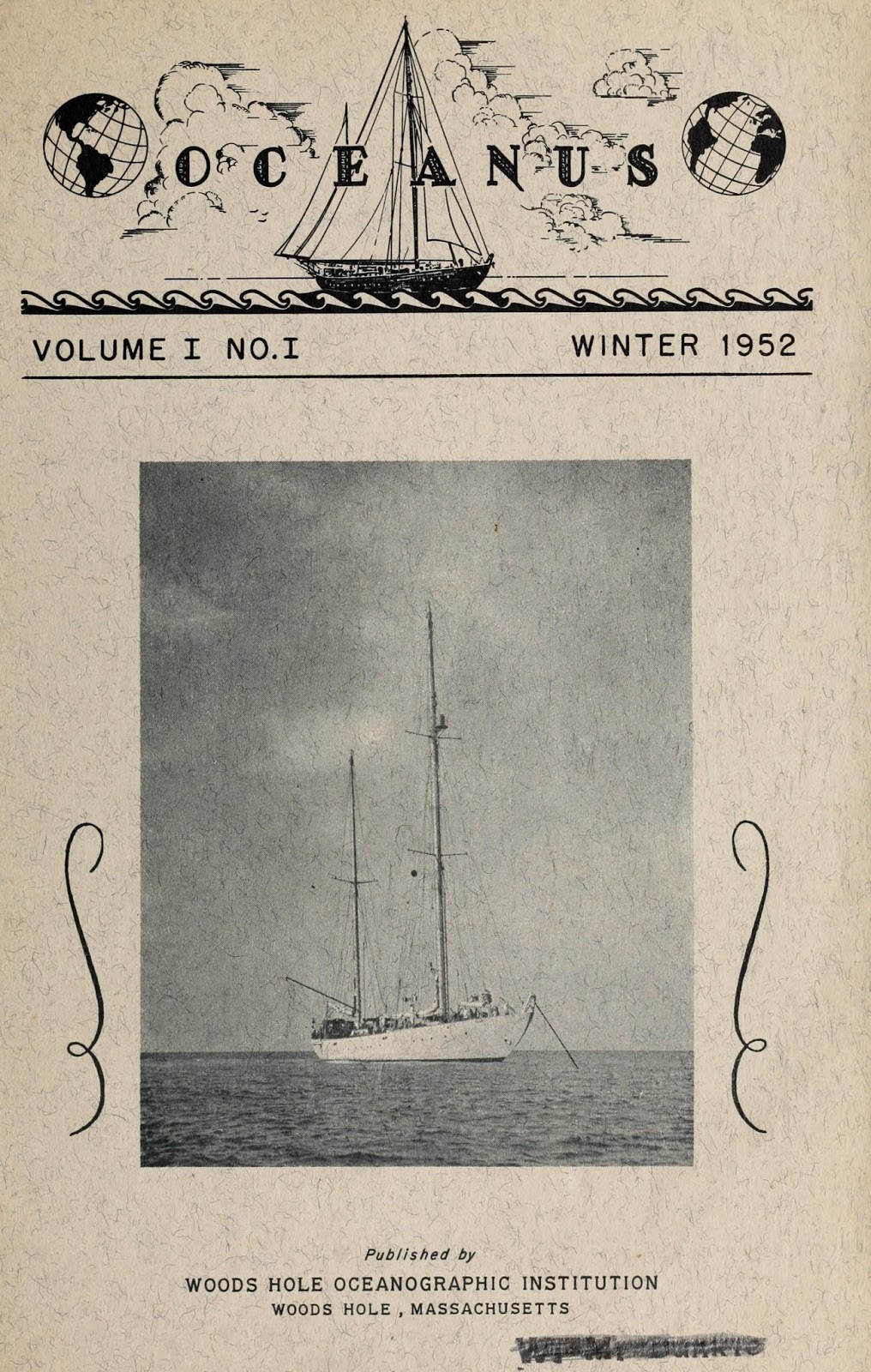
With the National Marine Fisheries Service studying marine fisheries in Woods Hole and the Marine Biological Laboratory focusing on marine biology and cell science, the Woods Hole Oceanographic Institution (WHOI) was founded in 1930 to study the still developing field of the oceanographic sciences. In 1952, WHOI began publishing a magazine/journal called Oceanus. One of the first articles published in volume 1 of Oceanus highlights the discovery of new fishing grounds off of the northeast U.S. coast, and the abundance of never before seen species.

View Full Size Image
Volume 1, number 1 of Oceanus, a photo of the WHOI research vessel Atlantis. Oceanus. v. 1, n. 1 (1952). http://biodiversitylibrary.org/page/1555338.

Fifty one volumes later, Oceanus continues to publish issues in both print and online formats, and issues archived online from 1952-2007 can also be viewed through the Biodiversity Heritage Library. As the course of the history of the Woods Hole Oceanographic Institution has revolved around ocean exploration and studying the health of the oceans, so also has the subject matter of Oceanus, which has diligently reported on the fascinating work performed by Woods Hole scientists.

For example, in volume 44 issue 1 (2005) of Oceanus, an announcement was made of the establishment of the Woods Hole Center for Oceans and Human Health, a collaboration between WHOI, MBL, and the Massachusetts Institute of Technology. Over the last decade Oceanus has reported on this important collaboration many times, and in the above mentioned article WHOI physical oceanographer and Senior Scientist Dennis McGillicuddy said: “The ocean is a turbulent fluid medium that’s changing all the time…In order to make significant progress in health concerns, we have to grapple with how physics, biology, and chemistry intersect and interact. It’s really a fundamentally new direction for this research.” The author of this article, Andrea Baird, wrote: “Human health and welfare are intimately tied to the oceans. Fisheries yield 130 million tons of food each year, while biologists and chemists continue to uncover useful medicinal compounds among the snails, sponges, and other marine creatures. At the same time, exploding populations of toxic algae cause respiratory problems and shellfish poisoning, as sewage and runoff fill coastal waters with contaminants that poison fish and infect swimmers.”

View Full Size Image
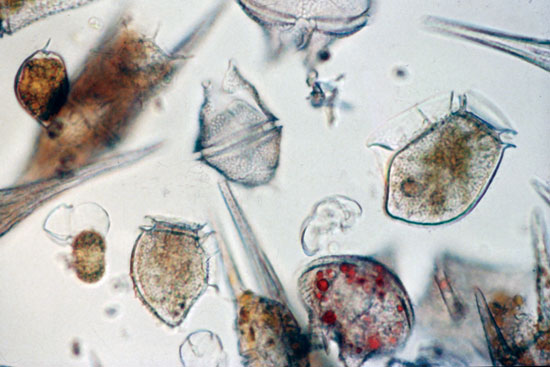
Phytoplankton like these produce harmful algal blooms. Sengco, Mario. Oceanus. v. 43, no. 1 (2004). http://www.whoi.edu/oceanus/feature/a-fatal-attraction-for-harmful-algae. Photo by Don Anderson, courtesy of WHOI.

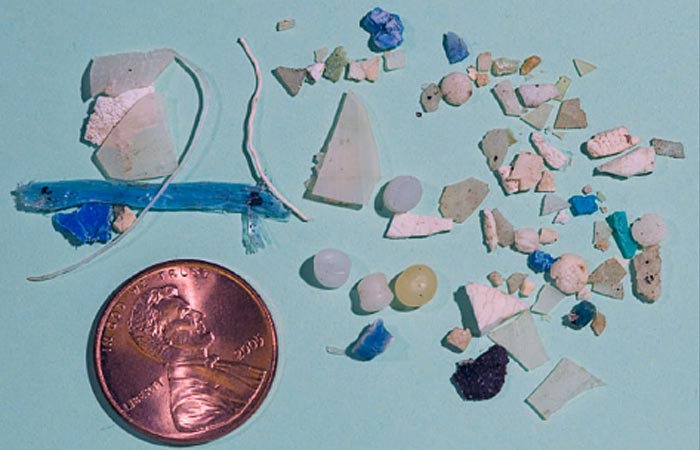
Since the 1970’s scientists at sea have reported seeing massive amounts of bits and pieces of plastics in the North Atlantic Ocean in the Sargasso Sea, an area bordered by the Gulf Stream, the North Atlantic Current, the Canary Current, and the North Equatorial Current. Oceanus in 2010 and 2013 published articles detailing a collaborative project concerning these human produced plastics, which was funded by the Woods Hole Center for Oceans Health, and conducted by three Woods Hole research institutions: the MBL, the Sea Education Association (SEA), and WHOI. SEA, which runs an undergraduate semester at sea program, has been collecting samples of plastics floating on the Sargasso Sea since 1986.

In the 2010 Oceanus article, Plastic Particles Permeate the Atlantic: Scientists find new clues about what happens to plastics in the ocean , v. 48, no. 2 (2010), author Dave Lawrence speaks of the history of scientists learning of the existence of these plastics. Lawrence says: “The plastic particles showed evidence of being coated with living organisms. Are microbes or other tiny life forms digesting the plastics, causing them to sink, or are they sticking to the particles and being carried through the ocean like sailors on rafts?”

View Full Size Image
Most of the Sargasso Sea plastics collected by Woods Hole scientists are tiny shards. Lawrence, Dave. Oceanus. v. 48, no. 2 (2010). http://www.whoi.edu/oceanus/feature/plastic-particles-permeate-the-atlantic. Photo by Tom Kleindinst, courtesy of WHOI.

In the 2013 Oceanus article, Behold the ‘Plastisphere’: Colonies of microbes flourish on tiny bits in the ocean v. 50, no. 2 (2013), Oceanus Editor Lonny Lippsett details results produced by an analysis of the plastics. While humans are responsible for the placement of plastics in the ocean, different microbes live on the plastics, some consuming the plastics, while others are toxic disease causing bacteria. Lippsett wrote: “Using scanning electron microscopy and gene sequencing techniques, they found at least 1,000 different types of bacterial cells on the plastic samples, including many species yet to be identified. The colonies included plants, algae, and bacteria that manufacture their own food (autotrophs), animals and bacteria that feed on them (heterotrophs), predators that feed on these, and other organisms that establish symbiotic relationships. These complex communities exist on plastic bits hardly bigger than the head of a pin, and they have arisen with the explosion of plastics in the oceans in the past 60 years.” Lippsett also quotes MBL scientist Linda Amaral-Zettler: “We’re not just interested in who’s there. We’re interested in their function, how they’re functioning in this ecosystem, how they’re altering this ecosystem, and what’s the ultimate fate of these particles in the ocean,” Amaral-Zettler said. “Are they sinking to the bottom of the ocean? Are they being ingested by other organisms? If they’re being ingested, what impact does that have?”

Whether establishing concerns about the health of fisheries stocks and human consumption in the late 1800’s, detailing a new methodology for the study of nitrogen levels in the ocean in the 1930’s, or studying the impact of plastics on the health of the ocean, all of this research is united through time as trying to make the world, the oceans, and humanity a healthier place.

The MBLWHOI Library began collecting science literature when the Marine Biological Laboratory came into existence in 1888, and it has been the main library serving the Woods Hole scientific community, including all of the institutions mentioned in this post.  The MBLWHOI Library is a founding member the Biodiversity Heritage Library, scanning over 12,000 volumes, including the publications mentioned herein, since 2007.

More World Oceans Day Resources

  • Follow us on Twitter, Facebook, and this blog all this week as we explore marine biodiversity and awesome related publications in BHL.
  • Check out some monumental publications in historic and present-day marine bioscience research in our BHL collection.
  • Browse a selection of marine biodiversity illustrations in Flickr and Pinterst
June 8, 2015by ulib-libraryjobs
Blog Reel, Campaigns, Featured Books

World Oceans Day: Ernst Haeckel and Art Forms in Nature

This post is the fifth in our series leading up to the celebration of World Oceans Day on June 8. This series explores publications that represent important milestones in the progress of marine bioscience research and ocean exploration. This post is an abbreviated version of a longer feature published on the Smithsonian Ocean Portal. View the entire article here.

From recent articles published via premier scientific journals to monumental volumes marking the beginning of our study of the natural world, the Biodiversity Heritage Library‘s collections include information about species from every corner of the globe and ecological niche. They also include works authored by some of the most influential men and women scientists in history.

One such individual is German zoologist Ernst Haeckel.

Born in 1834 in Potsdam, Germany (then Prussia), Ernst Haeckel served as a professor of comparative anatomy and director of the Zoological Institute at the University of Jena, named and described several thousand new species of marine invertebrates, and was a member of more than 90 learned societies during his lifetime. He studied an array of zoological topics but is widely remembered for his work on many invertebrate groups, including marine organisms like radiolarians, poriferans (sponges), and cnidarians (jellyfish, anemones, and corals). He had a deep personal interest in evolution, becoming the preeminent proponent of Darwinism in Germany (though some of his evolutionary ideas did diverge from Darwin’s theories) and helping to popularize this theory throughout Europe. He also served as a consultant on the Challenger expedition – the first non-commercial exploration of the deep-sea environment – that revolutionized the field of oceanography. The author of over 40 works and thousands of drawings, one of Haeckel’s most iconic publications is Kunstformen der Natur.

View Full Size Image
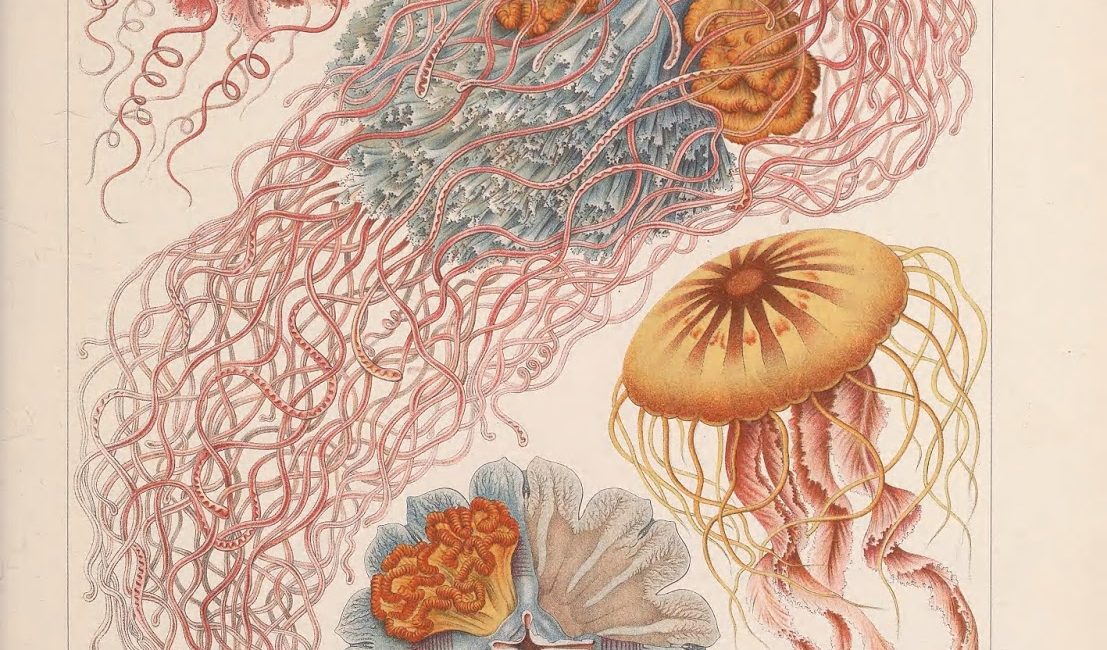
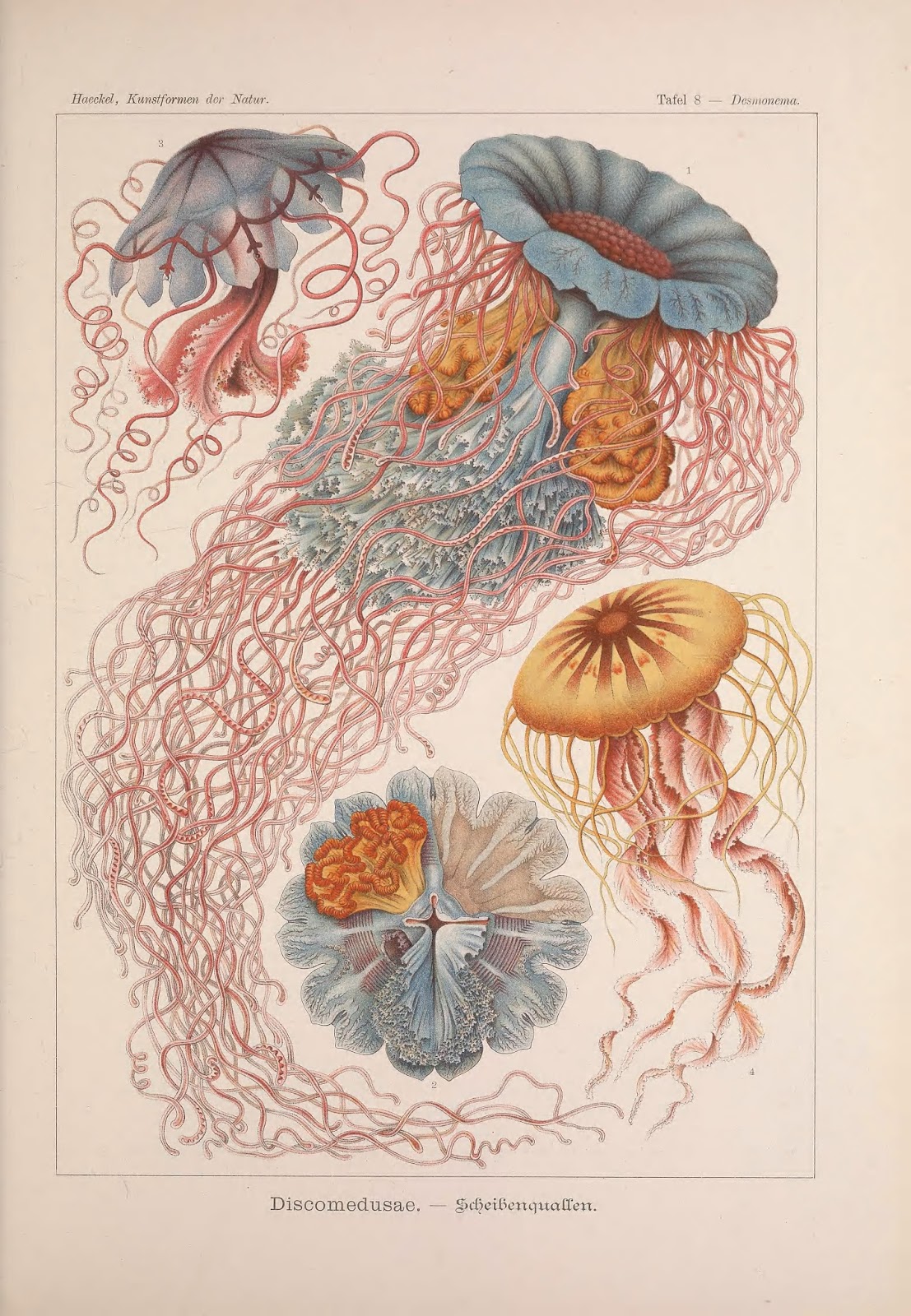
Semaeostomeae Jellyfish: Desmonema Annasethe. Named after Haeckel’s first wife, Anna Sethe. Haeckel, Ernst. Kunstformen der Natur (1904). http://biodiversitylibrary.org/page/47387998.
Kunstformen der Natur, translated into English as Art Forms in Nature, is a landmark publication in the field of naturalist illustration. Published in sets of ten from 1899-1904 and together in two volumes in 1904, the work contains 100 lithographic prints produced by Adolf Giltsch from Haeckel’s original sketches and watercolors.

While much of it is stylized for artistic effect, the exquisitely drawn, detailed plates exhibiting Art Nouveau techniques alongside commentary accessible to even the general public made Kunstformen der Natur an instant success and helped popularize science and many little-known marine organisms. Indeed, while Kunstformen der Natur covers a wide range of biological diversity, a majority of the illustrations depict marine life.

The timelessness and accuracy of Haeckel’s illustrations are evident even today. Just last year, an Atlas of the larval stages of all crustaceans worldwide, co-written by Joel W. Martin, Curator of Crustaceans at the Natural History Museum of Los Angeles County (a BHL Affiliate), featured one of Haeckel’s exquisite illustrations on the cover.

Learn more about Ernst Haeckel and Kunstformen der Natur in this online exhibit from The MBLWHOI Library. View the book in its entirety for free on the Biodiversity Heritage Library, digitized by Smithsonian Libraries, and browse all of the amazing illustrations in Flickr.

Radiolarians 

 
View Full Size Image
Radiolarians. Haeckel, Ernst. Kunstformen der Natur (1904). http://biodiversitylibrary.org/page/47388339.
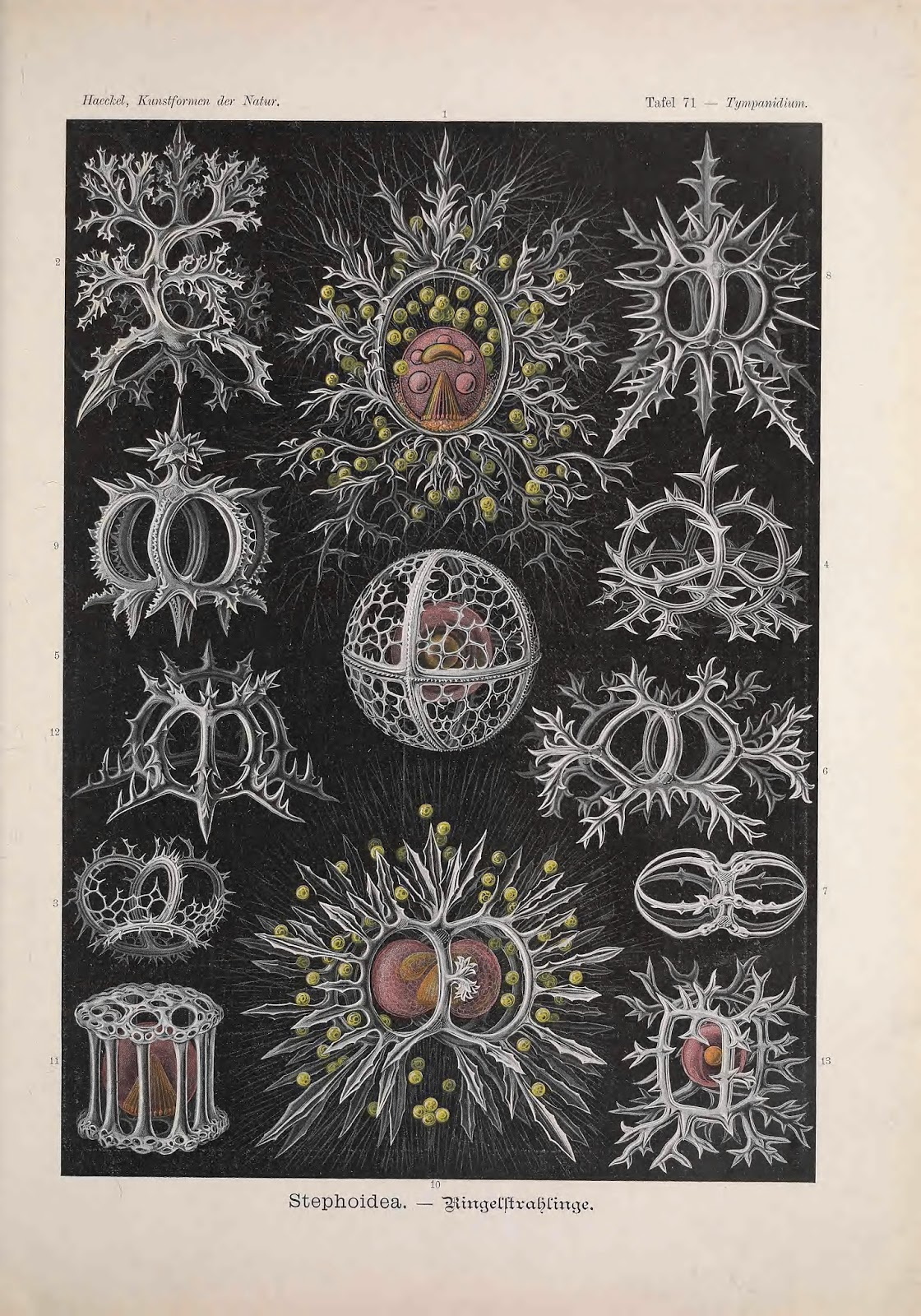
Of all of the species Haeckel described, he is arguably most famous for the radiolarians. Planktonic, unicellular marine eukaryotes, radiolarians are found in all of the world’s oceans and represent a staple component of marine ecosystems. The multiple body compartments of radiolarians are surrounded by and elaborate mineral skeletons called the test, which exhibits the exquisite designs that so captivated Haeckel. Haeckel first encountered these beauties while at Messina in Sicily, and it was this experience that prompted him to pursue doctorate studies in zoology. Haeckel helped popularize these animals with the public through his 1862 monograph Die Radiolarien, his 1887 report as part of the H.M.S. Challenger expedition, and his illustrations in Kunstformen der Natur.


Siphonophorae

View Full Size Image
Siphonophorae. Haeckel, Ernst. Kunstformen der Natur (1904). http://biodiversitylibrary.org/page/47388273.

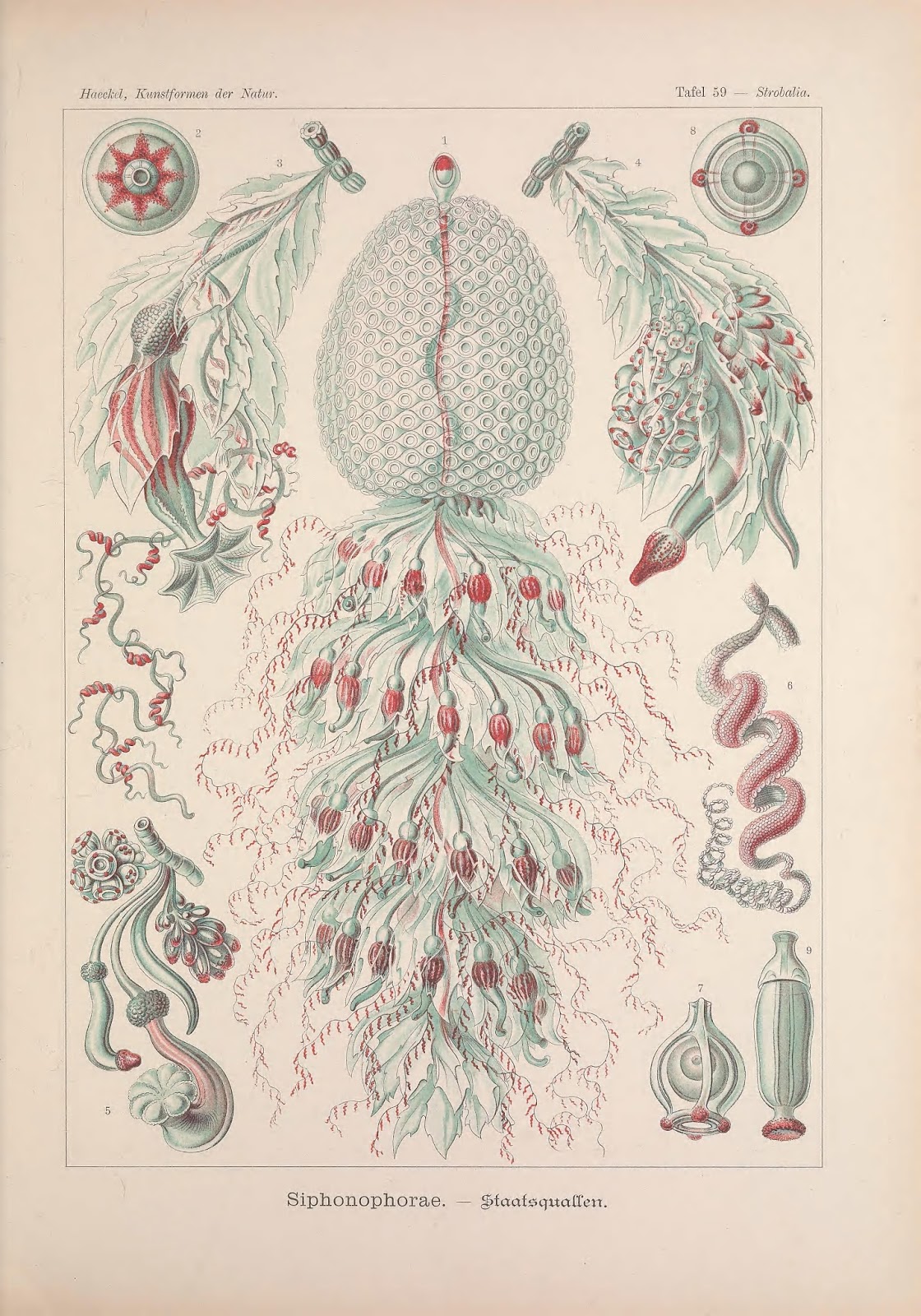
Siphonophorae is an order of marine animals in the phylum Cnidaria (the same phylum containing jellyfish). Although they superficially resemble jellyfish, each siphonophore specimen is actually a colony of many genetically-identical individuals, called zooids. Each zooid is specialized to serve a particular function within the colony, so much so that most cannot survive alone. The infamous and venomous Portuguese man o’ war is a member of this order. Certain siphonophore species can emit light. A species in the Erenna genus found off of the coast of Monterey, California has stinging cells that glow red, probably to attract the small fish upon which it preys. This species is only the second life form known to produce a red light, the first being the scaleless dragonfish Chirostomias pliopterus.

Rhizostomae Jellyfish

View Full Size Image
Rhizostomae Jellyfish. Haeckel, Ernst. Kunstformen der Natur (1904). http://biodiversitylibrary.org/page/47388103.

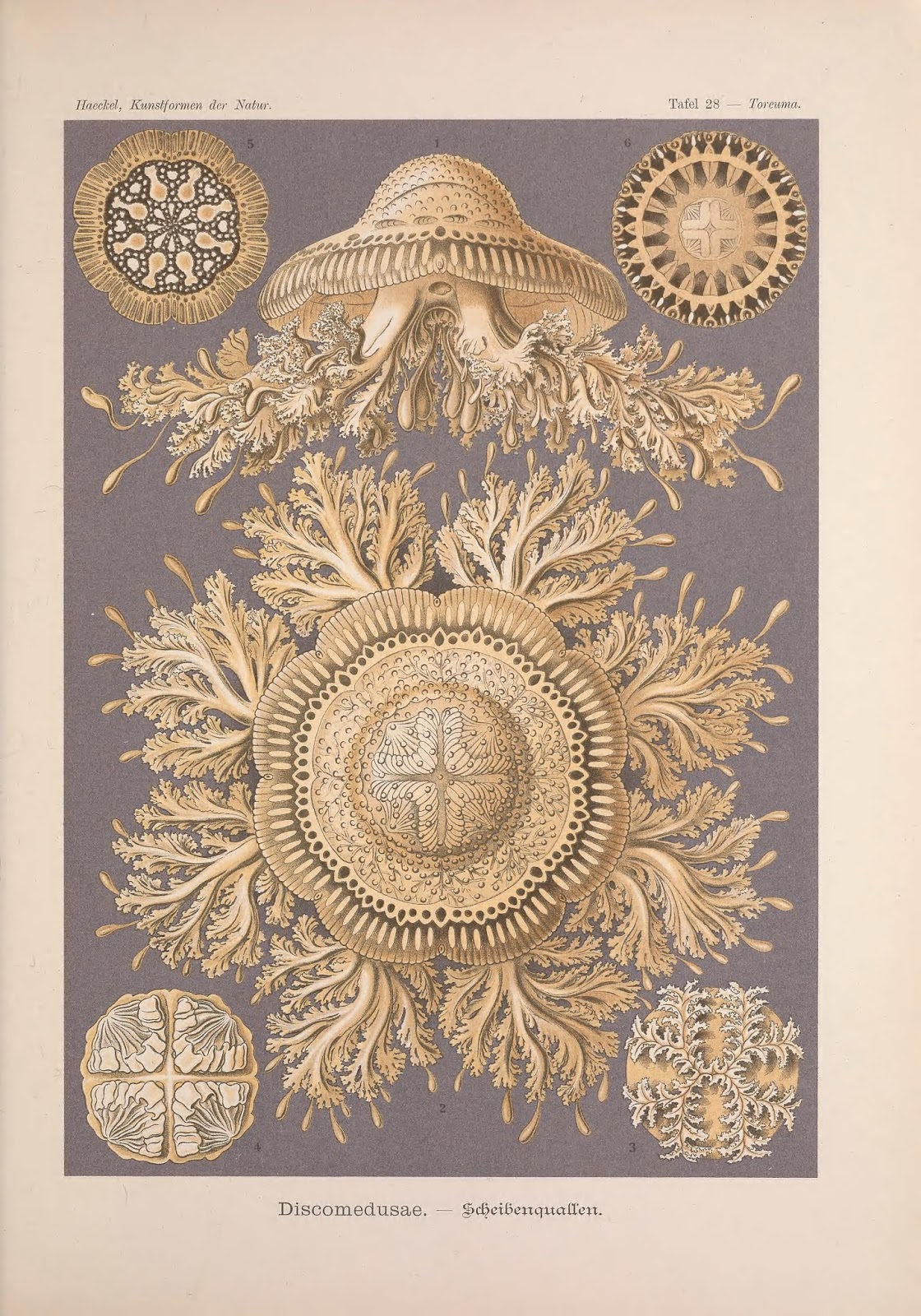
Haeckel was inspired by nature to create not just stunning illustrations but decorative pieces for home interiors as well. Haeckel discovered a species of rhizostomae jellyfish in Bellagemma, Ceylon, in December 1881. He was so impressed with the form that he used it as a model for ceiling decorations in his Villa Medusa home in Jena. Today, all jellyfish species fished on a commercial basis for human consumption are from the rhizostomae order, which are typically dried and/or salted before eating. China is the first documented country to eat jellyfish, with the practice dating back to at least 300 CE.

Nudibranchs

View Full Size Image
Nudibranchs. Haeckel, Ernst. Kunstformen der Natur (1904). http://biodiversitylibrary.org/page/47388185.

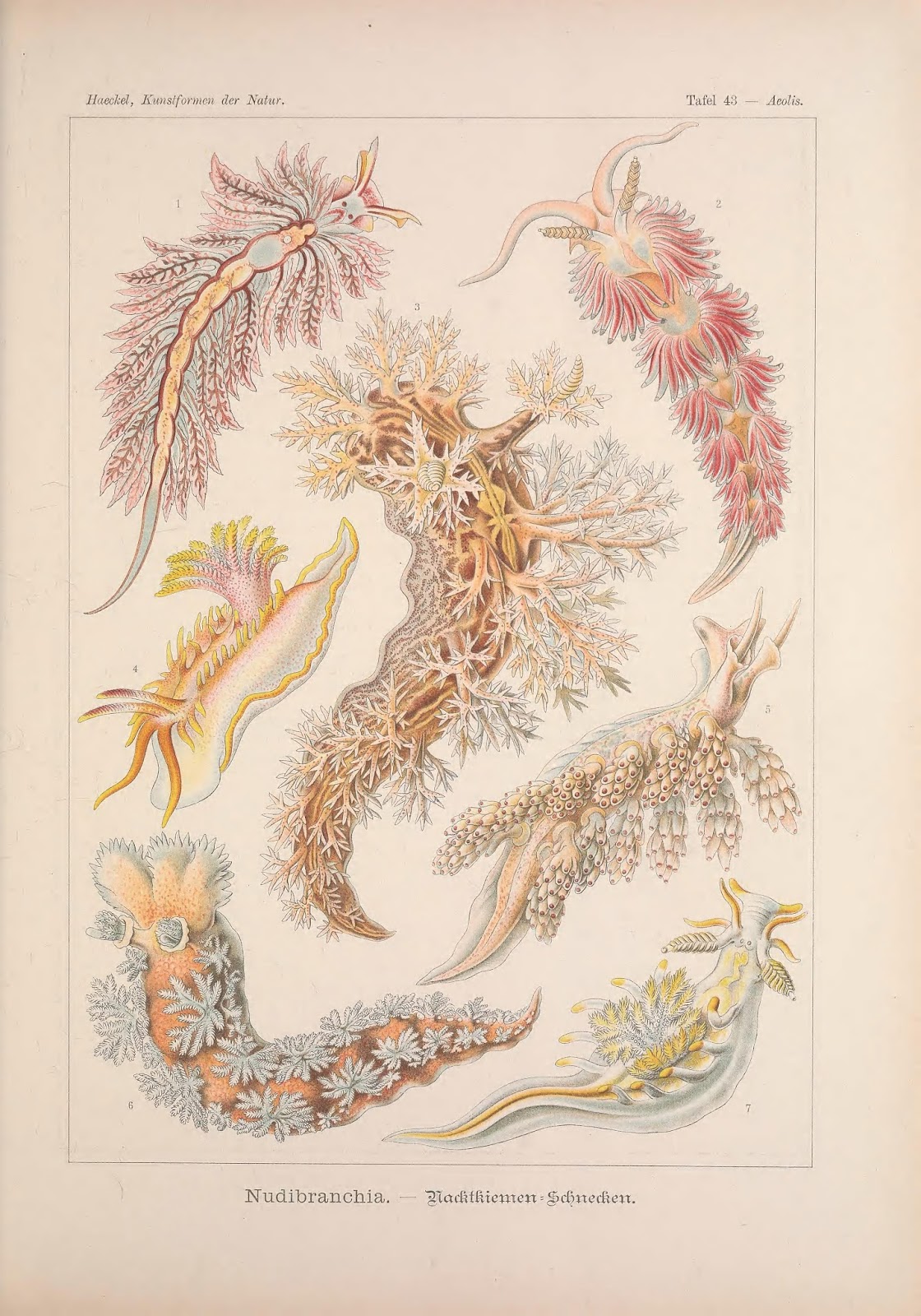
Nudibranchs (often casually called sea slugs) are soft-bodied, marine snails that have lost all trace of an external shell. The name “nudibranch” translates from the Latin as “naked gills.” Consisting of about 3,000 species, some have developed impressive defensives, including the ability to synthesize toxic compounds (such as sulfuric acid) or the ability to “hijack” and repurpose the stinging cells of the cnidarians (jellyfish, anemones, and, corals) that some of them eat.

Learn more about marine organisms and Haeckel’s amazing illustrations in the full article on 
Smithsonian Ocean Portal!

More World Oceans Day Resources

  • Follow us on Twitter, Facebook, and this blog all this week as we explore marine biodiversity and awesome related publications in BHL.
  • Check out some monumental publications in historic and present-day marine bioscience research in our BHL collection.
  • Browse a selection of marine biodiversity illustrations in Flickr and Pinterst
June 5, 2015by michelle.underhill
Blog Reel, Campaigns, Featured Books

World Oceans Day: A Bibliographic Exploration of Ocean Giants

This post is the fourth in our series leading up to the celebration of World Oceans Day on June 8. This series explores publications that represent important milestones in the progress of marine bioscience research and ocean exploration.

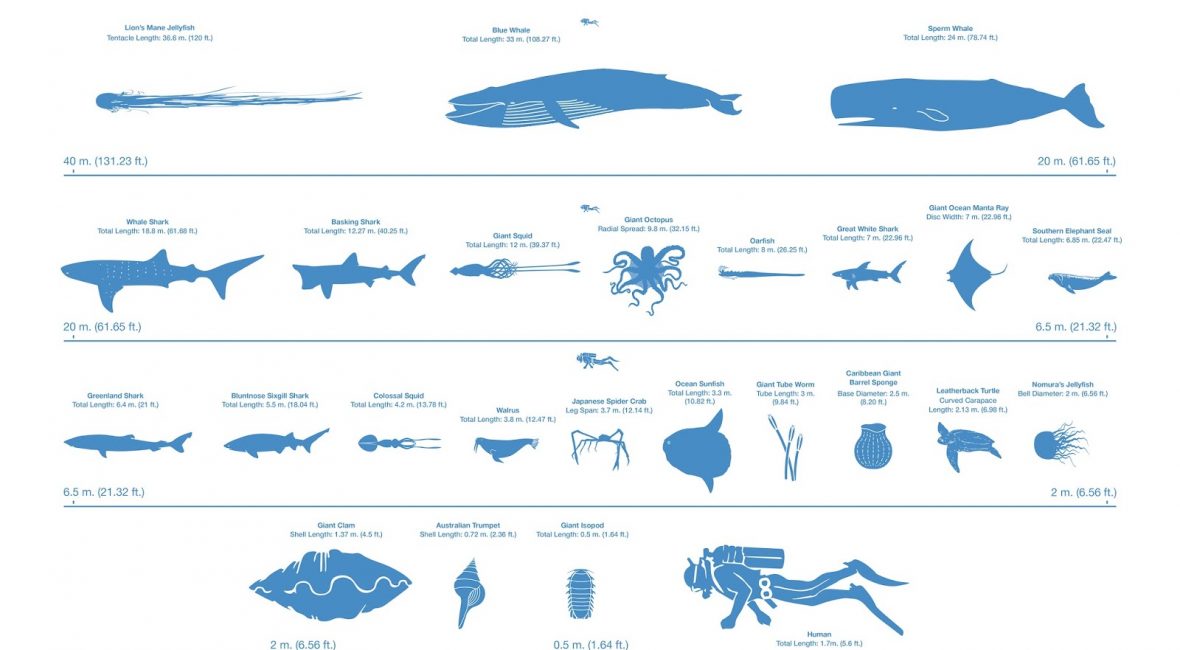
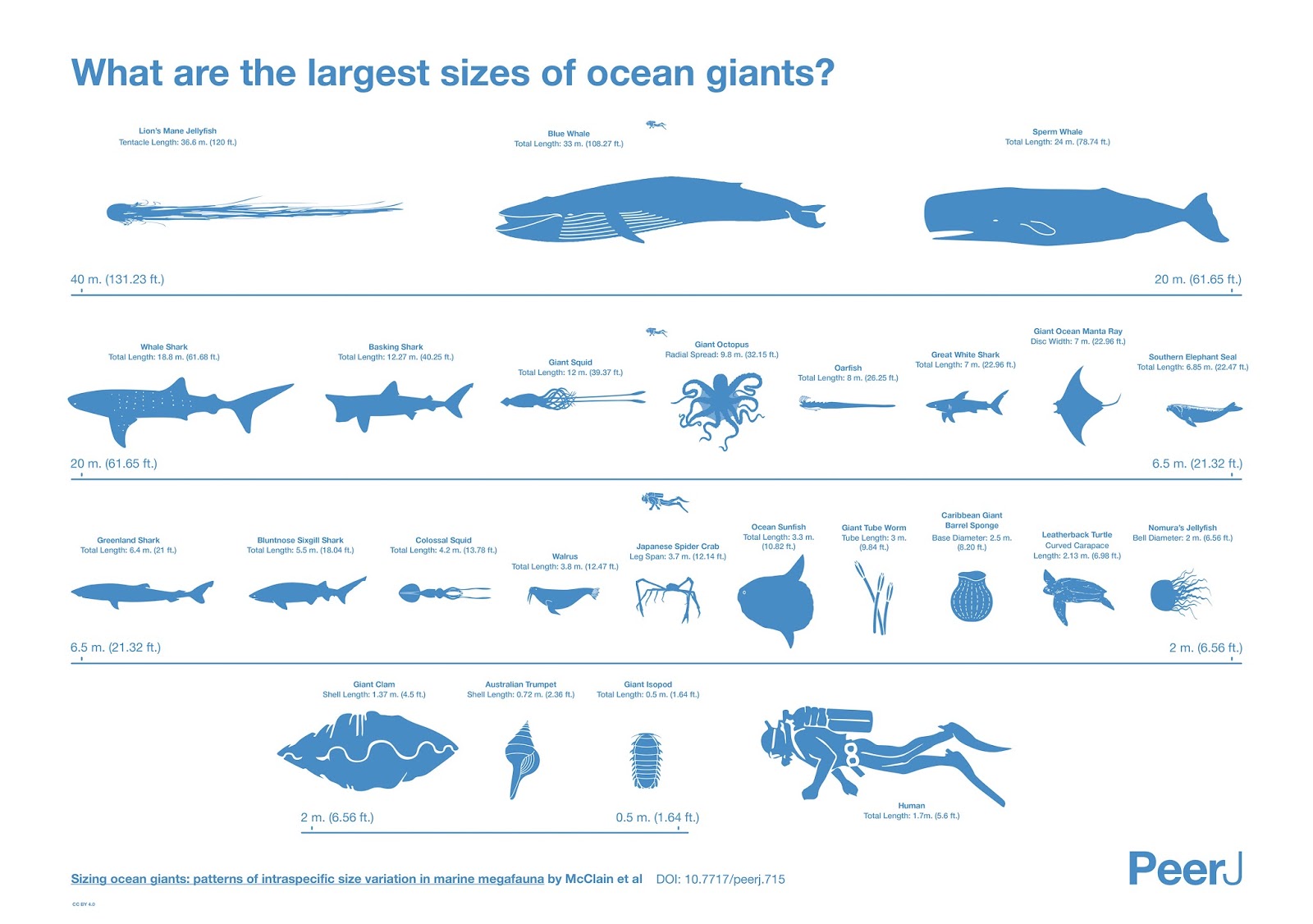
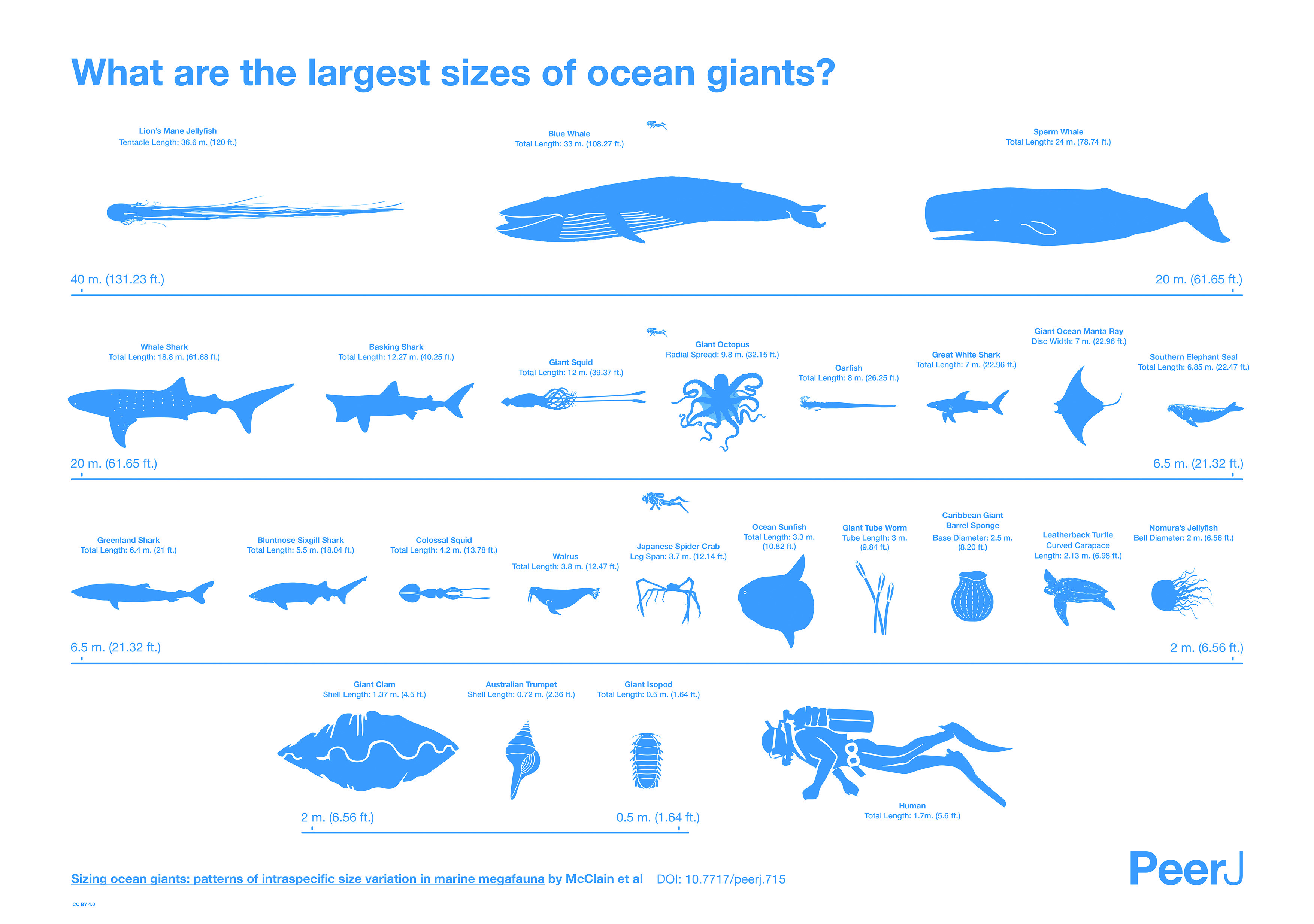
When you think of the largest creatures in the ocean, what do you picture?  You might be surprised about which creatures are largest, and about some of their fascinating histories and habits!  A recent article in the journal PeerJ documents the body length of some of the longest animals in the ocean, and in preparation for World Oceans Day on June 8, we’re diving deeper into the top ten listed in that article.

View Full Size Image
Sizing Ocean Giants: Patterns of Intraspecific Size Variation in Marine Megafauna by McClain et al | PeerJ

One of the First Scientists to Record a Plethora of Species: Linnaeus

Carl von Linnaeus (also known as Carl von Linné) was the first person to record several of the species in this top ten list, which he did in his book, Systema Naturae.  The tenth version of this book, published in 1758, is considered his authoritative taxonomical text, and scientists use the year 1758 to refer to Linnaeus’ taxa from this book (an important change Linnaeus made in the tenth version was to move whales to the mammal class rather than the fishes class).  Linnaeus was a Swedish zoologist and botanist, and also practiced as a physician.  He was born in Sweden in 1707, traveled to the Netherlands in his thirties to write Systema Naturae, returned to Sweden, and continued traveling throughout his life to further classify biological organisms.  He is known for creating the forerunner to the modern binomial nomenclature system, which was referred to as the Linnaean taxonomy.  He died in 1778 after having the opportunity to engage in philosophical conversations with other famous philosophers, teach medicine and botany, and continue to add to his taxonomy.

A Dive into Ten Ocean Giants, from Longest to Smallest (though still very long!):
View Full Size Image
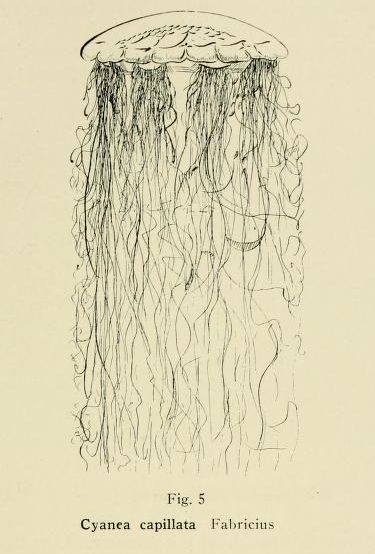
Lion’s Mane Jellyfish | view in book here

1. The lion’s mane jellyfish (Medusa capillata, also known as Cyanea capillata) is the largest species of jellyfish, and possibly the longest animal in the world, with tentacles that make this jellyfish 120 feet in length (though some estimates suggest that the bootlace worm, found in muddy and sandy shores and tide pools around the North Sea, is longer – possibly more than 170 feet long. However, since ribbon worms can stretch much more than their actual growth rate, these estimates are controversial).  It lives in cold waters, such as the Arctic, northern Atlantic, and Pacific Oceans, as well as the English channel, Irish Sea, North Sea, Scandanavian waters and sometimes the Baltic Sea.  Its tentacles are long, thin and hair-like, which is why it is referred to as a “lion’s mane”.  The bell, or umbrella, which comprises the top part of the jellyfish, can grow up to a diameter of 78.74 inches.  The hair-like tentacles emerge from the margin of the bell, in eight groups of 70 to 150 (or more) hollow tentacles, while more tentacles emerge from the bell’s subumbrella.  This jellyfish is generally a vivid yellow, orange or red color.  It feeds on zooplankton, and small fish, among other smaller creatures, and its predators include larger fish, seabirds, other jellyfish, and sea turtles.  The lion’s mane jellyfish was first scientifically documented (as Medusa capillata) by Carl von Linnaeus in 1758, in his Systema Naturae, which you can read here: http://biodiversitylibrary.org/page/727573.

Fun facts: The lion’s mane jellyfish was featured in Sir Arthur Conan Doyle’s short story “The Adventure of the Lion’s Mane”, in which the “murderer” turns out to be the jellyfish—although in real life, the lion’s mane jellyfish is not capable of killing humans, only causing a very painful sting that can result in blisters, cramps and affected heart rate and respiratory function.
View Full Size Image
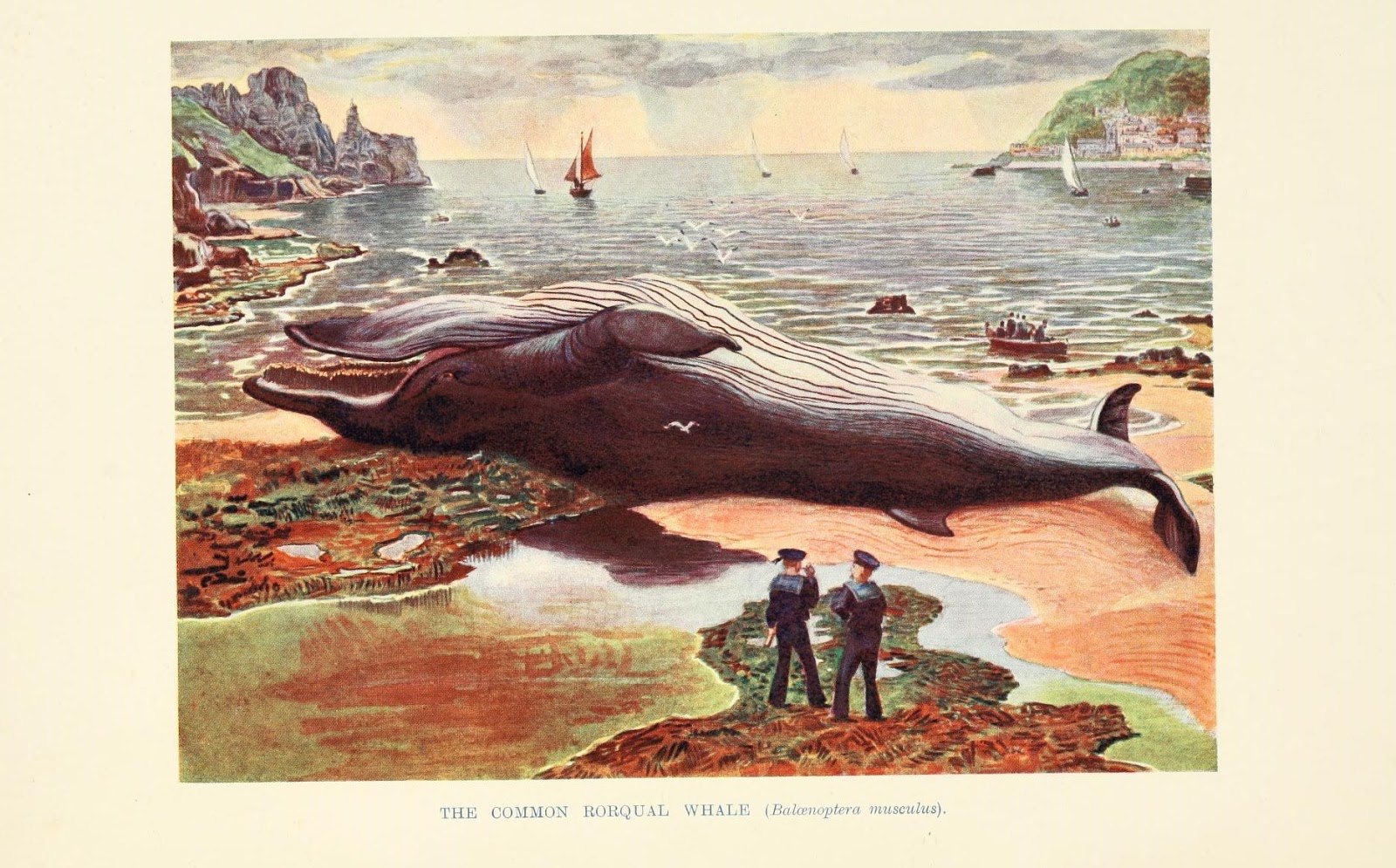
Blue Whale | view in book here

2. The blue whale (Balaenoptera musculus) was first described by Linnaeus in 1758 in Systema Naturae, and was thought to be the largest animal on the planet, though if measuring by length, it is out-shadowed by the lion’s mane jellyfish.  The blue whale is 108.27 feet long, and can weigh as much as 40 African elephants.  This species is also considered to have one of the fastest swimming speeds, at up to 30 miles per hour.  They live in all of the world’s oceans.  These amazing mammals eat up to seven tons of krill per day, by stretching their throats to open their mouths wider, and then gulping a large amount of water filled with krill.  They then use their tongues to expel the water out again through baleen plates, which capture the krill and prevent them from escaping.  The blue whale has the deepest voice of any living creature (at a frequency below humans hearing), and their voices can be heard by other blue whales for thousands of miles underwater.  Scientists have theorized that these far-reaching vocalizations help the whales map their locations across oceans.  Very little is known about their mating patterns.  This species can live as long as a human: 80 to 90 years.  You can read Linnaeus’ account of the blue whale here: http://biodiversitylibrary.org/page/726981.

Fun facts: Blue whales can dive underwater for up to 30 minutes.  A whale’s age can be determined by counting layers of waxy earplugs that develop in the whales over time (like counting tree rings).
View Full Size Image
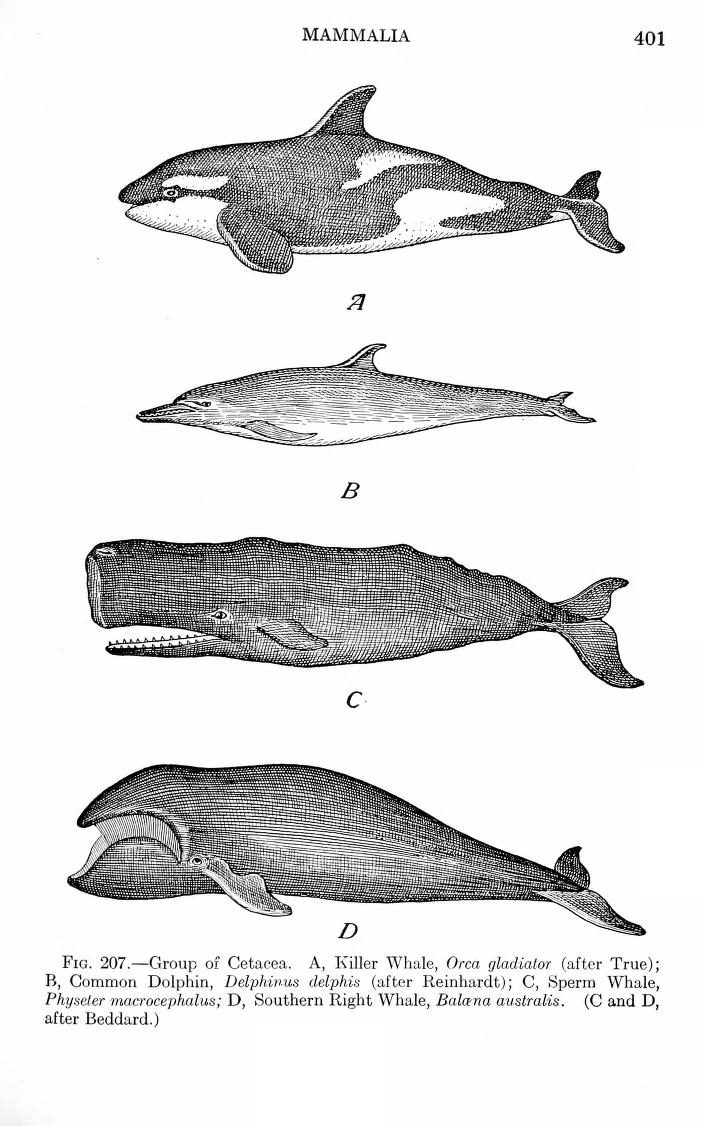
Sperm Whale, Fig. C | view in book here

3. The sperm whale (Physeter macrocephalus) was also first described by Linnaeus in 1758.  At a length of 78.74 feet, it is the third-longest animal listed in the PeerJ article.  Among whales with teeth, the sperm whale is the largest, and also has the largest brain of any animal on the planet.  The sperm whale’s head takes up a third of its body length, and there is a specialized feature in the head that helps this whale dive deeper or rise to the surface of the water: the spermaceti organ.  This refers to a large cavity in the whale’s head filled with a waxy substance called spermaceti oil, which can be cooled (to shrink and increase density, allowing the whale to dive deeper), or heated (to expand and decrease density, allowing the whale to rise to the surface of the water).  Scientists posit that the spermaceti oil is cooled by water intake through the whale’s blowhole.  However, scientists are still trying to figure out the purpose of the spermaceti organ, and some believe it might absorb unnecessary nitrogen during dives, or help make the whale’s communicative clicking sounds resonate more loudly.  While the head of this species is extremely large, its lower, toothy jaw is very narrow and short in comparison.  The sperm whale eats giant squid, which live in deeper parts of the ocean, thus the sperm whale can dive up to one mile deep and stay under water for up to 90 minutes.  Sperm whales can live up to 70 years, and while they are close to the top of the food chain, they can be attacked by killer whales.  You can read Linnaeus’ account of the sperm whale, which is on the same page as that of the blue whale, here: http://biodiversitylibrary.org/page/726981.

Fun facts: In Herman Melville’s novel, Moby Dick, Captain Ahab was fighting a sperm whale.  The skin of a sperm whale is dark brown or blue-black, and is said to feel like the pit of a plum.  Sperm whales produce ambergris, which was once used in perfume making.  Scientists count the layers of dentinal growth on sections of sperm whale teeth to determine age.
View Full Size Image
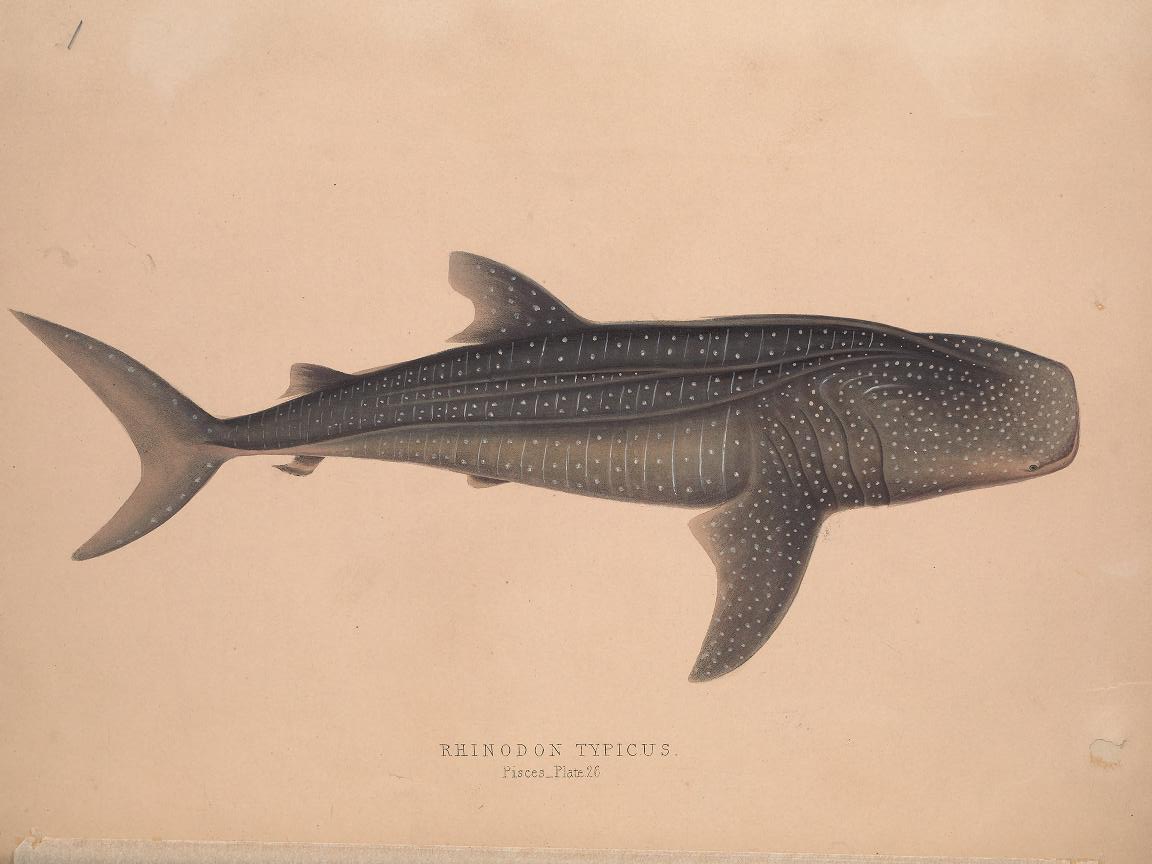
Whale Shark (referred to here as Rhinodon Typicus), illustration by Sir Andrew Smith | view in book here

4.  The whale shark (Rhincodon typus), with a length of 61.68 feet, was first described by Sir Andrew Smith in 1828.  Smith published his findings on the whale shark in 1829 in Zoological Journal.  Smith (born 1797, died 1872) is considered a major influence in South African zoology.  He was born in Scotland, got his M.D., and practiced as a surgeon, ethnologist and zoologist.  He traveled with the Army Medical Services to South Africa and studied biological specimens there, as well as studying people native to the region.  He illustrated many specimens in Illustrations of the Zoology of South Africa (1838-1850), which you can read here: http://biodiversitylibrary.org/page/11059799.  Smith first noted the whale shark in 1828 after one was harpooned in South Africa while he was stationed there.  While it is similar in size to a whale, the whale shark is actually the largest fish in the world.  It has a wide, flat head and mouth, and dark, grey-blue skin with a beautiful pattern of pale yellow dots all over the top and sides of its body.  This shark has five large gills which contain cartilage that acts as a sieve.  Whale sharks generally eat smaller fish, and suck their prey into their large mouths and then swallow the unfortunates.  It is considered a filter feeder like the basking shark (to be mentioned later), but is much more active in its feeding than the basking shark, pumping water into its mouth sometimes in a stationary position, unlike the basking shark, which needs to swim in order to allow water into its mouth.  The whale shark lives in tropical and warm seas around the globe.  This species is not generally harmful to humans.  Unfortunately, people continue to hunt these sharks for human consumption, using parts of the shark in health supplements and shark fin soup.  Read Sir Andrew Smith’s description of the whale shark in The Zoological Journal here: http://biodiversitylibrary.org/page/2310852.

Fun facts: The whale shark’s mouth has up to 300 very small teeth, the function of which are unknown.  While scientists do not have a great understanding about how whale sharks reproduce, a pregnant female was captured and inside of her were 300 fetuses.  Known as gentle giants, sometimes humans can swim alongside, or catch a ride with, the whale shark.
View Full Size Image
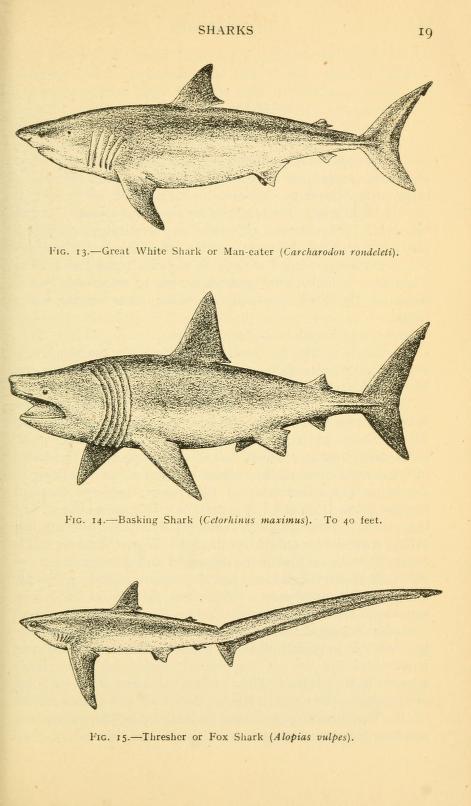
Basking Shark, Fig. 14 (referred to as Cetorhinus maximus) | view in book here

5.  The basking shark (originally called Squalus maximus, now known as Cetorhinus maximus), at a length of 40.25 feet, was first described by Johan Ernst Gunnerus in 1765.  Gunnerus was born in Norway, and practiced as a professor of theology and a bishop, as well as a botanist.  He helped found what became the Royal Norwegian Society of Science and Letters [Det Kongelige Norske Videnskabers Selskab, based in Trondheim, Norway], and published his findings on the basking shark in the Society’s journal in 1765.  This original publication has yet to be digitized by BHL, but its citation is as follows: Gunnerus, J.E. (1765). Brugden (Squalus maximus), Beskrvenen ved J. E. Gunnerus. Det Trondhiemske Selskabs Skerifter (v. 3). pp. 33-49.  Gunnerus communicated with Carl von Linnaeus (mentioned above, and also known as Carl von Linné) about some of his biological findings.  Linnaeus, in turn, helped found, and communicated with, The Royal Swedish Academy of Sciences [Kungliga Svenska Vetenskapsakademien], which published a journal in 1770 citing Gunnerus’ discovery of the basking shark, which you can read here: http://biodiversitylibrary.org/page/46782026.  Gunnerus was elected as a foreign member to the Royal Swedish Academy of Sciences in 1766.  As mentioned in the whale shark entry above, the basking shark is a less active filter feeder, and must swim over the plankton it wants to consume in order to get them into its mouth.  While basking sharks have no teeth, they have a filter that allows water to flow out of their mouths while trapping the plankton.  This species is the second-largest fish in the world.  Only one pregnant female has been caught so far, and she gave birth to six live sharks.  This shark lives around the world in boreal and temperate waters.  The basking shark can live to at least 50 years old.  They have been hunted for similar reasons to the whale shark, but are protected in British waters.

Fun facts: Basking sharks can migrate for up to 5,592 miles, and when they are not migrating or following the plankton in coastal waters, they spend most of their time in the deep ocean.  During vertical and geographical migrations, basking sharks remain in groups of the same sex and age, which suggests an interesting pattern of segregation within the species.
View Full Size Image
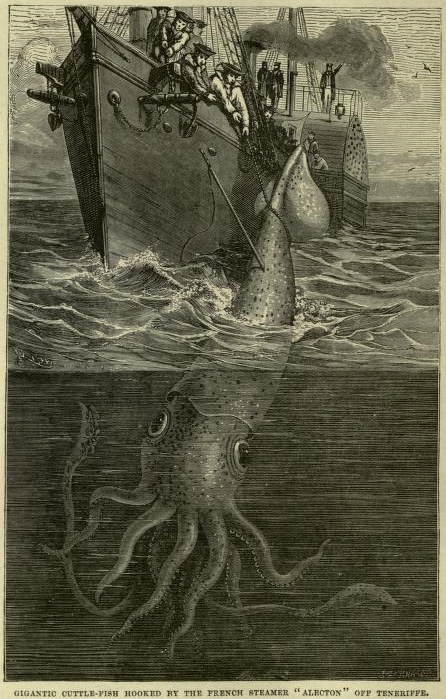
Giant Squid (also referred to as “Cuttle-fish”) | view in book here

6.  The giant squid (Architeuthis dux), measuring 39.37 feet long, was first described by Japetus Steenstrup in 1857.  Scientists refer to the first mention of the giant squid by Steenstrup as occurring both in 1857, when Steenstrup published his findings in a paper, and in 1860, when three illustrative plates were published by Pieter Harting describing Architeuthis dux.  One year later, in 1861, Harting published a text on Architeuthis dux, along with the plates, which you can read here: http://biodiversitylibrary.org/page/39289600, and the mention of Architeuthis dux in the description of the illustrative plates begins here (Fig. 1. A.): http://biodiversitylibrary.org/page/39289603.  Steenstrup (born 1813, died 1897) was a Danish professor of zoology, and also studied biology.  Like Gunnerus, Steenstrup was also elected a foreign member of the Royal Swedish Academy of Sciences, in 1857.  Pieter Harting (born 1812, died 1885) taught medicine and zoology, and studied microscopy and botany, among other things.  The giant squid eats deep-sea fish and other squid by using serrated rings on its tentacles that suck onto the prey and bring the prey toward its beak, where a toothy tongue called a radula shreds the prey.  The squid has a mantle, eight arms, two tentacles longer than the arms, and hundreds of suction cups inside the tentacles.  This species has a complex brain and nervous system, and is found in oceans all over the world.  Scientists do not yet know how deep they inhabit the ocean, but some estimate that the giant squid can reside or feed at up to 900 meters deep.  Many specimens of giant squid which you see in museums were found washed ashore or in the stomachs of dead sperm whales, which regularly feed on them.  Scientists track sperm whales in order to study giant squid since the whales are so adept at locating and hunting the squid.

Fun facts: The giant squid has the largest eyes of any animal on earth, excepting the colossal squid, and the only creature known to have larger eyes is the extinct ichthyosaur.  The original edition of Twenty Thousand Leagues Under the Sea, a novel by Jules Verne, has an illustration of a man entangled in the tentacles of a giant squid.  The giant squid has been represented historically as the kraken.
View Full Size Image
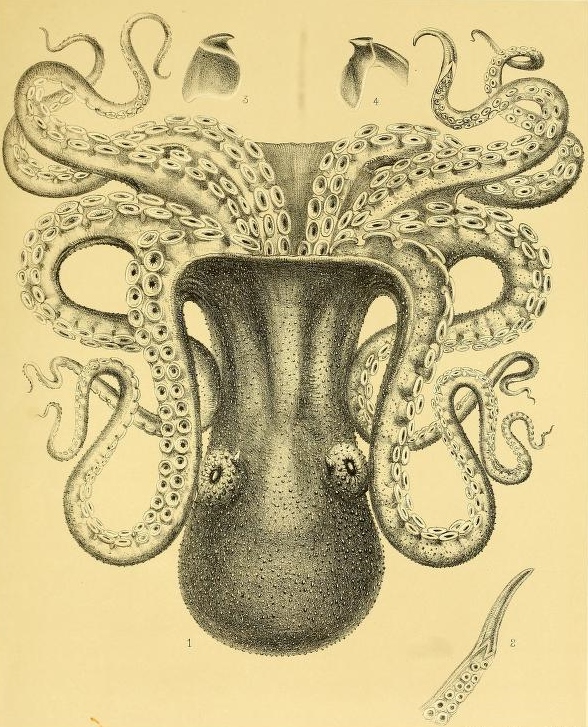
Giant Octopus (referred to here as Octopus punctatus, a synonym for Enteroctopus dofleini) | view in book here

7.  The giant octopus (Enteroctopus dofleini), with a radial spread of 32.15 feet, is the largest among a group of octopuses referred to as the “giant octopus”.  The first scientific description of this particular giant octopus is by Gerhard Wülker, in 1910, where he refers to it by a synonymous name, “Polypus dofleini”.  You can read Wülker’s original description of “Polypus dofleini” here: http://biodiversitylibrary.org/page/39312736.  Wülker (born 1885, died 1930) was a German zoologist who is famous for being the first to identify the giant octopus.  E. dofleini is found in the Pacific Ocean (and is thus known as the giant Pacific octopus), and can be found as deep as 6,600 feet below the ocean’s surface.  This species lives longer than other octopuses, with a lifespan of up to 5 years.  Like all octopuses, E. dofleini has a head, eight arms with suckers on each, and papillae (hooks) lining the suckers to increase the octopus’ ability to hold onto things, such as prey.  Prey include lobsters, fish, scallops, and shrimp, among other creatures.  Once prey is captured, either by using arms singularly or all together, it is brought up to the beak at the mouth and then torn apart by a toothy tongue called a radula.  E. dofleini has distinctive longitudinal folds on its body.  These octopuses follow a pattern of mating and reproducing once, and then dying, which is referred to as “semelparity”.  After reproducing, the giant Pacific octopus will enter a seemingly gruesome phase leading up to death called “senescence”: the octopuses will eat little, their skin will retract unpleasantly, white lesions appear on the body, and activity becomes clumsy until death ensues by starvation or being preyed upon.

Fun facts: The giant Pacific octopus can lay up to 400,000 eggs, which are cared for by the female members of the species; the female stops eating to do this, and dies soon after the eggs hatch.  E. dofleini sometimes eats sharks, such as the spiny dogfish (Squalus acanthias), which can be up to four feet long.
View Full Size Image
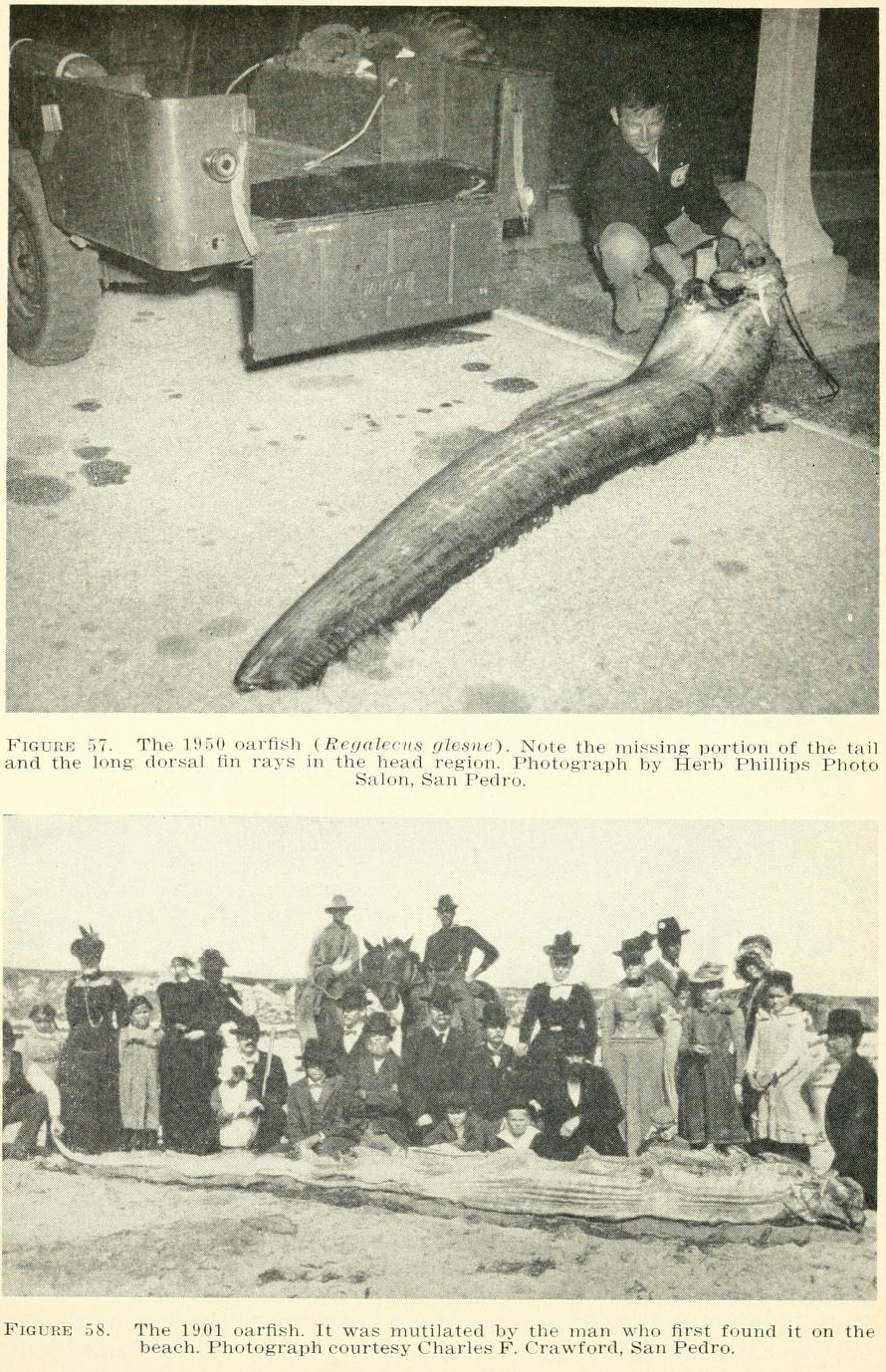
Giant Oarfish | view in book here

8.  The giant oarfish (Regalecus glesne), which is 26.25 feet long, was described by Peter Ascanius in 1772.  Ascanius (born 1723, died 1803) was a Norwegian scientist who taught zoology and minerology in Copenhagen.  He also practiced as a biologist, and was instructed by Carl von Linnaeus.  Like other scientists in this post, Ascanius was elected as a foreign member to a society dedicated to improving knowledge in scientific fields: in 1755 he was elected a foreign member of the Royal Society [in London], where he was considered a Fellow.  The giant oarfish is known as the “king of herrings”, and lives in oceans around the world.  Its body is shaped like a ribbon and it has a dorsal fin along its back that becomes vertically long right above its head, giving it the appearance of a rooster’s cockscomb.  This species has two pelvic fins comprised of only one ray; the fins are long and resemble oars.  There is a membrane at the tip of each pelvic fin that some scientists believe is used for tasting things.  Without teeth, the giant oarfish consumes krill by gulping water and then expelling it, trapping the krill in the gullet by means of a series of long spines.  Ascanius first wrote about the giant oarfish in 1772 in his work, Icones Rerum Naturalium, which is in the process of being digitized for BHL.  You can read the next earliest mention of the giant oarfish at the Biodiversity Heritage Library here, in Volume 2 of Monsieur le comte de La Cepède’s text, Histoire Naturelle des Poissons: http://biodiversitylibrary.org/page/12053207.  La Cepède, also known as Bernard Germain Étienne de La Ville sur Illon (born 1756, died 1825), was well-known for his contributions to the abovementioned work, Histoire Naturelle, written along with Georges Louis Leclerc, comte de Buffon.  La Cepède was a French naturalist and freemason.  Like other scientists on this list, La Cepède was elected as a Fellow of the Royal Society [London], and as a foreign member of the Royal Swedish Academy of Sciences, as well as a member of the Institute of France [L’Institut national de France].

Fun facts: The giant oarfish has no scales—instead, its body is covered in wart-like bumps called “tubercles”.  Adult members of this species sometimes kill themselves by swimming onto beaches.  The giant oarfish can self-amputate a part of the posterior end of its body, and apparently does this several times during its lifetime, as the amputated area repeatedly heals over into a stump.
View Full Size Image
Great White Shark | view in book here

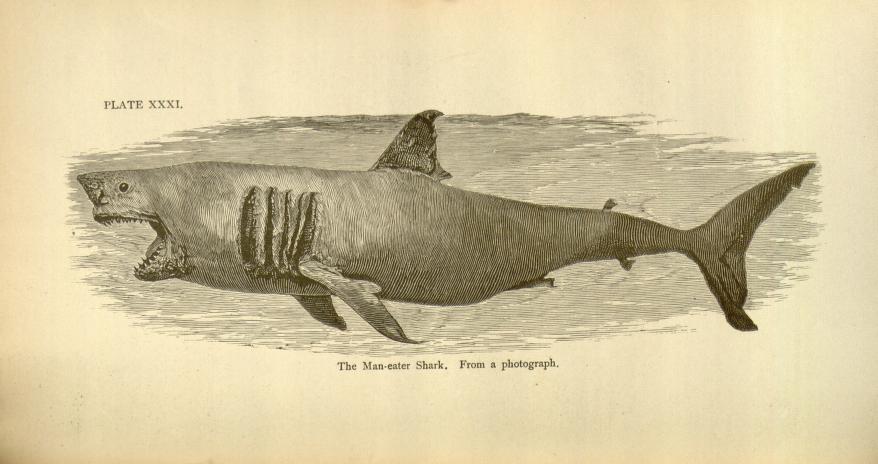
9. The great white shark (Squalus carcharias, also known as Carcharodon carcharias), at 22.96 feet long, was first described by Linnaeus in his Systema Naturae in 1758 under the name Squalus carcharias.  The great white shark lives in most all oceans around the world, and can appear in coastal waters.  This species of shark is infamous for having the largest number of unprovoked attacks on humans.  However, the great white shark does not intentionally feed on humans.  Shark prey includes seals, dolphins, whales, sea lions, fish, seabirds, and other smaller creatures.  While they would appear to be at the top of the food chain, great white sharks can rarely be attacked, and killed, by groups of orca whales.  Scientists know very little about their mating behavior, but female sharks give birth to live young.  Great whites can swim up to 25 miles per hour in pursuit of prey, and launch themselves into the air from the water.  These sharks use smell, sound location and electroreception to spot prey from great distances.  The great white shark, unlike the majority of other fish, can maintain a higher body temperature than that of the surrounding water by means of a heat exchange system in their blood vessels.  These sharks can live up to 50 years.  Read Linnaeus’ account of Squalus carcharias here: http://biodiversitylibrary.org/page/727146.

Fun facts: The oldest fossils of the great white shark are 16 million years old.  It is believed that the great white shark does not intentionally seek to attack humans, but is merely engaging in “test bites”, which it also performs on other unfamiliar objects in order to identify those objects.  The great white shark was featured in Peter Benchley’s novel, Jaws, as well as Steven Spielberg’s film adaptation of the same.
View Full Size Image
Giant Manta Ray | view in book here

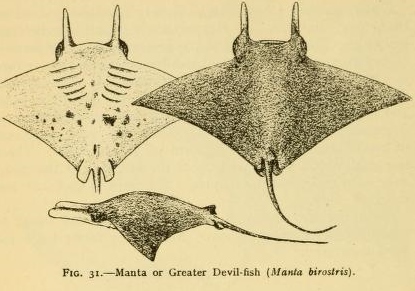
10.  The giant manta ray (Manta birostris, also known as Raja birostris) has a disc width of 22.96 feet, is the largest ray in the world, and can weigh up to two tons.  This creature was first described by Johann Julius Walbaum in 1792.  Walbaum (born 1724, died 1799), was a German physician.  He was also a naturalist and taxonomist, and the first to record many new-to-science species.  He referred to the giant manta ray as Raja birostris in his original description of the creature, though the giant manta ray is now known as Manta birostris.  This species inhabits tropical and temperate waters around the globe, and eats zooplankton like shrimp and krill.  The giant manta ray has triangle-shaped pectoral wings on either side of its body, and lobe-shaped fins towards the front of its body, extending from either side of the head.  These fins can aid in pushing water into the mouth to catch prey.  There are 18 rows of teeth in the lower jaw of its large, rectangular mouth.  Their skin is black, blue or brown, with a white underside.  Scientists look at unique patterns of markings and scars to identify individual rays.  The giant manta ray can live up to 20 years.  Read Walbaum’s description of Raja birostris here: http://biodiversitylibrary.org/page/39001752.

Fun facts: The giant manta ray can eat up to 13% of its body weight in food each week.  Sometimes the ray will remain still near a coral reef while other fish eat off pieces of loose skin and parasites, which cleans the ray and provides food for the fish.  The giant manta ray can leap out of the water, possibly as part of a mating ritual, and their offspring are called “pups”.

More World Oceans Day Resources

  • Follow us on Twitter, Facebook, and this blog all this week as we explore marine biodiversity and awesome related publications in BHL.
  • Check out some monumental publications in historic and present-day marine bioscience research in our BHL collection.
  • Browse a selection of marine biodiversity illustrations in Flickr and Pinterst
 Some Key References:
Brightwell, C. L. (1858). A life of Linnaeus. London: J. Van Voorst.
(n.d.). Encyclopedia of Life (EOL).  Retrieved from eol.org

(n.d.). Invertebrates of the Salish Sea.  Retrieved from http://www.wallawalla.edu/academics/departments/biology/rosario/inverts/
(n.d.) The Linnaean Correspondence.  Retrieved from http://linnaeus.c18.net/
(n.d.). World Register of Marine Species (WORMS).  Retrieved from http://www.marinespecies.org
June 4, 2015by jjones
Blog Reel, Campaigns, Featured Books

World Oceans Day through Books: Corals, Oceanography, and the Deep Sea

This post is the third in our series leading up to the celebration of World Oceans Day on June 8. This series explores publications that represent important milestones in the progress of marine bioscience research and ocean exploration.

Darwin and the Theory of Coral Reef Formation: Structure and Distribution of Coral Reefs

Charles Darwin will forever be remembered for his theory of evolution by means of natural selection and the publication of On the Origin of Species in 1859. But Darwin’s scientific contributions extend even beyond this monumental achievement. As an example, Darwin also presented a theory of how coral reefs and atolls are formed.

Coral reefs are underwater ecosystems built by colonies of tiny animals – mostly stony corals – and held together by calcium carbonate structures that these animals secrete. These reefs are home to at least 25% of all marine species. An atoll is a ring-shaped coral reef that encircles a lagoon.

View Full Size Image
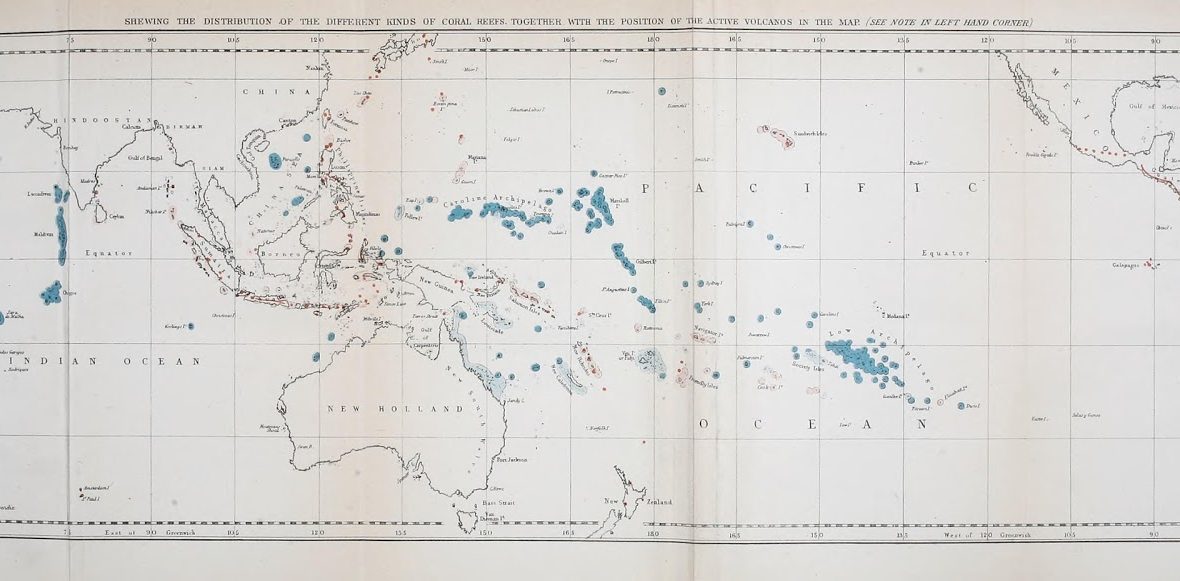
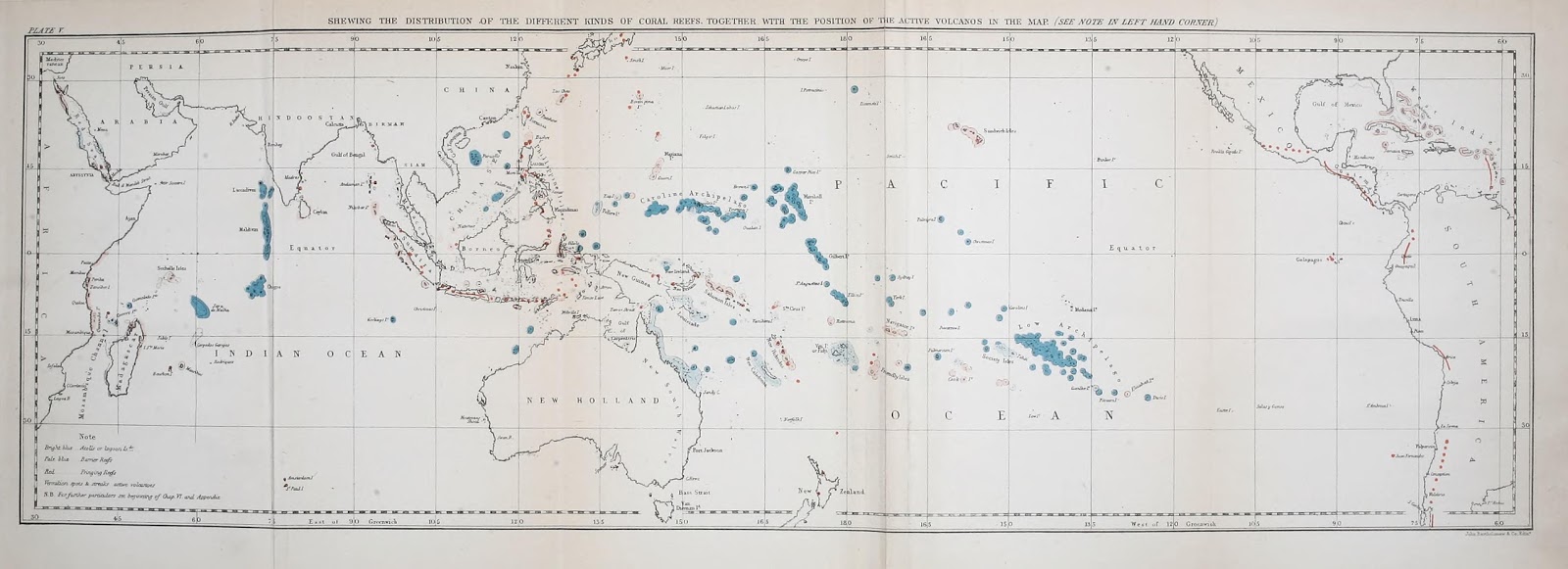
Distribution of known coral reefs of the world during Darwin’s time, including the types. Darwin, Charles. The Structure and Distribution of Coral Reefs. 1842. http://biodiversitylibrary.org/page/40453231.

Darwin developed his theory about the formation of coral reefs and atolls during his famous Beagle voyage (1831-36). He published the theory as his first monograph in 1842 as The Structure and Distribution of Coral Reefs, Being the first part of the geology of the voyage of the Beagle, under the command of Capt. Fitzroy, R.N. during the years 1832 to 1836.

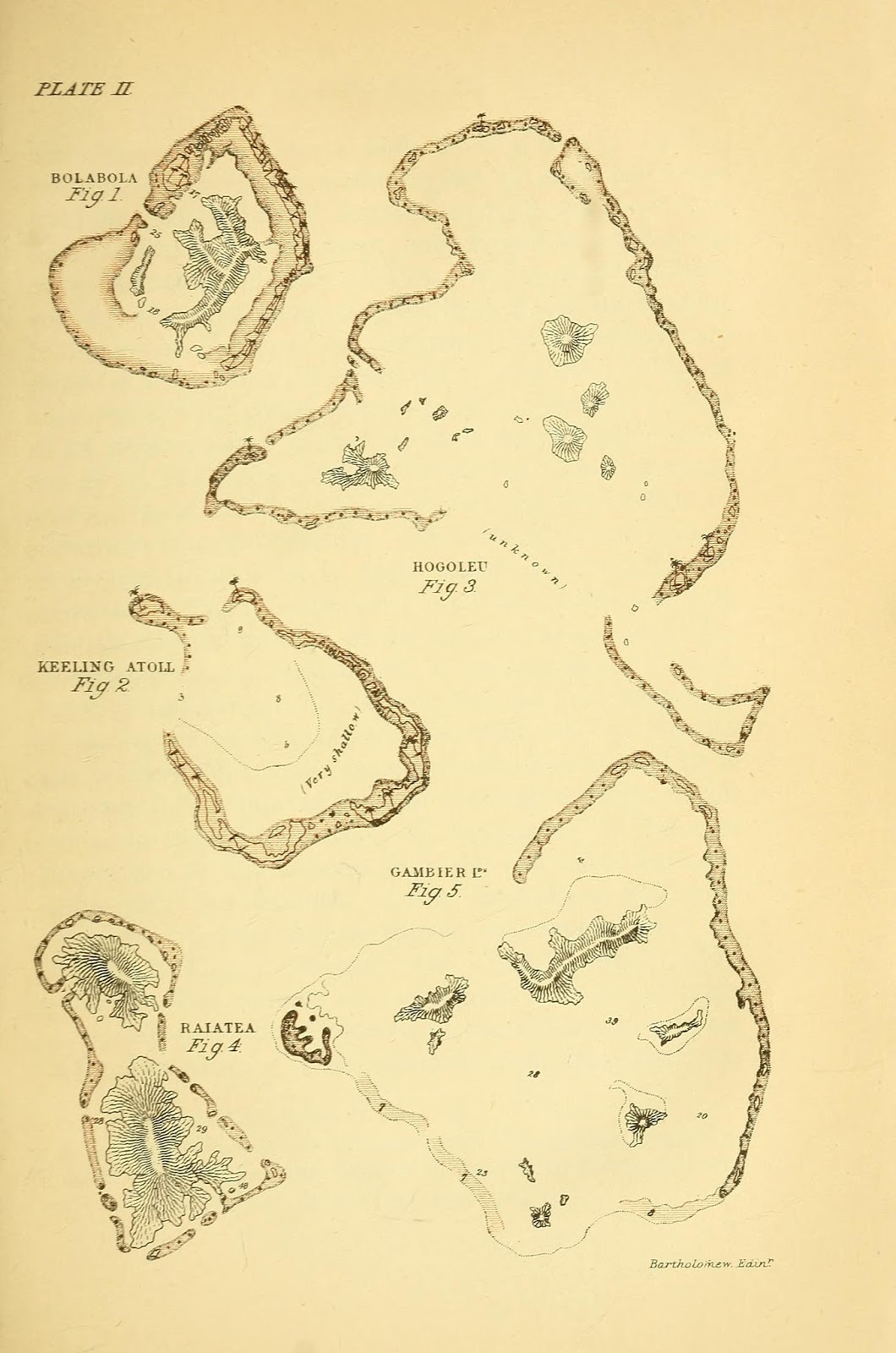
The process by which corals and atolls are formed was a popularly-debated scientific question in the early 19th century. Darwin’s coral theory stated that atolls formed from a gradual process from fringing reefs to barrier reefs and finally atolls. As Gordon Chancellor explains in Darwin Online,

“In clean, agitated, tropical seas corals will form fringing reefs just below low tide level. If the coastline is being elevated (as for example may happen if the island is an active volcano) this type of reef should persist but as soon as the living coral is raised above the surf it will die and become a strip of white limestone. If the coastline is stable, the coral will gradually grow out from the shore to become a barrier reef. If the coast is sinking, as Darwin thought was happening to hundreds of islands in the south Pacific, the coral might keep pace by growing upwards but as the land sinks beneath the waves all that would remain would be a more or less circular atoll. Eventually the rate of subsidence might prove too fast, or (perhaps as in our own times of global warming) sea level will rise too fast and the atoll will die.”

Although Darwin’s theory was widely but not universally accepted during his lifetime, modern investigations support his ideas. Coral Reefs also helped establish Darwin’s reputation as a leading scientific mind and helped provde him with the credibility he needed to have his theory of evolution taken seriously. Indeed, Coral Reefs was not only Darwin’s first monograph, but it also demonstrated a common theme throughout all of Darwin’s theories – that gradual change over time, often the result of an aggregation of the individual actions of small organisms, can account for the entire history of our planet and the species, ecosystems, and geological formations we see today.

View Full Size Image
Various atolls illustrated by Darwin. Darwin, Charles. The Structure and Distribution of Coral Reefs. 1842. http://biodiversitylibrary.org/page/40453240.

The First Textbook on Oceanography: The Physical Geography of the Sea

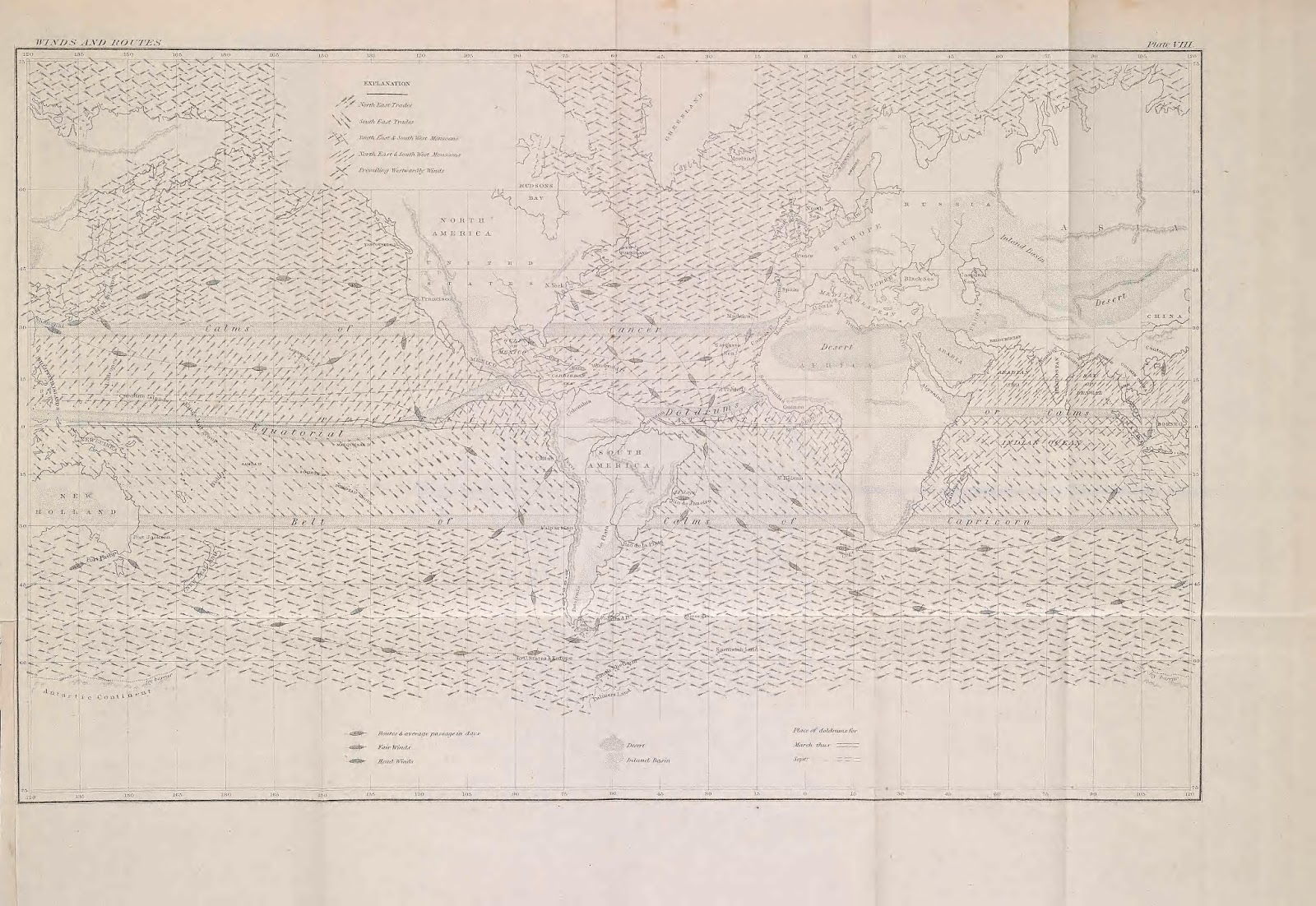
Oceanography is defined as the study of the ocean, and it can include many topics such as marine life, ocean currents, waves, plate tectonics, meteorology, and many others. Matthew Fontaine Maury, who served in the United States Navy from 1825-61, is sometimes called the “Father of Modern Oceanography and Naval Meteorology.” By studying old ship logs, Maury was able to make important deductions about ocean currents and winds, which resulted in the 1847 publication of Wind and Current Chart of the North Atlantic, which amassed this information to produce a guide to help sailors reduce the length of ocean voyages. Maury also used these ship logs to chart whale migrations, and this research in turn led him to advocate for the existence of a Northwest Passage, through which whales could gain access to both the Atlantic and Pacific Oceans.

View Full Size Image
Illustrating various winds, ship passages, and lengths. Maury, Matthew Fontaine. The Physical Geography of the Sea. 1855. http://biodiversitylibrary.org/page/47369923.

In 1855, Maury published The Physical Geography of the Sea, which is considered the first extensive and comprehensive book on oceanography. As Maury states, the work is “a philosophical account of the winds and currents of the sea; of the circulation of the atmosphere and ocean; [and] of the temperature and depth of the sea” and includes discussions about ocean salinity and many perplexing ocean phenomena, including the Gulf Stream. Although today we know that much of Maury’s science is incorrect, this book helped popularize oceans and the science of the seas and laid the foundation for much of the oceanographic research that followed.

The Foundations of Modern Oceanography: The Challenger Expedition

While the field of ichthyology continued to expand throughout the 16th – 19th centuries, and publications on oceanography including ocean currents and their effects on meteorology appeared in the mid-1800s, even by the 19th century, scientific knowledge about Earth’s watery depths was still very limited. In fact, until the middle of the nineteenth century, many still subscribed to the Abyssal Theory, which stated that life could not exist below about 600 meters (2,000 feet).

View Full Size Image
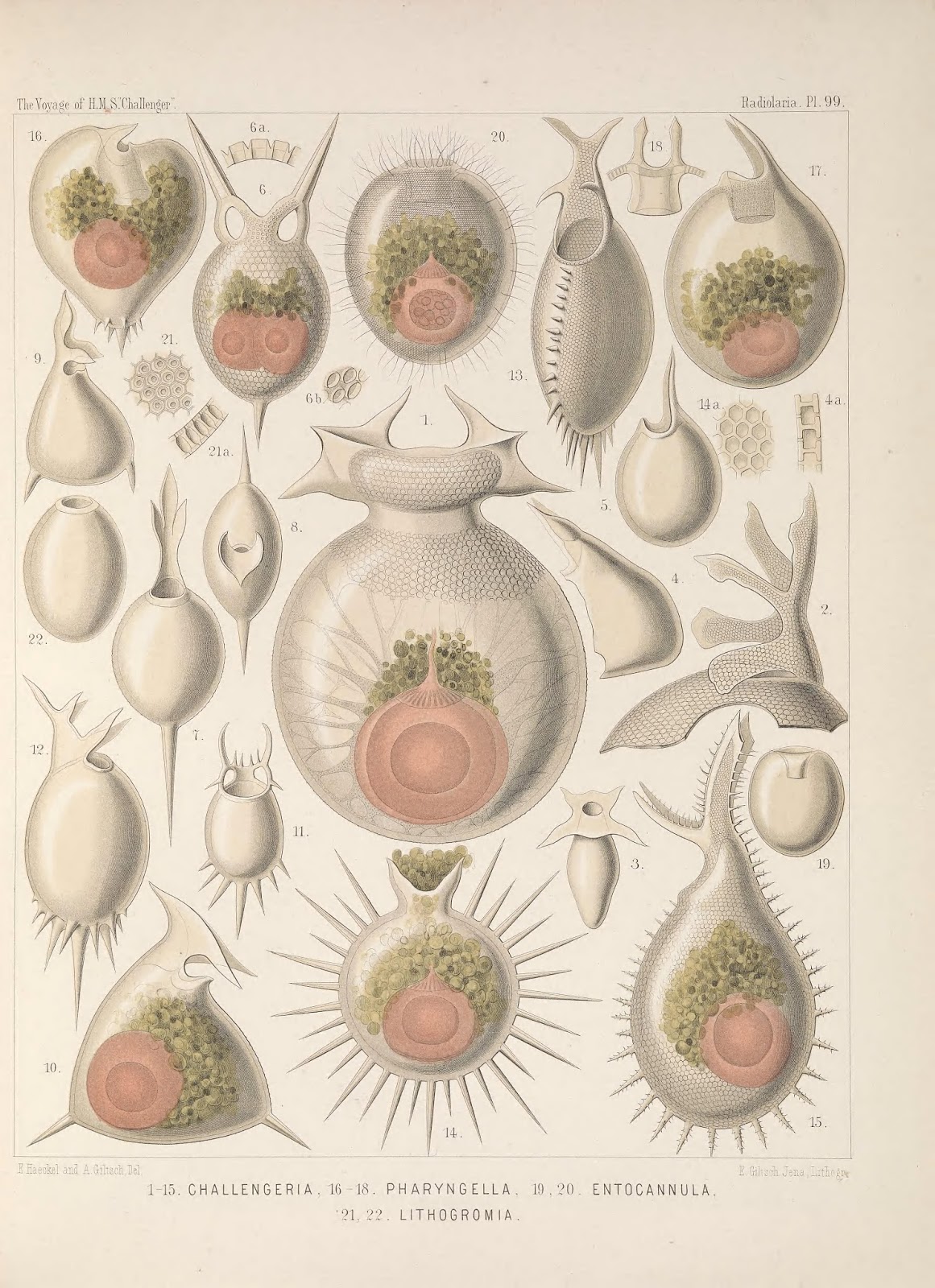
Radiolaria by Ernst Haeckel, collected during the Challenger Expedition. Report on the scientific results of the voyage of H.M.S. Challenger during the years 1873-76. v. 18 plates. 1887. http://biodiversitylibrary.org/page/39632734.

In 1872, the Royal Society of London launched the first non-commercial exploration of the deep sea – the Challenger Expedition. The purposes of the expedition were to investigate the physical conditions of the deep sea, ascertain the chemical composition of seawater at various depths, determine the physical and chemical character and sources of deep-sea deposits, and investigate the distribution of organic life at different depths. The expedition circumnavigated the globe, traveling nearly 70,000 nautical miles from 1872-76, and resulted in the discovery of nearly 4,700 new-to-science species of marine life, 492 deep sea soundings, 133 bottom dredges, 151 open water trawls, and 263 serial water temperature observations. In 1875, the crew also recorded a sounding of 4,475 fathoms, (8,184 meters), which would later prove to be the southern end of the Mariana trench and one of the deepest known places on the ocean floor. The expedition was monumental in broadening knowledge of the ocean’s depths and species, and revolutionized the field of oceanography.

View Full Size Image
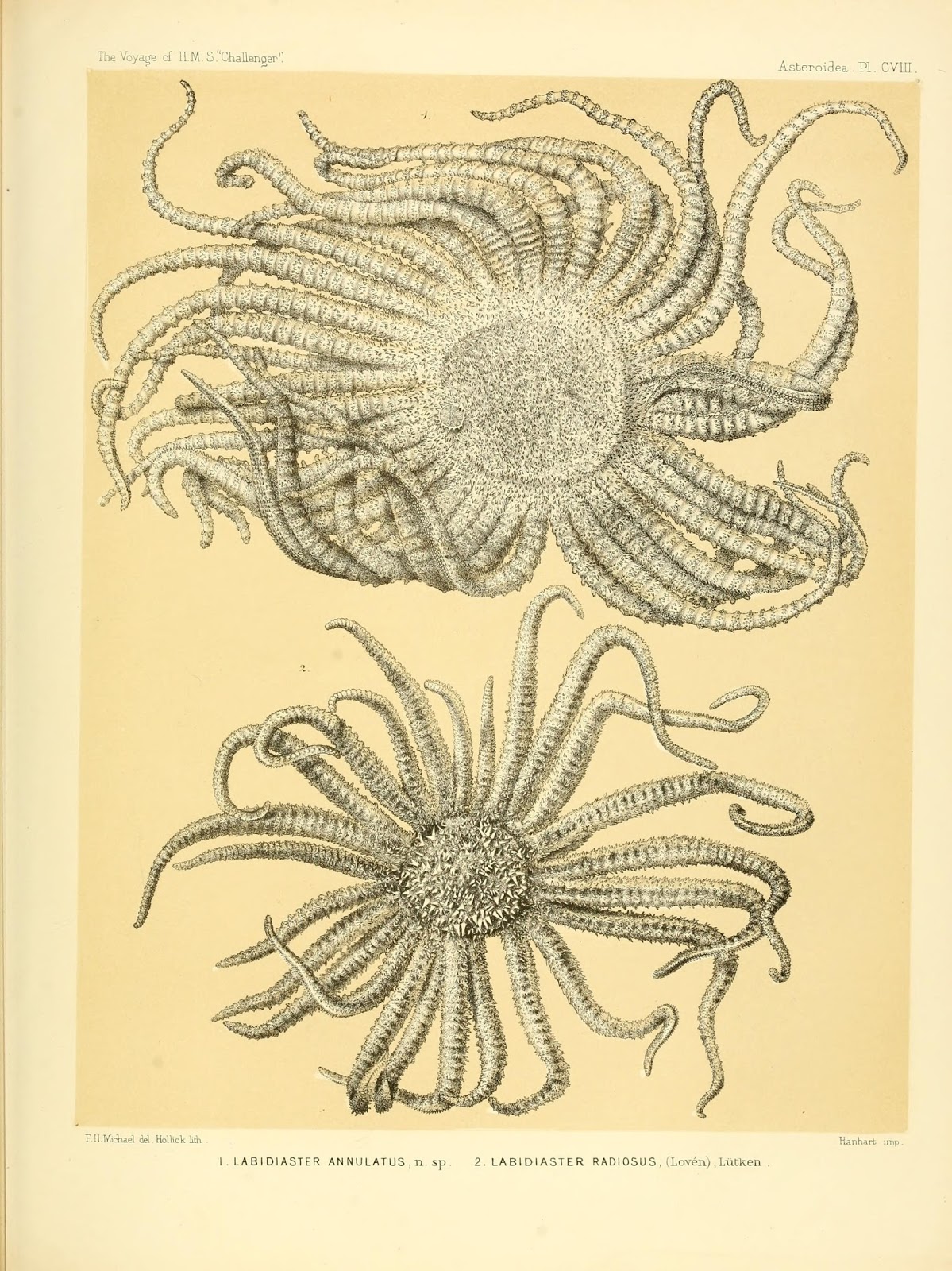
Starfish from Percy Sladen collected during the Challenger Expedition. Report on the scientific results of the voyage of H.M.S. Challenger during the years 1873-76. v. 30 plates. 1887. http://biodiversitylibrary.org/page/25170168.

The findings from the expedition were published in 50 volumes from 1880-95 as the series Report Of The Scientific Results of the Exploring Voyage of H.M.S. Challenger during the years 1873-76. Sir John Murray, pioneering Scottish oceanographer, described the report as, “the greatest advance in the knowledge of our planet since the celebrated discoveries of the fifteenth and sixteenth centuries.”

Uncovering the Deep Ocean: The Valdivia Expedition

The success of the Challenger Expedition ignited a fever to explore the deep sea and the creatures that called it home. In the late nineteenth century, German marine biologist Carl Chun proposed the first German deep-sea expedition, which was approved by Germany’s last Kaiser, Wilhelm II. In 1898, with national funding, the Valdivia Expedition set sail from Hamburg for the subantarctic seas with a mission to sample, record, and study as many deep-sea organisms and habitats as possible. Covering over 32,000 nautical miles and visiting 268 stations around the West Coast of South Africa, the Gulf of Guinea, the Antarctic Sea, and a large portion of the Indian Ocean, the expedition used the dredging techniques popularized on the Challenger Expedition to collect deep-sea specimens. The expedition was a resounding success, resulting in the discovery of many new deep-sea species, including the vampire squid, which Chun named Vampyroteuthis infernalis, meaning “vampire squid from hell.” The results of the expedition were published over a four-decade period in a 24-volume series entitled Wissenschaftliche Ergebnisse der Deutschen Tiefsee-Expedition auf dem Dampfer “Valdivia” 1898-1899.
View Full Size Image
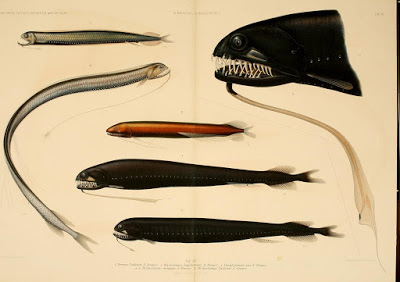
Deep sea fish collected during the Valdivia Expedition. Wissenschaftliche Ergebnisse der Deutschen Tiefsee-Expedition auf dem Dampfer “Valdivia” 1898-1899. Bd. 15, T. 1. 1908. http://biodiversitylibrary.org/page/6002199.

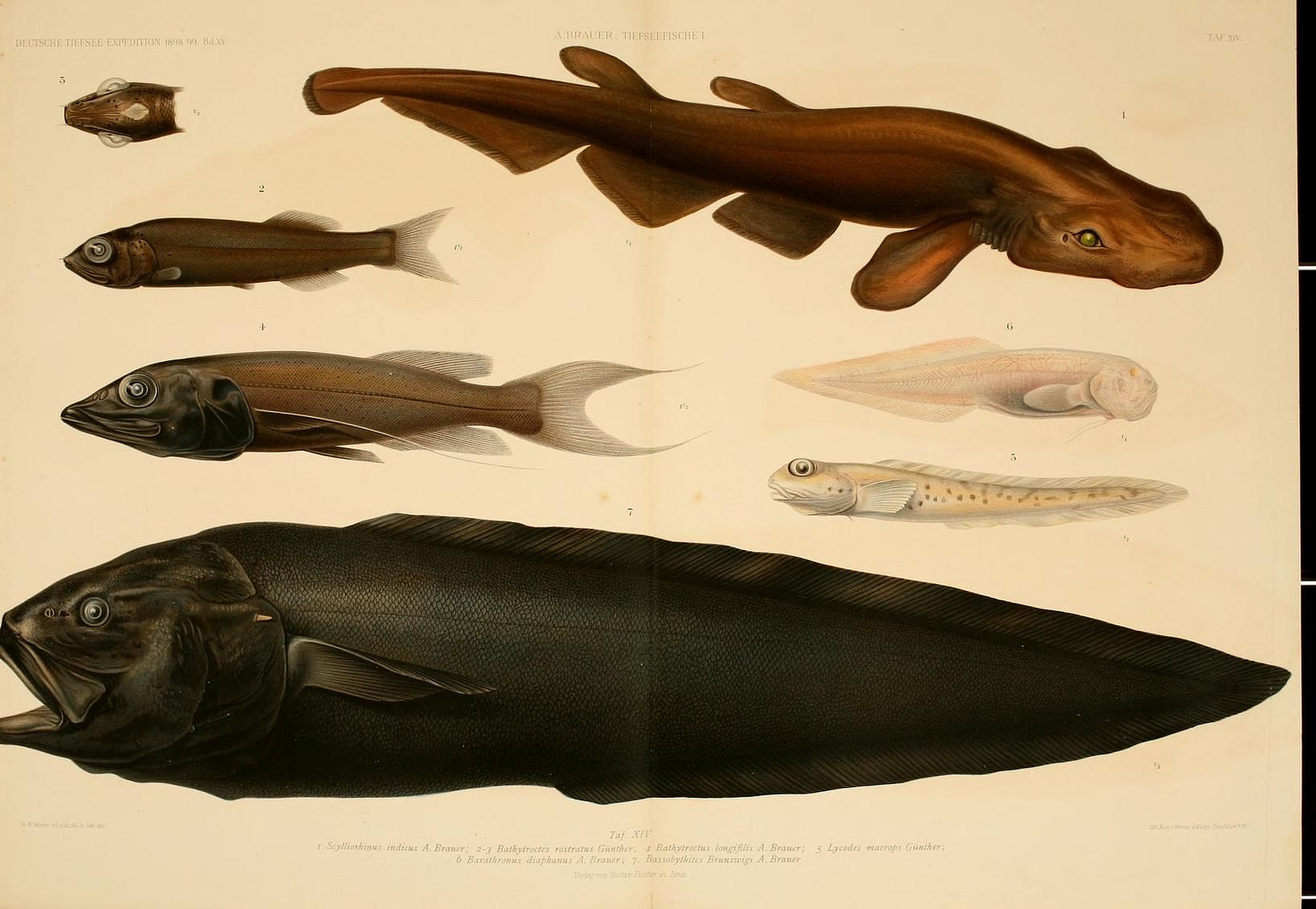
One of the most important volumes in this series was August Brauer’s report on the deep-sea fishes discovered on the expedition. Published as the series’ fifteenth volume in 1908, Die Tiefsee-Fische is considered the starting point of deep-sea ichthyology. The volume also firmly established the widespread global existence of fish in the bathypelagic zone (depth of 3,300-13,000 feet) and documented the sensory adaptations and bioluminescent capabilities of many deep-sea species. A highlight of the publication are the 44 plates created by the shipboard artist and scientific draftsman Fritz Winter, with whom Brauer collaborated closely to ensure the lifelike, accurate representation of the described specimens.

View Full Size Image
Deep sea fish collected during the Valdivia Expedition. Wissenschaftliche Ergebnisse der Deutschen Tiefsee-Expedition auf dem Dampfer “Valdivia” 1898-1899. Bd. 15, T. 1. 1908. http://biodiversitylibrary.org/page/6002204.

More World Oceans Day Resources

  • Follow us on Twitter, Facebook, and this blog all this week as we explore marine biodiversity and awesome related publications in BHL.
  • Check out some monumental publications in historic and present-day marine bioscience research in our BHL collection.
  • Browse a selection of marine biodiversity illustrations in Flickr and Pinterst
June 3, 2015by ulib-libraryjobs
Page 1 of 212»

Help Support BHL

BHL's existence depends on the financial support of its patrons. Help us keep this free resource alive!

search

About BHL

The Biodiversity Heritage Library (BHL) is the world’s largest open access digital library for biodiversity literature and archives. BHL operates as a worldwide consortium of natural history, botanical, research, and national libraries working together to digitize the natural history literature held in their collections and make it freely available for open access as part of a global “biodiversity community.”

Join Our Mailing List

Sign up to receive the latest news, content highlights, and promotions.

Subscribe Now

Subscribe to Blog via Email

Enter your email address to subscribe to this blog and receive notifications of new posts by email.

Join 319 other subscribers

Subscribe to Blog Via RSS

Subscribe to the blog RSS feed to stay up-to-date on all the latest BHL posts.

Access RSS Feed

Inspiring Discovery through Free Access to Biodiversity Knowledge.

The Biodiversity Heritage Library makes it easier than ever for you to access the information you need to study and explore life on Earth…for free, anytime, anywhere.


64+ Million Pages of
Biodiversity Literature Online.

EXPLORE

Tools and Services
to Transform Research.

EXPLORE

300,000+
Illustrations on Flickr.

EXPLORE

ABOUT | HARMFUL CONTENT | PRIVACY | SITE MAP | TERMS OF USE