Biodiversity Heritage Library - Program news and collection highlights from BHL
  • Home
  • News
  • Featured Books
    • All Featured Books
    • Book of the Month Series
    • BHL at 20
  • User Stories
  • Campaigns
    • Fossil Stories
    • Garden Stories
    • Monsters Are Real
    • Page Frights
    • Her Natural History
    • Earth Optimism 2020
  • Tech Blog
  • Visit BHL
Home
News
Featured Books
    All Featured Books
    Book of the Month Series
    BHL at 20
User Stories
Campaigns
    Fossil Stories
    Garden Stories
    Monsters Are Real
    Page Frights
    Her Natural History
    Earth Optimism 2020
Tech Blog
Visit BHL
  • Home
  • News
  • Featured Books
    • All Featured Books
    • Book of the Month Series
    • BHL at 20
  • User Stories
  • Campaigns
    • Fossil Stories
    • Garden Stories
    • Monsters Are Real
    • Page Frights
    • Her Natural History
    • Earth Optimism 2020
  • Tech Blog
  • Visit BHL
Biodiversity Heritage Library - Program news and collection highlights from BHL
Blog Reel, Campaigns, Featured Books

World Oceans Day through Books: The Truth about Terra Australis

This post is the second in our series leading up to the celebration of World Oceans Day on June 8. This series explores publications that represent important milestones in the progress of marine bioscience research and ocean exploration.

The Quest for Terra Australis: The Expeditions of James Cook

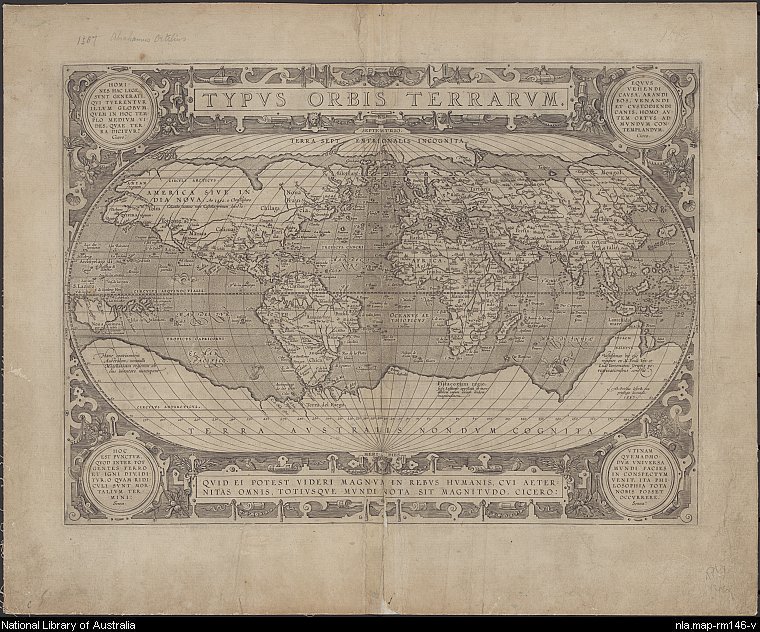
As far back as antiquity, Western scholars theorized the existence of a great southern continent that they called Terra Australis. While the continent found its way onto many early European maps, this presentation was not based on actual surveys but instead the hypothesis that landmasses in the Northern Hemisphere must be balanced by respective landmasses in the Southern. Depictions generally included a single landmass encompassing the South Pole and spreading far north to include Australia, New Zealand and, at its most extreme, even Tierra del Fuego.

View Full Size Image
Map showing imagined Terra Australis. Ortelius, Abraham, 1527-1598. Typus orbis terrarum. Quid ei potest videri magna in rebus cui alter nitas omnis, totiusque mundi nota sit mangitudo. Cicero [cartographic material] 1587. MAP RM 146. http://nla.gov.au/nla.map-rm146. National Library of Australia.

By the mid-18th century, some Europeans claimed to have seen this great southern continent, but details were scarce and verification virtually non-existent. The intrigue prompted the British Admiralty and Royal Society to direct Lieutenant James Cook, as part of a larger mission from 1768-71 to observe the transit of the planet Venus from Tahiti, to search for Terra Australis.
View Full Size Image
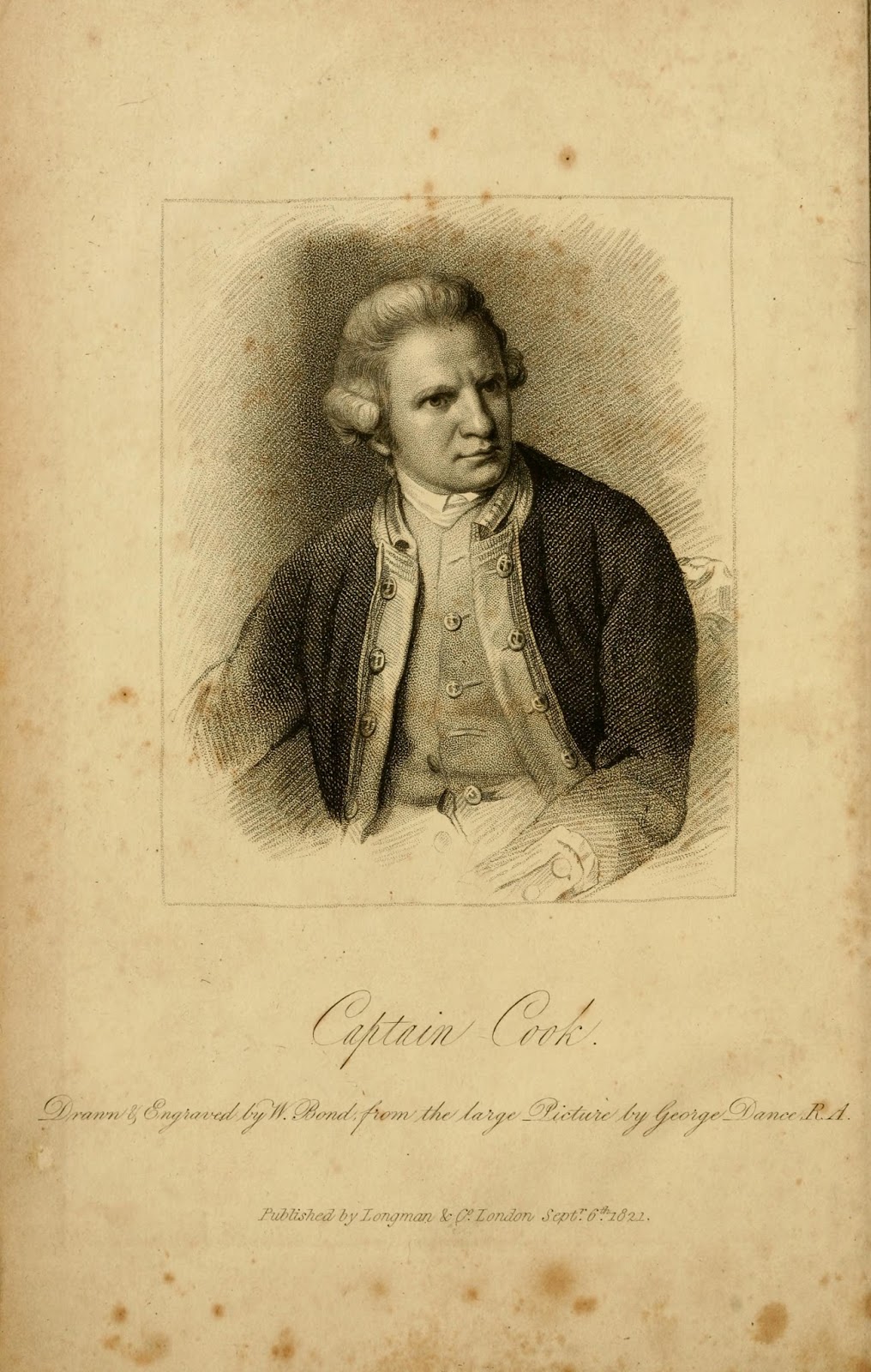
Portrait of James Cook. The three voyages of Captain James Cook round the world. v. 1. 1921. http://biodiversitylibrary.org/page/6227900.

In September 1769, Cook’s ship, the Endeavour, reached New Zealand, after which Cook spent six months circumnavigating the island to ultimately establish that it was not, as was commonly believed, part of the “southern continent.” From New Zealand, Cook and his crew sailed towards Australia, becoming the first recorded Europeans to reach the Australian east coast in April 1770. Sailing north, Cook charted over 5,000 miles of coastline and further demonstrated that Australia and New Guinea were not connected.

Cook went on to command two additional expeditions, the second of which (1772-75) brought Cook closer to the South Pole than any recorded previous navigator, finally disproved the existence of a large southern continent as expansive as the envisioned Terra Australis, demonstrated that chronometers were a practical means of determining longitude at sea, and laid the foundations for a modern map of the South Pacific, thus paving the way for future explorations in the area.
View Full Size Image
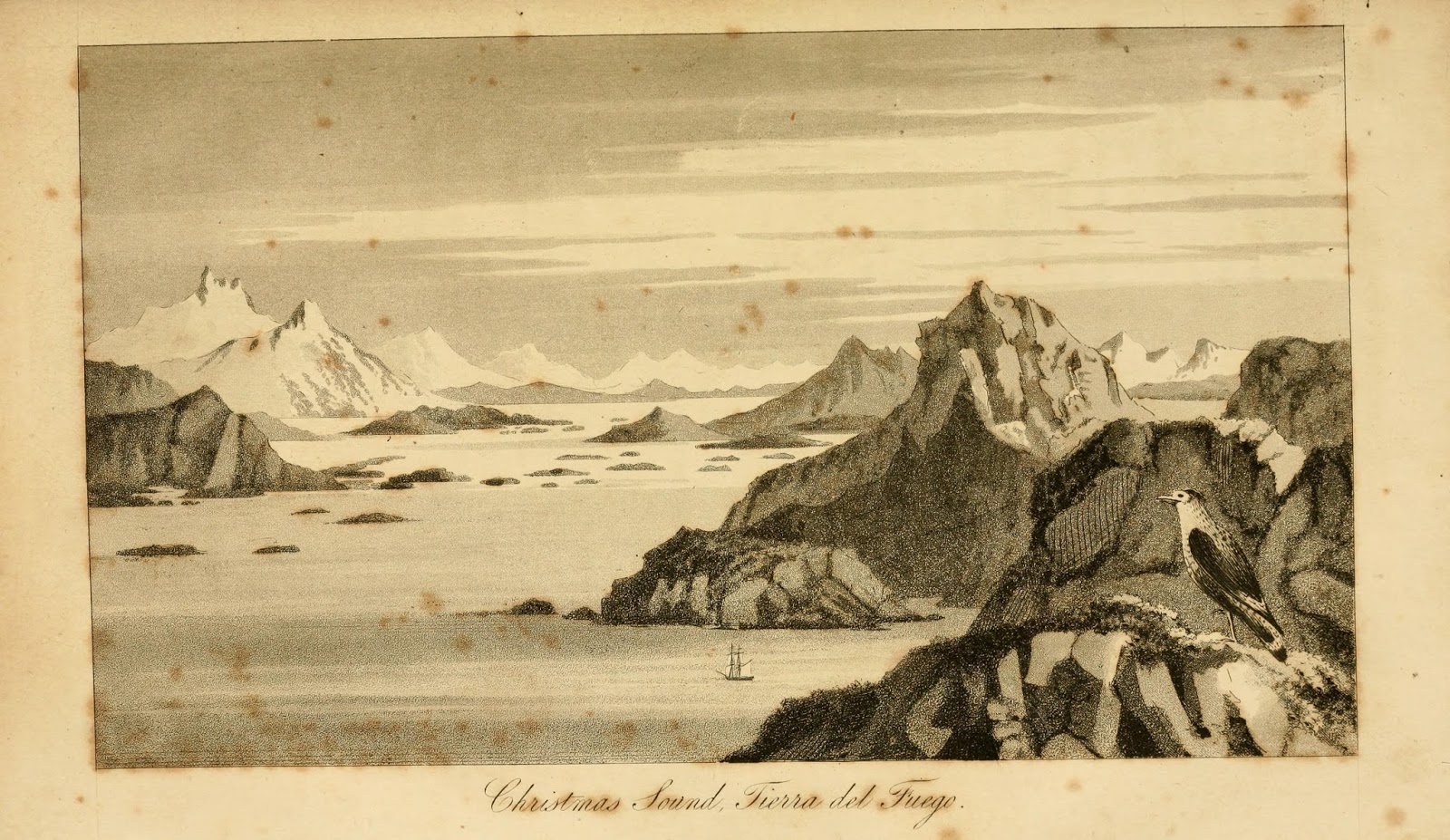
Cook, James. Christmas Sound, Tierra del Fuego. From Cook’s second voyage (1772-75). The three voyages of Captain James Cook round the world. v. 4. 1921. http://biodiversitylibrary.org/page/6258591.

Cook’s third and final voyage (1776-80) attempted to discover the elusive northwest passage. Although he was unsuccessful, he did become the first recorded European to visit the Hawaiian Islands and charted the coast of northwest America. Tragically, Cook was killed on the return voyage during a confrontation on the Hawaiian Islands on 14 February 1779.
View Full Size Image
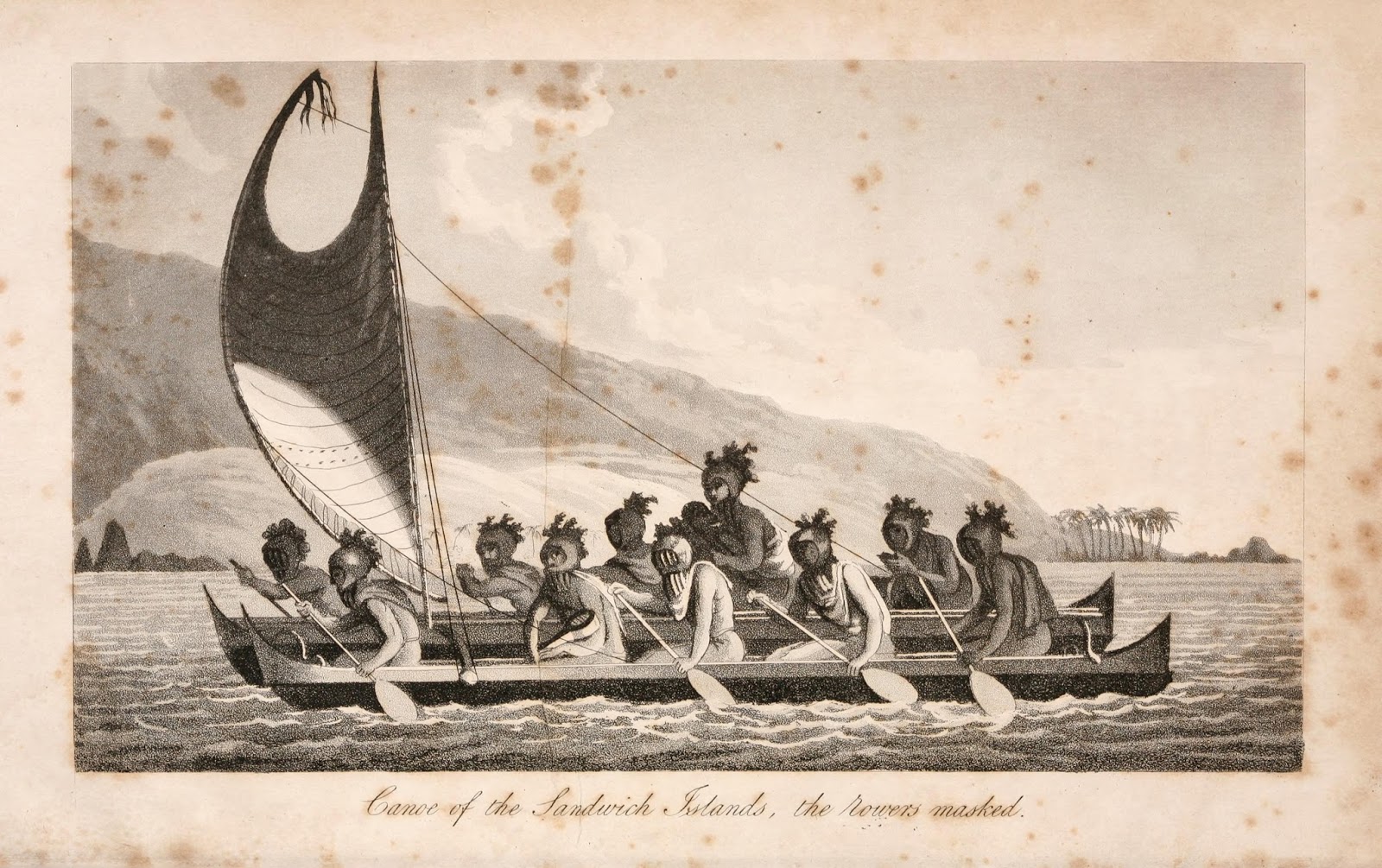
Canoe of the Sandwich (i.e. Hawaiian Islands). From Cook’s third voyage (1776-80). The three voyages of Captain James Cook round the world. v. 6. 1921. http://biodiversitylibrary.org/page/1803270.

Cook’s achievements did much to pave the way for future oceanic exploration, especially around Australia. He helped lift the veil of uncertainty surrounding “Terra Australis,” and helped to establish a viable method by which to more easily navigate the oceans (via a chronometer). Furthermore, by methodically enforcing cleanliness and ventilation on his ships and a balanced diet for his crew, he dramatically improved the living conditions and health of his crew and set new standards for future expeditions.

An account of Cook’s three voyages, taken in part from his journals, are available in the seven volumes of The Three Voyages of Captain James Cook around the World (1821).

Exploring Oceania: Voyage of the Astrolabe

Following Cook’s expedition, France and England vied intensely for southern possessions, resulting in many expeditions that expanded our knowledge of the oceans and marine life around Australia and New Zealand.

Early French expeditions to the region included the 1800-1804 cartographic survey of Australia’s coastline, under Nicolas Thomas Baudin, which resulted in the first published detailed chart of Australia, and the voyage of the Coquille from 1822-25, under the command of Louis Isidore Duperrey. Navigator Jules-Sébastien-César Dumont d’Urville served as second-in-command on the Coquille expedition, and just two months after its return, d’Urville requested a second voyage to the South Seas, this time with him in command.
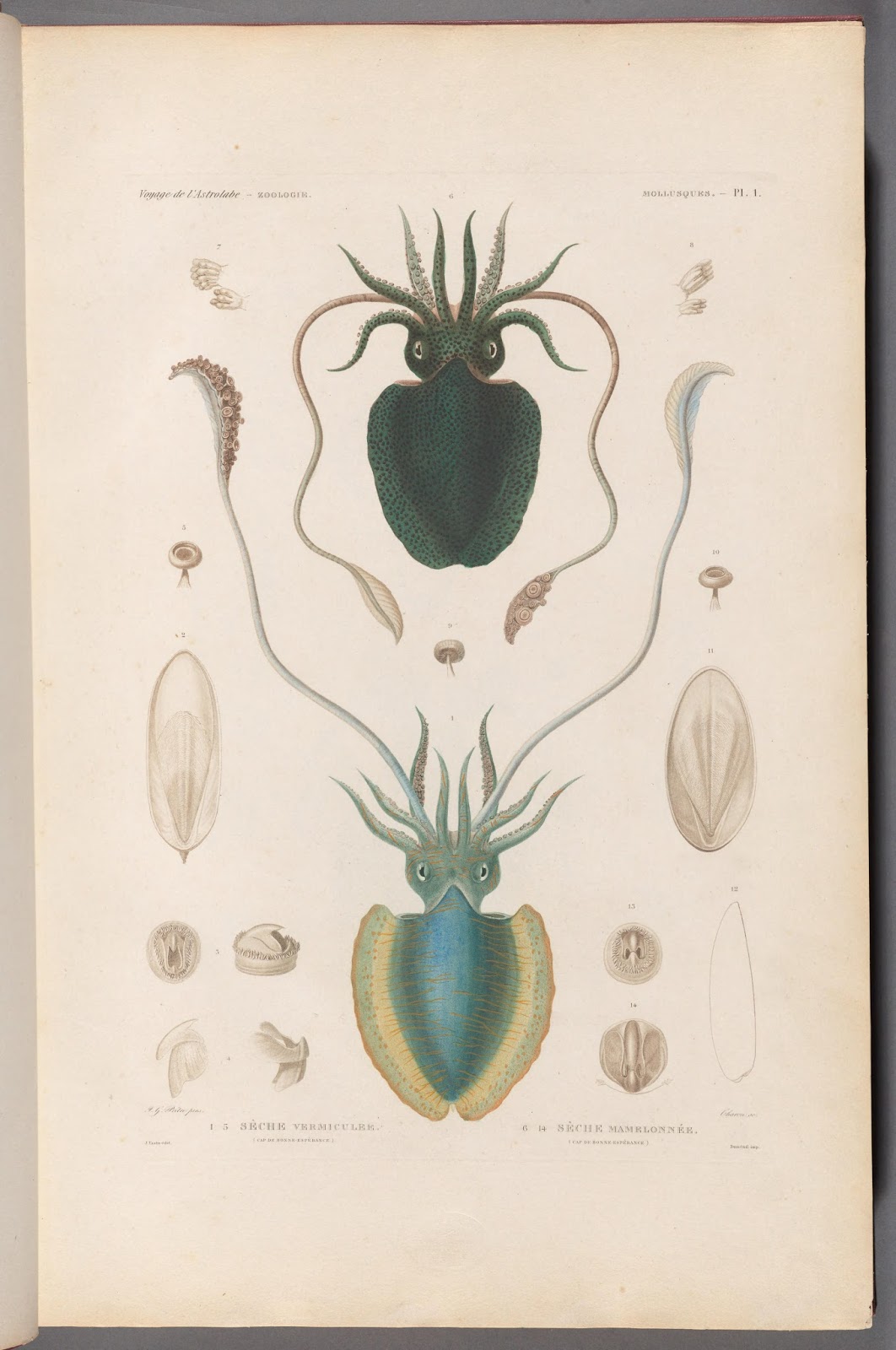
View Full Size Image
Cuttlefish. Dumont d’Urville, Jules-Sébastien-César. Voyage de la corvette l’Astrolabe : exécuté par ordre du roi, pendant les années 1826-1827-1828-1829. 1830-34. http://biodiversitylibrary.org/page/46298902.

In 1826, the Coquille, renamed the Astrolabe, set sail with a mission to chart the unknown regions of Oceania. This time, the expedition also included many worthy naturalists, including Pierre Adolphe Lesson, Jean René Constant Quoy, and Joseph Paul Gaimard. The expedition resulted in the discovery of many new-to-science species in Oceania, important ethnographic studies, and “the first tentative speculations as to how coral reefs and atolls could have formed in the middle of the deep tropical oceans” (Stiassny, 51). The expedition’s findings were published in a fourteen-volume series from 1830-34, entitled Voyage de la corvette l’Astrolabe.
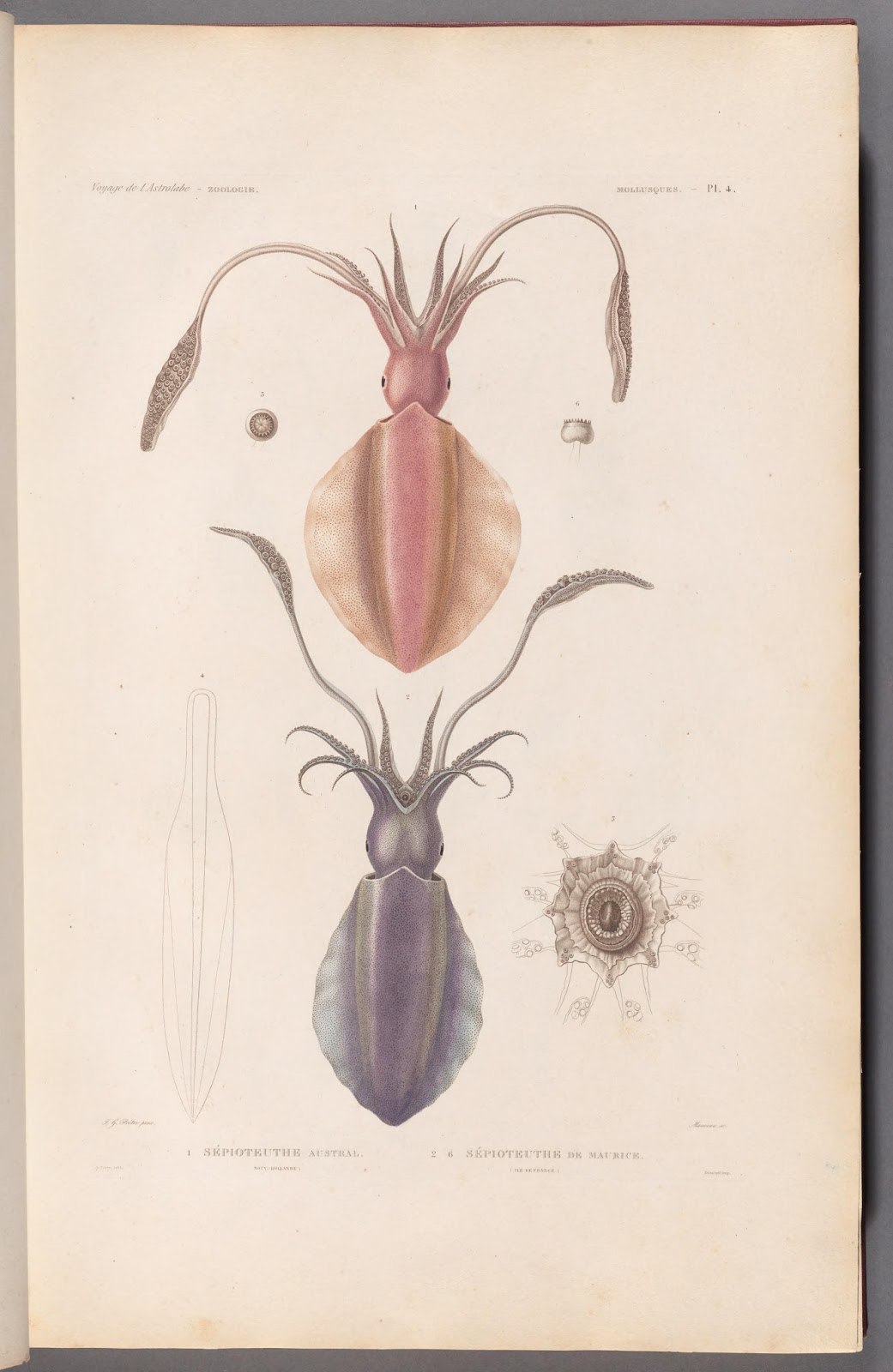
View Full Size Image
Reef Squids. Dumont d’Urville, Jules-Sébastien-César. Voyage de la corvette l’Astrolabe : exécuté par ordre du roi, pendant les années 1826-1827-1828-1829. 1830-34. http://biodiversitylibrary.org/page/46298896.

More World Oceans Day Resources

  • Follow us on Twitter, Facebook, and this blog all this week as we explore marine biodiversity and awesome related publications in BHL.
  • Check out some monumental publications in historic and present-day marine bioscience research in our BHL collection.
  • Browse a selection of marine biodiversity illustrations in Flickr and Pinterst
June 2, 2015by michelle.underhill
Blog Reel, Campaigns, Featured Books

World Oceans Day through Books: The Roots of Modern Ichthyology

This post is the first in our week-long celebration leading up to World Oceans Day on June 8. Tune in all week for awesome marine biodiversity fun!

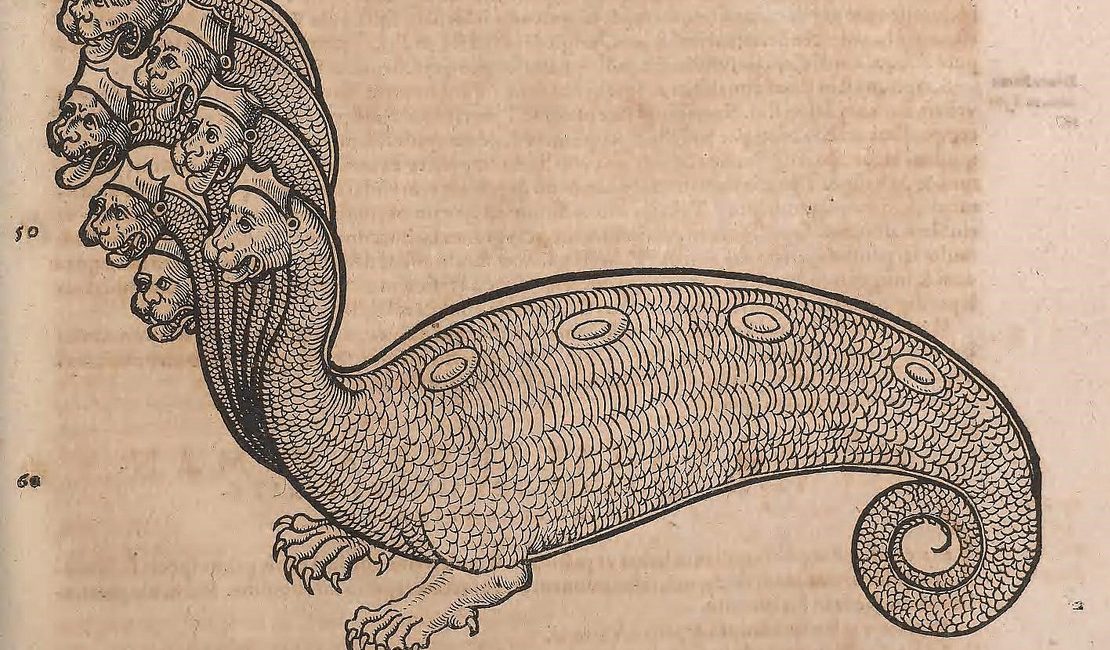
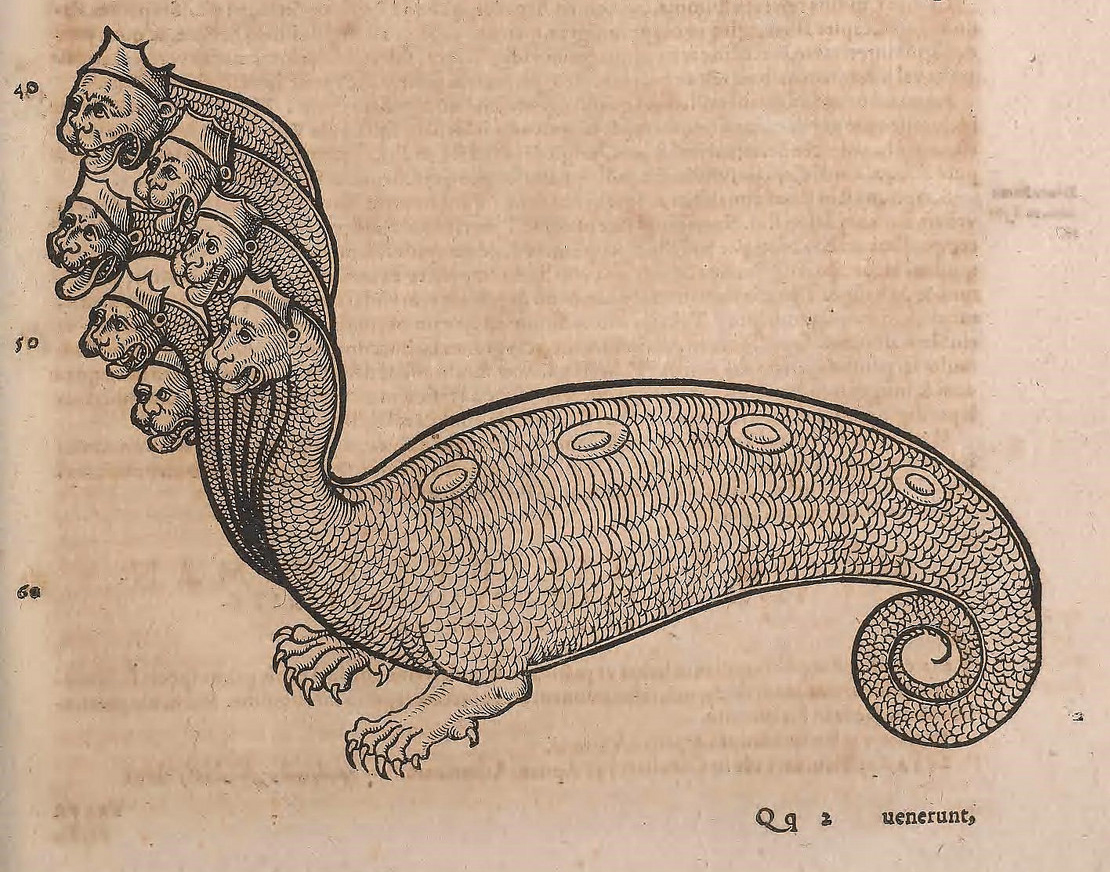
In the context of human history, ocean exploration is a relatively recent occurrence. Even by the 19th century, human knowledge of the oceans was still limited, and the flora and fauna that called the sea home, particularly within the depths, remained virtually unknown. Publications by individuals such as Olaus Magnus and Conrad Gessner in the mid-16th century represent some of our first attempts to systematically aggregate and describe biodiversity and many marine species. Much of this published information, however, was based on accounts from antiquity or spotty, second-hand narratives from sailors, hence the representation of many mythical creatures, such as the Kraken, hydra, or sea serpent, as real species.

View Full Size Image
The hydra, as depicted by Conrad Gessner in Historia Animalium. 1551-58. http://biodiversitylibrary.org/page/42166090.

But over the centuries, human exploration increased, and with it, our knowledge of the oceans and marine biodiversity. This knowledge and a record of our scientific discoveries are captured within the pages of natural history literature.

In honor of World Oceans Day on June 8, we’ve compiled a collection of publications that represent important milestones in the progress of marine bioscience research and ocean exploration. These publications will be presented in a three-part series. But while we know significantly more today than we did in the 16th century (few today, for example, would argue that the Hydra is a real species), we still have a great deal to learn about an environment that covers almost 71% of the Earth’s surface. Oceans may in fact be our true final frontier.

The Start of Modern Ichthyology: De Aquatilibus

By the mid-1500s, the birth of modern zoology, with attempts to bring together all available knowledge about Earth’s biodiversity in a systematic way, was underway. Conrad Gessner’s Historia Animalium, published in 1551-58, is in fact considered the beginning of modern zoology. This work, however, like many others of its time, is not based solely on personal observation and analysis but instead includes much inherited knowledge from ancient naturalists like Aristotle and Pliny. The result is the depiction of both mythical and authentic species.

View Full Size Image
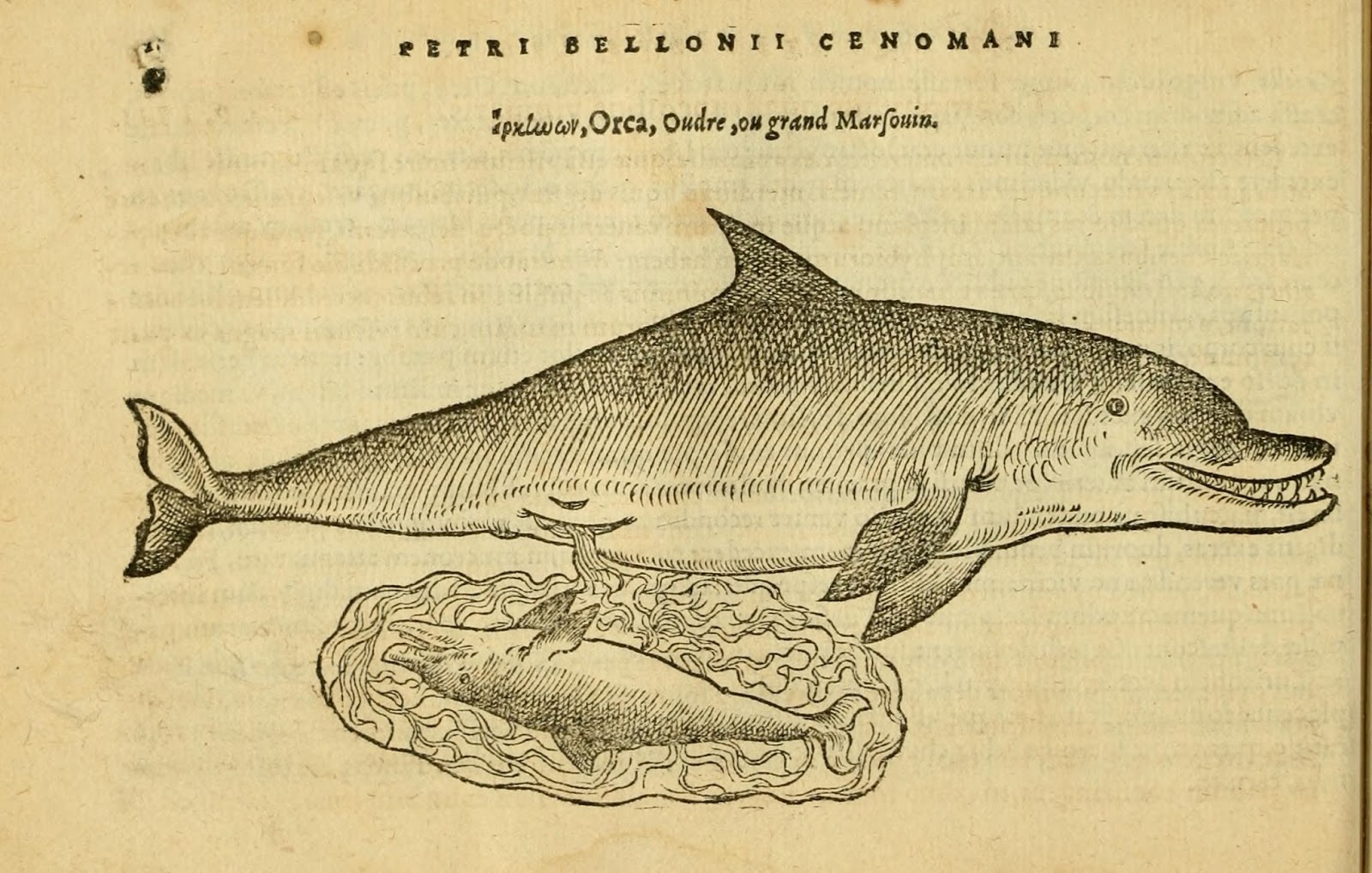
Belon portrayed many dolphins, their embryos, and reproductive anatomy within De aquatilibus, marking the beginning of modern embryology. Belon, Pierre. De aquatilibus. 1553. http://biodiversitylibrary.org/page/4770162.

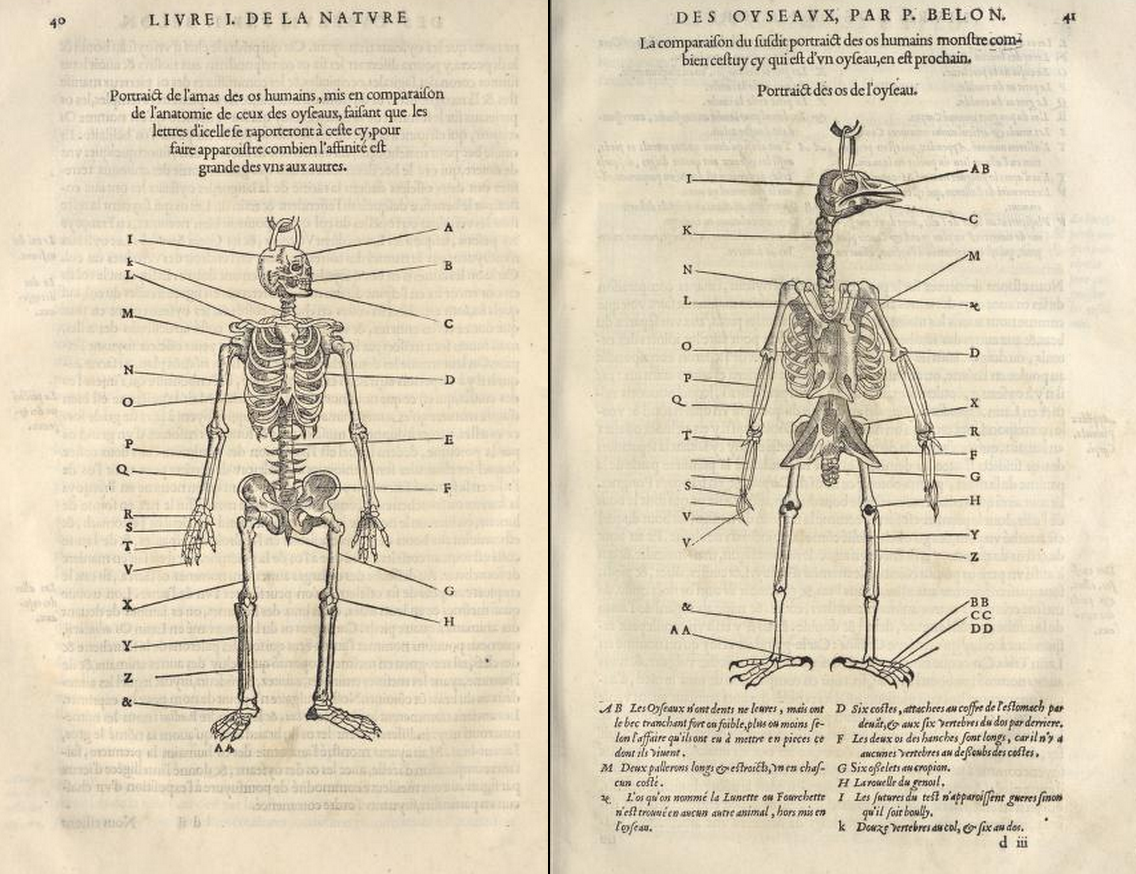
Around the time of Gessner’s publication, Pierre Belon, a French naturalist who started practice as an apothecary, studied medicine, and later undertook many travels that fueled his interest in natural history, published De aquatilibus (1553), describing and illustrating over 100 fish, sharks, and rays, as well as many marine mammals. Belon details the outward characteristics of the species he depicts and classifies his divisions of aquatic animals by size, skeletal structure, mode of propagation, number of limbs, form of the body, and habitat. As such, De aquatilibus is considered by many to be the beginning of modern ichthyology. The work also includes detailed descriptions of dolphins, their embryos, and reproductive anatomy, and thus is also considered the start of modern embryology. In a later work, Belon also illustrated comparisons between human and bird skeletons, a pioneering advancement in comparative anatomy.

View Full Size Image
Skeleton of a bird and human side-by-side, a pioneering advancement in comparative anatomy. Belon, Pierre. L’histoire de la natvre des oyseavx. (1555). http://biodiversitylibrary.org/page/43989554.

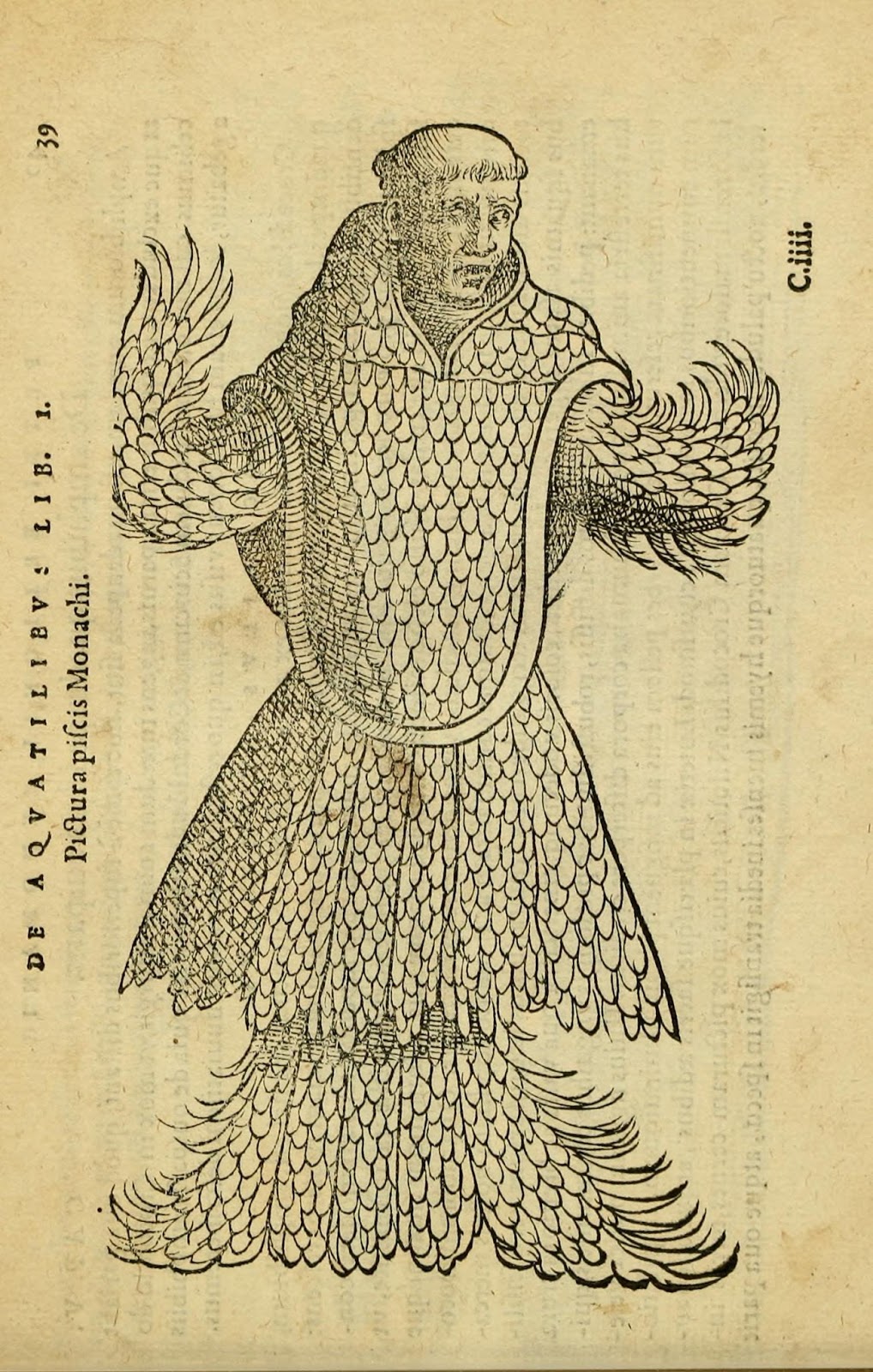
Belon stressed the importance of observation in scientific study and communication, chastising those who simply relied on and proliferated historic accounts stemming from the titans of antiquity. However, despite this charge, Belon does include some fantastical creatures within his book, including the “sea monk” and “web-footed horse of Neptune.”

View Full Size Image
Mythical “sea-monk,” possibly based on a stranded squid. Belon, Pierre. De aquatilibus. 1553.  http://biodiversitylibrary.org/page/4770183.

Sadly, Belon’s life was cut tragically short. He was murdered by unknown assailants in the Bois de Boulogne in 1564 at the age of 47.

Observation over Authority: Aquatilium Animalium 

Belon was not alone in his directive to base scientific study on observation rather than the authority of antiquity. Italian physician Hippolito Salviani, whom Belon met during his travels in Rome, took a marked interest in natural history, particularly ichthyology. Salviani, in fact, proclaimed that he would not publish anything that he himself had not observed and ascertained to be true.

View Full Size Image
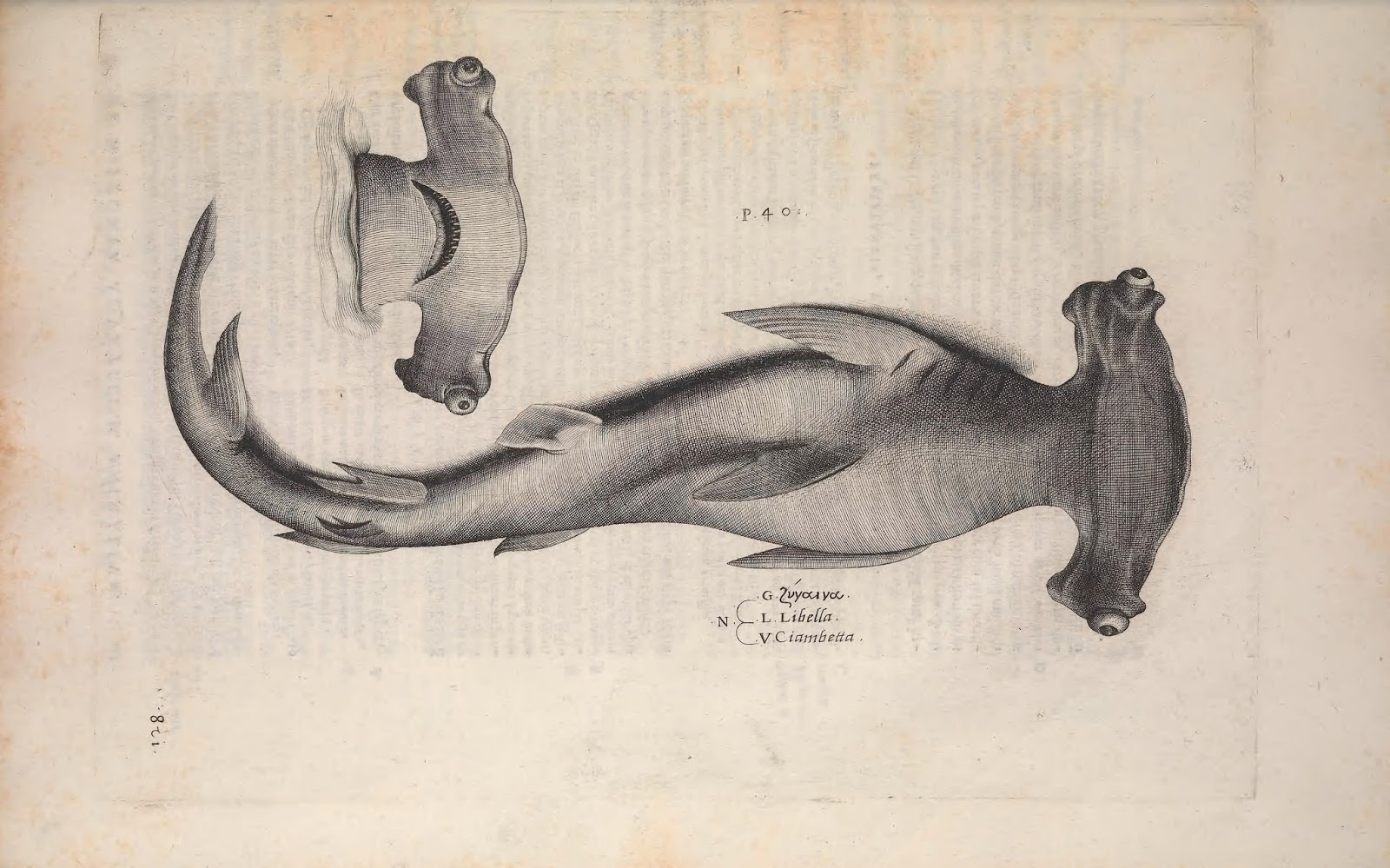
Smooth hammerhead shark (Sphyma zygaena). Salviani, Hippolito. Aquatilium Animalium Historiae. 1554-58. http://biodiversitylibrary.org/page/44715878.

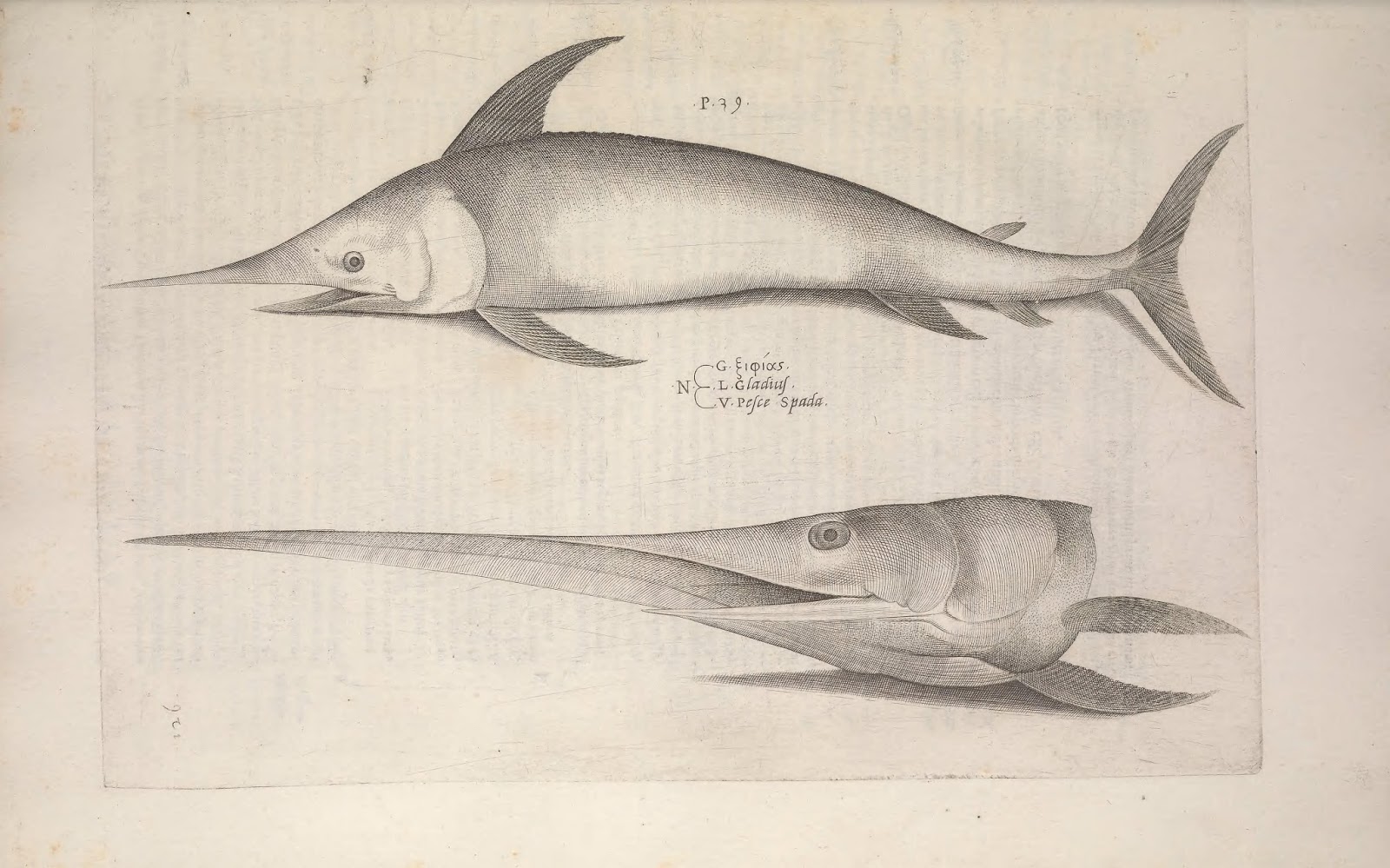
In the mid-1500s, Salviani worked to produce his own masterpiece on fishes. His 1554-58 Aquatilium Animalium Historiae includes two folio volumes and eighty-eight full-page copper engravings and describes only those fish species that he personally observed and studied. He gathered many of his specimens from local fishermen and markets. His descriptions not only include external characteristics but many additional aspects such as “habitat, behaviors and reproduction, methods of capture, nutritional and medicinal usages, and often even cooking techniques” (Stiassny, 5). Salviani’s employment of detailed copper engravings resulted in illustrations with a much more life-like appearance than the woodcuts utilized by his peers, including Belon. Salviani was also the “first to narrow the concept of ‘fish’ from a broad notion embracing all marine animals [as was the custom of the time] to instead include only the bony and cartilaginous fishes” (Stiassny, 5). As such, Salviani and Belon are often considered the two founding fathers of ichthyology.

View Full Size Image
Swordfish (Xiphias gladius). Salviani, Hippolito. Aquatilium Animalium Historiae. 1554-58. http://biodiversitylibrary.org/page/44715874.

More World Oceans Day Resources

  • Follow us on Twitter, Facebook, and this blog all this week as we explore marine biodiversity and awesome related publications in BHL.
  • Check out some monumental publications in historic and present-day marine bioscience research in our BHL collection.
  • Browse a selection of marine biodiversity illustrations in Flickr and Pinterst
Reference

  • Stiassny, Melanie. Natural Histories: Opulent Oceans. New York: Sterling Publishing, 2014. Print.
June 1, 2015by michelle.underhill
Blog Reel

Finding Artistic Inspiration in Biodiversity Literature

It’s no surprise that the natural history books and archives available in the BHL collection are of vital importance to scientists and modern scientific research. They not only provide species and habitat information, sometimes representing the only available knowledge for rare, endangered, and extinct species, but also help scientists identify new species, inform holistic conservation efforts, and provide the foundations upon which current scientific models are based.

Science is not the only discipline that makes use of BHL’s collections. Historians and psychologists, for example, find invaluable information within the pages of historic biodiversity literature. Artists, too, uncover bountiful creative inspiration within BHL’s 45+ million pages.

Within natural history publications are millions of stunning images, ranging from simple woodcuts to elaborately hand-colored engravings, chromolithographed plates, and photographs. We’ve made nearly one hundred thousand of these images available in our Flickr collection, and through a partnership with Internet Archive, we will soon have over a million available in Flickr Commons. We’ve asked you to help us improve access to these images through Flickr tagging and crowdsourcing in the new Zooniverse Science Gossip project.

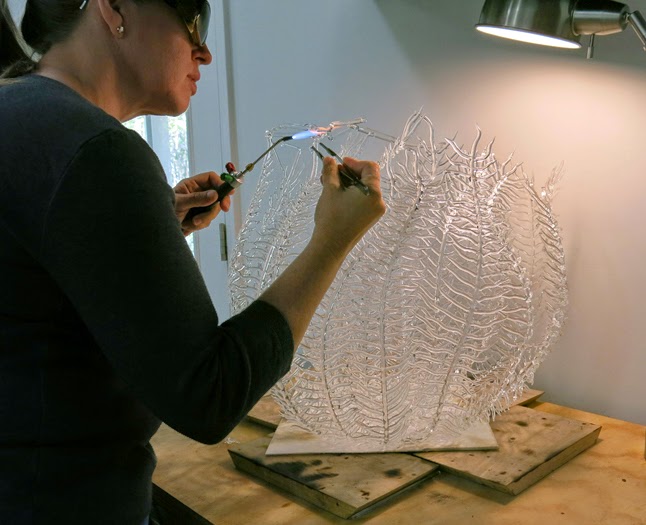
While these efforts will broaden the reach and impact of BHL’s visual treasures, many users have already discovered these gems for themselves, including sculptor and glass artist Emily Williams.

View Full Size Image
Emily Williams creating Glass Seaweed sculpture in her Columbus, Georgia studio.

Working professionally as a sculptor for 30 years, Emily is an Adjunct Art Professor at Troy University and a full-time Glass Artist. Through Twitter, Emily is able to connect to many world-class organizations promoting environmental conservation. It is also the medium through which she discovered BHL; it was love at first sight.

“The Biodiversity Heritage Library is an amazing resource for visual artists,” lauds Emily. “Any artist interested in learning about natural history and science would consider these rare resources invaluable. When I first began working on a series of ocean life forms I ran into some problems. Finding detailed illustrations of certain ocean life forms can be very difficult and time-consuming. Through the BHL website I can input various search terms to access an abundance of research materials. I am most drawn to the digitized books from the 19th century containing beautiful, detailed illustrations. Often these are great works of art! I have found hundreds of detailed illustrations of coral, seaweed, algae, and jellyfish. Most recently, I have uncovered some astounding scientific illustrations of Crinoids! These 19th century illustrations are a wellspring of inspiration for my current ocean life series in glass.”

View Full Size Image
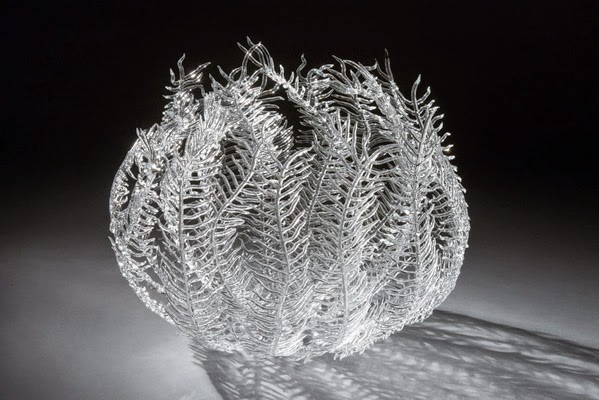
Glass Seaweed sculpture by Emily Williams, 2014. Created using borosilicate glass and a glass hand-torch.

A self-described “binge user” of BHL, Emily collects images and information about specific marine species that she wishes to create in glass, downloading the illustrations (sometimes as JPEG2000s) and PDF text files and storing them in subject-specific folders on her computer. She uses them to inspire masterpieces such as her recent borosilicate glass seaweed sculpture.

View Full Size Image
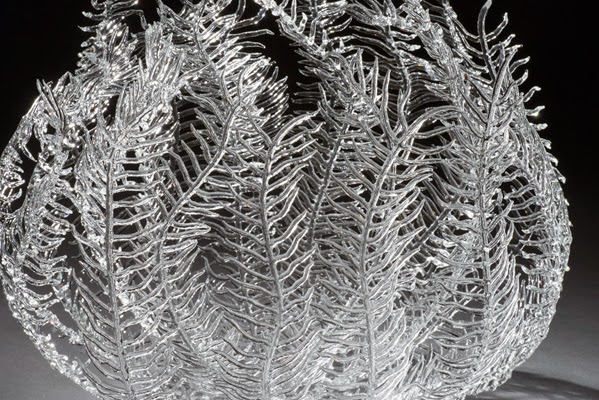
Detail of Glass Seaweed sculpture by Emily Williams, 2014. Created using borosilicate glass and a glass hand-torch.

The ability to search by subject within BHL is invaluable for Emily.

“The search feature will pull up all sorts of items including many old, rare books with illustrations,” extols Emily. “When I locate an item to investigate further I like to use the multiple page view (thumbnails) that allows me to quickly scan every page in the book. With the thumbnail feature I can see right away if there are any illustrations of interest to my research. Being a visual artist I find the high-resolution images invaluable. This allows me to enlarge and examine intricate illustrations as if using a microscope!”

This method allows Emily to discover new favorite books in BHL constantly, the most recent of which is Manuel d’actinologie ou de Zoophytologie, published in 1850.

View Full Size Image
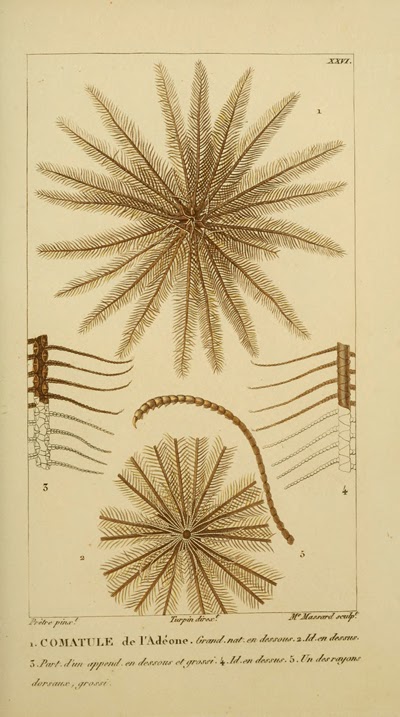
Plate 26, Comatule de l’Adeone (Crinoid) Illustration from Manuel D’actinologie ou de Zoophytologie, 1850. http://biodiversitylibrary.org/page/9321291.

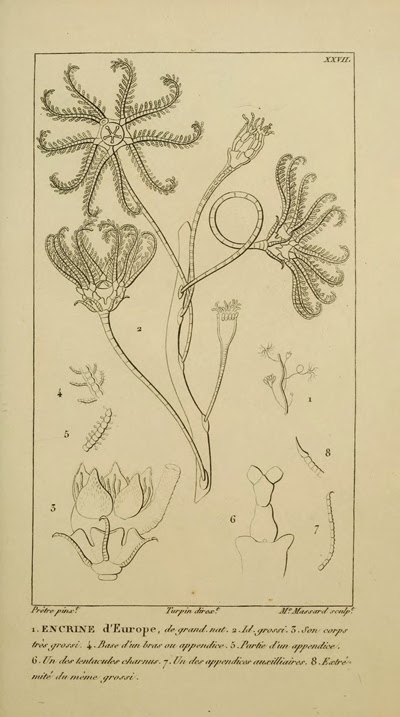
“This book features some very detailed illustrations on Crinoids,” explains Emily. “The book is filled with marvelous illustrations containing fine details and color. The ability to visually understand how a Crinoid is structured becomes part of my unique creative process. Discovering an exciting branching pattern or joint segmentation may inspire an entire sculpture. Within this same book I found some detailed illustrations of the Porpite and numerous lovely jellyfish.”

View Full Size Image
Plate 27, Encrine (Sea Lily) Illustration from Manuel D’actinologie ou de Zoophytologie, 1850. http://biodiversitylibrary.org/page/9321293.

Emily’s exploration of marine species in her recent artwork inspired a wonderful recommendation for BHL.

“An Endangered Ocean Species page would be fantastic,” suggests Emily. “For example, I read about the Australian Bennett’s red algae and how it is now extinct. The structure and patterning of the Bennett’s red algae was spectacular. It would be marvelous to access a page featuring endangered, recent extinctions of sea life such as corals, seaweed, algae, crinoids, starfish, etc.”

View Full Size Image
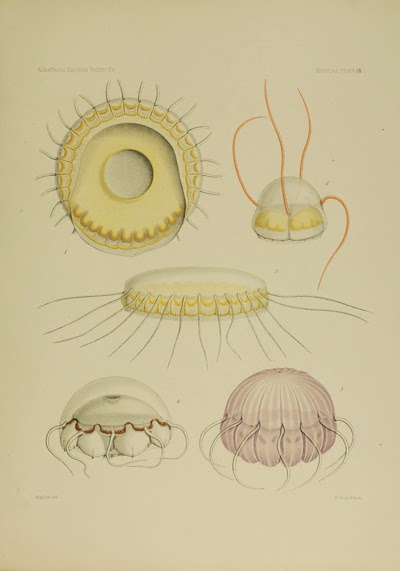
Plate 14, Sketches of living specimens made on board the “Albatross.” Illustration from Memoirs of the Museum of Comparative Zoology at Harvard College, Volume 37, 1909, The Medusae/by Henry B. Bigelow. http://biodiversitylibrary.org/page/6361166.

An excellent idea, and perhaps one that may one day be explored via our Biodiversity Library Exhibition platform. In the meantime, while they’re not exclusively endangered, browse stunning ocean wildlife illustrations in our Marine Biodiversity Flickr Collection.

Thank you, Emily, for taking the time to explain how BHL is useful not just to scientists, but to a range of disciplines including art! Do you use BHL to support your work? Want to tell us about it? Send us a message at [email protected].

March 12, 2015by ulib-libraryjobs
Blog Reel, Featured Books

Dolphins and True Love: An Ode to Frederick W. True

The Smithsonian Field Book Project is showcasing Frederick William True in February! This post is the first in a series of blogs and social media content from the Biodiversity Heritage Library, Pyenson Lab, Smithsonian Transcription Center, Smithsonian Archives, and Smithsonian Libraries celebrating #FWTrueLove. Learn more.

The Delphinidae: Cetacean Taxonomy’s “Trash Basket”

When you think of oceanic dolphins, chances are you don’t think of trash. But if you’re a taxonomist, you might.

“The family Delphinidae has been called a ‘taxonomic trash basket’, because many small to medium-sized odontocetes of various forms have been lumped together in this group for centuries” (Dr. Edward Vanden Berghe, Flanders Marine Institute. WoRMS. Delphinidae).

View Full Size Image
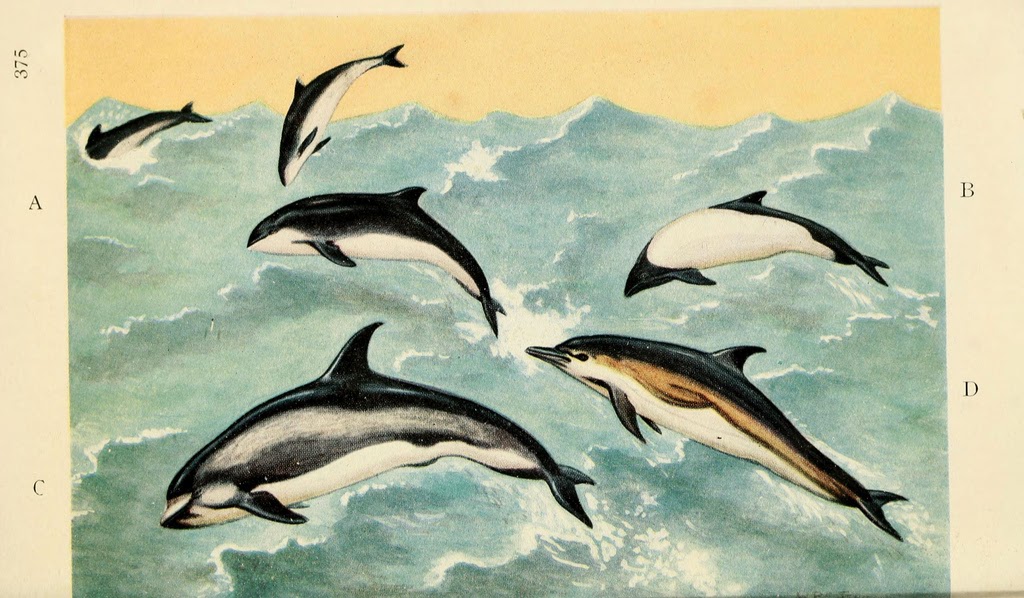
Fig B: Commerson’s dolphin (Cephalorhynchus commersonii); Fig. C: white-beaked dolphin (Lagenorhynchus albirostris); Fig. D: short-beaked common dolphin (Delphinus delphis); with the harbour porpoise (Phocoena phocoena) – Fig. A. (Listed by True as Phocaena communis within Delphinidae. Today named Phocoena phocoena in Phocoenidae family) in BHL. Norman, J.R. Field Book of Giant Fishes (1949). http://biodiversitylibrary.org/page/6279181.

Even today, multiple classifications exist, and depending on the schema used, anywhere from 30-50 species may be attributed to Delphinidae, ranging in size from 1-9.1 meters (see various taxonomies in EOL, WoRMS, Marine Mammal Science, and Animal Diversity Web). The distribution of Delphinidae species across such wide and diverse habitats and the lack of data for many members of the family impede conclusive taxonomic assertions regarding species distinctions and relationships.

Regardless of the questions still remaining, members of the Delphinidae family share many characteristics, including numerous conical teeth, compression and fusion of the neck vertebrae, and sophisticated echolocation ability.

View Full Size Image
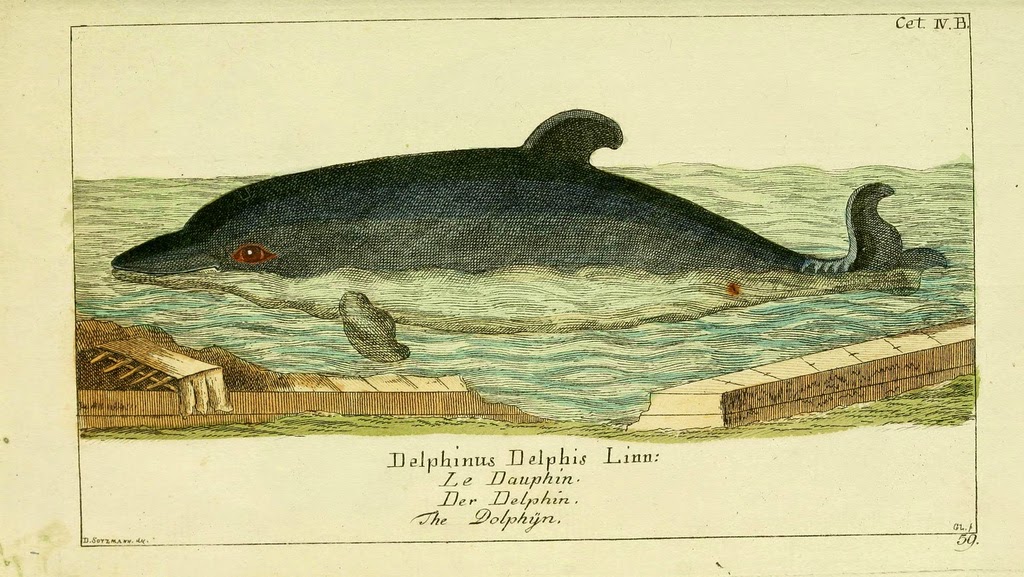
Short-beaked common dolphin (Delphinus delphis). Gemeinnüzzige Naturgeschichte des Thierreichs. Bd. 2 Plates (1780). http://biodiversitylibrary.org/page/28342227.

The quest to understand and organize oceanic dolphins is one that requires patience and the continual acquisition of knowledge and data. This has been the reality since scientists first attempted to classify these marine mammals, and one poignantly felt by one of the world’s foremost cetacean authorities at the turn of the century: Frederick William True.

F.W. True: Pioneering Cetologist

Frederick W. True (1858-1914) began his career as a clerk at the U.S. Fish Commission in 1878. In 1881, he was hired by S.F. Baird as Librarian and Acting Curator of Mammals at the Smithsonian’s National Museum of Natural History, after which he was promoted to Head Curator of Biology in 1897 – a position he held until 1911 when he became the Assistant Secretary of the Smithsonian Institution. With a focus on living and marine fossil mammals, True was the first marine mammals curator at the Smithsonian. Though he is most famous for his work on the mysticetes and beaked whales, True also provided invaluable contributions to the study of the Delphinidae family.

View Full Size Image
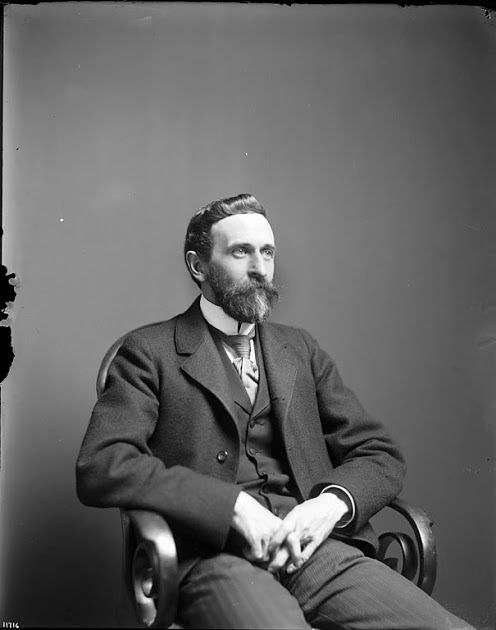
Frederick W. True. Image Courtesy the Smithsonian Institution Archives | Image # MAH-11716
http://siarchives.si.edu/collections/siris_sic_10333

At the turn of the century, the status of the Delphinidae family was even more confusing than it is today. The widespread distribution of the family meant that the same species might actually be found off the coasts of every continent (the common bottlenose dolphin (Tursiops truncatus) for example, has a worldwide range). More crucially, the lack of access to the specimens and data of scientists in different parts of the world, led to the tendency of some naturalists (such as Edward Drinker Cope) to base new species descriptions on scant data (often relying on a single, perhaps incomplete, specimen to assert a new species). Consequently, our turn of the 20th century understanding of Delphinidae was saturated with questionable, often synonymous, scientific names.

View Full Size Image
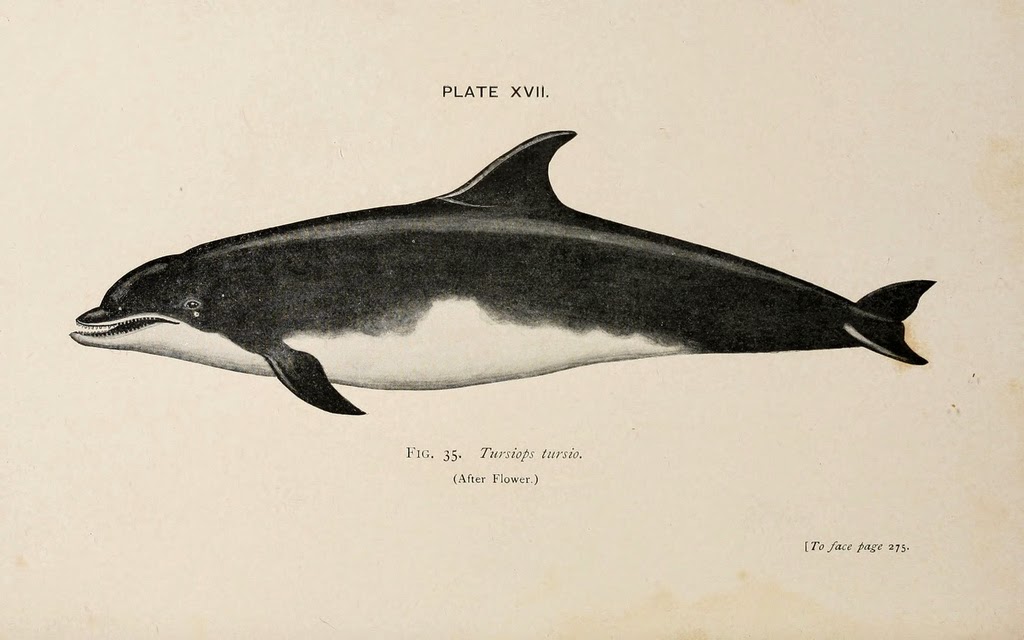
Common bottlenose dolphin (Tursiops truncatus). Beddard, Frank E. A Book of Whales (1900).
http://biodiversitylibrary.org/page/1398413.

True recognized that scientists at the time used non-uniform criteria to describe and classify species. Some based descriptions on external characteristics, while other relied on osteological examinations, resulting in, as True put it, two series of species. Varied criteria employment also resulted in drastically different classification schemes, resulting in a plethora of competing taxonomic trees for both Delphinidae and related families.

The preponderance of oceanic dolphin scientific names and uncertainty of species relationships was a major impediment to the advancement of Delphinidae research. Near the end of the nineteenth century, True set out to bring order to the chaos.

Revising the Delphinidae

True began his endeavor with a focus on the species found off the North American coasts, but the state of affairs compelled him to expand his scope to the entire Delphinidae family. Though his work was largely based on that of Gray, Flower, Stejneger and Baird, True was the first person to attempt to analyze all available data, harmonize the many synonyms, and produce a classified list of truly distinct Delphinidae species.

True quickly realized that “a proper comparison of the species described respectively by European and American naturalists could not be made without an examination of the types.” Thus, in the winter of 1883-84, True spent four months in the museums of England and Europe studying the type specimens of the described Delphinidae species. The result of his labor was the publication Contributions to the natural history of the cetaceans. A review of the family Delphinidae, which presented a revised Delphinidae classification.

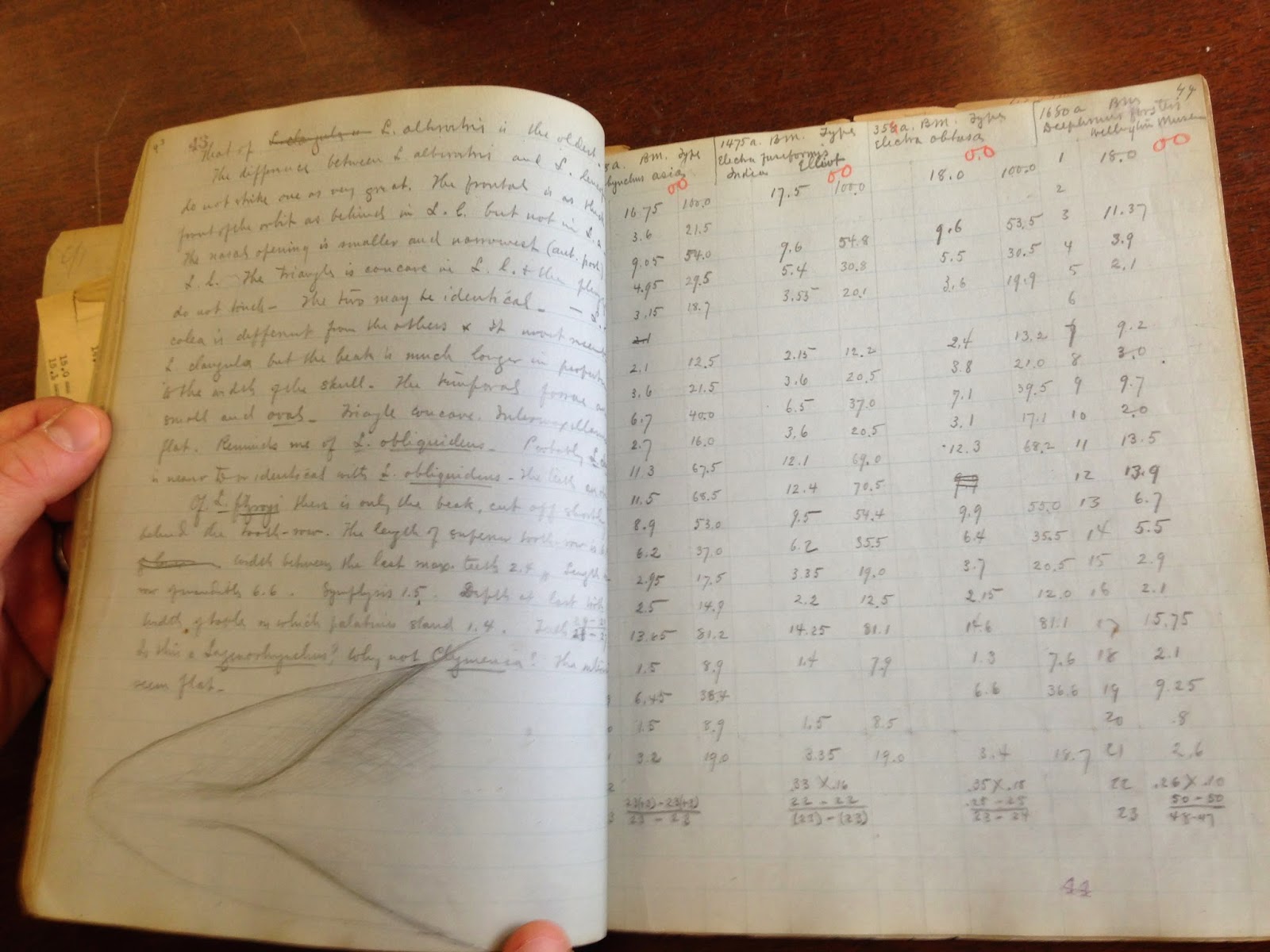
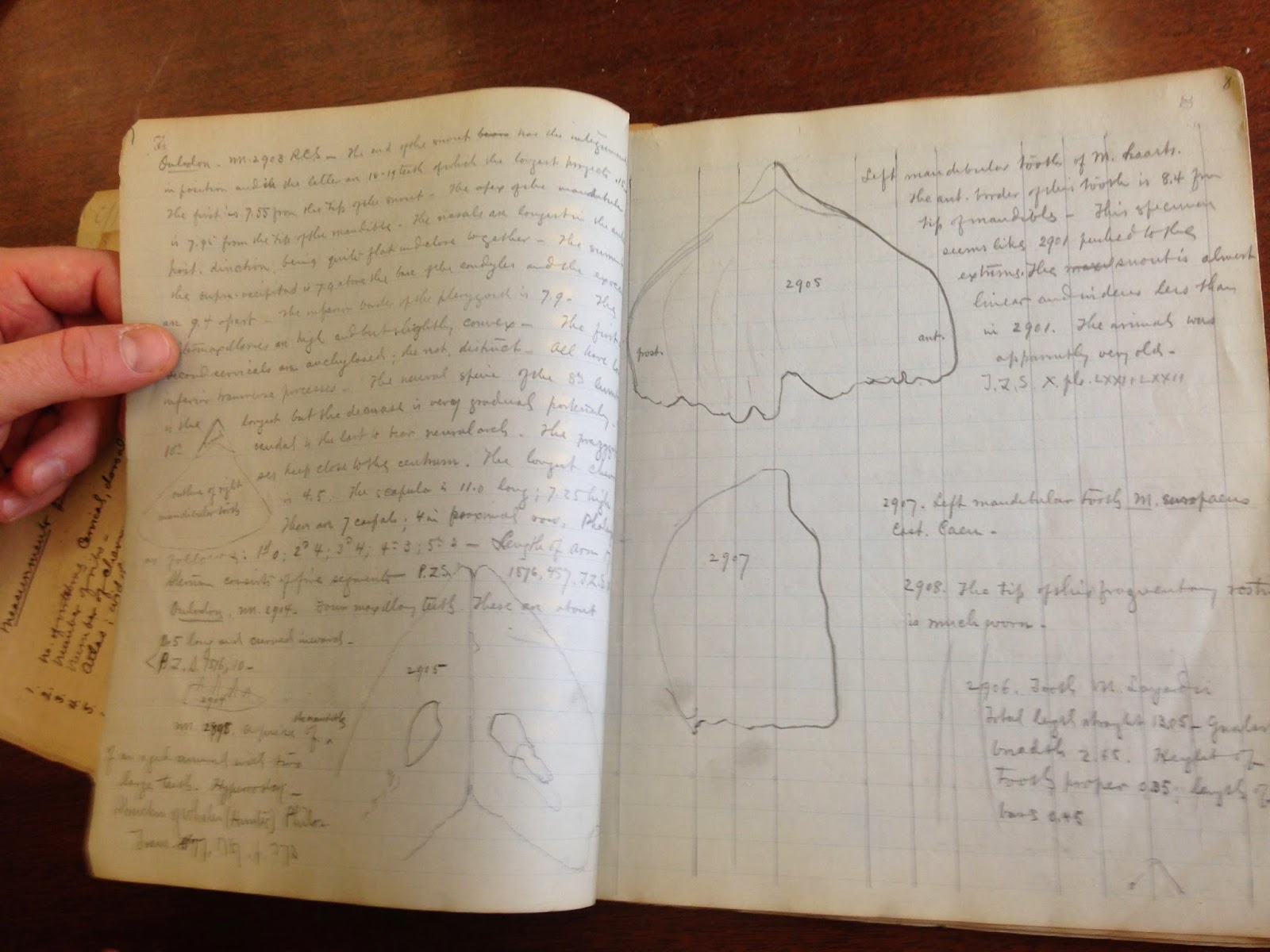
During his time abroad, True kept a journal recording the observations, measurements and data he gathered. These records were used to inform the aforementioned publication. Dr. Nick Pyenson, current Curator of Fossil Marine Mammals at the Smithsonian’s National Museum of Natural History, recently discovered this journal amongst a box of True’s manuscripts and research materials in the Smithsonian’s Remington Kellogg Library of Marine Mammalogy.

View Full Size Image
F.W. True’s Journal (1883-84). Data recorded from specimens at European and English museums. Used to inform True’s Delphinidae publication.

As the journal (1883-84) shows, True carefully examined and measured all of the type specimens he could find, including specimen catalog numbers, locality, sex and age if known, various lengths including total, length of beak, and girth, and other data such as the number of teeth. These kinds of data remain relevant today, where the consistent collection and curation of this irreplaceable data provides the basis for answering many different ecological, evolutionary and conservation research questions.

View Full Size Image
F.W. True’s Journal (1883-84). Data recorded from specimens at European and English museums. Used to inform True’s Delphinidae publication.

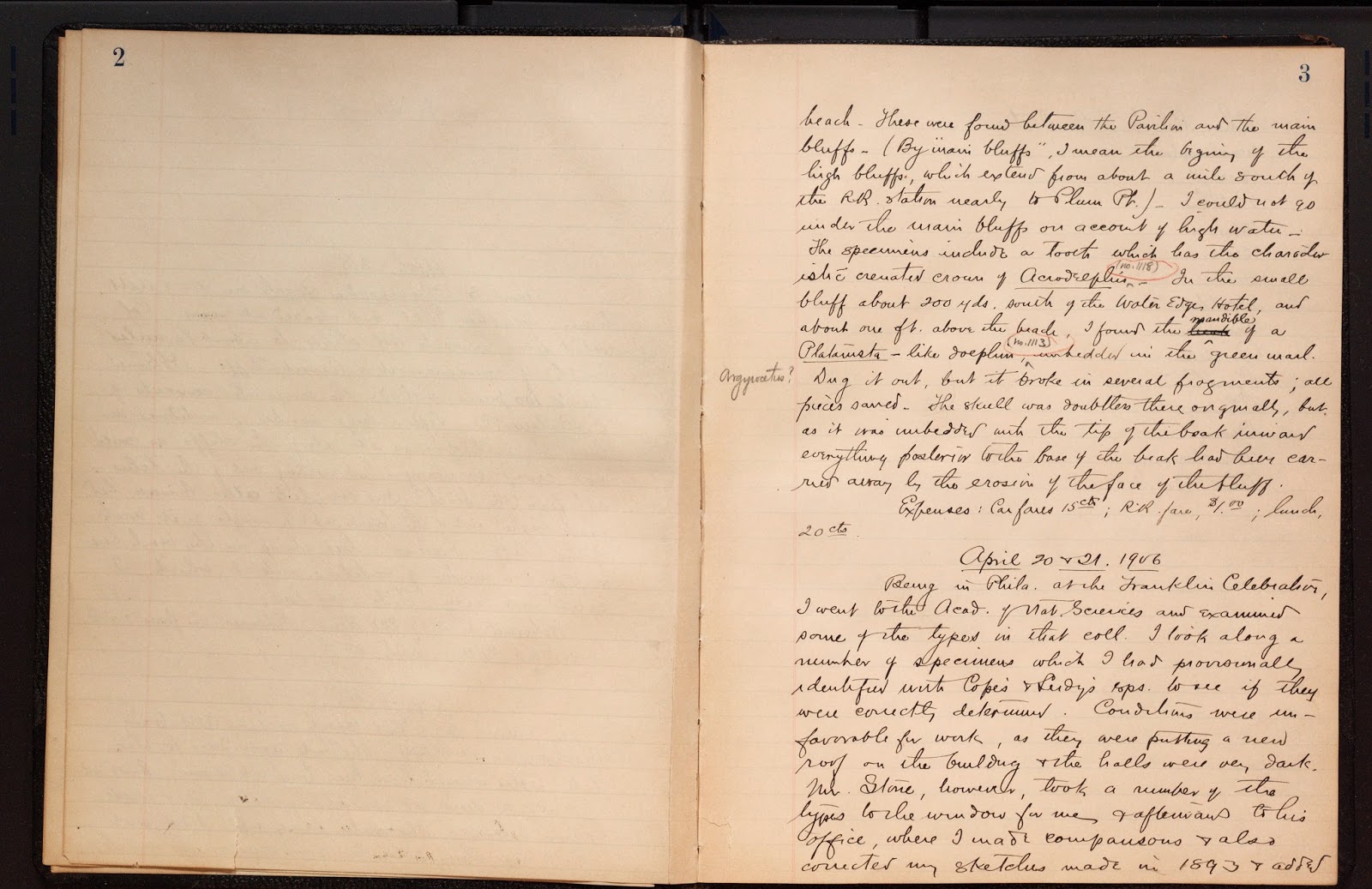
Even more interesting, the logbook is annotated by Remington Kellogg, the aforementioned library’s namesake and himself an authority on cetaceans. Though his time at the Smithsonian’s National Museum of Natural History postdated True’s lifetime, Kellogg took a keen interest in True’s work and annotated many of his manuscripts, including not only this journal but also True’s fieldbook of collecting trips in 1906-08.

View Full Size Image
True. F.W. U. S. National Museum log book of collecting trips for fossil cetaceans (1906-08). Digitized by the Smithsonian Institution Archives for The Field Book Project. http://biodiversitylibrary.org/page/46701241.

The measurements and osteological examinations recorded in True’s 1883-84 journal were used to create limits of specific variation among species and inform a comparative analysis of species relationships to produce a revised taxonomic tree. The result was the harmonization of existing scientific names down to a total of 62, classified within 19 genera and 2 subfamilies within Delphinidae.

Of course, the science of taxonomy is not a static endeavor. Classifications are constantly improving and evolving as we have access to new information and specimens, discover new species, and employ new techniques (such as DNA sequencing) in our quest to better understand the world and the species in it. Indeed, even True himself acknowledged that the accuracy of classifications was dependent on the availability of data and the construction of a full biological picture. In his publication, True asserted,

“The writer is fully aware that the time is not yet ripe for a final review of the family Delphinidae. The work now accomplished must be regarded as provisional and subject to change in the future…Cetologists must be content to wait patiently until the acquisition of new specimens make a complete description possible.”

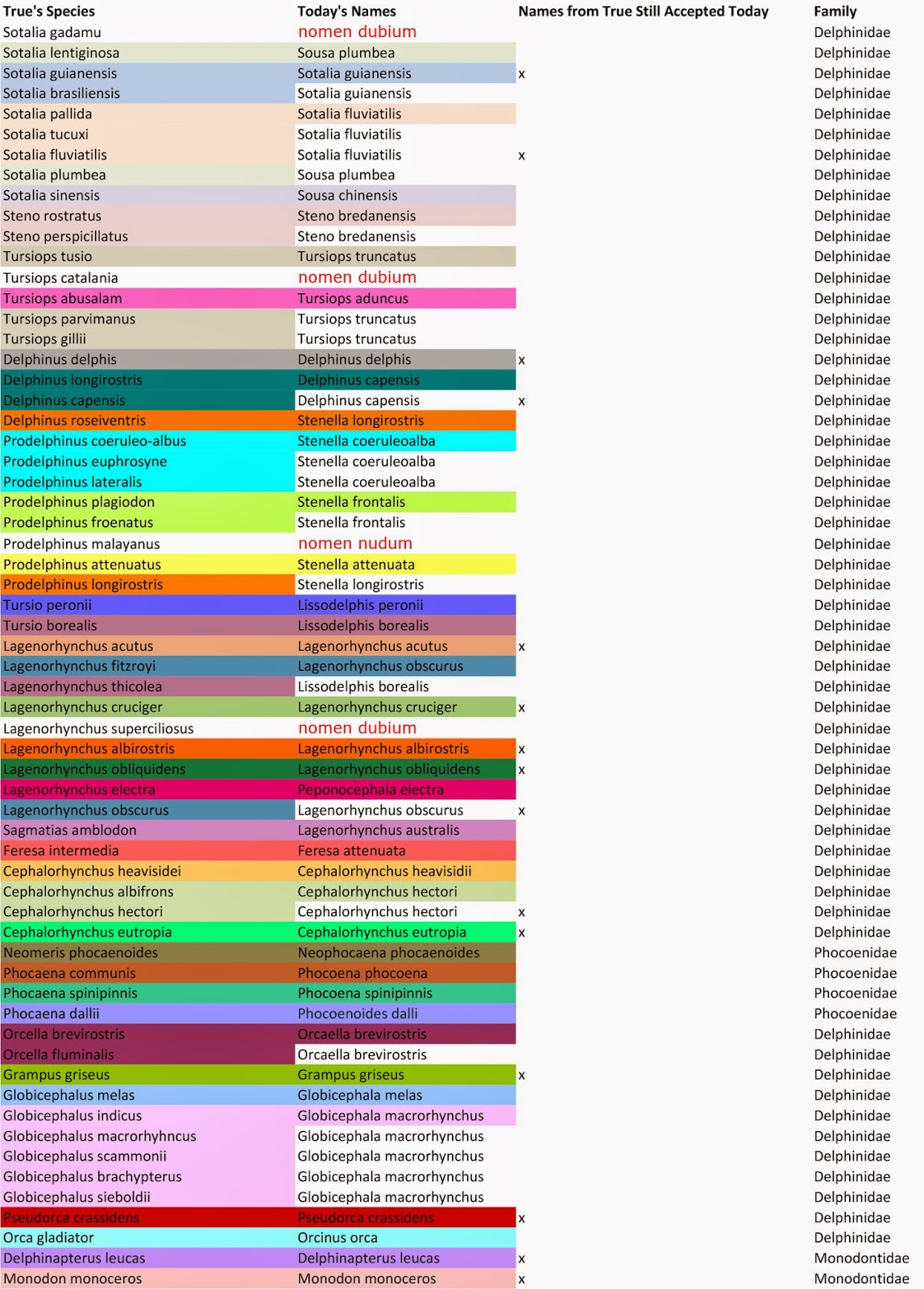
And indeed, new information has come to light since True revised the Delphinidae family over 100 years ago. While the total number of species, genera, and subfamilies differ depending on the classification schema used, of the 62 distinct species that True recognized, 38 are recognized as distinct today (though some under different names), and 32 are still included in the Delphinidae family. Twenty-four of the species True classified as distinct are now considered representatives of other species cataloged in his publication or are not recognized as distinct species today (i.e. nomen dubium). While many of the binomials employed by True are today considered invalid synonyms (though some have changed only slightly in spelling), 15 of the names included by True are still considered valid. (Comparisons made on whole species binomial. Data based on taxon information in WoRMS collected 1/30/2015. Note: some researchers have proposed using Sagmatias for species of Lagenorhynchus today — so Sag. amblodon may get resurrected.)

View Full Size Image
Table Comparing the species names presented by True (“True’s Species”) with the corresponding valid species names recognized today (“Today’s Species). Each unique species listed under “Today’s Species” is highlighted with a distinct color, and all names employed by True in the “True’s Species” column are color coded with the valid name they are recognized to represent today. The “Family” column indicates the taxonomic family to which the species identified by True are today understood to belong to. Comparisons based on taxon information in WoRMS collected on 1/30/2015.

Scientific Research in the Digital Age

The efficiency of scientific research depends on access to raw data, specimens, and previously published information. During True’s lifetime, access to this information was especially difficult, resulting in the proliferation of competing taxonomies. Satisfying information needs often required expensive trips across oceans and countries to consult dispersed institutional collections.

Today, open access digitization initiatives are working to provide global, online access to the information required to study, describe, and classify life. The digitization of museum specimens, scientist’s raw data contained in unpublished fieldbooks, and centuries’ worth of published natural history literature allows researchers to draw connections among all of this information, see the work upon which current systems are based, compare notes across disciplines and time, and more easily harmonize synonyms and create classifications. The Biodiversity Heritage Library and The Field Book Project, through the digitization of natural history fieldbooks and publications, are two programs amidst a growing cadre of initiatives dedicated to facilitating discovery of the natural world. Through continued collaboration and a commitment to open access, we can improve the efficiency of scientific research across the globe.

For more fun, browse historic Delphinidae illustrations from BHL: http://ow.ly/IuYCX

With contributions by: Dr. Nick Pyenson | Curator of Fossil Marine Mammals, NMNH

February 5, 2015by michelle.underhill
Blog Reel, User Stories

BHL and Our Users: Dr. Thomas Carefoot

View Full Size ImageAfter a short break during which we featured various posts related to the Life and Literature conference, we again resume our BHL and Our User series, kicking things off again with Dr. Thomas Carefoot, a marine biologist and the author of the delightful educational website on west-coast marine invertebrates, A Snail’s Odyssey.

What is your title, institutional affiliation, and area of interest?

I am retired from a 35-year teaching and research position in marine biology at the University of British Columbia, Canada. My research specialties include the study of a group of marine snails known as sea hares, and I have sought them out in many tropical areas of the world. I am well versed on invertebrate marine life, most notably on the Pacific west coast, but also throughout the Caribbean, Indo- Pacific, and other tropical areas. I enjoy talking and lecturing about marine invertebrates, and a few years before retirement was awarded the University’s prestigious Master Teacher Award. I have written 2 books on marine ecology, authored some 90 research papers, and have recently produced a large educational website on west-coast marine invertebrates called A Snail’s Odyssey. I am currently working on an equally large educational website called the Biology of Caribbean Coral Reefs.

How long have you been in your field of study?

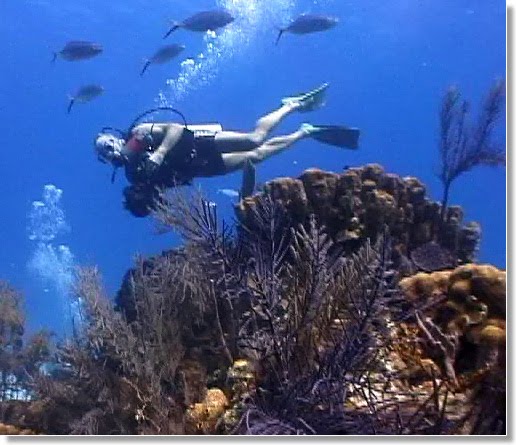
For over 50 years, from commencement of an Honours BSc programme at the University of British Columbia (UBC), leading to an MSc degree at the same institution, and followed by a doctorate at the University of Wales, all in the field of marine biology. My first job was at the Marine Sciences Centre, McGill University, followed by an appointment to the Zoology Department at UBC in 1969. As part of the McGill experience was one year’s appointment as Director of the Bellairs Research Institute in Barbados. In total, I have spent about 3 years in the Caribbean, have visited all but a handful of the major islands, and have SCUBA-dived on most Caribbean reef systems.

When did you first discover BHL?

Several years ago when I first started researching scientific articles on west-coast marine invertebrates for my website A Snails’ Odyssey.

What is your opinion of BHL and how has it impacted your research?

BHL provides an excellent service for studies of marine and other biodiversity. However, as my research interests are not in biodiversity per se, I use the service only for accessing pertinent literature on west-coast and coral-reef marine invertebrates for inclusion in my educational websites.

How often do you use BHL?

About once a week.

How do you usually use BHL (read the titles online/download whole PDFs/Selecting Pages to Download for a custom PDF/etc.)

For downloading articles from journals.

What are your favorite features/services on BHL?

The only one that I have regularly used is the PDF downloading privilege.

If you could change one thing about BHL, what would it be, or what developmental aspect would you like the BHL team to focus on next?

I would streamline the system for downloading PDFs. It is currently time-consuming and “out of synch” with similar accessing systems for other scientific journals. For example, the journal I most access at BHL is the Journal of Shellfish Research (JSR), which is presently most easily “downloadable” as entire volumes. It would be a relatively easy job to split each volume into its component research papers, format these as PDFs, and have an accessing system along the lines of other journal publishers. I realize that JSR is just one of the many journals in the BHL, but it would be a start.

Thank you, Dr. Carefoot, for sharing your experience and resources with us! Be sure to check out A Snails’ Odyssey, which chronicles the whimsical story of an upper intertidal snail who, finding himself mistakenly cast into the deep waters of the ocean, slowly but steadily makes his way back home to shallower waters. Along the way he encounters many different marine species, which offer a plethora of opportunities for discovery for both the snail and the reader. For each species, there is a short cartoon animation meant to give a light-hearted introduction to the animal, and a scientific Learnabout, which offers more in-depth information, including summaries of a multitude of scientific papers written about the invertebrates. It’s a fun, educational site for all ages.
December 6, 2011by ulib-libraryjobs
Page 2 of 2«12

Help Support BHL

BHL's existence depends on the financial support of its patrons. Help us keep this free resource alive!

search

About BHL

The Biodiversity Heritage Library (BHL) is the world’s largest open access digital library for biodiversity literature and archives. BHL operates as a worldwide consortium of natural history, botanical, research, and national libraries working together to digitize the natural history literature held in their collections and make it freely available for open access as part of a global “biodiversity community.”

Follow BHL

  • Bluesky logo
  • Instagram logo
  • Facebook logo
  • Flickr logo
  • Twitter logo

Join Our Mailing List

Sign up to receive the latest news, content highlights, and promotions.

Subscribe Now

Subscribe to Blog via Email

Enter your email address to subscribe to this blog and receive notifications of new posts by email.

Join 319 other subscribers

Subscribe to Blog Via RSS

Subscribe to the blog RSS feed to stay up-to-date on all the latest BHL posts.

Access RSS Feed


64+ Million Pages of
Biodiversity Literature Online.

EXPLORE

Tools and Services
to Transform Research.

EXPLORE

300,000+
Illustrations on Flickr.

EXPLORE

ABOUT | HARMFUL CONTENT | PRIVACY | SITE MAP | TERMS OF USE