Biodiversity Heritage Library - Program news and collection highlights from BHL
  • Home
  • News
  • Featured Books
    • All Featured Books
    • Book of the Month Series
    • BHL at 20
  • User Stories
  • Campaigns
    • Fossil Stories
    • Garden Stories
    • Monsters Are Real
    • Page Frights
    • Her Natural History
    • Earth Optimism 2020
  • Tech Blog
  • Visit BHL
Home
News
Featured Books
    All Featured Books
    Book of the Month Series
    BHL at 20
User Stories
Campaigns
    Fossil Stories
    Garden Stories
    Monsters Are Real
    Page Frights
    Her Natural History
    Earth Optimism 2020
Tech Blog
Visit BHL
  • Home
  • News
  • Featured Books
    • All Featured Books
    • Book of the Month Series
    • BHL at 20
  • User Stories
  • Campaigns
    • Fossil Stories
    • Garden Stories
    • Monsters Are Real
    • Page Frights
    • Her Natural History
    • Earth Optimism 2020
  • Tech Blog
  • Visit BHL
Biodiversity Heritage Library - Program news and collection highlights from BHL
BHL News, Blog Reel

Farewell from BHL Program Director Martin R. Kalfatovic

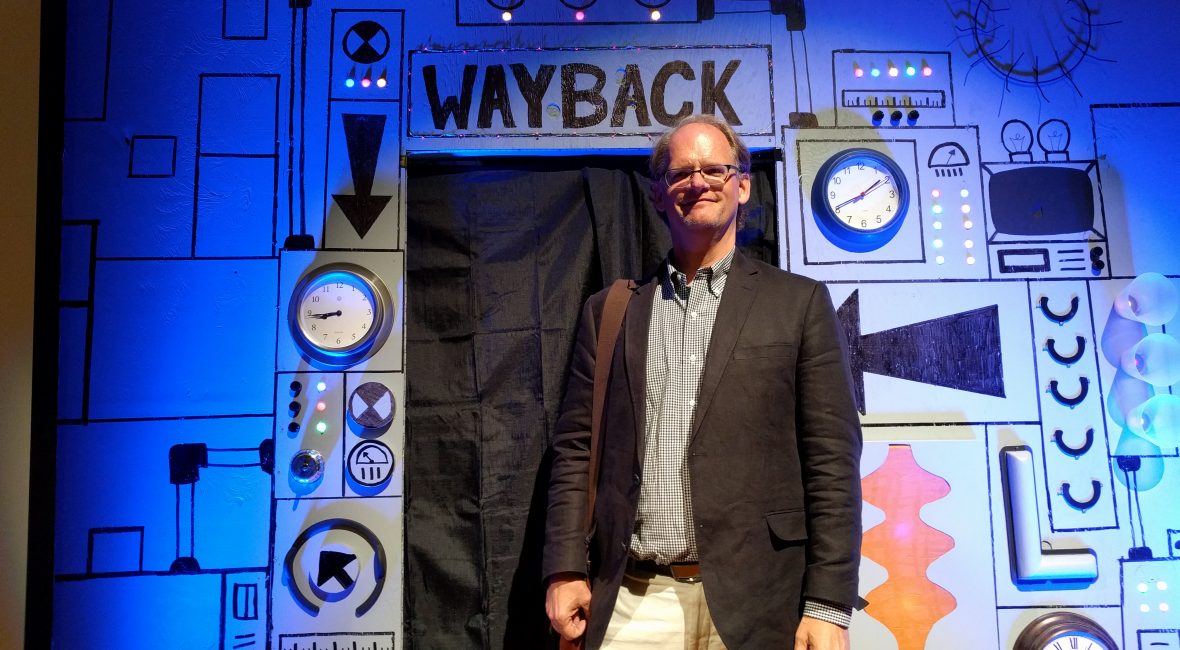
A man with glasses, wearing khaki pants and blazer, stands in front of a cardboard machine labeled "Wayback"

Martin R. Kalfatovic at the Internet Archive Library Leaders Forum (2017). Photographer Unknown

It’s time to say farewell to my official time with the Biodiversity Heritage Library! As I outlined in my presentation at the 2024 BHL Annual Meeting, when I took over as BHL Program Director in April 2012, I had a firm and successful organization to lead. And all that success rests on the shoulders of the countless staff in BHL partner organizations around the world.

I began my professional career at the Smithsonian and succumbed to the temptation to feel that such a large institution, so rich (relatively speaking) in resources, would be able to easily contain multitudes. But, in 2004/2005 when I began work on two science projects (the Biological Centrali Americana and the U.S. Exploring Expedition — both now mostly in BHL!), the publications from both these naturalist projects were scattered around the world. No one institution or library could create a full digital version alone.

Working with the core group of BHL partners – Tom Garnett (Smithsonian), Chris Freeland and Doug Holland (Missouri Botanical Garden), Graham Higley (Natural History Museum, London), Tom Moritz (AMNH), and, of course Cathy Norton (MBLWHOI Library), Constance Rinaldo (MCZ/Harvard), and Nancy Gwinn (Smithsonian) – the initial 10 (soon 12) BHL partnership formed.

A complete Scientific Museum … should be exclusively attached to an appropriate Library, or Collection of Books and Illustrations relating to Science, wholly independent of any general Library.” -- T. Huxley, C. Darwin, et al. (1858)

This idea of a global collaboration in service to science, to biodiversity, to sustainability on our only planet, has been the motivating force in my time with BHL. And also for many of you. This collaboration will continue as BHL is bigger than any one person, as we’ve learned with the past successful transitions of partner representatives, Secretariat staff, and Program Directors.

William Faulkner’s Nobel prize speech often comes to my mind:

I decline to accept the end of man. It is easy enough to say that man is immortal simply because he will endure: that when the last dingdong of doom has clanged and faded from the last worthless rock hanging tideless in the last red and dying evening, that even then there will still be one more sound: that of his puny inexhaustible voice, still talking. I refuse to accept this. I believe that man will not merely endure: he will prevail.

— William Faulkner’s speech at the Nobel Banquet at the City Hall in Stockholm, December 10, 1950

Faulkner was addressing a clear existential threat at that time, global nuclear war. As we now know, the seeds of two more quiet crises, those of climate change and biodiversity loss, we already long planted. BHL is a key resource in finding solutions to these crises and as many have said, “if BHL didn’t exist, it would have to be built again.”

It’s because of all of you, and the others no longer with BHL that I believe that BHL will, as Faulkner noted, not only endure, but also prevail.

A group of people pose for a picture on the steps in front of the Regenstein Center

BHL Partners at the 2024 BHL Annual Meeting in Chicago, IL.


For a look back at some of the amazing work of this global consortium in the past year, view the 2023 BHL Annual Report.

June 28, 2024by
BHL News, Blog Reel

10 Years of BHL Growth and Transformation While Program Director

Two men in suit jackets and glasses smile and pose for a picture in front of a prop time machine

This month (April 2022) marks my tenth year as the BHL Program Director. Over the past 10 years, we’ve seen a lot of change — and a lot of growth — with the Biodiversity Heritage Library. Taking over from our first Program Director, Tom Garnett, was a daunting challenge. Tom led the initial funding of BHL through the MacArthur Foundation grant with the Encyclopedia of Life and the establishment of BHL as a global consortium.

Among my first tasks as BHL Program Director was to build on that legacy with the transition of BHL from a grant funded organization to a member-driven one. Likewise, those first months of my tenure saw the close out of the BHL Europe project (which led to our continued strong European presence) and the planning meetings (and later launch) of BHL Africa.

A man leans against a railing, posing in front of a life-sized museum display of an elephant

Martin Kalfatovic at the Museum für Naturkunde in Berlin for the 2012 BHL Europe meeting. Photo credit: Grace Costantino

An early transition for me as Program Director was the departure of BHL’s technical guidestar, Chris Freeland (Missouri Botanical Garden) and the transition of Global Coordinator, William Ulate to that role. Later, technical coordination of BHL moved to Joel Richard (Smithsonian Libraries and Archives). Even during these leadership transitions, BHL’s many technical innovations were implemented and led by BHL developer, Mike Lichtenberg.

The past 10 years have been years of growth. BHL saw the addition of 20 partners as well as the creation of the reciprocal partner affiliation. Content also grew by over 21.3 million pages. Other important markers in the past 10 years include BHL being an inaugural partner of the Digital Public Library of America (DPLA), deepening the relationship of BHL with important biodiversity initiatives such as the Global Biodiversity Information Facility (GBIF), the Catalogue of Life, and the Global Names Architecture.

During this time, BHL also initiated or closed out important grant funded initiatives done in collaboration with many different BHL partners, these included Art of Life (2012-2015); Purposeful Gaming (2013-2015); Mining Biodiversity: Enriching the Biodiversity Heritage Library with Text Mining and Social Media (2014-2016); Expanding Access to Biodiversity Literature (2015-2017); Foundations to Actions: Extending Innovations in Digital Libraries in Partnership with NDSR Learners (2016-2018); and the Field Notes Project (2016-2018).

I’ve also had the pleasure of accepting the following awards for BHL on behalf of all those who have worked on BHL: Laureate. IDG’s Computerworld Honors Program (2013); Charles Robert Long Award of Extraordinary Merit. Council on Botanical and Horticultural Libraries (2015); Internet Archive Hero Award. Global Leaders in Sharing Knowledge (2015); and Digital Library Federation (DLF) 2016 Community/Capacity Award (2016).

A man accepts an award at a podium while four colleagues look on

Internet Archive Hero Award (2015). Chris Freeland (Washington University at the time), Carolyn Sheffield (BHL), Keri Thompson (Smithsonian), Martin Kalfatovic (BHL), Wendy Hanamura (Internet Archive). Photo Credit: Brad Shirakawa.

In my role as BHL Program Director, I’ve had the support of BHL Secretariat staff past and present. Past BHL Program Managers Grace Costantino and Carolyn Sheffield did invaluable work during their tenure, work carried on by current Program Manager Colleen Funkhouser. Grace Costantino later provided a blueprint for BHL’s outreach and communication program; and our newest addition, JJ Dearborn, will take BHL into important new areas as BHL Data Manager. Bianca Crowley, BHL Collections Manager, has provided me with valuable assistance in working with BHL staff and collections around the world.

The work of the BHL Secretariat, and my work as Program Director, would not be possible without the guidance and support of the BHL Executive Committee (EC). It has been an honor to work with two EC Chairs, Nancy E. Gwinn (Smithsonian), and Constance Rinaldo (MCZ/Harvard). The other Member representatives who served as Vice-Chair and Secretary have provided crucial input.

The opportunities to work with and learn from BHL partner representatives, partner staff, and others (often in windowless conference rooms in the great museums and botanical gardens of the world!) has given me a wealth of knowledge in biodiversity, technology, and librarianship. Brewster Kahle and the amazing staff (past and present) of the Internet Archive have provided me, and BHL, with many new ideas that have advanced our work.

Two men in suit jackets and glasses smile and pose for a picture in front of a prop time machine

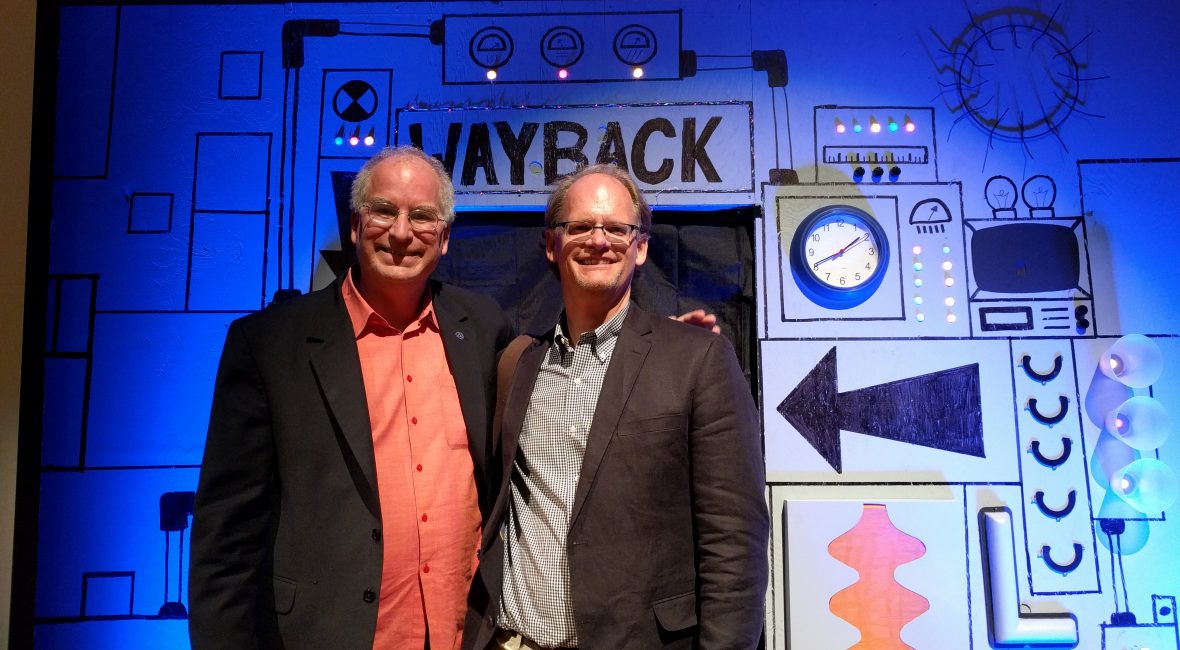
Brewster Kahle (Internet Archive) and Martin Kalfatovic (BHL) in 2017 with the Internet Archive Wayback Machine.

Having served as Secretary, Vice-Chair, and currently Chair, Connie Rinaldo has been the single constant in my time with BHL, both as Program Director and in previous capacities. Without her leadership, and most importantly her burning passion for BHL’s capacity to create meaningful change, my work would be harder and BHL less successful.

A woman in red shirt and sunglasses stands next to a man in a light blue shirt and glasses atop a hill overlooking a village

Constance Rinaldo and Martin Kalfatovic in Madagascar for the 2015 GBIF Governing Board Meeting.

The past two years of a global pandemic have been challenging for us all, as individuals and for our institutions. I’ve been proud to provide guidance to all my BHL colleagues as they have helped BHL navigate this time. I’m looking forward to our 2022 BHL Annual Meeting in Edinburgh where I will have the chance to talk about directions for BHL into the future!

April 27, 2022by
BHL News, Blog Reel

Botany 2018: The Future of Digital Projects for Research & Teaching in Botany

Botany Symposium 2018 Poster

BHL Program Director Martin Kalfatovic was invited to participate in a symposium, hosted by JSTOR Global Plants, at Botany 2018 in Rochester, MN entitled The Future of Digital Projects for Research & Teaching in Botany.

Jason Przybylski, Senior Licensing Editor / JSTOR. Symposium panelist.

The symposium addressed questions such as: what existing digital projects in botany have been successful and how did they become so; what areas of need should future projects explore; how do we define success for digital projects; how do digital projects directed at students differ from those aimed at the researcher; how can we use digital projects to reach new students and interested lay people; and how are new digital projects funded and supported for the long term.

The panel included speakers from a range of backgrounds — including both academics and librarians, as well as people working for organizations developing these digital initiatives—creating a conversation that brought together multiple viewpoints. Panelists included:

  • Jason Przybylski, Senior Licensing Editor / JSTOR
  • Deirdre Ryan, Director, Primary Sources & JSTOR Forum
  • Barbara Thiers, Director of Science, New York Botanical Garden
  • Martin Kalfatovic, Associate Director, Smithsonian Libraries and Program Director, The Biodiversity Heritage Library
  • Elspeth Haston, Deputy Herbarium Curator, Royal Botanic Garden Edinburgh
  • Adrian S. Wisnicki, Assistant Professor and Center for Digital Research in the Humanities Faculty Fellow, University of Nebraska-Lincoln & Director, Livingstone Online
  • Hilary Callahan, Ann Whitney Olin Professor of Biology, Barnard College

Symposium Abstract

Botany was early to recognize the potential impacts on the field of digitization and digital projects, from scanning herbarium specimens so scholars from around the world could easily access them to recovering lost archives to developing access to copious amounts of data on plant life and biodiversity more broadly. As digitization of physical materials has become more widespread and digital capabilities have increased, the expectations for digital projects in botany have similarly advanced. It is no longer enough to simply scan an item and make it available as a PDF on a website. Researchers and students now are looking for innovative digital projects that use the digital medium to present objects in new ways or bring together materials in ways that weren’t possible in an analog environment, all of which allows for new avenues to pursue in research and teaching. This symposium will bring together presenters working on digital projects in botany to examine the current state of the field and its future directions. The panel will include speakers from a range of backgrounds – including both academics and librarians, as well as people working for organizations developing these digital initiatives – creating a conversation that will bring together multiple viewpoints. The symposium will address questions such as: what existing projects have been successful and how did they become so; what areas of need should future projects explore; how do we define success for digital projects; how do digital projects directed at students differ from those aimed at the researcher; how can we use digital projects to reach new students and interested lay people; and how are new digital projects funded and supported for the long term. By the end of the symposium, we will aim to have identified trends in the field and areas that need further development, hopefully providing the necessary grounding for future digital developments.

The BHL presentation, “The Biodiversity Heritage Library: Empowering Discovery through Free Access to Biodiversity Knowledge” is available online.

From the abstract: The Biodiversity Heritage Library (BHL) has no bricks, no mortar, but rather stands as a vast online collection of biodiversity knowledge compiled from the collections of natural history and botanical libraries the world over. These collections–comprised of scientific journals, books, and archival collections–provide information critical to the study of life on our planet. Replete with species descriptions and occurrence data, ecosystem profiles, behavioral observations, and climatic records, these collections inform current research and provide historical information on species abundance, habitat alteration, and human exploration. In many cases, these publications are only physically available in one or two locations throughout the world.

Funding for the symposium was provided by the Botanical Society of America.

From the poster sessions:


Some flora and fauna:

Vanessa atalanta (Red Admiral)

Basidiomycota

August 7, 2018by

Help Support BHL

BHL's existence depends on the financial support of its patrons. Help us keep this free resource alive!

search

About BHL

The Biodiversity Heritage Library (BHL) is the world’s largest open access digital library for biodiversity literature and archives. BHL operates as a worldwide consortium of natural history, botanical, research, and national libraries working together to digitize the natural history literature held in their collections and make it freely available for open access as part of a global “biodiversity community.”

Join Our Mailing List

Sign up to receive the latest news, content highlights, and promotions.

Subscribe Now

Subscribe to Blog via Email

Enter your email address to subscribe to this blog and receive notifications of new posts by email.

Join 319 other subscribers

Subscribe to Blog Via RSS

Subscribe to the blog RSS feed to stay up-to-date on all the latest BHL posts.

Access RSS Feed

Inspiring Discovery through Free Access to Biodiversity Knowledge.

The Biodiversity Heritage Library makes it easier than ever for you to access the information you need to study and explore life on Earth…for free, anytime, anywhere.


64+ Million Pages of
Biodiversity Literature Online.

EXPLORE

Tools and Services
to Transform Research.

EXPLORE

300,000+
Illustrations on Flickr.

EXPLORE

ABOUT | HARMFUL CONTENT | PRIVACY | SITE MAP | TERMS OF USE