Biodiversity Heritage Library - Program news and collection highlights from BHL
  • Home
  • News
  • Featured Books
    • All Featured Books
    • Book of the Month Series
    • BHL at 20
  • User Stories
  • Campaigns
    • Fossil Stories
    • Garden Stories
    • Monsters Are Real
    • Page Frights
    • Her Natural History
    • Earth Optimism 2020
  • Tech Blog
  • Visit BHL
Home
News
Featured Books
    All Featured Books
    Book of the Month Series
    BHL at 20
User Stories
Campaigns
    Fossil Stories
    Garden Stories
    Monsters Are Real
    Page Frights
    Her Natural History
    Earth Optimism 2020
Tech Blog
Visit BHL
  • Home
  • News
  • Featured Books
    • All Featured Books
    • Book of the Month Series
    • BHL at 20
  • User Stories
  • Campaigns
    • Fossil Stories
    • Garden Stories
    • Monsters Are Real
    • Page Frights
    • Her Natural History
    • Earth Optimism 2020
  • Tech Blog
  • Visit BHL
Biodiversity Heritage Library - Program news and collection highlights from BHL
Blog Reel, Featured Books

Celebrating the Birds of South America

View Full Size Image
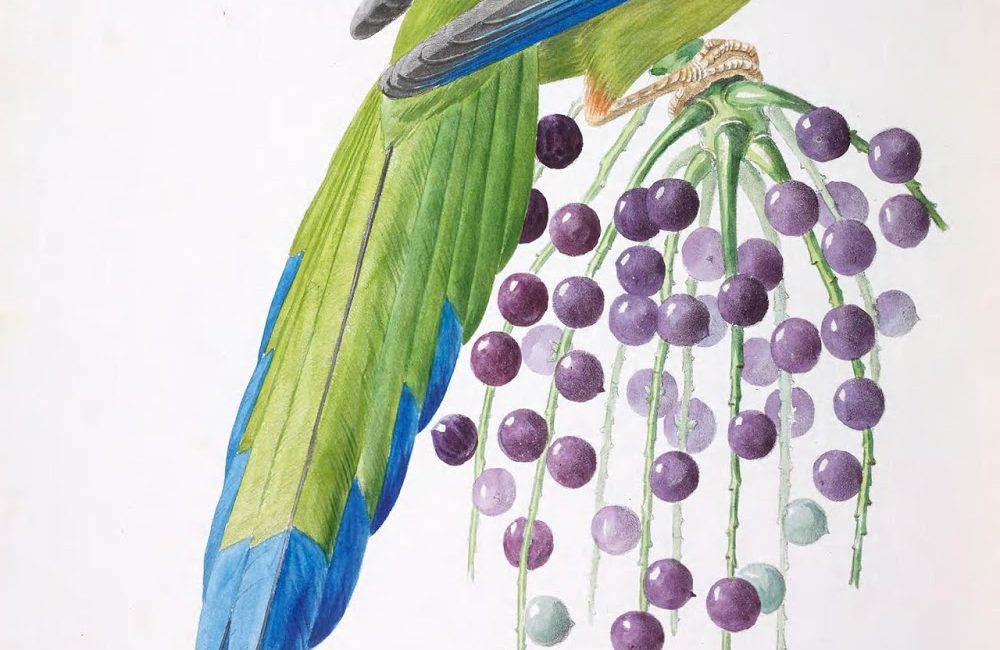
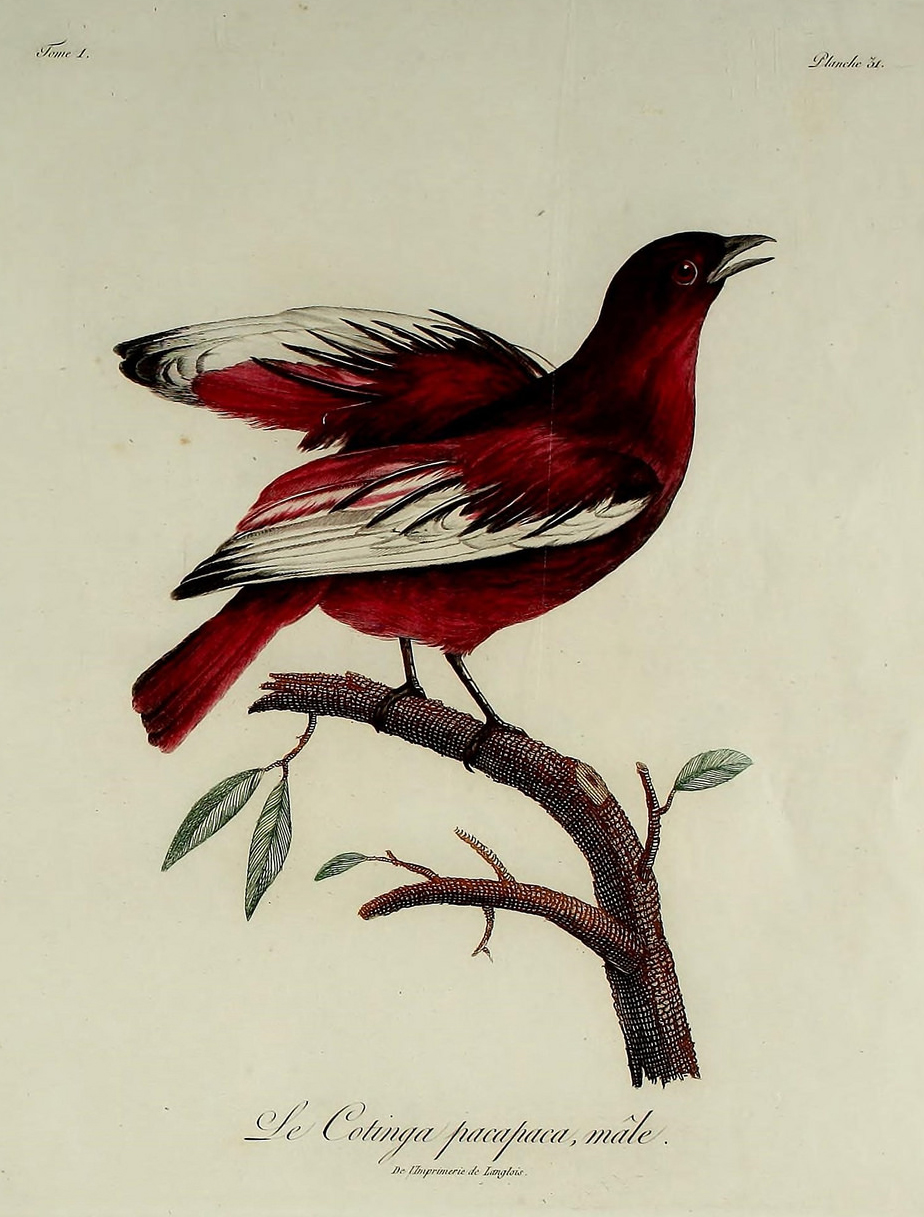
Plate 31: Le Cotinga pacapaca, male. Le Vaillant, François. Histoire naturelle d’une partie d’oiseaux nouveaux et rares de l’Amerique et des Indes. 1801. Digitized by The Field Museum of Natural History Library. http://biodiversitylibrary.org/page/47511750. Description on pages 66-69.

In honor of the first Olympics to take place in Brazil, we are highlighting a book contributed by The Field Museum featuring birds of South America, Le Vaillant’s Histoire naturelle d’une partie d’oiseaux nouveaux et rares de l’Amerique et des Indes (1801). Among several titles chosen for digitization from the Field Museum Library’s impressive Edward E. Ayer Ornithological Library, housed in the collections of the Mary W. Runnells Rare Book Room, the entry for the volume in Catalogue of the Edward E. Ayer Ornithological Library characterizes it as “a work intended to supplement his Hist. Nat. des Oiseaux d’Afrique (q.v.) by describing and figuring birds not properly included in that work.”

Published in eight parts, Histoire naturelle d’une partie d’oiseaux nouveaux et rares de l’Amerique et des Indes was available as a folio with both colored and uncolored plates; large quarto with colored plates only; and quarto, with uncolored plates only. Originally 240 plates were proposed, but ultimately only 49 were produced of species of Bucerotidae from Malay Archipelago and Cotingidae from South America. The Field Museum’s copy is a folio with both colored and uncolored plates.
View Full Size Image
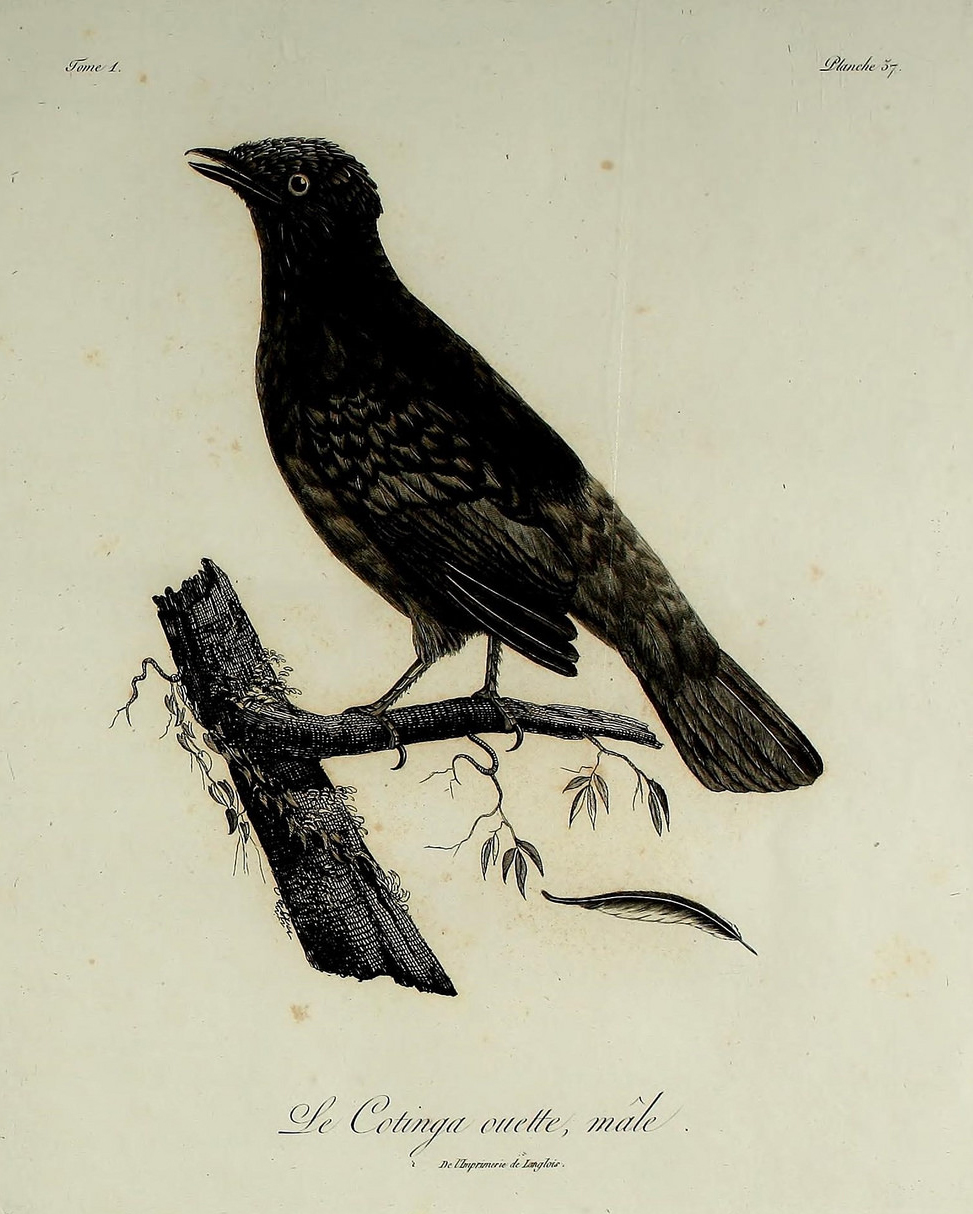
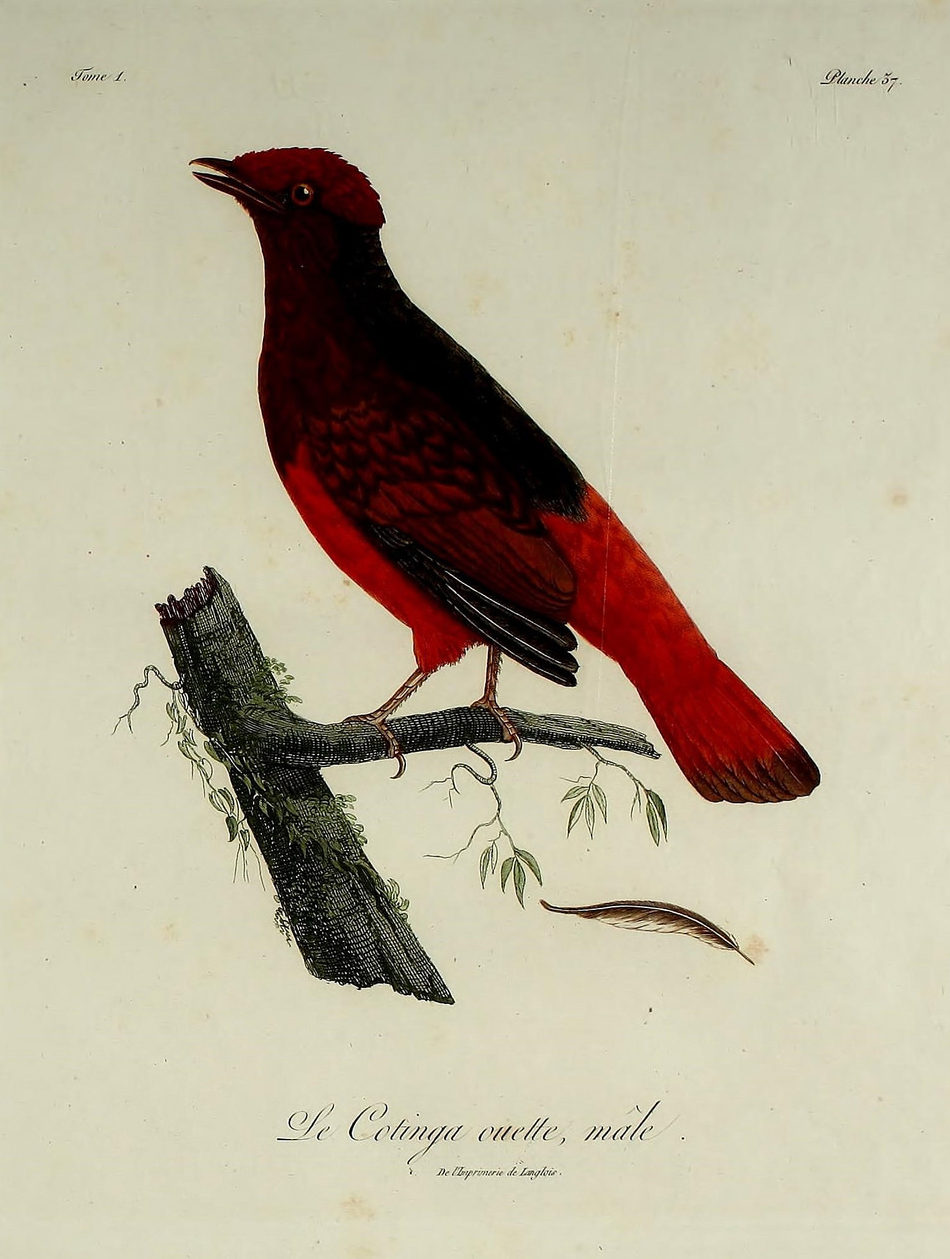
Plate 37, color: Le Continga ouette, male. Le Vaillant, François. Histoire naturelle d’une partie d’oiseaux nouveaux et rares de l’Amerique et des Indes. 1801. Digitized by The Field Museum of Natural History Library. http://biodiversitylibrary.org/page/47511812. Descriptions on pages 81-83.
View Full Size Image
Plate 38, uncolored: Le Continga ouette, male. Le Vaillant, François. Histoire naturelle d’une partie d’oiseaux nouveaux et rares de l’Amerique et des Indes. 1801. Digitized by The Field Museum of Natural History Library. http://biodiversitylibrary.org/page/47511816. Description on pages 81-83.

Born to French naturalists in Paramaribo, Dutch Guiana (Suriname), François Le Vaillant (1753-1824) began collecting bird specimens and building his own “cabinet” (or collection of specimens) before the age of ten. The family returned to France in 1763, where Le Vaillant would eventually make connections with ornithologists, collectors, and patrons who would become supporters of his work.

Le Vaillant was one of the first naturalists to independently embark on long voyages to study subjects in the wild. Previous naturalists had generally conducted such fieldwork as part of larger scientific expeditions. Not an illustrator in his own right, Le Vaillant relied on renowned artist Jacques Barraband (1768-1890) and emerging technologies of the day to produce his books. As authors Sitwell and Buchanan point out: “One interesting and sometimes confusing point is that some famous books are known by the author’s name and not the artist. Le Vaillant…whose name appears on most of the great French bird books of that same period, was a naturalist who travelled far, but never drew any of the pictures for his books…”

Barraband painted the birds that Le Vaillant secured on his voyages in watercolors, which were then assembled using an “elaborate mixture of processes – engraving, etching, colour printing and hand-finishing” (Lambourne). Le Vaillant was fortunate in that Napoléon Bonaparte had imitated a policy of Louis XIV to create a series of publications that were then “sent as presents to crowned heads, men of science, and learned bodies, in evidence of the splendours of the Empire…in this manner many glorious books came into being…The works of Le Vaillant owe their sumptuous character to the same impetus” (Sitwell and Buchanan).

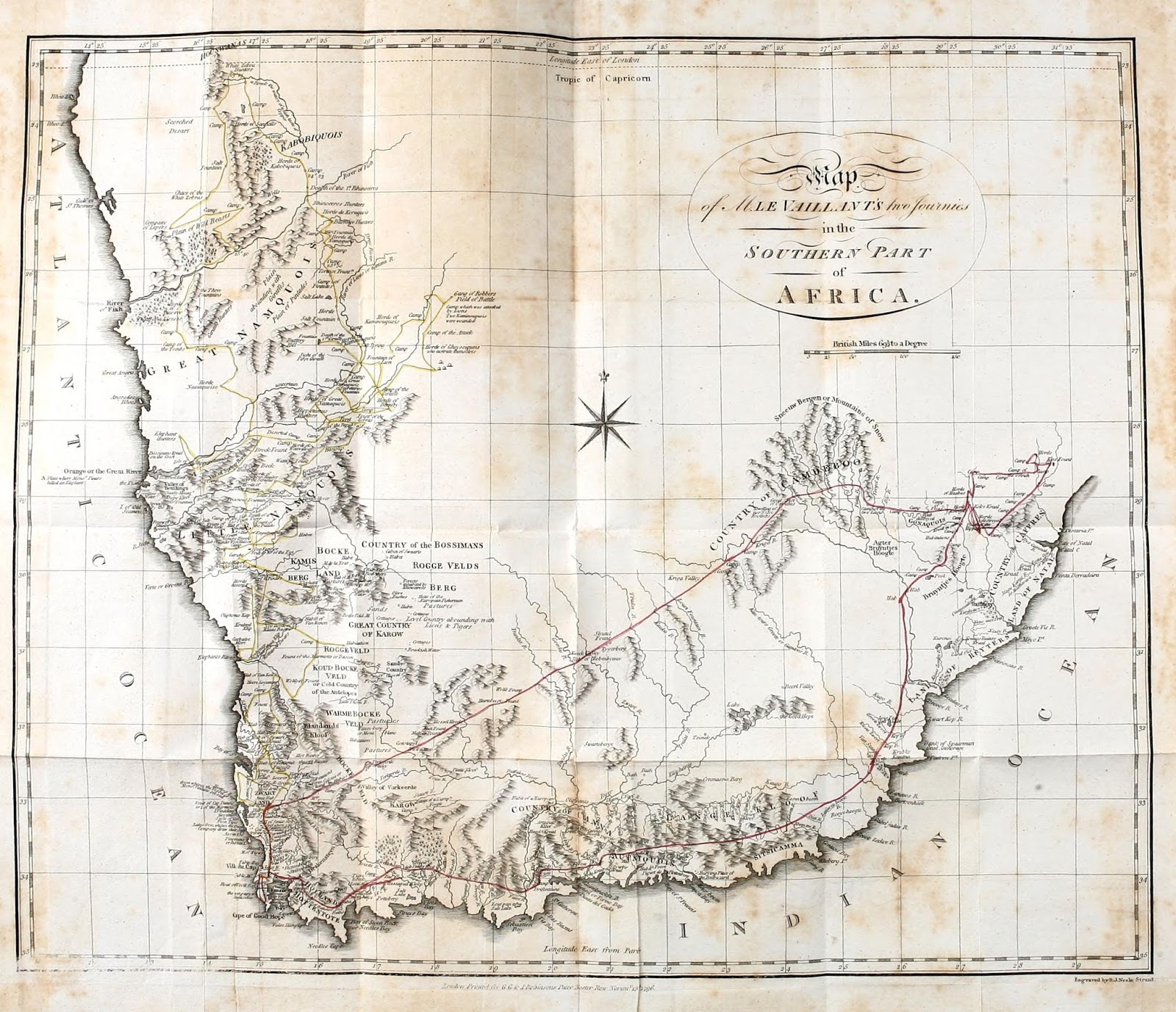
Le Vaillant’s travel memoirs contributed as much to his fame in his lifetime as his illustrated bird books: due to its popularity, Travels into the interior parts of Africa : by the way of the Cape of Good Hope in the years 1780, 8l, 82, 83, 84, and 85 (contributed by Smithsonian Libraries) was translated into English and German. Feeling pressured to write a sequel, New travels into the interior parts of Africa : by the way of the Cape of Good Hope, in the years 1783, 84 and 85 (also contributed by Smithsonian Libraries), contains “an entirely fabricated account of a journey from the Orange River to the Tropic of Capricorn,” though this was not discovered until after his death (Pasquier and Farrand). Ultimately, despite any embellishments, Le Vaillant will be remembered for having produced some of the finest bird books ever created.
View Full Size Image
Map, Foldout: Map of M. Le Vaillant’s Two Journies in the Southern Part of Africa. New travels into the interior parts of Africa : by the way of the Cape of Good Hope, in the years 1783, 84 and 85. Digitized by The Smithsonian Libraries. http://biodiversitylibrary.org/page/47139301.

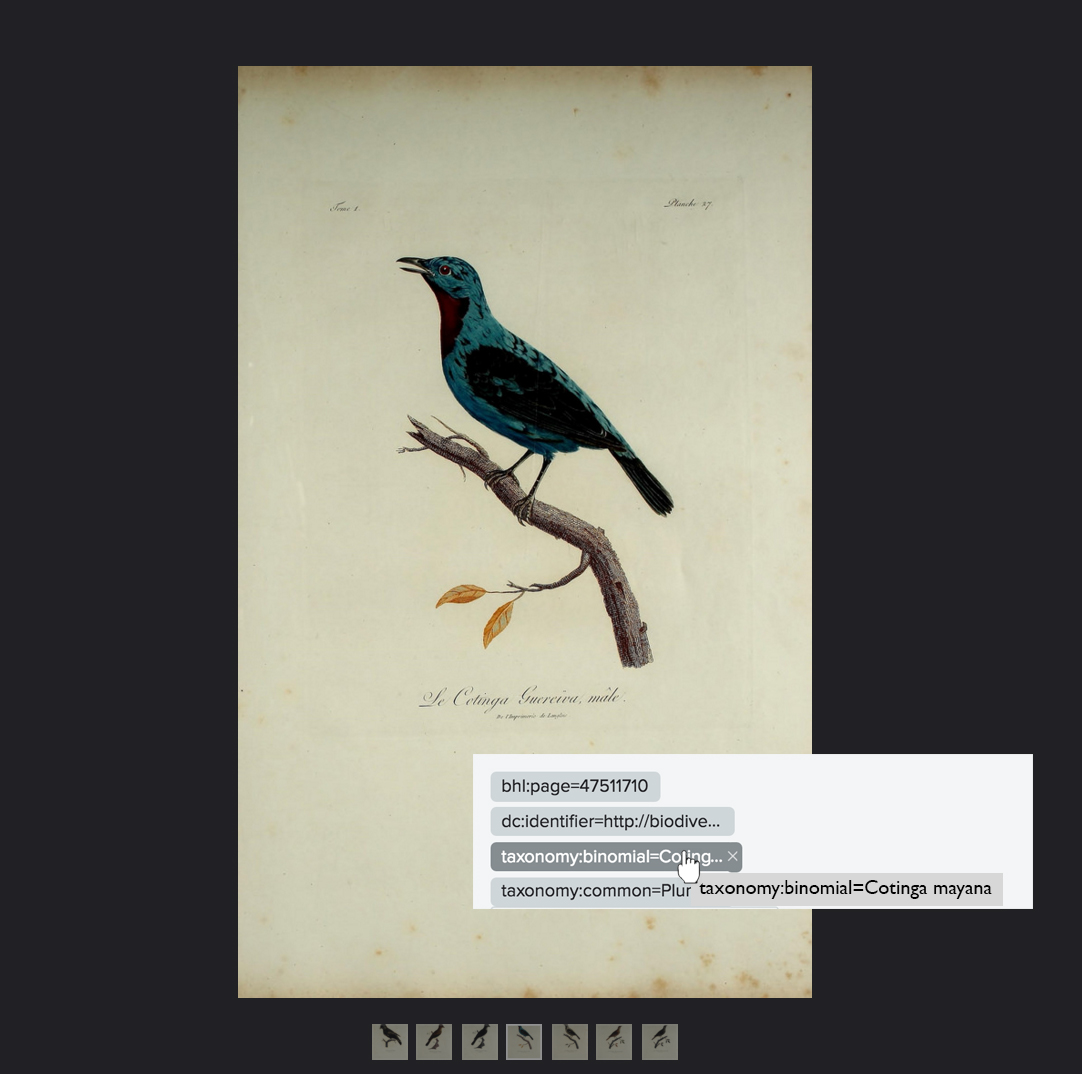
The images from Histoire naturelle d’une partie d’oiseaux nouveaux et rares de l’Amerique et des Indes are available in BHL’s Flickr. Nearly all of them have been taxon tagged by volunteers with the scientific name of the species depicted, allowing you to easily determine the species in the image as well as search Flickr for one of the included species and find the image. Learn more about our citizen science Flickr tagging efforts.
View Full Size Image
Example of a taxon-tagged image from La Vaillant’s Histoire naturelle d’une partie d’oiseaux nouveaux et rares de l’Amerique et des Indes in BHL’s Flickr.

References: 

  • Elphick, Jonathan. (2004). Birds. London: Scriptum Editions.
  • Lambourne, Maureen. (1990). The Art of Bird Illustration. London: Collins.
  • Martin, H. Bradley. (1989). The Library of H. Bradley Martin : Magnificent Color-Plate Ornithology. Sotheby’s Catalogue of Sale. New York, NY: Sotheby’s.
  • Pasquier, Roger F. and John Farrand. (1991). Masterpieces of Bird Art: 700 Years of Ornithological Illustration. New York: Abbeville Press.
  • Sitwell, Sacheverell, Handasyde Buchanan, and James Fisher. (1990). Fine Bird Books: 1700-1900. New York: Atlantic Monthly Press.
  • Stresemann, Erwin and G. William Cottrell. (1975). Ornithology from Aristotle to the Present. Cambridge: Harvard University Press.

July 28, 2016by ulib-libraryjobs
Blog Reel, Featured Books

When New England was New

Portrait version of the Biodiversity Heritage Library logo.
View Full Size Image
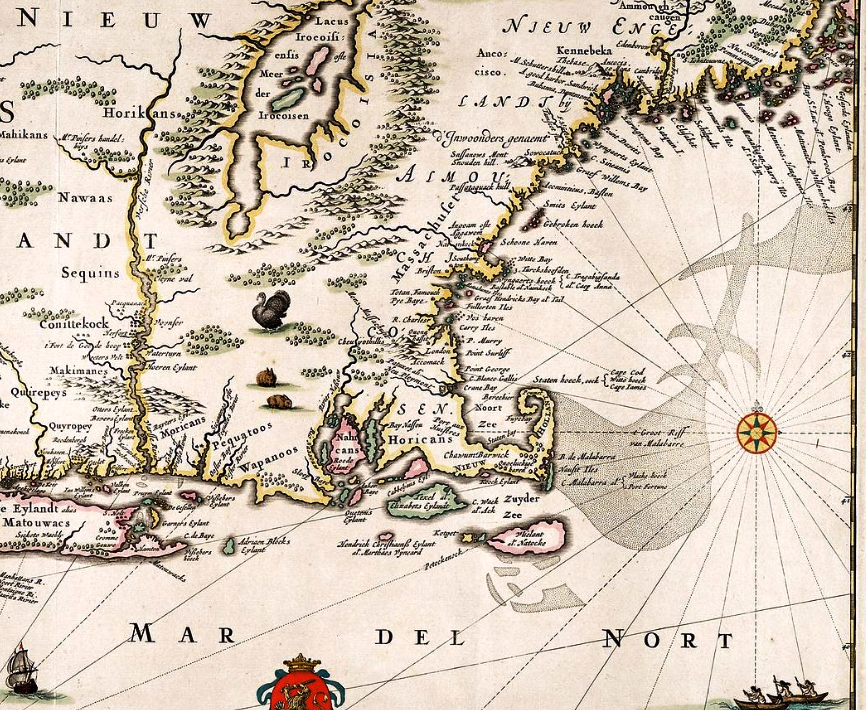
Map of eastern North America. Detail of engraved map by Nicolaes Jansz Visscher, made about 1655, not long after Josselyn’s first journey to the New World. Note the prominent, plump turkey. Gift of Mrs. Francis P. Garvan, National Museum of American History, Smithsonian Institution

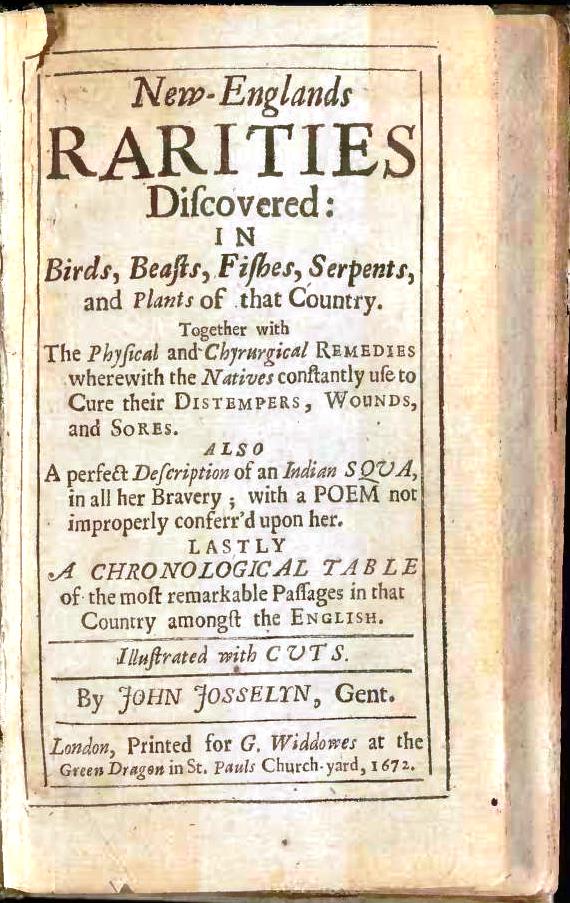
It is a small book, palm-size, with pages of less-than-fine paper, the well-worn letters of the type sometimes carelessly inked. The sparse woodcut illustrations are child-like in their simplicity and straight-forwardness. Yet John Josselyn’s New-Englands rarities discovered, printed in London in 1672, drew me in as I went about cataloging the work. Intrigued by the title and the early date of publication, I found myself reading an account of the landscape of my past, from Boston, “down east” (that is, up the coast as represented in the above illustration) to my place of birth, and points all around. That great bibliography, The Hunt Botanical Catalogue, notes that this book is “particularly interesting to people who are fond of Maine.” Indeed. The text provides a sense of place from the 17th century.

Having refreshed my self here [Boston] for some time, and opportunely lighting upon a passage in a Bark belonging to a Friend of my Brothers, and bound to the Eastward, I put to sea again, and on the Fifteenth of August I arrived at Black-point, otherwise called Scarborow, the habitation of my beloved Brother, being about an hundred leagues to the Eastward of Boston; here I resided eight years, and made it my business to discover all along the Natural, Physical, and Chyrurgical Rarities of the New-found World.

View Full Size Image
BHL digitized copy, supplied by the U.S. Department of Agriculture, National Agricultural Library.

New-Englands rarities is an account of the author’s two journeys to America, the first in 1638 for several months and again in 1663 for a stay of eight years. Despite the autobiographical nature of the work, not much is known of Josselyn, “active” in cataloging parlance, from 1630 to 1675, and born around 1608 in Essex County. The author comes across as a learned, if not terribly discerning, gentleman with possibly a medical background. He describes the topography, customs and the natural history of the country, with great interest in the healing properties of organic materials from recipes used by both native Americans and colonists, leading to speculation that the Englishman was a physician. It may be Josselyn was simply well-read and the curious type. The era of European plant exploration in the New World, for both therapeutic, consumption and ornamental purposes, was underway by the time of Josselyn’s travels. There would be a ready audience for such information, particularly in a relatively accessible and inexpensive publication.

View Full Size Image
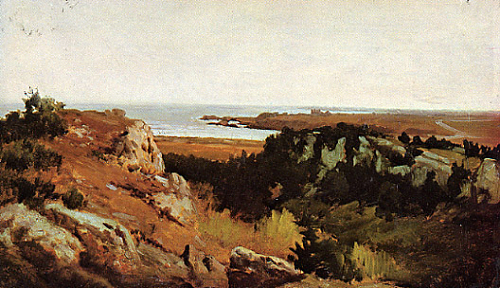
Prouts Neck. Painting by Winslow Homer (1836-1910), Smithsonian American Art Museums

“Scarborow” is the coastal area of Scarborough, incorporated as a town in 1658 in the present state of Maine. One of the area settlements was “Black-point” (originally a patent of 1500 acres) that included the rocky shoreline of present-day Prouts Neck, of artist Winslow Homer-fame (a place now known for exclusiveness). It was here that John Josselyn’s brother Henry lived and worked along the sea, rivers, stretches of salt marshes and sandy beaches. Henry Josselyn was representing the Royal grant of land, Council of Gorges’ Province of Maine, by 1636, and later served as Deputy-Governor.

There is some evidence that Henry Josselyn may have ascended the highest mountain in the Northeast, the 6,288-foot (1,917-meter) Mount Washington. His brother John, as did Giovanni da Verrazano in 1524, observed and recorded the peak (known by various names before European settlement) from shipboard in the Atlantic Ocean as “one stately mountain…surmounting the rest”:

“Fourscore miles (upon a direct line) to the Northwest of Scarborow, a Ridge of Mountains run Northwest and Northeast an hundred Leagues, known by the name of the White Mountains, upon which lieth Snow all year, and is a Land-mark twenty miles off at Sea.”

View Full Size Image
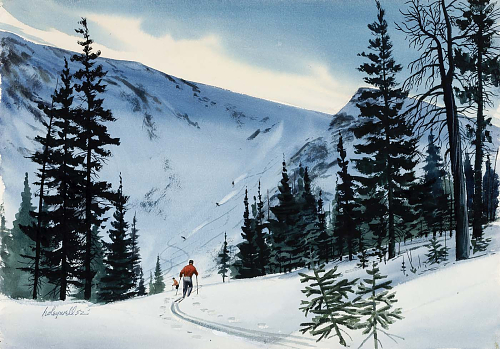
Skiing at Tuckerman’s Ravine, Mt. Washington, N. H. Watercolor by Arnold Holeywell (1923-2010). Smithsonian American Art Museum, gift of the Ford Motor Company

John Josselyn’s further writings indicate that he probably also summited the mountain (as I did one June, when there was still snow on the slopes). Now a not-particularly arduous but long day’s hike in good weather along groomed trails, it was not a casual undertaking in the 1660’s. It is a volatile place with fierce, sometimes unpredictable, weather. The Josselyns probably journeyed along the magnificent Saco River, south of Scarborough, to reach the range. There John Josselyn made meteorological observations (The Mount Washington Observatory on April 12, 1934, recorded the wind at 231 miles per hour, a record that held through the 20th century).

Josselyn liked to compose catalogs and there is humor sprinkled about his lists. In the one on fishes, he prefaced: “Pliny and Isadore write there are not above 144 Kinds of Fishes, but to my knowledge there are nearer 300: I suppose Americawas not known to Pliny and Isadore.” The account of his unfortunate encounter with a wasp nest begins with his belief he was coming across an exotic fruit. And, amusing for readers today, Josselyn was none too fond of the Puritans of the Bay Colony. The Native Americans, on the other hand, were regarded with admiration.

View Full Size Image
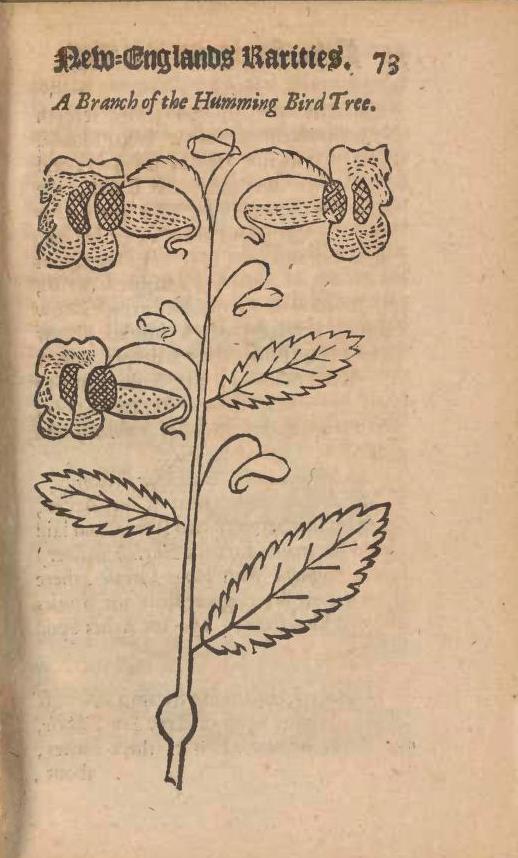
Touch-me-not or Hummingbird tree – a favorite of the bird to feed upon. Josselyn, John. New-Englands rarities. (1672). Digitized by the U.S. Department of Agriculture, National Agricultural Library. http://biodiversitylibrary.org/page/47579388.

For botany researchers there is much information to decipher from New-Englands rarities. Twenty-two invasive species or weeds are listed under a section “Of such Plants as have sprung up since the English Planted and kept Cattle in New-England” (the reference to cows is of their manure). In Josselyn’s identifications, sow thistle, night shade, mallowes, wormwood, bloodwort, and cheek weed are recorded; some are identifiable today, others not. According to noted botanist, ecologist and conservationist Paul Sears, Josselyn provides the first mention of the now-ubiquitous dandelion in America. From the many references, it is evident that the author had with him the hefty 1633 Thomas Johnson’s edition of Herball by John Gerard, “our famous Herbalist.” Josselyn notes the New World plants described by Gerard as well as Parkinson and points out his own discoveries, such as skunk cabbage and the pitcher-plant.

View Full Size Image
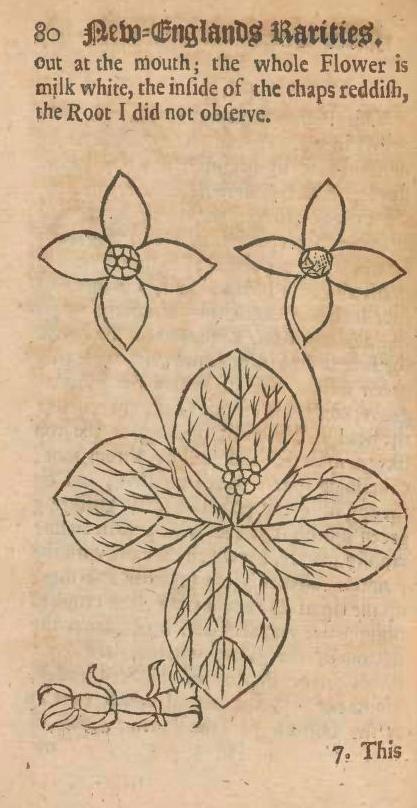
Herb True Love: “the leaves are good to be laid upon hot tumors.” Josselyn, John. New-Englands rarities. (1672). Digitized by the U.S. Department of Agriculture, National Agricultural Library. http://biodiversitylibrary.org/page/47579357.

Recipes, whether for medical purposes or nourishment, are sprinkled throughout the text. The wild turkey is fully described for the first time and what must be one of the earliest records of meat being eaten with cranberries as “it is a delicate Sauce.” Josselyn also mentions “pompions” (pumpkin) pie. The colonists of course learned about the cultivation of pumpkins, squash and corn from the native inhabitants. “Billberries” (blueberries), are reported to be “very good to allay the burning heat of Feavers and hot Agues, either in Syrup or Conserve. A most excellent Summer Dish.” Peas, grown in New England, “are the best in the world.”

View Full Size Image
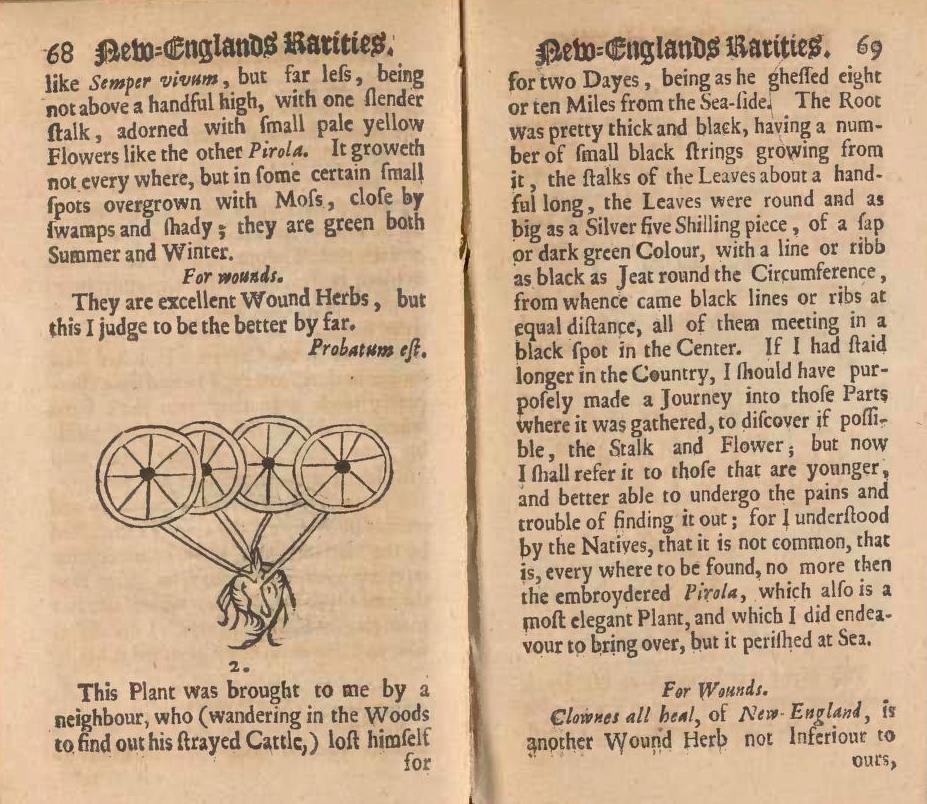
Josselyn, John. New-Englands rarities. (1672). Digitized by the U.S. Department of Agriculture, National Agricultural Library. http://biodiversitylibrary.org/page/47579390.

Josselyn soon expanded New-Englands rarities with An account of two voyages to New England in 1674 (BHL copy digitized from the Smithsonian Libraries). The dedication in this edition is loftier and more ambitious: to the President and Fellows of the Royal Society. A relative of Josseyln’s, Samuel Fortrey, had helped pay for the printing of the earlier work. There is far more detail on the provisioning and crossings of the ships and attendant illnesses and deaths. There is also a disturbing story of the rape of a slave on Noodles Island in Boston Harbor, a horrifying but important testament in the history of slavery in New England.

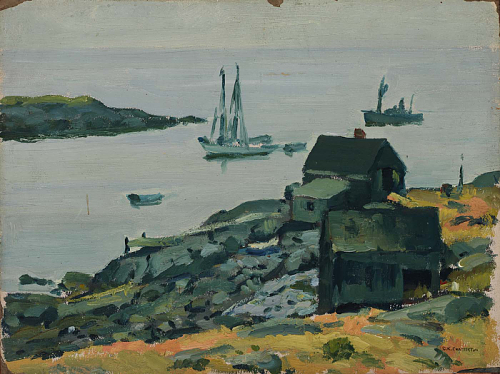
Two voyages to New England provides more scenes of the coast. Monhegan Island, a favorite place of mine, is a speck about ten miles from the nearest mainland. Following European explorers Martin Pring, Samuel de Champlain, George Weymouth, John Smith (and before these sailors, possibly the Vikings), Josselyn reported that Monhegan was filled with fisherman’s houses and shacks, long a staging area for drying fish and post for fur traders to send their goods across the Atlantic. Cod was the great commodity, harvested from the abundant fishing grounds of the Gulf of Maine and along the coast. Since the mid-19th century, Monhegan, spectacularly ruggedly beautiful, has been better known as an artist colony and draw for tourists, at least in the summer.

View Full Size Image
Monhegan Harbor, oil painting by C. K. Chatterton (1880-1973). Smithsonian American Art Museum, bequest of Olin Dows

New-Englands rarities was cited by the great Swedish zoologist and botanist Carl Linnaeus in 1753, attesting to its completeness and authority on flora and fauna for about a century. It also inspired a certain type of travel literature. Henry David Thoreau was an admirer and in A week on the Concord and Merrimack Rivers (1849) wrote of Josselyn’s speaking of “the strong new soil.” Soon after I encountered the book in the Cullman Library of Natural History, I came across a reprinted edition while in Salem, Massachusetts in the gift shop of the House of the Seven Gables. Most valued today for its accounting of plants, the book and its successor, An account of two voyages, have much to offer historians of indigenous cultures about the impact of European settlements, cookery, gardens, religion, folklore, meteorology, geology, and maritime and social norms of the early colonial period in America. Its sense of wonder about the landscape of the New World provides the modern reader with a sense of the place.

Josselyn’s last printed words:

“Now by the merciful providence of the Almighty, having performed Two voyages to the North-east parts of the Western-world, I am safely arrived in my Native Countrey; having in part made good the French proverb, Traveul where thou canst, but dye where thou oughtest, that is, in thine own Countrey.”

Notes
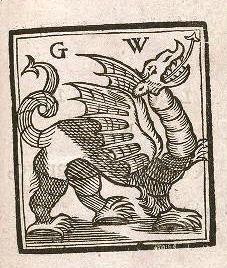
New-Englands rarities has frequently been reprinted. Many of those editions, as well as the National Agricultural Library’s copy of the first, have been digitized by the Biodiversity Heritage Library. The Cullman Library’s copy had been rebound too tightly for it to be safely scanned. It also lacks the last leaf containing the printer’s device.

View Full Size Image
The printer Giles Widdows’ woodcut mark, with his initials and winged dragon. Josselyn, John. New-Englands rarities. (1672). Digitized by the U.S. Department of Agriculture, National Agricultural Library. http://biodiversitylibrary.org/page/47579382.
The BHL digitized copy in Smithsonian Libraries (the Dibner Library) of Josselyn’s later work: An account of two voyages to New-England : wherein you have the settingout of a ship, with the charges; the prices of all necessaries for furnishing aplanter and his family at his first coming; a description of the countrey,natives and creatures, with their merchantil and physical use : the governmentof the countrey as it is now possessed by the English, &c.; : A largechronological table of the most remarkable passages, from the first discoveringof the continent of America, to the year 1673. London : Printed for Giles Widdows, at the Green-Dragon in St. Paul’s-Church-yard, 1674.

Bulletin of the Josselyn Botanical Society of Maine.

Leighton, Ann. Early American gardens “for meate or medicine.” Amherst: The University of Massachusetts Press, 1986.
View Full Size Image
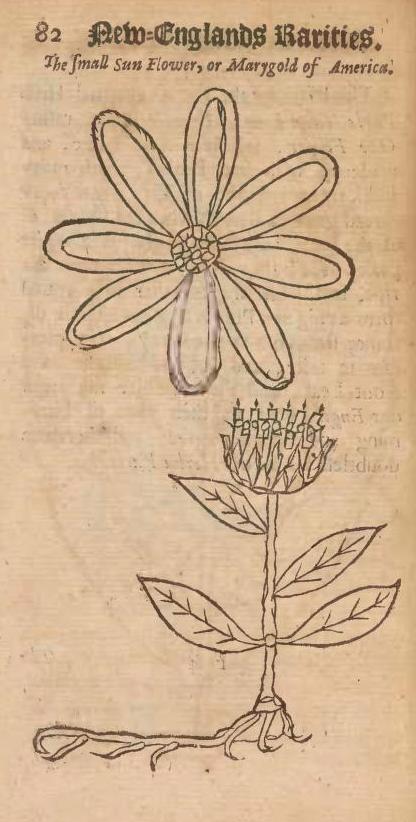
‘The American Sunflower” Josselyn wrote: “The plants in New-England for the variety, number, beauty, and vertues, many stand in Competition with the plants of any Countrey in Europe.” Josselyn, John. New-Englands rarities. (1672). Digitized by the U.S. Department of Agriculture, National Agricultural Library. http://biodiversitylibrary.org/page/47579359.

The Scarborough Land Conservation Trust.

View Full Size Image
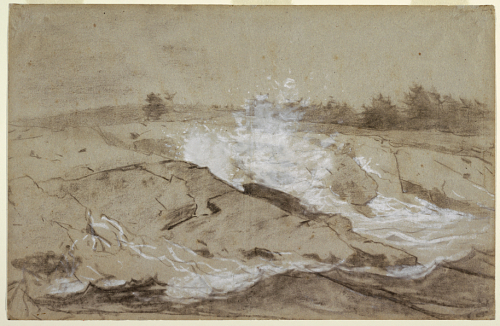
Black Point, Scarborough. Charcoal and chalk drawing of approximately 1884, by Winslow Homer. Cooper Hewitt, Smithsonian Design Museum Collection. Josselyn reported of a spring at Black Point that was “purgative and cures scabs and Itch.” Along with the springs, the Englishman was taken with the curative properties of the waters in the New World.
March 31, 2016by khage
Blog Reel, User Stories

“What a Gem!” BHL Supports Teuthology Research

Here’s a word of the day for you: Teuthology.

What does it mean? It’s the study of cephalopods. What are cephalopods? Well, they are a class of mollusks that include two extant subclasses: Coleoidea and Nautiloidea.

Still not sure what cephalopods are? You probably know them by their more common monikers: octopuses, squid, cuttlefish, and nautiluses. There are over 800 living species of cephalopods known today.

View Full Size Image
Dr. Ian G. Gleadall, Reader in Marine Biology at the International Fisheries Science Unit of Tohoku University Graduate School of Agricultural Sciences, Sendai, Japan.

Dr. Ian G. Gleadall has been studying the biology of cephalopods (particularly octopuses) for 40 years. Dr. Gleadall (a marine biologist who works in Sendai, Japan) discovered BHL in November, 2014 while visiting the National Museum of Natural History in Paris. It has had a profound impact on his research. As Dr. Gleadall explains:

“[BHL] is a truly wonderful tool. Highly useful, reliable in operation, intuitive and easy to use. I have been writing a complex systematic review of cephalopod taxonomy, with an emphasis on the octopuses of the Indo-Pacific region, particularly centred on the seas of the Japanese Archipelago. Because of many previous errors and unclear references to earlier studies in this field, I had recently decided to go deeper into previous naming systems for the Cephalopoda, particularly as regards the various groups of octopus.

“There are a number of different, rival schemes in taxonomy, so it is necessary to read the original description for each name in order to assess which should be regarded as the most appropriate to use. Many of the earlier works were published in rare and valuable tomes which are now difficult to get hold of. These books are sometimes huge in size and libraries are reluctant to have them inspected at first hand because their condition is often deteriorating and they may be heavy and difficult to handle. Getting copies of such works is in itself often very difficult and the administrative procedures can be frustrating and time consuming. It is also expensive to visit each institution concerned in many different countries.

“However, the BHL online catalogue of works provides access to a large number of such rare works, allowing me to find and study many of the books I need to use from the comfort of my laptop computer and a wireless internet connection. If I want to have copies of relevant sections, it is very easy to mark pages for collation into a customized PDF file, or even to download an entire book. This service has proven to be extremely valuable to me.

“Over recent months I have been able to quickly gain access to many older texts and this has enabled me to achieve my aims far quicker than would otherwise have been possible. For example, often when I read a new work, I find further references to works that I previously was not aware of. I can then quickly look for (and find) those using BHL. Normally, this could involve having to revisit a library in another country that I have already visited once, or I would have to try to get the library staff to send me a copy, neither of which is as fast or convenient as using BHL.”

During intensive periods of study, Dr. Gleadall uses BHL daily, sometimes downloading up to four 4 custom PDFs in a day, in addition to studying other materials online. It’s not surprising, then, that the ability to download custom PDFs is Dr. Gleadall’s favorite feature on BHL.

“About half of the publications that I access on BHL I read online and take notes. Where there is a lot of material and I do not have time to complete my work in a single session (or if there are many data-dense tables, for example), I’ll select the pages that I’m interested in and arrange for a custom PDF,” explains Dr. Gleadall. “[The custom PDF service] is so easy and intuitive to use (why can’t other internet services be so convenient and trouble-free?!).”

View Full Size Image
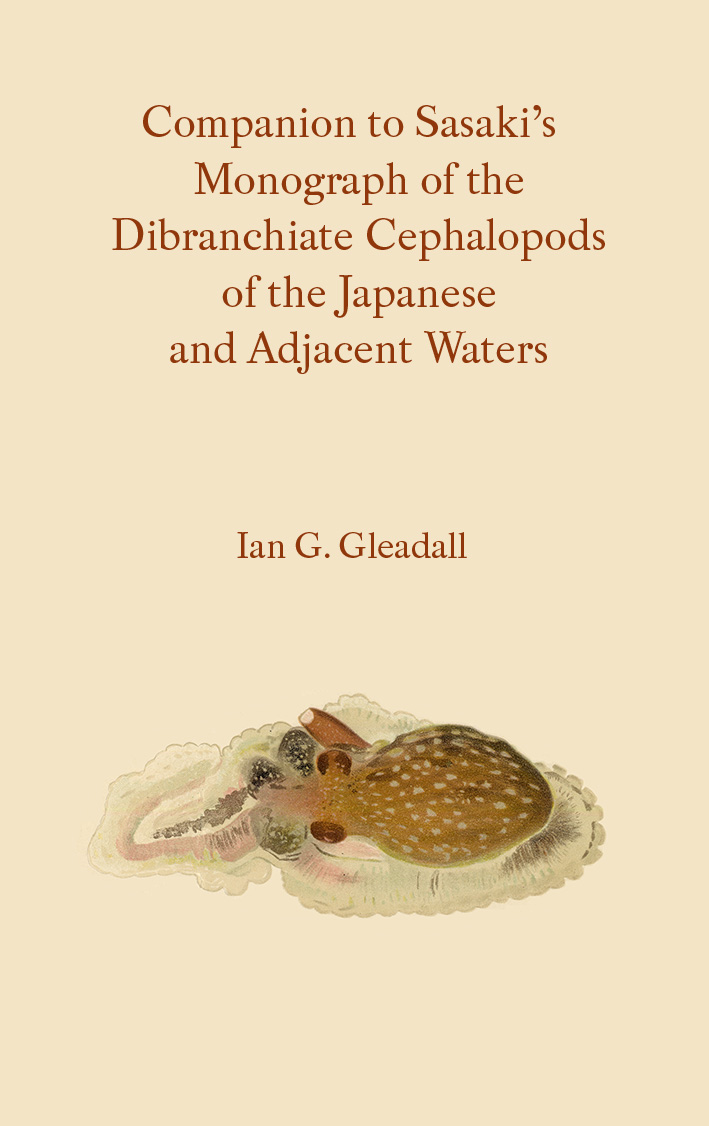
A book by Ian Gleadall (in the final stages of publication) concerning the classic 1929 monograph on the Cephalopoda by Madoka Sasaki. In writing this book, many of the references required to prepare the synonymies of various cephalopod orders, families, genera and species were viewed using the BHL online archive.

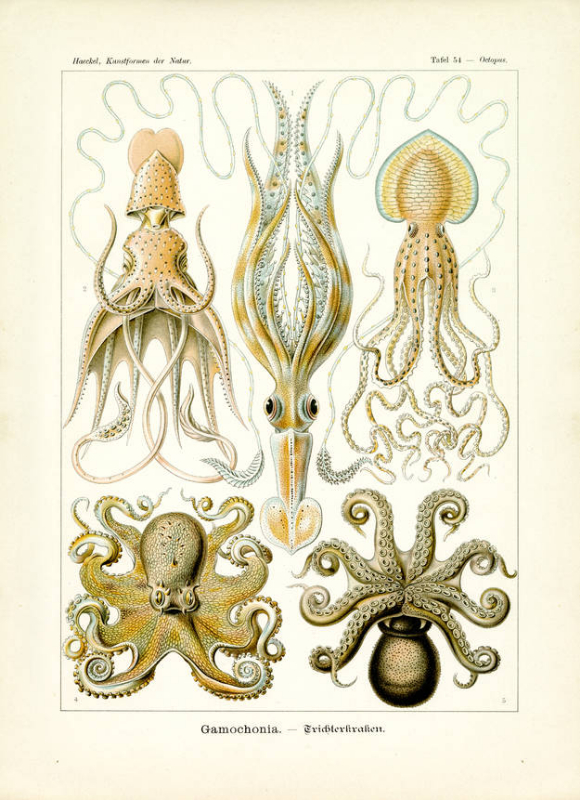
A highlight for Dr. Gleadall in his research is the opportunity to explore some of the beautiful works of art that are part of the heritage of biological description, such as the stunning cephalopod lithograph created by Ernst Haeckel as part of his Kunstformen der Natur (1904).

View Full Size Image
54th plate from Ernst Haeckel’s Kunstformen der Natur (1904), depicting squids and octopuses classified as Gamochonia. http://biodiversitylibrary.org/page/47388247.
View Full Size Image
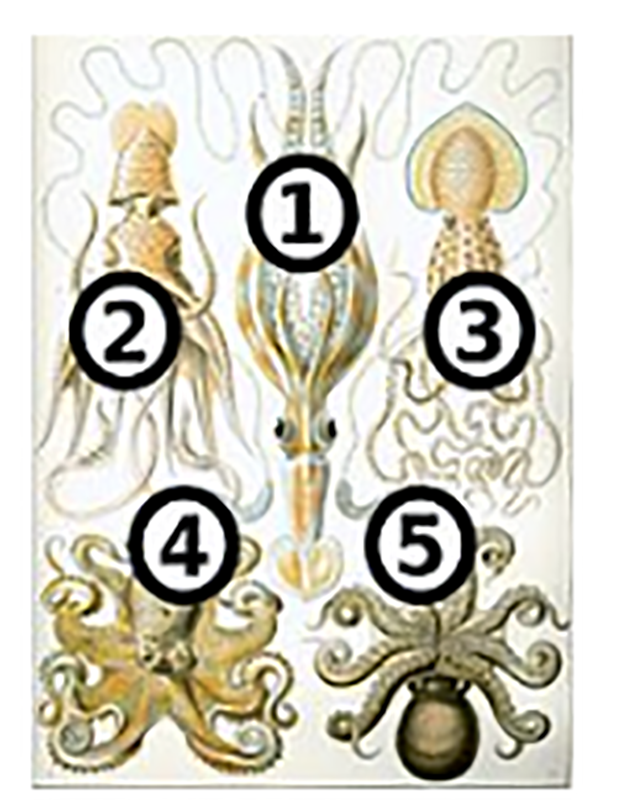
Key to Haeckel’s plate, above. 1) Chiroteuthis veranyi (Férussac); 2) Histioteuthis ruppellii (Vérany); 3) Pinnoctopus cordiformis (Quoy and Gaimard); 4) Octopus vulgaris(Lamarck); 5) Octopus granulatus (Lamarck).

“In modern times, there are many artful illustrations and computer graphic images, but many people are unaware of the gorgeous images of more than 100 years ago, where no expense was spared to produce magnificent series of books reporting on the collections from localities far and wide by the early explorers,” lauds Dr. Gleadall.

While the experience of seeing these illustrations in person creates an impression that a computer screen cannot quite replicate (as Dr. Gleadall explains, many of the rare volumes containing these artworks are massive in size), it is often difficult to gain access to such works in physical library collections. The availability of these books in BHL, and the artwork on the BHL Flickr, ensures that everyone can see and experience this wonderful biodiversity heritage.

It is this immediate and unrestricted access that has most-impacted Dr. Gleadall’s work.

“BHL has considerably smoothed the way for me and speeded up the rate at which I can view a large number of relevant references. I look forward to being able to publish my results far more quickly than would otherwise have been possible without BHL. Many thanks.”

Thank you, Dr. Gleadall, for sharing with us the impact that BHL has on your work. Do you use BHL to support your own research? Want to tell us about it? Send an email to [email protected]!

September 10, 2015by michelle.underhill
Blog Reel, Featured Books

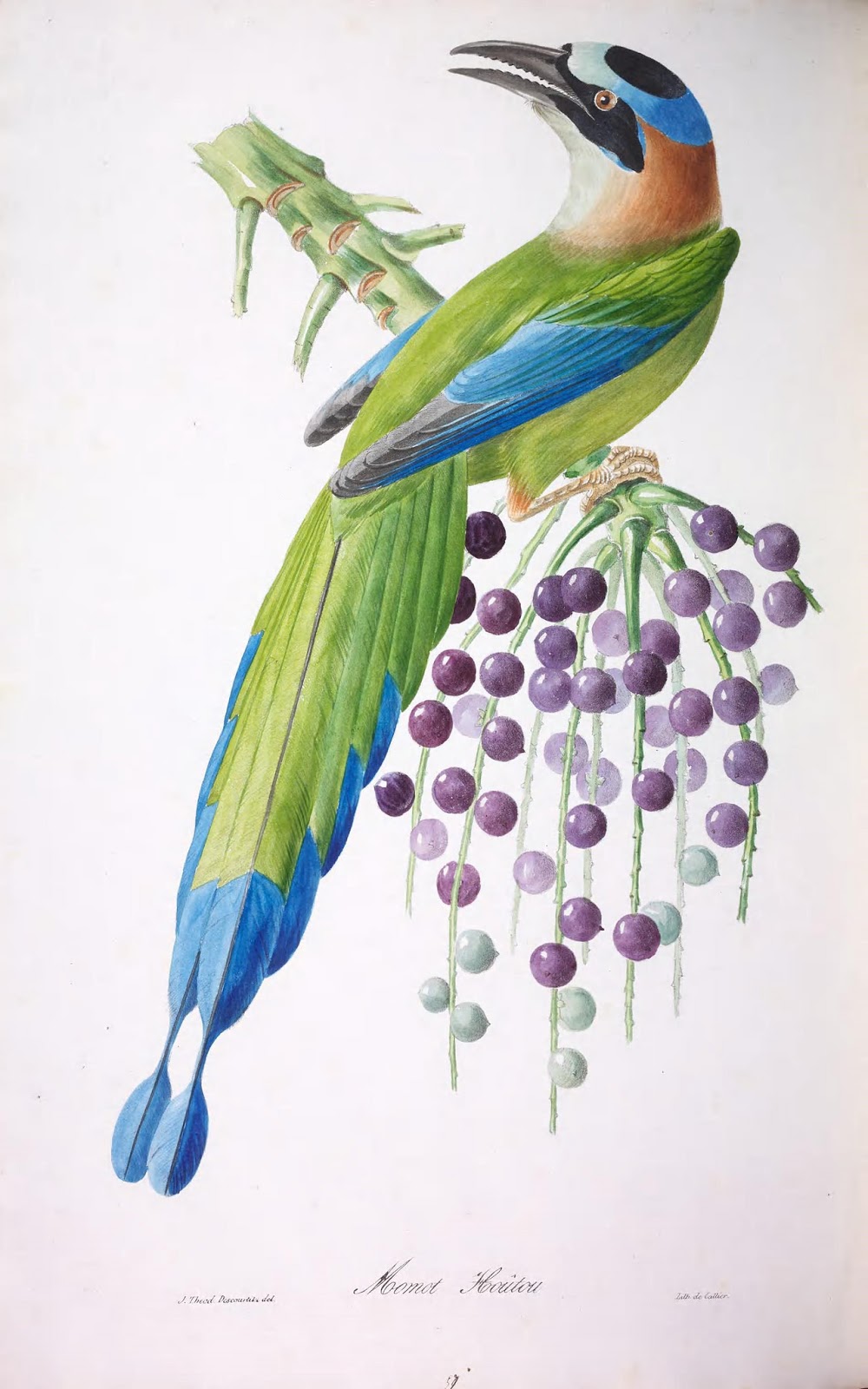
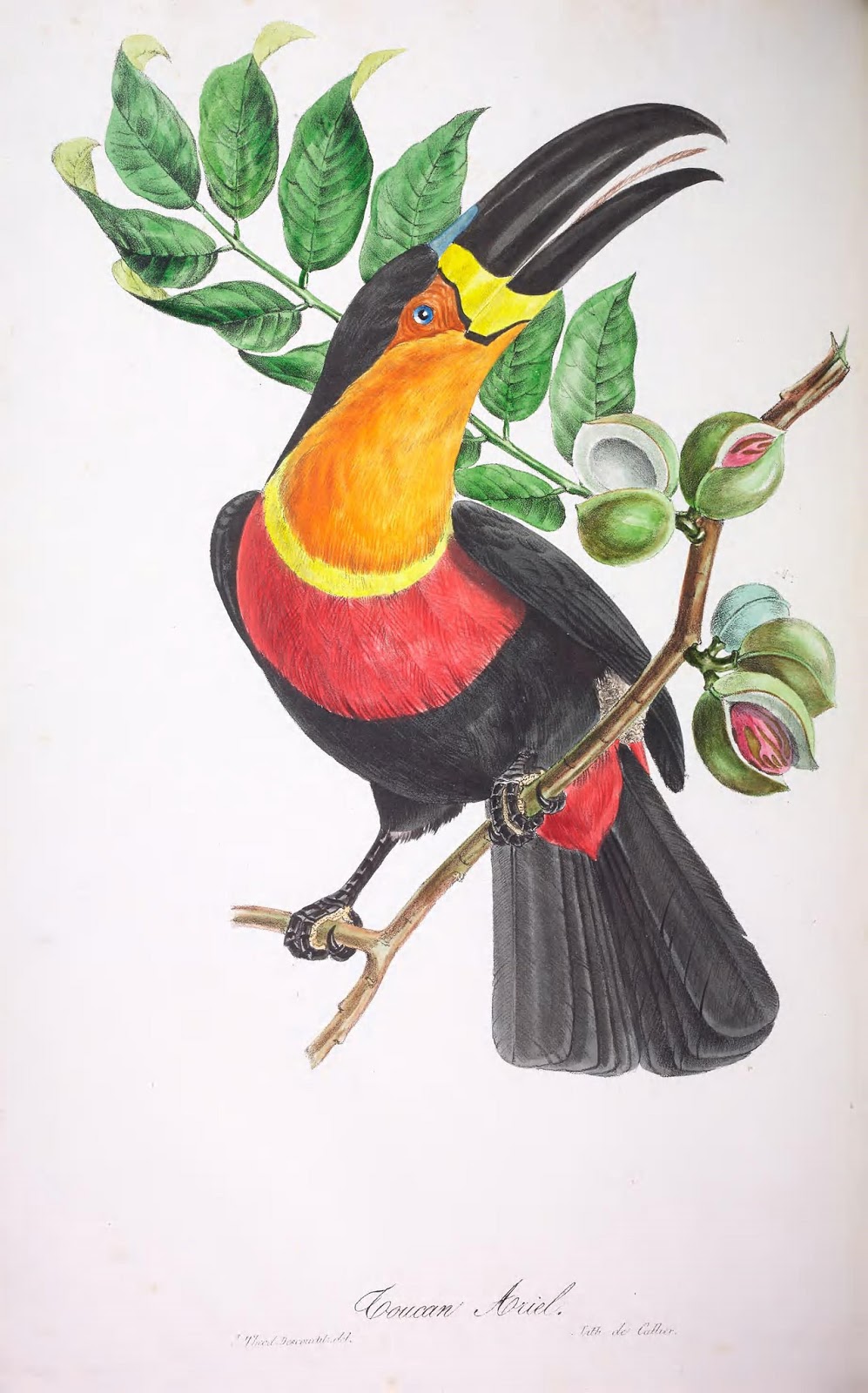
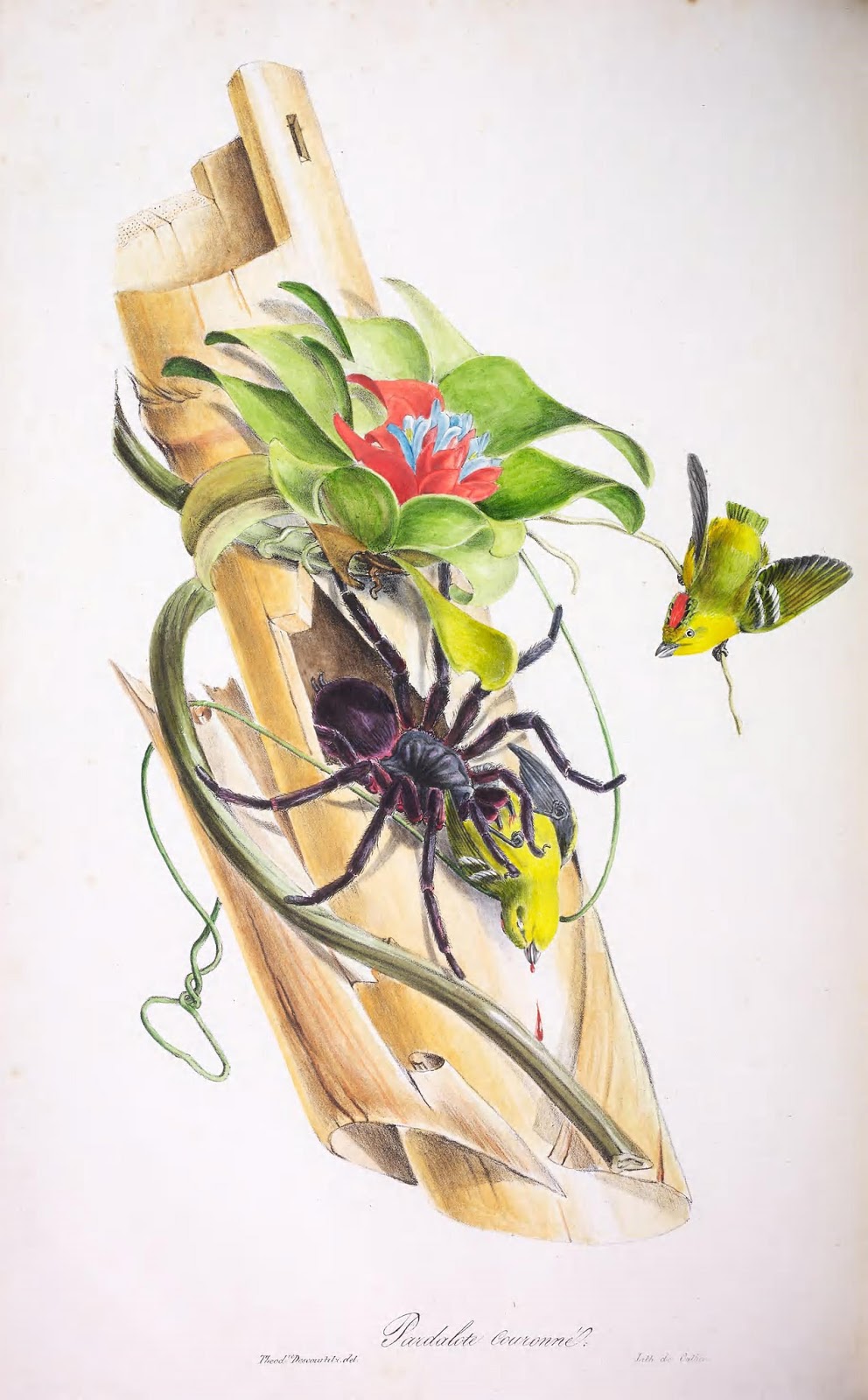
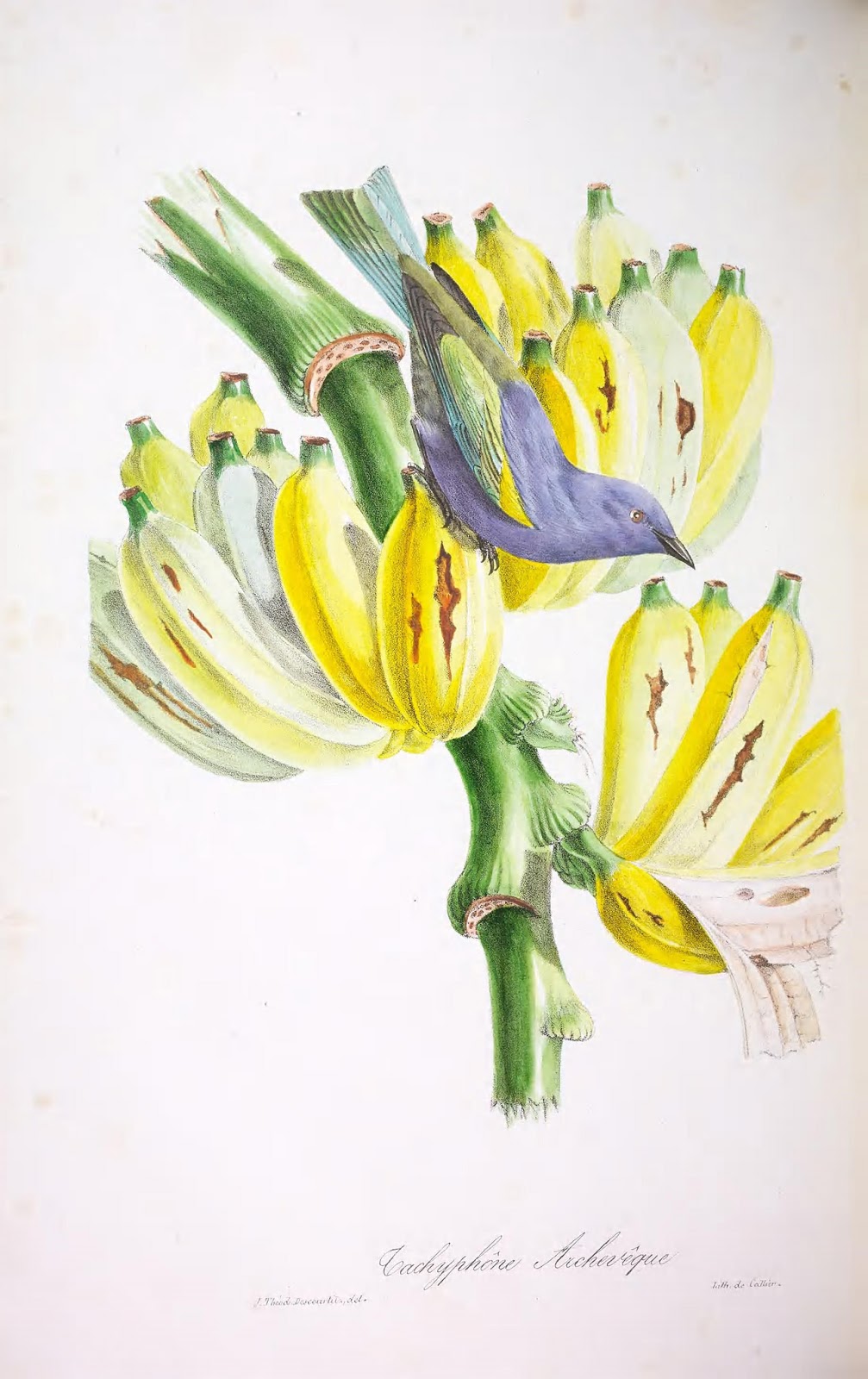
Brilliant and Remarkable Birds of Brazil

One of the joyous things about being a Librarian caring for special and rare collections is that you frequently find something remarkable and new to you in those collections. Add on the role of BHL staffer and this multiplies through digitization requests posted by users of BHL.

Approximately five years ago a request was posted for a book unknown to me by an artist I had not come across. The catalogue record flagged that it was a folio of coloured plates which consigned the volume to a long queue for bespoke in-house scanning. Time passed and circumstances changed, and earlier this year I was informed that it had been scanned and was ready for loading to BHL. We have access to a new cloud-based system for loading our scans into BHL, and this volume was to be our test subject. A little bit of research indicated that this volume was indeed remarkable.

View Full Size Image
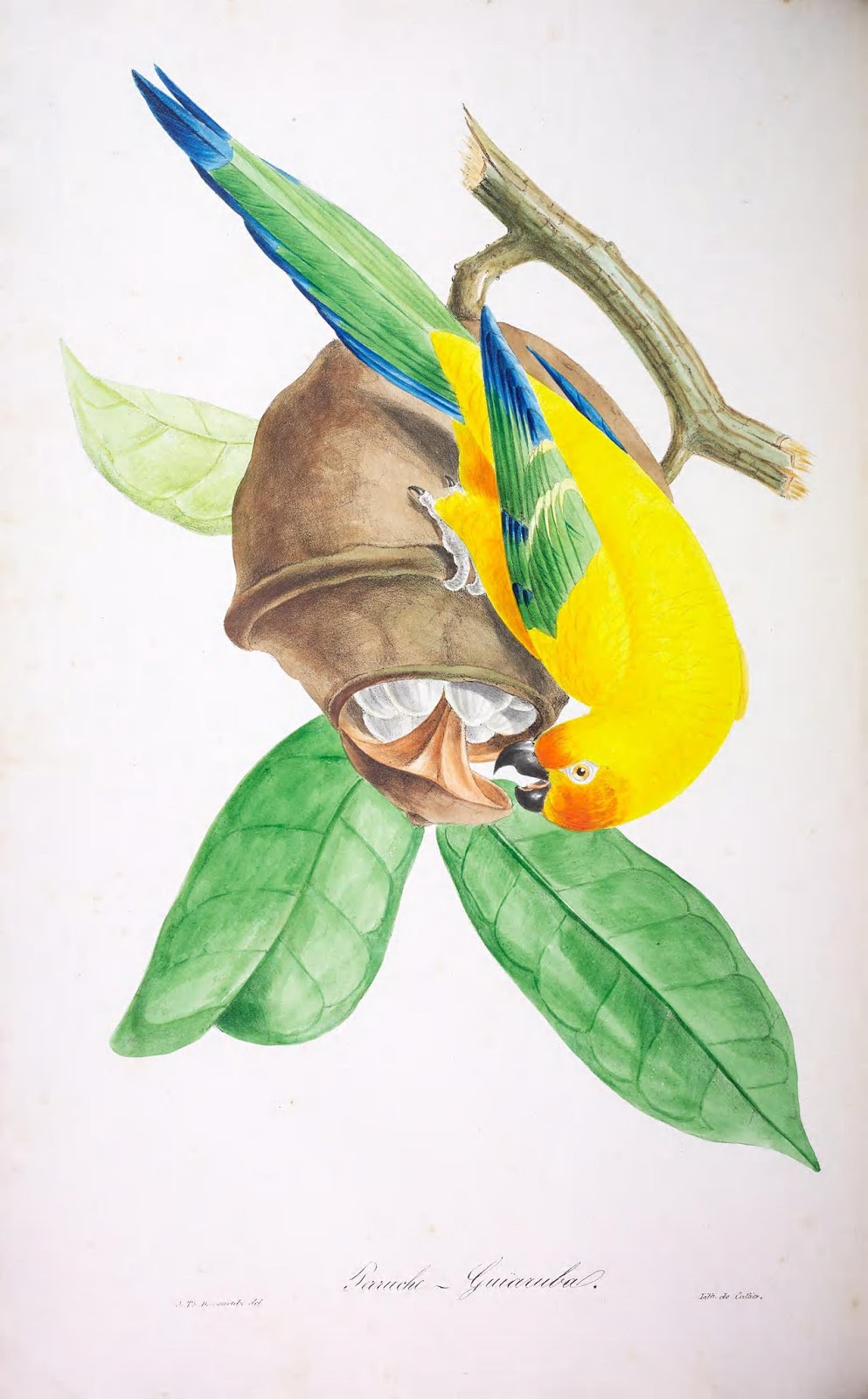
Descourtilz, J. T. (Jean Théodore). Oiseaux brillans du Brésil. (1834). http://biodiversitylibrary.org/page/47697413.

Jean-Theodore Descourtilz was born in 1796 in France, one of eight brothers. His father was Michel Etienne Descourtilz (1775-1836), a physician and botanist who wrote Flore pittoresque et médicale des Antilles (1821-1829). Jean-Theodore produced the 600 plates which illustrate this tome. He seems to have been well travelled with evidence of being in Haiti aged 3 and in the Antilles by 1821 in order to make the illustrations for his father’s book. Jean-Theodore seems to have arrived in Brazil around 1826 and in 1831 had presented a manuscript on hummingbirds to the National Museum in Rio de Janeiro. Histoire des Oiseaux-mouches Habitant des Districts de Rio de Janeiro, Bananal, San-Paulo, Macahé, Canta-Gallo et Ilha-Grande contained full colour illustrations and meticulous notes about the hummingbirds and their habitats. Two of the species were very rare and had been seen only twice by Descourtilz since he arrived in the country. The original paintings were sold by Christies in 1992 for over £85,000 and a facsimile edition was produced in 1960 as limited run entitled Beija-flores do Brasil- Oiseaux-mouches – orthorynques du Brésil.

View Full Size Image
Descourtilz, J. T. (Jean Théodore). Oiseaux brillans du Brésil. (1834). http://biodiversitylibrary.org/page/47697212.

In 1834, Descourtilz published his first book, Oiseaux brillans et remarquables du Brésil, containing 60 beautifully coloured plates lithographed by Callier. There appears to have been no title page or text in the published edition, however the copy held by the Natural History Museum has handwritten title page and a page of text for each illustrated species. It is notable that Descourtilz illustrated the birds on appropriate food plants and captured detailed information on habits, customs, behaviour and habitat as well as the usual dates and location. This book is one of the rarest tomes of birds of the Americas. The Sotheby’s sale catalogue for the H. Bradley Martin Ornithological Library sale in 1989 states there are only four known copies; the copy for sale from H. Bradley Martin, a copy in the Teyler Foundation in Haarlem (Netherlands), a copy in the British Library, and a copy in the Library of Congress. At this time I can state there is a copy in the Natural History Museum (from the Rothschild Collection) and the Teyler Foundation copy was used to produce a facsimile edition Pageantry of Tropical Birds. However I have been unable to confirm that copies are held by the British Library or the Library of Congress, and have no knowledge of the whereabouts of the H. Bradley Martin copy.

View Full Size Image
Descourtilz, J. T. (Jean Théodore). Oiseaux brillans du Brésil. (1834). http://biodiversitylibrary.org/page/47697188.

Between 1852 and 1856, Descourtilz’s book Ornithologie Brésilienne, ou Histoire des Oiseaux de Brésil, remarquables par leur plumage, leur chant ou leurs habitudes was published in four parts. Forty-eight of the plates were developed from Oiseaux brillans du Brésil, and it contains fifteen species and one genus previously undiscovered.

View Full Size Image
Descourtilz, J. T. (Jean Théodore). Oiseaux brillans du Brésil. (1834). http://biodiversitylibrary.org/page/47697281.

The National Museum of Brazil recruited Descourtilz in 1854, but unfortunately he died the next year from arsenic poising while preparing specimens for the Museum. Very little else is known about his life, and he is buried near Aracruz, near the coast of Brazil a few hundred kilometers north of Rio de Janeiro.

View Full Size Image
Descourtilz, J. T. (Jean Théodore). Oiseaux brillans du Brésil. (1834). http://biodiversitylibrary.org/page/47697220.

So five years on Oiseaux brillans du Brésil is available on the Biodiversity Heritage Library! Please enjoy it. You can browse the illustrations from this stunning work in Flickr.

August 27, 2015by ulib-libraryjobs
Blog Reel, Featured Books

The First Comprehensive Description of Reptiles and Amphibians

View Full Size Image
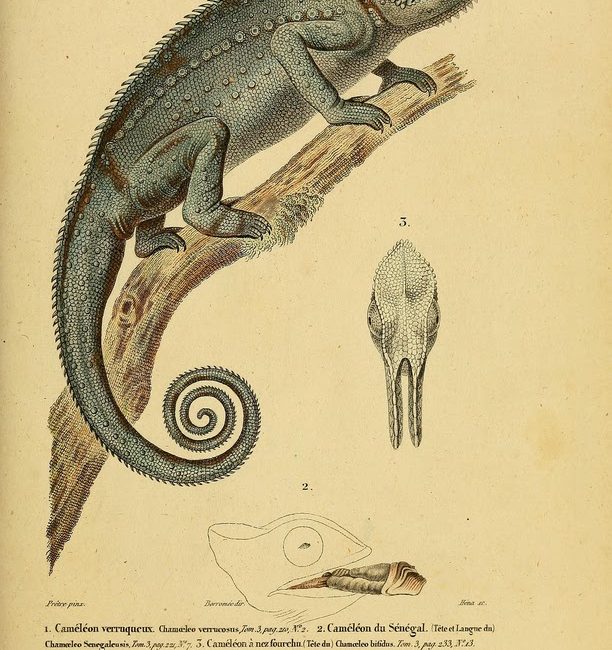
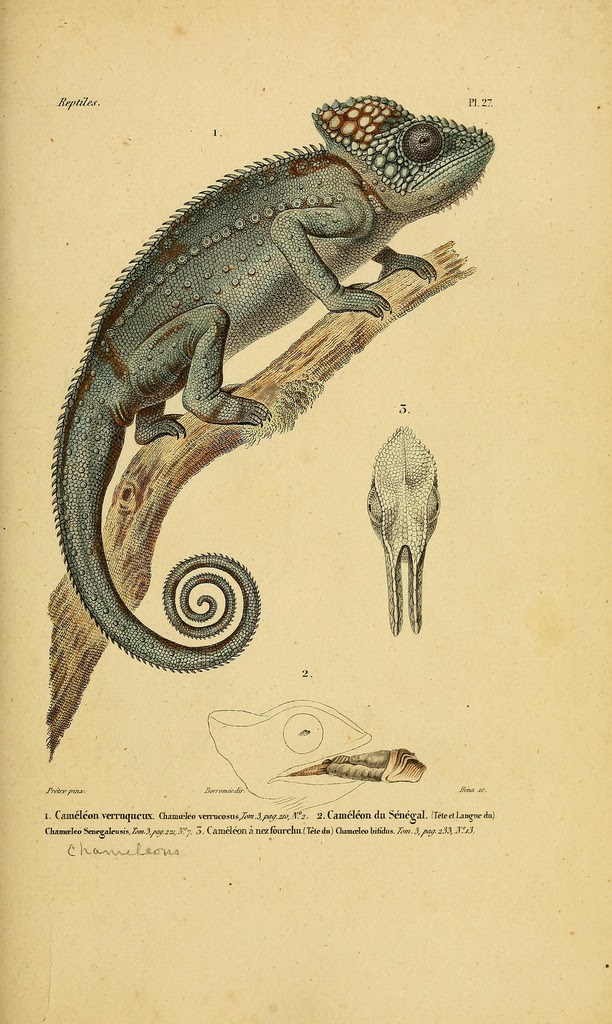
Fig 1: Furcifer verrucosus (Madagascar warty chameleon); Fig 2: Tongue of Chamaeleo senegalensis (Senegal chameleon); Fig 3: dorsal head view of Furcifer bifidus (Two-horned Madagascar chameleon). Duméril, André Marie Constant. Erpétologie générale ou Histoire naturelle complète des reptiles (1834-53). http://biodiversitylibrary.org/page/31895806.

1834 was a landmark year in the field of herpetology – the study of amphibians and reptiles. It was the year that the first volume of André Marie Constant Duméril‘s monumental work Erpétologie générale ou Histoire naturelle complète des reptiles was published. Produced over a twenty year period, between 1834-54, this nine volume set (plus atlas) became the first comprehensive scientific account of the world’s known amphibians and reptiles.

View Full Size Image
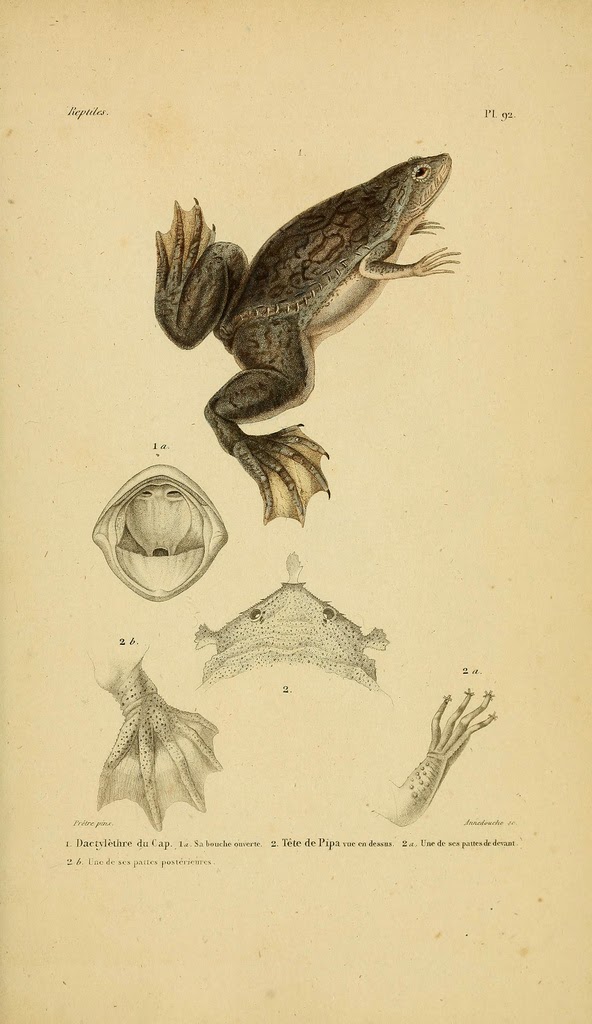
Fig 1 and 1a: Xenopus laevis (African-clawed frog); Fig  2: Pipa pipa (Surinam toad). Duméril, André Marie Constant. Erpétologie générale ou Histoire naturelle complète des reptiles (1834-53). http://biodiversitylibrary.org/page/31895960.

Duméril began his career as a doctor and professor of anatomy, but, at the beginning of the nineteenth century, George Cuvier selected him as the head of ichthyology and herpetology at the Muséum national d’histoire naturelle in Paris, thus making Duméril the curator of the largest and most diverse herpetological collection in the world at the time. Duméril set out to develop a revised higher-level taxonomic organization for amphibians and reptiles and, together with his assistant Gabriel Bibron, examined and described much of the museum’s enormous collection between 1832-48.

View Full Size Image
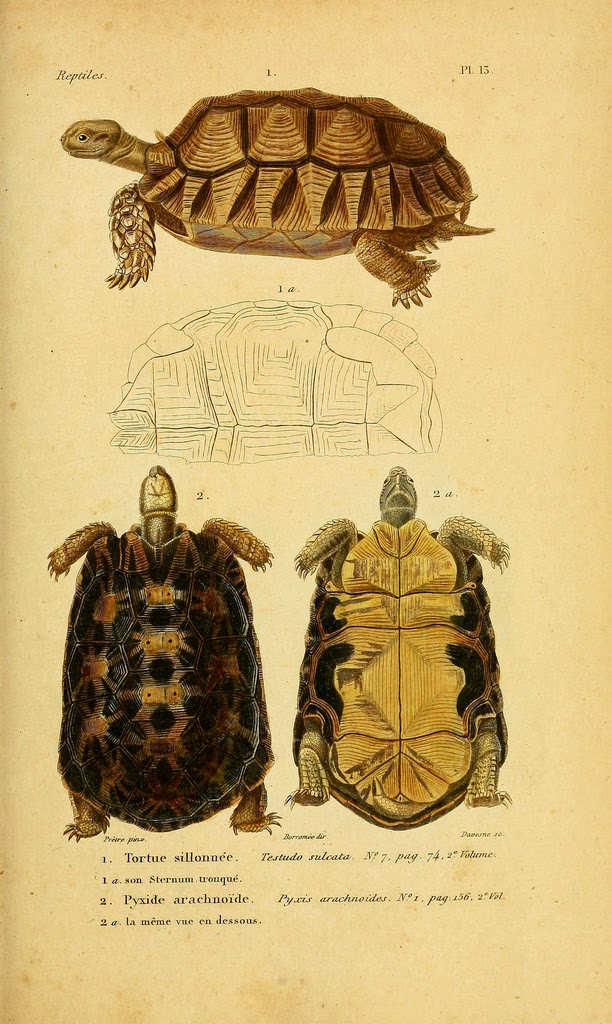
Fig 1: Geochelone sulcata (African spur-thighed tortoise); Fig 2: Pyxis arachnoides (Madagascar spider tortoise).  Duméril, André Marie Constant. Erpétologie générale ou Histoire naturelle complète des reptiles (1834-53). http://biodiversitylibrary.org/page/31895778.

The revised taxonomy and detailed descriptions of the species in the Paris collection were presented within Erpétologie générale, which ultimately related 1,393 species and included 120 plates, many of which were hand-painted.

Bibron, sadly, died of tuberculosis in 1848, before the completion of the series. Duméril’s son, Auguste Henri André Duméril, then assisted his father in the completion of volumes 7, 9, and the atlas.

View Full Size Image
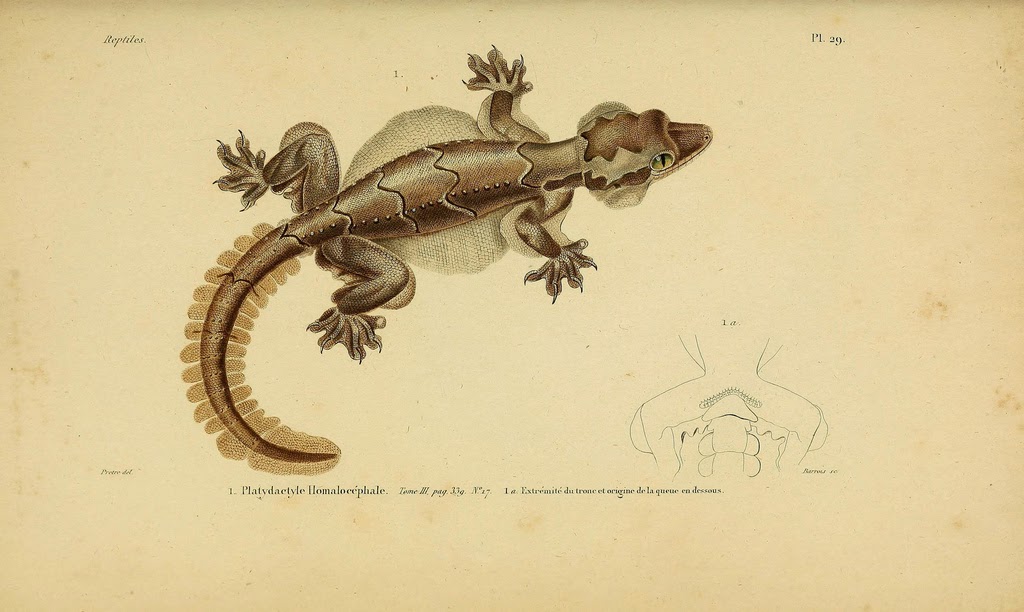
Ptychozoon kuhli (Flying gecko). Duméril, André Marie Constant. Erpétologie générale ou Histoire naturelle complète des reptiles (1834-53).  http://biodiversitylibrary.org/page/31895810.

Erpétologie générale was a ground-breaking work, setting the standard for herpetological reference with copies deposited in major scientific libraries of the nineteenth century. The accurate species descriptions and remarkable plates ensures that this work is still of vital research interest to today’s scientific community, regardless of the fact that the presented taxonomic revision itself is now considered obsolete (Duméril, for instance, considered amphibians as one of four orders within Reptilia, alongside turtles, snakes and lizards, the latter including crocodiles).

Today, Reptilia and Amphibia are two separate classes, and the living subgroups recognized within Reptilia include Crocodilia (crocodiles, gavials, caimans, and alligators), Sphenodontia (tuatara from New Zealand), Squamata (lizards, snakes, and worm lizards), and Testudines (turtles, terrapins and tortoises). All told, over 10,000 species of reptiles and approximately 7,000 species of amphibians are known today.

View Full Size Image
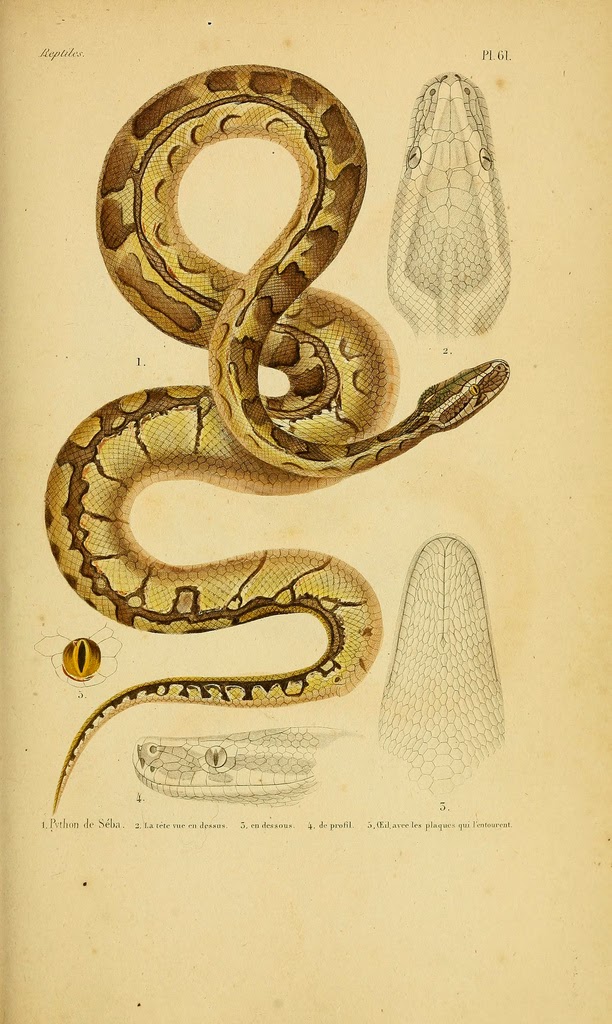
Pytho sebae (African rock python). Duméril, André Marie Constant. Erpétologie générale ou Histoire naturelle complète des reptiles (1834-53). http://biodiversitylibrary.org/page/31895878.

Duméril’s remarkable Erpétologie générale ou Histoire naturelle complète des reptiles is freely available within the Biodiversity Heritage Library, digitized by the Ernst Mayr Library of the Museum of Comparative Zoology at Harvard University and Smithsonian Libraries. Browse the complete work today and enjoy the stunning illustrations in Flickr.

The research for this post was obtained from “The First Comprehensive Description of the Amphibians and Reptiles of the World,” by Christopher J. Raxworthy. This essay can be found within Natural Histories (2012), an excellent resource on a selection of rare books found within the American Museum of Natural History Library, many of which are also freely available within BHL. 

May 7, 2015by ulib-libraryjobs
Blog Reel, Featured Books

A Bookplate for the Birds

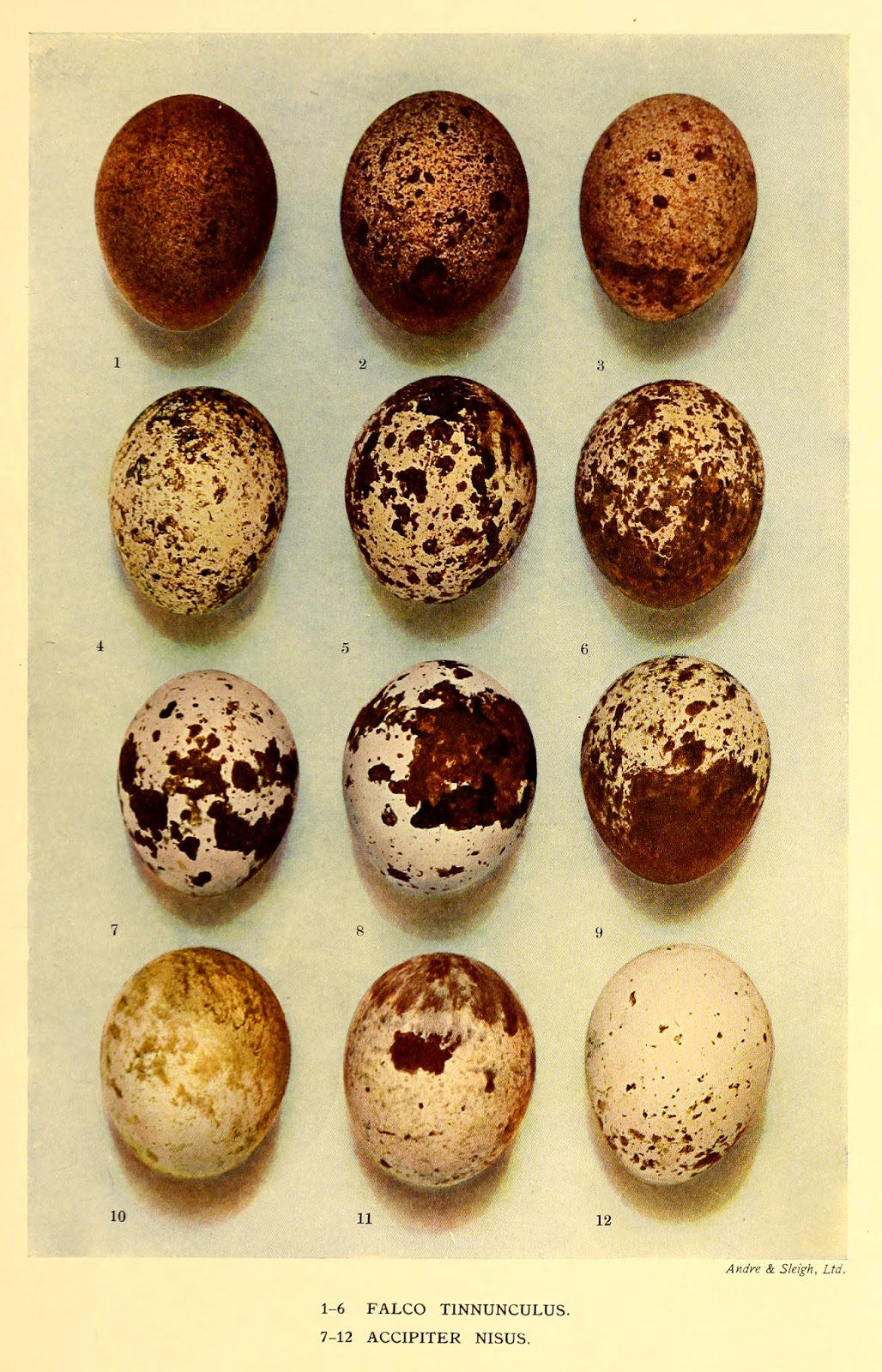
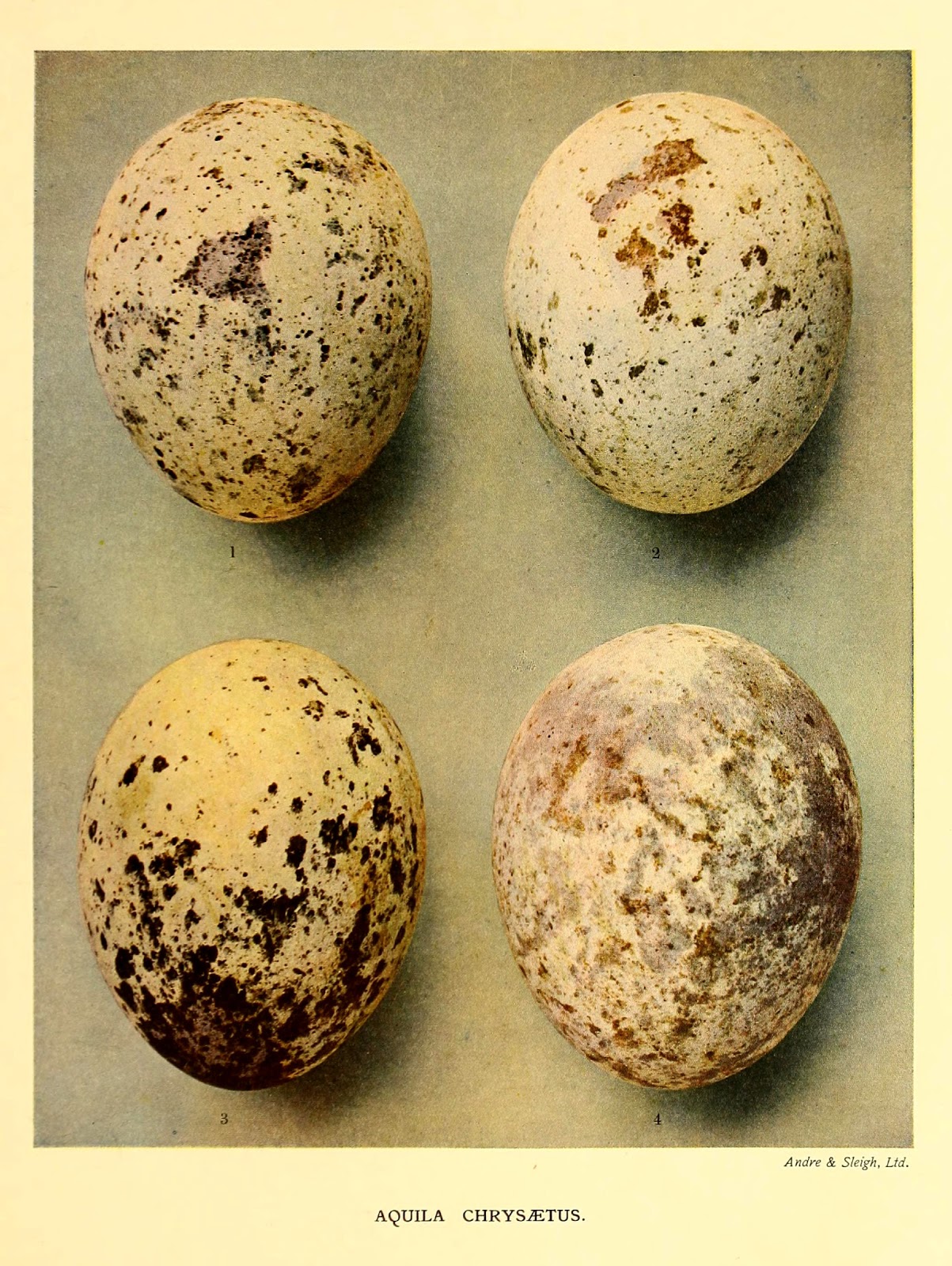
Swann, H. Kirke, 1871-1926. A Synopsis of the Accipitres (Diurnal Birds of Prey), Comprising Species and Subspecies Described up to 1920, with their Characters and Distribution. 2nd edition, revised and corrected throughout. London: Privately Printed for the Author, 1921-1922.
This post originally published on the Smithsonian Collections blog, April 16, 2013. 
View Full Size Image
Plate illustrating Swann’s Synopsis of the Accipitres

The Joseph F. Cullman 3rd Library of Natural History has a number of rare volumes formerly owned by naturalists. Some of the books have autographs or inscriptions attesting to their provenance. Occasionally, a book may have a special binding design or stamp to honor its former owner. However, my favorite symbol of ownership happens to be the custom bookplate, and the book featured this week has a particularly elegant example.

The book, recently acquired by the Cullman Library, is A Synopsis of the Accipitres (Diurnal Birds of Prey), by H. Kirke Swann (isn’t that a great name for the author of a bird book!). A noted ornithologist, Swann (1871-1926) worked for the natural history bookseller, Wheldon & Wesley, in Great Britain. Swann’s research on the Accipitres was based on his own collection of bird eggs and skins, as well as the fabulous collections at the British Museum.

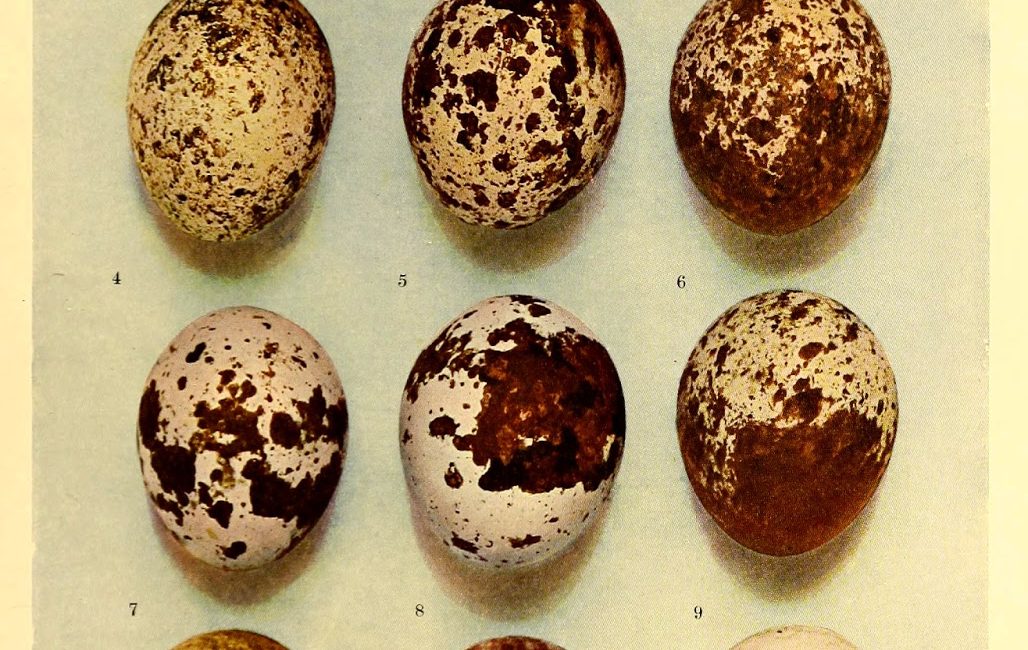
This copy of Swann’s Synopsis of the Accipitres is from the second revised and corrected edition, privately printed for the author on large paper during the years 1921 and 1922. Only twenty-eight copies were printed in this edition. The text includes twenty-two leaves of colored plates illustrating eggs from the species featured in Swann’s book. A smaller, octavo-sized version of the second edition, lacking the colored plates, was also issued in 1921-1922.

View Full Size Image
Plate illustrating Swann’s Synopsis of the Accipitres


View Full Size Image
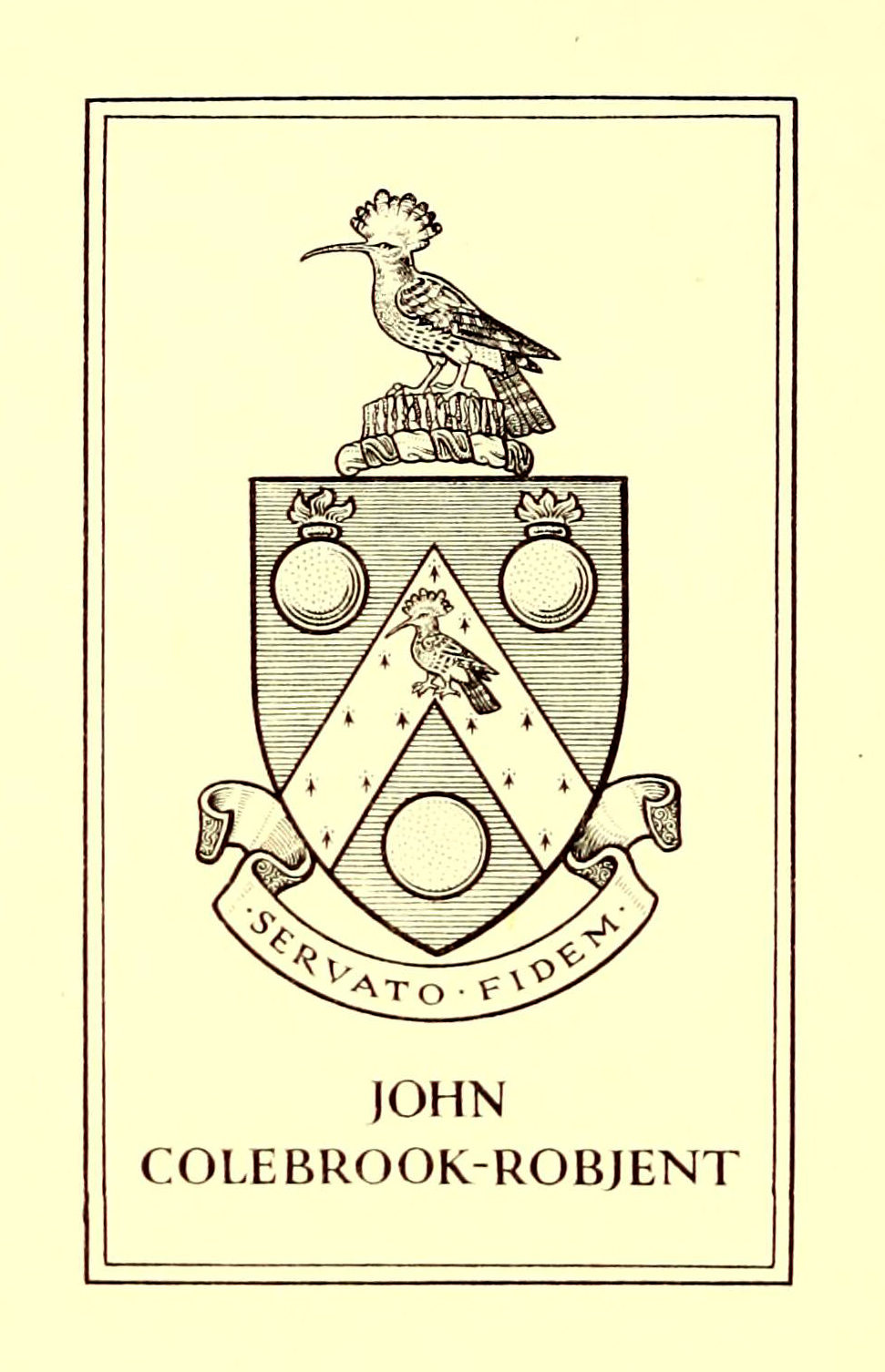
Bookplate of John Colebrook-Robjent

The Cullman Library’s copy of the Synopsis of the Accipitres has a handsome bookplate identifying its former owner, Major John Frederick Robert Colebrook-Robjent. An accomplished ornithologist who lived on a farm in Zambia and specialized in the study of wild birds’ eggs, Major Colebrook-Robjent commissioned this bookplate which reflected his interest in birds. The design features a Hoopoe, an Old World bird with a dashing feather headdress that resembles a crown, which sits atop a heraldic device with the Latin motto “Servato Fidem” (meaning “Keep Faith”).

View this rare 2nd revised and corrected edition in BHL.

June 20, 2013by ulib-libraryjobs
BHL News, Blog Reel

New Grant Helps The Field Museum Digitize Rare and Interesting Books!

View Full Size Image
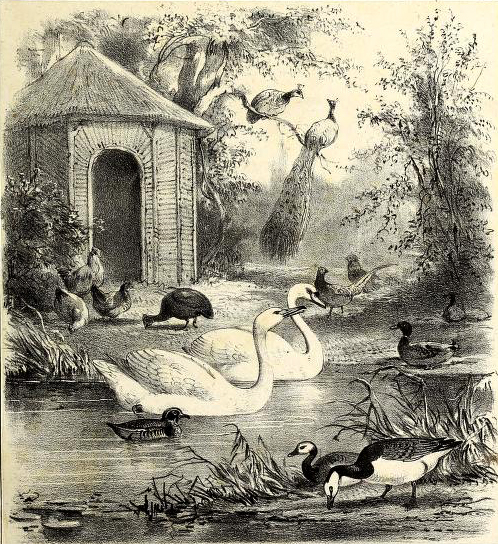
Title Page Image, v. 3, Onze vogels in huis en tuin

One of the BHL partner institutions, The Field Museum Library, was recently awarded a small grant from the Consortium of Academic and Research Libraries in Illinois (CARLI) to contribute titles to the growing BHL corpus. The proposal entitled “Empowering Biodiversity Research,” allowed The Field Museum Library to contribute 34 new titles to the BHL.

Several titles chosen for digitization came from the Library’s impressive Edward E. Ayer Ornithological Library, housed in the collections of the Mary W. Runnells Rare Book Room.

The titles were chosen for digitization via several means:

View Full Size Image
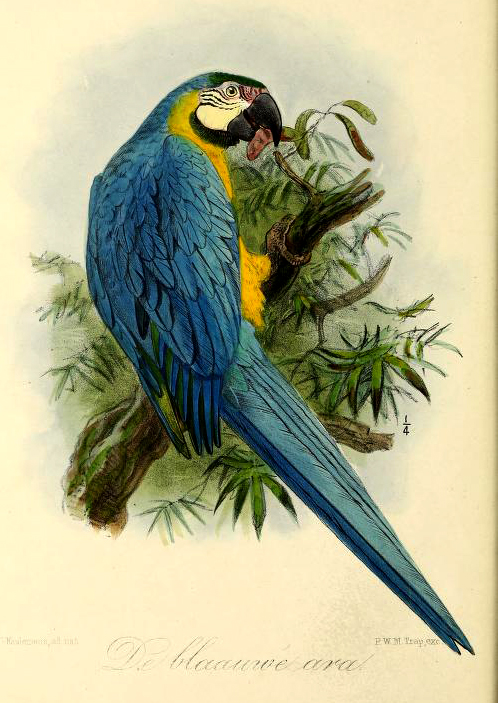
Blue Macaw. v. 3,

Onze vogels in huis en tuin

Requests received from users, which are processed via BHL’s issue tracking system, Gemini, allows us to fulfill user requests, complete series fill-in’s, and keep us organized! One item specifically requested was the famous work of Dutch illustrator John Gerard Keulemans (1842-1912), Onze vogels in huis en tuin (‘Our Birds in House and Garden’). Published in 3 volumes between 1869-1876, this collection of 200 lithographed plates were hand colored by the author. Noted for his beautiful and scientifically accurate work, Keulemans also provided illustrations for both Proceedings of the Zoological Society of London, The Ibis as well as numerous other monographs throughout the late 19th and early 20th centuries. With only 4 copies held in U.S. libraries, The Field Museum Library is the only BHL partner to own Onze vogels.


View Full Size Image
Neue Alpina, v. 1

In-demand titles were also identified via the Library’s active Interlibrary Loan (ILL) program. This service allows institutions from all over the world to request loans of books or scans of articles from The Field Museum Library. Items that are out of copyright and related to biodiversity are flagged for potential digitization. The title, Neue Alpina, has been requested via ILL twice in the last six months. This periodical, complete in two volumes, was published 1821-1827 and is focused on the natural history of Switzerland. Also part of the Ayer Collection, The Field Museum Library is the only holder of this title in the U.S.

View Full Size Image
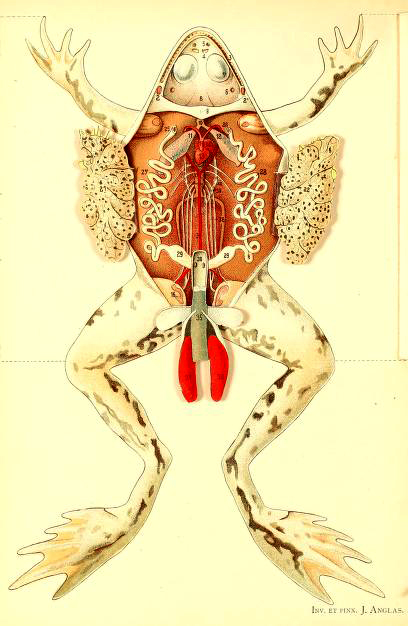
Dissected Frog. Les animaux de laboratoire

And finally, we often find pretty amazing items just by browsing the shelves! We came across an interesting item in our Herpetology Library from the collection of renowned herpetologist, Karl P. Schmidt. Les animaux de laboratoire: La grenouille (Anatomie et Dissection) is a short monograph about frog anatomy and a guide to dissection techniques. The amazing (and honestly, pretty fun) part of the book is the illustrations. The frog’s anatomy is dissected via multi-part anatomical flaps. The staff of the Internet Archive scanning center in Ft. Wayne, Indiana did a great job of capturing all of these flap elements during digitization.

Explore all items in the BHL contributed by The Field Museum Library here!

April 30, 2013by Kathryn Stine
Page 4 of 5« First...«2345»

Help Support BHL

BHL's existence depends on the financial support of its patrons. Help us keep this free resource alive!

search

About BHL

The Biodiversity Heritage Library (BHL) is the world’s largest open access digital library for biodiversity literature and archives. BHL operates as a worldwide consortium of natural history, botanical, research, and national libraries working together to digitize the natural history literature held in their collections and make it freely available for open access as part of a global “biodiversity community.”

Join Our Mailing List

Sign up to receive the latest news, content highlights, and promotions.

Subscribe Now

Subscribe to Blog via Email

Enter your email address to subscribe to this blog and receive notifications of new posts by email.

Join 319 other subscribers

Subscribe to Blog Via RSS

Subscribe to the blog RSS feed to stay up-to-date on all the latest BHL posts.

Access RSS Feed

Inspiring Discovery through Free Access to Biodiversity Knowledge.

The Biodiversity Heritage Library makes it easier than ever for you to access the information you need to study and explore life on Earth…for free, anytime, anywhere.


64+ Million Pages of
Biodiversity Literature Online.

EXPLORE

Tools and Services
to Transform Research.

EXPLORE

300,000+
Illustrations on Flickr.

EXPLORE

ABOUT | HARMFUL CONTENT | PRIVACY | SITE MAP | TERMS OF USE