Biodiversity Heritage Library - Program news and collection highlights from BHL
  • Home
  • News
  • Featured Books
    • All Featured Books
    • Book of the Month Series
    • BHL at 20
  • User Stories
  • Campaigns
    • Fossil Stories
    • Garden Stories
    • Monsters Are Real
    • Page Frights
    • Her Natural History
    • Earth Optimism 2020
  • Tech Blog
  • Visit BHL
Home
News
Featured Books
    All Featured Books
    Book of the Month Series
    BHL at 20
User Stories
Campaigns
    Fossil Stories
    Garden Stories
    Monsters Are Real
    Page Frights
    Her Natural History
    Earth Optimism 2020
Tech Blog
Visit BHL
  • Home
  • News
  • Featured Books
    • All Featured Books
    • Book of the Month Series
    • BHL at 20
  • User Stories
  • Campaigns
    • Fossil Stories
    • Garden Stories
    • Monsters Are Real
    • Page Frights
    • Her Natural History
    • Earth Optimism 2020
  • Tech Blog
  • Visit BHL
Biodiversity Heritage Library - Program news and collection highlights from BHL
Blog Reel, Featured Books

The Garden: A Place to Learn and Experiment

illustration of a colorful bouquet of flowers

This post originally published on the Smithsonian Libraries and Archives’ blog, Unbound.

A garden is a place to rest, relax, rejuvenate. It also provides an opportunity to learn about nature. Staff at Smithsonian Libraries and Archives are also learning and developing new skills. Some of these new skills are related to digitization and accessibility of biodiversity literature.

During these months of telework, I am assisting the Digital Library and Digitization Department to enhance page-level and image-level access to previously digitized books for the Biodiversity Heritage Library (BHL). This involves improving page-level metadata for items in BHL, uploading full-page illustrations to the BHL Flickr, and tagging the images in Flickr with species’ common and scientific names. These digitized books include a variety of content: plants, birds, mammals, reptiles, crustaceans, insects, and so much more. In the course of this work, I have the opportunity to view lovely illustrations. Recently a horticultural catalog caught my attention. The item is titled Vick’s Flower and Vegetable Garden (1878) by James Vick.

title page

James Vick, Rochester, NY. Vick’s Flower and Vegetable Garden (1878), title page. Available online in the Biodiversity Heritage Library.

James Vick was born in England and arrived in New York City at a young age. There, he learned the printer’s trade. He later moved to Rochester, New York. In Rochester, he set type for several newspapers and went on to serve as writer, editor, owner, or publisher of various publications. In 1862, he issued the first Floral Guide and Catalogue. Due to his past experience in the printer and journalist fields, he created a personal style offering gardening advice, anecdotes, correspondence, a complaint section, a children’s section, and color prints. James Vick also began a seed store which later became a well-known seed-display garden. After his death, the company continued into the 20th Century until it was sold to Burpee Seed Co.

Flowers including Perennials: Aquilegia, Perennial Pea, Digitalis (Fox Glove), Double Pink, Perennial Larkspur, Campanula (Canterbury Bell), Sweet William, Picotee, and Pentstemon

James Vick, Rochester, NY. Vick’s Flower and Vegetable Garden (1878), page preceding page 99, Perennials including (1) Aquilegia, (2) Perennial Pea, (3) Digitalis (Fox Glove), (4) Double Pink, (5) Perennial Larkspur, (6) Campanula (Canterbury Bell), (7) Sweet William, (8) Picotee, (9) Pentstemon. Available online in the Biodiversity Heritage Library.

This particular item, Vick’s Flower and Vegetable Garden (1878) by James Vick, is filled with gardening advice, botanical descriptions, and many illustrations. It seems to speak directly to the reader with a conversational tone and focus on learning. As it states on page 5,

“The study of Agriculture and Horticulture has engaged the attention of the wisest from the earliest ages, and yet what wonderful discoveries and improvements have we witnessed in our own day; and we are still learners.”

Flowers including Tender Bulbs: Tritoma uvaria, Gladioli, Tuberose, Dahlia, and Tigridia

James Vick, Rochester, NY. Vick’s Flower and Vegetable Garden (1878), page preceding page 109, Tender Bulbs including (1) Tritoma uvaria, (2) Gladioli, (3) Tuberose, (4) Dahlia, (5) Tigridia. Available online in the Biodiversity Heritage Library.

The catalog includes practical suggestions for selecting seeds, preparing soil, and planting gardens. On the subject of garden design, it suggests keeping the future in mind. When planting trees, it emphasizes the awareness of knowing the size, form, and habits of the full-grown tree as opposed to only thinking of its small size when planted. For those with little outdoor space, there are ideas for creating balcony gardens and window boxes.

Entrance Court and Balcony Garden

James Vick, Rochester, NY. Vick’s Flower and Vegetable Garden (1878), page 20, Entrance Court and Balcony Garden. Available online in the Biodiversity Heritage Library.

Another section focuses on floral decorations, such as incorporating greenery and flowers into decorations. This might include covering letters with greenery to form welcoming words for a guest, adorning a table with a floral centerpiece, decorating a room with garlands, or creating bouquets and button-hole flowers.

Let’s take a closer look at one of these floral decorations, forming and covering letters with greenery and flowers. Perhaps, someone wanted to welcome a guest by displaying a “Welcome” sign or, as in the example below, decorate the words, “Peace on Earth.” As the catalog explains, the first step was to determine the height of all letters. Then, the width of each letter was determined proportional to its height. For example, if six inches was chosen for the height of all upper-case letters, the proportional width for “P” would be four inches, “E” three and a half inches, “A” four and a half inches, and so on, as detailed in the explanation shown in the image below. Once the letters were outlined on heavy straw board, each letter was cut out and dark thread was used to fasten small branches of evergreens or dry moss to the letters. Finally as a finishing touch, berries or everlasting flowers were added to brighten the decoration, as detailed below.

Forming letters to make floral decorations

James Vick, Rochester, NY. Vick’s Flower and Vegetable Garden (1878), page 31, Forming Letters for Floral Decorations. Available online in the Biodiversity Heritage Library.

Another floral decoration is the button-hole flower or bouquet. The button-hole flower was simply that, a single flower with a “pretty, sweet-scented leaf” positioned behind it. Thread or string was used to attach the two together (below, bottom right), and then it was inserted into the bouquet holder which was already filled with water. To fasten the button-hole flower to clothing or hair, a pin was attached to the bouquet holder.

On the other hand, the button-hole bouquet was composed of “a few very fine flowers” (below, bottom left). Once the flowers were nicely arranged, the stems were covered with damp moss or cotton and then tinfoil. The button-hole bouquet was inserted into the bouquet holder or attached directly to clothing with a pin.

English Holly, Winter Berry (Ilex verticillata), Button-hole Bouquet, and Button-hole Flower

James Vick, Rochester, NY. Vick’s Flower and Vegetable Garden (1878), page 36, English Holly, Winter Berry (Ilex verticillata), Button-hole Bouquet, and Button-hole Flower. Available online in the Biodiversity Heritage Library.

Almost every page of Vick’s Flower and Vegetable Garden (1878) includes an illustration. With its conversational style and focus on learning, it encourages readers to try their hand at something new. This might be designing their own garden, planting a small garden in a window box, placing vases or ornamentation around the garden, or creating a floral decoration for a party. For reference purposes, it includes a handy “Botanical Glossary” and guide to “Pronouncing Vocabulary of Botanical Names.”

Towards the end, there are many pages illustrating and describing specific plants. A page focusing on “Classification and Names of Flowers” assists with understanding the divisions of plants as described in this catalog. These divisions include Annuals, Perennials, Greenhouse, Bulbs and Plants, and Holland Bulbs. There is also a section devoted to Vegetables. Detailed information for specific plants includes such things as descriptions, origin, and tips for planting. Every so often, the reader might stumble across a full-page illustration, like the Annuals shown below. Perhaps an illustration such as this might have inspired a bouquet or floral decoration to brighten a room for a holiday or special occasion.

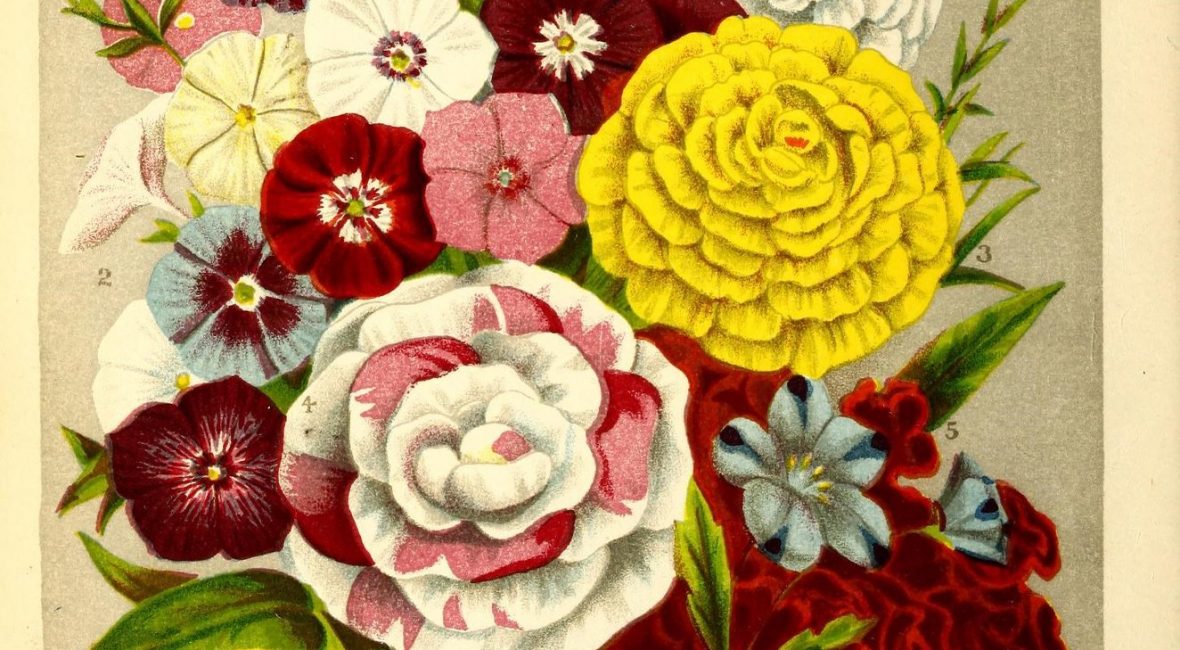
Flowers including Annuals: Ten-Weeks Stock, Phlox drummondii, Double Portulaca, Balsam, Nemophila, Japan Cockscomb, Pansy, and Striped Petunia.

James Vick, Rochester, NY. Vick’s Flower and Vegetable Garden (1878), page preceding page 55, Annuals including (1) Ten-Weeks Stock, (2) Phlox drummondii, (3) Double Portulaca, (4) Balsam, (5) Nemophila, (6) Japan Cockscomb, (7) Pansy, (8) Striped Petunia. Available online in the Biodiversity Heritage Library.

Vick’s Flower and Vegetable Garden (1878) by James Vick is located in the Joseph F. Cullman 3rd Library of Natural History. A digitized version is available on the Biodiversity Heritage Library (BHL) and a Flickr album of its full-page illustrations is available on the BHL Flickr. For more information about James Vick, take a look at this BHL Blog post.

Other seed catalogs by James Vick’s Sons are located in a horticultural collection within the Trade Literature Collection at the National Museum of American History Library. For more information on one of these catalogs, take a look at this post about Vick’s Garden and Floral Guide (1898) by James Vick’s Sons.

Reference

“Vick, James.” Biographies of American Seedsmen & Nurserymen, compiled by Marca L. Woodhams, Librarian, Horticulture Branch Library, Smithsonian Institution Libraries, December 1999. Accessed January 8, 2021. https://www.sil.si.edu/SILPublications/seeds/bios.html#Vick,%20James
April 15, 2021by michelle.underhill
BHL News, Blog Reel

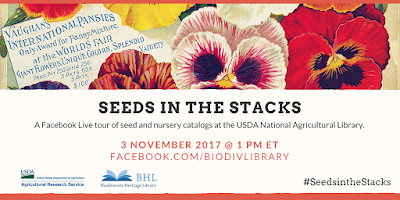
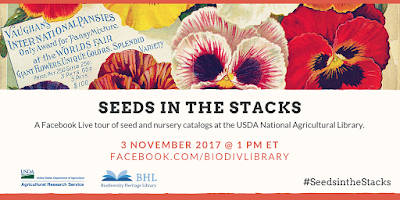
Join us for Seeds in the Stacks!

Find a recording of Seeds in the Stacks on YouTube.
————————————-

Join us for Seeds in the Stacks, a Facebook Live tour at the USDA National Agricultural Library! We’ll go behind-the-scenes to explore selections from the Library’s collection of over 200,000 seed and nursery catalogs.

WHERE?
www.facebook.com/BioDivLibrary
WHEN?
3 November 2017 @ 1pm ET

The USDA National Agricultural Library is the newest BHL Member. Since joining the consortium as an Affiliate in 2014, NAL has contributed over 2 million pages to the BHL collection, including a significant portion of its Henry G. Gilbert Nursery and Seed Trade Catalog Collection. To date, NAL has contributed over 33,000 catalogs from this collection to BHL. The catalogs can be viewed in BHL as part of the Seed & Nursery Catalogs collection.

October 30, 2017by michelle.underhill
BHL News, Blog Reel

New Postage Stamps Featuring Images from the NYBG Nursery & Seed Catalog Collection

Portrait version of the Biodiversity Heritage Library logo.

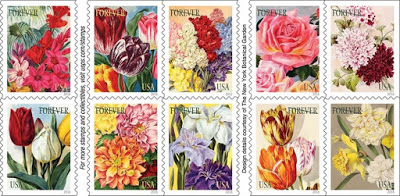
Today, January 29, 2016, the U.S. Postal Service released 10 new postage stamps featuring images from catalogs in The New York Botanical Garden’s nursery and seed catalog collection.

View Full Size Image
The Botanical Art Forever stamps featuring illustrations from nursery catalogs in The New York Botanical Garden’s nursery and seed catalog collection.

The 10 Botanical Art Forever stamps feature illustrations from American nursery catalogs printed between 1891 and 1912. NYBG’s nursery and seed catalog collection is one of the largest and most important collections in the United States. The collection and similar collections in other institutions are treasure troves of historical information for scholars and scientists studying a wide range of subjects, including the history of botany, horticulture, commercial agriculture, landscape design, plant exploration, graphic arts and publishing.

View Full Size Image
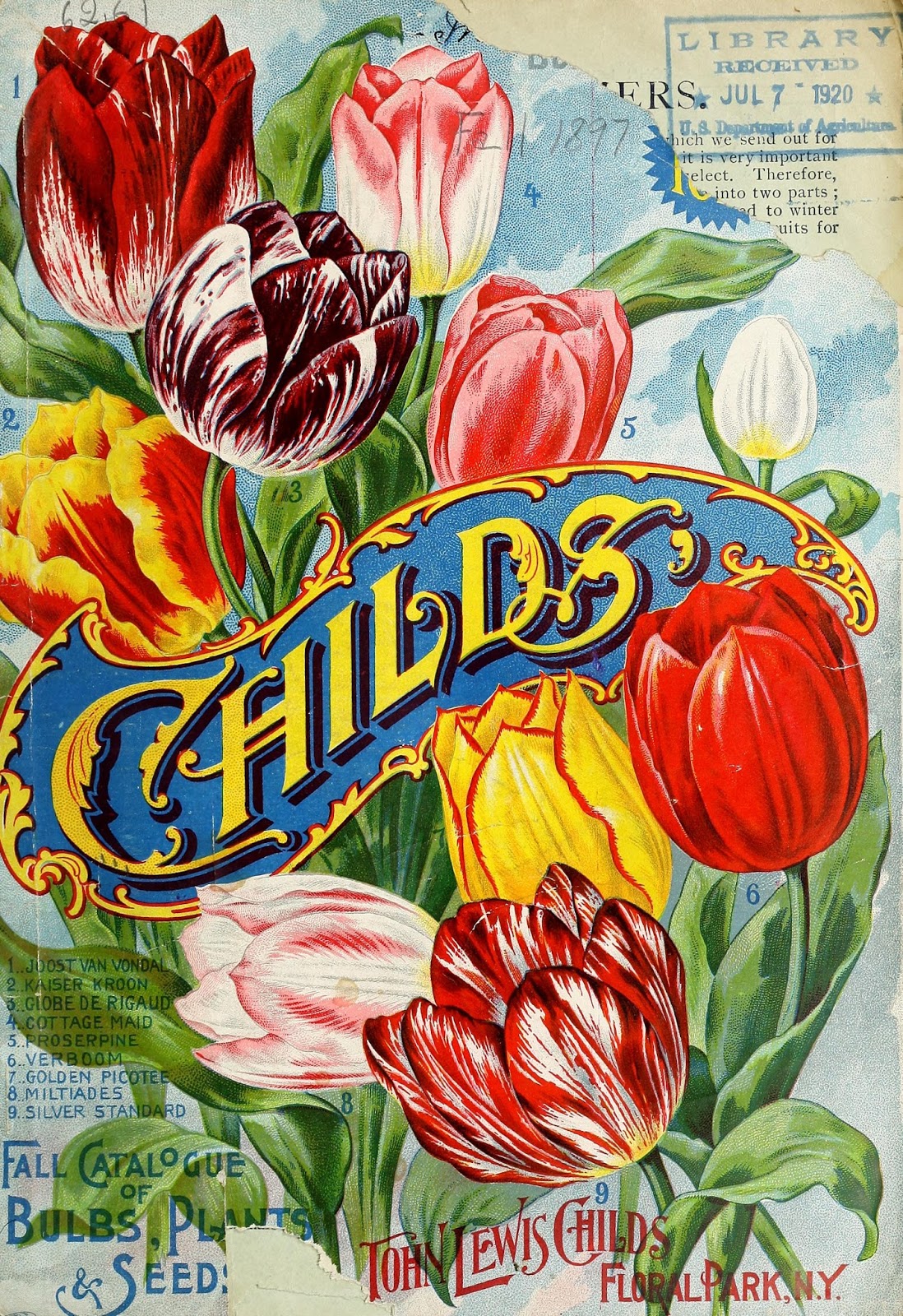
John Lewis Childs. Childs’ fall catalogue of bulbs, plants & seeds. http://biodiversitylibrary.org/page/44290234. Digitized by the U.S. Department of Agriculture, National Agricultural Library.

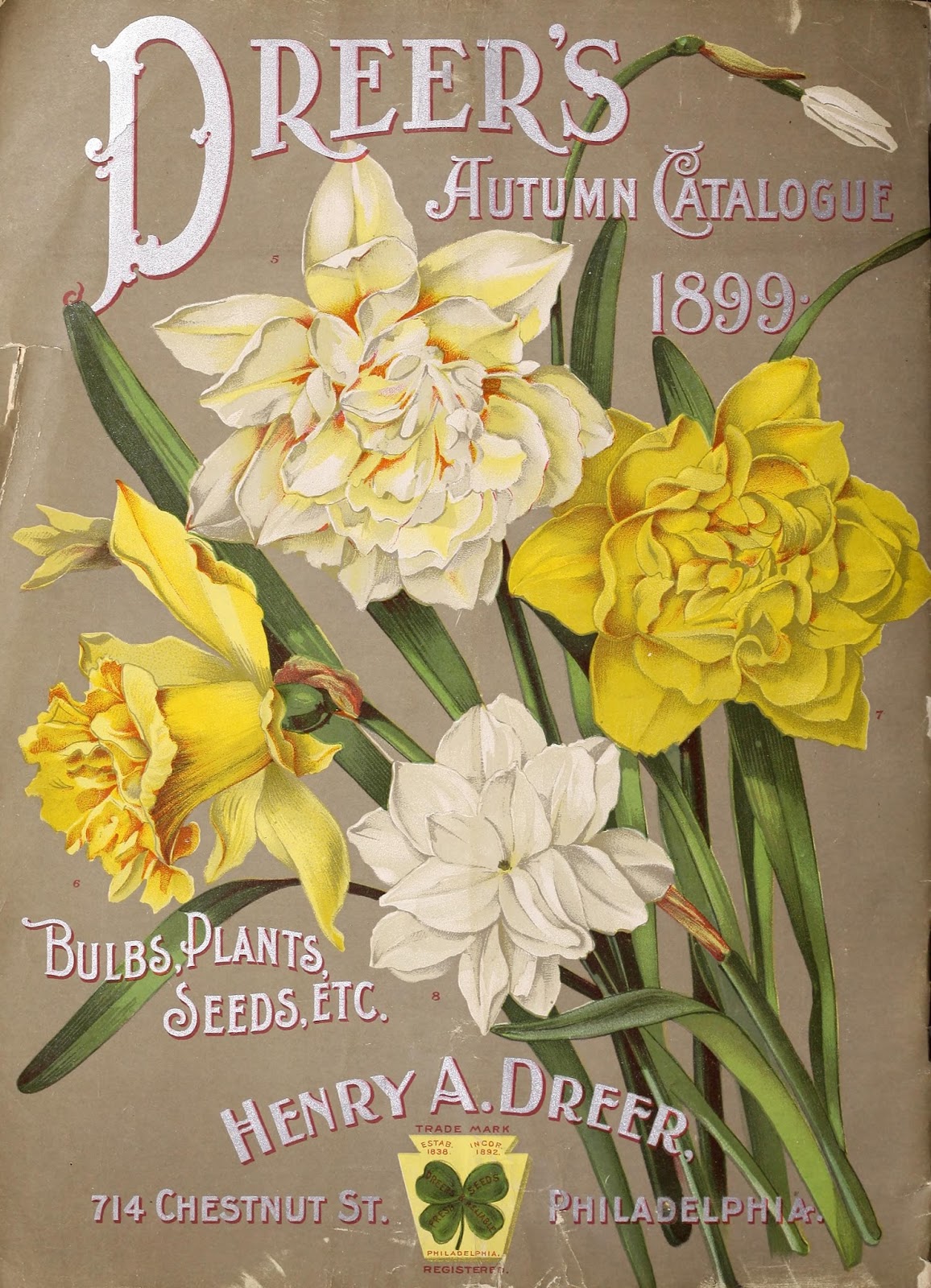
The flowers featured on the stamps include corn lilies, tulips, stocks, roses, petunias, dahlias, Japanese Iris, daffodils and jonquils. The artists responsible for the work seen on early nursery catalogs are mostly unknown, but thanks to these stamps, the catalogs, and ongoing work to digitize the catalogs and make them freely available worldwide, the incredible works of these artists live on.

View Full Size Image
Dreer. Dreer’s autumn catalogue : 1899 bulbs plants, seeds, etc. http://biodiversitylibrary.org/page/42696608. Digitized by the U.S. Department of Agriculture, National Agricultural Library.

You can find most of the catalogs featured in the stamps in BHL. Below is the list of catalogs featured on the stamps and, where available, the links to them in BHL. The copies in BHL were digitized by the U.S. Department of Agriculture, National Agricultural Library. The remaining catalogs will be uploaded to BHL by NYBG.

  • John Lewis Childs. Catalogue of bulbs and plants.
  • John Lewis Childs.  Childs’ fall catalogue of bulbs, plants & seeds.
  • Dreer. Dreer’s garden book : seventy-fourth annual edition 1912.
  • Dreer. Dreer’s 72nd annual edition garden book : 1910.
  • Dreer. Dreer’s garden calendar : 1898.
  • Dreer. Dreer’s autumn catalogue 1907.
  • Farquhar, R. & J. Company. Farquhar’s 1910 garden annual.
  • Dreer. Dreer’s garden book : seventy-fourth annual edition 1912.
  • Dreer. Dreer’s autumn 1901 catalogue.
  • Dreer. Dreer’s autumn catalogue : 1899 bulbs plants, seeds, etc.

We’re excited that so many letters will now be adorned with stunning botanical art thanks to the Botanical Art Forever stamps. You can browse over 20,000 seed and nursery catalogs contributed by both NYBG and other BHL partner institutions in BHL. Learn more about the importance of these catalogs in our Garden Stories campaign.

January 29, 2016by ulib-libraryjobs
Blog Reel, Featured Books

Tired of Poinsettias? Bah, Humbug! Then into the Smithsonian Libraries

This post originally published on the Smithsonian Collections Blog. View the original post here.
View Full Size Image
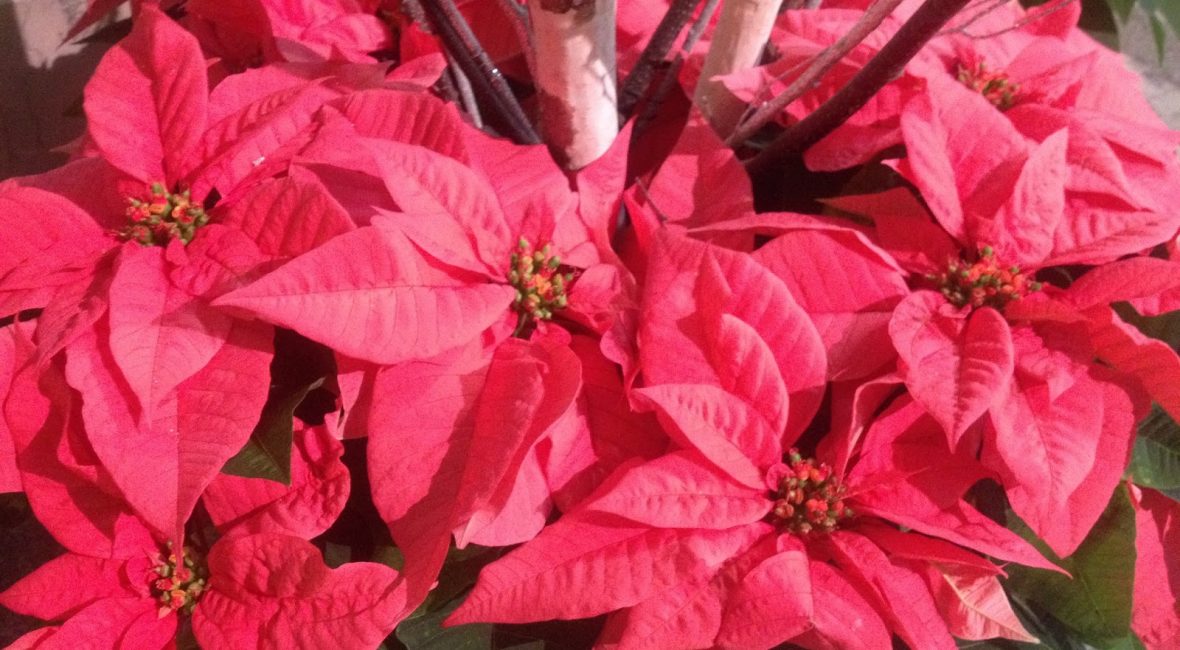
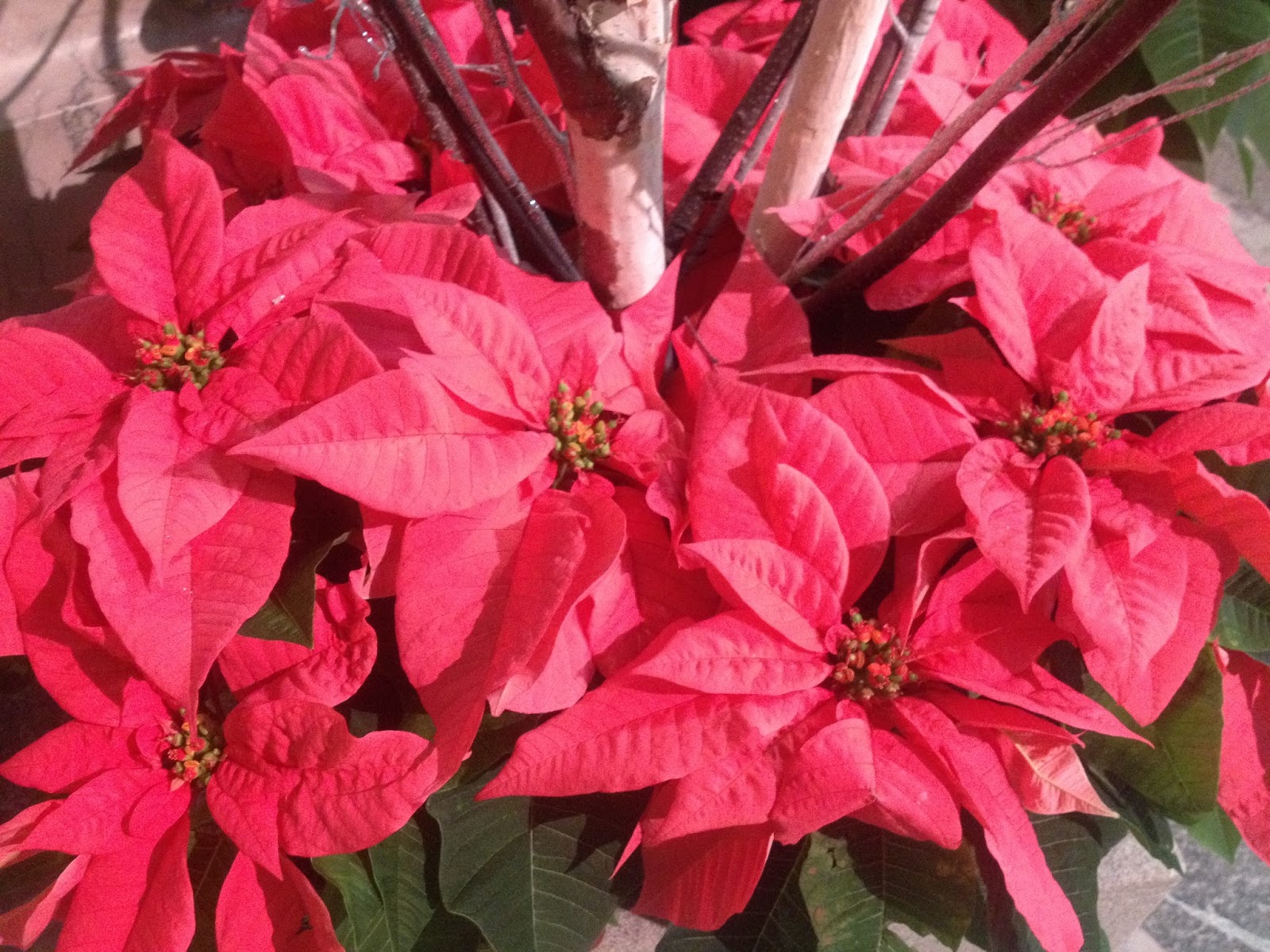
Blooms in the Rotunda of the National Museum of Natural History.

Tired of poinsettias?

Last year, we at BHL asked this question in social media and offered up vibrant, joyful portraits of the amaryllis instead. But one commentator declared “Poinsettias rule!” And indeed poinsettias do reign as an economic powerhouse of the nursery industry, cultivated all over the world. The public areas of the various Smithsonian museums and the neighboring Botanic Gardens on the Mall in Washington now have abundant, seasonal displays of poinsettias, beautiful specimens propagated by the talented horticulturists of the Federal greenhouses. The palette of colors and shapes are wonderful, never a dull sight this time of year.

View Full Size Image
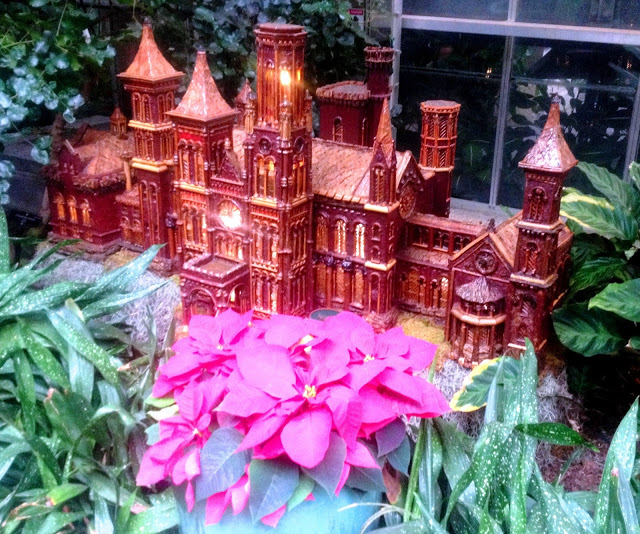
The Smithsonian Castle (made up entirely of plant materials) nestled in the display of poinsettias in the Garden Court of the United States Botanic Garden.

Potted plants in the Smithsonian Libraries’ collection areas are generally discouraged because of the insects they may harbor, potentially harmful to the books on the shelves. Consequently, there are no seasonal flowers welcoming researchers to the reading rooms. However, anyone can find holiday blossoms in the Libraries by going on a virtual plant hunt. The range of holdings in the Smithsonian Libraries provides both images and a full portrayal of the poinsettias’ history (some of it mythic) and, a renewed appreciation for this remarkable plant. There is still a fuller story yet to be told, to separate oft-repeated lore from actual evidence, waiting to be fully investigated in the Libraries’ resources.

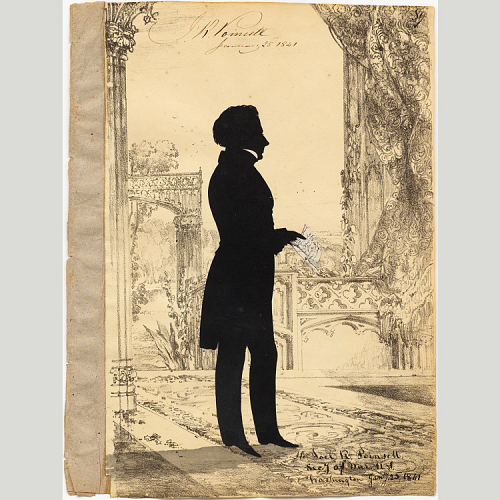
It is commonly known that the poinsettia was named to honor physician, politician, diplomat, and amateur botanist, Joel Roberts Poinsett (1779-1851). He was a special envoy, then first Minister, representing the United States in Mexico from 1822 to 1830. Perhaps not as well-known is that the flower (the showy part is actually leaves or bracts) had an association with Christmas long before it was promoted by American and European nurseries. Further, the relationship between the plant and Poinsett is not as straightforward as often portrayed.

View Full Size Image
Lithograph and cut paper on paper portrait of Joel Roberts Poinsett (1841, National Portrait Gallery, Smithsonian Institution; gift of Robert L. McNeil, Jr.).

The Aztecs of the principal city of Tenochtitlan (now Mexico City) imported the plant from southern Mexico to northern Guatemala, where it thrives in the landscape of lower altitudes and warmer climate. In the ancient Nahuatl language it is called cuetlaxochitl – xochitl meaning ornamental flower. The winter-blooming plant was used for medicinal purposes (from its sap) and as a source of red dye (from the bracts). There is also evidence that cuetlaxochitl was used in religious ceremonies, its brilliant color representing purity. Ancient Aztec herbals, the few surviving from the Pre-Columbian period, may have references and illustrations to both the health properties and ritual uses of the plant. There are facsimile copies of these rare works in both the Smithsonian Libraries’ Anthropology, National Museum of American Indian and Special Collections Libraries.

As with other pagan rituals and symbols – think of winter greenery (pine, holly, mistletoe), of wreaths and trees brought indoors and the yule log – the star-shaped flower was incorporated into Christmas celebrations. In particular, it had a role in the nativity procession of the Fiesta of Santa Pesebre. After the Conquest, with Spanish missionaries in Mexico, the plant became known as “Flore de Noche Buena” or “Flower of the Holy Night” (Christmas Eve).

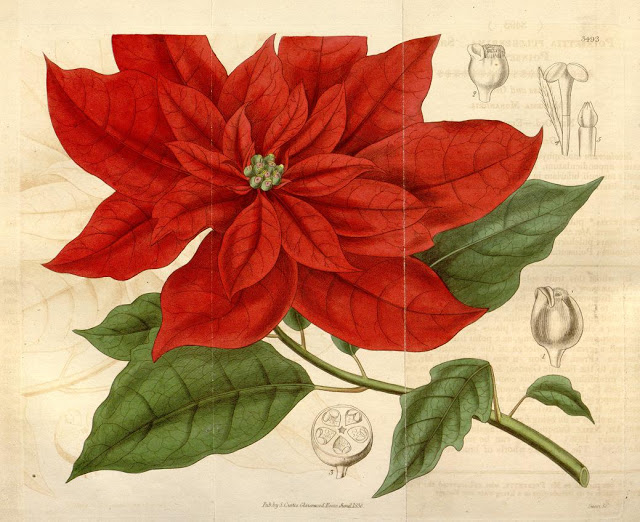
In a 2011 article by the Agricultural School of Purdue University, many of the myths of the poinsettia were investigated and debunked. There is no evidence, only legend, that it was Poinsett who introduced the plant to the United States, first to his native South Carolina. As a learned gentleman, he may have had a role in sending seeds to colleagues in Philadelphia where poinsettias were displayed in 1828. From that city, Scottish nurseryman Robert Buist brought cuttings to James McNab in Edinburgh. A German botanist, Karl Willdenow, provided the botanical name, Euphorbia pulcherrima, first published in 1834, by Johann Friedrich Klotzsch. Back in Edinburgh, another botanist, Robert Graham, changed the name in 1836 to Poinsettia pucherrima, although that version never did take officially. Another story is that William Hickling Prescott, the author of The History of the Conquest of Mexico (1843) gave the name to honor his friend in that publication. There are many copies of this title in the Smithsonian Libraries. As early as 1836 Curtis’s Botanical Magazine (London, volume 63) published a stunning illustration entitled Poinsettia pulcherrima (Showy Poinsettia).

View Full Size Image
Hand-colored engraving by Samuel Curtis. Curtis’s Botanical magazine. Digitized image from the Biodiversity Heritage Library, copy supplied by the Peter H. Raven Library of the Missouri Botanical Garden.

There is research, appropriately enough published by The Botanic Garden and Botanical Museum Berlin in the journal Willdenowia, finding that earlier botanical expeditions to Mexico predating Poinsett had sent the first cuttings back to Europe. The Royal Botanical Expedition to New Spain, led by Martín de Sessé y Lacasta (1751-1808) and José Mariano Mociño (1757–1820) is the first contender. Following that were the explorations of Alexander Freiherr von Humboldt (1769-1859) and Aimé Bonpland (1773-1858) and, after the independence of Mexico in 1821, the collectors for the Natural History Museum in Berlin, Christian Julius Wilhelm Schiede (1798-1838) and Ferdinand Deppe (1798-1836).

Poinsettias were prized in Europe and America from the mid-19th century, although still a luxury grown in greenhouses. The Ecke family nursery, founded by German immigrants setting in Hollywood, California, was the great popularizer of poinsettias. The Eckes focused their floriculture business exclusively on poinsettias from 1909. Talented in their cultivation of exotics and clever in marketing, the nursery made the plant widely available. Their promotion of the plant can be seen in nursery catalogs digitized in BHL. The Ecke poinsettia nurseries were taken over by the Dutch conglomerate Agribo in 2012, now owned by a private equity group comprising the third-largest horticultural business in the world.

View Full Size Image
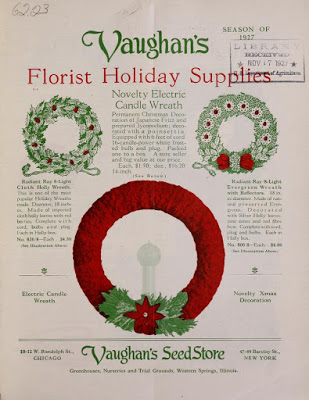
The growth in the commercial trade of the poinsettia can be traced in nursery catalogs. There are a great number in the trade literature collection of the National Museum of American History Library. This title page is courtesy of the Biodiversity Heritage Library, digitized from a copy in the National Agricultural Library.

In our search for a fuller history of the plant as preserved in the Smithsonian Libraries, it should be pointed out that Joel Roberts Poinsett is also a figure in the pre-history of the Smithsonian, as a co-founder of the National Institute for the Promotion of Science and the Useful Arts. This organization was made up of prominent figures advocating a vision for the use of James Smithson’s unexpected bequest to the United States. There are several works either written by Poinsett or associated with the National Institute in the Smithsonian Libraries’ Special Collections.

Poinsett’s death date, December 12th, is now National Poinsettia Day in the United States. Pause and admire living blooms you pass by and ponder the plant’s rich, if not entirely, settled history. Then consider exploring the wide-range holdings of the Smithsonian Libraries – from the art, natural and American histories, botanical, horticultural, anthropology, rare books, digital resources, and trade literature collections – to find new discoveries of the story of the poinsettia.

View Full Size Image
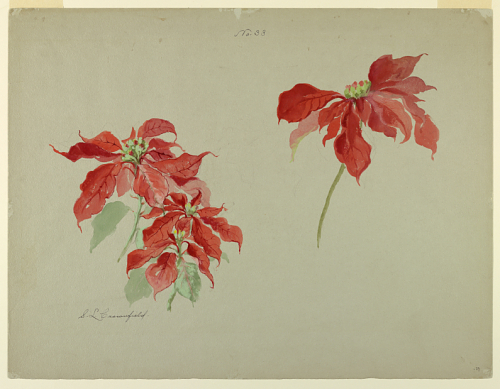
Studies of Poinsettias, Sophia L. Crownfield, drawing, early 20th century (Cooper Hewitt, Smithsonian Design Museum Collection; gift of Starling W. Childs and Ward Cheney).
December 22, 2015by ulib-libraryjobs
BHL News, Blog Reel

Smorball and Beanstalk Are Live!

The Purposeful Gaming project has now ended and BHL is no longer utilizing outputs from the games created as part of this project: Smorball and Beanstalk. However, both games will remain live for your continued enjoyment. Learn more.

The Biodiversity Heritage Library is excited to announce the release of two new games by Tiltfactor that will improve access to BHL collections and open a new frontier for crowdsourcing and citizen science.

Smorball and Beanstalk were designed as part of the Purposeful Gaming Project, which explores how digital games can make scanned content more accessible and searchable for cultural institutions. Based at the Missouri Botanical Garden in St. Louis, Missouri, “Purposeful Gaming” was established in 2013 through an Institute of Museum and Library Services (IMLS) grant and includes partners at Harvard University, Cornell University, and the New York Botanical Garden.

Purposeful Gaming: What It’s All About

Libraries and museums across the world have scanned millions of pages of books and journals in order to increase access and enable online discoverability. When digitized, these pages are merely image files, which are unsearchable and virtually unusable. Optical character recognition software (OCR) is a method for converting page images to machine encoded text so they can be searched. Unfortunately, historic literature, like that found in the Biodiversity Heritage Library, has proven to be particularly problematic for OCR because of its tendency to have varying fonts, typesetting, and layouts that make it difficult to accurately render.

This is where the games come in.

Smorball and Beanstalk, both quick and easy browser games, present players with phrases from scanned pages in BHL. After much verification, the words players type are sent to the libraries that store the corresponding pages, allowing those pages to be searched and data mined and ultimately making historic literature more usable for institutions, scholars, educators, and the public.

Why Use Games?

View Full Size Image
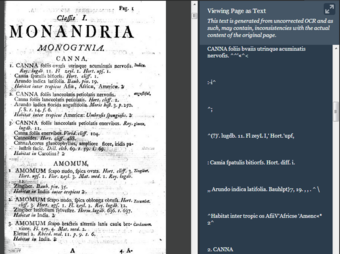
Sample of bad OCR output

While transcription tasks of the sort usually crowdsourced to the public can be interesting and engaging, they are often time-consuming and exacting. Games provide a fun, interactive, piecemeal method of accomplishing those same tasks.

“Cultural heritage institutions are increasingly benefiting from human computation approaches that have been used in revolutionary ways by scientific researchers. Engaging citizens to work together as decoders of our heritage is a natural progression, as preserving these records directly benefits the public,” says Dr. Mary Flanagan, founder and director of Tiltfactor. “Integrating the task of transcription with the engagement of computer games gives an extra layer of incentive to motivate the public to contribute.”

Why This Approach Is Groundbreaking

While many institutions have harnessed the power of crowdsourcing, “Purposeful Gaming” represents a new avenue of collaboration that promises wider appeal and endless possibilities for engaging citizen scientists in new, creative ways.

“The games provide a fun and engaging way for volunteers to help us with a task that we don’t have the staff to do ourselves,” explains Trish Rose-Sandler, Principal Investigator for “Purposeful Gaming.” “BHL benefits by having improved discoverability of its books and journals on plant and animal life. More importantly, benefits from the results of the project would extend to the broader digital library community. Any institution managing large text collections can learn from novel and more cost-effective approaches to generating searchable texts.”

What’s the Difference between the Two Games? Where Can I Play them?

Players of the more challenging Smorball game are asked to type the words they see as quickly and accurately as possible to help coach their team, the Eugene Melonballers, to victory to win the coveted Dalahäst Trophy in the fictional sport of Smorball.  Each word typed correctly defeats an opposing smorbot and brings the Melonballers closer to the championships.

View Full Size Image

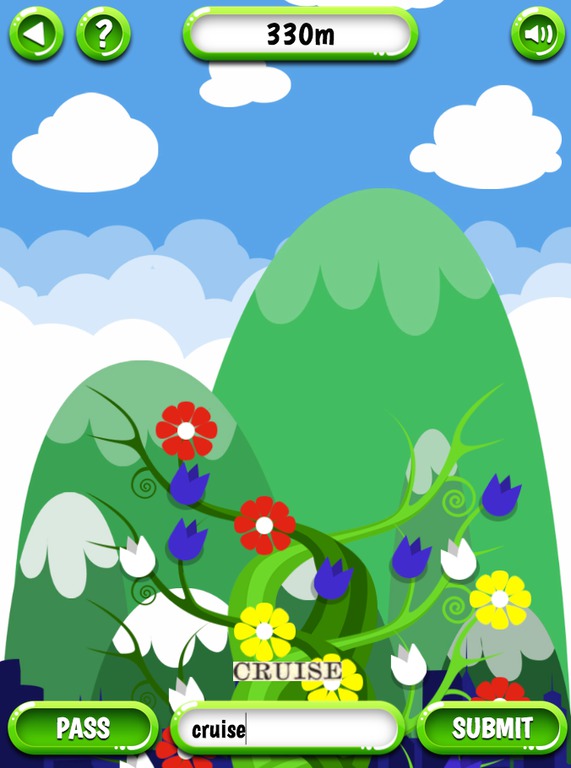
Players of the more relaxed Beanstalk game must type the words presented to them correctly in order to grow their beanstalk from a tiny tendril to a massive cloudscraper. The more words they type correctly, the faster the beanstalk grows. Players who accurately transcribe the most words will ascend to the top of the leaderboard as a result of their valuable contributions.

View Full Size Image

If you want to learn about the material that was used for the Purposeful Gaming Project, check out the writings of William Brewster and BHL’s Seed and Nursery Catalog Collection.

Now, in the name of science, go play Smorball and Beanstalk. And have fun!

June 9, 2015by eomeara
Blog Reel, Campaigns, Featured Books, Garden Stories

What’s Up with Seed Catalogs in BHL?

View Full Size Image
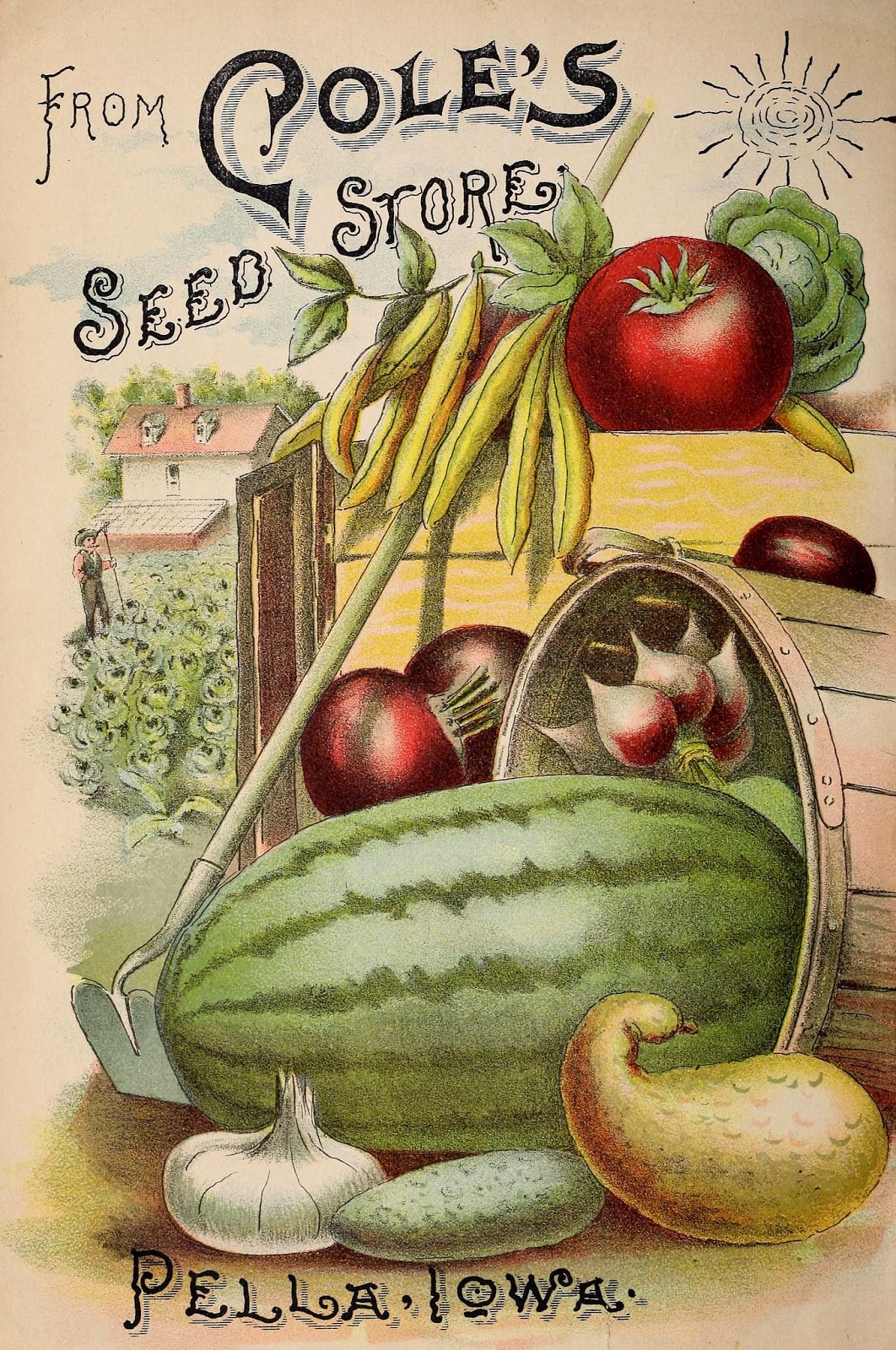
Cole’s Garden Annual. 1892. From the BHL Seed and Nursery Catalog Collection.

We’ve spent a fun-filled week exploring the history, art, and science of gardening with our Garden Stories event. Seed and nursery catalogs and lists played a starring role in our campaign, allowing us to explore the world of gardening through the instruments that informed, documented, shaped, and transformed the industry.

As our journey this week has demonstrated, seed and nursery catalogs and lists allow us to trace the development of the seed industry, agriculture, and the home garden, documenting the rise, decline, and development of new plant varieties and prices; changing agricultural and printing technologies; the individuals who shaped the industry; the evolution of garden fashion and landscape design; the introduction of chemical agents for insect and weed control; early methods of cleaning, preserving, and shipping seeds; and cultural and social dynamics such as the effects of and reactions to scientific advancement, global wars, and the shifting roles of women in society and business.

Because of their cultural, historic, and scientific importance, many BHL partners are engaged in a variety of projects to digitize and improve access to the seed and nursery catalogs and lists in their collections. As we wind things down in our Garden Stories event, we invite you to explore the exciting world of seed catalogs in the Biodiversity Heritage Library consortium.

Digitizing One of the Largest Seed Catalog Collections in America

View Full Size Image
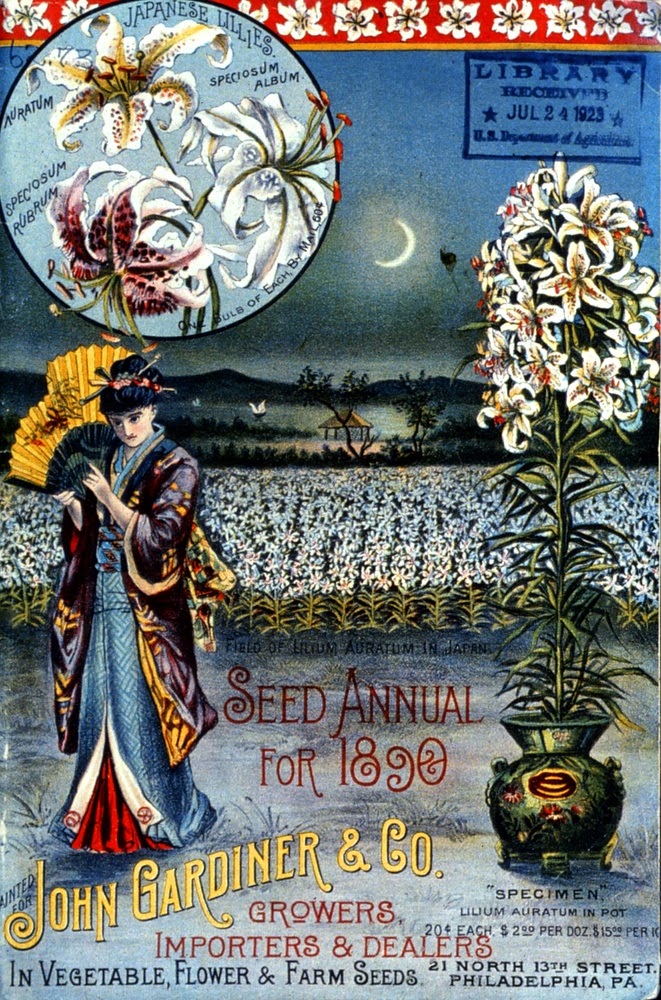
John Gardiner & Co. Seed Annual for 1890. From the NAL Seed Trade Catalog Collection.

Started in 1904 by USDA’s first economic botanist, Percy Leroy Ricker, the National Agricultural Library’s (NAL) Henry G. Gilbert Nursery and Seed Trade Catalog Collection consists of over 200,000 American and foreign catalogs. The earliest catalogs date from the late 1700s, but the collection is strongest from the 1890s to the present.

As one of NAL’s most frequently used collections with an appeal to a wide-ranging audience, the Nursery and Seed Trade Catalog Collection was a natural candidate for digitization. In 2013, NAL began digitizing the collection with Internet Archive which operates a scanning center at NAL. As of February 2015, NAL has cataloged all of its U.S seed catalogs through 1923 and digitized over 13,000 seed catalogs, including all of its U.S. catalogs through 1906 as well as its entire collection of catalogs from long-established firms such as Peter Henderson & Co., and woman-owned firms such as Miss Ella V. Baines. The Nursery and Seed Trade Catalog Collection will remain a focus of NAL’s digitization work with Internet Archive for the foreseeable future.

Soon after NAL’s catalogs became available in Internet Archive, BHL added them to its own Seed and Nursery Catalogs Collection. In 2014, NAL formally became a BHL affiliate and the two institutions began working on a standardized process for ingest of NAL seed catalogs (and other relevant digitized materials) into BHL.

Digitizing to Improve Access and Discoverability

In 2013, the Biodiversity Heritage Library engaged in an ambitious project to explore the applicability of purposeful gaming to tackle a significant challenge for digital libraries today: poor output from Optical Character Recognition (OCR) software. OCR allows a computer to “read” the text on a digitized page and produce a searchable text file for each page image that allows users to more easily discover content relevant to their needs.

Led by the Missouri Botanical Garden’s Center for Biodiversity Informatics (CBI) and in partnership with Harvard University, Cornell University, and the New York Botanical Garden, the Institute of Museum and Library Services (IMLS)-funded project, Purposeful Gaming, will demonstrate whether or not digital games are a successful tool for analyzing and improving outputs from OCR and transcription activities because large numbers of users can be harnessed quickly and efficiently to focus on the review and correction of particularly problematic words by being presented the task as a game.

As part of Purposeful Gaming, project participants are digitizing seed and nursery catalogs and lists because these documents are great examples of materials that are notoriously difficult subjects for OCR to parse. The picturesque fonts and elaborate page layouts so endearingly characteristic of seed catalogs cause the resulting OCR output to be error prone and less than optimal. By identifying unique catalogs and lists in their collections and integrating them into the BHL Seed and Nursery Catalog Collection, transcription sites, and purposeful games, participating institutions are helping us enhance our OCR and improve access to not only these catalogs and lists but the entire BHL collection as well.

Seed catalogs and Index Semina – What’s the difference and why do we care?

View Full Size Image
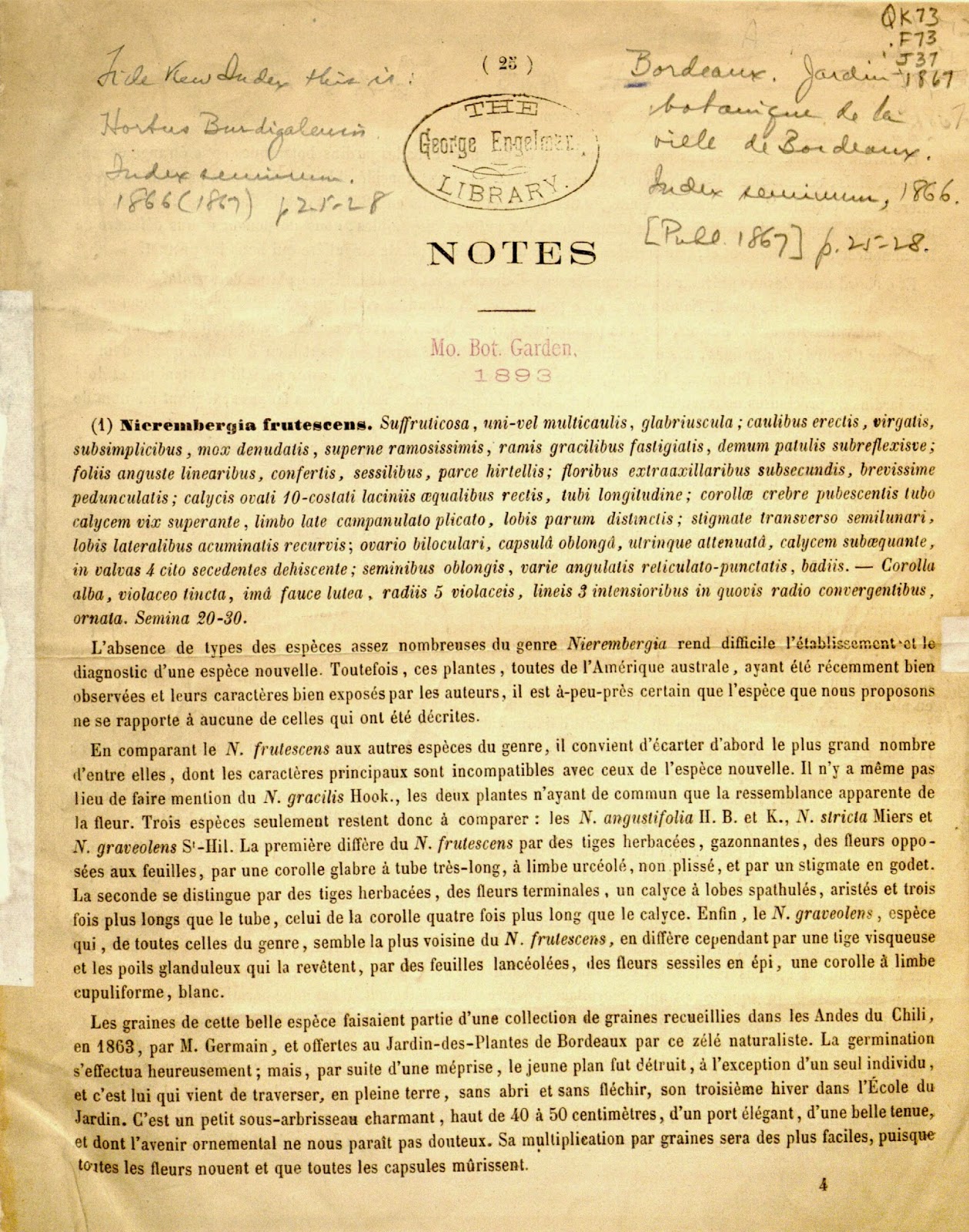
Nierembergia frutescens in Seed List. http://biodiversitylibrary.org/page/44946209.

As described, Purposeful Gaming involves digitization of historic seed catalogs and seed lists, or index semina. What is the difference? Beautifully illustrated seed catalogues were issued regularly by seed companies to list their current selection available for sale. The catalogues occasionally included plants that were not only new to the garden, but also new to science. Similarly, the far less colorful seed lists were issued and exchanged by botanical gardens to facilitate the free exchange of new seed acquisitions and also included plant species new to science.

The seed lists were published and circulated in limited numbers and were often considered ephemeral so they were not generally deposited in libraries. Today no library in the world has a complete set. BHL partners have joined forces to digitize their collections to form a virtual set that is nearly complete and are far more accessible to botanists and everyone around the world.

Nierembergia frutescens is just one example of a plant that was first named and described in a seed exchange list. This beautiful flowering herb is a member of the Solanaceae or Nightshade family. It was first named in 1866 by the French botanist Michel Charles Durieu de Maisonneue. He described the plant in great detail while advertising the availability of seeds of this new species to his colleagues in Catalogue des graines récoltées en. 1866, issued by Jardin-des-plantes de la ville de Bordeaux.

Identifying the Unique


View Full Size Image
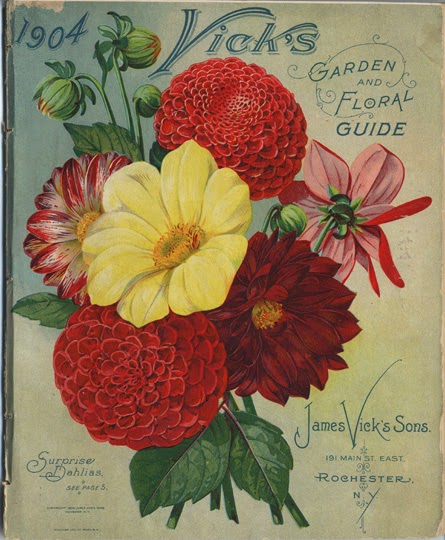
1904 Vick’s Catalog. From LH Bailey Hortorium’s Horticultural Catalog Collection at Cornell University.

With many Purposeful Gaming-affiliated institutions involved in digitizing seed and nursery catalogs, alongside the significant digitization underway at the National Agricultural Library (NAL), it can be difficult to ensure that the same catalog is not digitized by multiple libraries. Recognizing this challenge, Cornell University’s Mann Library developed a process to identify and digitize the unique seed catalogs in their collection.

The first step in this process was to collect metadata about the seed catalogs held by BHL institutions currently digitizing these works. This was done using Excel spreadsheets with matching columns. The merging of the metadata was complicated by differing cataloging processes among various institutions. For instance, NAL catalogs each seed catalog as a monograph whereas Cornell catalogs them as serials based on the firm name. To further complicate the situation, Cornell also cataloged the firms for which they have only a handful of catalogs in alphabetic ranges by firm name.

After the metadata for the seed catalogs in applicable institutions was merged into one large spreadsheet, it was necessary to try to match up the varying firm names. For example, one institution might have a firm cataloged as John W. Adams, whereas another institution may have JW Adams, Adams JW, or even John W Adams & Sons. Additionally many firms changed names over time.

Mann decided to use Google Refine in an attempt to standardize firm names. Using Google Refine’s Cluster option they were able to match up various firm names used for the same firm. (For more on clustering methods, please see https://github.com/OpenRefine/OpenRefine/wiki/Clustering-In-Depth). If requested, Google Refine will change the firm names in the spreadsheet to use a common firm name for each. This allowed the resulting spreadsheet to be sorted by firm so that all metadata for one firm appeared together in the spreadsheet. Mann Library then reviewed the spreadsheet manually to see what firms or seed catalog publication years are uniquely held by them, avoiding the scanning of material already digitized by other BHL institutions.

Gaming to Enhance Collections

So we’ve covered digitizing the catalog and list collections. How then will Purposeful Gaming use video games to decipher difficult-to-read texts–such as seed and nursery catalogs–that cannot easily be read by OCR software?

Here’s how it works: an original catalog is scanned, and the image uploaded to BHL. The image is then uploaded to a transcription portal, where volunteers type out the text that would be too difficult for a computer to read (thanks to all who have helped us transcribe seed catalogs this week!). Multiple transcriptions of the same text are then incorporated into the video game, which identifies discrepancies between them. The task of the player is to correctly transcribe the text in question through a creative video game interface. Eventually, games like this could help create searchable versions of seed and nursery catalogs, increasing their value to historians and horticulturalists alike.

Beta versions of the games are being tested right now, and we hope to release them this summer. Stay tuned to our blog and social media for more updates. In the meantime, you can help inform the game development by transcribing seed and nursery catalogs today! Learn more.

We’re so glad you joined us this week for Garden Stories. You can explore all our great posts by following #BHLinbloom on Twitter and Facebook and diving into our Garden Stories blog series. Be sure to check out the over 14,000 seed and nursery catalogs in BHL and enjoy over 2,500 seed catalog images in Flickr, with a selection also available in Pinterest. Find great online gardening resources, facts, and tips on the BHL Gardening Resources Page.

Happy gardening!

Contributions From:

Chris Cole
Manager, Business Development, National Agricultural Library
Doug Holland
Director, Missouri Botanical Garden Library
Holly Mistlebauer
Information Technology Project Manager, Cornell University’s Mann Library
Kay Derr
Contracts Librarian, National Agricultural Library
Patrick Randall
Marketing Intern, Ernst Mayr Library, Museum of Comparative Zoology, Harvard University
Judith A. Warnement
Librarian of Harvard University Botany Libraries

March 27, 2015by ulib-libraryjobs
Blog Reel, Campaigns, Featured Books, Garden Stories

“’Tis A Gift To Be Simple” But to Have a Splendid Garden Buy Shaker Seeds

View Full Size Image
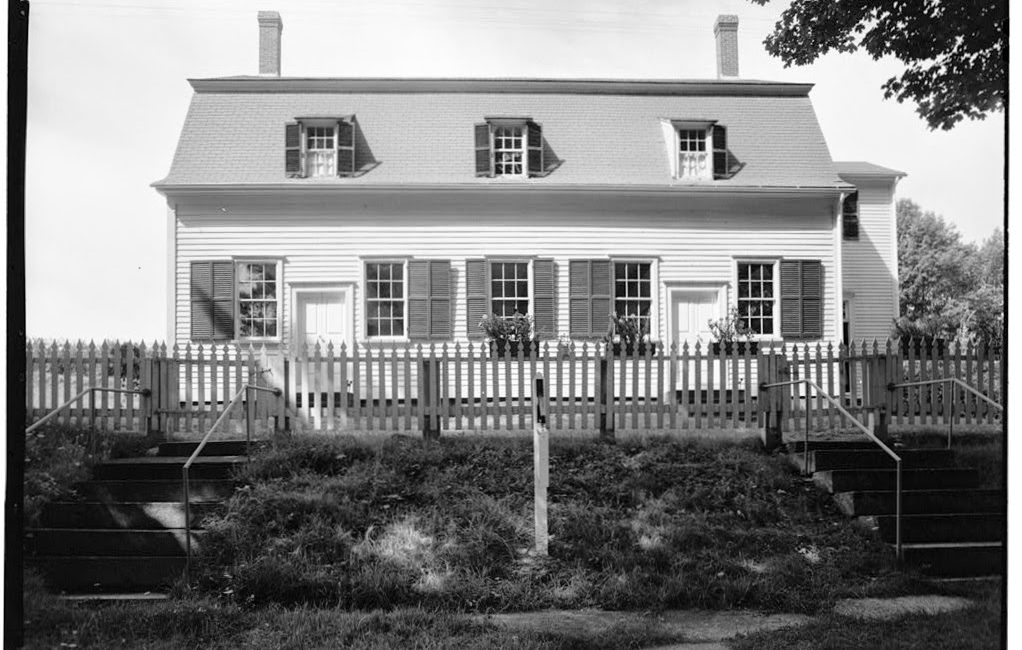
Sabbathday Lake Shaker Community Meetinghouse  (photo by Gerda Peterich for the Historic American Buildings Survey, Library of Congress Prints and Photographs Division; HAB SME,3-SAB,1—1)

The United Society of Believers in Christ’s Second Appearing, a religious sect commonly referred to as the Shakers, was founded in 18th-century England from a branch of the Quakers. Along with other newly formed devotional groups, they soon immigrated to colonial America. There they established as their economic foundation a variety of cottage industries that thrived throughout the 19th and into the early 20th centuries. Now known mostly for wonderfully simple architecture, austere but beautifully designed furniture and such functional objects as nesting oval boxes and baskets, members of the Shaker communities also once had booming garden and seed businesses. Their labor-intensive methods of working inevitably came to be overwhelmed by competition from industrial manufacturing as well as the problem of ever-shrinking membership, celibacy being one of their central tenets.

View Full Size Image
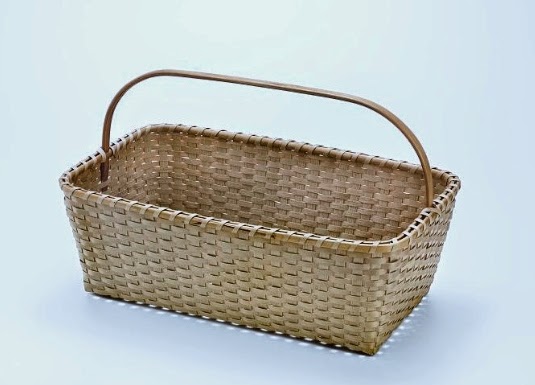
Shaker Carrier (by Sharon Dugan; Smithsonian American Art Museum, Gift of Martha G. Ware and Steven R. Cole; no. 2011.47.11)
The first fully organized Shaker community was New Lebanon in New York; by 1789, two years after its formation, the members cultivated seeds as a cash crop. This was the second earliest “company” to sell seeds in America. David Landreth & Son of Philadelphia was the first, in 1784, and that business traded back and forth with the Shakers. Another early dealer was Grant Thorburn in Philadelphia who wrote about the difficulty of obtaining seeds of good quality.
Other Shaker settlements, or “families,” soon followed in the seed-production business, including Watervvliet, New York; Hancock, Massachusetts; Enfield, Connecticut; Canterbury, New Hampshire; Alfred, Maine; and South Union, Kentucky, among several others. All were known for the excellence of their products and integrity of their business dealings. Devotion to God was expressed through their work ethic, hand labor and craftsmanship. The selling of goods was meant to raise funds only for needs the Shakers could not supply for themselves.

It is uncertain whether the Shakers were the first to put their seed products in small paper envelopes or packets, but they were the first to popularize their use. The Shaker Brothers printed millions of them on their presses, while the Sisters performed the labor of cutting, folding and pasting the papers. While believing in partnership in work and equality of the sexes, occupations tended to fall along traditional gender lines. The Brothers tilled the fields while the Sisters picked, sorted and packaged the seeds and herbs.

View Full Size Image
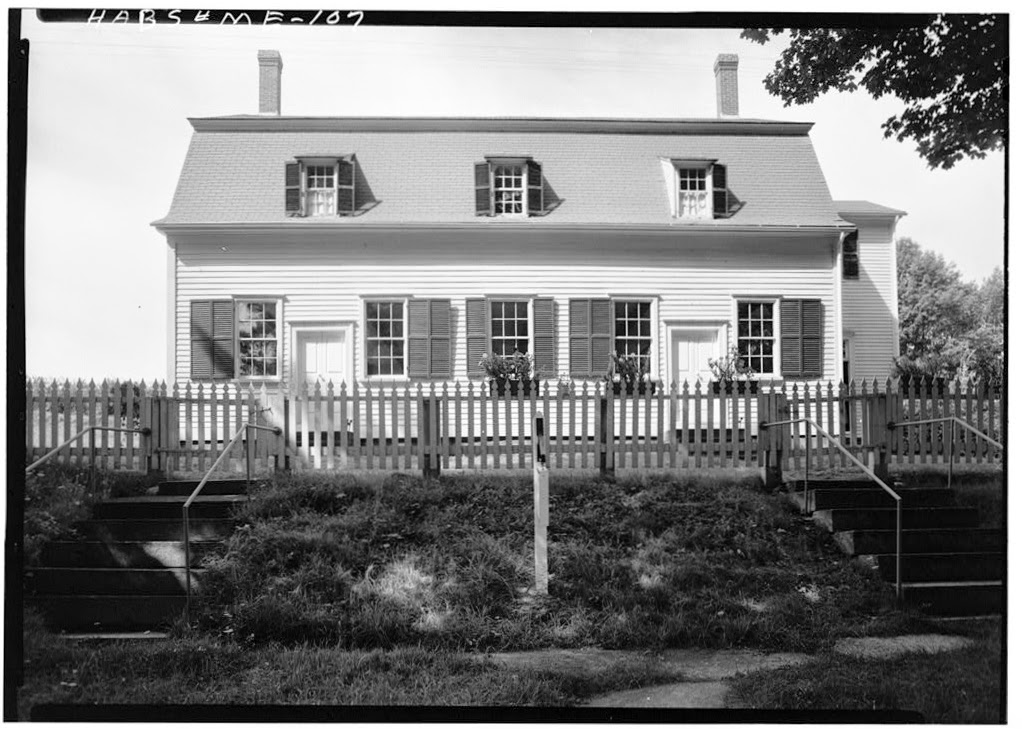
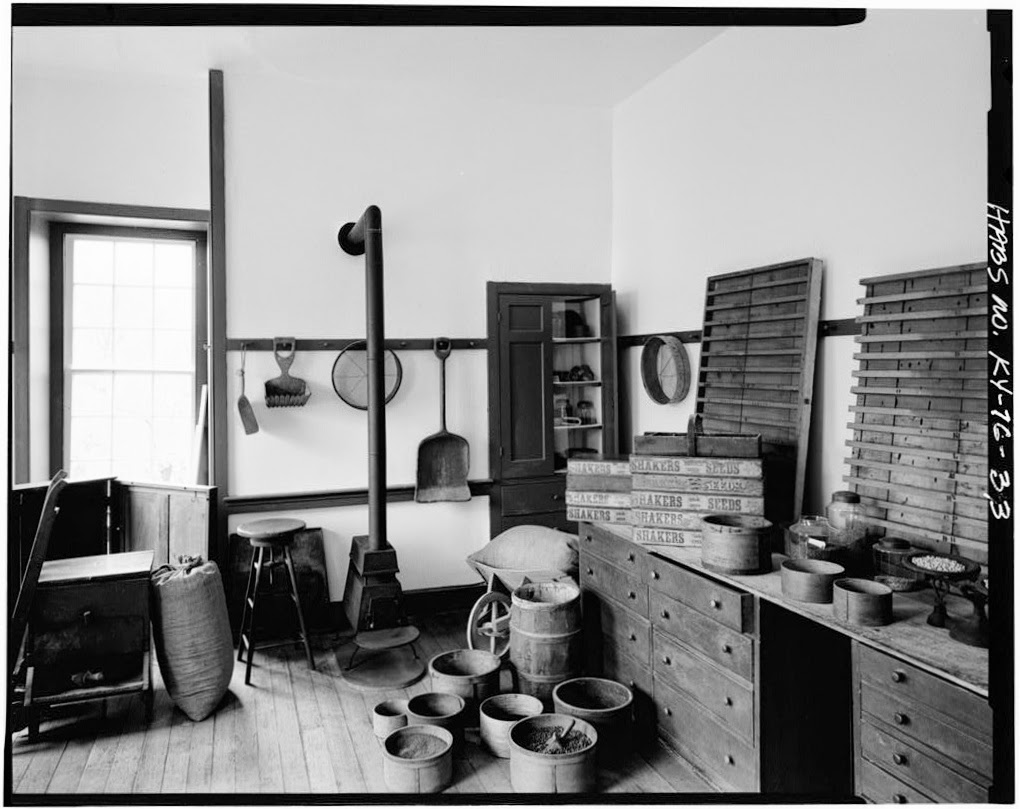
Seed Room, Shakertown, Kentucky (LC Prints & Photographs Division; HABS,84-SHAKT,2-33)

The Shakers were also early adopters of incorporating gardening manuals in their catalogs. Charles Crossman wrote ones in 1835 and 1836 for Mount Lebanon, Pittsfield and Watervilet, directing the wholesaler or the individual purchaser how best to plant the offered seeds. Instructions for storing and cooking bounties from the gardens were also sometimes given. Vegetables dominated the products but herbs and flowers as well as grass also appear in the lists. Crossman later left the Shakers and established his own company in Rochester, New York, which was just beginning to become the thriving horticultural center in the country.

View Full Size Image
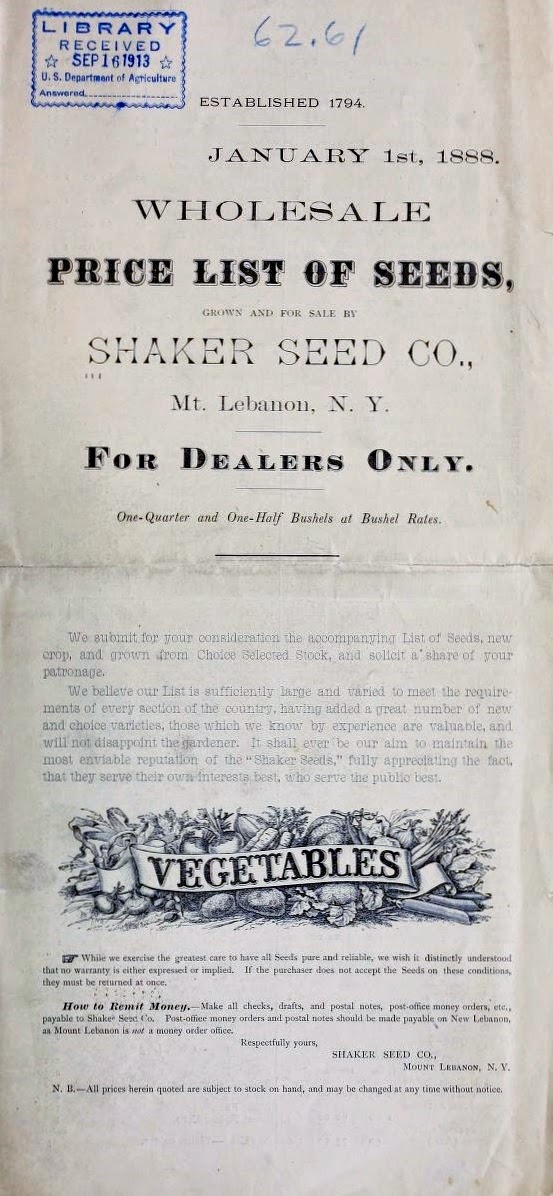
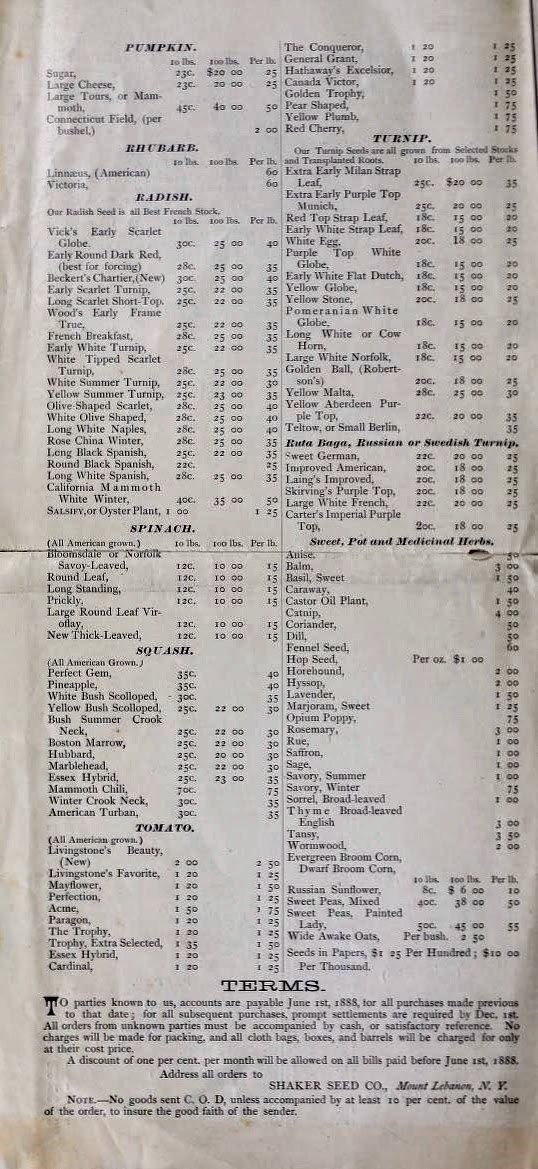
Wholesale price list of seeds by the Shaker Seed Company. New Lebanon, New York, 1888 (Henry G. Gilbert Nursery and Seed Trade Catalog Collection, National Agriculture Library; image from the Biodiversity Heritage Library)

As the Shaker seed business in the United States grew from 1840, printing firms outside of the communities were employed to keep up with demand. Correspondingly, advertisements and the design of the packets, begun first plain with simple chunky block type, were transformed to include the use of color papers and borders and eventually vivid chromolithography.

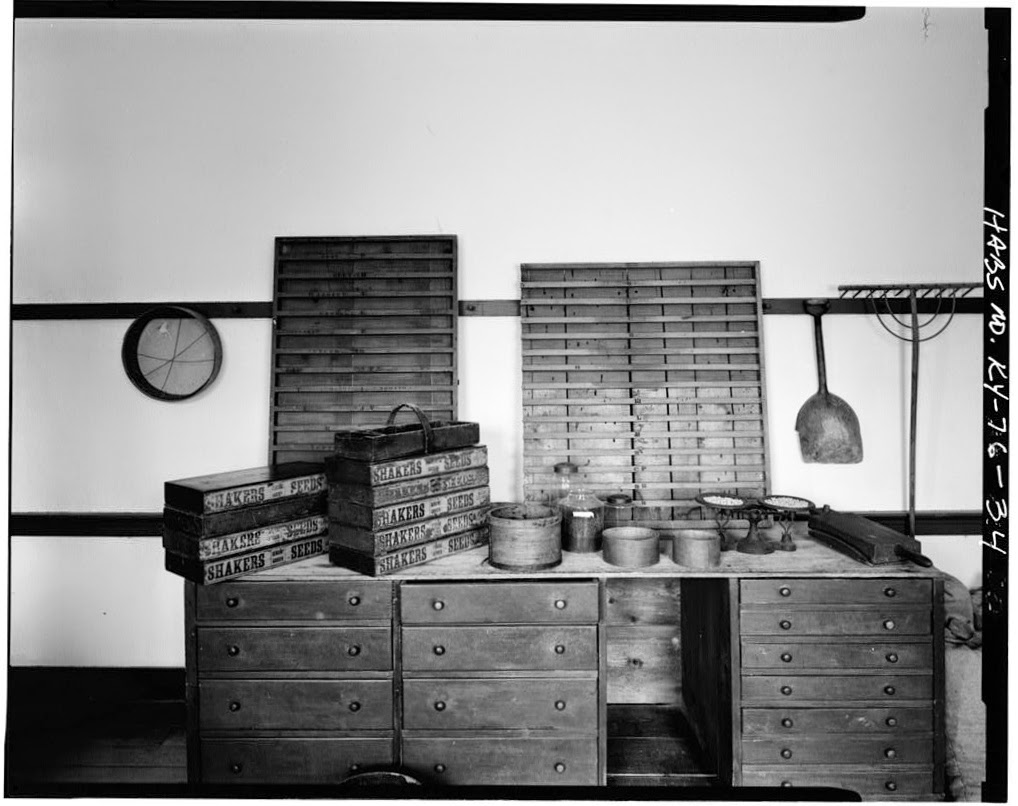
Following the Civil War, increased competition resulted in the Shakers’ using the word “genuine” in their advertising, as products from the communities were considered to be of the highest quality, their best selling point. They also used various and effective marketing techniques, including seed boxes meant to be displayed on the counters of country stores. The containers had compartments for assorted Shaker vegetable and flower seed packages, with a hinged lid to be propped open to display a broadside detailing the contents within, and a chromolithographic image of a bountiful harvest, promising the purchaser a similar reward.

View Full Size Image
Seed Room with display containers, Shaker Centre Family Dwelling House, Shakertown, Mercer County, Kentucky (Library of Congress Prints and Photographs Division; HABS KY,84-SHAKT,2—34)

Other surviving ephemera record the once-thriving industry of seed, herbal, food, and medicinal products from the Shakers. Along with seed catalogs and the packets, mailing tags and envelopes, broadsides, receipts, invoices, billheads, and labels, give testament to their industry. Product labels include currant, grape, wild cherry, and blackberry wines. Far from being abstinent (except in the matter of sex), the Shakers made at least fourteen varieties of wine as well as distilled spirits. The religious group in their various communities was also at the forefront of selling medicinal herbs in the United States.

View Full Size Image
Shaker Digestive Cordial (A.J. White, New York, New York; National Museum of American History, no. 246707)

The changing world and market forces caused the Shaker seed industry to gradually peter out at the beginning of the 20th century. Increasing industrialization, growth of urban centers with ease of shipping and mailing to formally isolated villages, and overwhelming production from big companies, particularly in Philadelphia and Rochester, eliminated the communities’ wagon and sleigh seed routes for trading. With their firm spiritual beliefs and practices, the Shakers were not very competitive against aggressive business tactics.

View Full Size Image
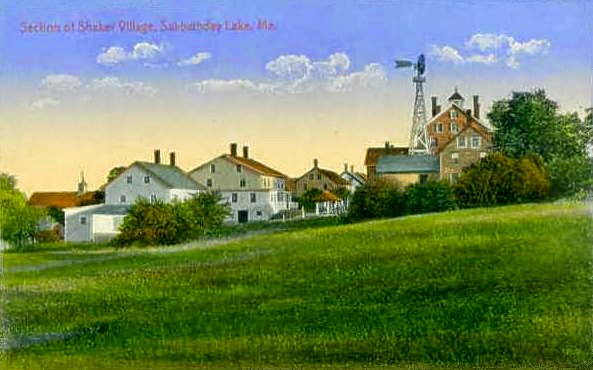
Postcard of the Shaker Village of Sabbathday Lake, Maine (ca. 1920; Wikimedia Commons)

At their peak in the mid-19th century there were about 6,000 “Shaking Quakers” so named because of their ecstatic behavior during worship services. Today, Sabbathday Lake Shaker Community, founded in 1783 in Maine, is the sole active survivor of the religion. A tree farm, an apple orchard and vegetable gardens are maintained, and hand-set printing is still practiced. The library there holds ephemera such as account records, recipes, catalogs and 1,380 labels printed by Shakers for their own products. They are living testament to the Shakers’ influence on the American seed and nursery industry and their permanent place in horticultural history—the early development of the new business, innovative techniques in marketing and education as well as the propagation and introduction of new varieties. The Sabbathday Shakers still sell herbs, and their catalog is online.

View Full Size Image
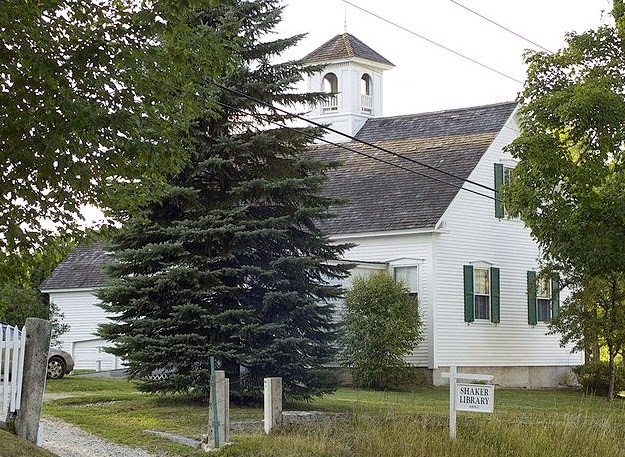
The Library of Sabbathday Village in New Gloucester, Maine (Wikimedia Commons, August 2010)
View Full Size Image
Wholesale price list of seeds by the Shaker Seed Company, Mount Lebanon, New York, 1888 (Henry G. Gilbert Nursery and Seed Trade Catalog Collection, National Agriculture Library)

More Garden Stories Fun

  • Follow our blog and #BHLinbloom on Twitter and Facebook (or go directly to BHL’s Twitter and Facebook) this week as we explore the fascinating world of gardening, from its history to plant factoids and practical gardening tips.
  • Browse over 14,000 seed and nursery catalogs in our collection.
  • Browse over 2,500 seed and nursery catalog images in our Flickr collection.
  • Explore select seed catalog art, and stunning bookmarks and postcards developed by Cornell Library, on Pinterest.
  • See historic gardening come to life on the Smithsonian Libraries’ Tumblr.
  • Purchase your very own Garden Stories T-Shirt through T-Fund. All proceeds will go to help us digitize more pages for BHL. Our goal is to sell enough shirts to digitized 5,000 pages. Can you help us get there?
  • Help us improve access to seed and nursery catalogs by transcribing some today as part of our the Institute of Museum and Library Services (IMLS)-funded Purposeful Gaming project!
  • Find great online gardening resources, tips, and help on the BHL Gardening Resources Page.
March 27, 2015by mckenzie.87
Page 1 of 3123»

Help Support BHL

BHL's existence depends on the financial support of its patrons. Help us keep this free resource alive!

search

About BHL

The Biodiversity Heritage Library (BHL) is the world’s largest open access digital library for biodiversity literature and archives. BHL operates as a worldwide consortium of natural history, botanical, research, and national libraries working together to digitize the natural history literature held in their collections and make it freely available for open access as part of a global “biodiversity community.”

Join Our Mailing List

Sign up to receive the latest news, content highlights, and promotions.

Subscribe Now

Subscribe to Blog via Email

Enter your email address to subscribe to this blog and receive notifications of new posts by email.

Join 319 other subscribers

Subscribe to Blog Via RSS

Subscribe to the blog RSS feed to stay up-to-date on all the latest BHL posts.

Access RSS Feed

Inspiring Discovery through Free Access to Biodiversity Knowledge.

The Biodiversity Heritage Library makes it easier than ever for you to access the information you need to study and explore life on Earth…for free, anytime, anywhere.


64+ Million Pages of
Biodiversity Literature Online.

EXPLORE

Tools and Services
to Transform Research.

EXPLORE

300,000+
Illustrations on Flickr.

EXPLORE

ABOUT | HARMFUL CONTENT | PRIVACY | SITE MAP | TERMS OF USE