Biodiversity Heritage Library - Program news and collection highlights from BHL
  • Home
  • News
  • Featured Books
    • All Featured Books
    • Book of the Month Series
    • BHL at 20
  • User Stories
  • Campaigns
    • Fossil Stories
    • Garden Stories
    • Monsters Are Real
    • Page Frights
    • Her Natural History
    • Earth Optimism 2020
  • Tech Blog
  • Visit BHL
Home
News
Featured Books
    All Featured Books
    Book of the Month Series
    BHL at 20
User Stories
Campaigns
    Fossil Stories
    Garden Stories
    Monsters Are Real
    Page Frights
    Her Natural History
    Earth Optimism 2020
Tech Blog
Visit BHL
  • Home
  • News
  • Featured Books
    • All Featured Books
    • Book of the Month Series
    • BHL at 20
  • User Stories
  • Campaigns
    • Fossil Stories
    • Garden Stories
    • Monsters Are Real
    • Page Frights
    • Her Natural History
    • Earth Optimism 2020
  • Tech Blog
  • Visit BHL
Biodiversity Heritage Library - Program news and collection highlights from BHL
Blog Reel, Campaigns, Her Natural History

Graceanna Lewis: A Naturalist and Abolitionist

Black and white portrait of a person wearing glasses.

This post originally published on the Smithsonian Libraries and Archives’ blog, Unbound.

“To her mind the truths of science seem revealed.”

That’s how Phebe A. Hanaford, author of Daughters of America (c. 1882), described naturalist Graceanna Lewis, one of the first three woman to be accepted into the Academy of Natural Sciences. But Lewis was not only one of the first professionally acknowledged women naturalists; she was also an abolitionist and social reformer who worked for the advancement of science as well as human rights. Researchers can find many publications by and about this intriguing woman in the Smithsonian Libraries and Archives’ Digital Library and the Biodiversity Heritage Library.

Born in 1821, Lewis benefitted from an egalitarian Quaker upbringing, one that encouraged education in daughters as well as sons. Lewis told Hanaford that she learned to love natural history from her mother, Esther Lewis. Esther had been a teacher before marriage and continued to educate her own young children, sending her daughters to nearby Kimberton Boarding School as they grew. There, Graceanna was influenced by Abigail Kimber, a woman botanist who had discovered and identified several species. In 1842, Lewis’ uncle, Dr. Bartholomew Fussell, started a new boarding school for girls, and Lewis came on board as a teacher. She taught astronomy and botany, among other subjects.
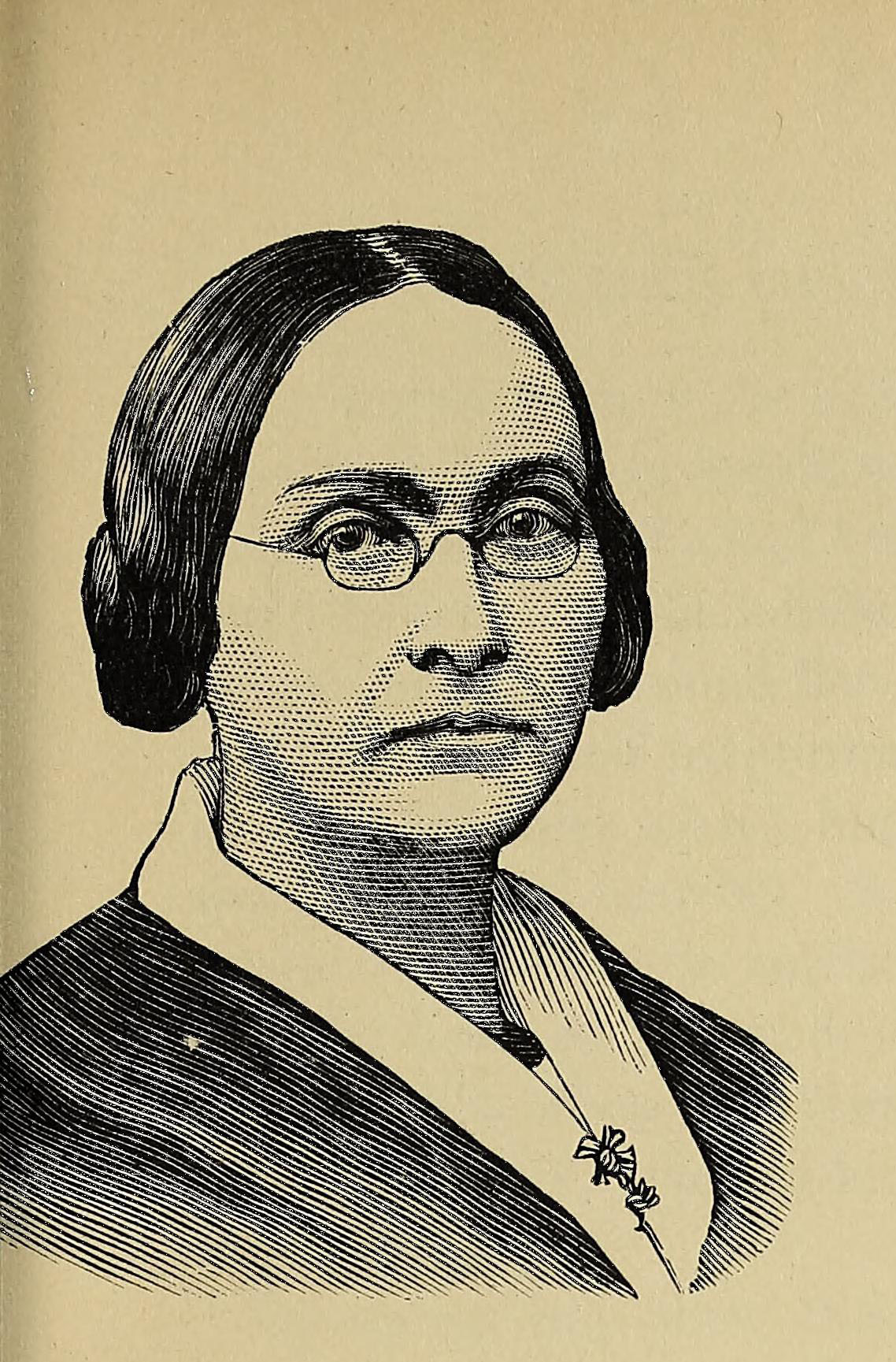
Black and white portrait of a person wearing glasses.

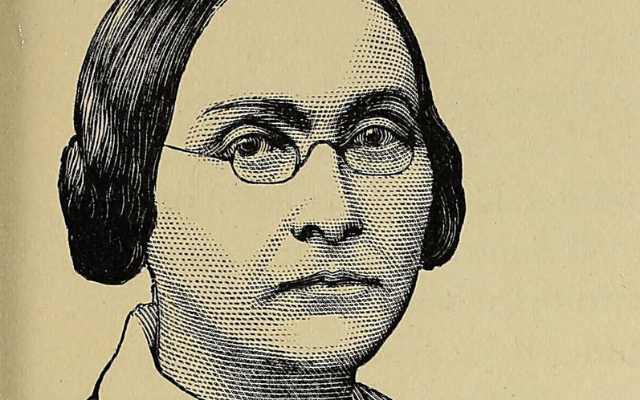
Portrait of Graceanna Lewis. The Underground Rail Road (1872). Digitized by Smithsonian Libraries and Archives.

From her family, Graceanna Lewis inherited not only an interest in science and education but also a deep concern for social issues. Uncle Bartholomew was an active abolitionist, and the family formed a local auxiliary of the American Anti-Slavery Society. The Lewis sisters, Graceanna, Mariann and Elizabeth, were profiled in William Still’s The Underground Rail Road (1872), which described them as “among the most faithful, devoted, and quietly efficient workers in the Anti-slavery cause”.

One of Graceanna’s earliest publications, written in the 1840s, was “An Appeal to Those Members of the Society of Friends Who Knowing the Principles of the Abolitionists Stand Aloof from the Anti-Slavery Enterprise”. It implored fellow Quakers to join the Anti-Slavery movement. The Lewis farm in Pennsylvania became a frequent and successful point on the Underground Railroad, described in detail by Still. The family helped transport those seeking freedom and provided clothes and supplies.

Eventually, Lewis moved away from the family farm to Philadelphia. She had studied birds and other natural sciences on her own, but this move allowed her to take advantage of the specimen and library collections at the nearby Academy of Natural Sciences, and it propelled her into a network of naturalists. In 1862, she met John Cassin, ornithologist and curator of birds at the Academy. Cassin had written, with George N. Lawrence and the Smithsonian’s own Spencer Baird, The Birds of North America (1860), a work Lewis found particularly inspiring.

Cassin would be an invaluable friend and mentor to Lewis, even naming a bird for her, Icterus graceannae, the White-edged oriole. Lewis also corresponded frequently with Baird for years, seeking advice and asking for copies of Smithsonian publications. In 1870, the year after Cassin’s death, Lewis became one of the first three women admitted as members to the Academy.
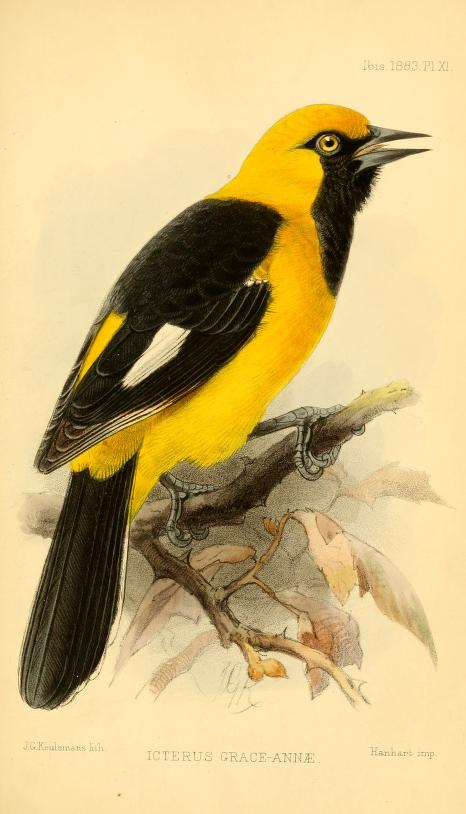
Icterus graceannae, black and yellow bird.

Icterus graceannae, or white-edged oriole, Plate XI. Ibis. Series 5, Volume 1. No. 1-4. (1883). Contributed in BHL from Smithsonian Libraries and Archives.

Lewis had channeled her interested in ornithology into her first scientific publication, Natural History of Birds : lectures on ornithology, in ten parts (1868). It was intended as an inexpensive overview of American birds for a general audience. In it, she also proposed a new classification scheme based on embryology, the characteristics of eggs. Unfortunately, only the first part was published, as funding for the remaining nine was never secured. She continued to research and publish on birds, alongside the leading naturalists of her time. Her articles in The American Naturalist, “The Lyre Bird” (August 1870) and “Symmetrical Figures in Birds’ Feathers” (November 1871) are available in the Biodiversity Heritage Library.

Lewis’ interests and publications grew beyond ornithology, into the classification of natural history and a “tree of life”, which she exhibited at the Centennial Exhibition in 1876. The Development of the Animal Kingdom (1877), available in the Biodiversity Heritage Library, is a twenty-page overview of her theories. It was prepared for the fourth meeting of the Association for the Advancement of Women. The group was formed in 1868 with the goal of presenting practical methods for improving women’s role in society, including education on a variety of subjects. Unsurprisingly, Lewis was active on the group’s Committee on Science.
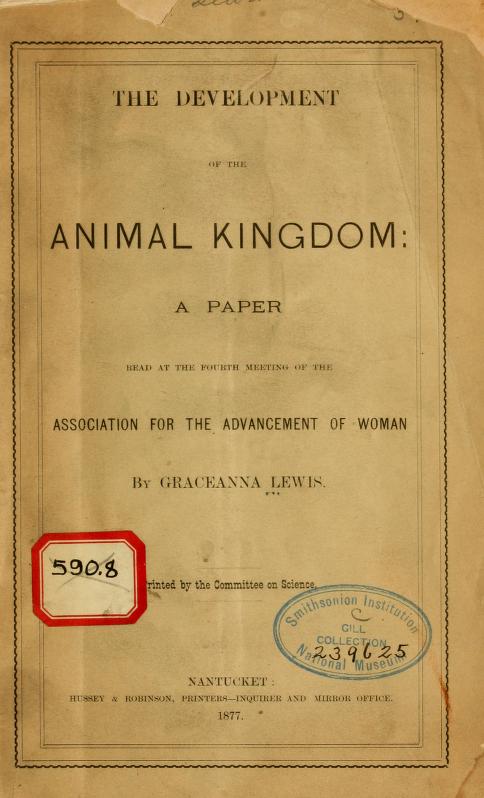
Cover, The Development of the Animal Kingdom (1877)

Cover. The Development of the Animal Kingdom. (1877). Contributed in BHL from Smithsonian Libraries and Archives.

Lewis told Phebe A. Hanaford in 1882, “I feel that my life’s work is before me, in lecturing on zoology to girls just blooming into womanhood”. For the next twenty years, Lewis continued to teach and write about various natural history topics. Her article “On the Genus Hyliota”, discussing the distinction of two rare African birds, was published in The Annals and magazine of natural history in 1883. Her social reform interests turned to temperance and suffrage, serving stints as secretary for her local chapter of the Women’s Christian Temperance Union and suffrage association.

Graceanna Lewis died in 1912 in Media, Pennsylvania at the age of 90. Her contributions to both science and social progress leave a remarkable and inspiring legacy.

Further Reading

Baird, Spencer Fullerton, John Cassin and George N. Lawrence. The Birds of North America (1860).

Baird, Spencer Fullerton. Spencer Fullerton Baird Papers. Record Unit 7002. Smithsonian Institution Archives.

Bonta, Marcia. “Graceanna Lewis, Portrait of a Quaker Naturalist”. Quaker History, Volume 74, Number 1, Spring 1985, pp. 27-40.

Hanaford, Phebe A. Daughters of America (1883).

Lewis, Graceanna. “An appeal to those members of the Society of Friends who knowing the principles of the abolitionists stand aloof from the anti-slavery enterprise”. [between 1840 and 1849?].

Lewis, Graceanna. The Development of the Animal Kingdom (1877).

Lewis, Graceanna. “The Lyre Bird”. The American Naturalist (August 1870), pp 321.

Lewis, Graceanna. “On the genus Hyliota”. The Annals and magazine of natural history, Series 5, Volume 12, No. 67, pp. 210-212.

Lewis, Graceanna. “Symmetrical Figures in Birds’ Feathers” . The American Naturalist (November 1871), pp. 675-678.

Lewis-Fussell Family Papers, SFHL-RG5-087, Friends Historical Library of Swarthmore College.

Still, William. The Underground rail road (1872).

Truitt, James. “Digitizing the Papers of Graceanna Lewis, Ornithologist and Activist”. Cassinia. No. 77 (2017-2018), pp. 40-41.

Warner, Deborah Jean. Graceanna Lewis, scientist and humanitarian (1979).
March 30, 2021by Pedro Gonzalez Fernandez
Blog Reel, User Stories

Women in Historical SciArt: BHL Empowers Research on Women in Scientific Illustration

Illustration of a cactus with a yellow flower.

Michelle Marshall is an independent researcher and creator of Historical SciArt, a research initiative dedicated to women in historic scientific illustration. In this guest post, Marshall shares more about how BHL helps empower her research on women in science.

•     •     •

In Fall 2014, I discovered the wonderful world of the Biodiversity Heritage Library. I serendipitously stumbled onto this natural history digital library through collaborations with the Smithsonian Transcription Center, and I joined a group of dedicated volunteers known as BHL citizen scientists, whose work includes researching and adding taxonomy to the scientific illustrations that BHL has uploaded to its account on Flickr.

Illustration of a bird with colors including green, orange, black, pink, purple, and white.

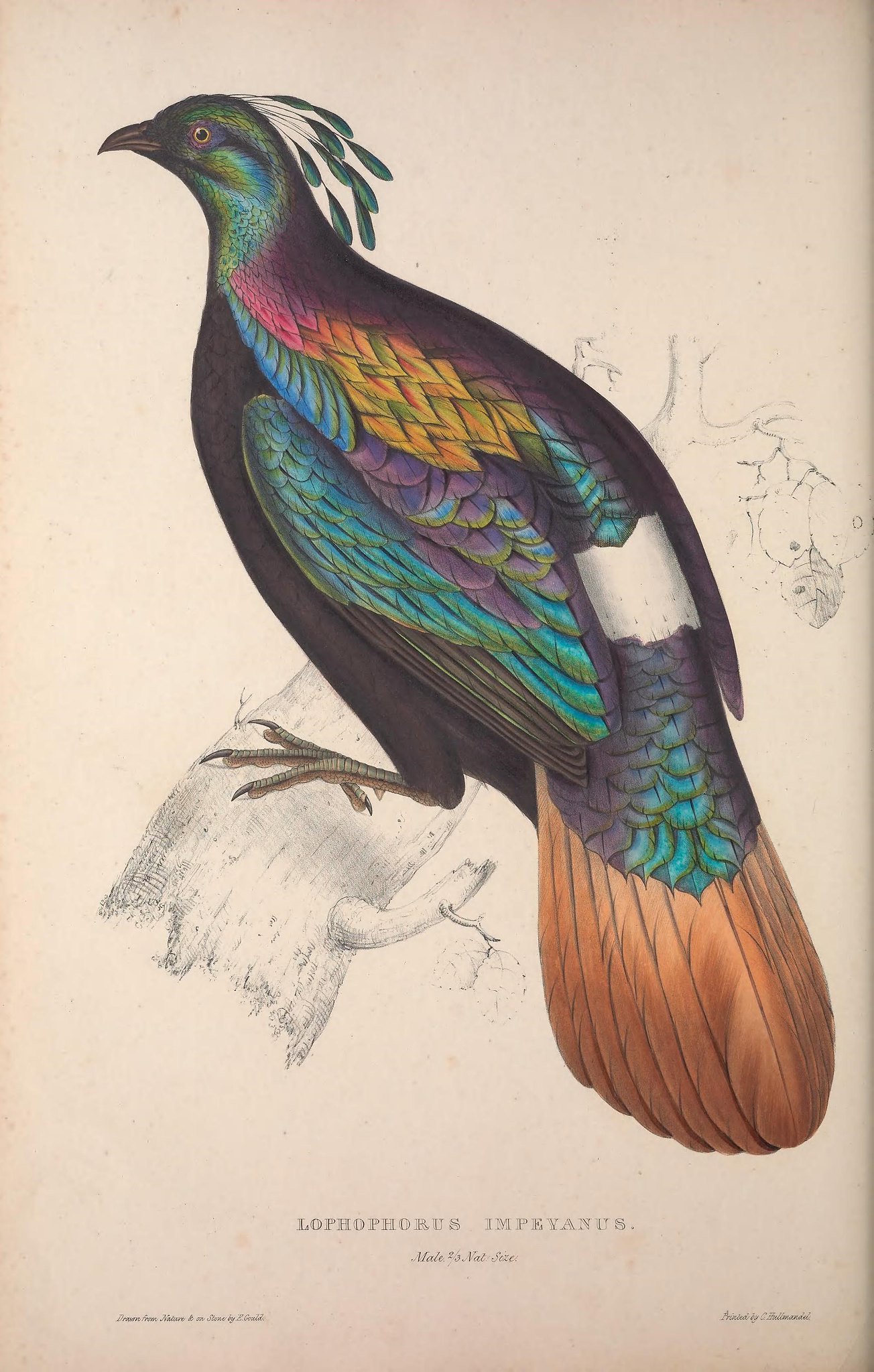
Himalayan Monal, Lophophorus impejanus, illustrated by Elizabeth Gould. Source: A century of birds from the Himalaya Mountains. 1831. Authored by John Gould and illustrated by Elizabeth Gould. Contributed in BHL from Smithsonian Libraries and Archives.

As I started to add scientific and common names to these images, I became curious about the artists. I easily discovered Maria Sibylla Merian and Elizabeth Gould, two of the more famous women natural history illustrators, but it was not until I found Roberta McIntosh that I started to scratch the surface of the multitude of women involved in this area of science.

Illustration of a green annelid worm.

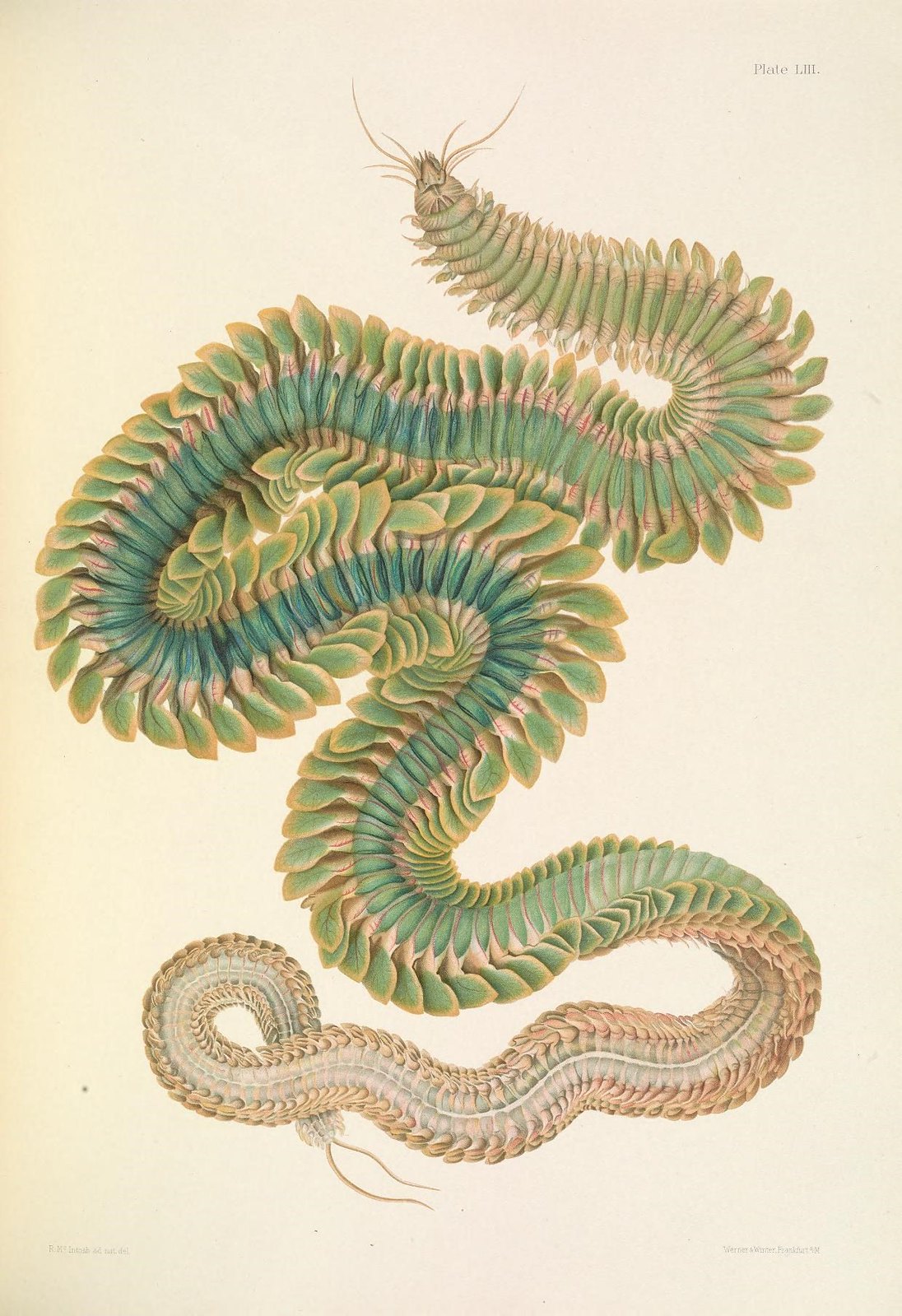
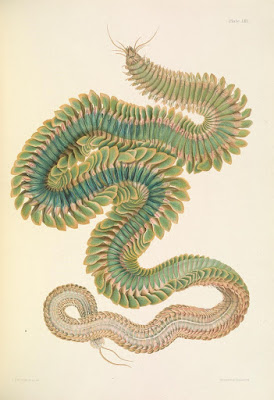
King ragworm, Alitta virens, illustrated by Roberta McIntosh. Source: A monograph of the British marine annelids. v.2, pt.2 (1910). Authored by William Carmichael McIntosh and illustrated by several artists including Roberta McIntosh. Contributed in BHL from Smithsonian Libraries and Archives.

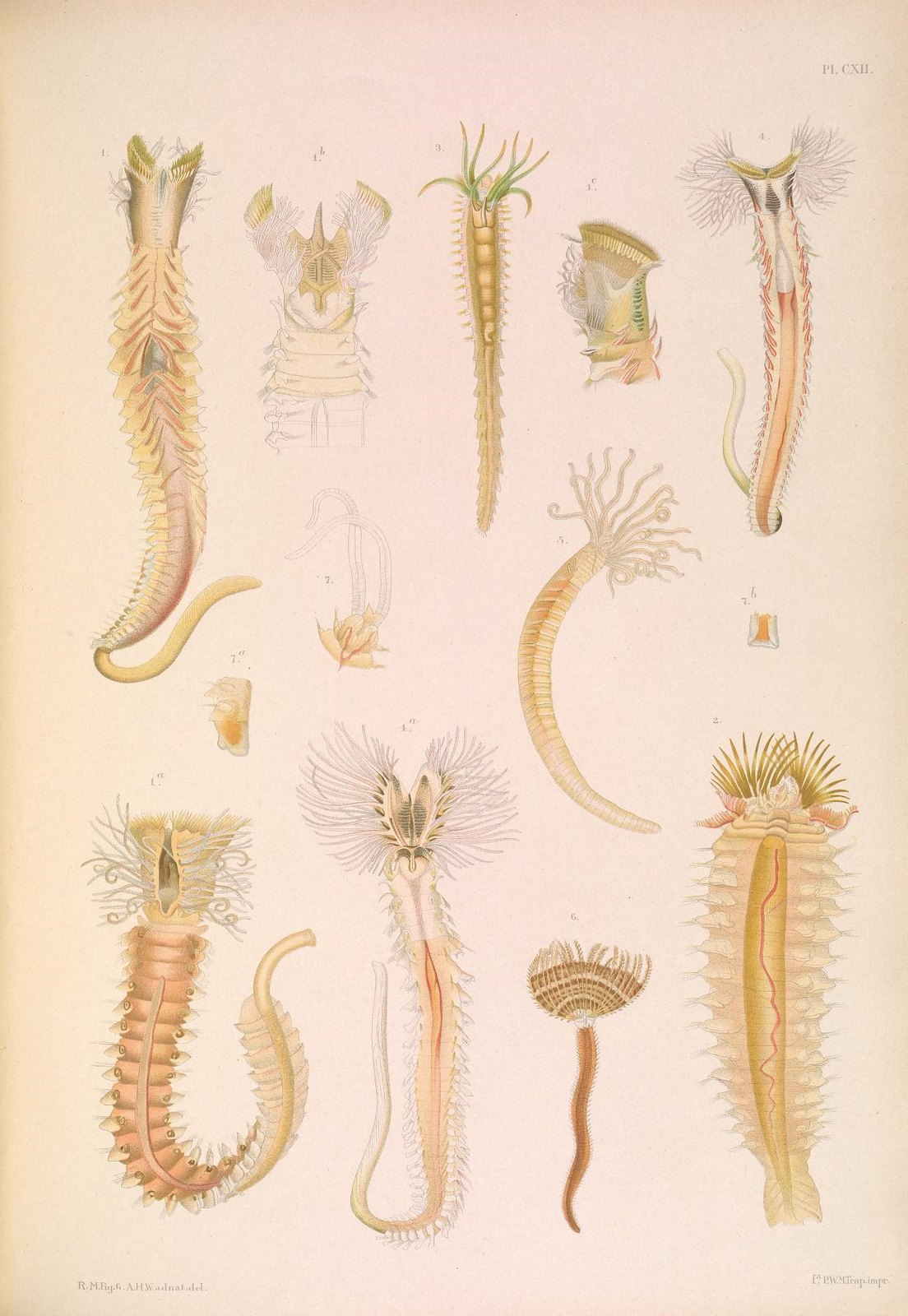
Roberta McIntosh (1843-1869) was the sister of William McIntosh, author of the multivolume publication, Monograph of the British Marine Annelids. She collected annelid specimens along with her brother, and he encouraged her to create scientific illustrations of these specimens for his work. While browsing through the monograph’s images, I noticed that there were other artists’ signatures, including one for A.H.W. In the Preface of this monograph, W. McIntosh identifies “A.H.W.” as “Miss Ada Walker” and also identifies “Miss Burnet of St. Andrews”.  I have been able to identify more information about Ada H. Walker, but Miss Burnet remains a mystery to be illuminated.

Illustration of a variety of annelid worms.

Illustration of marine annelids by Roberta McIntosh and Ada Hill Walker. Source: A monograph of the British marine annelids. v.4, pt.1 (1922). Authored by William Carmichael McIntosh and illustrated by several artists including Roberta McIntosh and Ada Hill Walker. Contributed in BHL from Smithsonian Libraries and Archives.

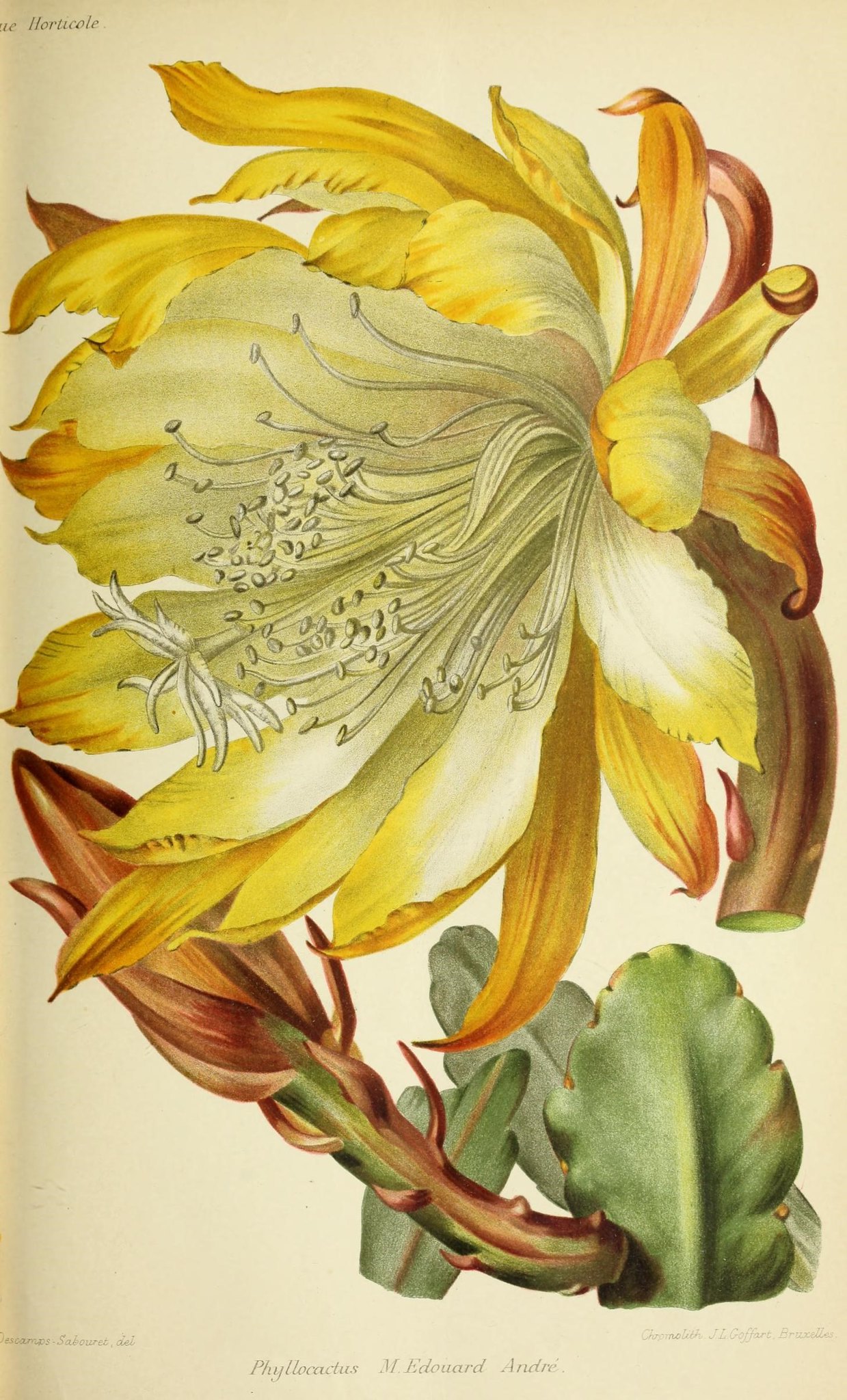
The discovery of these three women turned a spark into a flame as I realized that there are so many women still to be brought to light in this combined area of science, art, and history research. A few weeks later, I stumbled across Christine Jurine, a French artist who illustrated marine invertebrates and insects, and in the years that have passed, I have uncovered more and more. Cecile Pfulb Kastner is an accomplished French botanical illustrator, and I have written about my research into Kastner on my blog. And then there’s the sublime botanical art of Louise Cécile Descamps Sabouret for Revue Horticole.

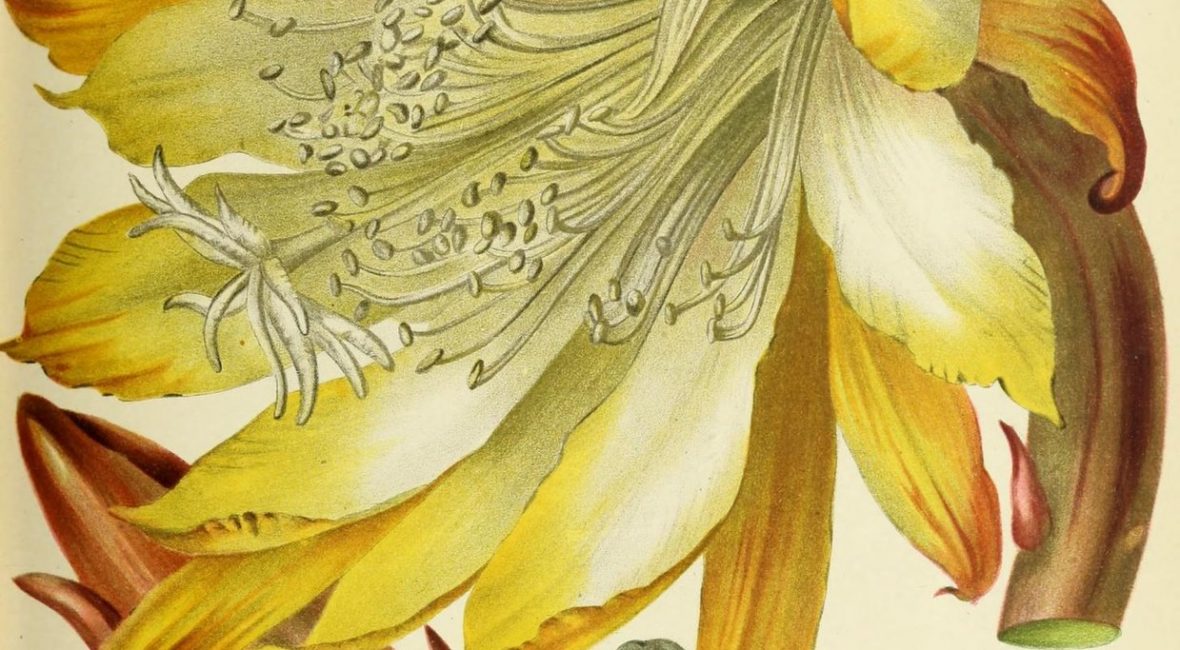
Illustration of a cactus with a yellow flower.

Epiphyllum cactus, illustrated by Louise Cécile Descamps Sabouret. Source: Revue horticole. 1898. Contributed in BHL from Harvard University Botany Libraries.

BHL’s digital library is a gold mine of information for discovering more about these women. With the addition of full text searching, I have been able to locate details about these women, including their names, work, other publications, and collaborators. Matching up artists’ signatures with works in BHL has also led to further linking of these women across publications.

Additionally, BHL has actively supported me in making these women more visible. On countless occasions, I have collaborated with BHL staff and their partners to add these women to the BHL catalog by establishing “Creator IDs”. This designation allows other publications affiliated with this woman to be part of one hyperlink within the collection of BHL. This ID also provides “notability” to meet the criteria for inclusion in crowdsourced platforms like Wikidata, where other researchers can discover these women.

I was also pleased to collaborate with BHL and their partners for the #HerNaturalHistory campaign for Women’s History Month in 2019. Through this collaboration, many other researchers have become involved in this area through Wikipedia, and BHL has created the “Women in Natural History” collection of materials showcasing the profound and extensive work that women have done in the biodiversity sciences. These efforts continue to evolve and be updated as more information is uncovered.

Illustration of fungi.

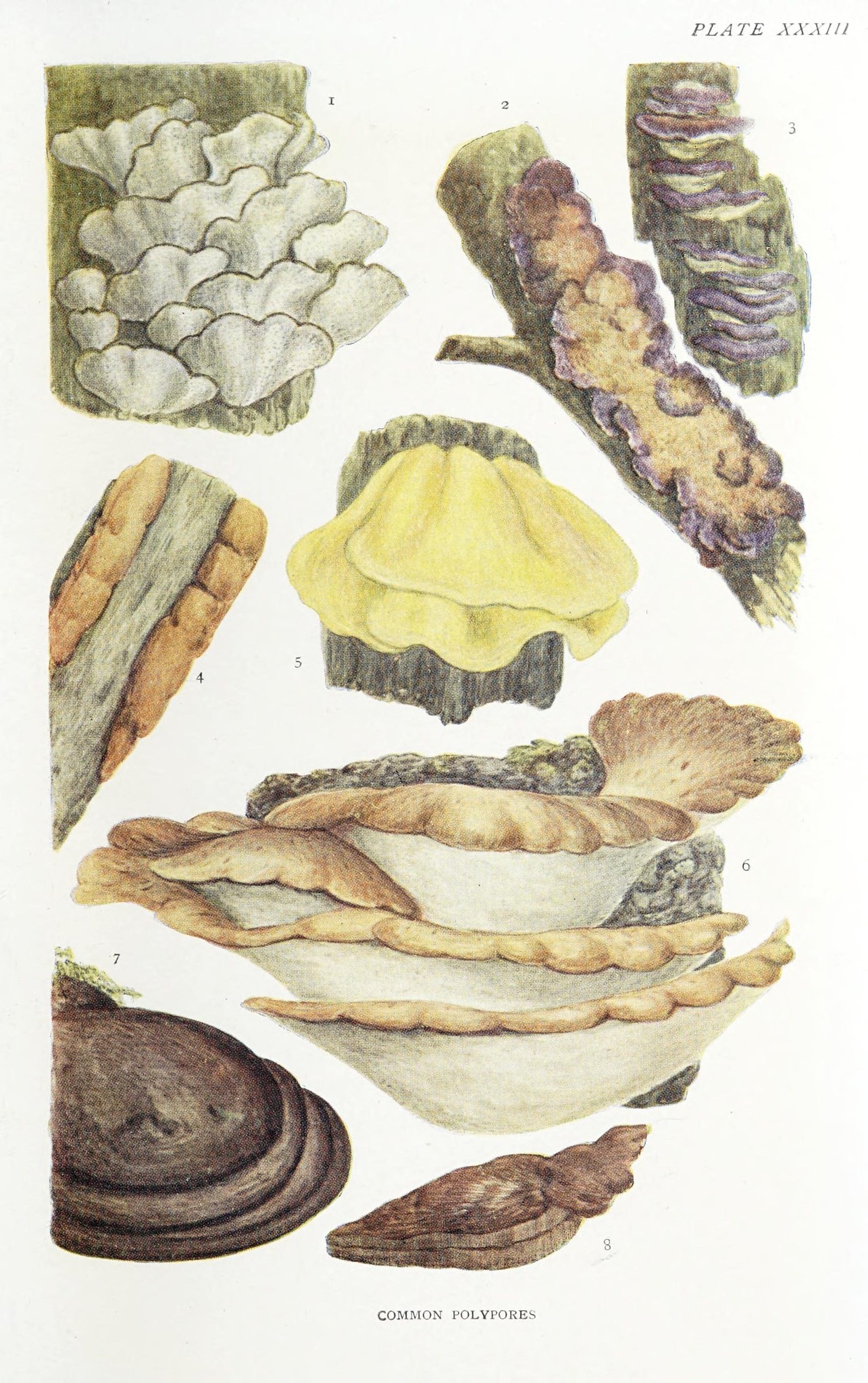
Various fungi illustrated by Mary K. Spittal. Source: Fungi and how to know them. 1909. Authored by Ernest W. Swanton and illustrated by Mary K. Spittal. Contributed in BHL from University of Toronto – Thomas Fisher Rare Book Library.

Through a recent encounter with the Mycological Book Club on Twitter, I was able to collaborate with other researchers to discover the full name and details of Mary Kerr Spittal. In response to tweets in which I posted illustrations done by women in mycology, Clare Blencowe of the Mycological Book Club shared with me an illustration by a not fully identified woman mycologist using the name M. Spittal. Through full text searching in BHL, I was able to find her name as “Mary K. Spittal”, as well as another publication in which she produced scientific illustrations. At this point, I enlisted the help of my long-time collaborator, Siobhan Leachman. Leachman created a Wikidata item for Spittal and also delved into more resources to discover her history. I also enlisted the help of my mother, Shelby Marshall, who is an experienced genealogy researcher. Over the next few hours, Blencowe, Leachman, Marshall, and I created a detailed picture of Mary Kerr Spittal. The next day, Chris Robson, Catalog Librarian at Harvard University Botany Libraries and a member of the BHL Cataloging Committee, responded to my BHL feedback request for a Creator ID for Spittal, linking her name to her works in BHL. Additionally, Madeline Byrne of the BHL Flickr Group responded to my request to upload Spittal’s works to Flickr, where they have been tagged by artist name to further expand the discoverability of Spittal’s artistic contributions to science. This successful collaboration brought to light another remarkable and notable woman involved in the natural history of mycology.

Yesterday I posted about M. K. Spittal, saying I couldn’t find anything about her.

Today, thanks to the power of Twitter and some spontaneous collaboration with @HistSciArt, @SiobhanLeachman & @BioDivLibrary, she has her own wikidata entry ▶️https://t.co/ysuqB0x7QW https://t.co/ZsmRGLHI1C

— The Mycological Book Club (@MycoBookClub) February 12, 2021

For the past four years, I have been fortunate to find more of these women through my individual research and collaborations with so many others. I created the spreadsheet “Women in Historical SciArt” to share my research and to promote further research into the work and lives of these remarkable women. These experiences have enriched my life beyond measure, and my goal is to continue expanding access and knowledge about the contributions of these early women scientists and illustrators.

Without BHL, I would never have discovered these inspiring women in science and their work. I am incredibly grateful to BHL for all the support and encouragement of this research, and their continued updates to their digital library and Flickr collection, which support my ongoing work.

March 16, 2021by Joel Richard
BHL News, Blog Reel

Celebrating Women In Science and Museum Day Live

March is Women’s History Month, a month dedicated to celebrating the contributions of women to events in history and contemporary society. In recognition of this celebration, the Smithsonian is coordinating a special edition of its signature Museum Day Live! event in a nationwide effort with museums and cultural institutions around the country to reach women and girls in underserved communities.

View Full Size Image

Held on March 12, 2016, Museum Day Live! will encourage all people, and particularly women and girls of color, to explore their nation’s museums, cultural institutions, zoos, aquariums, parks and libraries—which will offer free admission for the day.

The event is also intended to encourage people, especially young women, to think about careers in museums, libraries, and research. To this end, there will be a special career-focused event on March 12 in the Smithsonian Castle Commons in Washington, DC, consisting of lightning round discussions with museum professionals about careers in museums, a mix and mingle, and information tables. The discussions will be at 11:30am and 2:30pm EST; the mix and mingle will be from 1-2:30pm EST; the tables will be open from 12:30-3pm EST.

The Biodiversity Heritage Library is partnering with the Smithsonian Libraries, one of its founding Members, to host one of the information tables at the Museum Day Live! career event. The purpose of the tables is to expose people, especially students, to the wide range of careers and units within the Smithsonian, as well as any opportunities that they may be able to participate in.

If you’re in the area, we encourage you to stop by the Smithsonian Castle Commons (1000 Jefferson Drive, SW Washington, DC 20560) anytime between 12:30-3pm EST to talk with staff from both BHL and the Smithsonian Libraries about careers in libraries and ways that you can get involved with our organizations today. The Smithsonian Libraries is also hosting another fun event during the day called “Explore the Four,” which encourages visitors to explore all four of the Libraries’ current exhibits.

Celebrating Women in Natural History, BHL-Style

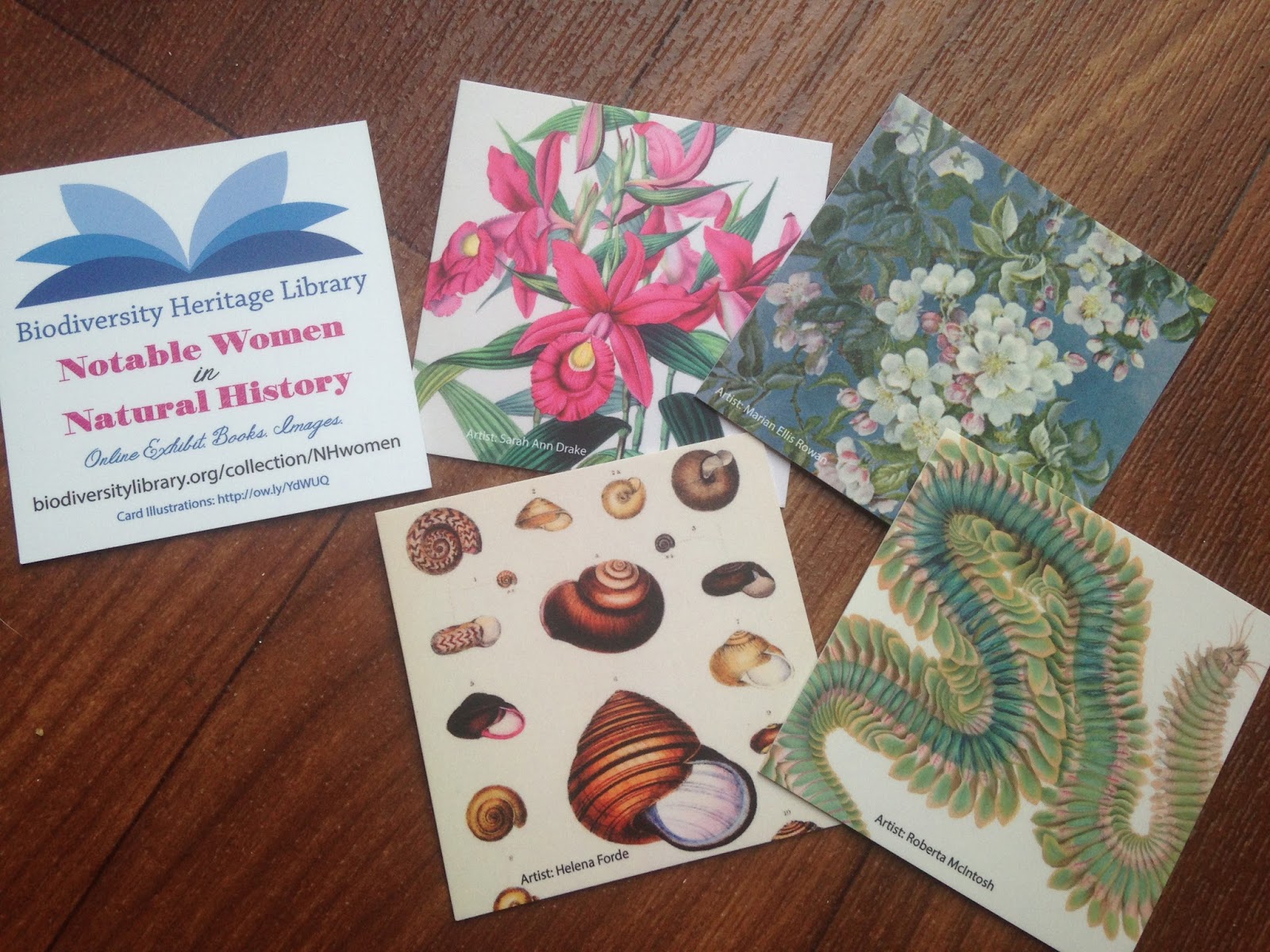
To celebrate both Women’s History Month and in recognition of the event’s mission to reach young women in particular, we’ll be handing out special cards at the information table highlighting BHL’s Notable Women in Natural History collection. This collection includes links to our Early Women in Science online exhibition (curated by Laurel E. Byrnes and funded by a grant from the Smithsonian Women’s Committee), our collection of books authored, edited, or illustrated by women, and our Women Illustrators in Natural History Flickr collection containing over 1,500 biodiversity images illustrated by women. All images in the Flickr collection have also been tagged with the name of the artist (Check out the “tags” section and you’ll see entries for “artist:name=[Insert Artist Name]”).

View Full Size Image
The Notable Women in Natural History cards we’ll be handing out at the Museum Day Live! information table on 12 March.

Additionally, since the Museum Day Live! event is also focused on sharing ways that people can get involved with libraries and cultural institutions around the country, we’re encouraging visitors (and all of our online audiences!) to add species name machine tags to the images in the Women Illustrators in Natural History Flickr collection. These tags describe the species illustrated in each image and allow scientists and people all over the world to more easily discover visual resources about plants and animals of interest. Learn how you can help add tags to BHL images today.

View Full Size Image
King ragworm (Alitta virens) illustrated by Roberta McIntosh. A monograph of the British marine annelids. v. 2, pt. 2 (1910). http://biodiversitylibrary.org/page/38533302. Digitized by Smithsonian Libraries.

We hope you’ll visit us at the Smithsonian Libraries information table on March 12, from 12:30-3pm EST, at the Smithsonian Castle Commons. If you can’t make it in person, we encourage you to explore our Notable Women in Natural History collection on BHL and find out how you can get involved in BHL no matter where you live.

View Full Size Image
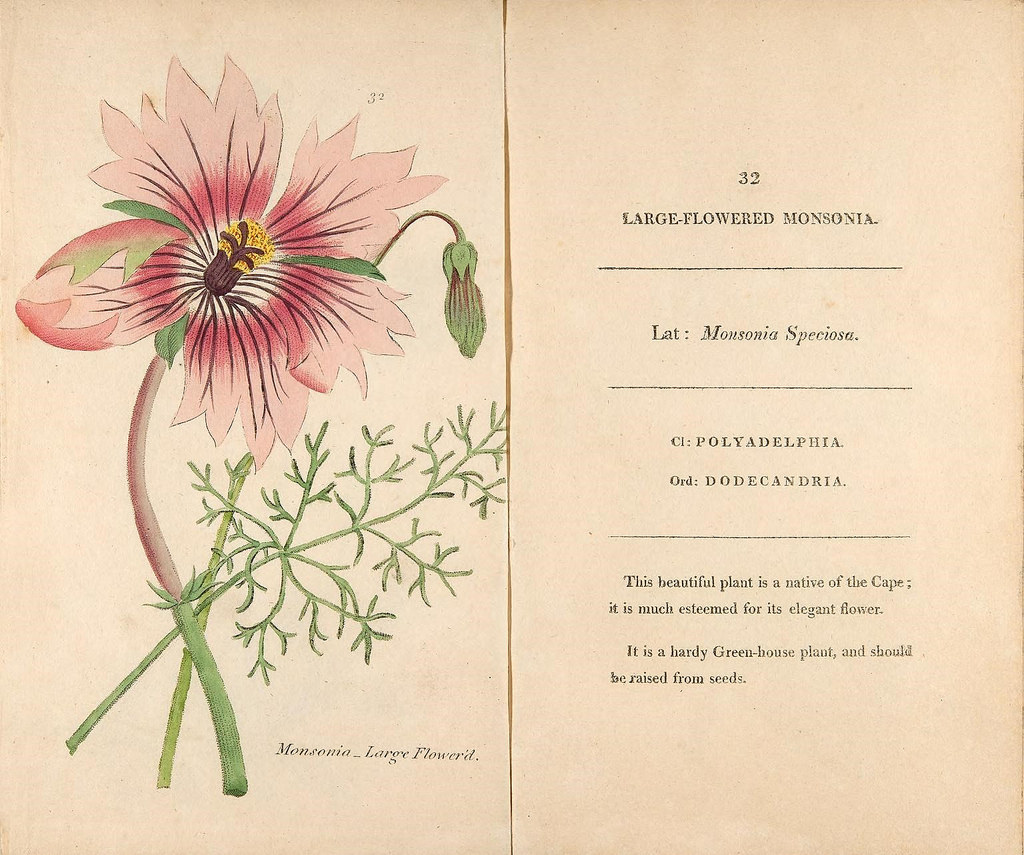
Monsonia speciosa illustrated by Henrietta Maria Moriarty. Fifty plates of green-house plants, drawn and coloured from nature (1807). http://biodiversitylibrary.org/page/48345267. Digitized by Chicago Botanic Garden, Lenhardt Library.

We’re excited to celebrate all women and girls, past and present, at Museum Day Live!, all this month, and everyday of the year. Happy Women’s History Month!

View Full Size Image
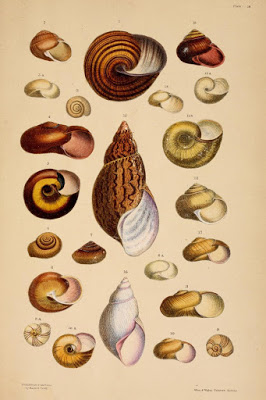
Various Callia, Helix and Helicina species illustrated by Harriet Scott. A monograph of Australian land shells (1868). http://biodiversitylibrary.org/page/1034564. Digitized by the MBLWHOI Library.


March 3, 2016by ulib-libraryjobs
Blog Reel, Campaigns, Featured Books, Garden Stories

Leading Ladies in the World of Seeds: Part Two

A Garden Stories celebration for Women’s History Month

Seed Catalogs to Inform Botanical Research

Carrie H. Lippincott (featured in our previous post) exploited the potential that seed catalogs offer in a business setting. Ethel Z. Bailey recognized the potential of seed catalogs in an entirely different application: cultivated plant research.

View Full Size Image
Ethel Zoe Bailey in 1905.

Ethel Z. Bailey, daughter of Liberty Hyde Bailey (botanist, a foremost leader in American horticulture, and the first dean of Cornell University’s College of Agriculture) and Annette Smith Bailey, was born in Ithaca, New York on November 17, 1889. Born in a faculty house on the Cornell University campus, in the middle of what is now Phillips Hall, Ethel was surrounded at an early age by the students, professors, deans, and presidents of Cornell University, witnessing over her lifetime the evolution of the university from a three-building campus at her birth to one of America’s premier institutions.

In 1911, Ms. Bailey graduated with an A.B. in Zoology from Smith College in Northampton, MA. While her early scientific interests were zoological in nature (influenced in part by natural history excursions during her youth with Cornell herpetologist Albert Hazen Wright), her focus soon turned to botany and horticulture shortly after her graduation, when she became her father’s co-worker, editor of his many books and articles, and field assistant on collecting expeditions around the world. She also served as her father’s chauffeur, as she was the first woman in Ithaca to obtain a driver’s license.

Ms. Bailey was a particularly well-traveled individual. As a girl, she traveled with her parents and sister to Europe, and in 1914 she accompanied her parents on a trip to New Zealand (her father wrote his book The Holy Earth during this latter venture). Once joining her father in his work, Ethel traveled with him to Japan and China in 1917, Brazil in 1922-23, the west coast of the U.S. in 1926, as well as locales in Puerto Rico, Panama, Barbados, Trinidad, other West Indian Islands, and Venezuela, collecting plant specimens. These specimens were processed and cataloged (largely by Miss Bailey), and housed at the family home at Sage Place, about 10 blocks from the Cornell campus (the palms were housed in the carriage house and the remaining general herbarium in a wing off of the carriage house, where the work areas were situated).

View Full Size Image
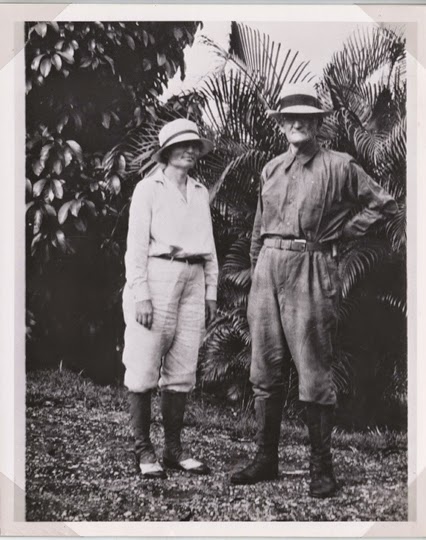
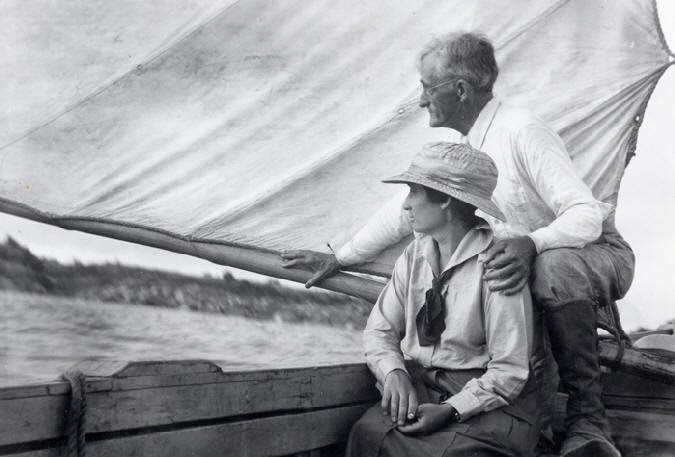
Ethel Zoe Bailey and her father on a collecting trip in Panama, 1931. http://exhibits.mannlib.cornell.edu/mailordergardens/intro.htm.

During one particularly memorable collecting excursion, Miss Bailey, her father, and a few other botanists ventured into the wild jungle island of Barro Colorado in the Panama Canal Zone in search of a rare palm, which L.H. Bailey believed would be found in the Mohinja Swamp. Wading through hip-deep water amidst warnings of disease and boa constrictors, the group found the palm as predicted and photographed it in the middle of a downpour using a tripod nearly submerged in water. But the specimens, and the photographs, were successfully obtained!

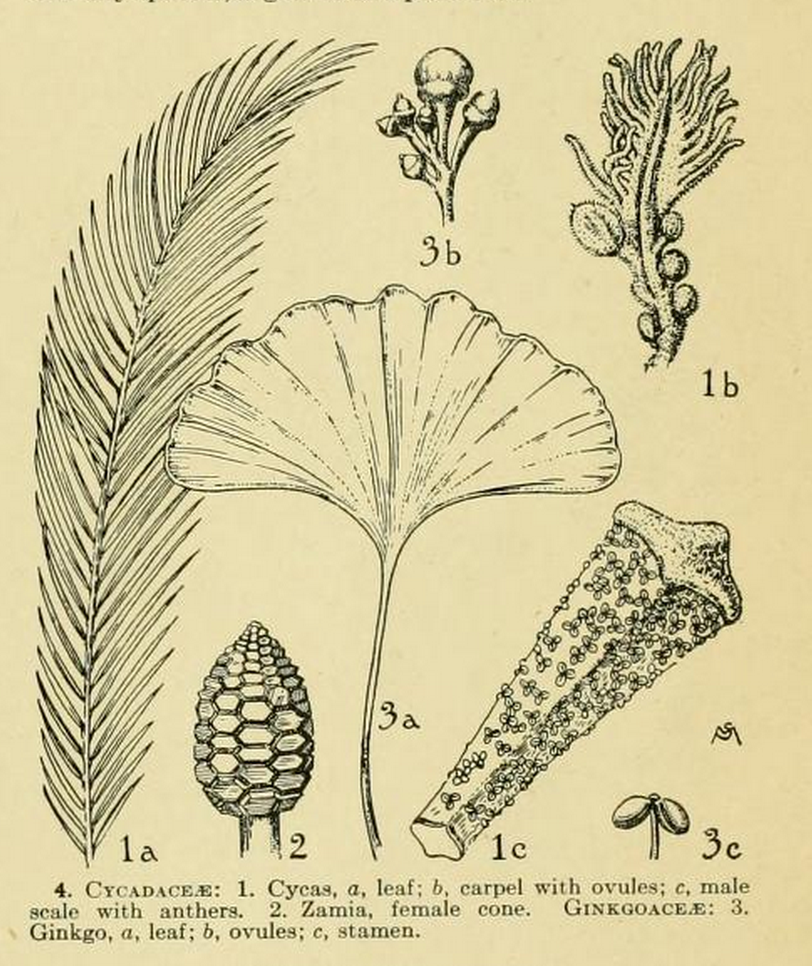
Miss Bailey assisted and edited many of her father’s works during his lifetime, including Standard Cyclopedia of Horticulture (1914-17) and the Manual of Cultivated Plants (1924; 1949). She also served as editor of Gentes Herbarum through its first eight volumes and co-authored Hortus (1930) and Hortus Second (1941) with her father.
View Full Size Image
Cycadaceae in Standard Cyclopedia of Horticulture. Bailey, L.H. 2nd Ed. v. 1 (1916-17). http://biodiversitylibrary.org/page/20553842.

As part of her work, Miss Bailey also maintained a collection of seed and nursery catalogs from around the world, which she and her father used to gather and record information on cultivated plants (this collection greatly informed L.H. Bailey’s Manual of Cultivated Plants and L.H. and E.Z. Bailey’s Hortus Second). As each catalog was received, the plants listed were recorded on index cards, along with the name of the firm offering the plant, the year of offering, Latin names, and prices, resulting in an index providing a record of the species and variants available in the commercial trade. The file grew to become the most comprehensive index of available ornamental plants in the world.

View Full Size Image
Ethel Zoe Bailey and her father, L. H. Bailey. http://www.geraniumsonline.com/ethelzoe.htm.

In 1935, L.H. Bailey donated his Hortorium, which contained over 100,000 plant and seed catalogs, 125,000 plant specimens, and nearly 3,000 books, along with the family home buildings that housed the collections, to Cornell University, establishing the L.H. Bailey Hortorium. Interestingly, L.H. Bailey coined the term “hortorium” in 1935 as (in his words) “a repository for things of the garden. It is to be a place for the scientific study of the plants of the garden–their documentation, their classification, and their naming.”

Miss Bailey became the first Hortorium curator, managing the herbarium specimens (which since 1953 have been located in Cornell University’s Mann Library building), seed and nursery catalogs and book collections, and card file index system. She diligently processed herbarium specimens, grew the catalog collection, and built her cultivated plant index system until her “retirement” in 1957. She continued to volunteer her time at the Hortorium after her retirement, however, working five days a week, 9am-4pm, on her index and curating the catalog collection. She also glued pressed plants on sheets for the herbarium on Saturday afternoons at her home at Sage Place, while listening to the opera on local radio – Ethel had played the violin in the Ithaca High School orchestra.

View Full Size Image
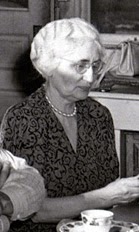
Ethel Z. Bailey

After her death on July 15, 1983 at the age of 93, the seed and nursery catalog collection at the L.H. Bailey Hortorium (which today holds over 134,000 pieces) was named after Miss Bailey. It is now known as the Ethel Z. Bailey Horticultural Catalogue Collection in recognition of the 70+ years that Miss Bailey curated and cultivated the collection. Explore the catalogs in the Cornell University Library Mail Order Gardens exhibit and materials from the L.H.Bailey Hortorium in BHL.

Miss Bailey’s tireless efforts and research involving cultivated plants boldly illustrates the importance of seed and nursery catalogs in historical research. The catalogs and index are today used to trace the introduction of plant cultivars and species, support price-index studies and related economic investigations, and verify the existence of certain plant varieties. Miss Bailey’s contributions to horticultural science were well-recognized both during and after her lifetime. She was awarded the George Robert White Medal of the Massachusetts Horticultural Society in 1967 and the Smith College Medal in 1970.

Explore other remarkable Leading Ladies of the Seed Industry represented in BHL 

  • Carrie H. Lippincott. Her catalogs in BHL.
  • Emma V. White. Her catalogs in BHL.
  • Theodosia Shepherd. Her catalogs in BHL.
  • Miss Martha Hiser. Her catalogs in BHL.
  • Miss Mary E. Martin. Her catalogs in BHL.
  • Mrs. Francis King. Her books in BHL.

More Garden Stories Fun

  • Follow our blog and #BHLinbloom on Twitter and Facebook (or go directly to BHL’s Twitter and Facebook) this week as we explore the fascinating world of gardening, from its history to plant factoids and practical gardening tips.
  • Browse over 14,000 seed and nursery catalogs in our collection.
  • Browse over 2,500 seed and nursery catalog images in our Flickr collection.
  • Explore select seed catalog art, and stunning bookmarks and postcards developed by Cornell Library, on Pinterest.
  • See historic gardening come to life on the Smithsonian Libraries’ Tumblr.
  • Purchase your very own Garden Stories T-Shirt through T-Fund. All proceeds will go to help us digitize more pages for BHL. Our goal is to sell enough shirts to digitized 5,000 pages. Can you help us get there?
  • Help us improve access to seed and nursery catalogs by transcribing some today as part of our the Institute of Museum and Library Services (IMLS)-funded Purposeful Gaming project!
  • Find great online gardening resources, tips, and help on the BHL Gardening Resources Page.
With Significant Contributions From:
Robert Dirig
Curator, Cornell Plant Pathology Herbarium, Cornell University Department of Plant Pathology
Marty Schlabach
Food and Agricultural Librarian, Cornell University Library
March 25, 2015by michelle.underhill
Blog Reel, Campaigns, Featured Books, Garden Stories

Leading Ladies in the World of Seeds: Part One

A Garden Stories celebration for Women’s History Month

A Feminine Touch in the Gardening Industry

Recent reports indicate that the number of women-owned businesses have increased by 54% in the last fifteen years. But while we may be seeing a rise in the number and cultural acceptance of women-owned businesses today, this was not always the case. In fact, up through the nineteenth century, women-owned businesses were largely limited to taverns and alehouses, millinery and retail shops, and hotels and brothels, and were operated amidst the prevailing opinion that business was an unsuitable venture for the “gentle sex.”

By the late 1800s, however, women were beginning to make a decided mark on a growing American industry: gardening.

View Full Size Image
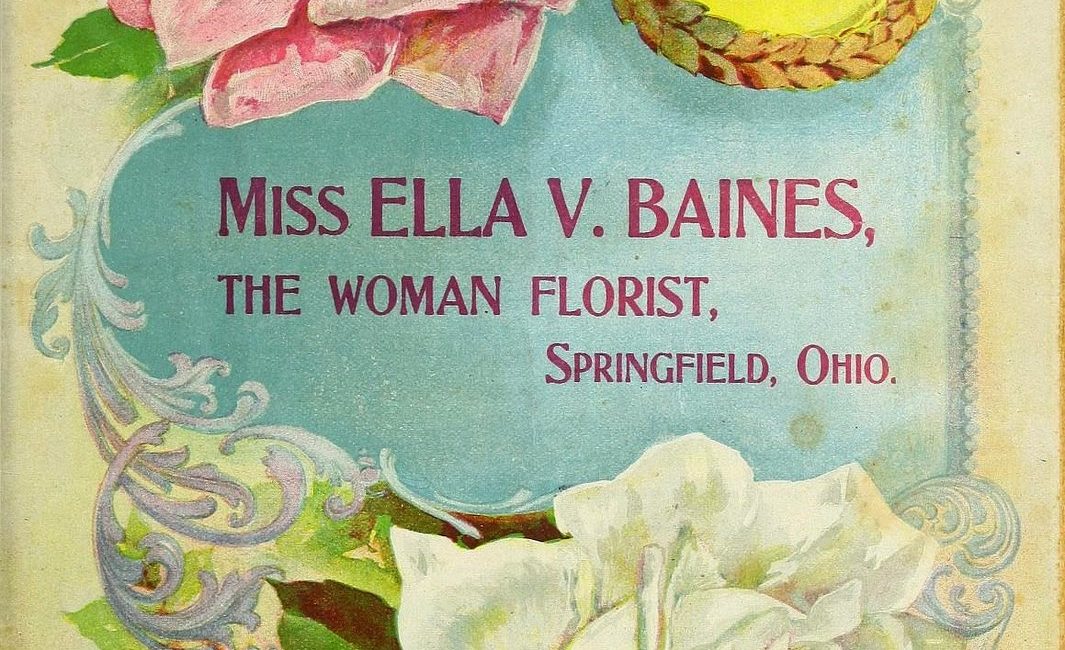
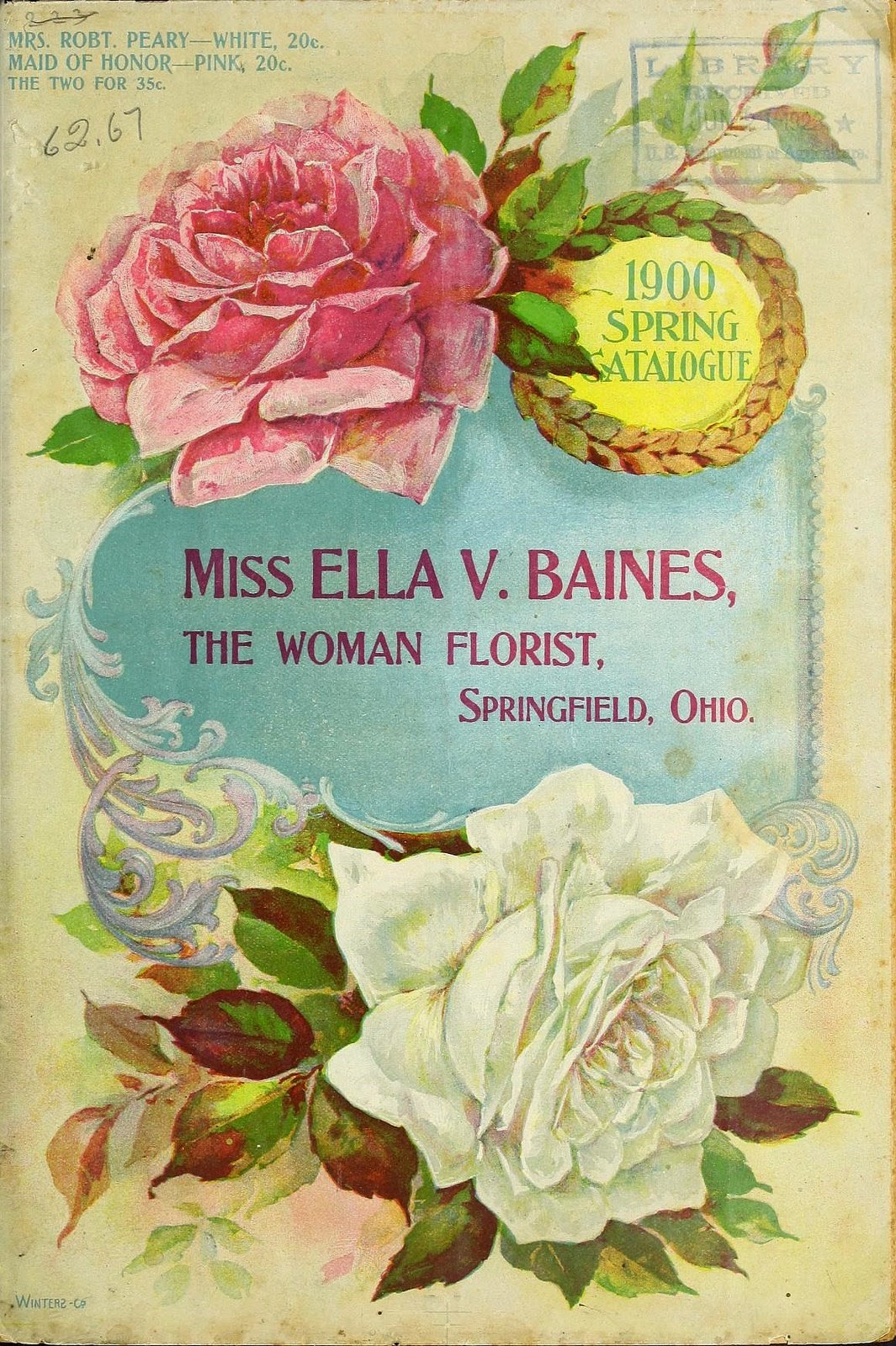
Miss Ella V. Baines. The Woman Florist. 1900. http://biodiversitylibrary.org/page/41878815.

Unlike other businesses such as banking or manufacturing, the flower and seed industry, with a strong connection to the home, was considered a more suitable occupation for women in the nineteenth century. Miss Ella V. Baines, who started her floral business in Springfield, OH, in 1896 and offered roses, plants, bulbs, and seeds for sale via her catalogs, asserted:

“When I started in the floral business two years ago, I confess it was with fear and trembling. It was a new field in the commercial world for woman to enter. Every one said ” don’t; ” but I did, and I am happy to say that my business success has been assured from the very start. I reasoned in this way: that this business is one eminently suited to a woman in every respect, and of all occupations it is the most pleasant and refining. Wherever there is a home in which happiness reigns, flowers are grown…For this reason floriculture appeals to the hearts of women the world over.”

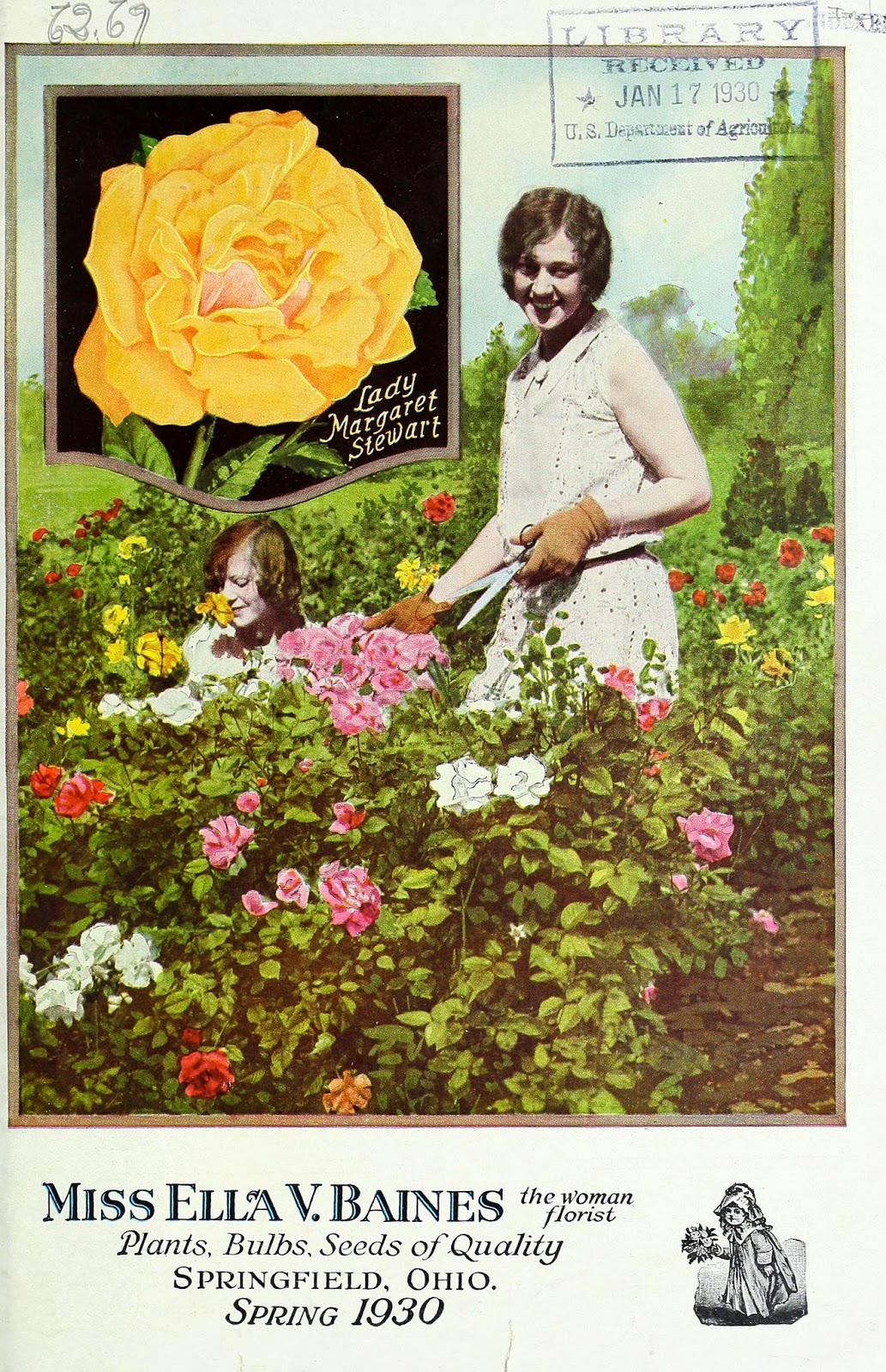
Furthermore, as Miss Baines’ remarks suggest, women were a predominant customer base for the amateur gardening industry, meaning that a feminine touch and advertising tailored by women, for women, offered a distinct business advantage.

View Full Size Image
Miss Ella V. Baines. The Woman Florist. 1930. http://biodiversitylibrary.org/page/41932328.

Perhaps the best example of the woman-owned business advantage in the flower seed industry at the turn of the twentieth century was the self-proclaimed “Pioneer Seedswoman of America,” Carrie H. Lippincott, and the “Three Minneapolis Seedswomen.”

Three Minneapolis Seedswomen

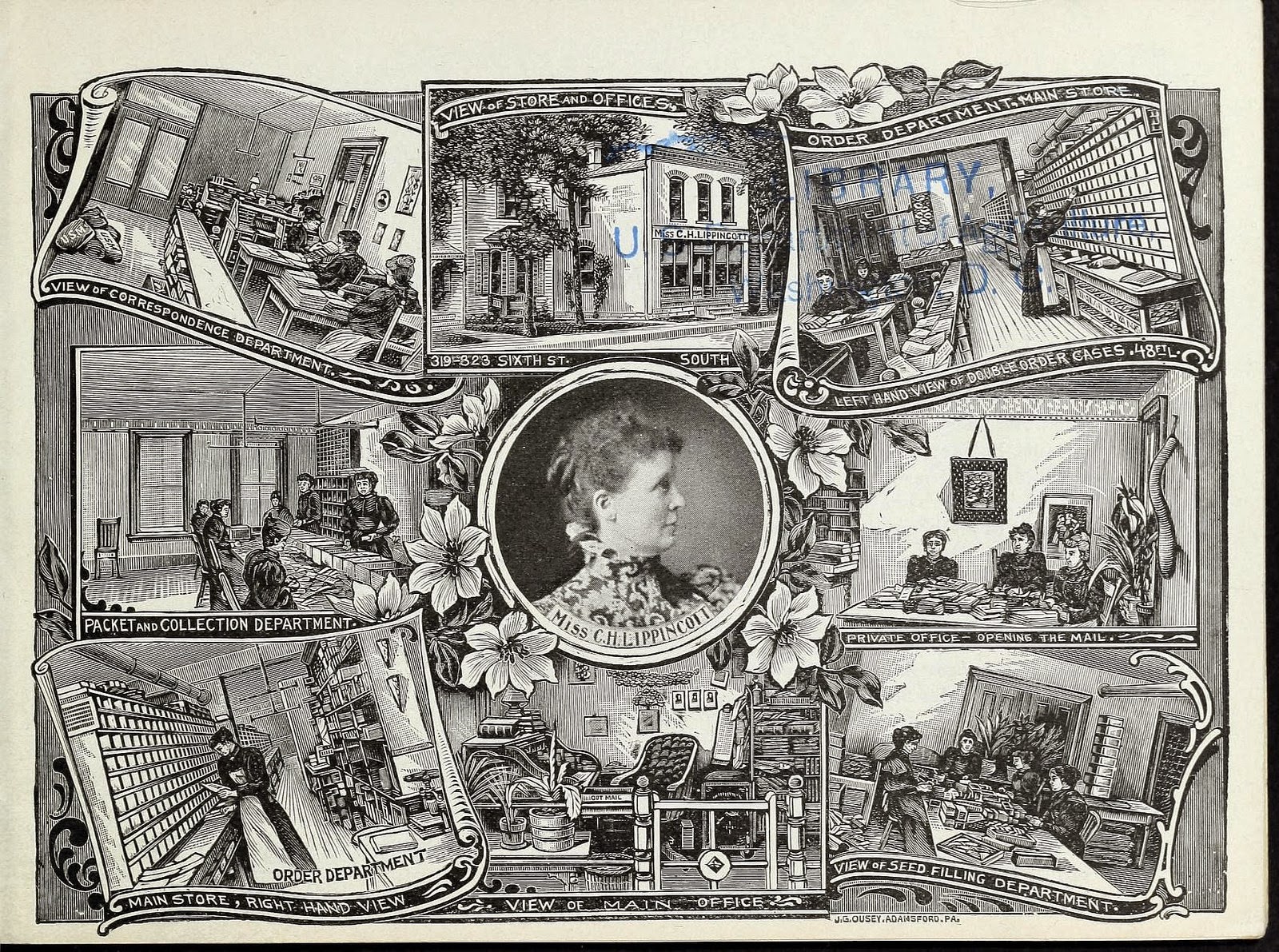
Carrie H. Lippincott was born in Burlington, NJ, in September 1863. After the death of her father, Carrie, her sister and her sister’s husband, Henry B. Kent, and their widowed mother, moved to Minneapolis. In 1886, at the suggestion of her brother-in-law, Sam Y. Haines, and with a need to increase the family income, Carrie started a business offering a variety of flower seeds for sale. Initially run from the family home, success soon compelled Miss Lippincott to move the business into the two-story brick store next to their house. It was the first seed company in the U.S. to be founded and managed by a woman.

View Full Size Image
Portrait of Miss Lippincott and the two-story brick storefront next to the family home. Flower Seeds. 1900. http://biodiversitylibrary.org/page/43807529.

The business blossomed, and in 1891, the Lippincott Flower Seed House entered the mail order gardening world by producing its first catalog – an impressive 5×7 inch lithographed delight offering seeds for sale via post. By 1896, the business claimed to have received more than 150,000 orders, and the catalog for the year reportedly enjoyed a 200,000 print run and was offered, free of charge, to anyone interested. The 1896 catalog also made the bold claim that the Lippincott company was the largest exclusively flower seed house in the world. In 1898, a quarter of a million copies of the year’s catalog were shipped, translating to 1 in 60 households in the U.S. receiving a copy.

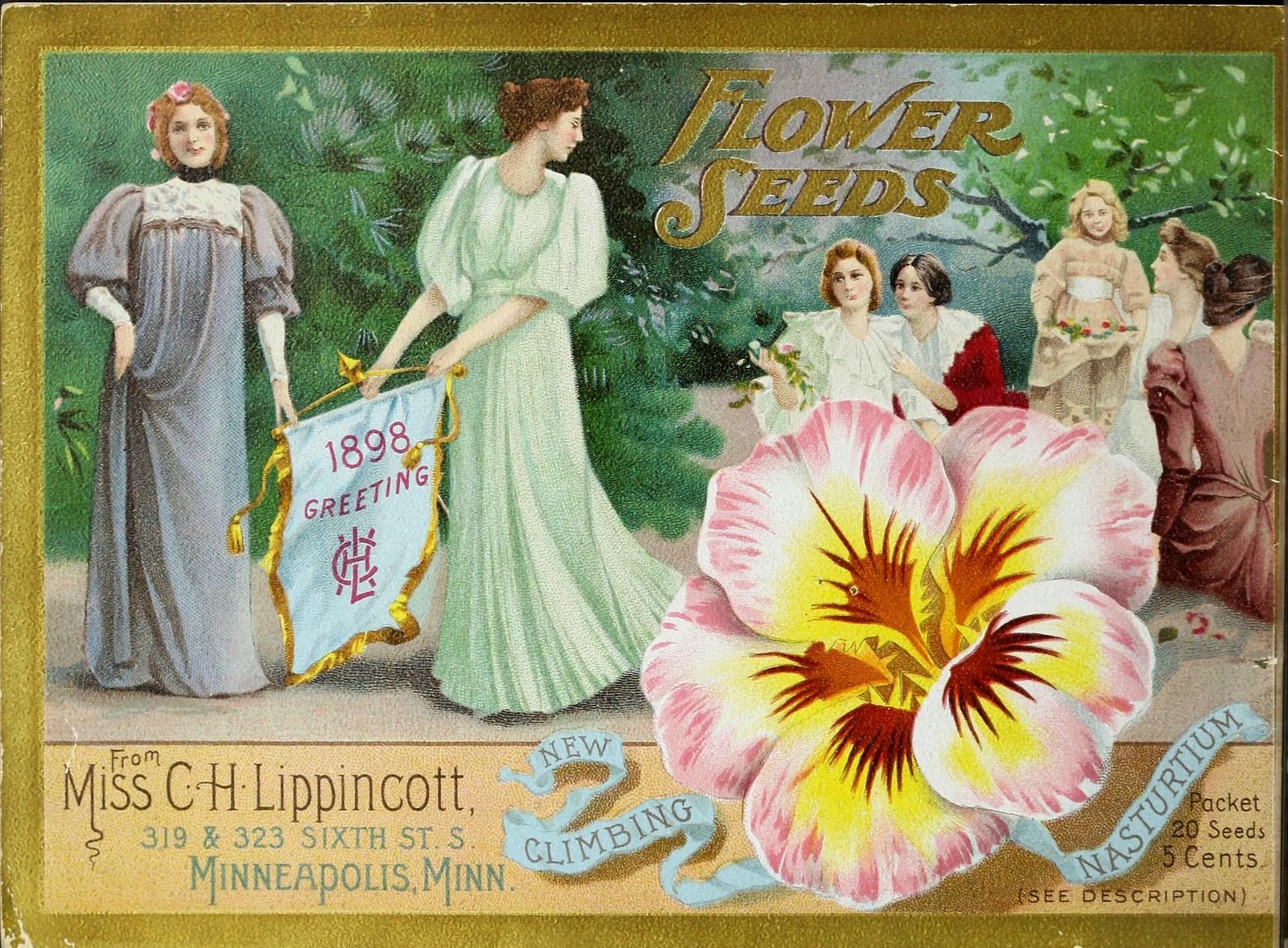
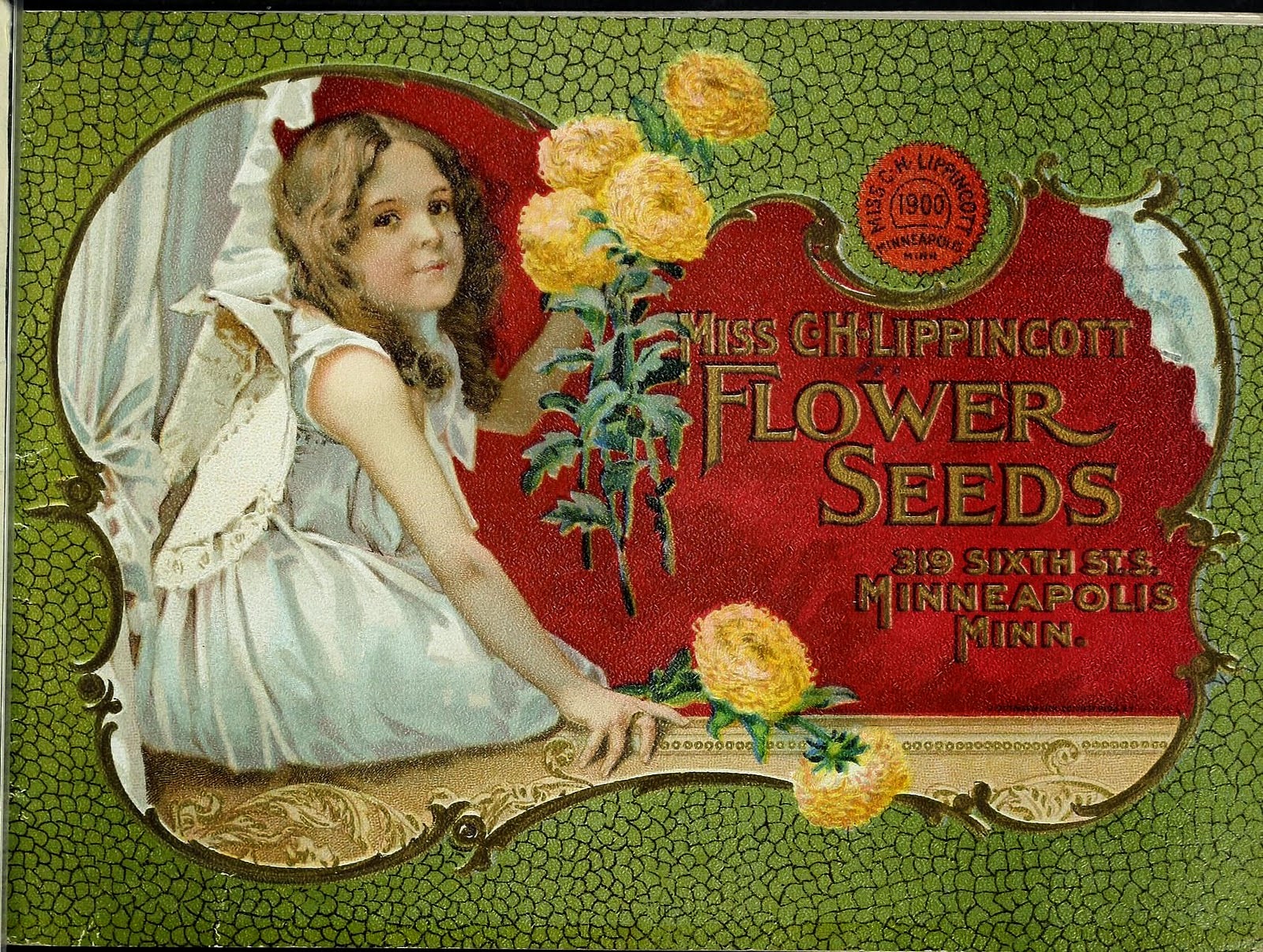
The Lippincott catalogs are a study in marketing genius. Revolutionary for their time, they reflected a “feminine touch” that appealed to women and directly contributed to Carrie’s success. Her catalog art featured colorful, idealized women and children amidst exotic or elaborate floral displays, resembling chromolithographed greeting cards of the day rather than the typical manilla paper, black-ink printed catalogs of many competitors. The catalog introductions were also personal and conversational, providing updates on the life events of the Lippincott family. Following this theme, Carrie branded her early catalogs as annual “Greetings.” Carrie knew her audience. As the reputed first seed seller to target women buyers, the Lippincott catalogs were artistically tailored to feminine tastes.

View Full Size Image
Miss C.H. Lippincott Flower Seeds. 1898. http://biodiversitylibrary.org/page/43809093.

The Lippincott business was pioneering in other ways. It employed a staff of twenty-five female clerks and engaged housewives to grow seed stock on their farms and backyard gardens. In 1894, Carrie’s became the first business to list the number of seeds contained in each packet, allowing buyers to better plan their garden layouts each year. Her contemporaries took notice of her originality, with an 1896 article in Printer’s Ink asserting, “She is the original pioneer seedswoman – a real woman, arranging all the details of a large business herself.”

View Full Size Image
Miss C.H. Lippincott Flower Seeds. 1900. http://biodiversitylibrary.org/page/43807531.

Miss Lippincott’s fans were not the only ones to take notice of her success; her Minneapolis competitors also took note of the advantages of marketing a seed company as a woman-owned business catering to other women, and followed suit.

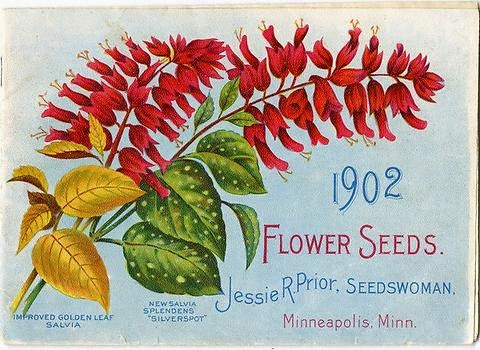
In 1895, the catalog “Flower Seeds” appeared under the name of Jessie R. Prior, Seedswoman. Jessie’s husband was listed as the owner of the seed business for five years before a seed catalog featuring Jessie’s name appeared.

View Full Size Image
Jessie R. Prior. Seedswoman. Flower Seeds. 1902. http://umedia.lib.umn.edu/node/466200.

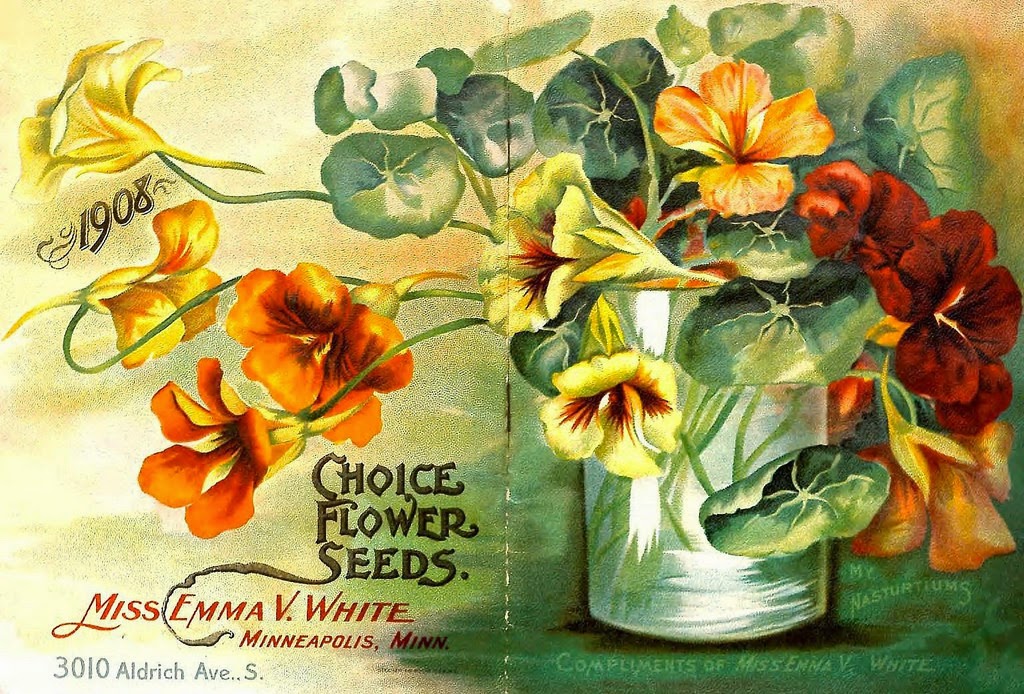
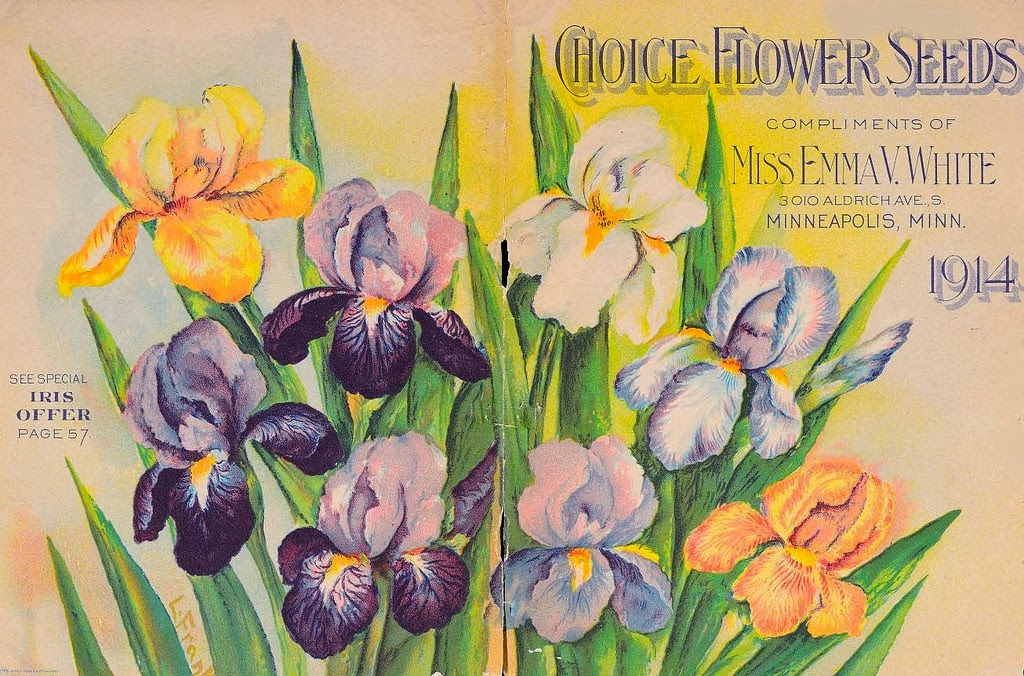
The next year, in 1896, the E. Nagel and Co. flower seed business in Minneapolis announced that it had transferred ownership to Miss Emma V. White, who became known as the “Northstar Seedswoman.” The company subsequently produced catalogs strikingly similar in format to that of the Lippincott phenomena. Miss White was a boarder at the home of Alanson W. Latham, Secretary of the Minnesota State Horticultural Society, whom she married in 1922.

View Full Size Image
Choice Flower Seeds. Miss Emma V. White. 1908. http://biodiversitylibrary.org/page/46685973.

The association of these women with prominent men in the seed industry led many to question whether the new women-owned companies were in fact only fronted by women but run by men. Carrie Lippincott believed this to be true, writing:

“…a number of seedsmen (shall I call them men ?) have assumed women’s names in order to sell seeds. It is a peculiar thing in this day and age, that a man should want to masquerade in woman’s clothing.”

Miss White responded to the accusation, proclaiming, “I am a real live woman and I give personal attention to my business.” In an 1896 catalog, Emma even asserted (as a jab at Miss Lippincott?):

“While it is true that the buyers of flower seeds are almost always women, yet I ask your patronage NOT BECAUSE I AM A WOMAN, but solely because by my methods I merit it.”

View Full Size Image
Choice Flower Seeds. Miss Emma V. White. 1914. http://biodiversitylibrary.org/page/46685859.

Miss Prior’s company remained silent on the gender accusations.

Were the White and Prior companies truly owned and operated by women, or were they, as Miss Lippincott believed, the brainchildren of men hoping to mimic Carrie’s success? Research suggests that the latter was more likely true with Miss Prior’s business than with Miss White’s, but whatever the truth, the fact that being a woman in the flower seed industry was recognized as an asset represents a remarkable shift in prevailing 19th century attitudes about women in business.

Explore other remarkable Leading Ladies of the Seed Industry represented in BHL 
  • Theodosia Shepherd. Her catalogs in BHL.
  • Miss Martha Hiser. Her catalogs in BHL.
  • Miss Mary E. Martin. Her catalogs in BHL.
  • Mrs. Francis King. Her books in BHL.


Leading Ladies in the World of Seeds Resources

  • Flickr Images from C.H. Lippincott Catalogs
  • Flickr Images from Miss Emma V. White Catalogs
  • See cover-to-cover, searchable scans of the Three Minneapolis Seedswomen catalogs from the University of Minnesota.
  • Minneapolis Seedswomen Exhibit, University of Minnesota
  • Lippincott Company Catalogs from The New York Botanical Garden
  • Cornell University Library Ethel Z. Bailey Catalog Collection
  • Cornell University Library Ethel Z. Bailey Biography

More Garden Stories Fun

  • Follow our blog and #BHLinbloom on Twitter and Facebook (or go directly to BHL’s Twitter and Facebook) this week as we explore the fascinating world of gardening, from its history to plant factoids and practical gardening tips.
  • Browse over 14,000 seed and nursery catalogs in our collection.
  • Browse over 2,500 seed and nursery catalog images in our Flickr collection.
  • Explore select seed catalog art, and stunning bookmarks and postcards developed by Cornell Library, on Pinterest.
  • See historic gardening come to life on the Smithsonian Libraries’ Tumblr.
  • Purchase your very own Garden Stories T-Shirt through T-Fund. All proceeds will go to help us digitize more pages for BHL. Our goal is to sell enough shirts to digitized 5,000 pages. Can you help us get there?
  • Help us improve access to seed and nursery catalogs by transcribing some today as part of our the Institute of Museum and Library Services (IMLS)-funded Purposeful Gaming project!
  • Find great online gardening resources, tips, and help on the BHL Gardening Resources Page.
March 25, 2015by michelle.underhill
Blog Reel, Featured Books

The Woman Naturalist: Mary Anning

View Full Size Image
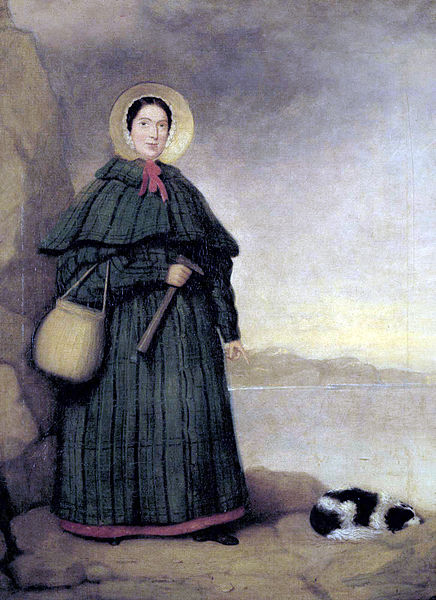
Portrait of Mary Anning with her dog Tray and the Golden Cap outcrop in the background, Natural History Museum, London. This painting was owned by her brother Joseph, and presented to the museum in 1935 by Miss Annette Anning.

On March 9th, the world marked the 166th anniversary of the death of Mary Anning, one of the bravest and most diligent amateur naturalists in history. Despite remarkable discoveries for which she was well compensated, her status as a self-taught, working-class woman meant that Mary Anning’s existence in the published record of science is spotty at best. Her story is nearly unbelievable from the start.

Mary Anning was born on May 21, 1799, in the seaside community of Lyme Regis, in the south of England. From the outset, she had an eventful life; she was named after an older sister who perished in a house fire, and at the age of 14 months, young Mary was the sole survivor of a lightening strike that claimed three members of her community. Her father, Richard, was a cabinetmaker, but also a fossil collector who sold his finds to the visitors of Lyme Regis beaches. When he died in 1810, the Anning family fell into debt. It was in 1811 that Mary’s older brother Joseph found the skull of a “crocodile” in the cliffs near their home, prompting Mary to investigate further. Nearly one year later, she had located the complete skeleton and hired help to free the fossil from the cliff. This specimen is usually considered the first Ichthyosaurus to be found (although reexamination of the historical shows that earlier specimens were discovered earlier), and its description and image were published in the Philosophical Transactions of the Royal Society in 1814. Noticeably absent from this paper is any credit due to Mary Anning or her brother.

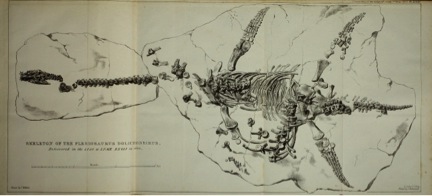
Mary sold the famous Ichthyosaur skeleton for a handsome sum, following in her father’s footsteps and quickly becoming the family breadwinner. In December 1823, Mary’s next major discovery came to light; it was the nearly complete Plesiosaurus described in the Transactions of the Geological Society of London; once again, Mary Anning is not credited by name in the paper.

View Full Size Image
Image of Mary Anning’s Plesiosaur from Transactions of the Geological Society of London. ser. 2 vol. 1.

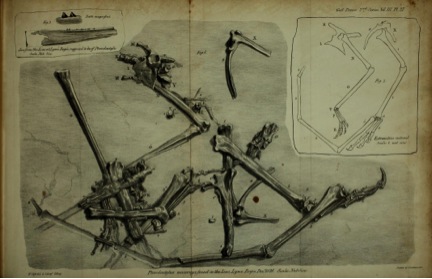
It is around this time that Mary Anning became an object of fascination to the scientific community. Visitors came to Lyme Regis to meet her, including scientists and collectors from around Europe and the United States. The next decade continued to be a productive one, as she found the first Pterosaur ever discovered in Great Britain; the flying reptile captured the public imagination and her fame spread outside of scientific circles, possibly because she was named in the paper. She also unearthed more complete Plesiosaur and Ichthyosaur specimens, correctly identified coprolites as fossil feces, discovered a remarkable fossil fish named Squaloraja, a creature illustrating the link between sharks and rays, and found specimens of the invertebrate Belemnosepia with intact fossil ink sacs, containing viable ink that could be used for drawing. By the late 1820s, Mary’s work was recognized and her new discoveries often published by William Buckland, the great geologist who described the bones of the giant reptile he dubbed Megalosaurus, which we now recognize as the first published description of a dinosaur.

View Full Size Image
Image of Mary Anning’s Pterosaur from Transactions of the Geological Society of London. ser. 2 vol. 3.
View Full Size Image
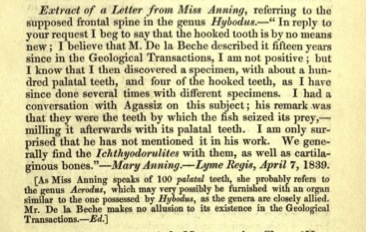
Mary Anning’s letter to the Magazine of Natural History. n.s. vol. 3, 1839.

Mary’s fame continued to grow, and she continued to operate her fossil shop in Lyme Regis, selling significant specimens to scientists, collectors, and museums. In 1838, she was recognized by the British Association for the Advancement of Science with a special yearly stipend of £25. In 1846, the Geological Society of London arranged further funds for her welfare. Sadly, in 1847, Mary Anning died of breast cancer at the age of 47. She was honored with an obituary published in the Quarterly Journal of the Geological Society of London, a particularly remarkable tribute given that the Society was not open to women at this time.

I mentioned that Mary Anning is not well represented in the published literature. In fact, there is only one item known to be authored by her, a letter she wrote to The Magazine of Natural History, published in 1839 and available here in the Biodiversity Heritage Library.

March 21, 2013by ulib-libraryjobs
Blog Reel, Featured Books

Celebrating Women’s History Month: Jeanne Baret, the Man who was a Woman

View Full Size Image
Notable Women in Natural History in iTunes U. Illustration by Maria Sibylla Merian from Metamorphosis insectorum surinamensium

March is Women’s History Month, and BHL is celebrating by highlighting women that have made valuable contributions to biodiversity science.

All this week, we’re publishing tweets and Facebook posts honoring notable women in natural history. We’ve also created a special collection in BHL featuring books written or illustrated by, or relating the contributions of, incredible female botanists, zoologist, explorers, and illustrators. We’ve made a selection of these titles available for free download in iTunes via our thirteenth iTunes U Collection: Notable Women in Natural History. Finally, we’ve gathered some of our favorite images illustrated by these illustrious women, or from publications written by them, and made them freely available for download and reuse in Flickr.

Today, we want to highlight an exceptional woman from natural history’s chronicles: Jeanne Baret, or, as she was known during the time she spent as a man, Jean Baret. We’ve asked Baret expert, and former Life and Literature speaker, Dr. Sandra Knapp, to share this woman’s fantastic experiences and contributions to scientific exploration and discovery.

Jeanne Baret: Around the World 250 Years Ago, Dressed as a Boy!

By Dr. Sandra Knapp

Voyage autour du monde, par la frégate du roi La Boudeuse, et la flûte L’Étoile; en 1766, 1767, 1768 and 1769

‘Yesterday I checked on board the Étoile a rather peculiar event. For some time, a rumour had been circulating on the two ships that Mr de Commerçon’s [sic] servant, named Baré, was a woman. His structure, his caution in never changing his clothes or carrying out any natural function in the presence of anyone, the sound of his voice, his beardless chin, and several other indications had given rise to this suspicion and reinforced it.’ (De Bougainville’s Journal, 28–29 May 1768).

View Full Size Image
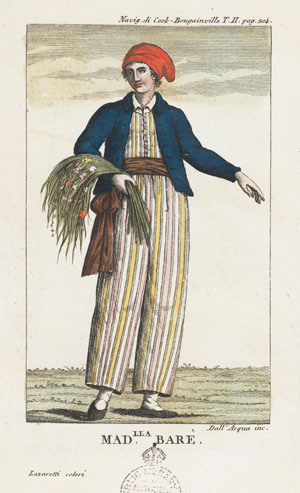
Image of Jeanne Baret. ‘MAD LLA BARÉ’, Engraving, artist unknown. From Navigazioni de Cook pel grande oceano e itorno al globo, Volume 2, 1816, Sonzogono e Comp, Milano.

Cross-dressing seems to have been a botanical fad in the 18th century – the great Swedish botanist Carl Linnaeus (responsible for the system by which we name animals and plants today) famously posed in an authentic Sami costume from Lapland, not realising it was a woman’s outfit. Jeanne Baret (or Baré or Barrett – spelling was not as fixed and consistent in the 18th century as it is now) dressed as a boy to accompany the voyage of Louis-Antoine de Bougainville in circumnavigating the globe; the voyage itself was an exercise in saving face after the disastrous French defeat to the British during the Seven Years War (when Britain gained control of Quebec). The intrepid Baret certainly saw more of the world than the notoriously stay-at-home Linnaeus, even though her name today is not well-known.

The world of exploration in the 18th century was an overwhelmingly male one, so the story of the young woman who dressed as a man to explore the world has immense appeal. De Bougainville set off on the voyage in 1766 – this was the first French circumnavigation and the first of any nation to have on board professional naturalists to observe and record the plants and animals of new lands. The “professional” naturalist accompanying the voyage was Philibert Commerson (often spelled Commerçon); a friend of Voltaire’s and a correspondent of the great Linnaeus himself. Jeanne Baret, of peasant stock from the countryside in Burgundy, was Commerson’s housekeeper and lover–what we today would call his common-law wife. Jeanne was an “herb-woman” with knowledge of plants and their properties useful to Commerson –his teacher rather than only his assistant. She was obviously adventurous and had considerable determination and sticking power – it had to be difficult to overcome not only gender but class barriers in order to stow away on the ship and even trickier to survive once her secret was out. The collaborative partnership between Baret and Commerson in the discovery of the botanical and zoological wonders is unique in the history of science.

View Full Size Image
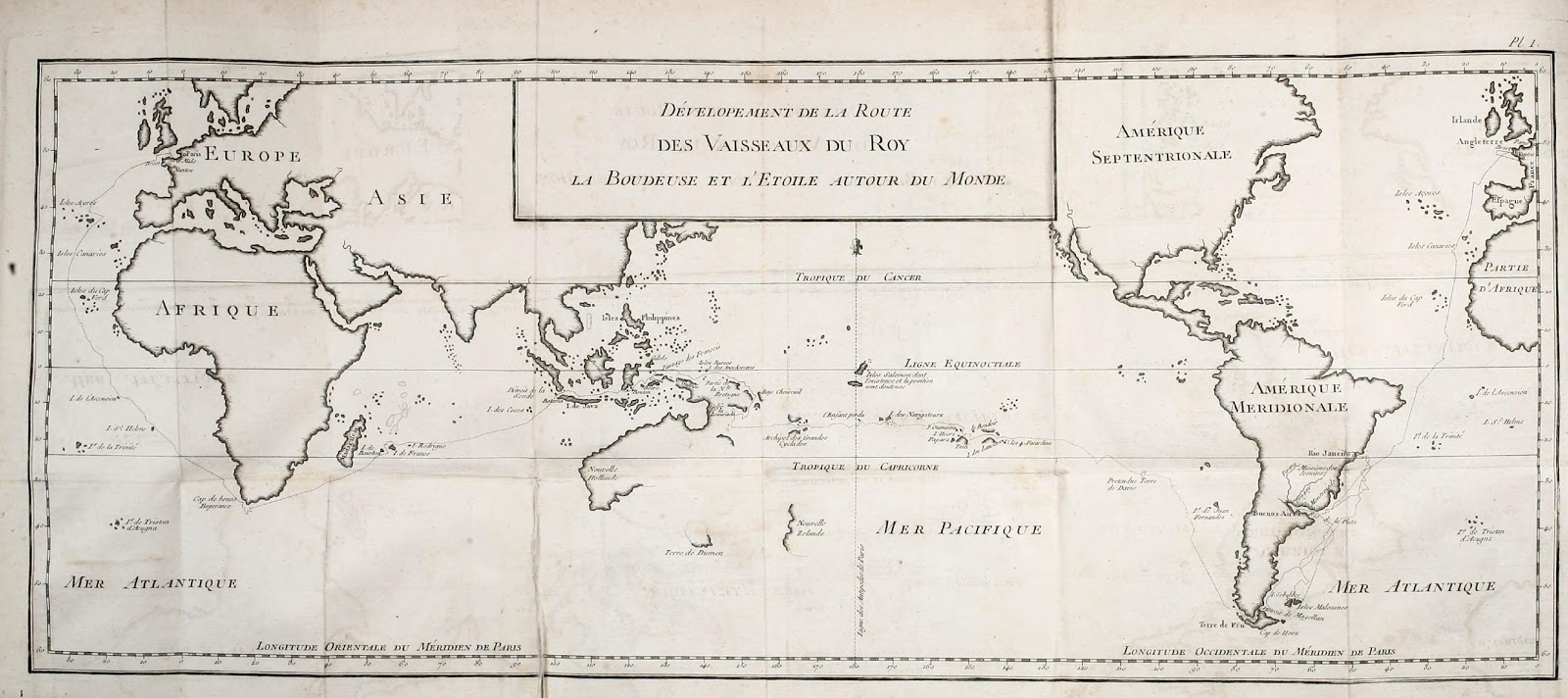
The route of the Bougainville voyage around the world. From Voyage autour du monde, par la frégate du roi La Boudeuse, et la flûte L’Étoile; en 1766, 1767, 1768 and; 1769,

Women’s disguising themselves as men was not unknown – Hannah Snell dressed as a man and enlisted in the British Marines in 1745, serving for 5 years including tours of India; her book The Female Soldier, published in 1750, was immensely popular. Just how Jeanne Baret came to dress as a young man and accompany Commerson as his assistant Jean Baret on the voyage is not known – De Bougainville’s official accounts of the voyage rather coyly place her “unmasking” in Tahiti. It does slightly beggar belief that a woman, however skilled at disguise, could conceal her gender on a ship for many months, where everyone lives cheek by jowl – but look at Hannah Snell! The journal kept by the ship’s surgeon François Vivès is the source for Glynis Ridley’s (1) contention that Baret was alone, unprotected by Commerson and sexually violated by the sailors from the Bondeuse and Étoile. That his diary is dripping with sexual innuendo is without doubt; he sounds a thoroughly unpleasant sort. Rather than on Tahiti, which the ships passed in April and May of 1767, Vivès puts the site of Baret’s unmasking and violation in June on the shores of New Guinea. De Bougainville’s story may have had more to do with his linking the discovery of Jeanne’s gender to the open society of the island; he was one of the first to romanticise Tahitian ways of life and love.

View Full Size Image
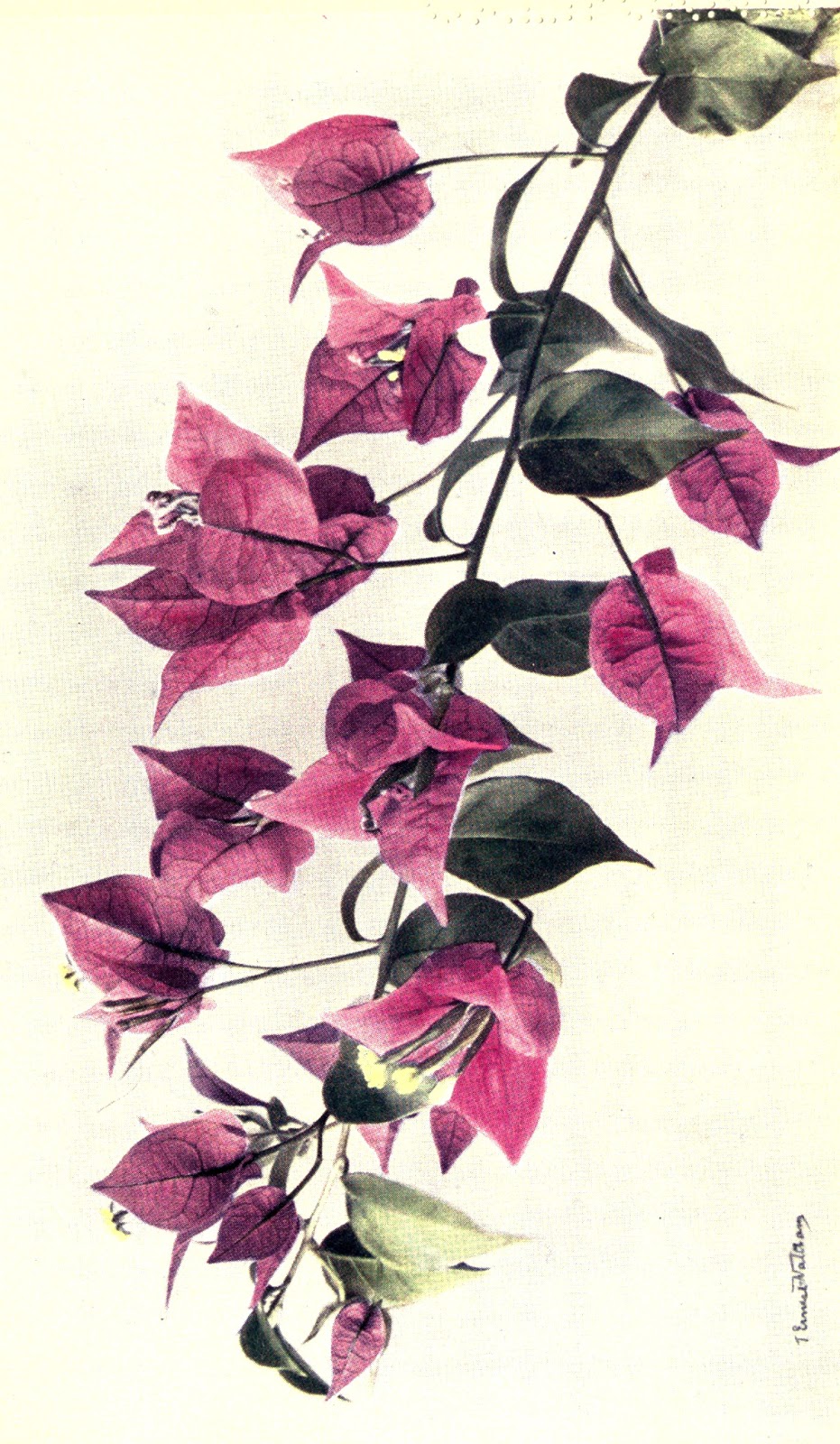
Bougainvillea species, from Climbing Plants

Collecting plants is great fun, both Commerson and Baret must have been amazed at the wealth of diversity they encountered. Commerson wrote of Madagascar “I can announce to naturalists that this is the true Promised Land. Here nature created a special sanctuary where she seems to have withdrawn to experiment with designs different from those used anywhere else. At every step one finds more remarkable and marvellous forms of life.” In notes on specimens Commerson honoured high-ranking members of the expedition – the leader is commemorated in the lovely tropical vine Bougainvillea, Nassau-Siegen in Nassauvia, but Commerson himself did not publish any of these; he never made it back to France to write up the fruits of the teams’ labours. Bougainvillea was not formally described until 1789, and then only by Antoine Laurent de Jussieu, a French botanist who used Commerson’s specimens and his notes (2). It is interesting to see that early on in the voyage, in Brazil, many plants are “named” for members of the expedition, but later collections have more cursory notes, although he did propose Baretia for a Malagasy tree. Commerson’s Baretia was never published, not because someone wanted to do Jeanne Baret down, but that by the time the specimen made it back to Paris and into the hands of botanists, it was found that the genus already had a name; the principle of proirity had become the modus operandi for naming. After Commerson’s death, Jeanne married on Mauritius and returned to France in 1774. She was awarded a state pension from 1785 in recognition of her bravery and contributions, not really completely forgotten and lost in total obscurity, although she never did botany again.

View Full Size Image
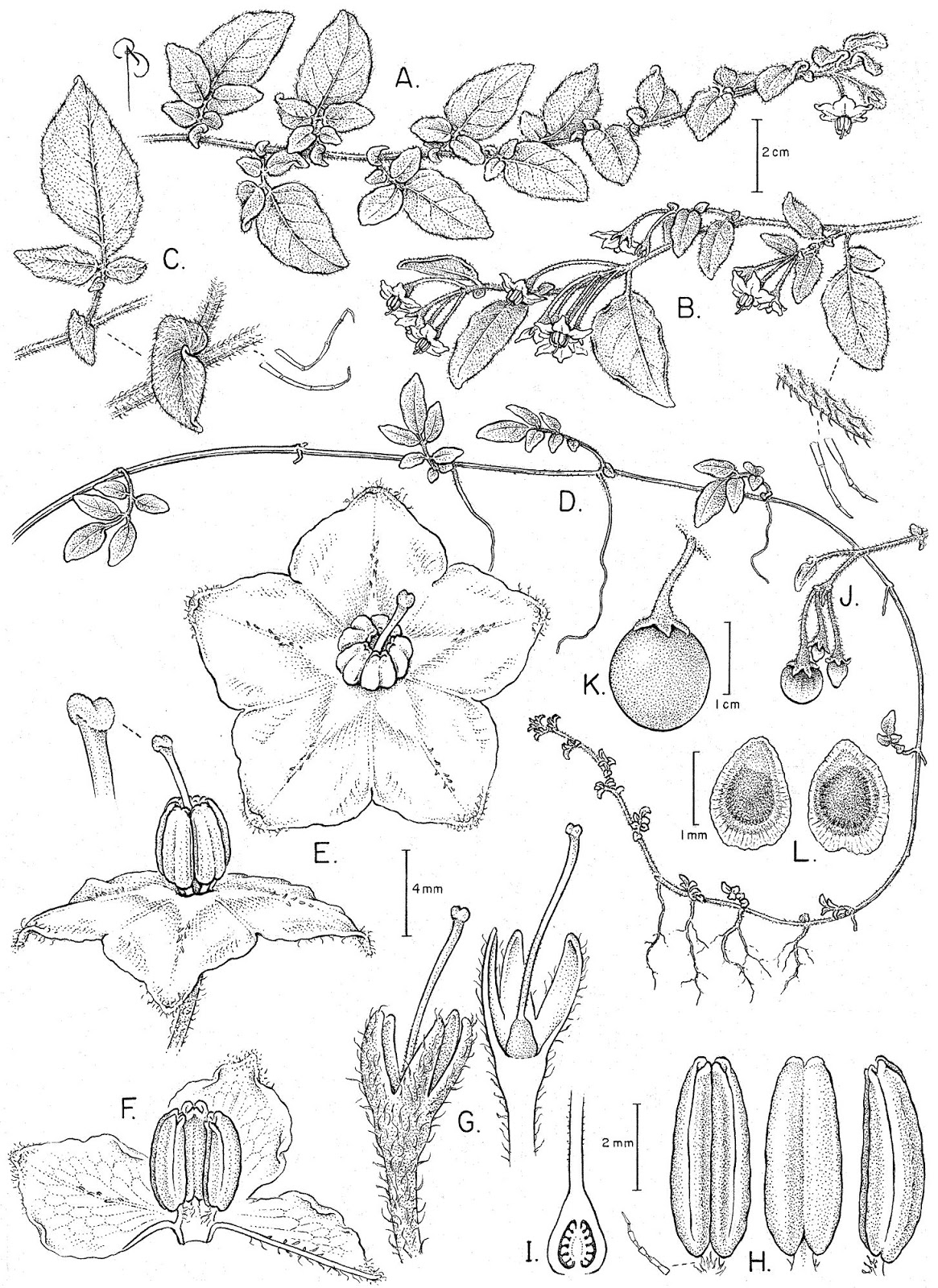
Tepe E, Ridley G, Bohs L (2012) A new species of Solanum named for Jeanne Baret, an overlooked contributor to the history of botany. PhytoKeys 8: 37–47

She was more recently, however, commemorated in the specific name of a new species of Solanum from Ecuador – far from where she travelled and collected plants (3). Solanum baretiae Tepe et al. is a relative of the potato and tomato from the cloud forests of the Andes – its link to Baret is its highly variable leaves. Many species of Solanum have simple leaves, just an elliptical shape with no lobing, while others, like the potato, have divided leaves with several pairs of leaflets. Solanum baretiae has all kinds of leaves – simple and divided with varying numbers of leaflets – the authors decided to commemorate this by naming the species after Jeanne Baret – herself a master of disguise!

That we remember single men (and it is usually men) as the “heroes” of expeditions or of discoveries is not necessarily to denigrate the contributions of others; who, after all, refers to Captain Cook’s voyage of the Endeavour as “Banks’ voyage” or knows the names of the crew – the single-person reference is a sort of shorthand. Science was as collaborative then as it is now, without the efforts of the many little would be achieved. Jeanne Baret and other overlooked contributors to science like her deserve recognition and celebration, but she does not need to be a victim (as she was portrayed in Ridley’s book) to be seen as a success (4).

Jeanne Baret deserves our admiration not only for being the first woman known to have circumnavigated the world (although it took her quite a long time!), but for her significant botanical contributions in partnership with Commerson, even if they are not written down in quite the way we would record them now. You also have to respect the guts and determination of a woman who wanted to discover the world and just went ahead and did so – at a time when the hearthside was considered a woman’s place.

Explore the chronicles of Jeanne’s adventures in Voyage autour du monde, par la frégate du roi La Boudeuse, et la flûte L’Étoile; en 1766, 1767, 1768 and; 1769, the publication relating the Bougainville voyage!

References and further reading

(1)    Ridley, G. (2010) The discovery of Jeanne Baret: a story of science, the high seas, and the first woman to circumnavigate the globe. Crown Publishers, New York, 1–288.

(2)    Lack, H.W. (2012) The discovery, naming and typification of Bougainvillea spectabilis (Nyctaginaceae). Willdenowia 42: 117-126.

(3)    Tepe, E.J., G. Ridley & L. Bohs (2012) A new species of Solanum named for Jeanne Baret, an overlooked contributor to botany. PhytoKeys 8: 37-47 doi: 10.3897/phytokeys.8.2101

(4)    Knapp, S. (2011) The planstswoman who dressed as a boy (review of Ridley’s “The discovery of Jeanne Baret”). Nature 470: 36-37.

March 7, 2013by Grace Costantino
Page 1 of 212»

Help Support BHL

BHL's existence depends on the financial support of its patrons. Help us keep this free resource alive!

search

About BHL

The Biodiversity Heritage Library (BHL) is the world’s largest open access digital library for biodiversity literature and archives. BHL operates as a worldwide consortium of natural history, botanical, research, and national libraries working together to digitize the natural history literature held in their collections and make it freely available for open access as part of a global “biodiversity community.”

Join Our Mailing List

Sign up to receive the latest news, content highlights, and promotions.

Subscribe Now

Subscribe to Blog via Email

Enter your email address to subscribe to this blog and receive notifications of new posts by email.

Join 319 other subscribers

Subscribe to Blog Via RSS

Subscribe to the blog RSS feed to stay up-to-date on all the latest BHL posts.

Access RSS Feed

Inspiring Discovery through Free Access to Biodiversity Knowledge.

The Biodiversity Heritage Library makes it easier than ever for you to access the information you need to study and explore life on Earth…for free, anytime, anywhere.


64+ Million Pages of
Biodiversity Literature Online.

EXPLORE

Tools and Services
to Transform Research.

EXPLORE

300,000+
Illustrations on Flickr.

EXPLORE

ABOUT | HARMFUL CONTENT | PRIVACY | SITE MAP | TERMS OF USE