This month, we’re publishing a series of blog posts outlining the importance of biodiversity literature, made available for free and open access through the Biodiversity Heritage Library, to today’s scientific research and conservation initiatives. With your help, we can help save biodiversity.
Remembering Extinct Species
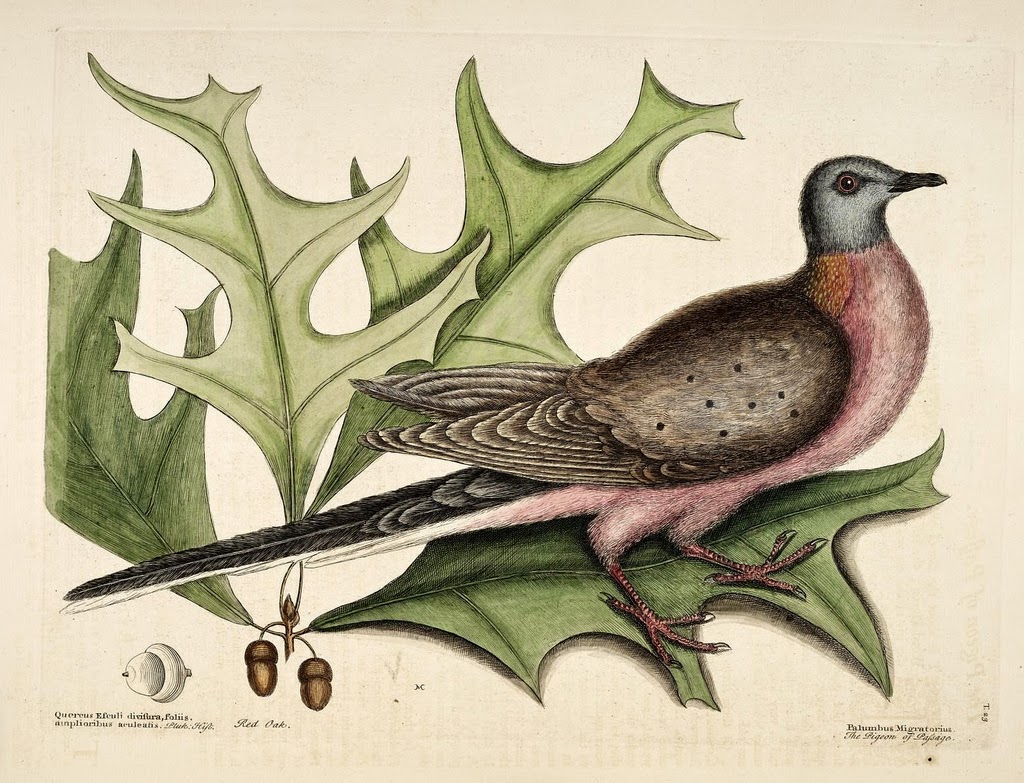 |
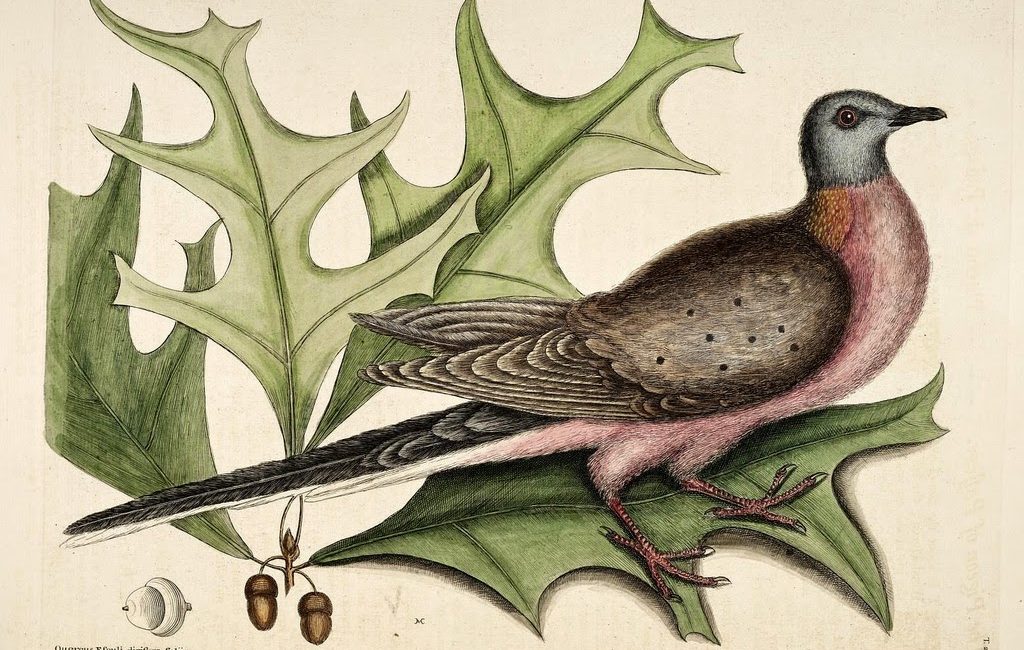
| First published illustration of a Passenger Pigeon, Extinct. Catesby, Mark. The natural history of Carolina, Florida, and the Bahama Islands (1754). http://biodiversitylibrary.org/page/10900155. |
On September 1, 1914, at approximately 1pm in the afternoon, a passenger pigeon named Martha died. Her death marked the extinction of her entire species. It is “one of the fastest and most dramatic extinctions in human history,” according to the Zoological Society of London. A population of several billion birds was decimated in less than a century thanks to over-hunting and habitat destruction. From the first published image of a passenger pigeon by Mark Catesby in 1754, to a poignant record of population declines by Vernon Bailey in an 1892 fieldbook, and the final autopsy report of “the last living representative of its race,” the passenger pigeon’s tragic demise is well-documented in BHL.
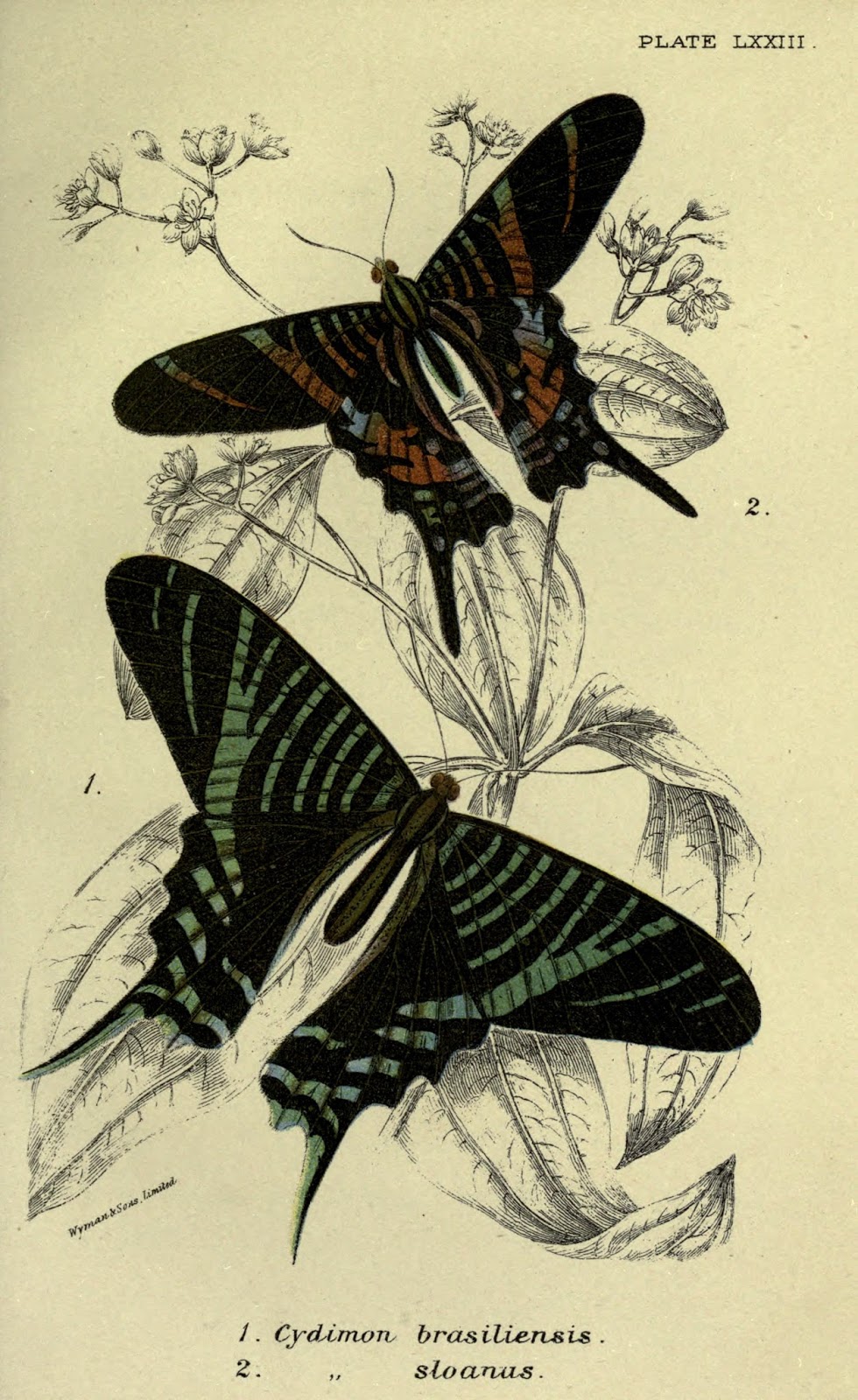 |
| Sloane’s Urania Moth (top), Extinct. Kirby, W.F. A handbook to the order Lepidoptera. v. 3 (1897). http://biodiversitylibrary.org/page/19869923. |
As many as 30%-50% of all species may be facing extinction by the mid-21st century, according to the Center for Biological Diversity. Some extinctions, such as that of the passenger pigeon, are internationally notorious, while others, such as the Rodrigues Day Gecko, Sloane’s Urania moth, or the Saint Helena Olive, are less infamous but no less dispiriting. Each represents another step towards earth’s sixth great extinction event.
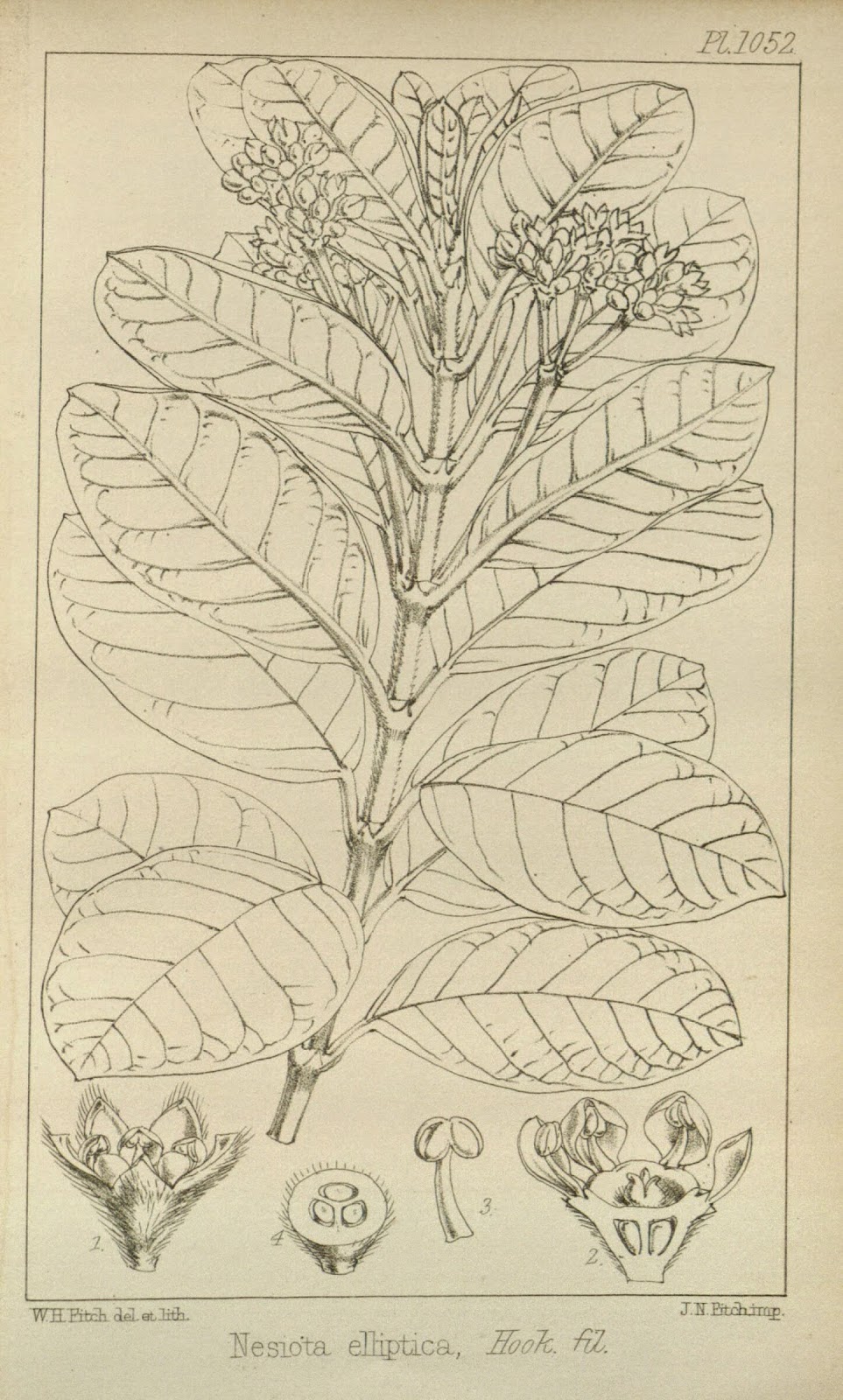 |
| Saint Helena Olive, Extinct. Hooker, William Jackson. Icones plantarum or figures, with brief descriptive characters and remarks, of new or rare plants, selected from the author’s herbarium. v. 11 (1867-71). http://biodiversitylibrary.org/page/16044972. |
Historical literature, accounts in archival sources like fieldbooks, and museum specimens are the only remaining record of these species. “Historic literature provides written accounts and illustrations of [extinct species] from first-hand observations before they became extinct,” including phenotypic descriptions like habitat, diet, behavior, and phenology, explains Dr. Helen James, curator of Birds at the National Museum of Natural History, in a Smithsonian Libraries article. This depth of data does not always accompany museum specimens, not to mention the fact that the physical appearance of some species undergoes a radical transformation in death. Thus, for scientists to obtain a complete picture of the life, morphology, and phylogeny of extinct species, taxidermied specimens must be used in conjunction with written and illustrated primary sources.
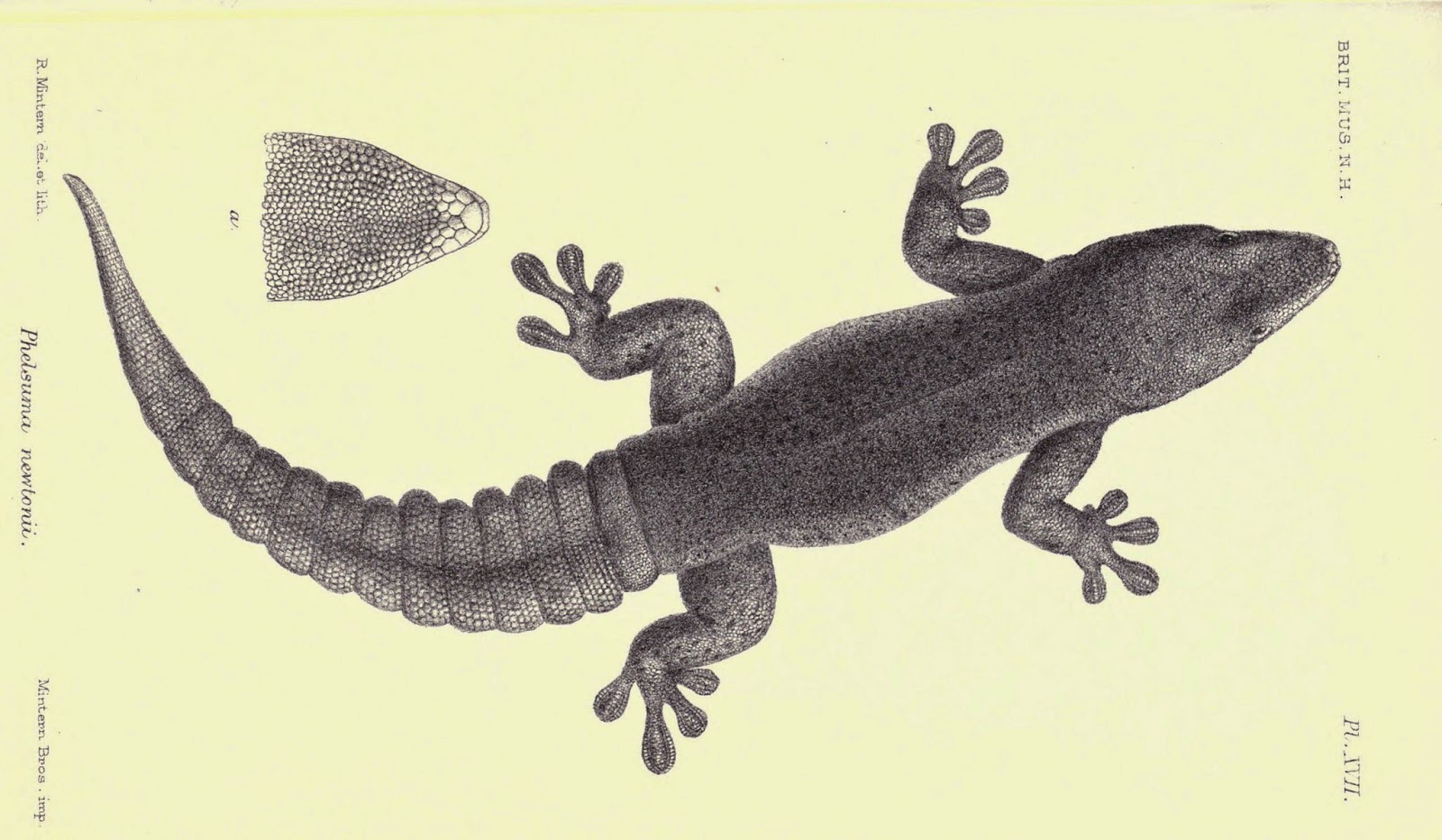 |
| Rodrigues Day Gecko, Extinct. Catalogue of the lizards in the British Museum (Natural History) 2d. ed., v. 1 (1885). http://biodiversitylibrary.org/page/18438199. |
Learning from Extinctions
Preserving knowledge about extinct species is about more than just maintaining a record of the life we have lost. These historic accounts can also be used to help conserve endangered species. Examination of the behaviors and anatomy of extinct organisms can help tell us what made them vulnerable in the first place and can be directly applicable to threatened species.
The historic record also provides insight into how an extinction will affect an ecosystem. Species do not live in a vacuum. “The demise of one…species can indirectly cause another to become extinct,” according to a 2012 study from the University of Exeter. “Any extinction can create a ripple effect across a food web, with far-reaching consequences for many other animals.” Examining the relationships within an ecosystem, richly documented in literature and fieldbooks, can help us identify which species will be affected by biodiversity loss, and what form those effects might take. Extrapolating knowledge about ecosystems affected by extinctions to similar environments can help us predict the ramifications of biodiversity loss in expanded locales.
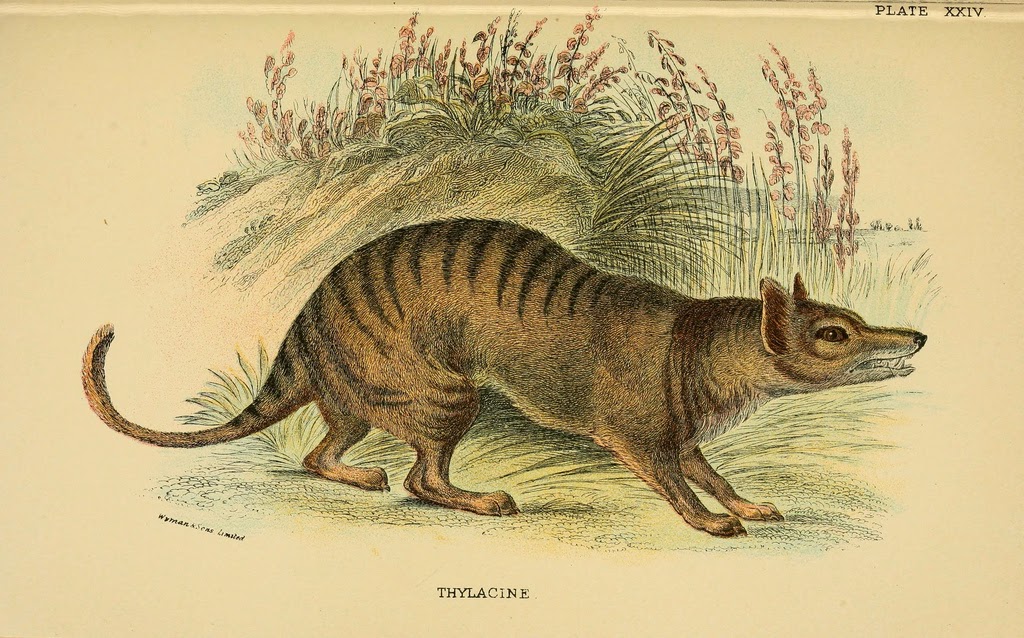 |
| The Thylacine, an apex predator in Australia, Tasmania and New Guinea before it became extinct in the early 20th century. Lydekker, Richard. A hand-book to the marsupialia and monotremata. (1896). http://biodiversitylibrary.org/page/15043966. |
New Hope for Rediscovered Species
Occasionally, species that were believed extinct are miraculously rediscovered. For example, the Arakan Forest Turtle was thought to be extinct for nearly 100 years until a team of conservationists stumbled upon specimens at a Chinese food market in 1994. The information in historic literature about these species is critical to crafting policies to protect remaining populations.
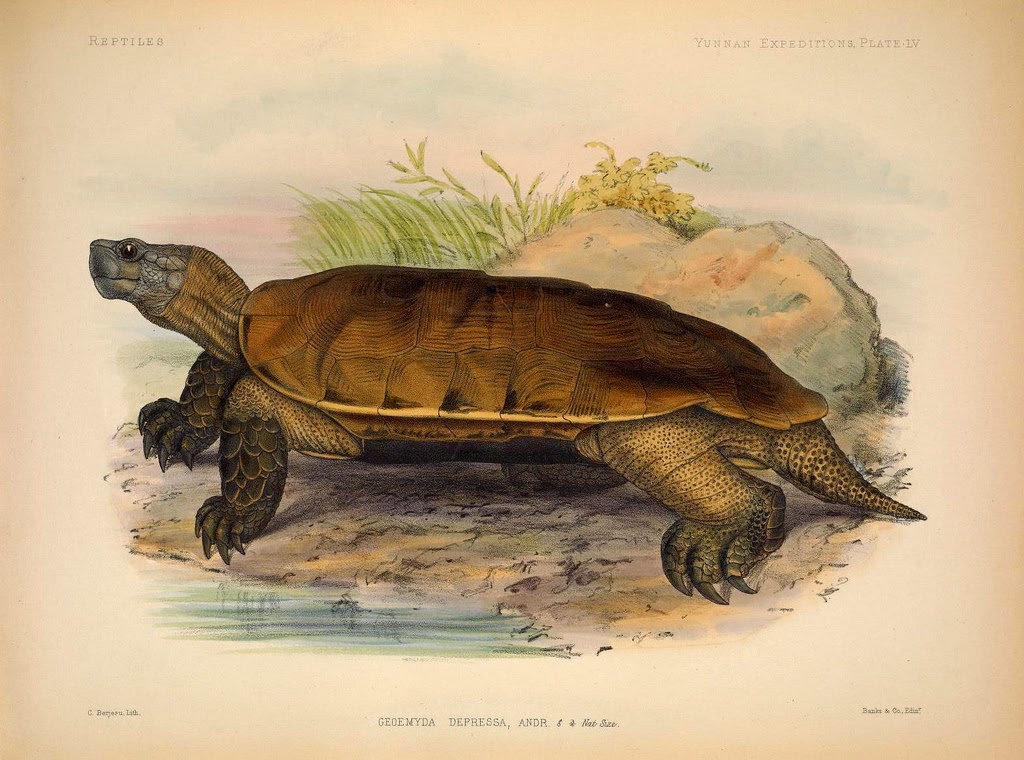 |
| Akaran Forest Turtle. Thought extinct until rediscovered in a Chinese food market in 1994. Anderson, John. Anatomical and zoological researches. v. 2 (1878). http://biodiversitylibrary.org/page/34177985. |
To Clone or Not To Clone…
Recent advances in genetics have ignited the possibility of resurrecting extinct species. While debates over the wisdom of such actions continue, should the passenger pigeon ever take flight again, historic records will be vital for success. What kind of habitat do these species require? What do they eat? What wants to eat them? These answers can be found in the pages of books and journals from days gone by.
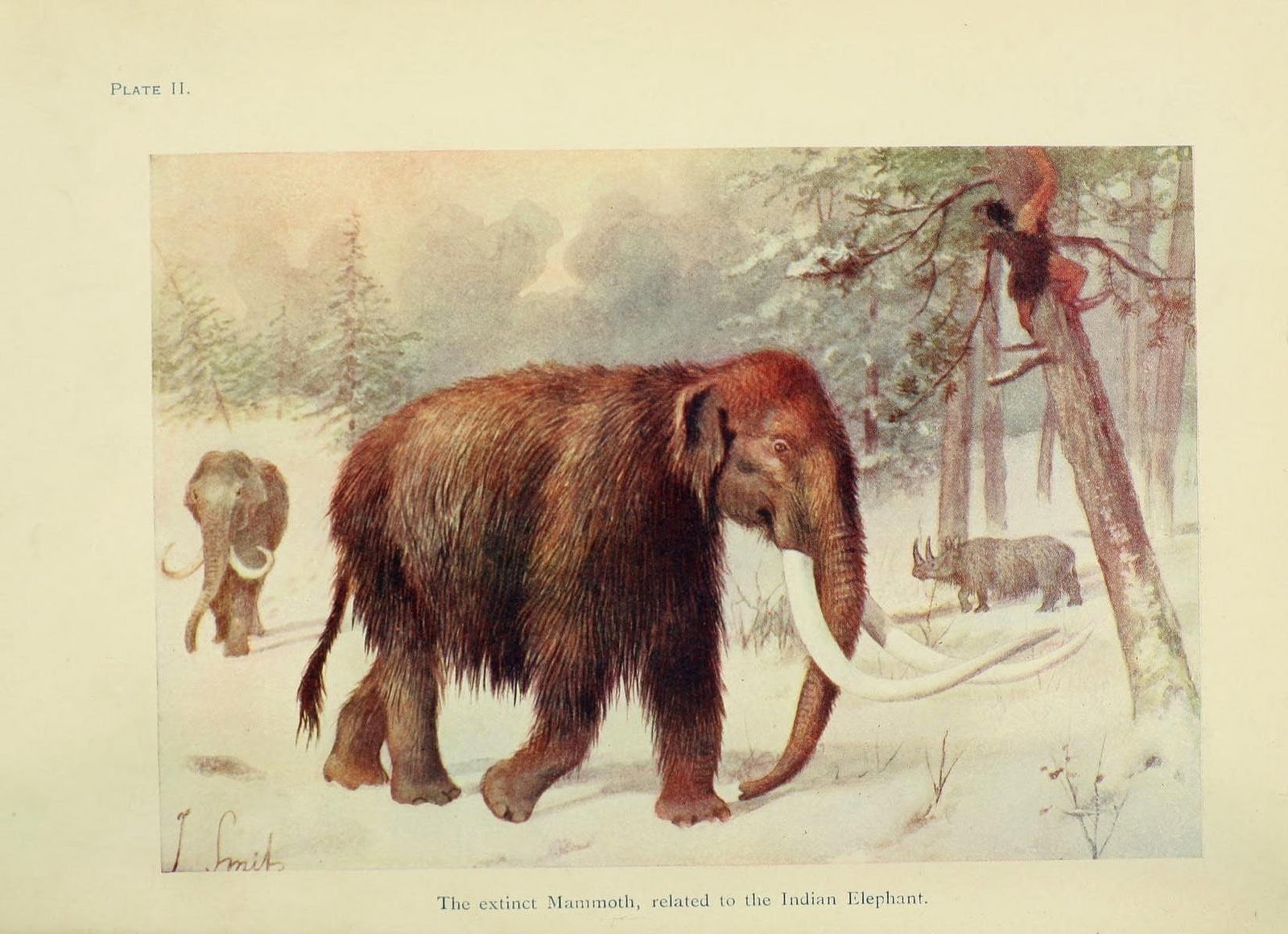 |
| Will scientists clone a Woolly Mammoth? Westell, W.P. The Book of the Animal Kingdom (1910). http://biodiversitylibrary.org/page/10102652. |
Fighting Human-induced Extinctions
Over the past 450 million years, Earth has lost up to 90% of its species on five different occasions, reports a 2014 Time article by Jeffrey Kluger. Asteroids, volcanoes, and gamma rays were to blame in the past. Humans are largely to blame today. But while, barring a genetic miracle, we will never again see a dodo waddle through the woods or the Jamaican Giant Galliwasp scurry across the ground, the historic record ensures that these lost species are not forgotten. Knowledge is power, and thanks to BHL and other like-minded open access initiatives, the knowledge necessary to prevent future human-induced extinctions is available to everyone on any corner of the globe.
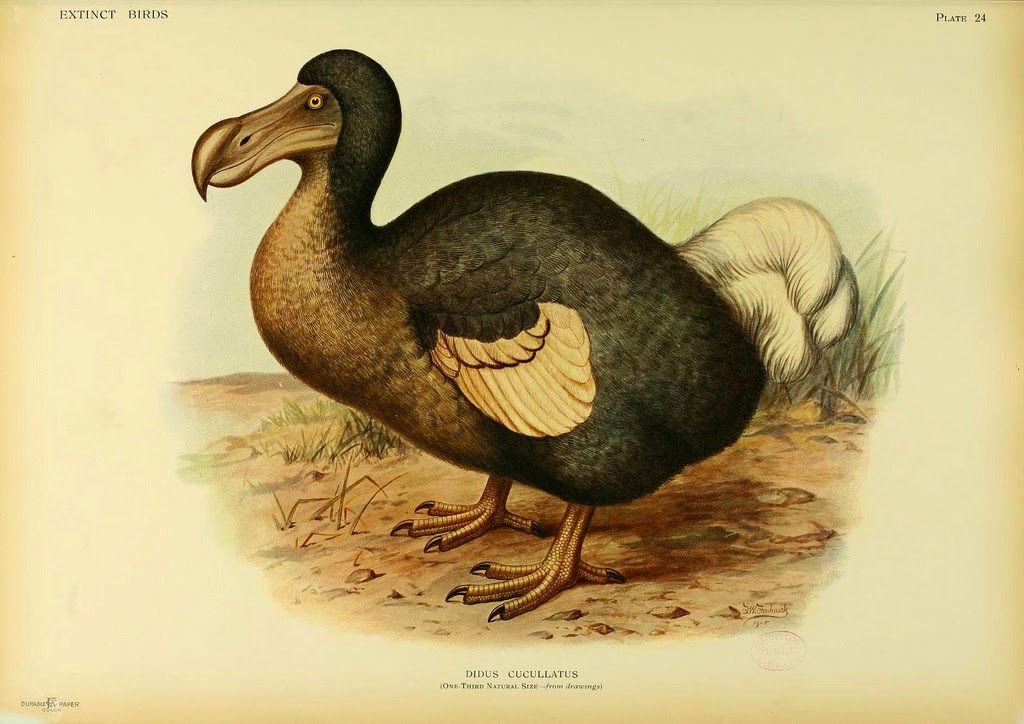 |
| Dodo, Extinct. Rothschild, Lionel Walter Rothschild. Extinct Birds (1907). http://biodiversitylibrary.org/page/38665759. |
We rely on donations from users like you to help grow our library and keep it free and open. As you think about your holiday giving, we hope you’ll consider making a tax-deductible donation to help save biodiversity.
Learn more about the critical roles BHL and historic literature play in discovering new species, supporting conservation, and saving Earth’s biodiversity