

Transition Update #8: The Field Museum to Host BHL’s Technical Infrastructure
With the Biodiversity Heritage Library now officially operating in its new chapter following its transition away from the Smithsonian Institution, we are delighted to announce that the Field Museum of Natural History, one of BHL’s longest-standing and most respected partners, will host BHL’s servers and core technical infrastructure.
This hosting arrangement ensures the continued stability, security, and reliability of the BHL website and the 63+ million pages of open biodiversity knowledge it makes freely available worldwide.
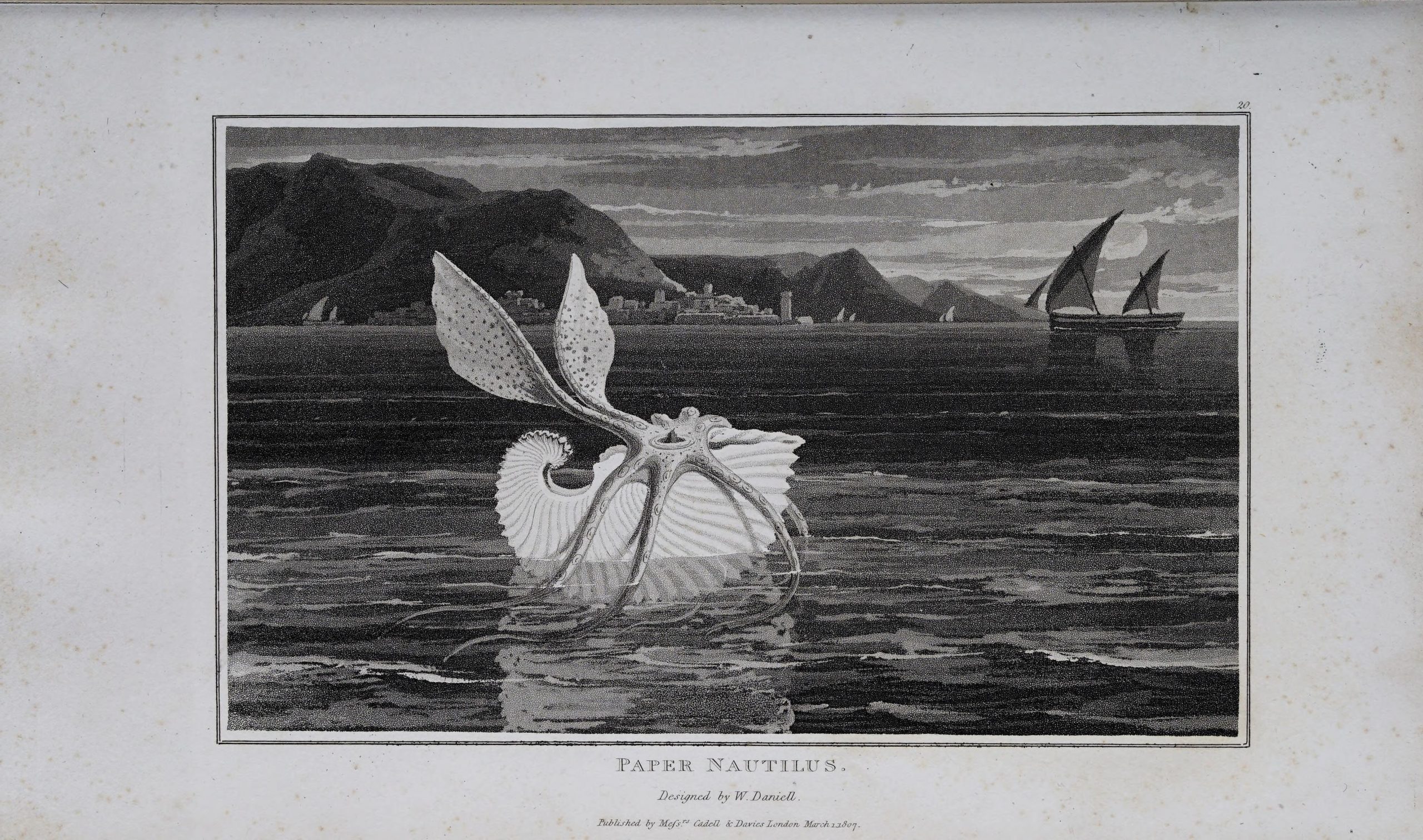
Paper Nautilus, from Zoography; or, The beauties of nature displayed. In select descriptions from the animal, and vegetable, with additions from the mineral kingdom (1807) by William Wood, illustrated by William Daniell. Contributed to BHL by the Field Museum of Natural History Library.
A founding partner supporting BHL’s next chapter
The Field Museum, based in Chicago, Illinois, is one of BHL’s ten original founding institutions and has been part of the consortium since its inception. For nearly two decades, the Field Museum has helped shape BHL’s mission to make biodiversity literature openly available to the world.
“Hosting and supporting BHL’s infrastructure reflects the power of partnership and our commitment to free and open data where appropriate. Grounded in strong technical foundations and a commitment to long-term stewardship, we are reinforcing the secure and scalable technical backbone that sustains one of the world’s most important open biodiversity resources.”
— Rob Zschernitz, Chief Technology Officer, Field Museum
As an independent museum supported by endowments and donor philanthropy, the Field Museum’s mission to connect all of us to nature and the human story aligns closely with BHL’s values and long-term goals.
What this means for BHL users
In practical terms, the Field Museum will:
- Coordinate with BHL and the Smithsonian Institution to relocate BHL’s servers to the Field Museum’s data center
- Provide essential services including domain hosting, systems operations, network security, and incident response
- Serve as custodian and host of BHL’s core technical infrastructure, under the direction of BHL’s Technical Team.
Importantly, BHL will continue to retain ownership of all its data, content, software, and equipment. The Field Museum will act as a trusted custodian, looking after the behind-the-scenes technical infrastructure that keeps BHL online and accessible to millions of users worldwide.
This arrangement builds on BHL’s new operational foundation and supports long-term continuity and resilience.
A carefully managed technical transition
Detailed planning for the move of BHL’s servers is underway. While the exact dates for the physical moves are still to be determined, the teams at BHL, the Smithsonian, and the Field Museum are working closely together to plan the move carefully and responsibly.
Our goal is to minimise disruption to public access. That said, there may be short periods of downtime while systems are moved and reconfigured. Any such interruptions will be temporary, and we will communicate scheduled downtime in advance via the BHL website and social media channels.
Why this matters
Secure, professionally managed infrastructure underpins everything BHL does, enabling global access to biodiversity literature and supporting research, conservation, and education worldwide.
The Field Museum’s commitment to hosting BHL’s technical infrastructure reflects the strength of BHL’s partnerships and depth of support across the BHL consortium.
“The Field Museum has been a valued member of the BHL consortium for many years. From hosting our Life & Literature conference in 2011 to hosting our Annual Meeting in 2015 and co-hosting in 2024, the Field has consistently demonstrated its commitment to BHL and our global community. I am delighted that the Field Museum has agreed to host BHL’s technical infrastructure at this pivotal time in BHL’s history. This represents a major milestone in our transition and reflects the strength and depth of collaboration across the consortium.”
— David Iggulden, Chair, BHL Executive Committee
We are deeply grateful to the Field Museum for stepping forward in this way, and to our global community for your continued trust, engagement, and support.
Continuity, access, and governance
The transition of BHL’s technical infrastructure does not change how BHL is governed or who makes decisions about its future.
The Field Museum’s role in hosting and stewarding BHL’s technical infrastructure does not affect who owns or controls BHL’s content or data. BHL will continue to operate as a member-governed consortium, with strategic oversight provided by the BHL Members Council, in accordance with the BHL Bylaws.
BHL’s collections will remain freely and openly accessible, as they always have been.
Looking ahead: a growing network of support
This hosting transition reflects the depth of BHL’s institutional relationships, its long history of collaboration, and the commitment of trusted partners across the consortium. The Field Museum is just one of the institutions that has stepped up in response to BHL’s Call for Support.
This work is part of a broader, coordinated effort across the BHL community, with multiple organisations offering support in different ways. Stay tuned for additional announcements as details are finalised.
How you can help
You can support BHL by:
- Staying informed: follow #BHLTransition on our website and social media channels
- Sharing our story: help amplify BHL’s Call for Support, and the importance of open biodiversity literature
- Support BHL directly: make a donation. Donations directly support BHL’s operations and long-term sustainability
As always, thank you for being part of the Biodiversity Heritage Library community.

Nicole Kearney is BHL’s Communications Director, Manager of BHL Australia, and Chair of BHL’s Persistent Identifier Working Group. She is passionate about open access, persistent identifiers, and Striped Possums.

Great news