

Across September and October, the international biodiversity informatics community gathered in Oslo, Norway, for the annual conference of Biodiversity Information Standards (TDWG 2026) and the 33rd Governing Board meeting of the Global Biodiversity Information Facility (GBIF).
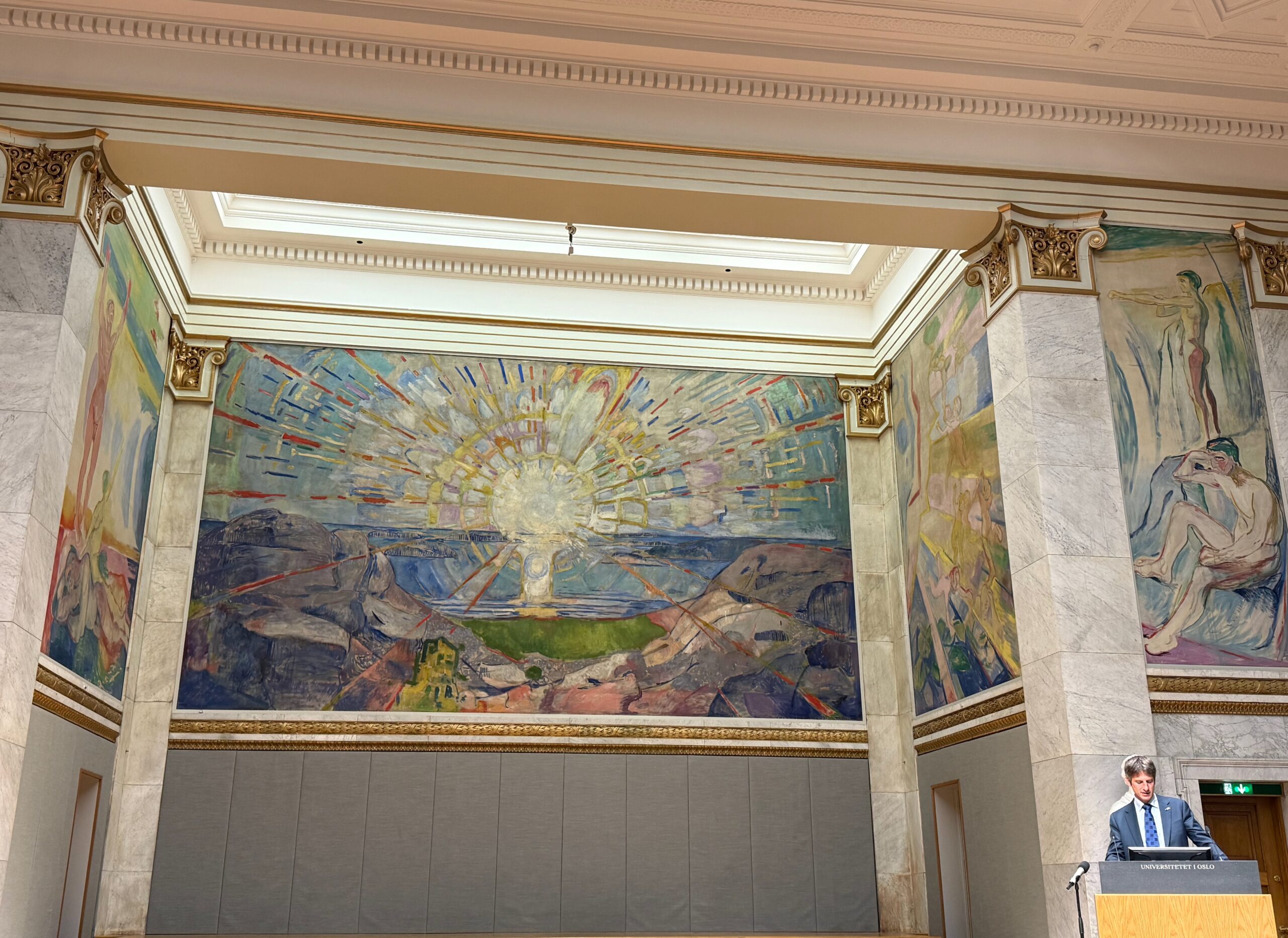
Our local host, Hugo de Boer, speaking in the University of Oslo’s magnificent Aula, surrounded by murals by renowned Norwegian artist Edvard Munch. Behind him is The Sun (1911), a majestic sunrise symbolizing the university’s fundamental mission: enlightenment. Photo: Nicole Kearney.
With BHL celebrating its twentieth anniversary and its first year as an independent, globally governed consortium, these meetings provided a wonderful opportunity to reconnect with our community, share our progress and explore new possibilities. BHL had a substantial presence at both meetings, but some of the most valuable outcomes emerged from the conversations and shared experiences between the formal sessions.
BHL at TDWG 2026
I was honored to deliver a mini-keynote, Building a New Foundation for the Biodiversity Heritage Library, on TDWG’s opening single-stream day, in the University of Oslo’s extraordinarily beautiful Aula. I shared the story of BHL’s transition from the Smithsonian Institution to an independent, globally governed consortium, and the extraordinary institutional and community support that has enabled us to secure BHL’s immediate future. Drawing on an illustration of a living bridge from Joseph Hooker’s 1854 Himalayan Journals, I reflected on the new foundations we’ve built, the challenges that remain, and the opportunities ahead. It was particularly meaningful to share this story with the TDWG community, whose expertise and collaborations will be so important to BHL’s future.
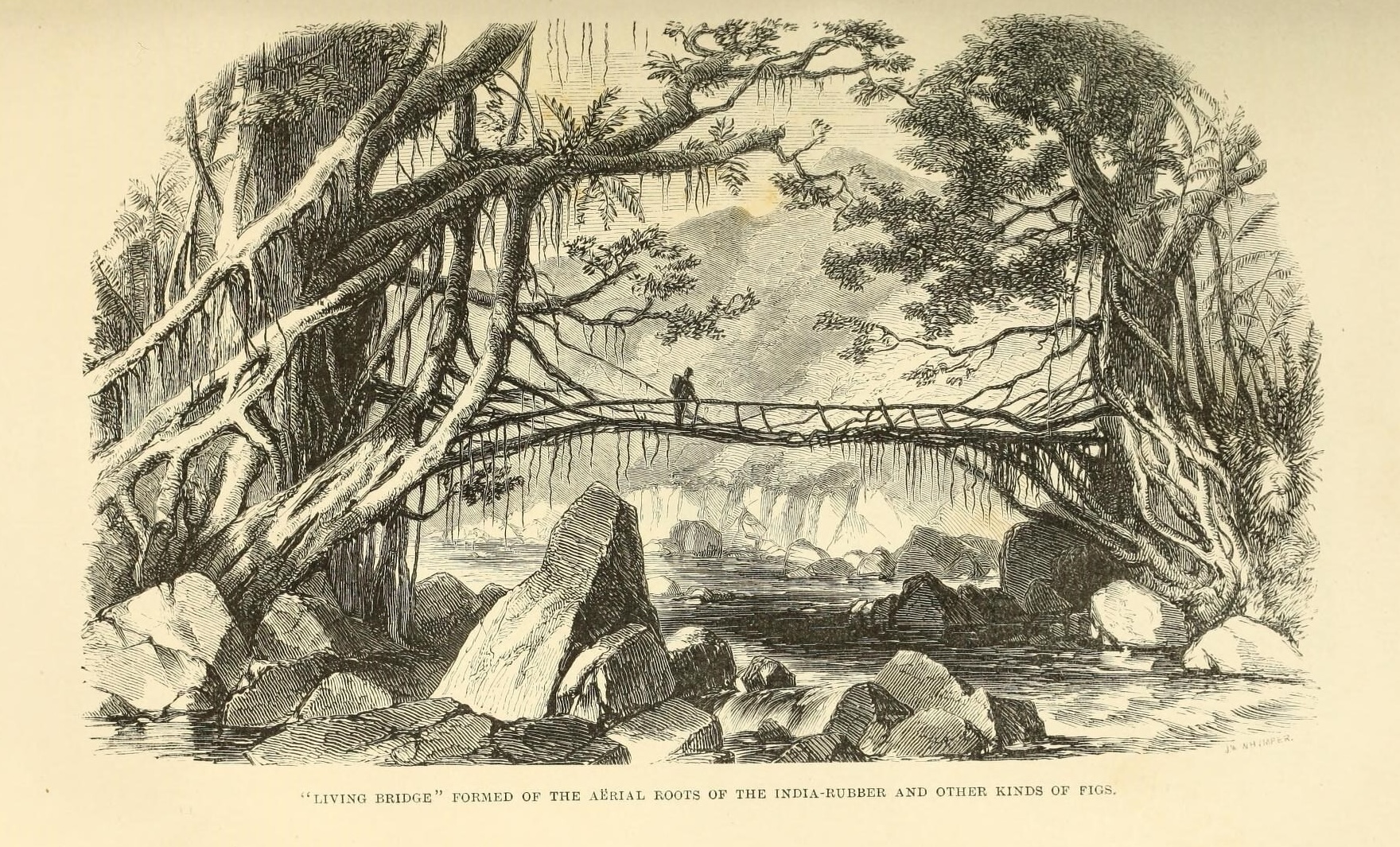
A living bridge formed from the aerial roots of fig trees. Illustration from Joseph Hooker’s 1854 Himalayan Journals. View on BHL.
BHL’s literature, images, data and collaborations always feature prominently at TDWG conferences, but it has been some time since we’d hosted a dedicated BHL symposium. Co-organized by BHL Executive Committee Chair David Iggulden and myself, this year’s symposium, BHL at 20: A New Chapter for Biodiversity Literature and Data, brought together eight presentations across two themed sessions.
Reimagining BHL: Foundations, Partnerships and Future Infrastructure explored BHL’s place within the global biodiversity informatics landscape, its growing partnerships and new approaches to connecting and navigating its collections. Speakers included Joe Miller (GBIF), Sydney Jordan and Amanda Boczar (University of South Florida Libraries), Hiris Gu (Natural History Museum, London) and Nicky Nicolson (Royal Botanic Gardens, Kew).
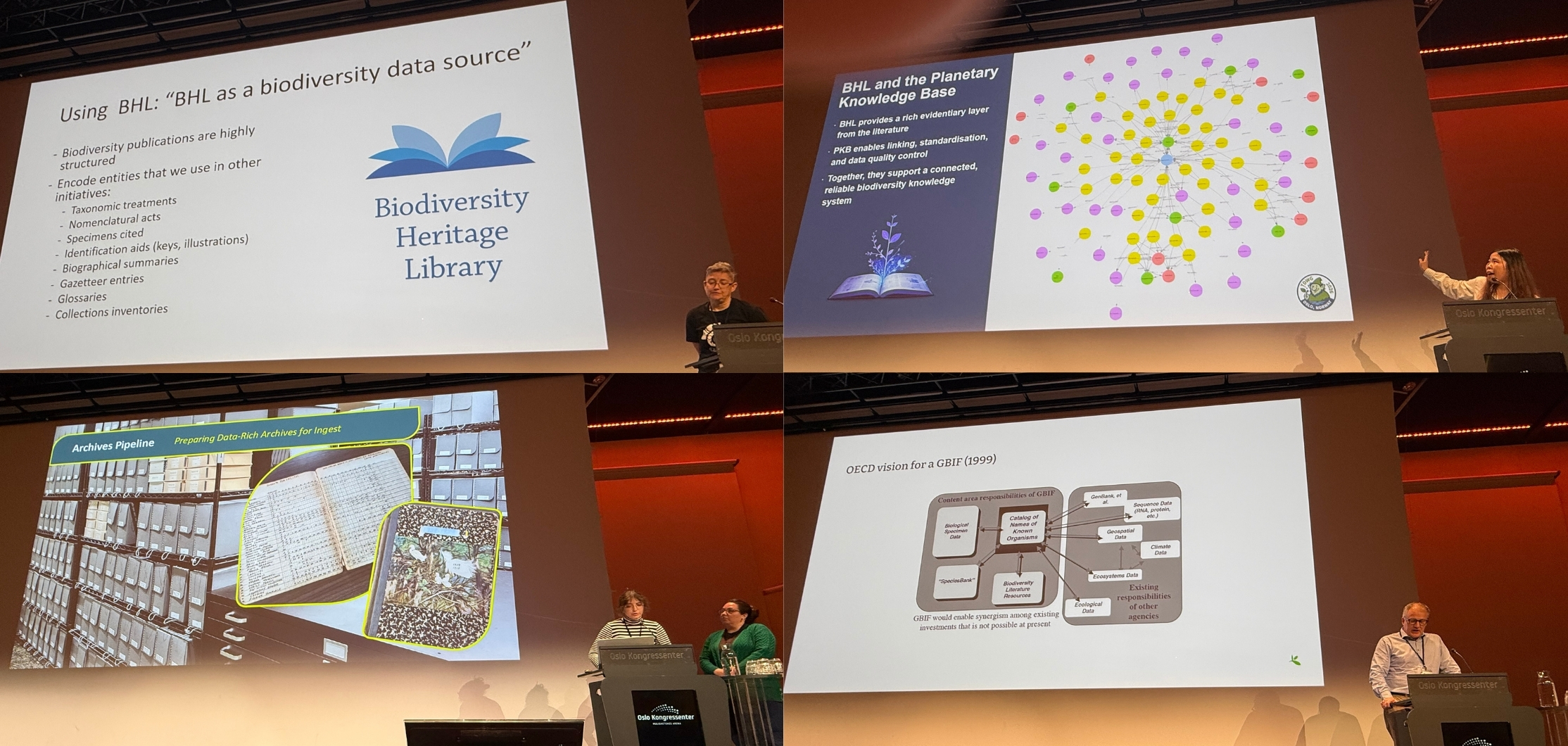
Four presentations from the BHL Symposium at TDWG 2026. Top left: Nicky Nicolson. Top right: Hiris Gu. Bottom left: Sydney Jordan and Amanda Boczar. Bottom right: Joe Miller. Photos: Nicole Kearney.
Transforming BHL: Data Extraction, Semantic Navigation and Future Interfaces focused on unlocking the knowledge within BHL’s collections and transforming it into structured, connected and reusable data. Speakers included Christian Bölling (Museum für Naturkunde Berlin), Gerwin Kasperek (Goethe University Frankfurt), Jana Hoffmann (Senckenberg) and Roderic Page (BioStor).
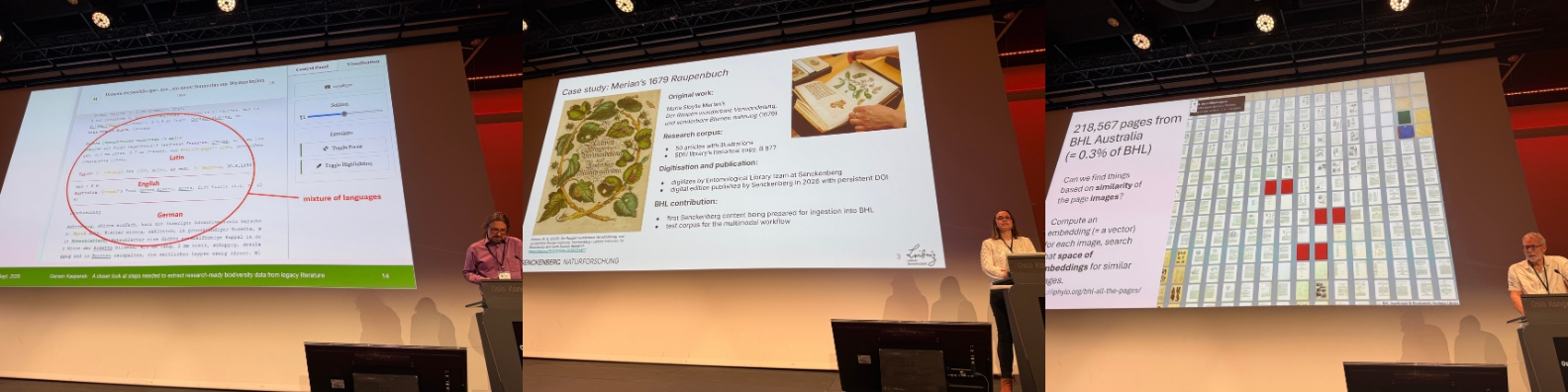
Three presentations from the BHL Symposium at TDWG 2026. Left: Gerwin Kasperek. Centre: Jana Hoffmann. Right: Roderic Page. Photos: Nicole Kearney.
Together, the presentations highlighted exciting opportunities to make BHL’s 64 million pages more discoverable, interconnected and useful for research.
On Day Four, we continued these conversations with a two-hour interactive workshop, New Approaches and Tools to Maximise the Value of the Biodiversity Heritage Library, co-organized with Rod Page. Rod demonstrated experimental tools for exploring BHL, including image search, name timelines and AI-assisted discovery, while participants tested the tools and shared feedback on future possibilities.
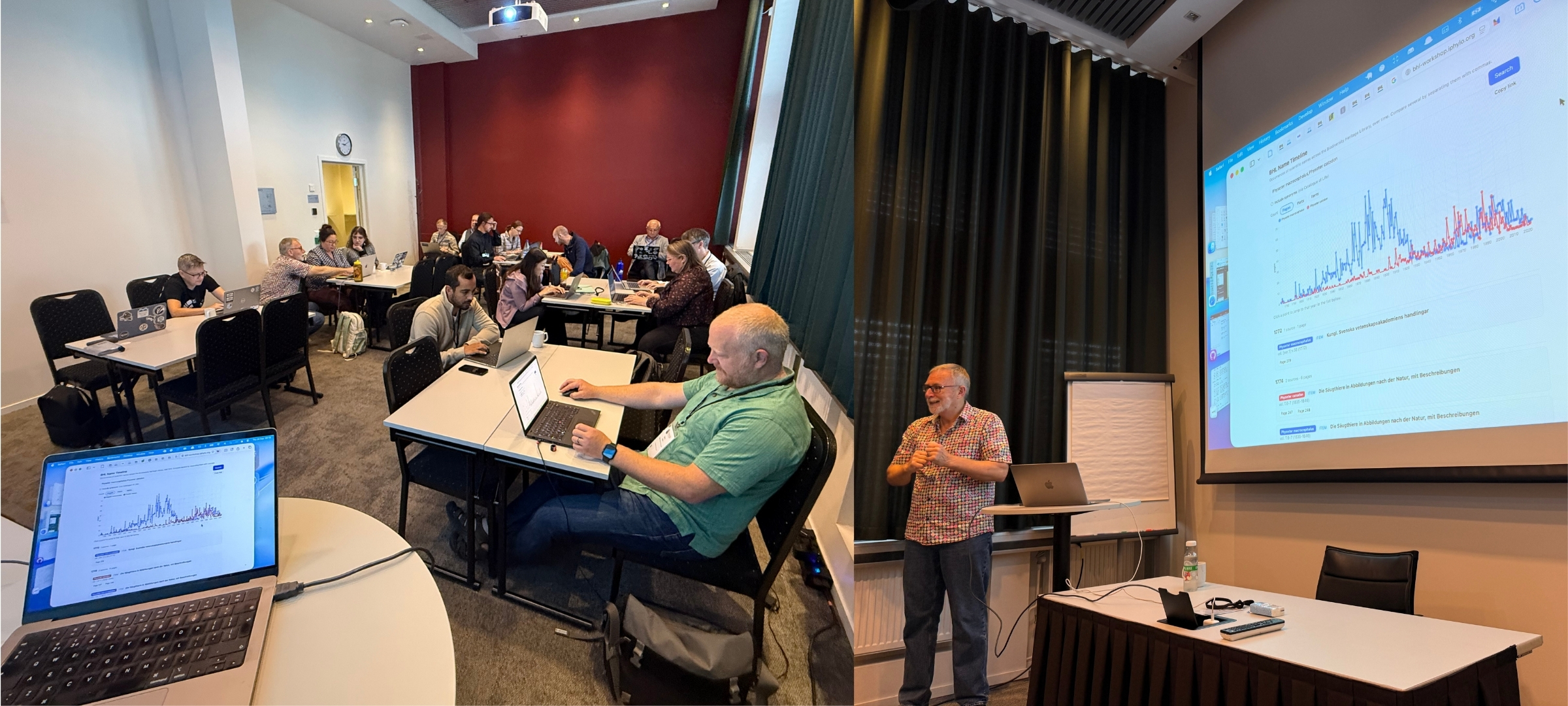
BHL’s interactive workshop at TDWG 2026. Left: Participants exploring experimental tools for BHL discovery and data reuse. Right: Rod Page demonstrating new ways to explore BHL’s collections across time. Photos: Nicole Kearney.
Image search, maps and timelines proved particularly popular, alongside improved navigation and the ability to trace AI-extracted information back to its original sources. With BHL’s Platform Modernization Project underway, these discussions provided valuable insights into future priorities.
Rod has published an excellent reflection on the workshop in the BHL Community Forum, including the demonstrations, participant feedback and poll results. His complete workshop resources are also available on GitHub.
Representing BHL at GBIF GB33
The following week, David Iggulden and I represented BHL at the 33rd GBIF Governing Board meeting, which coincided with GBIF’s twenty-fifth anniversary. It was a wonderful opportunity to celebrate GBIF’s achievements (there was birthday cake!) and discuss the future of global biodiversity information infrastructure.
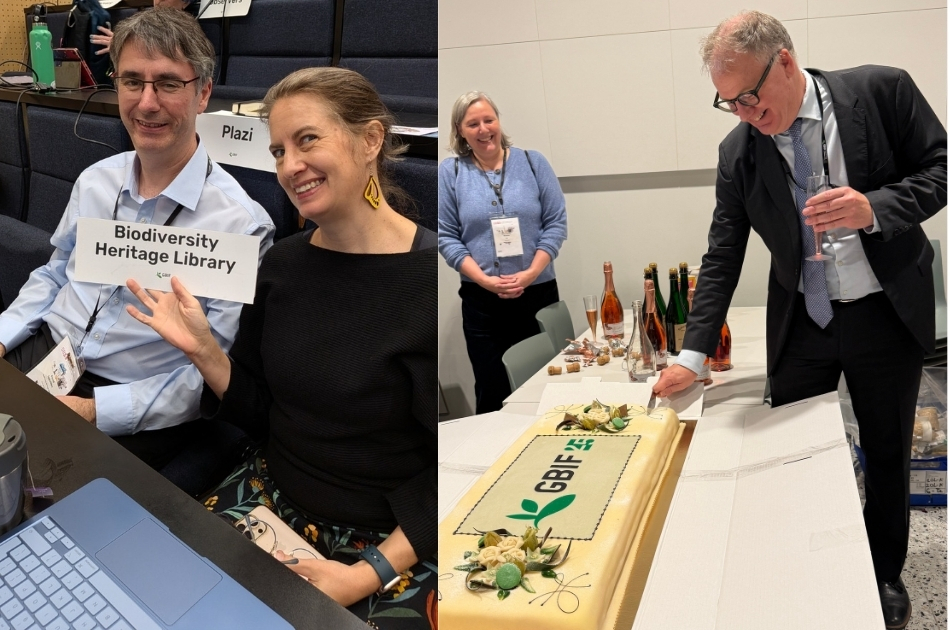
Left: David Iggulden and Nicole Kearney at the 33rd GBIF Governing Board meeting. Photo: Martin Kalfatovic. Right: GBIF Executive Secretary Joe Miller cutting the 25th anniversary cake. Photo: Nicole Kearney.
Following strategic discussions with representatives of GBIF and other biodiversity infrastructure organizations during the meeting, I prepared an intervention on behalf of BHL, which David delivered to the Governing Board. The intervention called for stronger connections between biodiversity data and the scientific literature on which our understanding of biodiversity is founded.
We also supported a proposal from Catalogue of Life to establish a task group to explore how GBIF and its associate organizations could work more closely together and strengthen the long-term sustainability of the biodiversity infrastructure network. Critically, we called for biodiversity literature and its connections to taxonomic data to form a clear part of the task group’s remit. We were delighted by the encouraging response from the Governing Board, and look forward to continuing these discussions with GBIF and our international partners.
I also attended the one-day GBIF Science Symposium, GBIF at 25: From Open Data to Living Knowledge. The presentations explored how biodiversity data is advancing research and addressing contemporary challenges, from conservation and human health to emerging technologies such as environmental DNA and artificial intelligence.
A recurring theme across both weeks was the importance of connecting different types of biodiversity knowledge – specimens, observations, sequences, scientific names and literature – so they can be more effectively discovered, interpreted and reused.
The Importance of Coming Together
As valuable as the formal presentations and meetings were, some of the most productive conversations happened in the breaks and informal gatherings that make these international conferences so worthwhile.
It was particularly valuable to have two of our BHL Executive Committee members, David Iggulden and Amanda Boczar, at TDWG. Having the opportunity to spend time together in person, exchange ideas and meet with potential collaborators was especially important as we continue to build BHL’s future.
Across both meetings, I also had valuable conversations with key colleagues, including Tim Littlewood, the newly elected Chair of GBIF’s Science Committee and Executive Director of Science at the Natural History Museum, London, and Martin Kalfatovic, the newly elected Chair of the GBIF Governing Board and BHL’s former Managing Director.
One particularly exciting outcome of our conversations was progress on improving links between scientific names and their source literature. Following discussions with Rod Page and GBIF’s Tim Robertson, and work by GBIF’s Markus Döring, we were delighted to see the number of scientific names with direct links to BHL pages increase from approximately 28,000 to 350,000 — more than a twelvefold increase!
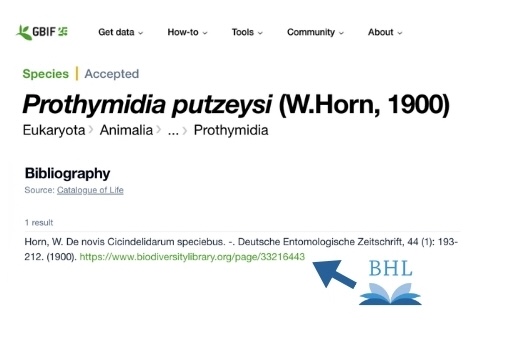
The GBIF website showing a direct link to BHL from a species profile page.
These links now flow through to GBIF, making it easier for researchers to discover and access the historical publications underpinning modern taxonomic knowledge. It’s a wonderful example of what closer collaboration between biodiversity infrastructures can achieve.
Exploring Norway’s Biodiversity
One of my favorite TDWG traditions is the annual iNaturalist BioBlitz, which encourages conference participants to record and share observations of wildlife in the host country. I always enjoy taking part, and the TDWG 2026 BioBlitz: Norway provided a wonderful excuse to explore Oslo’s biodiversity. Together, participants recorded almost 2,500 observations across 888 species.
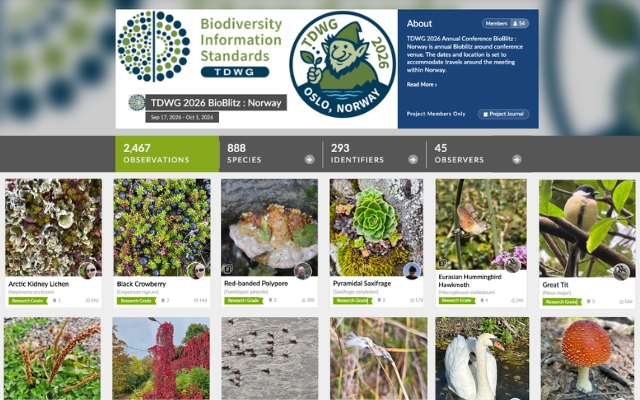
The TDWG 2026 BioBlitz project on iNaturalist.
I spent the weekends between meetings hiking, island hopping and exploring the forests and mountains around Oslo with fellow conference participants who were just as enthusiastic about wildlife and nature.
The final weekend was particularly special. I had the pleasure of accompanying our local host Hugo de Boer, Director of Science at the Natural History Museum, University of Oslo, and Anneleen Kool, Head of the Botanical Garden, University of Oslo, into the mountains to enjoy the beautiful autumn colors. At the summit, we were rewarded with waffles topped with Norway’s traditional brown cheese and jam, served in a volunteer-run mountain hut on its final day before closing for winter. Just a week later, when I had returned to spring in Melbourne, Hugo sent me a photo of their garden covered in snow!
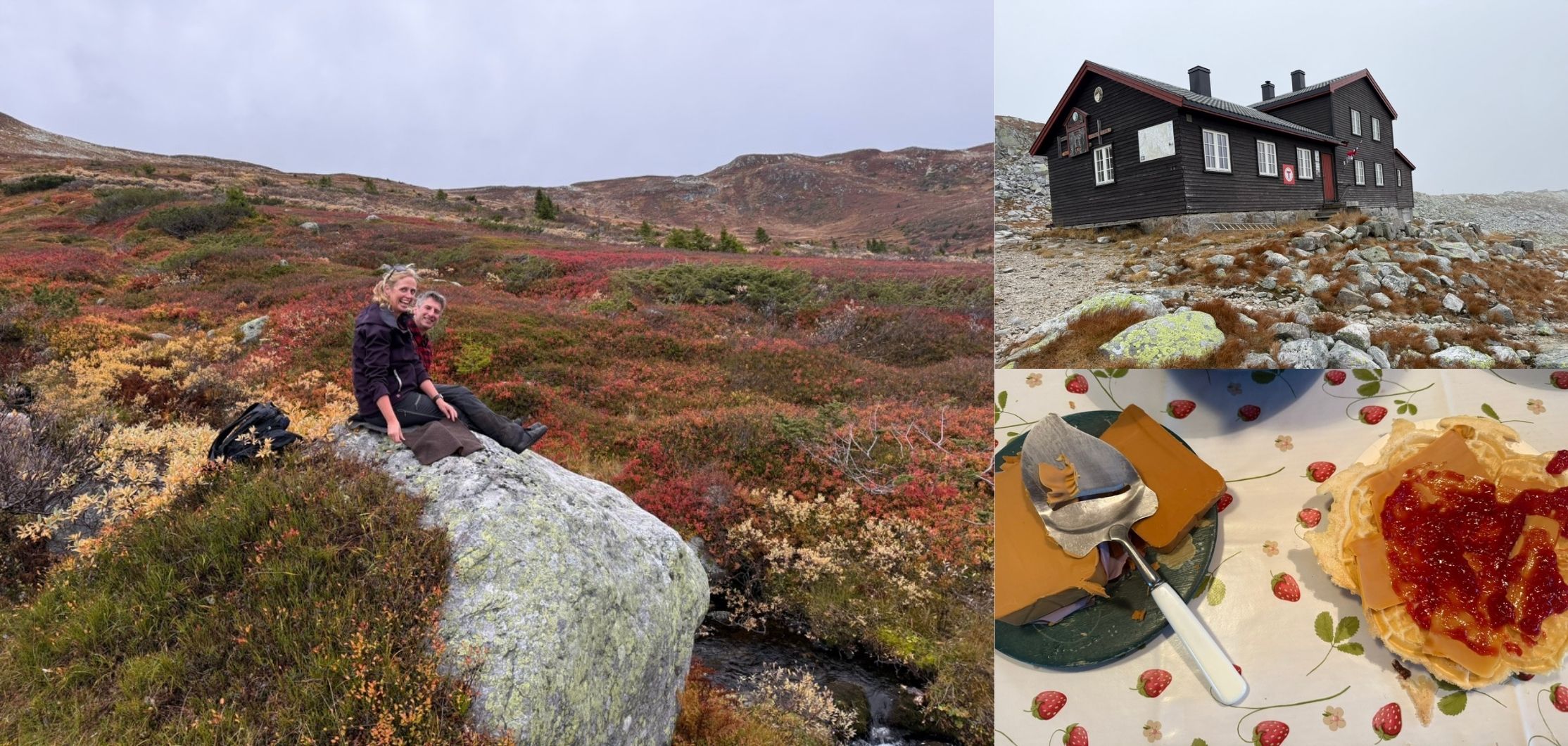
Left: Our wonderful local host Hugo de Boer and Anneleen Kool enjoying the autumn colours in the mountains outside Oslo. Top right: The volunteer-run mountain hut on its final day before closing for winter. Bottom right: Our treat of Norwegian waffles with brown cheese and jam. Photos: Nicole Kearney.
I also embraced another Norwegian tradition: the waterfront saunas, alternating the intense heat with plunges into the freezing waters of the fjord. Three of my four visits were with fellow conference participants. We were told that Norwegians often make their most important decisions in saunas, where there’s time and space to relax and think, free from distractions and technology. Something I craved in these very intense weeks.
After nine consecutive TDWG conferences, I’ve come to appreciate that these shared adventures are among the most rewarding parts of attending. As well as the immense pleasure of discovering new places, they offer opportunities to get to know colleagues as friends and strengthen the personal relationships that underpin so many successful collaborations.
Building BHL’s Future, Together
In my mini-keynote, I described BHL as a living bridge, strengthened as more roots reach out, grow and intertwine. After our time in Oslo, that image feels more appropriate than ever. There is still much to do to secure BHL’s future, but the new ideas, partnerships and practical collaborations emerging from these meetings are helping us strengthen that bridge and build a more connected, discoverable and sustainable biodiversity knowledge infrastructure.
To everyone who presented, participated, shared ideas, offered support or simply stopped to talk with us in Oslo: thank you. You are helping us build the next chapter of the Biodiversity Heritage Library.
Discover more from Biodiversity Heritage Library
Subscribe to get the latest posts sent to your email.

Nicole Kearney is BHL’s Communications Director, Manager of BHL Australia, and Chair of BHL’s Persistent Identifier Working Group. She is passionate about open access, persistent identifiers, and Striped Possums.
Leave a Comment