Biodiversity Heritage Library - Program news and collection highlights from BHL
  • Home
  • News
  • Featured Books
    • All Featured Books
    • Book of the Month Series
    • BHL at 20
  • User Stories
  • Campaigns
    • Fossil Stories
    • Garden Stories
    • Monsters Are Real
    • Page Frights
    • Her Natural History
    • Earth Optimism 2020
  • Tech Blog
  • Visit BHL
Home
News
Featured Books
    All Featured Books
    Book of the Month Series
    BHL at 20
User Stories
Campaigns
    Fossil Stories
    Garden Stories
    Monsters Are Real
    Page Frights
    Her Natural History
    Earth Optimism 2020
Tech Blog
Visit BHL
  • Home
  • News
  • Featured Books
    • All Featured Books
    • Book of the Month Series
    • BHL at 20
  • User Stories
  • Campaigns
    • Fossil Stories
    • Garden Stories
    • Monsters Are Real
    • Page Frights
    • Her Natural History
    • Earth Optimism 2020
  • Tech Blog
  • Visit BHL
Biodiversity Heritage Library - Program news and collection highlights from BHL
Blog Reel, Featured Books

BHL Book Highlights for International Rabbit Day

Portrait version of the Biodiversity Heritage Library logo.

“Promoting the protection and care of rabbits, both domestic and wild,” Saturday September 28 is International Rabbit Day and we couldn’t think of a better way to celebrate the Leporidae than to highlight some of our favorite literature about rabbits from the BHL collection.

View Full Size Image
Pl. LX from Johnson’s household book of nature

From our Darwin’s Library collection, a virtual reconstruction of the set of the surviving works held in Charles Darwin’s personal library, “The rabbit book” outlines the history of the rabbit, its varieties at the time, and provides instructions for their care and breeding. While a relatively quick read on such topics as the difference between rabbits and hares, treating dropsy (edema), and establishing a proper rabbit “court,” the most striking aspect of the book is its drawings of rabbit varieties from Angora to Full-lop. Check out our flickr image set of “The rabbit book” to see them all together.

Previous blog posts highlight another fantastic work about the Leporidae, James E. Harting’s “The Rabbit” (1898), as featured in our 2011-Year of the Rabbit post and Laurel Byrnes’ discussion of how the young Beatrix Potter’s love of natural history and study of rabbits inspired her famous children’s work, The Tale of Peter Rabbit (1902).

Want to cozy up with a few more selections of Lepus literature from the BHL? See our burgeoning list of articles related rabbits and hares and a variety of works that mention the genus, and the many species of this group, via our taxonomic search functionality.

More information about International Rabbit Day can be found on the House Rabbit Society’s website http://rabbit.org/international-rabbit-day/.

September 27, 2013by Bianca Crowley
Blog Reel, Featured Books

Celebrating Humankind’s Best Friend, the Dog!

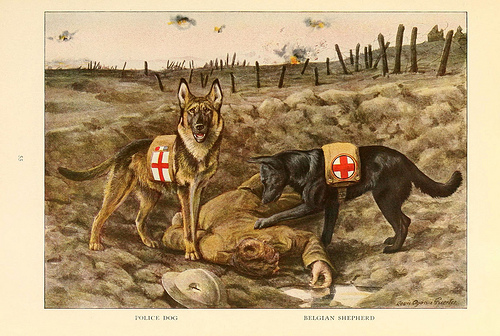
As a bone-a-fide dog lover, it gives me great pleasure to highlight Baynes and Louis Agassiz Fuertes’ beautifully illustrated “The Book of Dogs: an intimate study of mankind’s best friend” as this week’s book of the week. In it, the famous ornithologist and illustrator  lends his hand to the descriptions and art of drawing various breeds of “man’s best friend” while Baynes tells stories of dog fame, adventure, and heroism, such as this one about Red Cross dogs in WWI:

View Full Size Image
pg. 55

“The Red Cross dogs rendered invaluable service in feeding and aiding the wounded. Each one carried a first-aid kit either strapped to its collar or in a small saddle pouch. When they found a soldier who was unconscious, they were taught to bring back his helmet, handkerchief, or some other small article as a token of the discovery. Many of them learned wholly to ignore the dead, but to bark loudly whenever they came upon a wounded man.” [pg. 73]

Published in 1919 by the National Geographic Society, this “study” remarks on the history of dogs but does little to dive deeply into the science behind this subspecies of Canidae. Canis lupus familiaris are a subspecies of Canis lupus or Gray Wolf. Dogs are one of 38 subspecies of C. lupus along with a series of wolves and the feral dog, otherwise known as dingos [1]. Dogs, dingos, and wolves can all interbreed and share morphological and behavioral similarities including being social, highly expressive, and (depending on your dog of course) intelligent animals. It is not certain when exactly dogs were first domesticated but recent evidence points to one of the oldest known domesticated dogs to 33,000 years ago [2]. A study from 2010 points to the Middle East as the most likely locality of origin of the subspecies [3].

View Full Size Image
http://synynyms.com/taxon/1228387

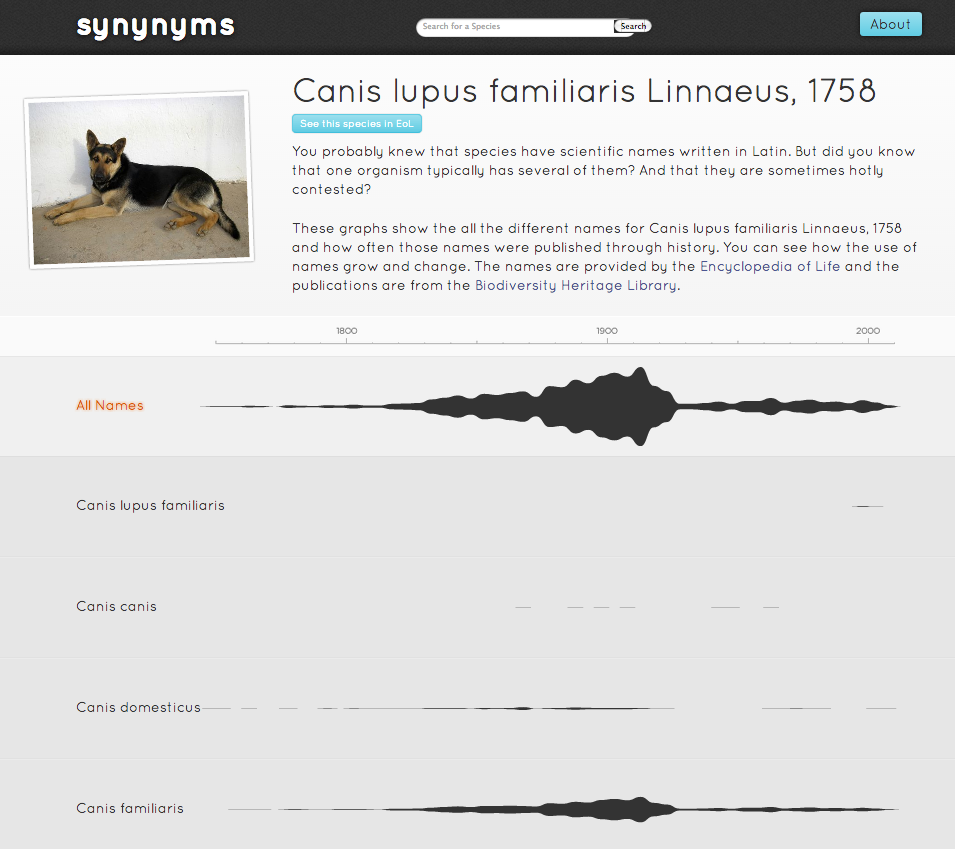
With such a rich history of domestication and intimacy with our species, one would think we’d have Canis lupus familiaris figured out, but it was not until recently that dogs’ taxonomy was resolved according to the Integrated Taxonomic Information System’s report. Linnaeus first described the domestic dog as Canis canis in Systema Naturae 1735 and later revised his own classification. As our good friend over at Synynyms.com illustrates, the taxonomic story of the dog has gone through many iterations including C. domesticus and C. familiaris, finally settling as a subspecies of C. lupus.

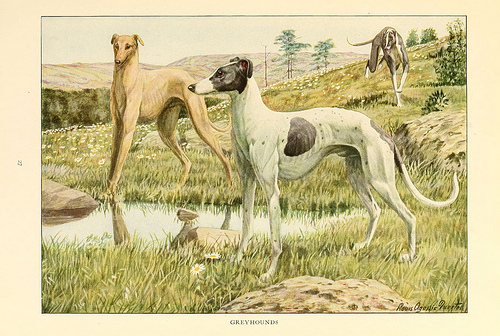
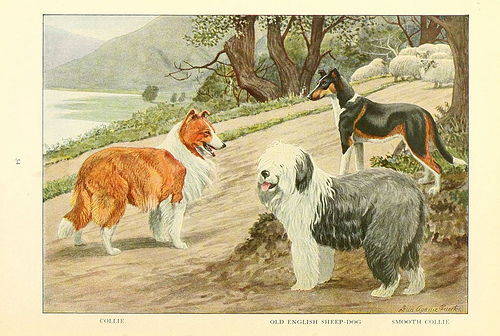
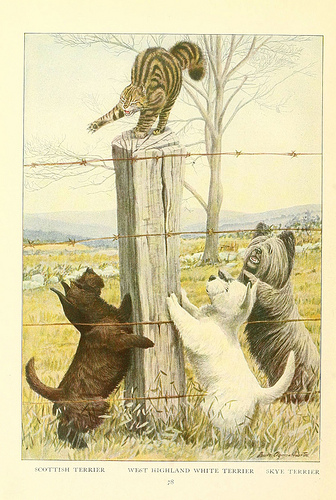
As pack animals, dogs lend themselves well to a close relationship with humans and have been highly selectively bred to serve a variety of roles. From the tiny Chihuahua to the Great Dane, nearly 280 official breeds are recognized by the Kennel Club and the American Kennel Club combined. Baynes and Fuertes discuss over 60 breeds in their book highlighting such classic favorites as the Collies, Greyhound, and Terriers (poor kitty!).

View Full Size Image
pg. 27
View Full Size Image
pg. 54
View Full Size Image
pg. 78

For more of Louis Agassiz Fuertes’ beautiful illustrations of our canine friends, please visit our flickr set for this book.

As all members of the C. lupus group can interbreed there are a wealth of possibilities for mix-breeds and as any “mutt” owner will tell you they make for some fantastic companions, bringing some the of the best of multiple breeds together. Popular mixes of today include Labradoodles (Labrador + Poodle), Puggles (Pug + Beagle), and well you figure it out… (Shih Tzu + Poodle).

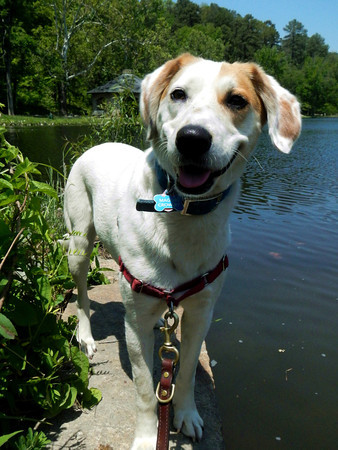
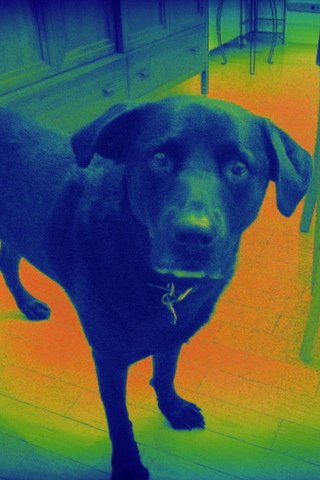
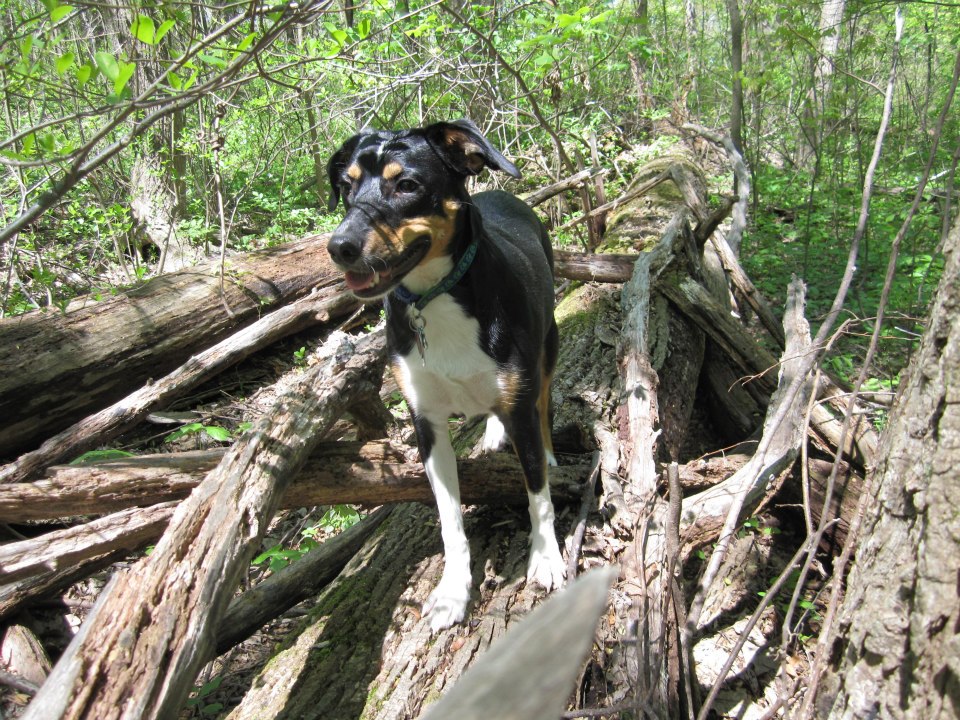
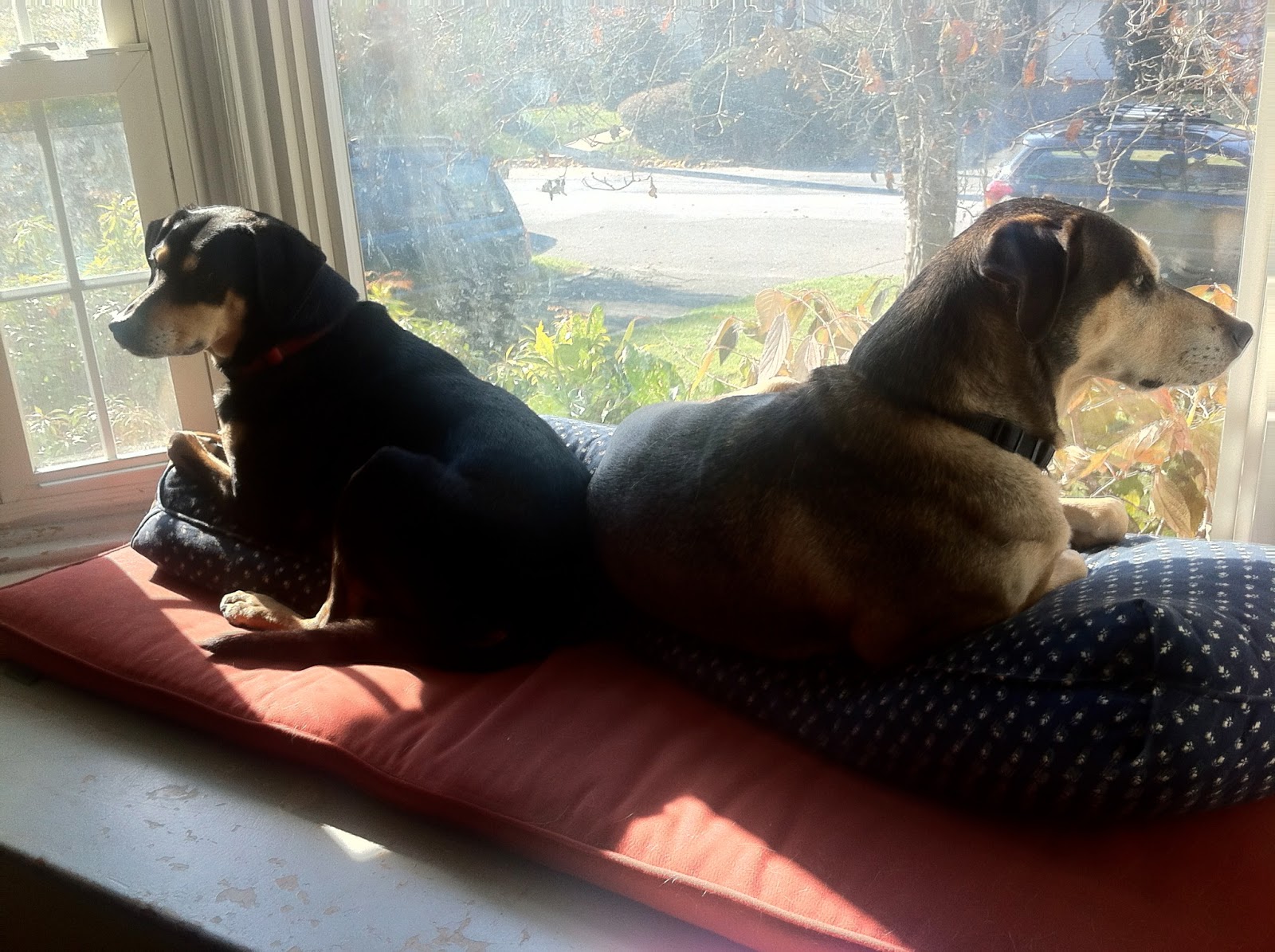
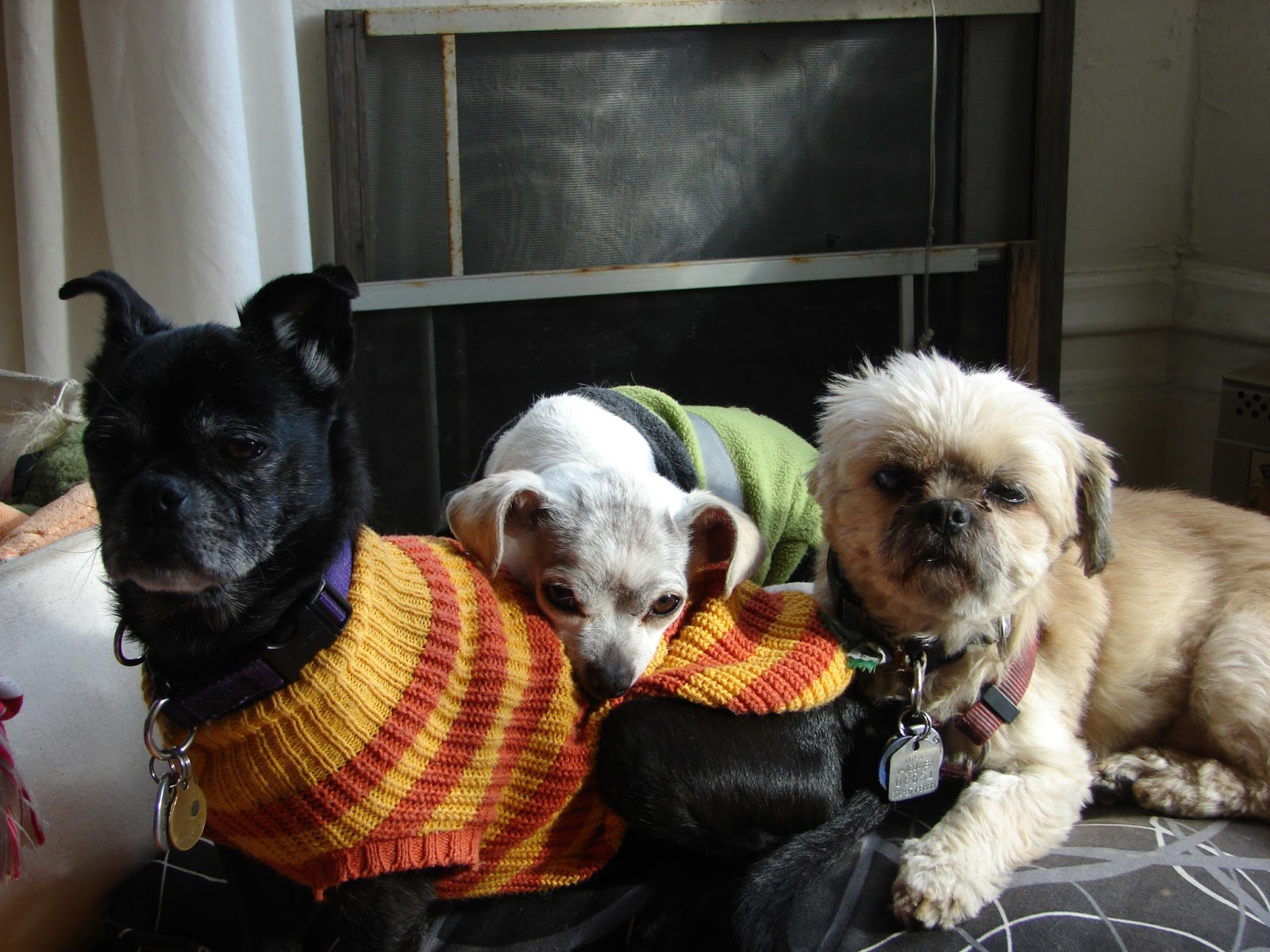
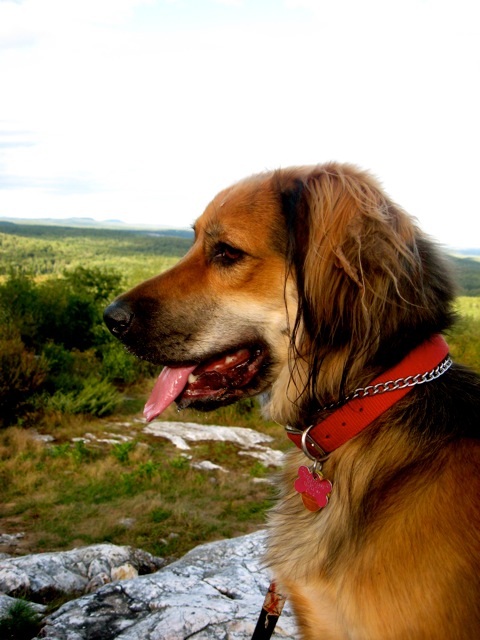
No dog post would be complete without cute pictures, thus I bring you some of the best shots of our very own BHL Staff pooches:

View Full Size Image
Maggie taken by Tim Ashman
View Full Size Image
Rose
View Full Size Image
Rowan
View Full Size Image
Hadrian
View Full Size Image
Crash & Biscuit


View Full Size Image
Lilly, Maddy, & Bertie


View Full Size Image
Franklin
View Full Size Image
Ozzie

References

[1] http://www.itis.gov/servlet/SingleRpt/SingleRpt?search_topic=TSN&search;_value=180596 accessed 6-14-2013.

[2] Druzhkova AS, Thalmann O, Trifonov VA, Leonard JA, Vorobieva NV, et al. (2013) Ancient DNA Analysis Affirms the Canid from Altai as a Primitive Dog. PLoS ONE 8(3): e57754. doi:10.1371/journal.pone.0057754

[3] vonHoldt, Bridgett; et al. (2010-03-17). “Genome-wide SNP and haplotype analyses reveal a rich history underlying dog domestication”. Nature 464 (7290): 898–902. Bibcode:2010Natur.464..898V. doi:10.1038/nature08837. PMID 20237475.

June 14, 2013by Bianca Crowley
Blog Reel, Featured Books

The Expedition Documentation Trifecta: Harriman Alaska Expedition (1899)

This is the third in a 4 part joint blog series by the Field Book Project (FBP) and the Biodiversity Heritage Library (BHL), showcasing examples of digital connections between museum specimens, field book catalog records, and the resulting publications.

View post one | View post two

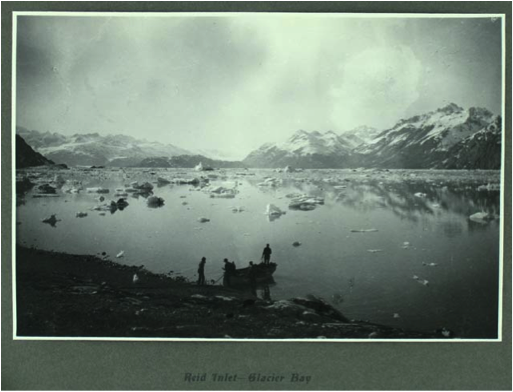
In 1899 Edward Harriman, President of the Union Pacific Railroad, turned a family vacation into a two month foray into Alaska. Originally proposed as a hunting expedition, it was transformed into a scientific exploring expedition on the advice of Clinton Hart Merriam, Chief of the Bureau of Biological Survey. Harriman and his family, accompanied by 126 researchers, traveled to Alaska aboard the S.S. George W. Elder. In the end, the work of the many researchers resulted in vast amounts of valuable scientific data, including the discovery of a new glacier and an array of floral and faunal specimens.

View Full Size Image
Reid Inlet, Glacier Bay 1899. Photographed by Edward S. Curtis.

Harriman and the Washington Academy of Sciences collaborated to fund the entire expedition, and Harriman chose researchers with diverse scientific backgrounds in order to collaborate on all fields of plant, animal, and earth science. After the expedition had ended, the scientists published a multi-volume Harriman Alaska Series, sometimes simply known as Alaska, of which vols. 6-7 were never published.

The Harriman Expedition is a particular favorite, because among the field documentation at Smithsonian Institution Archives, are two photograph albums of images from during the trip. Many of these images are available to view on Smithsonian Collection Search Center.

For such a large expedition with participants from across the Institution, you would think the field notes would be numerous and comprise their own collection. There are only as few as 6 field books from the Harriman Expedition found across the National Museum of Natural History (NMNH) and Smithsonian Institution Archives (SIA).

The photograph albums mentioned above reside in SIA; field notes of A. K. Fisher are in NMNH, Division of Mammals; T. H. Kearney’s journal is in the Department of Botany’s field book collection housed in the Main NMNH Library. Additionally there is item “Walpole, paintings, 1899 – 1904” whose abstract explains it may contain illustrations from the Harriman Expedition. One would only know this by the abstract or reading the field book content. Additionally these various field notes were cataloged by the Field Book Project, November 2011 – July 2012.

Specimens are equally difficult to track down. Though US National Museum received a collection of mollusks, birds, and plants, many of these specimens do not state they came from the expedition. One must know the collector, location, and/or time period.

Publications resulting from the expedition are a bit easier to locate, given the close relationship between Harriman and the Washington Academy of Sciences. In addition to the Harriman Alaska Expedition series linked above, the Biodiversity Heritage Library provides the following publications:

  • C. Hart Merriam papers : including correspondence, papers relating to career with the United States Biological Survey. http://www.biodiversitylibrary.org/bibliography/60472
  • Proceedings of the Washington Academy of Sciences, vol. 2 http://www.biodiversitylibrary.org/item/35745
  • Proceedings of the Washington Academy of Sciences, vol. 3 http://www.biodiversitylibrary.org/item/35746
  • Proceedings of the Washington Academy of Sciences, vol. 4 http://www.biodiversitylibrary.org/item/35272

Whether an expedition is large or small, its resulting natural history documentation can lose its connections and become increasingly difficult to locate. Cataloging and digitization efforts by Smithsonian and consortiums like the Biodiversity Heritage Library offer researchers increasingly better odds of rediscovering those connections. Stay tuned for the fourth and final blog post in the series.

May 2, 2013by Bianca Crowley
Blog Reel, Featured Books

The Expedition Documentation Trifecta: Biological Survey of Panama

This is the second in a 4 part joint blog series by the Field Book Project (FBP) and the Biodiversity Heritage Library (BHL), showcasing examples of digital connections between museum specimens, field book catalog records, and the resulting publications.

Documentation and specimens from expeditions often end up separated when participants return to their home institutions. The materials’ connections are sometimes inconsistently recorded. Resulting publications can suffer the same fate. These blog posts are snapshots of how these materials are being reunited virtually, through the ongoing work of BHL, FBP, and National Museum of Natural History (NMNH).

The first example of this online reunion is the Biological Survey of Panama, 1910- 1912. This was an amazing survey, conducted before the completion of the Panama Canal. Panama had not yet been fully surveyed; scientists recognized the potential lost opportunity, if the country was not studied before the Canal irrevocably altered the landscape. Smithsonian and affiliated staff who worked on the survey also developed an ongoing interest in the area as a site for long term collecting and research. This eventually resulted in a relationship with the research station on Barro Colorado Island, now known as Smithsonian Tropical Research Institute. Yet, if one looks for publications from this important survey, frequently one must read a portion of text to find the relationship.

Field books from the Survey
  • Catalog records from Field Book Project Field notes of Charles Dwight Marsh in collection RU007260
  • Catalogs and journals of Edward A. Goldman (USBS): January-July 1912; December 1910-June 1911
  • Catalogs of S. F. Hildebrand (US Bureau of Fisheries) in NMNH, Division of Fishes.
  • Correspondence and catalogs of Henri Pittier (USDA) at Smithsonian Institution Archives: Collection 1 and Collection 2
  • Catalog of Albert S. Hitchcock (USDA) at NMNH Main Library from Department of Botany.
  • Catalog of William R. Maxon (USNM) at NMNH Main Library from Department of Botany.

When cataloging field books that result from an expedition, the Field Book Project creates an Enhanced Encoded Archival Context catalog record to describe the expedition. The records are designed to provide official and variant names for a survey, major dates, participants, locations, and overall description of work completed. Details vary depending on available information. These specifics enable researchers to locate publications, field notes, and images of specimens collected during an expedition, even though the connection is not always explicitly stated in records.

By knowing who collected, where, and when, we were able to find records for field notes, publications, and specimens for the Survey of the Panama Canal. The Field Book Project’s item level cataloging facilitated the location of field notes from 5 of the 8 leading participants–several of whom were not employees of the US National Museum. We found several examples of digitized publications from original collectors in BHL, in spite of the fact they sometimes appeared a decade after the fieldwork occurred. These details also enabled the locating specimen images, like the one pictured above.

This is by no means an exhaustive search, but the ease with which these were found is heartening. Resources from expeditions like this are frequently documented only in paper or institutional memory. Publications out of copyright have the chance of being digitized by one of several institutions, but the online presence and availability of specimens and field notes (by nature of their uniqueness) requires additional care, time, and expense that many institutions may not have available. We at the Field Book Project are proud to demonstrate how these pieces can be reconnected online. Stay tuned for more expedition highlights.

Published works in BHL
  • Mammals of Panama (with thirty-nine plates)
  • The marine fishes of Panama
  • Annual report of the Board of Regents of the Smithsonian Institution for 1910 – 1912
  • Report on the Lepidoptera of the Smithsonian Biological Survey of the Panama Canal Zone
  • A century of trees of Panama
  • The Fishes of the Fresh Waters of Panama
  • Amphibians and Reptiles collected by the Smithsonian Biological Survey of the Panama Canal Zone
  • New species of fishes from Panama
  • Descriptions of New Genera and Species of Microlepidoptera from Panama
  • New Genus and Species of Hymenoptera of the Family Braconidae from Panama
  • From Expeditions organized or Participated in by the Smithsonian Institution in 1910 and 1911 pg. 15-26
  • A new catalogue of the fresh-water fishes of Panama
April 5, 2013by Bianca Crowley
Blog Reel

A Consortium that Scans Together, Bands Together

Portrait version of the Biodiversity Heritage Library logo.

Over the years, the BHL consortium has grown from its initial core of 10 members to now 15 member institutions across the United States and the United Kingdom.

While each institution contributes its own unique set of materials to the BHL collection, many of our collections share similar materials. Thank goodness we do because we rely on each other to help fill in gaps in the BHL corpus. But this is easier said than done. Have you ever tried to amass a complete set of 90+ year old objects into one place?!

The quick and dirty explanation of our digitization process is as follows — BHL consortium libraries:

  1. Work together to select books for scanning
  2. Do our best to make sure we don’t send the same materials for scanning, i.e. “de-duplication”
  3. Send the books from our shelves for scanning to various Internet Archive locations or to our own institutional scanning centers
  4. Send the bibliographic data from our library catalogs
  5. Render derivative files, such as the OCR (optical character recognition) text files
  6. Aggregate the data files and images for every page of every book scanned into our back-end database managed by the Missouri Botanical Garden
  7. Serve it all up via our website: http://biodiversitylibrary.org

And for those of us who prefer visuals:

BHL: Disseminating Content Beyond the Silo from Bianca Crowley and Grace Costantino

Steps 1 and 2 can get complicated. Fast. Which is why we need the tools to help us coordinate who’s scanning what, when. To manage our communications we use an issue tracking system, in our case Countersoft’s Gemini system. Whenever you submit feedback via our website, a new issue, or ticket, is created in our system which we route to the appropriate BHL Staff for follow up. Send us feedback telling us something’s missing from our collection and we’ll try to find the BHL library who can send it for scanning. Sounds easy enough, right?

Wrong. Enter an old journal series which over the course of decades, centuries even, can modify its scope, alter its publication title and alter it again (and again…). Combine this with the changing practices of the printing, bookbinding, and library industries over the course of history and you have quite the task to gather the various pieces of the puzzle and arrange them into the complete picture of a publication.

View Full Size Image
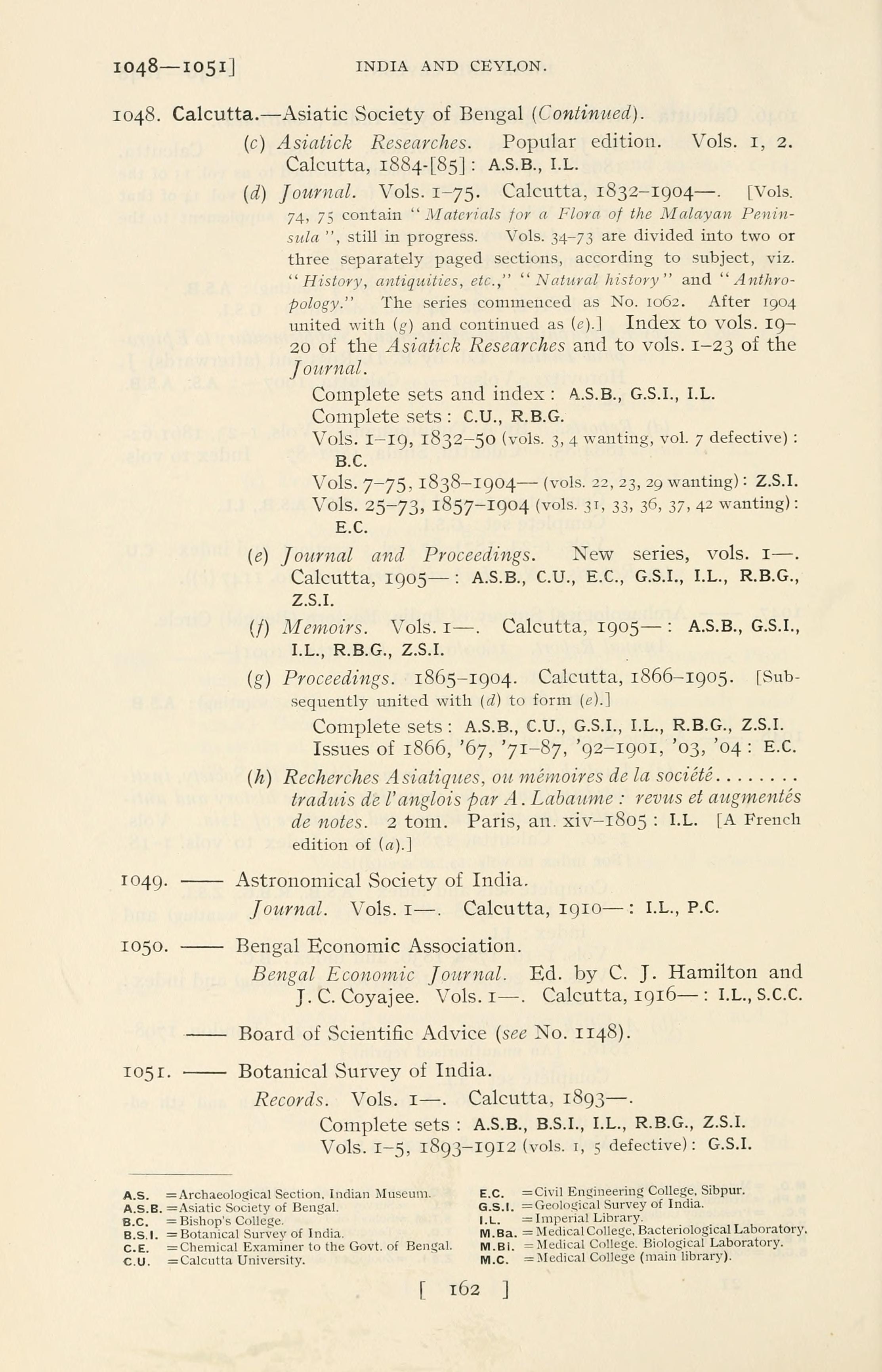
Bibliography of Asiatic Society publications,

The Journal of the Asiatic Society is one of my favorite examples of how the BHL member libraries work together to accomplish this task.  The Journal changed its title various times since the late 18th Century and we have 4 of them in the BHL starting with Asiatick Researches (1788-1849) to the Journal and the Proceedings of the Asiatic Society (1905-1934). Since we started digitizing books for the BHL in 2007, this series has called on 7 different libraries to send various volumes for scanning in an effort to complete the digital set. The work still continues today. With so many libraries involved, it is not uncommon for there to be 3 different ways the titles were cataloged and 5 different ways the volumes were bound, for example, making the work of selection and de-duplication rather tricky.

Without systems that allow us to communicate in detail about who’s scanning precisely what, when, we’d have no way to aggregate 15 different physical library collections into a single BHL collection online. Our issue tracking system is just one of many tools that we use to communicate across various aspects of our digitization workflow. However, the tools would not mean anything if it were not for the hard work and collaborative spirit of the librarians throughout our consortium.

March 15, 2013by Bianca Crowley
Blog Reel

The Digital Specimen, Field Book, and Publication Trifecta

The Field Book Project (FBP) and the Biodiversity Heritage Library (BHL) are pleased to bring you a joint blog series showcasing some of the best examples of digital connections between museum specimens, field book catalog records, and the resulting publications for three notable expeditions. This four part series will continue over the coming months. Ever wonder what it takes to understand the full story of historical expedition science? Read on!
View Full Size Image
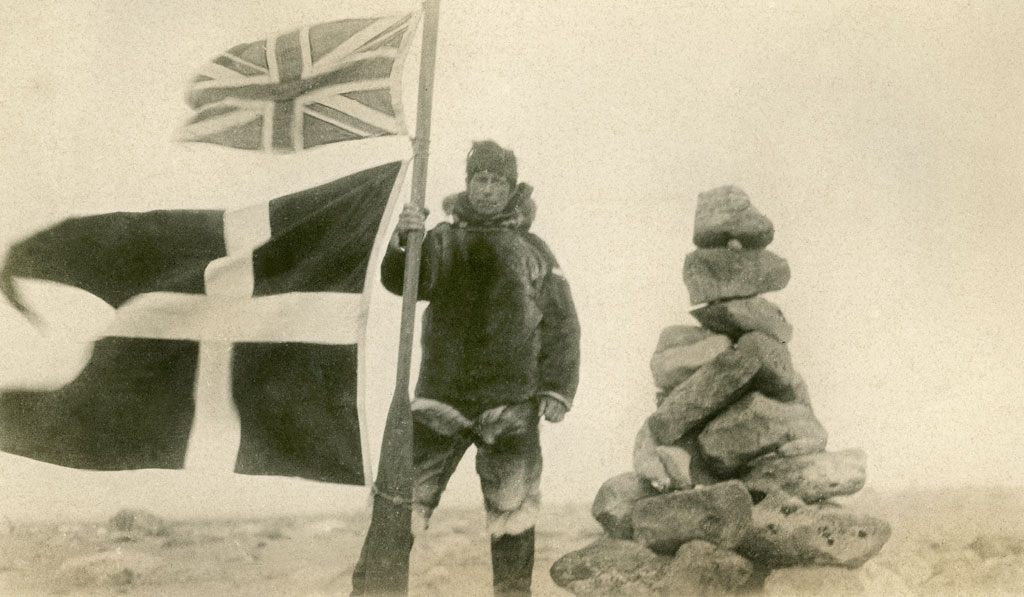
Burying Members of the Franklin Expedition at Starvation Cove, c. 1924. Smithsonian Institution Archives, Science Service Records, RU 007091, Box 409, Folder 2.  2005-8639.


It’s safe to say, everyone has an idea of what an expedition is; I hope all will agree when I say they are fascinating. Expeditions can be a thrilling story of exploration, national pride, thrill-seeking, and personal drama. They have been organized for a myriad of political or personal reasons; whatever these may have been, expeditions frequently yield natural history observations and specimens. Expeditions are also a wonderful source of information about biodiversity. Since expedition participants usually come from multiple institutions and disciplines, more collecting is often possible. This can result in a specimen collection of greater breadth and variety than a typical collecting event. With these characteristics, an expedition can prove a fascinating story and an important source of scientific documentation.

So I’ve been thinking it would be interesting to look at the Field Book Project’s expedition content. FBP was inspired by the challenges a researcher experienced tracking down specimens and field books from an expedition. Those experiences helped shape the cataloging structure FBP developed. We create catalog records for field books, their collections, and their creators (persons, organizations, and expeditions). Since we started, we have cataloged field books from 103 expeditions, some involving well-known individuals or documenting the first time an area was thoroughly studied.
View Full Size Image
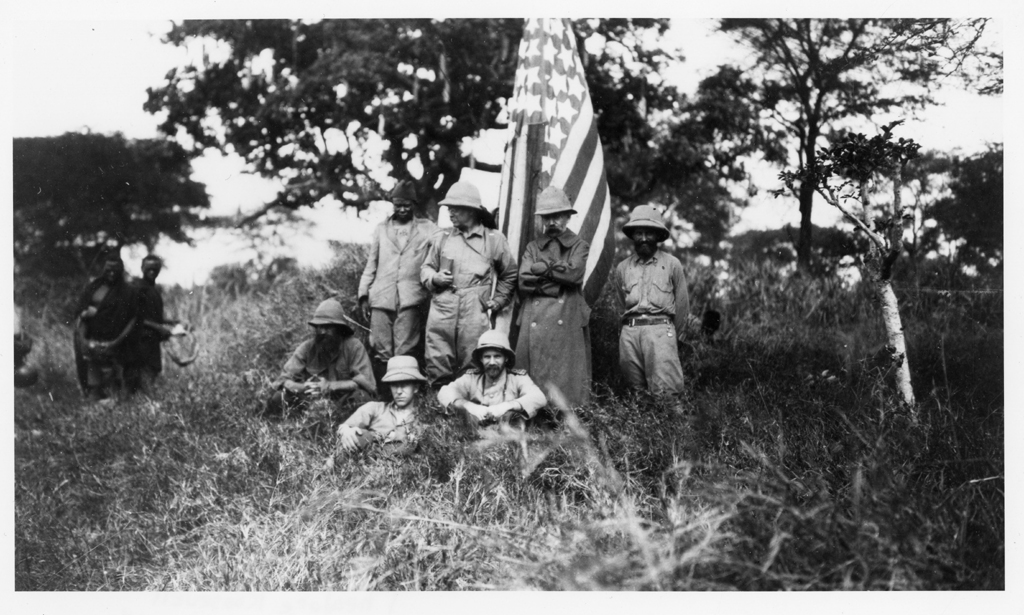
Theodore Roosevelt on African Expedition, 1909. Smithsonian Institution Archives, RU 00095, Box 56, Folder 10. SIA2009-1371.

On December 19th, FBP catalog records were made available through the Smithsonian’s Collection Search Center. This has created what I like to think of as the trifecta. What constitutes the trifecta? There are three major parts to natural history documentation that have proven important to researchers with whom we’ve worked: (1) the specimens, (2) the field books created when specimens were collected, and (3) the publications that resulted from their study. The Smithsonian Institution maintains online databases for many of their specimens. As BHL blog readers know, Smithsonian Libraries has also contributed to the Biodiversity Heritage Library to provide digitized versions of the publications for free access online. The FBP now offers online descriptions of the individual primary documents. The trifecta is growing for a number of Smithsonian sponsored expeditions and collecting events. A researcher now has a better chance of locating a specimen, its related field book, and a publication that cites it.

As a Field Book Project cataloger, I am thrilled to see the last element of the trifecta, our records, now available. While cataloging, we often verify information like location names by searching for digitized publications the creator may have written based on the field books. I find it fascinating to see how a publication can be informed by a primary document and vice versa. A researcher may be able to determine what a creator saw as significant about the collecting through the publication, and see the day-to-day work that the creator used to come to that conclusion in the field book.

Researching an Expedition

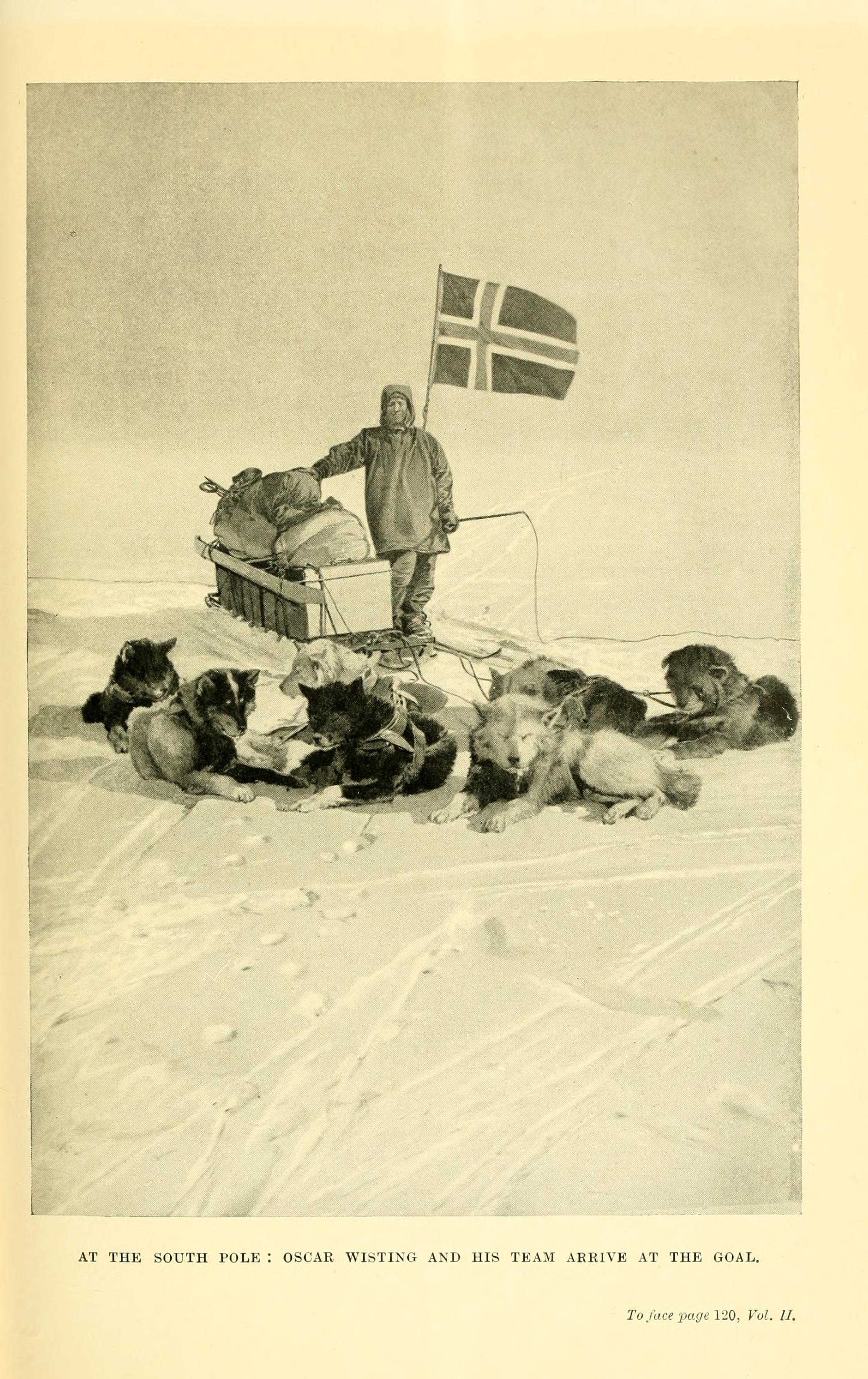
“At the South Pole: Oscar wisting and his team arrive at the goal” from The South Pole by Roald Amundsen, pg 121.  Biodiversity Heritage Library.
What is so challenging about researching specimens and documentation from a historical expedition? When an expedition ends, it can eventually fall from the public consciousness. The specimens and documentation might then be divided. At the very least, specimens go to each institution whose staff collected it. Specimens and documentation may be separated again by type and sent to different departments within an institution (e.g. mammal specimens go to mammalogy, bird specimens to ornithology). The fact that they were collected during the same expedition may not be recorded with each handoff. Each separation makes it harder to guarantee that the expedition connection is still evident.

Publications resulting from expeditions also run a high risk of losing an explicit expedition connection. Book catalog records do not always indicate that a publication documents a certain expedition. A researcher looking for resulting publications might have to search for participants as authors, looking for a period of time after the expedition was completed, then read the publication itself to verify the content is relevant. Some of these issues, like discovery of expedition related publications, may seem pretty straightforward, but this type of search assumes that the researcher knows who took part in the expedition.

How expeditions are documented

Expedition documentation varies widely. In recent years, some universities and museums have used the general appeal of expeditions to highlight some of their own collections online. These can be wonderfully informative websites, but usually only cover a few expeditions of significance to the home institution.

The Smithsonian Institution, as part of its initiative to be a provider of public history, has a detailed list of Smithsonian related expeditions available as an online guide that covers 1878 – 1917, compiled from Smithsonian Annual Reports. The Institution’s annual reports have a long tradition of discussing any major fieldwork. Smithsonian Institution Archives (SIA) also maintains more than 150 individual expedition records. These records are at varied levels of completeness, since Annual Reports sometimes only mention the name of a collecting effort if it was small.

Over the last two years, FBP has documented 103 expeditions relating to field notes. Several were not in the extensive list already kept by SIA, but deeply buried in personal or departmental papers. These can be rich resources, but a researcher would usually not know the information was there without reading the materials, despite the detailed finding aids SIA generates every year.

Researching an expedition is like untangling a very large knot. FBP, BHL, and museum divisions work to increase online documentation so researchers can find the right string to pull. This is by no means a finished process; many of us know what a gnarly tangle the search through materials can become. The digitization of the specimen, field book and publication trifecta can only serve to ease the burden of this twisted ravel of biology, personal history and published record, helping us and our researchers to find the connections.

February 28, 2013by Bianca Crowley
Blog Reel, Featured Books

Say What?!

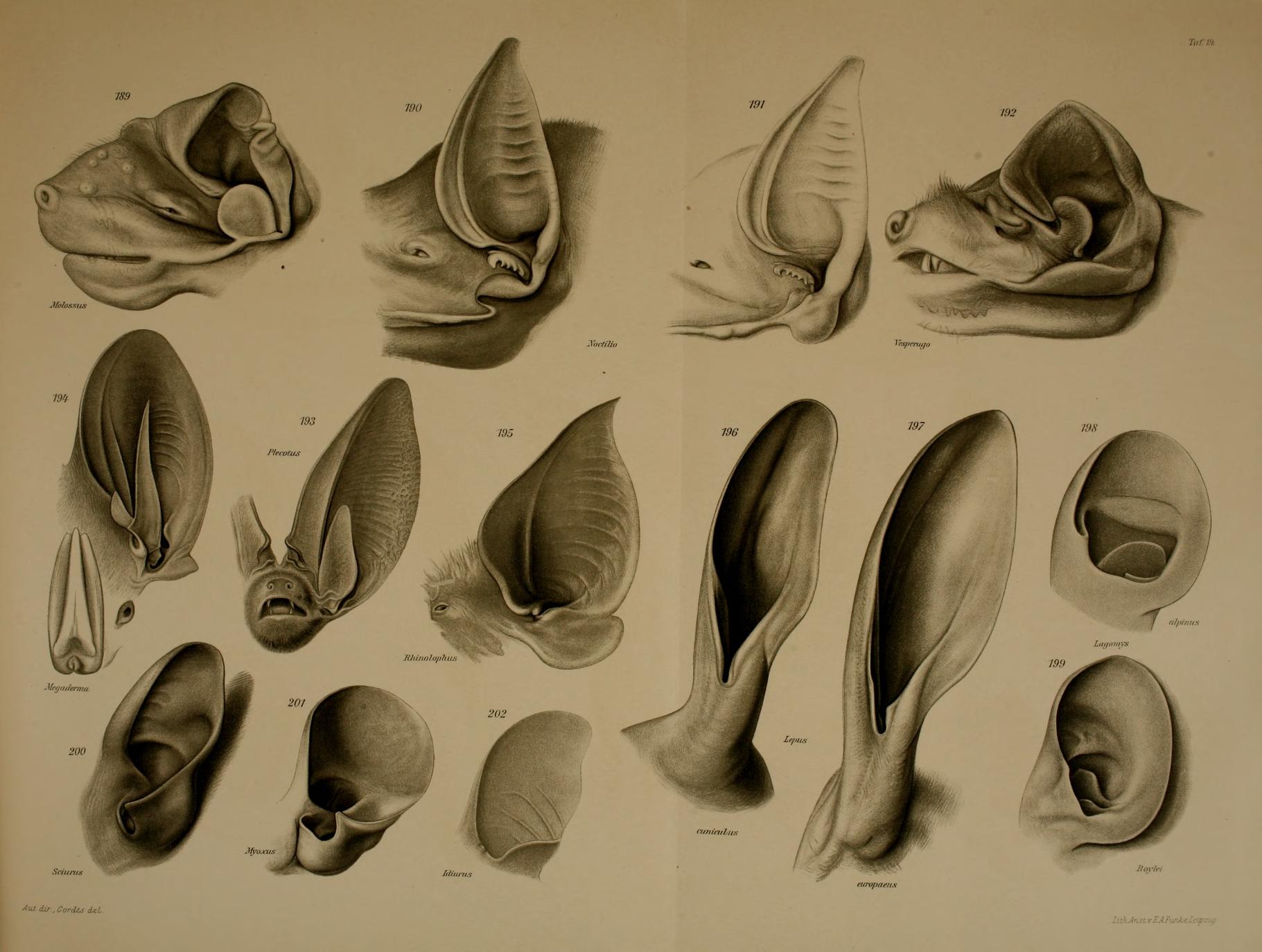
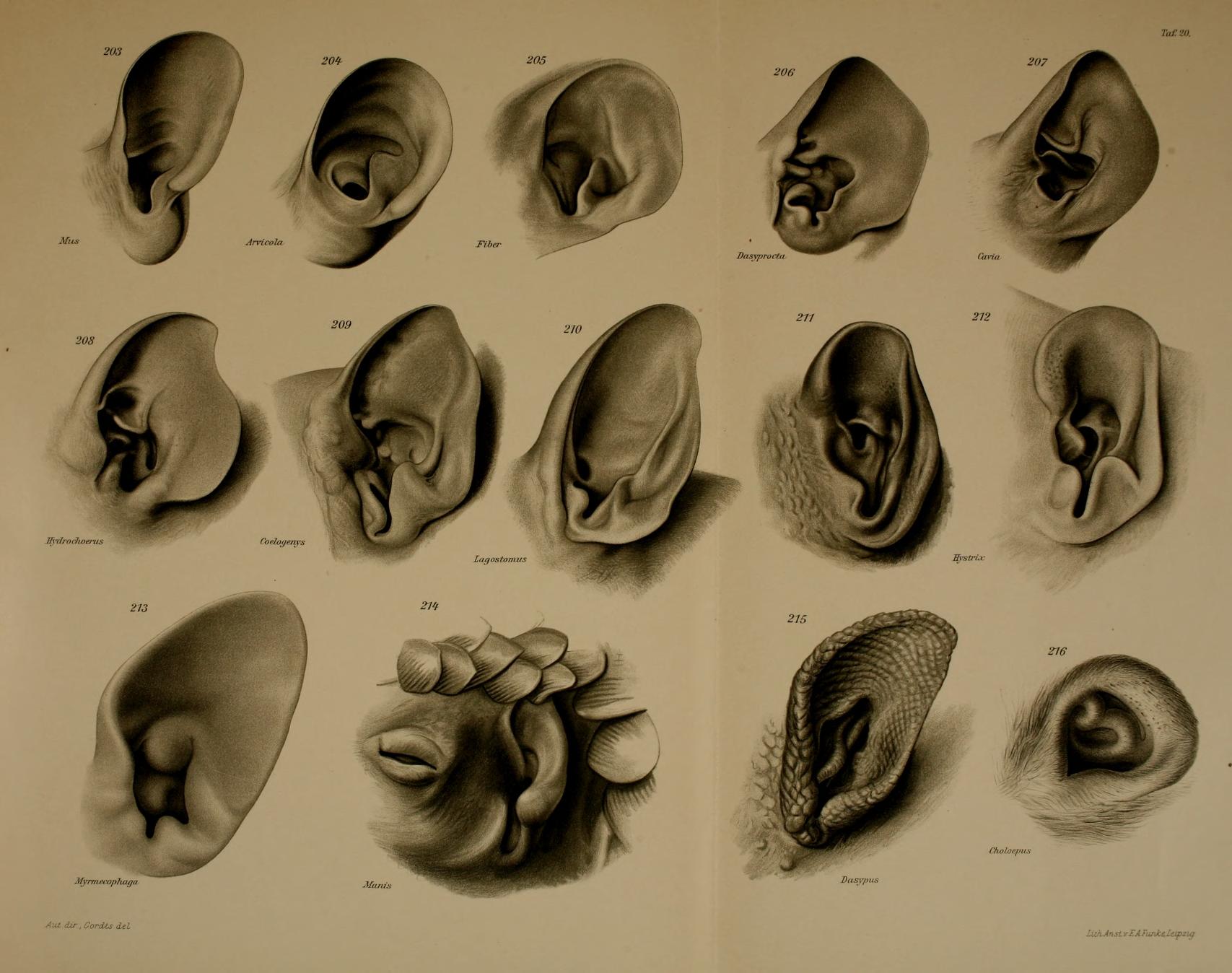
a variety of mammal ears

Sometimes I come across items in the BHL collection that elicit an immediate response. In this case it was, “Look at all those ears!”

Ears indeed. In 1912 Johan Erik Vesti Boas published his Ohrknorpel und äusseres ohr der Säugetiere; eine vergleichend-anatomische Untersuchung (Ear cartilage and outer ear of mammals, a comparative anatomical study). Beautifully illustrated, Boas’ book takes us through a host of mammal ears from rodents, to whales, kangaroos, pigs, bats, primates, and yes, even humans. There are some very nice cartilage spreads as well which we have included in our in our Flickr photostream but for now I will show some of my favorite pinnae (outer ear) pin-ups!

View Full Size Image
Find the ear of the tiny tenrec here!
View Full Size Image
Ooh, there’s a pika ear in here!
View Full Size Image
Can you spot the capybara ear?

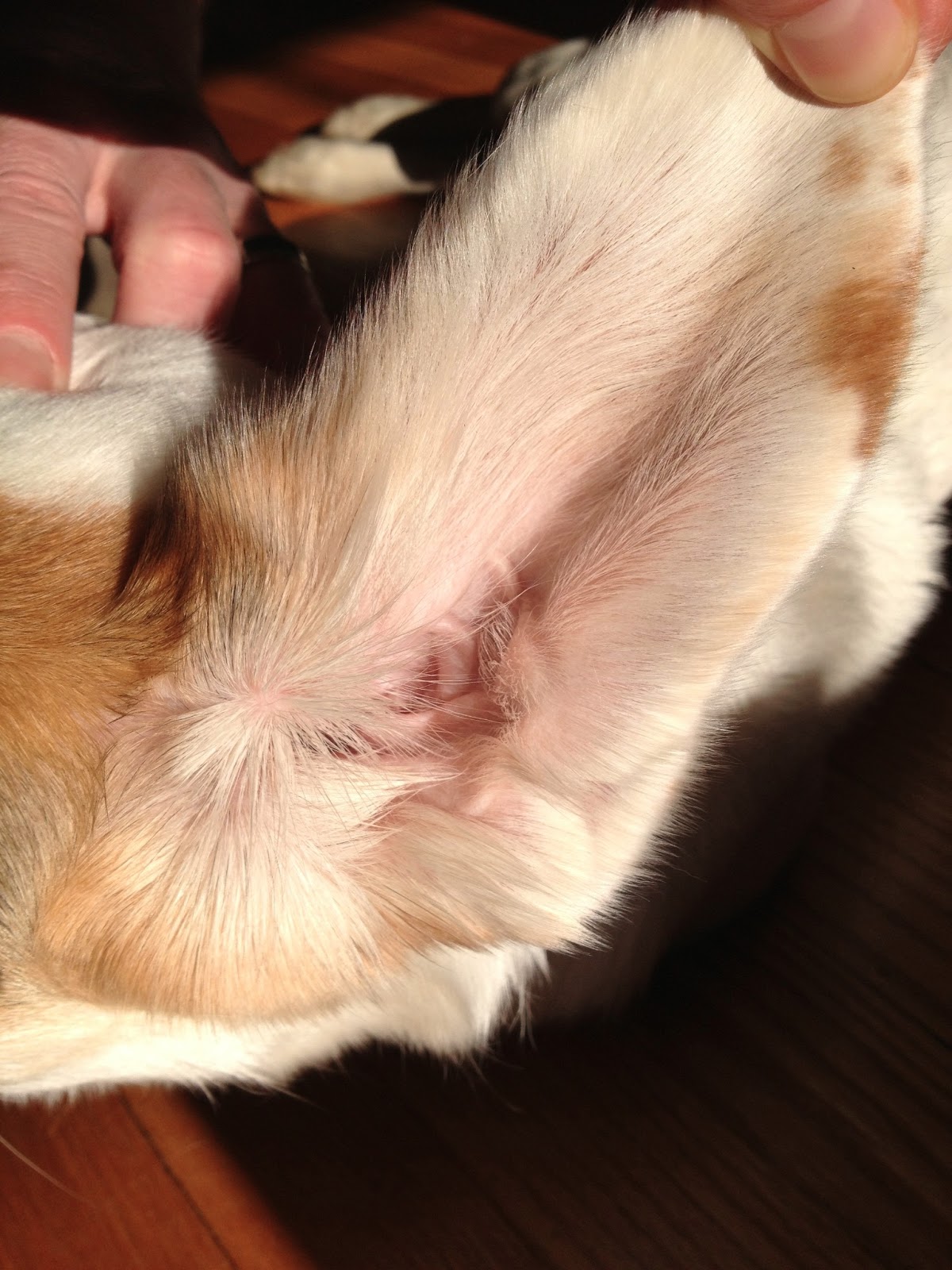
I cannot help but throw in a picture of a full color mammal pinna from my very own Canis lupus familiaris. If you look closely you can see the aperture, or the entrance of the ear canal, under all that hair.

View Full Size Image
The study of the mammalian ear is important to evolutionary biology in that is an exemplar of the concept of exaptation which describes how traits from one organismal group are co-opted to function differently in another group. In this case, the jawbones of reptiles were co-opted to form the ear bones of mammals commonly known as the hammer, anvil and stirrup. [1]
Next time you are enjoying the company of fellow mammals, human or otherwise, take a closer look at their ears and think of yourself as Dr. Boas (with a cabinet full of ear specimens!) carefully examining and comparing one of the more functional pairs of our anatomies: the ears.
References
[1] Jaws to ears in the ancestors of mammals
February 21, 2013by Bianca Crowley
Page 3 of 5« First...«2345»

Help Support BHL

BHL's existence depends on the financial support of its patrons. Help us keep this free resource alive!

search

About BHL

The Biodiversity Heritage Library (BHL) is the world’s largest open access digital library for biodiversity literature and archives. BHL operates as a worldwide consortium of natural history, botanical, research, and national libraries working together to digitize the natural history literature held in their collections and make it freely available for open access as part of a global “biodiversity community.”

Join Our Mailing List

Sign up to receive the latest news, content highlights, and promotions.

Subscribe Now

Subscribe to Blog via Email

Enter your email address to subscribe to this blog and receive notifications of new posts by email.

Join 319 other subscribers

Subscribe to Blog Via RSS

Subscribe to the blog RSS feed to stay up-to-date on all the latest BHL posts.

Access RSS Feed

Inspiring Discovery through Free Access to Biodiversity Knowledge.

The Biodiversity Heritage Library makes it easier than ever for you to access the information you need to study and explore life on Earth…for free, anytime, anywhere.


64+ Million Pages of
Biodiversity Literature Online.

EXPLORE

Tools and Services
to Transform Research.

EXPLORE

300,000+
Illustrations on Flickr.

EXPLORE

ABOUT | HARMFUL CONTENT | PRIVACY | SITE MAP | TERMS OF USE