Biodiversity Heritage Library - Program news and collection highlights from BHL
  • Home
  • News
  • Featured Books
    • All Featured Books
    • Book of the Month Series
    • BHL at 20
  • User Stories
  • Campaigns
    • Fossil Stories
    • Garden Stories
    • Monsters Are Real
    • Page Frights
    • Her Natural History
    • Earth Optimism 2020
  • Tech Blog
  • Visit BHL
Home
News
Featured Books
    All Featured Books
    Book of the Month Series
    BHL at 20
User Stories
Campaigns
    Fossil Stories
    Garden Stories
    Monsters Are Real
    Page Frights
    Her Natural History
    Earth Optimism 2020
Tech Blog
Visit BHL
  • Home
  • News
  • Featured Books
    • All Featured Books
    • Book of the Month Series
    • BHL at 20
  • User Stories
  • Campaigns
    • Fossil Stories
    • Garden Stories
    • Monsters Are Real
    • Page Frights
    • Her Natural History
    • Earth Optimism 2020
  • Tech Blog
  • Visit BHL
Biodiversity Heritage Library - Program news and collection highlights from BHL
BHL News, Blog Reel

From Scarborough to Svjatoj Nos: BHL’s latest in-copyright additions

Portrait version of the Biodiversity Heritage Library logo.

What do the Scarborough District, tigers, Socieded Cientifica Argentina, Auckland Institute and Museum, birds and the Svjatoj Nos wetlands have in common?

Actually not much…

…except that they are the newest in-copyright additions to the BHL collection!

If you still think that BHL is strictly about legacy literature, think again. Although still a very small portion of our collection, in-copyright titles now total over 400 from 170 licensors. Please see our Permissions page to learn more about the in-copyright content in our collection.

Where possible, BHL acquires permission in the form of a signed license agreement from copyright holders to digitize post-1922 publications. These publications are available for open access under a Creative Commons Attribution-NonCommercial-ShareAlike 4.0 (CC BY-NC-SA 4.0) license. Users are welcome to reuse the in-copyright content in BHL so long as they adhere to the terms of the CC license, meaning:

  • you attribute the content to the copyright holder,
  • use the content for non-commercial purposes such as educational or personal use
  • share the content under the same license (CC-BY-NC-SA 4.0)

Our latest (bio)diverse mix of titles hails from all over the world:

The Natural History of the Scarborough District
Since 1889, the Scarborough Field Naturalists’ Society has encouraged the organization of “amateur naturalists’ with interests throughout the spectrum of natural history.” BHL is pleased to include this publication in our collection as we feel we are the perfect place for these types of smaller scholarly society publications.

Tracking tigers : a review of the status of tiger, Asian elephant, gaur, and banteng in Vietnam, Lao, Cambodia, and Yunnan (China), with recommendations for future conservation action by Will Duckworth and Simon Hedges (1998)
In 1998 the World Wildlife Fund (WWF) Indochina programme commissioned a report on the status of large mammals. “It was an incredible piece of work and represents an expertly pieced together compilation of data and information from every source possible” explains Michael Baltzer, Director of the WWF Tigers Alive Initiative. As the first in-copyright WWF publication to become a part of the BHL collection, we hope this is a good sign for additional WWF publications to come.

Anales de la Sociedad Cientifica Argentina
A pioneering institution for scientific study in Argentina since 1872, the Sociedad Cientifica Argentina has published its Anales for over 130 years. BHL is thrilled to be able to provide this complete publication through the present day. Digitization of the Anales is underway and should be available shortly.

Bulletin of the Auckland Institute and Museum and Poirieria
The Auckland Museum Institute dates back to 1867 when it assumed the management of the Auckland Museum and became the regional representative of the Royal Society of New Zealand. Its Bulletin covers a spectrum of topics related to natural and human history. The Auckland Shell Club was formed in 1931 as a section of the Auckland Museum Institute, dedicated to “all things molluscan, ie: shell collecting (recent and fossil), conchology and malacology (study of shells and shellfish), and molluscan ecology and conservation.” These publications will be available in BHL soon.

Ornithological Society of Turkey Bird reports and Ornithological Society of Turkey Bulletins 
In 1978, the Ornithological Society of the Middle East (OSME) formed as a successor to the Ornithological Society of Turkey. Its purpose is to promote research and address conservation issues for birds in the region between, “between Europe, China and the Horn of Africa on two major migration flyways crossing Central Asia’s wind-swept steppes, the Caucasus’s towering mountains, Arabia’s wide arid deserts and the tropical seas of the Indian Ocean.” Previously, the OSME gave permission for BHL to include Sandgrouse and its Bulletin in our collection. It has now added 2 more titles, published under its former name. Please stay tuned for digital copies of the Bird reports and Bulletins to appear in the coming weeks.

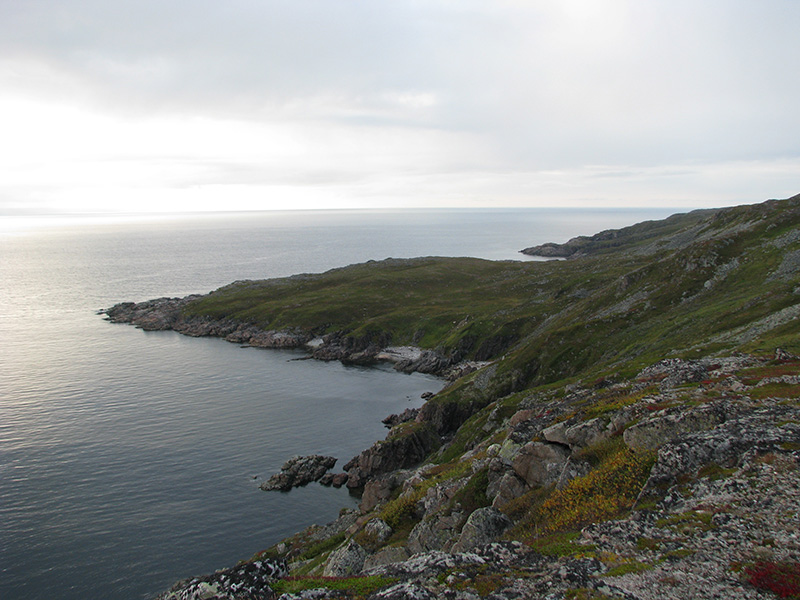
Ecology of the Svjatoj Nos wetlands, Lake Baikal by J. Mlíkovský & P. Stýblo (eds.)
View Full Size Image

These stunning wetlands are located on the Kola Peninsula along one of the most northeastern coasts in Russia. BHL is pleased to make this work available in our collection soon.

Digitization is in progress for these titles and you can see them appearing via our recent additions list.

Want to see more in-copyright content in BHL? Let us know what you’d like to see!
October 22, 2015by Bianca Crowley
BHL News, Blog Reel

Newest In-Copyright Additions to our Collection

Did you know that there is modern literature in our collection?

We have permission with over 165 licensors to provide nearly 400 in-copyright titles for free and open access under a Creative Commons BY-NC-SA 4.0 license. In other words, we have contemporary titles in our collection that you are free to use so long as you attribute the content to the copyright holder, use the content for educational or personal use only (commercial use is NOT allowed) and share the content under the same license (CC-BY-NC-SA 4.0). You can even create derivatives of the content for reuse so long as you adhere to the terms of the license.

BHL is pleased to announce the recent acquisition of 4 new in-copyright titles that we are in the process of adding to our collection:

View Full Size Image

The San Diego Shell Club [http://www.sandiegoshellclub.com/]
Since 1961, the San Diego Shell Club has been promoting research and appreciation of Mollusca through “lectures, club meetings and field trips,” as well as through their peer-reviewed publication, The Festivus. The Club has relationships with natural history museums in southern California including the San Diego Natural History Museum, Natural History Museum of Los Angeles and the Santa Barbara Museum of Natural History.

  • BHL is looking forward to providing back-issues of The Festivus through 2013 in our collection soon. Please monitor our recent additions page to track its progress. The San Diego Shell Club offers copies of their current volume for a very affordable fee via their website.
View Full Size Image

California Botanical Society [http://calbotsoc.org/madrono/]
Dedicated to the advancement of Western American botany, the California Botanical Society has been operating since 1913. Through its peer-reviewed publication, annual banquet, research support, graduate student support and community outreach it continues to play a major role in promoting scientific study and raising awareness about this important niche area of botany.

  • Digitization of Madroño; a West American journal of botany is actively in progress with over 50 volumes and counting. The California Botanical Society agreed to provide in-copyright volumes for the BHL collection under a 3 year “moving wall” or embargo meaning that for 2015 we will complete digitization up through the 2012 volume. Every year thereafter, we will digitize one more volume such that the 2013 volume will be available in 2016 and so on.

Work in progress…and if you are wondering why the current series of volumes for this title is out of sequence, it is because we are still in the process of digitizing the title, modifying the metadata, and ensuring we have all volumes present and accounted for. Sequencing volumes in their proper order takes manual curation of the items in our collection. Thanks, in advance, for your patience. Notice other titles with volumes out of order? Please let us know and thanks! We’ll get to it when we can.

The Royal Society of Queensland [http://www.royalsocietyqld.org/index.htm] began with the publication of its first Proceedings in 1884 as a successor to the Philosophical Society of Queensland. Over 150 years later, the Society is not only the oldest scientific institution in Queensland but is still producing its Proceedings on an annual basis. Entirely run by volunteers, the Society “seeks to increase awareness of the sciences in Queensland” by promoting “original research and the application of scientific method and knowledge to policy-making and decision-making.”

  • Proceedings of the Royal Society of Queensland. BHL digitized early volumes of the Society’s publication in 2009 and is in the process of digitizing through 1955. Please stay tuned for more volumes to appear in the coming weeks.
  • The earliest volumes of the Society were published as the Transactions of the Philosophical Society of Queensland vol.1 (1859) to vol.3 (1872) and will be digitized to BHL as well. These early volumes are proving tricky to track down within our BHL consortium partner holdings but where there’s a will, there’s a way…

Would you like to contribute any in-copyright content to the BHL? If we hold the content in one of our partner libraries we would be happy to digitize it under a CC-BY-NC-SA 4.0 license and make it available via our website. Please see our Permissions page for more information and contact us [http://biodiversitylibrary.org/contact].

July 16, 2015by Bianca Crowley
BHL News, Blog Reel

Got In-Copyright Content?

View Full Size Image

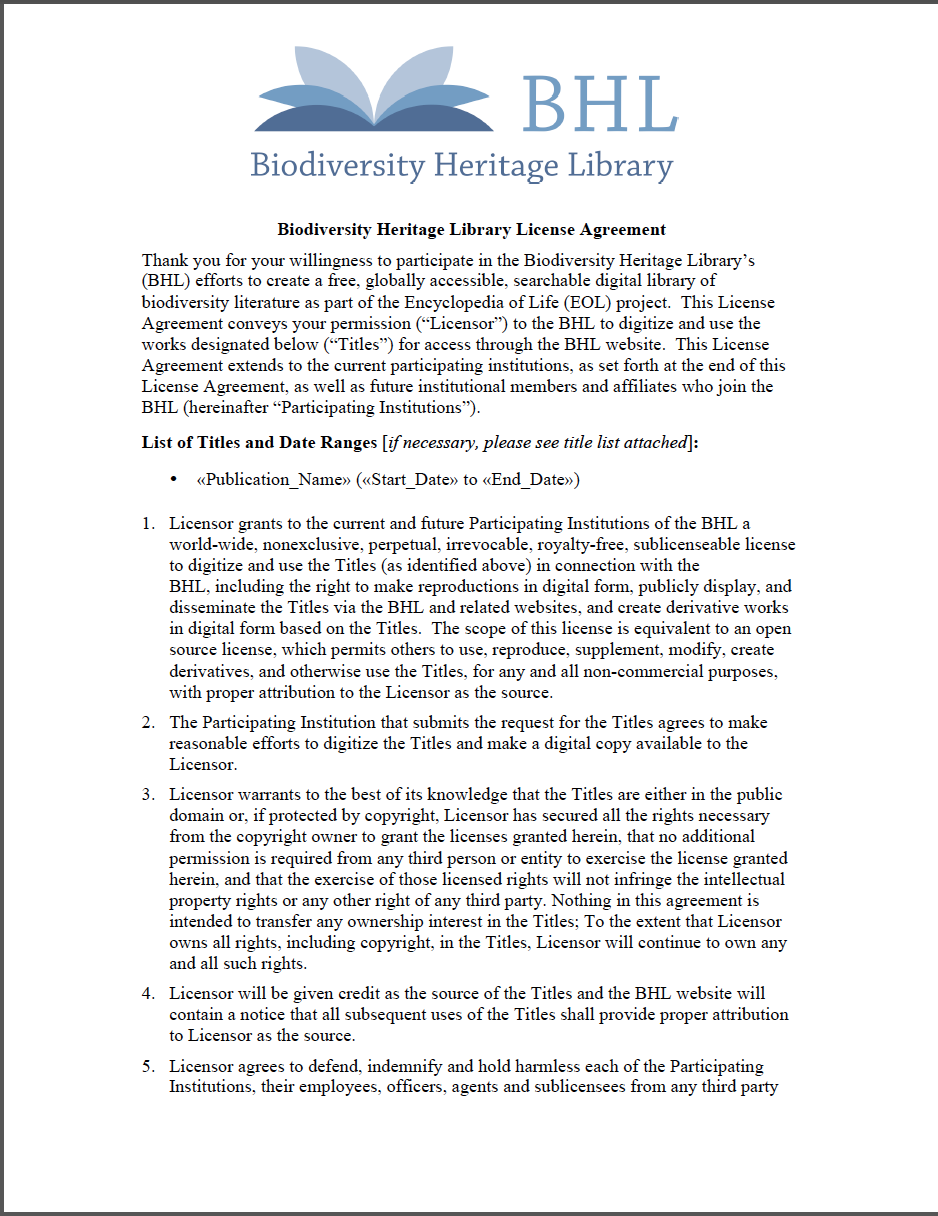
The Biodiversity Heritage Library’s collection of in-copyright titles continues to grow. Besides including, where possible, the in-copyright publications produced by our consortium library partners, we also digitize copyrighted titles by permission from the organizations or authors who generously sign our standard license agreement.

View Full Size Image
Download BHL license agreement form

We are very pleased to announce the recent acquisition of permission from the Bombay Natural History Society, the Entomological Society of British Columbia, the Flemish Entomological Society and the Hungarian Geological Society to provide their publications for free and open access. To date we have agreements with over 160 licensors to provide 390 in-copyright titles in our collection. Since the start of 2015, we have received permission to include or continue the digitization of:

  • Halteres (2009–)
  • The Bean Bag (1974–)
  • Indo-Pacific mollusca (1959 — 1976)
  • Actes de la Société Linnéenne de Bordeaux (1826 — 1970)
  • Bulletin de la Société Linnéenne de Bordeaux (1971–)
Stay tuned for more to come! All in-copyright content in BHL is assigned a Creative Commons Attribution-NonCommercial-ShareAlike 4.0 (CC BY-NC-SA 4.0) license meaning that anyone is free to “use, reproduce, supplement, modify, create derivatives, and otherwise use the title(s), for any and all non-commercial purposes, with proper attribution to the licensor as the source.” In short, you can reuse the in-copyright content as long as it’s not for commercial reasons, you attribute the copyright holder, and apply the same license on your own creation.
View Full Size Image
http://creativecommons.org/licenses/by-nc-sa/4.0/

While the majority of BHL’s collection revolves around “legacy” materials, meaning titles in the public domain in the United States (because well, it’s easier to digitize materials without having to broker permission first), we are doing our best to increase the inclusion of in-copyright materials where possible.

Do you hold copyright to a title that you think should be in the BHL collection? If so, please see more information about our permissions process via http://biodivlib.wikispaces.com/permissions and contact us.

Some highlights from our in-copyright title collection include…

  • Revue Suisse de Zoologie
  • Proceedings of the Biological Society of Washington
  • Proceedings of the Entomological Society of Washington
  • Proceedings of the Linnean Society of New South Wales
  • Tijdschrift voor Entomologie
April 30, 2015by Bianca Crowley
BHL News, Blog Reel

BHL presentation to the Council on Botanical and Horticultural Libraries

Portrait version of the Biodiversity Heritage Library logo.

On April 30, 2014 I attended the Council on Botanical and Horticultural Libraries (CBHL) annual conference at the Lewis Ginter Botanical Garden in Richmond, VA. CBHL describes itself as, “an international organization of individuals, organizations and institutions concerned with the development, maintenance and use of libraries of botanical and horticultural literature.” With the extent of the BHL’s digitized botanical literature available for free access, CBHL members are regular users and big fans of BHL.

I was delighted to be invited to present an update on BHL happenings over the past year or so, including such highlights as the adoption of a new mission, vision, and goals; our new website user interface (launched in March 2013) and its new article access features, as well as link outs to biodiversity materials on external websites; and our new membership structure and newest members/affiliates.

It was my first time attending a CBHL meeting but hopefully not my last as this easy going group immediately made me feel welcomed. Granted it may be because they are such strong supporters of the BHL, after all they awarded us the Charles Robert Long Award (2013) for our successful collaborative efforts with botanical libraries worldwide. I was impressed with the group’s strong sense of camaraderie and community, and level of organization. As so many BHL participating institutions (Missouri Botanical Garden, New York Botanical Garden, Smithsonian Libraries, Harvard University Botany Libraries, and Cornell University’s Mann Library) are CBHL members themselves I look forward to our networks cross-pollinating in the future!

If you’d like to see more about how the BHL has grown over the past year+, please take a look at my presentation on slideshare:

Cbhl apr2014 from Bianca Crowley
May 22, 2014by Bianca Crowley
Blog Reel, Featured Books

The Collector Connection: United States Geological Survey

This is the final post of a joint blog series by the Field Book Project (FBP) and the Biodiversity Heritage Library (BHL), showcasing examples of digital connections between collectors, field book catalog records, and the resulting publications of collecting events.

In 1878 the United States Congress was investigating rivalries between four surveys (Powell, Hayden, King, and Wheeler Surveys) that had been sent west to study the nation’s resources and search for a potential route for a railroad to the west coast. The investigation made it clear to Congress that the current system was not working. So Congress turned to the National Academy of Sciences (NAS) for guidance. NAS approached experts across the country for input, including survey leaders John Wesley Powell and Clarence King. Their subsequent recommendations, sent to Congress, provided the main structure for the legislation that created the United States Geology Survey (USGS).

In 1879, the USGS was established with the mission to provide: “reliable scientific information to describe and understand the Earth; minimize loss of life and property from natural disasters; manage water, biological, energy, and mineral resources; and enhance and protect our quality of life.”

View Full Size Image
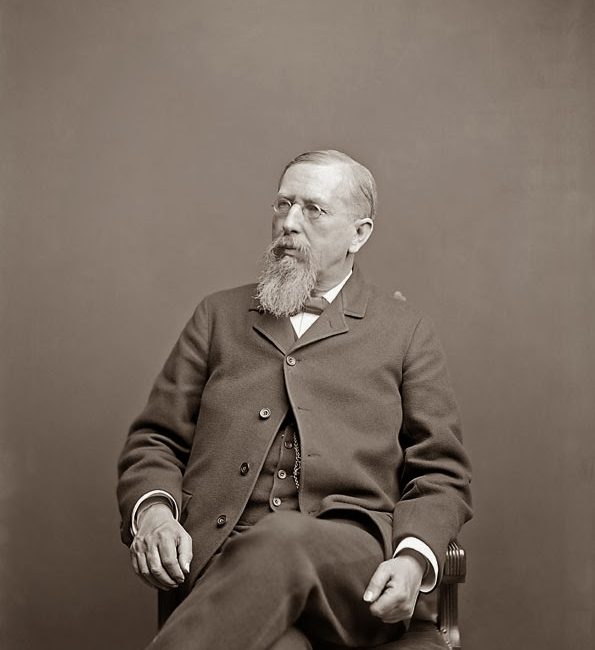
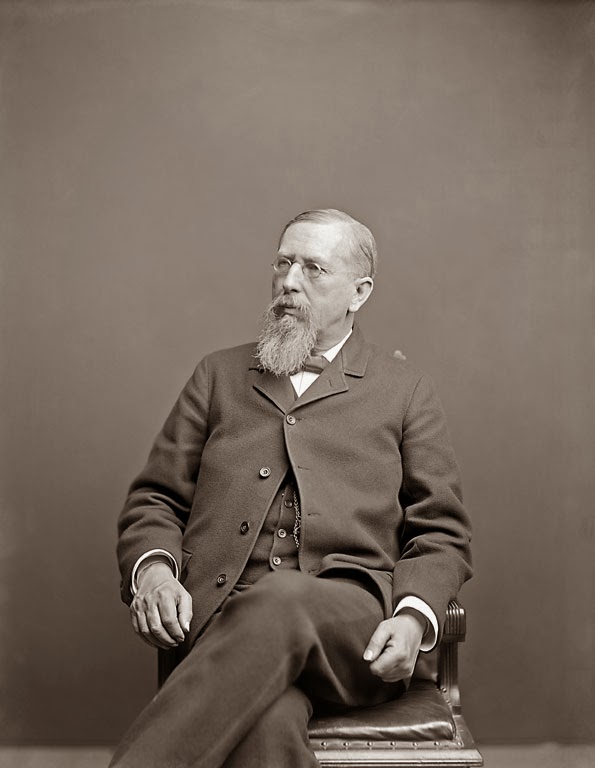
William H. Dall, c. 1910.  Smithsonian Institution Archives. RU 000095, Box 6, Folder 42.  SIA2009-4237.

The USGS had a mission, but now they needed the people with the vision to make it happen. King was named director, but left in 1881. Powell became the second director (1881-1894) and was an important force in shaping the new agency.

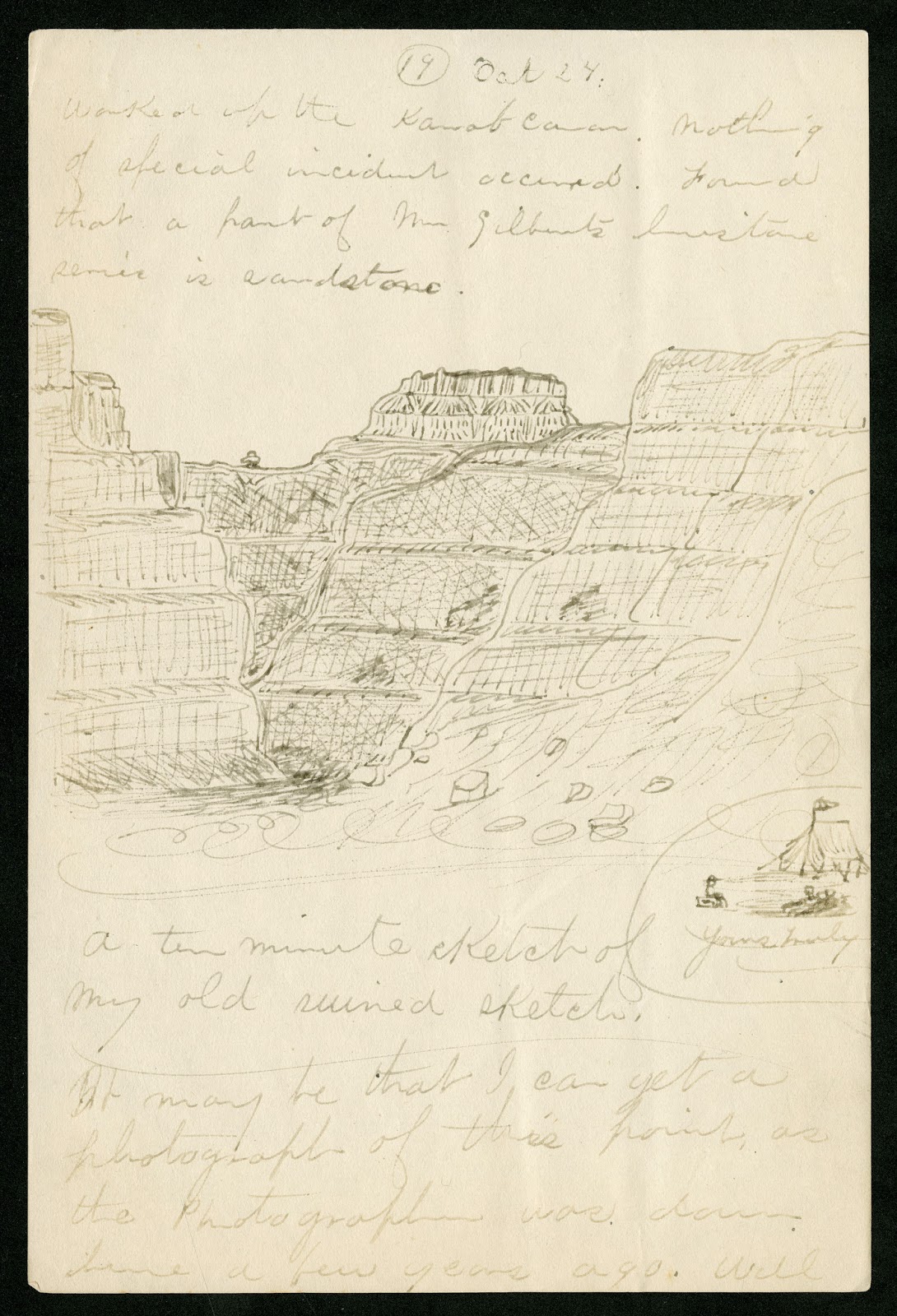
The USGS began sending staff into the field shortly after its creation. Staff surveyed and collected in national parks as well as local neighborhoods, like the DC-Maryland-Virginia environs. Their field books show a dizzying variety of collecting. The agency’s earliest field staff included individuals who would make important contributions to the fields of geology and paleontology. People like Charles Walcott, known for his discovery of the Burgess Shale, worked for the USGS 1879 – 1907 (eventually becoming its director in 1894), and conducted field work in the Grand Canyon among many other locations in the country. William Healey Dall worked for USGS 1884-1925, conducting research and spending significant time in Alaska for the Agency as well as the US Coast and Geodetic Survey; the work helped establish him as a well-respected expert in the geology of the state.

View Full Size Image
Charles Walcott’s field notes from October 15 – November 3, 1879, Page 19.  Smithsonian Institution Archives. RU 007004, Charles D. Walcott Collection, 1851-1940 and undated; Box 32, Folder 1.  SIA2012-9643.

Other staff may not be so well known, like Lester Ward (1841-1913), but their field books document important routine field work with a specificity of detail that is fascinating. Specimen location information and interviews with individuals who found them sometimes list neighborhoods or street intersections. We encourage you to take a look at and compare the field books and the publications, the field work and the conclusions drawn from them.

Field Books:

  • US Geological Survey 
  • Charles Walcott
  • William Healey Dall
  • Lester F. Ward

Publications:

  • US Geological Survey
  • Charles Walcott 
  • William Healey Dall
  • Lester Frank Ward

In November of 2011, the USGS Library joined the BHL consortium. Describing themselves as “one of the world’s largest libraries dedicated to the earth and natural sciences,” they have contributed over 15,000 pages of digital content to the BHL collection.

February 13, 2014by Bianca Crowley
Blog Reel, Featured Books

The Collector Connection: US Bureau of Fisheries

This is the second of a joint blog series by the Field Book Project (FBP) and the Biodiversity Heritage Library (BHL), showcasing examples of digital connections between collectors, field book catalog records, and the resulting publications of collecting events.

The first post in this series about organizations discussed the nascence of the US Biological Survey. It seems appropriate to follow with the story of the US Bureau of Fisheries. “Why?” you might ask. Simple! These two organizations later merged and formed the US Fish and Wildlife Service! The Bureau was primarily shaped while it was still known as the US Commission of Fisheries. It would become the Bureau in 1903. To understand its development, one must look at the years prior to 1903.

View Full Size Image
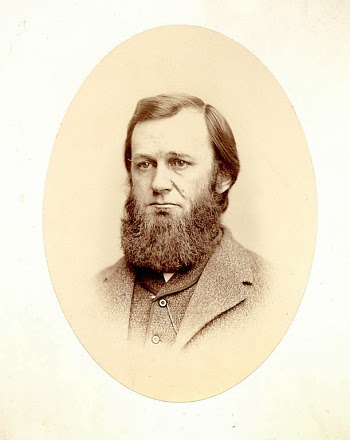
Portrait of Spencer Fullerton Baird, by Bell, William, January 10, 1867, Smithsonian Archives. SIA2004-60740.

In the 1870’s the US saw a noticeable decline in the Southern New England fisheries. The US knew little about the fishing grounds off its own coasts. Spencer F. Baird, a respected naturalist and a Smithsonian secretary, had a background in ichthyology and was approached by Congress about these issues. He recognized an important opportunity to promote the scientific study of the US’s marine natural resources in an effort to help the US economically. In 1871, he convinced Congress to establish the Commission on Fish and Fisheries. He served as the first commissioner. In the Commission’s early years, completing field work was a challenge, since it had no vessels and little funding of its own. Staffing and research (collecting and surveying) was completed in conjunction with the Smithsonian. This is one of the reasons Smithsonian Institution Archives has so many of the organization’s early records. The Commission often had to utilize ships supplied by the Revenue Service and US Navy. It was not until the 1880’s that they were able to procure their own research vessels.

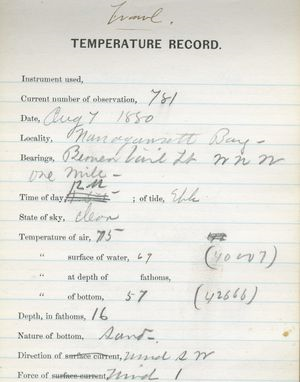
When the Commission finally obtained the funds to acquire their own, they didn’t just go with any ship. They hired builders to design and construct some of the first ships dedicated solely for marine research. Each of these vessels enabled the Bureau to substantially increase their efficiency and research output. Additionally these vessels were used in the field for decades and were pivotal in assuring the quality and quantity of research data the Commission/Bureau could provide. Unlike research completed aboard another agency’s vessel, these were designed for research, and research staff didn’t have to worry about competing missions while at sea. Even the ship’s logbooks demonstrate this vividly. When scientists were aboard another agency’s vessels, their specimen collecting data was usually recorded in a journal separate from the logbook. US Fisheries vessels’ purpose was to enable the research, so the collected information was part of the ship’s logbook contents.

These ships were important tools for the numerous collectors the Commission sent into the field. Unlike Vernon Bailey who both collected and published widely over the years, several of the Commission’s collectors like William W. Welsh, focused on the field work and left the publishing to others. Ship’s logbooks, in their brevity often left little room for recording who did the research/work. Luckily, Commission and Bureau field documentation also included personal field books which document another important part of the Commission’s field work–interviewing local inhabitants for their knowledge of local fishing conditions and good fishing grounds. The field books (such as SIA RU007187) include surprisingly detailed interviews with locals about their lives, work, and personal knowledge of the habitat. Frequently the Commission’s publications are the synopsis of field work. These publications are often most easily located through the name of the vessel on which the staff worked, like the Fish Hawk (1880), Albatross (1883), and Grampus (1885).

We encourage you to take a look at the logbooks from these ships, now available in digital format through the Smithsonian, and compare to their resulting publications available through BHL. Learn more about the interviews completed by Commission staff that augmented knowledge gained by collecting.

View Full Size Image
R/V Fish Hawk logbook excerpt, August 7, 1880. Smithsonian Institution Archives, RU7184, box 9, folder 3.

Field book (logbooks) through FBP:

  • US Bureau of Fisheries
  • Fish Hawk 
  • Albatross
  • Grampus
  • William W. Welsh

Publications available through BHL:

  • US Bureau of Fisheries
  • Fish Hawk
  • Albatross 
  • Grampus
 
January 16, 2014by Bianca Crowley
Blog Reel

The Collector Connection: organizations and the individual collectors who shaped them

This is the first of a joint blog series by the Field Book Project (FBP) and the Biodiversity Heritage Library (BHL), showcasing examples of digital connections between collectors, field book catalog records, and the resulting publications of collecting events.

Over the summer the Field Book Project and Biodiversity Heritage Library examined some of the fascinating stories and natural history documentation that resulted from major expeditions. In the past, expeditions were the best way to expediently collect in many regions of the world.  Expeditions still occur today, but they were far more common before the advent of major changes in transportation. Expeditions tend to generate great stories; the mix of personalities, challenges, and exotic locations seem to make it inevitable.  For much of the nineteenth century, expeditions were often organized as needed; they could be heavily influenced by the temperaments of the people leading them.  Strong personalities among the leaders sometimes led to serious conflicts (curious to learn more?  Check out the US Geological Survey’s (USGS) biography on John Wesley Powell, the Survey’s second director, and its discussion of the Powell, Hayden, King, and Wheeler Surveys).  These conflicts and the US government’s growing need for more consistent information about its natural resources eventually led to fundamental changes in the way collecting was completed.  Eventually the US federal government established organizations like the US Bureau of Fisheries, US Geological Survey, US Biological Survey whose primary purpose was to routinely collect, document, and eventually oversee some of the nation’s natural resources.

These organizations and their first collectors often involve great stories, but also provide wonderful examples of the types of field work documented.  Additionally, their efforts were for the United States’s benefit, and the resulting reports and publications are now available through resources like the Biodiversity Heritage Library.  This new blog series is a chance to highlight the different types of collectors that formed these organizations.

United States Biological Survey (USBS)
The first story highlights the beginnings of the US Biological Survey (USBS), originally formed by C. Hart Merriam under the US Department of Agriculture (USDA).  The story forms around two individuals of note—C. Hart Merriam (first chief of USBS) and Vernon Bailey (USBS’s first major specimen collector and naturalist).  These individuals each had unique ways of coming to their field of study, method of work, and differing output, but each was an important contributor to their discipline.  Their catalog records and publications are also available through FBP and BHL (see content links below).

View Full Size Image
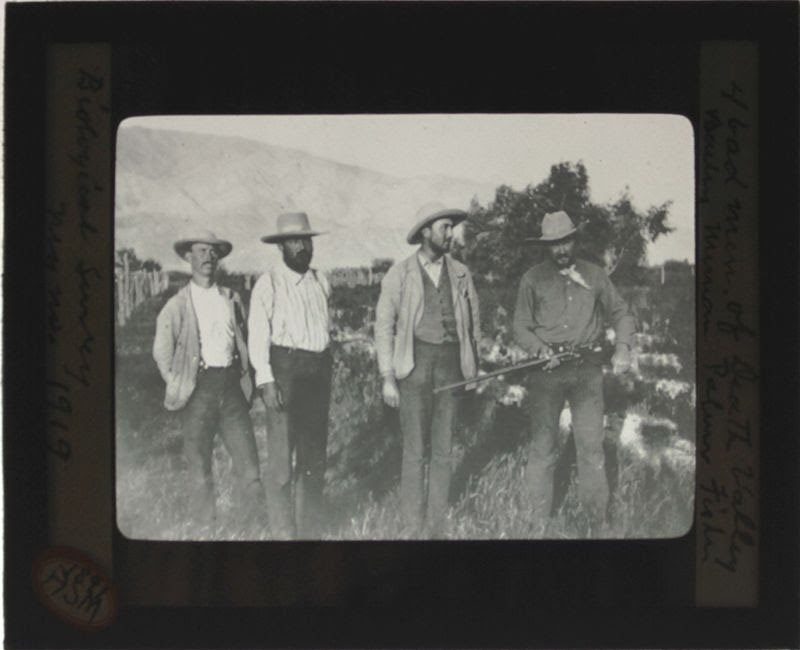
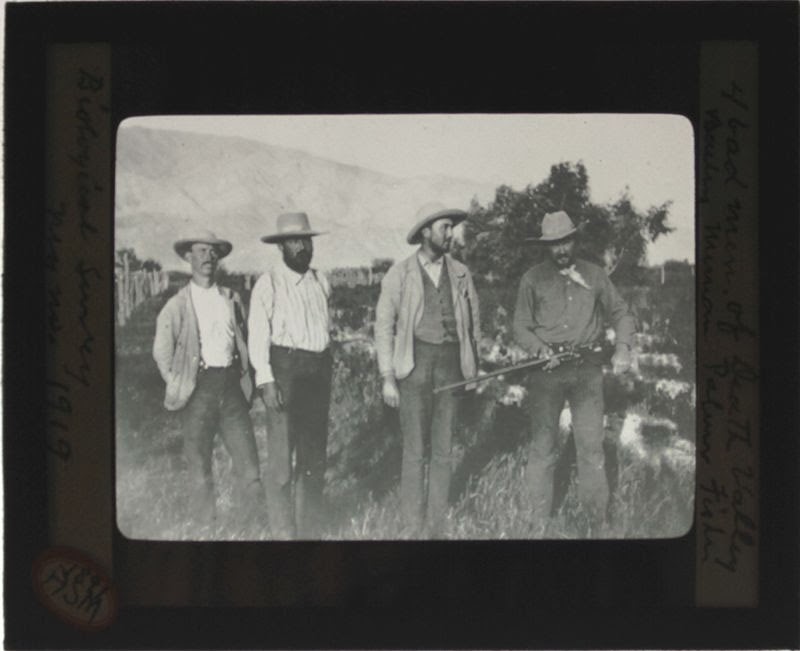
US Biological Survey staff, including Vernon O. Bailey and C. Hart Merriam, 1919.

C. Hart Merriam was a biologist, whose work at the end of the 19th century was instrumental in the emerging field of ecology. His field work and affiliation with the USDA led to his “life zones” concept. In 1885 he was chosen to head the Section of Economic Ornithology in the USDA.  His vision for the section eventually shifted its focus from only birds to include mammals.  By 1896 it became the USBS, later merging with other federal entities to form the US Fish and Wildlife Service.

In 1883, C. Hart Merriam began corresponding with a young man in Minnesota with an interest in collecting, named Vernon Bailey.  This relationship developed over the decades, and proved an important influence on the shaping and growth of the USBS.   Merriam had a strong educational background in science and was well established in the USDA.  But for the USBS to develop, he needed people in the field.  Bailey did not have a formal education in the sciences, but showed a natural aptitude for collecting that Merriam mentored through their correspondence.   In 1885, Bailey began sending collections to Merriam, and in 1887, Merriam hired Bailey as the first field agent for Division of Economic Ornithology and Mammalogy (what would become USBS).  Bailey went on to collect for over 50 years, and became the first and only chief field naturalist of the USBS in 1890, a position he held until his death in 1933.

View Full Size Image
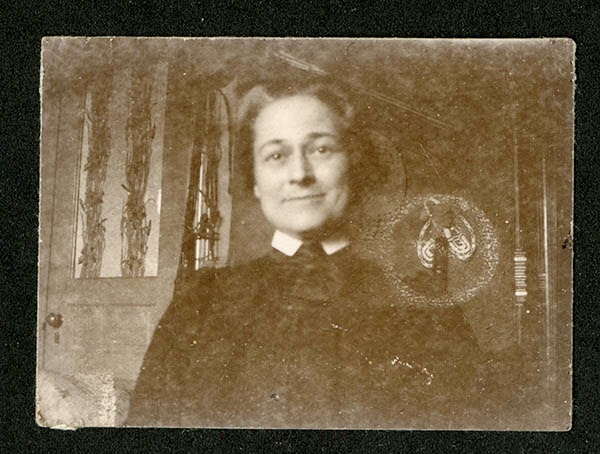
Florence Merriam Bailey, taken shortly after her wedding, March 1900.  Smithsonian Institution Archives.  SIA 007267, Box 2, Folder 14.

Their relationship proved important on a personal level as well.  During one of Bailey’s visits to Washington, DC, he stayed at Merriam’s home. This provided a chance to meet Merriam’s sister, Florence Merriam Bailey, who was a distinguished naturalist in her own right. Vernon and Florence would marry in 1899.  Throughout their marriage they completed field work together and co-wrote natural sciences publications.

Perhaps the best way to see how these individuals’ styles of work and interests differed, is to examine their field books and publications.

Field Books from the Field Book Project:

  • US Biological Survey (its subsequent iteration as US Fish and Wildlife)
  • C. Hart Merriam
  • Vernon O. Bailey
  • Florence Merriam Bailey

Publications at Biodiversity Heritage Library:

  • US Biological Survey
  • C. Hart Merriam (includes correspondence housed at the Bancroft Library, University of California, Berkeley
  • Vernon O. Bailey
  • Florence Merriam Bailey

We invite you to check out our next post, and find out more the background of these fascinating individuals, organizations, and how you can learn more about their research online.

December 12, 2013by Bianca Crowley
Page 2 of 5«1234»...Last »

Help Support BHL

BHL's existence depends on the financial support of its patrons. Help us keep this free resource alive!

search

About BHL

The Biodiversity Heritage Library (BHL) is the world’s largest open access digital library for biodiversity literature and archives. BHL operates as a worldwide consortium of natural history, botanical, research, and national libraries working together to digitize the natural history literature held in their collections and make it freely available for open access as part of a global “biodiversity community.”

Join Our Mailing List

Sign up to receive the latest news, content highlights, and promotions.

Subscribe Now

Subscribe to Blog via Email

Enter your email address to subscribe to this blog and receive notifications of new posts by email.

Join 319 other subscribers

Subscribe to Blog Via RSS

Subscribe to the blog RSS feed to stay up-to-date on all the latest BHL posts.

Access RSS Feed

Inspiring Discovery through Free Access to Biodiversity Knowledge.

The Biodiversity Heritage Library makes it easier than ever for you to access the information you need to study and explore life on Earth…for free, anytime, anywhere.


64+ Million Pages of
Biodiversity Literature Online.

EXPLORE

Tools and Services
to Transform Research.

EXPLORE

300,000+
Illustrations on Flickr.

EXPLORE

ABOUT | HARMFUL CONTENT | PRIVACY | SITE MAP | TERMS OF USE