
Biodiversity Heritage Library - Program news and collection highlights from BHL
  • Home
  • News
  • Featured Books
    • All Featured Books
    • Book of the Month Series
    • BHL at 20
  • User Stories
  • Campaigns
    • Fossil Stories
    • Garden Stories
    • Monsters Are Real
    • Page Frights
    • Her Natural History
    • Earth Optimism 2020
  • Tech Blog
  • Visit BHL
Home
News
Featured Books
    All Featured Books
    Book of the Month Series
    BHL at 20
User Stories
Campaigns
    Fossil Stories
    Garden Stories
    Monsters Are Real
    Page Frights
    Her Natural History
    Earth Optimism 2020
Tech Blog
Visit BHL
  • Home
  • News
  • Featured Books
    • All Featured Books
    • Book of the Month Series
    • BHL at 20
  • User Stories
  • Campaigns
    • Fossil Stories
    • Garden Stories
    • Monsters Are Real
    • Page Frights
    • Her Natural History
    • Earth Optimism 2020
  • Tech Blog
  • Visit BHL
Biodiversity Heritage Library - Program news and collection highlights from BHL
BHL News, Blog Reel

My experience as a BHL Intern

Portrait version of the Biodiversity Heritage Library logo.


View Full Size Image
Kai Alexis Smith, Virtual Marketing Intern, Fall 2013

I was the Virtual Marketing Intern at Smithsonian’s Biodiversity Heritage Library in fall 2013. I participated in this internship post graduation because while I have previous experience with social media and marketing from my previous career, this internship provided me experience directly promoting a library collection. Also, while my background and passion is in the arts, I always had and will have a special place in my heart for science, especially biology. For the position, I wrote seven blog posts that highlighted books from the BHL library. I also wrote Facebook and Twitter posts to promote the blog.

After graduating from the Pratt Institute School of Information and Library Science program in May 2013, I went to the University of Michigan to complete an Association of Research Libraries Fellowship where I worked on digitizing select items and created an Omeka exhibit for the Leonard B. Willeke collection. I started to wonder how this project would be promoted within the institution as the Omeka exhibit was in anticipation of the complete digital collection of 16,000 items. In August, this interest in promotion grew stronger when I was in Washington, D.C. developing a digitization strategy for vertical files at the National Gallery of Art as the ARLIS/NA Wolfgang Freitag Intern. I incorporated a promotion section in the digitization strategy, as it would be an integral part of discovering the project and spreading the word about its services, if implemented. I also, visited many libraries while in D.C. and part of my inquiries included how each institution promoted their collections and services. Many mentioned different social media platforms and others shared that marketing was centralized within the institution. I realized that while I had previous career experience with social media and marketing, I did not have direct library experience. This internship helped round out my skill set.

During the virtual marketing internship, I had the pleasure of working with Biodiversity Heritage Library Collections Coordinator Bianca Crowley. While many past interns have touted the awesomeness of the badge, which, no doubt having one is, as a virtual intern I did not have the privilege of a Smithsonian badge. However, there were many other benefits. One of the main benefits of this internship was not only the experience, but the opportunity to learn from other experienced Smithsonian Institution librarians. Even though there were setbacks with the government shutdown, Bianca did an amazing job of setting up virtual introductions and an awesome virtual tour of the scanning room. I even got the chance to video chat with President of Smithsonian Libraries Mrs. Nancy Gwinn. I also was able to meet the staff and tour the Cooper-Hewitt Library in person in New York City.

My undergraduate degree is in writing, so this internship helped me return to my roots. I learned and wrote about New York state fossil Eurypterus remipes, hummingbirds and butterflies, molluscs, parasites, cephalopods, reptiles and amphibians, and Austrian zoologist Leopold Joseph Fitzinger and his picture atlas of birds.

In conclusion, for library school students or recent graduates looking for an opportunity to supplement their curriculum, consider Smithsonian’s BHL virtual marketing internship. While you will not get the glitz and glamour of going into the museum every day, you will work with incredible colleagues, learn more about Smithsonian libraries, virtually meet and get advice from future mentors, and create great work that highlights an incredible collection.

Didn’t get a chance to read my posts? Check them out here:

“Book of the Week: Malacozoaires, ou, Animaux mollusques.” December 19, 2013.
https://blog.biodiversitylibrary.org/2013/12/book-of-week-malacozoaires-ou-animaux.html

“Book of the Week: Bilder-atlas zur Wissenschaftlich-populären Naturgeschichte der Vögel in ihren.” December 5, 2013.
https://blog.biodiversitylibrary.org/2013/12/book-of-week-bilder-atlas-zur.html

“Book of the Week: Parasites and parasitosis of the domestic animals: the zoölogy and control of the animal parasites and the pathogenesis and treatment of parasitic diseases.” November 19, 2013.
https://blog.biodiversitylibrary.org/2013/11/book-of-week-parasites-and-parasitosis.html

“Book of the Week: Biologia Centrali-Americana: Reptilia and Batrachia.” October 24, 2013.
https://blog.biodiversitylibrary.org/2013/10/book-of-week-biologia-centrali.html

“National Fossil Day: Eurypterus remipes.” October 16, 2013.
https://blog.biodiversitylibrary.org/2013/10/national-fossil-day-eurypterus-remipes.html

“Book of the Week:  Die Cephalopoden.” October 8, 2013.
https://blog.biodiversitylibrary.org/2013/10/book-of-week-die-cephalopoden.html

“Happy Butterfly and Hummingbird Day!” October 3, 2013.
https://blog.biodiversitylibrary.org/2013/10/happy-butterfly-and-hummingbird-day.html

Happy New Year!
January 21, 2014by gworthey
Blog Reel, Featured Books

Book of the Week: Malacozoaires, ou, Animaux mollusques

View Full Size Image
There are approximately 100,000 species
of molluscs.

Have you ever collected seashells from the sea shore? Ever wonder where they come from or the former inhabitants? Well, they come from Molluscs. Molluscs are invertebrates that include squid, octopuses, cuttlefish, nudibranchs, snails, slugs, limpets, sea hares, mussels, clams, oysters, scallops, and other lesser known creatures.

Molluscs, belong to the phylum Mollusca, a major division of invertebrates with over 100,000 species, second to Arthropods. Their ability to survive is inspiring. They can be found at all latitudes and in both tropical and temperate regions. There are generally 10 recognized classes of molluscs: Aplacophora, Bivalvia, Cephalopoda, Polyplacophora, Gastropoda, Monoplacophora, Pleistomollusca, Polyplacophora, Rostroconchia, Scaphopoda, and Helcionelloida. Rostroconchia and Helcionelloida are both extinct.

Aplacophora and Monoplacophora are only found in the deep sea. The most diverse class is the Gastropods, which include slugs, sea butterflies, conchs, oyster borers, coweries, and snails. Gastropods account for more than a third of all living molluscs and there are between 60,000 and 80,000 living species. Class Cephalopoda including squid, cuttlefish, and octopuses are among the neurologically most advanced of all invertebrates. All Molluscs produce eggs.

View Full Size Image
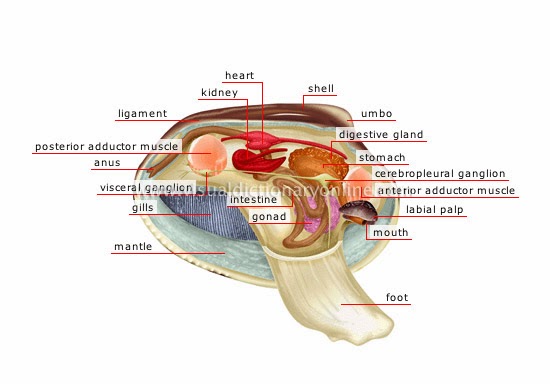
Anatomy of a Bivalve Shell Image: Merriam-Webster’s Visual Dictionary Online 

Molluscs are distinguished by their anatomy, which generally consist of a head-foot and visceral mass. They secrete a hard shell that covers and protects the visceral mass (area that contains the internal organs) and mantle, a layer of epidermal soft tissue that covers the visceral mass. This calcium shell protects them from harsh environments and predators. The nervous system of the Mollusc is similar with two nerve cords. The exception is Bivalvia, which has three. In addition, their body structures range in a variety of ways. It is difficult to apply one characteristic to all classes of Molluscs. Aplacophorans are the only species that do not have a well-developed foot.

View Full Size Image
Some molluscs don’t have a head.

As mentioned earlier, the shell is created by the protein conchiolin secreted from the mantle. The shell consists of three layers: periostracum (outer layer) of organic matter, mainly conchiolin; a middle layer of columnar calcite; and an inner layer of laminated calcite, often times nacreous also known as mother of pearl. The first two layers also contain chitin, a derivative of glucose found in the natural world.

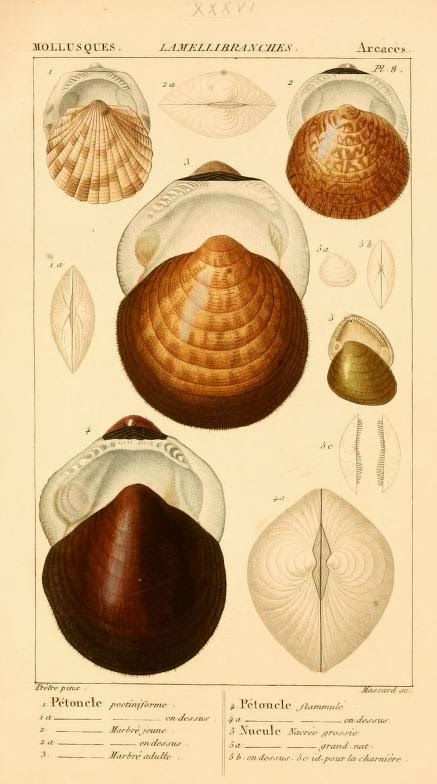
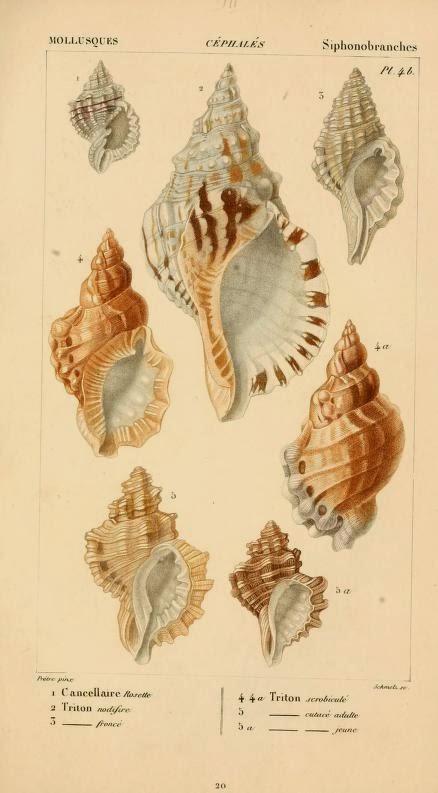
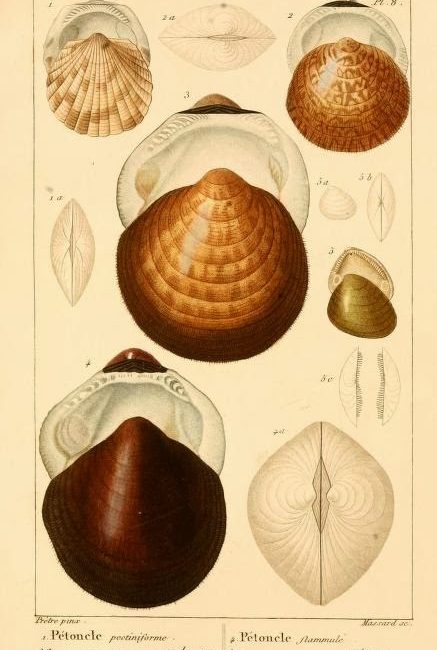
Published between 1829-1830, Malacozoaires, ou, Animaux mollusques (English translation: Malacozoaires, or Shell Fish Animals) was written by French zoologist and anatomist Henri Marie Ducrotay de Blainville, curator and professor of invertebrate zoology at the Muséum national d’Histoire naturelle and a member of the French Academy of Sciences. De Blainville like many scientists, longed to give order to the natural world. Malacozoaires, ou, Animaux mollusques is the result of this desire. This monograph provides several orders and genera for species studied in France. While there is significantly more information about mollusks today, his book was a start to understanding the unknown.

If French comes natural to you and vous parlez ou lisez francais, read Malacozoaires, ou, Animaux mollusques.

Check out the beautiful shells from the book at the BHL Flickr here.

References:

EOL Rapid Response Team (n.d.). Mollusca (Mollusks).Encylopedia of Life. Retrieved from http://eol.org/pages/2195/details

Hayward, PJ (1996). Handbook of the Marine Fauna of North-West Europe“>. Oxford University Press. p. 484–628.

Porter, S. (2007). “Seawater Chemistry and Early Carbonate Biomineralization”. Science 316 (5829): 1302.

Unknown (n.d.). Henri Marie Ducrotay de Blainville. Wikipedia. Retrieved from http://en.wikipedia.org/wiki/Henri_Marie_Ducrotay_de_Blainville

Unknown (n.d.). Mollusca. Wikipedia. Retrieved from http://en.wikipedia.org/wiki/Mollusca

December 19, 2013by gworthey
Blog Reel, Featured Books

Book of the Week: Bilder-atlas zur Wissenschaftlich-populären Naturgeschichte der Vögel in ihren

View Full Size Image
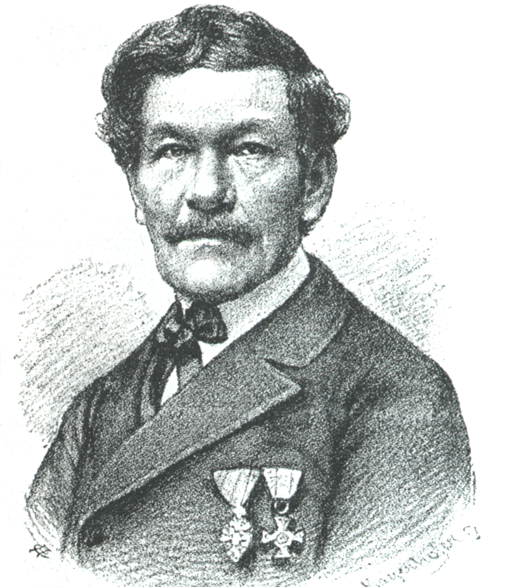
Leopold Joseph Fitzinger
Image: Wikipedia 
During the early 1800s, visual atlases such as John James Audubon’s The birds of America : from drawings made in the United States and their territories were popular. Austrian zoologist Leopold Joseph Fitzinger was in tandem with his colleagues of the day and published many books on subjects such as dogs, reptiles, amphibians, mammals, and fish. 
 
Maybe you are familiar with his surname? Fitzinger was responsible for identifying many genera including the Gastrophryne or narrow-mouthed toads, and the Cyrtopodion or bow-footed geckos, among others.  His most significant scientific contributions to the field were a series of books published between 1826 and 1861 classifying reptiles, birds, and amphibians along with a catalogue of mammals, reptiles, and fishes native to the Archduchy of Austria.
His path to the profession was interesting. While always intrigued by nature, he started out as a pharmacist apprentice as an adolescent. Eventually, he went to the University of Vienna with fellow scientist Nikolaus Joseph von Jacquin. Jacquin would eventually become Professor of Botany and Chemistry and director of the botanical gardens of the University of Vienna. Fitzinger started out as a intern at the Vienna Natural History Museum and organized the orphaned reptiles and fish collection at a time when the institution was reshaping itself from a royal collector’s cabinet to a scientific research institution. When it became clear no positions would open up at the museum anytime soon, he accepted a job as a secretary at the Estates of Lower Austria in 1821. In 1833 and 1834, Fitzinger received honorary doctorates from the Universities of Königsberg and Hall. 
It wasn’t until 1844, that he was appointed head of the reptile and mammal collections at the museum, a position which he served in for close to 20 years. He retired in 1861, but shortly after, went on to become the director of the zoos in Munich and Budapest. He died in 1884. During his life and after his passing, numerous academies and associations in both the U.S. and Europe appointed him an honorary member.   
Fitzinger was influenced by his German colleagues: naturalist Lorenz Oken, biologist Johann Baptist von Spix, and naturalist Johann Jakob Kaup. He embraced nature-philosophical views and new classifications of animals. Essentially, he rejected the evolutionary theories of Darwinism and believed there were five animal classes: invertebrates, fish, reptiles, birds, and mammals. 
 
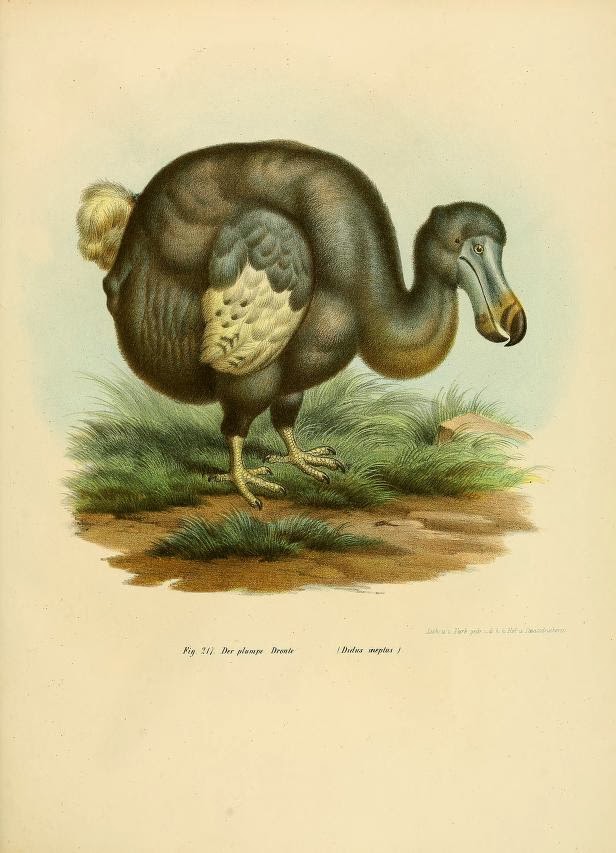
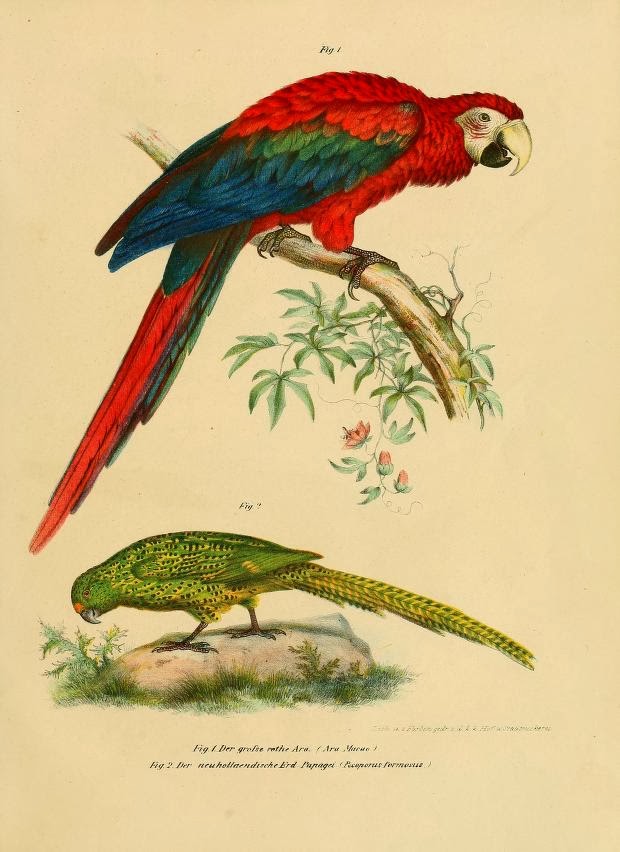
Published in 1864, 24 years after Audubon’s The birds of America, Fitzinger wrote Bilder-atlas zur Wissenschaftlich-populären Naturgeschichte der Vögel in ihren sämmtlichen Hauptformen (Picture atlas of the scientific and popular natural history of birds in all major forms). As the title implies, there is very little text in this book that attempts to document different types of bird species, but it contains 347 beautifully detailed color lithographs by unattributed artist(s).   
 
View Full Size Image
Some [Dodos] were killed just for the gizzard which was “so large that it could provide two men with a tasty meal and was actually the most delicious part of the bird”  (Cheke, Anthony S.; Hume, Julian Pender, 2008, pg.77-78)
Now a little about the birds… The Dodo (Didus ineptus) once lived off the coast of Madagascar on the Mauritius Island. It was a part of the subfamily Raphinae, which included doves and pigeons. Until the arrival of humans to the island, this flightless bird had no natural predators. The Dodo bird had a diet rich in fallen fruit, nuts, seeds, bulbs, and roots. The last sighting of a Dodo bird was in 1662.
 
View Full Size Image
Scarlet macaws communicate with a variety of vocalizations and postures.  Mated pairs engage in tactile communication when preening.
Still found on the island of Coiba, the Ara Macao or the Scarlet Macaw is known for its bright colors and large tail. It is native to Central and South America and tends to live in humid lowland subtropical rain forests, open woodlands, river edges, and savannas. The Macaw subsists on a diet of mostly fruits, nuts and seeds, including large, hard seeds. They can live up to 75 years in captivity and between 40 to 50 years in the wild. The Macaw’s habitat has been endangered by deforestation and pesticide spraying for banana growth and export. These colorful birds are also vulnerable to poaching for the cage bird trade. As of 2008, they were listed as endangered by the U.S. Fish and Wildlife Services.
Interested in learning more about John James Audubon and The birds of America? Read the blog post here.
Check out more colorful and interesting birds covered in Bilder-atlas zur Wissenschaftlich-populären Naturgeschichte der Vögel in ihren the Flickr set here.
 
References:
Cheke, Anthony S.; Hume, Julian Pender (2008). Lost Land of the Dodo: an Ecological History of Mauritius, Réunion & Rodrigues. New Haven and London: T. & A. D. Poyser.

Oken, Lorenz. (2013). In Encyclopædia Britannica. Retrieved from http://www.britannica.com/EBchecked/topic/1518558/Oken-Lorenz
Texas A&M; University. (May 2013). Save the Parrots: Texas A&M; Team Sequences Macaw Genome. News Wise: Texas A&M; University. Retrieved from http://www.newswise.com/articles/save-the-parrots-texas-a-m-team-sequences-macaw-genome
Unknown. (n.d.). Species Profile: Scarlet Macaw (Ara Macoa). US. Fih and Wildlife Service. Retrieved from http://ecos.fws.gov/speciesProfile/profile/speciesProfile.action?spcode=B0GP
Unknown. (n.d.). Scarlet Macaw. The International Association of Avian Trainers and Educators. Retrieved from http://en.wikipedia.org/wiki/Scarlet_Macaw#cite_note-seabury-3
Unknown. (n.d.). Leopold Fitzinger. Wikipedia. Retrieved from http://de.wikipedia.org/wiki/Leopold_Fitzinger


December 5, 2013by gworthey
Blog Reel, Featured Books

Book of the Week: Parasites and parasitosis of the domestic animals : the zoölogy and control of the animal parasites and the pathogenesis and treatment of parasitic diseases


Halloween has come and gone this year, but America’s interest in Zombies still lives on. Zombies are all the craze now on TV and in movies. You might be familiar with The Walking Dead, however there were many that came before this hit TV series including Shawn of the Dead, World War Z, 28 Days Later, Resident Evil, and 28 Weeks Later among others.

Zombies really exist in nature. Usually “zombies” in nature are the result of a parasitic relationship. This type of relationship is when one member of the pairing benefits while the other is harmed.There are an array of parasites that include viruses, fungi, protozoa, wasps, and tapeworms. Parasites have different goals when invading a host. Some simply use the host’s resources with no intention of killing them as they need the host to survive. Others hijack the nervous systems of their hosts and make them “zombies” by altering their behavior, for example, which many times results in the host’s demise.

View Full Size Image
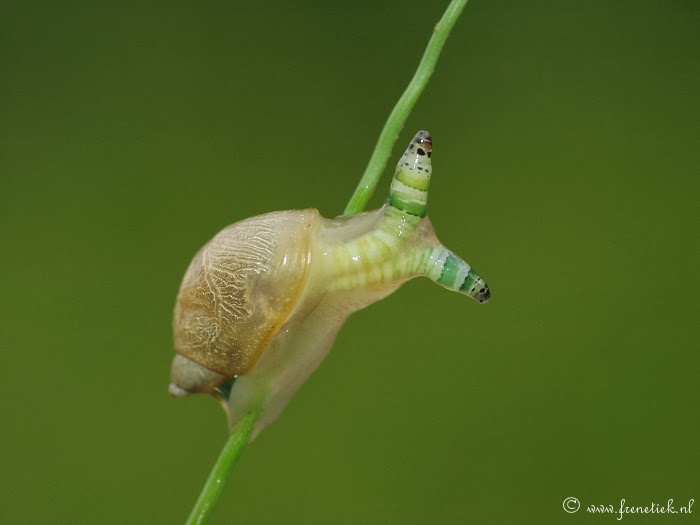
Leucochloridium variae. Image: www.frenetiek.nl
Some interesting ones include Leucochloridium variae, commonly known as the brown-banded broodsac. This parasite invades the eyestalks of snails and make then swollen, pulsating and colorful in order to attract birds. The birds rip out the eyestalks and eat them. Then the eggs of the parasite develop in the stomach of the bird and are released in droppings. The snail can regenerate the eyestalk, but unfortunately, the new one also is infected.
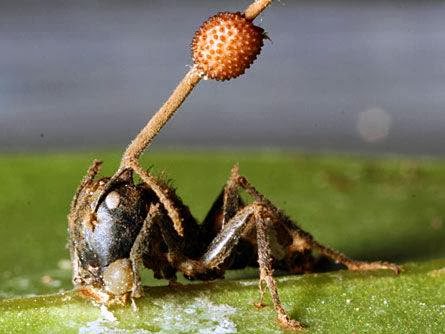
The Ophiocordyceps unilateralis, infects carpenter ants by invading them through the cuticle via enzymatic activity and living in the exoskeleton. It begins to eat the ant from the inside out. As the fungus spreads through the ant’s body, it releases a compound that affects the ant’s brain and alters its behavior. This is when the ant may fall from the tree it normally lives on, climb onto a leaf and secure itself by clamping its mandible on it. Then, the ant dies. From the ant’s dorsal neck a single stalk grows and from there the fungus’ spores spread.
View Full Size Image
Ophiocordyceps unilateralis. Image: thelastofus.wikia.com
Euhaplorchis californiensis is a tropically transmitted parasite that thrives in salt-water marshes. Unlike the Ophiocordyceps unilateralis, which lives in one host, this clever parasite lives in three different hosts, which include Horn snails, shorebirds, and killifish. However, like the Ophiocordyceps unilateralis it also alters the behavior of the host increasing the odds of moving to the next host. The life cycle includes eggs being released in the droppings of the shorebird, then the horn snail consuming the droppings. Once the parasite enters the horn snail it becomes sterile. Once the cercariae develop in the horn snail, they swim out into the marsh and attach themselves onto the gills of a killifish. From there, they make their way into the brain and they form a layer over the brain, which causes the killifish to surface and make themselves more appealing to a shorebird, which catches and consumes them. Thus the cycle starts all over again once the parasite is in the stomach and can lay its eggs.
View Full Size Image
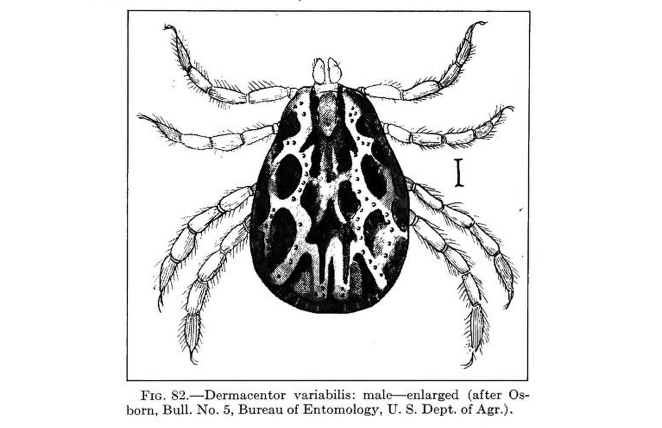
There about 850 tick species, some of which are capable of transmitting diseases such as Lyme disease, Ehrlichia, and Rocky Mountain Spotted Fever.
 

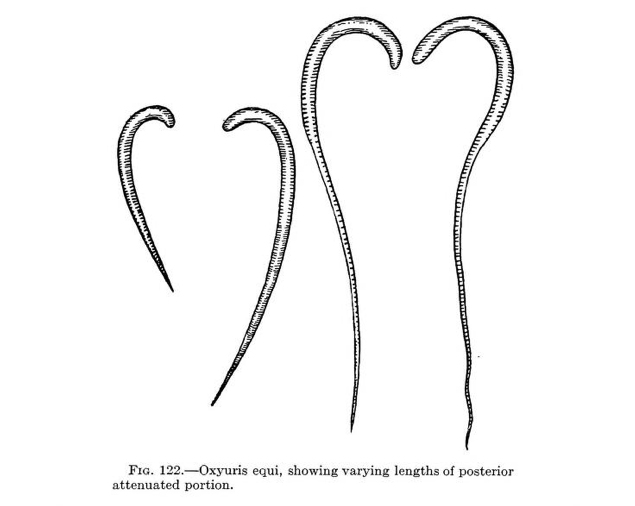
Unfortunately, loveable Fido and our purring kitties are not immune from parasites just because they live a domestic life. Published in 1920, the Parasites and parasitosis of the domestic animals : the zoölogy and control of the animal parasites and the pathogenesis and treatment of parasitic diseases was written by Benjamin Mott Underhill, a graduate from the University of Pennsylvania School of Veterinary Medicine and professor at the University of Pennsylvania. This book is by no means comprehensive on the subject, but is informative and represents early finds and advancements in understanding life cycles and infections afflicting both domestic animals and humans. Parasites such as lice, leeches, tapeworms, mange, ticks, bed bugs and more are covered in this book with detailed illustrations included. 

View Full Size Image
The “worm” parasites can range from ¼ inch to 33 feet long!

Humans are not immune to parasites either. Humans can acquire parasites in several ways including ingestion through air, dust particles, as well as by food and water consumption. Other ways of transmission include skin contact including zoonotic transmission, which is by way of contact with a pet. Even mosquitoes, flies, fleas and other insects can spread parasites. There are three main classes of parasites that can cause disease in humans: protozoa, helminths and ectoparasites. 

Parasites affect humans in rural areas of low-income countries as well as in developing ones. According to the Center for Disease Control and Prevention (CDC), “Cryptosporidiosis is the most frequent cause of recreational water-related disease outbreaks in the U.S., causing multiple outbreaks each year.” Cryptosporidium is a protozoan that can cause gastrointestinal illness resulting in diarrhea in humans. Luckily, humans are not at the mercy of these pesky parasites. Since the 1920s, there have been advancements in medicine and drugs have been developed to combat many parasites like the ones discussed in the blog and Underhill’s Parasites and parasitosis of the domestic animals : the zoölogy and control of the animal parasites and the pathogenesis and treatment of parasitic diseases making the domestic life better for everyone in the house.  

Learn all about parasites at the Center for Disease Control and Prevention here. 

Interested in parasites that prey on parasites? Listen to the Stuff to Blow Your Mind podcast The Dexter of Parasites here.    

References:
Bhanoo, Sindya N. (2012). Zombie-Ant Fungus Has Its Own Killer Fungus. NY Times. Retrieved from http://www.nytimes.com/2012/05/08/science/zombie-ant-fungus-has-its-own-killer-fungus.html

Christine Dell’Amore. (2012). Zombie Ant’ fungus under attack. National Geographic News. Retrieved from http://news.nationalgeographic.com/news/2012/05/120504-zombie-ant-fungus-science-environment-rainforest/

Costandi, Mo. (2006). Brainwashed by a Parasite. Mo Costandi. Retrieved from http://neurophilosophy.wordpress.com/2006/11/20/brainwashed-by-a-parasite/

Sonam. (2012). Euhaplorchis californiensis: Controlling minds of fishes’. Themes of Parasitology. Retrieved from http://bio390parasitology.blogspot.com/2012/02/euhalplorchis-californiensis_07.html

Unknown. (n.d). Leucochloridium variae. Wikipedia. Retrieved from   http://en.wikipedia.org/wiki/Leucochloridium_variae

Unknown. (n.d). Parasites. Center for Disease Control and Prevention. Retrieved from http://www.cdc.gov/parasites/

Unknown. (n.d.). Euhaplorchis californiensis. Wikipedia. Retrieved from http://en.wikipedia.org/wiki/Euhaplorchis_californiensis

Unknown. (n.d.). Ophiocordyceps unilateralis. Wikipedia. Retrieved from  http://en.wikipedia.org/wiki/Ophiocordyceps_unilateralis

Unknown. (n.d.). Parasitism. Wikipedia. Retrieved from http://en.wikipedia.org/wiki/Parasitism

ZRS Staff. (n.d.). Zombie Snail Mind Control. Zombie Research Society. Retrieved from http://zombieresearchsociety.com/archives/2084

November 19, 2013by gworthey
Blog Reel, Featured Books

Book of the Week: Biologia Centrali-Americana : Reptilia and Batrachia

View Full Size Image
The total number of known amphibian
 species is approximately 7,000, 
of which nearly 90% are frogs. 
Image: Venture Galleries

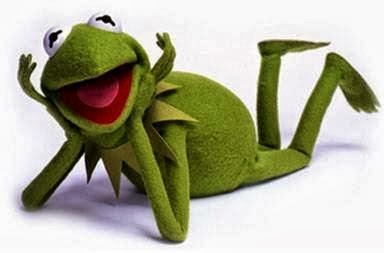
My first encounter with an amphibian was the all but loveable Kermit the frog from Sesame Street. While reptiles and amphibians are not warm and cuddly like Kermit, these ectothermic vertebrates (cold-blooded) are incredibly interesting. Some of them breathe through their damp skin. They are incredible predators.  Most species have super sensitive hearing that can detect airborne or ground vibrations, and their tongues are super muscular.

Pop culture has embraced reptiles and amphibians portraying them in humorous roles and as villains including the vocal frogs from the commercial for Budweiser beer, Nagini from Harry Potter, Kaa from the Jungle Book, Jafar from Aladdin, Tic Tock from Peter Pan, and the Teenage Mutant Ninja Turtles.
View Full Size Image
The first reptiles are believed to have evolved 
around 320 million years ago.
Amphibians and reptiles are incredibly important to global biodiversity. Dramatic declines have been measured across the globe since the late 1980s and indicate critical threats. There are groups trying to do something about this including the Amphibian Specialist Group of the World Conservation Union, Amphibian Ark, Partners in Amphibian and Reptile Conservation PARC, and the Panama Amphibian Rescue and Conservation Project among others.

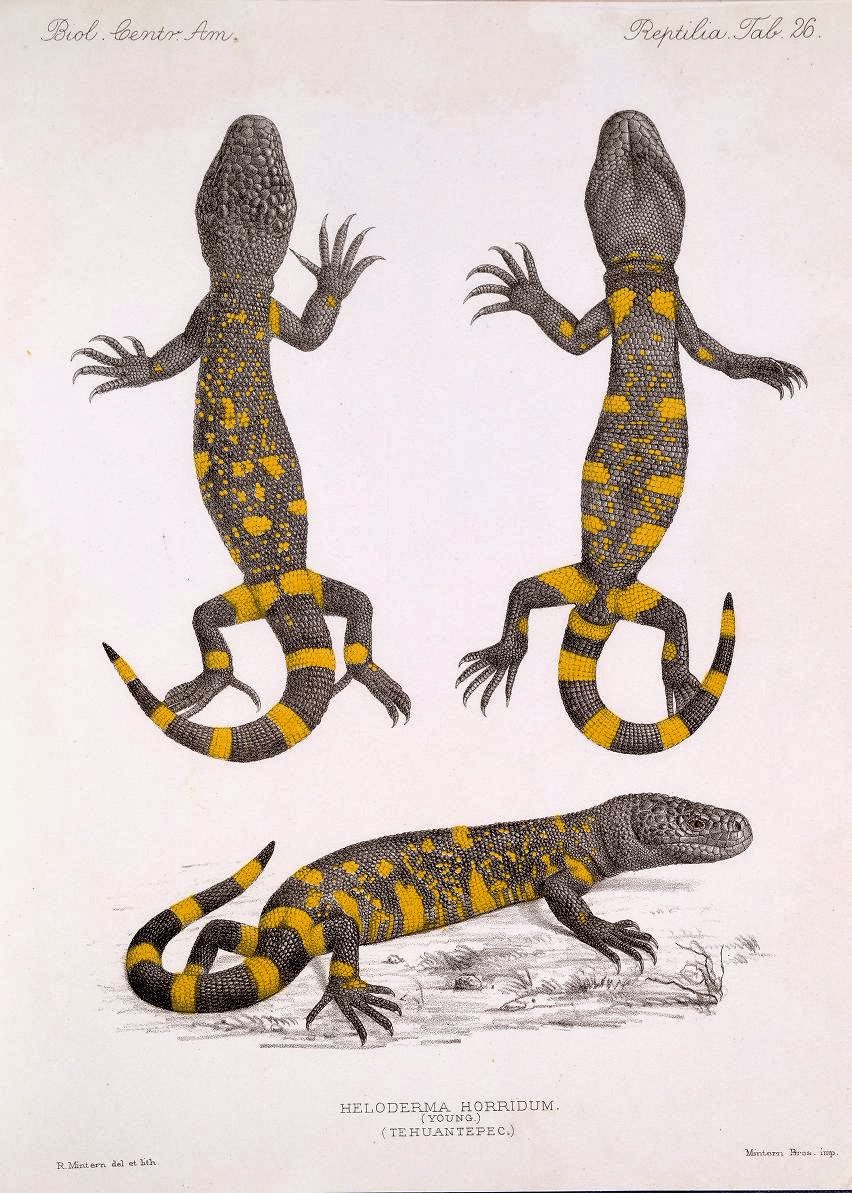
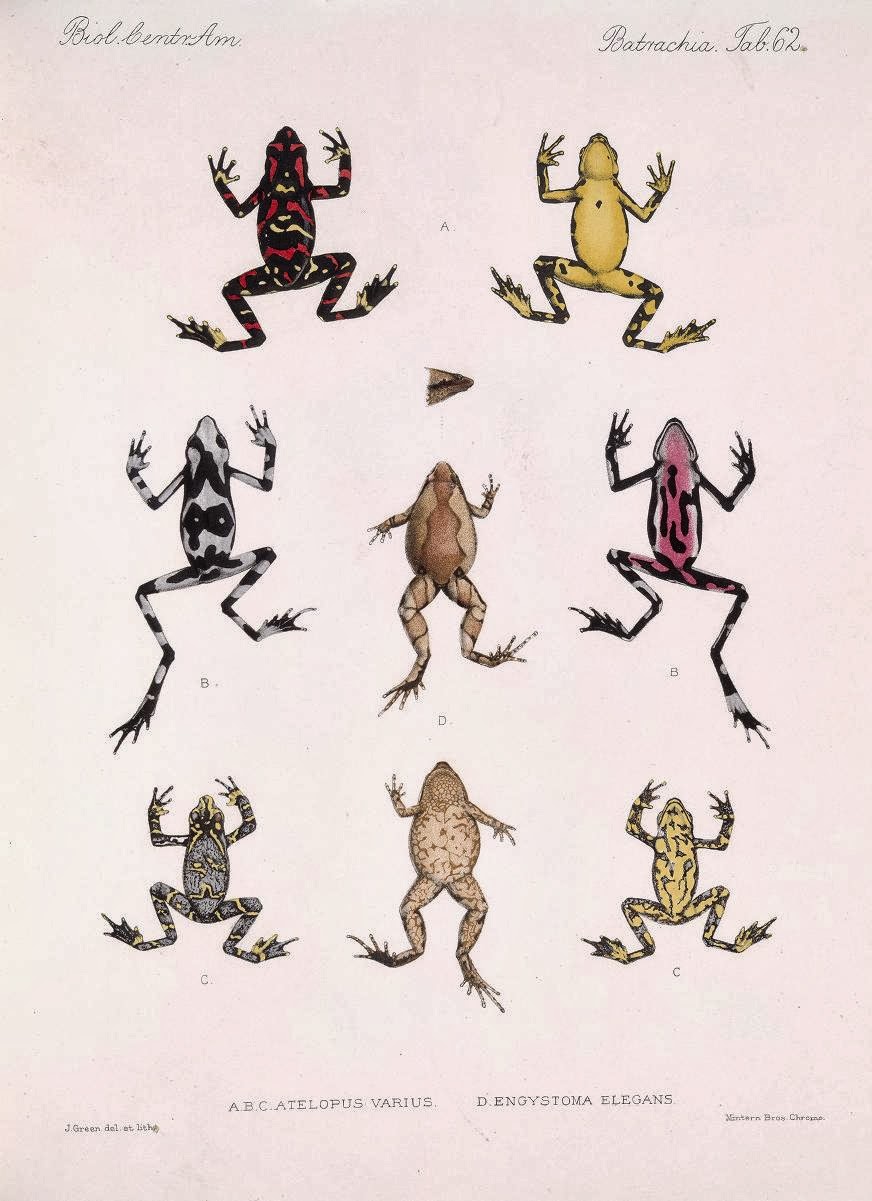
Pioneers in the documentation of these creatures were Frederick Godman and Osbert Salvin  the authors of Biologia Centrali-Americana : Reptilia and Batrachia, one volume in a 63 volume set called Biologia Centrali-Americana. Godman and Osbert set out to create the most comprehensive account of the flora and fauna of Mexico and Central America by hiring many local experts to collect specimens for study. They published the set over the course of 36 years.

View Full Size Image
Certain frogs can jump up to 20 times 
 their own body length in a single leap.

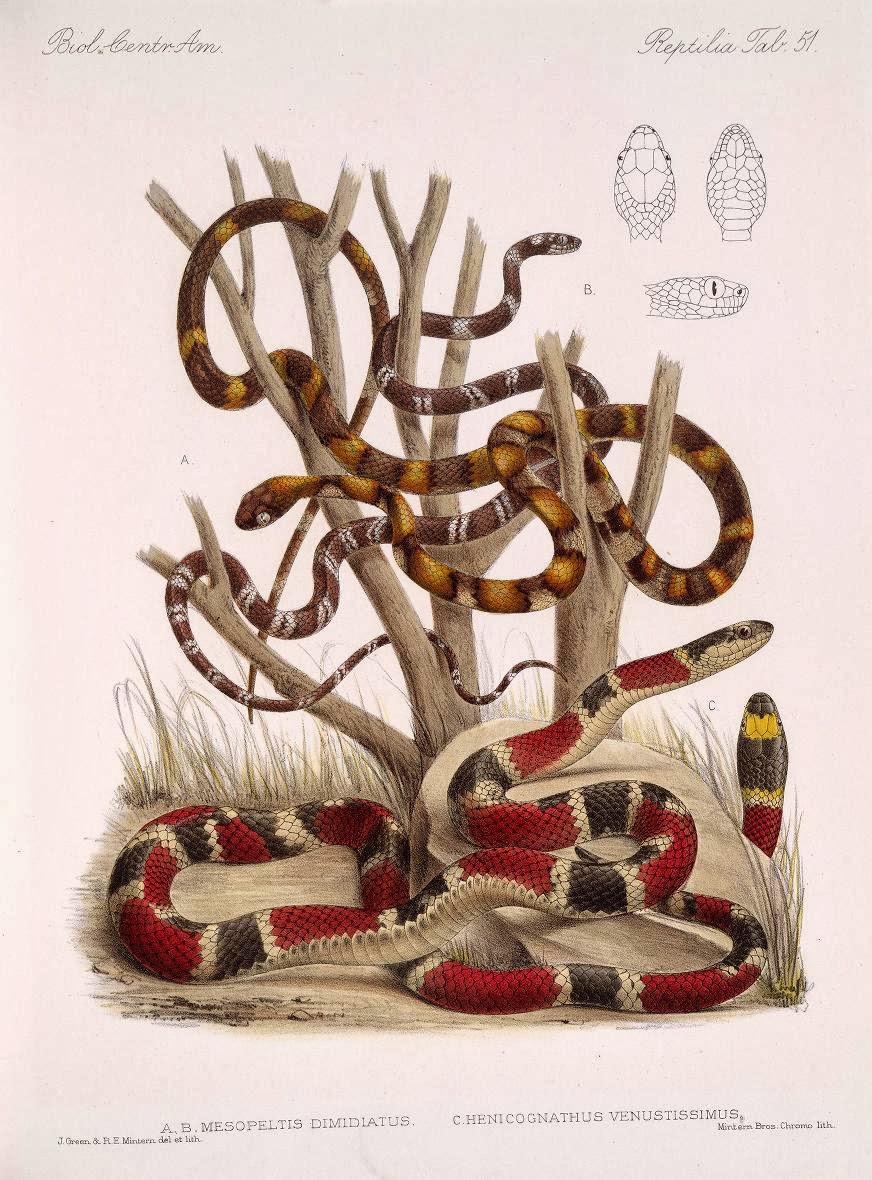
The entire set includes over 900 illustrations. Published between 1879-1915, Biologia Centrali-Americana : Reptilia and Batrachia, focuses on retiles and amphibians and is key to early discoveries in print of a variety of  species.

One critically endangered species, Godman and Osbert wrote about is the Costa Rican Variable Harlequin Toad (Atelopus varius), also known as the clown frog, is a neo-tropical true toad. They feed on small arthropods and their colorful appearance serves as a warning to potential predators of their toxicity of their skin, which contains a neurotoxin.

Micrurus nigrocinctus is also known as the Central American coral snake. This venomous snake lives between southern Mexico to northwestern Colombia. They can be recognized by their color pattern, which varies from two-colored to three-colored with black, yellow and red banding. They are non-aggressive Caecilians that feed on other snakes, small lizards, amphibians, and invertebrates. Their venom contains a strong neurotoxin, causing neuromuscular dysfunction.
View Full Size Image
Nearly all reptiles lay shelled eggs.


Browse through more of the illustrations from the book of the week in the BHL Flickr here.

Learn more about other reptiles and amphibians by reading the book. This set has been covered before in the BHL blog. Read more about it here.

References:
Amphibians of Panama. (n.d.). Atelopus varius. Encyclopedia of Life. Retrieved from  http://eol.org/pages/330754/overview
Amphibians of Panama. (n.d.). Atelopus varius Lichtenstein and von Martens 1856. Smithsonian Tropical Research Institute. Retrieved from http://biogeodb.stri.si.edu/amphibians/en/species/12/
Andrew, Elise. (14 September 2013). Untitled. I [Freaking] Love Science. Retrieved from https://www.facebook.com/IFeakingLoveScience

Unknown. (n.d.). Micrurus nigrocinctus black-banded Coral Snake. Encyclopedia of Life. Retrieved from http://eol.org/pages/1055826/details

Unknown. (n.d.). Fun Reptile Facts for Kids. Science Kids. Retrieved from http://www.sciencekids.co.nz/sciencefacts/animals/reptile.html 

October 24, 2013by gworthey
Blog Reel, Featured Books

Book of the Week: Die Cephalopoden

This week we are celebrating cephlapods. Not sure what they are? Cephalopods are a group of exclusively marine mollusks that include squid, octopus and nautilus. They are closely related to snails, slugs and clams. Let’s be honest, you might be most familiar with them on your plate.

View Full Size Image
Cephlopods have short life spans that range from 6 months to 2 years.

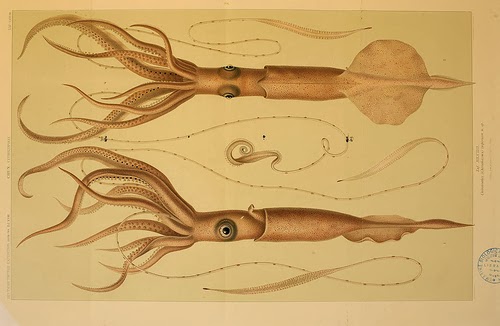
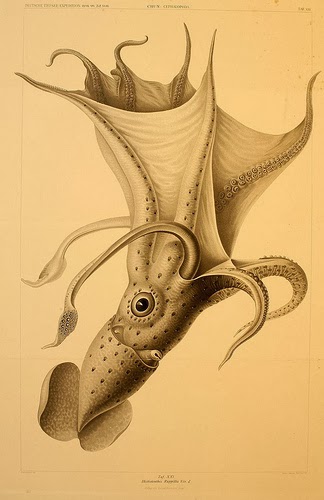
These intelligent but vulnerable invertebrates are fascinating. They are represented in fossil records as long ago as 500 million years. If I had to pick, I’d say squids are my favorite 8-legged species, and not just because this is Squidturday. Squids defend themselves by being agile and fast as well as releasing sepia, often referred to as ink. The sepia creates a smokescreen providing the squid to make a get away. Camouflage is another defense mechanism. They cannot only change the color of their skin but the shape and texture to reflect their surroundings. This is possible through pigment cells on their arms called chromatophores. It doesn’t stop there, certain species can fly out of the water for short distances.

The most well known species of squid popularized in book like Homer’s Odyssey and Jules Verne’s 20,000 leagues Under the Sea is the Giant or Colossal Squid. Not much is known about this squid because it is so rare to find. However, it is known that they live in the deep Atlantic Ocean and can bite with their sharp beaks. Their only predator is the sperm whale. They can reach lengths of up to 60 feet and weight as much as 1,000 pounds. Imagine looking into the soccer ball sized eyes of one of these invertebrates. Scary!

View Full Size Image
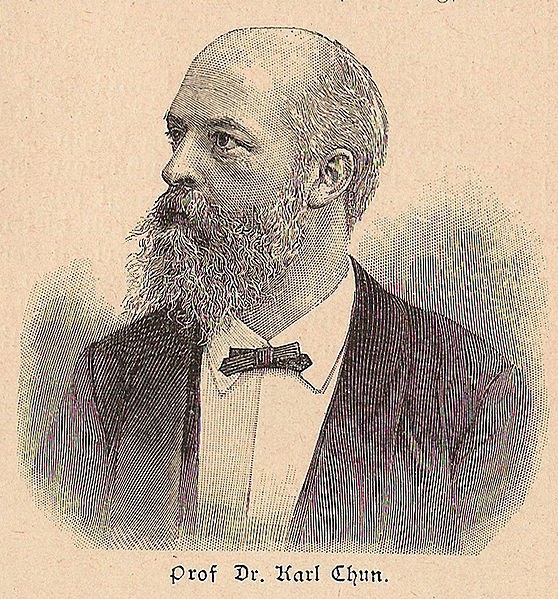
Image of Carl Chun from Jarhrbuch der Berliner Morgenzeitung, 1900.

Little was known about these creatures in the 1900s. So Carl Chun, a well known German marine biologist with a specialty in cephalopods and plankton, led the German expedition aboard the steamboat Valdivia in 1898 to explore the deep sea. He was among a growing fraction of scientist who believed that there was life in the deep sea. Lasting just a year, the trip explored the West Coast of South Africa, the Gulf of Guinea, the Antarctic Sea, and a large portion of the Indian Ocean and collected as many biological samples as possible. The results of the expedition lead to 24 volumes titled Ergebnisse der Deutschen Tiefsee-Expedition auf dem Dampfer “Valdivia” 1898-1899″ (Scientific results of the German deep-sea expedition on the steamer “Valdivia” 1898-1899) which Die Cephalopoden is apart of.

BHL’s copy of Die Cephalopoden provides much more information on cephalopods and squid. If you don’t sprechen deutsch, check out the English translation. From this expedition, Chun discovered and named a new species of squid, the vampire squid. Its species name, Vampyroteuthis infernalis, means “vampire squid from hell.”

To learn more about the Valdivia expedition, check out the BHL blog post Book of the Week: The Valdivia Expedition.

View Full Size Image
They are curious animals that explore their environment and are capable of learning, and will play with objects.

And if you want to see more beautiful illustrations from Chun’s Die Cephalopoden check out the BHL Flickr set.

References:
Ferris, Jabr. (2 August 2010). Fact or Fiction: Can a a Squid Fly out of the Water? Scientific American. Retrieved from http://www.scientificamerican.com/article.cfm?id=can-squid-fly≻=WR_20100804

Robey, Jason. (25 January 2013). Giant Squid Facts. Top 10 Startling Giant Squid Facts. Discovery. Retrieved from http://blogs.discovery.com/show-news/2013/01/top-10-startling-giant-squid-facts.html

Rodolfo. (19 June 2010). Basic Facts about Cephlapods. OBIS, Ocean Biographic Information System.  retrieved from http://www.iobis.org/node/161

Unknown. (n.d.) Cephalopod DayRetrieved from http://cephalopodday.tumblr.com/about

Watson, Stephanie. (1 June 2007). How Squid WorkHowStuffWorks.com. Retrieved from http://science.howstuffworks.com/zoology/marine-life/squid.htm

October 8, 2013by gworthey

Help Support BHL

BHL's existence depends on the financial support of its patrons. Help us keep this free resource alive!

search

About BHL

The Biodiversity Heritage Library (BHL) is the world’s largest open access digital library for biodiversity literature and archives. BHL operates as a worldwide consortium of natural history, botanical, research, and national libraries working together to digitize the natural history literature held in their collections and make it freely available for open access as part of a global “biodiversity community.”

Join Our Mailing List

Sign up to receive the latest news, content highlights, and promotions.

Subscribe Now

Subscribe to Blog via Email

Enter your email address to subscribe to this blog and receive notifications of new posts by email.

Join 319 other subscribers

Subscribe to Blog Via RSS

Subscribe to the blog RSS feed to stay up-to-date on all the latest BHL posts.

Access RSS Feed

Inspiring Discovery through Free Access to Biodiversity Knowledge.

The Biodiversity Heritage Library makes it easier than ever for you to access the information you need to study and explore life on Earth…for free, anytime, anywhere.


64+ Million Pages of
Biodiversity Literature Online.

EXPLORE

Tools and Services
to Transform Research.

EXPLORE

300,000+
Illustrations on Flickr.

EXPLORE

ABOUT | HARMFUL CONTENT | PRIVACY | SITE MAP | TERMS OF USE