Biodiversity Heritage Library - Program news and collection highlights from BHL
  • Home
  • News
  • Featured Books
    • All Featured Books
    • Book of the Month Series
    • BHL at 20
  • User Stories
  • Campaigns
    • Fossil Stories
    • Garden Stories
    • Monsters Are Real
    • Page Frights
    • Her Natural History
    • Earth Optimism 2020
  • Tech Blog
  • Visit BHL
Home
News
Featured Books
    All Featured Books
    Book of the Month Series
    BHL at 20
User Stories
Campaigns
    Fossil Stories
    Garden Stories
    Monsters Are Real
    Page Frights
    Her Natural History
    Earth Optimism 2020
Tech Blog
Visit BHL
  • Home
  • News
  • Featured Books
    • All Featured Books
    • Book of the Month Series
    • BHL at 20
  • User Stories
  • Campaigns
    • Fossil Stories
    • Garden Stories
    • Monsters Are Real
    • Page Frights
    • Her Natural History
    • Earth Optimism 2020
  • Tech Blog
  • Visit BHL
Biodiversity Heritage Library - Program news and collection highlights from BHL

All posts by michelle.underhill

Blog Reel, Campaigns, Featured Books, Fossil Stories

Mantell and the Armored Dinosaurs

Read the full blog post
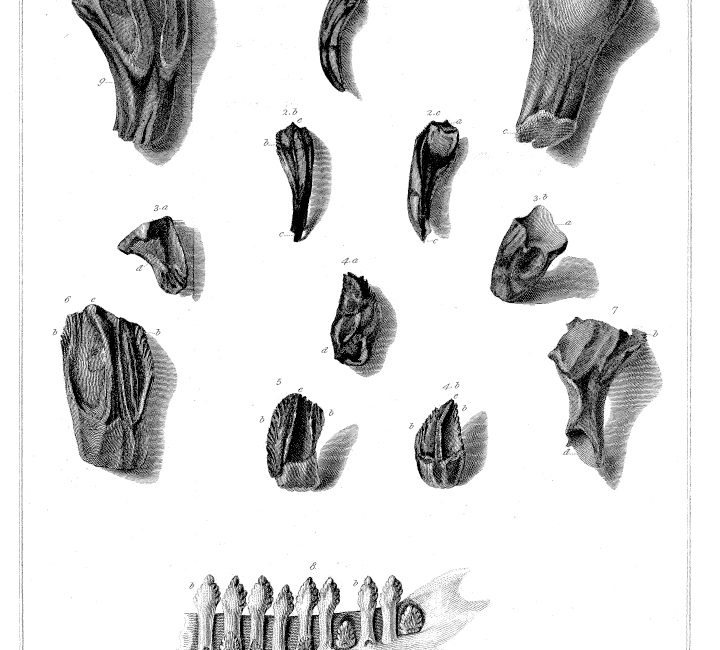
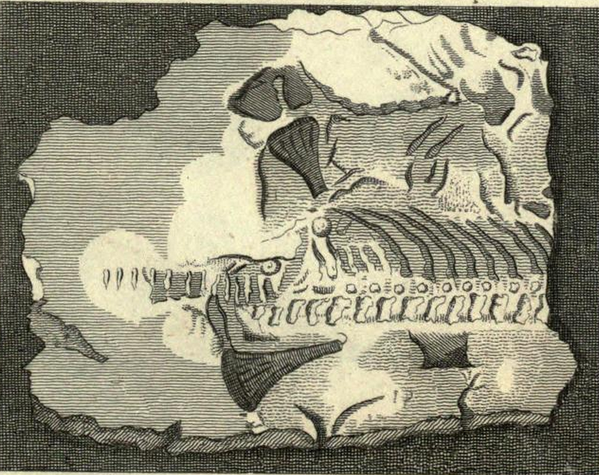
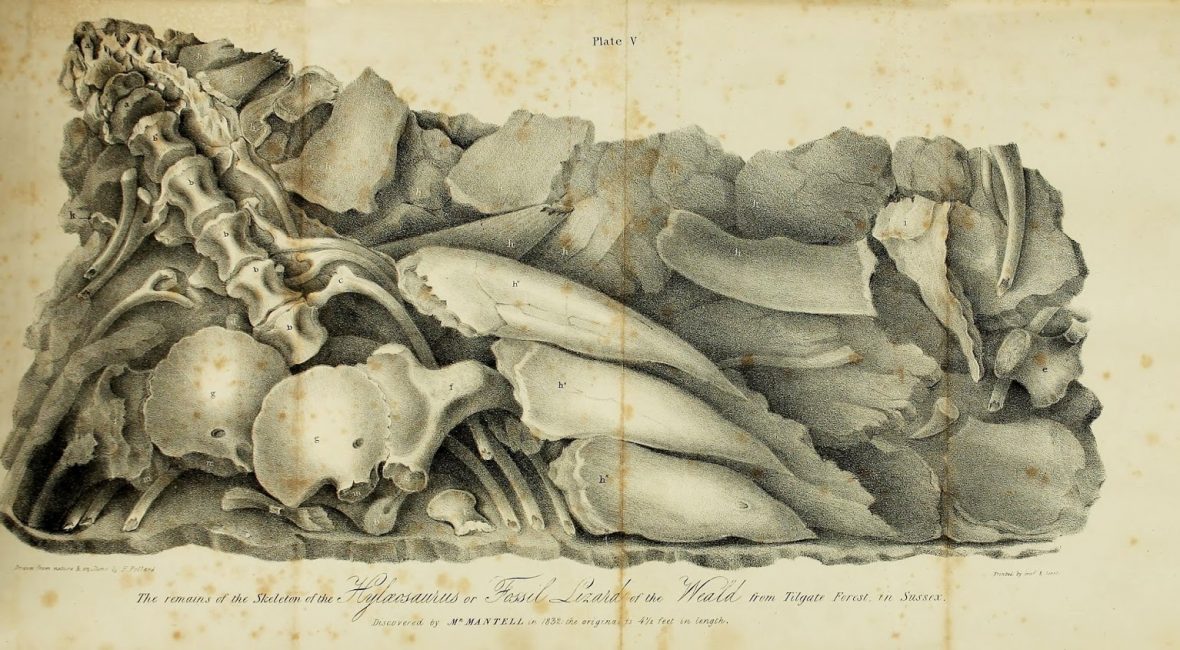
British geologist and paleontologist Gideon Mantell is famous for his contributions to the scientific discovery of dinosaurs. In 1825, he described and validly named the second dinosaur genus, Iguanodon. In 1833, he described another dinosaur, which was later used, along with Iguanodon and Megalosaurus, to define Dinosauria. A gunpowder explosion at a quarry in Tilgate Forest, West Sussex, revealed a collection of about fifty fossil bone pieces that were acquired by Mantell in 1832. Mantell discovered that the pieces could be combined into a single, partially articulated skeleton, the most complete dinosaur skeleton known at the time.
Continue reading
October 16, 2015byGrace Costantino
BHL News, Blog Reel, Campaigns, Fossil Stories

Live Webcast Today! Behind-the-Scenes Tour of the NHMLA Dino Lab

Read the full blog post
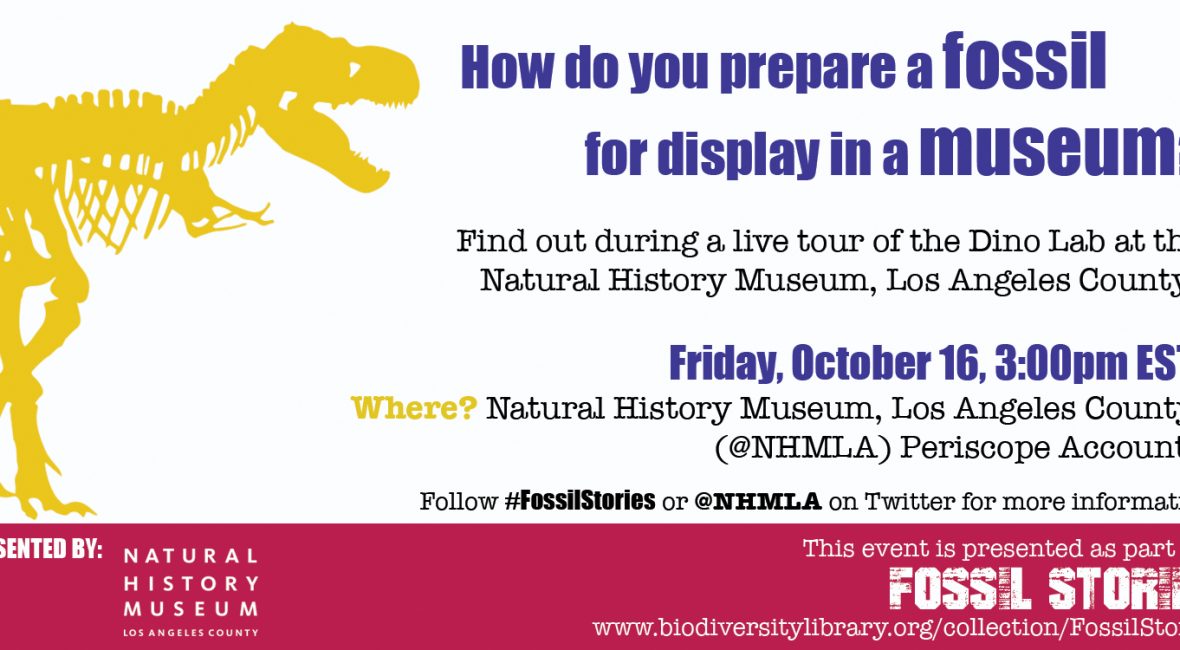
The Dino Lab at the Natural History Museum, Los Angeles County, is a busy place. The lab is responsible for cleaning and repairing the fossils uncovered by its paleontologists, sculpting missing bones to help fill in fossil gaps, and photographing and archiving the fossils held at the museum. It offers an incredible opportunity for museum visitors to get a true picture of what it takes to prepare a fossil for further research or display in a museum. How would you like to get a behind-the-scenes tour of the Dino Lab at NHMLA? Well, you’re in luck!
Continue reading
October 16, 2015byGrace Costantino
Blog Reel, Campaigns, Featured Books, Fossil Stories

Naming the Second Dinosaur: Mantell and Iguanodon

Read the full blog post
The second validly-named dinosaur was Iguanodon, but the identification of its fossils as a distinct and extinct species was a somewhat long and arduous process. In 1822, Gideon Mantell, English geologist and paleontologist, came into possession of some large fossil teeth, discovered either by himself or his wife, Mary Ann.
Continue reading
October 15, 2015byGrace Costantino
Blog Reel, Campaigns, Featured Books, Fossil Stories

Identifying the First Flying Reptile: Pterosaurs

Read the full blog post
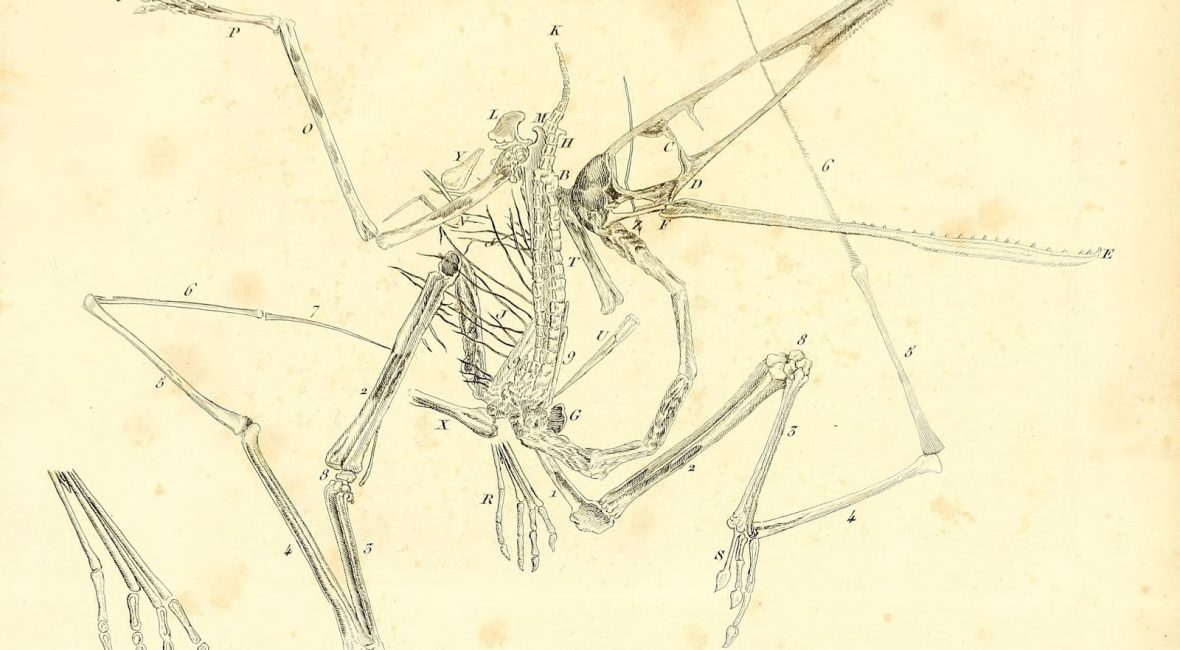
Pterosaurs, flying reptiles that lived 228-66 million years ago, are the earliest vertebrates known to have evolved the capacity for powered flight. The first known pterosaur specimen was described by Cosimo Alessandro Collini in 1784. Twenty years earlier, in 1764, Collini had been appointed to supervise the Naturalienkabinett at Mannheim, established as part of the Kurpfälzische Academy of Sciences, in present-day Germany. The first-known pterosaur specimen arrived at Mannheim sometime between 1767 and 1784, probably originating from Bovaria. Collini was baffled by the specimen, but deduced that it was not a bird or a bat.
Continue reading
October 15, 2015byGrace Costantino
Blog Reel, Campaigns, Featured Books, Fossil Stories

Uncovering the “Fish Lizard”: Ichthyosaurs and Home

Read the full blog post
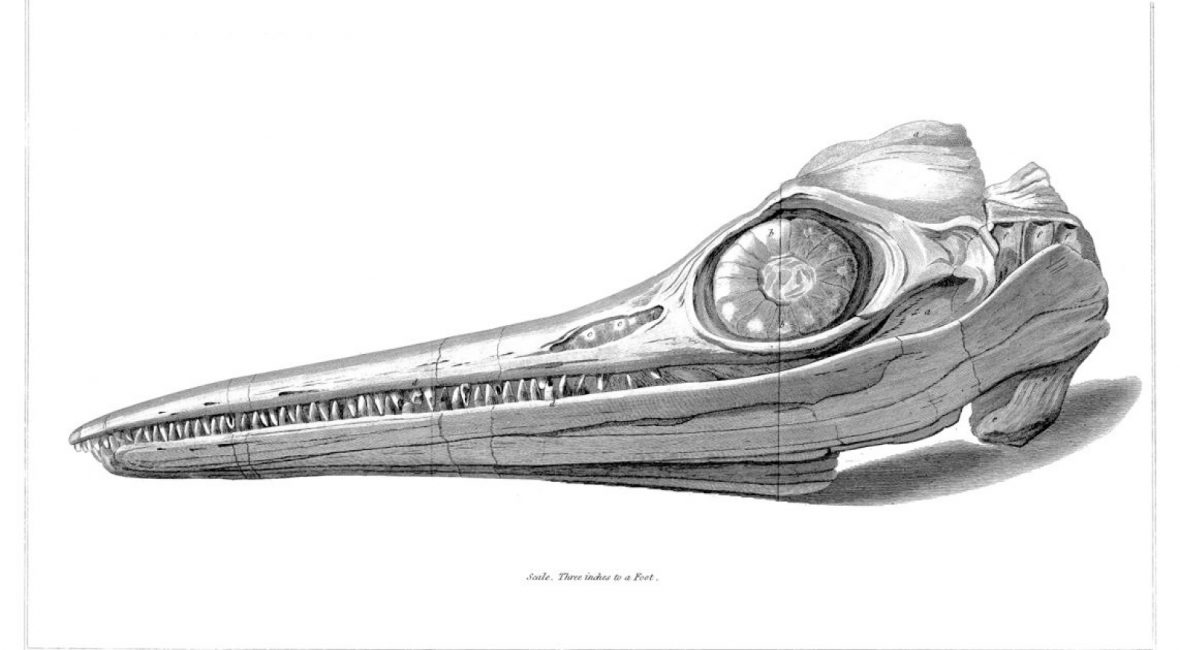
When the fossils of extinct species were first discovered, they were often misidentified. Case in point: Ichthyosaurs. The first probable illustrations of ichthyosaur fossils were published by Edward Lhuyd in his Lithophylacii Brittannici Ichnographia, 1699. He attributed the fossils to fish. In 1708, Swiss naturalist Johann Jakob Scheuchzer attributed two ichthyosaur vertebrae to a man who drowned during the Biblical flood. In 1783, an ichthyosaur jaw with teeth was exhibited by the Society for Promoting Natural History as those of a crocodilian.
Continue reading
October 15, 2015byGrace Costantino
Blog Reel, Campaigns, Featured Books, Fossil Stories

Fact or Fiction? Discovering the Mosasaur

Read the full blog post
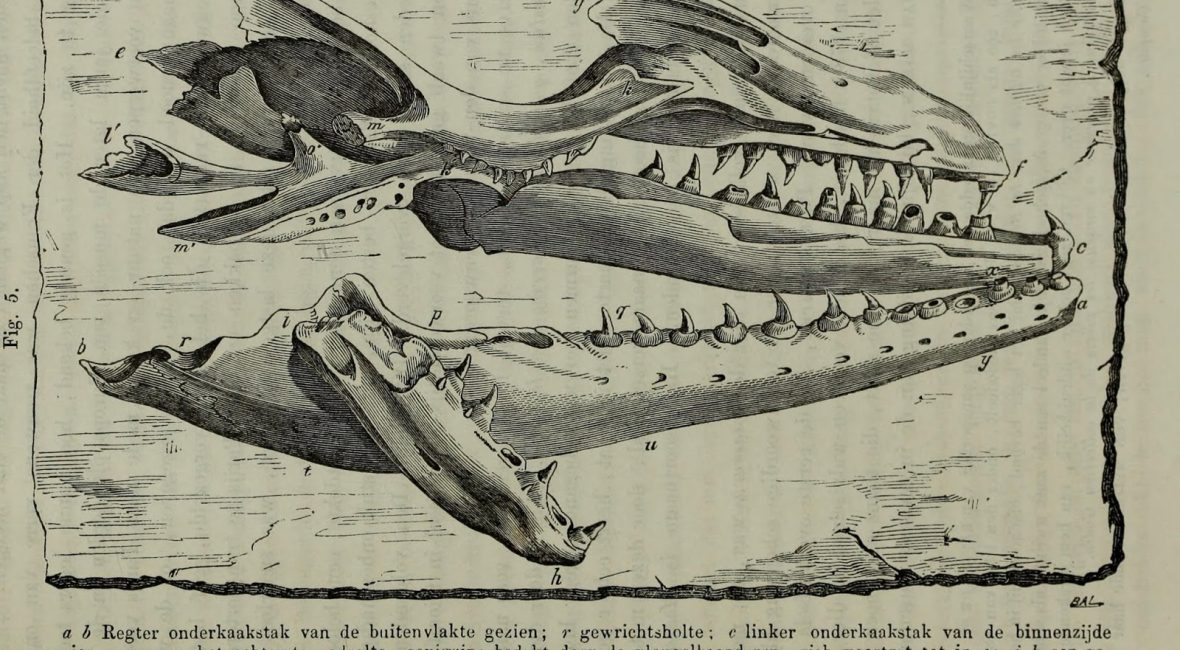
If you’ve seen Jurassic World (or even just the trailers), then you’re familiar with Mosasaurus.
Continue reading
October 14, 2015byGrace Costantino
Blog Reel, Campaigns, Featured Books, Fossil Stories

A Sinner Killed During the Great Flood or a Fossil Reptile? Discovering the Plesiosaur

Read the full blog post
Most people today are at least somewhat familiar with the order of extinct marine reptiles known as Plesiosauria, thanks to the legend of the Loch Ness monster, which is often described as resembling a plesiosaur. Indeed, some argue that Nessie may in fact be a surviving member of this order. Scientists, however, reject this suggestion, if for no other reason that the Loch Ness lake formed a mere 10,000 years ago, while the fossil record indicates that plesiosaurs went extinct over 66 million years ago. And yet, even if plesiosaurs can’t account for the Loch Ness legend, the story of their discovery is still captivating. Plesiosaurs are among the first extinct fossil reptiles to be recognized as such.
Continue reading
October 14, 2015byGrace Costantino
Page 26 of 47« First...1020«25262728»3040...Last »

Help Support BHL

BHL's existence depends on the financial support of its patrons. Help us keep this free resource alive!

search

About BHL

The Biodiversity Heritage Library (BHL) is the world’s largest open access digital library for biodiversity literature and archives. BHL operates as a worldwide consortium of natural history, botanical, research, and national libraries working together to digitize the natural history literature held in their collections and make it freely available for open access as part of a global “biodiversity community.”

Follow BHL

  • Bluesky logo
  • Instagram logo
  • Facebook logo
  • Flickr logo
  • Twitter logo

Join Our Mailing List

Sign up to receive the latest news, content highlights, and promotions.

Subscribe Now

Subscribe to Blog via Email

Enter your email address to subscribe to this blog and receive notifications of new posts by email.

Join 318 other subscribers

Subscribe to Blog Via RSS

Subscribe to the blog RSS feed to stay up-to-date on all the latest BHL posts.

Access RSS Feed

Inspiring Discovery through Free Access to Biodiversity Knowledge.

The Biodiversity Heritage Library makes it easier than ever for you to access the information you need to study and explore life on Earth…for free, anytime, anywhere.

64+ Million Pages of
Biodiversity Literature Online.

EXPLORE

Tools and Services
to Transform Research.

EXPLORE

300,000+
Illustrations on Flickr.

EXPLORE


ABOUT | BLOG AUTHORS | HARMFUL CONTENT | PRIVACY | SITE MAP | TERMS OF USE