Biodiversity Heritage Library - Program news and collection highlights from BHL
  • Home
  • News
  • Featured Books
    • All Featured Books
    • Book of the Month Series
    • BHL at 20
  • User Stories
  • Campaigns
    • Fossil Stories
    • Garden Stories
    • Monsters Are Real
    • Page Frights
    • Her Natural History
    • Earth Optimism 2020
  • Tech Blog
  • Visit BHL
Home
News
Featured Books
    All Featured Books
    Book of the Month Series
    BHL at 20
User Stories
Campaigns
    Fossil Stories
    Garden Stories
    Monsters Are Real
    Page Frights
    Her Natural History
    Earth Optimism 2020
Tech Blog
Visit BHL
  • Home
  • News
  • Featured Books
    • All Featured Books
    • Book of the Month Series
    • BHL at 20
  • User Stories
  • Campaigns
    • Fossil Stories
    • Garden Stories
    • Monsters Are Real
    • Page Frights
    • Her Natural History
    • Earth Optimism 2020
  • Tech Blog
  • Visit BHL
Biodiversity Heritage Library - Program news and collection highlights from BHL
BHL News, Blog Reel

BHL is Growing! Announcing the First of Our New Members: University of South Florida Libraries

Green logo for the University of South Florida Libraries

A wave of support is building behind BHL. As we advance through our transition from long-term hosting by the Smithsonian Institution to a new independent governance and hosting model, one message has become increasingly clear: our global community is stepping forward to strengthen and sustain the world’s largest open-access library of biodiversity literature.

In response to BHL’s Call for Support, we have received a range of commitments from institutions in multiple countries. These include significant institutional donations, major in-kind technical support and expertise, technical hosting, and new organisations joining the BHL Member Council. Today, we are delighted to announce the first of these new Members: the University of South Florida Libraries (USF).

Green logo for the University of South Florida Libraries

Welcoming the University of South Florida Libraries

The University of South Florida Libraries has expressed strong interest in BHL for some time, and we are thrilled to welcome them as our newest BHL Member. Their decision to prioritise BHL as a key platform for sharing biodiversity-related content reflects a shared commitment to open science, global collaboration, and the long-term accessibility of biodiversity literature and data.

“The USF Libraries are delighted to join the BHL Members Council. As we continue to grow our collections in the areas of environmental and natural history, this initiative perfectly aligns with our areas of emphasis. We are committed to making these unique research materials openly accessible to ensure broader engagement and collaboration across the research community and the general public.”

— Carol Ann Borchert, Senior Associate Dean, University of South Florida

“We are thrilled to welcome University of South Florida Libraries as a new BHL Member and look forward to them further enhancing the wonderfully rich and diverse collections held within BHL. We are also very grateful for their offer of technical support, and excited by the opportunities this new partnership presents.”

— David Iggulden, Chair, BHL Executive Committee
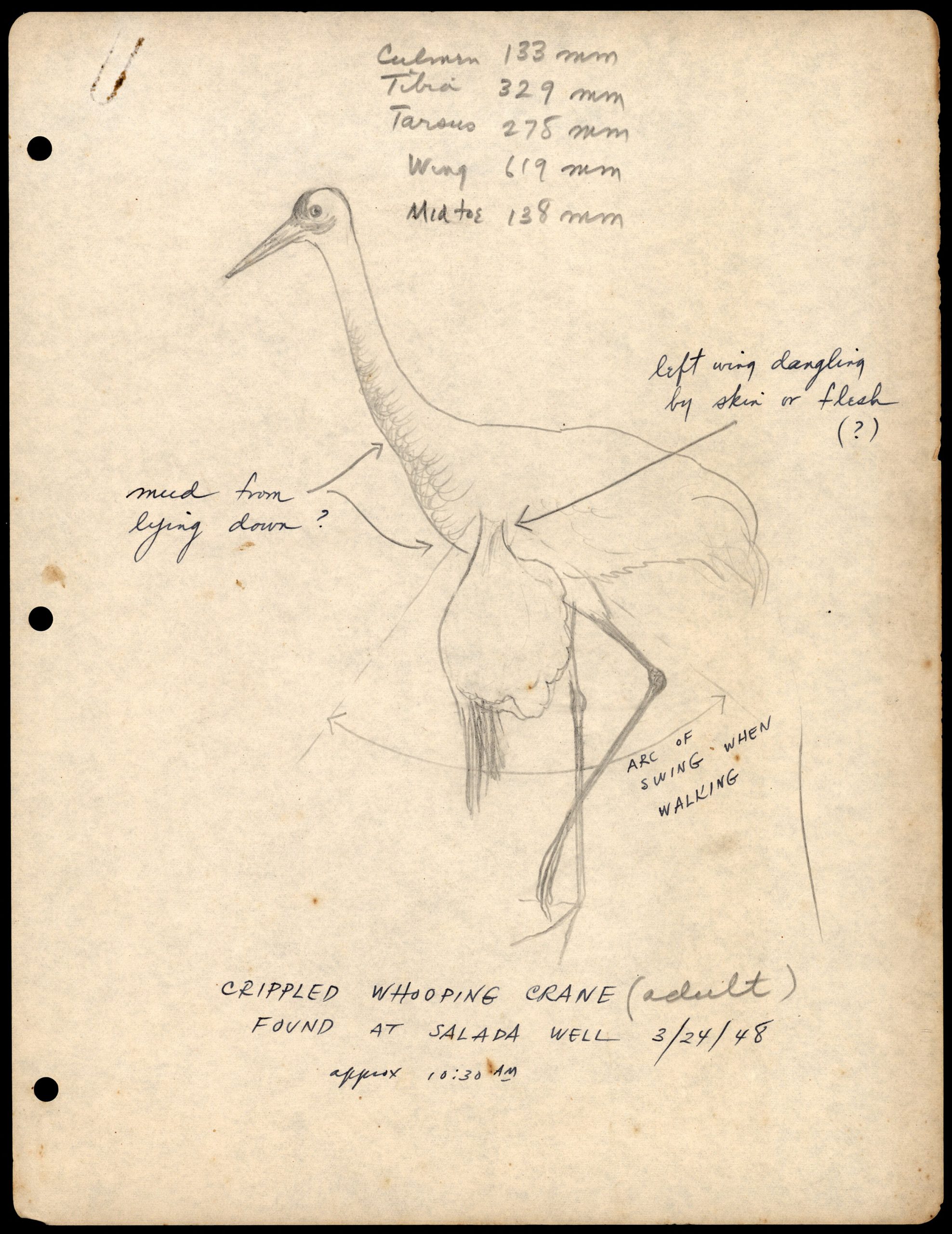
Sketch of an injured whooping crane including measurements, notes, date, and location

Allen, Robert Porter, “Diagram, Crippled Whooping Crane Sketch, March 24, 1948” (1948). Robert Porter Allen Audubon Collection – Photographs. Image 170. https://digitalcommons.usf.edu/rpa_photographs/170

Rich Collections Supporting Natural History Scholarship

USF’s growing collections will substantially enrich BHL, particularly content from across Florida, the Gulf of Mexico, and the Caribbean. Highlights include:

  • Florida Environment and Natural History Digital Collections, containing more than 40 individual collections originating from individuals, scientific societies, and community organizations across Florida. Featured exhibits are hosted on the Florida Environment and Natural History (FLENH) Portal.
  • Extensive archival materials documenting environmental history, including serving as the repository of the Florida Audubon Sanctuaries, the Florida Ornithological Society, and others. Highlights include the papers of pioneering ornithologist Robert Porter Allen.
  • Searchable Ornithological Research Archive (SORA), now hosted by USF Libraries, providing access to 45 distinct journals and more than 81,000 articles.
  • The USF Herbarium, home to more than 270,000 specimens and growing. The Herbarium samples can be viewed via theAtlas of Florida Plants.

With a major digitisation programme underway, these collections will continue to grow, bringing new biodiversity knowledge into BHL for global use.
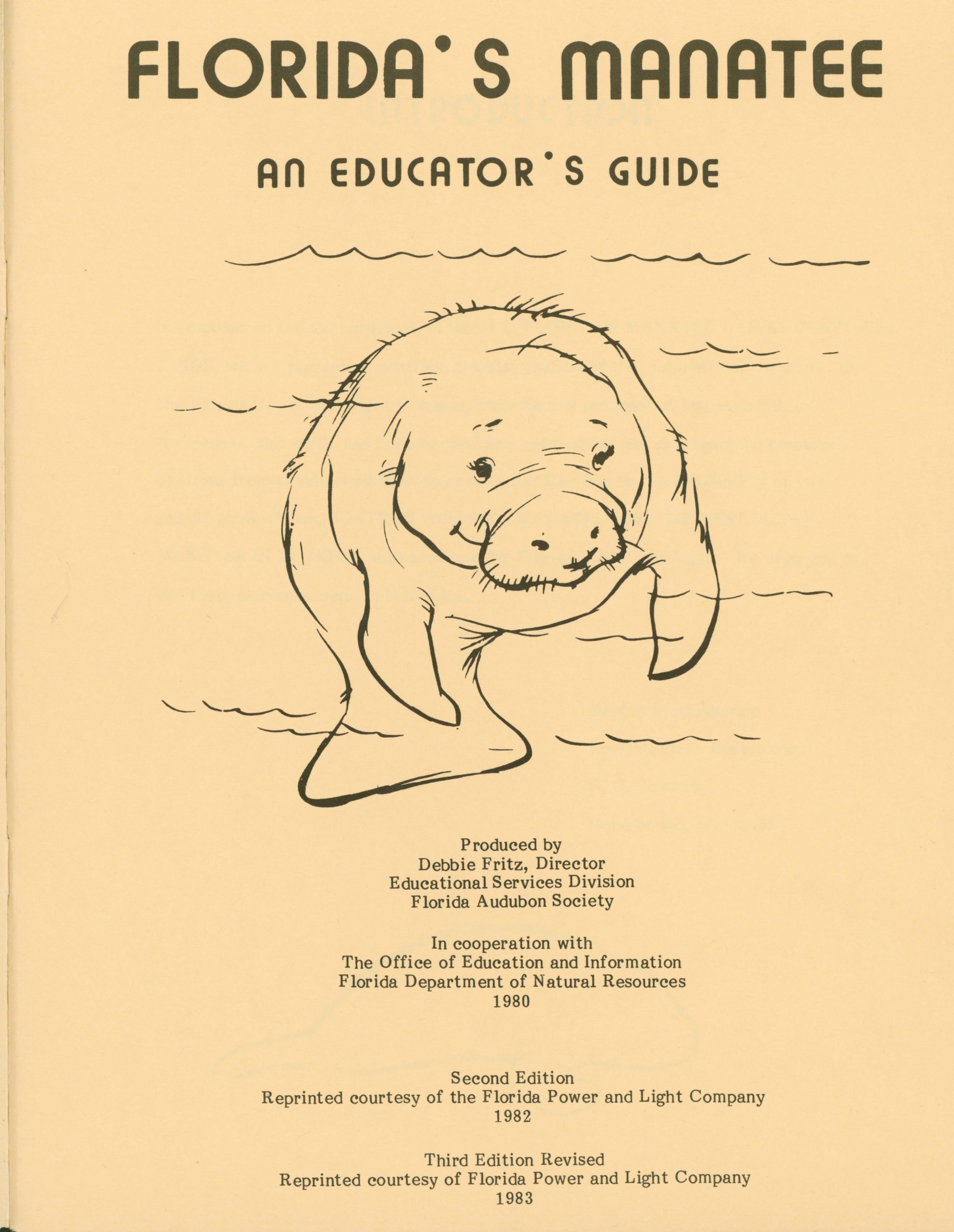
Cover of the Florida's Manatee: An Educator's Guide, including a drawing of a manatee

Fritz-Quincy, Debbie; Florida Audubon Society; and Florida. Department of Natural Resources. Bureau of Education and Information, “Florida’s Manatee, An Educator’s Guide, Third Edition, 1983” (1983). Select Environment and Natural History Publications. 21. https://digitalcommons.usf.edu/envir_publications/21

Strengthening BHL’s Technical Capacity

USF will also contribute significantly to BHL’s technical infrastructure during this crucial period of transition. Their proposed support includes significant Systems Support for MACAW (BHL’s Metadata Collection and Workflow System) for three years, enabling them to:

  • Join BHL’s Technical Team
  • Build redundancy for specialised system expertise
  • Support documentation, training, troubleshooting, and virtual content harvesting
  • Potentially undertake future development work

This contribution directly enhances BHL’s resilience, sustainability, and capacity for innovation.

A Growing Community of Support

Today’s news marks the beginning of a series of positive developments that reflect deep community confidence in BHL’s mission and future. Over the coming weeks, we will share additional announcements as our Call for Support commitments are finalised — stay tuned.

“As we move into 2026, I’m pleased to share that BHL remains fully operational and is moving into its next chapter with new partnerships and renewed momentum. In 2026 we will be operating independently under CLIR as our fiscal sponsor as we focus on long-term sustainability and growth.”

— Kelli Trei, BHL Transition Director

Global Support Through Public Fundraising

BHL’s transition has also been met with an extraordinary response from the public. To date, BHL’s Transition fundraising has raised over USD 43,000 through more than 440 donations from supporters in 38 countries, reflecting the truly global reach and impact of the Biodiversity Heritage Library.

Of this total, over USD 38,000 has been raised thus far through our #GiveBHLWings campaign, launched on 18 November 2025 to support BHL’s transition to an independent and autonomous future beyond Smithsonian hosting from 1 January 2026. This campaign alone has attracted more than 370 donations from across the globe, demonstrating strong public confidence in BHL’s ability to thrive independently and sustainably.

This outpouring of public support strengthens the institutional commitments secured through the Call for Support and means BHL’s future is being shaped by a broad, international community of partners, contributors, and supporters.

How You Can Help

BHL’s transition is underway, and community support remains essential. You can help by:

  • Sharing our story: spread the word about the #BHLTransition, our Call for Support, and the importance of open biodiversity literature.
  • Engaging your institution: if your organisation wishes to join BHL or offer support, we welcome enquiries. Please contact [email protected].
  • Donating to our #GiveBHLWings fundraising campaign: every contribution strengthens our services, infrastructure, and long-term sustainability.

Thank you for supporting the Biodiversity Heritage Library. With new members like the University of South Florida Libraries — and more announcements to follow — the future of BHL is bright and growing.
December 18, 2025by Nicole Kearney
BHL News, Blog Reel

Help Give BHL Wings This Giving Tuesday

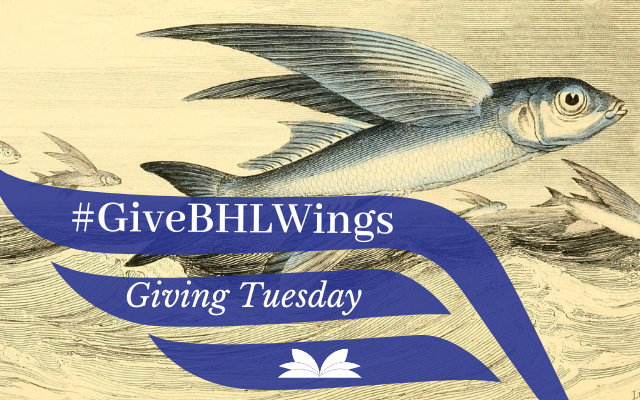
Flying fish "flying" out of the water with #GiveBHLWings promotion

On 1 January 2026, the Biodiversity Heritage Library (BHL) will take flight, becoming fully independent after nearly two decades hosted by the Smithsonian Institution.

This transition marks an historic milestone for BHL and for the global biodiversity and open-science communities we serve. It also brings an urgent challenge: ensuring that the infrastructure, staffing, and partnerships that keep over 500 years of biodiversity knowledge open to the world remain secure and sustainable.

Our Community Has Lifted Us. Now We Must Keep Flying…

When the Smithsonian announced in early 2025 that it would step back from hosting and administering BHL, the global consortium rallied. Through our Call for Support, we received commitments from institutions and outpourings of love from our global network – a testament to the strength of the BHL community and the value placed on free, global access to biodiversity literature.

Those pledges give us the stability we need to complete our transition and begin building a long-term foundation for the future. Yet they will only sustain us through 2026 – perhaps into 2027.

Adult puffin with wings extended feeding its young

Puffin, Fratercula arctica (Pl. 51), illustrated by Henry Constantine Richter, from The Birds of Great Britain by John Gould, 1873.

To truly soar beyond this transition, we must secure the technical infrastructure, hosting, and staffing that will carry BHL forward for decades to come.

Why We Need Your Help

The #GiveBHLWings campaign, launched for Giving Tuesday 2025, invites everyone who values open knowledge to be part of this transformation. 

Your donation directly supports:

  • The servers and systems that deliver millions of digitized pages every day;
  • The staff and volunteers who manage metadata, partnerships, and outreach;
  • The modernization of infrastructure to make biodiversity literature discoverable, connected, and citable within the global research ecosystem.
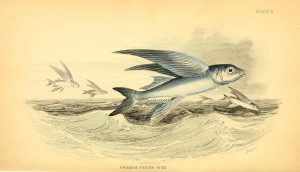
Flying fish "flying" out of the water.

Common Flying Fish (Pl. 8), from The natural history of fishes, particularly their structure and economical uses, by John Stevenson Bushnan, 1840.

As we count down to BHL’s independence on 1 January 2026, we invite you to join us. 

Every contribution – large or small – will help ensure that researchers, educators, students, and nature enthusiasts around the world continue to have free access to the biodiversity knowledge that underpins conservation and science.

Help BHL Take Flight

Your support will carry the Biodiversity Heritage Library into its new future: independent, resilient, global, and ready to soar.

🌿 Donate today: help #GiveBHLWings

📢 Spread the word: share the #GiveBHLWings campaign far and wide

💚 Share the love: use #ILoveBHL on social media

💡 Share your ideas: Respond to our Call for Support

📚 Stay up to date: follow #BHLTransition news on the BHL Blog

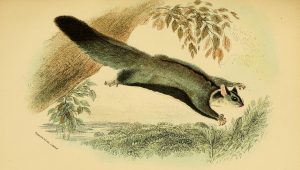
Drawing of a wrist winged glider

Squirrel Flying-phalander (Pl. XV), from A hand-book to the marsupialia and monotremata, by Richard Lydekker, 1894.


December 2, 2025by Nicole Kearney
BHL News, Blog Reel

BHL at Living Data 2025 & GBIF Governing Board Meeting

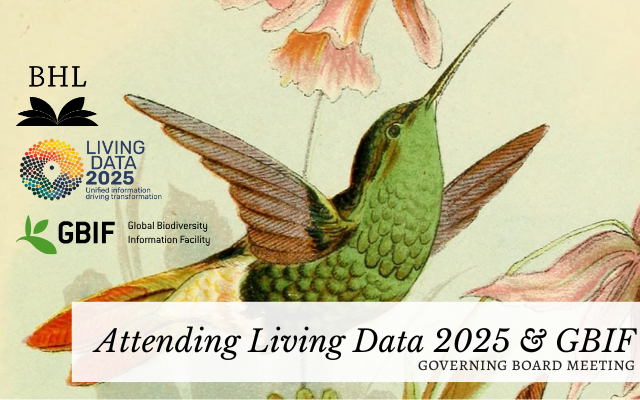
Image of Golden tailed hummingbird with BHL, Living Data, and GBIF logos

This month, members of the biodiversity community from across the globe gathered in Bogotá, Colombia, for two major meetings: the Global Biodiversity Information Facility (GBIF) Governing Board Meeting (19–20 October) and Living Data 2025 (21–24 October).

For the Biodiversity Heritage Library (BHL), these back-to-back events were a timely opportunity to share progress on the BHL Transition and to connect directly with the global community that relies on BHL every day.

Why Colombia?

Colombia was a fitting and inspiring location for these global biodiversity meetings. As one of the most biodiverse countries in the world, Colombia embodies the richness of life that BHL’s collections document. Globally, Colombia has the highest number of species of both orchids and birds, and the second highest number of butterflies, frogs, and freshwater fish. 

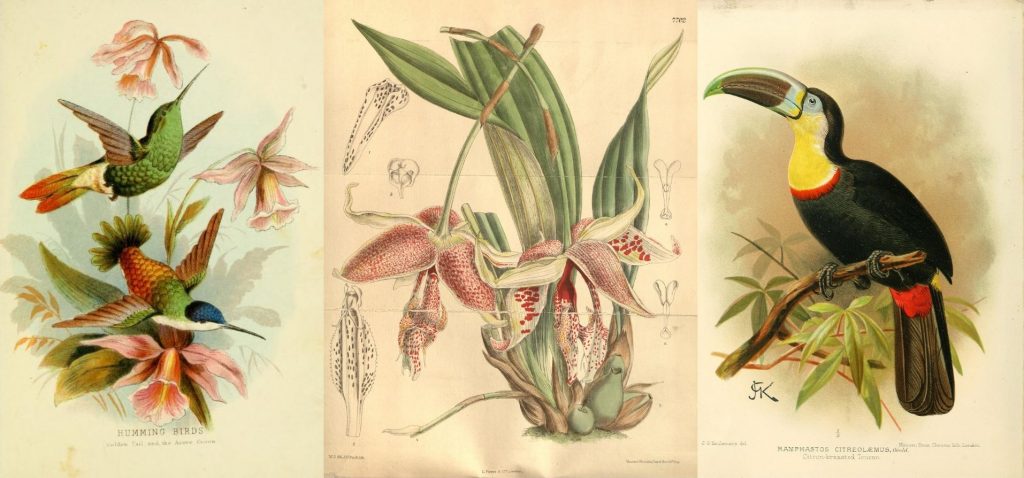
Illustrations of Colombian species depicting a Golden-tailed hummingbird, an orchid Embreea rodigasiana, and a citron-throated toucan, Ramphastos citreolaemus.

(L-R): Golden-tailed Hummingbird, from Humming-birds (1874); orchid Embreea rodigasiana from Curtis’s Botanical Magazine (1900); and the citron-throated toucan Ramphastos citreolaemus, from A flying trip to the tropics (1895).

Hosting these meetings in Colombia also enabled greater participation from the Global South, helping to amplify the voices of regions that hold so much of the world’s biodiversity, but are often underrepresented in global databases and research networks. Both the GBIF and Living Data meetings reflected this commitment to inclusivity and accessibility – values that resonate deeply with BHL’s mission.

Living Data 2025

More than 1,000 participants, including 718 in-person attendees, took part in the Living Data 2025 conference, a joint conference convened by TDWG (Biodiversity Information Standards), GEO BON (Group on Earth Observations Biodiversity Observation Network), GBIF (Global Biodiversity Information Facility), and OBIS (Ocean Biodiversity Information System).

Under the themes of building standards for data sharing and interoperability, integrating and providing access to diverse information sources, and monitoring progress toward conserving and restoring the planet’s biodiversity, Living Data brought together biodiversity data specialists, scientists, researchers, and practitioners from around the world to explore the standards and collaborations that underpin open biodiversity science.

BHL was represented at Living Data 2025 by:

  • Kelli Trei, BHL Transition Director
  • Nicole Kearney, BHL Communications Director
  • Mike Lichtenberg, BHL Software Engineer
  • Richard Wragg, Vice-Chair, BHL Executive Committee

Together, the team ensured that BHL had a strong and visible presence throughout the conference, through formal sessions, the exhibition area, and countless side conversations.

Sharing the BHL Transition

Nicole Kearney presented A New Future for the Biodiversity Heritage Library: from institutional reliance to global resilience as part of the session “Global Infrastructure: Current state, sustainability, and paths forward through data partnerships.”

The talk shared updates on BHL’s transition away from the Smithsonian Institution and toward a more distributed, sustainable, and community-governed future, emphasizing the need for shared responsibility in long-term hosting, governance, and funding.

The timing of the talk could not have been better: just four days after the launch of BHL’s public fundraising campaign and in the first session of the conference. This meant participants heard about the transition early, creating immediate awareness and enthusiasm that carried through the rest of the event. 

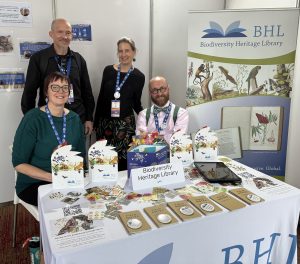
To support ongoing conversations, the BHL consortium also hosted a booth in the Living Data exhibition hall. BHL staff were on hand throughout to answer questions and provide information. The booth was a visible hub of activity, welcoming a steady stream of visitors, all eager to express support and learn more about BHL and the transition. 

Image of BHL staff behind the BHL Booth at Living Data 2025

BHL staff at the BHL booth, Bogotá, October 2025, Photo: Nicole Kearney

QR codes linking directly to the BHL fundraising page were shared during Nicole’s talk and displayed at the booth, encouraging attendees to contribute and help amplify the news of the transition. The message spread quickly throughout the conference: BHL is critical infrastructure and a collective responsibility. 

BHL representation across the Living Data program

As the foundation of our understanding of biodiversity, BHL content – and the importance of open access to it – featured heavily across the Living Data 2025 program. Many presenters shared projects that relied on BHL, including:

  • Ben Hartley (né Scott) (Natural History Museum, London): Mining Botanical Literature with Machine Learning
  • Roderic Page (University of Glasgow): The roles of the Biodiversity Heritage Library, Wikidata, and Internet Archive in making taxonomic literature discoverable, accessible, and citable
  • Nicky Nicholson (Royal Botanic Gardens, Kew): Developing an open and participatory literature data extraction workflow using Zotero and Large Language Models
  • Michael Elliott (University of Florida): AI-assisted exploration, curation, and extension of biodiversity data using iChatBio
  • Donat Agosti (Plazi, Switzerland): The Disentis Roadmap: A decadal roadmap for liberating global biodiversity knowledge from scientific literature
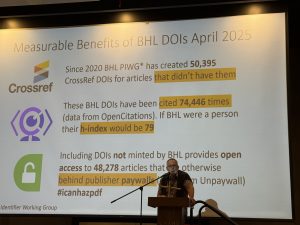
Image of a slide presented by Rod Page at Living Data 2025

Measurable Benefits of BHL DOIs, from Roderic Page’s presentation The roles of the Biodiversity Heritage Library, Wikidata, and Internet Archive in making taxonomic literature discoverable, accessible, and citable. Photo: Nicole Kearney

Many presentations also included appreciation and messages of support for BHL. In her talk Keeping the integrity of platforms with a worldwide scope in the current complex geopolitical landscape, Patricia Mergen (Meise Botanic Garden, Belgium) announced that Meise is redirecting funds from cancelled non-Open Access journal subscriptions to support BHL, encouraging other institutions to do the same.

BHL and Wikimedia at Living Data

The session featuring the greatest BHL representation was Wikimedia and Biodiversity Data: A Mutualistic Relationship in the Open Knowledge Ecosystem. 

This session explored how Wikimedia projects (Wikipedia, Wikidata, Wikimedia Commons, and Wikispecies) intersect with biodiversity infrastructures like GBIF, iNaturalist, and BHL to advance data mobilization, standardization, and open access. It highlighted the growing role of Wikidata as a hub for persistent identifiers, linking the literature in BHL with specimens, authors, collectors, illustrators and expeditions, and expanding the connected biodiversity knowledge graph.

Presentations included:

  • Siobhan Leachman (Wikimedia Aotearoa, New Zealand): Integrating research expedition data from the Biodiversity Heritage Library into the Wikiverse
  • Sabine von Mering (Museum für Naturkunde Berlin, Germany): Towards a Museum Knowledge Graph: Measuring the Impact of Linked Open Collection Data for the Museum für Naturkunde Berlin 
  • Mike Lichtenberg (Biodiversity Heritage Library, United States): Linking Biodiversity Literature and Data: Persistent Identifier Exchange Between BHL and Wikidata
  • Roderic Page (University of Glasgow, United Kingdom): Using links from wikis to help discover content in the Biodiversity Heritage Library (BHL)
  • Giovanna Fontenelle (Wikimedia Foundation, Brazil): The impact of the BHL-Wiki Working Group in making biodiversity heritage knowledge accessible to all
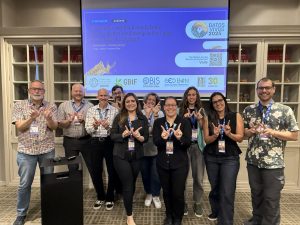
Photograph of a group of people that presented on Wikimedia and biodiversity at Living Data 2025.

The speakers in the Wikimedia and Biodiversity Data session. Photo: Nicole Kearney


GBIF Governing Board Meeting

Immediately preceding Living Data 2025, Nicole Kearney represented BHL as Head of Delegation at the 32nd GBIF Governing Board Meeting (GB32), also held in Bogotá.

Hosted by SiB Colombia and the Humboldt Institute, GB32 brought together delegates from around the world to discuss global biodiversity information sharing and the future of open data infrastructure.

Nicole delivered a presentation on the BHL Transition, reinforcing BHL’s position as an integral component of the biodiversity data ecosystem and exploring opportunities for continued collaboration between BHL, GBIF, and partner networks.

The alignment of these two events in Bogotá – GBIF’s global governance meeting and the Living Data conference – highlighted the growing recognition that open infrastructures like BHL are essential to a connected, equitable biodiversity data landscape.

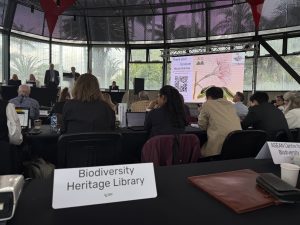
Photo of Final slide of Nicole Kearney’s presentation at the GBIF Governing Board Meeting

Final slide of Nicole Kearney’s presentation at the GBIF Governing Board Meeting in Bogotá.

Beyond Bogotá

The conversations that began in Bogotá will continue. BHL will maintain momentum through follow-up discussions with potential supporters, collaborators, and funders, and through ongoing outreach as part of our public fundraising campaign.

These efforts build on the work already underway through the BHL Transition, strengthening partnerships, expanding participation, and helping to secure a sustainable, distributed, and modernized future for the world’s biodiversity knowledge.

Across both events, one message was clear: BHL underpins biodiversity science, and its future depends on our entire global community.

Learn More

🧭 Stay up to date about the BHL Transition via the BHL Blog.
💬 Explore the Living Data 2025 program (recordings are now available)
💚 Support BHL’s future: Donate

November 3, 2025by Nicole Kearney
BHL News, Blog Reel

BHL Transition Update #6: Fundraising Campaign – Support the Future of Open Biodiversity Knowledge

Transition update #6 BHL Fundraising Campaign Launch

The Biodiversity Heritage Library (BHL) is launching a new public fundraising campaign to help us navigate our transition to independence. This is our first major campaign since the announcement that the Smithsonian Institution can no longer host BHL beyond 2025. Your support now is more critical than ever to secure BHL’s future.

orange oval button with white heart and the word donate

For nearly two decades, BHL has provided free and open access to the world’s biodiversity literature: over 63 million pages from libraries, museums, herbaria, and research institutions across the globe. Since receiving the news that the Smithsonian Institution will cease hosting BHL on 1 January 2026, the global BHL consortium has worked tirelessly to build a foundation for a more autonomous, sustainable, and truly international future. 

With the launch of this campaign, we’re inviting our global community, individuals and institutions alike, to be part of that transformation. 

This campaign builds upon the Call for Support issued earlier this year, which brought together organizations and individuals who expressed their support for BHL’s mission and transition . The public fundraising campaign now extends that invitation to everyone who values open knowledge and biodiversity conservation. We will also continue to welcome institutional partnerships and offers of support from across the global community.

Increased independence will allow BHL to evolve into a more resilient and distributed model, one that reflects the consortium’s global nature. But independence also means that BHL will now rely far more on donations, grants, and external support to sustain its work.

Donations will help cover the real costs of growing and sustaining BHL: expanding our collection, maintaining and improving our technical infrastructure, integrating BHL data into global biodiversity infrastructures, and funding the dedicated staff who make it all possible.

You can now donate directly through our website, with options to make one-time or recurring gifts. Every contribution, no matter the size, will help preserve and connect the world’s biodiversity heritage for generations to come.

We’ll also run themed fundraising drives throughout the year, including Giving Tuesday, Library Lovers’ Day, Earth Day, International Biodiversity Day, and other global events celebrating the importance of shared knowledge in protecting life on Earth.

In addition to individual donations, we invite foundations, philanthropic partners, and legacy donors to join us in shaping BHL’s next chapter. Your investment will help ensure that open access to biodiversity knowledge endures for generations to come.

If you would like to make a major contribution, through a large donation, wire transfer, or bequest, or explore other ways of giving, please visit our Ways to Give page for more information. We welcome conversations with individuals and organizations interested in sustaining BHL’s mission long-term through endowments or planned giving.

All donations will be processed securely through the Council on Library and Information Resources (CLIR), BHL’s fiscal sponsor, a registered 501(c)(3) nonprofit organization.

Your support, individual or institutional, will help BHL weather this transition and emerge stronger than ever. Together, we can ensure that the foundation of our understanding of biodiversity remains freely accessible to everyone, everywhere.

Thank you for your ongoing support.

🤝 Make a Donation


🌱 Spread the word – share BHL’s transition news far and wide


💚 Share the love – use #ILoveBHL on social media


💡 Share your ideas – A New Future for the Biodiversity Heritage Library


📚 Stay up to date about the #BHLTransition on the BHL Blog

October 17, 2025by Nicole Kearney
BHL News, Blog Reel

BHL Transition Update #5: From Call for Support to Next Steps

BHL logo with the text Transition Update. Call for Support: Next Steps. Over an image of 3 pears, 1 in cross section

On August 31, we reached the soft-close of the Biodiversity Heritage Library’s Call for Support.

First and foremost, we want to thank everyone who has reached out with offers – large and small – and to all who shared our call across their networks. We’ve received some very promising proposals, and we’ll be reviewing these in detail over the coming weeks.

As we review these offers, we want to be clear about what will guide our decisions. Over the past month, the BHL community has agreed on a set of Guiding Principles for the Transition (2025–2026). These principles reflect our shared values and priorities, and will guide our decision-making as we shape BHL’s future:

  • We are committed to open access and open infrastructure to ensure biodiversity knowledge is freely available, reusable, and sustainable.
  • We are a community-led, openly governed global consortium, building capacity that is resilient to institutional change and funding cycles.
  • We deliver inclusive collections and equitable services that advance open science, while respecting legal, cultural, and conservation considerations.
  • We are committed to modernizing our infrastructure to create a flexible, secure, and sustainable platform – prioritizing accessibility and global participation through multilingual, mobile-responsive design and equitable access.
  • We surface and structure the data in biodiversity literature, in alignment with FAIR principles, enabling its discovery, reuse, and integration across the biodiversity research ecosystem.
  • We connect past, present, and future by transforming BHL’s 63 million pages of biodiversity literature – the world’s collective knowledge about biodiversity – into an indispensable open resource for research, conservation, and education worldwide.

We are profoundly grateful to everyone who has stepped forward to help ensure that BHL remains open and accessible to all.

We are also grateful to those who reached out with tentative support and early-stage ideas, as well as to those who let us know that, while they aren’t in a position to help right now, they’re working towards being able to in the near future. Every expression of interest matters.

The door remains open: we will continue to accept offers of support in the months ahead. If you have ideas, resources, or connections that could help sustain BHL, we would love to hear from you.

Securing BHL’s Future

The commitments we’ve received so far will provide BHL with critical interim stability for the next 1-3 years. This is a vital first step, but it’s only the beginning. To truly secure BHL’s long-term future, we will need sustained investment, new partners willing to share responsibility for hosting and governance, and continued creativity in how we fund and govern BHL. Building this stable foundation will be at the heart of our transition work over the year ahead.

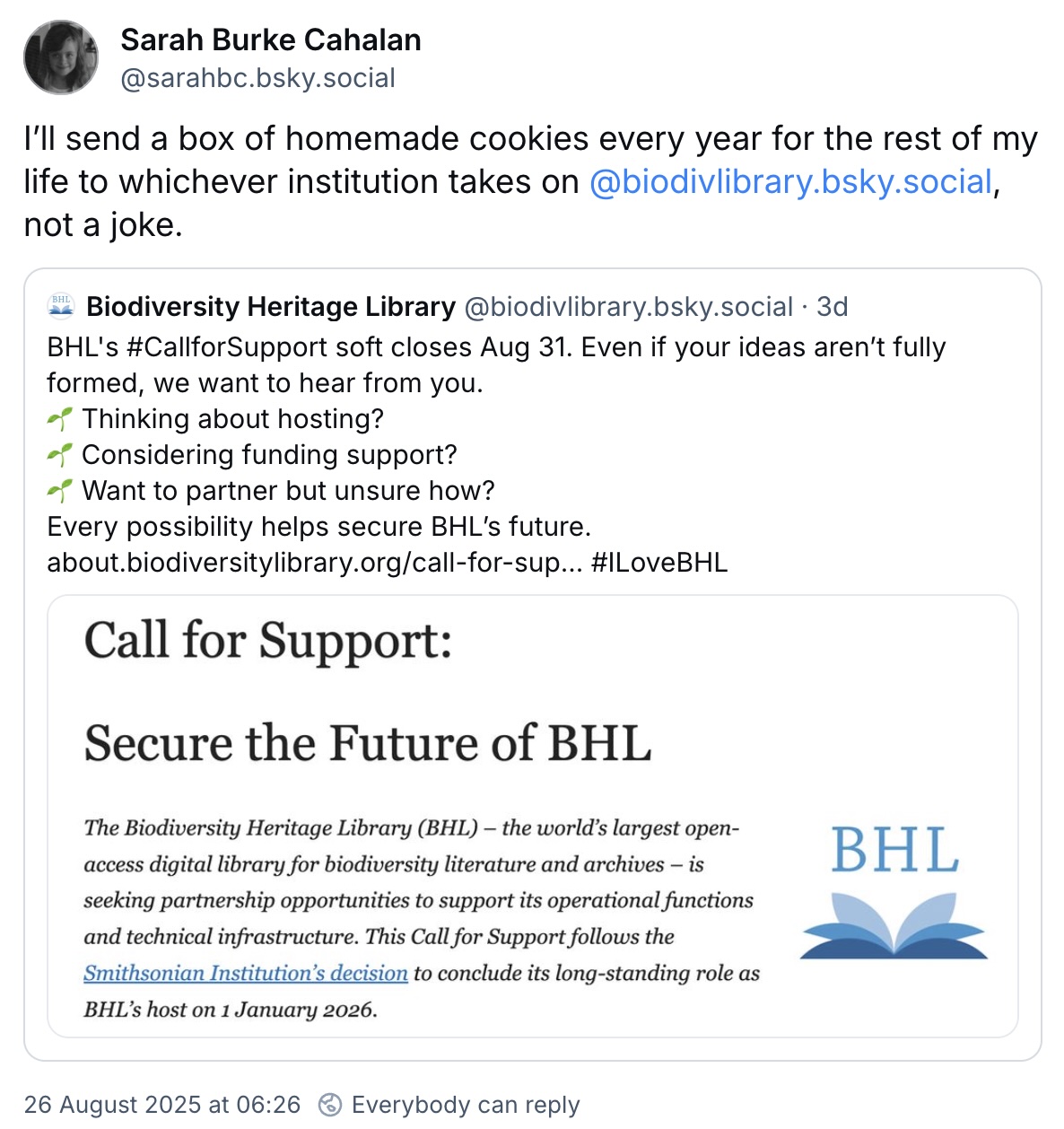
Alongside the offers of hosting and funding, we have also been showered with outpourings of love and appreciation for BHL. Our favourite came via Bluesky, from Sarah Burke Cahalan, who wrote:

From user @sarahbc.bsky.social in reply to our Call for Support: "I'll send a box of homemade cookies every year for the rest of my life to whichever institution takes on @biodivlibrary.bsky.social, not a joke."

What Comes Next

Looking ahead, the coming year will be focused on building a sustainable governance and funding model that can safeguard BHL for decades to come. Alongside this, we are actively pursuing new grant opportunities to help secure this foundation.

And finally, we are excited to share that we are in the final stages of launching our public fundraising campaign. This will be an invaluable opportunity for our global community of BHL users to directly support BHL’s future. From now on, BHL will increasingly rely on fundraising and donations, and we will be deeply grateful for your support. We’ll be sharing more details very soon – watch this space!

The Call for Support was just the beginning. BHL now has promising next steps in place, but our transition journey is far from over. With your continued support, we can ensure that the world’s largest open-access library of biodiversity knowledge remains openly accessible for everyone, everywhere.

September 4, 2025by Nicole Kearney
BHL News, Blog Reel

BHL Transition Update #4: Welcoming CLIR as BHL’s New Fiscal Sponsor

Red square logo with the letters CLIR next to brand name Council on Library and Information Resources

We’re thrilled to share some exciting news:

Red square logo with the letters CLIR next to brand name Council on Library and Information Resources🎉 The Biodiversity Heritage Library has a new fiscal sponsor – the Council on Library and Information Resources (CLIR)!

This is a major step forward in securing a sustainable future for BHL.

As many of you know, the Smithsonian Institution will conclude its hosting role at the end of 2025. Since this announcement, BHL has been working diligently behind the scenes to establish new homes for its core functions. With CLIR now on board as our fiscal sponsor, the legal and financial infrastructure for BHL are firmly in place. Importantly, Smithsonian Libraries and Archives will continue as a valued BHL Member and active contributor to the consortium beyond the transition.

Let’s be Clear: BHL is still BHL

BHL remains a global consortium of Partners with a shared mission to collaboratively make biodiversity literature openly available to the world. We are governed by our Bylaws and Members Council, with routine operations managed by the Executive Committee, Secretariat and Technical Team. Our committees and working groups remain essential to the development of BHL’s collection and services.

BHL’s logo and branding will not change – we’ve just flown to a new (more autonomous) nest. In combination with our Call for Support, we hope to hatch anew in 2026.

So, what does fiscal sponsorship mean?

A fiscal sponsor is a nonprofit organization that provides legal and financial oversight to a project or initiative, allowing it to operate more flexibly than within a traditional institutional home. In practical terms, this means BHL now has a new administrative and financial base with CLIR, an organization equipped to manage contracts, finances, HR, and grant administration.

With CLIR as our sponsor, BHL can:

  • Hire and retain staff, with support for payroll and benefits. BHL staff will remain under BHL direction, with contracts administered by CLIR.
  • Receive and manage grants and donations directly, without going through a host institution. CLIR will also provide the tools and compliance structures we need to fundraise effectively.
  • Collaborate globally with fewer barriers, thanks to CLIR’s support for cross-border contracting and financial management.
  • Focus on mission, not paperwork, while keeping our community-led governance at the heart of everything we do.

Most importantly, this partnership is flexible: BHL retains the option to exit the arrangement in the future if we transition to an independent model. In the meantime, CLIR’s support ensures that BHL can keep moving forward, even as we continue to build long-term solutions for infrastructure and staffing.

We’re deeply grateful to the team at CLIR for helping make this possible – and to you, our community, for your continued support as we take this important step.

Meanwhile, at BHL…

While the transition planning continues in the background, BHL’s core work carries on with its usual energy and enthusiasm. Across the globe, our community of contributors continues to digitize, share, and connect biodiversity knowledge. For a great example of this, check out Catalogue of Life (CoL)’s new BHL dataset, which connects taxonomic names in CoL to their original descriptions in BHL.

In April 2025, the BHL collection surpassed 63 million pages. Between April and July alone, the BHL consortium added 603,586 new pages and 18,386 articles to our online collection, demonstrating our ongoing commitment to expanding access to biodiversity literature.

💚 Thank You for the Love 

Since launching our Call for Support on 11 June, we’ve been overwhelmed by the love and encouragement pouring in from around the world. Thank you to the many organizations and individuals who have amplified our message and shared why BHL matters.

A few recent favorites:

All of us who use BHL need to do all we can to support this vital scientific and cultural treasure, that just keeps getting better and better. It’s vital that this continue.
– @flannerm.bsky.social‬

I use BHL nearly daily. One of those rare resources vital to both scientists and historians… So many books (and articles, and species descriptions) wouldn’t be published without it.
– @wbarlowrobles.bsky.social‬

BHL’s archives serve as an indispensable record of Earth’s biodiversity and represent an invaluable part of our scientific and cultural heritage!
– Savvas Paragkamian, LinkedIn

BHL is my most used online taxonomic resource, and it needs a sustainable host for the future.
– @derekhennen.bsky.social

Call for Support: Still Open

Our official Call for Support remains open until 31 August 2025, and we continue to welcome proposals, ideas, and offers to help shape BHL’s future.

We’re especially looking for:

  • Hosting and technical support
  • Funding and in-kind contributions
  • Staffing partnerships
  • Visionary ideas for BHL’s next chapter

📧 Got an idea? Get in touch: [email protected]

💚 Love BHL? Help us spread the word and keep the momentum going using the hashtag #ILoveBHL.

We’ll keep posting regular updates as we reach new milestones and confirm future partnerships. Thank you, as always, to our incredible global community for the ideas, energy, and encouragement that are keeping this transition moving forward.

Onward!

August 11, 2025by Nicole Kearney
BHL News, Blog Reel

BHL Transition Update #3: Gaining Momentum

Image of HMS Challenger with BHL logo

Image of 19th Century sailing ship, HMS Challenger with BHL logoSince the release of our official Call for Support on 11 June 2025, the global response has been inspiring and heartwarming. Institutions and individuals from across the biodiversity, library, and research communities have reached out with offers of support, ideas, and encouragement.

The #BHLTransition is making headway

We’re charting the course to a strong and sustainable future for the Biodiversity Heritage Library. Behind the scenes, many exciting conversations are underway, including offers of technical hosting, funding support, and staffing partnerships. While we’re not yet able to share full details, we’re confident these discussions will translate into confirmed commitments.

Reimagining BHL

This is a rare and powerful opportunity to think boldly about what BHL could become. The Call for Support outlines BHL’s existing roles and services – but not its limits.

As we transition from Smithsonian hosting, we’re seeking ambitious ideas for BHL’s future. 

We welcome proposals that explore: 

  • Alternative staffing models, including distributed teams or new hires.
  • Aspiring visions for BHL’s technical architecture, including new tools or platforms.
  • Shared infrastructure or services hosted across institutions.
  • Pioneering approaches to how BHL serves global biodiversity knowledge.

Whether your institution can host a current role, contribute infrastructure, support a new function, or propose a radical new approach – we want to hear from you. 

What’s Underway (and Ahead)?

  • We’re continuing to meet with potential hosts and supporters across the globe.
  • Our fiscal sponsorship agreement is in its final stages. Once confirmed, it will provide the administrative foundation for BHL’s next phase.
  • We’re working closely with Smithsonian leadership to coordinate a smooth transition of administrative and technical functions.
  • We’re exploring new development opportunities to reimagine BHL’s technical infrastructure.
  • We’re collaborating with partners on new grant applications to help fuel the transition and future innovation. 
  • We continue to support our Partners in growing and enhancing BHL content: June saw the addition of 108,584 pages and 6,143 articles to the BHL collection.

Initial expressions of interest to the Call for Support are encouraged by 31 August 2025, but we will continue to welcome offers after this date on a rolling basis.

How You Can Help

📢 Keep sharing the Call for Support: If you haven’t already, please share the Call for Support with your institutions and networks. Every connection helps. 

💬 Get in touch: Have an idea, contact, or offer of support? We’d love to hear from you. Contact: [email protected] 

💚 Show your support: Use the hashtag #ILoveBHL on social media to spread the word.

Thank you to everyone who has shared encouragement, advice, and support. The global BHL community is the heart of this effort. Your energy and vision are helping us navigate a new course for the Biodiversity Heritage Library, ensuring a bright, innovative and sustainable future. 

Stay tuned for more updates.


July 11, 2025by Nicole Kearney
Page 2 of 5«1234»...Last »

Help Support BHL

BHL's existence depends on the financial support of its patrons. Help us keep this free resource alive!

search

About BHL

The Biodiversity Heritage Library (BHL) is the world’s largest open access digital library for biodiversity literature and archives. BHL operates as a worldwide consortium of natural history, botanical, research, and national libraries working together to digitize the natural history literature held in their collections and make it freely available for open access as part of a global “biodiversity community.”

Join Our Mailing List

Sign up to receive the latest news, content highlights, and promotions.

Subscribe Now

Subscribe to Blog via Email

Enter your email address to subscribe to this blog and receive notifications of new posts by email.

Join 319 other subscribers

Subscribe to Blog Via RSS

Subscribe to the blog RSS feed to stay up-to-date on all the latest BHL posts.

Access RSS Feed

Inspiring Discovery through Free Access to Biodiversity Knowledge.

The Biodiversity Heritage Library makes it easier than ever for you to access the information you need to study and explore life on Earth…for free, anytime, anywhere.


64+ Million Pages of
Biodiversity Literature Online.

EXPLORE

Tools and Services
to Transform Research.

EXPLORE

300,000+
Illustrations on Flickr.

EXPLORE

ABOUT | HARMFUL CONTENT | PRIVACY | SITE MAP | TERMS OF USE