Biodiversity Heritage Library - Program news and collection highlights from BHL
  • Home
  • News
  • Featured Books
    • All Featured Books
    • Book of the Month Series
    • BHL at 20
  • User Stories
  • Campaigns
    • Fossil Stories
    • Garden Stories
    • Monsters Are Real
    • Page Frights
    • Her Natural History
    • Earth Optimism 2020
  • Tech Blog
  • Visit BHL
Home
News
Featured Books
    All Featured Books
    Book of the Month Series
    BHL at 20
User Stories
Campaigns
    Fossil Stories
    Garden Stories
    Monsters Are Real
    Page Frights
    Her Natural History
    Earth Optimism 2020
Tech Blog
Visit BHL
  • Home
  • News
  • Featured Books
    • All Featured Books
    • Book of the Month Series
    • BHL at 20
  • User Stories
  • Campaigns
    • Fossil Stories
    • Garden Stories
    • Monsters Are Real
    • Page Frights
    • Her Natural History
    • Earth Optimism 2020
  • Tech Blog
  • Visit BHL
Biodiversity Heritage Library - Program news and collection highlights from BHL
Blog Reel, Campaigns, Featured Books

World Oceans Day through Books: Corals, Oceanography, and the Deep Sea

This post is the third in our series leading up to the celebration of World Oceans Day on June 8. This series explores publications that represent important milestones in the progress of marine bioscience research and ocean exploration.

Darwin and the Theory of Coral Reef Formation: Structure and Distribution of Coral Reefs

Charles Darwin will forever be remembered for his theory of evolution by means of natural selection and the publication of On the Origin of Species in 1859. But Darwin’s scientific contributions extend even beyond this monumental achievement. As an example, Darwin also presented a theory of how coral reefs and atolls are formed.

Coral reefs are underwater ecosystems built by colonies of tiny animals – mostly stony corals – and held together by calcium carbonate structures that these animals secrete. These reefs are home to at least 25% of all marine species. An atoll is a ring-shaped coral reef that encircles a lagoon.
View Full Size Image
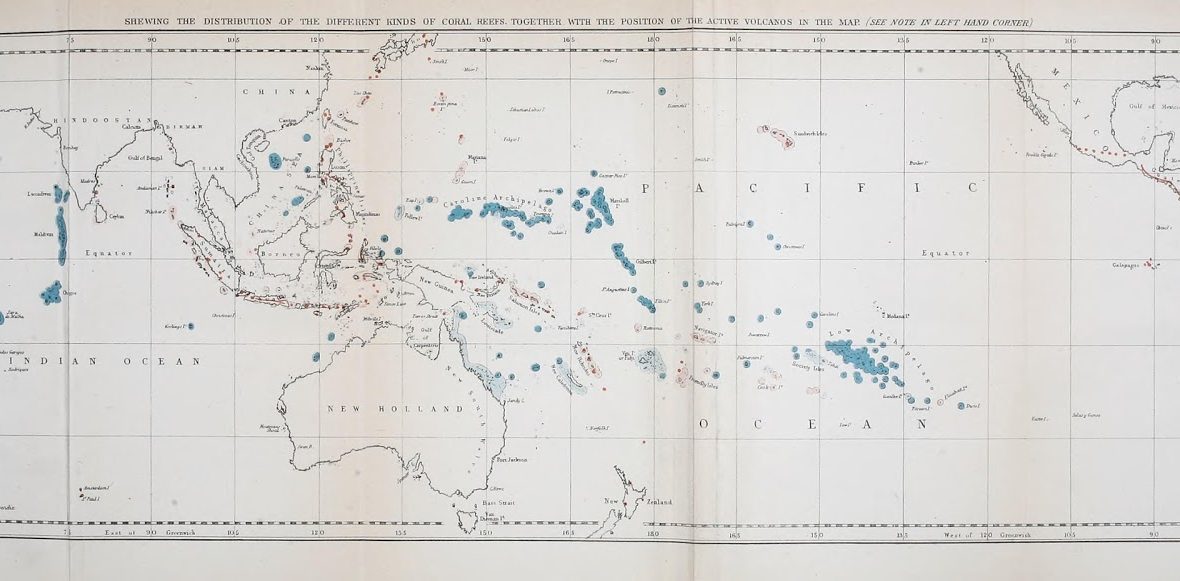
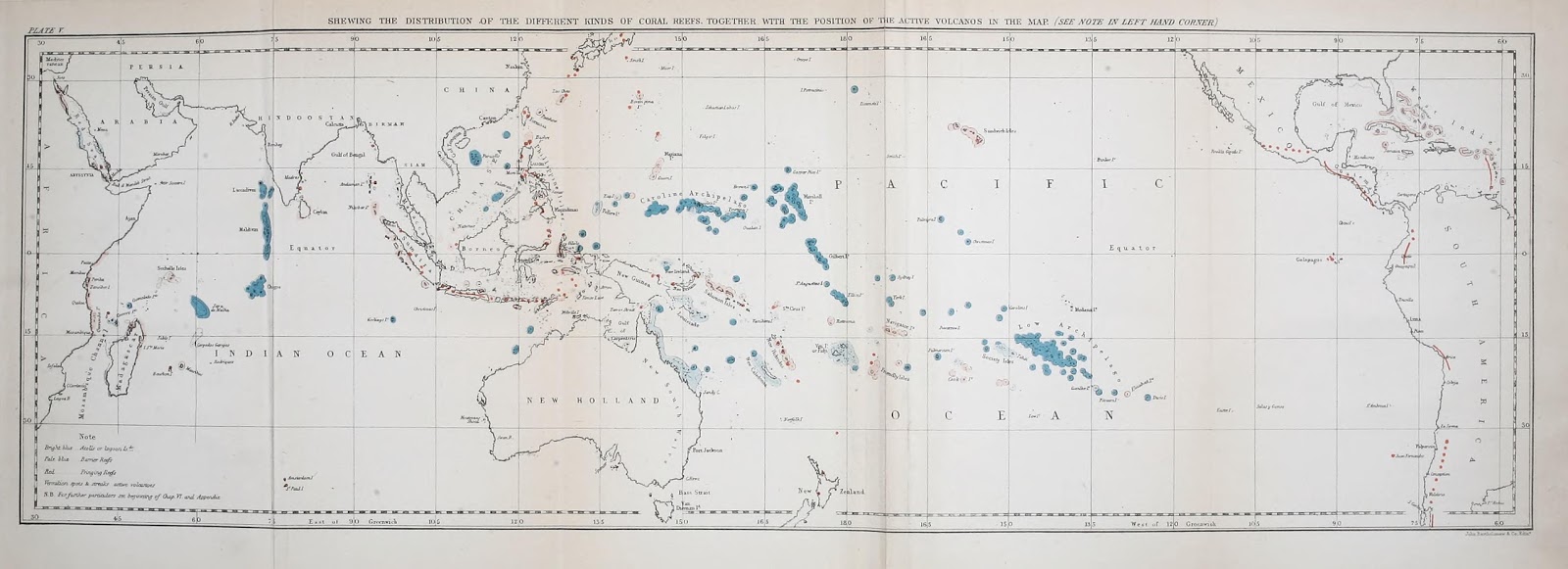
Distribution of known coral reefs of the world during Darwin’s time, including the types. Darwin, Charles. The Structure and Distribution of Coral Reefs. 1842. http://biodiversitylibrary.org/page/40453231.

Darwin developed his theory about the formation of coral reefs and atolls during his famous Beagle voyage (1831-36). He published the theory as his first monograph in 1842 as The Structure and Distribution of Coral Reefs, Being the first part of the geology of the voyage of the Beagle, under the command of Capt. Fitzroy, R.N. during the years 1832 to 1836.

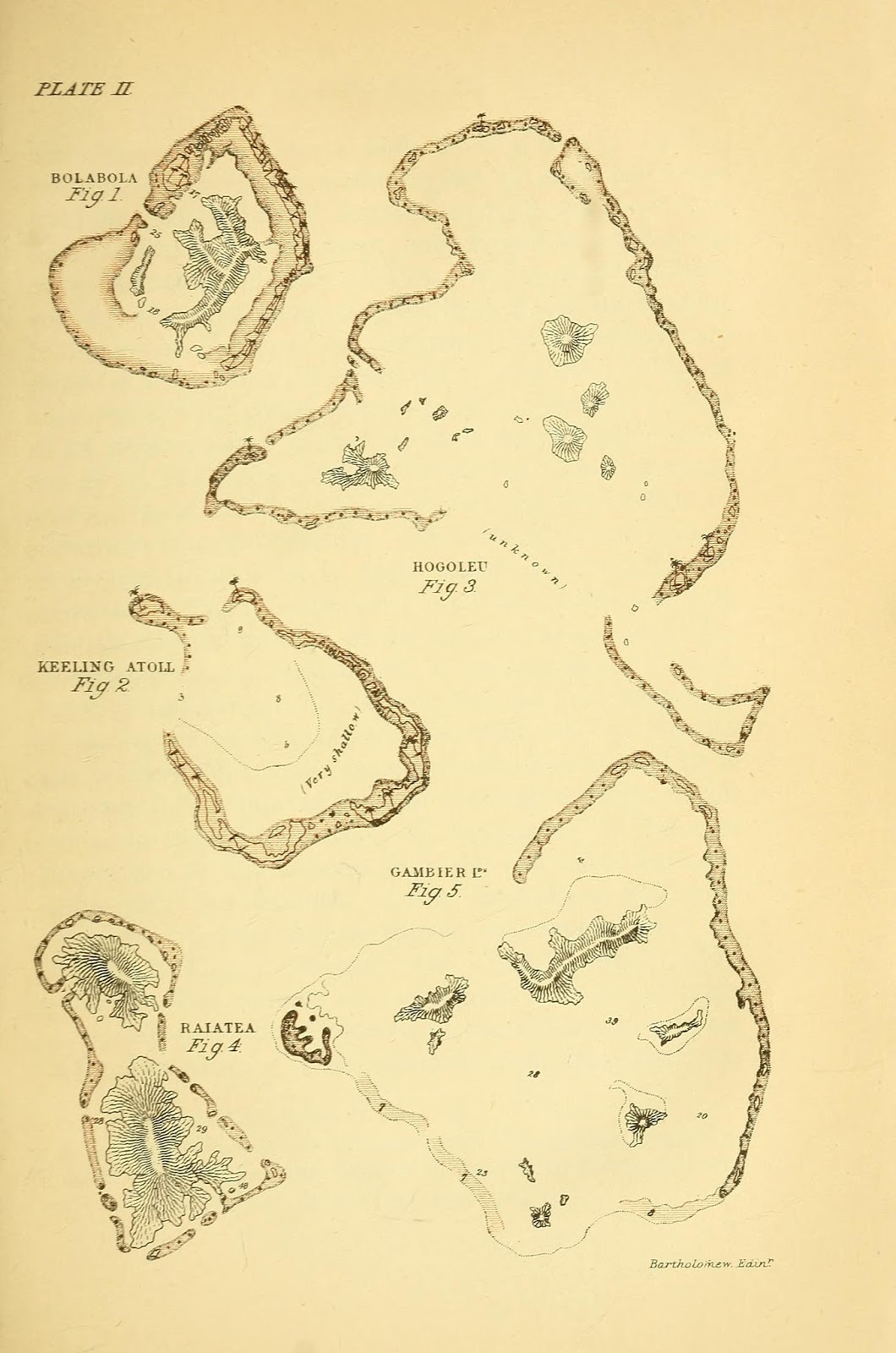
The process by which corals and atolls are formed was a popularly-debated scientific question in the early 19th century. Darwin’s coral theory stated that atolls formed from a gradual process from fringing reefs to barrier reefs and finally atolls. As Gordon Chancellor explains in Darwin Online,

“In clean, agitated, tropical seas corals will form fringing reefs just below low tide level. If the coastline is being elevated (as for example may happen if the island is an active volcano) this type of reef should persist but as soon as the living coral is raised above the surf it will die and become a strip of white limestone. If the coastline is stable, the coral will gradually grow out from the shore to become a barrier reef. If the coast is sinking, as Darwin thought was happening to hundreds of islands in the south Pacific, the coral might keep pace by growing upwards but as the land sinks beneath the waves all that would remain would be a more or less circular atoll. Eventually the rate of subsidence might prove too fast, or (perhaps as in our own times of global warming) sea level will rise too fast and the atoll will die.”

Although Darwin’s theory was widely but not universally accepted during his lifetime, modern investigations support his ideas. Coral Reefs also helped establish Darwin’s reputation as a leading scientific mind and helped provde him with the credibility he needed to have his theory of evolution taken seriously. Indeed, Coral Reefs was not only Darwin’s first monograph, but it also demonstrated a common theme throughout all of Darwin’s theories – that gradual change over time, often the result of an aggregation of the individual actions of small organisms, can account for the entire history of our planet and the species, ecosystems, and geological formations we see today.
View Full Size Image
Various atolls illustrated by Darwin. Darwin, Charles. The Structure and Distribution of Coral Reefs. 1842. http://biodiversitylibrary.org/page/40453240.

The First Textbook on Oceanography: The Physical Geography of the Sea

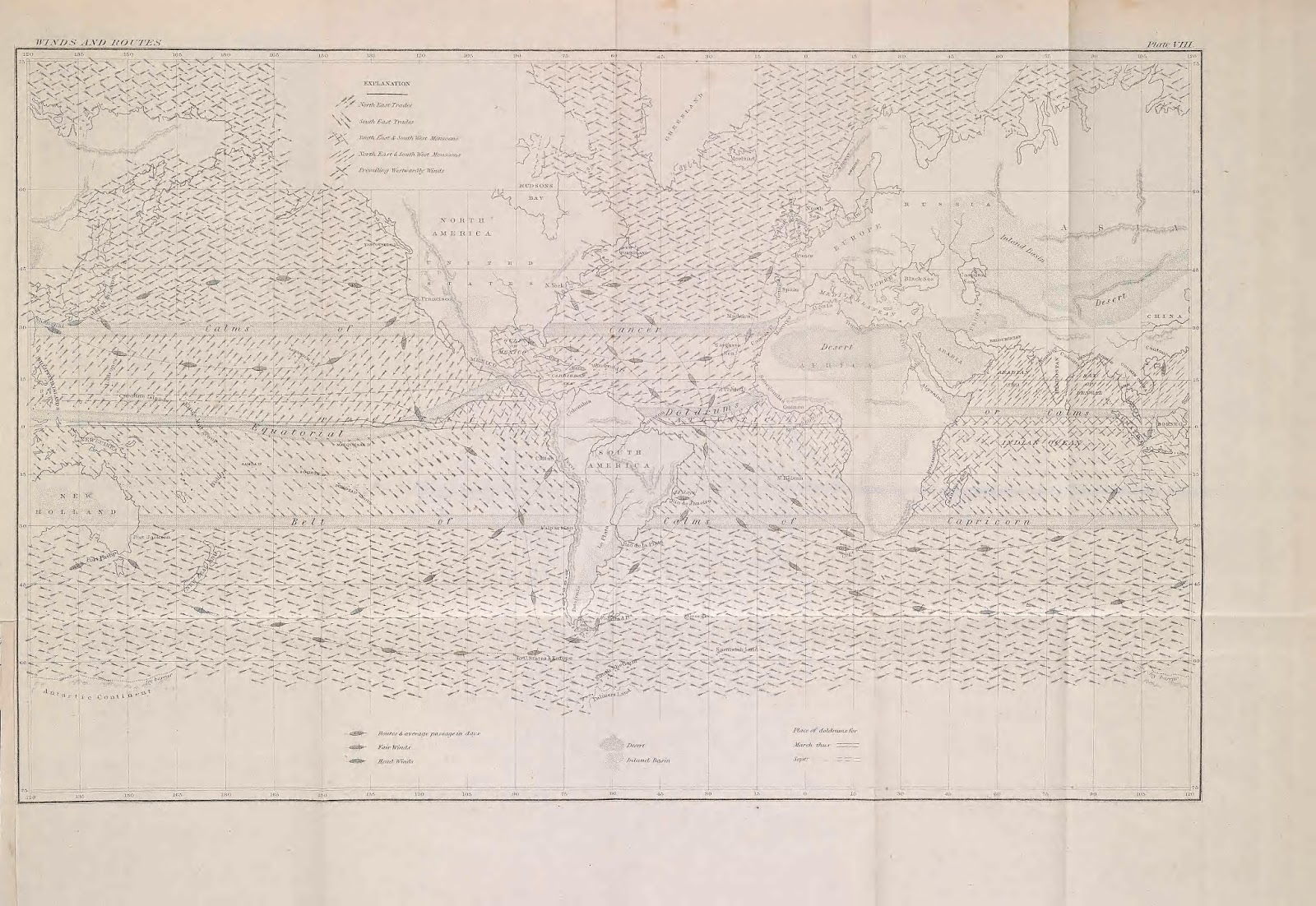
Oceanography is defined as the study of the ocean, and it can include many topics such as marine life, ocean currents, waves, plate tectonics, meteorology, and many others. Matthew Fontaine Maury, who served in the United States Navy from 1825-61, is sometimes called the “Father of Modern Oceanography and Naval Meteorology.” By studying old ship logs, Maury was able to make important deductions about ocean currents and winds, which resulted in the 1847 publication of Wind and Current Chart of the North Atlantic, which amassed this information to produce a guide to help sailors reduce the length of ocean voyages. Maury also used these ship logs to chart whale migrations, and this research in turn led him to advocate for the existence of a Northwest Passage, through which whales could gain access to both the Atlantic and Pacific Oceans.
View Full Size Image
Illustrating various winds, ship passages, and lengths. Maury, Matthew Fontaine. The Physical Geography of the Sea. 1855. http://biodiversitylibrary.org/page/47369923.

In 1855, Maury published The Physical Geography of the Sea, which is considered the first extensive and comprehensive book on oceanography. As Maury states, the work is “a philosophical account of the winds and currents of the sea; of the circulation of the atmosphere and ocean; [and] of the temperature and depth of the sea” and includes discussions about ocean salinity and many perplexing ocean phenomena, including the Gulf Stream. Although today we know that much of Maury’s science is incorrect, this book helped popularize oceans and the science of the seas and laid the foundation for much of the oceanographic research that followed.

The Foundations of Modern Oceanography: The Challenger Expedition

While the field of ichthyology continued to expand throughout the 16th – 19th centuries, and publications on oceanography including ocean currents and their effects on meteorology appeared in the mid-1800s, even by the 19th century, scientific knowledge about Earth’s watery depths was still very limited. In fact, until the middle of the nineteenth century, many still subscribed to the Abyssal Theory, which stated that life could not exist below about 600 meters (2,000 feet).
View Full Size Image
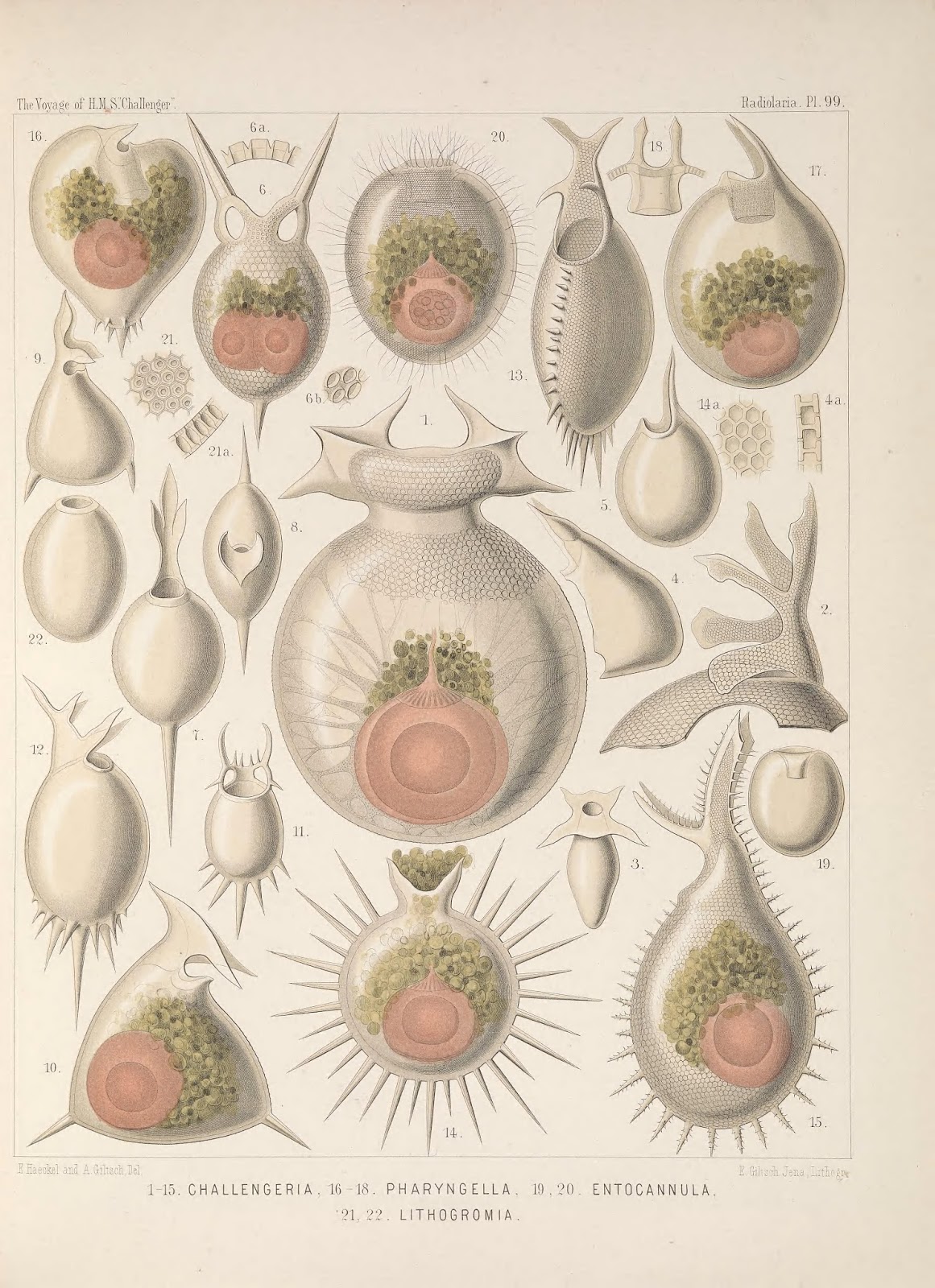
Radiolaria by Ernst Haeckel, collected during the Challenger Expedition. Report on the scientific results of the voyage of H.M.S. Challenger during the years 1873-76. v. 18 plates. 1887. http://biodiversitylibrary.org/page/39632734.

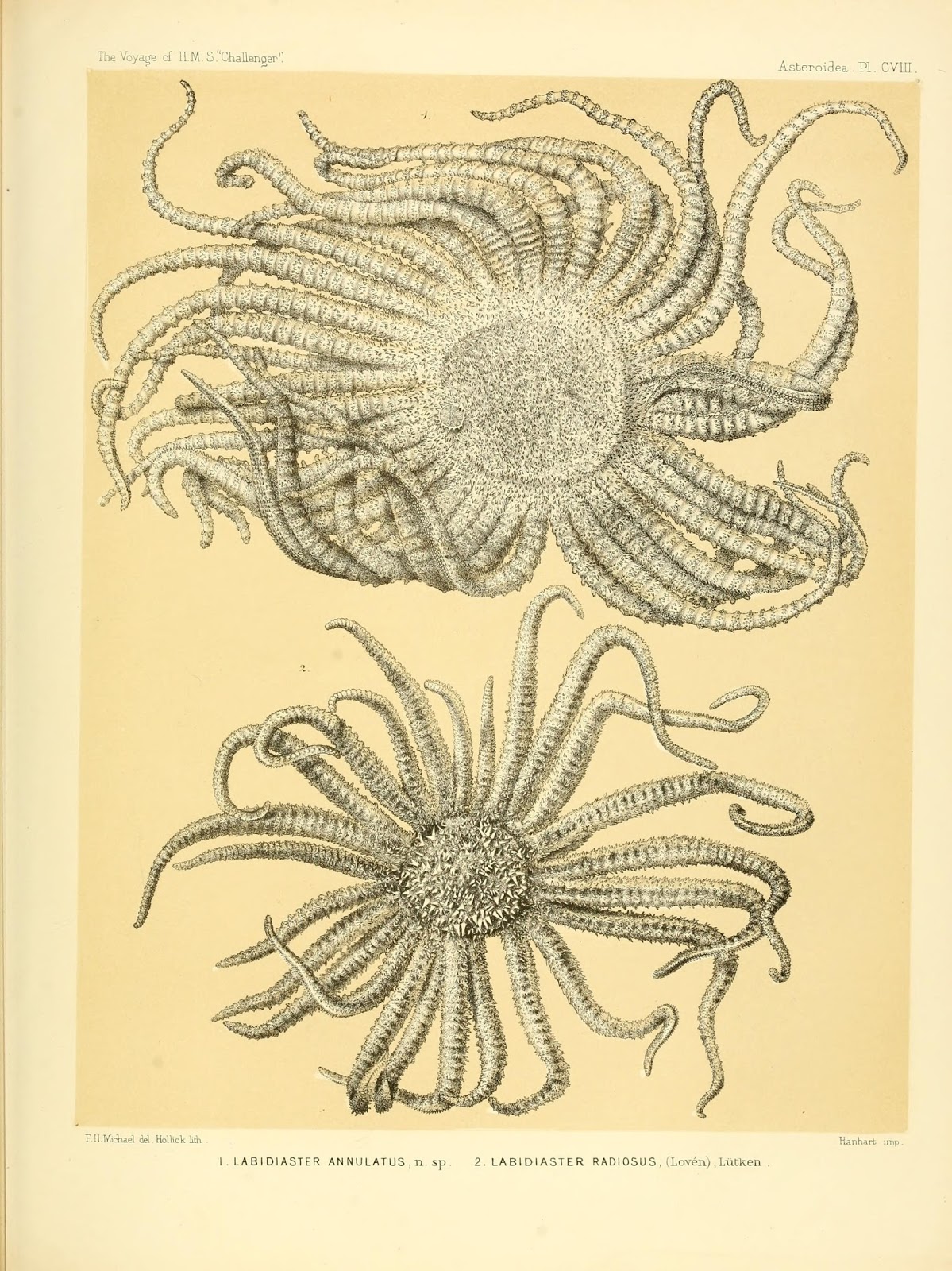
In 1872, the Royal Society of London launched the first non-commercial exploration of the deep sea – the Challenger Expedition. The purposes of the expedition were to investigate the physical conditions of the deep sea, ascertain the chemical composition of seawater at various depths, determine the physical and chemical character and sources of deep-sea deposits, and investigate the distribution of organic life at different depths. The expedition circumnavigated the globe, traveling nearly 70,000 nautical miles from 1872-76, and resulted in the discovery of nearly 4,700 new-to-science species of marine life, 492 deep sea soundings, 133 bottom dredges, 151 open water trawls, and 263 serial water temperature observations. In 1875, the crew also recorded a sounding of 4,475 fathoms, (8,184 meters), which would later prove to be the southern end of the Mariana trench and one of the deepest known places on the ocean floor. The expedition was monumental in broadening knowledge of the ocean’s depths and species, and revolutionized the field of oceanography.
View Full Size Image
Starfish from Percy Sladen collected during the Challenger Expedition. Report on the scientific results of the voyage of H.M.S. Challenger during the years 1873-76. v. 30 plates. 1887. http://biodiversitylibrary.org/page/25170168.

The findings from the expedition were published in 50 volumes from 1880-95 as the series Report Of The Scientific Results of the Exploring Voyage of H.M.S. Challenger during the years 1873-76. Sir John Murray, pioneering Scottish oceanographer, described the report as, “the greatest advance in the knowledge of our planet since the celebrated discoveries of the fifteenth and sixteenth centuries.”

Uncovering the Deep Ocean: The Valdivia Expedition

The success of the Challenger Expedition ignited a fever to explore the deep sea and the creatures that called it home. In the late nineteenth century, German marine biologist Carl Chun proposed the first German deep-sea expedition, which was approved by Germany’s last Kaiser, Wilhelm II. In 1898, with national funding, the Valdivia Expedition set sail from Hamburg for the subantarctic seas with a mission to sample, record, and study as many deep-sea organisms and habitats as possible. Covering over 32,000 nautical miles and visiting 268 stations around the West Coast of South Africa, the Gulf of Guinea, the Antarctic Sea, and a large portion of the Indian Ocean, the expedition used the dredging techniques popularized on the Challenger Expedition to collect deep-sea specimens. The expedition was a resounding success, resulting in the discovery of many new deep-sea species, including the vampire squid, which Chun named Vampyroteuthis infernalis, meaning “vampire squid from hell.” The results of the expedition were published over a four-decade period in a 24-volume series entitled Wissenschaftliche Ergebnisse der Deutschen Tiefsee-Expedition auf dem Dampfer “Valdivia” 1898-1899.
View Full Size Image
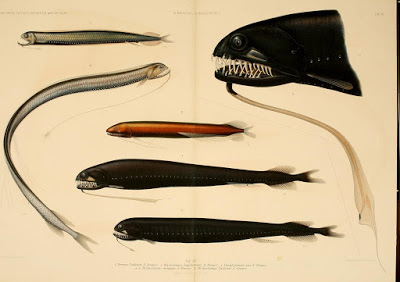
Deep sea fish collected during the Valdivia Expedition. Wissenschaftliche Ergebnisse der Deutschen Tiefsee-Expedition auf dem Dampfer “Valdivia” 1898-1899. Bd. 15, T. 1. 1908. http://biodiversitylibrary.org/page/6002199.

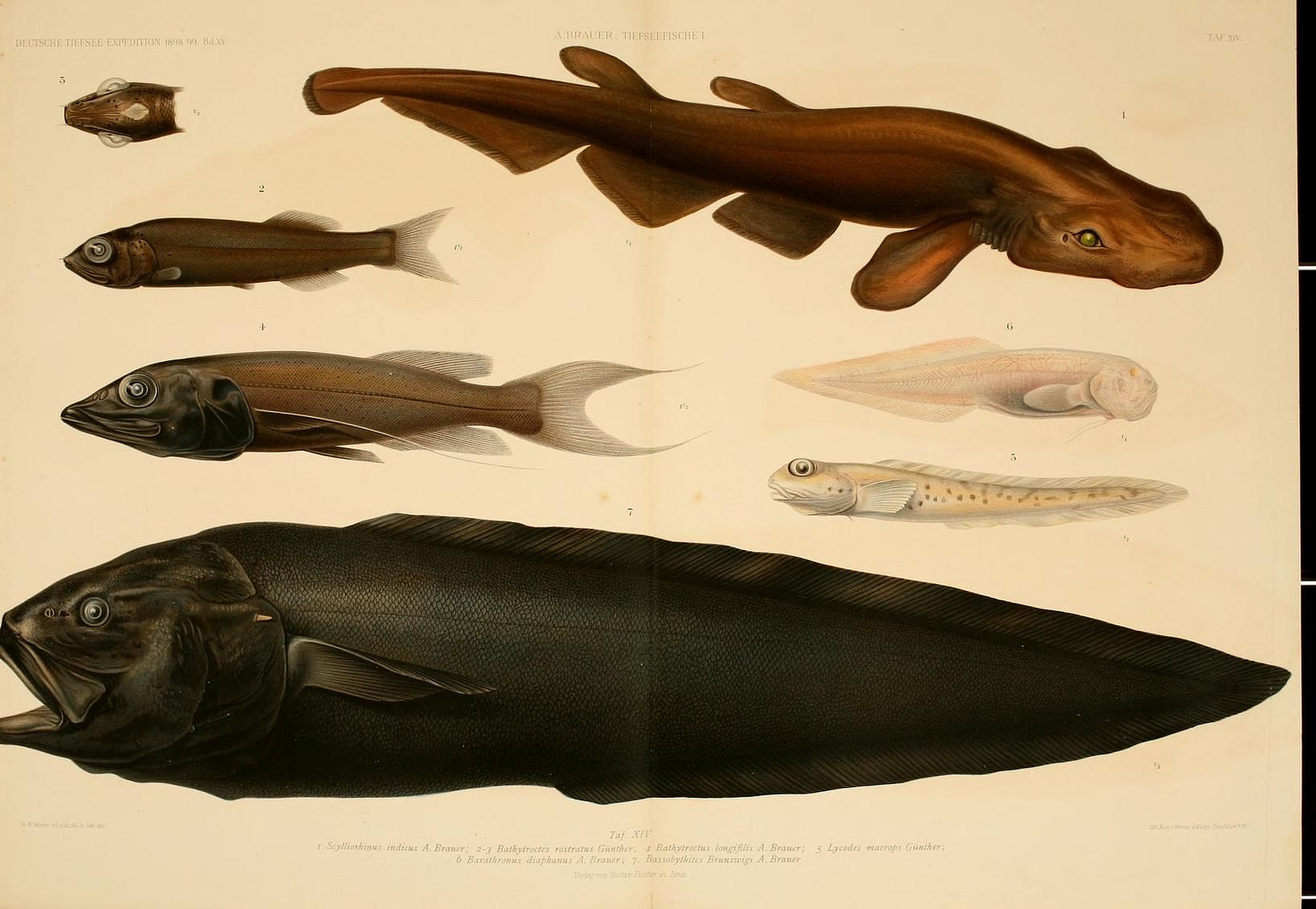
One of the most important volumes in this series was August Brauer’s report on the deep-sea fishes discovered on the expedition. Published as the series’ fifteenth volume in 1908, Die Tiefsee-Fische is considered the starting point of deep-sea ichthyology. The volume also firmly established the widespread global existence of fish in the bathypelagic zone (depth of 3,300-13,000 feet) and documented the sensory adaptations and bioluminescent capabilities of many deep-sea species. A highlight of the publication are the 44 plates created by the shipboard artist and scientific draftsman Fritz Winter, with whom Brauer collaborated closely to ensure the lifelike, accurate representation of the described specimens.
View Full Size Image
Deep sea fish collected during the Valdivia Expedition. Wissenschaftliche Ergebnisse der Deutschen Tiefsee-Expedition auf dem Dampfer “Valdivia” 1898-1899. Bd. 15, T. 1. 1908. http://biodiversitylibrary.org/page/6002204.

More World Oceans Day Resources

  • Follow us on Twitter, Facebook, and this blog all this week as we explore marine biodiversity and awesome related publications in BHL.
  • Check out some monumental publications in historic and present-day marine bioscience research in our BHL collection.
  • Browse a selection of marine biodiversity illustrations in Flickr and Pinterst
June 3, 2015by ulib-libraryjobs
Blog Reel, Campaigns, Featured Books

World Oceans Day through Books: The Truth about Terra Australis

This post is the second in our series leading up to the celebration of World Oceans Day on June 8. This series explores publications that represent important milestones in the progress of marine bioscience research and ocean exploration.

The Quest for Terra Australis: The Expeditions of James Cook

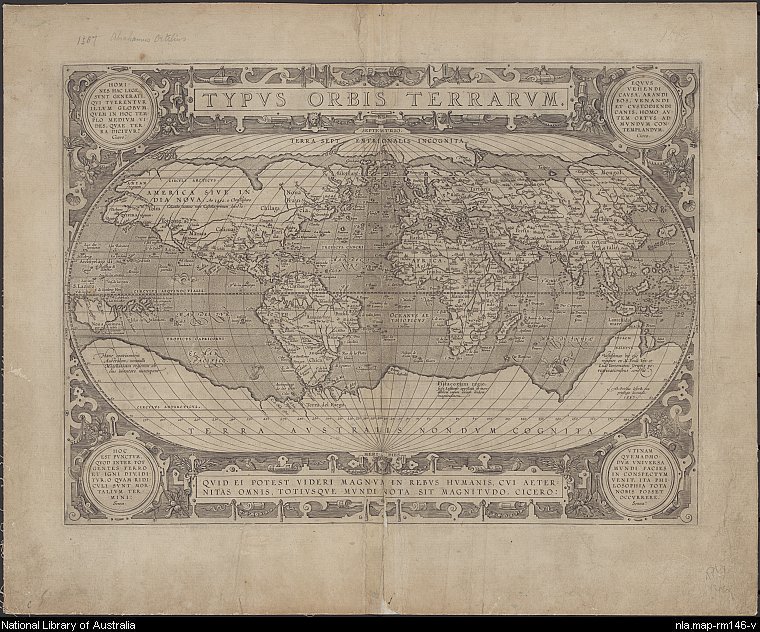
As far back as antiquity, Western scholars theorized the existence of a great southern continent that they called Terra Australis. While the continent found its way onto many early European maps, this presentation was not based on actual surveys but instead the hypothesis that landmasses in the Northern Hemisphere must be balanced by respective landmasses in the Southern. Depictions generally included a single landmass encompassing the South Pole and spreading far north to include Australia, New Zealand and, at its most extreme, even Tierra del Fuego.

View Full Size Image
Map showing imagined Terra Australis. Ortelius, Abraham, 1527-1598. Typus orbis terrarum. Quid ei potest videri magna in rebus cui alter nitas omnis, totiusque mundi nota sit mangitudo. Cicero [cartographic material] 1587. MAP RM 146. http://nla.gov.au/nla.map-rm146. National Library of Australia.

By the mid-18th century, some Europeans claimed to have seen this great southern continent, but details were scarce and verification virtually non-existent. The intrigue prompted the British Admiralty and Royal Society to direct Lieutenant James Cook, as part of a larger mission from 1768-71 to observe the transit of the planet Venus from Tahiti, to search for Terra Australis.

View Full Size Image
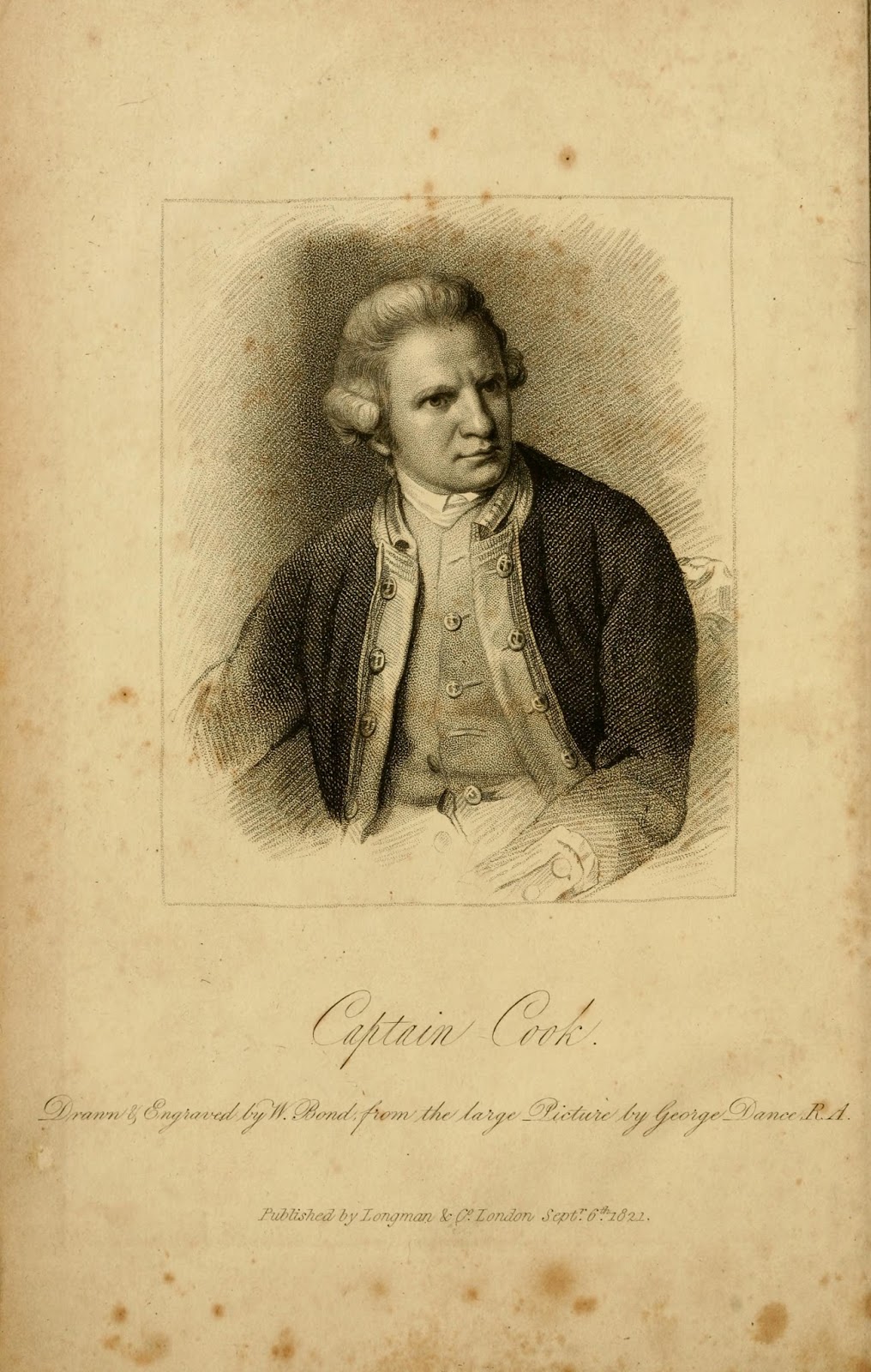
Portrait of James Cook. The three voyages of Captain James Cook round the world. v. 1. 1921. http://biodiversitylibrary.org/page/6227900.

In September 1769, Cook’s ship, the Endeavour, reached New Zealand, after which Cook spent six months circumnavigating the island to ultimately establish that it was not, as was commonly believed, part of the “southern continent.” From New Zealand, Cook and his crew sailed towards Australia, becoming the first recorded Europeans to reach the Australian east coast in April 1770. Sailing north, Cook charted over 5,000 miles of coastline and further demonstrated that Australia and New Guinea were not connected.

Cook went on to command two additional expeditions, the second of which (1772-75) brought Cook closer to the South Pole than any recorded previous navigator, finally disproved the existence of a large southern continent as expansive as the envisioned Terra Australis, demonstrated that chronometers were a practical means of determining longitude at sea, and laid the foundations for a modern map of the South Pacific, thus paving the way for future explorations in the area.

View Full Size Image
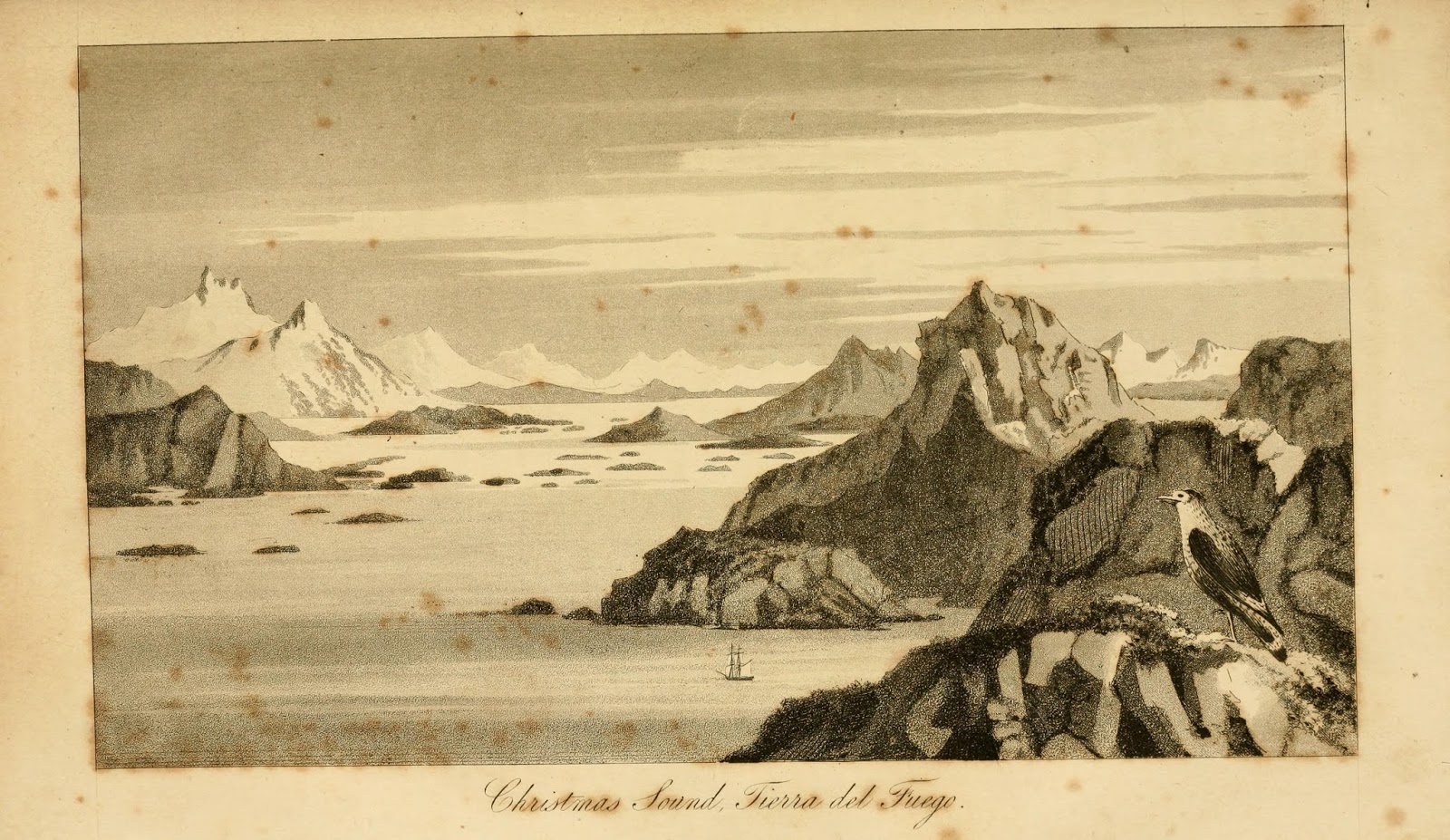
Cook, James. Christmas Sound, Tierra del Fuego. From Cook’s second voyage (1772-75). The three voyages of Captain James Cook round the world. v. 4. 1921. http://biodiversitylibrary.org/page/6258591.

Cook’s third and final voyage (1776-80) attempted to discover the elusive northwest passage. Although he was unsuccessful, he did become the first recorded European to visit the Hawaiian Islands and charted the coast of northwest America. Tragically, Cook was killed on the return voyage during a confrontation on the Hawaiian Islands on 14 February 1779.

View Full Size Image
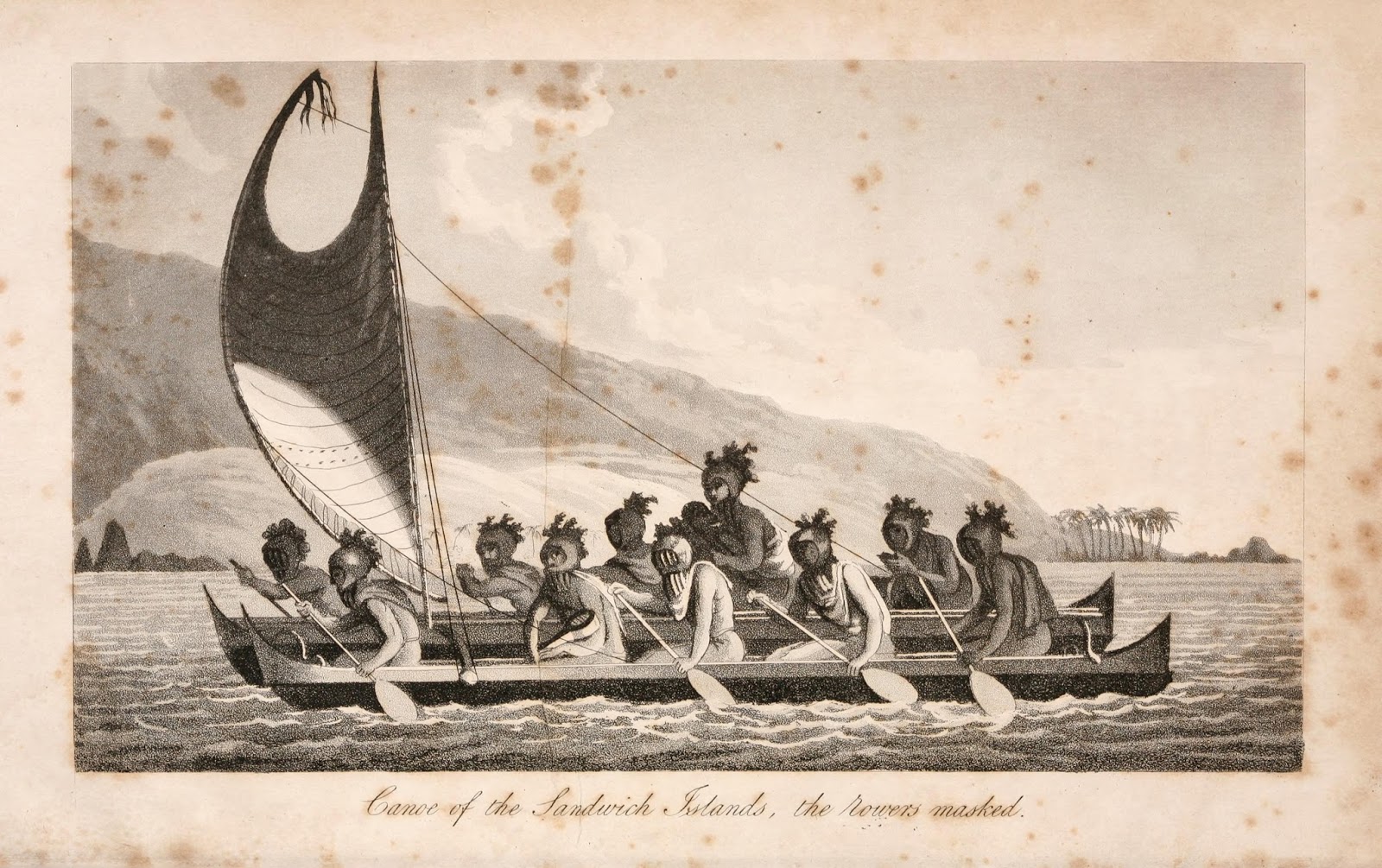
Canoe of the Sandwich (i.e. Hawaiian Islands). From Cook’s third voyage (1776-80). The three voyages of Captain James Cook round the world. v. 6. 1921. http://biodiversitylibrary.org/page/1803270.

Cook’s achievements did much to pave the way for future oceanic exploration, especially around Australia. He helped lift the veil of uncertainty surrounding “Terra Australis,” and helped to establish a viable method by which to more easily navigate the oceans (via a chronometer). Furthermore, by methodically enforcing cleanliness and ventilation on his ships and a balanced diet for his crew, he dramatically improved the living conditions and health of his crew and set new standards for future expeditions.

An account of Cook’s three voyages, taken in part from his journals, are available in the seven volumes of The Three Voyages of Captain James Cook around the World (1821).

Exploring Oceania: Voyage of the Astrolabe

Following Cook’s expedition, France and England vied intensely for southern possessions, resulting in many expeditions that expanded our knowledge of the oceans and marine life around Australia and New Zealand.

Early French expeditions to the region included the 1800-1804 cartographic survey of Australia’s coastline, under Nicolas Thomas Baudin, which resulted in the first published detailed chart of Australia, and the voyage of the Coquille from 1822-25, under the command of Louis Isidore Duperrey. Navigator Jules-Sébastien-César Dumont d’Urville served as second-in-command on the Coquille expedition, and just two months after its return, d’Urville requested a second voyage to the South Seas, this time with him in command.

View Full Size Image
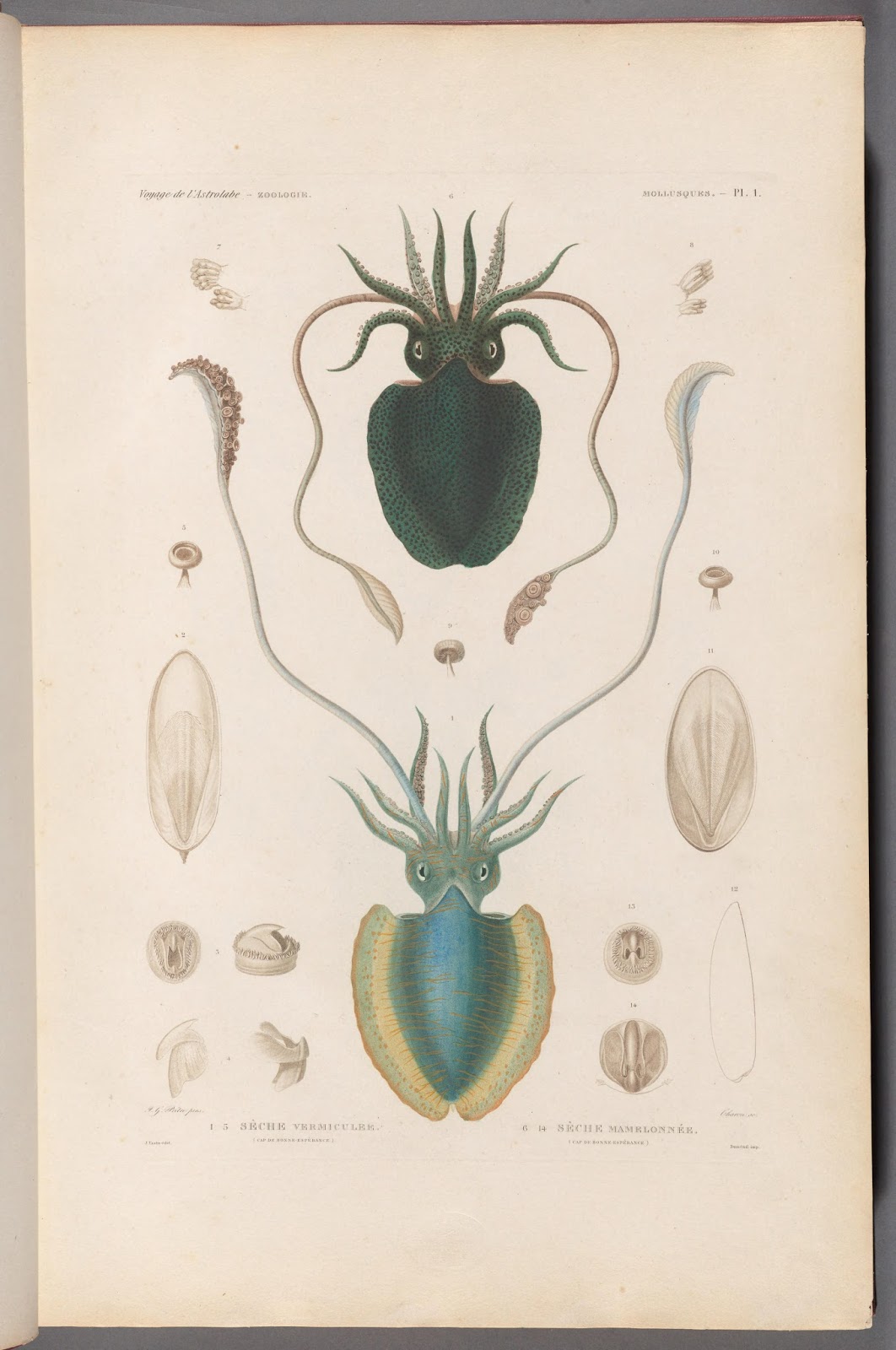
Cuttlefish. Dumont d’Urville, Jules-Sébastien-César. Voyage de la corvette l’Astrolabe : exécuté par ordre du roi, pendant les années 1826-1827-1828-1829. 1830-34. http://biodiversitylibrary.org/page/46298902.

In 1826, the Coquille, renamed the Astrolabe, set sail with a mission to chart the unknown regions of Oceania. This time, the expedition also included many worthy naturalists, including Pierre Adolphe Lesson, Jean René Constant Quoy, and Joseph Paul Gaimard. The expedition resulted in the discovery of many new-to-science species in Oceania, important ethnographic studies, and “the first tentative speculations as to how coral reefs and atolls could have formed in the middle of the deep tropical oceans” (Stiassny, 51). The expedition’s findings were published in a fourteen-volume series from 1830-34, entitled Voyage de la corvette l’Astrolabe.

View Full Size Image
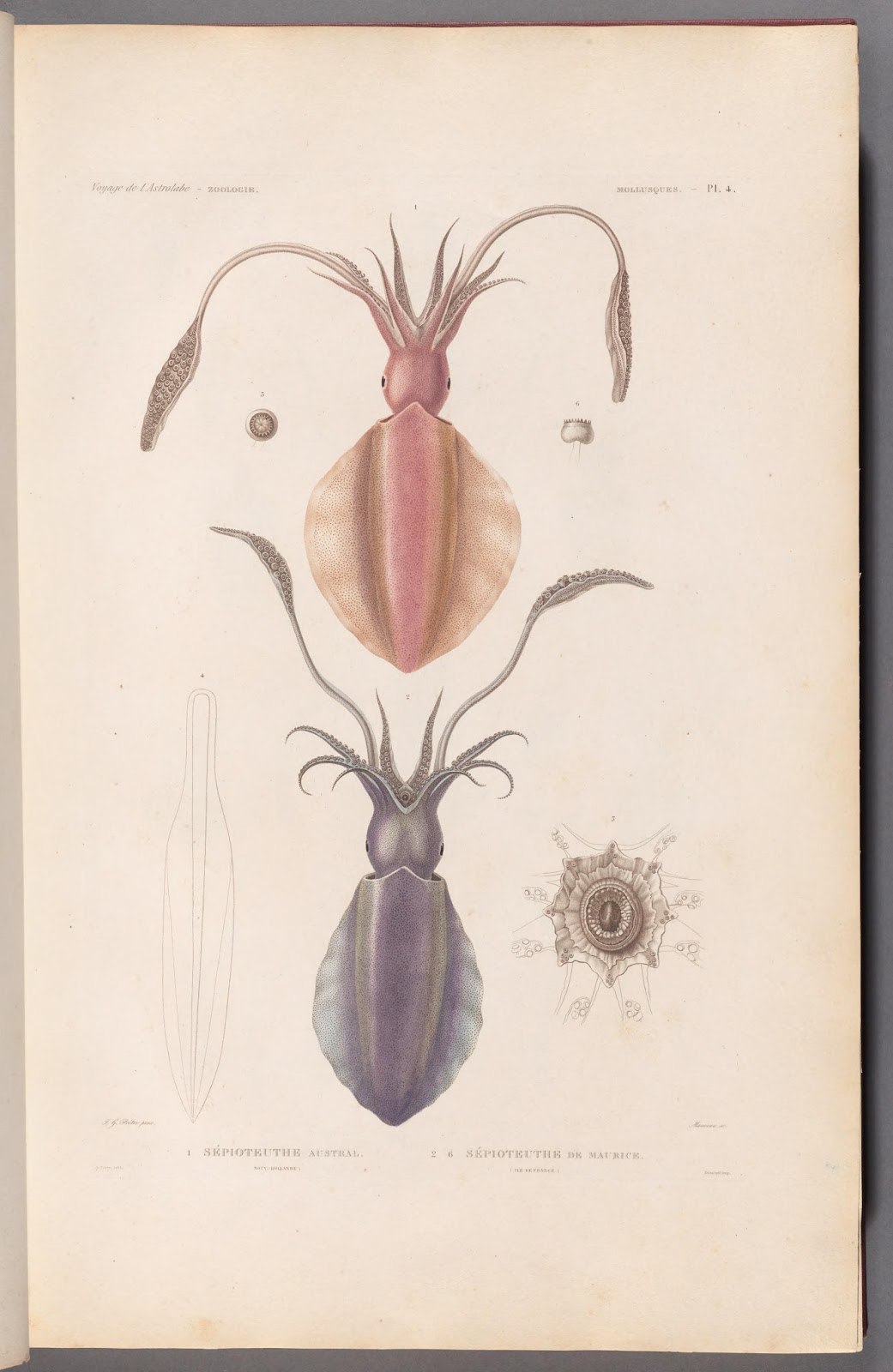
Reef Squids. Dumont d’Urville, Jules-Sébastien-César. Voyage de la corvette l’Astrolabe : exécuté par ordre du roi, pendant les années 1826-1827-1828-1829. 1830-34. http://biodiversitylibrary.org/page/46298896.

More World Oceans Day Resources

  • Follow us on Twitter, Facebook, and this blog all this week as we explore marine biodiversity and awesome related publications in BHL.
  • Check out some monumental publications in historic and present-day marine bioscience research in our BHL collection.
  • Browse a selection of marine biodiversity illustrations in Flickr and Pinterst

June 2, 2015by michelle.underhill
Blog Reel, Campaigns, Featured Books

World Oceans Day through Books: The Roots of Modern Ichthyology

This post is the first in our week-long celebration leading up to World Oceans Day on June 8. Tune in all week for awesome marine biodiversity fun!

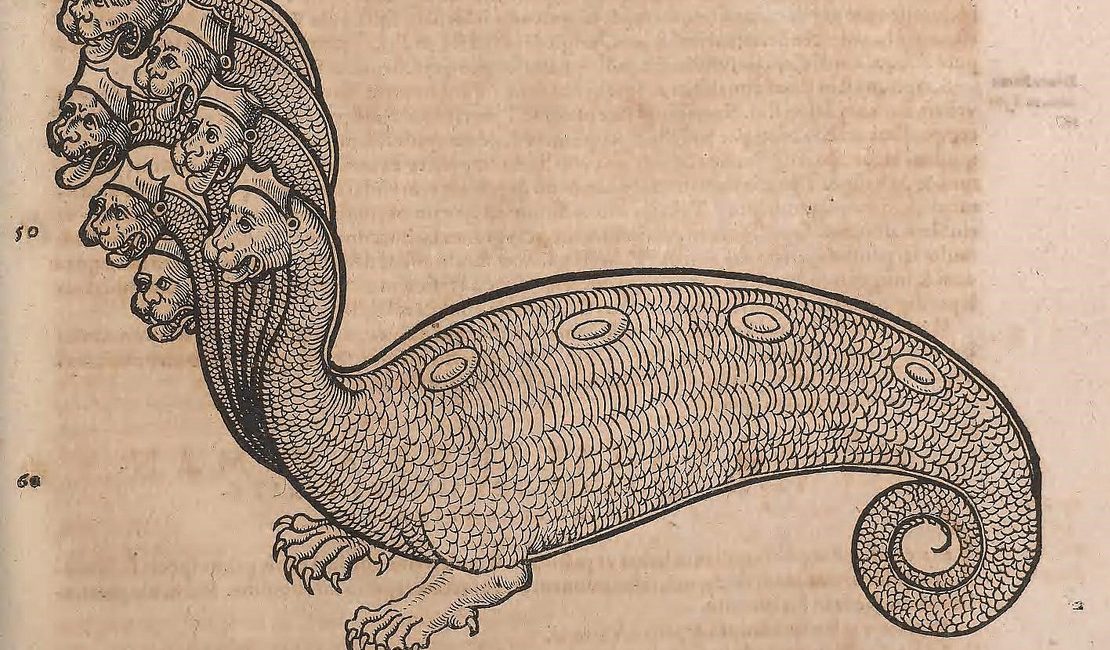
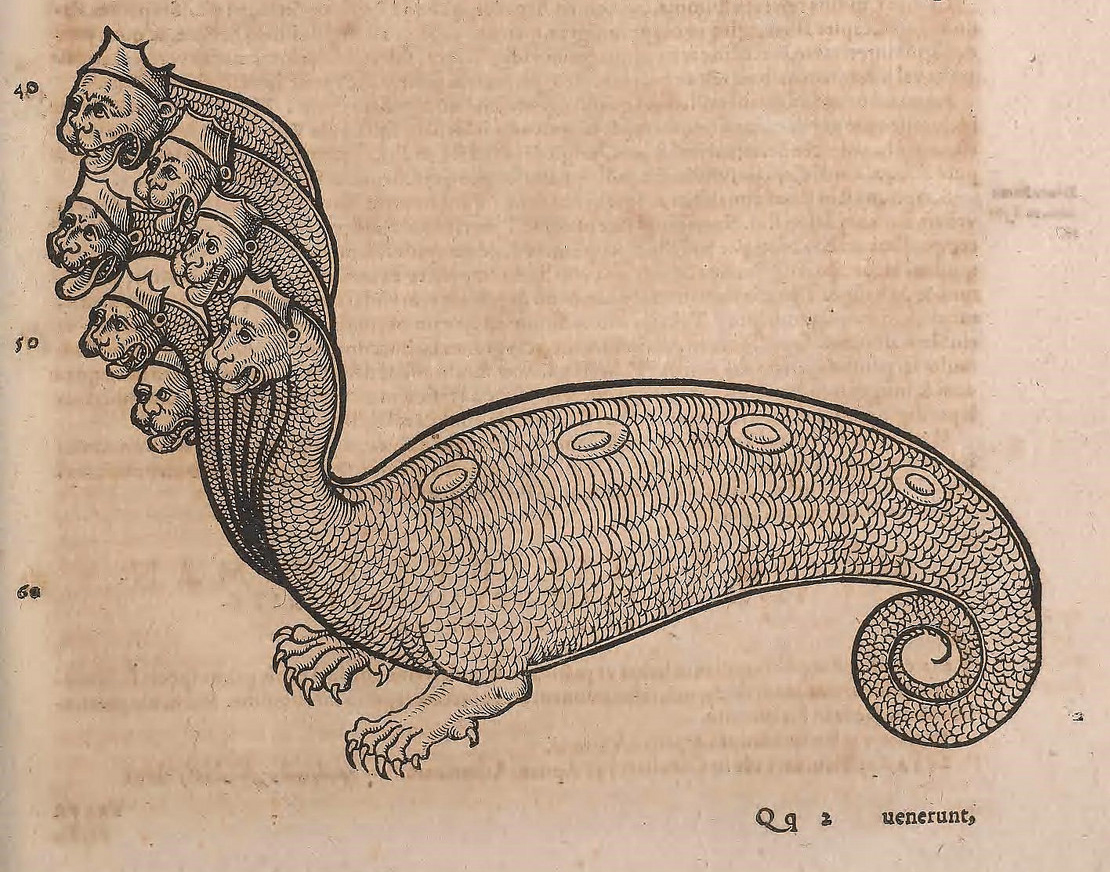
In the context of human history, ocean exploration is a relatively recent occurrence. Even by the 19th century, human knowledge of the oceans was still limited, and the flora and fauna that called the sea home, particularly within the depths, remained virtually unknown. Publications by individuals such as Olaus Magnus and Conrad Gessner in the mid-16th century represent some of our first attempts to systematically aggregate and describe biodiversity and many marine species. Much of this published information, however, was based on accounts from antiquity or spotty, second-hand narratives from sailors, hence the representation of many mythical creatures, such as the Kraken, hydra, or sea serpent, as real species.

View Full Size Image
The hydra, as depicted by Conrad Gessner in Historia Animalium. 1551-58. http://biodiversitylibrary.org/page/42166090.

But over the centuries, human exploration increased, and with it, our knowledge of the oceans and marine biodiversity. This knowledge and a record of our scientific discoveries are captured within the pages of natural history literature.

In honor of World Oceans Day on June 8, we’ve compiled a collection of publications that represent important milestones in the progress of marine bioscience research and ocean exploration. These publications will be presented in a three-part series. But while we know significantly more today than we did in the 16th century (few today, for example, would argue that the Hydra is a real species), we still have a great deal to learn about an environment that covers almost 71% of the Earth’s surface. Oceans may in fact be our true final frontier.

The Start of Modern Ichthyology: De Aquatilibus

By the mid-1500s, the birth of modern zoology, with attempts to bring together all available knowledge about Earth’s biodiversity in a systematic way, was underway. Conrad Gessner’s Historia Animalium, published in 1551-58, is in fact considered the beginning of modern zoology. This work, however, like many others of its time, is not based solely on personal observation and analysis but instead includes much inherited knowledge from ancient naturalists like Aristotle and Pliny. The result is the depiction of both mythical and authentic species.

View Full Size Image
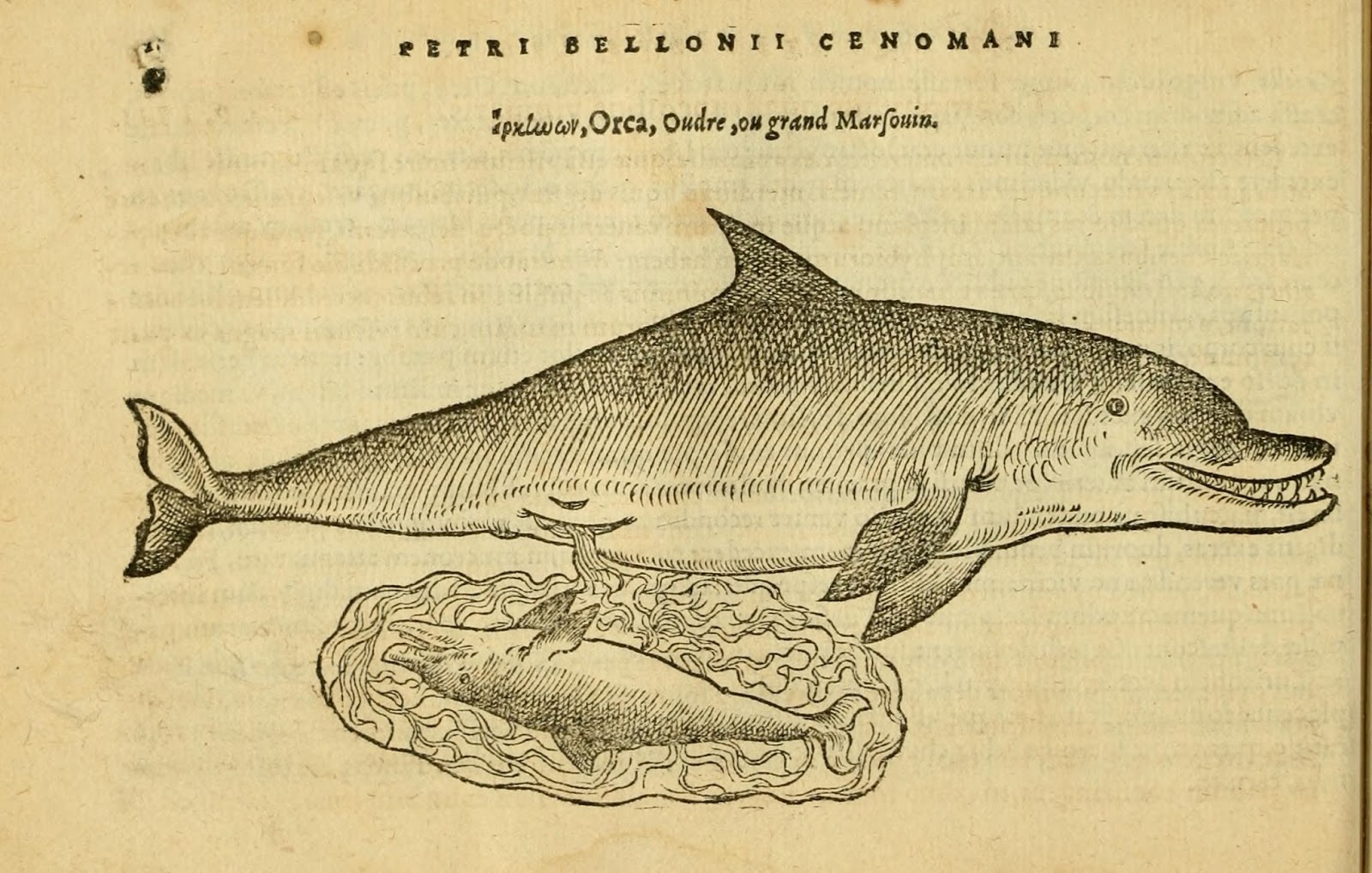
Belon portrayed many dolphins, their embryos, and reproductive anatomy within De aquatilibus, marking the beginning of modern embryology. Belon, Pierre. De aquatilibus. 1553. http://biodiversitylibrary.org/page/4770162.

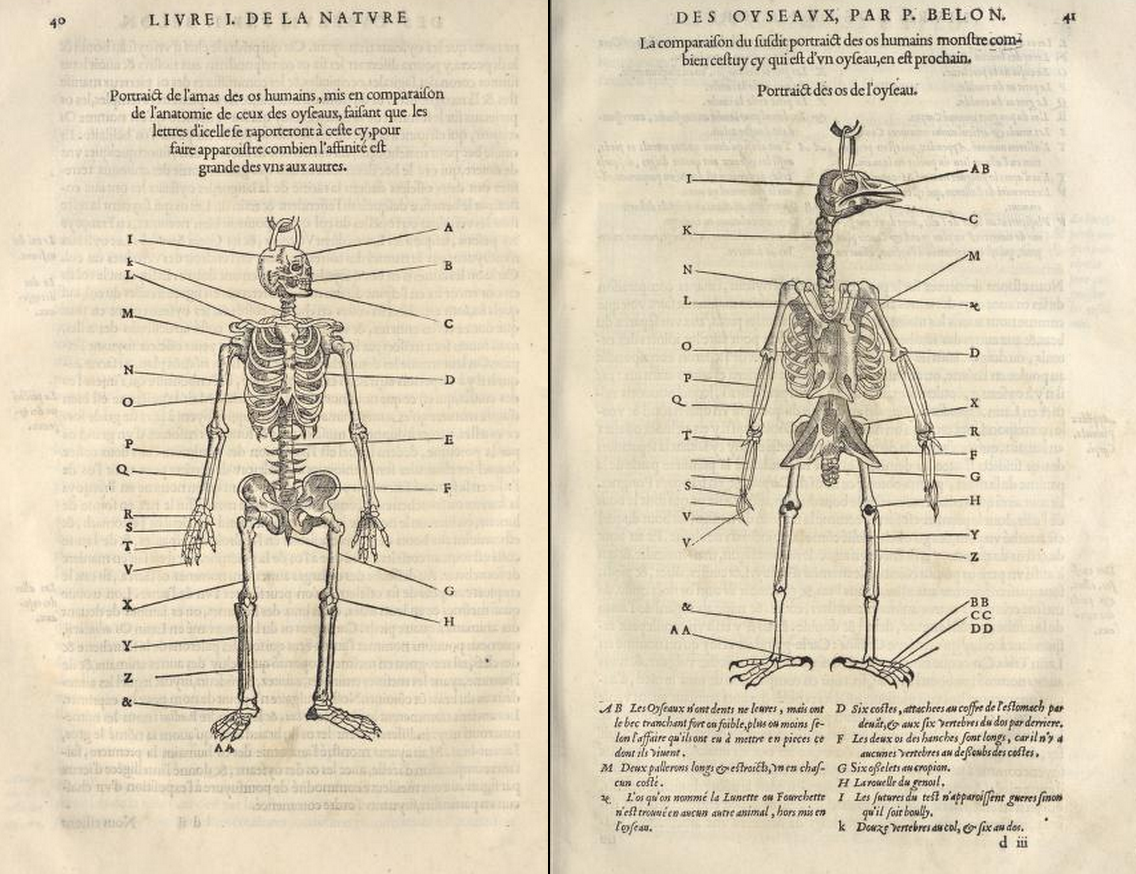
Around the time of Gessner’s publication, Pierre Belon, a French naturalist who started practice as an apothecary, studied medicine, and later undertook many travels that fueled his interest in natural history, published De aquatilibus (1553), describing and illustrating over 100 fish, sharks, and rays, as well as many marine mammals. Belon details the outward characteristics of the species he depicts and classifies his divisions of aquatic animals by size, skeletal structure, mode of propagation, number of limbs, form of the body, and habitat. As such, De aquatilibus is considered by many to be the beginning of modern ichthyology. The work also includes detailed descriptions of dolphins, their embryos, and reproductive anatomy, and thus is also considered the start of modern embryology. In a later work, Belon also illustrated comparisons between human and bird skeletons, a pioneering advancement in comparative anatomy.

View Full Size Image
Skeleton of a bird and human side-by-side, a pioneering advancement in comparative anatomy. Belon, Pierre. L’histoire de la natvre des oyseavx. (1555). http://biodiversitylibrary.org/page/43989554.

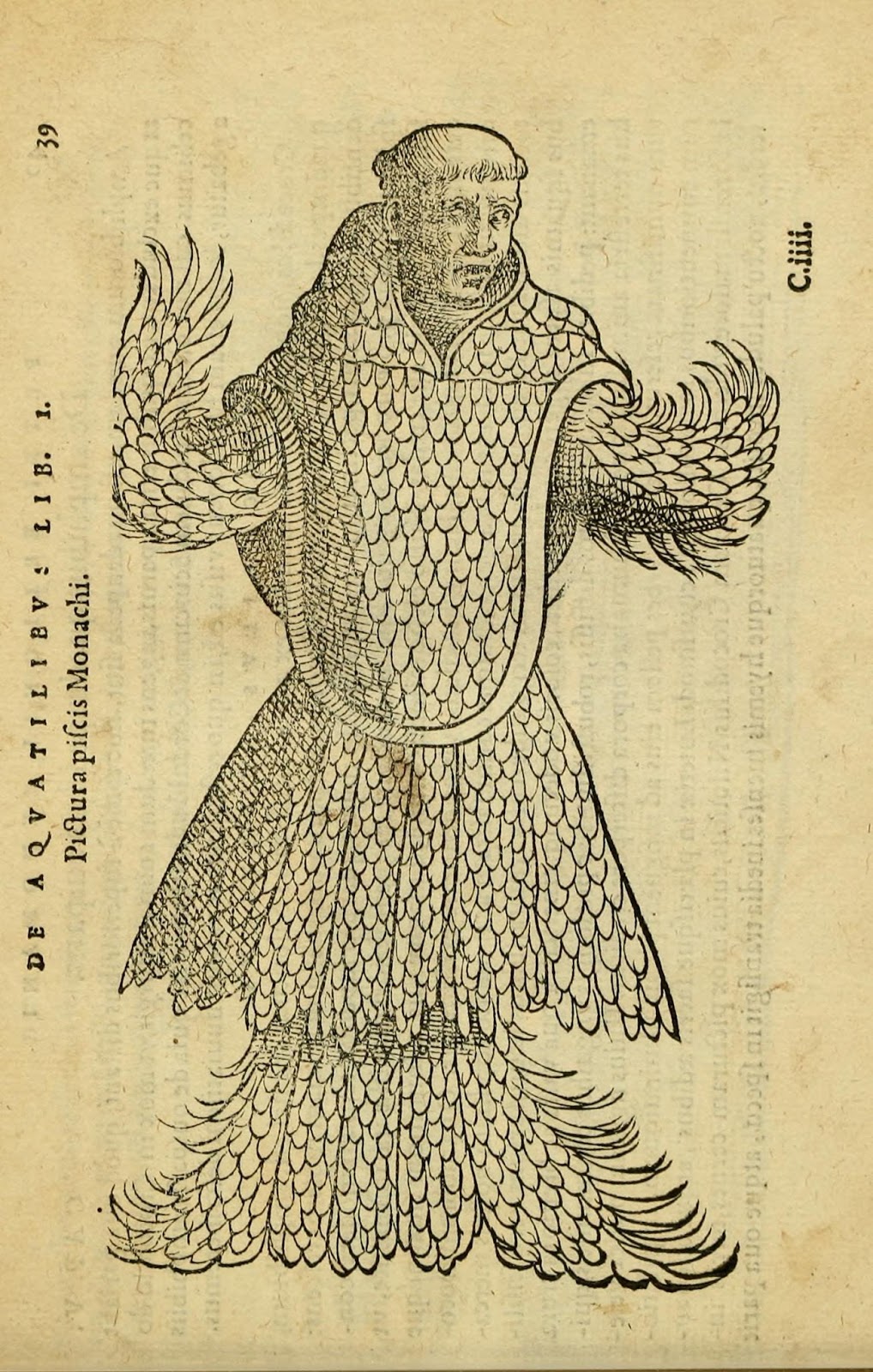
Belon stressed the importance of observation in scientific study and communication, chastising those who simply relied on and proliferated historic accounts stemming from the titans of antiquity. However, despite this charge, Belon does include some fantastical creatures within his book, including the “sea monk” and “web-footed horse of Neptune.”

View Full Size Image
Mythical “sea-monk,” possibly based on a stranded squid. Belon, Pierre. De aquatilibus. 1553.  http://biodiversitylibrary.org/page/4770183.

Sadly, Belon’s life was cut tragically short. He was murdered by unknown assailants in the Bois de Boulogne in 1564 at the age of 47.

Observation over Authority: Aquatilium Animalium 

Belon was not alone in his directive to base scientific study on observation rather than the authority of antiquity. Italian physician Hippolito Salviani, whom Belon met during his travels in Rome, took a marked interest in natural history, particularly ichthyology. Salviani, in fact, proclaimed that he would not publish anything that he himself had not observed and ascertained to be true.

View Full Size Image
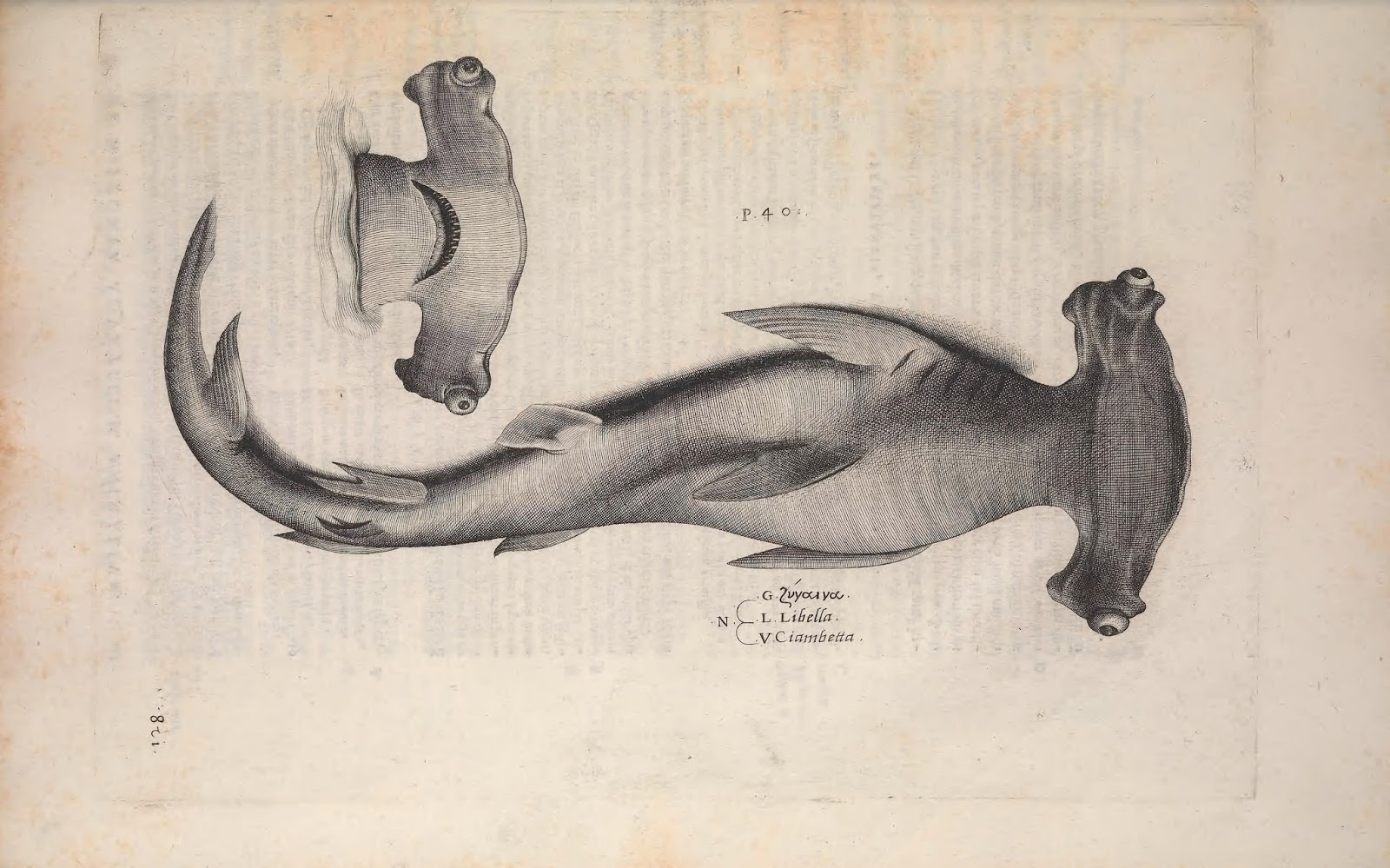
Smooth hammerhead shark (Sphyma zygaena). Salviani, Hippolito. Aquatilium Animalium Historiae. 1554-58. http://biodiversitylibrary.org/page/44715878.

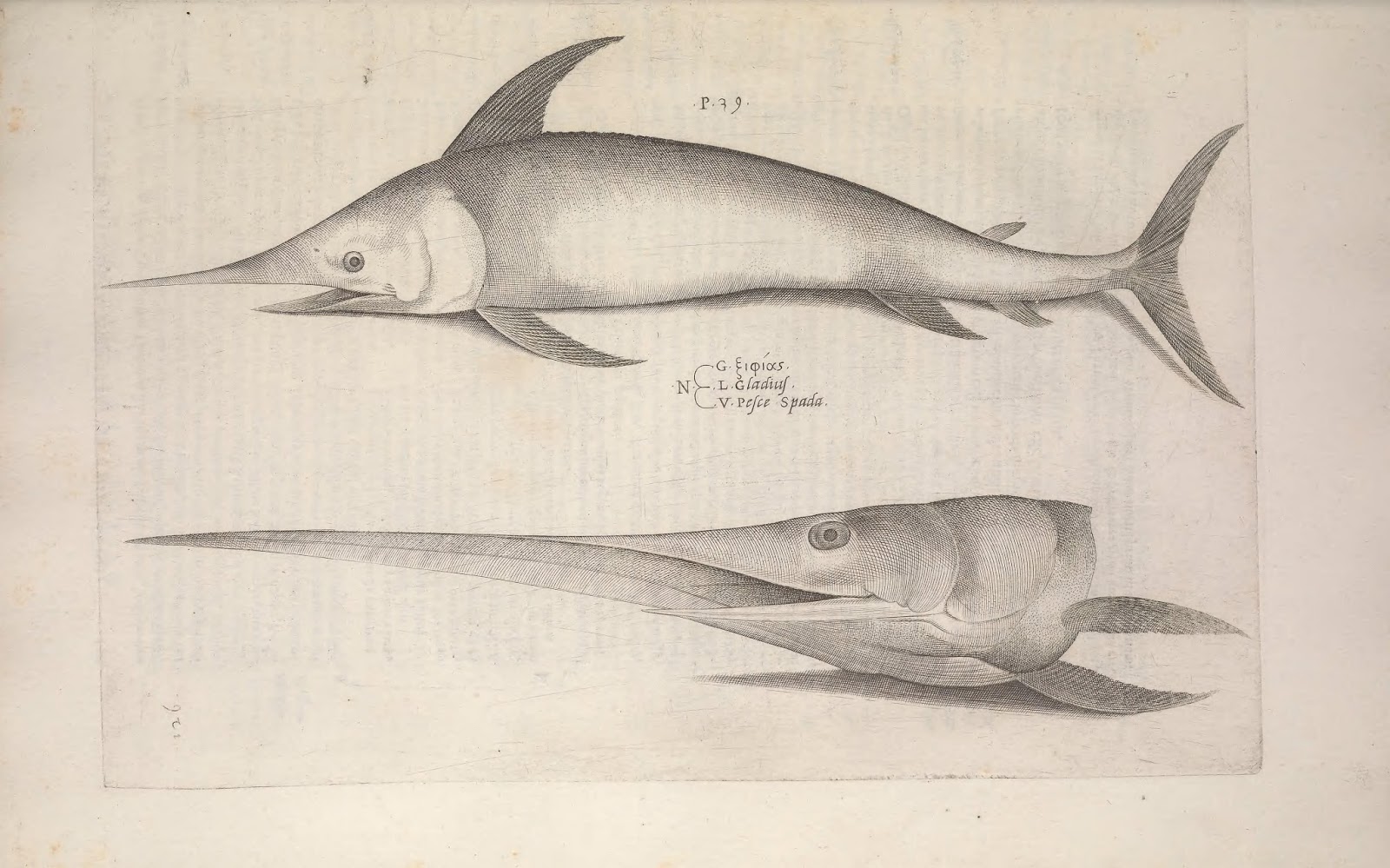
In the mid-1500s, Salviani worked to produce his own masterpiece on fishes. His 1554-58 Aquatilium Animalium Historiae includes two folio volumes and eighty-eight full-page copper engravings and describes only those fish species that he personally observed and studied. He gathered many of his specimens from local fishermen and markets. His descriptions not only include external characteristics but many additional aspects such as “habitat, behaviors and reproduction, methods of capture, nutritional and medicinal usages, and often even cooking techniques” (Stiassny, 5). Salviani’s employment of detailed copper engravings resulted in illustrations with a much more life-like appearance than the woodcuts utilized by his peers, including Belon. Salviani was also the “first to narrow the concept of ‘fish’ from a broad notion embracing all marine animals [as was the custom of the time] to instead include only the bony and cartilaginous fishes” (Stiassny, 5). As such, Salviani and Belon are often considered the two founding fathers of ichthyology.

View Full Size Image
Swordfish (Xiphias gladius). Salviani, Hippolito. Aquatilium Animalium Historiae. 1554-58. http://biodiversitylibrary.org/page/44715874.

More World Oceans Day Resources

  • Follow us on Twitter, Facebook, and this blog all this week as we explore marine biodiversity and awesome related publications in BHL.
  • Check out some monumental publications in historic and present-day marine bioscience research in our BHL collection.
  • Browse a selection of marine biodiversity illustrations in Flickr and Pinterst
Reference

  • Stiassny, Melanie. Natural Histories: Opulent Oceans. New York: Sterling Publishing, 2014. Print.
June 1, 2015by michelle.underhill
Blog Reel, Campaigns, Featured Books, Garden Stories

What’s Up with Seed Catalogs in BHL?

View Full Size Image
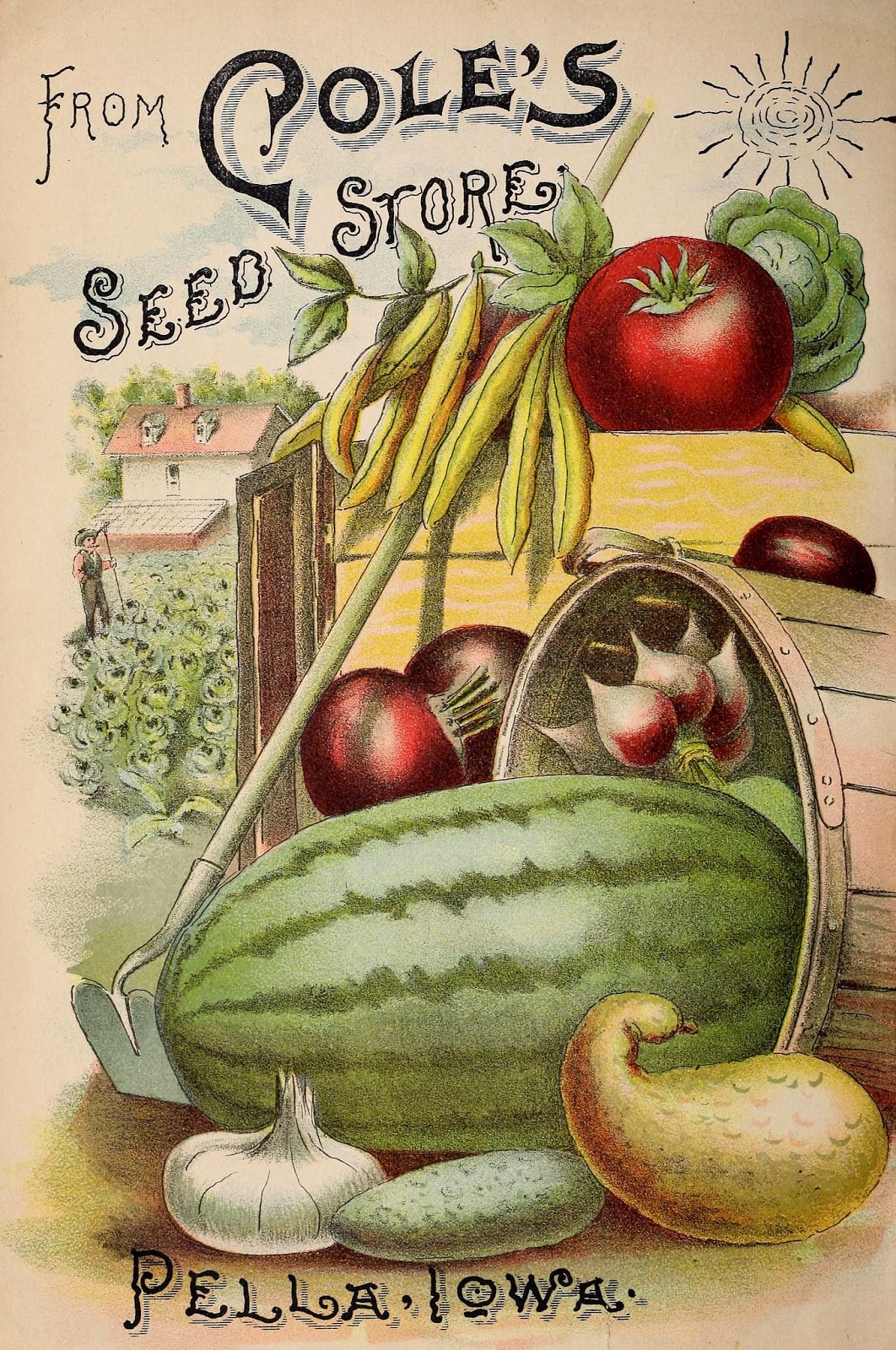
Cole’s Garden Annual. 1892. From the BHL Seed and Nursery Catalog Collection.

We’ve spent a fun-filled week exploring the history, art, and science of gardening with our Garden Stories event. Seed and nursery catalogs and lists played a starring role in our campaign, allowing us to explore the world of gardening through the instruments that informed, documented, shaped, and transformed the industry.

As our journey this week has demonstrated, seed and nursery catalogs and lists allow us to trace the development of the seed industry, agriculture, and the home garden, documenting the rise, decline, and development of new plant varieties and prices; changing agricultural and printing technologies; the individuals who shaped the industry; the evolution of garden fashion and landscape design; the introduction of chemical agents for insect and weed control; early methods of cleaning, preserving, and shipping seeds; and cultural and social dynamics such as the effects of and reactions to scientific advancement, global wars, and the shifting roles of women in society and business.

Because of their cultural, historic, and scientific importance, many BHL partners are engaged in a variety of projects to digitize and improve access to the seed and nursery catalogs and lists in their collections. As we wind things down in our Garden Stories event, we invite you to explore the exciting world of seed catalogs in the Biodiversity Heritage Library consortium.

Digitizing One of the Largest Seed Catalog Collections in America

View Full Size Image
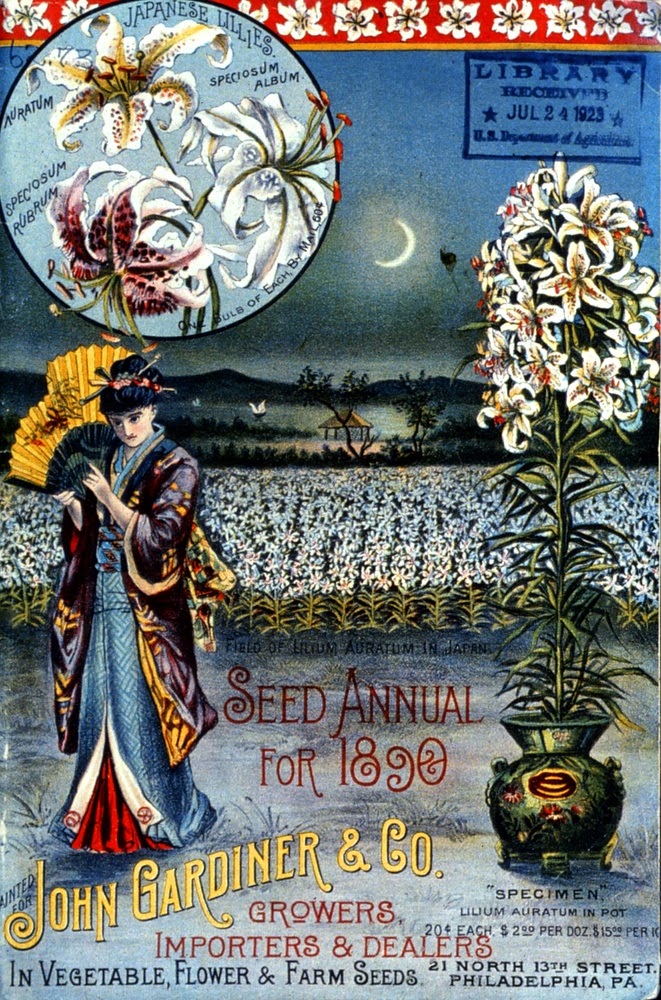
John Gardiner & Co. Seed Annual for 1890. From the NAL Seed Trade Catalog Collection.

Started in 1904 by USDA’s first economic botanist, Percy Leroy Ricker, the National Agricultural Library’s (NAL) Henry G. Gilbert Nursery and Seed Trade Catalog Collection consists of over 200,000 American and foreign catalogs. The earliest catalogs date from the late 1700s, but the collection is strongest from the 1890s to the present.
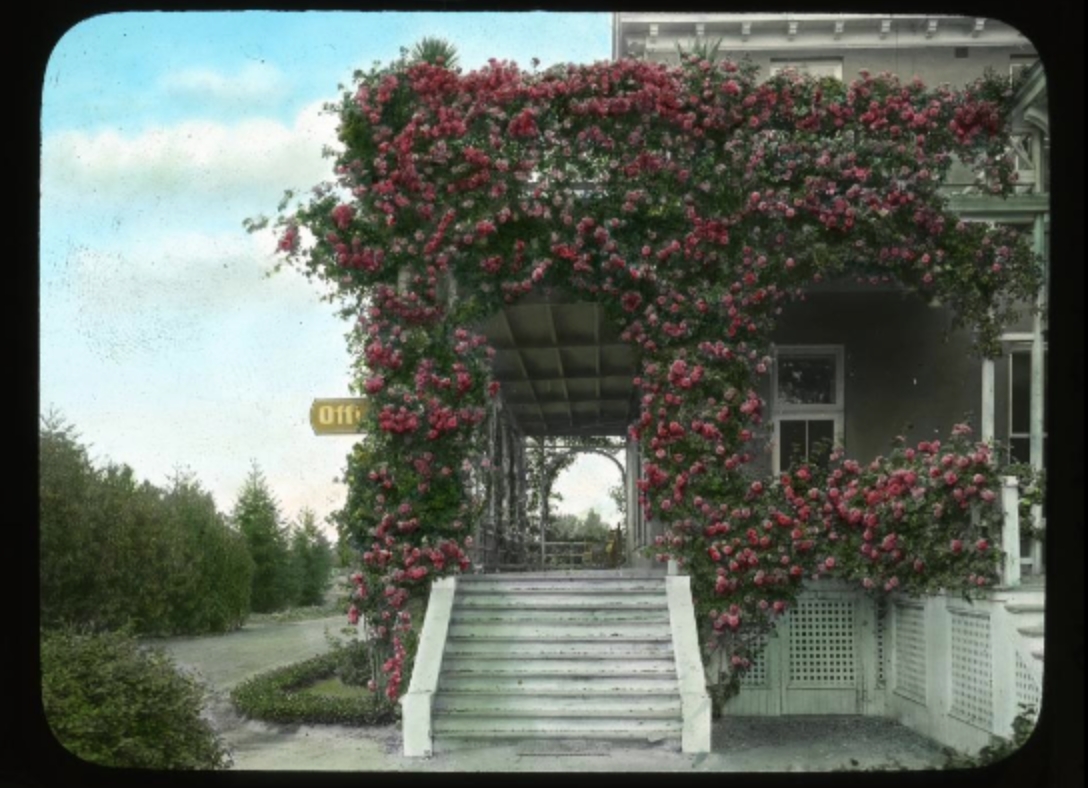
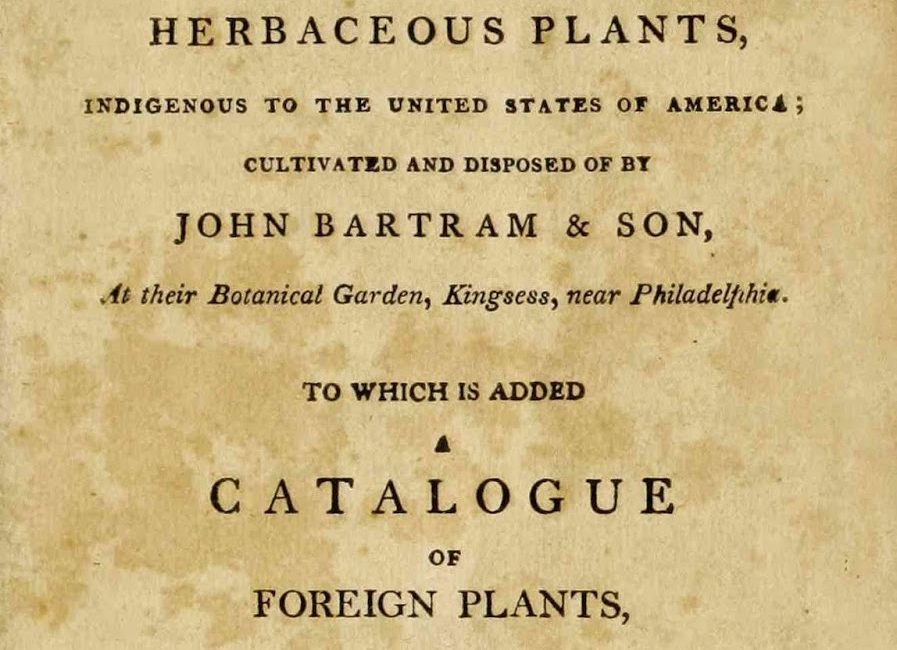
As one of NAL’s most frequently used collections with an appeal to a wide-ranging audience, the Nursery and Seed Trade Catalog Collection was a natural candidate for digitization. In 2013, NAL began digitizing the collection with Internet Archive which operates a scanning center at NAL. As of February 2015, NAL has cataloged all of its U.S seed catalogs through 1923 and digitized over 13,000 seed catalogs, including all of its U.S. catalogs through 1906 as well as its entire collection of catalogs from long-established firms such as Peter Henderson & Co., and woman-owned firms such as Miss Ella V. Baines. The Nursery and Seed Trade Catalog Collection will remain a focus of NAL’s digitization work with Internet Archive for the foreseeable future.

Soon after NAL’s catalogs became available in Internet Archive, BHL added them to its own Seed and Nursery Catalogs Collection. In 2014, NAL formally became a BHL affiliate and the two institutions began working on a standardized process for ingest of NAL seed catalogs (and other relevant digitized materials) into BHL.

Digitizing to Improve Access and Discoverability

In 2013, the Biodiversity Heritage Library engaged in an ambitious project to explore the applicability of purposeful gaming to tackle a significant challenge for digital libraries today: poor output from Optical Character Recognition (OCR) software. OCR allows a computer to “read” the text on a digitized page and produce a searchable text file for each page image that allows users to more easily discover content relevant to their needs.

Led by the Missouri Botanical Garden’s Center for Biodiversity Informatics (CBI) and in partnership with Harvard University, Cornell University, and the New York Botanical Garden, the Institute of Museum and Library Services (IMLS)-funded project, Purposeful Gaming, will demonstrate whether or not digital games are a successful tool for analyzing and improving outputs from OCR and transcription activities because large numbers of users can be harnessed quickly and efficiently to focus on the review and correction of particularly problematic words by being presented the task as a game.

As part of Purposeful Gaming, project participants are digitizing seed and nursery catalogs and lists because these documents are great examples of materials that are notoriously difficult subjects for OCR to parse. The picturesque fonts and elaborate page layouts so endearingly characteristic of seed catalogs cause the resulting OCR output to be error prone and less than optimal. By identifying unique catalogs and lists in their collections and integrating them into the BHL Seed and Nursery Catalog Collection, transcription sites, and purposeful games, participating institutions are helping us enhance our OCR and improve access to not only these catalogs and lists but the entire BHL collection as well.

Seed catalogs and Index Semina – What’s the difference and why do we care?

View Full Size Image
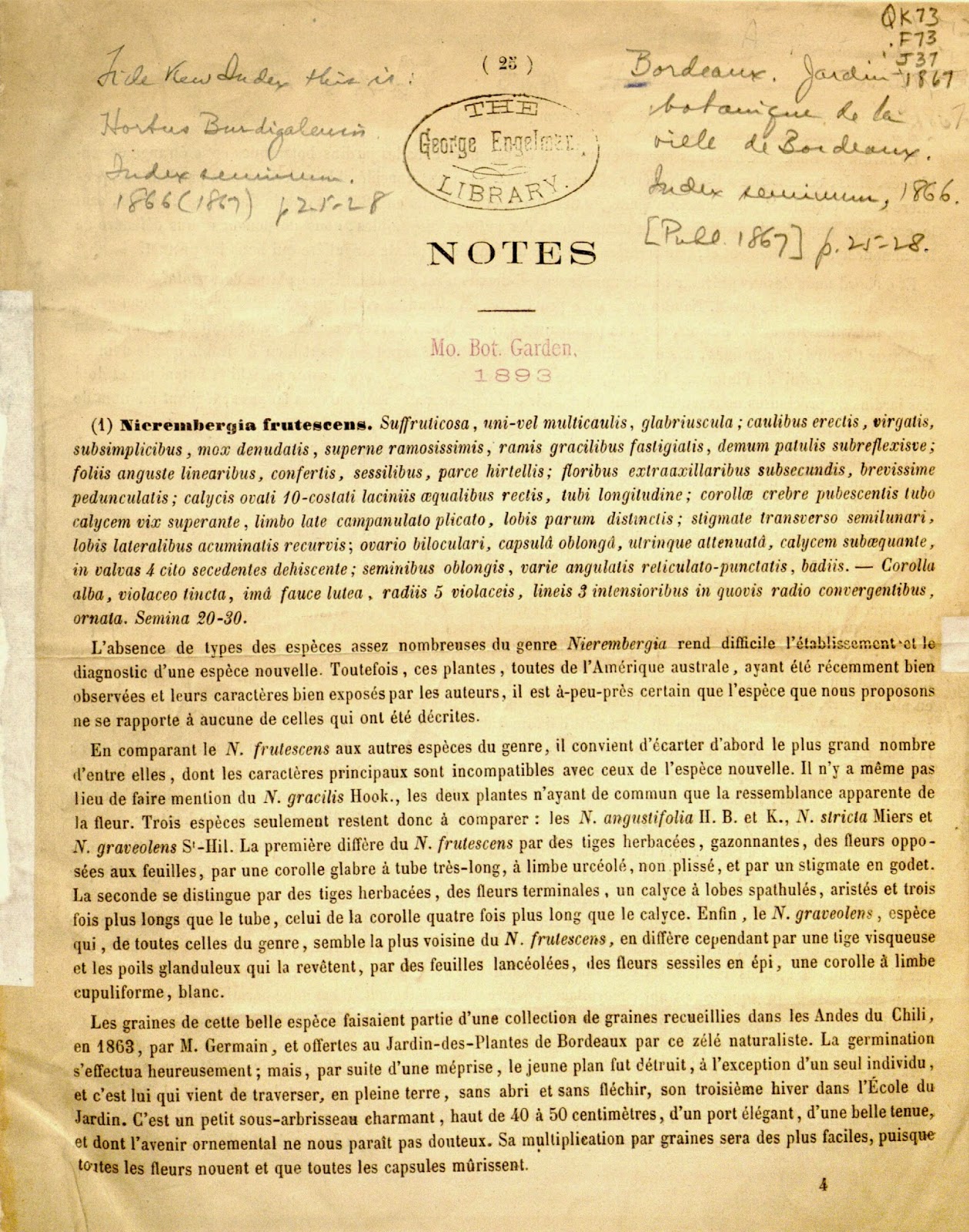
Nierembergia frutescens in Seed List. http://biodiversitylibrary.org/page/44946209.

As described, Purposeful Gaming involves digitization of historic seed catalogs and seed lists, or index semina. What is the difference? Beautifully illustrated seed catalogues were issued regularly by seed companies to list their current selection available for sale. The catalogues occasionally included plants that were not only new to the garden, but also new to science. Similarly, the far less colorful seed lists were issued and exchanged by botanical gardens to facilitate the free exchange of new seed acquisitions and also included plant species new to science.

The seed lists were published and circulated in limited numbers and were often considered ephemeral so they were not generally deposited in libraries. Today no library in the world has a complete set. BHL partners have joined forces to digitize their collections to form a virtual set that is nearly complete and are far more accessible to botanists and everyone around the world.

Nierembergia frutescens is just one example of a plant that was first named and described in a seed exchange list. This beautiful flowering herb is a member of the Solanaceae or Nightshade family. It was first named in 1866 by the French botanist Michel Charles Durieu de Maisonneue. He described the plant in great detail while advertising the availability of seeds of this new species to his colleagues in Catalogue des graines récoltées en. 1866, issued by Jardin-des-plantes de la ville de Bordeaux.

Identifying the Unique


View Full Size Image
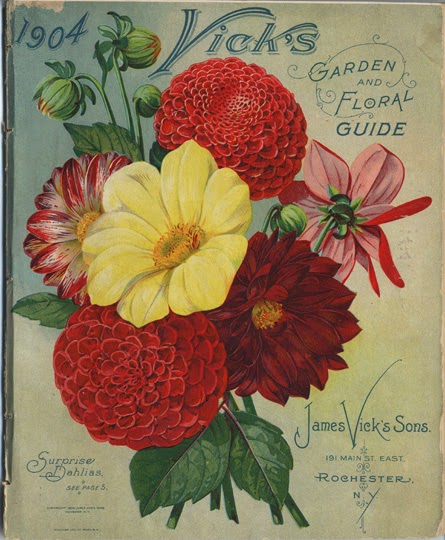
1904 Vick’s Catalog. From LH Bailey Hortorium’s Horticultural Catalog Collection at Cornell University.

With many Purposeful Gaming-affiliated institutions involved in digitizing seed and nursery catalogs, alongside the significant digitization underway at the National Agricultural Library (NAL), it can be difficult to ensure that the same catalog is not digitized by multiple libraries. Recognizing this challenge, Cornell University’s Mann Library developed a process to identify and digitize the unique seed catalogs in their collection.

The first step in this process was to collect metadata about the seed catalogs held by BHL institutions currently digitizing these works. This was done using Excel spreadsheets with matching columns. The merging of the metadata was complicated by differing cataloging processes among various institutions. For instance, NAL catalogs each seed catalog as a monograph whereas Cornell catalogs them as serials based on the firm name. To further complicate the situation, Cornell also cataloged the firms for which they have only a handful of catalogs in alphabetic ranges by firm name.

After the metadata for the seed catalogs in applicable institutions was merged into one large spreadsheet, it was necessary to try to match up the varying firm names. For example, one institution might have a firm cataloged as John W. Adams, whereas another institution may have JW Adams, Adams JW, or even John W Adams & Sons. Additionally many firms changed names over time.

Mann decided to use Google Refine in an attempt to standardize firm names. Using Google Refine’s Cluster option they were able to match up various firm names used for the same firm. (For more on clustering methods, please see https://github.com/OpenRefine/OpenRefine/wiki/Clustering-In-Depth). If requested, Google Refine will change the firm names in the spreadsheet to use a common firm name for each. This allowed the resulting spreadsheet to be sorted by firm so that all metadata for one firm appeared together in the spreadsheet. Mann Library then reviewed the spreadsheet manually to see what firms or seed catalog publication years are uniquely held by them, avoiding the scanning of material already digitized by other BHL institutions.

Gaming to Enhance Collections

So we’ve covered digitizing the catalog and list collections. How then will Purposeful Gaming use video games to decipher difficult-to-read texts–such as seed and nursery catalogs–that cannot easily be read by OCR software?

Here’s how it works: an original catalog is scanned, and the image uploaded to BHL. The image is then uploaded to a transcription portal, where volunteers type out the text that would be too difficult for a computer to read (thanks to all who have helped us transcribe seed catalogs this week!). Multiple transcriptions of the same text are then incorporated into the video game, which identifies discrepancies between them. The task of the player is to correctly transcribe the text in question through a creative video game interface. Eventually, games like this could help create searchable versions of seed and nursery catalogs, increasing their value to historians and horticulturalists alike.

Beta versions of the games are being tested right now, and we hope to release them this summer. Stay tuned to our blog and social media for more updates. In the meantime, you can help inform the game development by transcribing seed and nursery catalogs today! Learn more.

We’re so glad you joined us this week for Garden Stories. You can explore all our great posts by following #BHLinbloom on Twitter and Facebook and diving into our Garden Stories blog series. Be sure to check out the over 14,000 seed and nursery catalogs in BHL and enjoy over 2,500 seed catalog images in Flickr, with a selection also available in Pinterest. Find great online gardening resources, facts, and tips on the BHL Gardening Resources Page.

Happy gardening!

Contributions From:

Chris Cole
Manager, Business Development, National Agricultural Library
Doug Holland
Director, Missouri Botanical Garden Library
Holly Mistlebauer
Information Technology Project Manager, Cornell University’s Mann Library
Kay Derr
Contracts Librarian, National Agricultural Library
Patrick Randall
Marketing Intern, Ernst Mayr Library, Museum of Comparative Zoology, Harvard University
Judith A. Warnement
Librarian of Harvard University Botany Libraries

March 27, 2015by ulib-libraryjobs
Blog Reel, Campaigns, Featured Books, Garden Stories

“’Tis A Gift To Be Simple” But to Have a Splendid Garden Buy Shaker Seeds

View Full Size Image
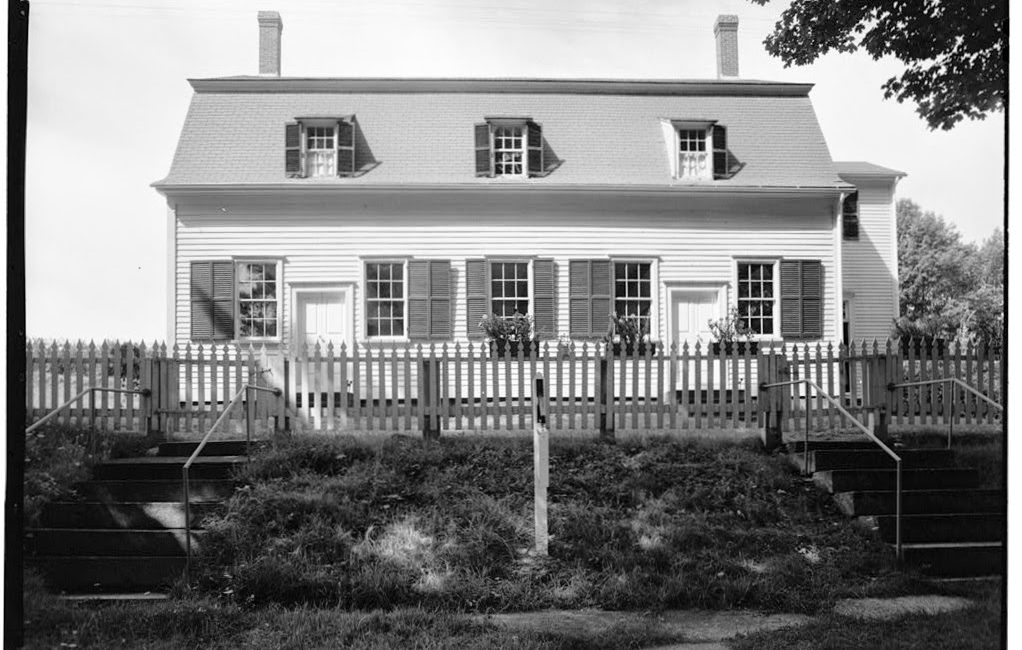
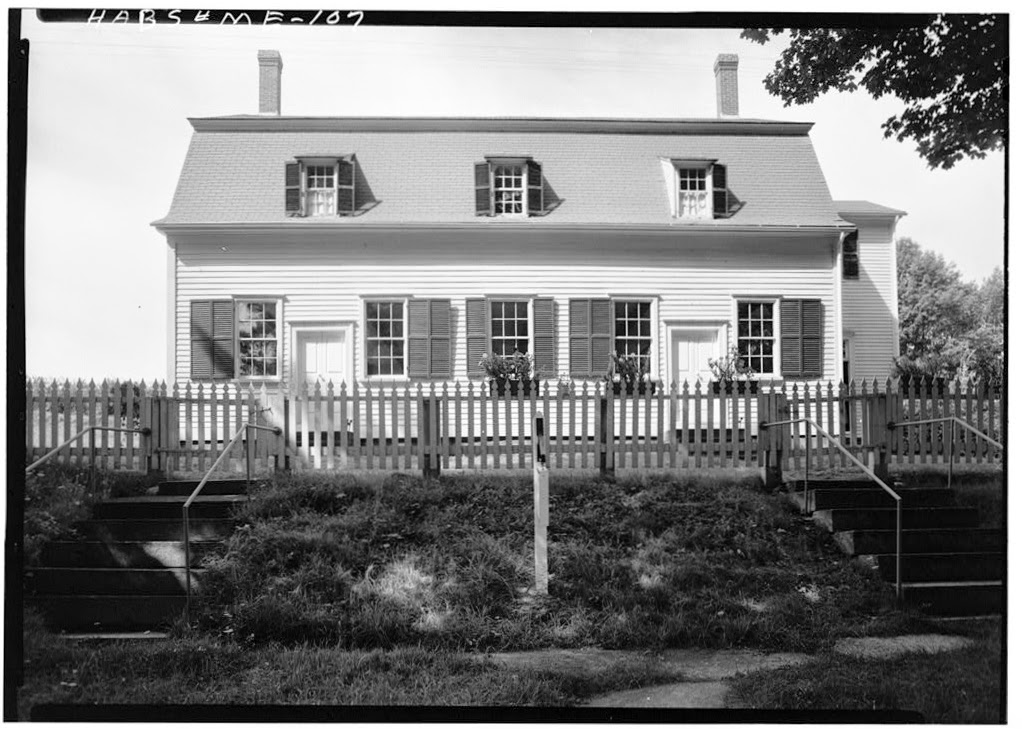
Sabbathday Lake Shaker Community Meetinghouse  (photo by Gerda Peterich for the Historic American Buildings Survey, Library of Congress Prints and Photographs Division; HAB SME,3-SAB,1—1)

The United Society of Believers in Christ’s Second Appearing, a religious sect commonly referred to as the Shakers, was founded in 18th-century England from a branch of the Quakers. Along with other newly formed devotional groups, they soon immigrated to colonial America. There they established as their economic foundation a variety of cottage industries that thrived throughout the 19th and into the early 20th centuries. Now known mostly for wonderfully simple architecture, austere but beautifully designed furniture and such functional objects as nesting oval boxes and baskets, members of the Shaker communities also once had booming garden and seed businesses. Their labor-intensive methods of working inevitably came to be overwhelmed by competition from industrial manufacturing as well as the problem of ever-shrinking membership, celibacy being one of their central tenets.

View Full Size Image
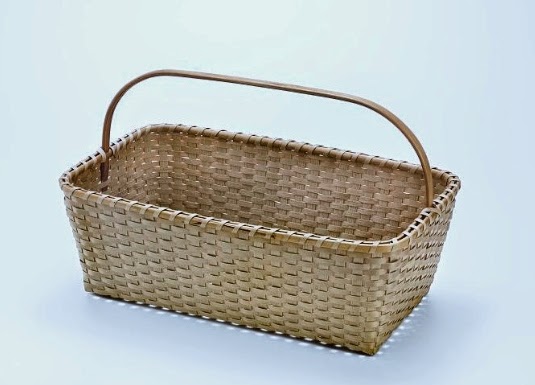
Shaker Carrier (by Sharon Dugan; Smithsonian American Art Museum, Gift of Martha G. Ware and Steven R. Cole; no. 2011.47.11)
The first fully organized Shaker community was New Lebanon in New York; by 1789, two years after its formation, the members cultivated seeds as a cash crop. This was the second earliest “company” to sell seeds in America. David Landreth & Son of Philadelphia was the first, in 1784, and that business traded back and forth with the Shakers. Another early dealer was Grant Thorburn in Philadelphia who wrote about the difficulty of obtaining seeds of good quality.
Other Shaker settlements, or “families,” soon followed in the seed-production business, including Watervvliet, New York; Hancock, Massachusetts; Enfield, Connecticut; Canterbury, New Hampshire; Alfred, Maine; and South Union, Kentucky, among several others. All were known for the excellence of their products and integrity of their business dealings. Devotion to God was expressed through their work ethic, hand labor and craftsmanship. The selling of goods was meant to raise funds only for needs the Shakers could not supply for themselves.

It is uncertain whether the Shakers were the first to put their seed products in small paper envelopes or packets, but they were the first to popularize their use. The Shaker Brothers printed millions of them on their presses, while the Sisters performed the labor of cutting, folding and pasting the papers. While believing in partnership in work and equality of the sexes, occupations tended to fall along traditional gender lines. The Brothers tilled the fields while the Sisters picked, sorted and packaged the seeds and herbs.

View Full Size Image
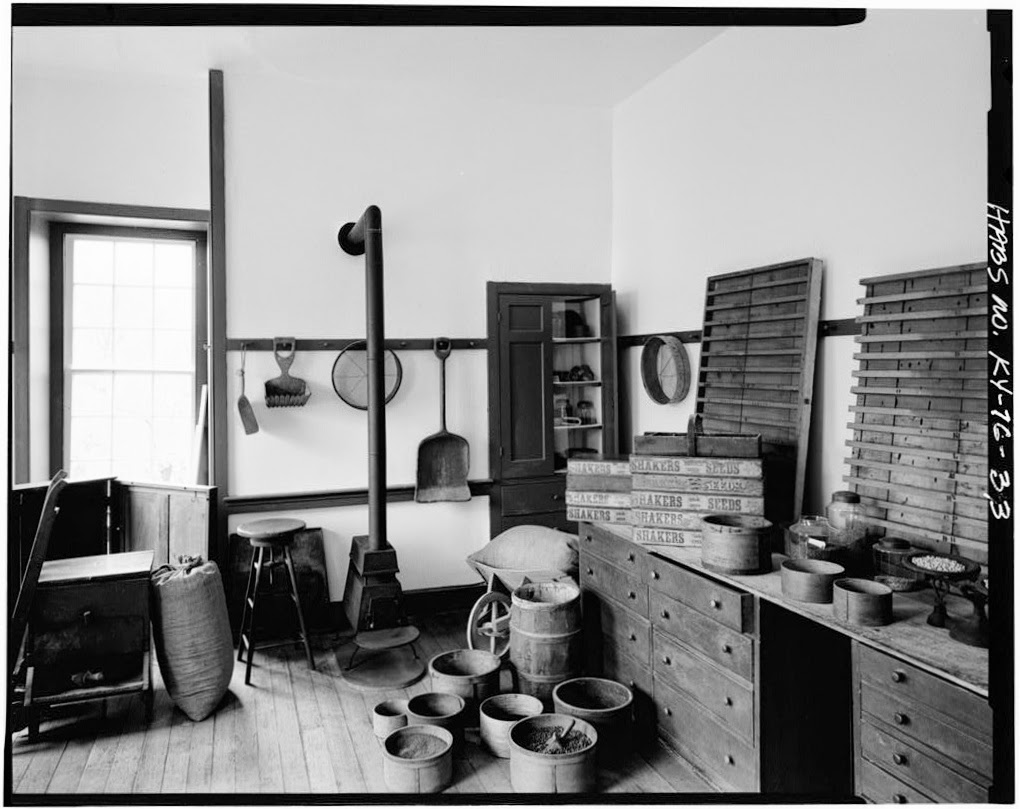
Seed Room, Shakertown, Kentucky (LC Prints & Photographs Division; HABS,84-SHAKT,2-33)

The Shakers were also early adopters of incorporating gardening manuals in their catalogs. Charles Crossman wrote ones in 1835 and 1836 for Mount Lebanon, Pittsfield and Watervilet, directing the wholesaler or the individual purchaser how best to plant the offered seeds. Instructions for storing and cooking bounties from the gardens were also sometimes given. Vegetables dominated the products but herbs and flowers as well as grass also appear in the lists. Crossman later left the Shakers and established his own company in Rochester, New York, which was just beginning to become the thriving horticultural center in the country.

View Full Size Image
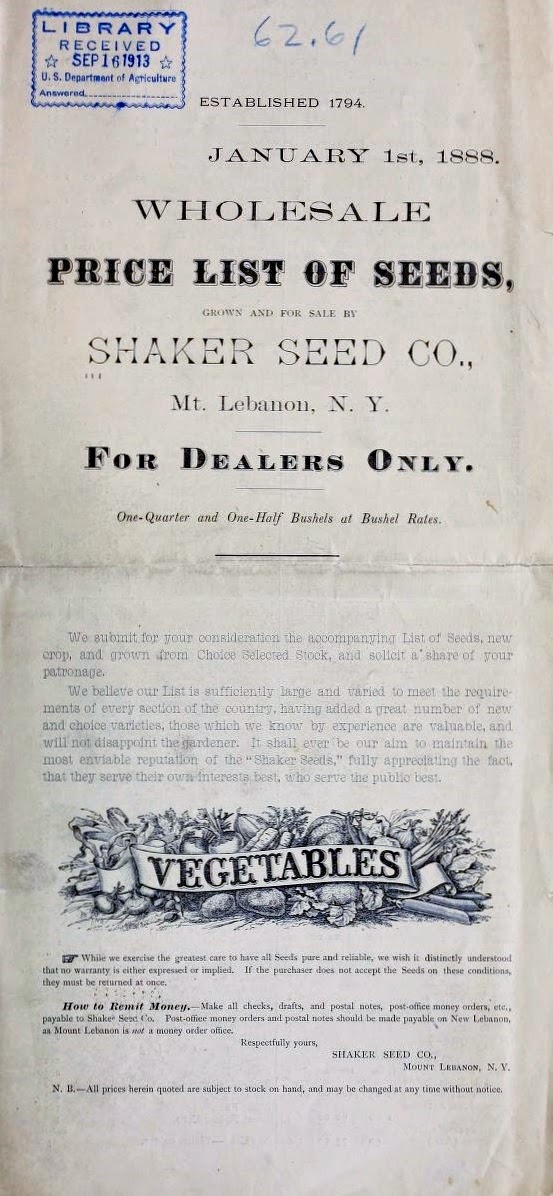
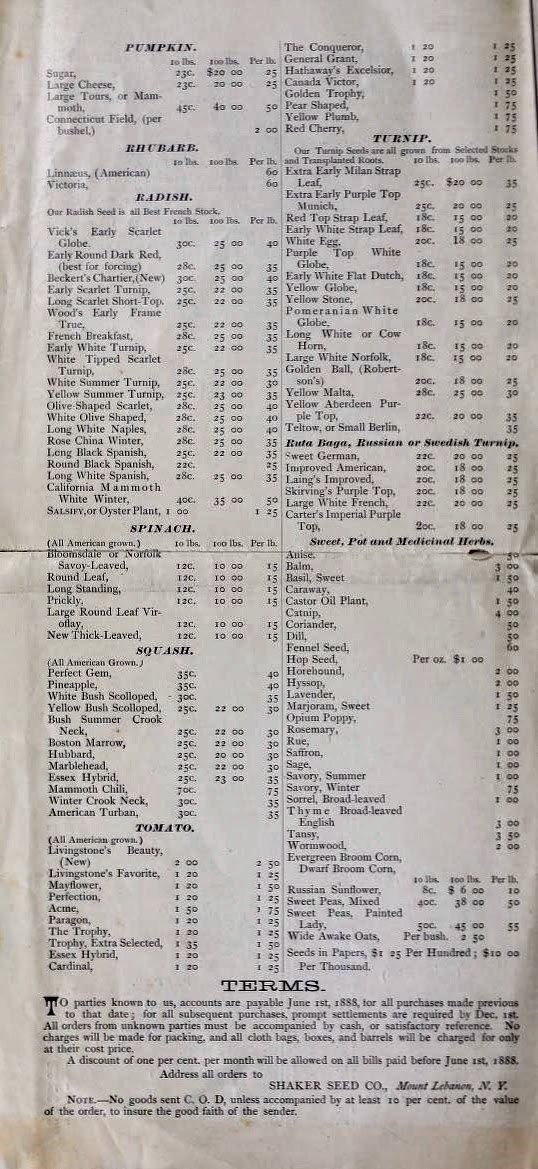
Wholesale price list of seeds by the Shaker Seed Company. New Lebanon, New York, 1888 (Henry G. Gilbert Nursery and Seed Trade Catalog Collection, National Agriculture Library; image from the Biodiversity Heritage Library)

As the Shaker seed business in the United States grew from 1840, printing firms outside of the communities were employed to keep up with demand. Correspondingly, advertisements and the design of the packets, begun first plain with simple chunky block type, were transformed to include the use of color papers and borders and eventually vivid chromolithography.

Following the Civil War, increased competition resulted in the Shakers’ using the word “genuine” in their advertising, as products from the communities were considered to be of the highest quality, their best selling point. They also used various and effective marketing techniques, including seed boxes meant to be displayed on the counters of country stores. The containers had compartments for assorted Shaker vegetable and flower seed packages, with a hinged lid to be propped open to display a broadside detailing the contents within, and a chromolithographic image of a bountiful harvest, promising the purchaser a similar reward.

View Full Size Image
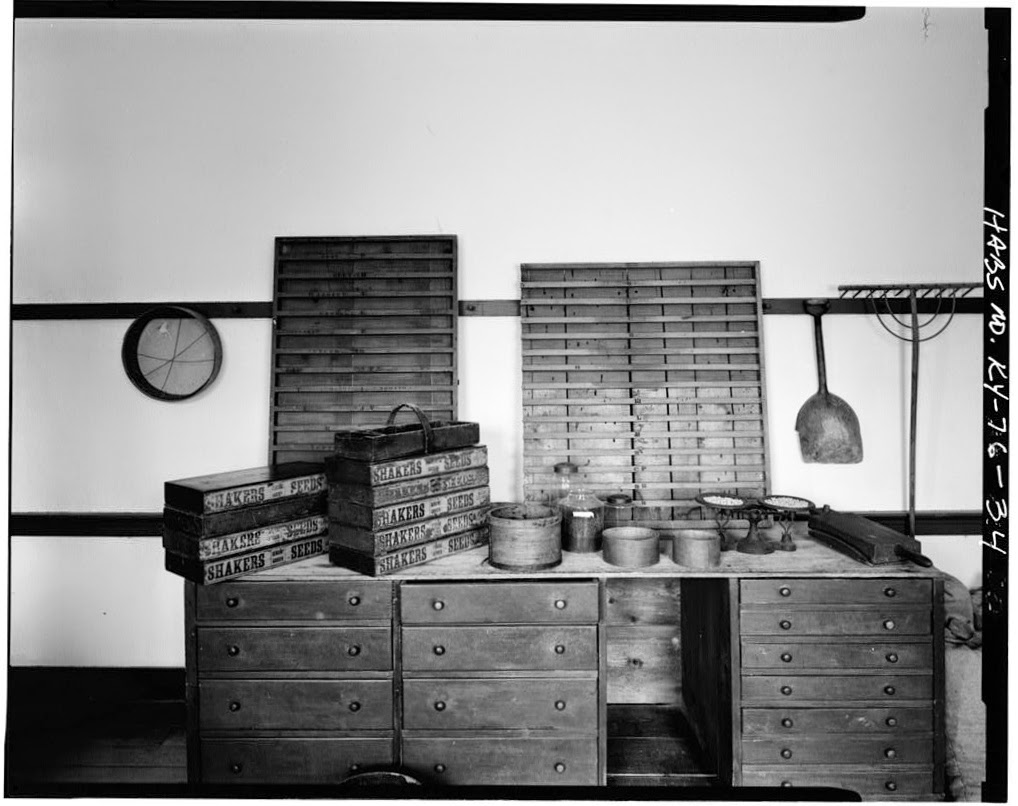
Seed Room with display containers, Shaker Centre Family Dwelling House, Shakertown, Mercer County, Kentucky (Library of Congress Prints and Photographs Division; HABS KY,84-SHAKT,2—34)

Other surviving ephemera record the once-thriving industry of seed, herbal, food, and medicinal products from the Shakers. Along with seed catalogs and the packets, mailing tags and envelopes, broadsides, receipts, invoices, billheads, and labels, give testament to their industry. Product labels include currant, grape, wild cherry, and blackberry wines. Far from being abstinent (except in the matter of sex), the Shakers made at least fourteen varieties of wine as well as distilled spirits. The religious group in their various communities was also at the forefront of selling medicinal herbs in the United States.

View Full Size Image
Shaker Digestive Cordial (A.J. White, New York, New York; National Museum of American History, no. 246707)

The changing world and market forces caused the Shaker seed industry to gradually peter out at the beginning of the 20th century. Increasing industrialization, growth of urban centers with ease of shipping and mailing to formally isolated villages, and overwhelming production from big companies, particularly in Philadelphia and Rochester, eliminated the communities’ wagon and sleigh seed routes for trading. With their firm spiritual beliefs and practices, the Shakers were not very competitive against aggressive business tactics.

View Full Size Image
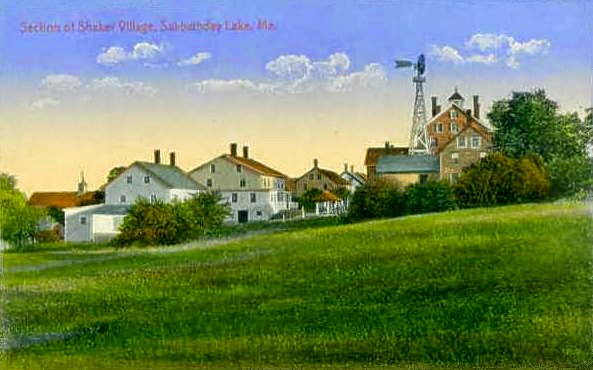
Postcard of the Shaker Village of Sabbathday Lake, Maine (ca. 1920; Wikimedia Commons)

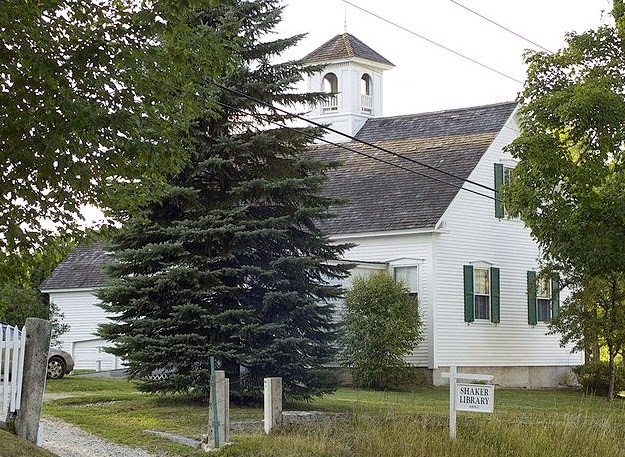
At their peak in the mid-19th century there were about 6,000 “Shaking Quakers” so named because of their ecstatic behavior during worship services. Today, Sabbathday Lake Shaker Community, founded in 1783 in Maine, is the sole active survivor of the religion. A tree farm, an apple orchard and vegetable gardens are maintained, and hand-set printing is still practiced. The library there holds ephemera such as account records, recipes, catalogs and 1,380 labels printed by Shakers for their own products. They are living testament to the Shakers’ influence on the American seed and nursery industry and their permanent place in horticultural history—the early development of the new business, innovative techniques in marketing and education as well as the propagation and introduction of new varieties. The Sabbathday Shakers still sell herbs, and their catalog is online.

View Full Size Image
The Library of Sabbathday Village in New Gloucester, Maine (Wikimedia Commons, August 2010)
View Full Size Image
Wholesale price list of seeds by the Shaker Seed Company, Mount Lebanon, New York, 1888 (Henry G. Gilbert Nursery and Seed Trade Catalog Collection, National Agriculture Library)

More Garden Stories Fun

  • Follow our blog and #BHLinbloom on Twitter and Facebook (or go directly to BHL’s Twitter and Facebook) this week as we explore the fascinating world of gardening, from its history to plant factoids and practical gardening tips.
  • Browse over 14,000 seed and nursery catalogs in our collection.
  • Browse over 2,500 seed and nursery catalog images in our Flickr collection.
  • Explore select seed catalog art, and stunning bookmarks and postcards developed by Cornell Library, on Pinterest.
  • See historic gardening come to life on the Smithsonian Libraries’ Tumblr.
  • Purchase your very own Garden Stories T-Shirt through T-Fund. All proceeds will go to help us digitize more pages for BHL. Our goal is to sell enough shirts to digitized 5,000 pages. Can you help us get there?
  • Help us improve access to seed and nursery catalogs by transcribing some today as part of our the Institute of Museum and Library Services (IMLS)-funded Purposeful Gaming project!
  • Find great online gardening resources, tips, and help on the BHL Gardening Resources Page.
March 27, 2015by mckenzie.87
Blog Reel, Campaigns, Garden Stories

Revolutionizing the Garden Industry with Art: Part Two

View Full Size Image
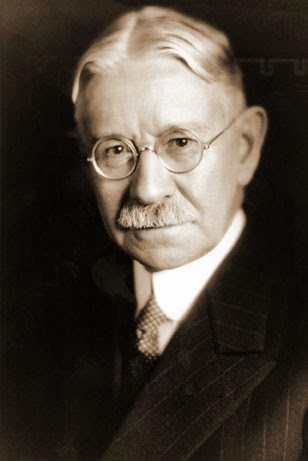
J. Horace McFarland. Pennsylvania Capitol Preservation Committee.

J. Horace McFarland’s name is little known today. In the early twentieth century, however, he was a prominent figure in American horticulture and the nascent environmental movement. McFarland (1859-1948) was a master printer, horticulturist, and conservationist, whose Harrisburg, Pennsylvania printing company specialized in horticultural trade publications. He was particularly noted for his use of photographs and color photoengraving in nursery and seed trade catalogs.

As a boy, McFarland learned the nursery trade by working in his family’s business, Riverside Nurseries of Harrisburg. His father, who published a small weekly newspaper, gave Horace a printing press in 1878. He merged his skills in horticulture, printing, and business and formed his own printing company. McFarland sought clients among people he knew—the growers who provided seed and stock to Riverside Nurseries. He called his venture Mount Pleasant Press. (The company was incorporated in 1891 as the J. Horace McFarland Company and was known for many years under both names.)

McFarland initially printed eight-page seed lists for spring and fall planting seasons. Wanting to generate a steadier stream of year-round business, he pitched ideas to nurserymen throughout the country for producing informative publications and more frequent catalogs full of enticing illustrations. Eventually, through skillful marketing, he won large contracts for thousands of catalogs.

View Full Size Image
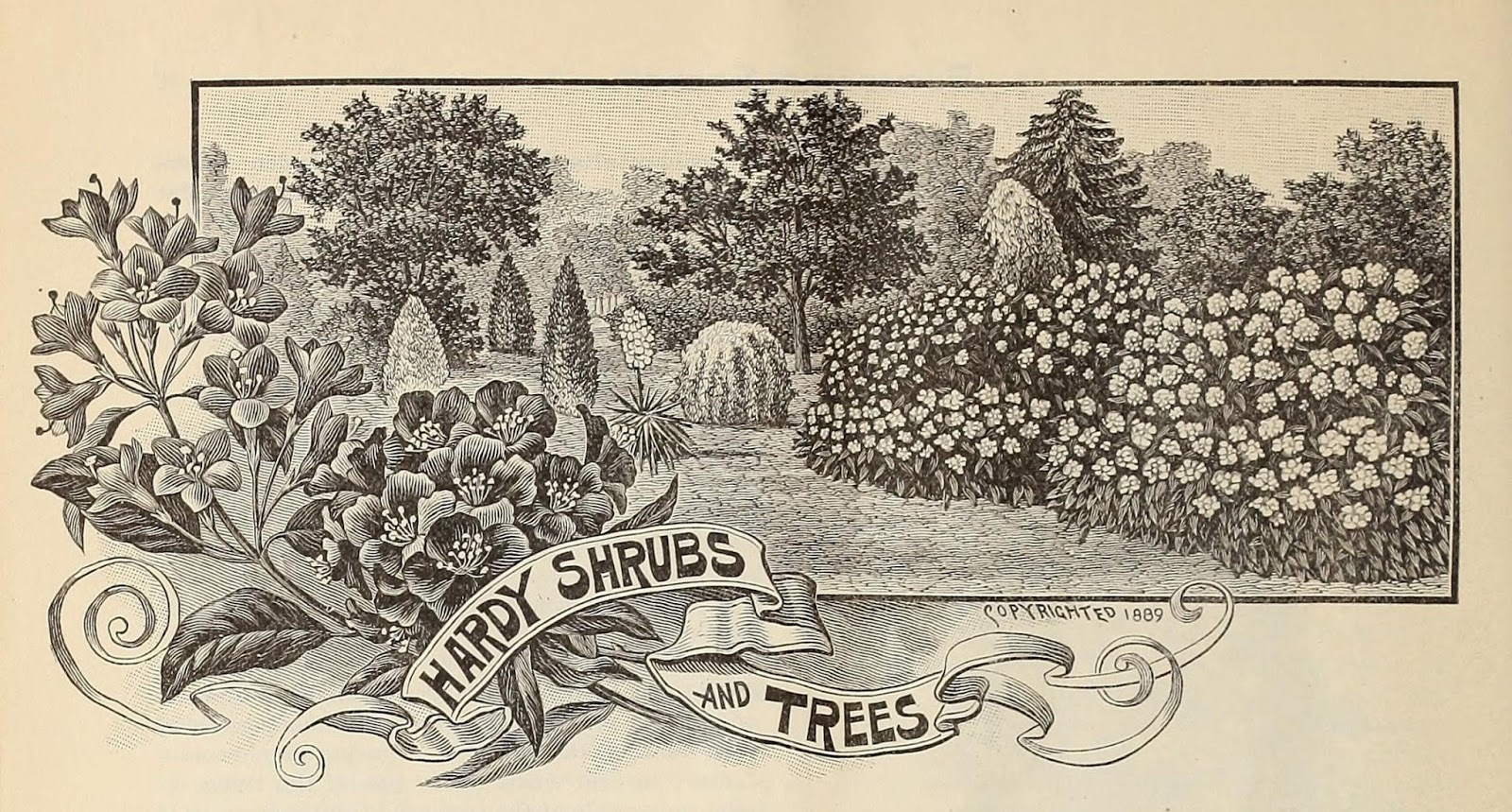
An example of an early catalog printed by “J. Horace McFarland, Horticultural Printer, Harrisburg, PA” titled “Descriptive Catalogue of Ornamental Trees, Plants, Vines, Fruits, Etc.”, Morrisville Nursery, 1891. The catalog contains woodcut illustrations; many are signed by Albert Blanc in this catalog. http://biodiversitylibrary.org/page/45708656.

An innovative businessman with diverse interests, McFarland also mastered the art of horticultural photography. It’s not known when he started carrying bulky camera equipment with him to capture images of growers’ plant stock, fruit, and produce. He most likely began doing this well before 1896, when he was elected to the Photographic Society of Philadelphia.

View Full Size Image
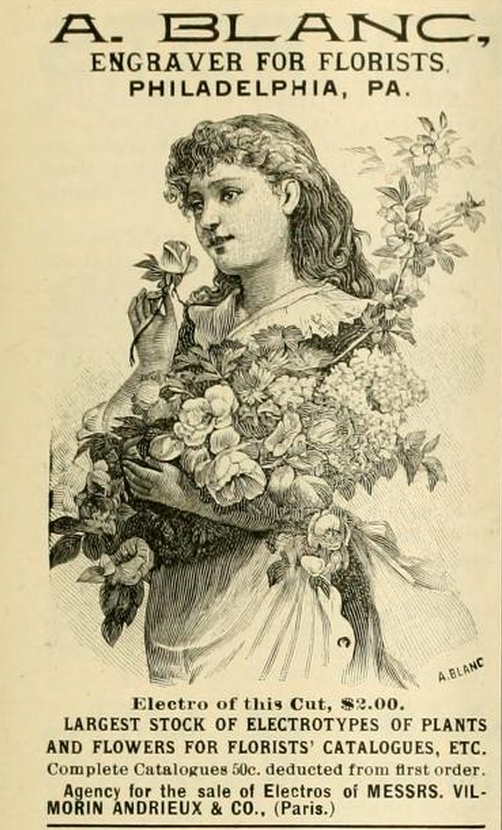
Albert Blanc prepared and sold thousands of illustrations for seed catalogs, including many for J. Horace McFarland. Here’s an ad Blanc placed in the 1889-90 volume of The American Florist. http://biodiversitylibrary.org/page/24949896.

McFarland sent his early photographs to one of the foremost woodcut illustrators of plants, Albert Blanc of Philadelphia. Blanc prepared woodcuts which McFarland printed in his plant lists to develop the look of his catalogs. By 1890, the first commercial use of photographs in magazines and newspapers began thanks to Frederic E. Ives’ invention of the halftone printing technique. McFarland is thought to be the first to use halftone images in horticultural publications (Morrison, p. 41).

As the use of photography in publishing increased, so did McFarland’s collection of plant and garden photographs. He found most of his photo subjects in gardens along the East Coast and in his own trial gardens. Mount Pleasant Press kept an extensive library of photographs mounted on cards and offered the images for sale to clients wishing to use the illustrations in publications. This was a method of expanding the company’s service. McFarland aimed to offer a full range of services to his customers in addition to printing, including publicity, editorial and design, and direct mailing.

View Full Size Image
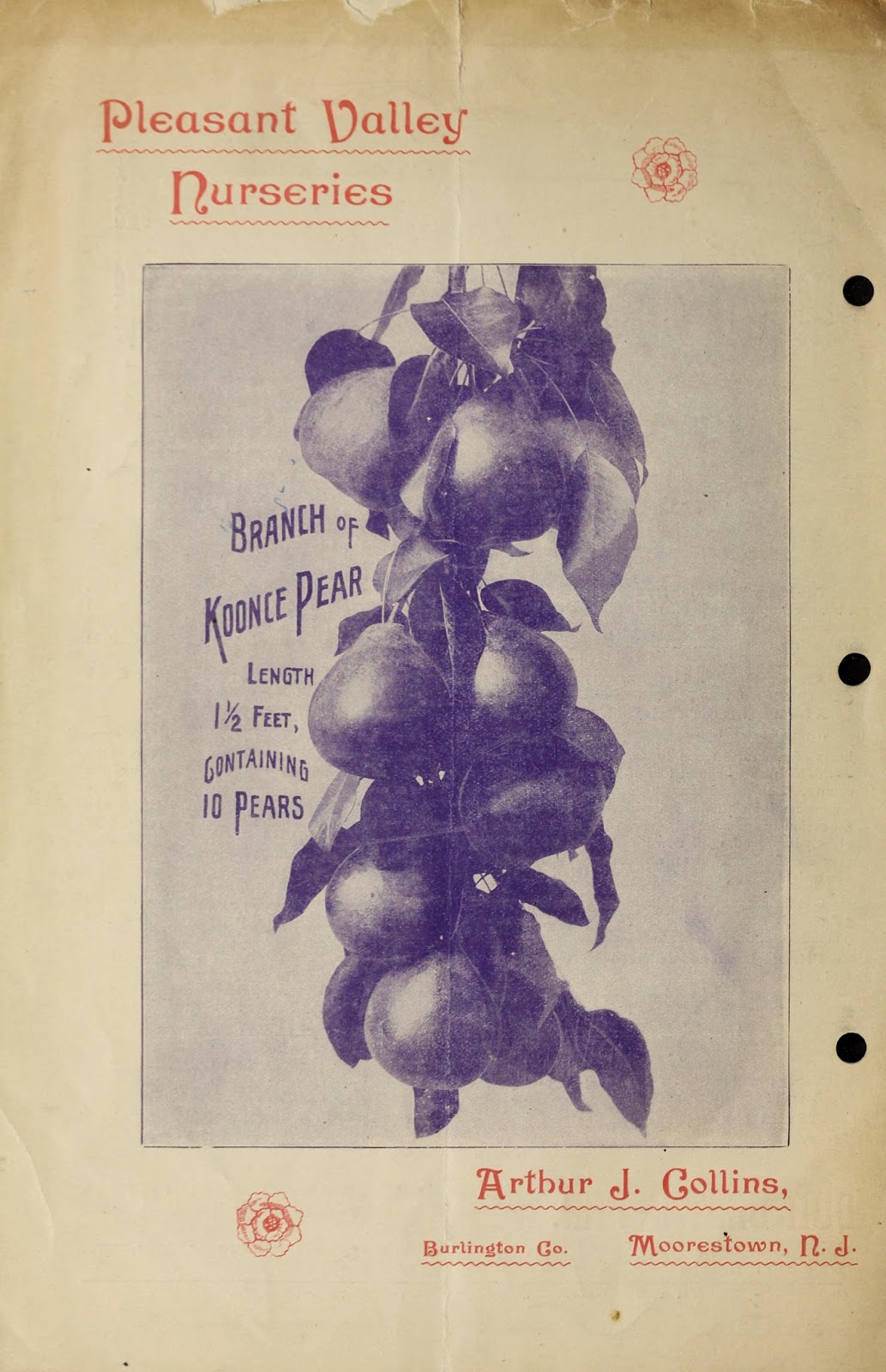
An 1895 catalog printed by “J. Horace McFarland Co., Horticultural Printers, Harrisburg, PA” titled “Pleasant Valley Nurseries”. Note the use of color on the front and back covers. There are also several black and white photographs in the catalog, but the illustrations are primarily woodcut. http://biodiversitylibrary.org/page/45686558.

William Kurtz, a New York photographer and founder of the Coloritype Company, instructed McFarland in a new photomechanical technique for mass printing color images known as three-color photoengraving. Kurtz, impressed with McFarland’s abilities, hired him to manage the company in 1893. With less than one year’s experience in this position, McFarland launched color photoengraving techniques at Mount Pleasant Press, and was soon using four-color process.

Despite the advances in color photoengraving, McFarland was not satisfied that the new color photographic methods of the early twentieth century measured up to his exacting standards. His solution was to hire artists, who went to work in the 2.5 acre trial gardens at his residence, Breeze Hill, in Harrisburg. These skilled artists painted plant images in watercolor in order to capture an accurate color record on paper. Sometimes they created several versions of the same plant variety in order to get a proper average of the colors found in nature. Eventually, these colors were transferred to plates that were run in the printing of nursery catalogs or other publications.

View Full Size Image
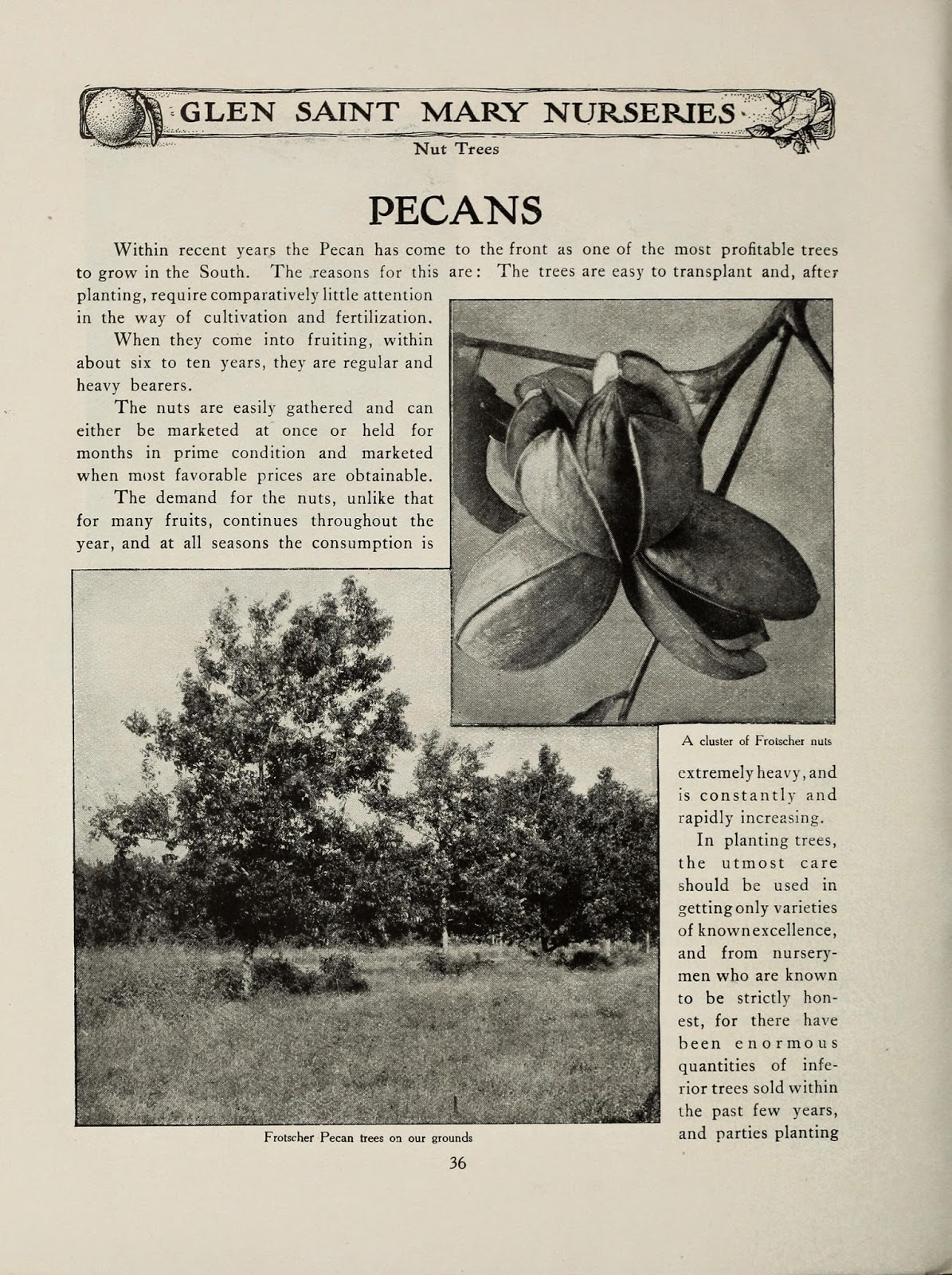
A 1906 catalog printed by “Mount Pleasant Press, J. Horace McFarland Company, Harrisburg, Pennsylvania” titled Glen Saint Mary Nurseries. Note that by this time period, most of the plant illustrations are black and white photographs. http://biodiversitylibrary.org/page/46778542.

McFarland’s philosophy behind his painstaking efforts to produce realistic images was simple—good pictures sell products. In a booklet marking his company’s sixtieth year he writes, “Since the natural appearance of a flower or plant is an important selling factor in advertising, nearly all progressive horticultural tradesmen are anxious to use colored illustrations.” His passion for the inherent beauty in nature appealed to many growers and established McFarland’s legacy as a trailblazer in horticultural printing.

View Full Size Image
Glass lantern slide of Kearney Park. Photographer: J. Horace McFarland Company. This slide is part of the Archives of American Art J. Horace McFarland Collection. http://siris-archives.si.edu/ipac20/ipac.jsp?&profile;=all&source;=~!siarchives&uri;=full=3100001~!186055~!0#focus.

Some of the companies for which the J. Horace McFarland Company printed catalogs include:

  • Bobbink & Atkins
  • Joseph Breck and Company
  • Carroll Gardens
  • Henry A. Dreer
  • Glen St. Mary
  • Jackson & Perkins
  • Walter S. Schnell
  • Stokes Seeds
  • Stump & Walter Co.
  • Stark Brothers
  • Three Point Gardens
  • Wayside Gardens

J. Horace McFarland’s personal and business records are now housed at several institutions:

  • Special Collections of the National Agricultural Library has 432 linear feet of over 40,000 photographic images, watercolor paintings, rose cards, and other publishing materials.
  • The Smithsonian Institution’s Archives of American Gardens holds some of McFarland’s photographic images depicting gardens, landscape plantings, and nurseries.
  • The Archives of the Pennsylvania Historical and Museum Commission is the major repository of McFarland’s manuscripts, including articles, speeches, diaries, correspondence, and personal photographs. It also has a large number of horticultural catalogs printed by the J. Horace McFarland Company.
  • The Arnold Arboretum Library, Harvard University, maintains a collection which includes photographs of the Arboretum taken by J. Horace McFarland during his visits there.

Post Sources

  • Morrison, Ernest. J. Horace McFarland: A Thorn for Beauty. Harrisburg, PA: Pennsylvania Historical and Museum Commission, 1995.
  • Sixty Years of Printing Service, second edition. Harrisburg, PA: J. Horace McFarland Company/Mount Pleasant Press, 1940.

More Garden Stories Fun

  • Follow our blog and #BHLinbloom on Twitter and Facebook (or go directly to BHL’s Twitter and Facebook) this week as we explore the fascinating world of gardening, from its history to plant factoids and practical gardening tips.
  • Browse over 14,000 seed and nursery catalogs in our collection.
  • Browse over 2,500 seed and nursery catalog images in our Flickr collection.
  • Explore select seed catalog art, and stunning bookmarks and postcards developed by Cornell Library, on Pinterest.
  • See historic gardening come to life on the Smithsonian Libraries’ Tumblr.
  • Purchase your very own Garden Stories T-Shirt through T-Fund. All proceeds will go to help us digitize more pages for BHL. Our goal is to sell enough shirts to digitized 5,000 pages. Can you help us get there?
  • Help us improve access to seed and nursery catalogs by transcribing some today as part of our the Institute of Museum and Library Services (IMLS)-funded Purposeful Gaming project!
  • Find great online gardening resources, tips, and help on the BHL Gardening Resources Page.
March 26, 2015by ulib-libraryjobs
Blog Reel, Campaigns, Featured Books, Garden Stories

Revolutionizing the Garden Industry with Art: Part One

The Seed Industry Blossoms in America

Seventeenth and eighteenth-century America had established nurseries—George Fenwick’s in Connecticut in the 1640s, John Bartram’s in Philadelphia (approximately 1729) and Robert Prince’s on Long Island (1737)—that traded plants to and from Europe. The owners were accomplished botanists and plant collectors. They and their successors played a great role in horticulture and floriculture introductions and trends during the colonial period and even during the War of Independence, choosing, making available and distributing specimens and seeds for cultivation.

View Full Size Image
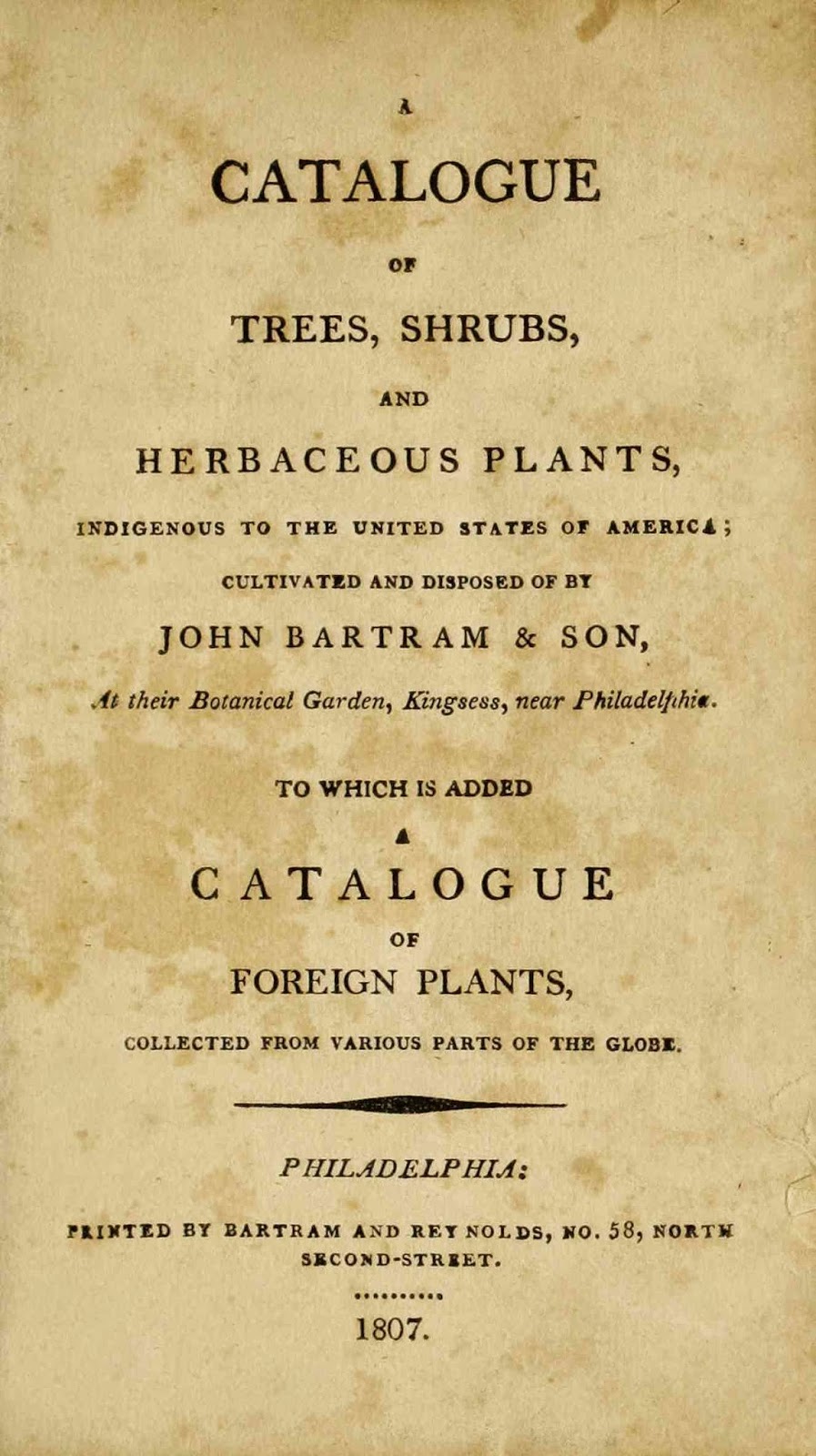
John Bartram and Son. A catalogue of trees, shrubs and herbaceous plants, indigenous to the United States of America. 1807. http://biodiversitylibrary.org/page/44008602.

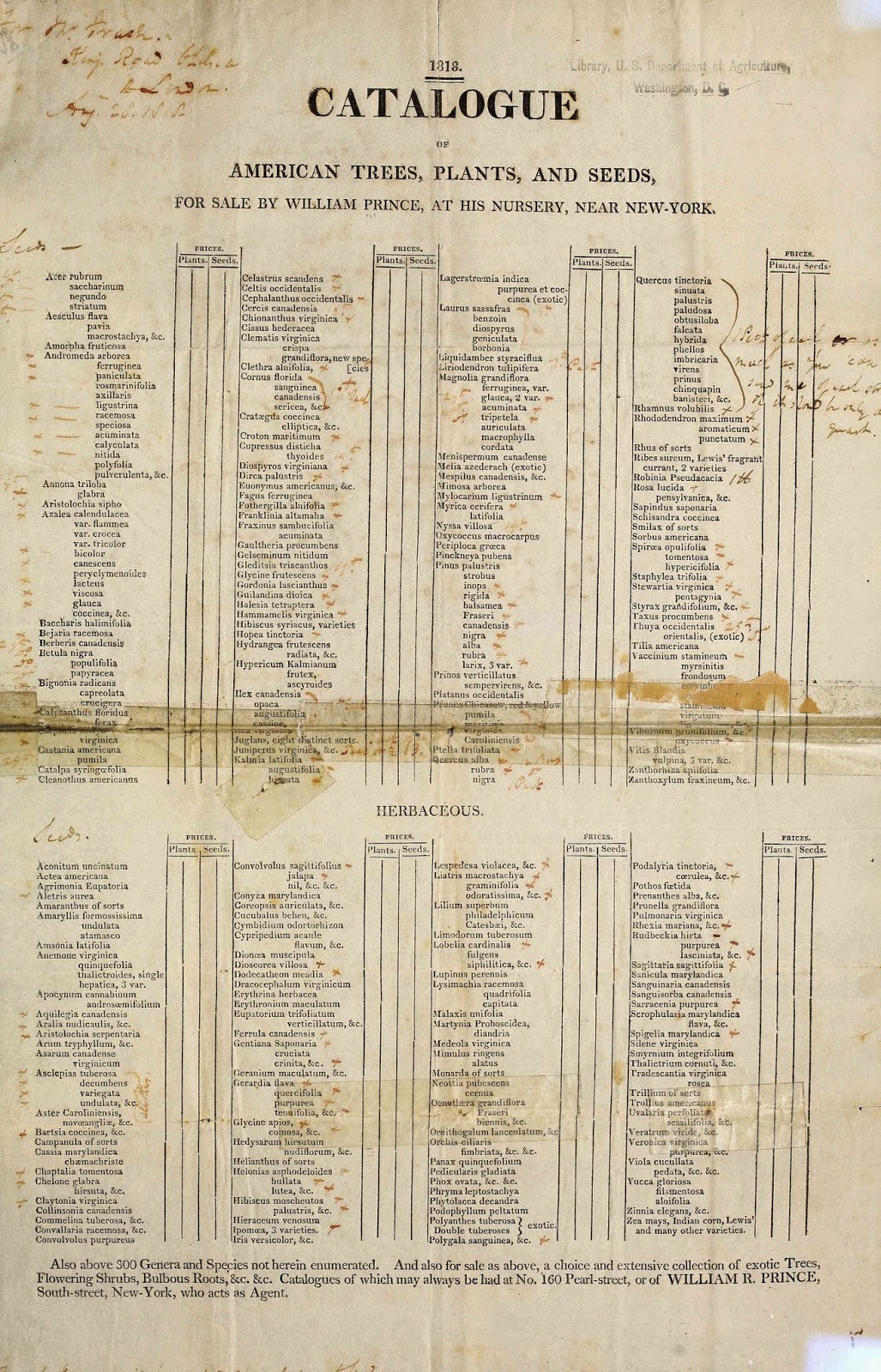
George Washington ordered from Bartram’s 1784 catalog American Trees, Shrubs and Herbacious Plants for his gardens at Mount Vernon. Prince’s Nursery at Flushing Landing was spared by the British in the midst of battles of the Revolutionary War, and President Washington visited in 1790. The early nursery catalogs usually lacked illustrations and prices, indicating a knowledgeable clientele able to afford the wares.

View Full Size Image
Catalogue of American trees, plants, and seeds, for sale by William Prince, at his nursery, near New-York. 1818. http://biodiversitylibrary.org/page/42745739.

During the nineteenth century in America gardens for pleasure, influenced by various botanical, industrial and cultural forces, became accessible to a wider audience, not just the wealthy. Gardening increasingly was not only a means for providing food and medicine but a way to enrich one’s life, to enjoy nature and contribute to the public good. Along with the creation of urban parks as the country became more industrialized, commercial nurseries also proliferated. There was a growing middle-class market for their goods of fruit-trees, shrubs, vegetables, flowers, and seeds. And where there were nursery stocks, there were illustrated advertisements to entice purchasers.

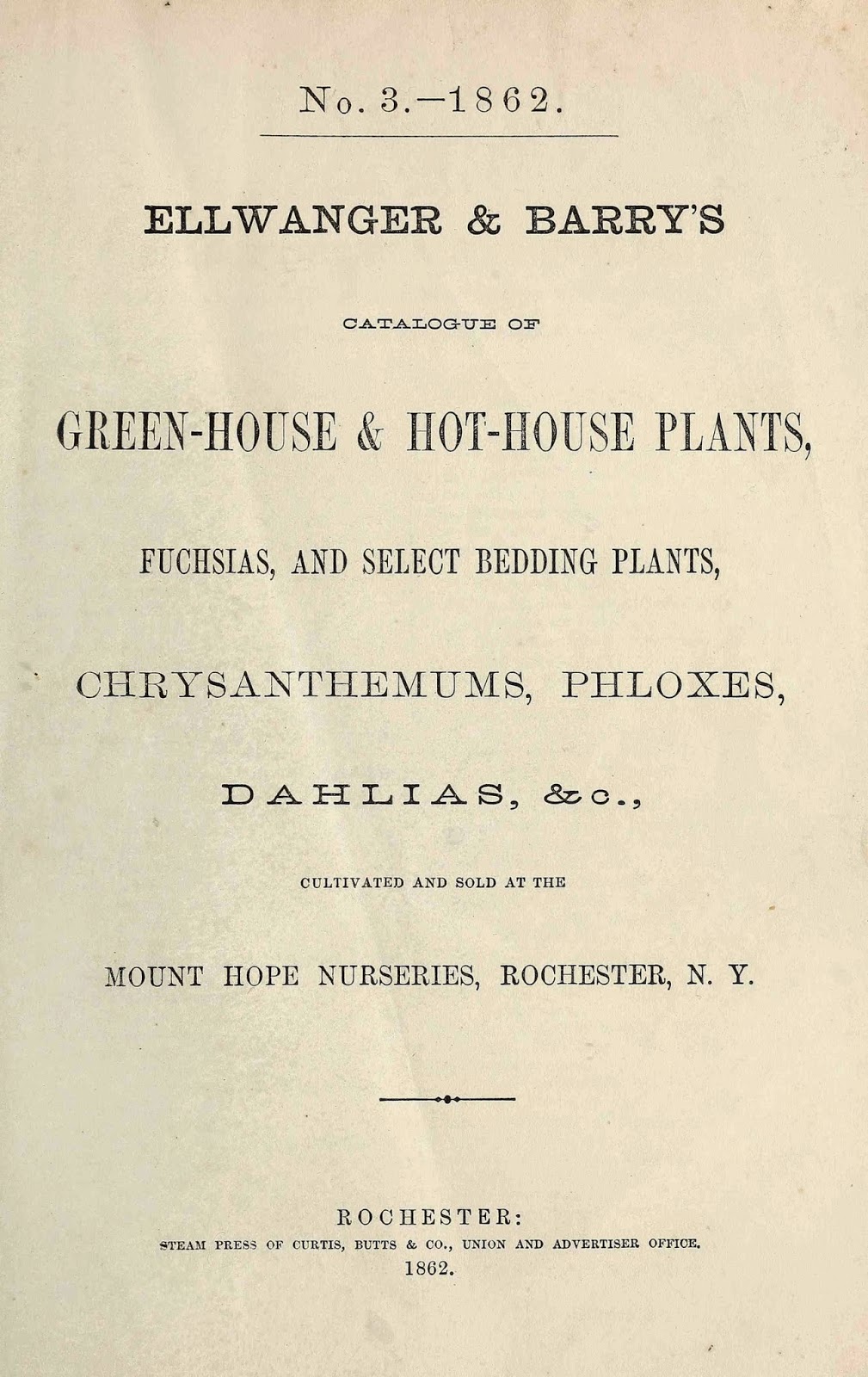
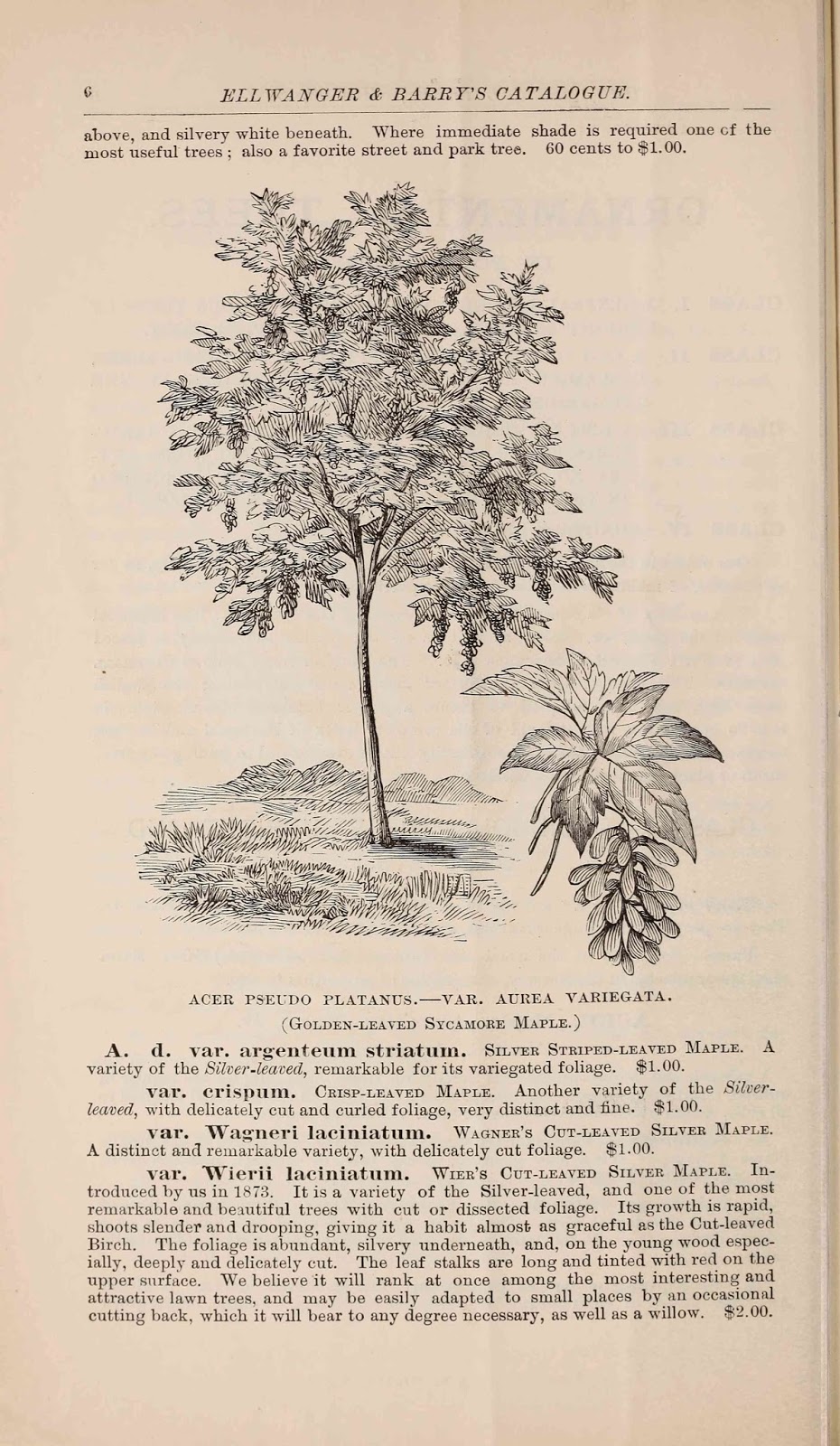
This was the time when Rochester, New York, became known as “The Flower City.” The temperate climate of Lake Ontario, the rich Genesee Valley (particularly for fruit trees) and the ease of transport, abetted with the creation of the Erie Canal in 1825 and the proliferation of railroads, all contributed to the region becoming an entrepreneurial center for horticulture. First, in 1830 William A. Reynolds and Michael Bateham, started their Rochester Seed Store. The nursery part of that business soon evolved into the Ellwanger and Barry Nursery Company. The two immigrants, George Ellwanger and Patrick Barry, issued the first catalog of the Mount Hope Botanic and Pomological Gardens in 1843. By 1871 they were the largest horticultural firm in the country with over 650 acres. Stock was shipped across the country and to Europe, Asia and Australia.

View Full Size Image
Ellwanger and Barry’s catalogue of green-house and; hot-house plants, fuchsias, and select bedding plants, chrysanthemums, dahlias. 1862. http://biodiversitylibrary.org/page/42744851.

The nursery man Patrick Barry’s horticultural treatises and inclusion of information in his own gardening catalogs helped educate his middle-class clientele in how to design and plant their own home landscapes. Barry’s writings led to involvement with the serial publications, the Genesee Farmer from 1844 and, following the early death of the enormously influential Andrew Jackson Downing, The Horticulturist in 1853. Barry also published The Fruit Garden in 1851 and for the American Pomological Society, he wrote in 1862 A Catalogue of Fruits (1868 revised edition in BHL).

View Full Size Image
Downing, A. J. A treatise on the theory and practice of landscape gardening (1844). http://biodiversitylibrary.org/page/16492842.

Art Transforms the Seed Industry

Concurrently, before mid-century, illustrations—lithographs, engravings, woodcuts—were beginning to be put to use in nursery and seed catalogs. These printing techniques could not fully meet the demand of the rapidly expanding business as coloring by hand was time-consuming and expensive.

View Full Size Image
Ellwanger and Barry. Descriptive catalogue of ornamental trees, shrubs, roses, flowering plants. 1875. http://biodiversitylibrary.org/page/42767492.

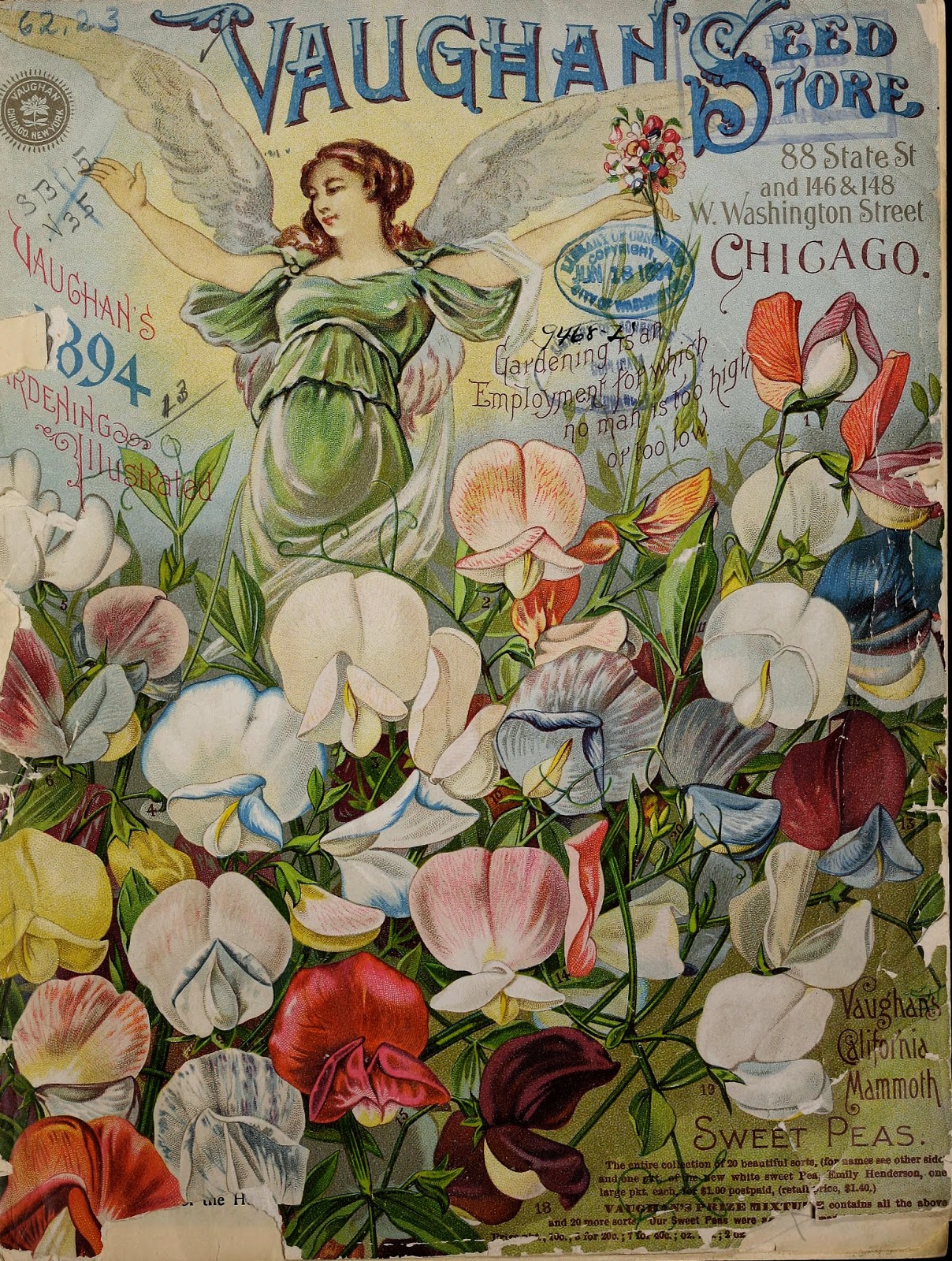
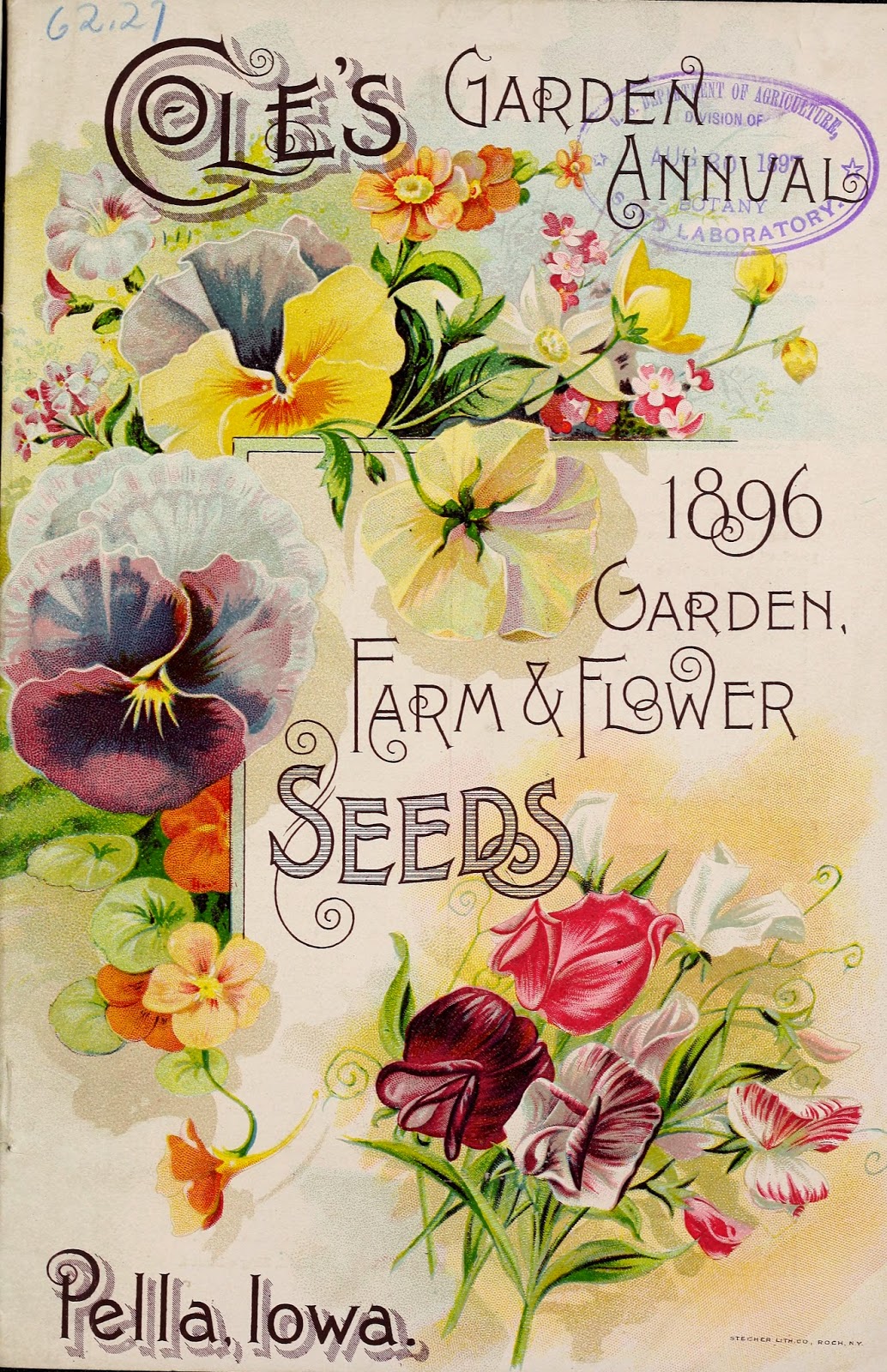
Chromolithography, also known as color lithography, was patented in 1837 by Franco-German lithographer Gottfried Engelmann. The process involves planographic or flat-surface printing on stones where the image is drawn with greasy ink or crayon in several different colors (the idea being that oil and water do not mix). This provides for eye-catching, vibrant and imaginative images produced by the thousands. Earlier methods of color reproduction had proved inadequate. Thus chromolithography became dominant in the second half of the nineteenth century for inexpensive decorative prints and for ephemera, such as postcards, cigar boxes, posters, and calendars.

View Full Size Image
Example of chromolithograph seed catalog cover. Vaughan’s 1894 gardening illustrated. http://biodiversitylibrary.org/page/44441215.

The printmaking technique of chromolithography for advertisements, particularly with the advances in steam-driven production, was quickly put to great effect in the nursery industry in Rochester, where the greater number of firms were located. As a result, “the Flower City” became the center of horticultural publishing along with the garden firms. The first company solely devoted to chromolithography in Rochester was established in 1871. Production was not just for the widely distributed catalogs but also for seed packets and labels for boxes and trade cards and, eventually, horticultural periodicals. In addition, unique sample books for salesmen, composed of varying images of fruits and flowers, could be assembled for the trade, advertising the inventory of a business. One leading firm was Dellon Dewey. An example of one of the surviving works for agents of the company is in the Smithsonian Libraries’ Cullman Library (SB361 .D519 1872). While not many of these pieces of ephemera in the nursery trade still exist, the University of Delaware Libraries has nearly one hundred.

View Full Size Image
Example of chromolithograph seed cover. Cole’s Garden Annual. 1896. http://biodiversitylibrary.org/page/43194611.

Reimagining the Seed Catalog: James Vick

James Vick (1818-1882) is a figure that unites all these trends—Rochester as a horticultural center both for the selling of plants as well as printing and publishing, the use of beautiful and informative illustrations as to aid the gardening business, and landscape design education. He was another immigrant, from Portsmouth, England. After learning the printing trade in New York City, he settled in Rochester in 1837 to work for several newspapers. An intense interest in horticulture, excellent editorial skills and an innovative mind perfectly suited the Genesee Farmer and The Horticulturist (1853 to 1854). He then started his own business in 1860: the Vick Seed Company.

View Full Size Image
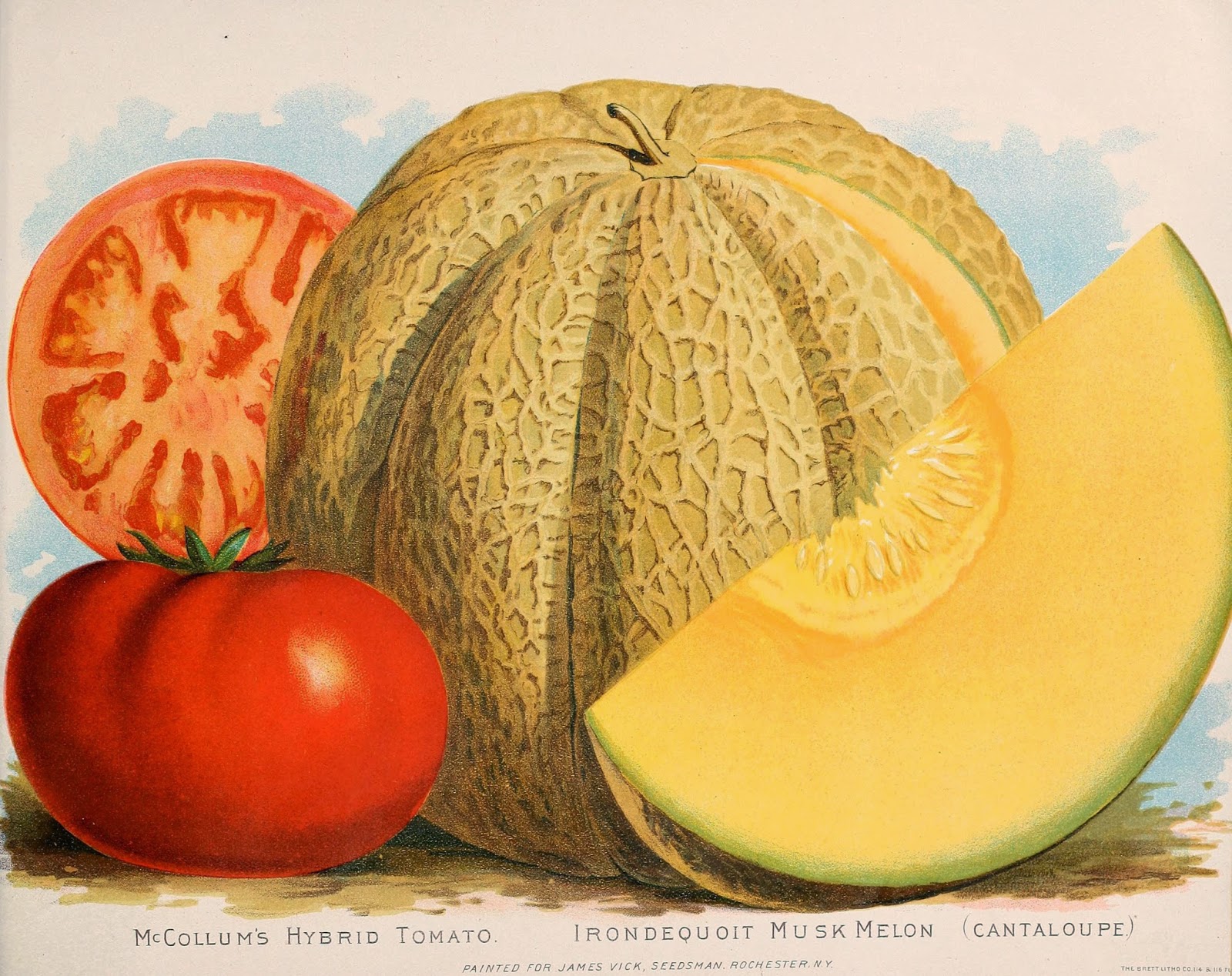
Vick’s Floral Guide, 1889. McCollum’s Hybrid Tomato, Irondequoit Musk Melon chromolithograph. http://biodiversitylibrary.org/page/44438925.

Andrew Jackson Downing’s English landscape aesthetic, laid out in the author’s A Treatise on the Theory and Practice of Landscape Gardening (1841) and Cottage Residences (1842), particularly influenced the seedman’s essays for his several annual catalogs and magazine, Vick’s Illustrated Monthly (the title varies). Vick promoted Downing’s favored picturesque style of undulating expanses of lawn, groupings of trees and shrubs, and flower in borders and beds, along curving paths. He advertised widely seeds for all these components in other publications and newspapers while integrating his own printing shop and bindery and mailing operation, with this 100-acre nursery and retail store. His sons took over the business following Vick’s death but eventually sold it to the Burpee Seed Company.

View Full Size Image
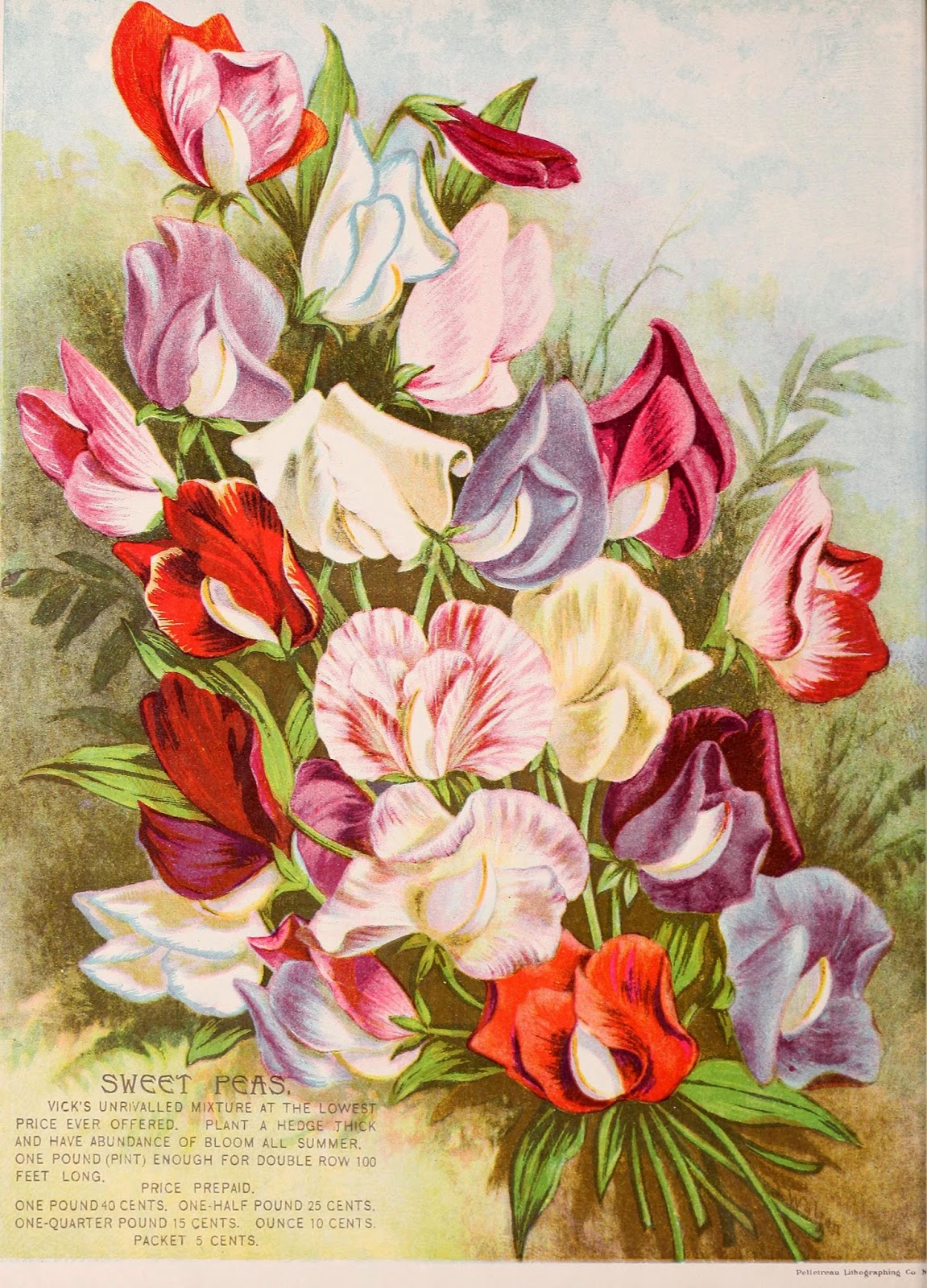
Vick’s Floral Guide, 1895. Sweet Peas chromolithograph. http://biodiversitylibrary.org/page/44442935.

As an added incentive, mail order customers of Vick’s company were sent free chromolithographic prints to display in their homes.The suitable-for-framing art and the covers of Vick’s catalogs were mostly devoted to floriculture with bold, colorful images to lure customers in the dead of winter to dream of planting and then order for planting in the spring and summer. Planning, particularly for something new and exotic, is at least half the fun.

Survivors of this ephemeral form of publication—seed and nursery trade catalogs—are valuable not only for their pictures (documenting different techniques of illustrating processes) but as research sources on introduction of plants into the trade as well as trends in horticultural fashion. Catalogs can also be used to trace the propagation history of specific plants, seed cleaning, packing and shipping methods, and prices. Or, rather than research, the illustrations can provide in this day inspiration or simple enjoyment of their aesthetic.

View Full Size Image
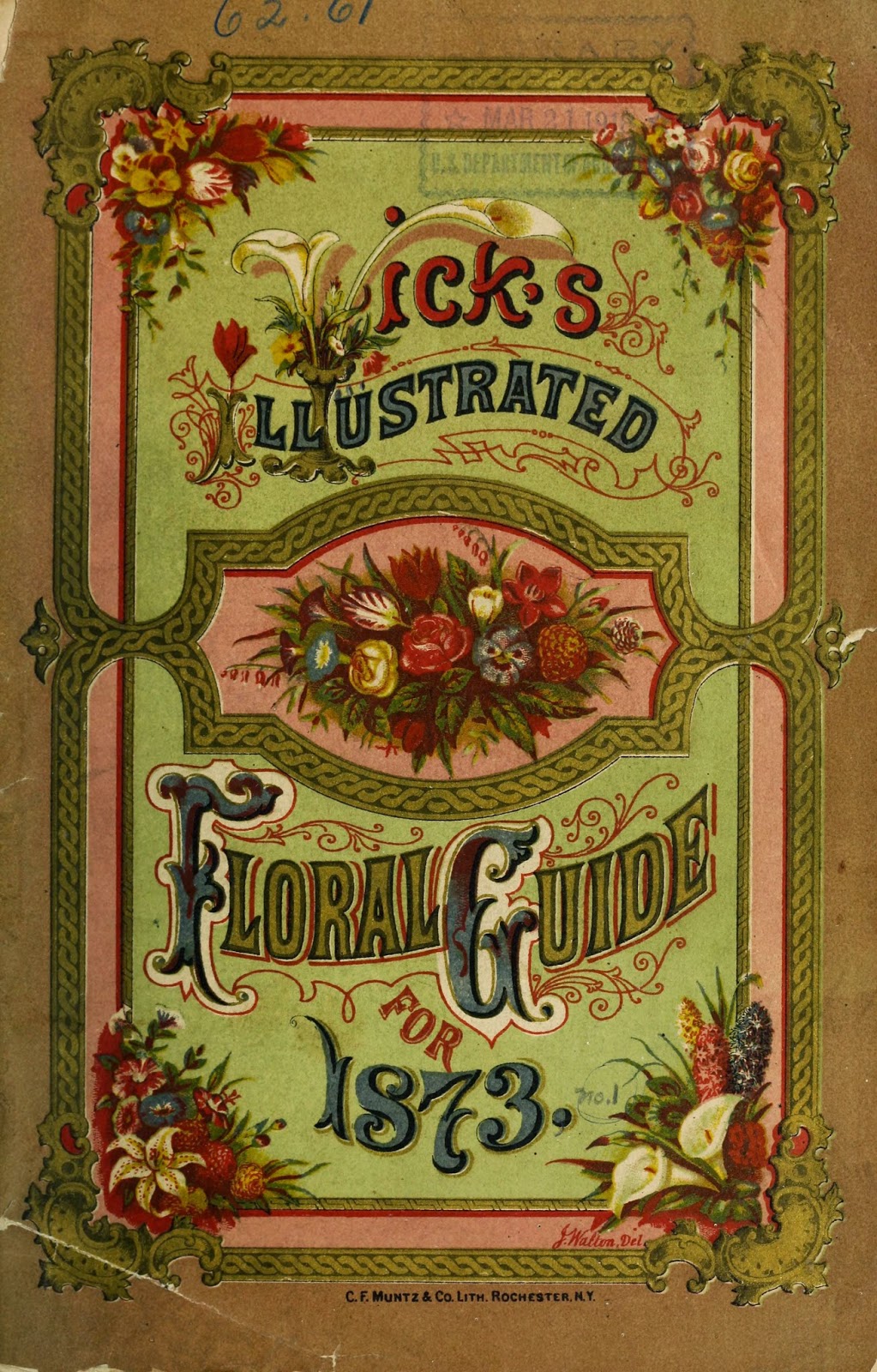
Chromolithograph cover. Vick’s Illustrated Floral Guide for 1873. http://biodiversitylibrary.org/page/44383969.

Stay Tuned for Part Two of our “Revolutionizing the Garden Industry with Art” blog post to see how photography influenced the seed catalog.

More Garden Stories Fun

  • Follow our blog and #BHLinbloom on Twitter and Facebook (or go directly to BHL’s Twitter and Facebook) this week as we explore the fascinating world of gardening, from its history to plant factoids and practical gardening tips.
  • Browse over 14,000 seed and nursery catalogs in our collection.
  • Browse over 2,500 seed and nursery catalog images in our Flickr collection.
  • Explore select seed catalog art, and stunning bookmarks and postcards developed by Cornell Library, on Pinterest.
  • See historic gardening come to life on the Smithsonian Libraries’ Tumblr.
  • Purchase your very own Garden Stories T-Shirt through T-Fund. All proceeds will go to help us digitize more pages for BHL. Our goal is to sell enough shirts to digitized 5,000 pages. Can you help us get there?
  • Help us improve access to seed and nursery catalogs by transcribing some today as part of our the Institute of Museum and Library Services (IMLS)-funded Purposeful Gaming project!
  • Find great online gardening resources, tips, and help on the BHL Gardening Resources Page.


For further reading: 

  • American Antiquarian Society online exhibition. “Big Business: Vick’s.” http://www.americanantiquarian.org/Exhibitions/Food/vicks.html/
  • Craib, Emma. “James Vick – Marketing the Garden Dream.” http://horticultural-history.blogspot.com/2014_04_06_archive.html
  • Mickey, Thomas J. “Selling the English Garden: The Nineteenth Century American Seed Merchant James Vick.” Conference on Historical Analysis and Research in Marketing, 2009, p. 186-196.
  • Twyman, Michael. A History of Chromolithography: Printed Colour for All. London: British Library, 2013. Nursery Industry in Rochester: https://www.lib.rochester.edu/index.cfm?page=2409
March 26, 2015by mckenzie.87
Page 14 of 17« First...10«13141516»...Last »

Help Support BHL

BHL's existence depends on the financial support of its patrons. Help us keep this free resource alive!

search

About BHL

The Biodiversity Heritage Library (BHL) is the world’s largest open access digital library for biodiversity literature and archives. BHL operates as a worldwide consortium of natural history, botanical, research, and national libraries working together to digitize the natural history literature held in their collections and make it freely available for open access as part of a global “biodiversity community.”

Join Our Mailing List

Sign up to receive the latest news, content highlights, and promotions.

Subscribe Now

Subscribe to Blog via Email

Enter your email address to subscribe to this blog and receive notifications of new posts by email.

Join 319 other subscribers

Subscribe to Blog Via RSS

Subscribe to the blog RSS feed to stay up-to-date on all the latest BHL posts.

Access RSS Feed

Inspiring Discovery through Free Access to Biodiversity Knowledge.

The Biodiversity Heritage Library makes it easier than ever for you to access the information you need to study and explore life on Earth…for free, anytime, anywhere.


64+ Million Pages of
Biodiversity Literature Online.

EXPLORE

Tools and Services
to Transform Research.

EXPLORE

300,000+
Illustrations on Flickr.

EXPLORE

ABOUT | HARMFUL CONTENT | PRIVACY | SITE MAP | TERMS OF USE