Biodiversity Heritage Library - Program news and collection highlights from BHL
  • Home
  • News
  • Featured Books
    • All Featured Books
    • Book of the Month Series
    • BHL at 20
  • User Stories
  • Campaigns
    • Fossil Stories
    • Garden Stories
    • Monsters Are Real
    • Page Frights
    • Her Natural History
    • Earth Optimism 2020
  • Tech Blog
  • Visit BHL
Home
News
Featured Books
    All Featured Books
    Book of the Month Series
    BHL at 20
User Stories
Campaigns
    Fossil Stories
    Garden Stories
    Monsters Are Real
    Page Frights
    Her Natural History
    Earth Optimism 2020
Tech Blog
Visit BHL
  • Home
  • News
  • Featured Books
    • All Featured Books
    • Book of the Month Series
    • BHL at 20
  • User Stories
  • Campaigns
    • Fossil Stories
    • Garden Stories
    • Monsters Are Real
    • Page Frights
    • Her Natural History
    • Earth Optimism 2020
  • Tech Blog
  • Visit BHL
Biodiversity Heritage Library - Program news and collection highlights from BHL
BHL News, Blog Reel

The Latest News from BHL!

View Full Size Image
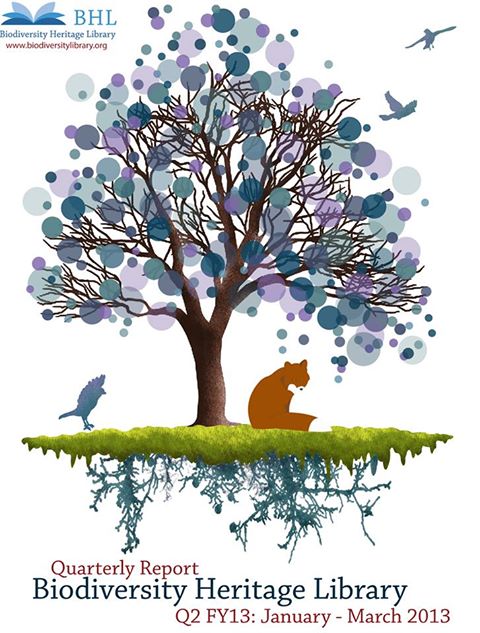
Latest BHL Quarterly Report

If you think all we do is digitize books, get ready to be surprised! Besides adding over 700,000 new pages of open access biodiversity literature to our collection in 2013 alone, we’ve launched a new website, celebrated the birth of another regional node – BHL-Africa, grown our consortium by adding the Library of Congress as our 15th member library, published two new iTunes U collections, received two prestigious awards, and hosted our seventh Annual Institutional Council Meeting, just to name a few things!

Learn all about these developments, and see how our project is performing, in the latest BHL Quarterly Report and Newsletter! Stay up to date in the future by subscribing to our quarterly newsletters.

We know you’ll be impressed at the ways we’re inspiring discovery through free access to biodiversity knowledge!

View Full Size Image
Spring 2013 BHL Newsletter


May 23, 2013by ulib-libraryjobs
BHL News, Blog Reel

Making the BHL-Africa a Reality: The BHL-Africa Launch and Workshop

Group photo on the stairs at the South African National Biodiversity Institute.
View Full Size Image
BHL-Africa logo at Pretoria National Botanical Garden

On April 15, 2013, BHL-Africa officially launched. BHL-Africa’s mission is to provide open access to the valuable biodiversity literature found within African libraries and institutions. The African consortium is hard at work identifying partners throughout the continent to sign an MOU and commit to working towards this noble objective.

The three-day BHL-Africa launch and workshop was hosted by the South African National Biodiversity Institute (SANBI) at the Pretoria National Botanical Garden in Pretoria, South Africa, from April 15-17, 2013. The meetings occurred simultaneously with the GBIF meetings also held at the botanical garden last week. Over two dozen representatives from institutions that have either signed or intend to sign the BHL-Africa MOU were present. Additionally, six colleagues from the BHL-US/UK program node were invited to attend: Nancy Gwinn (Director, Smithsonian Libraries, BHL Executive Committee Chair); Constance Rinaldo (Director, MCZ-Harvard Library, BHL Executive Committee Vice-Chair); Doug Holland (Director, Missouri Botanical Garden Library); William Ulate (Missouri Botanical Garden, BHL Technical Director); Bianca Crowley (Smithsonian Libraries, BHL Collections Coordinator); and Grace Costantino (Smithsonian Libraries, BHL Program Manager).

Monday, April 15, began with a launch ceremony, detailed in our blog post last week, during which the BHL MOU with SANBI was signed by Dr. Nancy Gwinn and Dr. Tanya Abrahamse (SANBI CEO). The real work began after the launch, with the start of the BHL-Africa workshop.

View Full Size Image
Dr. Nancy Gwinn and Dr. Tanya Abrahamse sign the BHL-Africa MOU

Day one of the workshop (Monday, April 15, afternoon) was devoted to addressing final MOU questions and outlining participants’ expectations for the meeting. Key expectations and areas in need of discussion included: Clarifying BHL’s open access policy and its implications for African participants; a concise description of the value of BHL for participating institutions in order to secure managerial buy-in; organization of clear fundraising strategies; the need for extensive training; identification of available resources and digitization capacity building; and the best way to collaborate and share resources amongst participating members. Overall meeting expectations were to elect a BHL-Africa Steering Committee and establish an outline for a two-year work plan.

View Full Size Image
The BHL-Africa Group Photo!

Much of day two (Tuesday, April 16) was spent investigating workflow and organizational questions, including collections development, copyright, communication, and infrastructure. The primary reason for the presence of the BHL-US/UK team was to offer our African colleagues the expertise we have gained in these areas over the past six years, as well as to help define global expectations for our new members.

Towards this end, Nancy Gwinn began by identifying four main expectations for BHL-Africa: Content Creation; Audience Building; Content Identification; and Partnership Building. In short, these expectations translate to not only growing the BHL corpus by digitizing African collections, but also helping BHL identify content to scan, both within and outside of Africa. Furthermore, BHL Africa must work to both build the BHL audience by promoting the project throughout the continent, but also expand the BHL consortium by identifying institutions that can contribute to the initiative.

Constance Rinaldo then gave a presentation on copyright, defining public domain, open access, and the Creative Commons licenses employed by BHL-US/UK. She was quick to stress, however, that each BHL node and institution must follow the copyright laws of their own countries, and, as BHL is not a legal entity, it is ultimately each scanning institution that is legally responsible for the content they contribute to the collection.

View Full Size Image
Bianca Crowley on BHL Collections Development

Bianca Crowley then gave our African colleagues some insight into the BHL-US/UK collection development process, outlining our selection and de-duplication process, digitization principles, metadata requirements, and content integration. Communication and collaboration methods were a key point of discussion, as they are critical for successful collections development.

Grace Costantino followed with a presentation on BHL-US/UK’s use of social media, which allows us to communicate project developments, provide context to the books in our collection, reach new audiences on new platforms, and uncover hidden gems in our collection. Following the presentation, an open discussion about each institution’s current use of social media, social media in the context of Africa, and how BHL-Africa might use social media occurred.

Finally, William Ulate detailed the BHL infrastructure, demoing the Macaw tool developed by Joel Richard at the Smithsonian Libraries, which is used to ingest books through Internet Archive into BHL. A remote installation of Macaw is running at the University of Pretoria and can be accessed via the web by any BHL-Africa participant to load digitized content into BHL.

BHL-African participants were also given a chance, on day two, to break out into two working groups, dedicated to Collections Development/Copyright and Outreach/Communication. These sessions allowed participants to apply the information given during the presentations to the realities of the BHL-Africa project.

The final day of the meeting (Wednesday, April 17) was spent identifying preliminary tasks for a two-year BHL-Africa workplan and electing a BHL-Africa Steering Committee. Workplan components include establishing a list of titles that each institution wishes to contribute to BHL; drafting documentation, based largely on existing files from gBHL, for workflow and collaboration guidance; and drafting a preliminary communication and outreach plan, which addresses not only external, but also internal, communication needs.

View Full Size Image
BHL-Africa Steering Committee (Left to Right): Lawrence Monda (Technical Advisor), Ashah Owano, Loi Namugenyi, Anne-Lise Fourie, Ria Groenewald

The BHL-Africa Steering Committee was also elected at the meeting. BHL-Africa has been divided into three regional nodes: North/Central; Eastern; Southern. Each regional node elects two representatives for the Steering Committee. Currently, there is no representation in North/Central Africa within the project, so only four members (two from Southern, two from Eastern) were elected at the meeting. Elected members include: Anne-Lise Fourie (SANBI, Southern); Ria Groenewald (University of Pretoria, Southern); Ashah Owano (National Museums of Kenya, Eastern); and Loi Namugenyi (Uganda National Council for Science and Technology, Eastern). Lawrence Monda (National Museums of Kenya) was elected as the BHL-Africa Technical Representative. Two additional members will be elected as North/Central institutions are added to the BHL fold. The Steering Committee will be responsible for providing strategic guidance, developing fundraising plans and approving budgets, and organizing pan-continental efforts.

The three-day BHL-Africa launch and workshop was an extremely successful event which resulted in the creation of an actionable plan for project development and the identification of notably capable leadership. Meeting attendees left feeling energized, with a clear sense of purpose. Just one and a half years ago, at the Life and Literature conference, the concept of BHL-Africa was born. Today, it is a reality. We congratulate our colleagues on the astounding progress they have made and look forward to seeing great things from BHL-Africa!

April 24, 2013by michelle.underhill
BHL News, Blog Reel

BHL Africa Officially Launches!

View Full Size Image

We’re so excited to announce that today, Monday, April 15, 2013, BHL-Africa has officially launched!

Today’s launch ceremony (hosted by the South African National Biodiversity Institute (SANBI) at the Pretoria National Botanical Garden in Pretoria, South Africa) began with a welcome by Dr. Tanya Abrahamse, SANBI CEO, after which she and Nancy Gwinn (Chair of the BHL Executive Committee) signed the BHL-Africa MOU (Memorandum of Understanding). Nancy Gwinn then gave a presentation detailing the history of BHL’s development, and Anne-Lise Fourie, Assistant Director for SANBI libraries, gave an overview of the BHL-Africa vision, mission, and benefits.

Working within the BHL consortium, BHL-Africa aims to provide open access to the valuable information held in Africa’s biodiversity institutions. Towards this end, the global BHL family works with the international taxonomic community, rights holders, and other interested parties to ensure that this biodiversity heritage is made available to a global audience through open access principles.

The next two days will consist of workshops aimed at outlining funding strategies, the responsibilities of BHL-African institutions, BHL-Africa’s role in the larger global BHL environment, and the contributions BHL-Africa will make to BHL. Check back on our blog for more detailed information about the launch and workshops, and follow the hashtag #bhlafrica on our Twitter (@BioDivLibrary) for real time news via live tweets!

Learn more about BHL-Africa in our past blog post and video. Take a break from your day job to enjoy an Africa safari!

And finally, enjoy images of Africa’s biodiversity from the African Biodiversity Flickr Collection.

April 15, 2013by ulib-libraryjobs
Blog Reel, Featured Books

Shaping Public Perception of Africa: David Livingstone

Happy Birthday, David Livingstone!

View Full Size Image
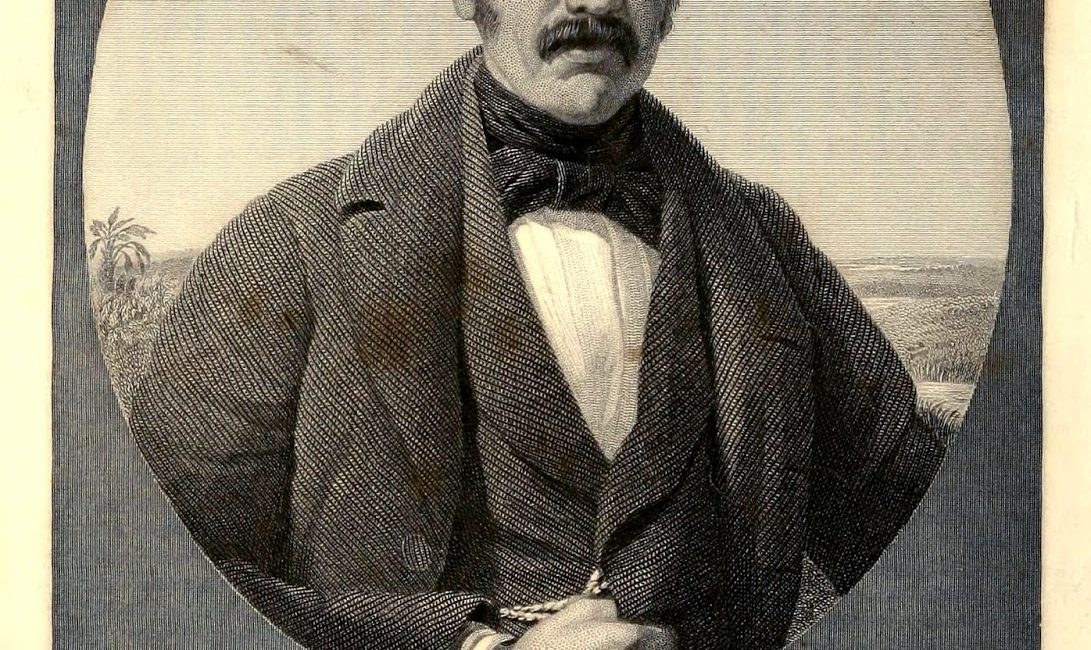
David Livingstone. Missionary Travels.

“Dr. Livingstone, I presume?”

Most of us have heard that famous phrase, uttered by Henry Morton Stanley of the New York Herald upon finding David Livingstone in Ujiji, Tanzania, on November 10, 1871.  However, just because you know the phrase doesn’t mean you know the man. Come with us as we explore this legendary explorer and celebrate his birthday!

Humble Origins

David Livingstone was the second of seven children born to a tea salesman in Blantyre, Scotland in 1813. From the age of ten, he worked in a cotton mill spending twelve hours a day tying broken threads on spinning machines. Fortune, however, had him destined for much greater things. At 23 years old, he entered Anderson’s University in Glasgow to study medicine, and in 1840, after completing his studies in London, he was licensed as a physician and ordained as a missionary. Originally intending to serve in China, Livingstone was inspired by the convictions of Robert Moffet, a missionary stationed at Kuruman, a missionary outpost in South Africa. Thus, Livingstone began his lifelong affair with Africa and set out in 1840 as a medical missionary to South Africa. He would spend the rest of his life exploring Africa, with only two visits to England over the subsequent 32 years.

An Account of More than a Decade in Africa

Livingstone, David. Missionary Travels and Researchers in South Africa. (1857). Contributed by Smithsonian Libraries.

Livingstone recounted his explorations and experience in Africa between 1840 and 1856 in his acclaimed publication Missionary Travels and Researches in South Africa. One of the nineteenth century’s best-selling books, Missionary Travels established Livingstone’s reputation as not only an exciting explorer, but also a kind-hearted humanitarian aching to improve conditions for Africans.

Missionary Travels is a narrative compilation of Livingstone’s personal field diaries.  Livingstone was careful to construct the composition to appeal to both scientific and religious readers, hoping to encourage further positive involvement in Africa. The work also includes 47 illustrations – most crafted by Captain Henry Need and Joseph Wolf.

Livingstone published the work with John Murray, one of the era’s most renowned publishers of geographical books. Murray was so anxious to secure the publication that he offered to finance all expenses in return for only one-third of the profit obtained.  

View Full Size Image
The Missionary’s Escape from the Lion. Missionary Travels.

The most famous illustration in Missionary Travels is entitled “The Missionary’s Escape from the Lion,” which depicted Livingstone pinned by a lion with his fellow travelers attempting to rescue him. Livingstone called the illustration “abominable,” asserting that “[e]veryone who knows what a lion is will die with laughing at it.” Murray ignored Livingstone’s dissatisfaction and included the illustration, knowing that most people reading Missionary Travels would not have the knowledge necessary to detect its absurdity. Furthermore, Murray understood that many audiences might never actually read the book but experience it only through illustrations. Thus, it was necessary to craft a dramatic story through images alone.

12,000 copies of the first edition of the book published in 1857, and, even at a price of one guinea each, sold out immediately. Several additional printings were ordered, selling with such success that Murray did not publish a cheaper, abridged version of the work (A Popular Account of Missionary Travels in South Africa) until 1861.

An Explorer at Heart

View Full Size Image
Stanley and Livingstone meet. Illustration from The Illustrated London News, 1872

As Missionary Travels and Researches in South Africa confirms, though a missionary, Livingstone spent much of his career exploring the wilds of Africa. Enthused by Livingstone’s discoveries as related in his book, the British government funded an expedition up the Zambezi River (1858-64), tasked with uncovering a route between the upper Zambezi and the coast. Extensive rapids past Cabora Bassa unfortunately made negotiating the river to the coast impossible, and the British government recalled the expedition 1864. Though unsuccessful, naturalists in the expedition party collected a wealth of valuable specimens during the six years of the expedition.

From 1866-67, Livingstone led a privately-funded expedition to discover the source of the Nile, which was debated at that time to be either Lake Albert or Lake Victoria. Arriving at Lake Bangweulu on November 8, 1867, Livingstone mistakenly asserted it as the upper reaches of the Nile. In truth, the source of the Nile lies in the high mountains of Burundi.

By the end of the Nile expedition, Livingstone’s public image was suffering due to the failures of his expeditions and reports that Livingstone was a poor leader and manager. After 1867, Livingstone’s health failed and he lost contact with the outside world completely, prompting the New York Herald to send Henry Morton Stanley in search of him in 1869. Stanley located him in Ujiji in 1871, and the article he later published about Livingstone restored public opinion of him, casting him as a great hero of adventure and discovery. However, despite Stanley’s urging to return to England to recover his health, Livingstone refused. He died in 1873 in present-day Zambia. His heart was buried under a Mvula tree and his body was transported to England, where it was interred at Westminster Abbey.

Though many of the expeditions that Livingstone undertook were unsuccessful at achieving the undertakings’ primary goals, the discoveries made along the way, and the natural riches recorded – many for the first time for Western people – made a monumental impact on the future of African exploration, understanding, and native relations.

A Monumental Legacy

View Full Size Image
Victoria Falls. Based on sketches by David Livingstone. Missionary Travels.

David Livingstone left behind an impressive legacy. He was the first European to successfully complete a transcontinental journey across southern Africa. He was the first European to see Victoria Falls, which he named after the British Monarch of the time. He discovered for Western science many locales throughout Africa, including Lake Tanganyika, Lake Ngami, Lake Mweru, Lake Bangweulu, and the upper Zambezi River. He was instrumental in increasing European awareness of the horrors of the slave trade in Africa and encouraging equitable, rather than dictatorial, European relations and fair commercial interactions with Africa. His explorations and zeal for Africa inspired and enabled future missionaries to serve in Africa, providing valuable medical and educational support.

He was awarded the Gold Medal of the Royal Geographical Society and memorials exist for him throughout Africa, the United Kingdom, and North America. Today, we celebrate the scientific contributions, as well as the humanitarian considerations, of this icon of nineteenth century science and exploration. Happy Birthday, David Livingstone!

Additional Livingstone Resources

  • View more of Livingstone’s publications in BHL.
  • Explore Livingstone’s 1871 field diary, made digital by the David Livingstone Spectral Imaging Project in November, 2011.
  • Learn more about the history of publishing Missionary Travels.
  • Learn more about Livingstone’s life through Livingstone Online

We hope you enjoyed this post. Interested in guest-blogging for BHL? We’d love that! Natural history, biodiversity and conservation topics are especially welcomed. Email us your ideas at [email protected].

March 19, 2013by ulib-libraryjobs
Blog Reel, User Stories

BHL Use Case: Facilitating the Study of Mollusca in southern Africa

Portrait version of the Biodiversity Heritage Library logo.

Imagine that you live in a developing country and you’re studying a rare species of Mollusca. You need to verify the identity of a species you uncovered while performing some field work, but to do so you need to view a publication from the 1700s. Unfortunately, you do not have access to a library that holds the volume you need. What is a scientist to do?

Cue the Biodiversity Heritage Library! BHL is helping to improve the efficiency of scientific research around the world, particularly in developing countries, by providing free, global access to natural history literature, much of which can be found in only a few select libraries in the developing world.

Scientists everywhere feel the value of BHL, especially those in developing countries, like BHL user Dr. Dai Herbert, who graciously agreed to take some time out of his busy schedule to tell us how BHL has impacted his research on the Mollusca of southern Africa.

BHL and Our Users: Dr. Dai Herbert

View Full Size Image

What is your title, institutional affiliation, and area of interest? Chief Curator: Mollusca, KwaZulu-Natal Museum, Pietermaritzburg and Honorary Professor, University of KwaZulu-Natal, Pietermaritzburg.

My field of interest is molluscan diversity and biogeography in southern Africa, with an emphasis on taxonomy and systematics. In work of this nature it is essential that one is fastidious and painstaking about accuracy. Consequently one often needs to go back to original sources to check information and these can sometimes be old and rare literature resources.

How long have you been in your field of study? Heavens, it’s a long time now – over 30 years.

When did you first discover BHL? I can’t remember exactly when I first came across BHL, but I have been making progressively more and more use of it over the last five years.

What is your opinion of BHL and how has it impacted your research? BHL is a tremendous and extremely valuable resource. As I mentioned previously, I frequently need to refer to the older literature, but before the advent of the internet and the BHL, this was usually a very frustrating task because much of the relevant material was not available in South Africa. This represented a considerable stumbling block and hindrance. The BHL has greatly alleviated this problem. Far more often than not, I am able to find what I need on the BHL. This resource has done an enormous amount to enhance the capacity of developing countries to undertake taxonomic research on their biota. I am extremely grateful to those who set up and manage this resource. Keep up the good work!

How often do you use BHL? This is variable and depends upon how much time I have for research (i.e. how much nonsense the bureaucrats and administrators thrust my way), but hardly a week goes by when I don’t use it. When fully engaged in a project, I might use it almost daily.

How do you usually use BHL (read the titles online/download whole PDFs/Select Pages to Download for a custom PDF/etc.)? Normally I search for the reference or journal by title, download the pdf and print the section that I need to refer to. I guess I’m still a little old fashioned in that I like to have a hard copy of original descriptions and I then scribble my own notes on these and store them for reference.

What are your favorite features/services on BHL? The advanced search facility and the pdf download option.

If you could change one thing about BHL, what would it be, or what developmental aspect would you like the BHL team to focus on next? BHL works well – the big issue is to get as much of the older literature scanned as possible.

If you had to choose one title/item in BHL that has most impacted your research, or one item that you prefer above any other in BHL, what would it be and why? This is impossible for me to say. I use many titles of considerable importance to my research.

Learn more about Dr. Herbert on the KwaZulu-Natal Museum website.

Interested in sharing how the BHL has helped facilitate your research? We would love to hear from you! Send us an email to [email protected]. With continuous input from our users, we can ensure that our development priorities continue to transform BHL into a tool that best meets the needs of our user community!

January 15, 2013by michelle.underhill
Blog Reel, User Stories

Bird Watching and Conservation with Michael Mills

View Full Size Image
Michael Mills

For many of us, leading bird watching expeditions throughout Africa would be a dream job. For Michael Mills, Angola Country Program Manager for the Percy FitzPatrick Institute of African Ornithology, The A. P. Leventis Ornithological Research Institute, and BirdLife South Africa, it’s all part of the job. It probably comes as no surprise, then, that BHL is an extremely useful resource for Michael, providing him with primary source material about and fantastic illustrations of the birds he works to conserve and share with bird watching participants. 

Michael has studied African birds for ten years, focusing on their natural history, identification and conservation, with particular interest in Angolan birds. He discovered BHL about four years ago, via the Internet Archive, our digitization partner, website. Since then, Michael says that BHL “has been a great help with accessing some of the older and more obscure literature, which is often important in the work I do.” Accessing BHL 3-4 times a month on average, Michael most often downloads PDFs of the content he seeks, building a personal, digital library of the often rare books that formerly had limited distribution outside of the physical library space, not to mention outside of the countries in which the material is housed. When asked what his favorite feature on BHL was, he simply replied, “Being able to access old literature.” 

View Full Size Image

His number one priority for the BHL project? “Make more texts available online.” We’re sure many of you can also second this request.

BHL has been making significant advances towards building a program node on the African continent beyond our current partners in Egypt at the Bibliotheca Alexandrina. Our colleagues in Africa have been hard at work establishing the initiative following our organizational meeting in Cape Town, South Africa, in June, 2012. We hope to officially announce the project in the coming year, which will significantly increase our reach throughout this magnificent continent and enhance our corpus with the invaluable literature held in our African partners’ collections. We have no doubt that such endeavors will help us fulfill Michael’s and others’ desire to see more digitized literature online, particularly in the realm of African Ornithology. 

Many of you are also familiar with our Flickr project, which is bringing unprecedented access to the thousands of incredible scientific illustrations held in the BHL collection. Now constituting over 50,000 images, freely available for browsing, download, and reuse, the BHL Flickr contains a treasure trove of illustrations of African birds. We’ve selected a few of our favorites from v. 2 of The Birds of Africa to present below.

Thanks to Michael for his dedication to the field of bird conservation and for helping others enjoy these marvelous creatures. Want to read a report of one of his bird watching expeditions? Well, you’re in luck.  We send our best wishes to Michael, and hope we can continue to build our collections to provide free, open access to the material he and other researchers need to protect our planet’s biodiversity into the future.

November 20, 2012by ulib-libraryjobs
Blog Reel, User Stories

BHL and Our Users: Margaret Koopman

Portrait version of the Biodiversity Heritage Library logo.
View Full Size Image

This past June, BHL-Staff visited Cape Town, South Africa for a series of meetings aimed at developing a BHL for sub-Saharan Africa. The meeting brought together 20 African participants from six countries with a variety of backgrounds including Librarians, Researchers, and Information Technologists. One such individual was Margaret Koopman, a librarian at an ornithological institute in South Africa. Margaret uses BHL regularly to help her fulfill the needs of her patrons, and she graciously agreed to be interviewed about that usage for our blog.

What is your title, institutional affiliation (or alternative place of employment), and area of interest?

I am a librarian at the Niven Library of the Percy FitzPatrick Institute of African Ornithology.  My areas of interest include ornithology, biodiversity conservation and environmental history.

How long have you been in your field of study?

I have been a qualified librarian since 1983, working almost entirely in Life Sciences libraries.  My particular field of study is environmental history in which I have an MSc.

When did you first discover BHL?

In April 2009 I linked BHL to my online catalogue.  In June 2009 I was trying to track down a copy of A Monograph of the Hirundinidae by R.B. Sharpe & C.W. Wyatt for information on population crashes of swallows in southern Africa because of extreme weather events.  I found the book in BHL and went on to write up a small piece from this publication about a population crash which took place in 1891 in Maputo, Mozambique for the Cape Bird Club Newsletter, Promerops.  The URL for BHL was included to enable readers of the article to find the BHL treasures for themselves.

What is your opinion of BHL and how has it impacted your research?

Although the Niven Library has an exceptional collection of material on African ornithology, it is not comprehensive.  BHL has been a great help in linking African ornithological research to early material published in European and British publications.  I am now able to point other researchers to what is available at BHL instead of providing pdfs myself.

How often do you use BHL?

This depends on the demand of my library users, probably on average once a week.

How do you usually use BHL (read the titles online/download whole PDFs/Select Pages to Download for a custom PDF/Download High Resolution Images/Generate Taxonomic Bibliographies/etc.)

I generally download whole PDFs, select pages to download, or identify a PDF and forward the URL to a user.

What are your favorite features/services on BHL?

I find the BHL web presence attractive and inviting.  As my use is focused I appreciate the ease with which I can establish whether a publication is available or not and the speed with which I can download material.

If you could change one thing about BHL, what would it be, or what developmental aspect would you like the BHL team to focus on next?

I know that my user community would appreciate single article access.

If you had to choose one title/item in BHL that has most impacted your research, or one item that you prefer above any other in BHL, what would it be and why?

Anything to do with African ornithology!  Providing information in this field is my mission and BHL has enabled me to do this much more easily and comprehensively.

July 24, 2012by ulib-libraryjobs
Page 2 of 3«123»

Help Support BHL

BHL's existence depends on the financial support of its patrons. Help us keep this free resource alive!

search

About BHL

The Biodiversity Heritage Library (BHL) is the world’s largest open access digital library for biodiversity literature and archives. BHL operates as a worldwide consortium of natural history, botanical, research, and national libraries working together to digitize the natural history literature held in their collections and make it freely available for open access as part of a global “biodiversity community.”

Join Our Mailing List

Sign up to receive the latest news, content highlights, and promotions.

Subscribe Now

Subscribe to Blog via Email

Enter your email address to subscribe to this blog and receive notifications of new posts by email.

Join 319 other subscribers

Subscribe to Blog Via RSS

Subscribe to the blog RSS feed to stay up-to-date on all the latest BHL posts.

Access RSS Feed

Inspiring Discovery through Free Access to Biodiversity Knowledge.

The Biodiversity Heritage Library makes it easier than ever for you to access the information you need to study and explore life on Earth…for free, anytime, anywhere.


ABOUT | HARMFUL CONTENT | PRIVACY | SITE MAP | TERMS OF USE