Biodiversity Heritage Library - Program news and collection highlights from BHL
  • Home
  • News
  • Featured Books
    • All Featured Books
    • Book of the Month Series
    • BHL at 20
  • User Stories
  • Campaigns
    • Fossil Stories
    • Garden Stories
    • Monsters Are Real
    • Page Frights
    • Her Natural History
    • Earth Optimism 2020
  • Tech Blog
  • Visit BHL
Home
News
Featured Books
    All Featured Books
    Book of the Month Series
    BHL at 20
User Stories
Campaigns
    Fossil Stories
    Garden Stories
    Monsters Are Real
    Page Frights
    Her Natural History
    Earth Optimism 2020
Tech Blog
Visit BHL
  • Home
  • News
  • Featured Books
    • All Featured Books
    • Book of the Month Series
    • BHL at 20
  • User Stories
  • Campaigns
    • Fossil Stories
    • Garden Stories
    • Monsters Are Real
    • Page Frights
    • Her Natural History
    • Earth Optimism 2020
  • Tech Blog
  • Visit BHL
Biodiversity Heritage Library - Program news and collection highlights from BHL
BHL News, Blog Reel

Building a BHL Africa

Portrait version of the Biodiversity Heritage Library logo.
View Full Size Image
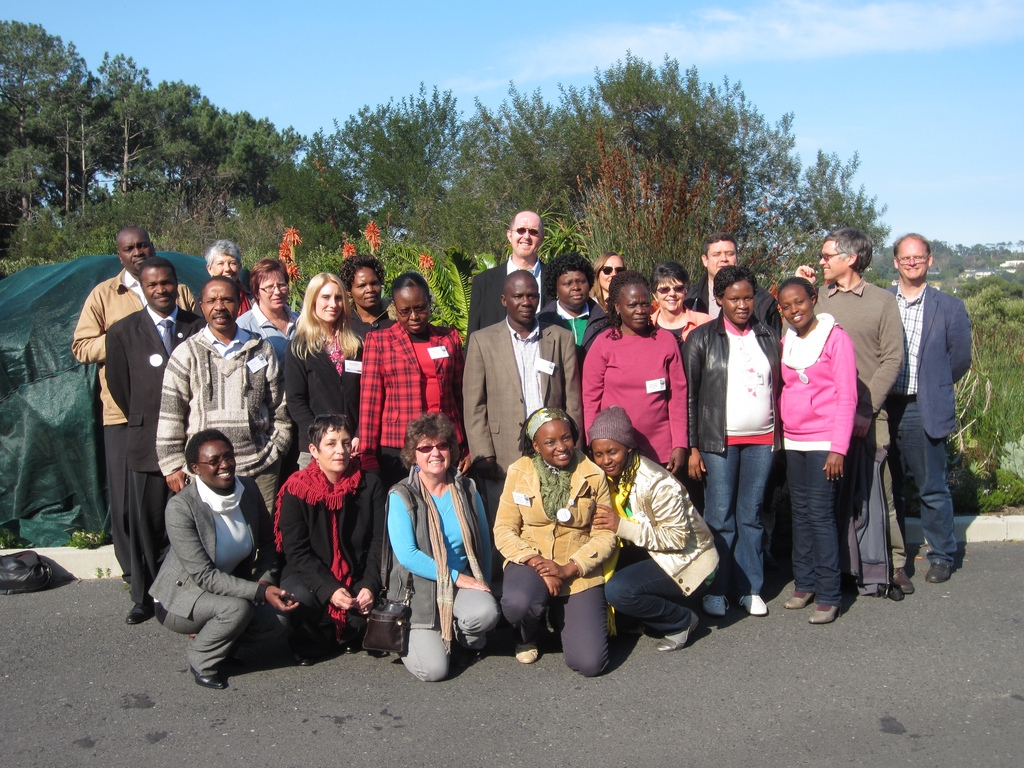
Participants at the BHL-Africa Meeting, June 14-15, 2012, Cape Town, South Africa.

The mission of the Biodiversity Heritage Library is to build an open access digital library of biodiversity literature for the world. For the past several years, the BHL has been building upon its global network of partners, and on June 14-15, 2012, over 25 librarians, scientists and information technology managers came together at Kirstenbosch National Botanical Garden to discuss the possibilities for developing a BHL node in Africa. This organization and planning meeting was generously funded by the JRS Biodiversity Foundation and was a direct follow up to the initial JRS funded meetings hosted by the Biodiversity Synthesis Center/Field Museum of Natural History in Chicago in November, 2011.

Six representatives from the BHL U.S./U.K. node were present to provide an introduction to the BHL, report on the current global environment and  lead important breakout discussions regarding various administrative and technical aspects of the BHL. As always, BHL staff actively promoted the project and generated the enthusiasm required to engage the participants. BHL Technical Director Chris Freeland (who unfortunately could not attend the meetings) created this excellent video to rally the meeting participants.

View Full Size Image
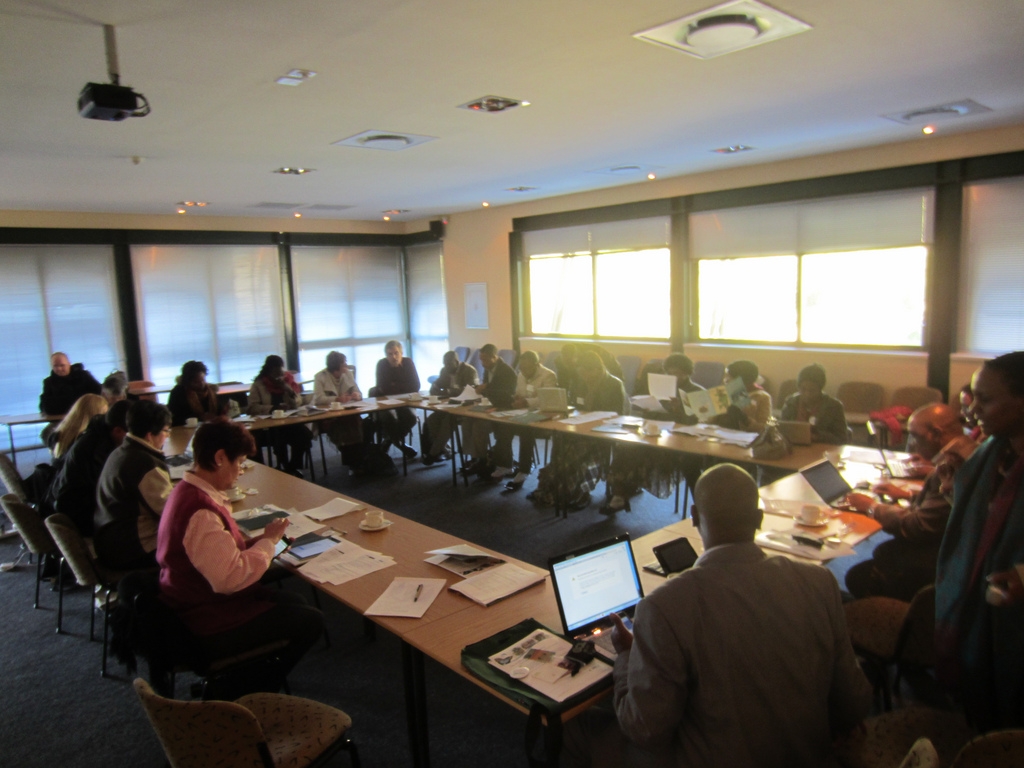
A working day at the BHL-Africa meeting.

The objectives for the two days of discussion included: the identification of the scope and magnitude of African biodiversity literature collections, the creation of a project plan for coordinated digitization, as well as identifying the local digitization capacity among the attendees’ institutions. The first day of discussion was focused upon learning more about the attendees’ backgrounds, the current digitization activities in their institutions and how the creation of a BHL Africa would impact their work or the work of others in their institutions. Grace Costantino, BHL Program Manager, Smithsonian Institution Libraries, and Christine Giannoni, Museum Librarian from the Field Museum, conducted several video interviews that you can view here.

View Full Size Image
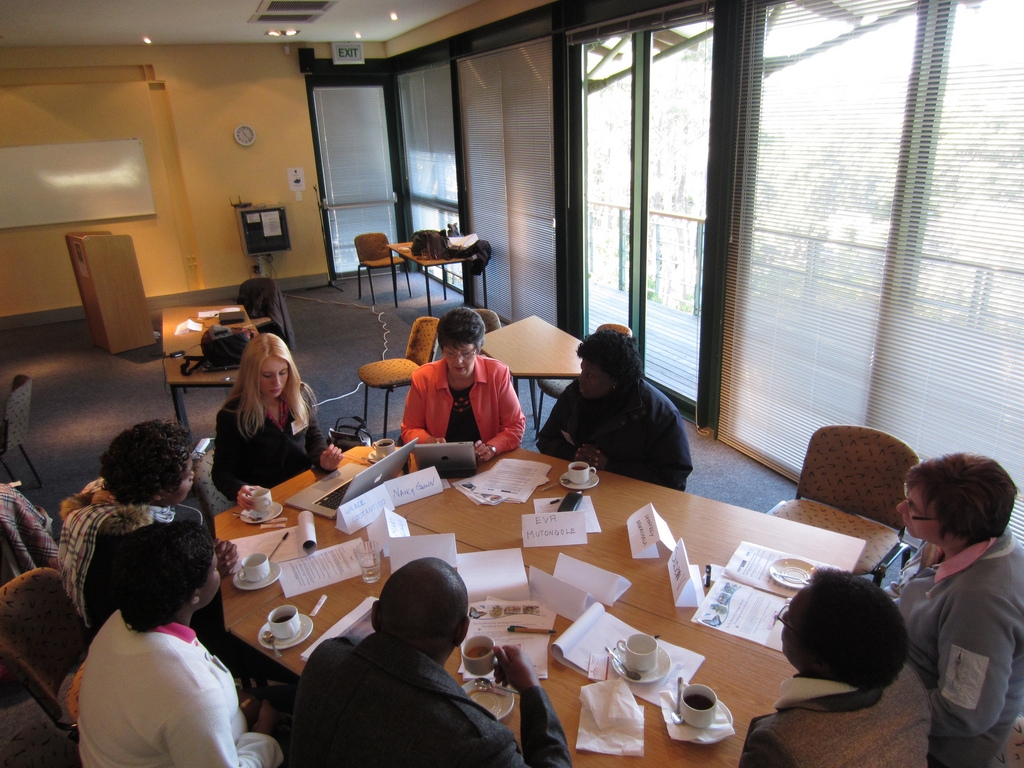
Nancy Gwinn leading the Governance Breakout Group.

The second day of discussion was divided into the following four breakout groups: Governance, led by Nancy Gwinn, Director, Smithsonian Institution Libraries; Infrastructure, led by William Ulate, Global BHL Project Manager, Missouri Botanical Garden; Scanning, led by Martin Kalfatovic, BHL Program Director, Smithsonian Institution Libraries; and Collaboration, led by Anne-Lise Fourie, Assistant Director, SANBI Libraries. These sessions really got down to “brass tacks” and identified the needs, strengths and opportunities among the various institutions. While the need for stable technological infrastructure was a common concern, it was noted that this was on a positive trajectory in several countries. Participants felt that their institutions hold a tremendous amount of materials that have not been digitized, including: gray literature, materials published in Africa with low distribution, as well as unpublished literature.

Several key themes emerged from the two days of discussion:

  • the desire for open access to scientific literature.
  • with people across the continent embracing mobile technology, these digitized resources must be adapted for mobile technology.
  • the “BHL in a Box” concept was highly desired. This would entail creating interactive CDs of BHL content for distribution in areas where internet access is unreliable or unavailable.

The meetings concluded with a high level of excitement and several tasks for moving BHL Africa forward. The ultimate long-term goal is to provide open access biodiversity literature to African researchers as well as to establish a BHL Africa project organized by Africans and operated in Africa. A “Concept Document” created by the Governance breakout group is being used as a basis for a Memorandum of Understanding (MOU). Participants hope to regroup at Stellenbosch University (in conjunction with Berlin 10) in fall 2012 to finalize an MOU and officially launch BHL-Africa.

Pictures courtesy Martin Kalfatovic

July 16, 2012by ulib-libraryjobs
Blog Reel, Featured Books

Book of the Week: BHL on Safari

View Full Size Image
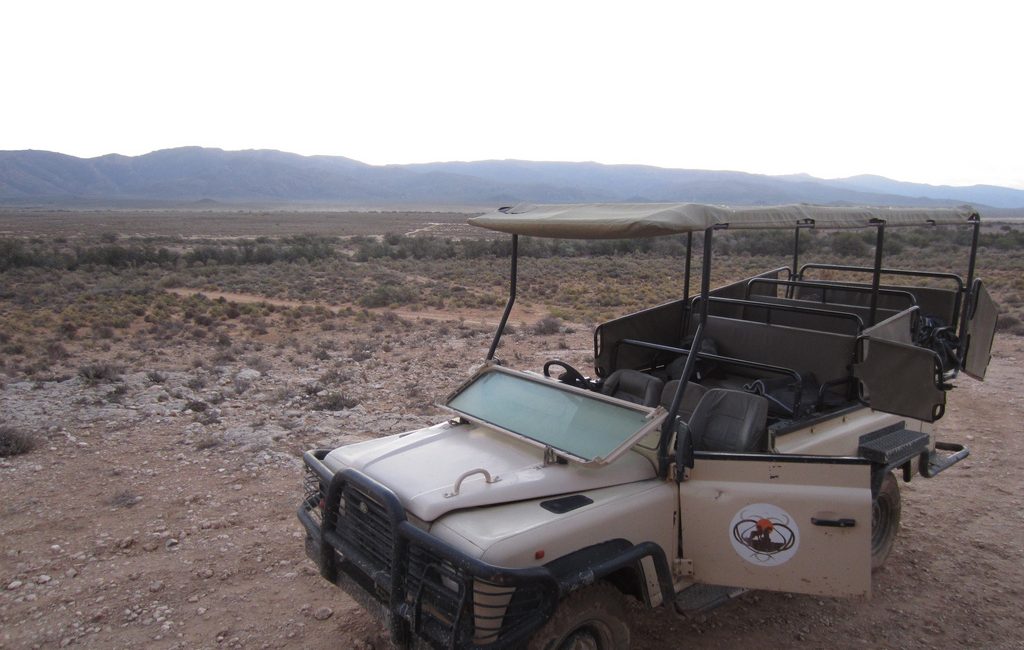
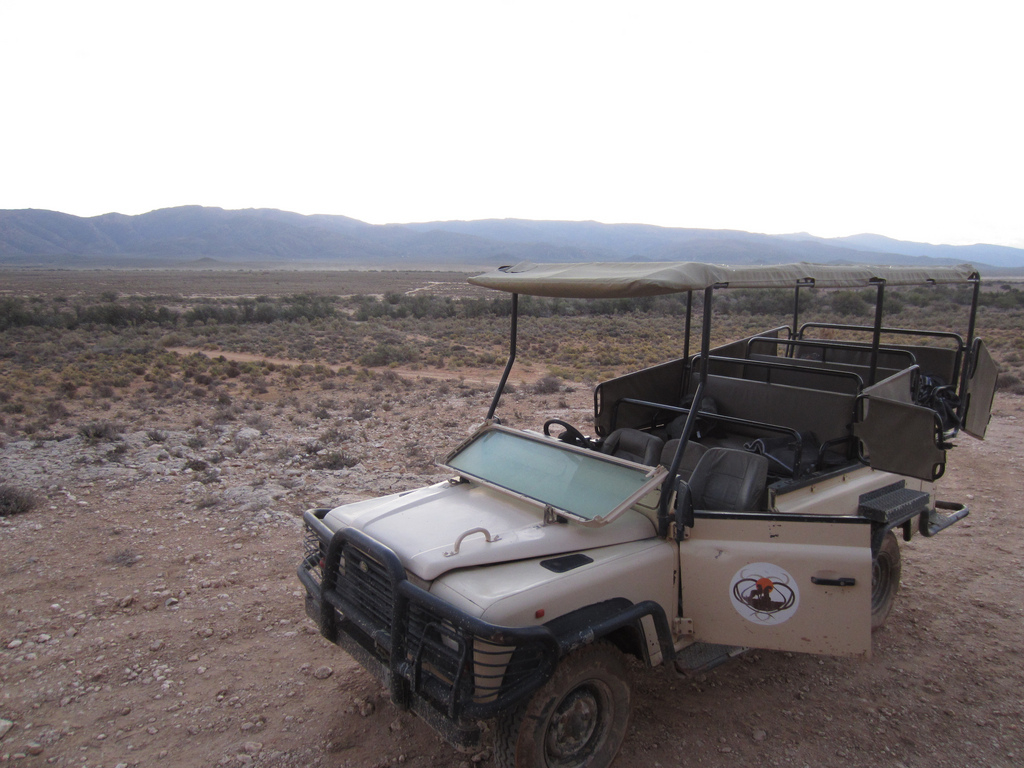
The safari car at Inverdoorn Game Reserve

Over the past few weeks, you’ve heard a lot about our recent meetings and world travels in Berlin, Germany and Cape Town, South Africa. The BHL-Europe, BHL-Global, and BHL-Africa meetings were incredibly productive, paving the way for the future development of both the existing global BHL network as well as the inception of a new BHL node in sub-Saharan Africa. As you can imagine, such meetings, though undeniably rewarding, also require quite a bit of work, so the final weekend of our escapades, we decided it was time to “play” and, in true BHL spirit, explore the country’s wildlife in person, through a safari at Inverdoorn Game Reserve and Safari Lodge.

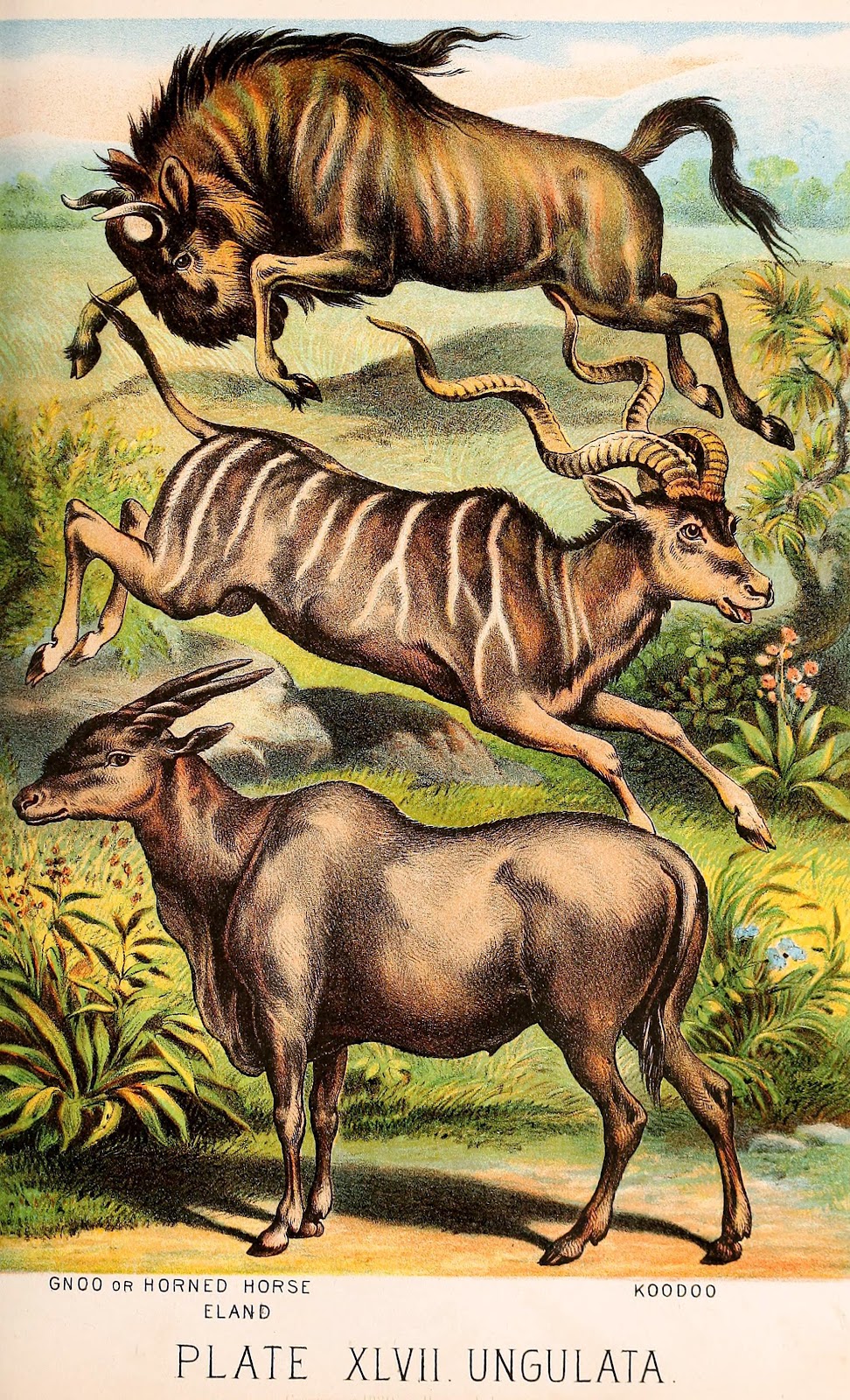
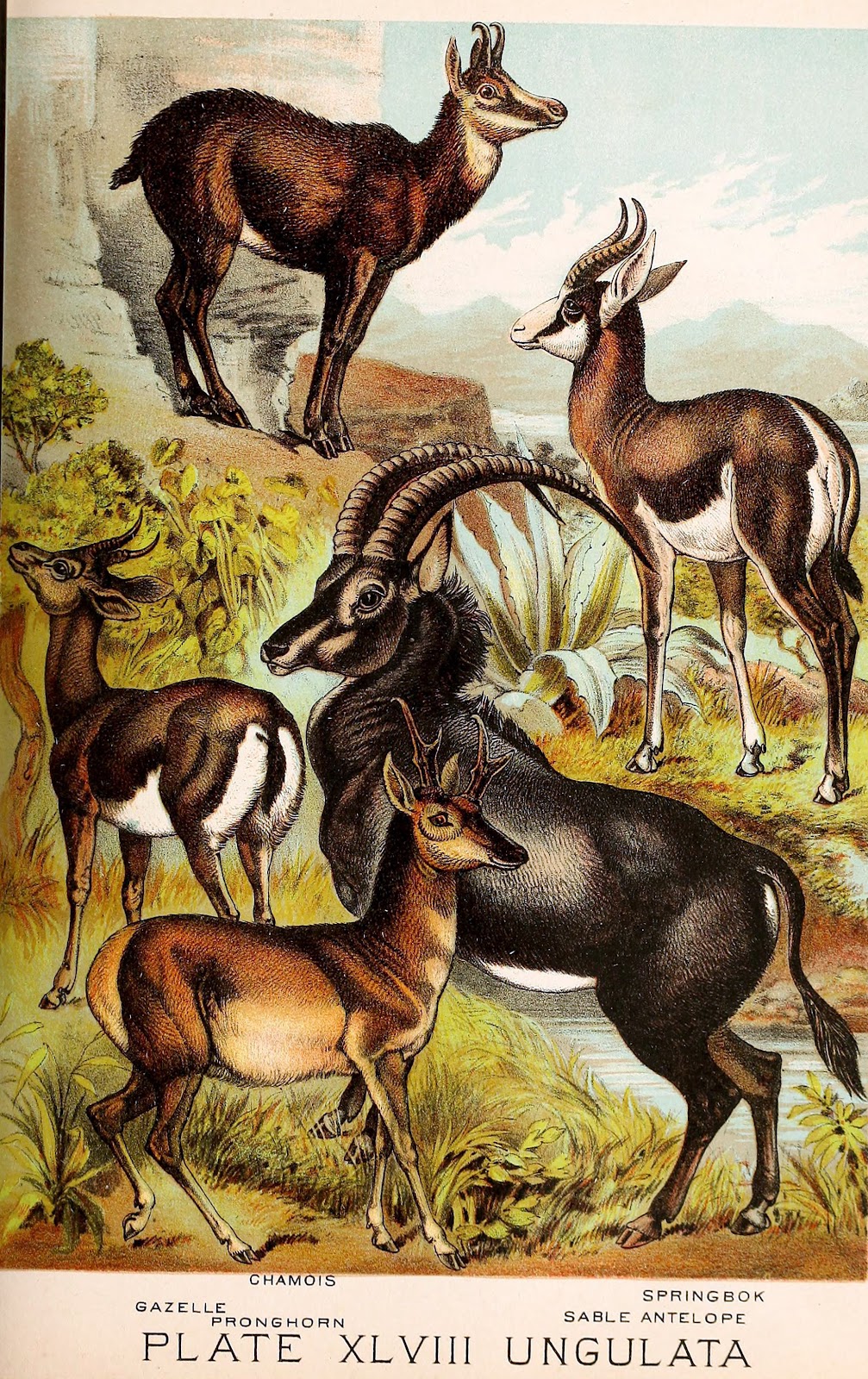
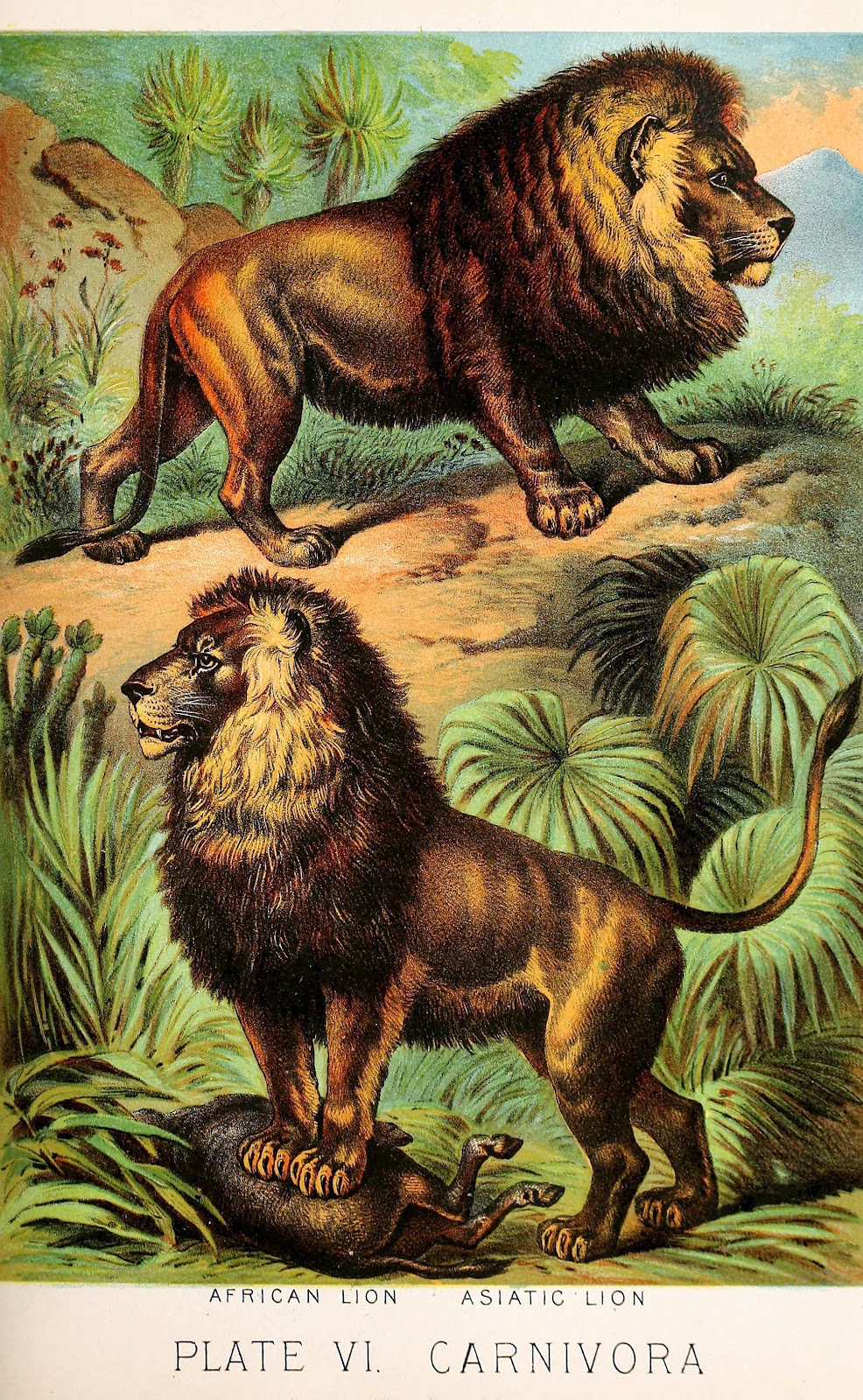
As BHL employees, we naturally saw our experience through the lens of the biodiversity literature held in our digital collection and recognized many species immediately from illustrations we’d seen in BHL. On returning to our “regular” lives, we found that one book in particular served as a vivid reminder of our great adventure: Johnson’s Household Book of Nature (1880), edited by Hugh Craig.

Johnson’s Book of Nature is intended for the general public, presenting information not in technical scientific language but in everyday terms. It is the illustrations, however, that truly distinguish this work. The editor, Hugh Craig, eloquently wrote,

To the attractiveness of this work the numerous beautifully-colored plates with which it is illustrated contribute in no ordinary degree. The designs are original and have been prepared at unusual expense. They represent in a more vivid and striking way than mere words can depict, the shape, the habits and the habitations of the animals, as well as the colors with which Nature has adorned them and the attitudes which most distinctly characterize them.

There are innumerable ways to explore nature, from books and illustrations to photographs and, best of all, personal interaction. Our BHL group was lucky to experience Africa on a multitude of levels, and we’re thrilled to share that opportunity with you!

View Full Size Image
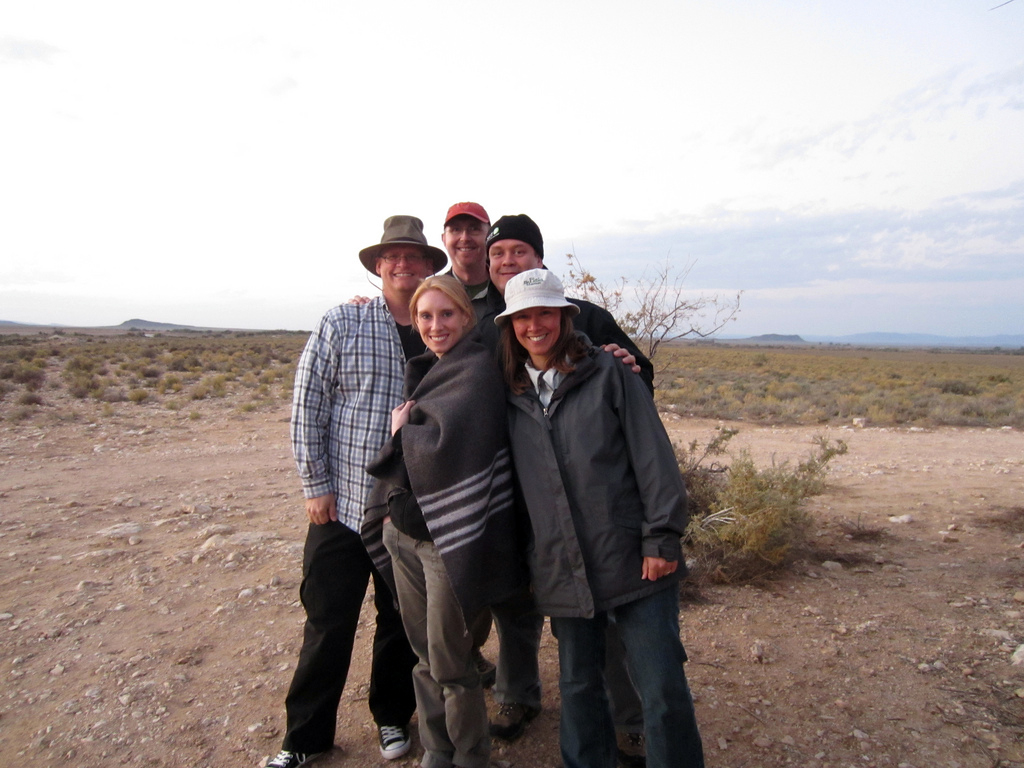
BHL Staff on Safari! Back Row, Left to Right: Martin Kalfatovic, Doug Holland, William Ulate. Front Row, Left to Right: Grace Costantino, Christine Giannoni


The Ungulates

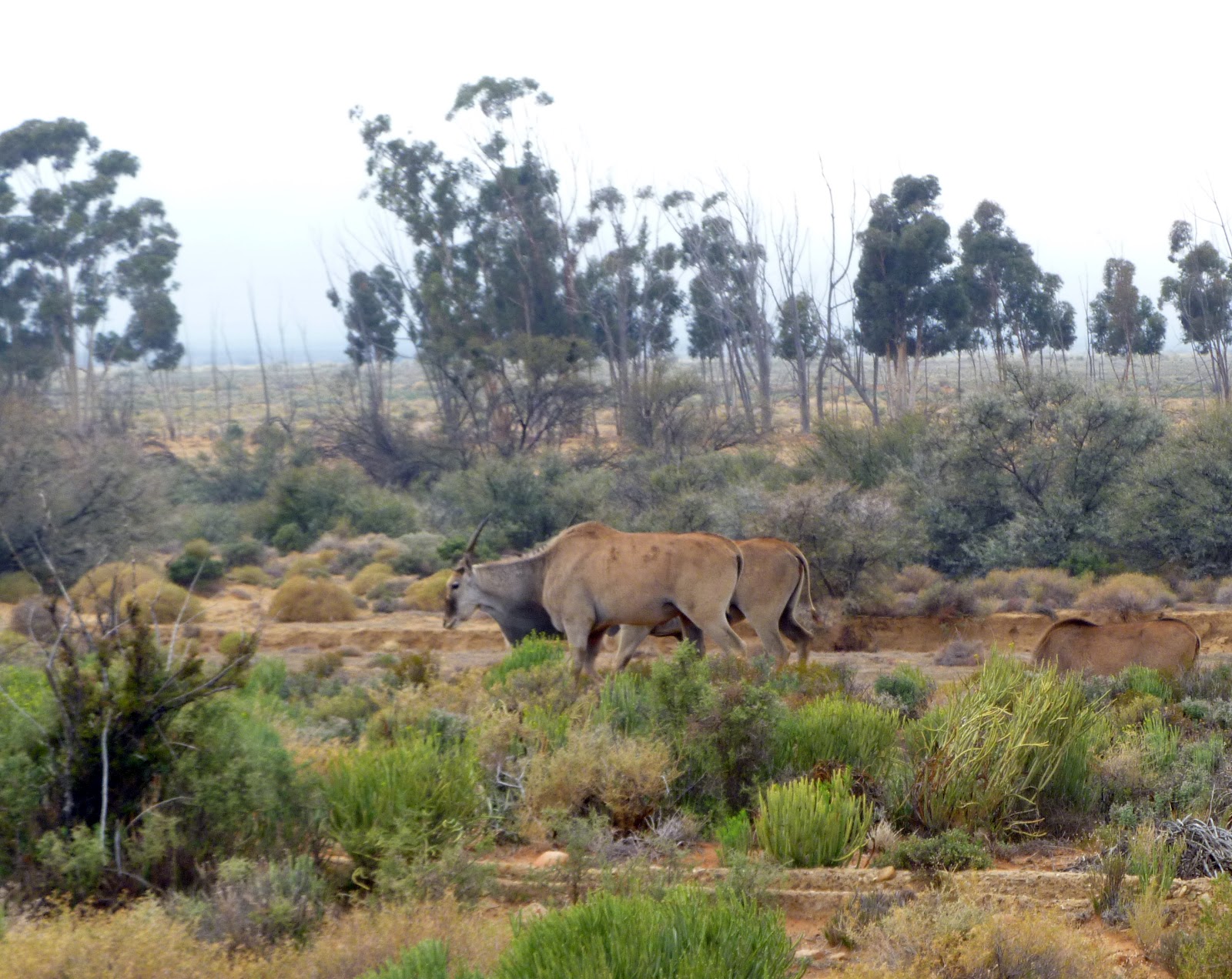
Wildebeest and Common Eland

View Full Size Image
Wildebeest (Top) and Common Eland (Bottom)
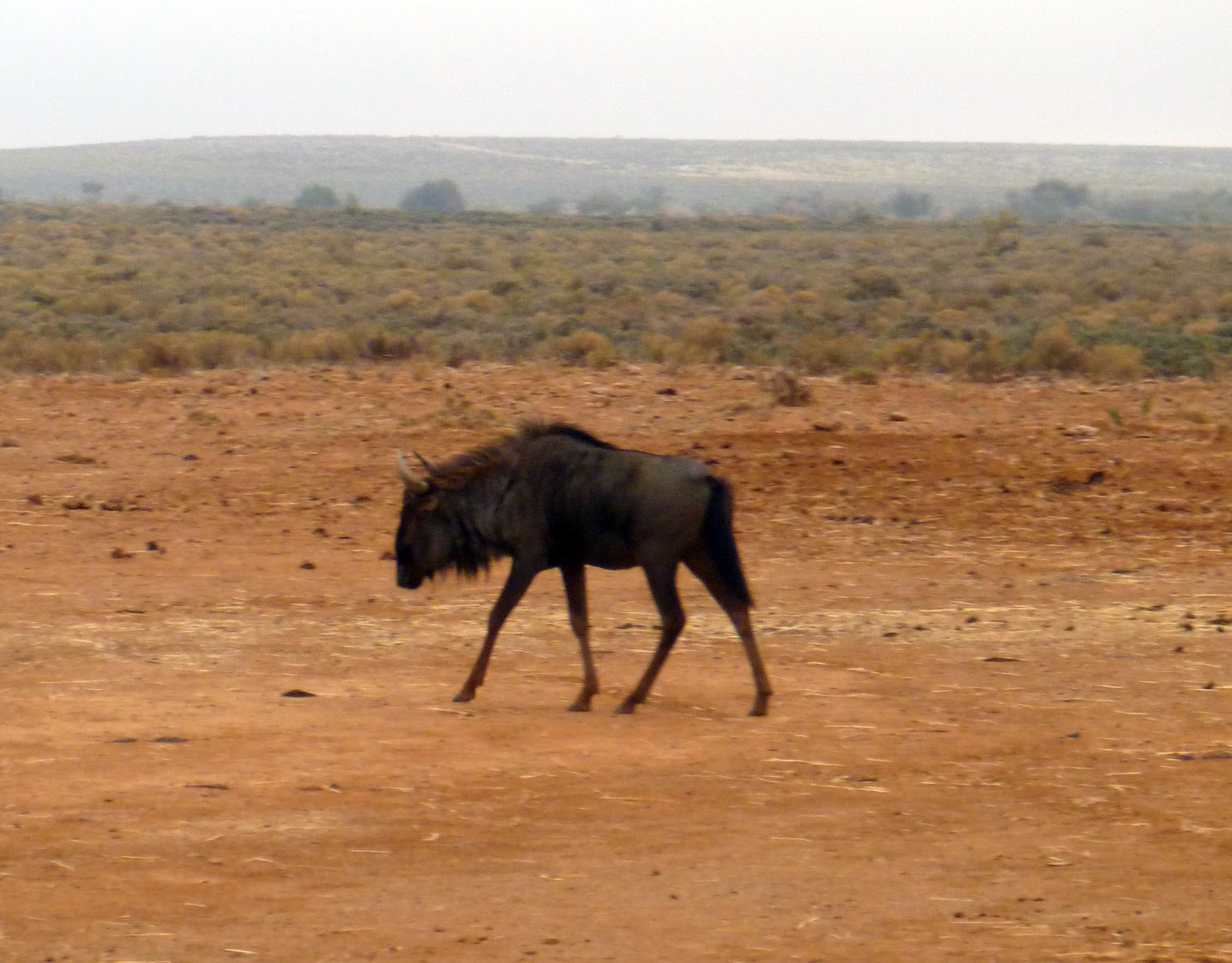
Also known as a Gnu, the Wildebeest is a bizarre-looking creature, with the tail of a horse, the head of a Cape Buffalo, and the stripes of a zebra. Our tour guide, Alex, told us that in Africa, they say that when the creator was finished creating life, he had leftover pieces and combined them into one animal to create the wildebeest.
View Full Size Image
Wildebeest at Inverdoorn
The Common Eland is the second largest antelope species in the world (the largest is the Giant Eland). They display what is known as the Flehmen Response, during which a male will stick his head near fresh female urine in order to facilitate the transmission of pheromones to their Jacobson’s Organ, which helps them determine whether the female is in heat. We experienced this display with the male Cape Buffalo we encountered.
View Full Size Image
Common Eland at Inverdoorn

__________________________________________________

Zebra

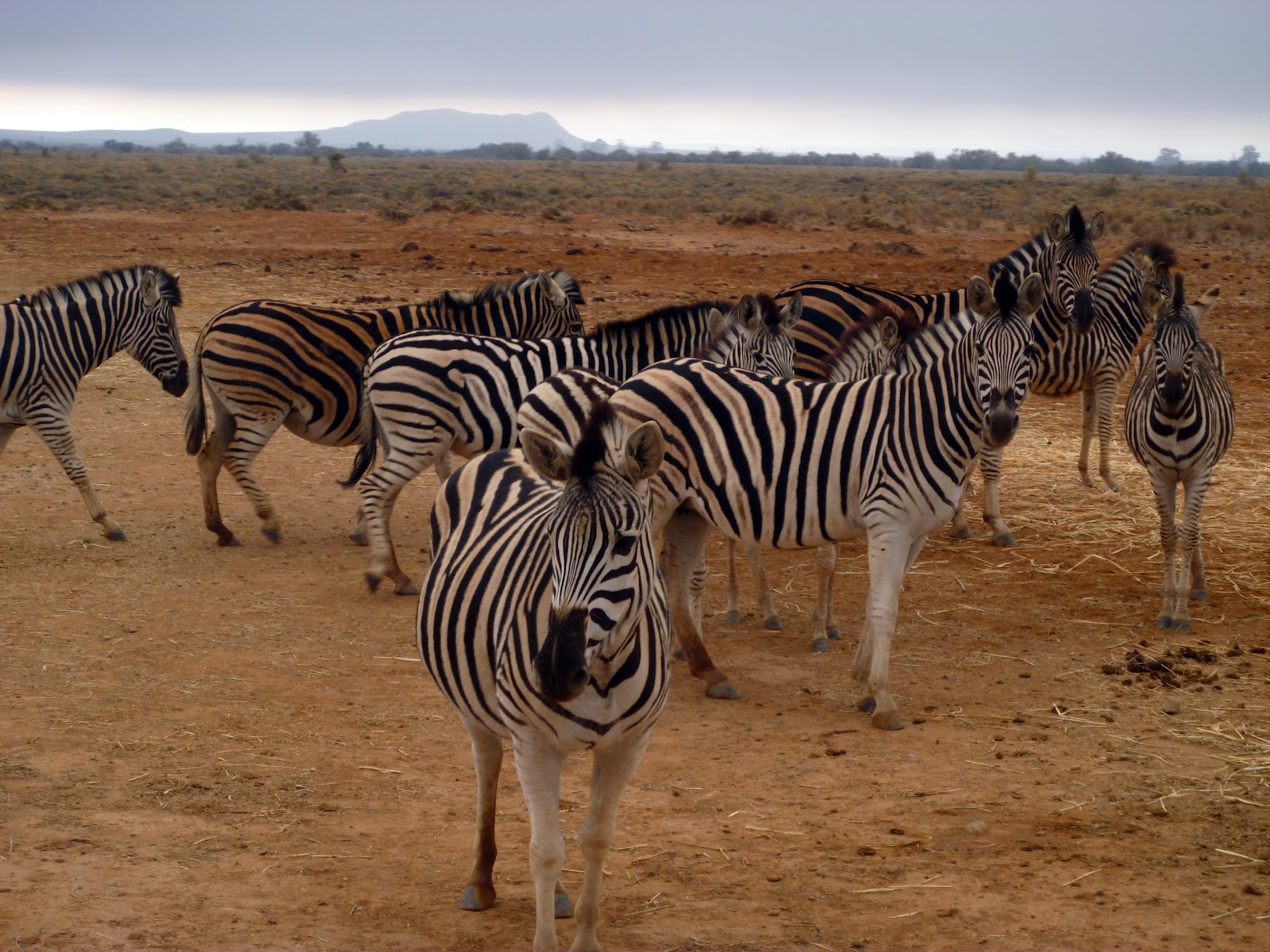
View Full Size Image
Zebra (Top)

There are three recognized species of zebra, with many subspecies. We saw Plains Zebras on our safari. Though closely related to the horse, Alex told us that, as zebras lack significant stamina and have weak backs, they have never been truly domesticated.

View Full Size Image
Plains Zebra at Inverdoorn

__________________________________________________

Impala

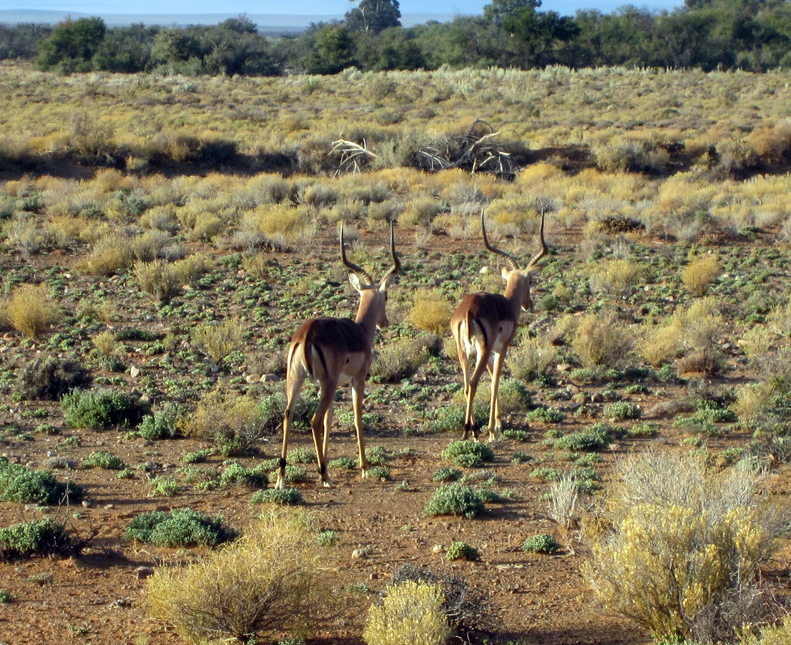
The word impala comes from the Zulu language, meaning “gazelle.” Their populations are estimated to be near 2 million in Africa. It was the only ungulate we saw on our safari that is not pictured in Johnson’s Book of Nature, but it was so lovely that we couldn’t resist including its picture here.

View Full Size Image
Impala at Inverdoorn

__________________________________________________

Springbok

View Full Size Image
Springbok (Top Right)
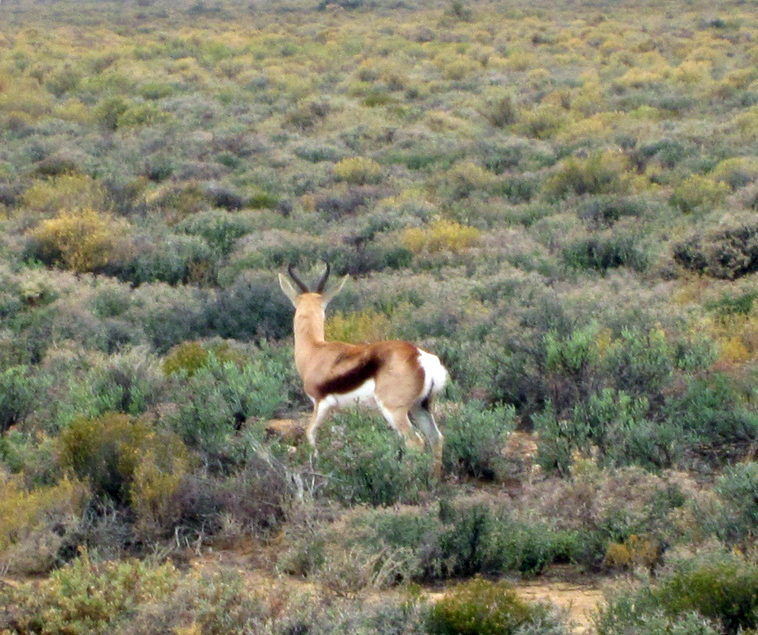
The springbok is a skittish creature, literally “springing” away from anything it deems remotely threatening, including, apparently, safari groups. Hence, we only captured shots of these graceful animals sprinting away from us. Alex informed us that this species has an incredible jumping capability; when threatened, they will lock their legs and channel their momentum earthbound, creating incredible thrust that allows them to leap over enemies.
View Full Size Image

__________________________________________________

Cape Buffalo

View Full Size Image
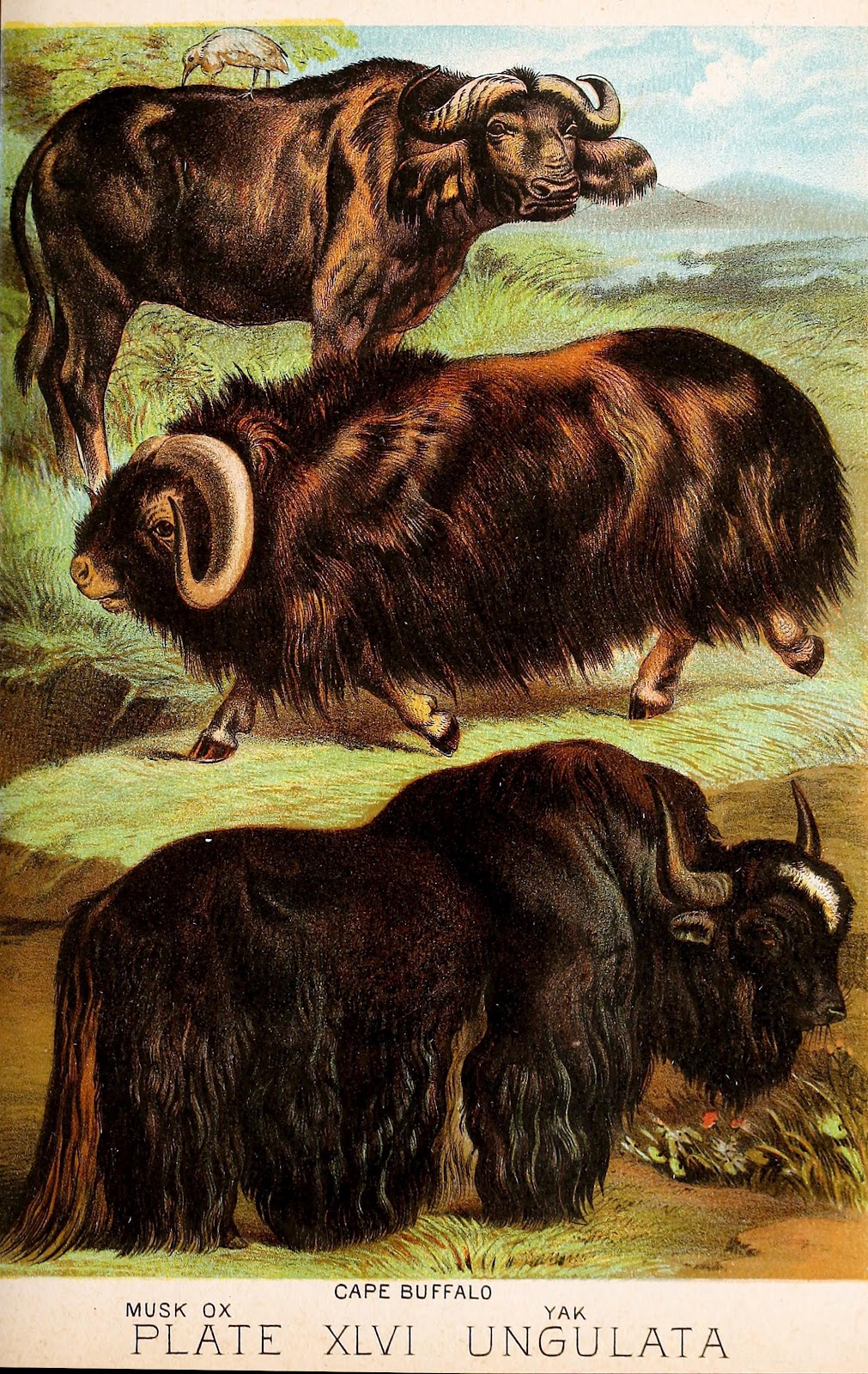
Cape Buffalo (Top)

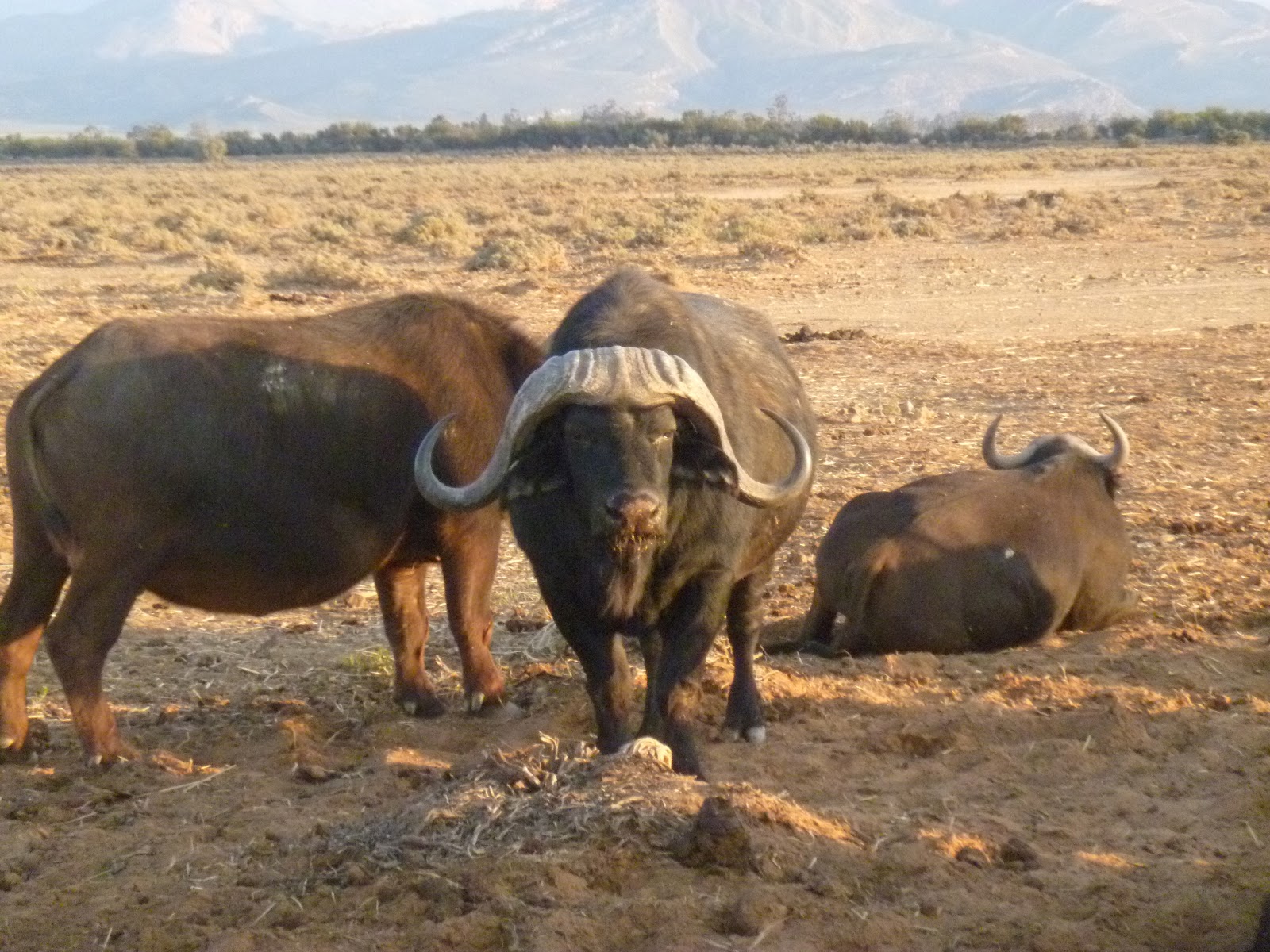
Cape Buffalo can reach lengths of 5-11 ft and weights of up to 2,000 lbs. Unpredictable, they can be dangerous to humans, but the group we saw on safari were clearly used to being observed and all but ignored us.


View Full Size Image
Cape Buffalo at Inverdoorn

__________________________________________________

Giraffe

View Full Size Image
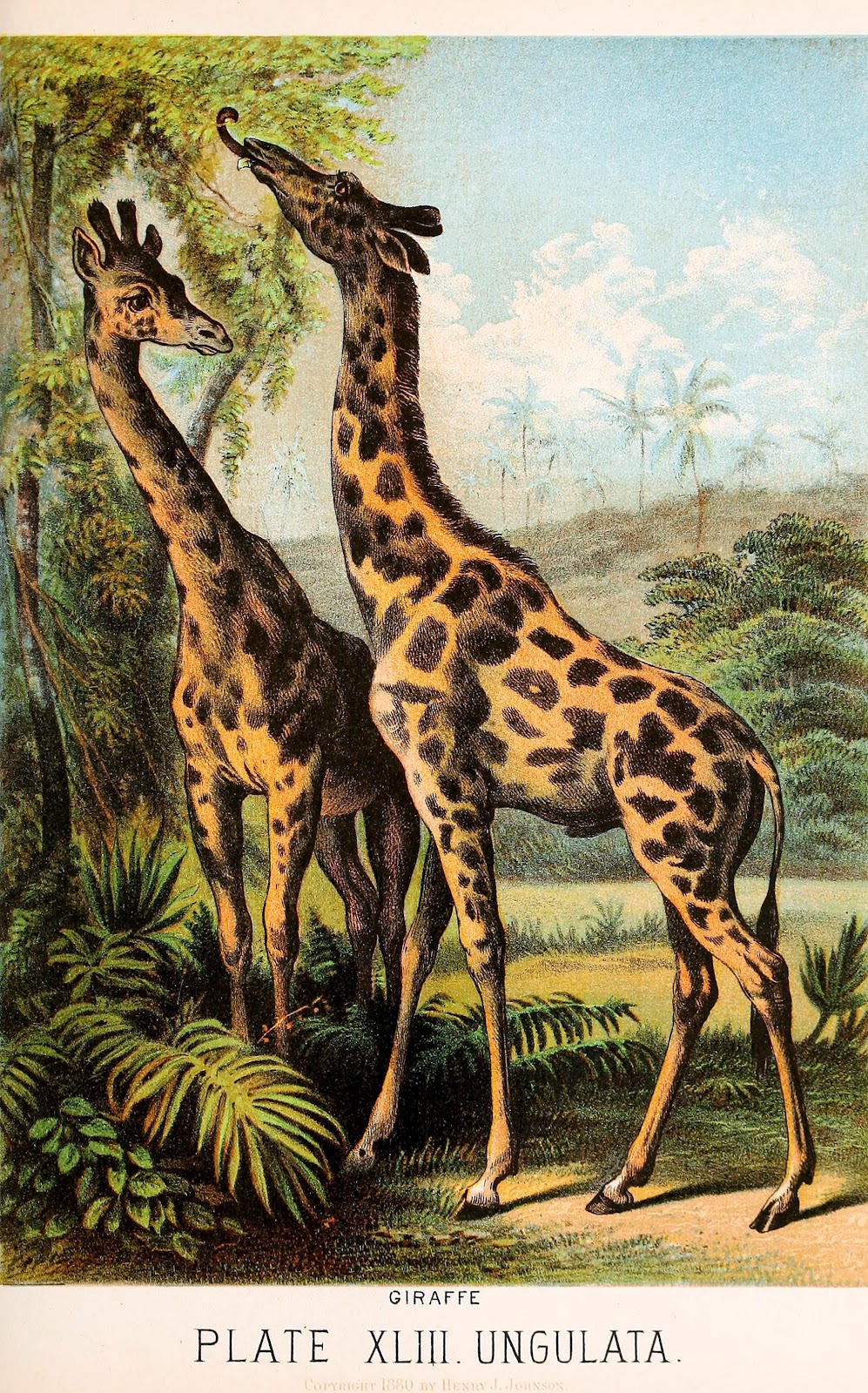
Giraffe

The most surprising characteristic of the giraffes we encountered was the grace with which they run, despite their absurdly-long necks. The male giraffe pictured in this photograph was particularly dark due to high levels of testosterone.

View Full Size Image
Giraffe at Inverdoorn

__________________________________________________

Rhinoceros

View Full Size Image
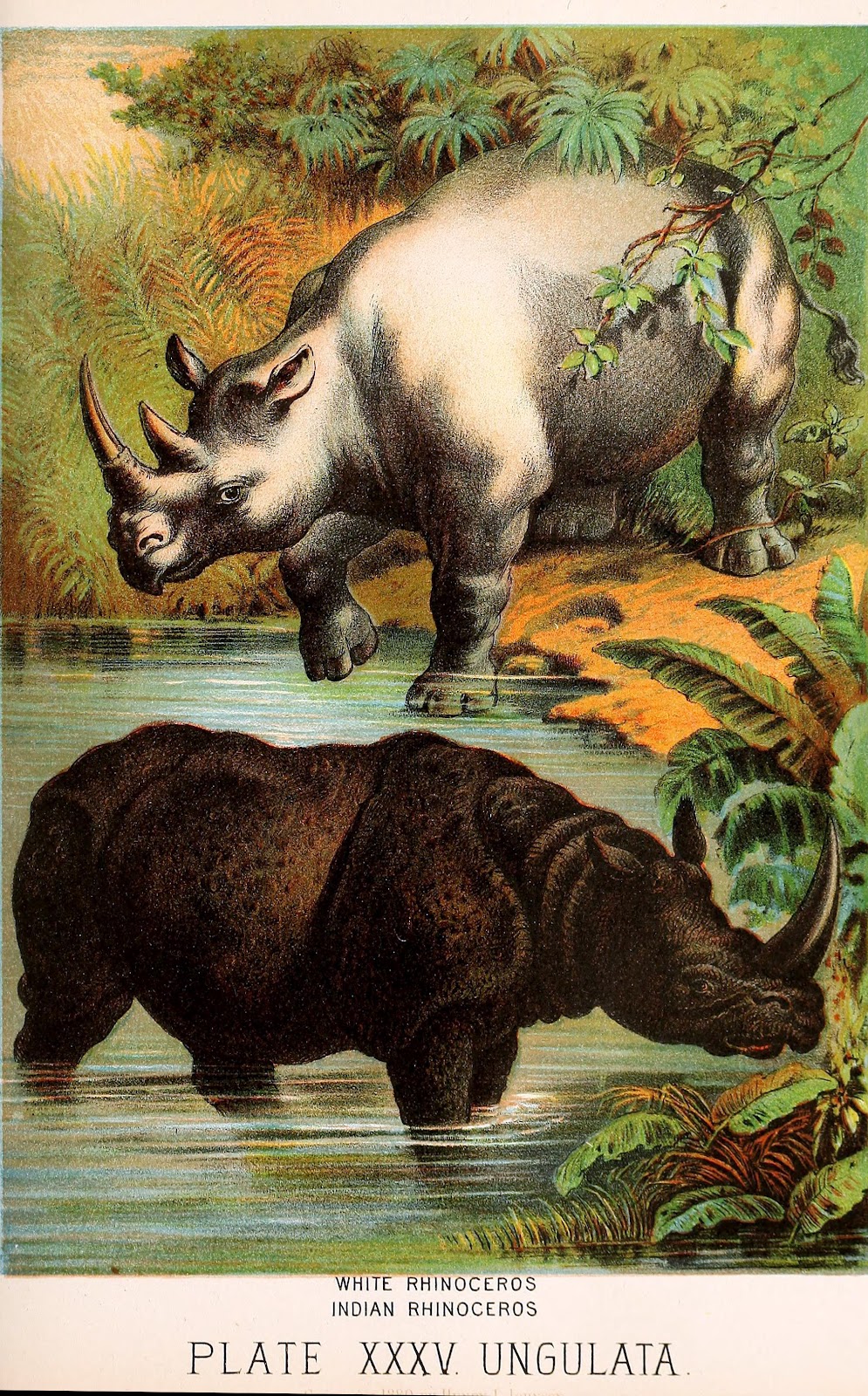
White Rhinoceros (Top)

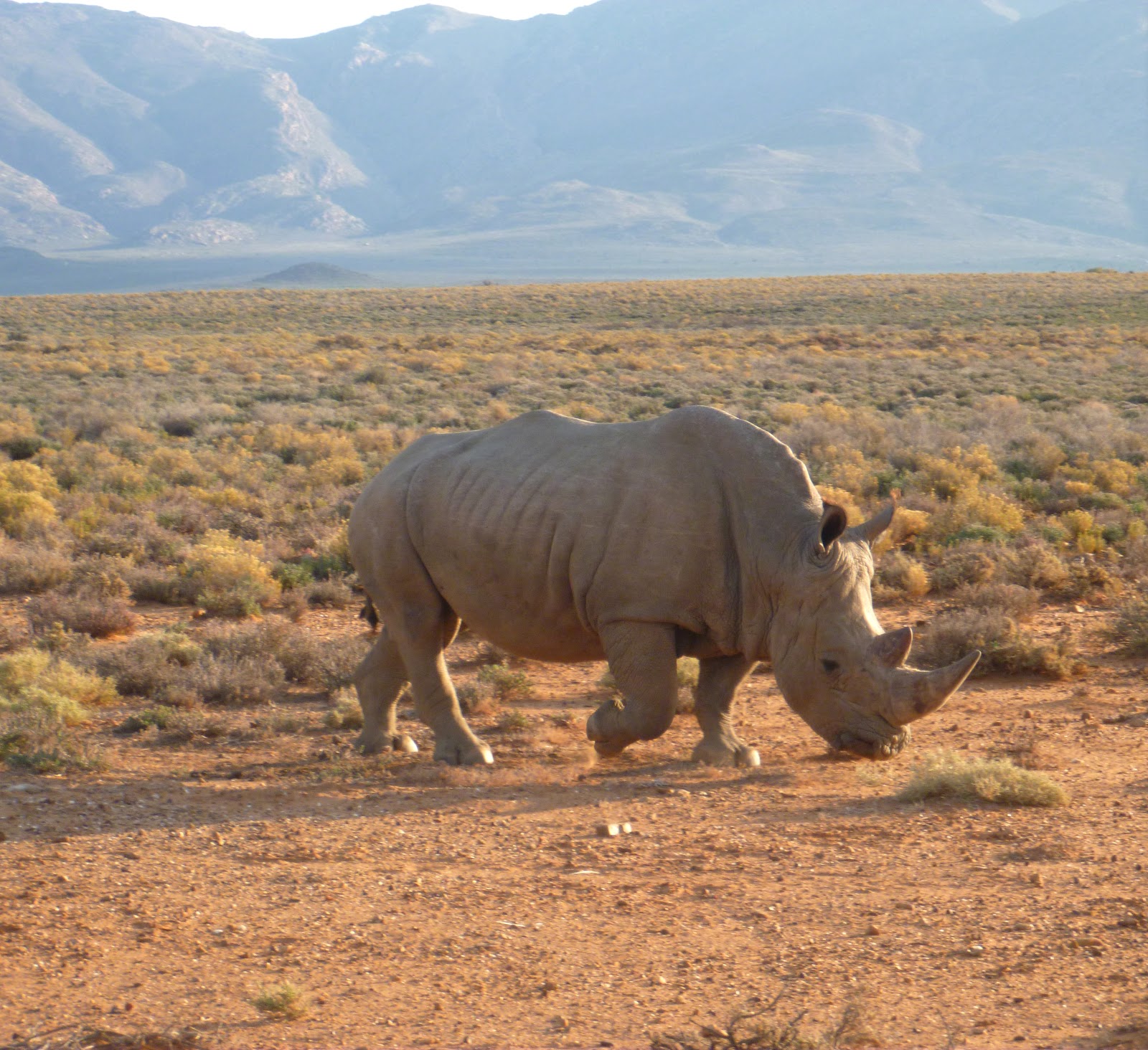
White Rhinoceros, also known as square-lipped rhinoceros, are endangered, being hunted maliciously for their horns, which are sold on the black market for use in Chinese medicine. The horns of the rhinoceros at Inverdoorn were all tagged and poisoned, making them unattractive to potential poachers. Inverdoorn has three rhinos: a male, female, and their calf. The female rhinoceros’ horn has been preemptively removed to save her from poaching, but the act has made her somewhat ill-tempered. Alex told us she has a history of charging vehicles. Fortunately for us, she seemed to be in a good mood during our visit.

View Full Size Image
Male White Rhinoceros at Inverdoorn

__________________________________________________

Hippopotamus

View Full Size Image
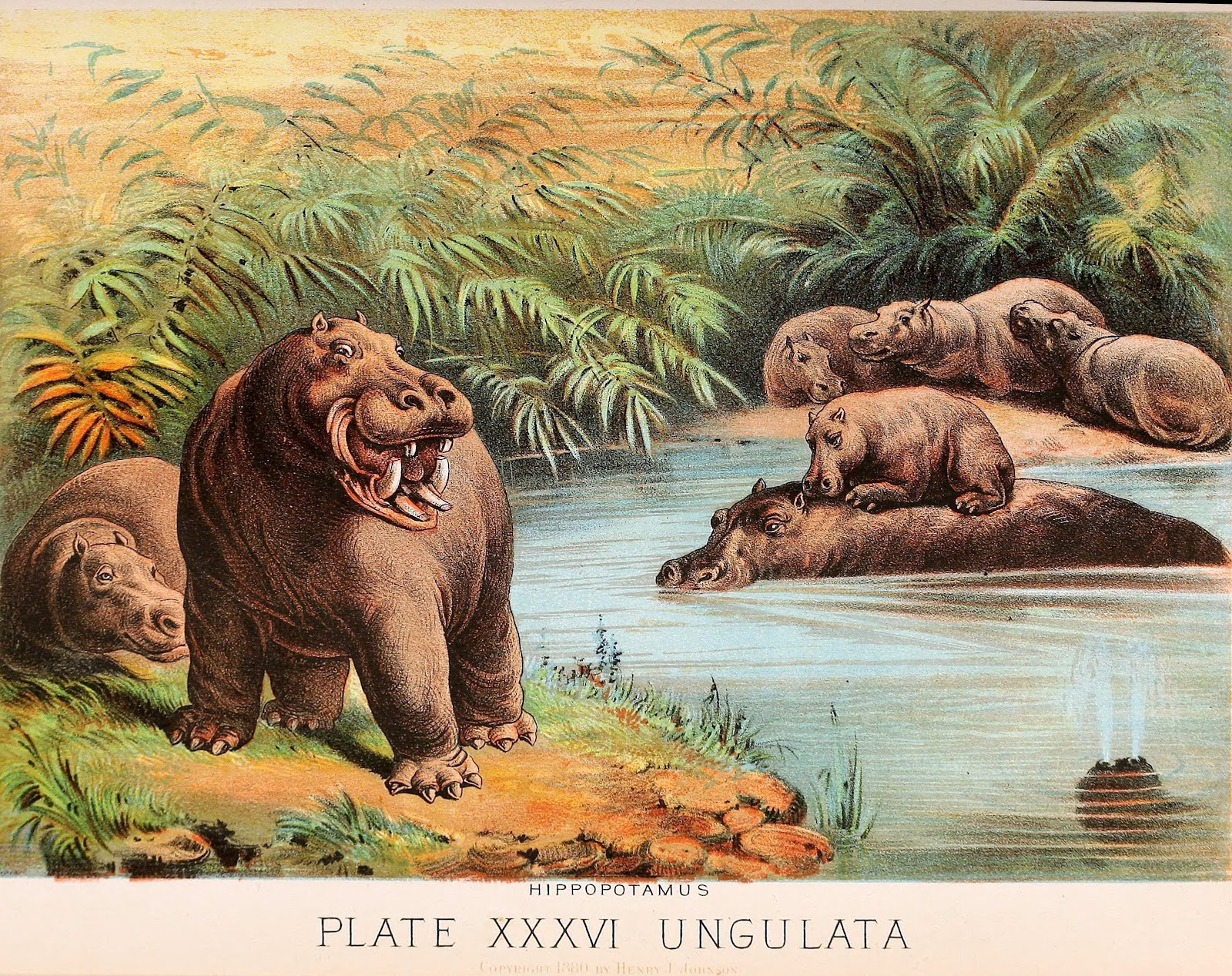
Hippopotamus

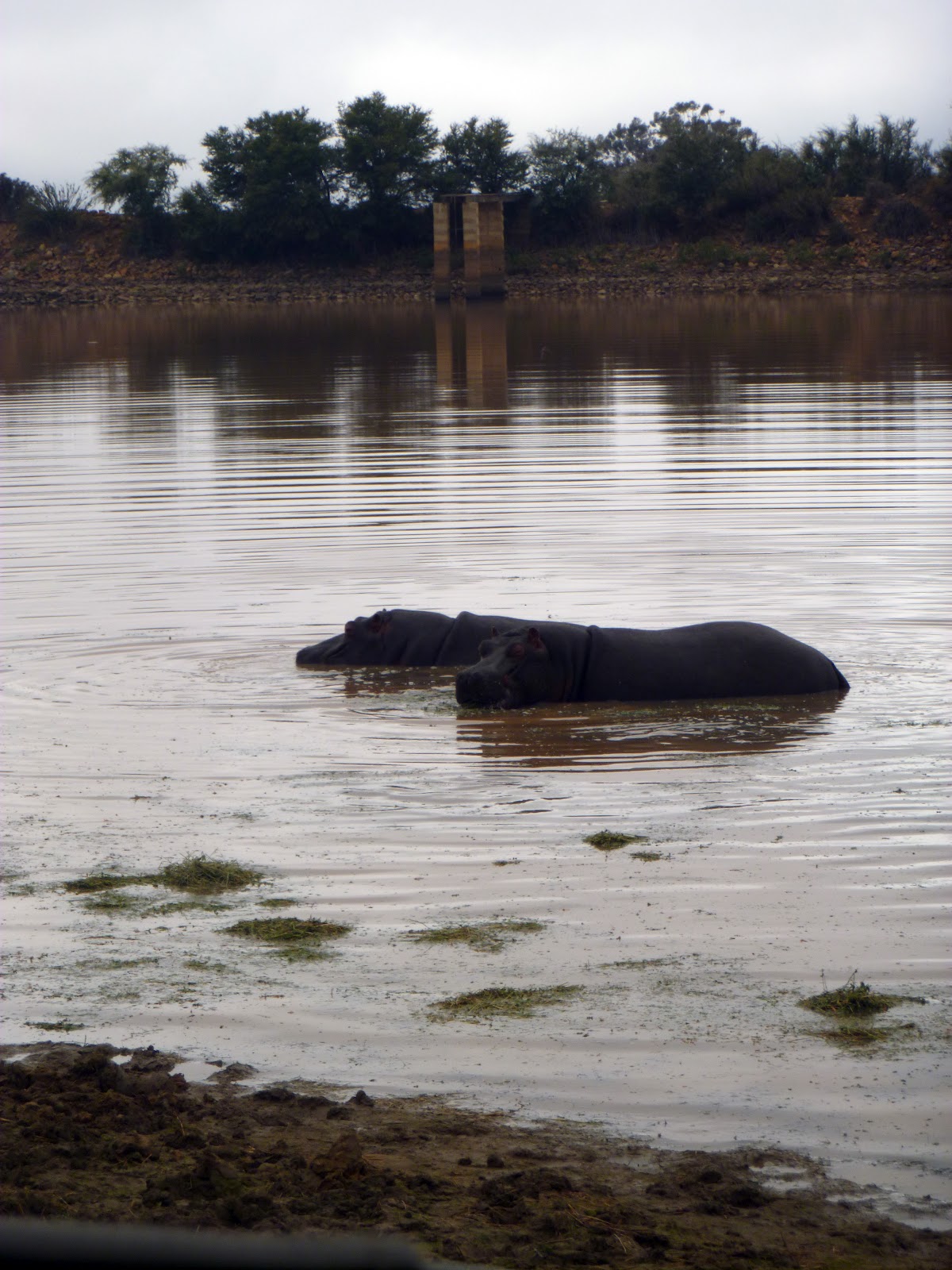
The name hippopotamus comes from the ancient Greek for “river horse.” It is the third-largest land mammal and is terribly aggressive, being considered one of the most dangerous animals in Africa. Near water sources with hippo populations, there are signs reading “No Boats: Hippos Present.”

View Full Size Image
Hippos at Inverdoorn

__________________________________________________

The Predators

Lion

View Full Size Image
African Lion (Top)
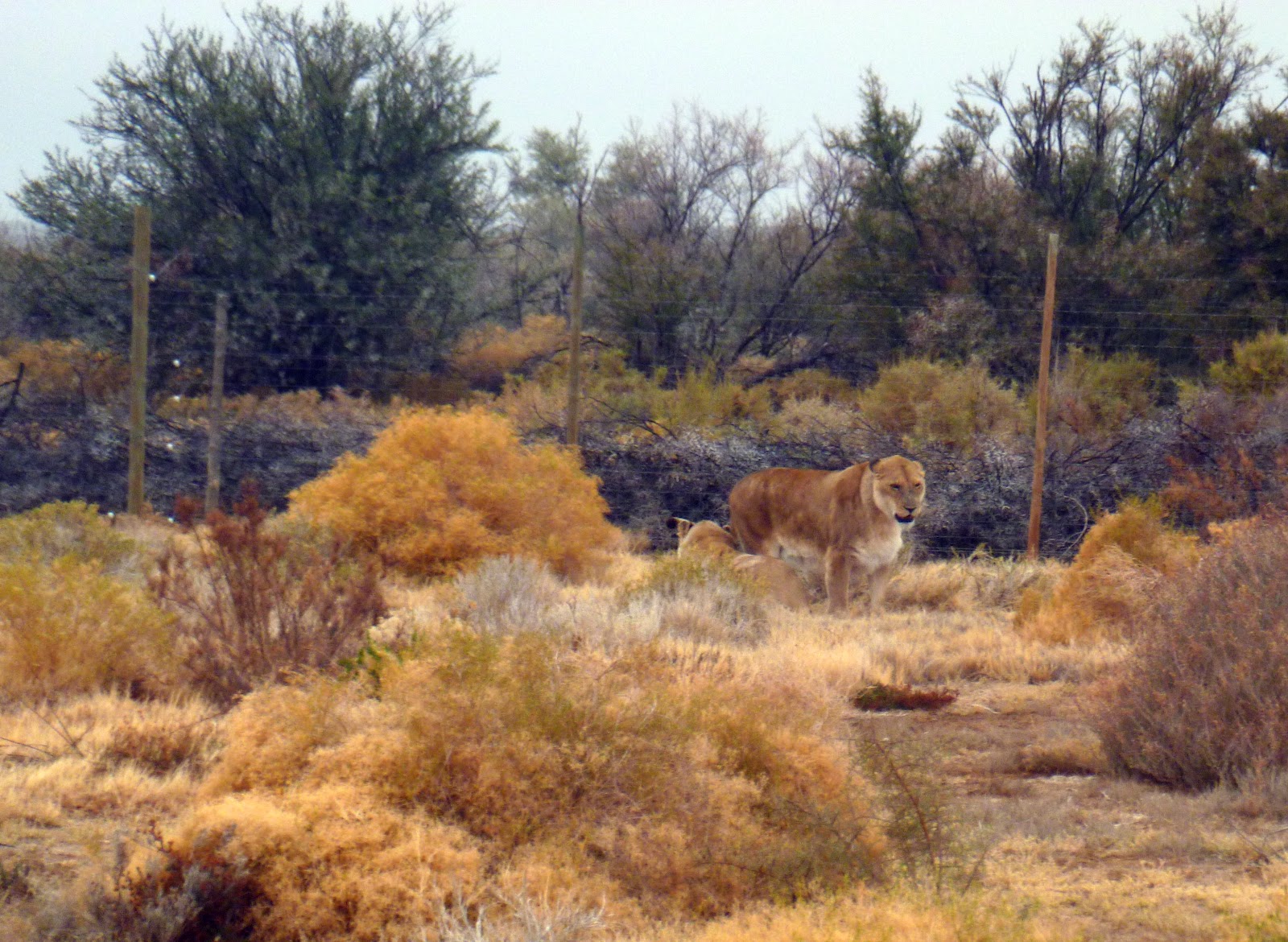
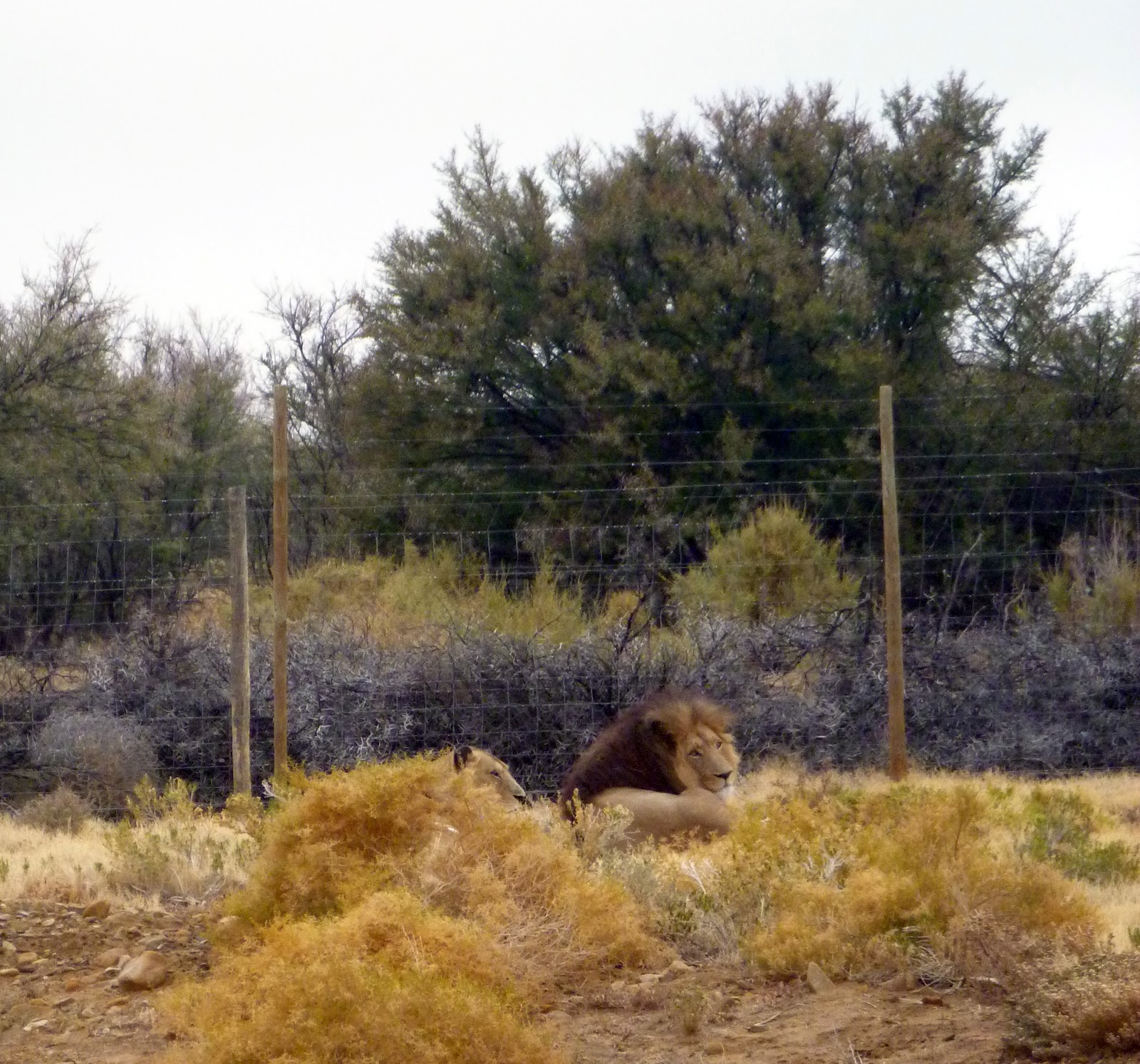
Lions are one of the most iconic predators on the planet, but sadly, they often find themselves prey to what is known as Cage Hunting. The illegal practice of Cage Hunting occurs when lions are bred to be sold to “hunters” that shoot them while they are imprisoned in cages. Though outlawed, the activity still occurs, and the lions at Inverdoorn were purchased by the park from just such an operation in order to save their lives. They are thus larger than the average lion, but will unfortunately never be allowed to breed, since neither the mother or the father would be able to teach the cubs how to survive in the wild.
View Full Size Image
Female Lion at Inverdoorn


View Full Size Image
Male Lion at Inverdoorn

__________________________________________________

Cheetah

View Full Size Image
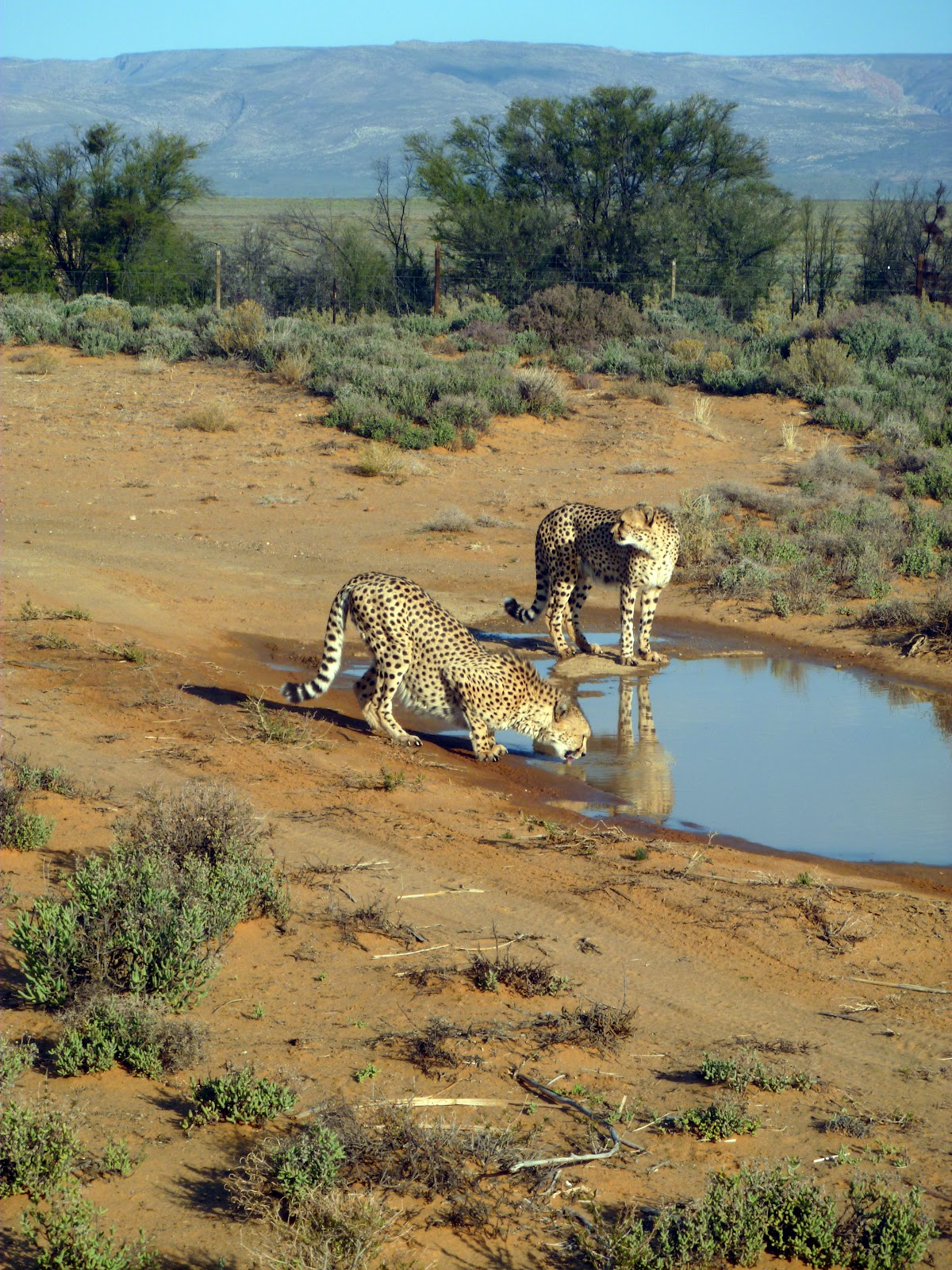
Cheetah (Bottom Left)
The cheetah is the fastest land animal, reaching speeds of up to 70-75 mph. Inverdoorn runs a cheetah conservation program, and as part of our visit, the keepers demonstrated just how fast these cats really are. After luring a group of three young cheetahs to one end of a “runway,” they then attached meat to a lure and reeled it in, sending the cheetahs chasing after it at top speeds. It was truly incredible.
View Full Size Image
Cheetahs at Inverdoorn
Finally, since no BHL-Africa activity is complete without a movie, BHL Program Director Martin Kalfatovic created a short video about our epic adventure. Enjoy, and be sure to check out all of the images from Johnson’s Book of Nature in Flickr.

Pictures by Grace Costantino and Martin Kalfatovic

July 12, 2012by michelle.underhill
BHL News, Blog Reel

The BHL Button: A World Traveler

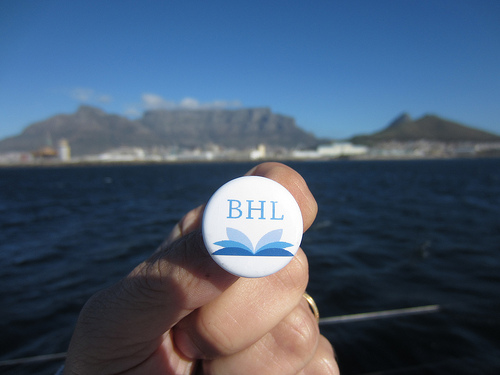
As we continue our blog posts regarding our recent Berlin and Africa trips (for the BHL-Europe, BHL-Global, and BHL-Africa meetings; stay tuned for upcoming posts on these events), we thought we’d have some fun and explore these trips from the perspective of our friend, the BHL button.

The BHL button is a global traveler, having been in three continents already since its inception in January, 2012. The button’s travels are an excellent representation of the growing global reach of our initiatives.

View Full Size Image
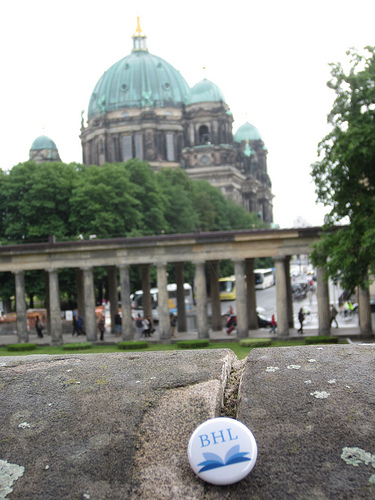
BHL Button and the Berlin Cathedral
View Full Size Image
BHL Button and the German History Museum
View Full Size Image
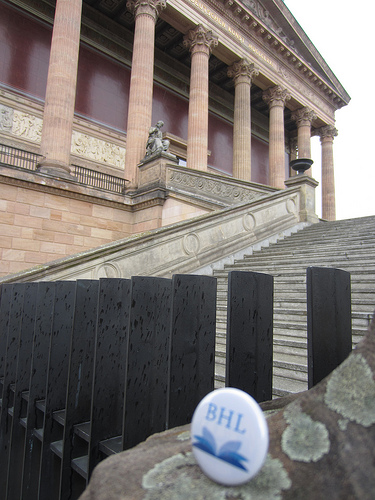
BHL Button and the Altes Museum
View Full Size Image
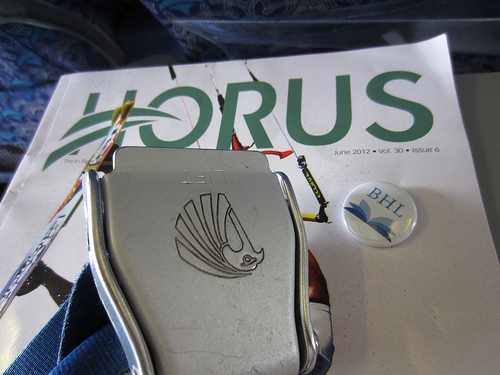
BHL Button on Egypt Air, flying from Berlin to Cairo
View Full Size Image
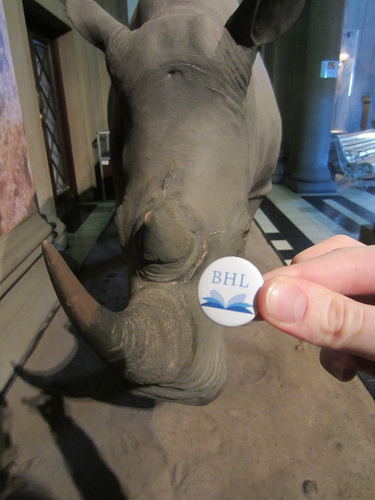
BHL Button with Rhino at the Pretoria Natural History Museum (South Africa)
View Full Size Image
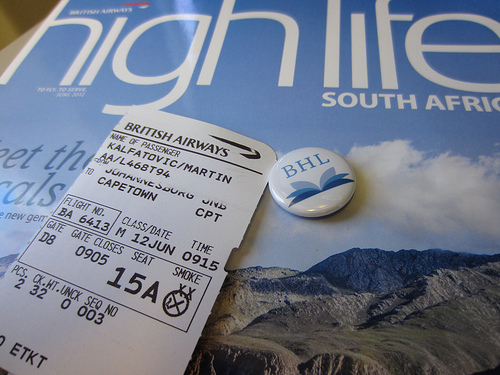
BHL Button on British Airways from Johannesburg to Cape Town, South Africa
View Full Size Image
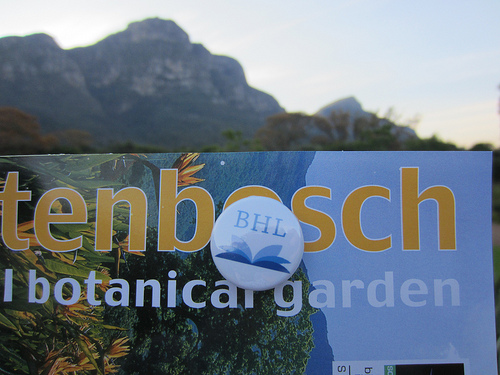
BHL Button at the Kirstenbosch Garden in South Africa
View Full Size Image
BHL Button at the Cape in South Africa
View Full Size Image
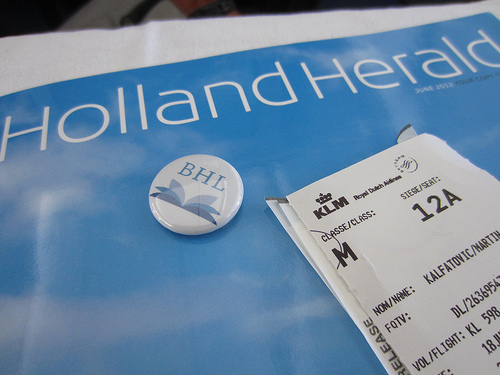
BHL Button flying home from Cape Town to Washington

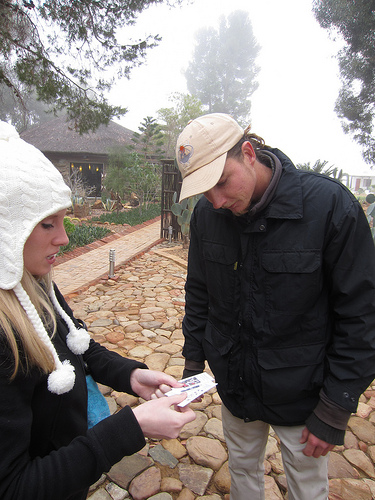
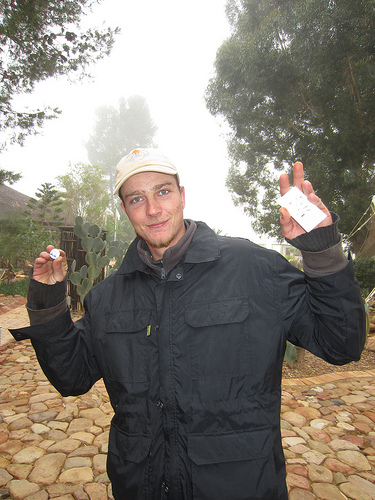
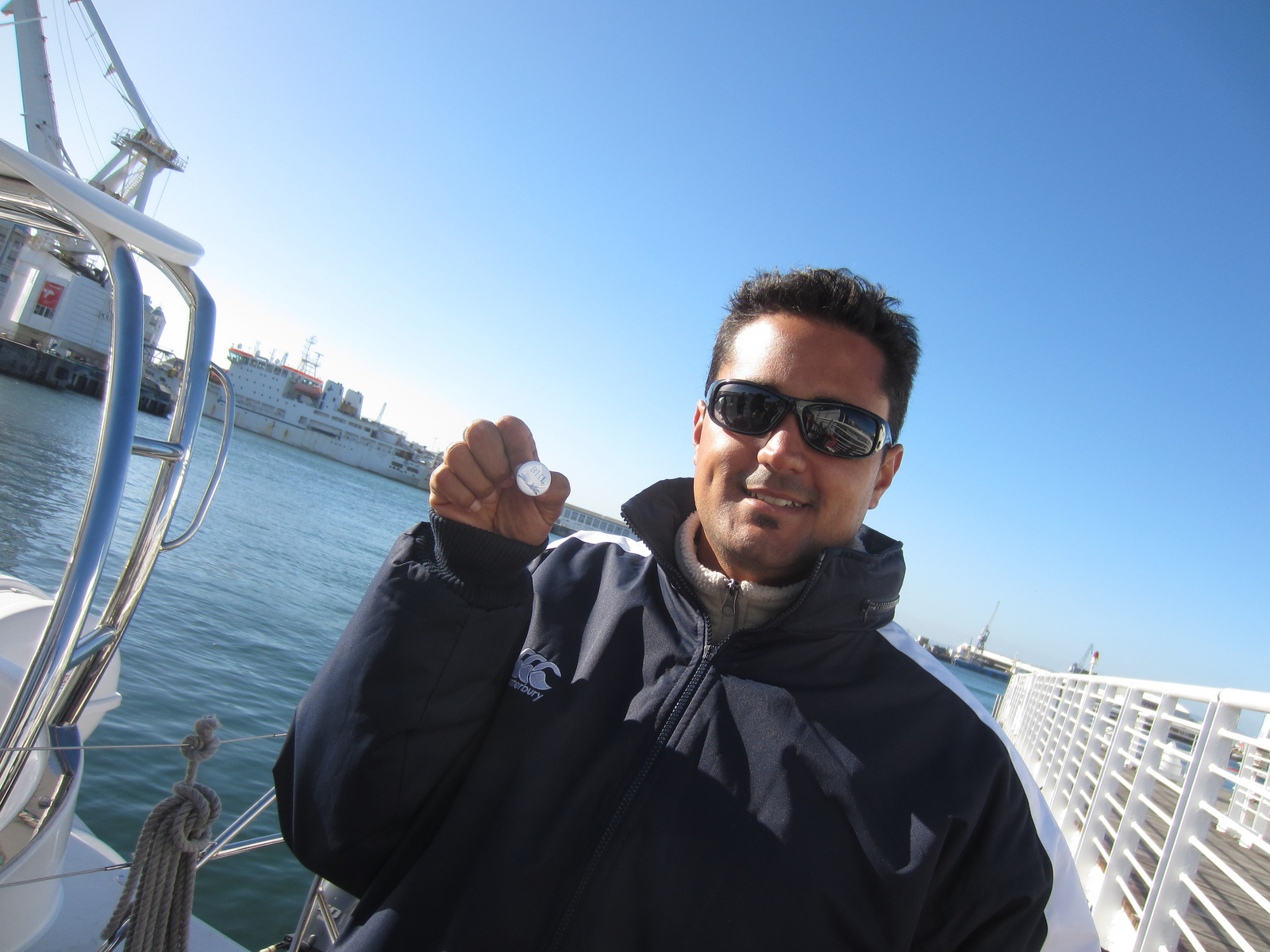
The button also serves as a great way to introduce people to the project in spontaneous, casual ways. BHL staff shared the button (and business cards) with our safari travel guide and our marine biologist boat tour guide in South Africa. Both were extremely enthusiastic about the project, touting the importance of freely-available biodiversity literature for scientific research and conservation efforts.

View Full Size Image
BHL Program Manager, Grace Costantino, presenting business cards & buttons to safari tour guide, Alex
View Full Size Image
Alex with the button and business cards
View Full Size Image
Marine Biologist boat tour guide with BHL button

It’s amazing what a powerful tool such a small button can be, and we’re excited to venture to even more countries and continents with our pal in the months and years to come!

Special thanks to BHL Program Director, Martin Kalfatovic, for sharing these pictures!

July 3, 2012by ulib-libraryjobs
BHL News, Blog Reel

Introducing the Theodore Roosevelt iTunes U Collection

View Full Size Image

When most people think of Theodore Roosevelt, they think of the twenty-sixth President of the United States. Taking office in 1901 at the age of 42 after the assassination of William McKinley, he is the youngest president in American history. As President, Roosevelt is known for his work in the Progressive Movement, completing the Panama Canal, and negotiating an end to the Russo-Japanese War. However, while many remember him as the politician, Theodore Roosevelt was also an accomplished natural historian, touring in Africa and Europe and leading a major expedition to the Amazon jungles.

To honor this remarkable man, we’ve dedicated our newest iTunes U collection to him. Our iTunes U provider page, which offers free access to a selection of BHL books organized according to theme, previously consisted of 8 collections, including Extinct Species and The Curious and the Bizarre. We’re thrilled to add the Theodore Roosevelt collection, containing 18 titles by Roosevelt, to our repertoire. To celebrate this release, we’re featuring one of the books as our Book of the Week: African Games Trails (1910).

View Full Size Image
Roosevelt’s expedition to Africa in 1909 was a major endeavor, conducted in large part to collect specimens for the Smithsonian and American Museum of Natural History. During the venture, Roosevelt and his team collected more than 11,397 animals, ranging from insects to big game animals. Roosevelt also used the expedition to interact with many native people and local leaders. A detailed account of the expedition, including descriptions of the flora and fauna he collected, are presented in his book African Game Trails, published in 1910.

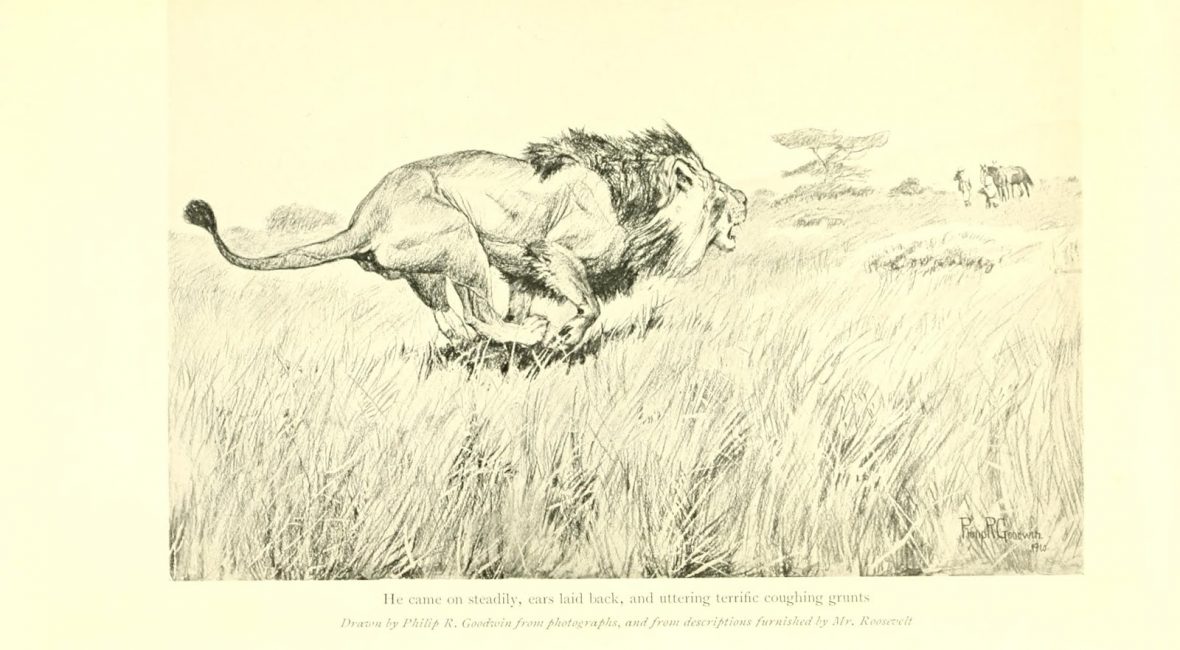
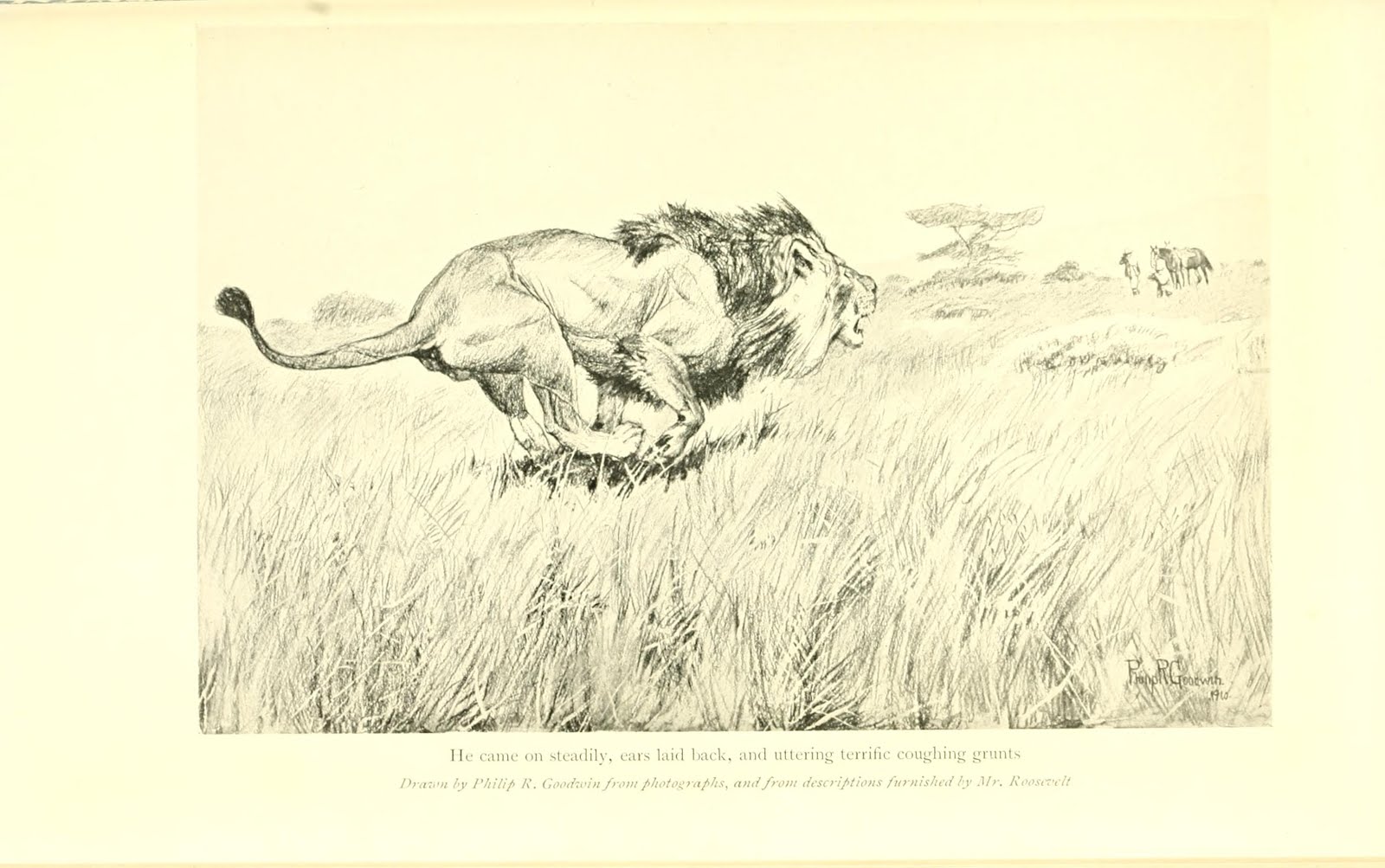
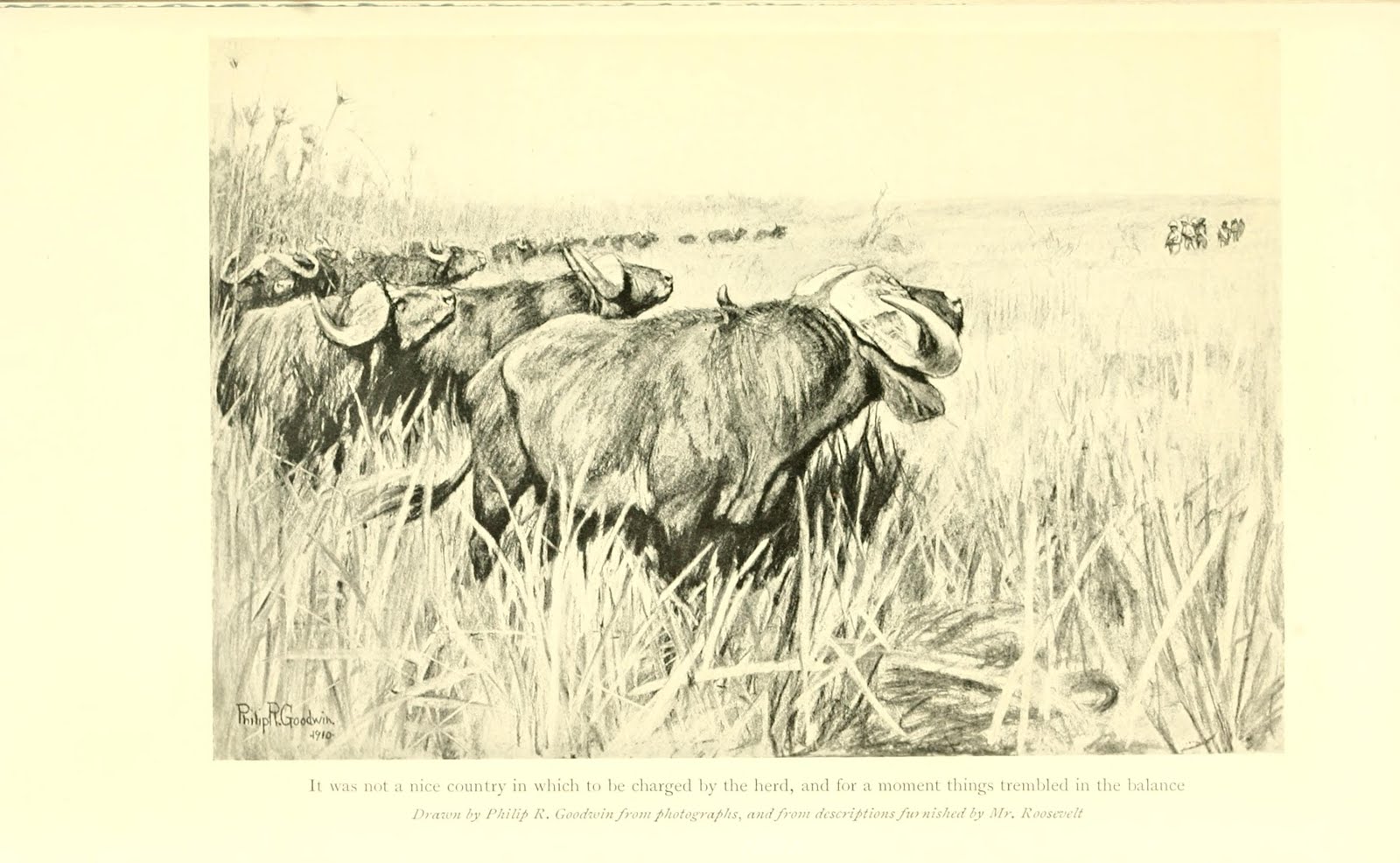
The work includes photographs taken by Roosevelt’s son, Kermit (to whom it is dedicated), as well as drawings by Philip R. Goodwin, an American artist best known for illustrating The Call of the Wild. African Game Trails contains accounts of such activities as lion hunting on the Kapiti Plains, encounters with the giant rhinoceros of the Lado, and the expedition’s trek down the Nile. Some of our favorite illustrations from the title include a herd of buffalo gazing with curiosity at the expedition team and a lion charging across the plain. A final item of interest worth noting is a map detailing the expedition’s route.

April 6, 2012by michelle.underhill
Blog Reel, Featured Books

Book of the Week: The Iconic Biodiversity of Africa

Africa. It is the second largest continent in the world, as well as the second most populous. It is commonly regarded to be the location in which the human species originated. It is the only continent to stretch from the northern to southern temperate zones, making it home to a wide variety of life. Furthermore, it has the largest number of megafauna species in the world (megafauna being literally “large animals,” typically considered those weighing greater than 100 or 220 pounds). As such, it is home to some of the most iconic species alive today, including elephants, lions, giraffes, and gorillas.

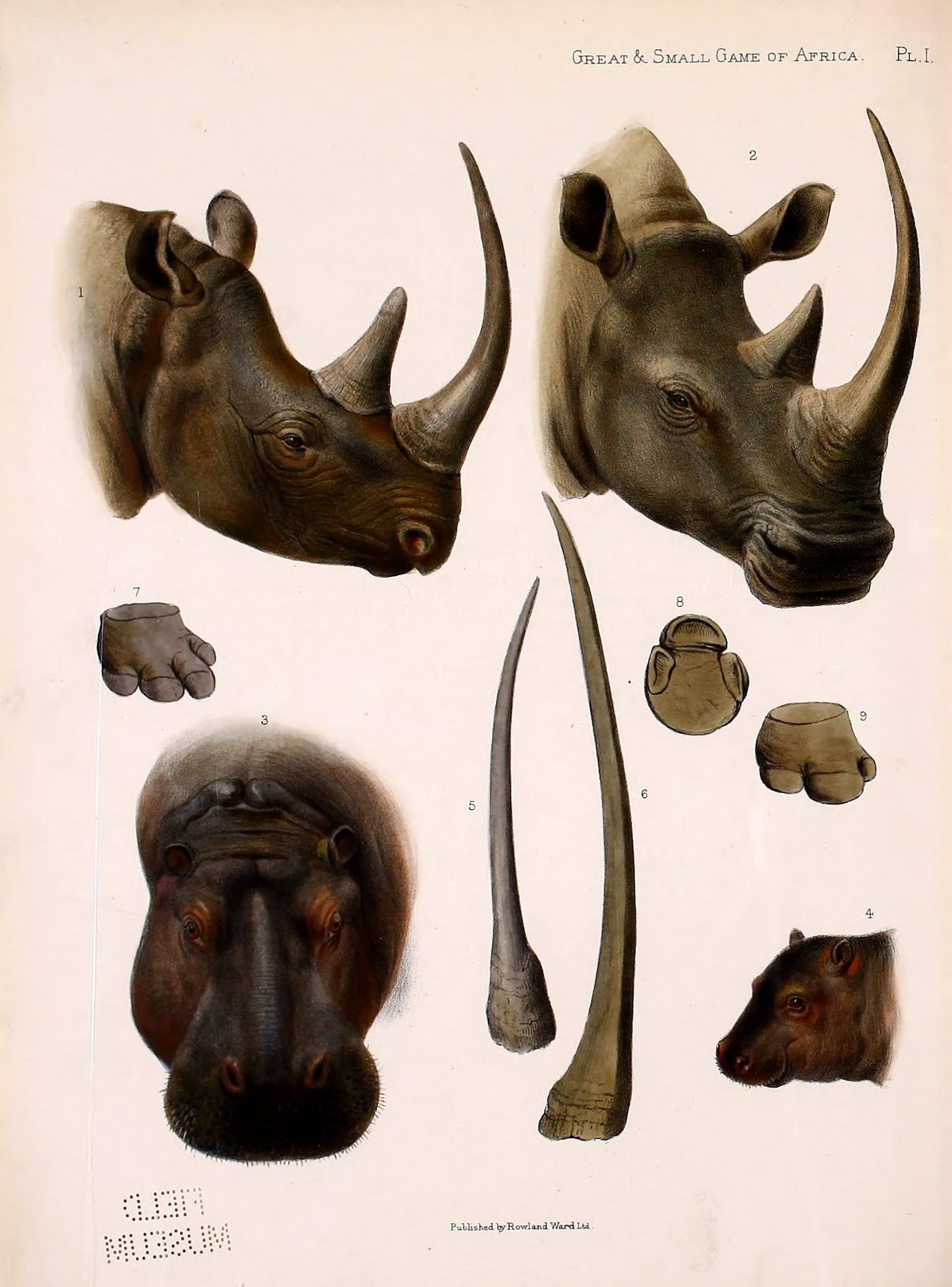
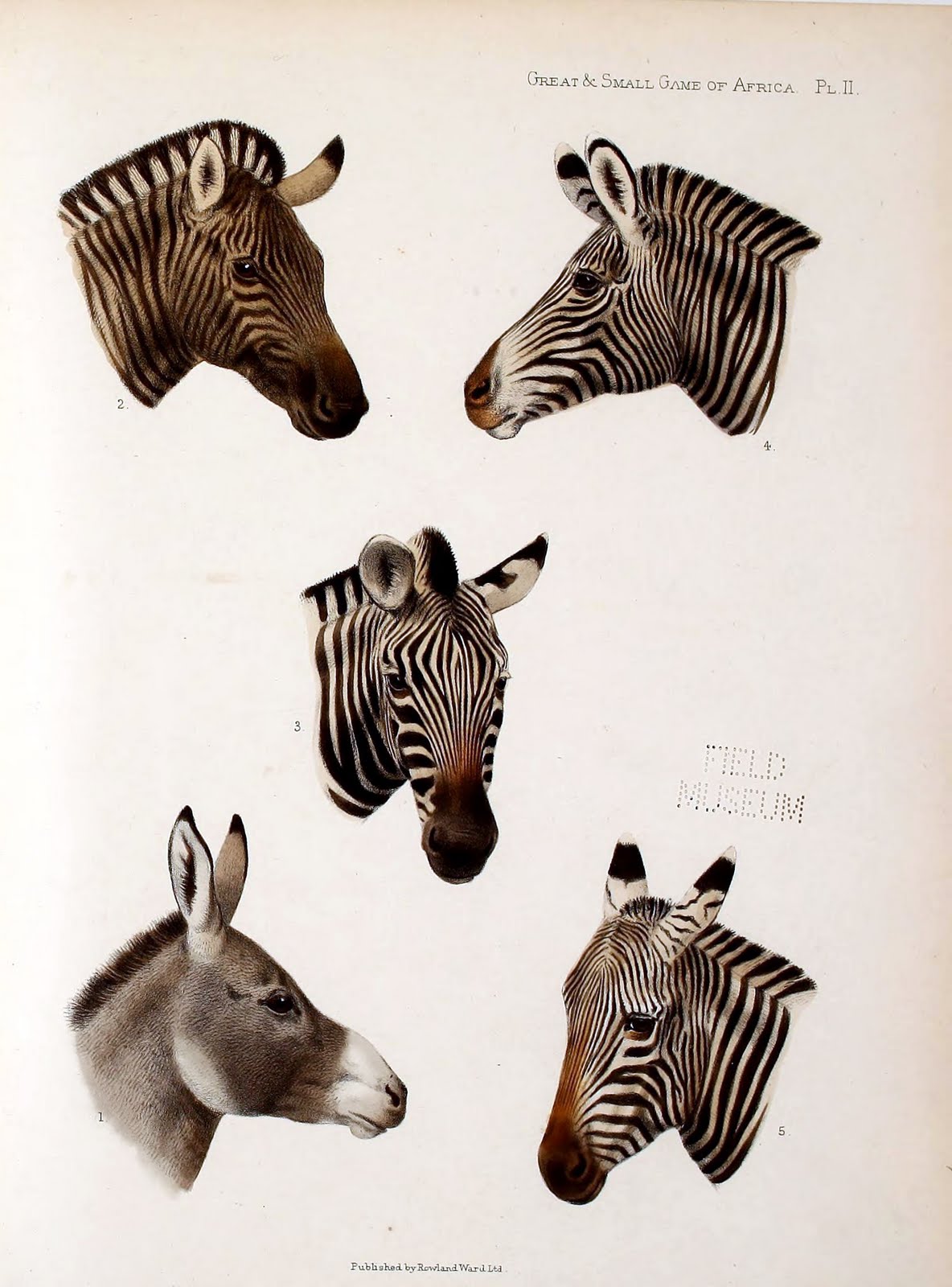
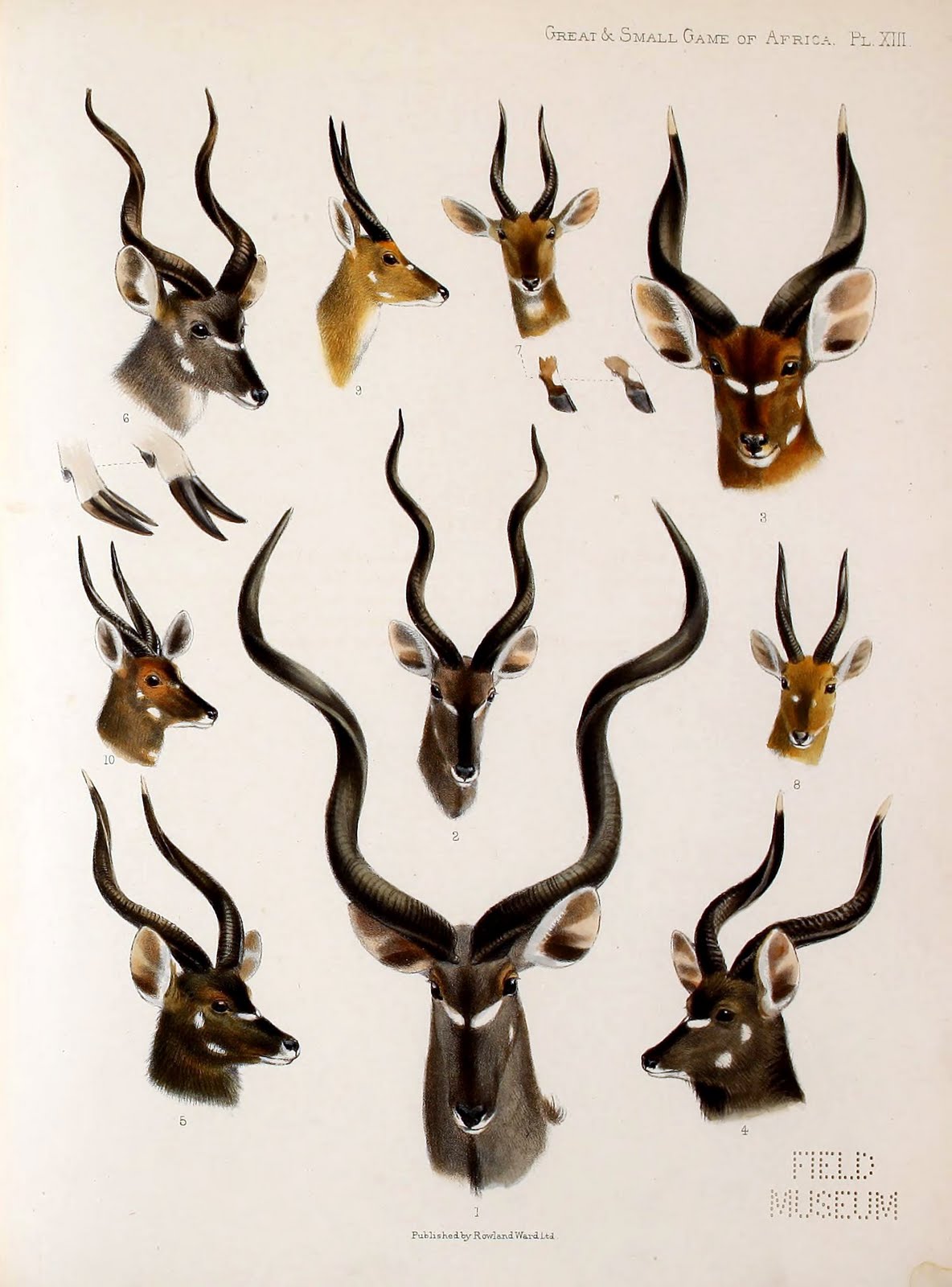
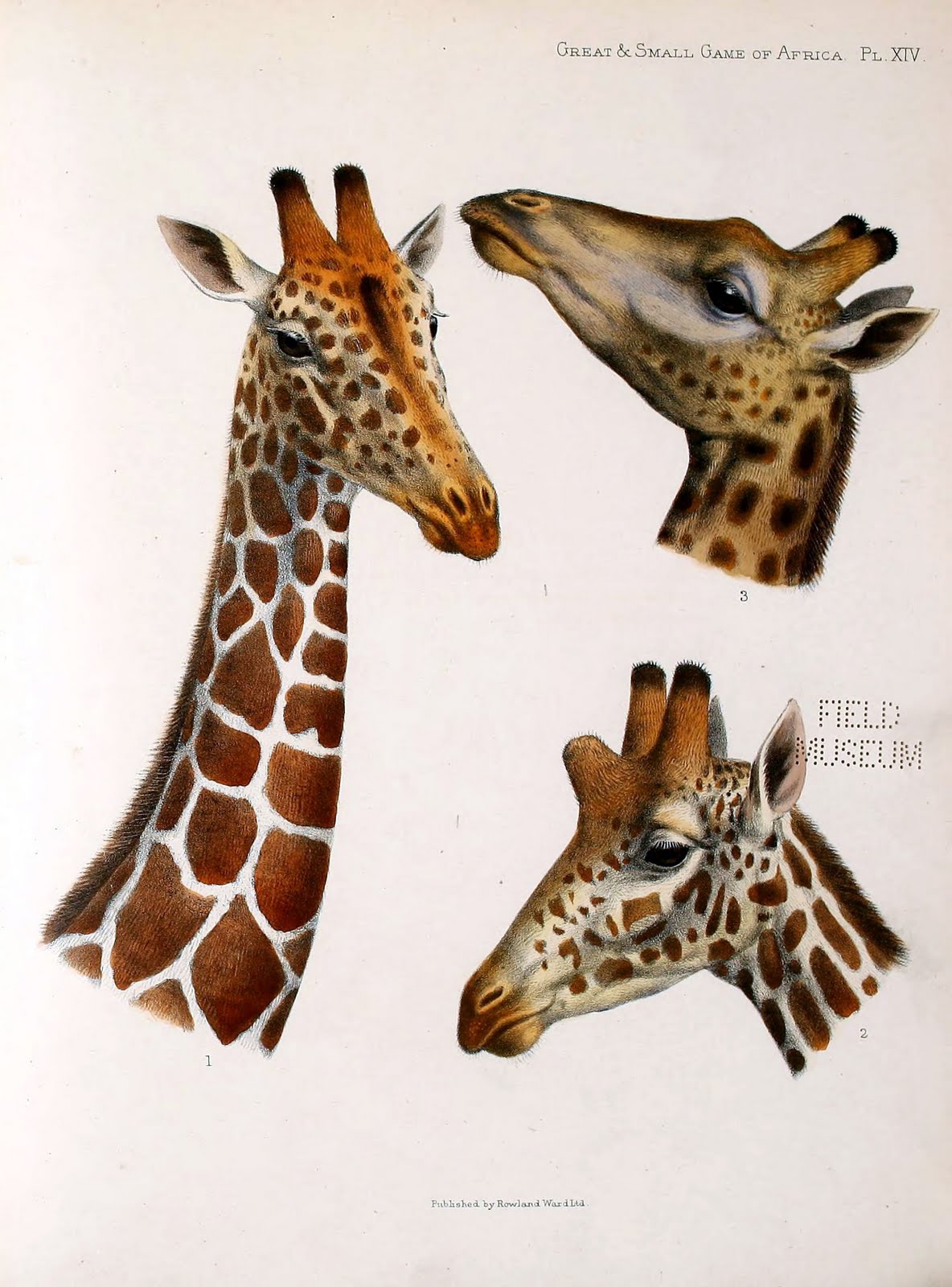
One of the most recent items added to our Flickr account is Great and Small Game of Africa (1899), and the stunning illustrations within the work have already inspired a great deal of chatter on the twitterverse.

While this volume was originally written as a guide for sportsmen, much of the biodiversity knowledge we hold in written format today was supplied in part by the observations and experiences of these individuals. This volume collects as much information about the species described within as was available and practical at the time of publication and presents it in a highly accessible format. For an added element of excitement for the reader, “Many of the articles have been written in the depths of Africa itself.”

We present the illustrations and accompanying prose that we found most enticing. You can see all of the illustrations from this book on our Flickr account, and experience for yourself all the captivating accounts of these great fauna within the pages of the work itself.

View Full Size ImageThe Rhinoceros

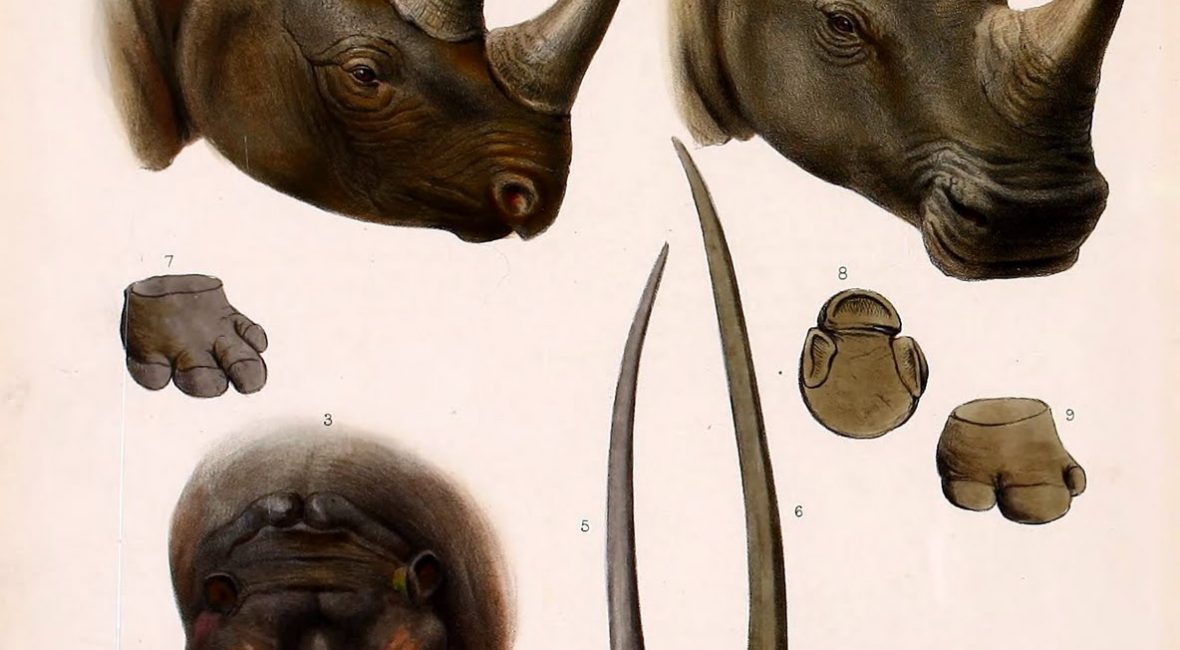
“At present day the group is restricted to Africa and the warmer parts of Asia. In Africa it is represented by the widely-spread common or black rhinoceros (R. bicornis [now Diceros bicornis]), the nearly extinct Burchell’s, or white rhinoceros (R. simus [now Ceratotherium simum]) of the Cape and south-eastern regions, and the little-known Holmwood’s rhinoceros (R. holmwoodi [determined to be the Black Rhinoceros in Tanzania]) of East Africa. All three are distinguished from their Asiatic relatives by their smooth skins and the absence of front teeth; and all have two horns. Burchell’s rhinoceros, which is a grass-feeder, differs, however, very widely from the common species in the structure of its cheek-teeth. Holmwood’s rhinoceros is at present known only by the horns and may prove not to be a distinct form.”

View Full Size ImageThe Zebra

“The zebras (sub-genus Hippotigris), which range over the open districts south of the Sahara, and are peculiar to Africa, differ from the asses in that at least the head and fore-part of the body are striped; the stripes in some cases extending over the whole animal. Four well-marked species may be recognised, viz.:- the quagga (E. quagga quagga [extinct subspecies of E. quagga]), now extinct, Burchell’s zebra (E. burchelli), Grevy’s zebra (E. grevyi), and the true or mountain zebra (E. zebra). Of the second of these at least seven more or less well-marked local races or sub-species may be distinguished, differing from one another in the arrangement of the stripes on the body, the presence or absence of intermediate ‘shadow-stripes,’ and the extent to which the striping extends on to the legs.”

View Full Size ImageThe Koodoo

“Koodoo, the name by which one of the most beautiful animals in the whole world is known to European sportsmen, must be, I think, a word of Hottentot origin, since it is not Dutch, nor does it at all resemble any of the many equivalents for the same animal used by the various Bantu tribes inhabiting South and South Central Africa.

This splendid antelope was once widely distributed through the southern portion of the African continent. Two conditions are necessary to its existence – water and bush…And wherever in South Africa these two conditions were fulfilled – with the single exception of the forests of Knysna – I believe that koodoos were once to be found. In the early part of the present century, koodoos were numerous in many parts of the eastern province of the Cape Colony, but they had become exceedingly rare in those districts at the date of my first visit to South Africa in 1871. Since that time, thanks to wise legislation on the part of the Cape Government, and the loyal support given to the gamelaws by the British and Dutch farmers, koodoos have lately very much increased in numbers in some of their old haunts within that territory.”

View Full Size ImageThe Giraffe

“These animals are very difficult of approach, in a general way, for they are extremely keen-sighted, and their towering height enables them to command a wide view…I do not think that lions very often succeed in killing these animals, defenceless though they be; and when they do, I believe it is generally a solitary giraffe (individuals of either sex are often seen alone) that has been surprised and pulled down by a party of lions.

Tick-birds – the same that so generally accompany the rhinoceros – often visit them, and it is curious to see these little guests running up and down their long necks, clinging to their sides and bellies, or sitting contentedly upon their heads while emitting their soft, querulous chirruping.

I have never heard giraffes make any sound, nor have I heard or read anywhere that their cry, if they have one, has ever been noticed.”

January 19, 2012by ulib-libraryjobs
Blog Reel, User Stories

BHL and Our Users: EOL Rubenstein Fellow, Dr. John Sullivan

Portrait version of the Biodiversity Heritage Library logo.

View Full Size Image

Today, we continue with our mini-series featuring EOL Rubenstein Fellows and their research activities. For this installment, meet Dr. John Sullivan, a passionate ichthyologist dedicated to discovering and describing fish species all over the world, but particularly in Africa.

What are your research interests, where you do the bulk of your work (country), and what is your institutional affiliation?

I am an evolutionary biologist who studies the phylogenetic interrelationships and evolution of freshwater fishes. I focus on two groups in particular: weakly electric fishes (Mormyridae and Gymnotiformes) which are found in Africa and South America, respectively, and catfishes (Siluriformes), which are distributed pretty much all over the world. In addition to using molecular techniques to work out phylogenies for these fishes, I describe species and work on the taxonomy of all three groups. My most recent collecting field trips have been to Ethiopia, the Democratic Republic of Congo, and Gabon. I am affiliated with two institutions, the Academy of Natural Sciences in Philadelphia, where I am a Research Associate, and the Cornell University Museum of Vertebrates in Ithaca, New York, where I am a Curatorial Affiliate. I live with my wife in Ithaca.

In the program, Fellowships are expected to serve as a complementary funding source to existing funding you have that supports your primary research activities. Please describe what you primary research activities are.

I used the Rubenstein Fellowship to supplement a nine-month Fulbright Research Fellowship in the Democratic Republic of the Congo. My Fulbright work was to make an inventory of fish species found in the vicinity of Kisangani, a city on the Congo River at the base of the Upper Congo rapids and to help build capacity at the University of Kisangani in ichthyology. As a Rubenstein Fellow, I made creation of EOL species pages for Congo River freshwater fishes a key activity of my time there. And since my return from Congo, I’ve been continuing to add many of the hundreds of photographs of fish specimens I took as we identify the specimens. We’ve already found several undescribed species from our collections, and I and my colleagues are beginning work on their descriptions.

Please describe how you use EOL to disseminate or support your primary research activities, or what your primary duties related to EOL are.

Eventually, I’d like to see great photos, descriptions and keys available online through EOL for all African freshwater fishes. We still have a lot of work to do to get there, but one can now see that this is the future. It still takes a lot of time to do careful taxonomic work, but now as soon as it’s published, we can get the name into a classification and a picture and description up online. For instance, we got the new mormyrid species Petrocephalus similis into EOL the week it was published in July. Taxonomy is a dynamic discipline: names and classifications frequently change to reflect our improving knowledge of the organisms (a sometime annoyance to end-users of taxonomies, but unavoidable). So static books are in some ways poor repositories of this information. Taxonomy and the Web are really made for each other and in hindsight something like EOL was inevitable.

How has the EOL Fellows program made a difference in your career/research?

The Rubenstein EOL Fellows program gave me an easy way to help make knowledge about African fishes available to everyone, including Africans who often have internet access but nothing in the way of libraries. The more informed my African colleagues are about their own fish fauna, the more effective our collaborations can be. While it doesn’t take the place of getting published in the primary literature, contributing to EOL tells your colleagues that you’re committed to the “broader impacts” of what we taxonomists do and that you’re at the forefront of where the field of taxonomy is headed. I am looking forward to the day when publishing a new species description and publishing content on EOL are one and the same thing. In fact, that future is already here with the journal ZooKeys that automatically exports to EOL. We plan to use that journal for our next mormyrid description.

Who is your Mentor, what is their area of interest (research activities), and how have they supported you throughout your Fellowship?

My mentor is Dr. Melanie Stiassny, curator of fishes at the American Museum of Natural History in New York. Melanie has really reinvigorated the study of fish diversity of the Congo River over the past few years and has made a number of stunning discoveries in the rapids area of the Lower Congo. She was great at providing me the logistical and moral support I needed for my project in Kisangani.

How does BHL support your Fellows activities, as well as those research activities that fall outside of your duties as an EOL Fellow?

I tend to think of BHL as my personal ichthyology library (although I know there’s a bit more archived in it than that). I have retrieved dozens and dozens of species descriptions from it that are now on my personal computer for instant reference and also appended to species pages in one of my two EOL Lifedesks: http://mormyrids.lifedesks.org/ and http://congofishes.lifedesks.org/.

I’ll give you a concrete example of how BHL supports my work. In systematics, the old literature is often just as important as the new. For instance, the systematics of a genus of mormyrid fish we work on was really blocked by our inability to establish the identity of Mormyrus sphekodes (now Paramormyrops sphekodes), described in 1879 by French ichthyologist H.E. Sauvage. The type specimen still exists, but is in bad condition in the Paris Museum collection. If we were to describe new species without knowing what P. sphekodes really was, we risked redescribing it under a different name and creating a synonym.

So this past May I arranged to go back to the type locality mentioned by Sauvage, the “Chutes de Doumé” on the Ogooué River in Gabon to make a new collection of it. I’m happy to report I succeeded! Before going there, I had downloaded Sauvage’s description of this fish from BHL, published in the Bulletin de la Société Philomatique de Paris. It had taken me just a few minutes to locate this paper and customize the pdf. I had it on my Kindle as I stood at the site, a place I don’t think ichthyologists had revisited since the 1870s.

When did you first discover BHL?

Some time before I started my Fellowship, probably in 2008.

What are your favorite features/services on BHL?

I love how it takes me no time at all to find a species description in some old serial like the Annals and Magazine of Natural History and, using the web interface, generate a pdf of just those pages that I want. Even if I lived in a library that had these volumes on the shelf, it would take me longer to locate what I was looking for. I can then take those pdfs BHL generates for me and attach them to the species pages I create on my Lifedesks. Now anybody in the world has instant access to the original species description in a couple of clicks!

If you could change one thing about BHL, or suggest one thing to be the next developmental priority for BHL, what would it be?

It seems like you are doing the right thing: continue to expand and add content. It is great to see a number of biodiversity journals allowing BHL to digitize their back catalog, including material still under copyright, and very encouraging to see BHL go international with BHL-Europe and other initiatives. Now that much of the really old stuff is available, it’s the material from the 1930’s – 1970’s that is notably hard to obtain if you don’t have a world-class library, so I hope more of it finds its way onto BHL in the near future.

Please describe why you think services like EOL and BHL are important for today’s scientific community.

Science is all about disseminating knowledge and building upon what has come before, yet so much of our knowledge of plants and animals has remained inaccessible to those who could make use of it. This has been a big part of the “taxonomic impediment.” BHL is radically changing the status quo and democratizing access to knowledge about biodiversity. Now that access to the works of so many great 18th and 19th Century biologists is an easy affair, I expect we’ll see them cited a lot more in the modern literature. In this way, BHL is contributing to the continuity of biodiversity science.

Do you have a favorite book in BHL, or a book that has most supported your research activities or EOL responsibilities?

My favorite book in BHL would have to be the four volumes of George Albert Boulenger’s Catalogue of the Fresh-Water Fishes of Africa, published from 1909 to 1916. This work remains the single-most important publication on African ichthyology. While many more species have been described in the subsequent century and generic names have undergone changes, it is still a remarkably useful resource for identifying African fishes. Until BHL made pdfs of all four volumes freely available, you had to pay dearly even for a reprinted version. Now all my African colleagues who never had these advantages have the pdfs on their laptops.

Thank you, Dr. Sullivan, for taking the time to give us a glimpse into your world and research, and for articulating how important BHL has been to your endeavors. As we continue to grow our collection, we hope to be able to establish more and more relationships with publishers and provide access to a plethora of in-copyright materials, freeing, as you so eloquently describe, this information from the static written page to the future of dynamic electronic access for the world.

Information on the photo from Dr. Sullivan: “The photo is of me on the Ogooué River in Gabon, Africa in May of this year. The site is a famous one for African ichthyology: it is the “Chutes de Doumé” from which H.-E. Sauvage described the catfish Doumea typica and the mormyrid electric fish Mormyrus sphekodes – now Paramormyrops sphekodes – (among others) in an 1879 publication published in the Bulletin de la Société philomathique de Paris, a pdf of which I downloaded from BHL!”

September 13, 2011by michelle.underhill
Page 3 of 3«123

Help Support BHL

BHL's existence depends on the financial support of its patrons. Help us keep this free resource alive!

search

About BHL

The Biodiversity Heritage Library (BHL) is the world’s largest open access digital library for biodiversity literature and archives. BHL operates as a worldwide consortium of natural history, botanical, research, and national libraries working together to digitize the natural history literature held in their collections and make it freely available for open access as part of a global “biodiversity community.”
Join Our Mailing List

Sign up to receive the latest news, content highlights, and promotions.

Subscribe Now

Subscribe to Blog via Email

Enter your email address to subscribe to this blog and receive notifications of new posts by email.

Join 319 other subscribers

Subscribe to Blog Via RSS

Subscribe to the blog RSS feed to stay up-to-date on all the latest BHL posts.

Access RSS Feed

Inspiring Discovery through Free Access to Biodiversity Knowledge.

The Biodiversity Heritage Library makes it easier than ever for you to access the information you need to study and explore life on Earth…for free, anytime, anywhere.


64+ Million Pages of
Biodiversity Literature Online.

EXPLORE

Tools and Services
to Transform Research.

EXPLORE

300,000+
Illustrations on Flickr.

EXPLORE

ABOUT | HARMFUL CONTENT | PRIVACY | SITE MAP | TERMS OF USE