Biodiversity Heritage Library - Program news and collection highlights from BHL
  • Home
  • News
  • Featured Books
    • All Featured Books
    • Book of the Month Series
    • BHL at 20
  • User Stories
  • Campaigns
    • Fossil Stories
    • Garden Stories
    • Monsters Are Real
    • Page Frights
    • Her Natural History
    • Earth Optimism 2020
  • Tech Blog
  • Visit BHL
Home
News
Featured Books
    All Featured Books
    Book of the Month Series
    BHL at 20
User Stories
Campaigns
    Fossil Stories
    Garden Stories
    Monsters Are Real
    Page Frights
    Her Natural History
    Earth Optimism 2020
Tech Blog
Visit BHL
  • Home
  • News
  • Featured Books
    • All Featured Books
    • Book of the Month Series
    • BHL at 20
  • User Stories
  • Campaigns
    • Fossil Stories
    • Garden Stories
    • Monsters Are Real
    • Page Frights
    • Her Natural History
    • Earth Optimism 2020
  • Tech Blog
  • Visit BHL
Biodiversity Heritage Library - Program news and collection highlights from BHL
Blog Reel, Campaigns, Earth Optimism 2020

George Washington Carver: Strengthening Society with Conservation Through Agriculture

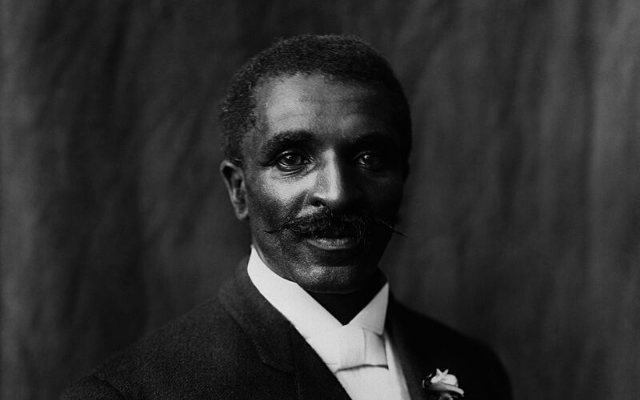
Black and white photograph of a man with short hair and a mustache in a suit

April 2020 marks the 50th anniversary of Earth Day. Organizations around the world have commemorated the occasion by participating in the global Earth Optimism movement — an initiative spearheaded by the Smithsonian to “turn the conservation conversation from doom and gloom to optimism and opportunity”.

Throughout 2020, the Biodiversity Heritage Library (BHL) and our partners are joining the movement by sharing conservation success stories from and made possible by the BHL collection. Follow our blog for conservation stories — past and present — and visit our website for more information and to explore our Earth Optimism book collection.

———————
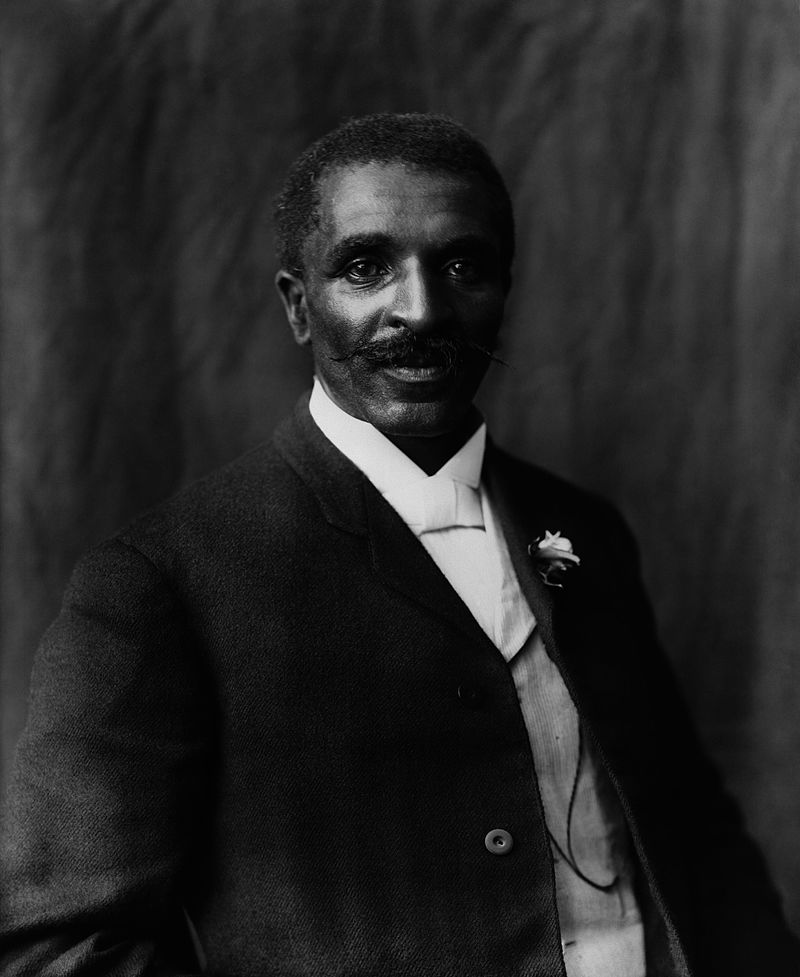
Photo of George Washington Carver by Frances Benjamin Johnston

Photo of George Washington Carver by Frances Benjamin Johnston, Wikimedia Commons, Public Domain.

“‘When I touch that flower,’ he said softly, ‘I am not merely touching that flower. I am touching infinity. That little flower existed long before there were human beings on this earth. It will continue to exist for thousands, yes, millions of years to come.”‘

— George Washington Carver, as quoted in The man who talks with the flowers; the intimate life story of Dr. George Washington Carver (Clark, 1939)
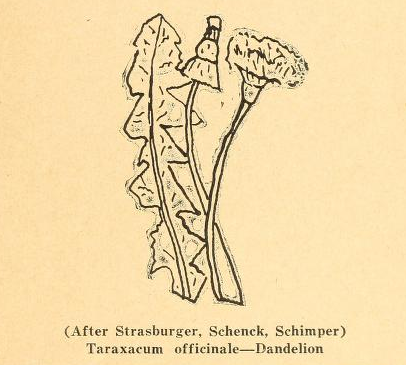
Taraxacum officinale -Dandelion, after Strasburger, Schenck, Schimper, Biodiversity Heritage Library.

Carver, George Washington. Nature’s Garden for Victory and Peace. 1942. Contributed in BHL by U.S. Department of Agriculture, National Agricultural Library.

Widely known as the “Peanut Man”, George Washington Carver is a famous historical figure in the world of agriculture. His work with peanuts is the first thing many learn about him in grade school, and indeed he popularized an underused versatile legume. He also worked extensively with sweet potatoes, soybeans, tomatoes, and much more. However, he sought to do more than highlight particular foodstuffs. He was interested in creating social change through agriculture, and thoughtfully caring for the soil that would bring about this change. Carver sought to encourage sustainable farming practices, move nature education outside the classroom, and improve the livelihoods and economic security of poor Black farmers in the South. Somewhere in the enticing history of peanut farming we lose the knowledge of his passion for conservation; Carver was instrumental in highlighting the need for agriculture to be intertwined with ecology.

“Unkindness to anything means an injustice done to that thing. If I am unkind to you I do you an injustice, or wrong you in some way. On the other hand, if I try to assist you in every way that I can to make a better citizen and in every way to do my very best for you, I am kind to you.

The above principles apply with equal force to the soil. The farmer whose soil produces less every year, is unkind to it in some way; that is, he is not doing by it what he should; he is robbing it of some substance it must have, and he becomes, therefore, a soil robber rather than a progressive farmer.” (Carver, 1914)

Carver began his studies as the first African American student at the Iowa Agriculture College (now Iowa State University) in 1891. Louis Pammel, Carver’s advisor, was instrumental in shaping Carver’s views on ecology. Pammel felt that ecology was incredibly important to the field of agriculture, particularly the need to achieve agricultural equilibrium between crops and natural species (Hersey, 2011). Carver followed his mentor’s teachings closely and went on to complete his master’s degree in Iowa.  In 1896, Booker T. Washington offered him the role of head of the agriculture department at the Tuskegee Institute. The following year, the state of Alabama established an Agricultural Experiment Station at Tuskegee, the first of its kind at a Black institution.

“When my train left the golden wheat fields and the tall green corn of Iowa for the acres of cotton, nothing but cotton, my heart sank a little…The scraggly cotton grew close up to the cabin doors; a few lonesome collards, the only sign of vegetables; stunted cattle, boney mules; fields and hill sides cracked and scarred with gullies and deep ruts…Not much evidence of scientific farming anywhere. Everything looked hungry: the land, the cotton, the cattle, and the people.” (Carver, 1941)

Though Carver focused his instruction on the relationships between plants, he also looked specifically at how people interact with nature. While at Iowa, he was a member of the Welch Eclectic Society, which focused on strengthening skills in literature, science, and public speaking; in this group he often wrote poetry and performed music (Gart, 2014). He was an advocate of the nature study movement, which tied personal, spiritual, artistic, and observational experience with the natural world. Correlating perspectives of nature with personal responsibility solidifies the importance of conservation. Nature study was often employed at the time to provide primary school children opportunities to work with gardens. Carver also took his adult students out into the natural world to experience what they were learning aesthetically. While at Tuskegee, he served on the board of Nature-Study Review, and also penned Progressive Nature Studies. In it, Carver highlights why he felt so strongly about this kind of study:

“The thoughtful educator realizes that a very large part of the child’s education must be gotten outside of the four walls designated as class room. He also understands that the most effective and lasting education is the one that makes the pupil handle, discuss and familiarize himself with the real things about him, of which the majority are surprisingly ignorant… If properly taught the practical Nature study method cannot fail to both entertain and instruct. It is the only true method that leads up to a clear understanding of the fundamental principles which surround every branch of business in which we may engage. It also stimulates thought, investigation, and encourages originality.” (Carver, 1897)
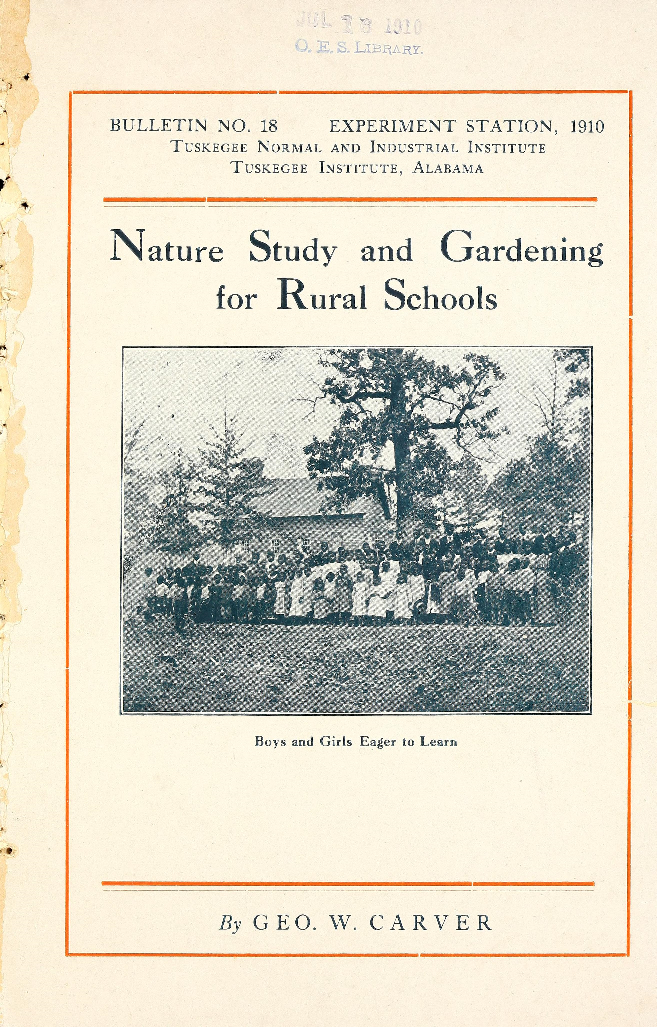
Title Page: Nature Study and Gardening for Rural Schools by George Washington Carver, Biodiversity Heritage Library, Public Domain

Carver, George Washington. Nature Study and Gardening for Rural Schools. 1910. Contributed in BHL by U.S. Department of Agriculture, National Agricultural Library.

Carver was invested in scientific education and sharing the joy of ecology with people outside of academia as well. He spent a great deal of his time providing short courses for those unable to attend the Institute; both farmers and educators benefited from these opportunities. He spoke widely at state fairs and other public venues, emphasizing that understanding the whole of the natural world, of which crops are a component, is essential to being least harmful to that world.

In some notes on his coursework, Carver defined agriculture as “…the cultivation or the manipulation of the soil in such a way as to bring about the greatest possible yield of products useful to man with the least injury to the soil and at the least expense” (Hersey, 2011). This message was evident in his work, especially as it tied to economic independence for farmers. His very first experimental station bulletin highlighted the use of the acorn as an inexpensive and nutritious food source for livestock; not only were acorns widely available to poor farmers, but also the usage provided the added economic justification for maintaining forests (Carver, 1898). Carver focused on crops that were edible, marketable, and contributed to healthy soil, such as: cowpeas, sweet potatoes, and, of course, peanuts. To this end, he published bulletins highlighting recipes for using readily available ingredients on a family farm.
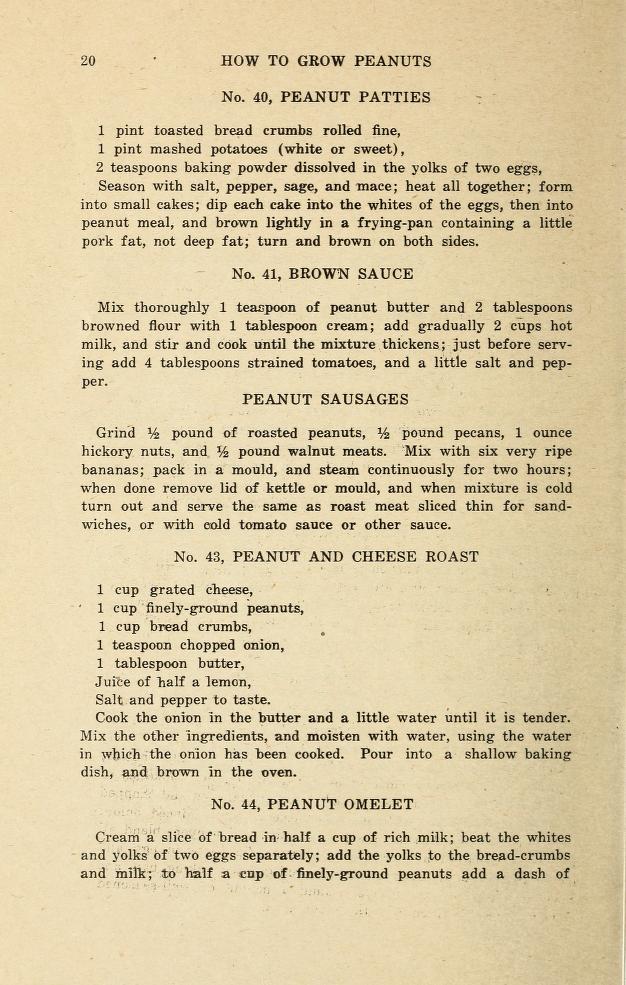
Recipes of meat alternatives using peanuts by George Washington Carver, Biodiversity Heritage Library, Public Domain.

Carver, George Washington. How to Grow the Peanut, and 105 Ways of Preparing it for Human Consumption. 1916. Contributed in BHL by U.S. Department of Agriculture, National Agricultural Library.

Carver spent a great deal of time studying alternatives for the purposes of improving soil quality and frugality. He was a champion for crop rotation and natural fertilization. “His was in many ways a voice alone, the voice of one calling not in the wilderness—like his more famous contemporaries—but in denuded and depleted fields white with bolls of cotton” (Hersey, p 220). Carver was concerned with reducing erosion of the topsoil, and he highlighted the importance of forest preservation in providing rich nutrients to that topsoil. He persuaded Tuskegee Institute to collect leaves from the trees within its land holdings for use in his work. He advocated more extensive plowing to aerate and mix the soil. He tested and promoted the use of natural fertilizers, arguing for their scientific merits as well as their accessibility to farmers with fewer means to purchase commercial products. He focused on crops that would bring the least damage to the soil while also providing yields to farmers over longer periods of time (Burchard & George Washington Carver National Monument (Mo.), 2005).

Carver did not publish prolifically as is expected in scientific fields, nor did he keep extensive laboratory records. There is some controversy over his scientific achievements as these metrics often require. Additionally, his push for sustainable farming and providing economic independence for Black farmers was unrealized. His ideas flew in the face of the politics and practices of the South where sharecropping was rampant (Kaufman 2019). The poorest farmers were in thrall to their landlords and were only given latitude to diversify crops when cotton prices were low. When it was allowed, most new crops needed attention in the spring and summer, when cotton was demanding. While the early 1900s saw a dramatic increase in Black homeowners in the South, soon after the United States faced the Great Depression and World War I, decreasing those numbers yet again (Hersey, 2011). Though Carver and the Tuskegee Institute attempted to push for better practices by working with white landlords, this understandably caused concern for many of the Black farmers who had been subject to many disreputable landlords over time. Additionally, his colleagues often considered his suggestions and concern over the natural world to be “feminine” and thus outside of the scientific pursuits of the day.

Though many may not initially think of Carver while considering conservation efforts over time, his goal was to marry preservation of the natural world with more accessible and successful farming practices. His ideas were almost prescient considering the more widespread cries that came much later to prevent deforestation for both environmental and agricultural benefits, the focus on organic farming, and the concern of the effect of pollutants from agriculture on the natural world. His influence on conservation may sometimes get lost in the excitement over peanuts, but the BHL contains windows into the complexity of his research and his historical impact on agriculture and conservation.

Check out sources included in this post in the curated BHL Earth Optimism collection.

To see all BHL content by Dr. Carver, see his author profile in BHL.

Works Cited

Burchard, P. D., & George Washington Carver National Monument (Mo.). (2005). George Washington Carver, for his time and ours : special history study : natural history related to George Washington Carver National Monument, Diamond, Missouri. Omaha, Nebraska: National Park Service. Retrieved from: https://www.nps.gov/gwca/learn/management/upload/GWC-For-His-Time-Ours-Spec-History-Study.pdf

Carver, G. W. (1897). Progressive nature studies. Tuskegee, Alabama: Tuskegee Institute Print.

Carver, G. W. (1898). Feeding acorns. Tuskegee, Alabama: Normal School Steam Press.

Carver, G. W. (1910). Nature study and gardening for rural schools. Tuskegee Institute, Alabama: Experiment Station, Tuskegee Normal and Industrial Institute,.

Carver, G. W. (1914). Being Kind to the Soil. The Negro Farmer, p. 1.

Carver, G. W. (1916). How to grow the peanut, and 105 ways of preparing it for human consumption. Tuskegee, Alabama: Tuskegee Institute.

Carver, G. W. (1942). Nature’s garden for victory and peace (Revised and reprinted. ed. Vol. no.43). [Tuskegee]: Tuskegee Institute.

Carver, G. W., “Script for Dr. George W. Carver Broadcast: U. S. Office of Education,” 19 October 1941,

TIA, 46,989 & 62, 151.

Clark, G. (1939). The man who talks with the flowers; the intimate life story of Dr. George Washington Carver. Saint Paul, Minn.: Macalester Park Publishing Co.

Gart, J. (2014). He shall direct thy paths: The early life of George W. Carver, historic resource study George Washington Carver National Monument, Diamond, Missouri. Omaha, Nebraska: National Park Service. Retrieved from:

Hersey, M. D. (2011). My work is that of conservation : an environmental biography of George Washington Carver. Athens: University of Georgia Press.

Kaufman, R. (2019). In Search of George Washington Carver’s True Legacy. Smithsonian Magazine. Retrieved from https://www.smithsonianmag.com/history/search-george-washington-carvers-true-legacy-180971538/.
June 25, 2020by Joel Richard
Blog Reel, User Stories

Teaching with Historic Biodiversity Publications

Can science increase agricultural productivity and support food security?

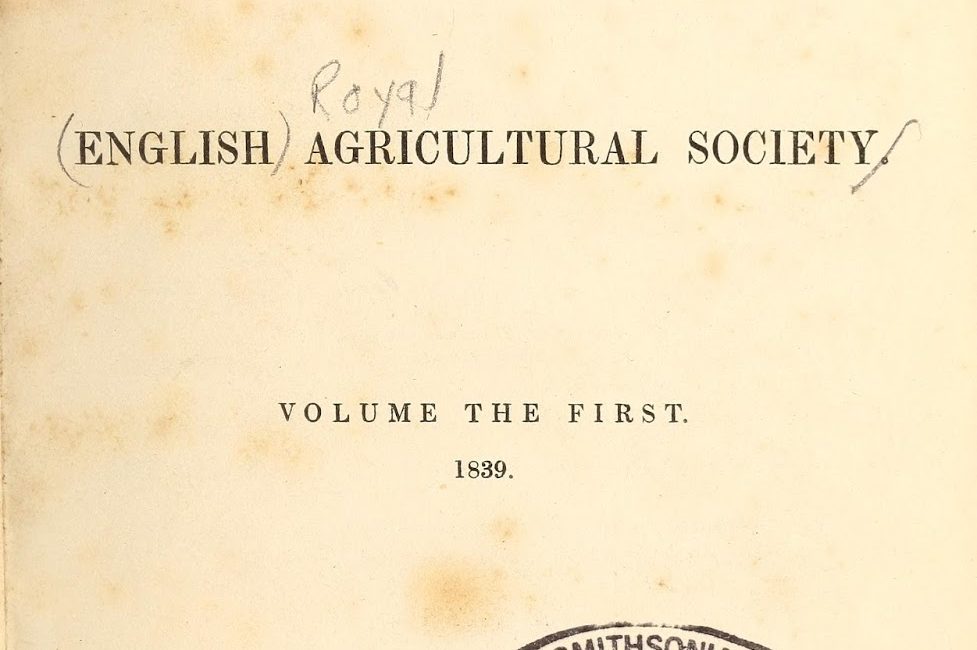
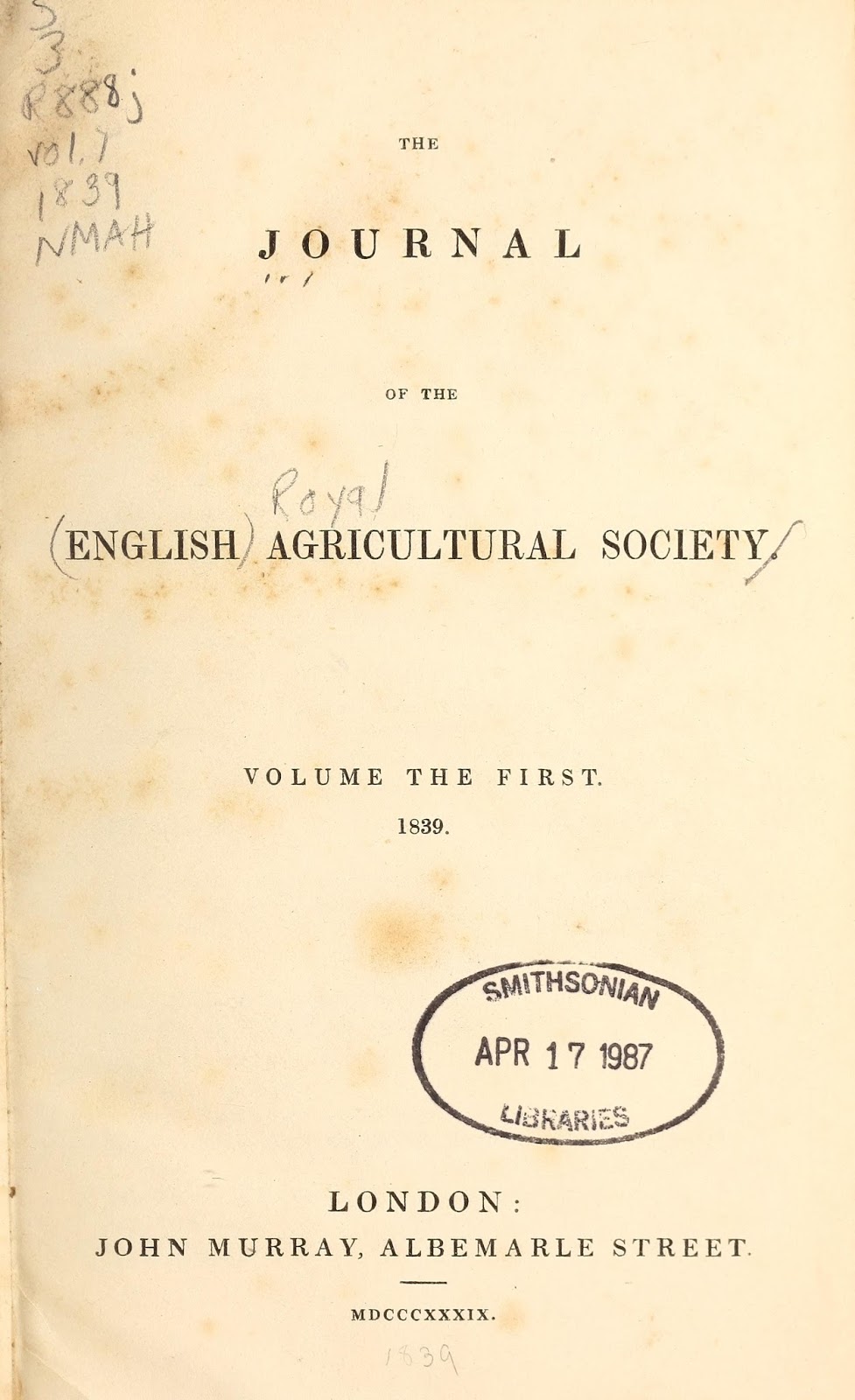
The founders of the Royal Agricultural Society of England believed so. In 1838, a group of individuals with varied agricultural interests united to establish the Society with the purpose to promote the scientific advancement of English agriculture. Just two years later, in 1840, Queen Victoria granted the Society its Royal Charter, and the Society has played a significant role in agricultural progress in England ever since.

Title page for Volume One of the Journal of the Royal Agricultural Society of England. 1839. Digitized by Smithsonian Libraries. http://s.si.edu/2nqmWdu.

The Journal of the Royal Agricultural Society of England was used to communicate the Society’s activities and disseminate information useful to those in agricultural fields. Since the publication of the first volume in 1839, the Journal has shared practical advice on soil cultivation; advances in agricultural implements, structures, and pest control; discoveries of new crop varieties; land management guidance; improvements in veterinary care related to livestock; and the results of agricultural experiments.

The Journal is useful not only for research in agricultural science, but also other fields like environmental history. For Dr. Karen Sayer, Professor of Social and Cultural History at Leeds Trinity University, it is an invaluable resource.

“The Journal of the Royal Agricultural Society of England is a crucial source in my field, and I have easy access to it thanks to the Biodiversity Heritage Library.”

Dr. Karen Sayer (left) with a student. Image Rights: Leeds Trinity University.

Sayer’s research focuses on conceptualizations of rural communities, landscapes, and environments; human and animal relations in agriculture; and agricultural labor, landscapes, and structures in a social and cultural context. Thanks to BHL, which she discovered whilst searching for primary sources nearly ten years ago, Sayer has easy access to the references she needs to support her research.

“BHL is an incredible resource,” affirms Sayer. “It provides access to material that is otherwise hard to get and enables me to undertake detailed searches of these sources. I use it frequently, often weekly, especially when I’m teaching as it is also a great resource for my students.”

Sayer’s favorite feature within the library is the ability to generate custom PDFs of specific pages, which allows her to download just those articles relevant to her research. This feature is also useful within the classroom, allowing her to share articles with her students for reading and commenting.

Having digital access to publications such as the Journal of the Royal Agricultural Society of England also allows Sayer and her students to easily explore elements of agricultural and rural society and the dissemination of information at different cultural levels.

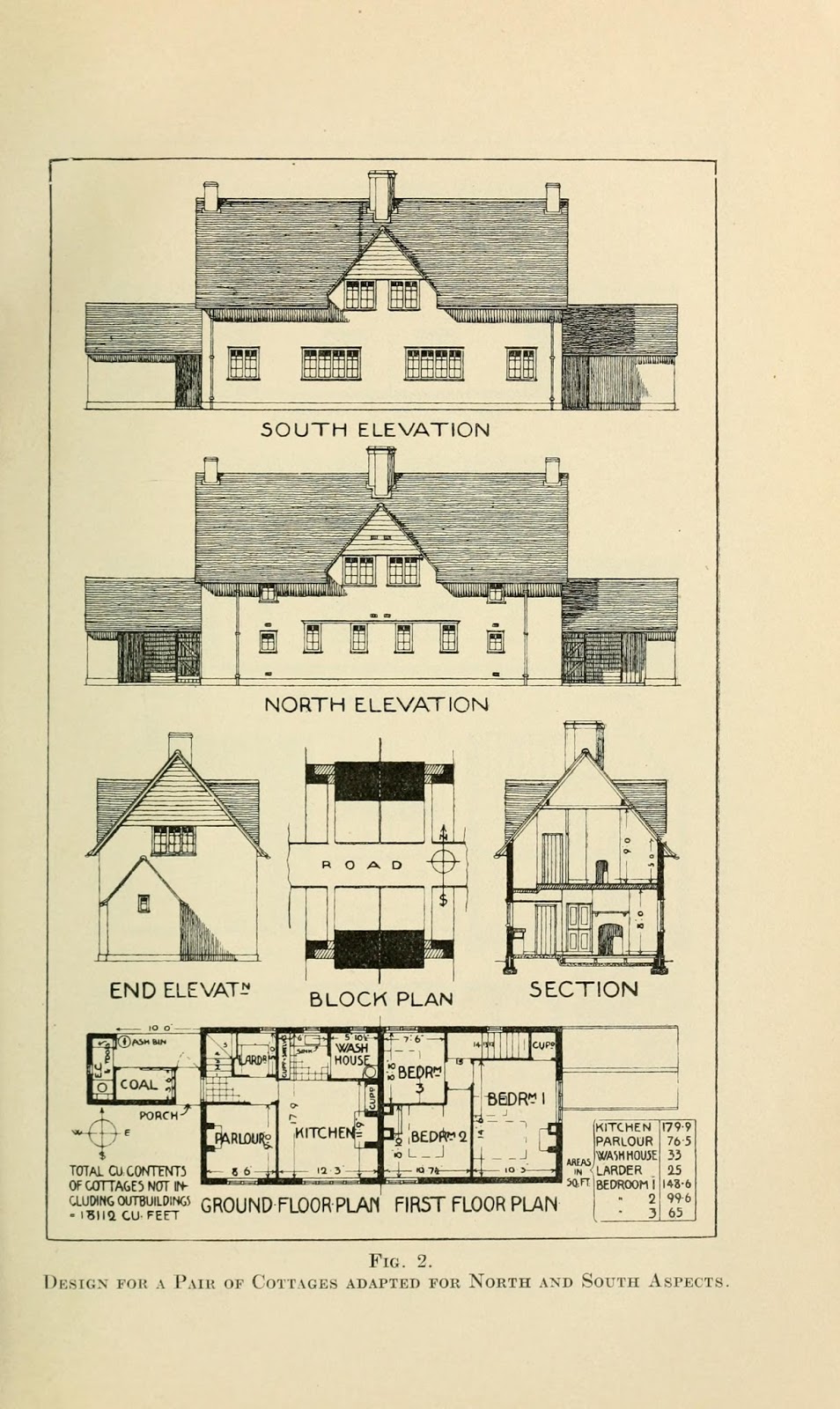
Plans for cottages within the article “The Housing of the Agricultural Labourer.” Journal of the Royal Agricultural Society of England. v. 75 (1914). Digitized by The New York Botanical Garden. http://s.si.edu/2BF3VsT.

“I like being able to pull up a whole text online for teaching, as I can project it on a Smart Board in the classroom and as a group we can scroll through it to explore ideas, juxtapositions, etc.” explains Sayer. “My students can see that articles about French or German agriculture were being published alongside detailed explorations of wheat yields at agricultural research stations and reports on machinery exhibits at a county level. They can see how knowledge circulated at the time and the ways in which issues and ideas were debated.”

To further facilitate her research, Sayer would love to be able to search the full text of the collection and specific holdings to more easily identify articles related to specific topics and get a sense of the development of an idea or debate over time.

We are thrilled to confirm that full text search is currently under development. Through increased research efficiency, full text search will enhance BHL’s ability to inspire discovery through free access to biodiversity knowledge. Stay tuned for more information on this new service.

As Dr. Sayer’s experience demonstrates, historic natural history publications provide a wealth of information beyond scientific data. These works also document important cultural information, providing insight into the emergence of ideas and the spread of knowledge through society and time. We are thrilled to know that BHL’s collections support research across a wide array of disciplines.

Source

Royal Agricultural Society of England. 2018. “History.” Accessed January 30, 2018. http://www.rase.org.uk/history/.
February 1, 2018by michelle.underhill
Blog Reel, Featured Books

The Southern Cultivator

The Expanding Access to Biodiversity Literature (EABL) collection has grown rapidly over the last year, with the addition of born digital material and in-copyright titles scanned by various BHL member libraries. It wasn’t until recently, however, that the collection included titles contributed directly by non-BHL members. This process—a significant departure from usual BHL workflows—is part of EABL’s effort to digitize valuable content from organizations outside the consortium. Contributors ship their material to the closest Internet Archive (IA) scanning center, where it is scanned and added to the BHL and EABL IA collections. From there, the metadata is ingested into BHL by the usual process. EABL then reimburses the scanning cost.
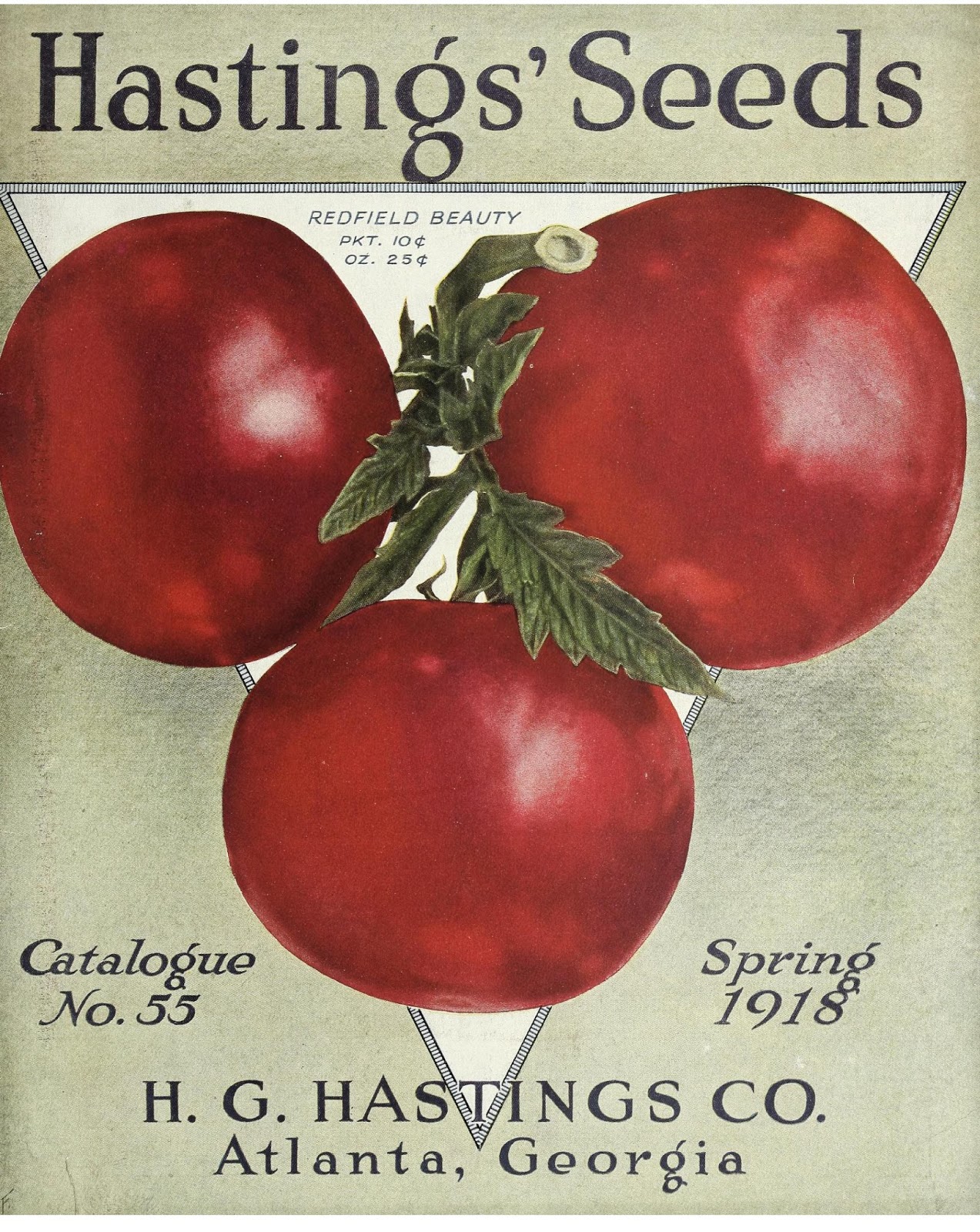
The first organization to digitize in this way through EABL was the Cherokee Garden Library, Kenan Research Center at the Atlanta History Center. They contributed seed catalogs published by H.G. Hastings & Co., a major commercial agricultural company in Atlanta, Georgia, in the early 20th century.

View Full Size Image
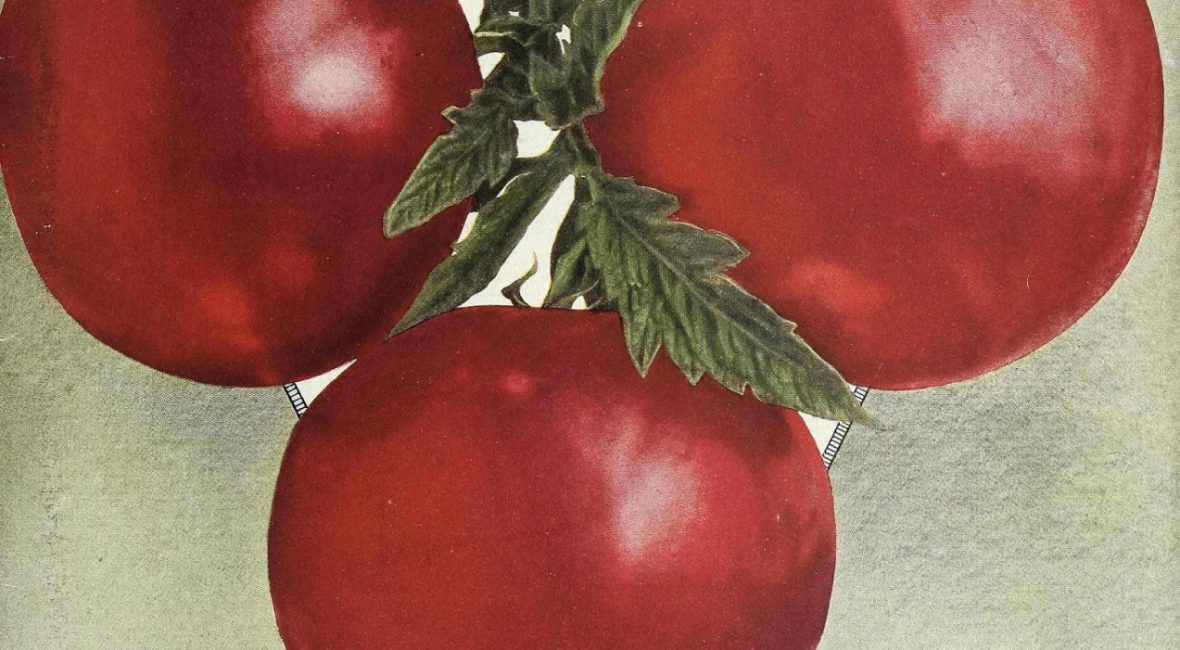
Hastings’ Seeds, No.55 (1918). http://www.biodiversitylibrary.org/page/53015794. Digitized by Cherokee Garden Library, Kenan Research Center at the Atlanta History Center.

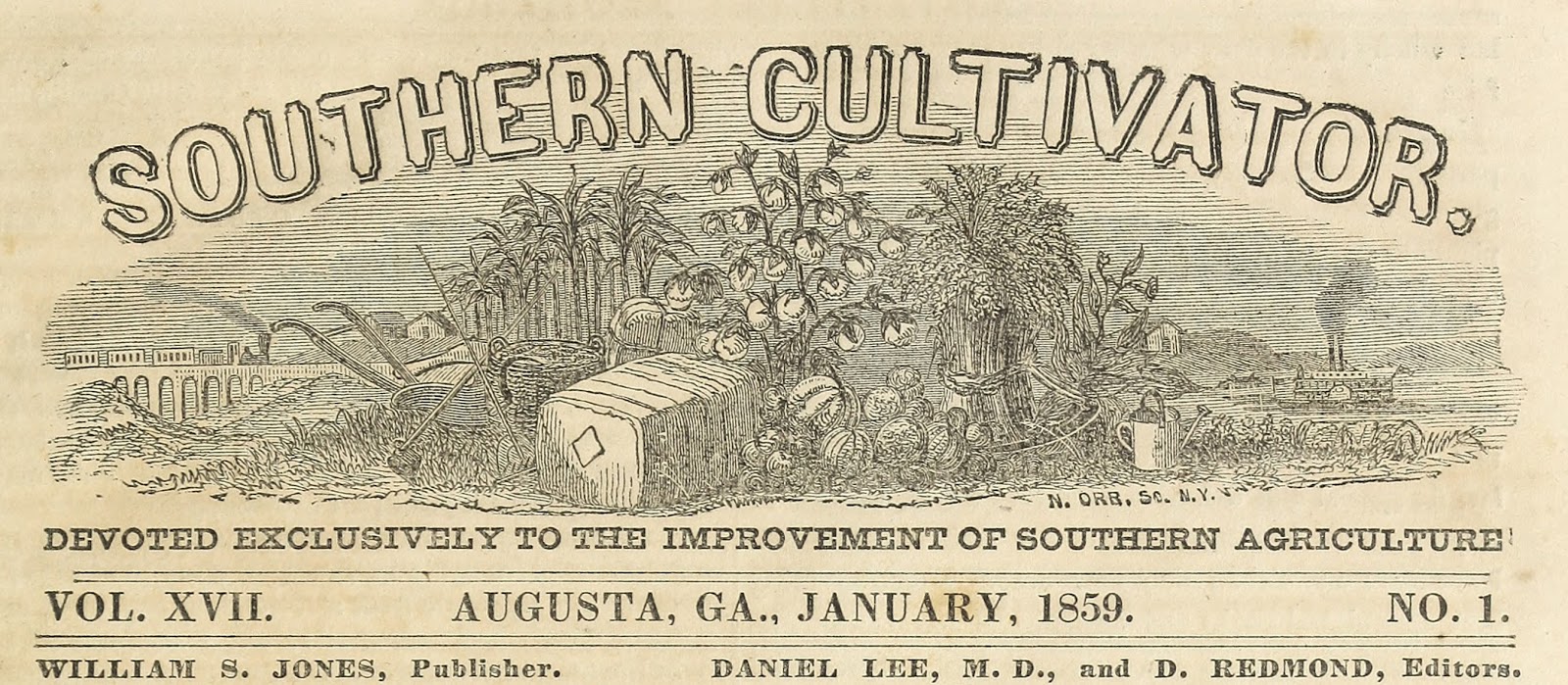
The Cherokee Garden Library also contributed a number of volumes (v.1-4, 1843-1846; v.13-15, 1855-1857; v.17, 1859) of The Southern Cultivator, another Atlanta-based publication that historian Michael T. Bernath called “the Confederacy’s oldest, strongest, and intellectually most impressive agricultural journal.” The journal is important not only as a source of information about the agriculture industry of the antebellum South, but also for its stark depiction of American slavery and the unconscionable role it played in the rise of that industry. It was published from 1843 to 1872.

View Full Size Image
Southern Cultivator. v. 17 (1859). http://www.biodiversitylibrary.org/page/53013665. Digitized by Cherokee Garden Library, Kenan Research Center at the Atlanta History Center.

The editors of The Southern Cultivator minced no words in promoting the practice of slavery; in fact, they saw it as a crucial component in their plan to elevate southern agriculture. In v.1 (1843), they printed an address given by John Belton O’Neall to the Agricultural Society of South Carolina in December of the previous year. In it, Judge O’Neall states that there is one obstacle to realizing the full industrial potential of the state — the “carelessness of her operatives,” i.e., slaves. He continues, “Still, our slaves are capable of more, much more, than we have hitherto had credit for. It is only necessary that they should be taught habits of regularity, economy and thrift, to make them the most effective laborers in the world. This is what we are attempting.” (p.109).

Difficult as it is to read these words—and they are hardly the most racist to appear in the journal’s pages—they provide an unvarnished glimpse into a period of American history in which slavery was a cornerstone of agriculture throughout much of the country. Indeed, The Southern Cultivator shows that it was not southerners alone who believed slavery was vital to the economy. In v.17 (1859), as the tensions that would lead to civil war were quickly rising, the editors reprinted an editorial from the Providence [Rhode Island] Post arguing that the North would suffer equally, if not more, if the South were to secede from the Union or if slavery were abolished. They preface the editorial by saying, completely without irony, that they “seldom dabble in anything that even resembles the ‘dirty water of politics’.” The editorial itself is frank in putting material concerns over principle:

Slavery may be a great outrage against humanity. We look upon it in this light, and have no defence to offer for it. But we remind Northern men, not only that the North clung to while it promised to be profitable…but that Northern merchants and Northern mechanics and Northern manufacturers are dependent on it to-day for their stately ships, their immense store-houses, their splendid dwellings, their paying railroads and their reputation for thrift. (p.107)

View Full Size Image
Sample of the index to v.17 (1859),
showing the topical breadth of the journal. http://www.biodiversitylibrary.org/page/53013673. Digitized by Cherokee Garden Library, Kenan Research Center at the Atlanta History Center.

As the United States continues to grapple with the legacy of the Confederacy, slavery, and the aftermath of the American Civil War, the digitization of these volumes is particularly timely. We are grateful to the Cherokee Garden Library, Kenan Research Center at the Atlanta History Center for contributing them through EABL, and we hope that they will be useful to researchers across many disciplines.

To learn more about the Cherokee Garden Library and its work with EABL, see this post from earlier this year.

Reference
Michael T. Bernath, Confederate Minds: The Struggle for Intellectual Independence in the Civil War South, Chapel Hill, North Carolina: University of North Carolina Press, 2010, p. 86.

June 15, 2017by [email protected]
Blog Reel, Featured Books

Hen Fever and Heritage Breeds

Do you have hen fever?

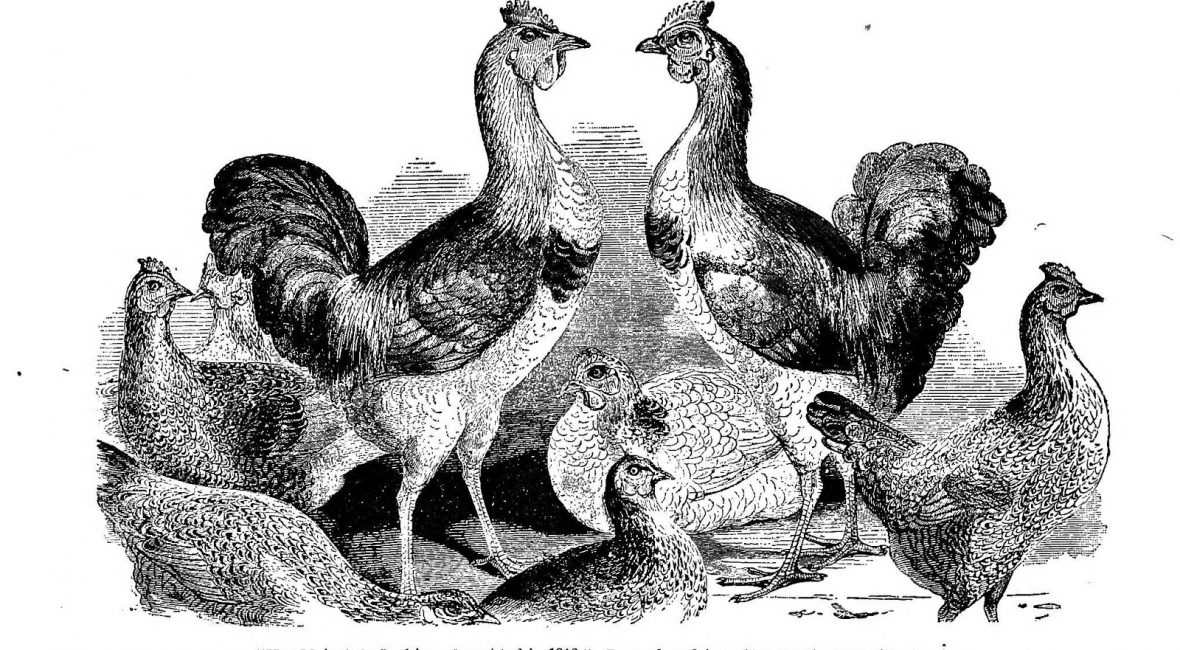
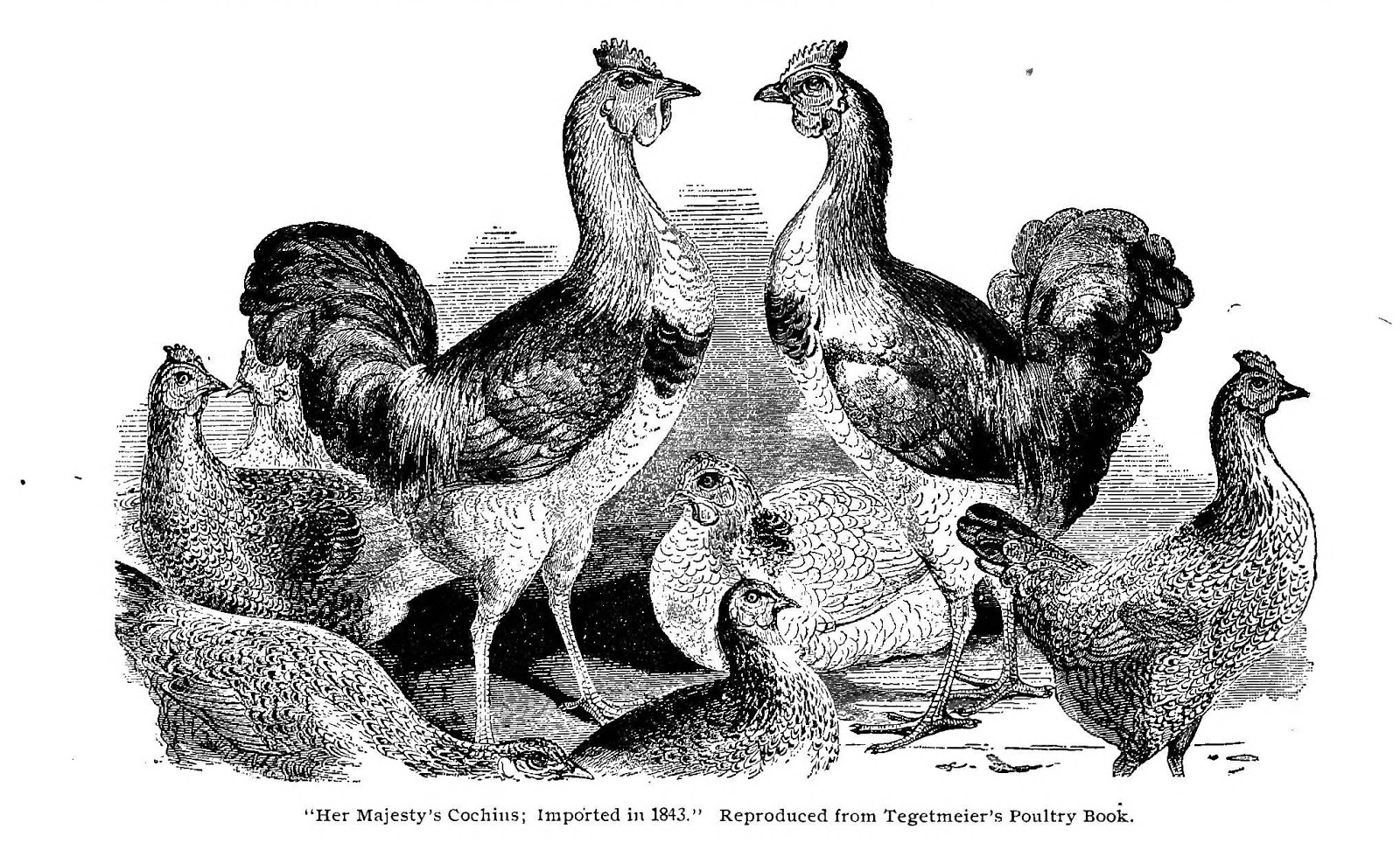
Many in the 19th century did. From about 1845-1855, an obsession with owning and breeding the world’s finest chickens swept across the United States. The epidemic started with Queen Victoria in England, whose royal menagerie of exotic species was enhanced, according to Wright’s The Illustrated Book of Poultry, in 1843 with a selection of chickens known as Cochin China fowl. As the chickens bred, the queen sent eggs to her royal relatives, igniting a fire of breeding and selling exotic chickens that soon made its way to America.

View Full Size Image
Queen Victoria’s Cochin China fowl. The Asiatics (1904). http://biodiversitylibrary.org/page/37514328. Digitized by Cornell University Library.

The domesticated chicken is descended from the red junglefowl (Gallus gallus), which was first domesticated nearly 10,000 years ago in Asia and dispersed around the world. Through natural and selective breeding, an astonishing variety of breeds now exist. The American Poultry Association began defining breeds in 1873. Definitions for the breeds were published in the Standard of Perfection. Many of these are now recognized as Heritage Breed chickens, which are defined by The Livestock Conservancy as follows:

“A Heritage Egg can only be produced by an American Poultry Association Standard breed. A Heritage Chicken is hatched from a heritage egg sired by an American Poultry Association Standard breed established prior to the mid-20th century, is slow growing, naturally mated with a long productive outdoor life.”

Today, over three-dozen chicken breeds and 21% of the world’s 8,000 livestock breeds are in danger of extinction. The loss of heritage breeds depletes the genetic diversity of the agricultural system, leaving it increasingly vulnerable to pests and diseases and less adaptable to changing environmental conditions. In an effort to raise awareness about endangered heritage breeds of livestock and poultry, The Livestock Conservancy organized the first Heritage Breeds Week campaign in May 2015. The success of that campaign prompted this year’s International Heritage Breeds Week and Day, May 15-21, 2016, with a mission “To protect endangered livestock and poultry breeds from extinction.” You can follow the campaign hashtag #HeritageBreedsWeek to learn more.

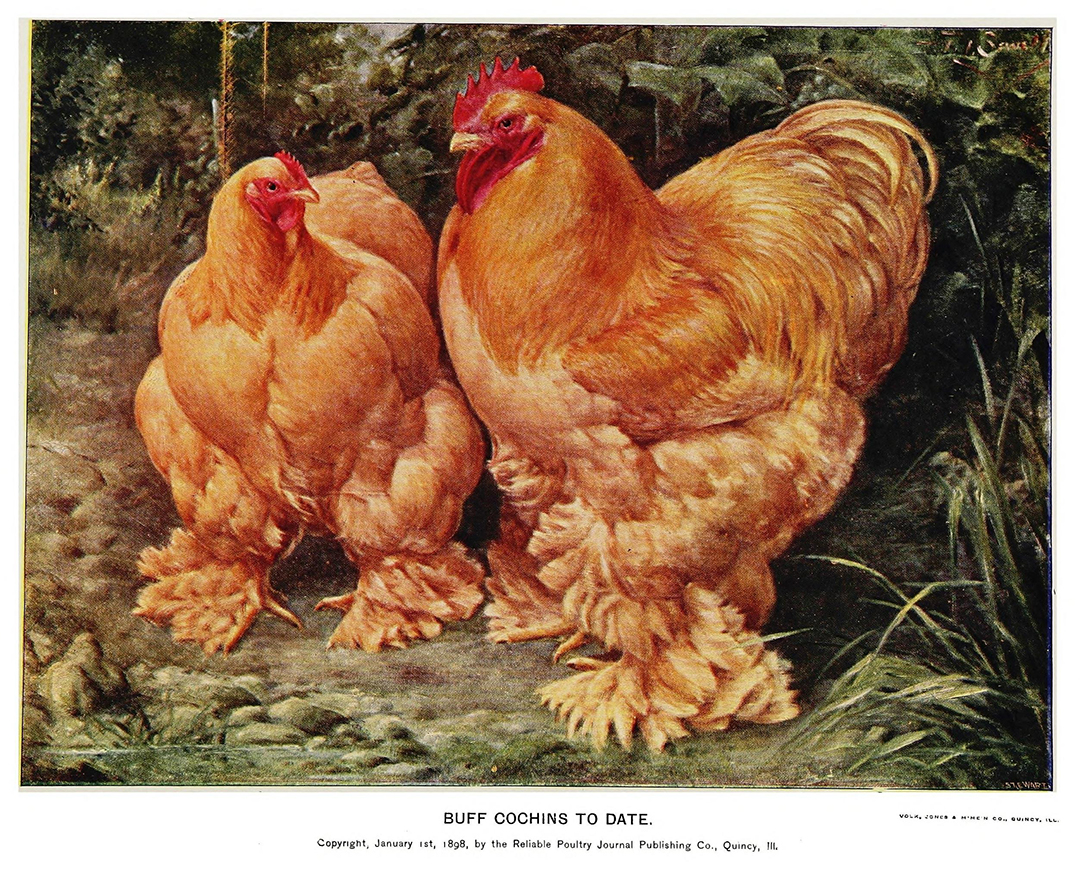
Two of the breeds predominantly responsible for the hen fever of the 19th century are heritage breeds: The Brahma chicken and the Cochin chicken.

View Full Size Image
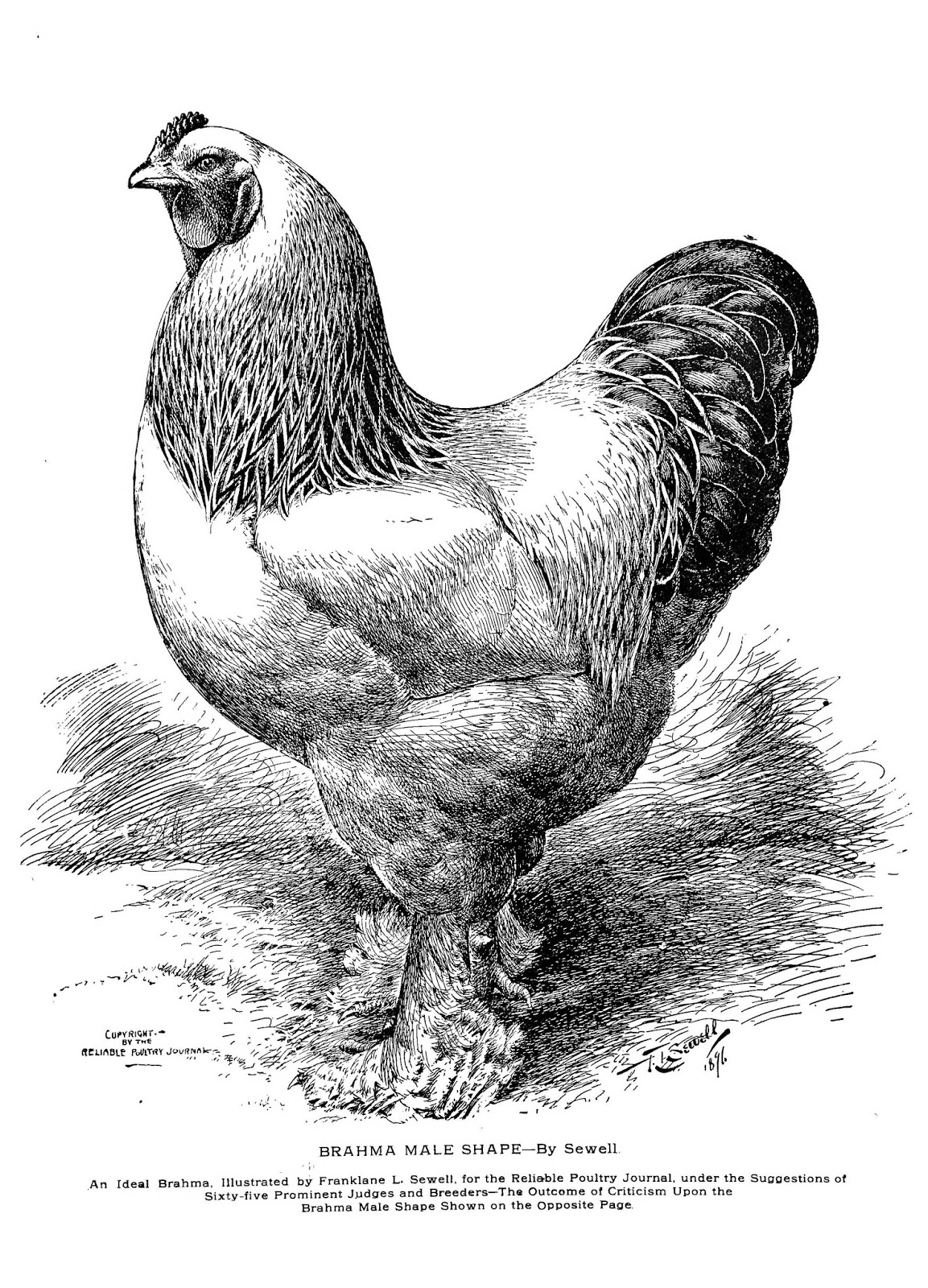
Ideal Brahma. Illustrated by Franklane Lorraine Sewell. The Asiatics (1904). http://biodiversitylibrary.org/page/37514323. Digitized by Cornell University Library.

Historic publications provide much valuable information about heritage breeds. For example, a history and description of the hen fever-related breeds is captured in The Asiatics; Brahmas, Cochins and Langshans, all varieties, their origin; peculiarities of shape and color; egg production; their market qualities. Breeding, mating and exhibiting, with detailed illustrated instructions on judging (1904). The work, digitized for BHL by Cornell University Library, is made up of many small articles or chapters, most of which were previously published in the Reliable Poultry Journal, also the publisher of this book. The title includes illustrations by notable poultry illustrator Franklane Lorraine Sewell, whose drawings are still used by the American Poultry Association’s Standard of Perfection.

The work provides some interesting insight into the history of hen fever. For example, regarding Queen Victoria’s Cochin China fowl which launched the craze,

“A drawing of those birds was given in the Illustrated London News of that date, from which and the description it is manifest that they had absolutely no points of the Cochin at all, save perhaps yellow legs and large size…But one thing about them there was; these fowls were not only big, but they probably really did come from Cochin China, and from them and that fact came undoubtedly the name, which will now belong, while poultry breeding lasts, to another fowl that has no right to it at all.”


View Full Size Image
Cochin chicken. The Asiatics (1904). http://biodiversitylibrary.org/page/37514330. Digitized by Cornell University Library.

The breed which is today known as the Cochin is instead descended from the Shanghais breed. According to The Asiatics,

“The first Poultry Book of Wingfield and Johnson (1853) wrote of them as Shanghais, and all American writers strove for the same name years after the attempt had been abandoned in England; but it was no use. The public had got to know the new, big fowls as Cochins, and would use no other word, and so the name stuck, in the teeth of the facts, and holds the field to this day.”

The Brahma chicken, according to The Asiatics, “were undoubtedly originated in America by selection and careful breeding of what was known as the Gray Chittagongs.”

View Full Size Image
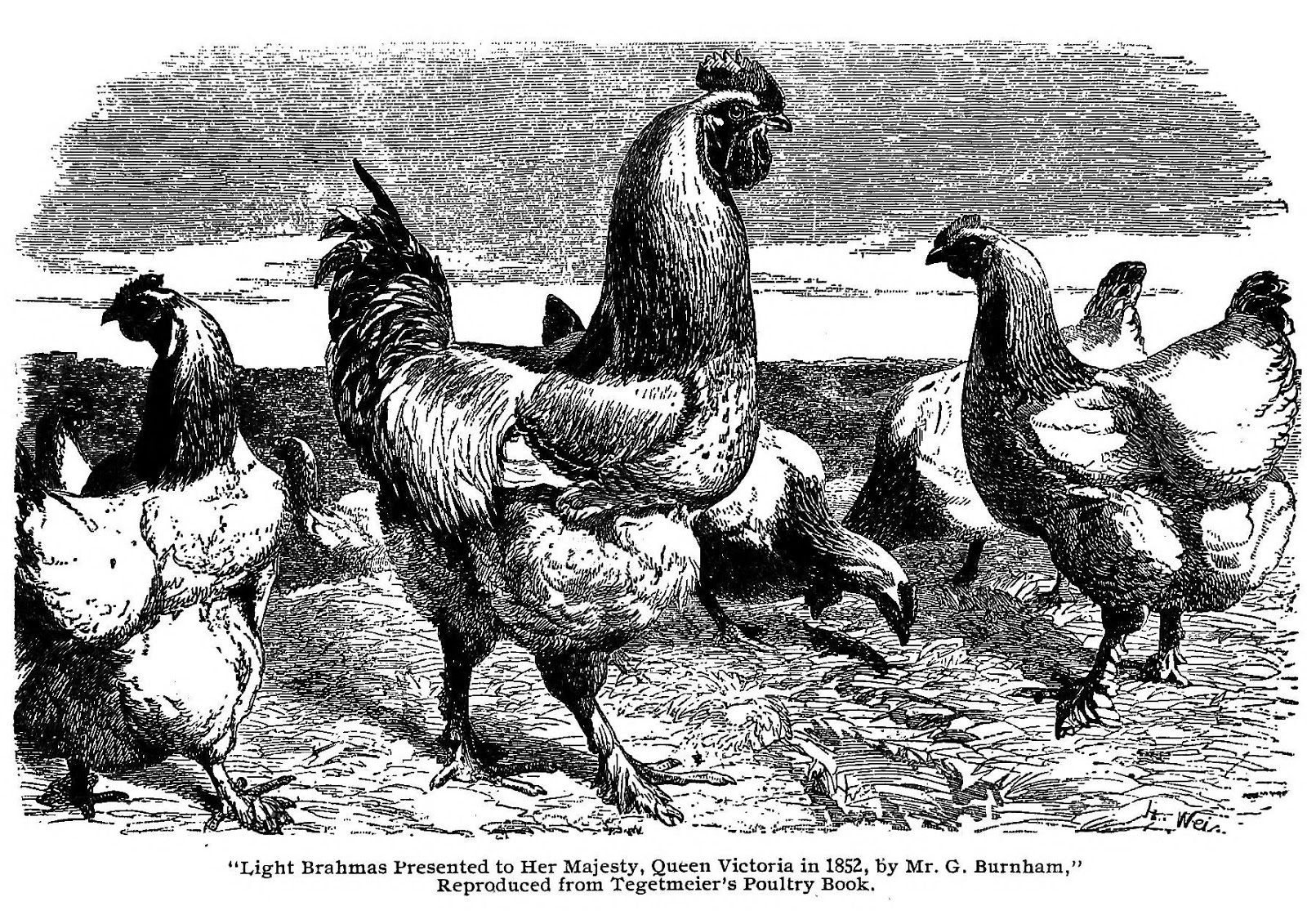
Burnham’s shipment of Brahmas to Queen Victoria. The Asiatics (1904). http://biodiversitylibrary.org/page/37514327. Digitized by Cornell University Library.

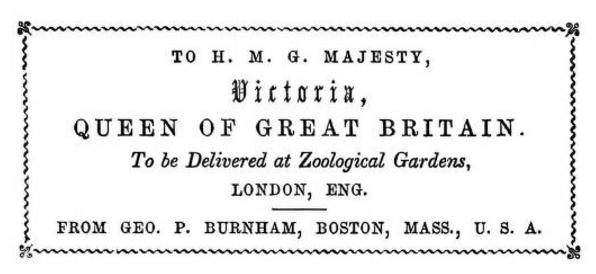
George Burnham, who penned an account of hen fever in his The history of the hen fever. A humorous record, contributed to the Brahma’s association with the fever by sending Queen Victoria nine of his finest stock in 1852, resulting in a significant increase in their popularity and price.

View Full Size Image
Postage detail for Burnham’s shipment of Brahma chickens to Queen Victoria. A History of the Hen Fever (1855). http://biodiversitylibrary.org/page/37262373. Digitized by Cornell University Library.

The Asiatics recounts an interesting origin for the Brahma breed in America:

“In regard to the history of these fowls- very little is known. A mechanic by the name of Chamberlain, in this city, first brought them here. Mr. Chamberlain was acquainted with a sailor, who informed him there were three pairs of large imported fowls in New York, and he dwelt so much upon the enormous size of these fowls that Mr. Chamberlain furnished him with money and directed him to go to New York and purchase a pair of them for him, which he did…The man in New York, whose name I have not got, gave no account of their origin, except that they had been brought there by some sailors in the Indian ships…One strain of these fowls, according to Mr. Wright was first called ‘Burram pooters,’ evidently with the intention of having it believed they were of a different race from the Chittagongs and Shanghai, the name being subsequently dropped and replaced by ‘Brahma-Pootre,’ and eventually simplified into Brahmas.”

Historic publications are useful not only for documenting heritage breeds, but also for providing practical tips for raising poultry, especially as part of the backyard chicken farming movement that has been gaining prominence in the 21st century. Cornell’s Albert R. Mann Library highlighted this phenomena as part of a post exploring the most-downloaded book contributed to BHL by Cornell  University Library: Poultry diseases, causes, symptoms and treatment, with notes on post-mortem examinations. As cited in that article:

“A 2010 USDA survey of four major U.S. metropolitan areas (Denver, Miami, Los Angeles and New York) found that 4.3% of all households living on 1+ acre of land reported owning chickens.”

A 2014 study published in Poultry Science found that, of 1,487 surveys received from people in 47 U.S. states, 37.7% of respondents had kept backyard chickens for 2-5 years, while 32.5% had done so for less than 2 years. As the authors note, “These results indicate the relative recency of and growing interest in backyard chicken keeping.”

The survey also found that respondents’ motivations for keeping backyard chickens included (from most to least popular) food for home use, pest control, to provide manure for gardening, and pets. 62.5% of respondents relied on books and magazines for information on backyard chicken husbandry. “Almost all respondents also stated that their birds’ health and welfare are better than on commercial poultry farms and that the eggs or meat produced by their flocks are tastier, more nutritious, and safer to consume than purchased poultry products” (Elkhoraibi et al.).

Historic publications like those in BHL can contribute significantly to efforts to preserve important international breeds, providing the genetic diversity necessary to maintain a stable agricultural system. They can also support activities like small-scale poultry keeping, which can help address concerns related to food safety, animal welfare, and the environmental impact of factory farming.

We encourage you to explore The Asiatics and Poultry Diseases in BHL, digitized by Cornell University Library. You can browse all 1.5+ million pages contributed by Cornell to BHL here.

Learn more about backyard chicken farming in the online exhibit Backyard Revival from Cornell’s Mann Library and find out more about the importance of heritage breeds as part of the International Heritage Breeds Week campaign.

Forget hen fever. Here’s hoping for a hen revival!

References
Elkhoraibi, C., R. A. Blatchford, M. E. Pitesky and J. A. Mench. “Backyard chickens in the United States: A survey of flock owners.” Poultry Science first published online September 5, 2014 doi:10.3382/ps.2014-04154

May 19, 2016by ulib-libraryjobs
Blog Reel, Campaigns, Featured Books, Garden Stories

“’Tis A Gift To Be Simple” But to Have a Splendid Garden Buy Shaker Seeds

View Full Size Image
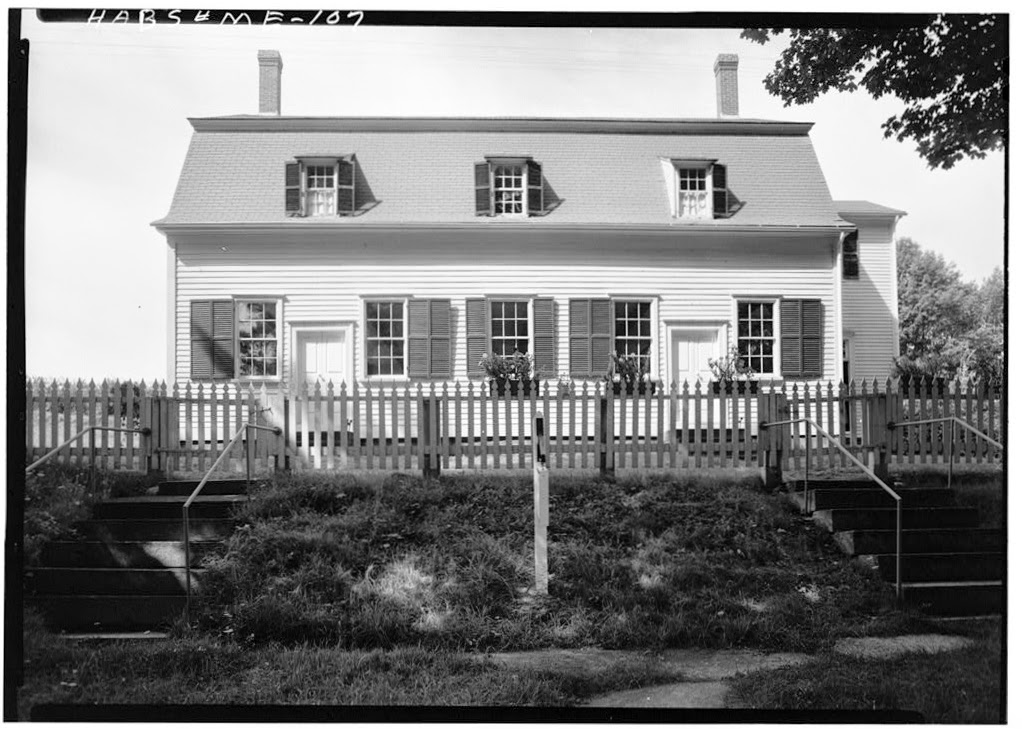
Sabbathday Lake Shaker Community Meetinghouse  (photo by Gerda Peterich for the Historic American Buildings Survey, Library of Congress Prints and Photographs Division; HAB SME,3-SAB,1—1)

The United Society of Believers in Christ’s Second Appearing, a religious sect commonly referred to as the Shakers, was founded in 18th-century England from a branch of the Quakers. Along with other newly formed devotional groups, they soon immigrated to colonial America. There they established as their economic foundation a variety of cottage industries that thrived throughout the 19th and into the early 20th centuries. Now known mostly for wonderfully simple architecture, austere but beautifully designed furniture and such functional objects as nesting oval boxes and baskets, members of the Shaker communities also once had booming garden and seed businesses. Their labor-intensive methods of working inevitably came to be overwhelmed by competition from industrial manufacturing as well as the problem of ever-shrinking membership, celibacy being one of their central tenets.

View Full Size Image
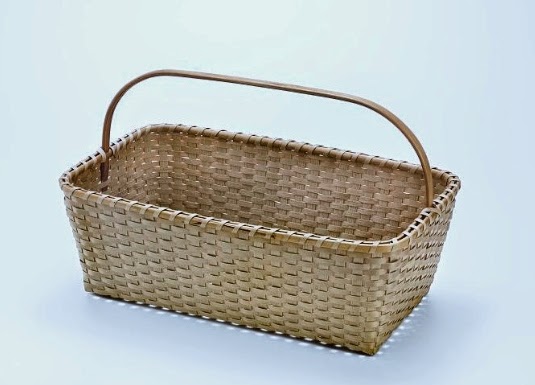
Shaker Carrier (by Sharon Dugan; Smithsonian American Art Museum, Gift of Martha G. Ware and Steven R. Cole; no. 2011.47.11)
The first fully organized Shaker community was New Lebanon in New York; by 1789, two years after its formation, the members cultivated seeds as a cash crop. This was the second earliest “company” to sell seeds in America. David Landreth & Son of Philadelphia was the first, in 1784, and that business traded back and forth with the Shakers. Another early dealer was Grant Thorburn in Philadelphia who wrote about the difficulty of obtaining seeds of good quality.
Other Shaker settlements, or “families,” soon followed in the seed-production business, including Watervvliet, New York; Hancock, Massachusetts; Enfield, Connecticut; Canterbury, New Hampshire; Alfred, Maine; and South Union, Kentucky, among several others. All were known for the excellence of their products and integrity of their business dealings. Devotion to God was expressed through their work ethic, hand labor and craftsmanship. The selling of goods was meant to raise funds only for needs the Shakers could not supply for themselves.

It is uncertain whether the Shakers were the first to put their seed products in small paper envelopes or packets, but they were the first to popularize their use. The Shaker Brothers printed millions of them on their presses, while the Sisters performed the labor of cutting, folding and pasting the papers. While believing in partnership in work and equality of the sexes, occupations tended to fall along traditional gender lines. The Brothers tilled the fields while the Sisters picked, sorted and packaged the seeds and herbs.

View Full Size Image
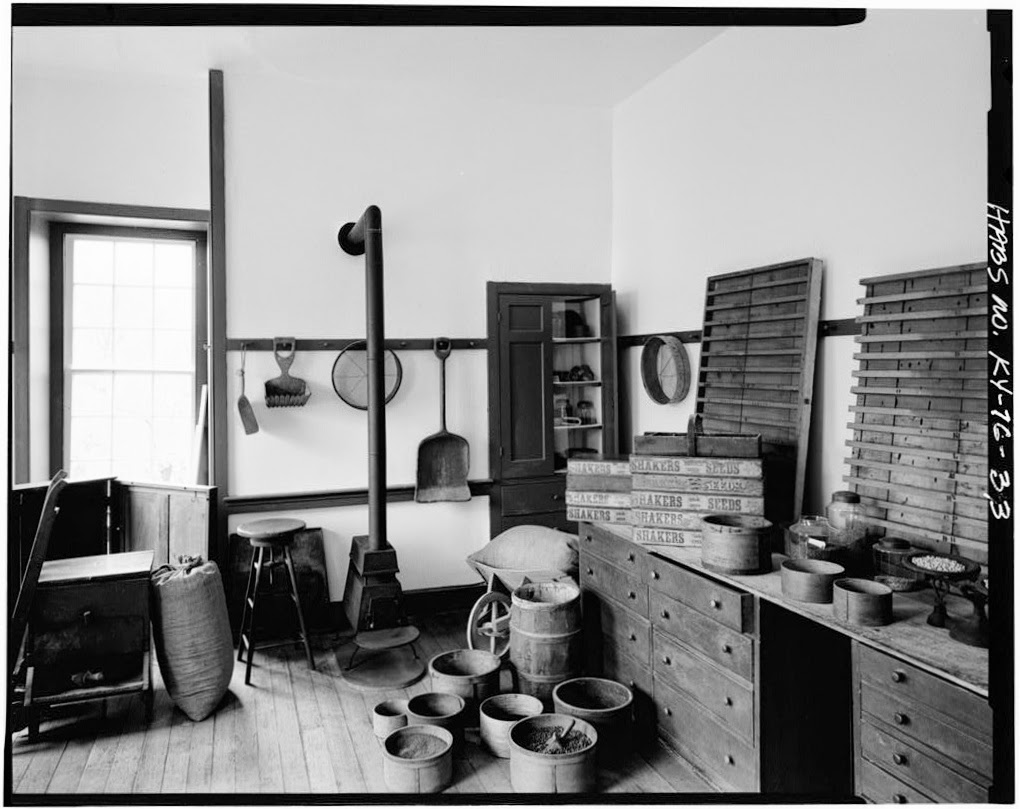
Seed Room, Shakertown, Kentucky (LC Prints & Photographs Division; HABS,84-SHAKT,2-33)

The Shakers were also early adopters of incorporating gardening manuals in their catalogs. Charles Crossman wrote ones in 1835 and 1836 for Mount Lebanon, Pittsfield and Watervilet, directing the wholesaler or the individual purchaser how best to plant the offered seeds. Instructions for storing and cooking bounties from the gardens were also sometimes given. Vegetables dominated the products but herbs and flowers as well as grass also appear in the lists. Crossman later left the Shakers and established his own company in Rochester, New York, which was just beginning to become the thriving horticultural center in the country.

View Full Size Image
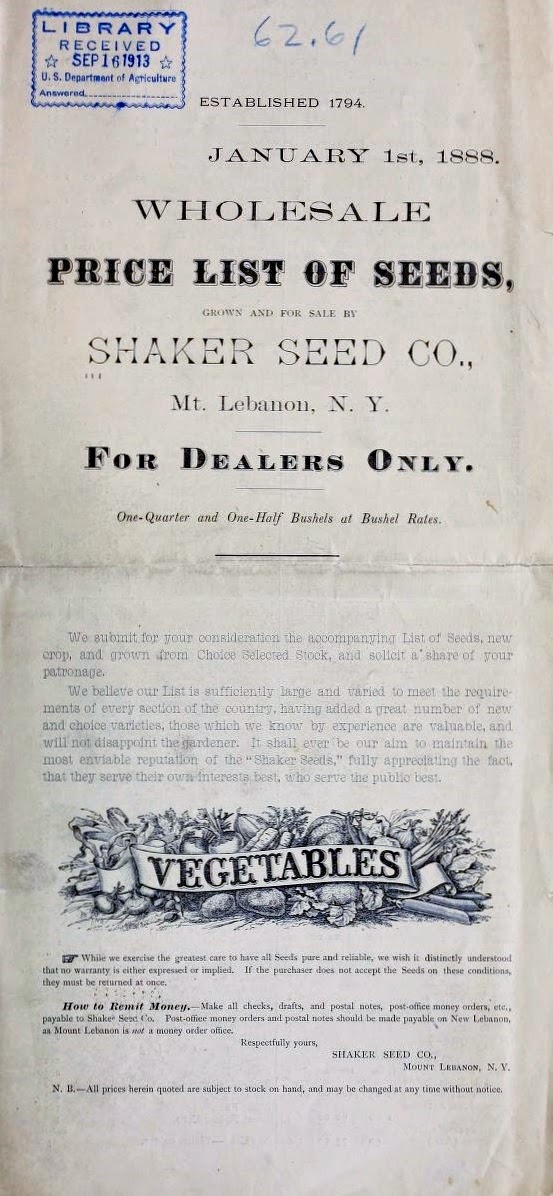
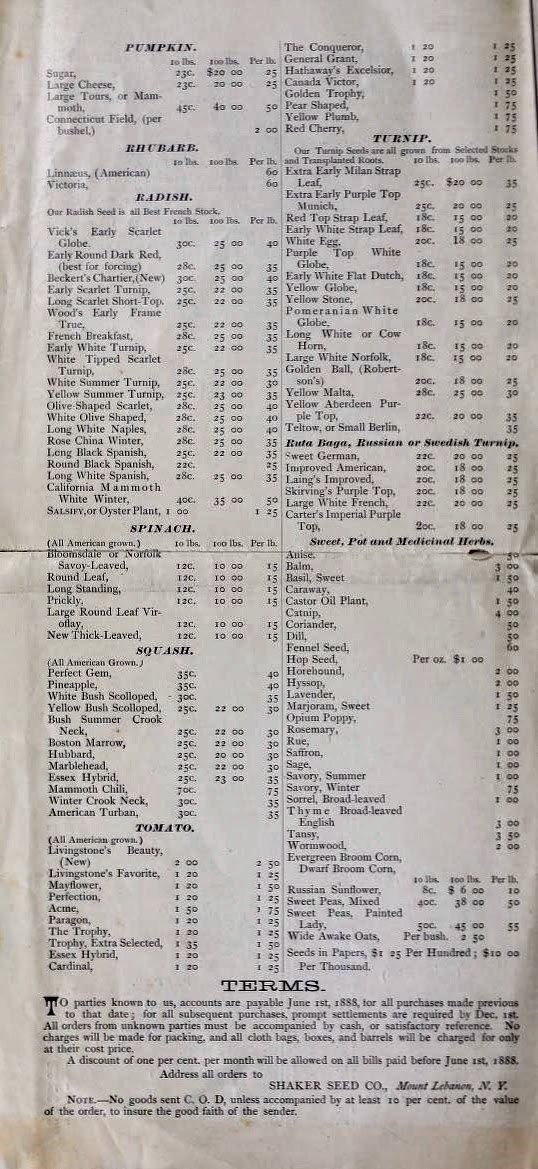
Wholesale price list of seeds by the Shaker Seed Company. New Lebanon, New York, 1888 (Henry G. Gilbert Nursery and Seed Trade Catalog Collection, National Agriculture Library; image from the Biodiversity Heritage Library)

As the Shaker seed business in the United States grew from 1840, printing firms outside of the communities were employed to keep up with demand. Correspondingly, advertisements and the design of the packets, begun first plain with simple chunky block type, were transformed to include the use of color papers and borders and eventually vivid chromolithography.

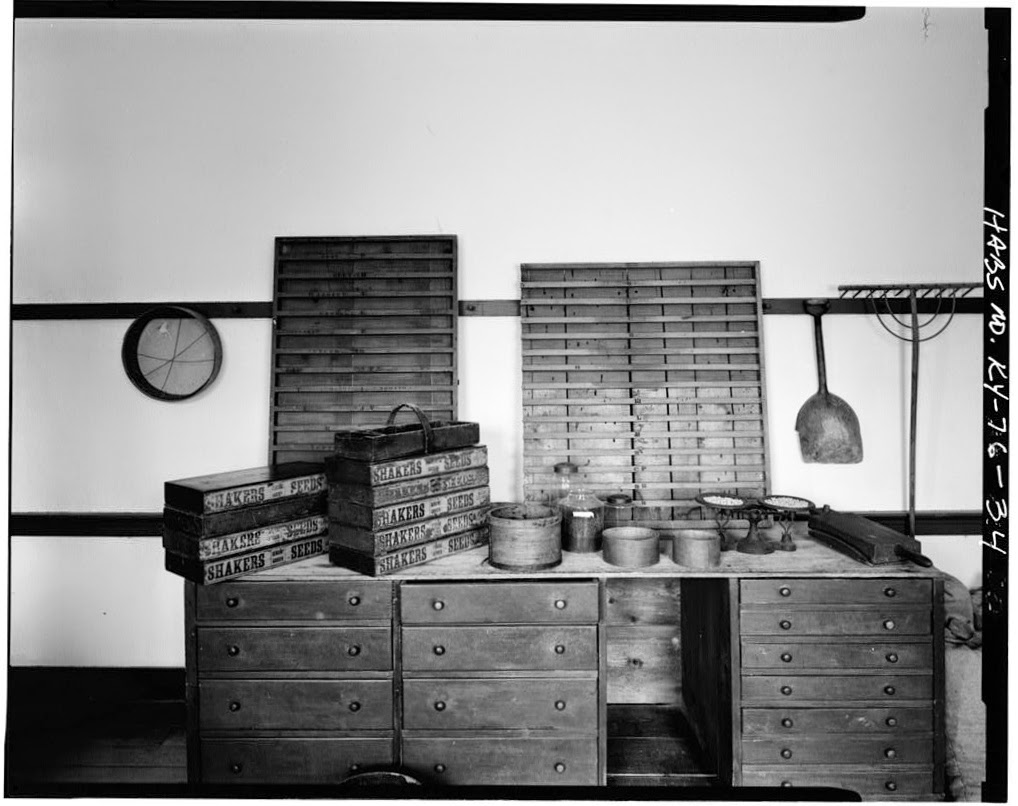
Following the Civil War, increased competition resulted in the Shakers’ using the word “genuine” in their advertising, as products from the communities were considered to be of the highest quality, their best selling point. They also used various and effective marketing techniques, including seed boxes meant to be displayed on the counters of country stores. The containers had compartments for assorted Shaker vegetable and flower seed packages, with a hinged lid to be propped open to display a broadside detailing the contents within, and a chromolithographic image of a bountiful harvest, promising the purchaser a similar reward.

View Full Size Image
Seed Room with display containers, Shaker Centre Family Dwelling House, Shakertown, Mercer County, Kentucky (Library of Congress Prints and Photographs Division; HABS KY,84-SHAKT,2—34)

Other surviving ephemera record the once-thriving industry of seed, herbal, food, and medicinal products from the Shakers. Along with seed catalogs and the packets, mailing tags and envelopes, broadsides, receipts, invoices, billheads, and labels, give testament to their industry. Product labels include currant, grape, wild cherry, and blackberry wines. Far from being abstinent (except in the matter of sex), the Shakers made at least fourteen varieties of wine as well as distilled spirits. The religious group in their various communities was also at the forefront of selling medicinal herbs in the United States.

View Full Size Image
Shaker Digestive Cordial (A.J. White, New York, New York; National Museum of American History, no. 246707)

The changing world and market forces caused the Shaker seed industry to gradually peter out at the beginning of the 20th century. Increasing industrialization, growth of urban centers with ease of shipping and mailing to formally isolated villages, and overwhelming production from big companies, particularly in Philadelphia and Rochester, eliminated the communities’ wagon and sleigh seed routes for trading. With their firm spiritual beliefs and practices, the Shakers were not very competitive against aggressive business tactics.

View Full Size Image
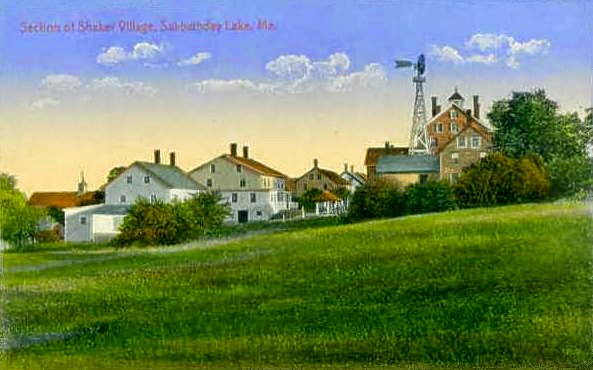
Postcard of the Shaker Village of Sabbathday Lake, Maine (ca. 1920; Wikimedia Commons)

At their peak in the mid-19th century there were about 6,000 “Shaking Quakers” so named because of their ecstatic behavior during worship services. Today, Sabbathday Lake Shaker Community, founded in 1783 in Maine, is the sole active survivor of the religion. A tree farm, an apple orchard and vegetable gardens are maintained, and hand-set printing is still practiced. The library there holds ephemera such as account records, recipes, catalogs and 1,380 labels printed by Shakers for their own products. They are living testament to the Shakers’ influence on the American seed and nursery industry and their permanent place in horticultural history—the early development of the new business, innovative techniques in marketing and education as well as the propagation and introduction of new varieties. The Sabbathday Shakers still sell herbs, and their catalog is online.

View Full Size Image
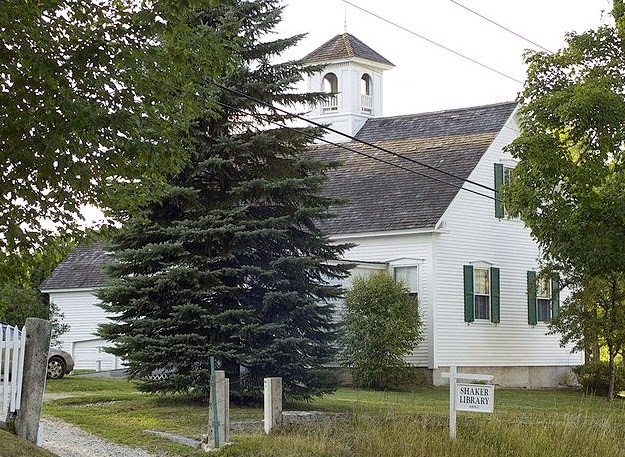
The Library of Sabbathday Village in New Gloucester, Maine (Wikimedia Commons, August 2010)
View Full Size Image
Wholesale price list of seeds by the Shaker Seed Company, Mount Lebanon, New York, 1888 (Henry G. Gilbert Nursery and Seed Trade Catalog Collection, National Agriculture Library)

More Garden Stories Fun

  • Follow our blog and #BHLinbloom on Twitter and Facebook (or go directly to BHL’s Twitter and Facebook) this week as we explore the fascinating world of gardening, from its history to plant factoids and practical gardening tips.
  • Browse over 14,000 seed and nursery catalogs in our collection.
  • Browse over 2,500 seed and nursery catalog images in our Flickr collection.
  • Explore select seed catalog art, and stunning bookmarks and postcards developed by Cornell Library, on Pinterest.
  • See historic gardening come to life on the Smithsonian Libraries’ Tumblr.
  • Purchase your very own Garden Stories T-Shirt through T-Fund. All proceeds will go to help us digitize more pages for BHL. Our goal is to sell enough shirts to digitized 5,000 pages. Can you help us get there?
  • Help us improve access to seed and nursery catalogs by transcribing some today as part of our the Institute of Museum and Library Services (IMLS)-funded Purposeful Gaming project!
  • Find great online gardening resources, tips, and help on the BHL Gardening Resources Page.
March 27, 2015by mckenzie.87
Blog Reel, Campaigns, Featured Books, Garden Stories

Perfecting the Garden: From the Rise of Agriculture to Genetic Modification

Today, commercial agriculture is a multi-trillion dollar global industry, while the global gardening industry, which has maintained an annual market growth of 3% since 2007, is predicted to be worth $220 billion globally by 2016. From the corporate executive looking for ways to maximize profit, to the home gardener toiling to grow the best garden in the neighborhood, the quest to achieve the “perfect” garden or the idealized crop is a passionate, laborious, and indeed ancient pursuit.

But though it may be one of the biggest industries today, agriculture, and by extension gardening, has humble origins.

The Rise of Agriculture

Although theories about ancient agricultural practices are largely speculative due to lack of historical records, some researchers believe that Neolithic agriculture began with attempts by hunter-gatherers to manage nature for their benefit, stimulated perhaps by population pressures, reductions in wild food sources due to climate change, and/or over-exploitation of land by grazing animals. Whatever the catalyst, the first “agricultural” activities comprised land management strategies like burning woodland, draining wet ground and watering dry soil.

The real beginning of cultivation, however, was propagation, whereby ancient civilizations began distributing, dividing, and planting seeds and tubers. This is commonly known as the “Domestication Revolution.”

View Full Size Image
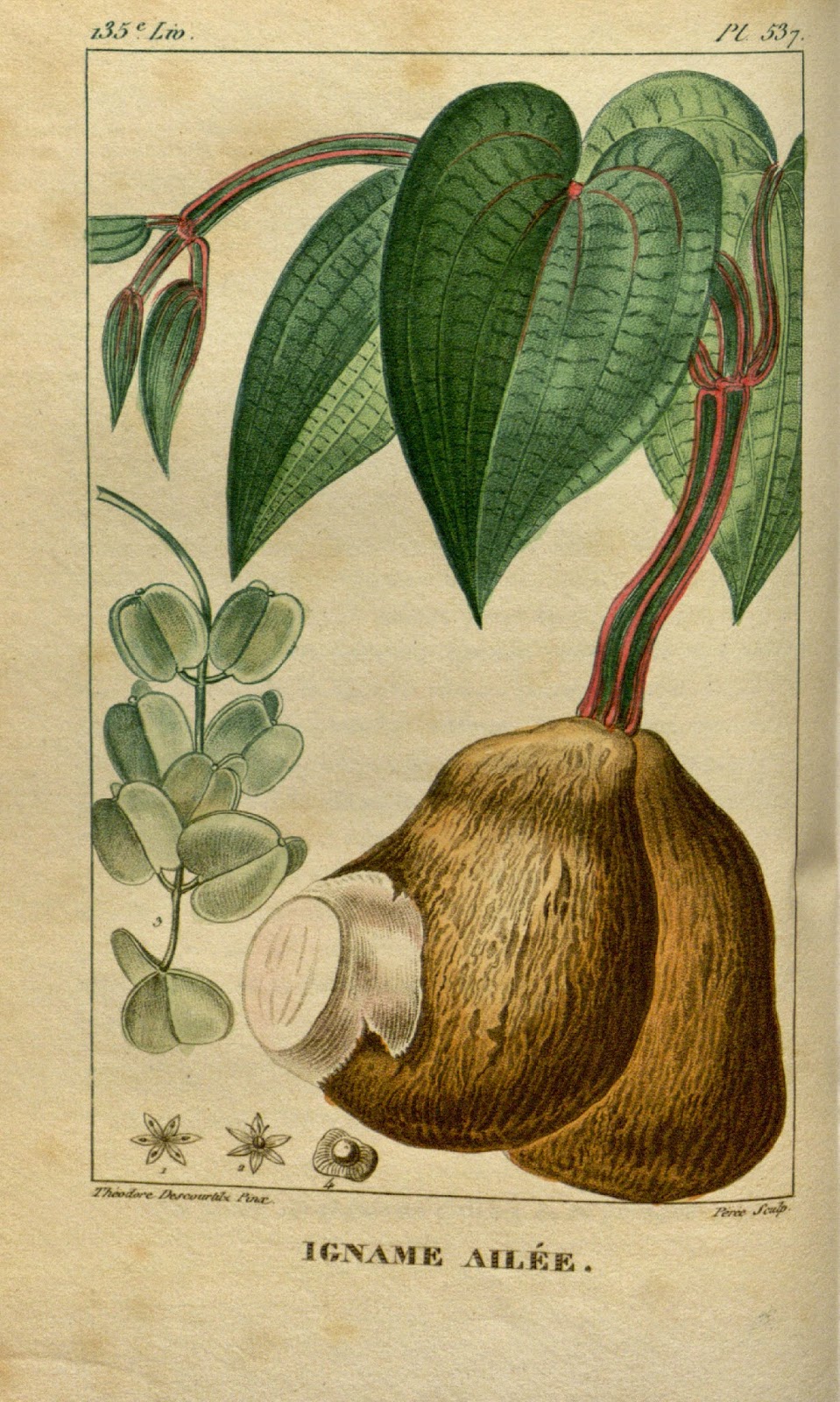
Purple Yam (Dioscorea alata). The Pencil Yam (Dioscorea transversa) is a staple food of Australian Aborigines. Descourtilz, M. E. Flore médicale des Antilles v. 8 (1829). http://biodiversitylibrary.org/page/3587279. Digitized for BHL by the Missouri Botanical Garden.

The earliest propagation probably involved vegiculture – propagation using tubers (modified plant structures that store food and enable asexual reproduction that result in cultivated clones). Australian Aboriginal hunter-gatherers were known to practice vegiculture with yams. Before long, however, humans were practicing seed-based agriculture – collecting, saving, and growing crops from seeds – which led to the domestication of plant species which eventually resulted in plants that were genetically distinct from wild relatives. The very first instance of saving seeds to produce the next year’s crop, which inevitably resulted in certain genes being propagated instead of others, was the start of plant breeding – “the art and science of changing the traits of plants in order to produce desired characteristics.” [1]

Early plant breeding not only involved unconsciously propagating certain genes through seed selection, but also early hybridization (breeding between two genetically-distinct individuals) that occurred as farmers traveled or migrated, bringing seeds with them which were planted in new areas and eventually mixed with local species. Furthermore, natural genetic mutations often resulted in new plant varieties that could be propagated over time.

Nascent plant hybridization and improvements were likely not intentional, but early tribal people did recognize the improvements and eventually selected for them. Plant breeding history reflects the three levels of the “selection process” outlined by Charles Darwin in The Variation of Animals and Plants Under Domestication (1868). Land management and propagation reflect Darwin’s first two levels: Natural Selection and Unconscious Selection. Land management created conditions that spurred species to change by natural selection, and eventual awareness and cultivation of “improved” plants represented unconscious selection, whereby humans preserve the more desirable and destroy the less desirable specimens without intention of altering the breed.

View Full Size Image
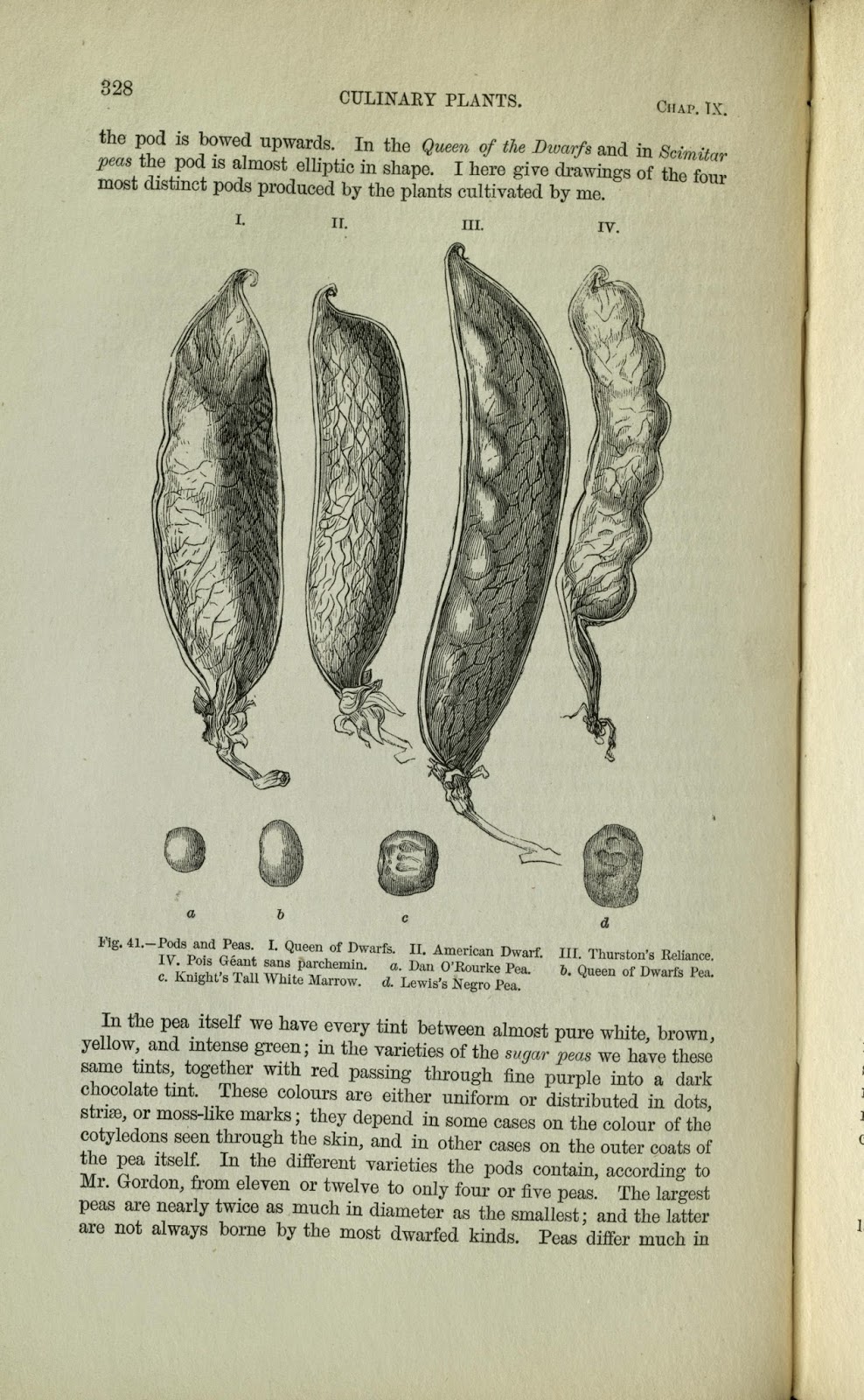
Pea varieties cultivated by Charles Darwin. The Variation of Animals and Plants Under Domestication. v. 1. 1868. http://biodiversitylibrary.org/page/40298347.

It would take a revolution to bring about the third level of Darwin’s “selection process”  – Methodical Selection, whereby humans try to systematically modify a species to a predetermined standard.

The Agricultural Revolution

Fast forward several millennia from the Neolithic origins of agriculture to seventeenth century Europe, and a revolution was underway. Not a revolution of violence, but a revolution of the mind. The Enlightenment, and with it the Scientific Revolution, was reforming society, culture, and science. Within the scientific realm, emphasis was diverted from mysticism to experimentation and observation of the natural world. This emphasis was further facilitated through the increasing availability of the printed word, which allowed scientific observations to be more easily passed down, studied, and improved upon. From this movement spread a revolutionary new concept: that if nature could be understood, it could be managed (and even changed) for the benefit of humanity.

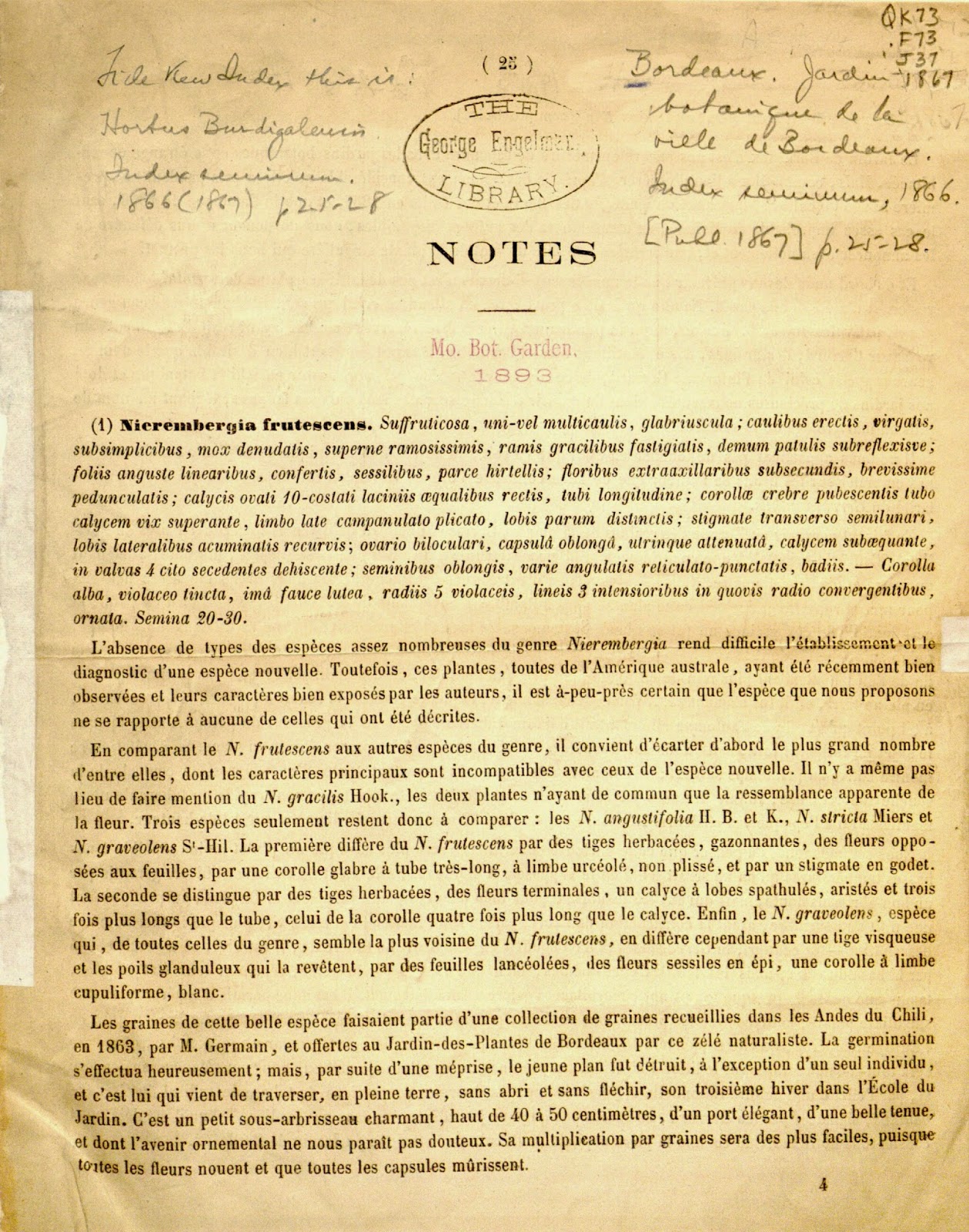
While commercial agriculture was practiced throughout China and the Roman Empire centuries earlier, it became increasingly prevalent in England and America in the seventeenth century onwards. Educated farmers began to publish their knowledge, resulting in a steady rise in agricultural literature. Agricultural societies began to form in the eighteenth century and botanic gardens began to shift their focus from herbal medicines to the needs of agriculture, facilitating the free international exchange of new seed acquisition among gardens through seed lists, or indices seminum. [3]  These lists cataloged the seeds housed at the garden available for exchange, and by the nineteenth century the index semina were important sources of taxonomic and nomenclatural information, often including diagnoses, descriptions, and notes either in footnotes or in appendices. Since they are sometimes the first publications to contain the Latin binomial of new species, the rules of botanical nomenclature dictate that these published names must continue to be recognized and used today.

View Full Size Image
Nierembergia frutescens in Catalogue des graines récoltées en. 1866, issued by Jardin-des-plantes de la ville de Bordeaux. This offers just one example of a plant that was first named and described in a seed exchange list. From the Missouri Botanical Garden Index seminum collection. http://biodiversitylibrary.org/page/44946209.

The Enlightenment resulted in and was simultaneously fueled by a revolution in agriculture in the late eighteenth and early nineteenth centuries. The introduction of new crops, more complex and efficient rotation systems, and enclosure techniques allowed farmers to produce more food and cultivate more land, which in turn led to greater food security and laid the foundations for similar advances around the world.

The growth of the agricultural economy exerted greater pressure on quality, productivity, and variety to generate more profit. These pressures resulted in more trading of crops and plants from different areas, while imperial expansion opened up new trade routes, providing opportunities for even more varieties of seeds to be introduced. The seventeenth and eighteenth centuries saw a growing trade in seeds, generally from Italy, southern France, Switzerland, northern Europe, Turkey, Syria and colonial America. The growing popularity of home gardens spurred the development of the seed trade, with more and more nurserymen and seedsmen entering the industry and selling increasing numbers and varieties of seeds (starting with vegetables and forage crops but encompassing flowers as well by the end of the nineteenth century), culminating in the mail order garden phenomenon.

View Full Size Image
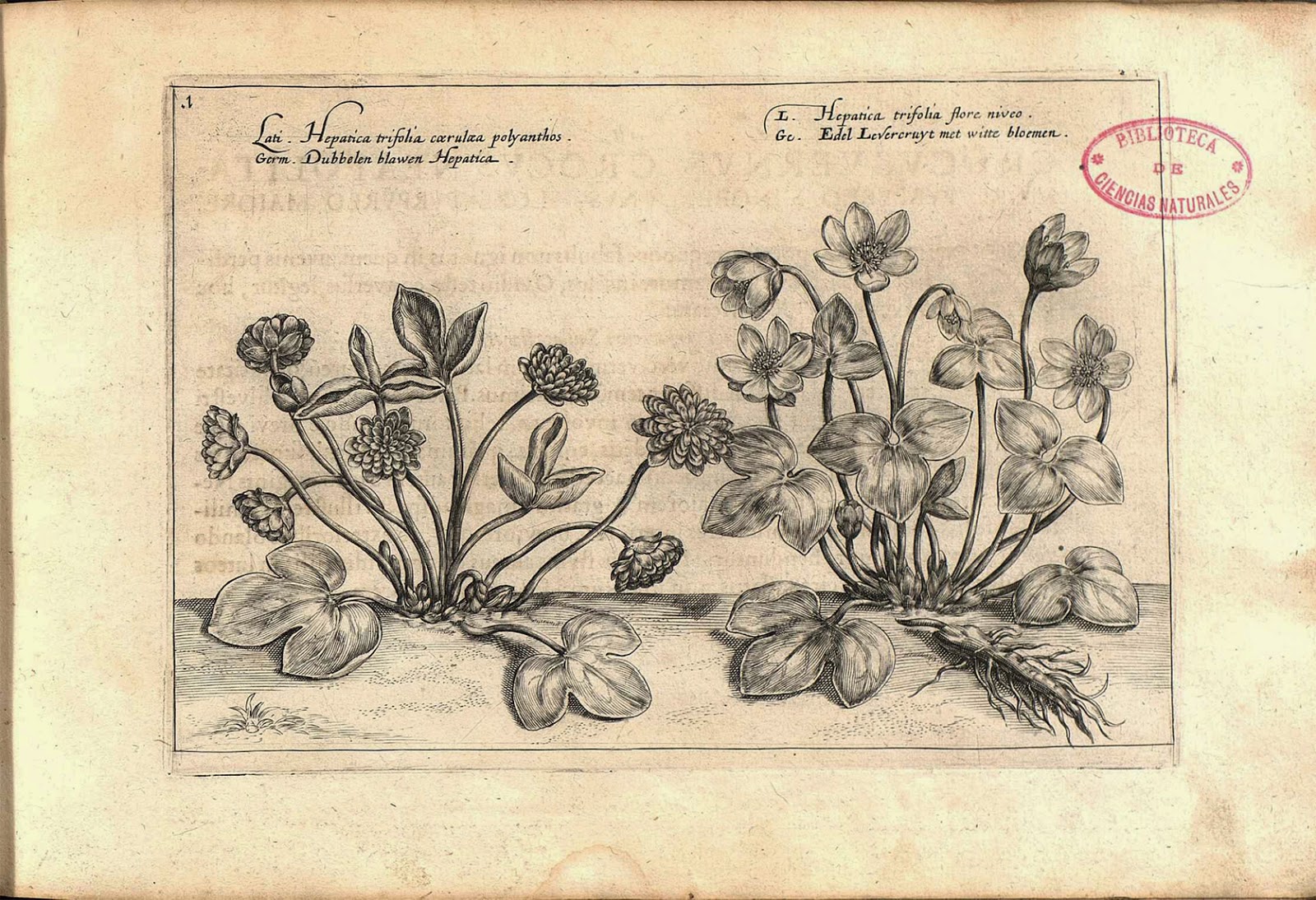
Engraving from Hortus Floridus published by Crispijn van de Passe in 1614. One of the earliest European plant catalogs, it was designed as a tool to allow salesmen to show costumers what plants they had for sale would look like in bloom. http://biodiversitylibrary.org/bibliography/75060. Digitized for BHL by Biblioteca Digital del Real Jardin Botanico de Madrid.

As commercial gardening and agriculture grew, competition among seed sellers, productivity pressures, and consumer demands for more interesting and unusual plants turned curious minds in the direction of methodical selection.

Hybridization and the New Agricultural Era

The idea that species were not constant, but could be changed by human intervention, was a revolutionary and somewhat blasphemous concept even as late as the nineteenth century. The prevailing belief was that species were intransmutable. The methods of plant reproduction and genetic transfer, which, along with mutations, provide the mechanisms by which species change, were largely uncharted territories before the Enlightenment. There is evidence of limited knowledge of plant reproduction processes in ancient Assyria and Medieval Arabian documents record some artificial fertilization activities. In Europe and the Mediterranean region, however, knowledge of plant sex organs and seed origins was a concept slowly realized starting in the seventeenth century.

In 1694, Rudolph Jakob Camerer provided the first clear indication of plant gender and the necessity of pollen for reproduction. The realization that plants reproduce sexually was the first step towards creating deliberate hybrids – offspring resulting from the crossing of two genetically different plants – as it illustrated the process by which it could be induced. Several advances in the eighteenth and nineteenth centuries paved the way for deliberate hybridization, including Joseph Gottlieb Kölreuter’s hybridization experiments to refute the constancy of species (which also demonstrated that hybridization was only possible between closely related species and that some characteristics were more likely to be passed on than others), Antoine Nicolas Duchesne’s hybridization of strawberries (which opened the door to deliberate crossing of different species), Linnaeus’ Tragopogon hybrids (which caused him to conclude that hybridization resulted in offspring with a combination of traits exhibited by parents), and Thomas Andrew Knight’s (the first person in Britain to conduct systematic hybridization) principles of heredity.

View Full Size Image
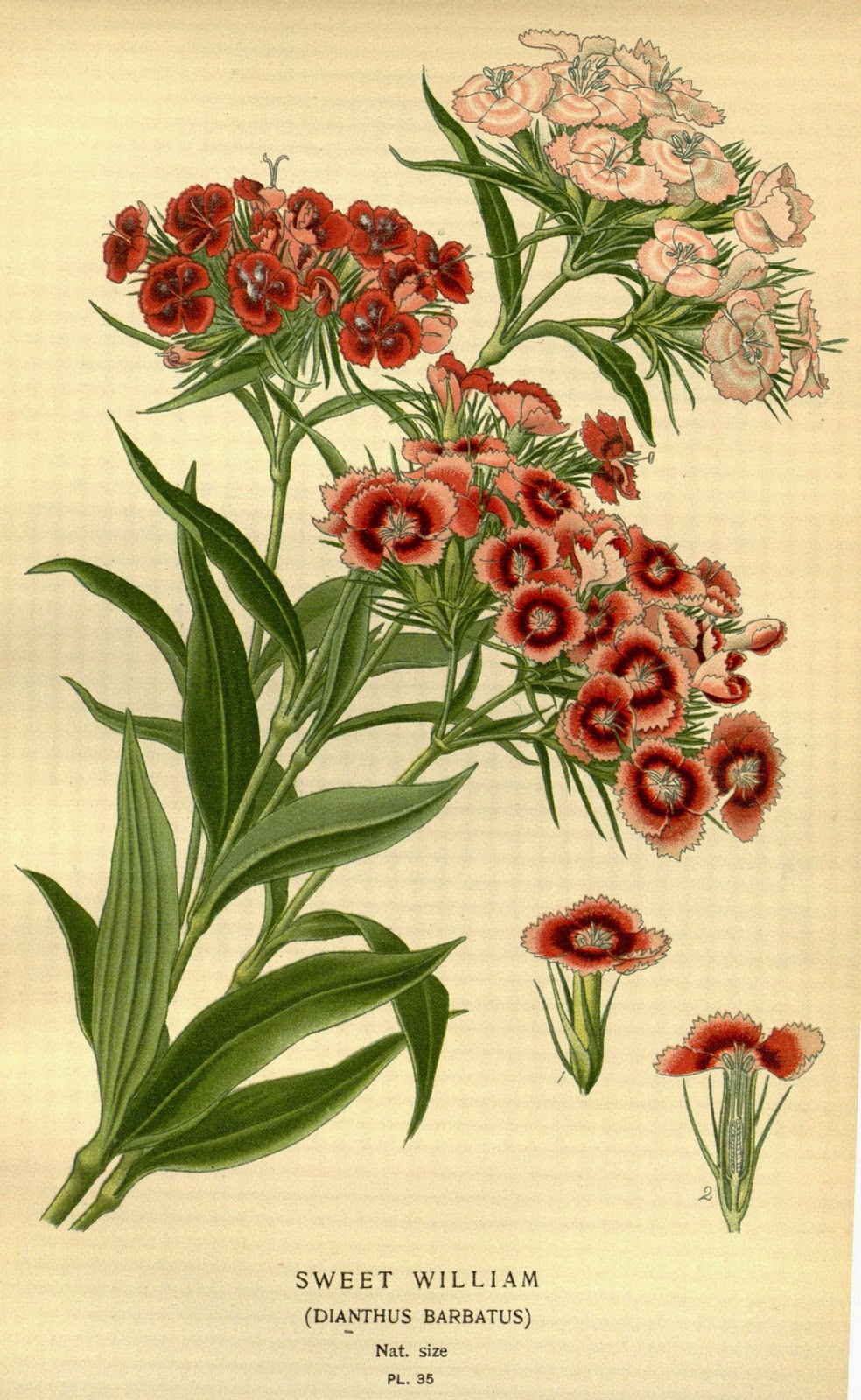
Fairchild’s Mule is a cross between a sweet william (pictured) and a carnation pink. Step, Edward. Favourite flowers of garden and greenhouse. v. 1 (1896). http://biodiversitylibrary.org/page/36442265. Digitized for BHL by the Missouri Botanical Garden.

The first commercial offering of an artificial hybrid plant was “Fairchild’s Mule,” a hybrid pink presented by nurseryman Thomas Fairchild in the seventeenth century. It would be another century before more deliberate commercial hybridization was pursued, partly due to perceived moral and religious conflicts with altering species, and partly because the introduction of foreign varieties through trade was long sufficient to satisfy the consumers’ demand for new plants. However, a breakthrough occurred in the 1820s when G.C.L. Hempel published an article that suggested that, with more knowledge, it might be possible to customize hybridization to identify the characteristics desired and breed for them. Up until this point, breeders had simply crossed whatever species they could to see if they could produce a hybrid, rather than crossing species to deliberately produce certain outcomes. However, it would take an understanding of plant genetics to achieve Hempel’s vision.

The nineteenth century saw the true start of methodical breeding. Darwin’s exploration of self- and cross-fertilization in The Effects of Cross and Self Fertilization in the Vegetable Kingdom (1876) and breeding in The Variation of Animals and Plants under Domestication (1868) laid the foundation for much of this systematic work. It was Gregor Mendel’s famous experiments with pea plants in the mid-1800s, however, that opened a window into the world of genetics, establishing many rules of heredity now known as Mendelian inheritance and enabling the development of systematic hybridization towards an end goal.

Hybrids and the Seed and Nursery Industry

Widespread understanding that plants could be improved and demands for increased productivity to feed a growing population at a profit, with plants adapted to new or human-created environments, alongside the rising popularity of the home garden, a growing capacity for discretionary spending on luxuries, and consumer demand for new, exotic, and flashy commodities, converged in the nineteenth century to create a prime market for hybrids. While farmers themselves drove much early plant selection, breeding, and hybridization work, by the late nineteenth century, seed and nursery companies were playing a dominant role in the production of hybrids for the market and home garden, offering them for sale through an ingenuity of the garden industry: the seed and nursery catalog.

View Full Size Image
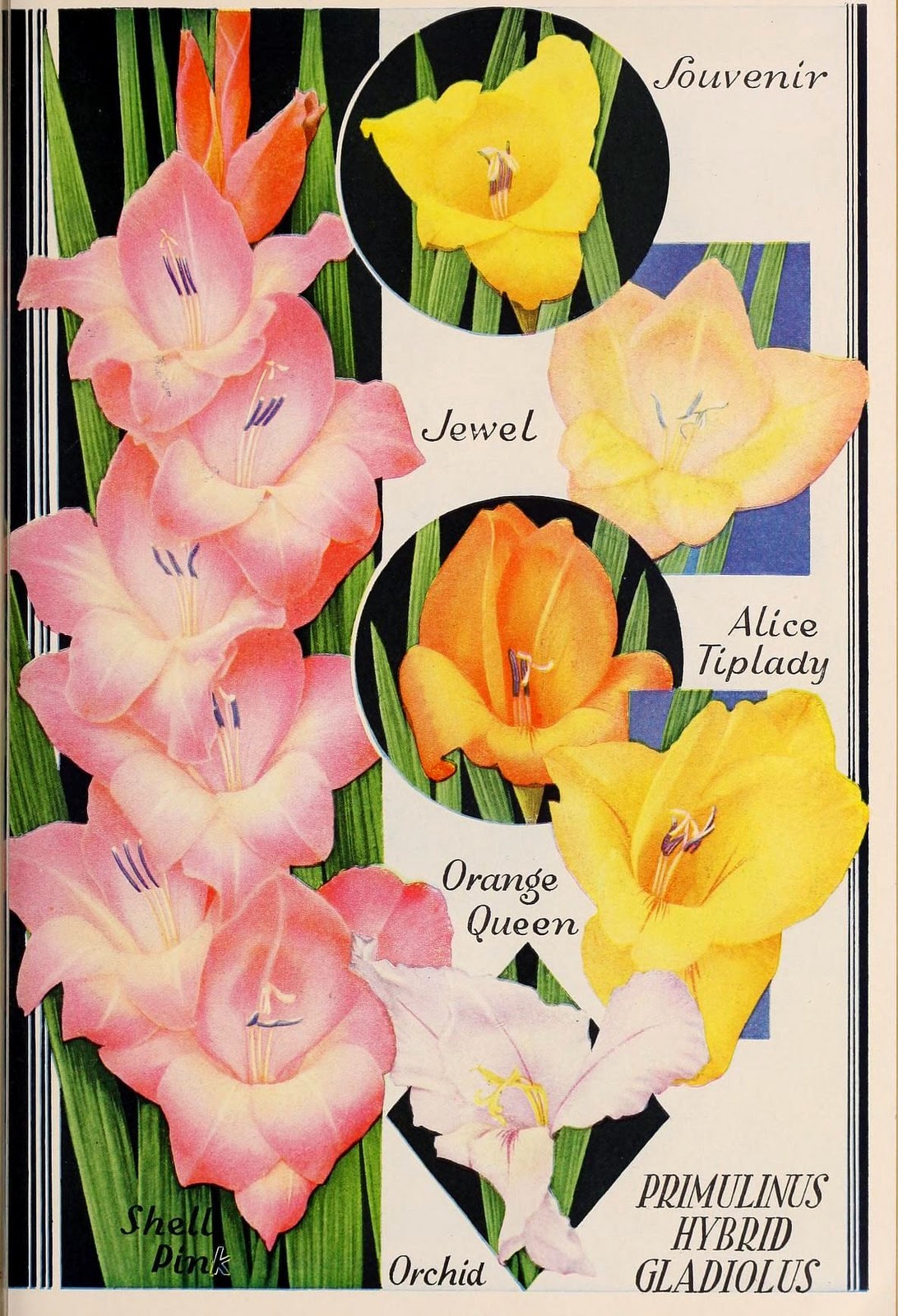
Hybrid Gladiolus offered via Dreer’s Garden Book 1931. http://biodiversitylibrary.org/page/45205202. Digitized for BHL by The New York Botanical Garden.

Crossing species to create ever more glorious varieties improved for color, resilience, flowering time, abundance, or longevity, seedsmen and nurserymen began branding the hybrids, using them to promote their business. “An endless search for novelty” drove the hybridization of ornamental plants for home and public gardens, which became one of the most profitable offerings of the seed and bulb industry. Fueled by imports of “exotic” species by “plant hunters” in the nineteenth and early twentieth century, a plethora of hybrids, many now garden staples, ensued, including hybrids of rhododendrons, camellias, daffodils, gladioli, tulips, and roses. But until the late nineteenth century, there was little to no regulation on the seed trade. Untested hybrids sold to gardeners eager for the next great thing, old hybrids were rebranded as new novelties, and identical hybrids were offered by different companies under different names as distinct varieties.

View Full Size Image
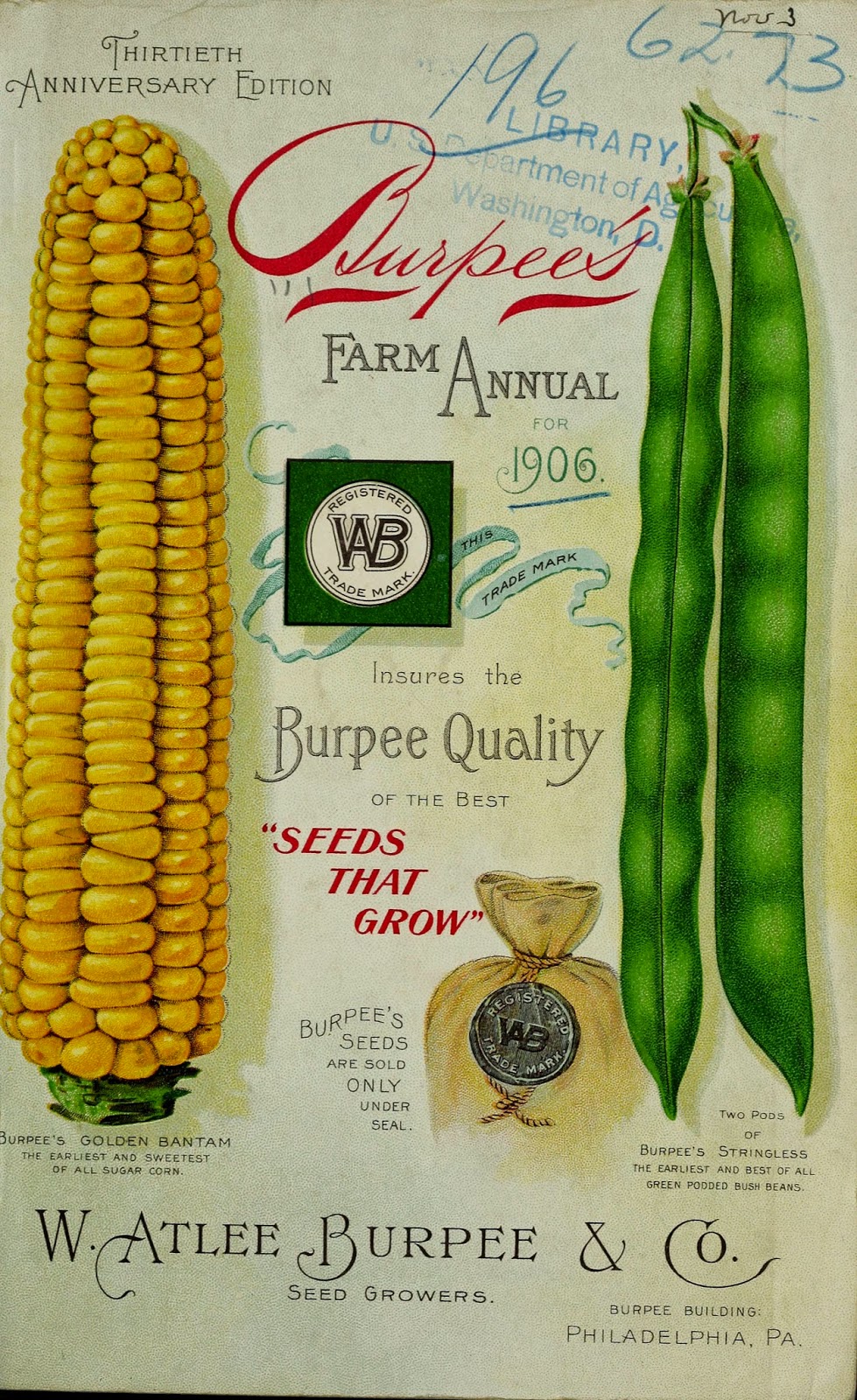
“Burpee’s Golden Bantam” and Stringless Green Pod Pea. Burpee’s Farm Annual for 1906. http://biodiversitylibrary.org/page/46815262. Digitized for BHL by the USDA National Agricultural Library.

One of the most successful seed companies (based largely on a realization of the importance of hybridization) was the Burpee Seed Company, responsible for such staple hybrids as Iceberg Lettuce, the Stringless Green Pod Bean, and “Burpee’s Golden Bantam” corn, the first yellow sweet corn. It was one of Burpee founder Atlee Burpee’s cousins, Luther Burbank, that popularly introduced the idea of plant breeding as a desirable activity to the American public. Though often criticized for his intuitive, rather than analytical, process of producing hybrids, Burbank created around 800 new hybrid varieties during his career.

View Full Size Image
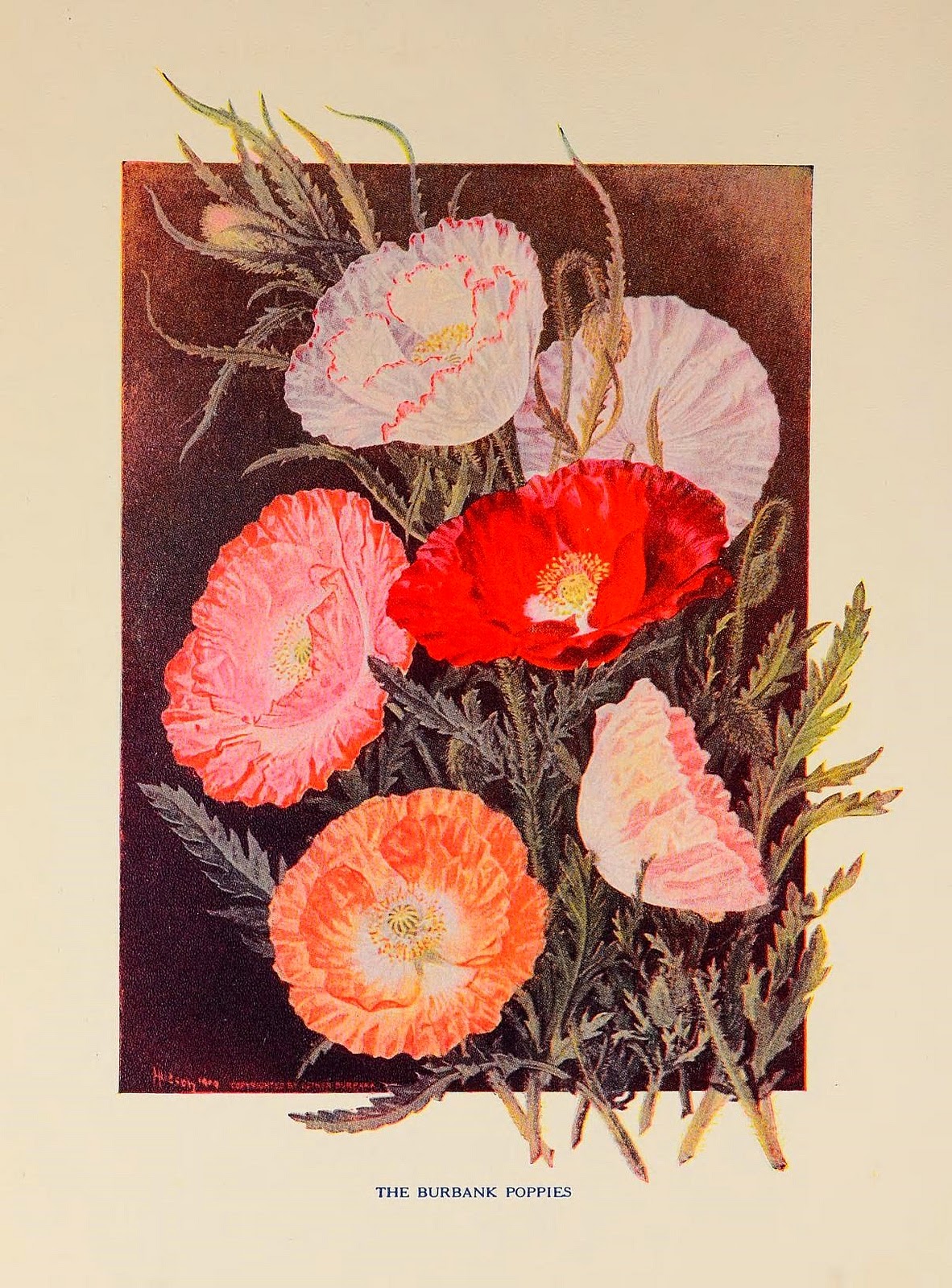
Shirley Poppies, branded as “Burbank Poppies” and offered by The Luther Burbank Company in their 1913 seed book. http://biodiversitylibrary.org/page/46307209. Digitized for BHL by The New York Botanical Garden.

Mendel and Genetics Take Center Stage

The widespread impact of Mendelian principles, when true methodical selection began to replace “chance” hybridization en mass, began in the twentieth century as heredity was more widely understood and accepted. William Bateson, the key figure in the introduction of Mendel in the plant sciences, articulated the opportunities that Mendelian principles offered to the plant breeder at the  2nd International Conference on Plant Breeding and Hybridization in New York in 1902:

“He will be able to do what he wants to do instead of merely what happens to turn up. The period of confusion is…passing away, and we have at length a basis from which to attack the mystery.”

The term “genetics” to describe plant heredity came into use in 1906, and from that point forward hybridization began to move from the fields of farmers and seedsmen to the labs of scientists.

Plant Breeding and hybridization resulted in more versatile, robust, hearty, and nutritious crops, essential to the survival of an ever-increasing population. Floral hybridization propagates ever-more exotic, diverse, and luxurious gardens. But recently, hybridization under the name of “genetic engineering” has fallen under severe scrutiny and criticism. The loss of crop biodiversity, use of traditional crops from developing countries to fuel industrialized commercial agriculture, increasing corporate control over breeding,  seed source, and food production, and corporate gene patents, have spurred interest in traditional farming, heirloom seeds, and a curb on genetic engineering. Many now argue that the quest is not to perfect the garden through human intervention, but to un-engineer it to a natural balance.

So we have to ask…Does the future of gardening (and agriculture) now reside in our past?

View Full Size Image
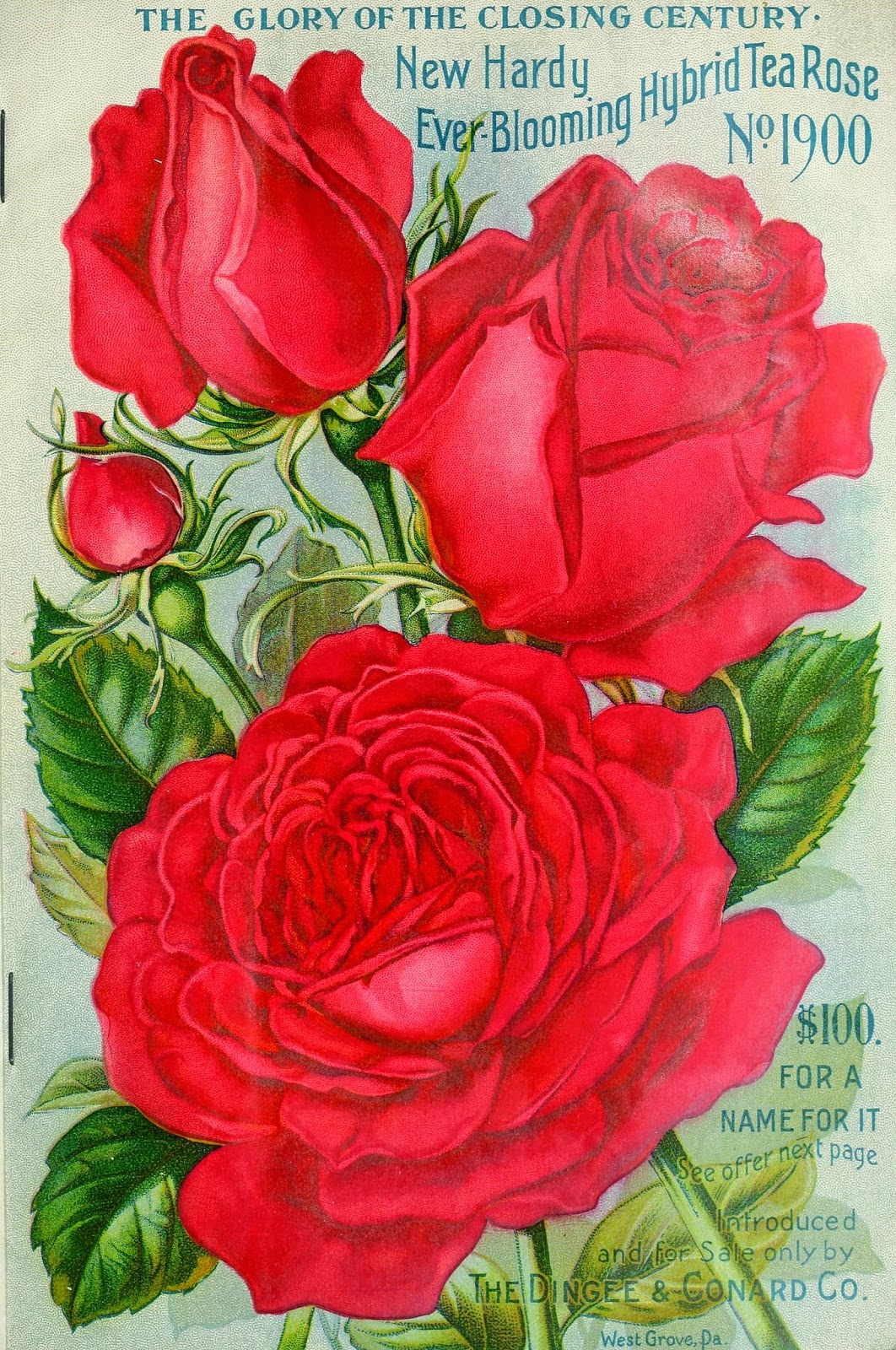
Roses from China were often imported aboard cargo vessels bearing tea in the 1800s. Eventually, roses bred from these were dubbed “tea roses.” Ever-blooming Hybrid Tea Rose. Offered by The Dingee and Conrad Company in Our New Guide to Rose Culture: 1891. http://biodiversitylibrary.org/page/43875590. Digitized for BHL by the USDA National Agricultural Library.

More Garden Stories Fun

  • Follow our blog and #BHLinbloom on Twitter and Facebook (or go directly to BHL’s Twitter and Facebook) this week as we explore the fascinating world of gardening, from its history to plant factoids and practical gardening tips.
  • Browse over 14,000 seed and nursery catalogs in our collection.
  • Browse over 2,500 seed and nursery catalog images in our Flickr collection.
  • Explore select seed catalog art, and stunning bookmarks and postcards developed by Cornell Library, on Pinterest.
  • See historic gardening come to life on the Smithsonian Libraries’ Tumblr.
  • Purchase your very own Garden Stories T-Shirt through T-Fund. All proceeds will go to help us digitize more pages for BHL. Our goal is to sell enough shirts to digitized 5,000 pages. Can you help us get there?
  • Help us improve access to seed and nursery catalogs by transcribing some today as part of our the Institute of Museum and Library Services (IMLS)-funded Purposeful Gaming project!
  • Find great online gardening resources, tips, and help on the BHL Gardening Resources Page.

References and More Information

[1] Poehlman, John M, and D A. Sleper. Breeding Field Crops. Ames: Iowa State University Press, 1995. Print.
[2] (Reference consulted for blog post) Kingsbury, Noel. Hybrid. Chicago: University of Chicago Press, 2009. 20-23 pg. Print.
[3] More Seed List Resources:

  • List of Seed Lists Available at Royal Botanic Gardens, Kew;
  • Guide to the plant species descriptions published in seed lists from Botanic Gardens for the period 1800 – 1900. Leiden Naturalis;
  • Index Semina in BHL.
With Contributions From:
Doug Holland
Director, Missouri Botanical Garden Library
Judith A. Warnement
Librarian of Harvard University Botany Libraries
March 24, 2015by michelle.underhill
BHL News, Blog Reel, Campaigns, Featured Books, Garden Stories

Garden Stories: A Celebration of Gardening

Friday, March 20, 2015, we celebrated the March equinox (and, incidentally, a total solar eclipse!), when the sun appears to cross the celestial equator heading northward. In the northern hemisphere, this is also known as the vernal equinox. For those in the southern hemisphere, it means that autumn is upon them, and cold days are ahead. But for those of us in the northern hemisphere, it means that Spring is officially here!

The coming of spring is therapeutic for many – a time for new life, a break from the grayness of winter, and a signal to get the trowels, shovels, and gardening gloves out. Many hopeful gardeners have poured over their fall and winter seed catalogs for months, fantasizing about the colorful Edens they will nurture come springtime.

But did you ever wonder about the history of the home garden, or even agriculture for that matter, and just when and how those beloved seed catalogs came about? What did gardens 100 years ago look like? What tools, fertilizer, and seed and plant varieties were available in the nineteenth, eighteenth, or even seventeenth centuries? When did recreational gardening come into its own, and who were the men and women who helped make it happen?

A Walk Down the Gardening Memory Lane

Though speculative due to lack of written records, many researchers believe that Neolithic agriculture began several thousand years ago with attempts by hunter-gatherers to manage nature for their benefit, eventually resulting in the “Domestication Revolution” with the emergence of propagation, whereby ancient civilizations began distributing, dividing, and planting seeds and tubers [1].

For many millennia, most agriculture was undertaken strictly as a means to produce food to feed families and local populations or grow herbs for medicinal purposes. The flames of change began to ignite in Europe in the seventeenth century, however, with the Enlightenment and the Scientific Revolution, which resulted in an increased desire to understand the natural world and apply scientific methods to study it. Scientific advances in turn nurtured an agricultural revolution in the eighteenth and nineteenth centuries, whereby farmers applied new techniques to produce more crops across increased land areas, resulting in more food security and leisure time[1].

View Full Size Image
Flowers in the Willibaldsburg fortress castle garden in Eichstatt, Germany. The book Hortus Eystettensis, commissioned by Prince-Bishop Johann Conrad von Gemmingen, illustrates the plants gathered together in the castle gardens. The garden and this book represent the first time in Western history that plants were being collected and celebrated not for their use but for their beauty and inherent interest. Hortus Eystettensis (1613). Volume One and Volume Two digitized by Biblioteca Digital del Real Jardin Botanico de Madrid.

The rise of capitalism and growing populations fueled the development of commercial agriculture, and farmers (especially gentry farmers) started sharing and publishing their knowledge and botanical gardens began cataloging their seeds and producing seed lists (which included many plant species new to science), articulating the seeds housed at the garden available for international exchange with other institutions. As a result, agriculture not only became more prominent, but citizens (particularly those in urban environments) began nurturing home gardens as leisure activities.

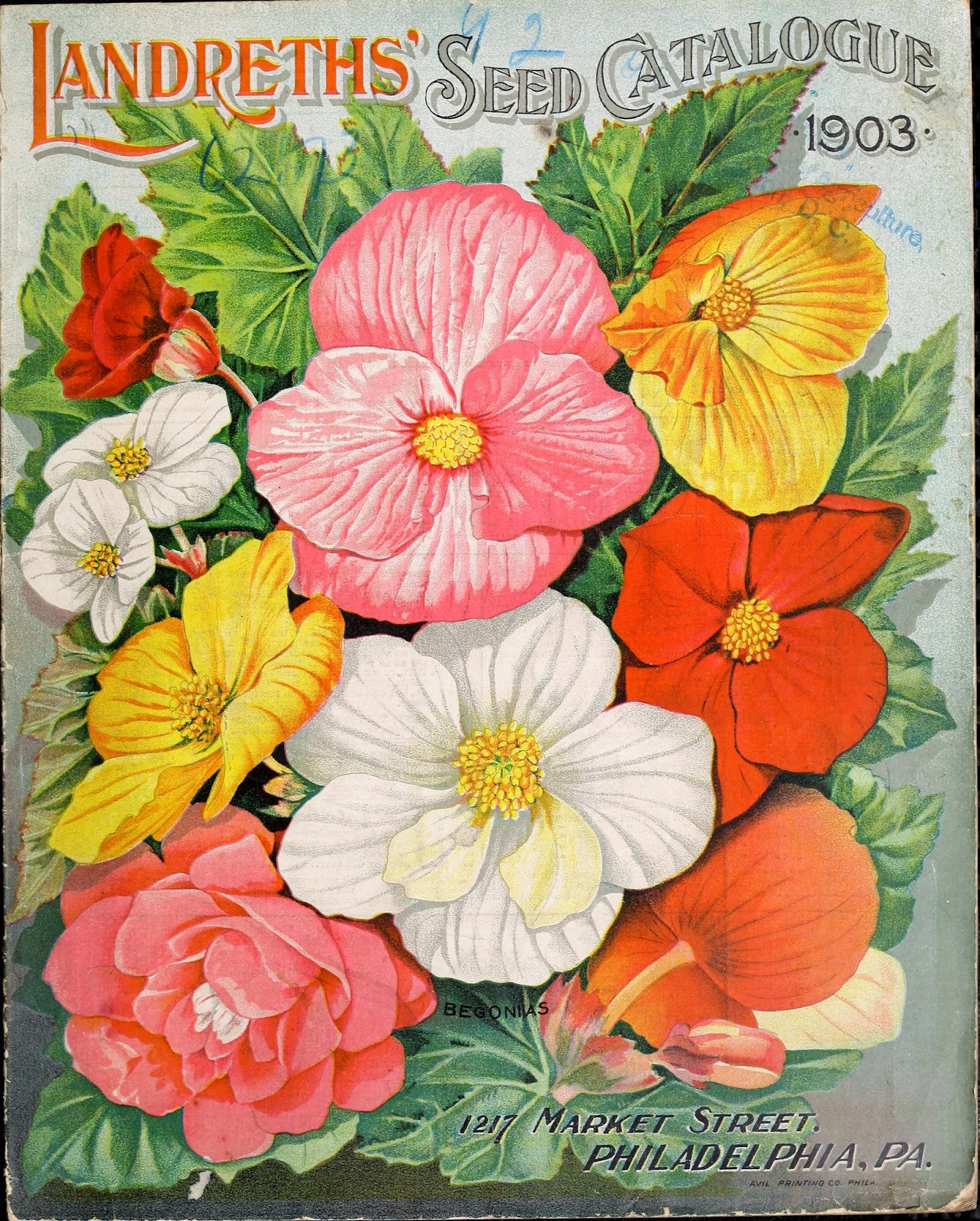
As commercialism increased and imperial expansion enabled the introduction of new plant species from expanded locales, a bustling seed trade developed, first in Europe and Western Asia in the seventeenth and eighteenth centuries but quickly strengthening in America following the Revolution. American nurseries emerged as early as the seventeenth century, and David Landreth founded the first seed house in America in 1784 in Philadelphia.

View Full Size Image
David Landreth founded the oldest seed house in the U.S. in 1784 in Philadelphia. Landreth’s Seed Catalog: 1903. http://biodiversitylibrary.org/page/46368234. Digitized by the USDA National Agricultural Library.

Rise of the Seed and Nursery Catalog

One of the most important innovations in the seed industry was the seed catalog, which offered a list of seeds and bulbs, and later garden tools and supplies like fertilizer and insecticides, for sale from the issuing company.

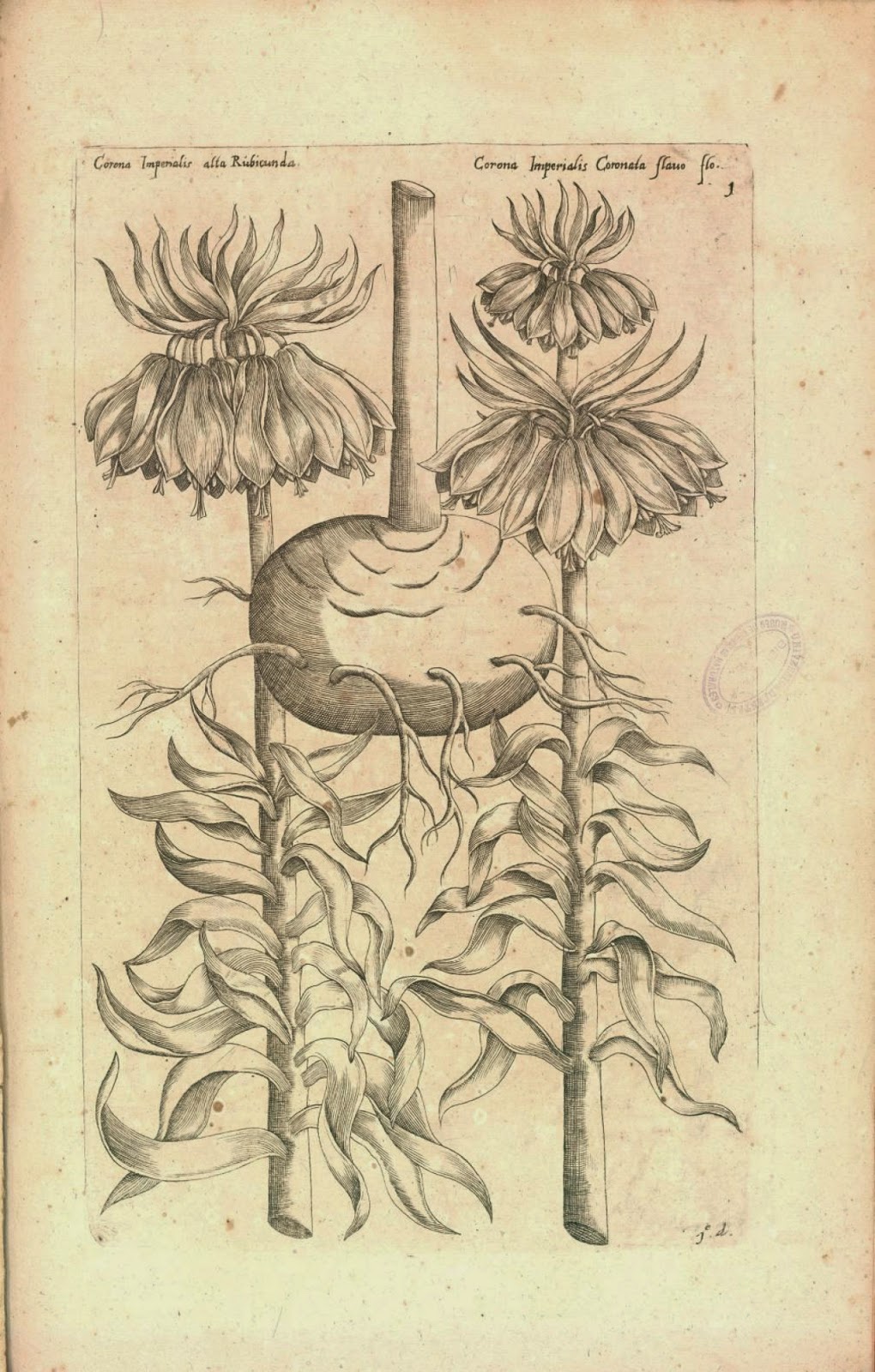
In the late 1500s, kings and wealthy aristocrats began having their exotic plant collections cataloged within elaborately-illustrated books called florilegia. Emanuel Sweerts‘ 1612 Florilegium, rather than being simply a catalog of his collection, presented a list of plants he could offer for sale, making it the oldest-surviving European plant catalog [2].

View Full Size Image
Fritillaria imperialis in Sweerts’ 1647 Florilegium amplissimum et selectissimum. http://biodiversitylibrary.org/bibliography/75687. Digitized by Biblioteca Digital del Real Jardin Botanico de Madrid.

In 1688, the first nursery catalog was published in Europe [3]. Early catalogs were simply listings of seeds or plants for sale, often articulated by Latin names and frequently in broadside form, lacking ornamentation, illustrations, or even prices. One of America’s first nursery catalogs was a broadside published in 1783 by John Bartram Jr [4]. Early nineteenth century seed advertising also consisted of short notices of seeds and tools for sale in gardening publications, very much in the newspaper “classifieds” style [5].

View Full Size Image
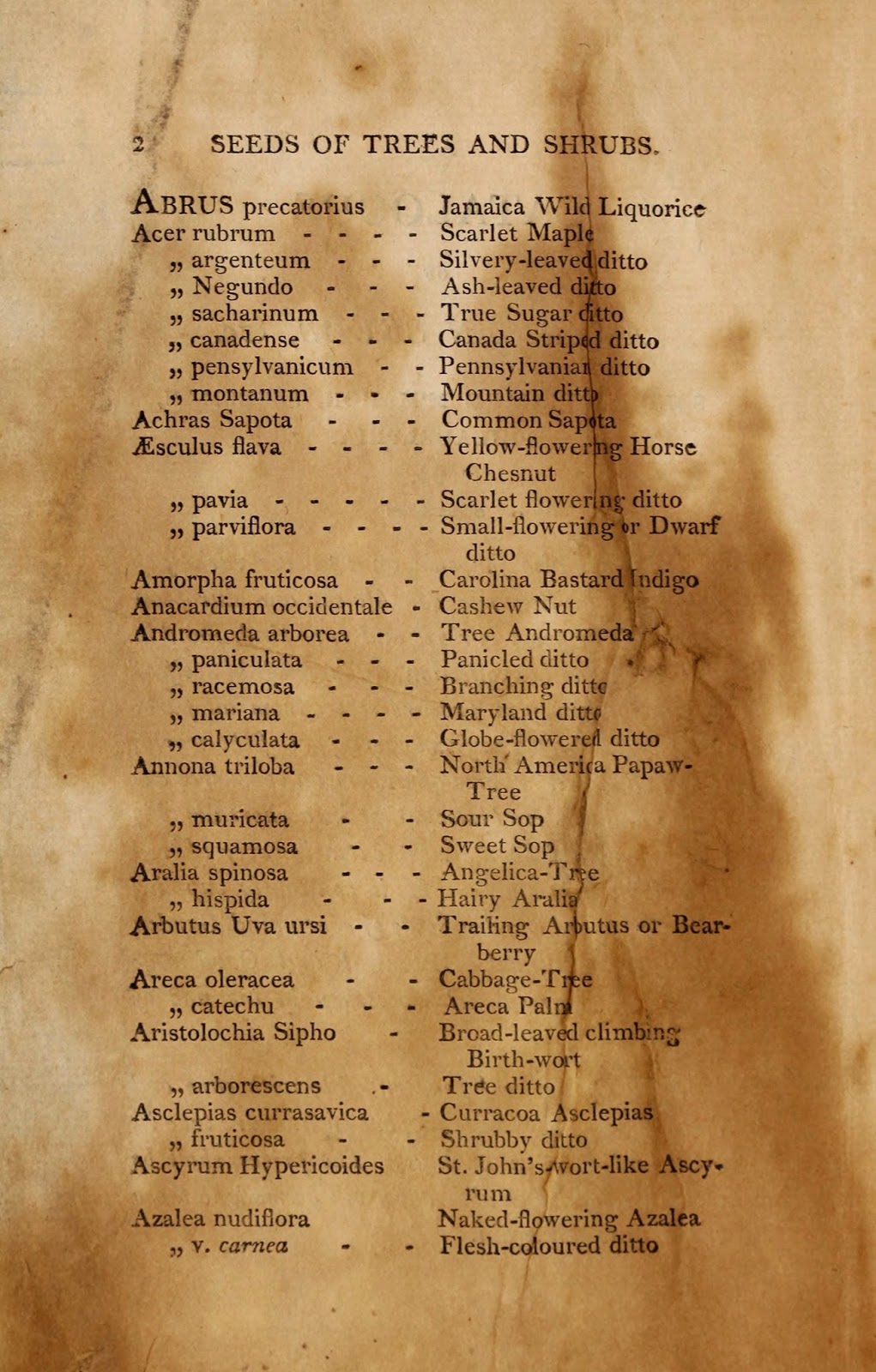
Tree and shrubs seeds offered for sale in the first American seed catalog in booklet form. M’Mahon, Bernard. A Catalog of American Seeds. 1804. http://biodiversitylibrary.org/page/44425432. Digitized by the USDA National Agricultural Library.

In 1804, the first American seed catalog in booklet form was published by Bernard M’Mahon, and by the 1820s in America, simple illustrations appeared in select catalogs [6]. Throughout the nineteenth century, horticultural manuals became increasingly popular, with growing instructions expanding to inclusion in catalogs as the industry bloomed, with the Shakers being early adopters of such practices  (incidentally, the Shakers were also the first to popularize the use of seed packets) [7]. The seed catalog became an increasingly important component of the seed business in the middle of the nineteenth century. Nurseries began publishing regular annual catalogs in the 1840s, which were mailed, often at great expense, to various segments of a merchant’s customer base. Expanding transportation networks, the growth of the US Postal Service, and a new Post Office classification system in 1863 assigning low rates to instructive periodicals and seeds, allowed the seed industry to flourish at an unprecedented scale through the mail order phenomenon. The mail order gardening business first centered on fruits and vegetables but grew to include flowers and especially ornamentals towards the last quarter of the nineteenth century [8].

View Full Size Image
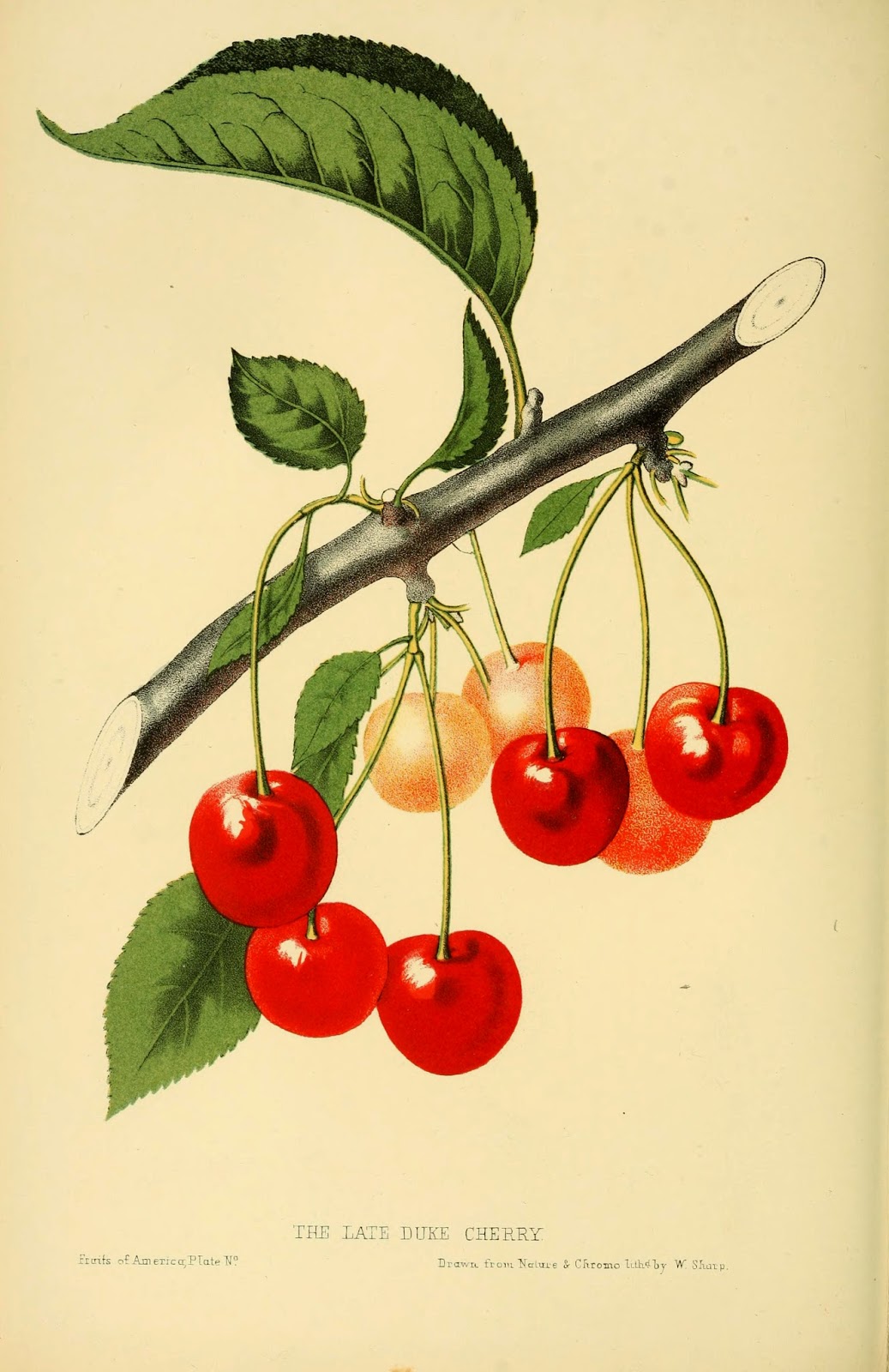
The Fruits of America (1848-56) by Charles Hovey is the first major American book with exclusively chromolithographed plates. http://biodiversitylibrary.org/page/20359525.

Printing innovations in the mid-nineteenth century transformed seed catalogs into beautiful marketing tools that stimulated customer appetites with visual representations of an advertised-seed’s potential. The multi-colored printing process of chromolithography was patented by Franco-German lithographer Gottfried Engelmann in 1837 [9] and introduced to the U.S. by William Sharp in 1841. By 1851, the first major American book with exclusively chromolithographed plates, The Fruits of America by nurseryman Charles Hovey, was published [10]. By the 1860s, chromolithography appeared in seed catalogs, thanks in large part to innovative nurseryman James Vick. Benjamin K. Bliss, however, is credited by horticultural historian Ulysses P. Hedrick as the first to introduce color to the catalog in the US in 1853. According to Elizabeth S. Eustis in “The Horticultural Enterprise: Markets, Mail, and Media in Nineteenth Century America,” Bliss’ 1867 “autumn catalog featured the earliest example so far discovered of chromolithography as the color process in a horticultural catalog” [11]. By 1890, commercial use of photographs in magazines and newspapers began, with, according to Ernest Morrison in J. Horace McFarland: A Thorn for Beauty, J. Horace McFarland being the first to use halftone images in horticultural publications [12].

View Full Size Image
B.K.Bliss is credited as the first to introduce color to the seed catalog in 1853. B.K. Bliss and Son’s illustrated spring catalogue and amateur’s guide to the flower and kitchen garden. 1870. http://biodiversitylibrary.org/page/44492905. Digitized by the USDA National Agricultural Library.

Increased competition and growing costumer demands for novelties led to the popularity of hybrids (offspring produced by breeding two genetically distinct plants) in the nineteenth century, with certain varieties offered only through certain companies and beautifully portrayed in seed catalogs [13]. By the end of the nineteenth century, women had also entered the seed and flower business, including Carrie H. Lippincott, who established the first seed company in the U.S. to be founded and managed by a woman [14].

View Full Size Image
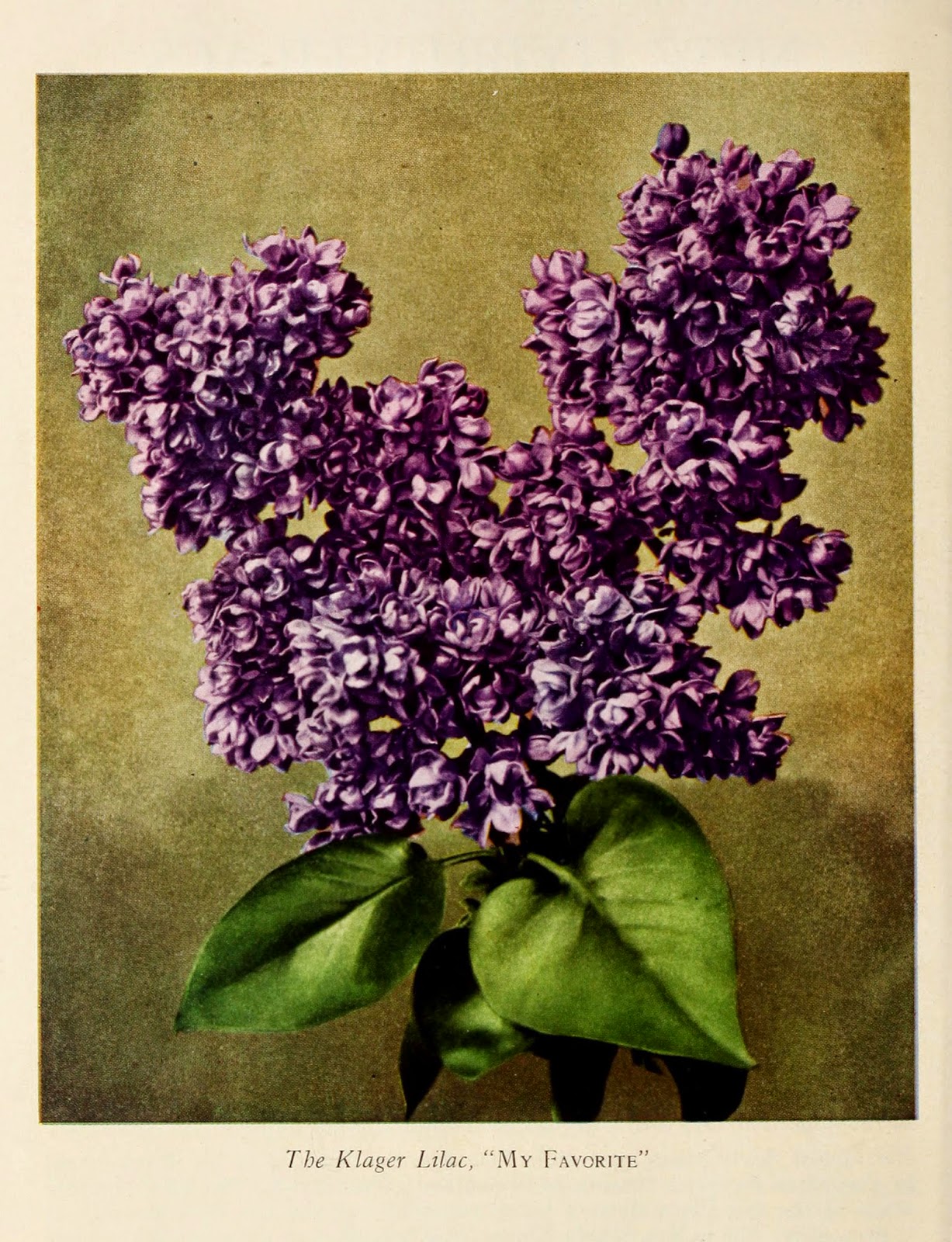
Hybrid Lilac, The Klager Lilac. Cooley’s Gardens. 1931 fall catalogue of new hybrid lilacs and Japanese irises. http://biodiversitylibrary.org/page/44394461. Digitized by the USDA National Agricultural Library.

Seed Catalogs: More than Horticultural Novelties

While they stimulate our gardening imagination, help us trace the development of the seed industry, and offer insight into the plant varieties offered to consumers throughout the centuries, seed catalogs are also important reflections of social and cultural values over time, changing agricultural and printing technologies, evolution of garden fashion and landscape design, and the development of botanical science. For instance:

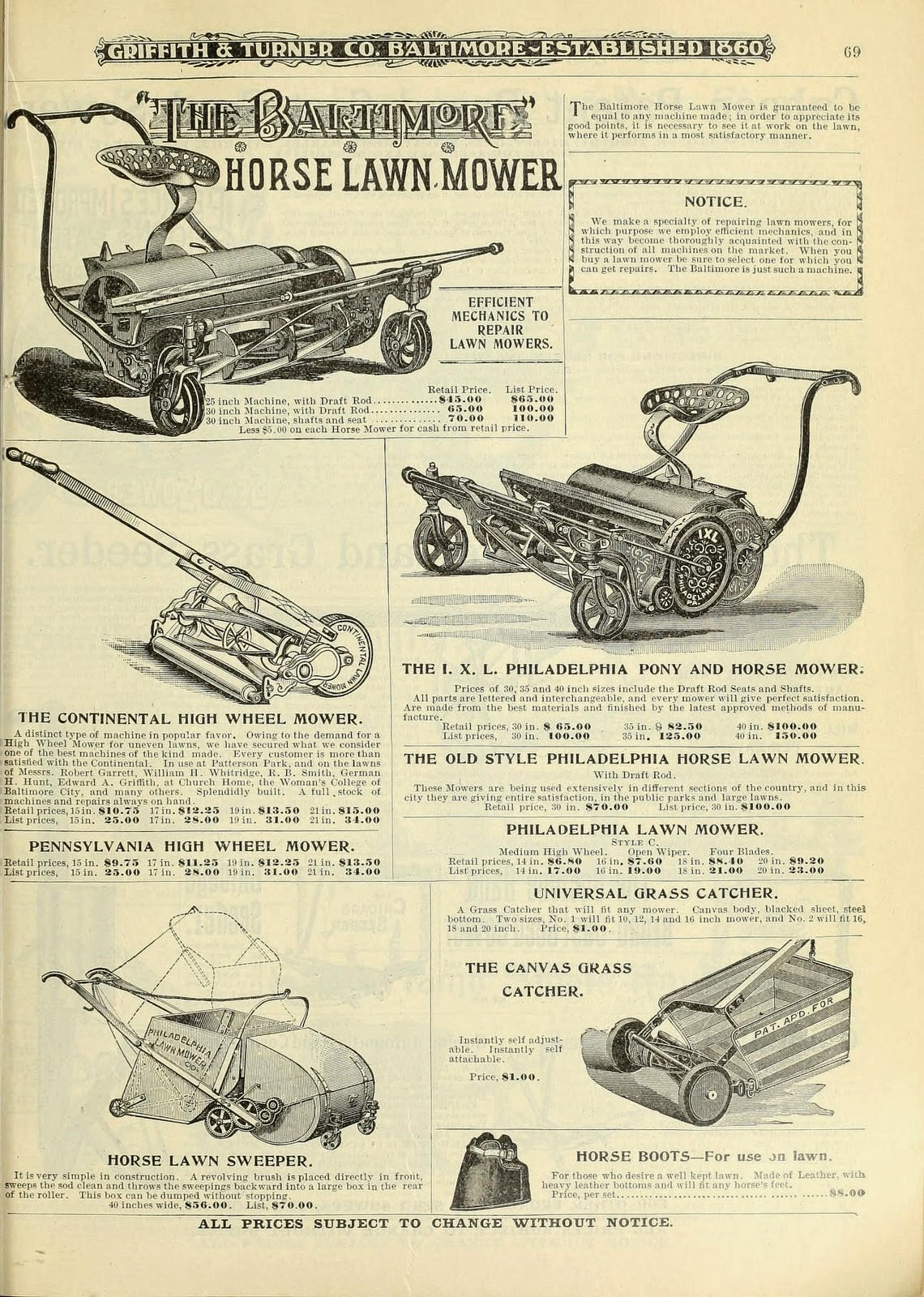
  • Seed catalogs show changes in gardening technology and tools over time. This 1906 catalog lists 29 tools for sale. By the 1860s, catalogs listed dozens of specialty tools for specific tasks, like grass shears, wooding shears, ladies shears, and hedge shears. This 1900 catalog proudly displays “Iron Age” garden and farm implements. The lawnmower, first invented by Edwin Budding in England in 1830, began being popularly manufactured starting in the 1860s, and in 1902 Ransomes produced the first gasoline-powered lawnmower. By 1900 various models were selling for between $6-$100 retail.
View Full Size Image
Various lawnmower models for sale in 1900. Farm and garden supplies : Griffith and Turner Co. http://biodiversitylibrary.org/page/43837949. Digitized by the USDA National Agricultural Library.
  • Pest control is a major business today. Seed catalogs help us trace the development and introduction of pesticides and fungicides. Compare the offerings from 1881, 1893, 1907, and 1934, for example.
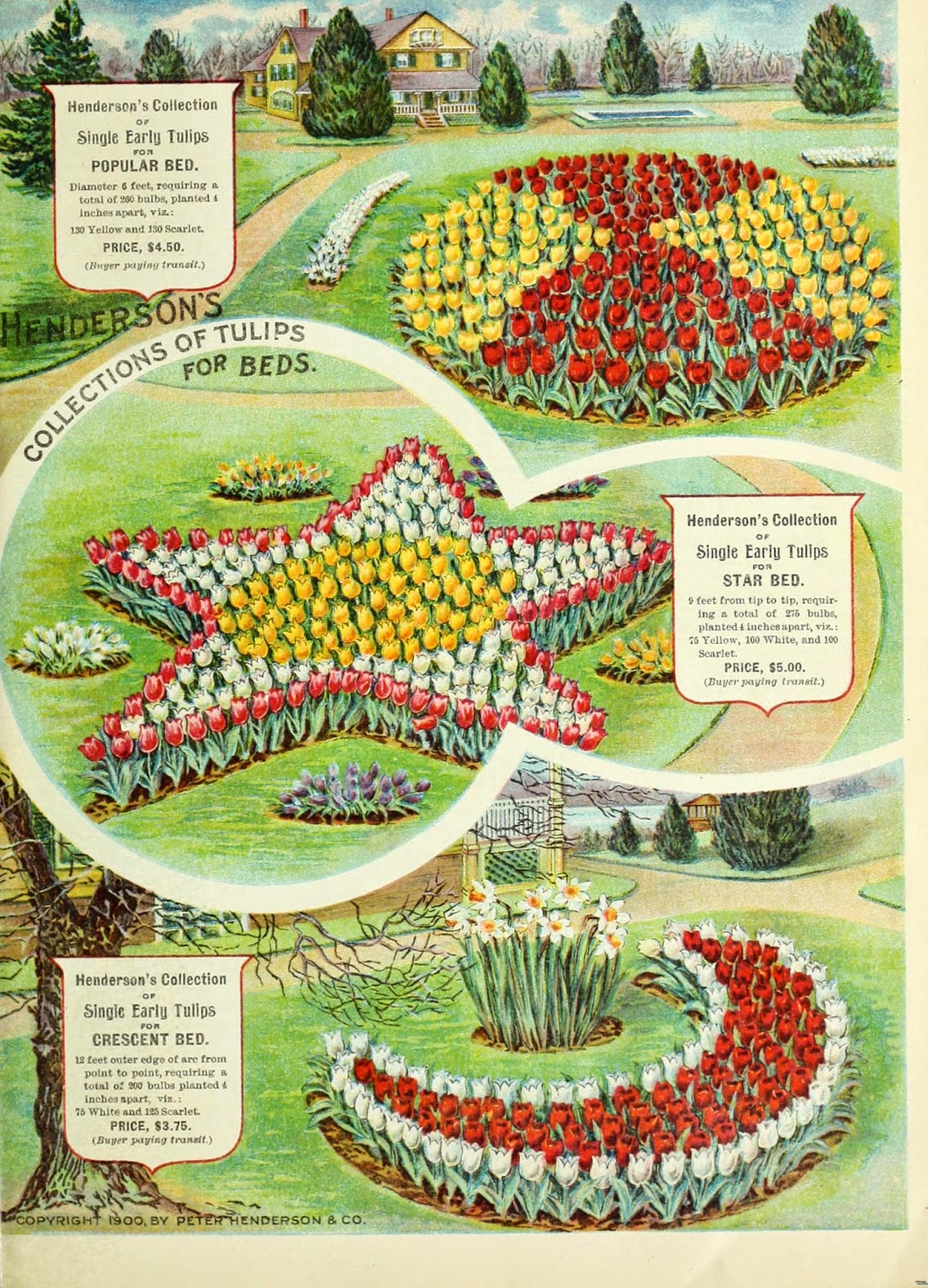
  • Seed catalogs help us trace changes in garden plant popularity and landscape design over time. For instance, from 1865-1900, “bedding out,” which involved laying out patterns on the ground and filling them in with colorful plants, was all the rage. After the turn of the 20th century, bedding out was replaced by cottage gardening, which uses informal design and traditional materials. Check out the awesome tulip bed patterns in this 1900 catalog.
View Full Size Image
“Bedding Out” Garden Style. Peter Henderson and Co. Autumn bulbs catalogue : 1900. http://biodiversitylibrary.org/page/43899723. Digitized by the USDA National Agricultural Library.

Garden Stories: A Week Long Event for Garden Lovers

All this week, we’ll be exploring the fascinating world of gardening, including garden history topics such as the development of hybrids, heirloom gardening, women in the seed industry, revolutions in garden marketing through art, and the vital role the Shakers played in the American seed industry. Follow our blog for more great stories! We’ll also be sharing great gardening tips and plant factoids with help from our BHL members and affiliates. And we’ll be using the over 14,000 seed and nursery catalogs in BHL to help tell these stories. Join in all the gardening fun by:

  • Following our blog and #BHLinbloom on Twitter and Facebook (or go directly to BHL’s Twitter and Facebook) this week.
  • Browsing over 2,500 seed and nursery catalog images in our Flickr collection.
  • Exploring select seed catalog art, and stunning bookmarks and postcards developed by Cornell Library, on Pinterest.
  • Seeing garden history come to life on the Smithsonian Libraries’ Tumblr.
  • Purchasing your very own Garden Stories T-Shirt through T-Fund. All proceeds will go to help us digitize more pages for BHL. Our goal is to sell enough shirts to digitized 5,000 pages. Can you help us get there?
View Full Size Image
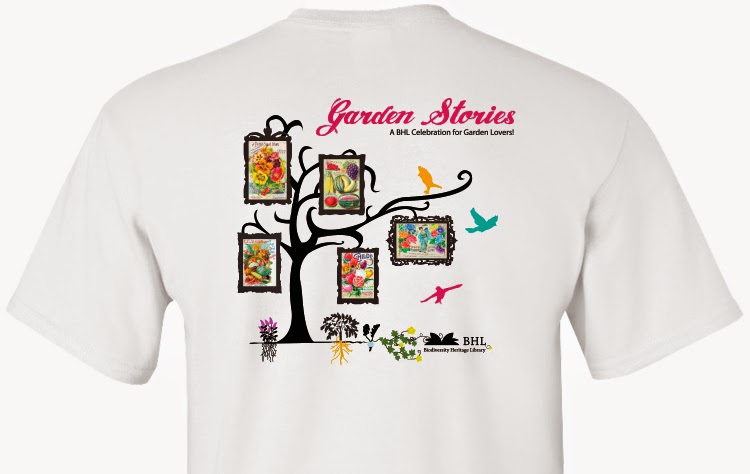
Garden Stories T-Shirt available through TFund.

More Great Gardening Resources from our Partners

Can’t get enough gardening fun? Explore these great resources from our partners:

  • Cornell University Library Mail Order Gardens Exhibit
  • Cornell University Gardening Guide
  • Missouri Botanical Garden Help for the Home Gardener
  • Natural History Museum, Los Angeles County Nature Garden
  • The New York Botanical Garden Seed Catalog LibGuides 
  • The New York Botanical Garden Plant Information and Gardening Guide
  • Royal Botanic Gardens, Kew, Nursery Catalogs and Seed Lists
  • Smithsonian Libraries Seed and Nursery Catalogs Exhibit
  • Spring Gardening Checklist via Smithsonian Gardens
  • USDA National Agricultural Library Seed and Nursery Catalog Collection
  • USDA The People’s Garden Video and Webinar Gardening Resources
  • Find more online gardening resources, tips, and help on the BHL Gardening Resources Page.


References

  1. Kingsbury, Noel. Hybrid. Chicago: University of Chicago Press, 2009, 1-36. Print.
  2. The Seed and Nursery Catalog in Europe and the U.S. “Earliest European Seed and Nurseru Catalogs.” Oregon State University Libraries. Web. February 2015. http://scarc.library.oregonstate.edu/omeka/exhibits/show/seed/earliest/earliest-european/.
  3. Kingsbury, Noel. Hybrid. Chicago: University of Chicago Press, 2009, 75. Print.
  4. Christopher, Thomas. “Heirloom Seed Catalogs.” Horticulture. Dec.(1985): 25. Print.
  5. Kraft, Ken and Pat Kraft. “Seeds for Sale.” Country Living Gardener. 1.1(1993): 30. Print.
  6. Fraser, Susan M. and Vanessa Bezemer Sellers. Flora Illustrata. New York: New York Botanical Garden, 2014, 235. Print.
  7. Ibid., 236
  8. Ibid., 249
  9. Ferry, Kathryn. “Printing the Alhambra: Owen Jones and Chromolithography.” Architectural History. 46(2003): 175–188.
  10. Fraser, Susan M. and Vanessa Bezemer Sellers. Flora Illustrata. New York: New York Botanical Garden, 2014, 239. Print.
  11. Ibid., 251
  12. Morrison, Ernest. J. Horace McFarland: A Thorn for Beauty. Harrisburg, PA: Pennsylvania Historical and Museum Commission, 1995. Print.
  13. Kingsbury, Noel. Hybrid. Chicago: University of Chicago Press, 2009, 139. Print.
  14. American Garden History. “Who was the mysterious feminist seed dealer and marketing genius Miss Carrie H. Lippincott?” Barbara Wells Sarudy, 2010-13. Web. February 2015. http://americangardenhistory.blogspot.com/2014/07/who-was-mysterious-feminist-seed-dealer.html.
March 23, 2015by michelle.underhill
Page 1 of 212»

Help Support BHL

BHL's existence depends on the financial support of its patrons. Help us keep this free resource alive!

search

About BHL

The Biodiversity Heritage Library (BHL) is the world’s largest open access digital library for biodiversity literature and archives. BHL operates as a worldwide consortium of natural history, botanical, research, and national libraries working together to digitize the natural history literature held in their collections and make it freely available for open access as part of a global “biodiversity community.”

Join Our Mailing List

Sign up to receive the latest news, content highlights, and promotions.

Subscribe Now

Subscribe to Blog via Email

Enter your email address to subscribe to this blog and receive notifications of new posts by email.

Join 319 other subscribers

Subscribe to Blog Via RSS

Subscribe to the blog RSS feed to stay up-to-date on all the latest BHL posts.

Access RSS Feed

Inspiring Discovery through Free Access to Biodiversity Knowledge.

The Biodiversity Heritage Library makes it easier than ever for you to access the information you need to study and explore life on Earth…for free, anytime, anywhere.


64+ Million Pages of
Biodiversity Literature Online.

EXPLORE

Tools and Services
to Transform Research.

EXPLORE

300,000+
Illustrations on Flickr.

EXPLORE

ABOUT | HARMFUL CONTENT | PRIVACY | SITE MAP | TERMS OF USE