Biodiversity Heritage Library - Program news and collection highlights from BHL
  • Home
  • News
  • Featured Books
    • All Featured Books
    • Book of the Month Series
    • BHL at 20
  • User Stories
  • Campaigns
    • Fossil Stories
    • Garden Stories
    • Monsters Are Real
    • Page Frights
    • Her Natural History
    • Earth Optimism 2020
  • Tech Blog
  • Visit BHL
Home
News
Featured Books
    All Featured Books
    Book of the Month Series
    BHL at 20
User Stories
Campaigns
    Fossil Stories
    Garden Stories
    Monsters Are Real
    Page Frights
    Her Natural History
    Earth Optimism 2020
Tech Blog
Visit BHL
  • Home
  • News
  • Featured Books
    • All Featured Books
    • Book of the Month Series
    • BHL at 20
  • User Stories
  • Campaigns
    • Fossil Stories
    • Garden Stories
    • Monsters Are Real
    • Page Frights
    • Her Natural History
    • Earth Optimism 2020
  • Tech Blog
  • Visit BHL
Biodiversity Heritage Library - Program news and collection highlights from BHL
BHL News, Blog Reel

Expanding Access Training Workshop

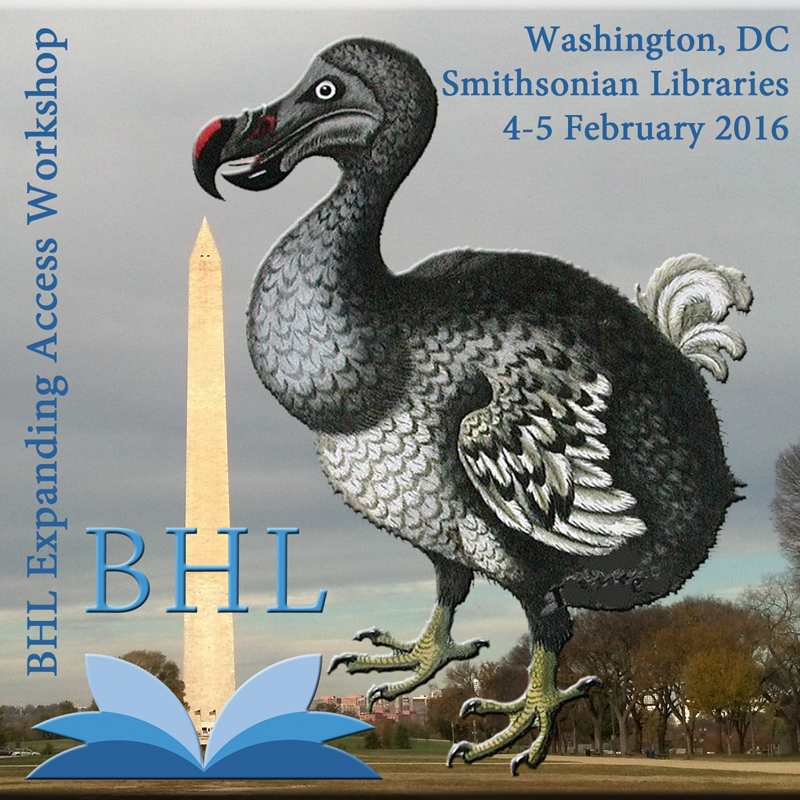
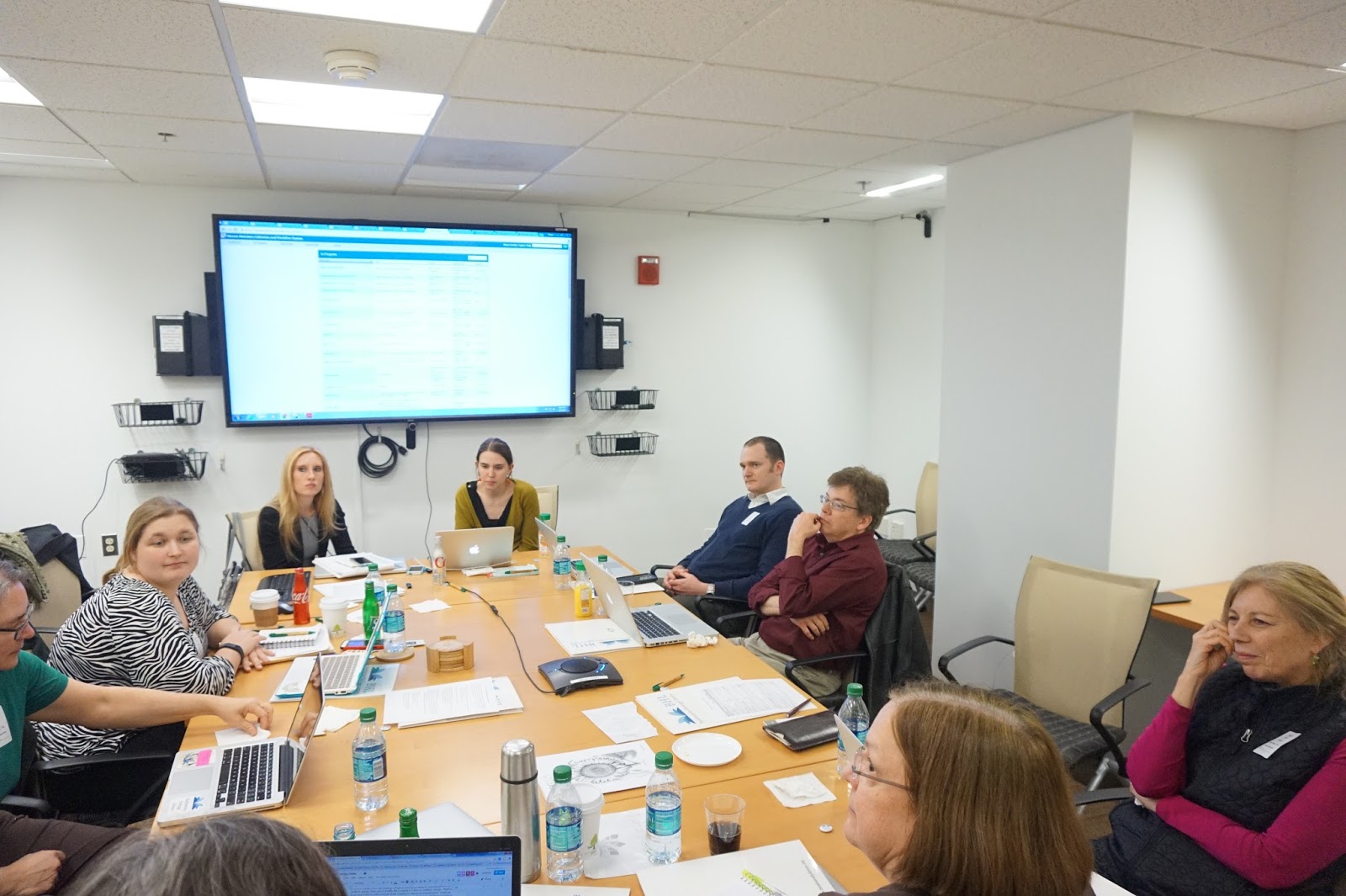
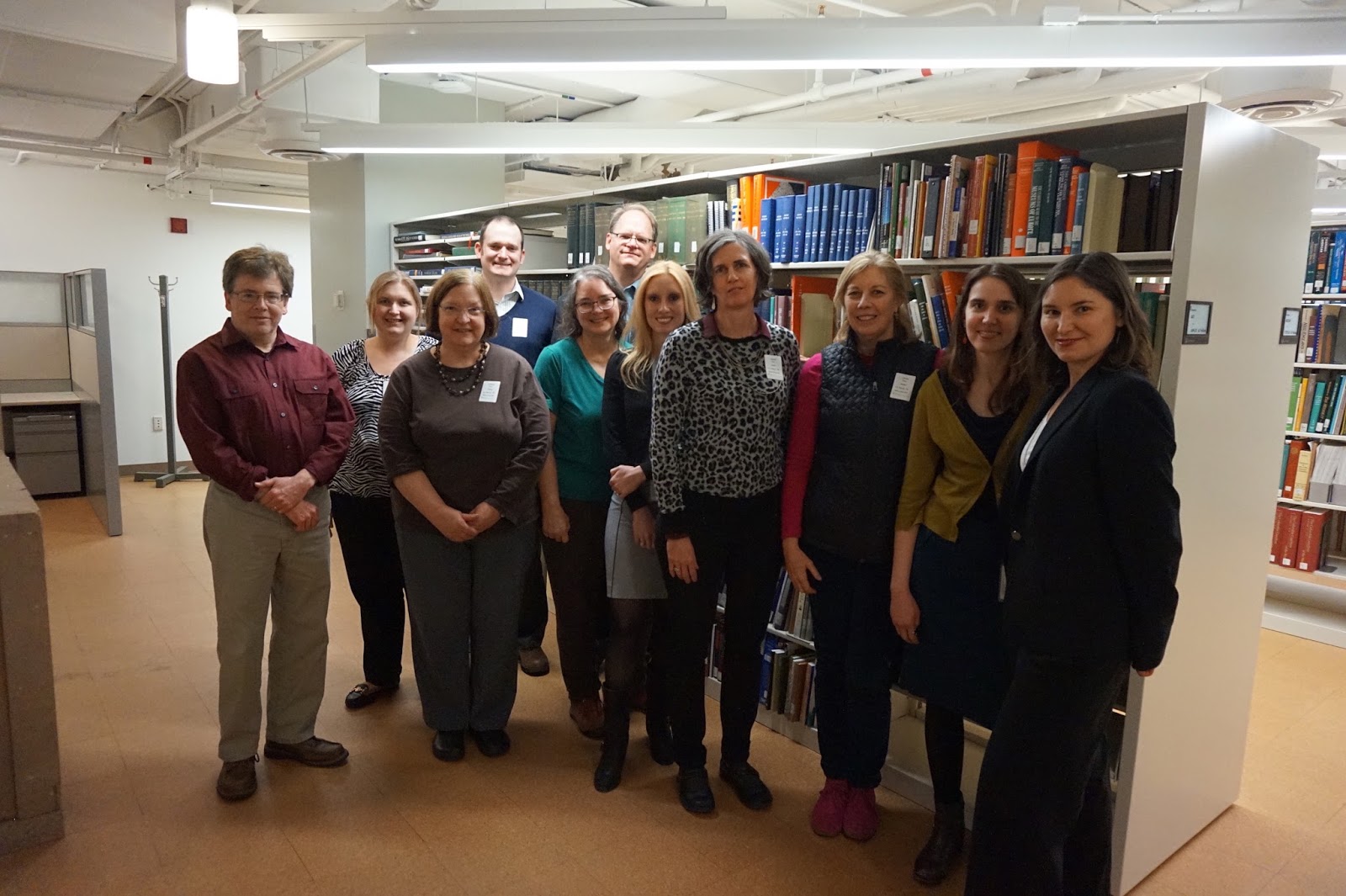
On February 4-5, 2016, Smithsonian Libraries hosted staff from the New York Botanical Garden, the Museum of Comparative Zoology (Harvard University), and the Missouri Botanical Garden as part of a training workshop for the New York Botanical Garden’s IMLS-funded grant, Expanding Access to Biodiversity Literature.

View Full Size Image

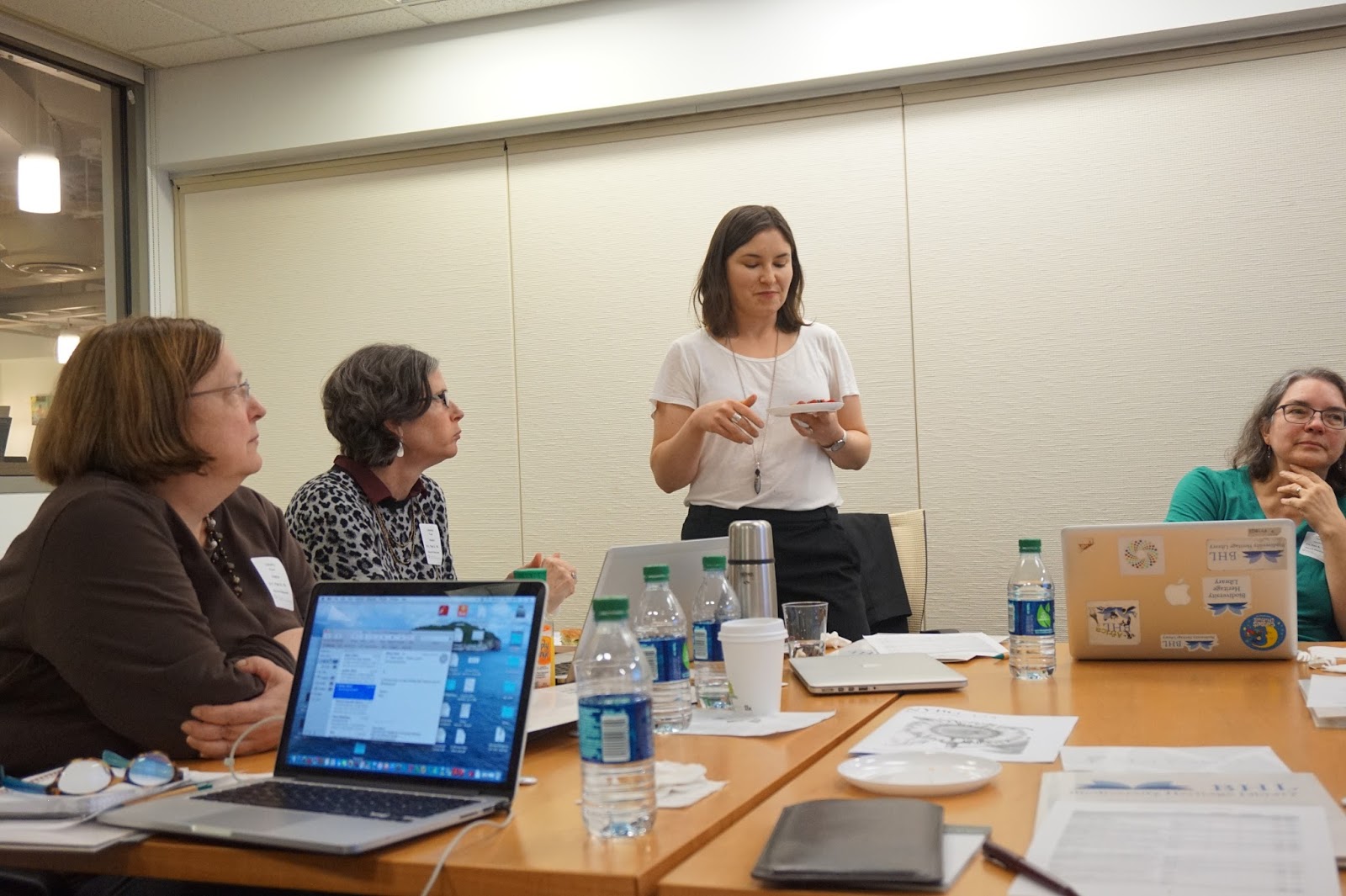
The BHL Secretariat staff (Carolyn Sheffield, BHL Program Manager; Bianca Crowley, BHL Collections Manager; Grace Costantino, BHL Communications and Outreach Manager; and BHL Program Director, Martin Kalfatovic) conducted the two day workshop based on previous workshops for BHL Africa and BHL Mexico. The workshop provided an intense overview of the methodologies for partnering with institutions not currently participating in the BHL in order to add new content to BHL and the Digital Public Library of America (DPLA).

Participating staff included:

New York Botanical Garden, LuEsther T. Mertz Library

  • Susan Fraser (Director of the NYBG LuEsther T. Mertz Library, Project Director)
  • Susan Lynch (Systems Librarian, Data Manager)
  • Mariah Lewis (Metadata Specialist – and former Smithsonian Libraries’ intern)

View Full Size Image

Ernst Mayr Library, Museum of Comparative Zoology, Harvard University

  • Constance Rinaldo (Librarian of the Ernst Mayr Library of the MCZ/Harvard University)
  • Joe deVeer (Project Manager and Museum Liaison for the Ernst Mayr Library of the MCZ/Harvard University)
  • Patrick Randall (Community Manager)

View Full Size Image

Missouri Botanical Garden, Center for Biodiversity Informatics

  • Trish Rose-Sandler (Digital Projects Coordinator, Center for Biodiversity Informatics, Missouri Botanical Garden and Data Analyst for BHL)

View Full Size Image

Thanks to the staff from the Smithsonian Libraries’ Natural History Library for hosting the event in their training room.

If you would like to learn more about Expanding Access to Biodiversity Literature, please visit the project’s wiki page.

February 16, 2016by [email protected]
BHL News, Blog Reel

BHL Data Dash – Dec 7th – 9th 2015

Portrait version of the Biodiversity Heritage Library logo.

The Purposeful Gaming project has now ended and BHL is no longer utilizing outputs from the games created as part of this project: Smorball and Beanstalk. However, both games will remain live for your continued enjoyment. Learn more.

The Biodiversity Heritage Library is hosting a 48-hour data correction event on December 7-9 2015. We’re enlisting the help of you, the BHL community, to help us complete 10,000 pages from BHL’s OCR output that we can then use as a training set to apply to the remaining BHL corpus.

Here’s how it will work:

On Monday December 7th we will begin the start of the sprint at 9am eastern standard time.  You can help us meet our Data Dash goal of 10,000 pages by playing Beanstalk and typing as many words as you can within the 48 hour timeframe.

View Full Size Image

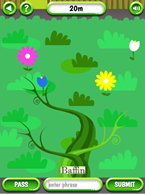
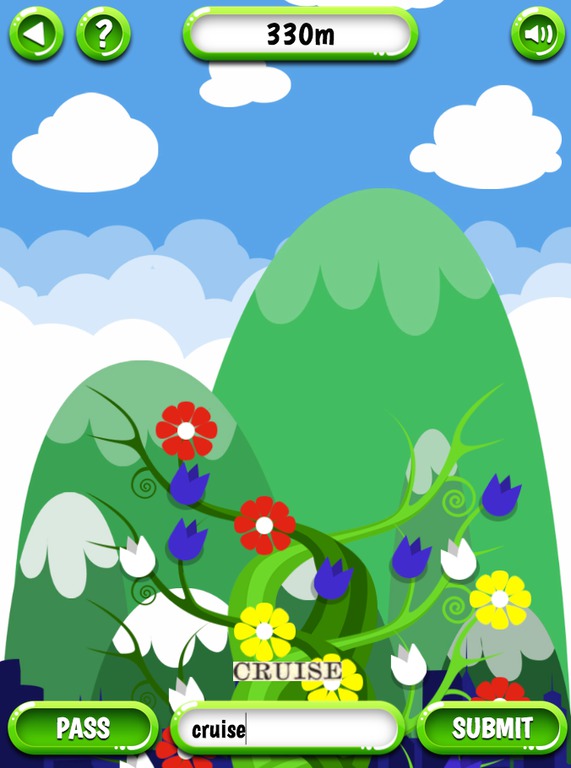
Beanstalk, designed by the award winning design lab Tiltfactor based at Dartmouth, is a quick and easy browser game that asks players to type the word they are shown on the screen. These corrected words are then re-ingested into BHL resulting in new and improved OCR. The more words that players type correctly, the faster the beanstalk grows, and the more contributions are made to BHL.

View Full Size Image

We will update players on how well they are helping us reach the goal by giving updates throughout the event via BHL social media. To make it more fun we encourage players to register before playing the game so that their scores can be tallied against other players during the event. (Please note:  we will be resetting the leaderboards for the duration of this event but afterwards will restore the scores. i.e. current players will not lose their cumulative scores.)

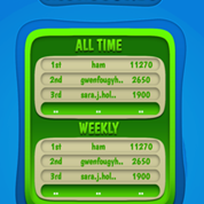
Get to the top of the “Weekly” leaderboard by correctly transcribing the most words, and declare yourself the victor of vines!

View Full Size Image

View Full Size Image

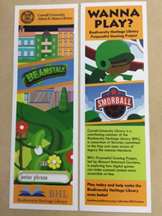
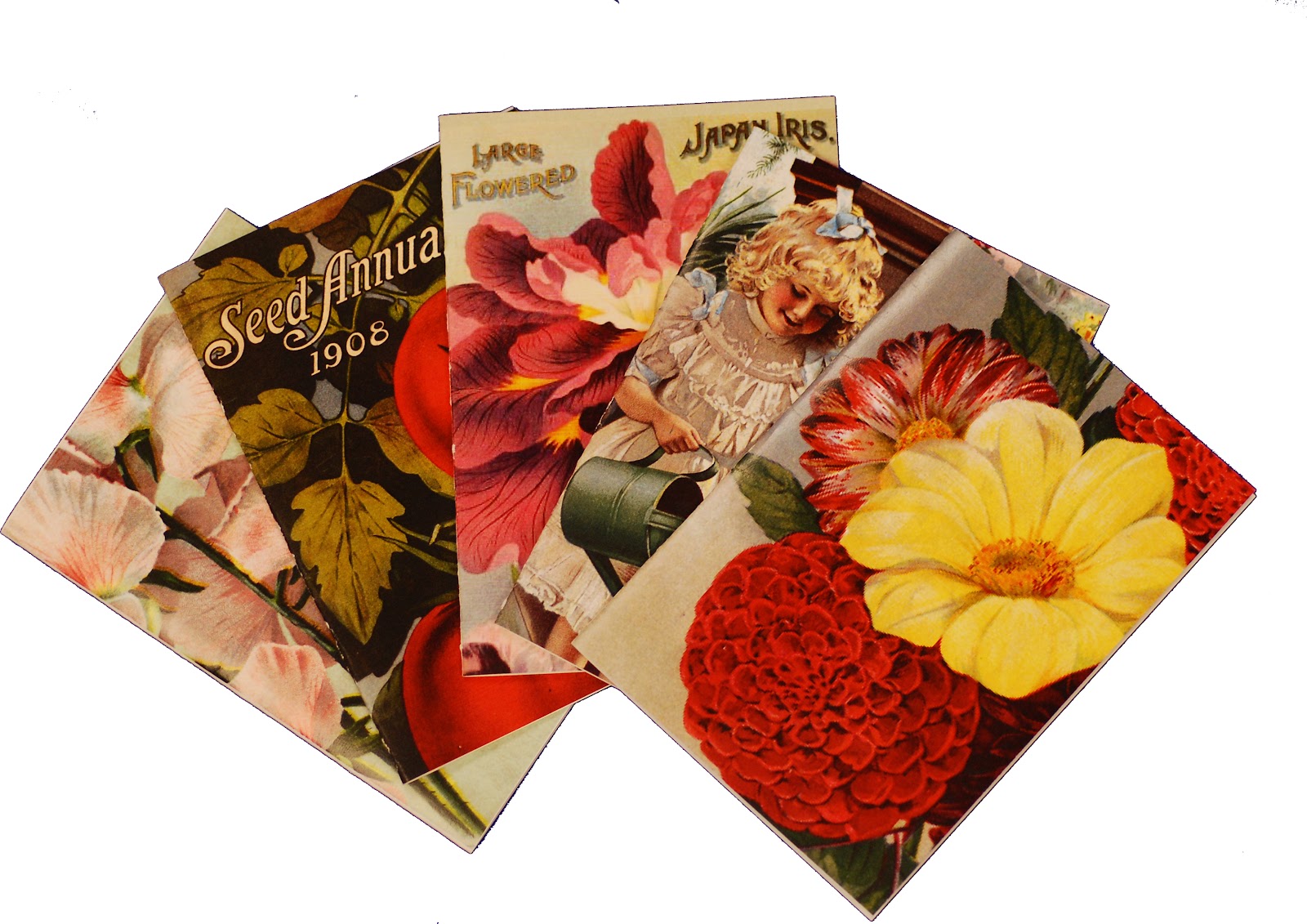
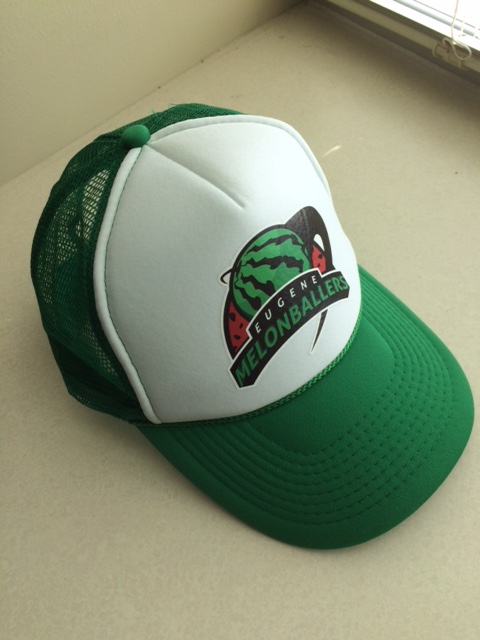
Besides seeing your name on the weekly leaderboard, the top 3 players that remain at the end of the dash on Wed Dec 9th 9am EST will receive their choice of BHL swag – which include a selection of notecards featuring beautiful illustrations from BHL books; bookmarks about both of BHL’s games (Beanstalk and Smorball), and Smorball trucker hats featuring the beloved home team the Eugene Mellonballers.

View Full Size Image

View Full Size Image

View Full Size Image

While BHL swag is oh so sweet, we know the primary motivating factor for the BHL community will be improving biodiversity research and with every word you type you will be doing just that!

Why now?

The IMLS-funded project, Purposeful gaming and BHL, is coming to a close at the end of this year.  While the games will continue to be available online beyond 2015, the project’s objectives – to demonstrate whether or not digital games are a successful tool for analyzing and improving digital outputs from OCR – need to be met which includes collection of a substantial number of text corrections via gaming.

So please won’t you help us to dash to the finish line to meet the number of data corrections needed to help improve the discoverability of historic biodiversity literature?

Play a Game. Grow a Beanstalk. Save a Book.

December 3, 2015by eomeara
BHL News, Blog Reel

Smorball and Beanstalk: Games that aren’t just fun to play but help science too

The Purposeful Gaming project has now ended and BHL is no longer utilizing outputs from the games created as part of this project: Smorball and Beanstalk. However, both games will remain live for your continued enjoyment. Learn more.

View Full Size Image

As game players are growing beanstalks and leading the Eugene Mellonballers to victory, historic books are being saved from digital oblivion. In June of 2015, the Biodiversity Heritage Library (BHL) and Tiltfactor released two games called Smorball and Beanstalk to help crowdsource the task of text correction.

What’s the Purpose?

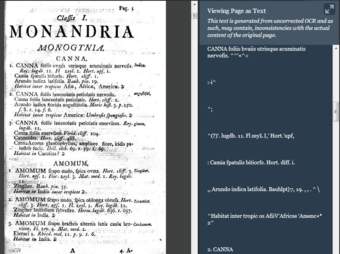
When a book is first digitized, its pages are merely image files and the text cannot be searched. Optical character recognition software (OCR) converts these page images into machine encoded text that can be searched, but historic literature has many idiosyncrasies that inhibit accurate OCR. BHL wanted to harness the power of crowdsourcing and the fun of gaming to allow humans to help correct inaccurate OCR. The games present extracted words from BHL books that users type out, thus verifying the spelling. These submissions are used to correct the OCR in BHL. By presenting users with a high volume of words in rapid succession during each play-through, we can receive a large number of word corrections and achieve a significant level of OCR correction.

View Full Size Image
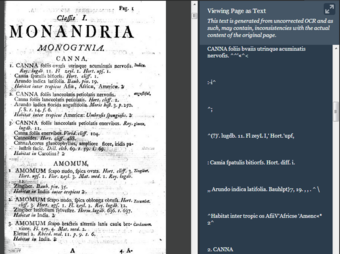
Sample of poor OCR output.

Who are the Audiences for each Game?

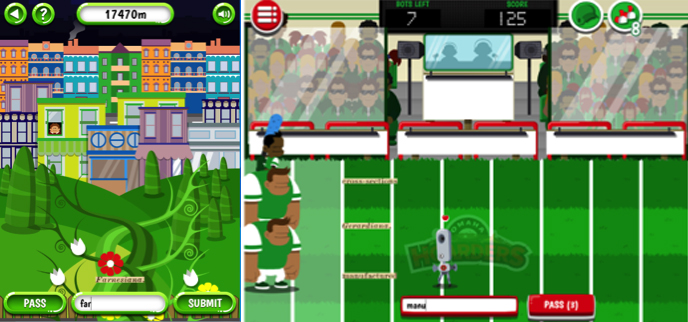
Smorball, which presents words at an increasingly rapid pace, is designed for a gaming audience with experience tackling progressively challenging levels and speedy data-entry. Beanstalk was designed for players that are not typically gamers, and are thus not as comfortable with gamification techniques such time-bound typing, but still want to help improve access to BHL books. Beanstalk allows players to type words at their own pace, but incorporates evolving sights, sounds, and a leaderboard to keep the game engaging and dynamic.

View Full Size Image

What are players saying?

Over two thousand people have played the games since the launch, and we have received positive feedback from players and news outlets.

View Full Size Image

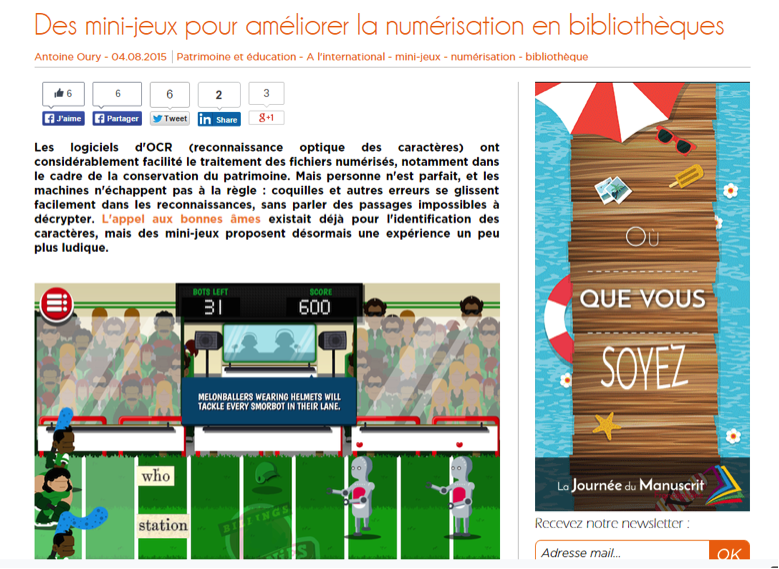
“Mini games to improve library digitization” by Antoine Oury.

View Full Size Image

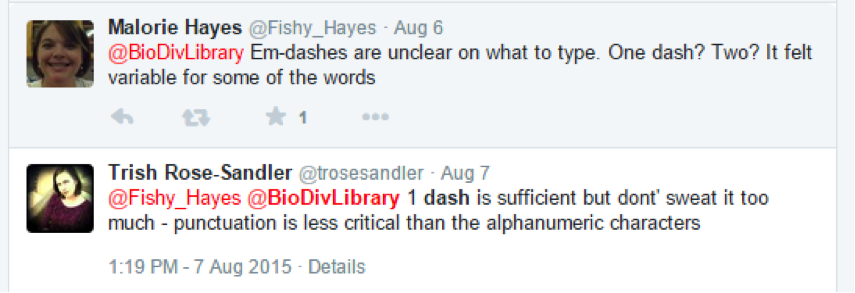
Some users have asked questions about typing strategies.

View Full Size Image

Other users have asked about the sometimes odd behavior of the games.

View Full Size Image

Repeated words occur when that word appears more than once on a single page. If OCR software misinterprets a word once, it will likely misinterpret it again. Sometimes it will even misinterpret in more than one way e.g. (“fish” may be interpreted as “f1sh” and “flsh”) which means that the game can’t filter out these duplicates from being shown to the player. Symbols may show up in the games when the OCR software has misinterpreted them as alpha-numeric characters. We suggest choosing the “skip” option or substituting any alpha-numeric character for the symbol.

The Buzz

The games have been demoed at several conferences and sites since launch including Empire Farm Days and the Howe Library in Hanover New Jersey.

Smorball will also be featured at this fall’s Boston Festival of Games (BFIG).

View Full Size Image

Reviewers at BFIG had this to say about Smorball:

  • “The world of the sports game isn’t innovative or unique, but it’s an original made-up game where humans get to smash robots, which makes it fun to watch and play.” 
  • “ I do feel that this is a complete game, very polished, and addictive.” 

Smorball is now available on Newgrounds.com – a site for “artists, game developers, musicians, voice actors and writers to share their stuff on the web.”

View Full Size Image

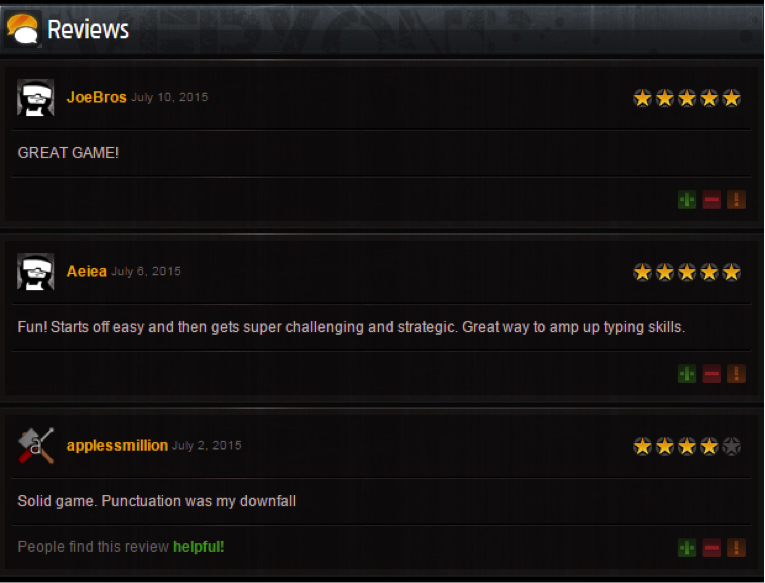
Reviewers on newground.com had this to say about the game:

View Full Size Image

We Need More Players!

In order for us to scale to an effective level we need tens of thousands of players. If you have not played Smorball or Beanstalk please give them a spin and let us know what you think. Submit your feedback here: Smorball and Beanstalk.

Please share widely with your friends, family and co-workers who would enjoy playing a good game and helping science research at the same time!

Finally, we couldn’t end this post without acknowledging some of the top players from our Beanstalk leaderboard. Thanks to “mlwoodward” “patty_john” and “ldv27” – Keep growing those beanstalks and helping us improve our texts!

View Full Size ImageSmorball and Beanstalk were designed as part of the Purposeful Gaming and BHL project, which explores how digital games can make scanned content more accessible and searchable for cultural institutions. Based at the Missouri Botanical Garden in St. Louis, Missouri, “Purposeful Gaming and BHL” was established in 2013 through an Institute of Museum and Library Services (IMLS) grant and includes partners at Harvard University, Cornell University, and The New York Botanical Garden.

August 28, 2015by ulib-libraryjobs
BHL News, Blog Reel

Smorball and Beanstalk Are Live!

The Purposeful Gaming project has now ended and BHL is no longer utilizing outputs from the games created as part of this project: Smorball and Beanstalk. However, both games will remain live for your continued enjoyment. Learn more.

The Biodiversity Heritage Library is excited to announce the release of two new games by Tiltfactor that will improve access to BHL collections and open a new frontier for crowdsourcing and citizen science.

Smorball and Beanstalk were designed as part of the Purposeful Gaming Project, which explores how digital games can make scanned content more accessible and searchable for cultural institutions. Based at the Missouri Botanical Garden in St. Louis, Missouri, “Purposeful Gaming” was established in 2013 through an Institute of Museum and Library Services (IMLS) grant and includes partners at Harvard University, Cornell University, and the New York Botanical Garden.

Purposeful Gaming: What It’s All About

Libraries and museums across the world have scanned millions of pages of books and journals in order to increase access and enable online discoverability. When digitized, these pages are merely image files, which are unsearchable and virtually unusable. Optical character recognition software (OCR) is a method for converting page images to machine encoded text so they can be searched. Unfortunately, historic literature, like that found in the Biodiversity Heritage Library, has proven to be particularly problematic for OCR because of its tendency to have varying fonts, typesetting, and layouts that make it difficult to accurately render.

This is where the games come in.

Smorball and Beanstalk, both quick and easy browser games, present players with phrases from scanned pages in BHL. After much verification, the words players type are sent to the libraries that store the corresponding pages, allowing those pages to be searched and data mined and ultimately making historic literature more usable for institutions, scholars, educators, and the public.

Why Use Games?

View Full Size Image
Sample of bad OCR output

While transcription tasks of the sort usually crowdsourced to the public can be interesting and engaging, they are often time-consuming and exacting. Games provide a fun, interactive, piecemeal method of accomplishing those same tasks.

“Cultural heritage institutions are increasingly benefiting from human computation approaches that have been used in revolutionary ways by scientific researchers. Engaging citizens to work together as decoders of our heritage is a natural progression, as preserving these records directly benefits the public,” says Dr. Mary Flanagan, founder and director of Tiltfactor. “Integrating the task of transcription with the engagement of computer games gives an extra layer of incentive to motivate the public to contribute.”

Why This Approach Is Groundbreaking

While many institutions have harnessed the power of crowdsourcing, “Purposeful Gaming” represents a new avenue of collaboration that promises wider appeal and endless possibilities for engaging citizen scientists in new, creative ways.

“The games provide a fun and engaging way for volunteers to help us with a task that we don’t have the staff to do ourselves,” explains Trish Rose-Sandler, Principal Investigator for “Purposeful Gaming.” “BHL benefits by having improved discoverability of its books and journals on plant and animal life. More importantly, benefits from the results of the project would extend to the broader digital library community. Any institution managing large text collections can learn from novel and more cost-effective approaches to generating searchable texts.”

What’s the Difference between the Two Games? Where Can I Play them?

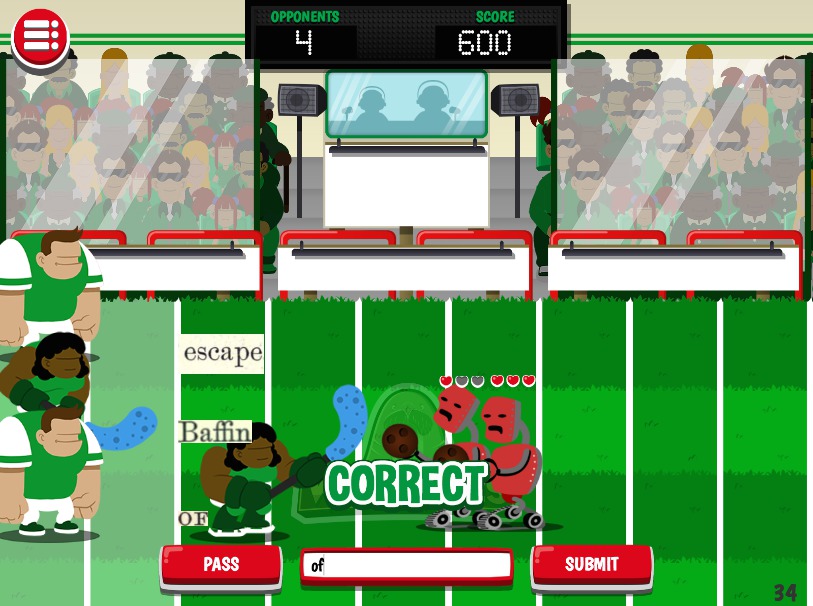
Players of the more challenging Smorball game are asked to type the words they see as quickly and accurately as possible to help coach their team, the Eugene Melonballers, to victory to win the coveted Dalahäst Trophy in the fictional sport of Smorball.  Each word typed correctly defeats an opposing smorbot and brings the Melonballers closer to the championships.

View Full Size Image

Players of the more relaxed Beanstalk game must type the words presented to them correctly in order to grow their beanstalk from a tiny tendril to a massive cloudscraper. The more words they type correctly, the faster the beanstalk grows. Players who accurately transcribe the most words will ascend to the top of the leaderboard as a result of their valuable contributions.

View Full Size Image

If you want to learn about the material that was used for the Purposeful Gaming Project, check out the writings of William Brewster and BHL’s Seed and Nursery Catalog Collection.

Now, in the name of science, go play Smorball and Beanstalk. And have fun!

June 9, 2015by eomeara
Blog Reel, Featured Books

Documenting the Flora of the Nation’s First Urban Park System

Did you know that the city of Boston is blessed with one of the largest and the oldest urban forest reservations in America?
View Full Size Image
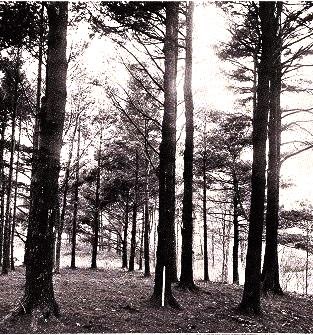
Photo: Charles Eliot, 1897

At the turn of the 20th century, Boston saw a rapid increase in human settlement and industrialization which quickly transformed the once pristine Commonwealth into a highly developed, unsightly, and unhealthy metropolis. The movement to preserve what was left of Greater Boston’s natural wonders was inspired by the writings by transcendental thinkers like Ralph Waldo Emerson and Henry David Thoreau, who were advocates of the idea to “keep the New World new.” Local activists for the cause included Wilson Flagg, Elizur Wright, Sylvester Baxter, and Charles Eliot. They envisioned a place where the citizens of Boston could escape the “noisy ugliness” of the overcrowded city and revitalize their spirits in the requiem of nature’s untamed beauty.

A Dream Comes to Pass 

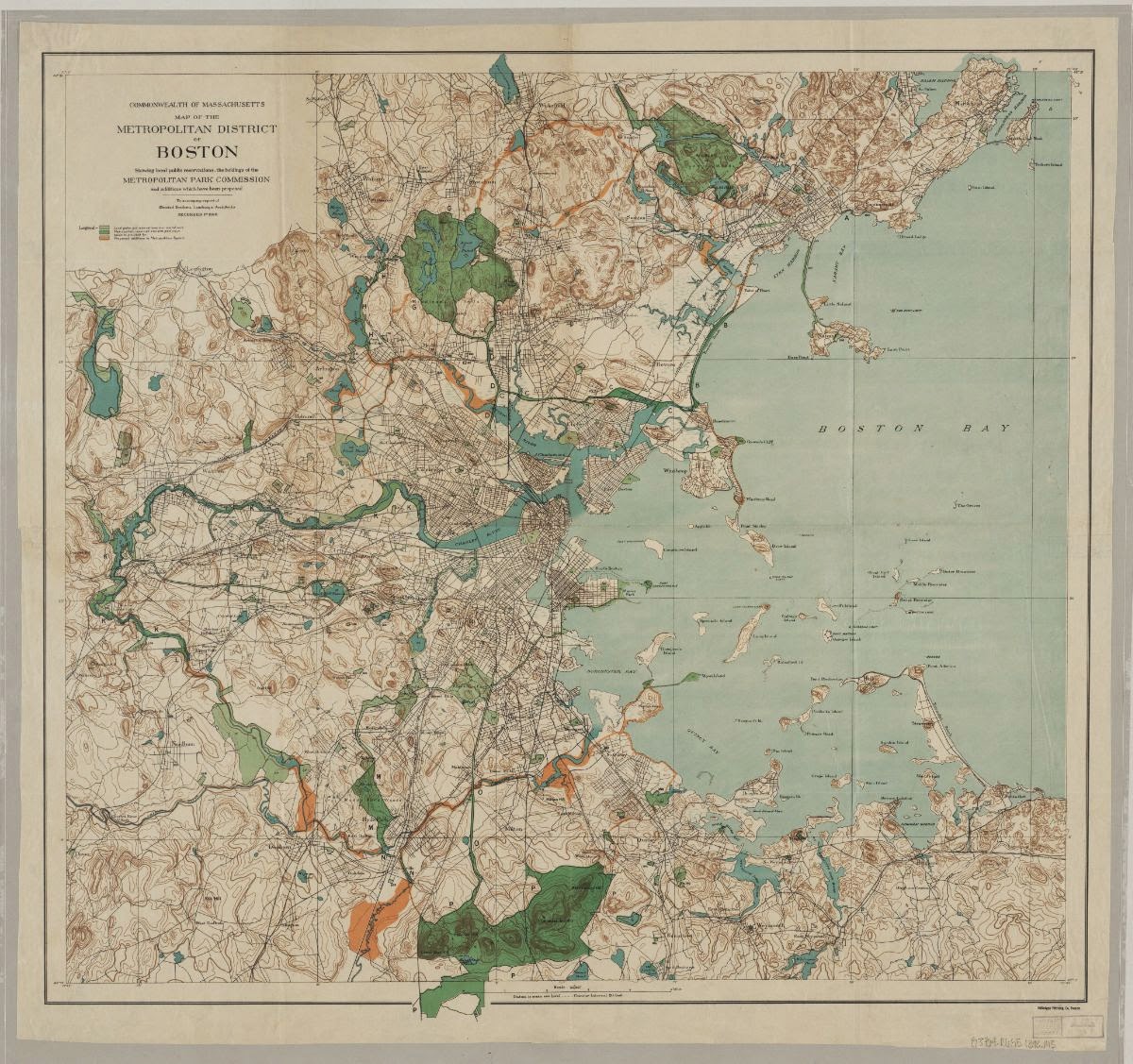
Boston’s budding conservation movement had the foresight to identify large tracts of Massachusetts wilderness for preservation in perpetuity. A four decade campaign ensued and resulted in the passage of the Acts of 1893, Chapter 407 which established the Metropolitan Park Commission. This legal entity was charged with restoring, preserving, and increasing the beauty of the undeveloped woodlands surrounding Boston and this landmark legislation would serve as a model for other American cities. The Metropolitan Park Commission’s first order of business was to hire the noted landscape architecture firm, Olmsted, Olmsted and Eliot, to survey the vegetation in the recently acquired woodland reservations, the Middlesex Fells, Beaver Brook, Stony Brook, and the Blue Hills.

View Full Size Image
Map of the original Metropolitan Park Reservations
Click here for an interactive version.

The firm appointed landscape designer Warren H. Manning who led a team of twenty volunteers to complete the fieldwork. Local botanist Walter Deane was hired to compile and edit the survey’s findings and in 1896, he published the results in this month’s book of the month, Flora of the Blue Hills, Middlesex Fells, Stony Brook and Beaver Brook Reservations, of the Metropolitan Park Commission, Massachusetts. While Deane is credited with the organization of the specimens and botanical observations for publication, the project would not have been possible without collaboration among many amateur and professional botanists. This collaboration was so successful that it led to the formation of the New England Botanical Club (NEBC), which still meets regularly and has amassed a collection of 250,000 specimens housed in the Harvard University Herbaria (HUH).

Announcing a New BHL Collection

This example of an early successful citizen-science project is highlighted in the launch of a new collection in the BHL: The Archives from the Boston Metropolitan Park. This collection is composed of approximately 8,000 pages of manuscript material documenting the progress of the survey. Readers can peruse Walter Deane’s field notes, diaries, datebooks, and correspondence. His diaries reveal fascinating insights into his work on compiling the Flora and the details of its publication, as well as how the formation of the NEBC resulted from the Metropolitan Flora survey. His diaries also give rich pictures of the botanists of his time and are highly useful to anyone writing about the history of the NEBC and its members. The collection is now freely available and opens up this fascinating slice of history to the public for the first time. As part of the Connecting Content project, the digitization of the archives and original specimens from the Metropolitan Park Reservation was made possible by an Institute of Museum and Library Services (IMLS) National Leadership Grant.

Collection Highlights

One of the most compelling aspects of the correspondence related to the Metropolitan Flora survey is learning about people and information not evident from Deane’s Flora or from the botanical specimens. One example is a letter from the tree expert Loren Dame to Manning in which he encloses a list of trees compiled by a “non-botanist”, George Perry. Perry states that “I have made it a point to crawl through the densest tangle of greenbrier and thicket… to become familiar with every rod of the section.” As a result of his efforts, his list of trees is very thorough. He also found some very rare plants not seen by other surveyors, including maidenhair fern. Unfortunately, because he wasn’t considered a reliable source, his data wasn’t included. In another letter to Manning, Dame reported three rare tree species found only in an area adjacent to the Fells, which was added to the reservation after Flora was published. All of these omissions are significant, and the knowledge revealed in these letters is highly valuable for understanding the full extent of the past flora of the area.

Surveying the Flora of Middlesex Fells: Yesterday and Today

Between 2003 and 2011 a new survey  very much like the original survey of the Fells flora was undertaken by a team of NEBC and HUH botanists. Using Deane’s Flora as a basis for comparison, the team found that most of the native species from the original survey persist, despite substantial increases in the number and frequency of non-native plants. These native species face several threats, including habitat disturbance, and loss due to construction and recreational use of the Fells, herbivory from increases in deer and insect populations, as well as environmental changes effected by climate change and afforestation. Sustaining populations of native species, some of which are rare and endangered, will require a more active management of the Fells.[1]

Urban forests purify the air that we breathe, provide a habitat for local flora and fauna, help reduce energy demands, provide recreational opportunities, reduce stress and crime rates—the list goes on. Since eighty percent of us live in urban areas most of us owe quite a bit of thanks to the astute conservationists who fought to keep the untamed wilderness close by. Now it’s our turn to preserve their legacy.

View Full Size Image

Spot Pond named by Governor John Winthrop in 1631.

Photo by Mike Ryan, Friends of the Fells

“Something like five miles northerly from Boston lies a great tract of country, all stony hills and table-lands, almost uninhabited, and of wonderful picturesqueness, and wild rugged beauty… and at its heart is that most beautiful of Boston’s suburban lakes, Spot Pond, which lies high up among the hills.” Sylvester Baxter, 1886.

Notes

[1] 2012. Hamlin, Bryan T., W. T. Kittredge, D. P. Lubin & E. B. Wright. Changes in the vascular flora of the Middlesex Fells Reservation, Middlesex County, Massachesetts, from 1895 to 2011. Rhodora 114(959): 229-308.

Learn More!

IMLS Grant Project Page
Walter Deane (1848-1930) Papers
NPS: Metropolitan Parks Commision
Friends of the Fells
Found in the Fells
The Middlesex Fells, a Flourishing Urban Forest by W. Kittredge
BHL Collection: Archives and Specimens from the Boston Metropolitan Park Flora 

February 26, 2015by [email protected]
Blog Reel, Featured Books

The Stories Seeds Tell

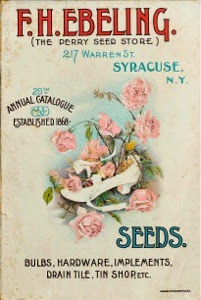
Since the mid-19th century, seed and nursery catalogs have reflected the agricultural and horticultural landscape of the United States. These catalogs—which began as guides to medicinal herbs, and are still printed today—often contain lists of plant varieties and gardening advice. While seed catalogs are used primarily by commercial growers and home gardeners, they also represent an invaluable resource to historians, artists, and researchers of all kinds.

So, what exactly do seed and nursery catalogs tell us?

View Full Size Image

History

Seed catalogs offer a fascinating glimpse into the cultural, economic, and political history of the era in which they were published. For instance, when the outbreak of World War I halted agricultural exports from Europe to the US, American citizens planted their own “war gardens” to ease the strain on the food supply; seed catalogs of the time leveraged the economic climate to aid the war effort and increase their own sales. In 1918, Allen’s Book of Berries—a seed catalog specializing in strawberries—prefaced its annual publication with this admonition:
“Of one thing we are sure. We must not slacken our efforts to produce just as much as we can, for reasons of patriotism as well as of profit. Fruit is not a luxury; it is a necessity. As such, we should make that supply plentiful.”

Technology

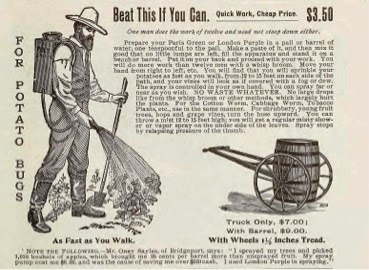
In addition to offering varieties of seeds for sale, seed and nursery catalogs often included advertisements for the latest tools and gadgets. This technology reflected the materials available at the time as well as the gradual trend toward large-scale commercial growing and away from single-household plots. The hand-held implements of the mid-19th century catalogs gave way to the combine-like machinery of the 20th century.
View Full Size Image
A new type of sprayer to combat potato bugs, featured in F.H. Ebeling’s 1899 Catalogue

Seed catalogs themselves started to change, incorporating black-and-white photography alongside traditional, brightly-colored illustrations. The widespread availability of color film in the 1940s changed the look of catalogs yet again.

Food

As the genetic landscape of our food continues to change, many people look to historical seed catalogs to understand what previous generations were eating, and what it means for GMOs and current agricultural practices. Seed catalogs are a treasure trove of information about heirloom vegetable varieties and organic gardening. As technology continues to evolve however, they face an uncertain future: does the Internet make printed seed catalogs obsolete?

The Future

View Full Size Image
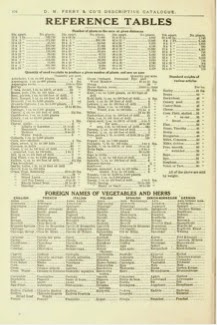
An example of material that computers have a hard time transcribing

Whether the Internet means the end of printed catalogs or not, it provides some new and exciting IMLS-funded Purposeful Gaming Project. Because they are printed in unconventional formats, with many tables and abbreviations, seed catalogs make poor candidates for Optical Character Recognition (OCR) technology. This means that in order to make them searchable in BHL, individuals must transcribe their contents by hand.
opportunities to use them as part of the

The Missouri Botanical Garden, the New York Botanical Garden, and Cornell University are providing their seed catalogs to game developer Tiltfactor, which is working on a video game to help users compare and correct these difficult transcriptions. Once corrections are made, they will be incorporated into the BHL collection.

Stay tuned for how you can help transcribe seed and nursery catalogs, and look for Tiltfactor’s new game after the holidays! If you’re eager to start transcribing now, check out the diaries and journals of ornithologist William Brewster. And don’t forget to browse a century’s worth of horticultural history in the BHL’s Seed and Nursery Catalogs collection.

November 28, 2014by [email protected]
Blog Reel, User Stories

Rejuvenating Centuries’ Old Botany with Phytogeography

Here’s a word of the day for you: Phytogeography.

Phytogeography is a branch of biogeography that investigates the geographic distribution of plants and the effect that the earth’s surface has on that distribution. To go further down the rabbit hole, biogeography studies the distribution of species and organisms now and throughout time. This research reveals important interdependencies between geology, climate, dispersal and evolution.

View Full Size Image
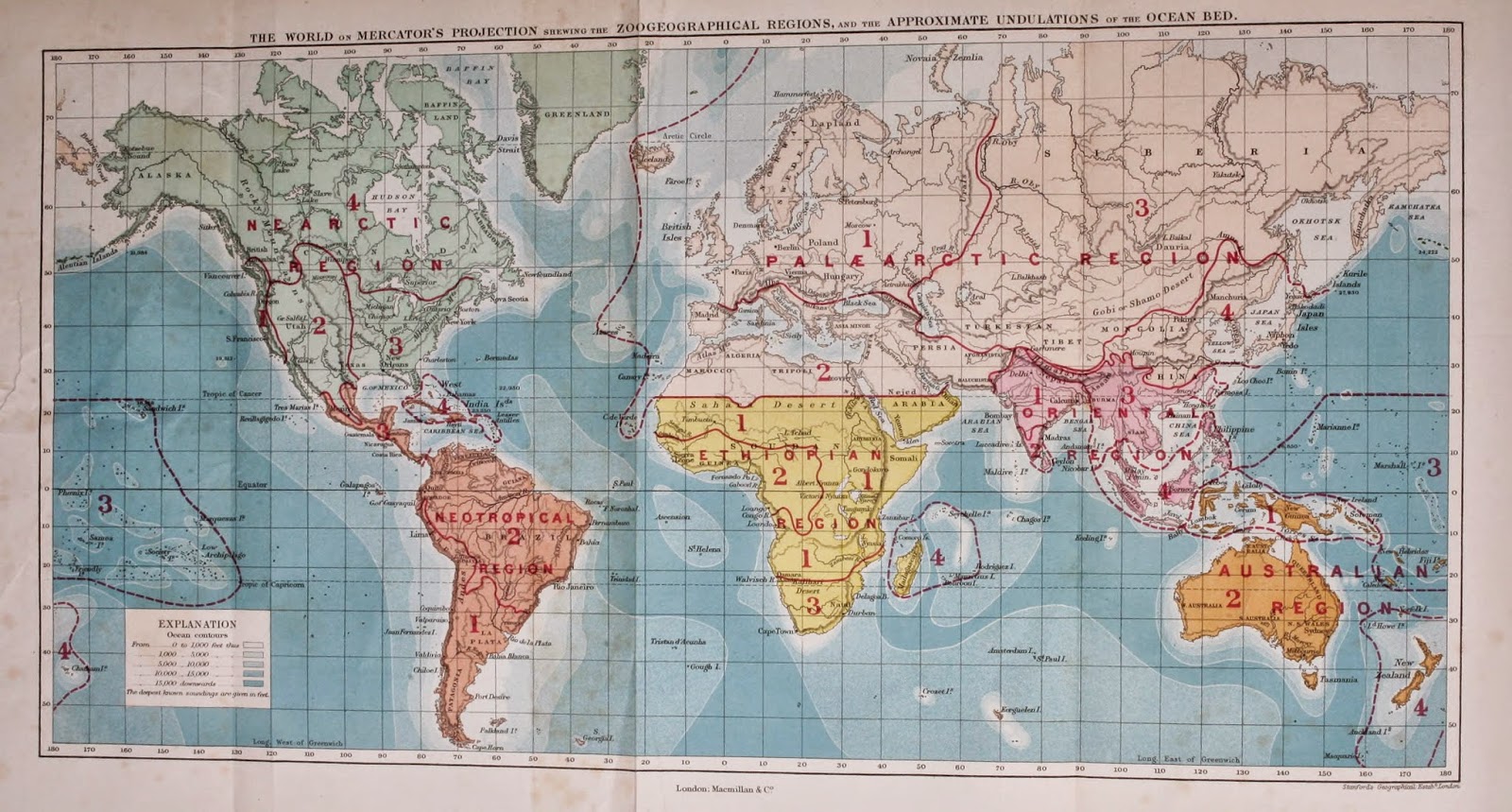
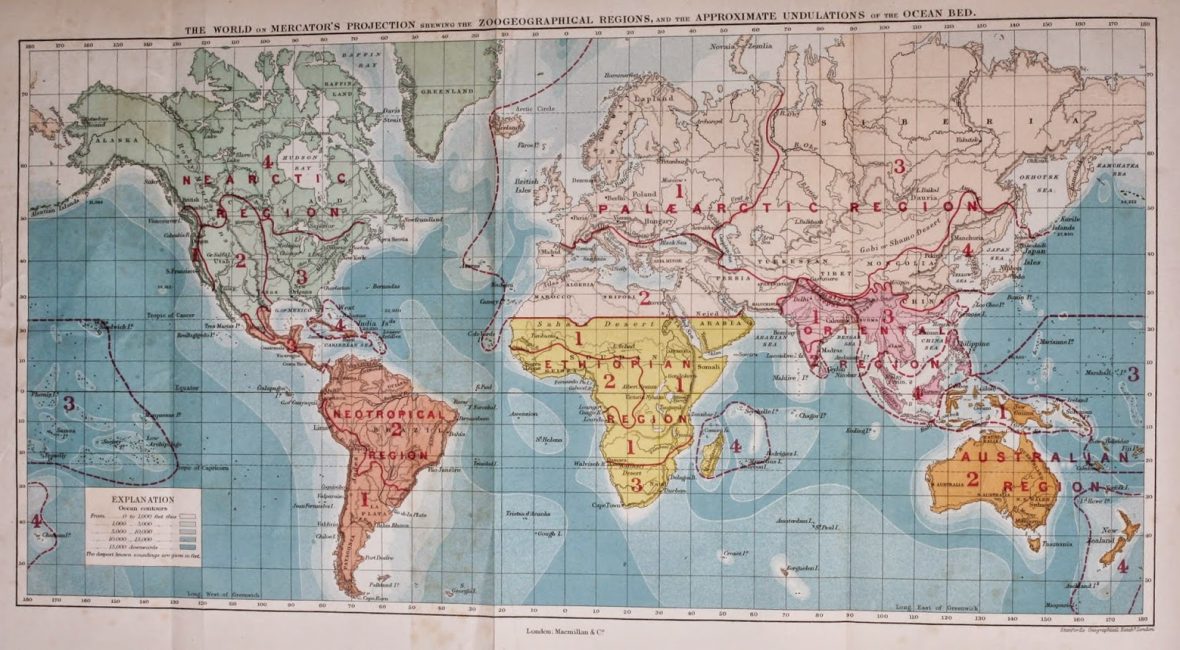
Wallace’s map, showing the zoogeographical regions of the world. The Geographical Distribution of Animals. v.1 (1876). http://biodiversitylibrary.org/page/30228507.

Alfred Russel Wallace is commonly known as the “Father of Biogeography.” Although not as famously recognized as Charles Darwin, Wallace actually came up with the theory of evolution by means of natural selection independent of and simultaneous to Darwin. Wallace spent a great part of his career in South America and the Malay Archipelago. During this time, his observations on distribution, breeding, and migration tendencies helped him develop a theory of evolution incorporating the influence of geological barriers on speciation. He also argued that species abundance was directly related to food availability.

Today, biogeographers are largely interested in how environmental factors and human activities influence species distribution. Biogeographic change and insight offered by historical data are a long-time passion of Dr. Quentin Groom, research assistant at the Botanic Garden Meise, Belgium. His particular interest is phytogeography, especially as it relates to the interaction between humans and plants.

View Full Size Image
Dr. Quentin Groom, research assistant at the Botanic Garden Meise, Belgium.

Groom’s interest in phytogeography began ten years ago, but more recently, his discovery of BHL expanded his research possibilities. “[BHL] is a fantastic resource, making research possible that would never have been considered in the past. I use it to find information on particular species and also to find source documents for further analysis. The ability to search by taxon name is invaluable, but having stable URLs for each page is [also] a great feature.”

The ability to access this digitized literature is only part of the greater picture of facilitating efficient science and discovery. Intuitive search capabilities and the opportunity to augment existing files are other features Groom would like to see within BHL and the larger bioinformatics community.

“I feel [BHL] is just one step in the full digitization and semantic annotation of biodiversity literature. I’d like to be able to add annotations [to BHL]. [The ability to] search by location name and taxon name would be useful, even if the location names were only countries. It might [also] be useful to have the ability to add internal links within BHL to connect citations within one document to their source in BHL,” mused Dr. Groom.

The Mining Biodiversity project, funded by an IMLS Digging Into Data grant, is currently working to address some of these requests. The project aims to create a next-generation digital library by enriching BHL with semantic metadata through deployment of advanced text-mining techniques. This data will be used to support a semantic search system enhanced with clustering and visualization tools. The idea is that a user will be able to search not only for species, but also filter the results for references to habitat, diet, predation, and related facets. The result will be fully interlinked and indexed access to the full content of BHL library documents, allowing users to locate precisely the information of interest to them in an easy and efficient manner.

Furthermore, the project is exploring ways to make BHL more “social”, allowing for collaborative curation where users can easily share and discuss our collections. This will not only facilitate expanded reuse and discovery of our material, but will also allow us to evaluate how our content is being used around the globe and by whom, and better measure its impact on biodiversity awareness.

The Mining Biodiversity project runs through December, 2015. As we continue to improve our collections and services, you can explore our collection of over 44.8 million pages of biodiversity literature spanning over 500 years of research and discovery.

View Full Size Image
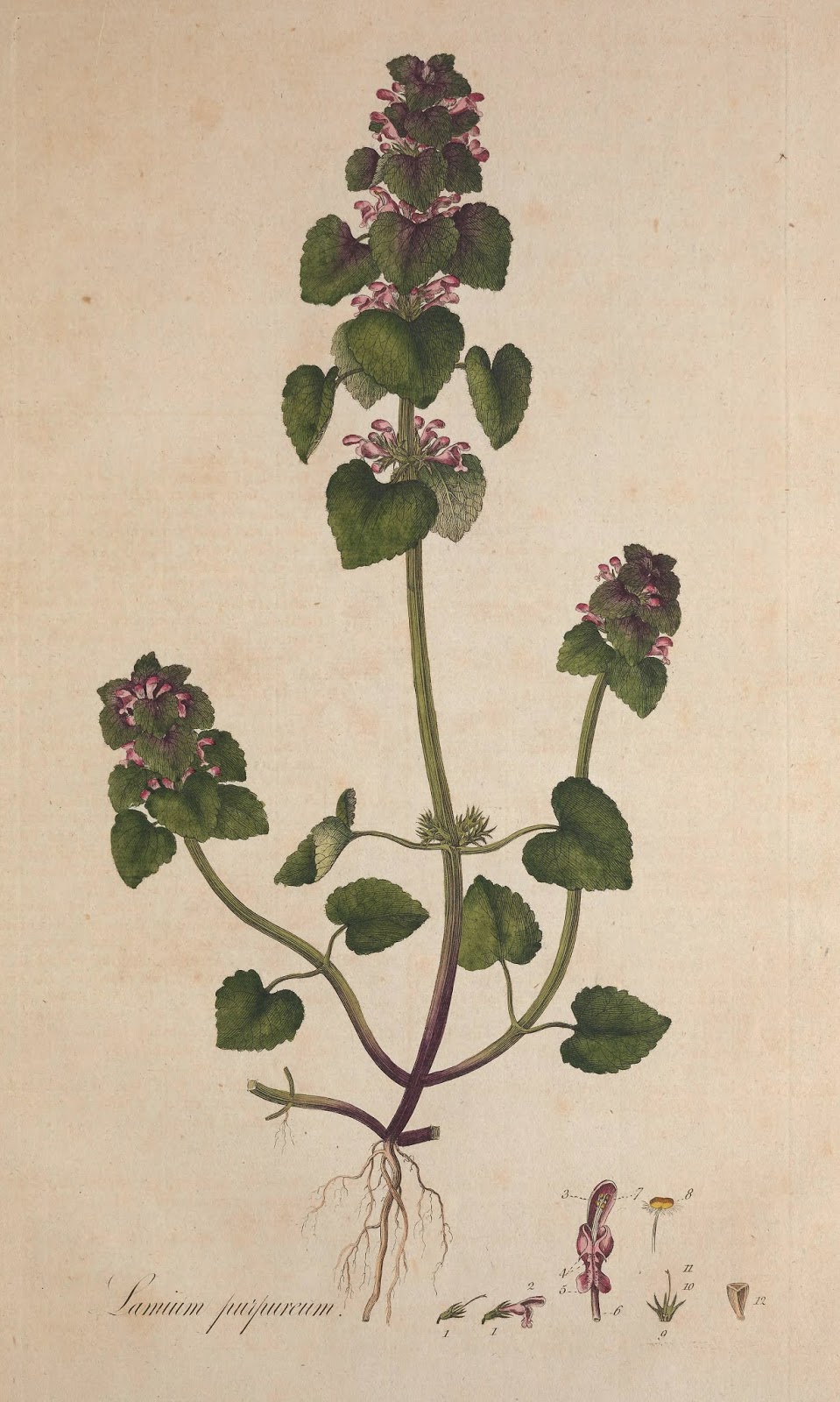
Red Deadnettle (Lamium purpureum) from one of Dr. Groom’s favorite BHL books, Flora Londinensis, v. 1 (1777). http://biodiversitylibrary.org/page/40966493.
Amongst all that content, what would a phytogeographer choose as his favorite items in the collection? “Linnaeus’ Species Plantarum is an inspiring work. Flora Londinensis by William Curtis makes common weeds special with its illustrations. I also have a soft spot for literature from Northumberland where I used to live,” mused Quentin.
Indeed, Dr. Groom recently republished the Flora of Northumberland and Durham (Winch 1831) as an online, semantically enhanced Pensoft “Advanced Book” using the scan originally taken from BHL. The Flora provides valuable insight into how biodiversity in North-east England has changed over time.

“Historic biodiversity literature is not just of cultural interest, it can be used to chart biogeographic change and help us understand the impacts of environmental change on biodiversity,” explains Quentin in an EU BON review of his republication. “Even if we are trying to predict future scenarios for biodiversity, understanding the changes of the past will help understand the changes we should expect in the future.”

Dr. Groom recently submitted another paper using data gathered from BHL, entitled “Piecing together the biogeographic history of Chenopodium vulvaria L. using botanical literature and collections”. The paper charts the distribution of Chenopodium vulvaria over more than 200 years and uses old literature to understand how its habitat may have changed. All of the observations extracted from the literature were georeferenced and are available on GBIF. You can view a preprint of the paper in PeerJ.
The digitization of historic literature, and its enhancement using semantic and linked data, is revolutionizing scientific research, connecting scientists to relevant information more efficiently than ever before. Through continued dedication to open access, BHL and like-minded projects will continue to inspire discovery through free access to biodiversity knowledge.

We extend a special thanks to Quentin for not only describing how BHL is currently impacting his work, but also for revealing important ways that we can improve our library. Do you have ideas about how you would like to see BHL improve? Would you like to tell us about how BHL has impacted your own research? Then send us some feedback!

November 13, 2014by ulib-libraryjobs
Page 4 of 5« First...«2345»

Help Support BHL

BHL's existence depends on the financial support of its patrons. Help us keep this free resource alive!

search

About BHL

The Biodiversity Heritage Library (BHL) is the world’s largest open access digital library for biodiversity literature and archives. BHL operates as a worldwide consortium of natural history, botanical, research, and national libraries working together to digitize the natural history literature held in their collections and make it freely available for open access as part of a global “biodiversity community.”

Follow BHL

  • Bluesky logo
  • Instagram logo
  • Facebook logo
  • Flickr logo
  • Twitter logo

Join Our Mailing List

Sign up to receive the latest news, content highlights, and promotions.

Subscribe Now

Subscribe to Blog via Email

Enter your email address to subscribe to this blog and receive notifications of new posts by email.

Join 319 other subscribers

Subscribe to Blog Via RSS

Subscribe to the blog RSS feed to stay up-to-date on all the latest BHL posts.

Access RSS Feed


64+ Million Pages of
Biodiversity Literature Online.

EXPLORE

Tools and Services
to Transform Research.

EXPLORE

300,000+
Illustrations on Flickr.

EXPLORE

ABOUT | HARMFUL CONTENT | PRIVACY | SITE MAP | TERMS OF USE