Biodiversity Heritage Library - Program news and collection highlights from BHL
  • Home
  • News
  • Featured Books
    • All Featured Books
    • Book of the Month Series
    • BHL at 20
  • User Stories
  • Campaigns
    • Fossil Stories
    • Garden Stories
    • Monsters Are Real
    • Page Frights
    • Her Natural History
    • Earth Optimism 2020
  • Tech Blog
  • Visit BHL
Home
News
Featured Books
    All Featured Books
    Book of the Month Series
    BHL at 20
User Stories
Campaigns
    Fossil Stories
    Garden Stories
    Monsters Are Real
    Page Frights
    Her Natural History
    Earth Optimism 2020
Tech Blog
Visit BHL
  • Home
  • News
  • Featured Books
    • All Featured Books
    • Book of the Month Series
    • BHL at 20
  • User Stories
  • Campaigns
    • Fossil Stories
    • Garden Stories
    • Monsters Are Real
    • Page Frights
    • Her Natural History
    • Earth Optimism 2020
  • Tech Blog
  • Visit BHL
Biodiversity Heritage Library - Program news and collection highlights from BHL
Blog Reel, Featured Books

Ancient Myths Inspired by Fossils

The study of mythology associated with fossils is a relatively new field, which Adrienne Mayor (2005) terms “the folklore of paleontology”; she continues by saying that “[c]ombining oral traditions and paleontology, and drawing on history, archaeology, anthropology, and mythology, the investigation of fossil legends offers a new way of thinking about pre-Darwinian encounters with prehistoric remains” (Preface, p. xxiv). Drawing from several resources, one can create a dynamic picture of what a large variety of cultures around the world and throughout time have thought were the myths associated with dinosaur, bird, and other prehistoric fossils.

Due to extensive travel, Greeks and Romans discovered fossils throughout the Mediterranean and into India (Mayor, 2000b, p. 8). The fossils of dinosaurs, mastodons, mammoths and other creatures were pervasive parts of the natural landscape in the Greek and Roman periods, helping to account for why Greeks and Romans developed mythologies about giant creatures as they sought to understand the presence of these remains (Mayor, 2000b, p. 8). Some highlights from Greek and Roman mythology include the following accounts.

View Full Size Image
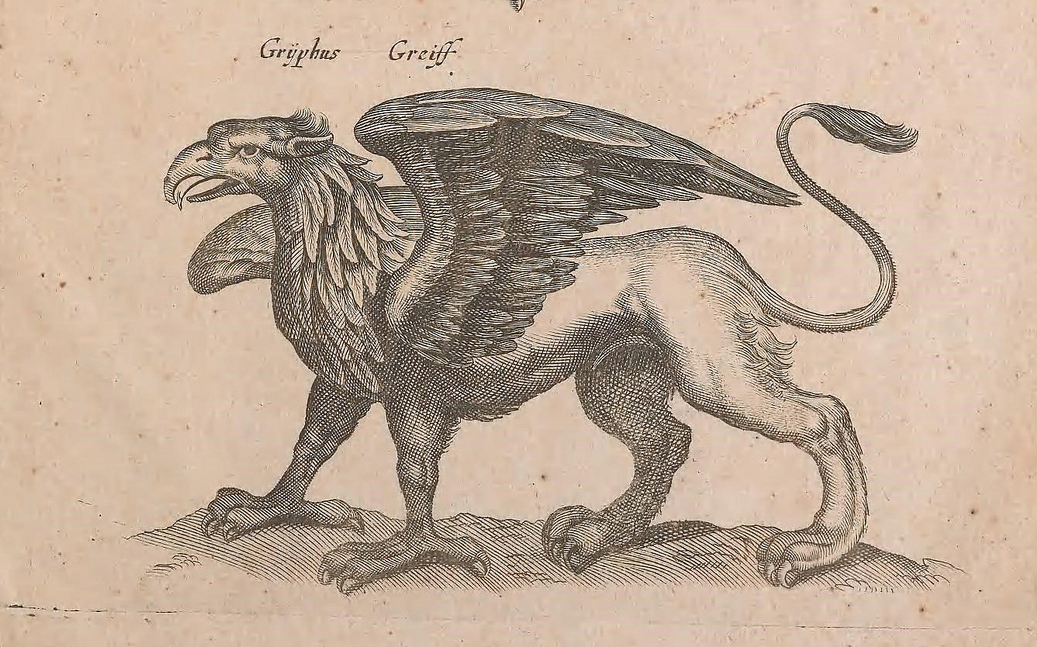
Griffin, likely inspired by encounters with fossils. Jonstonus, Joannes. Historiae naturalis de quadrupedibus libri. pt. 6 (1657). http://biodiversitylibrary.org/page/40913115. Digitized by Smithsonian Libraries.

In 675 B.C. when the Greek traveler, Aristeas, visited Scythian nomads in the Gobi deserts, the nomads told him about an area beyond Issedonia where griffins defended gold from the nomads (Mayor, 2000b, pp. 22-3). Aristeas wrote that the nomads would battle the griffins and that Issedonian accounts portrayed these creatures as lion-sized, with curved beaks like eagles (Mayor, 2000b, p. 23). Near Eastern cultures have been depicting such creatures since 3000 B.C. (Mayor, 2000b, p. 23). In the thirteenth century, the Chinese in Turfan and Lop Nur feared the surrounding deserts—which used to be Issedonian lands that were thought to be haunted by demons and dragons. In particular, the people feared the large bones in these deserts, calling them “dragon bones” (Mayor, 2000b, p. 38). In 1922, American adventurer Roy Chapman Andrews followed caravan trails through China to the Gobi desert and found the fossilized remains of Protoceratops (the size of a lion) and Psittacosaurus (which has a prominent beak); these fossil bones combine to form the image of the griffin, as described by the Scythian nomads and later the Greeks, Romans and other cultures (Mayor, 2000b, pp. 39-40).
View Full Size Image
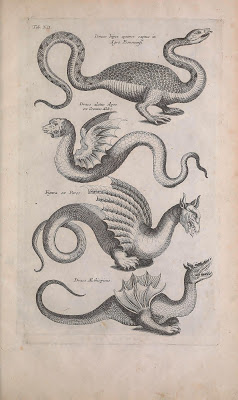
Various dragon forms. Dragon myths may have been inspired in part by encounters with fossils. Jonstonus, Joannes. Historiae naturalis de quadrupedibus libri. pts. 2-5 (1657). http://biodiversitylibrary.org/page/40918325. Digitized by Smithsonian Libraries.

In North Africa during the third to second century B.C., Carthaginians were digging trenches when they came upon two fossilized skeletons, each about 34 feet long (Mayor, 2000b, p. 153). The skeletons were assumed to be those of mythic giants, and Phlegon of Tralles, who served Hadrian (reigned between A.D. 117-38) at the time, claimed that the skeletons were proof that all life forms were becoming smaller (Mayor, 2000b, p. 149). This area, Ancient Carthage on the Gulf of Tunis, is rich with mastodon fossils, deinotheres, and mammoths (Mayor, 2000b, pp. 153-4), which paleontologists believe to be the source of the giant myths. Mayor provides evidence of the similarity between prehistoric fossils and Greek and Roman mythical creatures by citing contemporary Greek and Roman oral (transcribed) and written histories, as well as artwork produced during these periods.
View Full Size Image
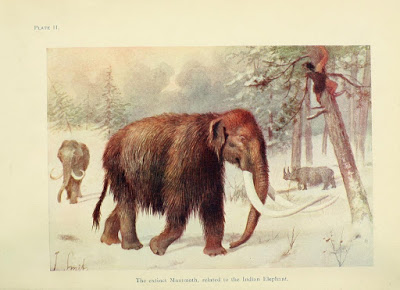
Mammoths may have inspired many Native American myths. Westell, William Percival. The book of the animal kingdom. (1910). http://biodiversitylibrary.org/page/10102652.

Not to be ignored are Native American fossil mythologies from the Americas, also treated by Mayor (2005) in another work. She addresses tribes from North and South America and those mythologies believed to be based on prehistorical fossils by analyzing oral, Native American fossil lore preserved by various people during the colonial period, the sixteenth to eighteenth century, and the nineteenth and twentieth centuries (Preface, pp. xxxvi-xxxviii). Additionally, she interviewed scholars and Native Americans willing to discuss important myths concerning large creatures and monsters that she—and they—associate with fossilized creatures. Included in her findings are myths about monster bison, giants that were neither man nor animal (but were probably based on mastodon bones), a giant monster that promised its own extinction (thought to be a mammoth), giants in Tlaxcala, Mexico believed to have killed all the ancestors of the Tlaxcalteca people (presumed to be inspired by Colombian mammoth fossils), bird monsters (that were probably fossilized prehistoric birds of prey), giant lizards (assumed to be Triceratops) and sea creatures that battled flying creatures (assumed to be the marine fossils of mosasaurs and the fossils of the flying Pteradons, respectively). Each of these mythological creatures, and many more, addressed by Mayor, come from different Native American cultures throughout the Americas, though there are some overlaps occasionally in mythological themes, and the connection between myth and creature is largely supported by the actual presence of fossils in the region of the myth that reflect the appearance of the mythological creature being addressed.

Want to learn more about the connection between ancient myths and fossils? Then check out these resources (also cited above):

  • Greer, A., Dermitzakis, M. and Vos, J. (2008). Fossil folklore from India: The Siwalik Hills and the Mahâbhârata. Folklore, 119(1), 71-92.
  • Lyons, S. L. (2009). Species, serpents, spirits, and skulls: Science at the margins in the Victorian age. Albany, N.Y.: State University of New York.
  • Mayor, A. (2000a). A time of giants and monsters. Archaeology, 53(2), 58-61.
  • Mayor, A. (2005). Fossil legends of the first Americans. Princeton, N.J.: Princeton University Press.
  • Mayor, A. (2000b). The first fossil hunters: Dinosaurs, mammoths, and myth in Greek and Roman times. Princeton, N.J.: Princeton University Press.

Tune in all week for more great fossil fun with our Fossil Stories event, including:

  • Tweets and Facebook Posts
  • Blog Posts highlighting milestones and key publications in the history of fossil research
  • A Flickr Collection with hundreds of historic fossil illustrations
  • A Pinterest Collection featuring a selection of our favorite fossil illustrations
  • A BHL Collection containing seminal publications in the history of paleontology
  • A series of live webcasts at BHL partner institutions
  • A citizen science challenge in collaboration with The Field Book Project, the Smithsonian Transcription Center, and Smithsonian Institution Archives
Follow #FossilStories on Twitter and Facebook to learn more.
October 13, 2015by micahv
Blog Reel, Featured Books

It’s The End of the World as We Know It. Do You Feel Fine?

View Full Size Image
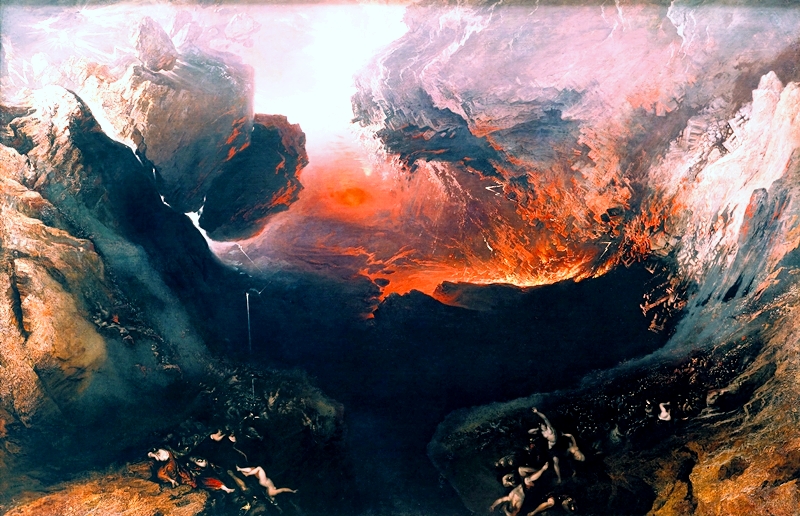
The Great Day of His Wrath (1853), Artist: John Martin

If you are reading this post then the world hasn’t ended…but, you probably already knew it wasn’t going to end.

Don’t look so disappointed. Yes, the human race regrettably has always had a collective death wish, eagerly awaiting the promise of the end of times since the beginning of times. Or have we? Ironically, it was the Maya, the ancient civilization that gave us such a precise date by which to count down to our own demise: December 21, 2012, that Mayan archeologist William Saturno explains looked for evidence that life goes on:

“We keep looking for endings. The Maya were looking for a guarantee that nothing would change. It’s an entirely different mindset.”

Mayan cosmology is more concerned about looking for assurances of continued life on earth, not death. So be comforted on this day – a day like any other – and use it to reflect on the greater value that life seems to take on in the face of our imminent death.

Besides a hopeful view of the future, the Maya had many beliefs worth adopting. Another foreign notion to our fast-paced-commerce-driven society is the worship of nature and animals as divine gods. The Mayans had a great reverence for nature which might explain why their entire religious pantheon is made up of deities that are either animals or humans with anthropomorphic features. They believed in worshiping life in its diverse manifestations.

Book of the Week

To honor this ancient civilization’s deep reverence for biodiversity we have chosen a singularly unique study undertaken by Alfred M. Tozzer and Glover M. Allen, for this week’s book of the week:

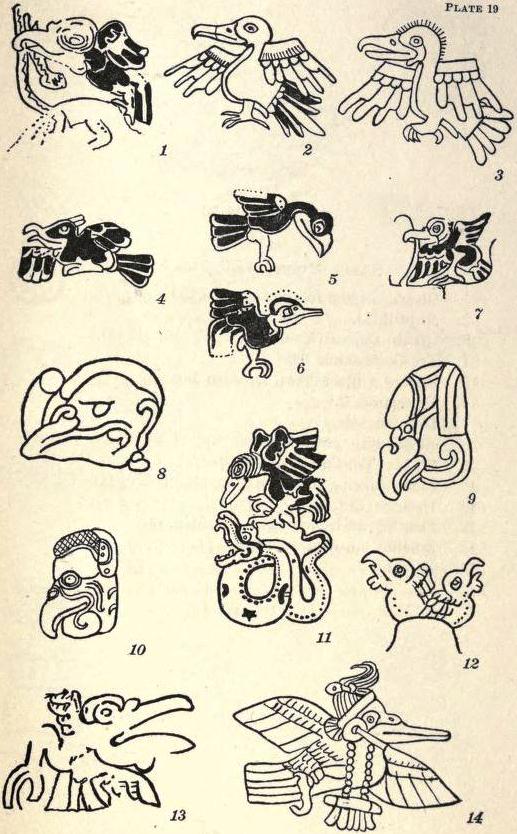
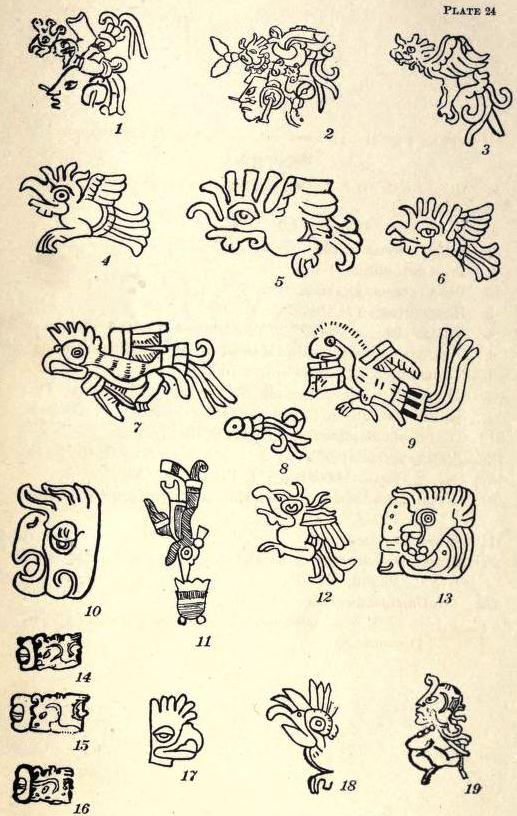
Animal Figures in the Maya Codices (1910)

Mr. Tozzer is one of the most famous American Mayanists to date and Mr. Glover was a zoologist specializing in Mesoamerican species at the turn of the last century. Together, the duo was determined to match Mayan hieroglyphic characters, glyphs and artwork depicting Mayan gods to modern species analogues. They were fairly successful in identifying the specific species that the Maya would come in contact with and thus idealize as religious deities.

Mayan Art Inspired by Meso-American Species

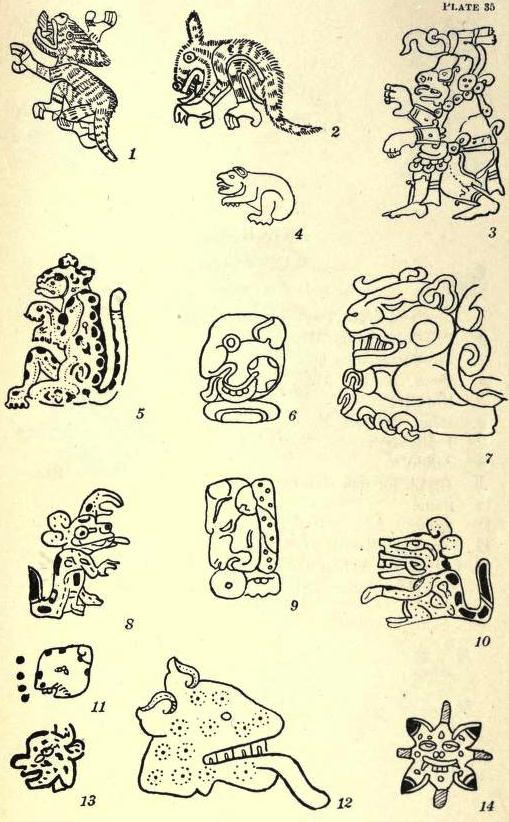
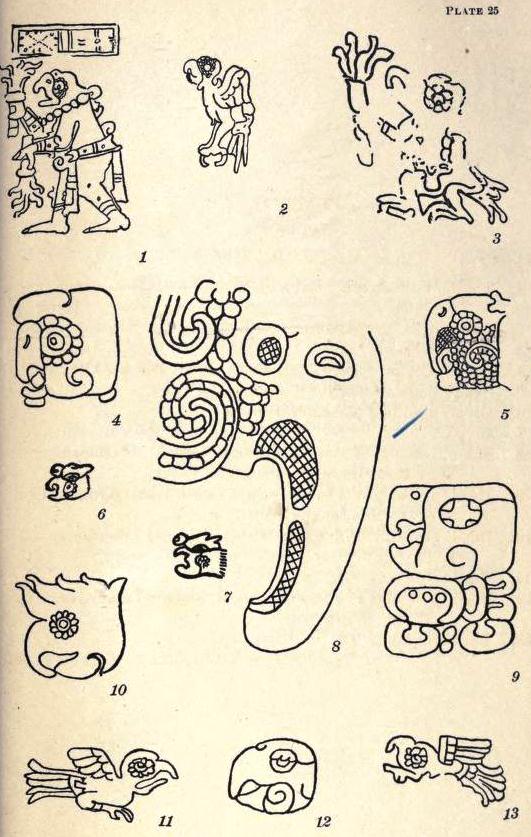
Gilbert Borrego, our Flickr Guru, has scoured the BHL in search of Meso-american species and put together a 58 plate Flickr Collection dedicated to Mayan plant and animal life. We have matched these illustrations with the respective Mayan hieroglyphs present in Tozzer and Allen’s work. Your job is to examine the glyphs and see if you see any resemblance between the Mayan art and their species counterparts.

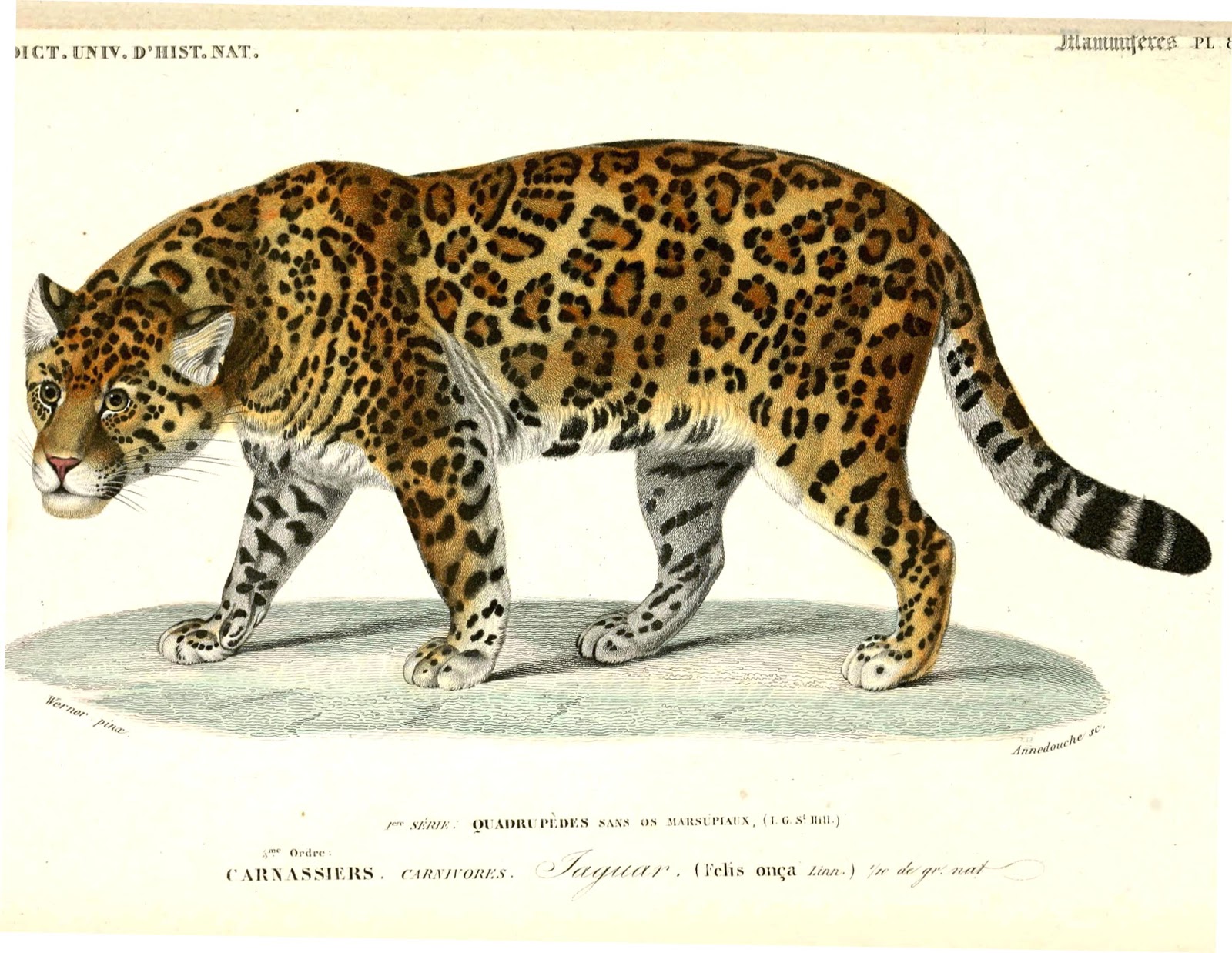
Jaguar (Panthera onca)

View Full Size ImageView Full Size Image

The jaguar a predatory animal symbolized strength, courage, associated with great Mayan warriors. Some scholars have also purported that the beautiful animal is the ruler of the Underworld.

Blue Macaw (Ara militaris)

View Full Size ImageView Full Size Image 

According to Tozzer and Glover, the  Macaw was one of the lightning beasts associated with the worship of fire and the sun. Their brilliant blue feathers were often used in ceremonial headdresses.

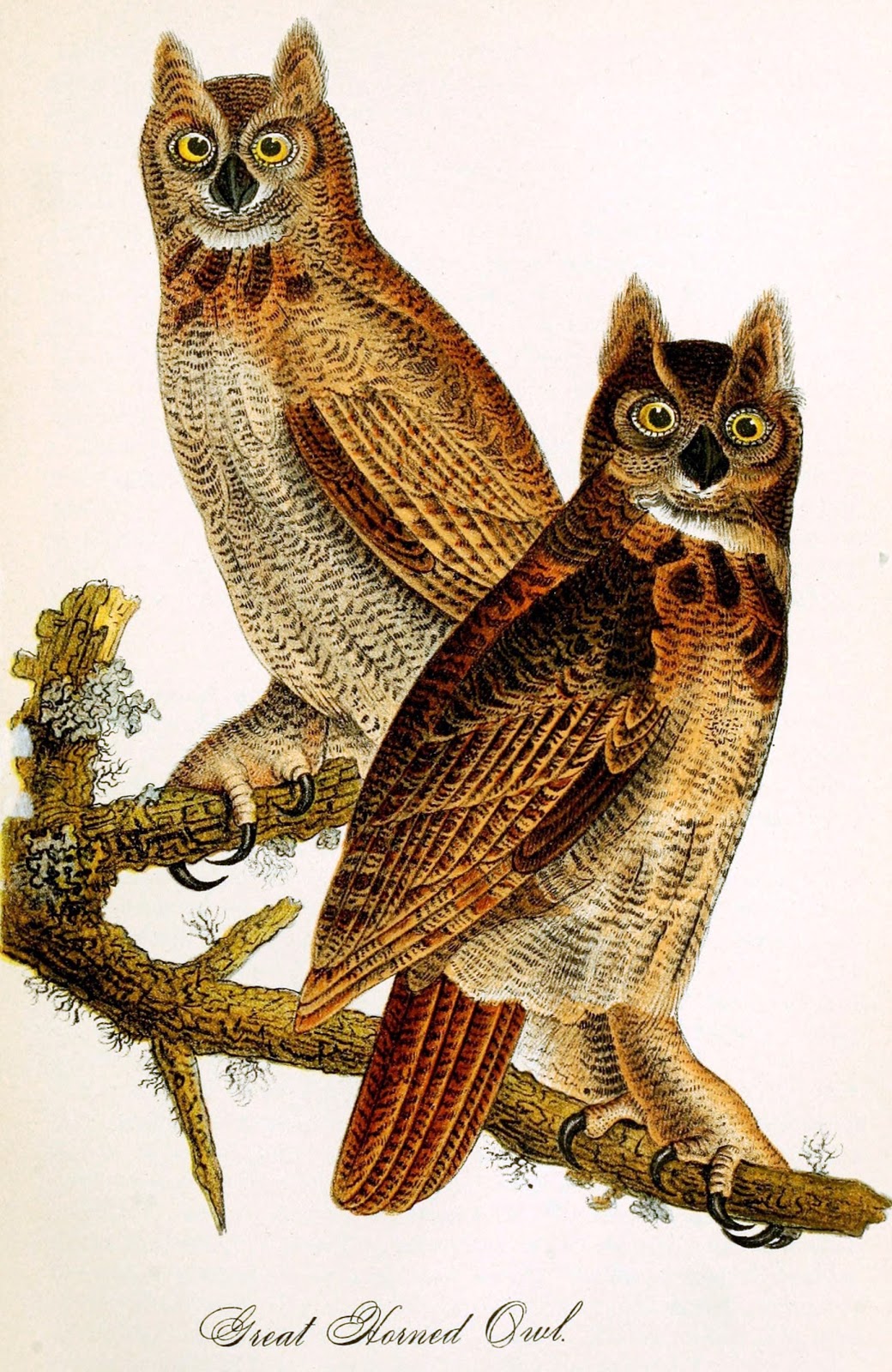
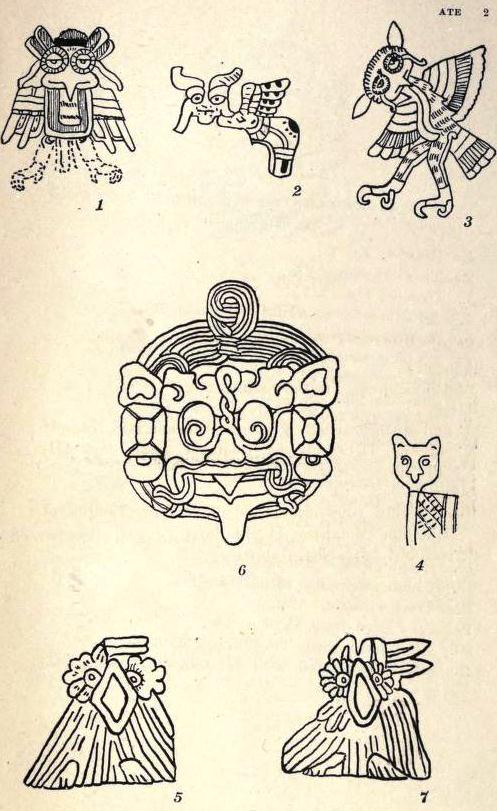
Yucatan Screech Owl or Moan-Bird (Otus choliba thompsoni)

View Full Size ImageView Full Size Image 

The owl is a symbol of death and destruction and is regarded as the Moon or Night God. The Owl resides in the  mythological “House of Drought,” unlike the serpent which occupies the “House of Rain”  therefore symbolizing life.<

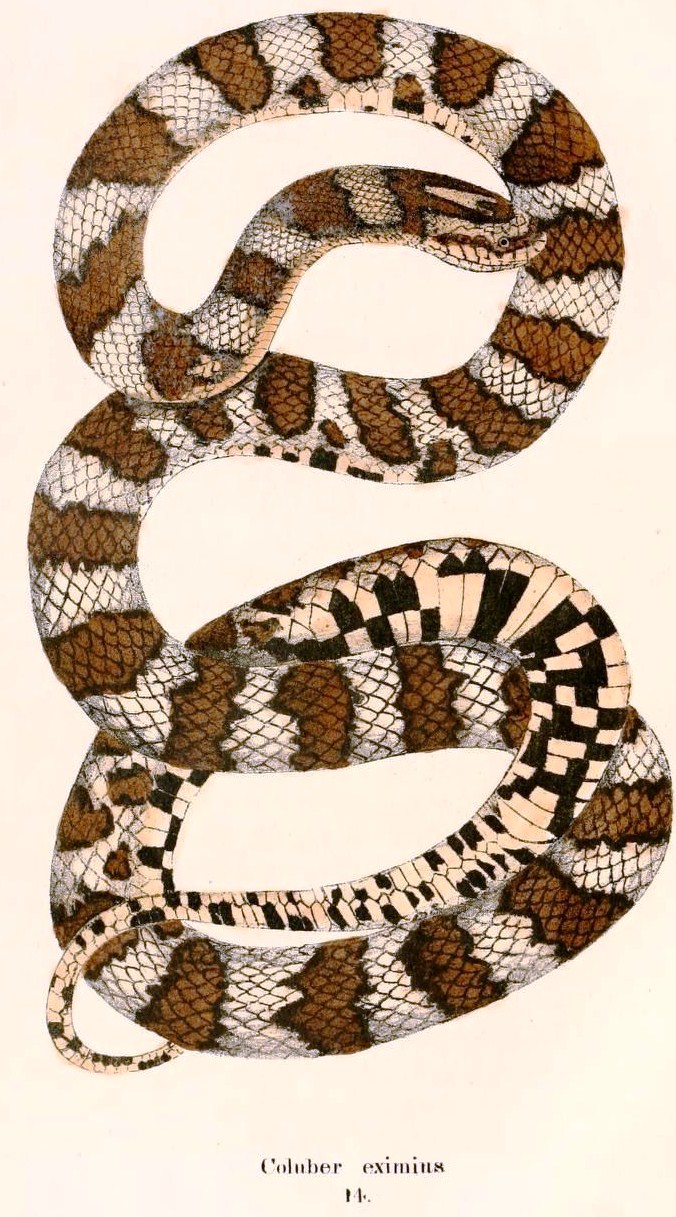
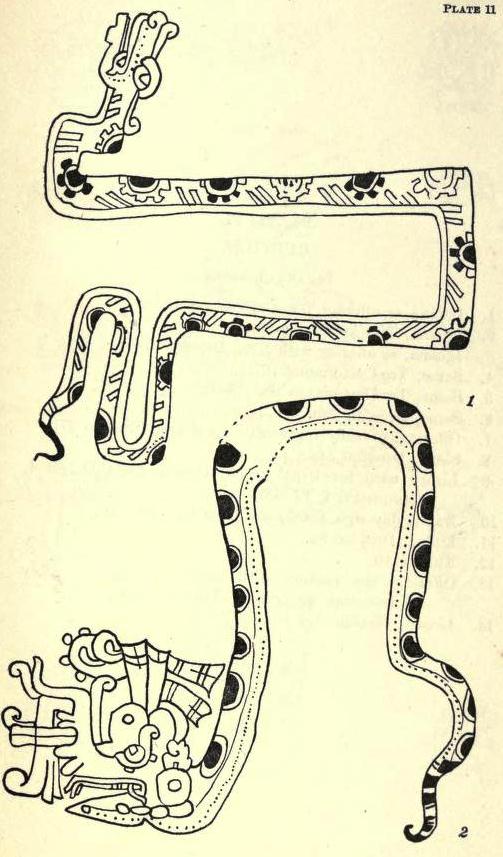
Serpent (Boidae)

View Full Size ImageView Full Size Image

The serpent was extremely important for it symbolized the live-giving force rain, and thus regulated the annual yield of  crops. It is most likely that this association was made because snakes show themselves in large numbers before and after rainfall.

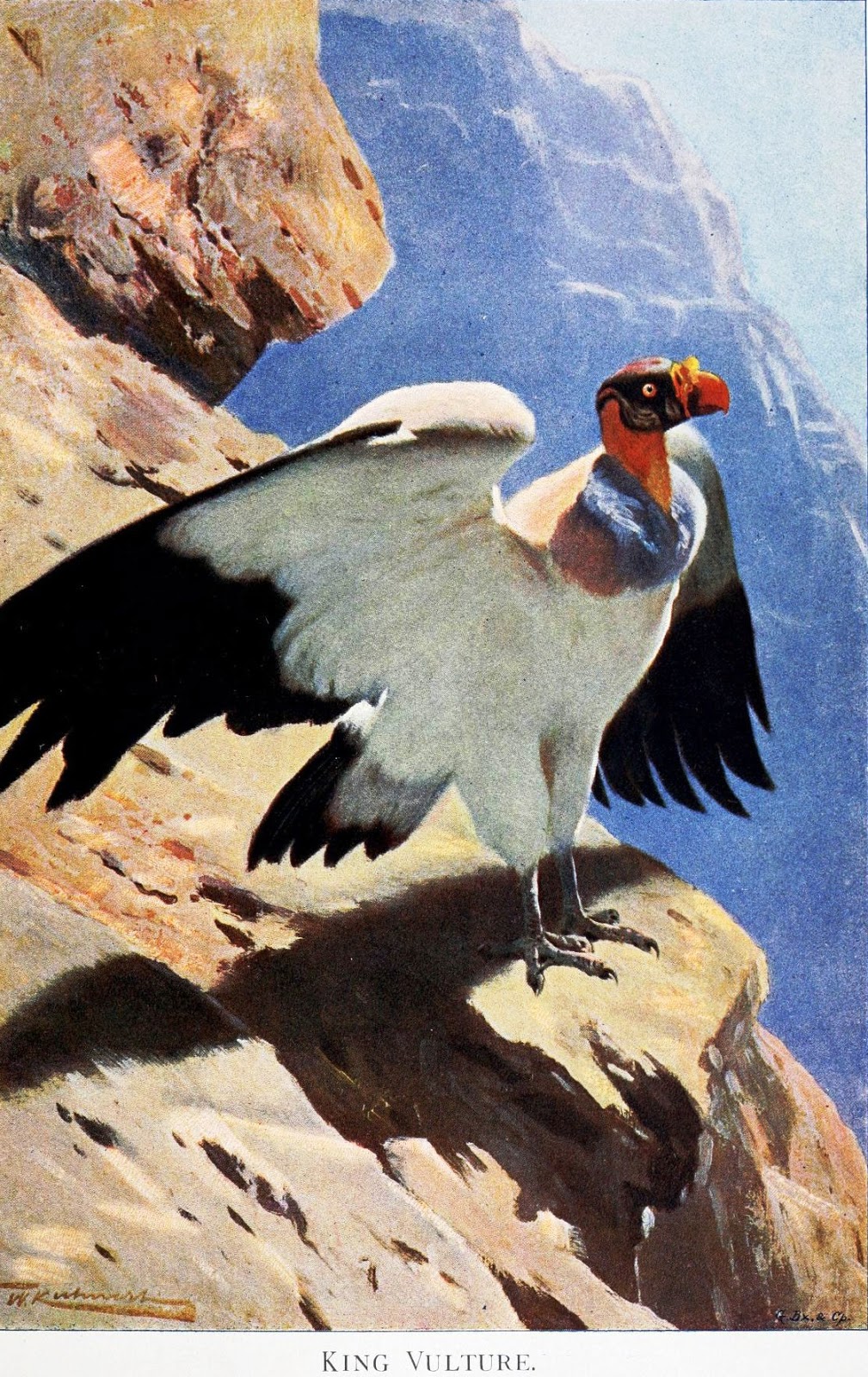
King Vulture (Sarcoramphus papa)

View Full Size ImageView Full Size Image

Scholars have speculated that the King Vulture symbolizes power as well as sacrifice. According to Mayan mythology ‘lesser’ Vultures would not eat until the King came down and plucked out the eyeballs and entrails of the dead.

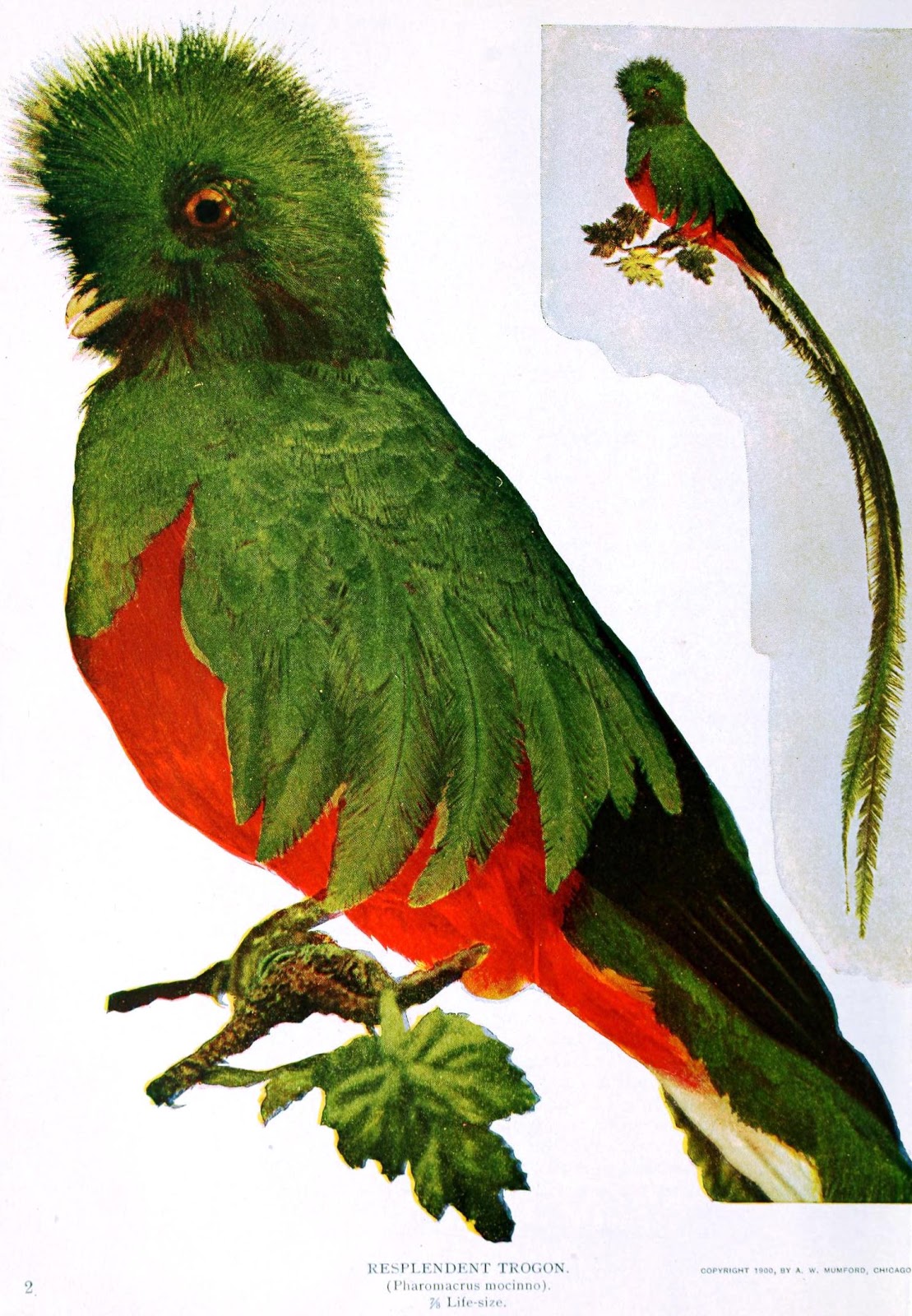
Coppery-tailed Trogon aka The Quetzal (Pharomacrus mocinno)

View Full Size ImageView Full Size Image

The Quetzal, meaning ‘large brilliant tail feather’, is a rare bird found in certain parts of Southern Mexico. Its brilliant green color and particularly long tail feathers made it a sacred bird to the Mayans that was reserved for use in headdresses of rulers. The bird is associated with the mythical hero Quetzalcoatl, the feathered serpent god, whom the Mayans mistook conquistador Hernán Cortés for. According to an account by Alexander von Humboldt, the Mayans were impatiently awaiting the return of this god because he would bring a time of great peace with him. Read more about that here.

Clearly, Mayans were more concerned with the cycle of life rather than the end of the world as we know it. In the spirit of their great culture, take the time to celebrate your continued life today. And if for some reason you were in a panic about the world ending, then calm yourself and visit NASA’s 2012 de-bunked website.You’ll surely feel better.

We hope you enjoyed this post. Interested in guest-blogging for BHL? We’d love that! Natural history, biodiversity and conservation topics are especially welcomed. Email us your ideas at [email protected]

December 21, 2012by [email protected]
Blog Reel, Featured Books

Hispanic Heritage Month: What is a Cordillera?

cordiller (cor·dil·le·ra); a noun.

Definition of cordillera : a system or group of parallel mountain ranges together with the intervening plateaus and other features, especially in the Andes or the Rockies.

Origin: early 18th century: from Spanish, from cordilla, diminutive of cuerda ‘cord’, from Latin chorda (see cord). (Oxford English Dictionary)

———————–

View Full Size Image
Cordilleras!

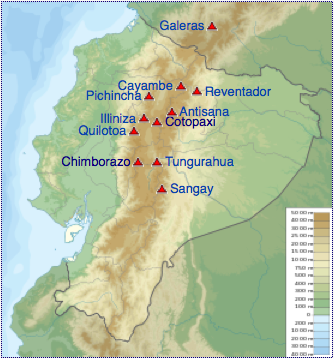
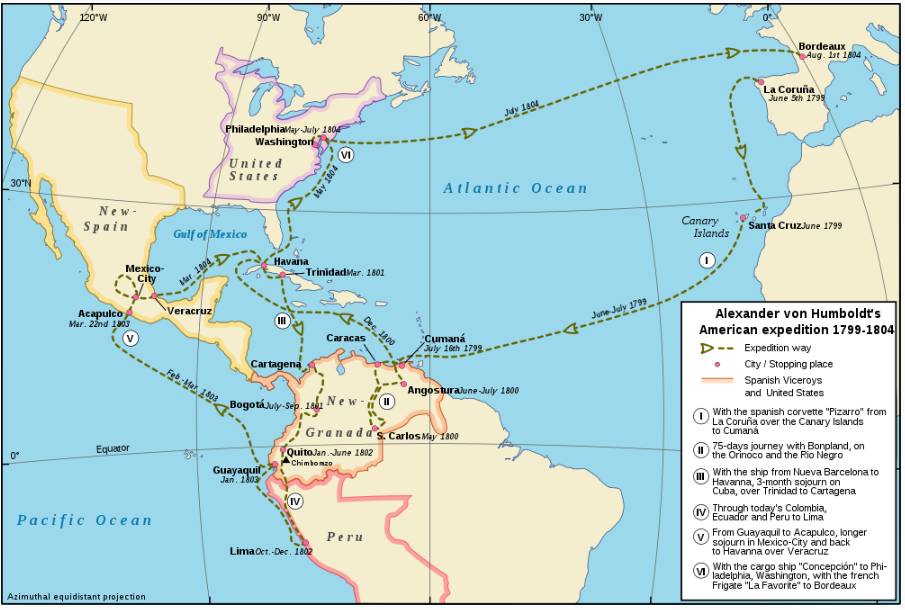
We saved something special for you for our final Hispanic Heritage Month blog installment. Today, we would like to bring your attention specifically to two Cordilleras found in Ecuador: the Cordillera Occidental and Cordillera Oriental which were extensively investigated by Alexander von Humboldt on his six-year expedition through Meso and South America. In this week’s Book of the Week, Humboldt provides us with the very first eye-witness account of some of the highest peaks found in the Andes and minutely describes their geology in: “Researches concerning the institutions & monuments of the ancient inhabitants of America : with descriptions & views of some of the most striking scenes in the Cordilleras!” Despite the long title, this two volume tome is actually just an excerpt from Humboldt’s much more voluminous 30 volume work, Personal Narrative of Travels to the Equinoctial Regions of the New Continent that he produced after his expedition.

View Full Size Image
Routing Humboldt and Bonpland’s S. America Expedition
View Full Size Image
A young Humboldt

Having the fortune of receiving a substantial inheritance following the sad event of his mother’s death, Humboldt quickly opted for a career change. Seemingly overnight, he leapt from Government Mines Inspector to Greatest Explorer the World had ever seen! Leaving the Old World behind for the very first time, he was accompanied Aimé Bonpland, a botanist who over the course of the next six years, from 1799-1805, would collect over 60,000 plants on their expedition to a largely unobserved continent and the species that they brought back were mostly unknown to Europe at the time. While Aimé focused on his field of expertise, Alexander preferred to dabble. Remembered as one of the last great scientific generalists, he believed “that no organism or phenomenon could be fully understood in isolation. Living things, the objects of biological study, had to be considered in conjunction with data from other fields of research such as meteorology and geology.”  Therefore, Humboldt bounces along through his text touching on a myriad of topics, admitting no attempt at organization in his book. And remarkably the lack of organization and vacillations between linguistics, mythology, botany, oceanography, archeology, climatology and comparative religion all somehow come together. However, it should be noted that as much as Humboldt meanders about in this week’s book of the week he always comes back to his most beloved subject– geology. At the time, geology was an emerging field of science and he should be remembered as a primary contributor to its development into a modern field of study.

Throughout what might be best called a travel narrative or informal conversation with the reader, written largely in first person, Humboldt conducts a comparative analysis on his eclectic mix of chosen topics. He seems to be in constant search for the connecting thread that will illuminate an underlying unity in nature. While some critics find this propensity for long-winded unification theories unscientific, one must remember that during the backdrop of the time providing analogues to known phenomena would certainly help the reader to better understand the natural phenomena in this new and largely undiscovered world. Such is the case with these hieroglyphic paintings which Humboldt provides the reader a lengthy analysis, a treatise almost, on comparative mythology and linguistics:

View Full Size Image
Fig. 1: Days in the Mexican Almanac
View Full Size Image
Fig 2: The Epochs of Nature According to Aztec Mythology

Humboldt compares these paintings with the writing systems of the Egyptians, Phoenicians, Hebrews and many other ancient languages. Of the content in fig 2., he compares the epochs of natural destructive cycles in Aztec mythology with the notions of a Kalpa and Yuga found in Hinduism which are described at length here. A seriously fascinating read! The Aztec culture was clearly one very imbued with the sanctity of nature. These were a people who were impatiently awaiting the return of their god Quetzalcoatl because he brought with him a time in which  “all animals, and even men, lived in peace; the earth brought forth, without culture, the most fruitful harvests ; and the air was filled with a multitude of birds, which were admired for their song, and the beauty of their plumage.” One might see why Montezuma would easily mistake Cortez for Quetzalcoatl. It was simply a case of wishful thinking.

Moving on to the crux of this book, interested in reading some of the very first observances of the best known peaks in the Andes? Humboldt delivers:

The Two Mightiest Peaks of Humboldt’s Cordilleras! Okay Three?

View Full Size ImageVolcano of Cotopaxi:  This volcano towers at 19,347 feet. Since 1738, Cotopaxi has erupted more than 50 times. It is the second most active volcano in the world. Humboldt, the first European to climb Cotopaxi is lucky to have observed it and lived to tell the tale and he seemed to be clearly aware of this fact for, at the time of this sketching of Cotopaxi, Humboldt wrote this: “The colossal volcano of Cotopaxi, the pyramidal peaks of Ilinissa, and the Nevado de Quelendanna, open here at once on the spectator, and in dreadful proximity. This is one of the most majestic and most awful views I ever beheld in either hemisphere.”

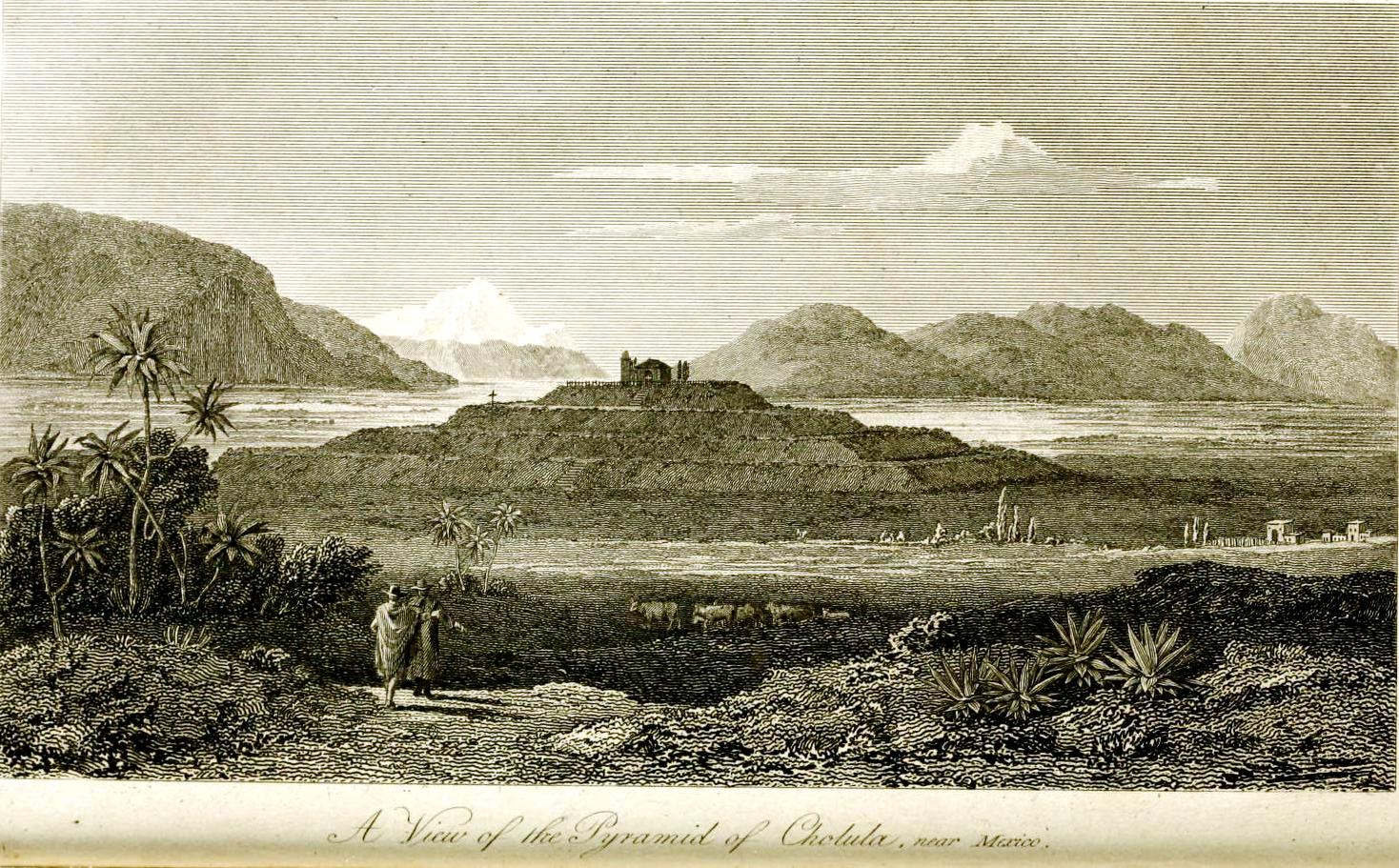
View Full Size ImagePyramid of Cholula: Not necessarily a natural “peak” per se, the pyramid that sits at the site of the holy city of Cholula is home to the greatest, most ancient monuments of the Aztec people. The pyramid is referred to by locals as the mountain made by the hand of man (monte hecho a manos). From a distance it looks like a natural hill covered with vegetation. One can see why Humboldt would be intrigued.

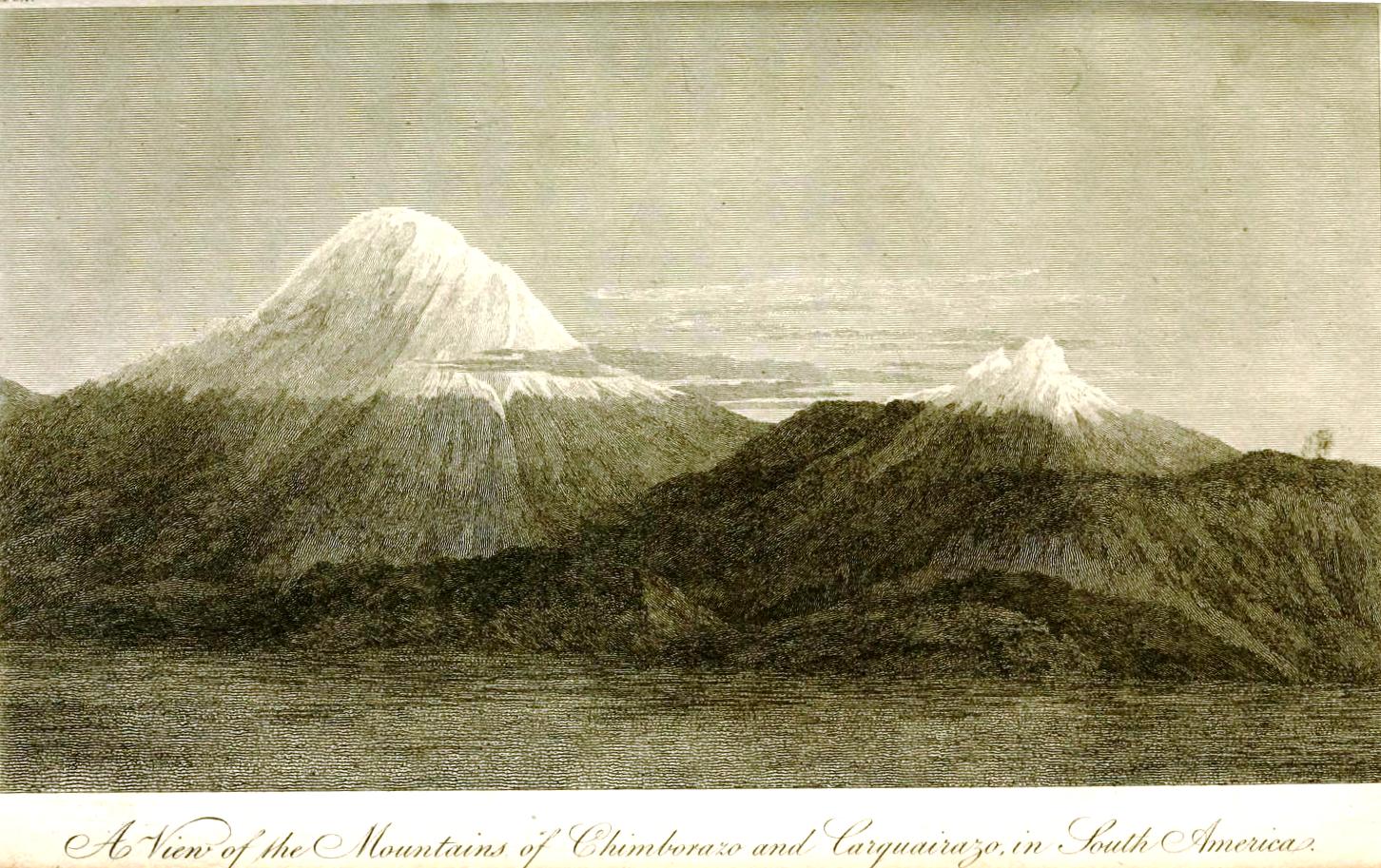
View Full Size ImageMount Chimborazo: At 20,564 ft, Chimborazo is the highest mountain in Ecuador, the highest peak in close proximity to the equator and it is the furthest point from the Earth’s center. (This is due to the oblate spheroid shape of the Earth.) Bonpland and Humboldt attempted to reach the peak of Chimborazo but, did not reach the summit. Atop Chimborazo sits a layer of permafrost which adds to its majestic beauty. Spotting the behemoth in the distance, Humboldt writes “we see Chimborazo appear like a cloud at the horizon; it detaches itself from the neighbouring summits, and towers over the whole chain of the Andes, like that majestic dome, produced by the genius of Michael Angelo, over the antique monuments, which surround the Capitol.”

The wealth of knowledge, historical importance, and richness of travel description in this book should not be overlooked. Everyone with any curiosity about our natural world should read Humboldt. Geologists especially, should not miss today’s book of the week. It’s a true gem.

All these magnificent plates from Humboldt’s expedition are available on Flickr, plus more. Also,make sure to check the Twitter, Facebook and Flickr for more content celebrating Hispanic Heritage Month!

We hope you enjoyed this post. Interested in guest-blogging for BHL? We’d love that! Natural history, biodiversity and conservation topics are especially welcomed. Email us your ideas at [email protected].

October 11, 2012by [email protected]
Blog Reel, Featured Books

Fact or Fiction? Cat Myths Debunked

“A clever writer has stated that  ‘the human race may be divided into people who love cats and people who hate them; the neutrals being few in numbers.’ ” -Frances Simpson

 Book of the Week: The Book of Cat by Frances Simpson

View Full Size Image
Frances Simpson & Cat
If you are part of the majority of people who are “dog people” this post may not be for you. Please redirect to our dog book of the week post here. Neutral folks, you can stick around. Now that we have weeded out all of those pesky dog lovers, let’s get on to a book that is the cat’s meow! Frances Simpson, author of several books on cats at the turn of the century was a serious feline aficionado. Author of The Book of the Cat (1902), Simpson put together one of the most comprehensive resources on cats around. Who knew you could write 32 chapters on cats? Besides the 362 pictures mostly of cats, our favorite parts of the book were the chapters on:
Chapter 1, Cats of the Past. Very interesting to see how cats have interacted with humans over the past 10,000 years. It has been a tumultuous relationship indeed, vacillating between extreme love and extreme hate.
Chapter 29, Cat Photography for Amateurs. Have you seen all of the pictures of cats on the internet? This chapter is really relevant to the contemporary needs of internet users.
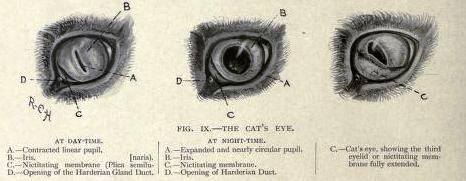
Chapter 32, The Cat’s Place in Nature. The grand prize goes to this chapter. A must read for taxonomists and natural history buffs who are interested in cat classification and physiology. Have a look at the anatomy of the cat’s eye:
View Full Size Image
The third eye-lid is called the plica semilunaris or nictitating mebrane. This is found in mostly nocturnal creatures and regulates the admission of light whilst protecting from injury.
Book of the Week’s Pictures of Cats!

Because we all need a daily cat pic fix: See more cat pics on Flickr and also don’t forget to re-pin from our Book of the Week Pinterest Board!

Time to Play Fact or Fiction
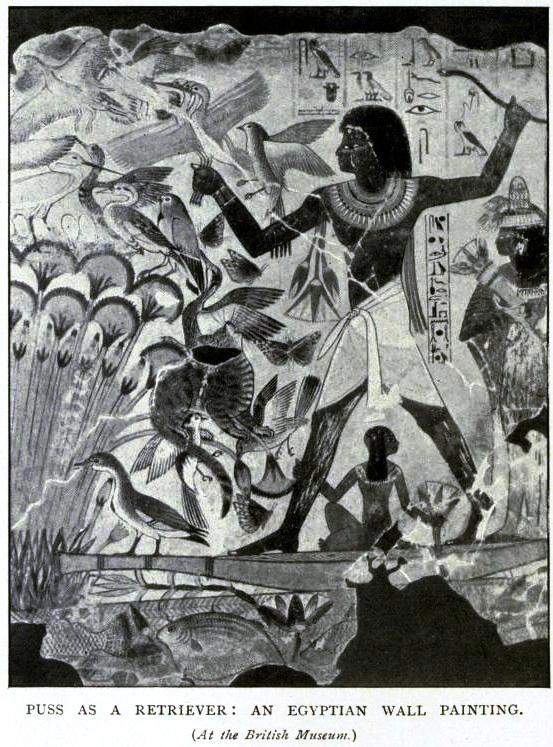
  • The ancient Egyptians worshiped cats and used them as hunting “retrievers” 

Fact: According to Horopollo, the cat was worshiped in the temple of Heliopolis, because the size of the pupil of the animal’s eye is regulated by the rising and waning of the sun. Additionally, long before dogs ever retrieved the kill on human hunts, cats did:

View Full Size Image
  • Cats have nine lives

Fiction: Ms. Simpson explains that “Cats probably owe this reputation to their extraordinary powers of endurance, and certain it is that they have a greater tenacity to life than any other animal. At the Battersea Home a dog and a cat have been placed in the lethal chamber, and it was observed that the dog died in five minutes, whereas the cat breathed for forty minutes longer.” Do the math, 45min/5min = 9X the will to live. Cats are survivors.

  • The black cat is a bad omen 
View Full Size Image
“I’m not a demon!”

Fiction: If you haven’t heard this superstition before, it finds its origins in the Middle Ages, a time when demons inhabited bodies and witches were burned at the stake, it was also believed that the devil borrowed the coat of a black cat when he wished to torment his victims. A strange departure from worshipping cats, as the Egyptians had done.

  • Women are generally cat lovers while, men tend to like dogs: 

Fiction: Not necessarily true. Winston Churchill’s cat Jock was one of his favorite pets. Bill Clinton brought his adopted stray cat Socks with him when he moved to the White House. Victor Hugo had a favorite cat name “Chanome,” whom he slept with. Among the most powerful men the world has ever seen, Cardinal Richelieu and Napoleon counted themselves as cat lovers.

  • Domestic cats are almost identical to their wild counterparts, with few biological or genetic variations
Fact: Yes, a very strange fact indeed. Cats have been domesticated by humans for over 10,000 years yet, the human interference in breeding unlike with cows, has not resulted in significant genetic changes for the species. Top cat expert, Carlos Driscoll, explains that “cats can survive with or without us” and that they don’t rely on humans the way that other domesticated animals do — rather they coexist with humans.
  • Social media aka Web 2.0 was invented so that we could share pictures of cats. 

Arguable: Well, according to Ethan Zuckerman, Internet Activist and Harvard Berkman Fellow: “Web 1.0 was invented to allow physicists to share research papers. Web 2.0 was created to allow people to share pictures of cute cats.” (Cute Cat Theory) Yes, we know the Internet is used for so much MORE these days but, sharing picture of cats on internet forums truly is a weekly phenomenon. Every Saturday dubbed “Caturday” is a day in which global cat lovers post pictures of cats, en masse.  LOLcat has its own Wikipedia entry. If you didn’t know it was a thing, it’s definitely a thing. The internet chose cats, what can we say?

Who are we as Librarians and traditional lovers of feline companionship, to argue with popular demand? People want their pictures of cats and they want them every Saturday. We are service oriented here at the BHL and providing you with a fresh supply of cat pictures could be a considered a loose interpretation of our mission. Enjoy!

And no matter the day, let’s love cats and dogs, and all members of the animal kingdom in equal measure. Every living organism is part of the amazing tree of life.

We hope you enjoyed this post. Interested in guest-blogging for the BHL? We’d love that! Natural history, biodiversity and conservation topics are especially welcomed. Email us your ideas at [email protected]

Kitty Links, meow!

  • Why does the web love cats?
  • The Cute Cat Theory of Digital Activism
  • Why we love cats and dogs
  • Tumblr: Caturday
  • How are dog people and cat people different?
September 13, 2012by [email protected]
Blog Reel, Featured Books

Book of the Week: Living Sea Mammoths of Myth and Legend

This week, while browsing our Flickr site (which, by the way, has over 15,900 images!), we stumbled across the book Field Book of Giant Fishes (1949), by J.R. Norman and F.C. Fraser, and were intrigued. What exactly was a giant fish by this book’s standards, and what would we find when we delved into the pages of this enigmatic title?

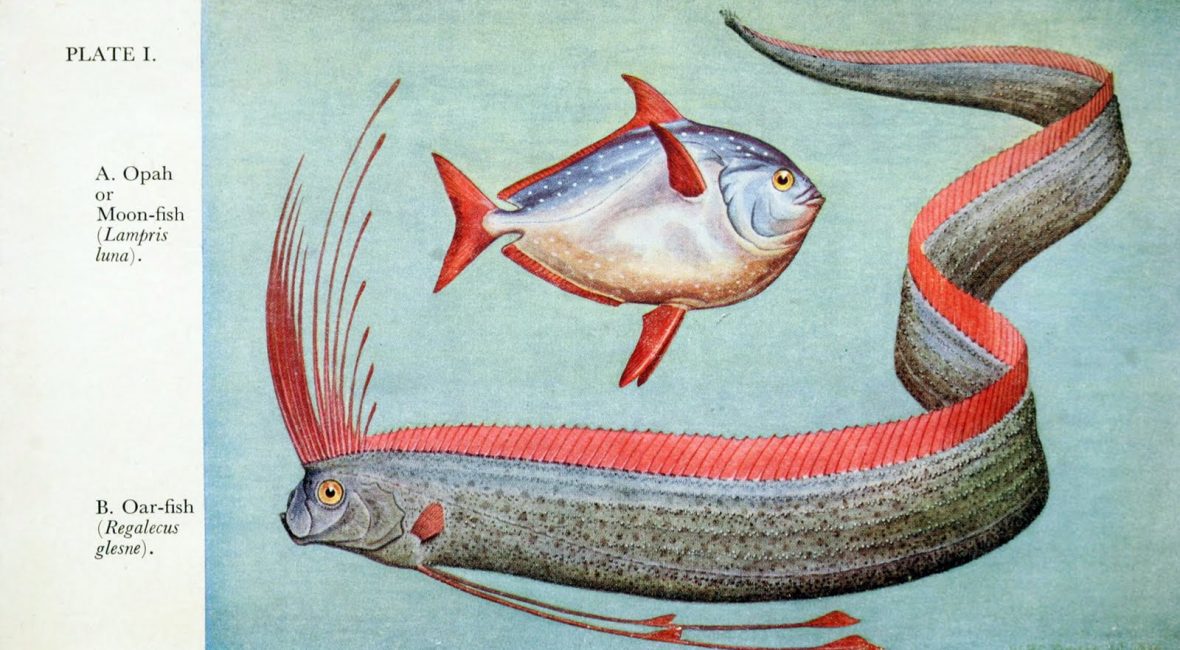
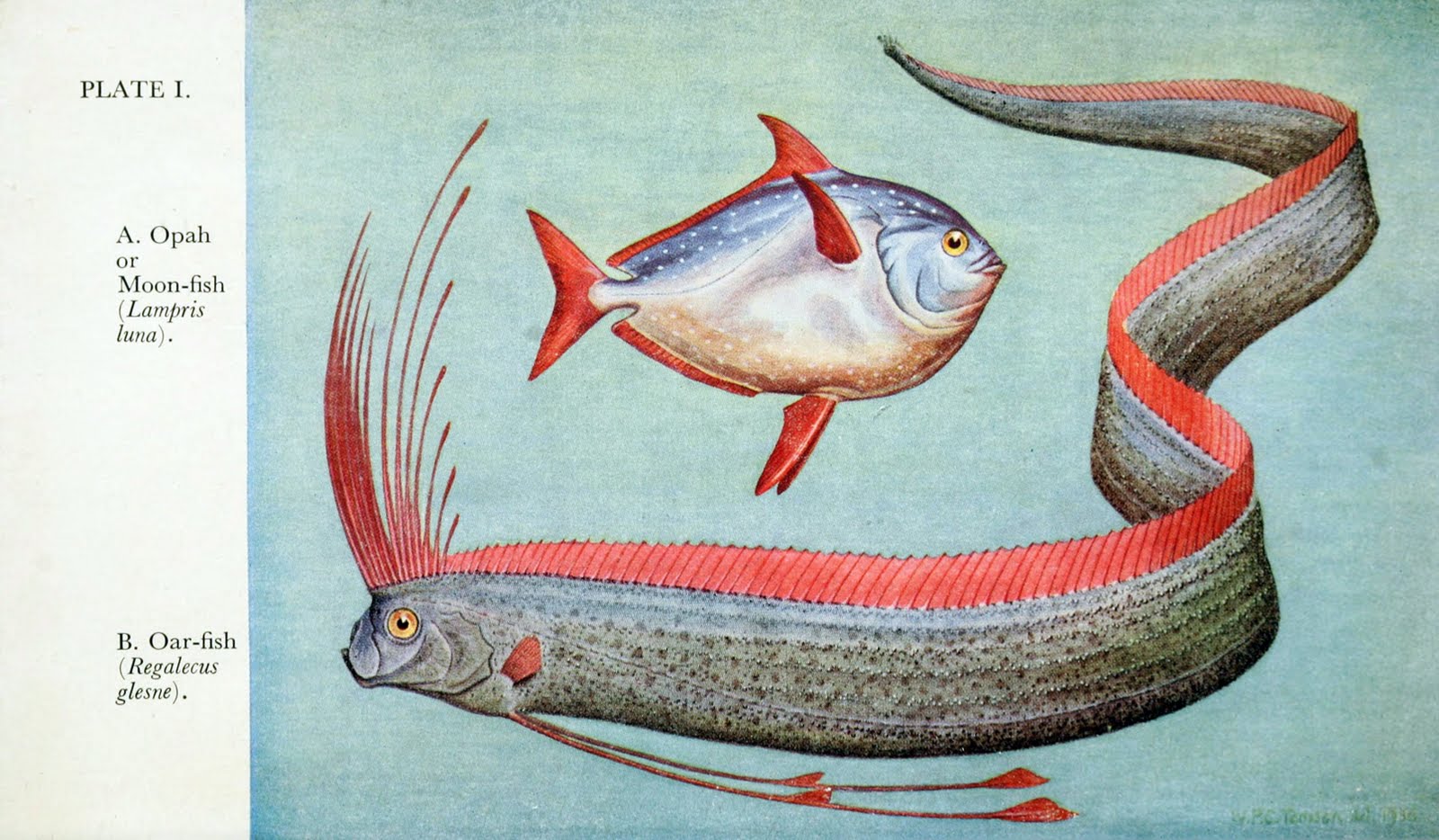
To our delight, we found some surprising species featured within this volume. Species that make you think, “Maybe we aren’t too far off from the dinosaurs.” Some even include creatures that might be responsible for many of the “sea monster” claims sailors have made over the years. Plus, as is always a bonus for us, the descriptions were accompanied by lovely illustrations (by W.P.C. Tenison) of the mighty fish that call our oceans home today. We thought this title offered a great opportunity to showcase some of these aquatic marvels. So, without further ado…

View Full Size Image1) Giant Oar-Fish, also known as the King of Herrings. This critter is the world’s longest bony fish, reaching up to at least 11 meters (unconfirmed reports of 17 meters exist!) and weighing upwards of 300 kg! Living 300-1000 meters below the ocean’s surface, it is a rarely-seen deep sea wonder. Nevertheless, many scientists believe that this colossal beast may be responsible for many of the strange sea monster sightings reported throughout the years.

Despite the scarcity of sightings, there are several documented encounters with this species:

  • On Dec. 10, 2010, a live specimen measuring 4 meters was caught off the Sinaloan coast of Mexico. One of the fisherman who caught it cautioned that “it might be the devil” and “feared it might swallow them.”
  • On April 6, 2011, a 3.5 meter Giant Oar-Fish was found off of the east coast of Taiwan. It is believed that the creature surfaced as a result of the tsunami that hit Japan in March. Thus, it was given the nickname “Earthquake Fish.”
  • And finally, in 1996, a 7-meter specimen was caught off of the coast of California. Pictured below is a team of Navy SEALs displaying the beast. (Image from pg. 20, All Hands)

View Full Size Image

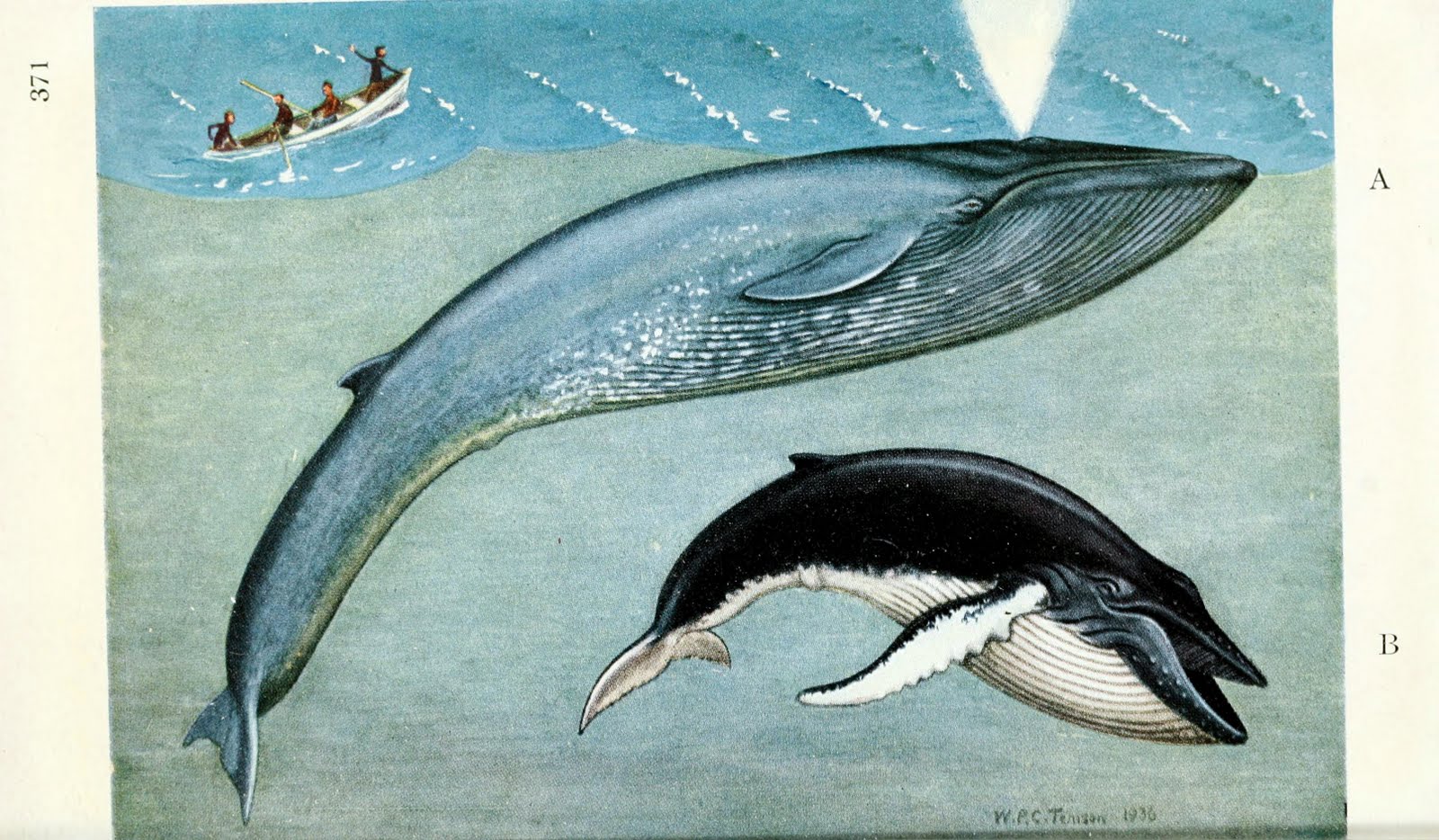
View Full Size Image2) Blue Whale. So, everyone’s familiar with the Blue Whale – the largest animal on the face of the planet, and, for that matter, the largest animal known to have ever existed. (Take that, Dinosaurs!). At 30 meters long and 180 metrics tons, this creature is truly a behemoth. However, despite its size, the Blue Whale’s diet consists completely of small crustaceans called krill.

Some very interesting facts about the Blue Whale:

  • It’s tongue weighs as much as an elephant (which, incidentally, is the largest living land mammal)
  • When fully expanded, a Blue Whale’s mouth is large enough to hold 90 metrics tons of food and water
  • Despite this large mouth, the Whale’s throat is so small that it cannot swallow anything larger than a beach ball
  • At birth, Blue Whales weigh 6,000 lbs – the weight of a full-grown hippopotamus – and drink an average of 100 gallons of milk every day
  • Blue Whale calves gain as much as 200 lbs every day
  • A Blue Whale’s Heart weighs 1,300 lbs.

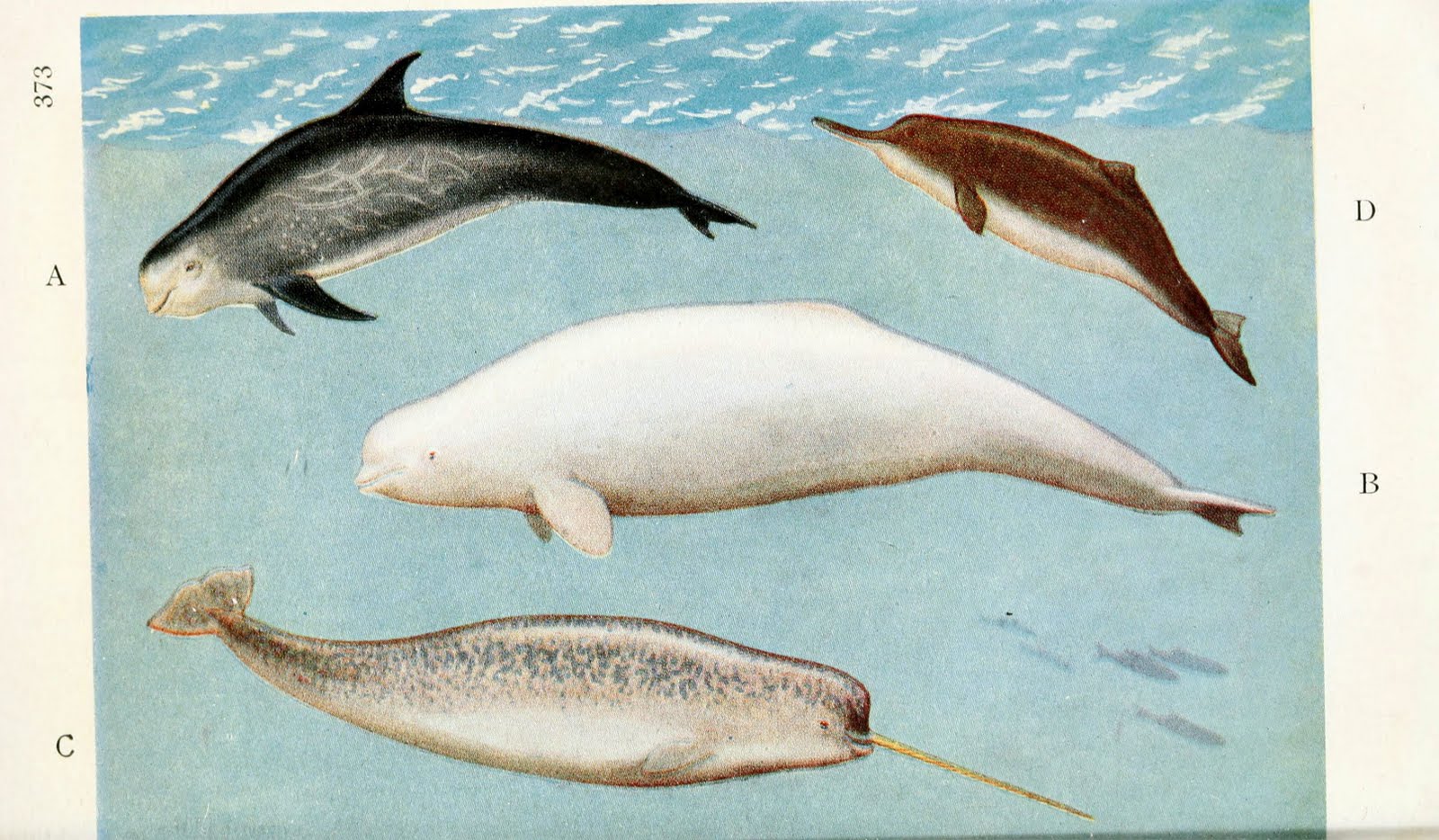
View Full Size Image3) Narwhal. Although not a mammoth in proportions, this sea critter nevertheless has many links to mythological associations. For obvious reasons, it is known as the “sea unicorn,” and Medieval Europeans believed that these “unicorn” horns possessed magical powers, such as the ability to cure poison and melancholia. The Inuit people believe the Narwhal tusk came about when “a women with a harpoon rope tied around her waist was dragged into the ocean after the harpoon had struck a large narwhal. She was transformed into a Narwhal herself, and her hair, which she was wearing in a twisted knot, became the characteristic spiral Narwhal tusk.”

  • The Narwhal is most closely related to the Beluga Whale, and together they make up the only two living species of the Monodontidae family
  • Narwhals are a strictly Arctic species, and rarely venture below 65 degrees North latitude
  • The Narwhal’s name comes from the Old Norse word “nár,” which means “corpse.” It was given this name due to its grayish pigmentation, which gave it the appearance of a drowned sailor.
  • A male Narwhal’s tusk can grow as long as 3 meters and weigh up to 22 lbs. About 1 in 500 male Narwhals grows a second tusk.
  • In the 16th century, Queen Elizabeth was given a carved and bejeweled Narwhal tusk worth £10,000 – the cost of, in those times, an entire castle!
  • The Narwhal is one of two possible explanations for the “giant sea phenomenon” described by Jules Verne in Twenty Thousand Leagues Under the Sea. (The other possibility? A man-made vessel. We like the Narwhal option better!)

We hope you’ve enjoyed these fun facts about some surprising creatures from the sea. Don’t forget that these are only a few of the animals pictured in our book of the week, Field Book of Giant Fishes (1949), by J.R. Norman and F.C. Fraser. The color illustrations from this book can be found on our Flickr site, but there are also dozens of smaller, ink drawings within the actual text, so be sure to check out the book in BHL as well!And remember, it might not be the age of the dinosaurs, but we’ve still got some mammoths living among us!

October 20, 2011by ulib-libraryjobs

Help Support BHL

BHL's existence depends on the financial support of its patrons. Help us keep this free resource alive!

search

About BHL

The Biodiversity Heritage Library (BHL) is the world’s largest open access digital library for biodiversity literature and archives. BHL operates as a worldwide consortium of natural history, botanical, research, and national libraries working together to digitize the natural history literature held in their collections and make it freely available for open access as part of a global “biodiversity community.”

Join Our Mailing List

Sign up to receive the latest news, content highlights, and promotions.

Subscribe Now

Subscribe to Blog via Email

Enter your email address to subscribe to this blog and receive notifications of new posts by email.

Join 319 other subscribers

Subscribe to Blog Via RSS

Subscribe to the blog RSS feed to stay up-to-date on all the latest BHL posts.

Access RSS Feed

Inspiring Discovery through Free Access to Biodiversity Knowledge.

The Biodiversity Heritage Library makes it easier than ever for you to access the information you need to study and explore life on Earth…for free, anytime, anywhere.


64+ Million Pages of
Biodiversity Literature Online.

EXPLORE

Tools and Services
to Transform Research.

EXPLORE

300,000+
Illustrations on Flickr.

EXPLORE

ABOUT | HARMFUL CONTENT | PRIVACY | SITE MAP | TERMS OF USE