Biodiversity Heritage Library - Program news and collection highlights from BHL
  • Home
  • News
  • Featured Books
    • All Featured Books
    • Book of the Month Series
    • BHL at 20
  • User Stories
  • Campaigns
    • Fossil Stories
    • Garden Stories
    • Monsters Are Real
    • Page Frights
    • Her Natural History
    • Earth Optimism 2020
  • Tech Blog
  • Visit BHL
Home
News
Featured Books
    All Featured Books
    Book of the Month Series
    BHL at 20
User Stories
Campaigns
    Fossil Stories
    Garden Stories
    Monsters Are Real
    Page Frights
    Her Natural History
    Earth Optimism 2020
Tech Blog
Visit BHL
  • Home
  • News
  • Featured Books
    • All Featured Books
    • Book of the Month Series
    • BHL at 20
  • User Stories
  • Campaigns
    • Fossil Stories
    • Garden Stories
    • Monsters Are Real
    • Page Frights
    • Her Natural History
    • Earth Optimism 2020
  • Tech Blog
  • Visit BHL
Biodiversity Heritage Library - Program news and collection highlights from BHL
Blog Reel, Featured Books

Travelling Plants: A Collaborative Project

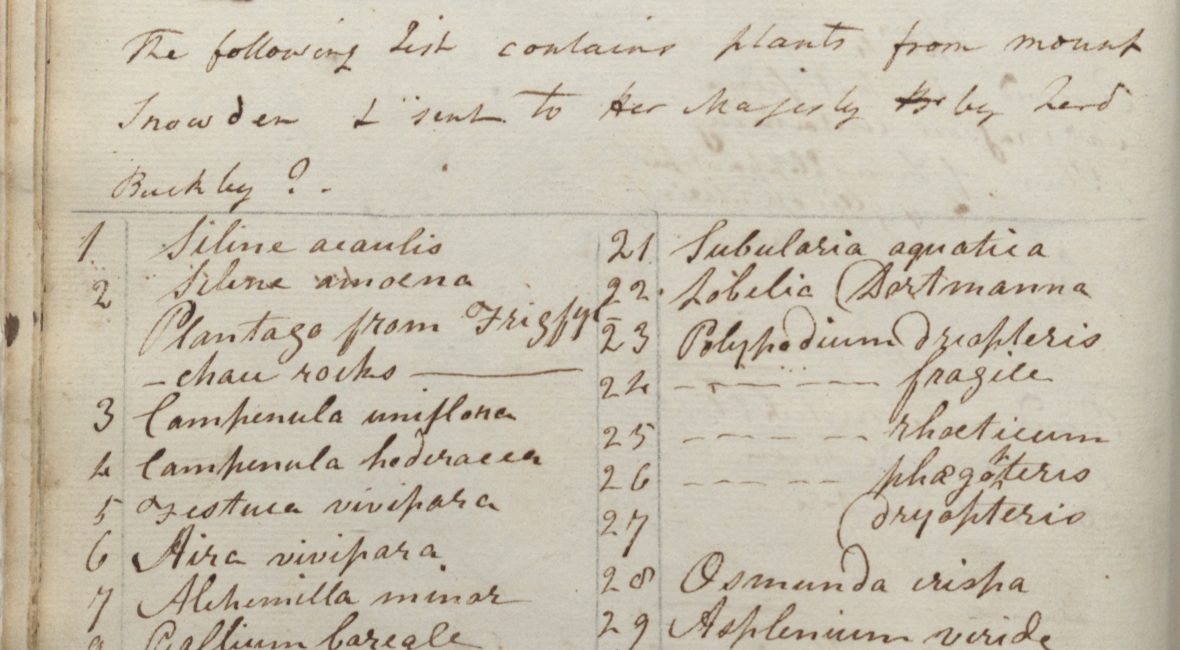
Page 18 of the Kew Record Book with handwritten list of plants

During 2020, the Archives team at the Royal Botanic Gardens, Kew developed a collaboration with the University of Roehampton, the University of the Third Age (U3A), and the Biodiversity Heritage Library (BHL), to create a model for the archive sector, which uses volunteer-driven, remote methods to transcribe and research collections, making them easily shareable and accessible using TEI-XML encoding. We wanted to create ways in which TEI could be embedded in the archive sector and managed by archivists with little experience of textual encoding, or time to carry out encoding themselves. In creating this model, we would also digitise, transcribe, encode, and make accessible in BHL one of Kew’s most important, but inaccessible volumes – the Kew Record Book. For Kew, it was important that the volume would be made fully accessible, as part of our commitment to transparency around our history and involvement in colonialism.
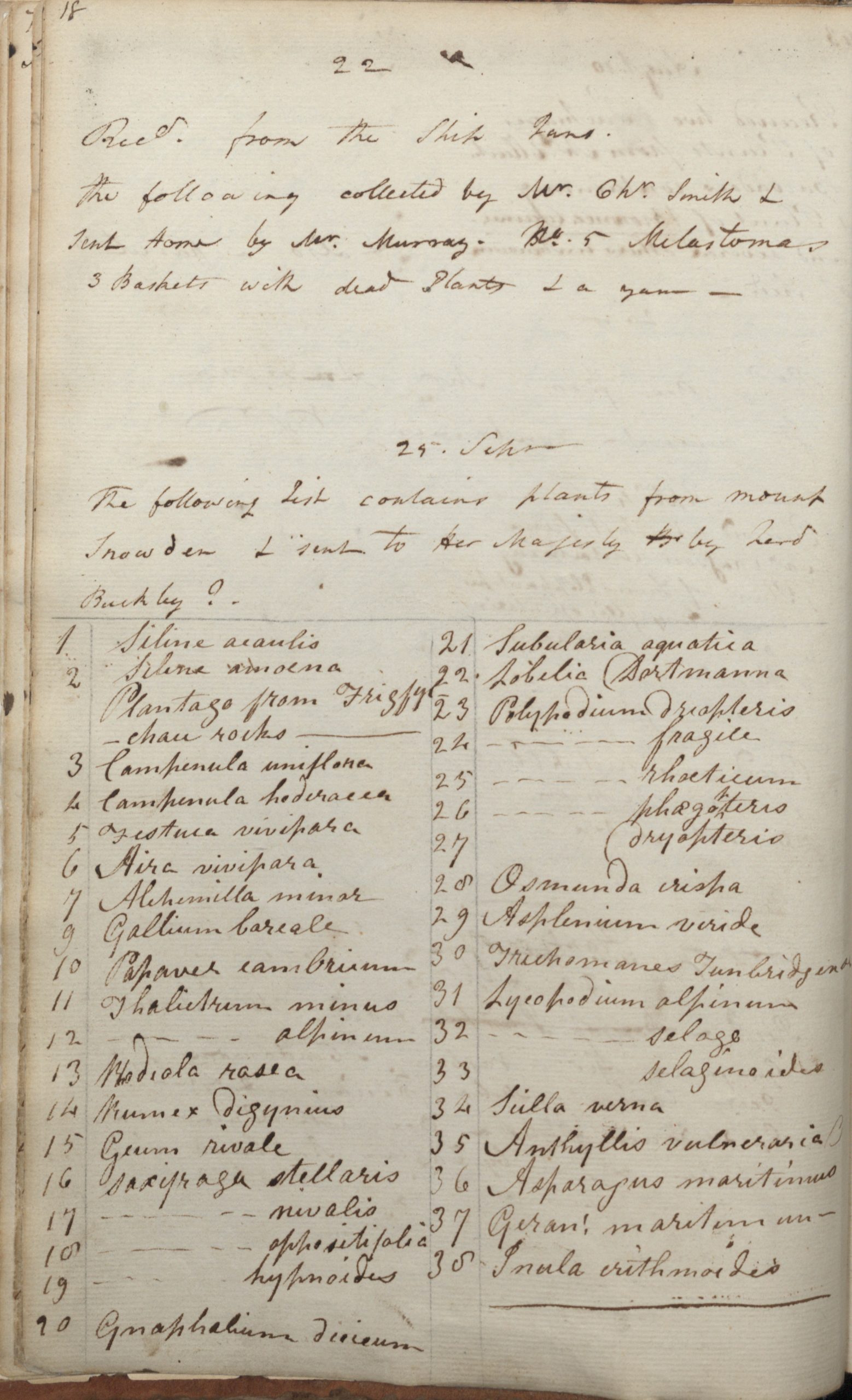
Page 18 of the Kew Record Book with handwritten list of plants

Kew Record Book. Folio 18. Royal Botanic Gardens, Kew. 1793-1809. Contributed in BHL from Royal Botanic Gardens, Kew.

The model we created was timely, as the COVID-19 pandemic meant many institutions could no longer accommodate volunteers on-site, and remote ways of working have persisted. The Travelling Plants project built a community and model of engaging with and developing the digital capacity of older people remotely, a sector of society that particularly felt the impact of social isolation during the pandemic. We received a grant from The National Archives to carry out this project.

We split the project into four phases: transcription, TEI-XML encoding, plant names, and project celebration.
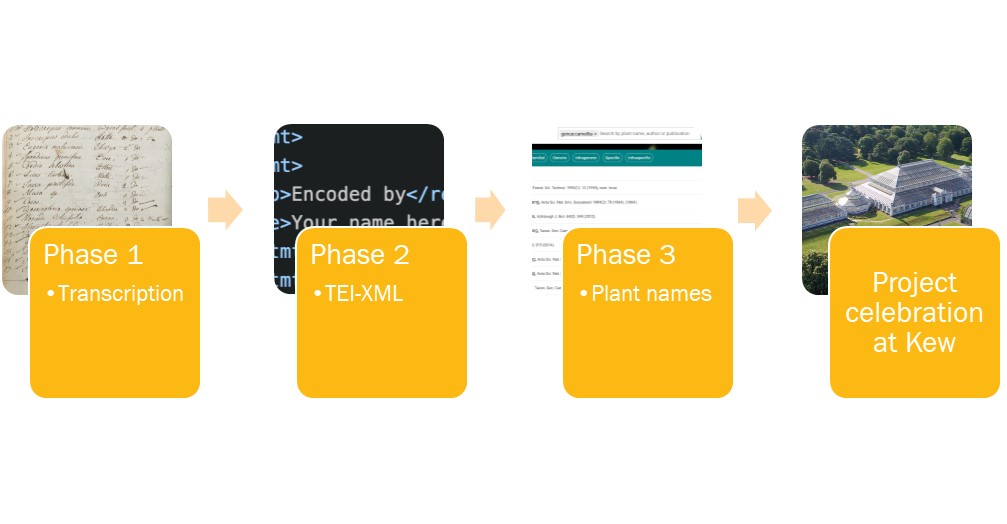
The four phases of the project: transcription, TEI-XML, Plant names, and Project celebration at Kew.

Phases of the Travelling Plants project.

We aimed for the project to be self-supporting, delivering remote training sessions, drop-in Q&As, creating protocols, and using the cloud for sharing documents. The most successful form of support was the small working groups of volunteers that we created, empowering volunteers to help each other. Transcriptions had to be checked by another member in the group, but support went far beyond this, with the groups setting up WhatsApp groups and even meeting in the Gardens once lockdown restrictions lifted.

About the Kew Record Book
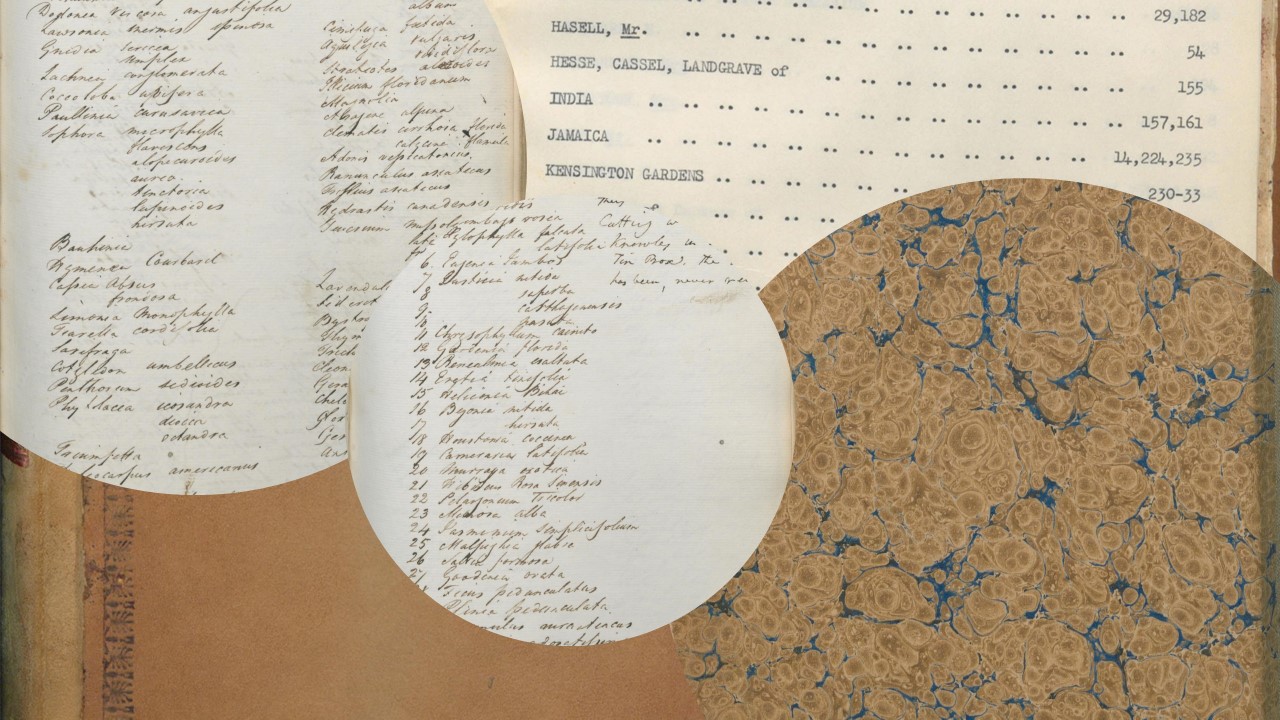
Collage of images cropped from the Kew Record Book

Excerpts from the Kew Record Book

The Kew Record Book is a unique document in the history of botany and horticulture. It records incoming and outgoing plants at the Royal Botanic Gardens, Kew, from 1793 to 1809. This was a period of intense activity at Kew, under the informal directorship of Sir Joseph Banks, President of the Royal Society. With the support of King George III and major trading bodies such as the East India Company, Banks sent gardeners from Kew to accompany plant consignments, collect specimens and supervise colonial botanic gardens across the globe. Botanic gardens played a central role in the establishment of British power overseas, facilitating the transfer of food crops and useful plants between colonies, and providing staging posts for horticultural specimens on their way to Kew.

The volume opens in 1793, when William Townsend Aiton succeeded his father as superintendent of Kew. Entries are in a variety of hands, noting donors and recipients of consignments, identifying plants by their Latin botanical names. Also included are a number of copies of letters sent to and from plant collectors overseas. A particular highlight is Francis Masson’s 1798 letter from New York recounting his capture by French pirates when crossing the Atlantic (folio 84).

The volume records plant exchange for a range of commercial, colonial, and diplomatic purposes and Kew’s involvement in colonialism is clearly documented. Among the most active donors to Kew was William Roxburgh, superintendent of the East India Company’s botanic garden in Calcutta (Kolkata). Roxburgh established firm and long-lasting links between the East India Company and Kew.

Regular shipments were received from plant collectors around the world. In 1793, 82 crates arrived from the new penal colony of Botany Bay in Eastern Australia (folio 7). Banks had lobbied hard for the establishment of the colony and supplied the first settlers with seeds and plants. Two Kew-trained gardeners tended the crops and collected Australian plants on behalf of Kew.

Banks was also responsible for organising one of the most well-known – indeed notorious – of plant transfers: that of the breadfruit from Tahiti to the Caribbean (1791-3). The breadfruit, Artocarpus altilis, was proposed as a suitable foodstuff for enslaved people on British-owned plantations in the West Indies (although it only became a staple food in the Caribbean post-emancipation). The Kew Record Book includes a list of plants brought back to Kew from the voyage: from Tahiti, New Guinea, St. Helena, St Vincent and Jamaica (folios 10-16). Heading the list are ‘Otaheita Plants’, some with Tahitian names, but the first entry is for ‘Bread fruit 4 plants’ (folio 10).

Plants were also used to forge diplomatic alliances. In 1795 a shipment of over 300 rare plants was sent to Maria Feodorovna, “the Great Dutchess of Russia” who, the following year, would become Empress consort of Russia (folio 38). The batch was headed by the spectacular bird of paradise Strelitzia regina, named in honour of Queen Charlotte (of the house of Mecklenburg-Strelitz).

With its detailed inventories and multiple correspondents, the volume offers an invaluable resource to reconstruct botanical networks and chart the routes of plants across the globe.

View the complete Record Book in BHL.

The Encoding

To make the Kew Record Book as accessible and searchable as possible, we decided to train volunteers to encode their transcriptions. We chose to follow the guidelines of the Text Encoding Initiative (TEI), an international consortium whose XML standard is used globally to create digital texts. As a markup standard based in natural language, TEI-XML represented a relatively friendly way of enhancing the Travelling Plants volunteers’ digital skillset.

Given the limited timeframe of the project, we didn’t aim to produce a complete digital edition of the Record Book. Instead, our goal was to develop and test a model for engaging volunteers in the encoding of archival texts; to refine the model through testing and dialogue; and to produce guidance that could be used by other archive-based projects. Travelling Plants volunteers were given the option of learning TEI-XML and encoding the text after they had begun transcribing and annotating it. Almost all tried their hand at encoding. Approximately half shifted their focus to encoding during the project’s final phase, while the others completed the transcription and annotation of the volume.

Because TEI-XML was new to all of the volunteers, we created detailed written guidance complemented by ten training videos. Three real-time tech support sessions on Zoom gave volunteers opportunities to share their learning with one another and to ask questions about the most technically challenging aspects of encoding the Record Book’s many types of entries. Volunteers then worked in teams to produce their digital edition.

By the end of the project, approximately 100 pages had been encoded in a way that made the Record Book easily searchable by the names (in all forms) of plants, people, ships, and institutions, as well as by places that can be plotted on digital maps. The digital edition and training materials will be made available via the Travelling Plants website, as soon as final revisions are complete. In the words of one volunteer, “I never thought I would enjoy coding but now I find I don’t want to stop!”

In the end-of-project evaluation, our volunteers said making history accessible and deciphering the handwriting were enjoyable parts of the project. However, the group work was the universally most enjoyed:

“I’ve really enjoyed working on the transcriptions, in particular the research and ‘detective’ work to firstly figure out what a letter or word is and then the investigation into the people and places which really brings the archive alive, and it’s been lovely to work with my group and get to know them.”

“It was a gift in lockdown to have something else to focus on other than the virus, masks, social distancing.”
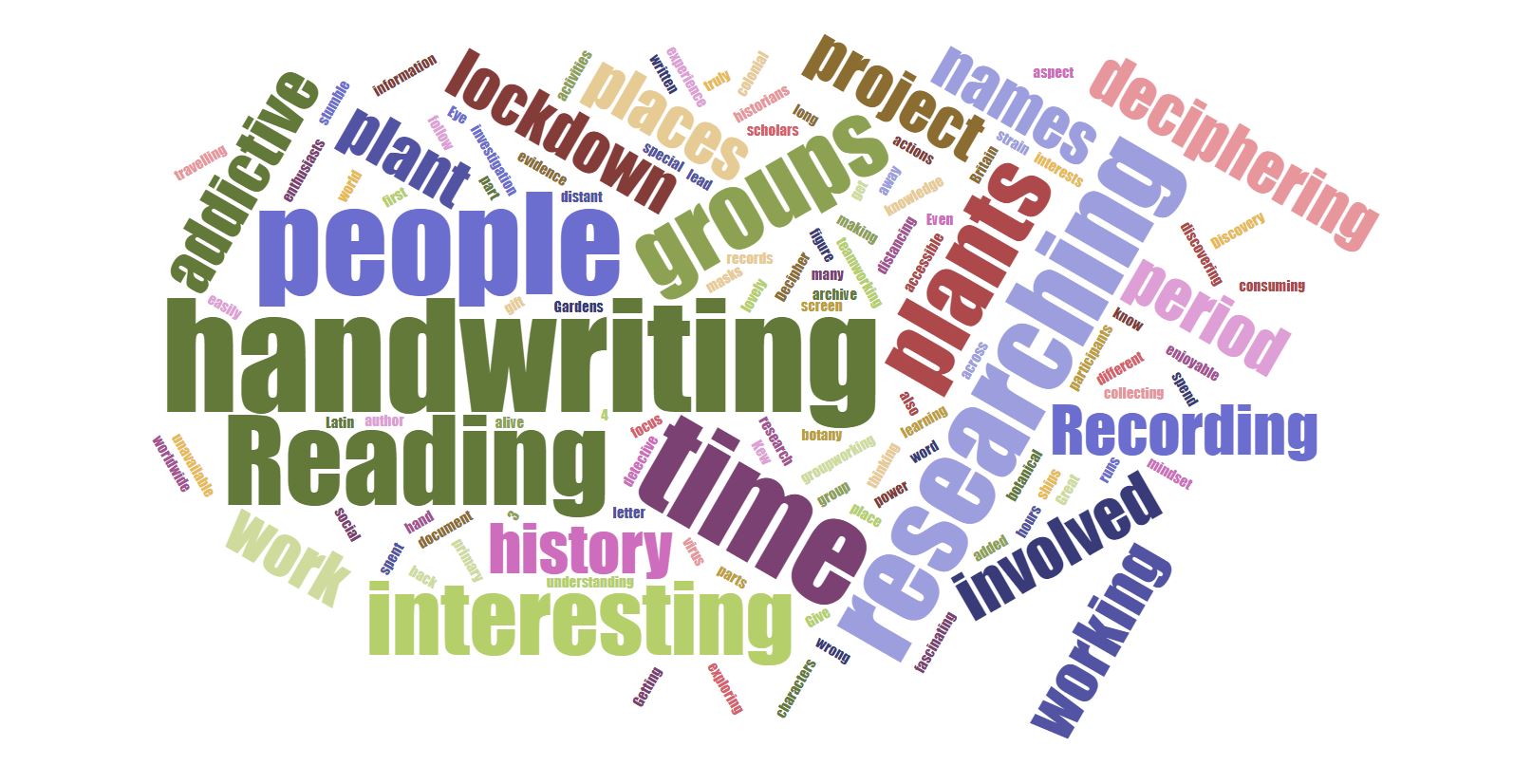
Word cloud of feedback from volunteers. Most prominent words include: handwriting, reading, people, time, researching, interesting, plants, addictive

What the volunteers found most enjoyable about the Travelling Plants project

The least enjoyable part was unanimously reading the handwriting!

By developing and sharing our protocols and training resources, we aim to empower other archivists to work with volunteers to create open access, shareable transcriptions that will help open their collections to the world.
May 11, 2023by [email protected]
Blog Reel, Campaigns, Her Natural History

The Life and Works of Margaret Meen

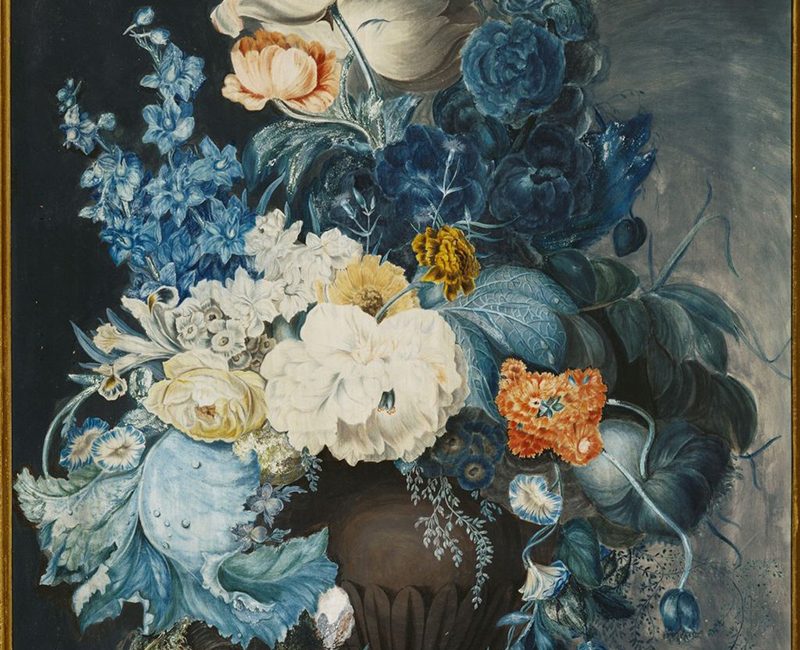
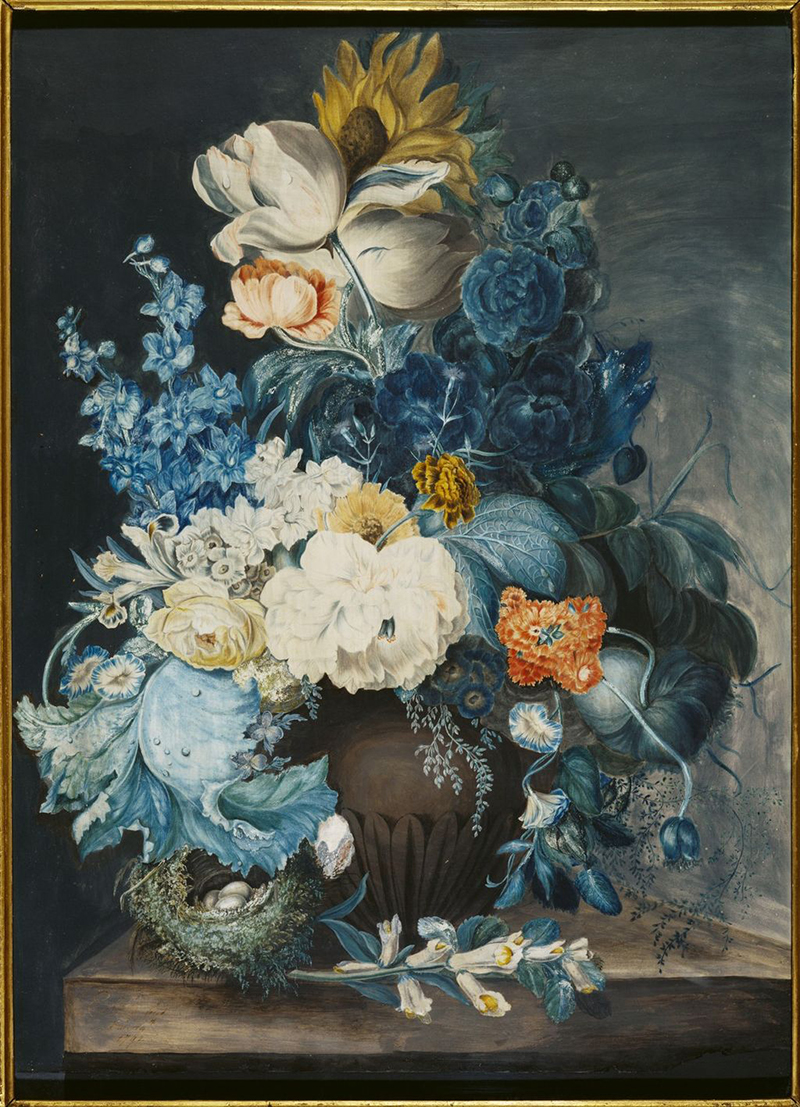
“A group of flowers in a jar and a bird’s nest,” by Princess Elizabeth after Margaret Meen. Now in the Victoria and Albert Museum, London. Public domain, retrieved from Wikimedia Commons.

As you may have seen in BHL’s blog yesterday, The Royal Botanic Gardens, Kew, has been partnering with the Oak Spring Garden Foundation to digitize works by women botanical artists held in Kew’s archives. One of these talented but largely unknown artists is Margaret Meen – whose botanicals graced the walls of royal palaces and scientific academies. In fact, though little remembered or written about today, Meen’s botanicals and her prowess as an instructor of fledgling artists left a lasting impression on British botanical illustration.

Margaret Meen was born sometime around 1751 in the English county of Suffolk, but lived most of her life in London in order to better sustain herself as a working artist and teacher.  Though it is not known where or how Meen developed her skill as an artist, her brother Henry was Prebend of Twyford and also taught at St. Paul’s, indicating that Margaret most likely came from a family of some wealth and standing and thus would have had access to an education in the arts.  Certainly Henry’s status in London allowed Margaret to come into contact with the upper echelon of British aristocracy, and Meen’s talent as an artist was soon recognized by the royals.

One of her most celebrated patrons, in fact, was Queen Charlotte—wife of George III—who wrote in her diary in 1789 that she “drew with Miss Mean [sic] from 10 till one,” and who most likely purchased a painting of flowers that now hangs at the Victoria and Albert Museum in London.

Additionally, the queen’s daughter, Princess Elizabeth, was quite the budding artist herself, and her notable painting “Flower piece with bird’s nest” (1792) is modeled after Meen’s work purchased by the queen.  The princess even maintained a friendly correspondence with Meen as late as 1822.

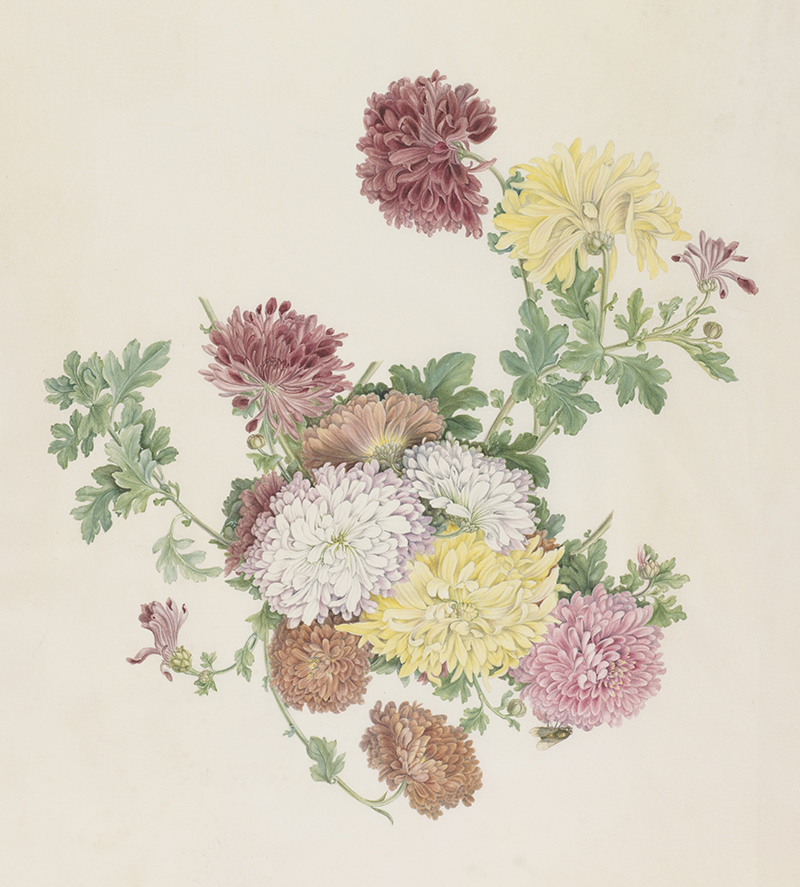
Chrysanthemums and a fly. Reproduced with permission from the Board of Trustees of the Royal Botanic Gardens, Kew, digitized with support from the Oak Spring Garden Foundation.

Aside from being the occasional tutor to artistically-inclined members of the royal family, Meen was a member of and exhibited her work at the Royal Academy from 1775 to 1785 and also with the Associated Artist in 1810. She was also employed to document the many new plants being grown in the Royal Gardens at Kew in the late 18th and early 19th centuries, using William Aiton’s Hortus Kewensis to name the species she illustrated. At this time, the Gardens at Kew were unrivaled in Britain for their botanical collection.

Her work, though largely unheralded, has been highly praised on the occasions that it is critiqued with special notice of Meen’s prodigious output and effective illustrative techniques.  Also, usually mentioned with Meen’s name is her founding of the periodical Exotic Plants from the Royal Gardens at Kew (1790), which she dedicated to Queen Charlotte but which only lasted for two issues.

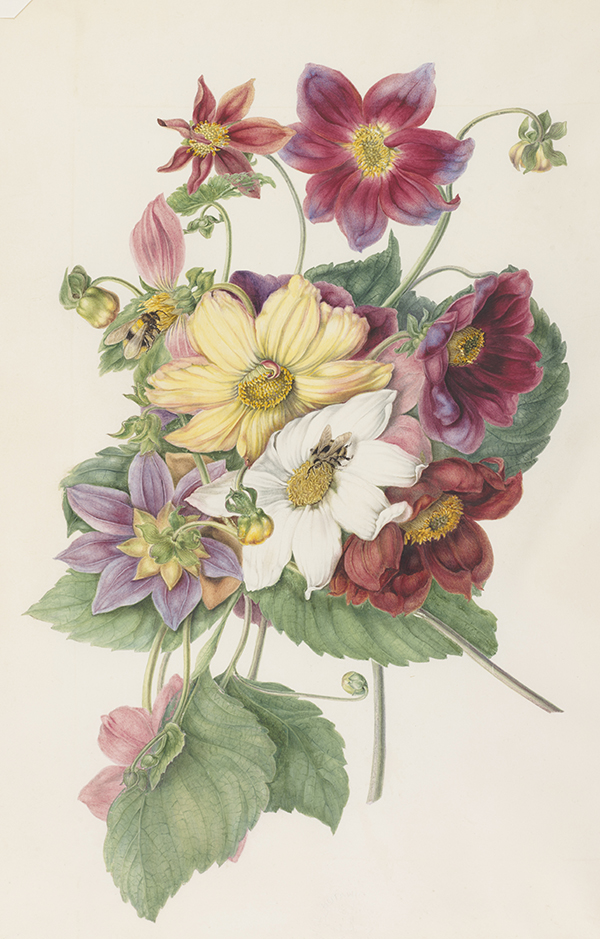
Watercolor of various flowers and bees. Reproduced with permission from the Board of Trustees of the Royal Botanic Gardens, Kew, digitized with support from the Oak Spring Garden Foundation.

Finally, Meen spent a large part of her later years as a drawing tutor for families with the means to provide their children with one and as an instructor for larger groups of students at a school in Notting Hill, London.  Among Meen’s pupils was the future Lady Northampton and Emma Smith, the future wife of Jane Austen’s nephew and biographer. Meen kept up her teaching until late in her life and as she never married or had children of her own, was especially determined to impart her artist lessons on to young minds in whom she saw latent talent.

Margaret Meen’s career as a botanical artist took her from the halls of Buckingham Palace to chambers of the Royal Academy and the schoolrooms of London. Over her long life she not only contributed to the furtherance of scientific knowledge through her botanical prints but also to the development of young artists from the most privileged to those who simply attended her classes in Notting Hill. Her artwork was appreciated by everyone from the Queen of England to its most revered scientists and its precocious young scholars. Though little remembered today, Margaret Meen’s art and legacy thus stands as an important part of late 18th and early 19th century British botanical history and deserves to be better celebrated today.

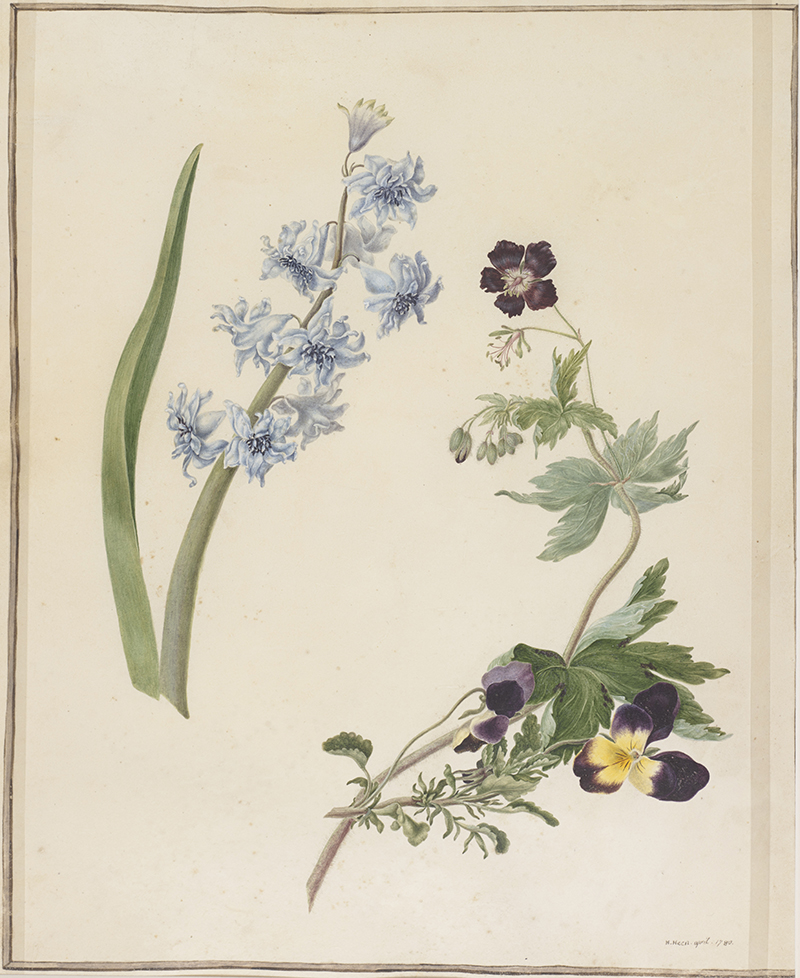
Watercolor of pansy and unknown flower. Reproduced with permission from the Board of Trustees of the Royal Botanic Gardens, Kew, digitized with support from the Oak Spring Garden Foundation.

This post was updated on 22 February 2021 to correct birth and death dates for Meen and a typo in quoted materials from Queen Charlotte’s diary.

References

Blunt, Wilfrid and William T. Stearn. The Art of Botanical Illustration. New York: Antique Collectors Club Press, 1993. Originally published in 1950.

Mabey, Richard. The Flowering of Kew. London, UK: Ebury Press, 1988.

McDonald, Kelly M. “Margaret Meen: A Life in Four Letters.” Academia.edu.

Royal Academy. “Anderson’s Notes on the 1775 Exhibits of James Lambert, William Laranson, P.J. Loutherbourg, William Martin, J. Mauris, Jeremiah Meyer, Margaret Meen and Mary Moser.”

Royal Collection Trust. “Description of ‘Flower piece with bird’s nest.’”

March 14, 2019by Joel Richard
Blog Reel, Campaigns, Her Natural History

Passionate pioneers – increasing access to botanical artwork by women artists

Two BHL contributors – the Royal Botanic Gardens Kew in London, UK and the Oak Spring Garden Foundation in Virginia, USA, have recently embarked on a collaborative project to digitise works of art by women botanical artists. Kew’s Metadata and Digitisation Officer Joanna Durant sheds some light on two of these often under-represented botanical pioneers.

Why Digitise?

Historically, female botanists and botanical artists were rarely given as much credit as their male counterparts. Botanical art was often viewed as a pleasant pastime for women who had time on their hands whilst their husbands were at work, and the contribution that these women made to the advancement of scientific illustration was often undermined.

To highlight the importance of these historically, scientifically and socially significant collections, Kew’s Library, Art and Archives department, in collaboration with the Oak Spring Garden Foundation, is in the process of digitising its out of copyright work by women artists, spanning several centuries.

Kew holds over 200,000 prints and drawings, and this working resource is available to staff and visitors to the department, often providing a reference tool against preserved herbarium specimens. The ultimate aim of this collaborative effort is to ensure that high quality images of illustrations and their associated data is safely stored in digital format for future generations.

The benefits of this process are threefold. We are improving access to our unique collections (the images and data will be available online), we are preventing any potential loss of information (if the worst happened and the collections were somehow lost or damaged), and we are extracting and collating artwork that is currently being stored with specimens in the herbarium. The artwork is then being rehoused in more appropriate storage conditions as the project progresses.

Think of it as a huge inventory, with photography, data transcription and then the upload of digital files to nicely wrap it all up.

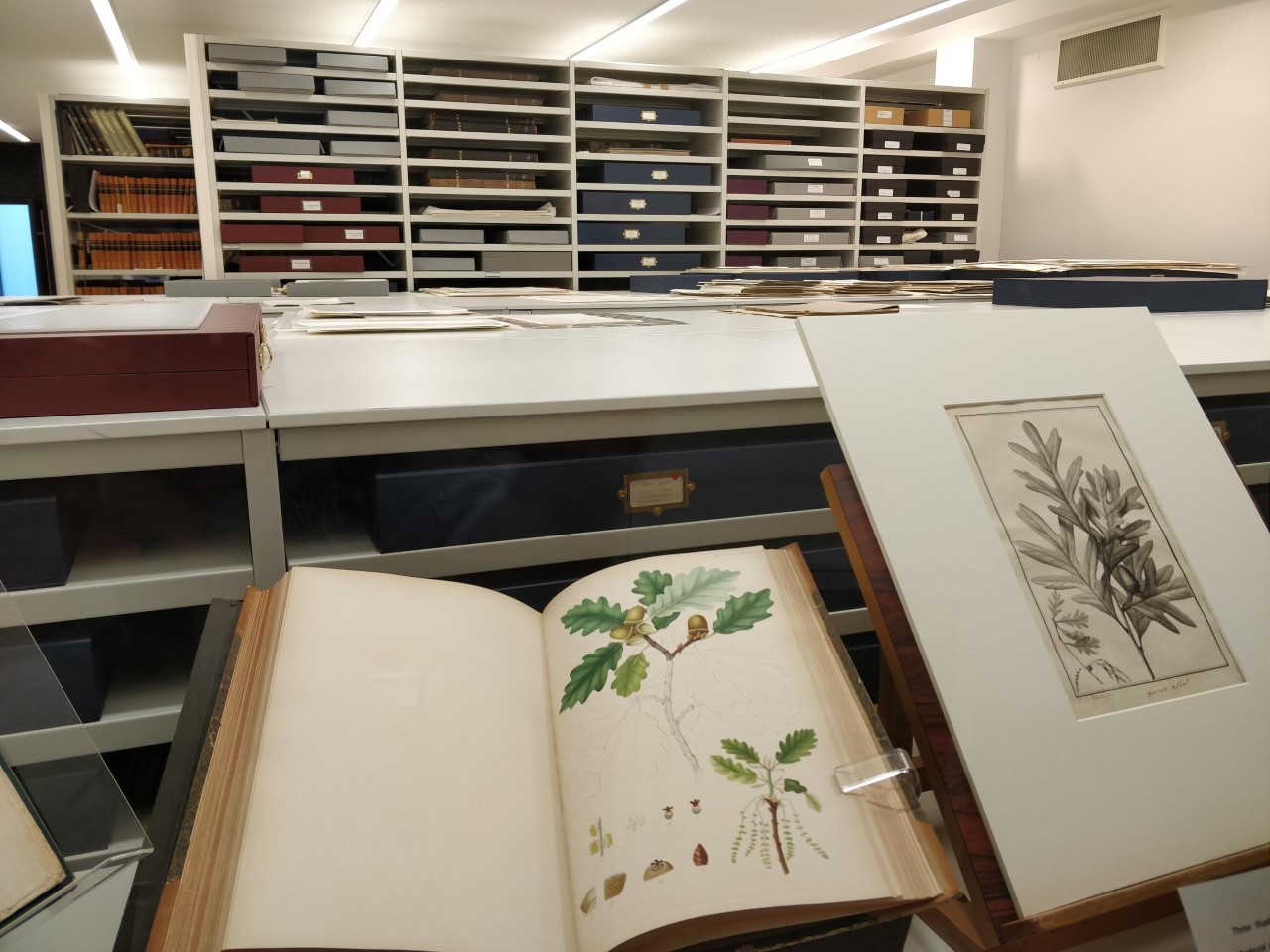
One of Kew’s Library, Art and Archives temperature-controlled Stores used to house illustrations and rare books.

Botanical Pioneers

There seems to be a pattern that emerges when you start to research botanical artwork created by women, particularly those who lived and worked in the 18th, 19th and 20th centuries. “Very little is known about her…” “She published her work anonymously…” or, very commonly, was only known by her husband’s name. There are even instances of artwork not being signed or attributed to any particular artist at all.

These often-unrecognised artists made a huge impact on our current understanding of botany. From the anatomical structure of plants to the habitats in which they grew and the communities that relied on them, women botanical artists were real trailblazers in their field.

Mary Anne Stebbing and the Empty Chair

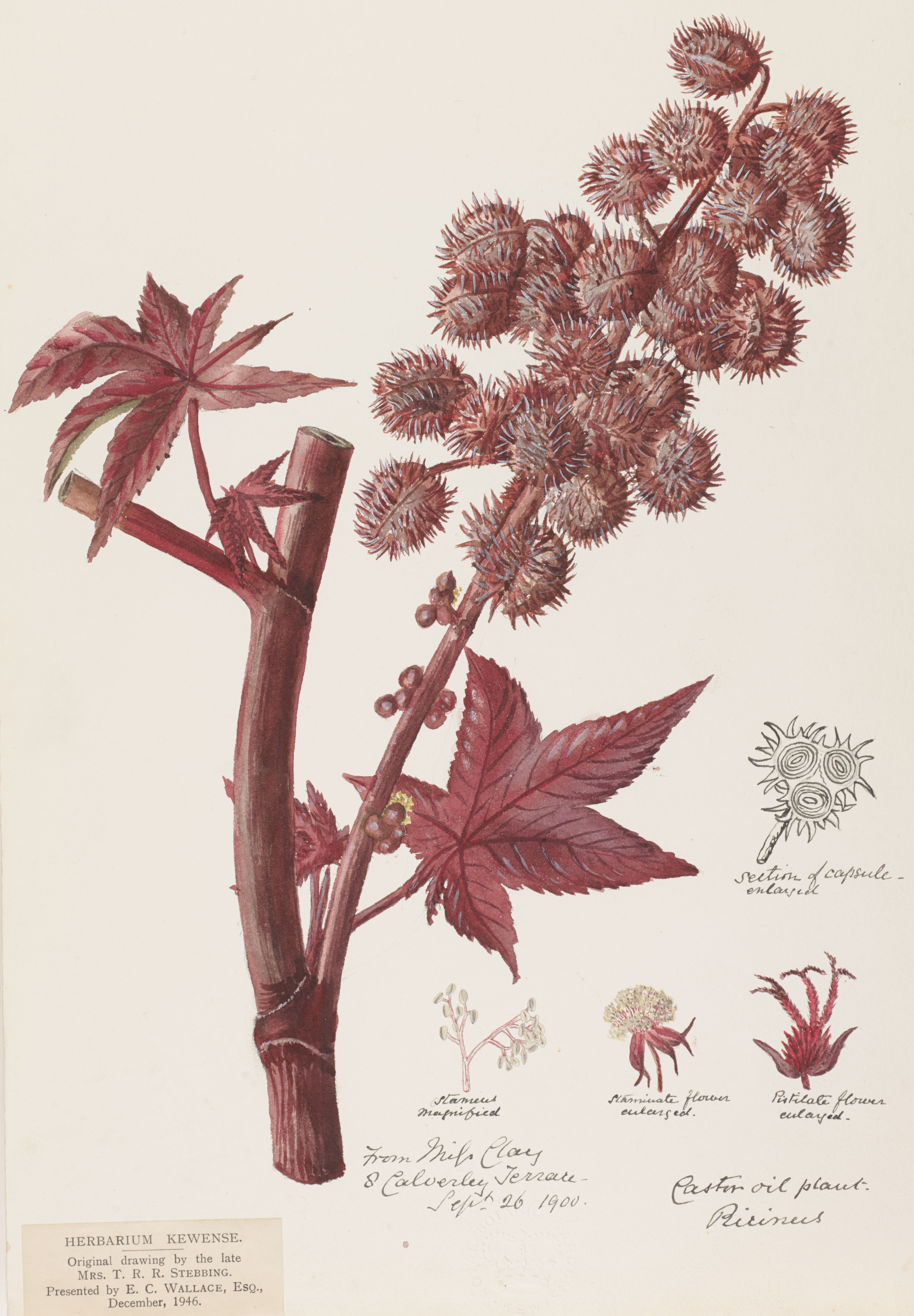
“Mrs T. R. R. Stebbing” can be found on numerous acquisition labels on illustrations in Kew’s collection. It is actually referring to the early 20th century botanical artist Mary Anne Stebbing (née Saunders), under her zoologist-husband’s name, Thomas Roscoe Rede Stebbing.

Born in around 1845 into a family of keen naturalists, Mary began gathering and sketching plants at an early age, and her ambition was to “illustrate the British flora by water-colour drawings”. Sadly, a fire in 1881 destroyed much of her early work, but her resulting later illustrations took on a more detailed and scientific feel with various anatomical sections of plants and notes on habitats and locations included.

Mary illustrated many species for her husband’s scientific publications, often branching out from botany into Crustacea. Interestingly, she was never credited for her vital contributions, and despite working in scientific collaboration with her husband, the papers were always published in his name. However, in her husband’s obituary in 1926, Nature referred to Mary as “an accomplished botanist”, inferring that by this time she was very much viewed as a botanist in her own right among her peers.

However, there is more to the story of Mary Anne Stebbing than meets the eye, and it is a fascinating glimpse into Edwardian social history.

Mary’s husband, Thomas, was a member of the Linnean Society – a prestigious society dedicated to the study of evolution and natural history and one which was, traditionally, strictly men only. Thomas felt strongly that women should also be accepted as members, and Mary was successfully invited to become one of the first female members in 1905. To mark this occasion, a painting was commissioned by the Treasurer, Frank Crisp, by the artist James Sant.

In the painting, Mary is positioned prominently in the foreground, in front of her husband. Also pictured is Catherine, Frank’s wife, who was also being admitted as a new Society member. In a telegraph from Frank after the painting was completed, his attitude towards the significance of Mary’s position within the artwork can be seen: “we must surely have at the table a lady fellow who has done something, not one without a record”. Whether the absence of Mary’s name on her and her husband’s papers was being referenced, or whether Crisp simply didn’t believe that she was worthy of scientific recognition, we may never fully understand. Press coverage of the painting was scathing – one newspaper advised not missing a glimpse of the picture as it would “make you laugh”. Crisp withheld the artwork until his death in 1919, but by that time, the painting had been altered. Both Mary and Thomas had been painted out, with Mary being replaced by an empty chair.

Watercolour of a Castor oil plant (Ricinus communis) showing various enlarged sections by Mary Anne Stebbing (c1845 – 1927). Copyright of Royal Botanic Gardens Kew.

Sarah Anne Drake

An interesting example of an artist of whom very little is known is Sarah Anne Drake (1803 – 1857), or “Miss Drake”, as she often signed her work.

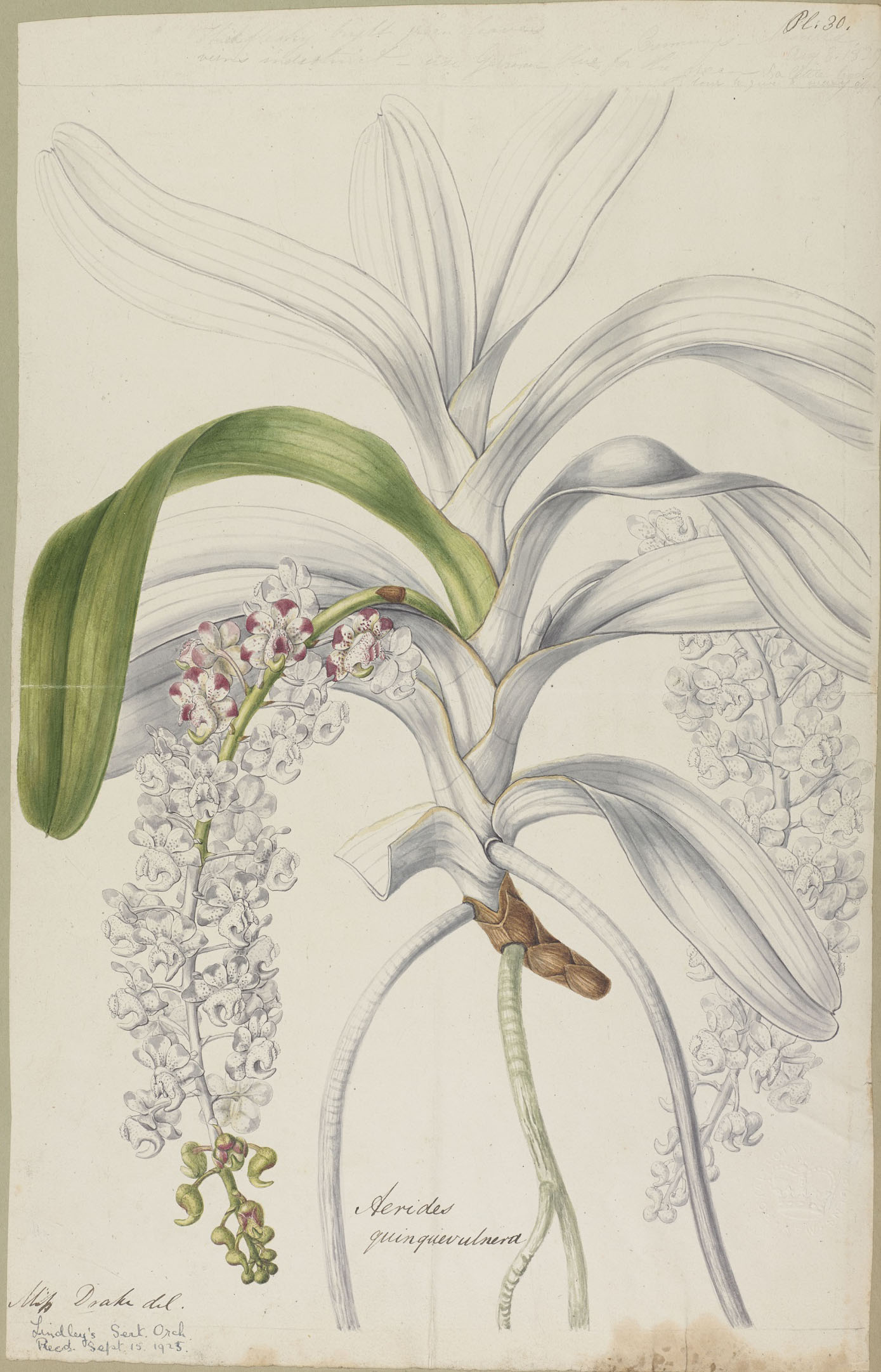
Born in Norfolk, UK, Sarah Anne Drake moved to London in around 1830. Through a family friendship, she was brought into the household (possibly to act as a children’s governess) of John Lindley, the then secretary of the Horticultural Society of London and a keen botanist. John soon recognised that Sarah was an extremely talented artist, and within a few years she had been commissioned to illustrate his famous publication Sertum Orchidaceum (1837 – 1841).

The 19th century saw an explosion of interest in orchids (one might even describe it as an obsession). For the Victorians, orchids represented romance and seduction, and scientists were keen to illustrate these incredible and exotic plants to accompany their publications. Sertum Orchidaceum was indeed a lavish example of this botanical craze.

A plate for Sertum Orchidaceum entitled Aerides quinquevulnera by Sarah Anne Drake (1803 – 1857). Copyright of Royal Botanic Gardens Kew.

John Lindley, Jane Loudon and Ladies botany

Sarah Anne Drake also provided highly technical illustrations for several other publications at the time, including another written by John Lindley, the fascinatingly titled Ladies Botany (1834 – 1837).

John Lindley used this publication in his quest to make botany more “scientific” – he was one of a growing number of scientists and philosophers who became fixated with challenging botany’s reputation for being “unmanly”, “amateur” and above all, feminine. Botany was viewed as a separate discipline distinct from mainstream science, and academics such as John Lindley aimed to defeminise and modernise it. In Ladies Botany, the author attempts to displace the traditional Linnaean system of study (which was viewed as being strongly wedded to the amateur student) with a more natural system. Unfortunately, the rhetoric in the publication is gendered and, when read now, can be described as condescending.

It wasn’t until 1842 that a popular book successfully began to introduce the natural system of study, with the publication of Botany for ladies; or a popular introduction to the natural system of plants by Jane Loudon (1807 – 1858).

This book takes the reader through the botanical orders and introduces de Candolle’s systematic description of species, and opens with a frank statement from the author that as a child she could “never learn botany”. The introduction describes how books on the subject, with the exception of John Lindley’s, were “all sealed to me”, and also includes the following telling sentence: “It is so difficult for men whose knowledge has grown with their growth, and strengthened with their strength, to imagine the state of profound ignorance in which a beginner is, that even their elementary books are like the old Eton Grammar when it was written in Latin – they require a master to explain them.”

The influence of women botanists and botanical artists on the progression of botanical knowledge can be traced back for centuries, and the way that these women were viewed by the male-dominated field of science is a fascinating glimpse into an important part of our social history. It is the aim of organisations such as BHL, Oak Spring and Kew Gardens to document and disseminate the incredible achievements of these women for future generations.

Further Reading and References

Figuring it out: Science, gender and visual culture by Ann B. Shteir and Bernard Lightman

Bloom: The Botanical Vernacular in the English Novel by Amy King

March 13, 2019by Joel Richard
Blog Reel, Featured Books

“Abnormal apples” and “proliferous potatoes” – Uncovering the stories behind Kew’s Museum of Economic Botany Collection.

What is Economic botany?

Economic botany can, in a nutshell (excuse the pun), be described as the use of plants by people. This relationship spans thousands of years and includes both individuals and cultures – making this subject a rich and fascinating link between botany and anthropology. Economic botany collections can essentially be described using the term biocultural.

Kew’s Museum of Economic Botany.

The Economic Botany Collection at the Royal Botanic Gardens, Kew holds around 100,000 objects from around the globe. Established as the Museum of Economic Botany by Kew’s first official Director, Sir William Jackson Hooker, in 1847, it was cited as a public repository for ‘all kinds of useful and curious Vegetable Products, which neither the living plants of the Garden nor the specimens in the Herbarium could exhibit’.

Raw materials are housed in the Collection, alongside objects ranging from jewellery, musical instruments and an array of dyes and medicines. Many of these items were acquired by Kew during the peak of colonial expansion, with the majority dating from around 1847 to 1930. Kew staff are currently working with indigenous cultures and partner institutions to ensure that traditional crafts, such as the use and manufacture of Tapa (Pacific barkcloth), are being kept alive and in some cases revived in the communities where they first originated.

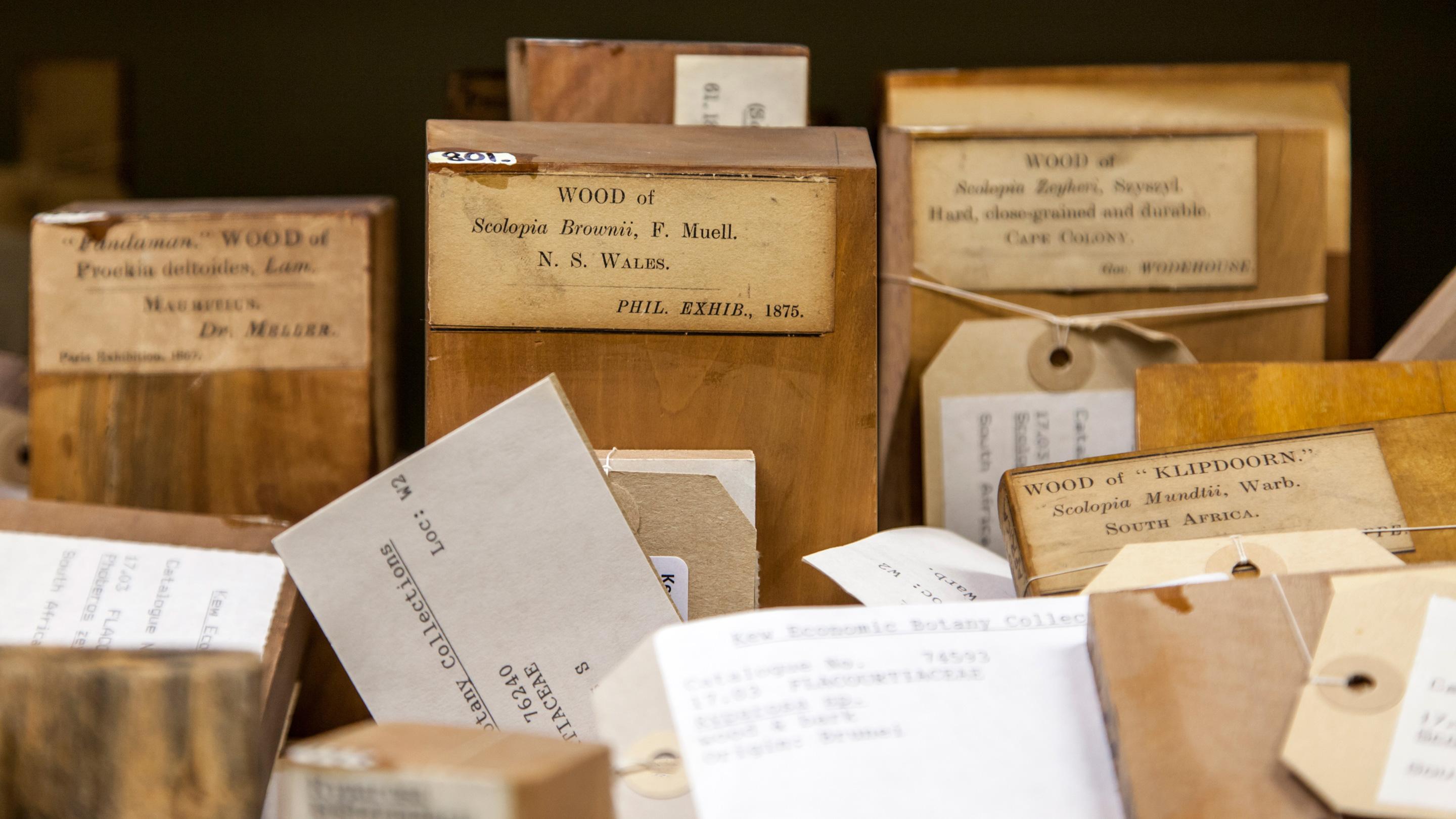
EcBotWoodColln_IMG_5764_hero_web.jpg

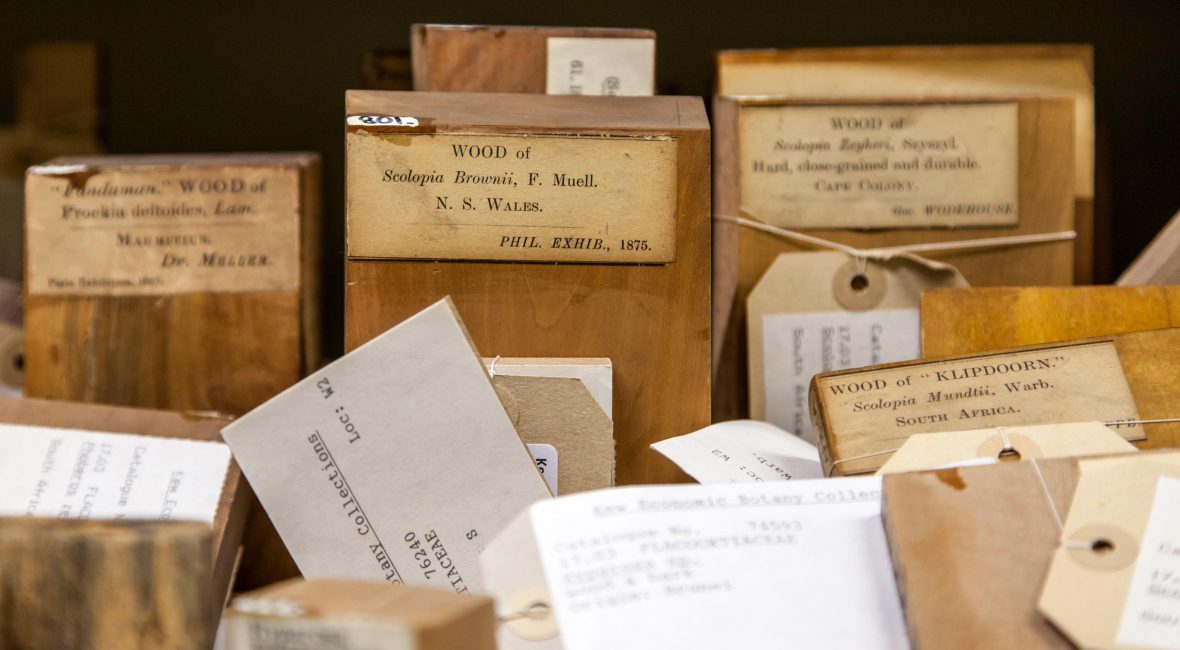
Economic botany wood collection samples

The Mobile Museum Project.

In parallel with this research and outreach, Kew’s Museum of Economic Botany has recently embarked on a project called The Mobile Museum: Economic Botany in Circulation. This is, in effect, where the Royal Botanic Gardens Kew, Library, Art & Archives and Biodiversity Heritage Library comes in.

As part of the Mobile Museum project, Kew is digitising and making available online through BHL the Collection’s “Entry and Exit books”. These huge tomes each consist of thousands of entries made by Kew staff over the years, listing every specimen either sent out from or sent in to the Museum of Economic Botany from 1847 right up to the present day. Each book is in the process of being scanned and uploaded to BHL, and the project team, including a number of dedicated volunteers, are working hard to transcribe each page so that there will be both a physical and digital record of these unique and invaluable logbooks. This data transcription is initially being entered into searchable Excel spreadsheets, which will then be transferred into an Access database and raw data files from this will be available to download from the project website.

The existing Kew Economic Botany Database will also be enhanced, with all objects located in other institutions being added. This will mean that interested parties will soon be able to search not just for objects currently in the collection, but also objects that were once at Kew and are now housed elsewhere.

The first of these books, which is now freely available on BHL, is entitled “Specimens Distributed” and spans from 1881 to 1901. It is a fascinating continuous record of specimens, materials and artefacts that were sent from Kew to over 1000 institutions worldwide, including other botanic gardens, schools and universities and local museums.

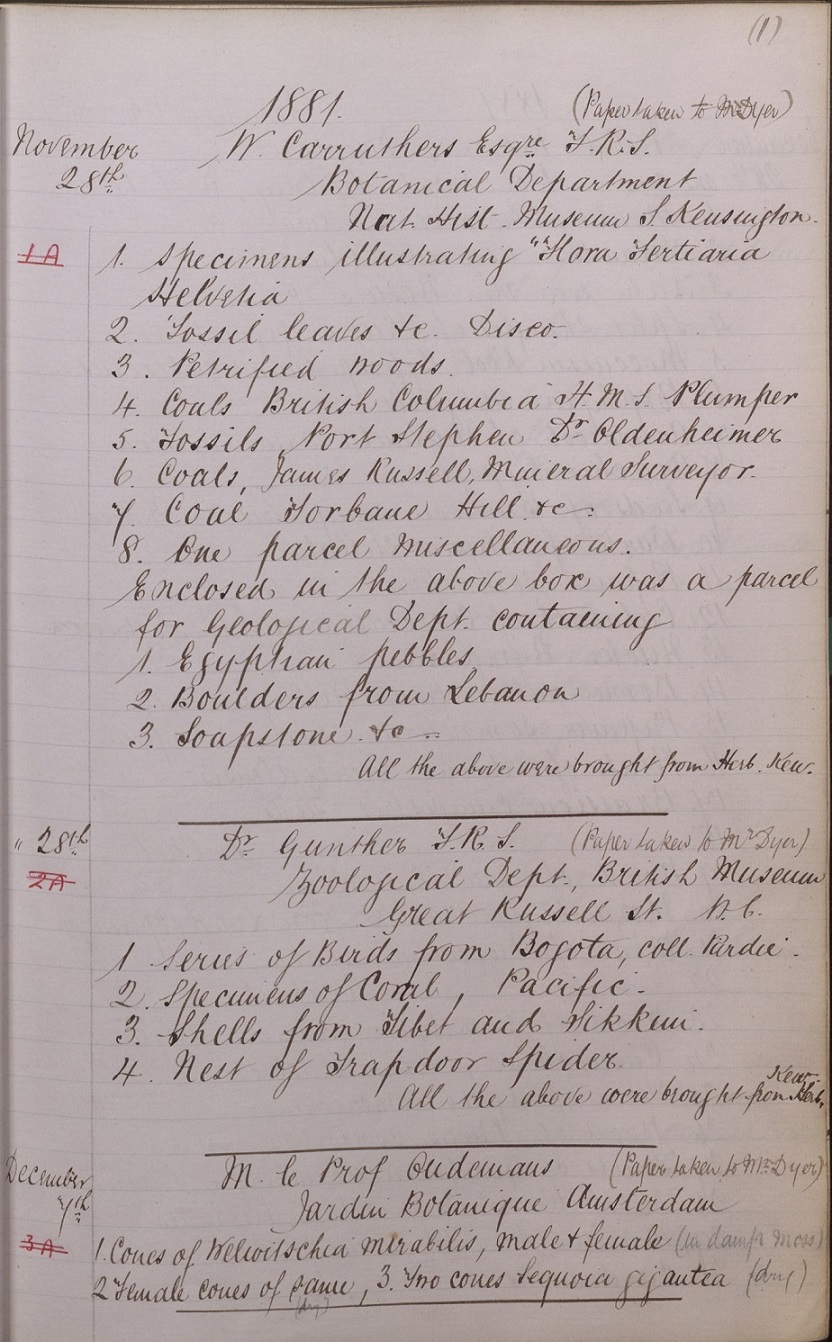
SpecimensDistributed1881-1901_0057.jpg

The first page of records for Specimens Distributed, which includes entries for “fossil leaves” and “petrified woods”

Specimens distributed.

The first thing that I noticed when researching this blog, as I skimmed through the hundreds of pages of handwritten entries, was just how many plant parts the Museum of Economic Botany held. On first thought, you may think of a few important parts of a plant that could be held in this sort of collection – bark, petals, seeds, stems or similar. But what struck me was the sheer scope of plants and all their various facets that were collected – resins, gums, fibers, bulbs, fruits, roots, pods, pulps, rubbers, even galls (a kind of benign growth on the external tissue of some plants, usually a reaction to parasites or bacteria).

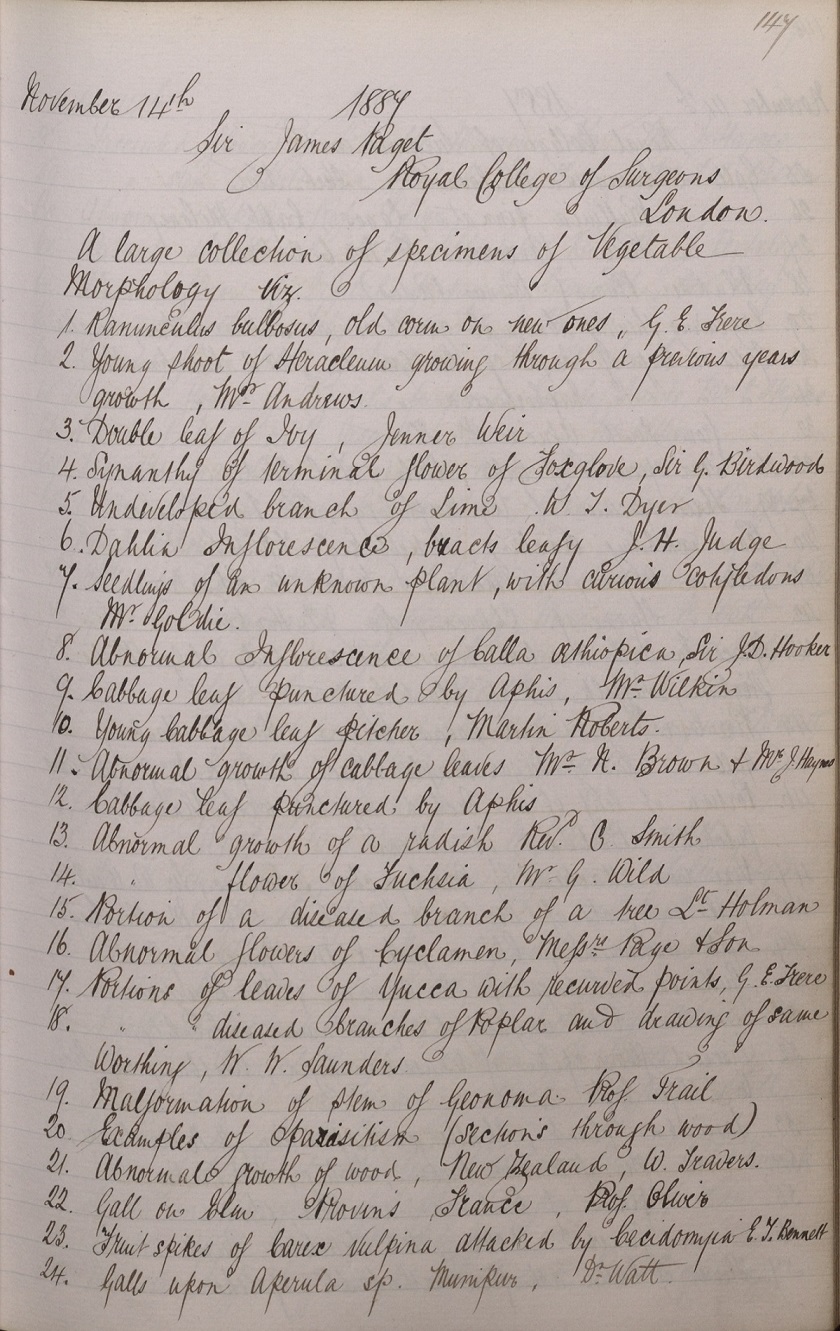
As I browsed the book, I became engrossed in 6 pages in particular entitled November 14th 1887 – Sir James Paget, Royal College of Surgeons – A large collection of specimens of vegetable morphology.

SpecimensDistributed1881-1901_0203.jpg

Page 147 of Specimens Distributed, showing the beginning of the distribution list for Sir James Paget at the Royal College of Surgeons

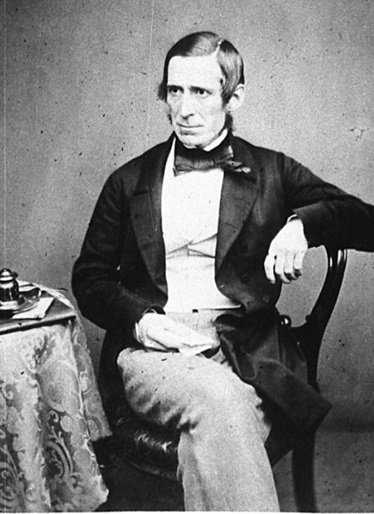
Sir James Paget.

As I looked over these pages, I noticed that words such as “undeveloped”, “abnormal” and “malformation” were preceding plant names or plant parts. It occurred to me that the plants being described had possibly been collected due to their interesting morphological or biological anomalies – and they were being sent out, maybe for further investigation, to Sir James Paget at the Royal College of Surgeons. This name rang a vague bell, so I did a little research.

Sir James Paget is considered one of the most outstanding medical researchers of the 19th century and is known as the father of British pathology. He described diseases including Paget’s disease of the bone and Paget’s disease of the nipple, and throughout his career he stressed how vital science research was for medical practise.

Interestingly, Paget was a close friend of Charles Darwin, who helped his medical research by sharing thoughts and musings. Darwin also sent Paget books, including a book that he wrote on earthworms, prompting this response from Paget: “It seems to me the best that ever you have written in showing the splendid and great truths that may be found in common things”.

Sir-James-Paget.jpg

Sir James Paget, the father of British pathology (Credit: The Paget’s Association)

The next chapter.

As part of the Mobile Museum Project, Kew are also in the process of digitising the Museum of Economic Botany’s “School Letter Books”. These are logbooks containing hundreds of letters of correspondence between the Museum of Economic Botany and schools across the UK – the first book spanning from 1877 – 1894. These letters are mainly requests from teachers and lecturers who asked Kew for educational objects and samples, either to use as teaching aids or to help establish their own small collections.

The Economic Botany Collection at Kew has a rich and varied history that spans over three centuries. By making these unique books available online through BHL, we hope that more people can make use of the fascinating information held within them that has been so meticulously recorded throughout the years.


April 26, 2018by Joel Richard
Blog Reel, Campaigns, Featured Books

Celebrating Sir Joseph Dalton Hooker at 200

View Full Size Image

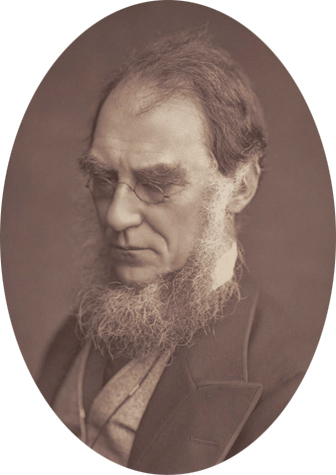
On the 30th June 1817, Joseph Dalton Hooker was born in Halesworth, Suffolk. The second child of William Jackson Hooker, Joseph would, during the course of his life, become a ‘botanical trailblazer’ – traveling across the globe to collect plants and theorizing on plant species diversity and geography. Joseph Hooker would also become Kew Gardens’ second and most illustrious Director, overseeing the establishment of the first dedicated botanical Laboratory at Kew, the Marianne North Gallery and the expansion of the Gardens’ herbarium and economic botany collections.

To celebrate the bicentenary of his birth this year, BHL is joining the Royal Botanic Gardens, Kew to highlight Hooker’s works and contributions to science. Follow #JDHooker2017 on social media this week (26-30 June) to learn more about J.D. Hooker and explore his publications and archival materials. You can browse his publications in the BHL book collection and see related artworks from those publications in our Flickr collection. Learn more about the BHL content here.

A special aspect of the campaign is Hooker’s archival material, which is being made available online thanks to Kew Gardens. Hooker was a prolific correspondent – writing to family, friends and colleagues up until his death in 1911. We are fortunate at Kew to hold an extensive archival collection reflecting both his personal papers – such as his letters to his family during his travels in India – and those created during his tenure as Assistant Director and then Director of Kew.

View Full Size Image

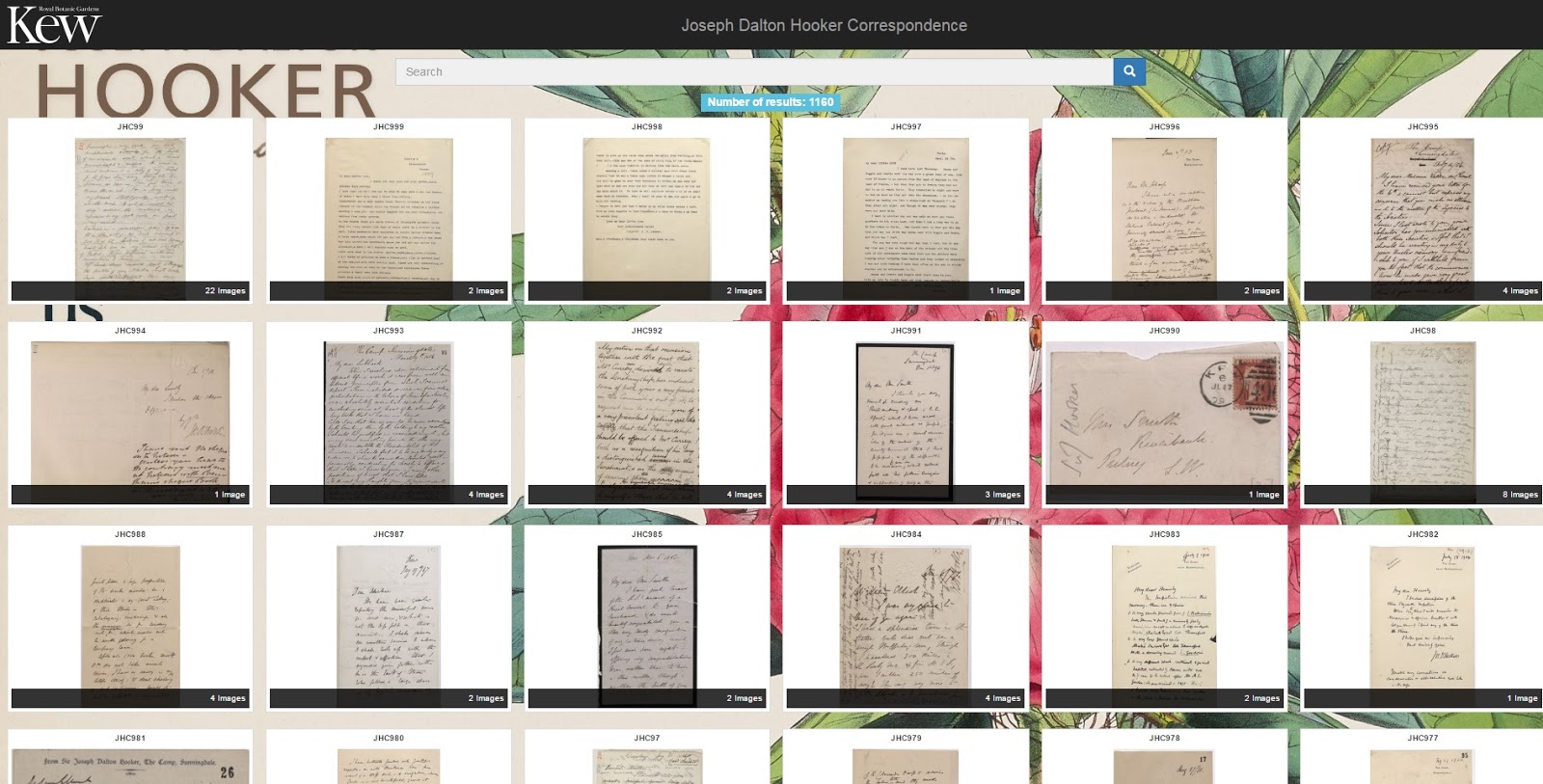
The Joseph Hooker Correspondence Project is currently working on digitizing and transcribing a large selection of Joseph Hooker’s correspondence, and we are delighted to announce that over 1,000 of his letters are now available to view online. This portal allows visitors to search the letters and, where available, read the summaries and transcripts of the letters. We also plan to release further letters and data in the coming months – so watch this space.

View Full Size Image
Joseph Dalton Hooker’s correspondence online.

Highlights of the current online collection are the letters written by Hooker to Charles Darwin, a long-time friend and confidant, as well as those to his family during his adventures in Antarctica and India. These letters provide wonderful insights into the hardships of botanical collecting and the trials of travel during the first half of the nineteenth century.

2017 is an important year for Kew as it marks the 200th Anniversary of Joseph Hooker’s birth. Not only is the correspondence project continuing to scan, transcribe and make publicly available the previously unpublished letters written by Joseph Hooker, but we are also working with colleagues from across the gardens and beyond with our partners such as BHL to further raise awareness of Hooker and his important work.

View Full Size Image

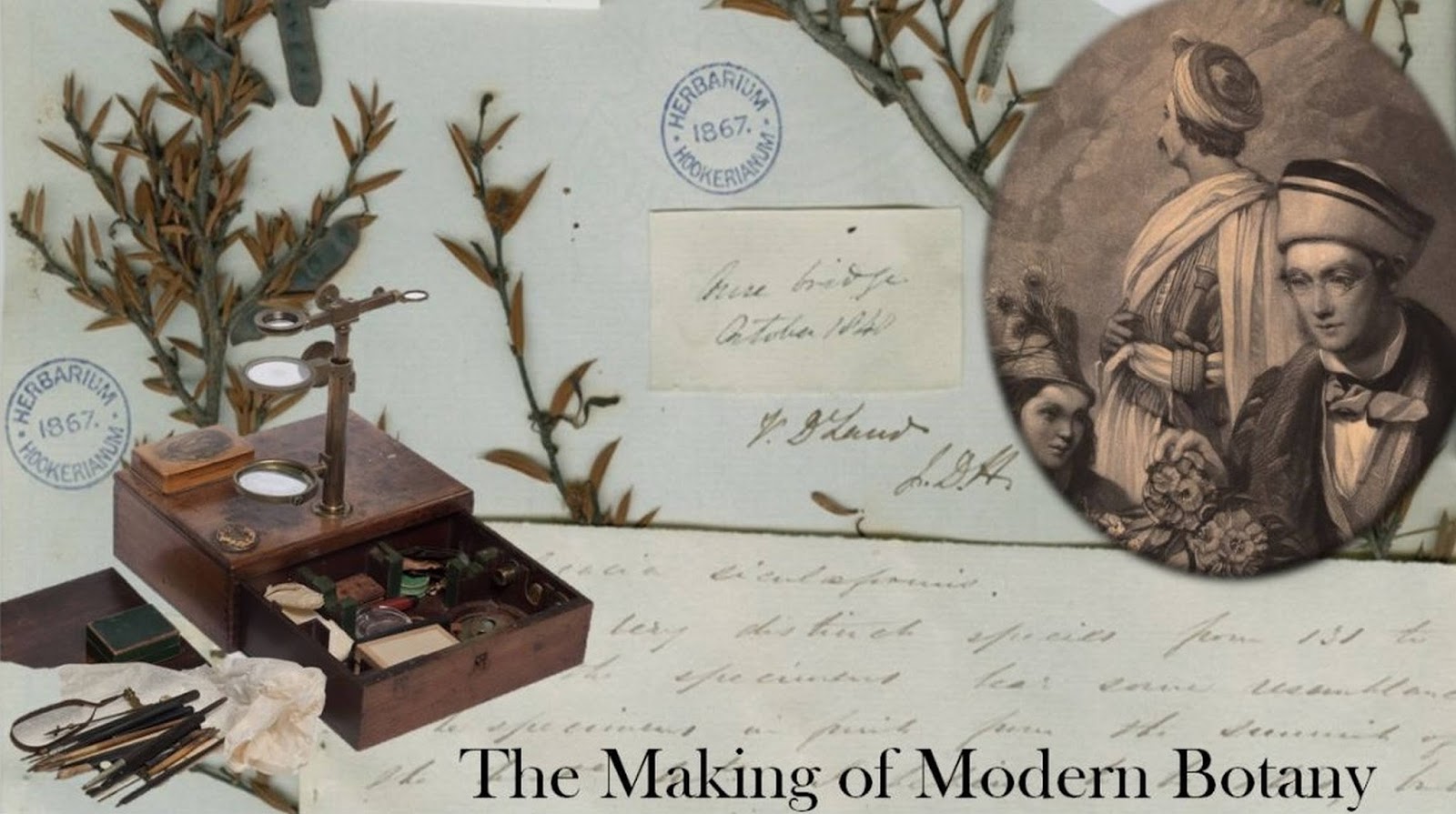
Kew will be hosting a conference celebrating the ongoing impact Joseph Hooker has had on modern botanical science. The ‘Joseph Dalton Hooker Bicentenary Meeting: The Making of Modern Botany’ will be held on the 30th June at the Royal Botanic Gardens, Kew and will bring together experts on subjects such as botanical illustration, Antarctic flora and botanical classification.

In addition to this conference, currently on display at the Shirley Sherwood gallery is the exhibition ‘Joseph Hooker: Putting plants in their place’, which brings together archival, three dimensional and illustrative material from the Kew collections to explore Joseph Hooker’s life and work. The exhibition will be open until the 17th September 2017 and various tours and talks are also being held.

View Full Size Image
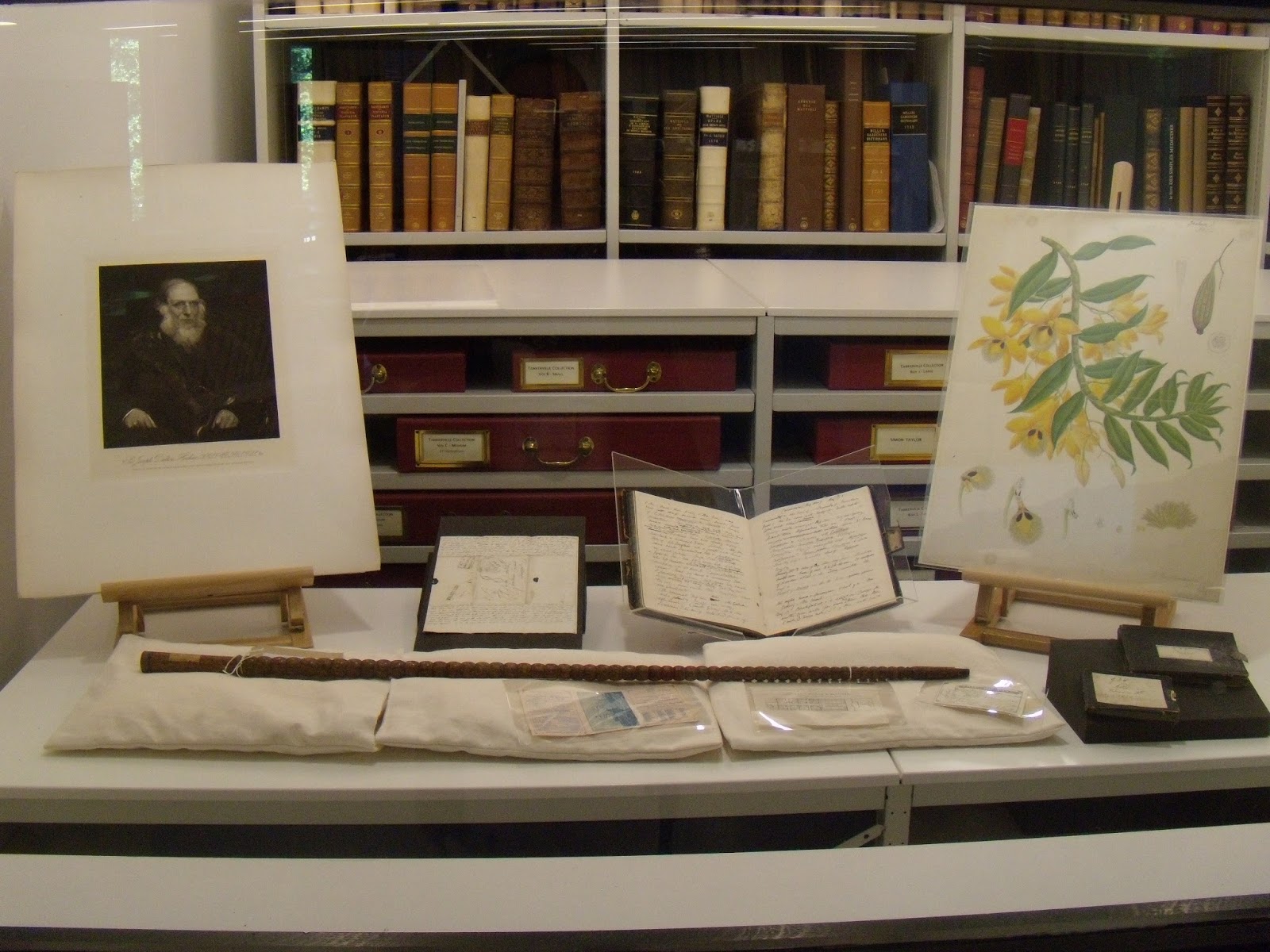
Selection of material on display on the Wolfson Reading Room at the Royal Botanic Gardens, Kew.

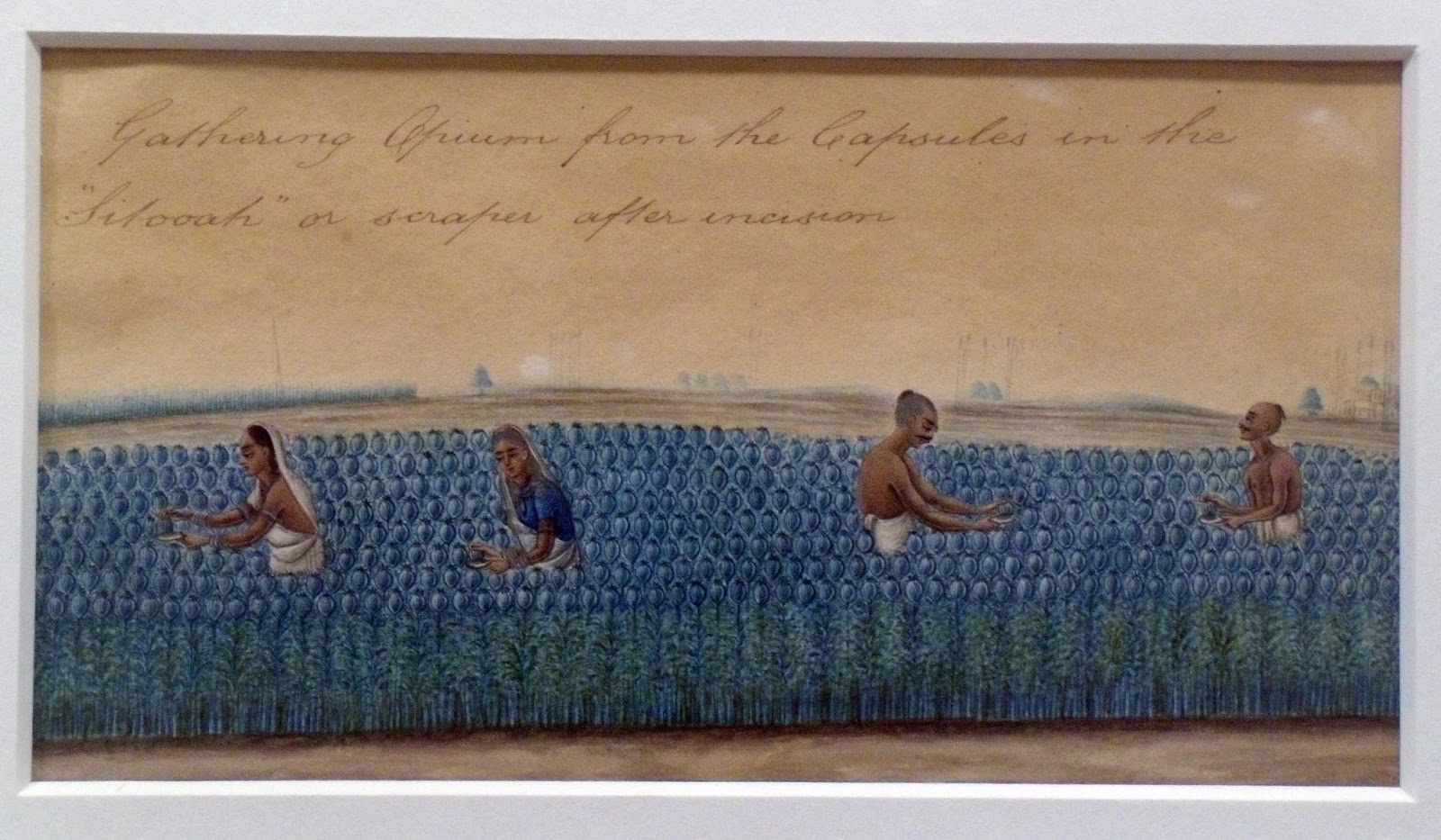
The Library, Art & Archives department has also prepared a display in the Wolfson Reading Room in the Herbarium, Library, Art & Archives building, which has just opened and is free to view. Drop in Monday-Friday 10am-4pm to see more material from our Historic Joseph Hooker collections, including material relating to his (entirely scientific!) interest in opium.

View Full Size Image
One of a series of illustrations depicting the cultivation and manufacture of opium. Collected by Joseph Hooker during his visit to the Patna opium manufactory in India in 1848.

In the gardens, the Kew volunteer guides will be providing walking tours, allowing visitors to find out how instrumental Joseph Hooker was in shaping botany and the landscape at Kew. On the weekend of the 1st and 2nd of July, the gardens will host a Joseph Hooker Bicentenary celebration with family activities, explorer’s camp and talks. The Shirley Sherwood Gallery will also be hosting a ‘Kew After Hours’ event on the evening of the 29th June. Further details of these events and others related to Joseph Hooker can be found on the main Kew website.

Further afield, the Botanic Survey of India has been hosting an exhibition on Joseph Hooker’s legacy in Indian botany. The exhibit is curated jointly with Kew staff and will shortly go on tour to other locations in India.

Visit the BHL website to learn more about the #JDHooker2017 campaign, and follow the hashtag all this week for more great highlights.

Related Links

Joseph Hooker Correspondence Project
View the Joseph Hooker letters online
Joseph Dalton Hooker Bicentenary Meeting: The Making of Modern Botany
Joseph Hooker: Putting plants in their place 
Walking tours around the gardens

June 26, 2017by ulib-libraryjobs
BHL News, Blog Reel

Celebrating Sir Joseph Dalton Hooker with Royal Botanic Gardens, Kew

View Full Size Image

Sir Joseph Dalton Hooker was one of the most important botanists of the 19th century and Kew Gardens’ most illustrious Director (1865-1885). To celebrate the bicentenary of his birth this year, BHL is joining the Royal Botanic Gardens, Kew to highlight Hooker’s works and contributions as part of the #JDHooker2017 campaign.

To coincide with the opening of a new exhibit at Kew’s Shirley Sherwood Gallery, BHL is featuring Hooker’s publications and related artworks in our online book collection and Flickr albums. Learn more about the BHL collections here.

Learn more about Kew’s exhibit, which opened on 25 March, in the post below. Then, be sure to follow #JDHooker2017 on social media as we celebrate Hooker’s life and works.

We hope you’ll also join us again the week of 26-30 June 2017 as we continue our celebrations as part of a larger campaign in conjunction with The Making of Modern Botany conference at Kew Gardens, hosted on 30 June 2017.

Joseph Hooker the ‘King of Kew’


By Rebecca Carter 
Gallery Assistant, The Shirley Sherwood Gallery of Botanical Art 
Royal Botanic Gardens, Kew

View Full Size Image
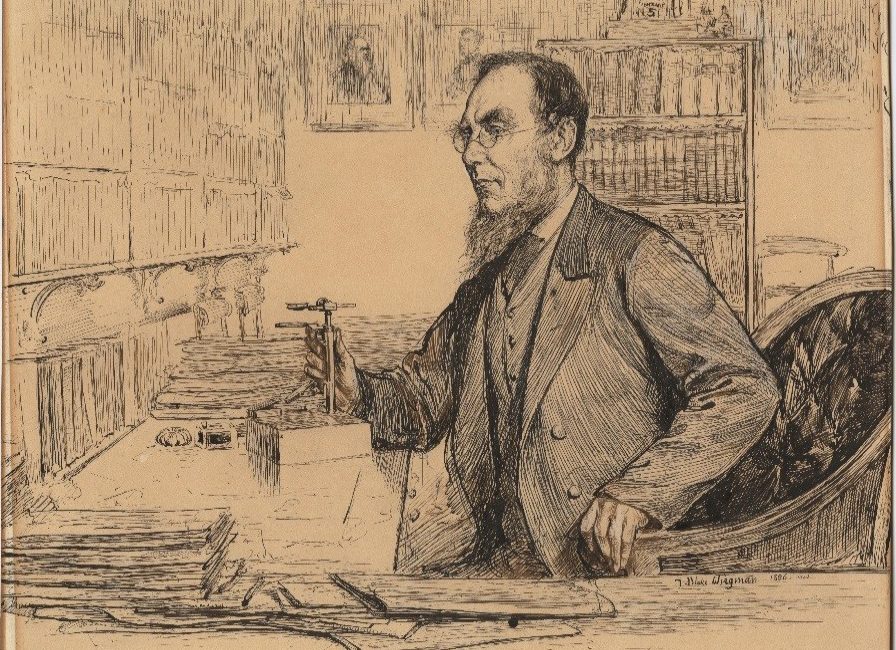
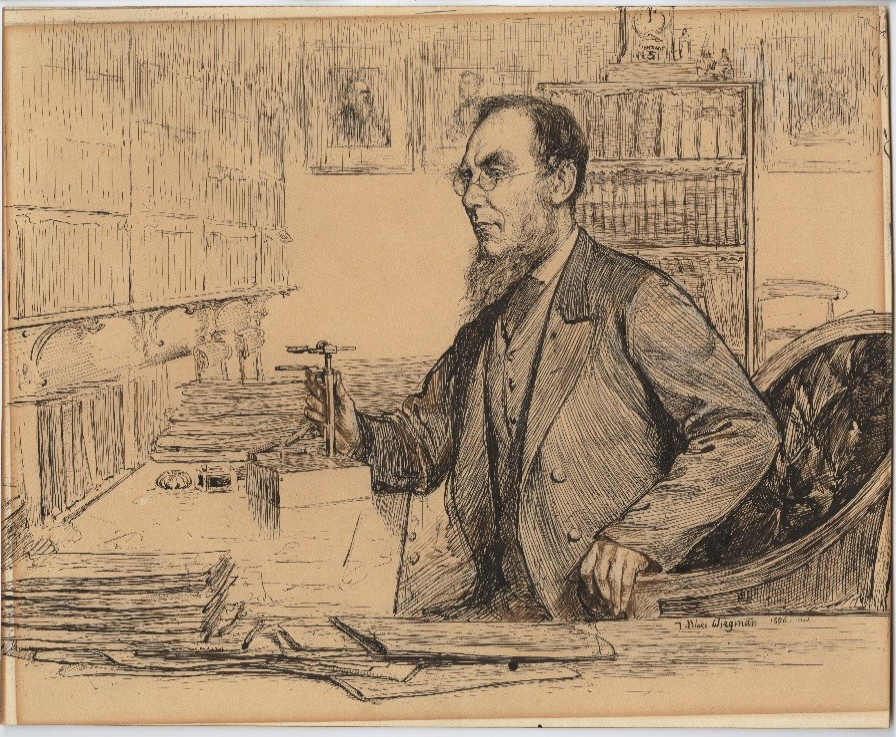
Sir Joseph Dalton Hooker, pen and ink on paper (1886) by Theodore Blake Wirgman.

Sir Joseph Dalton Hooker (1817-1911) was a highly respected botanist and relentless explorer, who is regarded as the founder of modern botanical classification. He held the position of Director at the Royal Botanic Gardens, Kew, for twenty years, adding thousands of specimens to its collection.

To mark the bicentenary of his birth, the Shirley Sherwood Gallery has curated an exhibition exploring his extensive travels and contribution to the field of botany. The collection at Kew contains numerous artifacts, sketches and paintings relating to Hooker’s incredible life and professional journey, of which a proportion is showcased in this exhibition. By showing a diverse selection of work, the exhibition looks to uncover the impact Hooker had on the botanical world, as well as discovering what made Joseph Hooker the ‘King of Kew’.

The title of the exhibition, Joseph Hooker: Putting plants in their place, refers to Hooker’s belief that specimens should be collected and then classified scientifically. He also proposed that plant’s habitats should be better understood and that there should be a place and opportunity to elevate the scientific status of botany to the same scholarly status as other sciences such as physics.

Kew was at the very heart of Hooker’s career and through his travels and publications he transformed Kew from a rather run-down royal pleasure garden into the world-class scientific establishment it is recognized as today.

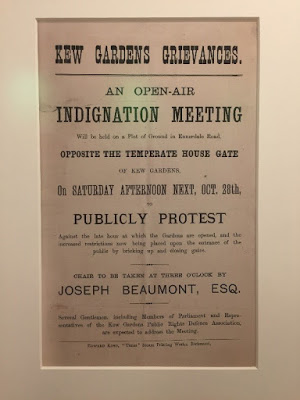
The public at the time met with Hooker’s desire to protect Kew’s role as a serious scientific institution with apparent antipathy; it was reported in newspapers that Londoners were outraged to find the gates to the Gardens locked in the mornings on bank holidays. This public outcry led to Hooker clashing with politicians and the public several times and ended with him conceding to early openings. On display in the exhibition are cartoons and notices from contemporary newspapers, exploring this fascinating history whilst Hooker was Director of Kew.

View Full Size Image
Kew Gardens Grievances notice from The Times, published October 1879, facsimile print.

Today, Kew is a leading centre for scientific botanical research and it is partly down to Hooker’s explorations that this foundation was set. On 30 September 1839 when he was 22 years old, Hooker set off on his first voyage. He was the youngest crew member on Her Majesty’s Discovery Ship Erebus, serving as the ship’s assistant surgeon and the expedition’s botanist.

On his many travels he drew and collected plants, naming many previously unknown-to-science plants and trees. Hooker named many plants after botanists and friends as a way of thanking and acknowledging fellow scientists. For example, Hooker named the Tasmanian gum tree Eucalyptus gunnii after his friend the collector Ronald Campbell Gunn. Hooker also had plants named after himself, such as the New Zealand ‘golden wand’ Bulbinella hookeri which was named by his friend and New Zealand missionary William Colenso.

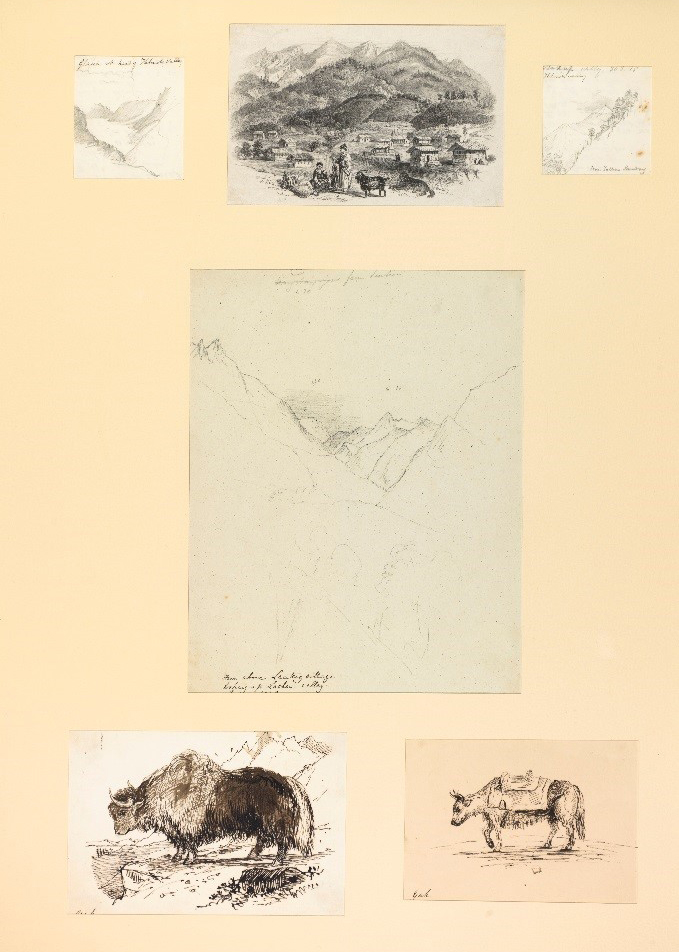
Hooker didn’t confine his drawings to plants. He also sketched houses, animals and landscapes. Our favourite pieces on display in this exhibition depict his time in the Himalayas. The selection of sketches below reveals detailed drawings of a variety of views of Lacham valley and Lamteng village.

Hooker’s good friend and talented artist Walter Hood Fitch drew the middle sketch at the top, which is a re-work of Hooker’s original drawing. Fitch often sketched Hooker’s drawings, preparing lithographs for botanical books such as his Rhododendrons of Sikkim Himalaya (1849-51).

The intricate sketch of the village and landscape shows that Hooker was also thinking about the habitat and the environment the native plants were exposed to. His drawing of a Yak also demonstrates an understanding of local culture and way of life. Yaks were the most important domesticated animal in the Himalaya and the detail in this sketch is exquisite.

View Full Size Image
From above Lamteng village looking up Lachem valley, (1848) Joseph Dalton Hooker, pencil, pen and watercolour on paper, with lithograph.

The galleries at Kew have more than one reason to be grateful for Hooker’s influence as Director of Kew. In 1879, Marianne North wrote to Hooker offering to build a gallery in which to display her botanical artwork. Hooker gave North permission, and the Marianne North Gallery was duly built in a mixture of classical and colonial style, finally opening in its finished form in 1886. Without Hooker’s permission, Kew would not have this significant collection of Victorian botanical art, which serves as an important catalogue of the world’s plants. Alongside the 833 paintings on display, North also collected samples of wood from the countries she visited. The unusual way in which the gallery was curated is unique to Kew, and it is always a breath-taking experience.

In summary, Joseph Hooker: Putting plants in their place looks at a range of fascinating artifacts and paintings to explore the professional journey of Joseph Hooker as second Director of Kew. It primarily looks at how Hooker revolutionized botany to a scientific status and examines his influence on Kew’s transformation from a simple pleasure garden to the scientific centre of research it is known for today.

March 27, 2017by ulib-libraryjobs

Help Support BHL

BHL's existence depends on the financial support of its patrons. Help us keep this free resource alive!

search

About BHL

The Biodiversity Heritage Library (BHL) is the world’s largest open access digital library for biodiversity literature and archives. BHL operates as a worldwide consortium of natural history, botanical, research, and national libraries working together to digitize the natural history literature held in their collections and make it freely available for open access as part of a global “biodiversity community.”

Join Our Mailing List

Sign up to receive the latest news, content highlights, and promotions.

Subscribe Now

Subscribe to Blog via Email

Enter your email address to subscribe to this blog and receive notifications of new posts by email.

Join 319 other subscribers

Subscribe to Blog Via RSS

Subscribe to the blog RSS feed to stay up-to-date on all the latest BHL posts.

Access RSS Feed

Inspiring Discovery through Free Access to Biodiversity Knowledge.

The Biodiversity Heritage Library makes it easier than ever for you to access the information you need to study and explore life on Earth…for free, anytime, anywhere.


64+ Million Pages of
Biodiversity Literature Online.

EXPLORE

Tools and Services
to Transform Research.

EXPLORE

300,000+
Illustrations on Flickr.

EXPLORE

ABOUT | HARMFUL CONTENT | PRIVACY | SITE MAP | TERMS OF USE